
Physio Edge podcast with David Pope
179 episodes — Page 3 of 4

Ep 80080. How to assess ankle syndesmosis injuries with Chris Morgan
Ankle syndesmosis injuries, also known as a high ankle sprain, commonly occur during high impact tackles or collisions that involve forced lateral rotation of the foot in ankle dorsiflexion. Syndesmosis injuries can be missed in the early stages as the degree of pain and swelling may not reflect the severity of the injury. Early diagnosis of syndesmosis injuries is key in preventing persistent pain, disability and limited ability to return to play or activity. In Physio Edge podcast episode 80, English Premier League Physiotherapist Chris Morgan, and David Pope explore how to assess and diagnose ankle syndesmosis injuries (ASI), including: Questions you need to ask when your patient has had an ankle injury What is an ASI? What symptoms will your patient report following ASI? Ligaments and structures that are often involved in an ASI What is a "peeling injury", and how does this influence the structures that are injured? Common mechanism of injury How to assess, diagnose, classify and grade ASI How to differentiate between stable and unstable ASI Which tests can you perform to accurately diagnose ASI? Differential diagnosis Which injuries are likely to require surgical intervention, and which injuries may be managed conservatively? When imaging is useful What type of imaging to perform Identifying underlying chondral lesions Early management strategies Upcoming podcast - How to treat ankle syndesmosis injuries with Chris Morgan A subsequent podcast with Chris Morgan will discuss in detail how to treat ankle syndesmosis injuries . Download this podcast now to improve your assessment and diagnosis of ankle syndesmosis injuries. Free webinar - Medial knee injuries with Chris Morgan Chris Morgan's Physiotherapy roles in English Premier League with Liverpool and Crystal Palace have provided him with a lot of experience treating acute injuries, including the ankle and knee. To help you take advantage of this experience, Chris is presenting a Clinical Edge webinar on medial knee injuries. In his webinar Chris will discuss: Presentation of medial knee injuries How imaging findings correlate with clinical findings How to progress your rehabilitation and return players to performance Incorporating change of direction and trunk control into rehabilitation You can CLICK HERE to access this free webinar Links associated with this episode: Twitter - @ChrisMorgan10 Let David Pope know what you liked about this podcast on Twitter Review the podcast on iTunes Like the podcast on Facebook Infographics by Clinical Edge Articles associated with this episode: Morgan et al. 2014. Conservative management of syndesmosis injuries in elite football Sikka RS, Fetzer GB, Sugarman E, Wright RW, Fritts H, Boyd JL, Fischer DA. Correlating MRI findings with disability in syndesmotic sprains of NFL players. Foot & ankle international. 2012 May;33(5):371-8. Sman AD, Hiller CE, Rae K, Linklater J, Black DA, Nicholson LL, Burns J, Refshauge KM. Diagnostic accuracy of clinical tests for ankle syndesmosis injury. Br J Sports Med. 2015 Mar 1;49(5):323-9. Other episodes of interest: PE 017 - Injury reduction with Dr Peter Brukner PE 027 - Sports injury management with Dr Nathan Gibbs

079. How to rehabilitate ACL injuries with Dr Lee Herrington
Following ACL injury, patients can have a smooth recovery with full return to sport and activity, or end up with ongoing knee symptoms and limited ability to perform the activities they love. How can you help your ACL injured patients have a great outcome? In Physio Edge podcast episode 079, Dr Lee Herrington and David Pope explore how to make your ACL injury rehab successful, and provide you with a comprehensive guide to rehabilitate ACL injuries. You will understand how to take your patients from initial injury to return to sport, and develop the knowledge to help inform your patients decide with your patient whether surgical repair or conservative management is their best option. You will discover: Do ACL injuries require surgical management? Which factors commonly affect whether people with ACL-deficient knees require surgery? Common diagnostic errors in ACL injury patients What are the key elements you need to include in your rehab of ACL injuries? Conservative vs surgical management Should your rehab focus on movement control, strength or skills? How you should objectively assess your patients rehab progress? What valid measurement tools can you use when assessing patient progress? Are open-chain exercises safe, and should they be used in your rehab? Most effective types of movement control and skill training How to know when your patient should progress their exercises? Which strength measures are important? Which strength training exercises can you include? When can running be commenced? Running progressions you can use What pain measures should you monitor throughout rehab? Is pain during rehab ok? How to return your patient to training and sport What maintenance exercises should your patient continue after completing their rehab? Related online courses Advanced ACL rehab with Andrew Ryan Other episodes of interest: Physio Edge 052 Conservative or surgical management for ACL injuries with Enda King Physio Edge 051 Lateral knee and LCL injuries with Matt Konopinski Physio Edge 034 - Advanced ACL rehab with Enda King Links associated with this episode: Download and subscribe to the podcast on iTunes Twitter - @LeeHphysio MSc Sports injury rehabilitation - University of Salford Online course - Acute low back pain treatment with David Pope - available with a free trial Clinical Edge membership Free sports injuries videos with Dr Ebonie Rio, Jack Hickey, Dr Adam Weir, Dr Michael Rathleff, Jo Gibson and Prof Bill Vicenzino Let David Pope know what you liked about this podcast on Twitter Review the podcast on iTunes Like the podcast on Facebook Infographics by Clinical Edge Articles associated with this episode: Bollen et al. 1996. Rupture of the anterior cruciate ligament - a quiet epidemic? Comfort et al. 2011. Kinetic comparisons during variations of the power clean Frobell et al. 2010. A randomised trial of treatment for acute anterior cruciate ligament tears Gabbett. 2016. The training - injury prevention paradox: should athletes be training smarter and harder? Harris et al. 2017. Tibiofemoral osteoarthritis after surgical or nonsurgical treatment of anterior cruciate ligament rupture: a systematic review Herrington et al. 2013. Task based rehabilitation protocol for elite athletes following Anterior Cruciate ligament reconstruction: a clinical commentary Hewett et at. 2010. Understanding and Preventing ACL injuries: current biomechanical and epidemiological considerations Mikkelsen et al. 2000. Closed kinetic chain alone compared to combined open and closed kinetic chain exercises for quadriceps strengthening after anterior cruciate ligament reconstruction with respect to return to sports: a prospective matched follow-up study Weiler et al. 2015. Non-operative management of a complete anterior cruciate ligament injury in an English Premier League football plater with return to play in less that 8 weeks: applying common sense in the absence of evidence

Ep 78078. High performance athlete management with David Joyce
How can you incorporate high performance elements into your sports injury rehab, to help your injured players and athletes become strong, fit, powerful and fast? How can you rehab a player to perform at a high level when they return to sport following injury? In Physio Edge podcast episode 78, David Joyce shares how you can improve the performance aspects of your rehabilitation. You will discover some of the key elements when managing high performance athletes and sporting teams. If you work with injured athletes at an elite, recreational or junior level, or would like to work with a sports team, you will love this podcast. In this podcast, David Joyce and David Pope discuss: How to help athletes move from being a junior player to performing at an elite level How to help players build tolerance and resilience to cope with high level sport How to create "elite level people", not just "elite level players" What makes a player likely to succeed? Schedules and weekly programs you can use to prepare junior players What load should a junior player perform during preseason relative to a senior player? When players need to be exposed to higher loads How to schedule training and running to prevent bony and soft tissue injuries How many running sessions per week should players perform? "Earning the right" to run at full speed How to structure strength sessions do players perform Incorporating plyometrics What load measures are actually important Important screening questions to ask your players How to return injured players to high level sport How many weeks of full training do ACL injured players require before return to play Key tests to perform for your players Tips when objectively testing athletes Links associated with this episode: David Joyce at Greater Western Sydney Giants David Joyce on Twitter - @DavidGJoyce Twitter - Giants Athletic Performance Unit @Giants_APU Book - Sports injury prevention and rehabilitation Book - High performance training for sports Online course - Acute low back pain treatment with David Pope - available with a free trial Clinical Edge membership Download and subscribe to the podcast on iTunes Free sports injuries videos with Dr Ebonie Rio, Jack Hickey, Dr Adam Weir, Dr Michael Rathleff, Jo Gibson and Prof Bill Vicenzino Let David Pope know what you liked about this podcast on Twitter Review the podcast on iTunes Like the podcast on Facebook Infographics by Clinical Edge Other episodes of interest: PE 003 - Rugby, rehab and return to sport with the Australian Wallabies Physio PE 027 - Sports injury management with Dr Nathan Gibbs PE 034 - Advanced ACL rehab with Enda King

Ep 77077. Anterior shoulder pain, long head of biceps tendon pathology and SLAP tears with Jo Gibson
The long head of biceps tendon and superior labrum can get a hard time in throwing athletes and patients that fall on their arm or shoulder. This can result in long head of biceps tendon pathology or SLAP tears, and cause ongoing shoulder pain. A lot of our shoulder tests are non-specific, and are unable to identify particular structures that are irritated or painful in the shoulder. In the case of the long head of biceps (LHB) tendon and slap tears, there are a few useful tests that in combination with a good history can help you identify when the structures are involved in your patient's shoulder pain. In episode 77 of the Physio Edge podcast, Jo Gibson, Shoulder Specialist Physio and David Pope discuss anterior shoulder pain, LHB pathology and SLAP tears. You will discover: Anatomy of the long head of biceps tendon and superior labrum Why the anatomy is important, and may be different to what you learnt at university around the biceps tendon and bicipital groove The clinical presentation and relevant history of patients with SLAP lesions and LHB tendon pathology Which patients are more likely to get SLAP tears following trauma Special tests that may help you identify LHB pathology and SLAP tears What information imaging gives us When to request imaging for your shoulder pain patients Different groups of patients that develop LHB pathology Rehabilitation of LHB tendon pathology and SLAP tears When to specifically target the LHB tendon, and when to target the surrounding structures for best results Other areas to consider in your rehab beyond the shoulder How the kinetic chain can impact shoulder pain How someone's hop distance can influence their shoulder pain How to start treatment of someone with an irritable LHB tendon Important education components to include in your treatment Time frames - How long do these injuries take to recover? Which patients are suitable for surgical management? Different types of surgery for LHB tendon pathology Which SLAP tear patients should have conservative treatment? How suprascapular nerve involvement can present following traumatic shoulder injury, and how to identify patients with suprascapular nerve compression Podcast handout Free video series "Frozen shoulder assessment & treatment" with Jo Gibson Shoulder: Steps to Success online course with Jo Gibson Improve your assessment and treatment of shoulder pain with the Shoulder: Steps to Success online course with Jo Gibson, now available for enrolment at clinicaledge.co/shouldersuccess Links associated with this episode: Get your access to the free video series "Frozen shoulder assessment & treatment" with Jo Gibson Improve your shoulder assessment & treatment with the Shoulder: Steps to Success online course with Jo Gibson [Jo Gibson on Twitter - @ShoulderGeek1] JO Let David Pope know what you liked about this podcast on Twitter Review the podcast on iTunes Like the podcast on Facebook Infographics by Clinical Edge Articles associated with this episode: Download the podcast handout to receive the articles associated with this podcast. Hendy et al. 2012. Cross education and immobilisation: mechanisms and implications for injury rehabilitation Kibler et al. 2009. Clinical utility of traditional and new tests in the diagnosis of biceps tendon injuries and superior labrum anterior and posterior lesions in the shoulder McCreesh et al. 2017. Increased supraspinatus tendon thickness following fatigue loading in rotator cuff tendinopathy: potential implications for exercise therapy Parle et al. 2017. Acute rotator cuff tendinopathy: does ice, low load isometric exercise, or a combination of the two produce an analgaesic effect? Saithna et al. 2016. Shoulder Arthroscopy Does Not Adequately Visualize Pathology of the Long Head of Biceps Tendon Schroder et al. 2017. Sham surgery versus labral repair or biceps tenodesis for type II SLAP lesions of the shoulder: a three-armed randomised clinical trial Taylor et al. 2017. The "3-Pack" Examination Is Critical for Comprehensive Evaluation of the Biceps-Labrum Complex and the Bicipital Tunnel: A Prospective Study Exercise videos Thoracic rotation exercise Dynamic rotation exercise Other episodes of interest: PE 043 - Sporting Shoulder with Jo Gibson PE 031 - Unruly scapular assessment and retraining with Ann Cools Hide

Ep 76076. Footwear advice for running injuries with Tom Goom
There are a lot of myths around footwear, and your patients with running injuries will often blame an "incorrect shoe" choice for their injury, or believe that getting the "right shoe" will help resolve an injury. Are running shoes the cause of, and solution to running injuries? What advice should you give your patients when they ask that inevitable question "Do you think I need to get new shoes?", closely followed by "What shoe do you think I should run in?" In Physio Edge podcast episode 76 with Tom Goom , you will also discover: What footwear should your runners and injured runners wear? Footwear questions you need to ask your running injury patients Does footwear change gait patterns? Can footwear contribute to injury? What footwear may contribute to or help in your treatment of Achilles tendinopathy What is heel-toe drop and how is this important? Does footwear affect ground reaction forces, and how does this relate to bone stress injuries and plantar fasciopathy? Is minimalist or barefoot running helpful or harmful? Can runners safely transition to barefoot or minimalist running? Is footwear the key to resolving running injuries? Shoe prescription Recommendations when buying new shoes Footwear considerations for specific pathologies When should runners change their shoes? If you would love to get better results with running injuries, the podcast handout contains the key takehome messages for you. You can download it here. Free running injury assessment & treatment video series available now Links of Interest Download your free podcast handout on footwear advice for running injuries Tom Goom on Twitter Let David Pope know what you liked about this podcast on Twitter Review the podcast on iTunes Like the podcast on Facebook Infographics by Clinical Edge Get your free trial Clinical Edge membership Tom Goom's website & courses Tom on Facebook Live Related posts Physio Edge 065 - Differential diagnosis of calf pain in runners with Tom Goom Physio Edge 064 What is causing calf pain in runners and how can you assess it with Tom Goom Physio Edge 062 How to treat plantar fasciopathy in runners with Tom Goom Infographic - How to treat plantar fasciopathy in runners with Tom Goom Physio Edge 061 How to assess & diagnose plantar fasciopathy in runners with Tom Goom Infographic - How to assess & diagnose plantar fasciopathy in runners with Tom Goom Physio Edge 060 Plantar fasciopathy in runners with Tom Goom Infographic - Plantar fasciopathy in runners with Tom Goom Infographic - Plantar fasciopathy imaging & education with Tom Goom Research associated with this episode Esculier et al. 2015. A consensus definition and rating scale for minimalist shoes. Fuller et al. 2017. Six week transition to minimalist shoes improves running economy and time-trial performance. Kong et al. 2009. Running in new and worn shoes: a comparison of three types of cushioning footwear. Mallisoux et al. 2015. Influence of heel to toe drop of standard cushioned running shoes on injury risk in leisure time runners: a randomised controlled trial with 6 month follow up. Nigg et al. 2015. Running shoe and running injuries: myth busting and a proposal for two new paradigms: 'preferred movement path' and 'comfort filter'. Salzier et al. 2016. Injuries observed in a prospective transition from traditional to minimalist footwear: correlation of high impact transient forces and lower injury severity.

Ep 75075. Tendinopathy, imaging and diagnosis with Dr Sean Docking
Tendinopathy patients may present for treatment with an ultrasound or MRI report in hand, unsure how you can help them, or how they can possibly recover when they have so much tendon pathology. To add insult to injury, they may even have a partial tendon tear on their imaging report thrown into the mix. How do imaging results impact your treatment and your patient's recovery? Are the imaging findings relevant to their pain? In this Physio Edge podcast with Dr Sean Docking (Physiotherapist, PhD), you will explore what information imaging actually provides in your tendinopathy patients, how to explain imaging to your patients, and whether partial tendon tears identified on imaging will effect your treatment. You will also discover: Who develops tendon pathology If patients have tendon pathology on imaging, is this responsible for their symptoms, or will it cause future tendon pain Asymptomatic tendon pathology in sports people How tendon pathology can actually be linked to better performance Can we prevent tendon pathology The advantages and disadvantages of different imaging types, including MRI Ultrasound Ultrasound tissue characterisation (UTC) Why a thickened tendon may actually be helpful in recovery How can we actually diagnose tendinopathy When is imaging useful Differential diagnosis of Achilles pain, including - Achilles tendinopathy - Paratenonitis - Plantaris associated tendinopathy Partial tendon tears, the accuracy of identification, and how they impact your treatment Links associated with this episode: Twitter - @SIDocking Sean Docking - La Trobe University website Sean Docking - Research gate David Pope on Twitter Clinical Edge on Facebook Have a free trial Clinical Edge membership Articles associated with this episode: Alfredson. 2011. Midportion achilles tendinosis and the plantaris tendon Brown et al. 2011. The COL5A1 gene, ultra-marathon running performance and range of motion Docking et al. 2016. Pathological tendons maintain sufficient aligned fibrillar structure on ultrasound tissue characterization (UTC). Docking et al. 2015. Tendinopathy: Is imaging telling us the entire story? Lieberthal et al. 2014. Asymptomatic achilles tendinopathy in male distance runners McAuliffe et al. 2016. Can ultrasound imaging predict the development of Achilles and patellar tendinopathy? A systematic review and meta-analysis Simpson et al. 2016. At What Age Do Children and Adolescents Develop Lower Limb Tendon Pathology or Tendinopathy? A Systematic Review and Meta-analysis Other episodes of interest: PE 068 - Lower limb tendinopathy loading, running and rehab with Dr Pete Malliaris PE 042 - Treatment of Plantaris and achilles tedninopathy with Seth O'Neil PE 041 - Plantaris involvement in achilles tendinopathy with Dr Christoph Spang

Ep 74074. Hip pain and femoroacetabular impingement FAI with Dr Joanne Kemp
Femoroacetabular impingement (FAI) may contribute to hip and groin pain, buttock pain, pelvic or low back pain and referred pain into the thigh. Is conservative management effective in patients with FAI, or is surgery required? If we can treat FAI conservatively, what is the best treatment, and how can you tailor your treatment to your individual patients? In episode 74 of the Physio Edge podcast with Dr Joanne Kemp you will discover: What is FAI, and how can you identify it? Common clinical presentations Key subjective questions to ask Types of FAI morphology and how they are identified Is FAI just a normal finding? How you can perform an objective assessment in patients with FAI Differential diagnosis Components you need to include in your conservative treatment for FAI Which objective markers to use when treating FAI How to address common impairments in your rehabilitation, including strength, functional tasks, cardiovascular training and range of movement When to refer for a surgical opinion Outcomes of surgical treatment Future risk of developing OA in presence of FAI Sports Injuries virtual conference presentation As mentioned in this episode Joanne will be part of the Sports Injury virtual conference. Her pre conference presentation will discuss FAI and the diagnostic process in more detail. Her subsequent conference presentation will be available on 9-10 December 2017, with access for up to 12 months following the conference, and will discuss: Conservative management of FAI Specific exercise progressions you can use Return to sport for athletes Enrol on the 2017 Sports Injuries virtual conference by CLICKING HERE Links associated with this episode: Get your free access to Sports Injuries presentations with Dr Ebonie Rio, Jack Hickey, Dr Adam Weir, Dr Michael Rathleff, Jo Gibson and Prof Bill Vicenzino Enrol on the 2017 Sports Injuries virtual conference Twitter - @JoannaLKemp Joanna Kemp - Research gate David Pope on Twitter Clinical Edge on Facebook Have a free trial Clinical Edge membership LaTrobe Sports and Exercise Medicine Research Blog Twitter - @LaTrobeSEM GLA:D Australia Lake Health Group Articles associated with this episode: Griffin et al. 2016. The Warwick Agreement on femoroacetabular impingement syndrome (FAI syndrome): an international consensus statement. Articola et al. 2014. A Cam Deformity Is Gradually Acquired During Skeletal Maturation in Adolescent and Young Male Soccer Players. A Prospective Study With Minimum 2-Year Follow-up. Other episodes of interest: Physio Edge 054 - Hip and groin pain part 2 with Benoy Matthew Physio Edge 053 - Hip and groin pain part 1 with Benoy Matthew Physio Edge 009 - Lateral hip pain with Dr Alison Grimaldi Physio Edge 004 - Hip injuries and labral tears with Nicole Hamilton

Ep 73073. Neck pain rehabilitation and strengthening with Kay Robinson
Strengthening is not commonly used in neck pain treatment and rehabilitation, however athletes may place large demands on their neck during training and play that require a high level of strength or endurance. When should you include strength training in your rehabilitation? What patients will benefit from strength training? How can you incorporate strengthening into your treatment? In episode 73 of the Physio Edge podcast, we explore the role of neck strengthening with Kay Robinson, Physiotherapist working with Australian sailing, and previously with the British Olympic Skeleton team. In the podcast you will discover: Objective assessment of patients with neck pain Range of movement and strength tests you can use with your neck pain patients How to assess neck strength in your patients Indications for strength training Is strength training suitable in the early stages of neck pain rehabilitation? Early-stage cervical spine rehabilitation exercises you can use Exercise progressions to improve neck strength Neck strengthening in concussion Is neck strength training suitable for whiplash patients? Aspects incorporated into a typical neck strengthening program Kay Robinson will also be presenting at the 2017 Sports Injury virtual conference. Her conference presentation on neck strengthening will discuss: How to incorporate neck training into rehabilitation post injury Neck strengthening for injury prevention How to make exercise patient or sport specific Other consideration with neck training Case studies Links associated with this episode: Kay Robinson on Twitter - @kaylourob Kay Robinson at Total Physiotherapy David Pope on Twitter Clinical Edge on Facebook Have a free trial Clinical Edge membership Book - Sports Injury Prevention and Rehabilitation: Integrating Medicine and Science for Performance Solutions High-Performance Training for Sports Articles associated with this episode: Durall. 2012. Therapeutic Exercise for Athletes With Nonspecific Neck Pain: A Current Concepts Review. Falla et al. 2003. An electromyographic analysis of the deep cervical flexor muscles in performance of craniocervical flexion. Falla et al. 2007. Recruitment of the deep cervical flexor muscles during a postural-correction exercise performed in sitting. Jull et al. 2009. The effect of therapeutic exercise on activation of the deep cervical flexor muscles in people with chronic neck pain. Other episodes of interest: PE 013 - Cervical Spine Artery and VBI Testing with Roger Kerry 5 Minute Physio tip - Manual therapy for the cervical spine - Is there any evidence? 5 Minute Physio tip - Contraindications and red flags to cervical spine manual therapy.

Ep 72072. Accelerated hamstring injury rehabilitation exercise selection and progressions with Jack Hickey
Injured athletes like to recover and return to play as quickly as possible, and we need to balance return to play against impaired strength, performance and risk of reinjury. Initial injury rehabilitation often commences with isometric exercises, progressing into concentric/eccentric style exercises when isometric tests are pain-free. Finally high load eccentric exercises such as the Nordic hamstring are introduced for their positive effects of increased strength, fascicle length and reduced injury risk. High level and eccentric exercises are often avoided in the early stages of rehab, for fear of aggravating the injury. What if we could commence higher-level and eccentric exercises safely at an earlier stage? Would this impair or accelerate your patients' recovery? In this podcast with Jack Hickey, currently completing a PhD with the QUT/ACU hamstring injury research group, we explore an accelerated hamstring injury rehabilitation program, and how this can be implemented with your patients. You will discover: The limitations of traditional rehabilitation What is the evidence for only using isometric exercises in the early stages of rehab Why eccentric exercises are commonly thought of as too high a load for initial rehab More modern rehabilitation programs for hamstring strain injuries, including the Askling (2013), Aspetar (2017) and Mendiguchia (2017) programs An accelerated rehab program, introducing higher-level and eccentric exercises at an early stage When you can start your patient's rehabilitation Which exercises you can use with your hamstring injury patients How to know when to progress your patient's exercises How often high-level exercises need to be performed When your patients can return to running How to progress your patients through a return to running program When your patients are suitable for return to sport Links associated with this episode: Sliding discs to use in hamstring slider exercises in your clinic - available in Australia. Use the code "clinicaledge" to get 20% off your order (at the above link, not applicable on Amazon) Amazon (outside Australia)- Sliding discs to use in hamstring slider exercises Other episodes of interest: PE 071 - Hamstring strengthening, lengthening and injury prevention with Dr David Opar PE 019 - Hamstring strength, flexibility and injury reduction with Dr Kieran O'Sullivan PE016 - Preventing hamstring injuries with Dr Kristian Thorborg Articles associated with this episode: Askling et al. 2013. Acute hamstring injuries in Swedish elite football: a prospective randomised controlled clinical trial comparing two rehabilitation protocols Aspetar Hamstring Protocol Hickey et al. 2016. Criteria for Progressing Rehabilitation and Determining Return-to-Play Clearance Following Hamstring Strain Injury: A Systematic Review Jacobsen et al. 2016. A combination of initial and follow-up physiotherapist examination predicts physician-determined time to return to play after hamstring injury, with no added value of MRI. Järvinen et al. 2007. Muscle injuries: optimising recovery. Mendiguchia et al. 2017. Hamstring rehab for football players. Silder et al. 2013. Clinical and Morphological Changes Following 2 Rehabilitation Programs for Acute Hamstring Strain Injuries: A Randomized Clinical Trial

071. Hamstring strengthening, lengthening and injury prevention with Dr David Opar
Hamstring injuries are the most common injury in football and AFL, and we can help our patients strengthen their hamstrings while significantly reducing their risk of injury with the right exercise program. What are the best exercises to use to strengthen and lengthen the hamstrings, and to prevent hamstring injury? In this Physio Edge podcast with Dr David Opar, we discuss hamstring injury prevention, which athletes will benefit, which exercises to use, the most important aspects of each exercise and how to incorporate these with your athletes. You will discover: What does the latest research around hamstring exercises and injury reveal? Which players are most at risk of hamstring injury? How can we prevent hamstring injuries? How does hamstring muscle architecture adapt to training, and how does this relate to your exercise selection or prescription? How can we increase hamstring muscle fascicle length? How can we tailor our patients hamstring program based on whether they are preseason, in-season, uninjured or previously injured? Which exercises are important in hamstring rehabilitation and prehabilitation? How can you start and progress a hamstring injury prevention program? How quickly do patients lose their hamstring gains, and how much maintenance do they need to perform? What happens to hamstring muscle strength and flexibility following injury? What neuromuscular inhibition happens following hamstring injuries, and how can we address this in our rehab? There has been a lot of great research performed recently on hamstring injuries, and to share this and help you with your hamstring injury patients, we have invited Dr David Opar to present at the upcoming Sports Injuries virtual conference in December 2017. You can access six free preconference sports injury presentations by CLICKING HERE. Related Links David Pope on Twitter Clinical Edge on Facebook Have a free trial Clinical Edge membership ACU open access hamstring journal repository Articles associated with this episode: Bourne et al. 2017. Impact of exercise selection on hamstring muscle activation. Opar et al. 2015. Eccentric hamstring strength and hamstring injury risk in Australian footballers. Petersen et al. 2011. Preventive Effect of Eccentric Training on Acute Hamstring Injuries in Men's Soccer. Timmins et al. 2015. Short biceps femoris fascicles and eccentric knee flexor weakness increase the risk of hamstring injury in elite football (soccer): a prospective cohort study. Timmins et al. 2016. Architectural Changes of the Biceps Femoris Long Head after Concentric or Eccentric Training. van Dyk et al. 2016. Hamstring and Quadriceps Isokinetic Strength Deficits Are Weak Risk Factors for Hamstring Strain Injuries: A 4-Year Cohort Study.

Ep 70070. How to treat adductor related groin pain and complex cases with Dr Adam Weir
Athletes with groin pain will commonly play with pain until the end of the season, and rest during the off-season in the hopes this will aid in their recovery. Unfortunately this offseason rest period rarely results in recovery, and athletes head into the preseason with long-standing groin pain and an extended recovery period. In this episode of the Physio Edge podcast with Dr Adam Weir , you will discover how to treat adductor related groin pain (ARGP) and complex patient presentations with multiple areas of pathology or pain. This podcast follows on from the Physio Edge podcast episode 69, where Dr Adam Weir and I discussed in detail how to assess and diagnose adductor related groin pain, identify or exclude differential diagnosis including stress fractures, hip joint involvement, inguinal related groin pain and nerve entrapment. You will explore: Treatment of acute adductor strains Long term adductor related groin pain (ARGP) Is rest during the off season helpful or harmful for groin pain What pain level is ok during rehab exercises How can you describe ARGP to decrease patient fear Is ARGP a tendinopathy or different pathology? How to answer your patients when they ask how long until they can return to training (RTT) or return to play (RTP)? What is and how can you incorporate the Copenhagen Adductor exercise? Is there a role for passive treatment? Is hand held dynamometry useful during recovery? Treatment for adductor related groin pain (ARGP) Starting treatment Exercise progressions What criteria can you utilise for treatment progressions? What criteria can you use prior to allowing your patients to return to running, change of direction and RTP How to progress running and change of direction training Adductor to abductor strength ratios your athletes can achieve prior to RTP Complex presentations How can you make a diagnosis and tailor your rehab when a patient has multiple areas of pain and positive tests eg ARGP plus Psoas related groin pain or Inguinal related groin pain? How your treatment program may evolve as your patient progresses through their rehab Dr Adam Weir will be presenting at the upcoming Sports Injuries virtual conference on the assessment and treatment of Inguinal related groin pain. You can access his free preconference presentation, along with other free sports injury assessment and treatment videos AT THIS LINK Links associated with this episode: Download your free podcast handout Dr Adam Weir on Twitter - @adamweirsports Aspetar – Sports groin pain centre Get your free trial Clinical Edge membership David Pope on Twitter Clinical Edge on Facebook Adductor protocol on Mobile devices Adductor protocol videos on Youtube Articles associated with this episode: Branci et al. 2014. MRI findings in soccer players with long-standing adductor-related groin pain and asymptomatic controls. Drew et al. 2017. Experimental pain in the groin may refer into the lower abdomen: implications to clinical assessment. Drew. 2017. PhD Thesis - Beyond the pathoanatomical explanation of long-standing groin pain in athletes Mosler et al. 2015. Which factors differentiate athletes with hip/groin pain from those without? A systematic review with meta-analysis. Weir et al. 2015. Doha agreement meeting on terminology and definitions in groin pain in athletes. Whittaker et al. 2015. Risk factors for groin injury in sport: an updated systematic review.

Ep 69069. Adductor related groin pain stress fractures and nerve entrapment assessment diagnosis with Dr Adam Weir
Adductor related groin pain is the most common diagnosis for athletes with groin pain. In this episode of the Physio Edge podcast you will discover how to assess and diagnose adductor related groin pain, identify or exclude differential diagnosis including stress fractures, hip joint involvement, inguinal related groin pain and nerve entrapment. Dr Adam Weir is a Sports Physician with a PhD on groin pain, the lead author for the Doha agreement meeting on terminology and definitions in groin pain in athletes, who currently shares his time between the Aspetar sports groin pain centre and the Erasmus University Hospital Academic Centre for Groin Injuries in Holland. Adam will take you through exactly how to perform an assessment around the hip and groin, how to interpret your findings and how to explain your diagnosis to your patients. You will explore: The common presentation and symptoms of someone with adductor related groin pain Structures that are commonly involved Aggravating and easing activities Area of pain, and new research highlighting unexpected pain referral areas from the adductor tendons Differential diagnosis Bone stress injuries around the hip and pubic bone Genitofemoral nerve entrapments - symptoms, diagnosis and treatment Red flags Acute versus chronic presentations Adductor related versus pubic related groin pain How to perform an assessment, including screening tests Tests you need to incorporate into your assessment Identifying and diagnosing all the structures contributing to a patient's symptoms What is the value of imaging and when should it be performed? Links associated with this episode: Download your free podcast handout Dr Adam Weir on Twitter - @adamweirsports Aspetar – Sports groin pain centre Erasmus University Hospital Academic Centre for Groin Injuries Get your free trial Clinical Edge membership David Pope on Twitter Clinical Edge on Facebook Articles associated with this episode: Branci et al. 2014. MRI findings in soccer players with long-standing adductor-related groin pain and asymptomatic controls. Drew et al. 2017. Experimental pain in the groin may refer into the lower abdomen: implications to clinical assessment. Drew. 2017. PhD Thesis - Beyond the pathoanatomical explanation of long-standing groin pain in athletes Mosler et al. 2015. Which factors differentiate athletes with hip/groin pain from those without? A systematic review with meta-analysis. Weir et al. 2015. Doha agreement meeting on terminology and definitions in groin pain in athletes. Whittaker et al. 2015. Risk factors for groin injury in sport: an updated systematic review.

Ep 68068. Lower limb tendinopathy loading, running and rehab with Dr Peter Malliaras
There are a range of tendinopathy presentations, from easily diagnosed with a local area of pain and clear pain response to tissue overload; through to patients with trickier presentations and multiple contributors to pain e.g. long term proximal hamstring or gluteal tendinopathy with a lumbar spine radiculopathy. How can you diagnose and treat patients with complex tendinopathy presentations? How does the latest research around tendinopathy help us? I explore these issues and more with Dr Peter Malliaras in episode 68 of the Physio Edge podcast. We also explore: Do tendinopathy patients always present with a small area of pain, or can they have pain in larger, more diffuse areas? How will you identify tendinopathy or other structures that may be contributing to your patients symptoms? Clues in your patients' history to help you identify and differentiate tendinopathies, lumbar and SIJ referral Symptoms and how your treatment will differ in patients with paratenon and fat pad involvement How can you measure your patients load tolerance? What categories of tendinopathy patients can you use to help differentiate your treatment? How can you rehabilitate patients with tendinopathy? What role does biomechanics have? What advice can you provide to your patients about load management, symptoms and flareups? When is it ok for your patients to continue or return to running? What strength tests should your patients be able to complete before returning to running? If your patients are not tolerating running, which aspects should you modify first - frequency, intensity, type or duration? When are isometrics useful in your treatment? When can you start isotonic and plyometric exercises? How can you incorporate tendon neuroplastic training (TNT)? Links associated with this episode Download your podcast handout Dr Peter Malliaras on Twitter Tendinopathy rehab blog with Dr Peter Malliaras Get your free trial Clinical Edge membership David Pope on Twitter Clinical Edge on Facebook Other episodes of interest: PE 046 - Proximal hamstring tendinopathy with Tom Goom PE 042 – Treatment of plantaris and Achilles tendinopaty with Seth O'Neil PE 023 – Lower limb tendinopathies with Dr Pete Malliaras Articles associated with this episode: Coombes et at. 2016. Isometric exercise above but not below an individuals pain threshold influences pain perception in people with lateral epicondylalgia Rio et al. 2015. Isometric exercise induces analgesia and reduces inhibition in patellar tendinopathy Silbernagel et al. 2007a. Continued sports activity, using a pain-monitoring model, during rehabilitation in patients with Achilles tendinopathy: a randomized controlled trial. Silbernagel et al. 2007. Full symptomatic recovery does not ensure full recovery of muscle-tendon function in patients with Achilles tendinopathy.

Ep 67067. Shoulder special tests and the rotator cuff with Dr Chris Littlewood
Shoulder pain can involve the rotator cuff, scapula, cervical spine, thorax, and other structures in this area. Recent research has also explored the role of patient beliefs and expectations on the outcomes of Physiotherapy for shoulder pain. Which factors are important in your shoulder pain patients? Can we identify the contributing factors to your patients shoulder pain? What information will you get from orthopaedic special tests during a shoulder examination? How can you improve your treatment results with your patient education? In this episode of the Physio Edge podcast, Dr Chris Littlewood and David Pope discuss shoulder pain, including: Classification of shoulder pathology How to identify painful vs stiff vs unstable shoulder pain vs cervical spine referred pain Questions to ask in your subjective assessment Does subacromial impingement exist, and how does a diagnosis of subacromial impingement effect outcomes Patient expectations of treatment outcomes How to perform an objective assessment What information special tests provide Is scapular dyskinesis pathological or normal movement variation Are painful or non-painful exercises most helipful in chronic shoulder pain What role does imaging have in shoulder pain This podcast adds to Physio Edge podcast 47 - Rotator cuff tendinopathy with Dr Chris Littlewood . Links of interest Webinar - "Exercise for rotator cuff tendinopathy: Does it work as we think it should, and can we do better? with Dr Chris Littlewood Download the handout from this podcast Cervical spine assessment & treatment online course Get your free trial Clinical Edge membership David Pope on Twitter Clinical Edge on Facebook Dr Chris Littlewood at Keele University Dr Chris Littlewood on Twitter Dr Chris Littlewood on ResearchGate

Ep 66066. How to treat calf pain in runners with Tom Goom
Experiencing increasing calf pain with running can be an incredibly frustrating experience for your running patients, especially when it is severely limiting or stopping them from being able to run. You can have a lot of success in helping your runners overcome running related calf pain, and in episode 66 of the Physio Edge podcast, we give you practical strategies and exercises you can use in your treatment. Tom Goom and David Pope helped you explain the causes of calf pain to your running patients, differential diagnosis and red flags, and what you need to assess in episode 64 and episode 65, and in Episode 66 you will explore: How to strengthen the calf complex Strengthening for local ankle and foot muscles Benefits and how to incorporate strengthening for the kinetic chain Incorporating neural mobility into your treatment Adjusting and progressing training loads The role of gait retraining in the treatment of calf pain Free running injury assessment & treatment video series available now Links of Interest Download and subscribe to the podcast on iTunes Download your free podcast handout on treatment of calf pain in runners Tom Goom on Twitter Let David Pope know what you liked about this podcast on Twitter Review the podcast on iTunes Like the podcast on Facebook Infographics by Clinical Edge Get your free trial Clinical Edge membership Tom Goom's website & courses Tom on Facebook Live Related posts Physio Edge 065 - Differential diagnosis of calf pain in runners with Tom Goom Physio Edge 064 What is causing calf pain in runners and how can you assess it with Tom Goom Physio Edge 062 How to treat plantar fasciopathy in runners with Tom Goom Infographic - How to treat plantar fasciopathy in runners with Tom Goom Physio Edge 061 How to assess & diagnose plantar fasciopathy in runners with Tom Goom Infographic - How to assess & diagnose plantar fasciopathy in runners with Tom Goom Physio Edge 060 Plantar fasciopathy in runners with Tom Goom Infographic - Plantar fasciopathy in runners with Tom Goom Infographic - Plantar fasciopathy imaging & education with Tom Goom Research associated with this episode Breen et al. 2015. Gait re-training to alleviate the symptoms of anterior exertional lower leg pain: A case series Franklyn-Miller et al. 2012. Biomechanical overload syndrome: defining a new diagnosis Kerry et al. (2005). Mechanical calf pain in a 23-year-old male due to dynamic functional entrapment of the popliteal artery Scarvelis and Wells. (2006). Diagnosis and treatment of deep vein thrombosis

Ep 65065. Differential diagnosis of calf pain in runners with Tom Goom
When your patients present with calf pain, do you have a clear understanding of the likely causes and potential differential diagnosis? Do they have any red flags that require urgent medical attention? What other issues besides a calf tear could be causing their calf pain? It's time to brush off those diagnostic skills, to understand the types of calf pain you can treat, and which patients you need to refer on immediately. In this podcast with Tom Goom and David Pope, we are going to break it down for you, so you are confident in assessing and diagnosing the different types of calf pain. You will understand: How to identify calf muscle pathology or tears When symptoms are due to neural irritation or pathology Different types of vascular pathology, including popliteal artery entrapment Red flags such as deep vein thrombosis (DVT) What information imaging can provide Free running injury assessment & treatment video series available now Links of Interest Tom Goom on Twitter Let David Pope know what you liked about this podcast on Twitter Review the podcast on iTunes Like the podcast on Facebook Infographics by Clinical Edge Get your free trial Clinical Edge membership Tom Goom's website & courses Tom on Facebook Live Related posts Physio Edge 064 What is causing calf pain in runners and how can you assess it with Tom Goom Physio Edge 062 How to treat plantar fasciopathy in runners with Tom Goom Infographic - How to treat plantar fasciopathy in runners with Tom Goom Physio Edge 061 How to assess & diagnose plantar fasciopathy in runners with Tom Goom Infographic - How to assess & diagnose plantar fasciopathy in runners with Tom Goom Physio Edge 060 Plantar fasciopathy in runners with Tom Goom Infographic - Plantar fasciopathy in runners with Tom Goom Infographic - Plantar fasciopathy imaging & education with Tom Goom Research associated with this episode Breen et al. 2015. Gait re-training to alleviate the symptoms of anterior exertional lower leg pain: A case series Franklyn-Miller et al. 2012. Biomechanical overload syndrome: defining a new diagnosis Kerry et al. (2005). Mechanical calf pain in a 23-year-old male due to dynamic functional entrapment of the popliteal artery Scarvelis and Wells. (2006). Diagnosis and treatment of deep vein thrombosis

Ep 64064. What is causing calf pain in runners and how can you assess it with Tom Goom
One of the most popular blogposts of all time on Tom Goom's website running-physio.com is on how to manage calf tears in runners. Is this because it is a really common problem, or because Tom wrote such a great blogpost? It's a bit hard to tell, and most likely it's a bit of both, but it begs the question "Why is calf pain one of the issues so many runners face? " In episode 64 of the Physio Edge podcast, David Pope and Tom Goom discuss the latest research around calf pain in runners and what is actually going on. We want to give you all the tools you need to assess runners that present with calf pain, so we have included this in the episode as well. If you would like to up your game on calf pain, here are some of the highlights from the podcast: What is responsible for calf pain in runners? What are the common symptoms? What will imaging show (or not show)? What happened to chronic exertional compartment syndrome (CECS)? Does it still exist? What is biomechanical overload syndrome, and how is it different to CECS? Who are the most likely culprits to experience calf pain? How can you assess runners with calf pain? What tests should you perform? How can you perform a calf capacity test? Free running injury assessment & treatment video series available now Links of Interest Tom Goom on Twitter Let David Pope know what you liked about this podcast on Twitter Review the podcast on iTunes Like the podcast on Facebook Infographics by Clinical Edge Get your free trial Clinical Edge membership Tom Goom's website & courses Tom on Facebook Live Related posts Physio Edge 060 Plantar fasciopathy in runners with Tom Goom Infographic - Plantar fasciopathy in runners with Tom Goom Infographic - Plantar fasciopathy imaging & education with Tom Goom Physio Edge 061 How to assess & diagnose plantar fasciopathy in runners with Tom Goom Infographic - How to assess & diagnose plantar fasciopathy in runners with Tom Goom Physio Edge 062 How to treat plantar fasciopathy in runners with Tom Goom Infographic - How to treat plantar fasciopathy in runners with Tom Goom Research associated with this episode Franklyn-Miller et al. 2012. Biomechanical overload syndrome: defining a new diagnosis Breen et al. 2015. Gait re-training to alleviate the symptoms of anterior exertional lower leg pain: A case series

Ep 63063. How to assess and treat posterior hip and gluteal pain with Benoy Mathew
Posterior hip pain can have a number of causes, with referral from the lumbar spine, SIJ and hip, along with local structures such as the hip joint, gluteals, glute tendons, proximal hamstring tendons. How can you identify the structures involved in your patient's posterior hip pain? What tests can you perform in your objective assessment to assist your treatment? What is the best way to treat the glutes if they are the involved in your patient's pain? In episode 63 of the Physio Edge podcast, Benoy Mathew and David Pope explore how you can improve your diagnosis and results with posterior hip pain. You will discover: What are some of the common causes of posterior hip pain? Gluteal tendinopathy (GT) What area of symptoms will patients with GT report? What are the pattern of symptoms for GT? What tests can we perform to make GT more or less likely How can we treat GT? Deep gluteal syndrome (DGS) What is deep gluteal syndrome? What muscles can be involved in DGS? How can we differentiate it from Gluteal tendinopathy? What tests can you perform to confirm or exclude DGS? How does the treatment for DGS differ to GT? Benoy is presenting a free webinar with Clinical Edge on "How to assess & diagnose posterior hip and gluteal pain", that complements this podcast, and takes you through the common sources of hip pain, how to identify hip and lumbar spine red flags, and demonstrates exactly how you can perform an assessment to test and differentially diagnose the structures involved in your patients pain. CLICK HERE to enrol on this free webinar with Benoy Mathew Ben also presented a webinar with Clinical Edge on how to rehabilitate adductor and psoas related groin pain. The webinar helps you discover: Rehabilitation of adductor and psoas related groin pain Practical tips Common presentations Osteitis pubis, sports hernia, hip impingement Rehabilitation from initial stages to plyometrics CLICK HERE to watch the webinar "Rehab of adductor and iliopsoas related groin pain" with Benoy Mathew with a free trial Clinical Edge membership Links of Interest Download and subscribe to the podcast on iTunes Download your free podcast handout on how to assess and treat posterior hip and gluteal pain Physio Edge podcast 053 Hip and groin pain part 1 - diagnosis, pathology and red flags with Benoy Mathew Physio Edge 054 Hip and groin part 2 - assessment and treatment with Benoy Mathew Download the free podcast handout for Physio Edge 054 Hip & Groin pain Part 2 Webinar on groin pain rehabilitation with Benoy Benoy Mathew on Twitter Benoy Mathew's website and courses Access to Ben's webinar on rehabilitation of hip and groin pain, along with all of the Clinical Edge webinars and videos with a free trial membership David on Twitter Review the podcast on iTunes Like the podcast on Facebook Articles related to this episode: Franklyn-Miller et al (2009)- The Gluteal Triangle: a clinical patho-anatomical approach to the diagnosis of gluteal pain in athletes , BJSM. Open Access Link Grimaldi & Fearon (2015)- Gluteal Tendinopathy: Integrating Pathomechanics and Clinical Features in Management, JOSPT. Open Access Link Hernando et al (2016)- Evaluation and management of ischio-femoral impingement: a pathophysiologc, radiolgic and therapeutic approach to a complex diagnosis, Skeletal Radiol Martin et al (2016)- Deep Gluteal Syndrome, JHPS, Open Access Link Martin et al (2016)- Ishiofemoral Impingement and Hamstrings Syndrome, Distal Causes of Deep Gluteal Syndrome. Where do we go next? Clin Sports Med. Open Access Link Michel et al (2013)- Piriformis muscle syndrome: Diagnostic criteria and treatment of a mono centricseries of 250 patients, Annals of Physical and Rehabilitation Medicine The Copenhagen Hip and Groin Outcome Score (HAGOS): development and validation according to the COSMIN checklist Physical Examination of the Hip by Dr. Hal D. Martin

Ep 62062. How to treat plantar fasciopathy in runners with Tom Goom
How can you treat plantar fasciopathy? How can you return your plantar fasciopathy patients to activity and running? When can they run without aggravating their pain? In episode 62 of the Physio Edge podcast, Tom Goom and David Pope help you discover exactly how you can get great treatment outcomes with plantar fasciopathy. You will discover: How can you treat plantar fasciopathy (PF)? How can you help reduce plantar fascia pain during the "pain-dominant" phase? How can you improve load capacity during the "load-dominant" phase? When do your patients need relative rest? What cross training options are suitable for runners with PF? When and how can you incorporate strengthening into your treatment? What other impairments should you address in your treatment? How do you adapt strengthening if your patients pain is irritable vs non-irritable Is stretching helpful? Should you include other treatment, eg taping, orthotics, gel heel cup When can your patients return to running? How long is the average recovery from PF? A PF case study with exercise progressions and return to running. This podcast follows on from Physio Edge 060 Plantar fasciopathy in runners with Tom Goom and Physio Edge 061 How to assess & diagnose plantar fasciopathy in runners with Tom Goom Free running injury assessment & treatment video series available now Links of Interest Download and subscribe to the podcast on iTunes Tom Goom on Twitter Connect with David Pope on Twitter Review the podcast on iTunes Like the podcast on Facebook Infographics by Clinical Edge Get your free trial Clinical Edge membership Tom Goom's website & courses Tom on Facebook Live Related posts Infographic - How to treat plantar fasciopathy in runners with Tom Goom Physio Edge 060 Plantar fasciopathy in runners with Tom Goom Infographic - Plantar fasciopathy in runners with Tom Goom Infographic - Plantar fasciopathy imaging & education with Tom Goom Physio Edge 061 How to assess & diagnose plantar fasciopathy in runners with Tom Goom Infographic - How to assess & diagnose plantar fasciopathy in runners with Tom Goom Research associated with this episode Rathleff et al. 2014. High-load strength training improves outcome in patients with plantar fasciitis: A randomized controlled trial with 12-month follow-up.

Ep 61061. How to assess & diagnose plantar fasciopathy in runners with Tom Goom
Assessment and diagnosis is vital in planning your plantar fasciopathy treatment program, and successfully returning your patients to activity and running. Structures in the vicinity of the plantar fascia insertion may contribute to plantar heel pain, but require a very different treatment approach. How can you identify other structures that are involved? What questions do you need to ask in the history? How can you perform an examination, and what tests should you perform on patients with plantar fasciopathy? In episode 61 of the Physio Edge podcast, Tom Goom and David Pope help you discover exactly how you can assess and differentially diagnose plantar fasciopathy. You will discover: Plantar fasciopathy clinical presentation How to identify fat pad irritation Patterns of calcaneal and navicular bony stress injuries How you can identify nerve entrapment and radiculopathy Red flags such as spondyloarthropathy Questions to ask in your subjective that will guide your diagnosis and treatment How to perform an objective assessment Tests you need to perform Identifying impairments to address during rehabilitation When you should perform a running assessment This podcast follows on from Physio Edge 060 Plantar fasciopathy in runners with Tom Goom Free running injury assessment & treatment video series available now Links of Interest Download and subscribe to the podcast on iTunes Tom Goom on Twitter Connect with David Pope on Twitter Review the podcast on iTunes Like the podcast on Facebook Infographics by Clinical Edge Get your free trial Clinical Edge membership Tom Goom's website & courses Tom on Facebook Live Research associated with this episode Rathleff et al. 2014. High-load strength training improves outcome in patients with plantar fasciitis: A randomized controlled trial with 12-month follow-up. Riel H, et al Is 'plantar heel pain' a more appropriate term than 'plantar fasciitis'? Time to move on

Ep 60060. Plantar fasciopathy in runners with Tom Goom
Plantar fasciopathy is one of the most common causes of foot pain in runners and non-athletes alike. Our understanding of plantar fasciopathy (PF) pathology and treatment has progressed significantly over recent years. In episode 60 of the Physio Edge podcast, Tom Goom and David Pope explore PF, what we know about it, and how you can explain the condition, treatment and recovery process to your patients. You will discover: What we know about plantar fasciopathy What pathology is present When is imaging indicated, and what information does it provide Which forms of imaging are the most useful What are the risk factors for developing PF Which aspects of running may be related or contribute to developing PF? How can you explain PF the condition, treatment and recovery process to your patients Free running injury assessment & treatment video series available now Links of Interest Download and subscribe to the podcast on iTunes Tom Goom on Twitter Connect with David Pope on Twitter Review the podcast on iTunes Like the podcast on Facebook Get your free trial Clinical Edge membership Tom Goom's website & courses Tom on Facebook Live Research associated with this episode Sullivan et al. 2015. Musculoskeletal and Activity-Related Factors Associated With Plantar Heel Pain Nielsen et al. 2013. Predictors of Running-Related Injuries Among 930 Novice Runners van Leeuwen, et al. 2015. Higher body mass index is associated with plantar fasciopathy/'plantar fasciitis': systematic review and meta-analysis of various clinical and imaging risk factors Riel H, et al Is 'plantar heel pain' a more appropriate term than 'plantar fasciitis'? Time to move on

Ep 59059. Running Injuries - What are the most important factors? A group discussion with Tom Goom, Greg Lehman & Dr Christian Barton
How can you identify the most important factors involved in your patients running injuries? During your rehabilitation of runners, which is most important to address - load, gait pattern, strength, foot strike, pelvic position, footwear, range of movement or other factors? I wanted to discuss and debate these issues with a number of Physiotherapists that treat and research running injuries, so I have a very different format for you on this episode of the Physio Edge podcast - a group podcast. On this podcast, we have Tom Goom, Greg Lehman and Dr Christian Barton all in one virtual room discussing and debating the merits of the various approaches to running injuries. In this episode of the Physio Edge podcast David Pope and the group discuss: When is it ok for your runners to continue running, and when do they need to stop Common myths around running retraining When is it important to change your patients foot strike? Which patient presentations and pathologies will be assisted with running retraining? How can you identify a suitable running load during rehab How can you incorporate running retraining into your rehab Which areas are important to running assessment How can you manage training load strength and conditioning When are plyometrics appropriate during rehabilitation Other factors that impact injury prognosis and duration What advice can you give new runners Which footwear should runners wear? Free running injury assessment & treatment video series available now Links of Interest Download and subscribe to the podcast on iTunes Connect with David Pope on Twitter Review the podcast on iTunes Like the podcast on Facebook Get your free trial Clinical Edge membership Tom Goom Running Physio website Tom on Twitter Tom Goom's website & courses Tom on Facebook Live Greg Lehman Greg Lehman's website Twitter Facebook Dr Christian Barton Twitter LaTrobe Sport and Exercise Medicine Research Blog Papers mentioned in this episode Is there an economical running technique? A review of modifiable biomechanical factors affecting running economy Influence of step length and landing pattern on patellofemoral joint kinetics during running The training-injury prevention paradox: should athletes be training smarter and harder? Optimising strength training for running and cycling endurance performance: A review A negative life event impairs psychosocial stress, recovery and running economy of runner Running shoes and running injuries: mythbusting and a proposal for two new paradigms: preferred movement path and comfort filter The effectiveness of exercise interventions to prevent sports injuries: a syatematic review and meta-analysis of randomized controlled trials Chronic psychological stress impairs recovery of muscular function and somatic sensations over a 96-hour period Frontal plane kinematics of the hip during running: Are they related to hip anatomy and strength? High eccentric hip abduction strength reduces the risk of developing patellofemoral pain among novice runners initiating a self structured running program: a 1 year observational study

Ep 58058. How to monitor your athletes workload with Tom Goom
Your athletes workload consists of the amount of running, training and matches performed. Their current workload can be compared to previous workload to identify periods where they may be at risk of injury or setting back their rehabilitation (Gabbett 2016). Balancing your athletes workload during rehabilitation and afterwards is vital to allow recovery from injury, improved performance while avoiding further injury. What do you need to monitor, and how can you monitor workload in an easy and efficient manner? Find out in this episode of the Physio Edge podcast with Tom Goom and David Pope. You will also discover: What is athlete monitoring? What is the aim? What do we want to monitor? What are external training loads? What are internal training loads? How might we monitor athletes? What do we do with the data we get? Free running injury assessment & treatment video series available now Links of Interest Download and subscribe to the podcast on iTunes Tom Goom on Twitter Connect with David Pope on Twitter Review the podcast on iTunes Like the podcast on Facebook Get your free trial Clinical Edge membership Tom Goom's website & courses Tom on Facebook Live Reference: Gabbett, TJ. The training—injury prevention paradox: should athletes be training smarter and harder? Br J Sports Med 2016;50:273-280

Ep 57057. Advanced Running Tests & Optimising Performance with Tom Goom
Helping our running patients recover and return to running following injury is our primary rehab priority, however we may also have the opportunity to help improve their running performance. Runners are often motivated by improving their speed, performance and times, and incorporating these goals into their rehab can increase motivation and exercise compliance. How then can we help our patients to improve their performance when returning from an injury? Find out in this episode of the Physio Edge podcast with Tom Goom You will also discover: Why consider performance? How might we assess performance in a more scientific way? What are the benefits of performance tests? How can we link it to other aspects e.g. gait analysis? How does performance influence training structure and progression? How do we optimise performance in injured athletes? Free running injury assessment & treatment video series available now Links of Interest Tom Goom on Twitter Connect with David Pope on Twitter Review the podcast on iTunes Like the podcast on Facebook Get your free trial Clinical Edge membership Tom Goom's website & courses Tom on Facebook Live

Ep 56056. How to assess your patient's running capacity and performance with Tom Goom
Identifying how much running each of your patients can perform (their load capacity) during their rehabilitation is a skill. This podcast will help you develop your load management skills, and know how much running your individual patients should perform at each stage of their rehabilitation. In this podcast with Tom Goom, you will discover: What is load capacity? How do we identify your patient's running capacity? How are your patient's progressing in their rehabilitation, relative to where they want to be? How can you identify what your patients goals are, so that you can help tie this into a rehab program? What questions can you ask your patients to assess load capacity and identify the right amount of load? What objective tests can you use to help identify your patient's load capacity? How should you adapt your testing with different pathology? What tests can you perform to identify your patient's load capacity if your patient has an Achilles Tendinopathy? What measures can we use to identify your patient's running performance? This podcast is the first in a series of podcasts over the next few months with Tom Goom, where we will help to develop your assessment and treatment skills, while improving your results with runners. Free running injury assessment & treatment video series available now Links of Interest Download your free podcast handout on load capacity in runners Tom Goom on Twitter Connect with David Pope on Twitter Review the podcast on iTunes Like the podcast on Facebook Get your free trial Clinical Edge membership Tom Goom's website & courses Tom on Facebook Live Related articles Cook J, Docking S. "Rehabilitation will increase the 'capacity' of your …insert musculoskeletal tissue here…." Defining 'tissue capacity': a core concept for clinicians. BJSM 2015

Ep 55055. Patellofemoral pain in runners with Brad Neal
Runners regularly present for treatment of anterior knee pain. Accurate diagnosis is vital in guiding your treatment, and helping your patients return to painfree running. In episode 55 of the Physio Edge podcast Brad Neal and David Pope discuss the different patient presentations with anterior knee pain, along with the subjective clues and objective tests that will help guide successful treatment. We also explore: Sources of anterior knee pain Patellofemoral pain Acute synovitis Fat pad irritation Osteochondral defects The role of imaging How to perform an objective assessment in patients with anterior knee pain, including key special tests Red flags Saphenous nerve involvement How to assess if the patient will benefit from an orthotic intervention Treatment of patellofemoral pain, synovitis, and fat pad irritation Taping techniques Links of Interest Download and subscribe to the podcast on iTunes Download your free podcast handout on patellofemoral pain in runners with Brad Neal Enrol on the free webinar "How to perform a running assessment" with Dr Rich Willy Brad Neal on Twitter Connect with David Pope on Twitter Brad Neal on ResearchGate Brad Neal on Google Scholar Pure Sports Medicine Team PFP TREK – Translation of research education and knowledge Review the podcast on iTunes Like the podcast on Facebook Free sports injury videos Articles related to this episode: Conscious neurosensory mapping of the internal structures of the human knee without intraarticular anaesthesia Runners with patellofemoral pain have altered biomechanics which targeted interventions can modify: a systematic review and meta-analysis Related resources Infographic - Running retraining with Dr Rich Willy Webinar 2 - Treatment of runners & running retraining with Dr Rich Willy Webinar 3 - Footwear & strengthening for runners with Dr Rich Willy Webinar 4 - Bone stress injuries in runners with Tom Goom Infographic Recommendations for assessing runners part 1 Physio Edge podcast 049 Running from injury part 2 with Dr Rich Willy Click here to download or subscribe to the podcast on iTunes Physio Edge podcast 048 Running from injury part 1 with Dr Rich Willy Dr Rich Willy on Twitter Dr Rich Willy on ResearchGate RunCadence app for iOS and Android Achilles tendinopathy in runners online course Free trial of Clinical Edge membership David Pope on Twitter Physio Edge podcasts related to running injuries Physio Edge 049 Running from injury part 2 with Dr Rich Willy Physio Edge 048 Running from injury part 2 with Dr Rich Willy Physio Edge 046 Proximal hamstring tendinopathy with Tom Goom Physio Edge 042 Treatment of Plantaris & Achilles Tendinopathy with Seth O'Neill Physio Edge 039 Patellofemoral pain in adolescents with Dr Michael Rathleff Physio Edge 038 Plantar fasciopathy loading programs with Michael Rathleff Physio Edge 023 Lower limb tendinopathies with Dr Peter Malliaras Physio Edge 012 Plantar fascia, achilles tendinopathy & nerve entrapments with Russell Wright Physio Edge 010 Biomechanics Of Running With Blaise Dubois Physio Edge 005 Tendons And Tendinopathy with Dr Jill Cook
Ep 54054. Hip and groin part 2 - assessment and treatment with Benoy Mathew
In this second podcast on hip and groin pain with Physiotherapist and Extended Scope Practitioner Benoy Mathew, we explore: How you can assess the hip and groin How to assess the lumbar spine, SIJ and the lower limb for factors contributing to your patient's groin pain Tests you can perform to identify the source of your patient's hip and groin pain Identifying hip joint involvement How to start your patient's hip and groin exercises When to incorporate exercises for local hip stabilising muscles When you need to utilise and progress hip strengthening exercises Exercise progressions you can use How to strengthen while you lengthen the hip flexors When and which plyometric exercises your patients can perform When speed and agility work can be incorporated In the first podcast with Ben Mathew "Hip and groin pain part 1 - diagnosis, pathology and red flags" with Benoy Mathew", we explored pathology around the hip and groin and when pathology relates to symptoms, knowledge of potential red flags, along with patterns and symptoms associated with each diagnosis is vital in guiding your treatment of hip and groin pain. As mentioned in this episode Benoy presented a webinar with Clinical Edge. The webinar helps you discover: • Rehabilitation of adductor and iliopsoas related groin pain • Practical tips • Common presentations • Osteitis pubis, sports hernia, hip impingement • Rehabilitation from initial stages to plyometrics CLICK HERE to watch the webinar "Rehab of adductor and iliopsoas related groin pain" with Benoy Mathew with a free trial Clinical Edge membership Links of Interest Download the free podcast handout for Physio Edge 054 Hip & Groin pain Part 2 Webinar on groin pain rehabilitation with Benoy Webinar on How to perform a running assessment with Dr Rich Willy Benoy Mathew on Twitter Benoy Mathew's website and courses Access to Ben's webinar on rehabilitation of hip and groin pain, along with all of the Clinical Edge webinars and videos with a free trial membership David on Twitter Review the podcast on iTunes Like the podcast on Facebook Free sports injury videos Articles related to this episode: Hip Joint Pathology as a Leading Cause of Groin Pain in the Sporting Population The layer concept: utilization in determining the pain generators, pathology and how structure determines treatment Rehabilitation following Hip Arthroscopy: An evolving process Iliopsoas: Pathology, Diagnosis and Treatment The Copenhagen Hip and Groin Outcome Score (HAGOS): development and validation according to the COSMIN checklist How much arthritis is too much for hip arthroscopy: a systematic review Video – Hip special tests
Ep 53053. Hip & groin pain - diagnosis, pathology and red flags with Benoy Mathew
Acute and chronic groin pain is common in sports, however diagnosis can be challenging. A thorough understanding of pathology around the hip and groin and when pathology relates to symptoms, knowledge of potential red flags, along with patterns and symptoms associated with each diagnosis is vital in guiding your treatment of hip and groin pain. In the first of two podcasts on hip and groin pain with Physiotherapist and Extended Scope Practitioner Benoy Mathew, we explore: How you can use the patient history to help your diagnosis and treatment Important questions you NEED to ask all of your hip and groin pain patients Sources of hip and groin pain - intra and extra-articular How you can identify referred pain from the lumbar spine and SIJ How you can identify important red flags around the hip and groin When you should refer your patients for further investigations, medical assessment and surgical opinion How you can identify osteoarthritis in younger patients Differentiating hip impingement, labral pathology and hip dysplasia When to request X-ray or MRI Identifying and understanding iliopsoas pain and pathology This is a vital podcast for anyone that treats hip and groin pain, and is highly recommended listening before Hip & groin pain part 2 - Assessment & Treatment with Benoy Mathew coming soon. As mentioned in this episode Benoy is presenting a webinar with Clinical Edge. The webinar will discuss: • Rehabilitation of adductor and iliopsoas related groin pain • Practical tips • Common presentations • Osteitis pubis, sports hernia, hip impingement • Rehabilitation from initial stages to plyometrics CLICK HERE to enrol on the free webinar "Rehab of adductor and iliopsoas related groin pain" with Benoy Mathew Links of Interest Download the free podcast handout Benoy Mathew on Twitter Benoy Mathew's website and courses Free webinar on groin pain rehabilitation with Benoy Mathew Access to Ben's webinar on rehabilitation of hip and groin pain, along with all of the Clinical Edge webinars and videos with a free trial membership David on Twitter Review the podcast on iTunes Like the podcast on Facebook Free sports injury videos Articles related to this episode: Hip Joint Pathology as a Leading Cause of Groin Pain in the Sporting Population The layer concept: utilization in determining the pain generators, pathology and how structure determines treatment Rehabilitation following Hip Arthroscopy: An evolving process Iliopsoas: Pathology, Diagnosis and Treatment The Copenhagen Hip and Groin Outcome Score (HAGOS): development and validation according to the COSMIN checklist How much arthritis is too much for hip arthroscopy: a systematic review Video – Hip special tests

Ep 52052. Conservative or surgical management for ACL injuries with Enda King
ACL injuries commonly occur during pivoting and change of direction sports. What is the best way to manage these injuries? Are your patients suitable for conservative managment or will they require surgery? In Physio Edge podcast 052, David Pope and Enda King discuss acute management of ACL injuries, and how you can help your patient decide whether to have conservative or surgical management. We also explore: What is the latest research around ACL injury What leads to an ACL injury, and how is this important in your rehab? What are the outcomes following ACL injury How can you make clear decisions on when your patient is ready for return to training and return to sport What biomechanics lead to ACL injury What role does trunk control have in ACL injury A patient example with an ACL injury Conservative vs surgical management Post injury management Timeframe for surgery Who is suitable for conservative management How to prepare your patient for the extended rehab process following ACL injury Strength and power training in ACL rehab Youth and adolescent ACL injury management How to manage concomitant chondral and meniscal injury When can your patient return to running You can download the free podcast handout that will take you through lateral knee and LCL injury assessment and rehabilitation by clicking here Enda King will also be presenting at the Sports Injury Virtual Conference hosted by Clinical Edge along with the world leaders in sports injury management. How can you manage ACL injuries conservatively? What are the important components of ACL rehab to help your players return to sport? Enda's presentation will take you through ACL rehab to address common strength and biomechanical issues found in athletes with ACL injuries. Discover exactly how to progress your conservative management of ACL injuries, and when your players can return to running and sport. Get your free access to videos on sports injury assessment and treatment. Links mentioned in this episode Enda King Free sports injury assessment and treatment videos Sports Injuries virtual conference Free podcast handout on ACL and lateral knee injuries Download or subscribe to the podcast on iTunes Enda King on Twitter @enda_king Sports Surgery Clinic Dublin Free trial of clinical edge membership David Pope on Twitter

Ep 51051. Lateral knee and LCL injuries with Matt Konopinski
Lateral knee injuries are common in football with landing from a jump or header, or during tackles when the tibia is forced into external rotation. This mechanism of injury often affects the Lateral/Fibular collateral ligament (LCL), however LCL injury is not always obvious from the patient's history, and can be misdiagnosed. In this podcast with Liverpool FC Physiotherapist Matt Konopinski, we discuss LCL and lateral knee injuries, and how you can identify and treat these. LCL injuries can often respond extremely well to an accelerated rehabilitation approach, and in this podcast you will discover: Sources of lateral knee pain - Lateral meniscus - Osteochondral defects - Lateral/Fibular collateral ligament - ACL - Postero lateral corner Mechanism of injury What your patients will report with LCL injury Questions you need to ask your patients with lateral knee pain Red flags Objective assessment Assessment tests you can use with lateral knee pain When imaging is useful and when it should be avoided Risk factors for injury Management of LCL injury When to commence strengthening How to maintain strength and cardiovascular fitness during rehabilitation How to explain the injury and rehabilitation to your patients You can download the free podcast handout that will take you through lateral knee and LCL injury assessment and rehabilitation by clicking here Links mentioned in this episode Matt Konopinski Free sports injury assessment and treatment videos Free podcast handout on LCL and lateral knee injuries Matt Konopinski on Twitter @Matt_Kono LFC Liverpool football club Article Impact of exercise selection on hamstring muscle activation Free trial of clinical edge membership David Pope on Twitter Get your free access to videos on sports injury assessment and treatment.

Ep 50050. Treating the TMJ and jaw pain with Dr Stephen Shaffer
Temporomandibular joint pain and dysfunction can significantly impact your patients life, limiting their ability to enjoy eating and talking. Temporomandibular dysfunction (TMD) has a lot of musculoskeletal contributors that physiotherapists are perfectly positioned to treat and help improve patient's lives. In episode 50 of the Physio Edge podcast, Dr Stephen Shaffer and David Pope discuss TMD, structures that can be affected, and how you can assess and get great results treating TMD patients. We also explore: Structures involved in TMD Involvement of the cervical spine Common presentations of TMD Questions to ask in your subjective assessment Red flags How to perform an objective assessment Normal TMJ movement How you can treat TMD Manual therapy Education Exercise therapy Are the Rocabado 6x6 the best exercises to provide your patients Dr Stephen Shaffer is presenting a webinar on TMD, hosted by Clinical Edge, and you can enrol free on this webinar by CLICKING HERE Links mentioned in this episode Enrol free on the TMD webinar with Dr Stephen Shaffer by CLICKING HERE Download your podcast handout here Dr Stephen Shaffer on ResearchGate Cervical spine assessment and treatment online course with David Pope Free trial of Clinical Edge membership David Pope on Twitter
Ep 49049. Running from injury part 2 with Dr Rich Willy
In Running from Injury part 2, Dr Rich Willy will help you assess and retrain running in your patients with achilles tendinopathy, patellofemoral joint pain, ITB Syndrome and stress fractures. We explore the latest evidence and how it will help you address pain and injuries related to running. You will discover: Treadmill or overground running assessments? Gait retraining for particular musculoskeletal conditions How to provide your patients with the individual running cue they need What cadence should we be aiming at for runners (hint: it may not be what you expect!) Is heel strike important to assess Running assessment from the side Important factors when treating runners with PFJP Running assessment & retraining for achilles tendinopathy Factors involved in ITB Syndrome When are orthotics useful You can download the handout to go along with this podcast to help you perform a running assessment, retrain runners and address achilles tendinopathy, knee pain and tibial stress injuries. Links mentioned in this episode Physio Edge podcast 048 Running from injury part 2 with Dr Rich Willy Dr Rich Willy on Twitter Dr Rich Willy on ResearchGate RunCadence app for iOS and Android Bone stress injuries in runners webinar with Tom Goom Achilles tendinopathy in runners online course Free trial of Clinical Edge membership David Pope on Twitter Other Physio Edge podcasts related to running injuries Physio Edge 048 Running from injury part 2 with Dr Rich Willy Physio Edge 046 Proximal hamstring tendinopathy with Tom Goom Physio Edge 042 Treatment of Plantaris & Achilles Tendinopathy with Seth O'Neill Physio Edge 039 Patellofemoral pain in adolescents with Dr Michael Rathleff Physio Edge 038 Plantar fasciopathy loading programs with Michael Rathleff Physio Edge 023 Lower limb tendinopathies with Dr Peter Malliaras Physio Edge 012 Plantar fascia, achilles tendinopathy & nerve entrapments with Russell Wright Physio Edge 010 Biomechanics Of Running With Blaise Dubois Physio Edge 005 Tendons And Tendinopathy with Dr Jill Cook

Ep 48048. Running from injury part 1 with Dr Rich Willy
Are you looking to improve your assessment & treatment of runners? Would you like to know exactly what to look for in a running assessment? What are the most important factors to treat when your running patients have achilles tendinopathy? How is that different when they have patellofemoral joint pain (PFJP)? The research around running is evolving quickly, and in this podcast with Dr Rich Willy we explore the latest evidence and how it will help you address the most important factors with different musculoskeletal issues. You will also discover: How to perform a running gait analysis Key communication points with runners How to explain your gait analysis & running injuries to your patients Important questions to ask runners Intensity runners should train at to avoid illness and injury Technology you can incorporate in your running assessment and retraining Important factors when treating runners with PFJP and achilles tendinopathy Does pronation & foot mechanics matter? I have an awesome freebie for you with this podcast! You can download free the podcast handout that will take you through the 8 essential areas to analyse when performing a running assessment, communication tips, advice to give your running patients during their recovery and much more. Links mentioned in this episode Dr Rich Willy on Twitter Dr Rich Willy at East Carolina University Dr Rich Willy on ResearchGate University of Delaware Irene Davis - Harvard Garmin 620 RunCadence app for iOS and Android Run Scribe Purchase a RunScribe Article on polarised training approach Bone stress injuries in runners webinar with Tom Goom Achilles tendinopathy in runners online course Free trial of Clinical Edge membership David Pope on Twitter Some papers of interest: i. Patellofemoral Joint and Achilles Tendon Loads During Overground and Treadmill Running ii. In-field gait retraining and mobile monitoring to address running biomechanics associated with tibial stress fracture: In-field gait retraining and monitoring iii. Mirror gait retraining for the treatment of patellofemoral pain Other Physio Edge podcasts related to running injuries Physio Edge 046 Proximal hamstring tendinopathy with Tom Goom Physio Edge 042 Treatment of Plantaris & Achilles Tendinopathy with Seth O'Neill Physio Edge 039 Patellofemoral pain in adolescents with Dr Michael Rathleff Physio Edge 038 Plantar fasciopathy loading programs with Michael Rathleff Physio Edge 023 Lower limb tendinopathies with Dr Peter Malliaras Physio Edge 012 Plantar fascia, achilles tendinopathy & nerve entrapments with Russell Wright Physio Edge 010 Biomechanics Of Running With Blaise Dubois Physio Edge 005 Tendons And Tendinopathy with Dr Jill Cook

Ep 47047. Rotator cuff tendinopathy with Dr Chris Littlewood
The rotator cuff and rotator cuff tendons are often involved in shoulder pain, and targeted with our treatment. Dr Chris Littlewood is a Physio and senior research fellow at the University of Sheffield, and spends a large portion of his time studying and treating shoulder pain, including rotator cuff tendinopathy. In this episode, Chris and I discuss how to identify rotator cuff tendinopathy and other types of shoulder pain, and how you can direct your treatment for rotator cuff tendinopathy. We also explore: Other sources of shoulder pain Clues that the cervical spine could be referring pain to the shoulder Unstable shoulder Red flags When to image the shoulder When bursal thickness or effusion is or isn't a problem Shoulder assessment Stiff painful shoulders Treatment for rotator cuff tendinopathy Improving exercise adherence When to perform special orthopaedic tests Injections Surgery Is there really a rotator cuff exercise, compared to a scapular muscle exercise? Do exercises isolate the rotator cuff? Links of interest Enrol on the free webinar with Dr Chris Littlewood Download the handout from this podcast Subscribe to the podcast free on iTunes Dr Chris Littlewood on Twitter Dr Chris Littlewood Webinar with Tom Goom on Bone stress injuries Cervical spine assessment & treatment online course Clinical Edge Clinical Edge free trial David Pope on Twitter

Ep 46046. Proximal hamstring tendinopathy with Tom Goom
Proximal hamstring tendinopathy (PHT) occurs in athletes, runners, weightlifters, and other athletes, as well as more sedentary patients, causing pain at the hamstring origin and limiting your patients ability to sit, run and continue to be active. There are a number of structures that can contribute to pain in this area, and in this podcast, Tom Goom and David Pope discuss how to clearly identify PHT and differentiate it from lumbar spine referred pain, hip pain, sciatic nerve pain and other conditions. Tom recently released an article in JOSPT on Proximal Hamstring Tendinopathy: clinical aspects of assessment and management with Peter Malliaras, Mike Reiman and Craig Purdam. We explore this article, and the research around PHT, and cover in detail: Subjective clues to guide you towards diagnosis Aggravating factors and 24 hour pain patterns Differential diagnosis Lumbar spine pain How the lumbar spine could contribute to development of PHT Hip pain SIJ pain Sciatic nerve pain Development of PHT Central sensitisation Diagnostic tests for PHT Hamstring tests Other assessment tests Functional tests The value of palpation Tests for involvement of the rest of the kinetic chain Running assessment/gait analysis Testing load tolerance Biopsychosocial aspects of tendon recovery Other advice for patients Whether stretching is helpful When your patient can return to running Cross training Does manual therapy have a role in the treatment of PHT? Starting treatment (Stage 1) When and how to progress rehabilitation (Stage 2) Further rehabilitation progressions (Stage 3) Advanced exercise progressions for high load sports Exercises you can incorporate during the various stages How long recovery will take Free running injury assessment & treatment video series available now Links Download the free handout summary of this podcast Tom's website - Running Physio Tom on Twitter Running Repairs courses with Tom Article in JOSPT on Proximal Hamstring Tendinopathy: clinical aspects of assessment and management JOSPT Peter Malliaras Mike Reiman Craig Purdam VISA-H Become a Clinical Edge member to access Tom's webinar and other great online education Tags: running, hamstring, tendinopathy, tom goom, podcast, proximal, peter malliaras, craig purdam, mike reiman, treatment, assessment

Ep 45045. Treatment of Lateral Elbow Pain Part 2 With Dr Leanne Bisset
How can you treat your patient's lateral elbow pain (lateral epicondylalgia (LE)/tennis elbow)? How and when should you progress your patient's exercise program? Is pain during their exercise program ok? In this episode, which is Part 2 of Lateral Elbow pain with Dr Leanne Bisset, we explore in detail how you can differentially diagnose LE from other causes of lateral elbow pain, and treat it successfully. Discover: Diagnosis and differential diagnosis of LE How to get the best outcomes for your patients when treating LE Do isometrics work? How can you commence strengthening? Should your patient experience any pain during their exercise program? When and how can you incorporate Mobilisation with Movement into your treatment program? How to perform MWM's for LE How to progress your treatment Identifying and treating radial nerve involvement Incorporating strengthening for the upper limb High level athletes and weightlifters with lateral elbow pain - is this likely to be LE or another condition? Identifying nerve root irritation with pain over the lateral elbow Taping methods to deload the lateral elbow when there is nerve involvement Clinical reasoning of your treatment Predictors of poor treatment prognosis When to order imaging Evidence for and against other treatment strategies including the Cyriax approach, massage, laser, ESWT, corticosteroids and PRP Validated screening tools for LE, including the PRTEE In this episode, Leanne answers a lot of your questions on LE, asked via Twitter and the Clinical Edge newsletter. Dr Leanne Bisset is a Physiotherapist, Physiotherapy lecturer and researcher at Griffith University in Queensland, Australia who has extensively researched and published on lateral elbow pain, and spends a large proportion of her clinical time treating the upper limb and lateral elbow. This is a two part podcast, followup up Lateral Elbow Pain Part 1, episode 44 of the Physio Edge podcast, David Pope and Dr Leanne Bisset. Links of Interest Dr Leanne Bisset Dr Leanne Bisset on ResearchGate Dr Leanne Bisset on Twitter Download the Patient-Rated Tennis Elbow Evaluation (PRTEE) Download the free podcast handout Lateral Elbow Pain Part 1 with Dr Leanne Bisset Review the podcast in iTunes David Pope Clinical Edge Get your free trial of Clinical Edge online education

Ep 44044. Lateral Elbow Pain Part 1 with Dr Leanne Bisset
Lateral elbow pain (lateral epicondylalgia/tennis elbow) affects a lot of athletes, manual workers and office workers, and can respond fantastically to Physiotherapy treatment, or in other patients with a similar presentation, not at all. Dr Leanne Bisset is a Physiotherapist, Physiotherapy lecturer and researcher at Griffith University in Queensland, Australia that has extensively researched and published on lateral elbow pain, and spends the majority of her clinical time treating the upper limb and lateral elbow. This is a two part podcast, and in Part 1, episode 44 of the Physio Edge podcast, David Pope and Dr Leanne Bisset discuss: Why is Lateral Epicondylalgia (LE) difficult to treat? What tissue pathology exists in LE Pain pattern for LE Patient reports that will help your diagnosis of LE Important aspects to communicate with your patients regarding their LE Objective tests that you can perform Patient advice Should you rest your patients or provide exercises? How is tendinopathy in the Upper Limb different to the Lower Limb? Commencing treatment How to incorporate manual therapy into your treatment Exercises you can start your treatment with Should you include isometric exercises for lateral elbow pain How often should your patients perform their exercises Exercise into pain, or avoid pain? Links of Interest Dr Leanne Bisset Dr Leanne Bisset on ResearchGate Dr Leanne Bisset on Twitter Review the podcast in iTunes David Pope Clinical Edge Get your free trial of Clinical Edge online education

Ep 43043. Sporting Shoulder with Jo Gibson
Shoulder pain and injury in overhead athletes is very common and has a high recurrence rate. In this podcast with Jo Gibson we discuss sporting shoulder injuries and rehabilitation, including: The role of the Rotator Cuff Train strength or efficiency in the Rotator Cuff? Rotator Cuff muscle balance When is (and when isn't) surgery necessary for Rotator Cuff or SLAP tears Assessment of shoulder stiffness Bursal involvement Imaging of the shoulder How you can help improve Rotator Cuff activation What role does manual therapy have in shoulder treatment? The importance of the postero-superior cuff What stretches can you perform for the postero-superior Rotator Cuff Treating pain in loaded and overhead activities Exercises you can use in shoulder treatment with your athletes Incorporating the kinetic chain in shoulder rehabilitation Managing shoulder load Central sensitisation Treating throwing athletes The role of the thoracic spine in shoulder pain Communication tips with your shoulder pain patients Podcast handout Free video series "Frozen shoulder assessment & treatment" with Jo Gibson Shoulder: Steps to Success online course with Jo Gibson Improve your assessment and treatment of shoulder pain with the Shoulder: Steps to Success online course with Jo Gibson, now available for enrolment at clinicaledge.co/shouldersuccess Links associated with this episode: Get your access to the free video series "Frozen shoulder assessment & treatment" with Jo Gibson Improve your shoulder assessment & treatment with the Shoulder: Steps to Success online course with Jo Gibson Jo Gibson Download your free handout on the Sporting Shoulder Jo Gibson's courses David Pope Clinical Edge Get your free trial of Clinical Edge online education Jo Gibson's video - Gym ball rollout Jo Gibson's video - Wall squat o Gibson's video - Step up with V Physio Matters Podcast with Jo Gibson Skills for Communicating with Patients Book Key communication skills and how to acquire them - Article in BMJ by Peter Maguire, Carolyn Pitceathly EUSSER

Ep 42042. Treatment of Plantaris & Achilles Tendinopathy with Seth O'Neill
In Episode 41 of the Physio Edge podcast, Dr Christoph Spang and I discussed how Plantaris may play a role in Achilles tendinopathy. In this episode of the Physio Edge podcast, I discuss with Seth O'Neill how you can identify Plantaris involvement in your patients, and adjust and progress your conservative treatment of Achilles pain and tendinopathy with Plantaris involvement. Seth O'Neill and I discuss: What indicates Plantaris involvement and helps you differentiate from mid portion Achilles Tendinopathy Where do patients have pain with Plantaris tendinopathy What history do patients with Plantaris involvement or tendinopathy present with Objective tests and findings for Plantaris tendinopathy and involvement Biomechanics contributing to Plantaris tendinopathy Is treatment successful for Plantaris How to treat Plantaris tendinopathy and involvement in midportion Achilles How to perform a loading program Running adjustments aping Manual therapy Links of Interest Download your free handout on Treatment of Plantaris & Achilles Tendinopathy with Seth O'Neill Access to the Lower Limb Tendinopathy free videos, including Seth's presentation on Achilles Tendinopathy Lower Limb Tendinopathy Virtual Conference with detailed, practical presentations: Dr Jill Cook will cover "Structure, function and pain in tendinopathy" Dr Sean Docking is then going to take us through "The role of imaging in the diagnosis and monitoring of tendinopathy". Dr Peter Malliaras is presenting "Staged rehabilitation of Patellar Tendinopathy". Craig Purdam takes you through "Staged rehabilitation of Hamstring Tendinopathy" Seth O'Neill will help you understand "Achilles Tendinopathy Exercise & rehab progressions. Risk factors and the importance of Soleus in Achilles tendinopathy" Dr Ebonie Rio will conclude the Virtual Conference with "Tendon pain and the brain – what do we know and can we change it?" CLICK HERE for more information on the Lower Limb Tendinopathy Virtual Conference Seth on Twitter Seth's website on Achilles Tendon Research David on Twitter Subscribe to the podcast on iTunes Physio Edge podcast episode 41 Plantaris Involvement In Achilles Tendinopathy With Dr Christoph Spang Hide
Ep 41041. The role of Plantaris in mid portion Achilles Tendinopathy with Dr Christoph Spang
Plantaris tendinopathy and compression of Plantaris on the Achilles has been shown to play a role in some cases of Achilles Tendinopathy, slowing down their rate of rehabilitation progress. Dr Christoph Spang is a Biologist and Sports Scientist, and completed a PhD on "The plantaris tendon in relation to the Achilles tendon in midportion Achilles tendinopathy". In this podcast we discuss the interaction of Plantaris in patients with midportion Achilles Tendinopathy, including: Why consider Plantaris in Achilles Tendinopathy patients? How can Plantaris cause or be involved in Achilles pain? Anatomy, function and role of Plantaris What interaction does Plantaris have with the Achilles and calf? Do patients with Plantaris involvement respond to a loading program? What is the clinical presentation of a patient with Plantaris involvement? How can Ultrasound or Ultrasound Tissue Characterisation (UTC) be utilised to identify Plantaris? The role of injection therapy Surgical treatment Links of Interest Get your free access to videos on Lower Limb Tendinopathy Dr Christoph Spang at UMU Dr Christoph Spang's PhD Thesis Dr Christoph Spang on Research Gate David Pope on Twitter Out very soon…. Conservative management of Plantaris involvement in Achilles Tendinopathy with Seth O'Neill

Ep 40040. Shoulder Simplified with Adam Meakins
How complex does your shoulder assessment need to be? How can you can simplify your shoulder assessment and treatment? Find out in episode 40 of the Physio Edge podcast with Adam Meakins, where Adam and I discuss: Common mistakes Physio's make in assessment and treatment of the shoulder Adam's classification of shoulder pain Subjective clues to guide your objective and treatment How to identify weak and painful shoulders Red flags with shoulder pain Frozen shoulders Objective assessment Subacromial impingement GIRD (Glenohumeral Internal Rotation Deficit) The use of US in shoulder pain Surgical treatment for shoulder pain Treatment for weak and painful shoulders Loading the rotator cuff for pain relief and strength Gym junkie shoulder pain and how to adapt their weight training programs Links of Interest Download your free handout on The Shoulder Simplified Follow Adam Meakins on Twitter Adam's website Adam's Shoulder courses Adam's presentation on "When is a GIRD not a GIRD" Shoulder Pain Virtual Conference Follow David on Twitter Access practical Online Courses for Physiotherapists with a Free Membership Trial of Clinical Edge Download your free handout on the Shoulder Simplified
Ep 39039. Patellofemoral pain in adolescents with Dr Michael Rathleff
Patellofemoral joint pain (PFJP) is very common in adolescents, and in the Physio Edge podcast episode 39, I discuss causes, assessment and treatment with the author of numerous studies on PFJP in Adolescents, Dr Michael Rathleff. You will explore: Different types/groups of Adolescents that suffer with PFJP Common reasons for failure of Physiotherapy Diagnosis and DDx of PFJP Examination of the knee Treatment of PFJP How to tailor and progress your exercise programs The use of orthotics Taping The usefulness of stretching Prognosis & predictors of recovery Biomechanics and more. I have also created a free handout to supplement and help you get the most from this podcast, which you can download here Dr Michael Rathleff also provided great insights into Loading Programs for Plantar Fasciopathy on the Physio Edge podcast episode 38, also well worth a listen if you haven't already. Links of interest Download your free handout on Patellofemoral Pain in Adolescents to go along with this podcast Dr Michael Rathleff's publications on PFJP in Adolescents Dr Michael Rathleff on Twitter Free Shoulder Assessment & Treatment videos with leading international presenters 2015 Patellofemoral research retreat David Pope on Twitter Other related Physio Edge podcasts: Plantar Fasciopathy with Dr Michael Rathleff Anterior Knee Pain with Kurt Lisle Download your free handout on Patellofemoral Pain in Adolescents

Ep 38038. Plantar fasciopathy loading programs with Michael Rathleff
Plantar Fasciopathy (Plantar heel pain) can be a stubborn condition to treat, or you can learn to love treating it like Dr Michael Rathleff, incorporate the right loading program and activity modification and get some great results. In episode 38 of the Physio Edge podcast, I talk to Dr Michael Rathleff, author of the RCT "High-load strength training improves outcome in patients with plantar fasciitis: A randomized controlled trial with 12-month follow-up: HL strength training and plantar fasciitis". We discuss: Common mistakes in the treatment of plantar fasciopathy (PF) How we can improve our treatment of PF Why call it plantar fasciopathy instead of plantar fasciitis? Research on PF Loading programs for PF Patient advice Activity modification Running load modification Short and long term results from loading the plantar fascia Considerations when treating PF Who is not suitable for a loading program Who respond the best to this program, and who responds the least How to modify the loading program Development of PF Running technique Treatment or strengthening of other areas Stretching Orthotics Cortisone Plantar fascia tears Links of interest Subscribe to the Physio Edge podcast in iTunes Dr Michael Rathleff on ResearchGate Dr Michael Rathleff on Twitter "High-load strength training improves outcome in patients with plantar fasciitis: A randomized controlled trial with 12-month follow-up: HL strength training and plantar fasciitis" BJSM Blogpost by Michael Rathleff on Plantar Fasciopathy Clinical Edge Online Education Virtual conferences with Physio Edge and Clinical Edge Physioedge on Facebook David on Twitter
Ep 37037. Pilates beyond low back pain with Lana Johnson
Pilates is commonly known and used for rehabilitation of persistent low back pain, however Pilates principles and equipment can also be used for assessment and treatment of pain beyond the pelvis and lumbar spine. In episode 37 of the Physio Edge podcast, Lana Johnson, a former dancer and a Physiotherapist from BPS Tensegrity in Sydney and I discuss how you can use Pilates for knee and shoulder pain, as well as: Common misconceptions about Pilates Functional vs non-functional exercises Common errors made in Pilates training and rehabilitation Pilates for hip and knee pain Case studies using Pilates with shoulder and knee pain patients Patient progression Cues you can use with your patients for hip and shoulder retraining Exercise progressions Exercises to stay away from Links of Interest Lana Johnson BPS Tensegrity Clinical Edge Virtual conferences with Physio Edge and Clinical Edge Physioedge on Facebook David on Twitter

Ep 36036. How to help patients with persistent pain - part 2 with Mike Stewart
Mike Stewart and further explore persistent pain, helpful language you can use with your persistent pain patients, how you can use group sessions, as well as: How the bio fits into biopsychosocial How you can develop an educational toolkit Case study of a patient with persistent peripheral pain Language & communication recommendations Misconceptions about persistent pain education and much more Links of Interest Physio Edge podcast episode 35 – Know Pain part 1 with Mike Stewart Mike Stewart Know Pain Courses with Mike Stewart Mike Stewart on Twitter Clinical Edge online education Free Sports Medicine articles in the Aspetar Journal Headspace "Living in the moment" by Anna Black "Rainy brain, Sunny brain" by Elaine Fox Facebook David on Twitter Clinical Edge discounts for Undergraduate Physio students available by emailing verification of your student status to [email protected]
Ep 35035. Know Pain with Mike Stewart
Persistent pain can be a challenge, but also enjoyable to treat. In this episode of the Physio Edge podcast, Mike Stewart and I focus on specific examples and case studies of patients with complex or persistent pain, how you may approach persistent pain patients, explain their pain, use metaphors and explanations so they understand it, and help guide them through the recovery process. Mike and I get into the details on: Why Physios need a deep understanding of pain science How does the "bio" part come into bio-pscyho-social How can we identify if the patient needs pain education, further investigations, a biological approach eg specific exercise How can you incorporate pain science into the treatment of patients with acute pain Mike's top tips when working with persistent pain Specific case studies of patients with persistent and complex back pain, and how Mike has worked with these patients, including their presentation, beliefs, Mike's language used in their session, activity modification and results achieved with these patients How to develop our teaching skills to achieve the best results with our patients Links of Interest Mike Stewart Know Pain Courses with Mike Stewart Mike Stewart on Twitter Facebook David on Twitter Clinical Edge discounts for Undergraduate Physio students available by emailing verification of your student status to [email protected]
Ep 34034. Advanced ACL rehab with Enda King
The advanced stages of ACL rehabilitation are enjoyable to progress your patients through, and at the same time challenging to find the right exercises, and optimise the rate of progression through to return to training (RTT) and return to play (RTP). In this episode, Enda King from the Sports Surgery Clinic Dublin and David Pope discuss these later stages of rehabilitating your patients following an ACL Reconstruction. We discussed the prehabilitation and early stage ACL Rehab in the Physio Edge podcast episode 32, and episode 34 Enda and I cover in detail: Return to straight line running and change of direction Advanced Exercise Programming What exercises to choose Proprioception and motor control training Strength and power programming Periodisation Sports specific conditioning Plyometrics – readiness, what to use and timing of these in the training schedule Multi-directional performance Strength testing – what Enda uses, indicators of strength Decisions on return to training Return to contact Decision making on Return to play Bridging the gap between the gym and the field Advice for Physios rehabilitating athletes recovering from an ACL reconstruction When to discharge an ACL athlete and much more Links of interest Physio Edge podcast episode 32 – How to rehabilitate ACL Injuries with Enda King Enda King Enda on Twitter @enda_king Sports Surgery Clinic, Dublin SSC Research Foundation David Pope on Twitter Clinical Edge Review the podcast in iTunes
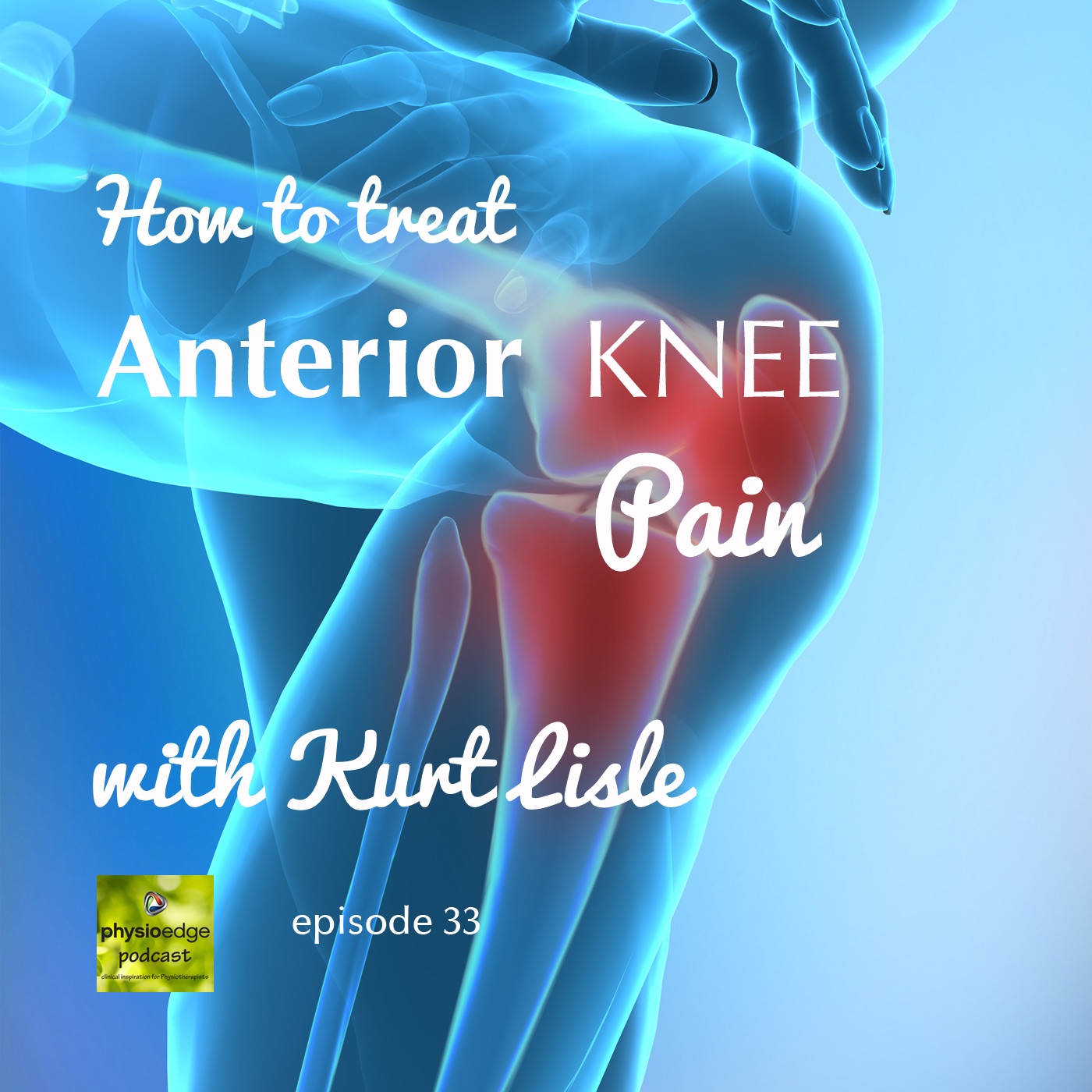
Ep 33033. How to treat anterior knee pain with Kurt Lisle
Anterior knee pain can occur in your elite sports patients right through to office workers and weekend warriors. In this podcast with Kurt Lisle, we discuss anterior knee pain, the causes, how to diagnose the source of the pain, and the best ways to treat and rehabilitate these patients. Kurt Lisle is the Australian Socceroos Physio and co-owner of The Knee Joint Physio in Queensland. Kurt and I discussed acute knee injuries on the Physio Edge podcast in episode 29, and I really wanted to get Kurt back on the podcast to discuss the anterior knee. In this fantastic, detailed episode of the Physio Edge podcast, Kurt and I explore: Subjective clues that give you ideas about differential diagnosis Fat pad - location of pain, activities that irritate Patellofemoral joint - aggravating activities and DDx Patellar tendon - subjective clues, location of pain Objective examination of the anterior knee Tests for PFJ Functional tests first or examination on the treatment table? Palpation of the anterior knee Fat pad palpation and tests Is the fat pad tender medial and laterally, or can it be tender only on one aspect Neuromuscular patterning Squat and one leg squat examination What causes "catching" pain on movement Chondral defects - identifying Is there value in the grind test When to refer for MRI and other imaging Important factors that may contribute to AKP Gait contributors to AKP Treatment of PFJ pain Modifying PFJ aggravating activities Using EMG Quadricep rehabilitation and strengthening When to incorporate squats into your rehabilitation program The role of taping for PFJ or fat pad irritation Red flags causing knee pain Links of Interest Kurt Lisle The Knee Joint Physiotherapy, Bokarina, QLD Socceroos Review the Physio Edge podcast in iTunes Clinical Edge
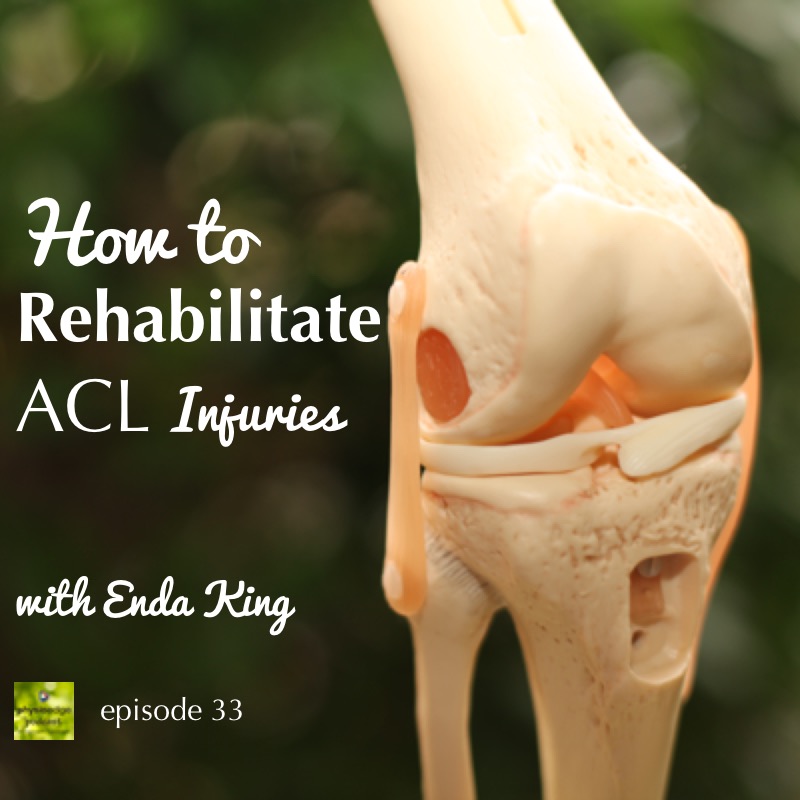
Ep 32032. How to rehabilitate ACL injuries with Enda King
ACL injuries can be career ending, or they can be an opportunity to sort out movement efficiency, motor control and and technical skills, coming back from the rehabilitation process with more power, speed and efficiency than they had before they injured their ACL. In this podcast, Enda King from the Sports Surgery Clinic in Dublin currently completing his PhD in 3D biomechanical analysis after ACL reconstruction, with the aim to assist in RTP decision making and identifying fully rehabilitated athletes, and David Pope discuss ACL injuries, and the most important factors in pre-operative management and post-operative exercise programming to get your patients back to sport with improved sporting performance. Going deep on the details involved in ACL Rehabilitation, including: 01:20 Enda King and SSC, and working with ACL athletes PhD in 3D biomechanical analysis after ACL reconstruction, aim to assist in RTP decision making and what a fully rehabilitated athlete looks like What does a fully rehabilitated athlete look like? Incorporating performance goals into the rehab process Can athletes achieve better performance post ACL rehab than they were pre-injury Types of ACL grafts Preoperative ACL Physiotherapy, helping your patient to prepare for the surgery Preoperative education Restoring knee extension, balancing pain and improved range of movement, empowering your patient Guidelines for pain, swelling when restoring range of movement Restoring quadriceps activation, normalising gait patterns Clinical Edge Clinical Edge's free webinar program Preoperative length of time Post-op - initial management To use or not use co-contraction exercises of quads and hamstrings Should you use squatting style exercises Week 1 post op Activating quadriceps - internal quadriceps cues or external exercise focus How much pain should a patient experience during or after an exercise Week 2 post-op When can heavy gym training commence Changing movement patterns throughout the kinetic chain Advice for patients in the early stages of rehab Frequency of exercise Week 2 onwards - exercises incorporating balance and proprioception Open vs closed chain exercises Advice for patients in weeks 2–6 Nutrition and dietary advice for patients Gym based rehabilitation Choosing and modifying exercises for middle stages of the rehabilitation process Various types of squatting movement, and progressing the types of squats Goblet squats Retraining ideal squat patterns Progressing squats, deadlifts and lunges Front squats Front squats and trap bar deadlifts vs back squats during rehabilitation When can an athlete start cycling Disadvantages of using cycling as the main part of a rehabilitation program Hamstring rehabilitation after semitendinosis/gracilis graft Strength and power development Strength testing - mid thigh pull, leg press Should we use open chain strength tests When to perform strength tests Strength vs power and rate of force development Running - incorporating into the program. When can your patient start running? Preparation for running Running drills Ideal movement patterns in running Enda King and SSC, and working with ACL athletes Podcast timeline 3:35 What does a fully rehabilitated athlete look like? 5:40 Incorporating performance goals into the rehab process 6:50 Can athletes achieve better performance post ACL rehab than they were pre-injury 8:20 Types of ACL grafts 11:10 Preoperative ACL Physiotherapy, helping your patient to prepare for the surgery - an opportunity to prepare your patients knee, ROM, strength and educate them on the rehabilitation process 14:20 Preoperative education 14:40 Restoring knee extension, balancing pain and improved range of movement, empowering your patient with 15:40 Guidelines for pain, swelling when restoring range of movement 16:15 Restoring quadriceps activation, normalising gait patterns 17:10 Clinical Edge 18:45 Clinical Edge's free webinar program 19:30 Preoperative length of time 20:35 Post-op - initial management 23:20 To use or not use co-contraction exercises of quads and hamstrings 24:50 Should you use squatting style exercises Week 1 post op 25:25 Activating quadriceps - internal quadriceps cues or external exercise focus 26:30 How much pain should a patient experience during or after an exercise 27:30 Week 2 post-op 28:30 When can heavy gym training commence 29:30 Changing movement patterns throughout the kinetic chain 31:00 Advice for patients in the early stages of rehab 32:10 Frequency of exercise 32:55 Week 2 onwards - exercises incorporating balance and proprioception 34:10 Open vs closed chain exercises 35:40 Advice for patients in weeks 2–6 37:15 Nutrition and dietary advice for patients 37:45 Gym based rehabilitation 38:50 Choosing and modifying exercises for middle stages of the rehabilitation process 41:00 Various types of squatting movement, and progressing the types of squats 41:45 Goblet squats 42:30 Retraining ideal squat patterns 43:25 Progressing squats, deadlifts an

Ep 30030. CrossFit injuries with Antony Lo
CrossFit is a very popular form of improving strength and fitness, and CrossFit athletes have a variety of common injuries. Training errors and the athlete's biomechanics often contribute to these injuries, and identifying incorrect biomechanics and other contributing elements in their training is often the key to helping your patients recover from injury, train pain free and importantly for your patients, ultimately get stronger and fitter. In episode 30 of the Physio Edge podcast, David Pope discusses CrossFit injuries, training, biomechanics and injury recovery with Antony Lo. Antony is a Musculoskeletal Physiotherapist with a number of clinics within CrossFit gyms across Sydney, and a large proportion of his patient population are CrossFit athletes. In this podcast Antony and David explore: The most common injuries in CrossFit Factors that contribute to injuries in the Shoulders, Neck, Back, Knees, and lower limb Specific exercises performed in CrossFit Squats Pullups/Chinups Pushups Overhead exercises Double unders Overhead squats Snatch Running Ideal biomechanics for each of these movement Common movement errors and ways to assess each movement Rest from training vs continue training Manual therapy on cross fit athletes Modifying training loads Rhabdomyolisis Urinary continence while training Advice for Physios treating CrossFit athletes Links of Interest Review the podcast in iTunes Clinical Edge – fantastic online and face to face education for Physiotherapists Antony Lo Antony's Website – physiodetective.com Antony on Twitter CrossFit Hide