
Physio Edge podcast with David Pope
179 episodes — Page 2 of 4

Ep 130130. Neck pain objective assessment & treatment part 2 with Prof. Gwendolen Jull
When assessing and treating neck pain patients, there are a lot of tests and treatments to choose from. If you choose treatments that aren't suitable for your patient's presentation, your patient won't progress, or worse, you'll aggravate their symptoms. How can you thoroughly assess your neck pain patients, and use the information from your assessment to choose treatments that help improve their pain? In the first podcast with Specialist Musculoskeletal Physiotherapist, researcher and Emeritus Prof. Gwen Jull 121. Neck pain assessment, clinical reasoning & rehab. Physio Edge podcast with Prof Gwendolen Jull, we discussed questions to ask during your subjective history that help guide your neck pain assessment and clinical reasoning. In this followup podcast, discover how to accurately assess and effectively treat neck pain with Emeritus Prof. Gwen Jull, including: Objective examination (OE) How to perform a thorough OE to identify why your patient has pain, and the best treatment for each patient. How to perform a skilled manual assessment. What we can actually identify & diagnose in neck pain patients. Whether posture is relevant to neck pain. When and how to assess posture. How to assess physical impairments, and identify if they're relevant to a patient's neck pain. Which tests you should use to assess: ROM Strength Endurance Control Successful treatment How to decide where treatment should start in your initial session. Whether manual therapy (MT) is useful in the treatment of neck pain. How to tailor and progress your treatment to successfully rehab each patient, and choose between: MT Postural changes Strength exercises Control exercises Craniocervical flexion and extension exercises Neurodynamic treatment General strength and endurance training Exercises for flexibility and range of motion Graded activity Motor control Shoulder girdle strengthening Aerobic exercise for general fitness CLICK HERE to get access to Cervical spine assessment & treatment for neck pain & upper limb symptoms CLICK HERE to get access to Cervical radiculopathy assessment & treatment case study Links associated with this episode: 121. Neck pain assessment, clinical reasoning & rehab. Physio Edge podcast with Prof Gwendolen Jull iTunes - Download and follow the podcast Overcast - Download the podcast in Overcast Spotify - Listen to the podcast on Spotify Download the infographic handout for this podcast Cervical spine assessment & treatment for neck pain & upper limb symptoms - available with a free trial membership Cervical radiculopathy assessment & treatment case study available with a free trial membership Comprehensive, practical training to improve your skills, clinical reasoning, treatment results & confidence with a free trial Clinical Edge membership Prof Gwen Jull Management of Neck Pain Disorders: a research informed approach 1st Edition, by Gwendolen Jull, Deborah Falla, Julia Treleaven, Shaun O'Leary, and foreword by Jeremy S Lewis Let David know what you liked about this podcast on Twitter Follow and review the podcast on iTunes Infographics by Clinical Edge

Ep 129129. How important is strength in running injury? Physio Edge Track record: Running repairs podcast with Tom Goom
When patients have a running injury, such as knee pain or Achilles tendinopathy, do we need to include strength training in their rehab? Discover when strength training is an important part of comprehensive running injury rehab in this podcast with Tom Goom (Running Physio), and explore: Whether strength is important in runners. Whether patients that are stronger are less likely to develop running injuries. Why recent research found higher levels of strength in recently injured runners compared to uninjured runners. When we need to improve patients' strength in running injury rehab. Can strength training reduce the risk of running injuries? How strength training fits into a comprehensive rehab program. When strength is relevant to pain and pathology. When rehab does NOT need to include strength training. How to know what to focus on during rehab. Which patients don't require exercises or strength training. How to identify when strength goals are a barrier to recovery and return to running. Additional benefits of strength training, beyond improved strength. Improve running injury assessment & treatment now with the Running Repairs Online course with Tom Goom at clinicaledge.co/runningrepairs Free running injury assessment & treatment video series available now Links associated with this episode: Improve your confidence and clinical reasoning with a free trial Clinical Edge membership Join Tom live on Facebook & ask your shoulder related questions every Friday Download and subscribe to the podcast on iTunes Download the podcast now using the best podcast app currently in existence - Overcast Listen to the podcast on Spotify Tom Goom on Twitter Tom Goom's website David Pope - Twitter David Pope & why I started Clinical Edge Review the podcast on iTunes Infographics by Clinical Edge
Ep 128128. Postoperative shoulders - can we predict who gets stiff? Physio Edge Shoulder success podcast with Jo Gibson
Patients may develop stiffness following rotator cuff repair or other shoulder surgery, particularly with longer periods of immobilisation. On the other hand, some patients may fail rehab without sufficient immobilisation. How can you identify which patients are likely to develop stiffness and will benefit from early mobilisation? Find out in this podcast with Jo Gibson (Clinical Physiotherapy Specialist), and discover: Which patients are likely to benefit from rotator cuff or other surgical repair. How to plan post-op surgical rehab. Whether patients should have a period of immobilisation or not. How to predict patients that are likely to develop post-op shoulder stiffness. Metabolic, genetic, age-related and psychosocial factors that influence development of stiffness. Pre-operative and surgical factors that influence development of stiffness. How to reduce the likelihood of stiffness developing. Comparison between early post-op shoulder mobilisation and six weeks in a sling. Patients more likely to fail a RC repair, who may need more of a conservative approach to early mobilisation. How to explain mobilisation vs immobilisation to patients. Short and long term outcomes when patients develop stiffness. Frozen shoulder If and when corticosteroid injections are helpful. The role of P. acnes in development of frozen shoulder. Free webinar "5 common mistakes therapists make with shoulder pain, and what to do about them" with Jo Gibson Register now for the free webinar "5 common mistakes therapists make with shoulder pain, and what to do about them" with Jo Gibson (Upper Limb Specialist Physio) Frozen and stiff shoulder assessment & treatment with Jo Gibson Improve your assessment and treatment of frozen and stiff shoulders now with Jo Gibson's online course at clinicaledge.co/frozenshoulder Shoulder: Steps to Success online course with Jo Gibson Improve your assessment and treatment of shoulder pain with the Shoulder: Steps to Success online course with Jo Gibson, now available for enrolment at clinicaledge.co/shouldersuccess Links associated with this episode: Improve your assessment and treatment of frozen and stiff shoulders now with Jo Gibson's online course at clinicaledge.co/frozenshoulder Comprehensively assess and treat shoulder pain with the Shoulder: Steps to Success online course with Jo Gibson Improve your confidence and clinical reasoning with a free trial Clinical Edge membership Join Jo Gibson live on Facebook & ask your shoulder related questions every Monday Download and subscribe to the podcast on iTunes Download the podcast now using the best podcast app currently in existence - Overcast Listen to the podcast on Spotify Jo Gibson on Twitter Let David know what you liked about this podcast on Twitter Review the podcast on iTunes Infographics by Clinical Edge
Ep 127127. Posterior shoulder pain differential diagnosis & treatment. Physio Edge Shoulder success podcast with Jo Gibson
Can you solve this case of a badminton player with a five year history of posterior shoulder pain and shoulder fatigue with overhead movements? Find out in this podcast with Jo Gibson (Clinical Physiotherapy Specialist). Discover the diagnosis and why the patient hasn't improved with rehabilitation, as Jo reveals the case study and: Subjective clues to help diagnose this condition. Questions to ask in the subjective history. Differential diagnoses to keep in mind. How to identify and rule out red flags. Clinical tests to use to rule this condition in and out. What medical tests and MRI reveal. Common causes of this condition. Conservative, medical and surgical management and results. Ideal treatment pathways for this condition. Free webinar "5 common mistakes therapists make with shoulder pain, and what to do about them" with Jo Gibson Register now for the free webinar "5 common mistakes therapists make with shoulder pain, and what to do about them" with Jo Gibson (Upper Limb Specialist Physio) Frozen and stiff shoulder assessment & treatment with Jo Gibson Improve your assessment and treatment of frozen and stiff shoulders now with Jo Gibson's online course at clinicaledge.co/frozenshoulder Shoulder: Steps to Success online course with Jo Gibson Improve your assessment and treatment of shoulder pain with the Shoulder: Steps to Success online course with Jo Gibson, now available for enrolment at clinicaledge.co/shouldersuccess Links associated with this episode: Improve your assessment and treatment of frozen and stiff shoulders now with Jo Gibson's online course at clinicaledge.co/frozenshoulder Improve your shoulder assessment & treatment with the Shoulder: Steps to Success online course with Jo Gibson Improve your confidence and clinical reasoning with a free trial Clinical Edge membership Join Jo Gibson live on Facebook & ask your shoulder related questions every Monday Download and subscribe to the podcast on iTunes Download the podcast now using the best podcast app currently in existence - Overcast Listen to the podcast on Spotify Jo Gibson on Twitter Let David know what you liked about this podcast on Twitter Review the podcast on iTunes Infographics by Clinical Edge

Ep 126126. 3 signs of Plantaris involvement in Achilles Tendinopathy. Physio Edge Track record: Running repairs podcast with Tom Goom
When your patient with Achilles tendon pain isn't progressing as well as you hoped, could Plantaris be implicated in their pain? Find out in this latest Physio Edge Track record: Running repairs podcast with Tom Goom, where you'll discover: Plantaris anatomy and relationship to the Achilles tendon. Common symptoms when Plantaris is causing Achilles tendon pain. How to differentiate Achilles tendinopathy from Plantaris involvement. Why patients with Plantaris involvement may not progress with a tendon loading program. How to adjust treatment when you suspect Plantaris involvement. When Plantaris patients can return to running and hill running. Additional medical and surgical management when Plantaris conservative treatment doesn't resolve symptoms. Enjoy this new podcast with Tom Goom now to improve your treatment of Achilles tendon pain. Improve running injury assessment & treatment now with the Running Repairs Online course with Tom Goom at clinicaledge.co/runningrepairs Free running injury assessment & treatment video series available now Links associated with this episode: Improve your confidence and clinical reasoning with a free trial Clinical Edge membership Join Tom live on Facebook & ask your shoulder related questions every Friday Download and subscribe to the podcast on iTunes Download the podcast now using the best podcast app currently in existence - Overcast Listen to the podcast on Spotify Tom Goom on Twitter Tom Goom's website David Pope - Twitter David Pope & why I started Clinical Edge Review the podcast on iTunes Infographics by Clinical Edge
Ep 125125. Cross education to improve shoulder strength. Physio Edge Shoulder success podcast with Jo Gibson
Immobilisation following a humeral fracture or shoulder surgery quickly results in muscle atrophy and decreased shoulder strength and proprioception. How can you limit strength deficits that develop while patients are in a sling? During this period of immobilisation, cross education (CE) can help retain shoulder strength. This improved shoulder strength and proprioception after the immobilisation period concludes may enable a faster return to work, high load activities or sport. What is CE, and how can you use it in your treatment? Find out in this podcast with Jo Gibson (Clinical Physiotherapy Specialist), and discover: What is cross education (CE)? What the latest research reveals about the effectiveness of CE? Which patients benefit most from CE. Common strength and proprioceptive deficits after shoulder stabilisation surgery. How CE improves strength and proprioception. Recommendations for CE exercise intensity and dosage. Whether to use eccentric, concentric or isometric exercises. How to amplify the strength and cortical effects of CE. How to target the rotator cuff with CE. How to incorporate proprioception into CE. How to use CE in rehab for instability, movement apprehension & kinesiophobia. When to include CE in MRCT post-op rehab. Improve your rehab of post-op, post-fracture and immobilised patients now with this podcast. Free webinar "5 common mistakes therapists make with shoulder pain, and what to do about them" with Jo Gibson Register now for the free webinar "5 common mistakes therapists make with shoulder pain, and what to do about them" with Jo Gibson (Upper Limb Specialist Physio) Frozen and stiff shoulder assessment & treatment with Jo Gibson Improve your assessment and treatment of frozen and stiff shoulders now with Jo Gibson's online course at clinicaledge.co/frozenshoulder Shoulder: Steps to Success online course with Jo Gibson Improve your assessment and treatment of shoulder pain with the Shoulder: Steps to Success online course with Jo Gibson, now available for enrolment at clinicaledge.co/shouldersuccess Links associated with this episode: Improve your assessment and treatment of frozen and stiff shoulders now with Jo Gibson's online course at clinicaledge.co/frozenshoulder Improve your shoulder assessment & treatment with the Shoulder: Steps to Success online course with Jo Gibson Improve your confidence and clinical reasoning with a free trial Clinical Edge membership Join Jo Gibson live on Facebook & ask your shoulder related questions every Monday Download and subscribe to the podcast on iTunes Download the podcast now using the best podcast app currently in existence - Overcast Listen to the podcast on Spotify Jo Gibson on Twitter Let David know what you liked about this podcast on Twitter Review the podcast on iTunes Infographics by Clinical Edge

Ep 124124. What do foam rolling and stretching do to the ITB? Physio Edge Track record: Running repairs podcast with Tom Goom
What do foam rolling and stretching do to the ITB? Are they effective in the treatment of ITB syndrome? Find out in this podcast with Tom Goom (Running Physio). The handout for this podcast is an article referenced in the podcast. There is no additional transcript or handout available. Free running injury assessment & treatment video series available now Links associated with this episode: Successfully treat ITB pain with this free three part video series with Tom Goom. Improve your lateral hip pain assessment, diagnosis & treatment skills with 3 free videos presented by Tom Goom Improve your confidence and clinical reasoning with a free trial Clinical Edge membership Join Tom live on Facebook & ask your shoulder related questions every Friday Download and subscribe to the podcast on iTunes Download the podcast now using the best podcast app currently in existence - Overcast Listen to the podcast on Spotify Tom Goom on Twitter Tom Goom's website David Pope - Twitter David Pope & why I started Clinical Edge Review the podcast on iTunes Infographics by Clinical Edge Article associated with this episode: Download the podcast handout to receive the articles associated with this podcast. Pepper TM, Brismée JM, Sizer Jr PS, Kapila J, Seeber GH, Huggins CA, Hooper TL. The Immediate Effects of Foam Rolling and Stretching on Iliotibial Band Stiffness: A Randomized Controlled Trial. International journal of sports physical therapy. 2021;16(3):651.
Ep 123123. Subscapularis - the forgotten part of the rotator cuff? Physio Edge Shoulder success podcast with Jo Gibson
Is subscapularis the forgotten part of the rotator cuff? Do we ever need to target it individually? If we do what are the best options for exercises? Find out which patients with torn or painful shoulders benefit from targeted subscapularis rehab in this episode of the Physio Edge Shoulder success podcast with Jo Gibson. You'll discover: Rotator cuff & subscapularis anatomy & function. Role and function of subscapularis with shoulder movement. How subscapularis works with the posterior cuff and larger shoulder muscles. Subscapularis pain & injury Subscapularis tears - mechanism of injury. Whether subscapularis is implicated in swimmers' shoulder pain. Objective assessment Objective tests to assess subscapularis strength. The role of special tests to identify subscap tears. Targeted subscapularis rehabilitation Which shoulder pain patients require targeted subscapularis rehab. When to target subscap in post-op rehab. Why and how to start subscap rehab in patients with massive rotator cuff tears Exercises to target subscap. How incorporating the kinetic chain can help your subscap rehab. How to improve subscap recruitment with altered speed of exercise. Plyometrics for subscapularis. Subscapularis rehab in other patients Stiff shoulders - using eccentric subscap exercises to improve range of movement. Whether subscap should be targeted post long head of biceps (LHB) rupture. Improve your rehab of painful and torn shoulders now with this podcast. Free webinar "5 common mistakes therapists make with shoulder pain, and what to do about them" with Jo Gibson Register now for the free webinar "5 common mistakes therapists make with shoulder pain, and what to do about them" with Jo Gibson (Upper Limb Specialist Physio) Frozen and stiff shoulder assessment & treatment with Jo Gibson Improve your assessment and treatment of frozen and stiff shoulders now with Jo Gibson's online course at clinicaledge.co/frozenshoulder Shoulder: Steps to Success online course with Jo Gibson Improve your assessment and treatment of shoulder pain with the Shoulder: Steps to Success online course with Jo Gibson, now available for enrolment at clinicaledge.co/shouldersuccess Links associated with this episode: Improve your assessment and treatment of frozen and stiff shoulders now with Jo Gibson's online course at clinicaledge.co/frozenshoulder Improve your shoulder assessment & treatment with the Shoulder: Steps to Success online course with Jo Gibson Improve your confidence and clinical reasoning with a free trial Clinical Edge membership Join Jo Gibson live on Facebook & ask your shoulder related questions every Monday Download and subscribe to the podcast on iTunes Download the podcast now using the best podcast app currently in existence - Overcast Listen to the podcast on Spotify Jo Gibson on Twitter Let David know what you liked about this podcast on Twitter Review the podcast on iTunes Infographics by Clinical Edge
122. Shoulder pain after vaccine & NSAIDS - Physio Edge Shoulder success podcast with Jo Gibson
Are vaccinations associated with shoulder pain? Shoulder injury related to vaccine administration (SIRVA) has received a lot of attention on social media as vaccination levels have increased. If your patient has shoulder pain after a vaccine, what does this mean for treatment? Also in this podcast, how can you identify non-musculoskeletal causes of shoulder pain related to NSAID use or viscera? Find out in this podcast with Jo Gibson (Clinical Physiotherapy Specialist). Podcast handout The handout for this podcast consists of articles referenced in the podcast. There is no additional transcript or handout available. Free webinar "5 common mistakes therapists make with shoulder pain, and what to do about them" with Jo Gibson Register now for the free webinar "5 common mistakes therapists make with shoulder pain, and what to do about them" with Jo Gibson (Upper Limb Specialist Physio) Frozen and stiff shoulder assessment & treatment with Jo Gibson Improve your assessment and treatment of frozen and stiff shoulders now with Jo Gibson's online course at clinicaledge.co/frozenshoulder Shoulder: Steps to Success online course with Jo Gibson Improve your assessment and treatment of shoulder pain with the Shoulder: Steps to Success online course with Jo Gibson, now available for enrolment at clinicaledge.co/shouldersuccess Links associated with this episode: Improve your assessment and treatment of frozen and stiff shoulders now with Jo Gibson's online course at clinicaledge.co/frozenshoulder Improve your shoulder assessment & treatment with the Shoulder: Steps to Success online course with Jo Gibson Improve your confidence and clinical reasoning with a free trial Clinical Edge membership Join Jo Gibson live on Facebook & ask your shoulder related questions every Monday Download and subscribe to the podcast on iTunes Download the podcast now using the best podcast app currently in existence - Overcast Listen to the podcast on Spotify Jo Gibson on Twitter Let David know what you liked about this podcast on Twitter Review the podcast on iTunes Infographics by Clinical Edge Articles associated with this episode: Download the podcast handout to receive the articles associated with this podcast. Bancsi A, Houle SK, Grindrod KA. Getting it in the right spot: Shoulder injury related to vaccine administration (SIRVA) and other injection site events. Canadian Pharmacists Journal/Revue des Pharmaciens du Canada. 2018 Sep;151(5):295-9. Batra S, Page B. Shoulder injury related to vaccine administration: case series of an emerging occupational health concern. Workplace Health & Safety. 2021 Feb;69(2):68-72. Cross GB, Moghaddas J, Buttery J, Ayoub S, Korman TM. Don't aim too high: avoiding shoulder injury related to vaccine administration. Australian family physician. 2016 May;45(5):303-6. Gonzalez AI, Kortlever JT, Moore MG, Ring DC. Influenza Vaccination Is Not Associated with Increased Number of Visits for Shoulder Pain. Clinical Orthopaedics and Related Research®. 2020 Oct 1;478(10):2343-8. Hesse EM, Atanasoff S, Hibbs BF, Adegoke OJ, Ng C, Marquez P, Osborn M, Su JR, Moro PL, Shimabukuro T, Nair N. Shoulder injury related to vaccine administration (SIRVA): petitioner claims to the National Vaccine Injury Compensation Program, 2010–2016. Vaccine. 2020 Jan 29;38(5):1076-83. Hibbs BF, Ng CS, Museru O, Moro PL, Marquez P, Woo EJ, Cano MV, Shimabukuro TT. Reports of atypical shoulder pain and dysfunction following inactivated influenza vaccine, Vaccine Adverse Event Reporting System (VAERS), 2010–2017. Vaccine. 2020 Jan 29;38(5):1137-43. Martin Arias L, Fadrique RS, Gil MS, Salgueiro-Vazquez ME. Risk of bursitis and other injuries and dysfunctions of the shoulder following vaccinations. Vaccine. 2017 Sep 5;35(37):4870-6. Shahbaz M, Blanc PD, Domeracki SJ, Guntur S. Shoulder injury related to vaccine administration (SIRVA): an occupational case report. Workplace Health & Safety. 2019 Oct;67(10):501-5. Sohn DH. CORR Insights®: Influenza Vaccination Is Not Associated with Increased Number of Visits for Shoulder Pain. Clinical Orthopaedics and Related Research. 2020 Oct;478(10).

Ep 121121. Neck pain assessment, clinical reasoning & rehab. Physio Edge podcast with Prof Gwendolen Jull
How can you accurately assess neck pain patients and choose the most effective treatment to help resolve their pain and prevent recurrence? Find out in part 1 of this two part podcast series with Emeritus Professor Gwendolen Jull, and explore: How to accurately assess patients movements, muscular control, strength, posture, and palpate the cervical spine to identify the source of neck symptoms and contributing factors. Which questions and assessment tests will help you choose treatment that resolves symptoms, fully rehabilitates patients and helps to prevents future episodes of neck pain? How to use clinical reasoning to target your rehab, and decide if your treatment should include neck strengthening, manual therapy, sensory motor control, postural or work position changes? Download this podcast now to improve your assessment and treatment of neck pain. The next podcast with Prof Gwen Jull, available soon, will build on the knowledge you gain from part 1, and provide you with additional neck pain treatment strategies. CLICK HERE to get access to Cervical spine assessment & treatment for neck pain & upper limb symptoms CLICK HERE to get access to Cervical radiculopathy assessment & treatment case study Links associated with this episode: iTunes - Download and follow the podcast Overcast - Download the podcast in Overcast Spotify - Listen to the podcast on Spotify Download the infographic handout for this podcast Cervical spine assessment & treatment for neck pain & upper limb symptoms - available with a free trial membership Cervical radiculopathy assessment & treatment case study available with a free trial membership Comprehensive, practical training to improve your skills, clinical reasoning, treatment results & confidence with a free trial Clinical Edge membership Prof Gwen Jull Management of Neck Pain Disorders: a research informed approach 1st Edition, by Gwendolen Jull, Deborah Falla, Julia Treleaven, Shaun O'Leary, and foreword by Jeremy S Lewis Let David know what you liked about this podcast on Twitter Follow and review the podcast on iTunes Infographics by Clinical Edge
Ep 120120. Pec minor - a major cause of shoulder pain? Physio Edge Shoulder success podcast with Jo Gibson
Pec minor cops the blame for shoulder pain, scapular dyskinesia and all sorts of upper limb pain and "dysfunction". Is pec minor shortness or "tightness" really responsible for shoulder pain? In this podcast with Jo Gibson (Clinical Physiotherapy Specialist), you'll discover whether the latest evidence supports pec minor as a major cause of shoulder pain, or whether pec minor is an innocent victim. You'll also explore: Is pec minor responsible for shoulder pain? Does pec minor truly become "shortened"? Is there a link between a shortened pec minor, scapular dyskinesia and risk of developing shoulder pain? Should the Pectoralis minor be stretched in patients with shoulder pain? Review of pec minor attachments & anatomy Measurement of pec minor length has been shown in the literature to be reliable, but do we need to measure it? What is the most effective way of increasing length in pec minor? Stretching, self release, taping or strengthening the rotator cuff? Does pec minor stretching help to improve shoulder function, mechanics or prevent injury in overhead athletes? How long do ROM improvements following pec minor stretching last? If patients have a clear history of trauma, is pec minor shortness relevant? Is pec minor shortness relevant in thoracic outlet syndrome (TOS)? Can weightlifters develop pec minor tendinopathy? Is it worth assessing pec minor length in shoulder pain patients? Does the evidence support treating PM shortness in shoulder pain patients? Podcast handout The handout for this podcast is an article referenced in the podcast. There is no additional transcript or handout available. Free webinar "5 common mistakes therapists make with shoulder pain, and what to do about them" with Jo Gibson Register now for the free webinar "5 common mistakes therapists make with shoulder pain, and what to do about them" with Jo Gibson (Upper Limb Specialist Physio) Frozen and stiff shoulder assessment & treatment with Jo Gibson Improve your assessment and treatment of frozen and stiff shoulders now with Jo Gibson's online course at clinicaledge.co/frozenshoulder Shoulder: Steps to Success online course with Jo Gibson Improve your assessment and treatment of shoulder pain with the Shoulder: Steps to Success online course with Jo Gibson, now available for enrolment at clinicaledge.co/shouldersuccess Links associated with this episode: Improve your assessment and treatment of frozen and stiff shoulders now with Jo Gibson's online course at clinicaledge.co/frozenshoulder Physio Edge 096 Thoracic outlet syndrome with Jo Gibson Physio Edge 099 Upper traps - are they really a bad guy? with Jo Gibson Get your access to the free video series "Frozen shoulder assessment & treatment" with Jo Gibson Improve your shoulder assessment & treatment with the Shoulder: Steps to Success online course with Jo Gibson Improve your confidence and clinical reasoning with a free trial Clinical Edge membership Join Jo Gibson live on Facebook & ask your shoulder related questions every Monday Download and subscribe to the podcast on iTunes Download the podcast now using the best podcast app currently in existence - Overcast Listen to the podcast on Spotify Jo Gibson on Twitter Let David know what you liked about this podcast on Twitter Review the podcast on iTunes Infographics by Clinical Edge Article associated with this episode: Download the podcast handout to receive the article associated with this podcast. Illig KA, Donahue D, Duncan A, Freischlag J, Gelabert H, Johansen K, Jordan S, Sanders R, Thompson R. Reporting standards of the Society for Vascular Surgery for thoracic outlet syndrome. Journal of vascular surgery. 2016 Sep 1;64(3):e23-35.

Ep 119119. Suspect a stress fracture? Physio Edge Track record: Running repairs podcast with Tom Goom
Stress fractures and bone stress injuries in running patients need to be identified early, to allow recovery before the injury worsens and requires extensive time away from running. When should you suspect a stress fracture or a bone stress injury (BSI) in your running patients? Find out in the podcast with Tom Goom (Running Physio), and explore: How to identify stress fractures & BSI's in your patients. Which patients are at greater risk of developing BSI or stress fractures? Features in your patient history, including past & medical history, onset & aggravating factors that increase your suspicion of a stress fracture. Which BSI's are "high risk"? Common training errors that lead to a stress fracture. What tests can be performed in your objective assessment to help diagnose stress fractures? How to differentiate tendon pain from bone stress injuries Will bruising or swelling appear with bone stress fractures? How palpation can help your diagnosis Why common assessment tests are often painfree in bone stress injuries. When imaging is important. Which imaging modalities to request when you suspect a stress fracture or BSI. Improve your identification and assessment of stress fractures and bone stress injuries now with this podcast. Free running injury assessment & treatment video series available now Links associated with this episode: Successfully treat ITB pain with this free three part video series with Tom Goom. Improve your lateral hip pain assessment, diagnosis & treatment skills with 3 free videos presented by Tom Goom Improve your confidence and clinical reasoning with a free trial Clinical Edge membership Join Tom live on Facebook & ask your running related questions every Friday Download and subscribe to the podcast on iTunes Download the podcast now using the best podcast app currently in existence - Overcast Listen to the podcast on Spotify Tom Goom on Twitter Tom Goom's website David Pope - Twitter David Pope & why I started Clinical Edge Review the podcast on iTunes Infographics by Clinical Edge

Ep 118118. Atraumatic SCJ instability diagnosis & rehab. Physio Edge Shoulder success podcast with Jo Gibson
Patients with atraumatic sternoclavicular joint (SCJ) instability may have pain during overhead activities, throwing or playing sport. How can you diagnose and successfully rehabilitate SCJ instability? Find out in this podcast with Jo Gibson (Clinical Physiotherapy Specialist), and explore: Assessment & diagnosis Which bony surfaces, ligaments and muscles provide stability at the SCJ. Why do patients develop SCJ instability, and what are the risk factors? What the research reveals about SCJ instability. Common symptoms that help you identify SCJ instability. Questions you need to ask that help with diagnosis. Posterior instability - Common symptoms & anatomical structures that can be impacted. How to identify clavicular epiphyseal plate injuries in young athletes. When closing of the proximal clavicular epiphyseal plate occurs, and why this is important to know. Rehab & recovery Rehab exercises you can use to develop muscular support for the SCJ. How and why you can add C/Sp exercises into SCJ rehab. How long recovery will take your patients. When patients are likely to start noticing improvements in symptoms. Will SCJ instability patients continue to experience instability and pain after rehab? Is this condition self-limiting? How can involvement of the SCJ disc be identified? What imaging can be helpful? When should you request SCJ imaging? When is SCJ surgery indicated? Jo also answered these questions from FB Live listeners: Does hypermobility change with age? Can asymptomatic SCJ instability occur in weightlifters that do not have hypermobility, and do we need to treat it? Which SCJ patients benefit from injections? When should SCJ injections be avoided? What autoimmune inflammatory conditions may result in SCJ swelling? Podcast handout The handout for this podcast consists of articles referenced in the podcast. There is no additional transcript or handout available. Free webinar "5 common mistakes therapists make with shoulder pain, and what to do about them" with Jo Gibson Register now for the free webinar "5 common mistakes therapists make with shoulder pain, and what to do about them" with Jo Gibson (Upper Limb Specialist Physio) Frozen and stiff shoulder assessment & treatment with Jo Gibson Improve your assessment and treatment of frozen and stiff shoulders now with Jo Gibson's online course at clinicaledge.co/frozenshoulder Shoulder: Steps to Success online course with Jo Gibson Improve your assessment and treatment of shoulder pain with the Shoulder: Steps to Success online course with Jo Gibson, now available for enrolment at clinicaledge.co/shouldersuccess Links associated with this episode: Improve your assessment and treatment of frozen and stiff shoulders now with Jo Gibson's online course at clinicaledge.co/frozenshoulder Improve your shoulder assessment & treatment with the Shoulder: Steps to Success online course with Jo Gibson The Hypermobility Syndromes Association (HMSA) Improve your confidence and clinical reasoning with a free trial Clinical Edge membership Join Jo Gibson live on Facebook & ask your shoulder related questions every Monday Download and subscribe to the podcast on iTunes Download the podcast now using the best podcast app currently in existence - Overcast Listen to the podcast on Spotify Jo Gibson on Twitter Let David know what you liked about this podcast on Twitter Review the podcast on iTunes Infographics by Clinical Edge Articles associated with this episode: Download the podcast handout to receive the articles associated with this podcast. Castori M, Tinkle B, Levy H, Grahame R, Malfait F, Hakim A. A framework for the classification of joint hypermobility and related conditions. InAmerican Journal of Medical Genetics Part C: Seminars in Medical Genetics 2017 Mar (Vol. 175, No. 1, pp. 148-157). Malfait F, Francomano C, Byers P, Belmont J, Berglund B, Black J, Bloom L, Bowen JM, Brady AF, Burrows NP, Castori M. The 2017 international classification of the Ehlers–Danlos syndromes. In American Journal of Medical Genetics Part C: Seminars in Medical Genetics 2017 Mar (Vol. 175, No. 1, pp. 8-26). Martetschläger F, Warth RJ, Millett PJ. Instability and degenerative arthritis of the sternoclavicular joint: a current concepts review. The American journal of sports medicine. 2014 Apr;42(4):999-1007. Sewell MD, Al-Hadithy N, Le Leu A, Lambert SM. Instability of the sternoclavicular joint: current concepts in classification, treatment and outcomes. The bone & joint journal. 2013 Jun;95(6):721-31.
Ep 117117. ACJ rehab. Physio Edge Shoulder success podcast with Jo Gibson
How can you rehab patients with an acromioclavicular joint (ACJ) injury, or end of range elevation shoulder pain, long term shoulder pain, clavicular osteolysis, or osteoarthritis? What exercises and manual therapy can you use in your rehab program? Find out in this podcast with Jo Gibson (Clinical Physiotherapy Specialist), and discover: Common ACJ mechanisms of injury A recap of ACJ injury classification and treatment pathways for different grades of injury. How useful is X-ray in ACJ injuries, and what is the best imaging for this injury? What imaging should ACJ injury patients have? What are the long term risks for ACJ patients? What factors correlate with worsening ACJ pain? Can atraumatic instability occur at the ACJ? What movements should be assessed in ACJ injury patients? Why is symptom modification helpful in shoulder pain and ACJ patients? What compensatory movement patterns do patients adapt that may contribute to ongoing pain? How can we help to break the cycle of ACJ pain? What tests can be performed to identify the best treatment for individual ACJ patients? What muscles help to improve stability around the ACJ, and how can these be targeted in ACJ injury patients? What exercises can be used in initial ACJ rehab? How can ACJ rehab be progressed? How can end range pain (ERP) be improved in ACJ patients? How to identify when scapular mechanics affect the ACJ. Exercises that improve scapular mechanics in ACJ patients? When is manual therapy useful in ACJ patients? What combination of manual therapy or mobilisation with movement and exercises can be used in ACJ patients? What role can the ACJ play in shoulder pain? Does the ACJ need to be symptomatic to cause shoulder pain? What common symptoms make you suspect the ACJ is involved in shoulder pain? Answers to live listener questions: What humeral fractures or bone stress injuries occur in throwing athletes? Who develops humeral spiral fractures or stress fractures? Are recreational or high level athletes more likely to develop humeral fractures? Are players more or less likely to have a fracture after having a 6 week break from training? How can players prevent humeral stress fractures? Free webinar "5 common mistakes therapists make with shoulder pain, and what to do about them" with Jo Gibson Register now for the free webinar "5 common mistakes therapists make with shoulder pain, and what to do about them" with Jo Gibson (Upper Limb Specialist Physio) Frozen and stiff shoulder assessment & treatment with Jo Gibson Improve your assessment and treatment of frozen and stiff shoulders now with Jo Gibson's online course at clinicaledge.co/frozenshoulder Shoulder: Steps to Success online course with Jo Gibson Improve your assessment and treatment of shoulder pain with the Shoulder: Steps to Success online course with Jo Gibson, now available for enrolment at clinicaledge.co/shouldersuccess Links associated with this episode: Improve your assessment and treatment of frozen and stiff shoulders now with Jo Gibson's online course at clinicaledge.co/frozenshoulder Improve your shoulder assessment & treatment with the Shoulder: Steps to Success online course with Jo Gibson Improve your confidence and clinical reasoning with a free trial Clinical Edge membership Join Jo Gibson live on Facebook & ask your shoulder related questions every Monday Download and subscribe to the podcast on iTunes Download the podcast now using the best podcast app currently in existence - Overcast Listen to the podcast on Spotify Jo Gibson on Twitter Let David know what you liked about this podcast on Twitter Review the podcast on iTunes Infographics by Clinical Edge
Ep 116116. Shoulder pain & bone stress injuries in weightlifters & throwing athletes. Physio Edge Shoulder success podcast with Jo Gibson
How can you diagnose posterior shoulder, neck and supraclavicular pain in your weightlifting patients and throwing athletes? Could a bone stress injury be responsible for your patients pain? Explore how to assess, diagnose and rehab shoulder pain from bone stress injuries in weightlifters or throwing athletes in this podcast with Jo Gibson (Clinical Physiotherapy Specialist). Discover: Bone stress injuries in the upper limb and ribcage that cause shoulder pain. What causes first rib stress fractures? Which patients develop first rib bone stress injuries - common populations and activities. Common areas of pain with first rib stress fractures. How to assess & diagnose first rib bone stress injuries. Common painful and restricted movements that help with diagnosis. How to differentiate between a rotator cuff injury and first rib bone stress injuries. Cervical spine & shoulder strength and control assessment tests that help identify where to target your rehab. Do biomechanics in weightlifting matter? How to assess and address weightlifting biomechanics to allow healing and return to sport. Imaging Why imaging is vital in patients with this injury. Common imaging that misses 1st rib bone stress fracture, and what imaging to request that actually identifies it. Why non-healing with the formation of pseudoarthrosis may lead to better outcomes than bony callous formation. Whether patients can return to sport if rib stress fractures don't heal. How can you rehab patients with 1st rib stress fracture? How to progress rehab exercises. Treatment when 1st rib callus formation is causing thoracic outlet syndrome. Podcast handout The handout for this podcast consists of an article referenced in the podcast. There is no additional transcript or handout available. Free webinar "5 common mistakes therapists make with shoulder pain, and what to do about them" with Jo Gibson Register now for the free webinar "5 common mistakes therapists make with shoulder pain, and what to do about them" with Jo Gibson (Upper Limb Specialist Physio) Frozen and stiff shoulder assessment & treatment with Jo Gibson Improve your assessment and treatment of frozen and stiff shoulders now with Jo Gibson's online course at clinicaledge.co/frozenshoulder Shoulder: Steps to Success online course with Jo Gibson Improve your assessment and treatment of shoulder pain with the Shoulder: Steps to Success online course with Jo Gibson, now available for enrolment at clinicaledge.co/shouldersuccess Links associated with this episode: Improve your assessment and treatment of frozen and stiff shoulders now with Jo Gibson's online course at clinicaledge.co/frozenshoulder Improve your shoulder assessment & treatment with the Shoulder: Steps to Success online course with Jo Gibson Improve your confidence and clinical reasoning with a free trial Clinical Edge membership Join Jo Gibson live on Facebook & ask your shoulder related questions every Monday Download and subscribe to the podcast on iTunes Download the podcast now using the best podcast app currently in existence - Overcast Listen to the podcast on Spotify Jo Gibson on Twitter Let David know what you liked about this podcast on Twitter Review the podcast on iTunes Infographics by Clinical Edge Article associated with this episode: Download the podcast handout to receive the article associated with this podcast. Miller A, Dodson CC, Ilyas AM. Thrower's fracture of the humerus. The Orthopedic Clinics of North America. 2014 Aug 3;45(4):565-9.
Ep 115115. Shoulder pain & weakness - diagnosis and detective work. Physio Edge Shoulder success podcast with Jo Gibson
Time for some detective work - can you diagnose the cause of this man's shoulder pain? Listen out for the clues in this interesting case study. When your shoulder pain patient has bilateral shoulder pain after starting a gym program, difficulty lifting their arms overhead due to weakness, significant bilateral scapular winging and muscle atrophy, what are your potential diagnoses? Find out in this case study with Jo Gibson (Clinical Physiotherapy Specialist), and discover: When patients have uncommon shoulder pain presentations, what potential diagnoses can you keep in mind? How does it impact your diagnosis if your patient has difficulty smiling, whistling and drinking through a straw? What's this patients' diagnosis? What tests can be performed to confirm the diagnosis? Which muscles are commonly affected? How much muscle weakness commonly occurs? What is the long term prognosis for this condition? What treatment is supported by the evidence? Are braces helpful? Which medical specialists are important to include in diagnosis & management? Podcast handout The handout for this podcast consists of articles referenced in the podcast. There is no additional transcript or handout available. Free webinar "5 common mistakes therapists make with shoulder pain, and what to do about them" with Jo Gibson Register now for the free webinar "5 common mistakes therapists make with shoulder pain, and what to do about them" with Jo Gibson (Upper Limb Specialist Physio) Frozen and stiff shoulder assessment & treatment with Jo Gibson Improve your assessment and treatment of frozen and stiff shoulders now with Jo Gibson's online course at clinicaledge.co/frozenshoulder Shoulder: Steps to Success online course with Jo Gibson Improve your assessment and treatment of shoulder pain with the Shoulder: Steps to Success online course with Jo Gibson, now available for enrolment at clinicaledge.co/shouldersuccess Links associated with this episode: Improve your assessment and treatment of frozen and stiff shoulders now with Jo Gibson's online course at clinicaledge.co/frozenshoulder Improve your shoulder assessment & treatment with the Shoulder: Steps to Success online course with Jo Gibson The Facioscapulohumeral Muscular Dystrophy (FSHD) Society Improve your confidence and clinical reasoning with a free trial Clinical Edge membership Join Jo Gibson live on Facebook & ask your shoulder related questions every Monday Download and subscribe to the podcast on iTunes Download the podcast now using the best podcast app currently in existence - Overcast Listen to the podcast on Spotify Jo Gibson on Twitter Let David know what you liked about this podcast on Twitter Review the podcast on iTunes Infographics by Clinical Edge Articles associated with this episode: Download the podcast handout to receive the articles associated with this podcast. Hamel J, Tawil R. Case Studies on the Genetic and Clinical Diagnosis of Facioscapulohumeral Muscular Dystrophy. Neurologic Clinics. 2020 Aug 1;38(3):529-40. Mul K, Lassche S, Voermans NC, Padberg GW, Horlings CG, van Engelen BG. What's in a name? The clinical features of facioscapulohumeral muscular dystrophy. Practical neurology. 2016 Jun 1;16(3):201-7.
Ep 114114. Paediatric shoulder injuries. Physio Edge Shoulder success podcast with Jo Gibson
When paediatric or skeletally immature patients have shoulder pain, what diagnoses should be kept in mind? What are the potential diagnoses following trauma, in overuse injuries or "little leaguers shoulder"? What assessment and imaging is required in these patients? Find out in this podcast/video with Jo Gibson (Clinical Physiotherapy Specialist), and explore: What growth plate injuries may occur in skeletally immature athletes? The case study of a young athlete with misdiagnosed pain over the acromioclavicular joint (ACJ) A recap of acromial apophylysis and distal clavicular osteolysis. What are the common mechanisms of injury for ACJ? How are ACJ injuries classified? What are the limitations of ACJ injury classifications? Why are there often differences in ACJ injury classification between X-ray and MRI? How can ACJ imaging lead to incorrect return to play timeframes in mature athletes? In paediatric patients, what differential diagnosis do you need to keep in mind with an apparent ACJ injury? How does imaging help guide prognosis and treatment in younger athletes with ACJ injuries? How can growth plate injuries be identified? Can patients have a slipped humeral epiphysis? What are the most common humeral fractures What are humeral Salter-Harris fractures? Which fractures may impact future growth in the humerus? When is imaging absolutely required in paediatric shoulder injuries? What is "little leaguers shoulder" and why is it important to identify this early? When is glenohumeral internal rotation deficit (GIRD) relevant in lateral humeral pain? What are the risk factors for shoulder pain in young athletes? What causes GIRD in paediatric and skeletally mature athletes? What tests help with diagnosis in stiff shoulders? When is GIRD relevant? Why should the term "shoulder impingement" be avoided? How can you describe shoulder pain to patients? Can osteolysis of the whole scapula occur? Podcast handout The handout for this podcast consists of articles referenced in the podcast. There is no additional transcript or handout available. Free webinar "5 common mistakes therapists make with shoulder pain, and what to do about them" with Jo Gibson Register now for the free webinar "5 common mistakes therapists make with shoulder pain, and what to do about them" with Jo Gibson (Upper Limb Specialist Physio) Frozen and stiff shoulder assessment & treatment with Jo Gibson Improve your assessment and treatment of frozen and stiff shoulders now with Jo Gibson's online course at clinicaledge.co/frozenshoulder Shoulder: Steps to Success online course with Jo Gibson Improve your assessment and treatment of shoulder pain with the Shoulder: Steps to Success online course with Jo Gibson, now available for enrolment at clinicaledge.co/shouldersuccess Links associated with this episode: Improve your assessment and treatment of frozen and stiff shoulders now with Jo Gibson's online course at clinicaledge.co/frozenshoulder Improve your shoulder assessment & treatment with the Shoulder: Steps to Success online course with Jo Gibson Improve your confidence and clinical reasoning with a free trial Clinical Edge membership Join Jo Gibson live on Facebook & ask your shoulder related questions every Monday Download and subscribe to the podcast on iTunes Download the podcast now using the best podcast app currently in existence - Overcast Listen to the podcast on Spotify Jo Gibson on Twitter Let David know what you liked about this podcast on Twitter Review the podcast on iTunes Infographics by Clinical Edge Articles associated with this episode: Download the podcast handout to receive the articles associated with this podcast. Hall K, Borstad JD. Posterior shoulder tightness: to treat or not to treat?. journal of orthopaedic & sports physical therapy. 2018 Mar;48(3):133-6. Zajac JM, Tokish JM. Glenohumeral Internal Rotation Deficit: Prime Suspect or Innocent Bystander?. Current reviews in musculoskeletal medicine. 2020 Feb 12:1-0.
Ep 113113. Massive rotator cuff tear rehab. Physio Edge Shoulder success podcast with Jo Gibson
What are the best rehab options for patients with an irreparable rotator cuff tear? Can we predict which patients will do well and how long rehab will take? Find out in this video/podcast with Jo Gibson (Clinical Physiotherapy Specialist), discussing rehab options, a patient case study and the latest evidence for massive rotator cuff tear (MRCT) rehab. Discover: When patients are unable to have surgery, what rehab options are available to rehab MRCT? What is classified as a MRCT? What common issues do patients with MRCT face? What proprioceptive deficits exist in MRCT patients functionally and on fMRI? Is the "Anterior deltoid program" really the best rehab program for MRCT patients? What MRCT rehab exercises & programs are supported by the latest research? Which MRCT patients are likely to respond to rehab? Is scapular dyskinesis important to target in MRCT rehab? When patients are unable to lie supine, and are therefore unable to complete the anterior deltoid program, what options are available for rehab? How do rotator cuff imaging results help guide treatment? Which rotator cuff tendons need to be intact for successful rehab? Specific exercise ideas and progressions that can be used in rehab. How long is recovery likely to take? What key messages are important to convey to patients? What is the evidence for injections in MRCT, including prolotherapy, PRP? How can rehab programs target subscapularis strength? Is humeral head depression an important component in rehab? Podcast handout The handout for this podcast consists of articles referenced in the podcast. There is no additional transcript or handout available. Free webinar "5 common mistakes therapists make with shoulder pain, and what to do about them" with Jo Gibson Register now for the free webinar "5 common mistakes therapists make with shoulder pain, and what to do about them" with Jo Gibson (Upper Limb Specialist Physio) Frozen and stiff shoulder assessment & treatment with Jo Gibson Improve your assessment and treatment of frozen and stiff shoulders now with Jo Gibson's online course at clinicaledge.co/frozenshoulder Shoulder: Steps to Success online course with Jo Gibson Improve your assessment and treatment of shoulder pain with the Shoulder: Steps to Success online course with Jo Gibson, now available for enrolment at clinicaledge.co/shouldersuccess Links associated with this episode: Improve your assessment and treatment of frozen and stiff shoulders now with Jo Gibson's online course at clinicaledge.co/frozenshoulder Improve your shoulder assessment & treatment with the Shoulder: Steps to Success online course with Jo Gibson Improve your confidence and clinical reasoning with a free trial Clinical Edge membership Join Jo Gibson live on Facebook & ask your shoulder related questions every Monday Download and subscribe to the podcast on iTunes Download the podcast now using the best podcast app currently in existence - Overcast Listen to the podcast on Spotify Jo Gibson on Twitter Let David know what you liked about this podcast on Twitter Review the podcast on iTunes Infographics by Clinical Edge Articles associated with this episode: Download the podcast handout to receive the articles associated with this podcast. Agout C, Berhouet J, Spiry C, Bonnevialle N, Joudet T, Favard L, Society FA. Functional outcomes after non-operative treatment of irreparable massive rotator cuff tears: Prospective multicenter study in 68 patients. Orthopaedics & Traumatology: Surgery & Research. 2018 Dec 1;104(8):S189-92. Cavalier M, Jullion S, Kany J, Grimberg J, Lefebvre Y, Oudet D, Grosclaude S, Charousset C, Boileau P, Joudet T, Bonnevialle N. Management of massive rotator cuff tears: prospective study in 218 patients. Orthopaedics & Traumatology: Surgery & Research. 2018 Dec 1;104(8):S193-7. Cools AM, Van Tongel A, Berckmans K, Spanhove V, Plaetevoet T, Rosseel J, Soen J, Levy O, Maenhout A. Electromyographic analysis of selected shoulder muscles during a series of exercises commonly used in patients with symptomatic degenerative rotator cuff tears. Journal of Shoulder and Elbow Surgery. 2020 Oct 1;29(10):e361-73. Levy O, Mullett H, Roberts S, Copeland S. The role of anterior deltoid reeducation in patients with massive irreparable degenerative rotator cuff tears. Journal of shoulder and elbow surgery. 2008 Nov 1;17(6):863-70.
Ep 112112. Shoulder pain in swimmers & overhead athletes. Physio Edge Shoulder success podcast with Jo Gibson
When swimmers and overhead athletes have superior & anterior shoulder pain, what are your likely diagnoses? How can you successfully treat shoulder pain that improves with rest from sport, then comes back each time they return to training or sport? Find out in this podcast with Jo Gibson (Clinical Physiotherapy Specialist), where you'll discover: What are your likely diagnoses? Distal clavicular osteolysis (DCO) - what is it? How to differentially diagnose acromial apophysitis/apophylysis (AA) in young overhead athletes. What are common areas of pain and aggravating movements in DCO patients? Common training errors and weight training exercises that can cause or aggravate symptoms. Which athletes are likely to develop DCO, and common mechanisms of injury. Imaging you need to order. What Xray and other imaging reveals in DCO. What are potential long term issues following DCO, and how can this be avoided? The MOST important treatment for patients with DCO and AA. How can DCO be successfully managed? How to modify work activities in DCO patients. How long recovery takes. Why asymptomatic stress tests and palpation doesn't mean your patient is safe to return to sport. How to work with coaches when your patients are experiencing DCO. How to successfully return DCO patients to sport. Free webinar "5 common mistakes therapists make with shoulder pain, and what to do about them" with Jo Gibson Register now for the free webinar "5 common mistakes therapists make with shoulder pain, and what to do about them" with Jo Gibson (Upper Limb Specialist Physio) Frozen and stiff shoulder assessment & treatment with Jo Gibson Improve your assessment and treatment of frozen and stiff shoulders now with Jo Gibson's online course at clinicaledge.co/frozenshoulder Shoulder: Steps to Success online course with Jo Gibson Improve your assessment and treatment of shoulder pain with the Shoulder: Steps to Success online course with Jo Gibson, now available for enrolment at clinicaledge.co/shouldersuccess Links associated with this episode: Improve your assessment and treatment of frozen and stiff shoulders now with Jo Gibson's online course at clinicaledge.co/frozenshoulder Improve your shoulder assessment & treatment with the Shoulder: Steps to Success online course with Jo Gibson Improve your confidence and clinical reasoning with a free trial Clinical Edge membership Join Jo Gibson live on Facebook & ask your shoulder related questions every Monday Download and subscribe to the podcast on iTunes Download the podcast now using the best podcast app currently in existence - Overcast Listen to the podcast on Spotify Jo Gibson on Twitter Let David know what you liked about this podcast on Twitter Review the podcast on iTunes Infographics by Clinical Edge
Ep 111111. How to identify shoulder pain from pelvic health issues. Case studies with Jo Gibson
When your female patient has shoulder pain, how can you identify if the cause is musculoskeletal, or related to women's health issues? Find out in this video/podcast with Jo Gibson (Clinical Physiotherapy Specialist). You'll explore two separate case studies of female shoulder pain patients with different diagnoses, that'll help you discover: Which female reproductive issues can cause shoulder pain? How can you differentiate musculoskeletal and non-musculoskeletal causes of shoulder pain? Is pain at different stages of the menstrual cycle really just "hormones"? What questions can you ask your patients to help guide your diagnosis? What is the typical history of patients with shoulder pain related to women's health? If patients wake with acute shoulder pain, what are the potential musculoskeletal and non-musculoskeletal diagnoses? Free webinar "5 common mistakes therapists make with shoulder pain, and what to do about them" with Jo Gibson Register now for the free webinar "5 common mistakes therapists make with shoulder pain, and what to do about them" with Jo Gibson (Upper Limb Specialist Physio) Frozen and stiff shoulder assessment & treatment with Jo Gibson Improve your assessment and treatment of frozen and stiff shoulders now with Jo Gibson's online course at clinicaledge.co/frozenshoulder Shoulder: Steps to Success online course with Jo Gibson Improve your assessment and treatment of shoulder pain with the Shoulder: Steps to Success online course with Jo Gibson, now available for enrolment at clinicaledge.co/shouldersuccess Links associated with this episode: Improve your assessment and treatment of frozen and stiff shoulders now with Jo Gibson's online course at clinicaledge.co/frozenshoulder Improve your shoulder assessment & treatment with the Shoulder: Steps to Success online course with Jo Gibson Improve your confidence and clinical reasoning with a free trial Clinical Edge membership Join Jo Gibson live on Facebook & ask your shoulder related questions every Monday Download and subscribe to the podcast on iTunes Download the podcast now using the best podcast app currently in existence - Overcast Listen to the podcast on Spotify Jo Gibson on Twitter Let David know what you liked about this podcast on Twitter Review the podcast on iTunes Infographics by Clinical Edge
Ep 110110. Eccentric exercises for subacromial shoulder pain? Physio Edge Shoulder success podcast with Jo Gibson
Are eccentric exercises useful in subacromial shoulder pain rehab? When shoulder pain rehab has stalled, and patients aren't improving, will eccentric exercises help? Are eccentric exercises the missing component in successful rehab programs for recalcitrant shoulder pain? Find out in this discussion with Jo Gibson (Clinical Physiotherapy Specialist). Also discover: Should eccentric exercises be included in shoulder rehab programs? What does the research reveal about eccentric shoulder exercises? How can the research be applied and adapted clinically with shoulder pain patients? If eccentric exercises are helpful, which exercises should patients use? When and how often should eccentric exercises be performed? Are eccentric exercises helpful in acute shoulder pain? How long does shoulder pain normally take to recover from? How can gym programs be adapted to allow shoulder pain to recover while patients continue training or exercising? How many exercises should be included in shoulder pain rehab programs? Free webinar "5 common mistakes therapists make with shoulder pain, and what to do about them" with Jo Gibson Register now for the free webinar "5 common mistakes therapists make with shoulder pain, and what to do about them" with Jo Gibson (Upper Limb Specialist Physio) Frozen and stiff shoulder assessment & treatment with Jo Gibson Improve your assessment and treatment of frozen and stiff shoulders now with Jo Gibson's online course at clinicaledge.co/frozenshoulder Shoulder: Steps to Success online course with Jo Gibson Improve your assessment and treatment of shoulder pain with the Shoulder: Steps to Success online course with Jo Gibson, now available for enrolment at clinicaledge.co/shouldersuccess Links associated with this episode: Improve your assessment and treatment of frozen and stiff shoulders now with Jo Gibson's online course at clinicaledge.co/frozenshoulder Improve your shoulder assessment & treatment with the Shoulder: Steps to Success online course with Jo Gibson Improve your confidence and clinical reasoning with a free trial Clinical Edge membership Join Jo Gibson live on Facebook & ask your shoulder related questions every Monday Download and subscribe to the podcast on iTunes Download the podcast now using the best podcast app currently in existence - Overcast Listen to the podcast on Spotify Jo Gibson on Twitter Let David know what you liked about this podcast on Twitter Review the podcast on iTunes Infographics by Clinical Edge
Ep 109109. An unusual cause of shoulder pain - what's the diagnosis? Physio Edge Shoulder success podcast with Jo Gibson
An unusual cause of shoulder pain - what's the diagnosis? Solve this patient case study with Jo Gibson (Clinical Physiotherapy Specialist) and discover musculoskeletal and non-musculoskeletal causes of shoulder pain that are important to keep in mind when features don't fit. Free webinar "5 common mistakes therapists make with shoulder pain, and what to do about them" with Jo Gibson Register now for the free webinar "5 common mistakes therapists make with shoulder pain, and what to do about them" with Jo Gibson (Upper Limb Specialist Physio) Frozen and stiff shoulder assessment & treatment with Jo Gibson Improve your assessment and treatment of frozen and stiff shoulders now with Jo Gibson's online course at clinicaledge.co/frozenshoulder Shoulder: Steps to Success online course with Jo Gibson Improve your assessment and treatment of shoulder pain with the Shoulder: Steps to Success online course with Jo Gibson, now available for enrolment at clinicaledge.co/shouldersuccess Links associated with this episode: Improve your assessment and treatment of frozen and stiff shoulders now with Jo Gibson's online course at clinicaledge.co/frozenshoulder Improve your shoulder assessment & treatment with the Shoulder: Steps to Success online course with Jo Gibson Improve your confidence and clinical reasoning with a free trial Clinical Edge membership Join Jo Gibson live on Facebook & ask your shoulder related questions every Monday Download and subscribe to the podcast on iTunes Download the podcast now using the best podcast app currently in existence - Overcast Listen to the podcast on Spotify Jo Gibson on Twitter Let David know what you liked about this podcast on Twitter Review the podcast on iTunes Infographics by Clinical Edge
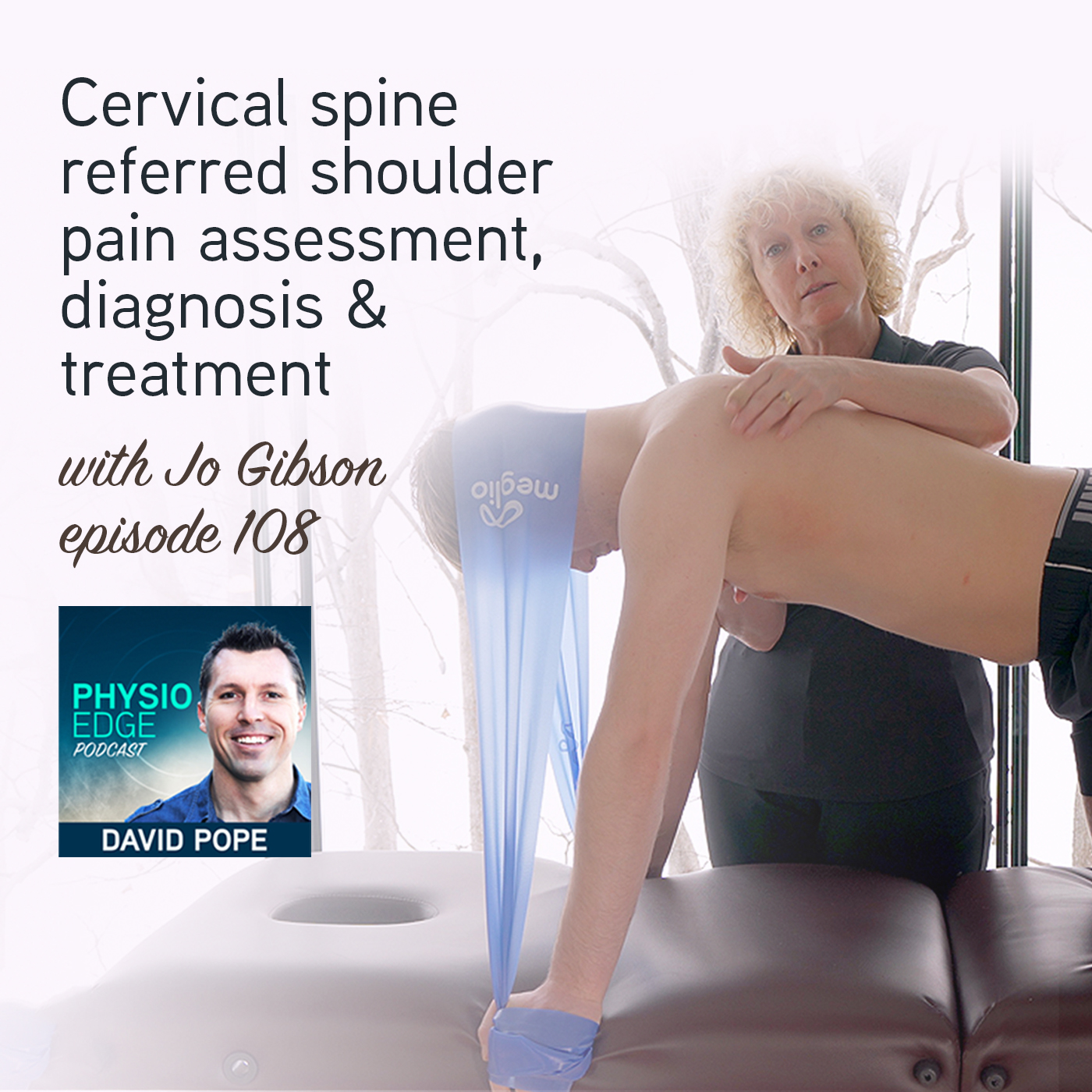
Ep 108108. Cervical spine referred shoulder pain assessment, diagnosis & treatment with Jo Gibson
When is shoulder pain from the C/sp? When a patient presents with shoulder pain and stiffness, how can C/Sp referral be identified? If a patient has full neck range of movement, and neck movements don't reproduce shoulder pain, can their pain still be from the C/sp? Recent research shows that including treatment of the C/sp can improve results in up to ⅓ of shoulder pain patients. In this video with Jo Gibson (Clinical Physiotherapy Specialist) discover how to identify, assess and treat patients with cervical referral, including: What history and pain features will patients with cervical referred shoulder pain report? What assessment tests can be performed to diagnose or rule out the C/Sp involvement in shoulder pain? What information does palpation and repeated movements in the objective assessment provide? What does the research reveal about cervical referred shoulder pain? What biopsychosocial factors may be involved in cervical referred shoulder pain? How can manual therapy to the C/Sp improve shoulder range of movement? What education can be provided to patients with cervical spine referral? What exercises and exercise variations may be used to improve cervical referred shoulder pain? Are upper muscle fibres of trapezius "overactive" or are these muscles actually weak? What exercises can be used for upper traps in C/sp referred shoulder pain? What manual therapy can be used for C/sp referred shoulder pain? Does the thorax get "stiff", and what exercises help improve thoracic range of movement? Podcast handout The handout for this podcast is articles referenced in the podcast. There is no additional transcript or handout available. Free webinar "5 common mistakes therapists make with shoulder pain, and what to do about them" with Jo Gibson Register now for the free webinar "5 common mistakes therapists make with shoulder pain, and what to do about them" with Jo Gibson (Upper Limb Specialist Physio) Frozen and stiff shoulder assessment & treatment with Jo Gibson Improve your assessment and treatment of frozen and stiff shoulders now with Jo Gibson's online course at clinicaledge.co/frozenshoulder Shoulder: Steps to Success online course with Jo Gibson Improve your assessment and treatment of shoulder pain with the Shoulder: Steps to Success online course with Jo Gibson, now available for enrolment at clinicaledge.co/shouldersuccess Links associated with this episode: Improve your assessment and treatment of frozen and stiff shoulders now with Jo Gibson's online course at clinicaledge.co/frozenshoulder Download and subscribe to the podcast on iTunes Download the podcast now using the best podcast app currently in existence - Overcast Listen to the podcast on Spotify Improve your confidence and clinical reasoning with a free trial Clinical Edge membership Let David know what you liked about this podcast on Twitter Review the podcast on iTunes Like the podcast on Facebook Infographics by Clinical Edge Jo Gibson on Twitter Articles associated with this episode: Download the podcast handout to receive the articles associated with this podcast. Alonso-Perez JL, Lopez-Lopez A, La Touche R, Lerma-Lara S, Suarez E, Rojas J, Bishop MD, Villafañe JH, Fernández-Carnero J. Hypoalgesic effects of three different manual therapy techniques on cervical spine and psychological interaction: A randomized clinical trial. Journal of Bodywork and Movement Therapies. 2017 Oct 1;21(4):798-803. Hauswirth J, Ernst MJ, Preusser ML, Meichtry A, Kool J, Crawford RJ. Immediate effects of cervical unilateral anterior-posterior mobilisation on shoulder pain and impairment in post-operative arthroscopy patients. Journal of back and musculoskeletal rehabilitation. 2017 Jan 1;30(3):615-23. Katsuura Y, Bruce J, Taylor S, Gullota L, Kim HJ. Overlapping, Masquerading, and Causative Cervical Spine and Shoulder Pathology: A Systematic Review. Global Spine Journal. 2020 Apr;10(2):195-208. Vicenzino B, Collins D, Benson H, Wright A. An investigation of the interrelationship between manipulative therapy-induced hypoalgesia and sympathoexcitation. Journal of manipulative and physiological therapeutics. 1998 Sep 1;21(7):448-53.
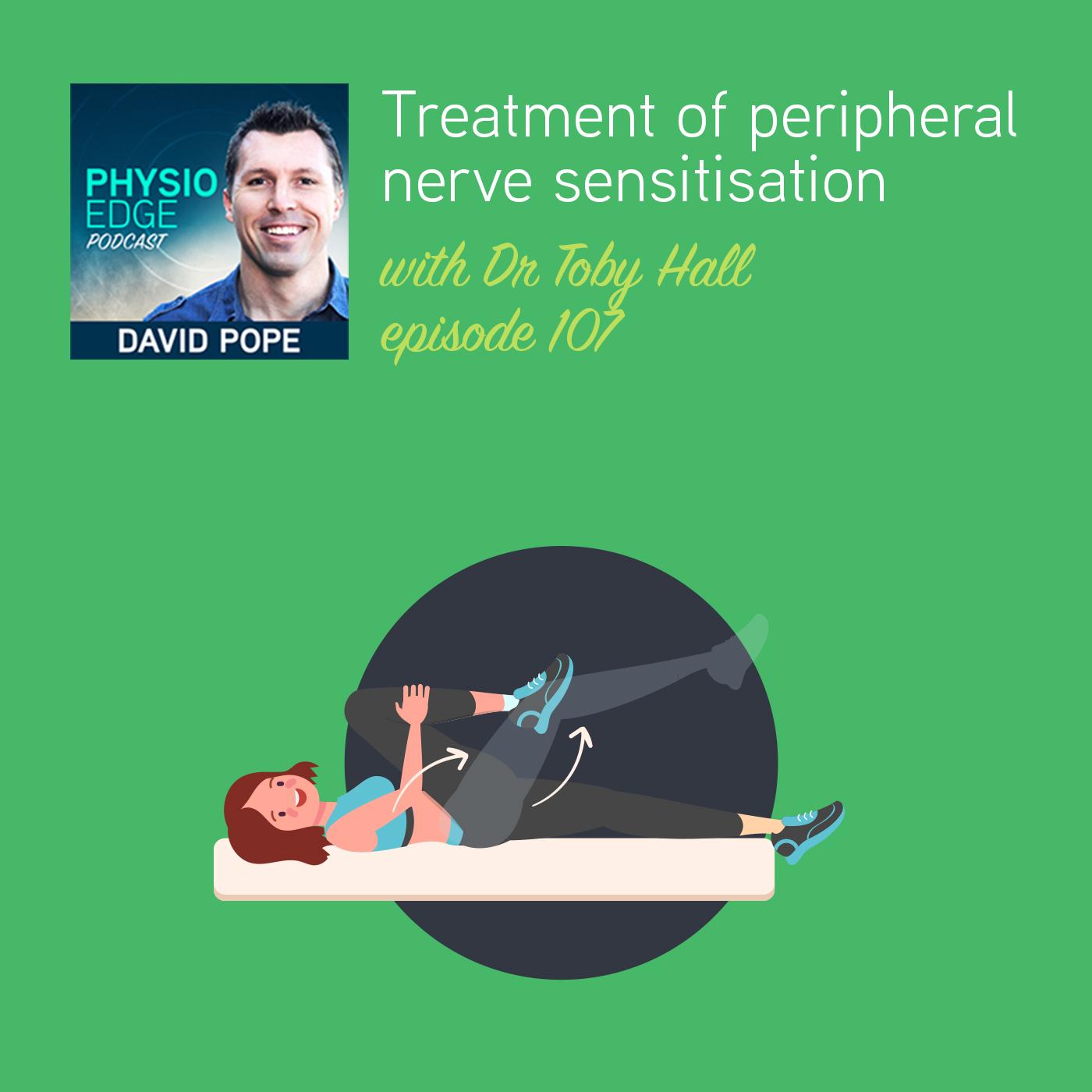
Ep 107107. Treatment of peripheral nerve sensitisation with Dr Toby Hall
When your patient has neck and arm pain, or low back and leg pain from neural tissue pain disorders (NTPD) such as peripheral nerve sensitisation (PNS), how will you treat them? Pain associated with PNS can occasionally be mild and non-irritable, but more often than not, it's severe, highly irritable, and easy to stir up. How can you provide treatment that settles their pain, without stirring them up? What advice, education, manual therapy and exercise will you provide to help improve symptoms and speed up recovery? What are the keys to success with PNS patients? In Physio Edge podcast 104, Dr Toby Hall and I discussed PNS, common symptoms, causes, questions to ask, and how to assess and diagnose PNS in your patients. In this followup podcast, the second in our two-part series, Dr Toby Hall and I take you through the next phase - how to treat PNS. You'll discover: The 7 keys to success with PNS How to successfully treat PNS in the neck and upper limb, AND the low back and lower limb. What education and advice should you provide to your patient about activities to avoid or reduce, and which activities should they increase? What are the most effective exercises for patients with PNS? Should exercise be painful or painless? When is neural mobilisation an effective treatment? When should you avoid using neural mobilisation as a treatment? Is manual therapy effective in PNS? Which manual therapy techniques can you use to improve symptoms and range of movement (ROM) immediately? How to perform effective manual therapy techniques that reduce pain without stirring up your patients. How can you combine neural mobilisation with manual therapy? If you use manual therapy to improve symptoms, what home exercises should patients perform after each treatment session? CLICK HERE to get access to Sherlock Holmes and the sign of the four hypotheses with Nick Kendrick Links associated with this episode: Physio Edge podcast 104 - Peripheral nerve sensitisation & neural tissue pain disorders with Dr Toby Hall Comprehensive, practical training to improve your skills, clinical reasoning, treatment results & confidence with a free trial Clinical Edge membership The new "Making sense of pain" module available with a free trial Clinical Edge membership Download and subscribe to the podcast on iTunes Download the podcast now using the best podcast app currently in existence - Overcast Listen to the podcast on Spotify Sherlock Holmes & the Sign of the Four Hypotheses case study with Nick Kendrick Comprehensive, practical training to improve your skills, clinical reasoning, treatment results & confidence with a free trial Clinical Edge membership Dr Toby Hall on Twitter Low back pain treatment online course with Dr Toby Hall and Manual Concepts Manual Concepts Dr Annina Schmid Let David know what you liked about this podcast on Twitter Review the podcast on iTunes Join live Q&A podcasts on Facebook Infographics by Clinical Edge

Ep 106106. Cervical radiculopathy, central sensitisation, achilles tendinopathy, hip & groin pain, and strength testing with Paula Peralta, Simon Olivotto, Nick Kendrick & David Toomey
Explore cervical radiculopathy, central sensitisation, achilles tendinopathy, hip & groin pain, & strength tests for athletes with Simon Olivotto, Dave Toomey, Paula Peralta & Nick Kendrick. The Clinical Edge Senior Physio Education & Presentation team and I sat down to answer Clinical Edge member questions, and we wanted to share this one with you, so you can benefit from it too. In this Q&A, we discussed: Cervical radiculopathy patients with an irritable presentation Do imaging findings such as modic changes, alter our management How can you approach treatment of cervical radiculopathy? Are medications indicated? Red flags you need to rule out Are sliders and gliders a useful treatment? Sensitivity to cold or ice How can you use tests to identify sensitivity to cold or ice to guide your treatment? Does ice sensitivity indicate central sensitisation? How does this impact management? If your whiplash patients have sensitivity to cold or ice, how does this impact treatment & prognosis? Which research articles cover this topic? Calf & achilles strengthening When is it best to perform calf raises into dorsiflexion (DF)? When should you avoid strengthening the calf into end of range (EOR) DF? What ankle issues may lead you to avoid strengthening or stretching into EOR DF? Hip joint pain and the acetabular labrum Can we identify when the labrum is responsible for hip or groin pain? What tests are important to perform in patients with hip or groin pain? If deep structures such as the hip joint are painful or injured, does this mean more superficial structures such as the acetabular labrum are also pain generators? Strength assessment & screening of athletes What strength screening tests can you perform in athletes with large demands such as motorcross? Which areas do you need to assess? What are simple and more complex ways to assess strength in different regions of the body? What are important considerations when designing a S&C program for a motocross athlete? Making sense of pain How can you make sense of pain? How can you describe pain to your patients in a way that makes sense, and doesn't tell them "it's all in your head"? Find out how to improve your confidence with acute and persistent pain in the upcoming "Making sense of pain" module. Warning: Contains swearing. Links associated with this episode: Download and subscribe to the podcast on iTunes Download the podcast now using the best podcast app currently in existence - Overcast Listen to the podcast on Spotify Improve your clinical reasoning, assessment and treatment effectiveness, efficiency and results with a free trial Clinical Edge membership Clinical reasoning module - simplify complex patients, clarify your assessment and get great results with clinically reasoned treatment "Making sense of pain" module Let David know what you liked about this podcast on Twitter Review the podcast on iTunes Like the podcast on Facebook Infographics by Clinical Edge Clinical Edge Education & presentation team Simon Olivotto Paula Peralta David Toomey Nick Kendrick Articles associated with this episode: Maxwell S, Sterling M. An investigation of the use of a numeric pain rating scale with ice application to the neck to determine cold hyperalgesia. Manual therapy. 2013 Apr 1;18(2):172-4. Machado GC, Maher CG, Ferreira PH, Day RO, Pinheiro MB, Ferreira ML. Non-steroidal anti-inflammatory drugs for spinal pain: a systematic review and meta-analysis. Annals of the rheumatic diseases. 2017 Jul 1;76(7):1269-78. Zhu S, Zhu J, Zhen G, Hu Y, An S, Li Y, Zheng Q, Chen Z, Yang Y, Wan M, Skolasky RL. Subchondral bone osteoclasts induce sensory innervation and osteoarthritis pain. The Journal of clinical investigation. 2019 Mar 1;129(3):1076-93.
Ep 105105. Scapular dyskinesis - Does it really matter? with Jo Gibson
When you assess your patients shoulder movements, and notice a winging scapula, altered resting position or timing of scapula movement, do you need to treat it? Can we diagnose "Scapular dyskinesis", and does it matter? How can you simplify your scapular assessment? In this podcast, Jo Gibson (Clinical Physiotherapy Specialist) explores common beliefs and myths around the scapula, including: Abnormal scapular kinematics cause pain We can predict patients that are going to get shoulder pain Upper traps should be retrained to decrease their activation Scapular-based interventions are superior to rotator cuff based treatment There are reliable and valid ways to assess scapular movement Alongside this mythbusting, you'll explore: Is there any point assessing the scapula? Is scapular asymmetry normal or abnormal? Is scapular dyskinesis a normal response to exercise or loading? How accurate are we at identifying scapular dyskinesis compared to findings in laboratory studies of scapula movement? What scapular findings will you commonly observe in patients with massive rotator cuff tears, nerve injuries & stiffness? How does rotator cuff fatigue impact scapular movement? How does fear avoidance and worry about particular movements impact muscle activity and movement? When is increased upper traps activity helpful and beneficial? Should we try to decrease upper traps activity in patients with C/Sp driven shoulder pain? Can we preferentially target the scapular or rotator cuff with our exercises? Do improvements in shoulder pain correlate with changes or "improvements" in scapular movement? How do scapular assessment test (SAT) results impact your treatment and exercise prescription? If the SAT improves pain, does that mean we should perform scapular based exercises? Can we use scapular dyskinesia classification to stratify patients or guide our treatment? Is there any reliability in scapular assessment? Does the SAT simply identify those that have a favourable natural history ie are going to get better on their own regardless? Do scapular treatments increase the subacromial space, and does this matter? Is winging post-surgery (posterior stabilisation + labral repair) a product of surgery or does this need to be addressed? How does incorporating the kinetic chain into rehab impact patient movement strategies, scapular and rotator cuff recruitment? Are scapulothoracic bursae relevant to shoulder pain? How can you address patient beliefs and fear avoidance around their shoulder pain? Podcast handout Free webinar "5 common mistakes therapists make with shoulder pain, and what to do about them" with Jo Gibson Register now for the free webinar "5 common mistakes therapists make with shoulder pain, and what to do about them" with Jo Gibson (Upper Limb Specialist Physio) Frozen and stiff shoulder assessment & treatment with Jo Gibson Improve your assessment and treatment of frozen and stiff shoulders now with Jo Gibson's online course at clinicaledge.co/frozenshoulder Shoulder: Steps to Success online course with Jo Gibson Improve your assessment and treatment of shoulder pain with the Shoulder: Steps to Success online course with Jo Gibson, now available for enrolment at clinicaledge.co/shouldersuccess CLICK HERE to get access to Sherlock Holmes and the sign of the four hypotheses with Nick Kendrick Links associated with this episode: Improve your assessment and treatment of frozen and stiff shoulders now with Jo Gibson's online course at clinicaledge.co/frozenshoulder Improve your shoulder assessment & treatment with the Shoulder: Steps to Success online course with Jo Gibson Download and subscribe to the podcast on iTunes Download the podcast now using the best podcast app currently in existence - Overcast Listen to the podcast on Spotify Improve your confidence and clinical reasoning with a free trial Clinical Edge membership Let David know what you liked about this podcast on Twitter Review the podcast on iTunes Like the podcast on Facebook Infographics by Clinical Edge Jo Gibson on Twitter Articles associated with this episode: Download the podcast handout to receive the articles associated with this podcast. Andersson SH, Bahr R, Clarsen B, Myklebust G. Risk factors for overuse shoulder injuries in a mixed-sex cohort of 329 elite handball players: previous findings could not be confirmed. British journal of sports medicine. 2018 Sep 1;52(18):1191-8. Asker M, Brooke HL, Waldén M, Tranaeus U, Johansson F, Skillgate E, Holm LW. Risk factors for, and prevention of, shoulder injuries in overhead sports: a systematic review with best-evidence synthesis. British journal of sports medicine. 2018 Oct 1;52(20):1312-9. Christiansen DH, Møller AD, Vestergaard JM, Mose S, Maribo T. The scapular dyskinesis test: Reliability, agreement, and predictive value in patients with subacromial impingement syndrome. Journal of Hand Therapy. 2017 Apr 1;30(2):208-13.

Ep 104104. Peripheral nerve sensitisation & neural tissue pain disorders with Dr Toby Hall
How can you identify the source of your patients leg, shoulder or arm pain? Is it from neural tissue compression, sensitisation or irritation or nearby joints, tendons or muscles? What questions and objective tests will help you diagnose a neural tissue pain disorder (NTPD)? In this podcast with Dr Toby Hall (Specialist Musculoskeletal Physiotherapist, FACP, PhD), you'll discover: Three types of neural tissue pain disorders, and how to identify each one What is Peripheral nerve sensitisation (PNS)? What clues in your subjective examination will help you identify PNS? Why do nerves become inflamed or irritated? How to identify & differentiate radiculopathy and radicular pain in patients with radiating limb pain. Do all patients with NTPD have obvious neuro symptoms such as pins and needles, numbness or weakness? Quick screening tests you can use in your assessment to identify PNS. How to identify if your patients shoulder and arm pain is from neural tissue or from local shoulder structures. How to diagnose a NTPD in patients with hip or leg pain. How to perform passive neurodynamic tests such as the straight leg raise (SLR), upper limb neurodynamic test (ULNT), slump test and femoral nerve slump test. What information does a positive or negative neurodynamic test provide? Can we identify the location of a nerve lesion or irritation with our passive neurodynamic tests or palpation? Initial PNS treatment options Is exercise helpful or harmful in patients with PNS? How can you palpate over neural tissue, and what information does this provide? Do opioids provide pain relief, or prolong recovery in patients with NTPD? This podcast is the first part in a two part series on neural tissue pain disorders with Dr Toby Hall. Part 1 (this podcast) guides you through the types of NTPD, and how to assess and diagnose NTPD. Part 2 (available soon) will take you through how to treat PNS. I highly recommend listening to this episode (part 1) prior to part 2, to have a thorough understanding of when and how to treat PNS. CLICK HERE to get access to Sherlock Holmes and the sign of the four hypotheses with Nick Kendrick Links associated with this episode: Download and subscribe to the podcast on iTunes Download the podcast now using the best podcast app currently in existence - Overcast Listen to the podcast on Spotify Sherlock Holmes & the Sign of the Four Hypotheses case study with Nick Kendrick Comprehensive, practical training to improve your skills, clinical reasoning, treatment results & confidence with a free trial Clinical Edge membership Dr Toby Hall on Twitter Manual Concepts Free online conference with Toby Hall & other presenters Dr Annina Schmid Let David know what you liked about this podcast on Twitter Review the podcast on iTunes Join live Q&A podcasts on Facebook Infographics by Clinical Edge
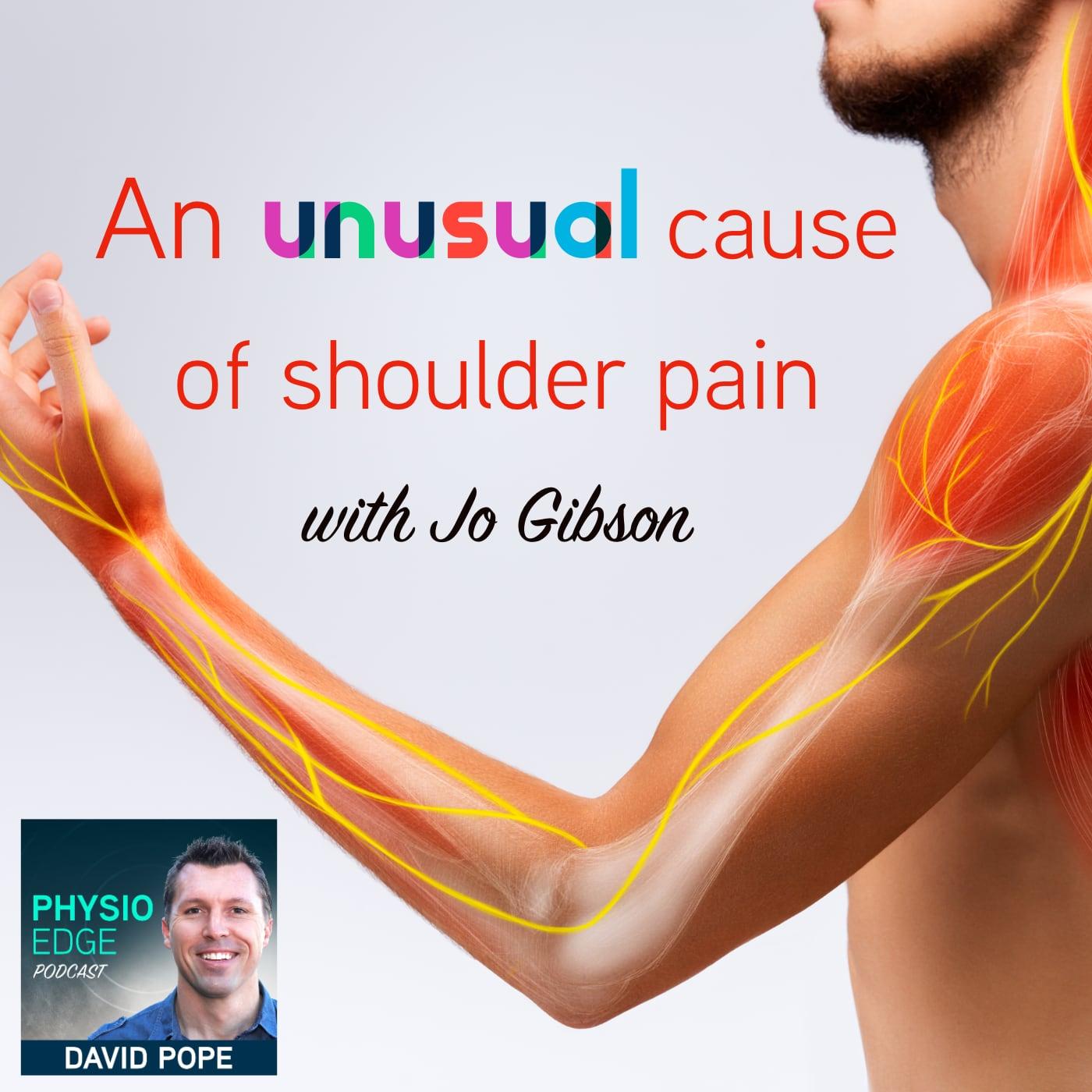
Ep 103103. An unusual cause of shoulder pain with Jo Gibson
A young male patient woke with an acute onset of constant, shooting shoulder pain, is painful into abduction, reluctant to lift his arm, and feels like he's losing shoulder strength. He has no recent history of injury. Can you diagnose this unusual cause of shoulder pain, based on this patient's symptoms and physical tests? What are your differential diagnoses and red flags to keep in mind with this patient? In this podcast, Jo Gibson puts your knowledge of shoulder pain and diagnostic skills to the test, and explores how you can treat patients with this diagnosis. Podcast handout Free webinar "5 common mistakes therapists make with shoulder pain, and what to do about them" with Jo Gibson Register now for the free webinar "5 common mistakes therapists make with shoulder pain, and what to do about them" with Jo Gibson (Upper Limb Specialist Physio) Frozen and stiff shoulder assessment & treatment with Jo Gibson Improve your assessment and treatment of frozen and stiff shoulders now with Jo Gibson's online course at clinicaledge.co/frozenshoulder Shoulder: Steps to Success online course with Jo Gibson Improve your assessment and treatment of shoulder pain with the Shoulder: Steps to Success online course with Jo Gibson, now available for enrolment at clinicaledge.co/shouldersuccess CLICK HERE to get access to Sherlock Holmes and the sign of the four hypotheses with Nick Kendrick Links associated with this episode: Improve your assessment and treatment of frozen and stiff shoulders now with Jo Gibson's online course at clinicaledge.co/frozenshoulder Improve your shoulder assessment & treatment with the Shoulder: Steps to Success online course with Jo Gibson Download and subscribe to the podcast on iTunes Download the podcast now using the best podcast app currently in existence - Overcast Listen to the podcast on Spotify Improve your confidence and clinical reasoning with a free trial Clinical Edge membership Let David know what you liked about this podcast on Twitter Review the podcast on iTunes Like the podcast on Facebook Infographics by Clinical Edge Jo Gibson on Twitter Articles associated with this episode: Download the podcast handout to receive the articles associated with this podcast. Clarke CJ, Torrance E, McIntosh J, Funk L. Neuralgic amyotrophy is not the most common neurologic disorder of the shoulder: a 78-month prospective study of 60 neurologic shoulder patients in a specialist shoulder clinic. Journal of shoulder and elbow surgery. 2016 Dec 1;25(12):1997-2004. Cup EH, Ijspeert J, Janssen RJ, Bussemaker-Beumer C, Jacobs J, Pieterse AJ, van der Linde H, van Alfen N. Residual complaints after neuralgic amyotrophy. Archives of physical medicine and rehabilitation. 2013 Jan 1;94(1):67-73. DO MAGDALIA PB. Neuralgic Amyotrophy. Challenging Neuropathic Pain Syndromes: Evaluation and Evidence-Based Treatment. 2017 Nov 12:197. Feinberg JH, Nguyen ET, Boachie‐Adjei K, Gribbin C, Lee SK, Daluiski A, Wolfe SW. The electrodiagnostic natural history of parsonage–turner syndrome. Muscle & nerve. 2017 Oct;56(4):737-43. Lustenhouwer R, Cameron IG, van Alfen N, Oorsprong TD, Toni I, van Engelen BG, Groothuis JT, Helmich RC. Altered sensorimotor representations after recovery from peripheral nerve damage in neuralgic amyotrophy. Cortex. 2020 Feb 28. Seror P. Neuralgic amyotrophy. An update. Joint Bone Spine. 2017 Mar 1;84(2):153-8.
Ep 102102. Stretching for shoulder pain - Is it time to put sleeper stretches to bed? with Jo Gibson
Do you include stretches in your treatment of shoulder pain? Have you ever identified a glenohumeral internal rotation deficit (GIRD) and used the "Sleeper stretch" to help improve internal rotation? Do stretches have any value for shoulder pain, or are there better treatment options? In this podcast, Jo Gibson (Clinical Physiotherapy Specialist) discusses how to differentiate true capsular stiffness from muscle stiffness, what information GIRD provides, and whether sleeper stretches for shoulder pain are a useful treatment. Jo explores the current research and clinical implications on your treatment, including: What is the driver of decreased range of movement (ROM)? If we get immediate changes in ROM with a sleeper stretch, does that mean we should use this as a treatment? Is stretching an effective, efficient and evidence-based treatment? Can we use strengthening movements to improve range and cuff recruitment? What exercises can you use with patients with GIRD to improve ROM and cuff recruitment? Humeral retroversion and how torsional load from throwing sports at a young age impact your ROM assessment. If you have a patient with GIRD, what does this tell you? In patients with true capsular stiffness, does stretching in combination with damp heat have a role? Does eccentric strengthening have a role in improving GIRD in patients with true capsular stiffness or fibrosis? How can you use GIRD to monitor your athletes fatigue and recovery? Podcast handout Free webinar "5 common mistakes therapists make with shoulder pain, and what to do about them" with Jo Gibson Register now for the free webinar "5 common mistakes therapists make with shoulder pain, and what to do about them" with Jo Gibson (Upper Limb Specialist Physio) Frozen and stiff shoulder assessment & treatment with Jo Gibson Improve your assessment and treatment of frozen and stiff shoulders now with Jo Gibson's online course at clinicaledge.co/frozenshoulder Shoulder: Steps to Success online course with Jo Gibson Improve your assessment and treatment of shoulder pain with the Shoulder: Steps to Success online course with Jo Gibson, now available for enrolment at clinicaledge.co/shouldersuccess CLICK HERE to get access to Sherlock Holmes and the sign of the four hypotheses with Nick Kendrick Links associated with this episode: Improve your assessment and treatment of frozen and stiff shoulders now with Jo Gibson's online course at clinicaledge.co/frozenshoulder Improve your shoulder assessment & treatment with the Shoulder: Steps to Success online course with Jo Gibson Download and subscribe to the podcast on iTunes Download the podcast now using the best podcast app currently in existence - Overcast Listen to the podcast on Spotify Improve your confidence and clinical reasoning with a free trial Clinical Edge membership Let David know what you liked about this podcast on Twitter Review the podcast on iTunes Like the podcast on Facebook Infographics by Clinical Edge Jo Gibson on Twitter Articles associated with this episode: Download the podcast handout to receive the articles associated with this podcast. Hall K, Borstad JD. Posterior Shoulder Tightness: To Treat or Not to Treat?. journal of orthopaedic & sports physical therapy. 2018 Mar;48(3):133-6. Keller RA, De Giacomo AF, Neumann JA, Limpisvasti O, Tibone JE. Glenohumeral internal rotation deficit and risk of upper extremity injury in overhead athletes: a meta-analysis and systematic review. Sports health. 2018 Mar;10(2):125-32. Mine K, Nakayama T, Milanese S, Grimmer K. Effectiveness of stretching on posterior shoulder tightness and glenohumeral internal-rotation deficit: a systematic review of randomized controlled trials. Journal of sport rehabilitation. 2017 Jul 1;26(4):294-305.
Ep 101101. Return to play testing after shoulder surgery with Jo Gibson
Shoulder surgery in athletes is common following dislocation. Accelerated post-op shoulder stabilisation rehab protocols include early mobilisation to reduce movement, proprioceptive and strength deficits. This has allowed earlier return to play (RTP), however athletes often still have significant proprioceptive and strength deficits up to 2 years post surgery. Despite getting back to play, athletes may struggle to get back to performance. Following surgery, contact athletes such as rugby players, throwing athletes and young players have additional RTP challenges. Redislocation risks in contact sports such as rugby are high, leading to poor outcomes. Younger athletes are not skeletally mature, and with early RTP following stabilisation surgery may have higher failure rates. How can you identify and address these challenges? Which tests and features in a patients history help you determine whether a patient is suitable for an early RTP? In this podcast with Jo Gibson (Clinical Physiotherapy Specialist), you'll explore: Which shoulder tests are most valuable with your patients? How has emerging evidence challenged our previous approach to RTP testing? What are the risks associated with early RTP following shoulder surgery? How can you help identify athletes at risk of redislocation? Which psychosocial factors impact RTP? How does fear of reinjury and levels of anxiety about their shoulder affects RTP? How does your patient's sport of choice affects dislocation risks? How is RTP impacted by patients age? How do daily stressors impact RTP and predict outcomes? Which psychosocial factors impact RTP? What is the biggest factor in whether an athlete gets back to play? Which questions are key to ask your patients? Which questionnaires can you use with your post-op shoulder patients? Which tests and combinations of tests have been validated and are evidence-based? How can you assess range of movement (ROM)? How can you measure patients strength? How is rate of force development (RFD) affected following shoulder injury? How can you assess RFD? How does fatigue impact strength testing eg testing at the start of training compared to the after training? How does the kinetic chain impact RTP testing for throwers? How can you assess shoulder endurance? How can you test if your swimmers are ready for RTP? What role does manual therapy have in shoulder rehab? Podcast handout Free webinar "5 common mistakes therapists make with shoulder pain, and what to do about them" with Jo Gibson Register now for the free webinar "5 common mistakes therapists make with shoulder pain, and what to do about them" with Jo Gibson (Upper Limb Specialist Physio) Frozen and stiff shoulder assessment & treatment with Jo Gibson Improve your assessment and treatment of frozen and stiff shoulders now with Jo Gibson's online course at clinicaledge.co/frozenshoulder Shoulder: Steps to Success online course with Jo Gibson Improve your assessment and treatment of shoulder pain with the Shoulder: Steps to Success online course with Jo Gibson, now available for enrolment at clinicaledge.co/shouldersuccess Links associated with this episode: Improve your assessment and treatment of frozen and stiff shoulders now with Jo Gibson's online course at clinicaledge.co/frozenshoulder Improve your shoulder assessment & treatment with the Shoulder: Steps to Success online course with Jo Gibson Download and subscribe to the podcast on iTunes Download the podcast now using the best podcast app currently in existence - Overcast Listen to the podcast on Spotify Improve your confidence and clinical reasoning with a free trial Clinical Edge membership Let David know what you liked about this podcast on Twitter Review the podcast on iTunes Like the podcast on Facebook Infographics by Clinical Edge Jo Gibson on Twitter Articles associated with this episode: Download the podcast handout to receive the articles associated with this podcast. Ashworth B, Cohen DD. Force awakens: a new hope for athletic shoulder strength testing. Ashworth B, Hogben P, Singh N, Tulloch L, Cohen DD. The Athletic Shoulder (ASH) test: reliability of a novel upper body isometric strength test in elite rugby players. BMJ open sport & exercise medicine. 2018 Jul 1;4(1):e000365. Cools AM, Vanderstukken F, Vereecken F, Duprez M, Heyman K, Goethals N, Johansson F. Eccentric and isometric shoulder rotator cuff strength testing using a hand-held dynamometer: reference values for overhead athletes. Knee Surgery, Sports Traumatology, Arthroscopy. 2016 Dec 1;24(12):3838-47. Forsdyke D, Gledhill A, Ardern C. Psychological readiness to return to sport: three key elements to help the practitioner decide whether the athlete is REALLY ready?. Olds M, Coulter C, Marant D, Uhl T. Reliability of a shoulder arm return to sport test battery. Physical Therapy in Sport. 2019 Sep 1;39:16-22. Glazer DD. Development and preliminary validation of the Injury-Psychological Readiness to Return to Sport (I-PRRS) scale. Journal of

Ep 100100. 5 practical strategies to improve your clinical reasoning & treatment results with David Toomey, Jordan Craig & Simon Olivotto
100 Physio Edge podcast episodes since I discovered a love of podcasts, and created the Physio Edge podcast to help Physio's, Physical Therapists and other health professionals in their clinical practice with practical information from the leaders in different musculoskeletal and sports injuries. I really enjoy recording each podcast, helping you with your clinical challenges and hearing how the podcast has helped you with your patients. While recording each of these podcasts, I've noticed that one area Physiotherapy experts & leaders have in common is their well developed clinical reasoning. They use effective & efficient clinical problem solving to assess and treat their patients. How can you improve your clinical reasoning to more effectively assess and treat your patients? In this podcast with the new Clinical Edge Senior Physio education & presentation team - David Toomey (NZ based Musculoskeletal Physio), Jordan Craig (APA Titled Musculoskeletal & Sports Physio) and Simon Olivotto (Specialist Musculoskeletal Physiotherapist, FACP), you'll explore: Five practical strategies you can use immediately to improve your clinical reasoning and treatment results. Clinical reasoning - what is it and how will it help you with your patients? How to effectively & efficiently assess and treat in short treatment sessions How to create a rehabilitation or training plan for a patient to suit their individual needs. Low back pain patients - How to use clinical reasoning to target your questioning, objective assessment and treatment to your patients needs Download this podcast now to improve your clinical reasoning and treatment results with these five practical strategies. Links associated with this episode: Download your podcast handout here Download and subscribe to the podcast on iTunes Download the podcast now using the best podcast app currently in existence - Overcast Listen to the podcast on Spotify Improve your clinical reasoning, assessment and treatment effectiveness, efficiency and results with a free trial Clinical Edge membership Let David know what you liked about this podcast on Twitter Review the podcast on iTunes Like the podcast on Facebook Infographics by Clinical Edge Clinical Edge Education & presentation team Simon Olivotto on Twitter Jordan Craig David Toomey on Twitter

Ep 99099. Upper traps - are they really a bad guy with Jo Gibson
Patients with shoulder pain, rotator cuff tears and nerve injuries can often be seen shrugging their shoulder while they lift their arm, appearing to overuse their upper fibres of trapezius. Surface EMG research has shown increased activity in UFT in shoulder pain and whiplash patients. To add to this, patients get sore upper traps, and can be adamant that they need regular massage of their upper fibres of trapezius (UFT). We seem to have plenty of evidence that we need to decrease UFT muscle activity, and help this by providing exercises to target the middle and lower traps. Is this really the case? Are the upper traps really a bad guy, or a victim caught in the spotlight? Do we need to decrease upper traps muscle activity to help our patients shoulder or neck pain? Or perhaps counter-intuitively, do we need to strengthen upper traps and help them to work together with the surrounding muscles? In this podcast, Jo Gibson (Clinical Specialist Physio) explores the evidence around the upper fibres of trapezius, and implications on your clinical practice. You'll discover: What are the myths around upper traps? Are upper fibres of trapezius a bad guy or a victim? Why do upper traps sometimes seem to be overactive? Should we aim to increase the activity in middle and lower traps? What information does surface EMG really provide? Can taping of the scapula change recruitment of the trapezius? Should we strengthen UFT? Why is initial activation of the UFT important in shoulder elevation movements? Why should patients with rotator cuff tears or stiff & painful shoulders use upper traps more with their movements? How can we incorporate UFT strengthening into our shoulder strengthening? What exercises can we use to strengthen UFT without increasing activity in levator scapulae? Why is UFT strengthening important in ACJ injury rehab? In gym goers, what scapula setting errors are commonly used? How do nerve injuries that affect the upper traps impact movement? Do trigger points or soreness indicate that our patients need massage or exercises to decrease UFT activity? Download this episode now to improve your treatment of shoulder and neck pain. Podcast handout Free video series "Frozen shoulder assessment & treatment" with Jo Gibson Shoulder: Steps to Success online course with Jo Gibson Improve your assessment and treatment of shoulder pain with the Shoulder: Steps to Success online course with Jo Gibson, now available for enrolment at clinicaledge.co/shouldersuccess Links associated with this episode: Get your access to the free video series "Frozen shoulder assessment & treatment" with Jo Gibson Improve your shoulder assessment & treatment with the Shoulder: Steps to Success online course with Jo Gibson Download and subscribe to the podcast on iTunes Download the podcast now using the best podcast app currently in existence - Overcast Listen to the podcast on Spotify Improve your confidence and clinical reasoning with a free trial Clinical Edge membership Let David know what you liked about this podcast on Twitter Review the podcast on iTunes Like the podcast on Facebook Infographics by Clinical Edge Jo Gibson on Twitter Articles associated with this episode: Download the podcast handout to receive the articles associated with this podcast. Lee JH, Cynn HS, Choi WJ, Jeong HJ, Yoon TL. Various shrug exercises can change scapular kinematics and scapular rotator muscle activities in subjects with scapular downward rotation syndrome. Human movement science. 2016 Feb 1;45:119-29. Pizzari T, Wickham J, Balster S, Ganderton C, Watson L. Modifying a shrug exercise can facilitate the upward rotator muscles of the scapula. Clinical Biomechanics. 2014 Feb 1;29(2):201-5.
Ep 98098. How to use strength training in your treatment with David Joyce
Strength training can be used in your treatment and rehab programs to improve your patients strength, load capacity, function & pain, so they can get back into work and the activities they enjoy. In your athletic patients, strength training can be used to help restore power and speed, which are vital for sporting performance. Would you like to include more strength training in your treatment, but aren't completely sure about the most effective ways to build strength? Which exercises can you use? How many sets and reps should your patients perform? Will 3 sets of 10 reps build strength effectively? What is power training, when should you focus on improving power, and how can you incorporate power training? In this podcast with David Joyce - Sports Physiotherapist, S&C expert and co-author of High performance training for sports, and Sports injury prevention and rehabilitation, you will discover: How to use strength training with your patients The most effective ways to help your patients develop strength Set and rep ranges for strength improvements Recent developments in S&C What is power & power training, and how does this compare to strength? When should your patients work on improving power vs strength How to improve power using different areas on the force/velocity curve Power development using bodyweight and barbell exercises Calf strengthening How to incorporate velocity/explosiveness training When are higher reps useful? Does endurance training with higher reps carryover to improved running or cycling When your patients are performing deadlifts or squats, what elements should you monitor? Do biomechanics in a deadlift or squat matter? What rest periods should be used to help develop strength, while maintaining an efficient training routine What is strength training vs conditioning? How can patients perform conditioning for improved fitness? Should conditioning be incorporated into strength training sessions for maximum improvements in strength? Should exercises and sets be performed to temporary muscular failure (when the bar is unable to be lifted for another repetition)? Resources to help improve your strength & conditioning Dr Claire Minshull also presented two online courses for Clinical Edge members to further develop your strength & conditioning skills and confidence. You can get access to these online courses with your free trial membership. CLICK HERE to get access to these online courses on strength & conditioning for youths and adolescents with Dr Jon Oliver with your free trial membership Links associated with this episode: Download and subscribe to the podcast on iTunes Download the podcast now using the best podcast app currently in existence - Overcast Listen to the podcast on Spotify S&C online courses with Dr Claire Minshull - available with a free trial S&C for youths and adolescents online course with Dr Jon Oliver Improve your confidence and clinical reasoning with a free trial Clinical Edge membership David Joyce on Twitter Let David know what you liked about this podcast on Twitter Review the podcast on iTunes Join live Q&A podcasts on Facebook Infographics by Clinical Edge

Ep 97097. Anterior shoulder pain, long head of biceps and SLAP tears with Jo Gibson
Long head of biceps (LHB) tendinopathy and associated anterior shoulder pain can develop in patients that increase their lifting load eg moving house, overhead activities, activities that involve loaded shoulder extension and in throwing athletes. Patients may also develop long head of biceps tendon pain after a traumatic ACJ injury or SLAP tear. How can you identify and treat LHB tendinopathy? In this (video/podcast) with Jo Gibson, you'll explore: What causes LHB tendinopathy? What mechanisms of injury commonly cause LHB pain, ACJ injury or SLAP tears? Key traumas you need to keep an eye out for that impact LHB Why do patients with ACJ injuries develop LHB pain? Why do patients with SLAP lesions develop LHB pain? What causes LHB reactive tendinopathy? LHB Anatomy & function What activities does LHB help with? Long head of biceps (LHB) anatomy Variance in proximal biceps attachment and how traumatic LHB injuries impact different structures How the LHB is stabilised anatomically in the bicipital groove Does the transverse ligament exist? Patient features that help your diagnosis Which patients are likely to present with LHB pain? Which structures are more likely to be affected with traumatic shoulder injuries in younger vs older patients? Why do young patients with LHB instability develop pain? Subjective history features that help your diagnosis Where do patients with LHB tendinopathy experience pain? Which movements are likely to be painful in LHB tendinopathy patients? Objective testing & diagnosis Which tests or combinations of tests help diagnose LHB pain? Which special tests help your diagnosis? Does palpation have any value in LHB diagnosis? How can you exclude intra-articular pathology with your testing? How can you rule in or rule out rotator cuff pathology? Rotator cuff tears & involvement in LHB How does LHB muscle activity vary in painful vs painfree massive rotator cuff tear patients? How do traumatic rotator cuff tears, particularly subscapularis, impact LHB? If patients have rotator cuff surgery, what details in the operation notes will help you identify if they are at risk of persistent post-op pain and stiffness? Why do subscapularis tears cause LHB pain? Imaging What information does imaging of LHB provide? What imaging can you use if your patient is not progressing? MRI vs MRA vs US for different pain & injuries How to treat LHB What is the best way to treat LHB tendon pain? Are isometrics helpful with LHB, and how do these help? What surgery is used for LHB pain? Additional questions covered How are results after rotator cuff tears impacted by the rotator interval? Podcast handout Free video series "Frozen shoulder assessment & treatment" with Jo Gibson Shoulder: Steps to Success online course with Jo Gibson Improve your assessment and treatment of shoulder pain with the Shoulder: Steps to Success online course with Jo Gibson, now available for enrolment at clinicaledge.co/shouldersuccess Links associated with this episode: Get your access to the free video series "Frozen shoulder assessment & treatment" with Jo Gibson Improve your shoulder assessment & treatment with the Shoulder: Steps to Success online course with Jo Gibson Download and subscribe to the podcast on iTunes Download the podcast now using the best podcast app currently in existence - Overcast Listen to the podcast on Spotify Improve your confidence and clinical reasoning with a free trial Clinical Edge membership Let David know what you liked about this podcast on Twitter Review the podcast on iTunes Like the podcast on Facebook Infographics by Clinical Edge Jo Gibson on Twitter Articles associated with this episode: Download the podcast handout to receive the articles associated with this podcast. Creech MJ, Yeung M, Denkers M, Simunovic N, Athwal GS, Ayeni OR. Surgical indications for long head biceps tenodesis: a systematic review. Knee Surgery, Sports Traumatology, Arthroscopy. 2016 Jul 1;24(7):2156-66. Gilmer BB, Harnden E, Guttmann D. Diagnosis of long head of the biceps tendon pathology: current concepts. Journal of ISAKOS: Joint Disorders & Orthopaedic Sports Medicine. 2017 Jul 1;2(4):222-7. Kowalczuk M, Kohut K, Sabzevari S, Naendrup JH, Lin A. Proximal long head biceps rupture: a predictor of rotator cuff pathology. Arthroscopy: The Journal of Arthroscopic & Related Surgery. 2018 Apr 1;34(4):1166-70. Mehl J. Proximal Biceps Long Head: Anatomy, Biomechanics, Pathology. Operative Techniques in Sports Medicine. 2018 Jun 1;26(2):76-81. Wilk KE, Hooks TR. The painful long head of the biceps brachii: nonoperative treatment approaches. Clinics in sports medicine. 2016.
Ep 96096. Thoracic outlet syndrome with Jo Gibson
Patients with thoracic outlet syndrome (TOS) may have undiagnosed pain and symptoms into their shoulder, arm, hand, scapula, head, face, upper back, axilla, chest and anterior clavicle. With a number of potential sources of pain in these areas, TOS patients commonly have a delayed or incorrect diagnosis, followed by unnecessary and unsuccessful surgery. Further complicating matters, imaging and nerve conduction studies are often clear or inconclusive. Studies show that on average, patients with TOS have an average of 5 years of symptoms and see 6 doctors before receiving an accurate diagnosis. What tests and questionnaires will help guide your diagnosis and intervention? When are patients suitable for Physiotherapy and conservative management? When should you refer on for a surgical opinion? In this podcast with Jo Gibson (Clinical Physiotherapy Specialist), you will discover: What is Thoracic outlet syndrome (TOS)? Commonly reported symptoms of TOS Three different types of TOS The most common type of TOS with around 80% of all TOS patients Why imaging and investigations are often clear, and don't match up with symptoms 3 key causes of TOS The relationship between TOS and hypermobility syndrome Criteria for diagnosis in the latest TOS diagnostic consensus statement Differential diagnosis (DDx) - Cervical NR compression, and peripheral nerve entrapment Common subjective findings that guide you towards a diagnosis of TOS A questionnaire you can use to assist cervicobrachial diagnosis What information is gained from imaging, including MRI and MR Neurography & nerve conduction studies What are the limitations of imaging? What is the difference between small nerve fibre and large nerve fibres, and how this impacts diagnosis QST - Quantitative sensory testing - Pin prick (Neurotip) and Thermal testing - warm and cold Simple QST test using a coin Objective testing What tests do you need to perform in patients with suspected TOS? What is the elevated stress test (EST)? What information does an upper limb tension test (ULTT) provide? Does a negative ULTT test exclude TOS? How are nerve blocks used? What is the best way to perform a nerve block? How effective are nerve blocks in assisting diagnosis? Who should we refer on for early medical or surgical management? When should you get an early surgical opinion? Which patients are likely to benefit from conservative management? Podcast handout Free video series "Frozen shoulder assessment & treatment" with Jo Gibson Shoulder: Steps to Success online course with Jo Gibson Improve your assessment and treatment of shoulder pain with the Shoulder: Steps to Success online course with Jo Gibson, now available for enrolment at clinicaledge.co/shouldersuccess Links associated with this episode: Get your access to the free video series "Frozen shoulder assessment & treatment" with Jo Gibson Improve your shoulder assessment & treatment with the Shoulder: Steps to Success online course with Jo Gibson Download and subscribe to the podcast on iTunes Download the podcast now using the best podcast app currently in existence - Overcast Listen to the podcast on Spotify Improve your confidence and clinical reasoning with a free trial Clinical Edge membership Let David know what you liked about this podcast on Twitter Review the podcast on iTunes Like the podcast on Facebook Infographics by Clinical Edge Jo Gibson on Twitter Thoracic outlet syndrome centre of excellence Articles associated with this episode: Download the podcast handout to receive the articles associated with this podcast. Illig KA, Donahue D, Duncan A, Freischlag J, Gelabert H, Johansen K, Jordan S, Sanders R, Thompson R. Reporting standards of the Society for Vascular Surgery for thoracic outlet syndrome. Journal of vascular surgery. 2016 Sep 1;64(3):e23-35. Jordan SE, Ahn SS, Gelabert HA. Differentiation of thoracic outlet syndrome from treatment-resistant cervical brachial pain syndromes: development and utilization of a questionnaire, clinical examination and ultrasound evaluation. Pain Physician. 2007 May;10(3):441-52. Kenny RA, Traynor GB, Withington D, Keegan DJ. Thoracic outlet syndrome: a useful exercise treatment option. American journal of surgery. 1993 Feb 1;165:282-. Ridehalgh C, Sandy-Hindmarch OP, Schmid AB. Validity of clinical small–fiber sensory testing to detect small–nerve fiber degeneration. journal of orthopaedic & sports physical therapy. 2018 Oct;48(10):767-74. Zhu GC, Böttger K, Slater H, Cook C, Farrell SF, Hailey L, Tampin B, Schmid AB. Concurrent validity of a low‐cost and time‐efficient clinical sensory test battery to evaluate somatosensory dysfunction. European Journal of Pain. 2019 Nov;23(10):1826-38.

Ep 95095. Sternoclavicular joint pain diagnosis, imaging & red flags with Jo Gibson
The sternoclavicular joint (SCJ) can cause pain locally, or refer into the neck and shoulder. With a relatively high incidence of serious and potentially life-threatening pathology at the SCJ, it's important to diagnose the source of SCJ pain. In this (Facebook live/video/podcast) with Jo Gibson (Clinical Specialist Physiotherapist), you'll discover: How to identify and diagnose the SCJ as the source of pain. Where does the SCJ commonly refer pain to? What pathologies cause SCJ pain What activities & movements commonly reproduce pain in the SCJ? Who develops SCJ pain? Which differential diagnosis (DDx) are important to identify, including localised osteoarthritis (OA) rheumatoid arthritis septic arthritis atraumatic subluxation seronegative spondyloarthropathies gout, pseudogout SC hyperostosis condensing osteitis Friedrich's disease/avascular necrosis condensing arthritis Friedrich's disease and 'SAPHO' (Synovitis Acne Pustulosis Hyperostosis Osteitis) syndrome How does DDx impact prognosis? What role does imaging have with the SCJ? SCJ Imaging - MRI vs CT vs Xray. If pain refers down to the anterior chest, what other structures may be involved? Tietze syndrome at the costochondral junction. Costochondritis - who develops it, is there a mechanism of injury? Red flags you need to be aware of around the SCJ Case study of an SCJ patient where a potentially life-threatening illness was identified. Other red flags - infection, HIV, septic arthritis, diabetes, ankylosing spondylitis, gout. What investigations are important for SCJ pain patients? What are realistic expectations for prognosis and resolution of SCJ symptoms? How can you rehab patients with SCJ pain? Costochondral joint pain. Rehab following clavicular ORIF When is arthroscopic release suitable in frozen shoulder patients Podcast handout Free video series "Frozen shoulder assessment & treatment" with Jo Gibson Shoulder: Steps to Success online course with Jo Gibson Improve your assessment and treatment of shoulder pain with the Shoulder: Steps to Success online course with Jo Gibson, now available for enrolment at clinicaledge.co/shouldersuccess Links associated with this episode: Get your access to the free video series "Frozen shoulder assessment & treatment" with Jo Gibson Improve your shoulder assessment & treatment with the Shoulder: Steps to Success online course with Jo Gibson Download and subscribe to the podcast on iTunes Download the podcast now using the best podcast app currently in existence - Overcast Listen to the podcast on Spotify Improve your confidence and clinical reasoning with a free trial Clinical Edge membership Let David know what you liked about this podcast on Twitter Review the podcast on iTunes Like the podcast on Facebook Infographics by Clinical Edge Jo Gibson on Twitter
Ep 94094. Strength training treating knee osteoarthritis with Dr Claire Minshull
Have you ever wanted to improve your patients strength, but weren't sure about the best way to go about it? What exercises should you use? How many sets, reps and sessions per week should you ask your patients to complete? Strength levels often start to decline with pain or after an injury, from neuromuscular inhibition, swelling, inflammation or joint laxity (Hopkins & Ingersoll, 2000; Rice & McNair, 2010). Unfortunately strength doesn't always return as quickly as it disappears, and neuromuscular inhibition can carry on (Roy et al, 2017). In this podcast with Dr Claire Minshull, we dive into the role of strength and conditioning in rehab, and explore: Why building strength is an important part of rehab How can you build strength effectively and efficiently? Do 8-12 rep sets or 3-5 rep sets build greater strength? How many sets of an exercise should your patient perform? How frequently do patients need to perform their exercises? Is maximal loading necessary in rehab? Which patients should use lower load exercises? Will strength training make endurance athletes slow and muscular, or improve running economy? "Functional exercises" vs strength exercises When should exercises target strength, and when can you use "functional exercises"? What is power training, and what exercises help to develop power? When should power training be used? What lifting cues can you use with beginning lifters e.g. in deadlifts? Patients with knee osteoarthritis: What is an effective exercise strategy for patients with knee osteoarthritis (OA)? What important factors do you need to incorporate in your pain education? How can you start a strengthening program? What exercises can you use? What pain levels are acceptable during exercise? How can you know if your exercises are appropriate for each patient? What braces or supports can you use to make unicompartmental knee OA more comfortable and able to exercise? Dr Claire Minshull also presented two online courses for Clinical Edge members to further develop your strength & conditioning skills and confidence. You can get access to these online courses with your free trial membership. What is in Dr Claire Minshull's webinar? How to incorporate strength development in your rehab programs How to progress strength in rehab Exercise progressions and regressions to maintain a strength focus Case study examples taking you through how to apply S&C principles with your patients Links associated with this episode: Download and subscribe to the podcast on iTunes Download the podcast now using the best podcast app currently in existence - Overcast Listen to the podcast on Spotify Improve your confidence and clinical reasoning with a free trial Clinical Edge membership, and get access to the online courses on S&C with Dr Claire Minshull Let David know what you liked about this podcast on Twitter Review the podcast on iTunes Like the podcast on Facebook Infographics by Clinical Edge Dr Claire Minshull on Twitter Website - Get Back to Sport Instagram - Get Back to Sport Versus Arthritis Articles associated with this episode: Campos et al. 2002. Muscular adaptations in response to three different resistance-training regimens: specificity of repetition maximum training zones. Hall et al. 2018. Knee extensor strength gains mediate symptom improvement in knee osteoarthritis: secondary analysis of a randomised controlled trial. Jorge et al. 2015. Progressive resistance exercise in women with osteoarthritis of the knee: a randomized controlled trial. Latham et al. 2010. Strength training in older adults: the benefits for osteoarthritis. Teixeira et al. 2018. Effect of resistance training set volume on upper body muscle hypertrophy: are more sets really better than less? Uusi-Rasi et al. 2017. Exercise Training in Treatment and Rehabilitation of Hip Osteoarthritis: A 12-Week Pilot Trial.

Ep 93093. Manual therapy - evidence effects and expectations with Prof Chad Cook
Manual therapy (MT) comes in all shapes and sizes - mobilisation, manipulation, mobilisation with movement, soft tissue massage, instrument assisted massage, muscle energy techniques, pointy elbows pressed into flesh and more. Patients (often) love it, and it's a popular treatment modality with therapists. Debate rages, and myths and misconceptions surround MT. Is MT evidence-based? Could the time we spend performing MT be better spent elsewhere? How does MT work? Is it worth using if treatment effects are short lived? Is it just used as revenue raising by therapists, while creating reliance on passive therapies? Which patients may benefit from MT, and which patients you should steer away from MT? In this podcast, clinical researcher, physical therapist and Professor at Duke University, Prof Chad Cook, we discuss the evidence around MT, myths and misconceptions, how MT works, and using your clinical reasoning to decide when and how to utilise MT. You'll discover: What is the current evidence around MT What are the arguments for and against manual therapy? How does MT work - potential mechanisms Does MT break up scar tissue or adhesions, correct biomechanical dysfunction or joint alignment? How to explain MT to your patients How to identify pain adaptive and non pain adaptive patients, and why this is important regardless of the treatment How to use clinical reasoning with MT How to select MT techniques How many sessions of MT should patients receive? Does MT cause harm and patient reliance? How to identify and change patient treatment expectations Links associated with this episode: Download and subscribe to the podcast on iTunes Download the podcast now using the best podcast app currently in existence - Overcast Listen to the podcast on Spotify Improve your confidence and plantar fasciopathy results with a free trial Clinical Edge membership, and get access to the 3 part webinar series on PHP with Henrik Riel Let David know what you liked about this podcast on Twitter Review the podcast on iTunes Like the podcast on Facebook Infographics by Clinical Edge Prof Chad Cook at Duke University Twitter - @ChadCookPT Book - Orthopaedic Manual Therapy Articles associated with this episode: Bialosky et al. 2009. The Mechanisms of Manual Therapy in the Treatment of Musculoskeletal Pain: A Comprehensive Model. Bialosky JE, Bishop MD, Penza CW. Placebo mechanisms of manual therapy: a sheep in wolf's clothing?. journal of orthopaedic & sports physical therapy. 2017 May;47(5):301-4. Cook et al. 2014. Is there preliminary value to a within- and/or between-session change for determining short-term outcomes of manual therapy on mechanical neck pain? Cook et al. 2013. Early use of thrust manipulation versus non-thrust manipulation: a randomized clinical trial. Cook et al. 2012. Can a within/between-session change in pain during reassessment predict outcome using a manual therapy intervention in patients with mechanical low back pain? Cook. 2011. Immediate effects from manual therapy: much ado about nothing? Deyle et al. 2005. Physical therapy treatment effectiveness for osteoarthritis of the knee: a randomized comparison of supervised clinical exercise and manual therapy procedures versus a home exercise program. Goss et al. 2004. A Cochrane review of manipulation and mobilization for mechanical neck disorders. Learmann et al. 2014. No Differences in Outcomes in People with Low Back Pain Who Met the Clinical Prediction Rule for Lumbar Spine Manipulation When a Pragmatic Non-thrust Manipulation Was Used as the Comparator. Rubinstein et al. 2011. Spinal manipulation therapy for chronic low back pain. Schneider et al. 2014. Derivation of a clinical decision guide in the diagnosis of cervical facet joint pain. Traeger et al. 2018. Effect of Intensive Patient Education vs Placebo Patient Education on Outcomes in Patients With Acute Low Back Pain.

Ep 92092. Plantar heel pain - The latest research how to apply it with Henrik Riel
When your patient has heel pain with their first few steps in the morning, after sitting for a while or at the start of a run, a diagnosis of plantar heel pain (PHP) or plantar fasciopathy might jump straight to the top of your list. How will you treat your patients with PHP? How long will it take? How can you explain PHP, the rehab and recovery to your patients? In this podcast with Henrik Riel (Physiotherapist, researcher and PhD candidate at Aalborg University) we take a deep dive into PHP, and how you can treat it, including: How to describe plantar heel pain to your patients How to explain to your patient why they developed PHP, recovery timeframes and rehab Plantar fasciitis, plantar fasciopathy, plantar heel pain? What's the most appropriate terminology? Differential diagnosis for PHP including Neuropathic pain Fat pad irritation, contusion or atrophy Calcaneal stress fracture Other diagnoses How to systematically perform an objective assessment and diagnose PHP Assessment tests to identify factors contributing to your patients pain Whether your patients require imaging How long PHP takes to recover What factors affect your patients prognosis and recovery times How to differentiate your treatment for active or sedentary patients Whether your patients can continue to run with PHP Factors that may hinder the recovery of your sedentary patients, and how to address these Whether your patients should include stretching in their rehab Types of strengthening to include in your rehab - isometric, isotonic or otherwise How many sets and reps should your patients perform of their strengthening exercises Whether orthotics are useful Corticosteroid injections - do they help or increase the risk of plantar fascia rupture? Links associated with this episode: Download and subscribe to the podcast on iTunes Download the podcast now using my favourite podcast app - Overcast Listen to the podcast on Spotify Improve your confidence and plantar fasciopathy results with a free trial Clinical Edge membership, and get access to the 3 part webinar series on PHP with Henrik Riel Let David know what you liked about this podcast on Twitter Review the podcast on iTunes Like the podcast on Facebook Infographics by Clinical Edge Twitter - @Henrik_Riel Research Gate - Henrik Riel Articles associated with this episode: Alshami et al. 2008. A review of plantar heel pain of neural origin: differential diagnosis and management. Chimutengwende-Gordon et al. 2010. Magnetic resonance imaging in plantar heel pain. Dakin et al. 2018. Chronic inflammation is a feature of Achilles tendinopathy and rupture. David et al. 2017. Injected corticosteroids for treating plantar heel pain in adults. Digiovanni et al. 2006. Plantar fascia-specific stretching exercise improves outcomes in patients with chronic plantar fasciitis. A prospective clinical trial with two-year follow-up. Hansen et al. 2018. Long-Term Prognosis of Plantar Fasciitis: A 5- to 15-Year Follow-up Study of 174 Patients With Ultrasound Examination. Lemont et al. 2003. Plantar fasciitis: a degenerative process (fasciosis) without inflammation. Rathleff et al. 2015. High-load strength training improves outcome in patients with plantar fasciitis: A randomized controlled trial with 12-month follow-up. Riel et al. 2017. Is 'plantar heel pain' a more appropriate term than 'plantar fasciitis'? Time to move on. Riel et al. 2018. The effect of isometric exercise on pain in individuals with plantar fasciopathy: A randomized crossover trial. Riel et al. 2019. Self-dosed and pre-determined progressive heavy-slow resistance training have similar effects in people with plantar fasciopathy: a randomised trial. Other Episodes of Interest: PE 062 - How to treat plantar fasciopathy in runners with Tom Goom PE 061 - How to assess and diagnose plantar fasciopathy in runners with Tom Goom PE 060 - Plantar fasciopathy in runners with Tom Goom PE 038 - Plantar fasciopathy loading programs with Michael Rathleff PE 012 - Plantar Fascia, Achilles Tendinopathy And Nerve Entrapments With Russell Wright

Ep 91091. Return to running - a guide for therapists with Tom Goom
When you love running or any other sport or activity, having to take time off with an injury is really frustrating. Your patients with an injury limiting their running will feel frustrated and be keen to keep running or get back to running as quickly as possible. We can make a huge difference in helping them return to running, but how do we do it? It would be pretty simple if we could hand all of our running injury patients a standard return to running table with a list of set running distances, and send them on their way to just follow the program. The trouble is, it doesn't work that way in real life. Each of your patients will have different goals, and respond differently to rehab and increases in running, depending on their injury, irritability of their symptoms, their load tolerance, and a lot of factors. Since recipe-based approaches won't work for a lot of patients, how can you tailor your rehab and guide your running injury patients through their return to running? In this podcast with Tom Goom, we're going to help you return your patients to running as quickly as possible, know which factors you need to address in your rehab, and how to tailor your rehab to each of your patients. You will explore how to: Test whether your patient is ready to run Find your patients 'run tolerance' Incorporate your athlete's goals into their rehab Use their pathology to guide return to running eg stress fractures or plantar fasciopathy Use irritability to guide your load progression Vary your treatment depending on the stage of their competitive season Address strength, range of movement, control, muscle mass, power and plyometric impairments in their rehab program Choose the number of exercises you use Balance risk and reward to meet patients goals Four key steps to return your patient to running Use impact tests when assessing whether your patient is ready to run Plan training structure and progression Monitor return to running Identify acceptable pain levels while increasing running We will take you through four real patient case study examples so you can apply the podcast in your clinical practice, including: Achilles tendon pain Medial tibial stress syndrome (MTSS)/Shin splints Calf pain High risk tibial stress fracture Free running injury assessment & treatment video series available now Links associated with this episode: Download and subscribe to the podcast on iTunes Twitter - @tomgoom Let David Pope know what you liked about this podcast on Twitter Review the podcast on iTunes Like the podcast on Facebook Infographics by Clinical Edge Other episodes of interest: Physio Edge 084 Running injury treatment - tendinopathy, MTSS, total hip replacement & high BMI patients. Q&A with Tom Goom Physio Edge 083 Running gait retraining, strengthening, glutes & ITB syndrome. Q&A with Tom Goom Physio Edge 082 Achilles tendinopathy treatment - the latest research with Dr Seth O'Neill Physio Edge 076 Footwear advice for running injuries with Tom Goom Physio Edge 075 Tendinopathy, imaging and diagnosis with Dr Sean Docking Physio Edge 068 Lower limb tendinopathy loading, running and rehab with Dr Peter Malliaras Physio Edge 042 Treatment of Plantaris & Achilles Tendinopathy with Dr Seth O'Neill Physio Edge 041 Plantaris Involvement In Achilles Tendinopathy With Dr Christoph Spang
Ep 90090. Combating hand wrist injuries part 3 - Treatment with Ian Gatt
Squeezing a stress ball and strengthening with 0.5kg dumbells will only get you so far with your treatment of hand and wrist injuries, and soon enough you'll hit a wall with treatment results. How are you going to smash through that wall, and help your patients keep working or playing, or get back to work and sport? If you've felt limited with your hand and wrist treatment and exercises, you'll love the treatment approach and strengthening exercises from the third and final podcast in this series with Ian Gatt. In the previous two podcasts with Ian we explored how you can take a great history, assess and diagnose wrist and hand injuries. You discovered types of grip strength and how to perform low and high tech grip strength assessment. In this new podcast with Ian Gatt you will discover how to use your assessment findings to develop a treatment plan, and how to develop your patients hand and wrist strength, plus: Strength exercises can you use in your rehab of hand and wrist injuries What pain level is acceptable during rehab exercises? How many sets and reps should your patients perform of each exercise? How can you reduce the pain your athlete experiences so they can perform their rehab exercises? What finger strengthening exercises can you use? Why is the proximal radio-ulnar joint (PRUJ) so important to treat with wrist and elbow injuries? How can you treat the PRUJ? How can you incorporate the kinetic chain into your hand and wrist rehab? How and why would you want to use vibration as part of rehab, even if you don't have a vibration plate? What manual therapy can you use with your hand patients? How can you maintain your athletes skill and performance while taking them through a rehab program? How should you adjust training volume or intensity with knuckle or Carpometacarpal joint (CMCJ) injuries? Can boxers with CMCJ injuries continue to hit the bag? What wrist positions and movements need to be limited during rehab and to prevent injury? Why is wrapping your boxers hands properly so important? How can you wrap your boxers hands? What gloves are recommended for boxers? Ian works with GB Boxing, which involves helping boxers recover from hand, wrist and other injuries. This podcast is therefore boxer-centric, however there are a lot of specifics, exercises & principles in this podcast that you can use with your hand & wrist patients that have never picked up a pair of boxing gloves or hit a bag. Dive into this podcast, and pick up a lot of great ideas for your hand & wrist injury treatment. Links associated with this episode: Download and subscribe to the podcast on iTunes Download the podcast now using my favourite podcast app - Overcast Listen to the podcast on Spotify Improve your confidence and patient results with a free trial Clinical Edge membership Let David know what you liked about this podcast on Twitter Review the podcast on iTunes Like the podcast on Facebook Infographics by Clinical Edge Linked In - Ian Gatt Twitter - @IanGattPhysio Instagram - @IanGattman Sheffield Hallam University - Ian Gatt Courses - HE Seminars CLICK HERE for your spot on a free shoulder assessment webinar with Jo Gibson, available soon. Resources associated with this episode: Video - How to wrap a boxer's hands with Ian Gatt Loosemore et al. 2016. Hand and Wrist Injuries in Elite Boxing: A Longitudinal Prospective Study (2005-2012) of the Great Britain Olympic Boxing Squad. Other Episodes of Interest: PE089 - Combating hand & wrist injuries part 2 - Objective assessment with Ian Gatt PE 088 - Combating hand and wrist injuries part 1 with Ian Gatt PE 043 - Sporting Shoulder with Jo Gibson PE 027 - Sports Injury Management with Dr Nathan Gibbs

Ep 89089. Combating hand wrist injuries part 2 - Objective assessment with Ian Gatt
Your knuckles getting crushed in an overenthusiastic handshake by hands the size of watermelons isn't a fun experience. Do these knuckle-crushers know they're squeezing that hard, or do they just regularly snap pencils while taking notes, and wonder why pens and pencils are so fragile nowadays? How much grip strength do you actually need, even if you're not planning on crushing any knuckles the next time you meet someone? How much grip strength do your patients need when recovering from a hand, wrist or upper limb injury? Testing and building grip strength is a really important part of helping your hand, wrist, elbow pain and injury patients get back to work and day to day life. Gripping also pre-activates the rotator cuff, so you can use gripping as part of your patients shoulder rehab exercises. Grip strength tests using handheld dynamometers (HHD)* test your "Power Grip", but this test doesn't assess thumb or pinch grip strength. There are two other grip strength tests that are pretty easy to perform, that are going to be better suited to some of your patients. What are they, and how can you test the different types of grip strength in your patients? In this podcast with Physiotherapist (English Institute of Sport Boxing Technical Lead Physio) Ian Gatt, we discuss assessing and building grip strength, assessing hand and wrist injuries and more, including: 3 different types of grip strength you need to measure in your hand and wrist patients How grip strength measures help guide your assessment and prognosis What is the "Power grip" and how is it useful? How can you test thumb strength? Low-tech, simple grip strength tests you can use in your clinic The high-tech approach to grip strength testing How strong should wrist flexors and extensors be? How can you assess weight bearing tolerance of the hand and wrist? Why your patient can have a painfree grip and still be painful with weightbearing on the hand What exercises, weights and reps should you use following upper limb injury? How can you accurately measure wrist range of movement? How are the proximal radio-ulnar joint (PRUJ) and radio-humeral joint (RHJ) involved in hand and wrist injuries, and how can you assess these? Like the tests demonstrated in the Clinical Edge online courses on Assessment & treatment of the elbow Links associated with this episode: Download and subscribe to the podcast on iTunes Download the podcast now using my favourite podcast app - Overcast Listen to the podcast on Spotify Improve your confidence and patient results with a free trial Clinical Edge membership Let David know what you liked about this podcast on Twitter Review the podcast on iTunes Like the podcast on Facebook Infographics by Clinical Edge LinkedIn - Ian Gatt Twitter - @IanGattPhysio Instagram - @IanGattman Sheffield Hallam University - Ian Gatt Courses - HE Seminars CLICK HERE for your spot on a free shoulder assessment webinar with Jo Gibson, available soon. Resources associated with this episode: Video - How to wrap a boxer's hands with Ian Gatt Loosemore et al. 2016. Hand and Wrist Injuries in Elite Boxing: A Longitudinal Prospective Study (2005-2012) of the Great Britain Olympic Boxing Squad. Other Episodes of Interest: PE 088 - Combating hand and wrist injuries part 1 with Ian Gatt PE 043 - Sporting Shoulder with Jo Gibson PE 027 - Sports Injury Management with Dr Nathan Gibbs

Ep 88088. Combating hand wrist injuries part 1 with Ian Gatt
Hand and wrist assessment and treatment can be overwhelming. There are a lot of tendons, ligaments and bones crammed into a small area, you need to worry about ligament and cartilage tears, rehabing fine and gross motor control, strengthening, and then there are a bunch of fancy-looking splints. How would you like to get a better grip on hand and wrist injuries? In this podcast with Physiotherapist (English Institute of Sport Boxing Technical Lead Physio) Ian Gatt, we discuss hand and wrist injuries in general, and dive into details on contact-related injuries encountered in boxing. If you treat patients that fall onto their hands and wrists, cop a blow to their fingers in ball sports, are boxers or martial artists, or just occasionally get involved in confrontations with walls or other immovable objects, you will enjoy this episode. You will explore: How to take a comprehensive subjective history for hand and wrist pain patients Questions you need to ask your hand and wrist patients Identify likely diagnoses for your patients injuries based on their pattern of symptoms When imaging is useful Figure out if your patient is likely to have a quick or slow recovery What is most important - pathology &structural diagnosis, biomechanics or function? Common boxing or contact-related hand and wrist injuries How to establish the severity of an injury Carpometacarpal (CMC) joint injury management Knuckle (Sagittal band) injuries Bone stress injuries of the hand and wrist Triangular fibrocartilage complex (TFCC) injuries, and why these are not as common now in contact sports In the next two podcasts with Ian, we will explore how you can assess and treat these injuries. Links associated with this episode: Download and subscribe to the podcast on iTunes Download the podcast now using my favourite podcast app - Overcast Listen to the podcast on Spotify Improve your confidence and patient results with a free trial Clinical Edge membership Let David know what you liked about this podcast on Twitter Review the podcast on iTunes Like the podcast on Facebook Infographics by Clinical Edge LinkedIn - Ian Gatt Twitter - @IanGattPhysio Instagram - @IanGattman Sheffield Hallam University - Ian Gatt Courses - HE Seminars Resources associated with this episode: Video - How to wrap a boxer's hands with Ian Gatt Loosemore et al. 2016. Hand and Wrist Injuries in Elite Boxing: A Longitudinal Prospective Study (2005-2012) of the Great Britain Olympic Boxing Squad. CLICK HERE for your spot on a free shoulder assessment webinar with Jo Gibson, available soon. Other Episodes of Interest: PE 043 - Sporting Shoulder with Jo Gibson PE 027 - Sports Injury Management with Dr Nathan Gibbs

Ep 87087. AC Joint injuries with Dr Ian Horsley
A crunching tackle, flying headfirst off the bike onto your shoulder, or falling onto an elbow will often be enough to injure an acromio-clavicular joint (ACJ). When your patient walks in supporting their arm, or wearing a collar-and-cuff to offload their ACJ, how will you accurately assess and grade their injury? What will you include in your ACJ patient rehab to help them get back to full shoulder function and return to sport? In Physio Edge podcast episode 87 with Dr Ian Horsley, Physio with English Rugby, English Institute of Sport and Olympic Team GB, we explore ACJ and clavicular injuries, including: ACJ anatomy, and which ligaments are commonly injured How to grade an ACJ injury When to request imaging Clavicular osteolysis How to identify SLAP lesions that occur with ACJ injuries How to assess patients with ACJ injury Objective assessment tests to help your diagnosis The role of the scapula in ACJ rehab Common exercises you can use in rehab Progressing ACJ rehab to prepare for return to sport How to include return to contact in your rehab eg for rugby players How much pain is ok during rehabilitation Return to play timeframes with common What do do when rehab is not progressing to plan Clavicular fractures - conservative or surgical management Ways to stimulate osteoblastic activity post fracture Links associated with this episode: Download and subscribe to the podcast on iTunes Download the podcast now using my favourite podcast app - Overcast Listen to the podcast on Spotify Improve your confidence and patient results with a free trial Clinical Edge membership Online course - Shoulder rehabilitation for contact sports and the rugby shoulder with Dr Ian Horsley Let David know what you liked about this podcast on Twitter Review the podcast on iTunes Like the podcast on Facebook Infographics by Clinical Edge Dr Ian Horsley on Twitter - @Back_in_action Back in Action Physiotherapy You Tube - Back in Action Facebook - Back in Action Research Gate - Dr Ian Horsley Resources associated with this episode: Jacob et al. 2017. Classifications in Brief: Rockwood Classification of Acromioclavicular Joint Separations. Robertson et al. 2016. Return to sport following clavicle factors: a systemic review. Other Episodes of Interest: PE 077 - Anterior shoulder pain, long head of biceps tendon pathology and SLAP tears with Jo Gibson PE 067 - Shoulder special tests and the rotator cuff with Dr Chris Littlewood PE 043 - Sporting Shoulder with Jo Gibson PE 040 - Shoulder Simplified With Adam Meakins PE 021 - Shoulder Pain With Dr Jeremy Lewis

Ep 86086. "Sore but not stuffed" - understanding and explaining your patients pain with Dr Tim Mitchell and Dr Darren Beales
How do you answer your patient when they ask why they still have back or neck pain more than 12 months after an injury? Shouldn't their body have healed by now? Why does their knee pain get worse every time they do their exercises, put tape on it, go for a walk or just climb the stairs? What is going on? Why do they still have pain? How are you going to explain it, and how can you help them? In this podcast with Dr Tim Mitchell and Dr Darren Beales, you'll discover: 4 types of pain, and how they change your assessment and treatment Why some patients become sensitised following an injury Questions you need to ask in your subjective How to identify red flags Is night pain and disturbed sleep a red flag? When your patient is sensitised to pain, can you differentiate between central and peripheral sensitisation? Important aspects to include in your objective assessment Assessing movement and function How hyperalgesia and allodynia affect your treatment Why it can backfire if you tell your patient they have central sensitisation and pain is in their brain How to challenge a patient's beliefs about their pain, like they "just need a massage" or their "pelvis is out" so that it won't backfire and make their faulty belief even stronger When should your patients return to work or have adjusted duties? How to use the Musculoskeletal clinical translation framework and apply it in your clinical practice Links associated with this episode: Increase your confidence and results with patients with a free trial Clinical Edge membership Discover a quick simple shoulder assessment in three free videos with Jo Gibson Let David Pope know what you liked about this podcast on Twitter Review the podcast on iTunes Like the podcast on Facebook Infographics by Clinical Edge Musculoskeletal Clinical Translation Framework Dr Tim Mitchell Dr Darren Beales Twitter: @PeteOSullivanPT TWITTER: @hels_slater Curtin University - Master of Clinical Physiotherapy Resources associated with this episode: BJSM Podcast - Lorimer Moseley Pain Options - Pain Resources Pain Health - Pain Self-checks Örebro Musculoskeletal Pain Questionnaire Örebro Musculoskeletal Pain Questionnaire Short Form Agency for Clinical Innovation - Best practice care for people with acute low back pain Pain-Ed Other Episodes of Interest: PE 035 - Know pain with Mike Stewart Part 1 PE 036 - Know pain with Mike Stewart Part 2

Ep 85085. How to rehab groin and lower abdominal pain in runners gym junkies with Andrew Wallis
Have you had patients that developed groin pain after getting a bit carried away with situps or abdominal exercises in the gym? Or have your patients developed lower abdominal pain after running or training that is causing them pain into hip extension? In this podcast with Andrew Wallis, Sports Physiotherapist with the St Kilda AFL team, we explore how you can treat patients that were a little too exuberant with their abdominal training or running, including: The Doha Agreement on groin pain terminology Inguinal related groin pain Anatomy of the abdominal region and groin Rectus abdominus tendon overload Whether pelvic tilt contributes to abdominal overload How you can identify the cause of pain in this suprapubic region How to objectively assess patients, and key tests to perform How you can treat patients with an acute overload history Progressive abdominal loading, including exercises you can use How to progress running, interval training and hill running Adding in cutting, agility training and kicking How to help set your patient's expectations about recovery timeframes and progress Links associated with this episode: Access now the webinar on how to rehab adductor-related groin pain with Andrew Wallis Let David Pope know what you liked about this podcast on Twitter Review the podcast on iTunes Like the podcast on Facebook Infographics by Clinical Edge Andrew Wallis on Twitter @Andrewwallis15 Facebook - The Hip and Groin Clinic The Hip and Groin Clinic website Resources associated with this episode: Cook and Purdam. 2009. Is tendon pathology a continuum? A pathology model to explain the clinical presentation of load-induced tendinopathy King et al. 2018. Clinical and biomechanical outcomes of rehabilitation targeting intersegmental control in athletic groin pain: prospective cohort of 205 patients Weir et al. 2015. Doha agreement meeting on terminology and definitions in groin pain in athletes Other Episodes of Interest: Physio Edge 070 How to treat adductor related groin pain and complex cases with Dr Adam Weir Physio Edge 069 Adductor related groin pain, stress fractures and nerve entrapment assessment and diagnosis with Dr Adam Weir Physio Edge 054 Hip and groin part 2: Assessment and treatment with Benoy Mathew Physio Edge 053 Hip and groin part 1: Diagnosis, pathology and red flags with Benoy Mathew Physio Edge 028 Groin Injury Screening and Rehabilitation With Dr Kristian Thorborg Physio Edge 025 Groin Assessment With Dr Kristian Thorborg CLICK HERE to watch this online course with a free trial membership

Ep 84084. Running injury treatment - tendinopathy, MTSS, total hip replacement & high BMI patients. Q&A with Tom Goom
How can you manage lower limb tendinopathy in your patients that like to run? Can runners with medial tibial stress syndrome (MTSS) continue to run? Can patients with high BMI or following total hip replacement run? Physiotherapists Tom Goom and David Pope answer your questions on how to assess and treat patients with running-related injuries in this Q&A conducted live, including: How can you manage post-run morning stiffness? What are the important aspects when managing load? How can you treat Achilles tendinopathy patients with decreasing tolerance to running and walking, and increasing pain? Differential diagnosis for Achilles pain Proximal hamstring tendinopathy What exercises can be used? Is a feeling of tightness normal, and how can this be addressed? Are stretches helpful? When can deadlifts and Romanian deadlifts (RDL's) be used? Patellar tendinopathy - how can you manage a runner that is not willing to decrease running volume even temporarily? Peroneal tendinopathy Running vs rest in female distance runners with chronic hamstring origin injuries Patellar tendinopathy Medial tibial stress syndrome (MTSS)/Shin splints treatment Working at marathons or running events - How can you help your runners with ITBS or PFP finish a race? Can runners return to running following total hip replacement? Is running harmful for patients with high body mass index (BMI) when they want to reduce weight? Free running injury assessment & treatment video series available now Links associated with this episode: Submit questions for the Physio Edge podcast Twitter - @tomgoom Let David Pope know what you liked about this podcast on Twitter Review the podcast on iTunes Like the podcast on Facebook Infographics by Clinical Edge Other episodes of interest: Physio Edge 083 Running gait retraining, strengthening, glutes & ITB syndrome. Q&A with Tom Goom Physio Edge 082 Achilles tendinopathy treatment - the latest research with Dr Seth O'Neill Physio Edge 076 Footwear advice for running injuries with Tom Goom Physio Edge 075 Tendinopathy, imaging and diagnosis with Dr Sean Docking Physio Edge 068 Lower limb tendinopathy loading, running and rehab with Dr Peter Malliaras Physio Edge 042 Treatment of Plantaris & Achilles Tendinopathy with Dr Seth O'Neill Physio Edge 041 Plantaris Involvement In Achilles Tendinopathy With Dr Christoph Spang

Ep 83083. Running gait retraining, strengthening, glutes & ITB syndrome. Q&A with Tom Goom
What are the key components when assessing and treating runners? Should your treatment of running injuries focus on glutes? How can your runners schedule their training to improve recovery? Physiotherapists Tom Goom and David Pope answer your questions on how to assess and treat patients with running-related injuries, including: The key concepts when assessing and treating running injuries Gait retraining programs The best ways to change running technique Does gait retraining cause fatigue? Is gait retraining suitable in painfree runners? What are the most important elements to prevent injury in runners? Scheduling to improve recovery from injury. When should your runner run, and when should they rest? Can we increase leg stiffness when running? Does increasing leg stiffness reduce injury risk? Strengthening for runners Do glutes become underactive or "not fire properly"? Does improving glute strength improve running mechanics? Calf tears - how can you treat these? What tests can you perform for your runners calves? Do runners have "stiff hips", and does it matter? Can you help runners with meniscal tears? How can you treat ITB syndrome? Is barefoot running helpful or harmful? Should we run in only 1 shoe if we want to win a race? Free running injury assessment & treatment video series available now Links associated with this episode: Submit your running-injury related questions for the Physio Edge podcast Twitter - @tomgoom Let David Pope know what you liked about this podcast on Twitter Review the podcast on iTunes Like the podcast on Facebook Infographics by Clinical Edge Other episodes of interest: Physio Edge 082 Achilles tendinopathy treatment - the latest research with Dr Seth O'Neill Physio Edge 076 Footwear advice for running injuries with Tom Goom Physio Edge 075 Tendinopathy, imaging and diagnosis with Dr Sean Docking Physio Edge 068 Lower limb tendinopathy loading, running and rehab with Dr Peter Malliaras Physio Edge 042 Treatment of Plantaris & Achilles Tendinopathy with Dr Seth O'Neill Physio Edge 041 Plantaris Involvement In Achilles Tendinopathy With Dr Christoph Spang

082. Achilles tendinopathy treatment - the latest research with Dr Seth O'Neill
Achilles tendinopathy treatment - what is the latest research, and how can it help your treatment? What is the best way to treat Achilles tendinopathy (AT)? Over the years our treatment of tendinopathy has evolved significantly. You may remember rubbing tendons with ultrasound or our thumbs in years gone past, and stretching the painful area or muscle-tendon complex. If you did, you may also remember the number of people that didn't really improve or develop the load tolerance to return to activity with this approach, supported by research demonstrating the lack of effectiveness of this approach. We progressed to the golden era of loading, initially using eccentric training. Additional research emerged on the benefits of heavy slow resistance in tendinopathy treatment, closely followed by the importance of load management demonstrated in research on soft tissue injuries. In 2015 and 2016 Rio et al. released promising preliminary research utilising isometric holds in patellar tendinopathy patients, and we have extrapolated and used isometric holds with many different types of tendinopathy. In Physio Edge podcast episode 82 with Dr Seth O'Neill, you will discover: Are isometric holds effective with Achilles tendinopathy patients? What is the most effective treatment for AT? What does the latest research on the treatment of AT reveal? Is relief of pain with isometric holds necessary to make a diagnosis of tendinopathy? What assessment tests can you perform to diagnose AT? How can you assess patient calf strength? How can you differentially diagnose other conditions including Plantaris involvement, insertional AT, talocrural impingement or neural irritation? How can you explain AT to your patients? What exercises can you include in your treatment? Exercise progressions you can use When are eccentrics a useful addition to a treatment program? When can patients start, continue or progress a walking or running program? How can you incorporate the biopsychosocial model into your treatment? Is dorsiflexion range of movement important? Is stretching an effective treatment for tendinopathy? Are ice, massage or ESWT useful? When is imaging useful? How can you treat insertional Achilles tendinopathy? Dr Seth O'Neill completed a MSc in Musculoskeletal Physiotherapy, followed by a PhD focused on Achilles tendon disorders. Seth is a lecturer in Physiotherapy at the Universities of Leicester and Coventry, and has a Physio private practice in Nottingham, UK. Links associated with this episode: Twitter - @Seth0Neill Let David Pope know what you liked about this podcast on Twitter Review the podcast on iTunes Like the podcast on Facebook Infographics by Clinical Edge Articles associated with this episode: Beyer R, Kongsgaard M, Hougs Kjær B, Øhlenschlæger T, Kjær M, Magnusson SP. Heavy slow resistance versus eccentric training as treatment for Achilles tendinopathy: a randomized controlled trial. The American journal of sports medicine. 2015 Jul;43(7):1704-11. O'Neill S, Radia J, Bird K, Rathleff MS, Bandholm T, Jorgensen M, Thorborg K. Acute sensory and motor response to 45-s heavy isometric holds for the plantar flexors in patients with Achilles tendinopathy. Knee Surgery, Sports Traumatology, Arthroscopy. 2018:1-9. Rio E, Kidgell D, Purdam C, Gaida J, Moseley GL, Pearce AJ, Cook J. Isometric exercise induces analgesia and reduces inhibition in patellar tendinopathy. Br J Sports Med. 2015 May 15:bjsports-2014. Other episodes of interest: Physio Edge 068 Lower limb tendinopathy loading, running and rehab with Dr Peter Malliaras Physio Edge 075 Tendinopathy, imaging and diagnosis with Dr Sean Docking Physio Edge 042 Treatment of Plantaris & Achilles Tendinopathy with Dr Seth O'Neill Physio Edge 041 Plantaris Involvement In Achilles Tendinopathy With Dr Christoph Spang

Ep 81081. How to treat ankle syndesmosis injuries with Chris Morgan
Ankle syndesmosis injuries following forced ankle dorsiflexion and lateral rotation of the foot require very specific management and rehabilitation to achieve great treatment outcomes. If you approach management of ankle syndesmosis injuries in the same manner as a lateral ankle ligament injury it will likely result in long term pain and dysfunction for your patients. In the previous episode of the Physio Edge podcast - How to assess ankle syndesmosis injuries, Chris Morgan and David Pope explored how to assess and diagnose ankle syndesmosis injuries (ASI). In this new Physio Edge podcast - "How to treat ankle syndesmosis injuries with Chris Morgan (Arsenal 1st Team Physiotherapist in the English Premier League), you will discover how to manage different grades of ASI, including: Grade 1 syndesmosis injury management Initial injury management How long should you immobilise a Grade 1 injury for? What weight bearing should be allowed in the initial stages? Taping techniques that can be utilised during return to running, training and play Rehab - initial exercises and progressions How much pain is acceptable during return to training? Return to sport timeframes & how you and your athlete can decide when RTP is appropriate When can contact be initiated? Grade 2 syndesmosis injuries Grade 2 injury management and immobilisation Which players are likely to require arthroscopy to confirm instability, and subsequent stabilisation surgery? Why rehabilitation of stable grade 2 injuries is different from grade 1 injuries Which movements you need to restrict How to maintain lower limb musculature and minimise muscle atrophy should be performed Additional general conditioning your patient should perform during the early phase of rehab How to incorporate an Alter G treadmill into rehab Occlusion training for lower limb conditioning How to modify rehab if you do not have access to an Alter G Timeframes and criteria to assess when your patient can remove their immobilisation boot Tests to perform at each stage of rehab When and how should dorsiflexion range be improved? Timeframes and criteria to meet prior to return to running Exercise progressions and variations Return to play markers and tests you can use What to do when a player still reports a 'nipping' at the front of the ankle after 6 weeks and is having difficultly achieving full dorsiflexion Unstable injuries - Grades 2b, 3 and 4 Management of unstable injuries Post-surgical immobilisation and management Common return to play timeframes To accurately grade your patients ASI and prescribe the most appropriate rehab I strongly recommend listening to Physio Edge podcast episode 80 – How to assess ankle syndesmosis injuries with Chris Morgan prior to this podcast. Free webinar - Medial knee injuries with Chris Morgan Medial knee injuries often occur in snow sports, or other sports when landing or being tackled. Different areas of the medial knee can be injured, including the deep, superficial, proximal or distal fibres of the MCL and medial knee. Depending on the injured structures, patients will either cope with a more aggressive treatment approach and early return to sport, or require a more conservative approach. How can you know the rehab approach your individual patient requires? In this free webinar with Chris Morgan (1st Team Physiotherapist with Arsenal FC), you will explore: Applied anatomy of the medial knee Mechanism of injury, presentation and diagnosis of medial knee injuries How you can differentiate between deep, superficial, proximal, distal and Grade 1, 2 and 3 clinical injuries How imaging findings correlate with your clinical findings MRI grading (radiological versus clinical) How you can perform an objective assessment How function, pain and instability impact your treatment Accelerated vs more conservative treatment - how can you choose the ideal approach for your patient? Are PRP injections appropriate? Rehabilitation principles you can use with your medial knee injury patients Ligament loading Which bracing and weight bearing regime should you utilise? What should you do when your patient has joint laxity? Is pain during rehab acceptable? Should you overload OR "under load to overcome"? You can CLICK HERE to access this free webinar Links associated with this episode: Twitter - @ChrisMorgan10 Let David Pope know what you liked about this podcast on Twitter Review the podcast on iTunes Like the podcast on Facebook Infographics by Clinical Edge Articles associated with this episode: Calder et al. 2016. Stable Versus Unstable Grade II High Ankle Sprains: A Prospective Study Predicting the Need for Surgical Stabilization and Time to Return to Sports Latham et al. 2017. Ankle syndesmosis repair and rehabilitation in professional rugby league players: a case series report Morgan et al. 2014. Conservative management of syndesmosis injuries in elite football Sikka RS, Fetzer GB, Sugarman E, Wright RW, Fritts H, Boyd JL, Fischer DA. Correlating MRI findin