Philosopher's Zone
268 episodes — Page 4 of 6
The Cynics
Cynicism is a philosophical tradition that existed for centuries in the ancient Graeco-Roman world. Its influence can be found in the Christian gospels, throughout the Western philosophical tradition, and arguably up to the present day in the work of such protest groups as Just Stop Oil and Extinction Rebellion - not bad for a philosophical school whose most famous early practitioner lived in a wine jar and masturbated in public. But what exactly did the Cynics believe? and what can we learn from them today?
The philosophy of biology
Biology is a scientific discipline, notionally given to the pursuit of hard facts and empirical evidence - so what can philosophy bring to the table?
Banality, deception and evil
Hannah Arendt's "banality of evil" thesis has been hugely influential in moral philosophy, but how well does it hold up today? This week we're asking if Arendt's characterisation of Nazi war criminal Adolf Eichmann as a mindless functionary, devoid of ideology, was accurate - and whether or not it's still important to understand evil as something that doesn't always appear as dramatic of colourful.
Defining Aboriginality
The legal definition of Aboriginality is a complex issue, raising questions that have to do with identity, epistemology and politics. And while "race" as a biological category has been scientifically discredited, it still persists in Australian society, culture and law. So how should Aboriginality be defined?
Race, biology and medicine
The idea that race is a "natural" category, grounded in biology, has long been discredited - and yet it persists in a surprising number of places. This week we're looking at how medical practice has been shaped by outmoded assumptions about race, and how these assumptions directly affect the health of racialised people.
Is there purpose in the cosmos?
To many people, the notion that the universe has consciousness and purpose belongs back in the pre-scientific era. This week we're exploring the possibility that cosmic purpose is defensible not only philosophically, but also scientifically.
Power, domination and the ethics of global philanthropy
When billionaires want to make a positive difference in the world, many of them turn to philanthropy. Which is fine in principle, but this week we're asking if giving away money via huge global philanthropic foundations is really an unalloyed good.
Poverty and punishment
This year's Royal Commission into the Robodebt Scheme exposed a system that unfairly (and illegally) subjected vulnerable people to stress and trauma - but was it deliberately punitive? And to what extent does our welfare system reflect negative public attitudes toward people living in poverty?
Free will, consciousness and AI: a conversation with Daniel Dennett
Daniel Dennett is one of the world's leading philosophers and cognitive scientists - at 81, and with a new memoir published, he's still as provocative and inspiring as ever.
René Girard and victimhood
The politics of victimhood is a feature of our contemporary cultural landscape - but according to French philosopher René Girard, the impetus behind victim politics has been driving human civilisation for millennia.
Beauty and AI
AI-powered beauty apps are becoming increasingly popular, as people use them to evaluate, rate and enhance their facial appearance in selfies and other images. But exactly what's going on behind the technological wizardry raises a host of troubling ethical and philosophical concerns.
The pathology of ugliness
There are plenty of features of our faces and bodies that we don't necessarily like - but does this make them aberrations that require medical intervention? As the cosmetic surgery industry goes from strength to strength, the answer would increasingly appear to be Yes.
Women philosophers in 19th century Germany
When we think of 19th century German philosophy, we perhaps think first of Nietzsche, or Hegel, and then some other men - but Germany in the 1800s was also home to a number of women philosophers.
Police abolition
What might a society without police look like? For some, the idea of police abolition evokes a vision of danger, anarchy and chaos - but for heavily-policed communities subject to high rates of incarceration, it's a survival imperative.
Neofeudalism: techno-lords and peasants
For many on the political left, the end of capitalism is a cherished ideal - but what if capitalism ended and we found ourselves with something worse? This week we're exploring the possibility that Western liberal democracies could be sliding in the direction of "neofeudalism" and devolving into a much nastier set of economic and social structures than the ones we presently have.
Friendship
What makes a true friend? Aristotle in his Nicomachean Ethics outlines certain conditions for virtuous friendship, but he sets the bar high, and his estimation of women's capacity for friendship is low. This week we're putting Aristotle in dialogue with Mary Astell, an early modern (and proto-feminist) English philosopher who also wrote extensively on friendship.
Gaslighting
Gaslighting is the word on everyone's lips right now – in fact, Merriam-Webster named it their Word of the Year for 2022. But what is it about gaslighting that has us all talking about it? And why is it philosophically interesting?
Why time doesn't pass
Most of us experience time as something that passes, or flows like a river - or at least we think we do. Could it be that the sense of time passing is just an illusion? This week we're getting to grips with a theory of time that denies the reality of "flow" - and we're asking why time seems to speed up or slow down in certain situations.
Exploring Tourette's
Tourette Syndrome is not well understood, even by clinicians, and it raises a host of fascinating philosophical questions around volition and free will. Is Tourette's-related behaviour intentional? And if it is, should it be understood as action that carries moral responsibility?
Philosophy and myth
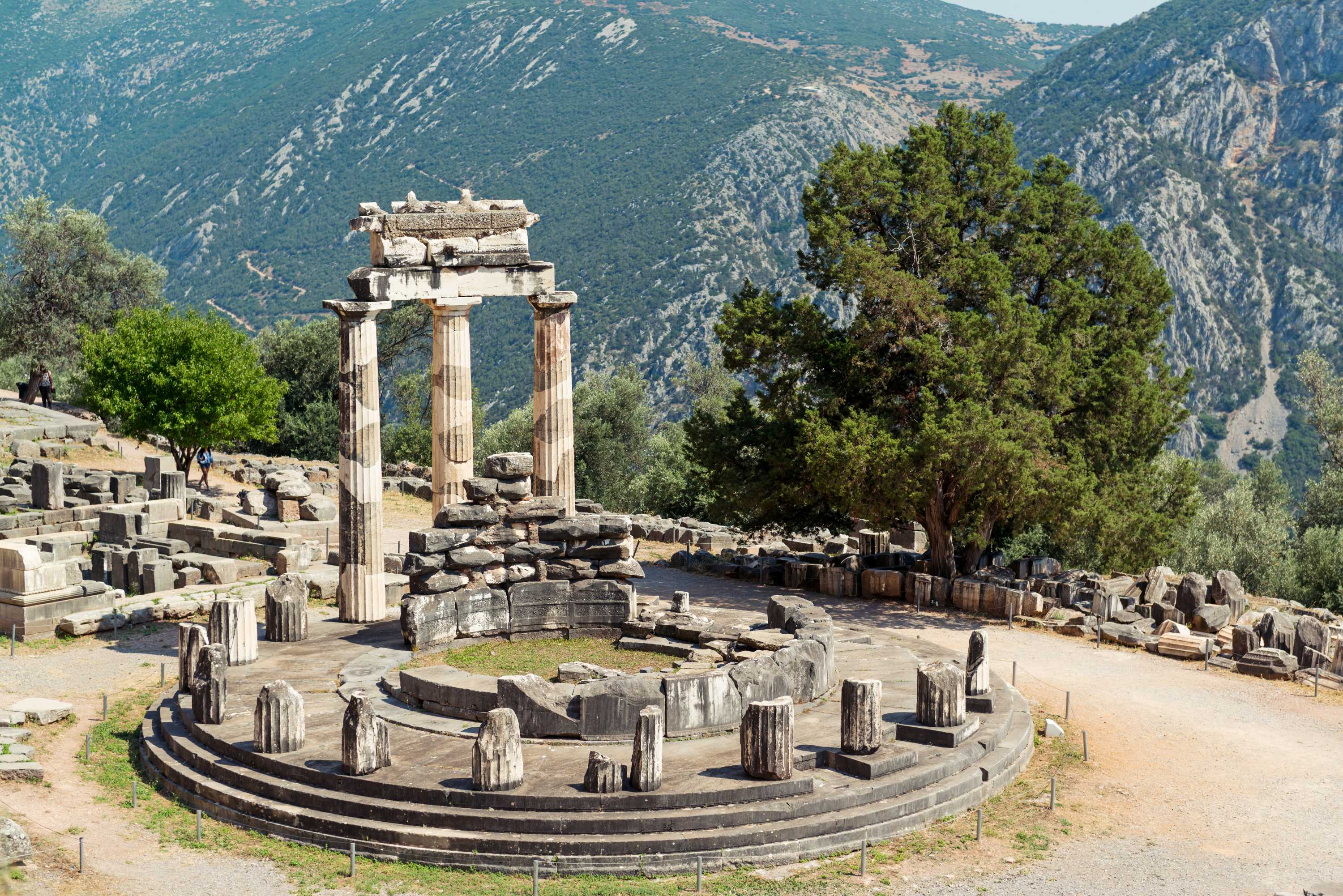
There was once a time when mythology and philosophy got along perfectly well together. But since the Enlightenment, philosophy has come to regard myth as something of an embarrassment – especially in political theory, where the memory of "blood and soil" Nazi ideology is still fresh. Is there a role for myth in secular democratic politics, and in modern philosophy?
Transgender identity and experience
Transgender is commonly invoked as an identity, but this week we're asking if it is better understood as something that points to experience.
How philosophy fell in love with language
Around the beginning of the 20th century, philosophy began to take what's come to be known as "the linguistic turn". All major philosophical questions, it was argued, were really questions about language, and this conviction would dominate philosophical discourse for the next century. But are philosophers now starting to turn away from the linguistic turn? And what might be coming next?
Philosophy for tough times
Life is hard - disappointment, regret and suffering come with the territory - and if the projections of climate scientists and epidemiologists are correct, it's not going to get easier any time soon. But then, life has always been hard. What do philosophical traditions have to say about the incurable toughness of human existence?
Taking politics seriously
Is justice a game? Most of us would say no. But for John Rawls – arguably the 20th century’s most important political philosopher – the answer was a qualified yes. This week we’re wondering if the gamification of justice can create more losers than winners.
Gender, gaming and pop culture
If you're a gamer, you might be interested to hear that according to a new study, female characters speak approximately half as much as male characters in video games. But why should philosophers be interested?
Exploring the multiverse
Do parallel universes exist? The answer depends on who you ask. Some philosophers and scientists say it's an absurd concept, while others say the existence of the multiverse can be inferred directly from known laws of physics.

Leadership
What do we mean by good leadership? Leaders in business are generally judged according to how effective they are, how much value they generate for shareholders and so on. But at what point do ethical concerns enter the equation?
Bilingual parenting, home and the mother tongue
Standard philosophical accounts of language present it as a kind of home – a place that we inhabit, and that shapes our sense of self. But what happens when we're not quite "at home" within a language?
Philosophy behind bars
What does it mean to study and teach philosophy in prison? Andy West has been teaching philosophy in prisons since 2015, and his memoir The Life Inside is a fascinating account of this experience - as well as a reflection on inherited trauma and the fact that his father, uncle and brother all spent time behind bars.

Trans-national adoption and "blending in"
This week we're exploring the “trans-racial adoption paradox", the feeling of belonging culturally while embodying difference, and the challenges faced by adopted people of colour navigating predominantly white communities and social worlds.
Richard Rorty and America
In 1998, the American philosopher Richard Rorty predicted dark days for democracy and the rise of a Trump-like figure in the USA. This week, with the publication of a new collection of Rorty's essays, we're considering the ongoing relevance of his work.
The anti-philosophers
One of the curious things about the history of philosophy is that it periodically throws up thinkers who question the whole business of… doing philosophy. How should we situate these paradoxical figures? Is it possible to be a philosopher if you're arguing that philosophy is an impossible project?
De-extinction, pt 2
The project of bringing extinct animals back into being is sexy, hi-tech and could confer significant environmental benefits - but at what cost? Some argue that resurrecting extinct species could actually work against the conservation of threatened species that currently exist. Why worry about their possible extinction, if we can just bring them back?
De-extinction, pt 1
Gene technology has brought us to the point where it's theoretically possible to bring back extinct animals from the "species grave". But the science is not straightforward - and neither is the philosophy.

Art and hate speech
This week we're exploring the idea that art can say things, and do things, and mean different things according to shifting historical circumstances - and that those sayings, doings and meanings aren't always benign or harmless. How should we respond to morally problematic art - particularly the kind of art that can function as hate speech?
Women and the canon
Women have always been philosophers, often highly regarded by their male contemporaries. So why are women philosophers often regarded today as second-tier thinkers? And what happens when we try to uncover their histories?
Data privacy and informed consent
Ninety-four per cent of Australians do not read privacy policies that apply to them – because who has the time? But the amount of data we all create and share has dramatic implications for privacy and safety. Informed consent is taken very seriously in the medical community, is it time for companies using AI and Big Data to follow suit?
Women philosophers in antiquity
If you don't know much about women philosophers in the ancient Graeco-Roman world, you have a good excuse. They're known to have existed, but hardly any of their works have survived, and historical accounts of their lives tend to come from biographies written by men. This week we try to unravel the mystery.
Moral creativity
This week we're exploring the concept of moral creativity - a virtue that can be useful when it comes to negotiating the grey areas in our modern moral universe.
Tradition, modernity and crisis in Ukraine
How can learning flourish in a time of war? Since the Russian invasion of Ukraine in January 2022, thousands of scholars have fled or been displaced, while nearly 200 institutions of higher education have been damaged or destroyed. This week we explore the possibilities for supporting and restoring the academy, and the role of Ukrainian intellectual traditions in resistance.
The lessons of failure
As much as we dislike thinking about it, failure is deeply embedded within everything we do and everything we are. From our politics to our bodies, the salient feature is that it all falls apart sooner or later. Failure has inspired a million depressing songs and poems - but it's also fertile ground for philosophy, and for some unexpectedly positive reflections.
A Buddhist perspective on the ethics of violence
For philosopher Martin Kovan, the resources within Buddhism provide an analytical means to gain new perspectives on violence. His book is A Buddhist Theory of Killing: A Philosophical Exposition.

On being a minority in philosophy
What challenges come with being a minority in philosophy?
Skilled performance and cognition
When a tennis pro lunges for a difficult drop volley, or a concert cellist rips through the difficult section of a Bach suite, are they thinking about what they're doing? Some would say that elite physical performance is essentially a mindless phenomenon, and that thinking is counterproductive to success. But the reality is more complex - and more interesting.

China, Confucius and the courtyard
For more than three millennia, most buildings in China were configured around a central courtyard. This week's guest believes that the courtyard helps us to understand Chinese society and culture, as well as Confucian philosophy. Today, with increasing numbers of people living in urban apartment buildings, the courtyard has become something of a period piece. What does this tell us about Chinese thought and identity in the modern world?
Values and goals
The recipe for living well is simple: develop a morally sound set of values, formulate goals rooted in those values, and achieve those goals. But beneath this basic formula there lurks a number of tricky questions.
Pop, philosophy and politics
When philosophy turns its attention to music, it's traditionally an exercise in high culture. Questions about the nature and function of music are often explored with reference to an established canon of "serious" music – while pop finds itself relegated to the margins. This week we're getting serious about pop, and exploring the ways that the compositional and sonic structures of pop music reflect the social and political structures of the broader culture.
Conspiracy theories, anti-Semitism and fun
You don’t have to be stupid to be a conspiracy theorist. Many people who buy into paranoid fantasies about stolen Presidential elections and global Satanic cabals are perfectly sane, well-educated individuals. So why do they fall for these myths? This week we consider the possibility that the attraction is primarily aesthetic, and that the experience is fun. But why the perennial focus on Jews?
Efficiency, productivity and excess
These days we’re constantly pushed to be more efficient – at work, of course, but also in our leisure pursuits and even while we sleep. How did we get here? And how can we get back to a state that’s governed by principles other than accumulation and profit? This week, a story of two key figures in the history of modern industrial capitalism: F.W. Taylor, the father of “scientific management” theory, and French thinker Georges Bataille, whose economic philosophy was predicated on the notion of spending rather than saving.
Philosophy and children
Children can teach adults a thing or two when it comes to the getting of wisdom. But does this mean that children are philosophers? And if the answer is Yes, then what kind of philosophers are they?