Philosopher's Zone
268 episodes — Page 3 of 6
Sentience
Sentience is a puzzle - and an increasingly important one. The question of exactly what constitutes sentience, and which organisms possess it, is hotly contested. But with scientific evidence emerging in support of the theory that octopuses, bees and other invertebrates may be sentience candidates, moral questions of how we should treat them become more and more pressing. And then there's AI - could sentient robots be on the horizon?
Nationalism and immigration
Nationalism is often associated with rightwing politics and anti-immigration sentiment - but is that a necessary connection? This week we're looking at various forms of nationalism, and asking if there's something about the structure of the nation-state itself that fosters an exclusionary attitude to outsiders.
Philosophy, history and religion
With the launch this week of a new Centre for the History of Philosophy at Notre Dame University, we're talking about the value of philosophical insights from the past – particularly insights from a time when philosophy and theology were close cousins.
The 2024 Alan Saunders Lecture: Krushil Watene
Maori philosopher Krushil Watene is an outstanding scholar and part of a global leadership network working toward a sustainable future and a healthier planet. This week, delivering the 2024 Alan Saunders Lecture, she presents "Indigenous Philosophy and Intergenerational Justice".
Is there purpose in the cosmos?
To many people, the notion that the universe has consciousness and purpose belongs back in the pre-scientific era. This week we're exploring the possibility that cosmic purpose is defensible not only philosophically, but also scientifically.
Feminism and freedom
Is freedom the primary goal of feminism? It's popular these days to define feminism as something that frees women - from traditional gender roles, from social expectations and other restrictions. But the question remains as to whether or not "freedom feminism" is up to the task of helping - or even noticing - the most vulnerable and oppressed.
Indigenous literature in Australia
As an academic discipline, Australian literature has been a largely white affair, with the canon of "great Australian authors" dominated by Anglo-European men. Indigenous writers are working to change this, and Australian indigenous literature is flourishing. But how comfortably does it sit within the traditional university structure?
Deep ecology
With the climate heating up and our planetary support systems breaking down, how does an eco-philosopher manage to stay cheerful? This week's guest has been living and breathing these issues for many decades, which you'd think might make it difficult for him to get out of bed in the morning. But get out of bed he did, for a surprisingly upbeat conversation about optimism, pessimism and ecological identity.
AI and reading
AI is like all new technology, insofar as many people are afraid of it. When it comes to AI and education, scare stories abound of students using ChatGPT to write their essays, and a possible future where teachers are replaced by bots. But according to this week's guest, there's much to be excited about.
The philosophy of history in China
Ancient China seems like a place and a time far removed from our own - but when we look at how ancient and medieval Chinese scholars thought about the role and practice of history, we find some striking modern parallels.

Extremism, gender and science
Extremists used to be easy to spot: they were seen as irrational, unstable and... well, extreme. But in recent years, we've seen extremists on the political right laying claim to traditional Enlightenment values - reason, free speech, autonomy, human rights - that were traditionally used as bulwarks against extremism.
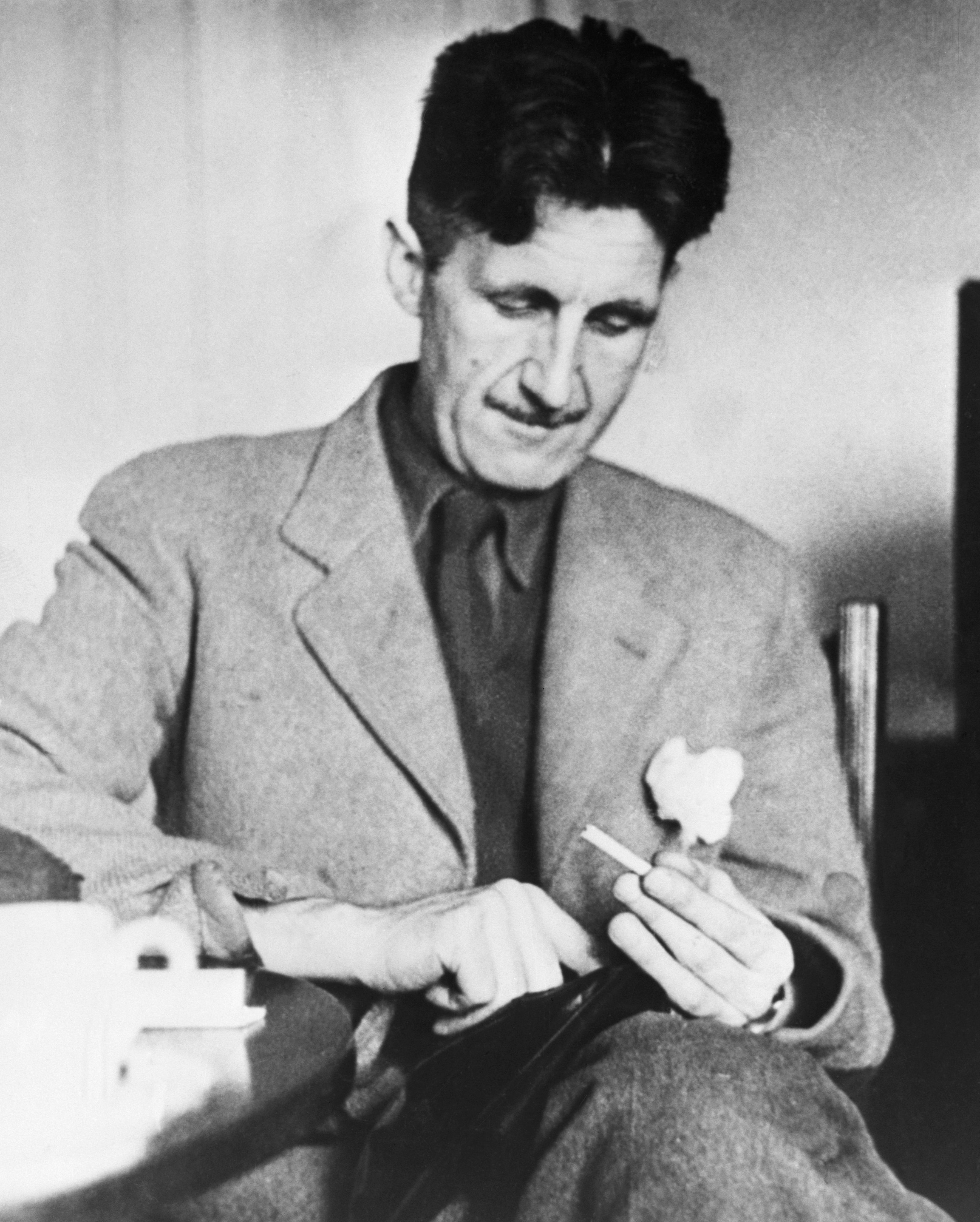
Orwellian equality: What can this philosophical outsider teach us about how to live
Few English language writers enjoy the position of authority, even reverence, that the journalist, essayist, novelist George Orwell does.While Orwell is best known for his novel “Nineteen Eighty-Four”, he can also be read as developing a provocative moral sensibility — perhaps even an ethical system — in dialogue with the exigencies of war that framed his life, as well as the philosophical traditions that were “in the air” in English culture in the first half of the twentieth century.
Can philosophy save us from the tyranny of toxic positivity?
Ever since Plato’s cave, the darkness has been considered something to be left behind. This is the founding myth of philosophy, the beginning of the Western philosophical tradition.But how might philosophy be different if it had, from the beginning, learned to see in the dark? If it had embraced, rather than sought to tame, the emotions that sometimes overwhelm us when we experience the too-muchness of life?

Why liberalism needs fewer defenders, and more devotees
Over the last decade, liberalism has found itself on the ropes. Even many liberals seem to regard it as too soft a political disposition for hard times. This has led some of its most passionate advocates to make the case for its importance with a degree of desperation commensurate with their sense of the existential threat it faces from resurgent forms of authoritarianism, intolerance, populism and political violence.But there is another way of making the case for liberalism — and that is to point to its benevolent effects all around us, the extent to which its influence is written all over those social practices and dispositions we hold dear. In other words, maybe liberalism doesn’t have to be defended at all, but simply acknowledged, and lived-into, as a way of life that both reflects and sustains our hard-won commitment to fairness, decency and equality.

What is AI doing to our humanity?
Whatever else artificial intelligence is, according to Professor Shannon Vallor, it is first and foremost a projection of the human. And so whatever threat it poses, is a threat from within our humanity.
De-extinction, pt 2
The project of bringing extinct animals back into being is sexy, hi-tech and could confer significant environmental benefits - but at what cost? Some argue that resurrecting extinct species could actually work against the conservation of threatened species that currently exist. Why worry about their possible extinction, if we can just bring them back?
De-extinction, pt 1
Gene technology has brought us to the point where it's theoretically possible to bring back extinct animals from the "species grave". But the science is not straightforward - and neither is the philosophy.
What's your story? Life narrative and "main character" thinking
If you're like most people, you probably think about your life as a story - it has a beginning, a middle and an end, and the main character in the story is... you. But this seemingly "natural" main character thinking is deeply culturally determined, and it can limit us in the ways that we evaluate our own lives and the lives of others.
History and narrative
Historians are commonly thought of as being a little like archaeologists or scientists - they're in the business of uncovering facts, and then presenting those facts to the public as accurately as possible. But this week we're considering history as a species of narrative, and the historian as someone who doesn't "discover" the meaning of the past but constructs it.
The ancient key to modern happiness
Most of us aspire to achieve happiness in life, but is our understanding of happiness somewhat misguided? Could the wisdom of the ancient philosophers hold the key to modern happiness?
Fighting fatphobia with Kate Manne
What moral judgements are made in philosophical thinking about fat bodies, and how does that culturally impact how we move through the world?
The philosophy of emotions
Philosophers have long debated how to define emotions and their relationship to our bodies. So, what are the different schools of thought? Why is there such a lack of consensus?
Civil Disobedience with Noëlle McAfee
How should we engage with politics and protest? We explore the history of political engagement and ask what role civil disobedience plays in our lives today.
Why time doesn't pass
Most of us experience time as something that passes, or flows like a river - or at least we think we do. Could it be that the sense of time passing is just an illusion? This week we're getting to grips with a theory of time that denies the reality of "flow" - and we're asking why time seems to speed up or slow down in certain situations.Guest: Heather Dyke, Associate Professor of Philosophy, University of Otago NZProducer: David RutledgeExperience of Passage in a Static World - Heather Dyke at the London School of Economics, June 2017This episode was first broadcast on July 30, 2023.
Philosophy for tough times
Life is hard — disappointment, regret and suffering come with the territory — and if the projections of climate scientists and epidemiologists are correct, it's not going to get easier any time soon. But then, life has always been hard. What do philosophical traditions have to say about the incurable toughness of human existence?
Women philosophers in 19th century Germany
When we think of 19th century German philosophy, we perhaps think first of Nietzsche, or Hegel, and then some other men - but Germany in the 1800s was also home to a number of women philosophers.
Neofeudalism: techno-lords and peasants
For many on the political left, the end of capitalism is a cherished ideal - but what if capitalism ended and we found ourselves with something worse? This week we're exploring the possibility that Western liberal democracies could be sliding in the direction of "neofeudalism" and devolving into a much nastier set of economic and social structures than the ones we presently have.
Obedience
Is obedience a virtue? History is littered with instances where obedience to bad rulers or unjust laws has resulted in catastrophe. But then it's hard to imagine raising or educating children without obedience being a fundamental requirement. This week we're exploring obedience in the moral domain - and in the domain of classical music, where disobedience to tradition can be the hallmark of genius.
Style wars pt 2: Scandals and hoaxes
What should we think when an academic Humanities journal unsuspectingly publishes a paper that's been written as a hoax, full of fashionable jargon and deliberately specious arguments? Does this demonstrate that the Humanities set a higher value on shallow intellectual trends than on rigorous scholarship - or is there something more nuanced and complicated going on?
Style wars pt 1: Postwar France and a new philosophical mode
In the aftermath of the Second World War, France was in a state of creative ferment that affected politics, culture - and philosophy. A new mode of philosophical writing emerged in the form of the review, and it was being done in an idiom that we've since come to recognise as typical of modern French theory: dense, experimental, multivocal, open-ended, very much the opposite of traditional analytic philosophical style. It grabbed scholarly attention then, and is still controversial today.
The predicament of existence
Pain is part of life, and none of us can escape it. And yet most of us feel that the deal is worth it, that the pleasure of life outweighs the suffering. Anti-natalist philosophy takes a different view.
Mary Midgley, public philosophy and plumbing
British thinker Mary Midgley (1919-2018) believed that philosophy should be a public undertaking, concerned with issues that have their genesis out in the world rather than within the academy. But what is the proper relationship between public and academic philosophy? And why are we talking about plumbing this week?
Intellectual humility
Humility is the capacity for acknowledging that your own wisdom may be flawed, and that your epistemic commitments may be misplaced - but how can that acknowledgement honestly take place if you believe that the things you know are true?
Freedom or liberty?
"Freedom" has become a familiar catchcry in Western democracies, as individuals and protest groups increasingly push back against government restrictions of any and all kinds. The problems this poses for communal life and social cohesion are obvious - so how should freedom be properly understood?
Philosophy, angst and hope
How does a woman philosopher deal with the challenges posed by conservative, masculinist culture within her own academic discipline? Our guest this week turns to the work of Immanuel Kant, the 18th century German thinker who formulated a fine-grained philosophy of hope.
Music, taste and AI
When you think about the music you like (or don't like), what does it tell you about your taste? Do you think you have good taste? And if you do, why? What is it about music that determines good or bad taste, and is it possible to cultivate the former?
The philosophy of twins
This week we're exploring our enduring cultural fascination with identical twins, asking what drives it, and what philosophical questions around selfhood and identity are raised by twinship.
Philosophy, disability and the gut
Digestive disorders are a common source of distress and social anxiety - which might seem to be an odd topic for philosophy, until you start to think about why we attach such stigma, shame and silence to issues of the gut. What does the gut tell us about our own experience of embodiment - and how can disability theory be used to shape healthier attitudes to the gut issues that plague so many of us?
Pornography and free speech
The global pornography industry is getting bigger, more mainstream and more nasty - but does this mean it should be regulated? Many feminist philosophers would say yes - but this places them at odds with liberal defenders of pornography, who worry that regulation would constitute an attack on free speech.
What are Australian philosophers thinking?
Australian philosophy has been punching above its weight in recent decades - but does there exist something that we could call an identifiably Australian philosophical tradition? And how does the future of Australian philosophy look, at a time when the academic Humanities are under siege, and universities are being pushed to turn out "job-ready graduates"?
Queer vs the state
For a long time there's been an ambivalent relationship between LGBTQ communities and the state. Even in liberal democracies, which supposedly exist to protect the interests of all their citizens, examples of the state-sanctioned persecution of sexual minorities can be found right up to the present day. And the intellectual project of queer theory has had an anti-state scepticism baked into it from its earliest inception.
What is swearing?
What exactly is it about swearing that gives it its offensive power? None of the standard philosophy-of-language explanations really gets to the bottom of why we swear, why we don't, and what we're doing when we use "obscene" language. This week, the author of a new book offers some thoughts.
Friendship
What makes a true friend? Aristotle in his Nicomachean Ethics outlines certain conditions for virtuous friendship, but he sets the bar high, and his estimation of women's capacity for friendship is low. This week we're putting Aristotle in dialogue with Mary Astell, an early modern (and proto-feminist) English philosopher who also wrote extensively on friendship.
Transgender identity and experience
Transgender is commonly invoked as an identity, but this week we're asking if it is better understood as something that points to experience.
Gender, gaming and pop culture
If you're a gamer, you might be interested to hear that according to a new study, female characters speak approximately half as much as male characters in video games. But why should philosophers be interested?
Richard Rorty and America
In 1998, the American philosopher Richard Rorty predicted dark days for democracy and the rise of a Trump-like figure in the USA. This week, with the publication of a new collection of Rorty's essays, we're considering the ongoing relevance of his work.
Women philosophers in antiquity
If you don't know much about women philosophers in the ancient Graeco-Roman world, you have a good excuse. They're known to have existed, but hardly any of their works have survived, and historical accounts of their lives tend to come from biographies written by men. This week we try to unravel the mystery.
Time in the time of COVID
During the lockdowns at the height of the COVID-19 pandemic, people started to experience a strange sense of temporal distortion - time slowing down, time speeding up, time getting bent out of shape. This week we hear from a philosopher, a historian and a sociologist about how that might have happened, and what it might mean.
Stability, security and survival: a conversation with Mary Graham
Mary Graham is one of Australia's most distinguished Aboriginal academics and authors. In this conversation, she articulates a political philosophy of relationality, conflict management and much more.
Libertarianism
Libertarians are hard to pin down – they have a number of seemingly contradictory commitments that we normally associate with people on either the left or the right of politics. Libertarians like small government, low taxes and free markets – but they also favour things like same-sex marriage and drug legalisation. So what exactly is libertarianism, and where did it come from?