
People Who Read People: A Behavior and Psychology Podcast
272 episodes — Page 1 of 6
Renowned deception researcher Aldert Vrij on how to detect lies
British cop on interrogation tactics (old and new), and celebrity "behavior experts"
He won $1.75M at the World Series of Poker: What role did tells play in his journey?
Luke Geel made an AI to read poker tells: How successful was it?
The "Lie Guy" wrote a book on reading body language in interrogations—then changed his mind
Pro slot machine player on gambling strategies, risks, the lifestyle, and more
A private investigator's tips on reading and manipulating people
She’s certified by Joe Navarro in body language: How has it helped her?
A critical look at Paul Ekman, Joe Navarro, and the entire "behavior expert" industry
Army Psy-Op veteran talks influence, blowback, psy-op myths, and more
Army Psy-Op veteran talks influence, blowback, psy-op myths, and more
Can computers spot lies better than humans?, with Bennett Kleinberg
Can computers detect lies better than humans?, with Bennett Kleinberg
Inside a Scientology e-meter auditing session, with Chris Shelton
Inside a Scientology e-meter auditing session, with Chris Shelton
How Pete Blair scored 100% in a deception detection study
How Pete Blair scored 100% in a deception detection study
Behaviorally, poker and interrogations are very different
Behaviorally, poker and interrogations are very different
Understanding defenses of the polygraph, with David Goldberg
Understanding defenses of the polygraph, with David Goldberg
Improving interrogations using science, with Maria Hartwig and Christian Cory
The push for science-based interrogation approaches, with Maria Hartwig and Christian Cory
Reading behavior in The Traitors and other social deduction games, with Zack Davies (UK season 2)
Reading behavior in The Traitors and other social deduction games, with Zack Davies (UK season 2)
Reading behavior on The Traitors and other social deduction games, with Zack Davies
How digital investigators expose lies and find truth, with OSINT pro Craig Silverman
How digital investigators expose lies and find truth, with OSINT pro Craig Silverman
Secret Service agent on building rapport, reading people, and polygraphs | Brad Beeler
Secret Service’s Brad Beeler talks people-reading, rapport-building, and polygraphs
How recruiters spot fake, deceptive job applicants, with Dani Tepedjiyska
How recruiters spot fake, deceptive job applicants, with Dani Tepedjiyska
What really works in interrogations? (spoiler: it's not reading nonverbal behavior)
Interrogation trainer shares what really works (and why "reading people" doesn't)
How do visa officers read behavior?, with Travis Feuerbacher
How do visa officers read visa-seeker behaviors?, with Travis Feuerbacher
Cards Against Humanity's David Pinsof, PhD, has deep theories on status-seeking and humor
Are you seeking status without even knowing it? Cards Against Humanity's David Pinsof thinks so
MK Ultra: Fact vs fiction, with Stephen Kinzer

MK Ultra fact vs. fiction: Exaggerated claims of mind control and Manchurian candidates | with Stephen Kinzer
Did MK Ultra actually accomplish anything impressive in brainwashing- and mind-control-related areas? Did the US government, as some people claim, create "Manchurian candidates," who would kill on command? In this episode, I talk with Stephen Kinzer, author of “Poisoner in Chief,” a book about the head of MK Ultra, Sidney Gottlieb. We discuss the strange, disturbing reality of MK Ultra—and the many exaggerations made about it over the years. While pop culture and deceptive gurus (like Chase Hughes) spread tales of the program achieving amazing and scary psychological control, Kinzer describes a disorganized and amateurish series of experiments that harmed many people but failed to demonstrate anything impressive. We explore why MK Ultra has become a perfect canvas for all sorts of paranoid ideas and wild speculations, and why the lack of evidence of anything approaching actual mind control hasn’t stopped people from confidently claiming otherwise. If you’ve ever wondered what’s real—and what’s myth—about MK Ultra, you'll probably appreciate this talk.Topics discussed: the myths versus the realities of the MK Ultra program; what makes MK Ultra such a perfect case for people to imagine and believe all sorts of things; what Operation Mockingbird was and its relation to MK Ultra; the hypnotist George Estabrooks and his wild claims of mind control; the idea that Sirhan Sirhan was brainwashed to kill RFK; the likelihood of large plots succeeding in the modern age; the more realistic and banal ways that governments try to “control people’s minds” by persuading and shifting opinions in the modern age; and more. Learn more about your ad choices. Visit megaphone.fm/adchoices

From body language bullshit to behavior science, with Vincent Denault
Vincent Denault once believed he was learning how to read people’s hidden thoughts through analyzing body language. As a young lawyer in Quebec, he attended behavior analysis and “synergology” trainings that promised the ability to detect lies and determine hidden thoughts from small gestures and movements. But after digging into the research, he realized much of what he’d been taught wasn't true. In this talk, Vincent describes that journey and we explore how body-language myths spread through trainings, media, and YouTube behavior “experts.” We also discuss his research on how judges use behavior to assess witness credibility, his views on Paul Ekman, and his views on how bad-behavior-information spreaders protect themselves from criticism and responsibility. Along the way, we examine why nonverbal behavior still matters in human interaction—just not in the reliable lie-detection ways many people assume. Learn more about your ad choices. Visit megaphone.fm/adchoices
From body language bullshit to behavior science, with Vincent Denault

Con man Chase Hughes' military record versus his grandiose claims
How does someone who makes wildly grandiose claims about mind control, interrogation mastery, neuroscience credentials, and secret military psychology operations gain more than 1.5 million YouTube subscribers—and land appearances on shows like Joe Rogan and Diary of a CEO—without anyone vetting his story? I’m joined by ex-CIA officer and fraud-exposer Kent Clizbe (kentclizbe.com), and we take a hard look at Chase Hughes’ actual Navy record and compare it to his many lies, exaggerations, and ambiguous statements about his credentials. We dig into the specific stages of Chase’s military career, his claims of Harvard and Duke neuroscience education, his belief that we live in a simulation (and that psychedelics have helped see the code of that simulation), his pick-up artist background, and his grandiose claims about his psychological knowledge. If you’re interested in how cults of personality and false gurus work—and how even experienced professionals and major platforms can help these people on their rise to popularity—this deep dive into Hughes’ background and the psychology of modern con artistry is one you won’t want to miss. Learn more about your ad choices. Visit megaphone.fm/adchoices
Con man Chase Hughes' actual military record versus his grandiose claims
Epstein Hysteria! Moral panic and dumb overreactions from Kyle Kulinski, others
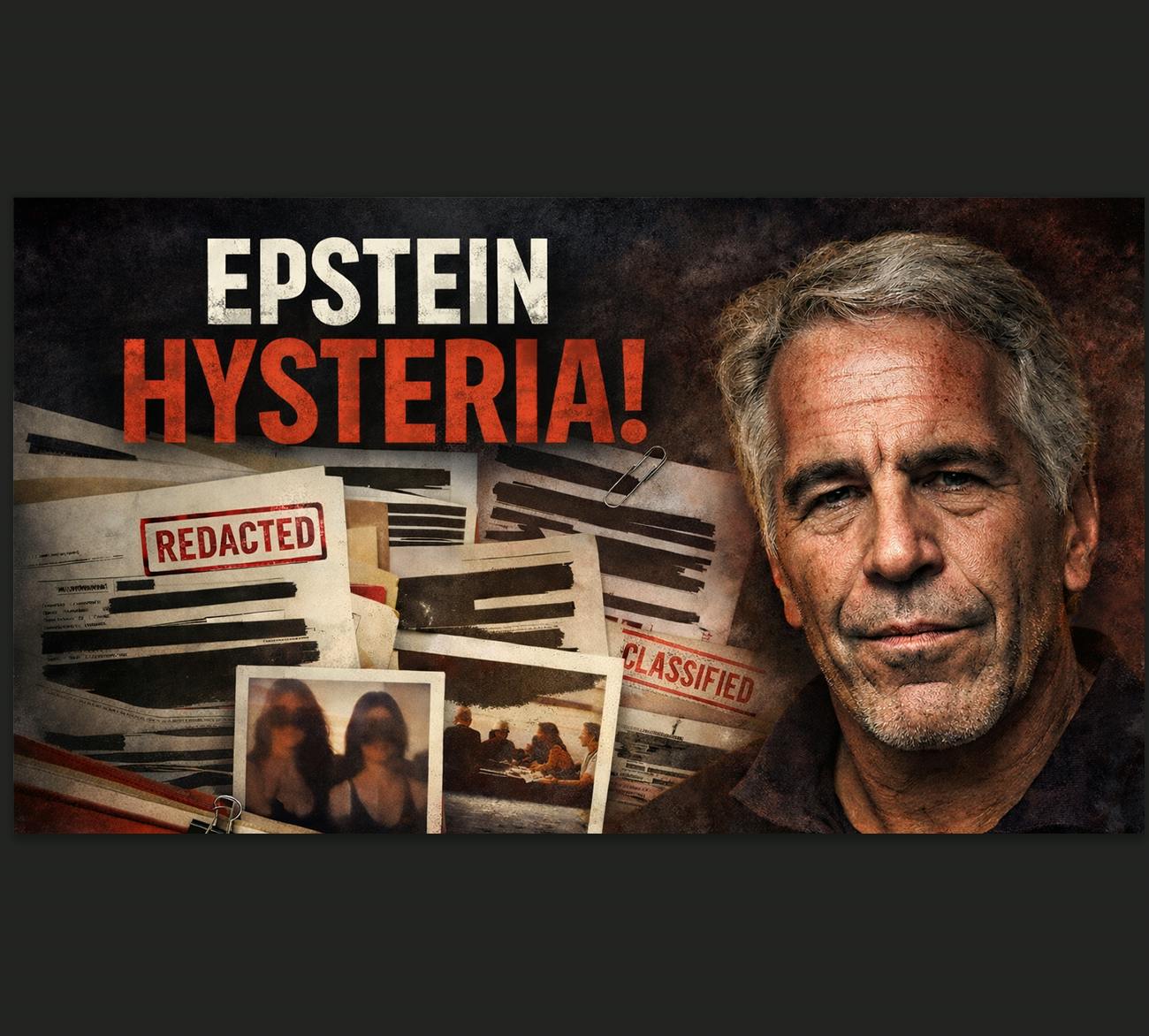
Epstein Hysteria! Moral panic and dumb overreactions from Kyle Kulinski, others
The Epstein files release has resulted in many people seeming to lose their minds: engaging in moral panic, having hysterical overreactions, filtering for worst-case interpretations of ambiguous data, images, and emails. Using a video from the political influencer Kyle Kulinski (who has 2M+ YouTube subscribers) as a case study, I examine how ambiguous snippets—like an audio clip of people seemingly talking about killing deer — get instantly, emotionally interpreted by Kyle and others as highly suspicious evidence of criminal wrongdoing. Why are smart, influential people speaking with absolute certainty about what pixelated photos and ambiguous recordings and emails tell us? Why are people claiming to find evidence of cannibalism in the files? What does all this catastrophizing and ultra-pessimistic thinking tell us about our toxic political polarization problem, and our tendency to assume the worst when our perceived enemies are involved? If you’re concerned about paranoid, conspiracy-minded thinking, and how that ties into our political divides, this episode will help you understand why emotional reasoning is so rampant, and why it’s important to fight against it, when we see others doing it, and within ourselves — not just for the sake of society, but for our own mental health. Learn more about your ad choices. Visit megaphone.fm/adchoices
Is your existence improbable? Or inevitable? Exploring universalism with Arnold Zuboff

Is your existence improbable? Or inevitable? Exploring universalism with Arnold Zuboff
Many view the fact that they are here, experiencing the world, as something insanely improbable... but what if it were instead entirely inevitable? The philosopher Arnold Zuboff walks us through a mind-bending argument, which he calls universalism (aka open individualism), where the improbability of your existence vanishes. It doesn’t matter which sperm met which egg, or how your ancestors got together, or how anything at all in the past unfolded, because wherever there is first-person experience, there is the same “I." Zuboff’s new book "Finding Myself: Beyond the False Boundaries of Personal Identity" features a foreword by Thomas Nagel (author of “What Is It Like to Be a Bat?”), who says that many will view the claim as “incredible, even outrageous” — but says it is too well argued to be ignored and an "important contribution." We discuss why Zuboff sees universalism as resolving many of the core quandaries of consciousness that are puzzled over, and why he's entirely certain it's the right view. Other topics include: how universalism ties into views of a multiverse and the anthropic principle; how it ties into ideas of religion and a higher power, and more. If you’ve ever lain awake at night wrestling with the sheer weirdness of being alive at all, you’ll want to listen to this episode. Learn more about your ad choices. Visit megaphone.fm/adchoices
Waco negotiator Gary Noesner shares tips on de-escalation and reading behavior

Waco negotiator Gary Noesner shares tips on de-escalation and reading behavior
What actually works to avoid violent outcomes when someone is armed, emotional, and on the edge? I talk with former FBI chief hostage negotiator Gary Noesner, author of Stalling for Time, about the psychology of high-stakes crisis situations — including lessons from Waco (part of which he was present for) and other cases Gary explains the “paradox of power” (why pushing aggressively often backfires), and why most so-called hostage situations are really emotional crises, not bargaining contests. We also discuss the limits of reading body language and behavior, the power of active listening, and the importance of tone of voice and how you phrase things. Learn more about your ad choices. Visit megaphone.fm/adchoices