
People of the Pod
American Jewish Committee (AJC) · People of the Pod
Show overview
People of the Pod has been publishing since 2018, and across the 8 years since has built a catalogue of 409 episodes. That works out to roughly 200 hours of audio in total. Releases follow a weekly cadence.
Episodes typically run twenty to thirty-five minutes — most land between 23 min and 35 min — though episode length varies meaningfully from one episode to the next. None of the episodes are flagged explicit by the publisher. It is catalogued as a EN-language Religion & Spirituality show.
There hasn’t been a new episode in the last ninety days; the most recent episode landed 8 months ago.
From the publisher
People of the Pod is an award-winning weekly podcast analyzing global affairs through a Jewish lens, brought to you by American Jewish Committee. Host Manya Brachear Pashman examines current events, the people driving them, and what it all means for America, Israel, and the Jewish people.
Latest Episodes
View all 409 episodes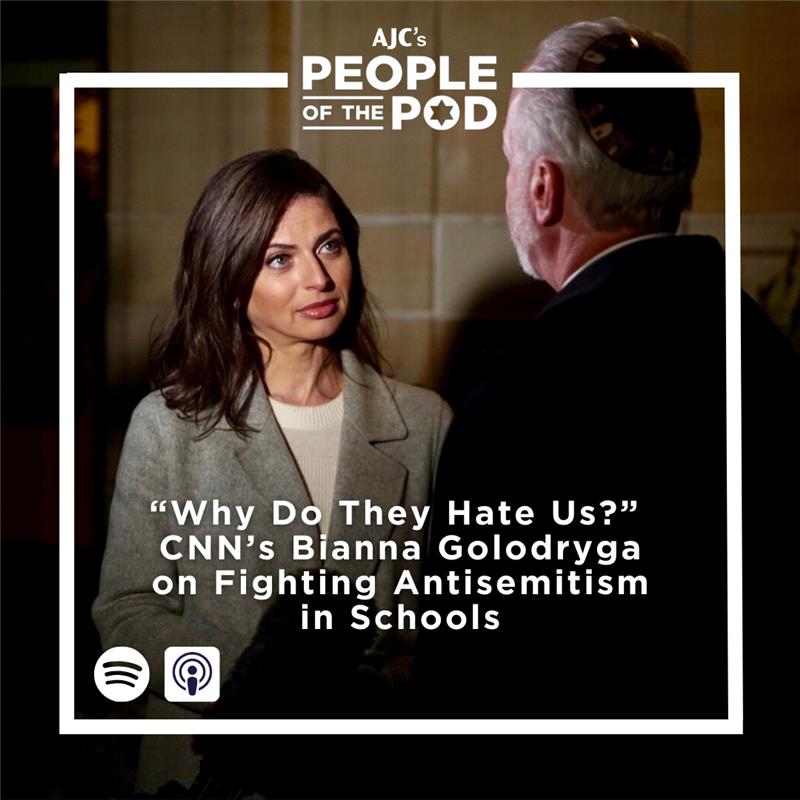
"Why Do They Hate Us?" CNN's Bianna Golodryga on Fighting Antisemitism in Schools
In this special episode, host Manya Brachear Pashman welcomes a co-host: her 11-year-old son, Max. Together, they sit down with Emmy-winning CNN anchor Bianna Golodryga to discuss her new novel, Don't Feed the Lion. Co-written with Yonit Levy, the book tackles the viral contagion of antisemitism in schools. From the pressure of being the only Jewish kid in class to the stress of Bar Mitzvah prep, this multi-generational conversation explores the void in modern education and the power of empathy. A rare, heartwarming, and urgent bridge between the newsroom and the classroom, this discussion is a must-listen for parents, educators, and anyone looking to understand the next generation's fight against hate. A Note to Our Listeners: As we head into 2026, People of the Pod will be taking a pause. After eight years of sharing your stories, we are contemplating our next chapter. Thank you for being part of this journey. *The views and opinions expressed by guests do not necessarily reflect the views or position of AJC. Key Resources: AJC's Center for Education Advocacy Confronting Antisemitism In Our Schools: A Toolkit for Parents of Jewish K-12 Students FAQs for Parents of K-12 Jewish Students Listen – AJC Podcasts: Architects of Peace The Forgotten Exodus People of the Pod Follow People of the Pod on your favorite podcast app, and learn more at AJC.org/PeopleofthePod You can reach us at: [email protected] If you've appreciated this episode, please be sure to tell your friends, and rate and review us on Apple Podcasts or Spotify. Transcript of the Interview: Manya Brachear Pashman: Bianna Golodryga is an Emmy award winning news anchor for CNN, who has reported extensively on the October 7 Hamas terror attack on Israel and Russia's invasion of Ukraine. She is a mother and she is now a published novelist. Co-written with leading Israeli news anchor Yonit Levy, Don't Feed the Lion is about how the rise of antisemitism affects Theo, his sister Annie, and their friends Gabe and Connor, all students in a Chicago middle school, and it was written with middle schoolers in mind. Bianna is with us now to discuss the book, along with my co-anchor this week, my son Max, a middle schooler who read the book as well and has a few questions of his own. I will let Max do the honors. Max Pashman: Bianna, welcome to People of the Pod. Bianna Golodryga: Well, it is a joy to be with you Manya, and especially you, Max. We wrote the book for you, for you and your peers especially. So really excited to hear your thoughts on the book. Manya Brachear Pashman: Well, I want to know, Bianna, what prompted you to write this book? Was it the mother in you or the journalist or a little bit of both? Bianna Golodryga: It was definitely a little bit of both. It was the mother in me, initially, where the idea was first launched and the seed planted even before October 7. You know, sadly, antisemitism has been with us for millennia, but I never thought that I would be having these conversations with my own kids in the city, with the largest Jewish community and population outside of Israel. But you'll recall that there were a few high profile antisemitic social media posts and controversies surrounding Kanye West and then Kyrie Irving, who's a famous NBA player at the time, and my son, who was 10 at the time, a huge sports fan, and was very upset about the fact that not only were these comments made and these posts made, but there was really no accountability for them. There was no consequence. Ultimately, Kyrie Irving was suspended for a few games, but there was just a deluge of news surrounding this. People apologizing for him, but not him apologizing for himself. So my son asked as we were on our way to a basketball game to watch Kyrie play. Asked, why do they hate us? Can I not even go to the game? Does he not want me there? And I really was dumbfounded. I didn't know how to respond. And I said, you know, I don't have the answer for that, but I'm going to reach out to your school, because I'm sure this is something that they're addressing and dealing with and have the resources for. This was after the murder of George Floyd, and so we had already witnessed all of the investments, thankfully, into resources for our kids, and conversations, both at schools and the workforce, about racism, how to deal with racism, how to spot and identify it, other forms of hate. And I just assumed that that would include antisemitism. But when I reached out to the school and asked, you know, what are they doing on antisemitism, the response stunned me. I mean, it's basically nothing. And so as I said, the seed was planted that we really need to do something about this. There's a real void here. And then, of course, when the attacks of October 7 happened, you know, Yonit and I were on the phone and messaging every single day right after. And it was pretty quick, maybe two weeks later, when, you know, we'd already started seeing an uptick in antisemitism around
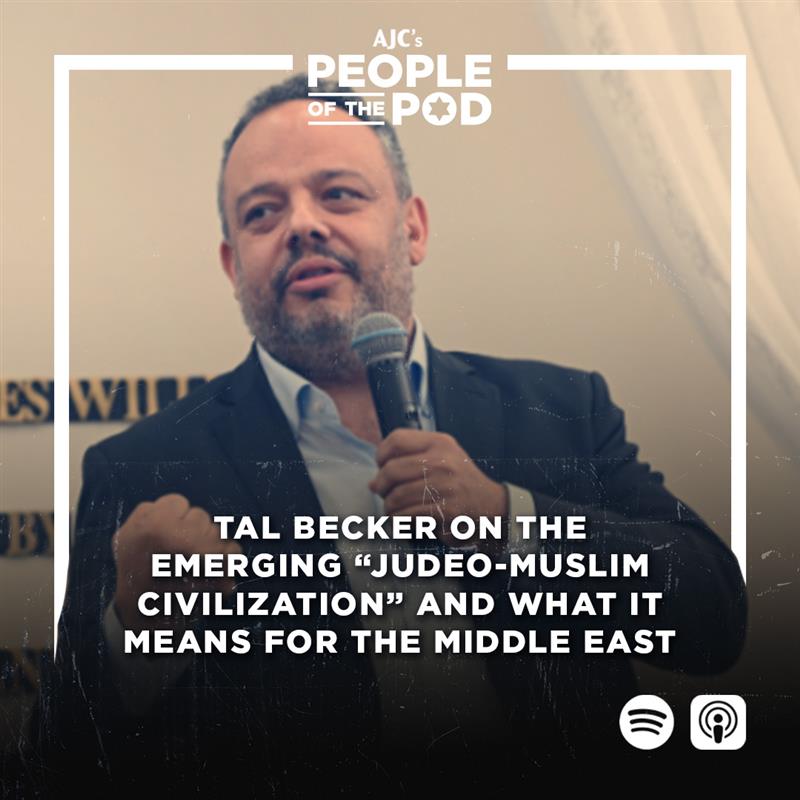
Tal Becker on The Emerging "Judeo-Muslim Civilization" and What It Means for the Middle East
Are we in a 'plastic moment,' an inflection point where the future of the Middle East can finally be reshaped? Veteran peace negotiator Dr. Tal Becker joins the podcast to analyze the shifting tides of regional diplomacy. Reflecting on his recent discussions in Abu Dhabi, Becker describes the Abraham Accords as an emerging "Judeo-Muslim civilization" where the focus isn't on "who the land belongs to," but the realization that "we all belong to the land." Beyond geopolitics, Becker addresses the trauma of rising Western antisemitism—which he likens to a "zombie apocalypse"—and calls for a resurgence of liberal nationalism. This episode is a masterclass in navigating a zero-sum world to build a future of prosperity, courage, and shared belonging. Key Resources: The Abraham Accords, Explained AJC CEO Ted Deutch Op-Ed: 5 Years On, the Abraham Accords Are the Middle East's Best Hope AJC's Center for a New Middle East Listen – AJC Podcasts: Architects of Peace The Forgotten Exodus People of the Pod Follow People of the Pod on your favorite podcast app, and learn more at AJC.org/PeopleofthePod You can reach us at: [email protected] If you've appreciated this episode, please be sure to tell your friends, and rate and review us on Apple Podcasts or Spotify. Transcript of the Interview: Manya Brachear Pashman: As the international community looks to phase two of the cease fire between Israel and the Hamas terror group in Gaza, the American Jewish Committee office in Abu Dhabi invited Dr Tal Becker to participate in discussions about what's next for the region. Dr Becker is one of Israel's leading experts on international humanitarian law and a veteran peace negotiator with Palestinians, Lebanese and Syrians. He is currently vice president of the Shalom Hartman Institute, and he joins us now right after the conference in Abu Dhabi to share some of the insights he contributed there. Tal, welcome to People of the Pod. Tal Becker: Thank you very much, Manya. Manya Brachear Pashman: So Tal, you have just returned from a conference in Abu Dhabi where you really took a deep dive, kind of exploring the nature of Arab-Israeli relations, as we are now entering the second phase of the ceasefire between Israel and Gaza. So I'm just curious, you've been steeped in this for so long, for decades, do you sense, or did you sense a significant shift in the region when it comes to Arab-Israeli relations and the future? Tal Becker: So I think Manya, we're at a very kind of interesting moment, and it's hard to say exactly which direction it's going, because, on the one hand, we have had very significant military successes. I think a lot of the spoilers in the region have been significantly set back, though they're still there, but Israel really has had to focus on the military side of things a lot. And it, I think, has strained to some extent, the view of what's possible because we're being so focused on the military side. And I think it is a moment for imagining what's possible. And how do we pivot out of the tragedy and suffering of this war, make the most of the military successes we've had, and really begin to imagine what this region could look like if we're going to continue to succeed in pushing back the spoilers in this way. Israel is a regional power, and I think it for all our vulnerability that requires, to some extent, for Israel to really articulate a vision that it has for the region. And it's going to take a little bit of time, I think, for everybody to really internalize what's just happened over these last two years and what it means for the potential for good and how we navigate that. So I really think it's kind of like what they call a plastic moment right now. Manya Brachear Pashman: A plastic moment, can you define that, what do you mean by plastic? Tal Becker: So what I mean by a plastic moment, meaning it's that moment. It's an inflection point right where, where things could go in one direction or another, and you have to be smart enough to take advantage of the fluidity of the moment, to really emphasize how do we maximize prosperity, stability, coexistence? How do we take away not just the capabilities of the enemies of peace, but also the appeal of their agenda, the language that they use, the way they try to present Muslim Jewish relations, as if they're a kind of zero sum game. So how do we operate both on the economic side, on the security side, but also on the imagining what's possible side, on the peace side. As difficult as that is, and I don't want to suggest that, you know, there aren't serious obstacles, there are, but there's also really serious opportunities. Manya Brachear Pashman: So what did you sense when you were there, in terms of the perception of Israel? I mean, were people optimistic, for lack of a better term? Tal Becker: So first of all, it was, you know, a great opportunity to be there. And having been involved, personally, very intensively in the Abraham Accords, I always feel a bit
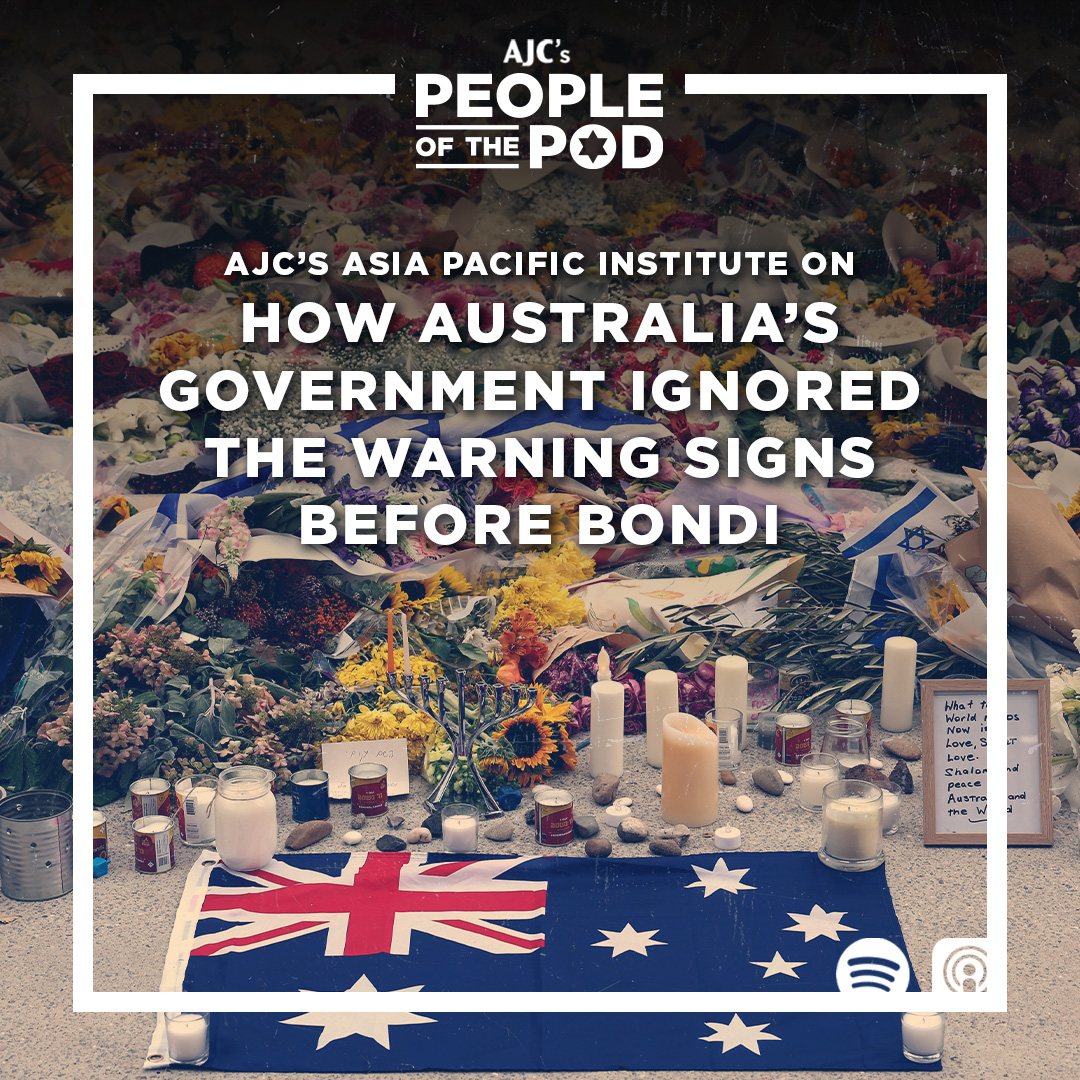
AJC's Asia Pacific Institute on How Australia's Government Ignored the Warning Signs Before Bondi
Once considered a haven for Jews, Australia is reeling after a deadly Hanukkah terror attack at Bondi Beach left 15 dead—the tragic outcome of skyrocketing hate. AJC Asia Pacific Institute Associate Director Hana Rudolph joins the podcast to unpack the crisis, revealing that despite over 2,000 antisemitic incidents in the year following October 7, the government dropped the ball. Hana details how political inaction and a fear that "supporting Jews is not politically popular" have allowed extremism to fester. She criticizes the delay in implementing the recommendations set forth by Australia's Special Envoy to Combat Antisemitism, noting the government's failure to move beyond basic security measures. Listen as she explains why global pressure is now urgent to ensure Australia takes this massive gap seriously before more lives are lost. Read the Full Transcript: https://www.ajc.org/news/podcast/ajcs-asia-pacific-institute-on-how-australias-government-ignored-the-warning-signs-before Resources: -What To Know About the Antisemitic Terror Attack in Sydney -Take action: Urgent: Confirm U.S. Special Envoy to Monitor and Combat Antisemitism Listen – AJC Podcasts: -Architects of Peace -The Forgotten Exodus -People of the Pod Follow People of the Pod on your favorite podcast app, and learn more at AJC.org/PeopleofthePod You can reach us at: [email protected] If you've appreciated this episode, please be sure to tell your friends, and rate and review us on Apple Podcasts or Spotify. Transcript of the Interview: Manya Brachear Pashman: For more than 30 years, American Jewish Committee's Asia Pacific Institute has found Australia to be a nation that has stood shoulder to shoulder with the Jewish people and Israel. But that sense of steadfast support has started to fray as antisemitism has risen exponentially. The massacre at Bondi Beach on the first night of Hanukkah was only the latest and deadliest in a string of antisemitic incidents over the past two years. Here to discuss how we got here is Hana Rudolph, associate director of AJC's Asia Pacific Institute. Hana, welcome to People of the Pod. Hana Rudolph: Thank you so much for having me. Manya Brachear Pashman: Well, I want to ask you first, can you kind of introduce our listeners to the Australian Jewish community? How many people are we talking about? What is their history in Australia? Hana Rudolph: The Australian Jewish community is one of the most historic, long standing communities in the Asia Pacific. It dates back to 1788. So we're talking 18th century over 100,000 Jews. They're a diverse community. They reside primarily in the cities of Melbourne and Sydney, but they range in terms of practice, in terms of political views, similar to as we see in Europe or the US. There's some level of debate in terms of what, what percentage of the population it comprises, but somewhere between .5- 1% of the population. Manya Brachear Pashman: And has Australia been a friendly country for the Jewish community for all of that time, and at least until recently? Hana Rudolph: Yeah, absolutely. It has been a deep, close friend of Israel. Israeli diplomats have described Australia as an even closer partner to Israel at the UN and in other global forums than even the US. Jews have been living there for centuries, and have oftentimes described Australia as being like a haven. No matter the antisemitism that increases in Europe or in the US, Australia has been safe. It is the one place besides Israel, where they feel they can live in security. So the surge in antisemitism we've seen, especially since October 7, has just been so much more alarming and frightening and shocking for the community, because they just haven't seen incidents at this level anytime prior. Manya Brachear Pashman: What is it about Australia's community? I mean, I know that there's been a lot of emphasis on a kind of, give everyone a fair go, right? There's a lot of emphasis on equality. Is that what guides this kind of welcoming atmosphere? Or why are they such good friends with Israel? Is there something about the culture? Hana Rudolph: Yeah, Australia takes a lot of pride in its multiculturalism, the harmony and diversity, social cohesion, so they've placed a lot of emphasis on that in terms of, like, the national culture, and I think that's part of what's led to such a safe, thriving space for the Jewish community for so long until now. Manya Brachear Pashman: So what changed? Hana Rudolph: Million dollar question, right? October 7. It's really important to note that, you know, there have been threads of antisemitism from well before October 7, right? Things don't just happen overnight. And in the Hamas attack took place on October 7, before Israel had even begun its defensive war to recover the hostages and to complete its aims, on October 9, there was a massive protest in front of the Sydney Opera House, and people were yelling, were holding signs, yelling slogans of, where is the Jews, F the Jews.

Sheltering in Place in Sydney: What AJC's Moshe Lencer Witnessed at Bondi Beach the Day After an Antisemitic Massacre
AJC Director of Campus Affairs Moshe Lencer was on his first visit to Australia when the unimaginable happened. Hours after he enjoyed the sun at Sydney's Bondi Beach, it became the site of an antisemitic terrorist attack, leaving 15 people, including a child and a Holocaust survivor, dead. Moshe recounts attending a student leadership shabbaton, in partnership with Australia's Union for Jewish Students (AUJS), and the immediate aftermath on the ground—a mix of helplessness and resolve—and the powerful scene at Bondi Beach the following day, as Jews and non-Jews gathered to mourn and show solidarity. Reflecting on the rise of antisemitism in Australia, Moshe—speaking as an outsider to the community—underscores the guiding principle of Australian Jews at this moment: "If we stop celebrating Jewish identity, it means they won." Read Full Transcript: https://www.ajc.org/news/podcast/ajcs-asia-pacific-institute-on-how-australias-government-ignored-the-warning-signs-before Resources: -What To Know About the Antisemitic Terror Attack in Sydney -Take action: Urgent: Confirm U.S. Special Envoy to Monitor and Combat Antisemitism Listen – AJC Podcasts: -Architects of Peace -The Forgotten Exodus -People of the Pod Follow People of the Pod on your favorite podcast app, and learn more at AJC.org/PeopleofthePod You can reach us at: [email protected] If you've appreciated this episode, please be sure to tell your friends, and rate and review us on Apple Podcasts or Spotify. Transcript of the Interview: Manya Brachear Pashman: As the sun began to set in Australia on Sunday, more than 1000 gathered on Bondi Beach in Sydney to celebrate the first night of Hanukkah by the Sea, but at about 6p m, terrorists fired into the crowd, killing at least 15 and wounding dozens more. Students with the Australasian union of Jewish students had just wrapped up a Shaba tone before they headed to Bondi Beach and our own AJC, Director of Campus affairs, Moshe Lencer, whom we affectionately call Moosh, was there with him shortly before the attack, and he's with us now. Moosh, welcome to people of the pod. Moshe Lencer: Thank you for having me. Manya Brachear Pashman: Well, I wish it were under very different circumstances. How are you doing and how are the students doing that you are spending time with there? Moshe Lencer: It's a wonderful question, and the more I think about it, the less I have a clear answer. It's a combination of helplessness, and in the same time, desire towards hope and trying to figure how to move through this very dark time. The last 24 hours, a little bit more than that have been very interesting is this has been my first time ever in Australia. I landed here Friday morning. Right now, for context, it's Monday night, and until about 6pm on Sunday, it was a very pleasant, positive experience, filled with moments of Jewish pride and joy. The reason I'm in Australia, even in this moment, is time, is AJC has a partnership with the Austra Asian union of Jewish students known as AJUS. Which is the student organization that focuses on Leadership for Jewish students in Australia and New Zealand. And I was invited to take part in a shabaton that was held just outside of Sydney with student leaders from both Australia and New Zealand. The weekend was filled with laughter and joy and happiness, and we were making edible chanukias before the holiday, we were talking about ways to advocate for what students needs and for what they need. We even finished the day with kayaking, and there was a lot of happiness and a lot of desire, because, as I learned recently, and I should have understood before by being in the southern hemisphere. This is the beginning of summer. This is the first few weeks when people finish the school year and they're enjoying it. They're celebrating. And that's why the dates were chosen. So it's like beautiful and it's sunny, and we were expelled and everything. And as we were about to start celebrating a holiday that's all about our community and resilience, our resilience was tested again, and now as just over a day into it, we're still trying to see what we can do and how to move forward and support the community right now as it's hurting. Manya Brachear Pashman: You were actually at Bondi Beach shortly before the attack. Can you kind of describe the environment and why you were there in the first place? Moshe Lencer: Yeah, of course, as mentioned, we were doing the shabbaton, and the programming ended around 3pm and it's summer. It's the first few days of summer. If you Google, what can you do, or what should you do and see in Sydney, the first few things people will see will be the Opera House, which is, I think, the most iconic place in the city. And then the second thing is go. It says, Go to Bondi Beach. It's such a big piece of the community here and where people go. It's also super close to where most of the Jewish community lives. So we were saying, okay, the shabbaton is done. A lot of the peo

The Producer of Pulp Fiction on His New 10/7 Docu-series Red Alert on Paramount+
Join host Manya Brachear Pashman for a powerful conversation about Red Alert, the Critics Choice Award-nominated Paramount+ docu-series that confronts the October 7 Hamas massacre with unflinching honesty. Producer Lawrence Bender (Pulp Fiction, Good Will Hunting) shares why this project couldn't wait—launched in real time to push back against denial, disinformation, and a world struggling to absorb the scale of the tragedy. Bender reflects on the courage and trauma of the ordinary Israelis whose stories anchor the series, including survivors like Batsheva Olami, whose resilience changed the production team forever. Hear how filming during an active war shaped the storytelling, the emotional toll on everyone involved, and why capturing these true accounts is essential to ensuring October 7 is neither minimized nor forgotten. Key Resources: AJC.org/Donate: Please consider supporting AJC's work with a year-end gift today. Right now, your gift will be matched, dollar-for-dollar, making double the impact. Every gift matters. Every dollar makes a difference in the fight for a strong and secure Jewish future. Listen – AJC Podcasts: Architects of Peace The Forgotten Exodus People of the Pod Follow People of the Pod on your favorite podcast app, and learn more at AJC.org/PeopleofthePod You can reach us at: [email protected] If you've appreciated this episode, please be sure to tell your friends, and rate and review us on Apple Podcasts or Spotify. Transcript of the Interview: [Clip from Red Alert] Manya Brachear Pashman: Academy Award nominated film producer Lawrence Bender has quite a repertoire for both feature films and documentaries: Pulp Fiction, Inglorious Bastards, Good Will Hunting and Inconvenient Truth. In fact, his works have earned 36 Academy Award nominations. His most recent TV miniseries is a more personal project on the second anniversary of the October 7 Hamas terror attacks on Israel, Paramount Plus began streaming a four episode series called red alert about the attack on festival goers, innocent passers by and families waking up to terrorists inside their Israeli homes that day, a tragedy that many of us, either on this podcast or listening have watched with overwhelming grief for the last two years. Lawrence is with us now to talk about how he grappled with this attack on Israel and the rise of antisemitism that followed. Lawrence, welcome to People of the Pod. Lawrence Bender: Thank you, Manya, it's good to be here. Manya Brachear Pashman: So that clip that we played at the top of this episode, it's one of the few clips in English. Most of the dialog in this show is in Hebrew with subtitles. But that scene is a woman, Bathsheba and her two daughters. They're walking across a field trying to return home, and her son has been taken. Her husband is gone. This series weaves together her story and three or four other ordinary civilians fighting for their lives on October 7, 2023. You know, as someone personally who's been immersed in this subject matter for two years, to be honest, I had to muster the energy to watch this, and I'm so glad that I did. But why are, I mean, as we're still waiting for the last hostage to be returned, why was it important for this show to air now? Lawrence Bender: Well, thank you so much for doing this with me, and thank you for playing that clip. I have to tell you first, I love that clip. I love that scene because one of the things about the show and the stories that we portrayed is that even with the horrific things that happened on that day, people still were able to fight back. People were still able to be strong. A mother with her daughter and her infant stood in the face of a terrorist and stood him down in real life, this happened. Now, not everybody was so fortunate, and her husband Ohad was not fortunate, and her son was taken hostage, as you mentioned, but it does show her personal power in this horrific situation. And I just thought, you know, this woman is a real hero. I've spent a lot of time with her, Batsheva Olami, she's really an extraordinary human in all ways. So thank you for playing that clip. So in terms of the show, I felt on October 8, it's just amazing how quickly, before Israel did anything, the entire world quickly turned against the very people who were the victims and having spent subsequently, a lot of time with people on the set, because, as you mentioned, this show was about real people, and those real people spent a lot of time on the set with us. And the very people that were traumatized, felt isolated, they felt alone, and they're the very ones that need to be loved, that need to be hugged, they need to be supported. Anyway, I just felt like I needed to do something fast to try to show the world what really happened. AndRed Alert is the result of that. Manya Brachear Pashman: Do you fear that the world has already moved on? Lawrence Bender: Oh, that's a good question. It feels like we've passed a tipping point, actually, in terms

Erasing Jewish History: Why What Happened in Ireland Should Alarm All Jews
When Dublin officials moved to strip the name of Chaim Herzog—Israel's Irish-born sixth president—from a community park, it wasn't just a local dispute. It was an act of erasure. In this emotional episode, Dr. Alexandra Herzog, AJC's Director of the William Petschek Global Jewish Communities Department, explains why this attempt to rewrite history should alarm not only Jews, but all citizens of goodwill. As anti-Zionist fervor increasingly targets Jewish identity across the West, the push to remove a Jewish name from a park beside Ireland's only Jewish school sends a chilling message: Jewish heritage has now become a political battleground. Alexandra shares personal memories of her grandfather and illustrates why this fight isn't about a plaque in Ireland—it's about halting the slide from criticism of Israel into the deletion of Jewish memory. Tune in to understand why defending this history is essential to protecting Jewish dignity everywhere. Key Resources: AJC Welcomes Dublin City Council's Decision to Shelve Renaming of Herzog Park Letter in the Irish Times: Renaming Herzog Park in Dublin Would Be An Act of Erasure Against Ireland's Jews Listen: Will Ireland Finally Stop Paying Lip Service When it Comes to Combating Antisemitism? AJC Directly Addresses Antisemitism and Vilification of Israel in Ireland with the Prime Minister Listen – AJC Podcasts: Architects of Peace The Forgotten Exodus People of the Pod Follow People of the Pod on your favorite podcast app, and learn more at AJC.org/PeopleofthePod You can reach us at: [email protected] If you've appreciated this episode, please be sure to tell your friends, and rate and review us on Apple Podcasts or Spotify. Read the full transcript: https://www.ajc.org/news/podcast/erasing-jewish-history-why-what-happened-in-ireland-should-alarm-all-jews Transcript of the Interview: Manya Brachear Pashman: Members of the City Council of Dublin, Ireland have withdrawn a proposal to rename a park that since 1995 has honored former Israeli President Chaim Herzog. The park, located near Dublin's only Jewish school, is named after Herzog, Israel's sixth president, who was born in Belfast. Here to talk about the now withdrawn proposal is Alexandra Herzog, AJC's Director of the William Petschek Global Jewish Communities Department, and Chaim Herzog's granddaughter. Alexandra, welcome to People of the Pod. Alexandra Herzog: Thank you so much for having me, Manya. Manya Brachear Pashman: So you have joined us before, but on a different podcast, The Forgotten Exodus, which is our narrative series about Jews from the Middle East and North Africa. You were joining us to talk about your maternal grandfather, Nessim Gaon, the longtime president of the World Sephardi Federation. He came to Israel from Sudan. But this time, we're talking about your paternal grandfather, Chaim Herzog. How did someone born in Ireland later become President of Israel? Alexandra Herzog: Yes, that's a great question. Manya, so my grandfather, Chaim Herzog, was, as you said, born in Belfast. He grew up in Dublin in a very proudly Jewish home. His father actually was a Rabbi Isaac Halevi Herzog, and he served as the Rabbi of Belfast before becoming the chief rabbi of Ireland. So he moved from Belfast to Dublin in 1919. He was affectionately known as the Sinn Féin rabbi, and he was highly respected and close to many of the leaders of the Irish independence movement. So my grandfather really grew up in a house that was deeply steeped in Jewish learning, in Irish patriotism, and he had a very strong sense of moral responsibility. And as a young man, he had to leave Ireland to study, and he later enlisted in the British Army during World War Two, he fought the Nazis as an intelligence officer. He was one of the first soldiers actually to enter the concentration camp of Bergen Belsen, and he interrogated senior Nazi officials. Now, after the war, he moved to what would become the State of Israel, and he helped build the very young country, almost from its founding, in different positions. And you know, then later, he became Israel's ambassador to the UN and a member of the Israeli parliament, the Knesset. And by the time he was elected as Israel's sixth president in 1983 he was widely seen really, as a statesman who combined Irish warmth and some storytelling with a very deep sense of Jewish history and Jewish responsibility. He never stopped describing himself, actually, as an Irish born man. and he often spoke about how Ireland really shaped his worldview, and his commitment to freedom and to democracy. Manya Brachear Pashman: And you mentioned that he was the ambassador to the United Nations. He was, in fact, Ambassador when the resolution Zionism is Racism was, was part of the conversation. Alexandra Herzog: That's right. Yes, one of the two UN resolutions ever to be withdrawn and canceled, very important one. That's right. Manya Brachear Pashman: In fact, if I'm not mistaken, he tore it in half. Ale
Architects of Peace: Episode 6 - Building What's Next
Five years after the signing of the Abraham Accords, the Middle East looks very different—defined by both extraordinary cooperation and unprecedented challenges. In this episode, we unpack how Israel's defensive war on seven fronts affected regional partnerships, why Abraham Accords nations have stood by the Jewish state, and what expanded normalization could look like as countries like Saudi Arabia and others weigh making such monumental decisions. We also explore the growing importance of humanitarian coordination, people-to-people diplomacy, and the critical role AJC is playing in supporting deeper regional collaboration. From shifting narratives to new economic and security opportunities, we chart what the next five years could mean for peace, stability, and integration across the region. *The views and opinions expressed by guests do not necessarily reflect the views or position of AJC. This episode is up-to-date as of November 25, 2025. Read the transcript: Building What's Next | Architects of Peace - Episode 6 | AJC Resources: AJC.org/ArchitectsofPeace - Tune in weekly for new episodes. The Abraham Accords, Explained AJC.org/CNME - Find more from AJC's Center for a New Middle East Listen – AJC Podcasts: The Forgotten Exodus People of the Pod Follow Architects of Peace on your favorite podcast app, and learn more at AJC.org/ArchitectsofPeace You can reach us at: [email protected] If you've appreciated this episode, please be sure to tell your friends, and rate and review us on Apple Podcasts or Spotify. Transcript: ANNE DREAZEN: One thing that I have learned from my many years at the Department of Defense is that military instruments of power are not sufficient to really build longlasting peace and stability. The importance of trade, of economic development, of people-to-people ties, is so essential to what we think of as an enduring or a lasting peace. MANYA BRACHEAR PASHMAN: In September 2020, the world saw what had been years–decades–in the making. Landmark peace agreements dubbed the Abraham Accords, normalizing relations between Israel and two Arabian Gulf States, the United Arab Emirates and the Kingdom of Bahrain. Later, in December, they were joined by the Kingdom of Morocco. Five years later, AJC is pulling back the curtain to meet key individuals who built the trust that led to these breakthroughs and build bonds that would last. Introducing: the Architects of Peace. MANYA BRACHEAR PASHMAN: It has been five years since Israel, the United Arab Emirates, and Bahrain signed the Abraham Accords on the South Lawn of the White House. In those five years, Russia invaded Ukraine, sparking a massive refugee crisis. The U.S. elected one president then re-elected his predecessor who had ushered in the Abraham Accords in the first place. And amid news that Saudi Arabia might be next to join the Accords, the Hamas terror group breached the border between Israel and Gaza, murdered more than 1,200 people and kidnapped 251 more. Israel suddenly found itself fighting an existential war against Iran and its terror proxies on multiple fronts – Gaza, Lebanon, the West Bank, Yemen, Syria, Iraq, and Iran itself. At the same time, Israel also fought a worldwide war of public opinion – as Hamas elevated the death toll in Gaza by using Palestinian civilians as human shields and activists waged a war of disinformation on social media that turned international public perception against the Jewish state. Through it all, the Abraham Accords held. ALI RASHID AL NUAIMI: There are those who work hard to undermine what we are doing. And this is where many question: 'How come the UAE is still part of the Abraham Accords?' MANYA BRACHEAR PASHMAN: Dr. Ali Rashid Al Nuaimi is a leading parliamentarian and educator in the United Arab Emirates. He has served as the Chancellor of the United Arab Emirates University and the Chairman of the Abu Dhabi Department of Education and Knowledge. He currently serves as the Chairman of the International Steering Board of Hedayah, The International Center of Excellence for Countering Extremism and Violent Extremism. The center is based in Abu Dhabi. He was one of the first to go on Israeli and Arab media to talk to the general public about the Abraham Accords and was known for correcting news anchors and other interview subjects, that the UAE had not simply agreed to live in peace with the Jewish state. It had agreed to actively engage with the Israeli people. ALI RASHID AL NUAIMI: We saw the importance of engaging with both sides. We saw the importance of talking to the Israeli general public. We saw the importance of dialogue with the government in Israel, the Knesset, the NGO, the academician, businessman. MANYA BRACHEAR PASHMAN: That engagement started almost immediately with flights back and forth, musical collaborations, culinary exchanges, academic partnerships, business arrangements–much of which came to a halt on October 7, 2023. But that simply meant the nature of the engagement chan
Zohran Mamdani and the 2025 Elections: What It Means for Jewish Communities
From New York to California, the 2025 elections carry important implications for the Jewish community. AJC New York Director Josh Kramer addresses concerns over New York City mayor-elect Zohran Mamdani, who has questioned Israel's right to exist as a Jewish state and accused it of genocide. Kramer highlights fears over rising antisemitism in New York and outlines AJC's plan to engage the Mayor-elect on combating hate crimes while remaining vigilant against policies that could target Israel. Looking beyond New York, AJC's Director of National Political Outreach, Rebecca Klein, provides an overview of broader election results, including the victories of Democratic governors in New Jersey and Virginia, as well as the political impact of California's Proposition 50 on redistricting. She explains what these outcomes could mean for Jewish communities and national advocacy efforts. Key Resources: A Letter to Mayor-Elect Zohran Mamdani AJC's Efforts to Support the Hostages Listen – AJC Podcasts: Architects of Peace The Forgotten Exodus People of the Pod Follow People of the Pod on your favorite podcast app, and learn more at AJC.org/PeopleofthePod You can reach us at: [email protected] If you've appreciated this episode, please be sure to tell your friends, and rate and review us on Apple Podcasts or Spotify. Transcript of the Interview: Manya Brachear Pashman: The first election season since last year's presidential elections is behind us, giving New York City a new mayor, New Jersey and Virginia new governors and California a green light to redraw its map of congressional districts. We asked Rebecca Klein, AJC's Director of National Political Outreach, to explain what the 2025 election results mean for the American Jewish community. But first we wanted to hear from Josh Kramer, regional director of AJC New York, about the election of Zohran Mamdani as the 111th mayor of New York City, the largest Jewish community outside the state of Israel. Josh, if you could please tell us why that matters, why it matters that the largest Jewish community outside Israel is in New York City, and why the prospect of Mr. Mamdani at the helm of City Hall is a concern. Josh Kramer: So as you noted, New York has the largest Jewish population in the country and outside of Israel as well. Jews in New York City are scratching their heads today. They're asking themselves, how could it have come to be that a candidate has been elected to the highest office in the land who espouses views that are contrary to so much of the bulk of the mainstream Jewish population in New York City. Views that isolate and demonize and hold Israel to a double standard. This is a challenging day for many in the Jewish community. Manya Brachear Pashman: If you could rewind, for listeners who have not been following the mayoral election in New York City, because it's sometimes hard for us here in the New York metropolitan area to remember we are not the center of the world. People are more concerned with issues in their own backyard. But if you could please just kind of fill those listeners in on why Mr. Mamdani was a concern and how he expressed those views that you just spoke of being contradictory to the mainstream Jewish community. Josh Kramer: Absolutely, but I will take issue with New York not being the center of the Jewish world, of course, as the director for the AJC New York Regional Office. So I'll say that we know a lot about mayor-elect Mamdani's views on Israel from his long track record, from his statements that he's made along the campaign trail, from bills that he had proposed as a member of the state legislature. And mayor-elect Mamdani has espoused strong views in support of the BDS movement to isolate and dismantle Israel. He's called into question the Jewish nature of the world's only Jewish state, and he has had a very difficult time consistently calling out and labeling Hamas as a terrorist organization, condemning their actions of holding hostages and otherwise. So it has been a concern that these issues have been at issue during this election. But of course, we know that this election wasn't about the issues that AJC cares most about. Most people who went to the polls were voting about affordability issues or about bread and butter issues or filling potholes. Some were voting in alignment with their views on Israel. Many in the Jewish community, many who supported the mayor elect were misaligned with the candidates views on Israel. But I think most people were going to the polls based on those affordability issues. Manya Brachear Pashman: You answered my next question, which was, why did he win? And it sounds like you do not believe that it was necessarily a referendum on Israel. Josh Kramer: I think that there's been a lot of writing and a lot of discussion along the campaign trail about these issues. He has been, and other candidates have been asked about their support for the Jewish community and about what they would do to combat
Amid Blame and Shame, Reclaiming Jewish Identity with Sarah Hurwitz
"To me, that ark is: engaging deeply with our traditions. It's reclaiming some of what we lost when we were assimilating and trying to fit in. We have thousands of years of text that have such wisdom about the human condition, about how to be a good person, and lead a worthy life . . . What we can really do is, we can be Jews. And to be a Jew has always been to be different." Sarah Hurwitz—former White House speechwriter and New York Times bestselling author of Here All Along—returns to People of the Pod to discuss her new book, As a Jew: Reclaiming Our Story from Those Who Blame, Shame, and Try to Erase Us. Hurwitz reflects on why antisemitism remains, in her words, "the least mysterious phenomenon," and how Jews can reclaim pride, wisdom, and purpose through Jewish text, practice, and community. Drawing from her work as a hospital chaplain and her conversations with Jewish students on campus, she makes a powerful case for reconnecting with the depth and resilience of Jewish tradition. Key Resources: AJC's Translate Hate Glossary AJC's Efforts to Support the Hostages Listen – AJC Podcasts: Architects of Peace The Forgotten Exodus People of the Pod Follow People of the Pod on your favorite podcast app, and learn more at AJC.org/PeopleofthePod You can reach us at: [email protected] If you've appreciated this episode, please be sure to tell your friends, and rate and review us on Apple Podcasts or Spotify. Transcript of the Interview: Manya Brachear Pashman: During the Obama administration, Sarah Hurwitz served as senior speech writer for President Barack Obama and chief speech writer for First Lady Michelle Obama. But after she left the White House, she did a little bit of soul searching, and in her mid 30s, reconnected with her Judaism. She wrote about it in a book titled Here All Along, and joined us at the time to talk about it. Sarah has returned with us this week to talk about the book that followed, titled As a Jew: Reclaiming Our Story from Those Who Blame, Shame, and Try to Erase Us. Sarah, welcome back to People of the Pod. Sarah Hurwitz: Thank you so much. I'm thrilled to be here. Manya Brachear Pashman: So your title has a very powerful accusation. So tell us who is blaming, shaming and trying to erase us? Sarah Hurwitz: Yeah. So, you know, it's funny. My first book, as you know, was this love letter toJudaism. This, this journey of discovery of Jewish tradition, and I loved it so much, and I wanted to share it. You know, as I was writing it, I was thinking, Oh, where has this been all my life. Kind of a lovely, almost rhetorical question. But after it came out, a few things kind of happened that made me actually ask that question more seriously. Like, Wait, why did I not see any of the 4000 years of Jewish wisdom growing up? The first thing was, I trained to be a volunteer hospital chaplain, and you know, chaplaincy is multifaith, open to chaplains of all backgrounds. But you know, the training was kind of weirdly Christian. You know, we would talk about our ministry and our theology. And I was told that prayer is God, please heal so and so who's right here in front of me, and I'm just making this prayer up spontaneously, and they can hear me, and that's prayer. And everyone prays that way, I was told. I said, You know that that's not really a common form of Jewish prayer. But I was told, No, no, as long as you don't say Jesus, it is universal. That's interesting. And then something else that happened is I visited a college campus probably a year before October 7, and I was talking to students there at the Hillel, talking to a bunch of Jewish students. And one of them asked me, What did you do to respond to antisemitism when you were in college? And I was so stunned, I didn't even understand the question at first. And then I said, I didn't, not once, never. Not a single time did I deal with antisemitism. And the kids just looked kind of shocked, like they didn't believe me. And they started sharing stories of the antisemitism they were facing on campus. And I thought, uh oh, something's going on here. And then I really began kind of taking a deep dive into my identity. Of like, wait, so why did I spend my whole life being like, oh, I'm just a cultural Jew. I knew nothing about Jewish culture. Which is a beautiful way to be Jewish, being a cultural Jew, but I knew nothing about history, language, anything like that. When I said I'm an ethnic Jew, but Jews are of every ethnicity, so that's nonsense. Or I'd say social justice is my Judaism, but I didn't know anything about what Judaism said about social justice. Unlike these wonderful Jews who do know about social justice and spend their lives acting out Jewish social justice. And so I took a deep dive into history, and what I discovered was 2000 years of antisemitism and anti-Judaism and 200 years of Jews in Western Europe in a very understandable attempt to escape that persecution, kind of erasing many of our traditions. And I think that was
How the War with Hamas Has Impacted the Israeli Economy
How did the Israeli economy react to the war against Hamas? Hear from a major player on the ground – Dr. Eugene Kandel, former economic adviser and Chairman of the Tel Aviv Stock Exchange, discusses Israel's financial resilience after the war against Hamas. Having made aliyah from the Soviet Union in 1977 with his family, Dr. Kandel covers the stock market rebound, missed economic opportunities with Jordan and Egypt, and the success of the Abraham Accords. *The views and opinions expressed by guests do not necessarily reflect the views or position of AJC. Take Action: Elected Leaders: Demand Hamas Release the Hostages Key Resources: AJC's Efforts to Support the Hostages Listen – AJC Podcasts: Architects of Peace The Forgotten Exodus People of the Pod Follow People of the Pod on your favorite podcast app, and learn more at AJC.org/PeopleofthePod You can reach us at: [email protected] If you've appreciated this episode, please be sure to tell your friends, and rate and review us on Apple Podcasts or Spotify. Transcript of the Interview: Manya Brachear Pashman: Professor Eugene Kandel served as economic adviser to the Prime Minister of Israel from 2009 to 2015, and with Ron Sor is a co-founder of Israel's Strategic Futures Institute. He is also chairman of the Tel Aviv stock exchange, the only public stock exchange in Israel, known locally as the Bursa. He is with us now to talk about the impact of Israel's war against Hamas in Gaza on Israel's economy, the potential and impact so far of the Abraham Accords, and how history could one day view October 7 as a turning point for Israel's democracy. Dr. Kandel, welcome to People of the Pod. Eugene Kandel: Thank you. Thank you for having me. Manya Brachear Pashman: Before we begin, your family came to Israel in 1977. Can you share your family's Aliyah story? Eugene Kandel: Yeah, when I was 14, my family was living very comfortably in the Soviet Union. My father was a quite known writer, playwright, a script writer. And around him was a group of Jewish people of culture that were quite known in their domains, mostly Jewish. And so at some point in 67 he sort of had this vision and started studying Hebrew. But 1970 and then by '73 when I was 14 years old, he came to me and said, Look, your mom and I decided to immigrate to Israel. What do you think about it, and I said, I don't know what I think about it. Okay, you know, if we want to immigrate, let's immigrate. I never felt too much belonging there. So unfortunately, Soviet authorities had other ideas about that. So we spent four years as refuseniks. My father, together with Benjamin Fine, were the editors of the underground publication called Tarbut. And for people who did not live there, they put their names on it. So this was, these were typewritten copies of Jewish culture monthly. And there were two names on it. You could go to jail for this. My father was always pretty brave man for his petite size, because during the Second World War, he was very, very hungry, to say the least. So he didn't really grow very much. But he's very big inside. And so the following four years were pretty tough on them, because he couldn't work anywhere. Just like in McCarty years in this country, people would give work to their friends and then publish it under their own name. That's what he did for his friends, and they would share the money with him, or give him most of the money. There were very, very brave people. And then, you know, there was an incident where they wanted to send a message to my father to be a little less publicly outspoken. And so two KGB agents beat me up. And that started a whole interesting set of events, because there was an organization in Chicago called Chicago Action for Soviet Jewry. Pamela Cohen. And I actually met Pamela when I was studying at the University of Chicago. And thanked her. So they took upon themselves to harass Soviet cinema and theater and culture officials. And so they were so successful that at some point, the writers league from Hollywood said that nobody will go to Moscow Film Festival unless they release us because they do not want to associate with people who beat up children. I wasn't a child, I was 17 years old, but still. And that sort of helped. At least, that's how we think about it. So it's worthwhile being beaten up once in a while, because if it lets you out, I would take it another time. And then we came to Israel in a very interesting time. We came to Israel four hours after Anwar Sadat left. So we came to a different Israel. On the brink of a peace agreement with Egypt. And so that was it. We came to Mevaseret Zion, which was an absorption center. A small absorption center. Today I actually live probably 500 yards from where we stayed. Sort of full circle. And today, it's a significant, it's about 25,000 people town. And that's the story, you know, in the middle, in between then and now, I served in the military, did two degrees at Hebrew University, did two degre
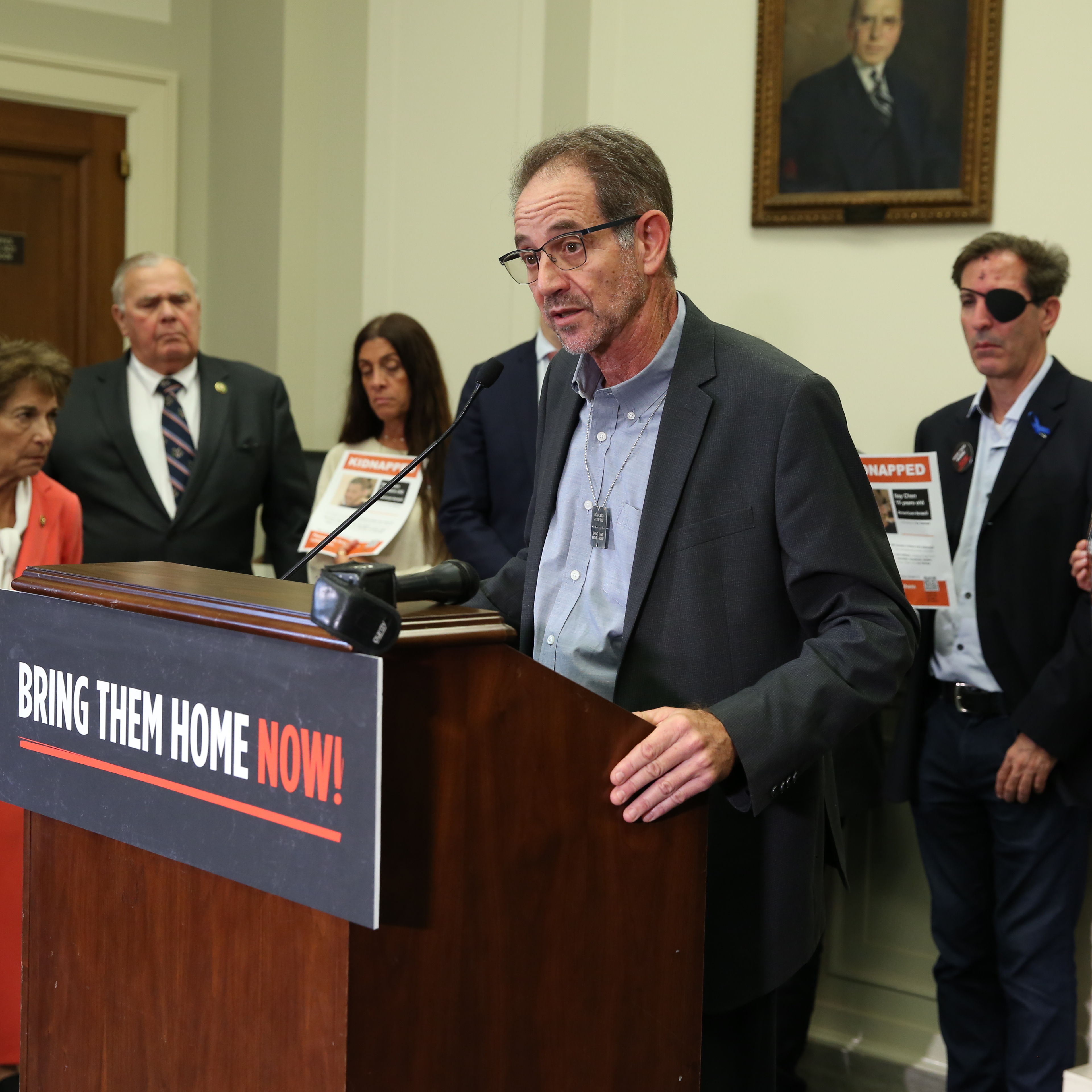
Inside the Advocacy Effort to Bring the Hostages Home
"Since before he was President, he [Trump] has made it clear that this is a priority, and he has instructed his team to work on this issue day in and day out . . . " More than two years after the October 7 massacre, Hamas has agreed to return the 48 hostages still in Gaza under the U.S.-brokered peace deal. Jessica Bernton, AJC's Director of Congressional Affairs, shares details of AJC's joint advocacy with the hostage families of returned hostages—how personal stories, bipartisan meetings with Congress and the White House, and coordinated delegations kept the issue at the forefront. She reflects on the emotional weight of this work, its impact on the U.S. administration, and the ongoing need to press policymakers to ensure that all hostages are safely returned. *The views and opinions expressed by guests do not necessarily reflect the views or position of AJC. Take Action: Elected Leaders: Demand Hamas Release the Hostages Key Resources: AJC's Efforts to Support the Hostages Listen – AJC Podcasts: Architects of Peace The Forgotten Exodus People of the Pod Follow People of the Pod on your favorite podcast app, and learn more at AJC.org/PeopleofthePod You can reach us at: [email protected] If you've appreciated this episode, please be sure to tell your friends, and rate and review us on Apple Podcasts or Spotify. Transcript of the Interview: Manya Brachear Pashman: More than two years after the October 7 massacre, the Hamas terror group has reportedly agreed at long last, to return the 48 hostages that remain in Gaza. With us now is Jessica Bernton, AJC's director of Congressional Affairs, who has been working with the families of hostages since day one to bring them all home. Jessica, welcome to People of the Pod. Jessica Bernton: Thanks so much, Manya, it's a pleasure to be here. Manya Brachear Pashman: So you must be so relieved. I know you've been so immersed in all of this. When can we celebrate though? Is now too soon? Jessica Bernton: Oh, what a great question. I would say, I have this cautious optimism at the moment. There have been many ups and downs. There have been starts and stops throughout these long months and now two years, but this one does feel different. I would say, you know, this is the most progress we've seen since the spring, and we have to continue to have hope. We also cannot afford to let up the pressure until every single hostage is returned home. And so I would say we cannot exhale until everyone is returned. And once everybody is walking across the border, or the deceased are returned home for burial, that is when we can truly celebrate. Once every single person is returned. Manya Brachear Pashman: You said it feels different? How? How does it feel different? Jessica Bernton: You know, there's been a lot of pressure exerted in recent weeks. I'd say the US administration has stepped up their efforts as well, working with other countries, including partners across the world here. And a deal was signed. And so I think a lot can happen, though, between this announcement and actually, again, when hostages are returned, or when the first phase begins, and both sides need to continue to adhere to each side of the agreement. But this really is the most progress that there has been in some time. Manya Brachear Pashman: As I said in the introduction, you've been working since day one, bringing delegations to Washington to meet with members of Congress, meet with White House staff, including both President Biden and President Trump. What has happened most recently that might have made a difference here? Jessica Bernton: I think the most important thing here is that the families as well as the returned hostages, because we've been so far down in this process that we were advocating for the release of certain hostages, and now those individuals have come to DC and have been traveling across the world to make sure that their voice is heard. And they're speaking up for those that they were held in captivity with, who don't have a voice at the moment. And so it's been really incredible and emotional to have advocated, let's say, for somebody like the return of Keith Siegel or Doron Steinbrecher. And now we have joined them in going to the Hill, into these meetings, advocating for the return of every single hostage, and that's been really incredible. But I think the most important thing here is that these conversations have continued. And keeping this issue at the forefront of everybody's minds. The American public, government officials, foreign officials, community leaders, ensuring that the hostages have not been forgotten has been our top priority here, and ensuring that this remains a foreign policy priority for the US government in particular. And clearly it has paid off, because these hostages have been able to continue to tell their story, and we are where we are today, and hopefully this progress will continue. But it's been really incredible to see this, especially in the past coup
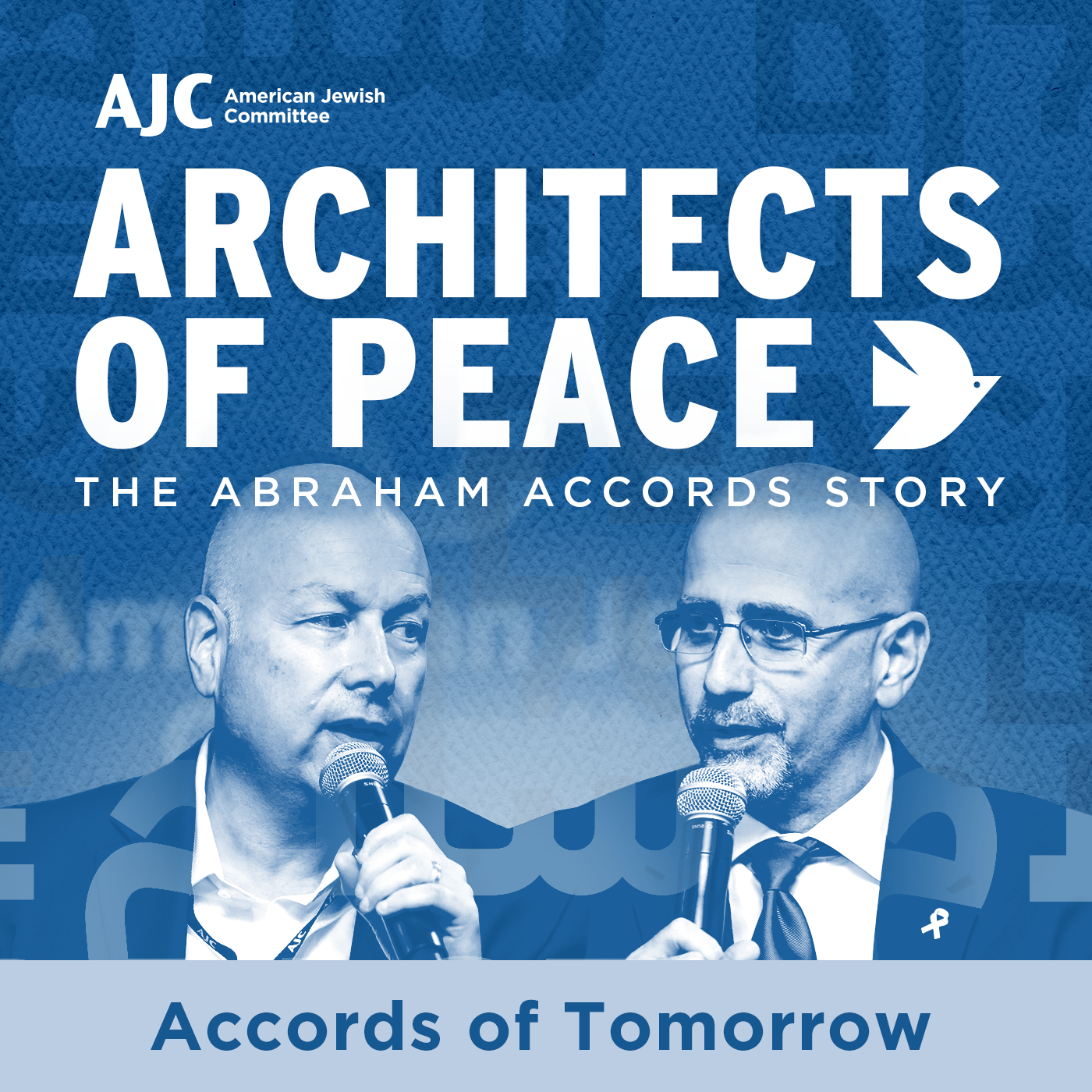
Architects of Peace: Episode 5 - Accords of Tomorrow
On the sidelines of the UN General Assembly, AJC hosted a conversation with Jason Greenblatt, a key architect of the Abraham Accords, and former U.S. Ambassador to Israel Dan Shapiro. They discussed the challenges threatening regional stability, from unilateral moves on Palestinian statehood to political pressures within Israel, and underscored what's at stake—and what it will take—to expand the Abraham Accords and advance peace. *The views and opinions expressed by guests do not necessarily reflect the views or position of AJC. Episode lineup: Dan Shapiro (1:00) Jason Greenblatt (18:05) Full transcript: https://www.ajc.org/news/podcast/accords-of-tomorrow-architects-of-peace-episode-5 Resources: AJC.org/ArchitectsofPeace - Tune in weekly for new episodes. AJC.org/AbrahamAccords - The Abraham Accords, Explained AJC.org/CNME - Find more on AJC's Center for a New Middle East Listen – AJC Podcasts: AJC.org/ForgottenExodus AJC.org/PeopleofthePod Follow Architects of Peace on your favorite podcast app, and learn more at AJC.org/ArchitectsofPeace You can reach us at: [email protected] If you've appreciated this episode, please be sure to tell your friends, and rate and review us on Apple Podcasts or Spotify. Transcript: Manya Brachear Pashman: In September 2020, the world saw what had been years – decades – in the making: landmark peace agreements dubbed the Abraham Accords – normalizing relations between Israel and two Arabian Gulf states, the United Arab Emirates and the Kingdom of Bahrain. Later, in December, they were joined by the Kingdom of Morocco. Five years later, AJC is pulling back the curtain to meet key individuals who built the trust that led to these breakthroughs and turning the spotlight on some of the results. Introducing the Architects of Peace. On the sidelines of the United Nations General Assembly in September, American Jewish Committee hosted conversations with former Middle East envoy Jason Greenblatt, a key architect of the Abraham Accords, and former U.S. Ambassador to Israel Dan Shapiro:. Both diplomats discussed the dangers threatening peace in the region, including some countries' unilateral calls for Palestinian statehood. They shared what's at stake and what it will take to expand the Abraham Accords and make progress toward peace in the region. We're including those conversations as part of our series. AJC's Chief Strategy and Communications Officer Belle Yoeli starts us off with Ambassador Shapiro. Belle Yoeli: Ambassador Shapiro, thank you so much for being with us. We're going to speak primarily about unilateral recognition of Palestinian statehood, but I, of course, want to ask you a couple of questions, because you have so much to share with us before we dive in. First and foremost, as we've said, It's been almost two years, and at AJC, we're all about optimism and playing the long game, as you know, but it does feel like the challenges for the Jewish community and the state of Israel continue to build. And of course, the war looms very large. What is your analysis of the geopolitical horizon for the war in Gaza. Dan Shapiro: First, thanks for having me. Thank you to American Jewish Committee and to Ted and everybody for all you do. Thank you, Ruby [Chen], and the families, for the fellowship that we can share with you in this goal. I'll just say it very simply, this war needs to end. The hostages need to come home. Hamas needs to be removed from power. And aid needs to surge into Gaza and move forward with a reconstruction of Gaza for Palestinians who prepare to live in peace with Israel. This is something that is overdue and needs to happen. I think there have been a number of missed opportunities along the way. I don't say this in a partisan way. I think President Trump has missed opportunities at the end of the first ceasefire, when the first ceasefire was allowed to expire after the Iran strike, something I strongly supported and felt was exactly the right thing to do. There was an opening to create a narrative to end the war. I think there have been other missed opportunities. And I don't say in a partisan way, because the administration I served in, the Biden administration, we made mistakes and we missed opportunities. So it can be shared. that responsibility. But what I do think is that there is a new opportunity right now, and we saw it in President Trump's meeting with Arab leaders. It's going to take very significant, deft, and sustained diplomatic effort. He's got a good team, and they need to do the follow through now to hold the Arabs to their commitments on ensuring Hamas is removed from power, on ensuring that there's a security arrangement in Gaza that does not leave Israel vulnerable to any possibility of a renewal of hostilities against it. And of course, to get the hostages released. That's pressure on the Arabs. And of course, he's got a meeting coming up with Prime Minister Netanyahu, and I do think he's going to need to lean on Prime Minister Netanyahu t
S1 Ep 4Architects of Peace: Episode 4 - Partners of Peace
Tune into the fourth installment of AJC's latest limited podcast series, Architects of Peace. Go behind the scenes of the decades-long diplomacy and quiet negotiations that made the Abraham Accords possible, bringing Israel, the United Arab Emirates, Bahrain, and later Morocco, together in historic peace agreements. From cockpits to kitchens to concert halls, the Abraham Accords are inspiring unexpected partnerships. In the fourth episode of AJC's limited series, four "partners of peace" share how these historic agreements are reshaping their lives and work. Hear from El Mehdi Boudra of the Mimouna Association on building people-to-people ties; producer Gili Masami on creating a groundbreaking Israeli–Emirati song; pilot Karim Taissir on flying between Casablanca and Tel Aviv while leading Symphionette, a Moroccan orchestra celebrating Andalusian music; and chef Gal Ben Moshe, the first Israeli chef to ever cook in Dubai on his dream of opening a restaurant in the UAE. *The views and opinions expressed by guests do not necessarily reflect the views or position of AJC. Episode lineup: El Mehdi Boudra (4:00) Gili Masami (11:10) Karim Taissir (16:14) Gal Ben Moshe (21:59) Read the transcript: https://www.ajc.org/news/podcast/partners-of-peace-architects-of-peace-episode-4 Resources: AJC.org/ArchitectsofPeace - Tune in weekly for new episodes. The Abraham Accords, Explained AJC.org/CNME - Find more on AJC's Center for a New Middle East Listen – AJC Podcasts: The Forgotten Exodus People of the Pod Follow Architects of Peace on your favorite podcast app, and learn more at AJC.org/ArchitectsofPeace You can reach us at: [email protected] If you've appreciated this episode, please be sure to tell your friends, and rate and review us on Apple Podcasts or Spotify. Transcript: El Mehdi Boudra: All the stereotypes started like getting out and people want to meet with the other. They wanted to discover the beauty of the diversity of Israel. And this is unique in the region, where you have Arabs Muslims, Arab Christians, Druze, Beta Yisrael, Ashkenazi, Sephardic Jews, Jews from India, from all over the world. This beauty of diversity in Israel is very unique for our region. Manya Brachear Pashman: In September 2020, the world saw what had been years – decades – in the making: landmark peace agreements dubbed the Abraham Accords – normalizing relations between Israel and two Arabian Gulf states, the United Arab Emirates and the Kingdom of Bahrain. Later, in December, they were joined by the Kingdom of Morocco. Five years later, AJC is pulling back the curtain to meet key individuals who built the trust that led to these breakthroughs and turning the spotlight on some of the results. Introducing: the Architects of Peace. ILTV correspondent: Well, hello, shalom, salaam. For the first time since the historic normalization deal between Israel and the UAE, an Israeli and an Emirati have teamed up to make music. [Ahlan Bik plays] The signs have been everywhere. On stages in Jerusalem and in recording studios in Abu Dhabi. [Camera sounds]. On a catwalk in Tel Aviv during Fashion Week and on the covers of Israeli and Arab magazines. [Kitchen sounds]. In the kitchens of gourmet restaurants where Israeli and Emirati chefs exchanged recipes. Just days after the announcement of the Abraham Accords, Emirati ruler Sheikh Khalifa bin Zayed Al Nahyan formally ended the UAE's nearly 50-year boycott of Israel. Though commerce and cooperation had taken place between the countries under the radar for years, the boycott's official end transformed the fields of water, renewable energy, health, cybersecurity, and tourism. In 2023, Israel and the UAE signed a Comprehensive Economic Partnership Agreement (CEPA) to advance economic cooperation, and by 2024, commerce between the UAE and Israel grew to $3.2 billion. Trade between Bahrain and Israel surged 740% in one year. As one of the world's most water-stressed countries, Bahrain's Electrical and Water Authority signed an agreement to acquire water desalination technology from Israel's national water company [Mekorot]. Signs of collaboration between Israeli and Arab artists also began to emerge. It was as if a creative energy had been unlocked and a longing to collaborate finally had the freedom to fly. [Airplane take off sounds]. And by the way, people had the freedom to fly too, as commercial airlines sent jets back and forth between Tel Aviv, Casablanca, Abu Dhabi, and Manama. A gigantic step forward for countries that once did not allow long distance calls to Israel, let alone vacations to the Jewish state. At long last, Israelis, Moroccans, Emiratis, and Bahrainis could finally satisfy their curiosity about one another. This episode features excerpts from four conversations. Not with diplomats or high-level senior officials, but ordinary citizens from the region who have seized opportunities made possible by the Abraham Accords to pursue unprecedented partnerships. For El Medhi Boudra, the Abr
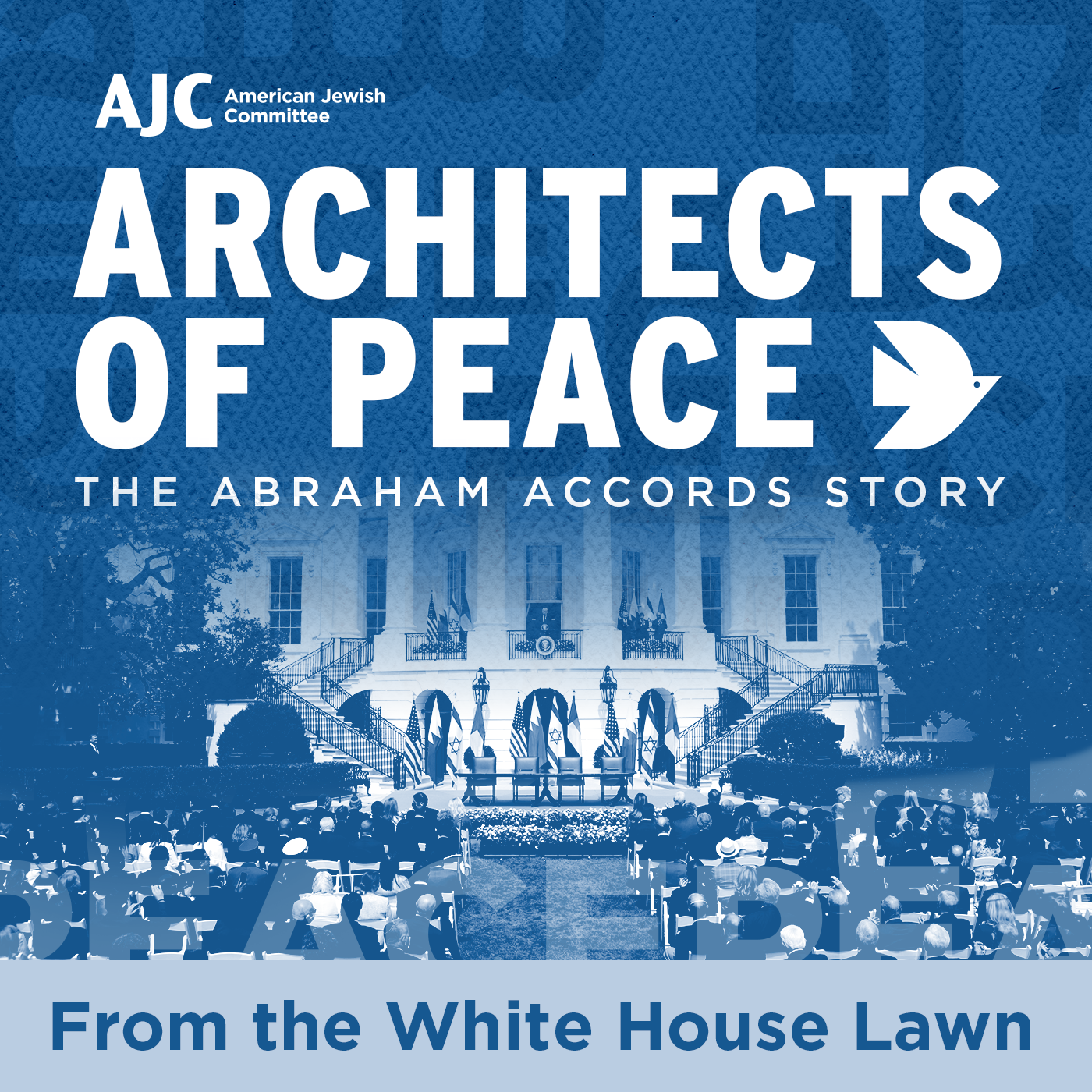
S1 Ep 3Architects of Peace: Episode 3 - From the White House Lawn
Dive into the third episode of AJC's latest limited podcast series, Architects of Peace. Go behind the scenes of the decades-long diplomacy and quiet negotiations that made the Abraham Accords possible, bringing Israel, the United Arab Emirates, Bahrain, and later Morocco, together in historic peace agreements. On September 15, 2020, the Abraham Accords were signed at the White House by President Trump, Prime Minister Netanyahu, and the foreign ministers of the UAE and Bahrain. In this third installment of AJC's limited series, AJC CEO Ted Deutch and Chief Policy and Political Affairs Officer Jason Isaacson—who stood on the South Lawn that day—share their memories and insights five years later. Together, they reflect on how the Accords proved that peace is achievable when nations share strategic interests, build genuine relationships, and pursue the greater good. *The views and opinions expressed by guests do not necessarily reflect the views or position of AJC. Read the transcript: https://www.ajc.org/news/podcast/from-the-white-house-lawn-architects-of-peace-episode-3 Resources: AJC.org/ArchitectsofPeace - Tune in weekly for new episodes. The Abraham Accords, Explained AJC.org/CNME - Find more on AJC's Center for a New Middle East Listen – AJC Podcasts: The Forgotten Exodus People of the Pod Follow Architects of Peace on your favorite podcast app, and learn more at AJC.org/ArchitectsofPeace You can reach us at: [email protected] If you've appreciated this episode, please be sure to tell your friends, and rate and review us on Apple Podcasts or Spotify. Transcript: Ted Deutch: It was a beautiful day and there was this coming together, this recognition that this was such an historic moment. It's the kind of thing, frankly, that I remember having watched previously, when there were peace agreements signed and thinking that's something that I want to be a part of. And there I was looking around right in the middle of all of this, and so excited about where this could lead. Manya Brachear Pashman: In September 2020, the world saw what had been years, decades in the making, landmark peace agreements dubbed the Abraham Accords, normalizing relations between Israel and two Arabian Gulf States, the United Arab Emirates and the Kingdom of Bahrain. Later, in December, they were joined by the Kingdom of Morocco. Five years later, AJC is pulling back the curtain to meet key individuals who built the trust that led to these breakthroughs. Introducing: the Architects of Peace. Announcer: Ladies and gentlemen, the President of the United States. Accompanied by the Prime Minister of the State of Israel; His Highness the Minister of Foreign Affairs and International cooperation of the United Arab Emirates, and the Minister of the Foreign Affairs of the Kingdom of Bahrain. Manya Brachear Pashman: The guests of honor framed by the South Portico of the White House were an unlikely threesome. Two Arab foreign ministers and the Prime Minister of Israel, there to sign a pair of peace agreements that would transform the Middle East. Donald Trump: Thanks to the great courage of the leaders of these three countries, we take a major stride toward a future in which people of all faiths and backgrounds live together in peace and prosperity. There will be other countries very, very soon that will follow these great leaders. Manya Brachear Pashman: President Trump's team had achieved what was long thought impossible. After decades of pretending Israel did not exist until it solved its conflict with the Palestinians, Trump's team discovered that attitudes across the Arab region had shifted and after months of tense negotiations, an agreement had been brokered by a small circle of Washington insiders. On August 13, 2020, the United Arab Emirates agreed to become the first Arab state in a quarter century to normalize relations with Israel. Not since 1994 had Israel established diplomatic relations with an Arab country, when King Hussein of Jordan and Israeli Prime Minister Yitzhak Rabin signed a treaty, ending the state of war that had existed between them since Israel's rebirth. A ceremony to celebrate and sign the historic deal was planned for the South Lawn of the White House on September 15, 2020. Before the signing ceremony took place, another nation agreed to sign as well: not too surprisingly the Kingdom of Bahrain. After all, in June 2019, Bahrain had hosted the Peace to Prosperity summit, a two-day workshop where the Trump administration unveiled the economic portion of its peace plan – a 38-page prospectus that proposed ways for Palestinians and Arab countries to expand economic opportunities in cooperation with Israel. In addition to Bahrain, Egypt, Jordan, Morocco, Qatar, Saudi Arabia, and the UAE all participated in the summit. The Palestinians boycotted it, even as Trump's senior advisor Jared Kushner presented plans to help them. Jared Kushner: A lot of these investments people are unwilling to make because people don't want
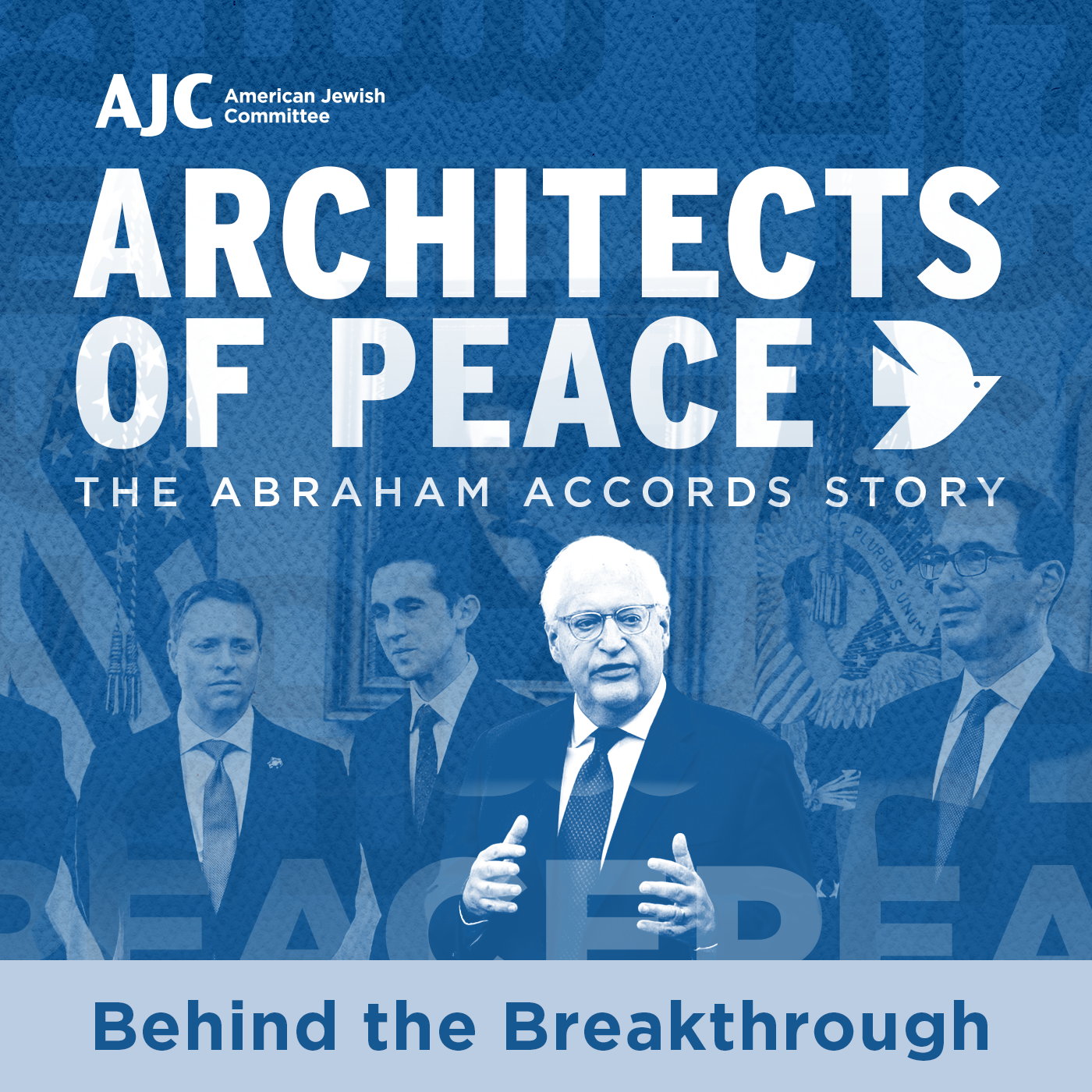
S1 Ep 2Architects of Peace: Episode 2 - Behind the Breakthrough
Tune into the second episode of AJC's newest limited podcast series, Architects of Peace. Go behind the scenes of the decades-long diplomacy and quiet negotiations that made the Abraham Accords possible, bringing Israel, the United Arab Emirates, Bahrain, and later Morocco, together in historic peace agreements. Former U.S. Ambassador to Israel David Friedman, U.S. Army General Miguel Correa, and AJC Chief Policy and Political Affairs Officer Jason Isaacson unpack the first Trump administration's Middle East strategy, share behind-the-scenes efforts to engage key regional players, and reveal what unfolded inside the White House in the crucial weeks before the Abraham Accords signing. Full transcript: https://www.ajc.org/news/podcast/behind-the-breakthrough-architects-of-peace-episode-2 Resources: AJC.org/ArchitectsofPeace - Tune in weekly for new episodes. AJC.org/AbrahamAccords - The Abraham Accords, Explained AJC.org/CNME - Find more on AJC's Center for a New Middle East Listen – AJC Podcasts: AJC.org/ForgottenExodus AJC.org/PeopleofthePod Follow Architects of Peace on your favorite podcast app, and learn more at AJC.org/ArchitectsofPeace You can reach us at: [email protected] If you've appreciated this episode, please be sure to tell your friends, and rate and review us on Apple Podcasts or Spotify. Transcript: Donald Trump: I think we're going to make a deal. It might be a bigger and better deal than people in this room even understand. Manya Brachear Pashman: In September 2020, the world saw what had been years – decades – in the making: landmark peace agreements dubbed the Abraham Accords -- normalizing relations between Israel and two Arabian Gulf states, the United Arab Emirates and the Kingdom of Bahrain. Later, in December, they were joined by the Kingdom of Morocco. Five years later, AJC is pulling back the curtain to meet key individuals who built the trust that led to these breakthroughs. Introducing: the Architects of Peace. Shortly after he was elected in 2016 and before he took office, President Donald Trump nominated his company's former bankruptcy attorney David Friedman to serve as U.S. Ambassador to Israel. He gave Friedman two simple tasks. Task No. 1? Build peace across the Middle East by normalizing relations between Israel and its Arab neighbors. Task No. 2? Solve the Israeli Palestinian conflict that a half dozen previous White House residents had failed to fix. After all, according to conventional wisdom, the first task could not happen before the second. The future of cooperation between Israel and 20-plus other Arab countries hinged on peace between the Israelis and Palestinians. Here's former Secretary of State John Kerry. John Kerry: There will be no advance and separate peace with the Arab world without the Palestinian process and Palestinian peace. Everybody needs to understand that. Manya Brachear Pashman: Ambassador Friedman disagreed with this conventional wisdom. David Friedman: We were told initially by most countries that the road to peace began with the Palestinians. This was a hypothesis that I rejected internally, but I thought: 'OK, well, let's just play this out and see where this can go. And so, we spent a couple of years really working on what could be a plan that would work for Israel and the Palestinians. The Palestinians, you know, rejected discussions early on, but we had a lot of discussions with the Israelis. Manya Brachear Pashman: The son of a rabbi who grew up in Long Island, Ambassador Friedman had been active in pro-Israel organizations for decades, He had advised Trump on the importance of the U.S.-Israel bond during the 2016 presidential election and recommended nothing less than a radical overhaul of White House policy in the region. Not long after his Senate confirmation as ambassador, that overhaul commenced. In February 2017, President Trump invited Israeli Prime Minister Benjamin Netanyahu to the White House – his first invitation to a foreign leader — and a symbolic one. After their meeting, they held a joint press conference. Donald Trump: With this visit, the United States again reaffirms our unbreakable bond with our cherished ally Israel. The partnership between our two countries, built on our shared values. I think we're going to make a deal. It might be a bigger and better deal than people in this room even understand. That's a possibility. So, let's see what we do. He doesn't sound too optimistic. But he's a good negotiator. Benjamin Netanyahu: That's the art of the deal. Manya Brachear Pashman: Nine months later, President Trump made another symbolic gesture -- recognizing Jerusalem as Israel's capital city and moving the American embassy from Tel Aviv to Jerusalem. Though such a move had been approved by Congress in 1995, no president had ever acted upon it. When Trump's son-in-law, businessman, and senior White House advisor Jared Kushner opened conversations about that 'bigger and better deal,' Palestinians refused to participate, usi
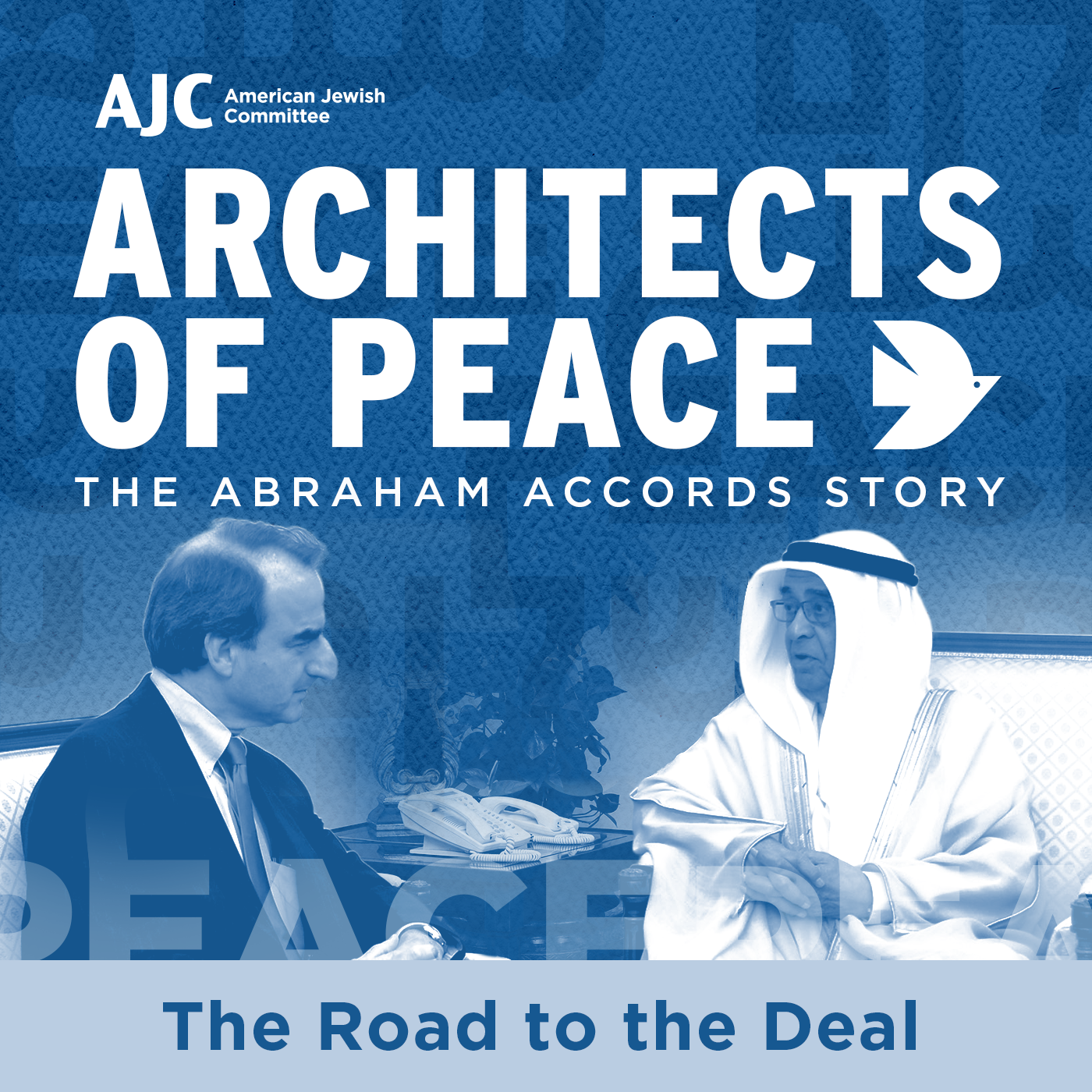
S1 Ep 1Architects of Peace: Episode 1 - The Road to the Deal
Listen to the first episode of AJC's new limited podcast series, Architects of Peace. Go behind the scenes of the decades-long diplomacy and quiet negotiations that made the Abraham Accords possible, bringing Israel, the United Arab Emirates, Bahrain, and later Morocco, together in historic peace agreements. Jason Isaacson, AJC Chief of Policy and Political Affairs, explains the complex Middle East landscape before the Accords and how behind-the-scenes efforts helped foster the dialogue that continues to shape the region today. Resources: Episode Transcript AJC.org/ArchitectsofPeace - Tune in weekly for new episodes. The Abraham Accords, Explained AJC.org/CNME - Find more on AJC's Center for a New Middle East Listen – AJC Podcasts: The Forgotten Exodus People of the Pod Follow Architects of Peace on your favorite podcast app, and learn more at AJC.org/ArchitectsofPeace You can reach us at: [email protected] If you've appreciated this episode, please be sure to tell your friends, and rate and review us on Apple Podcasts or Spotify. Transcript: Jason Isaacson: It has become clear to me in my travels in the region over the decades that more and more people across the Arab world understood the game, and they knew that this false narrative – that Jews are not legitimately there, and that somehow we have to focus all of our energy in the Arab world on combating this evil interloper – it's nonsense. And it's becoming increasingly clear that, in fact, Israel can be a partner. Manya Brachear Pashman: In September 2020, the world saw what had been years – decades – in the making: landmark peace agreements dubbed the Abraham Accords -- normalizing relations between Israel and two Arabian Gulf states, the United Arab Emirates and the Kingdom of Bahrain. Later in December, they were joined by the Kingdom of Morocco. Five years later, AJC is pulling back the curtain to meet key individuals who built the trust that led to these breakthroughs. Introducing: the Architects of Peace. Manya Brachear Pashman: On the eve of the signing of the Abraham Accords, AJC Chief Policy and Political Affairs Officer Jason Isaacson found himself traveling to the end of a tree filled winding road in McLean, Virginia, to sip tea on the back terrace with Bahraini Ambassador Shaikh Abdulla bin Rashid Al Khalifa and Bahrain's Minister of Foreign Affairs Dr. Abdullatif bin Rashid Al Zayani. Jason Isaacson: Sitting in the backyard of the Bahraini ambassador's house with Dr. Al Zayani, the Foreign Minister of Bahrain and with Shaikh Abdulla, the ambassador, and hearing what was about to happen the next day on the South Lawn of the White House was a thrilling moment. And really, in many ways, just a validation of the work that AJC has been doing for many years–before I came to the organization, and the time that I've spent with AJC since the early 90s. This possibility of Israel's true integration in the region, Israel's cooperation and peace with its neighbors, with all of its neighbors – this was clearly the threshold that we were standing on. Manya Brachear Pashman: If you're wondering how Jason ended up sipping tea in such esteemed company the night before his hosts made history, wonder no more. Here's the story. Yitzchak Shamir: The people of Israel look to this palace with great anticipation and expectation. We pray that this meeting will mark the beginning of a new chapter in the history of the Middle East; that it will signal the end of hostility, violence, terror, and war; that it will bring dialogue, accommodation, co-existence, and above all, peace. Manya Brachear Pashman: That was Israel's Prime Minister Yitzhak Shamir speaking in October 1991 at the historic Madrid Peace Conference -- the first time Israel and Arab delegations engaged in direct talks toward peace. It had taken 43 years to reach this point – 43 years since the historic United Nations Resolution that created separate Jewish and Arab states – a resolution Jewish leaders accepted, but Arab states scorned. Not even 24 hours after Israel declared its independence on May 14, 1948, the armies of Egypt, Iraq, Jordan, Lebanon, and Syria attacked the new Jewish state, which fought back mightily and expanded its territory. The result? A deep-seated distrust among Israel, its neighboring nations, and some of the Arab residents living within Israel's newly formed borders. Though many Palestinian Arabs stayed, comprising over 20 percent of Israel's population today, hundreds of thousands of others left or were displaced. Meanwhile, in reaction to the rebirth of the Jewish state, and over the following two decades, Jewish communities long established in Arab states faced hardship and attacks, forcing Jews by the hundreds of thousands to flee. Israel's War of Independence set off a series of wars with neighboring nations, terrorist attacks, and massacres. Peace in the region saw more than a few false starts, with one rare exception. In 1979, after the historic visit to Israel by Egyptian
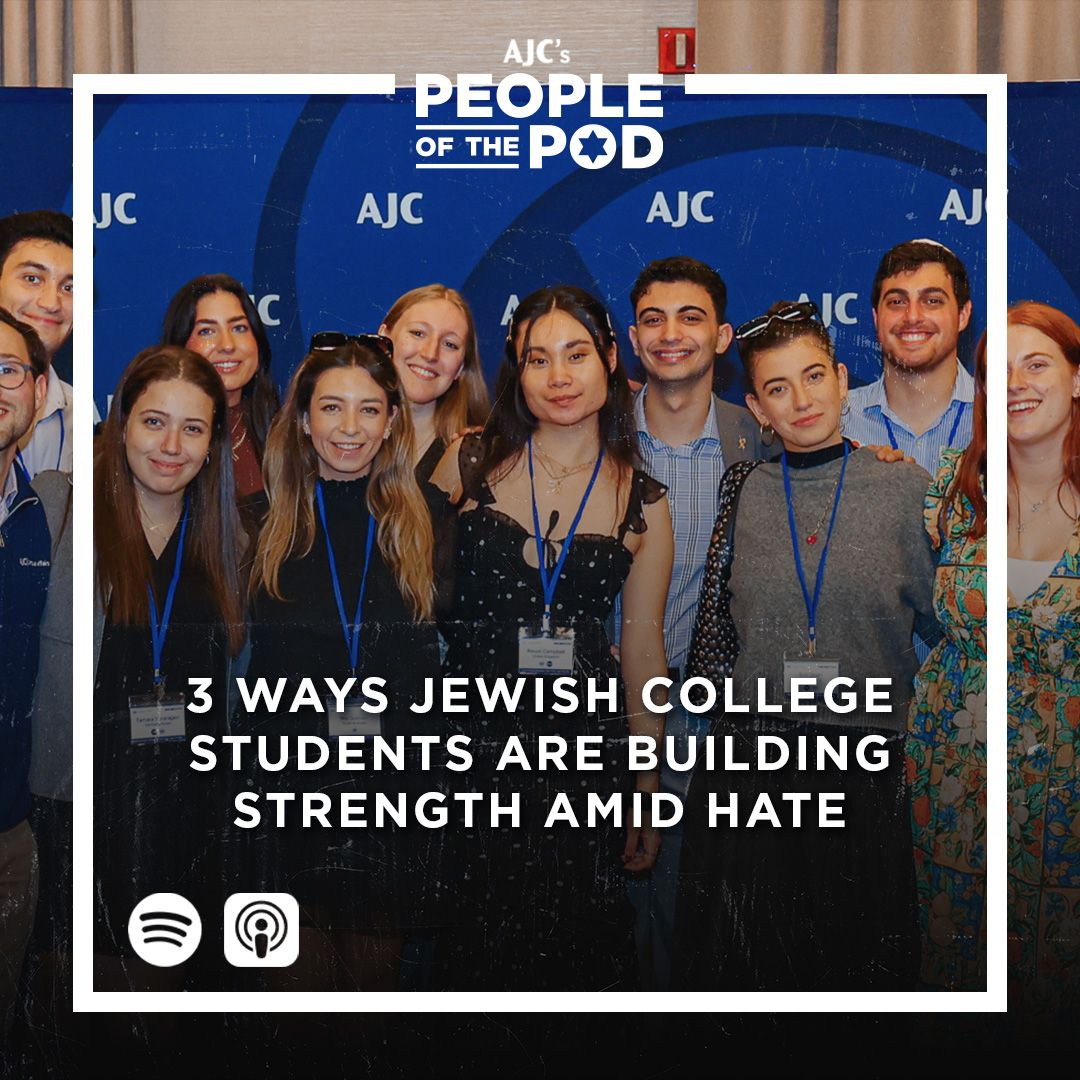
3 Ways Jewish College Students are Building Strength Amid Hate
"Our duty as Jewish youth is paving the way for ourselves. Sometimes we may feel alone . . . But the most important thing is for us as youth to pave the way for ourselves, to take action, to speak out. Even if it's hard or difficult." As American Jewish college students head back to their campuses this fall, we talk to three leaders on AJC's Campus Global Board about how antisemitism before and after the October 7 Hamas terror attacks revealed their resilience and ignited the activist inside each of them. Jonathan Iadarola shares how a traumatic anti-Israel incident at University of Adelaide in Australia led him to secure a safe space on campus for Jewish students to convene. Ivan Stern recalls launching the Argentinian Union of Jewish Students after October 7, and Lauren Eckstein shares how instead of withdrawing from her California college and returning home to Arizona, she transferred to Washington University in St. Louis where she found opportunities she never dreamed existed and a supportive Jewish community miles from home. *The views and opinions expressed by guests do not necessarily reflect the views or position of AJC. Key Resources: AJC Campus Global Board Trusted Back to School Resources from AJC AJC's 10-Step Guide for Parents Supporting Jewish K-12 Students AJC's Center for Education Advocacy Listen – AJC Podcasts: The Forgotten Exodus: Untold stories of Jews who left or were driven from Arab nations and Iran People of the Pod: Latest Episodes: War and Poetry: Owen Lewis on Being a Jewish Poet in a Time of Crisis An Orange Tie and A Grieving Crowd: Comedian Yohay Sponder on Jewish Resilience From Broadway to Jewish Advocacy: Jonah Platt on Identity, Antisemitism, and Israel Follow People of the Pod on your favorite podcast app, and learn more at AJC.org/PeopleofthePod You can reach us at: [email protected] If you've appreciated this episode, please be sure to tell your friends, and rate and review us on Apple Podcasts or Spotify. Transcript of the Interview: MANYA: As American Jewish college students head back to their campuses this fall, it's hard to know what to expect. Since the Hamas terror attacks of October 7, maintaining a GPA has been the least of their worries. For some who attend universities that allowed anti-Israel protesters to vandalize hostage signs or set up encampments, fears still linger. We wanted to hear from college students how they're feeling about this school year. But instead of limiting ourselves to American campuses, we asked three students from AJC's Campus Global Board – from America, Argentina, and Australia – that's right, we still aim for straight A's here. We asked them to share their experiences so far and what they anticipate this year. We'll start on the other side of the world in Australia. With us now is Jonathan Iadarola, a third-year student at the University of Adelaide in Adelaide, Australia, the land down under, where everything is flipped, and they are getting ready to wrap up their school year in November. Jonathan serves as president of the South Australia branch of the Australian Union of Jewish students and on AJC's Campus Global Board. Jonathan, welcome to People of the Pod. JONATHAN: Thank you for having me. MANYA: So tell us what your experience has been as a Jewish college student in Australia, both before October 7 and after. JONATHAN: So at my university, we have a student magazine, and there was a really awful article in the magazine that a student editor wrote, very critical of Israel, obviously not very nice words. And it sort of ended with like it ended with Death to Israel, glory to the Intifada. Inshallah, it will be merciless. So it was very, very traumatic, obviously, like, just the side note, my great aunt actually died in the Second Intifada in a bus bombing. So it was just like for me, a very personal like, whoa. This is like crazy that someone on my campus wrote this and genuinely believes what they wrote. So yeah, through that experience, I obviously, I obviously spoke up. That's kind of how my activism on campus started. I spoke up against this incident, and I brought it to the university. I brought it to the student editing team, and they stood their ground. They tried to say that this is free speech. This is totally okay. It's completely like normal, normal dialog, which I completely disagreed with. And yeah, they really pushed back on it for a really long time. And it just got more traumatic with myself and many other students having to go to meetings in person with this student editor at like a student representative council, which is like the students that are actually voted in. Like student government in the United States, like a student body that's voted in by the students to represent us to the university administration. And though that student government actually laughed in our faces in the meeting while we were telling them that this sort of incident makes us as Jewish students feel unsafe on campus. And we comp
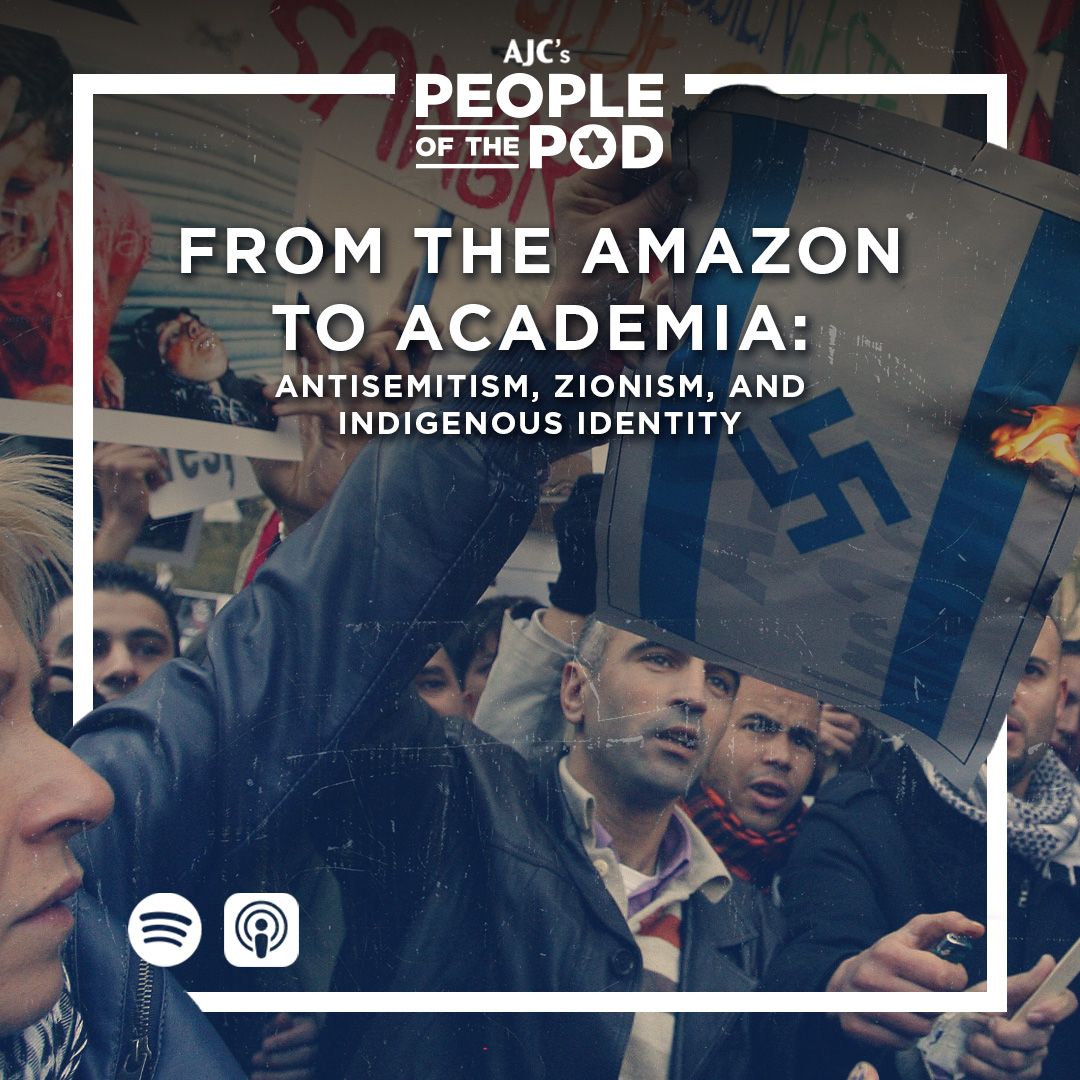
From the Amazon to Academia: Antisemitism, Zionism, and Indigenous Identity
As the school year kicks off, Adam Louis-Klein shares his unexpected journey from researching the Desano tribe in the Amazon to confronting rising antisemitism in academic circles after October 7. He discusses his academic work, which explores the parallels between indigenous identity and Jewish peoplehood, and unpacks the politics of historical narrative. *The views and opinions expressed by guests do not necessarily reflect the views or position of AJC. Listen – AJC Podcasts: The Forgotten Exodus: Untold stories of Jews who left or were driven from Arab nations and Iran People of the Pod: Latest Episodes: War and Poetry: Owen Lewis on Being a Jewish Poet in a Time of Crisis An Orange Tie and A Grieving Crowd: Comedian Yohay Sponder on Jewish Resilience From Broadway to Jewish Advocacy: Jonah Platt on Identity, Antisemitism, and Israel Follow People of the Pod on your favorite podcast app, and learn more at AJC.org/PeopleofthePod You can reach us at: [email protected] If you've appreciated this episode, please be sure to tell your friends, and rate and review us on Apple Podcasts or Spotify. Transcript of the Interview: Manya Brachear Pashman: Adam Louis-Klein is a PhD candidate in anthropology at McGill University, where he researches antisemitism, Zionism, Jewish peoplehood, and broader questions of indigeneity and historical narrative. His work bridges academic scholarship and public commentary, drawing on field work with indigenous communities in the Amazon and studies in philosophy at Yale, The New School and the University of Chicago. He writes on translation and the politics of peoplehood across traditions, and is committed to developing a Jewish intellectual voice grounded in historical depth and moral clarity. He blogs for The Times of Israel, and he's with us today to talk about his experience emerging from the Amazon, where he was doing research after October 7, 2023, and discovering what had happened in Israel. Adam, welcome to People of the Pod. Adam Louis-Klein: Thank you so much for having me. It's a real pleasure to be here on this podcast with the American Jewish community. Manya Brachear Pashman: So tell us about the research that you are doing that took you into the depths of the Amazon rainforest. Adam Louis-Klein: So I work with a group called the Desano people who live in the Vaupés region, which is a tributary of the upper Rio Negro. Part of it's in Brazil, part of it's in Colombia today. I went there because I was really interested in trying to understand how people were often seen at the margins of the world, the periphery of the global economy. See themselves and their own sort of role in the cosmos and in the world in general. And what I found actually is that these people see themselves at the center of it all, as a unique people, as a chosen people. And that was something that really inspired me, and later led me to rethink my own relationship to Jewish peoplehood and chosenness, and what it means to be a kind of indigenous people struggling for survival and recognition. Manya Brachear Pashman: So were you raised Jewish? Did you have a Jewish upbringing? Adam Louis-Klein: Yeah, I was raised as kind of a cultural and reform Jew. I wouldn't say that Israel was super present in our lives, but we did travel there for my younger brother's Bar Mitzvah at the Kotel, and that did have an impression on me. And then later on, I wear a wristband of Brothers for Life, which is a charity for injured Israeli soldiers. But as time went on, I got involved in these radical academic scenes. And you know, my own field, anthropology, has fundamentally turned against Jewish peoplehood and Israel, unfortunately. But it was really in the Amazon, actually, that my journey of Teshuvah and rediscovering my Jewishness and the importance of Jewish peoplehood was really re-awoken for me. Manya Brachear Pashman: You were involved in these radical circles. Did you ascribe to some of the beliefs that a lot of your academic colleagues were ascribing to? Did you start to question the legitimacy of Israel or the actions of the Israeli government? Adam Louis-Klein: I think I started to ascribe to them in a kind of background and passive way. In the way that I think that many people in these communities do. So I had actually learned about Israel. I did know something. But as I wanted to kind of ascribe to a broader social justice narrative, I sort of immediately assumed when people told me, that Israelis were the ones doing the oppression and the injustice, that that had to be true. And I didn't question it so much. So it's ironic that those spaces, I think, that are built around critical thought, have become spaces, in my opinion, that are not so critical today. And I think we really need a critical discourse around this kind of criticism, sort of to develop our own critical discourse of what anti-Zionism is today. Manya Brachear Pashman: So what inspired the research? In other words, so you're involved in t
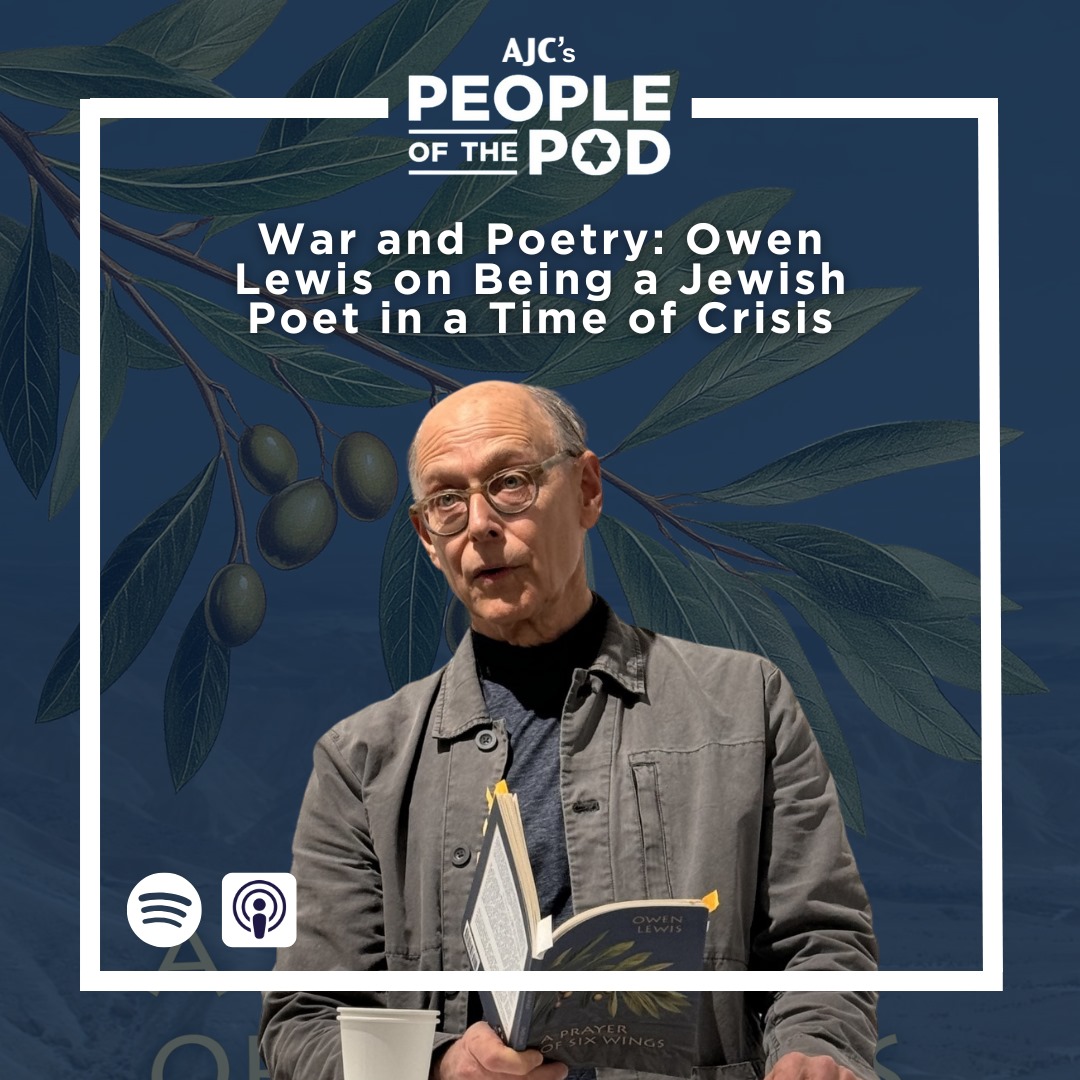
War and Poetry: Owen Lewis on Being a Jewish Poet in a Time of Crisis
"The Jewish voice must be heard, not because it's more right or less right, but it's there. The suffering is there, the grief is there, and human grief is human grief." As Jews around the world mark Tisha B'Av, we're joined by Columbia University professor and award-winning poet Owen Lewis, whose new collection, "A Prayer of Six Wings," offers a powerful reflection on grief in the aftermath of October 7th. In this conversation, Lewis explores the healing power of poetry in the face of trauma, what it means to be a Jewish professor in today's campus climate, and how poetry can foster empathy, encourage dialogue, and resist the pull of division. *The views and opinions expressed by guests do not necessarily reflect the views or position of AJC. Listen – AJC Podcasts: The Forgotten Exodus: Untold stories of Jews who left or were driven from Arab nations and Iran People of the Pod: Latest Episodes: An Orange Tie and A Grieving Crowd: Comedian Yohay Sponder on Jewish Resilience From Broadway to Jewish Advocacy: Jonah Platt on Identity, Antisemitism, and Israel Sexual Violence as a Weapon of War: The Dinah Project's Quest to Hold Hamas Accountable Follow People of the Pod on your favorite podcast app, and learn more at AJC.org/PeopleofthePod You can reach us at: [email protected] If you've appreciated this episode, please be sure to tell your friends, and rate and review us on Apple Podcasts or Spotify. Transcript of the Interview: Owen Lewis: Overheard in a New York Restaurant. I can't talk about Israel tonight. I know. I can't not talk about Israel tonight. I know. Can we talk about . . . Here? Sure. Let's try to talk about here. Manya Brachear Pashman: On Saturday night, Jews around the world will commemorate Tisha B'av. Known as the saddest day on the Jewish calendar, the culmination of a three week period of mourning to commemorate several tragedies throughout early Jewish history. As a list of tragedies throughout modern Jewish history has continued to grow, many people spend this day fasting, listening to the book of Lamentations in synagogue, or visiting the graves of loved ones. Some might spend the day reading poetry. Owen Lewis is a Professor of Psychiatry in the Department of Medical Humanities and Ethics at Columbia University. But he's also the award-winning author of four poetry collections which have won accolades, including the EE Cummings Prize and the Rumi Prize for Poetry. His most recent collection, A Prayer of Six Wings documents in verse his grief since the October 7 terror attacks. Owen is with us now to talk about the role of poetry in times of violence and war, what it's been like to be a Jewish professor on the Columbia campus, and a Jewish father with children and grandchildren in Israel. And also, how to keep writing amid a climate of rising antisemitism. Owen, welcome to People of the Pod. Owen Lewis: Thank you so much, Manya. Manya Brachear Pashman: So you opened with that short poem titled overheard in a New York restaurant. I asked you to read that because I wanted to ask whether it reflected how you felt about poetry after October 7. Did you find yourself in a place where you couldn't write about Israel, but yet you couldn't not write about Israel? Owen Lewis: Among the many difficult things of that First Year, not only the war, not only the flagrant attacks on the posters of the hostages one block from where I live, 79th and Broadway, every day, taken down every day, put back up again, defaced. It was as if the war were being fought right here on 79th and Broadway. Another aspect that made this all so painful was watching the artistic and literary world turn against Israel. This past spring, 2000 writers and artists signed a petition, it was published, there was an oped about it in The Times, boycotting Israeli cultural institutions. And I thought: artists don't have a right to shut their ears. We all need to listen to each other's grief, and if we poets and artists can't listen to one another, what do we expect of statesmen? Statesmen, yeah, they can create a ceasefire. That's not the same as creating peace. And peace can only come when we really listen to each other. To feel ostracized by the poetry community and the intellectual community was very painful. Fortunately, last summer, as well as this past summer, I was a fellow at the Yetzirah conference. Yetzirah is an organization of Jewish American poets, although we're starting to branch out. And this kind of in-gathering of like-minded people gave me so much strength. So this dilemma, I can't talk about it, because we just can't take the trauma. We can't take hearing one more thing about it, but not talk about it…it's a compulsion to talk about it, and that's a way to process trauma. And that was the same with this poetry, this particular book. I feel in many ways, it just kind of blew through me, and it was at the same time it blew through me, created this container in which I could express myself, and it actually hel
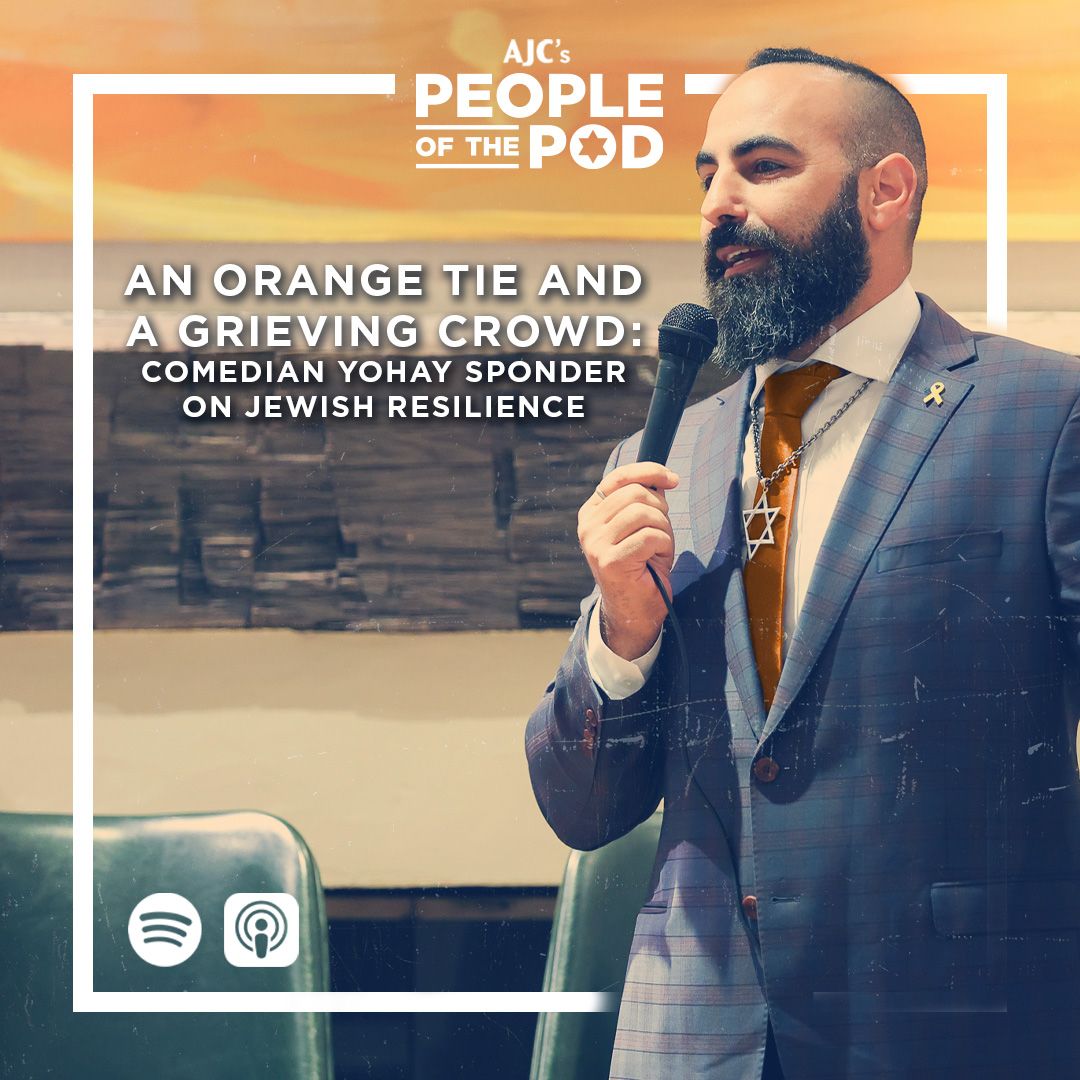
An Orange Tie and A Grieving Crowd: Comedian Yohay Sponder on Jewish Resilience
What do you do when you're an Israeli comedian set to perform in Paris on the very day the world learns the fate of the Bibas family? Yohay Sponder faced that moment in February 2025—and chose to take the stage. Wearing an orange tie in their honor, he brought laughter to a grieving crowd. Since October 7th, he has used comedy to carry pain, affirm his identity, and connect through resilience. Hear how his Jewish identity shapes his work, how his comedy has evolved since the Hamas attacks, and what he says to those who try to silence him. Recorded live at AJC Global Forum 2025. *The views and opinions expressed by guests do not necessarily reflect the views or position of AJC. Listen – AJC Podcasts: The Forgotten Exodus: Untold stories of Jews who left or were driven from Arab nations and Iran People of the Pod: Latest Episodes: From Broadway to Jewish Advocacy: Jonah Platt on Identity, Antisemitism, and Israel Sexual Violence as a Weapon of War: The Dinah Project's Quest to Hold Hamas Accountable Journalist Matti Friedman Exposes Media Bias Against Israel Follow People of the Pod on your favorite podcast app, and learn more at AJC.org/PeopleofthePod You can reach us at: [email protected] If you've appreciated this episode, please be sure to tell your friends, and rate and review us on Apple Podcasts or Spotify. Transcript of the Interview: Manya Brachear Pashman: Israeli stand up comedian Yohay Sponder: first gained popularity for his funny Monday shows in Tel Aviv, which attracted a following on YouTube. A few years ago, Sponder made the decision to perform Israeli comedy in English to reach a wider audience and a wider audience it has reached. He has hundreds of thousands of followers on social media, and in May, launched the North American leg of his international tour in Baltimore. Sponder is with us now on the sidelines of AJC Global Forum 2025. Sponder, welcome to People of the Pod. Yohay Sponder: Thank you so much for this eulogy. Manya Brachear Pashman: I'm curious how you found your way to stand up comedy and tell us a little bit about your upbringing in general. Yohay Sponder: Doing comedy, I always been fascinated about the laughing reaction of humans. You know, it's fascinating, if you think about it, if you have the ability to improve the frequency in the room. As a kid, I was really intrigued by that. So you saying few things, and people go, haha. It's like designing a vibe. So as a kid, I was attracted to that. So as a kid, you watch video cassettes, back in the day, I would watch all of the comedy stuff. I had all of them cassettes. I was very, very affected by it, impersonations, imitating them, doing jokes of my own, and always around that. And in my show, I'm talking about comedy. I have a bit about comedy in my show that I'm saying that I was, I wasn't just the class clown in my school. I was the jokes technician. If you had a broken joke or a joke that didn't work, you would come to me. I would fix it for you, bring it back. Not using it as my own resume. I would bring it back, when it's fixed. Manya Brachear Pashman: That's great. So you helped others clown around as well. Yohay Sponder: Yeah, I was a clown teacher. Manya Brachear Pashman: Were you raised in a secular home, a particularly Jewish home? Yohay Sponder: I was raised in a, let's say secular but Jewish, celebrated holidays, family Friday night family dinners. But we weren't like super Shabbat keepers. I think I became closer now, when, after my father passed away, I for the Kaddish and I put tefillin a little bit. And the war, you know, this war, activated a lot of Jews to the to this kind of level. Manya Brachear Pashman: Right. You're sitting across from me, and you're wearing a gigantic Star of David. On your chest. Yohay Sponder: Yeah, you see what she did, you see what she did? You're sitting across and you're wearing a gigantic Star of David. Manya Brachear Pashman: Have you always worn that or did you put it on after October 7? Yohay Sponder: No, it's after the war kicked in. I don't know. I had a vision that that's what we should do right now. We need to be out there and show other Jews that we're there. That's what I felt. And I imagine that, I need a big star of David. And the day I thought about it, I saw that. So there was a sign for me, like I had this vision, that I need a big star of David here. And less than 24 hours, that one find me. I didn't look for it. It came across my eyes. Manya Brachear Pashman: Which I imagine you'll be wearing your Magen David on tour. The tour itself is called Self Loving Jew. What is the meaning of that title? Yohay Sponder: So, basically, you know, this is so awesome, because before October 7, you could argue of other opinion. You could hear some people saying, Yeah, but maybe we should this. After October 7 that we know so all these monsters that came and attack us, the self hating Jews that they're doing now, super horrific, disgusting job of mocking us. And I find it re