Patient Empowerment Program: A Rare Disease Podcast
104 episodes — Page 1 of 3
Sneak Peek of the 2026 Nano-rare Patient Colloquium
Realities of the Nano-rare: Siblings, Unfairness and Hard Truths with Sally Jackson
Silencing ALS with Neil Shneider
Miracles of Science: Antisense Technology
The Personal Rare Disease Journey Behind CNBC Cures with Becky Quick
Patient Story: Understanding ALS with Bill O'Sullivan and Neil Shneider, M.D., Ph.D.
Miracles of Science #3: RNA World Part 3
Miracles of Science 3 RNA World Part 2
Miracles of Science #3: RNA World Part 1
Realizing Hope for Layken
Realities of the Nano-rare: Episode 2 Oliver Glass

Ep 94Realities of the Nano-rare: Episode 1 with Sarah Glass
A nano rare diagnosis does not just affect one person. It reshapes an entire family. Realities of the Nano-rare takes you inside that experience. Hear directly from n-Lorem COO and nano rare mom Sarah Glass as she joins host Stan Crooke to share the day-to-day realities of raising her son Ethan and the ripple effects on their whole family, including his older sister. Discover how they have adapted, what they have learned, and how they have built a new normal. Tune in to this powerful two-part series featuring both Sarah and Oliver Glass. On This Episode We Discuss: 5:08 – Introduction to Sarah Glass and her family's Nano-rare experience 9:00 – Initial challenges of accurately identifying Sarah's son Ethan had a Nano-rare disease 11:30 – Symptoms and telltale signs that there was something else going on with Ethan 14:45 – Identifying that Ethan has DYRK1A 17:20 – Challenges of finding solutions post-diagnosis 20:20 – Navigating Sarah's son's DYRK1A with her unaffected daughter 23: 04 – What's a good day with DYRK1A? 27:01 – What's a bad day with DYRK1A? 34:30 – Managing frustrations of taking care of someone with a Nano-rare disease 37:05 – Compromises in professional life 41:00 – Planning for contingencies 43:10 – Unexpected tender moments of raising someone with DYRK1A 47:30 – Advice for managing expectations, future plans, and working with others Make sure to check out our sponsor Chemgenes!

Ep 93Miracles of Science #2: Induced Pluripotent Stem Cells
Welcome to part two of our series that pulls back the curtain on the scientific and medical breakthroughs that make n-Lorem possible. We call them miracles and without them, n-Lorem would not exist today. Every day, our patients benefit from what can only be described as miracles of science. Not the fairytale kind. Not wishes granted overnight. These miracles are earned by humans. Built over centuries by scientists whose discoveries stacked, evolved, and refined over time. They are the result of human curiosity, persistence, and an ever-deepening understanding of biology, and they’ve fundamentally changed how we see the world and treat disease. Today’s miracle: Induced Pluripotent Stem Cells or iPSCs iPSCs are a truly transformative scientific breakthrough that are changing what’s possible for nano-rare patients! They allow us to study, test, and personalize treatments in ways that were unimaginable not long ago. For example, they enable n-Lorem to take easily obtained cells, such as skin cells, grow them and then reprogram them into entirely different cell types of interest, like neurons, cells that exist within the brain and would otherwise be inaccessible without invasive procedures. Incredible! On This Episode We Discuss: 0:53 – What are induced pluripotent stem cells (iPSCs) why they are essential to n-Lorem and personalized medicine 4:25 – The origins of iPSCs began with curiosity and the discovery and study of cells 10:19 – Cell differentiation: How a single cell (fertilized egg) can create such a diverse universe of other types of cells 18:45 – Terminal differentiation: The final stage of a cell's development reaching its final form 21:45 – The iPSC breakthrough and the doors they’ve opened for treatments
Ep 92Where Emerging FDA Draft Guidance may Lead for Nano-rare Patients
On This episode We Discuss: 2:30 – Andrew realized that finance plays a very large role in drug development and is an obstacle in for rare disease patients getting the treatments they need 4:30 – The triple whammy of drug development 6:22 – Economic decisions when lives are at stake; Balancing the ethical considerations of medicine and finance 12:17 – Small biotech companies are better for innovation, and a distributed investment process is more productive; Innovation comes from orthogonal thinking 22:40 – Very small prevalence disease drug programs tend to get terminated at commercial organizations; Movement toward finding a way to create a commercial path for extremely rare disease drugs 25:45 – FDA draft guidance for potential commercialization of nano-rare medicines; Where the guidance may lead; Value of a statistical life 30:32 – The cost of a nano-rare patient’s care; Courageous moves of the FDA 35:00 – Regulatory processes merging with the advances of science while still protecting patients Andrew W. Lo is the Charles E. and Susan T. Harris Professor at the MIT Sloan School of Management, director of MIT’s Laboratory for Financial Engineering, and principal investigator at MIT’s Computer Science and Artificial Intelligence Laboratory. His healthcare-related research interests include: new financial engineering tools and business models for drug and device development and healthcare delivery, especially for rare and ultra-rare diseases; statistical methods for incorporating patient preferences into the drug approval process; predicting clinical trial outcomes via machine learning techniques; and novel reimbursement models for creating a robust gene and cell therapy ecosystem. He is a co-founder of BridgeBio Pharma, QLS Advisors, Quantile Health, and Uncommon Cures; a director of AbCellera, Atomwise, BridgeBio, Uncommon Cures, and Vesalius; and a member of the advisory board to the American Cancer Society’s BrightEdge Impact Fund. Lo received his B.A. in economics from Yale University and his A.M. and Ph.D. in economics from Harvard University. Patient Empowerment Program host: Stan Crooke, n-Lorem Founder and CEO
Ep 91Reflections from the n-Lorem Chairman | 2026
In this video message, Chairman Stan Crooke reflects on the close of 2025, six years after founding n-Lorem. He shares his gratitude for the community that made it the organization’s most successful year to date and offers perspective on how progress across every area of the foundation is carrying n-Lorem forward into 2026. Read the 2026 Chairman Letter

Ep 90Miracles of Science: Genomics
Today, we’re launching a NEW SERIES that pulls back the curtain on the scientific and medical breakthroughs that make n-Lorem possible. We call them miracles and without them, n-Lorem would not exist today. Every day, our patients benefit from what can only be described as miracles of science. Not the fairytale kind. Not wishes granted overnight. These miracles are earned by humans. Built over centuries by scientists whose discoveries stacked, evolved, and refined over time. They are the result of human curiosity, persistence, and an ever-deepening understanding of biology, and they’ve fundamentally changed how we see the world and treat disease. Today’s miracle: Genomics. Coming next: iPSCs, the RNA World, and Antisense Technology. The breakthroughs that pushed possibility even further. ------ The Patient Empowerment Program podcast is hosted by n-Lorem Founder and CEO, Stan Crooke. Dr. Crooke recently joined the advisory board of the CNBC Cures, an initiative bringing together families, doctors, investors and regulators with one goal in mind: helping to raise awareness of, and improve patient outcomes for, the 30 million Americans suffering from rare diseases. You can join the CNBC Cures Newsletter here: https://www.cnbc.com/cnbc-cures-newsletter/ Today's sponsor is ChemGenes: https://www.chemgenes.com/
Ep 88Your Questions, Answered: 2026 Q&A
Your questions, answered. n-Lorem CEO, Stan Crooke, answers questions directly from the nano-rare community in this special Q&A episode. How often is Drug safety monitored? When is an existing ASO made available to others? Not capping accepted applications and more. Do you have additional questions? Email [email protected]. On This Episode We Discuss: 5:40 - What is the frequency range of intrathecal and/or LP administrations? Do the treatments not typically cross the blood brain barrier? 7:06 - How do you administer the ASO to animals - is it according to how you plan to administer to the patient? 7:36 - How do you evaluate the potential on-target toxicity if the nonclinical species does not contain the targeted sequence? 9:35 - How often is safety monitored? Is it only monitored quarterly at the Data/Drug Safety Monitoring Board (DSMB) meetings? 11:03 - How long after an ASO is developed for one child, is it offered to other children? Of course, we know that they will have to submit an application. Does the ASO become potentially available for other children after the first child's 2-year trial is over? Or is it potentially available after just a few doses to confirm safety and efficacy? 14:18 - Are there plans to commercialize drugs for the nano-rare? 16:27 - What proportion of institutions elect to use external / centralized institutional review boards (IRBs)? 18:21 - Will there be a cap of accepted applicants from n-Lorem? The demand will only grow and there’s a fear for some families that there’s a chance of n-Lorem capping the number? 19:44 – Once we have our neurologist team working on getting our child accepted, what else do we need to do? What I guess is our next step? Is there anything we should do in the meantime? 20:31 – What should a parent expect once their application has been accepted to n-Lorem? 21:19 – There are widely varying timelines regarding this process. What as a parent should I expect regarding timing? 22:30 – There are companies and academic scientists that claim to provide ASOs for a fee. What do you think about these providers? 23:40 – Insights: What is n-Lorem learning that will be broadly applicable to the scientific community; Dreaming bigger and hoping for more
Ep 86Best of the 2025 Nano-rare Patient Colloquium
In this special Best Of episode, we revisit some of the powerful moments from the 2025 Nano-Rare Patient Colloquium—an extraordinary gathering that brought together more than 875 patients, family members, scientists, physicians, advocates, and industry leaders from around the world, both in person and virtually. This episode highlights moving patient stories, thought-provoking scientific conversations, and community-led discussions that reflect the momentum building across the nano-rare space. Together, these voices showcase the growing impact of personalized experimental medicines and the shared determination to turn possibility into progress. From inspiration to action, this Best Of captures the heart of the Colloquium—and the collective commitment to creating a brighter future for individuals and families living with nano-rare diseases. Recap page: https://www.nlorem.org/nano-rare-patient-colloquium-2025/ Colloquium YouTube Playlist (alternative to recap page): https://youtube.com/playlist?list=PLrDVyc3t26FxvnqoiApY_Qw1_weTAQ4MS&si=EWBvQ0ZdDH-Rq1mJ
Ep 85Natacha Gassenbach of Biogen: 2025 Hero of n-Lorem
A conversation with Natacha Gassenbach, 2025 Hero of n-Lorem and Biogen leader. She shares Biogen’s decision to become a founding donor of n-Lorem, the impact of the Nano-Rare Patient Colloquium. Natacha also explores “the movement for nano-rare” and a shared vision of tackling difficult challenges to drive meaningful change. Holiday Ornament: https://www.nlorem.org/holiday-ornament-fundraiser/ On this episode: 1:18 – Natacha introduction 3:00 – Biogen’s path to becoming a founding donor of n-Lorem and giving back to the community 4:57 – Why Natacha and Biogen invested in n-Lorem and convincing new individuals to buy into the mission 7:19 – Biogen has hosted the n-Lorem Nano-rare Patient Colloquium since 2023 9:40 – Biogen and n-Lorem share the connection of tackling difficult tasks to make a difference in the world 15:05 – A movement for nano-rare the possibilities it may bring 17:45 – Taking advantage of nano-rare learnings and implementing them into drug discovery for larger patient populations
Ep 84Seeing with Grace: A Teen’s Journey with a Rare Vision-Affecting Disease
Meet Grace Hoyt — a bright, witty high schooler with a passion for singing, art, and romantasy audiobooks. Grace also happens to live with a rare disease (FLVCR1) that has left her legally blind, unable to feel pain, and unsteady on her feet. On her 13th birthday, Grace received a first-of-its-kind ASO medicine designed by n-Lorem to preserve her remaining vision. Today, she can still read snippets of her beloved “book children” — the physical versions of her favorite audiobooks — and, importantly, recognize and assess her sometimes life-threatening skin infections, a skill that could save her life.
Ep 83Sneak Peak of the 2025 Nano-rare Patient Colloquium
As the 2025 Nano-rare Patient Colloquium approaches, we welcome back Transmitter Features Editor Brady Huggett to guest-host this episode of the Patient Empowerment Program podcast. Brady sits down with n-Lorem founder and CEO, Dr. Stan Crooke, to reflect onto reflect on the strides made over the past year—insights that will help shape the discussions at this year’s Colloquium. On This Episode We Discuss: 2:10 How n-Lorem decides to give a medicine specifically designed for one person to another individual 8:10 n-Lorem built systems to be able to treat more than one patient with a single drug 11:08 n-Lorem creates medicines for nano-rare genetically caused forms of ALS 15:14 New suggestions about the plasticity of the central nervous system and the future of medicine 19:40 Why science isn’t in a good place and will experience lasting repercussions 25:00 The Colloquium will focus on what we’ve learned at n-Lorem and what was once thought to be impossible is possible 27:34 An update on the quantity of INDs filed and patients treated with an n-Lorem ASO 28:80 The benefits of implementing whole genome sequencing (WGS) at birth 30:37 What surprises have emerged throughout the organizational journey of n-Lorem NRPC25 registration: https://www.nlorem.org/nano-rare-patient-colloquium-2025/ Sponsors ChemGenes: https://www.chemgenes.com/ Honegene: https://www.hongene.com/en
Ep 82A Conversation with the 2025 Heroes of n-Lorem
The ‘Hero of n-Lorem’ Award is a recognition given to an individual volunteer or organization that has made substantial contributions to n-Lorem and our nano-rare patients. This honor recognizes our ‘unsung heroes’, those who have gone the extra mile, taken time away from their schedules and families and leveraged their expertise and contacts to support n-Lorem’s mission to provide hope and potential help to nano-rare patients. On this episode of the Patient Empowerment Program podcast, we welcome three of our five 2025 Heroes for a conversation about their inspiration to take action: - Wendy Erler, Senior Vice President, Patient Affairs, Sarepta Therapeutics - Richard S. Geary, Ph.D., Chief Development Officer, Executive Vice President of Development, Ionis Pharmaceuticals - Scott Henry, Ph.D., DABT, SVP, Nonclinical Development, Ionis Pharmaceuticals Sponsors: ChemGenes Hongene Biotech NRPC25: https://www.nlorem.org/nano-rare-patient-colloquium-2025/
Ep 81Meet Rescue 7: Firefighters Serving Patients
Rescue 7 is dedicated to serving the most vulnerable patient communities with care, compassion, and critical support. Inspired by the traditions of Fire Departments, Police Departments, and Military service worldwide, their programs go beyond emergency response. From patient transportation to sibling support initiatives, as well as emergency disaster relief efforts — Rescue 7 is there. Always ready and there when you need them. Rescue 7 is founded by n-Lorem families. They will host the Family Club at the 2025 Nano-rare Patient Colloquium. Families are invited to stop by, hang out, or drop off their children for fun, firefighting-themed activities while caregivers attend the event. Get to meet the first responder volunteers, Luke Rosen, and Raena and Frank Vrtochnick in this episode of the Patient Empowerment Program Podcast!
Ep 80Hope for Kinsley: Facing TUBB4A with Courage and Care
Sarah and Ryan Marta, proud parents of three girls from Central Texas, began noticing that their middle daughter, Kinsley, was slow to reach mobility milestones in her early years. During a visit to a friend’s house, concerns about her vision were raised, prompting a check-up. What began as a single hospital visit quickly turned into many. An MRI revealed abnormal levels of white matter in Kinsley’s brain—leading to the devastating and confusing diagnosis of a nano-rare neurodegenerative disease called TUBB4A. Looking high and low for help, they eventually discovered n-Lorem, a non-profit that discovers and develops personalized medicines for extremely rare individuals like Kinsley. Kinsley is lively and cheerful with infectious laughter and a bright smile that lights up every room. She loves singing at the top of her lungs, swinging in the fresh air, and spending endless hours playing with her sisters and cousins. Kinsley uses a mobility walker to get around, but one of her biggest dreams is to run. When asked what she’d do after running, she simply says, “I’d run some more.” On This Episode We Discuss: 2:35 - Early signs of Kinsley’s disease and her TUBB4A diagnosis 4:00 - Fight or flight – Sarah and Ryan did all they could to seek help 7:30 - Defining TUBB4A 9:40 - Kinsley's challenges today 11:00 - The impact rare diseases have on families 14:40 – Kinsley wants to do more, and an n-Lorem medicine provides optimism Links: 2025 Nano-rare Patient Colloquium Agenda and Registration - https://www.nlorem.org/nano-rare-patient-colloquium-2025/ Donate to n-Lorem - https://www.nlorem.org/donate/ Hongene Biotech - https://hongene.com/

Ep 79New Insights into Genetically Caused Developmental Delays
Emerging observations from our work at n-Lorem suggest that not all developmental delays are permanent. In the absence of structural damage—such as microcephaly, congenital deformities of the skull or bones, or organ malformations—there appears to be potential for improvement in movement disorders, cognition, autistic features, and more. These insights point to a level of resilience and plasticity in the central nervous system that may be greater than previously believed, and they are beginning to reshape how the scientific community understands the brain. On This Episode We Discuss: 2:12 The idea that a missed or delayed developmental step can lead to permanent deficits might not be true 3:30 Observations that support the conclusions that developmental deficits aren't permanent unless they cause structural damage, like microcephaly, bone or skull deformities, or organ malformation 5:55 ASO treatment can dramatically enhance muscle strength 7:54 Abnormal movements and the inability to control movement 11:30 The damage seizures cause lead to further developmental delays 12:46 We’ve observed improvement in those with ataxia, or dizziness 14:25 Improved cognition observed in patients with various mutations, genes, and forms of intellectual disability 15:00 Recovery of speech and improvements in autistic features, such as intellectual disability, and other associated manifestations 16:10 Severe neuropathic pain makes development difficult, and reduction in pain has been observed 16:40 Ongoing issues with autonomic nervous system control—including blood pressure, heart rate, breathing, light response, and digestive and urinary function—are debilitating and make normal development nearly impossible 18:00 The implications of these observations are transforming the scientific community’s understanding of the brain and central nervous system Links: 2025 Nano-rare Patient Colloquium Agenda and Registration - https://www.nlorem.org/nano-rare-patient-colloquium-2025/ Donate to n-Lorem - https://www.nlorem.org/donate/ Hongene Biotech - https://hongene.com/
Ep 78Research to Advance ASO Technology at n-Lorem
At n-Lorem, every investment decision carries real weight by directly affecting the nano-rare patients we serve. We think very deeply about each decision of how to invest the limited and precious dollars that we have. But what about investing in basic research to advance antisense oligonucleotide (ASO) technology for the future? Certainly, most of the money should and is being put towards creating ASOs to help patients in need today. Meanwhile, it is also our belief that we must invest to continue innovating and, in this episode, we explore the research occurring at n-Lorem today that will lead to better treatments for more nano-rare patients tomorrow. On this episode we discuss: - ASO technology is still evolving unlike other validated drug discovery technologies - Nano-rare patients need more from ASO technology - Reasons n-Lorem are unable to help more patients Loss of function mutations Mutations that cause dysfunction of an organ to which ASOs distribute at only high doses Innate immune activation Challenges in creating allele-selective ASOs - Solutions to these challenges are possible and we know how to do it Advances in loss of function mutations Targeted delivery to muscle, the immune system, the gut and heart Controlling innate immune activation Enhanced allele-selectivity Links: Colloquium - https://www.nlorem.org/nano-rare-patient-colloquium-2025/ Donate - https://www.nlorem.org/donate/
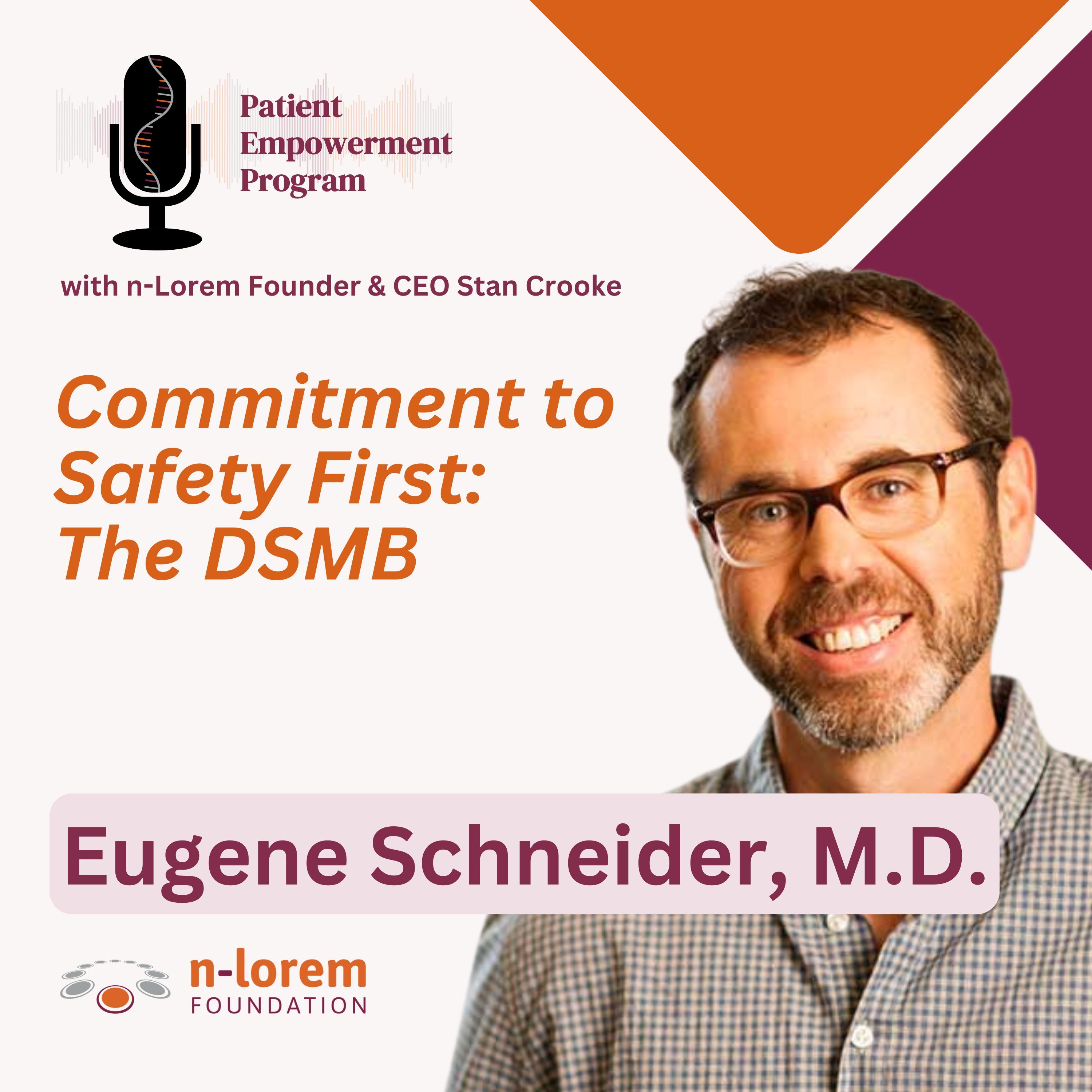
Ep 77Commitment to Safety First: The DSMB
The Data Safety Monitoring Board (DSMB) is composed of distinguished, independent experts in antisense oligonucleotide (ASO) technology, clinical trial design and evaluation, and drug development. Many are also dedicated clinicians who care for patients with rare diseases. This board provides unbiased safety oversight by reviewing accumulated data from all investigator-initiated studies involving n-Lorem’s ASO medicines. n-Lorem's DSMB is chaired by Dr. Eugene Schneider, Executive Vice President and Chief Clinical Development and Operations Officer at Ionis Pharmaceuticals. On This Episode We Discuss: 2:20 – What is the Data Safety Monitoring Board at n-Lorem? 6:50 – Monitoring the data from each and every treated n-Lorem patient is essential 9:40 – The DSMB consists of a collection of physicians and other experts 13:20 – As the number of n-Lorem patients grows, the DSMB’s responsibilities have expanded significantly—yet members remain deeply committed to supporting the mission 17:05 – The DSMB’s goal is to avoid any ASO-related serious adverse events (SAEs) and minimize adverse events 19:20 – During his time as Chair of the DSMB, Eugene has learned lessons in patience and humility 21:00 The judgements of monitoring boards can and will affect lives Links: n-Lorem 2025 Nano-rare Patient Colloquium: https://www.nlorem.org/nano-rare-patient-colloquium-2025/ Donate to support n-Lorem programs: https://www.nlorem.org/donate/ Hongene Biotech: https://www.hongene.com/
Ep 76Connor Gooley's Story: A First for TUBB4A Treatment
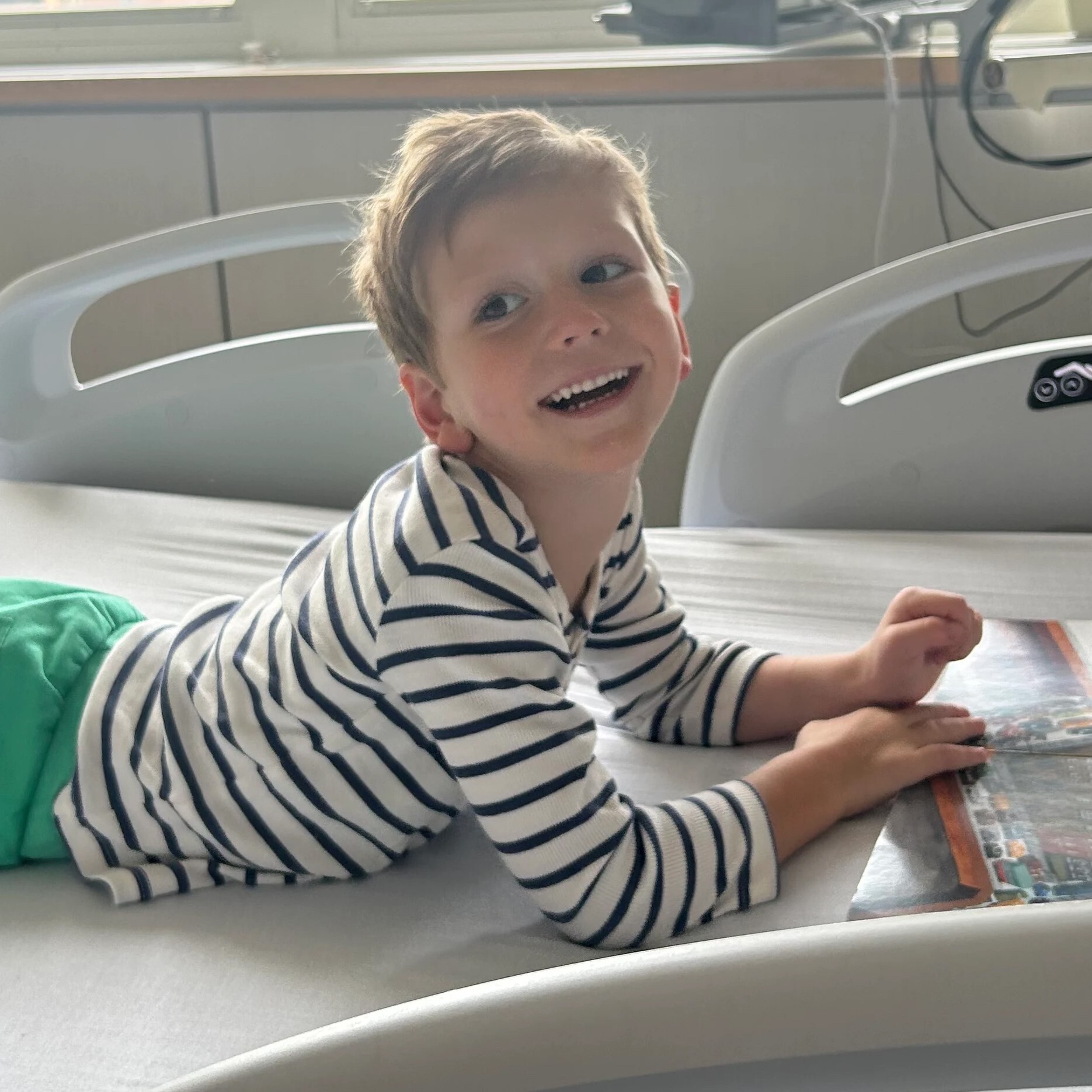
Connor Gooley is the first patient ever treated with an ASO for TUBB4A-Related Leukodystrophy, a condition that severely disrupts his nervous system, slows nerve impulses, and impairs his fine motor skills. As a result, Connor cannot speak, walk, sit up on his own, or chew well. Still, he manages to army crawl, propel himself in his wheelchair, and use a gait trainer. He’s also remarkably resilient—rarely crying or complaining despite the daily challenges he faces. In this episode of the Patient Empowerment Program, Connor’s parents, Diana and Mike, share their family’s journey from diagnosis to treatment and reflect on their observations of Connor after more than six months on an n-Lorem discovered and developed treatment. On This Episode We Discuss: 1:33 Shaking eyes were the first sign of Connor’s rare disease 4:10 An MRI revealed little to no myelin, leading to whole genome sequencing and an eventual TUBB4A genetic mutation diagnosis 7:10 Connecting with another family with the same mutation 10:00 Finding n-Lorem through a ‘seeking patient candidates’ advertisement in a Global Genes annual report 12:26 Contextualizing Connor’s TUBB4A mutation in simple terms 21:19 How rare diseases affect families and creating a new normal 27:41 Receiving treatment in Boston and contemplating the decision to agree to an experimental treatment for their son 32:00 Observations after 6 months on treatment 35:45 n-Lorem has given the Gooley family hope for a better future for Connor Links: Hongene Biotech: https://www.hongene.com/ Donate to n-Lorem / Support nano-rare: https://www.nlorem.org/donate/ n-Lorem 2025 NRPC: https://www.nlorem.org/nano-rare-patient-colloquium-2025/
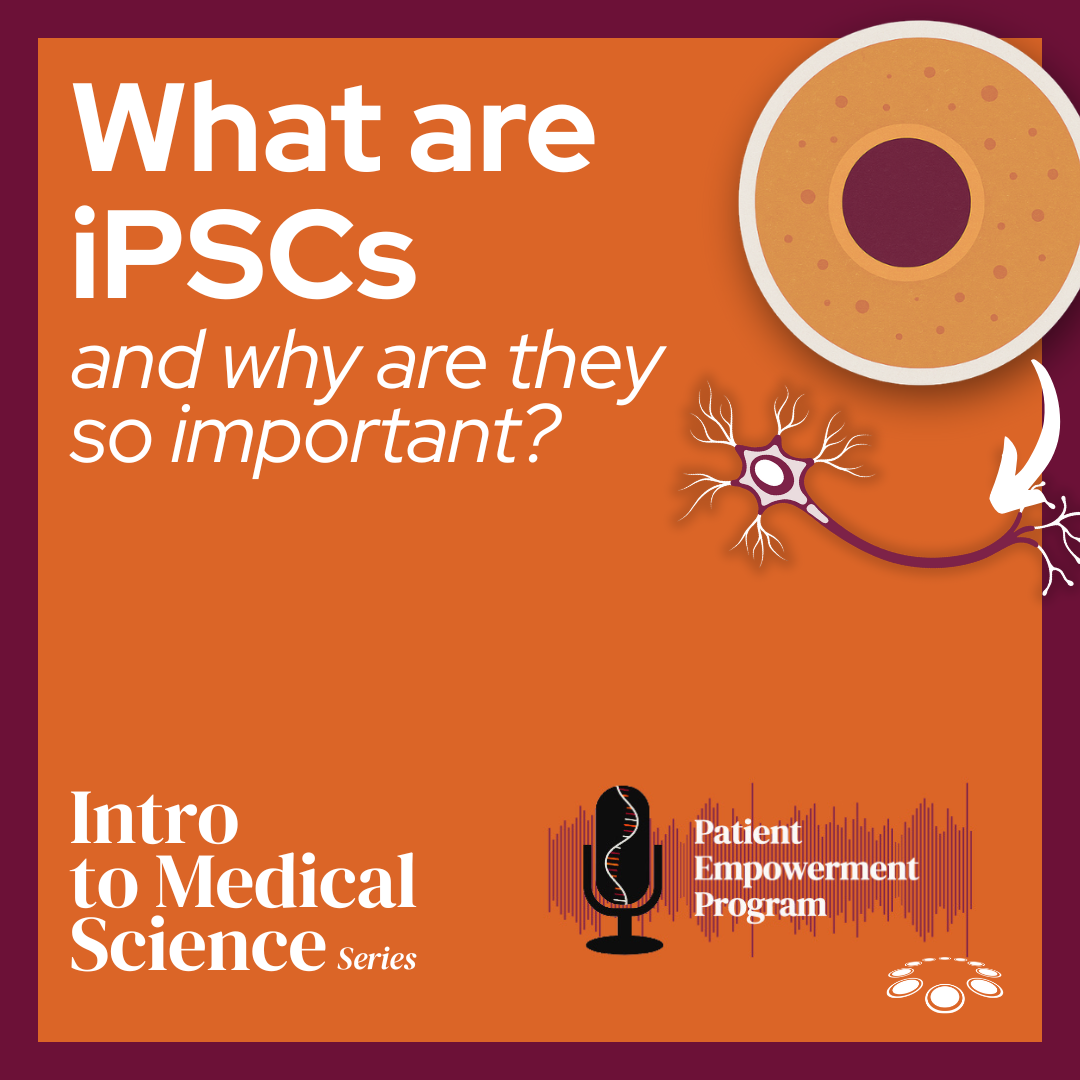
Ep 75What Are iPSCs—and Why Do They Matter?
Induced pluripotent stem cells (iPSCs) are a groundbreaking, and mind-blowing, scientific advancement—one of many that help make it possible for n-Lorem to do what we do. In short, typical skin cells (such as fibroblasts) are taken from an individual and reprogrammed using specific factors to become iPSCs. These iPSCs are then redifferentiated into any desired cell type in the body, such as muscle or liver cells. You can do that? Yes, and we do! The most common cell type that we use at n-Lorem are neurons (nerve cells). These cells are not easily accessible in living humans without serious surgeries and that is why scientists instead use iPSCs to grow them. On This Episode We Discuss: 1:23 - What are Induced Pluripotent Stem Cells? 5:45 - Chromatin – compressed DNA and proteins 9:13 - Differentiation and de-differentiation 10:26 - Transcription and transcription factors 12:35 - Why are iPSCs important? 15:20 - Making iPSC and re-differentiating them into the cells we study is time consuming and expensive Important Links: n-Lorem 2025 Nano-rare Patient Colloquium - https://www.nlorem.org/nano-rare-patient-colloquium-2025/ Support nano-rare with a donation to n-Lorem: https://www.nlorem.org/donate/ Learn about Hongene Biotech: https://hongene.com/
Ep 74Biological Systems & Chemical Networks
What Are Chemicals? | How Drugs Work in the Body | Understanding Homeostasis We’re all made of chemicals—but what exactly is a chemical? In this video, we break down the basics: chemicals are forms of matter that exist as solids, liquids, or gases. Inside living organisms, these chemicals create complex networks that keep us alive and balanced—a process known as homeostasis. Drugs are chemicals too! They work by interacting with these biological networks to help restore or adjust how the body functions. Whether you’re a curious learner, a patient, or a future scientist, understanding these fundamentals can empower better decisions about your health and treatment. 🔬 Learn more about biology, medicine, and how science impacts your daily life. 💊 Subscribe for more videos on drug development, health, and patient education. Full Intro to Medical Science Playlist: https://www.youtube.com/playlist?list=PLrDVyc3t26Fy5aQpo3mulackGlUwrIqYL In This Episode, We Explore - What exactly is a chemical—and why it matters - The definition of a drug and how it works in the body - How chemical reactions power life - Biochemicals: the molecules that make living systems tick - Cells: the basic building blocks of life - Types of polymers and their roles in biology - The languages of life: how nucleic acids and proteins communicate - DNA and RNA—what they are and what they do - What happens when genes change: understanding mutations - The difference between helpful and harmful gene mutations
Ep 73Why ASO Technology?
What makes antisense oligonucleotides (ASOs) so special? Let’s first understand what an oligonucleotide is. An oligonucleotide is a short strand of synthetic DNA or RNA (a nucleic-acid chain), usually consisting of up to approximately 20 nucleotides long—designed to bind with specific sequences in the body. At n-Lorem, our ASO technology is built on more than 30 years of research, innovation, and investment. It’s uniquely suited for treating nano-rare diseases—ultra-rare genetic conditions that affect just one or a few individuals. The versatility and specificity of ASOs allow us to address a wide variety of gene mutations, creating customized therapies for each unique patient. Compared to other traditional drug discovery platforms, discovering and developing an optimal ASO is inexpensive, quick and can be used to treat diseases that are caused by many different types of gene mutations. ASOs work by binding to RNA, thereby modifying the expression of disease-causing proteins. This makes them exceptionally well-suited for treating diseases caused by rare or unique genetic mutations. On This Episode We Discuss: - The repurposing of small molecule drugs - The promise and limitations of gene replacement therapies - What makes ASO drug development different—and better—for nano-rare diseases - A brief history of modern drug development - How regulatory frameworks evolved after medical disasters - The decentralization of the biotechnology industry - What challenges still lie ahead in genetic medicine Intro to Medical Science Series YouTube Playlist: https://www.youtube.com/playlist?list=PLrDVyc3t26Fy5aQpo3mulackGlUwrIqYL
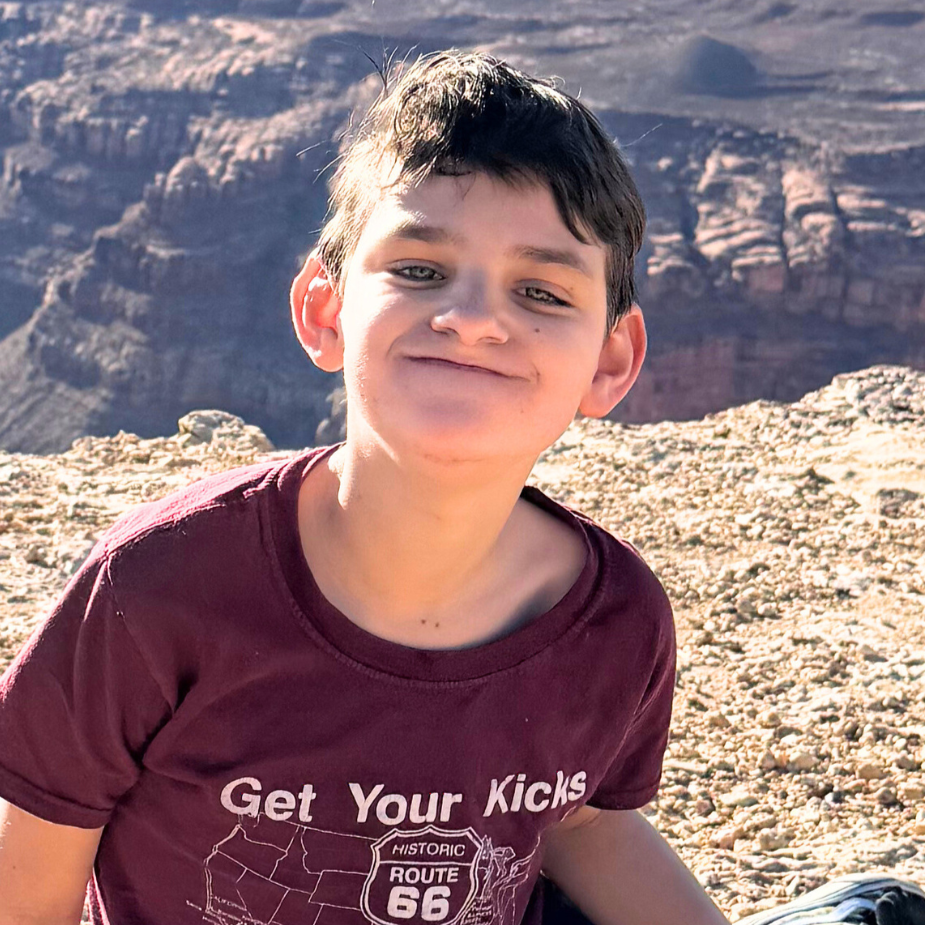
Ep 72Connor Dalby's Story: n-Lorem Patient #001 with Kelley Dalby and Dr. Olivia Kim-McManus
Connor Dalby was born with an SCN2A ion channel mutation causing severe epilepsy and eventually leading to hospice care at an early age. It was a chance hallway conversation between Connor’s mom and Dr. Stan Crooke at a conference that sparked the idea for what would become n-Lorem. In a full-circle moment, Connor went on to become the very first patient applied to and accepted by the foundation, giving him the designation 'Patient #001'. In March 2024, Connor received his personalized ASO medicine, and while Dr. Olivia Kim-McManus of Rady Children’s Hospital continues to fine-tune the optimal dose and schedule for the best and longest-lasting effects, Connor has, for the first time, taken steps on his own and experienced periods without seizures. Discover all of what has been observed in Connor since being treated in this episode of the Patient Empowerment Program podcast! This episode is brought to you by Hongene Biotech! On this episode we discuss: 2:45 – What Connor’s life was like from birth 4:20 – Finding a SCN2A diagnosis through genomic sequencing 6:40 – A hallway conversation between Kelley and Stan about Connor sparked the idea of the n-Lorem Foundation 9:20 – Dr. Olivia Kim-McManus on engaging and gaining institutional support to treat n-of-1 11:40 – Connor's program was uniquely challenging 14:18 – Connor unknowingly had coronavirus upon receiving his first ASO dose 18:00 – Symptoms that affect Connor’s life on a daily basis 18:55 – Connor has walked unassisted for the first time in his life 26:10 – Finding the optimal treatment dose and schedule 29:05 – Improvement of painful gastrointestinal (GI) issues Bios: Kelley Dalby is the Director of Natural History and Diagnostics in Epilepsy at Praxis Precision Medicines, where she has worked for four years. Kelley worked as a high school English teacher in San Diego until her son Connor was born with a severe form of epilepsy caused by a mutation in the SCN2A gene. When he was diagnosed, she co-founded a biotechnology company, RogCon, focused on discovering therapies for SCN2A mutations. Kelley served as Vice President and contributed to the companies’ success, including licensing the primary program to Praxis Precision Medicines. Dr. Olivia Kim-McManus is an Associate Clinical Professor, UC San Diego School of Medicine Dept of Neurosciences, Pediatric Neurologist and Epileptologist, Rady Children’s Hospital Precision Therapeutics Neuro-Interventional Program Director. She received her undergraduate degree in Neurosciences at Columbia University in New York City and medical degree at George Washington University Children’s National Medical Center. She specializes in treating children with medically intractable epilepsy due to rare genetic etiologies requiring targeted genetic therapies or epilepsy surgery. She is the Director of the Batten’s Disease Neuro-infusion Program at Rady Children’s Hospital where she delivers intraventricular cerliponase-alfa enzyme replacement therapy via Ommaya reservoir targeted for disease modifying therapy for rare pediatric genetic disease. Dr. Kim-McManus is Neurology Section Vice Chief of Medical Staff Executive Committee at Rady Children’s Hospital, ACGME Epilepsy Fellowship Associate Program Director at UCSD, Epilepsy Foundation San Diego Professional Advisory Board member, Rady Children’s Insitute for Genomic Medicine clinical investigator, and UCSD Altman Clinical and Translational Research Institute Scientific Review Board member. Links: n-Lorem Candle and Card Fundraiser - https://www.nlorem.org/mothers-day-candle-2025/ Hongene - https://www.hongene.com/
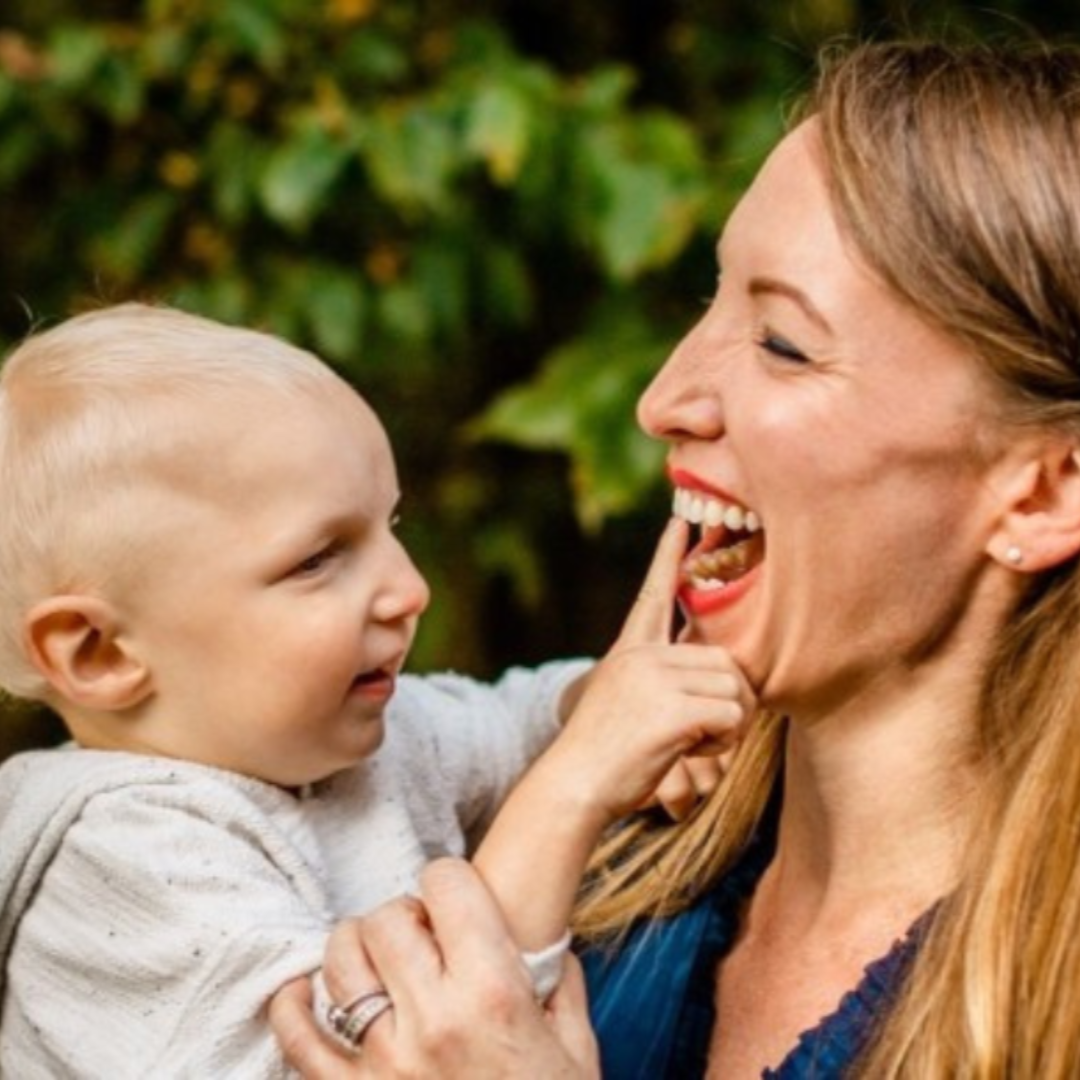
Ep 71Our Mission is Personal with Sarah Glass
For n-Lorem's Chief Operating Officer, Sarah Glass, the mission of n-Lorem is deeply personal. Her son Ethan was diagnosed with a nano-rare mutation, a journey that has shaped her commitment to the cause. A geneticist by training, Sarah joined n-Lorem to help lead and guide the organization in its efforts to offer hope and potential help through treatment opportunities to nano-rare patients and their families. This is more than just a job for her—she is driven by her love for her son and a passion to serve the entire nano-rare community. This episode is proudly sponsored by Hongene Biotech. “We are changing the landscape of rare disease drug discovery and development – starting with the most rare.” – Sarah Glass, Ph.D. On This Episode We Discuss: ✔️ Sarah’s background in science and her early interests ✔️ How working at a Contract Research Organization (CRO) shaped her understanding of the patient experience ✔️ The challenges of rare disease clinical trials and why they are still relatively new ✔️ Sarah’s son, Ethan, and his journey as a nano-rare patient ✔️ How long it took for Ethan to receive a diagnosis and the symptoms he faces ✔️ How Sarah discovered n-Lorem, a nonprofit providing free, lifetime treatment for nano-rare patients ✔️ The emotional journey of caring for a nano-rare child—how parents navigate hope and uncertainty ✔️ What Sarah has learned while working at n-Lorem ✔️ The biggest surprises in her journey as both a mother and a scientist If you’re passionate about rare diseases, personalized medicine, and patient advocacy, this episode is a must-watch! 💙 🔔 Subscribe for more stories from the rare disease community! #RareDisease #NanoRare #nLorem #PatientAdvocacy #geneticdisorders Donate to n-Lorem: www.nlorem.org/donate More about Hongene: www.hongene.com
Ep 70How Cells Phone a Friend: Local Communication
Our bodies are like bustling cities of cells, always chatting and working together. They don’t just send long-distance messages to organs—they also gossip locally, getting nearby cells to spring into action. Juxtacrine communication is like a handshake between cells—they have to be up close and personal to pass the message along! Unlike long-distance cellular calls, juxtacrine signaling requires direct contact, where one cell’s surface proteins interact with another’s, triggering a response. This episode is brought to you by Hongene Biotech who is continuously innovating to make RNA medicines accessible and affordable to patients worldwide. Visit www.hongene.com On this episode we discuss: Paracrine communication Recently found exosomes Cell to cell contact-dependent communication (Juxtacrine signaling) Tunneling microtubes Cell communication conclusions
Ep 69How Cells Phone a Friend: Long Distance Communication
How do cells communicate with each other? With trillions of cells in the human body, seamless collaboration is essential within this intricate cellular society. Cells work together to form organs, and when one organ needs another to perform a task, they send signals across distances—much like picking up the phone and calling someone. Organ Hotline 📞 Eyes: Hey, Brain? This is Eyes. We’re reading this post about how organs communicate, and it’s really interesting. 📞 Brain: Oh, show me more! What’s it say? 📞 Eyes: Apparently, organs send signals to each other to get stuff done. Like, the liver calls the stomach when it’s time to detox! 📞 Brain: Whoa, I had no idea they were so organized! Keep reading, I need all the details! 📞 Eyes: I’m on it! But it says they made a whole podcast episode on in. 📞 Brain: Alright, I’m sold! I'm signaling to press play. On This Episode We Discuss: How cells talk to each other Multicellular organisms Why cells create organs Organ to organ communication - Electrochemical Chemical signals - The endocrine system Hormones created by other organs This episode is brought to you by Hongene Biotech: https://www.hongene.com/ Support n-Lorem and nano-rare patient: https://www.nlorem.org/donate/
Ep 68Rosie’s Story: A Nano-rare Treatment Pioneer
Rosie was the first of three HNRNPH2 patients to receive treatment with an n-Lorem ASO, helping to pave the way for others. Her parents, Nicole and Bobby, share their daughter's journey and how they have adapted as a family to meet her unique needs. As a pediatrician, Nicole understands the complexities of medical care, yet she acknowledges that even she doesn’t always have the answers when it comes to raising a child with a nano-rare disease—a reality that resonates with many nano-rare families. On this episode we discuss: 2:00 Bobby left his job to help care for Rosie full-time 7:36 Nicole is a pediatrician and it’s difficult for her to not regularly attend Rosie’s appointments 11:16 Rosie’s diagnosis of HNRNPH2 16:00 Even as a pediatrician, Nicole finds nano-rare diseases complex and difficult to navigate 19:29 What is HNRNPH2? 26:40 Coming to terms with the diagnosis 29:35 Weighing the potential risk/benefit and making the decision that Rosie will be the first HNRNPH2 patient treated with an experimental medicine 37:05 How Rosie is doing after three ASO treatment doses 40:35 Potential for a placebo effect and allowing multiple observers to notice changes Donate to n-Lorem: https://www.nlorem.org/donate/ This episode is brought to you by Hongene Biotech: https://www.hongene.com/
Ep 67Sloane's Story: A Shared Medicine
Sloane was born with a KIF1A mutation and is a special case at n-Lorem—she was the first patient to receive a medicine originally designed for someone else. Her mother, Megan, and grandfather, Tom, join the Patient Empowerment Program to share her journey and provide an update on how she’s doing six months after treatment. On This Episode We Discuss: Sloane’s KIF1A diagnosis Nano-rare diseases affect the entire family Sloane was able to use the same ASO as another KIF1A patient Finding n-Lorem through KIF1A.ORG Shocked that n-Lorem was able to create personalized treatments efficiently at cost Sloane’s case is unique in a variety of ways and the decision to treat How Sloane has responded to treatment Are better measurements of benefit needed for nano-rare patients? How Sloane has brought empathy, joy, and positivity to her family Tom unretired to help fund research and support The origins of ASO medicine is a long haul Thank you to Hongene Biotech for sponsoring this patient story episode! Make Hope Possible for nano-rare patients with a donation to n-Lorem.
Ep 665-years of n-Lorem: What Have We Learned?
Five years of creating medicines, instilling hope, and overcoming steep challenges—all with the singular goal of improving the lives of nano-rare disease patients. Along the way, we’ve proven that WE CAN treat these patients safely and effectively, delivering significant benefit. But what else have we discovered throughout this journey? Thank you to Hongene Biotech Corporation for sponsoring this 5-Year Anniversary episode. On This Episode We Discuss: - We CAN do this - n-Lorem is proof of the value of investing in science - We can treat nano-rare patients safely - The nano-rare patient population is large - We must introduce genomic sequencing into newborn evaluation - Most nano-rare diseases are more prevalent than we think - Most diseases are a composite of multiple mutations in one or more genes - A non-profit model in which patients are treated irrespective of their financial status is feasible - Nano-rare mutations are spread throughout the genome - Nano-rare mutations can affect any organ - Essentially all types of mutations can cause nano-rare diseases - Most nano-rare patients express severe, chronic, debilitating, progressive diseases - The journey to diagnosis is often unique, long, and perilous - Significant benefit can be achieved - ASOs administrated intrathecally for CNS diseases can result in profound benefit - ASOs can result in durable benefit - Many patients require allele-selective ASOs - The community is strong - Industrialized processes created by n-Lorem is delivering great value - The modified cross-over clinical design created by n-Lorem is delivering high quality data - If we raise the funds, we can meet the demand Donate: www.nlorem.org/donate
Ep 65I Sing the Body Electric
Walt Whitman’s 1855 poem, I Sing the Body Electric, is a celebration of the human body and its intrinsic connection to the universe. During that era, scientists were just beginning to understand that humans are, indeed, electrical beings. Whitman’s deliberate use of the word "electric" in his tribute to the human body was quite remarkable, as the term was not widely used at the time and electricity for human use was still in the experimental stage. With that in mind, the poem’s title serves as both a poetic and scientific statement. Many have compared great science to art, but we believe it is more akin to poetry. A poet distills intricate concepts, stories, and emotions into the most concise, impactful expression—cutting through the noise to reach the heart and soul of the matter. Similarly, great scientists achieve this with their work. Together, scientists and patients contribute their own verses to the epic poem of understanding known as science. This episode of the Patient Empowerment Program podcast is proudly sponsored by Hongene Biotech. With more than 26 years of experience in the nucleic acid industry, Hongene is a specialized CDMO and raw materials supplier committed to providing high-quality and high value products and services with the best in class lead times. Make Hope Possible and donate, today www.nlorem.org/donate Episode sponsor: Hongene Biotech https://www.hongene.com/
Ep 64Q&A - 2024 Nano-rare Patient Colloquium Recap
Join Stan Crooke, n-Lorem founder, CEO, and host of the Patient Empowerment Program Podcast, alongside Amy Williford, Sr. Director of Communications and Donor Relations, for a special episode. In this post-colloquium Q&A, Stan recaps the 2024 Nano-rare Patient Colloquium and the progress n-Lorem has made as the organization nears its 5-year anniversary, shares his candid reflections on the event, and dives into additional thoughts and questions that weren’t covered. Do you have additional questions? Email [email protected]. Question Bank: 2:15 How do you think the event went this year? 6:05 Were observations of benefit expected in patients so quickly? 9:47 What do you expect the number of patients treated to be next year? 10:57 Do you have a message to supporters? 12:30 Were there any disappointments from the colloquium? 13:21 What are the most important things that n-Lorem has learned this year? 16:13 Do you think n-Lorem’s processes will be outlined every year at the event? 18:05 How is AI incorporated at n-Lorem? 19:10 Does your recently announced deal with GondolaBio reflect the sustainability strategy discussed at the event? 20:53 n-Lorem is celebrating 5 years in 2025. Did you expect the foundation to be where it is today? 21:28 Does n-Lorem plan to expand into Europe and elsewhere? Make hope possible with a donation.
Ep 63Best of the 2024 Nano-rare Patient Colloquium
This year’s Colloquium spanned two perfect autumn days in beautiful Cambridge, Massachusetts where hundreds of nano-rare community members from around the world gathered under a single roof to learn, connect, and support one another. We’re pleased to announce that the event welcomed over 750 attendees, both in-person and virtually. It’s each and every one of you who made the event such a success! For this special episode, we gathered the ‘Best’ clips from the event for you to learn from and enjoy. To submit questions for our upcoming Q&A episode, email [email protected]. We can’t wait to hear from you! 2024 Colloquium Recap On this episode: 2:07 Daphne Graskewicz-Prado, ASO The Perilous Journey to Diagnosis and Treatment for Nano-rare 9:35 Ryan Strankowski and Dr, Nelson Leung, Ryan’s Journey and Clinical Experience 15:55 Luke Rosen, Megan Hedstrom, and Dr. Jennifer Bain, Susannah’s & Sloane’s Journeys and Unique Clinical Experiences 21:49 Kelley Dalby and Dr. Olivia Kim-McManus, Connor’s Journey and Clinical Experience 30:00 Dr. Julie Ziobro and Dr. Horacio Kaufmann, Building a Nano-rare Network and Managing Institutional Challenges 37:38 Dr. Andrew Lo and Dr. Alan Lotvin, Innovative Ways to Support Nano-rare 42:30 Dr. Toby Ferguson, Dr. Liz Berry-Kravis, and Dr. Eugene Shneider, Changing the World One Patient at a Time 47:30 Dr. Kate Dawson, What It Means to be a Parter with n-Lorem for Nano-rare 50:23 Dr. Stanley Crooke, Providing Hope for a Better Future, One Nano-rare Patient at a Time
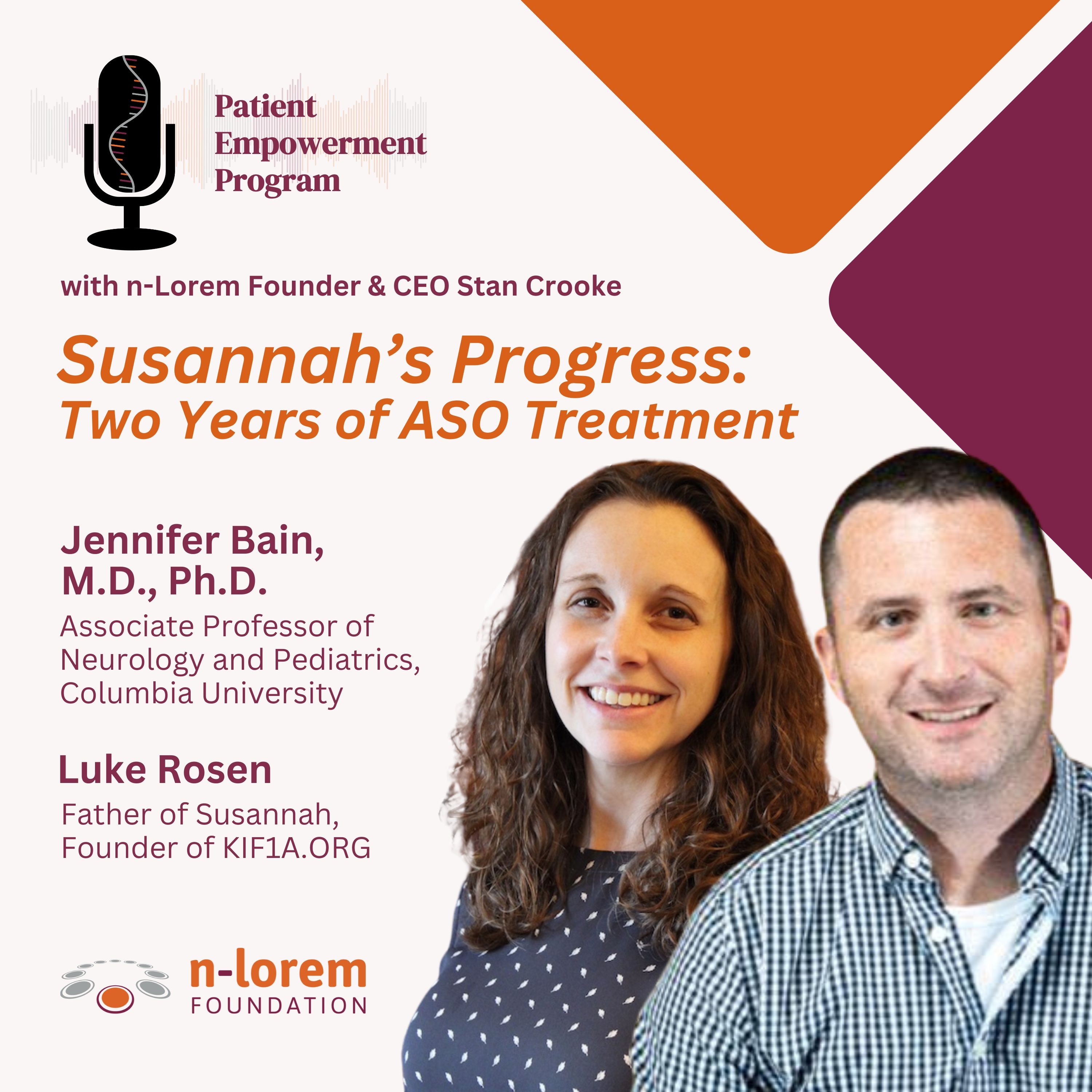
Ep 62Susannah's Progress: Two Years of ASO Treatment with Dr. Jennifer Bain and Luke Rosen
Two years of treatment—two years of strength, courage, and blazing a trail for other nano-rare patients! 🎉 Susannah's story was the first shared on the Patient Empowerment Program podcast. Now, two years later, her father, Luke Rosen, and her physician, Dr. Jennifer Bain, detail Susannah’s remarkable progress since beginning regular treatments—highlighting improvements in her motor skills, cognition, energy, and more! Susannah's Story (May 25, 2022) Donate 2024 Nano-rare Patient Colloquium On This Episode We Discuss: 3:10 Susannah's KIF1A mutation 5:50 Luke and his wife Sally changed their careers to help find a treatment for KIF1A 7:23 How Susannah's family first heard of n-Lorem 8:43 Jen on the Columbia University Medical Center team and the decision to treat Susannah 12:25 Luke's experience bringing his daughter to receive an experimental ASO treatment for the first time 14:30 The positive outcomes and observations of Susannah's treatment 26:15 What Dr. Bain has learned since treating Susannah 29:15 Luke on the impact and importance of the little things 31:15 Advice to other parents 35:40 Being part of a community of nano-rare patients and families
Ep 61Sneak Peek of the 2024 Nano-rare Patient Colloquium
Take a glimpse behind the curtain as we offer you a sneak peek of the 2024 Nano-rare Patient Colloquium. We’re thrilled to welcome back longtime biotech journalist and current Features Editor of The Transmitter, Brady Huggett, to the podcast. In an interview with n-Lorem founder and CEO Stan Crooke, they preview the upcoming Colloquium, diving into key topics that will shape the conversation at the event and around nano-rare diseases in the year ahead. On This Episode We Discuss: 2:21 How many Investigational New Drugs (INDs) has n-Lorem filed? 5:22 How many patients treated with an n-Lorem ASO have been on therapy long enough to observe a benefit? 6:50 What does it mean for a patient like Susannah who has experienced a significant decrease in behavioral arrest incidents since receiving treatment 9:39 Providing ASOs to patients earlier 13:25 INDs for the ‘n-of-few' 23:15 Introducing Whole Genome Sequencing (WGS) for all newborns 29:05 Stan’s perspective on leadership 33:50 n-Lorem's goals for the 2024 Nano-rare Patient Colloquium Register for the 2024 Nano-rare Patient Colloquium Donate Biogen.com
Ep 60The Building Blocks of What's Possible with David Butler, Ph.D.
Hongene Biotech is a producer of RNA building blocks – the first step for what’s possible in RNA drug-discovery and development. David Butler, Ph.D., Chief Technology Officer of Hongene, joins the Patient Empowerment Program to discuss why Hongene aims to help make RNA medicines accessible and affordable for patients everywhere, regardless of prevalence. On this episode we discuss: 2:40 Hongene Biotech and what do they do 8:09 The early days of nucleoside building blocks and maturation of Hongene 12:00 Hongene is a strong supporter of n-Lorem. Why? 15:30 David’s origins in the chemistry field 17:38 Incremental progress that has been made in science and manufacturing Links: 2024 Colloquium - https://www.nlorem.org/nano-rare-patient-colloquium-2024/ Make Hope Possible with a Donation - https://www.nlorem.org/donate/ Hongene - https://www.hongene.com/
Ep 59Knowledge is Power: Part 2
The concluding episode of the Knowledge is Power series. The knowledge we are gaining at n-Lorem has even more value than benefiting nano-rare patients and their families. These insights will enable scientists to discover new therapeutic targets for both common and rare diseases, fundamentally changing the way we approach health and disease. Survey – Patient Empowerment Program Podcast Register for the 2024 Nano-rare Patient Colloquium On This Episode We Discuss: Questions we can answer and teach us about health and disease and opportunities to treat more common diseases What are all the functions of human genes? Are there gene products that have redundant functions? Do identical mutations cause identical phenotypes? n-Lorem can demonstrate that ASOs work on general types of disease challenges
Ep 58Knowledge is Power: Part 1
The knowledge we are gaining at n-Lorem has even more value than benefiting nano-rare patients and their families. These insights will enable scientists to discover new therapeutic targets for both common and rare diseases, fundamentally changing the way we approach health and disease. Survey – Patient Empowerment Program PodcastRegister for the 2024 Nano-rare Patient ColloquiumOn This Episode We Discuss: Two most common words in medicine: Health and Disease The Scientific Method The Importance of Single Variables Orthogonal Thinking We Are at a Unique Moment in Medical History Genomics Advances in Omics Biological Networks and AI Facile Collection, Maintenance, Growth and Differentiation in the Lab Antisense Technology
Ep 57Adopting a Rare Son with Paul Compton
Paul Compton and his wife Andrea chose to start a family through adoption. Unknown to anyone, one of their adopted boys, Taeson, was the inheritor of DRPLA, a progressive brain disorder caused by a mutation in the ATN1 gene. Determined to find a treatment and advocate for their son and others with the disease, the Comptons established CureDRPLA. In early 2024, Taeson received his initial treatment with an ASO discovered and developed by n-Lorem. Paul discusses his family’s journey and shares his observations of Taeson's progress since beginning treatment. In This Episode We Discuss: 3:05 – Paul's origins in business and finance 4:32 - Investment banking is different than traditional banking 7:27 – Opposites attract – Meeting his wife, Andrea, and starting a family through adoption 10:06 – Paul’s son, Tayson, has a progressive brain disorder known as DRPLA, which is caused by a mutation in the ATN1 gene; Discovering the idea of n-Lorem 16:03 – Tayson’s journey to a diagnosis 23:00 – The deterioration of his abilities over the years 25:00 – The progress Paul has observed in his son since initial treatment Links: Take our survey and receive an n-Lorem Store coupon code Register for the 2024 Nano-rare Patient Colloquium / October 30-31, 2024 Make Hope Possible with a donation
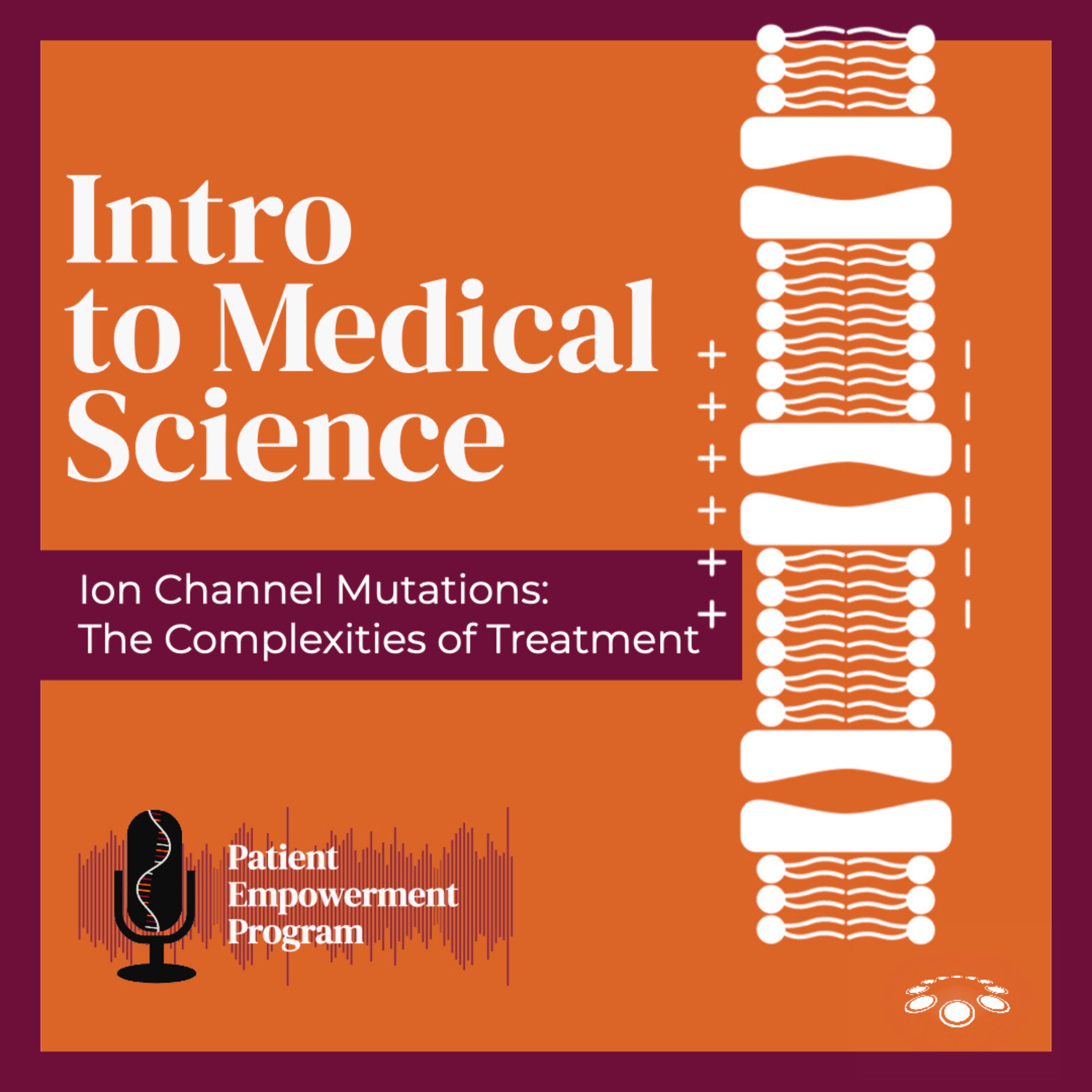
Ep 56Ion Channel Mutations: The Complexities of Treatment
Mutations affecting ion channels are the most common cause of 'applications for treatment' submitted to n-Lorem. These channels regulate the passage of essential electrically charged ions, like sodium, potassium, calcium, and chloride, into cells. Alas, ion channels pose a significant challenge in the ASO discovery process, as there is little room for error due to the need for highly allele-selective ASOs to achieve success. Let’s 'dive into the channel' and explore the complexities of treating patients with ion channel mutations. Recently a report on one of our patients with an ion channel mutation was published in Endpoints News highlighting the power of our technology for these disorders. Check it out by clicking the link below. Endpoints News (endpts.com) A teenager faced constant seizures. Could a drug developed just for him stop them? Podcast Awards - The People's Choice Survey – Patient Empowerment Program Podcast Register for the 2024 Nano-rare Patient Colloquium On This Episode We Discuss: Defining Ion Channels and Ions Health, Homeostasis, and Biological Buffering Multiple forms of the same gene Multiple Isoforms of Gene Product from the same gene Network redundancy Ion Channels are different
Ep 55Why We Dose Intrathecally
The affected organs of our patients determine the route of administration for an ASO, as certain routes can better target specific organs and offer the best potency. The central nervous system (CNS) is the most common target we encounter, and for this, we dose intrathecally. Let’s dive into how this is done and the particulars of why this approach is used. The Human Body and Barriers The Four Tubes – Enteral, Respiratory, Urinary, and the Central Nervous System (CNS) tube How The Body Constructs Barriers What is Cerebrospinal Fluid (CSF) The Blood-Brain Barrier (BBB) The Types of Molecules That Are Admitted to and Excluded From the CNS Intrathecal Administration of Drugs Outwitting the Blood-Brain Barrier Survey Link – Patient Empowerment Program Podcast: https://forms.office.com/r/1ik9WNs7QB Register for the 2024 Nano-rare Patient Colloquium: https://www.nlorem.org/nano-rare-patient-colloquium-2024/
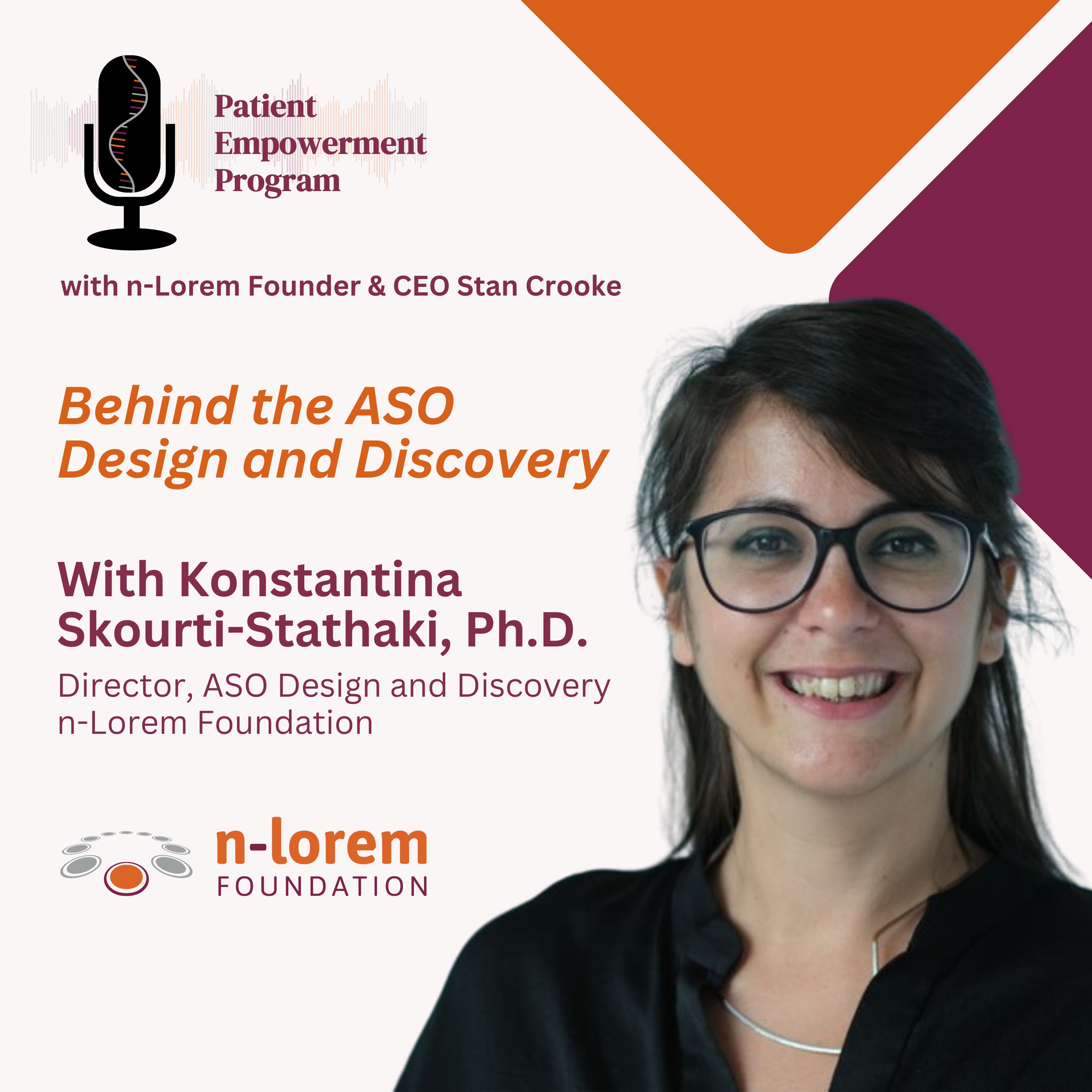
Ep 54Behind the ASO Design and Discovery with Konstantina Skourti-Stathaki, Ph.D.
Konstantina Skourti-Stathaki leads the n-Lorem research team behind the design and discovery of ASOs. Nadina, as we at n-Lorem call her, has a passion for helping patients and an excitement for science that is contagious. She joins the Patient Empowerment Program podcast to discuss her day-to-day activities as n-Lorem’s Director of ASO Design and Discovery, the ongoing research her team is conducting, and more! On This Episode We Discuss: Inspired to study biology at the University of Crete Leaving Greece to attend grad school at the University of Oxford An internship led Nadina to the world of RNA Leaving academia to impact lives Lessons learned from experiencing drug discovery and development The reason she joined n-Lorem Day-to-day activities as Director of ASO Design and discovery n-Lorem’s internal research management committee to make key decisions regarding programs Ongoing research at n-Lorem to enhance allele selectivity Stan Crooke on why he pioneered antisense technology