Parallax Views w/ J.G. Michael
1,045 episodes — Page 4 of 21

Ep 1041Follow the Money: The Think Tank Funding Tracker w/ Ben Freeman & Nick Cleveland-Stout
You're Listening to Parallax Views https://parallaxviews.podbean.com/ Support the Show on Patreon: https://www.patreon.com/parallaxviews On this edition of Parallax Views with J.G. Michael, we explore the powerful financial forces behind Washington D.C.’s most influential think tanks—and how those funding streams may shape U.S. foreign policy and defense strategy. Joining us are Ben Freeman and Nick Cleveland-Stout of the Quincy Institute for Responsible Statecraft to discuss their eye-opening project: the Think Tank Funding Tracker (TTFT). The TTFT is designed to bring much-needed transparency and accountability to the world of policy influence, exposing the financial ties between think tanks and their funders. Specifically, we look at three major sources of funding: U.S. government funding, led by the Department of Defense Foreign government contributions, including major donors like Saudi Arabia and Qatar Defense contractor money, with Northrop Grumman leading the charge Think tanks play a vital role in shaping public policy through research, analysis, and recommendations. But as Ben and Nick explain, financial backing can create conflicts of interest and biases that may influence the narratives and policy prescriptions these institutions offer. Some think tanks rank high in transparency—others, particularly those with more hawkish foreign policy stances, score a troubling zero. We also address the issue of “dark money” think tanks, declining public trust, and how the TTFT includes concrete policy recommendations to encourage better disclosure practices. The conversation highlights the need for vigilance in understanding who is funding the experts shaping public debate and decision-making. One key case study we explore is the Atlantic Council, a major D.C. think tank whose funding sources exemplify the complex web of influence at play in the policy space. If you’re interested in U.S. foreign policy, military-industrial complex dynamics, Middle East geopolitics, or political influence in Washington, this is a must-listen episode that breaks down the often unseen forces shaping global affairs. For more information please read Quincy Brief #68: Big Ideas and Big Money: Think Tank Funding in America.
Ep 1040Shoot Pro Wrestling Revives Catch-as-Catch-Can Style w/ Jake Shannon, Pat Miletich & Matt Granahan
On this special episode of Parallax Views, we enter the world of Shoot Pro Wrestling (SPW)—a new promotion looking to bring the raw intensity and legitimacy of catch-as-catch-can wrestling back to the forefront of combat sports and professional wrestling. Joining the conversation are three key figures behind the SPW movement: – 🧠 Jake Shannon, catch wrestling historian and founder of Scientific Wrestling – 🥊 Pat Miletich, UFC legend, coach, and one of the original hybrid fighters in American MMA – 🤼 Matt Granahan, colorful grappling promoter and self-proclaimed "King of Connecticut" Together, we dive deep into the lineage of catch wrestling, tracing its influence on both modern MMA and professional wrestling, and how SPW aims to resurrect this foundational style—not as a nostalgic throwback, but as a vital evolution of shoot-based combat. Highlights from the conversation include: – The roots of SPW’s ruleset in the philosophy and techniques of the legendary Karl Gotch, as Jake Shannon explains how Gotch’s vision is now being implemented in real-world matches. – Pat Miletich’s reflections on how catch wrestling shaped his fighting style and mindset, and why he believes it instills a toughness many athletes can greatly benefit from. – Pat’s firsthand account of being at the Tokyo Dome when Kazushi Sakuraba defeated Royce Gracie, and Jake discusses how Sakuraba’s iconic declaration after that historic match—“Pro Wrestling is Strong!”—relates to Shoot Pro Wrestling's attitude and ethos. – A discussion of fighting spirit, its philosophical importance, and how it manifests in catch wrestling’s brutal simplicity and mental discipline. – Matt Granahan makes a big announcement about Shoot Pro Wrestling's women’s division, marking a new chapter for female competitors in the catch lineage. – A lively pitch to both pro wrestling fans and MMA fans on why Shoot Pro Wrestling offers something radically different: real grappling, no gimmicks, no predetermined outcomes—just pure, unfiltered combat with roots in both strategy and skill. - An exploration of how foundational catch wrestling is to both MMA and pro wrestling. Although much has been made of Brazilian Jiu Jitsu's influence on the combat sports landscape, as it should, the impact of catch wrestling on combat sports deserves greater recognition. - Talking about catch wrestling as a science and a system - Pro wrestling legend Larry Zbyszko's involvement in the Shoot Pro Wrestling venture. This episode explores the tension between tradition and innovation and why catch wrestling—often unfairly overshadowed by Brazilian Jiu-Jitsu and theatrical pro wrestling—may finally be getting its due in the form of an exciting new promotion dedicated to the grappling fighting style. For fans of mixed martial arts history, wrestling and combat sports philosophy, and raw fighting, this is one you won’t want to miss.

Ep 1038Grappling With Grapplevision: An Unstructured Deep Dive Into the Phantom Funhouse of Pro Wrestling
EOn this edition of Parallax Views, the biggest wrestling event of the year is only days away: WrestleMania. Billed as the "Showcase of the Immortals," WrestleMania is the marquee event of World Wrestling Entertainment and has been going strong for over 40 years. On April 19th and 20th, WWE will present WrestleMania 41. Yes—FORTY-ONE. Ahead of the big event, I spoke with Gary from the YouTube channel Grapplevision—one of the most unique and compelling voices in pro wrestling media today. While most wrestling YouTubers focus on current events or canonical moments like the Montreal Screwjob, Hulk Hogan’s heel turn, or Mick Foley’s infamous fall off the Hell in a Cell, Grapplevision dives into the ghosts and glitches of wrestling history. It's a channel immersed in what you might call phantom histories: forgotten figures, obscure promotions, uncanny storylines, and the lingering specters of wrestling’s carny roots. What sets Grapplevision apart is its unmistakably hauntological aesthetic—think VHS degradation, lost tapes, and late-night public access weirdness. The channel’s documentaries are layered with analog textures and deep archival digs, evoking the era of tape trading and underground fandom. In many ways, it feels less like a recap or explainer and more like a séance conducted with a turnbuckle and a cathode-ray screen. From the blurred lines of shoot vs. worked fights (explored in the "Wrestling Gets Real" series), to Japanese deathmatch icon Atsushi Onita’s exploding barbed wire spectacles, to strange pop culture crossovers featuring Elvira, Mistress of the Dark, and Jim Varney’s Ernest P. Worrell—Grapplevision chronicles the strange, forgotten, and surreal corners of the squared circle. All this with an intro that cheekily nods to David Cronenberg’s Videodrome. In this sprawling, four-and-a-half-hour conversation, you'll hear from someone who's not only been inside the industry but has also taken on the role of archivist and cultural historian. Even if you’re not a wrestling fan, there's something here for anyone interested in performance, memory, mythology, and media.

Ep 1039On the Joe Rogan Experience's Dave Smith-Douglas Murray Debate w/ Ralph Leonard
On this edition of Parallax Views, host J.G. Michael welcomes back writer and commentator Ralph Leonard to unpack his recent UnHerd article, "Dave Smith–Douglas Murray Debate Highlights Right-Wing Fault Lines." In this wide-ranging conversation, Leonard breaks down the recent viral Joe Rogan-hosted debate between anti-war libertarian comedian Dave Smith and neoconservative public intellectual Douglas Murray — a fiery exchange that has become a flashpoint for deeper tensions within the contemporary Right. Leonard and Michael explore how the Israel-Gaza conflict has brought long-simmering ideological contradictions on the Right to the surface, pitting libertarian anti-interventionism and populist anti-elitism against the hawkish commitments and institutional allegiances of neoconservatism. They discuss the dynamics of the debate itself — from Murray’s criticisms of Rogan's platforming of uncredentialed “armchair experts” and conspiratorial thinkers to Smith’s defense of the democratic value of non-expert participation in public discourse. The episode also dives into the broader ecosystem of the “podcast bros” — the rise of Rogan-style infotainment as a dominant force shaping public opinion, its appeal as anti-establishment counterprogramming, and its vulnerabilities to pseudoscience and ideological echo chambers. Leonard offers a nuanced take, arguing that while the Rogan-verse isn’t above critique, it still offers a space for airing out dissent and confronting controversial issues in ways legacy media often avoids. Together, Leonard and Michael navigate the complicated cultural terrain where influence, ideology, and epistemology collide — from libertarian anti-interventionism to the moral and strategic blind spots of neoconservatism — offering listeners a critical lens through which to understand not just one debate, but the fracturing landscape of the Right in 2025.

Ep 1037Weapons Sales Trump Human Rights in U.S. Foreign Policy w/ Dr. Annelle Sheline
On this edition of Parallax Views, the Quincy Institute's Dr. Annelle Sheline, a frequent guest on the program and a former Biden-era State Dept. official who resigned over the U.S. handling of Gaza, returns to discuss her briefing "Under Primacy, Weapons Sales Will Always Supersede Human Rights". But first we discuss the article she recently co-wrote for Responsible Statecraft entitled "Trump drops news bomblet: Direct US-Iran talks this Saturday". The conversation begins with a discussion of Netanyahu's meeting with Donald Trump earlier this week and some talk about the upcoming talks between the U.S. and Iran. We then get into the main event of this conversation: the ways in which weapons sales have trumped human rights rhetoric in U.S. foreign policy. For as much as the United States has often talked about human rights, it has often sold weapons to autocratic human rights abusers. We'll discuss a number of historical moments related to this including the assassination of Salvador Allende and the bloody Chile coup of 1973, Jimmy Carter vs. Ronald Reagan on human rights & U.S. foreign policy, the Iran-Contra affair, the legacies of the Cold War and the Global War on Terror, how wars abroad often lead to repression at home (and concerns about Trump's plans for pro-Palestinian voices in America), bridging the gap between human rights and realism/U.S. national interests, a brief look at the Leahy Laws, sanctions and weapons sales, the U.S.'s unconditional support of Israel's actions in Gaza as undermining claims to defending human rights, and much, much more.

Ep 1036Politicide: War, Memory, and Control in Gaza w/ Geoffrey Aronson
On this edition of Parallax Views, Geoffrey Aronson, a noted analyst Middle East affairs and formerly the director of the Foundation for Middle East Peace, returns to discuss his latest Responsible Statecraft piece entitled "Israel's plan for Gaza is clear: 'Conquest, expulsion, settlement'". One of the key aspects of Geoffrey's analysis in said article is that Israel is currently pursuing a policy of "politicide", or, as he puts it, "destroying for all time any Palestinian hope for sovereignty west of the Jordan River." We'll be delving into elements of the Israeli-Palestinian conflict that long predate the events of October 7th and what has transpired since. For example, Geoffrey will takes us back to 2005 when then Israeli Prime Minister evacuated Israeli settlers from Gaza. We'll also discuss the resurgent right-wing in Israel and its aims in Gaza, how the so-called "Day After" in Gaza is today, a brief excursion into what is happening in Syria and the weakness of Arab states (and what that means), and much, much more.

Ep 1035An Inside View of the Luna Hearing on the JFK Assassination w/ Jim DiEugenio
EIn this episode of Parallax Views, returning guest and veteran JFK assassination researcher Jim DiEugenio joins us to unpack the recent developments in the long-running battle over JFK assassination records. We dive into the legacy of President Trump’s January 2025 executive order concerning the JFK files and discuss the implications of the recent congressional hearing led by Rep. Anna Paulina Luna — to which Jim himself testified! Jim, who was in attendance at the Luna hearing, shares his firsthand impressions of the proceedings and what they may signal for the future of the JFK Records Act. But this conversation goes beyond the question of conspiracy: we explore the broader stakes of transparency, institutional trust, and the historical significance of declassified documents — including revelations like Operation Northwoods, which had nothing to do with the assassination itself but emerged from the Assassination Records Review Board process and reshaped how we understand Cold War covert operations. Whether or not you believe there was a conspiracy to kill JFK, the questions raised by these files and the government’s resistance to disclosure remain urgent. Tune in for a timely conversation on truth, secrecy, and why history still matters — no matter how long ago it happened. And yes, we'll address conservative pundit Ben Shapiro's angry dismissal of anyone interested in the assassination because it happened "a long time ago". Additional topics covered include: - Oliver Stone, the attacks on his movie JFK months before the film was even released, and the role of the Vietnam war in shaping Oliver Stone as a filmmaker and a human being. - CIA spymaster James Jesus Angleton's chilling quote about the CIA: “If you were in a room with them, you were in a room full of people that you had to believe would deservedly end up in hell. I guess I will see them there soon.” - The release of the unredacted Schlesinger Memo and what it tells us about covert operation during the Cold War. Learn what it is and how it enhances our understanding of a moment in history and politics. - The surprise appearance of John Davisson, a senior counsel at the Electronic Privacy Information Center in Washington, who raised privacy concerns related to information in the recently released documents. - Jim's thoughts on Democrats' lack of interest in the hearing and why he thinks Democrats are passing up a big opportunity with it - And much more!

Ep 1034Trump’s Tariffs, Trumponomics vs. Bidenomics, & More w/ Doug Henwood
EOn this edition of Parallax Views, the Left Business Observer's Doug Henwood, host of the influential radio program Behind the News, returns to the program to discuss Trump's tariffs, Bidenomics vs. Trumponomics, the legacy of the anti-WTO/anti-globalization protests of the late 1990s, and much more! Literally a half hour before Doug and I began recording Trump announced a 90-day pause on some of his tariffs. We'll be discussing what Doug sees as Trump's nostalgia about a romanticized 1950s America and how he believes that is driving Trump's policies in many ways. Doug talks about what he sees as the nonsensical nature of Trump's tariffs and how stocks shot up immediately after Trump announced the 90-day pause. Although sometimes there's more noise than signal when looking at the stock market, in this case the response of the stock market over the past week has reflected very real economic anxieties. He also notes that the bond market has been reacting strangely in the past week in a way that is worrying. Doug notes that we'll likely see prices increase in May and June and discusses the effect these tariffs will have on those at the bottom of the income distribution. All of this will factor into Doug's analysis of why he thinks Trump has announced a 90-day pause on some tariffs. We'll also discuss in-depth the pros and cons of Bidenomics and then look at that in comparison to Trumponomics. We'll discuss industrial policy, ways of bringing back manufacturing to the U.S. in a productive rather than destructive manner, and we'll look at the effect of tariffs on poorer countries like Vietnam or Cambodia. We'll also discuss how there's been a wide backlash against Trump's tariffs from across the political spectrum including libertarians like Thomas Sowell, CNBC's Jim Cramer, and even some protectionists. Doug Henwood sums up the backlash as being driven ultimately by the crudeness of the tariff policy. The conversation will also delve into Trump's romanticism about the 19th century U.S. economy, the legacy of the anti-WTO/anti-globalization protests of the late 90s, the potential of a pro-trade internationalism that isn't neoliberal and is informed by socialist or left-wing concerns, the CHIPS and Science Act of 2022, the Biden team's failure to tout the positive aspects of Bidenomics, Trump's anti-libertarian streak, DOGE, the misanthropy of the Silicon Valley right-wing, comparing and contrasting the Ralph Nader and Donald Trump views on foreign trade, and much, much more!
Ep 1032Trump's Tariffs and Its Geoeconomic Implications w/ Karthik Sankaran
On this edition of Parallax Views, the Quincy Institute's Karthik Sankaran—writer, analyst, and longtime observer of global macroeconomic trends—joins the program to unpack the Trump administration’s sweeping new tariff policy. Billed as a "reciprocal tariff" strategy, the move abandons long-held trade norms like Most Favored Nation (MFN) status in favor of a confrontational approach that targets countries based on bilateral trade deficits with the U.S. We'll end begin by discussing the logic and methodology that Karthik believes are driving the Trump tariff policies. We'll also delve into why the tariffs have been criticized across the board by neoliberals (of which Karthik describes himself as), right-wing libertarians like Thomas Sowell, and even progressively minded protectionists. The conversation will also delve into an area of particular interest to Karthik: how this will effect the Global South. We'll also delve into what the tariffs mean for U.S. foreign policy and international relations, why Brazil may come out of this better than other countries, what the tariffs mean for Europe and the EU, nearshoring vs. off-shoring and how nearshoring could be beneficial to Mexico, the U.S. move towards economic protectionism even under Biden, and what the tariffs mean for China. Also, Karthik will address listeners that disagree with his neoliberal worldview. Karthik describes himself as a "Neoliberal Peacenik". Whether or not you agree with his overview worldview, hopefully you'll find it interesting and informative.
Ep 1033Harvard’s Faculty Dismissals & the Assault on Free Inquiry in Higher Ed w/ Jonathan Feingold
On this edition of Parallax Views, legal scholar and Boston University Law professor Jonathan Feingold joins us to discuss a growing crisis in higher education: the escalating assault on academic freedom. At the center of this episode is the recent dismissal of Dr. Cemal Kafadar and Dr. Rosie Bsheer—faculty leaders of Harvard's Center for Middle Eastern Studies—following politically charged accusations related to programming on the Israel-Palestine conflict. Feingold, a member of Concerned Jewish Faculty & Staff-Boston Area, breaks down why these dismissals are not just isolated incidents but part of a broader pattern of repression targeting scholars and students advocating for Palestinian human rights. We dig into the weaponization of antisemitism discourse, the chilling effect on scholarship, and how elite institutions like Harvard are capitulating to pressure from right-wing forces and donor lobbies—including those aligned with Trump’s authoritarian cultural agenda. This story isn’t just about Israel-Palestine. Even for those uninterested in debates over Israel-Palestine, the implications of this case are far-reaching. It raises urgent questions about academic freedom, free speech, and free inquiry in American universities. What happens when controversial topics become grounds for dismissal? How do elite institutions navigate the tension between political pressure and intellectual autonomy? And what does this say about the health of democratic discourse in higher education? This episode is not just about one controversy at Harvard—it’s about the future of the university itself.

Ep 1030Netanyahu in D.C., Israel's Actions in Gaza, Civilizational States, & Saudi Leverage w/ James Dorsey
Recorded: 4-7-2025 On this edition of Parallax Views, journalist James M. Dorsey of the Turbulent World w/ James M. Dorsey Substack returns for another Middle East update. In this conversation we go over the visit Israel's Prime Minister, Benjamin Netanyahu, is making to Washington D.C. to meet U.S. President Donald Trump. The visit will reportedly entail discussion focused on Israeli hostages in Gaza as well as U.S. tariffs. This comes on the heels of Netanyahu facing re-emerging politically turmoil domestically Israel. Netanyahu is complaining more and more of a "leftist deep state" in Israel and the U.S (see also: this report from The Times of Israel). Additionally, hundreds of thousands are fleeing the southern Gazan city of Rafah due to airstrikes and a deadly assault on medics in Gaza. Israel has had to walk back its account of how the assault on those medics happened as video of it has emerged. We'll be discussing all of this on the show as well as the relationship between Trump and the Gulf States, specifically Saudi Arabia and the UAE. What does this mean for Israel (and the Palestinians)? We'll discuss what leverage the Saudis may have in regard to what happens next in Gaza. We'll also discuss Turkey-Israel relations and Syria. And, of course, Iran will play into the discussion. And we'll delve into the rise of civilization-states, the difference between nation-states vs. civilizational states, and the battle of narratives between Israelis and Palestinians. All that and much more on this edition of Parallax Views w/ J.G. Michael!

Ep 1031Rafah Reduced to Rubble as Turmoil in Israel Ratchets Up: Reflections from an Israeli w/ Ori Goldberg
ERecorded 4/7/2025 On this edition of Parallax Views, Israeli commentator Ori Goldberg returns to the show to discuss the latest development in Gaza and Israel. This conversation came about due to the horrific stories coming of the southern Gaza city Rafah and touches upon that as well as the political turmoil currently bubbling to a fever pitch in Israel. J.G. specifically reached out to interview Ori in the hopes of trying to make sense of what is happening on the ground. Abstractions are often attendant to discussions of Israel/Palestine, but the human cost cannot be forgotten. That is what led to this discussion, and it proved difficult on some level due to the intense nature of the horrors we've seen in the past year and a half whether it be the events of October 7th or the scenes coming out of Rafah. Ori's approach is highly reflective in nature and as such has a certain unique quality. Whether you agree or disagree with Ori's thinking, this is hopefully going to be a powerful discussion.

Ep 1028A Brief History of Civil Society in Israel w/ Dahlia Scheindlin
On this edition of Parallax Views, host J.G. Michael engages renowned Israeli pollster Dahlia Scheindlin in a revealing discussion on the evolution of Israeli civil society and its dynamic relationship with both Palestinian civil society and internal societal shifts within Israel. Drawing from her insightful essay, “The Rise, Weakening, and Resurgence of Civil Society in Israel,” Dahlia navigates the complex interplay of historical, political, and social forces that have shaped civic life in the region. - Internal Transformation: Explore how the transition to the Likud government in the 1970s led to the weakening of Israel's welfare state, creating a vacuum that civil society eagerly filled with new social and political initiatives. - Historical Perspectives: Trace the development of Israeli civil society from its Zionist origins through the transformative eras of the Oslo Accords and beyond, while examining how these shifts have paralleled, intersected, and at times clashed with Palestinian civic movements. - Interplay of Resistance and Repression: Learn how grassroots resistance against occupation as well as anti-democratic movements in Israel has fueled a dynamic interplay between Israeli and Palestinian civil societies, fostering both collaboration and contention in the quest for justice and democratic reform. - Legislative and Social Backlash: Understand the impact of autocratic policies and legislative attacks under Netanyahu’s government, which not only suppressed dissent but also galvanized a renewed civic activism among diverse groups. - Turning Points and Future Prospects: Delve into the dramatic civic mobilization following the events of October 7, 2023, and explore what this resurgence means for the future of democratic engagement and cross-community solidarity in a divided society. This episode offers a compelling narrative that weaves together historical context, political resistance, and the powerful role of civic action in shaping both Israeli and Palestinian futures. We will also discuss Dahlia's recent trip to the United States, where she is currently on a speaking tour. Additionally, Dahlia and will discuss into the gap between the perspectives of diaspora populations vs. those living in Israel/Palestine. You can currently obtain an ebook download of Suppressing Dissent, which features Dahlia's essay, for FREE at the Carnegie Endowment website. Contributors include such previous Parallax Views guests as Nathan J. Brown, Dana El Kurd, and Dahlia Scheindlin as well as Lara Friedman, Marwa Fatafta, Yael Berda, Jessica Buxbaum, and many others.

Ep 1027A Conservative's Take on the Mahmoud Khalil Detainment w/ Andrew Day
EOn this edition of Parallax Views, Andrew Day—senior editor at The American Conservative and contributing fellow at Defense Priorities—joins the show to unpack his provocative article, “Mahmoud Khalil, Viewed From the Right.” In our conversation, Andrew explains why he believes MAGA conservatives must oppose the arrest and potential deportation of Mahmoud Khalil, a pro-Palestinian activist and green card holder whose First Amendment rights are at stake. Andrew details how the Trump administration’s use of a 1952 immigration statute to target Khalil’s protest activities not only oversteps constitutional protections but also sets a dangerous precedent for conservatives. He argues that even those who challenge Khalil’s views must uphold free speech and that Khalil's detainment has less to do with being a threat to "U.S. foreign policy" than the fact he was protesting Israel. We will also discuss billionaire Trump back Miriam Adelson and pro-Israel affinity group advocacy in the U.S., disagreements that exist in the American conservative movement over the U.S. strikes against the Houthis in Yemen and concerns about the renewed potential for a conflict with Iran,

Ep 1026The Boys Are Not Alright: Alienated Masculinity and the Crisis of America's Working Class Men in w/ Alex Gendler and Ryan Zickgraf
EOn this edition of Parallax Views, we dive into the struggles facing men in modern society with two insightful guests: Alex Gendler, author of "The New Superfluous Men" in American Affairs Journal, and Ryan Zickgraf, author of "Working-Class Men Are Not Okay" in Jacobin. Gendler unpacks the incel phenomenon, exploring how economic shifts, social alienation, and demographic imbalances have contributed to a growing class of men who feel expendable in a post-industrial world. Meanwhile, Zickgraf examines the deeper crisis afflicting working-class men—rising mortality rates, economic precarity, loneliness, and the erosion of traditional support networks. Are these issues cultural, political, or economic at their core? How do they fit into broader discussions about gender, class, and social discontent? And what solutions—if any—exist for reversing these trends? All that and more on this thought-provoking episode of Parallax Views.

Ep 1025Suppressing Dissent: Shrinking Civic Space, Transnational Repression and Palestine–Israel w/ Zaha Hassan & Yousef Munayyer
EOn this edition of Parallax Views, the Carnegie Endowment for International Peace's Zaha Hassan returns to the program alongside first-time guest Yousef Munayyer, a Senior Fellow at the Arab Center Washington D.C., to discuss the new book she co-edited with H.A. Hellyer entitled Suppressing Dissent: Shrinking Civic Space, Transnational Repression, and Palestine-Israel. Yousef is a contributor to the Suppressing Dissent and, amongst other things, he will discuss his piece in the book entitled "Closing Spaces Beyond Borders: Israel’s Transnational Repression Network". Zaha will discuss a number of topics related to the book as well including her contribution, co-written with Layla Gantus, called "Between a Rock and a Hard Place: The Impact of Israel’s Occupation and Palestinian Authoritarianism on Community Organizing and NGOs". The conversation will begin, of course, with a discussion of a case that makes this book timelier than ever: the detainment of Columbia University pro-Palestinian student protester Mahmoud Khalil by the Trump administration. From there we will discuss such issues as the Israeli-based NSO Group's infamous Pegasus spyware being used against Palestinian civil society organizations, the long shadow of the Oslo Accords, the interplay between the Israeli occupation and the governance in Gaza and the West Bank, revisiting Zaha's paper on the Human Rights-centric approach to dealing with Israel/Palestine, the debanking of Palestinian civil society individuals and organizations, the Palestinian Authority vs. Palestinian civil society, and much, much more. You can currently obtain an ebook download of Suppressing Dissent for FREE at the Carnegie Endowment website. Contributors include such previous Parallax Views guests as Nathan J. Brown, Dana El Kurd, and Dahlia Scheindlin as well as Lara Friedman, Marwa Fatafta, Yael Berda, Jessica Buxbaum, and many others.
Ep 1024Elbridge Colby & the GOP Foreign Policy Shake Up, Trump's Israel Bear Hug?, Mahmoud Khalil's Detainment, & the Syria Information War Shell Game w/ Matthew Petti
EOn this edition of Parallax Views, Matthew Petti, an assistant editor at Reason magazine whose beat is national security issues, returns to the program to discuss his recent articles "Bipartisan war hawks go after Trump defense pick Elbridge Colby", "Is Trump borrowing Biden’s ‘bear hug’ approach to Israel?", and "Who is the Palestinian Columbia student detained for his protest activity?". We'll also discuss the situation in Syria, specifically the uprising and massacre of Alawite civilians in the past week. In regards to Syria, we'll dissect the information war shell game that's currently taking place and how various actors including Israel, Russia, Iran, Turkey, and the Arab Gulf States are all pushing certain narratives in relation to Syria's transitional government led by Ahmed al-Sharaa (formerly Abu Mohammad al-Julani). In the first portion of our conversation, we look at the confirmation hearing of Elbridge Colby, who has been nominated by President Donald Trump to be his Under Secretary of Defense for Policy. Although Colby belongs to the world of defense intellectuals and is not a dove by any stretch, some of his views have a pro-restraint bent that have come under fire from both Republicans and Democrats. Republican Senator Tom Cotton, in particular, appears to take issue with Colby, specifically Colby's views on the Middle East (Colby wants to wind down U.S. involvement in the region), and is alleged by a number of Trump allies to have been behind a recent whisper campaign against Colby. We'll examine the realist camp of figures who have been given positions within the Trump administration thus far and JD Vance and Marco Rubio's allusions to realist foreign policy views since Trump's election. We'll also discuss how the other side of the coin when it comes to this embrace of realism by elements of the Trump administration and MAGA. Namely, the increasing talk of consolidating U.S. power in its geographic sphere of influence (ie: all the talk of making Canada the "51st State"). Petti will also go over Colby's hawkish views on China, specifically in relation to Taiwan, and how his views have changed over the years. In the latter portion of the conversation, we'll discuss Petti's notion that Trump's may well be employing the "bear hug" strategy with Israel that many claimed Biden was using during his administration in light of the Gaza War. Petti makes the case that Biden did not actually apply the bear hug strategy, but that Trump may actually be using it. On one hand, Trump is frequently proclaiming his pro-Israel credentials for domestic consumption (ie: the targeting of Gaza protesters as "pro-Hamas" sympathizer or illegal "agitators"; saying he completely wants to eradicate Hamas). On the other hand, the Trump administration just held secretive talks with Hamas that were brought ot the public by Axios journalist Barak Ravid. Ravid, who has many sources within the Israeli national security state, broke the news and it seems reasonably to say Israeli security sources wanted the story to come out even if Trump didn't want that to happen. What are the implications of this? We'll delve into that in-depth. Afterwards we will turn our attention to detainment of Mahmoud Khalil, a lead negotiator for pro-Palestinian protest camp at Columbia University. The detainment has garnered massive media attention with Khalil currently being held at an ICE detainment center. Turns out Khalil is not in the U.S. on a student visa. He has a green card. Although the Department of Homeland Security argues that Khalil's " activities aligned to Hamas, a designated terrorist organization" he has not been charged with a crime and is a permanent legal resident of the U.S. The case is likely to raise a lot of debate about what constitutes support for a terrorist organization, specifically what constitutes material support and where the lines between 1st amendment rights and said support are drawn. All that and more on this edition of Parallax Views!

Ep 1023TERRIFIER's Lauren LaVera & a Demonic Pregnancy Collide in Body Horror Comedy THE FETUS w/ Joe Lam
EOn this edition of Parallax Views, Terrifier 2 & Terrifier 3's star final girl, Lauren LaVera, has a new fright flick, The Fetus, coming out on March 7th that'll combine comedy and body horror! And it'll also feature horror icon Bill Moseley, know for his roles as the brutal killer Otis Driftwood in Rob Zombie's House of 1000 Corpses & The Devil's Rejects and the demented Choptop in Tobe Hooper's The Texas Chainsaw Massacre 2, in a deliciously macabre role as a blind veteran with psychotic side. As you can probably surmise from the title, the movie will tackle pregnancy horror and creature feature thrills vis-à-vis a demonic baby. If you're a fan of 80s horrors like John Carpenter's The Thing or Wes Craven's A Nightmare on Elm Street, you'll be glad to know that the movie relies heavily on practical creature effects. It also promises to be a timely fright flick in light of the debates the rage on in American culture over abortion. Joining us to discuss the movie is the film's director, Joe Lam. We'll talk about the experience of working with Lauren LaVera and Bill Moseley, the long process of writing the movie, the influence of Orson Welles' Citizen Kane on Joe, the film's use of practical effects and the award-winning work of Alex Rojas on the creature effects, the decision to release The Fetus unrated and increasing obsolescence of the MPAA ratings system in the age of streaming, thoughts on Sean Baker's Oscar speech in which he made a call for defending independent film and movie theaters in an age where both are under threat, balancing comedy/humor and horror, the importance of story and character development in Joe Lam's approach to horror, and much, much more!

Ep 1022Sumūd: A New Palestinian Reader w/ Malu Halasa
E"It’s astonishing to me that, despite the blizzard of barbarism currently being visited on them, Palestinians continue to produce such stunning writing. This excellent compilation is essential reading.” The above are the words of praise Brian Eno, long-time activist and one of the most consequential musicians of our time (as evidenced by his induction into the Rock & Roll Hall of Fame with Roxy Music; and that doesn't even touch on his contributions to electronica and ambient music), heaped on Sumūd: A New Palestinian Reader. Co-edited by Malu Halasa and Jordan Elgrably of The Markaz Review, a literature and arts from the center of the world and the diasporas of the Middle East and North Africa, this volume gives voice to the culture of Palestinians and its relationship to political resistance. On this edition of Parallax Views, Malu Halasa joins us to discuss Sumūd: A New Palestinian Reader and the collection of poetry, visual art of all kinds (from conceptual art to posters), literary criticism, and even speculative fiction/science fiction contained within it. Although many, especially since the war in Gaza, have become aware of the political dimensions of the Palestinian people, Sumūd: A New Palestinian Reader highlights the cultural dimension that is sometimes overlooked. However, that is not to say that the poltiical dimension is ignored in book. In fact, Sumūd: A New Palestinian Reader illustrates the connection, the ties that bind, between the cultural and the political for Palestinians. Contributors to the book include Israeli New Historian Ilan Pappe, noted Gaza expert Sara Roy, Palestinian-American poet Noor Hindi, Paris-based journalist Olivia Snaije, British-Palestinian writer Ahmed Masoud (whose speculative fiction/sci-fi short story "Application 39" is featured in the book and a topic of discussion in our conversation), Gaza's Theater for Everybody founder Hossam Madhoum, and many, many more! We'll discuss a number of topics in this conversation including Gaza, political resistance, Palestinian humor, allowing Palestinian voices to speak for themselves, and much, much more!

Ep 1021The Forbidden Garden: The Botanists of Besieged Leningrad and Their Impossible Choice w/ Simon Parkin
EOn this edition of Parallax Views w/ J.G. Michael, award-winning journalist and author Simon Parkin joins us to discuss his latest book, The Forbidden Garden: The Botanists of Besieged Leningrad and Their Impossible Choice. This gripping true story explores the incredible sacrifice of scientists at the world’s first seed bank, who risked—and even gave—their lives to protect a vast collection of plant biodiversity during the brutal Siege of Leningrad in World War II. We dive into the differing scientific views of pioneering botanist and geneticist Nikolai Vavilov and Soviet agronomist Trofim Lysenko, whose controversial theories led to disastrous agricultural policies and whose influence in the Soviet Union did Vavilov no favors. In the latter part of the conversation, Parkin shares insights from his work as a video game journalist, addressing concerns about the "Fortnite-ification" of the gaming industry—where games are increasingly developed as just monetized content rather than as artistic experiences. We also discuss his Atlantic article, "How a School Shooting Became a Video Game", which covers The Final Exam, a controversial video game designed to raise awareness about school shootings. Created by Change the Ref, an organization founded by Manuel and Patricia Oliver after their son Joaquin was killed in the 2018 Parkland shooting, the game forces players to experience the horror of a school shooting scenario—not for shock value, but to confront the grim reality of gun violence in America. Tune in for this powerful discussion on history, science, video games, and social issues—only on Parallax Views w/ J.G. Michael.

Ep 761Fan Film Offers Sequel to 80s Cult Classic Slasher MY BLOODY VALENTINE w/ Tom Smith & Rachel Keefe
EYou're Listening to Parallax Views https://parallaxviews.podbean.com/ Support the Show on Patreon: https://www.patreon.com/parallaxviews On this edition of Parallax Views, it's Valentine's Day Parallax Views special! And to celebrate the J.G. decided to dig up an interview that was previously unreleased related to holiday. In 1981, George Mihalka's Canadian slasher My Bloody Valentine hit theaters. In the years since it has become a cult classic, enough so, in fact, to get a Hollywood remake in 2009 directed by Wes Craven protege Patrick Lussier & starring heartthrob Jensen Ackles from the hit TV show Supernatural. The original movie, in which a town known as Valentine Bluffs experiences a series of murders seemingly committed by a vengeful, deranged miner known as Harry Warden, has never received a proper sequel. Fans of the movie, however, came together to get a professionally done, feature-length fan sequel. It's called Valentine Bluffs: A My Bloody Valentine Fan Film and even features a guest starring performance from Troma's Lloyd Kaufman as the Mayor of Valentine Bluffs. It features all the bloody mayhem one would expect from a sequel to My Bloody Valentine, and, best of all for fans of 80s horror, features lovingly made practical effects rather than CGI. In this previously unreleased interview, I speak with director and special effects artist Tom Smith and lead actress Rachel Keefe about Valentine Bluffs: A My Bloody Valentine Fan Film in-depth! You can view the fan film for free on Youtube at https://www.youtube.com/watch?v=RIIOv49awUU. Near the end of the conversation Rachel talks about her upcoming role in Joe Lam's horror movie The Fetus. As it turns out, The Fetus is set to be released next month, March 2025, and, in addition to Rachel Keefe, stars Terrifier 2 and Terrifier 3's Lauren LaVera as well as genre stalwart Bill Moseley from Rob Zombie's House of 1000 Corpses, The Devil's Rejects, and Tobe Hooper's The Texas Chainsaw Massacre! All that and more on this edition of Parallax Views!

Ep 1020Project Censored's State of the Free Press 2025 w/ Mickey Huff & Shealeigh Voitl
EOn this edition of Parallax Views, another year has passed and longtime listeners will know what that means: a look back at the news that DIDN'T get adequately covered by the corporate press. Yes, it's that time again. The annual Project Censored check-in to Parallax Views. This time we have not one but two guests from Project Censored: the returning Mickey Huff and first-time guest Shealeigh Voitl. We'll look back at the state of the media ecosystem in a turbulent year that ended with Donald Trump being elected President for a second time. We'll look at the problem of junk food news, important stories that haven't received their due coverage in the news, and much more in this conversation!
Ep 1019Trump's Call for "Cleaning Out" Gaza w/ Dr. Annelle Sheline
EOn this edition of Parallax Views, last week President Donald Trump told reporters on Air Force One that he'd like to "clean out" war-torn Gaza. He suggested Egypt or Jordan take Palestinian refugees. Joining us to discuss Trump's floated idea of "cleaning out" Gaza is the Quincy Institute's Dr. Annelle Sheline. Dr. Sheline made headlines during the Biden-era because she resigned from the State Department over that administration's handling of Gaza. In this conversation Dr. Sheline will explain why Trump's "cleaning out Gaza" idea is concerning, not least of which because it would amount to ethnic cleansing of Palestinians in Gaza. She will also delve into how carrying out the idea would impact the peace between Israel and Jordan. In the latter portion of the program, we'll discuss the potential factional disputes in Trump's administration over U.S. foreign policy as it relates to the Middle East.
Ep 1018Trump's Middle East Policy Chief Wants U.S. Out of the Region? + More Foreign Policy News w/ Dave DeCamp
EOn this edition of Parallax Views, Antiwar.Com's Dave DeCamp joins the show to discuss Trump's appointment of Michael DiMino, a former CIA analyst and fellow at the realist and restraint think tank Defense Priorities, to head up Middle East policy at the Pentagon. DiMino, if his past comments are any indication, wants U.S. involvement in the Middle East to be drastically reduced. We'll also Trump envoy Steve Witkoff (specifically in relation to Gaza and Iran), Trump redesignating Cuba as a state sponsor of terror, Trump's comments about possible military intervention to deal with Mexican drug cartels, Trump's controversial statements about Greenland and the Panama Canal, and much more.
Ep 1017Former UNRWA Chief Spokesperson on the Implications of Israel's UNRWA Ban w/ Chris Gunness
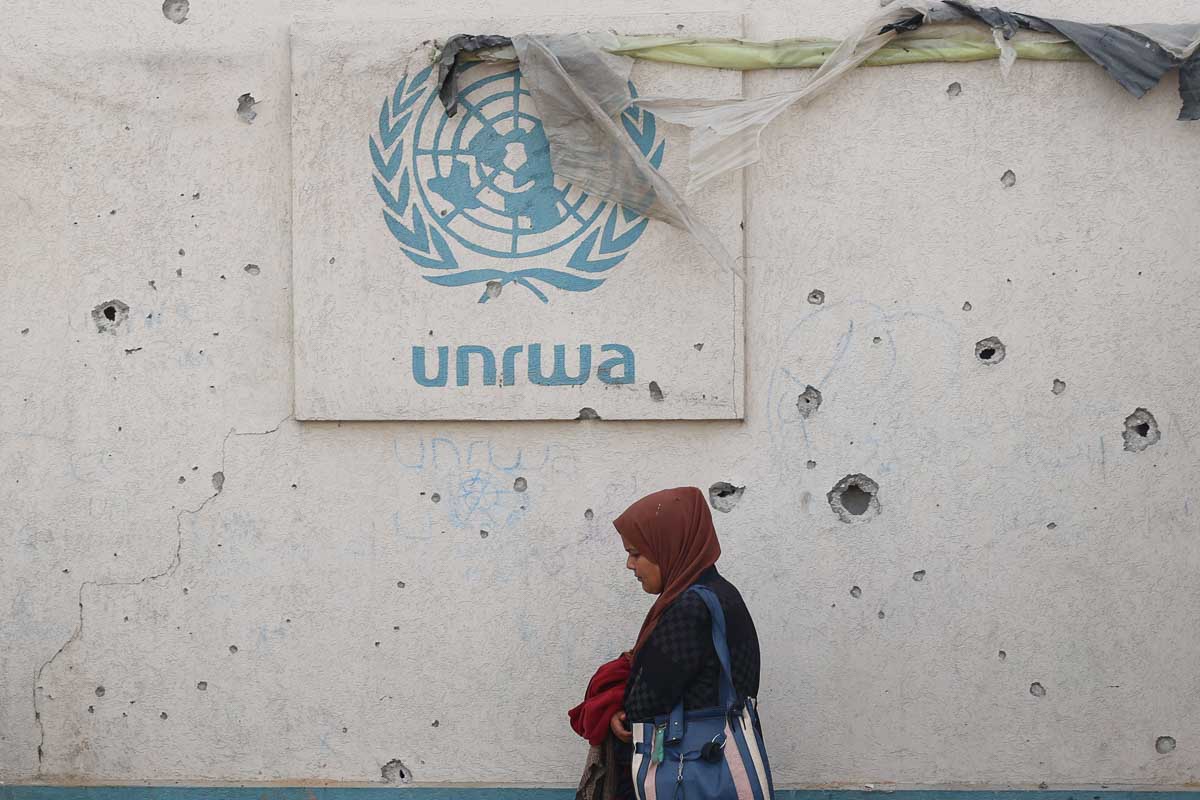
EIn this hard-hitting episode of Parallax Views w/ J.G. Michael, we welcome Chris Gunness, former Director of Communications and Advocacy for the United Nations Relief and Works Agency (UNRWA), to discuss Israel's controversial ban on UNRWA and its far-reaching consequences for both Palestinians and Israelis. With the Knesset's legislation poised to expel UNRWA from Jerusalem and restrict its humanitarian operations, the episode delves into the grave repercussions of this move, including its impact on over 63,000 Palestinian refugees in East Jerusalem and the broader implications for regional stability. Gunness breaks down how this decision not only undermines UNRWA’s vital services, such as education, healthcare, and food aid, but also sets the stage for the de facto annexation of Jerusalem in violation of international law, as highlighted by the International Court of Justice's (ICJ) recent ruling. Tune in for a compelling discussion that unpacks the complex layers of this issue and why it’s not only a humanitarian crisis but also a political and moral one that could harm not only Palestinians but also Israel itself. We will discuss Gaza, the West Bank, and East Jerusalem in the course of this conversation and Chris will answer questions about some of the attacks that have been made on UNRWA in the past year. This is a must-listen episode for those seeking a deeper understanding of the intersection between international law, humanitarian aid, and the ongoing conflict in Israel-Palestine. Don’t miss it!

Ep 1016Our Broken Media System in the Era of Trump & How It Could Be Fixed w/ Victor Pickard
EYou're Listening to Parallax Views https://parallaxviews.podbean.com/ Support the Show on Patreon: https://www.patreon.com/parallaxviews On this edition of Parallax Views, Victor Pickard, C. Edwin Baker Professor of Media Policy and Political Economy at the University of Pennsylvania's Annenberg School for Communication and Co-Director of the Media, Inequality & Change Center at said school, joins the show to discuss America's broken media ecosystem in the age of Donald Trump. Much of this conversation will be based around an article Pickard wrote for Election Analysis immediately after the 2024 Presidential election entitled "Under media oligarchy: Profit and power trumped democracy once again". We will also discuss way that American media could be repaired today, how we can fix the media ecosystem, and the promise of Indymedia models for reviving journalism and reporting in the United States. Some other issues covered throughout the course of our conversation include: public funding of media, the BBC vs. American media, news deserts and the consequences of the decline in local newspapers/outlets, and much, much more.
Ep 1013The Heritage Foundation's Project Esther & Antisemitism + Outlining Fault Lines in American Jewish Political Life w/ Arno Rosenfeld
EYou're Listening to Parallax Views https://parallaxviews.podbean.com/ Support the Show on Patreon: https://www.patreon.com/parallaxviews On this edition of Parallax Views, Arno Rosenfeld, a reporter for one of America's most prominent Jewish publications, The Forward, joins the show to discuss his reporting on the right-wing, conservative think tank The Heritage's Foundation's Project Esther. Laid out as a plan to combat antisemitism, some have noticed the Project Esther seems to promote a conspiracy theory around the causes of antisemitism that is itself pulling from antisemitic conspiracy tropes. According to Project Esther, pro-Palestinian activism and antisemitism is the result of a "Hamas Support Network". In a PowerPoint presentation Project Esther point towards Jewish figures like billionaire George Soros and Illinois Governor JB Pritzker as the "masterminds" of cabal fueling antisemitism today. Beyond the conspiratorial nature of this claim and the fact that it's arguably promoting an antisemitic conspiracy theory itself, Rosenfeld has reported on how the Heritage Foundation's approach to combatting antisemitism differs from that of Jewish institutions and discusses how American Jewish institutions have been wary to endorse the Heritage Foundation project. These are Rosenfeld's reports on Project Esther: "Project Esther docs describe conspiracy of Jewish ‘masterminds’" "Scoop: Heritage Foundation plans to ‘identify and target’ Wikipedia editors – The Forward" We will discuss the second article mentioned above and the concerns that the Heritage Foundation's plans of targeting Wikipedia editors has raised. Additionally, Arno and I will delve into the fault lines that exist in American Jewish political life today. This will make up the second half of our conversation and delves into the differences between legacy American Jewish institutions (what Jewish journalists like Rosenfeld and JTA's Ron Kampeas have called the American Jewish Establishment) and American Jews as a whole. This leads to a discussion of how American Jews are not a monolith. We will also discuss the impact of newer, counter-institutions like J Street on American Jewish political life, divisions in the American Jewish community over how to fight antisemitism, and much, much more.

Ep 1015Declassified Memo Shakes Up Conventional Understanding of Rosenberg Spying Case w/ Michael Meeropol
EYou're Listening to Parallax Views https://parallaxviews.podbean.com/ Support the Show on Patreon: https://www.patreon.com/parallaxviews On this edition of Parallax Views, is a recently declassified NSA memo the smoking gun document that proves Ethel Rosenberg was wrongfully convicted and executed for the charge of being a Soviet spy? That's the contention of her sons Michael and Robert Meeropol. Michael Meeropol joins the program to take us through exactly what this declassified memo says and what it means for the conventional understanding of the Julius and Ethel Rosenberg espionage case. For those unfamiliar, on June 19th, 1953, during the era of Joe McCarthy and the Red Scare, Julius and Ethel Rosenberg were executed by electric chair at New York's Sing Sing Prison after being convicted of spying on behalf of the Soviet Union. They became the first Americans executed on espionage charges during a peacetime period in the United States. Since then, the Rosenberg's sons, the aforementioned Michael and Robert Meeropol, have sought to find out the truth about their parents and whether they were wrongfully convicted and executed. In the intervening years the question of Julius Rosenberg's guilt has been answered. Simply put, he did engage in espionage for the Soviet Union. The case of Ethel Rosenberg, however, has not been so clear cut. Now, the previously mentioned NSA memo that was recently declassified appears to be powerful evidence in favor of her innocence. In addition to discussing what is in this memo, Michael and I will also discuss his experiences growing up under the long shadow of his parents' espionage charges, the collaboration between liberals and right-wing anti-communists during the Red Scare, Michael's review of a biography about Judge Irving R. Kaufman (the judge who sentenced the Rosenbergs), and much, much more.
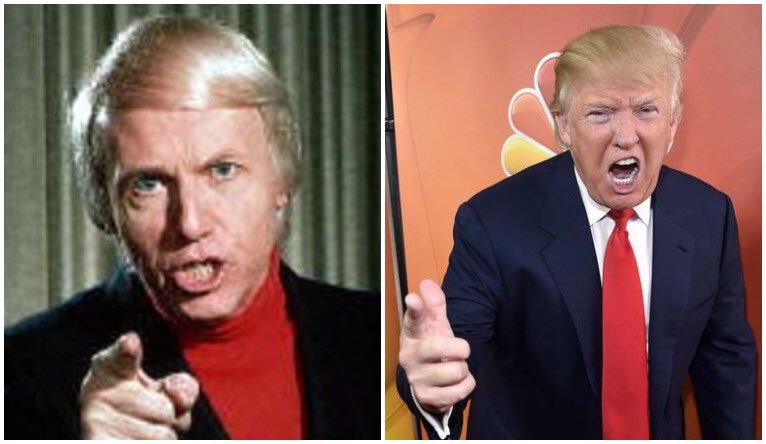
Ep 1012Combat TV Pioneer Wally George, the Vulgarian Showbiz of GOP Politics, QAnon & the Satanic Panic, & the Age of Trump w/ Nikolas Schreck
EYou're Listening to Parallax Views https://parallaxviews.podbean.com/ Support the Show on Patreon: https://www.patreon.com/parallaxviews On this edition of Parallax Views, Nikolas Schreck of the controversial cult deathrock/experimental band Radio Werewolf returns to discuss Wally George. For those unfamiliar, Wally George was the host of The Hot Seat, a popular talk show that aired in Southern California in the 80s into the 90s and even the 2000s before his passing. Dubbed the "Father of Combat TV", George provided a carnival-esque show which revolved around his shouting matches with various guests. On-air he presented himself as a conservative firebrand, complete with a John Wayne photo on his desk and an enlarged picture of a Space Shuttle blasting off behind him with the word "USA #1" written beneath. He'd bring on guests he deemed "sickos" and "freakos" including Satanists, marijuana legalization proponents, and, of course, liberals. In other words, Wally George pioneered the "Own the Libs" schtick/gimmick of Bill O'Reilly, Glenn Beck, and figures today like Ben Shapiro as well as being a precursor to the combative-and-chaotic talk show trash TV format of shows programs like the Jerry Springer Show. In recent years, there's been comparisons made between Wally George and President-elect Donald Trump, with most pointing out how both used a vulgar, combative style to appeal to their audiences. In fact, in 2016 Talking Points Memo referred to Wally George as the "Archeo-Trump". Nikolas Schreck, who was a practicing occultist whose band Radio Werewolf courted controversy, was a perfect fit for Wally George's The Hot Seat and he became a multi-time guest on the program. As such, Nikolas will be able to share his insight into Wally George and his audience. Some of those insights reveal George to be a consumate entertainer with a great deal of talent in terms of being able to provide a circus-like spectacle to his audience. However, Nikolas also notes a dark side to the kind of politics-as-entertainment Wally George brought to the table. In addition to Wally George and the parallels between Wally George and Donald Trump, Nikolas and I will also discuss the Satanic Panic and his analysis of how it connects to QAnon. As someone who was in the thick of the Satanic Panic, Nikolas has a great deal to say on this subject and will detail how he and his former wife have been targetted by QAnon. We will also discuss his analysis of Trump and MAGA, the vulgarian showbiz of GOP politics, the broken American male and the misogyny of right-wing influencers like Andrew Tate, the degeneration of American political discourse, why Schreck views Trump more as a Boss Tweed figure than a fascist, and much, much more.
Ep 1011REPLAY: Nina Burleigh on Trump 2.0, the GOP's American Freakshow, & Her Novel Zero Visibility Possible
ENEW EPISODES OF PARALLAX VIEWS WILL RESUME NEXT WEEK WITH THE FIRST POST-HOLIDAY/NEW YEAR'S SHOWS! IN THE MEAN TIME ENJOY THIS RECENT EPISODE! You're Listening to Parallax Views https://parallaxviews.podbean.com/ Support the Show on Patreon: https://www.patreon.com/parallaxviews Recording Date: 11-25-24 On this edition of Parallax Views, author and investigative journalist Nina Burleigh returns to discuss a potpourri of topics related to upcoming 2nd Trump Presidency after the 2024 election defeat of Kamala Harris. Nina is currently a contributing editor and writer at The New Republic and has authored such books as Virus: Vaccinations, the CDC, and the Hijacking of America's Response to the Pandemic, Golden Handcuffs: The Secret History of Trump's Women, and, most recently, her first novel, Zero Visibility Possible. The conversation initially came about due to Nina's New Republic piece, "Trump 2.0: Here Comes the Night". We'll discuss what she expects out of Trump's second Presidency as well as some recent pieces from her Substack blog American Freakshow, which chronicles the carnival-esque grotesquerie and excess of the 21st century GOP. Additionally, Nina will preview her new novel, the aforementioned Zero Visibility Possible, which deals with the madness of America in an age of fake news, mass violence, disinformation, and the breakdown of consensus reality. In terms of Nina's American Freakshow blog we'll discuss her articles "Predators’ Ball", about the creeps who Trump have surrounded himself around (with a particular focus in this conversation on Trump's Defense Secretary pick Pete Hegseth), and "God and Guns in Pennsylvania", in which Nina goes over her experiences attending a Pennsylvania MAGA rally. Interestingly, said rally has ties to Rev. Sun Myung Moon and the Moonies and one of its key speakers was Sebastian Gorka, who is set to play a role in the Trump administration as counter-terrorism chief. In this regard we'll delve into the Moonie off-shot group AR-15 and look at Sebastian Gorka penchant for wearing symbols related to Hungarian fascism. All that and more on this edition of Parallax Views!
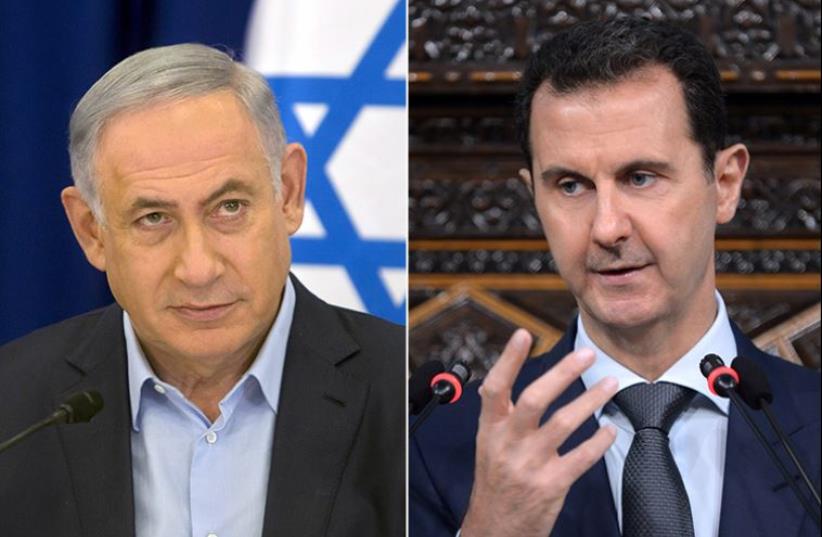
Ep 1007Leaked Documents Indicate Secret Dealings Between Assad & Israel w/ Patrick Hilsman
You're Listening to Parallax Views https://parallaxviews.podbean.com/ Support the Show on Patreon: https://www.patreon.com/parallaxviews Recorded: 12-18-24 On this edition of Parallax Views, journalist Patrick Hilsman, an editor at Turning Point Magazine, joins the show to discuss recent reports of leaked documents discovered after the overthrow of Assad in Syria that seem to reveal collaboration between the Assad regime and Israel. Although the documents have not been verified, the way the are written indicate they are either authentic or a carefully-crafted, elaborate hoax. Hilsman argues that if they are fake, and that is possible, they were written by someone incredibly well-researched. Hilsman will go into why there's some plausibility to the documents and how they relate to his reporting on the use of Israeli drones by Russia in, paradoxically, Syria itself. We'll go deep into the Israel-Russia relationship and how they have worked with each other over the years, especially in regard to weapons. In this regard Patrick recommends the book The Palestine Laboratory: How Israel Exports the Technology of Occupation Around the World. We'll also cover some odds and ends in both the Israel-Russia connections and how the relate to the leaked documents regarding Syria and Israel. Specifically, Patrick mention the Israel-Russia deconfliction line in relation to this story. The documents indicate that there were secret dealings between the Assad regime and Israel that were harmful to the Assad regime's ally Iran. Patrick will also discuss his time in Syria reporting on the first battle of Aleppo in 2012 and his experiences there. We'll also delve into the problems with overly conspiratorial ways of thinking when talking about international relations, the oversimplicity of "good guys vs. bad guys" when discussing nation-states and nation-state alliances, Israel's actions in Gaza, and much more. Guest Bio: Patrick Hilsman is a journalist and researcher who has covered the conflicts in Syria and Ukraine. He has been published by The Intercept, The Daily Beast and has had recent film work featured on PBS. He was a researcher for the Al Jazeera Documentary “the search for Assad’s executioners”

Ep 1010The Great New Jersey Drone Invasion! w/ Matthew Petti
You're Listening to Parallax Views https://parallaxviews.podbean.com/ Support the Show on Patreon: https://www.patreon.com/parallaxviews Recorded: 12-18-24 On this edition of Parallax Views, a separate portion of the recent conversation between J.G. and Reason Magazine's Matthew Petti is presented. In the course of their most recent conversation, J.G. and Petti ended up talking about the recent flap of mysterious drone sightings that have occurred in New Jersey and seemingly spread to other states like Pennsylvania. These drone sighting and the sensationalistic response to them are akin to the UFO sightings of old, conjuring up a slew of conspiracy theories and, arguably, mass panic. Chief among those conspiracy theories is that the Islamic Republic of Iran is behind the drones. From Matthew's recent Reason Magazine piece entitled "No, an Iranian ‘mothership’ isn't attacking New Jersey with UFOs": Something weird is going on in New Jersey, and it's not just the swamp gas. Residents across the state have been calling in nighttime sightings of unidentified flying objects for the past month, including over military bases and President-elect Donald Trump's golf course. Neither local police nor the feds can explain what is going on—but Rep. Jeff Van Drew (R–N.J.) believes he has the answer. "Iran launched a mothership, probably about a month ago, that contains these drones. It's off the east coast of America," the congressman told Fox News on Wednesday, citing "sources who can't reveal who they are." Then he hedged his bets, saying that the "drones should be shot down, whether it was some crazy hobbyist that we can't imagine, or whether it is Iran, and I think it very possibly could be." So, the conspiracy theories have already started. We'll talk about that, but we'll also have a more general discussion about drones, drone hobbyists, the legal issues around shooting down drones, and much more!

Ep 1009Analysis of Syria, Gaza/Palestine, Iran, Israel, Turkey, & More! w/ Matthew Petti
You're Listening to Parallax Views https://parallaxviews.podbean.com/ Support the Show on Patreon: https://www.patreon.com/parallaxviews Recorded: 12-18-24 On this edition of Parallax Views, Reason Magazine's Matthew Petti makes his long-awaited return to Parallax Views to discuss all things currently transpiring in the Middle East. We of course, look at Syria, but this episode also features more talk of Gaza and the continued bombardment of Gaza by Israel than the last few episodes that have dealt more exclusively with Israel/Palestine and Gaza. Matthew will offer his take on how the U.S. should approach the new regime in Syria and we'll delve into his thoughts on Jolani and HTS. Is Jolani truly reformed from his jihadist days? Time will tell, but Petti argues that his and HTS's history should not be whitewashed. We'll also discuss the Islamic Republic of Iran for a good portion of the conversation and the problems it has been facing, not the least of which is its weakening regionally by the overthrow of Assad in Syria. However, Matthew argues that the regime in Iran has been facing other problems as well and questions its adaptability in 2024 and beyond. Turkey will also come up in this conversation and we'll go pretty in-depth on a number of other topics as well. In particular, Matthew will expound on what he sees as the U.S.'s desire to replace the "Axis of Resistance" with an "Axis of Submission" (or Axis of Misery) that demands Arab populations and particularly Palestinians submit to U.S. and Israeli demands regardless of whether they are unfair to said populations. In this regard we'll discuss the Abraham Accords. We'll also discuss the Washington D.C. foreign policy blob and neoconservative triumphalism amongst other matters. At the end of the conversation Matthew will discuss some of his media criticism, specifically his latest Reason piece "CNN presented Syrian jailer Salama Mohammad Salama as a torture survivor".
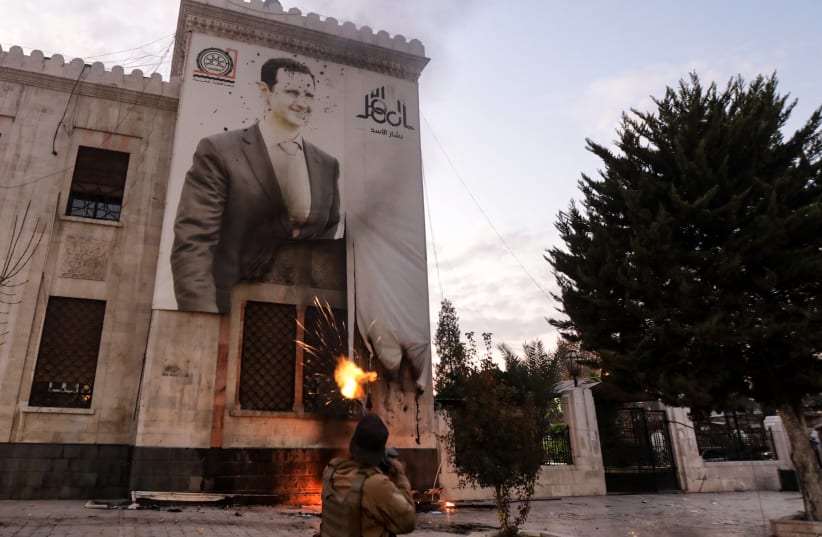
Ep 1008Analysis of the Syria Situaiton & What It Means for the Region's Players w/ George Meneshian
You're Listening to Parallax Views https://parallaxviews.podbean.com/ Support the Show on Patreon: https://www.patreon.com/parallaxviews Recorded: 12-18-24 On this edition of Parallax Views, the coverage and analysis of the situaiton unfolding in Syria continues, this time with George Meneshian, an Athens-based policy analyst specializing in the Caucasus and MENA. Meneshian bring his knowledge of the Caucasus and MENA to the table to explain what the downfal of Bashar al-Assad and his replacement of the Jolani-led HTS means for the regions. Meneshian offers a crash course in what needs to happen now for Syria to be stable, what the U.S. and European role should be in dealing with HTS, concerns about HTS and Jolani's Islamist and jihadist past, Turkey's regional ambitions, what the situation in Syria means for Armenia and Azerbaijan, what the downfall of Assad means for Palestinians, the events that were set in motino by the Hamas October 7th attack of 2023, Israel's actions in post-Assad Syria and occupation of the Golan Heights, Turkey and the Kurdish Question, Iran, and much, much more.

Ep 1006Iran in the Crosshairs + Trump's Neocons w/ James Carden/Syria & the Caucasus w/ Eldar Mamedov
You're Listening to Parallax Views https://parallaxviews.podbean.com/ Support the Show on Patreon: https://www.patreon.com/parallaxviews Recorded: 12-18-24 On this edition of Parallax Views, in the first segment of the show James W. Carden, a contributing editor to The American Conservative and a former adviser to the U.S. State Department, returns to discuss his article "Iran: America’s Next War Of Choice", co-authored with Col. Douglas MacGregor, and "How the Neocons Won the Transition". We'll delve into what the overthrow of Assad means in relation to a weakened Iran. James believes we are closer than ever before to a potential conflict with Iran as Israel's Netanyahu and neoconservative ideologues in Washington D.C. are chomping at the bit for regime change in Iran. We'll also discuss the Israel-Turkey relationship and how that relationship may become more contentious over Syria, however Carden notes that, for the time being Turkey and Iran will cooperate with each other against their shared enemy of Iran. We'll also discuss a key player in Trump's transition team, Howard Lutnick, and how he seems to have his fingers all over Trump's rather neoconservative and foreign policy hawk appointments for the 2nd Trump administration. In the second segment of the show, international relations analyst Eldar Mamedov returns to discuss what the overthrow of Assad means for the Caucasus, with a particular focus on Armenia and Azerbaijan. With Iran's power now weakened in the region, Armenia has a lot to worry about from Azerbaijan, a country that says it wants "peace" with Armenia but only on its' own rather maximalist terms that are not going to be accepted by Armenia. We'll also discuss how the U.S. should respond to the new leadership in Syria, specifically the Islamist HTS led by Jolani, and what must be avoided to prevent instability in Syria. Moreover, Eldar and I will go over what Turkey's ambitions in Syria and the region are under the leadership of Erdogan.
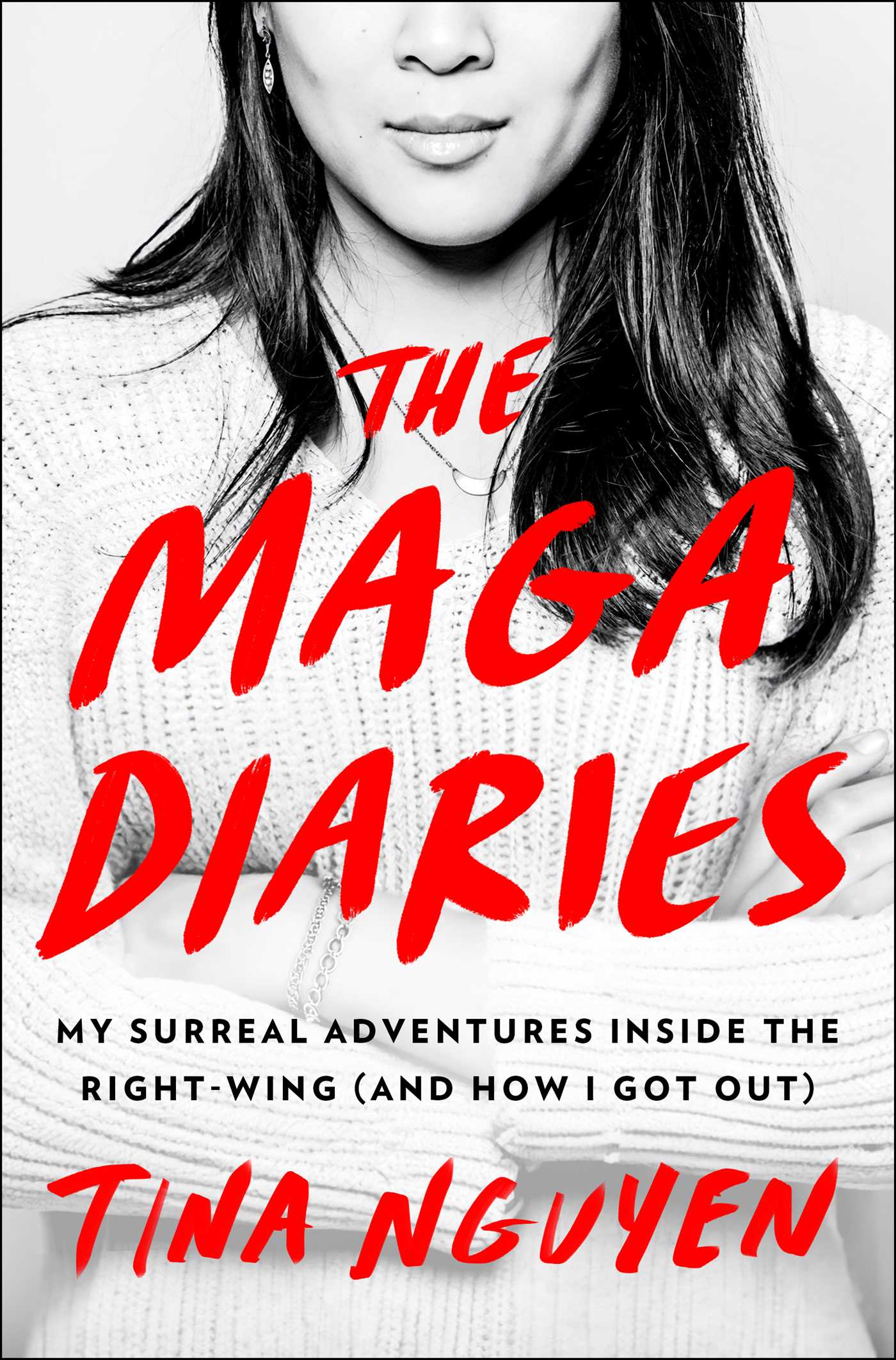
Ep 1005Trump & the America First Policy Institute + the MAGA Media Ecosystem w/ Tina Nguyen
You're Listening to Parallax Views https://parallaxviews.podbean.com/ Support the Show on Patreon: https://www.patreon.com/parallaxviews Recorded: 11-14-24 On this edition of Parallax Views, Tina Nguyen, author of The MAGA Diaries: My Surreal Adventures Inside the Right-Wing (And How I Got Out) and the resident "MAGA Whisperer" at Puck News, joins the show to discuss elements of her book, specifically the MAGA media ecosystem (ie: Tucker Carlson, amongst others), as well as the think tank she believes deserve more attention than Project 2025: the America First Policy Institute. Given that Linda McMahon, a key player at AFPI, is heading up the Trump transition team I reached out to Tina to discuss her thoughts on AFPI and how it fits into Trump's plans for his 2nd term. Tina argues that the Heritage Foundation, which drafted Project 2025, is an older institution than Trumpism with a conservative agenda that has been around for decades prior to Trumpism. AFPI, on the other hand, is a new institution and one that is grounded less in a decades-spanning conservative agenda and more in loyalty or fealty to President-elect Donald J. Trump himself. She says that while Heritage Foundation/Project 2025 figures will have a role in the Trump administration, it will be loyalists from AFPI that will be doing the management of much of the administration on behalf of Trump. All of this analysis is based on Nguyen's own contact with the MAGA world. We discuss all that and much more in the conversation on this edition of Parallax Views!
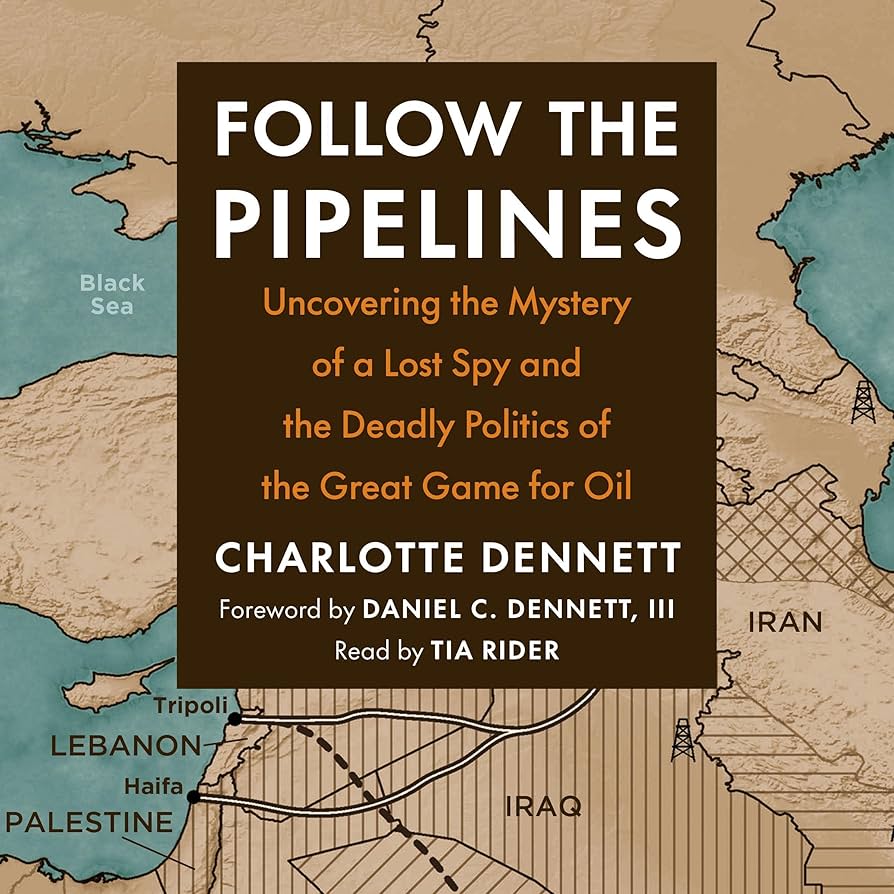
Ep 1004Syria and the Great Game w Charlotte Dennett
You're Listening to Parallax Views https://parallaxviews.podbean.com/ Support the Show on Patreon: https://www.patreon.com/parallaxviews Recorded: 12-11-24 On this edition of Parallax Views, journalsit and lawyer Charlotte Dennet returns to the program to discuss her book Follow the Pipelines: Uncovering the Mystery of a Lost Spy and the Deadly Politics of the Great Game for Oil, which features a forward by her brother, the late American philosopher and cognitive scientist Daniel C. Dennett. Previously, Charlotte, alongside Gerard Colby, co-wrote a book that has been mentioned previously on the program, Thy Will Be Done: The Conquest of the Amazon: Nelson Rockefeller and Evangelism in the Age of Oil. Follow the Pipelines came about as a result of Dennett's search for answers about the death of her father, Daniel Dennett, who was the U.S.'s master spy in the Middle East. Dennett died in a plane crash that remains shrouded in mystery. This led Dennett to uncover the world of what she calls "The Great Game for Oil". We discuss the relationship between war and oil pipelines in this conversation. Although Charlotte and I have discussed Follow the Pipelines before, this conversation will focus more on Syria and the Great Game in light of the overthrow of Syrian dictator Bashar al-Assad. For your benefit, Charlotte has provided maps from her book that will aid in understanding the conversation:
Ep 1003Syria, U.S. Foreign Policy, and the Geopolitical Uncertainties of Our Current Moment w/ Graham E. Fuller
You're Listening to Parallax Views https://parallaxviews.podbean.com/ Support the Show on Patreon: https://www.patreon.com/parallaxviews Recorded: 12-11-24 On this edition of Parallax Views, J.G. reached out to a very interesting political analyst in his continued coverage of the situation in Syria with the fall of Bashar al-Assad and the ascendancy of the Islamist HTS led by Abu Muhammed al-Jolani. Graham E. Fuller specializes in long-range forecasting of geopolitics. In fact, Fuller is a former vice chair of the National Intelligence Council at CIA responsible for long-term forecasting. He also served as a CIA operations officer overseas for two decades, with much of his time being spent in the Middle East. He served as the CIA Station Chief in Kabul and is the author of such books as A World Without Islam (2010) and The Future of Political Islam (2003). He is a noted analyst on Islamist movements and continues to write extensively on issues pertaining to U.S. foreign policy, the Middle East, and geopolitics. Graham joined me for a conversation about Assad's overthrow and what it means for various geopolitical players including the U.S. Russia, Iran, Turkey, and the Gulf states. We ended up having a more broad discussion that led into many different areas including: - Explaining the phenomena that has come to be known as "Political Islam" sans the tabloid clickbait that has unfortunately something attended the non-academic literature on the topic - Graham's critique of John Mearsheimer's Realist school of thought in regards to international relations. Graham believes there is great value in Mearsheimer's analysis, but makes the case that Realism as a school of thought is too often mechanistic and deterministic in how it perceives the course of geopolitical trends - The U.S.'s endless "Search for Enemies" and the consequences that approach to foreign policy creates, in relation to, for example, the U.S.-China relationship - The question of HTS and its leader Abu Muhammed al-Jolani; how will the govern?; HTS's administration of Idlib; how al-Jolani is, in the immediate, approaching the West and Israel - Israel and Turkey's strikes in Syria; Turkey's geopolitical concerns over the Kurds in Syria; the far-right elements that have been unleashed in Israel, especially since the October 7th, 2023 attack and how that effects both Israel and the Middle East more broadly - And much, much more!
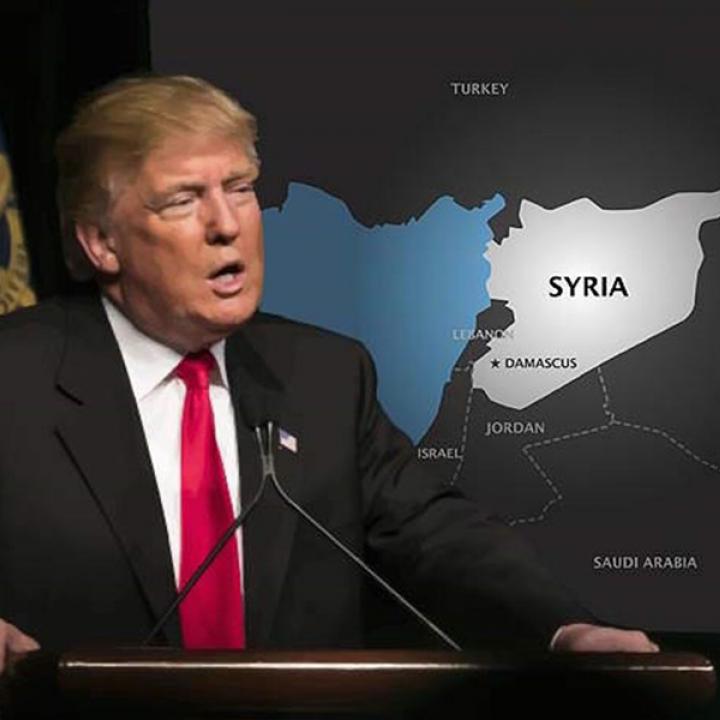
Ep 1002The U.S. Economy, Syria, Ukraine/Russia, Israel, & Europe Amidst Trump 2.0 w/ Amb. Patrick Theros/Syria News w/ Dave DeCamp
You're Listening to Parallax Views https://parallaxviews.podbean.com/ Support the Show on Patreon: https://www.patreon.com/parallaxviews Recorded: 12-11-24 On this edition of Parallax Views, Ambassador (ret.) Patrick Theros returns to discuss the coming 2nd administration of President-elect Donald J. Trump in relation to the U.S. economy, the overthrow of Assad and the situation in Syria, the Russia-Ukraine conflict, Israel/Palestine, and the future of Europe. At the beginning of the conversation Amb. Theros explains what he thinks cost the Democrats the 2024 election. He makes the case that the Democrats failed to appeal what voters were most concerned about and threw too much money at political consultants who weren't able to lead the Democrats to victory. In this regard, Theros criticizes the approach of wonks. He also argues that a number of culture war issues (ie: woke, trans issues, etc.) did not resonate during this election & the Democrats did not do enough to explain to voters why Biden's economic policies were a long-term good. We then moved onto discussing the Trump's stated economic policies, particularly his plans for mass deportations of illegal/undocumented immigrants & tariffs. Theros argues that these two specific policies are at cross-purposes with each other. He also discusses Trump's tax cut plans. From there we move onto international relations and foreign policy. Theros gives his take on the Syria situation (the overthrow of Assad by Syrian rebels) as well as Israel and Turkey, both U.S. allies, could come into conflict over based on what is currently been reported about Israeli strikes there. We will discuss the dynamics influencing both Turkey's Erdogan and Israel's Netanyahu and how this could lead to some real geopolitical tumult in the region. Theros also offer his take on the Russia/Ukraine conflict, and offers what he believes is Trump's plan for ending the conflict and bringing about negotiations. We discuss EU and NATO's eastward expansion and how the approach of EU/NATO eastward expansion played into Putin's hands. However, Theros argues that Putin's amassing of military forces along the border and eventual invasion of Ukraine changed the paradigm. As much as one can criticize how NATO and the EU approached dealing with Russia in the past, Theros argues Russia crossed a line with its actions involving Ukraine in a way that cannot be rationalized by the EU/NATO eastward expansion discourse. This leads us into a conversation about the future of Europe and increased defense spending in Europe. In the course of our conversation Theros will also offer his criticism of populist politicians and express his concerns about the potential of the Trump administration to try and politicize the military. In the second segment of the show, Antiwar.Com newswire reporter Dave DeCamp returns to discuss the latest developments in Syria. As with others who have spoken on the program in the past few days, DeCamp cautions that we are in murky territory with how events will unfold in Syria going forward. We discuss recent reporting on Ukraine's assisting the HTS Syrian Rebels, delve into HTS and its leader Abu Muhammed al-Jolani, the Islamist nature of HTS, the best-case scenario for Syria under HTS rule, the weakening of Iran due to these events, thoughts on Trump's hawkish picks for his administration, and much, much more!
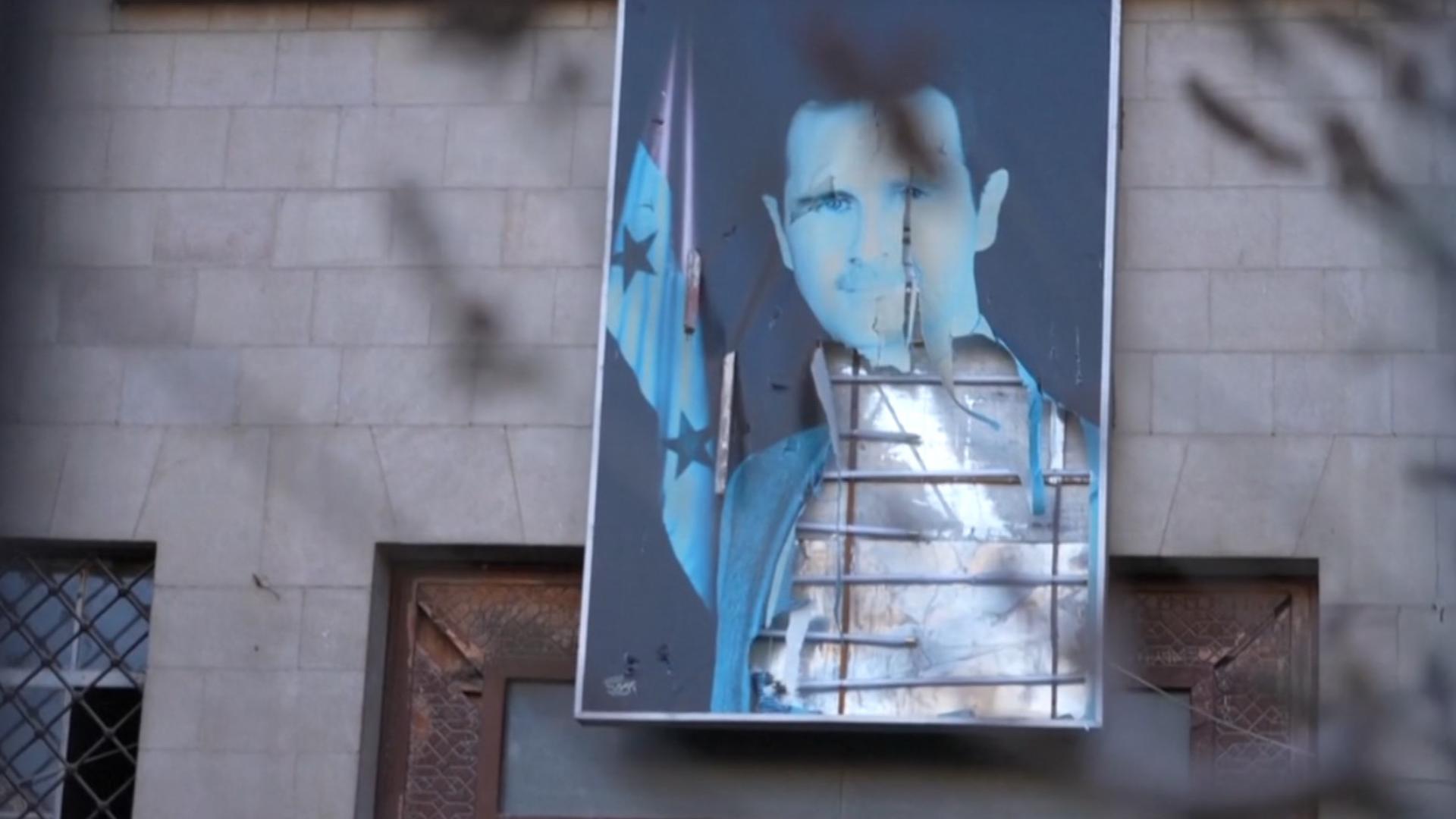
Ep 1001Assad's Fall, Israel's Continued Bombardment of Gaza, and U.S. Foreign Policy w/ Annelle Sheline
You're Listening to Parallax Views https://parallaxviews.podbean.com/ Support the Show on Patreon: https://www.patreon.com/parallaxviews Recorded: 12-10-24 On this edition of Parallax Views, the Quincy Institute's Annelle Sheline returns to discuss overthrow of dictator Bashar al-Assad in Syria, U.S. foreign policy, and Israel's continued bombardment of Gaza. This is the first time Dr. Sheline has been back on the show since resigning from the State Department over the Biden administration's policies on Gaza. We'll discuss this uncertain moment in the Middle East where U.S. policy has gone wrong in the Middle East and beyond, Turkey, the U.S. and Israel's strikes in Syria; the Syrian rebel faction Hay'at Tahrir al-Sham (HTS) that has taken the Syrian capital of Damascus; Assad's dictatorship; U.S. double standards about international law in relation to Israel's action in Gaza; the possibility of continued conflict in Syria despite Assad's overthrow; the Kurds in northeastern Syria; concerns about Trump and Middle East policy under his administration; Iran and discourse around the "Axis of Resistance"; and much, much more.
Ep 1000The Geopolitical Implications of the Assad Regime's Fall in Syria w/ Wahid Azal
You're Listening to Parallax Views https://parallaxviews.podbean.com/ Support the Show on Patreon: https://www.patreon.com/parallaxviews On this edition of Parallax Views, independent scholar and political commentator Wahid Azal, founder of the Fatimiya Sufi Order, returns to discuss the overthrow of the Bashar al-Assad government in Syria by Syrian rebels groups, most notably the HTS led by Abu Muhammad al-Jolani. This conversation deal specifically with the geopolitical implications of Assad's fall & Azal's contention that this marks the beginning of the end for the Islamic Republic of Iran and a death blow to the "Axis of Resistance" (Syria, Hezbollah, Iran). We'll also discuss concerns Azal has pertaining to the Syrian rebels and jihadism as well as looking at the role of Turkey in Syria and the broader Middle East. The Abraham Accords, Israel, Gaza, the Gulf monarchies, NATO and the U.S., Islamism, imperialism, and much more will also be covered in this conversation.

Ep 999"A Profound Shift in the Regional Strategic Order": Syria & Assad's Overthrow w/ Steven Simon
You're Listening to Parallax Views https://parallaxviews.podbean.com/ Support the Show on Patreon: https://www.patreon.com/parallaxviews On this edition of Parallax Views, we continue our coverage of Syria and the toppling of the Assad regime. Time the Quincy Institute's Steven N. Simon, who covered Syria on the NSC for Presidents Clinton and Obama, discusses the winners and losers in lieu of Assad's overthrow. The big winner according to Steven Simon? Israel. And the big losers? Russia and Iran. We'll also discuss the Syrian rebels who were pivotal in the events that have transpired, specifically the Islamist HTS led by Muhammad al-Joulani. Additionally, Steven will give his thoughts on both the Biden administration and President-elect Donald Trump's response to this moment that Steven calls "a profound shift in the regional strategic order" for the Middle East. And, of course, we will be discussing such topics as Israel's deployment of troops in the Golan Heights, Erdogan's Turkey and the situation of the Kurds in northern Syria, and much, much more.
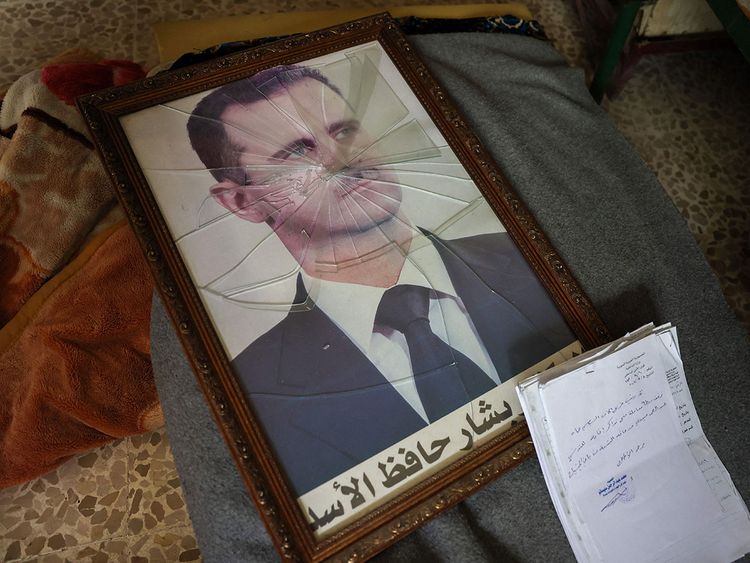
Ep 998Assad Toppled by Syrian Rebels in a Tectonic Shift for the Middle East w/ James Dorsey
You're Listening to Parallax Views https://parallaxviews.podbean.com/ Support the Show on Patreon: https://www.patreon.com/parallaxviews Recording Date: 12-08-24 On this edition of Parallax Views, Bashar al-Assad has fled Syria as the country's rebels have taken over the capital, Damascus. Assad has been President of Syria since 2000. His toppling at the hands of Syrian rebels, most notably Hay'at Tahrir al-Sham led by Abu Mohammed al-Golani, represents a historic moment both for Syria, which has been ravaged by a civil war since March 2011, and the wider Middle East. What does this mean for all the various players in the region such as Iran, Turkey, the U.S., Russia, the Kurds, Islamic State, and, perhaps most importantly, Syria itself? In order to answer some of these questions, journalist, scholar, and frequent Parallax Views guest James M. Dorsey returned to the program to unpack this historic moment. We'll discuss the potential scenarios for Syria's future, the question of HTS and its relationship to ultra-conservative Sunni Islam, jihadism, the winners and losers in this moment of Syria's history, the Syrian Civil War, Obama's record in Syria, U.S. President-elect Trump's comments that the U.S. should not get involved in Syria going forward, and much, much more!

Ep 997Emmanuel Macron & the French Government's Collapse w/ Marlon Ettinger & Olly Haynes
EYou're Listening to Parallax Views https://parallaxviews.podbean.com/ Support the Show on Patreon: https://www.patreon.com/parallaxviews Recording Date: 12-07-24 On this edition of Parallax Views, the past week on Wednesday the French government effectively collapsed when a no-confidence vote at the National Assembly toppled Prime Minister Michael Barnier. Not since 1962 has a moment of akin to this one happened in the French political scene. Joining J.G. to unpack it all are journalist and friend of the show Marlon Ettinger as well as Olly Haynes, who alongside Marlon co-hosts the FLAP24 (French Legislative Assembly Podcast 2024; formerly FLEP24). We'll discuss a number of issues related to this historic moment including France's President Emmanuel Macron blaming a "coalition of the irresponsible" for the no-confidence vote (in other words, blaming the far-right and far-left), Barnier's austerity budget, the authoritarian streak and "Jupiterian" ethos of Macron, Marine Le Pen and the National Rally (formerly the National Front), the French left leader Jean-Luc Mélenchon, the failures of Emmanuel Macron, challenging the narrative of Macron as a centrist liberal, and much, much more. Will also discuss Marlon's recent op-ed in the New York Times entitled "Marine Le Pen Is Holding France Hostage".
Ep 996Nina Burleigh on Trump 2.0, the GOP's American Freakshow, & Her Novel Zero Visibility Possible
You're Listening to Parallax Views https://parallaxviews.podbean.com/ Support the Show on Patreon: https://www.patreon.com/parallaxviews Recording Date: 11-25-24 On this edition of Parallax Views, author and investigative journalist Nina Burleigh returns to discuss a potpourri of topics related to upcoming 2nd Trump Presidency after the 2024 election defeat of Kamala Harris. Nina is currently a contributing editor and writer at The New Republic and has authored such books as Virus: Vaccinations, the CDC, and the Hijacking of America's Response to the Pandemic, Golden Handcuffs: The Secret History of Trump's Women, and, most recently, her first novel, Zero Visibility Possible. The conversation initially came about due to Nina's New Republic piece, "Trump 2.0: Here Comes the Night". We'll discuss what she expects out of Trump's second Presidency as well as some recent pieces from her Substack blog American Freakshow, which chronicles the carnival-esque grotesquerie and excess of the 21st century GOP. Additionally, Nina will preview her new novel, the aforementioned Zero Visibility Possible, which deals with the madness of America in an age of fake news, mass violence, disinformation, and the breakdown of consensus reality. In terms of Nina's American Freakshow blog we'll discuss her articles "Predators’ Ball", about the creeps who Trump have surrounded himself around (with a particular focus in this conversation on Trump's Defense Secretary pick Pete Hegseth), and "God and Guns in Pennsylvania", in which Nina goes over her experiences attending a Pennsylvania MAGA rally. Interestingly, said rally has ties to Rev. Sun Myung Moon and the Moonies and one of its key speakers was Sebastian Gorka, who is set to play a role in the Trump administration as counter-terrorism chief. In this regard we'll delve into the Moonie off-shot group AR-15 and look at Sebastian Gorka penchant for wearing symbols related to Hungarian fascism. All that and more on this edition of Parallax Views!

Ep 995US House Passes Act That Jeopardizes Free Speech w/ Chip Gibbons/U.S. Foreign Policy and Europe w/ Anataol Lieven
You're Listening to Parallax Views https://parallaxviews.podbean.com/ Support the Show on Patreon: https://www.patreon.com/parallaxviews Chip Gibbons Interview Recorded 11/25; Anatol Lieven Interview Recorded 11/26 On this edition of Parallax Views, in the first half of the program, Chip Gibbons, Policy Director of Defending Rights and Dissent, joins the program to discuss H.R. 9495 or the Stop Terror-Financing and Tax Penalties on American Hostages Act and its passage in the Congress' U.S. House of Representatives. The bill has been criticized on the grounds that it will trample on free speech, specifically in regard to pro-Palestinian protests. According to Defending Rights and Dissent, "This bill allows the Secretary of the Treasury to unilaterally strip tax-exempt status from nonprofits deemed 'terrorist supporting' without meaningful due process." Find out more about the bill and why Defending Rights and Dissent argues the bill is neo-McCarthyite in this segment of the program and the press release below: "Defending Rights & Dissent Condemns Passage of H.R. 9495 - Defending Rights & Dissent" In the second portion of the program, Anatol Lieven of the Quincy Institute for Responsible Statecraft returns to discuss U.S. foreign policy and the future of Europe, with a particular focus on the Russia-Ukraine conflict. With a second Trump Presidency now inevitable, it seems increasingly likely that negotiations between Russia and Ukraine will happen sooner rather than later, especially if Trump decides that the U.S. will not continue arming Ukraine. What would these negotiations look like? Will parts of Ukraine be annexed? Will the two countries' maximalist demands be whittled down during negotiations? What is the future of Europe and should Europe re-arm? All of these questions, as well as the issue of climate change as a national security threat will be covered. Additionally, Anatol and I will delve into the scare concerning Russia ICBMs from last week and what it says about the conflict and where it is at right now. EDIT: In the interlude before the Lieven interview I mention annexation of Gaza and the West Bank. I'm not arguing an official annexation has happened, although many would argue that de facto annexation has been happening. There are elements of Israel openly calling for annexation.
Ep 994A Scandalous ODNI Snafu Reveals Gov't Abuse of FOIA Exemptions + Trump, Civil Liberties, & Mass Deportation Plans Past & Present w/ Patrick Eddington
You're Listening to Parallax Views https://parallaxviews.podbean.com/ Support the Show on Patreon: https://www.patreon.com/parallaxviews On this edition of Parallax Views, former CIA analyst and Cato Institute fellow Patrick G. Eddington, who specializes in issues related to homeland security and civil liberties, returns to the program to discuss a scandalous snafu on the part of the Office of National Intelligence in relation to questions of PRC espionage (specifically the issue of whether or not the PRC has made recruiting Chinese Americans for spying activities) that illustrates a massive government abuse of Freedom of Information Act Exemptions. The whole story was detailed in Patrick's Antiwar.Com article "PRC Espionage: Are Chinese Americans Their Top Recruitment Targets?". In the second part of our conversation we delve into what a second Trump term will potentially mean for civil liberties in the United States and have a in-depth discussion about Trump's mass deportations plans for undocumented migrant/illegal immigrants. Back in August, Patrick wrote a piece for The Bulwark entitled "Trump Could Do a Mass Deportation. We’ve Done It Before.". We delve into the history of mass deportation plans than have been done in the past with a focus on Eisenhower as well as the crackdowns on German Americans during World War I. We'll also mention issues related to the internment camps of WWII and how they not only targeted Japanese American, but also German- and Italian Americans. Patrick will help us delve into the Alien Enemy Act which has been cited by Trump and his advisers already. Additionally, Patrick will comment on Kentucky Senator Rand Paul's criticisms of Trump wanting to use the U.S. military for mass deportations. Also discussed in the course of this conversation is neo-McCarthyism and the China Initiative of the first Trump Presidency, threats to civil liberties in a second Trump term, the expansion of Presidential/Executive Branch powers over the years and its consequences, the January 6th insurrection/riots, and much, much more.
Ep 993A British Perspective on the 2024 Election w/ Ralph Leonard
You're Listening to Parallax Views https://parallaxviews.podbean.com/ Support the Show on Patreon: https://www.patreon.com/parallaxviews On this edition of Parallax Views (recorded 11-11-24), self-described conservative Marxist Ralph Leonard joins the show to discuss the 2024 U.S. Presidential election and his article "Old-school Leftism is going extinct in the Democratic Party" about the passing of the Bernie Sanders moment and why he believes Alexandria Ocasio-Cortez and the Squad won't generate the same energy as Sanders' did in 2016 or 2020. Much of the conversation will focus in on how President-elect Donald Trump managed to obtain the votes of a multiracial coalition that included black and latino men as well as white men and women. We'll delve into the nationalism underpinning Trump's coalition and how it is not explicitly ethno-nationalism but rather civic nationalist in a way that made a multiracial coalition possible for MAGA. We'll discuss the discourse Trump crafted around the border and Trump's anti-immigrant rhetoric. Leonard also notes how horrible he finds Trump's deportation rhetoric but delves into why many voters opted for it. We'll also discuss the 2024 as the first "post-woke" election for the Democratic Party. That is to say that Kamala Harris did not run on a "woke" platform and actually ran away from it. We'll also discuss foreign policy, Israel/Palestine, Trump as a carny barker, the "Is Trump a Fascist?" debate, JD Vance, and more. Additionally, we will delve into Ralph's views on Marx and Marxism, what people don't understand about Marxism, Marxism as an emancipatory project, and how both the Democratic and Republican Parties in the U.S. are creatures of the ruling class (or capital) rather than the working classes. All that and much more.
Ep 990Trump, U.S. Foreign Policy, & Middle East Chaos w/ Jon Hoffman + What Realism & Restraint Conservatives Want Out of Trump's Foreign Policy w/ Curt Mills
You're Listening to Parallax Views https://parallaxviews.podbean.com/ Support the Show on Patreon: https://www.patreon.com/parallaxviews On this edition of Parallax Views it's a double feature delving into the question of Donald Trump and U.S. foreign policy as we head into the 2nd Trump Presidency. In the first segment, the Cato Institute's Jon Hoffman return to discuss his Responsible Statecraft article "Trump now faces 'out of control' conflict in the Middle East". We'll delve into the problems that Hoffman argues at the heart of the bipartisan consensus in U.S. foreign policy and why a change of direction is needed, especially in regard to Israel/Palestine. We'll discuss Israel's wars in Gaza and Lebanon, Hezbollah continued stiff resistance to Israel despite the assassination of its leader Hassan Nasrallah, the return of Hamas in areas of Gaza that Israel has claimed to have cleared of its influence, Israel's stated objective of total elimination of Hamas and why some argue this objective is not achievable, the situation in the West Bank, the need for a new political equilibrium to solve the Israel-Palestine conflict and achieve peace, Iran and Israel's tit-for-tat exchanges with each other and the possibility of further dangerous escalation, the relationship between Iran and Saudi Arabia and what it may mean for the second Trump administration's foreign policy agenda, Trump's hawkish nominations (Mike Waltz, Pete Hegseth, etc.), reckless in both Israel and the U.S.'s policies in the Middle East, the Biden administration's approach to Israel and Gaza, the crisis of humanitarian aid being in relation to Gaza, U.S. arms to Israel, J.D. Vance's comments that American and Israeli interests do not always align (especially in relation to Iran), the role of policy inertia in how the U.S. approaches the Middle East, Jon's argument for U.S. disentanglement and de-prioritization of the Middle East, and more! In the second segment of the show (starts around 36:16), Curt Mills, executive director of The American Conservative, joins the show to discuss what realism and restraint minded conservatives want out of the 2nd Trump administration's foreign policy agenda. In the beginning of the conversation will discuss the trajectory of U.S. foreign policy and how the realist viewpoint fell out of favor after the Cold War. In particular Curt will talk about the period of the Reagan years to the neoconservatives of the George W. Bush administration. We'll also discuss what realism & restraint in U.S. foreign policy thought entails and how the realist and restraint movement is a broad tent that's encompasses elements from both the right and the left. Then Curt talks about "mixed bag" of Trump's nominations for his cabinet if you come from a realist and restraint viewpoint. He'll also talk about how there's been a shift, at least in tone, towards realism and restraint in Trumpian circles since the President-elect's first term in office and go over how realism and restraint conservatives are feeling about Trump's cabinet nominations thus far like Mike Waltz, Marco Rubio, Pete Hegseth, Pete Hegseth, Tulsi Gabbard, and Matt Gaetz. Curt speaks about how, in his view, Hegseth could represent a break from business-as-usual in the Pentagon despite his hawkish views. He also discusses what realist and restraint proponents hope for with regards to U.S. involvement in Ukraine/Russia and Israel/Palestine in the second Trump administration. We'll then delve into the idea of Trump as the heir to Richard Nixon and discuss the "madman theory" of U.S. foreign policy (and Curt will provide some International Relations 101 in the process that illustrates the differences between liberal internationalists and realists). How realist and restraint conservatives have differences in how they view how the U.S. should deal with Ukraine/Russia vs. how the U.S. should deal with either Israel/Palestine, Iran, China. All that and much more in a conversation that will hopefully illustrate what a good portion of "America First" and MAGA conservatives want out of Trump's foreign policy.
Ep 989The Failure of Centrist Democrats, Trump's Shock-&-Awe Strategy, Mafia Governance, & the Mirage of MAGA's Antiwar Posture w/ Jeet Heer
You're Listening to Parallax Views https://parallaxviews.podbean.com/ Support the Show on Patreon: https://www.patreon.com/parallaxviews On this edition of Parallax Views w/ J.G. Michae, journalist and political commentator Jeet Heer of The Nation returns for a deep dive into the 2024 U.S. presidential election, the failings of centrist Democrats, and the implications of a potential second Trump administration. Key topics discussed include: Bernie Sanders' Warning: Jeet Heer echoes Bernie Sanders’ critique that Democrats have abandoned the working-class vote. The conversation explores how the party’s failure to promote antitrust actions, like those spearheaded by Lina Khan, and Kamala Harris’s outreach to billionaires such as Mark Cuban, have alienated voters. Trump’s Anti-System Appeal: Heer analyzes Donald Trump’s resonance with anti-system politics in contrast to Democrats’ status-quo messaging, which he argues doomed Harris's campaign. We also discuss the Harris campaign going after the votes of moderate Republicans and cozying up to Liz Cheney (and getting an endorsement from Dick Cheney). Shock-and-Awe Nominations: The discussion examines Trump’s picks for key positions—Matt Gaetz as Attorney General, Tulsi Gabbard as DNI, Pete Hegseth as Secretary of Defense, and RFK Jr. at HHS—and their potential to destabilize the political landscape. Jeet also gives his view on the strategy undergirding Trump's picks Mafia Governance and NATO: Jeet predicts that a second Trump term would involve a governance style favoring loyalists, with significant repercussions for NATO and European allies. Freedom of Speech Under Siege: Heer warns that free speech could be the first casualty of a second Trump term, with centrists potentially supporting crackdowns on pro-Palestinian protesters. The MAGA Antiwar Mirage: Trump’s antiwar rhetoric is dissected as a façade, with Heer pointing out hawkish tendencies toward Mexico and Ukraine within MAGA ranks. The episode opens with a reflection on Antonio Gramsci’s famous quote about living in "a time of monsters," setting the tone for a discussion on the political chaos of the present moment. Jeet also provides a historical perspective, linking Trumpism to the conspiratorial tendencies of the 20th-century Old Right and groups like the John Birch Society. This thought-provoking conversation unpacks the stakes of 2024, from systemic political failures to the looming threats of authoritarianism and international instability under a second Trump administration.