
Palaeo After Dark
358 episodes — Page 6 of 8

Podcast 104 - Organisms Affect The Global Climate; The Great Oxidation Event
EThe gang steps out of their comfort zone to discuss the changes in the ancient atmosphere that resulted in the Great Oxidation Event. Meanwhile, Amanda demonstrates a careless disregard for hands, James gets creative with spelling, and Curt aims for comedic mediocrity. Up-Goer 5 Summary (Amanda Edition): Today the group talks about tiny things that make air that we can breathe. Long, long ago there were many tiny things that made air that we could not breathe. Less long ago there came along some little tiny things that made air that we can breathe. This air that we can breathe made almost all of the other little tiny things die because they could not breathe it. The group talks about these little tiny things that made both good air and bad air and how they made different kinds of rocks and used different kinds of rocks and air to live. References: Lyons, Timothy W., Christopher T. Reinhard, and Noah J. Planavsky. "The rise of oxygen in Earth/'s early ocean and atmosphere." Nature 506.7488 (2014): 307-315. Lalonde, Stefan V., and Kurt O. Konhauser. "Benthic perspective on Earth's oldest evidence for oxygenic photosynthesis." Proceedings of the National Academy of Sciences 112.4 (2015): 995-1000. Konhauser, Kurt O., et al. "Could bacteria have formed the Precambrian banded iron formations?." Geology 30.12 (2002): 1079-1082. Johnson, Jena E., et al. "Manganese-oxidizing photosynthesis before the rise of cyanobacteria." Proceedings of the National Academy of Sciences 110.28 (2013): 11238-11243. Czaja, Andrew D., Nicolas J. Beukes, and Jeffrey T. Osterhout. "Sulfur-oxidizing bacteria prior to the Great Oxidation Event from the 2.52 Ga Gamohaan Formation of South Africa." Geology 44.12 (2016): 983-986.

Podcast 103 - History Repeats; In Which the Gang Fails to Learn From Previous Attempts At Talking About Odd Cambrian Animals
EThe gang discusses how exceptional fossil preservation can change our understanding of ancient life, focusing specifically on two new studies that offer insight into trilobite reproduction and hyolith evolution respectively. And when faced with the challenge of describing the indescribable weirdness of hyoliths, the gang falls back on their old mainstay of saying "It's weird" and derailing the conversation every five minutes. But hey, there's a 20 minute conversation about science outreach in the middle there that comes out of nowhere that's not terrible.... so that's something... We're very... very... sorry. References: Hegna, Thomas A., Markus J. Martin, and Simon AF Darroch. "Pyritized in situ trilobite eggs from the Ordovician of New York (Lorraine Group): Implications for trilobite reproductive biology." Geology (2017): G38773-1. Moysiuk, Joseph, Martin R. Smith, and Jean-Bernard Caron. "Hyoliths are Palaeozoic lophophorates." Nature (2017).

Podcast 102 - The Feather That Broke The Podcast's Back
ECurt thought that a simple podcast about preserving color patterns in feathers would be fun. Little did he know, this decision would end up pushing the group's friendships to the limit. Will the podcast survive? Will there be an episode 103? Find out in two weeks. Midi music from freemidi.org "Hyperfun" Kevin MacLeod (incompetech.com) Licensed under Creative Commons: By Attribution 3.0 http://creativecommons.org/licenses/by/3.0/ References: Gren, Johan A., et al. "Molecular and microstructural inventory of an isolated fossil bird feather from the Eocene Fur Formation of Denmark." Palaeontology 60.1 (2017): 73-90. Peteya, Jennifer A., et al. "The plumage and colouration of an enantiornithine bird from the early cretaceous of china." Palaeontology 60.1 (2017): 55-71.
Podcast 101 - Sucky Whales
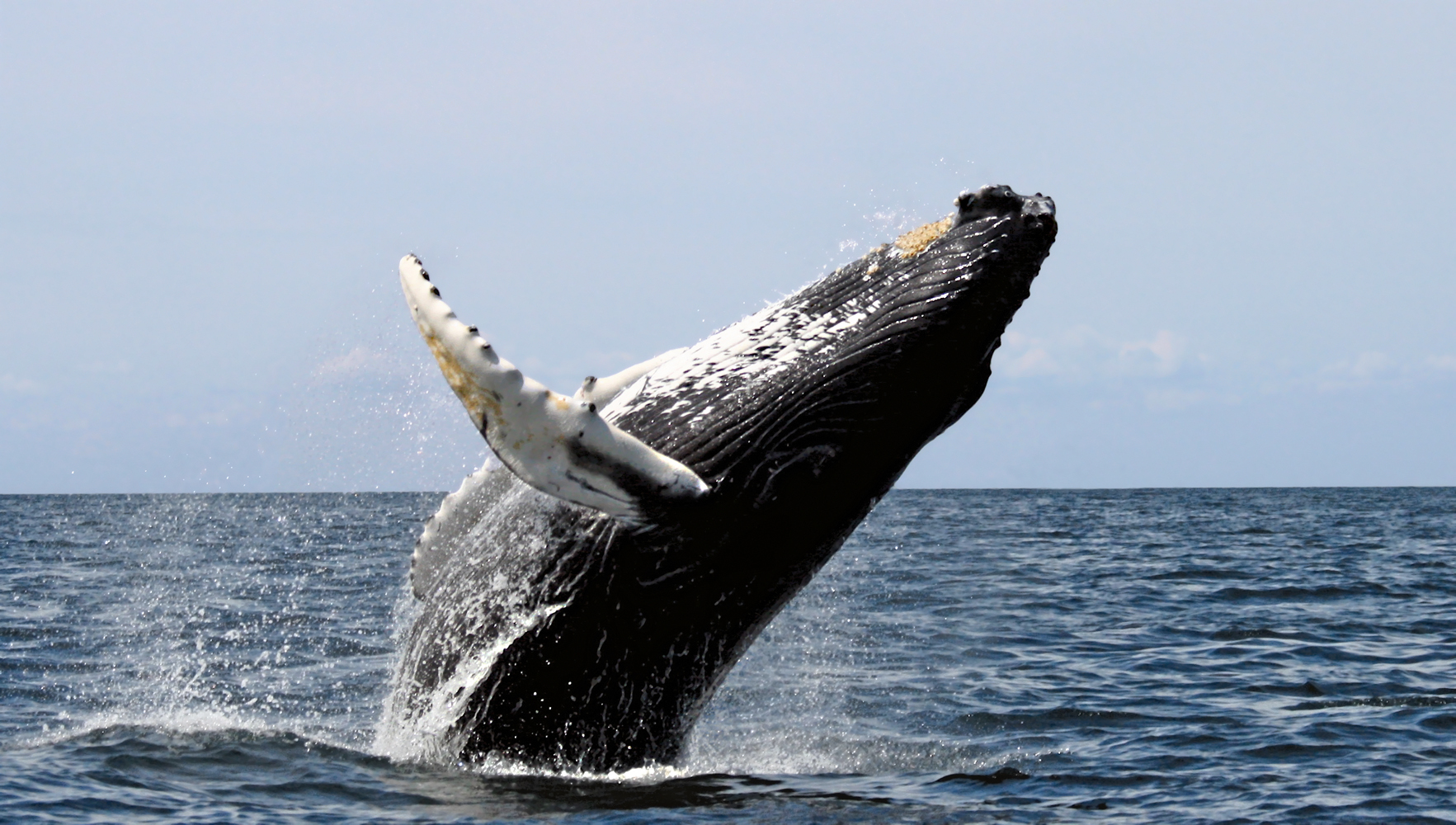
EWe celebrate the New Year by having a discussion about the evolution of feeding strategies, in particular sucking whales. Also, Amanda is a bad "parent", James spreads new Elk related lies, and Curt is happy he's at least being remembered. References: Vullo, Romain, Ronan Allain, and Lionel Cavin. "Convergent evolution of jaws between spinosaurid dinosaurs and pike conger eels." Acta Palaeontologica Polonica 61.4 (2016): 825-828. Marx, Felix G., David P. Hocking, Travis Park, Tim Ziegler, Alistair R. Evans, and Erich M. G. Fitzgerald. "Suction feeding preceded filtering in baleen whale evolution" Memoirs of Museum Victoria 75 (2016): 71-82.

Podcast 100 - Too Much to Bear
EThe gang celebrates their 100th episode by taking a break and playing Fiasco, a crime/noir storytelling game by Bully Pit Games. A fluorescent motel sign illuminates the inky blackness, its crackling electric hum merging perfectly with the clicking of the cicadas in the humid summer night. A solitary figure stands nearby, barely visible in the garish green and orange glow. She nervously rolls a cigarette between her fingers, her gaze furtively snapping back and forth between the barely illuminated run down two story building, the "Motel Manna", and the vast empty night. The unexpected flash of a pair of headlights from an all too familiar Dodge catches her gaze and for a second she freezes in place and hopes it's all a dream. The car stops and she knows she's been seen. "Fuck it" she says to herself, cigarette now firmly clenched so tightly in her jaw it would take a crowbar to pry it out. Summer nights like these can just be too much for one person to bare. "Too Much to Bear" is a story of murder, betrayal, and bear smuggling. "Deadly Roulette" Kevin MacLeod (incompetech.com) Licensed under Creative Commons: By Attribution 3.0 http://creativecommons.org/licenses/by/3.0/

Podcast 99 - How Not To Be Seen; Camouflage and Evolution
EIn this episode, the gang discusses two papers that look at the ecological and evolutionary impacts of animal camouflage. Also, James finds his true calling as a musician, Amanda wants to knit a sweater for a 50 foot hare, and Curt is surprised that he's still surprised. References: Zimova, Marketa, L. Scott Mills, and J. Joshua Nowak. "High fitness costs of climate change‐induced camouflage mismatch." Ecology letters 19.3 (2016): 299-307. Somveille, Marius, Kate LA Marshall, and Thanh-Lan Gluckman. "A global analysis of bird plumage patterns reveals no association between habitat and camouflage." PeerJ 4 (2016): e2658.
Podcast 98 - When the Mammal Extinctions Are
EEditor's Note: Skip to 13 minutes in if you only want to get to the science. I didn't have the heart to cut the intro down> In this episode, we eventually get to discussing patterns of extinction selectivity in mammals during two major extinctions (the end Cretaceous and the modern biodiversity crisis). Also, James discusses delicious ways to end the world, Curt details the Lord of the Footballs, and Amanda really would like to know WHEN we're going to start discussing the papers. References: Longrich, N. R., J. Scriberas, and M. A. Wills. "Severe extinction and rapid recovery of mammals across the Cretaceous‐Paleogene boundary, and the effects of rarity on patterns of extinction and recovery." Journal of evolutionary biology (2016). Lyons, S. Kathleen, et al. "The changing role of mammal life histories in Late Quaternary extinction vulnerability on continents and islands." Biology Letters 12.6 (2016): 20160342.

Podcast 97 - Big Heads
EThe gang discusses two papers about archosaur heads, one of which is actually about archosaurs with big heads. Also, Amanda's cat gets revenge for the podcast thumbnail, James wants to be a super villain, Curt decides to drink, and we all design better dinosaurs. Also, this cockatoo gif is a thing that should be known and celebrated. http://i.imgur.com/mZEnTJc.mp4 Midi music from freemidi.org References: Gates, Terry A., Chris Organ, and Lindsay E. Zanno. "Bony cranial ornamentation linked to rapid evolution of gigantic theropod dinosaurs." Nature Communications 7 (2016): 12931. Stocker, Michelle R., et al. "A dome-headed stem archosaur exemplifies convergence among dinosaurs and their distant relatives." Current Biology26.19 (2016): 2674-2680.

Podcast 96 - A Window to an Ancient World
EThe gang discuss two interesting fossil localities that allow us to see snapshots of ancient ecosystems. Meanwhile, Curt describes an alternative Madden series, Amanda is given questionable life advice, and James comes up with a "story" for our fossils. References: Smith, Krister T., and Agustín Scanferla. "Fossil snake preserving three trophic levels and evidence for an ontogenetic dietary shift."Palaeobiodiversity and Palaeoenvironments (2016): 1-11. Olive, Sébastien, et al. "Placoderm Assemblage from the Tetrapod-Bearing Locality of Strud (Belgium, Upper Famennian) Provides Evidence for a Fish Nursery." PloS one 11.8 (2016): e0161540.

Podcast 95 - How Old Is It; Greenland Sharks and Tyranosaurids
EThe gang discusses two papers that deal with the age of animals, one fossil paper looking at tyranosaurids and one modern example looking at Greenland sharks. Meanwhile, Amanda has unique pronunciations, James invents a series of "better" movies, and Curt gets contemplative when left alone. References: Nielsen, Julius, et al. "Eye lens radiocarbon reveals centuries of longevity in the Greenland shark (Somniosus microcephalus)." Science 353.6300 (2016): 702-704. Erickson, Gregory M., et al. "Tyrannosaur life tables: an example of nonavian dinosaur population biology." Science 313.5784 (2006): 213-217.

Podcast 94 - GSA 2016; We Don't Actually Have a Fridge
EIt's that time of year again as James and Curt travel to Denver and see the cool, new, interesting paleo research that's going on at the Geological Society of America Meeting 2016. This year they're joined by friend of the podcast Brendan Anderson, as well as ammonoid worker Carine Kline, evolutionary biology April Wright, and a very exuberant and somewhat inebriated David Bapst. Day 1 with James and Curt: 0:00:00 - 1:17:30. Day 2 with James, Curt, Brendan, and Carine: 1:17:30- 2:47:55 Day 3 with James, Curt, and Brendan: 2:47:55-3:31:17 Day 4 with James, Curt, Brendan, April, and David: 3:31:17-5:21:35

Podcast 93 - Alien Shrimp Thing; Modern and Fossil Ecomorphy
EIn this episode, the gang discusses two studies that look at the extent to which the ecological preferences of an organism are linked to that organism's morphology. Meanwhile, Curt has an existential crisis, Amanda stops caring to the extreme, and James desperately asks for another take. References: Smithson, Timothy R., Kelly R. Richards, and Jennifer A. Clack. "Lungfish diversity in Romer's Gap: reaction to the end‐Devonian extinction."Palaeontology 59.1 (2016): 29-44. Cothran, Rickey D., et al. "Phenotypically similar but ecologically distinct: differences in competitive ability and predation risk among amphipods."Oikos 122.10 (2013): 1429-1440.
Podcast 92 - The Root of the Problem
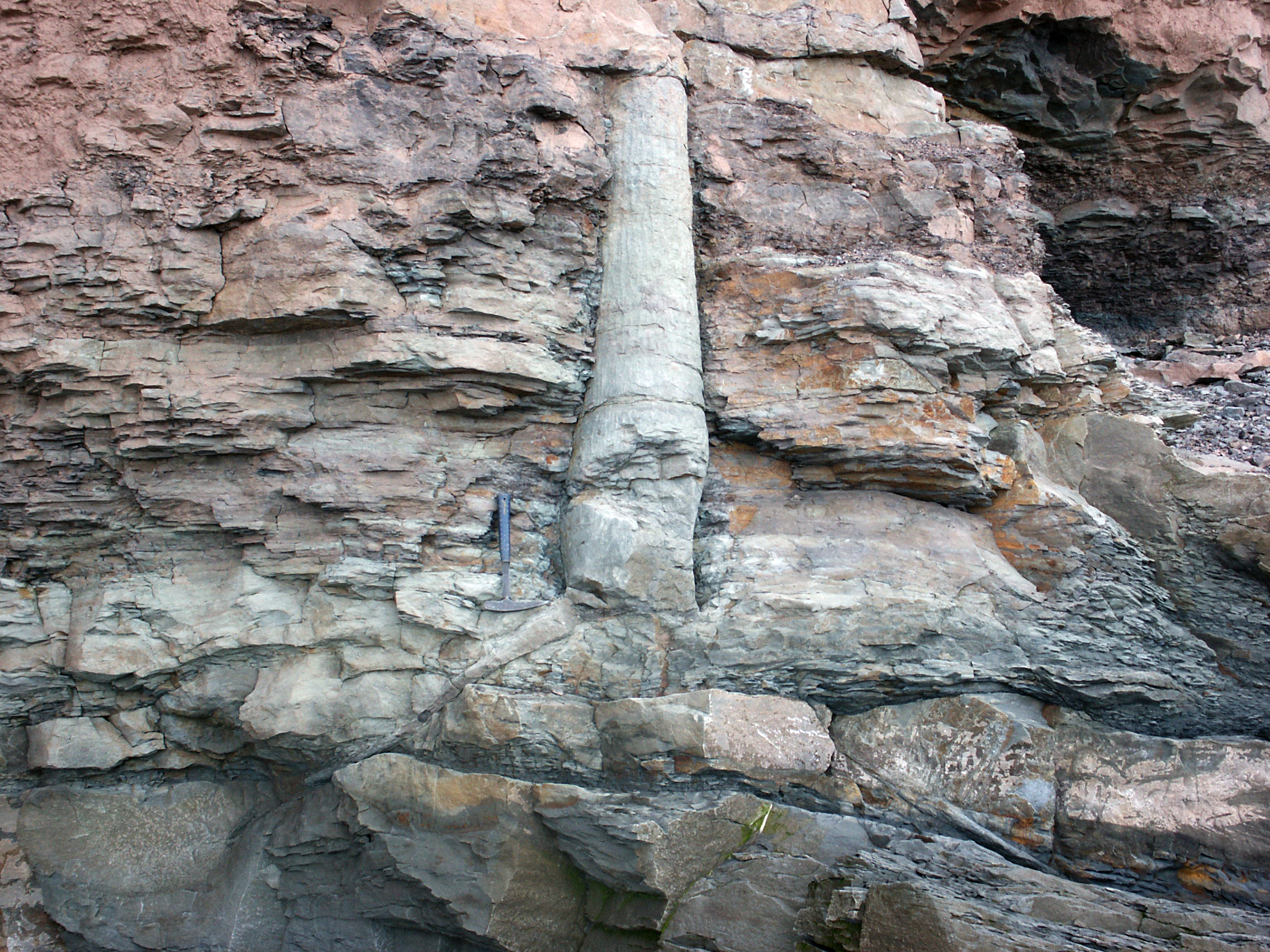
EThe gang discusses two papers that describe the root systems of the first "tree-like" plants, the giant lycopsids from the Carboniferous. Also, Amanda's cat finds a brand new toy, James over commits to a bit, and Curt pulls the strings behind the scene. References: Thomas, Barry A., and Leyla J. Seyfullah. "Stigmaria Brongniart: a new specimen from Duckmantian (Lower Pennsylvanian) Brymbo (Wrexham, North Wales) together with a review of known casts and how they were preserved." Geological Magazine 152.05 (2015): 858-870. Hetherington, Alexander J., Christopher M. Berry, and Liam Dolan. "Networks of highly branched stigmarian rootlets developed on the first giant trees." Proceedings of the National Academy of Sciences (2016): 201514427.

Podcast 91 - A Conservation Conversation; Evolution with a Human Touch
EThe gang discusses two papers that study how human beings have affected the evolutionary trajectories of other organisms. Meanwhile, Amanda paints an imaginative scene, James describes the perfect human world, and Curt wins the most obscure movie reference. Music: "Central Park" by Charles Ives, used in accordance with Fair Use. References: LaZerte, Stefanie E., Hans Slabbekoorn, and Ken A. Otter. "Learning to cope: vocal adjustment to urban noise is correlated with prior experience in black-capped chickadees." Proc. R. Soc. B. Vol. 283. No. 1833. The Royal Society, 2016.

Podcast 90 - Big Small Cats
EThe gang discusses two papers that look at the evolutionary history of cats. Is there a trend towards an optimal cat size in evolution? Meanwhile, Curt admits to an embarrassing lack of 80's knowledge, Amanda wants to expand her cat menagerie, and James demonstrates his vocal range. WARNING TO HEADPHONE USERS LOUD NOISE DURING THE FIRST MINUTE OF THE PODCAST. References: Tseng, Z. Jack, et al. "Himalayan fossils of the oldest known pantherine establish ancient origin of big cats." Proc. R. Soc. B. Vol. 281. No. 1774. The Royal Society, 2014. Cuff, A. R., et al. "Big cat, small cat: reconstructing body size evolution in living and extinct Felidae." Journal of evolutionary biology 28.8 (2015): 1516-1525.

Podcast 89 - Spicy Maple-Glazed Wings; A Discussion on Fossils in Amber
EThe gang discusses two examples of cool animals trapped in amber. Meanwhile, James draws a line in the sand concerning food, Amanda can't decide which fictional animal is the cutest, Curt lies, and the gang gets dark while discussing children's fantasy fiction. References: Perrichot, Vincent, Bo Wang, and Michael S. Engel. "Extreme Morphogenesis and Ecological Specialization among Cretaceous Basal Ants." Current Biology 26.11 (2016): 1468-1472. Xing, Lida, et al. "Mummified precocial bird wings in mid-Cretaceous Burmese amber." Nature Communications 7 (2016).

Podcast 88 - Fossil Murder Mysteries
EThe gang don their deerstalkers and dive into some palaeontological cold cases. Mystery and murder abound as they explore evidence for predation in the fossil record, with a supporting cast of stingrays, crabs, and some of Earth's oldest organisms. Also, James explains how terrifying the world is, Curtis reminds everyone that Deep Blue Sea is a thing, and Amanda puts the cat centre stage. References: Calderwood, J. & Sigwart, J. D. "Broken pieces: can variable ecological interactions be deduced from the remains of crab attacks on bivalve shells?" Lethaia (2016): 10.1111/let.12178. Grun, T. B.. "Echinoid test damage by a stingray predator" Lethaia (2015): 10.1111/let.12165. Porter, S. M. "TIny vampires in ancient seas: evidence for predation via perforation in fossils from the 780–740 million-year-old Chuar Group, Grand Canyon, USA." Proceedings of the Royal Society B (2016): 10.1098/rspb.2016.0221.

Podcast 87 - Leaving a Mark; Trace Fossil Changes Through Time
EEverybody is back in the same zip code for an extra special episode focusing on fish faces and evolving trace fossils through time. Also, James enjoys the perks of podcasting in person, Amanda decides to be as general as possible, and Curt decides to aggressively Godwin's Law the podcast. Also, the gang invents a mixed drink on air and then things get.... weird. This episode is pretty much all over the place. "The Ichnofacies": 1 part Dark Spiced Rum, 1 part agave syrup, served over ice "Hyperfun" Kevin MacLeod (incompetech.com) Licensed under Creative Commons: By Attribution 3.0 http://creativecommons.org/licenses/by/3.0/ References: Szrek, Piotr, et al. "A glimpse of a fish face—An exceptional fish feeding trace fossil from the Lower Devonian of the Holy Cross Mountains, Poland."Palaeogeography, Palaeoclimatology, Palaeoecology 454 (2016): 113-124. Lehane, James R., and A. A. Ekdale. "Morphometric analysis of graphoglyptid trace fossils in two dimensions: implications for behavioral evolution in the deep sea." Paleobiology 42.2 (2016): 317-334.

Podcast 86 - Echolocation in the Fossil Record
The gang discusses two papers that use functional morphology to determine when echolocation evolved in two groups of mammals, whales and bats. Also, Curt rattles off a wikipedia page on hamburgers, James fights against physics, and Amanda would rather talk about how terrifying Basilosaurus is. Also, to cut this off at the pass, a correction. Bats are the "SECOND" most diverse mammal group and rodents are the most diverse. References: Simmons, Nancy B., et al. "Primitive Early Eocene bat from Wyoming and the evolution of flight and echolocation." Nature 451.7180 (2008): 818-821. Park, Travis, Erich MG Fitzgerald, and Alistair R. Evans. "Ultrasonic hearing and echolocation in the earliest toothed whales." Biology letters 12.4 (2016): 20160060.

Podcast 85 - Hot Blooded; Studying Fossil Metabolism
EIn this episode, the gang discusses two papers that use morphological and chemical proxies to understand the metabolism of fossil animals. Did all early tetrapods breathe through their skin? Were mosasaurs warm blooded? Also, James accidentally goes full stealth, Amanda instigates a Civil War, and Curt gets not-it'ed into bumbling through explaining geochemistry. References: Witzmann, Florian. "CO2‐metabolism in early tetrapods revisited: inferences from osteological correlates of gills, skin and lung ventilation in the fossil record." Lethaia (2015). Harrell, T. Lynn, Alberto Pérez‐Huerta, and Celina A. Suarez. "Endothermic mosasaurs? Possible thermoregulation of Late Cretaceous mosasaurs (Reptilia, Squamata) indicated by stable oxygen isotopes in fossil bioapatite in comparison with coeval marine fish and pelagic seabirds." Palaeontology59.3 (2016): 351-363.

Podcast 84 - Jawless Fish and Spider Butts; Searching for Ancestral Forms in Fossil Data
EIn this episode, the gang discusses two papers that try and piece apart the complicated evolutionary history of cyclostomes (lampreys and hagfish) and spiders. What did the ancestors of these things look like? Also, Amanda comes up with a lucrative business proposal, James hijacks the podcast to make a bold statement, and Curt is skeptical of history. References: Ota, Kinya G., et al. "Identification of vertebra-like elements and their possible differentiation from sclerotomes in the hagfish." Nature communications 2 (2011): 373. Oisi, Yasuhiro, et al. "Craniofacial development of hagfishes and the evolution of vertebrates." Nature 493.7431 (2013): 175-180. Garwood, Russell J., et al. "Almost a spider: a 305-million-year-old fossil arachnid and spider origins." Proc. R. Soc. B. Vol. 283. No. 1827. The Royal Society, 2016.

Podcast 83 - Dead End Conversations; The Evolutionary Impact of Ecological Specialization
EIn this episode, the gang discusses two papers about the long term macroevolutionary effects of ecological specialization. Is specialization on a specific ecology an evolutionary dead end? The gang attempts to answer that question, but they keep getting distracted. Also, James shares life experiences, Amanda imagines a nightmarish future for James, and Curt workshops the plot of a new epic animated experience. References: Day, Emma H., Xia Hua, and Lindell Bromham. "Is specialization an evolutionary dead end? Testing for differences in speciation, extinction and trait transition rates across diverse phylogenies of specialists and generalists." Journal of Evolutionary Biology (2016). Burin, Gustavo, et al. "Omnivory in birds is a macroevolutionary sink."Nature Communications 7 (2016).

Podcast 82 - So Like Majora's Mask; Astrobiology and Cyclicity of Extinction
EIn this episode, we wanted to discuss large-scale astrobiological patterns and cyclicity of extinction, but instead we picked a few papers that weren't directly focused on those themes. So join us as we talk around two astrobiology papers! Meanwhile, James nearly becomes a mass extinction, Curt considers the psychological health of the hero of Hyrule, and Amanda gives her cat some tough love. References: Nimura, Tokuhiro, Toshikazu Ebisuzaki, and Shigenori Maruyama. "End-cretaceous cooling and mass extinction driven by a dark cloud encounter."Gondwana Research (2016). Whitmire, Daniel P. "Periodic mass extinctions and the Planet X model reconsidered." Monthly Notices of the Royal Astronomical Society: Letters455.1 (2016): L114-L117.

Podcast 81 - Niche Ontogeny; The Hero This City Deserves
EIn this episode the gang discusses two papers about how niche breadth can change as organisms grow, with one paper looking at modern organisms and the other focusing on extinct fossil taxa. Also, James is fascinated by New York's greatest "hero", Amanda becomes "enthusiastic" in her defense of a topic, and witness the dark middle chapter of the podcast as Curt "ruins everything". We also have an in-depth discussion on what can and cannot be classified as a pie.... it's one of those podcasts. Skip to 12 minutes in if you want to start learning about science. References Dick, Daniel G., Günter Schweigert, and Erin E. Maxwell. "Trophic niche ontogeny and palaeoecology of early Toarcian Stenopterygius (Reptilia: Ichthyosauria)." Palaeontology (2016). Purwandana, Deni, et al. "Ecological allometries and niche use dynamics across Komodo dragon ontogeny." The Science of Nature 103.3-4 (2016): 1-11.
Podcast 80 - The Severity of The Sixth Mass Extinction, A Belated Birthday Fun-Time Celebration
EIn this episode, the gang celebrates its third year of podcasting by discussing two papers that use the fossil record to determine how our current biodiversity crisis stacks up to past mass extinctions. Also, Amanda deals with abandonment, James explore New York, and Curt gives life lessons from 70s film. "Mr Mealeys Mediocre Machine" Kevin MacLeod (incompetech.com) Licensed under Creative Commons: By Attribution 3.0http://creativecommons.org/licenses/by/3.0/ References: Hull, Pincelli M., Simon AF Darroch, and Douglas H. Erwin. "Rarity in mass extinctions and the future of ecosystems." Nature 528.7582 (2015): 345-351. Plotnick, Roy E., Felisa A. Smith, and S. Kathleen Lyons. "The fossil record of the sixth extinction." Ecology letters (2016).
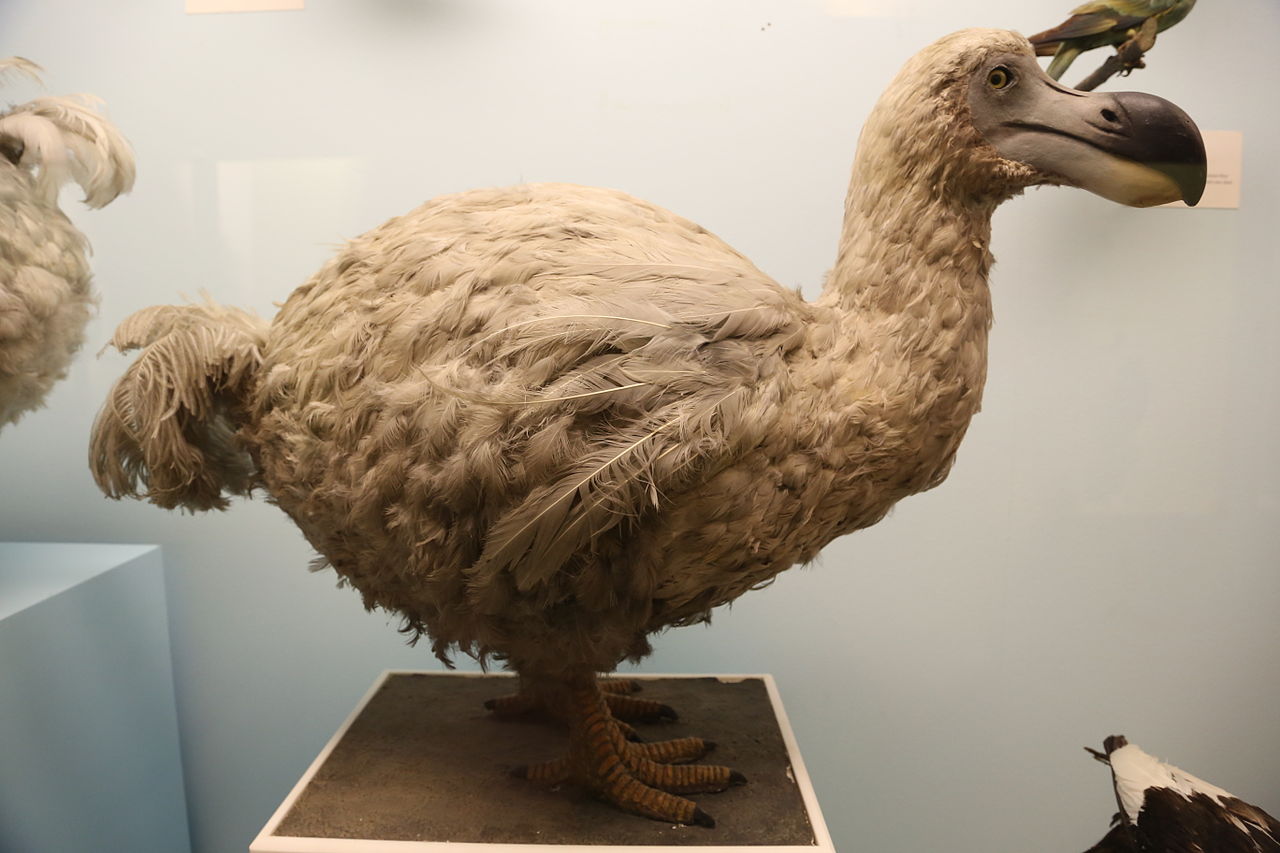
Podcast 79 - All the Cool Stuff is Dead; On Dodos and Glyptodonts
EIn this episode the gang talks about Dodo brains and Glyptodont genes. Meanwhile, James makes an unappreciated joke, Curt tries to create an "internet hug", and Amanda learns about The Batman. References: Gold, Maria Eugenia Leone, Estelle Bourdon, and Mark A. Norell. "The first endocast of the extinct dodo (Raphus cucullatus) and an anatomical comparison amongst close relatives (Aves, Columbiformes)." Zoological Journal of the Linnean Society (2016). Delsuc, Frédéric, et al. "The phylogenetic affinities of the extinct glyptodonts." Current Biology 26.4 (2016): R155-R156.

Podcast 78 - History Repeats, Bizarre Convergence in Fossil Animals
EThe gang discusses three papers that detail some truly unique examples of morphological convergence; from brachiopods that look like corals to bovids with dinosaurian nasal crests. Also, James designs some conspicuous Mario levels, Amanda wins an argument that "never happened", Curt is excluded from a business venture, and everything comes back to Zardoz. References: Streng, Michael, et al. "A new family of Cambrian rhynchonelliformean brachiopods (Order Naukatida) with an aberrant coral‐like morphology."Palaeontology 59.2 (2016): 269-293. Labandeira, Conrad C., et al. "The evolutionary convergence of mid-Mesozoic lacewings and Cenozoic butterflies." Proc. R. Soc. B. Vol. 283. No. 1824. The Royal Society, 2016. O’Brien, Haley D., et al. "Unexpected Convergent Evolution of Nasal Domes between Pleistocene Bovids and Cretaceous Hadrosaur Dinosaurs." Current Biology (2016).

Podcast 77 - Old and Burny, A Discussion of Fossil Fungi
EIn this episode, we discuss the complex relationship between fungi and earth systems processes through time, focusing on the potential role of fungi in facilitating early terrestrialization and the proposed hypothesis that fungi may (or may not) have been indirectly responsible for the Carboniferous coal swamps. Also, Amanda aggressively segues, Curt derails the conversation into navel gazing about the nature of scientific fields, and James goes on a fascinating journey from Angry to Annoyed finally ending up at Resentfully Happy. "Aces High" Kevin MacLeod (incompetech.com) Licensed under Creative Commons: By Attribution 3.0http://creativecommons.org/licenses/by/3.0/ References: Redecker, Dirk, Robin Kodner, and Linda E. Graham. "Glomalean fungi from the Ordovician." Science 289.5486 (2000): 1920-1921. Heckman, Daniel S., et al. "Molecular evidence for the early colonization of land by fungi and plants." Science 293.5532 (2001): 1129-1133. Lücking, Robert, et al. "Fungi evolved right on track." Mycologia 101.6 (2009): 810-822. Nelsen, Matthew P., et al. "Delayed fungal evolution did not cause the Paleozoic peak in coal production." Proceedings of the National Academy of Sciences (2016): 201517943.

Podcast 76 - In Which James and Amanda are Slightly too Inebriated to Discuss Mesozoic Fossils
EIn this episode we discuss a grab bag of Mesozoic papers, ranging from potential dinosaur mating dances to large-eyed mosasaurs. And after a fairly sober month, Amanda and James dive headfirst into the highest alcohol content beer they have with expected disastrous results. Come and join us as Amanda tries her hand at ASMR, James uncovers a plot to destroy him, and Curt enjoys being the most sober person in the room. Also we keep talking about The Thing for some reason... References Lockley, Martin G., et al. "Theropod courtship: large scale physical evidence of display arenas and avian-like scrape ceremony behaviour by Cretaceous dinosaurs." Scientific reports 6 (2016). Konishi, Takuya, et al. "A new halisaurine mosasaur (Squamata: Halisaurinae) from Japan: the first record in the western Pacific realm and the first documented insights into binocular vision in mosasaurs." Journal of Systematic Palaeontology (2015): 1-31.

Podcast 75 - New Years Resolutions and Sponges Y'all!
EWe ring in the new year by talking about new research on the evolutionary history of early animals. Also, Amanda makes some very deep cartoon cuts, James manages an emergency, and Curt makes impossible resolutions. References: Pisani, Davide, et al. "Genomic data do not support comb jellies as the sister group to all other animals." Proceedings of the National Academy of Sciences 112.50 (2015): 15402-15407. Erwin, Douglas H. "Early metazoan life: divergence, environment and ecology." Phil. Trans. R. Soc. B 370.1684 (2015): 20150036.

Podcast 74 - Early Tetrapods Awaken
EIn this episode, we discuss two papers about early tetrapods/tetrapodomorph taxa, Tiktaalik and Ichthyostega, and what new findings suggest about their locomotion. Also, Curt makes a suspicious delivery, and James desperately tries to feed Amanda "spoilers" for the new Star Wars. EDITOR'S NOTE: While I cannot confirm that any of James's spoilers are indeed accurate, they seem highly unlikely to be true (although if they are true, then the film they suggest is AMAZING). Up goer five simple text summary: The group takes time out from a time when not much is meant to happen to talk about some animals with big arms that were some of the first animals with four legs to come on to land. In between talking about a space movie where people use guns that fire light to show how they feel about each other, the group looks at a paper looking at the back end of an animal that had before been known only from its front. This new part of the animal shows that it had very small back legs that still looked more like for use in water. The second paper looks at a well known animal with four legs in a new way for the first time. It uses computers to picture it in a way that you can't picture it with just eyes, and this shows new things about it. The new way of looking shows that the animal would not have been as good at walking on land as people have thought. This is important as there are tracks that show there were animals with four legs that were very good at walking on land around at the same time. The animals that we have found were not able to make these tracks, and so this shows that there were other animals around at the same time that were better at walking on land, and that maybe this group of animals that walked on land started earlier than we thought. References: Shubin, Neil H., Edward B. Daeschler, and Farish A. Jenkins. "Pelvic girdle and fin of Tiktaalik roseae." Proceedings of the National Academy of Sciences 111.3 (2014): 893-899. Pierce, Stephanie E., Jennifer A. Clack, and John R. Hutchinson. "Three-dimensional limb joint mobility in the early tetrapod Ichthyostega." Nature486.7404 (2012): 523-526.

Podcast 73 - Sincere Apologies to All Ammonite Workers
EIn this episode, we discuss two papers that describe ammonite feeding habits. Meanwhile, Amanda gets into a boxing match, Curt is introduced to Moon Moon, and James is completely derailed by an animal.... again. Also, James invents a completely ridiculous life strategy for ammonites (34 :30) that Curt is just drunk enough to truly appreciate. Simple text summary The groups looks at two papers to find out what old animals with many arms and a hard house that they moved about the water in ate. The first paper studies old animals that have been looked at with a computer to see inside them and look at their teeth. The study shows that some of these many armed house carrying animals ate tiny animals that fill the water. The other paper looks at the mouths of other types of animals with arms that carry houses on them and finds that they are very different. This paper shows that several different types of animals with arms that cary houses ate different things, and that the oldest type of eating is still seen today in a living animal with many arms that carries its house around. References Kruta, Isabelle, et al. "The role of ammonites in the Mesozoic marine food web revealed by jaw preservation." Science 331.6013 (2011): 70-72. Tanabe, Kazushige, et al. "The jaw apparatuses of Cretaceous Phylloceratina (Ammonoidea)." Lethaia 46.3 (2013): 399-408.

Podcast 72 - Converging on a Topic
EFresh off of GSA, the gang gets together to discuss a quick paper about the extent to which adaptation can overprint historical signal in evolution. Afterwards, James and Curt update Amanda with the highlights of GSA. Meanwhile, Curt explains quarter based economics, James hosts a quiz show, and Amanda is delighted by a paper. "Your Call" Kevin MacLeod (incompetech.com) Licensed under Creative Commons: By Attribution 3.0http://creativecommons.org/licenses/by/3.0/ References: Ord, Terry J., and Thomas C. Summers. "Repeated evolution and the impact of evolutionary history on adaptation." BMC evolutionary biology 15.1 (2015): 137.

Podcast 71 - GSA 2015
EIt's that time of year again, so James and Curt bring you day by day coverage of the 2015 Geological Society of America meeting, joined by friends Brendan Anderson and Tory McCoy. So join us for an ethically compromised good time as they discuss the fascinating work of strangers, friends, and themselves. Day 1: James and Curtis Day 2: James, Curtis, and Brendan starts at 0:50.40 Day 3: James, Curtis, Brendan, and Tory starts at 2:03.22.

Podcast 70 - Systems Breaking Down; The End of the Ediacaran
EThe gang discusses two papers that deal with the events that led to the extinction of the early metazoan Ediacaran fauna, as well as the extinction's philosophical ramifications for our understanding of evolution in general. Chaos runs rampant throughout this podcast as our figurative and literal systems break down through time. But somehow, life.... finds a way.... through a 4G network. Meanwhile, Amanda jumps the gun, Curt makes jokes no one can understand, James "wins" again, and everyone slowly succumbs to chaos and madness. If you're just joining us for the first time, I'm so very... very sorry. References: Darroch, Simon AF, et al. "Biotic replacement and mass extinction of the Ediacara biota." Proc. R. Soc. B. Vol. 282. No. 1814. The Royal Society, 2015. Erwin, Douglas H. "Was the Ediacaran–Cambrian radiation a unique evolutionary event?." Paleobiology 41.01 (2015): 1-15.

Podcast 69 - Tasty Kosher Food
EThe gang finally just does what comes naturally and discusses two papers about food. Specifically, one paper on why things aren't tasty and another answering the vital question "what foods in the past would be kosher" (the answer might just surprise you). Meanwhile, Amanda finds her spirit animal, James details our terrifying corporate future, and Curt wants to play a game. TRIGGER WARNING: Mild joking reference to sexual-violence and mascots in the first two minutes. TRIGGER WARNING: We talk about eating meat throughout. Up-goer five simple-speak text: The group talks about two papers that look at food and which animals make good food. The first paper looks at the babies of small animals that have pretty things that let them fly. They find out that the babies that ate things with leaves that made bad food also made bad food themselves and would be ignored by other small animals that tried to eat them. The other paper works out whether animals in the past would have been good food for people that have very few things they can eat. The paper uses different ways of telling what things had to show that these people would not be able to eat most things. References: Dyer, Lee A. "Tasty generalists and nasty specialists? Antipredator mechanisms in tropical lepidopteran larvae." Ecology (1995): 1483-1496. Plotnick, Roy E., Jessica M. Theodor, and Thomas R. Holtz Jr. "Jurassic Pork: What Could a Jewish Time Traveler Eat?." Evolution: Education and Outreach8.1 (2015): 1-14.

Podcast 68 - Plonts
EThe gang discusses two papers about the evolutionary placement of some Cretaceous flowering plants (angiosperms). Meanwhile, Amanda finds her alter ego, James goes very old school with his jokes, and Curt really doesn't want to talk about the next paper. References Friis, Else Marie, et al. "Archaefructus–angiosperm precursor or specialized early angiosperm?." Trends in plant science 8.8 (2003): 369-373. Gomez, Bernard, et al. "Montsechia, an ancient aquatic angiosperm."Proceedings of the National Academy of Sciences 112.35 (2015): 10985-10988.

Podcast 67 - Stratigraphic Bias
EThe gang discusses two papers that detail how the stratigraphic record affects our understanding of the fossil record. Meanwhile, Amanda gets very enthusiastic, James burns straw men, and Curt isn't sorry. References Benton, Michael J. "Palaeodiversity and formation counts: redundancy or bias?." Palaeontology (2015). Holland, Steven M., and Mark E. Patzkowsky. "The stratigraphy of mass extinction." Palaeontology (2015).

Podcast 66 - Penguin Death Land
EIn this episode the gang tries to have a discussion about the fossil preservation of birds. Instead they get completely sidetracked imagining the penguin apocalypse. Meanwhile, Amanda slowly goes crazy, James keeps hearing things, and Curt delights in a mispronunciation. "Up goer five" text summary This time the group looks at papers about how animals that have bits that mean they can fly break down when they are dead. The first paper looks at what happens to animals that have bits that mean they can fly when their bodies are left in bad water. These studies are used to see how long animals that could fly were dead before they were covered by stuff in old places where lots of dead things are found in the same place. The study shows that there are fewer types of animals that could fly in these old places where lots of dead things are found in the same place than we would expect. The second paper uses a computer to find out whether we should expect to find all the types of animals that could fly in these old places where lots of dead things are found in the same place. This study shows that we should not expect to find all of the animals that could fly in these old places, but instead that because on the type of old place we should expect to see different types of animals that could fly because of where they lived. References: Davis, Paul G., and Derek EG Briggs. "The impact of decay and disarticulation on the preservation of fossil birds." Palaios 13.1 (1998): 3-13. Mitchell, Jonathan S. "Preservation is predictable: quantifying the effect of taphonomic biases on ecological disparity in birds." Paleobiology 41.02 (2015): 353-367.

Podcast 65 - SEX!
EThe gang goes broad and tackles two papers that deal with evidence of sex and reproduction in the fossil record. Meanwhile, Amanda goes method, James invents a new scientific term, and Curt is haunted by one terrible joke that will not die. "Hyperfun" Kevin MacLeod (incompetech.com) Licensed under Creative Commons: By Attribution 3.0http://creativecommons.org/licenses/by/3.0/ "Up goer five" text summary Today the group talks about fucking. Yes, fuck is one of the ten hundred most used words, while better and less bad words for fucking are not. You think what that means about people. Just think about it. The first paper is looking at the oldest pictures of stuff that comes out of a man after he has had a fuck. This fuck water is from a small animal with no hard parts and so we usually do not know that the animal was there. However, the fuck water is different for different types of small animal, and so we can see what small animals with no hard parts were there without seeing the actual animals. The fuck water has also been ignored for a long time, so we may be able to find more fuck water and find out more about small animals with no hard parts. The second paper is looking at some of the earliest things that might be animals and their babies. Looking at where the babies are and where the parents are, the paper tries to work out whether these things that might be animals that fucked or whether they just grew babies off of them on sticks. The numbers show that these maybe animals did not fuck, but grew babies on sticks. Other things that might be animals from the same time did fuck, and they are found in many more places. The fact that these maybe animals grew babies on sticks might explain why they are found in only one place while the ones that did fuck are found in lots of places. References Bomfleur, Benjamin, et al. "Fossilized spermatozoa preserved in a 50-Myr-old annelid cocoon from Antarctica." Biology letters 11.7 (2015): 20150431. Mitchell, Emily G., et al. "Reconstructing the reproductive mode of an Ediacaran macro-organism." Nature (2015).

Podcast 64 - Walk Before You Crawl; Convergence in Dinosaur Gait
EThe gang discusses two papers about the evolution of quadrupedal lifestyle in ornithischian dinosaurs. Also, James discusses the joys of being a squid, Curt details the ideal political tag-team match, and Amanda dreams of HD belts. "Up goer five" text summary The group talks about big angry animals without hair - again. This time they look at two studies that look at how one group of big angry animals with no hair went from walking on two feet to walking on four. Three different bands of friends in the group have gone back to walking on four feet by themselves. The first paper looks at figuring out the soft parts to work out how they walked and finds that each of these three types of big angry animals without hair walk in different ways, even though they all walk on four feet. The second paper looks at why these three types of animal have gone back to walking on four feet by seeing where they got big and whether it would make them fall forwards or back. This was studied by sticking heavy bits of animals with stuff on them onto animals which did not have stuff on them to see whether it made them fall over. The study shows that the different animal groups went onto four feet for different reasons, and this may explain why the different groups walking on four feet walk in different ways. References Maidment, Susannah CR, and Paul M. Barrett. "Does morphological convergence imply functional similarity? A test using the evolution of quadrupedalism in ornithischian dinosaurs." Proceedings of the Royal Society of London B: Biological Sciences 279.1743 (2012): 3765-3771. Maidment, Susannah CR, Donald M. Henderson, and Paul M. Barrett. "What drove reversions to quadrupedality in ornithischian dinosaurs? Testing hypotheses using centre of mass modelling." Naturwissenschaften 101.11 (2014): 989-1001.

Podcast 63 - Meaty; The Evolution of Hypercarnivory
EThe gang discusses two papers about the evolution (and loss) of hypercarnivory in mammals. Meanwhile, Amanda shares more equine history, Curt does his best to kill a trend, and James goes "nuclear". Please bear with us.... BEAR. "Batty McFaddin" Kevin MacLeod (incompetech.com) Licensed under Creative Commons: By Attribution 3.0http://creativecommons.org/licenses/by/3.0/ References Van Valkenburgh, Blaire, Xiaoming Wang, and John Damuth. "Cope's rule, hypercarnivory, and extinction in North American canids." Science 306.5693 (2004): 101-104. Figueirido, B., et al. "Shape at the cross‐roads: homoplasy and history in the evolution of the carnivoran skull towards herbivory." Journal of evolutionary biology 23.12 (2010): 2579-2594.
Podcast 62 - Brachiopods and Bivalves; The Most Interesting and Amazing Lifeforms on the Planet
EThe gang discusses two papers about the effects of the Permian Mass Extinction on the evolutionary and ecological patterns of brachiopods and bivalves. Also, Amanda finds her true calling, James indiscriminately throws shade, and Curt feels the pain of being the only person to vaguely remember what the papers were about. 'Up goer five' summary: The group talks about two types of animals with hard parts to hide in, one which is food and one which is not food. It used to be thought that the food animals were better than the not food animals, and that they had beaten them over a long time so that there were more of them today than the not food animal. The first paper shows that this is not true, and that both animals did as well as each other until they both had a very bad day, and that the food animal just got over this very bad day faster. The second paper is making sure that we have not got anything wrong by only looking at one way we can find both the food and not food animals. References: Gould, Stephen Jay, and C. Bradford Calloway. "Clams and brachiopods-ships that pass in the night." Paleobiology (1980): 383-396. Clapham, Matthew E. "Ecological consequences of the Guadalupian extinction and its role in the brachiopod-mollusk transition." Paleobiology 41.02 (2015): 266-279.

Podcast 61 - Frills and Horns; Ceratopsian Convergence
EThat gang discusses convergent evolution and potential sexual selection in the horns and frills of ceratopsian dinosaurs, which Amanda refers to as the "most American dinosaur". Also, Amanda defends a cause, James practices being a "tiger mom", and Curt drinks for two with disastrous but expected consequences. Up-Goer Five podcast summary (using only the ten hundred most commonly used English words): The group talks about big angry animals with no hair that have things coming out of their faces. There are two groups of big angry animals with no hair that have things coming out of their faces, one with tall things coming off of the neck with smaller things coming out of their faces and another with a short thing coming off of the neck and longer things coming out of their faces. Some studies have looked at what all these things on faces and necks are for, and hurt marks on the hard bits of bodies show that the things were used to fight so that a Mr big angry animal with no hair could find a Mrs big angry animal with no hair. A new finding also shows that after the ones with long things on the necks died out, one of the ones with a short thing on its neck began to look like one of the long thing on the neck ones on its own. "Wallpaper" Kevin MacLeod (incompetech.com) Licensed under Creative Commons: By Attribution 3.0http://creativecommons.org/licenses/by/3.0/ References: Farlow, James O., and Peter Dodson. "The behavioral significance of frill and horn morphology in ceratopsian dinosaurs." Evolution (1975): 353-361. Farke, Andrew A. "Horn use in Triceratops (Dinosauria: Ceratopsidae): testing behavioral hypotheses using scale models." Palaeontologia Electronica 7.1 (2004): 1-10. Farke, Andrew A., Ewan DS Wolff, and Darren H. Tanke. "Evidence of combat in Triceratops." (2009): e4252. Brown, Caleb M., and Donald M. Henderson. "A New Horned Dinosaur Reveals Convergent Evolution in Cranial Ornamentation in Ceratopsidae." Current Biology (2015).

Podcast 60 – Many Memorable Mesozoic Mammals
EIn this episode, the gang discuss the diverse and ecologically abundant mammals of the Mesozoic. Meanwhile, Amanda gives dedicated fans an exclusive cat report, James learns something, and Curtis does his best Skeletor impression. However, the greatest question goes unanswered: what are Wombles? Up-Goer Five podcast summary (using only the ten hundred most commonly used English words):The group talks about two papers that look at warm blooded animals with hair from a very long time ago, during the time of the big angry animals that did not have hair. While it used to be thought that there were not many different kinds of warm blooded animals with hair a very long time ago, new studies show that there were lots of different kinds of warm blooded animals with hair a long time ago and that they did lots of different things even when there were still big angry animals that did not have hair. It is shown that they changed to do these many different things several different times, and that changes to do these different things have happened alone in different groups that are not families with each other. References: Luo, X-Z. 2007. Transformation and diversification in early mammal evolution. Nature 450: 1011–1019. Chen, M. & Wilson, GP. 2015. A multivariate approach to infer locomotor modes in Mesozoic mammals. Paleobiology 41: 280–312.

Podcast 59 - Dulce et Decorum est Pro Patria Mori
EAmanda thinks about a writing style. James takes on a big responsibility. Curt deflects. The nature of change is considered, but the conversation remains locked in stasis. References Gould, Steven J.. "Is a New and General Theory of Evolution Emerging?" Paleobiology, 6.1 (1980): 119-130. Hunt, Gene, Melanie J. Hopkins, and Scott Lidgard. "Simple versus complex models of trait evolution and stasis as a response to environmental change."Proceedings of the National Academy of Sciences 112.16 (2015): 4885-4890.

Podcast 58 - Hateful Stares; A Discussion on Biomass Trends Through Time
EIn this episode, the gang discusses changes in biomass through time. They also spend a fair chunk of the podcast passing blame. Meanwhile, James is denied eating a bagel, Curt describes complex biodiversity patterns as “getting swole”, and Amanda apologizes repeatedly. They also try to answer the toughest question of all, would a eurypterid be tasty? References: Bambach, Richard K. "Seafood through time: changes in biomass, energetics, and productivity in the marine ecosystem." Paleobiology (1993): 372-397. Cardinale, Bradley J., et al. "Impacts of plant diversity on biomass production increase through time because of species complementarity." Proceedings of the National Academy of Sciences 104.46 (2007): 18123-18128.

Podcast 57 - Imperfect Wings, Conifers and Bat Dinos
EIn this episode, the gang tries desperately to talk about a really interesting plant paper and fails miserably. Meanwhile, James stops caring, Amanda relishes in being right, and Curt really tries to keep this one together (he fails). Also, despite the podcast not being about it at all, James has to talk about the new gliding dinosaur. References: Stevenson, Robert A., Dennis Evangelista, and Cindy V. Looy. "When conifers took flight: a biomechanical evaluation of an imperfect evolutionary takeoff."Paleobiology 41.02 (2015): 205-225. Hughes, Martin, Sylvain Gerber, and Matthew Albion Wills. "Clades reach highest morphological disparity early in their evolution." Proceedings of the National Academy of Sciences 110.34 (2013): 13875-13879.

Podcast 56 - So the End Triassic Mass Extinction Event
The gang attempts to discuss the Ringo Starr of mass extinctions, the End Triassic. And much like the actual extinction event, the discussion is long, broad, and not focused on any one thing in particular. Meanwhile, Amanda learns the joys of screen sharing, Curt makes some dubious shopping decisions, and James “wins” (play along at home and count how many times James “wins” the podcast). References Benton, Michael J. "More than one event in the late Triassic mass extinction."Nature 321.6073 (1986): 857-861. Tanner, L. H., S. G. Lucas, and M. G. Chapman. "Assessing the record and causes of Late Triassic extinctions." Earth-Science Reviews 65.1 (2004): 103-139. Kasprak, Alex H., et al. "Episodic photic zone euxinia in the northeastern Panthalassic Ocean during the end-Triassic extinction." Geology 43.4 (2015): 307-310.

Podcast 55 - Mouth Mimes Attack
EIn this episode the gang discusses mimicry in the fossil record, which James uses as an excuse to introduce everyone to one of his “favorite” papers. And as they stare into the gaping maw of mimicry in slack-jawed disbelief, grim smiling lips float back to them flashing pearly teeth in the dark and whispering one word.... mouths. References http://www.edinburghgeolsoc.org/edingeologist/z_42_08.html Lamont, A. "Prolegomena to aggressive mimicry and protective resemblance in early fishes, chelicerates, trilobites and brachiopods." Scottish Journal of Science 1.2 (1969): 75-103. Topper, Timothy P., et al. "Competition and mimicry: the curious case of chaetae in brachiopods from the middle Cambrian Burgess Shale." BMC evolutionary biology 15.1 (2015): 42