
Palaeo After Dark
361 episodes — Page 3 of 8

Podcast 251b - D&D Part 2 - Deep within the Machine
EAfter managing a precarious ascent up a magical clockwork limb we rejoin our heroes Bepo the Bard (James), Bix the Druid (Aly), Gregg the Ranger (Curtis) and Kinross the Wizard (Amanda) in the next stage of their journey to bring the roaming fortress to a halt. "Skye Cuillin", "Mystic Force", "Malicious", "Scheming Weasel slower", "Holiday Weasel", "Krampus Workshop", "Sneaky Snitch", "Magic Escape Room", "Volatile Reaction", "Darkling" by Kevin MacLeod (incompetech.com) Licensed under Creative Commons: By Attribution 4.0 License http://creativecommons.org/licenses/by/4.0/

Podcast 251a - D&D Part 1 - In the Footsteps of Giants
EDispatched to pursue a giant roaming monolith laying waste wherever it walks join our heroes Bepo the Bard (James), Bix the Druid (Aly), Gregg the Ranger (Curtis) and Kinroth the Wizard (Amanda) as they set out to bring a halt to this lumbering gargantuan structure's meandering path of destruction in a story orchestrated and told by our visiting Dungeon Master (Antony). "Skye Cuillin", "Lord of the Land", "Mountain Emperor", "Black Vortex", "Evening of Chaos" by Kevin MacLeod (incompetech.com) Licensed under Creative Commons: By Attribution 4.0 License http://creativecommons.org/licenses/by/4.0/ "Snake Eater" midi from vgmusic.com http://www.vgmusic.com/new-files/MGS3_Snake_Eater.mid

Podcast 250 - Penguin Death Land 2; Death Harder
EThe gang goes back to their favorite hypothetical deathtrap amusement park, Penguin Deathland. They discuss two papers that look at the taphonomy of penguin fossil deposits and what they can tell us about ancient environments and the processes that can break down bone. Meanwhile, James loves old movie cliches, Amanda upsets the natural order, and Curt enjoys totally real colors. Up-Goer Five (Amanda): Today our friends talk about animals with no hair that usually can fly but these can't fly. These are found on an small place surrounded by water that is very cold. These animals lived during the ice age so they are only sort of rock at this time. The first paper looks at numbers of these animals and other stuff all together in one place. The paper shows that there were places where there were baby animals long ago where there aren't any now. It also shows that there were some tiny animals with no rock parts that suck blood that are not on these small places today. But it is possible that some of these tiny animals were brought in later by people. The second paper looks at how things that are green things and sometimes good to eat not-animals that are living together are hurting the rock parts of these animals with no hair that can usually fly but can't. It turns out that the things that are green things living together with sometimes good to eat not-animals might be very good at hurting the rock parts of these animals, and we can actually see exactly what that looks like and so can tell if we see this in rock parts that would be much much older. References: Acosta Hospitaleche, Carolina, et al. "Taphonomy of two Holocene penguin taphocoenoses in Potter Peninsula, South Shetland Islands, Antarctica." Historical Biology (2022): 1-18. García, Renato, Carolina Acosta Hospitaleche, and Gonzalo Márquez. "Biodeterioration of Antarctic fossil penguin bones caused by lichens from the Eocene La Meseta Formation." Polar Biology 44.12 (2021): 2243-2254.

Podcast 249 - The Fishiest Podcast
The gang discusses two papers from a new locality of early fishes that give a lot of new insights into fish evolution. Meanwhile, Curt loves new Discord features, James shares some fun stories, and Amanda know how best/worst to keep everyone on track. Up-Goer Five (Curt Edition): Our friends look at two papers from a group of papers that just came out about a place where you can get really good parts from very very old things that live in the water and have hard parts on the inside and would be great great great great mom and dad to a lot of things that have hard parts inside and live on land. One paper looks at these animals that do not have a hard part in the place where they eat and looks at how they have really cool ways to move through water that gives us ideas about how these things that help move through water have changed over time. The other paper looks at a lot of different types of these animals that live in water and shows that they were doing a lot of different things very early on. References: Zhu, You-an, et al. "The oldest complete jawed vertebrates from the early Silurian of China." Nature 609.7929 (2022): 954-958. Gai, Zhikun, et al. "Galeaspid anatomy and the origin of vertebrate paired appendages." Nature 609.7929 (2022): 959-963.
Podcast 248 - Chucky D Facts
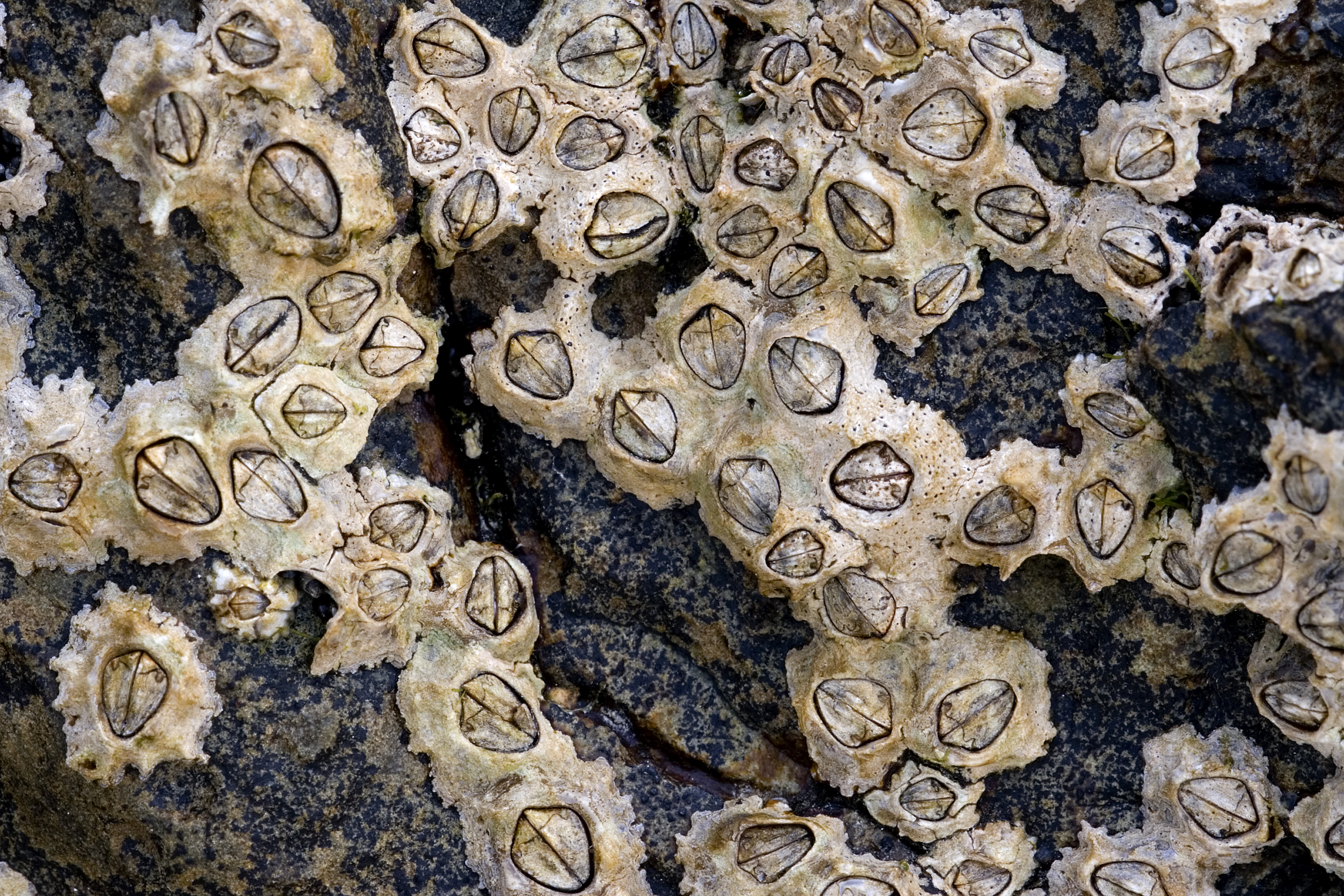
The gang discusses two papers that look at two papers that discuss the origin and evolution of a sessile filter feeding life habit. The first paper discusses how a new tommotiid fossil helps us better understand lophophorate evolution, and the second paper looks at the genetic pathways that barnacles and molluscs use to generate their shells. Meanwhile, James makes a sound, Amanda gets a surprise, and Curt shares totally real facts. Up-Goer Five (Curt Edition): Our friends look at how animals that make hard parts and do not do much moving around first started. The first looks at one type of animal that could be the start of one of these groups of animals that do not move much. These early animals are usually hard to find because they have parts that do not stick around for along time. However, this animal that was found had a lot of soft parts that showed what these animals would have looked like. It seems that these animals started out as being able to move a lot more, even though the animals that would come later would stop moving. The second paper looks at two other groups of animals that make hard parts and do not move. It looks at how these animals make their hard parts. Even though these two groups are not close to each other, they both use a lot of the same ways of making their hard parts, with things that are not the same making sense because of how these animals need to stick to other things. References: Guo, Jin, et al. "A Cambrian tommotiid preserving soft tissues reveals the metameric ancestry of lophophorates." Current Biology (2022). Yuan, Jianbo, et al. "Convergent evolution of barnacles and molluscs sheds lights in origin and diversification of calcareous shell and sessile lifestyle." Proceedings of the Royal Society B 289.1982 (2022): 20221535.

Podcast 247 - GSA 2022 Denver Meeting
EJames, Curt, Carlie, and Brendan talk about the 2022 Geological Society of America Meeting in Denver.

Podcast 246 - Fossil Record of Parental Care
EThe gang talks about two papers that look at evidence of parental care in the fossil record, in early synapsids and in insects. Meanwhile, Amanda is going to have an island, Curt is trying not to die, and James has some unique alternative interpretations to explain these fossils. Up-Goer Five (Curt Edition): Our friends talk about two papers that look at moms and dads from a long long time ago. Not all animals have moms and dads that stick around or do anything to keep the babies from not getting dead. The first paper looks at a group of animals that looks like some animals today and is part of a group that is close to the group that has hair. This paper looks at some hard parts from these animals that were in a thing made by pulling up the ground so you can live there under the ground. There is a big one and a small one. The big one looks like it was holding the small one when the place under the ground fell in and covered them. The other thing about this paper is that the small one looks like a lot of other animals we have found from this group, which could mean that most of our animals we have named from this group could be kids. The second paper looks at a type of small animal with hard parts on the outside and many legs that lives in water and can go deep in the water but takes in air to live. This animal is old but looks a lot like the ones we still have around today. Some of these animals have a leg that looks different from the others, and this leg has a whole lot of small balls that hold babies in them on it. So some of these animals carry the babies with them until they are ready to leave the small balls. This is different from how the animals like these ones that we have today handle their babies. References: Fu, Yanzhe, et al. "The earliest known brood care in insects." Proceedings of the Royal Society B 289.1978 (2022): 20220447. Maddin, Hillary C., Arjan Mann, and Brian Hebert. "Varanopid from the Carboniferous of Nova Scotia reveals evidence of parental care in amniotes." Nature Ecology & Evolution 4.1 (2020): 50-56.

Podcast 245 - The Fishopodcast
EThe gang discusses two papers that look at the complicated path tetrapods took to getting on land. The first paper looks at a more derived stem tetrapod that went back into the water, and the second paper uses trace fossils to investigate the foodweb of a community dominated by some early tetrapods. Meanwhile, Amanda has a friend over, James knows how to be silent, and Curt teaches everyone that things continue to exist even when we don't see them. Up-Goer Five (Curt Edition): Our friends talk about two animals that are great great great great great great father and mother to all of the animals that are on the land. But these animals did not all make their way on to the land in a simple way. The first paper looks at an animal that looks like it went back into water. This animal has all of the parts that you need to live well in the water, even though it also has parts from animals that would be on the land, or at least spending some time on the land. This means that the way on to the land has a lot more steps forward and back than we like to think. The second paper looks at the places these animals were living in and tries to use the parts that are around and how they were hurt to see what may have been eating what. People have thought that these animals went on to the land to get away from things that might have been eating them. This paper shows that those animals might have been the things that were eating other animals. It seems like being one of these animals that lives in the water was a pretty good way to live. References: Robin, Ninon, et al. "Vertebrate predation in the Late Devonian evidenced by bite traces and regurgitations: implications within an early tetrapod freshwater ecosystem." Papers in Palaeontology 8.4 (2022): e1460. Stewart, Thomas A., et al. "A new elpistostegalian from the Late Devonian of the Canadian Arctic." Nature 608.7923 (2022): 563-568.

Podcast 244 - What is This Clade's Time to Mammal?
EThe gang discusses two papers that look at the evolutionary changes occurring in early synapsids. The first paper suggests that some synapsids may have evolved a mammal-like walking gate and respiration earlier than we expected, and the other paper uses the inner ear of synapsids to infer body temperature. Meanwhile, James is adapting to a new environment, Amanda drinks some "tea", and Curt gives acronym advice. Up-Goer Five (Curt Edition): Our friends talk about two papers that look at animals which are not the animals today with hair and warm blood but are part of the group that is brother and sister to those animals. These animals were around a long long time ago. These papers show that some of the things we see in animals with hair and warm blood today also happened in some of these other animals too. The first paper looks at a hard part inside the chest of these other animals. Most of these other animals have a hard part that is very different from the one we see in the animals with hair and warm blood. However, on group of these other animals seems to have a hard part that looks a lot like the ones we see today in animals with hair. This hard part is important for how we breathe and also how we move. This means that this group may have walked and breathed like the animals who have hair today, even though animals with hair got this hard part much later. The second paper looks at the ear to see how warm the blood is for these other animals that are not animals with hair but are part of the group. This paper uses the water stuff in the ear to try and figure out how warm these animals would be. They look at the ear for a lot of dead animals from this group, as well as animals around today that we can see how warm they are. When they use what they find today on the very old dead animals, they see that there is a point in the past of these animals where they start to really get warm. This is still earlier in the group than our animals we have around today with hair that are warm. References: Bendel, Eva-Maria, et al. "The earliest segmental sternum in a Permian synapsid and its implications for the evolution of mammalian locomotion and ventilation." Scientific Reports 12.1 (2022): 1-9. Araújo, Ricardo, et al. "Inner ear biomechanics reveals a Late Triassic origin for mammalian endothermy." Nature (2022): 1-6.

Podcast 243 - Giving Amanda New Phobias
The gang discusses two papers that look at the ecological impacts of major extinction events. The first paper looks at the ecological stability of marine communities before and after two mass extinction events, the late Ordovician and the end Permian. The second paper simulates an extinction event on modern bird populations to determine if this would most strongly impact functional diversity or phylogenetic diversity. Meanwhile, Amanda learns about something new to worry about, James shares dubious life advice, and Curt questions movie curses. Up-Goer Five (Amanda Edition): Today our friends look at two papers about things dying. The first paper wants to know if having more things that do all the same stuff will help keep the world better when everything else is dying. They look at an early time and then a later time that everyone knows is very, very, very bad. The earlier time is thought to be the second-most bad time for taking out things that do different things. But the paper shows that since, in that earlier time, there are more things doing the same thing, it's actually not so bad as the later time, when there are not so many things doing the same thing. More things are doing different things, so that the dying is worse. The second paper is looking at animals that fly and don't have hair or hard skin. This paper is saying that some animals that fly and don't have hair or hard skin are dying more. However, these animals are not like brothers and sisters to each other, instead, they look like each other. This paper finds that animals that fly that do not have hair or hard skins that live in some places will start to look like each other more and more because some of the animals die out. That means that the remaining animals that fly but do not have hair or hard skin will be more like each other, and it means that things in these places might get bad, because there will be only a few things left that do one or two things. References: Dick, Daniel G., et al. "Does functional redundancy determine the ecological severity of a mass extinction event?." Proceedings of the Royal Society B 289.1979 (2022): 20220440. Hughes, Emma C., David P. Edwards, and Gavin H. Thomas. "The homogenization of avian morphological and phylogenetic diversity under the global extinction crisis." Current Biology (2022).

Podcast 242 - CT Scan Your Blood Starved Beasts
EThe gang discusses two papers that analyze exceptional fossils using CT scanning. The first paper looks at an exceptionally preserved vampire squid, and the second paper looks at an exceptionally preserved early mammal. Meanwhile, Amanda follows medical advice, James is a consummate professional, and Curt learns about coleoids in real-time. Up-Goer Five (Curt Edition): Our friends look at two papers that use an important way of looking at things through hard stuff to try and figure out what a lot of older animals actually looked like. The first paper looks at an animal with an arm, and an arm, and an arm, and an arm, and an arm, and an arm, and an arm, and an arm which looks like it could hurt you but really just spends its time eating dead things. There is only one of these animals around today, but this older animal is thought to be a part of this group. By using this way of looking through hard parts, we can say that this old animal is a part of this group. Also, we can see that there are some ways that it is not the same as the living one. It seems that the old animal may have eaten things that were living, which is very different from how the animal around today lives. The second paper looks at an old animal from a group we are a part of that has hair and warm blood. As we have talked about before, figuring out when we have the first of this group of animals is very hard, and lots of changes happen early on that then go back again. This animal gives us some really cool ways to look at some of these changes early on in this group. By using this way of looking through hard parts, they can look inside the head and see the ear parts. Ear parts are an important part of being a part of this group. So seeing how the ear parts have changed is a good way to see how this group is changing over time. References: Wang, Hai-Bing, et al. "A new mammal from the Lower Cretaceous Jehol Biota and implications for eutherian evolution." Philosophical Transactions of the Royal Society B 377.1847 (2022): 20210042. Rowe, Alison J., et al. "Exceptional soft-tissue preservation of Jurassic Vampyronassa rhodanica provides new insights on the evolution and palaeoecology of vampyroteuthids." Scientific reports 12.1 (2022): 1-9.

Podcast 241 - The Shark and the Whale
EThe gang discusses two papers that look at what past sharks might have eaten. The first paper uses nitrogen isotopes to determine the trophic level of species belonging to the extinct shark genus Otodus, and the second paper shows evidence of predation/scavenging of sperm whales by sharks in the late Miocene. Meanwhile, James has a couch to burn, Curt proposes an experiment to find the best animal, Amanda becomes shark Nietzsche. Up-Goer Five (Curt Edition): Our friends look at two papers that look at what big angry animals with big teeth who breathe water and lived in the past could have eaten. The first paper looks at the parts of these animals from the past and uses what those parts of made of to try and see what kind of things they might have eaten. This is the first time that this has been done using these parts of the animal, since most of these kinds of papers look at living animals and so they can get parts that do not last when the animals die. It had been said that these big angry animals in the past may have eaten big animals that eat small things, and that they might have died out when there was less big animals that eat small things. This paper finds that the parts that make up these animals show that maybe these animals were eating things that ate other bigger things, that these big animals were probably not just eating this one type of animal but may have gone for anything, as well as other animals that also eat pretty much everything. One animal that they mention these big angry animals that breathe water could have eaten is a big animal with warm blood and big teeth that lives in water. The second paper looks at how the hard parts of big animals with warm blood and big teeth that live in water at this time have hurt marks on their hard parts that look like they were from the teeth of big angry animals that breathe water. These hurt marks are along a part of the head that has a lot of stuff in it which animals would like to eat. The hurt marks are all different, with some that look like the animal bit them right on the head, and others look like marks from teeth that were biting at the body when it was already dead. It seems like many different types of angry animals with big teeth who breathe water may have been eating these animals with warm blood and big teeth. References: Kast, Emma R., et al. "Cenozoic megatooth sharks occupied extremely high trophic positions." Science Advances 8.25 (2022): eabl6529. Benites-Palomino, Aldo, et al. "Sperm whales (Physeteroidea) from the Pisco Formation, Peru, and their trophic role as fat sources for late Miocene sharks." Proceedings of the Royal Society B 289.1977 (2022): 20220774

Podcast 240 - Chibi Gar
EThe gang discusses two papers that look at the impact of the end Cretaceous mass extinction. The first paper looks at ecomorphospace changes in mosasaur communities prior to the extinction event, and the second paper discusses the importance of a large freshwater gar which lived through the recovery. Meanwhile, James has some new and interesting ecological theories, Curt is simpatico with his recording equipment, and Amanda acts as our resident "fish" expert. Up-Goer Five (Curt Edition): Our friends talk about two papers that look at a time when a big rock hit us a long long time ago. The first paper looks at how big angry animals in the water that you can not drink did before the big rock hit. There is a big question about if these big angry animals that live in water you can not drink were doing well before the big rock hit, or if they were already on their way out. This paper looks at how the heads of these animals changed over space and time by looking at a large number of these from lots of different places. What they find is that there is a lot going on before the big rock hit. Some places are having their big animals look like they are having real problems, but in other places there seems to be a lot of new change in these big animals. It seems that this time before the big rock was a time when these big animals were going through a lot of changes. The big rock may have hit at a very bad time because things were not calm because of all of these changing going on. The second paper looks at animals living in water you can drink after the big rock hit. This paper finds a very large animal that breathes water head. Since this is a group of animals that are still around today, they can use the head to figure out how big the animal would have been, and they find that it would have been pretty big and also would have eaten other animals. This animal lived pretty soon after the big rock hit. This might mean that animals living on land and in the water that you can drink may have been doing a lot better than things living in the water you can not drink. If an animal was able to get that big eating other animals, it seems that these places were doing well. One of the ways animals respond when things get bad and foot is short is that they get smaller. Since we do not see that happening in this place, it could mean that places like this were not hit that bad when the rock hit. References: MacLaren, Jamie A., et al. "Global ecomorphological restructuring of dominant marine reptiles prior to the Cretaceous–Palaeogene mass extinction." Proceedings of the Royal Society B 289.1975 (2022): 20220585. Brownstein, Chase Doran, and Tyler R. Lyson. "Giant gar from directly above the Cretaceous–Palaeogene boundary suggests healthy freshwater ecosystems existed within thousands of years of the asteroid impact." Biology Letters 18.6 (2022): 20220118.

Podcast 239 - Up To Date Memes
EThe gang discusses two papers that look at how combining fossil and modern data can affect our understanding of evolution. The first paper looks at studying primate biogeography, and the second paper studies how human interactions have affected dog morphology and disparity. Meanwhile, James finds a song he likes, Amanda could use some skin, and Curt appreciates how timely we've always been. Up-Goer Five (Curt Edition): Our friends look at two papers that show how using stuff from today and stuff from the past together can give you a better idea of what is going on with living things. The first paper looks at how we study where animals who look a lot like us lived in the past and how they came to live where they live today. The paper looks at how we can use old animals along with the animals around today to get a better idea of how the animals today got to where they are. That said, they do find that you need to take some care with the old animals you put in the study. You want to make sure that you really know what these old animals actually are. If not, it can make your study give weird answers. But, in the end, they show that it is better to use both old and today animals when you can. The second paper looks at old dogs. Dogs can look like a lot of different things today. So people wanted to know if dogs could always look like so many different things in the past. So they found old parts of dogs from old human remains that date back to before people started to really change how dogs looked. They ran a study to see how different those dogs were from each other, and from dogs we have today, and also other things that are not dogs but are close to dogs. They find that these old dogs could be very different from each other, but not as different as the dogs we see today. They were a lot different from the other dog like animals too. So it shows that dogs were able to be very different in the past, but people have made this change even bigger. References: Wisniewski, Anna L., Graeme T. Lloyd, and Graham J. Slater. "Extant species fail to estimate ancestral geographical ranges at older nodes in primate phylogeny." Proceedings of the Royal Society B 289.1975 (2022): 20212535. Brassard, Colline, et al. "Unexpected morphological diversity in ancient dogs compared to modern relatives." Proceedings of the Royal Society B 289.1975 (2022): 20220147.

Podcast 238 - Plants With Strong Goku Energy
EThe gang discusses two papers that look at the co-evolution of plants and herbivores. The first paper finds the earliest evidence of a unique type of insect herbivory in the fossil record, and the second looks at the evolutionary impact of the extinction of large herbivores on palm trees. Meanwhile, Curt recovers from COVID round 2, Amanda is a static character, and James finds that getting what he wants is almost worse than not getting it at all. Up-Goer Five (Curt Edition): Our friends talk about things that live in the ground and make their own food but are not able to move (like a tree and other things) and also the animals that eat these things. Some small animals eat the parts of trees that catch the sun but have this stuff that is supposed to get these small animals stuck if they try and eat these parts of the tree. The way that these small animals do this is either by cutting off the stuff that would get them stuck and then eating the rest of these parts that grab sun. We know that trees and other things like trees started to use this stuff a long time ago. This paper finds the first time that we know of in which these small animals were able to cut off the stuff that would get them stuck. They used the same ideas in the past that they use today, and it happened pretty close to when trees and other things like them started to use this stuff. This means that the trees and the small animals that eat them were changing with each other. The second paper looks at how a type of tree that is not a real tree changed when the large animals that could have eaten it were not there. The people who wrote this paper had ideas about what changes could have happened when these not trees didn't have large animals around to eat them, but it turns out to have been a little different from what they might have thought. These not trees stopped making parts that would stop animals from eating them, but they didn't stop making big food. This might mean that big food is not just something that big animals can use, and that maybe small animals were eating the food and that would help the not tree to move its babies around. References: Onstein, Renske E., W. Daniel Kissling, and H. Peter Linder. "The megaherbivore gap after the non-avian dinosaur extinctions modified trait evolution and diversification of tropical palms." Proceedings of the Royal Society B 289.1972 (2022): 20212633. McCoy, Victoria E., et al. "Oldest fossil evidence of latex sabotaging behavior by herbivorous insects." Review of Palaeobotany and Palynology 300 (2022): 104631.

Podcast 237 - Day Walkers
EThe gang discusses two papers which use morphology to infer behavior in the fossil record. The first paper looks at the origins of the "killer whale" type morphology in fossil cetaceans, and the second paper describes the earliest example of a diurnal owl in the fossil record. Meanwhile, James proposes an unconventional workforce, Curt imagines the sea mammal revolution, and Amanda cuts the crap… out of her basement. Up-Goer Five (Curt Edition): Our friends talk about two papers that look at how things look and how we can use that to tell how animals might have lived in the past. The first paper looks at a group of animals with hair that breathe air but live their whole lives in water and do not have legs. There are lots of different types of these animals but one of these animals is named after being someone that kills. However, there is another group of these animals that look a lot like these animals that are named after killing but are not the same. This paper finds a really old one of these animals that looks like but is not one of these killing animals. These animals have things that make them eat in different ways than most of the animals with hair that live in water. This older animal may be the first time that these animals with hair who live in water were eating in this way. It also shows that this type of body that looks like these animals that are named for killing really did appear many times within the group. The second paper looks at animals who fly that are usually out at night and kill very quietly. They find a very old one of these animals that is very complete and allows them to see lots of parts of the animal we usually do not get. These parts show that this animal may have actually been moving around during the day instead of at night, like most of the other animals in this group. They show that moving around in the day is something that a few of these animals today do and that it has appeared many times in the past. This animal might be the oldest one of these animals that lived in the day, and shows that, even though most of these animals today are out at night, the group has a lot more going on with whether or not these animals were out in the day or at night. References: Li, Zhiheng, et al. "Early evolution of diurnal habits in owls (Aves, Strigiformes) documented by a new and exquisitely preserved Miocene owl fossil from China." Proceedings of the National Academy of Sciences 119.15 (2022): e2119217119. Bianucci, Giovanni, et al. "The origins of the killer whale ecomorph." Current Biology (2022).

Podcast 236 - Paint By Melanosome
EThe gang discusses two papers that show examples of exceptional preservation. The first paper looks at melanosome patterns in pterosaur barbules, and the second paper looks at a pathway for exceptional preservation in fossil spiders. Meanwhile, Curt (and his audio apparently) recover from COVID, James shares a story about renting, and Amanda tries to pronounce French. Up-Goer Five (Curt Edition): Our friends talk about two papers that look at animal parts that have held up really well for a long time. The first paper looks at soft things on the skin of angry flying animals that are not the same as flying animals that often can make happy sounds but are old brothers and sisters. The soft things on the skin of this animal have small things that make the soft things either light or dark. These small things look different from the other small things on the skin. We find this in big angry animals which are more close to the flying animals that make happy sounds. This might mean that the way these small things are put together on the animal might have appeared a lot more in the past than we thought. The second paper looks at small things with many legs that are usually really hard to find in rocks. However, we start seeing a lot more of them at a point. The ones that we do find look weird, and so this paper looked into how these small things that usually don't hold up in rocks managed to stay together in the rocks. They find that these small things with many legs fell into water that had a lot of other even smaller things made up of one part. These really small animals push out stuff that makes it easier for these really small animals to live there. This stuff changed the bodies of the small animals with many legs into something that wouldn't break down so easily. This is the first time this has been found in rocks, and it might be something that has happened more often than we know. References: Olcott, Alison N., et al. "The exceptional preservation of Aix-en-Provence spider fossils could have been facilitated by diatoms." Communications Earth & Environment 3.1 (2022): 1-10. Cincotta, Aude, et al. "Pterosaur melanosomes support signalling functions for early feathers." Nature (2022): 1-5.

Podcast 235 - Not Easy Being Ceratopsian
EThe gang discusses two papers that look at the function of the ceratopsian frill. One paper looks at forensic evidence to understand the cause of an injury, and the other paper looks for clues to the adaptive origins of the Protoceratops frill. Meanwhile, Curt ruins the Muppets, James counts our cancellations, and Amanda is being silenced… by Discord. EDITOR'S NOTE: To head off any discussions about food science crimes committed by this podcast, we have been made aware by reviewers of an early draft of this podcast (i.e. patreon members) that a discussion on rice may have implied that glutinous rice had "gluten" in it. This is completely incorrect. Glutinous rice is just named that way because it is sticky. As an eater of many types of glutinous rice who is married to a registered dietician, your humble editor was deeply ashamed that such horrible misinformation had made it into a draft of this podcast. The ethical decision would be to remove this discussion to prevent the spread of misinformation. However, that would take work... so instead he decided not to bother. What is the context of the conversation? When in the podcast does this conversation happen? Who implied this food crime? Did this conversation actually happen at all or is the person on the patreon just pulling the editor's leg? All of these questions would require just a modest amount of work to investigate and so they will remain forever unanswered. Was this important enough to warrant such a long note? Probably not, but your humble editor is recovering from COVID and so is filling the boredom by extending this rather minor correction into an overblown bit. If you would like to see early drafts of this podcast, go to www.patreon.com/palaeoafterdark. Up-Goer Five (Curt Edition): Our friends talk about a group of big angry animals that everyone likes with a fun thing on their heads. Both of these papers look at different types of these animals but at the end of the day, the papers are all trying to figure out how these animals used that fun thing on their heads. The first paper looks at an animal that had a small part missing in the fun thing on its head. The paper tries to find out why this animals is missing this small part. Some people have said that the small parts could go away when the animal gets bigger, but we have already shown in another one of these shows that this does not happen. So it seems that instead this animal probably got hurt. It seems that the animal was hit with something long from the back. This is different from a lot of the ways people have said this animal would usually get hurt with the fun thing on its head. The second paper looks at another animal from this group that is far older and tries to see if they can figure out what the animals could have used their fun things on their head. They have an idea that it could be used to get other animals to love them. In order to see if that is the case, they come up with other things they should see if this was true. They look at a lot of these animals and find that some of these things are true but other things are not. So it seems that they really could have used these fun things on their head for finding love, but they also say that it might be for other things. The point is, it seems like a pretty good case could be made that they used it for love. References: Knapp, A., R. J. Knell, and D. W. E. Hone. "Three-dimensional geometric morphometric analysis of the skull of Protoceratops andrewsi supports a socio-sexual signalling role for the ceratopsian frill." Proceedings of the Royal Society B 288.1944 (2021): 20202938. D'Anastasio, Ruggero, et al. "Histological and chemical diagnosis of a combat lesion in Triceratops." Scientific reports 12.1 (2022): 1-8.

Podcast 234 - Cool Trackway Bro
EThe gang discusses two papers which discuss the fascinating information which can be gleaned from studying fossil trackways, particularly the taphonomy of fossil trackways. The first paper looks at how enigmatic elongate tracks may have formed, and the second paper uses tracks to infer paleo topology. Meanwhile, James is a latchkey kid, Amanda opens up the wrong folder, and Curt would like you to know that the joke is over now. Up-Goer Five (Amanda Edition): Today our friends look at two papers that talk about foot marks. The first paper is looking at how the foot marks might get long. The ones made by big angry animals with big teeth and no hair are not supposed to be long in the back, but sometimes they are. This paper asks why they are. These big angry animals with big teeth and no hair usually walk on only the very front of their feet. Sometimes papers say it's because the whole foot is put on the ground. But this paper says that it is not because of that but instead that the whole foot goes deep into the ground. This makes the foot mark look very much longer than it should be. The second paper looks at how some big angry animals with big teeth and no hair walked along a place where the ground was not together and not straight. These animals were walking up and down along this not-straight ground. The tracks they left were not good but they can tell us how things did stuff and walked around and moved on the ground. It just shows that even bad tracks can tell us lots of good things. References: Xing, Lida, et al. "Unusual dinosaur trackway preservation as clues to paleo-landscape and behavior from the Lower Cretaceous Luohe Formation, Shaanxi Province, China." Geoscience Frontiers 12.2 (2021): 737-745. Lallensack, Jens N., James O. Farlow, and Peter L. Falkingham. "A new solution to an old riddle: elongate dinosaur tracks explained as deep penetration of the foot, not plantigrade locomotion." Palaeontology 65.1 (2022): e12584.
Podcast 233 - Croc Reply Guys
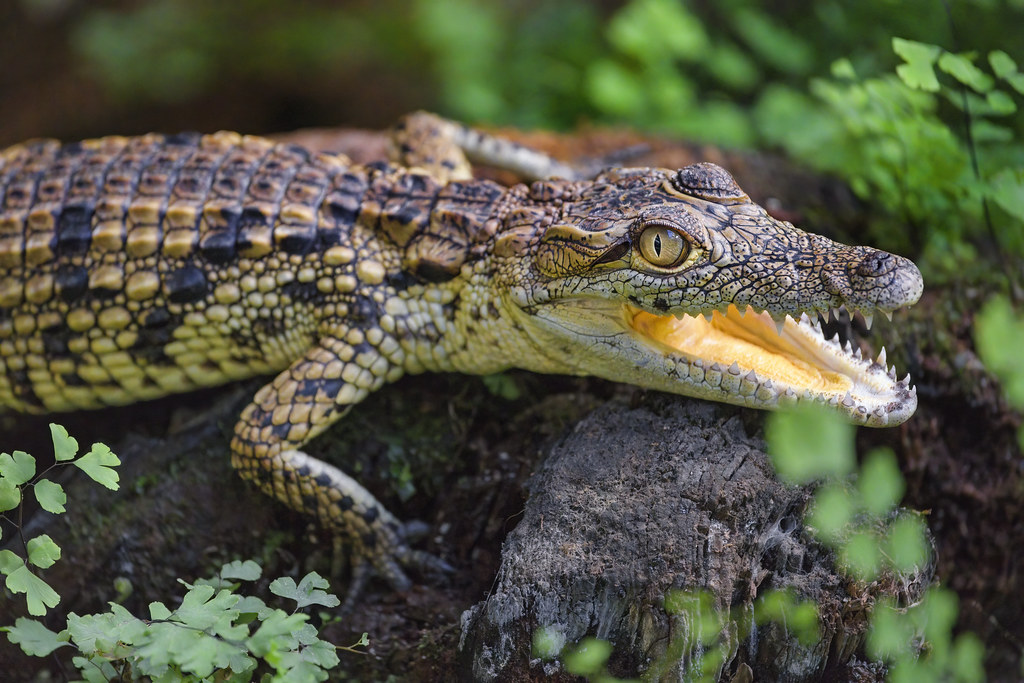
EThe gang discusses two sets of papers about how we study crocodylomorphs, with each of these topics being replies to previous studies. The first paper looks at the importance of total evidence approaches in determining the evolutionary placement of fossil pseudosuchians, and the second set of papers discusses the potential biases and issues associated with how we handle body size data in evolutionary studies. Meanwhile, Curt goes Camus, Amanda has some bizarre funeral plans, and James continues to have opinions about pies. Up-Goer Five (Curt Edition): Our friends look at a lot of papers that were written to reply to another paper. All of these papers look at how we study big angry animals that spend a lot of time in water and jump out to eat things. This group of animals has been around for a long time and before today they used to do a lot of different things, even though now most of them spend a lot of time in water and jump out to eat things. These papers look at the older groups of these animals. The first paper looks at how we try and understand how these older groups go together. It shows that if you only look at how these things look, there are a lot of different ways these groups could go together. They say that things get better if we use both how they look and the changes in the small stuff that helps build up all life. This is important, because how these old groups go together will change how and when we think the groups of big angry animals we see today first came to be. The second group of papers looks at how big these angry animals were in the past. One of these papers looked at how big these animals got over time, but the reply shows that there are some problems with how that was done. If you just take how big these animals are without doing anything to those numbers, it means that something that is big getting slightly bigger is going to seem like more than something small getting bigger about the same. It is because the bigger thing starts with bigger numbers. You can fix this by doing some things to the numbers to make sure that you can better look at changes in both small and big animals. When you do that, it does change the story of the paper. References: Darlim, Gustavo, et al. "The impact of molecular data on the phylogenetic position of the putative oldest crown crocodilian and the age of the clade." Biology Letters 18.2 (2022): 20210603. Stockdale, Maximilian T., and Michael J. Benton. "Environmental drivers of body size evolution in crocodile-line archosaurs." Communications biology 4.1 (2021): 1-11. Benson, Roger BJ, et al. "Reconstructed evolutionary patterns for crocodile-line archosaurs demonstrate impact of failure to log-transform body size data." Communications Biology 5.1 (2022): 1-4. Stockdale, Maximilian T., and Michael J. Benton. "Reply to:'Reconstructed evolutionary patterns from crocodile-line archosaurs demonstrate the impact of failure to log-transform body size data'." Communications biology 5.1 (2022): 1-4.

Podcast 232 - Obligatory Dinosaur Podcast 2: Dino Harder
EThe gang discusses two taxonomy papers about dinosaurs, fulfilling their contractual obligation to produce one dinosaur-centric podcast every 8 to 10 years. The first paper finds strong evidence to support the validity of Torosaurus as a genus separate from Triceratops and is quite cool. The second paper is that awful T-rex paper from about a month ago. Meanwhile, Curt remembers too much, Amanda enjoys self-righteous fury, James goes too far, and we all get way too drunk and rambley for our own good. CONTENT WARNING: This episode gets very salty and pushes past our usual frequency of just a few expletives per podcast. You have been warned. Up-Goer Five (Curt Edition): Our friends talk about two papers that look at big angry animals with no hair from the past. The first paper looks at a type of big angry animal that had a big thing coming out of the back of its head. There are a lot of these types of animals, but there are two of these types that have been a problem for some time. Some people think that these two types are two different things. However, some other people think that there is just one type and we are seeing the same animal get old and calling that old animal a new type that isn't real. This paper looks at some new parts from this other type that some people think is just one type that is old. They find that the parts show the animal was not old by looking at how the hard parts grow. This means that the two types have to be different and not the same. They also talk about the other parts of the animal that do not make sense if these two types are the same. So they show that we should instead see these as two different types of angry animals with a big thing coming out of the back of their heads. The second paper is bad and no one should read it. References: Paul, Gregory S., W. Scott Persons, and Jay Van Raalte. "The Tyrant Lizard King, Queen and Emperor: Multiple Lines of Morphological and Stratigraphic Evidence Support Subtle Evolution and Probable Speciation Within the North American Genus Tyrannosaurus." Evolutionary Biology (2022): 1-24. Mallon, Jordan C., et al. "The record of Torosaurus (Ornithischia: Ceratopsidae) in Canada and its taxonomic implications." Zoological Journal of the Linnean Society (2022).

Podcast 231 - Disappointing Birthday
EThe gang celebrates their 9th podcast birthday with a discussion on evolutionary rates. The first paper looks at how rates of body size evolution vary across lepidosaur lineages, and the second paper looks at how biotic and abiotic factors control freshwater gastropod diversification. Meanwhile, James finds a murder basement, Amanda has a unique diet, and Curt remembers. Up-Goer Five (Curt Edition): Our friends talk about two papers that look at how and why animals change over time, and how those changes can be fast or slow and what makes those changes fast or slow. The first paper looks at how a group of animals with four legs who are cold and looks to see if the way they get big or small changes over time. Some groups of these animals have a lot of change in how big they are really early on, but there is another group that does really well that has a very slow change in how big they get over time. There is one point where this is not the case, and that is when a group of these animals that usually get big slowly moves into the water. These animals in the water get big very quickly. The second paper looks at animals who make a home for themselves out of hard stuff and live in water you can drink and how the world around them and also the other animals can change how many new animals appear over time. The paper finds that lots of things control how many new animals appear, but some things that are always important are the number of other animals of this type and also how different the ground is. This paper even looks at how water can move over the ground in the past to figure out how the places where these animals would live change over time. References: Neubauer, Thomas A., et al. "Drivers of diversification in freshwater gastropods vary over deep time." Proceedings of the Royal Society B 289.1968 (2022): 20212057. Herrera‐Flores, Jorge A., et al. "Slow and fast evolutionary rates in the history of lepidosaurs." Palaeontology (2021).

Podcast 230 - A Rambling Time
EThe gang discusses two papers that look at topics in biogeography. The first paper reviews the concepts of cradles and museums (and whether we should retire those concepts), and the second paper explores traditionally defined Devonian bioregions. Also, the gang uses the broad topics from both of these papers to talk about a lot of tangentially related topics. Meanwhile, James has strong opinions about what is edible, Curt disagrees, and Amanda remains painfully neutral throughout. Up-Goer Five (Curt Edition): Our friends talk about two papers that look at the ways we talk about the places animals come from. The first paper is looking at two words that we use to talk about these places. The words are used to talk about places where new living things come from and places where living things can stick around for a long time. The paper talks about how those words were first used and why they came up in the first place, and then talks about how we have changed what we mean by those words in ways that maybe is not helping us better know about places. They talk a lot about how the way these words were first used has now been forgotten, and so the way we use them today makes things a little too simple. Instead of focusing on finding the simple form of these places, we should be looking at the ways the world works which can make some areas better for new living things to form or for old living things to stick around. The second paper looks at whether or not animals that are close to each other come from the same places through time. Are there places that have their own types of animals which all come from just those places for a really long time. They look at the whole world a long time ago when people have said that they can find these groups of animals that all come from one place. They look at a lot of other studies and use those studies to run another study. They find that some of the smaller areas may show what people have said in the past, but most of the big areas do not have this long time where all the animals are from this one place. The reason why it may have looked like that in the past may be because of how we got those old animals and the types of people who were allowed to go out and get those old animals in the past. References: Vasconcelos, Thais, Brian C. O'Meara, and Jeremy M. Beaulieu. "Retiring "cradles" and "museums" of biodiversity." The American Naturalist 199.2 (2022): 194-205. Dowding, Elizabeth M., Malte C. Ebach, and Evgeny V. Madroviev. "Validating marine Devonian biogeography: a study in bioregionalization." Palaeontology (2021).
Podcast 229 - Non-Fishable Tetrapods
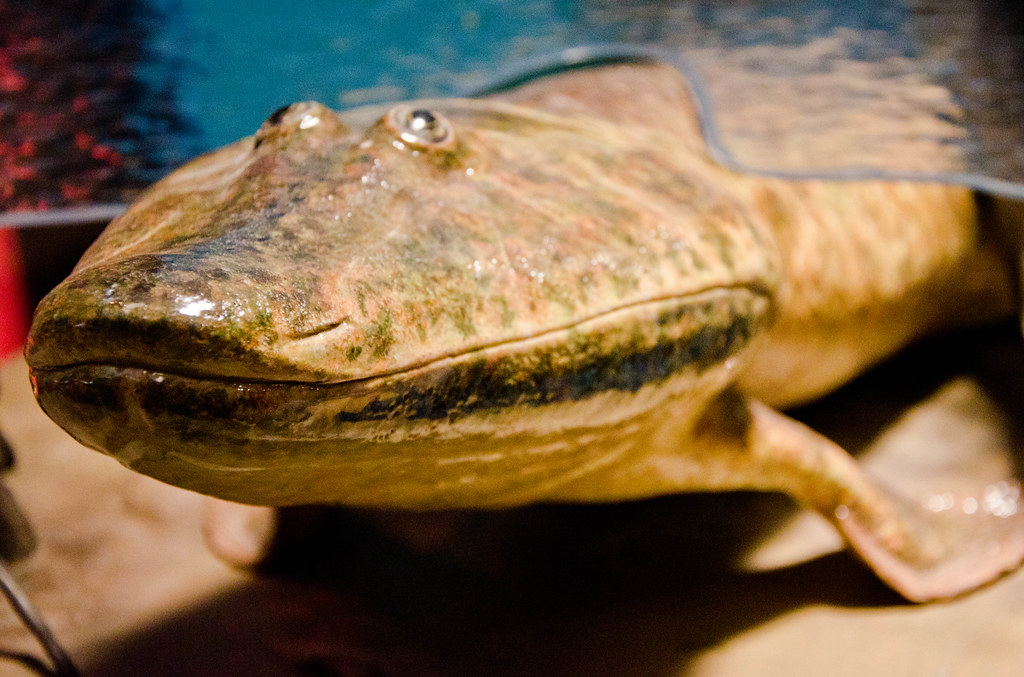
EThe gang discusses two papers that explore the functional morphology of ancient groups. The first paper looks at soft tissue in ammonites which can be used to infer locomotion, and the second paper looks at how functional morphology changed as tetrapods transitioned from marine to terrestrial environments. Meanwhile, James explores the evolution of baked goods, Curt develops a new business plan, and Amanda dreams of Tiktaalik. Up-Goer Five (Curt Edition): Our friends talk about two papers that look into how we can learn how very old animals moved and how that moving changes over time by looking at the parts we can find in the ground. The first paper looks at animals with a lot of arms who live in a big hard round hard part. Today, while we have a lot of these animals with lots of arms, only one of those animals today lives in a big round thing. In the past, there was a big group of animals that lived in a round thing, but they did it in a different way than the one we have around today. However, because it is hard to find pieces that are not hard, we have used the animal that is around today as our best guess for how these old animals may have moved. This paper finds some soft pieces which give us a better idea of how the soft parts that allow animals to move were put together. And these old animals probably moved in a very different way from the other animal from today who lives in a round thing. In fact, the old animals that live in round parts may have moved in a way that is sort of like how the animals with many arms who do not live in round things today move (but not exactly the same). The second paper looks at how the hard parts of animals with four legs changed when they animals moved onto land. This paper looks at these changes and also looks at how these changes make it so these animals move in different ways. They find that the animals with four legs in the water all have legs that look like we would expect for moving in water. The animals that are on land also have legs that fit the moving we would see for things that need to hold themselves up and move on land. The fun thing is that the animals who come from the animals who are not quite on land and not quite in water yet (the ones in the middle of this change) do not fit into any space where we would expect the animal to be able to move well. This could mean that these animals (which did well enough) were living in a time when it was alright to suck at moving. Also, it may be that some groups of animals that moved onto land from this group that sucks at moving might have had some of the animals in that group that came back to this sucking at moving space. References: Dickson, Blake V., et al. "Functional adaptive landscapes predict terrestrial capacity at the origin of limbs." Nature 589.7841 (2021): 242-245. Cherns, Lesley, et al. "Correlative tomography of an exceptionally preserved Jurassic ammonite implies hyponome-propelled swimming." Geology (2021).

Podcast 228 - Clubbed in the Eye
EThe gang discusses two papers that look at unique morphological features of fossil animals. The first paper looks at a new Ankylosauria species that complicates our understanding of the group's evolution, and the second paper investigates the structure of the trilobite schizochoral eye. Meanwhile, James endures formatting, Amanda starts her new religion, and Curt finds the puns no one else sees. Up-Goer Five (Curt Edition): Our friends talk about two papers where we can see cool parts of animals that are very old and tell us something about how these animals lived in the past. The first paper is looking at a big angry animal with no hair who lived a long time ago and is part of a group that has a long part coming off its bottom with a hurt causing part at the end. There are two close groups of big angry animals that have this long part with a hurt causing part at the end. One group has a lot of points and the other group has a part that is hard. This animal makes it more interesting because it has parts that look like animals with the hard end and animals that have the point end. The animal is still a part of the group with the hard end, but it shows that some of the things we see with the animals with the point end were also found in some animals with the hard end. The second paper looks at the eyes of an old group of animals who lived in the water and had their hard parts on the outside as well as legs and bodies that are broken into parts. A lot of work had been done on the eyes of some of these animals that have strange eyes where there are less round bits where the eyes can see through than in others, but the round bits are larger. This paper finds some old work and also adds to that work to say that maybe these eyes with large but less round bits might have acted like a whole lot of eyes under each of these round bits. So while most eyes for this group have tiny round bits which act as tiny eyes, this group with the large round bits might have had tiny eye parts under each of the large round bits. These large round bits may have acted as many tiny eyes. References: Soto-Acuña, Sergio, et al. "Bizarre tail weaponry in a transitional ankylosaur from subantarctic Chile." Nature 600.7888 (2021): 259-263. Schoenemann, B., et al. "A 390 million-year-old hyper-compound eye in Devonian phacopid trilobites." Scientific reports 11.1 (2021): 1-10.

Podcast 227c - The Priest and the Peddler Part 2
EThe gang celebrates the end of the year by taking another break to play Fiasco, a crime/noir storytelling game by Bully Pit Games. What was that you were saying? Oh, no, I am sorry, sir; I do not accept returns. All sales are final! Well it seems you must not have been using the sacred artifact properly, then! All of my wares are completely authentic. I can assure you of that! Look, I simply do not have any time to argue with you about this. I am a very busy man and I need to organize a trip north to secure more sacred objects! In fact, I have already arranged my trip. I am leaving Florence tonight… Oh, fine, I suppose I can help you out. I do happen to have a small sliver of wood from the true cross. I guess I could part with it… for a small price. "The Priest and the Peddler" is a story of secrets, faith, mistaken identity, and the elusive search for redemption. Grand Dark Waltz Allegretto by Kevin MacLeod Link: https://incompetech.filmmusic.io/song/7920-grand-dark-waltz-allegretto License: https://filmmusic.io/standard-license

Podcast 227b - The Priest and the Peddler Part 1
EThe gang celebrates the end of the year by taking another break to play Fiasco, a crime/noir storytelling game by Bully Pit Games. Have you heard about Father Valentine? Strange things happening in that church, I heard. Did you know he recently hired a mercenary? For what? An armed guard? I heard from a friend, who heard from a friend, that the father has some secret plans he doesn't want us to know about. Anyways, I have a lovely item for sale today that I think would be perfect for you; a finger bone from St. Raphael himself. Keep it close and that cough is sure to go away! Oh of course it will work! Would I lie? "The Priest and the Peddler" is a story of secrets, faith, mistaken identity, and the elusive search for redemption. Grand Dark Waltz Allegretto by Kevin MacLeod Link: https://incompetech.filmmusic.io/song/7920-grand-dark-waltz-allegretto License: https://filmmusic.io/standard-license

Podcast 227a - Building the 2021 Fiasco
EIt's the end of another year, and the Palaeo After Dark team are getting together for another Fiasco. Come join us as James, Amanda, Curt, Ally, and Ants build the characters and the premise for this year's story of mistaken identity and intrigue in de Medici era Italy.

Podcast 226 - Insert Fleetwood Mac Tusk Joke Here
EThe gang discusses two papers that look at the evolutionary history of unique teeth. The first paper looks at the history of tusks and tusk-like structures in synapsids, and the second paper looks at the shape of ancient bird teeth. Meanwhile, James gets to the point, Curt is inspired, and Amanda has a drink. Up-Goer Five (James Edition): The group looks at two papers that talk about teeth in different groups of animals. The first paper is interested in big teeth that keep growing and don't have a hard cover around them. While these teeth without a hard cover that don't stop growing are usually only found in animals with hair, one group that is part of the same family but much older also has teeth that seem to get big and never stop growing. However it turns out that many of them still have the hard covering, and only some of them lose it to be like the animals with hair today that have long teeth without a cover that doesn't stop growing. The other paper is looking at animals that fly and usually don't have teeth, but that are very old and so do have teeth. They look at the types of these old teeth to see whether they can tell us what these animals ate. It turns out that it is very hard to tell what these animals ate from their teeth, and it seems that other things like the type of face they have may be more important. References: Zhou, Ya-Chun, et al. "Evolution of tooth crown shape in Mesozoic birds, and its adaptive significance with respect to diet." Palaeoworld (2021). Whitney, M. R., et al. "The evolution of the synapsid tusk: insights from dicynodont therapsid tusk histology." Proceedings of the Royal Society B 288.1961 (2021): 20211670.

Podcast 225 - Columbo Meets the Caiman
EThe gang discusses two papers that look at how trace fossils can give important clues to ancient ecological interactions. The first paper identifies a unique behavior using trace fossils, and the second paper uses bite marks on bone to infer ontogenetic ecological shifts in a large caiman species. Meanwhile, Curt investigates, Amanda collects, and James fixates. Up-Goer Five (Amanda Edition): This week our friends talk about animals that roll in wet tiny pieces of rock that are really very tiny tiny. We also talk about a very big very slow animal with hair that got bit by a very large animal with no hair but hard skin and lots of big teeth that has a very long face. The animal with hair that rolled in wet tiny very very tiny pieces of rock shows that these animals did this thing a very long time ago; it shows that these animals with hair and two fingers on each leg were in this place at this time, along with animals with stuff that wasn't hair but made of the same stuff as hair and could fly, too. The second paper looks at how we can talk about a hard part of a very big very slow animal with hair could have gotten grabbed by a small one of a very, very, very big animal with no hair but hard skin and lots of big teeth with a very long face. It tells us that these very big animals with no hair but hard skin and lots of big teeth ate different things when they were small than when they were very, very, very big. References: Abbassi, Nasrollah, et al. "Vertebrate footprints and a mammal mud-bath trace fossil (Laspichnia) from the Mukdadiya Formation (Late Miocene–Pliocene), Chamchamal Area, Kurdistan Region, Northeast Iraq." Ichnos 28.1 (2021): 72-83. Pujos, François, and Rodolfo Salas-Gismondi. "Predation of the giant Miocene caiman Purussaurus on a mylodontid ground sloth in the wetlands of proto-Amazonia." Biology Letters 16.8 (2020): 20200239.

Podcast 224 - Second Times the Charm
ERandom computer glitches are unable to stop the gang from delivering another podcast! This week, they focus on two papers that look at the importance history for understanding trends in our modern biosphere. The first paper discusses how speciation trends are important for planning future conservation efforts, and the second paper looks at the importance of exaptive traits (characters evolved for one purpose but used for another) in the evolutionary history of sea snakes. Meanwhile, Amanda cuts deep, Curt has done this before, and James waits for his time to tell his very good joke. Up-Goer Five (Curt Edition): Our friends talk about how the past is important. And this is funny because they already did this before but the big boxes with bits that will shock your hand if you touch them lost the talk they did about the past being important so they are doing it again. The first paper they look at is short. It is about how animals living in places that are high up but in warm places make new types of animals that stay at the same high up place, not higher or lower. This means new animals will more often be living the same types of places as the older animals they came from, and this means that as places change we need to make sure the types of places where these animals live can stay open. The second paper looks at how long animals without legs moved into the water. There are many groups of animals without legs that moved into water, and this paper wants to know the types of places they were in before they moved into water and also if the things they all have that make it easier to be in water were things that appeared before they moved into water (letting them move in there) or after they moved into water (making it better to be in water). They find that most of these groups started in areas with trees before moving into water. They also find that the things which make it easier to be in water appeared in older groups well before these animals moved into water. This means that the things that made it easy to go in water appeared first, and then this made it so these animals could then move into water. References: Linck, Ethan B., et al. "Evolutionary conservatism will limit responses to climate change in the tropics." Biology Letters 17.10 (2021): 20210363. Gearty, William, Elsie Carrillo, and Jonathan L. Payne. "Ecological filtering and exaptation in the evolution of marine snakes." The American Naturalist 198.4 (2021): 506-521.

Podcast 223 - Amanda Loves Watership Down
EThe gang discusses two papers that look at the impact of ecological interactions on the evolutionary history of groups. The first looks at potential competitive interactions that could control rabbit body size, and the second paper uses the fossil record to investigate potential clade interactions between two groups of bryozoans. Meanwhile, Curt researches in real time, Amanda gets to talk about a childhood favorite, and James makes future plans. Up-Goer Five (Curt Edition): Our friends talk about two papers that look at how animals trying to get food and sometimes fighting with each other can change how they live and grow and make more of themselves. The first paper looks at animals that jump and have hair and their name sounds just like hair. These things that sound like hair do not get really big in most cases, even though we know that they could get big if we try and make it happen. This paper looks for reasons why these "hairs" don't get very big. It turns out that "hairs" eat things that a lot of other animals that eat. And while there are a lot of other things in the paper here that help to build this idea, the big idea is that that how big these "hairs" get may be held back by the smallest of the other animals that eat their food. "Hairs" get about as big as the smallest of these other animals in a place. The second paper looks at animals that grow on top of other things. There are two big groups of these animals, and when we look at how they grow, usually one group will grow over the other group. This means this one group is better at growing in a space and can push out the other group. In the past we used to have more of the group that gets pushed out, but over time we have more of the new group that is better at growing in a place. Some have thought maybe this means that what we see happening in small places may explain this larger change over time. But it is more than just that because it is not just one group going down and another going up. This paper uses a lot of number work to see how these two group may change each other. They find that it is more than just a simple one up one down thing. They find both groups change each other in a few ways. They also don't find that the things happening in the small spaces is causing these bigger changes. It could be because of the type of things we are looking at makes it harder to see these changes, but with what they have it looks like maybe this is not what is causing this change. References: Tomiya, Susumu, and Lauren K. Miller. "Why aren't rabbits and hares larger?." Evolution 75.4 (2021): 847-860. Lidgard, Scott, et al. "When fossil clades 'compete': local dominance, global diversification dynamics and causation." Proceedings of the Royal Society B 288.1959 (2021): 20211632.

Podcast 222 - Static Hiss
EThe gang discusses two papers that look at evolutionary changes in animal groups after the End Cretaceous Mass Extinction. The first paper looks at morphometric changes in shark teeth, and the second paper studies the evolutionary and biogeographic patterns of snakes. Meanwhile, Amanda "fixes" her audio, Curt goes biblical, and James is missing. Up-Goer Five (Curt Edition): Our friends talk about things that lived through a real bad time when a huge rock hit the big round place where we all live. The first paper looks at large angry animals that move through water and have pointed things in their mouths and soft bits where things have hard bits. We usually just find the hard pointed bits from the mouth because the rest of the body falls to bits when they die. So this looks at how these old hard bits change from before and after the big rock hit. What they found was that changes happened within groups, where some groups were hit hard and others were not. But if you look at all of the big angry animals, it looks like very little changes. The hard bits are doing things that look the same before and after the rock hit, but its different groups doing that. The second paper looks at animals with no legs and looked at changes in where they live and how quickly they change over time. The paper finds that after the big rock hit, one group was able to move to a new place. This move seems to happen when they also start making more of themselves. It seems that, for this big group of animals with no legs, the big rock hitting may have helped this group. It seems like a new place opened up after the big rock and the group took over and did well. There are also changes that we see when it gets colder in the time way after the rock hit. References: Klein, Catherine G., et al. "Evolution and dispersal of snakes across the Cretaceous-Paleogene mass extinction." Nature Communications 12.1 (2021): 1-9. Bazzi, Mohamad, et al. "Tooth morphology elucidates shark evolution across the end-Cretaceous mass extinction." PLoS biology 19.8 (2021): e3001108.

Podcast 221 - Ramble On
EThe gang discusses two papers that look at patterns of speciation and extinction and relate those patterns to shifts in climate. The first paper looks at how both plate tectonics and climatic changes have contributed to shifts in provinciality, and the second paper tests the link between dramatic temperature changes and large scale extinction events. Meanwhile, James cannot remember "that guy", Curt does not like Oliver Cromwell, Amanda is in an abusive relationship with her cats, and we cannot stay on topic for more than 2 minutes. Up-Goer Five (Amanda Edition): Today our friends talk about how the change in hot and cold and places where rocks are over a very long time has changed the way things live. Or not lived. The first paper says that while we used to think that changes in the way the big rocks that stick out of the water that we live on is the most important thing for making different animals and green stuff live in different places. But it turns out that it may be changes in hot and cold that take a very long time to happen that is more important. Both things are important, but how it gets colder the more towards the top of the world you go is just a little more important. It really controls how things can live places. The other paper looks at changes in hot and cold and how that makes things die. It turns out that if it gets warmer faster, or colder faster, it makes things die. They have a real number of 5.2 bits, and it is at more than 10 bits every 1,000,000 years. It does not matter if it gets warmer or colder, it is the quick turn that matters, and the big jump in change. They say that we are already getting hot enough fast enough right now to cause lots of things to die, even if we were not killing them, which we are. References: Kocsis, Ádám T., et al. "Increase in marine provinciality over the last 250 million years governed more by climate change than plate tectonics." Proceedings of the Royal Society B 288.1957 (2021): 20211342. Song, Haijun, et al. "Thresholds of temperature change for mass extinctions." Nature communications 12.1 (2021): 1-8.

Podcast 220 - The Bone Gnome
EThe gang discusses two papers that look at the fossil record of fishes. The first paper looks at the ontogeny of ancient lampreys, and the second paper investigates the impact genome duplication had on the evolutionary history of teleost fishes. Meanwhile, James finds a gnome, Curt has an adorable ghost problem, Amanda appreciates good music, and we are all back on our b#ll$h!t. Up-Goer Five (Curt Edition): Our friends talk about two papers that look at animals that live in the water and have hard parts on the inside. The first paper looks at some of these animals which have a round mouth. These animals today are very different as kids then as grown ups. As kids they live in the ground and pull food out of the water. As grown ups they move through the water and eat other animals. This paper looks at old parts of these animals from a long time ago to see if the kids always did this. They find that these very old animals did not have kids and grown ups acting so different. This means that having the kids do something different is a thing that is new, even though people have thought that these animals have always done this. The second paper looks at the how animals with hard parts that move through the water had the bits inside them that store how to build them get a times two. When there are more bits that store how to build them, it makes the homes in the hard parts bigger. So you can use how big these homes are in the hard parts to learn something about how many bits these animals have. Using old hard parts from old animals and a tree that shows which of the animals are close brothers and sisters to each other, they look at when changes in how big these homes in the hard parts were in the past. And since how big these homes are tells us how many bits that store how to build them they have, we can also see how these bits are changing through time. People have thought that getting more of these bits may be why there are so many of these types of animals. This paper shows that it may not be that simple. The number of bits goes up first, but the number of new animals does not go up at that time. Instead, it happens after big changes in the world. It is possible that these bits may have helped in bringing the number of these animals up, but it alone does not explain it. References: Miyashita, Tetsuto, et al. "Non-ammocoete larvae of Palaeozoic stem lampreys." Nature 591.7850 (2021): 408-412. Davesne, Donald, et al. "Fossilized cell structures identify an ancient origin for the teleost whole-genome duplication." Proceedings of the National Academy of Sciences 118.30 (2021).
Podcast 219 - Brachiopod Vape Bros
EThe gang discusses two papers that look at examples of cohabitation and unique ecological interactions in the Cambrian. The first paper looks at multiple animals living together in a hemichordate living chamber, the and the second looks at a potential example of parasitism on brachiopods. Meanwhile, James flips a coin, Curt has to live with some consequences, and Amanda ranks things from meh to bad. Up-Goer Five (Curt Edition): Our friends talk about two papers that look at animals which are living together, sometimes not because both animals want that. The first paper looks at these long animals with no legs that live together. There are two different types of these long animals living the in the same spot, which is a home that looks like the ones built by the bigger of the two long animals, but the home seems to be a bit too big. Because the small long things do not have bits that could cut off parts of the bigger long thing, they think that these two animals would have lived in the same spot and been just fine. Since the homes are bigger than either animal, it means we still have to figure out why the homes are so big. It could be that the bigger long animals could be kids and the homes were built by the grown ups for the kids to live in. The second paper looks at these small long round thing that was found on these animals with hard parts on either side which sit on the ground in the water and pull food out of the water. The animals with hard parts could have these small long round things on them or they could not. The animals with hard parts that had these small long round things were smaller than the ones that did not. The way the small long round things were put onto the animals with hard parts makes it look like they are homes for other small animals that would take the food out of the mouth of the animals with hard parts. References: Zhang, Zhifei, et al. "An encrusting kleptoparasite-host interaction from the early Cambrian." Nature communications 11.1 (2020): 1-7. Nanglu, Karma, and Jean-Bernard Caron. "Symbiosis in the Cambrian: enteropneust tubes from the Burgess Shale co-inhabited by commensal polychaetes." Proceedings of the Royal Society B 288.1951 (2021): 20210061.

Podcast 218 - FEET!
EThe gang discusses two papers that look at trackway fossils. The first paper uses a modern study to determine how many tracks are needed to get a reasonable estimate on the trace morphology, and the second paper looks at trackways from an early tetrapod and attempts to determine the likely trace maker. Meanwhile, James has thoughts on Luigi, Amanda gives the birds the bird, Curt regrets a burn, and everyone loves Christopher Walken's line delivery in Ripper. Up-Goer Five (Amanda Edition): Today our friends talk about people walking on ground that is wet and animals with four legs that also had a long back end part. The first paper looks at how many people need to walk on ground that is wet before it is enough people to make the numbers good. It also looks at how different kinds of ground and different types of wet also change the way things look. There actually does not need to be too many people walking on ground that is wet before the numbers are good. That means it is easier to do this with things that are not live anymore. The second paper looks at animals with four legs that were walking around a long time ago. The paper does a good job of figuring out just what those animals with four legs probably were, and about how they walked. They also had a long back end that dragged on the ground. That also tells us about how they walked. But there needs to be more stuff done on these animals with four legs and their walking marks, as well as their legs, before we know exactly what the back end marks mean. References: Logghe, A., et al. "Hyloidichnus trackways with digit and tail drag traces from the Permian of Gonfaron (Var, France): New insights on the locomotion of captorhinomorph eureptiles." Palaeogeography, Palaeoclimatology, Palaeoecology 573 (2021): 110436. Belvedere, Matteo, et al. "When is enough, enough? Questions of sampling in vertebrate ichnology." Palaeontology (2021).

Podcast 217 - In the Thick of It
EThe gang discusses two papers with… honestly a pretty flimsy link connecting them together. The first paper looks at size shifts in the dinosaur group, Alvarezsauridae, and the other paper looks at beetle fossils preserved in a dinosauromorph coprolite deposit. Meanwhile, James finds that the third time is the charm, Curt struggles to segue, and Amanda has thoughts on ham. Up-Goer Five (Curt Edition): Our friends talk about two papers that are not as much the same as they had hoped. The first paper looks at a group of angry animals wear most of these animals got really big a long time ago. A few of these animals start getting small, and this paper looks at one of those groups of angry animals that gets small to try and see when and why they got small. This paper uses a study of how these different animals are sister and brother to each other and then looks at how the big these animals are and tries to see if there is a time when things start to get small. They find that these things start to get small at a time pretty late in the life of the group. This is also around the time that a lot of small animals who wear their hard parts on the outside and live in big groups first appeared. Since the angry animals have weird hands that look like they could move through the ground, it is possible that these animals got smaller and started eating these even small animals who live in big groups. The second paper looks at a small animal that wears its hard parts on the outside that was found in shit. I have to use the word shit because it is the only word in the ten hundred most used words that can be used to tell you what this animal was found in. It was found in shit. The animal is broken up so it seems that the animal was eaten by a bigger animal who then pushed it out when that animal had a shit. This small animal is one of the best remains of one of these animals from so long ago, because the shit kept the animal parts from breaking down. Shit is a really great way to find parts of other animals because it keeps some of those parts from breaking down really well. Also, the small animals in this shit are found with other bits of green things that live in water and use sun to make food. This means that the animal which ate the small animals might have been trying to eat the green things and happened to grab a lot of those small animals who were also on the green things. References: Qvarnström, Martin, et al. "Exceptionally preserved beetles in a Triassic coprolite of putative dinosauriform origin." Current Biology (2021). Qin, Zichuan, et al. "Growth and miniaturization among alvarezsauroid dinosaurs." Current Biology (2021).

Podcast 216 - Salty Tooth
EThe gang discusses two papers that look at ecological patterns in the Mesozoic. The first paper looks at ecomorphic trends in Triassic herbivorous tetrapods, while the second paper uses morphological and chemical evidence to estimate the behavioral patterns of Cretaceous mosasaurs. Meanwhile, James has ideas about electrolites, Curt has a 99% average, and Amanda manages to record an entire podcast while having vertigo (that last bit isn't a joke). Up-Goer Five (Amanda Edition): Today our friends talk about where and how things live. The first paper looks at all kinds of animals with four feet that eat green things from the first part of the age of big angry animals with lots of teeth and no hair. This paper is trying to use the parts of the animal's face to see how they eat. There are different kinds of ways to eat green things, and some ways of doing things have more types of these animals with four feet than others. They also find that there are big changes that happen at some times in different groups of these animals. The second paper is really cool and looks at big angry animals with hard skin that go back to the water. This paper shows that these big angry animals, which live in water that isn't good to drink, sometimes go to places where there is more water that is good to drink. Some go back to water that is good to drink every 4 to 7 days if they live in one place, or 12 to 20 days if they live in the other place. It is possible that these big angry animals with hard skin that go back to the water might have also gone from top of the world towards the middle of the world over longer times, and back again, like animals with light bodies and no teeth and no hair, but they are not sure here, they need to look more. References: Taylor, Leah Travis, et al. "Oxygen isotopes from the teeth of Cretaceous marine lizards reveal their migration and consumption of freshwater in the Western Interior Seaway, North America." Palaeogeography, Palaeoclimatology, Palaeoecology 573 (2021): 110406. Singh, Suresh A., et al. "Niche partitioning shaped herbivore macroevolution through the early Mesozoic." Nature communications 12.1 (2021): 1-13.

Podcast 215 - Ostensibly a Science Podcast
EThe gang discusses two papers that are loosely connected by the fact that they include mammals. The first paper looks at the biomechanics of a type of sabre tooth cat. The second paper analyzes the stability of mammal communities in deep time. Meanwhile, James loves the fans, Amanda is hemmed in by sound, Curt tries to avoid a lawsuit, and everyone really bungles explaining a paper on what is supposedly a scientific podcast. Up-Goer Five (Curt Edition): Our friends talk about two very different papers that are still about things with hair that are warm. The first paper looks at some of these animals with hair that had a set of very long teeth in their mouth that look like things we use to cut people. These animals all had many different types of long teeth, but we usually thought that they might be doing a lot of the same things just because so few other animals with hair get sets of teeth that long. This paper looks at the other parts of one of these animals with long teeth and finds that it is very different from many of the other animals with long teeth. A lot of animals with long teeth could run quick for a short time, while this animal looks like it could run for long times. This animal looks like it could chase things for a longer time, while the other animals with long teeth may have surprised their food. This is cool because it means that animals may have got long teeth for different reasons. The second paper looks at groups of animals living together and sees how those groups change over time. They are looking to see if those groups can stay more or less the same across a long time, and also what helps these groups to not change. What they find is that in the area they are looking, there are three different groups that form and more or less stay the same until they suddenly change. These sudden changes happen when the world around them changes a lot. The groups remain more or less the same though before these really big changes in the world. Also, the groups can remain more or less the same even if the animals in those groups change over time. The thing that seems to be important in keeping these groups more or less the same is how the groups are built. Groups with a lot of different jobs for animals to do seem to be better at staying more or less the same over a long time. References: DeSantis, Larisa RG, et al. "Dietary ecology of the scimitar-toothed cat Homotherium serum." Current Biology (2021). Blanco, Fernando, et al. "Punctuated ecological equilibrium in mammal communities over evolutionary time scales." Science 372.6539 (2021): 300-303.

Podcast 214 - Dead Mammals
EThe gang discusses two examples where extinction may have been very important in directing the evolution of mammals through time. The first paper looks at the impact of other mammals groups on the morphology of earlier therians, and the second paper looks at how extinction could explain some of the patterns observed in the Great American Interchange. Meanwhile, James learns some things, Curt steps out, Amanda imagines the end. Up-Goer Five (Amanda Edition): Today our friends talk about animals with hair. The first paper talks about animals with hair, and that ideas were had a while ago about how old kinds of animals with hair just weren't as good as new kinds of animals with hair, and that the very big angry animals with lots of teeth and no hair made the animals with hair from the same time stay small and not good. But it turns out that even after the very big angry animals with lots of teeth and no hair went away the animals with hair were still all very much the same and didn't do anything fun until much longer after the very big angry animals with lots of teeth and no hair were gone. That means that the very big angry animals with lots of teeth and no hair didn't really keep the animals with hair from being any good. The other paper talks about animals with hair from the upper part of the colder area of land in the "new" half of the world (which is not new but that's the only word we can use in this stupid word thing) moved into the usually warmer lower area of land in the "new" half of the world. It talks about how upper animals with hair moved into lower areas of land, and how lower animals with hair moved into upper areas of land. However, more upper animals moved into lower areas of land. And they wanted to know why. It turns out that more animals with hair that lived in the lower part of the "new" half of the world were dying as the places changed and got colder. We used to think just that it was upper animals with hair were better at living than lower ones, but that isn't true. It's just that there was space for upper animals to move in, and they could use the area better than lower animals with hair that moved to the upper part of the "new" half of the world. References: Carrillo, Juan D., et al. "Disproportionate extinction of South American mammals drove the asymmetry of the Great American Biotic Interchange." Proceedings of the National Academy of Sciences 117.42 (2020): 26281-26287. Brocklehurst, Neil, et al. "Mammaliaform extinctions as a driver of the morphological radiation of Cenozoic mammals." Current Biology (2021).

Podcast 213 - Bringing our C Game
The gang discusses two papers about unique adaptations in the fossil record, the first is a paper about pterosaurs that have opposable thumbs and the second paper talks about burrowing synapsids. Meanwhile, Discord is silencing James, Amanda fact checks, and Curt messes everything up…. like EVERYTHING. Up-Goer Five (Amanda Edition): Today our friends look at some things that make very old animals that are not close to other animals look like those other animals. First our friends talk about an animal that had a very long ring finger with long skin on it and could fly. This is a pretty early animal that had a very long ring finger with long skin on it. People have thought that maybe animals that had a very long ring finger with long skin on it lived in trees. A new animal was found that had a first finger that can move across from the others, like people have on their hands. This means that this animal that had a very long ring finger with long skin on it could grab onto trees and hold them, which means they probably did live in trees. The second paper our friends look at looked at very old animals that had hair. Some of these are not even really animals that have hair like the ones that live today, because the three hard pieces inside the ear are not all the way in there yet. But these animals that had hair had some things that are like each other, because they had very big hands with heavy hard pieces in them that means they move in the ground. They push the ground around and are found under it. These are the oldest kinds of animals with hair that do this, and they also do some strange things with their hard bits that make up their back. This might be a thing that animals with hair living under the ground just do. References: Zhou, Xuanyu, et al. "A new darwinopteran pterosaur reveals arborealism and an opposed thumb." Current Biology (2021). Mao, Fangyuan, et al. "Fossoriality and evolutionary development in two Cretaceous mammaliamorphs." Nature (2021): 1-6.
Podcast 212 - Ruining T-Rex
EThe gang discusses two papers that talk about T-Rex, and also the interesting way that these papers were discussed in popular culture. The first paper looks at the walking speed of T-Rex, and the second paper estimates how many T-Rex could have lived on Earth at any given time. Meanwhile, James is so very tired, Amanda loves soap, and Curt picks the worst transitions. Up-Goer Five (Curt Edition): The friends talk about a big angry animal that a lot of people know about. The first paper looks at how quickly that big angry animal could walk. Most animals with four legs / arms all walk about as fast as each other, even if the animals are big or small. Early work had made it seem that the big angry animal may have walked faster than the animals today. These early papers were looking at the foot falls of these big angry animals. This new paper looks at the big long part that comes off the end of these angry animals. The paper says that these big angry animals walked about as fast as any animal today even though they were big and angry and walked in a funny way. The second paper tries to use the parts of these big angry animals that have turned into rocks to try and figure out how many of these big angry animals may have been living at any given time. It looks at how many animals we see around today to do this, and sees that the number of animals may be controlled by how much food the animals need to keep eating. Some animals burn a lot of food which means there can not be as many of them in an area. This means you can use how much food an animal burns to try and figure out how many animals could have been living in an area at any time. So they use this and some other numbers to try and figure out how many of these big animals were around in the past. This also allows them to figure out how many of the big angry animals may have been covered in ground and have their parts turned to rocks and how many were not. References: Marshall, Charles R., et al. "Absolute abundance and preservation rate of Tyrannosaurus rex." Science 372.6539 (2021): 284-287. van Bijlert, Pasha A., AJ 'Knoek van Soest, and Anne S. Schulp. "Natural Frequency Method: estimating the preferred walking speed of Tyrannosaurus rex based on tail natural frequency." Royal Society Open Science 8.4 (2021): 201441.

Podcast 211 - Fossil Ecological Networks
EThe gang talks about two papers that look at changes in ecological interactions through deep time. The first paper looks at how ecological networks changed from the Permian into the Triassic, and the second paper looks at how echinoid diversity patterns compare to echinoid predation patterns. Meanwhile, James has some choice words about Elon Musk, Amanda's stream is torn "into pieces", and Curt once again would really like to start the second half of the podcast… Up-Goer Five (Curt Edition): Our friends talk about how animals and things that are not animals can build a place to live together, and how that changes over time. The first paper looks at how the places these animals and not animals build can change when things get really bad. It looks at two places in the past and uses numbers to see how these places change by getting more busy or less busy. They find that before most of the times when lots of stuff died, the places built by these animals and not animals were getting easy to fall to pieces. This is not true for this one time where things go really bad though, which is interesting and means that what was happening when things got really bad must be different. The second paper looks at how a round animal in the water with hard hurt causing parts have changed over time and tries to see if being eaten caused some change. The paper finds that there are some changes that happen when we see these things get eaten, but also a lot of the changes are happening before we see these things get eaten. References: Petsios, Elizabeth, et al. "An asynchronous Mesozoic marine revolution: the Cenozoic intensification of predation on echinoids." Proceedings of the Royal Society B 288.1947 (2021): 20210400. Huang, Yuangeng, et al. "Ecological dynamics of terrestrial and freshwater ecosystems across three mid-Phanerozoic mass extinctions from northwest China." Proceedings of the Royal Society B 288.1947 (2021): 20210148.

Podcast 210 - Mega Shark Doot Do Do Do
EThe gang discusses two papers that look at the ecology of the ancient shark Megalodon. One paper uses our knowledge of modern sharks to fill in the missing data on what Megalodon could have looked like, and the other looks for evidence of Megalodon nurseries in the fossil record. Meanwhile, Amanda cares too much, James spreads "facts", and Curt would really like to find a segue. Up-Goer Five (Curt Edition): Our friends talk about two papers that are about a really big angry animal with large teeth that moved through the water and is known by a lot of people. This animal with big teeth lived a long time ago and would have eaten other really big animals. But because most of this animal is made of soft parts, we do not know a lot about what it would have looked like. So the first paper uses other animals which are very close to this big animal (but not as big) and see how they all look to see if bigger things look the same. They find that they can guess what parts of these animals should look like just by looking at their teeth, which is cool! They then use this to guess what this really big old animal could have looked like. The second paper looks at how these big animals would have raised their babies. Some places where we get teeth from these big animals do not have a lot of big teeth, while other places do not have a lot of small teeth. This paper looks at these places to see if the change in how big the teeth are is important. They find that some areas really do have more small than big teeth. Some areas also have more teeth that are between being big or small. It seems that smaller animals (babies) lived in some areas, and then when they get bigger they move out. References: Herraiz, Jose L., et al. "Use of nursery areas by the extinct megatooth shark Otodus megalodon (Chondrichthyes: Lamniformes)." Biology letters 16.11 (2020): 20200746. Cooper, Jack A., et al. "Body dimensions of the extinct giant shark Otodus megalodon: a 2D reconstruction." Scientific reports 10.1 (2020): 1-9.

Podcast 209 - Spacing Out
EThe gang discusses two papers that look at how animals take up space in a community. The first paper looks at ancient reef systems and uses spatial analysis to infer ecological interactions between corals. The second paper looks at the impact that lions have on other predators in South African reserves. Meanwhile, Amanda loves a number, James is an adult, and Curt has some strange ideas about pizza. Up-Goer Five (Amanda Edition): Today our friends talk about space. Not the cool space, with stars, but the space between animals. The first paper looks at tiny animals that form big groups that look like rocks. There are two kinds of tiny animals that formed big groups that look like rocks from a long time ago. In the first paper, it turns out that some of the tiny animals that formed big groups that look like rocks settle in a space and then make it better for other types of tiny animals that formed big groups that look like rocks. Sometimes we would think that these animals would fight and would not want to help each other, but it turns out that actually they might really need each other to live in a place. This paper uses new ways of doing things, so their stuff is really cool, but is also really new; it's never been done on tiny animals that formed big groups that look like rocks before, only on big tall green trees. So more stuff needs to be done with this new way of doing things. The second paper looks at large animals where boys have lots of hair around their heads and necks and the girls do all the work. The short of it is that when these large animals where boys have lots of hair around their heads are around, there aren't as many smaller things that eat other animals. But there seem to be more kinds of smaller things that eat other animals when large animals where boys have lots of hair around their heads and necks are around. So it is kind of weird. References: Dhungana, Alavya, and Emily Mitchell. "Facilitating corals in an early Silurian deep-water assemblage." (2020). Curveira-Santos, Gonçalo, et al. "Mesocarnivore community structuring in the presence of Africa's apex predator." Proceedings of the Royal Society B 288.1946 (2021): 20202379.
Podcast 208 - Stable States
EThe gang discuss two papers that look at community structure in fossil and modern biota. The first paper looks at the size distribution of dinosaur communities and finds an interesting lack of mid-sized predators. The second paper looks at a modern kelp forest community to determine if fishing refugia results in ecological cascades in this system. Meanwhile, James is a magician, Amanda would rather be playing D&D, and Curt remembers Dino Riders. Up-Goer Five (Curt Edition): Our friends look at two papers that look at how animals live together in a place. The first looks at some very old and angry animals. When people look at how big these old angry animals are, they find something weird. If we look at all the angry things, we have a lot of big things, some small things, but not that much in the middle. When we look at that only eat things that get their food from the sun and see how they are different from the things that eat other animals, they find that this missing middle is because there are no middle animals in the things that eat other animals. One thought for why this could be is that some of the real big animals that eat other animals might have kids that fill the middle when they start to grow up. The second paper looks at these places in the water that you can't drink where there are things that move through the water, things that move on the ground and have big hard things on them that come to points, and things that make food from the sun which are big and green. In a lot of places like this, if there are not some animals that eat a lot, the things with the points can eat all of the big green things. This place doesn't have one of those animals that eats a lot, but it was a place where people can not go in and grab some of the animals that move in the water. Since there are still big green things here, the people who wrote this paper wanted to see if the animals in the water were good at eating the animals with points. It seems that, while the animals in the water are doing better, so are the animals with points. This means that other things must be going on to let the big green things still be there. References: Malakhoff, Katrina D., and Robert J. Miller. "After 15 years, no evidence for trophic cascades in marine protected areas." Proceedings of the Royal Society B 288.1945 (2021): 20203061. Schroeder, Katlin, S. Kathleen Lyons, and Felisa A. Smith. "The influence of juvenile dinosaurs on community structure and diversity." Science 371.6532 (2021): 941-944.
Podcast 207 - Sneks and the Toad Wars
EThe gang discusses two papers that look at snake evolution and ecology. The first paper looks at the evolutionary steps required for venom spitting behavior in cobras, and the second paper looks at how snake populations in the tropics are being impacted by mass amphibian die offs. Meanwhile, James likes the Resident Evil Lady, Curt meets big Bowser, and Amanda has a BIIIIG beer. Up-Goer Fiver (Curt Edition): Our friends talk about long animals with no legs. Some of these long animals have bad stuff that they can put into your body. The long animals that can make the bad stuff and also make their neck really wide are a group of long animals that have some animals that can push the bad stuff out of their body a great way away from their body. The first paper our friends talk about is trying to find out how these long animals that can push bad stuff a far way out of their body were able to do this. Did they get it from their moms and dads a long long time ago. The paper looks at what the bad stuff is made of, and finds that the things that are close family with the long things that can push bad stuff far away have bad stuff that looks the same. But there is one part of the bad stuff that there is more of in the things that push bad stuff far away that isn't in all of the long animals. The cool thing is, the moms and dads of these animals had this other bad stuff even though they do not push bad stuff far away from their bodies. This means that the other bad stuff changed first, and then the long animals started pushing bad stuff far away from their bodies. The second paper looks at how long animals are hurt when their food goes away. Another group of animals that breathe through their skin has been having a real hard time because they keep getting sick. This paper looks at how the sick animals that breathe through the skin are causing some of the long animals to die because they can no longer get as much food (from the animals that breathe through their skin). Some long animals are doing really well, but most of the long animals are not doing well. This means that something that hurts one group of animals can and will hurt a lot of other animals over time. References: Zipkin, Elise F., et al. "Tropical snake diversity collapses after widespread amphibian loss." Science 367.6479 (2020): 814-816. Kazandjian, Taline D., et al. "Convergent evolution of pain-inducing defensive venom components in spitting cobras." Science 371.6527 (2021): 386-390.

Podcast 206 - In The Face
EThe gang discusses two papers that look at evidence for past behavior in the fossil record using both fossil and modern data. The first looks at the evolution of vibration sensing organs in bird beaks, and the second paper looks at how shark teeth within the genus Otodus changed through time. Meanwhile, the gang spends the first 11 minutes arguing about bagels. Up-Goer Five (James Edition): The group look at two papers that look at how different types of face have come about in different groups in order to do or eat different things. The first paper looks at the hard face of animals that fly, especially some that have lots of little spaces inside the hard face that allow them to feel things without touching them. The paper shows that the flying animals that can feel things without touching them are not close family, but that when they do begin to feel things without touching them they end up doing it the same way every time. Also some of the earliest things that could fly could feel things without touching them, so all the different ones that feel things without feeling them may be able to do it because it is something that deep down they have because their oldest family did. The other paper looks at big angry animals that breathe water that are more big and angry. It looks at the teeth to see if as these animals got bigger their teeth changed so that they could eat bigger food. The study actually shows that the teeth did not get better at eating big food, but that the way the teeth change might be because they are growing for longer as the animal gets bigger, and that this same thing might explain why those around today eat such a wide type of foods. References: du Toit, C. J., A. Chinsamy, and S. J. Cunningham. "Cretaceous origins of the vibrotactile bill-tip organ in birds." Proceedings of the Royal Society B 287.1940 (2020): 20202322. Ballell, Antonio, and Humberto G. Ferrón. "Biomechanical insights into the dentition of megatooth sharks (Lamniformes: Otodontidae)." Scientific reports 11.1 (2021): 1-9.

Podcast 205 - Horse Couture
EThe gang discusses two papers that look at how competition, environment, and biogeography affect macroevolutionary patterns. The first paper looks at the evolution of bird beaks, and the second paper looks at patterns in horse evolution. Meanwhile, James has "some" gin, Amanda practices her "reviewer" skills, and Curt enjoys some last minute "honesty". Up-Goer Five (James Edition): Today the group look at two papers that are interested in what causes animals to change their form over time. The first paper looks at animals with hard noses that fly to see what causes the nose to change, especially whether close friends wanting to eat the same food makes them change. The paper studies many different groups of animals with hard noses that fly and found that while some groups do show some sign of changing because close friends want to eat the same food, it is not all parts of the animal that changes and most groups do not show any sign of changing because of it at all. The second paper looks at scared animals that run on one finger to see what caused their legs to change over time. It shows that the scared animals that run on one finger living on different big bits of land had different legs, and that their legs changed when they moved into new places so that they could walk across the different types of land they found. References: MacLaren, Jamie A. "Biogeography a key influence on distal forelimb variation in horses through the Cenozoic." Proceedings of the Royal Society B 288.1942 (2021): 20202465. Chira, A. M., et al. "The signature of competition in ecomorphological traits across the avian radiation." Proceedings of the Royal Society B 287.1938 (2020): 20201585.