
Open to Debate
483 episodes — Page 1 of 10
Think Twice: Navigating the Election Cycle & Civic Power with Eric Liu
Should We Phase Out Social Security?
Does the U.S.-Saudi Civil Nuclear Agreement Serve America's Interests?
Is the United Nations Obsolete? (Encore)
Is Parenting Overrated? (Encore)
Is America Ready for a Four-Day Work Week?
Is Capitalism Broken?
Can Humans Adapt to Climate Change? (Encore)
Is Death Final? (Encore)
Are Primary Elections Ruining Democracy? (Encore)
America 250: Is It Time To Stop Idolizing the Founders?
Should the Death Penalty Be Abolished?
Generational Divides with Nick Gillespie: Are We Overcomplicating Love and Sex?
Who Is Winning the Iran War: Tehran or Trump?
BONUS: The Blessings of Liberty: Jeffrey Rosen & Ken Burns on America’s 250th
Is the American Dream in Decline?
The Pursuit of Happiness: Virtue or Pleasure?
World on the Brink?
Is It Ethical To Cooperate With Chinese State Institutions To Secure Incremental Change?
Should America End Birthright Citizenship?
Generational Divides with Nick Gillespie: Are the Parents Alright?
Government as Shareholder: Proactive Competitive Strategy or Last Resort?
Is the Scientific Enterprise Too Risk-Averse?
Should Museums Repatriate Cultural Artifacts?
Should We Separate the Art from the Artist?
Should We Use Gene Editing to Make Better Babies?
Will the AI Bubble Burst?
Wartime Kill Decisions: Human or AI?
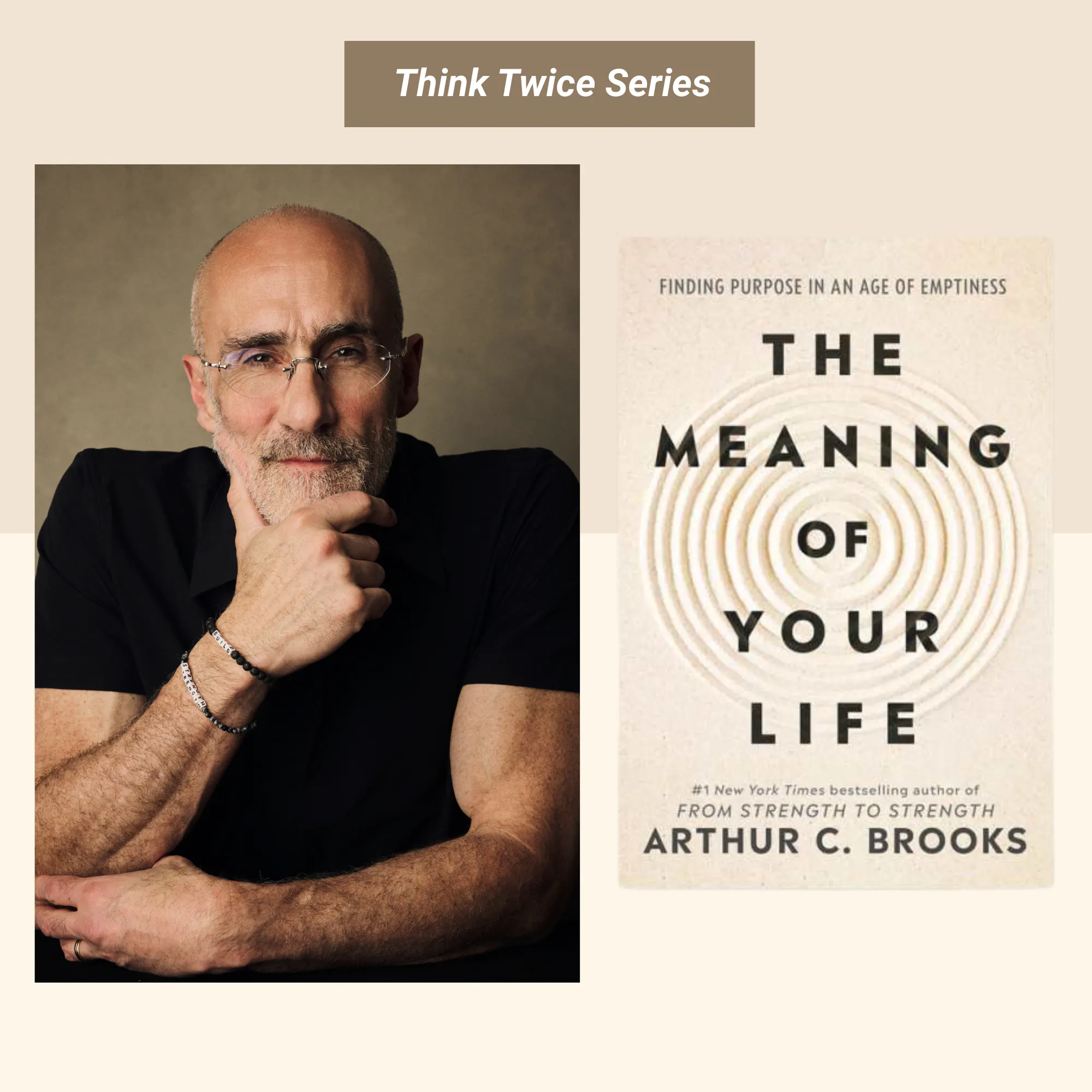
Think Twice About The Meaning of Your Life with Arthur C. Brooks
At some point, we all ask: “Is this what I’m meant to do?” In this "Think Twice" episode, social scientist Arthur C. Brooks joins Open to Debate's CEO Lia Matthow to explore why meaning feels harder to find. Drawing on research from his book "The Meaning of Your Life: Finding Purpose in an Age of Emptiness," Brooks argues modern life pushes us toward shallow solutions that miss deeper human needs, and offers a path back to purpose, connection, and a life that truly feels lived. Our Guest: Arthur C. Brooks, New York Times Bestselling Author of "The Meaning of Your Life: Finding Purpose in an Age of Emptiness"; Professor at Harvard University; Columnist at The Free Press Lia Matthow, CEO of Open to Debate, is the guest moderator. Join the conversation on Substack - share your perspective on this episode and subscribe to our weekly newsletter for curated insights from our debaters, moderators, and staff. Follow us on YouTube, Instagram, LinkedIn, X, Facebook, and TikTok to stay connected with our mission and ongoing debates. Learn more about your ad choices. Visit podcastchoices.com/adchoices

Should the U.S. Prioritize Settling Mars?
NASA is preparing for the Artemis II mission — a major step back into deep space to explore the Moon. But as NASA, SpaceX, and other private companies are also working on plans to make Mars humanity’s next frontier, what comes next, and should Mars be the bigger priority? Those arguing “yes” say the U.S. should do it first before China, while opponents say major challenges make colonization unrealistic. Now we debate: Should the U.S. Prioritize Settling Mars? Arguing Yes: Eric Berger, Senior Space Editor at Ars Technica Arguing No: Shannon Stirone, Freelance Science Writer Emmy award-winning journalist John Donvan moderates Join the conversation on Substack - share your perspective on this episode and subscribe to our weekly newsletter for curated insights from our debaters, moderators, and staff. Follow us on YouTube, Instagram, LinkedIn, X, Facebook, and TikTok to stay connected with our mission and ongoing debates. Learn more about your ad choices. Visit podcastchoices.com/adchoices

Has Legalizing Sports Gambling Become A Bad Bet?
Sports fans can place bets on their favorite teams and athletes faster and easier than before, thanks to legalized sports gambling. But was it the wrong bet to make? Advocates say it’s been good for fans, the economy, and the sports industry. Those who say that what’s happened since legalization is a bad thing, say it’s driven a rise in gambling addiction and created a public health crisis. Now we debate: Has Legalizing Sports Gambling Become A Bad Bet? Arguing Yes: Harry Levant, Director of Gambling Policy at the Public Health Advocacy Institute Arguing No: Bill Pascrell III, Partner at Princeton Public Affairs Group Nayeema Raza, Journalist and Host of "Smart Girl Dumb Questions", is the guest moderator. Join the conversation on Substack—share your perspective on this episode and subscribe to our weekly newsletter for curated insights from our debaters, moderators, and staff. Follow us on YouTube, Instagram, LinkedIn, X, Facebook, and TikTok to stay connected with our mission and ongoing debates. Learn more about your ad choices. Visit podcastchoices.com/adchoices

The Future of Film: Big Screen or Stream?
Where do you watch the latest movie everyone’s talking about—on Netflix at home or in a packed theater? Are theaters the irreplaceable heart of cinema, creating cultural moments and spectacle, or is streaming the future with its convenience and global reach? Two high-level Hollywood insiders, a former president of The Academy versus a film executive, debate in time for the Oscars: The Future of Film: Big Screen or Stream? Arguing "Big Screen": Hawk Koch, Film Producer; Former President of the Academy of Motion Picture Arts and Sciences and the Producers Guild of America Arguing "Stream": Chris Aronson, Former President Of Domestic Theatrical Distribution at Paramount Pictures Emmy award-winning journalist John Donvan moderates Join the conversation on Substack—share your perspective on this episode and subscribe to our weekly newsletter for curated insights from our debaters, moderators, and staff. Follow us on YouTube, Instagram, LinkedIn, X, Facebook, and TikTok to stay connected with our mission and ongoing debates. Learn more about your ad choices. Visit podcastchoices.com/adchoices

Will AI Make Work Obsolete?
AI can write code, diagnose diseases, design buildings, and create art. Tools like ChatGPT, Claude and autonomous robots are transforming industries once seen as automation-proof, fueling fears of mass job loss. Some argue that machines will become so efficient that they will one day replace most human labor. Others say AI will augment work, not erase it, and historically, people have feared innovation killing jobs, which arguably hasn't come to pass. Now we debate: Will AI Make Work Obsolete? Arguing Yes: Andrew Yang, Founder of the Forward Party, Former Presidential Candidate Simon Johnson, Nobel Prize-winning Economist; Professor of Entrepreneurship and Head of the Global Economics and Management Group at MIT Arguing No: Chris Hughes, Co-Founder of Facebook; Chair of the Economic Security Project; Author of "Marketcrafters" Rumman Chowdhury, CEO of Humane Intelligence PBC; Former U.S. Science Envoy for Artificial Intelligence Emmy award-winning journalist John Donvan moderates Join the conversation on Substack—share your perspective on this episode and subscribe to our weekly newsletter for curated insights from our debaters, moderators, and staff. Follow us on YouTube, Instagram, LinkedIn, X, Facebook, and TikTok to stay connected with our mission and ongoing debates. The Hopkins Forum is a partnership between Open to Debate and Johns Hopkins University’s SNF Agora Institute. This flagship series consists of live debates in Washington, D.C. and Baltimore, bringing together diverse perspectives to tackle today’s most pressing issues. Learn more about your ad choices. Visit podcastchoices.com/adchoices

Generational Divides with Nick Gillespie: The Golden Age of News Media
Are we in a News Media Golden Age, or a fragmented era? In this “Generational Divides” episode, Reason editor-at-large Nick Gillespie brings together Baby Boomer, Millennial, and Gen Z voices to debate how our media landscape is changing. Are more platforms expanding truth, or blurring the line between news and entertainment? Are journalists accountable to funders, audiences, or the truth? As industry shakeups like recent Washington Post layoffs signal change, what does the future of news media look like? For Baby Boomers: Kurt Andersen, Novelist, and Former Host of NPR's "Studio 360"; Co-founder of Spy magazine For Millennials: Nellie Bowles, Journalist & Co-Founder of The Free Press For Gen Z: Rachel Janfaza, Journalist & Founder of The Up and Up Substack; Contributor to The Bulwark Nick Gillespie, Editor-at-Large at Reason, is the guest moderator. Join the conversation on Substack—share your perspective on this episode and subscribe to our weekly newsletter for curated insights from our debaters, moderators, and staff. Follow us on YouTube, Instagram, LinkedIn, X, Facebook, and TikTok to stay connected with our mission and ongoing debates. Learn more about your ad choices. Visit podcastchoices.com/adchoices

Smart Girl Dumb Questions: Will the Market Crash in 2026? With Andrew Ross Sorkin
Today we're playing you an episode of Smart Girl Dumb Questions, a show hosted by journalist and frequent Open to Debate guest moderator Nayeema Raza. She speaks to Andrew Ross Sorkin about some highly-debated topics, from a looming market crash to AI battles to … whether we actually learned anything from past recessions (especially that one in 2008!). Get more Smart Girl Dumb Questions on Apple, Spotify, YouTube or wherever you get podcasts. Nayeema has compelling conversations with Mark Cuban on if billionaires can save us, Paul Krugman about whether we’re counting the economy wrong, Neil deGrasse Tyson and Bill Nye about what happened to expertise and science guys and Esther Perel on why it’s harder to fall in love in 2020s vs the 1980s. Guaranteed to make you laugh & learn every Tuesday. We also highly recommend Andrew Ross Sorkin’s bestselling book 1929. For more insightful conversation, visit Open to Debate's Substack—share your perspectives and subscribe to our weekly newsletter for curated insights from our debaters, moderators, and staff. Follow Open to Debate on Youtube, Instagram, LinkedIn, X, Facebook, and TikTok to stay connected with our mission and ongoing debates. Learn more about your ad choices. Visit podcastchoices.com/adchoices

Think Twice About War, Tech, & Dirty Supply Chains: The Elements of Power with Nicolas Niarchos
Your smartphone feels sleek and futuristic—but the supply chain behind it is anything but. In this conversation with moderator-in-chief John Donvan, journalist and “The Elements of Power” author Nicolas Niarchos showcases how lithium-ion batteries rely on cobalt mined under dangerous, exploitative conditions. Tracing a line from colonialism to today’s U.S.–China power struggle, he asks us to Think Twice on this question: what human and environmental costs are hidden inside the technology that powers modern life? Our Guest: Nicolas Niarchos, Journalist and Author of “The Elements of Power” Emmy award-winning journalist John Donvan moderates Join the conversation on Substack—share your perspective on this episode and subscribe to our weekly newsletter for curated insights from our debaters, moderators, and staff. Follow us on YouTube, Instagram, LinkedIn, X, Facebook, and TikTok to stay connected with our mission and ongoing debates. Learn more about your ad choices. Visit podcastchoices.com/adchoices

Could Dating an AI Be Better Than Dating a Human?
Love in the time of AI? Some people seeking romance or friendship are turning to AI chatbots to fulfill those desires, but could they surpass traditional human relationships? Those who say they can argue that AI can offer empathy and safety, and it’s a solution for those left out of traditional dating. Those saying they can’t argue that intimacy is complicated and cannot be replicated in code. Now we debate: Could Dating an AI Be Better Than Dating a Human? Arguing Yes: Thao Ha, Associate Professor of Psychology and Director of the @HEART Lab at Arizona State University Arguing No: Justin Garcia, Executive Director & Senior Scientist at the Kinsey Institute; Chief Scientific Advisor to Match.com; Author of "The Intimate Animal" Nayeema Raza, Journalist and Host of "Smart Girl Dumb Questions", is the guest moderator. Join the conversation on Substack—share your perspective on this episode and subscribe to our weekly newsletter for curated insights from our debaters, moderators, and staff. Follow us on YouTube, Instagram, LinkedIn, X, Facebook, and TikTok to stay connected with our mission and ongoing debates. Learn more about your ad choices. Visit podcastchoices.com/adchoices

Is U.S. Control of Limited Territory in Greenland A Strategic Necessity?
Greenland has become a geopolitical flashpoint. President Trump wants control of it, or at least sovereignty over some areas for military purposes, arguing that the United States gaining some territorial rights in Greenland is a necessity for U.S. security. But some leaders worry that a power grab could pit NATO against the U.S. and weaken an already fragile world order. Now we debate: Is U.S. Control of Limited Territory In Greenland a Strategic Necessity? Arguing Yes: Alexander B. Gray, Senior Fellow at the American Foreign Policy Council; Former Deputy Assistant to the President and Chief of Staff of the White House National Security Council Michael Pillsbury, Senior Advisor for the President’s Office at The Heritage Foundation Arguing No: Kori Schake, Senior Fellow and the Director of Foreign and Defense Policy Studies at the American Enterprise Institute (AEI) Max Boot, Jeane J. Kirkpatrick Senior Fellow for National Security Studies at the Council on Foreign Relations; Columnist at The Washington Post Emmy award-winning journalist John Donvan moderates Join the conversation on Substack—share your perspective on this episode and subscribe to our weekly newsletter for curated insights from our debaters, moderators, and staff. Follow us on YouTube, Instagram, LinkedIn, X, Facebook, and TikTok to stay connected with our mission and ongoing debates. Learn more about your ad choices. Visit podcastchoices.com/adchoices

Legalize Assisted Suicide?
In December of 2025, New York State Governor Kathy Hochul announced that after months of negotiations with the state legislature, she was finally ready to sign into law a new bill allowing some patients to request medical assistance in dying, or MAID. That bill is currently sitting on her desk waiting for her signature. This type of bill has become more and more common. In 1994, Oregon passed the Death with Dignity Act, becoming the first state to allows physician-assisted suicide for the terminally ill. Now 12 states plus the District of Columbia have laws on the books allowing physicians to assist patients in ending their life, within limits. Patients must have a prognosis of less than six months to live, and they must take the medication themselves. As more and more states discuss passing their own versions of these bills, we revisit the debate we had on this very topic in 2014. The motion that we debated: Legalize assisted suicide. While the preferred language has changed to Medical Aid in Dying, the thorny ethical questions and the complicated medical judgments remain unchanged. Will these laws lead to a slippery slope, where the vulnerable are pressured to choose death and human life is devalued? Or do we need to recognize everyone's basic right to autonomy, the right to end pain and suffering, and the right to choose to die with dignity? This debate was recorded live in November of 2014 at the Kaufman Music Center in New York. Arguing Yes: Peter Singer: Co-Founder of the Effective Altruism movement. Professor of Bioethics, Emeritus, Princeton University. Podcast host, "Lives Well Lived" Andrew Solomon: Author of “Far From the Tree”, Professor of Clinical Psychology at Columbia University and Weill Cornell Medical College. He also researches at Yale School of Medicine. Currently writing a book about suicide. Arguing No: Ilora Finlay, The Baroness Finlay of Llandaff: Former President of the British Medical Association, Member of the House of Lords. Daniel Sulmasy: André Hellgers Professor of Biomedical Ethics in the Departments of Medicine and Philosophy and Director of the Kennedy Institute of Ethics at Georgetown University. A few links to articles on the topic: New York to become latest state to allow aid in dying. What is it? ,USA Today Do Patients Without a Terminal Illness Have the Right to Die? New York Times The country gave its citizens the right to die. Doctors are struggling to keep up with demand. The Atlantic Magazine Join the conversation on Substack—share your perspective on this episode and subscribe to our weekly newsletter for curated insights from our debaters, moderators, and staff. Follow us on YouTube, Instagram, LinkedIn, X, Facebook, and TikTok to stay connected with our mission and ongoing debates. Learn more about your ad choices. Visit podcastchoices.com/adchoices

Innovation or Intrusion: The Big Data Debate
Every click, search, and online purchase feeds the data economy, driving AI, global business, and even political campaigns. But with risks growing in the private and public spheres, is Big Data advancing society or undermining its foundations? Supporters argue Big Data powers innovation by fueling breakthroughs in medicine, public health, and everyday efficiency. Yet critics warn that it erodes privacy, concentrates power, and threatens democracy. In the age of algorithms and analytics, is Big Data a necessary innovation or a dangerous intrusion? Arguing "Innovation": Kenneth Cukier, Deputy Executive Editor at The Economist Arguing "Intrusion": Carissa Véliz, Associate Professor at the Faculty of Philosophy and the Institute for Ethics in AI at the University of Oxford Xenia Wickett, Geopolitical strategist, moderator at Wickett Advisory, and Trustee of Transparency International UK, is the guest moderator. Join the conversation on our Substack—share your perspective on this episode and subscribe to our weekly newsletter for curated insights from our debaters, moderators, and staff. Follow us on YouTube, Instagram, LinkedIn, X, Facebook, and TikTok to stay connected with our mission and ongoing debates. Learn more about your ad choices. Visit podcastchoices.com/adchoices

Is It OK to Pay for Sex?
Prostitution remains heavily stigmatized and legally complex globally. Those in favor of paying for sex and support decriminalization argue that it’s a profession that deserves as much respect as any other. Those against it, and who support the Nordic Model, argue that prostitution leads to inequities between sex buyers and workers, exploitation, and coercion, and can open the door to human trafficking. Now we debate: Is It OK to Pay for Sex? Arguing Yes: Kaytlin Bailey, Sex Workers Rights Advocate; Founder & Executive Director of Old Pros and Host of “The Oldest Profession Podcast” Arguing No: Yasmin Vafa, Human Rights Attorney; Co-Founder and Executive Director at Rights4Girls Emmy award-winning journalist John Donvan moderates Learn more about your ad choices. Visit podcastchoices.com/adchoices

Does AA Work?
Millions of people have credited Alcoholics Anonymous with helping them stay sober from alcohol, but is it the best path for everyone? Those who say “yes” argue it is easily accessible to all and that its structure through the 12-step program helps people succeed. Those who say “no” argue say the abstinence model doesn’t work for everyone and there may be better alternatives. Now we debate: Does AA Work? Arguing Yes: Dan Griffin, Expert on Alcoholics Anonymous; Author of “A Man’s Way Through the Twelve Steps” Arguing No: Adi Jaffe, Founder of IGNTD; Author of “The Abstinence Myth” Nayeema Raza, Journalist and Host of "Smart Girl Dumb Questions", is the guest moderator. Learn more about your ad choices. Visit podcastchoices.com/adchoices

Has Feminism Hurt Women?
From the 19th Amendment to the #MeToo movement, the feminist movement has profoundly reshaped society. But have its good intentions backfired? Those arguing it hasn’t note that it’s allowed women the choice of living on their own terms. But critics argue that its culture glorifying full-time careerism and independence can make women feel inadequate if they prefer traditional roles like having a family. Now we debate: Has Feminism Hurt Women? Arguing Yes: Inez Stepman, Senior Policy and Legal Analyst at the Independent Women's Forum and Independent Women’s Law Center Arguing No: Wendy Walsh, Relationship Journalist; Host of ”The Dr. Wendy Walsh Show” on iHeart Radio’s KFI AM 640 Xenia Wickett, Geopolitical strategist, moderator at Wickett Advisory, and Trustee of Transparency International UK, is the guest moderator. Learn more about your ad choices. Visit podcastchoices.com/adchoices

Can Religion Cure the Loneliness Epidemic?
America is suffering from a loneliness epidemic. Some groups have suggested religious communities may be key to solving it. Could it help? Those arguing “yes” say it gives people regular social contact, support systems, and a sense of purpose that could combat isolation. Those arguing “no” say that secular options would provide better, broad-based solutions. Now we debate: Can Religion Cure the Loneliness Epidemic? Arguing Yes: Harold Koenig, Director of Duke University’s Center for Spirituality, Theology and Health Chris Murphy, Senator from Connecticut Arguing No: Ruth Whippman, Author of "America the Anxious: How Our Pursuit of Happiness Is Creating a Nation of Nervous Wrecks" and "BOYMOM: Reimagining Boyhood in the Age of Impossible Masculinity." Dan Barker, Co-President of the Freedom from Religion Foundation Emmy award-winning journalist John Donvan moderates Learn more about your ad choices. Visit podcastchoices.com/adchoices

How to Resolve Conflicts in Relationships: A Conversation with Esther Perel
Couples have arguments over many topics. However, it’s through resolving conflict that both people in the relationship feel heard and seen. Psychotherapist, relationship expert, and New York Times-bestselling author Esther Perel says conflict when navigated skillfully can lead to growth, resilience, and a stronger bond. In this conversation with John Donvan, Perel shares her experience working with different relationship types, strategies for transforming conflict into a constructive dialogue, and the importance of validating both sides’ perspectives. Our guest: Esther Perel, Psychotherapist and New York Times bestselling author Emmy award-winning journalist John Donvan moderates Visit OpentoDebate.org to watch more insightful debates. Subscribe to our newsletter to stay informed on our curated weekly debates, dynamic live events, and educational initiatives. Learn more about your ad choices. Visit podcastchoices.com/adchoices

Tech Titans or Tyrants: Should the U.S. Government Break Up Big Tech?
Has Big Tech become too powerful? Amazon, Apple, Alphabet, Meta, and Microsoft shape how we shop, communicate, and consume information. But has their dominance gone too far? Advocates argue these firms are monopolies that harm competition, exploit consumer data, and wield disproportionate influence over public discourse. Structural reforms would restore fairness and innovation. But critics warn that breakups could damage user experience, slow innovation, and disrupt integrated ecosystems people rely on. Now we debate: Should the U.S. Government Break Up Big Tech? Arguing Yes: Bharat Ramamurti, Founder of The Bully Pulpit; Former Deputy Director of the National Economic Council Matt Stoller, Director of Research at the American Economic Liberties Project Arguing No: Geoffrey A. Manne, President and Founder of the International Center for Law & Economics Jennifer Huddleston, Senior Fellow in Technology Policy at the Cato Institute Emmy award-winning journalist John Donvan moderates This debate was produced in partnership with the SNF Agora Institute at Johns Hopkins University, as part of The Hopkins Forum series. It was recorded in front of a live audience on Thursday, December 4, 2025 at the Johns Hopkins University Bloomberg Center. Visit OpentoDebate.org to watch more insightful debates. Subscribe to our newsletter to stay informed on our curated weekly debates, dynamic live events, and educational initiatives. Learn more about your ad choices. Visit podcastchoices.com/adchoices
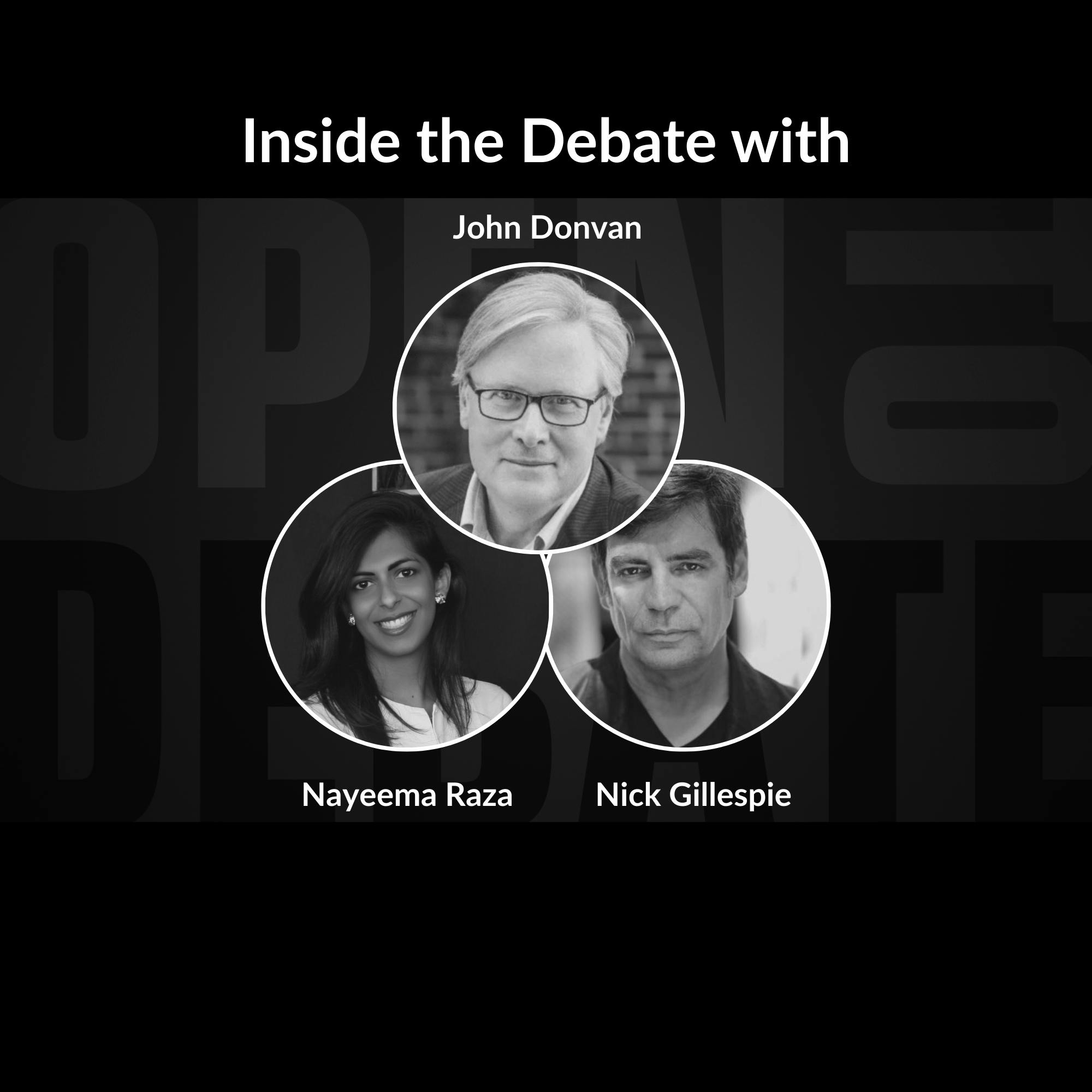
INSIDE THE DEBATE with John Donvan, Nayeema Raza, and Nick Gillespie
What does it take to moderate a debate? How do we keep conversations civil when the world feels so polarized? In celebration of our launch on Substack, moderator-in-chief John Donvan joins Nayeema Raza and Reason’s Nick Gillespie for a lively conversation on the craft of moderation and the art of asking questions that reveal rather than inflame. Featuring audience Q&A and behind-the-scenes insight, this episode offers a candid look at how meaningful dialogue is created today. Our Guests: John Donvan, Open to Debate's Moderator-in-Chief and Emmy award-winning journalist Nayeema Raza, Journalist and Host of "Smart Girl Dumb Questions" Nick Gillespie, Editor-at-Large at Reason Debates Referenced During this Inside Edition 13:03 - Should America End Birthright Citizenship? 19:22 - Is It Time To Break Up With Dating Apps? 20:34 - Replace Private Insurance with Medicare for All 20:38 - Should We Legalize Drugs? 20:41 - Preserve Net Neutrality: All Data Is Created Equal 21:14 - Is America Too Obsessed With Race? 27:04 - Is the American Dream in Decline? 28:35 - The Universal Basic Income Is The Safety Net Of The Future Learn more about your ad choices. Visit podcastchoices.com/adchoices

Does the Effective Altruism Movement Get Giving Right?
Effective altruism is a philosophical and social movement that uses empirical data to maximize the impact of charitable efforts. Those who champion EA praise its methodological framework for maximizing the effectiveness of donations, thus ensuring equal consideration for all individuals. Those who challenge EA argue that its emphasis on measurable outcomes may overlook important yet hard-to-quantify causes, potentially restricting the scope of what's considered beneficial. Now we debate: Does the Effective Altruism Movement Get Giving Right? Arguing Yes: Peter Singer, Author of “The Most Good You Can Do”; Philosopher and Emeritus Professor of Bioethics at the University Center for Human Values at Princeton University Arguing No: Alice Crary, Co-Editor of “The Good it Promises, The Harm it Does: Critical Essays on Effective Altruism”; University Distinguished Professor of Philosophy at The New School for Social Research Emmy award-winning journalist John Donvan moderates Visit our Substack to watch more insightful debates and subscribe to our newsletter. Learn more about your ad choices. Visit podcastchoices.com/adchoices

Should the U.S. Militarize the War on Drugs?
he Trump administration is taking the War on Drugs in a bold direction, using aircraft carriers, intelligence networks, and direct military strikes to target alleged smuggling vessels in the Caribbean and eastern Pacific. Supporters of militarization argue that previous strategies to stop cartels have failed, and only aggressive deterrence will stop the crisis. Others warn that militarization usually fails to stop drug flows, risking civilian casualties, and rarely achieves lasting results. Now we debate: Should the U.S. Militarize the War on Drugs? Arguing Yes: Sean McFate, Author and Professor of Strategy at the National Defense University and Georgetown University’s School of Foreign Service Andrés Martínez-Fernández, Senior Policy Analyst for Latin America at The Heritage Foundation's Allison Center for National Security Arguing No: Will Freeman, Fellow for Latin America Studies at the Council on Foreign Relations Aileen Teague, Assistant Professor of International Affairs at Texas A&M University's Bush School of Government and Public Service Emmy award-winning journalist John Donvan moderates Visit our Substack to watch more insightful debates and subscribe to our newsletter. Learn more about your ad choices. Visit podcastchoices.com/adchoices
BONUS: Why Debate Matters — Robert Rosenkranz on Clearer Thinking
bonusWe are pleased to share an episode from the Clearer Thinking Podcast featuring Open to Debate Founder Robert Rosenkranz in conversation with Spencer Greenberg. About this episode: What makes a forum truly open-minded rather than performative? When does listening change minds instead of just hardening identities? Are we teaching citizens to separate facts from frames? Do the best debates surface values as well as evidence? How can we reward calm argument over outrage economics? What reforms reduce polarization without dulling real disagreement? Should any topic be off-limits in a free society? Is philanthropy giving back—or building what’s missing? Should generosity optimize impact or express the values we want to grow? How much risk is acceptable when the upside is transformative? Robert Rosenkranz is a dedicated philanthropist, an advocate for intellectual engagement, and respected commentator on philanthropy. He founded Delphi Capital Management and championed the renowned Open to Debate debate series. Robert’s latest book, The Stoic Capitalist, explores the intersection of ancient Stoic wisdom and modern capitalism. When he’s not crafting ideas, Robert dedicates his time to supporting the arts, advancing education, and contributing to public policy through The Rosenkranz Foundation. Learn more about the Clearer Thinking podcast here. Visit our Open to Debate Substack to watch more insightful debates and subscribe to our newsletter. To learn more about our mission and donate, visit Opentodebate.org. Learn more about your ad choices. Visit podcastchoices.com/adchoices