On Being
428 episodes — Page 7 of 9
Thupten Jinpa — Translating the Dalai Lama (Feb 21, 2013)
Esoteric teachings on reincarnation and consciousness; simple teachings on compassion and ethics. Geshe Thupten Jinpa is a man who finishes the Dalai Lama’s English sentences. Meet this philosopher and former monk, now a husband and father of two daughters, and hear what happens when the ancient tradition embodied in the Dalai Lama meets science and life. See more at http://www.onbeing.org/program/translating-dalai-lama/235
Ursula King, Andrew Revkin + David Sloan Wilson — Teilhard de Chardin's Planetary Mind
The coming stage of evolution, Teilhard de Chardin said, won't be driven by physical adaptation but by human consciousness, creativity, and spirit. We visit with his biographer Ursula King, and we experience his ideas energizing New York Times Dot Earth blogger Andrew Revkin and evolutionary biologist David Sloan Wilson. See more at www.onbeing.org/program/teilhard-de-chardins-planetary-mind-and-our-spiritual-evolution/4965
Joanna Brooks — Mormons Demystified (Aug 23, 2012)
From The Daily Show with Jon Stewart to CNN, Joanna Brooks has become a go-to voice during our national inspection of Mormonism in this presidential campaign. As Mitt Romney makes history, we revisit our personal and revealing conversation with the Ask Mormon Girl blogger. She opens a window on Mormonism as an evolving and far from monolithic faith.
Terry Tempest Williams — The Vitality of the Struggle (July 19, 2012)
Terry Tempest Williams is a naturalist and writer, a biologist by training with a literary mind. She comes from a long Mormon lineage in Utah. She draws political, spiritual and creative inspiration from her experience of the interior American west. She offers stories of neighborly collaboration that turns into environmental protection, and the value that comes from vitriolic disagreement inside families. See more at: www.onbeing.org/program/vitality-struggle/233
Mustafa Akyol — Religion, Democracy, and the New Turkey (July 12, 2012)
There's a country between Europe's debt crisis and the Arab Spring, where democracy is valued and the economy is growing. It's Turkey. Mustafa Akyol gives a fresh perspective on this new model of religion and democracy.
Jacob Needleman — The Inward Work of Democracy (June 28, 2012)
Krista Tippett speaks with philosopher Jacob Needleman. As new democracies are struggling around the world, it’s easy to forget that U.S. democracy was shaped by trial and error. A conversation about the “inward work” of democracy — the conscience that shaped the American experiment. See more at http://www.onbeing.org/program/inward-work-democracy-jacob-needleman/222#sthash.uEEZSvS1.dpuf
Richard Davidson — Investigating Healthy Minds (June 14, 2012)
Once upon a time we assumed the brain stops developing when we're young. Neuroscientist Richard Davidson helped overturn this idea by studying the brains of meditating Buddhist monks. Now he's working on conditions like ADHD and autism. He focuses not on fixing what is wrong, but on rewiring our minds with life-enriching behaviors.
Cal DeWitt + Majora Carter — Discovering Where We Live: Reimagining Environmentalism (Jan 17, 2008)
Environmentalism and climate change are hot topics; yet they're still often imagined as the territory of scientists, expert activists, and those who can afford to be environmentally conscious. We discover two people who are transforming the ecology of their immediate worlds: biologist Calvin DeWitt in Dunn, Wisconsin and Majora Carter in New York's South Bronx. See more at www.onbeing.org/program/discovering-where-we-live-reimagining-environmentalism/87
Douglas Johnston — Diplomacy and Religion in the 21st Century (Jan 3, 2008)
The greatest threat in the post-Cold War world, says Douglas Johnston, is the prospective marriage of religious extremism with weapons of mass destruction. Yet the U.S. spends most of its time, resources, and weapons fighting the symptoms of this threat, not the cause. The diplomacy of the future, he is showing, must engage religion as part of the strategic solution to global conflicts. See more at www.onbeing.org/program/diplomacy-and-religion-21st-century/86
The New Evangelical Leaders: Part 2 - Rick and Kay Warren (December 6, 2007)
The second in a two-part series on influential leaders who are reshaping Evangelical Christianity from within progressive and conservative circles. The best-selling author of "The Purpose Driven Life," Rick Warren and his wife Kay lead one of the largest churches in the U.S. They are now partnering in global ventures to fight AIDS and poverty.
Jim Wallis — The New Evangelical Leaders, Part I (Nov 29, 2007)
Evangelical Christianity has no single, central authority, but it does have guiding figures in every generation. Progressive social activist Jim Wallis has become something of a national celebrity, proposing a new agenda for religion in politics in what he calls the "post-Religious Right era." See more at www.onbeing.org/program/new-evangelical-leaders-part-i-jim-wallis/212
Nathan Dungan — Money and Moral Balance (Nov 8, 2007)
Many of us are gearing up to spend more money than we actually have for the upcoming holiday season, which has deep roots in religion. We explore the turmoil many of us experience with money in our day-to-day lives — and how we might work towards a moral and practical balance for ourselves and the next generation. See more at www.onbeing.org/program/money-and-moral-balance/131/
Michael McCullough — Getting Revenge and Forgiveness (May 24, 2012)
Michael McCullough describes science that helps us comprehend how revenge came to have a purpose in human life. At the same time, he stresses, science is also revealing that human beings are more instinctively equipped for forgiveness than we've perhaps given ourselves credit for. Knowing this suggests ways to calm the revenge instinct in ourselves and others and embolden the forgiveness intuition.
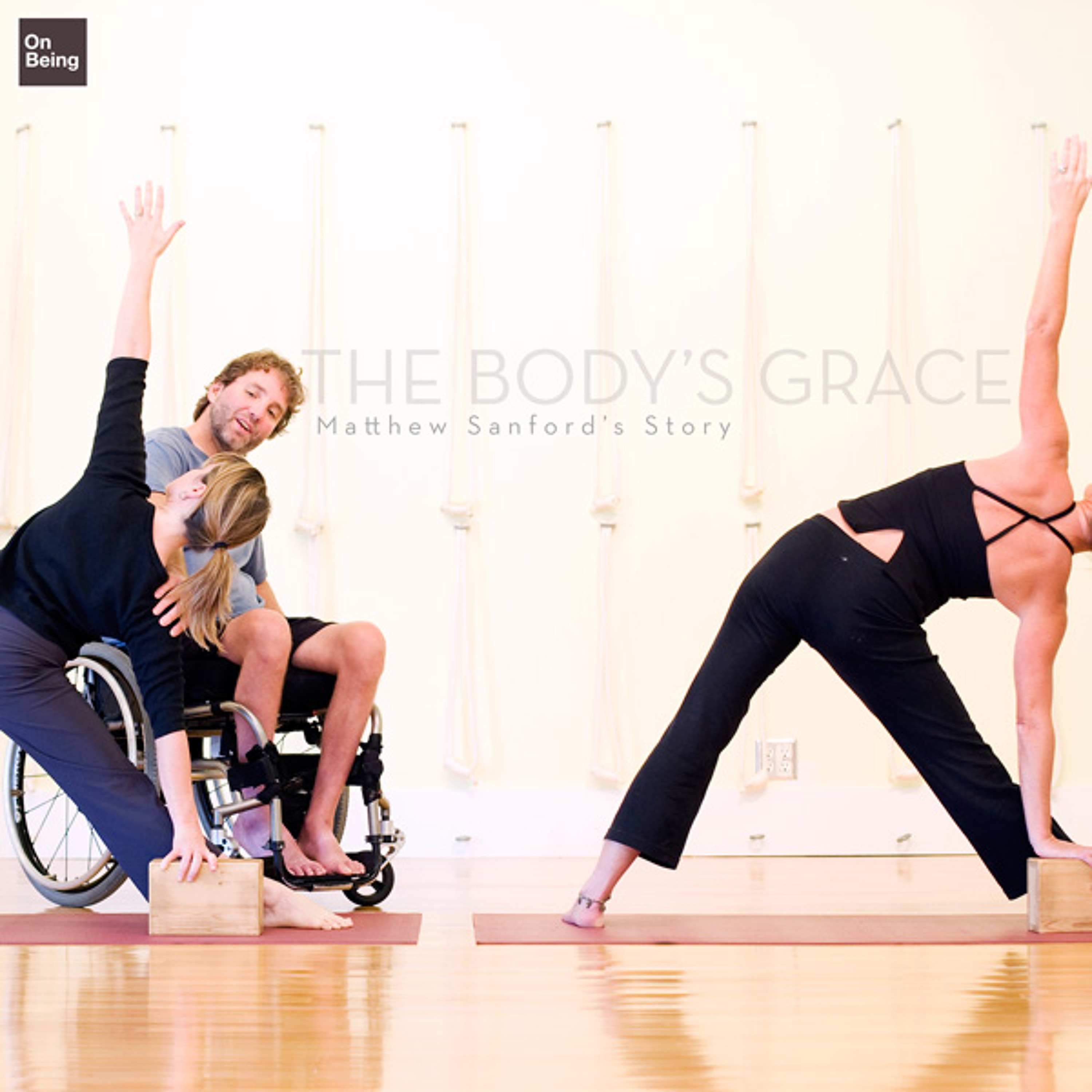
Matthew Sanford — The Body's Grace (May 3, 2012)
Matthew Sanford says he's never seen anyone live more deeply in their body -- in all of its grace and all of its flaws -- without becoming more compassionate toward all of life. He is a renowned yoga teacher, and he has been paralyzed from the chest down since he was 13. He teaches yoga to the able-bodied and adapts yoga for people with ailments and disabilities, including military veterans. With Krista Tippett, he shares his story on finding his own way in to what we call the mind-body connection, and what might be discovered there. His wisdom holds lessons for how all of us can fully inhabit our bodies across the span of our lives. An unusual take on the mind-body connection with author and yoga teacher Matthew Sanford. He's been a paraplegic since the age of 13. He shares his wisdom for us all on knowing the strength and grace of our bodies even in the face of illness, aging, and death. See more at http://www.onbeing.org/program/bodys-grace-matthew-sanfords-story/185
Ernie LaPointe and Cedric Good House — Reimagining Sitting Bull, Tatanka Iyotake (April 19, 2012)
Sitting Bull is best known for defeating General Custer at the Battle of Little Bighorn. But for many Lakota, his resistance to federal appropriation of sacred lands reflects humility towards the land and compassion towards his people -- with his death 120 years ago being his ultimate moment of sacrifice. We explore Sitting Bull's spiritual legacy as a force for identity and healing among the living.
Vigen Guroian — Restoring the Senses: Gardening and Orthodox Easter (April 5, 2012)
An understanding of Easter from inside the Armenian Orthodox tradition. Vigen Guroian experiences Easter as as a call to our senses. He's a theologian who contemplates the grand ideas of incarnation, death, and eternity as they are revealed in life and in his garden. Krista Tippett explores his religious way of being in this Lenten season that is both mystical and literally down to earth.
Fatemeh Keshavarz — The Ecstatic Faith of Rumi (March 8, 2012)
The 13th-century mystic and poet Rumi is a best-selling author in the modern West who has long influenced Islamic thought and spirituality, though his Muslim identity is often lost in translation. Enter the exuberant world of Rumi with Iranian-American poet and scholar Fatemeh Keshavarz. Delve into why Rumi matters in our time and how he understood searching and restlessness as a kind of arrival. And through a lush production of his words and poetry -- layered in Persian and English -- experience how he saw every form of human love as a mirror of the divine. And, how Rumi inspired the whirling dervishes. See more at www.onbeing.org/program/ecstatic-faith-rumi/189
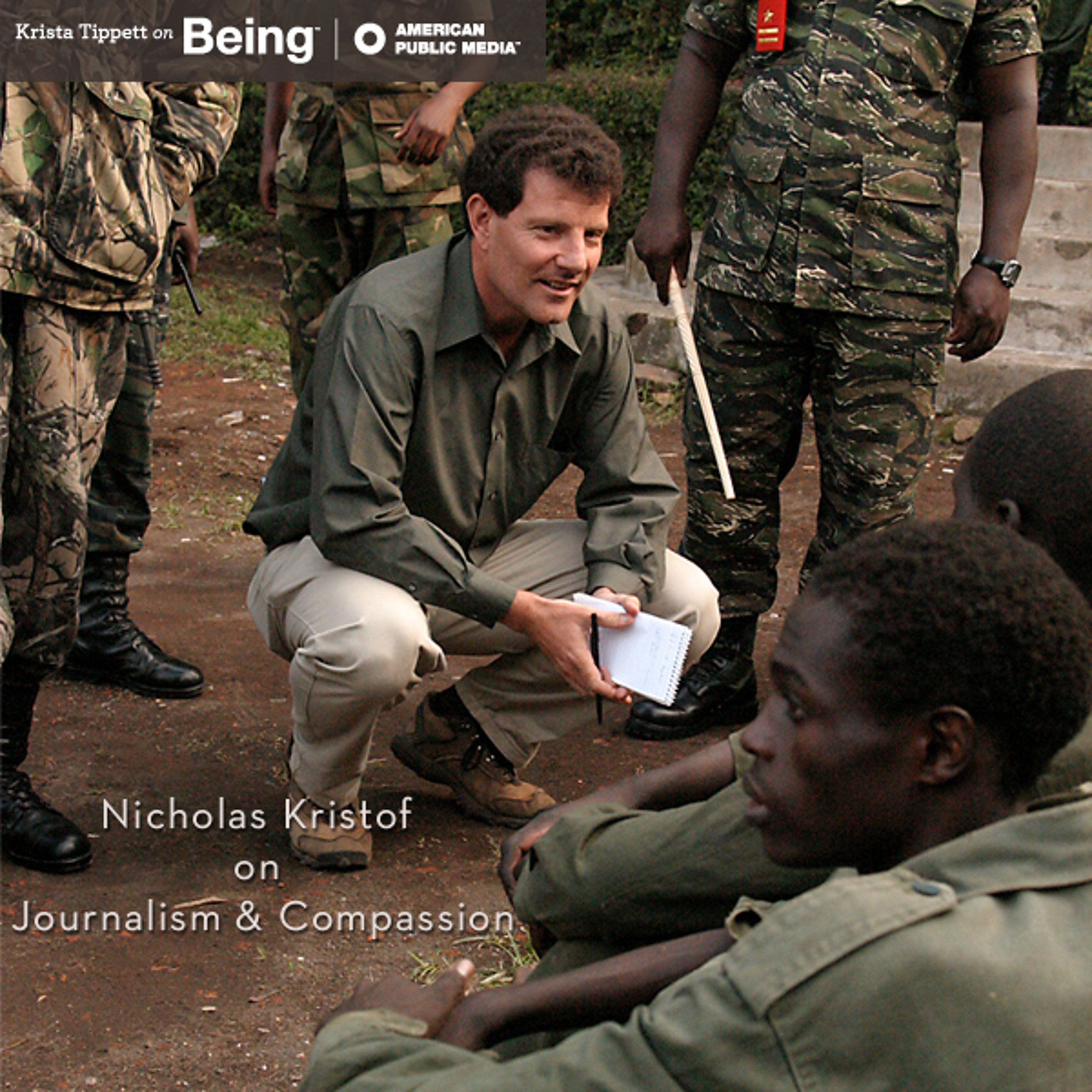
Nicholas Kristof — Journalism and Compassion (Feb 9, 2012)
Journalism can make us care -- or it can numb us to human suffering. Nicholas Kristof's columns in The New York Times wrap hard news inside human stories with broad appeal. Krista talks with him about the lessons of his life covering some of the worst atrocities in the world. He draws on insights of neuroscience, for example, to pierce through compassion fatigue.
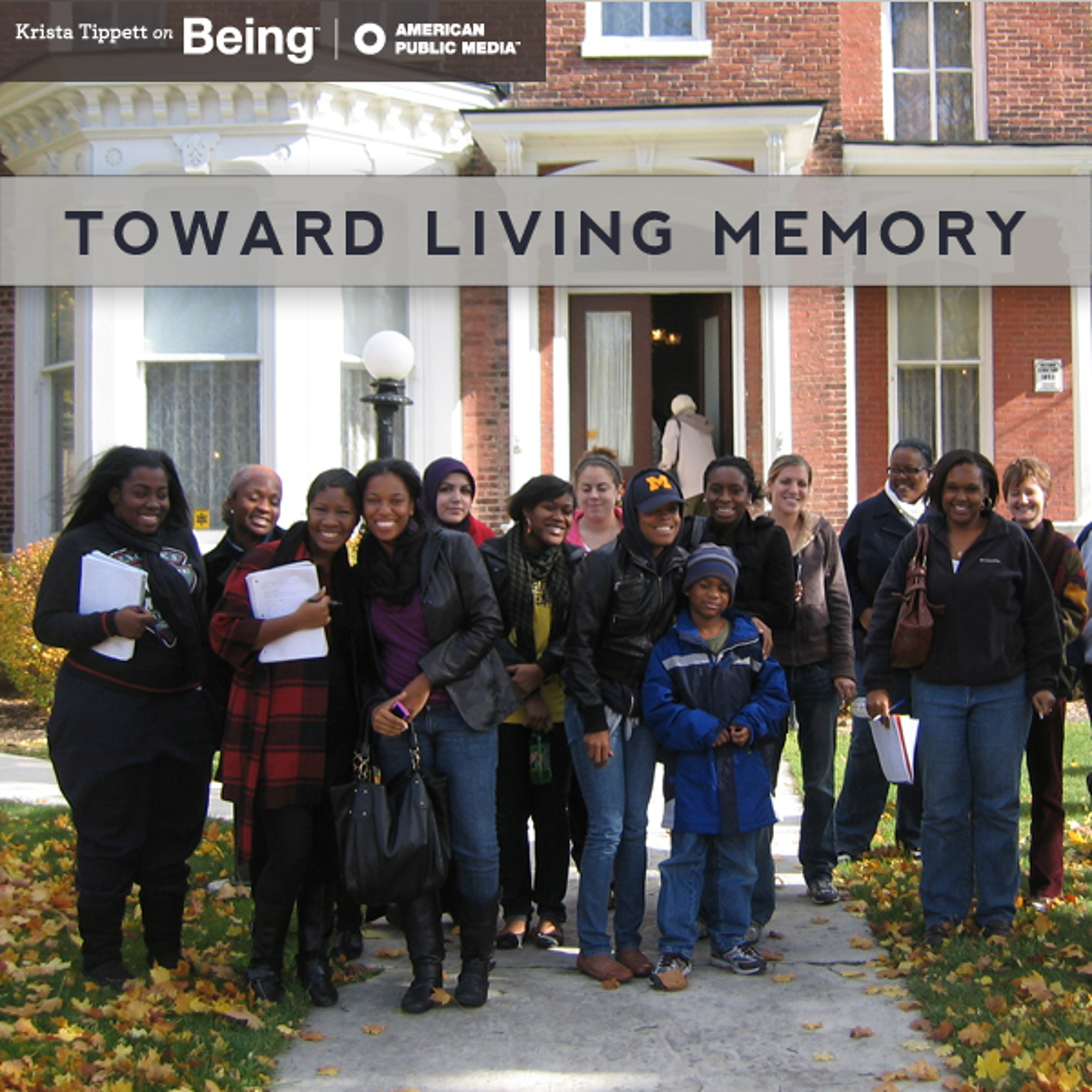
Tiya Miles — Toward Living Memory (Feb 2, 2012)
For Black History Month: public historian Tiya Miles. She's a MacArthur "genius" who's unearthing an especially painful chapter of the American experience -- the intersecting history of African-Americans and Native Americans, and the little-known narratives that Cherokee landowners held black slaves. Even with history this difficult, Tiya Miles shows us the possibility of stretching the canvas of the past wide enough to hold both hard truths and healing. See more at www.onbeing.org/program/toward-living-memory/1344
John Paul Lederach — The Art of Peace (Jan 12, 2012)
What happens when people transcend violence while living in it? John Paul Lederach has spent three decades mediating peace and change in 25 countries — from Nepal to Colombia and Sierra Leone.. He shifts the language and lens of the very notion of conflict resolution. He says, for example, that enduring progress takes root not with large numbers of people, but with relationships between unlikely people. See more at: http://www.onbeing.org/program/art-peace/182
Scott-Martin Kosofsky — Legends To Live By (Dec 15, 2011)
Could a Yiddish text from the Middle Ages serve as a guide to living now? Book composer and typographer Scott-Martin Kosofsky revives unlikely sources of customs for leading a modern life and marking sacred time. For Hanukkah and all the seasons upon us.
Diane Winston — Monsters We Love: TV's Pop Culture Theodicy (Dec 1, 2011)
Loving vampires. Amoral zombies. And righteous serial killers. Shows about monsters, human and otherwise, are captivating TV watchers of all ages. Diane Winston, a religion and media watcher (and TV aficionado) says we shouldn't be surprised by these series in-your-face themes of God, meaning, and re-enchanting the world.
Ellen Davis — The Poetry of Creatures (Nov 24, 2011)
Biblical scholar Ellen Davis is helping to shape a new approach and way of thinking about human domination of the Earth and its creatures. With her friend, the farmer and poet Wendell Berry, they speak to our collective grief at destruction of the natural world and nourish a 'chastened' yet 'tenacious' hope. See more at www.onbeing.org/program/poetry-creatures/117
Paul Raushenbush — Occupying the Gospel (Nov 17, 2011)
Paul Raushenbush opens up a forgotten impulse of social activism in the DNA of American Christianity -- the "social gospel" led by his great grandfather, Walter Rauschenbusch a century ago.
Matthieu Ricard — The Happiest Man in the World (Oct 27, 2011)
A renowned Buddhist teacher and author, Matthieu Ricard trained as a cell biologist and is now part of the Dalai Lama's ongoing dialogue with scientists. We'll explore why he's been called the happiest man in the world, and how he understands spirituality as "contemplative science."
Avivah Zornberg — The Genesis of Desire (Oct 6, 2011)
Celebrated Torah scholar Avivah Zornberg is the daughter and granddaughter of rabbis of East European lineage. She's also steeped in the Jewish mystical tradition of Kabbalah. She connects deep and unexpected currents between the Bible and the lived situation of the reader.
Sari Nusseibeh — The Evolution of Change (Sep 15, 2011)
Sari Nusseibeh, a Palestinian philosopher and president of Al-Quds University, comes from a family that has been in Jerusalem for 1300 years. His personal story enfolds layers of history that are shaping current history in the making.
Hendrick Hertzberg, Pankaj Mishra and Serene Jones — Remembering Forward (Sep 8, 2011)
In the days and months after 9/11, St. Paul's Chapel became the hub where thousands of volunteers and rescue workers received round-the-clock care. It was a moving setting to explore how 9/11 changed us as a people — and to ponder the inward work of living with enduring grief and unfolding understanding. See more at http://www.onbeing.org/program/who-do-we-want-become-remembering-forward-decade-after-911/257
Richard Mouw — Restoring Political Civility (Aug 18, 2011)
Richard Mouw challenges his fellow conservative Christians to civility in public discourse. He offers historical as well as spiritual perspective on American Evangelicals' navigation of disagreement, fear, and truth. See more at http://www.onbeing.org/program/restoring-political-civility-evangelical-view/163
Frances Kissling — Listening Beyond Life and Choice (Aug 11, 2011)
Frances Kissling is known for her longtime activism on the abortion issue but has devoted her energy more in recent years to real relationship and new conversations across that bitter divide. She's learned, she's written, about the courage to be vulnerable in front of those with whom we passionately disagree. See more at www.onbeing.org/program/listening…fe-and-choice/123
Paul Collins and Jennifer Elder — Autism and Humanity (July 14, 2011)
One child in every 110 in the U.S. is now diagnosed to be somewhere on the spectrum of autism. We step back from public controversies over causes and cures and explore the mystery and meaning of autism in one family's life, and in history and society. Our guests say that life with their child with autism has deepened their understanding of human nature — of disability, and of creativity, intelligence, and accomplishment. See more at: http://www.onbeing.org/program/autism-and-humanity/70
Amahl Bishara and Nidal Al-Azraq — Pleasure More Than Hope (July 7, 2011)
Did you know that the sacred city of Bethlehem lies within the West Bank? And, inside its borders, you'll find something unexpected -- a close-knit neighborhood where generations of people have created a new life for themselves. Amahl Bishara and Nidal Al-Azraq show us something rare that we don't see in the news about refugee camps -- the quiet cycles of everyday life. See more at www.onbeing.org/program/pleasure-more-hope/13
Anthea Butler and Arlene Sánchez-Walsh — Reviving Sister Aimee (June 9, 2011)
A look back at the closest thing the early 20th century may have had to Oprah Winfrey. The flamboyant Pentecostal preacher Aimee Semple McPherson was a multimedia sensation and a powerful female religious leader long before most of Christianity considered such a thing. The contradictions and passions of her life are a window into the world of global Pentecostalism that touches as many as half a billion lives today.
Yossi Klein Halevi — Thin Places, Thick Realities (May 12, 2011)
A new show from Jerusalem with American-Israeli journalist Yossi Klein Halevi, who says Jerusalem is a place where the essential human story plays itself out with particular intensity. See more at http://www.onbeing.org/program/thin-places-thick-realities/14
Mohammad Darawshe — Children of Both Identities (April 28, 2011)
Mohammad Darawshe is Arab with an Israeli passport -- a Muslim Palestinian citizen of the Jewish state. Like 20 percent of Israel's population, he is, as he puts it, a child of both identities. He brings an unexpected way of seeing inside the Middle Eastern present and future. See more at http://www.onbeing.org/program/children-both-identities/12
Avivah Zornberg — Exodus, Cargo of Hidden Stories (April 14, 2011)
The biblical Exodus story is no simple story of heroes and villains; it's a complex picture of the possibilities and ironies of human passion and human freedom. Avivah Zornberg, author of "The Particulars of Rapture: Reflections on Exodus," brings the text to life through the ancient Jewish art of Midrash. If you're not familiar with Exodus, you're in for a deeply sensual experience; and, even if you're well-versed in the text, you just might be surprised. See more at http://www.onbeing.org/program/exodus-cargo-hidden-stories/96
John Polkinghorne — Quarks and Creation (Jan 13, 2011)
Science and religion are often pitted against one another; but how do they complement, rather than contradict, one another? Physicist and theologian John Polkinghorne applies the deepest insights of modern physics to think about how the world fundamentally works, and how the universe might make space for prayer. See more at http://www.onbeing.org/program/quarks-and-creation/148
Evolving "Faith" (Dec 30, 2010)
At the turn of the year, we look at how American culture's encounter with religious ideas and people has evolved in the past decade -- and this radio project with it. See more at http://www.onbeing.org/program/evolving-faith/95
Joe Carter — The Legacy of the African-American Spiritual (Dec 23, 2010)
The African-American spiritual is the source from which gospel, jazz, blues, and hip-hop evolved. We celebrate the life of Joe Carter, who explored the meaning of the Negro spiritual in word and song -- through its hidden meanings, as well as its beauty, lament, and hope. See more at http://www.onbeing.org/program/joe-carter-and-legacy-african-american-spiritual/113
Darius Rejali — The Long Shadow of Torture (Nov 4, 2010)
One of the world's leading experts on torture, Iranian-American political scientist Darius Rejali discusses, in particular, how democracies change torture and are changed by it. In the wake of Wikileaks revelations about torture in U.S.-occupied Iraq, we explore how his knowledge might deepen our public discourse about such practices -- and inform our collective reckoning with consequences yet to unfold. See more at www.onbeing.org/program/long-shadow-torture/206
Doris Taylor — Stem Cells, Untold Stories (Sep 30, 2010)
Using stem cells, Doris Taylor brought the heart of a dead animal back to life and might one day revolutionize human organ transplantation. She takes us beyond lightning rod issues and into an unfolding frontier where science is learning how stem cells work reparatively in every body at every age. See more at www.onbeing.org/program/stem-cells-untold-stories/178
Sharon Brous — Days of Awe (Sep 2, 2010)
We'll delve into the world and meaning of the approaching Jewish High Holy Days -- ten days that span the new year of Rosh Hashanah through Yom Kippur's rituals of atonement. Sharon Brous, a young rabbi in L.A., is one voice in a Jewish spiritual renaissance that is taking many forms across the U.S. The vast majority of her congregation are people in their 20s and 30s, who, she says, are making life-giving connections between ritual, personal transformation, and relevance in the world. See more at http://www.onbeing.org/program/days-awe/82
Jacqueline Novogratz — A Different Kind of Capitalism (Aug 19, 2010)
The devastation of the Haiti earthquakes and the lack of infrastructure for responding to the disaster have deepened an ongoing debate over foreign aid, international development, and helping the poorest of the world's poor. Jacqueline Novogratz, whose Acumen Fund is reinventing that landscape with what it calls "patient capitalism," is charting a third way between investment for profit and aid for free. See more at http://www.onbeing.org/program/different-kind-capitalism/50
Bill McKibben — The Moral Math of Climate Change (Aug 5, 2010)
A conversation about climate change and moral imagination with Bill McKibben, a leading environmentalist and writer who has been ahead of the curve on this issue since he wrote The End of Nature in 1989. We explore his evolving perspective on human responsibility in a changing natural world. See more at http://www.onbeing.org/program/moral-math-climate-change/209
Rachel Naomi Remen — Listening Generously (July 29, 2010)
Dr. Rachel Naomi Remen's lifelong struggle with a debilitating illness has shaped the way she practices medicine, and her views about illness and well being. As a best-selling author, counselor to other physicians, and a pioneer in integrative medicine, she speaks about the art of listening to patients, the difference between curing and healing, and how our losses actually help us to live. See more at www.onbeing.org/program/listening-generously/124
Barbara Kingsolver — The Ethics of Eating (July 15, 2010)
Barbara Kingsolver describes an adventure her family undertook to spend one year eating primarily what they could grow or raise themselves. As a citizen and mother more than an expert, she turned her life towards questions many of us are asking. Food, she says, is a "rare moral arena" in which the ethical choice is often the pleasurable choice. See more at www.onbeing.org/program/ethics-eating/191
Shane Claiborne — A Monastic Revolution (July 1, 2010)
Shane Claiborne is a leading spirit in a gathering movement of young people known as the New Monastics. Emerging from the edges of Evangelical Christianity, they are patterning their lives in response to the needs of the poor -- and the detachment they see in our culture's vision of adulthood. See more at www.onbeing.org/program/monastic-revolution/53
Andrew Freear — An Architecture of Decency (June 3, 2010)
Auburn's Rural Studio in western Alabama draws architectural students into the design and construction of homes and public spaces in some of the poorest counties. They're creating beautiful and economical structures that are not only unique but nurture sustainability of the natural world as of human dignity. See more at http://www.onbeing.org/program/architecture-decency/66
Columba Stewart and Getatchew Haile — Preserving Words and Worlds (May 6, 2010)
Saint John's University and Abbey in rural Minnesota houses a monastic library that rescues writings from across the centuries and across the world. There are worlds in this place on palm leaf and papyrus, in microfilm and pixels. And the relevance of the past to the present is itself revealed in a new light. See more at www.onbeing.org/program/preserving-words-and-worlds/145
Mercedes Doretti — Laying the Dead to Rest (April 15, 2010)
With an Argentinean scientist, we explore the human landscape of forensic sciences and its emergence as a tool for human rights. Doretti has unearthed bones and stories of the dead and "the disappeared" in more than 30 countries, including victims of Argentina's Dirty War, over two decades. She shares her perspective on reparation, the need to bury our dead, and the many facets of justice. See more at www.onbeing.org/program/laying-dead-rest/120