New Books in Technology
1,125 episodes — Page 10 of 23
Ep 233Elizabeth Reddy, "¡Alerta!: Engineering on Shaky Ground" (MIT Press, 2023)
The Sistema de Alerta Sísmica Mexicano is the world’s oldest public earthquake early warning system. Given the unpredictability of earthquakes, the technology was designed to give the people of Mexico City more than a minute to prepare before the next big quake hits. How does this kind of environmental monitoring technology get built in the first place? How does its life-saving promise align with reality? And who shapes modern risk mitigation? In ¡Alerta!: Engineering on Shaky Ground (MIT Press, 2023), Elizabeth Reddy surveys this innovation to shed light on what it means to imagine a world where sirens could sound out an ¡alerta sísmica! at any moment—and what it would be like to live in such a world. Proponents of earthquake early warnings have long held that the technology can save lives and limit economic losses. Drawing on ethnographic fieldwork and archival data, Reddy conducts a thorough, qualitative analysis of these claims and considers the requirements and uses of the alert system. She embeds her study in a rich narrative of the engineers who designed the system in conjunction with contingent political and environmental conditions. The result demonstrates how addressing earthquake dangers is no small task: it means trying to change relationships between the environment, society, and technology. Doing so, she critiques universalist and techno-centric approaches to hazard risk mitigation and celebrates the potential of contextually appropriate and broadly supported efforts. ¡Alerta! takes readers on a vivid journey into the world of Mexican earthquake risk mitigation, with critical insights for anthropologists and science and technology studies scholars, as well as specialists in the geosciences, engineering, and emergency management. Mentioned in this episode: Donna Riley’s interview with Lee Vinsel on the NBN Peoples & Things series. Elizabeth Reddy is Assistant Professor of Engineering, Design, & Society at the Colorado School of Mines, with a joint appointment in Geophysics. Liliana Gil is an anthropologist. She is incoming Assistant Professor of Comparative Studies (STS) at the Ohio State University. Learn more about your ad choices. Visit megaphone.fm/adchoices Support our show by becoming a premium member! https://newbooksnetwork.supportingcast.fm/technology
Ep 69Orly Lobel, "The Equality Machine: Harnessing Digital Technology for a Brighter, More Inclusive Future" (PublicAffairs, 2022)
The fear of algorithmic decision-making and surveillance capitalism dominate today's tech policy discussions. But instead of simply criticizing big data and automation, we can harness technology to correct discrimination, historical exclusions, and subvert long-standing stereotypes. Orly Lobel is the author of The Equality Machine: Harnessing Digital Technology for a Brighter, More Inclusive Future and Warren Distinguished Professor of Law at the University of San Diego School of Law. Lobel is one of the nation's foremost legal experts on labor and employment law. She is also one of the nation's top-cited young legal scholars. Orly and Greg discuss how collecting more data and adding more inputs into decision algorithms may be beneficial to expose disparities in current frameworks in the real world, and help us to right past injustices and ongoing inequities. Gregory LaBlanc is a lifelong educator with degrees in History, PPE, Business, and Law, Greg currently teaches at Berkeley, Stanford, and HEC Paris. He has taught in multiple disciplines, from Engineering to Economics, from Biology to Business, from Psychology to Philosophy. He is the host of the unSILOed podcast. unSILOed is produced by University FM. Learn more about your ad choices. Visit megaphone.fm/adchoices Support our show by becoming a premium member! https://newbooksnetwork.supportingcast.fm/technology
Ep 74Lawrence H. White, "Better Money: Gold, Fiat, or Bitcoin?" (Cambridge UP, 2023)
The recent rise of dollar, pound, and euro inflation rates has rekindled the debate over potential alternative monies, particularly gold and Bitcoin. Though Bitcoin has been much discussed in recent years, a basic understanding of how it and gold would work as monetary standards is rare. Accessibly written by a pioneering economist, Better Money explains and evaluates gold, fiat, and Bitcoin standards without hype. White uses simple supply-and-demand analysis to explain how these standards work, evaluating their relative merits and explaining their response to shocks, allowing for informed comparisons between them. This book addresses common misunderstandings of the gold standard and Bitcoin, using historical evidence to review the history of money with emphasis on the contest between market and government provision. Known for his work on alternative monetary institutions, White offers a reasoned discussion of which standard is most likely to provide a better money. In Better Money: Gold, Fiat, or Bitcoin? (Cambridge UP, 2023), Lawrence H. White offers a summary of previous work while explaining differences and similarities of the gold standard and how crypto currencies work in an authoritative yet non technical way with a non-specialist audience in mind. His main idea is to explore alternatives to fiat money in a digital world. Bernardo Batiz-Lazo is currently straddling between Newcastle and Mexico City. You can find him on twitter on issues related to business history of banking, fintech, payments and other musings. Not always in that order. @BatizLazo. Learn more about your ad choices. Visit megaphone.fm/adchoices Support our show by becoming a premium member! https://newbooksnetwork.supportingcast.fm/technology
Ep 1322Kenneth Mondschein, "On Time: A History of Western Timekeeping" (Johns Hopkins UP, 2020)
Western culture has been obsessed with regulating society by the precise, accurate measurement of time since the Middle Ages. In On Time: A History of Western Timekeeping (Johns Hopkins UP, 2020), Ken Mondschein explores the paired development of concepts and technologies of timekeeping with human thought. Without clocks, he argues, the modern world as we know it would not exist. From the astronomical timekeeping of the ancient world to the tower clocks of the Middle Ages to the seagoing chronometer, the quartz watch, and the atomic clock, greater precision and accuracy have had profound effects on human society--which, in turn, has driven the quest for further precision and accuracy. This quest toward automation--which gave rise to the Gregorian calendar, the factory clock, and even the near-disastrous Y2K bug--has led to profound social repercussions and driven the creation of the modern scientific mindset. Surveying the evolution of the clock from prehistory to the twenty-first century, Mondschein explains how both the technology and the philosophy behind Western timekeeping regimes came to take over the entire world. On Time is a story of thinkers, philosophers, and scientists, and of the thousand decisions that continue to shape our daily lives. Learn more about your ad choices. Visit megaphone.fm/adchoices Support our show by becoming a premium member! https://newbooksnetwork.supportingcast.fm/technology
Ep 340Amanda Parrish Morgan, "Stroller" (Bloomsbury, 2022)
Among the many things expectant parents are told to buy, none is a more visible symbol of status and parenting philosophy than a stroller. Although its association with wealth dates back to the invention of the first pram in the 1700s, in recent decades, four-figure strollers have become not just status symbols but cultural identifiers. There are sleek jogging strollers for serious athletes, impossibly compact strollers for parents determined to travel internationally with pre-ambulatory children, and those featuring a ride-on kick board or second, less “babyish” seat, designed with older siblings in mind. Despite the many models available, we are all familiar with the image of a harried mother struggling to use a stroller of any kind in a public space that does not accommodate it. There are anti-stroller evangelists, fervently preaching the gospel of baby wearing and attachment parenting. All of these attitudes, seemingly about an object, are also revealing of how we believe parents and children ought to move through the world. Amanda Parrish Morgan's book Stroller (Bloomsbury, 2022) is part Object Lessons, a series of short, beautifully designed books about the hidden lives of ordinary things. Learn more about your ad choices. Visit megaphone.fm/adchoices Support our show by becoming a premium member! https://newbooksnetwork.supportingcast.fm/technology
Ep 339Stefan Lorenz Sorgner, "We Have Always Been Cyborgs: Digital Data, Gene Technologies, and an Ethics of Transhumanism" (Bristol UP, 2023)
The concept of transhumanism emerged in the middle of the 20th century, and has influenced discussions around AI, brain–computer interfaces, genetic technologies and life extension. Despite its enduring influence in the public imagination, a fully developed philosophy of transhumanism has not yet been presented. In We Have Always Been Cyborgs: Digital Data, Gene Technologies, and an Ethics of Transhumanism (Bristol UP, 2023), leading philosopher Stefan Lorenz Sorgner explores the critical issues that link transhumanism with digitalization, gene technologies and ethics. He examines the history and meaning of transhumanism and asks bold questions about human perfection, cyborgs, genetically enhanced entities, and uploaded minds. Offering insightful reflections on values, norms and utopia, this will be an important guide for readers interested in contemporary digital culture, gene ethics, and policy making. Frances Sacks is a graduate of Wesleyan University where she studied in the Science and Society Program. Learn more about your ad choices. Visit megaphone.fm/adchoices Support our show by becoming a premium member! https://newbooksnetwork.supportingcast.fm/technology
Ep 385Meredith Broussard, "More than a Glitch: Confronting Race, Gender, and Ability Bias in Tech" (MIT Press, 2023)
The word "glitch" implies an incidental error, as easy to patch up as it is to identify. But what if racism, sexism, and ableism aren't just bugs in mostly functional machinery--what if they're coded into the system itself? In the vein of heavy hitters such as Safiya Umoja Noble, Cathy O'Neil, and Ruha Benjamin, Meredith Broussard demonstrates in More than a Glitch: Confronting Race, Gender, and Ability Bias in Tech (MIT Press, 2023) how neutrality in tech is a myth and why algorithms need to be held accountable. Broussard, a data scientist and one of the few Black female researchers in artificial intelligence, masterfully synthesizes concepts from computer science and sociology. She explores a range of examples: from facial recognition technology trained only to recognize lighter skin tones, to mortgage-approval algorithms that encourage discriminatory lending, to the dangerous feedback loops that arise when medical diagnostic algorithms are trained on insufficiently diverse data. Even when such technologies are designed with good intentions, Broussard shows, fallible humans develop programs that can result in devastating consequences. Broussard argues that the solution isn't to make omnipresent tech more inclusive, but to root out the algorithms that target certain demographics as "other" to begin with. With sweeping implications for fields ranging from jurisprudence to medicine, the ground-breaking insights of More Than a Glitch are essential reading for anyone invested in building a more equitable future. Learn more about your ad choices. Visit megaphone.fm/adchoices Support our show by becoming a premium member! https://newbooksnetwork.supportingcast.fm/technology

Ep 78America & Democracy Ep. 4: George Zarkadakis on Digital Liberalism
Around the world, liberal democracies are in crisis. Citizens have lost faith in their government; right-wing nationalist movements frame the political debate. At the same time, economic inequality is increasing dramatically; digital technologies have created a new class of super-rich entrepreneurs. Automation threatens to transform the free economy into a zero-sum game in which capital wins and labor loses. But is this digital dystopia inevitable? In our final discussion before the election, George Zarkadakis, author of Cyber Republic, reflects on the long term technological challenges and opportunities facing democracy. George Zarkadakis leads Future of Work at Willis Towers Watson in Great Britain, a global risk and human capital consulting firm. The author of In Our Own Image: The History and Future of Artificial Intelligence and other books, he has written extensively on science and technology for publications including Aeon and Wired. Hosted by Sam Kelly; Mixed by Samantha Doyle; Soundtrack by Kristen Gallerneaux Learn more about your ad choices. Visit megaphone.fm/adchoices Support our show by becoming a premium member! https://newbooksnetwork.supportingcast.fm/technology
Ep 4Anne Kaun and Fredrik Stiernstedt, "Prison Media: Incarceration and the Infrastructures of Work and Technology" (MIT Press, 2023)
Prisons are not typically known for cutting-edge media technologies. Yet from photography in the nineteenth century to AI-enhanced tracking cameras today, there is a long history of prisons being used as a testing ground for technologies that are later adopted by the general public. If we recognize the prison as a central site for the development of media technologies, how might that change our understanding of both media systems and carceral systems? In Prison Media: Incarceration and the Infrastructures of Work and Technology (MIT Press, 2023), Anne Kaun and Fredrik Stiernstedt foreground the ways in which the prison is a model space for the control and transmission of information, a place where media is produced, and a medium in its own right. Examining the relationship between media and prison architecture, as surveillance and communication technologies are literally built into the facilities, this study also considers the ways in which prisoners themselves often do hard labor as media workers—labor that contributes in direct and indirect ways to the latest technologies developed and sold by multinational corporations like Amazon. There is a fine line between ankle monitors and Fitbits, and Prison Media helps us make sense of today's carceral society. Jen Hoyer is Technical Services and Electronic Resources Librarian at CUNY New York City College of Technology. Jen edits for Partnership Journal and organizes with the TPS Collective. She is co-author of What Primary Sources Teach: Lessons for Every Classroom and The Social Movement Archive. Learn more about your ad choices. Visit megaphone.fm/adchoices Support our show by becoming a premium member! https://newbooksnetwork.supportingcast.fm/technology
Ep 197Karen Schrier, "We the Gamers: How Games Teach Ethics and Civics" (Oxford UP, 2021)
Ethics and civics have always mattered, but perhaps they matter now more than ever before. Recently, with the rise of online teaching and movements like #PlayApartTogether, games have become increasingly acknowledged as platforms for civic deliberation and value sharing. We the Gamers: How Games Teach Ethics and Civics (Oxford UP, 2021) explores these possibilities by examining how we connect, communicate, analyze, and discover when we play games. Combining research-based perspectives and current examples, this volume shows how games can be used in ethics, civics, and social studies education to inspire learning, critical thinking, and civic change. We the Gamers introduces and explores various educational frameworks through a range of games and interactive experiences including board and card games, online games, virtual reality and augmented reality games, and digital games like Minecraft,Executive Command, Keep Talking and Nobody Explodes, Fortnite, When Rivers Were Trails, Politicraft, Quandary, and Animal Crossing: New Horizons. The book systematically evaluates the types of skills, concepts, and knowledge needed for civic and ethical engagement, and details how games can foster these skills in classrooms, remote learning environments, and other educational settings. We the Gamers also explores the obstacles to learning with games and how to overcome those obstacles by encouraging equity and inclusion, care and compassion, and fairness and justice. Featuring helpful tips and case studies, We the Gamers shows teachers the strengths and limitations of games in helping students connect with civics and ethics, and imagines how we might repair and remake our world through gaming, together. Rudolf Inderst is a professor of Game Design with a focus on Digital Game Studies at the IU International University of Applied Science, editor of “Game Studies Watchlist”, a weekly messenger newsletter about Game Culture and curator of @gamestudies at tiktok. Learn more about your ad choices. Visit megaphone.fm/adchoices Support our show by becoming a premium member! https://newbooksnetwork.supportingcast.fm/technology
Ep 68Barbara Penner et al., "Extinct: A Compendium of Obsolete Objects" (Reaktion Books, 2021)
So-called extinct objects are those that were imagined but were never in use, or that existed but are now unused—superseded, unfashionable, or simply forgotten. Extinct: A Compendium of Obsolete Objects (Reaktion Books, 2021) gathers together an exceptional range of artists, curators, architects, critics, and academics, including Hal Foster, Barry Bergdoll, Deyan Sudjic, Tacita Dean, Emily Orr, Richard Wentworth, and many more. In eighty-five essays, contributors nominate “extinct” objects and address them in a series of short, vivid, sometimes personal accounts, speaking not only of obsolete technologies, but of other ways of thinking, making, and interacting with the world. Extinct is filled with curious, half-remembered objects, each one evoking a future that never came to pass. It is also a visual treat, full of interest and delight. Barbara Penner is professor of architectural humanities at the Bartlett School of Architecture, University College London. Adrian Forty is professor emeritus of architectural history at the Bartlett School of Architecture, University College London. Morteza Hajizadeh is a Ph.D. graduate in English from the University of Auckland in New Zealand. His research interests are Cultural Studies; Critical Theory; Environmental History; Medieval (Intellectual) History; Gothic Studies; 18th and 19th Century British Literature. YouTube channel. Learn more about your ad choices. Visit megaphone.fm/adchoices Support our show by becoming a premium member! https://newbooksnetwork.supportingcast.fm/technology
Ep 103Jason C. Cash and Craig T. Olsen, "The World of Final Fantasy VII: Essays on the Game and Its Legacy" (McFarland, 2023)
Final Fantasy VII altered the course of video game history when it was released in 1997 on Sony's PlayStation system. It converted the Japanese role-playing game into an international gaming standard with enhanced gameplay, spectacular cutscenes and a vast narrative involving an iconic cast. In the decades after its release, the Final Fantasy VII franchise has grown to encompass a number of video game sequels, prequels, a feature-length film, a novel and a multi-volume remake series. Jason C. Cash and Craig T. Olsen's The World of Final Fantasy VII: Essays on the Game and Its Legacy (McFarland, 2023), the first edited collection of essays devoted only to the world of Final Fantasy VII, blends scholarly rigor with fan passion in order to identify the elements that keep Final Fantasy VII current and exciting for players. Some essays specifically address the game's perennially relevant themes and scenarios, ranging from environmental consciousness to economic inequity and posthumanism. Others examine the mechanisms used to immerse the player or to improve the narrative. Finally, there are several essays devoted specifically to the game's legacy, from its influence on later games to its characters' many crossovers and cameos. Rudolf Inderst is a professor of Game Design with a focus on Digital Game Studies at the IU International University of Applied Science, editor of “Game Studies Watchlist”, a weekly messenger newsletter about Game Culture, editor-in-chief at Suisse cultural journal Nahaufnahmen.ch and curator of @gamestudies at tiktok. Learn more about your ad choices. Visit megaphone.fm/adchoices Support our show by becoming a premium member! https://newbooksnetwork.supportingcast.fm/technology
Ep 377Sarrah Kassem, "Work and Alienation in the Platform Economy: Amazon and the Power of Organization" (Bristol UP, 2023)
How have platforms transforming the world of work? In Work and Alienation in the Platform Economy: Amazon and the Power of Organisation (Bristol UP, 2023), Sarrah Kassem, a Lecturer and Research Associate in the field of Political Economy at the Institute of Political Science at the University of Tübingen, uses a case study of Amazon to explore issues of alienation and resistance in contemporary working life. The book adapts and develops key Marxist inspired theories to chart the rise of the platforms, and Amazon’s role within this set of both digital and physical industries. Examining warehouses, MTurk, and the broader gig economy, the book offers strategies for resistance and solidarity as well as detailed analysis. It will be essential reading across the social sciences, as well as for anyone interested in work and labour today. Dave O'Brien is Professor of Cultural and Creative Industries, at the University of Sheffield. Learn more about your ad choices. Visit megaphone.fm/adchoices Support our show by becoming a premium member! https://newbooksnetwork.supportingcast.fm/technology
Ep 73Daron Acemoglu and Simon Johnson, "Power and Progress: Our Thousand-Year Struggle Over Technology and Prosperity" (PublicAffairs, 2023)
Power and Progress: Our Thousand-Year Struggle Over Technology and Prosperity (PublicAffairs, 2023) is a groundbreaking work by bestselling authors Daron Acemoglu and Simon Johnson, in which they challenge conventional wisdom about the role of technology in driving prosperity. The authors argue that technology is not a neutral force working in the public interest but is shaped by the interests and beliefs of the powerful. Those who control technology are the ones who benefit from it, leaving the rest of society with the illusion of progress. The authors provide a historical account of how technological choices have shaped the course of history, from the appropriation of the economic surplus of the Middle Ages by an ecclesiastical elite to the making of vast fortunes from digital technologies today, while millions of people are pushed towards poverty. The authors emphasize that technological progress can either serve the narrow interests of an elite or become the foundation for widespread prosperity. The book presents a manifesto for building a better society by using the tremendous digital advances of the last half century to create useful and empowering tools, rather than marginalizing most people through automated work and political passivity. The authors argue that to achieve the true potential of innovation, we need to ensure that technology is creating new jobs and opportunities for everyone. The book offers a vision to reimagine and reshape the path of technology, ensuring that it leads to true shared prosperity. Power and Progress offers a fresh perspective on how technology shapes our lives and highlights the need for a more democratic approach to technological progress. The book provides a compelling argument that the path of technology is not predetermined but can be brought under control to ensure that it benefits everyone, not just a few powerful individuals or corporations. The authors provide an insightful analysis of the power dynamics that underlie technological progress, and their manifesto for a better society is a call to action for policymakers, business leaders, and individuals alike. Javier Mejia is an economist at Stanford University who specializes in the intersection of social networks and economic history. His research interests also include entrepreneurship and political economy, with a particular focus on Latin America and the Middle East. He holds a Ph.D. in Economics from Los Andes University. Mejia has previously been a Postdoctoral Associate and Lecturer at New York University-Abu Dhabi and a Visiting Scholar at the University of Bordeaux. He is also a frequent contributor to various news outlets, currently serving as an op-ed columnist for Forbes Magazine. Learn more about your ad choices. Visit megaphone.fm/adchoices Support our show by becoming a premium member! https://newbooksnetwork.supportingcast.fm/technology
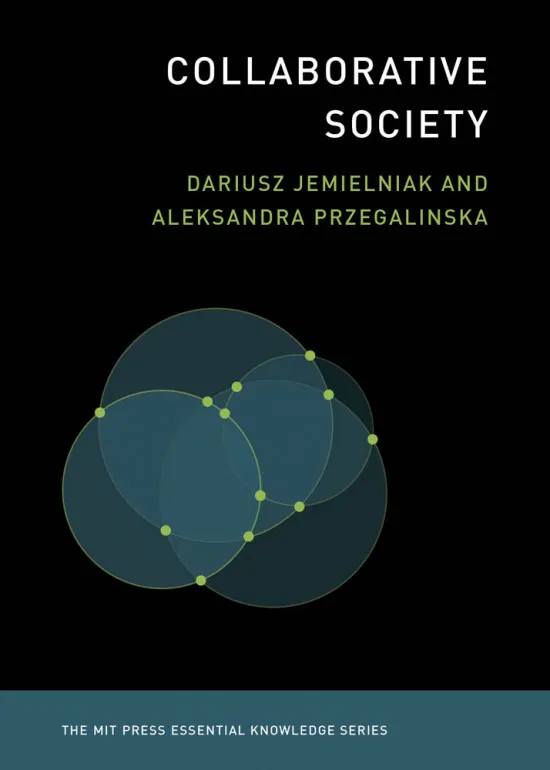
Ep 63Collaborative Society
An interview with Dariusz Jemielniak and Aleksandra Przegalinska about Collaborative Society (The MIT Press Essential Knowledge series) and how networked technology enables the emergence of a new collaborative society. Humans are hard-wired for collaboration, and new technologies of communication act as a super-amplifier of our natural collaborative mindset. This volume in the MIT Press Essential Knowledge series examines the emergence of a new kind of social collaboration enabled by networked technologies. This new collaborative society might be characterized as a series of services and startups that enable peer-to-peer exchanges and interactions though technology. Some believe that the economic aspects of the new collaboration have the potential to make society more equitable; others see collaborative communities based on sharing as a cover for social injustice and user exploitation. The book covers the "sharing economy," and the hijacking of the term by corporations; different models of peer production, and motivations to participate; collaborative media production and consumption, the definitions of "amateur" and "professional," and the power of memes; hactivism and social movements, including Anonymous and anti-ACTA protest; collaborative knowledge creation, including citizen science; collaborative self-tracking; and internet-mediated social relations, as seen in the use of Instagram, Snapchat, and Tinder. Finally, the book considers the future of these collaborative tendencies and the disruptions caused by fake news, bots, and other challenges. Learn more about your ad choices. Visit megaphone.fm/adchoices Support our show by becoming a premium member! https://newbooksnetwork.supportingcast.fm/technology
Ep 159Michael W. Hankins, "Flying Camelot: The F-15, the F-16, and the Weaponization of Fighter Pilot Nostalgia" (Cornell UP, 2021)
Flying Camelot: The F-15, the F-16, and the Weaponization of Fighter Pilot Nostalgia (Cornell UP, 2021) brings us back to the post-Vietnam era, when the US Air Force launched two new, state-of-the art fighter aircraft: the F-15 Eagle and the F-16 Fighting Falcon. It was an era when debates about aircraft superiority went public--and these were not uncontested discussions. Michael W. Hankins delves deep into the fighter pilot culture that gave rise to both designs, showing how a small but vocal group of pilots, engineers, and analysts in the Department of Defense weaponized their own culture to affect technological development and larger political change. The design and advancement of the F-15 and F-16 reflected this group's nostalgic desire to recapture the best of World War I air combat. Known as the "Fighter Mafia," and later growing into the media savvy political powerhouse "Reform Movement," it believed that American weapons systems were too complicated and expensive, and thus vulnerable. The group's leader was Colonel John Boyd, a contentious former fighter pilot heralded as a messianic figure by many in its ranks. He and his group advocated for a shift in focus from the multi-role interceptors the Air Force had designed in the early Cold War towards specialized air-to-air combat dogfighters. Their influence stretched beyond design and into larger politicized debates about US national security, debates that still resonate today. A biography of fighter pilot culture and the nostalgia that drove decision-making, Flying Camelot deftly engages both popular culture and archives to animate the movement that shook the foundations of the Pentagon and Congress. Learn more about your ad choices. Visit megaphone.fm/adchoices Support our show by becoming a premium member! https://newbooksnetwork.supportingcast.fm/technology
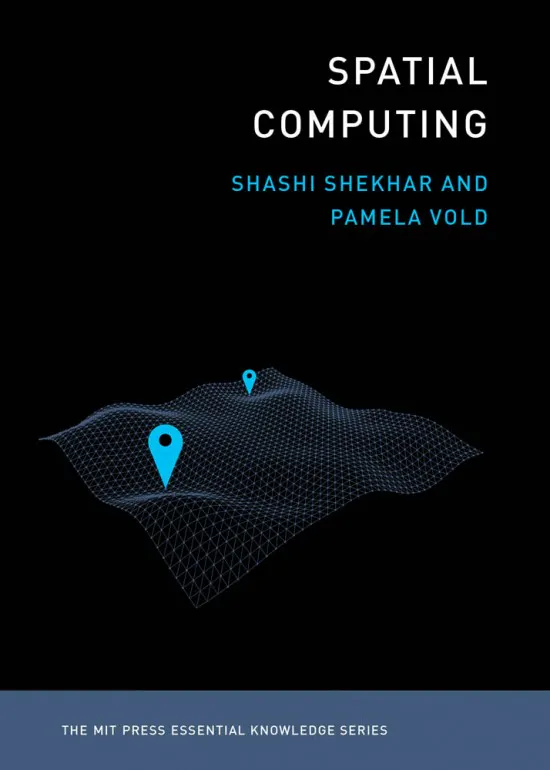
Ep 62Spatial Computing
Shashi Shekhar and Pamela Vold, authors of Spatial Computing, from The MIT Press Essential Knowledge series, discuss the reach, risks and importance of spatial computing in confronting COVID-19. An accessible guide to the ideas and technologies underlying such applications as GPS, Google Maps, Pokémon Go, ride-sharing, driverless cars, and drone surveillance. Billions of people around the globe use various applications of spatial computing daily--by using a ride-sharing app, GPS, the e911 system, social media check-ins, even Pokémon Go. Scientists and researchers use spatial computing to track diseases, map the bottom of the oceans, chart the behavior of endangered species, and create election maps in real time. Drones and driverless cars use a variety of spatial computing technologies. Spatial computing works by understanding the physical world, knowing and communicating our relation to places in that world, and navigating through those places. It has changed our lives and infrastructures profoundly, marking a significant shift in how we make our way in the world. This volume in the MIT Essential Knowledge series explains the technologies and ideas behind spatial computing. The book offers accessible descriptions of GPS and location-based services, including the use of Wi-Fi, Bluetooth, and RFID for position determination out of satellite range; remote sensing, which uses satellite and aerial platforms to monitor such varied phenomena as global food production, the effects of climate change, and subsurface natural resources on other planets; geographic information systems (GIS), which store, analyze, and visualize spatial data; spatial databases, which store multiple forms of spatial data; and spatial statistics and spatial data science, used to analyze location-related data. Learn more about your ad choices. Visit megaphone.fm/adchoices Support our show by becoming a premium member! https://newbooksnetwork.supportingcast.fm/technology
Ep 121Jonathan E. Abel, "The New Real: Media and Mimesis in Japan from Stereographs to Emoji" (U of Minnesota Press, 2023)
Jonathan Abel’s The New Real: Media and Mimesis in Japan from Stereographs to Emoji (U of Minnesota Press, 2023) is a history of our relationships to new media. The book centers on different modalities of mimesis and mediation and more as it explores the important transformation of “new media” into “the new real.” Abel describes this “new real” as the phase when the newer, better, faster, more realistic media of marketing hype becomes absorbed into the fabric of society and daily life. The New Real uses diverse case studies from over a century of modern Japanese history―including stereoscopic photographs, the phonograph, the television, video games, and even emoji―to explore the social effects of the new real. Nathan Hopson is an associate professor of Japanese language and history in the University of Bergen's Department of Foreign Languages. Learn more about your ad choices. Visit megaphone.fm/adchoices Support our show by becoming a premium member! https://newbooksnetwork.supportingcast.fm/technology

Ep 116Computer Graphics
In this episode of High Theory, Bernard Dionysius Geoghegan talks with us about computer graphics. Emerging from tools for sailing and warmaking, like sea charts and radar, modern computer graphics are technologies of mapping and managing risk. They seem intent on absorbing the human sensorium into the machine. In the episode Bernard refers to computer graphics as “techniques of addressing,” a term he attributes to Ranjodh Singh Dhaliwal. He also uses the term “operational images” which comes from the work of Harun Farocki, and talks about SAGE, the US Government’s Cold War era Semi-Automatic Ground Environment Air Defense System. Bernard references Paul Edward’s book A Vast Machine: Computer Models, Climate Data, and the Politics of Global Warming (MIT Press, 2013). He also mentions the German scholar Christoph Borbach who has written on auditory computer interfaces, and American disability studies scholar Mara Mills, who has written on the Deaf history of computing. He was kind enough to give us an extensive bibliography on this topic, which is posted below. Bernard Dionysius Geoghegan is a reader in the History and Theory of Digital Media at King’s College London. He has a brand new book out on the cybernetic history of French theory, called Code: From Information Theory to French Theory (Duke UP, 2023). Kim met him when he came to give a talk at the Stanford Humanities Center in January 2023. He wore denim and had a slightly manic affect. People came all the way from Berkeley to hear what he had to say, which is quite impressive in the Bay Area. This week’s image is a radar loop of the December 16 2007 Eastern North America winter storm, found on Wikimedia Commons. The loop runs from Saturday Morning at 7 AM (Dec 15) to Sunday Night at 7 PM (Dec 16). The image is in the public domain because it was made by someone who works for the National Weather Service. Learn more about your ad choices. Visit megaphone.fm/adchoices Support our show by becoming a premium member! https://newbooksnetwork.supportingcast.fm/technology
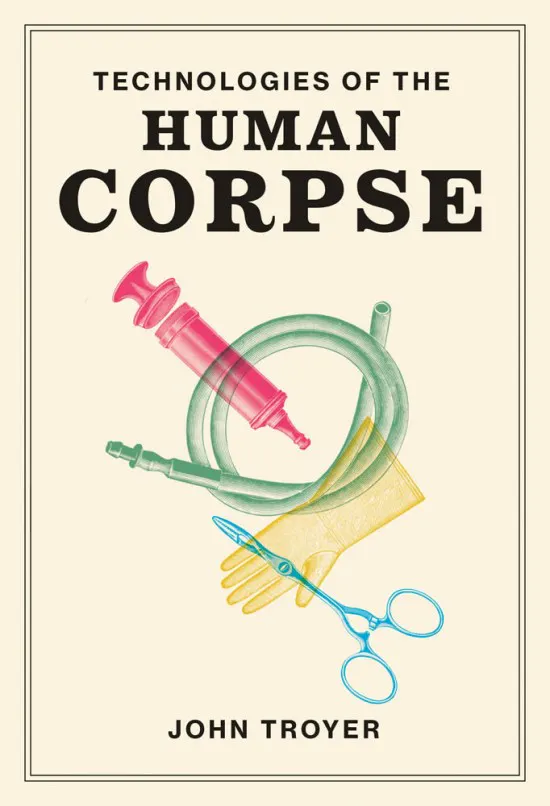
Ep 58Technologies of the Human Corpse
In this episode we hear from John Troyer, author of Technologies of the Human Corpse and the Director of The Center for Death and Society at The University of Bath. We discuss the way technology is blurring the distinctions between life and death, the emergence of death studies from the 70s social and political milieu and how his own experiences of bereavement inform his research. The relationship of the dead body with technology through history, from nineteenth-century embalming machines to the death-prevention technologies of today. Death and the dead body have never been more alive in the public imagination—not least because of current debates over modern medical technology that is deployed, it seems, expressly to keep human bodies from dying, blurring the boundary between alive and dead. In this book, John Troyer examines the relationship of the dead body with technology, both material and conceptual: the physical machines, political concepts, and sovereign institutions that humans use to classify, organize, repurpose, and transform the human corpse. Doing so, he asks readers to think about death, dying, and dead bodies in radically different ways. Troyer explains, for example, how technologies of the nineteenth century including embalming and photography, created our image of a dead body as quasi-atemporal, existing outside biological limits formerly enforced by decomposition. He describes the “Happy Death Movement” of the 1970s; the politics of HIV/AIDS corpse and the productive potential of the dead body; the provocations of the Body Worlds exhibits and their use of preserved dead bodies; the black market in human body parts; and the transformation of historic technologies of the human corpse into “death prevention technologies.” The consequences of total control over death and the dead body, Troyer argues, are not liberation but the abandonment of Homo sapiens as a concept and a species. In this unique work, Troyer forces us to consider the increasing overlap between politics, dying, and the dead body in both general and specifically personal terms. Learn more about your ad choices. Visit megaphone.fm/adchoices Support our show by becoming a premium member! https://newbooksnetwork.supportingcast.fm/technology
Ep 101Adi Kuntsman and Liu Xin, "Digital Politics, Digital Histories, Digital Futures: New Approaches for Historicising, Politicising and Imagining the Digital" (Emerald, 2023)
What is digital politics? What new creative and experimental tools can we use to study digital politics historically and analyse and create future imaginaries of digital politics? Adi Kuntsman and Liu Xin about their co-edited book Digital Politics, Digital Histories, Digital Futures: New Approaches for Historicising, Politicising and Imagining the Digital (2023, Emerald Publishing Limited). In a conversation with Joanne Kuai, Adi Kuntsman and Liu Xin speak about how they managed to bring together contributions from junior and experienced scholars in a book that examines digital politics theoretically, methodologically, and ethically, offering interdisciplinary perspectives and innovative pedagogies. The first part of the book presents research chapters that look at misinformation and reactionary online activism, digital imperialism and capitalism, future internet governance, digital memory, digital waste, and environmental imagination. The second part showcases several creative and experimental tools for studying digital politics historically, and for analysing and creating future imaginaries of digital politics. Adi Kuntsman is Reader in Digital Politics at the Department of History, Politics and Philosophy at Manchester Metropolitan University, UK. Adi’s work lies at the intersection of cybercultures/digital and social media; anti-colonial and feminist scholarship; queer theory; and social research on war, nationalism and colonialism. Read more on the Digital Politics blog. Liu Xin is a senior lecturer at the Center for Gender Studies, Karlstad University, Sweden. Her recent research projects are located at the intersection of feminist theory, environmental humanities, critical race studies, science and technology studies, social theory and digital media research. Find her on Twitter @LiuxinYB. Joanne Kuai is a PhD Candidate at Karlstad University, Sweden, with a research project on Artificial Intelligence in Chinese Newsrooms. Her research interests centre around data and AI for media, computational journalism, and the social implications of automation and algorithms. Find her on LinkedIn or Twitter @JoanneKuai. Learn more about your ad choices. Visit megaphone.fm/adchoices Support our show by becoming a premium member! https://newbooksnetwork.supportingcast.fm/technology
Ep 51Rachel Robison-Greene, "Edibility and in Vitro Meat: Ethical Considerations" (Lexington Books, 2022)
Consumers and policy makers have unprecedented choices to make in the years to come about how and what we eat. If we continue down our current path of food production, we risk ever-increasing levels of animal exploitation, environmental destruction, biodiversity loss, and challenges to human health. In vitro meat production, or the process of growing meat in a lab, has the potential to reduce the severity of these problems. This proposal would change our food systems dramatically. Edibility and In Vitro Meat: Ethical Considerations (Lexington Books, 2022) explores the ethical questions that it’s important to ask every stage of this process. Rachel Robison-Greene considers arguments for and against the production of in vitro meat, as well as challenges for implementation. She argues that in vitro meat should be implemented and that we should re-think how we use the term “edible.” Rachel Robison-Greene is Assistant Professor of Philosophy at Utah State University. Her research interests are largely in meta-ethics, epistemology, and applied ethics, especially as it pertains to animals, the environment, and technology. Rachel serves as the Secretary of the Public Philosophy Network, the Secretary of the Culture and Animals Foundation, and is the Chair Elect of the Intercollegiate Ethics Bowl. Kyle Johannsen is a philosophy instructor at Trent University and Wilfrid Laurier University. His most recent book is Wild Animal Ethics: The Moral and Political Problem of Wild Animal Suffering (Routledge, 2021). Learn more about your ad choices. Visit megaphone.fm/adchoices Support our show by becoming a premium member! https://newbooksnetwork.supportingcast.fm/technology
Ep 312Tiger C. Roholt, "Distracted from Meaning: A Philosophy of Smartphones" (Bloomsbury, 2022)
Social scientists have long studied the ways in which smartphone use can distract us from the proper performance of means-ends tasks, such as driving or medical procedures. In Distracted from Meaning: A Philosophy of Smartphones (Bloomsbury, 2022), Tiger Roholt discusses a distinct type of distraction: when smartphone use interferes with our active engagement with meaningful experiences, such as dinner with friends or a musical performance or gardening. In these cases, Roholt argues, we risk stunting the experiences that would otherwise give meaning to our lives, or even missing out on discovering new types of meaningful experiences. Roholt, who is an associate professor of philosophy at Montclair State University, draws on writings from John Dewey, Susan Wolf, Albert Borgmann and others in this engagingly written meditation on how ubiquitous uses of smartphones and wearable technologies affects our lives in ways that other types of interruptions do not. Carrie Figdor is professor of philosophy at the University of Iowa. Learn more about your ad choices. Visit megaphone.fm/adchoices Support our show by becoming a premium member! https://newbooksnetwork.supportingcast.fm/technology
Ep 82Johnny Walker, "Rewind, Replay: Britain and the Video Boom, 1978-92" (Edinburgh UP, 2022)
Nostalgia for the 1980s is in the air. From Stranger Things to the relaunch of 80s franchises like Top Gun, the American entertainment industry casts the period as an age of simpler things, clearer dichotomies, and less technology. Yet not all was simple. The 1980s were the heyday of the Cold War. They were the decade of rapid social change, of deregulation and selfish consumption, of Ronald Reagan and Margaret Thatcher. They were also the decade when a new technology swept the world, setting the stage for our all-too-digital present. A lot has been written about the rise of video in the United States, the format wars, the impact it had on the entertainment industry, on personal entertainment consumption habits, and new business models. But the rise of video was not a uniquely American phenomenon, nor was the American experience normative. In fact, wherever the new technology arrived, from the US, to the Middle East, to Eastern Europe, it reshaped social and business practices, as well as government responses to it, in ways that reflected the political, social, and economic arrangements of each space. Johnny Walker’s Rewind, Replay: Britain and the Video Boom, 1972-1992 (Edinburgh UP, 2022) tells the story of Britain’s vide boom in the 1980s by focusing on the first video distributors who took chances on a wide range of films, from documentaries, to horror, to kids entertainment, in order to attract consumer interest. The new video shops that mushroomed across Britain turned video rental into a common practice among the public. Soon, despite a crushing recession, more and more industry players started to invest into what media at the time was dismissing as a mere ‘plaything.’ Rewind, Replay chronicles the idiosyncratic ways in which British distributors and store owners navigated various local political and economic pressures including piracy, the infamous video nasties moral panic and the government crackdown on the industry, as well as the corporate expansion of the industry which, by the end of the decade, eliminated independent distributors, and turned the pre-recorded videocassette from morally questionable enterprise into a staple of high street retail. Oana Godeanu-Kenworthy is Teaching Professor of American Studies at Miami University of Ohio. Her book, Between Empire and Republic: America in the Colonial Canadian Imagination, came out in 2022. Twitter: @OanaGodyKenw. Oana’s webpage. Learn more about your ad choices. Visit megaphone.fm/adchoices Support our show by becoming a premium member! https://newbooksnetwork.supportingcast.fm/technology
Ep 192Antero Garcia, "All through the Town: The School Bus as Educational Technology" (U Minnesota Press, 2023)
Everyone knows the yellow school bus. It’s been invisible and also omnipresent for a century. Dr. Antero Garcia shows how the U.S. school bus, its form unaltered for decades, is the most substantial piece of educational technology to ever shape how schools operate. As it noisily moves young people across the country every day, the bus offers the opportunity for a necessary reexamination of what “counts” as educational technology. Particularly in light of these buses being idled in pandemic times, All through the Town: The School Bus as Educational Technology (University of Minnesota Press, 2023) questions what we take for granted and what we overlook in public schooling in America, pushing for liberatory approaches to education that extend beyond notions of school equity. This interview was conducted by Dr. Miranda Melcher whose doctoral work focused on post-conflict military integration, understanding treaty negotiation and implementation in civil war contexts, with qualitative analysis of the Angolan and Mozambican civil wars. Learn more about your ad choices. Visit megaphone.fm/adchoices Support our show by becoming a premium member! https://newbooksnetwork.supportingcast.fm/technology
Ep 338Ben Shneiderman, "Human-Centered AI" (Oxford UP, 2022)
The remarkable progress in algorithms for machine and deep learning have opened the doors to new opportunities, and some dark possibilities. However, a bright future awaits those who build on their working methods by including HCAI strategies of design and testing. As many technology companies and thought leaders have argued, the goal is not to replace people, but to empower them by making design choices that give humans control over technology. In Human-Centered AI (Oxford UP, 2022), Professor Ben Shneiderman offers an optimistic realist's guide to how artificial intelligence can be used to augment and enhance humans' lives. This project bridges the gap between ethical considerations and practical realities to offer a road map for successful, reliable systems. Digital cameras, communications services, and navigation apps are just the beginning. Shneiderman shows how future applications will support health and wellness, improve education, accelerate business, and connect people in reliable, safe, and trustworthy ways that respect human values, rights, justice, and dignity. Jake Chanenson is a computer science Ph.D. student at the University of Chicago. Broadly, Jake is interested in topics relating to HCI, privacy, and tech policy. Jake’s work has been published in top venues such as ACM’s CHI Conference on Human Factors in Computing Systems. Learn more about your ad choices. Visit megaphone.fm/adchoices Support our show by becoming a premium member! https://newbooksnetwork.supportingcast.fm/technology
Ep 105Rhea Myers, "Proof of Work: Blockchain Provocations 2011-2021" (MIT Press, 2023)
NFT, BTC, DAO, ETH, WAGMI, HODL. It would have been hard to avoid these acronyms only a year ago. The hype around cryptocurrencies and blockchain art was almost as annoying as the glee with which crypto sceptics welcomed the sudden onset of the crypto winter. But for all the popularity of Bored Apes and Ponzi scheme stories, there seems to have been little serious engagement with the philosophical, political, and aesthetic implications of the blockchain. The academy appears to have dismissed the crypto world out of hand, citing its financial unviability and the deeply ‘problematic’ philosophical foundations of its technology. Rhea Myers is a crypto artist, writer, and hacker who searches for faces in cryptographic hashes, follows a day in the life of a young shibe in the year 2032, and patiently explains why all art should be destructively uploaded to the blockchain. Her engagement in the technical history and debates in blockchain technology is complemented by a broader sense of the crypto movement and the artistic and political sensibilities that accompanied its ascendancy. Remodelling the tropes of conceptual art and net art to explore what blockchain technology reveals about our concepts of value, culture and currency, Myers’s work has become required viewing for anyone interested in the future of art, consensus, law, and collectivity. Rhea Myers speaks to Pierre d’Alancaisez about art’s role in mapping and shaping the emergent properties of blockchain technologies, the crypto-libertarian, anarchy-capitalist nexus, and the enduring legacy of the conceptual art movement. Proof of Work brings together annotated presentations of Myers’s blockchain artworks with essays, reviews, and fictions—a sustained critical encounter between the cultures and histories of the artworld and crypto-utopianism, technically accomplished but always generously demystifying and often mischievous. PostScript Viruses, 1993 Portrait of V.I. Lenin with Cap, in the Style of Jackson Pollock III by Art & Language Futherfield Gallery, London Is Art, 2014/15, Art Is, 2014/17 Pierre's essay on the speculative deficit and NFT art Certificate of Inauthenticity, 2020 Rhea Myers is an artist, writer, and blockchain developer and activist. Now an acknowledged pioneer whose work has graced the auction room at Sotheby’s, Myers focussed on blockchain tech in 2011, becoming one of the first artists to enter into creative, speculative, and conceptual engagement with ‘the new internet’. Pierre d’Alancaisez is a contemporary art curator, cultural strategist, researcher. Sometime scientist, financial services professional. Learn more about your ad choices. Visit megaphone.fm/adchoices Support our show by becoming a premium member! https://newbooksnetwork.supportingcast.fm/technology
Ep 47Control Through Communication: The Rise of System in American Management
JoAnne Yates, Sloan Distinguished Professor of Management, Emerita and Professor of Managerial Communication and Work and Organization Studies at MIT’s Sloan School of Management, talks about her classic and award-winning 1989 book, Control Through Communication: The Rise of System in American Management (Johns Hopkins University Press), with Peoples & Things host, Lee Vinsel. Control Through Communication tells the fascinating story of how corporations came to adopt modern communications systems, including typewriters, filing cabinets, card catalogs, memos, and reports. Over the past twenty years, the book has been hugely influential in history, communications, and media studies. Yates and Vinsel also talk about how Yates came to move from literature to business history and organization studies, what it was like working as a woman in a business school in the 1980s, how she managed to have a dual writing career in history and business school journals, and much more. Lee Vinsel is an associate professor in the Department of Science, Technology and Society at Virginia Tech. Learn more about your ad choices. Visit megaphone.fm/adchoices Support our show by becoming a premium member! https://newbooksnetwork.supportingcast.fm/technology
Ep 311Karen Frost-Arnold, "Who Should We Be Online?: A Social Epistemology for the Internet" (Oxford UP, 2023)
The Internet plays a central role in how we communicate, share information, disseminate ideas, maintain social connections, and conduct business. The Internet also exacerbates existing problems regarding irrationality, bias, wrongful discrimination, exploitation, and dehumanization. Moreover, the Internet gives rise to new ethical and epistemological problems – fake news, sock-puppetry, internet hoaxes, disinformation, and so on. In Who Should We Be Online?: A Social Epistemology for the Internet (Oxford University Press 2023), Karen Frost-Arnold proposes a multi-layered social epistemology designed to assist us in navigating the fraught normative landscape of the online world. Robert Talisse is the W. Alton Jones Professor of Philosophy at Vanderbilt University. Learn more about your ad choices. Visit megaphone.fm/adchoices Support our show by becoming a premium member! https://newbooksnetwork.supportingcast.fm/technology
Ep 337Elizabeth M. Renieris, "Beyond Data: Reclaiming Human Rights at the Dawn of the Metaverse" (MIT Press, 2023)
Why laws focused on data cannot effectively protect people—and how an approach centered on human rights offers the best hope for preserving human dignity and autonomy in a cyberphysical world. Ever-pervasive technology poses a clear and present danger to human dignity and autonomy, as many have pointed out. And yet, for the past fifty years, we have been so busy protecting data that we have failed to protect people. In Beyond Data: Reclaiming Human Rights at the Dawn of the Metaverse (MIT Press, 2023), Elizabeth Renieris argues that laws focused on data protection, data privacy, data security and data ownership have unintentionally failed to protect core human values, including privacy. And, as our collective obsession with data has grown, we have, to our peril, lost sight of what’s truly at stake in relation to technological development—our dignity and autonomy as people. Far from being inevitable, our fixation on data has been codified through decades of flawed policy. Renieris provides a comprehensive history of how both laws and corporate policies enacted in the name of data privacy have been fundamentally incapable of protecting humans. Her research identifies the inherent deficiency of making data a rallying point in itself—data is not an objective truth, and what’s more, its “entirely contextual and dynamic” status makes it an unstable foundation for organizing. In proposing a human rights–based framework that would center human dignity and autonomy rather than technological abstractions, Renieris delivers a clear-eyed and radically imaginative vision of the future. At once a thorough application of legal theory to technology and a rousing call to action, Beyond Data boldly reaffirms the value of human dignity and autonomy amid widespread disregard by private enterprise at the dawn of the metaverse. Jake Chanenson is a computer science Ph.D. student at the University of Chicago. Broadly, Jake is interested in topics relating to HCI, privacy, and tech policy. Jake’s work has been published in top venues such as ACM’s CHI Conference on Human Factors in Computing Systems. Learn more about your ad choices. Visit megaphone.fm/adchoices Support our show by becoming a premium member! https://newbooksnetwork.supportingcast.fm/technology
Ep 86Wake Smith, "Pandora's Toolbox: The Hopes and Hazards of Climate Intervention" (Cambridge UP, 2022)
Reaching net zero emissions will not be the end of the climate struggle, but only the end of the beginning. For centuries thereafter, temperatures will remain elevated; climate damages will continue to accrue and sea levels will continue to rise. Even the urgent and utterly essential task of reaching net zero cannot be achieved rapidly by emissions reductions alone. To hasten net zero and minimize climate damages thereafter, we will also need massive carbon removal and storage. We may even need to reduce incoming solar radiation in order to lower unacceptably high temperatures. Such unproven and potentially risky climate interventions raise mind-blowing questions of governance and ethics. Wake Smith's book Pandora's Toolbox: The Hopes and Hazards of Climate Intervention (Cambridge UP, 2022) offers readers an accessible and authoritative introduction to both the hopes and hazards of some of humanity's most controversial technologies, which may nevertheless provide the key to saving our world. Bryan Toepfer, AIA, NCARB, CAPM is the Principal Architect for TOEPFER Architecture, PLLC, an Architecture firm specializing in Residential Architecture and Virtual Reality. Learn more about your ad choices. Visit megaphone.fm/adchoices Support our show by becoming a premium member! https://newbooksnetwork.supportingcast.fm/technology
Ep 336Woodrow Hartzog, "Privacy's Blueprint: The Battle to Control the Design of New Technologies" (Harvard UP, 2018)
Every day, Internet users interact with technologies designed to undermine their privacy. Social media apps, surveillance technologies, and the Internet of Things are all built in ways that make it hard to guard personal information. And the law says this is okay because it is up to users to protect themselves―even when the odds are deliberately stacked against them. In Privacy's Blueprint: The Battle to Control the Design of New Technologies (Harvard UP, 2018), Woodrow Hartzog pushes back against this state of affairs, arguing that the law should require software and hardware makers to respect privacy in the design of their products. Current legal doctrine treats technology as though it were value-neutral: only the user decides whether it functions for good or ill. But this is not so. As Hartzog explains, popular digital tools are designed to expose people and manipulate users into disclosing personal information. Against the often self-serving optimism of Silicon Valley and the inertia of tech evangelism, Hartzog contends that privacy gains will come from better rules for products, not users. The current model of regulating use fosters exploitation. Privacy’s Blueprint aims to correct this by developing the theoretical underpinnings of a new kind of privacy law responsive to the way people actually perceive and use digital technologies. The law can demand encryption. It can prohibit malicious interfaces that deceive users and leave them vulnerable. It can require safeguards against abuses of biometric surveillance. It can, in short, make the technology itself worthy of our trust. Jake Chanenson is a computer science Ph.D. student at the University of Chicago. Broadly, Jake is interested in topics relating to HCI, privacy, and tech policy. Jake’s work has been published in top venues such as ACM’s CHI Conference on Human Factors in Computing Systems. Learn more about your ad choices. Visit megaphone.fm/adchoices Support our show by becoming a premium member! https://newbooksnetwork.supportingcast.fm/technology
Ep 219Jeffrey G. Snodgrass, "The Avatar Faculty: Ecstatic Transformations in Religion and Video Games" (U California Press, 2023)
The Avatar Faculty: Ecstatic Transformations in Religion and Video Games (University of California Press, 2023) creatively examines the parallels between spiritual and digital activities to explore the roles that symbolic second selves—avatars—can play in our lives. The use of avatars can allow for what anthropologists call ecstasy, from the Greek ekstasis, meaning "standing outside oneself." The archaic techniques of promoting spiritual ecstasy, which remain central to religious healing traditions around the world, now also have contemporary analogues in virtual worlds found on the internet. In this innovative book, Jeffrey G. Snodgrass argues that avatars allow for the ecstatic projection of consciousness into alternate realities, potentially providing both the spiritually possessed and gamers access to superior secondary identities with elevated social standing. Even if only temporary, self-transformations of these kinds can help reduce psychosocial stress and positively improve health and well-being. Jeffrey G. Snodgrass is Professor of Anthropology at Colorado State University. Armanc Yildiz is a doctoral candidate in Social Anthropology with a secondary field in Studies in Women, Gender and Sexuality at Harvard University. He is also the founder of Academics Write, where he supports scholars in their writing projects as a writing coach and developmental editor. Learn more about your ad choices. Visit megaphone.fm/adchoices Support our show by becoming a premium member! https://newbooksnetwork.supportingcast.fm/technology
Ep 46Winning & Losing in the Emerging EV Wars/The Aftershocks of the EV Transition Could Be Ugly
Robert Charette, engineer, consultant, and contributing editor at IEEE Spectrum magazine, talks about his twelve-part series, “The Electric Vehicle Transition Explained,” with Peoples & Things host, Lee Vinsel. The series takes a systems perspective on electric vehicles, and talks about all of the potential barriers – from a lack of minerals, to stressing out the electricity grid, to being short on consumers or workers – that face EVs, which are too often cast as a climate change cure-all. Charette and Vinsel also talk about the kinds of thinking that are necessary if we are to have realistic policies around EVs. Lee Vinsel is an associate professor in the Department of Science, Technology and Society at Virginia Tech. Learn more about your ad choices. Visit megaphone.fm/adchoices Support our show by becoming a premium member! https://newbooksnetwork.supportingcast.fm/technology
Ep 67Felix Zimmermann, "Virtual Realities: Atmospheric Experience of the Past in Digital Games (Büchner-Verlag, 2023)
Today I talked to Felix Zimmermann about his book Virtual Realities: Atmospheric Experience of the Past in Digital Games (Virtuelle Wirklichkeiten: Atmosphärisches Vergangenheitserleben im Digitalen Spiel (Büchner-Verlag, 2023) Atmospheres are everywhere: at the workplace, in the soccer stadium, in front of the crackling fireplace. They shape our everyday language and have become quite natural expressions of how we find ourselves in certain environments and how we feel about them. Their influence is far-reaching: aesthetic atmospheres are closely linked to a contemporary experience-oriented historical culture whose products and practices claim to establish an immediate contact with the past. With 'Vergangenheitsatmosphären' Felix Zimmermann offers for the first time a term to adequately describe this striving for immediacy. Using in-depth analyses of the digital games Anno 1800 (2019), Assassin's Creed Syndicate (2015), and Dishonored: The Mask of Wrath (2012), the concept is contoured and the productivity of atmospheric research trained on theories and methods of public history, game studies, and phenomenology is demonstrated. Rudolf Inderst is a professor of Game Design with a focus on Digital Game Studies at the IU International University of Applied Science, editor of “Game Studies Watchlist”, a weekly messenger newsletter about Game Culture and curator of @gamestudies at tiktok. Learn more about your ad choices. Visit megaphone.fm/adchoices Support our show by becoming a premium member! https://newbooksnetwork.supportingcast.fm/technology
Ep 45Left to Our Own Devices: A Conversation with Julia Ticona
Over the past three decades, digital technologies like smartphones and laptops have transformed the way we work in the US. At the same time, workers at both ends of the income ladder have experienced rising levels of job insecurity and anxiety about their economic futures. In Left to Our Own Devices: Coping with Insecure Work in a Digital Age (Oxford UP, 2022), Julia Ticona explores the ways that workers use their digital technologies to navigate insecure and flexible labor markets. Through 100 interviews with high and low-wage precarious workers across the US, she explores the surprisingly similar "digital hustles" they use to find work and maintain a sense of dignity and identity. Ticona then reveals how the digital hustle ultimately reproduces inequalities between workers at either end of polarized labor markets. A moving and accessible look at the intimate consequences of contemporary capitalism, Left to Our Own Devices will be of interest to sociologists, communication and media studies scholars, as well as a general audience of readers interested in digital technologies, inequality, and the future of work in the US. Learn more about your ad choices. Visit megaphone.fm/adchoices Support our show by becoming a premium member! https://newbooksnetwork.supportingcast.fm/technology
Ep 111The Challenge of AI to Publishing: A Discussion with Sally Wilson
Sally Wilson, VP of Publishing at Emerald opens up about the challenges publishers are facing in contending with the onset of the mass adoption of AI tools including ChatGPT, and its ramifications for scholarly publishing. She also talks about the potential positive use cases for ChatGPT for reducing inequality in publishing. In addition, Sally discusses the nature of mission-based publishing and leading the charge in tackling United Nations SDG goals in publishing. Avi Staiman is the founder and CEO of Academic Language Experts. Learn more about your ad choices. Visit megaphone.fm/adchoices Support our show by becoming a premium member! https://newbooksnetwork.supportingcast.fm/technology
Ep 107Bleddyn E. Bowen, "Original Sin: Power, Technology and War in Outer Space" (Oxford UP, 2022)
Space technology was developed to enhance the killing power of the state. The Moon landings and the launch of the Space Shuttle were mere sideshows, drawing public attention away from the real goal: military and economic control of space as a source of power on Earth. Today, as Bleddyn E. Bowen vividly recounts in Original Sin: Power, Technology and War in Outer Space (Oxford UP, 2022), thousands of satellites work silently in the background to provide essential military, intelligence and economic capabilities. No major power can do without them. Beyond Washington, Moscow and Beijing, truly global technologies have evolved, from the ground floor of the nuclear missile revolution to today's orbital battlefield, shaping the wars to come. World powers including India, Japan and Europe are fully realizing the strategic benefits of commanding Earth's 'cosmic coastline', as a stage for war, development and prestige. Yet, as new contenders spend more and more on outer space, there is scope for cautious optimism about the future of the Space Age-if we can recognize, rather than hide, its original sin. Bleddyn E. Bowen is Associate Professor of International Relations at the University of Leicester, specializing in space policy and military uses of outer space. The internationally recognized author of War in Space, he consults on space policy for institutions including the UK Parliament, the European Space Agency, and the Pentagon. Sam Canter is a policy and strategy analyst, PhD candidate, and Army Reserve intelligence officer. His views are his own and do not reflect any institution, organization, or entity with which he is affiliated. Learn more about your ad choices. Visit megaphone.fm/adchoices Support our show by becoming a premium member! https://newbooksnetwork.supportingcast.fm/technology

Ep 17Computer Music and Human Computer Interaction
Michael Gurevich, lecturer at the Sonic Arts Research Centre at the Queen’s University, Belfast School of Music and Sonic Arts, serves as guest editor of the Winter 2010 issue of Computer Music Journal. In this podcast, Michael discusses the fields of Computer Music and Human Computer Interaction (HCI). He describes how these fields intersect and what they can learn from each other, touching on how the field of Computer Music has grown and how this affects performance and composition of electronic music. This conversation was recorded on December 14, 2010. Learn more about your ad choices. Visit megaphone.fm/adchoices Support our show by becoming a premium member! https://newbooksnetwork.supportingcast.fm/technology

Ep 72Illuminations Episode 3: Divine Technology
It’s common to feel that technology removes the magic of the world, but Hindu worshippers in Bangalore have shown that it's all in the approach. Guest Tulasi Srinivas, associate professor of anthropology at the Institute for Interdisciplinary Studies at Emerson College. Fellow of the Royal Asiatic Society and the Indian Sociological Society. Author of Winged Faith: Rethinking Globalization and Religious Pluralism, among other books. Learn more about your ad choices. Visit megaphone.fm/adchoices Support our show by becoming a premium member! https://newbooksnetwork.supportingcast.fm/technology
Ep 65James W. Cortada, "Birth of Modern Facts: How the Information Revolution Transformed Academic Research, Governments and Businesses" (Rowman & Littlefield, 2023)
For over twenty years, James W. Cortada has pioneered research into how information shapes society. In Birth of Modern Facts: How the Information Revolution Transformed Academic Research, Governments and Businesses (Rowman & Littlefield, 2023), he tells the story of how information evolved since the mid-nineteenth century. Cortada argues that information increased in quantity, became more specialized by discipline (e.g., mathematics, science, political science), and more organized. Information increased in volume due to a series of innovations, such as the electrification of communications and the development of computers, but also due to the organization of facts and knowledge by discipline, making it easier to manage and access. He looks at what major disciplines have done to shape the nature of modern information, devoting chapters to the most obvious ones. Cortada argues that understanding how some features of information evolved is useful for those who work in subjects that deal with their very construct and application, such as computer scientists and those exploring social media and, most recently, history. The Birth of Modern Facts builds on Cortada's prior books examining how information became a central feature of modern society, most notably as a sequel to All the Facts: A History of Information in the United States since 1870 (OUP, 2016) and Building Blocks of Society: History, Information Ecosystems, and Infrastructures (R&L, 2021). Learn more about your ad choices. Visit megaphone.fm/adchoices Support our show by becoming a premium member! https://newbooksnetwork.supportingcast.fm/technology
Ep 109Jessa Lingel, "The Gentrification of the Internet: How to Reclaim Our Digital Freedom" (U California Press, 2023)
The internet has become a battleground. Although it was unlikely to live up to the hype and hopes of the 1990s, only the most skeptical cynics could have predicted the World Wide Web as we know it today: commercial, isolating, and full of, even fueled by, bias. This was not inevitable. The Gentrification of the Internet: How to Reclaim Our Digital Freedom (U California Press, 2023) argues that much like our cities, the internet has become gentrified, dominated by the interests of business and capital rather than the interests of the people who use it. Jessa Lingel uses the politics and debates of gentrification to diagnose the massive, systemic problems blighting our contemporary internet: erosions of privacy and individual ownership, small businesses wiped out by wealthy corporations, the ubiquitous paywall. But there are still steps we can take to reclaim the heady possibilities of the early internet. Lingel outlines actions that internet activists and everyday users can take to defend and secure more protections for the individual and to carve out more spaces of freedom for the people—not businesses—online. Jen Hoyer is Technical Services and Electronic Resources Librarian at CUNY New York City College of Technology and a volunteer at Interference Archive. Jen edits for Partnership Journal and organizes with the TPS Collective. She is co-author of What Primary Sources Teach: Lessons for Every Classroom and The Social Movement Archive. Learn more about your ad choices. Visit megaphone.fm/adchoices Support our show by becoming a premium member! https://newbooksnetwork.supportingcast.fm/technology

Ep 6The Chinese Typewriter: A History
In this episode Chris Gondek speaks with author Tom Mullaney on the invention of the Chinese typewriter, and how the characters originally utilized are still the ones available on modern keyboards. Chinese writing is character based, the one major world script that is neither alphabetic nor syllabic. Through the years, the Chinese written language encountered presumed alphabetic universalism in the form of Morse Code, Braille, stenography, Linotype, punch cards, word processing, and other systems developed with the Latin alphabet in mind. This book is about those encounters--in particular thousands of Chinese characters versus the typewriter and its QWERTY keyboard. Thomas Mullaney describes a fascinating series of experiments, prototypes, failures, and successes in the century-long quest for a workable Chinese typewriter. The earliest Chinese typewriters, Mullaney tells us, were figments of popular imagination, sensational accounts of twelve-foot keyboards with 5,000 keys. One of the first Chinese typewriters actually constructed was invented by a Christian missionary, who organized characters by common usage (but promoted the less-common characters for "Jesus" to the common usage level). Later came typewriters manufactured for use in Chinese offices, and typewriting schools that turned out trained "typewriter girls" and "typewriter boys." Still later was the "Double Pigeon" typewriter produced by the Shanghai Calculator and Typewriter Factory, the typewriter of choice under Mao. Clerks and secretaries in this era experimented with alternative ways of organizing characters on their tray beds, inventing an input method that was the first instance of "predictive text." Today, after more than a century of resistance against the alphabetic, not only have Chinese characters prevailed, they form the linguistic substrate of the vibrant world of Chinese information technology. The Chinese Typewriter, not just an "object history" but grappling with broad questions of technological change and global communication, shows how this happened. Learn more about your ad choices. Visit megaphone.fm/adchoices Support our show by becoming a premium member! https://newbooksnetwork.supportingcast.fm/technology
Ep 64Marcus Rediker, "The Slave Ship: A Human History" (Penguin, 2008)
In this widely praised history of an infamous institution, award-winning scholar Marcus Rediker shines a light into the darkest corners of the British and American slave ships of the eighteenth century. Drawing on thirty years of research in maritime archives, court records, diaries, and firsthand accounts, The Slave Ship: A Human History (Penguin, 2008) is riveting and sobering in its revelations, reconstructing in chilling detail a world nearly lost to history: the “floating dungeons” at the forefront of the birth of African American culture. Marcus Rediker is Distinguished Professor of Atlantic History at the University of Pittsburgh. His “histories from below,” including The Slave Ship: A Human History, have won numerous awards, including the George Washington Book Prize, and have been translated into seventeen languages worldwide. He has produced a film, Ghosts of Amistad, with director Tony Buba, and written a play, “The Return of Benjamin Lay,” with playwright Naomi Wallace. He is currently writing a book about escaping slavery by sea in antebellum America. Morteza Hajizadeh is a Ph.D. graduate in English from the University of Auckland in New Zealand. His research interests are Cultural Studies; Critical Theory; Environmental History; Medieval (Intellectual) History; Gothic Studies; 18th and 19th Century British Literature. YouTube channel. Learn more about your ad choices. Visit megaphone.fm/adchoices Support our show by becoming a premium member! https://newbooksnetwork.supportingcast.fm/technology
Ep 176Isabel Huacuja Alonso, "Radio for the Millions: Hindi-Urdu Broadcasting Across Borders" (Columbia UP, 2022)
From news about World War II to the broadcasting of music from popular movies, radio played a crucial role in an increasingly divided South Asia for more than half a century. Radio for the Millions: Hindi-Urdu Broadcasting Across Borders (Columbia University Press, 2023) by Isabel Huacuja Alonso examines the history of Hindi-Urdu radio during the height of its popularity from the 1930s to the 1980s, showing how it created transnational communities of listeners. Huacuja Alonso argues that despite British, Indian, and Pakistani politicians’ efforts to usurp the medium for state purposes, radio largely escaped their grasp. She demonstrates that the medium enabled listeners and broadcasters to resist the cultural, linguistic, and political agendas of the British colonial administration and the subsequent independent Indian and Pakistani governments. Rather than being merely a tool of nation building in South Asia, radio created affective links that defied state agendas, policies, and borders. It forged an enduring transnational soundscape, even after the 1947 Partition had made a united India a political impossibility. The book traces how people engaged with radio across news, music, and drama broadcasts, arguing for a more expansive definition of what it means to listen. She develops the concept of “radio resonance” to understand how radio relied on circuits of oral communication such as rumor and gossip and to account for the affective bonds this “talk” created. By analyzing Hindi film-song radio programs, she demonstrates how radio spurred new ways of listening to cinema. Drawing on a rich collection of sources, including newly recovered recordings, listeners’ letters to radio stations, original interviews with broadcasters, and archival documents from across three continents, Radio for the Millions rethinks assumptions about how the medium connects with audiences. Isabel Huacuja Alonso is an Assistant Professor in the Department of Middle Eastern, South Asia, and African Studies (MESAAS) at Columbia University. She is a historian of sound media and modern South Asia. Shatrunjay Mall is a PhD candidate at the Department of History at the University of Wisconsin-Madison. He works on transnational Asian history, and his dissertation explores intellectual, political, and cultural intersections and affinities that emerged between Indian anti-colonialism and imperial Japan in the twentieth century. Learn more about your ad choices. Visit megaphone.fm/adchoices Support our show by becoming a premium member! https://newbooksnetwork.supportingcast.fm/technology

Ep 4What Algorithms Want: Imagination in the Age of Computing
In this episode Chris Gondek interviews Ed Finn, author of the new book What Algorithms Want. Tune in for an interesting discussion on algorithm disconnect revolving around things humans regularly use, like Siri. And listen in for a definition of the phrase "culture machines". We depend on--we believe in--algorithms to help us get a ride, choose which book to buy, execute a mathematical proof. It's as if we think of code as a magic spell, an incantation to reveal what we need to know and even what we want. Humans have always believed that certain invocations--the marriage vow, the shaman's curse--do not merely describe the world but make it. Computation casts a cultural shadow that is shaped by this long tradition of magical thinking. In this book, Ed Finn considers how the algorithm--in practical terms, "a method for solving a problem"--has its roots not only in mathematical logic but also in cybernetics, philosophy, and magical thinking. Finn argues that the algorithm deploys concepts from the idealized space of computation in a messy reality, with unpredictable and sometimes fascinating results. Drawing on sources that range from Neal Stephenson's Snow Crash to Diderot's Encyclopédie, from Adam Smith to the Star Trek computer, Finn explores the gap between theoretical ideas and pragmatic instructions. He examines the development of intelligent assistants like Siri, the rise of algorithmic aesthetics at Netflix, Ian Bogost's satiric Facebook game Cow Clicker, and the revolutionary economics of Bitcoin. He describes Google's goal of anticipating our questions, Uber's cartoon maps and black box accounting, and what Facebook tells us about programmable value, among other things. If we want to understand the gap between abstraction and messy reality, Finn argues, we need to build a model of "algorithmic reading" and scholarship that attends to process, spearheading a new experimental humanities. Learn more about your ad choices. Visit megaphone.fm/adchoices Support our show by becoming a premium member! https://newbooksnetwork.supportingcast.fm/technology
Ep 100Nuclear Ghosts: Ryo Morimoto (EF, JP)
John and Elizabeth, in this special Centennial episode of Recall this Book, explore spectral radiation with Ryo Morimoto, Assistant Professor of Anthropology at Princeton University. His new book Nuclear Ghost: Atomic Livelihoods in Fukushima's Grey Zone (University of California Press, 2023) is based on several years of fieldwork in coastal Fukushima after the triple disaster of earthquake, tsunami, and nuclear accident. Ryo's book shows how residents of the region live with and through the "nuclear ghost" that resides with them. The trio discuss ways that residents acclimatize themselves to the presence of radiation, efforts to live their lives in ways not only shaped by catastrophe and irradiation, and the Geiger counter as a critical object. Ryo relates the astonishing--but when you stop to think unsurprising—fact that "once you have [a Geiger counter] you actually want to see higher scores." Mentioned in this episode: Paul Saint-Amour, Tense Future Arkady and Boris Strugatsky Roadside Picnic Tarkovksy, Stalker (the film) Stalker (the video game) Haruki Murakami 1Q84 Pat Barker The Ghost Road Read the episode here Learn more about your ad choices. Visit megaphone.fm/adchoices Support our show by becoming a premium member! https://newbooksnetwork.supportingcast.fm/technology
Ep 276Celeste Vaughan Curington et al., "The Dating Divide: Race and Desire in the Era of Online Romance" (U California Press, 2021)
The Dating Divide: Race and Desire in the Era of Online Romance (U California Press, 2021) is the first comprehensive look at "digital-sexual racism," a distinct form of racism that is mediated and amplified through the impersonal and anonymous context of online dating. Drawing on large-scale behavioral data from a mainstream dating website, extensive archival research, and more than seventy-five in-depth interviews with daters of diverse racial backgrounds and sexual identities, Curington, Lundquist, and Lin illustrate how the seemingly open space of the internet interacts with the loss of social inhibition in cyberspace contexts, fostering openly expressed forms of sexual racism that are rarely exposed in face-to-face encounters. The Dating Divide is a fascinating look at how a contemporary conflux of individualization, consumerism, and the proliferation of digital technologies has given rise to a unique form of gendered racism in the era of swiping right--or left. The internet is often heralded as an equalizer, a seemingly level playing field, but the digital world also acts as an extension of and platform for the insidious prejudices and divisive impulses that affect social politics in the "real" world. Shedding light on how every click, swipe, or message can be linked to the history of racism and courtship in the United States, this compelling study uses data to show the racial biases at play in digital dating spaces. Learn more about your ad choices. Visit megaphone.fm/adchoices Support our show by becoming a premium member! https://newbooksnetwork.supportingcast.fm/technology
Ep 42Cassette Culture in Modern Egypt: A Conversation with Andrew Simon
Andrew Simon, a historian of media, popular culture, and the Middle East at Dartmouth College, discusses his new book Media of the Masses: Cassette Culture in Modern Egypt (Stanford University Press, 2022) , with Peoples & Things host, Lee Vinsel. Media of the Masses is an engaging book that examines the impact of cassettes, cassette players, and their users during a particular period in Egypt's recent past. It provides a brilliant example of how disparate and surprising sources can be used to uncover the extraordinary story of an ordinary technology. Along the way, Simon directs our attention to a significant truth: audiocassettes provided countless people with the opportunity to create and circulate cultural content long before the internet and social media ever entered our daily lives. This book will captivate anyone interested in the history of technology, mass media, or popular culture. Lee Vinsel is an associate professor in the Department of Science, Technology and Society at Virginia Tech. He studies human life with technology, with particular focus on the relationship between government, business, and technological change. His first book, Moving Violations: Automobiles, Experts, and Regulations in the United States, was published by Johns Hopkins University Press in July 2019. Learn more about your ad choices. Visit megaphone.fm/adchoices Support our show by becoming a premium member! https://newbooksnetwork.supportingcast.fm/technology
Ep 59Seeing Truth in Photographs
Artist Penelope Umbrico talks about her work, images as currency, and how technology and various platforms herd images. And is photography tyrannical? Umbrico has some thoughts. Learn more about the Seeing Truth exhibition at our website. Follow us on Twitter @WhyArguePod and on Instagram @WhyWeArguePod Alexis L. Boylan is the director of academic affairs of the University of Connecticut Humanities Institute (UCHI) and an associate professor with a joint appointment in the Art and Art History Department and the Africana Studies Institute Learn more about your ad choices. Visit megaphone.fm/adchoices Support our show by becoming a premium member! https://newbooksnetwork.supportingcast.fm/technology