New Books in Technology
1,125 episodes — Page 11 of 23
Ep 74Social Media Influencers and Digital Media Regulation in Vietnam
In 2021, a famous Vietnamese businesswoman hosted a three-hour long Facebook livestream, in which she named and shamed celebrities for their controversial public behaviours. This formed part of a regular pattern of personal attacks, in which she weaponised livestreaming to denounce media and charity organisations in front of huge online audiences. This case marked a turning point in Vietnam, forcing the government to contend with growing political activity in the online environment, and prompting new digital media regulation. In this episode, Dr Jonathon Hutchinson joins Dr Natali Pearson to discuss this case and other examples of online socio-political activism in Vietnam, reflecting on the tension between social media influencing and digital media regulation, and highlighting its potential positive and negative effects. About Jonathon Hutchinson: Dr Jonathon Hutchinson is a Senior Lecturer in Online Communication and Media at the University of Sydney. He is a Chief Investigator on the Australian Research Council Discovery Project, Online News and Media Pluralism, and is also a Chief Investigator on the eSafety Commission Research project, Emerging online safety issue: co-creating social media education with young people. His research explores cultural production, public service media, cultural intermediation, everyday social media, automated media, and algorithms in media. He is the Editor-in-Chief of the Policy & Internet journal and the Treasurer for the Australian and New Zealand Communication Association. Dr Hutchinson is on the Board of Directors for the Wholistic World Innovation Trophy as part of the Diplomatic World Institute and is an active and regular contributor to the media. He is an award-winning author with articles in a number of national and international Scimago Q1 journals, government submissions, and his book, Cultural Intermediaries: Audience Participation and Media Organisations (2017), is published through Palgrave Macmillan. For more information or to browse additional resources, visit the Sydney Southeast Asia Centre’s website: www.sydney.edu.au/sseac. Learn more about your ad choices. Visit megaphone.fm/adchoices Support our show by becoming a premium member! https://newbooksnetwork.supportingcast.fm/technology
Ep 96Jacob Birken, "Video Games: Digital Image Cultures" (Verlag Klaus Wagenbach, 2022)
Let's plays are among the most popular genres on YouTube. The visual worlds of video games shape the worldviews of millions. Gaming is a hobby and a mass spectacle. For a long time, the history of video games was primarily one of technical progress: from pixelated figures in 2D to increasingly convincing illusions of reality in games like Control. At the same time, independent game worlds emerge, such as in the expressionist dystopia Disco Elysium. In Video Games: Digital Image Cultures ( Videospiele: Digitale Bildkulturen), Jacob Birken vividly analyzes the different types and generations of games, provides insights into the interaction of hardware and software, and shows how newer video games stylistically reference the past of their own medium. But does this also revive the unfulfilled promises of the future of the information society? Jacob Birken writes and researches on the history, aesthetics, and theory of media technologies. In 2018, he published "The California Institution" on the 1906 San Francisco earthquake. He currently works at the UAS Düsseldorf and the University of Cologne. Rudolf Inderst is a professor of Game Design with a focus on Digital Game Studies at the IU International University of Applied Science, editor of “Game Studies Watchlist”, a weekly messenger newsletter about Game Culture and curator of @gamestudies at tiktok. Learn more about your ad choices. Visit megaphone.fm/adchoices Support our show by becoming a premium member! https://newbooksnetwork.supportingcast.fm/technology
Ep 65Laurent Richard and Sandrine Rigaud, "Pegasus: How a Spy in Your Pocket Threatens the End of Privacy, Dignity, and Democracy" (Henry Holt, 2023)
Pegasus: How a Spy in Your Pocket Threatens the End of Privacy, Dignity, and Democracy (Henry Holt, 2023) is the inside story of a worldwide investigation, sparked by the leak which revealed that cyber-intrusion and cyber-surveillance are happening with exponentially increasing frequency, across the globe. Pegasus, it turns out, is less a law enforcement tool than a weapon for hire and not only a threat to privacy but also to democracy, as the most notorious human-rights-violating governments and autocrat-wannabes are licensing and utilizing Pegasus spyware in the most vulnerable democracies in the world. Pegasus follows the personal stories of real victims--intrepid individuals who have spoken truth to some of the most corrupt, risible powers around the globe. Laurent Richard is a Paris-based award-winning documentary filmmaker and journalist who was named the 2018 European Journalist of the Year at the Prix Europa in Berlin. He is the founder of Forbidden Stories, a network of investigative journalists devoted continuing the unfinished work of murdered reporters to ensure the work they died for is not buried with them. Sandrine Rigaud is a French investigative journalist. As editor of Forbidden Stories since 2019, she coordinated the award-winning Pegasus Project and the Cartel Project, an international investigation of assassinated Mexican journalists. Caleb Zakarin is the Assistant Editor of the New Books Network. Learn more about your ad choices. Visit megaphone.fm/adchoices Support our show by becoming a premium member! https://newbooksnetwork.supportingcast.fm/technology
Ep 273Fabio Duarte and Ricardo Alvarez, "Urban Play: Make-Believe, Technology, and Space" (MIT Press, 2021)
Why technology is most transformative when it is playful, and innovative spatial design happens only when designers are both tinkerers and dreamers. In Urban Play: Make-Believe, Technology, and Space (MIT Press, 2021), Fábio Duarte and Ricardo Álvarez argue that the merely functional aspects of technology may undermine its transformative power. Technology is powerful not when it becomes optimally functional, but while it is still playful and open to experimentation. It is through play—in the sense of acting for one's own enjoyment rather than to achieve a goal—that we explore new territories, create new devices and languages, and transform ourselves. Only then can innovative spatial design create resonant spaces that go beyond functionalism to evoke an emotional response in those who use them. The authors show how creativity emerges in moments of instability, when a new technology overthrows an established one, or when internal factors change a technology until it becomes a different technology. Exploring the role of fantasy in design, they examine Disney World and its outsize influence on design and on forms of social interaction beyond the entertainment world. They also consider Las Vegas and Dubai, desert cities that combine technology with fantasies of pleasure and wealth. Video games and interactive media, they show, infuse the design process with interactivity and participatory dynamics, leaving spaces open to variations depending on the users' behavior. Throughout, they pinpoint the critical moments when technology plays a key role in reshaping how we design and experience spaces. Michael O. Johnston, Ph.D. is an Assistant Professor of Sociology at William Penn University. He is the author of Community Media Representations of Place and Identity at Tug Fest: Reconstructing the Mississippi River (Lexington, 2022). His general area of study is on media representations of people and place at festivals and celebrations. He is currently working on his next book where he conducted research on an annual canoeing and kayaking event that takes place on the Upper Mississippi River. To learn more about Michael O. Johnston you can go to his website, Google Scholar, Twitter @ProfessorJohnst, or by email at [email protected]. Learn more about your ad choices. Visit megaphone.fm/adchoices Support our show by becoming a premium member! https://newbooksnetwork.supportingcast.fm/technology
Ep 77Alan Meades, "Arcade Britannia: A Social History of the British Amusement Arcade" (MIT Press, 2022)
The story of the British amusement arcade from the 1800s to the present. Amusement arcades are an important part of British culture, yet discussions of them tend to be based on American models. Alan Meades, who spent his childhood happily playing in British seaside arcades, presents the history of the arcade from its origins in traveling fairs of the 1800s to the present. Drawing on firsthand accounts of industry members and archival sources, including rare photographs and trade publications, he tells the story of the first arcades, the people who made the machines, the rise of video games, and the legislative and economic challenges spurred by public fears of moral decline. Arcade Britannia: A Social History of the British Amusement Arcade (MIT Press, 2022) highlights the differences between British and North American arcades, especially in terms of the complex relationship between gambling and amusements. He also underlines Britain’s role in introducing coin-operated technologies into Europe, as well as the industry’s close links to America and, especially, Japan. He shows how the British arcade is a product of centuries of public play, gambling, entrepreneurship, and mechanization. Examining the arcade’s history through technological, social, cultural, biographic, and legislative perspectives, he describes a pendulum shift between control and liberalization, as well as the continued efforts of concerned moralists to limit and regulate public play. Finally, he recounts the impact on the industry of legislative challenges that included vicious taxation, questions of whether copyright law applied to video-game code, and the peculiar moment when every arcade game in Britain was considered a cinema. Rudolf Inderst is a professor of Game Design with a focus on Digital Game Studies at the IU International University of Applied Science, editor of “Game Studies Watchlist”, a weekly messenger newsletter about Game Culture and curator of @gamestudies at tiktok. Learn more about your ad choices. Visit megaphone.fm/adchoices Support our show by becoming a premium member! https://newbooksnetwork.supportingcast.fm/technology
Ep 9999* Gael McGill Visualizes Intracellular Data (JP, GT)
What’s actually going on in a cell–or on the spiky outside of an invading virus? Gael McGill, Director of Molecular Visualization at the Center for Molecular and Cellular Dynamics at Harvard Medical School is founder and CEO of Digizyme and has spent his career exploring and developing different modes for visualizing evidence. For this scientific conversation taped back in 2021, Recall this Book host John is joined once again by Brandeis neuroscientist Gina Turrigiano (think ep 4 Madeline Miller; think ep 2 Addiction!). You may want to check out Digizyme‘s images of the spike protein attaching the SARS-CoV2 virus to a hapless cell and fusing their membranes. Or click through to watch a gorgeous video Gael and his team have created. Mentioned in the Episode: Gael praised Galileo’s revolutionary images (drawings? diagrams?) of Jupiter’s moons: Leonardo’s stunning anatomical drawings: The DNA Double-Helix: We all knew that Watson and Crick‘s revelation came with this model: But it’s easy to forget this indispensable antecedent: the enigmatic yet foundational x-ray crystallography of Rosalind Franklin: “All models are wrong; some are useful.”smiley statistician George Box “A picture held us captive. And we could not get outside it, for it lay in our language and language seemed to repeat it to us inexorably.” Ludwig Wittgenstein, Philosophical Investigations, 115 And what sort of deceptive picture did Wittgenstein have in mind? well, how about the 1904 “Plum-pudding model” of what the atom might look like? Wrong, and productive of all sorts of mistaken hypotheses. Gina credited the beautiful drawings of Santiago Ramón y Cajal with inspiring and illuminating generations of neuroscientists. John credits Science in the Marketplace, an edited collection reminding us that even in crowded lecture-halls, to display science may also mean doing science….. Gael ended his historical tour by praising David Goodsell, cell-painter extraordinaire: John also raved (as he is wont to do) about cave paintings as the first animation in the world (e.g. these horses from Peche-Merle). Listen and Read Here: 47 Glimpsing COVID: Gael McGill on Data Visualization Learn more about your ad choices. Visit megaphone.fm/adchoices Support our show by becoming a premium member! https://newbooksnetwork.supportingcast.fm/technology
Ep 39The Politics of Bicycling
Zack Furness, an associate professor of communications at Penn State Greater Allegheny, talks about his 2010 book, One Less Car: Bicycling and the Politics of Automobility (Temple University Press), with Peoples & Things host, Lee Vinsel. One Less Car examines the history of how bicycles became a tool and object of advocacy and activism. With roots going back 1960s countercultures and growing through punk subcultures and the Critical Mass movement, bicycle activism has been an important focus of environmentalism and countering what Furness calls the “automobile-industrial complex.” Over a wide-ranging conversation, Furness and Vinsel also discuss Furness’s more recent research project on the history of Israeli punk bands. Learn more about your ad choices. Visit megaphone.fm/adchoices Support our show by becoming a premium member! https://newbooksnetwork.supportingcast.fm/technology
Ep 57Emily Hund, "The Influencer Industry: The Quest for Authenticity on Social Media" (Princeton UP, 2023)
Before there were Instagram likes, Twitter hashtags, or TikTok trends, there were bloggers who seemed to have the passion and authenticity that traditional media lacked. The Influencer Industry: The Quest for Authenticity on Social Media (Princeton UP, 2023) tells the story of how early digital creators scrambling for work amid the Great Recession gave rise to the multibillion-dollar industry that has fundamentally reshaped culture, the flow of information, and the way we relate to ourselves and each other. Drawing on dozens of in-depth interviews with leading social media influencers, brand executives, marketers, talent managers, trend forecasters, and others, Emily Hund shows how early industry participants focused on creating and monetizing digital personal brands as a means of exerting control over their professional destinies in a time of acute economic uncertainty. Over time, their activities coalesced into an industry whose impact has reached far beyond the dreams of its progenitors--and beyond their control. Hund illustrates how the methods they developed for creating, monetizing, and marketing social media content have permeated our lives and untangles the unforeseen cultural and economic costs. The Influencer Industry reveals how, in an increasingly fractured and profit-driven communications environment, the people we think of as "real" are merely those who have learned to exploit the industry's ever-shifting constructions of authenticity. Learn more about your ad choices. Visit megaphone.fm/adchoices Support our show by becoming a premium member! https://newbooksnetwork.supportingcast.fm/technology

Ep 36American Independent Inventors in an Era of Corporate R&D
Eric Hintz, a historian and fellowship coordinator with the Lemelson Center for the Study of Invention and Innovation at the Smithsonian Institution’s National Museum of American History, talks about his book, American Independent Inventors in an Era of Corporate R&D, with Peoples & Things host, Lee Vinsel. The two discuss why independent inventors are often invisible in histories of 20th century invention and innovation, the role that independent inventors played in the two world wars, and the complicated history of gender and race around invention, which was a path of both promise and risk for women and black people. Learn more about your ad choices. Visit megaphone.fm/adchoices Support our show by becoming a premium member! https://newbooksnetwork.supportingcast.fm/technology

Ep 35Gun-Detecting AI, Infrastructure, and Bureaucracy
Aaron Gordon, Senior Writer at Motherboard, Vice’s science and technology website, talks about his co-authored article, “‘The Least Safe Day’: Rollout of Gun-Detecting AI Scanners Has Been a ‘Cluster,’ Emails Show,” with Peoples & Things host, Lee Vinsel. They also discuss Gordon’s career trajectory, going from a sports reporter to a writer focused on infrastructure, maintenance, bureaucracy, and related topics. Additionally, the two chat about systematic bottlenecks around electric vehicles, a promising technology too-often cast as a cure-all. Learn more about your ad choices. Visit megaphone.fm/adchoices Support our show by becoming a premium member! https://newbooksnetwork.supportingcast.fm/technology
Ep 1299James Raven, "The Oxford Illustrated History of the Book" (Oxford UP, 2022)
In 14 original essays, The Oxford Illustrated History of the Book (Oxford UP, 2022) reveals the history of books in all their various forms, from the ancient world to the digital present. Leading international scholars offer an original and richly illustrated narrative that is global in scope. The history of the book is the history of millions of written, printed, and illustrated texts, their manufacture, distribution, and reception. Here are different types of production, from clay tablets to scrolls, from inscribed codices to printed books, pamphlets, magazines, and newspapers, from written parchment to digital texts. The history of the book is a history of different methods of circulation and dissemination, all dependent on innovations in transport, from coastal and transoceanic shipping to roads, trains, planes and the internet. It is a history of different modes of reading and reception, from learned debate and individual study to public instruction and entertainment. It is a history of manufacture, craftsmanship, dissemination, reading and debate. Yet the history of books is not simply a question of material form, nor indeed of the history of reading and reception. The larger question is of the effect of textual production, distribution and reception - of how books themselves made history. To this end, each chapter of this volume, succinctly bounded by period and geography, offers incisive and stimulating insights into the relationship between books and the story of their times. James Raven is Professor of Modern History at the University of Essex and a Fellow of Magdalene College, Cambridge. Formerly he was Reader in Social and Cultural History, University of Oxford, and Professorial Fellow of Mansfield College. He is the author, editor and co-editor of numerous books in early modern and modern British, European and colonial history, including Judging New Wealth (1992); The Practice and Representation of Reading (1996); The English Novel 1770-1829 (2000); Free Print and Non-Commercial Publishing (2000); London Booksellers and American Customers (2002); Lost Libraries (2004); The Business of Books: Booksellers and the English Book Trade (2007); Books between Europe and the Americas (2011); Publishing Business (2014) and Bookscape: Geographies of Printing and Publishing in London before 1800 (2014). Daniel Moran earned his B.A. and M.A. in English from Rutgers University and his Ph.D. in History from Drew University. The author of Creating Flannery O’Connor: Her Critics, Her Publishers, Her Readers, he teaches research and writing at Rutgers and co-hosts the podcast Fifteen-Minute Film Fanatics, found at https://fifteenminutefilm.podb... and on Twitter @15MinFilm. Learn more about your ad choices. Visit megaphone.fm/adchoices Support our show by becoming a premium member! https://newbooksnetwork.supportingcast.fm/technology
Ep 167The Geopolitics of Microchips: China, the EU, and the US
What would happen if microchips suddenly disappeared from our world? From phones to cars, medical equipment to heating units, they are crucial for the safe and smooth functioning of much of society. While they may not actually disappear anytime soon, we have learned from the COVID pandemic about the real and potential consequences of an essential microchips shortage. Listen to Hermann Aubié, senior researcher at the Centre for East Asian Studies at the University of Turku in Finland, speak about the current state of the complex global microchips industry and attempts by governments to control its technology and supply-chain. Dr. Aubié focuses in particular on the United States' 2022 CHIPS and Science Act and October Export Rules, largely considered to target China's capacity to produce advanced microchips. Learn about responses by Taiwan, the largest producer of advanced microchips with TSMC (Taiwan Semiconductor Manufacturing Company), as well as the position of the European Union, itself dealing with ongoing negotiations to finalize the EU Chips Act. Dr. Aubié speaks to Satoko Naito, also of the Centre for East Asian Studies. Learn more about your ad choices. Visit megaphone.fm/adchoices Support our show by becoming a premium member! https://newbooksnetwork.supportingcast.fm/technology
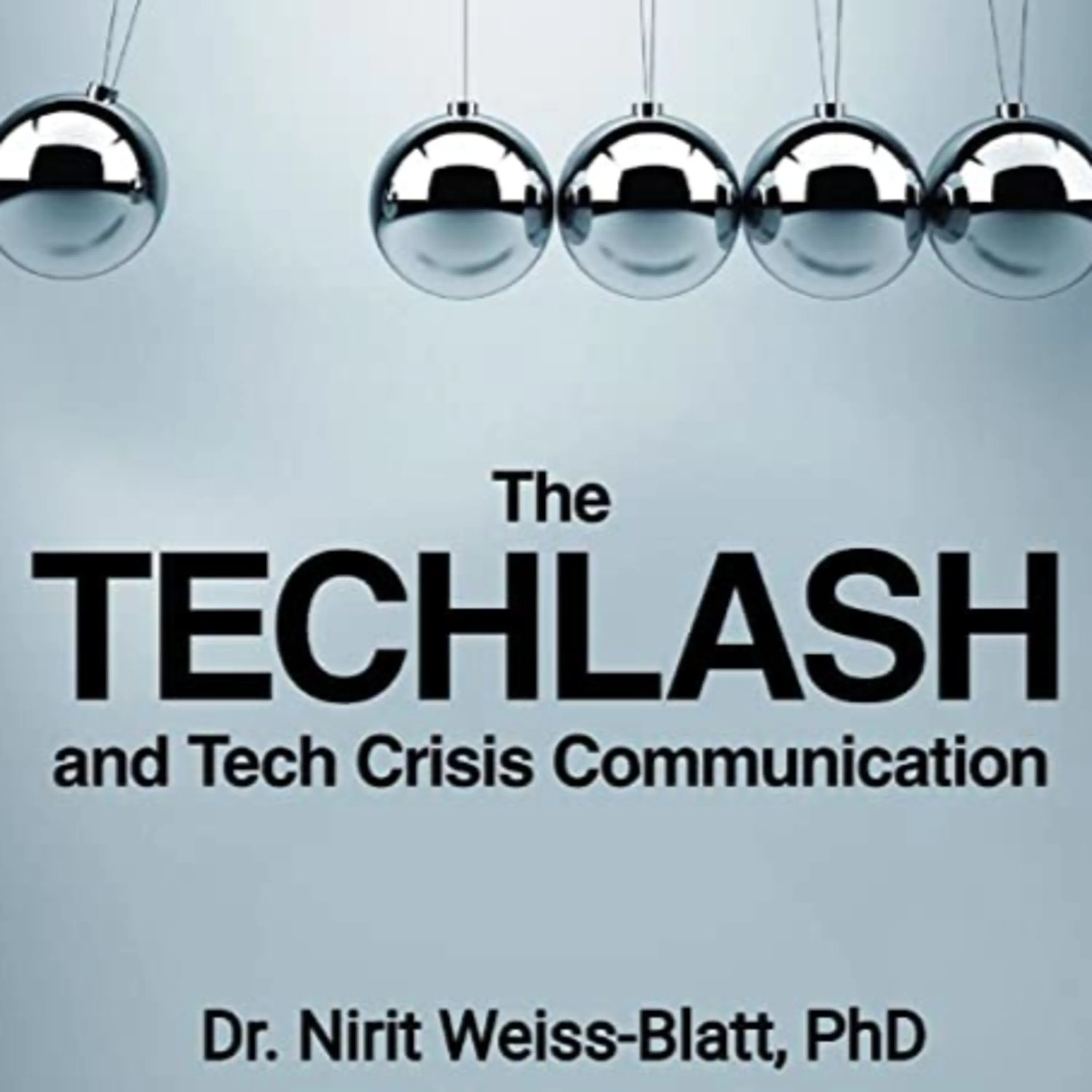
Ep 33The Techlash and Tech Crisis Communication
Communication researcher Nirit Weiss-Blatt talks about her book, The Techlash and Tech Crisis Communication, as well as some of her recent and forthcoming pieces on the digital technology industry with Peoples & Things host, Lee Vinsel. Weiss-Blatt’s work examines both the rise of the “techlash”—the development of negative public and expert sentiment about the digital technology industry—and how company public relations efforts responded to this development. Weiss-Blatt and Vinsel also talk about how some claims about the negative impacts of social media do not seem to hold up to empirical scrutiny and what all of this means for regulation of the digital technology industry. Learn more about your ad choices. Visit megaphone.fm/adchoices Support our show by becoming a premium member! https://newbooksnetwork.supportingcast.fm/technology

S2 Ep 31How a California Electricity Utility Caused Deadly Wildfires
Journalist Katherine Blunt, who writes about renewable energy and utilities for the Wall Street Journal, talks about her new book, California Burning: The Fall of Pacific Gas and Electric—and What It Means for America’s Power Grid with Peoples & Things host, Lee Vinsel. The book tells the fascinating story of how declining performance at an electrical utility eventually led to wildfires and staggering loss of human life. Blunt and Vinsel also talk about what this story means for the future of electricity utilities in the face of global climate change. Learn more about your ad choices. Visit megaphone.fm/adchoices Support our show by becoming a premium member! https://newbooksnetwork.supportingcast.fm/technology
Ep 187Jeremiah McCall, "Gaming the Past: Using Video Games to Teach Secondary History" (Routledge, 2022)
Gaming the Past: Using Video Games to Teach Secondary History (Routledge, 2022) is a complete handbook to help pre-service teachers, current teachers, and teacher educators use historical video games in their classes to develop critical thinking skills. It focuses on practical information and specific examples for integrating critical thinking activities and assessments using video games into classes. Chapters cover the core parts of planning, designing, and implementing lessons and units based on historical video games. Topics include: Talking to administrators, parents, and students about the educational value of teaching with historical video games. Selecting games that are aligned to curricular goals by considering the genres of historical games. Planning and implementing game-based history lessons ranging from whole class exercises, to individual gameplay, to analysis in groups. Employing instructional strategies to help students learn to play and engage in higher level analysis Identifying and avoiding common pitfalls when incorporating games into the history class. Developing activities and assessments that facilitate interpreting and creating established and new media. Gaming the Past also includes sample unit and lesson plans, worksheets and assessment questions, and a list of historical games currently available, both commercial and freely available Internet games. Rudolf Inderst is a professor of Game Design with a focus on Digital Game Studies at the IU International University of Applied Science, editor of “Game Studies Watchlist”, a weekly messenger newsletter about Game Culture and curator of @gamestudies at tiktok. Learn more about your ad choices. Visit megaphone.fm/adchoices Support our show by becoming a premium member! https://newbooksnetwork.supportingcast.fm/technology
Ep 352Christiaan De Beukelaer, "Trade Winds: A Sailing Voyage to a Sustainable Future for Shipping" (Manchester UP, 2023)
How can we build greener infrastructure in the face of the global climate emergency? In Trade Winds: A Sailing Voyage to a Sustainable Future for Shipping (Manchester UP, 2023), Christiaan De Beukelaer, a Senior Lecturer in Arts and Cultural Management at the University of Melbourne intertwines an depth analysis of modern shipping, with a memoir of being aboard a sailing ship during the 2020 pandemic. The book is a fascinating read, with both an extensive critique of the failures of the global shipping and trade system to be sustainable, as well as offering moving insights into a unique experience of a very different form of 2020’s lockdown. Concluding with both the return to land, and a detailed consideration of how shipping, trade, and the world might adapt to the climate crisis, the book is essential reading for anyone interested in a sustainable future for the planet. Dave O'Brien is Professor of Cultural and Creative Industries, at the University of Sheffield. Learn more about your ad choices. Visit megaphone.fm/adchoices Support our show by becoming a premium member! https://newbooksnetwork.supportingcast.fm/technology

Ep 28The Promises and Perils of Hype in Science and Technology
EJournalist and STS graduate student Gemma Milne talks about her book, Smoke and Mirrors: How Hype Obscures the Future and How to See Past It, with Peoples & Things host, Lee Vinsel. The book examines how hype works and how it plays out in a number of scientific and technical fields, including artificial intelligence, quantum computing, brain implants, cancer drugs, fusion energy, and the future of food. Learn more about your ad choices. Visit megaphone.fm/adchoices Support our show by becoming a premium member! https://newbooksnetwork.supportingcast.fm/technology

Ep 27The Internet, Inequality, and the “Digital Divide”
Information scholar Daniel Greene, an assistant professor at University of Maryland, talks about his book, The Promise of Access: Technology, Inequality, and the Political Economy of Hope, with Peoples & Things host, Lee Vinsel. The Promise of Access examines how the “digital divide” became a policy problem, and draws on fascinating ethnographies of a “tech” startup, a public library, and a charter school to examine how organizations come to chase technological solutions to social problems. Learn more about your ad choices. Visit megaphone.fm/adchoices Support our show by becoming a premium member! https://newbooksnetwork.supportingcast.fm/technology
Ep 49The Future of Nuclear Fusion: A Discussion with Sharon Ann Holgate
How useful will nuclear fusion be? In a major breakthrough last year at the National Ignition Facility in California, 192 lasers achieved fusion – and created energy - for the first time. It was clearly an important moment. But might the development of fusion technology come too late? Owen Bennett Jones speaks with Sharon Ann Holgate, author of Nuclear Fusion: The Race to Build a Mini Sun on Earth (Icon Books, 2022). Owen Bennett-Jones is a freelance journalist and writer. A former BBC correspondent and presenter he has been a resident foreign correspondent in Bucharest, Geneva, Islamabad, Hanoi and Beirut. He is recently wrote a history of the Bhutto dynasty which was published by Yale University Press. Learn more about your ad choices. Visit megaphone.fm/adchoices Support our show by becoming a premium member! https://newbooksnetwork.supportingcast.fm/technology
Ep 335Amy S. Bruckman, "Should You Believe Wikipedia?: Online Communities and the Construction of Knowledge" (Cambridge UP, 2022)
As we interact online we are creating new kinds of knowledge and community. How are these communities formed? How do we know whether to trust them as sources of information? In other words, should we believe Wikipedia? Should You Believe Wikipedia?: Online Communities and the Construction of Knowledge (Cambridge UP, 2022) explores what community is, what knowledge is, how the internet facilitates new kinds of community, and how knowledge is shaped through online collaboration and conversation. Along the way the author tackles issues such as how we represent ourselves online and how this shapes how we interact, why there is so much bad behavior online and what we can do about it. And the most important question of all: What can we as internet users and designers do to help the internet to bring out the best in us all? Amy Bruckman is Regents’ Professor and Senior Associate Chair in the School of Interactive Computing at the Georgia Institute of Technology. Her research focuses on social computing, with interests in collaboration, social movements, content moderation, and internet research ethics. She is an ACM Fellow and a member of the ACM CHI Academy. Bruckman received her Ph.D. from the MIT Media Lab's Epistemology and Learning group in 1997, and a B.A. in physics from Harvard University in 1987. Morteza Hajizadeh is a Ph.D. graduate in English from the University of Auckland in New Zealand. His research interests are Cultural Studies; Critical Theory; Environmental History; Medieval (Intellectual) History; Gothic Studies; 18th and 19th Century British Literature. Learn more about your ad choices. Visit megaphone.fm/adchoices Support our show by becoming a premium member! https://newbooksnetwork.supportingcast.fm/technology

Ep 26Computers, Information, and Decision-Making
Samantha Kleinberg, an associate professor of computer science at Stevens Institute of Technology, talks about a book she’s been writing on how we can (and can’t) use information to make better decisions with Peoples & Things host, Lee Vinsel. Kleinberg and Vinsel also talk about barriers to artificial intelligence getting dramatically better anytime soon, and why ideas, like “the singularity,” are mere fantasies. Learn more about your ad choices. Visit megaphone.fm/adchoices Support our show by becoming a premium member! https://newbooksnetwork.supportingcast.fm/technology
Ep 211Nick Seaver, "Computing Taste: Algorithms and the Makers of Music Recommendation" (U Chicago Press, 2022)
The people who make music recommender systems have lofty goals: they want to broaden listeners’ horizons and help obscure musicians find audiences, taking advantage of the enormous catalogs offered by companies like Spotify, Apple Music, and Pandora. But for their critics, recommender systems seem to embody all the potential harms of algorithms: they flatten culture into numbers, they normalize ever-broadening data collection, and they profile their users for commercial ends. Drawing on years of ethnographic fieldwork, anthropologist Nick Seaver describes how the makers of music recommendation navigate these tensions: how product managers understand their relationship with the users they want to help and to capture; how scientists conceive of listening itself as a kind of data processing; and how engineers imagine the geography of the world of music as a space they care for and control. Computing Taste: Algorithms and the Makers of Music Recommendation (U Chicago Press, 2022) rehumanizes the algorithmic systems that shape our world, drawing attention to the people who build and maintain them. In this vividly theorized book, Seaver brings the thinking of programmers into conversation with the discipline of anthropology, opening up the cultural world of computation in a wide-ranging exploration that travels from cosmology to calculation, myth to machine learning, and captivation to care. Nick Seaver is Assistant Professor in the Department of Anthropology and the director of the Science, Technology, and Society program at Tufts University. Mathew Gagné is Assistant Professor in the Department of Sociology and Social Anthropology at Dalhousie University. Learn more about your ad choices. Visit megaphone.fm/adchoices Support our show by becoming a premium member! https://newbooksnetwork.supportingcast.fm/technology

Ep 24Inventing American Telecommunications
Historian Richard John, professor of journalism at Columbia University, talks about his book, Network Nation: Inventing American Telecommunications, with Peoples & Things host, Lee Vinsel. Network Nation is a history of the telegraph and telephone in the United States, and one of its key findings is that, from the very beginning of these technologies, thinking about the state, regulation, and ideas of political economy was at the heart of business strategy. John and Vinsel also talk about the nature of historical research and why it is so important to go back to primary sources. Learn more about your ad choices. Visit megaphone.fm/adchoices Support our show by becoming a premium member! https://newbooksnetwork.supportingcast.fm/technology

Ep 29Public Thinking: Social Media and the New 'Public Intellectual'
We have usually relied on public intellectuals to provide facts, ideas, and cultural leadership--though not all have lived up to the ideal of “speaking truth to power.” Today, however, online networks and social media mean we are all public intellectuals, and we have new responsibilities that come with this role. Guests: Cornel West, professor at Union Theological Seminary and author of, among other works, Black Prophetic Fire. George Scialabba, author of What Good Are Intellectuals Good For?, and many other works. Learn more about your ad choices. Visit megaphone.fm/adchoices Support our show by becoming a premium member! https://newbooksnetwork.supportingcast.fm/technology
Ep 29Angela Vanhaelen, "The Moving Statues of Seventeenth-Century Amsterdam: Automata, Waxworks, Fountains, Labyrinths" (Penn State UP, 2022)
Angela Vanhaelen's The Moving Statues of Seventeenth-Century Amsterdam: Automata, Waxworks, Fountains, Labyrinths (Penn State University Press, 2022) opens a window onto a fascinating and understudied aspect of the visual, material, intellectual, and cultural history of seventeenth-century Amsterdam: the role played by its inns and taverns, specifically the doolhoven. Doolhoven were a type of labyrinth unique to early modern Amsterdam. Offering guest lodgings, these licensed public houses also housed remarkable displays of artwork in their gardens and galleries. The main attractions were inventive displays of moving mechanical figures (automata) and a famed set of waxwork portraits of the rulers of Protestant Europe. Publicized as the most innovative artworks on display in Amsterdam, the doolhoven exhibits presented the mercantile city as a global center of artistic and technological advancement. This evocative tour through the doolhoven pub gardens—where drinking, entertainment, and the acquisition of knowledge mingled in encounters with lively displays of animated artifacts—shows that the exhibits had a forceful and transformative impact on visitors, one that moved them toward Protestant reform. Deeply researched and decidedly original, The Moving Statues of Seventeenth-Century Amsterdam uncovers a wealth of information about these nearly forgotten public pleasure parks, situating them within popular culture, religious controversies, global trade relations, and intellectual debates of the seventeenth century. It will appeal in particular to scholars in art history and early modern studies. Jana Byars is the Academic Director of Netherlands: International Perspectives on Sexuality and Gender. Learn more about your ad choices. Visit megaphone.fm/adchoices Support our show by becoming a premium member! https://newbooksnetwork.supportingcast.fm/technology

Ep 21Collaborations between Cold War Scientists and Artists
Patrick McCray, Professor of History at University of California, Santa Barbara, talks about his book, Making Art Work: How Cold War Engineers and Artists Forged a New Creative Culture, with Peoples & Things host, Lee Vinsel. The book shows how artists eagerly collaborated with engineers and scientists to explore new technologies and create visually and sonically compelling multimedia works after World War II. McCray and Vinsel also discuss how this history connects to more recent developments such as the creation of the MIT Media Lab and so-called “STEAM education.” Learn more about your ad choices. Visit megaphone.fm/adchoices Support our show by becoming a premium member! https://newbooksnetwork.supportingcast.fm/technology
Ep 48The Future of Computer Chips: A Discussion with Julian Kamasa
Microchips are both important and in short supply. So how important? And what can be done to make them more plentiful? Also, what are the geopolitical implications of having the production of microchips concentrated in relatively few hands. Owen Bennett Jones talks microchips with Julian Kamasa of the Centre for Security Studies in Zurich. Owen Bennett-Jones is a freelance journalist and writer. A former BBC correspondent and presenter he has been a resident foreign correspondent in Bucharest, Geneva, Islamabad, Hanoi and Beirut. He is recently wrote a history of the Bhutto dynasty which was published by Yale University Press. Learn more about your ad choices. Visit megaphone.fm/adchoices Support our show by becoming a premium member! https://newbooksnetwork.supportingcast.fm/technology

Ep 19The History of Electricity in Mexico
In her detailed cultural history of technological change, Electrifying Mexico, Diana Montaño argues that ordinary Mexicans became electrifying agents who actively negotiated the extent and manner electricity entered their lives and lived spaces in Mexico City. An Assistant Professor of History at Washington University in St. Louis, Dr. Montaño's teaching and research interests broadly include the construction of modern Latin American societies with a focus on technology and its relationship to nationalism, everyday life and domesticity. Learn more about your ad choices. Visit megaphone.fm/adchoices Support our show by becoming a premium member! https://newbooksnetwork.supportingcast.fm/technology

Ep 25Virtually Violent: Are Online Attacks "Violence?"
During the ongoing COVID-19 pandemic, vulnerable communities have been hit especially hard by disruptive online attacks. But calling these attacks "violent" could jeopardize the future of disruptive protests designed to protest those same communities. Guests: Erica Chenoweth, professor of human rights and international affairs at the Harvard Kennedy School of Government and author of Civil Resistance: What Everyone Needs To Know. Dr. Joan Donovan, research director of the Shorenstein Center on Media, Politics and Public Policy at Harvard University. Oren Segal, vice president of the Anti-Defamation League's Center on Extremism. Learn more about your ad choices. Visit megaphone.fm/adchoices Support our show by becoming a premium member! https://newbooksnetwork.supportingcast.fm/technology
Ep 18The Archaeology of Innovation
Catherine Frieman, an associate professor of European Archaeology at the School of Archaeology, talks about her recent book, An Archaeology of Innovation: Approaching Social and Technological Change in Human Society, with Peoples & Things host, Lee Vinsel. Her book offers a long-term perspective on innovation that only archaeology can offer and draws on case studies from across human history, from our earliest hominin ancestors to the present. The book makes several different arguments, but one of them is that our present narrow focus on pushing the adoption of technical innovations—especially so called “disruptive innovations”—ignores the complex social, technological, and environmental systems that undergirds successful societies. Learn more about your ad choices. Visit megaphone.fm/adchoices Support our show by becoming a premium member! https://newbooksnetwork.supportingcast.fm/technology
Ep 130Ajay Agrawal et al., "Power and Prediction: The Disruptive Economics of Artificial Intelligence" (HBR Press, 2022)
Disruption resulting from the proliferation of AI is coming. The authors of the bestselling Prediction Machines describe what you can do to prepare. Banking and finance, pharmaceuticals, automotive, medical technology, retail. Artificial intelligence (AI) has made its way into many industries around the world. But the truth is, it has just begun its odyssey toward cheaper, better, and faster predictions to drive strategic business decisions--powering and accelerating business. When prediction is taken to the max, industries transform. The disruption that comes with such transformation is yet to be felt--but it is coming. How do businesses prepare? In Prediction Machines, eminent economists Ajay Agrawal, Joshua Gans, and Avi Goldfarb explained the simple yet game-changing economics of AI. Now, in Power and Prediction: The Disruptive Economics of Artificial Intelligence (HBR Press, 2022), they go further to reveal AI as a prediction technology directly impacting decision-making and to teach businesses how to identify disruptive opportunities and threats resulting from AI. Their exhaustive study of new developments in artificial intelligence and the past history of how technologies have disrupted industries highlights the striking phase we are now in: after witnessing the power of this new technology and before its widespread adoption--what they call "the Between Times." While there continue to be important opportunities for businesses, there are also threats of disruption. As prediction machines improve, old ways of doing things will be upended. Also, the process by which AI filters into the many systems involved in application is very uneven. That process will have winners and losers. How can businesses leverage, or protect, their positions? Filled with illuminating insights, rich examples, and practical advice, Power and Prediction is the must-read guide for any business leader or policy maker on how to make the coming AI disruptions work for you rather than against you. Interviewee Avi Goldfarb is the Rotman Chair in Artificial Intelligence and Healthcare and a professor of marketing at the Rotman School of Management, University of Toronto. Avi is also Chief Data Scientist at the Creative Destruction Lab and the CDL Rapid Screening Consortium, a faculty affiliate at the Vector Institute and the Schwartz-Reisman Institute for Technology and Society, and a Research Associate at the National Bureau of Economic Research. Avi’s research focuses on the opportunities and challenges of the digital economy. He has published academic articles in marketing, statistics, law, management, medicine, political science, refugee studies, physics, computing, and economics. Avi is a former Senior Editor at Marketing Science. His work on online advertising won the INFORMS Society of Marketing Science Long Term Impact Award. He testified before the U.S. Senate Judiciary Committee on competition and privacy in digital advertising. His work has been referenced in White House reports, European Commission documents, the New York Times, the Economist, and elsewhere. Peter Lorentzen is economics professor at the University of San Francisco. He heads USF's Applied Economics Master's program, which focuses on the digital economy. His research is mainly on China's political economy. Learn more about your ad choices. Visit megaphone.fm/adchoices Support our show by becoming a premium member! https://newbooksnetwork.supportingcast.fm/technology
S1 Ep 14Deafness “Cures” in History
Jaipreet Virdi talks about her book Hearing Happiness: Deafness Cures in History with Peoples & Things host Lee Vinsel. The book details the long history of attempts to “fix” deaf people, including a great deal of quackery. Towards the end of the conversation, Virdi and Vinsel also talk about what a world beyond solutionist fantasies that disability can be “cured” would look like. Learn more about your ad choices. Visit megaphone.fm/adchoices Support our show by becoming a premium member! https://newbooksnetwork.supportingcast.fm/technology

Ep 12The Thought of Ivan Illich
Author L. M. Sacasas talks about the life, thought, and legacy of the Catholic priest, philosopher, and social critic Ivan Illich with Peoples & Things host Lee Vinsel. Sacasas and Vinsel discuss Illich’s critiques of bureaucracy, technology, scale, and expertise and how these critiques apply to medicine, education, our credential society, and life with media technologies. Learn more about your ad choices. Visit megaphone.fm/adchoices Support our show by becoming a premium member! https://newbooksnetwork.supportingcast.fm/technology

Ep 41BONUS EPISODE: New Books Network and Future Plans
A special bonus episode. Peoples & Things host Lee Vinsel talks about the podcast’s recent move to the New Books Network and plans the Peoples & Things team have for the next year or two. Learn more about your ad choices. Visit megaphone.fm/adchoices Support our show by becoming a premium member! https://newbooksnetwork.supportingcast.fm/technology

Ep 18Spiritual Machines: Transhumanism and Religion
Ever since early scientists began experimenting with immortality elixirs in the middle ages, religion has been influencing transhumanism. Now, we’re beginning to see transhumanism influencing religion. Guests Calvin Mercer, Professor of Religious Studies at East Carolina University Meghan O’Gieblyn, writer Blaire Ostler, Director and Former President of the Mormon Transhumanist Association Learn more about your ad choices. Visit megaphone.fm/adchoices Support our show by becoming a premium member! https://newbooksnetwork.supportingcast.fm/technology
Ep 636Jennifer Forestal, "Designing for Democracy: How to Build Community in Digital Environments" (Oxford UP, 2021)
Political Theorist Jennifer Forestal’s new book is a fascinating exploration of contemporary democracy and how it operates in different spaces. Forestal’s avenue into the question of democracy and the space in which it functions comes out of the idea of how spaces are designed and for what reasons. This idea of built environments—be they city centers in urban areas, software architecture, or the existence and width of sidewalks—contribute to how we, as individuals and community members, operate in those spaces. Forestal is paying particular attention to participatory democracy, where community members come together to solve problems collectively. Designing for Democracy: How to Build Community in Digital Environments (Oxford UP, 2021)weaves together the concrete, the actual spaces where we can gather together or where we are pushed apart, and the theoretical, the way democracy, as a concept, draws on the will of the people to govern themselves. In examining democratic theory, Forestal integrates work from Aristotle, Alexis de Tocqueville, and John Dewey, all of whom provide frameworks for thinking about and understanding interactions between individuals and the effort to share responsibility to govern in common. Forestal unpacks the many ways that built environments guide our choices and behavior—from how the layout of a grocery store pushes us towards certain kinds of purchases, to the design of sidewalks or the absence of sidewalks as determining our public engagement or disengagement—and how this is an often overlooked or obscured exertion of power, especially political power. The power of the built environment trains us in a variety of ways, and this is an area where changing the design of the space in which we exist can also change our behavior and can shift our perspectives. Democratic theory is predicated on individuals acting together, and the space in which we do this contributes to the success of these efforts, or their fragmentation. Social media spaces are very much like the physical built environment, and Forestal examines three different social media spaces, Twitter, Facebook, and Reddit, exploring how they are and are not hospitable spaces for democracy. Designing for Democracy: How to Build Community in Digital Environments is an original analysis of how physical and virtual spaces provide individuals with barriers or openings to engagement, and how these spaces can shift our behavior and our priorities. Ultimately, democracy is an idea that must be translated by real people in real spaces and places, and how we all engage with one another is not just important, it is the basis for the implementation of this concept of self-government. Lilly J. Goren is a professor of political science at Carroll University in Waukesha, WI. She is co-editor of The Politics of the Marvel Cinematic Universe (University Press of Kansas, 2022), as well as co-editor of the award winning book, Women and the White House: Gender, Popular Culture, and Presidential Politics (University Press of Kentucky, 2012). Email her comments at [email protected] or tweet to @gorenlj. Learn more about your ad choices. Visit megaphone.fm/adchoices Support our show by becoming a premium member! https://newbooksnetwork.supportingcast.fm/technology

Ep 11Automating Finance
Sociologist Juan Pablo Pardo-Guerra, a professor at University of California San Diego, talks about his book Automating Finance: Infrastructures, Engineers, and the Making of Electronic Markets with Peoples & Things host Lee Vinsel. The book traces the long, largely anonymous, and in some senses boring history of how experts applied computers to financial systems since the 1970s, creating a digital infrastructure of the trading world. The conversation also touches on Pardo-Guerra’s more recent work on how systems of quantitative metrics have been applied to the management of universities and what might be done about it. Learn more about your ad choices. Visit megaphone.fm/adchoices Support our show by becoming a premium member! https://newbooksnetwork.supportingcast.fm/technology
S1 Ep 10Shoddy: Recycled Textiles in History
Historian Hanna Rose Shell, a professor at University of Colorado, Boulder, talks about her book Shoddy: From Devil’s Dust to the Renaissance of Rags with Peoples & Things host Lee Vinsel. Along the way, Shell raises a number of important and interesting things, including the long history of reuse and recycling and how forms of technology and work become tied to social status. With shoddy, it was the anxieties of low class, low social status work and poverty. Shell also discusses how individual technologies become mirrors for the worries, fears, hatreds, and other feelings of society – how when we look into the history of any technology we often see ourselves reflected back. Learn more about your ad choices. Visit megaphone.fm/adchoices Support our show by becoming a premium member! https://newbooksnetwork.supportingcast.fm/technology
Ep 8South Korea, Technology, and Globalization
Patrick Chung, assistant professor of history at the University of Maryland, talks about his research on the rise of shipping and manufacturing in South Korea with Peoples & Things host Lee Vinsel. Along the way, Chung provides fascinating insights into the role that both the US Department of Defense and local South Korean actors played in globalization. Learn more about your ad choices. Visit megaphone.fm/adchoices Support our show by becoming a premium member! https://newbooksnetwork.supportingcast.fm/technology

Ep 7Infrastructure and Inequality
Daniel Armanios, associate professor of Engineering and Public Policy at Carnegie Mellon University, talks about his work on infrastructure and inequality with Peoples & Things host Lee Vinsel. Armanios’ recent work has focused on coming up with quantitative measures of how infrastructure relates to inequalities around race, gender, and class, both to address historical injustices and to inform future infrastructure construction. Armanios also talks about how he brings these topics into his teaching and his larger project around engineering and social justice. Learn more about your ad choices. Visit megaphone.fm/adchoices Support our show by becoming a premium member! https://newbooksnetwork.supportingcast.fm/technology
Ep 146Christopher Bartel, "Video Games, Violence, and the Ethics of Fantasy: Killing Time" (Bloomsbury, 2020)
Is it ever morally wrong to enjoy fantasizing about immoral things? Many video games allow players to commit numerous violent and immoral acts. But should players worry about the morality of their virtual actions? A common argument is that games offer merely the virtual representation of violence. No one is actually harmed by committing a violent act in a game. So, it cannot be morally wrong to perform such acts. While this is an intuitive argument, it does not resolve the issue. Focusing on why individual players are motivated to entertain immoral and violent fantasies, Christopher Bartel's book Video Games, Violence, and the Ethics of Fantasy: Killing Time (Bloomsbury, 2020) advances debates about the ethical criticism of art, not only by shining light on the interesting and under-examined case of virtual fantasies, but also by its novel application of a virtue ethical account. Video games are works of fiction that enable players to entertain a fantasy. So, a full understanding of the ethical criticism of video games must focus attention on why individual players are motivated to entertain immoral and violent fantasies. Video Games, Violence, and the Ethics of Fantasy engages with debates and critical discussions of games in both the popular media and recent work in philosophy, psychology, media studies, and game studies. Rudolf Inderst is a professor of Game Design with a focus on Digital Game Studies at the IU International University of Applied Science, editor of “Game Studies Watchlist”, a weekly messenger newsletter about Game Culture and curator of @gamestudies at tiktok. Learn more about your ad choices. Visit megaphone.fm/adchoices Support our show by becoming a premium member! https://newbooksnetwork.supportingcast.fm/technology

Ep 6The Politics of Digital Technology
Meredith Whittaker, co-founder and faculty director of the AI Now Institute and Minderoo Research Professor at New York University, talks about the politics of digital technologies with Peoples & Things host Lee Vinsel. The conversation examines Whittaker’s fascinating career moving between industry and academia, her role in the Google walkout, and her hopes for the future, including the role of social movements in fomenting political change. Learn more about your ad choices. Visit megaphone.fm/adchoices Support our show by becoming a premium member! https://newbooksnetwork.supportingcast.fm/technology
Ep 94Bridget Whearty, "Digital Codicology: Medieval Books and Modern Labor" (Stanford UP, 2022)
Medieval manuscripts are our shared inheritance, and today they are more accessible than ever—thanks to digital copies online. Yet for all that widespread digitization has fundamentally transformed how we connect with the medieval past, we understand very little about what these digital objects really are. We rarely consider how they are made or who makes them. Digital Codicology: Medieval Books and Modern Labor (Stanford UP, 2022) demystifies digitization, revealing what it's like to remake medieval books online and connecting modern digital manuscripts to their much longer media history, from print, to photography, to the rise of the internet. Examining classic late-1990s projects like Digital Scriptorium 1.0 alongside late-2010s initiatives like Bibliotheca Philadelphiensis, and world-famous projects created by the British Library, Corpus Christi College Cambridge, Stanford University, and the Walters Art Museum against in-house digitizations performed in lesser-studied libraries, Bridget Whearty tells never-before-published narratives about globally important digital manuscript archives. Drawing together medieval literature, manuscript studies, digital humanities, and imaging sciences, Whearty shines a spotlight on the hidden expert labor responsible for today's revolutionary digital access to medieval culture. Ultimately, this book argues that centering the modern labor and laborers at the heart of digital cultural heritage fosters a more just and more rigorous future for medieval, manuscript, and media studies. Jen Hoyer is Technical Services and Electronic Resources Librarian at CUNY New York City College of Technology and a volunteer at Interference Archive. She is co-author of What Primary Sources Teach: Lessons for Every Classroom and The Social Movement Archive. Learn more about your ad choices. Visit megaphone.fm/adchoices Support our show by becoming a premium member! https://newbooksnetwork.supportingcast.fm/technology
Ep 64Harald Koberg, "Free Play: Digital Gaming and the Longing for Effectiveness" (Büchner-Verlag, 2021)
What needs are satisfied in digital gaming? And what does the shift of these need satisfactions into the digital space say about the social realities in which they are embedded? Harald Koberg lets gamers themselves have their say and follows their traces of the described fascinations and passions in his latest book Free Play: Digital Gaming and the Longing for Effectiveness (Freies Spiel: Digitales Spielen und die Sehnsucht nach Wirkmächtigkeit). The answers found aim at experiences of efficacy: digital games and the communication spaces around them offer particular opportunities to experience one's own decisions and actions as relevant and effective. It is not only about narrated stories and interactions with the game, but also about the rules and limits of communication, spaces of unfolding, self-dramatization, and norm-setting. Using the examples of adolescent search for free spaces, insecure masculinity, and achievement society overload, Harald Koberg shows why critique of the medium of video games must focus on people and how much can be determined about larger social contexts along the way. Rudolf Inderst is a professor of Game Design with a focus on Digital Game Studies at the IU International University of Applied Science, editor of “Game Studies Watchlist”, a weekly messenger newsletter about Game Culture and curator of @gamestudies at tiktok. Learn more about your ad choices. Visit megaphone.fm/adchoices Support our show by becoming a premium member! https://newbooksnetwork.supportingcast.fm/technology
Ep 5Artificial Unintelligence: How Computers Misunderstand the World
Data journalist Meredith Broussard talks about her book, Artificial Unintelligence: How Computers Misunderstand the World, with Peoples & Things host Lee Vinsel. The book how artificial intelligence systems do and don’t work and why people have come to have such unrealistic understandings of the technologies’ capabilities. One central factor is what Broussard calls technochauvinism, “the belief that technology is always the solution.” Broussard also discusses her early career as a computer scientist, why she became her journalist, and her hopes for a more humane technological future. Learn more about your ad choices. Visit megaphone.fm/adchoices Support our show by becoming a premium member! https://newbooksnetwork.supportingcast.fm/technology
Ep 117Jayita Sarkar, "Ploughshares and Swords: India's Nuclear Program in the Global Cold War" (Cornell UP, 2022)
In 1974, India surprised the world with “Smiling Buddha”: a secret underground nuclear test at Pokhran, Rajasthan. India called it a “peaceful nuclear explosion”—but few outside of India saw it that way. The 1974 nuclear tests became a symbol of India’s ability to help itself, especially given how the country was left out of the Nuclear Non-Proliferation Treaty, an agreement the country argued was colonial. But, as Jayita Sarkar’s Ploughshares and Swords: India’s Nuclear Program in the Global Cold War (Cornell University Press, 2022) points out, India’s nuclear program was in fact the product of Cold War tensions and international networks–including some foreign sources of nuclear knowledge and material. (An open-access version of Jay’s book can be found here) Jayita Sarkar is Senior Lecturer in Economic and Social History at the University of Glasgow and the Founding Director of the Global Decolonization Initiative. She can be followed on Twitter at @DrJSarkar, and her Linktree can be found here. In this interview, Jay and I talk about India’s nuclear program, from its very beginnings through to when India was brought back into the world’s—or, at least, the U.S.’s–nuclear good graces in 2008. You can find more reviews, excerpts, interviews, and essays at The Asian Review of Books, including its review of Ploughshares and Swords. Follow on Twitter at @BookReviewsAsia. Nicholas Gordon is an associate editor for a global magazine, and a reviewer for the Asian Review of Books. He can be found on Twitter at@nickrigordon. Learn more about your ad choices. Visit megaphone.fm/adchoices Support our show by becoming a premium member! https://newbooksnetwork.supportingcast.fm/technology
Ep 3Understanding Technology Bubbles
Brent Goldfarb and David Kirsch, professors of entrepreneurship and strategy at the University of Maryland's Robert H. Smith School of Business, talk about their book, Bubbles and Crashes: The Boom and Bust of Technological Innovation, with Peoples & Things host Lee Vinsel. Bubbles and Crashes puts forward a parsimonious model of how and when economic bubbles develop around new technologies. In the conversation, Goldfarb and Kirsch reflect on a variety of topics, including why it matters that Elon Musk is such a good story teller, whether we are currently in a technology bubble, and what we can do to prevent bubbles in the future. Learn more about your ad choices. Visit megaphone.fm/adchoices Support our show by becoming a premium member! https://newbooksnetwork.supportingcast.fm/technology
Ep 1The History of Household Technology from Open Hearth to the Microwave
Historian Ruth Schwartz Cowan talks about her book, More Work for Mother, with Peoples & Things host Lee Vinsel. The book examines the history of how Americans industrialized their homes over the past two hundred years and how supposedly labor-saving technologies led women to do increased housework. Cowan also reflects on what it was like to work as a professor as a woman and mother in the 1970s and how families have changed their relationship to technology and housework in the nearly forty years since the book was published. Learn more about your ad choices. Visit megaphone.fm/adchoices Support our show by becoming a premium member! https://newbooksnetwork.supportingcast.fm/technology
Ep 176Albert Glinsky, "Switched On: Bob Moog and the Synthesizer Revolution" (Oxford UP, 2022)
The Moog synthesizer ‘bent the course of music forever’ Rolling Stone declared. Bob Moog, the man who did that bending, was a lovable geek with Einstein hair and pocket protectors. He walked into history in 1964 when his homemade contraption unexpectedly became a sensation---suddenly everyone wanted a Moog. The Beatles, The Doors, The Byrds, and Stevie Wonder discovered his synthesizer, and it came to be featured in seminal film scores including Apocalypse Now and A Clockwork Orange. The Moog's game-changing sounds saturated 60's counterculture and burst into the disco party in the 70's to set off the electronic dance music movement. Bob had singlehandedly founded the synth industry and become a star in the process. But he was also going broke. Imitators copied his technology, the musicians' union accused him of replacing live players, and Japanese competitors started overtaking his work. He struggled to hang on to his inventions, his business, and his very name. Bob's story upends our notions of success and wealth, showing that the two don't always go together. In Switched On: Bob Moog and the Synthesizer Revolution (Oxford UP, 2022), author Albert Glinsky draws on exclusive access to Bob Moog's personal archives and his probing interviews with Bob's family and a multitude of associates, for this first complete biography of the man and his work. Switched On takes the reader on a roller coaster ride at turns triumphant, heart-breaking, and frequently laugh out loud absurd---a nuanced trip through the public and private worlds of this legendary inventor who altered the course of music.” Nathan Smith is a PhD Student in Music Theory at Yale University. He can be reached at [email protected]. Learn more about your ad choices. Visit megaphone.fm/adchoices Support our show by becoming a premium member! https://newbooksnetwork.supportingcast.fm/technology

Ep 6Mirror Image: New Technologies and the Self
16th-century glass mirrors and 21st-century camera phones actually share a lot in common; they both are technologies that shaped new forms of the self. Guests Ian Mortimer, historian and author of Millennium: From Religion to Revolution: How Civilization Has Changed Over a Thousand Years Ilan Stavans, professor of Latin American and Latino Culture at Amherst College and author of I Love My Selfie Learn more about your ad choices. Visit megaphone.fm/adchoices Support our show by becoming a premium member! https://newbooksnetwork.supportingcast.fm/technology