
New Books in South Asian Studies
1,442 episodes — Page 15 of 29
Ep 225Chakravarthi Ram-Prasad, "Human Being, Bodily Being: Phenomenology from Classical India" (Oxford UP, 2021)
In Human Being, Bodily Being: Phenomenology from Classical India (Oxford UP, 2021), Chakravarthi Ram-Prasad offers illuminating new perspectives on contemporary phenomenological theories of body and subjectivity, based on studies of diverse classical Indian texts. He argues for a 'phenomenological ecology' of bodily subjectivity in health, gender, contemplation, and lovemaking. Raj Balkaran is a scholar of Sanskrit narrative texts. He teaches at the Oxford Centre for Hindu Studies and at his own virtual School of Indian Wisdom. For information see rajbalkaran.com. Learn more about your ad choices. Visit megaphone.fm/adchoices Support our show by becoming a premium member! https://newbooksnetwork.supportingcast.fm/south-asian-studies
Ep 168Monica Juneja and Sumathi Ramaswamy, "Motherland: Pushpamala N.'s 'Woman and Nation'" (Roli Books, 2022)
Monica Juneja and Sumathi Ramaswamy's Motherland: Pushpamala N.'s 'Woman and Nation' (Roli Books, 2022) examines Motherland, an important series of photo-performances by the acclaimed artist Pushpamala N. on the Indian nation personified as woman, mother, and goddess. The series shows Pushpamala taking on Mother India's myriad personifications: nubile beauty and saintly renunciant; militant goddess wearing a garland of skulls or receiving the ultimate sacrifice of a warrior's head; the mother-surgeon activating the birth of model citizens; and destitute widow, bent from years of abject labor. As she does so, she reveals that nations are invented, as are national embodiments. The artist's burden is to reveal the ingredients of such inventions. Ujaan Ghosh is a graduate student at the Department of Art History at University of Wisconsin, Madison Learn more about your ad choices. Visit megaphone.fm/adchoices Support our show by becoming a premium member! https://newbooksnetwork.supportingcast.fm/south-asian-studies
Ep 167Kasia Paprocki, "Threatening Dystopias: The Global Politics of Climate Change Adaptation in Bangladesh" (Cornell UP, 2021)
In Threatening Dystopias: The Global Politics of Climate Change Adaptation in Bangladesh (Cornell UP, 2021), Kasia Paprocki challenges two well-worn assumptions about climate change and its relationship with the political economy of development and agriculture, in Bangladesh, which helps shed light on how climate change becomes a politically contested category, in countries across the Global South. The first, is that climate change is simply a contemporary phenomenon without a longer history embedded in the ecology, economics, politics, and social relations in the region. Second, that climate change is the driver of the increased vulnerability of large swaths of the Bangladeshi population, like the community she closely follows in Khulna, in the southwestern part of the country. Through fine-grained ethnographic and archival detail, Paprocki engages with developers, policy makers, scientists, farmers, and rural migrants to show how Bangladeshi and global elites ignore the history of landscape transformation and its attendant conflicts in advancing certain ‘climate adaptation’ agendas, which have dire consequences for the most marginalized. She looks at how groups craft economic narratives and strategies that redistribute power and resources away from peasant communities. Although these groups claim that increased production of export commodities will reframe the threat of climate change into an opportunity for economic development and growth, the reality is not so simple. For the country's rural poor, these promises ring hollow. As development dispossesses the poor from agrarian livelihoods, outmigration from peasant communities leads to precarious existences in urban centers. And a vision of development in which urbanization and export-led growth are both desirable and inevitable is not one the land and its people can sustain. Threatening Dystopias shows how a powerful rural movement, although hampered by an all-consuming climate emergency, is seeking climate justice in Bangladesh. Archit Guha is a PhD researcher at the Duke University History Department. Learn more about your ad choices. Visit megaphone.fm/adchoices Support our show by becoming a premium member! https://newbooksnetwork.supportingcast.fm/south-asian-studies
Ep 110John Keay, "Himalaya: Exploring the Roof of the World" (Bloomsbury, 2022)
“History has not been kind to Himalaya,” writes historian and travel writer John Keay in his latest book Himalaya: Exploring the Roof of the World (Bloomsbury Publishing, 2022). The region, nestled between India, China and Central Asia, has long been subject to political and imperial intrigue–and at times violent invasion. But the region also provided a wealth of scientific information, like geographers puzzling over how these tall peaks were thrust upwards by plate tectonics. And, of course, it’s the home to a Tibetan culture and people that has been present for centuries That’s all from Keay’s latest book, which collects years of detail on history, geography, and culture, in one volume. John Keay has been writing about Himalaya and traveling there since the 1960s. He wrote the two-volume Explorers of the Western Himalayas (John Murray: 1977, 1979) and wrote and presented a major BBC R3 documentary series on the Himalayan kingdom; other works include India: A History (Grove Press: 2000) and China: A History (HarperCollins: 2008). In this interview, John and I talk about just a few details from his book: the Younghusband Expedition, plate tectonics, and local legends like the “Ogress of the Rocks” You can find more reviews, excerpts, interviews, and essays at The Asian Review of Books, including its review of Himalaya. Follow on Twitter at @BookReviewsAsia. Nicholas Gordon is an associate editor for a global magazine, and a reviewer for the Asian Review of Books. He can be found on Twitter at@nickrigordon. Learn more about your ad choices. Visit megaphone.fm/adchoices Support our show by becoming a premium member! https://newbooksnetwork.supportingcast.fm/south-asian-studies
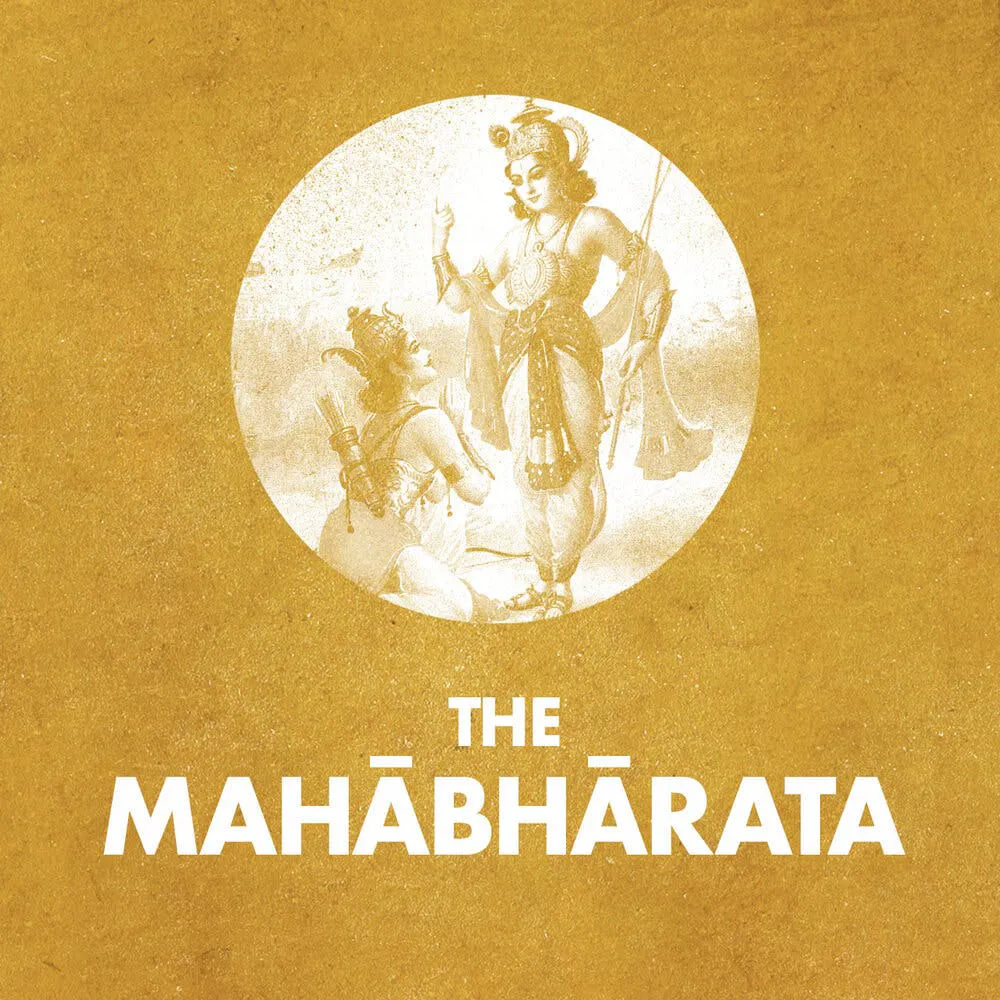
Ep 83On "The Mahābhārata"
When it comes to epic poetry, there’s a strong case to be made that the Ancient Indian story the Mahābhārata is the most epic. Clocking in at around 100,000 verses, the Mahābhārata is roughly seven times The Iliad and The Odyssey combined. This foundational Hindu text tells the story of a war between two sets of cousins who are fighting over who gets to rule their kingdom. The text is said to contain the universe, but it is best to leave it unfinished. Bad things are said to befall those who read it from beginning to end. Nell Shapiro Hawley is the Preceptor in Sanskrit at Harvard University and is the co-editor of Many Mahābhāratas (forthcoming from SUNY Press), a collection of eighteen essays on retellings of the Mahābhārata across South Asian languages and literary genres. See more information on our website, WritLarge.fm. Follow us on Twitter @WritLargePod. Learn more about your ad choices. Visit megaphone.fm/adchoices Support our show by becoming a premium member! https://newbooksnetwork.supportingcast.fm/south-asian-studies
Ep 181Sushmita Nath, "The Secular Imaginary: Gandhi, Nehru and the Idea(s) of India" (Cambridge UP, 2022)
Given the popularity and success of the Hindu-Right in India’s electoral politics today, how may one study ostensibly ‘Western’ concepts and ideas, such as the secular and its family of cognates, like secularism, secularisation and secularity in non-Western societies without assuming them simply as derivative, or colonial legacies or contrast cases of Western societies? While recognizing that the dominant language of political modernity of Western societies is not easily translatable in non-Western societies, The Secular Imaginary elaborates upon an intellectual history of secularity in modern India by focusing on the two most influential political leaders – M.K. Gandhi and Jawaharlal Nehru. It is an intellectual history of both idea(s) and intellectuals, which sheds light on Indian narratives of secularity – the Gandhian sarva dharma samabhava, Nehruvian secularism, and unity in diversity. It revisits this dominant narrative of secularity of the twentieth century that influenced and shaped the imagination of the modern nation-state. Tiatemsu Longkumer is a Ph.D. scholar working on ‘Anthropology of Religion’ at North-Eastern Hill University, Shillong: India. Learn more about your ad choices. Visit megaphone.fm/adchoices Support our show by becoming a premium member! https://newbooksnetwork.supportingcast.fm/south-asian-studies
Ep 300Charles Goodman, "The Tattvasaṃgraha Of Śāntarakṣita: Selected Metaphysical Chapters" (Oxford UP, 2022)
The Tattvasaṃgraha of Śāntarakṣita: Selected Metaphysical Chapters (Oxford University Press, 2022) collects excerpts from a massive encyclopedic work of the late period of Buddhism in India. Translator Charles Goodman has selected sections of this Sanskrit text which cover debates over the existence of prime matter, God, and an immaterial soul, as well as controversies around the cause and effect, karma, and Jain perspectivalism. Within these chapters, through a translation of the verses of the Tattvasaṃgraha as well as the canonical commentary the Tattvasaṃgrahapañjikā by Kamalaśila, the book showcases Buddhists debates with a wide range of interlocutors. Śānatarakṣita and Kamalaśila, from their vantage point late in the history of Indian Buddhism, collect a range of arguments against their historical opponents: Sāṃkhya, Nyāya, Mīmāṃsā, Advaita Vedānta, Jainism, and even a group of Buddhists known as the Vātsīputrīyas. The book also includes an introductory chapter by the translator which explains the sophisticated underlying epistemological framework of this massive and massively influential text. Malcolm Keating is Associate Professor of Philosophy at Yale-NUS College. His research focuses on Sanskrit works of philosophy in Indian traditions, in the areas of language and epistemology. He is the author of Language, Meaning, and Use in Indian Philosophy (Bloomsbury Press, 2019) and host of the podcast Sutras & Stuff. Learn more about your ad choices. Visit megaphone.fm/adchoices Support our show by becoming a premium member! https://newbooksnetwork.supportingcast.fm/south-asian-studies
Ep 111Elliott H. Powell, "Sounds from the Other Side: Afro-South Asian Collaborations in Black Popular Music" (U Minnesota Press, 2020)
From Beyoncé's South Asian music-inspired Super Bowl Halftime performance, to jazz artists like John and Alice Coltrane's use of Indian song structures and spirituality in their work, to Jay-Z and Missy Elliott's high-profile collaborations with diasporic South Asian artists such as the Panjabi MC and MIA, African American musicians have frequently engaged South Asian cultural productions in the development of Black music culture. Sounds from the Other Side: Afro-South Asian Collaborations in Black Popular Music (U Minnesota Press, 2020) traces such engagements through an interdisciplinary analysis of the political implications of African American musicians' South Asian influence since the 1960s. Elliott H. Powell asks, what happens when we consider Black musicians' South Asian sonic explorations as distinct from those of their white counterparts? He looks to Black musical genres of jazz, funk, and hip hop and examines the work of Miles Davis, John Coltrane, Rick James, OutKast, Timbaland, Beyoncé, and others, showing how Afro-South Asian music in the United States is a dynamic, complex, and contradictory cultural site where comparative racialization, transformative gender and queer politics, and coalition politics intertwine. Powell situates this cultural history within larger global and domestic sociohistorical junctures that link African American and South Asian diasporic communities in the United States. The long historical arc of Afro-South Asian music in Sounds from the Other Side interprets such music-making activities as highly political endeavors, offering an essential conversation about cross-cultural musical exchanges between racially marginalized musicians. Andy Boyd is a playwright based in Brooklyn, New York. He is a graduate of the playwriting MFA at Columbia University, Harvard University, and the Arizona School for the Arts. Learn more about your ad choices. Visit megaphone.fm/adchoices Support our show by becoming a premium member! https://newbooksnetwork.supportingcast.fm/south-asian-studies
Ep 236Yigal Bronner et al., "Sensitive Reading: The Pleasures of South Asian Literature in Translation" (U California Press, 2022)
What are the pleasures of reading translations of South Asian literature, and what does it take to enjoy a translated text? Sensitive Reading: The Pleasures of South Asian Literature in Translation (U California Press, 2022) provides opportunities to explore such questions by bringing together a whole set of new translations by David Shulman, noted scholar of South Asia. Together, the translations and the accompanying essays form an essential guide for people interested in literature and art from South Asia. This book is available open access here. Raj Balkaran is a scholar of Sanskrit narrative texts. He teaches at the Oxford Centre for Hindu Studies and at his own virtual School of Indian Wisdom. For information see rajbalkaran.com. Learn more about your ad choices. Visit megaphone.fm/adchoices Support our show by becoming a premium member! https://newbooksnetwork.supportingcast.fm/south-asian-studies
Ep 109Eric Tagliocozzo, "In Asian Waters: Oceanic Worlds from Yemen to Yokohama" (Princeton UP, 2022)
In the nineteenth century, one group of American merchants reported an odd request from the Vietnamese emperor. An envoy asked if the traders could help procure a commodity brought by a previous delegation: a precious good that turned out to be a bottle of Best Durham bottled mustard. That’s one small anecdote in Eric Tagliocozzo’s latest book, In Asian Waters: Oceanic Worlds from Yemen to Yokohama (Princeton University Press: 2022), which charts hundreds of years of history across Asia’s waters, from the South China Sea through the Persian Gulf. Eric weaves together historical research and on-the-ground fieldwork to show how Asia’s oceans can be a better way to understand the region than its land borders. In this interview, Eric and I talk about these Asian waters, stretching from the Middle East to East Asia, and the history and fieldwork that went into Eric’s book. Eric Tagliacozzo is the John Stambaugh Professor of History at Cornell University. His many books include Secret Trades, Porous Borders: Smuggling and States along a Southeast Asian Frontier, 1865–1915 (Yale University Press: 2009) and The Longest Journey: Southeast Asians and the Pilgrimage to Mecca (Oxford University Press: 2013). You can find more reviews, excerpts, interviews, and essays at The Asian Review of Books, including its review of In Asian Waters. Follow on Twitter at @BookReviewsAsia. Nicholas Gordon is an associate editor for a global magazine, and a reviewer for the Asian Review of Books. He can be found on Twitter at @nickrigordon. Learn more about your ad choices. Visit megaphone.fm/adchoices Support our show by becoming a premium member! https://newbooksnetwork.supportingcast.fm/south-asian-studies
Ep 222Ruth Vanita, "The Dharma of Justice in the Sanskrit Epics" (Oxford UP, 2021)
Ruth Vanita's book The Dharma of Justice in the Sanskrit Epics (Oxford UP, 2021) shows that many characters in the Sanskrit epics - men and women of all varnas and mixed-varna - discuss and criticize discrimination based on gender, varna, poverty, age, and disability. On the basis of philosophy, logic and devotion, these characters argue that such categories are ever-changing, mixed and ultimately unreal therefore humans should be judged on the basis of their actions, not birth. The book explores the dharmas of singleness, friendship, marriage, parenting, and ruling. Bhakta poets such as Kabir, Tulsidas, Rahim and Raidas drew on ideas and characters from the epics to present a vision of oneness. Justice is indivisible, all bodies are made of the same matter, all beings suffer, and all consciousnesses are akin. This book makes the radical argument that in the epics, kindness to animals, the dharma available to all, is inseparable from all other forms of dharma. Raj Balkaran is a scholar, online educator, and life coach. For information see rajbalkaran.com. Learn more about your ad choices. Visit megaphone.fm/adchoices Support our show by becoming a premium member! https://newbooksnetwork.supportingcast.fm/south-asian-studies
Ep 85Janaki Srinivasan, "The Political Lives of Information: Information and the Production of Development in India" (MIT Press, 2022)
The Political Lives of Information: Information and the Production of Development in India (MIT Press, 2022), written by Janaki Srinivasan and published by MIT Press in October 2022, examines how the definition, production, and leveraging of information are shaped by caste, class, and gender, and the implications of this for development. Information, says Srinivasan, has fundamentally reshaped development discourse and practice. In this study, she examines the history of the idea of “information” and its political implications for poverty alleviation. She presents three cases in India—the circulation of price information in a fish market in Kerala, government information in information kiosks operated by a nonprofit in Puducherry, and a political campaign demanding a right to information in Rajasthan—to explore three uses of information to support goals of social change. Countering claims that information is naturally and universally empowering, Srinivasan shows how the definition, production, and leveraging of information are shaped by caste, class, and gender. Srinivasan draws on archival and ethnographic research to challenge the idea of information as objective and factual. Using the concept of an “information order,” she examines how the meaning and value of information reflect the social relations in which it is embedded. She asks why casting information as a tool of development and solution to poverty appeals to actors across the political spectrum. She also shows how the power to label some things information and others not is at least as significant as the capacity to subsequently produce, access, and leverage information. The more faith we place in what information can do, she cautions, the less attention we pay to its political lives and to the role of specific social structures, individual agency, and material form in the defining, production, and use of that information. Janaki Srinivasan is Associate Professor at the International Institute of Information Technology, in Bangalore, India. Jen Hoyer is Technical Services and Electronic Resources Librarian at CUNY New York City College of Technology and a volunteer at Interference Archive. She is co-author of What Primary Sources Teach: Lessons for Every Classroom and The Social Movement Archive. Learn more about your ad choices. Visit megaphone.fm/adchoices Support our show by becoming a premium member! https://newbooksnetwork.supportingcast.fm/south-asian-studies
Ep 183Kedar Arun Kulkarni, "World Literature and the Question of Genre in Colonial India: Poetry, Drama, and Print Culture 1790-1890" (Bloomsbury, 2022)
In 1818, the East India Company defeated the Maratha confederacy, acquiring vast domains in central and western India. Through coercion if not outright violence, the Company transformed many aspects of India's social, economic, and cultural landscape. This book charts one such shifting landscape-Marathi language literary culture-in order to expand the field of world and comparative literature. Kedar A. Kulkarni describes the way Marathi literary culture, entrenched in performative modes of production and reception, especially balladry and epic storytelling, saw the germination of a robust, script-centric dramatic culture, owing to colonial networks of literary exchange and the newfound wide availability of print technology. However, the process was far from a simple mutation of genre. He demonstrates the upheaval that literary culture underwent as a new class of literati emerged: anthologists, critics, theatre makers, publishers, translators, among many others. And, these people also participated in a global conversation that left its mark on theory in the twentieth century. Ultimately, World Literature and the Question of Genre in Colonial India: Poetry, Drama, and Print Culture 1790-1890 (Bloomsbury, 2022) situates Marathi literature within contemporary world literature studies and critiques “eurochronology”- the perceived backwardness of colonial and postcolonial locales when compared with literatures produced in Euro-American metropoles. Reading through archives and ephemera, it demonstrates that literary cultures in colonized locales converged with and participated fully in key defining moments of world literature, but also diverged from them to create, simultaneously, a unique literary modernity. Dr. Kedar A. Kulkarni teaches at FLAME University, Pune. Gargi Binju is a researcher at the University of Tübingen. Learn more about your ad choices. Visit megaphone.fm/adchoices Support our show by becoming a premium member! https://newbooksnetwork.supportingcast.fm/south-asian-studies
Ep 1281Sofi Thanhauser, "Worn: A People's History of Clothing" (Vintage, 2022)
Worn: A People's History of Clothing (Vintage, 2022) by Sofi Thanhauser explores linen, cotton, silk, synthetics, wool: through the stories of these five fabrics, she illuminates the world we inhabit in a startling new way, travelling from China to Cumbria to reveal the craft, labour and industry that create the clothes we wear. From the women who transformed stalks of flax into linen to clothe their families in nineteenth century New England to those who earn their dowries in the cotton-spinning factories of South India today, this book traces the origins of garment-making through time and around the world. Exploring the social, economic and environmental impact of our most personal possessions, Worn looks beyond care labels to show how clothes reveal the truth about what we really care about. This interview was conducted by Dr. Miranda Melcher whose doctoral work focused on post-conflict military integration, understanding treaty negotiation and implementation in civil war contexts, with qualitative analysis of the Angolan and Mozambican civil wars. Learn more about your ad choices. Visit megaphone.fm/adchoices Support our show by becoming a premium member! https://newbooksnetwork.supportingcast.fm/south-asian-studies
Ep 221Steven W. Ramey, "Hinduism in Five Minutes" (Equinox, 2022)
Hinduism in Five Minutes (Equinox Publishing, 2022) is an accessible and lively introduction to common questions about the practices, ideas, and narratives often identified as Hindu. Suitable for beginning students and the general reader. Steven W. Ramey is a Professor in Religious Studies at the University of Alabama, where he also directs the Asian Studies Program. Raj Balkaran is a scholar, online educator, and life coach. For information see rajbalkaran.com. Learn more about your ad choices. Visit megaphone.fm/adchoices Support our show by becoming a premium member! https://newbooksnetwork.supportingcast.fm/south-asian-studies
Ep 198Rustom Bharucha, "The Second Wave: Reflections on the Pandemic Through Photography, Performance, and Public Culture" (Seagull Books, 2022)
Lessons in resilience in the second wave of the Covid-19 pandemic in India. Focusing on the second wave of the Covid-19 pandemic in India between April and December 2021, Rustom Bharucha's timely essay reflects on four interconnected realities that haunted this ongoing crisis--death, grief, mourning, and extinction. How do we cope with multiple deaths and the dislocation of rituals when the act of mourning is either postponed or denied? What roles do political surveillance, censorship, the regulation of lockdowns, and the sheer indifference to the lives of people play in the containment of civil liberties? Through vivid examples of photography, theater, dance, visual arts, and the cultures of everyday life, this meditative essay illuminates both the horror of the pandemic as well as its unexpected intimacies and revelations of shared suffering. Against the destruction of nature and the disrespect for the nonhuman, The Second Wave: Reflections on the Pandemic Through Photography, Performance, and Public Culture (Seagull Books, 2022) offers lessons in resilience through its reflections on the ethos of waiting and the need to re-envision breath as a vital resource of self-renewal and resistance. Garima Jaju is a Smuts fellow at the University of Cambridge. Learn more about your ad choices. Visit megaphone.fm/adchoices Support our show by becoming a premium member! https://newbooksnetwork.supportingcast.fm/south-asian-studies
Ep 166Arvind Narrain, "India's Undeclared Emergency: Constitutionalism and the Politics of Resistance" (Context, 2022)
Arvind Narrain is a lawyer and writer based in Bangalore. He is visiting faculty at the School of Policy and Governance, Azim Premji University. He is the co-editor of Law Like Love: Queer Perspectives on Law and co-author of Breathing Life into the Constitution: Human Rights Lawyering in India and The Preamble: A Brief Introduction. He was a part of the team of lawyers that challenged Section 377 of the IPC right from the High Court in 2009 to the Supreme Court in 2018. In 1975, the Indira Gandhi government declared Emergency in India, unveiling an era of State excesses, human rights violations, the centralisation of power and the dismantling of democracy. Nearly half a century later, the phrase ‘undeclared emergency’ gathers currency as citizens and analysts struggle to define the nature of India’s present crisis. In India's Undeclared Emergency: Constitutionalism and the Politics of Resistance (Context, 2021), Arvind Narrain presents a devastatingly thorough examination of the nature of this emergency—a systematic attack on the rule of law that hits at the foundation of a democracy, its Constitution. This clear-eyed legal analysis of its implications also documents an ongoing history of constitutional subversion, one that predates the Narendra Modi-led NDA government—a lineage of curtailed freedoms, censorship, preventive detention laws and diluted executive accountability. Is history repeating itself then? Not quite. This book is an account of an inaugural era in Indian history. Narrain shows that the Modi government, unlike the Congress government of 1975, draws on popular support and this raises the dangerous possibility that today’s authoritarian regime could become tomorrow’s totalitarian state. A lament, the Undeclared Emergency is also a war cry. It charts an alternative inheritance of resistance, acts big and small from the Emergency of 1975, the current day and times long gone. Dissent, he says, is an Indian tradition. The Second Coming is at hand, and Narrain reckons that we have a responsibility to determine what it will look like. Alok Prasanna Kumar is Co-Founder and Lead, Vidhi Karnataka. Sarayu Natarajan is the Founder of Aapti Institute. In the past, she has worked in management consulting and the venture fund industry before the plunge into researching politics. Learn more about your ad choices. Visit megaphone.fm/adchoices Support our show by becoming a premium member! https://newbooksnetwork.supportingcast.fm/south-asian-studies
Ep 45Jianglin Li, "When the Iron Bird Flies: China's Secret War in Tibet" (Stanford UP, 2022)
In When the Iron Bird Flies: China's Secret War in Tibet (Stanford University Press, 2022), Jianglin Li presents an untold story that reshapes our understanding of Chinese and Tibetan history. From 1956 to 1962, devastating military conflicts took place in China's southwestern and northwestern regions. Official records at the time scarcely made mention of the campaign, and in the years since only lukewarm acknowledgment of the violence has surfaced. When the Iron Bird Flies, by Jianglin Li, breaks this decades long silence to reveal for the first time a comprehensive and explosive picture of the six years that would prove definitive in modern Tibetan and Chinese history. The CCP referred to the campaign as "suppressing the Tibetan rebellion." It would lead to the 14th Dalai Lama's exile in India, as well as the Tibetan diaspora in 1959, though the battles lasted three additional years after these events. Featuring key figures in modern Chinese history, the battles waged in this period covered a vast geographical region. This book offers a portrait of chaos, deception, heroism, and massive loss. Beyond the significant death toll across the Tibetan regions, the war also destroyed most Tibetan monasteries in a concerted effort to eradicate local religion and scholarship. Despite being considered a military success, to this day, the operations in the agricultural regions remain unknown. As large numbers of Tibetans have self-immolated in recent years to protest Chinese occupation, Li shows that the largest number of cases occurred in the sites most heavily affected by this hidden war. She argues persuasively that the events described in this book will shed more light on our current moment, and will help us understand the unrelenting struggle of the Tibetan people for their freedom. This interview was conducted by Dr. Miranda Melcher whose doctoral work focused on post-conflict military integration, understanding treaty negotiation and implementation in civil war contexts, with qualitative analysis of the Angolan and Mozambican civil wars. Learn more about your ad choices. Visit megaphone.fm/adchoices Support our show by becoming a premium member! https://newbooksnetwork.supportingcast.fm/south-asian-studies
Ep 229Lavanya Vemsani, "Hinduism in Middle India: Narasimha, The Lord of the Middle" (Bloomsbury, 2022)
Narasimha is one of the least studied major deities of Hinduism. Furthermore, there are limited studies of the history, thought, and literature of middle India. Lavanya Vemsani redresses this by exploring a range of primary sources, including classical Sanskrit texts (puranas and epics), and regional accounts (sthalapuranas). The latter include texts, artistic compositions, and oral folk stories in the regional languages of Telugu, Oriya, and Kannada. She also examines the historical context as well as contemporary practice. Hinduism in Middle India: Narasimha, The Lord of the Middle (Bloomsbury, 2022) offers a rich contribution to Hindu studies and Indian studies in general, and Vaishnava Studies and regional Hinduism in particular. Raj Balkaran is a scholar of Sanskrit narrative texts. He teaches at the Oxford Centre for Hindu Studies and at his own virtual School of Indian Wisdom. For information see rajbalkaran.com. Learn more about your ad choices. Visit megaphone.fm/adchoices Support our show by becoming a premium member! https://newbooksnetwork.supportingcast.fm/south-asian-studies
Ep 86Aisha Khan, "The Deepest Dye: Obeah, Hosay, and Race in the Atlantic World" (Harvard UP, 2021)
In The Deepest Dye: Obeah, Hosay, and Race in the Atlantic World (Harvard University Press, 2021), Aisha Khan explores how colonial categories of race and religion together created identities and hierarchies that today are vehicles for multicultural nationalism and social critique in the Caribbean and its diasporas. When the British Empire abolished slavery, Caribbean sugar plantation owners faced a labor shortage. To solve the problem, they imported indentured “coolie” laborers, Hindus and a minority Muslim population from the Indian subcontinent. Indentureship continued from 1838 until its official end in 1917. The Deepest Dye begins on post-emancipation plantations in the West Indies—where Europeans, Indians, and Africans intermingled for work and worship—and ranges to present-day England, North America, and Trinidad, where colonial-era legacies endure in identities and hierarchies that still shape the post-independence Caribbean and its contemporary diasporas. Aisha Khan focuses on the contested religious practices of obeah and Hosay, which are racialized as “African” and “Indian” despite the diversity of their participants. Obeah, a catch-all Caribbean term for sub-Saharan healing and divination traditions, was associated in colonial society with magic, slave insurrection, and fraud. This led to anti-obeah laws, some of which still remain in place. Hosay developed in the West Indies from Indian commemorations of the Islamic mourning ritual of Muharram. Although it received certain legal protections, Hosay’s mass gatherings, processions, and mock battles provoked fears of economic disruption and labor unrest that led to criminalization by colonial powers. The proper observance of Hosay was debated among some historical Muslim communities and continues to be debated now. In a nuanced study of these two practices, Aisha Khan sheds light on power dynamics through religious and racial identities formed in the context of colonialism in the Atlantic world, and shows how today these identities reiterate inequalities as well as reinforce demands for justice and recognition. Aisha Khan is Associate Professor of Anthropology at New York University. She is a cultural anthropologist whose research interests focus on the ways that race and religion intersect in the Atlantic world, particularly in the production of identities and political culture. Her work also is concerned with Asian and African diasporas in the Americas, indenture as a system of labor, the carceral state, and the prison industrial complex. She has published in numerous journals and anthologies. Her other books include Callaloo Nation: Metaphors of Race and Religious Identity among South Asians in Trinidad (Duke University Press, 2004) and Islam and the Americas (University Press of Florida, 2015). She has also been awarded fellowships from the National Endowment for the Humanities and the Radcliffe Institute for Advanced Study. Aleem Mahabir is a PhD candidate in Geography at the University of the West Indies, Mona, Jamaica. His research interests lie at the intersection of Urban Geography, Social Exclusion and Psychology. His dissertation research focuses on the link among negative psychosocial dispositions, exclusion, and under-development among marginalized communities in Port of Spain, Trinidad and Tobago. You can find him on Twitter. Learn more about your ad choices. Visit megaphone.fm/adchoices Support our show by becoming a premium member! https://newbooksnetwork.supportingcast.fm/south-asian-studies
Ep 197Thomas G. Cowan, "Subaltern Frontiers: Property and Labour in the Neoliberal Indian City" (Cambridge UP, 2022)
In urban and peri-urban areas across the Global South, politicians, planners and developers are engaged in a voracious scramble to refashion land for global real estate investment and transfer state power to private sector actors. Much of this development has taken place on the outskirts of the traditional metropoles, in the territorially flexible urban frontier. At the forefront of these processes in India, is Gurgaon, a privately developed metropolis on the south-western hinterlands of New Delhi, that has long been touted as India's flagship neoliberal city. Thomas G. Cowan's book Subaltern Frontiers: Property and Labour in the Neoliberal Indian City (Cambridge UP, 2022) tells a story of India's remarkable urban transformation by examining the politics of land and labour that have shaped the city of Gurgaon. The book examines how the country's flagship post-liberalisation urban project has been shaped and filtered through agrarian and subaltern histories, logics, and subjects. In doing so, the book explores how the production of globalised property and labour in contemporary urban India is filtered through colonial instruments of land governance, living histories of uneven agrarian development, material geographies of labour migration, and the worldly aspirations of peasant-agriculturalists. Garima Jaju is currently a post-doc at Cambridge University. Learn more about your ad choices. Visit megaphone.fm/adchoices Support our show by becoming a premium member! https://newbooksnetwork.supportingcast.fm/south-asian-studies
Ep 154Cornelia Baciu, "Civil-Military Relations and Global Security Governance: Strategy, Hybrid Orders and the Case of Pakistan" (Routledge, 2022)
What are the problems with Samuel Huntington’s views about civil-military relations? Why do military coups persist in countries such as Pakistan, and what might be done to reduce their likelihood? In a study drawing upon extensive interview research in Pakistan, Cornelia Baciu argues that international organisations can help create a framework of security governance which can have a positive impact upon the political roles assumed by the military. Her 2021 book Civil-Military Relations and Global Security Governance Strategy: Hybrid Orders and the Case of Pakistan investigates the relationship between international security governance, democratic civil-military relations and the relevance of strategy, as well as of absolute and relative gains, in norms formation in hybrid orders. Highlighting caveats of the legacy of Huntington’s paradigm of military professionalism, the book applies a robust methodology and data collected in four sample regions in Pakistan. It gauges the effects of international and local actors’ support in the Security Sector Reform domain and examines instances of civil-military interactions and military transition. The book also analyses determinants and strategies that can influence them to demonstrate the impact of global governance in norms diffusion, as well as of absolute and relative utility gains and incentives in normative change. The author generates a new theory pertaining to international organisations and actors as determinants of transformation processes and consequently sheds new light on the issue of global security governance, especially its impact on civil-military relations and democratisation in hybrid orders. Cornelia Baciu is a researcher at the Centre for Military Studies at the Department of Political Science, University of Copenhagen. She specialises in international security organizations and conflict research. Duncan McCargo is Director of the Nordic Institute of Asian Studies and a professor of political science at the University of Copenhagen. The Nordic Asia Podcast is a collaboration sharing expertise on Asia across the Nordic region, brought to you by the Nordic Institute of Asian Studies (NIAS) based at the University of Copenhagen, along with our academic partners: the Centre for East Asian Studies at the University of Turku, and Asianettverket at the University of Oslo. We aim to produce timely, topical and well-edited discussions of new research and developments about Asia. About NIAS: www.nias.ku.dk Transcripts of the Nordic Asia Podcasts: http://www.nias.ku.dk/nordic-asia-podcast Learn more about your ad choices. Visit megaphone.fm/adchoices Support our show by becoming a premium member! https://newbooksnetwork.supportingcast.fm/south-asian-studies
Ep 220Geetanjali Srikantan, "Identifying and Regulating Religion in India: Law, History and the Place of Worship" (Cambridge UP, 2020)
Judicial debates on the regulation of religion in post-colonial India have been characterised by the inability of courts to identify religion as a governable phenomenon. Geetanjali Srikantan's book Identifying and Regulating Religion in India: Law, History and the Place of Worship (Cambridge UP, 2020) investigates the identification and regulation of religion through an intellectual history of law's creation of religion from the colonial to the post-colonial. Moving beyond conventional explanations on the failure of secularism and the secular state, it argues that the impasse in the legal regulation of religion lies in the methodologies and frameworks used by British colonial administrators in identifying and governing religion. Drawing on insights from post-colonial theory and religious studies, it demonstrates the role of secular legal reasoning in the background of Western intellectual history and Christian theology through an illustration of the place of worship. It is a contribution to South Asian legal history and sociolegal studies analysing court archives, colonial narratives and legislative documents. Raj Balkaran is a scholar, online educator, and life coach. For information see rajbalkaran.com. Learn more about your ad choices. Visit megaphone.fm/adchoices Support our show by becoming a premium member! https://newbooksnetwork.supportingcast.fm/south-asian-studies
Ep 228Online Sanskrit Study Resources
A conversation with Michael Fiden about University of Texas at Austin’s new open access online resource for second-year Sanskrit students, either for self-study or as a supplement to instruction. Raj Balkaran is a scholar of Sanskrit narrative texts. He teaches at the Oxford Centre for Hindu Studies and at his own virtual School of Indian Wisdom. For information see rajbalkaran.com. Learn more about your ad choices. Visit megaphone.fm/adchoices Support our show by becoming a premium member! https://newbooksnetwork.supportingcast.fm/south-asian-studies
Ep 5Sanaa Alimia, "Refugee Cities: How Afghans Changed Urban Pakistan" (U Pennsylvania Press, 2022)
Situated between the 1970s Soviet Union's invasion of Afghanistan and the post-2001 War on Terror, Refugee Cities: How Afghans Changed Urban Pakistan (University of Pennsylvania Press, 2022) tells the story of how global wars affect everyday life for Afghans who have been living as refugees in Pakistan. In this thoughtful and extensively researched work, Dr. Sanaa Alimia provides a necessary glimpse of what ordinary life looks like for a long-term refugee population, beyond the headlines of war, terror, or helpless suffering. Refugee Cities reconstructs local micro-histories to chronicle the lives of ordinary people living in low-income neighborhoods in Peshawar and Karachi and the ways in which they have transformed the cities of which they are a part. It also increases our understanding of how cities— rather than the nation—are important sites of identity-making for people of migrant origins. At the same time, the book also makes an important intervention through its documentation of the multiple displacements that migrants are subject to, and the increased normalization of deportation as a part of “refugee management.” In this episode, Tayeba Batool talks to Dr. Sanaa Alimia about her journey in writing this book and how the book makes spaces for voices that are often ignored and de-centered to understand everyday life for Afghan migrants in Pakistan. The conversation also addresses questions of racialization, identity, and place-making for the Afghan refugee population in Karachi and Peshawar. We hear from Dr. Alimia why it is important to locate a "history from below" approach to understand the injustices and limitations faced by multiple generations of Afghan migrants in Pakistan, and how their struggles to remain in the cities they built brings new insights to understand the rights of migrant populations. Dr. Sanaa Alimia is an Assistant Professor at the Institute for the Study of Muslim Civilizations, Aga Khan University. Tayeba Batool is a PhD Candidate in Anthropology at the University of Pennsylvania. Tayeba Batool is a PhD Candidate in the Department of Anthropology at the University of Pennsylvania. Learn more about your ad choices. Visit megaphone.fm/adchoices Support our show by becoming a premium member! https://newbooksnetwork.supportingcast.fm/south-asian-studies
Ep 153Political Deification in South Asia
How can we understand the processes through which political leaders, god-men, stars of all kinds, and big or small deities mingle together in the public sphere? And what are the consequences of deifying politicians, or opening politics to the gods? In this episode, we discuss South Asian politicians who are treated like gods, and gods who enter politics. We focus, in other words, on political deification, a phenomenon that is in display across South Asia, but also beyond. In India, both national and regional parties work to reclaim the symbols of Hinduism, in order to compete with the discourse and politics of Hindu Nationalism, espoused by the incumbent government. As a result, both Hindu nationalism and its counter-cultures are now squarely placed in the domain of religious symbols, mythological narratives, and deified political figures. Similarly, deified and martyred figures of past conflicts now serve as national icons that cohere the polity in both Sri Lanka and Bangladesh. In this episode, Kenneth Bo Nielsen is joined by Moumita Sen, Michael Stausberg, Praskanva Sinharay and Sharika Thiranagama to discuss the phenomenon of political deification in South-Asia. Their discussion draws on a new thematic issue of the journal Religion, edited by Sen and Nielsen: Religion, volume 52, number 4. Moumita Sen is an associate professr of Culture Studies at MF Norwegian School of Theology, Religion, and Society. Michael Stausberg is editor in chief of the journal Religion and professor of the Study of Religion at the University of Bergen. Praskanva Sinharay is a PhD scholar at the Centre for Studies in Social Sciences, Calcutta, and also a Research Consultant with the Election Commission of India. Sharika Thiranagama is an associate professor of anthropology at Stanford University. The Nordic Asia Podcast is a collaboration sharing expertise on Asia across the Nordic region, brought to you by the Nordic Institute of Asian Studies (NIAS) based at the University of Copenhagen, along with our academic partners: the Centre for East Asian Studies at the University of Turku and Asianettverket at the University of Oslo. We aim to produce timely, topical and well-edited discussions of new research and developments about Asia. About NIAS: http://www.nias.ku.dk/ Transcripts of the Nordic Asia Podcasts: http://www.nias.ku.dk/nordic-asia-podcast Learn more about your ad choices. Visit megaphone.fm/adchoices Support our show by becoming a premium member! https://newbooksnetwork.supportingcast.fm/south-asian-studies
Ep 219Ayurveda and Alchemy: A Conversation with Dagmar Wujastyk
A candid conversation with Dr. Dagmar Wujastyk about her fascinating work at the intersection of yoga, Ayurveda, and alchemy. Dr. Wujastyk’s online course “Ayurveda, Yoga and Alchemy." Raj Balkaran is a scholar, online educator, and life coach. For information see rajbalkaran.com. Learn more about your ad choices. Visit megaphone.fm/adchoices Support our show by becoming a premium member! https://newbooksnetwork.supportingcast.fm/south-asian-studies
Ep 118Maaz Bin Bilal, "Temple Lamp: Verses on Banaras by Mirza Asadullah Beg Khan" (India Penguin Classics, 2022)
Today I talked to Maaz Bin Bilal about Temple Lamp: Verses on Banaras by Mirza Asadullah Beg Khan (India Penguin Classics, 2022). The poem ‘Chirag-e-Dair’ or Temple Lamp is an eloquent and vibrant Persian masnavi by Mirza Ghalib. While we quote liberally from his Urdu poetry, we know little of his writings in Persian, and while we read of his love for the city of Delhi, we discover in temple Lamp, his rapture over the spiritual and sensual city of Banaras. Chiragh-e-Dair is being translated directly from Persian into English in its entirety for the first time, with a critical Introduction by Maaz Bin Bilal. It is Mirza Ghalib’s pean to Kashi, which he calls Kaaba-e-Hindostan or the Mecca of India. Iqra Shagufta Cheema is a writer, researcher, and chronic procrastinator. When they do write, they write in the areas of postmodernist postcolonial literatures, transnational feminisms, gender and sexuality studies, and film studies. They can be reached via email at [email protected] or Twitter. Learn more about your ad choices. Visit megaphone.fm/adchoices Support our show by becoming a premium member! https://newbooksnetwork.supportingcast.fm/south-asian-studies
Ep 214Amina Yaqin, "Gender, Sexuality and Feminism in Pakistani Urdu Writing" (Anthem, 2022)
As the first study of its kind, Gender, Sexuality and Feminism in Pakistani Urdu Writing (Anthem, 2022) offers a new understanding of progressive women’s poetry in Urdu and the legacy of postcolonial politics. It underlines Urdu’s linguistic hybridities, the context of the zenana, reform, and rekhti to illustrate how the modernising impulse under colonial rule impacted women as subjects in textual form. It argues that canonical texts for sharif women from Mirat-ul Arus to Umrao Jan Ada need to be looked at alongside women’s diaries and autobiographies so that we have an overall picture of gendered lives from imaginative fiction, memoirs and biographies. In the late nineteenth century, ideas of the cosmopolitan and local were in conversation with the secular and sacred across different Indian literatures. Emerging poets from the zenana can be traced back to Zahida Khatun Sherwania from Aligarh and Haya Lakhnavi from Lucknow who had very unique trajectories as sharif women. With the rise of anti-colonial nationalism, the Indian women’s movement gathered force and those who had previously been confined to the private sphere took their place in public as speaking subjects. The influence of the Left, Marxist thought and resistance against colonial rule fired the Progressive Writers Movement in the 1930s. The pioneering writer and activist Rashid Jahan was at the helm of the movement mediating women’s voices through a scientific and rational lens. She was succeeded by Ismat Chughtai, who like her contemporary Saadat Hasan Manto courted controversy by writing openly about sexualities and class. With the onset of partition, as the progressive writers were split across two nations, they carried with them the vision of a secular borderless world. In Pakistan, Urdu became an ideological ground for state formation, and Urdu writers came under state surveillance in the Cold War era. The study picks up the story of progressive women poets in Pakistan to try and understand their response to emerging dominant narratives of nation, community and gender. How did national politics and an ideological Islamisation that was at odds with a secular separation of church and state affect their writing? Despite the disintegration of the Progressive Writers Movement and the official closure of the Left in Pakistan, the author argues that an exceptional legacy can be found in the voices of distinctive women poets including Ada Jafri, Zehra Nigah, Sara Shagufta, Parvin Shakir, Fahmida Riaz and Kishwar Naheed. Their poems offer new metaphors and symbols borrowing from feminist thought and a hybrid Islamicate culture. Riaz and Naheed joined forces with the women’s movement in Pakistan in the 1980s and caused some discomfort amongst Urdu literary circles with their writing. Celebrated across both sides of the border, their poetry and politics is less well known than the verse of the progressive poet par excellence Faiz Ahmed Faiz or the hard hitting lyrics of Habib Jalib. The book demonstrates how they manipulate and appropriate a national language as mother tongue speakers to enunciate a middle ground between the sacred and secular. In doing so they offer a new aesthetic that is inspired by activism and influenced by feminist philosophy. Iqra Shagufta Cheema is a writer, researcher, and chronic procrastinator. When they do write, they write in the areas of postmodernist postcolonial literatures, transnational feminisms, gender and sexuality studies, and film studies. Check out their latest book chapter Queer Love: He is also Made in Heaven. They can be reached via email at [email protected] or Twitter. Learn more about your ad choices. Visit megaphone.fm/adchoices Support our show by becoming a premium member! https://newbooksnetwork.supportingcast.fm/south-asian-studies
Ep 54Michael Francis Laffan, "Under Empire: Muslim Lives and Loyalties Across the Indian Ocean World, 1775–1945" (Columbia UP, 2022)
Michael Francis Laffan’s Under Empire: Muslim Lives and Loyalties Across the Indian Ocean World, 1775–1945 (Columbia University Press, 2022) traces a tapestry of historical actors, empires, and ideas across the Indian Ocean world. Starting with an imam banished from eastern Indonesia to the Cape of Good Hope in 1780 to build a new Muslim community with a mix of fellow exiles, enslaved people, and even the men tasked with supervising his detention. To nineteenth-century colonial chroniclers who invent the legend of the “loyal Malay” warrior, whose anger can be tamed through the “mildness” of British rule. And a Tunisian-born teacher who arrived in Java from Istanbul in the early twentieth century becomes an enterprising Arabic-language journalist caught between competing nationalisms. Telling these stories and many more, Michael Laffan offers a sweeping exploration of two centuries of interactions among Muslim subjects of empires and future nation-states around the Indian Ocean world. Under Empire follows interlinked lives and journeys, examining engagements with Western, Islamic, and pan-Asian imperial formations to consider the possibilities for Muslims in an imperial age. It ranges from the dying era of the trading companies in the late eighteenth century through the period of Dutch and British colonial rule up to the rise of nationalist and cosmopolitan movements for social reform in the nineteenth and twentieth centuries. Laffan emphasizes how Indian Ocean Muslims by turn asserted loyalty to colonial states in pursuit of a measure of religious freedom or looked to the Ottoman Empire or Egypt in search of spiritual unity. Bringing the history of Southeast Asian Islam to African and South Asian shores, Under Empire is an expansive and inventive account of Muslim communal belonging on the world stage. Michael Francis Laffan is professor of history and Paula Chow Chair in International and Regional Studies at Princeton University. He is the author of Islamic Nationhood and Colonial Indonesia (2003) and The Makings of Indonesian Islam (2011) as well as the editor of Belonging Across the Bay of Bengal (2017). Kelvin Ng co-hosted the episode. He is a Ph.D. candidate at Yale University, History Department. His research interests broadly lie in the history of imperialism and anti-imperialism in the early-twentieth-century Indian Ocean circuit. Tamara Fernando co-hosted the episode. She is a Past & Present postdoctoral fellow at the Institute for Historical Research, London, and an incoming assistant professor in the history of the global south at SUNY Stony Brook University. Her present book project, Of Mollusks and Men, is a history of pearl diving across the Persian Gulf, the Gulf of Mannar and the Mergui archipelago. She is interested in histories of science, environment, and labour across the Indian Ocean. Ahmed Yaqoub AlMaazmi is a Ph.D. candidate at PrincetonUniversity, Near Eastern Studies Department. His research focuses on the intersection of law, the occult, and the environment across the western Indian Ocean. He can be reached by email at [email protected] or on Twitter @Ahmed_Yaqoub. Listeners’ feedback, questions, and book suggestions are most welcome Learn more about your ad choices. Visit megaphone.fm/adchoices Support our show by becoming a premium member! https://newbooksnetwork.supportingcast.fm/south-asian-studies
Ep 283Yohanan Friedmann, "Messianic Ideas and Movements in Sunni Islam" (Oneworld Academic, 2022)
In his fascinating and painstakingly research new book Messianic Ideas and Movements in Sunni Islam (Oneworld Academic, 2022), the noted scholar of Islam Yohanan Friedmann details the religious thought and political movements of multiple actors who made messianic claims in premodern and modern Islam, spanning sites including South Asia, North Africa, and the Sudan. Over the course of this book, we learn extensively about a range of less known intellectual traditions-in Arabic, Persian, and Urdu-on questions of messianism and apocalypse in Muslim thought and history. Centered on the lives, messianic claims and aspirations, as well as the tensions and contradictions hovering over some of the most prominent Muslim actors across time and space, Friedmann highlights with glistening brilliance the importance of messianism to Sunni Islam. Throughout the book, Friedmann unleashes his signature prowess of presenting unexpected, finely grained, and yet eminently accessible readings of an encyclopedic reservoir of difficult texts and sources. SherAli Tareen is Associate Professor of Religious Studies at Franklin and Marshall College. His research focuses on Muslim intellectual traditions and debates in early modern and modern South Asia. His book Defending Muhammad in Modernity (University of Notre Dame Press, 2020) received the American Institute of Pakistan Studies 2020 Book Prize and was selected as a finalist for the 2021 American Academy of Religion Book Award. His other academic publications are available here. He can be reached at [email protected]. Listener feedback is most welcome. Learn more about your ad choices. Visit megaphone.fm/adchoices Support our show by becoming a premium member! https://newbooksnetwork.supportingcast.fm/south-asian-studies
Ep 217Martin Fárek, "India in the Eyes of Europeans: Conceptualization of Religion in Theology and Oriental Studies" (Karolinum Press, Charles University, 2021)
Martin Fárek's India in the Eyes of Europeans: Conceptualization of Religion in Theology and Oriental Studies (Karolinum Press, Charles University, 2021) is centred around the claim that although the research in Oriental and religious studies seemingly presents unbiased, objective interpretations of Indian traditions, it really puts forward distorted images which primarily reflect the researchers’ own European culture. A thorough examination demonstrates to what extent Oriental studies as well as other humanities are still influenced by theological preconceptions. Raj Balkaran is a scholar, online educator, and life coach. For information see rajbalkaran.com. Learn more about your ad choices. Visit megaphone.fm/adchoices Support our show by becoming a premium member! https://newbooksnetwork.supportingcast.fm/south-asian-studies
Ep 106Mansi Choksi, "The Newlyweds: Rearranging Marriage in Modern India" (Atria Books, 2022)
Two neighbors from the same village fall in love and elope to a shelter for couples that break caste norms. A Hindu woman falls in love with a Muslim man, drawing the ire of Hindu nationalists. Two women start a lesbian relationship. These three couples are the protagonists of Mansi Choksi’s The Newlyweds: Rearranging Marriage in Modern India (Atria Book, 2022). This work charts the lives of Dawinder and Neetu, Monika and Arif, Reshma and Preethi, who all break social norms in their relationships, and are forced to endure the sometimes-violent consequences—not always successfully. In this interview, Mansi and I talk about the three couples in her book—and what their struggles tell us about love, relationships and social pressure in today’s India. Mansi Choksi is a graduate of the Columbia School of Journalism and two-time Livingston Award Finalist. Her writing has appeared in The New York Times, The New Yorker, Harper’s Magazine, National Geographic, The Atlantic, and more. She lives in Dubai with her husband and son. The Newlyweds is her first book. You can find more reviews, excerpts, interviews, and essays at The Asian Review of Books, including its review of The Newlyweds. Follow on Twitter at @BookReviewsAsia. Nicholas Gordon is an associate editor for a global magazine, and a reviewer for the Asian Review of Books. He can be found on Twitter at@nickrigordon. Learn more about your ad choices. Visit megaphone.fm/adchoices Support our show by becoming a premium member! https://newbooksnetwork.supportingcast.fm/south-asian-studies
Ep 165Asim Sajjad Akhter, "The Struggle for Hegemony in Pakistan: Fear, Desire and Revolutionary Horizons" (Pluto Press, 2022)
The collapse of neoliberal hegemony in the western world following the financial crash of 2007-8 and subsequent rise of right-wing authoritarian personalities has been described as a crisis of 'the political' in western societies. But the crisis must be seen as global, rather than focusing on the west alone. Pakistan is experiencing rapid financialisation and rapacious capture of natural resources, overseen by the country's military establishment and state bureaucracy. Under their watch, trading and manufacturing interests, property developers and a plethora of mafias have monopolised the provision of basic needs like housing, water and food, whilst also feeding conspicuous consumption by a captive middle-class. In The Struggle for Hegemony in Pakistan: Fear, Desire and Revolutionary Horizons (Pluto Press, 2022), Aasim Sajjad Akhtar explores neoliberal Pakistan, looking at digital technology in enhancing mass surveillance, commodification, and atomisation, as well as resistance to the state and capital. Presenting a new interpretation of our global political-economic moment, he argues for an emancipatory political horizon embodied by the 'classless' subject. Iqra Shagufta Cheema teaches and writes in the areas of postmodernist postcolonial literatures, transnational feminisms, gender and sexuality studies, and film studies. They can be reached via email at [email protected] or Twitter. Learn more about your ad choices. Visit megaphone.fm/adchoices Support our show by becoming a premium member! https://newbooksnetwork.supportingcast.fm/south-asian-studies
Ep 183Sandeep Banerjee, "Space, Utopia and Indian Decolonization: Literary Pre-Figurations of the Postcolony" (Routledge, 2021)
Sandeep Banerjee's book Space, Utopia and Indian Decolonization: Literary Pre-Figurations of the Postcolony (Routledge, 2021) illuminates the spatial utopianism of South Asian anti-colonial texts by showing how they refuse colonial spatial imaginaries to re-imagine the British Indian colony as the postcolony in diverse and contested ways. Focusing on the literary field of South Asia between, largely, the 1860s and 1920s, it underlines the centrality of literary imagination and representation in the cultural politics of decolonization. This book spatializes our understanding of decolonization while decoupling and complicating the easy equation between decolonization and anti-colonial nationalism. The author utilises a global comparative framework and reads across the English-vernacular divide to understand space as a site of contested representation and ideological contestation. He interrogates the spatial desire of anti-colonial and colonial texts across a range of genres, namely, historical romances, novels, travelogues, memoirs, poems, and patriotic lyrics. The book is the first full-length literary geographical study of South Asian literary texts and will be of interest to an interdisciplinary audience in the fields of Postcolonial and World Literature, Asian Literature, Victorian Literature, Modern South Asian Historiography, Literature and Utopia, Literature and Decolonization, Literature and Nationalism, Cultural Geography, and South Asian Studies. Dr. Sandeep Banerjee is Associate professor at McGill University in Canada. Gargi Binju is a researcher at the University of Tübingen. Learn more about your ad choices. Visit megaphone.fm/adchoices Support our show by becoming a premium member! https://newbooksnetwork.supportingcast.fm/south-asian-studies
Ep 12Rita Dhamoon et al., "Unmooring the Komagata Maru: Charting Colonial Trajectories" (UBC Press, 2019)
To the degree that Canadians remember the treatment passengers on the Komagata Maru received when they were barred entry to the port of Vancouver in 1914, it is typically remembered in contrast to the supposed multiculturalism and openness of the country today. Contributors to this volume challenge this framing from top to bottom; not only do they trace out the legacies of the Komagata Maru as ongoing history, but they simultaneously challenge recovery narratives that obscure the colonial and imperial dynamics that are ultimately so fundamental to this story. Phil Henderson is a SSHRC Postdoctoral Research Fellow at Carleton University’s Institute of Political Economy where his research interests focus on the interrelations between Indigenous land/water defenders and organized labour in what’s presently known as Canada. More information can be found at his personal website. Learn more about your ad choices. Visit megaphone.fm/adchoices Support our show by becoming a premium member! https://newbooksnetwork.supportingcast.fm/south-asian-studies
Ep 217Ruth Harris, "Guru to the World: The Life and Legacy of Vivekananda" (Harvard UP, 2022)
Guru to the World: The Life and Legacy of Vivekananda (Harvard UP, 2022) tells the story of Swami Vivekananda, the nineteenth-century Hindu ascetic who introduced the West to yoga and to a tolerant, scientifically minded universalist conception of religion. Ruth Harris explores the many legacies of Vivekananda's thought, including his impact on anticolonial movements and contemporary Hindu nationalism. Raj Balkaran is a scholar, online educator, and life coach. For information see rajbalkaran.com. Learn more about your ad choices. Visit megaphone.fm/adchoices Support our show by becoming a premium member! https://newbooksnetwork.supportingcast.fm/south-asian-studies
Ep 191Sanjeev Routray, "The Right to Be Counted: The Urban Poor and the Politics of Resettlement in Delhi" (Stanford UP, 2022)
In the last 30 years, Delhi, the capital of India, has displaced over 1.5 million poor people. Resettlement and welfare services are available—but exclusively so, as the city deems much of the population ineligible for civic benefits. The Right to Be Counted: The Urban Poor and the Politics of Resettlement in Delhi (Stanford UP, 2022) examines how Delhi's urban poor, in an effort to gain visibility from the local state, incrementally stake their claims to a house and life in the city. Contributing to debates about the contradictions of state governmentality and the citizenship projects of the poor in Delhi, this book explores social suffering, logistics, and the logic of political mobilizations that emanate from processes of displacement and resettlement. Sanjeev Routray draws upon fieldwork conducted in various low-income neighborhoods throughout the 2010s to describe the process of claims-making as an attempt by the political community of the poor to assert its existence and numerical strength, and demonstrates how this struggle to be counted constitutes the systematic, protracted, and incremental political process by which the poor claim their substantive entitlements and become entrenched in the city. Analyzing various social, political, and economic relationships, as well as kinship networks and solidarity linkages across the political and social spectrum, this book traces the ways the poor work to gain a foothold in Delhi and establish agency for themselves. Sneha Annavarapu is Assistant Professor of Urban Studies at Yale-NUS College. Learn more about your ad choices. Visit megaphone.fm/adchoices Support our show by becoming a premium member! https://newbooksnetwork.supportingcast.fm/south-asian-studies
Ep 224SOAS’ Yoga Studies Online
Raj Balkaran speaks with Jacqui Hargreaves & Ruth Westoby about SOAS’ exciting new online learning platform: Yoga Studies Online. Raj Balkaran is a scholar of Sanskrit narrative texts. He teaches at the Oxford Centre for Hindu Studies and at his own virtual School of Indian Wisdom. For information see rajbalkaran.com. Learn more about your ad choices. Visit megaphone.fm/adchoices Support our show by becoming a premium member! https://newbooksnetwork.supportingcast.fm/south-asian-studies
Ep 163Nissim Mannathukkaren, "Communism, Subaltern Studies and Postcolonial Theory: The Left in South India" (Routledge Chapman & Hall, 2021)
Nissim Mannathukkaren's book Communism, Subaltern Studies and Postcolonial Theory: The Left in South India (Routledge Chapman & Hall, 2021) is a thematic history of the communist movement in Kerala, the first major region (in terms of population) in the world to democratically elect a communist government. It analyzes the nature of the transformation brought about by the communist movement in Kerala, and what its implications could be for other postcolonial societies. The volume engages with the key theoretical concepts in postcolonial theory and Subaltern Studies, and contributes to the debate between Marxism and postcolonial theory, especially its recent articulations. The volume presents a fresh empirical engagement with theoretical critiques of Subaltern Studies and postcolonial theory, in the context of their decades-long scholarship in India. It discusses important thematic moments in Kerala’s communist history which include — the processes by which it established its hegemony, its cultural interventions, the institution of land reforms and workers’ rights, and the democratic decentralization project, and, ultimately, communism’s incomplete national-popular and its massive failures with regard to the caste question. A significant contribution to scholarship on democracy and modernity in the Global South, this volume will be of great interest to scholars and researchers of politics, specifically political theory, democracy and political participation, political sociology, development studies, postcolonial theory, Subaltern Studies, Global South Studies, and South Asia Studies. Irene Promodh is a PhD student in sociocultural anthropology at the University of Michigan, Ann Arbor. Learn more about your ad choices. Visit megaphone.fm/adchoices Support our show by becoming a premium member! https://newbooksnetwork.supportingcast.fm/south-asian-studies
Ep 164Vibha Joshi, "A Matter of Belief: Christian Conversion and Healing in North-East India" (Berghahn Books, 2012)
‘Nagaland for Christ’ and ‘Jesus Saves’ are familiar slogans prominently displayed on public transport and celebratory banners in Nagaland, north-east India. They express an idealization of Christian homogeneity that belies the underlying tensions and negotiations between Christian and non-Christian Naga. This religious division is intertwined with that of healing beliefs and practices, both animistic and biomedical. Vibha Joshi's book A Matter of Belief: Christian Conversion and Healing in North-East India (Berghahn Books, 2012) focuses on the particular experiences of the Angami Naga, one of the many Naga peoples. Like other Naga, they are citizens of the state of India but extend ethnolinguistically into Tibeto-Burman south-east Asia. This ambiguity and how it affects their Christianity, global involvement, indigenous cultural assertiveness, and nationalist struggle is explored. Not simply describing continuity through change, this study reveals the alternating Christian and non-Christian streams of discourse, one masking the other but at different times and in different guises. Tiatemsu Longkumer is a Ph.D. scholar working on ‘Anthropology of Religion’ at North-Eastern Hill University, Shillong: India. Learn more about your ad choices. Visit megaphone.fm/adchoices Support our show by becoming a premium member! https://newbooksnetwork.supportingcast.fm/south-asian-studies
Ep 34The Future of the Taliban: A Discussion with Ahmed Rashid
Are the Afghan Taliban now unbeatable? They have had two remarkable victories, first seeing off the Soviets and then the Americans. But while Afghans may be prepared to fight for them, do they actually want to live under them? And what kind of government have they formed? Join this conversation between Owen Bennett Jones and Pakistani author Ahmed Rashid whose book Taliban: The Power of Militant Islam in Afghanistan and Beyond became an international best seller. Owen Bennett-Jones is a freelance journalist and writer. A former BBC correspondent and presenter he has been a resident foreign correspondent in Bucharest, Geneva, Islamabad, Hanoi and Beirut. He is recently wrote a history of the Bhutto dynasty which was published by Yale University Press. Learn more about your ad choices. Visit megaphone.fm/adchoices Support our show by becoming a premium member! https://newbooksnetwork.supportingcast.fm/south-asian-studies
Ep 281Sarah Fatima Waheed, "Hidden Histories of Pakistan: Censorship, Literature, and Secular Nationalism in Late Colonial India" (Cambridge UP, 2022)
Censorship, Urdu literature, Islam, and progressive secular nationalisms in colonial India and Pakistan have a complex, intertwined history. Sarah Waheed, Assistant Professor at the University of South Carolina, offers a timely examination of the role of progressive Muslim intellectuals in the Pakistan movement in her new book, Hidden Histories of Pakistan: Censorship, Literature, and Secular Nationalism in Late Colonial India (Cambridge University Press, 2022). She delves into how these left-leaning intellectuals drew from long-standing literary traditions of Islam in a period of great duress and upheaval, complicating our understanding of the relationship between religion and secularism. Rather than seeing 'religion' and 'the secular' as distinct and oppositional phenomena, this book demonstrates how these concepts themselves were historically produced in South Asia and were deeply interconnected in the cultural politics of the left. Through a detailed analysis of trials for blasphemy, obscenity, and sedition, and feminist writers, Waheed argues that Muslim intellectuals engaged with socialism and communism through their distinctive ethical and cultural past. In so doing, she provides a fresh perspective on the creation of Pakistan and South Asian modernity. In our conversation we discuss leftist Muslim ideals, Urdu literary network, deconstructing the religious/secular binary, the banning of the controversial “Burning Embers” collection, the renowned writer Saadat Hasan Manto, the politics of sexuality, South Asia’s colonial legacies, poet Faiz Ahmad Faiz, Islamic traditions of aesthetics and ethics, legal trials on obscenity and blasphemy, feminist poet Fahmida Riaz, the gender politics of progressive intellectual spaces, and notions of South Asian Muslim nationalism and communal identity. Kristian Petersen is an Assistant Professor of Philosophy & Religious Studies at Old Dominion University. You can find out more about his work on his website, follow him on Twitter @BabaKristian, or email him at [email protected]. Learn more about your ad choices. Visit megaphone.fm/adchoices Support our show by becoming a premium member! https://newbooksnetwork.supportingcast.fm/south-asian-studies
Ep 168René Provost, "Rebel Courts: The Administration of Justice by Armed Insurgents" (Oxford UP, 2021)
Warzones are sometimes described as lawless, but this is rarely the case. Armed insurgents often replace the state as the provider of law and justice in areas under their authority. Based on extensive fieldwork, Rebel Courts: The Administration of Justice by Armed Insurgents (Oxford University Press, 2021) by Dr. Réne Provost offers a compelling and unique insight into the judicial governance of armed groups, a phenomenon never studied comprehensively until now. Using a series of detailed case studies of non-state armed groups in a diverse range of conflict situations, including the FARC (Colombia), Islamic State (Syria and Iraq), Taliban (Afghanistan), Tamil Tigers (Sri Lanka), PKK (Turkey), PYD (Syria), and KRG (Iraq), Rebel Courts argues that it is possible for non-state armed groups to legally establish and operate a system of courts to administer justice. Rules of public international law that regulate the conduct of war can be interpreted as authorising the establishment of rebel courts by armed groups. When operating in a manner consistent with due process, rebel courts demand a certain degree of recognition by international states, institutions, and even other non-state armed groups. With legal analysis enriched by insights from other disciplines, Rebel Courts is a must read for all scholars and professionals interested in law, justice, and the effectiveness of global legal standards in situations of armed conflict. This interview was conducted by Dr. Miranda Melcher whose doctoral work focused on post-conflict military integration, understanding treaty negotiation and implementation in civil war contexts, with qualitative analysis of the Angolan and Mozambican civil wars. Learn more about your ad choices. Visit megaphone.fm/adchoices Support our show by becoming a premium member! https://newbooksnetwork.supportingcast.fm/south-asian-studies
Ep 180Sanjay Krishnan, "V. S. Naipaul's Journeys: From Periphery to Center" (Columbia UP, 2020)
The author of more than thirty books of fiction and nonfiction and winner of the Nobel Prize in Literature, V. S. Naipaul (1932–2018) is one of the most acclaimed authors of the twentieth century. He is also one of the most controversial. Before settling in England, Naipaul grew up in Trinidad in an Indian immigrant community, and his depiction of colonized peoples has often been harshly judged by critics as unsympathetic, misguided, racist, and sexist. Yet other readers praise his work as containing uncommonly perceptive historical and psychological insight. In V. S. Naipaul's Journeys: From Periphery to Center (Columbia UP, 2020), Sanjay Krishnan offers new perspectives on the distinctiveness and power of Naipaul’s writing, as well as his shortcomings, trajectory, and complicated legacy. While recognizing the flaws and prejudices that shaped and limited Naipaul’s life and art, this book challenges the binaries that have dominated discussions of his writing. Krishnan reads Naipaul as self-subverting and self-critical, engaged in describing his own implication in what he saw as the malaise of the postcolonial world. Krishnan brings together close readings of major novels with considerations of Naipaul’s work as a united project, as well as nuanced assessments of Naipaul’s political commentary on ethnic nationalism and religious fundamentalism. Krishnan provides a Naipaul for contemporary times, illuminating how his life and work shed light on debates regarding migration, diversity, sectarianism, displacement, and other global challenges. Professor Sanjay Krishnan is teaches English at Boston University. Gargi Binju is a researcher at the University of Tübingen. Learn more about your ad choices. Visit megaphone.fm/adchoices Support our show by becoming a premium member! https://newbooksnetwork.supportingcast.fm/south-asian-studies
Ep 162Usha Iyer, "Dancing Women: Choreographing Corporeal Histories of Hindi Cinema" (Oxford UP, 2020)
Dancing Women: Choreographing Corporeal Histories of Hindi Cinema (Oxford UP, 2020), an ambitious study of two of South Asia's most popular cultural forms ― cinema and dance ― historicizes and theorizes the material and cultural production of film dance, a staple attraction of popular Hindi cinema. It explores how the dynamic figurations of the body wrought by cinematic dance forms from the 1930s to the 1990s produce unique constructions of gender, sexuality, stardom, and spectacle. By charting discursive shifts through figurations of dancer-actresses, their publicly performed movements, private training, and the cinematic and extra-diegetic narratives woven around their dancing bodies, the book considers the "women's question" via new mobilities corpo-realized by dancing women. Some of the central figures animating this corporeal history are Azurie, Sadhona Bose, Vyjayanthimala, Helen, Waheeda Rehman, Madhuri Dixit, and Saroj Khan, whose performance histories fold and intersect with those of other dancing women, including devadasis and tawaifs, Eurasian actresses, oriental dancers, vamps, choreographers, and backup dancers. Through a material history of the labor of producing on-screen dance, theoretical frameworks that emphasize collaboration, such as the “choreomusicking body” and “dance musicalization,” aesthetic approaches to embodiment drawing on treatises like the Natya Sastra and the Abhinaya Darpana, and formal analyses of cine-choreographic “techno-spectacles,” Dancing Women offers a variegated, textured history of cinema, dance, and music. Tracing the gestural genealogies of film dance produces a very different narrative of Bombay cinema, and indeed of South Asian cultural modernities, by way of a corporeal history co-choreographed by a network of remarkable dancing women. Pratichi Priyambada is a Ph.D Candidate in the Department of History at the University of California, Irvine. She is broadly interested in histories of performance, gender and sexuality, and colonial law. She can be reached at @rhymingrhythm on Twitter. Learn more about your ad choices. Visit megaphone.fm/adchoices Support our show by becoming a premium member! https://newbooksnetwork.supportingcast.fm/south-asian-studies
Ep 150Beyond Meat? Dietary Shifts and Meat Contestations in China, India and Vietnam
What explains the uneven meatification of diets in three of Asia’s core ‘emerging economies’? How and why is meat consumption changing today, and what role have American fast-food chains played? To discuss these questions and more, Helene Ramnæs, coordinator for the Norwegian Network for Asian Studies, is joined by Marius Korsnes, Kenneth Bo Nielsen and Arve Hansen. Asian diets include considerably more meat now than in the recent past, but meat is a contested issue. China and Vietnam have experienced some of the world’s most dramatic meat booms but vegetarianism increases and concerns for unsafe production methods and negative health effects have made people cautious about the meat they eat. While India defies global meat trends, contemporary India is not as vegetarian as it claims, and a large beef sector exists in an uneasy relationship with Modi’s hindu-nationalist regime. Marius Korsnes specialises in Science and Technology Studies at the Department for Interdisciplinary Studies of Culture at the Norwegian University of Science and Technology (NTNU). His work focuses on sustainable consumption and production and he is PI of the ERC project: “A Middle Way? Probing Sufficiency through Meat and Milk in China” Kenneth Bo Nielsen is a social anthropologist working on social movements and the political economy of development in India. In addition to working and teaching at the University of Oslo, he also leads the Norwegian Network for Asian Studies with Arve Hansen. Arve Hansen is a human geographer at the Centre for Development and the Environment at the University of Oslo, teaching and researching consumption and sustainability, and with a particular interest in meat and meat avoidance. He also leads the Norwegian Network for Asian Studies with Kenneth Bo Nielsen. Karen Lykke Syse and Arve Hansen: Changing Meat Cultures Food Practices, Global Capitalism, and the Consumption of Animals The Nordic Asia Podcast is a collaboration sharing expertise on Asia across the Nordic region, brought to you by the Nordic Institute of Asian Studies (NIAS) based at the University of Copenhagen, along with our academic partners: the Centre for East Asian Studies at the University of Turku, and Asianettverket at the University of Oslo. We aim to produce timely, topical and well-edited discussions of new research and developments about Asia. About NIAS: www.nias.ku.dk Transcripts of the Nordic Asia Podcasts: http://www.nias.ku.dk/nordic-asia-podcast Learn more about your ad choices. Visit megaphone.fm/adchoices Support our show by becoming a premium member! https://newbooksnetwork.supportingcast.fm/south-asian-studies
Ep 280Waleed Ziad, "Hidden Caliphate: Sufi Saints Beyond the Oxus and Indus" (Harvard UP, 2021)
Today, we speak with Waleed Ziad, about his book Hidden Caliphate: Sufi Saints beyond the Oxus and Indus, published in 2021 with Harvard University Press. Ziad is an assistant professor of Religion at UNC Chapel Hill and holds a PhD from Yale. In Hidden Caliphate, Ziad offers an incredibly rich, fascinating, and detailed study of Sufi networks. These are expansive networks that span a wide array of geography, from Afghanistan to China to Siberia. Challenging dominant and often simplistic narratives of the region, reduced to the story of the Great Game, the book centers on the Naqshbandi-Mujaddidi Sufi order, the hidden caliphate in Ziad's title, who play instrumental roles in shaping the religious, social, political, and intellectual landscapes of Central and South Asia. Ziad shows that these networks stay alive well into the 20th century, in a period that other scholars have argued is one of decline, with their legacy and influence still alive today, embedded in everyday life and culture throughout the region. The book is a riveting telling of the mujaddidis’ impact on Muslim reformist movements and their responses to the decline of Muslim political power. In our discussion today, we talk about Ziad’s arguments and contributions. Some of the specific themes we cover in this discussion are Islamic sovereignty and kingship, millenarian eschatology, Sufis as scholars and scholars as Sufis, intellectuals, and teachers, Sufism’s connection with orthodoxy, parallels between Sufi training and Tantric Buddhist esoterism, the woman question in the book, and colonialism and its impact on the Mujaddidis. Shehnaz Haqqani is an Assistant Professor of Religion at Mercer University. She earned her PhD in Islamic Studies with a focus on gender from the University of Texas at Austin in 2018. Her dissertation research explored questions of change and tradition, specifically in the context of gender and sexuality, in Islam. She can be reached at [email protected]. Learn more about your ad choices. Visit megaphone.fm/adchoices Support our show by becoming a premium member! https://newbooksnetwork.supportingcast.fm/south-asian-studies
Ep 102Rahul Sagar, "To Raise a Fallen People: The Nineteenth-Century Origins of Indian Views on International Politics" (Columbia UP, 2022)
Most people tend to mark the beginning of Indian international relations thought to Nehru, and his self-proclaimed attempt to build a true non-aligned movement and more enlightened international system. But Indian thought didn’t emerge sui generis after Indian independence, as Rahul Sagar notes in his edited anthology, To Raise a Fallen People: The Nineteenth-Century Origins of Indian Views on International Politics (Juggernaut / Columbia University Press: 2022). Rahul collects writings from Indian thinkers on a variety of topics: the threat posed by Russia, the value of free trade, discrimination faced by Indians at home and overseas, showing the diversity of views present in Indian political debate long before 1945. In this interview, Rahul and I talk about these collected writings, and what they tell us about India then and, perhaps India today. Rahul Sagar is Global Network Associate Professor of Political Science at New York University Abu Dhabi. His other books include Secrets and Leaks: The Dilemma of State Secrecy (Princeton University Press: 2013) and The Progressive Maharaja: Sir Madhava Rao’s Hints on the Art and Science of Government (Oxford University Press: 2022). He can be followed on Twitter at @rahulsagar. You can find more reviews, excerpts, interviews, and essays at The Asian Review of Books, including its review of To Raise A Fallen People. Follow on Twitter at @BookReviewsAsia. Nicholas Gordon is an associate editor for a global magazine, and a reviewer for the Asian Review of Books. He can be found on Twitter at @nickrigordon. Learn more about your ad choices. Visit megaphone.fm/adchoices Support our show by becoming a premium member! https://newbooksnetwork.supportingcast.fm/south-asian-studies
Ep 1Samhita Sunya, "Sirens of Modernity: World Cinema via Bombay" (U California Press, 2022)
Hello, world! This is the Global Media & Communication podcast series. In this inaugural episode, our host Aswin Punathambekar speaks with Samhita Sunya, the author of the book Sirens of Modernity: World Cinema via Bombay (U California Press, 2022). In this episode you’ll hear about: Dr. Sunya’s intellectual trajectory in studying South Asian cinema from Houston to Bangalore, Bombay, and beyond; How the periodization of the “long” 1960s – bookended by the 1955 Bandung Afro-Asian Conference and the 1975 Indian Emergency – comes into view through the author’s interdisciplinary approach; How Dr. Sunya works her way through and out of a popular binary misunderstanding of Indian cinema - a familiar opposition between an auteurist world cinema and song-and-dance driven popular cinema; Why the author chooses what would be considered oddball or off-beat media artifacts, what kinds of sources she gathers in relation to these materials, and where she looks for them in creative ways; Reflection upon the pedagogy of world cinema in the classroom; A discussion of the notion of “excess” and how it is weaved into the three central themes – love, desire, and gender – that emerge throughout the book; How Dr. Sunya’s cross-industry and trans-regional perspective counter the spatial biases that are deeply ingrained into the disciplinary boundaries; A reflection on the nature of academic work through the lens of “love” on topics like world cinema and South Asia. About the Book By the 1960s, Hindi-language films from Bombay were in high demand not only for domestic and diasporic audiences but also for sizable non-diasporic audiences across Eastern Europe, Central Asia, the Middle East, and the Indian Ocean world. Often confounding critics who painted the song-dance films as noisy and nonsensical. if not dangerously seductive and utterly vulgar, Bombay films attracted fervent worldwide viewers precisely for their elements of romance, music, and spectacle. In this richly documented history of Hindi cinema during the long 1960s, Samhita Sunya historicizes the emergence of world cinema as a category of cinematic diplomacy that formed in the crucible of the Cold War. Interwoven with this history is an account of the prolific transnational circuits of popular Hindi films alongside the efflorescence of European art cinema and Cold War–era forays of Hollywood abroad. By following archival leads and threads of argumentation within commercial Hindi films that seem to be odd cases—flops, remakes, low-budget comedies, and prestige productions—this book offers a novel map for excavating the historical and ethical stakes of world cinema and world-making via Bombay. You can find the open access version of Dr. Sunya’s book through Luminosoa.org at the University of California Press website. Author Bio: Samhita Sunya is Assistant Professor of Middle Eastern & South Asian Languages & Cultures at the University of Virginia. Host Bio: Aswin Punathambekar is a Professor of Communication and Director of the Center for Advanced Research in Global Communication at the Annenberg School for Communication, University of Pennsylvania. Editor & Producer Bio: Jing Wang. She is Senior Research Manager at CARGC at the Annenberg School for Communication, University of Pennsylvania. Original Background Music by Mengyang Zoe Zhao. Our podcast is part of the multimodal project powered by the Center for Advanced Research in Global Communication (CARGC) at the Annenberg School for Communication at the University of Pennsylvania. At CARGC, we produce and promote critical, interdisciplinary, and multimodal research on global media and communication. We aim to bridge academic scholarship and public life, bringing the very best scholarship to bear on enduring global questions and pressing contemporary issues. Learn more about your ad choices. Visit megaphone.fm/adchoices Support our show by becoming a premium member! https://newbooksnetwork.supportingcast.fm/south-asian-studies