
New Books in South Asian Studies
1,459 episodes — Page 17 of 30
Ep 179Sarah Lamb, "Being Single in India: Stories of Gender, Exclusion, and Possibility" (U California Press, 2022)
Today, the majority of the world's population lives in a country with falling marriage rates, a phenomenon with profound impacts on women, gender, and sexuality. In Being Single in India: Stories of Gender, Exclusion, and Possibility (U California Press, 2022), Sarah Lamb probes the gendered trend of single women living in India, examining what makes living outside marriage for women increasingly possible and yet incredibly challenging. Featuring the stories of never-married women as young as 35 and as old as 92, the book offers a remarkable portrait of a way of life experienced by women across class and caste divides, from urban professionals and rural day laborers, to those who identify as heterosexual and lesbian, to others who evaded marriage both by choice and by circumstance. For women in India, complex social-cultural and political-economic contexts are foundational to their lives and decisions, and evading marriage is often an unintended consequence of other pressing life priorities. Arguing that never-married women are able to illuminate their society's broader social-cultural values, Lamb offers a new and startling look at prevailing systems of gender, sexuality, kinship, freedom, and social belonging in India today. Garima Jaju is currently a post-doc at Cambridge University. Learn more about your ad choices. Visit megaphone.fm/adchoices Support our show by becoming a premium member! https://newbooksnetwork.supportingcast.fm/south-asian-studies
Ep 209Simran Jeet Singh, "The Light We Give: How Sikh Wisdom Can Transform Your Life" (Riverhead, 2022)
An inspiring approach to a happier, more fulfilling life through Sikh teachings on love and service. As a boy growing up in South Texas, Simran Jeet Singh and his brothers confronted racism daily: at school, in their neighborhood, playing sports, and later in college and beyond. Instead, Singh delved deep into the Sikh teachings that he grew up with and embraced the lessons to seek the good in every person and situation and to find positive ways to direct his energy. Singh reaches beyond his comfort zone to practice this deeper form of living and explores how everyone can learn the insights and skills that have kept him engaged and led him to commit to activism without becoming consumed by anger, self-pity, or burnout. Part memoir, part spiritual journey, The Light We Give: How Sikh Wisdom Can Transform Your Life (Riverhead, 2022) is a transformative book of hope that shows how each of us can turn away from fear and uncertainty and move toward renewal and positive change. Raj Balkaran is a scholar, online educator, and life coach. For information see rajbalkaran.com. Learn more about your ad choices. Visit megaphone.fm/adchoices Support our show by becoming a premium member! https://newbooksnetwork.supportingcast.fm/south-asian-studies
Ep 138Publishing in Asian Studies Journals
How can we get our articles in Asian studies published? What criteria should we use in selecting what journals to target? On what basis do journal editors make decisions on what articles to publish? How should prospective authors deal with harsh and even contradictory reviewer reports? In this special double-length summer podcast, based on an online event convened by NIAS in 2021, two editors of Asian studies journals discuss the challenges of publishing high-quality articles in the field, in a lively and wide-ranging conversation with NIAS Director Duncan McCargo. Julie Yu-Wen Chen is Professor of Chinese Studies at the University of Helsinki. One of the editors of the Journal of Chinese Political Science, until recently Julie was also the editor-in-chief of Asian Ethnicity. Hyung-Gu Lynn is AECL/KEPCO Chair in Korean Research at the University of British Columbiaand the longstanding editor of Pacific Affairs. The Nordic Asia Podcast is a collaboration sharing expertise on Asia across the Nordic region, brought to you by the Nordic Institute of Asian Studies (NIAS) based at the University of Copenhagen, along with our academic partners: the Centre for East Asian Studies at the University of Turku, and Asianettverket at the University of Oslo. We aim to produce timely, topical and well-edited discussions of new research and developments about Asia. About NIAS: www.nias.ku.dk Transcripts of the Nordic Asia Podcasts: http://www.nias.ku.dk/nordic-asia-podcast Learn more about your ad choices. Visit megaphone.fm/adchoices Support our show by becoming a premium member! https://newbooksnetwork.supportingcast.fm/south-asian-studies
Ep 197Antonio Rigopoulos, "The Hagiographer and the Avatar: The Life and Works of Narayan Kasturi" (SUNY Press, 2021)
In The Hagiographer and the Avatar: The Life and Works of Narayan Kasturi (SUNY Press, 2021), Antonio Rigopoulos explores the fundamental role of a hagiographer within a charismatic religious movement: in this case, the postsectarian, cosmopolitan community of the Indian guru Sathya Sai Baba. The guru's hagiographer, Narayan Kasturi, was already a distinguished litterateur by the time he first met Sathya Sai Baba in 1948. Drawing on years of research on the movement as well as interviews with Kasturi himself, this book deepens our understanding of this important pan-Indian figure and his charismatic religious movement. You can find oral testimonies about Sai Baba here. Raj Balkaran is a scholar, online educator, and life coach. For information see rajbalkaran.com. Learn more about your ad choices. Visit megaphone.fm/adchoices Support our show by becoming a premium member! https://newbooksnetwork.supportingcast.fm/south-asian-studies
Ep 266Rochelle Potkar, "Bombay Hangovers" (Vishwakarma Publications, 2021)
The stories in Bombay Hangovers (Vishwakarma Publications, 2021) are laced with the grit, sleaze and dynamism of Bombay. They explore the nerve centre of a great metropolis with caustic wit and uncompromising realism. From the red-light corner of Kamathipura and the race course of Mahalaxmi, from South Bombay where a perfume maker works on exotic fragrances to the throbbing epicentre of Thana and the township of Kalyan, from Bandra to Andheri, the city is brought alive through memorable characters, piquant situations and no holds barred language. With the occasional foray into Goa, the poet Rochelle Potkar makes an impressive debut in short fiction, a genre unfairly neglected by most publishers in India. Sharonee Dasgupta is currently a graduate student in the department of anthropology at UMass Amherst. Learn more about your ad choices. Visit megaphone.fm/adchoices Support our show by becoming a premium member! https://newbooksnetwork.supportingcast.fm/south-asian-studies
Ep 156Reena Kukreja, "Why Would I Be Married Here?: Marriage Migration and Dispossession in Neoliberal India" (Cornell UP, 2022)
Why Would I Be Married Here?: Marriage Migration and Dispossession in Neoliberal India (Cornell UP, 2022) examines marriage migration undertaken by rural bachelors in North India, unable to marry locally, who travel across the breadth of India seeking brides who do not share the same caste, ethnicity, language, or customs as themselves. Combining rich ethnographic evidence with Dalit feminist and political economy frameworks, Reena Kukreja connects the macro-political violent process of neoliberalism to the micro-personal level of marriage and intimate gender relations to analyze the lived reality of this set of migrant brides in cross-region marriages among dominant-peasant caste Hindus and Meo Muslims in rural North India. Why Would I Be Married Here? reveals how predatory capitalism links with patriarchy to dispossess many poor women from India's marginalized Dalit and Muslim communities of marriage choices in their local communities. It reveals how, within the context of the increasing spread of capitalist relations, these women's pragmatic cross-region migration for marriage needs to be reframed as an exercise of their agency that simultaneously exposes them to new forms of gender subordination and internal othering of caste discrimination and ethnocentrism in conjugal communities. Why Would I Be Married Here? offers powerful examples of how contemporary forces of neoliberalism reshape the structural oppressions compelling poor women from marginalized communities worldwide into making compromised choices about their bodies, their labor, and their lives. Learn more about your ad choices. Visit megaphone.fm/adchoices Support our show by becoming a premium member! https://newbooksnetwork.supportingcast.fm/south-asian-studies
Ep 155Jayita Sarkar, "Ploughshares and Swords: India's Nuclear Program in the Global Cold War" (Cornell UP, 2022)
Ploughshares and Swords: India’s Nuclear Program in the Global Cold War (Cornell University Press, 2022) by Jayita Sarkar challenges this received wisdom by narrating a global story of India's nuclear program during its first forty years. The book foregrounds the program's civilian and military features by probing its close relationship with the space program. Through nuclear and space technologies, India's leaders served the technopolitical aims of economic modernity and the geopolitical goals of deterring adversaries. The politically savvy, transnationally connected scientists and engineers who steered the program obtained technologies, materials, and information through a variety of state and nonstate actors from Europe and North America, including both superpowers. They thus maneuvered around Cold War politics and the choke points of the nonproliferation regime. Hyperdiversification increased choices for the leaders of the nuclear program but reduced democratic accountability at home. The nuclear program became a consensus-enforcing device in the name of the nation. Ploughshares and Swords is a provocative new history with global implications. It shows how geopolitical and technopolitical visions influence decisions about the nation after decolonization. Thanks to generous funding from the Swiss National Science Foundation, the ebook editions of this book are available as Open Access volumes from Cornell Open (cornellopen.org) and other repositories. You can access the ebook here. Jayita Sarkar is Senior Lecturer in Economic and Social History at the University Of Glasgow and the Founding Director of the Global Decolonization Initiative. Follow her on Twitter @DrJSarkar or check out her website (www.JayitaSarkar.com). Shatrunjay Mall is a PhD candidate at the Department of History at the University of Wisconsin-Madison. He works on transnational Asian history, and his dissertation explores intellectual, political, and cultural intersections and affinities that emerged between Indian anti-colonialism and imperial Japan in the twentieth century. Learn more about your ad choices. Visit megaphone.fm/adchoices Support our show by becoming a premium member! https://newbooksnetwork.supportingcast.fm/south-asian-studies
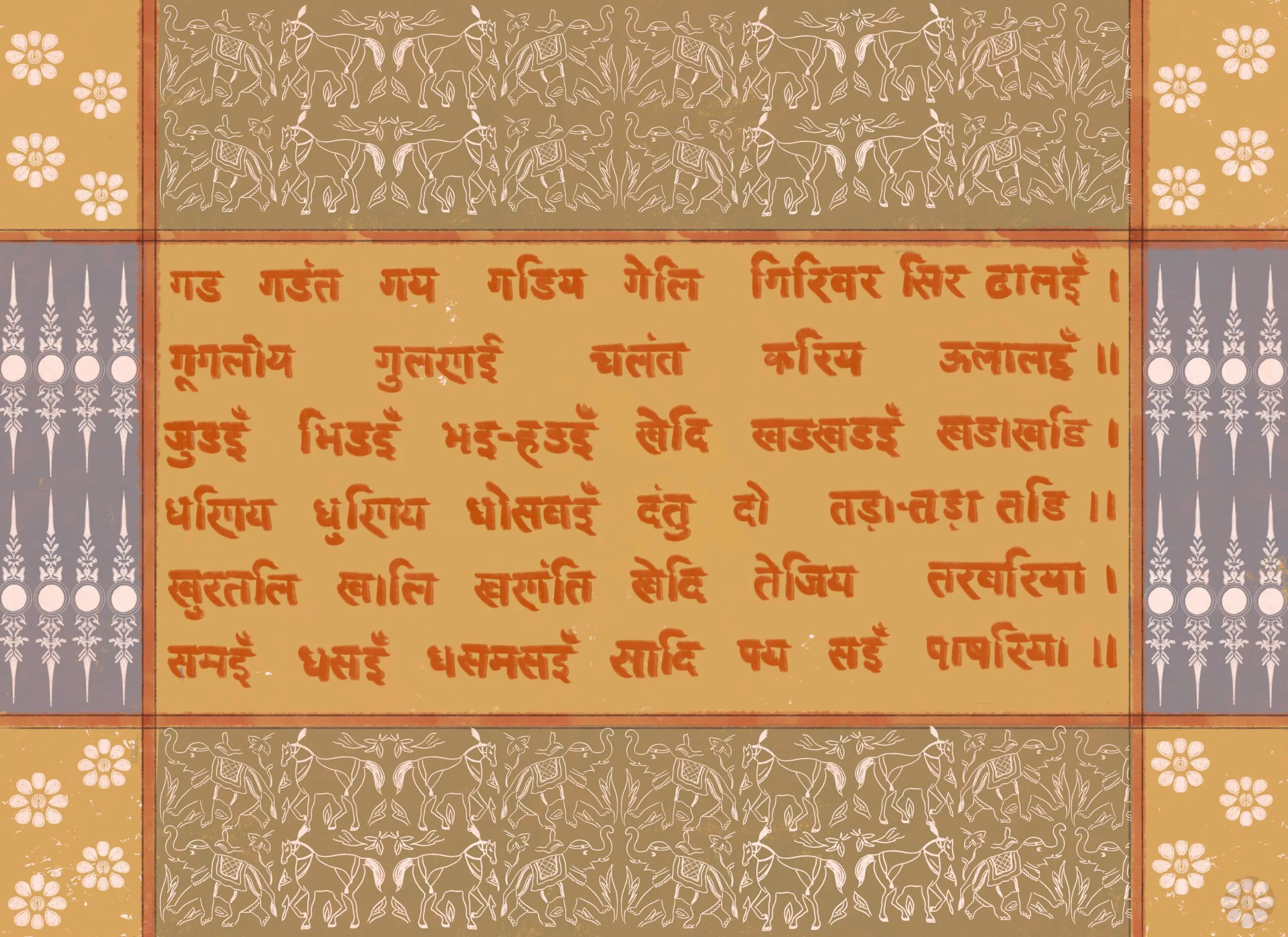
Ep 76Apabhraṃśa
Abhishek Avtans talks about the apabhraṃśa, a word that refers to the middle stage of the Indo-Aryan languages, crucial links between ancient languages like Sanskrit, and modern South Asian languages such as Hindi, Bangla, Bhojpuri, Punjabi, Marathi, Nepali, and others. The first mention of apabhraṃśas is in Mahabhasya, a 2nd century BCE text by Patanjali, where the author refers to languages considered deviations from Sanskrit. However, research into apabhraṃśas, for the same reason, has become crucial in dispelling notions of linguistic purity and politics that is dependent on these notions. Abhishek Avtans is a lecturer of Indic language/s at Leiden University in the Netherlands. He loves to work on literature and linguistics of languages spoken in south Asia. He has contributed in making dictionaries of Great Andamanese, Bhojpuri and Brajbhasha. He writes a column Dialectical for the Himal SouthAsian Magazine. He tweets at @avtansa. Image: © 2021 Saronik Bosu (the stanza of verse in the image comes from the text of Bāhubalī rāsa by 13th Century AD Jain poet Shalibhadra Suri, it is an onomatopoeic stanza that describes the activities done by elephants, soldiers and horses.) Music used in promotional material: “Rajasthani Folk Instrumental Music” by Rupayan Sansthan, Jodhpur, from the collection of Shri Komal Kothari Learn more about your ad choices. Visit megaphone.fm/adchoices Support our show by becoming a premium member! https://newbooksnetwork.supportingcast.fm/south-asian-studies
Ep 196Matthew Clark, "Botanical Ecstasies: Psychoactive Plant Formulas in India and Beyond" (Psychedelic Press, 2021)
In Botanical Ecstasies: Psychoactive Plant Formulas in India and Beyond, Dr Matthew Clark proposes that soma/hoama is instead an ayahuasca-like plant complex made from many different species. He discusses a range of candidates that reliably grow in the right areas and which in combination might produce an effect similar to the so-called 'classic' psychedelics. These early ecstatic experiences, he suggests, contributed to the emergent concept and ritual techniques of mysticism. Raj Balkaran is a scholar, online educator, and life coach. For information see rajbalkaran.com. Learn more about your ad choices. Visit megaphone.fm/adchoices Support our show by becoming a premium member! https://newbooksnetwork.supportingcast.fm/south-asian-studies
Ep 198Naman P. Ahuja, "Marg Magazine: Readings on the Temple"
In October 1946, shortly before Independence, Mulk Raj Anand founded Marg, a magazine that soon became a pioneering forum for research on Indian and South Asian art and architecture. Over its 75 years, Marg (in its quarterly magazine as well as books) has promoted a deeper understanding of eras past while examining contemporary art practices. To mark our platinum anniversary, we are delving into Marg's archive of writing on temple art and architecture, to understand the shifts in perspective over the decades. The result is a lavishly illustrated magazine, which could also serve as a guide for educators teaching the Indian Temple over a semester. It presents a cross-section of themes and covers both key sites—Khajuraho, Thanjavur and Konarak—and those less written about—Kashmir, Bangladesh, Nepal, Sri Lanka, and Kerala. These are unique not only architecturally, but also from the point of view of patronage and the diverse public functions they served. Conceptualized and curated by our General Editor, Dr Naman P. Ahuja, the essays have been contextualised through a contemporary lens. Raj Balkaran is a scholar, online educator, and life coach. For information see rajbalkaran.com. Learn more about your ad choices. Visit megaphone.fm/adchoices Support our show by becoming a premium member! https://newbooksnetwork.supportingcast.fm/south-asian-studies
Ep 157Leila Neti, "Colonial Law in India and the Victorian Imagination" (Cambridge UP, 2021)
Situated at the intersection of law and literature, nineteenth-century studies and post-colonialism, Colonial Law in India and the Victorian Imagination (Cambridge UP, 2021) draws on original archival research to shed new light on Victorian literature. Each chapter explores the relationship between the shared cultural logic of law and literature, and considers how this inflected colonial sociality. Leila Neti approaches the legal archive in a distinctly literary fashion, attending to nuances of voice, character, diction and narrative, while also tracing elements of fact and procedure, reading the case summaries as literary texts to reveal the common turns of imagination that motivated both fictional and legal narratives. What emerges is an innovative political analytic for understanding the entanglements between judicial and cultural norms in Britain and the colony, bridging the critical gap in how law and literature interact within the colonial arena. Leila Neti is an associate professor of English at Occidental College, Los Angeles. Gargi Binju is a researcher at the University of Tübingen. Learn more about your ad choices. Visit megaphone.fm/adchoices Support our show by becoming a premium member! https://newbooksnetwork.supportingcast.fm/south-asian-studies
Ep 46Pallavi Banerjee, "The Opportunity Trap: High-Skilled Workers, Indian Families, and the Failures of the Dependent Visa Program" (NYU Press, 2022)
The Opportunity Trap: High-Skilled Workers, Indian Families, and the Failures of the Dependent Visa Program (NYU Press, 2022) is the first book to look at the impact of the H-4 dependent visa programs on women and men visa holders in Indian families in America. Comparing two distinct groups of Indian immigrant families -families of male high-tech workers and female nurses-Pallavi Banerjee reveals how visa policies that are legally gender and race neutral in fact have gendered and racialized ramifications for visa holders and their spouses. Drawing on interviews with fifty-five Indian couples, Banerjee highlights the experiences of high-skilled immigrants as they struggle to cope with visa laws, which forbid their spouses from working paid jobs. She examines how these unfair restrictions destabilize-if not completely dismantle-families, who often break under this marital, financial, and emotional stress. Banerjee shows us, through the eyes of immigrants themselves, how the visa process strips them of their rights, forcing them to depend on their spouses and the government in fundamentally challenging ways. The Opportunity Trap provides a critical look at our visa system, underscoring how it fails immigrant families. Lakshita Malik is a doctoral student in the department of Anthropology at the University of Illinois at Chicago. Her work focuses on questions of intimacies, class, gender, and beauty in South Asia. Learn more about your ad choices. Visit megaphone.fm/adchoices Support our show by becoming a premium member! https://newbooksnetwork.supportingcast.fm/south-asian-studies
Ep 154Nilanjana Paul, "Bengal Muslims and Colonial Education, 1854–1947: A Study of Curriculum, Educational Institutions, and Communal Politics" (Routledge, 2022)
In this episode, Dr. Nilanjana Paul of the University of Texas, Rio Grande Valley speaks about her new monograph, Bengal Muslims and Colonial Education, 1854-1947: A Study of Curriculum, Educational Institutions and Communal Politics (Routledge, 2022). The book is a micro history of the spread of education among Muslims in Colonial Bengal. Dr. Paul discusses the role played by Muslim leaders such as Abdul Latif and Fazlul Huq in the spread of education and examines how segregation in education, supported by the British fueled Muslim anxiety and separatism. By examining the conflict of interest between Hindu elites and Muslim aristocrats over education and employment, Dr. Paul shows how discriminatory colonial education policies and pedagogy amplified religious separatism that would eventually culminate in the 1947 partition of India and Pakistan. Bekeh Ukelina is Associate Professor of History and Director of the Center of Gender and Intercultural Studies at State University of New York, Cortland. Twitter: @bekeh/ Instagram @mwalimuwakusafiri/ Learn more about your ad choices. Visit megaphone.fm/adchoices Support our show by becoming a premium member! https://newbooksnetwork.supportingcast.fm/south-asian-studies
Ep 153Sushmita Pati, "Properties of Rent: Community, Capital and Politics in Globalising Delhi" (Cambridge UP, 2022)
We live in cities whose borders have always been subject to expansion. What does such transformation of rural spaces mean for cities and vice-versa? Properties of Rent: Community, Capital and Politics in Globalising Delhi (Cambridge UP, 2022) looks at the spatial transformation of villages brought into Delhi's urban fray in the 1950s. As these villages transform physically; their residents, an agrarian-pastoralist community - the Jats - also transform into dabblers in real estate. A study of two villages - Munirka and Shahpur Jat - both in the heart of bustling urban economies of Delhi, reveal that it is 'rent' that could define this suburbanisation. 'Bhaichara', once a form of land ownership in colonial times, transforms into an affective claim of belonging, and managing urban property in the face of a steady onslaught from the 'city'. Properties of Rent is a study of how a vernacular form of capitalism and its various affects shape up in opposition to both state, finance capital and the city in contemporary urban Delhi. Sushmita Pati is Assistant Professor of Political Science at the National Law School of India University, Bangalore. She studied Political Science at Delhi University and Jawaharlal Nehru University. She is interested in studying the intersections of Urban Politics and Political Economy. Her recent book, Properties of Rent: Community, Capital and Politics in Globalising Delhi is now out from Cambridge University Press. Saronik Bosu (@SaronikB on Twitter) is a doctoral candidate in English at New York University. He is writing his dissertation on literary rhetoric and economic thought. He co-hosts the podcast High Theory and is a co-founder of the Postcolonial Anthropocene Research Network. Learn more about your ad choices. Visit megaphone.fm/adchoices Support our show by becoming a premium member! https://newbooksnetwork.supportingcast.fm/south-asian-studies
Ep 194Radha Raghunathan, "Soaring with Bharati in the Wisdom-Chariot (Ñānaratam)" (Adyar Library, 2022)
Mahakavi Subramania Bharati was a multi-faceted genius, an innovative poet who initiated a new era in Tamil literature. He was the first writer to have introduced to the Tamil literary world a new genre called ‘novella’ by his composition of Ñānaratam (‘The Wisdom-chariot’) written in elegant Tamil prose. In Soaring with Bharati in the Wisdom-Chariot (Ñānaratam), Dr Radha Raghunathan gives the biographical background of Bharati, his association with Dr. Annie Besant of the Theosophical Society and his contributions for ‘New India’ and ‘Commonweal,’ and a translation of Bharati’s ‘novella’ Ñānaratam. Raj Balkaran is a scholar, online educator, and life coach. For information see rajbalkaran.com. Learn more about your ad choices. Visit megaphone.fm/adchoices Support our show by becoming a premium member! https://newbooksnetwork.supportingcast.fm/south-asian-studies
Ep 175Omar Kasmani, "Queer Companions: Religion, Public Intimacy, and Saintly Affects in Pakistan" (Duke UP, 2022)
In Queer Companions: Religion, Public Intimacy, and Saintly Affects in Pakistan (Duke UP, 2022), Omar Kasmani theorizes saintly intimacy and the construction of queer social relations at Pakistan's most important site of Sufi pilgrimage. Conjoining queer theory and the anthropology of Islam, Kasmani outlines the felt and enfleshed ways in which saintly affections bind individuals, society, and the state in Pakistan through a public architecture of intimacy. Islamic saints become lovers and queer companions just as a religious universe is made valuable to critical and queer forms of thinking. Focusing on the lives of ascetics known as fakirs in Pakistan, Kasmani shows how the affective bonds with the place's patron saint, a thirteenth-century antinomian mystic, foster unstraight modes of living in the present. In a national context where religious shrines are entangled in the state's infrastructures of governance, coming close to saints further entails a drawing near to more-than-official histories and public forms of affect. Through various fakir life stories, Kasmani contends that this intimacy offers a form of queer world making with saints. Mathew Gagné in an independent writer, scholar, and educator, currently teaching in the Department of Anthropology at the University of Toronto Mississauga. Learn more about your ad choices. Visit megaphone.fm/adchoices Support our show by becoming a premium member! https://newbooksnetwork.supportingcast.fm/south-asian-studies
Ep 202Simon Atkinson, "Krishnamacharya on Kundalini: The Origins and Coherence of His Position" (Equinox Publishing, 2022)
Krishnamacharya on Kundalini: The Origins and Coherence of His Position (Equinox Publishing, 2022) explores a distinctive teaching of 'the father of modern yoga', T. Krishnamacharya. Whereas most yoga traditions teach that kuṇḍalinī is a serpentine energy that rises, Krishnamacharya defined it differently. To him, kuṇḍalinī is a serpentine blockage which prevents prāṇa (breath or life-force) from rising and which represents avidyā (spiritual ignorance). Simon Atkinson draws from over 20 years of study and practice under teachers following Krishnamacharya. He combines analysis of quotations from yoga workshops with a detailed study of traditional Sanskrit texts. Atkinson challenges claims that Krishnamacharya's position can be found in his religious tradition of Śrīvaiṣṇavism. He questions the tradition's reliance on textual sources, showing how the coherence of Krishnamacharya's position can only be maintained by employing elaborate arguments and rejecting texts that teach otherwise. Atkinson also explores how Krishnamacharya's teaching on kuṇḍalinī influences how yoga is practiced. He argues that Krishnamacharya's position is best viewed as a model for experience that guides practice. Raj Balkaran is a scholar, online educator, and life coach. For information see rajbalkaran.com. Learn more about your ad choices. Visit megaphone.fm/adchoices Support our show by becoming a premium member! https://newbooksnetwork.supportingcast.fm/south-asian-studies
Yin Cao, "From Policemen to Revolutionaries: A Sikh Diaspora in Global Shanghai, 1885-1945" (Brill, 2017)
In the late nineteenth and early twentieth centuries, Shanghai became a cosmopolitan hub with communities of Japanese, British, Russians, Jews, and others including Indians – most of whom were Sikhs. The story of Indians in Shanghai has however been largely elided. From Policemen to Revolutionaries: A Sikh Diaspora in Global Shanghai, 1885-1945 (Brill, 2017) by Yin Cao uncovers the lesser-known story of Sikh emigrants in Shanghai across the late nineteenth and early twentieth centuries, from their arrival in the city in 1885 through the end of World War II in 1945. Cao argues that the cross-border circulation of personnel and knowledge across the British colonial and the Sikh diasporic networks, facilitated the formation of the Sikh community in Shanghai, eventually making this Chinese city one of the overseas hubs of the Indian nationalist struggle. Initially brought in as policemen by British colonial authorities to discipline the local Chinese population, Sikhs in Shanghai transformed into anti-colonial revolutionaries. Shanghai became a conduit within Indian anti-imperial connections that linked the Punjab to Canada and California. Rather than just doing a local history of Shanghai’s Sikhs and just seeing Shanghai as a gateway to China, Cao places this community within a global context and sees Shanghai within a transnational network in East and Southeast Asia and beyond, stretching from India to North America. By adopting a translocal approach, this study elaborates on how the flow of Sikh emigrants, largely regarded as subalterns, initially strengthened but eventually unhinged British colonial rule in East and Southeast Asia. Yin Cao is associate professor and Cyrus Tang Scholar in the Department of History at Beijing’s Tsinghua University. He studies global history, modern Indian history, the British Empire, and India-China connections. Shatrunjay Mall is a PhD candidate at the Department of History at the University of Wisconsin-Madison. He works on transnational Asian history, and his dissertation explores intellectual, political, and cultural intersections and affinities that emerged between Indian anti-colonialism and imperial Japan in the twentieth century. Learn more about your ad choices. Visit megaphone.fm/adchoices Support our show by becoming a premium member! https://newbooksnetwork.supportingcast.fm/south-asian-studies
Ep 201Raj Balkaran, "The Stories Behind the Poses: The Indian Mythology That Inspired 50 Yoga Postures" (Leaping Hare, 2022)
Raj Balkaran's 200th podcast episode: Christa Kuberry interviews him on his beautifully written new book The Stories Behind the Poses: The Indian Mythology That Inspired 50 Yoga Postures (Leaping Hare, 2022), and highlighting their significance for practice. Raj Balkaran is a scholar, online educator, and life coach. For information see rajbalkaran.com. Learn more about your ad choices. Visit megaphone.fm/adchoices Support our show by becoming a premium member! https://newbooksnetwork.supportingcast.fm/south-asian-studies
Ep 194Srilata Raman, "The Transformation of Tamil Religion: Ramalinga Swamigal and Modern Dravidian Sainthood" (Routledge, 2022)
Srilata Raman's book The Transformation of Tamil Religion: Ramalinga Swamigal and Modern Dravidian Sainthood (Routledge, 2022) analyses the religious ideology of a Tamil reformer and saint, Ramalinga Swamigal of the 19th century and his posthumous reception in the Tamil country and sheds light on the transformation of Tamil religion that both his works and the understanding of him brought about. This book is a path-breaking study that also traces the common grounds between the religious visions of two of the most prominent subaltern figures of Tamil modernity - Iyothee Thass and Ramalingar. It argues that these transformations are one meaningful way for a religious tradition to cope with and come to terms with the implications of historicization and the demands of colonial modernity. It is, therefore, a valuable contribution to the field of religion, South Asian history and literature and Subaltern studies. This book is available open access here. Raj Balkaran is a scholar, online educator, and life coach. For information see rajbalkaran.com. Learn more about your ad choices. Visit megaphone.fm/adchoices Support our show by becoming a premium member! https://newbooksnetwork.supportingcast.fm/south-asian-studies
Ep 88Mick Conefrey, "Everest 1922: The Epic Story of the First Attempt on the World's Highest Mountain" (Pegasus Books, 2022)
It can be hard to think of Everest as unknown anymore. While it’s certainly a challenge to climb the world’s tallest mountain, someone–with enough time and money–has a good chance of making it to the summit. A potential mountaineer can fly into Kathmandu, travel to a well-stocked base camp, be escorted up a well-trodden route by expert sherpas. There’s even Wifi at the peak. The relative ease of climbing Everest is born from almost a century of attempted expeditions up the mountain, to determine how high one could go, and what routes to take. Even the successful expedition of Norgay and Hillary was built on the efforts of those who came before. And the first expeditions, in 1921 and 1922, are the subject of Mick Conefrey’s Everest 1922: The Epic Story of the First Attempt on the World's Highest Mountain (Pegasus Books, 2022). Mick tells the story of these very first attempts to climb the mountain–including the difficulties of funding, recruitment, and travel, as well as the climb itself. In this interview, Mick and I talk about the two expeditions to Everest–including its most famous participant, George Mallory–the scientific and mountaineering controversies around it, and what makes climbing Everest different today. Mick Conefrey is an award-winning writer and documentary film maker. He created the landmark BBC series The Race for Everest to mark the sixtieth anniversary of the first ascent. His previous books include The Adventurer's Handbook: Life Lessons from History's Great Explorers (Smithsonian: 2006); Everest 1953: The Epic Story of the First Ascent (Mountaineers Books: 2014), the winner of a Leggimontagna Award; and Ghosts of K2: The Race for the Summit of the World's Most Deadly Mountain (Oneworld Publications: 2015), which won a U.S. National Outdoor Book Award. You can find more reviews, excerpts, interviews, and essays at The Asian Review of Books, including its review of Everest 1922. Follow on Facebook or on Twitter at @BookReviewsAsia. Nicholas Gordon is an associate editor for a global magazine, and a reviewer for the Asian Review of Books. He can be found on Twitter at@nickrigordon. Learn more about your ad choices. Visit megaphone.fm/adchoices Support our show by becoming a premium member! https://newbooksnetwork.supportingcast.fm/south-asian-studies
Ep 174Bharat Jayram Venkat, "At the Limits of Cure" (Duke UP, 2021)
Can a history of cure be more than a history of how disease comes to an end? In 1950s Madras, an international team of researchers demonstrated that antibiotics were effective in treating tuberculosis. But just half a century later, reports out of Mumbai stoked fears about the spread of totally drug-resistant strains of the disease. Had the curable become incurable? Through an anthropological history of tuberculosis treatment in India, Bharat Jayram Venkat examines what it means to be cured, and what it means for a cure to come undone. At the Limits of Cure (Duke UP, 2021) tells a story that stretches from the colonial period—a time of sanatoria, travel cures, and gold therapy—into a postcolonial present marked by antibiotic miracles and their failures. Venkat juxtaposes the unraveling of cure across a variety of sites: in idyllic hill stations and crowded prisons, aboard ships and on the battlefield, and through research trials and clinical encounters. If cure is frequently taken as an ending (of illness, treatment, and suffering more generally), Venkat provides a foundation for imagining cure otherwise in a world of fading antibiotic efficacy. Garima Jaju holds a Ph.D. in international development from Oxford University and is currently a post-doc in sociology at Cambridge University. Learn more about your ad choices. Visit megaphone.fm/adchoices Support our show by becoming a premium member! https://newbooksnetwork.supportingcast.fm/south-asian-studies
Ep 152Michael Heneise, "Agency and Knowledge in Northeast India: The Life and Landscapes of Dreams" (Routledge, 2018)
The Nagas of Northeast India gives great importance to dreams as sources of divine knowledge, especially knowledge about the future. Although British colonialism, Christian missions, and political conflict have resulted in sweeping cultural and political transformations in the Indo-Myanmar Borderlands, dream sharing and interpretation remain important avenues for negotiating everyday uncertainty and unpredictability. Agency and Knowledge in Northeast India: The Life and Landscapes of Dreams (Routledge, 2018) explores the relationship between dreams and agency through ethnographic fieldwork among the Angami Nagas. It tackles questions such as: What is dreaming? What does it mean to say ‘I had a dream’? And how do night-time dreams relate to political and social actions in waking moments? Michael Heneise shows how the Angami glean knowledge from signs, gain insight from ancestors, and potentially obtain divine blessing. Based on extensive ethnographic research, this book advances research on dreams by conceptualizing how the ‘social’ encompasses the broader, co-extensive set of relations and experiences - especially with spirit entities - reflected in the ethnography of dreams. It will be of interest to those studying Northeast India, indigenous religion and culture, indigenous cosmopolitics in tribal India more generally, and the anthropology of dreams and dreaming. Tiatemsu Longkumer is a Ph.D. scholar working on ‘Anthropology of Religion’ at North-Eastern Hill University, Shillong: India. Learn more about your ad choices. Visit megaphone.fm/adchoices Support our show by becoming a premium member! https://newbooksnetwork.supportingcast.fm/south-asian-studies
Ep 150Tehmton S. Mistry, "The 24th Mile: An Indian Doctor's Heroism in War-torn Burma" (HarperCollins, 2021)
The story of India and Indians in World War II has been overshadowed by other historical events of the 1940s, a busy decade that included such historical watersheds as Indian independence (and the anti-colonial nationalist movement that led to it), as well as the partition of the Indian subcontinent. Indeed, many in Europe and North America, and even many in India, probably know very little about how crucial India was to the outcome of World War II. India and Indians were a very important part of World War II, and it is not an exaggeration to say that the role of India and Indians was indispensable in securing the victory of the British and Allied powers against Nazi Germany and imperial Japan. The stories of Indians in World War II have often been forgotten in popular accounts and memories of the conflict, but that is now changing, as more authors and scholars cover this subject. Through highlighting the remarkable life and career of Jehangir Anklesaria, a heroic Parsi (Indian Zoroastrian) doctor who lived in Rangoon at the outbreak of the conflict, Dr. Tehmton S. Mistry’s The 24th Mile: An Indian Doctor’s Heroism in War-torn Burma (Harper Collins, 2021) makes a major contribution to our memory of World War II with the unique story of one individual during the most devastating conflict in human history. When the Japanese invaded Burma in December 1941, Jehangir sent his wife and daughter by ship to India, but feeling duty-bound, he decided to stay back in Burma. He joined the war effort and worked tirelessly to quell a cholera epidemic. He then found himself one of thousands on the trek through the treacherous jungle and mountains towards safety in northeastern India. The book reminds us of the difference a single individual’s foresight and leadership can make in bringing about better outcomes, even amidst war and disease. The 24th Mile is a work of creative non-fiction, which means that although the storyline abides by the historical narrative of the period and follows historical figures, the author has taken the creative license to create secondary fictional characters, write descriptions, and recreate dialogues among the characters. The author, Tehmton Mistry, is part of the extended family and next generation of the protagonist’s family, and he successfully and evocatively recreates the story of Jehangir’s grit and heroism in a death-defying journey to safety in a major theater of World War II. Tehmton S. Mistry is a retired obstetrician and gynaecologist who practiced in St. Louis, Missouri. Born and raised in Mumbai (Bombay), Dr. Mistry moved to the United States from India in the early 1970s, together with his wife – whom he met when he studied at St. Xavier’s College, Mumbai. The protagonist of The 24th Mile, Dr. Jehangir Anklesaria, was his wife’s uncle and a key influence on their early life. Now retired and living in California, Dr. Mistry enjoys writing, among other hobbies. Shatrunjay Mall is a PhD candidate at the Department of History at the University of Wisconsin-Madison. He works on transnational Asian history, and his dissertation explores intellectual, political, and cultural intersections and affinities that emerged between Indian anti-colonialism and imperial Japan in the twentieth century. Learn more about your ad choices. Visit megaphone.fm/adchoices Support our show by becoming a premium member! https://newbooksnetwork.supportingcast.fm/south-asian-studies
Ep 14James Elisha Taneti, "Telugu Christians: A History" (Fortress Press, 2022)
Telugu Christians: A History (Fortress Press, 2022) narrates the history of Telugu Christians, a faith community located in the states of Telangana, Andhra Pradesh, and Pondicherry in southern India. A social history of a faith community, this volume analyzes how social aspirations of the community, local worldviews, and historical contingencies shaped the beliefs and practices of Telugu Christians. It relates and interprets the history of Telugu Christians chronologically from the sixteenth century until the current times. The first two chapters of the book examine the earliest encounters between the Christian message that European missionaries introduced and the local Christians. Covering three centuries, this section highlights the appropriation of the Christian message among the caste converts. Later chapters analyze the impact of Dalit conversions and women's leadership on the social fabric and theological texture of Telugu Christianity in the nineteenth and the early twentieth centuries. The book ends with a consideration of three dominant movements in the second half of the twentieth century and the early twenty-first, namely the process of Sanskritization, the influences of Pentecostalism, and those of Holiness movements on the Telugu church. In conclusion, Taneti recaps how caste and empire shaped the faith and practices of Telugu Christians. Byung Ho Choi is a PhD candidate in the History and Ecumenics program at Princeton Theological Seminary, concentrating in World Christianity and history of religions. His research focuses on the indigenous expressions of Christianities found in Southeast Asia, particularly Christianity that is practiced in the Muslim-dominant archipelagic nation of Indonesia. More broadly, he is interested in history and the anthropology of Christianity, complexities of religious conversion and social identity, inter-religious dialogue, ecumenism, and World Christianity. Akhil Thomas is a PhD student at the Committee on the Study of Religion at Harvard University. His areas of concentration are Comparative Studies, South Asian Studies, Christianity and Hinduism. His present project involves Portuguese - Thomas Christian relations in the early modern world and the study of Tamil and Malayalam poetry. Learn more about your ad choices. Visit megaphone.fm/adchoices Support our show by becoming a premium member! https://newbooksnetwork.supportingcast.fm/south-asian-studies
Ep 192Karen O'Brien-Kop, "Rethinking 'Classical Yoga' and Buddhism" (Bloomsbury, 2021)
Rethinking 'Classical Yoga' and Buddhism (Bloomsbury, 2021) revisits the early systemic formation of meditation practices called 'yoga' in South Asia by employing metaphor theory. Karen O'Brien-Kop also develops an alternative way of analysing the reception history of yoga that aims to decentre the Eurocentric and imperialist enterprises of the nineteenth-century to reframe the cultural period of the 1st – 5th centuries CE using categorical markers from South Asian intellectual history. Buddhist traditions were just as concerned as Hindu traditions with meditative disciplines of yoga. This analysis demystifies early yoga-meditation as a timeless 'classical' practice and locates it in a specific material context of agrarian and urban economies. Raj Balkaran is a scholar, online educator, and life coach. For information see rajbalkaran.com. Learn more about your ad choices. Visit megaphone.fm/adchoices Support our show by becoming a premium member! https://newbooksnetwork.supportingcast.fm/south-asian-studies

Ep 58Ghazal
Manan Kapoor talks about the Ghazal, the medieval Arabic poetic form which travelled to the Indian subcontinent in the 12th century and flourished there ever since. He focuses on the work of Agha Shahid Ali, the Kashmiri-American poet who perfected the art of the ghazal in the English language. Kapoor’s biography of Shahid, A Map of Longings, was published earlier this year. Particular references are made to the poem “In Arabic” from Shahid’s collection Call me Ishmael Tonight, the ghazals sung by Begum Akhtar which greatly influenced Shahid’s work, and English ghazals written by poets like Adrienne Rich which he critiqued. Manan Kapoor is an Indian writer and translator. A Map of Longings: The Life and Works of Agha Shahid Ali (Vintage, Penguin Random House India) is his latest work. His debut novel The Lamentations of a Sombre Sky was shortlisted for Sahitya Akademi’s Yuva Puruskar 2017. In 2019, he was a writer-in-residence at Sangam House Writers’ Residency. His writings have appeared in The Caravan Magazine, Boston Review, The Hindu, Stockholm Review of Literature, Scroll, The Wire, and Firstpost among others. He lives in Chandigarh. Image: “Gazelle” © 2021 Saronik Bosu (The word ‘ghazal’ and ‘gazelle’ share a root in Arabic, the poetic form compared originally to the lament of a wounded gazelle). Music used for promotional material: “Raga Kirwani” on the Sarod by Ustad Ali Akbar Khan Learn more about your ad choices. Visit megaphone.fm/adchoices Support our show by becoming a premium member! https://newbooksnetwork.supportingcast.fm/south-asian-studies
Ep 86Shiv Kunal Verma, "1965: A Western Sunrise--India's War with Pakistan" (Aleph Book Company, 2021)
The history of India and Pakistan since Partition has been marked by countless skirmishes–and four major wars. The second conflict–the 1965 war between India and Pakistan along the long land border–featured some of the largest tank battles since the Second World War and some of the first skirmishes between the Indian and Pakistani air forces. It reshaped regional and global geopolitics, pushing India closer to the Soviet Union and Pakistan closer to China. But the war didn’t arise from nowhere, as Shiv Kunal Verma notes in his newest history 1965: A Western Sunrise (Aleph Book Company: 2021) The book notes the timeline leading up to the war, including the 1962 war with China and the skirmish in the Rann of Kutch months before Operation Gibraltar in Kashmir. Nor did it end with a great deal of finality, with months of conflict following a ceasefire—and instability that again erupted in war in 1971. Shiv Kunal Verma is a military historian and filmmaker, working with all three branches of the Indian armed forces. ces. He helped to write The Long Road to Siachen: The Question Why (Rupa & Co.: 2010) and Courage & Conviction (Aleph Book Company: 2013), the autobiography of General VK Singh. His latest book, 1962: The War That Wasn’t (Aleph Book Company: 2016) has been hailed as one of the most definitive works on the Indo-China conflict. In this interview, Kunal and I talk about the 1965 India-Pakistan War–how the 1962 war with China helped to set the stage for the 1965 war, the breadth of the conflict along the India-Pakistan border, and how the ‘65 war has repercussions that can still be seen today. You can find more reviews, excerpts, interviews, and essays at The Asian Review of Books, including its review of 1965: A Western Sunrise. Follow on Facebook or on Twitter at @BookReviewsAsia. Nicholas Gordon is an associate editor for a global magazine, and a reviewer for the Asian Review of Books. He can be found on Twitter at @nickrigordon. Learn more about your ad choices. Visit megaphone.fm/adchoices Support our show by becoming a premium member! https://newbooksnetwork.supportingcast.fm/south-asian-studies
Ep 189Roger R. Jackson, "Rebirth: A Guide to Mind, Karma, and Cosmos in the Buddhist World" (Shambhala, 2022)
Although Buddhism is one of the religious traditions best known for asserting rebirth, the history and scope of Buddhist approaches to the idea has not received comprehensive treatment—until now. This first-ever guide to ideas and practices surrounding rebirth in Buddhism covers the historical context for the Buddha’s teachings on the topic, explains what Buddhists believe is actually reborn and where, surveys rebirth-related practices in multiple Buddhist cultures, and considers whether all Buddhist traditions agree about what happens after death. Roger R. Jackson's book Rebirth: A Guide to Mind, Karma, and Cosmos in the Buddhist World (Shambhala, 2022)is, in short, the first truly comprehensive overview of rebirth across the major Buddhist traditions, written by a leading scholar and teacher of Buddhism. Raj Balkaran is a scholar, online educator, and life coach. For information see rajbalkaran.com. Learn more about your ad choices. Visit megaphone.fm/adchoices Support our show by becoming a premium member! https://newbooksnetwork.supportingcast.fm/south-asian-studies
Ep 187Richard G. Marks, "Jewish Approaches to Hinduism: A History of Ideas from Judah Ha-Levi to Jacob Sapir (12th-19th Centuries)" (Routledge, 2021)
Richard G. Marks's book Jewish Approaches to Hinduism: A History of Ideas from Judah Ha-Levi to Jacob Sapir (12th-19th Centuries) (Routledge, 2021) explores past expressions of the Jewish interest in Hinduism in order to learn what Hinduism has meant to Jews living mainly in the 12th through the 19th centuries. India and Hinduism, though never at the center of Jewish thought, claim a place in its history, in the picture Jews held of the wider world, of other religions and other human beings. Overall the volume constructs a history of ideas that changed over time with different writers in different settings. It will be especially relevant to scholars interested in Jewish thought, comparative religion, interreligious dialogue, and religion in India. Raj Balkaran is a scholar, online educator, and life coach. For information see rajbalkaran.com. Learn more about your ad choices. Visit megaphone.fm/adchoices Support our show by becoming a premium member! https://newbooksnetwork.supportingcast.fm/south-asian-studies

Ep 49Diaspora with Diasporastan
In our second crossover episode, Saronik talks to Maryyum Mehmood and Aditya Desai, the hosts of Diasporastan, a podcast for discussions on the South Asian diaspora, both as topic and lens through which to view the world. They talk about the podcast, and what the word ‘diaspora’ has meant to them in identitarian and generative capacities. Maryyum is a socio-political analyst, cultural commentator and community cohesion expert. Along with her interfaith work, she teaches in the Department of Theology and Religion at the University of Birmingham. Aditya is a writer, teacher, and activist in Baltimore. His stories and essays have appeared in in B O D Y, Barrelhouse Magazine, The Rumpus, The Millions, The Margins, District Lit, The Kartika Review, The Aerogram, and others. Image: The logo of Diasporastan, created by Nirja Desai (@kalakar on Instagram) Music used in promotional material: ‘The Beginning or the End’ by Nicholas Mackin Learn more about your ad choices. Visit megaphone.fm/adchoices Support our show by becoming a premium member! https://newbooksnetwork.supportingcast.fm/south-asian-studies
Ep 229Rashna Darius Nicholson, "The Colonial Public and the Parsi Stage: The Making of the Theatre of Empire (1853-1893)" (Palgrave Macmillan, 2021)
Rashna Darius Nicholson’s The Colonial Public and the Parsi Stage: The Making of the Theatre of Empire (1853-1893) (Palgrave Macmillan, 2021) is the first comprehensive study of the Parsi theatre, colonial South and Southeast Asia’s most influential cultural phenomenon and the precursor of the Indian cinema industry. By providing extensive, unpublished information on its first actors, audiences, production methods, and plays, this book traces how the theatre - which was one of the first in the Indian subcontinent to adopt European stagecraft - transformed into a pan-Asian entertainment industry in the second half of the nineteenth century. Nicholson sheds light on the motivations that led to the development of the popular, commercial theatre movement in Asia through three areas of investigation: the vernacular public sphere, the emergence of competing visions of nationhood, and the narratological function which women served within a continually shifting socio-political order. The book will be of interest to scholars across several disciplines, including cultural history, gender studies, Victorian studies, the sociology of religion, colonialism, and theatre. Rituparna Patgiri, PhD is an Assistant Professor of Sociology at Indraprastha College for Women, University of Delhi. She has a PhD in Sociology from Jawaharlal Nehru University (JNU), New Delhi. Her research interests lie in the areas of food, media, gender and public. She is also one of the co-founders of Doing Sociology. Patgiri can be reached at @Rituparna37 on Twitter. Learn more about your ad choices. Visit megaphone.fm/adchoices Support our show by becoming a premium member! https://newbooksnetwork.supportingcast.fm/south-asian-studies
Ep 150Rajesh Veeraraghavan, "Patching Development: Information Politics and Social Change in India" (Oxford UP, 2021)
How can development programs deliver benefits to marginalized citizens in ways that expand their rights and freedoms? Political will and good policy design are critical but often insufficient due to resistance from entrenched local power systems. Rajesh Veeraraghavan's book Patching Development: Information Politics and Social Change in India (Oxford UP, 2021) is an ethnography of one of the largest development programs in the world, the Indian National Rural Employment Guarantee Act (NREGA), and examines in detail NREGA’s implementation in the South Indian state of Andhra Pradesh. It finds that the local system of power is extremely difficult to transform, not because of inertia, but because of coercive counter-strategy from actors at the last mile and their ability to exploit information asymmetries. Upper-level NREGA bureaucrats in Andhra Pradesh do not possess the capacity to change the power axis through direct confrontation with local elites, but instead have relied on a continuous series of responses that react to local implementation and information, a process of patching development. Patching development is a top-down, fine-grained, iterative socio-technical process that makes local information about implementation visible through technology and enlists participation from marginalized citizens through social audits. These processes are neither neat nor orderly and have led to a contentious sphere where the exercise of power over documents, institutions, and technology is intricate, fluid, and highly situated. The book throws new light on the challenges and benefits of using information and technology in novel ways to implement development programs. While focused on one Indian state, the implications for increasing citizen participation and government transparency have global relevance. Sneha Annavarapu is Assistant Professor of Urban Studies at Yale-NUS College. Learn more about your ad choices. Visit megaphone.fm/adchoices Support our show by becoming a premium member! https://newbooksnetwork.supportingcast.fm/south-asian-studies
Ep 167Aniket Aga, "Genetically Modified Democracy: Transgenic Crops in Contemporary India" (Yale UP, 2022)
How the debate over genetically modified crops in India is transforming science and politics Genetically modified or transgenic crops are controversial across the world. Advocates see such crops as crucial to feeding the world's growing population; critics oppose them for pushing farmers deeper into ecological and economic distress, and for shoring up the power of agribusinesses. India leads the world in terms of the intensity of democratic engagement with transgenic crops. In Genetically Modified Democracy: Transgenic Crops in Contemporary India (Yale UP, 2022), anthropologist Aniket Aga excavates the genealogy of conflicts of interest and disputes over truth that animate the ongoing debate in India around the commercial release of transgenic food crops. The debate may well transform agriculture and food irreversibly in a country already witness to widespread agrarian distress, and over 300,000 suicides by farmers in the last two decades. Aga illustrates how state, science, and agrarian capitalism interact in novel ways to transform how democracy is lived and understood, and sheds light on the dynamics of technological change in populous, unequal polities. Sneha Annavarapu is Assistant Professor of Urban Studies at Yale-NUS College. Learn more about your ad choices. Visit megaphone.fm/adchoices Support our show by becoming a premium member! https://newbooksnetwork.supportingcast.fm/south-asian-studies
Ep 190Peter Scharf, "Sabdanugamah: Indian Linguistic Studies in Honor of George Cardona; Volume 1: Vyakarana and Sabdabodha" (Sanskrit Library, 2021)
Sabdanugamah (Sanskrit Library, 2021) is the first of two volumes of studies in honor of Professor George Cardona, the preeminent authority on Paninian grammar and the linguistic traditions of India as well as one of the worlds leading scholars of Indo-European linguistics. These studies cover topics in Paninian grammar, other Indian linguistic traditions, issues in Sanskrit morphology and syntax, and theories of verbal cognition. Visit the Sanskrit Library here. The Sanskrit Library offers course here. Raj Balkaran is a scholar, online educator, and life coach. For information see rajbalkaran.com. Learn more about your ad choices. Visit megaphone.fm/adchoices Support our show by becoming a premium member! https://newbooksnetwork.supportingcast.fm/south-asian-studies
Ep 53Juan-José Martín-González, "Transoceanic Perspectives in Amitav Ghosh’s Ibis Trilogy" (Palgrave Macmillan, 2021)
Transoceanic Perspectives in Amitav Ghosh’s Ibis Trilogy (Palgrave Macmillan, 2021) studies Ghosh’s Sea of Poppies (2008), River of Smoke (2011) and Flood of Fire (2015) in relation to maritime criticism. Juan-José Martín-González draws upon the intersections between maritime criticism and postcolonial thought to provide, via an analysis of the Ibis trilogy, alternative insights into nationalism(s), cosmopolitanism and globalization. He shows that the Victorian age in its transoceanic dimension can be read as an era of proto-globalization that facilitates a materialist critique of the inequities of contemporary global neo-liberalism. The book argues that in order to maintain its critical sharpness, postcolonialism must re-direct its focus towards today’s most obvious legacy of nineteenth-century imperialism: capitalist globalization. Tracing the migrating characters who engage in transoceanic crossings through Victorian sea lanes in the Ibis trilogy, Martín-González explores how these dispossessed collectives made sense of their identities in the Victorian waterworlds and illustrates the political possibilities provided by the sea crossing and its fluid boundaries. Dr. Juan-José Martín-González teaches at the University of Málaga. Gargi Binju is a researcher at the University of Tübingen Learn more about your ad choices. Visit megaphone.fm/adchoices Support our show by becoming a premium member! https://newbooksnetwork.supportingcast.fm/south-asian-studies
Ep 149Akshya Saxena, "Vernacular English: Reading the Anglophone in Postcolonial India" (Princeton UP, 2022)
Against a groundswell of critiques of global English, Vernacular English: Reading the Anglophone in Postcolonial India (Princeton UP, 2022) argues that literary studies are yet to confront the true political import of the English language in the world today. A comparative study of three centuries of English literature and media in India, this original and provocative book tells the story of English in India as a tale not of imperial coercion, but of a people’s language in a postcolonial democracy. Focusing on experiences of hearing, touching, remembering, speaking, and seeing English, Akshya Saxena delves into a previously unexplored body of texts from English and Hindi literature, law, film, visual art, and public protests. She reveals little-known debates and practices that have shaped the meanings of English in India and the Anglophone world, including the overlooked history of the legislation of English in India. She also calls attention to how low castes and minority ethnic groups have routinely used this elite language to protest the Indian state. Challenging prevailing conceptions of English as a vernacular and global lingua franca, Vernacular English does nothing less than reimagine what a language is and the categories used to analyze it. Akshya Saxena is Assistant Professor of English at Vanderbilt University. She studied English literature at the University of Delhi and Jawaharlal Nehru University in India, before earning her Ph.D. in Comparative Literature at the University of Minnesota. Her areas of study are 20th and 21st-century literature and media of the English-speaking world, with a special interest in the racialized and caste-marked practices of mediation that shape language. Saronik Bosu (@SaronikB on Twitter) is a doctoral candidate in English at New York University. He is writing his dissertation on literary rhetoric and economic thought. He co-hosts the podcast High Theory and is a co-founder of the Postcolonial Anthropocene Research Network. Learn more about your ad choices. Visit megaphone.fm/adchoices Support our show by becoming a premium member! https://newbooksnetwork.supportingcast.fm/south-asian-studies
Ep 88Annabella Pitkin, "Renunciation and Longing: The Life of a Twentieth-Century Himalayan Buddhist Saint" (U Chicago Press, 2022)
In the early twentieth century, Khunu Lama journeyed across Tibet and India, meeting Buddhist masters while sometimes living, so his students say, on cold porridge and water. Yet this elusive wandering renunciant became a revered teacher of the Fourteenth Dalai Lama. At Khunu Lama’s death in 1977, he was mourned by Himalayan nuns, Tibetan lamas, and American meditators alike. The many surviving stories about him reveal significant dimensions of Tibetan Buddhism, shedding new light on questions of religious affect and memory to reimagine cultural continuity beyond the binary of traditional and modern. In Renunciation and Longing: The Life of a Twentieth-Century Himalayan Buddhist Saint (U Chicago Press, 2022), Annabella Pitkin explores intersecting imaginaries of devotion, renunciation, and the teacher-student lineage relationship. By examining narrative accounts of the life of a remarkable twentieth-century Himalayan Buddhist and focusing on his remembered identity as a renunciant bodhisattva, Pitkin illuminates Tibetan and Himalayan practices of memory, affective connection, and mourning. Refuting long-standing caricatures of Tibetan Buddhist communities as unable to be modern because of their religious commitments, Pitkin shows instead how twentieth- and twenty-first-century Tibetan and Himalayan Buddhist narrators have used themes of renunciation, devotion, and lineage as touchstones for negotiating loss and vitalizing continuity. Jue Liang is scholar of Buddhism in general, and Tibetan Buddhism in particular. My research examines women in Tibetan Buddhist communities past and present using a combination of textual and ethnographical studies. Learn more about your ad choices. Visit megaphone.fm/adchoices Support our show by becoming a premium member! https://newbooksnetwork.supportingcast.fm/south-asian-studies
Ep 193Emma Natalya Stein, "Constructing Kanchi: City of Infinite Temples" (Amsterdam UP, 2021)
Emma Natalya Stein's book Constructing Kanchi: City of Infinite Temples (Amsterdam UP, 2021) traces the emergence of the South Indian city of Kanchi as a major royal capital and multireligious pilgrimage destination during the era of the Pallava and Chola dynasties (circa seventh through thirteenth centuries). It presents the first-ever comprehensive picture of historical Kanchi, locating the city and its more than 100 spectacular Hindu temples at the heart of commercial and artistic exchange that spanned India, Southeast Asia, and China. Raj Balkaran is a scholar, online educator, and life coach. For information see rajbalkaran.com. Learn more about your ad choices. Visit megaphone.fm/adchoices Support our show by becoming a premium member! https://newbooksnetwork.supportingcast.fm/south-asian-studies
Ep 148Ratan Kumar Roy, "Television in Bangladesh: News and Audiences" (Routledge, 2020)
Ratan Kumar Roy's book Television in Bangladesh: News and Audiences (Routledge, 2020) examines the role of 24/7 television news channels in Bangladesh. By using a multi-sited ethnography of television news media, it showcases the socio-political undercurrents of media practices and the everydayness of TV news in Bangladesh. It discusses a wide gamut of issues such as news making; localised public sphere; audience reaction and viewing culture; impact of rumours and fake news; socio-political conditions; protest mobilization; newsroom politics and perspectives from the ground. An important intervention in the subject, this book will be useful to scholars and researchers of media studies, journalism and mass communication, anthropology, cultural studies, political sociology, political science, sociology, South Asian studies, as well as television professionals, journalists, civil society activists, and those interested in the study of Bangladesh. Sharonee Dasgupta is currently a PhD student in the Department of Anthropology at UMass Amherst. Learn more about your ad choices. Visit megaphone.fm/adchoices Support our show by becoming a premium member! https://newbooksnetwork.supportingcast.fm/south-asian-studies
Ep 155Suman Seth, "Difference and Disease: Medicine, Race, and the Eighteenth-Century British Empire" (Cambridge UP, 2020)
Before the nineteenth century, travelers who left Britain for the Americas, West Africa, India and elsewhere encountered a medical conundrum: why did they fall ill when they arrived, and why - if they recovered - did they never become so ill again? The widely accepted answer was that the newcomers needed to become 'seasoned to the climate'. In his book Difference and Disease: Medicine, Race, and the Eighteenth-Century British Empire (Cambridge UP, 2020), Suman Seth explores forms of eighteenth-century medical knowledge, including conceptions of seasoning, showing how geographical location was essential to this knowledge and helped to define relationships between Britain and her far-flung colonies. In this period, debates raged between medical practitioners over whether diseases changed in different climes. Different diseases were deemed characteristic of different races and genders, and medical practitioners were thus deeply involved in contestations over race and the legitimacy of the abolitionist cause. In this innovative and engaging history, Seth offers dramatically new ways to understand the mutual shaping of medicine, race, and empire. Rachel Pagones is an acupuncturist, educator, and author based in Cambridge, England. Her book, Acupuncture as Revolution: Suffering, Liberation, and Love (Brevis Press) was published in 2021. Learn more about your ad choices. Visit megaphone.fm/adchoices Support our show by becoming a premium member! https://newbooksnetwork.supportingcast.fm/south-asian-studies
Ep 186Banu Subramaniam, "Holy Science: The Biopolitics of Hindu Nationalism" (U of Washington Press, 2019)
In Holy Science: The Biopolitics of Hindu Nationalism (University of Washington Press, 2019), Banu Subramaniam examines how science and religion have come together to propel a vision of the modern Indian nation, and in particular, a Hindu nationalist vision of India. Subramaniam demonstrates that the politics of gender, race, class, caste, sexuality, and indigeneity are deeply implicated in the projects and narratives of the nation. Raj Balkaran is a scholar, online educator, and life coach. For information see rajbalkaran.com. Learn more about your ad choices. Visit megaphone.fm/adchoices Support our show by becoming a premium member! https://newbooksnetwork.supportingcast.fm/south-asian-studies
Ep 18Studying Borderlands: Talking Ethnography with Dr. Sahana Ghosh
How do border policing and violence intersect with gender and sexuality to affect border communities? Today’s guest, Dr. Sahana Ghosh, Assistant Professor of Anthropology at the National University of Singapore, tells us about her research on the borderlands of India and Bangladesh. She describes how she transitioned from studying literature to anthropology, and from doing social work with female victims of human trafficking along the border to researching the lives of those who live along the border. She explains how her ethnographic research came to focus on many different social spaces and people—courts, border police, and communities on both sides of the border—describing specifically the ways the border’s militarization affected both her research and the lives of those who experienced it. Finally, she discusses her use of visual anthropological perspectives, and how the camera and its use by her interlocutors became an object of ethnographic analysis. Alex Diamond is a Ph.D. candidate in sociology at the University of Texas, Austin. Sneha Annavarapu is a postdoctoral researcher at the University of Chicago. Learn more about your ad choices. Visit megaphone.fm/adchoices Support our show by becoming a premium member! https://newbooksnetwork.supportingcast.fm/south-asian-studies
Ep 8080 We are Not Digested: Rajiv Muhabir (Ulka Anjaria, JP)
Rajiv Mohabir is a dazzling poet of linguistics crossovers, who works in English, Bhojpuri, Hindi and more. He is as prolific as he is polyglot (three books in 2021!) and has undertaken a remarkable array of projects includes the prizewinning resurrection of a forgotten century-old memoir about mass involuntary migration. He joined John and first-time host Ulka Anjaria (English prof, Bollywood expert and Director of the Brandeis Mandel Center for the Humanities) in the old purple RtB studio. During the conversation, Rajiv read and in one case sang poems from his wonderful recent books, Cutlish and Antiman. Elizabeth Ferry is Professor of Anthropology at Brandeis University. Email: [email protected]. John Plotz is Barbara Mandel Professor of the Humanities at Brandeis University and co-founder of the Brandeis Educational Justice Initiative. Email: [email protected]. Learn more about your ad choices. Visit megaphone.fm/adchoices Support our show by becoming a premium member! https://newbooksnetwork.supportingcast.fm/south-asian-studies
Ep 183South Asian Studies in Canada
Raj Balkaran speaks with Julie Vig (York University) and Andrea Pinkney (McGill University) about the Canadian South Asian Studies Association, a new development in association with the Canadian Federation for the Humanities and Social Sciences. Details about the Association’s inaugural annual conference can be found here. Raj Balkaran is a scholar, online educator, and life coach. For information see rajbalkaran.com. Learn more about your ad choices. Visit megaphone.fm/adchoices Support our show by becoming a premium member! https://newbooksnetwork.supportingcast.fm/south-asian-studies
Ep 191The Importance of Pali, the Language of Ancient Buddhism
Core Buddhist teachings are preserved in the ancient Indian language Pali. Listen in as Aleix Ruiz-Falqués speaks about its structure, its significance, and opportunities to study it with him online. Raj Balkaran is a scholar, online educator, and life coach. For information see rajbalkaran.com. Learn more about your ad choices. Visit megaphone.fm/adchoices Support our show by becoming a premium member! https://newbooksnetwork.supportingcast.fm/south-asian-studies
Ep 147Aditya Pratap Deo, "Kings, Spirits and Memory in Central India: Enchanting the State" (Routledge, 2021)
Part anthropological history and part memoir, this book is a study of the polity of the colonial-princely state of Kanker in central India. The author, a scion of the erstwhile ruling family of Kanker, delves into the oral accounts given in the ancestral deity practices of the mixed tribe-caste communities of the region to highlight popular narratives of its historical polity. As he struggles with his own dilemmas as ethnographer-king, what comes into view is a polity where the princely state is drawn out amidst a terrain of gods and spirits as much as that of law courts and magistrates, and political power is divided, contested and shared between the raja/state and the people. This study constitutes an intervention in the larger debate on the relationship between state formations and tribal peoples and the very nature of history as a knowledge practice, especially the understandings of power, authority, and sovereignty in it. Combining intensive ethnography, complementary archival work, and crucial theoretical questions engaging social scientists worldwide, the author charts an explanatory path that can allow us to understand societies/peoples that have historically been marginalized and seen as different. This book will be of interest to students and researchers of history, anthropology, politics, religion, tribal society and Modern South Asia. Tiatemsu Longkumer is a Ph.D. scholar working on ‘Anthropology of Religion’ at North-Eastern Hill University, Shillong: India. Learn more about your ad choices. Visit megaphone.fm/adchoices Support our show by becoming a premium member! https://newbooksnetwork.supportingcast.fm/south-asian-studies
Ep 188Gregory M. Clines, "Jain Rāmāyaṇa Narratives: Moral Vision and Literary Innovation" (Routledge, 2022)
Gregory M. Clines' book Jain Rāmāyaṇa Narratives: Moral Vision and Literary Innovation (Routledge, 2022) traces how and why Jain authors at different points in history rewrote the story of Rāma and situates these texts within larger frameworks of South Asian religious history and literature. Clines' book is a valuable contribution to the fields of Jain studies and religion and literature in premodern South Asia. It is available open access here. Raj Balkaran is a scholar, online educator, and life coach. For information see rajbalkaran.com. Learn more about your ad choices. Visit megaphone.fm/adchoices Support our show by becoming a premium member! https://newbooksnetwork.supportingcast.fm/south-asian-studies
Ep 128Shobana Shankar, "An Uneasy Embrace: Africa, India and the Spectre of Race" (Oxford UP, 2021)
The entwined histories of Blacks and Indians defy easy explanation. From Ghanaian protests over Gandhi statues to American Vice President Kamala Harris’s story, this relationship—notwithstanding moments of common struggle—seethes with conflicts that reveal how race reverberates throughout the modern world. Shobana Shankar’s groundbreaking intellectual history tackles the controversial question of how Africans and Indians make and unmake their differences. In An Uneasy Embrace: Africa, India and the Spectre of Race (Oxford UP, 2021), she traces how economic tensions surrounding the Indian diaspora in East and Southern Africa collided with widening Indian networks in West Africa and the Black Atlantic, forcing a racial reckoning over the course of the twentieth century. While decolonization brought Africans and Indians together to challenge Euro-American white supremacy, discord over caste, religion, sex and skin color simmered beneath the rhetoric of Afro-Asian solidarity. This book examines the cultural movements, including Pan-Africanism and popular devotionalism, through which Africans and Indians made race consciousness, alongside economic cooperation, a moral priority. Yet rising wealth and nationalist amnesia now threaten this postcolonial ethos. Calls to dismantle statues, from Dakar to Delhi, are not mere symbolism. They express new solidarities which seek to salvage dissenting histories and to preserve the possibility of alternative futures. Shobana Shankar is currently an Associate Professor in the History Department at Stony Brook University. Sara Katz is a Postdoctoral Associate in the History Department at Duke University. Learn more about your ad choices. Visit megaphone.fm/adchoices Support our show by becoming a premium member! https://newbooksnetwork.supportingcast.fm/south-asian-studies
Ep 185Anthony Cerulli, "The Practice of Texts: Education and Healing in South India" (U California Press, 2022)
In this interdisciplinary study, Anthony Cerulli probes late- and postcolonial reforms in ayurvedic education, the development of the ayurvedic college, and the impacts of the college curriculum on ways that ayurvedic physicians understand and use the Sanskrit classics in their professional work today. By interrogating the politics surrounding the place of the Sanskrit classics in ayurvedic curricula, The Practice of Texts: Education and Healing in South India (U California Press, 2022) reveals a spectrum of views about the history and tradition of Ayurveda in modern India. Raj Balkaran is a scholar, online educator, and life coach. For information see rajbalkaran.com. Learn more about your ad choices. Visit megaphone.fm/adchoices Support our show by becoming a premium member! https://newbooksnetwork.supportingcast.fm/south-asian-studies