
New Books in Psychology
1,302 episodes — Page 10 of 27
Ep 127Jerry Pannone, "Survive: Why We Do What We Do" (John Hunt, 2022)
Today I talked to Jerry Pannone about his new book Survive: Why We Do What We Do (John Hunt, 2022) Abraham Maslow’s Hierarchy of Needs model is famous, but more so the 5-layer model than the 8-layer model he eventually arrived at. Why the later addition of knowledge and understanding, aesthetics and transcendence as needs in Maslow’s model? The answer is that balanced out the 4 of the 5 original needs more focused on overcoming deficiencies, with four needs focused on personal growth. Indeed, a 2011, 163-country survey conducted in 2011, after Maslow’s death, concluded that respect was vital. As today’s guest suggests, the reason may be that respect encompasses both our need to have our career achievements be appreciated, and our selfhood to be valued as well. With gaining respect, the two strands of what we have done and who we are can triumphantly come together. Jerry Pannone has had a long career in music, as an artist, composer as well as in teaching music in the San Francisco Bay area. At the Ruth Asawa School of the Arts, Jerry taught courses in music, ethics and critical thinking. Dan Hill, PhD, is the author of ten books and leads Sensory Logic, Inc. (https://www.sensorylogic.com). His latest two books are Blah Blah Blah: A Snarky Guide to Office Lingo and Emotionomics 2.0: The Emotional Dynamics Underlying Key Business Goals. Learn more about your ad choices. Visit megaphone.fm/adchoices Support our show by becoming a premium member! https://newbooksnetwork.supportingcast.fm/psychology
Ep 245Rick Repetti, "Routledge Handbook on the Philosophy of Meditation" (Routledge, 2022)
Rick Repetti's Routledge Handbook on the Philosophy of Meditation (Routledge, 2022) provides a comprehensive overview and analysis of the state of the field of the philosophy of meditation and engages primarily in the philosophical assessment of the merits of meditation practices. This Handbook unites novel and original scholarship from 28 leading Asian and Western philosophers, scientists, theologians, and other scholars on the philosophical assessment of meditation. It critically assesses the conceptual and empirical validity of meditation, its philosophical implications, its legitimacy as a phenomenological research tool, its potential value as an aid to neuroscience research, its many practical benefits, and, among other considerations, its possibly misleading interpretations, applications, and consequences. Following the introduction by the editor, the Handbook's chapters are organized in six parts: - Meditation and philosophy - Meditation and epistemology - Meditation and metaphysics - Meditation and values - Meditation and phenomenology - Meditation in Greco-Roman and Judeo-Christian traditions A distinctive, timely, and invaluable reference work, it marks the emergence of a new discipline therein, the philosophy of meditation. The book will be of interest to an interdisciplinary audience in the fields of philosophy, meditation, Buddhism, Hinduism, Taoism, theology, and Asian and Western philosophy. It will serve as the textbook in any philosophy course on meditation, and as secondary reading in courses in philosophy of mind, consciousness, selfhood/personhood, metaphysics, or phenomenology, thereby helping to restore philosophy as a way of life. Learn more about your ad choices. Visit megaphone.fm/adchoices Support our show by becoming a premium member! https://newbooksnetwork.supportingcast.fm/psychology

Ep 53Making Meaning Episode 20: Love, Work, and Play
Though life’s ultimate meaning may be elusive, the goods of love, work and play are so deeply rewarding that for most people they are sufficient for creating a happy life. And with new advances in neuroscience, we increasingly understand why that is at a molecular level. Guest: Paul Thagard is a philosopher, cognitive scientist, and author of many interdisciplinary books. He is Distinguished Professor Emeritus of Philosophy at the University of Waterloo, where he founded and directed the Cognitive Science Program. Making Meaning is a limited series from Ministry of Ideas that explores how life can be lived more meaningfully. Featuring meditations by some of the world’s most sensitive and insightful thinkers, Making Meaning will give you fresh perspective and encouragement to live with greater intention and fullness. Making Meaning is produced by Jack Pombriant and Zachary Davis. Artwork by Dan Pecci. Learn more at ministryofideas.org and find us on Twitter @ministryofideas. Learn more about your ad choices. Visit megaphone.fm/adchoices Support our show by becoming a premium member! https://newbooksnetwork.supportingcast.fm/psychology
Ep 52Making Meaning Episode 19: Mysteries and Metaphors
There is a deep mystery to the existence of the universe. And although a final answer to the question of meaning is not possible, it is our highest responsibility and greatest hope to seek one. Guest: Francis J. Ambrosio is Associate Professor in the Philosophy Department at Georgetown University. Dr. Ambrosio’s teaching interests are in the areas of Plato, Dante, Existentialism, and Postmodernism. Making Meaning is a limited series from Ministry of Ideas that explores how life can be lived more meaningfully. Featuring meditations by some of the world’s most sensitive and insightful thinkers, Making Meaning will give you fresh perspective and encouragement to live with greater intention and fullness. Making Meaning is produced by Jack Pombriant and Zachary Davis. Artwork by Dan Pecci. Learn more at ministryofideas.org and find us on Twitter @ministryofideas. Learn more about your ad choices. Visit megaphone.fm/adchoices Support our show by becoming a premium member! https://newbooksnetwork.supportingcast.fm/psychology
Ep 51Making Meaning Episode 18: Unfolding Narratives
Meaning is less an objective thing to be discovered than a life-project, a narrative that unfolds over time. This doesn’t mean that every detail of our life fits a perfectly coherent plot, but rather we forge a beautiful expression of our deepest values. Guest: Todd May is Class of 1941 Memorial Professor of Philosophy at Clemson University and the author of A Significant Life: Human Meaning in a Silent Universe. Making Meaning is a limited series from Ministry of Ideas that explores how life can be lived more meaningfully. Featuring meditations by some of the world’s most sensitive and insightful thinkers, Making Meaning will give you fresh perspective and encouragement to live with greater intention and fullness. Making Meaning is produced by Jack Pombriant and Zachary Davis. Artwork by Dan Pecci. Learn more at ministryofideas.org and find us on Twitter @ministryofideas. Learn more about your ad choices. Visit megaphone.fm/adchoices Support our show by becoming a premium member! https://newbooksnetwork.supportingcast.fm/psychology
Ep 50Making Meaning Episode 17: Remaking the World
We inherit a world that is already made, full of stories and structures and significance. But all of us have the capacity to remake the world and the meanings available in it. Guest: Simon Critchley is the Hans Jonas Professor of Philosophy at the New School for Social Research. His work engages in many areas: continental philosophy, philosophy and literature, psychoanalysis, ethics, and political theory, among others. His most recent books include The Problem with Levinas and ABC of Impossibility, though he has written on topics as diverse as David Bowie, religion, and suicide. Making Meaning is a limited series from Ministry of Ideas that explores how life can be lived more meaningfully. Featuring meditations by some of the world’s most sensitive and insightful thinkers, Making Meaning will give you fresh perspective and encouragement to live with greater intention and fullness. Making Meaning is produced by Jack Pombriant and Zachary Davis. Artwork by Dan Pecci. Learn more at ministryofideas.org and find us on Twitter @ministryofideas. Learn more about your ad choices. Visit megaphone.fm/adchoices Support our show by becoming a premium member! https://newbooksnetwork.supportingcast.fm/psychology

Ep 49Making Meaning Episode 16: Passionate Engagement
Meaning is more than pleasure or even happiness—it is an intense and fulfilling engagement in projects and relationships that bring forth the best within us and disclose mysterious, beautiful worlds of love. Guest: Susan R. Wolf is the Edna J. Koury Distinguished Professor of Philosophy at the University of North Carolina at Chapel Hill. Professor Wolf’s interests range widely over moral psychology, value theory, and normative ethics. Her research has focused especially on the relation between moral and nonmoral values, the nature and conditions of responsibility, and the idea of meaningfulness as a dimension of a good life. Making Meaning is a limited series from Ministry of Ideas that explores how life can be lived more meaningfully. Featuring meditations by some of the world’s most sensitive and insightful thinkers, Making Meaning will give you fresh perspective and encouragement to live with greater intention and fullness. Making Meaning is produced by Jack Pombriant and Zachary Davis. Artwork by Dan Pecci. Learn more at ministryofideas.org and find us on Twitter @ministryofideas. Learn more about your ad choices. Visit megaphone.fm/adchoices Support our show by becoming a premium member! https://newbooksnetwork.supportingcast.fm/psychology
Ep 180Jonathan Herring, "The Right to Be Protected from Committing Suicide" (Hart Publishing, 2022)
Professor Jonathan Herring makes an argument that suicidal people have a right to be protected from committing suicide, and that the state should be under a duty to take reasonable steps to protect them from killing themselves. In The Right to Be Protected from Committing Suicide (Hart, 2022) Herring takes a deep dive into ideas surrounding autonomy and capacity, to draw out the tensions between these concepts and the legal and ethical debates which provide support for non-interventionist argument based on respect for a "right" to commit suicide. Going beyond the usual concerns of Euthanasia, this book challenges readers to examine suicide as a failing of society to offer support to those who need it, as opposed to an individual choice to end one's life. Professor Jonathan Herring is a Professor of Law at Exeter College in the Faculty of Law at the University of Oxford. He is the author of around 50 solo authored monographs. Listener note: In this interview, we discuss suicide, which may be upsetting for some listeners. However, support is available. In the UK, call Samaritans on 11 61 23; the US, Suicide and Crisis Lifeline on 988; in Australia, Lifeline on 13 11 14; and Hong Kong, call Samaritans on 2896 0000. Jane Richards is a doctoral student at the University of Hong Kong. You can find her on twitter where she follows all things related to human rights and Hong Kong politics @JaneRichardsHK Learn more about your ad choices. Visit megaphone.fm/adchoices Support our show by becoming a premium member! https://newbooksnetwork.supportingcast.fm/psychology

Ep 48Making Meaning Episode 15: Subjectivity and Significance
We have a tendency to view our lives as meaningful only if we are involved in heroic acts of service, creativity, or achievement. But this is misguided. Even when we are ordinary, we are all, as living creatures, capable of an intense engagement with the world that infuses life with significance. Guest: Michael Hauskeller is the head of philosophy department at the University of Liverpool. He is a generalist, trying to come to terms with this "deeply puzzling world" (to borrow an expression of Mary Midgley's), to understand it and to understand our place in it. Philosophy, he says, is about finding out what is actually going on and what we are doing here. Making Meaning is a limited series from Ministry of Ideas that explores how life can be lived more meaningfully. Featuring meditations by some of the world’s most sensitive and insightful thinkers, Making Meaning will give you fresh perspective and encouragement to live with greater intention and fullness. Making Meaning is produced by Jack Pombriant and Zachary Davis. Artwork by Dan Pecci . Learn more at ministryofideas.org and find us on Twitter @ministryofideas. Learn more about your ad choices. Visit megaphone.fm/adchoices Support our show by becoming a premium member! https://newbooksnetwork.supportingcast.fm/psychology

Ep 47Making Meaning Episode 14: The Challenge of Choice
The vast range of choices we can make about our lives is one of the great blessings of modernity. But that very freedom makes it hard to know what to believe or where we belong. Even more difficult is that capitalism is constantly shaping our values and perceptions towards its own ethos. Perhaps there is a way out through making our worlds smaller. Guest: Paul Froese is a Professor of Sociology at Baylor University and the Director of the Baylor Religion Surveys. He is the author of three books, his most recent is On Purpose: How We Create the Meaning of Life. Making Meaning is a limited series from Ministry of Ideas that explores how life can be lived more meaningfully. Featuring meditations by some of the world’s most sensitive and insightful thinkers, Making Meaning will give you fresh perspective and encouragement to live with greater intention and fullness. Making Meaning is produced by Jack Pombriant and Zachary Davis. Artwork by Dan Pecci. Learn more at ministryofideas.org and find us on Twitter @ministryofideas. Learn more about your ad choices. Visit megaphone.fm/adchoices Support our show by becoming a premium member! https://newbooksnetwork.supportingcast.fm/psychology

Ep 46Making Meaning Episode 13: Flickers of Light
The realization that our lives are incredibly brief and we are almost certainly not going to be remembered by anyone 100 years from now can cause deep angst—but it can also liberate us to abandon work and activities that smother our spirit and instead embrace the exquisite pleasures of friendship, nature and simply being alive. Guest: Wendy Syfret is a Melbourne based writer, editor, and author of The Sunny Nihilist: How a Meaningless Life Can Make You Truly Happy. Making Meaning is a limited series from Ministry of Ideas that explores how life can be lived more meaningfully. Featuring meditations by some of the world’s most sensitive and insightful thinkers, Making Meaning will give you fresh perspective and encouragement to live with greater intention and fullness. Making Meaning is produced by Jack Pombriant and Zachary Davis. Artwork by Dan Pecci. Learn more at ministryofideas.org and find us on Twitter @ministryofideas. Learn more about your ad choices. Visit megaphone.fm/adchoices Support our show by becoming a premium member! https://newbooksnetwork.supportingcast.fm/psychology
Ep 45Making Meaning Episode 12: Expansion of Life
Experiencing a crisis of meaning, a time when our life and world no longer cohere, is painful and wrenching. But these encounters with the abyss can also be moments of rebirth and expansion, when we lay down our smaller selves and discover deeper and more abundant ways of relating to the earth and one another. Guest: Mark Vernon is a psychotherapist and writer, with an interest in ancient philosophy, and a focus on the skills and insights that illuminate our inner lives. His most recent book is Dante’s Divine Comedy: A Guide for the Spiritual Journey. Making Meaning is a limited series from Ministry of Ideas that explores how life can be lived more meaningfully. Featuring meditations by some of the world’s most sensitive and insightful thinkers, Making Meaning will give you fresh perspective and encouragement to live with greater intention and fullness. Making Meaning is produced by Jack Pombriant and Zachary Davis. Artwork by Dan Pecci. Learn more at ministryofideas.org and find us on Twitter @ministryofideas. Learn more about your ad choices. Visit megaphone.fm/adchoices Support our show by becoming a premium member! https://newbooksnetwork.supportingcast.fm/psychology

Ep 44Making Meaning Episode 11: Living Music
Music is not merely entertainment—it is a living tradition, a connective tissue linking generations together in a shared pursuit of joy and significance. And through those links across time and space, we build a world of meaning, one improvisation at a time. Guest: Vijay Iyer is an American composer, pianist, bandleader, producer, and writer based in New York City. The New York Times has called him a "social conscience, multimedia collaborator, system builder, rhapsodist, historical thinker and multicultural gateway." Iyer received a 2013 MacArthur Fellowship,a Doris Duke Performing Artist Award, a United States Artists Fellowship, a Grammy nomination, and the Alpert Award in the Arts. In 2014 he received a lifetime appointment as the Franklin D. and Florence Rosenblatt Professor of the Arts at Harvard University, where he is jointly appointed in the Department of Music and the Department of African and African American Studies. Making Meaning is a limited series from Ministry of Ideas that explores how life can be lived more meaningfully. Featuring meditations by some of the world’s most sensitive and insightful thinkers, Making Meaning will give you fresh perspective and encouragement to live with greater intention and fullness. Making Meaning is produced by Jack Pombriant and Zachary Davis. Artwork by Dan Pecci. Learn more at ministryofideas.org and find us on Twitter @ministryofideas. Learn more about your ad choices. Visit megaphone.fm/adchoices Support our show by becoming a premium member! https://newbooksnetwork.supportingcast.fm/psychology
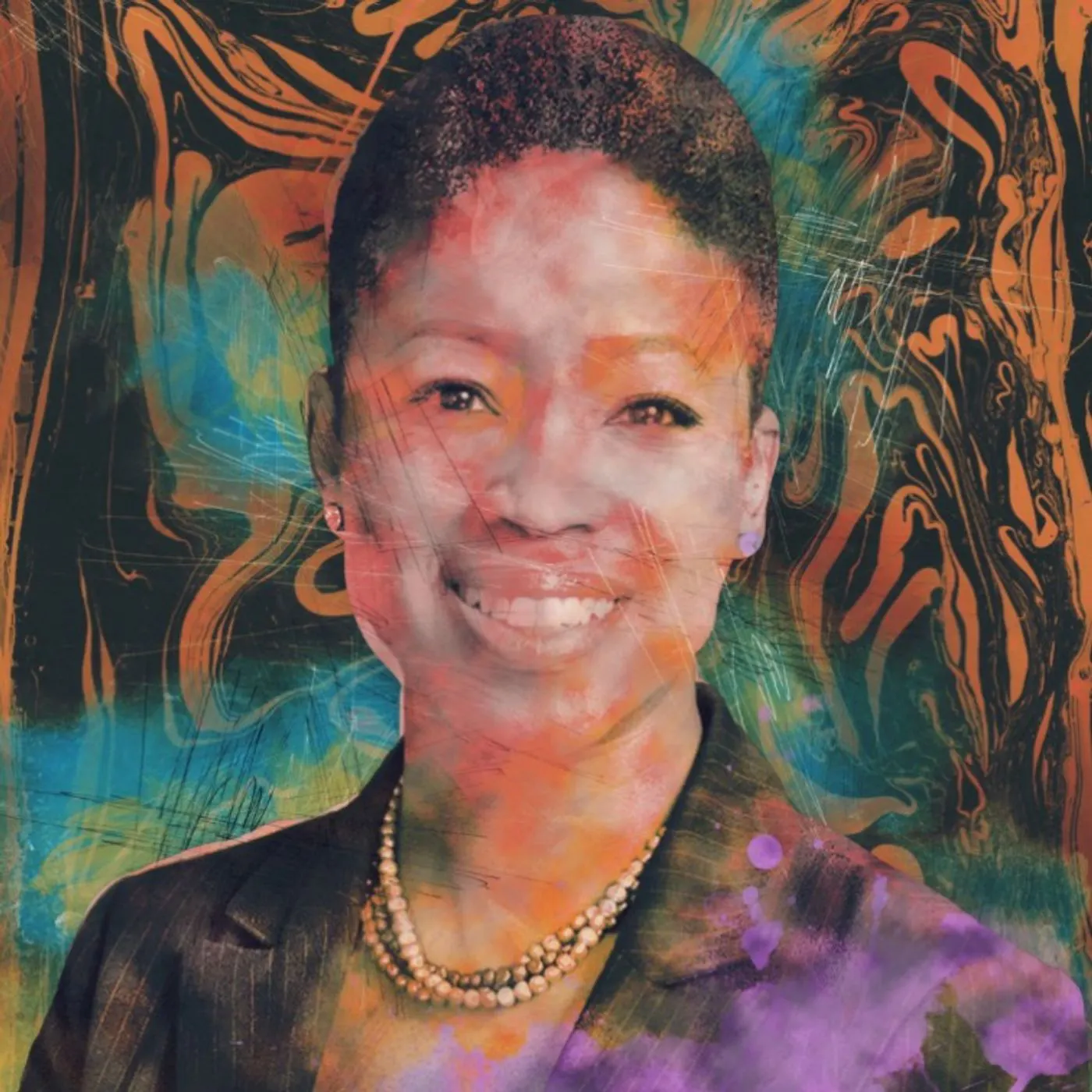
Ep 43Making Meaning Episode 10: Connection in Community
Meaning is more than an abstraction—it is a sense that we matter to one another, woven together with threads of reciprocity. But in those times when we feel lost and cut off from our sources of strength, we may have to simply move forward in faith, holding out hope for renewal and restoration. Guest: The Rev. Dr. Stephanie M. Crumpton is a professor of practical theology at McCormick Theological Seminary. Prior to that, she was an assistant professor of practical theology at Lancaster Theological Seminary in Lancaster, Pennsylvania. She taught and lectured at Hood Theological Seminary, Chicago Theological Seminary, Candler School of Theology at Emory University and the Interdenominational Theological Center. Making Meaning is a limited series from Ministry of Ideas that explores how life can be lived more meaningfully. Featuring meditations by some of the world’s most sensitive and insightful thinkers, Making Meaning will give you fresh perspective and encouragement to live with greater intention and fullness. Making Meaning is produced by Jack Pombriant and Zachary Davis. Artwork by Dan Pecci. Learn more at ministryofideas.org and find us on Twitter @ministryofideas. Learn more about your ad choices. Visit megaphone.fm/adchoices Support our show by becoming a premium member! https://newbooksnetwork.supportingcast.fm/psychology
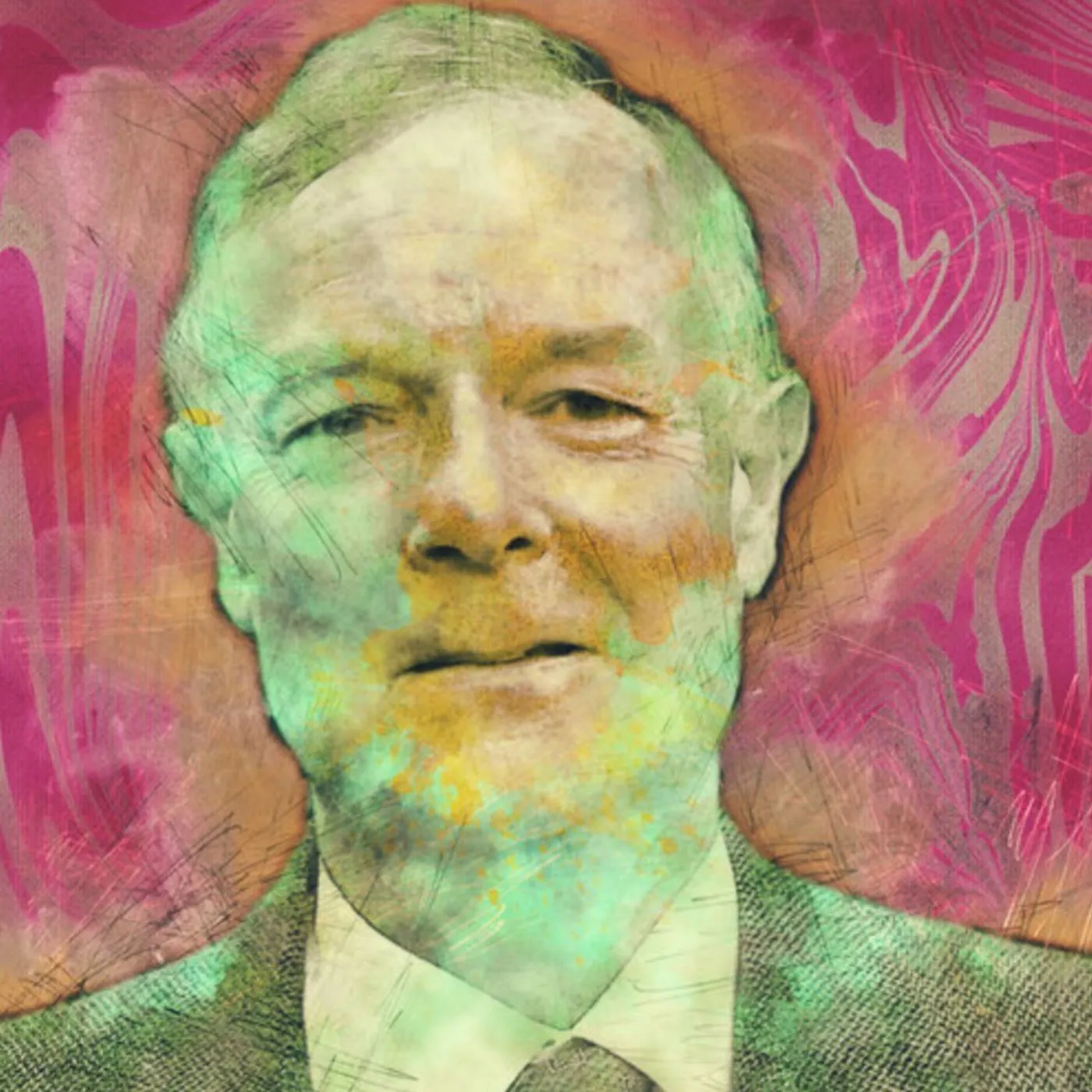
Ep 42Making Meaning Episode 9: Questing Spirits
The experience of existence is one of bewilderment and even anguish. Anguish because we feel that we are incomplete beings longing for completion, mired in immanence yet yearning for transcendence. Often, that questing spirit can lead us on the journey to God. Guest: John Cottingham is Professor Emeritus of Philosophy at the University of Reading and an Honorary Fellow, St John’s College at Oxford University. He has published over thirty books—including In Search of the Soul and How to Believe. Making Meaning is produced by Jack Pombriant and Zachary Davis. Artwork by Dan Pecci. Learn more at ministryofideas.org and find us on Twitter @ministryofideas. Learn more about your ad choices. Visit megaphone.fm/adchoices Support our show by becoming a premium member! https://newbooksnetwork.supportingcast.fm/psychology

Ep 41Making Meaning Episode 8: Gifts of Belonging
In music, Kimbra found a way to create and share gifts. And through that gifting, she provides space for others to find deep connection and belonging. But music also offers something more mysterious—a language to wrestle with meaning, an attempt to capture and express the experience of life. Guest: Kimbra is a two-time Grammy Award and six-time Aria winner who mixes pop, R&B, jazz, and rock. Some of her most famous singles include “Cameo Lover,” “Belong,” and “Somebody that I Used To Know.” Making Meaning is a limited series from Ministry of Ideas that explores how life can be lived more meaningfully. Featuring meditations by some of the world’s most sensitive and insightful thinkers, Making Meaning will give you fresh perspective and encouragement to live with greater intention and fullness. Making Meaning is produced by Jack Pombriant and Zachary Davis. Artwork by Dan Pecci. Learn more at ministryofideas.org and find us on Twitter @ministryofideas. Learn more about your ad choices. Visit megaphone.fm/adchoices Support our show by becoming a premium member! https://newbooksnetwork.supportingcast.fm/psychology
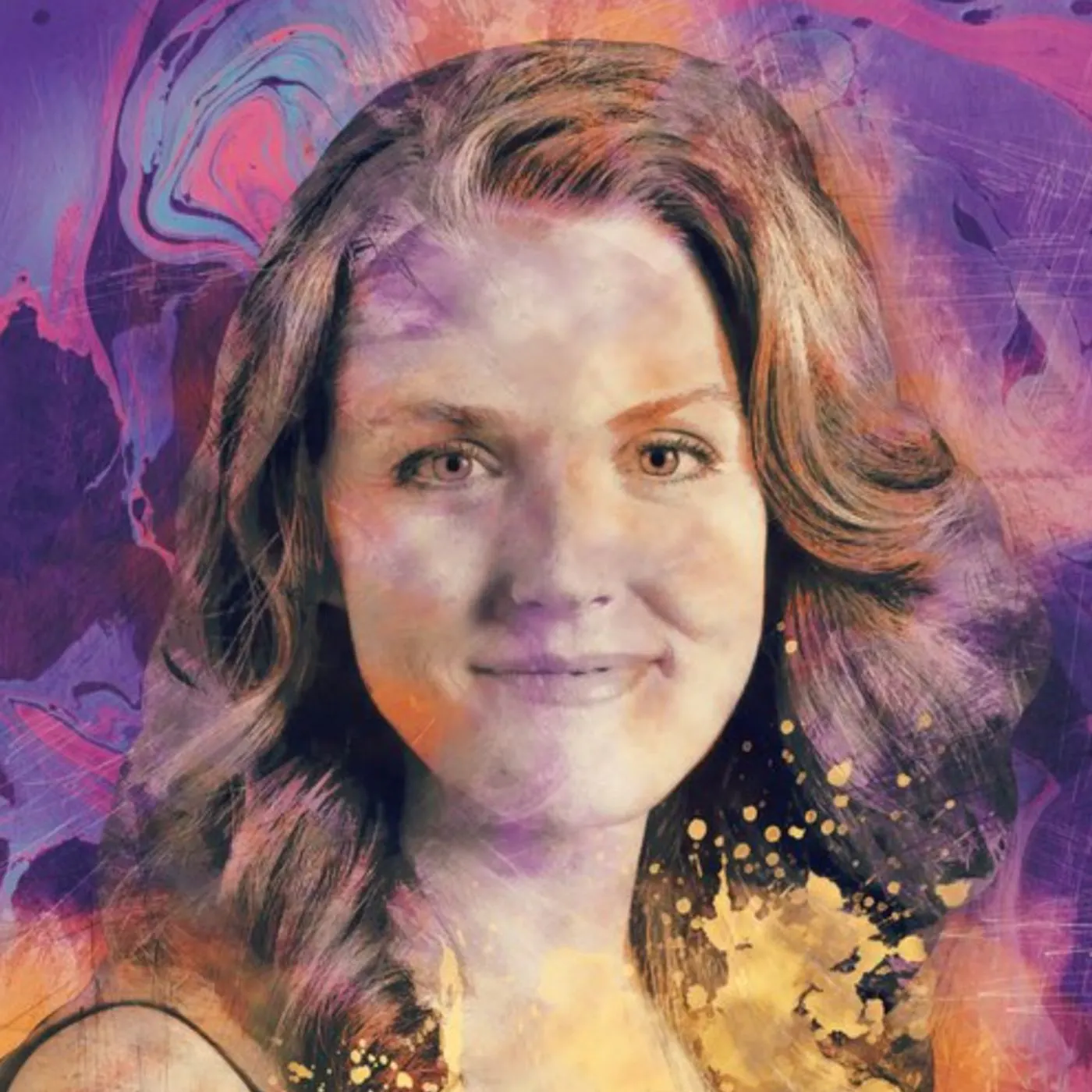
Ep 40Making Meaning Episode 7: Virtuous Stories
The human being is a storytelling animal, and no story is more important to us than our own. But we don’t write that story in a vacuum. We are born in media res and must develop ways of making sense of ourselves if we want to truly flourish. Guest: Jennifer Frey is an associate professor of philosophy at the University of South Carolina and host of the philosophy and literature podcast Sacred and Profane Love. She writes about virtue, action, practical reason, and what it might mean to live well as a human person. Making Meaning is a limited series from Ministry of Ideas that explores how life can be lived more meaningfully. Featuring meditations by some of the world’s most sensitive and insightful thinkers, Making Meaning will give you fresh perspective and encouragement to live with greater intention and fullness. Making Meaning is produced by Jack Pombriant and Zachary Davis. Artwork by Dan Pecci. Learn more at ministryofideas.org and find us on Twitter @ministryofideas. Learn more about your ad choices. Visit megaphone.fm/adchoices Support our show by becoming a premium member! https://newbooksnetwork.supportingcast.fm/psychology
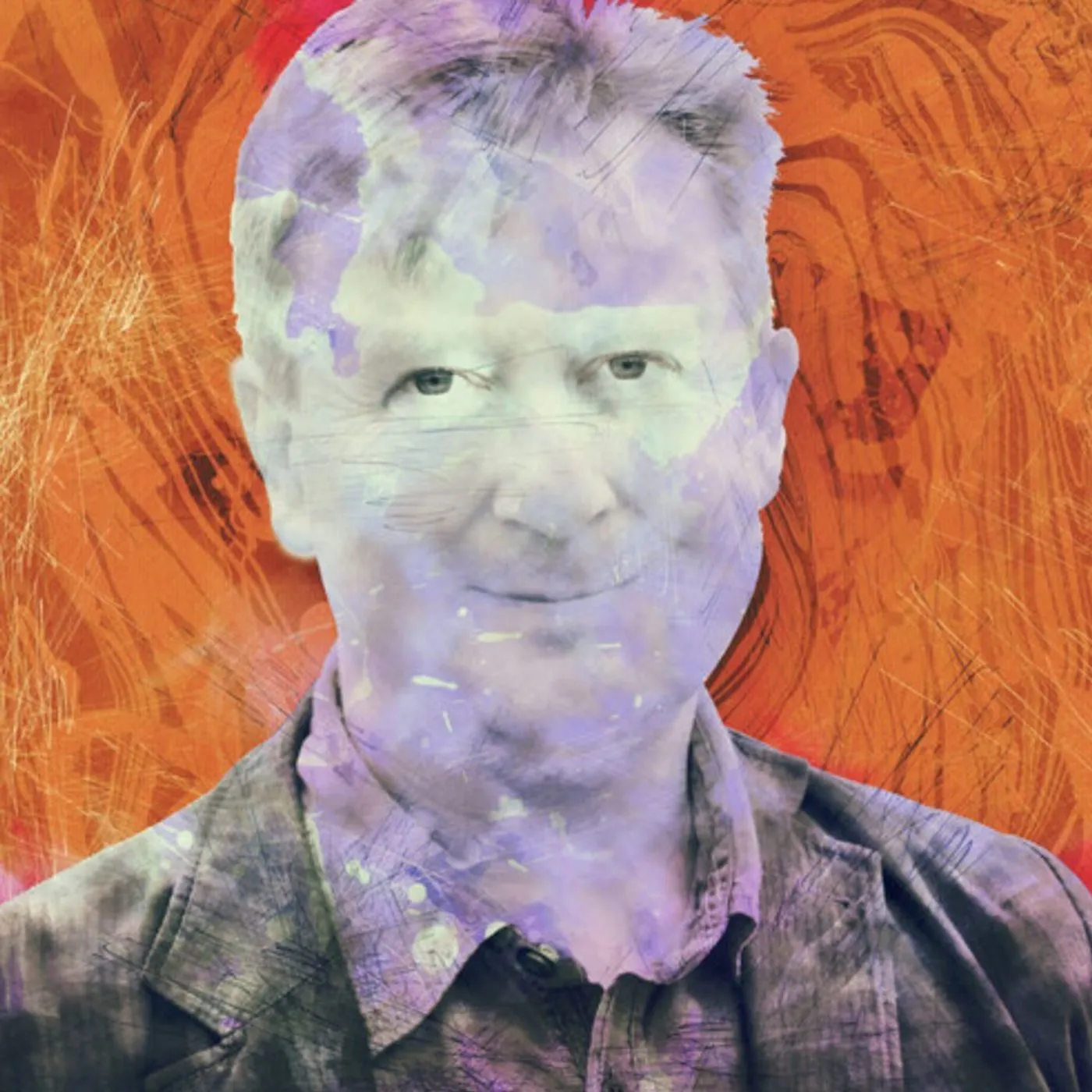
Ep 39Making Meaning Episode 6: Here and Now
It’s common to look beyond life—to eternity or God—for meaning. But as the experience of seeing a cherry tree in bloom reveals, there is deep value in the immanent, the immediate, the now. Guest: Julian Baggini is a philosopher, journalist and the author of over 20 books about philosophy written for a general audience. He is co-founder of The Philosophers' Magazine and has written for numerous international newspapers and magazines. In addition to writing on the subject of philosophy he has also written books on atheism, secularism, and the nature of national identity. Making Meaning is a limited series from Ministry of Ideas that explores how life can be lived more meaningfully. Featuring meditations by some of the world’s most sensitive and insightful thinkers, Making Meaning will give you fresh perspective and encouragement to live with greater intention and fullness. Making Meaning is produced by Jack Pombriant and Zachary Davis. Artwork by Dan Pecci. Learn more at ministryofideas.org and find us on Twitter @ministryofideas. Learn more about your ad choices. Visit megaphone.fm/adchoices Support our show by becoming a premium member! https://newbooksnetwork.supportingcast.fm/psychology

Ep 38Making Meaning Episode 5: Beyond Happiness
Organizing our lives around the pursuit of happiness—defined as positive feelings—can ultimately leave our souls hungry. Instead, we should try connecting ourselves to deeper things: compassion, community, ritual, and awe. Guest: Emily Esfahani Smith is a writer, editor, and speaker in Washington DC. She draws on psychology, philosophy, and literature to write about the human experience—why we are the way we are and how we can find grace and meaning in a world that is full of suffering. Her book The Power of Meaning, an international bestseller, has been translated into 16 different languages. Making Meaning is a limited series from Ministry of Ideas that explores how life can be lived more meaningfully. Featuring meditations by some of the world’s most sensitive and insightful thinkers, Making Meaning will give you fresh perspective and encouragement to live with greater intention and fullness. Making Meaning is produced by Jack Pombriant and Zachary Davis. Artwork by Dan Pecci. Learn more at ministryofideas.org and find us on Twitter @ministryofideas. Learn more about your ad choices. Visit megaphone.fm/adchoices Support our show by becoming a premium member! https://newbooksnetwork.supportingcast.fm/psychology

Ep 37Making Meaning Episode 4: Weaving the World Together
Meaning is less a secret to discover than an emergent property, a byproduct of engaging with the world. Through experimentation and an orientation of openness, we can weave ourselves into a broader cloth of coherence. Guest: Michael Steger is the Founder and Director of the Center for Meaning and Purpose, and Professor of Psychology at Colorado State University. He also serves as an Extraordinary Professor by North-West University in South Africa. He received his B.A. in Psychology from Macalester College, his MS in Counseling from the University of Oregon in 1997, and his Ph.D. in Counseling Psychology and Personality Psychology from the University of Minnesota in 2005. Making Meaning is a limited series from Ministry of Ideas that explores how life can be lived more meaningfully. Featuring meditations by some of the world’s most sensitive and insightful thinkers, Making Meaning will give you fresh perspective and encouragement to live with greater intention and fullness. Making Meaning is produced by Jack Pombriant and Zachary Davis. Artwork by Dan Pecci. Learn more at ministryofideas.org and find us on Twitter @ministryofideas. Learn more about your ad choices. Visit megaphone.fm/adchoices Support our show by becoming a premium member! https://newbooksnetwork.supportingcast.fm/psychology
Ep 196Thomas L Murray, "Making Nice with Naughty: An Intimacy Guide for the Rule-Following, Organized, Perfectionist, Practical, and Color-Within-The-Line Types" (2022)
Have too much self-control? You worked hard, followed the rules, and delayed gratification to get where you are in life. You played nice, did what you were told, and were rewarded for it. You have high expectations of yourself and for those around you. You have a strong sense of how the world should be and a consciousness of right and wrong. These are all admirable traits. Yet, your sex life and relationships suffer. Emotional distance has grown between you and your partner. Passion has diminished. Sex has become routine, assuming it happens at all. Your mind overthinks, making it impossible to relax: "Will the kids hear us?"; "My body's changed so much!"; "I have tons to catch up on and sex is a waste of time"; "What if I embarrass myself?" You fear uncertainty, especially about the future; you feel anxious, yet you want more out of life. You want to have fun with sex and be intimate and enjoy what you see others enjoying. You're not sure where to start though or if your thoughts and feelings will ever change. They can. Thomas L Murray's Making Nice with Naughty: An Intimacy Guide for the Rule-Following, Organized, Perfectionist, Practical, and Color-Within-The-Line Types (Clinical Training & Consultation, 2022) is an intimacy guide for turning down your dial on what is defined as an Overcontrolled (OC) Temperament and reclaiming psychological flexibility, child-like playfulness, adventure, and guilt-free pleasure-seeking. Learn more about your ad choices. Visit megaphone.fm/adchoices Support our show by becoming a premium member! https://newbooksnetwork.supportingcast.fm/psychology
Ep 197Vanessa Loder, "The Soul Solution: A Guide for Brilliant, Overwhelmed Women to Quiet the Noise, Find Their Superpower, and (Finally) Feel Satisfied" (Sounds True, 2022)
Are you so busy fulfilling everyone else’s expectations that you’ve lost touch with yourself? Do you find yourself filling up your “free” hours with mundane tasks, soaking up podcasts to improve yourself, and rushing around, never getting it all done? For many women, it’s the same kind of story—we hustle to overachieve at work and at home, all in the hopes that we can “crush it” until we finally feel fulfilled. Vanessa Loder invites you to consider this question: “What if the point isn't to crush it in life, but to savor it?” With The Soul Solution: A Guide for Brilliant, Overwhelmed Women to Quiet the Noise, Find Their Superpower, and (Finally) Feel Satisfied (Sounds True, 2022) , this sought-after women’s leadership expert shares a powerful and practical guide to help women who feel overwhelmed and exhausted to recover our true selves—and our joy in living. Here she presents a road map for coming home to yourself, including: • The Whispers of Your Soul—the three key steps for tuning out the noise and accessing authenticity • Your Energetic Bread Crumbs—how the universe signals to you when you’re on the right path • Discover Your Superpower—why you’ve been ignoring your most valuable gifts, and how to reclaim them • From Tunnel Vision to Visionary—ways to break out of the “shame cycle” of patriarchal culture and own your destiny • Quieting the Inner Critic—how to retrain your inner voices to encourage and support you • The Upward Spiral—using the SAT method (Surrender, Allow, Trust) to get more of what you want with ease Filled with practical guidance and inspiring personal stories, The Soul Solution is a nonstrategic, nonlinear—but entirely effective—guide to help you reclaim your feminine, intuitive soul power to fulfill your most meaningful and satisfying desires. Vanessa Loder is an international keynote speaker and sought-after expert on women’s leadership, mindfulness, stress management, and sustainable success. She's been featured in Forbes, Fast Company, Glamour, and the Huffington Post, among others. She received her MBA from Stanford University, is a certified Executive Coach, and is trained in neurolinguistic programming, past-life regression, and vipassana meditation. For more, please visit her website at vanessaloder.com. Elizabeth Cronin, Psy.D., is a licensed clinical psychologist and mindfulness meditation teacher with offices in Brookline and Norwood, MA. You can follow her on Instagram or visit her website. Learn more about your ad choices. Visit megaphone.fm/adchoices Support our show by becoming a premium member! https://newbooksnetwork.supportingcast.fm/psychology
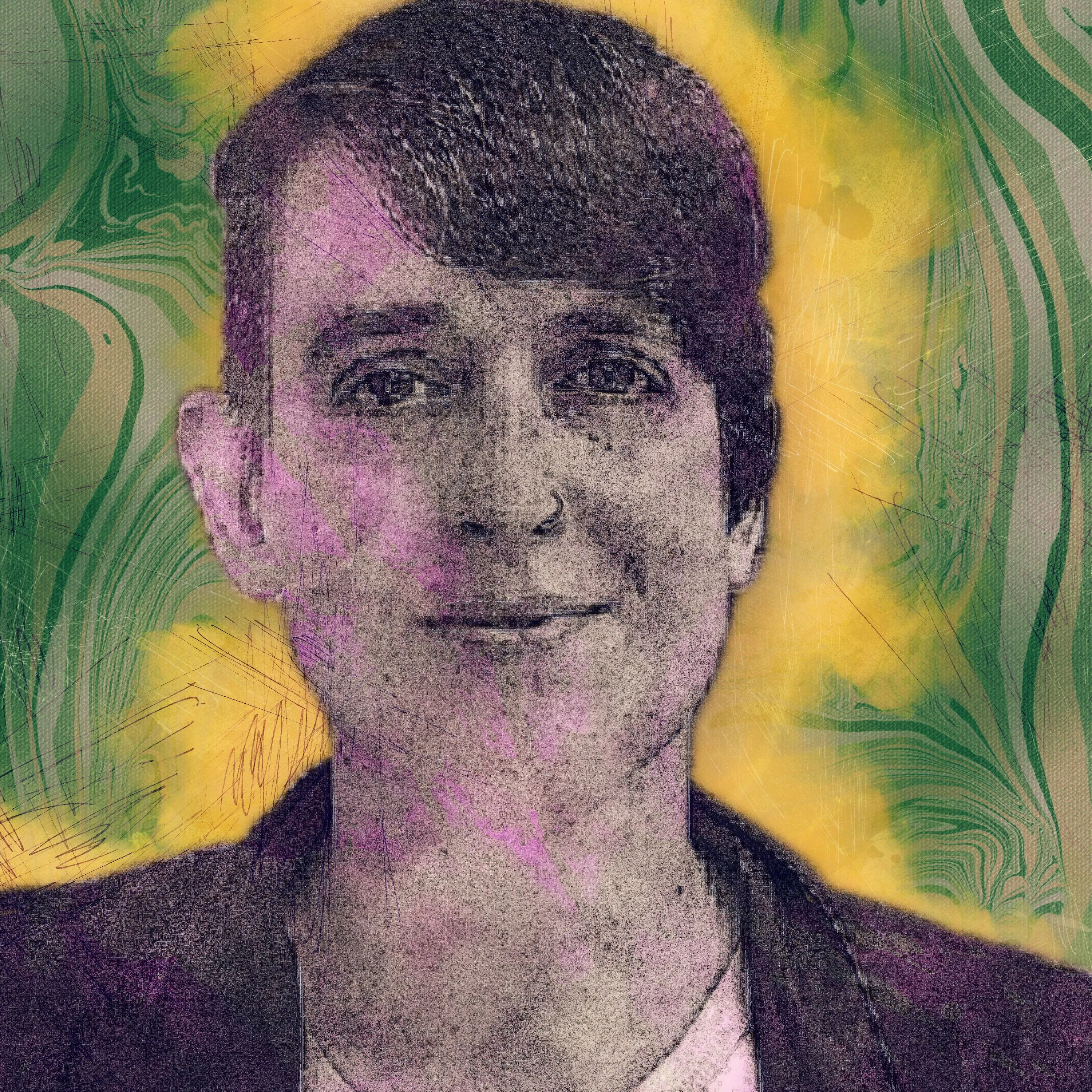
Ep 36Making Meaning Episode 3: The Weight of the World
The ideology of capitalism, which drives us to find happiness in endless exertion and economic gain, dulls our emotions and blinds us to the source of our most abundant meaning—relationships and solidarity with other people. Guest: Kathryn Lofton is a scholar of religion and has written extensively about capitalism, popular culture, and the secular. She’s the author of three books: Oprah: The Gospel of an Icon; Consuming Religion; and Woman’s Work: An Anthology of African-American Women’s Historical Writings. Lofton earned her PhD in Religious Studies from the University of North Carolina at Chapel Hill in 2005. She has taught at Yale since 2009. Making Meaning is a limited series from Ministry of Ideas that explores how life can be lived more meaningfully. Featuring meditations by some of the world’s most sensitive and insightful thinkers, Making Meaning will give you fresh perspective and encouragement to live with greater intention and fullness. Making Meaning is produced by Jack Pombriant and Zachary Davis. Artwork by Dan Pecci. Learn more at ministryofideas.org and find us on Twitter @ministryofideas. Learn more about your ad choices. Visit megaphone.fm/adchoices Support our show by becoming a premium member! https://newbooksnetwork.supportingcast.fm/psychology
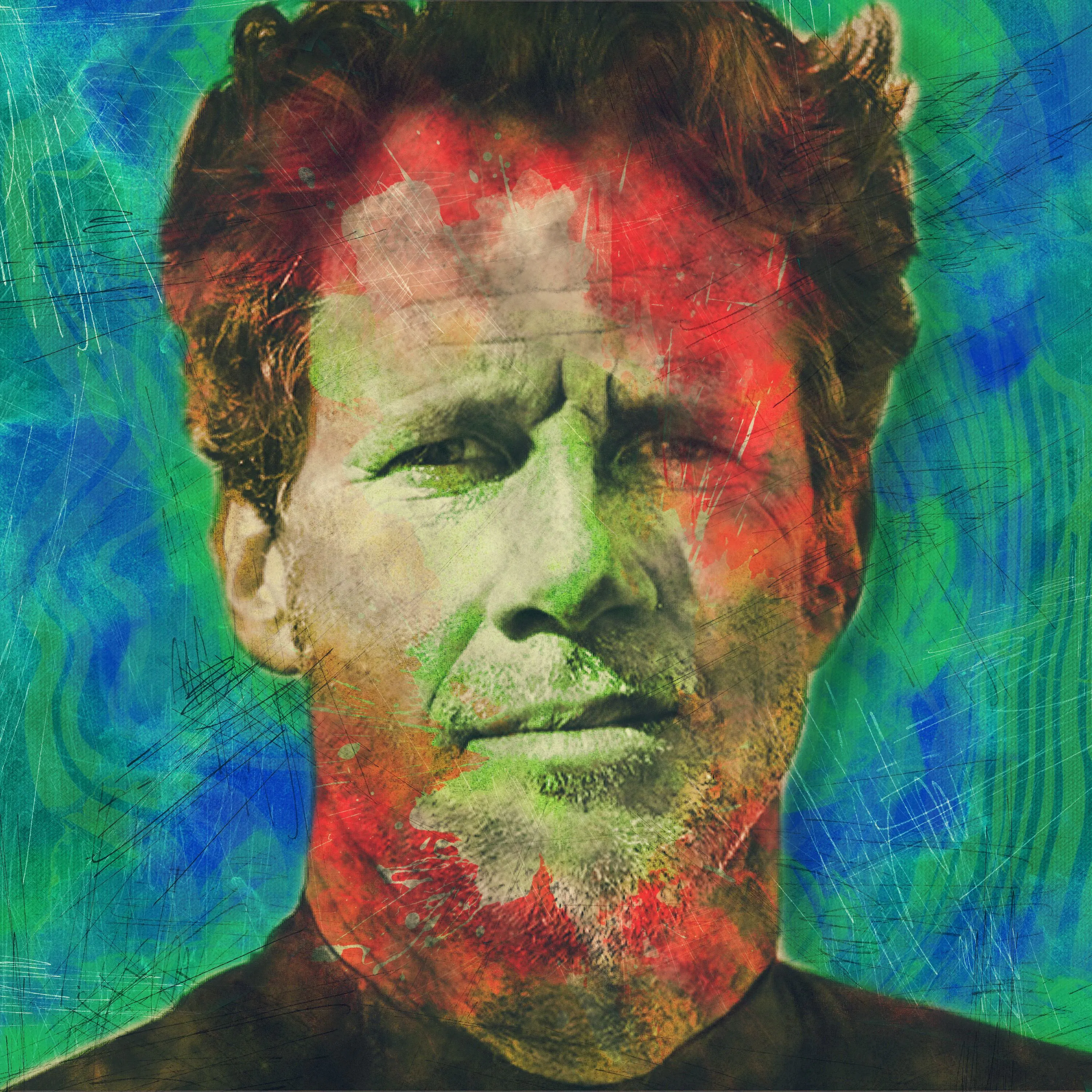
Ep 35Making Meaning Episode 2: A Fortunate Coalescence
We’re often given the following choice: either there’s a cosmic, eternal purpose to our lives or nothing matters at all. But perhaps the meaning of life is the meaning in life—witnessing the dance of light on leaves or the catching of a perfect wave. Guest: Aaron James is philosophy professor at UC Irvine and the author of Surfing with Sarte: An Aquatic Inquiry into the Life of Meaning. Making Meaning is a limited series from Ministry of Ideas that explores how life can be lived more meaningfully. Featuring meditations by some of the world’s most sensitive and insightful thinkers, Making Meaning will give you fresh perspective and encouragement to live with greater intention and fullness. Making Meaning is produced by Jack Pombriant and Zachary Davis. Artwork by Dan Pecci. Learn more at ministryofideas.org and find us on Twitter @ministryofideas. Learn more about your ad choices. Visit megaphone.fm/adchoices Support our show by becoming a premium member! https://newbooksnetwork.supportingcast.fm/psychology
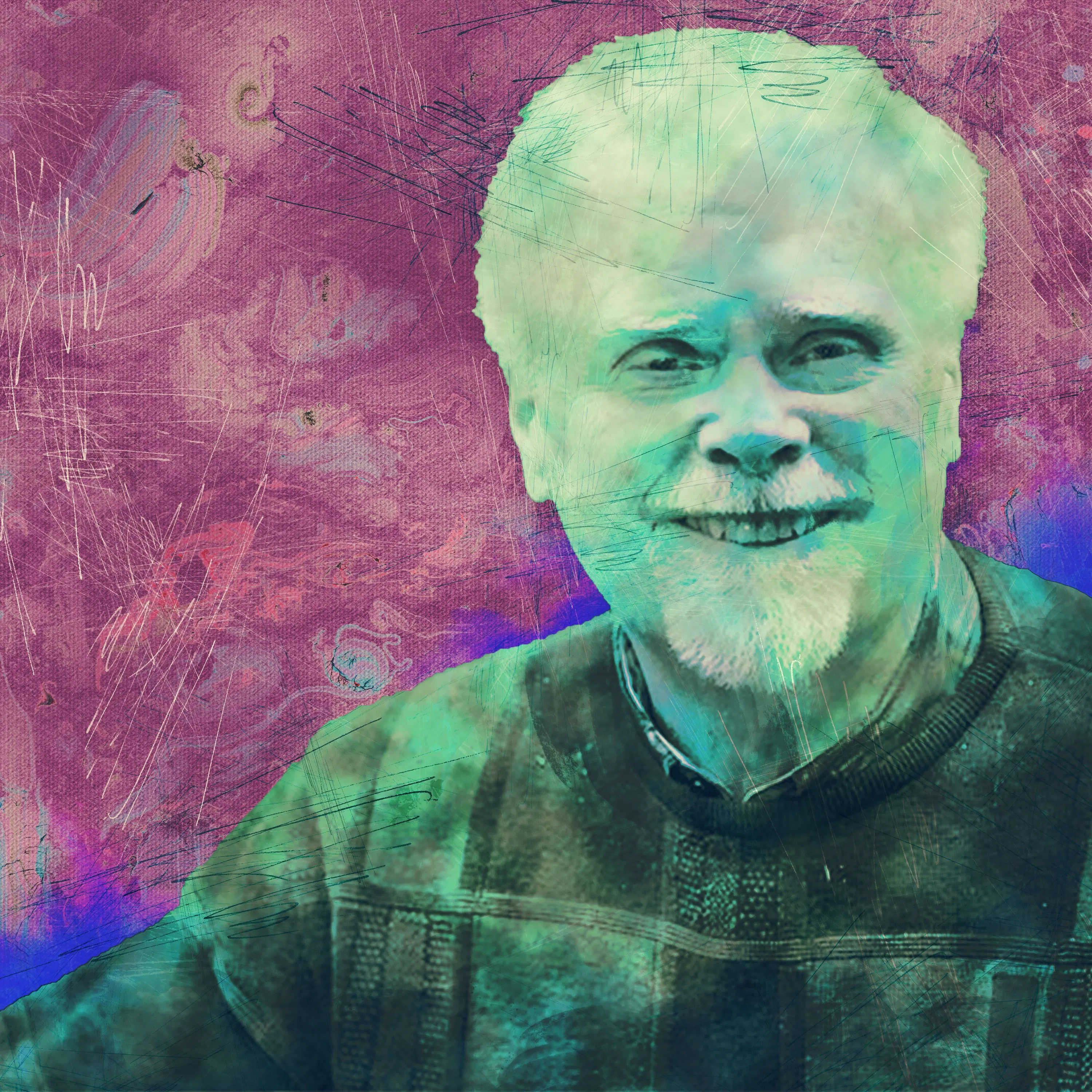
Ep 34Making Meaning Episode 1: You Don't Have To Be Special
Feelings of meaninglessness often are caused by how we understand ourselves. If we change how we think about our worth, we’ll discover radiant meaning can be found in even the most ordinary aspects of our lives. Guest: David Burns is a leading psychiatrist and a pioneer of Cognitive Behavioral Therapy. His best-selling book, Feeling Good: The New Mood Therapy has sold over 4 million copies and is the book most frequently “prescribed” for depressed patients by psychiatrists and psychologists in the United States and Canada. Making Meaning is a limited series from Ministry of Ideas that explores how life can be lived more meaningfully. Featuring meditations by some of the world’s most sensitive and insightful thinkers, Making Meaning will give you fresh perspective and encouragement to live with greater intention and fullness. Making Meaning is produced by Jack Pombriant and Zachary Davis. Artwork by Dan Pecci. Learn more at ministryofideas.org and find us on Twitter @ministryofideas. Learn more about your ad choices. Visit megaphone.fm/adchoices Support our show by becoming a premium member! https://newbooksnetwork.supportingcast.fm/psychology
Ep 25Why It’s So Hard for Us to Subtract
Leidy, professor of engineering at the University of Virginia, talks about his book, Subtract: The Untapped Science of Less, with Peoples & Things host, Lee Vinsel. As Klotz shows throughout the book, we pile on “to-dos” but don’t consider “stop-doings.” We create incentives for good behavior, but don’t get rid of obstacles to it. We collect new-and-improved ideas, but don’t prune the outdated ones. Every day, across challenges big and small, we neglect a basic way to make things better: we don’t subtract. Klotz’s work sits at a fascinating intersection between engineering, design, and experimental psychology. His pioneering research shows us what is true whether we’re building Lego models, cities, or strategic plans: Our minds tend to add before taking away, and this is holding us back. Learn more about your ad choices. Visit megaphone.fm/adchoices Support our show by becoming a premium member! https://newbooksnetwork.supportingcast.fm/psychology
Ep 56Valerie Tiberius, "What Do You Want Out of Life?: A Philosophical Guide to Figuring Out What Matters" (Princeton UP, 2023)
What do you want out of life? To make a lot of money--or work for justice? To run marathons--or sing in a choir? To have children--or travel the world? The things we care about in life--family, friendship, leisure activities, work, our moral ideals--often conflict, preventing us from doing what matters most to us. Even worse, we don't always know what we really want, or how to define success. Blending personal stories, philosophy, and psychology, this insightful and entertaining book offers invaluable advice about living well by understanding your values and resolving the conflicts that frustrate their fulfillment. Valerie Tiberius introduces you to a way of thinking about your goals that enables you to reflect on them effectively throughout your life. She illustrates her approach with vivid examples, many of which are drawn from her own life, ranging from the silly to the serious, from shopping to navigating prejudice. Throughout, the book emphasizes the importance of interconnectedness, reminding us of the profound influence other people have on our lives, our goals, and how we should pursue them. At the same time, the book offers strategies for coping with obstacles to realizing your goals, including gender bias and other kinds of discrimination. Whether you are changing jobs, rethinking your priorities, or reconsidering your whole life path, What Do You Want Out of Life?: A Philosophical Guide to Figuring Out What Matters (Princeton UP, 2023)s an essential guide to helping you understand what really matters to you and how you can thoughtfully pursue it. Learn more about your ad choices. Visit megaphone.fm/adchoices Support our show by becoming a premium member! https://newbooksnetwork.supportingcast.fm/psychology
Ep 195Rebecca Ray, "Small Habits for a Big Life" (Macmillan, 2022)
Change is not about grand statements and sweeping gestures. It is about chipping away, a bit at a time, at the habits that hold us back. Dr Rebecca Ray knows about the power of small habits to make big changes. By introducing small changes into her own life, she transformed her career as a clinical psychologist to become one of Australia's most effective communicators on matters of the mind. Rebecca has helped many members of her large online community and her clients do the same. In Small Habits for a Big Life (Macmillan, 2022), Dr Rebecca Ray breaks down the process for her reader. She explains how we can override the part of the brain that seeks pleasure and comfort (ice cream and wine) and activate the parts that tolerate some discomfort for the sake of long-term goals (an hour of study instead of an hour of TV). Small Habits for a Big Life clears the way for readers to embark on their own path to change and provides exactly the right amount of support along the way. Elizabeth Cronin, Psy.D., is a licensed clinical psychologist and mindfulness meditation teacher with offices in Brookline and Norwood, MA. You can follow her on Instagram or visit her website. Learn more about your ad choices. Visit megaphone.fm/adchoices Support our show by becoming a premium member! https://newbooksnetwork.supportingcast.fm/psychology
Ep 22The History of Teletherapy
Hannah Zeavin, lecturer in the department of History and member of the executive committees of both the Center for New Media and the Center for Science, Technology, Medicine, and Society at University of California, Berkeley, talks about her book, The Distance Cure: A History of Teletherapy, with Peoples & Things host, Lee Vinsel. The book tracks the history of teletherapy, which Zeavin defines as therapeutic interaction over distance, and its metamorphosis from a model of cure to one of contingent help. The book starts with letters sent through the mail and ends in our current coronavirus catastrophe. Zeavin and Vinsel also talk about the complexities and potential harms of going back fully in-person, including how it will negatively affect disabled people. Learn more about your ad choices. Visit megaphone.fm/adchoices Support our show by becoming a premium member! https://newbooksnetwork.supportingcast.fm/psychology

Ep 27Dissecting Morality: What do Scientists Have To Say About Ethics? (Part 2)
Linking morality and science can conjure up disturbing histories around social Darwinism, eugenics, and genetically engineered humans. But scientists today are making discoveries that moral agents shouldn’t ignore: how to overcome aggression and tribalism, and how to sustain cooperation in a modern pluralist world. Guests: Diane Paul, professor emerita of the University of Massachusetts, Boston and research associate at the Harvard University Museum of Comparative Zoology. Ben Allen, associate professor of mathematics at Emmanuel College. Steven Pinker, professor of cognitive psychology at Harvard University and bestselling author of The Better Angels of Our Nature, The Language Instinct, The Blank Slate, and many others. Learn more about your ad choices. Visit megaphone.fm/adchoices Support our show by becoming a premium member! https://newbooksnetwork.supportingcast.fm/psychology

Ep 26Dissecting Morality: What do Scientists Have To Say About Ethics? (Part 1)
Linking morality and science can conjure up disturbing histories around social Darwinism, eugenics, and genetically engineered humans. But scientists today are making discoveries that moral agents shouldn’t ignore: how to overcome aggression and tribalism, and how to sustain cooperation in a modern pluralist world. Guests: Diane Paul, professor emerita of the University of Massachusetts, Boston and research associate at the Harvard University Museum of Comparative Zoology. Ben Allen, associate professor of mathematics at Emmanuel College. Steven Pinker, professor of cognitive psychology at Harvard University and bestselling author of The Better Angels of Our Nature, The Language Instinct, The Blank Slate, and many others. Learn more about your ad choices. Visit megaphone.fm/adchoices Support our show by becoming a premium member! https://newbooksnetwork.supportingcast.fm/psychology
Ep 125Batja Mesquita, "Between Us: How Cultures Create Emotions" (Norton, 2022)
Today I talked to Batja Mesquita about her book Between Us: How Cultures Create Emotions (Norton, 2022). To a degree sometimes not realized, we discuss emotions through the lens of what have been called WEIRD cultures, i.e. Western, Educated, Industrialized, Rich and Democratic. As a result, the perspective taken tends to be inside/out, privileging one’s private feelings: a Mine approach. Yet in much of the world, more of an Ours approach prevails, with an understanding of emotions as being important because they help us navigate the cultures we live in. So as Batja Mesquita notes, emotions are therefore recognized as happening between people because emotions are relational, cultural, situational, and heavily involve cultural norms. To unpack an emotional episode is to explore, by degrees, what is going on and why the episode is significant in relation to one’s goals and values, and one’s place within a given situation and wider, cultural context. Dr. Batja Mesquita is a social psychologist, an affective scientist, and a pioneer of cultural psychology. She’s a Distinguished Professor of Psychology at the University of Leuven, Belgium. She’s from a Dutch Jewish family with parents who survived the Holocaust in hiding. She’s also lived in Italy, Bosnia, and the U.S., where she did her post-doctoral work at the University of Michigan. Dan Hill, PhD, is the author of ten books and leads Sensory Logic, Inc. (https://www.sensorylogic.com). His newest book is Emotionomics 2.0: The Emotional Dynamics Underlying Key Business Goals. To check out his related “Dan Hill’s EQ Spotlight” blog, visit https://emotionswizard.com. Learn more about your ad choices. Visit megaphone.fm/adchoices Support our show by becoming a premium member! https://newbooksnetwork.supportingcast.fm/psychology
Ep 44Justin Gregg, "If Nietzsche Were a Narwhal: What Animal Intelligence Reveals About Human Stupidity" (Little, Brown, 2022)
What if human intelligence is actually more of a liability than a gift? After all, the animal kingdom, in all its diversity, gets by just fine without it. At first glance, human history is full of remarkable feats of intelligence, yet human exceptionalism can be a double-edged sword. With our unique cognitive prowess comes severe consequences, including existential angst, violence, discrimination, and the creation of a world teetering towards climate catastrophe. What if human exceptionalism is more of a curse than a blessing? As Dr. Justin Gregg puts it in his book If Nietzsche Were a Narwhal: What Animal Intelligence Reveals About Human Stupidity (Little, Brown (US), 2022, Hodder (UK), 2023), there’s an evolutionary reason why human intelligence isn’t more prevalent in the animal kingdom. Simply put, non-human animals don’t need it to be successful. And, miraculously, their success arrives without the added baggage of destroying themselves and the planet in the process. In seven mind-bending and hilarious chapters, Dr. Gregg highlights features seemingly unique to humans – our use of language, our rationality, our moral systems, our so-called sophisticated consciousness – and compares them to our animal brethren. What emerges is both demystifying and remarkable, and will change how you look at animals, humans, and the meaning of life itself. This interview was conducted by Dr. Miranda Melcher whose doctoral work focused on post-conflict military integration, understanding treaty negotiation and implementation in civil war contexts, with qualitative analysis of the Angolan and Mozambican civil wars. Learn more about your ad choices. Visit megaphone.fm/adchoices Support our show by becoming a premium member! https://newbooksnetwork.supportingcast.fm/psychology

Ep 108Near Death Experience
In this episode of High Theory, Laura Wittman tells us about near death experiences. The central feature of these experiences is a vision and a story, which it turns out are a lot stranger than the “best seller” version. These narrative encounters with death often inspire people to make dramatic moves in search of a more meaningful life, from newfound religious faith or activist commitments to career changes and divorce. In the episode, she talks about the changes in what makes a good death, from the nineteenth to the twentieth centuries, and how the narratives of near death experiences reflect our desires for older forms of sociality around life’s passing. She references Oliver Sacks’s book Hallucinations (Random House, 2012) in regards to the visions patients experience in hospitals, and their desire for a witness in the moments of lucidity that often occur before death. Laura Wittman is an associate professor of French and Italian at Stanford University. She teaches nineteenth and twentieth century literature, and her research focuses on what happens to religious experience in the so-called secular modern age. Her book, The Tomb of the Unknown Soldier, Modern Mourning, and the Reinvention of the Mystical Body (Toronto UP, 2011) has recently been translated into Italian as Il Milite ignoto. Storia e Mito. (LEG, 2021) She also coordinates the Medical Humanities Working Group at the Stanford Humanities Center. This week’s image is a photograph of the Ellen Browning Scripps Memorial Pier in La Jolla, California, taken by Kim Adams in November 2022. On the top of the pier is a research site for the Scripps Institution of Oceanography, UC San Diego. Learn more about your ad choices. Visit megaphone.fm/adchoices Support our show by becoming a premium member! https://newbooksnetwork.supportingcast.fm/psychology
Ep 205Karyne E. Messina, "Resurgence of Global Populism: A Psychoanalytic Study of Projective Identification, Blame-Shifting and the Corruption of Democracy" (Routledge, 2022)
Resurgence of Global Populism: A Psychoanalytic Study of Projective Identification, Blame-Shifting and the Corruption of Democracy (Routledge, 2022) provides a psychoanalytic perspective to the global implications of the populist movement in the U.S. and its relationship to other parts of the world, particularly focusing on the presidency and legacy of Donald Trump. The book explores Trump's use of psychological form of manipulation known as projective identification and how his use of this defense mechanism has influenced global institutions, political discourse, and quality of life in the long term. Messina explores the correlation between Trump's rhetoric and an increase in reported racism and prejudiced violence worldwide, disintegration of global values, and a radicalized political climate. She analyzes the dynamics between Trump and his supporters, political opponents, and successors, considers the COVID-19 pandemic as a study of Trump's views of the world, and considers the roles of social and television media. The book concludes with an explanation of antidotes to projective identification, including thoughtful debate and meaningful discussions and scripted dialogues for global healing. This insightful book will be of interest to psychoanalysts and psychotherapists, academics and students of political psychology and political movements, and readers interested in a deeper analysis of populism and political dynamics. Ashis Roy is a psychoanalyst practicing in Delhi. Learn more about your ad choices. Visit megaphone.fm/adchoices Support our show by becoming a premium member! https://newbooksnetwork.supportingcast.fm/psychology
Ep 304Hil Malatino, "Side Affects: On Being Trans and Feeling Bad" (U Minnesota Press, 2022)
Fatigue, disorientation, numbness, envy, rage, burnout. What good could come from thinking about trans experience and these bad feelings? In Side Affects: On Being Trans and Feeling Bad (University of Minnesota Press, 2022), Hil Malatino theorizes the centrality of bad feelings in a world of quotidian and spectacular anti-trans misrecognition, hostility, and violence. He does so not only to understand how bad feelings arise and how they can be hard to survive, but also what they can make possible when they are taken up through political practices of care. Centered on trans experience as it is represented through many cultural productions, Malatino highlights the pressure on trans folks to be made happy by transition. He takes the analysis further by arguing for the power of communal care to enable survival not despite, but through these feelings. Sarah Tyson is an associate professor of philosophy at the University of Colorado, Denver. Learn more about your ad choices. Visit megaphone.fm/adchoices Support our show by becoming a premium member! https://newbooksnetwork.supportingcast.fm/psychology
Ep 204Gila Ashtor, "Exigent Psychoanalysis: The Interventions of Jean Laplanche" (Routledge, 2021)
In Exigent Psychoanalysis: The Interventions of Jean Laplanche (Routledge, 2021), Dr. Gila Ashtor “strives to draw out the discipline’s conceptual underpinnings by putting them in conversation with Laplanche’s comprehensive innovations.” Ashtor engages with “the broadest and most fundamental concerns of psychoanalysis.” What is the nature of psychoanalytic theory? What is the unconscious? What causes mental suffering? Why does psychic life develop? Acknowledging that while contemporary practitioners may work “flexibly across a range of different schools” they leave fundamental theories of mind “intact”. “What are we clinging to?” Ashtor asks. “The grammar of our discourse is filled with constructions we do not believe anymore yet we cannot bring ourselves to use a language other than the one Freud taught us”. Laplanche believes we lost sight of the “true revolution” which is that “we revolve around others.” “There’s so much appreciation in Laplanche of the actual other person” Ashtor told me. “The core of Laplanche’s boldness is that when Freud abandons the seduction theory what he really abandoned is that we are impacted by other people. The impact is mediated by fantasy but there are other people there. Laplanche wants both fantasy and real otherness.” Where has sexuality gone? Our default is to believe that our desires are endogenous. They are not. “The fact that the innocent infant encounters the sexual adult is the reason that the infant grows into an adult with an unconscious. It’s very productive this encounter. This is what’s going to give a child an unconscious.” For Ashtor, contemporary theory needs something that appreciates “the centrality of sexuality and drive even if how we think of drives needs to be reformulated.” We also need to appreciate the “concrete reality of attachment. There needs to be some way that we bring these two together.” In this interview Dr. Ashtor and I discuss the following questions: What are the needs of the present moment and why is Laplanche suited to meet them? How does Laplanche put psychoanalysis to work to create new foundations for psychoanalysis? How does enlarged sexuality demand a totalizing reversal in how we understand the basic navigation of mental life? What are the differences between Laplanche’s Enlarged Sexuality with seduction and translation and Ferenczi’s Confusion of Tongues with passion and tenderness? What is Laplanche’s notion of how sexuality develops in relation to self-preservation? What is the central claim of affect? Are we implicating mothers again? What is meant by interpretation is on the side of repression, rather than that of the repressed? How does traditional metapsychology falter precisely at the place where a true recognition of others is required? Ashtor finishes the interview with this observation, “Psychoanalysis is missing a coherent theory of affect. This is one of the biggest problems in psychoanalysis” and leaves us with a question “What would it mean to accept a comprehensive affect theory as a viable replacement of Freud’s dual instinct theory as the primary factor in psychological organization?” Christopher Russell, LP is a psychoanalyst in Chelsea, Manhattan. He is a member of the faculty and supervising analyst at The Center for Modern Psychoanalytic Studies and The New York Graduate School of Psychoanalysis. Christopher is a board member with Restaurant After Hours a 501C3 charitable organization committed to mental health advocacy, resources, and support for the hospitality industry. Learn more about your ad choices. Visit megaphone.fm/adchoices Support our show by becoming a premium member! https://newbooksnetwork.supportingcast.fm/psychology
Ep 83James C. Rhoads et al., "Cultivating Q Methodology: Essays Honoring Steven R. Brown" (Bookbaby, 2022)
Cultivating Q Methodology is a collection of essays is in honor of Professor Steven R. Brown, the preeminent scholar of Q methodology. Q methodology, innovated by the British physicist/psychologist William Stephenson (1902-1989), Q methodology is a conceptual framework and set of procedures to systematically and scientifically study the subjective. Professor Brown has dedicated his academic life, more than 50 years and counting, to advancing the methodology and Stephenson's profound ideas. Each of the contributors in this volume are experts in the methodology as well, and the book is divided into 3 sections: 1. Chapters honoring Brown's legacy; 2. Chapters devoted to methodological aspects of Q; and 3. Applications of Q methodology to various topics. Professor Steven R. Brown has directly impacted the work of each of the contributors of this volume, and hundreds more who have sought to use Q methodology to study topics spanning the human sciences. Learn more about your ad choices. Visit megaphone.fm/adchoices Support our show by becoming a premium member! https://newbooksnetwork.supportingcast.fm/psychology

Ep 17Shifting Blame: What Should You "Own" and What Shouldn't You?
We claim to judge people for what they intentionally do, but accidents often influence our judgments. In our justice systems, people can be harshly and unfairly blamed for bad luck—but in our personal lives, taking on blame isn’t always a bad thing. Guests Fiery Cushman, Professor of Psychology at Harvard University Daniel Statman, Professor of Philosophy at the University of Haifa Learn more about your ad choices. Visit megaphone.fm/adchoices Support our show by becoming a premium member! https://newbooksnetwork.supportingcast.fm/psychology
Ep 348Chris Bilton et al., "Creativities: The What, How, Where, Who and Why of the Creative Process" (Edward Elgar, 2022)
How does creativity work? In Creativities: The What, How, Where, Who and Why of the Creative Process (Edward Elgar, 2022), Chris Bilton, a Reader at University of Warwick’s Centre for Cultural and Media Policy Studies, Stephen Cummings, Professor of Strategy and Innovation at Victoria University Wellington, and dt ogilvie, Professor of Urban Entrepreneurship at the Rochester Institute of Technology, use a combination of theoretical analysis and detailed case studies to explain creativity. Using global examples from a diverse range of business, individual, and organisational settings, the book ranges from to critical analysis of creative business scandals such as Weinstein and #MeToo. It will be essential reading across creative industries and management studies, with valuable insights for social science and humanities scholars too. Dave O'Brien is Professor of Cultural and Creative Industries, at the University of Sheffield. Learn more about your ad choices. Visit megaphone.fm/adchoices Support our show by becoming a premium member! https://newbooksnetwork.supportingcast.fm/psychology
Ep 128Jeffrey Carpenter and Andrea Robbett, "Game Theory and Behavior" (MIT Press, 2022)
Jeffrey Carpenter and Andrea Robbett's book Game Theory and Behavior (MIT Press, 2022) is an introduction to game theory that offers not only theoretical tools but also the intuition and behavioral insights to apply these tools to real-world situations. This introductory text on game theory provides students with both the theoretical tools to analyze situations through the logic of game theory and the intuition and behavioral insights to apply these tools to real-world situations. It is unique among game theory texts in offering a clear, formal introduction to standard game theory while incorporating evidence from experimental data and introducing recent behavioral models. Students will not only learn about incentives, how to represent situations as games, and what agents “should” do in these situations, but they will also be presented with evidence that either confirms the theoretical assumptions or suggests a way in which the theory might be updated. Jeffrey Carpenter is the James Jermain Professor of Political Economy at Middlebury College. His research interests include Experimental and Behavioral Economics with applications to Labor, Public and Development Economics. While pursuing these interests he has conducted lab and field experiments in North America, South America, Europe and Asia. Andrea Robbett is an Associate Professor of Economics at Middlebury College. Her research uses laboratory experiments to test canonical theoretical models, new ideas, and conventional wisdom. Her work has addressed topics in public economics, labor, voting, information avoidance, financial decision-making and "attribute overload," trust and cooperation, and auctions. Peter Lorentzen is economics professor at the University of San Francisco. He heads USF's Applied Economics Master's program, which focuses on the digital economy. His research is mainly on China's political economy. Learn more about your ad choices. Visit megaphone.fm/adchoices Support our show by becoming a premium member! https://newbooksnetwork.supportingcast.fm/psychology
Ep 64Harald Koberg, "Free Play: Digital Gaming and the Longing for Effectiveness" (Büchner-Verlag, 2021)
What needs are satisfied in digital gaming? And what does the shift of these need satisfactions into the digital space say about the social realities in which they are embedded? Harald Koberg lets gamers themselves have their say and follows their traces of the described fascinations and passions in his latest book Free Play: Digital Gaming and the Longing for Effectiveness (Freies Spiel: Digitales Spielen und die Sehnsucht nach Wirkmächtigkeit). The answers found aim at experiences of efficacy: digital games and the communication spaces around them offer particular opportunities to experience one's own decisions and actions as relevant and effective. It is not only about narrated stories and interactions with the game, but also about the rules and limits of communication, spaces of unfolding, self-dramatization, and norm-setting. Using the examples of adolescent search for free spaces, insecure masculinity, and achievement society overload, Harald Koberg shows why critique of the medium of video games must focus on people and how much can be determined about larger social contexts along the way. Rudolf Inderst is a professor of Game Design with a focus on Digital Game Studies at the IU International University of Applied Science, editor of “Game Studies Watchlist”, a weekly messenger newsletter about Game Culture and curator of @gamestudies at tiktok. Learn more about your ad choices. Visit megaphone.fm/adchoices Support our show by becoming a premium member! https://newbooksnetwork.supportingcast.fm/psychology
Ep 348Mordechai Schiffman, "Psyched for Torah" (Kodesh Press, 2022)
Today I talked to Rabbi Dr. Mordechai Schiffman about his book Psyched for Torah (Kodesh Press, 2022). His writings on the weekly parsha exude complete fluency in both traditional Jewish sources like Talmud, Rishonim, and Acharonim, as well twentieth- and twenty-first-century psychological research. Most importantly, his writing presents a stunning and seamless integration between modern and traditional sources, excavating meaningful, transformative, and unexpected insights from the weekly Torah portion. Matthew Miller is a graduate of Yeshivat Yesodei HaTorah. He studied Jewish Studies and Linguistics at McGill for his BA and completed an MA in Hebrew Linguistics at Queen Mary University of London. He works with Jewish organizations in media and content distribution, such as TheHabura.com and RabbiEfremGoldberg.org. Learn more about your ad choices. Visit megaphone.fm/adchoices Support our show by becoming a premium member! https://newbooksnetwork.supportingcast.fm/psychology
Ep 203Vincenzo Bonaminio, "Playing at Work: Clinical Essays in a Contemporary Winnicottian Perspective on Technique" (Routledge, 2022)
Vincenzo Bonaminio, the Italian psychoanalyst and ambassador to the Winnicottian tradition offers us a clinical feast in his new publication, Playing at Work: Clinical Essays in a Contemporary Winnicottian Perspective on Technique (Routledge, 2022). At a moment when, as he argues, much writing in the field is driven by theory and theorizing, this book offers a veritable cornucopia of clinical description. Bonaminio shares his errors and his “almost but not quite” moments with patients. As such, he depicts the psychoanalytic quotidian—the bread and butter, the unexceptional, and the boring that make up most of the clinician’s day—and does so with humor and intelligence. He also shares with us the impact Winnicott has on his thinking in the consulting room and that impact is nothing less than total, from hill to vale. It is interesting to witness what immersion in a way of clinical thinking looks like clinically, and it is hard to discern where DWW begins and Bonaminio ends. It seems he has integrated the entirety of the oeuvre—and not just his more popular ideas like the transitional object, the good enough mother, or hate in the countertransference—yet his own idiom shines through. And in this interview—conducted a bit in Italian and mostly in English—he shows us his way of being with patients as he tells us stories about the people who frequent his office. He challenges us to rethink the notion of confidentiality as well. When you read his cases you can sense that he is not altering identifying details about his patients and so there is a believability at the heart of what he is sharing. Bonaminio takes responsibility for doing as such and shoulders the risk for his rendering of a case, seeing it as reflecting something about himself as an analytic worker. His concern about the paucity of clinical material being presented in the field made me wonder about the impact that functioning in a litigious society, which embraces privacy like a patient embraces his symptom, is having on our thinking, our work, and what we feel free to share with each other? Tracy Morgan is the founding editor of New Books in Psychoanalysis and a psychoanalyst in private practice in NYC and Rome where she sees individuals, couples and groups. She is also a member of the faculty at the Center for Modern Psychoanalytic Studies in NYC. Learn more about your ad choices. Visit megaphone.fm/adchoices Support our show by becoming a premium member! https://newbooksnetwork.supportingcast.fm/psychology
Ep 123Roger D. Blackwell and Roger A. Bailey, "Objective Prosperity: How Behavioral Economics Can Improve Outcomes for You, Your Business, and Your Nation (Rothstein Publishing, 2022)
Today I talked to Roger Blackwell about his new book Objective Prosperity: How Behavioral Economics Can Improve Outcomes for You, Your Business, and Your Nation (Rothstein Publishing, 2022) Contrary to conventional wisdom, about 90% of billionaires are self-made as opposed to people who inherited their wealth. Why did they succeed? That’s the question this book explores at both the individual and at the countrywide level. Values and skills revolving around knowledge, a strong work ethic, delayed gratification, and more, provide much of the answer, as does access to mentors. Or to put it another way, as today’s guest alludes to – you could do worse than follow the advice of Wendy’s founder, Dave Thomas: Work hard, and be nice. Income inequality, immigration, college debt forgiveness are among the topics covered in this wide-ranging conversation with Roger, who has been an exemplary educator across the globe. Roger Blackwell is the author of 40 previous books, and a retired professor from The Ohio State University where he taught in the business school as well as course for the Medical School and as part of the Black Studies faculty. In addition, Roger has taught and done research in 39 countries and for the inmates at the Federal Correction Institution in Morgantown, West Virginia. Dan Hill, PhD, is the author of ten books and leads Sensory Logic, Inc. (https://www.sensorylogic.com). His newest book is Emotionomics 2.0: The Emotional Dynamics Underlying Key Business Goals. To check out his related “Dan Hill’s EQ Spotlight” blog, visit https://emotionswizard.com. Learn more about your ad choices. Visit megaphone.fm/adchoices Support our show by becoming a premium member! https://newbooksnetwork.supportingcast.fm/psychology
Ep 187Ed Cohen, "On Learning to Heal or, What Medicine Doesn't Know" (Duke UP, 2022)
At thirteen, Ed Cohen was diagnosed with Crohn’s disease—a chronic, incurable condition that nearly killed him in his early twenties. At his diagnosis, his doctors told him that the best he could hope for would be periods of remission. Unfortunately, doctors never mentioned healing as a possibility. In On Learning to Heal or, What Medicine Doesn't Know (Duke UP, 2022), Cohen draws on fifty years of living with Crohn’s to consider how Western medicine’s turn from an “art of healing” toward a “science of medicine” deeply affects both medical practitioners and their patients. He demonstrates that although medicine can now offer many seemingly miraculous therapies, medicine is not and has never been the only way to enhance healing. Exploring his own path to healing, he argues that learning to heal requires us to desire and value healing as a vital possibility. With this book, Cohen advocates reviving healing’s role for all those whose lives are touched by illness. Learn more about your ad choices. Visit megaphone.fm/adchoices Support our show by becoming a premium member! https://newbooksnetwork.supportingcast.fm/psychology
Ep 108Jonathan Dil, "Haruki Murakami and the Search for Self-Therapy: Stories from the Second Basement" (Bloomsbury, 2022)
Haruki Murakami, a global literary phenomenon, has said that he started writing fiction as a means of self-therapy. What he has not discussed as much is what he needed self-therapy for. This book argues that by understanding more about why Murakami writes, and by linking this with the question of how he writes, readers can better understand what he writes. Murakami's fiction, in other words, can be read as a search for self-therapy. In five chapters which explore Murakami's fourteen novels to date, Haruki Murakami and the Search for Self-Therapy: Stories from the Second Basement (Bloomsbury, 2022) argues that there are four prominent therapeutic threads woven through Murakami's fiction that can be traced back to his personal traumas - most notably Murakami's falling out with his late father and the death of a former girlfriend – and which have also transcended them in significant ways as they have been transformed into literary fiction. The first thread looks at the way melancholia must be worked through for mourning to occur and healing to happen; the second thread looks at how symbolic acts of sacrifice can help to heal intergenerational trauma; the third thread looks at the way people with avoidant attachment styles can begin to open themselves up to love again; the fourth thread looks at how individuation can manifest as a response to nihilism. Meticulously researched and written with sensitivity, the result is a sophisticated exploration of Murakami's published novels as an evolving therapeutic project that will be of great value to all scholars of Japanese literature and culture. Jingyi Li is a PhD Candidate in Japanese History at the University of Arizona. She researches about early modern Japan, literati, and commercial publishing. Learn more about your ad choices. Visit megaphone.fm/adchoices Support our show by becoming a premium member! https://newbooksnetwork.supportingcast.fm/psychology
Ep 202Annie Reiner, "W. R. Bion’s Theories of Mind: A Contemporary Introduction" (Routledge, 2022)
Annie Reiner’s introduction to Wilfred Bion’s theories of mind presents Bion’s intricate ideas in an accessible, original way without compromising their complexity. Reiner uses comparisons to painting, literature and philosophy, and detailed clinical examples, to provide an experience of Bion’s work that can be felt as well as thought. The book explores many of Bion’s theoretical and clinical innovations, and examines the controversy surrounding his concept of O. Reiner provides evidence of a continuity between Bion’s early ideas and his later, more esoteric work. W. R. Bion’s Theories of Mind: A Contemporary Introduction (Routledge, 2022) will be essential reading for psychoanalysts and psychoanalytic candidates, as well as students of psychoanalytic and psychological history, and anyone looking for a readable introduction to Bion’s work. Philip Lance, Ph.D. is a psychoanalyst in private practice in Los Angeles. He can be reached at [email protected]. Learn more about your ad choices. Visit megaphone.fm/adchoices Support our show by becoming a premium member! https://newbooksnetwork.supportingcast.fm/psychology

Ep 105Neurasthenia
In this episode of High Theory, Kim talks with Saronik about neurasthenia. A disease that no longer exists, neurasthenia was a nineteenth century American epidemic of energy depletion. Thinking about this diagnosis can help us understand the social functions of medical knowledge, and how that knowledge changes over time. In the episode Kim discusses two nineteenth-century medical texts: American Nervousness: It’s Causes and Consequences (New York: Putnam, 1881) by George Miller Beard, which popularized the diagnosis, and Fat and Blood: And How to Make Them (Philadelphia: J.B. Lippincott & Co., 1877), by S. Weir Mitchell, which popularized the “rest cure” treatment. She also references three scholarly texts: Tom Lutz’s American Nervousness, 1903: An Anecdotal History (Cornell UP, 1992); Carolyn Tomas de la Pena’s The Body Electric: How Strange Machines Built the Modern American (NYU Press, 2003); and Anson Rabinbach’s The Human Motor: Energy, Fatigue, and the Origins of Modernity (UC Press, 1992). Kim Adams is one of the co-hosts of High Theory. She works as a postdoctoral fellow at the Pennsylvania State University Humanities Institute, where she is writing a book about electricity and the body in American medicine and literature. She also runs a working group on pain management as a cultural process, called Politics of the Prescription Pad. She lives in Rhode Island and has a very large dog named Tag. This week’s image is a 1907 painting titled “On the Southern Plain” by Frederic Remington. The painting shows soldiers on horseback in the American West. Remington was diagnosed with neurasthenia and treated with the “west cure” (discussed in the episode) by S. Weir Mitchell himself. Learn more about your ad choices. Visit megaphone.fm/adchoices Support our show by becoming a premium member! https://newbooksnetwork.supportingcast.fm/psychology
Ep 22Christopher M. Palmer, "Brain Energy: A Revolutionary Breakthrough in Understanding Mental Health" (Benbella Books, 2022)
Christopher M. Palmer's book Brain Energy: A Revolutionary Breakthrough in Understanding Mental Health (Benbella Books, 2022) will forever change the way we understand and treat mental health. If you or someone you love is affected by mental illness, it might change your life. We are in the midst of a global mental health crisis, and mental illnesses are on the rise. But what causes mental illness? And why are mental health problems so hard to treat? Drawing on decades of research, Harvard psychiatrist Dr. Chris Palmer outlines a revolutionary new understanding that for the first time unites our existing knowledge about mental illness within a single framework: Mental disorders are metabolic disorders of the brain. Brain Energy explains this new understanding of mental illness in detail, from symptoms and risk factors to what is happening in brain cells. Palmer also sheds light on the new treatment pathways this theory opens up—which apply to all mental disorders, including anxiety, depression, ADHD, alcoholism, eating disorders, bipolar disorder, autism, and even schizophrenia. Brain Energy pairs cutting-edge science with practical advice and strategies to help people reclaim their mental health. This groundbreaking book reveals: Why classifying mental disorders as “separate” conditions is misleading The clear connections between mental illness and disorders linked to metabolism, including diabetes, heart attacks, strokes, pain disorders, obesity, Alzheimer’s disease, and epilepsy The link between metabolism and every factor known to play a role in mental health, including genetics, inflammation, hormones, neurotransmitters, sleep, stress, and trauma The evidence that current mental health treatments, including both medications and therapies, likely work by affecting metabolism New treatments available today that readers can use to promote long-term healing Palmer puts together the pieces of the mental illness puzzle to provide answers and offer hope. Brain Energy will transform the field of mental health, and the lives of countless people around the world. Sine Yaganoglu trained as a neuroscientist and bioengineer (PhD, ETH Zurich). She currently works in innovation management and diagnostics. Learn more about your ad choices. Visit megaphone.fm/adchoices Support our show by becoming a premium member! https://newbooksnetwork.supportingcast.fm/psychology