New Books in Environmental Studies
1,278 episodes — Page 13 of 26
Ep 84Stephanie C. Kane, "Just One Rain Away: The Ethnography of River-City Flood Control" (McGill-Queen's UP, 2022)
Not long ago it seemed flood control experts were close to mastering the unruly flows funnelling toward Hudson Bay and the Prairie city of Winnipeg. But as more intense and out-of-synch flood events occur, wary cities like Winnipeg continue to depend on systems and specifications that will soon be out of date. Rivers have impulses that defy many of the basic human assumptions underpinning otherwise sophisticated technologies. This is the river-city expression of climate change. In Just One Rain Away: The Ethnography of River-City Flood Control (McGill-Queen's UP, 2022), Stephanie Kane shows how geoscience, engineering, and law converge to affect flood control in Winnipeg. She questions technicalities produced and maintained in tandem with settler folkways at the expense of the plural legal cultures of Indigenous nations. The dynamics of this experimental ethnography feel familiar yet strange: here, many of the starring actors are not human. Ice and water - materializing as bodies, elements, and digital signals - act with diatoms, diversions, sensors, sandbags, and satellites, looping theories about glacial erratics and feminist science studies into scenes from neighbourhood parks, conferences, survey maps, plays, archival photos, a novel, an emergency press conference, LiDAR images, and a lab experiment in a bathtub. Through storytelling and environmental analytics, Just One Rain Away provides a starting point for cross-cultural discussions about how expert knowledge and practice should inform egalitarian decision-making about flood control and, more broadly, decolonize current ways of thinking, being, and becoming with rivers. Learn more about your ad choices. Visit megaphone.fm/adchoices Support our show by becoming a premium member! https://newbooksnetwork.supportingcast.fm/environmental-studies
Ep 22Climate of Denial: Why Do Americans Doubt Climate Change?
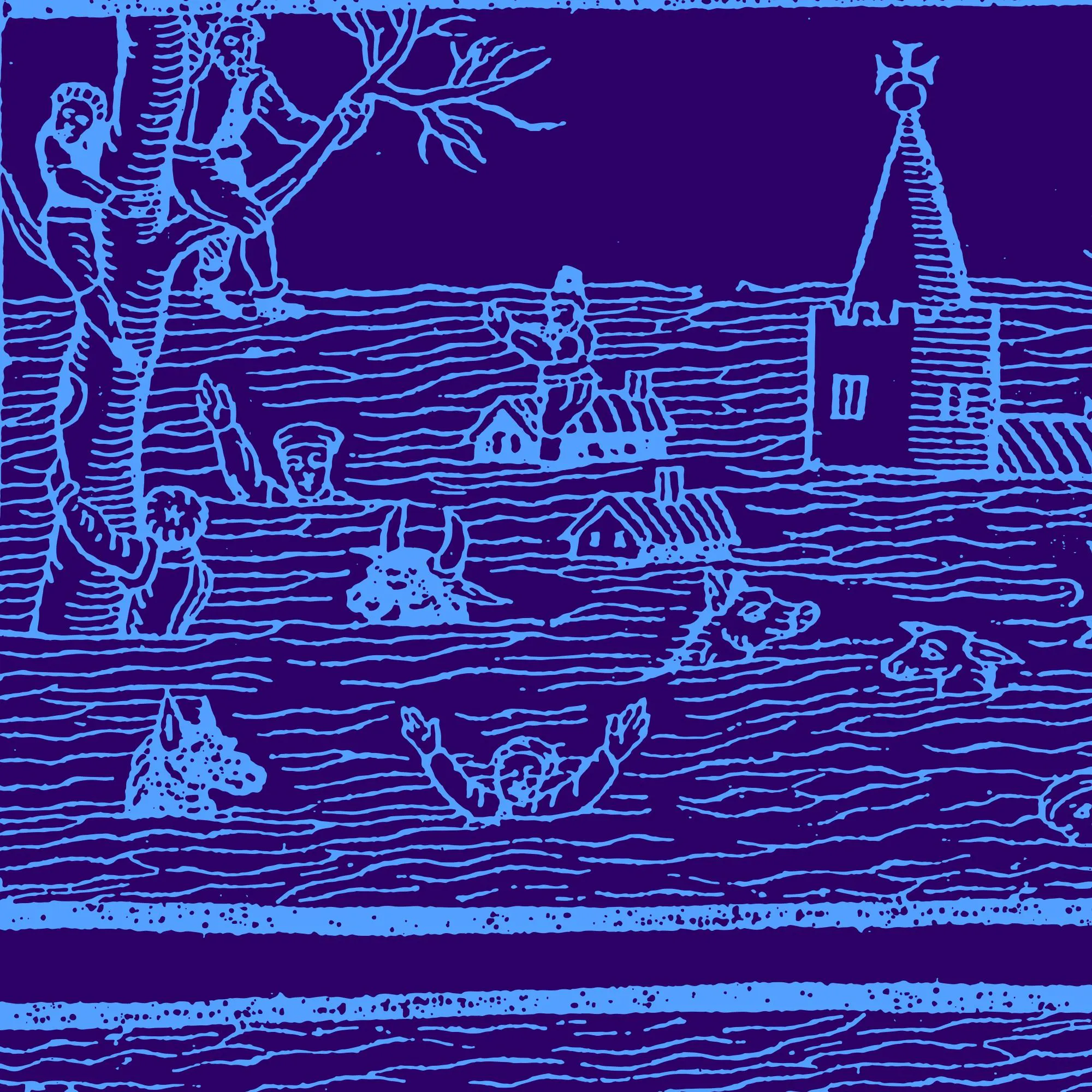
Human-caused climate change is real and growing in impact. Yet many Americans see climate change as a belief that they can opt out of. Two belief structures are to blame: American Protestantism and postmodernism. Guests: Tanya Luhrmann, professor of anthropology and psychology at Stanford University and author of When God Talks Back. Gary Aylesworth, professor emeritus of philosophy at Eastern Illinois University. Lee McIntyre, Research Fellow at the Center for Philosophy and History of Science at Boston University and author of Post-Truth. Learn more about your ad choices. Visit megaphone.fm/adchoices Support our show by becoming a premium member! https://newbooksnetwork.supportingcast.fm/environmental-studies
Ep 139Helen Anne Curry, "Endangered Maize: Industrial Agriculture and the Crisis of Extinction" (U California Press, 2022)
In Endangered Maize: Industrial Agriculture and the Crisis of Extinction (U California Press, 2022), historian Helen Anne Curry investigates more than a hundred years of agriculture and conservation practices to understand the tasks that farmers and researchers have considered essential to maintaining crop diversity. Through the contours of efforts to preserve diversity in one of the world's most important crops, Curry reveals how those who sought to protect native, traditional, and heritage crops forged their methods around the expectation that social, political, and economic transformations would eliminate diverse communities and cultures. In this fascinating study of how cultural narratives shape science, Curry argues for new understandings of endangerment and alternative strategies to protect and preserve crop diversity. Isobel Akerman is a History PhD student at the University of Cambridge studying biodiversity and botanic gardens. Learn more about your ad choices. Visit megaphone.fm/adchoices Support our show by becoming a premium member! https://newbooksnetwork.supportingcast.fm/environmental-studies
Ep 118Jeff Fearnside, "Ships in the Desert" (Santa Fe Writer's Project, 2022)
Many of us have likely seen photos of the Aral Sea, and the rusted Soviet-era ships, sitting in the desert with no water in sight. The Aral Sea is now just 10% of its former volume, shrinking down from what was once the fourth-largest body of inland water in the world, after what writer Jeff Fernside calls “one of the worst human-caused environmental catastrophes.” Jeff traveled to the region as a Peace Corps volunteer. Afterward, he turned his experiences into an essay collection, Ships in the Desert (Santa Fe Writers Project: 2022), where Jeff writes about the families he met, his thoughts on missionaries, and his visit to the Aral Sea, where he saw “a fleet of rusting Soviet fishing ships, hammer and sickle still clearly discernible on many, sitting bolt upright in desert sands as if plowing through ocean waves.” Jeff Fearnside is the author of the short-story collection Making Love While Levitating Three Feet in the Air (Stephen F. Austin State University Press: 2006), which won the 2005 SFWP Awards Program. He is also the author of the chapbook A Husband and Wife Are One Satan (Orison Books: 2021), winner of the Orison Chapbook Prize. His work has appeared in literary journals and anthologies such as The Paris Review, Los Angeles Review, Story, and many others. In this interview, Jeff and I talk about what inspired his essays, including what he saw in the barren Aral Sea. You can find more reviews, excerpts, interviews, and essays at The Asian Review of Books, including its review of Ships in the Desert. Follow on Twitter at @BookReviewsAsia. Nicholas Gordon is an associate editor for a global magazine, and a reviewer for the Asian Review of Books. He can be found on Twitter at @nickrigordon. Learn more about your ad choices. Visit megaphone.fm/adchoices Support our show by becoming a premium member! https://newbooksnetwork.supportingcast.fm/environmental-studies
Ep 132The Climate Change Scientist: A Conversation with Dr. Shuang-Yu Wu
What is the difference between global warming and climate change? This episode explores: What led Dr. Wu into STEM, and to the study of climate change. Why the term global warming is misleading, and potentially confusing. Why weather around the world is getting more extreme. What she foresees for the future, and what we can do to change that. Why human choices matter on much a larger scale than most people realize. A discussion of the article “Looking Back on America’s Summer of Heat, Floods, and Climate Change: Welcome to the New Abnormal”. Today’s article is: Looking Back on America's Summer of Heat, Floods, and Climate Change: Welcome to the New Abnormal by Dr. Shuang-Yu Wu, which provides an overview of the record-breaking heat and historic floods of 2022. Dr. Wu discusses how the new abnormal is increasingly seen as the new weather pattern, why it’s dangerous to normalize this, and what we can do change it. “Welcome to the New Abnormal” was published in The Conversation on September 21, 2022. Our guest is: Dr. Shuang-Yu Wu, who is a climate scientist. Dr. Wu uses climate models to project future climate change and its potential impacts on the hydrological cycle, including precipitation, extreme storms and flood risks. She also collaborates with researchers in ice core science and stable isotope geochemistry investigate climate and environmental change in the past ten thousand years. Dr. Wu received her Ph.D. from the University of Cambridge in 2000 where she studied environmental geography. She joined the University of Dayton department of Geology and Environmental Geosciences in 2004 after completing three-year post-doctoral research at Pennsylvania State University. She has published over 50 peer-reviewed articles in high-impact scientific journals, and received close to two million dollars in external funding for her research. Dr. Wu teaches a variety courses mainly in the field of climate change, environmental geosciences, and Geographical Information Systems. Our host is: Dr. Christina Gessler, a historian of women and gender. Listeners to this episode may also be interested in: The Conversation article: 2022's US Climate Disasters: A tale of too much rain and too little The Conversation article: For a Flooded Midwest Climate Forecasts Offer Little Comfort Bedaso, Z., & Wu, S. Y. (2020). Daily precipitation isotope variation in Midwestern United States: Implication for hydroclimate and moisture source. Science of The Total Environment, 713, 136631. Yuan, W., Wu, S. Y., Hou, S., Xu, Z., & Lu, H. (2019). Normalized Difference Vegetation Index‐based assessment of climate change impact on vegetation growth in the humid‐arid transition zone in northern China during 1982–2013. International Journal of Climatology, 39(15), 5583-5598. Wu, Y., Ji, H., Wen, J., Wu, S.-Y., Xu, M., Tagle, F., Duan, W., Li, J. (2018). The characteristics of regional persistent heavy precipitation events over eastern monsoon China during 1960-2013. Global and Planetary Change, 172, pp.414-427. Welcome to The Academic Life! Join us here each week, where we go inside the academy to learn directly from experts. We embrace a broad definition of what it means to lead an academic life, and are inspired by today’s knowledge-producers working inside and outside the academy. Learn more about your ad choices. Visit megaphone.fm/adchoices Support our show by becoming a premium member! https://newbooksnetwork.supportingcast.fm/environmental-studies
Ep 2Poverty, Race, and Rural Sanitation
Catherine Coleman Flowers, activist, author, founder of the Center for Rural Enterprise and Environmental Justice, and MacArthur “genius prize” winner, talks about her book Waste: One Woman’s Fight Against America’s Dirty Secret with Peoples & Things host Lee Vinsel. Waste examines the brutal realities of rural sanitation issues, particularly the lack of septic tanks, and how they affect poor, often black, people. Flowers also reflects on growing up in Lowndes County, Alabama and how her family, the Civil Rights Movement, and her faith life led her to be the leader she is today. Learn more about your ad choices. Visit megaphone.fm/adchoices Support our show by becoming a premium member! https://newbooksnetwork.supportingcast.fm/environmental-studies
Ep 138Char Miller, "Natural Consequences: Intimate Essays for a Planet in Peril" (Chin Music, 2022)
A collection of 42 essays meditating on both California’s natural gifts and its natural disasters, Natural Consequences: Intimate Essays for a Planet in Peril (Chin Music, 2022) urges readers to consider their role in the environment, no matter where they live. Char Miller’s approach to his topic is intimate and immediate but also incorporates his perspective as a historian. He weaves the present dilemma of Hetch Hetchy dam in Yosemite into a reflection on the injustices wreaked upon Indigenous peoples, and a discussion of the Weeks Act of 1911 (read the essay “Upper Reaches” if you’re wondering what that is) into a tale of two environmental historians’ conferences. Organized into six sections, the book is like a meander through a broad topography, including urban areas, total wilderness, and the uneasy liminal spaces between. Throughout, Miller acknowledges his own, and our collective, role in arriving at this perilous place – and manages to strike a balance between hope and concern. His disarmingly brief essays linger after the words are gone. Rachel Pagones is an acupuncturist, educator, and author living in Cambridge, England. Long before moving to the UK, she was an Environmental Studies student at UC Santa Cruz. Learn more about your ad choices. Visit megaphone.fm/adchoices Support our show by becoming a premium member! https://newbooksnetwork.supportingcast.fm/environmental-studies
Ep 11Pastoralism and French Environmental Policy in the Mediterranean
For most of human history, the Mediterranean was home to a significant number of pastoralists, who herded livestock along seasonal migratory routes. Today, traces of this pastoralist presence have all but disappeared. Dr. Andrea Duffy's book Nomad's Land: Pastoralism and French Environmental Policy in the 19th-Century Mediterranean World (University of Nebraska Press, 2019) seeks to answer the question - what caused the decline and retreat of Mediterranean pastoralism? Dr. Duffy explores the development of a French environmental policy which was centered around forestry and afforestation, and led to the targeting and demonization of pastoralists not only in France but throughout the Mediterranean world. In this episode, Dr. Duffy joins me to talk about pastoralism in 19th-century France, Algeria, and Anatolia, nomadism vs. transhumance, environmentalism past and present, and the legacies of pastoralism around the Mediterranean today. Music in this episode: Desert City by Kevin MacLeod. License. Learn more about your ad choices. Visit megaphone.fm/adchoices Support our show by becoming a premium member! https://newbooksnetwork.supportingcast.fm/environmental-studies
Ep 6Mathew Gandy, "Natura Urbana: Ecological Constellations in Urban Space" (MIT Press, 2022)
In his new book, Natura Urbana: Ecological Constellations in Urban Space (MIT Press, 2022), Mathew Gandy explores urban nature as a multilayered material and symbolic entity. The book examines the articulation of alternative, and in some cases, counterhegemonic, sources of knowledge about urban nature produced by artists, writers, scientists, as well as curious citizens, including voices seldom heard in environmental discourse. The book is driven by Dr. Gandy’s long-standing fascination with spontaneous forms of urban nature ranging from postindustrial wastelands brimming with life to the return of such predators as wolves and leopards on the urban fringe. Dr. Gandy develops a critical synthesis between different strands of urban ecology and considers whether “urban political ecology,” broadly defined, might be imaginatively extended to take fuller account of both the historiography of the ecological sciences, and recent insights derived from feminist, posthuman, and postcolonial thought. In this episode, Tayeba Batool talks to Dr. Mathew Gandy about his inspiration to write this book, and how an attention to spontaneous ecologies adds to the critical discourse on “new cultures of nature” and the “constellation” of diverse ecological relations, ideas, and assemblages. Moving beyond planned urban spaces (such as parks), Dr. Gandy argues that an attention to the “marginal or interstitial spaces of urban nature” or wastelands brings forward the most compelling assemblages of relations, biodiversity, and life in cities. The conversation also highlights the role of language in setting up taxonomic borders and ideological agendas for species and diversity, and advocates caution against global theories of urban change. Dr. Gandy also shares his thoughts on future direction of urban political ecology and how the book innovates across disciplines of botany, geography, cultural history, and urban studies. You can also learn more about his film project, “Natura Urbana: The Brachen of Berlin” here. Dr. Mathew Gandy is Professor of Cultural and Historical Geography and Fellow of King’s College at University of Cambridge. Tayeba Batool is a PhD Candidate in Anthropology at the University of Pennsylvania. Tayeba Batool is a PhD Candidate in the Department of Anthropology at the University of Pennsylvania Learn more about your ad choices. Visit megaphone.fm/adchoices Support our show by becoming a premium member! https://newbooksnetwork.supportingcast.fm/environmental-studies
Ep 266Sayan Dey, "Green Academia: Towards Eco-Friendly Education Systems" (Routledge, 2022)
Green Academia: Towards Eco-Friendly Education Systems (Routledge, 2022) can be read as a systemic long-term counter-intervention strategy against any form of impending pandemics in the post-COVID era and beyond. It argues that anti-nature and capitalistic knowledge systems have contributed to the evolution and growth of COVID-19 across the globe and emphasises the merits of reinstating nature-based and environment-friendly pedagogical and curricular infrastructures in mainstream educational institutions. The volume also explores possible ways of weaving ecology and the environment as a habitual practice of teaching and learning in an intersectional manner with Science and Technology Studies. With detailed case studies of the green schools in Bhutan and similar practices in India, Kenya, and New Zealand, the book argues for different forms of eco-friendly education systems and the possibilities of expanding these local practices to a global stage. This book will be an essential read for scholars and researchers of sociology, cultural studies, decolonial studies, education, ecology, public policy social anthropology, sustainable development, sociology of education, and political sociology. Rituparna Patgiri is an Assistant Professor of Sociology at Indraprastha College for Women, University of Delhi. She has a PhD in Sociology from Jawaharlal Nehru University (JNU), New Delhi. Her research interests lie in the areas of food, media, gender and public. She is also one of the co-founders of Doing Sociology. Patgiri can be reached at @Rituparna37 on Twitter. Learn more about your ad choices. Visit megaphone.fm/adchoices Support our show by becoming a premium member! https://newbooksnetwork.supportingcast.fm/environmental-studies
Ep 73The ‘Domino Effect’: Global and Regional Climate Change Impacts on Food Supply Chains
There is a complex relationship between climate change and food systems. Food supply chains – in particular food transportation – result in global greenhouse gas emissions, and these emissions are known to be a driving force underlying climate change. But it also works the other way. Joining Dr Natali Pearson on SSEAC Stories, Dr Arunima Malik discusses the wide-ranging impacts of climate change and extreme weather events on global regional food systems and supply chains, identifying potential cascading repercussions including job and income loss as well as a loss in nutrient availability and diet quality. About Arunima Malik: Dr Arunima Malik is an academic in the Integrated Sustainability Analysis (ISA) group at the School of Physics, and in the Discipline of Accounting, Business School of the University of Sydney. Her research focusses on big-data modelling to quantify sustainability impacts at local, national and global scales. Arunima’s research is interdisciplinary, and focuses on the appraisal of social, economic and environmental impacts using input-output analysis. Arunima works with the United Nations Sustainable Development Solutions Network for quantifying spillover effects in international supply chains. For more information or to browse additional resources, visit the Sydney Southeast Asia Centre’s website: www.sydney.edu.au/sseac. Learn more about your ad choices. Visit megaphone.fm/adchoices Support our show by becoming a premium member! https://newbooksnetwork.supportingcast.fm/environmental-studies
Ep 118Finis Dunaway. "Defending the Arctic Refuge: A Photographer, an Indigenous Nation, and a Fight for Environmental Justice" (UNC Press, 2021)
In far northeastern Alaska lies one of the most remarkable, and contested, places in North America: the Arctic National Wildlife Refuge. This coastal arctic region is a place of great natural beauty, ecological importance, as well as being home and birthplace of the Gwich'in people. It's also thought to contain massive fossil fuel wealth, making it a site of fifty years and more political contestation. In the award-winning book, Defending the Arctic Refuge: A Photographer, An Indigenous Nation, and a Fight for Environmental Justice (UNC Press: 2021), Finis Dunaway explains how Indigenous people teamed up with the activist, photographer, and jazz drummer Lenny Kohm to build a grassroots movement to protect this sacred place from extractive industry. Using a humble photo slide show, Kohm and other activists, both Native people from the region and outsiders, marshaled the power of everyday people to convince critical and powerful actors that this was a place that deserved federal protection. While this fight is ongoing, Dunaway's book shows that sometimes power can be found in unexpected places, and that environmental history is not a simple story of decline and hopelessness. Defending the Arctic Refuge website and teaching tools are here. Dr. Stephen R. Hausmann is an assistant professor of history at the University of St. Thomas in Minnesota. Learn more about your ad choices. Visit megaphone.fm/adchoices Support our show by becoming a premium member! https://newbooksnetwork.supportingcast.fm/environmental-studies
Ep 117Brenden W. Rensink, "The North American West in the Twenty-First Century" (U Nebraska Press, 2022)
In 1893 Frederick Jackson Turner famously argued that the generational process of meeting and conquering the supposedly uncivilized western frontier is what forged American identity. In the late twentieth century, “new western” historians dissected the mythologized western histories that Turner and others had long used to embody American triumph and progress. While Turner’s frontier is no more, the West continues to present America with challenging processes to wrestle, navigate, and overcome. The North American West in the Twenty-First Century (U Nebraska Press, 2022), edited by Brenden W. Rensink, takes stories of the late twentieth-century “modern West” and carefully pulls them toward the present—explicitly tracing continuity with or unexpected divergence from trajectories established in the 1980s and 1990s. Considering a broad range of topics, including environment, Indigenous peoples, geography, migration, and politics, these essays straddle multiple modern frontiers, not least of which is the temporal frontier between our unsettled past and uncertain future. These forays into the twenty-first-century West will inspire more scholars to pull histories to the present and by doing so reinsert scholarly findings into contemporary public awareness. Learn more about your ad choices. Visit megaphone.fm/adchoices Support our show by becoming a premium member! https://newbooksnetwork.supportingcast.fm/environmental-studies
Ep 137Munira Khayyat, "A Landscape of War: Ecologies of Resistance and Survival in South Lebanon" (U California Press, 2022)
What worlds take root in war? In A Landscape of War: Ecologies of Resistance and Survival in South Lebanon (U California Press, 2022), anthropologist Munira Khayyat describes life along the southern border of Lebanon, where resistant ecologies thrive amid a terrain of perennial war. A Landscape of War takes us to frontline villages where armed invasions, indiscriminate bombings, and scattered land mines have become the environment where everyday life is waged. This book dwells with multispecies partnerships such as tobacco farming and goatherding that carry life through seasons of destruction. Neither green-tinged utopia nor total devastation, these ecologies make life possible in an insistently deadly region. Sourcing an anthropology of war from where it is lived, this book decolonizes distant theories of war and brings to light creative practices forged in the midst of ongoing devastation. In lyrical prose that resonates with imperiled conditions across the Global South, Khayyat paints a portrait of war as a place where life must go on. Eyad Houssami makes theatre and has participated in the revitalization of an ancient organic farm in southern Lebanon. He is editor of the Arabic-English book Doomed by Hope: Essays on Arab Theatre (Pluto Press/Dar Al Adab) and was editor-at-large of Portal 9, a bilingual literary and academic journal about urbanism. His doctoral research project on ecology and agriculture in post-independence Lebanon at the University of Leeds and this work are supported by the UK Arts & Humanities Research Council (grant number AH/R012733/1) through the White Rose College of the Arts & Humanities. Learn more about your ad choices. Visit megaphone.fm/adchoices Support our show by becoming a premium member! https://newbooksnetwork.supportingcast.fm/environmental-studies
Ep 116Michael Weeks, "Cattle Beet Capital: Making Industrial Agriculture in Northern Colorado" (U Nebraska Press, 2022)
In 1870 several hundred settlers arrived at a patch of land at the confluence of the South Platte and Cache la Poudre Rivers in Colorado Territory. Their planned agricultural community, which they named Greeley, was centered around small landholdings, shared irrigation, and a variety of market crops. One hundred years later, Greeley was the home of the world’s largest concentrated cattle-feeding operation, with the resources of an entire region directed toward manufacturing beef. How did that transformation happen? Cattle Beet Capital: Making Industrial Agriculture in Northern Colorado (U Nebraska Press, 2022) is animated by that question. Expanding outward from Greeley to all of northern Colorado, Cattle Beet Capital shows how the beet sugar industry came to dominate the region in the early twentieth century through a reciprocal relationship with its growers that supported a healthy and sustainable agriculture while simultaneously exploiting tens of thousands of migrant laborers. Michael Weeks shows how the state provided much of the scaffolding for the industry in the form of tariffs and research that synchronized with the agendas of industry and large farmers. The transformations that led to commercial feedlots began during the 1930s as farmers replaced crop rotations and seasonal livestock operations with densely packed cattle pens, mono-cropped corn, and the products pouring out of agro-industrial labs and factories. Using the lens of the northern Colorado region, Cattle Beet Capital illuminates the historical processes that made our modern food systems. Michael Weeks is a lecturer of history at Utah Valley University. Troy A. Hallsell is the 341st Missile Wing Historian at Malmstrom AFB. MT. The ideas expressed in this podcast do not represent the 341st Missile Wing, United States Air Force, or Department of Defense. Learn more about your ad choices. Visit megaphone.fm/adchoices Support our show by becoming a premium member! https://newbooksnetwork.supportingcast.fm/environmental-studies

Ep 104Off-Shore Aesthetics
Sritama Chatterjee talks about a model of literary criticism that she developed in the process of writing her new essay on shipbreaking in Bangladesh. It is a form of materialist understanding for texts, places, and geographies together, taking into account particular signifiers of a place and looking at correspondent literary responses. Sritama is a literary and cultural theorist of the Indian Ocean World, in the Literature program at the Dietrich School of Arts and sciences, University of Pittsburgh. Her dissertation project titled, “Ordinary Environments and Aesthetics in Contemporary Indian Ocean Archipelagic Writing” has been awarded an Andrew Mellon Pre-Doctoral Fellowship from her graduate school for outstanding research and scholarly excellence. Her work on the Indian Ocean archipelagos also takes the shape of a collaborative public-facing, community project Delta Lives, which platforms communities in Sundarbans telling their stories. As part of her commitment to rethinking environmental humanities pedagogy, she has edited a cluster on “Water Pedagogies: From the Academy and Beyond” published by NICHE Canada which brings together a set of eleven articles from scholars and activists reflecting on water pedagogy. Learn more about your ad choices. Visit megaphone.fm/adchoices Support our show by becoming a premium member! https://newbooksnetwork.supportingcast.fm/environmental-studies
Ep 1288Cynthia Radding, "Bountiful Deserts: Sustaining Indigenous Worlds in Northern New Spain" (U Arizona Press, 2022)
Common understandings drawn from biblical references, literature, and art portray deserts as barren places that are far from God and spiritual sustenance. In our own time, attention focuses on the rigors of climate change in arid lands and the perils of the desert in the northern Mexican borderlands for migrants seeking shelter and a new life. Bountiful Deserts: Sustaining Indigenous Worlds in Northern New Spain (U Arizona Press, 2022) foregrounds the knowledge of Indigenous peoples in the arid lands of northwestern Mexico, for whom the desert was anything but barren or empty. Instead, they nurtured and harvested the desert as a bountiful and sacred space. Drawing together historical texts and oral testimonies, archaeology, and natural history, author Cynthia Radding develops the relationships between people and plants and the ways that Indigenous people sustained their worlds before European contact through the changes set in motion by Spanish encounters, highlighting the long process of colonial conflicts and adaptations over more than two centuries. This work reveals the spiritual power of deserts by weaving together the cultural practices of historical peoples and contemporary living communities, centered especially on the Yaqui/Yoeme and Mayo/Yoreme. Radding uses the tools of history, anthropology, geography, and ecology to paint an expansive picture of Indigenous worlds before and during colonial encounters. She re-creates the Indigenous worlds in both their spiritual and material realms, bringing together the analytical dimension of scientific research and the wisdom of oral traditions in its exploration of different kinds of knowledge about the natural world. Published in cooperation with the William P. Clements Center for Southwest Studies, Southern Methodist University. Learn more about your ad choices. Visit megaphone.fm/adchoices Support our show by becoming a premium member! https://newbooksnetwork.supportingcast.fm/environmental-studies
Ep 81Joanne Yao, "The Ideal River: How Control of Nature Shaped the International Order" (Manchester UP, 2022)
Environmental politics has traditionally been a peripheral concern for international relations theory, but increasing alarm over global environmental challenges has elevated international society's relationship with the natural world into the theoretical limelight. IR theory's engagement with environmental politics, however, has largely focused on interstate cooperation in the late twentieth century, with less attention paid to how the eighteenth- and nineteenth-century quest to tame nature came to shape the modern international order. The Ideal River: How Control of Nature Shaped the International Order (Manchester UP, 2022) examines nineteenth-century efforts to establish international commissions on three transboundary rivers - the Rhine, the Danube, and the Congo. It charts how the Enlightenment ambition to tame the natural world, and human nature itself, became an international standard for rational and civilized authority and informed our geographical imagination of the international. This relationship of domination over nature shaped three core IR concepts central to the emergence of early international order: the territorial sovereign state; imperial hierarchies; and international organizations. The book contributes to environmental politics and international relations by highlighting how the relationship between society and nature is not a peripheral concern, but one at the heart of international politics. Learn more about your ad choices. Visit megaphone.fm/adchoices Support our show by becoming a premium member! https://newbooksnetwork.supportingcast.fm/environmental-studies
Ep 46Scott Moore, "China's Next Act: How Sustainability and Technology Are Reshaping China's Rise and the World's Future" (Oxford UP, 2022)
If the COVID-19 pandemic taught us anything, it is that the world is bound together by shared challenges—and that at the center of those challenges stands China. China's Next Act: How Sustainability and Technology Are Reshaping China's Rise and the World's Future (Oxford UP, 2022) re-envisions China’s role in the world in terms of sustainability and technology. The danger is that China’s next act will drive divergence on the rules and standards the world desperately needs in the decades ahead. This book helps foreign countries, companies, and other organizations prepare for a future shaped by sustainability, technology—and a dramatic new chapter for China and our world. Sample takeaways: China-linked political + economic risk isn’t going away and will get worse. No-regrets supply chain diversification will only make more sense over time. Environmental sustainability will become a bigger and bigger priority in the China market because of growing regulatory + consumer pressure. This is both in direct operations & larger supply chains. Data privacy, security, and surveillance will pose growing dilemmas for multi-national companies. Data governance is becoming more fragmented, and compliance and cross-border transfer more difficult. Firms need to prepare for “data de-globalization.” China is becoming a more isolated, but still large & important, innovation ecosystem. How to access & leverage this ecosystem, and the talent within it, will become a bigger challenge as China-global research collaborations, student flows, etc. shrink. China’s frothy biotech sector is cooling, but will still be a major growth driver in the years ahead. And developments in biotech will disrupt and reshape many sectors and industries via biometrics, biomaterials, etc. Dr. Scott Moore is an acclaimed authority on China, sustainability, and technology whose career has spanned the U.S. government, multi-lateral institutions, and academia. He currently teaches at the University of Pennsylvania, where he is also Director of China Programs and Strategic Initiatives. Before returning to academia, Dr. Moore worked extensively on the Paris Agreement on climate change at the U.S. Department of State and at the World Bank. He graduated from Princeton University and received his doctorate from Oxford University, where he was a Rhodes Scholar. Dong Wang is collection editor of Asian Studies books at Lived Places Publishing (New York & the UK), H-Diplo review editor, director of the Wellington Koo Institute for Modern China in World History (Germany & USA), research associate at Harvard Fairbank Center (since 2002), distinguished professor of history at Shanghai University (since 2016), a member of the Royal Institute of International Affairs, and an elected Fellow of the Royal Asiatic Society of Great Britain and Ireland. Learn more about your ad choices. Visit megaphone.fm/adchoices Support our show by becoming a premium member! https://newbooksnetwork.supportingcast.fm/environmental-studies
Ep 14What Went Wrong in the 1970s in the USA?: A Discussion with Bill McKibben
In this episode of How To Be Wrong we talk with author, educator, and environmentalist Bill McKibben, founder of Third Act, an organization focused on bringing together people over 60 for action on climate and justice, and also 350.org, a global grassroots climate campaign. Bill’s work regularly appears in periodicals such as Rolling Stone and The New Yorker, and he has written numerous books, the most recent being The Flag, The Cross, and the Station Wagon: A Graying American Looks Back at His Suburban Boyhood and Wonders What the Hell Happened, published by Holt in 2022. Our conversation explores what went wrong in the 1970s in the US, ideas about intellectual humility, and the role people over 60 can play in addressing problems in our society. John Kaag is Professor and Chair of Philosophy at UMass Lowell and External Professor at the Santa Fe Institute. John W. Traphagan, Ph.D. is Professor and Mitsubishi Heavy Industries Fellow in the Department of Religious Studies at the University of Texas at Austin, where he is also a professor in the Program in Human Dimensions of Organizations. Learn more about your ad choices. Visit megaphone.fm/adchoices Support our show by becoming a premium member! https://newbooksnetwork.supportingcast.fm/environmental-studies
Ep 80Sarah Milne, "Corporate Nature: An Insider's Ethnography of Global Conservation" (U Arizona Press, 2022)
In 2012, Cambodia’s most prominent environmental activist was brutally murdered in a high-profile conservation area in the Cardamom Mountains. Tragic and terrible, this event magnifies a crisis in humanity’s efforts to save nature: failure of the very tools and systems at hand for advancing global environmental action. Sarah Milne spent more than a decade working for and observing global conservation projects in Cambodia. During this time, she saw how big environmental NGOs can operate rather like corporations. Their core practice involves rolling out appealing and deceptively simple policy ideas, like Payments for Ecosystem Services (PES). Yet, as policy ideas prove hard to implement, NGOs must also carefully curate evidence from the field to give the impression of success and effectiveness. In Corporate Nature: An Insider's Ethnography of Global Conservation (U Arizona Press, 2022), Milne delves inside the black box of mainstream global conservation. She reveals how big international NGOs struggle in the face of complexity—especially in settings where corruption and political violence prevail. She uses the case of Conservation International’s work in Cambodia to illustrate how apparently powerful NGOs can stumble in practice: policy ideas are transformed on the ground, while perverse side effects arise, like augmented authoritarian power, illegal logging, and Indigenous dispossession. The real power of global conservation NGOs is therefore not in their capacity to control what happens in the field but in their capacity to ignore or conceal failings. Milne argues that this produces an undesirable form of socionature, called corporate nature, that values organizational success over diverse knowledges and ethical conduct. Learn more about your ad choices. Visit megaphone.fm/adchoices Support our show by becoming a premium member! https://newbooksnetwork.supportingcast.fm/environmental-studies
Ep 336Matthew Thaler, "No Other Planet: Utopian Visions for a Climate-changed World" (Cambridge UP, 2021)
Visions of utopia – some hopeful, others fearful – have become increasingly prevalent in recent times. In No Other Planet: Utopian Visions for a Climate-changed World (Cambridge UP, 2021), Mathias Thaler examines expressions of the utopian imagination, with a focus on the pressing challenge of how to inhabit a climate-changed world. Forms of social dreaming are tracked across two domains: political theory and speculative fiction. The analysis aims to both uncover the key utopian and dystopian tendencies in contemporary debates around the Anthropocene; as well as to develop a political theory of radical transformation that avoids not only debilitating fatalism but also wishful thinking. This book juxtaposes theoretical interventions, from Bruno Latour to the members of the Dark Mountain collective, with fantasy and science fiction texts by N. K. Jemisin, Kim Stanley Robinson and Margaret Atwood, debating viable futures for a world that will look and feel very different from the one we live in right now. Louisa Hann recently attained a PhD in English and American studies from the University of Manchester, specialising in the political economy of HIV/AIDS theatres. She has published work on the memorialisation of HIV/AIDS on the contemporary stage and the use of documentary theatre as a neoliberal harm reduction tool. She is currently working on a monograph based on her doctoral thesis. You can get in touch with her at [email protected]. Learn more about your ad choices. Visit megaphone.fm/adchoices Support our show by becoming a premium member! https://newbooksnetwork.supportingcast.fm/environmental-studies
Ep 79Prakash Kashwan, "Climate Justice in India" (Cambridge UP, 2022)
Prakash Kashwan's edited volume Climate Justice in India (Cambridge UP, 2022) brings together a collective of academics, activists, and artists to paint a collage of action-oriented visions for a climate just India. This unique and agenda setting volume informs researchers and readers interested in topics of just transition, energy democracy, intersectionality of access to drinking water, agroecology and women's land rights, national and state climate plans, urban policy, caste justice, and environmental and climate social movements in India. It synthesizes the historical, social, economic, and political roots of climate vulnerability in India and articulates a research and policy agenda for collective democratic deliberations and action. This crossover volume will be of interest to academics, researchers, social activists, policymakers, politicians, and a general reader looking for a comprehensive introduction to the unprecedented challenge of building a praxis of justice in a climate-changed world. This title is also available as Open Access on Cambridge Core. Learn more about your ad choices. Visit megaphone.fm/adchoices Support our show by becoming a premium member! https://newbooksnetwork.supportingcast.fm/environmental-studies
Ep 335Max Haiven, "Palm Oil: The Grease of Empire" (Pluto Press, 2022)
Palm oil is a commodity like no other. Found in half of supermarket products, from food to cosmetics to plastics, it has shaped the world in which we live. In Palm Oil: The Grease of Empire (Pluto Press, 2022), Max Haiven tells a sweeping story that touches on everything from empire to art, from war to food, and from climate change to racial capitalism. By tracing the global history of this ubiquitous elixir we see how capitalism creates surplus populations: people made dependent on capitalist wages but denied the opportunity to earn them - a proportion of humanity that is growing in our age of racialized and neo-colonial dispossession. Inspired by revolutionary writers like Eduardo Galeano, Saidiya Hartman, C.L.R. James and Rebecca Solnit, this kaleidoscopic and experimental book seeks to weave a story of the past in the present and the present in the past. Max Haiven is Canada Research Chair in Culture, Media and Social Justice at Lakehead University in Northwest Ontario and director of the Reimagining Value Action Lab (RiVAL). He writes articles for both academic and general audiences and is the author of the books Crises of Imagination, Crises of Power: Capitalism, Creativity and the Commons, The Radical Imagination: Social Movement Research in the Age of Austerity (with Alex Khasnabish) and Cultures of Financialization: Fictitious Capital in Popular Culture and Everyday Life. He is currently working on a book titled Art after Money, Money after Art: Creative Strategies Against Financialization. Morteza Hajizadeh is a Ph.D. graduate in English from the University of Auckland in New Zealand. His research interests are Cultural Studies; Critical Theory; Environmental History; Medieval (Intellectual) History; Gothic Studies; 18th and 19th Century British Literature. YouTube Channel. Twitter. Learn more about your ad choices. Visit megaphone.fm/adchoices Support our show by becoming a premium member! https://newbooksnetwork.supportingcast.fm/environmental-studies
Ep 114Char Miller, "West Side Rising: How San Antonio's 1921 Flood Devastated a City and Sparked a Latino Environmental Justice Movement" (Maverick Books, 2022)
On September 9, 1921, a tropical storm raged above San Antonio, Texas. The rain that night flooded the city's many waterways, distributing unequal destruction throughout its many neighborhoods. For the whiter, wealthier, parts of the city, the flood was an inconvenient detriment to business. For the Latinx West Side, it was a devastating tragedy. In West Side Rising: How San Antonio's 1921 Flood Devastated a City and Sparked a Latino Environmental Justice Miller (Maverick Books, 2021), Pomona College professor Char Miller explains why this flood happened, what made it so devastating, and how it galvanized a community activist movement that remade San Antonio politics. Miller uses never-before analyzed sources to explain how flood control and urban redevelopment left the city's most vulnerable population behind in the disaster's aftermath, and how this blatant environmental racism formed the nuclear of several generations of environmental activist organizations. By taking the story of 1921 into the twenty-first century, Miller argues that a story that could be told as simple tragedy in fact represents the best in the human spirit, as people band together to aid one another and seize power for themselves. Dr. Stephen R. Hausmann is an assistant professor of history at the University of St. Thomas in Minnesota. Learn more about your ad choices. Visit megaphone.fm/adchoices Support our show by becoming a premium member! https://newbooksnetwork.supportingcast.fm/environmental-studies
Ep 196Stephanie LeMenager and Teresa Shewry, "Literature and the Environment: Critical and Primary Sources" (Bloomsbury, 2021)
Bringing together 100 essential critical articles across 4 volumes, Literature and the Environment: Critical and Primary Sources (Bloomsbury, 2021) is a comprehensive collection of the most important academic writings on ecocriticism and literature's engagement with environmental crisis. With texts by key scholars, creative writers and activists, the articles in these four volumes follow the development and history of environmental criticism, as well as interdisciplinary conversations with contemporary philosophy and media studies. Literature and the Environment includes work by such writers as: Stacy Alaimo, Jonathan Bate, Winona LaDuke, Laura Pulido, Kyle Powis Whyte, Jacques Derrida, Ursula K. Heise, Bruno Latour, Rob Nixon, Ken Saro-Wiwa, William Shakespeare, Leslie Marmon Silko, Henry David Thoreau, Rita Wong. E.O. Wilson, Cary Wolfe and William Wordsworth. Stephanie LeMenager is Barbara and Carlisle Moore Distinguished Professor in English and American Literature and Professor of Environmental Studies at the University of Oregon, USA. She is co-founder (with Stephanie Foote) of Resilience: A Journal of the Environmental Humanities and her previous books include Living Oil: Petroleum and Culture in the American Century (2014). Teresa Shewry is Associate Professor of English at the University of California, Santa Barbara, USA. She is the author of Hope At Sea: Possible Ecologies in Oceanic Literature (2015). Gargi Binju is a researcher at the University of Tübingen. Learn more about your ad choices. Visit megaphone.fm/adchoices Support our show by becoming a premium member! https://newbooksnetwork.supportingcast.fm/environmental-studies
Ep 64Michael Bess, "Planet in Peril: Humanity's Four Greatest Challenges and How We Can Overcome Them" (Cambridge UP, 2022)
Michael Bess is the Chancellor's Professor of History at Vanderbilt University. His fifth and most recent book is Planet in Peril: Humanity’s Four Greatest Challenges and How We Can Overcome Them, published by Cambridge University Press in 2022. This study focuses on the existential risks posed by climate change, nuclear weapons, pandemics (natural or bioengineered), and artificial intelligence – surveying the solutions that have been tried, and why they have fallen short thus far. Bess describes a pathway for gradually modifying the United Nations over the coming century so that it becomes more effective at coordinating global solutions. Planet in Peril explores how to get past ideological polarization and global political fragmentation, drawing lessons from the experiences of environmental movements and European integration. Vladislav Lilic is a doctoral candidate in Modern European History at Vanderbilt University. Learn more about your ad choices. Visit megaphone.fm/adchoices Support our show by becoming a premium member! https://newbooksnetwork.supportingcast.fm/environmental-studies
Ep 187Sally Weintrobe et al., "Climate Psychology: A Matter of Life and Death" (Phoenix Publishing House, 2022)
Climate Psychology: A Matter of Life and Death (Phoenix Publishing House, 2022) offers ways to work with the unthinkable and emotionally unendurable current predicament of humanity. The style and writing interweave passion and reflection, animation and containment, radical hope, and tragedy to reflect the dilemmas of our collective crisis. The authors model a relational approach in their styles of writing and in the book's structure. Four chapters, each with a strikingly original voice and insight, form the core of the book, held either end by two jointly written chapters. In contrast to a psychology that focuses on individual behavior change, the authors use a transdisciplinary mix of approaches (depth psychology and psychotherapy, earth systems, deep ecology, cultural sociology, critical history, group and institutional outreach) to bring into focus the predicament of this period. While the last decade required a focus on climate denial in all its manifestations (which continues in new ways), a turning point has now been reached. Increasingly extreme weather across the world is making it impossible for simple avoidance of the climate threat. Wendy Hollway, Paul Hoggett, Chris Robertson, and Sally Weintrobe address how climate psychology illuminates and engages the life and death challenges that face terrestrial life. This book will appeal to three core groups. First, mental health and social care professionals wanting support in containing and potentially transforming the malaise. Second, activists wanting to participate in new stories and practices that nurture their engagement with the present social and cultural crisis. Third, those concerned about the climate emergency, wanting to understand the deeper context for this dangerous blindness. Karyne Messina is a licensed psychologist and psychoanalyst at the Washington Baltimore Center for Psychoanalysis and am on the medical staff of Suburban Hospital in Bethesda, Maryland. She is the author of Resurgence of Populism: A Psychoanalytic Study of Projective Identification, Blame Shifting and the Corruption of Democracy (Routledge, 2022). Learn more about your ad choices. Visit megaphone.fm/adchoices Support our show by becoming a premium member! https://newbooksnetwork.supportingcast.fm/environmental-studies
Ep 167Kasia Paprocki, "Threatening Dystopias: The Global Politics of Climate Change Adaptation in Bangladesh" (Cornell UP, 2021)
In Threatening Dystopias: The Global Politics of Climate Change Adaptation in Bangladesh (Cornell UP, 2021), Kasia Paprocki challenges two well-worn assumptions about climate change and its relationship with the political economy of development and agriculture, in Bangladesh, which helps shed light on how climate change becomes a politically contested category, in countries across the Global South. The first, is that climate change is simply a contemporary phenomenon without a longer history embedded in the ecology, economics, politics, and social relations in the region. Second, that climate change is the driver of the increased vulnerability of large swaths of the Bangladeshi population, like the community she closely follows in Khulna, in the southwestern part of the country. Through fine-grained ethnographic and archival detail, Paprocki engages with developers, policy makers, scientists, farmers, and rural migrants to show how Bangladeshi and global elites ignore the history of landscape transformation and its attendant conflicts in advancing certain ‘climate adaptation’ agendas, which have dire consequences for the most marginalized. She looks at how groups craft economic narratives and strategies that redistribute power and resources away from peasant communities. Although these groups claim that increased production of export commodities will reframe the threat of climate change into an opportunity for economic development and growth, the reality is not so simple. For the country's rural poor, these promises ring hollow. As development dispossesses the poor from agrarian livelihoods, outmigration from peasant communities leads to precarious existences in urban centers. And a vision of development in which urbanization and export-led growth are both desirable and inevitable is not one the land and its people can sustain. Threatening Dystopias shows how a powerful rural movement, although hampered by an all-consuming climate emergency, is seeking climate justice in Bangladesh. Archit Guha is a PhD researcher at the Duke University History Department. Learn more about your ad choices. Visit megaphone.fm/adchoices Support our show by becoming a premium member! https://newbooksnetwork.supportingcast.fm/environmental-studies
Ep 72Public Participation and Contested Hydropower Development in the Mekong River Basin
Regional demand for renewable hydropower from the Mekong River and its tributaries in Laos is on the rise. In June 2022, Laos exported one hundred megawatts of hydropower to Singapore via Thailand and Malaysia – a historic milestone that further establishes Laos as the battery of Asia. However, these developments take place amid rising concerns for the ecological future of the transboundary Mekong River and the millions of people who depend on it. Joining Dr Natali Pearson on SSEAC Stories, Dr Ming Li Yong exposes how further hydropower development on the Mekong River could negatively affect ecosystems, resulting in decreased food security and jeopardising livelihoods in the river basin. She also discusses processes of public consultation and how they fail to consider local communities’ opinions on these contested projects. About Ming Li Yong: Ming Li is a Fellow at the East-West Center in Honolulu, Hawai’i. She researches transboundary water governance and hydropower development in the Mekong River Basin. Her research focuses on community-based natural resource management, civil society movements, public participation, and the institutional arrangements that influence the politics of water resources development in the Mekong region. She received her Ph.D. from The University of Sydney and has previously taught courses on environmental ethics, sustainability, and food at the School for Field Studies and Paññāsāstra University of Cambodia, and at the National Institute of Education in Singapore. For more information or to browse additional resources, visit the Sydney Southeast Asia Centre’s website: www.sydney.edu.au/sseac. Learn more about your ad choices. Visit megaphone.fm/adchoices Support our show by becoming a premium member! https://newbooksnetwork.supportingcast.fm/environmental-studies
Ep 136Caroline Grego, "Hurricane Jim Crow: How the Great Sea Island Storm of 1893 Shaped the Lowcountry South" (UNC Press, 2022)
On an August night in 1893, the deadliest hurricane in South Carolina history struck the Lowcountry, killing thousands—almost all African American. But the devastating storm is only the beginning of this story. The hurricane's long effects intermingled with ongoing processes of economic downturn, racial oppression, resistance, and environmental change. In the Lowcountry, the political, economic, and social conditions of Jim Crow were inextricable from its environmental dimensions. This narrative history of a monumental disaster and its aftermath uncovers how Black workers and politicians, white landowners and former enslavers, northern interlocutors and humanitarians all met on the flooded ground of the coast and fought to realize very different visions for the region's future. Through a telescoping series of narratives in which no one's actions were ever fully triumphant or utterly futile, Hurricane Jim Crow: How the Great Sea Island Storm of 1893 Shaped the Lowcountry South (UNC Press, 2022) explores with nuance this painful and contradictory history and shows how environmental change, political repression, and communal traditions of resistance, survival, and care converged. Caroline Grego is assistant professor of history at Queens University of Charlotte. Twitter. Website. Brian Hamilton is chair of the Department of History and Social Science at Deerfield Academy. Twitter. Website. Learn more about your ad choices. Visit megaphone.fm/adchoices Support our show by becoming a premium member! https://newbooksnetwork.supportingcast.fm/environmental-studies
Ep 21Ann-Christine Duhaime, "Minding the Climate: How Neuroscience Can Help Solve Our Environmental Crisis" (Harvard UP, 2022)
Why is it so difficult to adopt a more sustainable way of life, even when convinced of the urgency of the environmental crisis? If adopting new behaviors beneficial for the environment is so challenging at the individual level, no wonder it is even harder at the community or governmental levels. Seeing individual and collective behaviors not changing, or not rapidly enough, eventually leads to the belief that nothing can be done and that human beings are just “hard-wired” that way. This is where, quite unexpectedly, neuroscience can help us tackle the multidimensional and unprecedented problem that is the environmental crisis. In Minding the Climate: How Neuroscience Can Help Solve Our Environmental Crisis (Harvard University Press, 2022), Dr. Ann-Christine Duhaime argues that by considering the long evolutionary history of the human brain and its reward-system, one can better understand, and therefore grow less frustrated about, why adopting sustainable behaviors can be so challenging. “Our brains are amazing," writes Dr. Duhaime, "– fine-tuned, capable, adaptable, to handle the incredible tasks of human life in its infinite variety and with its infinite day-to-day challenges. […] But there is a mismatch between the pace of evolution of this extraordinary able, pulsating, three-pound bundle of sparks and what we need to meet the challenge of this extraordinary rapid Age of the Anthropocene.” It is this mismatch that Dr. Duhaime proposes to analyze in this surprising book. Using insights provided by research at the intersection of neuroscience, environmental sciences and a number of other fields, Minding the Climate invites us to think about what a “sustainable brain” might look like and how to achieve it. Victor Monnin, Ph.D. is an historian of science specialized in the history of Earth sciences. He is also teaching French language and literature to undergraduates. Learn more about your ad choices. Visit megaphone.fm/adchoices Support our show by becoming a premium member! https://newbooksnetwork.supportingcast.fm/environmental-studies
Ep 146Cajetan Iheka, "African Ecomedia: Network Forms, Planetary Politics" (Duke UP, 2021)
In African Ecomedia: Network Forms, Planetary Politics (Duke UP, 2021), Cajetan Iheka examines the ecological footprint of media in Africa alongside the representation of environmental issues in visual culture. Iheka shows how, through visual media such as film, photography, and sculpture, African artists deliver a unique perspective on the socioecological costs of media production, from mineral and oil extraction to the politics of animal conservation. Among other works, he examines Pieter Hugo's photography of electronic waste recycling in Ghana and Idrissou Mora-Kpai's documentary on the deleterious consequences of uranium mining in Niger. These works highlight not only the exploitation of African workers and the vast scope of environmental degradation but also the resourcefulness and creativity of African media makers. They point to the unsustainability of current practices while acknowledging our planet's finite natural resources. In foregrounding Africa's centrality to the production and disposal of media technology, Iheka shows the important place visual media has in raising awareness of and documenting ecological disaster even as it remains complicit in it. Dr. Cajetan Iheka is a Professor in the English Department at Yale University. Before African Ecomedia he published Naturalizing Africa: Ecological Violence, Agency, and Postcolonial Resistance in African Literature in 2018, which won two prizes - the Ecocriticism Book Award of the Association for the Study of Literature and Environment, and the African Literature Association First Book Prize. Dr. Iheka has also edited the volume, Teaching Postcolonial Environmental Literature and Media, and co-edited another titled African Migration Narratives: Politics, Race, and Space. Sara Katz is a Postdoctoral Associate in the History Department at Duke University. Learn more about your ad choices. Visit megaphone.fm/adchoices Support our show by becoming a premium member! https://newbooksnetwork.supportingcast.fm/environmental-studies
Ep 206Lyndsie Bourgon, "Tree Thieves: Crime and Survival in North America's Woods" (Little, Brown Spark, 2022)
There's a strong chance that chair you are sitting on was made from stolen lumber. In Tree Thieves: Crime And Survival In North America's Woods (Little, Brown Spark, 2022), Lyndsie Bourgon takes us deep into the underbelly of the illegal timber market. As she traces three timber poaching cases, she introduces us to tree poachers, law enforcement, forensic wood specialists, the enigmatic residents of former logging communities, environmental activists, international timber cartels, and indigenous communities along the way. Old-growth trees are invaluable and irreplaceable for both humans and wildlife, and are the oldest living things on earth. But the morality of tree poaching is not as simple as we might think: stealing trees is a form of deeply rooted protest, and a side effect of environmental preservation and protection that doesn't include communities that have been uprooted or marginalized when park boundaries are drawn. As Bourgon discovers, failing to include working class and rural communities in the preservation of these awe-inducing ecosystems can lead to catastrophic results. Featuring excellent investigative reporting, fascinating characters, logging history, political analysis, and cutting-edge tree science, Tree Thieves takes readers on a thrilling journey into the intrigue, crime, and incredible complexity sheltered under the forest canopy. This interview was conducted by Dr. Miranda Melcher whose doctoral work focused on post-conflict military integration, understanding treaty negotiation and implementation in civil war contexts, with qualitative analysis of the Angolan and Mozambican civil wars. Learn more about your ad choices. Visit megaphone.fm/adchoices Support our show by becoming a premium member! https://newbooksnetwork.supportingcast.fm/environmental-studies
Ep 156Towards a Green China
What does the concept of ecological civilisation mean in practice? And how can we understand the relationship between grand visions, legal systems, green politics and development processes on the ground in contemporary China? In this episode we focus on China’s environmental ambitions and its increasingly central role in efforts towards global sustainability, as well as the importance placed upon sustainable development by the Chinese Communist Party, and by Xi Jinping himself. To unpack these issues and discuss the potentials of a greener China, Arve Hansen is joined by some of Norway’s leading experts on Chinese environmental politics and practice, Gørild Heggelund, Yong Zhou and Bjorn Leif Brauteseth. Bjorn Leif Brauteseth is a PhD candidate at the Centre for Development and the Environment, University of Oslo. Gørild Heggelund is Research Professor at the Fridtjof Nansen Institute. Yong Zhou is a postdoctoral Fellow at the Norwegian Centre for Human Rights, University of Oslo. Arve Hansen is a researcher at the Centre for Development and the Environment at the University of Oslo and one of the leaders of the Norwegian Network for Asian Studies. The Nordic Asia Podcast is a collaboration sharing expertise on Asia across the Nordic region, brought to you by the Nordic Institute of Asian Studies (NIAS) based at the University of Copenhagen, along with our academic partners: the Centre for East Asian Studies at the University of Turku, and Asianettverket at the University of Oslo. We aim to produce timely, topical and well-edited discussions of new research and developments about Asia. About NIAS. Transcripts of the Nordic Asia Podcasts Learn more about your ad choices. Visit megaphone.fm/adchoices Support our show by becoming a premium member! https://newbooksnetwork.supportingcast.fm/environmental-studies
Ep 156Towards a Green China
What does the concept of ecological civilisation mean in practice? And how can we understand the relationship between grand visions, legal systems, green politics and development processes on the ground in contemporary China? In this episode we focus on China’s environmental ambitions and its increasingly central role in efforts towards global sustainability, as well as the importance placed upon sustainable development by the Chinese Communist Party, and by Xi Jinping himself. To unpack these issues and discuss the potentials of a greener China, Arve Hansen is joined by some of Norway’s leading experts on Chinese environmental politics and practice, Gørild Heggelund, Yong Zhou and Bjorn Leif Brauteseth. Bjorn Leif Brauteseth is a PhD candidate at the Centre for Development and the Environment, University of Oslo. Gørild Heggelund is Research Professor at the Fridtjof Nansen Institute. Yong Zhou is a postdoctoral Fellow at the Norwegian Centre for Human Rights, University of Oslo. Arve Hansen is a researcher at the Centre for Development and the Environment at the University of Oslo and one of the leaders of the Norwegian Network for Asian Studies. The Nordic Asia Podcast is a collaboration sharing expertise on Asia across the Nordic region, brought to you by the Nordic Institute of Asian Studies (NIAS) based at the University of Copenhagen, along with our academic partners: the Centre for East Asian Studies at the University of Turku, and Asianettverket at the University of Oslo. We aim to produce timely, topical and well-edited discussions of new research and developments about Asia. About NIAS. Transcripts of the Nordic Asia Podcasts Learn more about your ad choices. Visit megaphone.fm/adchoices Support our show by becoming a premium member! https://newbooksnetwork.supportingcast.fm/environmental-studies
Ep 135Jennifer Eaglin, "Sweet Fuel: A Political and Environmental History of Brazilian Ethanol" (Oxford UP, 2022)
As the hazards of carbon emissions increase and governments around the world seek to reduce reliance on fossil fuels, the search for clean and affordable alternate energies has become an increasing priority in the twenty-first century. However, one nation has already been producing such a fuel for almost a century: Brazil. Its sugarcane-based ethanol is the most efficient biofuel on the global fuel market, and the South American nation is the largest biofuel exporter in the world. Sweet Fuel: A Political and Environmental History of Brazilian Ethanol (Oxford UP, 2022) offers the first full historical account of the industry's origins. The Brazilian government mandated a mixture of ethanol in the national fuel supply in the 1930s, and the success of the program led the military dictatorship to expand the industry and create the national program Proálcool in 1975. Private businessmen, politicians, and national and international automobile manufacturers together leveraged national interests to support this program. By 1985, over 95% of all new cars in the country ran exclusively on ethanol, and, after consumers turned away from them when oil was cheap, the government successfully promoted flex fuel cars instead. Yet, as Jennifer Eaglin shows, the industry's growth came with associated environmental and social costs in the form of water pollution from liquid waste generated during ethanol distillation and exploitative rural labor practices that reshaped Brazil's countryside. By examining the shifting perceptions of the industry from a sugar byproduct to a national energy solution to a global clean energy option, Sweet Fuel ultimately reveals deeper truths about what a global large-scale transition away from fossil fuels might look like and challenges idealized views of green industries. Mohamed Gamal-Eldin is a historian of Modern Egypt, who is interested in questions related to the built environment, urban history, architecture, social history and environmental ecology of urban centers in 19th and early 20th century Egypt, the Middle East and globally. Learn more about your ad choices. Visit megaphone.fm/adchoices Support our show by becoming a premium member! https://newbooksnetwork.supportingcast.fm/environmental-studies
Ep 68David McDermott Hughes, "Energy without Conscience: Oil, Climate Change, and Complicity" (Duke UP, 2017)
In Energy without Conscience: Oil, Climate Change, and Complicity (Duke University Press, 2017), David McDermott Hughes investigates why climate change has yet to be seen as a moral issue. He examines the forces that render the use of fossil fuels ordinary and therefore exempt from ethical evaluation. Hughes centers his analysis on Trinidad and Tobago, which is the world's oldest petro-state, having drilled the first continuously producing oil well in 1866. Marrying historical research with interviews with Trinidadian petroleum scientists, policymakers, technicians, and managers, he draws parallels between Trinidad's eighteenth- and nineteenth-century slave labor energy economy and its contemporary oil industry. Hughes shows how both forms of energy rely upon a complicity that absolves producers and consumers from acknowledging the immoral nature of each. He passionately argues that like slavery, producing oil is a moral choice and that oil is at its most dangerous when it is accepted as an ordinary part of everyday life. Only by rejecting arguments that oil is economically, politically, and technologically necessary, and by acknowledging our complicity in an immoral system, can we stem the damage being done to the planet. David McDermott Hughes is a professor of anthropology at Rutgers University. In research and teaching, he explores ways in which people exploit each other while exploiting nature, environments, and the entire biosphere. He has written ethnography, history, and public criticism on topics as diverse as settler colonialism, racism, slavery, land reform, climate change, oil, and renewable energy – in Southern Africa, the Caribbean, and the European South. He is the author of many other books, with his most recent titled Who Owns the Wind? Climate Crisis and the Hope of Renewable Energy (Verso Press, 2021). He is also a scholar-activist, having served as president, chief negotiator, and climate justice chair of the Rutgers faculty labor union. Aleem Mahabir is a PhD candidate in Geography at the University of the West Indies, Mona, Jamaica. His research interests lie at the intersection of Urban Geography, Social Exclusion and Psychology. His dissertation research focuses on the link among negative psychosocial dispositions, exclusion, and under-development among marginalized communities in Port of Spain, Trinidad and Tobago. You can find him on Twitter. Learn more about your ad choices. Visit megaphone.fm/adchoices Support our show by becoming a premium member! https://newbooksnetwork.supportingcast.fm/environmental-studies
Ep 136Ryan Poll, "Aquaman and the War Against Oceans: Comics Activism and Allegory in the Anthropocene" (U Nebraska Press, 2022)
In Aquaman and the War against Oceans (University of Nebraska Press, 2022), Ryan Poll explores ways the New 52 reimagining of Aquaman--a massive overhaul and rebranding of all DC Comics--transformed the character from a joke to an important figure of ecological justice. In this series, Aquaman becomes an accessible figure for charting environmental violences endemic to global capitalism and for developing a progressive and popular ecological imagination. Poll argues that The New 52 Aquaman should be read as an allegory that responds to the crises of the Anthropocene, in which the oceans have become a site of warfare and mass death. Poll contends that the series, which works to bridge the terrestrial and watery worlds, can be understood as a form of comics activism by visualizing and verbalizing how the oceans are both beyond the projects of the "human" and "humanism," and simultaneously, all-too-human geographies that are inextricable from the violent structures of capitalism, white supremacy, and patriarchy. The New 52 Aquaman, Poll demonstrates, proves an important form of ocean literacy in particular and ecological literacy more generally. Rebekah Buchanan is a Professor of English and Director of English Education at Western Illinois University. Her research focuses on feminism, activism, and literacy practices in youth culture, specifically through zines and music. Learn more about your ad choices. Visit megaphone.fm/adchoices Support our show by becoming a premium member! https://newbooksnetwork.supportingcast.fm/environmental-studies
Ep 121Jan Selby et al., "Divided Environments: An International Political Ecology of Climate Change, Water and Security" (Cambridge UP, 2022)
What are the implications of climate change for twenty-first-century conflict and security? Rising temperatures, it is often said, will bring increased drought, more famine, heightened social vulnerability, and large-scale political and violent conflict; indeed, many claim that this future is already with us. Divided Environments: An International Political Ecology of Climate Change, Water and Security (Cambridge UP, 2022), however, shows that this is mistaken. Focusing especially on the links between climate change, water and security, and drawing on detailed evidence from Israel-Palestine, Syria, Sudan and elsewhere, it shows both that mainstream environmental security narratives are misleading, and that the actual security implications of climate change are very different from how they are often imagined. Addressing themes as wide-ranging as the politics of droughts, the contradictions of capitalist development and the role of racism in environmental change, while simultaneously articulating an original 'international political ecology' approach to the study of socio-environmental conflicts, Divided Environments offers a new and important interpretation of our planetary future. Jan Selby joined the University of Sheffield in June 2020 as Professor of Politics and International Relations. After completing a PhD in Sociology at the University of Lancaster (2002), Jan's first post was as a lecturer in Lancaster's Department of Politics and IR. After a short stint at Aberystwyth, he then moved to the Department of IR, University of Sussex, where he worked for 15 years (2005-20). He held several leadership positions at Sussex, including Head of Department (2007-09), Director of Research (2011-20), and Director of the cross-disciplinary Sussex Centre for Conflict and Security Research (2012-18). Professor Selby’s research and teaching focus on climate change, water and energy politics, though he also works periodically on themes in IR theory, and conflict, peacebuilding and development. Sidney Michelini is a PhD student working on climate and conflict at the Potsdam Institute for Climate Impact Research. Learn more about your ad choices. Visit megaphone.fm/adchoices Support our show by becoming a premium member! https://newbooksnetwork.supportingcast.fm/environmental-studies
Ep 189Martin Puchner, "Literature for a Changing Planet" (Princeton UP, 2022)
Why we must learn to tell new stories about our relationship with the earth if we are to avoid climate catastrophe. Reading literature in a time of climate emergency can sometimes feel a bit like fiddling while Rome burns. Yet, at this turning point for the planet, scientists, policymakers, and activists have woken up to the power of stories in the fight against global warming. In Literature for a Changing Planet (Princeton UP, 2022), Martin Puchner ranges across four thousand years of world literature to draw vital lessons about how we put ourselves on the path of climate change—and how we might change paths before it’s too late. From the Epic of Gilgamesh and the West African Epic of Sunjata to the Communist Manifesto, Puchner reveals world literature in a new light—as an archive of environmental exploitation and a product of a way of life responsible for climate change. Literature depends on millennia of intensive agriculture, urbanization, and resource extraction, from the clay of ancient tablets to the silicon of e-readers. Yet literature also offers powerful ways to change attitudes toward the environment. Puchner uncovers the ecological thinking behind the idea of world literature since the early nineteenth century, proposes a new way of reading in a warming world, shows how literature can help us recognize our shared humanity, and discusses the possible futures of storytelling. If we are to avoid environmental disaster, we must learn to tell the story of humans as a species responsible for global warming. Filled with important insights about the fundamental relationship between storytelling and the environment, Literature for a Changing Planet is a clarion call for readers and writers who care about the fate of life on the planet. Prof. Martin Puchner is Byron and Anita Wien Professor of Drama and of English and Comparative Literature at Harvard University. Gargi Binju is a researcher at the University of Tübingen. Learn more about your ad choices. Visit megaphone.fm/adchoices Support our show by becoming a premium member! https://newbooksnetwork.supportingcast.fm/environmental-studies
Ep 70Sustainable Peatland Management and Transboundary Haze in Southeast Asia
Indonesian citizens, and those of neighbouring Southeast Asian countries, have long suffered recurring haze pollution caused by peatland fires in Indonesia. To avoid these forest fires, and reduce the environmental harm and negative health impacts that transboundary haze gives rise to, Indonesia needs to restore its degraded peatlands. President Joko Widodo started this task in 2016 when he established the Peatland Restoration Agency, tasked with rehabilitating 2 million hectares of degraded peatland. What has this ad hoc body achieved since then, and where will it go from here? In this episode, Dr Natali Pearson is joined by Dr Rini Astuti to discuss why peatland fires are a particularly acute issue in Southeast Asia, and how Indonesia can play a crucial role in effectively mitigating transboundary haze in the region. About Rini Astuti: Dr Rini Astuti is a Research Fellow at Crawford School of Public Policy at the Australian National University. Rini is also the Global Public Voices Fellow for the Mario Einaudi Center on International Studies at Cornell University. Her research focuses on environmental governance and climate change in the Southeast Asia region (Indonesia in particular). She previous worked at the Asia Research Institute, National University of Singapore, where she was part of the multidisciplinary team researching forest & peatland fire and transboundary haze in Southeast Asia. For more information or to browse additional resources, visit the Sydney Southeast Asia Centre’s website: www.sydney.edu.au/sseac. Learn more about your ad choices. Visit megaphone.fm/adchoices Support our show by becoming a premium member! https://newbooksnetwork.supportingcast.fm/environmental-studies
Ep 12Thom van Dooren, "A World in a Shell: Snail Stories for a Time of Extinctions" (MIT Press, 2022)
In this time of extinctions, the humble snail rarely gets a mention. And yet snails are disappearing faster than any other species. In A World in a Shell: Snail Stories for a Time of Extinctions (MIT Press, 2022), Thom van Dooren offers a collection of snail stories from Hawai'i--once home to more than 750 species of land snails, almost two-thirds of which are now gone. Following snail trails through forests, laboratories, museums, and even a military training facility, and meeting with scientists and Native Hawaiians, van Dooren explores ongoing processes of ecological and cultural loss as they are woven through with possibilities for hope, care, mourning, and resilience. Van Dooren recounts the fascinating history of snail decline in the Hawaiian Islands: from deforestation for agriculture, timber, and more, through the nineteenth century shell collecting mania of missionary settlers, and on to the contemporary impacts of introduced predators. Along the way he asks how both snail loss and conservation efforts have been tangled up with larger processes of colonization, militarization, and globalization. These snail stories provide a potent window into ongoing global process of environmental and cultural change, including the largely unnoticed disappearance of countless snails, insects, and other less charismatic species. Ultimately, van Dooren seeks to cultivate a sense of wonder and appreciation for our damaged planet, revealing the world of possibilities and relationships that lies coiled within a snail's shell. Galina Limorenko is a doctoral candidate in Neuroscience with a focus on biochemistry and molecular biology of neurodegenerative diseases at EPFL in Switzerland. Learn more about your ad choices. Visit megaphone.fm/adchoices Support our show by becoming a premium member! https://newbooksnetwork.supportingcast.fm/environmental-studies
Ep 87June Carolyn Erlick, "Natural Disasters in Latin America and the Caribbean: Coping with Calamity" (Routledge, 2021)
In Natural Disasters in Latin America and the Caribbean: Coping with Calamity (Routledge, 2021), June Carolyn Erlick explores the relationship between natural disasters and civil society, immigration and diaspora communities and the long-term impact on emotional health. Natural disasters shape history and society and, in turn, their long-range impact is determined by history and society. This is especially true in Latin America and the Caribbean, where climate change is increasing the frequency and intensity of these extreme events. Ranging from pre-Columbian flooding in the Andes to the devastation of Hurricane Maria in Puerto Rico, this book focuses on long-range recovery and recuperation, rather than short-term disaster relief. Written in the time of the coronavirus pandemic, the author shows how lessons learned about civil society, governance, climate change, inequality and trauma from natural disasters have their echoes in the challenges of today’s uncertain world. June Carolyn Erlick is the Editor-in-Chief of ReVista, the Harvard Review of Latin America and Publications Director at Harvard’s David Rockefeller Center for Latin American Studies. She is the author of five books, including Telenovelas in Pan-Latino Context (Routledge, 2018), Disappeared: A Journalist Silenced, the Irma Flaquer Story (Seal Press, 2004) and A Gringa in Bogotá: Living Colombia's Invisible War (University of Texas Press, 2010). She teaches journalism at Harvard Extension and Summer Schools and coordinates the journalism capstone and internship programs there. Aleem Mahabir is a PhD candidate in Geography at the University of the West Indies, Mona, Jamaica. His research interests lie at the intersection of Urban Geography, Social Exclusion and Psychology. His dissertation research focuses on the link among negative psychosocial dispositions, exclusion, and under-development among marginalized communities in Port of Spain, Trinidad and Tobago. You can find him on Twitter. Learn more about your ad choices. Visit megaphone.fm/adchoices Support our show by becoming a premium member! https://newbooksnetwork.supportingcast.fm/environmental-studies
Ep 175Sarah T. Hines, "Water for All: Community, Property, and Revolution in Modern Bolivia" (U California Press, 2021)
Sarah T. Hines's Water for All Community, Property, and Revolution in Modern Bolivia (University of California Press, 2021) chronicles how Bolivians democratized water access, focusing on the Cochabamba region, the country's third largest city and most important agricultural valley. Covering the period from 1879 to 2019, Hines examines the conflict over control of the region's water sources, showing how communities of water users increased supply and extended distribution through collective labor and social struggle. Through analysis of a wide variety of sources from agrarian reform case records to oral history interviews, Hines investigates how water dispossession in the late nineteenth century and reclaimed water access in the twentieth and twenty-first centuries prompted, shaped, and strengthened popular and indigenous social movements. The struggle for democratic control over water culminated in the successful Water War uprising in 2000, a decisive turning point for Bolivian politics. This story offers lessons in contemporary resource management and grassroots movements for how humans can build equitable, democratic, and sustainable resource systems in the Andes, Latin America, and beyond. Water for All is essential reading for Andeanists and scholars of social and environmental movements in the Americas. Elena McGrath is an Assistant Professor of History at Union College Learn more about your ad choices. Visit megaphone.fm/adchoices Support our show by becoming a premium member! https://newbooksnetwork.supportingcast.fm/environmental-studies
Ep 44Darts Transit Commission: Silicon Valley’s Car Culture
Paris Marx is one of the sharpest modern writers on Silicon Valley and transit. We have been talking a lot lately about the idea of techno-utopian thinking, but we’re coming to a somewhat surprising conclusion: there isn’t as much of it as there used to be. Our Silicon Valley tech bros have quite a curtailed vision. If they do have a utopia, it is a utopia of sustaining the unsustainable, of paving over the continent to keep everyone in their cars. With Paris we’ll traverse the intellectual history of hippies-turned-arch-capitalists, and focus especially on their ideas for transportation policy. Do they have a radical vision for a different transportation future, or is it a vision of maintaining the status quo? Marx is author of the book Road to Nowhere: What Silicon Valley Gets Wrong about the Future of Transportation, out now from Verso Books. SUPPORT THE SHOW You can support the show for free by following or subscribing on Spotify, Apple Podcasts, or whichever app you use. This is the best way to help us out and it costs nothing so we’d really appreciate you clicking that button. If you want to do a little more we would love it if you chip in. You can find us on patreon.com/dartsandletters. Patrons get content early, and occasionally there’s bonus material on there too. ABOUT THE SHOW For a full list of credits, contact information, and more, visit our about page. Learn more about your ad choices. Visit megaphone.fm/adchoices Support our show by becoming a premium member! https://newbooksnetwork.supportingcast.fm/environmental-studies
Ep 153Andreas Malm, "How to Blow Up a Pipeline" (Verso, 2021)
The science on climate change has been clear for a very long time now. Yet despite decades of appeals, mass street protests, petition campaigns, and peaceful demonstrations, we are still facing a booming fossil fuel industry, rising seas, rising emission levels, and a rising temperature. With the stakes so high, why haven’t we moved beyond peaceful protest? Offering a counter-history of how mass popular change has occurred, from the democratic revolutions overthrowing dictators to the movement against apartheid and for women’s suffrage, Malm argues that the strategic acceptance of property destruction and violence has been the only route for revolutionary change. In How to Blow Up a Pipeline (Verso, 2021), Malm offers us an incisive discussion of the politics and ethics of pacifism and violence, democracy and social change, strategy and tactics, and a movement compelled by both the heart and the mind. Here is how we fight in a world on fire. Jimena Ledgard is a journalist, writer and researcher from Lima, Peru. You can find her on Twitter at www.twitter.com/jimedylan Learn more about your ad choices. Visit megaphone.fm/adchoices Support our show by becoming a premium member! https://newbooksnetwork.supportingcast.fm/environmental-studies
Ep 34Agha Bayramov, "Constructive Competition in the Caspian Sea Region" (Routledge, 2022)
The Caspian Sea region has hitherto largely been investigated from a New Great Game' perspective that depicts the region as a geopolitical battleground between regional and external great powers, where tensions have been exacerbated by the sea's rich natural resources, strategic location, and legal disagreements over its status. Agha Bayramov,'s book Constructive Competition in the Caspian Sea Region (Routledge, 2022), by contrast, portrays a new image of the region, which still acknowledges the difficulties and problematic starting situation of power politics there. It, however, seeks to show that there are ways forward by identifying mechanisms and means to transform the New Great Game' into processes of functional co-operation. Drawing on theoretical insights from a functionalist framework, this book examines three intertwined case studies, namely the Baku-Tbilisi-Ceyhan pipeline (BTC), the Southern Gas Corridor (SGC), and the Caspian Environmental Program (CEP). It shows that lessons learned from environmental co-operation have influenced the discussion over the uncertain legal status of the sea, which culminated in the signing in 2018 of the Convention on the legal status of the Caspian Sea. This book analyzes the three phases of the BTC and the SGC projects: the planning of the pipeline, its construction, and its use, none of which have been adequately addressed yet. This book illustrates the increasing role of actors beyond and besides the states in the Caspian Sea region, such as transnational corporations, non-governmental organizations, and intergovernment organizations. Luca Anceschi is Professor of Eurasian Studies at the University of Glasgow, where he also edits Europe-Asia Studies. Learn more about your ad choices. Visit megaphone.fm/adchoices Support our show by becoming a premium member! https://newbooksnetwork.supportingcast.fm/environmental-studies
Ep 134John Suval, "Dangerous Ground: Squatters, Statesmen, and the Antebellum Rupture of American Democracy" (Oxford UP, 2022)
The squatter—defined by Noah Webster as "one that settles on new land without a title"—had long been a fixture of America's frontier past. In the antebellum period, white squatters propelled the Jacksonian Democratic Party to dominance and the United States to the shores of the Pacific. In a bold reframing of the era's political history, John Suval explores how Squatter Democracy transformed the partisan landscape and the map of North America, hastening clashes that ultimately sundered the nation. With one eye on Washington and the other on flashpoints across the West, Dangerous Ground: Squatters, Statesmen, and the Antebellum Rupture of American Democracy (Oxford UP, 2022) tracks squatters from the Mississippi Valley and cotton lands of Texas, to Oregon, Gold Rush-era California, and, finally, Bleeding Kansas. The sweeping narrative reveals how claiming western domains became stubbornly intertwined with partisan politics and fights over the extension of slavery. While previous generations of statesmen had maligned and sought to contain illegal settlers, Democrats celebrated squatters as pioneering yeomen and encouraged their land grabs through preemption laws, Indian removal, and hawkish diplomacy. As America expanded, the party's power grew. The US-Mexican War led many to ask whether these squatters were genuine yeomen or forerunners of slavery expansion. Some northern Democrats bolted to form the Free Soil Party, while southerners denounced any hindrance to slavery's spread. Faced with a fracturing party, Democratic leaders allowed territorial inhabitants to determine whether new lands would be slave or free, leading to a destabilizing transfer of authority from Congress to frontier settlers. Squatters thus morphed from agents of Manifest Destiny into foot soldiers in battles that ruptured the party and the country. Deeply researched and vividly written, Dangerous Ground illuminates the overlooked role of squatters in the United States' growth into a continent-spanning juggernaut and in the onset of the Civil War, casting crucial light on the promises and vulnerabilities of American democracy. John Suval holds a Ph.D. in U.S. History from the University of Wisconsin–Madison and is a former editor of the Papers of Andrew Jackson and Research Assistant Professor of History at the University of Tennessee, Knoxville. He lives in West Virginia. Website. Brian Hamilton is Chair of the Department of History and Social Science at Deerfield Academy. Twitter. Website. Learn more about your ad choices. Visit megaphone.fm/adchoices Support our show by becoming a premium member! https://newbooksnetwork.supportingcast.fm/environmental-studies
Ep 133Julie Sze, "Environmental Justice in a Moment of Danger" (U California Press, 2020)
“Let this book immerse you in the many worlds of environmental justice.”—Naomi Klein We are living in a precarious environmental and political moment. In the United States and in the world, environmental injustices have manifested across racial and class divides in devastatingly disproportionate ways. What does this moment of danger mean for the environment and for justice? What can we learn from environmental justice struggles? Environmental Justice in a Moment of Danger (U California Press, 2020) examines mobilizations and movements, from protests at Standing Rock to activism in Puerto Rico in the wake of Hurricane Maria. Environmental justice movements fight, survive, love, and create in the face of violence that challenges the conditions of life itself. Exploring dispossession, deregulation, privatization, and inequality, this book is the essential primer on environmental justice, packed with cautiously hopeful stories for the future. Julie Sze is Professor of American Studies and Founding Director of the Environmental Justice Project at the University of California, Davis. She has authored and edited three books and numerous articles on environmental justice and inequality, culture and environment, and urban and community health and activism. Padmapriya Vidhya-Govindarajan is a doctoral candidate at the Department of Media, Culture and Communication at NYU Steinhardt. Her research interests lie at the intersection of environmental justice, digital and film cultures, and community media-use practices. Learn more about your ad choices. Visit megaphone.fm/adchoices Support our show by becoming a premium member! https://newbooksnetwork.supportingcast.fm/environmental-studies