New Books in Environmental Studies
1,278 episodes — Page 10 of 26
Ep 210China’s Environmental Footprint in Ghana: Non-State Responses
Musicians and community activists in Ghana have raised their voices to increase awareness of the environmental impact of Chinese activities in the country. The chart-topping song “Greedy men” by Stonebwoy directly criticizes Chinese illegal gold mining in the region. On a separate occasion, a community movement compelled the Ghanaian Minister of Environment to cancel a Chinese coal plant project. In this episode, Dr Abdul-Gafar Tobi Oshodi, lecturer at the Lagos State University in Nigeria, joins University Lecturer Outi Luova at the University of Turku, Finland, to discuss his research on non-state reactions to China’s environmental impact in Africa. Alongside the two compelling cases, the discussion delves into the need for more nuanced approaches to researching the consequences of China’s engagement in Africa. The Nordic Asia Podcast is a collaboration sharing expertise on Asia across the Nordic region, brought to you by the following academic partners: Asia Centre, University of Tartu (Estonia), Asian studies, University of Helsinki (Finland), Asianettverket, University of Oslo (Norway), Centre for Asian Studies, Vytautas Magnus University (Lithuania), Centre for East Asian Studies, University of Turku (Finland) and Centre for East and South-East Asian Studies, Lund University (Sweden). Link to the “Greedy men” video by Stonebwoy on Youtube. Learn more about your ad choices. Visit megaphone.fm/adchoices Support our show by becoming a premium member! https://newbooksnetwork.supportingcast.fm/environmental-studies
Ep 61Marcy Norton, "The Tame and the Wild: People and Animals after 1492" (Harvard UP, 2024)
In The Tame and the Wild: People and Animals after 1492 (Harvard University Press, 2024), Dr. Marcy Norton offers a dramatic new interpretation of the encounter between Europe and the Americas that reveals the crucial role of animals in the shaping of the modern world. When the men and women of the island of Guanahani first made contact with Christopher Columbus and his crew on October 12, 1492, the cultural differences between the two groups were vaster than the oceans that had separated them. There is perhaps no better demonstration than the divide in their respective ways of relating to animals. In this book, Dr. Norton tells a new history of the colonisation of the Americas, one that places wildlife and livestock at the centre of the story. She reveals that the encounters between European and Native American beliefs about animal life transformed societies on both sides of the Atlantic. Europeans’ strategies and motives for conquest were inseparable from the horses that carried them in military campaigns and the dogs they deployed to terrorise Native peoples. Even more crucial were the sheep, cattle, pigs, and chickens whose flesh became food and whose skins became valuable commodities. Yet as central as the domestication of animals was to European plans in the Americas, Native peoples’ own practices around animals proved just as crucial in shaping the world after 1492. Cultures throughout the Caribbean, Amazonia, and Mexico were deeply invested in familiarisation: the practice of capturing wild animals—not only parrots and monkeys but even tapir, deer, and manatee—and turning some of them into “companion species.” These taming practices not only influenced the way Indigenous people responded to human and nonhuman intruders but also transformed European culture itself, paving the way for both zoological science and the modern pet. This interview was conducted by Dr. Miranda Melcher whose forthcoming book focuses on post-conflict military integration, understanding treaty negotiation and implementation in civil war contexts, with qualitative analysis of the Angolan and Mozambican civil wars. Learn more about your ad choices. Visit megaphone.fm/adchoices Support our show by becoming a premium member! https://newbooksnetwork.supportingcast.fm/environmental-studies
Ep 168Timothy Brook, "The Price of Collapse: The Little Ice Age and the Fall of Ming China" (Princeton UP, 2023)
Ming China in 1642 had suffered a series of disasters. Floods, and then drought had destroyed successive rice crops, sending the price of grain to astronomical levels. As one schoolteacher wrote: “There was no rice in the market to buy. Even if a dealer had grain, people passed by without asking the price. The rich were reduced to scrounging for beans or wheat, the poor for chaff or rotting garbage. Being able to buy a few pecks of chaff or bark was ecstasy.” The Ming Dynasty collapsed two years later. Timothy Brook, in his latest book The Price of Collapse: The Little Ice Age and the Fall of Ming China (Princeton University Press: 2023), points to environmental disaster as the spark that helped cause the Ming Dynasty’s fall, relying on a history of surging prices to show how the over-275 year dynasty eventually fell to the Qing. In this interview, Timothy and I talk about inflation in Ming China, how it connects to climate change, and how short-term environmental shocks can cause a market to break down. Timothy Brook is professor emeritus of history at the University of British Columbia and a fellow of the British Academy. His many books include Great State: China and the World (Harper: 2020), Mr. Selden's Map of China: Decoding the Secrets of a Vanished Cartographer (Bloomsbury Press: 2013), and Vermeer's Hat: The Seventeenth Century and the Dawn of the Global World (Bloomsbury Publishing: 2009). You can find more reviews, excerpts, interviews, and essays at The Asian Review of Books, including its review of The Price of Collapse. Follow on Twitter at @BookReviewsAsia. Nicholas Gordon is an editor for a global magazine, and a reviewer for the Asian Review of Books. He can be found on Twitter at @nickrigordon. Learn more about your ad choices. Visit megaphone.fm/adchoices Support our show by becoming a premium member! https://newbooksnetwork.supportingcast.fm/environmental-studies
Ep 108Lee McIntyre, "The Scientific Attitude: Defending Science from Denial, Fraud, and Pseudoscience" (MIT Press, 2019)
What can explain the success of science as an endeavor for getting closer to truth? Does science simply represent a successful methodology, or is it something more? In The Scientific Attitude: Defending Science from Denial, Fraud, and Pseudoscience (MIT Press, 2019), Lee McIntyre addresses recent attacks on science in areas such as climate change, vaccination, and even belief that the world is flat by explaining why science is a culture built around a “scientific attitude” that embraces evidence and a willingness to change beliefs based on where evidence leads. What does it mean for science education if the success of science derives as much from attitude as it does from methodology? And can science provide a model for other truth-seeking endeavors? Join us for a conversation that draws together ideas from science, philosophy, and education and applies them to the most important issues we face as a society. Lee McIntyre is a Research Fellow at the Center for Philosophy and History of Science at Boston University and an Instructor in Ethics at Harvard Extension School. Jonathan Haber is an educational researcher and consultant working at the intersection of pedagogy, technology, and educational policy. His books include MOOCS and Critical Thinking from MIT Press and his LogicCheck project analyzes the reasoning behind the news of the day. You can read more about Jonathan’s work at http://www.degreeoffreedom.org. Learn more about your ad choices. Visit megaphone.fm/adchoices Support our show by becoming a premium member! https://newbooksnetwork.supportingcast.fm/environmental-studies
Ep 1Robert R. Janes, "Museums and Societal Collapse: The Museum as Lifeboat" (Routledge, 2023)
Who do you turn to at the brink of the apocalypse? What might help us to mitigate the financial, commercial, political, social, and cultural collapse for which we may be heading? Museums and Societal Collapse: The Museum as Lifeboat (Routledge, 2023) proposes an unlikely hero in this narrative. Robert Janes’ text explores the implications of societal collapse from a multidisciplinary perspective and considers the potential museums have to contribute to the reimagining and transitioning of a new society with the threat of collapse. Arguing that societal collapse is underway, but that total collapse is not inevitable, Janes maintains that museums are well-positioned to mitigate and adapt to the disruptions of societal collapse. As institutions of the commons, belonging to and affecting the public at large, he contends that museums are both responsible and capable of contributing to the durability and well-being of individuals, families, and communities, and enhancing societal resilience in the face of critical issues confronting our species. The Museum COP at Tate Museum pressure groups: The Empathetic Museum, Museum as Progress, Museum Human. The Australian Museum’s mission statement Phipps Conservatory, Pittsburgh Museum of Homelessness Horniman Museum Robert R. Janes is an independent scholar whose work draws on his many year’s experience as a museum director. He is the editor emeritus of the Museum Management and Curatoriship journal, a visiting scholar at the School of Museum Studies at the University of Leicester, and the founder of the Coalition of Museums for Climate Justice. He is the author of multiple books on the social role of museums. Pierre d’Alancaisez is a contemporary art curator, cultural strategist, researcher. Sometime scientist, financial services professional. Learn more about your ad choices. Visit megaphone.fm/adchoices Support our show by becoming a premium member! https://newbooksnetwork.supportingcast.fm/environmental-studies

Ep 85Benjamin R. Siegel, “Hungry Nation: Food, Famine, and the Making of Modern India” (Cambridge UP, 2018)
In his first book Hungry Nation: Food, Famine, and the Making of Modern India (Cambridge University Press 2018), historian Benjamin Robert Siegel explores independent India’s attempts to feed itself between the 1940s and 1970s. Following the devastating Bengal famine of 1943, hunger and malnutrition remained key issues for India’s politicians, planners and citizens as a new nation sought to become self-sufficient in food production. Siegel’s book follows debates on land reform, technology and native diets to understand how the food question became an entry point into larger questions of citizenship, rights and welfare, debates that continue to loom large in the battle against agrarian distress and widespread food insecurity in present-day India. Madhuri Karak holds a Ph.D. in cultural anthropology from The Graduate Center, City University of New York. Her dissertation titled “Insurgent Difference: An Ethnography of an Indian Resource Frontier” analyzed resource extraction and development as mutually constitutive logics of rule in the bauxite-rich mountains of southern Odisha, India. She tweets @madhurikarak and more of her work can be found here. Learn more about your ad choices. Visit megaphone.fm/adchoices Support our show by becoming a premium member! https://newbooksnetwork.supportingcast.fm/environmental-studies

Ep 136Nature-Study
In this episode, John Linstrom tells us about Nature-Study, an educational movement that began in the rural classrooms of American Progressive Era. It takes students and learners of all kinds out of the classroom, away from the textbook, and into the world, to observe and learn. It offers us a mode of attunement to the world that we might use to heal the divide between rural and urban, and kindle the kind of social change we need to get the world off fossil fuels. Our conversation is centered around the new scholarly edition John edited of Liberty Hyde Bailey’s The Nature-Study Idea (Cornell University Press, 2023), which just came out. It’s the first book in the new The Liberty Hyde Bailey Library, a series for Cornell University Press reintroducing the ecological and critical-agrarian writings of L. H. Bailey (1858-1954). John was one of our first guests on High Theory back in 2020 – so if you want to listen back, you can check out the episode on Ecosphere. John told me when were were preparing to record that there was some debate about the dash in “Nature-Study” back in the day, but that he was on the side of the dashers, because the women teachers who led the movement favored the dash. John is a Mellon Foundation Postdoctoral Fellow in Climate and Inequality at the Climate Museum in NYC. He is also the author of a book of poems called To Leave for Our Own Country coming out with Black Lawrence Press in April 2024. He believes in poetry's power to foster communities for change, human and more-than-human stories and visions of climate justice He received his PhD in Literature from New York University and his MFA in Creative Writing and Environment from Iowa State University. John, Kim, and Saronik spent a lot of time together as grad students at 244 Greene St. in NYC. John and Kim used to run a working group on agriculture and literature, called Farm to Text. John lives in Queens, where gleans deep joy from holding his baby daughter, singing choral music, and eating large quantities of pesto. The image for this episode was made by Saronik Bosu, especially for his friend John, in 2023. Learn more about your ad choices. Visit megaphone.fm/adchoices Support our show by becoming a premium member! https://newbooksnetwork.supportingcast.fm/environmental-studies
Ep 274Vincent Ialenti, "Deep Time Reckoning: How Future Thinking Can Help Earth Now" (MIT Press, 2020)
Based on twelve years of anthropological exploration, Vincent Ialenti'sDeep Time Reckoning: How Future Thinking Can Help Earth Now (MIT Press, 2020) is an engaging guide on deep time learning to reorient our understanding of time and space. As each chapter begins with creative vignettes to capture the reader's imagination and empathy and concludes with five to six reflective "reckonings," the book focuses on Finland's nuclear waste experts whose daily lives revolve around considerations of the far-flung futures and deep pasts. The main goal of chapters one and two is to pursue independent, expert-inspired, long-termist learning. The book's second goal, captured in chapters three and four, is to encourage support for highly trained, too often ignored, long-termist experts. By combating the deflation of expertise by weaving together chains of generational knowledge, Deep Time Reckoning advocates for one route of spirited and adventurous learning to rescue hopes of a safe tomorrow from the Earth's current ecological death spiral. Sarah Newman (@newmantropologa) is an archaeologist and Assistant Professor of Anthropology at the University of Chicago. Her research explores long-term human-environmental interactions, including questions of waste and reuse, processes of landscape transformation, and relationships between humans and other animals. Learn more about your ad choices. Visit megaphone.fm/adchoices Support our show by becoming a premium member! https://newbooksnetwork.supportingcast.fm/environmental-studies
Ep 177Boria Sax, "Enchanted Forests: The Poetic Construction of a World Before Time" (Reaktion Books, 2023)
Linking literature, philosophy, art, and personal experience, a moving exploration of the wooded landscape’s power. In 1985 Boria Sax inherited an area of forest in New York State, which had been purchased by his Russian, Jewish, and Communist grandparents as a buffer against what they felt was a hostile world. For Sax, in the years following, the woodland came to represent a link with those who currently live and had lived there, including Native Americans, settlers, bears, deer, turtles, and migrating birds. In this personal and eloquent account, Sax explores the meanings and cultural history of forests from prehistory to the present, taking in Gilgamesh, Virgil, Dante, the Gawain poet, medieval alchemists, the Brothers Grimm, Hudson River painters, Latin American folklore, contemporary African novelists, and much more. Combining lyricism with contemporary scholarship, Sax opens new emotional, intellectual, and environmental perspectives on the storied history of the forest. Avery Weinman earned her Master’s in History from UCLA. Learn more about your ad choices. Visit megaphone.fm/adchoices Support our show by becoming a premium member! https://newbooksnetwork.supportingcast.fm/environmental-studies
Ep 80Jean Yen-chun Lin, "A Spark in the Smokestacks: Environmental Organizing in Beijing Middle-Class Communities" (Columbia UP, 2023)
Environmental organising in Beijing emerged in an unlikely place in the 2000s: new gated residential communities. After rapid population growth and housing construction led to a ballooning trash problem and overflowing landfills, many first-time homeowners found their new neighbourhoods facing an unappetizing prospect—waste incinerator projects slated for their backyards. Delving into the online and offline conversations of communities affected by the proposed incinerators, A Spark in the Smokestacks: Environmental Organizing in Beijing Middle-Class Communities (Columbia University Press, 2023) by Dr. Jean Yen-chun Lin demonstrates how a rising middle class acquires the capacity for organising in an authoritarian context. Dr. Lin examines how urban residents create civic life through everyday associational activities—learning to defend property rights, fostering participation, and mobilising to address housing-related grievances. She shows that homeowners cultivated petitioning skills, informational networks, and community leadership, which they would later deploy against incinerator projects. To interact with government agencies, they developed citizen science–based tactics, a middle-class alternative to disruptive protests. Homeowners drew on their professional connections, expertise, and fundraising capabilities to produce reports that boosted their legitimacy in city-level dialogue. Although only one of the three incinerator projects Dr. Lin follows was ultimately cancelled, some communities established durable organisations that went on to tackle other environmental problems. Drawing on interviews, participant observation, and ethnography, A Spark in the Smokestacks casts urban Chinese communities as “schools of democracy,” in which residents learn civic skills and build capacity for collective organising. Through compelling case studies of local activism, this book sheds new light on the formation of civil society and social movements more broadly. This interview was conducted by Dr. Miranda Melcher whose forthcoming book focuses on post-conflict military integration, understanding treaty negotiation and implementation in civil war contexts, with qualitative analysis of the Angolan and Mozambican civil wars. Learn more about your ad choices. Visit megaphone.fm/adchoices Support our show by becoming a premium member! https://newbooksnetwork.supportingcast.fm/environmental-studies
Ep 123Yan Slobodkin, "The Starving Empire: A History of Famine in France's Colonies" (Cornell UP, 2023)
The Starving Empire: A History of Famine in France's Colonies (Cornell University Press, 2023) by Dr. Yan Slobodkin traces the history of famine in the modern French Empire, showing that hunger is intensely local and sweepingly global, shaped by regional contexts and the transnational interplay of ideas and policies all at once. By integrating food crises in Algeria, West and Equatorial Africa, and Vietnam into a broader story of imperial and transnational care, Dr. Slobodkin reveals how the French colonial state and an emerging international community took increasing responsibility for subsistence, but ultimately failed to fulfill this responsibility. Europeans once dismissed colonial famines as acts of god, misfortunes of nature, and the inevitable consequences of backward races living in harsh environments. But as Dr. Slobodkin recounts, drawing on archival research from four continents, the twentieth century saw transformations in nutrition, scientific racism, and international humanitarianism that profoundly altered ideas of what colonialism could accomplish. A new confidence in the ability to mitigate hunger, coupled with new norms of moral responsibility, marked a turning point in the French Empire's relationship to colonial subjects—and to nature itself. Increasingly sophisticated understandings of famine as a technical problem subject to state control saddled France with untenable obligations. The Starving Empire not only illustrates how the painful history of colonial famine remains with us in our current understandings of public health, state sovereignty, and international aid, but also seeks to return food—this most basic of human needs—to its central place in the formation of modern political obligation and humanitarian ethics. This interview was conducted by Dr. Miranda Melcher whose forthcoming book focuses on post-conflict military integration, understanding treaty negotiation and implementation in civil war contexts, with qualitative analysis of the Angolan and Mozambican civil wars. Learn more about your ad choices. Visit megaphone.fm/adchoices Support our show by becoming a premium member! https://newbooksnetwork.supportingcast.fm/environmental-studies
Ep 32Tom Özden-Schilling, "The Ends of Research: Indigenous and Settler Science After the War in the Woods" (Duke UP, 2023)
In The Ends of Research: Indigenous and Settler Science after the War in the Woods (Duke University Press, 2023) by Dr. Tom Özden-Schilling explores the afterlives of several research initiatives that emerged in the wake of the “War in the Woods,” a period of anti-logging blockades in Canada in the late twentieth century. Drawing on ethnographic fieldwork among neighboring communities of White environmental scientists and First Nations mapmakers in northwest British Columbia, Dr. Özden-Schilling examines these researchers’ lasting investments and the ways they struggle to continue their work long after the loss of government funding. He charts their use of planning documents, Indigenous territory maps, land use plots, reports, and other documents that help them to not only survive institutional restructuring but to hold onto the practices that they hope will enable future researchers to continue their work. He also shows how their lives and aspirations shape and are shaped by decades-long battles over resource extraction and Indigenous land claims. By focusing on researchers’ experiences and personal attachments, Dr. Özden-Schilling illustrates the complex relationships between researchers and rural histories of conservation, environmental conflict, resource extraction, and the long-term legacies of scientific research. This interview was conducted by Dr. Miranda Melcher whose forthcoming book focuses on post-conflict military integration, understanding treaty negotiation and implementation in civil war contexts, with qualitative analysis of the Angolan and Mozambican civil wars. Learn more about your ad choices. Visit megaphone.fm/adchoices Support our show by becoming a premium member! https://newbooksnetwork.supportingcast.fm/environmental-studies
Ep 53Abigail Agresta, "The Keys to Bread and Wine: Faith, Nature, and Infrastructure in Late Medieval Valencia" (Cornell UP, 2022)
How did medieval people think about the environments in which they lived? In a world shaped by God, how did they treat environments marked by religious difference? The Keys to Bread and Wine: Faith, Nature, and Infrastructure in Late Medieval Valencia (Cornell UP, 2022) explores the answers to these questions in Valencia in the later Middle Ages. When Christians conquered the city in 1238, it was already one of the richest agricultural areas in the Mediterranean thanks to a network of irrigation canals constructed under Muslim rule. Despite this constructed environment, drought, flooding, plagues, and other natural disasters continued to confront civic leaders in the later medieval period. Abigail Agresta argues that the city's Christian rulers took a technocratic approach to environmental challenges in the fourteenth century but by the mid-fifteenth century relied increasingly on religious ritual, reflecting a dramatic transformation in the city's religious identity. Using the records of Valencia's municipal council, she traces the council's efforts to expand the region's infrastructure in response to natural disasters, while simultaneously rendering the landscape within the city walls more visibly Christian. This having been achieved, Valencia's leaders began by the mid-fifteenth century to privilege rogations and other ritual responses over infrastructure projects. But these appeals to divine aid were less about desperation than confidence in the city's Christianity. Reversing traditional narratives of technological progress, The Keys to Bread and Wine shows how religious concerns shaped the governance of the environment, with far-reaching implications for the environmental and religious history of medieval Iberia. Benjamin Phillips is an MA student in History at Ohio University. His primary field is Late Antique Cultural and Intellectual History. Learn more about your ad choices. Visit megaphone.fm/adchoices Support our show by becoming a premium member! https://newbooksnetwork.supportingcast.fm/environmental-studies
Ep 108John Perlin, "The Forest Journey: The Story of Trees and Civilization" (Patagonia, 2023)
A Foundational Conservation Story Revived. Ancient writers observed that forests always recede as civilizations develop and grow. The great Roman poet Ovid wrote that before civilization began, “even the pine tree stood on its own very hills” but when civilization took over, “the mountain oak, the pine were felled.” This happened for a simple reason: trees have been the principal fuel and building material of every society over the millennia, from the time urban areas were settled until the middle of the nineteenth century. To this day trees still fulfill these roles for a good portion of the world’s population. Without vast supplies of wood from forests, the great civilizations of Sumer, Assyria, Egypt, Crete, Greece, Rome, the Islamic World, Western Europe, and North America would have never emerged. Wood, in fact, is the unsung hero of the technological revolution that has brought us from a stone and bone culture to our present age. Until the ascendancy of fossil fuels, wood was the principal fuel and building material from the dawn of civilization. Its abundance or scarcity greatly shaped, as A Forest Journey ably relates, the culture, demographics, economy, internal and external politics and technology of successive societies over the millennia. The Forest Journey: The Story of Trees and Civilization (Patagonia, 2023) was originally published in 1989 and updated in 2005. The book's comprehensive coverage of the major role forests have played in human life -- told with grace, fluency, imagination, and humor -- gained it recognition as a Harvard Classic in Science and World History and as one of Harvard's "One Hundred Great Books." Others receiving the honor include such luminaries as Stephen Jay Gould and E.O. Wilson. This is a foundational conservation story that should not be lost in the archives. This new, updated and revised edition emphasizes the importance of forests in the fight against global warming and the urgency to protect what remains of the great trees and forests of the world. Renee Garfinkel, Ph.D. is a psychologist, writer, Middle East television commentator and host of The New Books Network’s Van Leer Jerusalem Series on Ideas. Write her at [email protected]. She's on Twitter @embracingwisdom. She blogs here. Learn more about your ad choices. Visit megaphone.fm/adchoices Support our show by becoming a premium member! https://newbooksnetwork.supportingcast.fm/environmental-studies
Ep 176Tracy E. Perkins, "Evolution of a Movement: Four Decades of California Environmental Justice Activism" (U California Press, 2022)
Despite living and working in California, one of the county's most environmentally progressive states, environmental justice activists have spent decades fighting for clean air to breathe, clean water to drink, and safe, healthy communities. Evolution of a Movement: Four Decades of California Environmental Justice Activism (U California Press, 2022) tells their story—from the often-raucous protests of the 1980s and 1990s to activists' growing presence inside the halls of the state capitol in the 2000s and 2010s. Tracy E. Perkins traces how shifting political contexts combined with activists' own efforts to institutionalize their work within nonprofits and state structures. By revealing these struggles and transformations, Perkins offers a new lens for understanding environmental justice activism in California. Drawing on case studies and 125 interviews with activists from Sacramento to the California-Mexico border, Perkins explores the successes and failures of the environmental justice movement in California. She shows why some activists have moved away from the disruptive "outsider" political tactics common in the movement's early days and embraced traditional political channels of policy advocacy, electoral politics, and working from within the state's political system to enact change. Although some see these changes as a sign of the growing sophistication of the environmental justice movement, others point to the potential of such changes to blunt grassroots power. At a time when environmental justice scholars and activists face pressing questions about the best route for effecting meaningful change, this book provides insight into the strengths and limitations of social movement institutionalization. Avery Weinman earned her Master’s in History from UCLA. Learn more about your ad choices. Visit megaphone.fm/adchoices Support our show by becoming a premium member! https://newbooksnetwork.supportingcast.fm/environmental-studies
Ep 28Anne Baillot, "From Handwriting to Footprinting: Text and Heritage in the Age of Climate Crisis" (Open Book Publishers, 2023)
How do we currently preserve and access texts, and will our current methods be sustainable in the future? In From Handwriting to Footprinting: Text and Heritage in the Age of Climate Crisis (Open Book Publishers, 2023), Anne Baillot seeks to answer this question by offering a detailed analysis of the methods that enable access to textual materials, in particular, access to books of literary significance. Baillot marshals her considerable expertise in the field of digital humanities to establish a philological overview of the changing boundaries of ‘access’ to literary heritage over centuries, deconstructing the western tradition of archiving and how it has led to current digital dissemination practices. Rigorously examining the negative environmental impact of digital publishing and archiving, Baillot proposes an alternative model of preservation and dissemination which reconciles fundamental traditions with the values of social responsibility and sustainability in an era of climate crisis. Integrating historical, archival and environmental perspectives, From Handwriting to Footprinting illuminates the impact that digitisation has had on the dissemination and preservation of textual heritage and reflects on what its future may hold. It is invaluable reading for anyone interested in textual history from a linguistic or philological perspective, as well as those working on publishing, archival and infrastructure projects that require the storing and long-term preservation of texts, or who want to know how to develop a more mindful attachment to digitised material. This book is available open access here. Jen Hoyer is Technical Services and Electronic Resources Librarian at CUNY New York City College of Technology. Jen edits for Partnership Journal and organizes with the TPS Collective. She is co-author of What Primary Sources Teach: Lessons for Every Classroom and The Social Movement Archive. Learn more about your ad choices. Visit megaphone.fm/adchoices Support our show by becoming a premium member! https://newbooksnetwork.supportingcast.fm/environmental-studies
Ep 136Anne Mendelson, "Spoiled: The Myth of Milk as Superfood" (Columbia UP, 2023)
Why is cows' milk, which few nonwhite people can digest, promoted as a science-backed dietary necessity in countries where the majority of the population is lactose-intolerant? Why are gigantic new dairy farms permitted to deplete the sparse water resources of desert ecosystems? Why do thousands of U.S. dairy farmers every year give up after struggling to recoup production costs against plummeting wholesale prices? Exploring these questions and many more, Spoiled: The Myth of Milk as Superfood (Columbia UP, 2023) is an unflinching and meticulous critique of the glorification of fluid milk and its alleged universal benefits. Anne Mendelson's groundbreaking book chronicles the story of milk from the Stone Age peoples who first domesticated cows, goats, and sheep to today's troubled dairy industry. Spoiled shows that drinking fresh milk was rare until Western scientific experts who were unaware of genetic differences in the ability to digest lactose deemed it superior to traditional fermented dairy products. Their flawed beliefs fueled the growth of a massive and environmentally devastating industry that turned milk into a cheap, ubiquitous commodity. Mendelson's wide-ranging account also examines the consequences of homogenization and refrigeration technologies, the toll that modern farming takes on dairy cows, and changing perceptions of raw milk since the advent of pasteurization. Unraveling the myths and misconceptions that prop up the dairy industry, Spoiled calls for more sustainable, healthful futures in our relationship with milk and the animals that provide it. Melek Firat Altay is a neuroscientist, biologist and musician. Her research focuses on deciphering the molecular and cellular mechanisms of neurodegenerative and neurodevelopmental disorders. Learn more about your ad choices. Visit megaphone.fm/adchoices Support our show by becoming a premium member! https://newbooksnetwork.supportingcast.fm/environmental-studies
Ep 266Alexa Weik von Mossner, "Affective Ecologies: Empathy, Emotion, and Environmental Narrative" (Ohio State UP, 2017)
Affective Ecologies: Empathy, Emotion, and Environmental Narrative (Ohio State UP, 2017) explores our emotional engagement with environmental narrative. Focusing on the American cultural context, Alexa Weik von Mossner develops an ecocritical approach that draws on the insights of affective science and cognitive narratology. This approach helps to clarify how we interact with environmental narratives in ways that are both biologically universal and culturally specific. In doing so, it pays particular attention to the thesis that our minds are both embodied (in a physical body) and embedded (in a physical environment), not only when we interact with the real world but also in our engagement with imaginary worlds. How do we experience the virtual environments we encounter in literature and film on the sensory and emotional level? How do environmental narratives invite us to care for human and nonhuman others who are put at risk? And how do we feel about the speculative futures presented to us in ecotopian and eco-dystopian texts? Weik von Mossner explores these central questions that are important to anyone with an interest in the emotional appeal and persuasive power of environmental narratives. Arnab Dutta Roy is Assistant Professor of World Literature and Postcolonial Theory at Florida Gulf Coast University. Learn more about your ad choices. Visit megaphone.fm/adchoices Support our show by becoming a premium member! https://newbooksnetwork.supportingcast.fm/environmental-studies
Ep 138Florentine Koppenborg, "Japan's Nuclear Disaster and the Politics of Safety Governance" (Cornell UP, 2023)
Florentine Koppenborg’s Japan’s Nuclear Disaster and the Politics of Safety Governance (Cornell UP, 2023) begins with the understated observation that the triple disaster of March 2011 “exposed severe deficiencies in Japan’s nuclear safety governance.” This is the starting point for the rather curious story of the regulatory reforms taken up in the wake of the Fukushima disaster and how they created a new system with a strong independent nuclear safety regulator that has refused to back down even as the political tides have changed, and what this has meant for energy policy in Japan in the past dozen years. Koppenborg’s history of nuclear power regulation in Japan also seriously considers the implications of this dramatic break for regimes in other countries. This case study provides a complex and thought-provoking contribution to discussions of the role of nuclear power and independent regulation in global efforts to decarbonize our energy supply. Nathan Hopson is an associate professor of Japanese language and history in the University of Bergen's Department of Foreign Languages. Learn more about your ad choices. Visit megaphone.fm/adchoices Support our show by becoming a premium member! https://newbooksnetwork.supportingcast.fm/environmental-studies
Ep 132Plantationocene
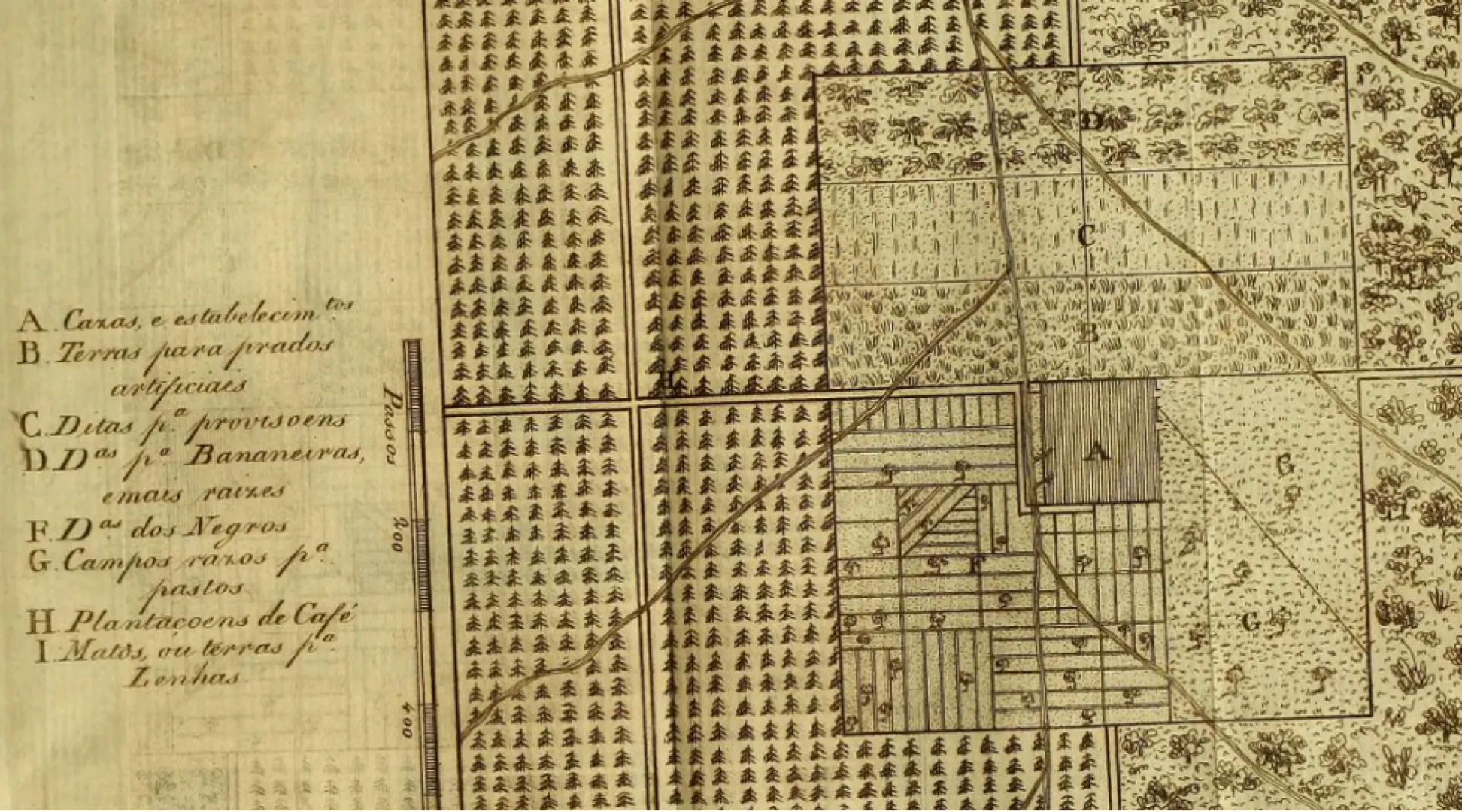
In this episode of High Theory, Neil Safier talks with us about the Plantationocene, a geological epoch that traces the effects of climate change to the historical systems of human and nonhuman environmental exploitation known as plantation agriculture. It is another name for the world we currently inhabit. In the episode, Neil describes how Donna Harraway and Anna Tsing invented the term Plantationocene in response to another recent term Anthropocene. Sources to check out include Donna Haraway’s essay, “Anthropocene, Capitalocene, Plantationcene, Chthulucene: Making Kin” Environmental Humanities 6 no. 1 (2015): 159-165. doi: 10.1215/22011919-3615934, and Paul Crutzen, “The ‘Anthropocene’” Earth Systems Science in the Anthropocene ed. Eckhart Ehlers and Thomas Krafft (Springer, 2006) pp. 13-18. He references B.F. Skinner’s novel Walden Two (MacMillan, 1962) at the end of our conversation. Neil Safier is Associate Professor in the Department of History at Brown University where he currently serves as Director of the Center for Latin American and Caribbean Studies of the Watson Institute for International Affairs. He studies the history of science, agriculture, and other forms of knowledge-making in the late-eighteenth-century Atlantic world, focusing on the plantation cultures of the Caribbean and Brazil. He was recently the director of the John Carter Brown Library, at Brown University, and many years ago, when he was more optimistic about the current global epoch, he managed grants for the Sierra Club Foundation in San Francisco, California. He is the author of Measuring the New World: Enlightenment Science and South America (U Chicago, 2008) and is cooking up two new projects, on the historical connections between natural science and plantation agriculture in the Amazon River basin and the global history of collecting. The image for this week comes from Neil’s research on the history of plantation agriculture. This drawing of a plantation from Hispaniola (Saint-Domingue) was reproduced in José Mariano da Conceição Velozo's Fazendeiro do Brazil Tome III Part II (Lisbon, 1799), in the volume dedicated to coffee production. Learn more about your ad choices. Visit megaphone.fm/adchoices Support our show by becoming a premium member! https://newbooksnetwork.supportingcast.fm/environmental-studies
Ep 57Shay Rabineau, "Walking the Land: A History of Israeli Hiking Trails" (Indiana UP, 2023)
Israel has one of the most extensive and highly developed hiking trail systems of any country in the world. Millions of hikers use the trails every year during holiday breaks, on mandatory school trips, and for recreational hikes. Shay Rabineau's Walking the Land: A History of Israeli Hiking Trails (Indiana UP, 2023) offers the first scholarly exploration of this unique trail system. Featuring more than ten thousand kilometers of trails, marked with hundreds of thousands of colored blazes, the trail system crisscrosses Israeli-controlled territory, from the country's farthest borders to its densest metropolitan areas. The thousand-kilometer Israel National Trail crosses the country from north to south. Hiking, trails, and the ubiquitous three-striped trail blazes appear everywhere in Israeli popular culture; they are the subjects of news articles, radio programs, television shows, best-selling novels, government debates, and even national security speeches. Yet the trail system is almost completely unknown to the millions of foreign tourists who visit every year and has been largely unstudied by scholars of Israel. Walking the Land explores the many ways that Israel's hiking trails are significant to its history, national identity, and conservation efforts. Christopher P. Davey is Visiting Assistant Professor at Clark University's Strassler Center for Holocaust and Genocide Studies. Learn more about your ad choices. Visit megaphone.fm/adchoices Support our show by becoming a premium member! https://newbooksnetwork.supportingcast.fm/environmental-studies
Ep 87Daniel Macfarlane, "Natural Allies: Environment, Energy, and the History of US-Canada Relations" (McGill-Queen's UP, 2023)
No two nations have exchanged natural resources, produced transborder environmental agreements, or cooperatively altered ecosystems on the same scale as Canada and the United States. Environmental and energy diplomacy have profoundly shaped both countries’ economies, politics, and landscapes for over 150 years. Natural Allies: Environment, Energy, and the History of US-Canada Relations (McGill-Queen's UP, 2023) looks at the history of US-Canada relations through an environmental lens. From fisheries in the late nineteenth century to oil pipelines in the twenty-first century, Daniel Macfarlane recounts the scores of transborder environmental and energy arrangements made between the two nations. Many became global precedents that influenced international environmental law, governance, and politics, including the Boundary Waters Treaty, the Trail Smelter case, hydroelectric megaprojects, and the Great Lakes Water Quality Agreements. In addition to water, fish, wood, minerals, and myriad other resources, Natural Allies details the history of the continental energy relationship - from electricity to uranium to fossil fuels -showing how Canada became vital to American strategic interests and, along with the United States, a major international energy power and petro-state. Environmental and energy relations facilitated the integration and prosperity of Canada and the United States but also made these countries responsible for the current climate crisis and other unsustainable forms of ecological degradation. Looking to the future, Natural Allies argues that the concept of national security must be widened to include natural security - a commitment to public, national, and international safety from environmental harms, especially those caused by human actions. Daniel Macfarlane is associate professor at the School of the Environment, Geography, and Sustainability at Western Michigan University and senior fellow at the Bill Graham Centre for Contemporary International History at the University of Toronto. Filippo De Chirico is a PhD student in History and Politics of Energy at Roma Tre University (Italy). Learn more about your ad choices. Visit megaphone.fm/adchoices Support our show by becoming a premium member! https://newbooksnetwork.supportingcast.fm/environmental-studies
Ep 261Caroline Levine, "The Activist Humanist: Form and Method in the Climate Crisis" (Princeton UP, 2023)
W. H. Auden once said, “Poetry makes nothing happen.” Auden’s quote has been used for so many purposes, it might be worth remembering what he meant. Auden’s line is importantly from a poem memorializing W.B. Yeats, a politician and a poet. Auden meant that despite Yeats’s poetry, “Ireland [still] has her madness and her weather still.” Yeats’s poetry didn’t stop suffering. But Auden acknowledges that poetry is a “way of happening” that survives and persists. Today’s guest, Caroline Levine, has written a brilliant new book The Activist Humanist: Form and Method in the Climate Crisis (Princeton UP, 2023). As I read the book, I began asking myself in the manner of Auden: “Does literary criticism make nothing happen? What kind of something might attention to social forms within aesthetic criticism make happen?” I am excited to talk to Caroline Levine is David and Kathleen Ryan Professor of Humanities at Cornell University. Previously, she was Professor of English at the University of Wisconsin-Madison. She is the author of Forms: Whole, Rhythm, Hierarchy, Network (2015), which won the winner of the James Russell Lowell Prize from the Modern Language Association, as well as The Serious Pleasures of Suspense: Victorian Realism and Narrative Doubt (2003) and Provoking Democracy: Why We Need the Arts (2007). John Yargo is Visiting Assistant Professor of Environmental Humanities at Boston College. He earned a PhD in English literature from the University of Massachusetts Amherst, specializing in the environmental humanities and early modern culture. In 2023, his dissertation won the J. Leeds Barroll Prize, given by the Shakespeare Association of America. His peer-reviewed articles have been published or are forthcoming in the Journal for Early Modern Culture Studies, Early Theatre, Studies in Philology, and Shakespeare Studies. Learn more about your ad choices. Visit megaphone.fm/adchoices Support our show by becoming a premium member! https://newbooksnetwork.supportingcast.fm/environmental-studies
Ep 322Colin McFarlane, "Waste and the City: The Crisis of Sanitation and the Right to Citylife" (Verso, 2023)
In an age of pandemics the relationship between the health of the city and good sanitation has never been more important. Colin McFarlane, through Waste and the City: The Crisis of Sanitation and the Right to Citylife (Verso, 2023), makes a call to action on one of modern urban life's most neglected issues: sanitation infrastructure. The Covid-19 pandemic has laid bare the devastating consequences of unequal access to sanitation in cities across the globe. At this critical moment in global public health, Colin McFarlane makes the urgent case for Sanitation for All. The book outlines the worldwide sanitation crisis and offers a vision for a renewed, equitable investment in sanitation that democratises and socialises the modern city. Adopting Henri Lefebvre's concept of 'the right to the city', it uses the notion of 'citylife' to reframe the discourse on sanitation from a narrowly-defined policy discussion to a question of democratic right to public life and health. In doing so, the book shows that sanitation is an urbanizing force whose importance extends beyond hygiene to the very foundation of urban social life. Michael O. Johnston, Ph.D. is a Assistant Professor of Sociology at William Penn University. He is the author of The Social Construction of a Cultural Spectacle: Floatzilla (Lexington Books, 2023) and Community Media Representations of Place and Identity at Tug Fest: Reconstructing the Mississippi River (Lexington Books, 2022). His general area of study is about the construction of identity and place. He is currently conducting research for his next project that looks at nightlife and the emotional labor that is performed by bouncers at bars and nightclubs. To learn more about Michael O. Johnston you can go to his website, Google Scholar, Twitter @ProfessorJohnst, or by email at [email protected]. Learn more about your ad choices. Visit megaphone.fm/adchoices Support our show by becoming a premium member! https://newbooksnetwork.supportingcast.fm/environmental-studies
Ep 75Timothy Brook, "The Price of Collapse: The Little Ice Age and the Fall of Ming China" (Princeton UP, 2023)
In 1644, after close to three centuries of relative stability and prosperity, the Ming dynasty collapsed. Many historians attribute its demise to the Manchu invasion of China, but the truth is far more profound. The Price of Collapse: The Little Ice Age and the Fall of Ming China (Princeton UP, 2023) provides an entirely new approach to the economic and social history of China, exploring how global climate crisis spelled the end of Ming rule. The mid-seventeenth century witnessed the deadliest phase of the Little Ice Age, when temperatures and rainfall plunged and world economies buckled. Timothy Brook draws on the history of grain prices to paint a gripping portrait of the final tumultuous years of a once-great dynasty. He explores how global trade networks that increasingly moved silver into China may have affected prices and describes the daily struggle to survive amid grain shortages and famine. By the early 1640s, as the subjects of the Ming found themselves caught in a deadly combination of cold and drought that defied all attempts to stave off disaster, the Ming price regime collapsed, and with it the Ming political regime. A masterful work of scholarship, The Price of Collapse reconstructs the experience of ordinary people under the immense pressure of unaffordable prices as their country slid from prosperity to calamity and shows how the market mediated the relationship between an empire and the climate that turned against it. Huijun Mai is an Assistant Professor in Medieval Chinese Studies at the University of California, Los Angeles. Learn more about your ad choices. Visit megaphone.fm/adchoices Support our show by becoming a premium member! https://newbooksnetwork.supportingcast.fm/environmental-studies
Ep 175Greg Glasgow and Kathryn Mayer, "Disneyland on the Mountain: Walt, the Environmentalists, and the Ski Resort That Never Was" (Rowman & Littlefield, 2023)
A fascinating look at Walt Disney's last, unfinished project and the controversy that surrounded it. It was going to be Disneyland at the top of a mountain. A vacation destination where guests could ski, go ice skating, or be entertained by a Disney Imagineer-created band of Audio-Animatronic bears. In the summer, visitors could fish, camp, hike, or take a scenic chairlift ride to the top of a mountain. It was the Mineral King resort in Southern California, and it was Walt Disney's final passion project. But there was one major obstacle to Walt's dream: the growing environmentalist movement of the 1960s. In Disneyland on the Mountain: Walt, the Environmentalists, and the Ski Resort That Never Was (Rowman & Littlefield, 2023), Greg Glasgow and Kathryn Mayer provide an unprecedented look inside the Mineral King saga, from its origins at the 1960 Winter Olympics to the years-long environmental fight that eventually shut the development down. The fight, which went all the way to the Supreme Court, reshaped the environmental movement and helped to put in place long-reaching laws to protect nature. Although the court battle, coupled with Walt's death in 1966, meant the end for the Mineral King resort, the ideas and planning behind it have permeated throughout the Walt Disney company and the ski tourism industry in ways that are still seen today. With firsthand interviews and behind-the-scenes details, Disneyland on the Mountain offers incredible access to a part of Disney history that hasn't been thoroughly explored before, including Walt's love of nature, how the company changed after Walt's death, and of course, the story of Mineral King. It's a tale of man versus nature, ambition versus mortality, and how a gang of scrappy environmentalists took on one of America's most beloved companies. Learn more about your ad choices. Visit megaphone.fm/adchoices Support our show by becoming a premium member! https://newbooksnetwork.supportingcast.fm/environmental-studies
Ep 240Özge Yaka, "Fighting for the River: Gender, Body, and Agency in Environmental Struggles" (U California Press, 2023)
Fighting for the River: Gender, Body, and Agency in Environmental Struggles (U California Press, 2023) portrays women's intimate, embodied relationships with river waters and explores how those relationships embolden local communities' resistance to private run-of-the-river hydroelectric power plants in Turkey. Building on extensive ethnographic research, Özge Yaka develops a body-centered, phenomenological approach to women's environmental activism and combines it with a relational ontological perspective. In this way, the book pushes beyond the "natural resources" frame to demonstrate how our corporeal connection to nonhuman entities is constitutive of our more-than-human lifeworld. Fighting for the River takes the human body as a starting point to explore the connection between lived experience and nonhuman environments, treating bodily senses and affects as the media of more-than-human connectivity and political agency. Analyzing local environmental struggles as struggles for coexistence, Yaka frames human-nonhuman relationality as a matter of socio-ecological justice. Özge Yaka is Senior Researcher at the Institute of Geographical Sciences, Freie Universität Berlin. Alize Arıcan is a Society of Fellows Postdoctoral Scholar at Boston University and an incoming Assistant Professor of Anthropology at CUNY—City College, focusing on urban renewal, futurity, care, and migration. You can find her on Twitter @alizearican. Learn more about your ad choices. Visit megaphone.fm/adchoices Support our show by becoming a premium member! https://newbooksnetwork.supportingcast.fm/environmental-studies
Ep 150Sonja K. Pieck, "Mnemonic Ecologies: Memory and Nature Conservation along the Former Iron Curtain" (MIT Press, 2023)
The first book-length scholarly treatment of Germany's largest conservation project, the Green Belt, Mnemonic Ecologies: Memory and Nature Conservation along the Former Iron Curtain (MIT Press, 2023) by Dr. Sonja Pieck presents a new interdisciplinary approach: that effective restoration and conservation of wounded land must merge ecology with memory. Since the Cold War's end in 1989, German conservationists have transformed the once-militarised border between East and West Germany into an extensive protected area. Yet as forests, meadows, and wetlands replace fences, minefields, and guard towers, ecological recovery must reckon with the pain of the borderlands' brutal past. The lessons gained by conservationists here, Pieck argues, have profound practical and ethical implications far beyond Germany. Can conservation help heal both ecological and societal wounds? How might conservation honor difficult socioecological pasts? Deeply researched and evocatively written, this beautiful, interdisciplinary investigation into the legacy of war and nature's resurgence blends environmental history, ethics, geography, and politics with ecology and memory studies. Amid our rampant biodiversity crisis, Mnemonic Ecologies shows why conservation must include humanized landscapes in its purview, thus helping to craft a new conservation ethos that is collaborative, empathetic, and more sensitive to the connections between humans and the places they inhabit. This interview was conducted by Dr. Miranda Melcher whose doctoral work focused on post-conflict military integration, understanding treaty negotiation and implementation in civil war contexts, with qualitative analysis of the Angolan and Mozambican civil wars. Learn more about your ad choices. Visit megaphone.fm/adchoices Support our show by becoming a premium member! https://newbooksnetwork.supportingcast.fm/environmental-studies
Ep 144Michael Welsh, "Big Bend National Park: Mexico, the United States, and a Borderland Ecosystem" (U Nevada Press, 2021)
National Parks are sites where politics, cultures, and ecology converge. University of Northern Colorado historian Michael Welsh argues that, at Big Bend National Park in West Texas, a fourth dynamic is at play: diplomacy. In Big Bend National Park: Mexico, the United States, and a Borderland Ecosystem (U Nevada Press, 2021), Welsh tells the story of how this place - isolated even in its Indigenous history - came to be a site of diplomatic wrangling between the United States and Mexico. Situated along the border of the two nations, Big Bend has been a prism through which both Americans and Mexicans have seen the relationship between their two nations. Big Bend's story thus is one of colonization, conservation and changing American ideas about wilderness, but also about international diplomacy, war, and peace. Big Bend has been many things to many people, and as Welsh argues, few National Park sites have the same dramatic and complex history as this arid range of Texas mountains along the Rio Grande. Dr. Stephen R. Hausmann is an assistant professor of history at the University of St. Thomas in Minnesota. Learn more about your ad choices. Visit megaphone.fm/adchoices Support our show by becoming a premium member! https://newbooksnetwork.supportingcast.fm/environmental-studies
Ep 174Stephen Robert Miller, "Over the Seawall: Tsunamis, Cyclones, Drought, and the Delusion of Controlling Nature" (Island Press, 2023)
In March 2011, people in a coastal Japanese city stood atop a seawall watching the approach of the tsunami that would kill them. They believed—naively—that the huge concrete barrier would save them. Instead they perished, betrayed by the very thing built to protect them. Erratic weather, blistering drought, rising seas, and ecosystem collapse now affect every inch of the globe. Increasingly, we no longer look to stop climate change, choosing instead to adapt to it. Never have so many undertaken such a widespread, hurried attempt to remake the world. Predictably, our hubris has led to unintended—and sometimes disastrous—consequences. Academics call it maladaptation; in simple terms, it’s about solutions that backfire. Over the Seawall: Tsunamis, Cyclones, Drought, and the Delusion of Controlling Nature (Island Press, 2023) by Stephen Robert Miller tells us the stories behind these unintended consequences and about the fixes that can do more harm than good. From seawalls in coastal Japan, to the reengineered waters in the Ganges River Delta, to the artificial ribbon of water supporting both farms and urban centres in parched Arizona, Miller traces the histories of engineering marvels that were once deemed too smart and too big to fail. In each he takes us into the land and culture, seeking out locals and experts to better understand how complicated, grandiose schemes led instead to failure, and to find answers to the technologic holes we’ve dug ourselves into. Over the Seawall urges us to take a hard look at the fortifications we build and how they’ve fared in the past. It embraces humanity’s penchant for problem-solving, but argues that if we are to adapt successfully to climate change, we must recognize that working with nature is not surrender but the only way to assure a secure future. This interview was conducted by Dr. Miranda Melcher whose doctoral work focused on post-conflict military integration, understanding treaty negotiation and implementation in civil war contexts, with qualitative analysis of the Angolan and Mozambican civil wars. Learn more about your ad choices. Visit megaphone.fm/adchoices Support our show by becoming a premium member! https://newbooksnetwork.supportingcast.fm/environmental-studies
Ep 173James J. A. Blair, "Salvaging Empire: Sovereignty, Natural Resources, and Environmental Science in the South Atlantic" (Cornell UP, 2023)
Salvaging Empire: Sovereignty, Natural Resources, and Environmental Science in the South Atlantic (Cornell University Press, 2023) by Dr. James J. A. Blair probes the historical roots and current predicaments of a twenty-first century settler colony seeking to control an uncertain future through resource management and environmental science. Four decades after a violent 1982 war between the United Kingdom and Argentina reestablished British authority over the Falkland Islands (Las Malvinas in Spanish), a commercial fishing boom and offshore oil discoveries have intensified the sovereignty dispute over the South Atlantic archipelago. Scholarly literature on the South Atlantic focuses primarily on military history of the 1982 conflict. However, contested claims over natural resources have now made this disputed territory a critical site for examining the wider relationship between imperial sovereignty and environmental governance. Dr. Blair argues that by claiming self-determination and consenting to British sovereignty, the Falkland Islanders have crafted a settler colonial protectorate to extract resources and extend empire in the South Atlantic. Responding to current debates in environmental anthropology, critical geography, Atlantic history, political ecology, and science and technology studies, Dr. Blair describes how settlers have asserted indigeneity in dynamic relation with the environment. Salvaging Empire uncovers the South Atlantic's outsized importance for understanding the broader implications of resource management and environmental science for the geopolitics of empire. This interview was conducted by Dr. Miranda Melcher whose doctoral work focused on post-conflict military integration, understanding treaty negotiation and implementation in civil war contexts, with qualitative analysis of the Angolan and Mozambican civil wars. Learn more about your ad choices. Visit megaphone.fm/adchoices Support our show by becoming a premium member! https://newbooksnetwork.supportingcast.fm/environmental-studies
Ep 62Oil Beach - How Toxic Infrastructure Threatens Life: A Conversation with Christina Dunbar-Hester
Christina Dunbar-Hester, professor at the University of Southern California’s Annenberg School for Communication and Journalism, talks about her recent book, Oil Beach: How Toxic Infrastructure Threatens Life in the Port of Los Angeles and Beyond (U Chicago Press, 2023) with Peoples & Things host, Lee Vinsel. The pair discuss the trajectory of Dunbar-Hester’s career from her dissertation on low powered FM pirates and activists to her examination of gender in open technology communities and how she came to write a multispecies, place-focused examination of how petroleum and port infrastructure harms life. Lee Vinsel is an associate professor in the Department of Science, Technology and Society at Virginia Tech. He studies human life with technology, with particular focus on the relationship between government, business, and technological change. His first book, Moving Violations: Automobiles, Experts, and Regulations in the United States, was published by Johns Hopkins University Press in July 2019. Learn more about your ad choices. Visit megaphone.fm/adchoices Support our show by becoming a premium member! https://newbooksnetwork.supportingcast.fm/environmental-studies
Ep 57Kendra Coulter, "Defending Animals: Finding Hope on the Front Lines of Animal Protection" (MIT Press, 2023)
Beloved dogs and cats. Magnificent horses and mountain gorillas. Curious chickens. What do we actually do to protect animals from harm—and is it enough? This engaging book provides a unique and eye-opening exploration of the world of animal protection as people defend diverse animals from injustice and cruelty. From the streets of major US cities to remote farms and tropical forests, Defending Animals: Finding Hope on the Front Lines of Animal Protection (MIT Press, 2023) is a gritty and moving portrait of the real work of animal protection that takes place in communities, courtrooms, and boardrooms. Globally recognized expert Kendra Coulter takes readers across the different landscapes of animal protection to meet people and animals of all kinds, from cruelty investigators to forensic veterinarians, wildlife rehabilitators and conservation leaders to animal lawyers and entrepreneurs, each working in their own ways to defend animals. Bringing unparalleled research and a distinct and nuanced analytical viewpoint, Defending Animals shows that animal protection is not only physical, intellectual, and emotional work but also a labor so rooted in empathy and care that it just might bridge the vast divide between polarized people and help create a more humane future for us all. Kendra Coulter is Professor in Management and Organizational Studies at Western University's Huron University College, a Fellow of the Oxford Centre for Animal Ethics (UK), and a member of the prestigious Royal Society of Canada's College of New Scholars, Artists, and Scientists. Kyle Johannsen is a philosophy instructor at Trent University. His most recent book is Wild Animal Ethics: The Moral and Political Problem of Wild Animal Suffering (Routledge, 2021). Learn more about your ad choices. Visit megaphone.fm/adchoices Support our show by becoming a premium member! https://newbooksnetwork.supportingcast.fm/environmental-studies
Ep 256Naveeda Khan, "In Quest of a Shared Planet: Negotiating Climate from the Global South" (Fordham UP, 2023)
Based on the author’s eight years of fieldwork with the United Nations-led Conference of Parties (COP), In Quest of a Shared Planet: Negotiating Climate from the Global South (Fordham UP, 2023) offers an illuminating first-person ethnographic perspective on climate change negotiations. Focusing on the Paris Agreement, anthropologist Naveeda Khan introduces readers to the only existing global approach to the problem of climate change, one that took nearly thirty years to be collectively agreed upon. She shares her detailed descriptions of COP21 to COP25 and growing understanding of the intricacies of the climate negotiation process, leading her to ask why countries of the Global South invested in this slow-moving process and to explore how they have maneuvered it. With a focus on the Bangladeshi delegation at the COPs, Khan draws out what it means to be a small, poor, and dependent country within the negotiation process. Her interviews with negotiators within country delegations uncover their pathways to the negotiating tables. Through observations of training sessions of negotiators of the Global South, Khan seeks to reveal understandings of what is or is not achievable within negotiated texts and the power of deal-making and deferrals. She profiles individuals who had committed themselves to the climate negotiation process, moving between the Secretariat, Parties, activists, and the wider UN system to bring their principles, strategies, emotions, and visions into view. She explores how the newest pillar of climate action, loss and damage, emerged historically and how developed countries attempted to control it in the process. Khan suggests that we understand the Global South’s pursuit of loss and damage not only as a politics of forcing the issue of a conjoined future upon the Global North, but as a gift to the youth of the world to secure that future. Deeply insightful and highly readable, In Quest of a Shared Planet is a stirring call to action that highlights the key role responsive and active youth have in climate negotiations. It is an invitation not only to understand the climate negotiation process, but also to navigate it (for those planning to attend sessions themselves) and to critique it—with, the author hopes, sympathy and an eye to viable alternatives. In Quest of a Shared Planet: Negotiating Climate from the Global South is available from the publisher on an open-access basis. Naveeda Khan is Associate Professor of Anthropology at Johns Hopkins University. She sits on the board of the JHU Center for Islamic Studies, and serves as affiliate faculty for the JHU Undergraduate Program in Environmental Science and Studies. She is the author of Muslim Becoming: Aspiration and Skepticism in Pakistan (Duke, 2012) and River Life and the Upspring of Nature (Duke, 2023) and editor of Beyond Crisis: Re-evaluating Pakistan (Routledge, 2010). Alize Arıcan is a Society of Fellows Postdoctoral Scholar at Boston University and an incoming Assistant Professor of Anthropology at CUNY—City College, focusing on urban renewal, futurity, care, and migration. You can find her on Twitter @alizearican. Learn more about your ad choices. Visit megaphone.fm/adchoices Support our show by becoming a premium member! https://newbooksnetwork.supportingcast.fm/environmental-studies
Ep 172Alda Balthrop-Lewis, "Thoreau's Religion: Walden Woods, Social Justice, and the Politics of Asceticism" (Cambridge UP, 2021)
Balthrop-Lewis's Thoreau's Religion: Walden Woods, Social Justice, and the Politics of Asceticism (Cambridge UP, 2021) presents a ground-breaking interpretation of Henry David Thoreau's most famous book, Walden. Rather than treating Walden Woods as a lonely wilderness, Balthrop-Lewis demonstrates that Thoreau's ascetic life was a form of religious practice dedicated to cultivating a just, multispecies community. The book makes an important contribution to scholarship in religious studies, political theory, English, environmental studies, and critical theory by offering the first sustained reading of Thoreau's religiously motivated politics. In Balthrop-Lewis's vision, practices of renunciation like Thoreau's can contribute to reforming social and political life. This book transforms Thoreau's image, making him a vital source for a world beset by inequality and climate change. Balthrop-Lewis argues for an environmental politics in which ecological flourishing is impossible without economic and social justice. Alda Balthrop-Lewis is a Research Fellow at the Institute for Religion and Critical Inquiry at Australian Catholic University, Melbourne. She holds a Ph.D. in Religion from Princeton University and has taught Religious Studies at Brown University. Her research, which focuses on religious ethics and the circulation of ideas among theological, artistic, and popular idioms, has appeared in the Journal of the American Academy of Religion and the Journal of Religious Ethics. Ilana Maymind is a lecturer at the Religious Studies Department at Chapman University. Learn more about your ad choices. Visit megaphone.fm/adchoices Support our show by becoming a premium member! https://newbooksnetwork.supportingcast.fm/environmental-studies
Ep 171Todd E. Vachon, "Clean Air and Good Jobs: U.S. Labor and the Struggle for Climate Justice" (Temple UP, 2023)
The labor–climate movement in the U.S. laid the groundwork for the Green New Deal by building a base within labor for supporting climate protection as a vehicle for good jobs. But as we confront the climate crisis and seek environmental justice, a “jobs vs. environment” discourse often pits workers against climate activists. How can we make a “just transition” moving away from fossil fuels, while also compensating for the human cost when jobs are lost or displaced? In his book, Clean Air and Good Jobs: U.S. Labor and the Struggle for Climate Justice (Temple University Press, 2023), Todd Vachon examines the labor–climate movement and demonstrates what can be envisioned and accomplished when climate justice is on labor’s agenda and unions work together with other social movements to formulate bold solutions to the climate crisis. Todd Vachon is Assistant Professor of Labor Studies and Employment Relations and Director of the Labor Education Action Research Network at Rutgers University Schneur Zalman Newfield is an Associate Professor of Sociology and Jewish Studies at Hunter College, City University of New York, and the author of Degrees of Separation: Identity Formation While Leaving Ultra-Orthodox Judaism (Temple University Press, 2020). Visit him online at ZalmanNewfield.com. Learn more about your ad choices. Visit megaphone.fm/adchoices Support our show by becoming a premium member! https://newbooksnetwork.supportingcast.fm/environmental-studies
Ep 102Phaedra C. Pezzullo, "Beyond Straw Men: Plastic Pollution and Networked Cultures of Care" (U California Press, 2023)
Addressing plastics can feel overwhelming. Guilt, shame, anger, hurt, fear, dismissiveness, and despair abound. Beyond Straw Men: Plastic Pollution and Networked Cultures of Care (U California Press, 2023) moves beyond "hot take" or strawman fallacies by illustrating how affective counterpublics mobilized around plastics reveal broader stories about environmental justice and social change. Inspired by on- and offline organizing, Pezzullo engages public controversies, policies, and headline-making advocates in Bangladesh, Kenya, the US, and Vietnam through hashtag activism, campaign materials, and her podcast, Communicating Care. She argues that plastics have become an entry point into contested environmental politics, including carbon-heavy masculinity, carceral policies, planetary fatalism, eco-ableism, greenwashing, marine life endangerment, pollution colonialism, and waste imperialism. Attuned to plastic attachments, Beyond Straw Men shares how unsustainable patterns of the plastics-industrial complex are resisted through imperfect but impactful networked cultures of care. Learn more about your ad choices. Visit megaphone.fm/adchoices Support our show by becoming a premium member! https://newbooksnetwork.supportingcast.fm/environmental-studies
Ep 253Jeffrey Angles, ed., "Godzilla and Godzilla Raids Again: The Original Novellas by Shigeru Kayama" (U Michigan Press, 2023)
Godzilla emerged from the sea to devastate Tokyo in the now-classic 1954 film, produced by Tōhō Studios and directed by Ishirō Honda, creating a global sensation and launching one of the world’s most successful movie and media franchises. Awakened and transformed by nuclear weapons testing, Godzilla serves as a terrifying metaphor for humanity’s shortsighted destructiveness: this was the intent of Shigeru Kayama, the science fiction writer who drafted the 1954 original film and its first sequel and, in 1955, published these novellas. Although the Godzilla films have been analyzed in detail by cultural historians, film scholars, and generations of fans, Kayama’s two Godzilla novellas—both classics of Japanese young-adult science fiction—have never been available in English. Godzilla and Godzilla Raids Again: The Original Novellas by Shigeru Kayama (U Michigan Press, 2023) finally provides English-speaking fans and critics the original texts with these first-ever English-language translations of Godzilla and Godzilla Raids Again. The novellas reveal valuable insights into Kayama’s vision for the Godzilla story, feature plots that differ from the films, and clearly display the author’s strong antinuclear, proenvironmental convictions. Kayama’s fiction depicts Godzilla as engaging in guerrilla-style warfare against humanity, which has allowed the destruction of the natural world through its irresponsible, immoral perversion of science. As human activity continues to cause mass extinctions and rapid climatic change, Godzilla provides a fable for the Anthropocene, powerfully reminding us that nature will fight back against humanity’s onslaught in unpredictable and devastating ways. Shigeru Kayama (1904–1975) was a science fiction writer and scenarist whose early stories about monsters and mutated sea creatures attracted the attention of Tōhō Studios, which asked him to draft the first two Godzilla films. Jeffrey Angles is professor of Japanese at Western Michigan University. He is the author of Writing the Love of Boys: Origins of Bishonen Culture in Modernist Japanese Literature (Minnesota, 2011) and the award-winning translator of Orikuchi Shinobu’s The Book of the Dead (Minnesota, 2017) and Hiromi Ito’s The Thorn Puller. Daniel Moran earned his B.A. and M.A. in English from Rutgers University and his Ph.D. in History from Drew University. The author of Creating Flannery O’Connor: Her Critics, Her Publishers, Her Readers and articles on G. K. Chesterton and John Ford, he teaches research and writing at Rutgers and co-hosts the podcast Fifteen-Minute Film Fanatics, found here on the New Books Network and on X. Learn more about your ad choices. Visit megaphone.fm/adchoices Support our show by becoming a premium member! https://newbooksnetwork.supportingcast.fm/environmental-studies
Ep 133Kathrin Eitel, "Recycling Infrastructures in Cambodia: Circularity, Waste, and Urban Life in Phnom Penh" (Routledge, 2022)
Kathrin Eitel's book Recycling Infrastructures in Cambodia: Circularity, Waste, and Urban Life in Phnom Penh (Routledge, 2022) examines the recycling infrastructure in Phnom Penh, Cambodia. It considers the circular flows of waste and practices through 'infracycles', maintenance practices that tinker with the social and capitalist order, and postcolonial ways of doing politics that co-constitute predominant waste fantasies from which naturecultures ooze out, shaping urban life in their own way. In this context, socially marginalized waste pickers contest the capitalist system by creating tropes about freedom, labor autonomy, and the will to survive. In this regard, they are also meddling about a new social order that represents the fine line Cambodia is sashaying between tradition and modernity. Waste fantasies that are a result of environmental problematizations, however, perpetuate postcolonial ways of doing politics by exuding notions of waste as detached from its sociocultural context. But ultimately, waste slips through the cracks of these dominant imaginaries and global waste reduction models enacting new versions of what waste and the city is, providing opportunities for another future waste policy. This book is a unique contribution to the field of infrastructure studies emphasizing the importance of perceiving infrastructure as circular in smaller 'infracycles', rather than linear. It will be of interest to researchers in the field of environmental anthropology, science and technology studies, urban studies, and Southeast Asian studies. The Introduction of this book is available for free in PDF format as Open Access from the individual product page at www.routledge.com. It has been made available under a Creative Commons Attribution-Non Commercial-No Derivatives 4.0 license. Kathrin Eitel is a Postdoctoral Fellow in the Department of Social Anthropology and Cultural Studies at the University of Zurich. Professor Michele Ford is the Director of the Sydney Southeast Asia Centre, a university-wide multidisciplinary center at the University of Sydney, Australia. Learn more about your ad choices. Visit megaphone.fm/adchoices Support our show by becoming a premium member! https://newbooksnetwork.supportingcast.fm/environmental-studies
Ep 170Daniel Jaffee, "Unbottled: The Fight Against Plastic Water and for Water Justice" (U California Press, 2023)
In just four decades, bottled water has transformed from a luxury niche item into a ubiquitous consumer product, representing a $300 billion market dominated by global corporations. It sits at the convergence of a mounting ecological crisis of single-use plastic waste and climate change, a social crisis of affordable access to safe drinking water, and a struggle over the fate of public water systems. Unbottled: The Fight Against Plastic Water and for Water Justice (U California Press, 2023) examines the vibrant movements that have emerged to question the need for bottled water and challenge its growth in North America and worldwide. Drawing on extensive interviews with activists, residents, public officials, and other participants in controversies ranging from bottled water's role in unsafe tap water crises to groundwater extraction for bottling in rural communities, Daniel Jaffee asks what this commodity's meteoric growth means for social inequality, sustainability, and the human right to water. Unbottled profiles campaigns to reclaim the tap and addresses the challenges of ending dependence on packaged water in places where safe water is not widely accessible. Clear and compelling, it assesses the prospects for the movements fighting plastic water and working to ensure water justice for all. Joshua Mullenite is an Assistant Professor and the Director of the Sustainability programs at Chatham University in Pittsburgh, PA. They can be found on Mastodon at https://fediscience.org/@mullenite Learn more about your ad choices. Visit megaphone.fm/adchoices Support our show by becoming a premium member! https://newbooksnetwork.supportingcast.fm/environmental-studies
Ep 104Oscar Webber, "Negotiating Relief and Freedom: Responses to Disaster in the British Caribbean, 1812-1907" (Manchester UP, 2023)
Negotiating Relief and Freedom: Responses to Disaster in the British Caribbean, 1812-1907 (Manchester University Press, 2023) by Dr. Oscar Webber is an investigation of short- and long-term responses to disaster in the British Caribbean colonies during the 'long' nineteenth century. Dr. Webber explores how colonial environmental degradation made their inhabitants both more vulnerable to and expanded the impact of natural phenomena such as hurricanes, earthquakes, and volcanic eruptions. He shows that British approaches to disaster 'relief' prioritised colonial control and 'fiscal prudence' ahead of the relief of the relief of suffering. In turn, that this pattern played out continuously in the long nineteenth century is a reminder that in the Caribbean the transition from slavery to waged labour was not a clean one. Times of crisis brought racial and social tensions to the fore and freedoms once granted, were often quickly curtailed. This interview was conducted by Dr. Miranda Melcher whose doctoral work focused on post-conflict military integration, understanding treaty negotiation and implementation in civil war contexts, with qualitative analysis of the Angolan and Mozambican civil wars. Learn more about your ad choices. Visit megaphone.fm/adchoices Support our show by becoming a premium member! https://newbooksnetwork.supportingcast.fm/environmental-studies
Ep 161Katie J. Wells et al., "Disrupting D.C.: The Rise of Uber and the Fall of the City" (Princeton UP, 2023)
The first city to fight back against Uber, Washington, D.C., was also the first city where such resistance was defeated. It was here that the company created a playbook for how to deal with intransigent regulators and to win in the realm of local politics. The city already serves as the nation’s capital. Now, D.C. is also the blueprint for how Uber conquered cities around the world—and explains why so many embraced the company with open arms. Drawing on interviews with gig workers, policymakers, Uber lobbyists, and community organizers, Disrupting D.C.: The Rise of Uber and the Fall of a City (Princeton University Press, 2023) demonstrates that many share the blame for lowering the nation’s hopes and dreams for what its cities could be. In a sea of broken transit, underemployment, and racial polarization, Uber offered a lifeline. But at what cost? This is not the story of one company and one city. Instead, Disrupting D.C. offers a 360-degree view of an urban America in crisis. Uber arrived promising a new future for workers, residents, policymakers, and others. Ultimately, Uber’s success and growth was never a sign of urban strength or innovation but a sign of urban weakness and low expectations about what city politics can achieve. Understanding why Uber rose reveals just how far the rest of us have fallen. Katie J. Wells is a postdoctoral fellow at Georgetown University. Twitter. Website. Kafui Attoh is associate professor of urban studies at the School of Labor and Urban Studies at the City University of New York. Twitter. Website. Declan Cullen is assistant professor of geography at George Washington University. Website. Brian Hamilton is chair of the Department of History and Social Science at Deerfield Academy. Twitter. Website. Learn more about your ad choices. Visit megaphone.fm/adchoices Support our show by becoming a premium member! https://newbooksnetwork.supportingcast.fm/environmental-studies
Ep 74Stefan Helmreich, "A Book of Waves" (Duke UP, 2023)
In A Book of Waves (Duke UP, 2023), Stefan Helmreich examines ocean waves as forms of media that carry ecological, geopolitical, and climatological news about our planet. Drawing on ethnographic work with oceanographers and coastal engineers in the Netherlands, the United States, Australia, Japan, and Bangladesh, Helmreich details how scientists at sea and in the lab apprehend waves’ materiality through abstractions, seeking to capture in technical language these avatars of nature at once periodic and irreversible, wild and pacific, ephemeral and eternal. For researchers and their publics, the meanings of waves also reflect visions of the ocean as an environmental infrastructure fundamental to trade, travel, warfare, humanitarian rescue, recreation, and managing sea level rise. Interleaving ethnographic chapters with reflections on waves in mythology, surf culture, feminist theory, film, Indigenous Pacific activisms, Black Atlantic history, cosmology, and more, Helmreich demonstrates how waves mark out the wakes and breaks of social histories and futures. Stefan Helmreich is an anthropologist who studies how scientists in oceanography, biology, acoustics, and computer science define and theorize their objects of study, particularly as these objects — waves, life, sound, code — reach their conceptual limits. Tamara Fernando is an assistant professor in the History of the Global South, at Stony Brook University, New York. Her research and teaching interests are located at the intersection of labor, environment, and science histories, with a specific focus on the nineteenth and twentieth-century Indian Ocean world. Her current book project, "Shallow Blue Empire: Knowing the Littoral across the Indian Ocean," aspires to uncover a "history below the water line" through a trans-national account of the pearling industry across the northern Indian Ocean. This work centers on the Persian Gulf, the Gulf of Mannar, and the Mergui/Myeik archipelago, elucidating how modes of knowledge about the littoral zone of the ocean were determined in the context of the British Empire at the turn of the twentieth century. She is deeply committed to employing trans-regional and interdisciplinary methods in the study of the past, as well as addressing the question of how to craft global histories of science. Her second book project, "Submarine Futures: Science and Expertise in the Indian Ocean 1872-2004," traces human engagements with the ocean through three objects: the shipwreck, the nuclear submarine, and the deep-sea port across key nodes in the Indian Ocean. This endeavor explores how scientific disciplines like maritime archaeology continue to shape notions of the Indian Ocean’s “cosmopolitan” and inter-connected pasts. Ahmed Yaqoub AlMaazmi is a Ph.D. candidate at Princeton University. His research focuses on the intersection of law, the occult sciences, and the environment across the Western Indian Ocean. He can be reached by email at [email protected] or on Twitter @Ahmed_Yaqoub. Listeners’ feedback, questions, and book suggestions are most welcome. Learn more about your ad choices. Visit megaphone.fm/adchoices Support our show by becoming a premium member! https://newbooksnetwork.supportingcast.fm/environmental-studies
Ep 109A Better Way to Buy Books
Bookshop.org is an online book retailer that donates more than 80% of its profits to independent bookstores. Launched in 2020, Bookshop.org has already raised more than $27,000,000. In this interview, Andy Hunter, founder and CEO discusses his journey to creating one of the most revolutionary new organizations in the book world. Bookshop has found a way to retain the convenience of online book shopping while also supporting independent bookstores that are the backbones of many local communities. Andy Hunter is CEO and Founder of Bookshop.org. He also co-created Literary Hub. Caleb Zakarin is the Assistant Editor of the New Books Network. Learn more about your ad choices. Visit megaphone.fm/adchoices Support our show by becoming a premium member! https://newbooksnetwork.supportingcast.fm/environmental-studies
Ep 100Nicole Fabricant, "Fighting to Breathe: Race, Toxicity, and the Rise of Youth Activism in Baltimore" (U California Press, 2022)
Industrial toxic emissions on the South Baltimore Peninsula are among the highest in the nation. Because of the concentration of factories and other chemical industries in their neighborhoods, residents face elevated rates of lung cancer and other respiratory illnesses in addition to heart attacks, strokes, and cardiovascular disease, all of which can lead to premature death. Fighting to Breathe: Race, Toxicity, and the Rise of Youth Activism in Baltimore (U California Press, 2022) follows a dynamic and creative group of high school students who decided to fight back against the race- and class-based health disparities and inequality in their city. For more than a decade, student organizers stood up to unequal land use practices and the proposed construction of an incinerator and instead initiated new waste management strategies. As a Baltimore resident and activist-scholar, Nicole Fabricant documents how these young organizers came to envision, design, and create a more just and sustainable Baltimore. Learn more about your ad choices. Visit megaphone.fm/adchoices Support our show by becoming a premium member! https://newbooksnetwork.supportingcast.fm/environmental-studies
Ep 99Zdenka Sokolickova, "The Paradox of Svalbard: Climate Change and Globalisation in the Arctic" (Pluto Press, 2023)
The town of Longyearbyen in the high Arctic is the world's northernmost settlement. Here, climate change is happening fast. It is clearly seen and sensed by the locals; with higher temperatures, more rain and permafrost thaw. At the same time, the town is shifting from state-controlled coal production to tourism, research, and development, rapidly globalizing, with numerous languages spoken, cruise ships sounding the horn in the harbor, and planes landing and taking off. Zdenka Sokolíčková lived here between 2019-2021, and her research in the community uncovered a story about the conflict between sustainability and the driving forces of politics and economy in the rich global North. A small town of 2,400 inhabitants at 78 degrees latitude north on the Norwegian archipelago of Svalbard, Longyearbyen provided a unique view into the unmistakable relationship between global capitalism and climate change. The Paradox of Svalbard: Climate Change and Globalisation in the Arctic (Pluto Press, 2023) looks at both local and global trends to access a deep understanding of the effects of tourism, immigration, labor, and many other elements on the trajectory of the climate crisis, and whether anything can be done to reverse them. Learn more about your ad choices. Visit megaphone.fm/adchoices Support our show by becoming a premium member! https://newbooksnetwork.supportingcast.fm/environmental-studies
Ep 246Ryan Tucker Jones, "Red Leviathan: The Secret History of Soviet Whaling" (U Chicago Press, 2022)
The Soviet Union killed over six hundred thousand whales in the twentieth century, many of them illegally and secretly. That catch helped bring many whale species to near extinction by the 1970s, and the impacts of this loss of life still ripple through today’s oceans. In this new account, based on formerly secret Soviet archives and interviews with ex-whalers, environmental historian Ryan Tucker Jones offers a complete history of the role the Soviet Union played in the whales’ destruction. As other countries—especially the United States, Great Britain, Japan, and Norway—expanded their pursuit of whales to all corners of the globe, Stalin determined that the Soviet Union needed to join the hunt. What followed was a spectacularly prodigious, and often wasteful, destruction of humpback, fin, sei, right, and sperm whales in the Antarctic and the North Pacific, done in knowing violation of the International Whaling Commission’s rules. Cold War intrigue encouraged this destruction, but, as Jones shows, there is a more complex history behind this tragic Soviet experiment. Jones compellingly describes the ultimate scientific irony: today’s cetacean studies benefited from Soviet whaling, as Russian scientists on whaling vessels made key breakthroughs in understanding whale natural history and behavior. And in a final twist, Red Leviathan: The Secret History of Soviet Whaling (U Chicago Press, 2022) reveals how the Soviet public began turning against their own country’s whaling industry, working in parallel with Western environmental organizations like Greenpeace to help end industrial whaling—not long before the world’s whales might have disappeared altogether. Erika Monahan is the author of The Merchants of Siberia: Trade in Early Modern Eurasia (Cornell UP, 2016) and a 2023-2024 Alexander von Humboldt Fellow. Learn more about your ad choices. Visit megaphone.fm/adchoices Support our show by becoming a premium member! https://newbooksnetwork.supportingcast.fm/environmental-studies
Ep 253Andrea Muehlebach, "A Vital Frontier: Water Insurgencies in Europe" (Duke UP, 2023)
In A Vital Frontier: Water Insurgencies in Europe (Duke University Press, 2023)) Andrea Muehlebach examines the work of activists across Europe as they organize to preserve water as a commons and public good in the face of privatization. Traversing social, political, legal, and hydrological terrains, Muehlebach situates water as a political fault line at the frontiers of financialization, showing how the seemingly relentless expansion of capital into public utilities is being challenged by an equally relentless and often successful insurgence of political organizing. Drawing on ethnographic research, Muehlebach presents water protests as a vital politics that comprises popular referenda, barricades in the streets, huge demonstrations, the burning of utility bills, and legal disputes over transparency and contracts. As Muehlebach documents, Europe’s water activists articulate their own values of democracy and just price, raising far-reaching political questions about private versus common property and financing, liberal democracy, sovereignty, legality, and collective infrastructural responsibility in the face of financialization and commodification. Muehlebach shows that water-rights activists can successfully resist financial markets by exposing the commodification of water as the theft of life itself. Andrea Muehlebach is Professor of Maritime Anthropology and Cultures of Water at the University of Bremen. Learn more about your ad choices. Visit megaphone.fm/adchoices Support our show by becoming a premium member! https://newbooksnetwork.supportingcast.fm/environmental-studies
Ep 169Davide Rodogno, "Night on Earth: A History of International Humanitarianism in the Near East, 1918–1930" (Cambridge UP, 2021)
Night on Earth: A History of International Humanitarianism in the Near East, 1918–1930 (Cambridge UP, 2021) is a broad-ranging account of international humanitarian programs in Central and Eastern Europe, the Balkans, and the Near East from 1918 to 1930. Davide Rodogno shows that international 'relief' and 'development' were intertwined long before the birth of the United Nations with humanitarians operating in a region devastated by war and famine and in which state sovereignty was deficient. Influenced by colonial motivations and ideologies, these humanitarians attempted to reshape entire communities and nations through reconstruction and rehabilitation programmes. The book draws on the activities of a wide range of secular and religious organisations and philanthropic foundations in the US and Europe including the American Relief Administration, the American Red Cross, the Quakers, Save the Children, the Near East Relief, the American Women's Hospitals, the League of Nations and the International Committee of the Red Cross. Eyad Houssami is a doctoral researcher focusing on ecology, agriculture, and education in post-independence Lebanon at the University of Leeds. His research and this work are supported by the UK Arts & Humanities Research Council (grant number AH/R012733/1) through the White Rose College of the Arts & Humanities. Houssami also works as a consultant, organization leader, writer/editor, and theatre artist. Learn more about your ad choices. Visit megaphone.fm/adchoices Support our show by becoming a premium member! https://newbooksnetwork.supportingcast.fm/environmental-studies
Ep 168Rebecca Solnit and Thelma Young Lutunatabua, "Not Too Late: Changing the Climate Story from Despair to Possibility" (Haymarket, 2023)
These days, with catastrophe after catastrophe, it can be easy to turn to despair and to believe that there is nothing we can do. But writer Rebecca Solnit is determined to change that narrative. Over the course of her career, Solnit has published twenty-five books on feminism, popular power, social change and insurrection, and hope and catastrophe. Her most recent project, Not Too Late: Changing the Climate Story from Despair to Possibility, brings together climate scientists and activists from around the world to address the social, political, and spiritual dimensions of our current crisis—and to envision a path forward. In this episode of Life As It Is, Tricycle’s editor-in-chief, James Shaheen, and co-host Sharon Salzberg sit down with Solnit to discuss the power of hope in times of catastrophe, the dangers of hyperindividualism, and why she believes beauty is an essential piece of activist work. Life As It Is is a monthly podcast featuring prominent voices from within and beyond the Buddhist fold. Listen to more episodes here. Learn more about your ad choices. Visit megaphone.fm/adchoices Support our show by becoming a premium member! https://newbooksnetwork.supportingcast.fm/environmental-studies