New Books in Environmental Studies
1,278 episodes — Page 12 of 26
Ep 151Bryan Alexander, "Universities on Fire: Higher Education in the Climate Crisis" (Johns Hopkins UP, 2023)
In Universities on Fire: Higher Education in the Climate Crisis (Johns Hopkins UP, 2023), futurist Bryan Alexander explores higher education during an age of unfolding climate crisis. Powered by real-world examples and the latest research, Alexander assesses practical responses and strategies by surveying contemporary programs and academic climate research from around the world. He establishes a model of how academic institutions may respond and offers practical pathways forward for higher education. How will the two main purposes of education—teaching and research—change as the world heats up? Alexander positions colleges and universities in the broader social world, from town-gown relationships to connections between how campuses and civilization as a whole respond to this epochal threat. Brady McCartney is an environmental educator and the Consortium Director of the EcoLeague, an environmental education consortium currently based at Dickinson College's Center for Sustainability Education. Learn more about your ad choices. Visit megaphone.fm/adchoices Support our show by becoming a premium member! https://newbooksnetwork.supportingcast.fm/environmental-studies
Ep 72Peter Frankopan, "The Earth Transformed: An Untold History" (Knopf, 2023)
The Earth Transformed. An Untold History (Knopf, 2023) is a captivating and informative book that reveals how climate change has been a driving force behind the development and decline of civilizations across the centuries. The author, Peter Frankopan, takes readers on a journey through history, showcasing how natural phenomena such as volcanic eruptions, El Niño, and solar flare activity have shaped the course of human events. Frankopan's extensive research, coupled with his accessible writing style, makes for an engaging read that reframes our understanding of the world and our place in it. One of the strengths of The Earth Transformed is the way in which Frankopan connects seemingly disparate events to highlight the far-reaching impact of climate change. For example, he explains how the Vikings emerged as a result of catastrophic crop failure, and how the collapse of cotton prices due to unusual climate patterns led to regime change in eleventh-century Baghdad. Through such connections, Frankopan demonstrates how past empires that failed to act sustainably were met with catastrophe, providing valuable lessons for our current environmental crisis. Overall, The Earth Transformed is a timely and important book that sheds light on the enduring relationship between humans and the natural world. It challenges readers to reckon with our species' impact on the environment and to consider how we can act sustainably to prevent further harm. Frankopan's interdisciplinary approach, combining historical research with scientific insights, makes for a compelling and thought-provoking read that will leave readers with a new perspective on the world around us. Javier Mejia is an economist at Stanford University who specializes in the intersection of social networks and economic history. His research interests also include entrepreneurship and political economy, with a particular focus on Latin America and the Middle East. He holds a Ph.D. in Economics from Los Andes University. Mejia has previously been a Postdoctoral Associate and Lecturer at New York University-Abu Dhabi and a Visiting Scholar at the University of Bordeaux. He is also a frequent contributor to various news outlets, currently serving as an op-ed columnist for Forbes Magazine. Learn more about your ad choices. Visit megaphone.fm/adchoices Support our show by becoming a premium member! https://newbooksnetwork.supportingcast.fm/environmental-studies
Ep 314Darrel Moellendorf, "Mobilizing Hope: Climate Change and Global Poverty" (Oxford UP, 2022)
The news concerning climate change isn’t good. The warming of our planet now threatens to trap millions of people in extreme poverty while destabilizing the global order in ways that exacerbate existing global inequalities. Mitigation and adaptation strategies, even if adhered to, may not be sufficient. The situation seems hopeless. However, in Mobilizing Hope: Climate Change and Global Poverty (Oxford UP, 2022), Darrel Moellendorf argues that there not only is reason to hope that we might successfully address the climate crisis, but also reason to mobilize hope – to act now in ways that can forge the kind of global solidarity necessary to meet the challenge of climate change. Robert Talisse is the W. Alton Jones Professor of Philosophy at Vanderbilt University. Learn more about your ad choices. Visit megaphone.fm/adchoices Support our show by becoming a premium member! https://newbooksnetwork.supportingcast.fm/environmental-studies
Ep 373Christina Dunbar-Hester, "Oil Beach: How Toxic Infrastructure Threatens Life in the Ports of Los Angeles and Beyond" (U Chicago Press, 2023)
How can we stop infrastructure from damaging the planet? In Oil Beach: How Toxic Infrastructure Threatens Life in the Ports of Los Angeles and Beyond (U Chicago Press, 2023), Christina Dunbar-Hester, an associate professor in the University of Southern California’s Annenberg School for Communication, explores the history of the San Pedro Bay area to tell the story of oil’s impact on LA. The book offers a rich and detailed engagement with a variety of case study examples, including wildlife, international trading, conservation, the military, the local and national governments, and the ports of LA and Long Beach. Offering a radical call for transspecies supply chain justice and creaturely sovereignty, the book is essential reading for anyone interested in how to rethink our polluted places and warming world. Dave O'Brien is Professor of Cultural and Creative Industries, at the University of Sheffield. Learn more about your ad choices. Visit megaphone.fm/adchoices Support our show by becoming a premium member! https://newbooksnetwork.supportingcast.fm/environmental-studies
Ep 16Timothy R. Pauketat, "Gods of Thunder: How Climate Change, Travel, and Spirituality Reshaped Precolonial America" (Oxford UP,
Timothy R. Pauketat’s Gods of Thunder: How Climate Change, Travel, and Spirituality Reshaped Precolonial America (Oxford UP, 2023) is a sweeping account of what happened when Indigenous peoples of Medieval North and Central America confronted climate change. Few Americans today are aware of one of the most consequential periods in North American history—the Medieval Warm Period of seven to twelve centuries ago (AD 800-1300 CE)—which resulted in the warmest temperatures in the northern hemisphere since the "Roman Warm Period," a half millennium earlier. Reconstructing these climatic events and the cultural transformations they wrought, Pauketat guides readers down ancient American paths walked by Indigenous people a millennium ago, some trod by Spanish conquistadors just a few centuries later. The book follows the footsteps of priests, pilgrims, traders, and farmers who took great journeys, made remarkable pilgrimages, and migrated long distances to new lands. Along the way, readers discover a new history of a continent that, like today, was being shaped by climate change—or controlled by ancient gods of wind and water. Through such elemental powers, the history of Medieval America was a physical narrative, a long-term natural and cultural experience in which Native people were entwined long before Christopher Columbus arrived or Hernán Cortés conquered the Aztecs. Spanning from North to Central America, Gods of Thunder focuses on remarkable parallels between pre-contact American civilizations separated by a thousand miles or more. Key archaeological sites are featured in every chapter, leading us down an evidentiary trail toward the book's conclusion that a great religious movement swept Mesoamerica, the Southwest, and the Mississippi valley, sometimes because of worsening living conditions and sometimes by improved agricultural yields thanks to global warming a thousand years ago. The author also includes a guide to visiting the archaeological sites discussed in each chapter of the book. Sarah Newman (@newmantropologa) is an archaeologist and Assistant Professor of Anthropology at the University of Chicago. Her research explores long-term human-environmental interactions, including questions of waste and reuse, processes of landscape transformation, and relationships between humans and other animals. Learn more about your ad choices. Visit megaphone.fm/adchoices Support our show by becoming a premium member! https://newbooksnetwork.supportingcast.fm/environmental-studies
Ep 150Wendy Lynne Lee, "This is Environmental Ethics: An Introduction" (John Wiley & Sons, 2022)
Wendy Lynne Lee's This is Environmental Ethics: An Introduction (John Wiley & Sons, 2022) provides students and scholars with a comprehensive introduction to the growing field of environmental philosophy and ethics. Mitigating the effects of climate change will require global cooperation and lasting commitment. Of the many disciplines addressing the ecological crisis, philosophy is perhaps best suited to develop the conceptual foundations of a viable and sustainable environmental ethic. This is Environmental Ethics provides an expansive overview of the key theories underpinning contemporary discussions of our moral responsibilities to non-human nature and living creatures. Adopting a critical approach, author Wendy Lynne Lee closely examines major moral theories to discern which ethic provides the compass needed to navigate the social, political, and economic challenges of potentially catastrophic environmental transformation, not only, but especially the climate crisis. Lee argues that the ethic ultimately adopted must make the welfare of non-human animals and plant life a priority in our moral decision-making, recognizing that ecological conditions form the existential conditions of all life on the planet. Throughout the text, detailed yet accessible chapters demonstrate why philosophy is relevant and useful in the face of an uncertain environmental future. This is Environmental Ethics is essential reading for undergraduate students in courses on philosophy, geography, environmental studies, feminist theory, ecology, human and animal rights, and social justice, as well as an excellent graduate-level introduction to the key theories and thinkers of environmental philosophy. Wendy Lynne Lee is a professor of Philosophy at Bloomsburg University. Lee has published about 45 scholarly essays in her areas of expertise—philosophy of language (particularly later Wittgenstein), philosophy of mind/brain, feminist theory, theory of sexual identity, post-Marxian theory, nonhuman animal welfare, ecological aesthetics, aesthetic phenomenology, and philosophy of ecology. Her previous work includes the book Eco-Nihilism: The Philosophical Geopolitics of the Climate Change Apocalypse (Lexington 2017). Özlem Yılmaz is a philosopher of science, with a focus on issues related to plant biology. Learn more about your ad choices. Visit megaphone.fm/adchoices Support our show by becoming a premium member! https://newbooksnetwork.supportingcast.fm/environmental-studies
Ep 149Brett Christophers, "Our Lives in Their Portfolios: Why Asset Managers Own the World" (Verso, 2023)
Banks have taken a backseat since the global financial crisis over a decade ago. Today, our new financial masters are asset managers, like Blackstone and BlackRock. And they don't just own financial assets. The roads we drive on; the pipes that supply our drinking water; the farmland that provides our food; energy systems for electricity and heat; hospitals, schools, and even the homes in which many of us live-all now swell asset managers' bulging investment portfolios. As the owners of more and more of the basic building blocks of everyday life, asset managers shape the lives of each and every one of us in profound and disturbing ways. In Our Lives in Their Portfolios: Why Asset Managers Own the World (Verso, 2023) , Brett Christophers peels back the veil on "asset manager society." Asset managers, he shows, are unlike traditional owners of housing and other essential infrastructure. Buying and selling these life-supporting assets at a dizzying pace, the crux of their business model is not long-term investment and careful custodianship but making quick profits for themselves and the investors that back them. In asset manager society, the natural and built environments that sustain us become one more vehicle for siphoning money from the many to the few. Brett Christophers is a professor in the Department of Human Geography and the Institute for Housing and Urban Research at Uppsala University in Sweden. His previous books include The New Enclosure: The Appropriation of Public Land in Neoliberal Britain (2019) and Rentier Capitalism: Who Owns the Economy, and Who Pays for It? (2020). Brian Hamilton is chair of the Department of History and Social Science at Deerfield Academy. Twitter. Website. Learn more about your ad choices. Visit megaphone.fm/adchoices Support our show by becoming a premium member! https://newbooksnetwork.supportingcast.fm/environmental-studies
Ep 55"Global Environmental Politics" Celebrates 20 Years of Success
The journal of Global Environmental Politics (GEP) has hit a tremendous milestone in 2020—celebrating its 20 years of publication with the MIT Press! In this episode, two of the journal’s Co-Editors Matthew Hoffmann and Erika Weinthal reflect on the origins and goals of GEP, its immeasurable impact on the discussions of relationships between global political forces and environmental change, and the thought process behind the journal’s upcoming 20th-anniversary volume. Learn more about your ad choices. Visit megaphone.fm/adchoices Support our show by becoming a premium member! https://newbooksnetwork.supportingcast.fm/environmental-studies
Ep 177The Promise of Multispecies Justice
How might we imagine justice in times of ecological harm? How are human struggles for social justice entangled with the lives of other beings including plants, animals, fungi, and microbes? What is at stake when claims are made about who or what is the subject of justice? These questions and more are explored in this conversation between Terese Gagnon and Sophie Chao, co-editor of the new volume The Promise of Multispecies Justice from Duke University Press. In addition to unpacking key questions posed by the volume Terese and Sophie discuss some of the volume’s chapters, which are empirically rooted in Asia. These chapters cover topics of spectral justice in the Indian Himalayas, and justice for humans and “pests” on banana plantations in the Philippines region of Mindanao. Additionally, Sophie shares about her research on more-than-human solidarities in racial justice protests in the Indonesian-controlled province of West Papua. This interdisciplinary conversation covers critical developments in the social sciences and humanities as well as works of contemporary art and poetry including by Chamorro scholar Craig Santos Perez, author of Navigating CHamoru Poetry. Sophie Chao is Discovery Early Career Researcher Award Fellow and Lecturer in Anthropology at the University of Sydney. Her research investigates the intersections of Indigeneity, ecology, capitalism, health, and justice in the Pacific. Chao is author of In the Shadow of the Palms: More-Than-Human Becomings in West Papua and co-editor of The Promise of Multispecies Justice. Related podcasts Karen Sanctuaries: Memory, Biodiversity, and Political Sovereignty Urban Climate Change and Adaptation: Messages from the IPCC Report for Southeast Asia Transcendence and Sustainability: Asian Visions with Global Promise The Nordic Asia Podcast is a collaboration sharing expertise on Asia across the Nordic region, brought to you by the Nordic Institute of Asian Studies (NIAS) based at the University of Copenhagen, along with our academic partners: the Centre for East Asian Studies at the University of Turku, and Asianettverket at the University of Oslo. Learn more about your ad choices. Visit megaphone.fm/adchoices Support our show by becoming a premium member! https://newbooksnetwork.supportingcast.fm/environmental-studies
Ep 91Joel E. Correia, "Disrupting the Patrón: Indigenous Land Rights and the Fight for Environmental Justice in Paraguay's Chaco" (U California Press, 2023)
The Paraguayan Chaco is a settler frontier where cattle ranching and agrarian extractivism drive some of the world's fastest deforestation and most extreme land tenure inequality. Disrupting the Patrón: Indigenous Land Rights and the Fight for Environmental Justice in Paraguay's Chaco (U California Press, 2023) shows that environmental racism cannot be reduced to effects of neoliberalism but stems from long-standing social-spatial relations of power rooted in settler colonialism. Historically dispossessed of land and exploited for their labor, Enxet and Sanapaná Indigenous peoples nevertheless refuse to abide settler land control. Based on long-term collaborative research and storytelling, Joel E. Correia shows that Enxet and Sanapaná dialectics of disruption enact environmental justice by transcending the constraints of settler law through the ability to maintain and imagine collective lifeways amidst radical social-ecological change. Learn more about your ad choices. Visit megaphone.fm/adchoices Support our show by becoming a premium member! https://newbooksnetwork.supportingcast.fm/environmental-studies
Ep 50Brian Kateman, "Meat Me Halfway" (Prometheus Books, 2022)
We know that eating animals is bad for the planet and bad for our health, and yet we do it anyway. Ask anyone in the plant-based movement and the solution seems obvious: Stop eating meat. But, for many people, that stark solution is neither appealing nor practical. In Meat Me Halfway: How Changing the Way We Eat Can Improve Our Lives and Save Our Planet (Prometheus Books, 2022), author and founder of the reducetarian movement Brian Kateman puts forth a realistic and balanced goal: mindfully reduce your meat consumption. It might seem strange for a leader of the plant-based movement to say, but meat is here to stay. The question is not how to ween society off meat but how to make meat more healthy, more humane, and more sustainable. In this book, Kateman answers the question that has plagued vegans for years: why are we so resistant to changing the way we eat, and what can we do about it? Exploring our historical relationship with meat, from the domestication of animals to the early industrialization of meatpacking, to the advent of the one-stop grocery store, the science of taste, and the laws that impact our access to food, Meat Me Halfway reveals how humans have evolved as meat eaters. Featuring interviews with pioneers in the science of meat alternatives, investigations into new types of farming designed to lessen environmental impact, and innovations in ethical and sustainable agriculture, this down-to-earth book shows that we all can change the way we create and consume food. Brian Kateman is an award-winning author and freelance journalist. His op-eds have appeared in dozens of media outlets, including The Atlantic, The Los Angeles Times, The San Francisco Chronicle, The Washington Post, Vox, Salon, TechCrunch, The Independent, Fortune and The New York Daily News. He is also a regular contributor to Fast Company, Forbes, and Entrepreneur. He lives in New Jersey with his wife, Isabel, and rescue dogs, Tobey and Cooper. Kyle Johannsen is a philosophy instructor at Trent University and Wilfrid Laurier University. His most recent book is Wild Animal Ethics: The Moral and Political Problem of Wild Animal Suffering (Routledge, 2021). Learn more about your ad choices. Visit megaphone.fm/adchoices Support our show by becoming a premium member! https://newbooksnetwork.supportingcast.fm/environmental-studies
Ep 89Kirstin Munro, "The Production of Everyday Life in Eco-Conscious Households" (Bristol UP, 2023)
Based on qualitative interviews with sustainability-oriented parents of young children, Kirstin Munro's book The Production of Everyday Life in Eco-Conscious Households (Bristol UP, 2023) describes what happens when people make interventions into mundane and easy-to-overlook aspects of everyday life to bring the way they get things done into alignment with their environmental values. Because the ability to make changes is constrained by their culture and capitalist society, there are negative consequences and trade-offs involved in these household-level sustainability practices. The households described in this book shed light on the full extent of the trade-offs involved in promoting sustainability at the household level as a solution to environmental problems. Learn more about your ad choices. Visit megaphone.fm/adchoices Support our show by becoming a premium member! https://newbooksnetwork.supportingcast.fm/environmental-studies
Ep 147John Miller, "The Heart of the Forest: Why Woods Matter" (British LIbrary, 2022)
The Heart of the Forest: Why Woods Matter (British Library, 2022) looks at threats to forest life across the globe. Dr. John Miller draws on literature, film and art to explore why woods matter to us, building on the ecological case for saving trees to raise the compelling question of their cultural value. The Heart of the Forest explores four enduring ways in which we connect to the woods – through Refuge, Sacredness, Horror and Hope – making fascinating links between emotion and genre. For Henry David Thoreau, the woods are places beyond civilisation; for Ursula LeGuin and C S Lewis, they are loaded with otherworldly potential; and for those fleeing captivity, they can provide a welcome sanctuary. Woods can strike fear, they can inspire wonder, they can be lovely, dark and deep. With full-colour illustration throughout, this book branches out into the British Library to find both the haunting and the hopeful in an unparalleled collection of books, manuscripts and photography. It tells a global story of how we understand trees, and its beautifully illustrated pages present a moving argument for conservation and renewal. This interview was conducted by Dr. Miranda Melcher whose doctoral work focused on post-conflict military integration, understanding treaty negotiation and implementation in civil war contexts, with qualitative analysis of the Angolan and Mozambican civil wars. Learn more about your ad choices. Visit megaphone.fm/adchoices Support our show by becoming a premium member! https://newbooksnetwork.supportingcast.fm/environmental-studies
Ep 148Andrew Curley, "Carbon Sovereignty: Coal, Development, and Energy Transition in the Navajo Nation" (U Arizona Press, 2023)
For almost fifty years, coal dominated the Navajo economy. But in 2019 one of the Navajo Nation’s largest coal plants closed. This comprehensive new work offers a deep dive into the complex inner workings of energy shift in the Navajo Nation. In Carbon Sovereignty: Coal, Development, and Energy Transition in the Navajo Nation (University of Arizona Press, 2023) geographer Andrew Curley, a member of the Navajo Nation, examines the history of coal development within the Navajo Nation, including why some Diné supported coal and the consequences of doing so. He explains the Navajo Nation’s strategic choices to use the coal industry to support its sovereignty as a path forward in the face of ongoing colonialism. Carbon Sovereignty demonstrates the mechanism of capitalism through colonialism and the construction of resource sovereignty, in both the Navajo Nation’s embrace and its rejection of a coal economy. For the people of the Navajo Nation, energy sovereignty is dire and personal. Thanks to on-the-ground interviews with Diné coal workers, environmental activists, and politicians, Curley documents the real consequences of change as they happened. While some Navajo actors have doubled down for coal, others have moved toward transition. Curley argues that political struggles ultimately shape how we should understand coal, capitalism, and climate change. The rise and fall of coal magnify the nuance and complexity of change. Historical and contemporary issues intermingle in everyday life with lasting consequences. Andrew Curley is a member of the Navajo Nation and an assistant professor in the School of Geography, Development & Environment at the University of Arizona. Twitter. Brian Hamilton is chair of the Department of History and Social Science at Deerfield Academy. Twitter. Website. Learn more about your ad choices. Visit megaphone.fm/adchoices Support our show by becoming a premium member! https://newbooksnetwork.supportingcast.fm/environmental-studies
Ep 145Thomas M. Lekan, "Our Gigantic Zoo: A German Quest to Save the Serengeti" (Oxford UP, 2020)
How did the Serengeti become an internationally renowned African conservation site and one of the most iconic destinations for a safari? In Our Gigantic Zoo: A German Quest to Save the Serengeti (Oxford UP, 2020), Thomas M. Lekan illuminates the controversial origins of this national park by examining how Europe's greatest wildlife conservationist, former Frankfurt Zoo director and Oscar-winning documentarian Bernhard Grzimek, popularized it as a global destination. In the 1950s, Grzimek and his son Michael began a quest to save the Serengeti from modernization and "overpopulation" by remaking an imperial game reserve into a gigantic zoo for the earth's last great mammals. Grzimek, well-known to German audiences through his long-running television program, A Place for Animals, used the film Serengeti Shall Not Die to convince ordinary Europeans that they could save nature. Yet their message sidestepped the uncomfortable legacies of German colonial exploitation in the region that had endangered animals and excluded local people. After independence, Grzimek raised funds, brokered diplomatic favors, and convinced German tourists to book travel packages—all to persuade Tanzanian leader Julius Nyerere that wildlife would fuel the young nation's economic development. Grzimek helped Tanzania to create almost a dozen new national parks by 1975, but wooing tourists conflicted with rights of the Maasai and other African communities to inhabit the landscape on their own terms. Grzimek's global priorities eventually clashed with Nyerere's nationalist ones, as a more self-assertive Tanzania resented conservationists' meddling and failed promises. A story that demonstrates the conflicts between international conservation, nature tourism, decolonization, and national sovereignty, Our Gigantic Zoo explores the legacy of the man who portrayed himself as a second Noah, called on a sacred mission to protect the last vestiges of paradise for all humankind. Eric Grube is a Visiting Assistant Professor in the Department of History at Boston College. He also received his PhD from Boston College in the summer of 2022. He studies modern German and Austrian history, with a special interest in right-wing paramilitary organizations across interwar Bavaria and Austria. "Casualties of War? Refining the Civilian-Military Dichotomy in World War I", Madison Historical Review, 2019. "Racist Limitations on Violence: The Nazi Occupation of Denmark", Essays in History, 2017. Learn more about your ad choices. Visit megaphone.fm/adchoices Support our show by becoming a premium member! https://newbooksnetwork.supportingcast.fm/environmental-studies
Ep 114The Cooperative Extension System
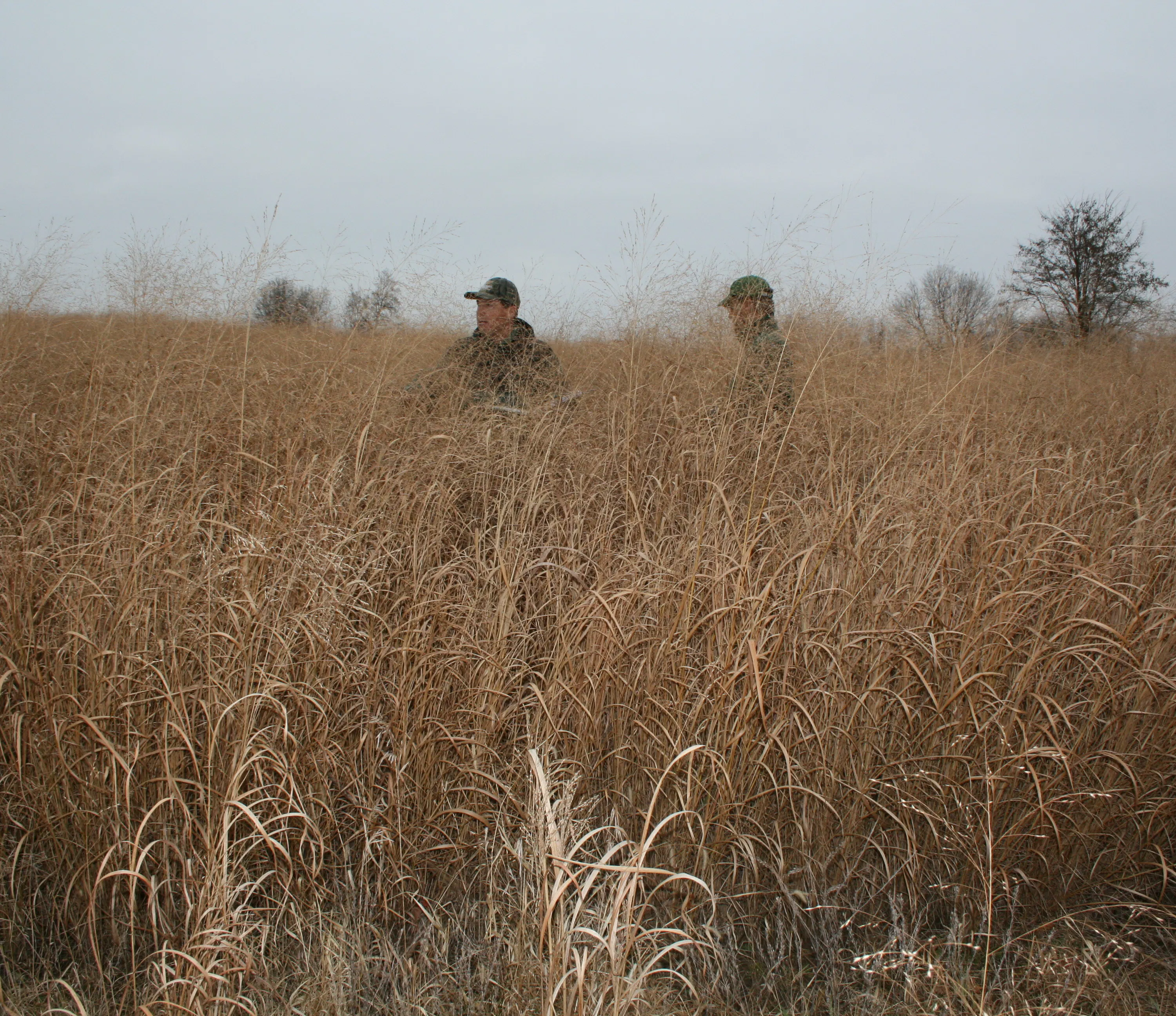
In this episode of High Theory, Karl Dudman tells us about the Cooperative Extension System. Formed in 1914 as an extension of the Land Grant University system in the United States, the Cooperative Extension System is an extraordinarily public model of scientific communication. There is an extension officer in every county of the US. The original goal was to transmit academic scientific knowledge on agriculture to America’s farmers, but the program’s remit has expanded over the past hundred years. And it varies widely from place to place. You might go to an extension office to test the soil of your rose bed, to find a food pantry, or attend a kids exercise class. You might also have a conversation about climate change. In the full version of our conversation, Karl discussed the National Extension Climate Initiative which aims to unite climate change education and research across the cooperative extension system and Christopher Henke’s book, Cultivating Science, Harvesting Power: Science and Industrial Agriculture in California (MIT Press, 2008). Karl Dudman is doctoral candidate at the University of Oxford’s Institute for Science, Innovation and Society and a fellow at the Harvard Kennedy School’s Program on Science Technology and Society. He does qualitative research on climate science in the US. His ongoing fieldwork, hosted by the North Carolina State Climate Office, examines how actors within climate science, coastal management and local politics navigate accelerating sea level rise in the context of widespread ambivalence towards the mainstream climate change narrative. Karl is also a photographer, and through his work explores the politics of competing cultural relationships with landscapes, and their subsequent representation. This week’s image is a photograph of two men in a field of tall grass taken November 11, 2008 by Dennis Pennington, Bioenergy Educator, Michigan State University Extension. Learn more about your ad choices. Visit megaphone.fm/adchoices Support our show by becoming a premium member! https://newbooksnetwork.supportingcast.fm/environmental-studies
Ep 49Christopher J. Preston, "Tenacious Beasts: Wildlife Recoveries That Change How We Think about Animals" (MIT Press, 2023)
The news about wildlife is dire—more than 900 species have been wiped off the planet since industrialization. Against this bleak backdrop, however, there are also glimmers of hope and crucial lessons to be learned from animals that have defied global trends toward extinction: bears in Italy, bison in North America, whales in the Atlantic. These populations are back from the brink, some of them in numbers unimaginable in a century. How has this happened? What shifts in thinking did it demand? In crisp, transporting prose, Christopher Preston reveals the mysteries and challenges at the heart of these resurgences. Drawing on compelling personal stories from the researchers, Indigenous people, and activists who know the creatures best, Preston weaves together a gripping narrative of how some species are taking back vital, ecological roles. Each section of the book—farms, prairies, rivers, forests, oceans—offers a philosophical shift in how humans ought to think about animals, passionately advocating for the changes in attitude necessary for wildlife recovery. Tenacious Beasts: Wildlife Recoveries That Change How We Think About Animals (MIT Press, 2023) is quintessential nature writing for the Anthropocene, touching on different facets of ecological restoration from Indigenous knowledge to rewilding practices. More important, perhaps, the book offers a road map—and a measure of hope—for a future in which humans and animals can once again coexist. Christopher J. Preston is a writer and professor based in Missoula, MT. His work at the University of Montana centers on wildlife, technology, and climate change. Christopher has written for The Atlantic, Smithsonian Magazine, Discover, The Conversation, Aeon, Slate.com, Philosophical Salon, the Wall Street Journal, and The BBC. His award-winning book, The Synthetic Age: Outdesigning Evolution, Resurrecting Species, and Reengineering Our World, has been translated into six languages. He gives talks in state parks, libraries, and breweries across Montana to audiences interested in conservation, climate change, and technology. In early 2023, he won an annual award from the International Society for Environmental Ethics for his work as a public philosopher. Callie Smith is a poet and museum educator with a PhD in English. She currently lives in Louisiana. Learn more about your ad choices. Visit megaphone.fm/adchoices Support our show by becoming a premium member! https://newbooksnetwork.supportingcast.fm/environmental-studies
Ep 145Joseph Giacomelli, "Uncertain Climes: Debating Climate Change in Gilded Age America" (U Chicago Press, 2023)
Even people who still refuse to accept the reality of human-induced climate change would have to agree that the topic has become inescapable in the United States in recent decades. But as Joseph Giacomelli shows in Uncertain Climes: Debating Climate Change in Gilded Age America (University of Chicago Press, 2023), this is actually nothing new: as far back as Gilded Age America, climate uncertainty has infused major debates on economic growth and national development. In this ambitious examination of late-nineteenth-century understandings of climate, Giacomelli draws on the work of scientists, foresters, surveyors, and settlers to demonstrate how central the subject was to the emergence of American modernity. Amid constant concerns about volatile weather patterns and the use of natural resources, nineteenth-century Americans developed a multilayered discourse on climate and what it might mean for the nation’s future. Although climate science was still in its nascent stages during the Gilded Age, fears and hopes about climate change animated the overarching political struggles of the time, including expansion into the American West. Giacomelli makes clear that uncertainty was the common theme linking concerns about human-induced climate change with cultural worries about the sustainability of capitalist expansionism in an era remarkably similar to the United States’ unsettled present. Joseph Giacomelli is Assistant Professor of Environmental History at Duke Kunshan University. Brian Hamilton is chair of the History and Social Science Department at Deerfield Academy. Twitter. Website. Learn more about your ad choices. Visit megaphone.fm/adchoices Support our show by becoming a premium member! https://newbooksnetwork.supportingcast.fm/environmental-studies
Ep 174Gender and Climate Change Adaptation in Bangladesh
What does climate change adaptation look like in Bangladesh? And what kind of gendered social landscape does climate change adaptation have to navigate in Bangladesh? Bangladesh is among the countries most at risk from the negative consequences, and often spoken of as ground zero of climate change. In recent years, more attention has been devoted to grappling with the question of how gender intersects with climate change and adaptation. In this episode Kenneth Bo Nielsen is joined by Kathinka Fossum Evertsen to discuss these questions and more, as we focus on gender and climate change adaptation in Bangladesh. Kathinka Fossum Evertsen is a Senior Research Fellow at the Institue for Social Research. Her research interests include questions of migration, gender, and climate change, as well as the politics that shape how these issues are understood and how they intersect. Kenneth Bo Nielsen is an Associate Professor at the dept. of Social Anthropology at the University of Oslo and one of the leaders of the Norwegian Network for Asian Studies. The Nordic Asia Podcast is a collaboration sharing expertise on Asia across the Nordic region, brought to you by the Nordic Institute of Asian Studies (NIAS) based at the University of Copenhagen, along with our academic partners: the Centre for East Asian Studies at the University of Turku, and Asianettverket at the University of Oslo. We aim to produce timely, topical and well-edited discussions of new research and developments about Asia. About NIAS: www.nias.ku.dk Transcripts of the Nordic Asia Podcasts: https://www.nias.ku.dk/nordic-asia-podcast Learn more about your ad choices. Visit megaphone.fm/adchoices Support our show by becoming a premium member! https://newbooksnetwork.supportingcast.fm/environmental-studies
Ep 86Wake Smith, "Pandora's Toolbox: The Hopes and Hazards of Climate Intervention" (Cambridge UP, 2022)
Reaching net zero emissions will not be the end of the climate struggle, but only the end of the beginning. For centuries thereafter, temperatures will remain elevated; climate damages will continue to accrue and sea levels will continue to rise. Even the urgent and utterly essential task of reaching net zero cannot be achieved rapidly by emissions reductions alone. To hasten net zero and minimize climate damages thereafter, we will also need massive carbon removal and storage. We may even need to reduce incoming solar radiation in order to lower unacceptably high temperatures. Such unproven and potentially risky climate interventions raise mind-blowing questions of governance and ethics. Wake Smith's book Pandora's Toolbox: The Hopes and Hazards of Climate Intervention (Cambridge UP, 2022) offers readers an accessible and authoritative introduction to both the hopes and hazards of some of humanity's most controversial technologies, which may nevertheless provide the key to saving our world. Bryan Toepfer, AIA, NCARB, CAPM is the Principal Architect for TOEPFER Architecture, PLLC, an Architecture firm specializing in Residential Architecture and Virtual Reality. Learn more about your ad choices. Visit megaphone.fm/adchoices Support our show by becoming a premium member! https://newbooksnetwork.supportingcast.fm/environmental-studies
Ep 46Winning & Losing in the Emerging EV Wars/The Aftershocks of the EV Transition Could Be Ugly
Robert Charette, engineer, consultant, and contributing editor at IEEE Spectrum magazine, talks about his twelve-part series, “The Electric Vehicle Transition Explained,” with Peoples & Things host, Lee Vinsel. The series takes a systems perspective on electric vehicles, and talks about all of the potential barriers – from a lack of minerals, to stressing out the electricity grid, to being short on consumers or workers – that face EVs, which are too often cast as a climate change cure-all. Charette and Vinsel also talk about the kinds of thinking that are necessary if we are to have realistic policies around EVs. Lee Vinsel is an associate professor in the Department of Science, Technology and Society at Virginia Tech. Learn more about your ad choices. Visit megaphone.fm/adchoices Support our show by becoming a premium member! https://newbooksnetwork.supportingcast.fm/environmental-studies
Ep 13Sara Rich, "Mushroom" (Bloomsbury, 2022)
They are the things we step on without noticing and the largest organisms on Earth. They are symbols of inexplicable growth and excruciating misery. They are grouped with plants, but they behave more like animals. In their inscrutability, mushrooms are wondrous organisms. Mushroom (Bloomsbury, 2023) by Dr. Sara Rich explores the ordinary object of mushroom, one whose encounters with humans are usually limited to a couple of species prepackaged at the grocery store. This book presents these objects as the firmament for life as we know it, enablers of mystical traditions, menders of minds lost to depression. But it acknowledges, too, that this firmament only exists because of death and rot. Rummaging through philosophical, literary, medical, ecological, and anthropological texts only serves to confirm what the average forager already knows: that mushrooms are to be regarded with a reverence deserving of only the most powerful entities: those who create and destroy, and thrive on both. Dr. Sara Rich has also been interviewed on the New Books Network about her previous book Shipwreck Hauntography, see that episode here. This interview was conducted by Dr. Miranda Melcher whose doctoral work focused on post-conflict military integration, understanding treaty negotiation and implementation in civil war contexts, with qualitative analysis of the Angolan and Mozambican civil wars. Learn more about your ad choices. Visit megaphone.fm/adchoices Support our show by becoming a premium member! https://newbooksnetwork.supportingcast.fm/environmental-studies
Ep 124Adam Sowards, "Making America's Public Lands: The Contested History of Conservation on Federal Lands" (Rowman & Littlefield, 2022)
Over one quarter - some 640 million acres - of the United States consists of public land owned, not privately, but by the federal government, much of it in the American West. University of Idaho professor emeritus of history Adam Sowards explains why in his new book, Making America's Public Lands: The Contested History of Conservation on Federal Lands (Rowman and Littlefield, 2022). Sowards explains the origins of the concept of public land and how the idea has come into conflict with American's adoration for private property, as well as how different stakeholders have come into conflict over the proper use of resources on these lands. From ranching and timber cutting to tourism and wilderness, the US government has attempted to make public lands fulfill several different roles, and in doing so have turned them into something of a political football over the course of the twentieth century. But, as Sowards argues, by being such a malleable, egalitarian, and controversial project, they have come to represent the hope and inconsistencies within American democracy itself. Dr. Stephen R. Hausmann is an assistant professor of history at the University of St. Thomas in Minnesota. Learn more about your ad choices. Visit megaphone.fm/adchoices Support our show by becoming a premium member! https://newbooksnetwork.supportingcast.fm/environmental-studies
Ep 124Adam Sowards, "Making America's Public Lands: The Contested History of Conservation on Federal Lands" (Rowman & Littlefield, 2022)
Over one quarter - some 640 million acres - of the United States consists of public land owned, not privately, but by the federal government, much of it in the American West. University of Idaho professor emeritus of history Adam Sowards explains why in his new book, Making America's Public Lands: The Contested History of Conservation on Federal Lands (Rowman and Littlefield, 2022). Sowards explains the origins of the concept of public land and how the idea has come into conflict with American's adoration for private property, as well as how different stakeholders have come into conflict over the proper use of resources on these lands. From ranching and timber cutting to tourism and wilderness, the US government has attempted to make public lands fulfill several different roles, and in doing so have turned them into something of a political football over the course of the twentieth century. But, as Sowards argues, by being such a malleable, egalitarian, and controversial project, they have come to represent the hope and inconsistencies within American democracy itself. Dr. Stephen R. Hausmann is an assistant professor of history at the University of St. Thomas in Minnesota. Learn more about your ad choices. Visit megaphone.fm/adchoices Support our show by becoming a premium member! https://newbooksnetwork.supportingcast.fm/environmental-studies
Ep 61Seeing Truth in the Climate Crisis
Feeling bad about the environment? You should. Artist Alexis Rockman talks about his art, the potential for real change, and his ongoing relationship with the American Museum of Natural History. Learn more about the Seeing Truth exhibition at our website. Follow us on Twitter @WhyArguePod and on Instagram @WhyWeArguePod Alexis L. Boylan is the director of academic affairs of the University of Connecticut Humanities Institute (UCHI) and an associate professor with a joint appointment in the Art and Art History Department and the Africana Studies Institute Learn more about your ad choices. Visit megaphone.fm/adchoices Support our show by becoming a premium member! https://newbooksnetwork.supportingcast.fm/environmental-studies
Ep 84Brian Tokar and Tamra Gilbertson, "Climate Justice and Community Renewal: Resistance and Grassroots Solutions" (Routledge, 2020)
Brian Tokar and Tamra Gilbertson's book Climate Justice and Community Renewal: Resistance and Grassroots Solutions (Routledge, 2020) brings together the voices of people from five continents who live, work, and research on the front lines of climate resistance and renewal. The many contributors to this volume explore the impacts of extreme weather events in Africa, the Caribbean and on Pacific islands, experiences of life-long defenders of the land and forests in Brazil, India, Indonesia, and eastern Canada, and efforts to halt the expansion of fossil-fuel infrastructure from North America to South Africa. They offer various perspectives on how a just transition toward a fossil-free economy can take shape, as they share efforts to protect water resources, better feed their communities, and implement new approaches to urban policy and energy democracy. Climate Justice and Community Renewal uniquely highlights the accounts of people who are directly engaged in local climate struggles and community renewal efforts, including on-the-ground land defenders, community organizers, leaders of international campaigns, agroecologists, activist-scholars, and many others. It will appeal to students, researchers, activists, and all who appreciate the need for a truly justice-centered response to escalating climate disruptions. Bryan Toepfer, AIA, NCARB, CAPM is the Principal Architect for TOEPFER Architecture, PLLC, an Architecture firm specializing in Residential Architecture and Virtual Reality. Learn more about your ad choices. Visit megaphone.fm/adchoices Support our show by becoming a premium member! https://newbooksnetwork.supportingcast.fm/environmental-studies
Ep 250Ezra Rashkow, "The Nature of Endangerment in India: Tigers, 'Tribes', Extermination and Conservation, 1818-2020" (Oxford UP, 2023)
Perhaps no category of people on earth has been perceived as more endangered, nor subjected to more preservation efforts, than indigenous peoples. And in India, calls for the conservation of Adivasi culture have often reached a fever pitch, especially amongst urban middle-class activists and global civil society groups. But are India’s ‘tribes’ really endangered? Do they face extinction? And is this threat somehow comparable to the threat of extinction facing tigers and other wildlife? Combining years of fieldwork and archival research with intensive theoretical interrogations, Ezra Rashkow's book The Nature of Endangerment in India: Tigers, 'Tribes', Extermination and Conservation, 1818-2020 (Oxford UP, 2023) offers a global intellectual history of efforts to ‘protect’ indigenous peoples and their cultures, usually from above. It also offers a critique of the activist impulse to cry ‘Save the tigers!’ and ‘Save the tribes!’ together in the same breath. It is not a history or an ethnography of the tribes of India but rather a history of discourses—including Adivasis’ own—about what is perceived to be the fundamental question for nearly all indigenous peoples in the modern world: the question of survival. Examining views of interlinking biological and cultural (or biocultural) diversity loss in western and central India—particularly in regard to Bhil and Gond communities facing not only conservation and development-induced displacement but also dehumanizing animal analogies comparing endangered tigers and tribes—the book problematizes the long history of human endangerment and extinction discourse. In doing so, it shows that fears of tribal extinction actually predated scientific awareness of the extinction of non-human species. Only by confronting this history can we begin to decolonize this discourse. Raj Balkaran is a scholar of Sanskrit narrative texts. He teaches at the Oxford Centre for Hindu Studies and at his own virtual School of Indian Wisdom. For information see rajbalkaran.com. Learn more about your ad choices. Visit megaphone.fm/adchoices Support our show by becoming a premium member! https://newbooksnetwork.supportingcast.fm/environmental-studies

Ep 4Book Chat: Oceanic Writing
In this episode, our host, Ti-han Chang, conducted an interview chat with the ecowriter, Liao Hung-chi about his oceanic and cetacean writings. The interview covers the writer's view on the oceanic narrative formation in Taiwan, his perspective on non-human agency and Hokkien (Hoklo) language employment in literary writing, as well as his dedication in Pacific ocean conservation. The interviewed is conducted in Chinese and translated by Zhan Fe-fei in English, hence tailored to both English and Chinese audience. Learn more about your ad choices. Visit megaphone.fm/adchoices Support our show by becoming a premium member! https://newbooksnetwork.supportingcast.fm/environmental-studies
Ep 60Seeing Truth in the Lab
Max Liboiron founder of Environmental Action Research (CLEAR), a feminist, anti-colonial laboratory talks about making better science and how they aren’t interested in dismantling the masters house (because who cares about that place) but they definitely are taking those tools. Learn more about the Seeing Truth exhibition at our website. Follow us on Twitter @WhyArguePod and on Instagram @WhyWeArguePod Alexis L. Boylan is the director of academic affairs of the University of Connecticut Humanities Institute (UCHI) and an associate professor with a joint appointment in the Art and Art History Department and the Africana Studies Institute Learn more about your ad choices. Visit megaphone.fm/adchoices Support our show by becoming a premium member! https://newbooksnetwork.supportingcast.fm/environmental-studies

Ep 3Film Chat: "Whale Island" (2020)
In this episode, our host, Ti-han Chang, conducted an interview chat with the film director, Huang Chia-chu about his making of the eco-film, Whale Island (2020). The interview covers the Director's engagement with this amazing project to tell a "sea story" of Taiwan, his encountering with the writer, Liao Hung-chi and the photographer, Jin Lai, his choice of film translated title as well as movie soundtracks. The interviewed is conducted in Chinese and translated by Zhan Fe-fei in English, hence tailored to both English and Chinese audience. Learn more about your ad choices. Visit megaphone.fm/adchoices Support our show by becoming a premium member! https://newbooksnetwork.supportingcast.fm/environmental-studies
Ep 144William Carruthers, "Flooded Pasts: UNESCO, Nubia, and the Recolonization of Archaeology" (Cornell UP, 2022)
Flooded Pasts: UNESCO, Nubia, and the Recolonization of Archaeology (Cornell UP, 2022) examines a world famous yet critically underexamined event—UNESCO's International Campaign to Save the Monuments of Nubia (1960–80)—to show how the project, its genealogy, and its aftermath not only propelled archaeology into the postwar world but also helped to "recolonize" it. In this book, William Carruthers asks how postwar decolonization took shape and what role a colonial discipline like archaeology—forged in the crucible of imperialism—played as the "new nations" asserted themselves in the face of the global Cold War. As the Aswan High Dam became the centerpiece of Gamal Abdel Nasser's Egyptian revolution, the Nubian campaign sought to salvage and preserve ancient temples and archaeological sites from the new barrage's floodwaters. Conducted in the neighboring regions of Egyptian and Sudanese Nubia, the project built on years of Nubian archaeological work conducted under British occupation and influence. During that process, the campaign drew on the scientific racism that guided those earlier surveys, helping to consign Nubians themselves to state-led resettlement and modernization programs, even as UNESCO created a picturesque archaeological landscape fit for global media and tourist consumption. Flooded Pasts describes how colonial archaeological and anthropological practices—and particularly their archival and documentary manifestations—created an ancient Nubia severed from the region's population. As a result, the Nubian campaign not only became fundamental to the creation of UNESCO's 1972 World Heritage Convention but also exposed questions about the goals of archaeology and heritage and whether the colonial origins of these fields will ever be overcome. Learn more about your ad choices. Visit megaphone.fm/adchoices Support our show by becoming a premium member! https://newbooksnetwork.supportingcast.fm/environmental-studies
Ep 100Nuclear Ghosts: Ryo Morimoto (EF, JP)
John and Elizabeth, in this special Centennial episode of Recall this Book, explore spectral radiation with Ryo Morimoto, Assistant Professor of Anthropology at Princeton University. His new book Nuclear Ghost: Atomic Livelihoods in Fukushima's Grey Zone (University of California Press, 2023) is based on several years of fieldwork in coastal Fukushima after the triple disaster of earthquake, tsunami, and nuclear accident. Ryo's book shows how residents of the region live with and through the "nuclear ghost" that resides with them. The trio discuss ways that residents acclimatize themselves to the presence of radiation, efforts to live their lives in ways not only shaped by catastrophe and irradiation, and the Geiger counter as a critical object. Ryo relates the astonishing--but when you stop to think unsurprising—fact that "once you have [a Geiger counter] you actually want to see higher scores." Mentioned in this episode: Paul Saint-Amour, Tense Future Arkady and Boris Strugatsky Roadside Picnic Tarkovksy, Stalker (the film) Stalker (the video game) Haruki Murakami 1Q84 Pat Barker The Ghost Road Read the episode here Learn more about your ad choices. Visit megaphone.fm/adchoices Support our show by becoming a premium member! https://newbooksnetwork.supportingcast.fm/environmental-studies
Ep 88Ronald L. Trosper, "Indigenous Economics: Sustaining Peoples and Their Lands" (U Arizona Press, 2022)
What does “development” mean for Indigenous peoples? Indigenous Economics: Sustaining Peoples and Their Lands (U Arizona Press, 2022) lays out an alternative path showing that conscious attention to relationships among humans and the natural world creates flourishing social-ecological economies. Economist Ronald L. Trosper draws on examples from North and South America, Aotearoa/New Zealand, and Australia to argue that Indigenous worldviews centering care and good relationships provide critical and sustainable economic models in a world under increasing pressure from biodiversity loss and climate change. He explains the structure of relational Indigenous economic theory, providing principles based on his own and others’ work with tribal nations and Indigenous communities. Trosper explains how sustainability is created at every level when relational Indigenous economic theory is applied—micro, meso, and macro. Good relationships support personal and community autonomy, replacing the individualism/collectivism dichotomy with relational leadership and entrepreneurship. Basing economies on relationships requires changing governance from the top-down approaches of nation-states and international corporations; instead, each community creates its own territorial relationships, creating plurinational relational states. This book offers an important alternative to classic economic theory. In Indigenous Economics, support for Indigenous communities’ development and Indigenous peoples’ well-being go hand-in-hand. Learn more about your ad choices. Visit megaphone.fm/adchoices Support our show by becoming a premium member! https://newbooksnetwork.supportingcast.fm/environmental-studies
Ep 143David Bond, "Negative Ecologies: Fossil Fuels and the Discovery of the Environment" (U California Press, 2022)
So much of what we know of clean water, clean air, and now a stable climate rests on how fossil fuels first disrupted them. Negative Ecologies: Fossil Fuels and the Discovery of the Environment (U California Press, 2022) is a bold reappraisal of the outsized role fossil fuels have played in making the environment visible, factual, and politically operable in North America. Following stories of hydrocarbon harm that lay the groundwork for environmental science and policy, this book brings into clear focus the dialectic between the negative ecologies of fossil fuels and the ongoing discovery of the environment. Exploring iconic sites of the oil economy, ranging from leaky Caribbean refineries to deepwater oil spills, from the petrochemical fallout of plastics manufacturing to the extractive frontiers of Canada, Negative Ecologies documents the upheavals, injuries, and disasters that have long accompanied fossil fuels and the manner in which our solutions have often been less about confronting the cause than managing the effects. This history of our present promises to re-situate scholarly understandings of fossil fuels and renovate environmental critique today. David Bond challenges us to consider what forms of critical engagement may now be needed to both confront the deleterious properties of fossil fuels and envision ways of living beyond them. David Bond is the Associate Director of the Center for the Advancement of Public Action and teaches on the environment and public action. Trained as an anthropologist, Bond studies oil spills and their imprint on environmental science and governance. His work shows how toxic disruptions can fix vital relations with new forms of knowledge and care. Cody Skahan ([email protected]) is a student in the MA program in Anthropology at the University of Iceland as a Leifur Eriksson Fellow. His work focuses on environmentalism in Iceland, especially the social and political implications of the youth environmentalist movement in an arctic country that has created for itself a façade of being environmentally and socially progressive. More generally, his other interests span anywhere from critical theory, psychoanalysis, queer theory, anarchism, cultural studies, anime, media and applying theory through praxis. Cody has a blog here where he is trying to write more rather than just only read and talk about books. Learn more about your ad choices. Visit megaphone.fm/adchoices Support our show by becoming a premium member! https://newbooksnetwork.supportingcast.fm/environmental-studies
Ep 101Robyn Sloggett and Marcelle Scott, "Climatic and Environmental Threats to Cultural Heritage" (Routledge, 2022)
How can cultural heritage give us the methodological tools and source material to confront climate change? How can the cultural heritage sector lead the way into a future that proactively faces the climate crisis? Who can be involved in this work—who gets to identify as a “cultural heritage expert”—and what is the work to be done? Climatic and Environmental Threats to Cultural Heritage (Routledge, 2022) examines the challenges that environmental change, both sudden and long-term, poses to the preservation of cultural material. But more than this, Robyn Sloggett and Marcelle Scott point out how our confrontation of the climate crisis relies on the cultural heritage sector, which makes records and narratives available to inform decisions now and into the future. Bringing together a diverse range of stakeholders who have an interest in—and responsibility for—the care of cultural heritage material and sites of cultural heritage value, the book explores thinking on and actions in relation to issues of climate change and environmental risk. Sloggett and Scott highlight stakeholders’ shared interest in drawing on collective expertise to meet the challenges that environmental change brings to the future of our cultural heritage and our cultural identity. Based on the understanding that this global challenge requires local, national and international co‐operation, the book also considers how local knowledge can have international application. Jen Hoyer is Technical Services and Electronic Resources Librarian at CUNY New York City College of Technology and a volunteer at Interference Archive. Jen edits for Partnership Journal and organizes with the TPS Collective. She is co-author of What Primary Sources Teach: Lessons for Every Classroom and The Social Movement Archive. Learn more about your ad choices. Visit megaphone.fm/adchoices Support our show by becoming a premium member! https://newbooksnetwork.supportingcast.fm/environmental-studies
Ep 39The Politics of Bicycling
Zack Furness, an associate professor of communications at Penn State Greater Allegheny, talks about his 2010 book, One Less Car: Bicycling and the Politics of Automobility (Temple University Press), with Peoples & Things host, Lee Vinsel. One Less Car examines the history of how bicycles became a tool and object of advocacy and activism. With roots going back 1960s countercultures and growing through punk subcultures and the Critical Mass movement, bicycle activism has been an important focus of environmentalism and countering what Furness calls the “automobile-industrial complex.” Over a wide-ranging conversation, Furness and Vinsel also discuss Furness’s more recent research project on the history of Israeli punk bands. Learn more about your ad choices. Visit megaphone.fm/adchoices Support our show by becoming a premium member! https://newbooksnetwork.supportingcast.fm/environmental-studies
Ep 87Matthew S. Henry, "Hydronarratives: Water, Environmental Justice, and a Just Transition" (U Nebraska Press, 2023)
The story of water in the United States is one of ecosystemic disruption and social injustice. From the Standing Rock Indian Reservation and Flint, Michigan, to the Appalachian coal and gas fields and the Gulf Coast, low-income communities, Indigenous communities, and communities of color face the disproportionate effects of floods, droughts, sea level rise, and water contamination. In Hydronarratives: Water, Environmental Justice, and a Just Transition (U Nebraska Press, 2023) Matthew S. Henry examines cultural representations that imagine a just transition, a concept rooted in the U.S. labor and environmental justice movements to describe an alternative economic paradigm predicated on sustainability, economic and social equity, and climate resilience. Focused on regions of water insecurity, from central Arizona to central Appalachia, Henry explores how writers, artists, and activists have creatively responded to intensifying water crises in the United States and argues that narrative and storytelling are critical to environmental and social justice advocacy. By drawing on a wide and comprehensive range of narrative texts, historical documentation, policy papers, and literary and cultural scholarship, Henry presents a timely project that examines the social movement, just transition, and the logic of the Green New Deal, in addition to contemporary visions of environmental justice. Learn more about your ad choices. Visit megaphone.fm/adchoices Support our show by becoming a premium member! https://newbooksnetwork.supportingcast.fm/environmental-studies
Ep 52Brian Lander, "The King's Harvest: A Political Ecology of China from the First Farmers to the First Empire" (Yale UP, 2022)
The King's Harvest: A Political Ecology of China from the First Farmers to the First Empire (Yale UP, 2021) is a multidisciplinary study of the ecology of China's early political systems up to the fall of the first empire in 207 BCE. Brian Lander traces the formation of lowland North China's agricultural systems and the transformation of its plains from diverse forestland and steppes to farmland. He argues that the growth of states in ancient China, and elsewhere, was based on their ability to exploit the labor and resources of those who harnessed photosynthetic energy from domesticated plants and animals. Focusing on the state of Qin, Lander amalgamates abundant new scientific, archaeological, and excavated documentary sources to argue that the human domination of the central Yellow River region, and the rest of the planet, was made possible by the development of complex political structures that managed and expanded agroecosystems. Brian Lander is assistant professor of history at Brown University and a fellow of the Institute at Brown for Environment and Society. Caleb Zakarin is the Assistant Editor of the New Books Network. Learn more about your ad choices. Visit megaphone.fm/adchoices Support our show by becoming a premium member! https://newbooksnetwork.supportingcast.fm/environmental-studies
Ep 142Getting to Net Zero: A Conversation with Christian Arno
Kimon and Richard speak with Christian Arno, founder and CEO of Pawprint, about how companies can effectively achieve sustainability goals. As a young child growing up in Aberdeen, Christian was interested in pursuing entrepreneurship. His first venture was in comic book sales, and his first clients were his parents and schoolmates on the bus. When his father learned more about the finances of Christian’s venture, he shut the enterprise down, an early lesson in “regulation.” For university, Christian attended Oxford, where he studied languages. At around this time, the Dotcom boom began, and Christian created a website advertising translation services. He began to receive customer inquiries, and soon enough, was able to establish a revenue stream from recurrent clients. The most important thing that Christian learned while building Lingo24 was how to take advantage of SEO (search engine optimization). Christian was able to land bigger companies despite a lack of experience. Searchers would find his professionally-created website, purchase services, eventually leading Christian to start hiring employees to accommodate the growing demand. In the 20 years of running the company before exiting, Christian was able to grow Lingo24 to a maximum size of 230 people with a peak revenue of around $50 million in a year. Despite this success, Christian felt it was time to move on to another venture. In the mid-2010s, Christian’s father, formerly an oil and gas entrepreneur, reversed course and became a climate activist with Extinction Rebellion. Through conversations with his father, Christian came to believe that the second act of his career should attempt to address the environmental issues that threaten him, his father, and billions around the world. Christian’s new company is a software platform, Pawprint, that educates, motivates, and aligns employees of companies around sustainable development goals. The CEO of a company signs up, creating accounts for employees. The employees are placed into teams where they compete to reduce their CO2 emissions. The CEO is able to set various financial or non-financial awards for the best-performing employees. Pawprint doesn’t just track the results. It also gives employees various actions and pieces of advice, over 500 in total, to improve their environmental impact. Christian talks about his passion for Pawprint and the excitement of working on project with social impact. His big piece of advice for entrepreneurs: Start doing what you care about as early possible. Don’t wait! Links UN SDGs BCorp movement Unbabel Buys Lingo24 Pawprint About our Hosts: Kimon Fountoukidis: Kimon is the founder of both Argos Multilingual and PMR. He founded both companies in the mid-90s with zero capital, and both have gone on to become market leaders in their respective sectors. Kimon was born in New York and moved to Krakow, Poland in 1993. He is passionate about sharing his success with others and working entrepreneurs of all kinds to help them achieve their goals. Richard Lucas: Richard is a business and social entrepreneur who has founded or invested in more than 30 businesses, including Argos Multilingual, PMR and, in 2020, the New Books Network. Richard has been a TEDx event organiser for years, supports the pro-entrepreneurship ecosystem, and leads entrepreneurship workshops at all levels. He was born in Oxford and moved to Poland in 1991, where continues to invest in promising companies and helps other entrepreneurs realise their dreams. Learn more about your ad choices. Visit megaphone.fm/adchoices Support our show by becoming a premium member! https://newbooksnetwork.supportingcast.fm/environmental-studies
Ep 481Ruth Rogaski, "Knowing Manchuria: Environments, the Senses, and Natural Knowledge on an Asian Borderland" (U Chicago Press, 2022)
Among all the world’s most storied and legend-filled regions, the place known to some over time as ‘Manchuria’ has had an especially wide range of ideas projected onto it. Everyone from Manchu emperors to Chinese exiles, European missionaries, Korean poets, indigenous shamans, Russian botanists, Japanese colonists and socialist planners have sought to know and understand this region, framing its vast forests, mountains, plains and earth according their own political, spiritual or scientific priorities over the past 400 years. Ruth Rogaski’s extraordinary new book Knowing Manchuria: Environments, the Senses, and Natural Knowledge on an Asian Borderland (U Chicago Press, 2022) shows how these acts of knowing have brought multiple Manchurias into existence as people, culture, nature and ecology have been entangled in diverse ways at different points in time. Today, perhaps befitting its status as a contested and layered borderland space, ‘Manchuria’ itself is a contested term, but this only makes Rogaski’s beautifully written multi-perspectival and multilingually-sourced history of this fascinating region all the more valuable. Ed Pulford is an Anthropologist and Lecturer in Chinese Studies at the University of Manchester. His research focuses on friendships and histories between the Chinese, Korean and Russian worlds, and indigeneity in northeast Asia. Learn more about your ad choices. Visit megaphone.fm/adchoices Support our show by becoming a premium member! https://newbooksnetwork.supportingcast.fm/environmental-studies
Ep 79John F. Ahern, "Design with Nature on Cape Cod and the Islands" (U Massachusetts Press, 2022)
Cape Cod and the islands of Martha’s Vineyard and Nantucket are special places known for their distinctive flora, including pine-oak forests, sandplain grasslands, and sand dunes peppered with bearberry shrubs. Unfortunately, this unique sense of place is under threat. In recent decades, contemporary landscape practices have come to depend on environmentally stressful fertilizers and irrigation systems, replacing this sensitive ecoregion’s native flora with generic turfgrasses and popular commercial nursery trees and shrubs that could exist anywhere. Design with Nature on Cape Cod and the Islands (U Massachusetts Press, 2022) seeks to reverse this damaging trend by offering landscape professionals, local officials, and homeowners a sustainable approach to landscape design based on the ecoregion’s native plants and plant communities. Presenting detailed discussions of Cape Cod’s natural history, Jack Ahern focuses on the principal plant communities that define its landscape character and that are well adapted to local soils and growing conditions, including climate change. The book also includes strategies for ecological planting design and a portfolio of photographs of active ecologically designed landscapes. Bryan Toepfer, AIA, NCARB, CAPM is the Principal Architect for TOEPFER Architecture, PLLC, an Architecture firm specializing in Residential Architecture and Virtual Reality. He has authored two books, “Contractors CANNOT Build Your House,” and “Six Months Now, ARCHITECT for Life.” He is an Assistant Professor at Alfred State College and has served as the Director of Government Affairs and as the Director of Education for the AIA Rochester Board of Directors. Always eager to help anyone understand the world of Architecture, he hosts the New Books Network – Architecture podcast, is an NCARB Licensing Advisor and helps coach candidates taking the Architectural Registration Exam. btoepfer@toepferarchitecture Learn more about your ad choices. Visit megaphone.fm/adchoices Support our show by becoming a premium member! https://newbooksnetwork.supportingcast.fm/environmental-studies
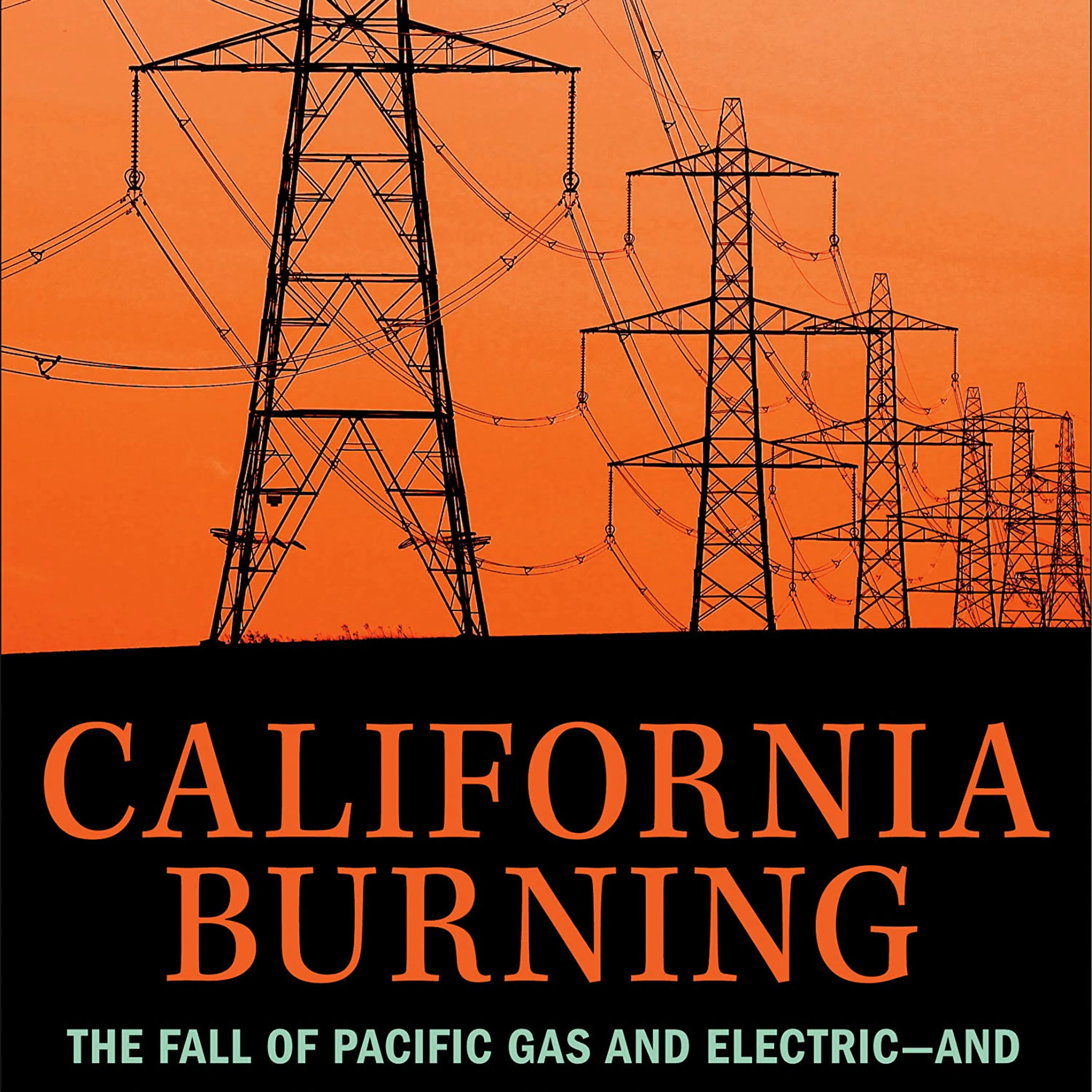
S2 Ep 31How a California Electricity Utility Caused Deadly Wildfires
Journalist Katherine Blunt, who writes about renewable energy and utilities for the Wall Street Journal, talks about her new book, California Burning: The Fall of Pacific Gas and Electric—and What It Means for America’s Power Grid with Peoples & Things host, Lee Vinsel. The book tells the fascinating story of how declining performance at an electrical utility eventually led to wildfires and staggering loss of human life. Blunt and Vinsel also talk about what this story means for the future of electricity utilities in the face of global climate change. Learn more about your ad choices. Visit megaphone.fm/adchoices Support our show by becoming a premium member! https://newbooksnetwork.supportingcast.fm/environmental-studies
Ep 30“Tech” Journalism and the Many Lives of Stewart Brand
Journalist John Markoff has been writing about Silicon Valley for over forty years. In this interview with Peoples & Things host Lee Vinsel, Markoff talks about his long career, how he became a “tech journalist” long before that term even existed, and how he came to write his new book, Whole Earth: The Many Lives of Stewart Brand. Markoff and Vinsel also talk about how Brand’s life is interwoven with the history of Silicon Valley and the technology its companies have made. Learn more about your ad choices. Visit megaphone.fm/adchoices Support our show by becoming a premium member! https://newbooksnetwork.supportingcast.fm/environmental-studies
Ep 56Philip Gooding, "On the Frontiers of the Indian Ocean World: A History of Lake Tanganyika, c.1830-1890" (Cambridge UP, 2022)
On the Frontiers of the Indian Ocean World: A History of Lake Tanganyika, c.1830-1890 (Cambridge UP, 2022) is the first interdisciplinary history of Lake Tanganyika and of eastern Africa's relationship with the wider Indian Ocean World during the nineteenth century. Philip Gooding deploys diverse source materials, including oral, climatological, anthropological, and archaeological sources, to ground interpretations of the better-known, European-authored archive in local epistemologies and understandings of the past. Gooding shows that Lake Tanganyika's shape, location, and distinctive lacustrine environment contributed to phenomena traditionally associated with the history of the wider Indian Ocean World being negotiated, contested, and re-imagined in particularly robust ways. He adds novel contributions to African and Indian Ocean histories of urbanism, the environment, spirituality, kinship, commerce, consumption, material culture, bondage, slavery, Islam, and capitalism. African peoples and environments are positioned as central to the histories of global economies, religions, and cultures. Philip Gooding is a postdoctoral fellow at the Indian Ocean World Centre and a course Lecturer in the History and Classical Studies department at McGill University. He wrote his doctoral dissertation at the Department of History, University of London (SOAS) in 2017. Gargi Binju is a researcher at the University of Tübingen. Learn more about your ad choices. Visit megaphone.fm/adchoices Support our show by becoming a premium member! https://newbooksnetwork.supportingcast.fm/environmental-studies
Ep 352Christiaan De Beukelaer, "Trade Winds: A Sailing Voyage to a Sustainable Future for Shipping" (Manchester UP, 2023)
How can we build greener infrastructure in the face of the global climate emergency? In Trade Winds: A Sailing Voyage to a Sustainable Future for Shipping (Manchester UP, 2023), Christiaan De Beukelaer, a Senior Lecturer in Arts and Cultural Management at the University of Melbourne intertwines an depth analysis of modern shipping, with a memoir of being aboard a sailing ship during the 2020 pandemic. The book is a fascinating read, with both an extensive critique of the failures of the global shipping and trade system to be sustainable, as well as offering moving insights into a unique experience of a very different form of 2020’s lockdown. Concluding with both the return to land, and a detailed consideration of how shipping, trade, and the world might adapt to the climate crisis, the book is essential reading for anyone interested in a sustainable future for the planet. Dave O'Brien is Professor of Cultural and Creative Industries, at the University of Sheffield. Learn more about your ad choices. Visit megaphone.fm/adchoices Support our show by becoming a premium member! https://newbooksnetwork.supportingcast.fm/environmental-studies
Ep 140Emily Strasser, "Half-Life of a Secret: Reckoning with a Hidden History" (UP of Kentucky, 2023)
In 1942, the US government began construction on a sixty-thousand-acre planned community named Oak Ridge in a rural area west of Knoxville, Tennessee. Unmarked on regional maps, Oak Ridge attracted more than seventy thousand people eager for high-paying wartime jobs. Among them was author Emily Strasser's grandfather George, a chemist. All employees—from scientists to secretaries, from military personnel to construction workers—were restricted by the tightest security. They were provided only the minimum information necessary to perform their jobs. It wasn't until three years later that the citizens of Oak Ridge, and the rest of the world, learned the true purpose of the local industry. Oak Ridge was one of three secret cities constructed by the Manhattan Project for the express purpose of developing the first atomic bomb, which devastated Hiroshima on August 6, 1945. In Half-Life of a Secret: Reckoning with a Hidden History (UP of Kentucky, 2023), Emily Strasser exposes the toxic legacy—political, environmental, and personal—that forever polluted her family, a community, the nation, and the world. Sifting through archives and family memories, and traveling to the deserts of Nevada and the living rooms of Hiroshima, she grapples with the far-reaching ramifications of her grandfather's work. She learns that during the three decades he spent building nuclear weapons, George suffered from increasingly debilitating mental illness. Returning to Oak Ridge, Strasser confronts the widespread contamination resulting from nuclear weapons production and the government's disregard for its impact on the environment and public health. With brilliant insight, she reveals the intersections between the culture of secrecy in her family and the institutionalized secrecy within the nuclear industry, which persists, with grave consequences, to this day. Emily Strasser: Emily Strasser is a writer based in Minneapolis, Minnesota. She received her MFA in nonfiction from the University of Minnesota. Her work has appeared in Catapult, Ploughshares, Guernica, Colorado Review, The Bitter Southerner, The Bulletin of Atomic Scientists, Gulf Coast, and Tricycle, among others, and she was the presenter of the BBC podcast “The Bomb.” Her essays have been named notable in Best American Essays 2016 and 2017 and nominated for a Pushcart Prize. She was a winner of the 2015 Ploughshares Emerging Writer’s Contest, a 2016 AWP Intro Award, a 2016 Minnesota State Arts Board Artist’s Initiative Grant, and the 2016 W.K. Rose Fellowship from Vassar College. She served as a 2018-19 Olive B. O’Connor Fellow in Creative Writing at Colgate University and a 2019 McKnight Writing Fellow. Cody Skahan ([email protected]) is a student in the MA program in Anthropology at the University of Iceland as a Leifur Eriksson Fellow. His work focuses on environmentalism in Iceland, especially the social and political implications of the youth environmentalist movement in an arctic country that has created for itself a façade of being environmentally and socially progressive. More generally, his other interests span anywhere from critical theory, psychoanalysis, anarchism, cultural studies, anime, and applying theory through praxis. Cody has a blog where he is trying to write more rather than just only read and talk about books. Learn more about your ad choices. Visit megaphone.fm/adchoices Support our show by becoming a premium member! https://newbooksnetwork.supportingcast.fm/environmental-studies
Ep 1295Spencer D. Segalla, "Empire and Catastrophe: Decolonization and Environmental Disaster in North Africa and Mediterranean France since 1954" (U Nebraska Press, 2021)
Spencer Segalla’s Empire and Catastrophe: Decolonization and Environmental Disaster in North Africa and Mediterranean France since 1954 (U Nebraska Press, 2021) explores natural and anthropogenic disasters during the years of decolonization and Cold War. Four disasters make up the core of the book: the 1954 earthquake in Algeria’s Chélif Valley, just weeks before the onset of the Algerian Revolution; a mass poisoning in Morocco in 1959 caused by toxic substances from an American military base; the 1959 Malpasset dam collapse in Fréjus, France, which devastated the Algerian immigrant community in the town but which was blamed on Algerian sabotage; and the 1960 earthquake in Agadir, Morocco, which set off a public relations war between the United States, France, and the Soviet Union, and which ignited a Moroccan national debate over modernity, identity, architecture, and urban planning. Spencer Segalla argues for the integration of environmental events into narratives of political and cultural decolonization. Empire and Catastrophe will interest environmental historians, North Africa area studies specialists, and historians of France and French imperialism. Empire and Catastrophe: Decolonization and Environmental Disaster in North Africa and Mediterranean France since 1954 is available open access online for no charge. Dr. Segalla, professor of history at the University of Tampa, completed his Ph.D. at Stonybrook in 2003. In addition to Empire and Catastrophe, he has published The Moroccan Soul: French Education, Colonial Ethnology, and Muslim Resistance, 1912-1956 with the University of Nebraska Press in 2009. Michael G. Vann is a professor of world history at California State University, Sacramento. A specialist in imperialism and the Cold War in Southeast Asia, he is the author of The Great Hanoi Rat Hunt: Empires, Disease, and Modernity in French Colonial Vietnam (Oxford University Press, 2018). When he’s not reading or talking about new books with smart people, Mike can be found surfing in Santa Cruz, California. Learn more about your ad choices. Visit megaphone.fm/adchoices Support our show by becoming a premium member! https://newbooksnetwork.supportingcast.fm/environmental-studies
Ep 131Iza Ding, "The Performative State: Public Scrutiny and Environmental Governance in China" (Cornell UP, 2022)
What does the state do when public expectations exceed its governing capacity? The Performative State: Public Scrutiny and Environmental Governance in China (Cornell, 2022) shows how the state can shape public perceptions and defuse crises through the theatrical deployment of language, symbols, and gestures of good governance—performative governance. Iza Ding unpacks the black box of street-level bureaucracy in China through ethnographic participation, in-depth interviews, and public opinion surveys. She demonstrates in vivid detail how China's environmental bureaucrats deal with intense public scrutiny over pollution when they lack the authority to actually improve the physical environment. They assuage public outrage by appearing responsive, benevolent, and humble. But performative governance is hard work. Environmental bureaucrats paradoxically work themselves to exhaustion even when they cannot effectively implement environmental policies. Instead of achieving "performance legitimacy" by delivering material improvements, the state can shape public opinion through the theatrical performance of goodwill and sincere effort. The Performative State also explains when performative governance fails at impressing its audience and when governance becomes less performative and more substantive. Ding focuses on Chinese evidence but her theory travels: comparisons with Vietnam and the United States show that all states, democratic and authoritarian alike, engage in performative governance. Iza Ding is an Assistant Professor in the Political Science Department at the University of Pittsburgh. She received her PhD from Harvard University. Her work has appeared in World Politics, the China Quarterly, Comparative Political Studies, and other academic journals. Peter Lorentzen is economics professor at the University of San Francisco. He heads USF's Applied Economics Master's program, which focuses on the digital economy. His research is mainly on China's political economy. Learn more about your ad choices. Visit megaphone.fm/adchoices Support our show by becoming a premium member! https://newbooksnetwork.supportingcast.fm/environmental-studies
Ep 354J. Brent Morris, "Dismal Freedom: A History of the Maroons of the Great Dismal Swamp" (UNC Press, 2022)
The massive and foreboding Great Dismal Swamp sprawls over 2,000 square miles and spills over parts of Virginia and North Carolina. From the early seventeenth century, the nearly impassable Dismal frustrated settlement. However, what may have been an impediment to the expansion of slave society became an essential sanctuary for many of those who sought to escape it. In the depths of the Dismal, thousands of maroons--people who had emancipated themselves from enslavement and settled beyond the reach of enslavers--established new lives of freedom in a landscape deemed worthless and inaccessible by whites. Dismal Freedom: A History of the Maroons of the Great Dismal Swamp (UNC Press, 2022) is the first book to fully examine the lives of these maroons and their struggles for liberation. Drawing from newly discovered primary sources and archeological evidence that suggests far more extensive maroon settlement than historians have previously imagined, award-winning author J. Brent Morris uncovers one of the most exciting yet neglected stories of American history. This is the story of resilient, proud, and determined people of color who made the Great Dismal Swamp their free home and sanctuary and who played an outsized role in undermining slavery through the Civil War. Adam McNeil is a Ph.D. Candidate in History at Rutgers, the State University of New Jersey. Learn more about your ad choices. Visit megaphone.fm/adchoices Support our show by becoming a premium member! https://newbooksnetwork.supportingcast.fm/environmental-studies
Ep 47Corey Lee Wrenn, "Animals in Irish Society: Interspecies Oppression and Vegan Liberation in Britain's First Colony" (SUNY Press, 2021)
Irish vegan studies are poised for increasing relevance as climate change threatens the legitimacy and longevity of animal agriculture and widespread health problems related to animal product consumption disrupt long held nutritional ideologies. Already a top producer of greenhouse gas emissions in the European Union, Ireland has committed to expanding animal agriculture despite impending crisis. The nexus of climate change, public health, and animal welfare present a challenge to the hegemony of the Irish state and neoliberal European governance. Efforts to resist animal rights and environmentalism highlight the struggle to sustain economic structures of inequality in a society caught between a colonialist past and a globalized future. Animals in Irish Society: Interspecies Oppression and Vegan Liberation in Britain's First Colony (SUNY Press, 2021) explores the vegan Irish epistemology, one that can be traced along its history of animism, agrarianism, ascendency, adaptation, and activism. From its zoomorphic pagan roots to its legacy of vegetarianism, Ireland has been more receptive to the interests of other animals than is currently acknowledged. More than a land of "meat" and potatoes, Ireland is a relevant, if overlooked, contributor to Western vegan thought. Corey Lee Wrenn is Lecturer in Sociology at the University of Kent. She is the author of several books, including A Rational Approach to Animal Rights: Extensions in Abolitionist Theory (Palgrave Macmillan, 2016) and Piecemeal Protest: Animal Rights in the Age of Nonprofits (University of Michigan Press, 2019). Kyle Johannsen is a philosophy instructor at Trent University and Wilfrid Laurier University. His most recent book is Wild Animal Ethics: The Moral and Political Problem of Wild Animal Suffering (Routledge, 2021). Learn more about your ad choices. Visit megaphone.fm/adchoices Support our show by becoming a premium member! https://newbooksnetwork.supportingcast.fm/environmental-studies