New Books in Communications
1,942 episodes — Page 17 of 39
Ep 122Life at the London Review of Books
Anthony Wilks discusses his career heading up audio-visual projects for the London Review of Books. He tells the story of his winding career, in addition to some great musings about the future of the greater book world. Anthony Wilks is head of audio and video at the London Review of Books. Caleb Zakarin is the Assistant Editor of the New Books Network. Learn more about your ad choices. Visit megaphone.fm/adchoices Support our show by becoming a premium member! https://newbooksnetwork.supportingcast.fm/communications
Ep 382Jen Ross, "Digital Futures for Learning: Speculative Methods and Pedagogies" (Routledge, 2022)
What is the future of education? In Digital Futures for Learning: Speculative Methods and Pedagogies (Routledge, 2022), Jen Ross, a senior lecturer in digital education at the University of Edinburgh, analyses the way ideas about the future are produced and become accepted in education (and in society). This analysis is the basis for offering radical alternatives. In the educational context, the book reflects on four research projects that demonstrate the power of particular approaches- speculative methods- to engaging with digital pedagogy and research. The book has a rich theoretical engagement with a range of social and educational theory, as well as giving detailed practical guidance for educators. The detailed guidance for researchers and teachers who want to make alternative digital futures make the book essential reading for anyone interested in the future of education. Dave O'Brien is Professor of Cultural and Creative Industries, at the University of Sheffield. Learn more about your ad choices. Visit megaphone.fm/adchoices Support our show by becoming a premium member! https://newbooksnetwork.supportingcast.fm/communications
Ep 96You Are Here: A Field Guide for Navigating Polarized Speech, Conspiracy Theories, and Our Polluted Media Landscape
Writer and educator Marcus Gilroy-Ware (After the Fact?, Filling the Void) speaks with Whitney Phillips and Ryan M. Milner about their new book You Are Here. Our media environment is in crisis. Polarization is rampant. Polluted information floods social media. Even our best efforts to help clean up can backfire, sending toxins roaring across the landscape. In You Are Here, Whitney Phillips and Ryan Milner offer strategies for navigating increasingly treacherous information flows. Using ecological metaphors, they emphasize how our individual me is entwined within a much larger we, and how everyone fits within an ever-shifting network map. Phillips and Milner describe how our poisoned media landscape came into being, beginning with the Satanic Panics of the 1980s and 1990s—which, they say, exemplify “network climate change”—and proceeding through the emergence of trolling culture and the rise of the reactionary far right (as well as its amplification by journalists) during and after the 2016 election. They explore the history of conspiracy theories in the United States, focusing on those concerning the Deep State; explain why old media literacy solutions fail to solve new media literacy problems; and suggest how we can navigate the network crisis more thoughtfully, effectively, and ethically. We need a network ethics that looks beyond the messages and the messengers to investigate toxic information's downstream effects. Produced by Sam Kelly; Mixed by Samantha Doyle; Soundtrack by Kristen Gallerneaux Learn more about your ad choices. Visit megaphone.fm/adchoices Support our show by becoming a premium member! https://newbooksnetwork.supportingcast.fm/communications
Ep 120Nick Enfield on Language, Influence, and Science Communications
Listen to this interview of Nick Enfield, Professor of Linguistics at the University of Sydney for Language Research and the Sydney Initiative for Truth. We talk about communication as you think it is and also, about communication as it really is. Enfield is the author of Language vs. Reality: Why Language Is Good for Lawyers and Bad for Scientists (MIT Press, 2022). Nick Enfield : "Every scientist does need to be mindful of the power of language to influence — because we always are influencing people when we use language — that is just foundationally what all communication is: influencing other people. But because reality is so important to science — it's ultimately the object of the research — then scientists really have a responsibility to be clear and not to be vague." Learn more about your ad choices. Visit megaphone.fm/adchoices Support our show by becoming a premium member! https://newbooksnetwork.supportingcast.fm/communications
Ep 121Efficient Academic Writing: A Discussion with Mushtaq Bilal
Mushtaq Bilal is an academic, content creator, thought leader, and public intellectual. Mushtaq discusses how he built an audience of more than 185,000 followers on Twitter and more than 30,000 on LinkedIn over the last year by helping to simplify the writing process for early career academics. A must-listen for anyone who is thinking about building a community and an author platform online around their research. Avi Staiman is the founder and CEO of Academic Language Experts . Learn more about your ad choices. Visit megaphone.fm/adchoices Support our show by becoming a premium member! https://newbooksnetwork.supportingcast.fm/communications
Ep 105Kenji Yoshino and David Glasgow, "Say the Right Thing: How to Talk About Identity, Diversity, and Justice" (Atria Books, 2023)
In the current period of social and political unrest, conversations about identity are becoming more frequent and more difficult. On subjects like critical race theory, gender equity in the workplace, and LGBTQ-inclusive classrooms, many of us are understandably fearful of saying the wrong thing. That fear can sometimes prevent us from speaking up at all, depriving people from marginalized groups of support and stalling progress toward a more just and inclusive society. Kenji Yoshino and David Glasgow, founders of the Meltzer Center for Diversity, Inclusion, and Belonging at NYU School of Law, are here to show potential allies that these conversations don't have to be so overwhelming. Through stories drawn from contexts as varied as social media posts, dinner party conversations, and workplace disputes, they offer seven user-friendly principles that teach skills such as how to avoid common conversational pitfalls, engage in respectful disagreement, offer authentic apologies, and better support people in our lives who experience bias. Research-backed, accessible, and uplifting, Say the Right Thing: How to Talk About Identity, Diversity, and Justice (Atria Books, 2023) charts a pathway out of cancel culture toward more meaningful and empathetic dialogue on issues of identity. It also gives us the practical tools to do good in our spheres of influence. Whether managing diverse teams at work, navigating issues of inclusion at college, or challenging biased comments at a family barbecue, Yoshino and Glasgow help us move from unconsciously hurting people to consciously helping them. Learn more about your ad choices. Visit megaphone.fm/adchoices Support our show by becoming a premium member! https://newbooksnetwork.supportingcast.fm/communications
Ep 229Samantha Nogueira Joyce, "Afro-Brazilians in Telenovelas: Social, Political, and Economic Realities" (Lexington Books, 2022)
In Afro-Brazilians in Telenovelas: Social, Political, and Economic Realities (Lexington Books, 2022), Samantha Nogueira Joyce examines representations of Blackness on Brazilian TV, interrogating the role of mass media in developing racial equality and social change. Nogueira Joyce challenges assumptions that place the inclusion of Afro-Brazilians in mass media as a step towards racial progress while contextualizing media representation with the social, political, and economic realities of the Brazilian society at large, thus linking media representations to progressive gains and conservative backlashes in the Brazilian public sphere. This book joins conversations with other works on multiculturalism, Blackness, and whiteness within media studies, critical race and ethnic studies, and Latin American studies. This multilayered approach combines textual analysis with studies of political and economic systems and digital media activism to carefully unravel Brazilian racial dynamics. Samantha Nogueira Joyce is Associate Professor of global communication at Saint Mary's College of California. She is the author of Brazilian Telenovelas and the Myth of Racial Democracy (Lexington Books, 2012). Reighan Gillam is Associate Professor in the Department of Anthropology at the University of Southern California. She is the author of Visualizing Black Lives: Ownership and Control in Afro-Brazilian Media (University of Illinois Press). Learn more about your ad choices. Visit megaphone.fm/adchoices Support our show by becoming a premium member! https://newbooksnetwork.supportingcast.fm/communications
Ep 8Thomas Chen, "Made in Censorship: The Tiananmen Movement in Chinese Literature and Film" (Columbia UP, 2022)
Hello, world! This is the Global Media & Communication podcast series. In this episode, our host Ignatius Suglo discusses the book Made in Censorship: The Tiananmen Movement in Chinese Literature and Film (Columbia University Press, 2022) by Thomas Chen. You’ll hear about: Author’s intellectual and professional trajectory that led him to the book; How to study Tiananmen Movement as a media event through a careful selection of literature and film materials; How to think of the productivity of silence and absence; The use of “positive energy” in mobilizing censorship; Human labor and the idea of “workshop” in the work of censorship; How iconic images such as “Tank Man” have been interpreted and appropriated; The role played by women in social movements and their representations in post-1989 China; The emergence of Internet in the 1990s and the paradoxical nature of “Internet sovereignty”; Author’s positionality and reflection on writing the book. About the book The violent suppression of the 1989 Tiananmen Square demonstrations is thought to be contemporary China’s most taboo subject. Yet despite sweeping censorship, Chinese culture continues to engage with the history, meaning, and memory of the Tiananmen movement. Made in Censorship examines the surprisingly rich corpus of Tiananmen literature and film produced in mainland China since 1989, both officially sanctioned and unauthorized, contending that censorship does not simply forbid—it also shapes what is created. You can find more about the book here by Columbia University Press. Author: Thomas Chen graduated with a B.A. in Comparative Literature and English from Cornell University and a Ph.D. in Comparative Literature from UCLA. With a focus on modern Chinese literature and cinema, his research interests include world literature/cinema, translation studies, and historiography. His book Made in Censorship: The Tiananmen Movement in Chinese Literature and Film is available from Columbia University Press. Host: Ignatius Suglo is Postdoctoral Fellow, Center for Advanced Research in Global Communication. He completed his Ph.D. in China Studies at the University of Hong Kong. He also has a secondary specialization in African Studies. His research interests Learn more about your ad choices. Visit megaphone.fm/adchoices Support our show by becoming a premium member! https://newbooksnetwork.supportingcast.fm/communications
Ep 33Julia Serano, "Sexed Up: How Society Sexualizes Us, and How We Can Fight Back" (Seal Press, 2022)
Today I interview Julia Serano about her new book, Sexed Up: How Society Sexualizes Us and How We Can Fight Back (Seal, 2022). Serano is an activist, performer, and acclaimed author of Whipping Girl, Excluded, and other books. Her writing has appeared in The New York Times, the Guardian, TIME, Salon, and Ms. In Sexed Up, Serano argues that sexualization is a far more pervasive problem that we might recognize. She explores such questions as: Why do we perceive men as sexual predators and women as sexual objects? Why are LGBTQ+ people stereotyped as being sexually indiscriminate and deceptive? Why are people of color still being hyper-sexualized? Serano offers not only a clear-eyed understanding of how sexualization occurs and the harms it creates, but she also offers ways of leading us out of these dynamics toward a more kind, humane, and sex-positive future. Eric LeMay is on the creative writing faculty at Ohio University. He is the author of five books, most recently Remember Me. He can be reached at [email protected]. Learn more about your ad choices. Visit megaphone.fm/adchoices Support our show by becoming a premium member! https://newbooksnetwork.supportingcast.fm/communications
Ep 157Landon Jones, "Celebrity Nation: How America Evolved into a Culture of Fans and Followers" (Beacon, 2023)
Writer and editor Landon (Lanny) Jones, a former PEOPLE magazine editor, reveals how the cult of celebrity has shaped our politics, culture, and personal lives. In Celebrity Nation: How America Evolved into a Culture of Fans and Followers (Beacon, 2023), Jones explores how and why fame no longer stems only from heroic achievements but from the number of social media likes and shares and what this change means for American culture. In analyzing the stories of over 75 celebrities, spanning decades and industries, Jones shows how celebrity has been wielded as a weapon of mass distraction to spawn narcissism, harm, and loneliness. Celebrity Nation reveals how the apparatus of fame operates and provides a personal, first-person perspective on an entity complicated further by the birth of the internet and social media. Latoya Johnson is an editor, writer, and bibliophile with a master's in Humanities. Her research and writing interests include books and reading in popular culture, the public history of women's fiction, and women in Greco-Roman mythology. Learn more about your ad choices. Visit megaphone.fm/adchoices Support our show by becoming a premium member! https://newbooksnetwork.supportingcast.fm/communications
Ep 104Kathryn J. McGarr, "City of Newsmen: Public Lies and Professional Secrets in Cold War Washington" (U Chicago Press, 2022)
Kathryn McGarr’s City of Newsmen: Public Lies and Professional Secrets in Cold War Washington (U Chicago Press, 2022) explores foreign policy journalism in Washington during and after World War II—a time supposedly defined by the press’s blind patriotism and groupthink. McGarr reveals, though, that D.C. reporters then were deeply cynical about government sources and their motives, but kept their doubts to themselves for professional, social, and ideological reasons. The alliance and rivalries among these reporters constituted a world of debts and loyalties: shared memories of wartime experiences, shared frustrations with government censorship and information programs, shared antagonisms, and shared mentors. McGarr shows how this small, tight-knit elite of white male reporters suppressed their skepticism to help the United States build a permanent national security apparatus and a shared, constructed reality on the meaning of the Cold War. Utilizing archival sources, she demonstrates how self-aware these reporters were as they negotiated for access, prominence, and, yes, the truth—even as they denied those things to their readers. James Kates is a professor in the Department of Communication at the University of Wisconsin-Whitewater. He has worked as an editor at The Philadelphia Inquirer, the Milwaukee Journal Sentinel and other publications. Learn more about your ad choices. Visit megaphone.fm/adchoices Support our show by becoming a premium member! https://newbooksnetwork.supportingcast.fm/communications
Ep 54Misinformed: The Covid Lab Leak Theory and the Politics of Misinformation
The COVID-19 lab leak theory went from being dismissed as mere misinformation, to now a credible matter of debate amongst media, scientific, and intelligence organizations. What’s changed, and what does this teach us about science journalism and science communication? Is it time to let go of our obsession over “misinformation”? First, Jacobin staff writer Branko Marcetic lays out the political problems with the idea of misinformation. Later, Nicole M. Krause, a PhD candidate focussing on science communication, looks at conceptual problems in the research itself. What’s “True,” and who gets to decide? SUPPORT THE SHOW You can support the show for free by following or subscribing on Spotify, Apple Podcasts, or whichever app you use. This is the best way to help us out and it costs nothing so we’d really appreciate you clicking that button. If you want to do a little more we would love it if you chip in. You can find us on patreon.com/dartsandletters. Patrons get content early, and occasionally there’s bonus material on there too. ABOUT THE SHOW For a full list of credits, contact information, and more, visit our about page. Learn more about your ad choices. Visit megaphone.fm/adchoices Support our show by becoming a premium member! https://newbooksnetwork.supportingcast.fm/communications
Ep 5Michelle R. Warren, "Holy Digital Grail: A Medieval Book on the Internet" (Stanford UP, 2022)
Medieval books that survive today have been through a lot: singed by fire, mottled by mold, eaten by insects, annotated by readers, cut into fragments, or damaged through well-intentioned preservation efforts. In Holy Digital Grail: A Medieval Book on the Internet (Stanford UP, 2022), Michelle Warren tells the story of one such manuscript—an Arthurian romance with textual origins in twelfth-century England now diffused across the twenty-first century internet. This trajectory has been propelled by a succession of technologies—from paper manufacture to printing to computers. Together, they have made literary history itself a cultural technology indebted to colonial capitalism. Bringing to bear media theory, medieval literary studies, and book history, Warren shows how digital infrastructures change texts and books, even very old ones. In the process, she uncovers a practice of "tech medievalism" that weaves through the history of computing since the mid-twentieth century; metaphors indebted to King Arthur and the Holy Grail are integral to some of the technologies that now sustain medieval books on the internet. This infrastructural approach to book history illuminates how the meaning of literature is made by many people besides canonical authors: translators, scribes, patrons, readers, collectors, librarians, cataloguers, editors, photographers, software programmers, and many more. Situated at the intersections of the digital humanities, library sciences, literary history, and book history, Holy Digital Grail offers new ways to conceptualize authorship, canon formation, and the definition of a "book." Jen Hoyer is Technical Services and Electronic Resources Librarian at CUNY New York City College of Technology. Jen edits for Partnership Journal and organizes with the TPS Collective. She is co-author of What Primary Sources Teach: Lessons for Every Classroom and The Social Movement Archive. Learn more about your ad choices. Visit megaphone.fm/adchoices Support our show by becoming a premium member! https://newbooksnetwork.supportingcast.fm/communications
Ep 378Sarah Atkinson and Helen W. Kennedy, "Secret Cinema and the Immersive Experience Industry" (Manchester UP, 2022)
What is the future of media? In Secret Cinema and the Immersive Experience Industry (Manchester UP, 2022), Sarah Atkinson, a Professor of Screen Media at Kings College London, and Helen W Kennedy, Professor of Creative and Cultural Industries, at the University of Nottingham, explore the rise of immersive experiences using the detailed case study of Secret Cinema. The book offers both a rich and extensive history of Secret Cinema, as well as analysis of the evolution of key trends in media production and consumption more generally. The book covers the key performances, including mainstream hits such as Back To The Future, Casino Royale, and Stranger Things, as well as the companies evolution and smaller projects. As live experiences and media industries evolve in the post-pandemic era, the book will be essential reading across media and cultural studies, as well as across humanities and social sciences, and for anyone interested in the future of media and live performance industries. Learn more about your ad choices. Visit megaphone.fm/adchoices Support our show by becoming a premium member! https://newbooksnetwork.supportingcast.fm/communications
Ep 4Anne Kaun and Fredrik Stiernstedt, "Prison Media: Incarceration and the Infrastructures of Work and Technology" (MIT Press, 2023)
Prisons are not typically known for cutting-edge media technologies. Yet from photography in the nineteenth century to AI-enhanced tracking cameras today, there is a long history of prisons being used as a testing ground for technologies that are later adopted by the general public. If we recognize the prison as a central site for the development of media technologies, how might that change our understanding of both media systems and carceral systems? In Prison Media: Incarceration and the Infrastructures of Work and Technology (MIT Press, 2023), Anne Kaun and Fredrik Stiernstedt foreground the ways in which the prison is a model space for the control and transmission of information, a place where media is produced, and a medium in its own right. Examining the relationship between media and prison architecture, as surveillance and communication technologies are literally built into the facilities, this study also considers the ways in which prisoners themselves often do hard labor as media workers—labor that contributes in direct and indirect ways to the latest technologies developed and sold by multinational corporations like Amazon. There is a fine line between ankle monitors and Fitbits, and Prison Media helps us make sense of today's carceral society. Jen Hoyer is Technical Services and Electronic Resources Librarian at CUNY New York City College of Technology. Jen edits for Partnership Journal and organizes with the TPS Collective. She is co-author of What Primary Sources Teach: Lessons for Every Classroom and The Social Movement Archive. Learn more about your ad choices. Visit megaphone.fm/adchoices Support our show by becoming a premium member! https://newbooksnetwork.supportingcast.fm/communications
Ep 189John Klaess, "Breaks in the Air: The Birth of Rap Radio in New York City" (Duke UP, 2022)
In Breaks in the Air: The Birth of Rap Radio in New York City (Duke UP, 2022), John Klaess tells the story of rap's emergence on New York City's airwaves by examining how artists and broadcasters adapted hip hop's performance culture to radio. Initially, artists and DJs brought their live practice to radio by buying time on low-bandwidth community stations and building new communities around their shows. Later, stations owned by New York's African American elite, such as WBLS, reluctantly began airing rap even as they pursued a sound rooted in respectability, urban sophistication, and polish. At the same time, large commercial stations like WRKS programmed rap once it became clear that the music attracted a demographic that was valuable to advertisers. Moving between intimate portraits of single radio shows and broader examinations of the legal, financial, cultural, and political forces that indelibly shaped the sound of rap radio, Klaess shows how early rap radio provides a lens through which to better understand the development of rap music as well as the intertwined histories of sounds, institutions, communities, and legal formations that converged in the post-Civil Rights era. John Klaess is an independent scholar based in Boston. John on Duke University Press. Bradley Morgan is a media arts professional in Chicago and author of U2's The Joshua Tree: Planting Roots in Mythic America. He manages partnerships on behalf of CHIRP Radio 107.1 FM, serves as a co-chair of the associate board at the Gene Siskel Film Center of the School of the Art Institute of Chicago, and volunteers in the music archive at the Old Town School of Folk Music. Bradley Morgan on Twitter. Learn more about your ad choices. Visit megaphone.fm/adchoices Support our show by becoming a premium member! https://newbooksnetwork.supportingcast.fm/communications
Ep 287Mark Carrigan and Lambros Fatsis, "The Public and Their Platforms: Public Sociology in an Era of Social Media" (Bristol UP, 2021)
As social media is increasingly becoming a standard feature of sociological practice, this timely book The Public and Their Platforms: Public Sociology in an Era of Social Media (Bristol UP, 2021) rethinks the role of these mediums in public sociology and what they can contribute to the discipline in the post-COVID world. It reconsiders the history and current conceptualizations of what sociology is, and analyses what kinds of social life emerge in and through the interactions between ‘intellectuals’, ‘publics’ and ‘platforms’ of communication. Cutting across multiple disciplines, this pioneering work envisions a new kind of public sociology that brings together the digital and the physical to create public spaces where critical scholarship and active civic engagement can meet in a mutually reinforcing way. Rituparna Patgiri is an Assistant Professor of Sociology at Indraprastha College for Women, University of Delhi. She has a PhD in Sociology from Jawaharlal Nehru University (JNU), New Delhi. Her research interests lie in the areas of food, media, gender and public. She is also one of the co-founders of Doing Sociology. Patgiri can be reached at @Rituparna37 on Twitter. Learn more about your ad choices. Visit megaphone.fm/adchoices Support our show by becoming a premium member! https://newbooksnetwork.supportingcast.fm/communications
Ep 197Karen Schrier, "We the Gamers: How Games Teach Ethics and Civics" (Oxford UP, 2021)
Ethics and civics have always mattered, but perhaps they matter now more than ever before. Recently, with the rise of online teaching and movements like #PlayApartTogether, games have become increasingly acknowledged as platforms for civic deliberation and value sharing. We the Gamers: How Games Teach Ethics and Civics (Oxford UP, 2021) explores these possibilities by examining how we connect, communicate, analyze, and discover when we play games. Combining research-based perspectives and current examples, this volume shows how games can be used in ethics, civics, and social studies education to inspire learning, critical thinking, and civic change. We the Gamers introduces and explores various educational frameworks through a range of games and interactive experiences including board and card games, online games, virtual reality and augmented reality games, and digital games like Minecraft,Executive Command, Keep Talking and Nobody Explodes, Fortnite, When Rivers Were Trails, Politicraft, Quandary, and Animal Crossing: New Horizons. The book systematically evaluates the types of skills, concepts, and knowledge needed for civic and ethical engagement, and details how games can foster these skills in classrooms, remote learning environments, and other educational settings. We the Gamers also explores the obstacles to learning with games and how to overcome those obstacles by encouraging equity and inclusion, care and compassion, and fairness and justice. Featuring helpful tips and case studies, We the Gamers shows teachers the strengths and limitations of games in helping students connect with civics and ethics, and imagines how we might repair and remake our world through gaming, together. Rudolf Inderst is a professor of Game Design with a focus on Digital Game Studies at the IU International University of Applied Science, editor of “Game Studies Watchlist”, a weekly messenger newsletter about Game Culture and curator of @gamestudies at tiktok. Learn more about your ad choices. Visit megaphone.fm/adchoices Support our show by becoming a premium member! https://newbooksnetwork.supportingcast.fm/communications
Ep 222Leah Phillips, "Female Heroes in Young Adult Fantasy Fiction: Reframing Myths of Adolescent Girlhood" (Bloomsbury, 2023)
The heroic romance is one of the West's most enduring narratives, found everywhere, from religion and myth to blockbuster films and young adult literature. Within this story, adolescent girls are not, and cannot be, the heroes. They are, at best, the hero's bride, a prize he wins for slaying monsters. Crucially, although the girl's exclusion from heroic selfhood affects all girls, it does not do so equally- whiteness and able-bodiedness are taken as markers of heightened, fantasy femininity. Female Heroes in Young Adult Fantasy Fiction: Reframing Myths of Adolescent Girlhood (Bloomsbury, 2023) by Dr. Leah Phillips explores how the young female-heroes of mythopoeic YA, a Tolkienian-inspired genre drawing on myth's world-creating power and YA's liminal potential, disrupt the conventional heroic narrative. These heroes, such as Tamora Pierce's Alanna the Lioness, Daine the Wildmage, and Marissa Meyer's Cinder and Iko, offer a model of being-hero, an embodied way of living and being in this world that disrupts the typical hero's violent hierarchy, isolating individuality, and erasure of difference. In doing so, they push the boundaries of what it means to be a hero, a girl, and even human. This interview was conducted by Dr. Miranda Melcher whose doctoral work focused on post-conflict military integration, understanding treaty negotiation and implementation in civil war contexts, with qualitative analysis of the Angolan and Mozambican civil wars. Learn more about your ad choices. Visit megaphone.fm/adchoices Support our show by becoming a premium member! https://newbooksnetwork.supportingcast.fm/communications
Ep 655Nina Hall, "Transnational Advocacy in the Digital Era: Think Global, Act Local" (Oxford UP, 2022)
Transnational Advocacy in the Digital Era (Oxford UP, 2022) explores the role of digital advocacy organizations, a major new addition to the international arena. Organizations such as MoveOn, GetUp, and Campact derive power and influence from their ability to rapidly mobilize members on-line and off-line and are shaping public opinion on many issues including climate change, trade, and refugees. Research in international relations (IR) has highlighted the influence of non-governmental organizations, which wield power through their expertise and long-term, moral commitment to an issue. However, no IR scholars have explored the spread and power of digital advocacy organizations. Nina Hall provides a detailed investigation of how these organizations have harnessed digitally networked power and can quickly respond to the most salient issues of the day, and mobilize large memberships, to put pressure on politicians. She finds that these organizations operate in a globalized world but tackle transnational problems by focusing on national targets. This new generation of activists have formed a strong transnational network, but still see the state as the locus of power. Nina Hall is an Assistant Professor of International Relations at Johns Hopkins School of Advanced International Studies, Europe. Her research explores the role of transnational advocacy and international organizations in international relations. Her first book explored how international organizations have adapted to climate change: Displacement, Development and Climate Change: International Organizations Moving Beyond their Mandates? (Routledge, 2016). Nina holds a DPhil (PhD) in International Relations from the University of Oxford and a master's degree from the University of Auckland, New Zealand. She previously worked as a Lecturer at the Hertie School of Governance. Lamis Abdelaaty is an associate professor of political science at the Maxwell School of Syracuse University. She is the author of Discrimination and Delegation: Explaining State Responses to Refugees (Oxford University Press, 2021). Email her comments at [email protected] or tweet to @LAbdelaaty. Learn more about your ad choices. Visit megaphone.fm/adchoices Support our show by becoming a premium member! https://newbooksnetwork.supportingcast.fm/communications
Ep 103Jason C. Cash and Craig T. Olsen, "The World of Final Fantasy VII: Essays on the Game and Its Legacy" (McFarland, 2023)
Final Fantasy VII altered the course of video game history when it was released in 1997 on Sony's PlayStation system. It converted the Japanese role-playing game into an international gaming standard with enhanced gameplay, spectacular cutscenes and a vast narrative involving an iconic cast. In the decades after its release, the Final Fantasy VII franchise has grown to encompass a number of video game sequels, prequels, a feature-length film, a novel and a multi-volume remake series. Jason C. Cash and Craig T. Olsen's The World of Final Fantasy VII: Essays on the Game and Its Legacy (McFarland, 2023), the first edited collection of essays devoted only to the world of Final Fantasy VII, blends scholarly rigor with fan passion in order to identify the elements that keep Final Fantasy VII current and exciting for players. Some essays specifically address the game's perennially relevant themes and scenarios, ranging from environmental consciousness to economic inequity and posthumanism. Others examine the mechanisms used to immerse the player or to improve the narrative. Finally, there are several essays devoted specifically to the game's legacy, from its influence on later games to its characters' many crossovers and cameos. Rudolf Inderst is a professor of Game Design with a focus on Digital Game Studies at the IU International University of Applied Science, editor of “Game Studies Watchlist”, a weekly messenger newsletter about Game Culture, editor-in-chief at Suisse cultural journal Nahaufnahmen.ch and curator of @gamestudies at tiktok. Learn more about your ad choices. Visit megaphone.fm/adchoices Support our show by becoming a premium member! https://newbooksnetwork.supportingcast.fm/communications
Ep 398Samantha Pickette, "Peak TV's Unapologetic Jewish Woman: Exploring Jewish Female Representation in Contemporary Television Comedy" (Lexington, 2022)
In Peak TV’s Unapologetic Jewish Woman: Exploring Jewish Female Representation in Contemporary Television Comedy (Lexington Books, 2022), Samantha Pickette analyzes the ways in which contemporary American television is establishing a new version of the Jewish woman and a new take on American Jewish female identity that challenges the stereotypes of Jewish femininity proliferated on television since its inception. Using case studies of streaming, cable, and network comedy series from the past decade written and created by Jewish women, including Broad City, Crazy Ex-Girlfriend, The Marvelous Mrs. Maisel, among others, this book illustrates how this new Jewish woman has been given voice and agency by the bevy of Jewish female showrunners interested in telling stories about Jewish women for wider audiences. Samantha Pickette is assistant professor of Instruction in Jewish Studies and the assistant director of the Schusterman Center for Jewish Studies at the University of Texas at Austin. Schneur Zalman Newfield is an Assistant Professor of Sociology at Borough of Manhattan Community College, City University of New York, and the author of Degrees of Separation: Identity Formation While Leaving Ultra-Orthodox Judaism (Temple University Press, 2020). Learn more about your ad choices. Visit megaphone.fm/adchoices Support our show by becoming a premium member! https://newbooksnetwork.supportingcast.fm/communications
Ep 215Laetitia Nanquette, "Iranian Literature After the Islamic Revolution: Production and Circulation in Iran and the World" (Edinburgh UP, 2021)
In Iranian Literature After the Islamic Revolution: Production and Circulation in Iran and the World (Edinburgh UP, 2021), Dr. Laetitia Nanquette explores how Iranian literature has functioned and circulated from the 1979 revolution to the present. She looks at prose productions in particular, analyzing several genres and media. Taking Iran as a starting point, Nanquette explores the forms, structures and functions of Iranian literature within Iranian society. She then turns to the diaspora – with a focus on North America, Western Europe and Australia – and the world beyond Iranians to examine the current dynamics of literary production and circulation between Iranian diasporic spaces and the homeland. Laetitia Nanquette is Senior Lecturer in the School of the Arts and Media at the University of New South Wales. Between 2015 and 2019, she was an Australia Research Council DECRA Fellow at UNSW and worked on the project "A Global Comparative Study of Contemporary Iranian Literature". Connor Christensen is a graduate student at the University of Chicago, pursuing both an MPP at the Harris School of Public Policy and an MA at the Center for Middle Eastern Studies. He welcomes collaboration, so feel free to reach out on LinkedIn or at his email, [email protected]. Learn more about your ad choices. Visit megaphone.fm/adchoices Support our show by becoming a premium member! https://newbooksnetwork.supportingcast.fm/communications
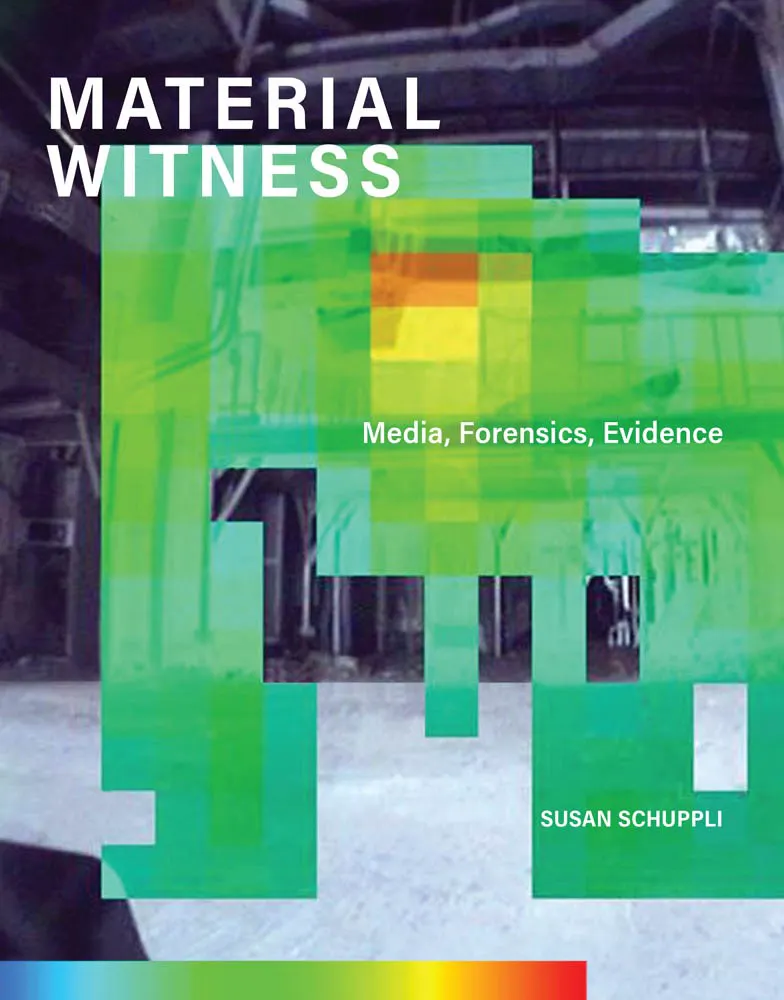
Ep 67Material Witness: Media, Forensics, Evidence
Susan Schuppli is Director of the Centre for Research Architecture in the Department of Visual Cultures at Goldsmiths, University of London. In her book, Material Witnesss, her research is an exploration of the evidential role of matter in contexts including the natural disaster, climate change, and conflict zones. In this interview she discusses her work as a writer, artist and educator. The evidential role of matter--when media records trace evidence of violence--explored through a series of cases drawn from Kosovo, Japan, Vietnam, and elsewhere. In this book, Susan Schuppli introduces a new operative concept: material witness, an exploration of the evidential role of matter as both registering external events and exposing the practices and procedures that enable matter to bear witness. Organized in the format of a trial, Material Witness moves through a series of cases that provide insight into the ways in which materials become contested agents of dispute around which stake holders gather. These cases include an extraordinary videotape documenting the massacre at Izbica, Kosovo, used as war crimes evidence against Slobodan Milosevic; the telephonic transmission of an iconic photograph of a South Vietnamese girl fleeing an accidental napalm attack; radioactive contamination discovered in Canada's coastal waters five years after the accident at Fukushima Daiichi; and the ecological media or "disaster film" produced by the Deep Water Horizon oil spill in the Gulf of Mexico. Each highlights the degree to which a rearrangement of matter exposes the contingency of witnessing, raising questions about what can be known in relationship to that which is seen or sensed, about who or what is able to bestow meaning onto things, and about whose stories will be heeded or dismissed. An artist-researcher, Schuppli offers an analysis that merges her creative sensibility with a forensic imagination rich in technical detail. Her goal is to relink the material world and its affordances with the aesthetic, the juridical, and the political. Learn more about your ad choices. Visit megaphone.fm/adchoices Support our show by becoming a premium member! https://newbooksnetwork.supportingcast.fm/communications
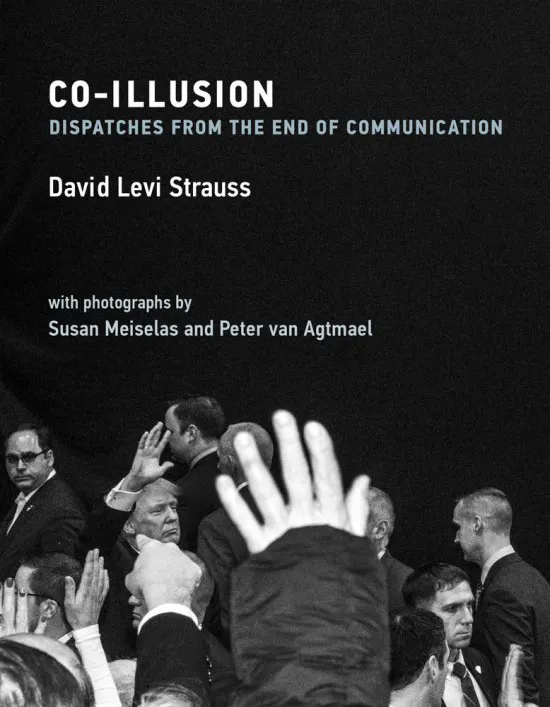
Ep 64Co-Illusion: Dispatches from the End of Communication
In Co-Illusion, writer and critic David Levi Strauss, tracks the rise of Donald Trump and the media landscape that warped around him. In this interview he discusses the language of Trump, the forthcoming election, and the changing relationship between image and truth. The political crisis that sneaked up on America--the rise of Trump and Trumpism--has revealed the rot at the core of American exceptionalism. Recent changes in the way words and images are produced and received have made the current surreality possible; communication through social media, by design, maximizes attention and minimizes scrutiny. In Co-Illusion, the noted writer on art, photography, and politics David Levi Strauss bears witness to the new "iconopolitics" in which words and images lose their connection to reality. The collusion that fueled Trump's rise was the secret agreement of voters and media consumers--their "co-illusion"--to set aside the social contract. Strauss offers dispatches from the epicenter of our constitutional earthquake, writing first from the 2016 Democratic and Republican conventions and then from the campaign. After the election, he switches gears, writing in the voices of the regime and of those complicit in its actions--from the thoughts of the President himself ("I am not a mistake. I am not a fluke, or a bug in the system. I am the System") to the reflections of a nameless billionaire tech CEO whose initials may or may not be M. Z. Finally, Strauss shows us how we might repair the damage to the public imaginary after Trump exits the scene. Photographs by celebrated documentary photographers Susan Meiselas and Peter van Agtmael accompany the texts. Learn more about your ad choices. Visit megaphone.fm/adchoices Support our show by becoming a premium member! https://newbooksnetwork.supportingcast.fm/communications
Ep 69Henrik Örnebring and Michael Karlsson, "Journalistic Autonomy: The Genealogy of a Concept" (U Missouri Press, 2022)
Journalists around the world agree that autonomy is central to their work, but what exactly is it journalists should be autonomous from, and for what should they use this autonomy? Henrik Örnebring and Michael Karlsson discuss their book Journalistic Autonomy: The Genealogy of a Concept (University of Missouri Press, 2022), which traces the genealogy of the idea of journalistic autonomy from the press freedom debates of the 17th century up to the digital, networked world of the 21st century. In a conversation with Joanne Kuai, the authors talk about what is ‘autonomy’ and what it means in the context of journalism, and the journey of exploring the concept, using a theoretical framework that draws upon Friedrich Nietzsche, feminist philosophy, theoretical biology, and other disciplines. They reflect on whether the concept could be applied not only in liberal democracies but also in totalitarian regimes, and also discuss their ideals of journalism as an institution and what conditions are needed to facilitate that. Henrik Örnebring is Professor of Media and Communication in the Department of Geography, Media, and Communication at Karlstad University, Sweden. Dr. Örnebring has published widely on journalism, media history, and new media in anthologies and scholarly journals and his most recent book is Newsworkers: Comparing Journalists in Six European Countries. He is the Editor-in-Chief of the Oxford Research Encyclopedia of Journalism Studies. Michael Karlsson is Professor of Media and Communication in the Department of Geography, Media and Communication at Karlstad University, Sweden. He has primarily published on issues pertaining to the digitalization of journalism. He is also the author of Transparency and Journalism: A Critical Appraisal of a Disruptive Norm. His is co-editor of Rethinking Research Methods in an Age of Digital Journalism. He is a Senior Editor of the Oxford Research Encyclopedia of Journalism Studies. Joanne Kuai is a PhD Candidate at Karlstad University, Sweden, with a research project on Artificial Intelligence in Chinese Newsrooms. Her research interests centre around data and AI for media, computational journalism, and the social implications of automation and algorithms. Find her on LinkedIn or Twitter @JoanneKuai. Learn more about your ad choices. Visit megaphone.fm/adchoices Support our show by becoming a premium member! https://newbooksnetwork.supportingcast.fm/communications
Ep 118Jan Recker, "Scientific Research in Information Systems: A Beginner's Guide" (Springer, 2021)
Listen to this interview of Jan Recker, Professor for Information Systems and Digital Innovation at the University of Hamburg, Germany and author of Scientific Research in Information Systems: A Beginner's Guide (Springer, 2021). We talk about how your research is what you write. Jan Recker : "Very few of us scientists are gifted readers, and very few of us are gifted writers, but those who are, I do think that they have an advantage in science. It's not that they're the better scientists, but they just understand the literature better, or they can help a reader understand their own research better. And these are just really key and fundamental techniques of the research." Learn more about your ad choices. Visit megaphone.fm/adchoices Support our show by becoming a premium member! https://newbooksnetwork.supportingcast.fm/communications
Ep 117Helen Sword, "Writing with Pleasure" (Princeton UP, 2023)
Listen to this interview of Helen Sword, professor emerita in the School of Humanities and the Centre for Arts and Social Transformation at the University of Auckland, founder of WriteSPACE, an international virtual writing community, and author of Writing with Pleasure (Princeton UP, 2023). We talk about how pleasure is difficult-but-good. Helen Sword : "If you have a text that has not been written with pleasure — it's been like pulling teeth for the author — it's going to feel the same way for the reader. So I think an issue with a lot of academic writing is that we have to read a lot of things that we don't enjoy, and then we get this message that that's how we're supposed to write too. So, it just becomes this never-ending cycle. But what if we brought in here the potentialities of play and reversed this situation and thought, 'Okay, I'm going to write with pleasure, I'm going to be excited about this, I'm going to create a beautifully crafted sentence or paragraph so that my reader will read it and just go, "Oh, wow, they put that so well."' And I don't even mean fancy or anything — I mean just good communication of the science, for example. A clearly written sentence about a complex idea — that is beautiful, and it's a joyful experience to read." Learn more about your ad choices. Visit megaphone.fm/adchoices Support our show by becoming a premium member! https://newbooksnetwork.supportingcast.fm/communications
Ep 164James Charney, "Madness at the Movies: Understanding Mental Illness through Film" (Johns Hopkins UP, 2023)
The study of classic and contemporary films can provide a powerful avenue to understand the experience of mental illness. In Madness at the Movies: Understanding Mental Illness through Film (Johns Hopkins UP, 2023), James Charney, MD, a practicing psychiatrist and long-time cinephile, examines films that delve deeply into characters' inner worlds, and he analyzes moments that help define their particular mental illness. Based on the highly popular course that Charney taught at Yale University and the American University of Rome, Madness at the Movies introduces readers to films that may be new to them and encourages them to view these films in an entirely new way. Through films such as Psycho, Taxi Driver, Through a Glass Darkly, Night of the Hunter, A Woman Under the Influence, Ordinary People, and As Good As It Gets, Charney covers an array of disorders, including psychosis, paranoia, psychopathy, depression, bipolar disorder, obsessive-compulsive disorder, and anxiety. He examines how these films work to convey the essence of each illness. He also looks at how each film reflects the understanding of mental illness at the time it was released as well as the culture that shaped that understanding. Charney explains how to observe the behaviors displayed by characters in the films, paying close attention to signs of mental illness. He demonstrates that learning to read a film can be as absorbing as watching one. By viewing these films through the lens of mental health, readers can hone their observational skills and learn to assess the accuracy of depictions of mental illness in popular media. Melek Firat Altay is a neuroscientist, biologist and musician. Her research focuses on deciphering the molecular and cellular mechanisms of neurodegenerative and neurodevelopmental disorders. Learn more about your ad choices. Visit megaphone.fm/adchoices Support our show by becoming a premium member! https://newbooksnetwork.supportingcast.fm/communications
Ep 131Free Speech 69: Campus Misinformation with Bradford Vivian
State censorship and cancel culture, trigger warnings and safe spaces, pseudoscience, First Amendment hardball, as well as orthodoxy and groupthink: universities remain a site for important battles in the culture wars. What is the larger meaning of these debates? Are American universities at risk of conceding to mobs and cuddled “snowflake” students and sacrifice the hallowed values of free speech and academic inquiry? Bradford Vivian examines the heated debates over campus misinformation as a language unto itself that confirms existing notions and often provides simple explanations for complex shared problems. In his book, Campus Misinformation: The Real Threat to Free Speech in American Higher Education (Oxford UP), he shows how the free speech crisis on US college campuses has been manufactured through misinformation, distortion, and political ideology, and how campus misinformation is a threat not only to academic freedom but also to civil liberties in US society writ large. In our conversation, Bradford explained how campus speech crises are used – and also how faculty, administrators, students and others can recognize recurring patterns and properly respond, for example to distinguish between abuses of scientific evidence and sound scientific claims in public argument. Bradford Vivian is a professor in the Department of Communication Arts and Sciences at Pennsylvania State University. His research and teaching focuses on theories of rhetoric (or the art of persuasion) and public controversies over memory, history, speech and other issues. Among his books are Commonplace Witnessing: Rhetorical Invention, Historical Remembrance, and Public Culture (Oxford University Press), Public Forgetting: The Rhetoric and Politics of Beginning Again (Penn State Press) and Being Made Strange: Rhetoric beyond Representation (SUNY Press). He is also co-editor, with Anne Teresa Demo, of Rhetoric, Remembrance, and Visual Form: Sighting Memory (Routledge). He has been awarded a National Endowment for the Humanities Summer Stipend and, from the National Communication Association, the James A. Winans-Herbert A. Wichelns Award for Distinguished Scholarship in Rhetoric and Public Address, the Critical/Cultural Studies Division Book of the Year Award, and the Karl R. Wallace Memorial Award. Uli Baer teaches literature and photography as University Professor at New York University. A recipient of Guggenheim, Getty and Humboldt awards, in addition to hosting "Think About It” he hosts (with Caroline Weber) the podcast "The Proust Questionnaire” and is Editorial Director at Warbler Press. Email [email protected]; Twitter @UliBaer. Learn more about your ad choices. Visit megaphone.fm/adchoices Support our show by becoming a premium member! https://newbooksnetwork.supportingcast.fm/communications
Ep 224Mauro Porto, "Mirrors of Whiteness: Media, Middle-Class Resentment, and the Rise of the Far Right in Brazil" (U Pittsburgh Press, 2023)
In Mirrors of Whiteness: Media, Middle-Class Resentment, and the Rise of the Far Right in Brazil (U Pittsburgh Press, 2023), Mauro P. Porto examines the conservative revolt of Brazil's white middle class, which culminated with the 2018 election of far-right candidate Jair Bolsonaro. He identifies the rise of a significant status panic among middle-class publics following the relative economic and social ascension of mostly Black and brown low-income laborers. The book highlights the role of the media in disseminating "mirrors of whiteness," or spheres of representation that allow white Brazilians to legitimate their power while softening or hiding the inequalities and injustices that such power generates. A detailed analysis of representations of domestic workers in the telenovela Cheias de Charme and of news coverage of affirmative action by the magazine Veja demonstrates that they adopted whiteness as an ideological perspective, disseminating resentment among their audiences and fomenting the conservative revolt that took place in Brazil between 2013 and 2018. Mauro P. Porto is Associate Professor of Communication at Tulane University. He is the author of Media Power and Democratization in Brazil: TV Globo and the Dilemmas of Political Accountability and Televisão e Política no Brasil. Reighan Gillam is an Associate Professor in the Department of Anthropology at the University of Southern California. Her research examines the ways in which Afro-Brazilian media producers foment anti-racist visual politics through their image creations. She is the author of Visualizing Black Lives: Ownership and Control in Afro-Brazilian Media (University of Illinois Press). Learn more about your ad choices. Visit megaphone.fm/adchoices Support our show by becoming a premium member! https://newbooksnetwork.supportingcast.fm/communications
Ep 116John Bond, "The Little Guide to Getting Your Journal Article Published: Simple Steps to Success" (Rowman & Littlefield, 2022)
Writing and publishing are at the heart of most academic and research pursuits. Many potential authors, however, feel lost in the seemingly Everest climbing-like process. There is little formal education that authors receive during their education. In this regard, John Bond’s new book's The Little Guide to Getting Your Journal Article Published: Simple Steps to Success (Rowman & Littlefield, 2023) seeks to pull back the curtain on the process and provide essential information to lead authors to their goals. The Little Guide answers all of a novice author's questions in a direct and useful fashion. The book can be read all the way through or serve as a spot reference guide as authors wind their way through the process. The book is divided into 29 short, focused chapters. Sections include "Getting Started," "Selecting Potential Journals for Submission," "Writing Your Article," "Submitting Your Article," and "Publication at Last. "Bond brings in a wealth of experience from decades of working in world of scholarly publishing and as a publishing consultant for authors. In this podcast he discusses the contents of his book and the challenges faced in the domain of scholarly publishing today and the simple steps for successful publication. Tune in to listen and get your article published! Sanjay Kumar, Ph.D., is a senior lecturer in the Center for Academic Writing at Central European University. Twitter: @sanju1235 Learn more about your ad choices. Visit megaphone.fm/adchoices Support our show by becoming a premium member! https://newbooksnetwork.supportingcast.fm/communications
Ep 2Brahim El Guabli, "Moroccan Other-Archives: History and Citizenship After State Violence" (Fordham UP, 2023)
Moroccan Other-Archives: History and Citizenship After State Violence (Fordham UP, 2023) investigates how histories of exclusion and silencing are written and rewritten in a postcolonial context that lacks organized and accessible archives. The book draws on cultural production concerning the “years of lead”—a period of authoritarianism and political violence between Morocco’s independence in 1956 and the death of King Hassan II in 1999—to examine the transformative roles memory and trauma play in reconstructing stories of three historically marginalized groups in Moroccan history: Berbers/Imazighen, Jews, and political prisoners. This book demonstrates how Moroccan cultural production has become an other-archive: a set of textual, sonic, embodied, and visual sites that recover real or reimagined voices of these formerly suppressed and silenced constituencies of Moroccan society. Combining theoretical discussions with close reading of literary works, the book reenvisions both archives and the nation in postcolonial Morocco. By producing other-archives, Moroccan cultural creators transform the losses state violence inflicted on society during the years of lead into a source of civic engagement and historiographical agency, enabling the writing of histories about those Moroccans who have been excluded from official documentation and state-sanctioned histories. The book is multilingual and interdisciplinary, examining primary sources in Amazigh/Berber, Arabic, Darija, and French, and drawing on memory studies, literary theory, archival studies, anthropology, and historiography. In addition to showing how other-archives are created and operate, El Guabli elaborates how language, gender, class, race, and geographical distribution are co-constitutive of a historical and archival unsilencing that is foundational to citizenship in Morocco today. Jen Hoyer is Technical Services and Electronic Resources Librarian at CUNY New York City College of Technology. Jen edits for Partnership Journal and organizes with the TPS Collective. She is co-author of What Primary Sources Teach: Lessons for Every Classroom and The Social Movement Archive. Learn more about your ad choices. Visit megaphone.fm/adchoices Support our show by becoming a premium member! https://newbooksnetwork.supportingcast.fm/communications
Ep 107Macs Smith, "Paris and the Parasite: Noise, Health, and Politics in the Media City" (MIT Press, 2021)
The social consequences of anti-parasitic urbanism, as efforts to expunge supposedly biological parasites penalize those viewed as social parasites. According to French philosopher Michel Serres, ordered systems are founded on the pathologization of parasites, which can never be fully expelled. In Paris and the Parasite: Noise, Health, and Politics in the Media City (MIT Press, 2021), Macs Smith extends Serres's approach to Paris as a mediatic city, asking what organisms, people, and forms of interference constitute its parasites. Drawing on French poststructuralist theory and philosophy, media theory, the philosophy of science, and an array of literary and cultural sources, he examines Paris and its parasites from the early nineteenth century to today, focusing on the contemporary city. In so doing, he reveals the social consequences of anti-parasitic urbanism. Salvador Lopez Rivera is a PhD candidate in French language and literature at Washington University in St. Louis. Learn more about your ad choices. Visit megaphone.fm/adchoices Support our show by becoming a premium member! https://newbooksnetwork.supportingcast.fm/communications
Eric Hoenes del Pinal et al., "Mediating Catholicism: Religion and Media in Global Catholic Imaginaries" (Bloomsbury, 2022)
In Mediating Catholicism: Religion and Media in Global Catholic Imaginaries (Bloomsbury, 2022), the authors and the three editors (Eric Hones del Pinal, Marc Rosco Loustau and Kristin Norget) explore how Catholicism is produced, maintained and challenged through processes of communication. This book focuses on the ethnographic study of Catholicism and media. Chapters demonstrate how people engage with the Catholic media-scape, and analyze the social, cultural, and political processes that underlie Catholic media and mediatization. Case studies examine Catholic practices in North America, Western and Eastern Europe, Latin America, South-East Asia, and Africa, providing a truly comparative, de-centered representation of global Catholicism. Illustrating the vibrancy and heterogeneity of Catholicism world-wide, the book also examines how media work to sustain larger global Catholic imaginaries. Eric Hoenes Del Pinal’s chapter in particular examines “how Guatemalan Catholics have variously used FM radio and internet streaming video to manage the uncertainties of producing spectacular public rituals during Holy Week. Focusing on the devotional labor that Catholic lay leaders do to mount these events and the fact that efficacy of that work is not always easy to asses, he asks how their various media practices, which are meant to counterbalance unprecedented social changes, have contributed to the mediatization of parish life” (9). Lauren Horn Griffin is assistant professor in the Department of Philosophy and Religious Studies at Louisiana State University. She researches religion, media, and technology with a focus on Catholic communities around the world. Learn more about your ad choices. Visit megaphone.fm/adchoices Support our show by becoming a premium member! https://newbooksnetwork.supportingcast.fm/communications
Ep 121Jonathan E. Abel, "The New Real: Media and Mimesis in Japan from Stereographs to Emoji" (U of Minnesota Press, 2023)
Jonathan Abel’s The New Real: Media and Mimesis in Japan from Stereographs to Emoji (U of Minnesota Press, 2023) is a history of our relationships to new media. The book centers on different modalities of mimesis and mediation and more as it explores the important transformation of “new media” into “the new real.” Abel describes this “new real” as the phase when the newer, better, faster, more realistic media of marketing hype becomes absorbed into the fabric of society and daily life. The New Real uses diverse case studies from over a century of modern Japanese history―including stereoscopic photographs, the phonograph, the television, video games, and even emoji―to explore the social effects of the new real. Nathan Hopson is an associate professor of Japanese language and history in the University of Bergen's Department of Foreign Languages. Learn more about your ad choices. Visit megaphone.fm/adchoices Support our show by becoming a premium member! https://newbooksnetwork.supportingcast.fm/communications

Ep 116Computer Graphics
In this episode of High Theory, Bernard Dionysius Geoghegan talks with us about computer graphics. Emerging from tools for sailing and warmaking, like sea charts and radar, modern computer graphics are technologies of mapping and managing risk. They seem intent on absorbing the human sensorium into the machine. In the episode Bernard refers to computer graphics as “techniques of addressing,” a term he attributes to Ranjodh Singh Dhaliwal. He also uses the term “operational images” which comes from the work of Harun Farocki, and talks about SAGE, the US Government’s Cold War era Semi-Automatic Ground Environment Air Defense System. Bernard references Paul Edward’s book A Vast Machine: Computer Models, Climate Data, and the Politics of Global Warming (MIT Press, 2013). He also mentions the German scholar Christoph Borbach who has written on auditory computer interfaces, and American disability studies scholar Mara Mills, who has written on the Deaf history of computing. He was kind enough to give us an extensive bibliography on this topic, which is posted below. Bernard Dionysius Geoghegan is a reader in the History and Theory of Digital Media at King’s College London. He has a brand new book out on the cybernetic history of French theory, called Code: From Information Theory to French Theory (Duke UP, 2023). Kim met him when he came to give a talk at the Stanford Humanities Center in January 2023. He wore denim and had a slightly manic affect. People came all the way from Berkeley to hear what he had to say, which is quite impressive in the Bay Area. This week’s image is a radar loop of the December 16 2007 Eastern North America winter storm, found on Wikimedia Commons. The loop runs from Saturday Morning at 7 AM (Dec 15) to Sunday Night at 7 PM (Dec 16). The image is in the public domain because it was made by someone who works for the National Weather Service. Learn more about your ad choices. Visit megaphone.fm/adchoices Support our show by becoming a premium member! https://newbooksnetwork.supportingcast.fm/communications

Ep 51Experiments in Open Peer Review
The authors of Data Feminism (2020), Catherine D'Ignazio and Lauren Klein, along with Catherine Ahearn, Content Lead at PubPub, discuss the value and process of open peer review, share experiences and best practices, and explore issues surrounding peer review transparency. Learn more about your ad choices. Visit megaphone.fm/adchoices Support our show by becoming a premium member! https://newbooksnetwork.supportingcast.fm/communications

Ep 52Strong Ideas from MIT Libraries and the MIT Press
In this episode, Gita Manaktala, Editorial Director at the MIT Press, and Ellen Finnie, Co-Interim Associate Director for Collections at MIT Libraries, discuss the Ideas series: a hybrid print and open access book series for general readers, that provides fresh, strongly argued, and provocative views of the effects of digital technology on culture, business, government, education, and our lives. Learn more about the full series here. Learn more about your ad choices. Visit megaphone.fm/adchoices Support our show by becoming a premium member! https://newbooksnetwork.supportingcast.fm/communications
Ep 379Thomas Aiello, "Practical Radicalism and the Great Migration: The Cultural Geography of the Scott Newspaper Syndicate" (U Georgia Press, 2023)
In this episode, Thomas Aiello joins E. James West to discuss Practical Radicalism and the Great Migration: The Cultural Geography of the Scott Newspaper Syndicate (University of Georgia Press, 2023). Building on his earlier book The Grapevine of the Black South, which focused on the rise and fall of the Scott Newspaper Syndicate through its flagship publication the Atlanta Daily World, this book further reshapes the place of southern newspapers in the historiography of Black journalism. Practical Radicalism and the Great Migration traces the development and trajectory of the individual newspapers of the Syndicate, evaluating those with surviving issues, and presenting them as they existed in proximity to their Atlanta hub. In so doing, he emphasizes the thread of practical radicalism that ran through Syndicate editorial policy, providing a fuller picture of the Scott Newspaper Syndicate and the Black press in the 1930s, 1940s, and 1950s. James West is a historian of race, media and business in the modern United States and Black diaspora. Author of "Ebony Magazine and Lerone Bennett Jr.: Popular Black History in Postwar America" (Illinois, 2020), "A House for the Struggle: The Black Press and the Built Environment in Chicago" (Illinois, 2022), "Our Kind of Historian: The Work and Activism of Lerone Bennett Jr. (Massachusetts, 2022). Learn more about your ad choices. Visit megaphone.fm/adchoices Support our show by becoming a premium member! https://newbooksnetwork.supportingcast.fm/communications
Ep 101Adi Kuntsman and Liu Xin, "Digital Politics, Digital Histories, Digital Futures: New Approaches for Historicising, Politicising and Imagining the Digital" (Emerald, 2023)
What is digital politics? What new creative and experimental tools can we use to study digital politics historically and analyse and create future imaginaries of digital politics? Adi Kuntsman and Liu Xin about their co-edited book Digital Politics, Digital Histories, Digital Futures: New Approaches for Historicising, Politicising and Imagining the Digital (2023, Emerald Publishing Limited). In a conversation with Joanne Kuai, Adi Kuntsman and Liu Xin speak about how they managed to bring together contributions from junior and experienced scholars in a book that examines digital politics theoretically, methodologically, and ethically, offering interdisciplinary perspectives and innovative pedagogies. The first part of the book presents research chapters that look at misinformation and reactionary online activism, digital imperialism and capitalism, future internet governance, digital memory, digital waste, and environmental imagination. The second part showcases several creative and experimental tools for studying digital politics historically, and for analysing and creating future imaginaries of digital politics. Adi Kuntsman is Reader in Digital Politics at the Department of History, Politics and Philosophy at Manchester Metropolitan University, UK. Adi’s work lies at the intersection of cybercultures/digital and social media; anti-colonial and feminist scholarship; queer theory; and social research on war, nationalism and colonialism. Read more on the Digital Politics blog. Liu Xin is a senior lecturer at the Center for Gender Studies, Karlstad University, Sweden. Her recent research projects are located at the intersection of feminist theory, environmental humanities, critical race studies, science and technology studies, social theory and digital media research. Find her on Twitter @LiuxinYB. Joanne Kuai is a PhD Candidate at Karlstad University, Sweden, with a research project on Artificial Intelligence in Chinese Newsrooms. Her research interests centre around data and AI for media, computational journalism, and the social implications of automation and algorithms. Find her on LinkedIn or Twitter @JoanneKuai. Learn more about your ad choices. Visit megaphone.fm/adchoices Support our show by becoming a premium member! https://newbooksnetwork.supportingcast.fm/communications
Ep 126Michael K. Johnson, "Speculative Wests: Popular Representations of a Region and Genre" (U Nebraska Press, 2023)
The Western as a genre is alive and vibrant, argues University of Maine - Farmington professor of English literature Michael K. Johnson. In Speculative Wests: Popular Representations of a Region and a Genre (U Nebraska Press, 2023), Johnson explains how authors, directors, and storytellers are pushing the classic genre into new directions by hybridizing Western tropes with science fiction, horror, and fantasy storytelling. These new speculative Westerns are revitalizing a genre, which has grown incredibly popular in recent years through television series like The Last of Us and Westworld, as well as many examples in film and literature. Speculative Westerns have also allowed space for Native and African American writers and storytellers to expand the genre into more inclusive spaces, telling stories about people often left out or stereotyped in more traditional Western stories. By including time travel, zombies, and vampires, Johnson argues that the Western has cemented itself with a new generation of Americans as one of the critical cultural narratives for understanding the United States. Dr. Stephen R. Hausmann is an assistant professor of history at the University of St. Thomas in Minnesota. Learn more about your ad choices. Visit megaphone.fm/adchoices Support our show by becoming a premium member! https://newbooksnetwork.supportingcast.fm/communications
Ep 7Jonathan Gray, "Dislike-Minded: Media, Audiences, and the Dynamics of Taste" (NYU Press, 2021)
In this episode, our host Sim Gill discusses the book Dislike-Minded: Media, Audiences, and the Dynamics of Taste (2021) by Jonathan Gray. You’ll hear about: A brief history of the book and its connection to global studies of media and communication; The role of media and cultural studies in amplifying the voices of dislikers, and how can scholars in these fields better understand and appreciate the register of dislike; The method of refractive audience analysis as a way to understand how adaptations of media texts affect people's perceptions of the original texts; How paratexts can shape audience perceptions and understanding of a media product; How the gendered norms may hinder women from expressing dislike, and how this relates to larger cultural systems of dislike, including political contexts; Some recent developments that have added to or changed the initial arguments/findings in the book. About the book Dislike-Minded draws from over two-hundred qualitative interviews to probe what the media’s failures, wounds, and sore spots tell us about media culture, taste, identity, representation, meaning, textuality, audiences, and citizenship. The book refuses the simplicity of Pierre Bourdieu’s famous dictum that dislike is (only) snobbery. Instead, Jonathan Gray pushes onward to uncover other explanations for what it ultimately means to dislike specific artifacts of television, film, and other media, and why this dislike matters. You can find the book here by NYU Press. Author: Jonathan Gray is Professor of Media and Cultural Studies in the Department of Communication Arts at the University of Wisconsin-Madison. His work examines how media entertainment and its audiences interact, and examines how and where value and meaning are created. He is now Chief Editor of The International Journal of Cultural Studies, co-editor, with Aswin Punathambekar and Adrienne Shaw, of NYU Press’ Critical Cultural Communication book series, and I was recently nominated as an International Communication Association Fellow. Host: Sim Gill is a doctoral student at the Annenberg School for Communication at the University of Pennsylvania. Her research interests concern the social and subjective effects of discourse and institutional politics as well as the interrelationships between discourse, epistemology, and subjectivity. Her master's thesis evaluated the meaning-making behind the term BAME (Black, Asian and Minority Ethnic), commonly used to describe minority ethnic communities in Britain. Editor & Producer: Jing Wang Keywords: Dislike, audience studies, media cultures, identity, representation, citizenship Our podcast is part of the multimodal project powered by the Center for Advanced Research in Global Communication (CARGC) at the Annenberg School for Communication at the University of Pennsylvania. At CARGC, we produce and promote critical, interdisciplinary, and multimodal research on global media and communication. We aim to bridge academic scholarship and public life, bringing the very best scholarship to bear on enduring global questions and pressing contemporary issues. Learn more about your ad choices. Visit megaphone.fm/adchoices Support our show by becoming a premium member! https://newbooksnetwork.supportingcast.fm/communications

Ep 50How Attention Works: Finding Your Way in a World Full of Distraction
Stefan Van der Stigchel discusses how we filter out what is irrelevant so we can focus on what we need to know. We are surrounded by a world rich with visual information, but we pay attention to very little of it, filtering out what is irrelevant so we can focus on what we think we need to know. Advertisers, web designers, and other "attention architects" try hard to get our attention, promoting products with videos on huge outdoor screens, adding flashing banners to websites, and developing computer programs with blinking icons that tempt us to click. Often they succeed in distracting us from what we are supposed to be doing. In How Attention Works, Stefan Van der Stigchel explains the process of attention and what the implications are for our everyday lives. The visual attention system is efficient, Van der Stigchel writes, because it doesn't waste energy processing every scrap of visual data it receives; it gathers only relevant information. We focus on one snippet of information and assume that everything else is stable and consistent with past experience; that's why most people miss even the most glaring continuity errors in films. If an object doesn't meet our expectations, chances are we won't see it. Van der Stigchel makes his case with examples from real life, explaining, among other things, the limitations of color perception (and why fire trucks shouldn't be red); the importance of location (security guards and radiologists, for example, have to know where to look); the attention-getting properties of faces and spiders; what we can learn from someone else's eye movements; why we see what we expect to see (magicians take advantage of this); and visual neglect and unattended information. Learn more about your ad choices. Visit megaphone.fm/adchoices Support our show by becoming a premium member! https://newbooksnetwork.supportingcast.fm/communications

Ep 48The Making of "Ways of Hearing"
Bonus to the Ways of Hearing podcast and book A behind-the-scenes conversation with the creators of Ways of Hearing, the podcast and book. Hosted by author Damon Krukowski, with Radiotopia and Showcase executive producer Julie Shapiro, sound designer Ian Coss, MIT Press editor Matthew Browne, and graphic designer James Goggin. Recorded live before a studio audience at the PRX Podcast Garage, April 9, 2019. Mixed by Ian Coss. Learn more about your ad choices. Visit megaphone.fm/adchoices Support our show by becoming a premium member! https://newbooksnetwork.supportingcast.fm/communications
Ep 56Di Luo, "Beyond Citizenship: Literacy and Personhood in Everyday China, 1900-1945" (Brill, 2022)
Beyond Citizenship: Literacy and Personhood in Everyday China, 1900-1945 (Brill, 2022) focuses on the role of literacy in building a modern nation-state by examining the government provision of adult literacy training in early twentieth-century China. Based on untapped archives and diaries, Di Luo uncovers people’s strategic use of literacy and illiteracy in social interactions and explores the impact of daily experiences on the expansion of state power. Highlighting interpersonal and intergroup relations, Beyond Citizenship suggests a new methodology of studying literacy which foregrounds the agentive role of historical actors and so moves away from a more traditional approach that treats literacy itself as the key factor enabling social change. Dr. Yi Ren is a lecturer in the Department of History at the University of Pennsylvania. Learn more about your ad choices. Visit megaphone.fm/adchoices Support our show by becoming a premium member! https://newbooksnetwork.supportingcast.fm/communications
Ep 312Tiger C. Roholt, "Distracted from Meaning: A Philosophy of Smartphones" (Bloomsbury, 2022)
Social scientists have long studied the ways in which smartphone use can distract us from the proper performance of means-ends tasks, such as driving or medical procedures. In Distracted from Meaning: A Philosophy of Smartphones (Bloomsbury, 2022), Tiger Roholt discusses a distinct type of distraction: when smartphone use interferes with our active engagement with meaningful experiences, such as dinner with friends or a musical performance or gardening. In these cases, Roholt argues, we risk stunting the experiences that would otherwise give meaning to our lives, or even missing out on discovering new types of meaningful experiences. Roholt, who is an associate professor of philosophy at Montclair State University, draws on writings from John Dewey, Susan Wolf, Albert Borgmann and others in this engagingly written meditation on how ubiquitous uses of smartphones and wearable technologies affects our lives in ways that other types of interruptions do not. Carrie Figdor is professor of philosophy at the University of Iowa. Learn more about your ad choices. Visit megaphone.fm/adchoices Support our show by becoming a premium member! https://newbooksnetwork.supportingcast.fm/communications
Ep 222Cinegogía: An Open Access Resource for Teaching and Studying Latin American Cinema
Cinegogía is an open-access website devoted to the teaching and study of Latin American cinemas. Bridget Franco, an associate professor of Spanish at College of the Holy Cross, founded and coordinates the website. Cinegogía contains a database of Latin American film as well as resources for teaching and researching film. Teaching resources include syllabi, teaching activities and assignments, and film guides. Cinegogía has a considerable selection of films by and about Black and Indigenous communities in Latin America. Bridget Franco and I discuss how she founded the site, teaching with Latin American film, and digital humanities projects. Bridget Franco is Associate Professor of Spanish at College of the Holy Cross. Reighan Gillam is an Associate Professor in the Department of Anthropology at the University of Southern California. Her research examines the ways in which Afro-Brazilian media producers foment anti-racist visual politics through their image creations. She is the author of Visualizing Black Lives: Ownership and Control in Afro-Brazilian Media (University of Illinois Press). Learn more about your ad choices. Visit megaphone.fm/adchoices Support our show by becoming a premium member! https://newbooksnetwork.supportingcast.fm/communications
Ep 1304Natasha Rogoff, "Muppets in Moscow: The Unexpected Crazy True Story of Making Sesame Street in Russia" (Rowman & Littlefield, 2022)
After the collapse of the Soviet Union in the early 1990s, the timing appeared perfect to bring Sesame Street to millions of children living in the former Soviet Union. With the Muppets envisioned as ideal ambassadors of Western values, no one anticipated just how challenging and dangerous this would prove to be. In Muppets in Moscow: The Unexpected Crazy True Story of Making Sesame Street in Russia (Rowman & Littlefield, 2022), Natasha Lance Rogoff brings this gripping tale to life. Amidst bombings, assassinations, and a military takeover of the production office, Lance Rogoff and the talented Moscow team of artists, writers, musicians, filmmakers, and puppeteers remained determined to bring laughter, learning, and a new way of seeing the world to children in Russia, Ukraine and across the former Soviet empire. With a sharp wit and compassion for her colleagues, Lance Rogoff observes how cultural clashes colored nearly every aspect of the production--from the show's educational framework to writing comedy to the new Russian Muppets themselves--despite the team's common goal. Brimming with insight and nuance, Muppets in Moscow skillfully explores the post-Soviet societal tensions that continue to thwart the Russian people's efforts to create a better future for their country. More than just a story of a children's show, this book provides a valuable perspective of Russia's people, their culture, and their complicated relationship with the West that remains relevant even today. Learn more about your ad choices. Visit megaphone.fm/adchoices Support our show by becoming a premium member! https://newbooksnetwork.supportingcast.fm/communications
Ep 111Michelle McSweeney, "OK" (Bloomsbury, 2023)
"OK" as a word accepts proposals, describes the world as satisfactory (but not good), provides conversational momentum, or even agrees (or disagrees). OK as an object, however, tells a story of how technology writes itself into language, permanently altering communication. OK (Bloomsbury, 2023), by Dr. Michelle McSweeney and published by Bloomsbury in 2023, explores this story OK is a young word, less than 200 years old. It began as an acronym for “all correct” when the steam-powered printing press pushed newspapers into the mainstream. Today it is spoken and written by nearly everyone in the world. Drawing on linguistics, history, and new media studies, Michelle McSweeney traces OK from its birth in the Penny Presses through telephone lines, grammar books, and television signals into the digital age. This interview was conducted by Dr. Miranda Melcher whose doctoral work focused on post-conflict military integration, understanding treaty negotiation and implementation in civil war contexts, with qualitative analysis of the Angolan and Mozambican civil wars. Learn more about your ad choices. Visit megaphone.fm/adchoices Support our show by becoming a premium member! https://newbooksnetwork.supportingcast.fm/communications