New Books in Communications
1,942 episodes — Page 19 of 39
Ep 108Open Access in Humanities Publishing: A Discussion with Irene Van Rossom of Amsterdam UP
Irene Van Rossom and Avi do a deep dive into how Open Access works (or doesn't work) in the context for book manuscripts in the Humanities. Listeners will get a better understanding of transformative agreements and why different countries have entirely different perspectives on the importance and primacy of Open Access. Irene also discusses important and creative OA initiatives such as 'Path to Open' which encourages libraries and publishers to work together to ensure that everyone can access research. Finally, we will discuss why metadata has become so critical and how authors can work with publishers to ensure maximum exposure for their research. Avi Staiman is the founder and CEO of Academic Language Experts. Learn more about your ad choices. Visit megaphone.fm/adchoices Support our show by becoming a premium member! https://newbooksnetwork.supportingcast.fm/communications
Ep 206Ben Davies et al., "Reading Novels During the Covid-19 Pandemic" (Oxford UP, 2022)
Drawing on an ethnographic study of novel readers in Denmark and the UK during the Covid-19 pandemic, Reading Novels During the Covid-19 Pandemic (Oxford UP, 2022) provides a snapshot of a phenomenal moment in modern history. The ethnographic approach shows what no historical account of books published during the pandemic will be able to capture, namely the movement of readers between new purchases and books long kept in their collections. The book follows readers who have tuned into novels about plague, apocalypse, and racial violence, but also readers whose taste for older novels, and for re-reading novels they knew earlier in their lives, has grown. Alternating between chapters that analyze single texts that were popular (Albert Camus's The Plague, Ali Smith's Summer, Charlotte Brontë’s Jane Eyre) and others that describe clusters of, for example, dystopian fiction and nature writing, this work brings out the diverse quality of the Covid-19 bookshelf. Time is of central importance to this study, both in terms of the time of lockdown and the temporality of reading itself within this wider disrupted sense of time. By exploring these varied experiences, this book investigates the larger question of how the consumption of novels depends on and shapes people's experience of non-work time, providing a specific lens through which to examine the phenomenology of reading more generally. This timely work also negotiates debates in the study of reading that distinguish theoretically between critical reading and reading for pleasure, between professional and lay reading. All sides of the sociological and literary debate must be brought to bear in understanding what readers tell us about what novels have meant to them in this complex historical moment. Ben Davies is Senior Lecturer in English Literature at the University of Portsmouth. He is the author of Sex, Time, and Space in Contemporary Fiction (2016); editor of John Burnside: Contemporary Critical Perspectives (2020); and co-editor of Sex, Gender and Time in Fiction and Culture (2011). He has also published articles in journals such as Textual Practice and Critique: Studies in Contemporary Fiction. Christina Lupton is a professor at the University of Warwick and the University of Copenhagen. She is author of three monographs: Knowing Books (2012), Reading and the Making of Time (2018), and Love and the Novel: Life After Reading (2022), and numerous articles on the topics of reading, time use, and the materiality of books. Johanne Gormsen Schmidt holds a PhD in literature from University of Southern Denmark and is currently a postdoc at the University of Copenhagen. She is the author of several pieces in the fields of literary sociology, comparative and Scandinavian literature, and uses of literature. She is editor of the literary journal Passage. Daniel Moran earned his B.A. and M.A. in English from Rutgers University and his Ph.D. in History from Drew University. The author of Creating Flannery O’Connor: Her Critics, Her Publishers, Her Readers, he teaches research and writing at Rutgers and co-hosts the podcast Fifteen-Minute Film Fanatics, found at https://fifteenminutefilm.podb... and on Twitter @15MinFilm. Learn more about your ad choices. Visit megaphone.fm/adchoices Support our show by becoming a premium member! https://newbooksnetwork.supportingcast.fm/communications
Ep 157Girish Shambu, "The New Cinephilia" (Caboose, 2022)
Cinephilia has recently experienced a powerful resurgence, one enabled by new media technologies of the digital revolution. One strong continuity between today's "new cinephilia" and the classical cinephilia of the 1950s is the robust sociability which these new technologies have facilitated. Each activity of today's cinephilic practice - viewing, thinking, reading and writing about films - is marked by an unprecedented amount of social interaction facilitated by the Internet. As with their classical counterparts, the thoughts and writings of today's cinephiles are born from a vigorous and broad-ranging cinephilic conversation. Further, by dramatically lowering the economic barriers to publication, the Internet has also made possible new hybrid forms and outlets of cinephilic writing that draw freely from scholarly, journalistic and literary models. The New Cinephilia (Caboose, 2022) both describes and theorises how and where cinephilia lives and thrives today. In this expanded second edition, author Girish Shambu revisits some of his original ideas and calls into question the focus in cinephilia on the male canon in the wake of the #MeToo movement and the lack of racial and gender diversity in contemporary cinema. As Dr. Shambu writes:"There is more to the cinephile experience than simply surfing from one link to another in a state of perpetual motion. How does this movement - this daily proliferation of encounters - power one's cinephilia? What special affective charge does this experience hold? In other words, how is the experience of the Internet cinephile affectively different from that of a 'traditional' cinephile who spends little time online?" In this conversation with host Annie Berke, Dr. Shambu talks working as a Professor of Management while maintaining his profile as a prolific cinephile, explains why auteurism is a "manspreading machine," and offers recommendations on what films exemplify a "cinema of the future." Girish Shambu is Professor of Management at Canisius College in Buffalo, New York, where he teaches sustainability and supply chain management. In a dual career as film blogger, critic and scholar, Girish is also the author of The New Cinephilia (Caboose, 2020, 2nd ed.) and editor of Film Quarterly’s online column Quorum. His writings have appeared in The Criterion Collection, Framework Journal of Film & Media, and Film Quarterly. In addition to being a host on New Books in Film, Annie Berke is the Film Editor at the Los Angeles Review of Books and author of Their Own Best Creations: Women Writers in Postwar Television. You can read her reviews and essays at Literary Hub, Public Books, LA Review of Books, The A.V. Club, Little White Lies, Film Quarterly, and The Washington Post. Learn more about your ad choices. Visit megaphone.fm/adchoices Support our show by becoming a premium member! https://newbooksnetwork.supportingcast.fm/communications
Ep 105Jeffrey Herlihy-Mera, "Decolonizing American Spanish: Eurocentrism and the Limits of Foreignness in the Imperial Ecosystem" (U Pittsburgh Press, 2022)
Jeffrey joins the podcast to discuss the prevalence of English in the academic ecosystem and in research publishing. Jeffrey critiques the lackadaisical approach US institutions take towards Spanish language content and research and makes a strong argument to follow the Puerto-Rican model which sees greater opportunity, equality, and sophistication in multilingual academic research. About his book: Despite a pronounced shift away from Eurocentrism in Spanish and Hispanic studies departments in US universities, many implicit and explicit vestiges of coloniality remain firmly in place. While certain national and linguistic expressions are privileged, others are silenced with predictable racial and gendered results. Decolonizing American Spanish: Eurocentrism and the Limits of Foreignness in the Imperial Ecosystem (U Pittsburgh Press, 2022) challenges not only the hegemony of Spain and its colonial pedagogies, but also the characterization of Spanish as a foreign language in the United States. By foregrounding Latin American cultures and local varieties of Spanish and reconceptualizing the foreign as domestic, Jeffrey Herlihy-Mera works to create new conceptual maps, revise inherited ones, and institutionalize marginalized and silenced voices and their stories. Considering the University of Puerto Rico as a point of context, this book brings attention to how translingual solidarity and education, a commitment to social transformation, and the engagement of student voices in their own languages can reinvent colonized education. Jeffrey Herlihy-Mera is Professor at the University of Puerto Rico in Mayaguez. Avi Staiman is the founder and CEO of Academic Language Experts. Learn more about your ad choices. Visit megaphone.fm/adchoices Support our show by becoming a premium member! https://newbooksnetwork.supportingcast.fm/communications
Ep 104Profitability and University Press Publishing: A Discussion with Stanford UP's Alan Harvey
Alan Harvey, Director of Stanford University Press, sits with Avi to discuss why it is so challenging for scholars to write and publish books and to dispel myths around the profitability of all university publishers. Tune in to hear how Alan's sixth-month commitment turned into a lifetime pursuit of enabling authors to convey their research in a compelling manner. Avi Staiman is the founder and CEO of Academic Language Experts. Learn more about your ad choices. Visit megaphone.fm/adchoices Support our show by becoming a premium member! https://newbooksnetwork.supportingcast.fm/communications
Ep 176Isabel Huacuja Alonso, "Radio for the Millions: Hindi-Urdu Broadcasting Across Borders" (Columbia UP, 2022)
From news about World War II to the broadcasting of music from popular movies, radio played a crucial role in an increasingly divided South Asia for more than half a century. Radio for the Millions: Hindi-Urdu Broadcasting Across Borders (Columbia University Press, 2023) by Isabel Huacuja Alonso examines the history of Hindi-Urdu radio during the height of its popularity from the 1930s to the 1980s, showing how it created transnational communities of listeners. Huacuja Alonso argues that despite British, Indian, and Pakistani politicians’ efforts to usurp the medium for state purposes, radio largely escaped their grasp. She demonstrates that the medium enabled listeners and broadcasters to resist the cultural, linguistic, and political agendas of the British colonial administration and the subsequent independent Indian and Pakistani governments. Rather than being merely a tool of nation building in South Asia, radio created affective links that defied state agendas, policies, and borders. It forged an enduring transnational soundscape, even after the 1947 Partition had made a united India a political impossibility. The book traces how people engaged with radio across news, music, and drama broadcasts, arguing for a more expansive definition of what it means to listen. She develops the concept of “radio resonance” to understand how radio relied on circuits of oral communication such as rumor and gossip and to account for the affective bonds this “talk” created. By analyzing Hindi film-song radio programs, she demonstrates how radio spurred new ways of listening to cinema. Drawing on a rich collection of sources, including newly recovered recordings, listeners’ letters to radio stations, original interviews with broadcasters, and archival documents from across three continents, Radio for the Millions rethinks assumptions about how the medium connects with audiences. Isabel Huacuja Alonso is an Assistant Professor in the Department of Middle Eastern, South Asia, and African Studies (MESAAS) at Columbia University. She is a historian of sound media and modern South Asia. Shatrunjay Mall is a PhD candidate at the Department of History at the University of Wisconsin-Madison. He works on transnational Asian history, and his dissertation explores intellectual, political, and cultural intersections and affinities that emerged between Indian anti-colonialism and imperial Japan in the twentieth century. Learn more about your ad choices. Visit megaphone.fm/adchoices Support our show by becoming a premium member! https://newbooksnetwork.supportingcast.fm/communications
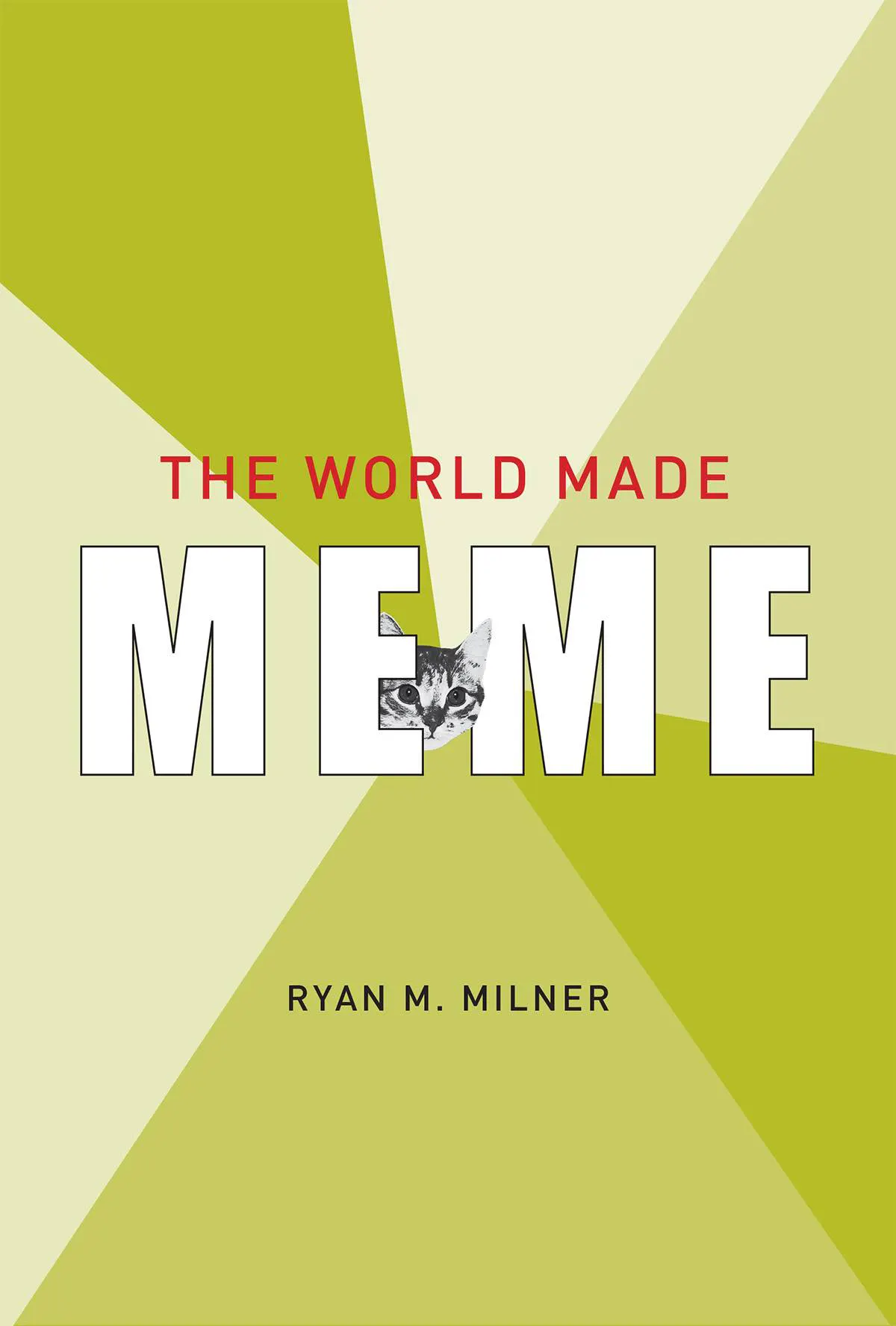
Ep 3The World Made Meme: Public Conversations and Participatory Media
In this episode, author Ryan Milner talks to Chris Gondak about the rise of the internet meme, and the five logics that factor into the foundation, growth, and success of a meme. Internet memes--digital snippets that can make a joke, make a point, or make a connection--are now a lingua franca of online life. They are collectively created, circulated, and transformed by countless users across vast networks. Most of us have seen the cat playing the piano, Kanye interrupting, Kanye interrupting the cat playing the piano. In The World Made Meme, Ryan Milner argues that memes, and the memetic process, are shaping public conversation. It's hard to imagine a major pop cultural or political moment that doesn't generate a constellation of memetic texts. Memetic media, Milner writes, offer participation by reappropriation, balancing the familiar and the foreign as new iterations intertwine with established ideas. New commentary is crafted by the mediated circulation and transformation of old ideas. Through memetic media, small strands weave together big conversations. Milner considers the formal and social dimensions of memetic media, and outlines five basic logics that structure them: multimodality, reappropriation, resonance, collectivism, and spread. He examines how memetic media both empower and exclude during public conversations, exploring the potential for public voice despite everyday antagonisms. Milner argues that memetic media enable the participation of many voices even in the midst of persistent inequality. This new kind of participatory conversation, he contends, complicates the traditional culture industries. When age-old gatekeepers intertwine with new ways of sharing information, the relationship between collective participation and individual expression becomes ambivalent. For better or worse--and Milner offers examples of both--memetic media have changed the nature of public conversations. Ryan Milner is Assistant Professor in the Department of Communication at the College of Charleston. Learn more about your ad choices. Visit megaphone.fm/adchoices Support our show by becoming a premium member! https://newbooksnetwork.supportingcast.fm/communications
Ep 309Thomas Kelly, "Bias: A Philosophical Study" (Oxford UP, 2023)
The concept of bias is familiar enough, partly because it is deployed frequently and in different contexts. For example, we talk about biased jurors, biased procedures, biased laws, biased decisions, and biased people. But we also talk about bias as a feature of certain frames of mind, habits, dispositions, and mental processes. In most of these contexts, bias is seen as a kind of failing or a bad-making feature. Attributions of bias are hence often accusatory, or at least a matter of negative assessment. Although these phenomena are familiar, questions remain. Is bias is a single thing? Is bias always bad? Is bias always misleading? Can bias be eliminated? In Bias: A Philosophical Study (Oxford University Press, 2023), Thomas Kelly addresses a broad range of such questions. He develops a norm-theoretic account of what bias is, and then explores its implications. Robert Talisse is the W. Alton Jones Professor of Philosophy at Vanderbilt University. Learn more about your ad choices. Visit megaphone.fm/adchoices Support our show by becoming a premium member! https://newbooksnetwork.supportingcast.fm/communications
Ep 276Celeste Vaughan Curington et al., "The Dating Divide: Race and Desire in the Era of Online Romance" (U California Press, 2021)
The Dating Divide: Race and Desire in the Era of Online Romance (U California Press, 2021) is the first comprehensive look at "digital-sexual racism," a distinct form of racism that is mediated and amplified through the impersonal and anonymous context of online dating. Drawing on large-scale behavioral data from a mainstream dating website, extensive archival research, and more than seventy-five in-depth interviews with daters of diverse racial backgrounds and sexual identities, Curington, Lundquist, and Lin illustrate how the seemingly open space of the internet interacts with the loss of social inhibition in cyberspace contexts, fostering openly expressed forms of sexual racism that are rarely exposed in face-to-face encounters. The Dating Divide is a fascinating look at how a contemporary conflux of individualization, consumerism, and the proliferation of digital technologies has given rise to a unique form of gendered racism in the era of swiping right--or left. The internet is often heralded as an equalizer, a seemingly level playing field, but the digital world also acts as an extension of and platform for the insidious prejudices and divisive impulses that affect social politics in the "real" world. Shedding light on how every click, swipe, or message can be linked to the history of racism and courtship in the United States, this compelling study uses data to show the racial biases at play in digital dating spaces. Learn more about your ad choices. Visit megaphone.fm/adchoices Support our show by becoming a premium member! https://newbooksnetwork.supportingcast.fm/communications
Ep 81Dave Colangelo, "The Building as Screen: A History, Theory, and Practice of Massive Media" (Amsterdam UP, 2019)
The Building as Screen: A History, Theory, and Practice of Massive Media (Amsterdam UP, 2019) describes, historicizes, theorizes, and creatively deploys massive media -- a set of techno-social assemblages and practices that include large outdoor projections, programmable architectural façades, and urban screens -- in order to better understand their critical and creative potential. Massive media is named as such not only because of the size and subsequent visibility of this phenomenon but also for its characteristic networks and interactive screen and cinema-like qualities. Examples include the programmable lighting of the Empire State Building and the interactive projections of Montreal’s Quartier des spectacles, as well as a number of works created by the author himself. This book argues that massive media enables and necessitates the development of new practices of expanded cinema, public data visualization, and installation art and curation that blend the logics of urban space, monumentality, and the public sphere with the aesthetics and affordances of digital information and the moving image. Bryan Toepfer, AIA, NCARB, CAPM is the Principal Architect for TOEPFER Architecture, PLLC, an Architecture firm specializing in Residential Architecture and Virtual Reality. Learn more about your ad choices. Visit megaphone.fm/adchoices Support our show by becoming a premium member! https://newbooksnetwork.supportingcast.fm/communications
Ep 163Who Gets Believed? When the Truth Isn't Enough
Why are people judged on whether or not they are compelling? Why isn’t telling the truth enough? What are people really listening for when others share their truths? And how does this harm asylum seekers? Dina Nayeri joins us to share: Why our perceptions of other people’s experiences impact them and us. What makes a “credible” story, and what doesn’t. How her own stories shape her. Why it can be difficult to believe a messy truth. What she had to forgive herself for. The book Who Gets Believed. Today’s book is: Who Gets Believed by Dina Nayeri, which asks unsettling questions about lies, truths, and the difference between being believed and being dismissed. Dina Nayeri begins with asking why are honest asylum seekers dismissed as liars? She shares shocking and illuminating case studies, as the book grows into a reckoning with our culture’s views on believability. From learning the tools of persuasion and performance in her job at McKinsey to struggling to believe her troubled brother-in-law, Nayeri explores an aspect of our society that is rarely held up to the light. Who Gets Believed is a book as deeply personal as it is profound in its reflections on morals, language, literature, human psychology, and the unspoken social codes that determine how we relate to one another. Our guest is: Dina Nayeri, who is the author of novels, articles, and creative nonfiction. A former Fellow at the Columbia Institute for Ideas and Imagination in Paris, winner of the UNESCO City of Literature Paul Engle Prize, and fellow at the American Library in Paris, she has also won a National Endowment for the Arts literature grant, the O. Henry Prize, and Best American Short Stories, among other honors. Her work has been published in 20+ countries, in The Guardian, The New Yorker, Granta, and many other publications. She is a graduate of Princeton, Harvard, and the Iowa Writers Workshop. She has recently joined the permanent faculty at the University of St. Andrews. Our host is: Dr. Christina Gessler, who is a historian. Listeners to this episode may also be interested in: The American Library in Paris The Innocence Project A Teaspoon of Earth and Sea, by Dina Nayeri Refuge, by Dina Nayeri The Ungrateful Refugee, by Dina Nayeri Becoming the Writer You Already Are, by Michelle R. Boyd Welcome to The Academic Life! Join us here each week to learn from today’s experts inside and outside the academy, and embrace the broad definition of what it means to live an academic life. Learn more about your ad choices. Visit megaphone.fm/adchoices Support our show by becoming a premium member! https://newbooksnetwork.supportingcast.fm/communications
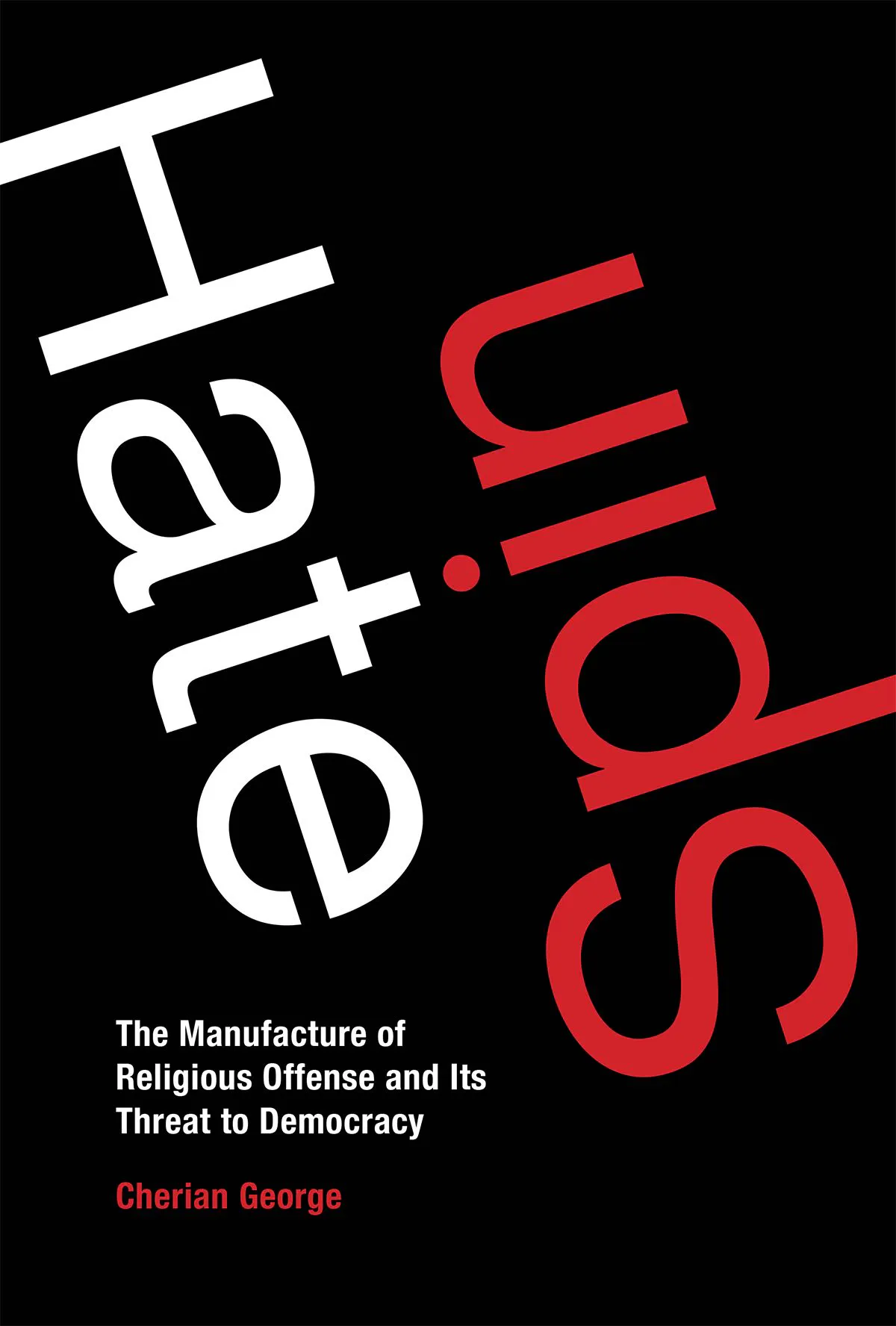
Ep 1Hate Spin: The Manufacture of Religious Offense and Its Threat to Democracy
In the United States, elements of the religious right fuel fears of an existential Islamic threat, spreading anti-Muslim rhetoric into mainstream politics. In Indonesia, Muslim absolutists urge suppression of churches and minority sects, fostering a climate of rising intolerance. In India, Narendra Modi's radical supporters instigate communal riots and academic censorship in pursuit of their Hindu nationalist vision. Outbreaks of religious intolerance are usually assumed to be visceral and spontaneous. But in Hate Spin, Cherian George shows that they often involve sophisticated campaigns manufactured by political opportunists to mobilize supporters and marginalize opponents. Right-wing networks orchestrate the giving of offense and the taking of offense as instruments of identity politics, exploiting democratic space to promote agendas that undermine democratic values. George calls this strategy “hate spin”—a double-sided technique that combines hate speech (incitement through vilification) with manufactured offense-taking (the performing of righteous indignation). It is deployed in societies as diverse as Buddhist Myanmar and Orthodox Christian Russia. George looks at the world's three largest democracies, where intolerant groups within India's Hindu right, America's Christian right, and Indonesia's Muslim right are all accomplished users of hate spin. He also shows how the Internet and Google have opened up new opportunities for cross-border hate spin. George argues that governments must protect vulnerable communities by prohibiting calls to action that lead directly to discrimination and violence. But laws that try to protect believers' feelings against all provocative expression invariably backfire. They arm hate spin agents' offense-taking campaigns with legal ammunition. Anti-discrimination laws and a commitment to religious equality will protect communities more meaningfully than misguided attempts to insulate them from insult. Cherian George is Associate Professor in the Department of Journalism at Hong Kong Baptist University. He is the author of Freedom from the Press: Journalism and State Power in Singapore and other books. Learn more about your ad choices. Visit megaphone.fm/adchoices Support our show by becoming a premium member! https://newbooksnetwork.supportingcast.fm/communications
Ep 241Nicolai Jørgensgaard Graakjær, "The Sounds of Spectators at Football" (Bloomsbury, 2022)
The sounds of spectators at football (soccer) are often highlighted – by spectators, tourists, commentators, journalists, scholars, media producers, etc. – as crucial for the experience of football. These sounds are often said to contribute significantly to the production (at the stadium) and conveyance (in televised broadcast) of 'atmosphere.' The Sounds of Spectators at Football (Bloomsbury, 2023) by Dr. Nicolai Jørgensgaard Graakjær addresses why and how spectator sounds contribute to the experience of watching in these environments and what characterises spectator sounds in terms of their structure, distribution and significance. Based on an examination of empirical materials – including the sounds of football matches from the English Premier League as they emerge both at the stadium and in the televised broadcast – this book systematically dissects the sounds of football watching. This interview was conducted by Dr. Miranda Melcher whose doctoral work focused on post-conflict military integration, understanding treaty negotiation and implementation in civil war contexts, with qualitative analysis of the Angolan and Mozambican civil wars. Learn more about your ad choices. Visit megaphone.fm/adchoices Support our show by becoming a premium member! https://newbooksnetwork.supportingcast.fm/communications
Ep 103Bernard D. Geoghegan, "Code: From Information Theory to French Theory" (Duke UP, 2023)
Bernard Dionysius Geoghegan traces the shared intellectual and political history of computer scientists, cyberneticists, anthropologists, linguists, and theorists across the humanities as they developed a communication and computational-based theory that grasped culture and society in terms of codes. In Code: From Information Theory to French Theory (Duke UP, 2023), Geoghegan reconstructs how Progressive Era technocracy as well as crises of industrial democracy and colonialism shaped early accounts of cybernetics and digital media by theorists including Norbert Wiener, Warren Weaver, Margaret Mead, Gregory Bateson, Claude Lévi-Strauss, Roman Jakobson, Jacques Lacan, Roland Barthes, and Luce Irigaray. His analysis casts light on how media-practical research forged common epistemic cause in programs that stretched from 1930s interwar computing at MIT and eugenics to the proliferation of seminars and laboratories in 1960s Paris. This mobilization ushered forth new fields of study such as structural anthropology, family therapy, and literary semiology while forming enduring intellectual affinities between the humanities and informatics. With Code, Geoghegan offers a new history of French theory and the digital humanities as transcontinental and political endeavors linking interwar colonial ethnography in Dutch Bali to French sciences in the throes of Cold War-era decolonization and modernization. Learn more about your ad choices. Visit megaphone.fm/adchoices Support our show by becoming a premium member! https://newbooksnetwork.supportingcast.fm/communications
Ep 97Claire Bond Potter, "Political Junkies: From Talk Radio to Twitter, How Alternative Media Hooked Us on Politics and Broke Our Democracy" (Basic Books, 2020)
With fake news on Facebook, trolls on Twitter, and viral outrage everywhere, it's easy to believe that the internet changed politics entirely. In Political Junkies: From Talk Radio to Twitter, How Alternative Media Hooked Us on Politics and Broke Our Democracy (Basic Books, 2020), historian Claire Bond Potter shows otherwise, revealing the roots of today's dysfunction by situating online politics in a longer history of alternative political media. From independent newsletters in the 1950s to talk radio in the 1970s to cable television in the 1980s, pioneers on the left and right developed alternative media outlets that made politics more popular, and ultimately, more partisan. When campaign operatives took up e-mail, blogging, and social media, they only supercharged these trends. At a time when political engagement has never been greater and trust has never been lower, Political Junkies is essential reading for understanding how we got here. Claire Bond Potter is a political historian at the New School for Social Research. Schneur Zalman Newfield is an Assistant Professor of Sociology at Borough of Manhattan Community College, City University of New York, and the author of Degrees of Separation: Identity Formation While Leaving Ultra-Orthodox Judaism (Temple University Press, 2020). Visit him online at ZalmanNewfield.com. Learn more about your ad choices. Visit megaphone.fm/adchoices Support our show by becoming a premium member! https://newbooksnetwork.supportingcast.fm/communications
Ep 169Joshua Kurlantzick, "Beijing's Global Media Offensive: China's Uneven Campaign to Influence Asia and the World" (Oxford UP, 2022)
How is China trying to influence media across Asia and indeed globally? Why has this ambitious project achieved rather mixed results so far? And how should the rest of the world respond? In this episode of the Nordic Asia Podcast, CFR's Josh Kurlantzick talks to NIAS Director Duncan McCargo about his important new book, Beijing's Global Media Offensive (Oxford UP, 2022). His book is a major analysis of how China is attempting to become a media and information superpower around the world, seeking to shape the politics, local media, and information environments of both East Asia and the World. Since China's ascendancy toward major-power status began in the 1990s, many observers have focused on its economic growth and expanding military. China's ability was limited in projecting power over information and media and the infrastructure through which information flows. That has begun to change. Beijing's state-backed media, which once seemed incapable having a significant effect globally, has been overhauled and expanded. At a time when many democracies' media outlets are consolidating due to financial pressures, China's biggest state media outlets, like the newswire Xinhua, are modernizing, professionalizing, and expanding in attempt to reach an international audience. Overseas, Beijing also attempts to impact local media, civil society, and politics by having Chinese firms or individuals with close links buy up local media outlets, by signing content-sharing deals with local media, by expanding China's social media giants, and by controlling the wireless and wired technology through which information now flows, among other efforts. In Beijing's Global Media Offensive - a major analysis of how China is attempting to build a media and information superpower around the world, and how this media power integrates with other forms of Chinese influence - Joshua Kurlantzick focuses on how all of this is playing out in both China's immediate neighborhood - Southeast Asia, Taiwan, Australia, and New Zealand - and also in the United States and many other parts of the world. He traces the ways in which China is trying to build an information and influence superpower, but also critically examines the new conventional wisdom that Beijing has enjoyed great success with these efforts. While China has worked hard to build a global media and information superpower, it often has failed to reap gains from its efforts, and has undermined itself with overly assertive, alienating diplomacy. Still, Kurlantzick contends, China's media, information and political influence campaigns will continue to expand and adapt, helping Beijing exports its political model and protect the ruling Party, and potentially damaging press freedoms, human rights, and democracy abroad. An authoritative account of how this sophisticated and multi-pronged campaign is unfolding, Beijing's Global Media Offensive provides a new window into China's attempts to make itself an information superpower. Joshua Kurlantzick is senior fellow for Southeast Asia at the Council on Foreign Relations, and the author of five previous books about China and Southeast Asia. Duncan McCargo is Director of the Nordic Institute of Asian Studies and a professor of political science at the University of Copenhagen. The Nordic Asia Podcast is a collaboration sharing expertise on Asia across the Nordic region, brought to you by the Nordic Institute of Asian Studies (NIAS) based at the University of Copenhagen, along with our academic partners: the Centre for East Asian Studies at the University of Turku, and Asianettverket at the University of Oslo. We aim to produce timely, topical and well-edited discussions of new research and developments about Asia. About NIAS: www.nias.ku.dk Transcripts of the Nordic Asia Podcasts: http://www.nias.ku.dk/nordic-asia-podcast Learn more about your ad choices. Visit megaphone.fm/adchoices Support our show by becoming a premium member! https://newbooksnetwork.supportingcast.fm/communications
Ep 45Frederick Schauer, "The Proof: Uses of Evidence in Law, Politics, and Everything Else" (Harvard UP, 2022)
In a world awash in “fake news,” where public figures make unfounded assertions as a matter of course, a preeminent legal theorist ranges across the courtroom, the scientific laboratory, and the insights of philosophers to explore the nature of evidence and show how it is credibly established. In the age of fake news, trust and truth are hard to come by. Blatantly and shamelessly, public figures deceive us by abusing what sounds like evidence. In The Proof: Uses of Evidence in Law, Politics, and Everything Else (Harvard University Press, 2022), preeminent legal theorist Frederick Schauer proposes correctives, drawing on centuries of inquiry into the nature of evidence. Evidence is the basis of how we know what we think we know, but evidence is no simple thing. Evidence that counts in, say, the policymaking context is different from evidence that stands up in court. Law, science, historical scholarship, public and private decisionmaking—all rely on different standards of evidence. Exploring diverse terrain including vaccine and food safety, election-fraud claims, the January 2021 events at the US Capitol, the reliability of experts and eyewitnesses, climate science, art authentication, and even astrology, The Proof develops fresh insights into the challenge of reaching the truth. Schauer combines perspectives from law, statistics, psychology, and the philosophy of science to evaluate how evidence should function in and out of court. He argues that evidence comes in degrees. Weak evidence is still some evidence. The absence of evidence is not evidence of absence, but prolonged, fruitless efforts to substantiate a claim can go some distance in proving a negative. And evidence insufficient to lock someone up for a crime may be good enough to keep them out of jail. This book explains how to reason more effectively in everyday life, shows why people often reason poorly, and takes evidence as a pervasive problem, not just a matter of legal rules. Prof. Frederick Schauer is a David and Mary Harrison Distinguished Professor of Law at the University of Virginia. He is also a fellow of the American Academy of Arts and Sciences, a corresponding fellow of the British Academy and a past recipient of a Guggenheim Fellowship. Dr. Rine Vieth is a researcher studying how the UK Immigration and Asylum tribunals consider claims of belief, how claims of religious belief are evidenced, and the role of faith communities in asylum-seeker support. Learn more about your ad choices. Visit megaphone.fm/adchoices Support our show by becoming a premium member! https://newbooksnetwork.supportingcast.fm/communications
Ep 74Social Media Influencers and Digital Media Regulation in Vietnam
In 2021, a famous Vietnamese businesswoman hosted a three-hour long Facebook livestream, in which she named and shamed celebrities for their controversial public behaviours. This formed part of a regular pattern of personal attacks, in which she weaponised livestreaming to denounce media and charity organisations in front of huge online audiences. This case marked a turning point in Vietnam, forcing the government to contend with growing political activity in the online environment, and prompting new digital media regulation. In this episode, Dr Jonathon Hutchinson joins Dr Natali Pearson to discuss this case and other examples of online socio-political activism in Vietnam, reflecting on the tension between social media influencing and digital media regulation, and highlighting its potential positive and negative effects. About Jonathon Hutchinson: Dr Jonathon Hutchinson is a Senior Lecturer in Online Communication and Media at the University of Sydney. He is a Chief Investigator on the Australian Research Council Discovery Project, Online News and Media Pluralism, and is also a Chief Investigator on the eSafety Commission Research project, Emerging online safety issue: co-creating social media education with young people. His research explores cultural production, public service media, cultural intermediation, everyday social media, automated media, and algorithms in media. He is the Editor-in-Chief of the Policy & Internet journal and the Treasurer for the Australian and New Zealand Communication Association. Dr Hutchinson is on the Board of Directors for the Wholistic World Innovation Trophy as part of the Diplomatic World Institute and is an active and regular contributor to the media. He is an award-winning author with articles in a number of national and international Scimago Q1 journals, government submissions, and his book, Cultural Intermediaries: Audience Participation and Media Organisations (2017), is published through Palgrave Macmillan. For more information or to browse additional resources, visit the Sydney Southeast Asia Centre’s website: www.sydney.edu.au/sseac. Learn more about your ad choices. Visit megaphone.fm/adchoices Support our show by becoming a premium member! https://newbooksnetwork.supportingcast.fm/communications
Ep 11David H. Price, "The American Surveillance State: How the US Spies on Dissent" (Pluto Press, 2022)
When the possibility of wiretapping first became known to Americans they were outraged. Now, in our post-9/11 world, it's accepted that corporations are vested with human rights, and government agencies and corporations use computers to monitor our private lives. In The American Surveillance State: How the US Spies on Dissent (Pluto Press, 2022), David H. Price pulls back the curtain to reveal how the FBI and other government agencies have always functioned as the secret police of American capitalism up to today, where they luxuriate in a near-limitless NSA surveillance of all. Price looks through a roster of campaigns by law enforcement, intelligence agencies, and corporations to understand how we got here. Starting with J. Edgar Hoover and the early FBI's alignment with business, his access to 15,000 pages of never-before-seen FBI files shines a light on the surveillance of Edward Said, Andre Gunder Frank and Alexander Cockburn, Native American communists, and progressive factory owners. Price uncovers patterns of FBI monitoring and harassing of activists and public figures, providing the vital means for us to understand how these new frightening surveillance operations are weaponized by powerful governmental agencies that remain largely shrouded in secrecy. David H. Price is Professor of Anthropology at Saint Martin’s University’s Department of Society and Social Justice. He is the author of a number of books on the FBI and CIA, and has written articles for The Nation, Monthly Review, CounterPunch, Guardian and Le Monde. His work has been translated into five languages. Deniz Yonucu is a Lecturer (Assistant Professor) in the School of Geography, Politics, and Sociology at Newcastle University. Her work focuses on counterinsurgency, policing and security, surveillance, left-wing and anti-colonial resistance, memory, racism, and emerging digital control technologies. Her book, Police, Provocation, Politics Counterinsurgency in Istanbul (Cornell University Press, 2022), presents a counterintuitive analysis of policing, focusing particular attention on the incitement of counterviolence and perpetual conflict by state security apparatus. Learn more about your ad choices. Visit megaphone.fm/adchoices Support our show by becoming a premium member! https://newbooksnetwork.supportingcast.fm/communications
Ep 103Making Open Access Work for Both Readers and Authors
Ben Denne (Director of Publishing, Academic Books, Cambridge UP) joins Avi to discuss how Open Access quickly became a predominant form of academic publishing in the last decade, what issues OA raises for the publishing industry, how OA impacts book publishing and some of the creative solutions for alternative models, including CUP's novel "Flip it Open" program. We also discuss Ben's journey from writing children's books to presiding over one of the most important academic publishers in the world and the responsibility behind the position. Finally, stay tuned until the end for some interesting ideas regarding alternative publishing forms that break free of the 'book' and 'journal.' Avi Staiman is the founder and CEO of Academic Language Experts. Learn more about your ad choices. Visit megaphone.fm/adchoices Support our show by becoming a premium member! https://newbooksnetwork.supportingcast.fm/communications
Ep 358Nicholas Mirzoeff, "White Sight: Visual Politics and Practices of Whiteness" (MIT Press, 2023)
From the author of How to See the World comes a new history of white supremacist ways of seeing—and a strategy for dismantling them. White supremacy is not only perpetuated by laws and police but also by visual culture and distinctive ways of seeing. Nicholas Mirzoeff argues that this form of “white sight” has a history. By understanding that it was not always a common practice, we can devise better ways to dismantle it. Spanning centuries across this wide-ranging text, Mirzoeff connects Renaissance innovations—from the invention of perspective and the erection of Apollo statues as monuments to (white) beauty and power to the rise of racial capitalism dependent on slave labor—with the ever-expanding surveillance technologies of the twenty-first century to show that white sight creates an oppressively racializing world, in which subjects who do not appear as white are under constant threat of violence. Analyzing recent events like the George Floyd protests and the Central Park birdwatching incident, Mirzoeff suggests that we are experiencing a general crisis of white supremacy that presents both opportunities and threats to social justice. If we do not seize this moment to dismantle white sight, then white supremacy might surge back stronger than ever. To that end, he highlights activist interventions to strike the power of the white heteropatriarchal gaze. White Sight: Visual Politics and Practices of Whiteness (MIT Press, 2023) is a vital handbook and call to action for anyone who refuses to live under white-dominated systems and is determined to find a just way to see the world. Anna E. Lindner is a doctoral candidate in the Department of Communication at Wayne State University in Detroit, Michigan. On Twitter. Learn more about your ad choices. Visit megaphone.fm/adchoices Support our show by becoming a premium member! https://newbooksnetwork.supportingcast.fm/communications
Ep 96Jacob Birken, "Video Games: Digital Image Cultures" (Verlag Klaus Wagenbach, 2022)
Let's plays are among the most popular genres on YouTube. The visual worlds of video games shape the worldviews of millions. Gaming is a hobby and a mass spectacle. For a long time, the history of video games was primarily one of technical progress: from pixelated figures in 2D to increasingly convincing illusions of reality in games like Control. At the same time, independent game worlds emerge, such as in the expressionist dystopia Disco Elysium. In Video Games: Digital Image Cultures ( Videospiele: Digitale Bildkulturen), Jacob Birken vividly analyzes the different types and generations of games, provides insights into the interaction of hardware and software, and shows how newer video games stylistically reference the past of their own medium. But does this also revive the unfulfilled promises of the future of the information society? Jacob Birken writes and researches on the history, aesthetics, and theory of media technologies. In 2018, he published "The California Institution" on the 1906 San Francisco earthquake. He currently works at the University of Cologne. Rudolf Inderst is a professor of Game Design with a focus on Digital Game Studies at the IU International University of Applied Science, editor of “Game Studies Watchlist”, a weekly messenger newsletter about Game Culture and curator of @gamestudies at tiktok. Learn more about your ad choices. Visit megaphone.fm/adchoices Support our show by becoming a premium member! https://newbooksnetwork.supportingcast.fm/communications
Ep 95Patrick Bixby, "Unaccompanied Traveler: The Writings of Kathleen M. Murphy" (Syracuse UP, 2021)
At the time of her death in 1962, Kathleen M. Murphy was recognized as “the most widely and most knowledgeably travelled Irish woman of her time . . . insofar as she let herself be known to the public at all.” An abiding interest in sacred sites and ancient civilizations took Murphy down the Amazon and over the Andes, into the jungles of Southeast Asia and onto the deserts of the Middle East, above the Arctic Circle and behind the Iron Curtain. After the Second World War, Murphy began publishing a series of vivid, humorous, and often harrowing accounts of her travels in The Capuchin Annual, a journal reaching a largely Catholic and nationalist audience in Ireland and the United States. At home in the Irish midlands, Murphy may have been a modest and retiring figure, but her travelogues shuttle between religious devotion and searching curiosity, primitivist assumptions and probing insights, gender decorum and bold adventuring. Unaccompanied Traveler: The Writings of Kathleen M. Murphy (Syracuse UP, 2021), with its wide-ranging introduction, detailed notes, and eye-catching maps, retrieves these remarkable accounts from obscurity and presents them to a new generation of readers interested in travel and adventure. Marci Mazzarotto is an Assistant Professor and Program Coordinator of Digital Communication at Georgian Court University in New Jersey. Her research interests center on the interdisciplinary intersection of academic theory and artistic practice with a focus on mass media, popular culture and avant-garde art. Learn more about your ad choices. Visit megaphone.fm/adchoices Support our show by becoming a premium member! https://newbooksnetwork.supportingcast.fm/communications
Ep 65Laurent Richard and Sandrine Rigaud, "Pegasus: How a Spy in Your Pocket Threatens the End of Privacy, Dignity, and Democracy" (Henry Holt, 2023)
Pegasus: How a Spy in Your Pocket Threatens the End of Privacy, Dignity, and Democracy (Henry Holt, 2023) is the inside story of a worldwide investigation, sparked by the leak which revealed that cyber-intrusion and cyber-surveillance are happening with exponentially increasing frequency, across the globe. Pegasus, it turns out, is less a law enforcement tool than a weapon for hire and not only a threat to privacy but also to democracy, as the most notorious human-rights-violating governments and autocrat-wannabes are licensing and utilizing Pegasus spyware in the most vulnerable democracies in the world. Pegasus follows the personal stories of real victims--intrepid individuals who have spoken truth to some of the most corrupt, risible powers around the globe. Laurent Richard is a Paris-based award-winning documentary filmmaker and journalist who was named the 2018 European Journalist of the Year at the Prix Europa in Berlin. He is the founder of Forbidden Stories, a network of investigative journalists devoted continuing the unfinished work of murdered reporters to ensure the work they died for is not buried with them. Sandrine Rigaud is a French investigative journalist. As editor of Forbidden Stories since 2019, she coordinated the award-winning Pegasus Project and the Cartel Project, an international investigation of assassinated Mexican journalists. Caleb Zakarin is the Assistant Editor of the New Books Network. Learn more about your ad choices. Visit megaphone.fm/adchoices Support our show by becoming a premium member! https://newbooksnetwork.supportingcast.fm/communications
Ep 356Philip Nel, "Was the Cat in the Hat Black?: The Hidden Racism of Children's Literature, and the Need for Diverse Books" (Oxford UP, 2017)
Racism is resilient, duplicitous, and endlessly adaptable, so it is no surprise that America is again in a period of civil rights activism. A significant reason racism endures is because it is structural: it's embedded in culture and in institutions. One of the places that racism hides-and thus perhaps the best place to oppose it-is books for young people. Was the Cat in the Hat Black?: The Hidden Racism of Children's Literature, and the Need for Diverse Books (Oxford UP, 2017) presents five serious critiques of the history and current state of children's literature tempestuous relationship with both implicit and explicit forms of racism. The book fearlessly examines topics both vivid-such as The Cat in the Hat's roots in blackface minstrelsy-and more opaque, like how the children's book industry can perpetuate structural racism via whitewashed covers even while making efforts to increase diversity. Rooted in research yet written with a lively, crackling touch, Nel delves into years of literary criticism and recent sociological data in order to show a better way forward. Though much of what is proposed here could be endlessly argued, the knowledge that what we learn in childhood imparts both subtle and explicit lessons about whose lives matter is not debatable. The text concludes with a short and stark proposal of actions everyone-reader, author, publisher, scholar, citizen- can take to fight the biases and prejudices that infect children's literature. While Was the Cat in the Hat Black? does not assume it has all the answers to such a deeply systemic problem, its audacity should stimulate discussion and activism. Philip Nel is University Distinguished Professor of English at Kansas State University. His many books include Crockett Johnson and Ruth Krauss: How an Unlikely Couple Found Love, Dodged the FBI, and Transformed Children's Literature (UP Mississippi, 2012), Tales for Little Rebels: A Collection of Radical Children's Literature (NYU Press, 2008, co-edited with Julia Mickenberg), The Annotated Cat: Under the Hats of Seuss and His Cats (Random House, 2007), and Dr. Seuss: American Icon (Continuum, 2004). Morteza Hajizadeh is a Ph.D. graduate in English from the University of Auckland in New Zealand. His research interests are Cultural Studies; Critical Theory; Environmental History; Medieval (Intellectual) History; Gothic Studies; 18th and 19th Century British Literature. YouTube channel. Learn more about your ad choices. Visit megaphone.fm/adchoices Support our show by becoming a premium member! https://newbooksnetwork.supportingcast.fm/communications
Ep 144A Primer for Teaching Digital History
Today’s book is: A Primer for Teaching Digital History: Ten Design Principles (Duke UP, 2022), which is a guide for those who are teaching digital history for the first time, and for experienced instructors who want to reinvigorate their pedagogy. Offering design principles for approaching digital history that represent the possibilities that digital research and scholarship can take, Dr. Jennifer Guiliano outlines potential strategies and methods for building syllabi and curricula. Taking readers through the process of selecting data, identifying learning outcomes, and determining which tools students will use in the classroom, Guiliano outlines popular research methods including digital source criticism, text analysis, and visualization. She also discusses digital archives, exhibits, and collections as well as audiovisual and mixed-media narratives such as short documentaries, podcasts, and multimodal storytelling. Throughout, Guiliano illuminates how digital history can enhance understandings of not just what histories are told but how they are told and who has access to them. Our guest is: Dr. Jennifer Guiliano, who is a white academic living and working on the lands of the Myaamia/Miami, Pokagon Band of Potawatomi, Wea, and Shawnee peoples. She currently holds a position as Associate Professor in the Department of History and affiliated faculty in both Native American and Indigenous Studies and American Studies at IUPUI in Indianapolis, Indiana. She is co-director with Trevor Muñoz of the Humanities Intensive Teaching + Learning Initiative (HILT). She is the author of Indian Spectacle: College Mascots and the Anxiety of Modern America , and of A Primer for Teaching Digital History: 10 Design Principles . She is co-editor with Roopika Risam of Reviews in Digital Humanities, of DevDH.org with Simon Appleford, and of Digital Humanities Workshops with Laura Estill. She is also completing a co-authored work Getting Started in the Digital Humanities (Wiley & Sons). Listeners to this episode may also be interested in: Engage in Public Scholarship!: A Guidebook on Feminist and Accessible Communication, by Alex D. Ketchum Envisioning Public Scholarship for Our Time: Models for Higher Education Researchers, by Adriana J. Kezar et al Using Digital Humanities in the Classroom: A Practical Introduction for Teachers, Lecturers, and Students, by Claire Battershill and Shawna Ross What is Digital History? by Hannu Salmi The Unessay as Native-Centered History and Pedagogy [an open journal article] This episode on teaching about race and racism in the college classroom This episode on From Equity Talk to Equity Walk with Dr. Tia Brown McNair This podcast the Tribal College Journal of American Indian Higher Education Welcome to The Academic Life! Join us here each week, where we learn directly from experts. We embrace the broad definition of what it means to lead an academic life, and are informed and inspired by today’s knowledge-producers working inside and outside the academy. Learn more about your ad choices. Visit megaphone.fm/adchoices Support our show by becoming a premium member! https://newbooksnetwork.supportingcast.fm/communications
Ep 100Kathy E. Ferguson, "Letterpress Revolution: The Politics of Anarchist Print Culture" (Duke UP, 2023)
While the stock image of the anarchist as a masked bomber or brick thrower prevails in the public eye, a more representative figure should be a printer at a printing press. In Letterpress Revolution: The Politics of Anarchist Print Culture (Duke UP, 2023), Kathy E. Ferguson explores the importance of printers, whose materials galvanized anarchist movements across the United States and Great Britain from the late nineteenth century to the 1940s. Ferguson shows how printers—whether working at presses in homes, offices, or community centers—arranged text, ink, images, graphic markers, and blank space within the architecture of the page. Printers' extensive correspondence with fellow anarchists and the radical ideas they published created dynamic and entangled networks that brought the decentralized anarchist movements together. Printers and presses did more than report on the movement; they were constitutive of it, and their vitality in anarchist communities helps explain anarchism’s remarkable persistence in the face of continuous harassment, arrest, assault, deportation, and exile. By inquiring into the political, material, and aesthetic practices of anarchist print culture, Ferguson points to possible methods for cultivating contemporary political resistance. Jen Hoyer is Technical Services and Electronic Resources Librarian at CUNY New York City College of Technology and a volunteer at Interference Archive. Jen edits for Partnership Journal and organizes with the TPS Collective. She is co-author of What Primary Sources Teach: Lessons for Every Classroom and The Social Movement Archive. Learn more about your ad choices. Visit megaphone.fm/adchoices Support our show by becoming a premium member! https://newbooksnetwork.supportingcast.fm/communications
Ep 57Emily Hund, "The Influencer Industry: The Quest for Authenticity on Social Media" (Princeton UP, 2023)
Before there were Instagram likes, Twitter hashtags, or TikTok trends, there were bloggers who seemed to have the passion and authenticity that traditional media lacked. The Influencer Industry: The Quest for Authenticity on Social Media (Princeton UP, 2023) tells the story of how early digital creators scrambling for work amid the Great Recession gave rise to the multibillion-dollar industry that has fundamentally reshaped culture, the flow of information, and the way we relate to ourselves and each other. Drawing on dozens of in-depth interviews with leading social media influencers, brand executives, marketers, talent managers, trend forecasters, and others, Emily Hund shows how early industry participants focused on creating and monetizing digital personal brands as a means of exerting control over their professional destinies in a time of acute economic uncertainty. Over time, their activities coalesced into an industry whose impact has reached far beyond the dreams of its progenitors--and beyond their control. Hund illustrates how the methods they developed for creating, monetizing, and marketing social media content have permeated our lives and untangles the unforeseen cultural and economic costs. The Influencer Industry reveals how, in an increasingly fractured and profit-driven communications environment, the people we think of as "real" are merely those who have learned to exploit the industry's ever-shifting constructions of authenticity. Learn more about your ad choices. Visit megaphone.fm/adchoices Support our show by becoming a premium member! https://newbooksnetwork.supportingcast.fm/communications
Ep 204Jennifer Clary-Lemon and David M. Grant, "Decolonial Conversations in Posthuman and New Material Rhetorics" (Ohio State UP, 2022)
Decolonial Conversations in Posthuman and New Material Rhetorics (Ohio State UP, 2022) brings together emerging and established voices at the nexus of new materialist and decolonial rhetorics to advance a new direction for rhetorical scholarship on materiality. In part a response to those seeking answers about the relevance of new material and posthuman thought to cultural rhetorics, this collection initiates bold conversations at the pressure points between nature and culture, Indigenous and non-Indigenous, knowing and being, and across culturally different ontologies. It thus relies on a tapestry of both accepted and marginalized discourses in order to respond to frustrations of erasure and otherness prevalent in the fields of rhetoric, writing, and communication—and offers solutions to move these fields forward. With diverse contributions, including compelling pieces from leading Indigenous scholars, these essays draw from political, cultural, and natural life to present innovative projects that consider material rhetorics, our planet, and human beings as necessarily interwoven and multiple. Learn more about your ad choices. Visit megaphone.fm/adchoices Support our show by becoming a premium member! https://newbooksnetwork.supportingcast.fm/communications
Ep 50The Future of the News: A Discussion with Roger Mosey
What is the future of news? In the twentieth century Western-educated journalists championed impartial, unbiased news – which always seemed rather odd as everyone agreed it wasn’t possible for journalists to shed all their biases. That fundamental contradiction has been replaced by something even more problematic – fake news and worse than that, fake news which people believe and even the idea that everyone can publish their own news. So where are we headed in the twenty first century. Roger Mosey was a senior BBC editor and is now master of Selwyn College Cambridge Owen Bennett-Jones is a freelance journalist and writer. A former BBC correspondent and presenter he has been a resident foreign correspondent in Bucharest, Geneva, Islamabad, Hanoi and Beirut. He is recently wrote a history of the Bhutto dynasty which was published by Yale University Press. Learn more about your ad choices. Visit megaphone.fm/adchoices Support our show by becoming a premium member! https://newbooksnetwork.supportingcast.fm/communications
Ep 1299James Raven, "The Oxford Illustrated History of the Book" (Oxford UP, 2022)
In 14 original essays, The Oxford Illustrated History of the Book (Oxford UP, 2022) reveals the history of books in all their various forms, from the ancient world to the digital present. Leading international scholars offer an original and richly illustrated narrative that is global in scope. The history of the book is the history of millions of written, printed, and illustrated texts, their manufacture, distribution, and reception. Here are different types of production, from clay tablets to scrolls, from inscribed codices to printed books, pamphlets, magazines, and newspapers, from written parchment to digital texts. The history of the book is a history of different methods of circulation and dissemination, all dependent on innovations in transport, from coastal and transoceanic shipping to roads, trains, planes and the internet. It is a history of different modes of reading and reception, from learned debate and individual study to public instruction and entertainment. It is a history of manufacture, craftsmanship, dissemination, reading and debate. Yet the history of books is not simply a question of material form, nor indeed of the history of reading and reception. The larger question is of the effect of textual production, distribution and reception - of how books themselves made history. To this end, each chapter of this volume, succinctly bounded by period and geography, offers incisive and stimulating insights into the relationship between books and the story of their times. James Raven is Professor of Modern History at the University of Essex and a Fellow of Magdalene College, Cambridge. Formerly he was Reader in Social and Cultural History, University of Oxford, and Professorial Fellow of Mansfield College. He is the author, editor and co-editor of numerous books in early modern and modern British, European and colonial history, including Judging New Wealth (1992); The Practice and Representation of Reading (1996); The English Novel 1770-1829 (2000); Free Print and Non-Commercial Publishing (2000); London Booksellers and American Customers (2002); Lost Libraries (2004); The Business of Books: Booksellers and the English Book Trade (2007); Books between Europe and the Americas (2011); Publishing Business (2014) and Bookscape: Geographies of Printing and Publishing in London before 1800 (2014). Daniel Moran earned his B.A. and M.A. in English from Rutgers University and his Ph.D. in History from Drew University. The author of Creating Flannery O’Connor: Her Critics, Her Publishers, Her Readers, he teaches research and writing at Rutgers and co-hosts the podcast Fifteen-Minute Film Fanatics, found at https://fifteenminutefilm.podb... and on Twitter @15MinFilm. Learn more about your ad choices. Visit megaphone.fm/adchoices Support our show by becoming a premium member! https://newbooksnetwork.supportingcast.fm/communications
Ep 20Star Wars: Andor’s Aldhani and its Real-World Parallels
In this episode, Dr. Kenny Linden, an environmental and animal historian of Mongolia and Inner Asia, joins me to discuss the Disney+ Star Wars prequel series Andor and its real-world parallels to pastoralism and the treatment of pastoralists in Central and East Asia by state authorities. We talk about nomadism in the Star Wars universe, depictions of nomads in pop culture, and the planet Aldhani in Andor as a reflection of modern histories of pastoralism and nomad-state relations in Central and Inner Asia. Maggie Freeman is a PhD student in the School of Architecture at MIT. She researches uses of architecture by nomadic peoples and historical interactions of nomads and empires, with a focus on the modern Middle East. Learn more about your ad choices. Visit megaphone.fm/adchoices Support our show by becoming a premium member! https://newbooksnetwork.supportingcast.fm/communications
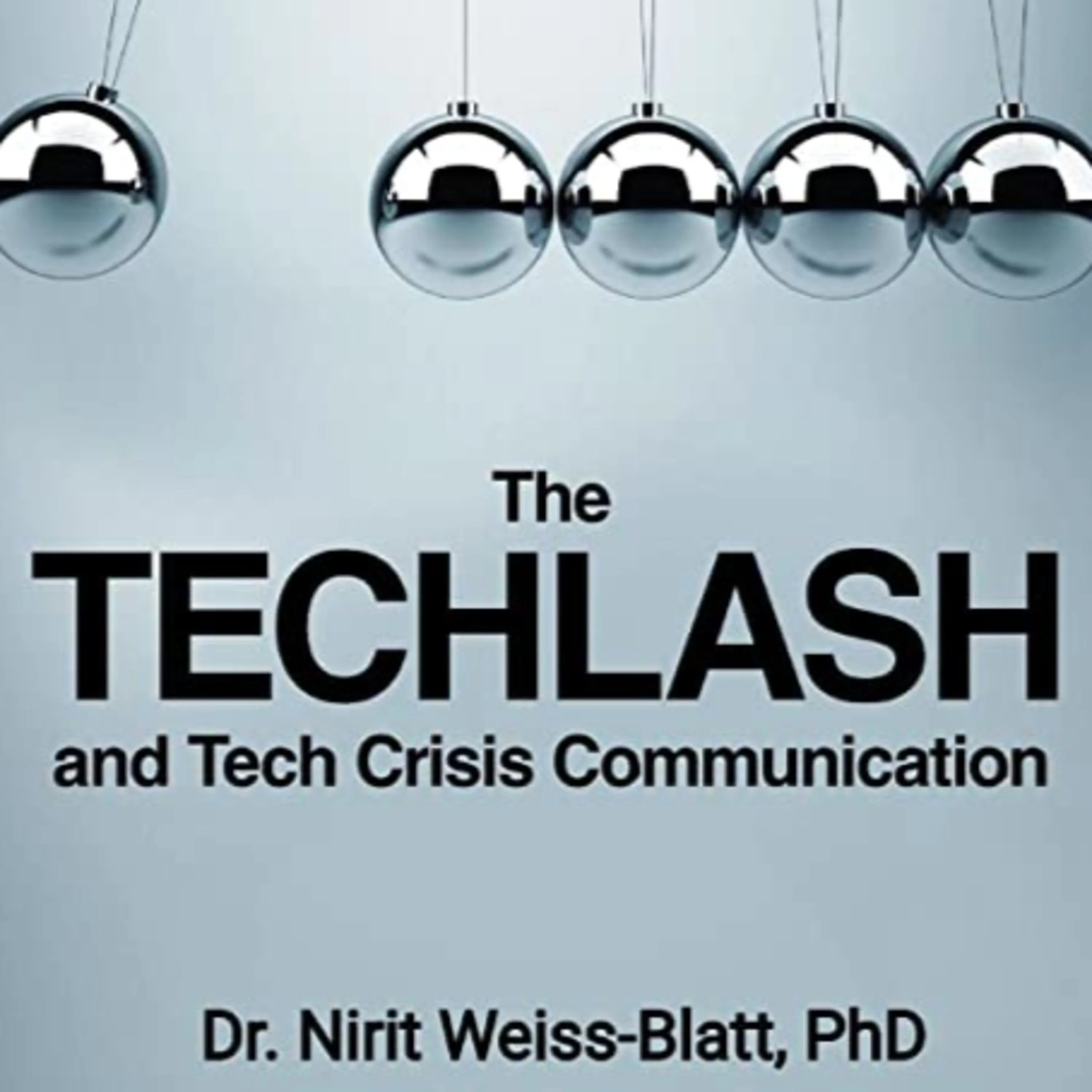
Ep 33The Techlash and Tech Crisis Communication
Communication researcher Nirit Weiss-Blatt talks about her book, The Techlash and Tech Crisis Communication, as well as some of her recent and forthcoming pieces on the digital technology industry with Peoples & Things host, Lee Vinsel. Weiss-Blatt’s work examines both the rise of the “techlash”—the development of negative public and expert sentiment about the digital technology industry—and how company public relations efforts responded to this development. Weiss-Blatt and Vinsel also talk about how some claims about the negative impacts of social media do not seem to hold up to empirical scrutiny and what all of this means for regulation of the digital technology industry. Learn more about your ad choices. Visit megaphone.fm/adchoices Support our show by becoming a premium member! https://newbooksnetwork.supportingcast.fm/communications
Ep 223Natasha Lance Rogoff, "Muppets in Moscow: The Unexpected Crazy True Story of Making Sesame Street in Russia" (Rowman & Littlefield, 2022)
It’s the early 1990s, and the USSR is no more. An intrepid young American TV producer has been given a seemingly foolhardy task: bringing the beloved children’s show Sesame Street to Russia, and the rest of the post-Soviet sphere. This is the premise of Muppets in Moscow: The Unexpected Crazy True Story of Making Sesame Street in Russia (Rowman & Littlefield, 2022)—a memoir from that aforementioned producer, Natasha Lance Rogoff. Amidst car bombings, soldiers kidnapping Elmo, and a collapsing ruble, Lance Rogoff assembles a team of Russian creatives to adapt Sesame Street into Ulitsa Sezam, as the show is known in Russian. While culture clashes ensue at first, they eventually give way to cross-cultural empathy, as Lance Rogoff poignantly illustrates in the book. It’s a story that feels especially resonant in the present day, with Russia and the West again at opposite ends of a daunting geopolitical divide. Lance Rogoff talks with the New Books Network's Anthony Kao about how she came to produce Sesame Street in Russia, and gives us a taste of the adventures contained within Muppets in Moscow. Anthony Kao is a writer who intersects international affairs and cultural criticism. He founded/edits Cinema Escapist—a publication exploring the sociopolitical context behind global film and television—and also writes for outlets like The Guardian, The Diplomat, and Eater. Learn more about your ad choices. Visit megaphone.fm/adchoices Support our show by becoming a premium member! https://newbooksnetwork.supportingcast.fm/communications
Ep 357Hannah Noel, "Deflective Whiteness: Coopting Black and Latinx Identity Politics" (Ohio State UP, 2022)
In Deflective Whiteness: Coopting Black and Latinx Identity Politics (Ohio State UP, 2022), Hannah Noel repositions Whiteness studies in relation to current discussions around racialized animus and White victimhood, demonstrating how White supremacy adapts its discursive strategies by cannibalizing the language and rhetoric of Black and Latinx social justice movements. Analyzing a wide-ranging collection of cultural objects—memes, oration, music, advertisements, and news coverage—Noel shows how White deflection sustains and reproduces structures of inequality and injustice. White deflection offers a script for how social justice rhetoric and the emotions of victimization are appropriated to conjure a hegemonic White identity. Using derivative language, deflection claims Whiteness as the aggrieved social status. Through case studies of cultural moments and archives including Twitter, country music, the Black Lives Matter movement, and more, Deflective Whiteness exposes the various forms of tacit White supremacy that operate under the alibi of injury and that ultimately serve to deepen racial inequities. By understanding how, where, and why White deflection is used, Noel argues, scholars and social justice advocates can trace, tag, and deconstruct covert White supremacy at its rhetorical foundations. Omari Averette-Phillips is a graduate student in the department of history at UC Davis. He can be reached at [email protected] Learn more about your ad choices. Visit megaphone.fm/adchoices Support our show by becoming a premium member! https://newbooksnetwork.supportingcast.fm/communications
Ep 307Timothy Cleveland, "Beyond Words: Philosophy, Fiction, and the Unsayable" (Lexington Books, 2022)
It seems undeniable that language has limits in what it can express – among other philosophers, Wittgenstein famously drew a line of this sort in his Tractatus Logico-Philosophicus. But what is the unsayable or inexpressible? What is interesting, philosophically, about the unsayable? And if if something is unsayable, how can fictional works be related to (if not say something about) it? In Beyond Words: Philosophy, Fiction, and the Unsayable (Lexington Books, 2022)), Timothy Cleveland argues that philosophical interest is not limited to the in-principle unsayable, as many philosophers claim: there is great value in what may be unsayable at a given time, due to epistemic limitations. Cleveland, who is professor of philosophy at New Mexico State University, defends a view in which words rendered in a certain way in fiction – such as in T.S. Eliot’s "The Waste Land" – can acquaint us with, or exhibit to us, experiences that emerge from but are not semantically encoded in the sentences the works contain. Learn more about your ad choices. Visit megaphone.fm/adchoices Support our show by becoming a premium member! https://newbooksnetwork.supportingcast.fm/communications
Ep 354Martin Scott and Kate Wright, "Humanitarian Journalists: Covering Crises from a Boundary Zone" (Routledge, 2022)
How can the news better reflect important global issues? In Humanitarian Journalists Covering Crises from a Boundary Zone (Routledge, 2022), Drs Martin Scott, an Associate Professor in Media & Development at the University of East Anglia and Kate Wright, Senior Lecturer and Chancellor's Fellow in Media and Communication at the University of Edinburgh, and Prof Mel Bunce, a Professor of International Journalism at City University of London, explore the context that shapes the lives and practices of humanitarian journalists. The book uses rich case study materials, detailed interview data, and a framework drawing on field theory to analyses how humanitarian journalists exist between the journalistic and humanitarian fields. This comes at a cost to them, as well as offering significant positives for both their activities and for news itself. Accessible, and available open access here, the book is essential reading across media studies, humanities, and social sciences, as well as for anyone concerned about the need for a better system for reporting the news. Dave O'Brien is Professor of Cultural and Creative Industries, at the University of Sheffield. Learn more about your ad choices. Visit megaphone.fm/adchoices Support our show by becoming a premium member! https://newbooksnetwork.supportingcast.fm/communications
Ep 99The Art of Translating Academic Research
Jennifer Crewe talks about how translation became a key component of the Columbia University Press publishing program and how the press decides which books they want to translate. In addition, we go behind the scenes to understand the mechanics of a translation rights deal and how negotiations are conducted between academic publishers around the world. Finally, we cover the ever-changing business of academic book sales that can literally turn on its head overnight. Avi Staiman is the founder and CEO of Academic Language Experts. Learn more about your ad choices. Visit megaphone.fm/adchoices Support our show by becoming a premium member! https://newbooksnetwork.supportingcast.fm/communications
Ep 189Michael Murawski, "Museums as Agents of Change: A Guide to Becoming a Changemaker" (Rowman & Littlefield, 2021)
Museums everywhere have the potential to serve as agents of change—bringing people together, contributing to local communities, and changing people’s lives. So how can we, as individuals, radically expand the work of museums to live up to this potential? How can we more fiercely recognize the meaningful work that museums are doing to enact change around the relevant issues in our communities? How can we work together to build a stronger culture of equity and care within museums? Questions like these are increasingly vital for all museum professionals to consider, no matter what your role is within your institution. They are also important questions for all of us to be thinking about more deeply as citizens and community members. Museums as Agents of Change: A Guide to Becoming a Changemaker (Rowman & Littlefield, 2021) is about the work we need to do to become changemakers and demand that that our museums take action toward positive social change and bring people together into a more just, equitable, compassionate, and connected society. It is a journey toward tapping the energies within all of us to make change happen and proactively shape a new future. Mike Murawski is a consultant, change leader, and educator living in Portland, Oregon. After more than 20 years of work in education and museums, Mike brings his personal core values of collaboration and care along with a deeper understanding of placed-based connections into the work that he leads within organizations, non-profits, schools, and communities. Mike is the author of Museums as Agents of Change, and author of the Substack publication Agents of Change. In 2016, he co-founded Super Nature Adventures LLC, a place-based education and creative design business that partners with parks, government agencies, schools, and non-profits to expand learning in the outdoors and public spaces. When he's not working on place-based projects or supporting change in nonprofits, you can find Mike on long trail runs in the forests and mountains of the Pacific Northwest. Callie Smith is a poet and museum educator living in Louisiana. Learn more about your ad choices. Visit megaphone.fm/adchoices Support our show by becoming a premium member! https://newbooksnetwork.supportingcast.fm/communications

Ep 110Index
In this episode of High Theory, Dennis Duncan tells us about the history of the index. At it’s simplest, an index is a table with columns that allow you to match sets of terms, most often topics and page numbers. Google is an index, as was the first bible concordance, completed in 1230 under the direction of a French Dominican scholar named Hugo de Saint-Cher. In the episode, Dennis quotes a line from Alexander Pope’s Dunciad: How index-learning turns no student pale. Yet holds the eel of science by the tail (book 1, lines 279-80) He also references Nicholas Carr’s article, “Is Google Making Us Stupid?” (The Atlantic, July/Aug 2008), and the book based upon it, The Shallows: What the Internet is Doing to Our Brains (Norton, 2011), both of which make an argument against shallow reading that Dennis argues goes all the way back to medieval critiques of the index. In the longer version of our conversation, we talked about Italo Calvino’s If On A Winter’s Night a Traveler. Dennis Duncan is a scholar of book history, translation, and avant-garde literature at the University College London. His book about the history of the index, Index: A Bookish Adventure from Medieval Manuscripts to the Digital Age was published in the US by Norton in 2022. The book includes two indices, once made by indexing software, and the other by Paula Clarke Bain. This week’s image is a portrait of Hugo de Saint-Cher, made by Tommaso da Modena. Image source: Wikimedia Commons. Full citation: Hugues de Saint-Cher († 1263), bibliste et théologien, Paris, Centre d’études du Saulchoir, Actes du colloque 13-15 mars 2000, Brepols, coll. « Bibliothèque d’histoire culturelle du Moyen Âge », n°1, Turnhout, 2004, 524 p., ISBN : 2-503-51721-8 Learn more about your ad choices. Visit megaphone.fm/adchoices Support our show by becoming a premium member! https://newbooksnetwork.supportingcast.fm/communications
Ep 28The Promises and Perils of Hype in Science and Technology
EJournalist and STS graduate student Gemma Milne talks about her book, Smoke and Mirrors: How Hype Obscures the Future and How to See Past It, with Peoples & Things host, Lee Vinsel. The book examines how hype works and how it plays out in a number of scientific and technical fields, including artificial intelligence, quantum computing, brain implants, cancer drugs, fusion energy, and the future of food. Learn more about your ad choices. Visit megaphone.fm/adchoices Support our show by becoming a premium member! https://newbooksnetwork.supportingcast.fm/communications
Ep 27The Internet, Inequality, and the “Digital Divide”
Information scholar Daniel Greene, an assistant professor at University of Maryland, talks about his book, The Promise of Access: Technology, Inequality, and the Political Economy of Hope, with Peoples & Things host, Lee Vinsel. The Promise of Access examines how the “digital divide” became a policy problem, and draws on fascinating ethnographies of a “tech” startup, a public library, and a charter school to examine how organizations come to chase technological solutions to social problems. Learn more about your ad choices. Visit megaphone.fm/adchoices Support our show by becoming a premium member! https://newbooksnetwork.supportingcast.fm/communications
Ep 5Thomas Poell et al., "Platforms and Cultural Production" (Polity, 2022)
Hello, world! This is the Global Media & Communication podcast series. In this episode, our co-hosts Aswin Punathambekar and Jing Wang discusses the book Platforms and Cultural Production (2021) by Thomas Poell, David B. Nieborg, and Brooke Erin Duffy. You’ll hear about: How this collaborative project came about, given each of the authors has distinct interests and disciplinary orientations; Given the two keywords of “platforms” and “cultural production,” how did the authors make sense of these keywords in relation to broader processes of digital infrastructures and imaginaries; How three key sections – social media, games, and journalism – were identified by the authors to explain the idea of “platformization”; How the platforms work as multi-sided markets and the approaches to account for the dynamism and lifecycles at work in platform economies; A discussion of Twitter as a useful case of platformization to grasp the challenges of platform governance; Why the authors chose to specifically focus on the role and agency of cultural producers; How to study cultural practices in various platforms across a wide variety of sociopolitical contexts in both Global North and South; The structural inequalities of platform economies, the precarity of the platform-dependent labor market, and the efforts of cultural producers to face insecurity; The cultural meanings of “creativity” and “authenticity” and the tension between the profit-driven platform logic and the individual search for belonging in social media such as TikTok; The relevance of cultural production and platforms to understanding the present and future of democratic governance and civic life in the post-truth era; The next collaborative project, such as a second volume, conferences, and research networks. About the book Poell, Nieborg, and Duffy explore both the processes and the implications of platformization across the cultural industries, identifying key changes in markets, infrastructures, and governance at play in this ongoing transformation, as well as pivotal shifts in the practices of labor, creativity, and democracy. The authors foreground three particular industries – news, gaming, and social media creation – and also draw upon examples from music, advertising, and more. Diverse in its geographic scope, Platforms and Cultural Production builds on the latest research and accounts from across North America, Western Europe, Southeast Asia, and China to reveal crucial differences and surprising parallels in the trajectories of platformization across the globe. You can find the book from Polity Press HERE. Authors: Thomas Poell is Professor of Data, Culture & Institutions at the University of Amsterdam, program director MA Media Studies, and director of the Research Priority Area on Global Digital Cultures. David B. Nieborg is Associate Professor of Media Studies at the University of Toronto Scarborough with a graduate appointment at the Faculty of Information. Brooke Erin Duffy is Associate Professor in the Department of Communication at Cornell University, where she is also a member of the Feminist, Gender, and Sexuality Studies faculty. Co-Hosts: Aswin Punathambekar is Professor of Communication and Director of the Center for Advanced Research in Global Communication at the Annenberg School for Communication, University of Pennsylvania. Jing Wang is Senior Research Manager at CARGC at the Annenberg School for Communication, University of Pennsylvania. Editor & Producer: Jing Wang Learn more about your ad choices. Visit megaphone.fm/adchoices Support our show by becoming a premium member! https://newbooksnetwork.supportingcast.fm/communications
Ep 335Amy S. Bruckman, "Should You Believe Wikipedia?: Online Communities and the Construction of Knowledge" (Cambridge UP, 2022)
As we interact online we are creating new kinds of knowledge and community. How are these communities formed? How do we know whether to trust them as sources of information? In other words, should we believe Wikipedia? Should You Believe Wikipedia?: Online Communities and the Construction of Knowledge (Cambridge UP, 2022) explores what community is, what knowledge is, how the internet facilitates new kinds of community, and how knowledge is shaped through online collaboration and conversation. Along the way the author tackles issues such as how we represent ourselves online and how this shapes how we interact, why there is so much bad behavior online and what we can do about it. And the most important question of all: What can we as internet users and designers do to help the internet to bring out the best in us all? Amy Bruckman is Regents’ Professor and Senior Associate Chair in the School of Interactive Computing at the Georgia Institute of Technology. Her research focuses on social computing, with interests in collaboration, social movements, content moderation, and internet research ethics. She is an ACM Fellow and a member of the ACM CHI Academy. Bruckman received her Ph.D. from the MIT Media Lab's Epistemology and Learning group in 1997, and a B.A. in physics from Harvard University in 1987. Morteza Hajizadeh is a Ph.D. graduate in English from the University of Auckland in New Zealand. His research interests are Cultural Studies; Critical Theory; Environmental History; Medieval (Intellectual) History; Gothic Studies; 18th and 19th Century British Literature. Learn more about your ad choices. Visit megaphone.fm/adchoices Support our show by becoming a premium member! https://newbooksnetwork.supportingcast.fm/communications
Ep 98Horton's Cosmic Zoom: A Discussion with Zachary Horton
Today Recall this Book welcomes Zachary Horton, Associate Professor of Literature and director of the Vibrant Media Lab at University of Pittsburgh; game designer, filmmaker and camera designer. Out of all these endeavors, he came to talk about his book The Cosmic Zoom Scale, Knowledge, and Mediation. This dizzying book begins with a bravura description of a movie we both loved as kids: The Powers of Ten by Charles and Ray Eames. It's a view of two people enjoying a picnic zooms up and away to show their surroundings, all the way up into space then zooms back in for a close-up of the hand of the picnicker, ending top at the atomic level . The book, uses the cosmic zoom as a starting point to develop a cross-disciplinary theory of scale as mediated difference. Zack shares his worries about scale literacy, and what happens when we diverge from the "meso-scale of the human sensorium." John approaches scale by way of Naturalism and SF in the late 19th century, both of which refuse the meso-scale aesthetic realism of their day in order to anchor it at a different scale. Elizabeth asks about temporal scales and geology's activation of human sense of humans' scalar insignificance. Mentioned in this episode: Italo Calvino The Complete Cosmicomics The Holy Bible Kees Boeke, Cosmic View: the University in 40 Jumps PBS, The Bigger Picture Voltaire, Micromegas Mark Twain, 3000 Years Among the Microbes Read transcript here. Learn more about your ad choices. Visit megaphone.fm/adchoices Support our show by becoming a premium member! https://newbooksnetwork.supportingcast.fm/communications
Ep 24Inventing American Telecommunications
Historian Richard John, professor of journalism at Columbia University, talks about his book, Network Nation: Inventing American Telecommunications, with Peoples & Things host, Lee Vinsel. Network Nation is a history of the telegraph and telephone in the United States, and one of its key findings is that, from the very beginning of these technologies, thinking about the state, regulation, and ideas of political economy was at the heart of business strategy. John and Vinsel also talk about the nature of historical research and why it is so important to go back to primary sources. Learn more about your ad choices. Visit megaphone.fm/adchoices Support our show by becoming a premium member! https://newbooksnetwork.supportingcast.fm/communications
Ep 22The History of Teletherapy
Hannah Zeavin, lecturer in the department of History and member of the executive committees of both the Center for New Media and the Center for Science, Technology, Medicine, and Society at University of California, Berkeley, talks about her book, The Distance Cure: A History of Teletherapy, with Peoples & Things host, Lee Vinsel. The book tracks the history of teletherapy, which Zeavin defines as therapeutic interaction over distance, and its metamorphosis from a model of cure to one of contingent help. The book starts with letters sent through the mail and ends in our current coronavirus catastrophe. Zeavin and Vinsel also talk about the complexities and potential harms of going back fully in-person, including how it will negatively affect disabled people. Learn more about your ad choices. Visit megaphone.fm/adchoices Support our show by becoming a premium member! https://newbooksnetwork.supportingcast.fm/communications
Ep 29Public Thinking: Social Media and the New 'Public Intellectual'
We have usually relied on public intellectuals to provide facts, ideas, and cultural leadership--though not all have lived up to the ideal of “speaking truth to power.” Today, however, online networks and social media mean we are all public intellectuals, and we have new responsibilities that come with this role. Guests: Cornel West, professor at Union Theological Seminary and author of, among other works, Black Prophetic Fire. George Scialabba, author of What Good Are Intellectuals Good For?, and many other works. Learn more about your ad choices. Visit megaphone.fm/adchoices Support our show by becoming a premium member! https://newbooksnetwork.supportingcast.fm/communications
Ep 97Think Bigger: How Researchers Can Use their Books to Make Real Breakthroughs
Avi and Gita Manaktala discuss how researchers should approach the book publishing process, including determining whether research should be published as an article or book, how to make an impact on the acquisitions editors, the significance of the editorial process, and the importance and function of an 'author platform' to spread your book. Gita also shares how the move to Open Access is impacting the book publishing space and MIT's attempt to turn their entire collection OA. Finally, we discuss what can be done to increase diversity among authors and readers of academic works. Avi Staiman is the founder and CEO of Academic Language Experts Learn more about your ad choices. Visit megaphone.fm/adchoices Support our show by becoming a premium member! https://newbooksnetwork.supportingcast.fm/communications

Ep 25Virtually Violent: Are Online Attacks "Violence?"
During the ongoing COVID-19 pandemic, vulnerable communities have been hit especially hard by disruptive online attacks. But calling these attacks "violent" could jeopardize the future of disruptive protests designed to protest those same communities. Guests: Erica Chenoweth, professor of human rights and international affairs at the Harvard Kennedy School of Government and author of Civil Resistance: What Everyone Needs To Know. Dr. Joan Donovan, research director of the Shorenstein Center on Media, Politics and Public Policy at Harvard University. Oren Segal, vice president of the Anti-Defamation League's Center on Extremism. Learn more about your ad choices. Visit megaphone.fm/adchoices Support our show by becoming a premium member! https://newbooksnetwork.supportingcast.fm/communications