Museum Archipelago
113 episodes — Page 2 of 3
63. Sex and Death Are on Display at The Museum of Old and New Art
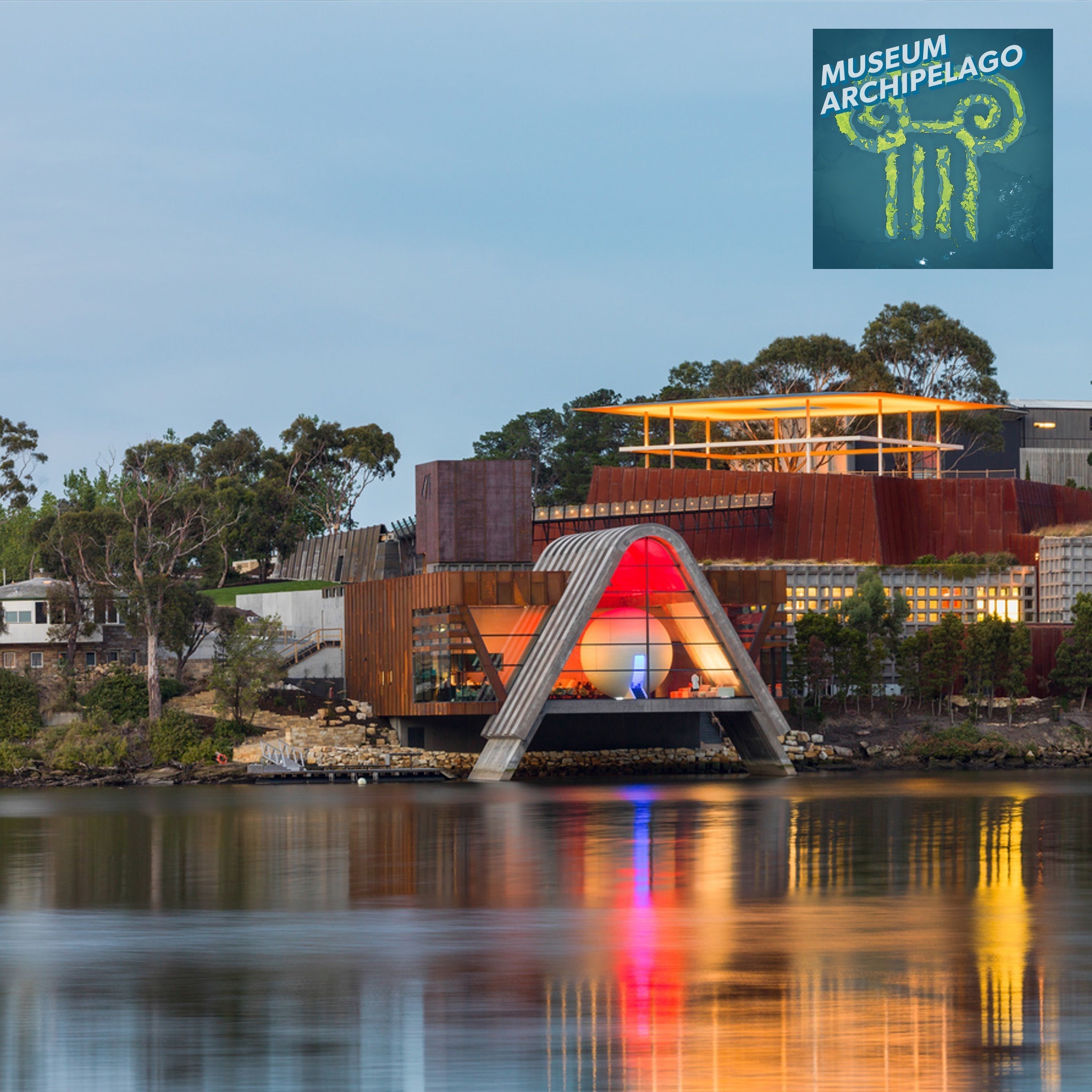
The Museum of Old and New Art opened in Hobart, Tasmania, Australia in 2011. With a name like that, MONA could include any type of art. But looking at the collection, it’s clear that its creator, millionaire gambler David Walsh, has a fascination with sex and death -- and bets that the rest of us do too. Walsh himself calls MONA a “subversive adult Disneyland.” The building’s architecture is designed to make you feel lost, and the art is displayed without any labels whatsoever. It’s just you and the art. In this episode, Hobart-based musician Bianca Blackhall talks about how she’s watched MONA reshape the creative community and art landscape of the island, what makes the museum different from other art museums, and how Hobart is now in “Sauron's Eye of tourism.” This month on Museum Archipelago, we’re taking you to Tasmania. Over the course of three episodes, we’re conducting a survey of museums on the island, and exploring how each of them relates to the wider landscape of museums. Subscribe to the podcast via Apple Podcasts, Google Podcasts, Overcast, or Spotify to never miss an episode. Club Archipelago 🏖️ If you like episodes like this one, you’ll love Club Archipelago. Join Club Archipelago today to help me continue making podcasts about museums (and get some fun benefits)! Topics Discussed 00:00: Intro 00:15: This Month, Museum Archipelago is Taking You To Tasmania 00:47: Museum of Old and New Art (MONA) 01:05: Museum Archipelago on ABC Radio Hobart 01:30: The Way MONA Shapes the Island 01:44: MONA’s Architecture is Designed to Make You Feel Lost 02:42: Bianca Blackhall 03:05: David Walsh 03:50: “A Subversive Adult Disneyland” 04:08: The Holy Virgin Mary 04:13: On the road to heaven the highway to hell 04:29: Cloaca Professional, 2010 04:55: MONA’s Lack of Labels 05:33: “Art Wank” 06:20: Pride in MONA 06:50: “Sauron's Eye of Tourism” 08:20: A Monument to Joyful Secularism 08:43: Join Club Archipelago More ➡️ The Making of MONA by Adrian Franklin Transcript Below is a transcript of Museum Archipelago episode 63. Museum Archipelago is produced for the ear and the only the audio of the episode is canonical. For more information on the people and ideas in the episode, refer to the links above. View Transcript Museums on the Australian island of Tasmania are a microcosm of museums all around the world. They struggle with properly interpreting their colonial past, the exclusion of First People from telling their stories in major museums, and having a large, privately owned art museum reshape a small town. This month on Museum Archipelago, we’re taking you to Tasmania. Over the course of three episodes, we’re conducting a survey of museums on the island, and exploring how each of them relates to the wider landscape of museums. Today we visit the Museum of Old and New Art in Hobart, Tasmania, Australia. It’s known as MONA, and it is by far the largest museum in Tasmania… not only by square footage (it’s the largest privately owned art museum in the southern hemisphere), but also by its influence. Helen Shield: If you were hosting an international podcast about museums, where would you spend your precious travel dollars to record? That’s Helen Shield, host of a terrestrial broadcast radio program in Tasmania. Helen Shield: There’s one obvious answer, isn’t there? She’s a Hobart local and she interviewed me about this series. Listen to how she describes the way that MONA shapes the island. Helen Shield: It wouldn’t be a trip to Tasmania without stopping in a museum that has singlehandledled changed tourism and probably the international reputation of this island, stopping in at MONA. MONA, often called the museum of sex and death, opened in Berriedale, a suburb of Hobart in 2011. The building, an enormous bunker out on a peninsula overlooking a river, sneaks up on you as you approach. Once you’re inside -- though a rather small entrance that whisks you underground, the architecture is designed to make you feel lost. There are no signs or directions, so you have to choose your own route. The maze-like paths split in two, with no indication which way you should take, other than which one might seem more attractive to you. Tunnels and stairs -- which don’t always move you up or down by one story -- are not an escape from the disorienting experience -- instead, they might lead you to a tight closterphoic chamber, a lovely cafe overlooking the water, or another massive, previously undiscovered subterranean open space. Bianca Blackhall: I don't think people expected it to have such an impact. It's kind of like a layer. It's very villainous. This is Bianca Blackhall, a Hobart-based musician who has watched MONA reshape the creative community and art landscape of the island. Bianca Blackhall: Hello, my name is Bianca Blackhall. I live in Tasmania. I'm 27 and I'm a musician among other things. The museum is the product of Tasmanian millionaire and art collector David Walsh. Walsh made his fortune by gambling, and B
62. David Gough Reclaims Stewardship of Tiagarra for Aboriginal Tasmanians
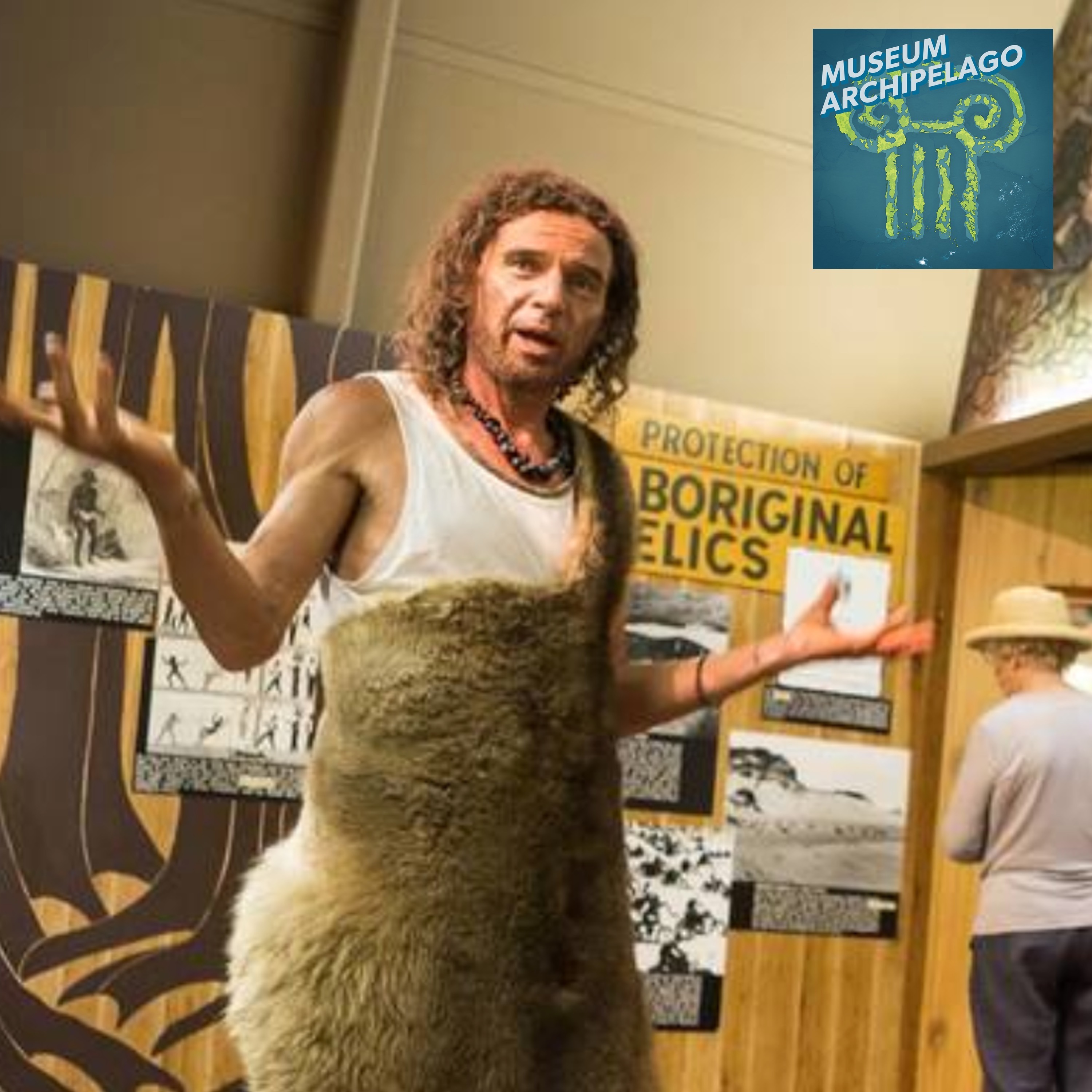
The displays at the Tiagarra Cultural Centre and Museum in Devonport, Tasmania, Australia were built in 1976 by non-indigenous citizens and scientists without consulting Aboriginal Tasmanians. David Gough, chairperson of the Six Rivers Aboriginal Corporation, remembers visiting the museum when he was younger and seeing his own culture presented as extinct. Today, Gough is the manager of Tiagarra. When he took over, one of the first things he did was put masking tape over the inappropriate and incorrect descriptions and write in the correct information. As Gough explains, racist language covered up and written over by the very people it describes is the perfect metaphor for what Tiagarra was in the past and what it is going to be in the future. On this episode, Gough and fellow Six Rivers Aboriginal Corporation board member Sammy Howard give a special tour of the museum, describe using the museum to educate members of their community and the wider public, and discuss the future of Tiagarra. This month on Museum Archipelago, we’re taking you to Tasmania. Over the course of three episodes, we’re conducting a survey of museums on the island, and exploring how each of them relates to the wider landscape of museums. Subscribe to the podcast via Apple Podcasts, Google Podcasts, Overcast, or Spotify to never miss an episode. Club Archipelago 🏖️ If you like episodes like this one, you’ll love Club Archipelago. Join Club Archipelago today to help me continue making podcasts about museums (and get some fun benefits)! Topics and Links 00:00 Intro 00:15 This Month, Museum Archipelago is Taking You To Tasmania 00:46 Tiagarra Cultural Centre and Museum 01:56 Dave Mangenner Gough 02:53 “To Keep” 03:00 A Brief History and the Importance of Understanding the Past 0438 Tour of the Museum 06:00 Protecting Sites 07:15 Educating the Public About ‘Middens’ 09:20 “A Collection of Hoop-Jumpers” 10:30 Optimism for the Future of Tiagarra 11:35 Welcome to Country and Acknowledgement of Country 12:40 Connecting with Members of First Nations Around the World 13:28 Join Club Archipelago 14:10 Outro Transcript Below is a transcript of Museum Archipelago episode 62. Museum Archipelago is produced for the ear and the only the audio of the episode is canonical. For more information on the people and ideas in the episode, refer to the links above. View Transcript [Intro] Museums on the Australian island of Tasmania are a microcosm of museums all around the world. They struggle with properly interpreting their colonial past, the exclusion of First People from telling their stories in major museums, and having a large, privately owned art museum reshape a small town. This month on Museum Archipelago, we’re taking you to Tasmania. Over the course of three episodes, we’re conducting a survey of museums on the island, and exploring how each of them relates to the wider landscape of museums. Today, we visit Tiagarra Cultural Centre and Museum in Davenport, Tasmania, Australia. The museum is situated on Mersey Bluff, a traditional Aboriginal sacred site, that now hosts a nature trail and a caravan park. The museum was built in 1976 to promote Aboriginal culture and cultural tourism. But the displays were put together by non-indigenous citizens and scientists. David Gough, of the local Devonport/Latrobe Aboriginal community, remembers visiting the museum when he was younger and seeing offensive words on the plaques and on the walls. David Gough: When we were younger and looking at this stuff and thinking, wow, you know, there's words…. really inappropriate words. Talk about about us as no longer a race of people. People have been writing my family and our stories and writing in a way that suited them. They wrote us as savages and nomadic and all these things. They wrote things like we didn't how to make fire, that we were really limited people. But we lived through two ice ages. Today, Gough is the chairperson of the Six Rivers Aboriginal Corporation and the manager of Tiagarra. One of the first things he did as manager was put masking tape over those words. David Gough: As soon I got the keys to the door back, I put masking tape over words, this sticky tape there… I put masking tape over really inappropriate words. I’ve written over them like, “beautiful people,” rather than some of the words that were under those and said now we can put ourselves in here, rather than… this place told stories… left us as we don’t exist anymore, because we don’t have our stories in here. Offensive racial language covered up and written over by the very people it describes is the perfect metaphor for what Tiagarra was in the past and what it is going to be in the future. David Gough: Hello, my name is Dave Mangenner Gough. Tiagarra Cultural Centre and Museum Davenport, Tasmania. Tiagarra is an Aboriginal name that means “to keep”. This site is a significant site. Where the caravan park is, just there, was where there was huts and a village. Aboriginal Tasmanians live
61. Jody Steele Centers the Convict Women of Tasmania's Penal Colonies at the Female Factory
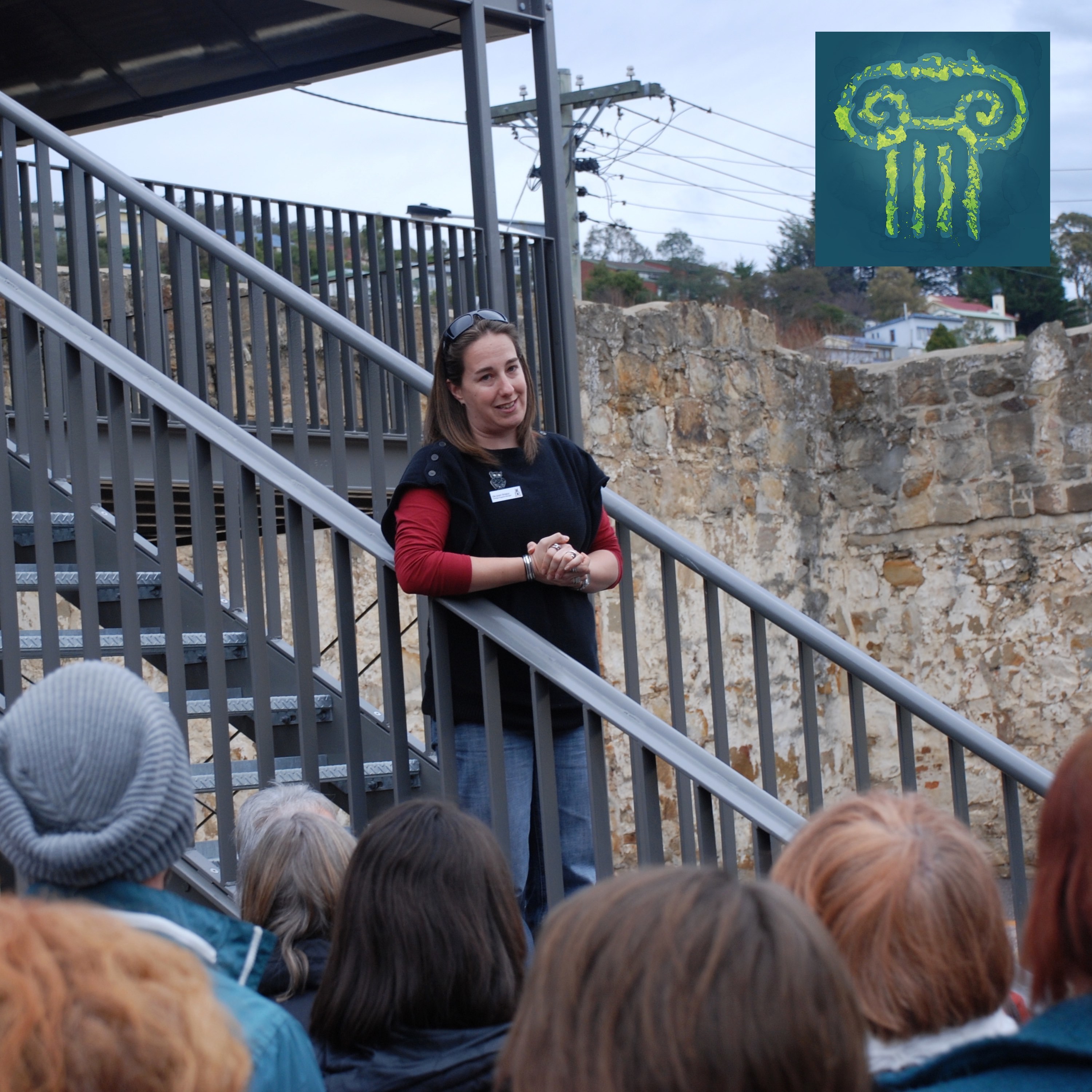
Penal transportation from England to Australia from the late 1700s to the mid-1800s was used to expand Britain's spheres of influence and to reduce overcrowding in British prisons. The male convict experience is well-known, but the Cascades Female Factory in Hobart is at the center of a shift in how Australians think of the role that female convicts played in the colonization of Tasmania. Dr. Jody Steele, the heritage interpretation manager for the Port Arthur Historic Site Management Authority, which includes the Female Factory, says that having a convict ancestor used to be considered shameful. But in the past 20 years, attitudes have shifted dramatically. Sites like the Female Factory, the Female Convicts Research Centre, and a general interest in geological research have helped the public better understand how the forced labor of women built the economy of the island. Today, the museum is on the cusp of a major renovation. Dr Steele describes how the proposed design, chosen by an all-female panel, will present the female convict experience in Tasmania. This month on Museum Archipelago, we’re taking you to Tasmania. For the next three episodes, we’re conducting a survey of museums on the island, and exploring how each of them relates to the wider landscape of museums. Subscribe to the podcast via Apple Podcasts, Google Podcasts, Overcast, or Spotify to never miss an episode. Club Archipelago 🏖️ If you like episodes like this one, you’ll love Club Archipelago. Join Club Archipelago today to help me continue making podcasts about museums (and get some fun benefits)! Topics and Links 00:00 Intro 00:15 This Month, Museum Archipelago is Taking You To Tasmania 00:46 Cascades Female Factory 01:00 The Male and Female Convict Experience 02:26 Dr. Jody Steele 02:48 Why It’s Called The Female Factory 04:30 Being A “Respectable” Women In Colonial Society 06:10 Interpreting the Site 07:05 The Lack of Artifacts at the Site 08:50 Australia's Changing Attitudes Towards Convict Ancestors 09:38 History and Interpretation Center Design Competition 11:12 Female Convicts Research Centre 12:15 The Reminders of Convict Labor in Hobart 13:20 Join Club Archipelago 14:00 Outro Transcript Below is a transcript of Museum Archipelago episode 61. Museum Archipelago is produced for the ear and the only the audio of the episode is canonical. For more information on the people and ideas in the episode, refer to the links above. View Transcript [Intro] Museums on the Australian island of Tasmania are a microcosm of museums all around the world. They struggle with properly interpreting their colonial past, the exclusion of First People from telling their stories in major museums, and having a large, privately owned art museum reshape a small town. This month on Museum Archipelago, we’re taking you to Tasmania. For the next three episodes, we’re conducting a survey of museums on the island, and exploring how each of them relates to the wider landscape of museums. Today, we begin with the Cascades Female Factory in the Tasmanian capital city of Hobart. It’s at the center of a shift in how Australians think of the role that convicts played in the colonization of the island. Jody Steele: The male convict story is the story that everyone’s heard about and everyone wants to discover something about it. So I think it’s odd that the female story is equally as fascinating and as intricate as the male story, and yet until recently nobody’s really shown that much of an interest in it with the exception of family researchers or people who have a specific connection. The site tells the story of European colonization of Van Diemen’s Land, the original European name for the island, from the female perspective. Jody Steele: The whole penal transportation to Australia and subsequently Van Diemen’s Land started as a result of prisons in England. Post industrial revolution, and people turning to crime without all the industries that they were used to, machines taking their jobs, the prisons just started to literally overflow. So they needed a mechanism to get the people out of those spaces, stop the overcrowding, and the colonization of Australia was an attempt to get that population out of Britain, and essentially far far away. Over 170,000 men women and children were transported during the transportation phase, which started in New South Wales in the late 1700s and in Van Diemen’s Land in 1803. The only museum in Tasmania that represents the female convict story is the Cascades Female Factory, where Dr. Jody Steele works as the heritage interpretation manager. Jody Steele: Hi. My name is Jody Steele. I am the heritage interpretation manager for the Port Arthur Historic Site Management Authority, and we are lucky enough to be the portfolio managers of three world heritage sites with form part of the Austrian convict sites world heritage nomination. And the Female Factory fall under our portfolio. Understanding why the site is called the Female Factory
60. Stephanie Cunningham on the Creation and Growth of Museum Hue
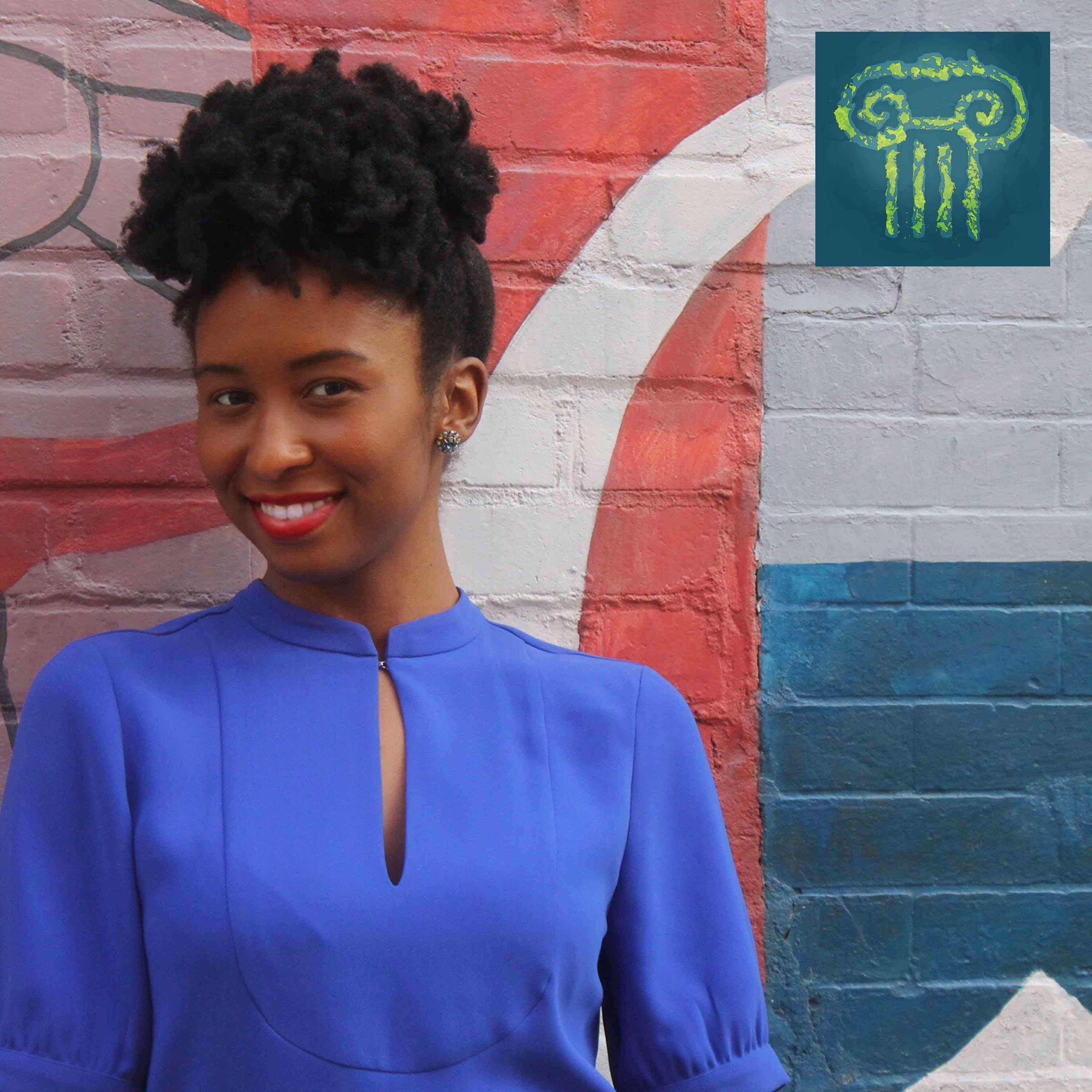
The fight for racial diversity in museums and other cultural institutions is not new: people of color have been fighting for inclusion in white mainstream museums for over 50 years. Dispose these efforts, change has been limited. A 2018 survey by the Mellon Foundation found that 88% of people in museum leadership positions are white. Stephanie Cunningham has a clear answer for why these white institutions aren’t changing: “When you’ve been practicing exclusion for so long, you can’t change overnight.” That’s one of the reasons why she co-founded Museum Hue with Monica Montgomery in 2015. In this episode, Cunningham traces Museum Hue’s trajectory from a small collective to a national membership-based organization, and spells out why being a well-meaning institution is necessary but not sufficient for equity in the field. Museum Archipelago is a tiny show guiding you through the rocky landscape of museums. Subscribe to the podcast via Apple Podcasts, Google Podcasts, Overcast, or Spotify to never miss an epsiode. Club Archipelago 🏖️ If you like episodes like this one, you’ll love Club Archipelago. Join Club Archipelago today to help me continue making podcasts about museums (and get some fun benefits)! Topics and Links 00:00 Intro 00:15 The Ongoing Fight for Racial Diversity in Museums 01:52 Stephanie Cunningham 02:26 The Founding of Museum Hue 03:05 Hueseum Tours 03:52 “Authentic Participation” and Jobs 06:29 Museum Hue’s Membership Model 07:05 Knock On Effects of Resistance to Change 08:56 A Story of the Museum Exhibition Design Company 10:10 The Unchecked Cultural Power of Museums 11:05 Black Visuality 11:25 Museum Hue’s Memberships 12:07 Arts Targeted By Oppressive Forces 13:55 Outro/Join Club Archipelago Transcript Below is a transcript of Museum Archipelago episode 60. Museum Archipelago is produced for the ear and the only the audio of the episode is canonical. For more information on the people and ideas in the episode, refer to the links above. View Transcript [Intro] Stephanie Cunningham: People of color, especially people of African descent, have been fighting for museums to be more inclusive over 50 years ago. It's the reason why institutions like the studio museum in Harlem was created. It's the reason why MOC, the Museum of Chinese in America, El Museo del Barrio, all these institutions came up because of the lack of inclusivity within these institutions. What we've seen today is not actually a shift in inclusion in a white mainstream museum, but a two-tiered museum, which is still the white mainstream museums and the development of these culturally specific institutions that I mentioned. It's important for us to realize that there has been need for institution building for people of color, but also these white mainstream institutions that hold a lot of our cultural heritage have to also include us into the scope and the framework of their institution and become more inclusive as well. A 2018 survey by the Mellon Foundation found that 88% of people in museum leadership positions are white. This imbalance continues though museum visitorship numbers, even though many museums are within communities of color or within states that have high populations of people of color. Stephanie Cunningham has a clear answer for why these white institutions aren’t changing: “when you’ve been practicing exclusion for so long, you can’t change overnight.” And that’s one of the reasons why she co-founded Museum Hue. Stephanie Cunningham: Hello, my name is Stephanie Cunningham. I am the co-founder and creative director of Museum Hue, an arts organization that works to increase the visibility of people of color working in arts and culture and museums in particular. It's really important that we begin to think more critically on how to change this, how to shift this and make museums more innovative and inviting that will attract more people of color and also be very honest about their history and their conflicting provenances as well within the institution. Stephanie Cunningham co-founded Museum Hue with strategic director Monica Montgomery in 2015. The organization began in New York City as a collective of people of color working in museums and other cultural spaces. Stephanie Cunningham: We realized that we really needed a safe space, a space where we can have psychological safety, where we can be ourselves and talk about our experiences working within cultural institutions, whether it be microaggression, macro aggression or racism and talking about perhaps some best practices of the things that were also going well for people within institutions as well. Museum Hue began infiltrating spaces with programs like Hueseum Tours, which the organization leads in art museums and other performance venues. The tours started in New York City but have since branched out to different parts of the country. Stephanie Cunningham: We'll have a conversation focusing on staff and artists of color and also narratives of color as well,
59. Faith Displayed As Science: How Creationists Co-opted Museums with Julie Garcia
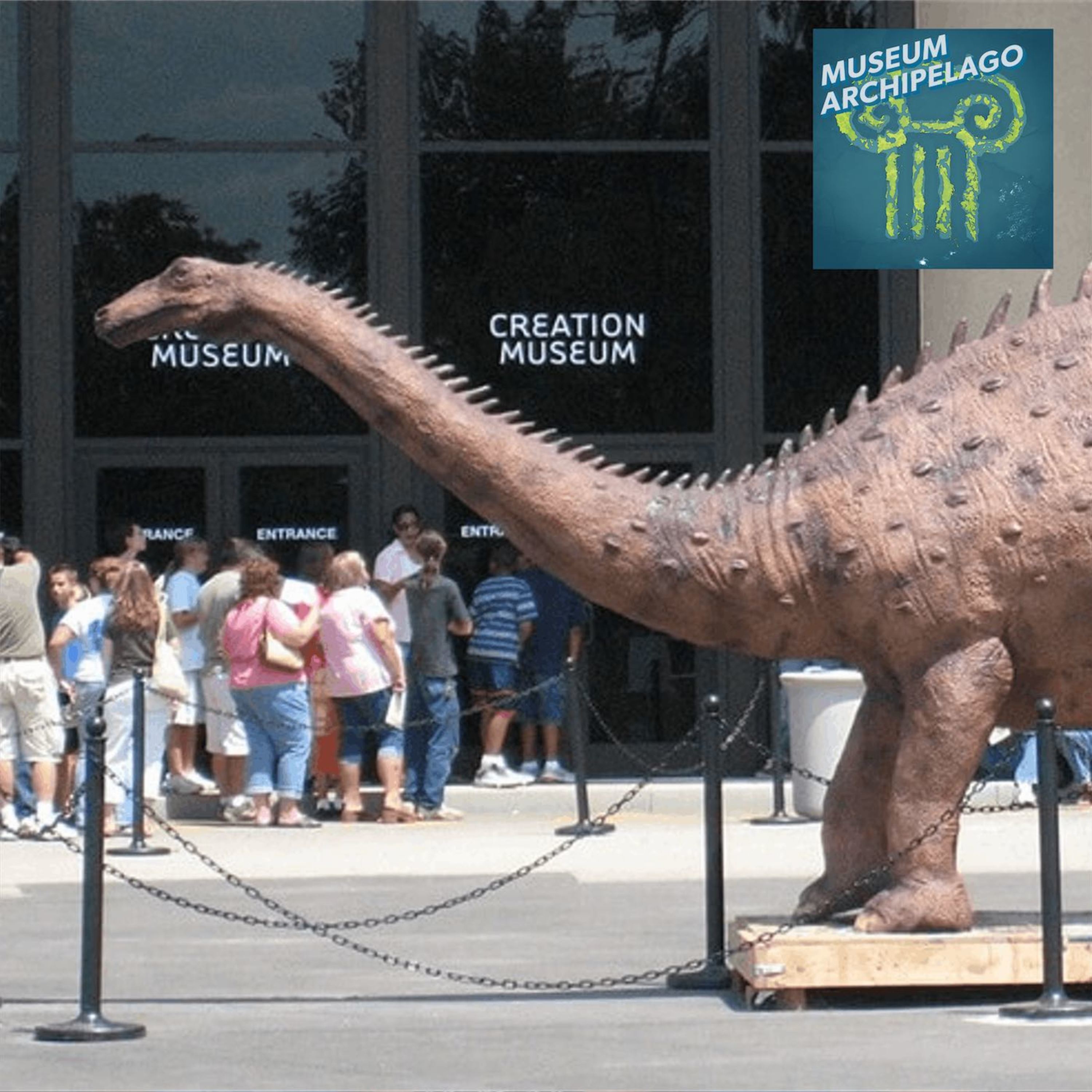
There’s a new tool in young-Earth creationists' quest for scientific legitimacy: the museum. Over the past 25 years, dozens of so-called creation museums have been built, including the Answers in Genesis (AiG) Creation Museum in Kentucky. Borrowing the style of natural history museums and science centers, these public display spaces use the form and rhetoric of mainstream science to support a belief in the literal truth of the Bible, including the creation of the universe in six days about 6,000 years ago. In her 2009 thesis, “Faith Displayed As Science: The Role of The Creation Museum in the Modern Creationist Movement”, Julie Garcia visited the AiG Creation Museum and three other creation museums: The Creation Evidence Museum in Glenrose, TX, Dinosaur Adventureland in Pensacola, FL, and the Institute for Creation Research which is near San Diego, CA. In this episode, Garcia discusses her findings and explores why museums are a particularly well-suited medium for creationist ideas. Museum Archipelago is a tiny show guiding you through the rocky landscape of museums. Subscribe to the podcast via Apple Podcasts, Google Podcasts, Castbox, Overcast, or Spotify to never miss an epsiode. Club Archipelago 🏖️ If you like episodes like this one, you’ll love Club Archipelago. Join Club Archipelago today to help me continue making podcasts about museums (and get some fun benefits)! Topics and Links 00:00: Intro 00:15: Quest for Scientific Legitimacy 01:06: Julie Garcia 02:25: Garcia's Thesis 03:50: Visiting Creation Museums 04:45: Using Dinosaurs to Attract Children To Creation Museums 07:00: Why Build A Museum? 10:51: Creationists Going Directly To Their Audience 11:17: “Biblically Correct” Tours 11:48: The Two Model Approach 13:00: Outro/Join Club Archipelago Transcript Below is a transcript of Museum Archipelago episode 59. Museum Archipelago is produced for the ear and the only the audio of the episode is canonical. For more information on the people and ideas in the episode, refer to the links above. View Transcript There’s a new tool in young-Earth creationists’ quest for scientific legitimacy: the museum. Over the past 25 years, dozens of so-called creation museums have been built, most of them in the US. Borrowing the style of natural history museums and science centers, these public display spaces use the form and rhetoric of mainstream science to support a belief in the literal truth of the Bible, including the creation of the universe in six days about 6,000 years ago. Julie Garcia: A museum lets creationists speak directly to the people in an unfiltered and unchallenged way. Just being able to put all this inside something that’s called a museum and using the trappings of science, it gives creationism that additional feel of the legitimacy and credibility that it might not otherwise have. This is Julie Garcia, and her interest in both evolution and the people who vehemently deny it, led her to explore why museums are a particularly well-suited medium for creationist ideas. Julie Garcia: My name is Julie Garcia. I was formally known as Julie Duncan at the time I wrote my senior thesis, which was called “Faith Displayed As Science: The Role of The Creation Museum in the Modern American Creationist Movement”. Garcia grew up in Kentucky, and as an undergrad at Harvard, she decided to become a History and Science major. Julie Garcia: At other colleges that’s known as History and Philosophy of Science which is basically just the study of what science is and why we trust it and what are different ways of knowing the world. For me, part of the reason to go into it is because I loved evolution so much and had always just had a fascination with the whole process and had also had a corresponding fascination with why so many people so vehemently didn’t like evolution, and why so many people, to the point of 30, 40, sometimes 50% percent in certain polls, believe in creationism. So I was prompted to write this thesis when in 2006, I heard that in my backyard, in Boone Country Kentucky, Answers in Genesis, a creationist organization, was going to be building the largest Creation Museum in the world, known as the The Answers in Genesis Creation Museum, a 27 million dollar facility, over many 20 acres, about 10 minutes from my house.” The Answers in Genesis Creation Museum, also known as just The Creation Museum opened in 2007. In its first year, it reported 400,000 visitors. Julie Garcia: I eventually decided, coming into the summer of 2008, before my senior year, that I would spend that summer traveling back home to Kentucky to visit the creation museum there, and three other creation museums around the US. The Creation Evidence Museum in Glenrose, TX, Dinosaur Adventureland and the related creation museum in Pensacola, FL, and the Institute for Creation Research which is near San Diego, CA. That’s kind of how it all started, and I spent the summer visiting and learning about the four different museums.” Garcia ch
58. Joe Galliano Fills In The UK’s Family Tree At The Queer Britain Museum
Joe Galliano came up with the idea for Queer Britain, the UK’s national LGBTQ+ museum, during the 50th anniversary of the partial decriminalization of homosexual acts in England and Wales. Discouraged by the focus on male homosexuality and on legislation, he launched a bid to preserve histories that have been ignored or destroyed. If all goes well, the museum will open in London in a few years. In this episode, Galliano talks about the UK’s history of anti-gay legislation, how he is working to create a ‘catalytic space’ at Queer Britain, and why the medium of museums is right for this project. The word ‘queer’ was synonymous with ‘strange’ or ‘weird’, and a common slur thrown at LGBT individuals. Activists in the 1980s reclaimed the word and used it as an umbrella term for a wide range of sexual orientations and gender identities. Nowadays, queer is an increasingly popular way to identify within the community, but as historical traumas persist, and the word can still be found in hostile environments, it’s important to note that not everyone is in agreement. Joe Galliano and Queer Britain use the term as a proud self-identifier, and an intentional move away from using the word ‘gay’, and male homosexuality in general, as a stand-in for all identities. Museum Archipelago is a tiny show guiding you through the rocky landscape of museums. Subscribe to the podcast via Apple Podcasts, Google Podcasts, Overcast, or Spotify to never miss an epsiode. Sponsor: Corcoran School of the Arts and Design, GW University This show is brought to you by the Museum Studies Graduate Program at the Corcoran School of the Arts and Design at the George Washington University. With a graduate degree in Museum Studies, you will be equipped to respond to the evolving museum profession by engaging in hands-on training in the heart of the nation’s museum capital. To learn more, click here. Topics and Links 00:00: Intro 00:15: Joseph Galliano 00:35: 50th anniversary of the Partial Decriminalization of Homosexuality in England and Wales 01:55: Legislation from the 'Buggery' Act to Today 02:58: Legislation Focusing on Male Homosexuality 04:00: "Rightful Place" 04:43: The Word Queer 05:28: The Plan for Queer Britain 06:20: Dan Vo at the V&A 07:25: Virtually Queer 08:45: Museums Asking Questions 10:40: Fundraising and Partnerships 12:09: Sponsor: Corcoran School of the Arts and Design, GW University 13:18: Outro | Join Club Archipelago Transcript Below is a transcript of Museum Archipelago episode 58. Museum Archipelago is produced for the ear and the only the audio of the episode is canonical. For more information on the people and ideas in the episode, refer to the links above. View Transcript [Intro] Joe Galliano: Turns out, in order to launch a museum, it’s a long, complicated, expensive process. Who knew? This is Joe Galliano, one of the co-founders of the Queer Britain Museum. Joe Galliano: Hello, my name is Joe Galliano, the co-founder and CEO of Queer Britain, the national LGBTQ+ museum for the UK. Galliano came up with the idea for a national LGBTQ+ museum in 2017, during the 50th anniversary of the partial decriminalization of homosexual acts in the UK, an anniversary commemorated by cultural and heritage institutions across the country. Joe Galliano: I felt slightly conflicted because it’s an anniversary that’s focused around men. It’s an anniversary that was focused around criminality and victimhood. Some of the fairly familiar tropes that we get rolled out that we get when we start talking about gay men, largely, and it’s not very inclusive. We’re living in a world, thankfully, where there’s a rich and wildly diverse set of sexulaitlies and gender identities and it left me slightly sad that it wasn’t entirely recognized. And also the fact that it was hung on an anniversary, and I didn’t wanted it to be another 50 years before there was something major happening again and I wanted to make sure that we build on the momentum that was being gathered around that anniversary and that it didn’t just fizzle away: it turned into something with real lasting value. The emphasis on an anniversary of legislation could have come from the context of a long history of formal, legal repression of male homosexuality the UK, going all the way back to the Buggery Act of 1533. Joe Galliano: We had the Buggery Act, which was introduced under Henry VIII, which was very much around male sexuality, male same-sex attraction and policing that. And this all stayed on the books in various forms until 1967 when there was partial decriminalization. With partial decriminalization, the age of consent was set at 21, where it was 16 for everybody else. At that point, as well, prosecutions absolutely rocketed. As soon as there was some allowance for people to behave naturally, it then became a bigger stick to beat people with. The legislation only focused on male homosexuality, which is, of course, telling. Joe Galliano: It’s interesting that those laws were always
57. The Colored Conventions Project Resurrects Disremembered History With Denise Burgher, Jim Casey, Gabrielle Foreman, & Many Others
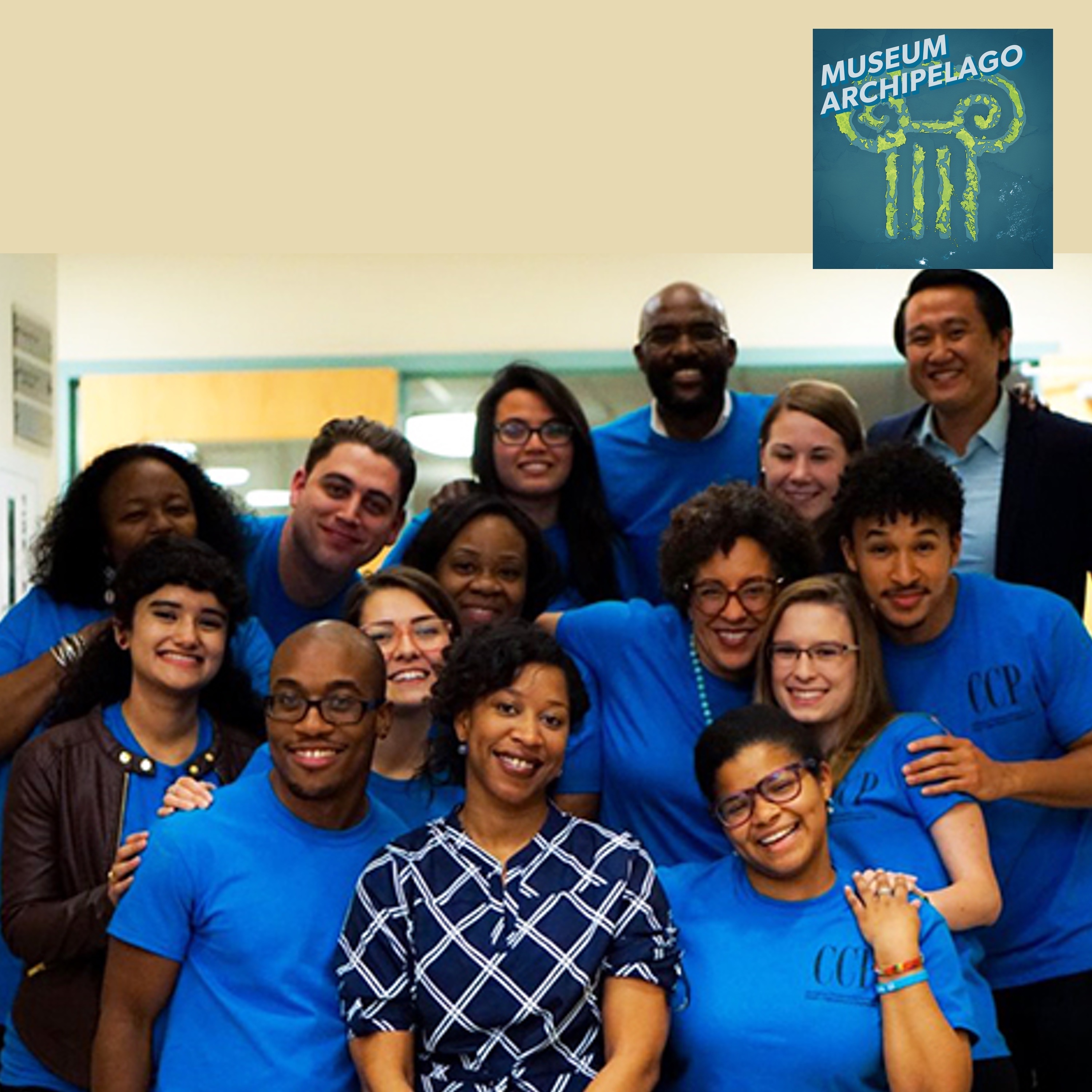
In American history most often told, the vitality of Black activism has been obscured in favor of celebrating white-lead movements. In the 19th century, an enormous network of African American activists created a series of state and national political meetings known as the Colored Conventions Movement. The Colored Conventions Project (CCP) is a Black digital humanities initiative dedicated to identifying, collecting, and curating all of the documents produced by the Colored Conventions Movement. In this episode, two of the CCP’s cofounders and co-directors, Jim Casey and Gabrielle Foreman are joined by Project Fellow Denise Burgher to discuss how the Project mirrors the energy and collective commitments of the Conventions themselves, how to see data as a form of protest, and creating an a set of organizational principles. Museum Archipelago is a tiny show guiding you through the rocky landscape of museums. Subscribe to the podcast via Apple Podcasts, Google Podcasts, Overcast, or Spotify to never miss an epsiode. Club Archipelago 🏖️ If you like episodes like this one, you’ll love Club Archipelago. Join Club Archipelago today on Patreon to help me continue making podcasts about museums (and get some fun benefits)! Topics and Links 00:00: Intro 00:15: Colored Conventions Movement 01:23: Gabrielle Foreman And Jim Casey 02:00: Colored Conventions Project 02:21: Denise Burgher 03:34: Data As A Form Of Protest 06:25: Terms Of Use For CCP’s Data 07:20: “To Respect, Not Just Collect” 09:20: “Celebratory History Of American Progress” 10:23: The Understudy Of The Colored Conventions Movement 11:25: Women's Centrality To The Movement 12:30: Getting People Involved 12:54: Douglass Day 14:15: Museums And Digital Spaces 15:00: Announcing Museum Archipelago Stickers Transcript Below is a transcript of Museum Archipelago episode 57. Museum Archipelago is produced for the ear and the only the audio of the episode is canonical. For more information on the people and ideas in the episode, refer to the links above. View Transcript In American history most often told, the vitality of Black activism has been obscured in favor of celebrating white-lead movements. In the 19th century, an enormous network of African American activists created a series of state and national political meetings known as the Colored Conventions Movement. GABRIELLE FOREMAN: "The Colored Convention movement was Black-lead and Black organizers came together across so many of the states. Beginning in 1830 folks began to gather in Philadelphia, and there were both state and national conventions that discussed labor rights, educational rights, voting rights, violence against Black communities, the expulsion of people who were not considered residence and citizens.” JIM CASEY: “The Conventions Movement was not just a single thing, where there was one issue that they were really dedicated to solving or figuring out. Conventions were held in at least 35 states. And keep in mind that this was the 19 century, so there weren’t 50 states even back then. That we really think there is a way, through this history, to rethink everything that begins far long before the Civil War and leads up into the 20th century. GABRIELLE FOREMAN And JIM CASEY are two co-founders and two co-directors of the Colored Conventions Project, a Black digital humanities initiative focused on researching and teaching the Colored Conventions Movement. GABRIELLE FOREMAN: "Hi, my name is GABRIELLE FOREMAN, and I teach at the University of Delaware, and I am one of the cofounders of the Colored Conventions Project, and the founding faculty director of that project. JIM CASEY: “Hello, I’m JIM CASEY. I’m a researcher at the Center for Digital Humanities at Princeton University, and I am also one of the cofounders of the Colored Conventions Project, and also one of the co-directors. The Colored Conventions project or (CCP) is dedicated to identifying, collecting, and curating all of the documents produced by the Colored Conventions movement, which started in 1830 and lasted until the 1890s. The project is much bigger than just Forman or Casey, and it includes graduate fellow DENISE BURGHER. DENISE BURGHER: Hello, my name is DENISE BURGHER, and I am a team member of the Colored Convention Project housed at the University of Delaware. The significance of this collection is that none of these documents have been collected in the same place. It is a scattered archive, and so not even when the Conventions were going on were the proceedings and the minutes and the calls and the memorials all in one place for anyone to actually look at and see. So this is actually the first time that this archive will be collected. It allows us to see not only the issues that were facing African Americans but in particular, how to make more complex how we think the African American community and the civic, social, political activity that were taken up, not just in the United States, but across the diaspora. So what we’re g
56. Lana Pajdas Trains Her ‘Fun Museums’ Lens to Croatian Heritage Sites, From The Battle of Vukovar to Over-Tourism in Dubrovnik
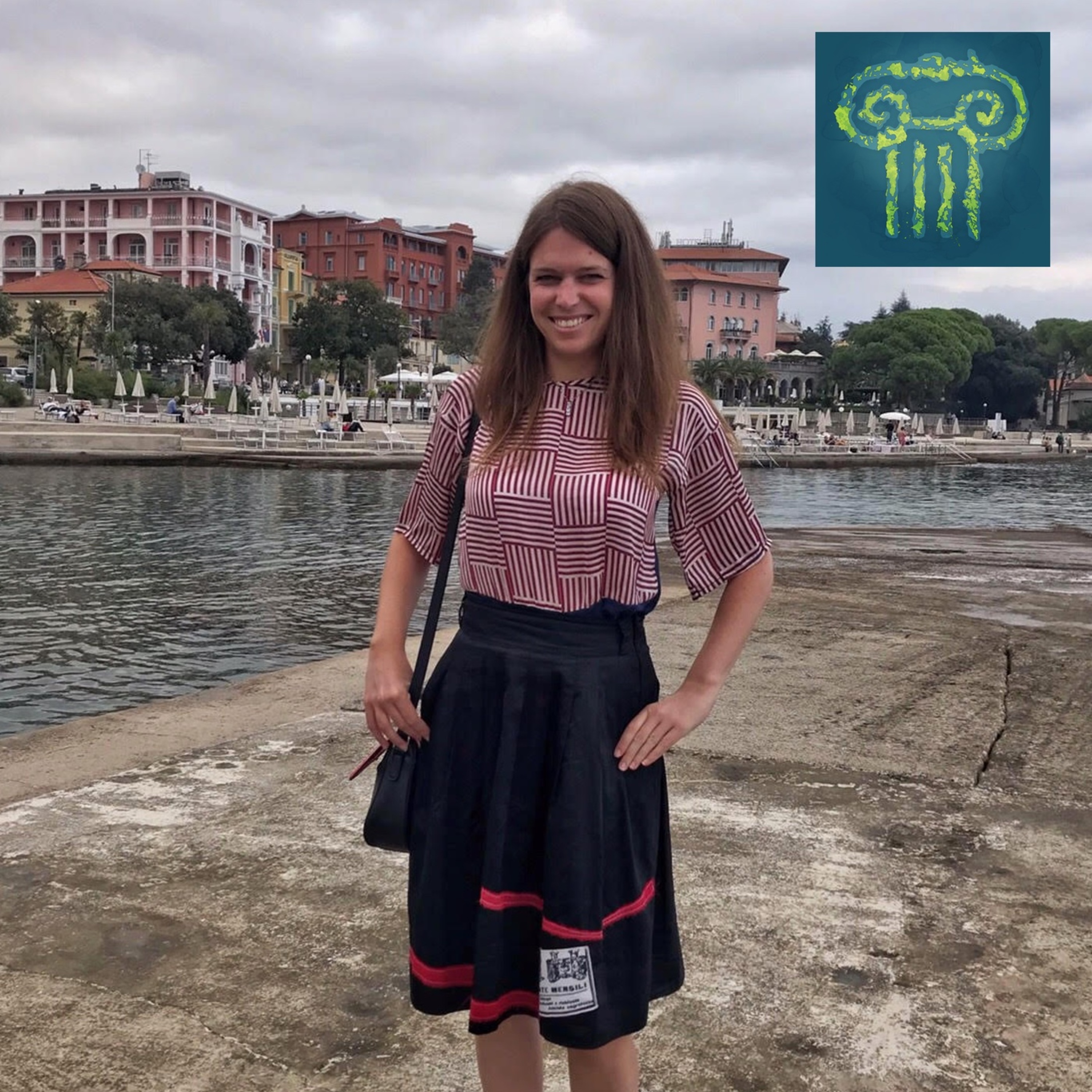
Lana Pajdas is the founder of Fun Museums, a heritage and culture travel blog with a radical idea: museums are fun. It is the guiding principle of her museum marketing, consulting work, and even her photographs. In this episode, Pajdas describes Heritage Sites in her native Croatia, from the interpretation of the 1991 Battle of Vukovar at the Vukovar Municipal Museum to the Game of Thrones-inspired Over-Tourism in Dubrovnik Museum Archipelago is a tiny show guiding you through the rocky landscape of museums. Subscribe to the podcast for free to never miss an episode. Sponsor: The Museums, Heritage, and Public History program at the University of Missouri at St. Louis This episode of Museum Archipelago is sponsored by The Museums, Heritage, and Public History program at the University of Missouri at St. Louis. The program is currently accepting applications for the Fall 2019 semester. They offer an MA degree as well as a Graduate Certificate. Their programs address pressing needs of museums and heritage institutions in the 21st century and prepare students for professional careers in museums, historic sites and societies, cultural agencies, and related organizations. Financial support is available for a limited number of students and applications are due on February 1st. For more information, please call 314-516-4805 or visit their website. Topics and Links 00:00: Intro 00:15: Croatia 00:40: Over-Tourism in Dubrovnik, Croatia 01:14: Lana Pajdas and the Fun Museums Blog 02:39: Disney’s America on Museum Archipelago 03:15: Vukovar Municipal Museum on the Battle of Vukovar 05:12: “Museum Procrastination” 06:14: Sustainable Tourism 07:59: Possible Solutions to Over-Tourism 09:08: FunMuseums.eu 09:18: Sponsor: The Museums, Heritage, and Public History program at the University of Missouri at St. Louis 10:11: Outro | Join Club Archipelago Transcript Below is a transcript of Museum Archipelago episode 56. Museum Archipelago is produced for the ear and the only the audio of the episode is canonical. For more information on the people and ideas in the episode, refer to the links above. View Transcript [Intro] Lana Pajdas is from Croatia. Lana Pajdas: We are a small country, and we have fewer inhabitants that some US cities. We don’t have as many fields of industry or strong economy or whatever, and tourism is maybe the most important field we have. But in recent years, the Croatian city of Dubrovnik, due in part to being a prominent filming location of the TV series Game of Thrones, has experienced dramatic overcrowding. Lana Pajdas: I was there last time, and it was pretty much terrible to see that people were waiting in lines to enter inside the old town, inside the walls. There were so many agencies selling Game of Thrones tours and taking people to some specific areas where it’s kind of difficult to have so many people in the same place, even for safety reasons. Pajdas is the founder of Fun Museums, a heritage and culture travel blog. Lana Pajdas: Okay, my name is Lana Pajdas, My blog is called Fun Museums because I like to say that visiting museums is fun above all. Visiting museums is a fun experience, and people shouldn’t think that museums are something cold, elegant, smart, intelectual. It’s just, people can have that experience in their leisure time. Pajdas is also a museum marker and consultant. Her overall theme is that museums are fun. It is a radical idea — and it influences everything, from her philosophy on museum marketing to a way to approach overcrowding in museums and heritage sites. Lana Pajdas: Exactly, that is my guiding principle. The way I write my articles it to say the most cool, funky stuff about each museums I visit. Sometimes museum professionals don’t like this at all, that’s why some people from museums, museum curators for instance, museum marketing professionals or education professionals, they send me messages: “could you stop saying things that way because it is in contrast to our professional values.” But then I said, okay, but that’s what people like to know. That’s what people like to hear. If you think it should be more intellectual, you have to understand that most people can’t read it that way, understand the way you want to present it to them. But there is a real tension, because the axis isn’t just between what’s fun and what’s intellectual. In episode 17 of Museum Archipelago, I cover the spectacular failure of a Disney theme park concept called Disney's America in 1994. The park, which would open in Virginia not far from Washington DC, would showcase [quote] “the sweep of American History” within a fun theme park environment. It is particularly notable to witness the confidence and enthusiasm Disney executives had for a tightrope between entertainment and American history. Lana Pajdas: An example is a town on the east of Croatia, its name is Vukovar. This town was heavily destroyed in the most recent war in this part of Europe in 1991 when it was occupied. Almost all the
55. Barbara Hicks-Collins Is Turning Her Family Home Into the Bogalusa Civil Rights Museum
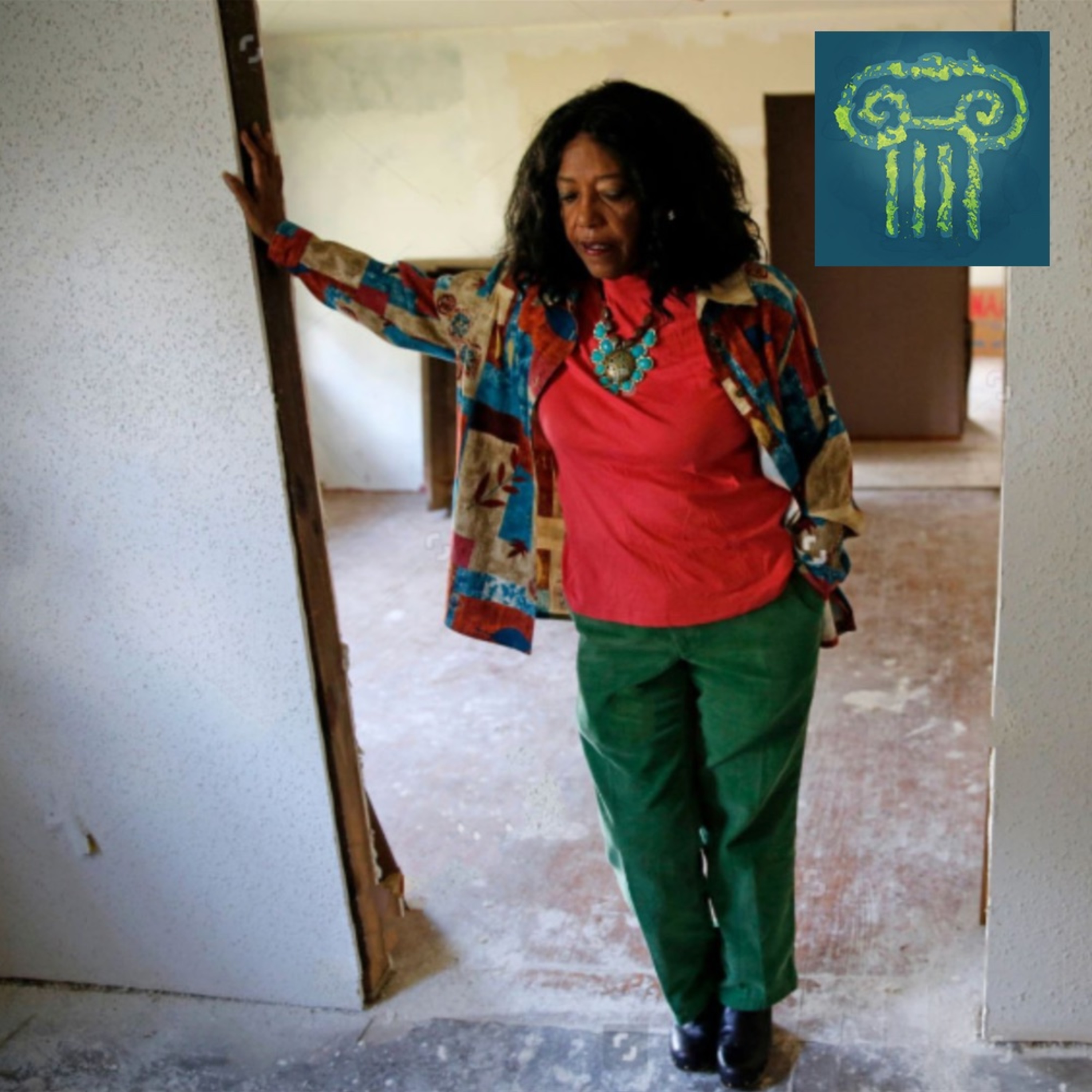
Barbara Hicks-Collins grew up in a Civil Rights house in Bogalusa, Louisiana. In her family breakfast room in 1965, her father, the late Robert “Bob” Hicks, founded the Bogalusa chapter of the Deacons for Defense and Justice. The armed self-defense force was formed in response to local anti-integration violence that the local police force complicitly supported. The house became a communication hub, a safe house, and a medical triage station for injured activists denied medical services at the state hospital. After her father’s death, Barbara Hicks-Collins decided that the house has one more chapter: as the Bogalusa Civil Rights Museum. In this episode, Barbara Hicks-Collins talks about growing up with the Civil Rights movement in her living room and describes the process, progress, and challenges of today’s Bogalusa Civil Rights Museum project. Museum Archipelago is a tiny show guiding you through the rocky landscape of museums. Subscribe to the podcast via Apple Podcasts, Google Podcasts, Overcast, or Spotify to never miss an epsiode. Club Archipelago 🏖️ If you like episodes like this one, you’ll love Club Archipelago. Join Club Archipelago today to help me continue making podcasts about museums (and get some fun benefits)! Topics and Links 00:00: Intro 00:15: Barbara Hicks-Collins 00:42: Robert “Bob” Hicks 01:28: “Why Not A Museum?" 02:54: The City of Bogalusa, Louisiana 03:45: “The Civil Rights House" 04:11: The Events of February 1, 1965 05:04: The Deacons for Defense: Armed Resistance and the Civil Rights Movement 06:28: Daily Life Under Threat 07:20: Bogalusa Civil Rights Museum 09:35: The Process 11:18: "It's Not Easy But It's Possible" 12:16: Learn More | Donate to the Museum 14:05: Outro | Join Club Archipelago Transcript Below is a transcript of Museum Archipelago episode 55. Museum Archipelago is produced for the ear and the only the audio of the episode is canonical. For more information on the people and ideas in the episode, refer to the links above. View Transcript [Intro] Barbara Hicks-Collins can describe the exact moment an idea for a civil rights museum in Bogalusa, Louisiana entered her mind. Barbara Hicks-Collins: “After Hurricane Katrina, our homes were devastated so I had to move back to Bogalusa, I was able to help my mom take care of my father, his health was failing.” Barbara Hicks-Collins’s father is the late Robert “Bob” Hicks, a civil rights leader and founder of the first chapter of the Deacons for Defense and Justice. The Deacons were an armed African-American self-defense force operating in the segregated — and violently hostile towards integration — city of Bogalusa and other towns across the American south in the 1960s. Barbara Hicks-Collins: “I spent about five years with him and every waking hour we could talk, he talked to me about what he loved to talk about: the civil rights movement. When my father died, I realized that a lot of things are not permanent. And that meant to me that a lot of the history that I felt would always be here because we experienced history and it was so important for people to know why they are where they are today, and history makers — they were dying off sooner than I had expected.” Barbara Hicks-Collins: “But I was thinking of a way — how could we preserve the history permanently — and the idea of a dream came up: why not a museum? Where you can start preserving the history, talking to some of the decedents and make a civil rights museum so this generation and generations forever would know about that.” Today, Barbara Hicks-Collins is the director of the museum, and she joins me to talk about the process, progress, and challenges of the Bogalusa Civil Rights Museum project. Barbara Hicks-Collins: “Greetings from Bogalusa, Louisiana! I’m Barbara Hicks-Collins. I’m the museum director of the future museum which is going to be the civil rights museum in Bogalusa and I’m also one of the founders and executive director of a non-profit organization named after my father, The Robert Bob Hicks Foundation. And how are you today?” I’m doing well! Before we start talking about the museum, we have to talk about the town of Bogalusa and the life of Robert “Bob” Hicks. Barbara Hicks-Collins: The Goodyears came from New York and they started the paper mill here in Bogalusa and they brought in people from all over the country when they heard there was going to be a mill here. They brought them in. Then they built homes for the people to love in. And since this was 1906, of course, they are separated. So in Bogalusa, it's separated where you have the blacks and you have the whites. They build churches for blacks and churches for white. So that's how they tried to do, they said it was equal if you did it that way. Everything, so you know that story. In the 1960s, Robert “Bob” Hicks worked and labor organized at the paper mill and lived with his wife Jackie Hicks and their children in a house in the black neighborhood of Bogalusa. Barbara Hicks-Collins: “Sinc
54. Buzludzha Is Deteriorating. Brian Muthaliff Wants To Turn It Into A Winery.
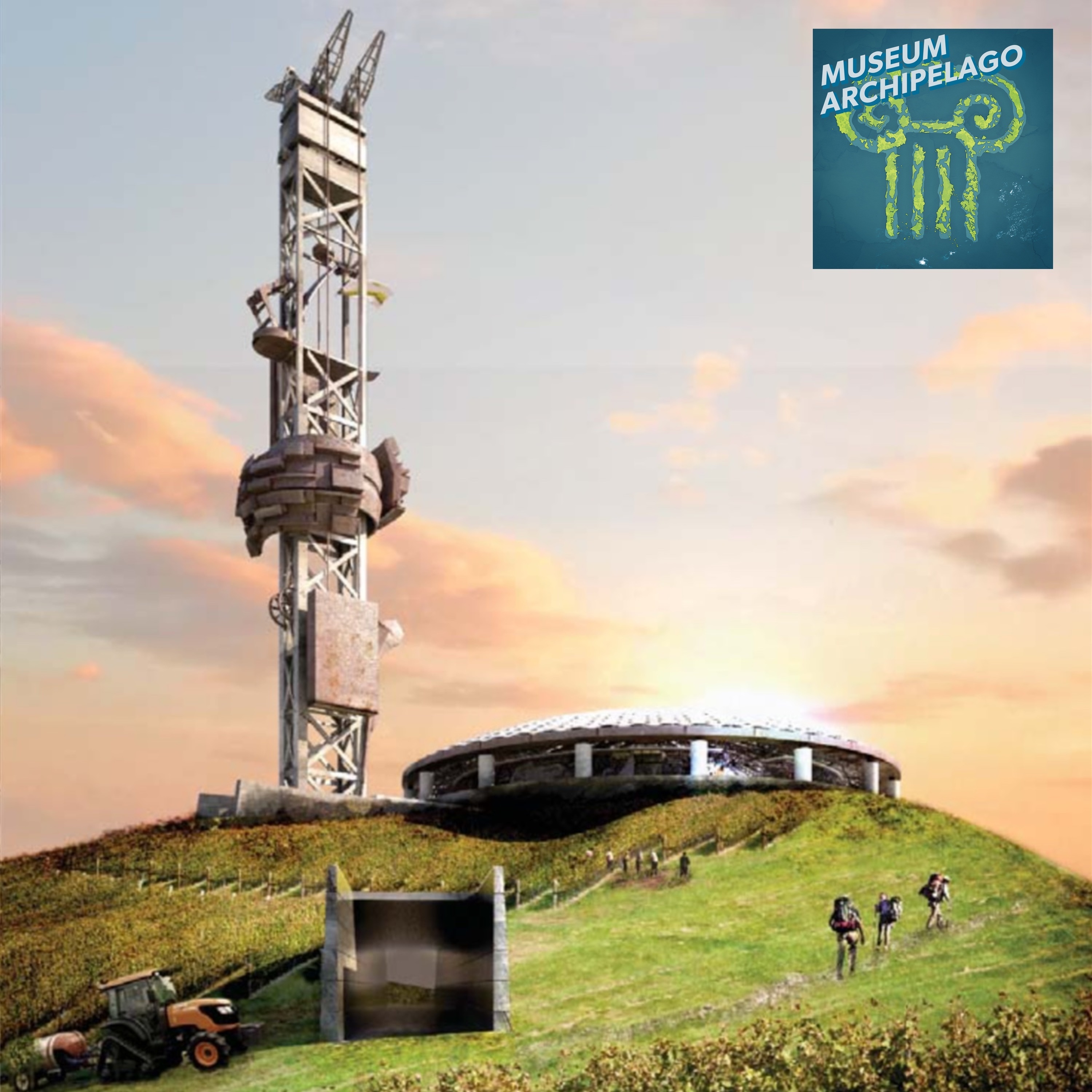
High in the Balkan mountains, Buzludzha monument is deteriorating. Designed to emphasize the power and modernity of the Bulgarian Communist Party, Buzludzha is now at the center of a debate over how Bulgaria remembers its past. Architect Brian Muthaliff wants the building to evolve along with Bulgaria. His master’s thesis on Buzludzha describes a re-adaption of the site to subvert the original intention of the architecture, including installing a winery and a theater. Unlike architect Dora Ivanova’s Buzludzha Project, which we discussed at length in episode 47, Muthaliff’s plan only calls for a single, museum-like space. In this episode, we use Muthaliff’s thesis as a guide as we go in-depth on what a museum means and discuss the best path forward for this building and for Bulgaria. Image: Rendering from R.E.D | Reconstruction in an Era of Dilapidation: A Proposal for the Revitalization of the Former House of the Communist Party by Brian Muthaliff Museum Archipelago is a tiny show guiding you through the rocky landscape of museums. Subscribe to the podcast via Apple Podcasts, Google Podcasts, Overcast, or Spotify to never miss an epsiode. Club Archipelago 🏖️ If you like episodes like this one, you’ll love Club Archipelago. Join Club Archipelago today to help me continue making podcasts about museums (and get some fun benefits)! Topics and Links 00:00: Intro 00:15: Buzludzha Monument 00:45: Brief History 01:45: Brian Muthaliff 02:30: The Buzludzha Project 03:18: "Buildings Turned Into Artifacts" 03:50: Reconstruction in an Era of Dilapidation 05:16: Museum of Socialist Art in Sofia 05:33: Participatory Architecture 05:50: Buzludzha as Winery 06:45: Buzludzha as Democratic Platform 08:11: Bulgarian Horo 08:50: Museum or no museum? 11:32: Muthaliff's Thesis Defense 12:14: The Future 13:10: Read Muthaliff's Thesis Transcript Below is a transcript of Museum Archipelago episode 54. Museum Archipelago is produced for the ear and the only the audio of the episode is canonical. For more information on the people and ideas in the episode, refer to the links above. View Transcript [Intro] Ever since I visited earlier this year, I can't stop thinking about Buzludzha. Buzludzha, an enormous disk of concrete perched on a mountaintop in the middle of Bulgaria, celebrates the grandeur of the Bulgarian Communist Party. Rising out of the back of the disk is a tower, 70 meters high, and flanked by two red stars. The building was designed to look like a giant wreath and flag. During its construction, the top of the peak was blown away with dynamite to make way for the building. Today, it's hard not to see a giant UFO. Bulgarian architect Dora Ivanova says that the building's daring design was, of course, intentional. Dora Ivanova: It was built to impress. It was built as part of the political propaganda and education as they called it during this time. Its shape looks like a UFO, actually. This is also on purpose because it had to show how the socialist idea is contemporary, it’s the future. The building is deteriorating, making its futuristic design all the more striking. Buzludzha was completed in 1981, but just 10 years later, the Communist party collapsed. As the regime changed and Bulgaria headed towards a democratic form of government, Buzludzha just sat there. Parts of the structure became exposed to the elements. On the top of the mountain, the building was whipped by strong winds and frozen by temperatures as low as -25 °C. Today, the building has been a ruin way longer than it was a functional building. Brian Muthaliff: The interiors were everything that I had imagined while approaching it from the exterior, in this kind of derelict state. When on the interior, it was completely dark when we got there. Our flashlights couldn't even get very far, and we were kind of all holding hands, you know, taking the next step carefully. You could see chunks of concrete falling off in certain places. This is Brian Muthaliff, a Canadian architect who first visited Buzludzha with his Bulgarian fiancée. Brian Muthaliff: All right. Hi. My name is Brian Muthaliff. I am an architect in Ontario, Canada, who has his master's thesis focused on the Buzludzha monument in Bulgaria, and the re-adaption of it. Buzludzha is deteriorating. The question is: what should we do about it? Bulgarian architect Dora Ivanova has a plan to turn it into a museum. We highlighted her work, called The Buzludzha Project, in episode 47 of this program. The Buzludzha Project aims to repair and preserve the building and interpret what it means. Bulgaria lacks an interpretive museum about the decades of communist rule under the thumb of the Soviet Union. What better place to put that museum but inside Buzludzha? Ivanova is under no illusions that a painstaking restoration of the building to its original form could give the impression of celebrating the the building’s original ideologies. She thinks that adapting or repurposing the monument would be forgetting or
53. Tribal Historic Preservation Office Helps Students Map Seminole Life for the Ah-tah-thi-ki Museum
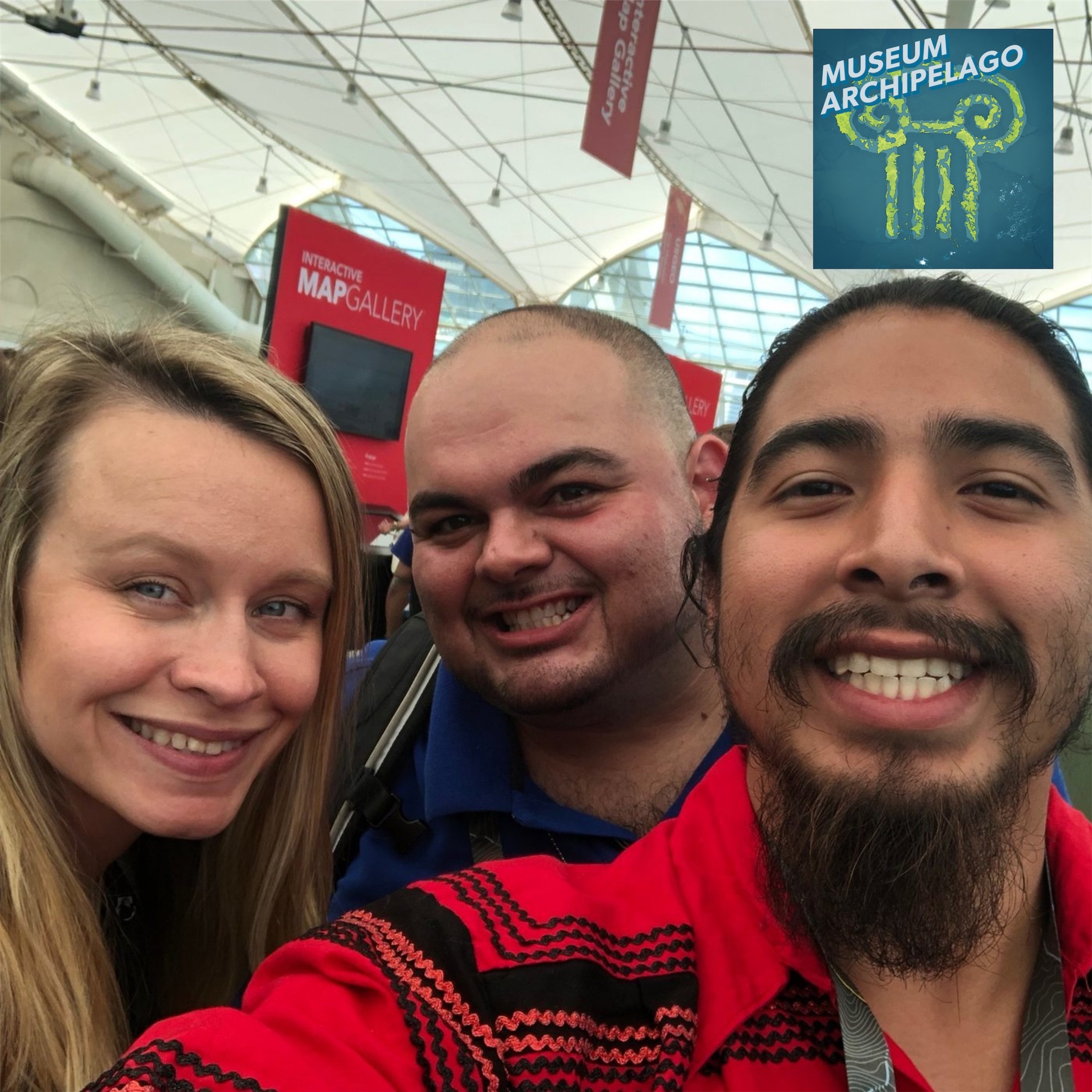
The Ah-Tah-Thi-Ki Seminole Indian Museum, on the Big Cypress Reservation in the Florida Everglades, serves as the public face of the Seminole Tribe of Florida. But the museum collaborates with the Seminole Tribe of Florida’s Tribal Historic Preservation Office (THPO) next door to preserve the tribe's culture, working for and with the community through various shared projects. One of the projects is called Are We There Yet: Engaging the Tribal Youth with Story Maps, which is now on display in the museum. Quenton Cypress, Community Engagement Coordinator at THPO, and Lacee Cofer, Geo Spatial Analyst at THPO, started the project with Juan Cancel, Chief Data Analyst at THPO. The team taught 11th grade students at the Ahfachkee School (the school on the Big Cypress Reservation) GIS mapping software and helped the students create their own maps about a Seminole or Native American topic. In this episode, the THPO team talks about the process of teaching the students how to use geospatial software, the Story Maps that the students created, and how the students reacted to seeing their work in the museum gallery. Image: Lacee Cofer, Juan Cancel & Quenton Cypress presenting thier project at the Esri User Conference in San Diego in 2018. Club Archipelago 🏖️ If you like episodes like this one, you’ll love Club Archipelago. Join Club Archipelago today to help me continue making podcasts about museums (and get some fun benefits)! 00:00: Intro 00:15: The Big Cypress Reservation & Quenton Cypress 01:05: Ah-Tah-Thi-Ki on Episode 16 of Museum Archipelago 01:48: The Seminole Tribe of Florida’s Tribal Historic Preservation Office 03:00: Lacee Cofer 03:30: Are We There Yet: Engaging the Tribal Youth with Story Maps 03:58: Juan Cancel 04:50: “But how does that serve the tribal community?” 07:09: The Topics Students Choose 08:58: Students Seeing Their Work at Ah-Tah-Thi-Ki 10:32: Why Mapping? 11:46: Outro / Watch Making-Of For Free on Patreon Museum Archipelago is a tiny show guiding you through the rocky landscape of museums. Subscribe to the podcast for free to never miss an episode. Transcript Below is a transcript of Museum Archipelago episode 53. Museum Archipelago is produced for the ear and the only the audio of the episode is canonical. For more information on the people and ideas in the episode, refer to the links above. View Transcript To get to the Big Cypress Reservation in South Florida and the Ah-Tah-Thi-Ki Seminole Indian Museum inside it, you drive an hour into the Florida Everglades. By the time you arrive, you’re isolated from almost everything else. Quenton Cypress: Here in Big Cypress, it's just us. There's a convenience store that's open till 11 o'clock at night. There's no Walmart, no Publix, no Walgreens. Anytime we need just some toilet paper, we have to drive an hour. And we have to make sure we get everything. This is Quenton Cypress, Community Engagement Coordinator at the Seminole Tribe of Florida’s Tribal Historic Preservation Office. Quenton Cypress: My name is Quenton Cypress, and I'm the Community Engagement Coordinator. And I'm actually a tribe member. I'm from this reservation that we work on. My job is to make sure the community works with us. The Seminole Tribe of Florida’s Tribal Historic Preservation Office, or THPO, where Quentin works, is separate form the The Ah-Tah-Thi-Ki Seminole Indian Museum. We’ve talked about the museum before: on episode 16 of Museum Archipelago, I interviewed Carrie Dilley, Visitor Services and Development Manager at Ah-Tah-Thi-Ki, about the high percentage of museum visitors from outside the U.S. Through these visitation trends, the museum serves as the public face of the tribe to the outside world. But the museum, more importantly, serves the tribal community. Quenton and the THPO work to preserve his culture, and ensure it is not exploited. And this means a strong connection between the museum and tribal members. Quenton Cypress: There are a lot of things that we can give out to the public, but there are certain things that we can't. It was actually our chairman at the time, James Billy, who wanted to build the museum to talk to the tourists and different folks that came around to tell them more about the Seminole history. So it started off very community involved. And we had several community members that were running the museum. And just over time different things happened and they started working somewhere else. And then the museum became more non tribal populated. And that connection between the museum and tribal members, it just kind of fell apart in a way. Not so much in a bad way. They just didn't have no more tribe members working here to full connect us with the museum. Sometimes tribal members don't feel comfortable coming and talking to a non tribal. And telling them their history, their family's history, and different legends and things we have from our culture. And so in more recent times, I've seen a lot more involvement with the commun
52. Paula Santos Dives Into The "How" of Museum Work on Cultura Conscious
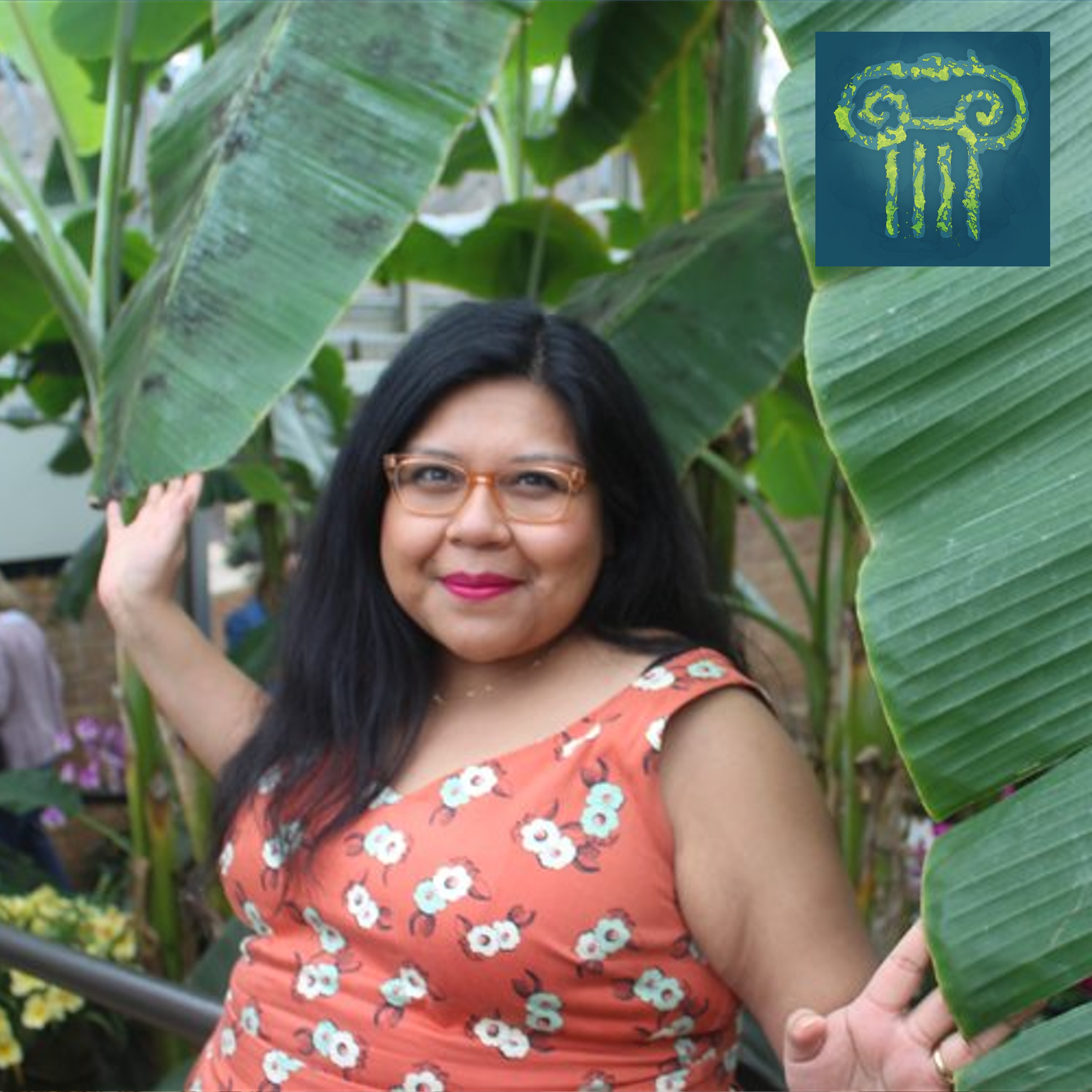
By day, Paula Santos is Community Engagement Manager at the Los Angeles County Museum of Art. By night, she hosts the excellent Cultura Conscious podcast. On Cultura Conscious, which just celebrated its one-year anniversary, Santos interviews cultural workers on their work with justice and equity. The discussions dive deep into what Santos calls the "nuts and bolts" of museum work. On this episode, Santos describes her thoughts about the relationship between cultural institutions and the communities they identify as “underserved,” gives examples on how institutions can cede power, and explains how the idea for her podcast came out of a cultural worker discussion collective she was a part of in New York City. Club Archipelago 🏖️ If you like episodes like this one, you’ll love Club Archipelago. Join Club Archipelago today to help me continue making podcasts about museums (and get some fun benefits)! Topics Discussed: 00:00 Intro 00:15 Paula Santos 00:53 Cultural Institutions and Communities 04:14: Cultura Conscious 05:27: The Idea for the Show 06:55: Nuts and Bolts of Museum Work 07:58: Subscribe to Cultura Conscious 09:50: Outro & Club Archipelago Museum Archipelago is a fortnightly museum podcast guiding you through the rocky landscape of museums and surrounding culture. Subscribe to the podcast for free to never miss an episode. Transcript Below is a transcript of Museum Archipelago episode 52. Museum Archipelago is produced for the ear and the only the audio of the episode is canonical. For more information on the people and ideas in the episode, refer to the links above. View Transcript Paula Santos and I have some things in common. We both work in the museum world during the day, and by night, we both host podcasts about museums. We even describe our day jobs in the same way: we are programmers. I am a computer programmer, writing the code that runs interactive media displays in museums. And Santos, as Community Engagement Manager at the Los Angeles County Museum of Art, is a museum programmer, managing programs and events. Paula Santos: Hello, I’m Paula Santos, I’m a podcaster, museum educator, and community organizing learner. Over the past year or so, Santos has been thinking about the assumptions cultural institutions make about the communities they identify as “underserved.” Paula Santos: We don’t always have to lead with our audiences need x, y, z, these people are underserved for x, y, z reasons. Our communities have social capital, they have art, they have their own resources, that us as institutions can absolutely build with, and that understanding that it isn't just a top down effect, where here we have a huge grant, and now we're going to fly a helicopter over this community and throw art supplies around. When we spoke, Santos was a day away from presenting a culminating event of a show, and acknowledged that not just helicoptering in made a lot of people, including herself, nervous. Paula Santos: We as an institution can build with a community and that means also ceding our power. And that makes a lot of people very nervous at a granular level. As a programer, it does make me nervous. For example, I have this program tomorrow where I really try to the best of my ability to cede the floor to an organization of young queer people to put on a culminating event for a show that we have at one of our satellite spaces. I'm nervous. I'm nervous not because I don't believe in them, I totally believe in their vision, and they will be there, and they’re going to follow through, but I'm nervous because I ceded that control and I don't know how the institution will respond in the long run. When it's actually happening, that is totally relinquishing of control, as much as I can give.] Santos’s nervousness is part of her conscious effort not to take the easy route in her work. Her critique is that many institutions, when attempting to serve as many people as possible, take the easy route -- and helicoptering in is easier than actually ceding control. Paula Santos: We make a lot of choices in who we serve, why we do what we do, what kind of money do we pursue for our programs, where we are going to bend for funders, and we are entirely part of the larger machine of what makes things unjust and oppressive. So I feel like that's where I stand. It's not so much, we have a civic duty of justice, but more like we are members of society and how can we do cultural work in a way where we can truly work with all aspects of society, and not just the ones that are most convenient or the ones that are most privileged, or the ones that are easiest. A lot of the decisions when we think about justice and all those sorts of things, it isn’t so much that people are making ideological decisions a lot of times they’re making decisions based on time. Santos is particularly interested in how the work we do in museums, non-profits or other cultural organizations intersects a
51. Yulina Mihaylova Presents a Moral Lesson at the Sofia Jewish Museum of History
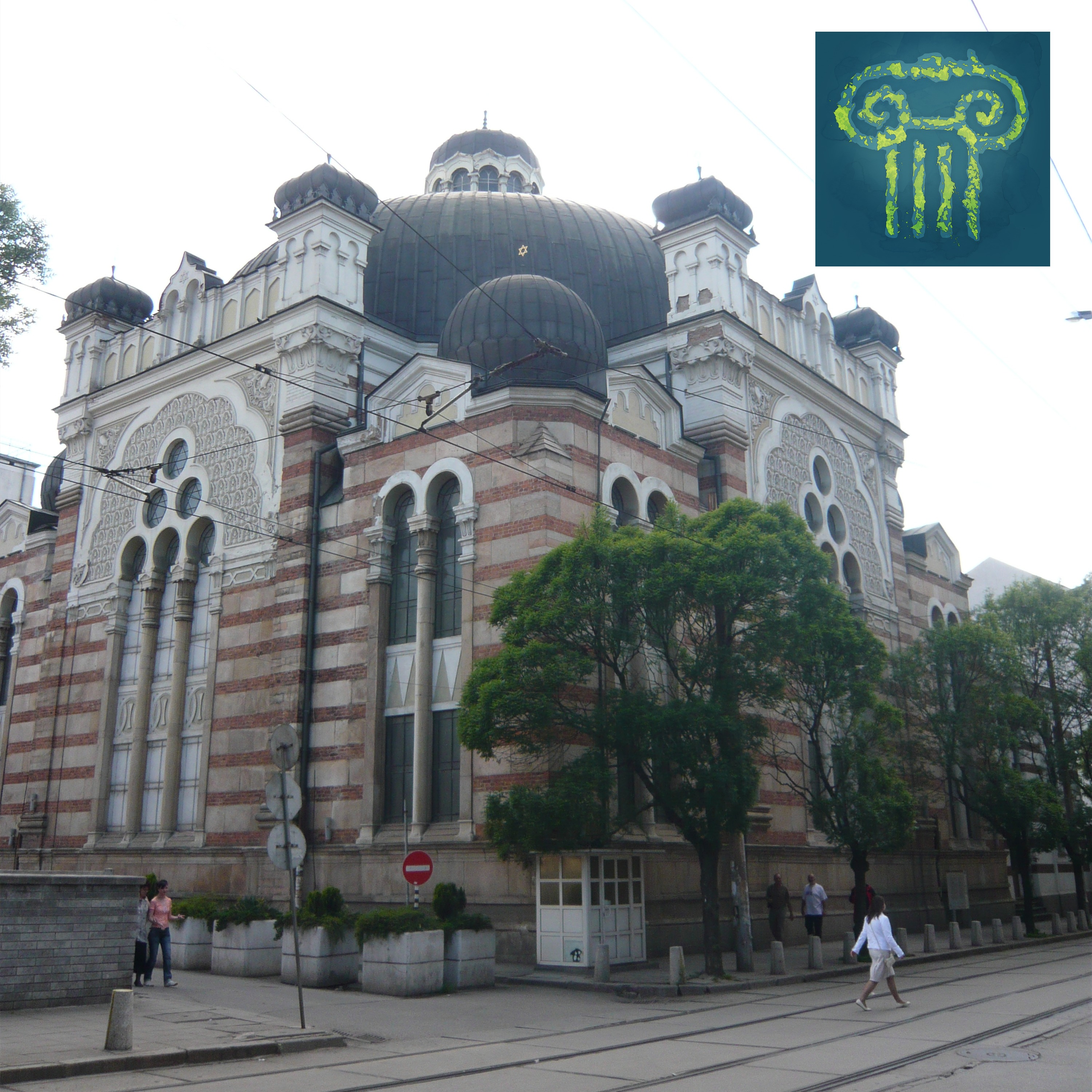
The Jewish Museum of History in Sofia, Bulgaria is housed on the second floor of the Sofia Synagogue in the center of Bulgaria's capital, just steps away from an Orthodox Church, and Sofia's Mosque. This clustering of places of worship — it's hard to find another example of this in Europe — is part of the unique story of Jewish people in Bulgaria. While the museum tells the full story of the Jewish people in Bulgaria from ancient Roman times to today, Yulina Mihaylova of the Jewish Museum of History says that the culmination of the story is the rescue of the Jews in Bulgaria from deportation to Nazi death camps during the Second World War. The museum takes on the complexities of this story, including the fact that not all Jews in Bulgarian-controlled territories were saved from deportation, and uses it to challenge young visitors. Subscribe to Museum Archipelago for free to never miss an episode. Club Archipelago 🏖️ If you like episodes like this one, you’ll love Club Archipelago. Join Club Archipelago today to help me continue making podcasts about museums (and get some fun benefits)! Topics Discussed: 00:00 Intro 00:14 Jewish Museum of History in Sofia, Bulgaria 01:10 Yulina Mihaylova 01:50 The Sofia Synagogue 02:10 Jews in Bulgaria in the Early 20th Century 04:00 Jews in Bulgaria During World War Two 04:50 The Holocaust and the Rescue of the Jews in Bulgaria 09:44 Jews in Bulgaria During Communist Times 10:45 Educational Programming Moral Message 12:05 Outro / Join Club Archipelago Transcript Below is a transcript of Museum Archipelago episode 51. Museum Archipelago is produced for the ear and the only the audio of the episode is canonical. For more information on the people and ideas in the episode, refer to the links above. View Transcript Sometimes in the Museum Archipelago, museums are isolated from other institutions by vast bodies of water, and sometimes, points of interest are clustered in dense island chains. The Jewish Museum of History in Sofia, Bulgaria is one of the latter. The museum is housed on the second floor of the Sofia Synagogue in the center of Bulgaria's capital, just steps away from an Orthodox Church, and Sofia's main Mosque. This clustering of places of worship -- it's hard to find another example of this in Europe or the rest of the world -- is part of the unique story of Jewish people in Bulgaria. Yulina Mihaylova: It's very unique because it makes this triangle of the three religions. The combination and interaction between the ethnic groups together shows this very rich historical past when the Jews live among the others. It's also part of our unique narrative which we try to say in the museum itself.” This is Yulina Mihaylova. Yulina Mihaylova: Hello my name is Yulina Mihaylova, and I'm working for the Jewish Historical Museum in Sofia for the past 15 years. My job combines working with visitors and. Our main task is to represent the history of the Bulgarian Jews back 2000 years. It’s just not the story of the Jewish people. It’s more than it because we try to say the story of the interaction of the Jewish people and the Bulgarians also. The Sofia Synagogue is the third largest in Europe. This particular Synagogue, built on the site of earlier Jewish prayer houses, opened in 1909, with a ceremony that included Sofia's political and religious elite. The opening ceremony took place 31 years after Bulgaria's liberation, which guaranteed equal civil rights to minority religious groups. Yulina Mihaylova: We speak about the early time of the early 20th century, and just to make comparison to what happened at that time in Europe, mainly in Eastern Europe, in Russia with the persecution of Jews there, and on the same time we have in Bulgaria quite a good relation between the regime and the Jewish community. I mean, not everything was so idealistic of course. But in general we can say that the Jews, after the liberation of Bulgaria from the Turkish domination, gained equal rights with other minority groups who lived in Bulgaria, which was guaranteed by the Bulgarian constitution. Means that it actually gave push to the development of the Jewish communities in Bulgaria, on a new ground. The fact that we have communities and synagogues in almost every Bulgarian city, and there was almost 30 communities all around Bulgaria. So the opening ceremony was a remarkable event. The fact that actually, the political elite was invited to [participate] in the ceremony, was a very important sign for the connection between the officials at the time and Bulgarian Jewish community. While the opening of the Sofia Synagogue represents the high water mark of the relationship between Jews living in Bulgaria and the rulers of Bulgaria, one of the main tasks of the museum is to represent the historical trace of Jewish people on the Balkan peninsula from ancient Roman period, to the present day. In the museum, this is achieved through a permanent exhibit called Jewish Communities in Bulgaria. A
50. Allison Sansone Connects Writers and Readers at the American Writers Museum
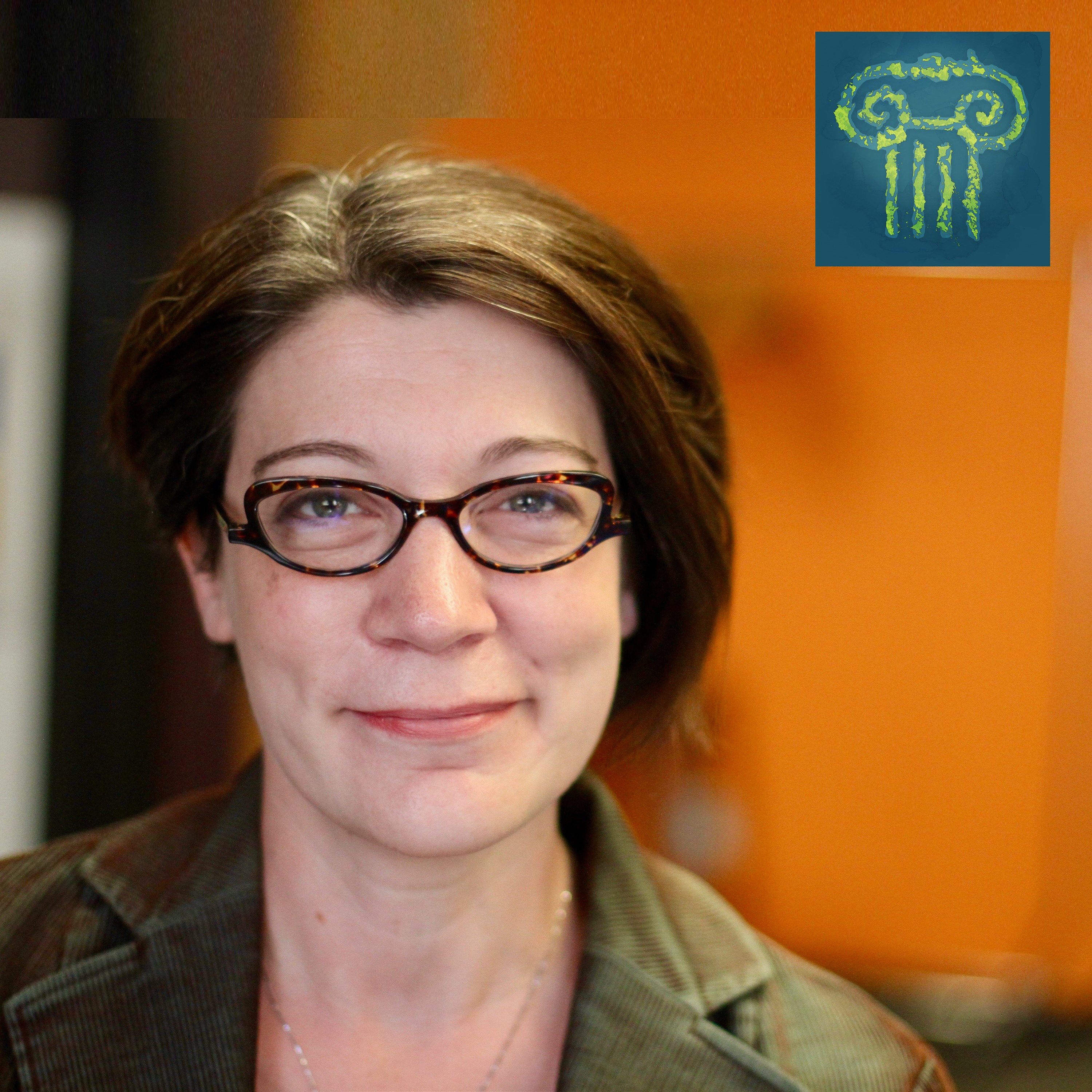
When the American Writers Museum opened in Chicago in 2017, it became the first museum in the US to celebrate all genres of writing. Early in the planning phase, founder Malcolm O’Hagan made a couple of key decisions: no artifacts and no single curator. In this episode, the museum’s programs director Allison Sansone explains how these decisions continue to shape the museum, from a timeline of 100 significant authors of fiction and nonfiction to galleries honoring the craft of writing. This episode was recorded at the American Writers Museum in Chicago, IL, USA on September 2nd, 2018. This episode was released in tandem with Club Archipelago 5. 50th Episode Extravaganza 🎉. Subscribe to Museum Archipelago for free to never miss an episode. Club Archipelago 🏖️ If you like episodes like this one, you’ll love Club Archipelago. Join Club Archipelago today for $2 to help me continue making podcasts about museums (and get some fun benefits)! Topics Discussed: 00:00 Intro 00:15 Museum Archipelago's 50th Episode 🎉 01:50 The American Writers Museum 02:00 Programs Director Allison Sansone 02:15 Museum Founder Malcolm O’Hagan 02:50 Early Decisions 03:45 American Voices Exhibit 05:30 The Mind of a Writer Gallery 06:45 Story of the Day Exhibit 08:20 The Craft of Writing the Museum 09:11 Outro Transcript Below is a transcript of Museum Archipelago episode 50. Museum Archipelago is produced for the ear and the only the audio of the episode is canonical. For more information on the people and ideas in the episode, refer to the links above. View Transcript [Intro] Well, not quite. This is the 50th episode of Museum Archipelago, and I’m celebrating by compiling this message, from listeners like you. [Message from Museum Archipelago listeners] Thanks so much for being a listener for these first 50 episodes. It really means a lot. If you can’t sill get enough, support the show directly by becoming a member of Club Archipelago on Patreon. You get access to a bonus podcast feed, where I just posed a retrospective on the first 50 episodes of the show, and how the podcast media and museum media landscape have changed since the first episode. Now, onto the next 50. Let’s really get started. Allison Sansone: The idea is to highlight the impact that writing can have on the culture and in our daily lives. My Name is Allison Sansone, I’m the programs director here at the American Writers Museum. The American Writers Museum opened in May of 2017 on the second floor of a stately but nondescript building on Michigan Ave. But the story of the museum begins decades ago, when the founder of the museum, Malcolm O’Hagan, immigrated to the United States from Ireland. Allison Sansone: He is a lover of literature and a fan of American writing, and after a visit back home to Ireland, to the Irish writers museum in Dublin, he came back to DC and asked around about where the American Writers Museum might be. Hearing that we didn’t have one, he said, I’ll fix that, and 10 years later, here we are. Those 10 years were filled with decisions about what to include in the museum — and what to leave out. Allison Sansone: Malcolm made a couple of decisions that are very important in the design of the museum. The first is we are not to make this an artifact-based space. Malcolm tells this great story: he’s a docent at the Library of Congress and he’ll take people over to see the Gutenberg bible. It’s in a glass case, so you can’t touch it. It’s in German, so you can’t read it. People absorb a snippet of information about it, they take a selfie with it, and they leave. He really wanted this to be a place where people could really dive into the writers and their works and learn something. The other decision that was made really early on was to not have a single curator. We had more than 40 subject matter experts from all across the country, all different literary and ethnic backgrounds from all different traditions, who over the course of 7 years, met and discussed and argued and debated over who should be in this museum and what the themes should the museum address. You can see the work of these subject matter experts in the museum’s largest exhibit, a long chronological timeline of 100 “significant” authors of fiction and nonfiction called “American Voices.” Allison Sansone: They’re not the 100 best or the 100 most important, but they are 100 people who have moved American literary traditions forward, so they were important in the development in what we think of as the American identity and the American voice. You have writers in that timeline from pre-colonial exploratory narratives all the way to almost the present day. Throughout it all, there are names you would expect to see there. Mark Twain is there, Hemingway is there, Laura Engel Wilder is there, so is Sophia Alice Callahan, the Native American novelist who is a contemporary of hers. And it begins in Spanish and it ends in Spanish. Because it starts with DeVacca who’s a Spanish explorer and wrote a
49. Deyana Kostova Centers ‘The Little Man’ in War at the Bulgarian National Museum of Military History
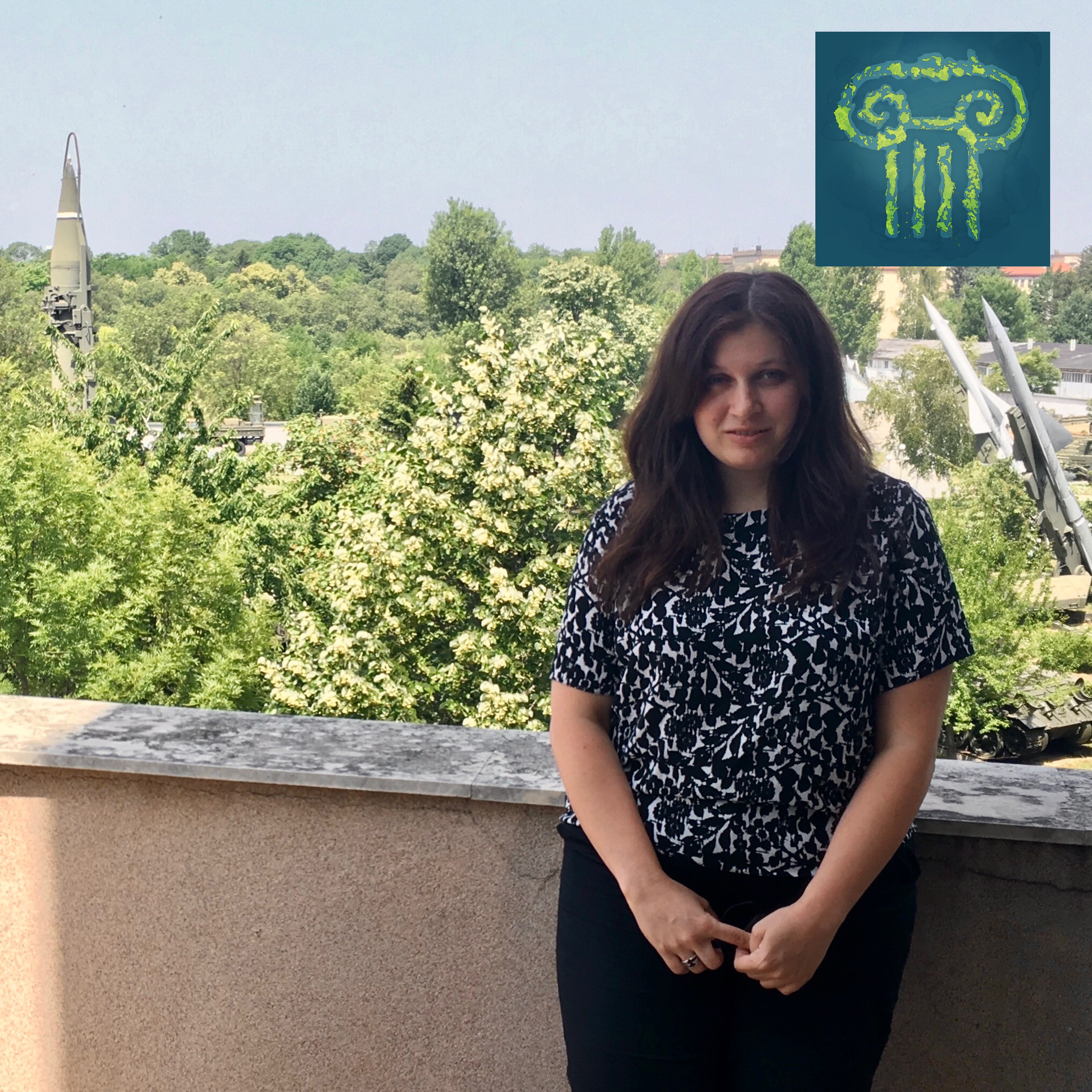
The campus of the Bulgarian National Museum of Military History in Sofia is defended on all sides by a garden of missiles and tanks. But as Director of Public Relations Deyana Kostova points out, many of the exhibits inside focus on the consequences of war rather than the tools of warfare. One of these exhibits, called 'The Little Man in the Great War', explores the Bulgarian World War I experience through overarching emotions. In this episode, Kostova gives a tour of the exhibit, explains how the museum contextualizes Bulgarian and world history, and describes the mission of the museum to present history from multiple points of view. Club Archipelago 🏖️ If you like episodes like this one, you’ll love Club Archipelago. Join Club Archipelago today for $2 a month to help me continue making podcasts about museums (and get some fun benefits)! Topics Discussed: 00:00: Intro 00:40: Diana Kostova, Director of Public Relations 01:40: Bulgaria in World War I 02:05: 'The Little Man in the Great War' 05:28: Vasil Levski's Hair 06:34: Bulgaria in World War II 08:00: Lopsided History During The Period Of Socialist Rule 08:25: The Mission of the Museum To Present History From Multiple Points of View 09:09: Museum Archipelago’s 50th Episode: Submit Your Audio This episode was recorded at the National Museum of Military History in Sofia, Bulgaria on June 8th, 2018. Transcript Below is a transcript of Museum Archipelago episode 49. Museum Archipelago is produced for the ear and the only the audio of the episode is canonical. For more information on the people and ideas in the episode, refer to the links above. [Intro] I don’t really know how I’m supposed to feel at a military museum, particularly those that have gardens of comically oversized missiles and tanks. The Bulgarian National Museum of Military History is one of these museums, but Bulgaria is a country that has spent much of its recent military history buffeted and whiplashed by bigger powers. And that makes for a different experience wandering through these giant tools of war. Deyana Kostova: Hello, my name is Diana Kostova, and I am director of museum marketing, public relations [at the] National Museum of Military History. The museum was established in 1916, in the course of the first world war. So the first exhibitions that came to the museum were directed straight from the front line to the museum. The first one was probably not so interesting, it is a document, but the fifth one was a crashed airplane, actually, and it is displayed in our permanent exhibition even nowadays and it can been seen as a way to remember these horrific days of the war. The time frame of museum’s modern galleries, a campus of buildings in the middle of that garden of military hardware, actually begins much earlier than World War I, in the 4th millennium BCE. The museum displays the sweep of Bulgarian history since then, in which the Balkans have played host to a dizzying array of battles, conquests, rebellion, and centuries of rule by the Ottoman Empire. By 1914, Bulgaria, liberated from Ottoman rule, had recently fought in the Second Balkan war and was about to enter World War I. Deyana Kostova: Here we entered the First World War. It turned out that we entered on the wrong side, because at this moment Germany was telling us that choosing Germany would be the thing that would give us justice and will give us these territories that we lost in the Second Balkan War. Instead of displaying the sweep of the events World War I, an exhibit called the Little Man in the Great War divides the Bulgarian First World War experience into four overarching emotions: hope, what you hold onto, self-preservation, and collapse. Deyana Kostova: So this is our previously-launched exhibition. It is called the Little Man in the Great War. And the idea was to show the fate of the ordinary people, the small people who actually make the army, because the army is not the commanders in chief, it is not the generals, it is the numerous people without names, who actually perished at the battlefields, and they all had families, and they all had hopes, and the idea was to show the emotions during the war. So here we begin, with the very first emotion when the war was declared: it was the hope. The hope that this war was not going to be a long one. The hope that choosing Germany will bring justice, the hope that at the end, we will be victorious, we will have what is supposed to be ours, we will go back to our homes alive at the end. This was probably the most important. The next emotion is hard to translate into English. Deyana Kostova: There isn’t an equivalent in English. When I try to explain it, it means the things that you hold to. We wanted to show that even though it was a war, the life didn’t stop. There were weddings during the wartime. People were writing letters to their loved ones. Then comes self-preservation. Deyana Kostova: It was all the ways the soldiers had to keep themselves sane. The friendship
48. Museums Are Really Sensitive To Critique. Palace Shaw & Ariana Lee Decided They Don’t Care.
Ariana Lee and Palace Shaw create The Whitest Cube, an excellent new museum podcast about people of color and their experiences with art institutions as artists, visitors, workers, activists, or casual admirers. The podcast interrogates the city of Boston and its museums through the lens of race. In this episode, Lee and Shaw talk about the reasons for starting the podcast, what diversity in museums really means, and how to pressure cultural institutions to change. If you’re interested in museums, you should subscribe to the Whitest Cube on Apple Podcasts, Soundcloud, or Instagram. You can support their work directly on Patreon. Club Archipelago 🏖️ If you like episodes like this one, you’ll love Club Archipelago. Join Club Archipelago today to help me continue making podcasts about museums (and get some fun benefits)! Topics Discussed: 00:00: Intro 00:15: “Supposedly, These Institutions Are Trying To Diversify” 00:36: Palace Shaw & Ariana Lee Create The Whitest Cube Podcast 01:14: The White Cube Display Method 01:59: The City of Boston As A Case Study For Talking About Museums And Race 04:09: Palace Shaw’s Experiences Working At Art Institutions 07:17: Art Museums And Other Museums 08:11: “People Believe That Museums Tell The Truth” 09:20: There Are Not Enough Voices Challenging Museums 10:00: Subscribe To The Whitest Cube 10:20: Why We Need An Active Effort To Shift The Culture 11:05: Museum Archipelago’s 50th Episode: Submit Your Audio This episode was recorded at the PRX Podcast Garage in Allston, MA, USA on August 13th, 2018. Transcript Below is a transcript of Museum Archipelago episode 48. Museum Archipelago is produced for the ear and the only the audio of the episode is canonical. For more information on the people and ideas in the episode, refer to the links above. [Intro] Ariana Lee: Supposedly these institutions are pushing to diversify. What does it mean to diversify? You could say that if you take stock of all of the museum’s employees it is a very diverse workforce because you may very well have many people of color working in your janitorial services. But they are not at any kind of seat of power. This is Ariana Lee. Together with her co-host Palace Shaw, she founded the Whitest Cube, an excellent podcast about people of color and their experiences with art institutions as artists, visitors, workers, activists, or simply casual admirers. Ariana Lee: Hello I’m Ariana Lee, and I’m a cohost of The Whitest Cube podcast. Palace Shaw: Hello, I’m Palace Shaw and I’m the other host of The Whitest Cube. Each episode we unpack different things we’ve been thinking through, so the first episode is about access to museums from the perspective of race and class and our second episode is about… Ariana Lee: Beyoncé and Jay-Z and their music video for Apeshit in the Louvre and also their relationship to museums. The name the Whitest Cube comes from a common art museum display method called the White Cube. It’s a clever name for a podcast that works on multiple levels — and their explanation of the name on the first episode was what got me instantly hooked on the show. Podcast Excerpt: The method is as simple as it sounds: four white walls and good lighting to act as the void in which we situate art. Prior to the White Cube, museums displayed all of their artwork, not just a select few pieces for your consideration. This created the esteemed position of the curator: the person whose job it was to decide what remained in storage and what was seen by the public. The White Cube display method was first introduced at art museums in the city Boston. Lee and Shaw live in Boston, and so do I. As hosts of the Whitest Cube, Lee and Shaw interrogate the city’s cultural institutions through the lens of race. Palace Shaw: We try to bring in Boston as a case study because it is kind of the perfect city to be having this conversation [in] because Boston is a city that is really controlled by its institutions, whether that’s hospitals, universities, whether that’s museums. Ariana Lee: It’s also a really amazing place to be having a conversation about race because I think that Boston is somewhere where people say Boston is just an incredibly white city. But Palace actually pointed to me early on in this process that actually there are more people of color in Boston than there are white people which actually speaks to some of the structural violence that’s going on in institutions. Palace Shaw: And how segregated this entire city is. Lee and Shaw realized that podcasting was a way to broaden their conversations about museums without having to go through any of Boston’s institutions. Palace Shaw: I was like, okay cool. I’m not feeling museums right now, but I am feeling the conversations we’re having about them. A podcast was a natural medium to have these conversations in, especially because it is conversational. At least when we come up with ideas. Maybe when it comes to actual episodes it is a bit more constructed, but it w
47. Buzludzha is Deteriorating. Dora Ivanova Wants To Turn It Into A Museum.
High in the Bulgarian mountains, Buzludzha monument is deteriorating. Commemorating early Bulgarian Marxists, it was designed to emphasize the power and modernity of the Bulgarian Communist Party. Buzludzha is now at the center of a debate over how Bulgaria remembers its past. Some people want to destroy it, some people want to restore it to its former glory, but Bulgarian architect Dora Ivanova has a better idea.Ivanova wants to turn it into a museum, and she founded the Buzludzha Project Foundation to do exactly that. In this episode, Ivanova describes how the city of Berlin inspired her plan for the preservation of Buzludzha, how to preserve the past without glorifying it, and the next steps to making her plan a reality. Topics Discussed00:00 Intro00:15 Buzludzha's Opening Ceremony01:04 Buzludzha Today01:38 Buzludzha As Propaganda02:00 Dora Ivanova02:20 "The Cathedral of Socialism"02:45 Ian's Buzludzha Visit03:30 Ivanova on Perserving Buzludzha04:22 What To Do With Old Monuments04:59 Ivanova's Museum Proposal06:20 Tower Elevator07:05 Next Steps07:56 Inspiration From The City of Berlin09:22 The Buzludzha Project Foundation09:37 Outro - Join Club Archipelago Museum Archipelago is a tiny show guiding you through the rocky landscape of museums. Subscribe to the podcast via Apple Podcasts, Google Podcasts, Overcast, Spotify, or even email to never miss an episode. Unlock Club Archipelago 🏖️ If you like episodes like this one, you’ll love Club Archipelago. It offers exclusive access to Museum Archipelago extras. It’s also a great way to support the show directly. Join the Club for just $2/month. Your Club Archipelago membership includes: Access to a private podcast that guides you further behind the scenes of museums. Hear interviews, observations, and reviews that don’t make it into the main show; Archipelago at the Movies 🎟️, a bonus bad-movie podcast exclusively featuring movies that take place at museums; Logo stickers, pins and other extras, mailed straight to your door; A warm feeling knowing you’re supporting the podcast. Transcript Below is a transcript of Museum Archipelago episode 47. Museum Archipelago is produced for the ear and the only the audio of the episode is canonical. For more information on the people and ideas in the episode, refer to the links above. View Transcript [Intro] In 1981, on top of a mountain in the middle of Bulgaria, high-ranking members of the Bulgarian communist party gathered to celebrate the opening of a new monument. The monument, called Buzludzha Memorial House, was erected here to commemorate the 90 year anniversary of the first illegal meeting of Bulgarian Marxists. The communist dictator of Bulgaria, Todor Zhivkov, dedicated the monument. [Audio of Zhivkov’s speech in Bulgarian] “Let the pathways leading here, never fall into disrepair,” he said. Of course, it did fall into disrepair. Eight years after opening, Todor Zhivkov was deposed from office by his own party, and soon after the rule of the Bulgarian Communist Party crumbled. Buzludzha is in an eerie state of decay. I’ve never seen anything like it. It’s mostly in the shape of a flying saucer — an enormous round disc of concrete. If a particular alien culture had a fetish for brutalism, this would be their spaceport. Rising out of the back of the saucer is a tower, 230 ft high, and flanked by two red stars. The communist party claimed that the red stars, illuminated at night by spotlights, could be seen from as far away as the Romanian border in the north, and the Greek border to the south. Dora Ivanova: It was on purpose built like this. It was built to impress. It was built as part of the political propaganda and education as they called it during this time. It’s shape looks like a UFO, actually. This is also on purpose because it had to show how the socialist idea is contemporary, it’s the future. This is Dora Ivanova. Dora Ivanova: Hello, my name is Dora Ivanova, and I am the founder of the Buzledzha Project Foundation, which aims to preserve the Buzludzha monument. The first time I visited Buzledga was in 2014. I was amazed. It’s a really powerful place. It felt like being in a cathedral. The cathedral of socialism, I’ll call it. I found that it is in not that bad condition, that it can still be saved. I was thinking that it is defiantly worth saving. But later, with my next visits, I got more sad and sadder about the condition. Seeing every time that the condition of the construction is worse and worse, it is really hard for me. I visited Buzledzha in the summer of 2018. The glass is gone from its windows, the red stars have been shot at and smashed, and there are worrying holes in the concrete structure. The monument has been left to decay — mostly sitting in limbo as the Bulgarian socialist party and the Bulgarian government argue over what to do with it. The only new development was that in January of 2018, a guard has b
46. Vessela Gercheva Directs Playful Exhibits at Bulgaria’s First Children’s Museum
There were no children’s museums in the Balkans before Muzeiko opened in Sofia, Bulgaria in 2015. Days before Muzeiko’s historic opening, I interviewed Vessela Gercheva, the museum’s Programs and Exhibits Director. Gercheva talked about the challenges of opening the museum, not the least of which was how few people actually knew what a children’s museum was.Today, almost three years later, Gercheva says things have changed. Muzeiko is packed with kids, careening through exhibits designed just for them. Gercheva and Muzeiko are at the forefront of a shifting attitude towards children's education in Bulgaria. This episode was recorded on May 28, 2018 in Sofia, Bulgaria. Museum Archipelago is a tiny show guiding you through the rocky landscape of museums. Subscribe to the podcast via Apple Podcasts, Google Podcasts, Overcast, Spotify, or even email to never miss an episode. Club Archipelago 🏖️ If you like episodes like this one, you’ll love Club Archipelago. Join Club Archipelago today to help me continue making podcasts about museums (and get some fun benefits)! This episode pairs with Club Archipelago episode 4, which features a behind-the-scenes tour of Muzeiko with Vessela Gercheva. Transcript Below is a transcript of Museum Archipelago episode 46. Museum Archipelago is produced for the ear and the only the audio of the episode is canonical. For more information on the people and ideas in the episode, refer to the links above. View Transcript [Intro] Vessela Gerchva: Hello, my name is Vessela Gerchva and I’m the exhibits director for Muszeko. Muzeiko, which means little museum in Bulgarian, is the first children’s museum in the Balkans. Before it opened in the Bulgarian capital of Sofia in 2015, all museums in the country where of the artifacts-behind-glass variety. I first interviewed Gercheva in 2015, just before Muzeiko opened. In that interview, she said that the concept of a children’s museum was still new to Bulgarians. Vessela Gerchva: Nobody knows here what a children’s science center does. It is a very abstract concept. What does it do? Does it display children? What does it do? Today, almost three years after opening, Gercheva said that initial confusion — that nobody knew what a children’s museum was — has been resolved. Vessela Gerchva: It has been crossed. The barrier now is more of what should we do inside if we don’t have to look at objects behind glass? We have been doing a lot of explaining about the importance of play about the importance of time together between children and parents. I assume this will continue at least some time because this is very new. Gervecha says that the main reason why it has taken so long to build a children’s museum in Bulgaria was because of the style of learning during decades of Communism in Bulgaria, a style that focused on memorization and heavily deemphasized playful learning. I remember visiting Bulgarian museums when I was a kid the ‘90s. They were cool for a young museum nerd like me, but they were certainly not for kids. Most of the signs said not to touch anything. And I vividly remember being the only one there, adult or child. Now things have changed. Vessela Gerchva: First of all we opened. There was a big change. It was received in several ways, I can’t describe in one word. First of all in numbers, it was received pretty well. In the beginning especially we had days where we had a lot a lot of visitors. We were making the organization of the days so that we could close for a while — then we would open for the others to come In terms of how people feel about it, there are several different layers. First of all there is a group of parents, teachers, — people who even before we opened were extremely interested in providing new environment for children. So naturally, these people came even before we opened. There is a second kind of circle that it is a little more distant. These are teachers that are interest to get new experience to kids, but find it very difficult in the current educational environment in Bulgaria which is quite restricting. Gets teachers in a lot of administrative work so it is really challenging to get kids outside of the school and to get them interested in science. So in many ways, from very exerligratering-ly received to not understanding what this, why should I bring my kid here. In this range, all the emotions, we have had them all. Gercheva has a good answer to “why should I bring my kids here”? Muzekio’s exhibits, like the exhibits of many children’s science centers in the United States, are based on the theory of learning through play and applied activities. Vessela Gerchva: We have exhibits where we invite the visitor to be in first person, to imagine themselves as an archeologist or as a geologist. But there are also exhibits in which we invite play which is thematic. Because we believe — it’s not only our belief — that playing itself excites children and makes them want to learn more, even if they are very small. We
45. Margaret Middleton Designs Museum Exhibits for All Ages
Margaret Middleton is an independent exhibit designer and museum consultant based in Providence, RI, USA. Middleton recently completed the design of the children's exhibits at the Discovery Museum in Acton, MA, USA. Driven by a background in industrial design and queer activism, Middleton is passionate about creating visitor-centered museum experiences, and writes and speaks about inclusion in museums. In 2014 Middleton developed the Family Inclusive Language Chart, now widely used in museums across the country.In this episode, Middleton describes what makes exhibit design for children's museums so unique and exciting and what other types of museums can learn from children's museums. Club Archipelago 🏖️ If you like episodes like this one, you’ll love Club Archipelago. Join Club Archipelago today to help me continue making podcasts about museums (and get some fun benefits)! Topics Discussed:00:00: Intro00:15: Margaret Middleton, Independent Exhibit Designer and Museum Consultant00:25: Middleton’s Favorite Thing About Children’s Museums01:48: Focusing on the User/Visitor03:55: What Other Museums Can Learn From Children’s Museums06:10: Middleton’s Family Inclusive Language Chart09:10: Making Museum Conferences More Accessible10:10: Learn More10:30: Outro
44. Vassil Makarinov Presents Technology and History at the Bulgarian Polytechnical Museum
The Bulgarian National Polytechnical Museum is a science museum that also tells the story of Bulgarian and world history. The building itself once housed a museum of a Bulgarian communist leader, and the technical artifacts on display, from simple machines to Bulgarian-made computers from the 1980s present both scientific concepts and the political contexts in which they were developed.In this episode, curator Vassil Macaranov describes how the increasing role of technology in our lives underscores the importance of presenting scientific and technological artifacts with their historical contexts.This episode was recorded at the Bulgarian National Polytechnical Museum in Sofia Bulgaria on June 8th, 2018. Club Archipelago 🏖️ If you like episodes like this one, you’ll love Club Archipelago. Join Club Archipelago today to help me continue making podcasts about museums (and get some fun benefits)! Topics Discussed: 00:00: Intro00:15: Vassil Makarinov, Curator00:28: Early Childhood Museums01:09: Bulgarian National Polytechnical Museum01:50: A Brief History of Bulgaria05:23: Early Bulgarian Computers07:15: Educating Bulgarian Children10:09: Technology Within Historical Contexts10:52: Outro - Made possible by listeners like you. Join Club Archipelago today.
43. Blake Bradford Aims To Increase Number of Black Museum Professionals with Lincoln University Program
In episode 36 of this podcast, Bill Bradberry, Chair of the Niagara Falls Underground Railroad Heritage Area Commission, described encountering the glaring lack of cultural diversity within and around the museum industry, particularly in leadership. He cited the new Museum Studies program at Lincoln University as an example of a program that addresses the problem directly. Blake Bradford is the director of that Museum Studies Program, a partnership between Lincoln University and the Barnes Foundation. In this episode, Bradford describes ways to change museum institutions that already consider themselves successful. He also talks about museums as public-facing institutions, inviting his students to think critically about how truth is established through museums, and what surprises him about his students. Club Archipelago 🏖️ If you like episodes like this one, you’ll love Club Archipelago. Join Club Archipelago today to help me continue making podcasts about museums (and get some fun benefits)! Topics Discussed: 00:00: Intro 00:15: Blake Bradford 00:53: Museums Accountable to The Public 01:49: Convincing Museums to Do The Right Thing 02:24: Museum Studies Program at Lincoln University 03:20: “Safe” Diversity is Not Diversity 04:30: Critical Analysis Curriculum 07:10: Taking The Magic Out of Exhibit Production 08:36: Post-Museum Students 11:01: Outro
42. Freddi Williams Evans and Luther Gray Are Erecting Historic Markers on the Slave Trade in New Orleans
Until a few weeks ago, one of the only places in downtown New Orleans acknowledging the city’s slave-trading past was a marker in Congo Square, erected in 1997. The New Orleans Committee to Erect Historic Markers on the Slave Trade has since put up two new markers, one on the transatlantic slave trade along the Moonwalk and another on the domestic slave trade at the intersection of Esplanade Avenue and Chartres Street. Author and historian Freddi Williams Evans and activist Luther Gray are the two original co-chairs of the committee.In this episode, Evans and Gray describe New Orleans’s past as the center of the overlapping international and domestic slave trades. They also discuss their conservation efforts at Congo Square, the logistics of erecting the markers with a sankofa bird instead of a pelican at the top, and the Maafa ceremony, which will host the unveiling of these markers later this year.This episode was recorded on May 10, 2018 in New Orleans. Committee members mentioned in this episode are Guy Hughes, Leon Waters, Ibrahima Seck, Erin Greenwald, Joshua Rothman, Joyce Miller, and Midlo Hall. Steve Prince designed the logo for the transatlantic marker. Museum Archipelago is a tiny show guiding you through the rocky landscape of museums. Subscribe to the podcast via Apple Podcasts, Google Podcasts, Overcast, or Spotify to never miss an epsiode. Club Archipelago 🏖️ If you like episodes like this one, you’ll love Club Archipelago. Join Club Archipelago today to help me continue making podcasts about museums (and get some fun benefits)! Guests:Freddi Williams EvansLuther Gray Topics Discussed:00:00: Intro00:14: The New Orleans Committee to Erect Historic Markers on the Slave Trade00:35: Freddi Williams Evans and Luther Gray01:13: Origins of the Committee01:45: The History of Gatherings in Congo Square03:30: The International Slave Trade and the Domestic Slave Trade in Louisiana06:20: The Lack of Documentation of African Presence in New Orleans07:00: The Preservation of Congo Square08:02: The Logistics of Setting Up Markers10:34: Middle Passage Ceremonies and Port Markers Project11:11: The Maafa Ceremony12:43: Outro
41. 16,000 Years at the Meadowcroft Rockshelter with David Scofield
View Shownotes As the oldest site of human habitation in North America, the Meadowcroft Rockshelter has a challenge: how to convey its mind-boggling timescale, spanning from prehistory to the 19th century? David Scofield, director of the Meadowcroft Rockshelter and Historic Village, describes how the museum is designed to connect the big changes in how people lived through 16,000 years of history. The Meadowcroft Rockshelter opens for its 50th season on May 5th, 2018. It is part of the Senator John Heinz History Center in Pennsylvania. Made possible by listeners like you. Join Club Archipelago today. Guest: David Scofield Topics Discussed 00:00: Intro 00:14: David Scofield, Director of the Meadowcroft Rockshelter and Historic Village 01:02: What Else Was Happening 16,000 Years Ago? 01:30: Discovery 04:20: Beringia 05:44: Expressing Large Timescales in Museums 08:55: Meadowcroft’s 50 Season 09:14: Outro
40. Conserving Digital Photos with Jenny Mathiasson and Kloe Rumsey
View Shownotes Jenny Mathiasson and Kloe Rumsey started The C Word: The Conservators’ Podcast to broadcast their friendly and professional discussions about conservation. Each episode features a different hot topic in the conservation world, and the podcast stands out for its hosts willingness to tackle complex topics.In this episode, the hosts discuss whether photos are data or objects, the Digitized Photograph Project at the Rwandan Genocide Memorial Centre, and museums asking people to bring in their own objects. For new listeners, Mathiasson and Rumsey recommend starting with S01E01: Demographics.Made possible by listeners like you. Join Club Archipelago today.Guests:Jenny MathiassonKloe RumseyTopics Discussed: 00:00: Intro00:15: Jenny Mathiasson and Kloe Rumsey00:45: The Origins of The C Word Podcast01:45: Photos As Data Or Objects04:25: Digitized Photograph Project at the Rwandan Genocide Memorial06:03: Privacy and Data08:10: Queer Britain 09:00: Best C Word Podcast Episodes to Start With?09:25: Outro
39. Hans Sloane and the Origins of the British Museum with James Delbourgo
Over the course of his long life, Hans Sloane collected tens of thousands of items which became the basis for what is today the British Museum. Funded in large part by his marriage into the enslaving plantocracy of Jamaica and the Atlantic slave trade, and aided by Britain’s rising colonial power and global reach, he assembled an encyclopedic collection of specimens and objects from all around the world.James Delbourgo, professor of History of Science and Atlantic World at Rutgers University, is the author of Collecting the World: Hans Sloane and the Origins of the British Museum. In this episode, Delbourgo describes Sloane’s formative years in Jamaica, how his collection was an attempt to catalogue the wonders and intricacies of a divine creation, and how the British Museum, which opened in 1759, came into being as a result of the terms Sloane laid down in his will. Delbourgo also discusses how Sloane’s idea of universal public access to his collections remains radical to this day.Guest:James DelbourgoBook:Collecting the World: Hans Sloane and the Origins of the British MuseumTopics Discussed:00:00: Intro00:15: James Delbourgo00:40: Hans Sloane02:10: Sloane in Jamaica02:58: Earliest Transcription of African Music in the Americas04:21: Sloane in London06:58: Universal Public Access at the British Museum10:40: Admission Charges at the Metropolitan Museum of Art 11:27: Recommendation: Museums in Strange Places12:00: Outro Museum Archipelago is a tiny show guiding you through the rocky landscape of museums. Subscribe to the podcast via Apple Podcasts, Google Podcasts, Overcast, Spotify, or even email to never miss an episode. Support Museum Archipelago🏖️ Club Archipelago offers exclusive access to Museum Archipelago extras. It’s also a great way to support the show directly. Join the Club for just $2/month. Your Club Archipelago membership includes: Access to a private podcast that guides you further behind the scenes of museums. Hear interviews, observations, and reviews that don’t make it into the main show; Archipelago at the Movies 🎟️, a bonus bad-movie podcast exclusively featuring movies that take place at museums; Logo stickers, pins and other extras, mailed straight to your door; A warm feeling knowing you’re supporting the podcast. Transcript Below is a transcript of Museum Archipelago episode 39. For more information on the people and ideas in the episode, refer to the links above. View Transcript Welcome to Museum Archipelago. I'm Ian Elsner. Museum Archipelago is your audio guide through the landscape of museums. Each episode is never longer than 15 minutes, so let's get started. James Delbourgo: My name is James Delbourgo. I am a professor of history of science and the Atlantic world at Rutgers and I'm the author of a recent book, Collecting the World: Hans Sloane and the Origins of the British Museum. It's a book that tells the story of Hans Sloane and how the British Museum came into existence in the 1750s. Hans Sloane was born in the north of Ireland in 1660, and he moved to London at the age of 19. He trained as a botanist and as a physician. James Delbourgo: But in 1687, he becomes physician to the new governor of Jamaica, the Duke of Albemarle, and he set sail with Albemarle really for two reasons. Of course, this is in part fortune seeking and Sloane hopes to become wealthy by sailing to Jamaica, which is just at this time becoming intensively converted to slave labor and sugar cultivation. Sloane goes to Jamaica really when Jamaica is beginning its rises through sugar and slavery, what will become one of the most lucrative colonies of the British Empire in the 18th century. So he has material incentives, but also botanical incentives and medical incentives, hoping to find new drugs that Europeans don't yet know about and also hoping to collect, record, note down information about as many new exotic plants and potentially animal species as he can. It's a very particular moment where scientific ambition and personal ambition coincide with the opening up of these new lucrative island colonies in the Caribbean by the British through sugar and slavery at the end of the 17th century. In Jamaica, Sloane began writing his two-volume book, Natural History, and became deeply embedded with Indian slaving plantocracy. James Delbourgo: You have Sloane who is the friend of planters and will ultimately marry into a plantocracy by marrying a Jamaican widow by the name of Elizabeth Langley Rose from whom he receives money from sugar plantations that ultimately feed his collecting. Sloane is part of all of that, and indeed in his Natural History, he justifies and defends the use of violence to maintain the profitability of slavery. Sloane's Natural History was mostly a collection of what plants grow in Jamaica and what could be profitably extracted from the land. He took as much of it as he could to add to his growing collection. But it wasn't just plants. James Delbourgo: Also in that book
38. Conservation in the 21st Century with Sanchita Balachandran
Image: Sanchita Balachandran. Photo Credit: James Rensselaer. Sanchita Balachandran, Associate Director of the Johns Hopkins Archaeological Museum, hopes to see the field of conservation develop into more of a social process, rather than simply a technical one.From her 2016 talk at the American Institute for Conservation’s Annual Meeting, to teaching her students how to interrogate an object in person, to her Untold Stories project, Balachandran has thought critically about the role of conservators. In this epsiode, Balachandran talks about her early formative experiences in the field of conservation and how whether or not someone’s history is worth preserving is a deeply political decision. Club Archipelago 🏖️ If you like episodes like this one, you’ll love Club Archipelago. Join Club Archipelago today to help me continue making podcasts about museums (and get some fun benefits)! Topcis Discussed: 00:00: Intro 00:14: Sanchita Balachandran 00:30: What Does a Conservator Do? 03:10: Early Formative Experiences 03:35: The Needs of Objects 05:35: Race, Diversity and Politics in Conservation: Our 21st Century Crisis 10:30: Objects vs. Data 13:03: Outro
37. The National Public Housing Museum with Robert J. Smith III
It would have been much easier to build the National Public Housing Museum from scratch instead of retrofitting it in the last remaining building of the Jane Addams Homes, the first public housing development in Chicago. But doing so would have undermined one of the core principles of the museum: that place has power. Robert J. Smith III, the associate director of the National Public Housing Museum, describes the mission of the museum as preserving, promoting, and propelling housing as a human right. In this epsiode, he describes the history of the Jane Addams Homes, how national public policy connects to the lives of public housing residents, and some ongoing decisions about what the museum will look like when it opens next year. Museum Archipelago is a fortnightly museum podcast guiding you through the rocky landscape of museums and surrounding culture. Subscribe to the podcast for free to never miss an episode. Club Archipelago 🏖️ If you like episodes like this one, you’ll love Club Archipelago. Join Club Archipelago today to help me continue making podcasts about museums (and get some fun benefits)! Topics Discussed:00:00: Intro00:14: Robert J. Smith III00:24: The Mission of the Museum01:00: Preserving a Building of the Jane Addams Homes02:18: The Chicago Housing Authority’s Plan for Transformation03:05: Deverra Beverly04:41: Beyond Preservation06:25: Docent-Guided Tours07:00: Apartment Tours9:50: Demand the Impossible11:05: Housing as a Human Right Transcript Below is a transcript of Museum Archipelago episode 37. Museum Archipelago is produced for the ear and the only the audio of the episode is canonical. For more information on the people and ideas in the episode, refer to the links above. View Transcript Robert Smith: Good afternoon. My name is Robert Smith and I am associate director of the National Public Housing Museum in Chicago. So the mission of the museum is to preserve, promote and propel Housing is a human right, and we do that through exhibitions, public programs and by bringing arts and culture together with public policy to create, You know, we hope for creative and lasting solutions of housing in security. The National Public Housing Museum, which is not yet open, was founded in 2007 as the result of years of organizing by public housing residents. The original intent was to save the last remaining building of the Jane Adams Homes, a public housing development in Chicago, from demolition and preserve it as a museum. Robert Smith: So the Holmes is one of the first developments of public housing built in Chicago. They were opened in 1938 as part of the Public Works Administration, and the goal of the Public Works Administration was to basically spend money to stimulate the economy. Public housing, construction. Have you had a benefit? Of course? Housing, poor and working class families who were suffering in a really serious housing crisis that gripped the country and the genetics homes sort of contrary to the typical understanding of public housing is mostly served on white, working class families. Eventually, by the time it closes, it houses nearly all African American families. And really, you know, the story of race could be charted in the ways that the Jane Adams homes change over time, from a place that house mostly white immigrants to a place that houses mostly the black urban poor and the Janus Holmes is made up of rage building 52 rowhouses, all of those air demolished. But for 13 22 West Taylor Street, which is the building man, will be the National Public Housing Museum. The Jane Adams Holmes was targeted for demolition by the Chicago Housing Authorities Plan for Transformation Robert Smith: n Chicago under the second Mayor, Daley Richard J. Daley, the conventional wisdom of the state and the philanthropic sector. The private sector was to launch something called the plane for transformation, which resulted in the demolition of all of the quote unquote notorious public housing developments on 25,000 units of public housing came down. 25,000 units of public housing were supposed to be created. So much of the plane for transformation happened without the involvement. It’s your involvement of public housing residents and you know it all goes back to the public housing residents from Saul’s S O Mr Vera, Beverly Waas, a public housing residents in the opera homes of which the Jane Adams Holmes is one. And she was one of the leading activists and organizers in her community. And when the Jane Adams Holmes came down, she was one of the leading voices that one of the buildings ought to be preserved as a museum. So I would say the seat is really you know, Mr Vera, Beverly and the group of activists, mostly African Americans, mostly African American women who are really instrumental in fighting to preserve the building, who sort of organized allies and foundations and academics to do the work to preserve the building and say that The fact that they chose to preserve this one buildi
36. The Underground Railroad in Niagara Falls with Bill Bradberry
Bill Bradberry, the President and Chairman of the Niagara Falls Underground Railroad Heritage Area Commission, thinks of the entire city of Niagara Falls, NY as an open crime scene from “the crime of holding people in bondage, and the man-made crime of trying to escape.” With Canada just across the Niagara river, the Commission conducts research on the Underground Railroad as it relates to Niagara Falls and the surrounding area — for some, the last terminus in the United States.The Commission will open the Niagara Falls Underground Railroad Heritage Center on May 4th, 2018. Bradberry hopes that the center will show the full story, from black waiters at hotels helping enslaved people escape while serving their enslavers with duplicitous professionalism to massive brawls breaking out between abolitionists and bounty hunters.In this episode, Bradberry talks about situating previously unknown stories into our understanding of the Underground Railroad, discovering the lack of non-white faces in the museum world he has recently entered, and his plan to change that.Guest:Bill BradberryTopics Discussed: 00:00: Intro00:15: Bill Bradberry01:10: The Geography of Escape02:05: The Cataract House Hotel04:25: John Morrison05:10: Historical Research06:12: Niagara Falls Underground Railroad Heritage Center Opening07:10: The Lack of Non-White Faces in the Museum World11:11: Introducing Club Archipelago Museum Archipelago is proud to announce Club Archipelago, a new, members-only podcast that reviews interactive museum exhibits. To subscribe, support the show on Patreon.
35. Cartoons from the Museum Floor with Attendants View
Attendants View is a blog of hand-drawn, single page cartoons that capture a slice of a museum attendant’s day. The comics show confused visitors, tourists asking the same questions over and over again, and museum board members flouting the rules.The writer and illustrator behind Attendants View has been creating comics about her experiences in museums for the past seven years. About 60% of the comics are about something that has happened to her or around her personally, and the rest come from stories colleagues and others have told her. She wants anyone to feel comfortable sharing their experiences with her; for this and other reasons, she has chosen to remain anonymous for this interview.By sharing experiences through the medium of comics, Attendants View hopes to demystify various museum jobs. In this episode, Attendants View talks about her creative process, the changes in her professional role, and voluntarism in museums. To read her excellent comics, visit the Attendants View blog here.
34. Erotic Heritage Museum with Dr. Victoria Hartmann
The Las Vegas Erotic Heritage Museum is the largest erotic museum in the world. Sex scholar Dr. Victoria Hartmann has been the museum’s director since 2014, and her mission is to create a space for people to safely explore and engage the topic of human sexuality.Dr. Hartmann thinks museums too often tell the visitor what to think. She would rather use visitors’ responses to the galleries as a starting point to further discussions.At the Erotic Heritage Museum, there is a lot to react to: a statue of Donald Trump next to a galley of political, religious, and celebrity personalities connected to sex scandals; a huge collection of erotic artifacts from around the world; and a wall full of posters from the January 21st 2017 Las Vegas Women's March.In this episode, Dr. Hartmann talks about the inherently political nature of sex, exhibit development with a diverse staff in positions of authority, and what visitors imagine when they hear the word museum. Museum Archipelago is a tiny show guiding you through the rocky landscape of museums. Subscribe to the podcast via Apple Podcasts, Google Podcasts, Overcast, or Spotify to never miss an epsiode. Club Archipelago 🏖️ If you like episodes like this one, you’ll love Club Archipelago. Join Club Archipelago today to help me continue making podcasts about museums (and get some fun benefits)!
33. Icelandic Museums with Hannah Hethmon
Iceland has many more museums per person than the UK and the US. The country is also in the middle of a massive tourism boom: there are several times more tourists than residents. Hannah Hethmon, an American museum professional and Fulbright Fellow living in Reykjavík, was interested in this abundance of museums and the nature of museum tourism in Iceland.Her Fulbright project is the podcast Museums in Strange Places, which explores these and other Icelandic museum topics. In each episode, Hannah brings listeners through a different museum through the stories of the people who work there. In this episode, Hannah talks about what the tourist boom means for Icelandic museums, what makes museums on this island unique, and what is next for her podcast.For new listeners, Hannah recommends starting with episode 3: A Writer’s Home.Guest:Hannah HethmonTopics Discussed: 00:00: Intro00:15: Hannah Hethmon & Museums in Strange Places03:25: Tourist Boom in Iceland05:40: Icelandic Museums Serving Locals and Tourists08:40: Why Podcasting?10:05: Giving the Project its Boundaries11:30: Where Should People Start with Museums in Strange Places?
32. What a Museum on the Moon Might Look Like With Michelle Hanlon
Image: The Lower Half of the Apollo 17 Lunar Lander in a debris field in the Taurus–Littrow valley. This view was captured minutes after the last humans left the moon and it would look exactly the same today. What humans left behind on the moon are part of our human heritage, on par with Laetoli and Lascaux. Unlike human heritage sites on earth, the lunar landing sites are pristine, completely untouched by natural erosion or human disruption. But the lunar landing sites are also unprotected. On earth, protecting heritage sites is a national affair: countries nominate sites within their own territory to be recognized by UNESCO. Sites on the moon are technically nobody’s territory, so no country can nominate the landing sites, including the six Apollo bases.The people behind For All Moonkind are designing the legal framework to protect and preserve these human heritage sites. Today, we talk with Michelle Hanlon, a space lawyer who volunteers with For All Moonkind, about what it will take to protect these sites them for future generations -- and speculate about what a lunar museum might look like. Museum Archipelago is a tiny show guiding you through the rocky landscape of museums. Subscribe to the podcast via Apple Podcasts, Google Podcasts, Overcast, Spotify, or even email to never miss an episode. Club Archipelago 🏖️ If you like episodes like this one, you’ll love Club Archipelago. Join Club Archipelago today to help me continue making podcasts about museums (and get some fun benefits)! Topics and Links 00:00: Welcome to Museum Archipelago00:14: The Lunar Liftoff of Apollo 1702:10: Induction to Michelle Hanlon03:00: For All Moonkind04:10: Protecting Heritage Sites on Earth05:42: Outer Space Treaty06:50: Apollo Landing Sites Today08:45: Proposals for Lunar Museums11:30: What Story Should Lunar Museums Tell?
31. Habemus with Romina Frontini & Christian Díaz
Habemus is a Spanish-language radio program about museum topics broadcasting out of Bahía Blanca, Argentina. Every Friday from 9 to 11pm, team members interview museum people and promote an ideology of fun and hacks in museums.The title is a play on words — linking the Spanish word “museos” with the Latin verb “we have.” Since the show is on a popular radio station, Habemus team members Romina Frontini and Christian Díaz say it’s up to them to introduce museum topics to a general audience.In this episode, Romina Frontini and Christian Díaz talk about their project and their ideologies. After listening to this podcast, you can stream their program at http://www.urbana939.com.ar.

30. Visitors of Color with Dr. Porchia Moore
Dr. Porchia Moore, Inclusion Catalyst at the Columbia Museum of Art, started Visitors of Color with nikhil trivedi in 2015.Visitors of Color is a Tumblr project that documents the perspectives and experiences of marginalized people in museums. It is a record of what the museum experience can be like for people who are often discussed but whose voices are rarely privileged, people that don’t feel welcome in museums, and people that don’t feel like nearby museum spaces are for them.In this episode, Dr. Moore discusses the Museum Computer Network conference where the project launched, the museum-visiting habits of freshmen at a Historically Black College, and how Visitors of Color has been received by the wider museum community.Special thanks to Dr. Moore for taking the time for the interview. Guest: Dr. Porchia MooreTopics Discussed:00:00: Intro00:14: Dr. Porchia Moore00:36: “A Librarian Who Studies Museums”01:11: Survey of College Freshmen03:43: Visitors of Color Launch06:35: Gathering Stories for Visitors of Color07:30: Visitors of Color as a Counternarrative Project08:45: The Power of Museums as Cultural Heritage Institutions09:45: Response from Institutions Across the Country
29. A Digital Approach to Museum Maps
Image: An example of a digital mapping tool, Mapbox Studio Classic. Everything happens at a time and a place. In a museum, that coordinate system can help keep a story straight, even if it is not at the forefront of a gallery. And when designing maps for museums, we should keep in mind how humanistic digital tools are — and how helpful they can be to museum visitors.We should pay close attention to mental map matching. Museum visitors have a sense of geography marked by their own lived experiences. What feels like an important city landmark to one person isn’t even on the radar for another. To account for this, museums should approach maps in the same way that an online mapping service does: by making rules about what categories of landmarks appear at different zoom levels, and then letting the software take over. With the help of digital tools, we can work toward a map that draws on a hierarchy of categories instead of our personal experience.
28. Leaving the Museum Field with Marieke Van Damme
Executive Director of the Cambridge Historical Society Marieke Van Damme affectionately calls anyone working in the museum field “Museum People.” On her excellent podcast of the same name, she interviews museum people every episode. Many museum people are museum workers.In 2016, together with other noted museum professionals (Sarah Erdman, Claudia Ocello and Dawn Estabrooks Salerno), Marieke asked why museum workers leave the field. Last month, they published a summary of the findings titled, Leaving the Museum Field.As Marieke explains, she always knew that working in the museum field is hard. Museum workers face difficult conditions, and some of the very same things that make working in the museum field desirable (passion for the mission) contribute to the bad (discriminatory societal and economic systems, student loans, intense job competition).Marieke has had countless conversation that begin, “I love working in museums, but I don’t think I can do it anymore because of [insert reason here]”.Leaving the Museum Field is now the most-viewed article on the AAM Alliance blog since it launched a year ago.Through her research, Marieke tries to better understand the difficult conditions museum workers face. Though her projects like Joyful Museums, she provides resources and writings about creating a positive workplace culture. Guest: Marieke Van Damme Club Archipelago 🏖️ If you like episodes like this one, you’ll love Club Archipelago. Help me continue making podcasts about museums (and get some fun benefits) by joining Club Archipelago today!
27. Yo, Museum Professionals
Yo, museum professionals: exhibitions aimed at kids should not include interactive screens in galleries. You're undermining your mission!— Jody Rosen (@jodyrosen) September 4, 2017 Notably missing from discussions like these is a willingness to defend the interactive screen. The defense is simple: concepts that museums are tasked with teaching aren’t tangible anymore. Today’s students learn complex concepts that kids weren’t exposed to a generation ago. Even basic knowledge of science today requires a deep understanding of systems and ecosystems and how they interact at different scales. Interactive screens provide the conceptual tools, like rescaling and simulation, that help with that understanding.In this episode, I describe how an interactive screen can teach global climate change in ways an object can’t. Club Archipelago 🏖️ If you like episodes like this one, you’ll love Club Archipelago. Join Club Archipelago today to help me continue making podcasts about museums (and get some fun benefits)!
26. Arab American National Museum with Devon Akmon
Image: Arab American National Museum photo by knightfoundation CC BY-SA 2.0. Before the Arab American National Museum opened in Dearborn, MI in 2005, there wasn’t a singular museum telling the Arab American story. The museum defines the Arab World as 22 countries in the Middle East and North Africa. Southeast Michigan has the highest concentration of people from the Arab World in North America, and much of the social, religious, cultural, and commercial enterprises are centered in Dearborn. In this episode, museum director Devon Akmon describes the process of using arts and culture as a mechanism to build greater community and to share the complexities of the stories with the wider public. Devon also talks about how his institution relates to other museums on issues of equity and justice. Subscribe to Museum Archipelago for free to never miss an episode. Club Archipelago 🏖️ If you like episodes like this one, you’ll love Club Archipelago. Join Club Archipelago today for $2 to help me continue making podcasts about museums (and get some fun benefits)! Guest: Devon AkmonTopics Discussed:00:00: Intro00:15: Devon Akmon, Director of the Arab American National Museum00:45: Why Dearborn, MI?02:53: Displacement in the Arab World03:30: Using Arts to Build Community04:04: Building the Museum05:07: Exhibitions and Space06:40: Feedback Mechanisms07:35: Different Audiences10:01: Talking to Other Museums
25. The Museum of Socialist Art in Sofia, Bulgaria is Figuring Out What to Do With All the Lenins
After the fall of communism in Bulgaria in 1989, statues of Bulgarian communist leaders, idealized revolutionary workers, and Lenins were taken down all over the county. Some of these statues are now in the Museum of Socialist Art in Sofia. Bulgaria doesn’t have a history museum that explores its communist past. The Museum of Socialist Art doesn’t fill that void, exactly: it is an extension of the Bulgarian National Gallery of Art. In this episode, museum director Nikolai Ushtavaliiski and art historian Elitsa Terzieva talk about organizing the past by focusing on art. The outdoor sculpture garden, above, is unorganized, with statues placed wherever there is room. The indoor galleries, by contrast, are organized by exhibitions exploring specific themes. Even though the museum stays as far away from politics as possible by focusing on the art, these exhibitions provide the framework to start interpreting the era. At some point, there will be a museum that explores the communist era in Bulgaria, but until then this collection of artwork gives you a lot to think about. Links Museum of Socialist Art in Sofia Mythologems of the Heroic Museum Archipelago is a tiny show guiding you through the rocky landscape of museums. Subscribe to the podcast via Apple Podcasts, Google Podcasts, Overcast, Spotify, or even email to never miss an episode. This Episode was recorded at the Museum of Socialist Art in Sofia, Bulgaria on July 6th, 2017. Unlock Club Archipelago 🏖️ If you like episodes like this one, you’ll love Club Archipelago. It offers exclusive access to Museum Archipelago extras. It’s also a great way to support the show directly. Join the Club for just $2/month. Your Club Archipelago membership includes: Access to a private podcast that guides you further behind the scenes of museums. Hear interviews, observations, and reviews that don’t make it into the main show; Archipelago at the Movies 🎟️, a bonus bad-movie podcast exclusively featuring movies that take place at museums; Logo stickers, pins and other extras, mailed straight to your door; A warm feeling knowing you’re supporting the podcast. Transcript Below is a transcript of Museum Archipelago episode 25. Museum Archipelago is produced for the ear, and only the audio of the episode is canonical. For more information on the people and ideas in the episode, refer to the links above. View Transcript I'm standing at the museum of socialist art and Sofia, Bulgaria. Standing next to me is art historian Elitsa Terzieva. We're surrounded by Soviet era statues. These statues were erected in various public squares in Bulgarian cities and have since been collected at this museum in an outdoor garden. There are statues of good-looking workers, heroically turning a crank. There are statues of important bespectacled leeders, and there are quite a number of Lenins keeping watch over everything with what I can only assume is a dignified expression. I ask Elisa what these statues of Lenin mean to her. Elitsa Terzieva: Well, for me it's a bit controversial because, as a young person. Am I young? I'm 26. Maybe. I have heard about him from my grandparents, from my parents, but it's something like a horror movie, I've heard of, but I haven't even watched it. The other side of my perception is an art historian, because I have studied everything in detail, so I know much more about it compared to if my profession was, something else. The statues were obviously made with a great deal of technical skill and they look like they were built to last forever. Elitsa Terzieva: They were made by the best sculptures and artists at the time. They were forced to make them, they couldn't make the things they were used to. Elitsa Terzieva: So if they wanted to be sculptures and artists and painters, they should get used to the new regime and everything that goes with it. It is like you say, that they could last forever. Like the pyramids. That is some parts of the aesthetic dogmatism of the periods they had to lork monumental. And that is not just the vision, but a material that they're made of. The museum of socialist art is about art. During the period of communist rule in Bulgaria 1944 to 1989, it only focuses on the art itself. The museum is actually an extension of the Bulgarian National Gallery of Art. According to museum director Nikolai Ushtavaliiski, that makes this museum unique among museums about communist times in other Eastern European countries. Nikolai is the one speaking Bulgarian. Elitsa was kind enough to translate into English. Nikolai Ushtavaliiski: This of the few, if not the only one in Europe, but the museums that focus on the art side of things because. Most of the museums and there were very few in the other countries are centered on the historical side of things, not visual material, just history, the political side. The communist period is not well represented by museums in Bulgaria, but at some point when the era becomes less about memory and more about history,
24. College Hill and the International Slave Trade Walking Tour with Elon Cook
Elon Cook created the College Hill and the International Slave Trade Walking Tour in Providence after researching the crucial and massive role that Rhode Island played in the history of slavery.The walking tour covers an an area of about one square mile in and around Brown University. Here, wealth and stability were created off of the buying and selling of enslaved people in Rhode Island and elsewhere.The built landscape of Providence serves as a museum without walls, and Elon considers each of the stops on the tour to be a different mini-exhibition.In this episode, Cook talks about creating the walking tour, the glossing over of local history, and tracing her ancestors’ genealogy before the 1860s.Elon Cook is the program manager and curator for the Center for Reconciliation, a non-profit focused on educating the public about the United States’ history of slavery, slave trading and resistance.This episode was recorded immediately after a walking tour on June 22nd, 2017. Tickets to the next walking tour on July 14, 2017 can be found here. Museum Archipelago is a tiny show guiding you through the rocky landscape of museums. Subscribe to the podcast via Apple Podcasts, Google Podcasts, Overcast, or Spotify to never miss an epsiode. Club Archipelago 🏖️ If you like episodes like this one, you’ll love Club Archipelago. Join Club Archipelago today to help me continue making podcasts about museums (and get some fun benefits)! Topics Discussed:00:00: Intro00:14: Elon Cook, Program Director and Curator at the Center for Reconciliation 00:40: Slavery in Maryland and Local Education01:50: Learning Rhode Island’s Role in the International Slave Trade03:10: The Way Slavery is Taught05:10: The First Walking Tour06:00: Future Museum07:00: Using the Built Landscape of Providence as an Exhibition08:15: Genealogy Before the 1860s Transcript Below is a transcript of Museum Archipelago episode 24. Museum Archipelago is produced for the ear and the only the audio of the episode is canonical. For more information on the people and ideas in the episode, refer to the links above. View Transcript [Intro] Elon Cook: My name is Elon Cook and I am the program director and curator at the Center for Reconciliation, consultant for the Robin's House African American historic site in Concord, Massachusetts. And I am the creator and lead guide and only guide at the moment for the College Hill and the International Slave Trade walking tour in Providence. So I'm originally from Maryland. Border state. Never learned that as a border state, that also meant that there had actually been slavery in the state of Maryland because I like most kids, don't learn about local history. My school just didn't teach it, but let's see. Right before I moved here, I had actually been working at the Smithsonian, at the National Museum of African American History and Culture. And I was working in the education department. I had been trying to get into the curatorial department, found out that the Smithsonian's pretty hierarchical and they love degrees and if you don't have certain degrees, the likelihood of you getting, you know, advancing to another level is extremely slim, unfortunately. And so I was looking for scholarships, found the John Nicholas Brown master's fellowship for the study of the public history of slavery. And I got up here and I was still trying to figure out, I still don't understand why Brown University of all the Ivies, of all the schools in New England, of any university, why do they have this fellowship for the study of slavery in Rhode Island? And it wasn't really until I got up here that I started shifting focus, because I'm a genealogist and I'd been focusing a lot on the development of racial ideologies in the Americas. So I thought everything that was happening was in the south. Like Virginia, my parents are from Georgia and Alabama. So I was trying to figure out why would I do that. Got up here and over the course of the two years, and then also learned a lot more once I graduated, realized that Rhode Island was connected to 60 to 90% of all of the American colonial and post colonial slave trading, international slave trading and just blew me away. Yeah. And all that wealth that's generated from that is just insane. Yes. That story of not really being sure about the north and like, I just moved here from North Florida and I also had the sense that in the north it just didn't feel like the history of slavery would be so acute up here. I just thought that, to even realize that there was any ... I think people up here, we do a pretty good job of hiding that. We do. But it's not just New Englanders or northerners that hide it. A lot of it I think is just the way we're taught about slavery, the American educational system. And I've now noticed that this is the pattern kind of around the world that especially for younger kids, you distill everything down into these really simplified narratives. There's good guys, there's bad guys. It's all
23. Museum-Metro Station Hybrids
Image: An early rendering of the Serdika station in Sofia, Bulgaria, displaying Roman ruins on the first level underneath the street. During the planning stages for the Sofia Metro in Bulgaria, ruins of an old Roman fortress and city wall were discovered at the network’s proposed Serdika station. This wasn’t a surprise. People have been living in what is now Sofia for at least 4,000 years, and when you dig a tunnel, you’re bound to find something. The agendas of archaeologists and metro builders are often contradictory. Metro builders want to proceed quickly, while archaeological examination can be extremely time consuming. After the construction finished, however, Serdika station resolved these differences into a museum-metro station hybrid. Serdika station is just one example of this museum-metro station hybrid. Metro systems in cities like Mexico City, Istanbul, and Rome have stations featuring artifacts unearthed during their construction. Museum Archipelago tries to make sense of these museum-like spaces.Links:Problems of Cultural Monuments' Preservation Connected with the Construction of the Sofia Underground MISC | Archaeology & Subways
22. Guide Training at Akagera National Park with Lisa Brochu
I met interpretive planner Lisa Brochu in Akagara National Park in Rwanda. I was there as a tourist, and she was there as a guide trainer.Lisa’s teaching stresses that the best way to communicate with the visiting public is by having strong, central theme. At Akagara National Park, park-employed and community freelance guides are the ones doing that communication. By working with them, Lisa hopes visitors’ experience in Akegara will stick with them longer. Lisa teaches that instead of rattling off a list of facts, guides should bundle them together with a strong, central theme. Repeating the theme throughout the tour builds an emotional connection that standalone facts don’t.In this episode, Lisa explains the importance of “going beyond the wow,” particularly for institutions like Akagara that have plenty of cool experiences to offer visitors. The “wow” doesn’t last, but a good theme will leave visitors with something to reflect on afterwards and then hopefully stimulate the visitor to make to make a commitment to the park’s conservation. Guest: Lisa Brochu
21. Apollo 11 Historic Site
Even before I started working in the museum field, I was thinking about the future museum at the Apollo 11 landing site at Tranquility Base on the moon. The site is special. No matter how the human experiment turns out, the site will represent the first step off earth. Now Tranquility Base is a pile of historical artifacts in their original context. Even the astronauts' footprints in the delicate, powder-like dust of the lunar surface are still there. How should we treat this well-preserved historic site? What will the museum at the site have to say to future visitors, all of whom took the same journey as the Apollo 11 astronauts?Museum Archipelago has some ideas (and more questions). Subscribe to Museum Archipelago for free to never miss an episode! Club Archipelago 🏖️ If you like episodes like this one, you’ll love Club Archipelago. Join Club Archipelago today to help me continue making podcasts about museums (and get some fun benefits)!
20. Universal Design at the White House Visitor Center with Sherril York
Dr. Sherril York, executive director of the National Center on Accessibility, was part of the team that renovated the White House Visitor Center in 2012. Design priorities included making the experience accessible for all visitors.The new visitor center features raised line floor plans, tactile 3D models, and physical directional keys adjacent to touchscreens.In this episode, based on her case study for the fall 2015 issue of the Exhibitionist, Dr. York describes the process of working on alternative navigation methods, explains the difference between accessability and universal design, and underscores the importance of not thinking about accessibility and universal design as an afterthought.Guests: Dr. Sherril York Museum Archipelago is a tiny show guiding you through the rocky landscape of museums. Subscribe to the podcast via Apple Podcasts, Google Podcasts, Overcast, or Spotify to never miss an epsiode.
19. Remembering the Rwandan Genocide Against the Tutsi at the Kigali Genocide Memorial Centre
When the Kigali Genocide Memorial was first built in 1999, it was a burial site outside the Rwandan capitol city for thousands of victims of the 1994 Rwandan Genocide Against the Tutsi. Rwandans came to visit the final resting place of friends and family. Today, the city has expanded to envelop the memorial, which has also expanded to include a museum and archive.We talk with Honoré Gatera, the manager of the memorial, about what the center means to the city and country in 2017 and why a museum is the right medium for the center.This podcast was recorded at the Kigali Genocide Memorial Centre on March 24th, 2017. Subscribe to Museum Archipelago for free to never miss an epsiode. Club Archipelago 🏖️ If you like episodes like this one, you’ll love Club Archipelago. Join Club Archipelago today to help me continue making podcasts about museums (and get some fun benefits)! Guests:Honoré GateraTopics Discussed:00:00: Intro00:14: Honoré Gatera, Manager of the Memorial01:00: Burial Site01:45: Visitor Experience / Opening Film04:00: Individual Stories Lead to Community Stories04:50: Video Is In Two Parts05:25: Pre-Colonial Period07:10: Why is a Museum the Right Medium to Tell the Story?09:06: School Groups / Educational Outreach11:07: Photographs in the Museum13:00: Genocide Archive
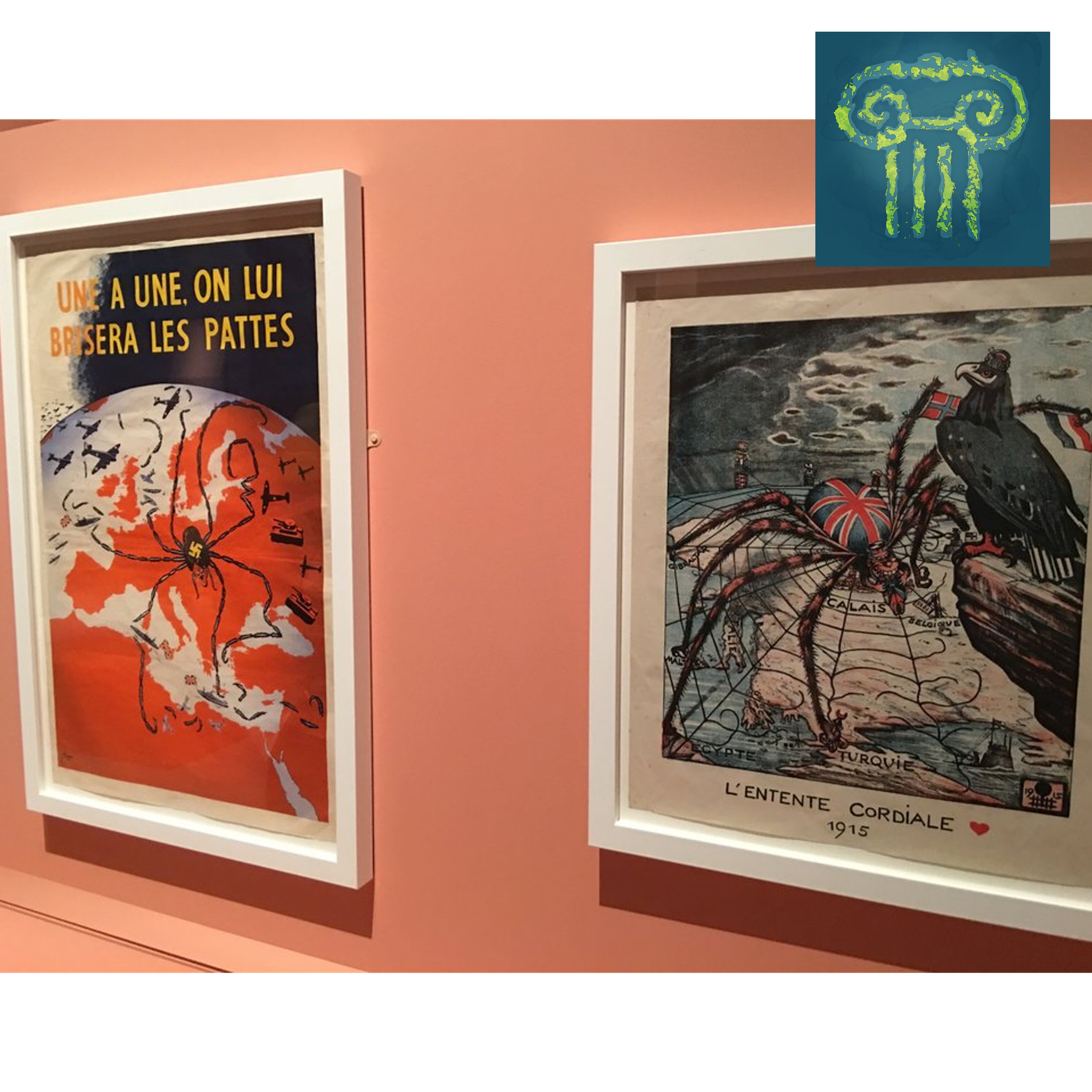
18. Maps and the 20th Century at the British Library
Image: Two propaganda maps at the Maps and the 20th Century exhibit at the British Library. The Maps and the 20th Century exhibit at the British Library is quick to get to central theme of the exhibition: in order to understand a map, you must understand how and why it was made. Maps are not neutral. In a museum context, however, it can be tempting to present a map as the source of truth.Topics Discussed:00:00: Intro00:14: Maps in Museums01:08: Limiting the Gallery to the 20th Century01:45: “Global North”02:15: Propaganda Maps and Globes02:40: German Map of European immigrants living in the USLinks:Maps and the 20th Century: Drawing the Line
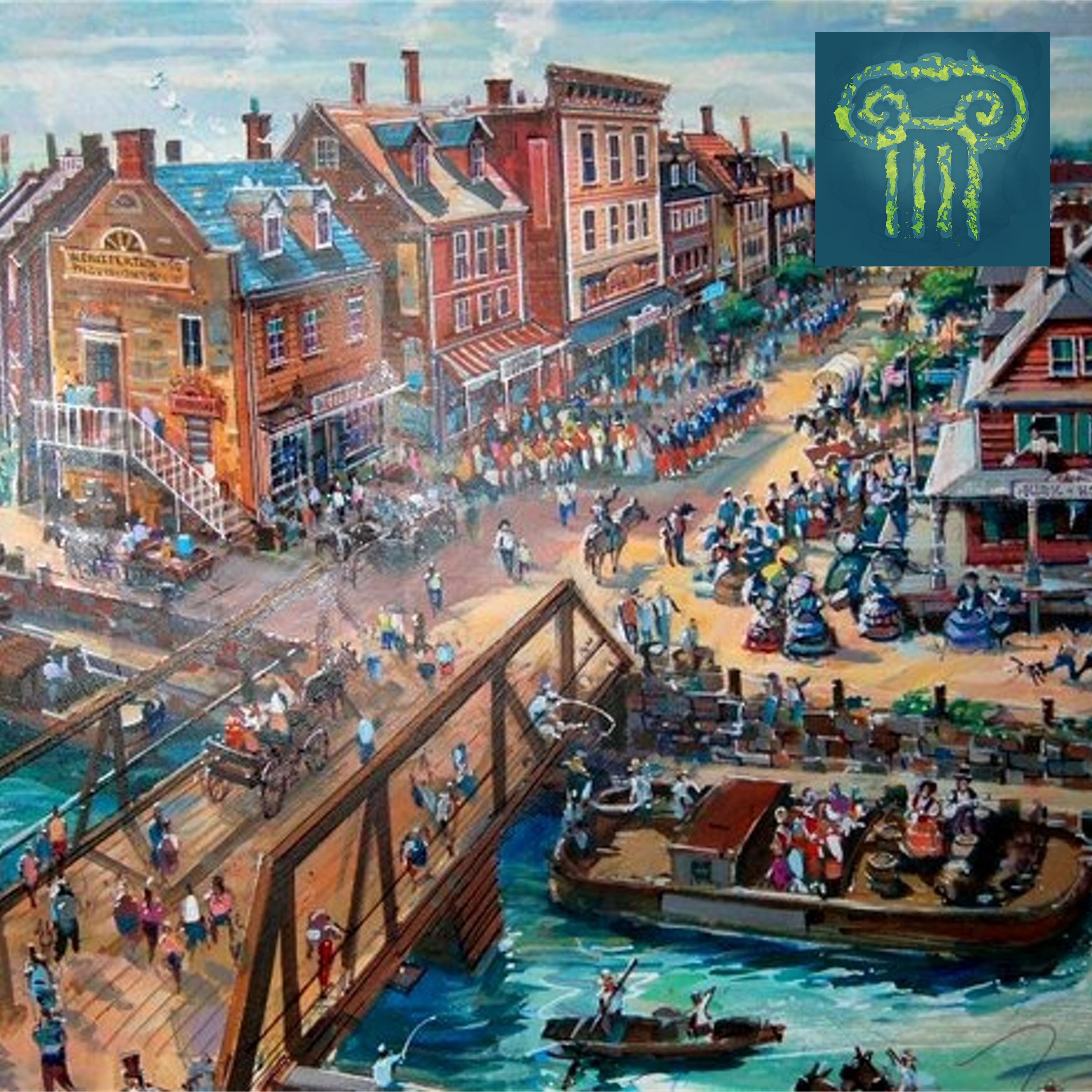
17. Entertainment and History at Disney's America
Image: A Civil War-era village that would have served as the hub of Disney's America. Image (c) Disney In 1994, Disney was hard at work on a new theme park called Disney's America. The park, which would open in Virginia not far from Washington DC, would showcase the “sweep of American History.” Confident and enthusiastic, Disney executives were walking a tightrope between entertainment and history.Topics Discussed:00:00: Intro00:14: Disney's America00:37: "The Complexity of the American Experience" 01:24: Themed Lands at the Magic Kingdom01:50: Themed Lands at Disney's America03:10: "Serious Fun" 03:50: Courtland Milloy05:10: Theme Park Design05:50: Marc DavisLinks:DISNEY SAYS VA. PARK WILL BE SERIOUS FUN - The Washington PostHELPING DISNEY, HURTING AMERICA?SLAVERY IS NOT AMUSINGDisney Avenue: Imagineers Remember Creating Pirates of the CaribbeanPassport to Dreams Old & New: Marc Davis

16. Visitation Trends at the Ah-Tah-Thi-Ki Seminole Indian Museum
The Ah-Tah-Thi-Ki Seminole Indian Museum is commemorating three anniversaries in 2017: the 200-year anniversary of the first attack of the Seminole War, the 60th anniversary of federal recognition of the Seminole Tribe of Florida, and the 20th anniversary of the opening of the museum.Carrie Dilley, Visitor Services and Development Manager at the Ah-Tah-Thi-Ki museum, compiles data collected from visitors. Last year, she discovered that visitors from one third of countries visited the museum, including a surprising number of Europeans. In this episode, Carrie discusses possible reasons behind the visitation numbers, some museum goals for the next year, and Seminole history. Topics Discussed:00:00: Intro00:14: Carrie Dilley00:48: Three anniversaries in 201703:30: Overall Visitation Numbers04:44: What a Wonderful World Blog Post05:25: Why the interest from Europe in general and Germany in particular?07:30: Museum guides in multiple languages08:00: How much do Europeans know about general American history?10:30: New exhibits on the wayGuest:Carrie Dilley, Visitor Services and Development Manager at the Ah-Tah-Thi-Ki museum.

15. Tamar Avishai's The Lonely Palette
The Lonely Palette is the best museum podcast out there. Host Tamar Avishai wants to make art more accessible and to help people feel more comfortable talking about what they see in museums. She uses her experience as a Spotlight Lecturer at the Museum of Fine Art in Boston as a jumping off point for her relaxed and unconventional approach to art history. Topics discussed:00:00 Intro00:16 Tamar Avishai00:29 The Lonely Palette01:26 Museum education as a recent addition to the museum experience02:04 Museum education making visitors feel welcome02:49 Spotlight lectures at the MFA04:14 A tour nobody asked for06:05 The intro, by museum guests, in the Lonely Palette10:10 The problem with audio guidesGuest:Tamar Avishai
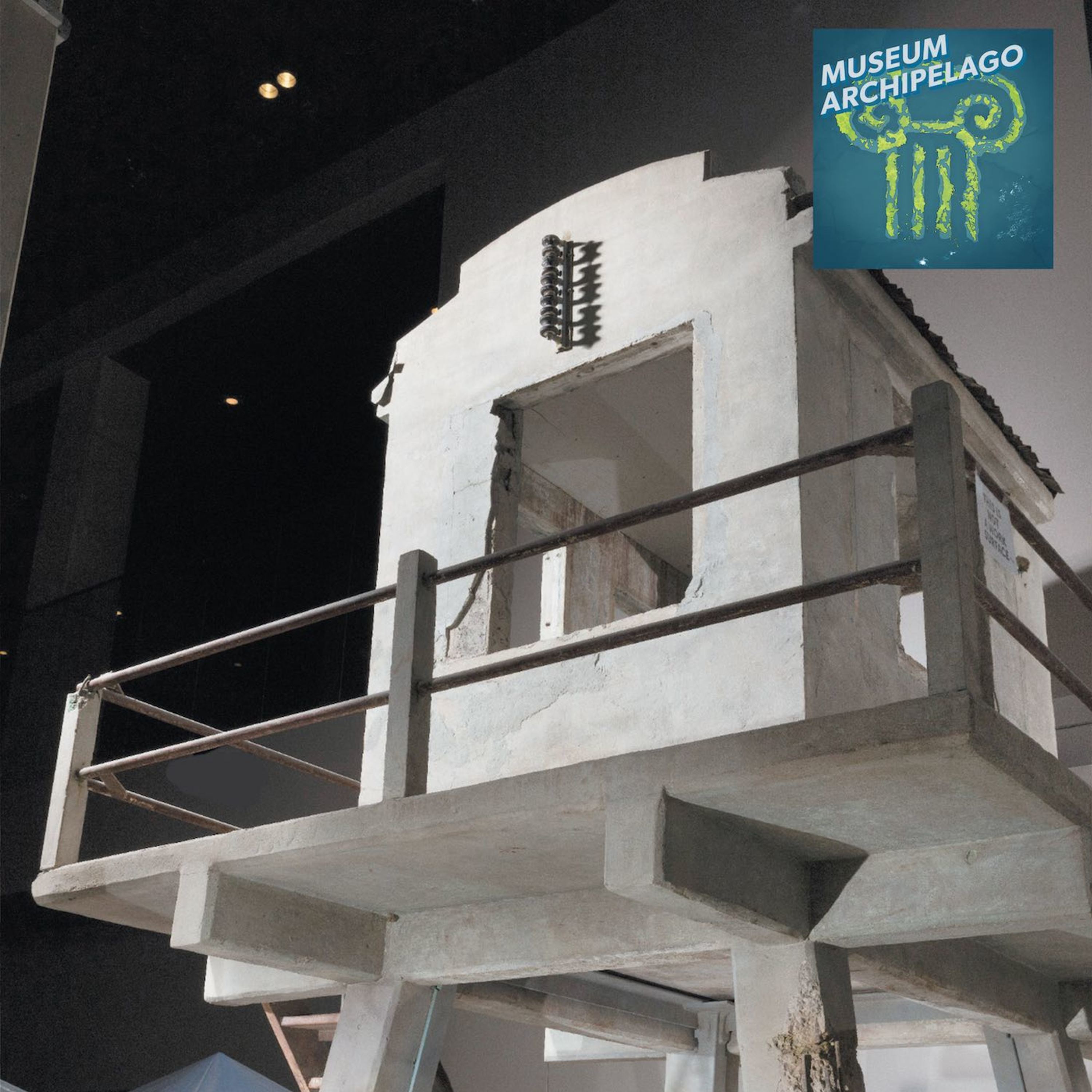
14. Early Interpretive Planning at the National Museum of African American History and Culture
Image: Guard tower from Camp H at the Louisiana State Penitentiary at Angola at the National Museum Of African American History And Culture The National Museum of African American History and Culture (NMAAHC) opened in September 2016. Today we will talk to some of the people who were thinking about the museum in 2007.Sara Smith and Andrew Anway were part of the Interpretive Planing team. They discuss NMAAHC director Lonnie Bunch's guiding principals for the museum as a whole, trips to other museums during the planning process, and the mission to show that what is happening in culture today is rooted in the past. Club Archipelago 🏖️ If you like episodes like this one, you’ll love Club Archipelago. Join Club Archipelago today to help me continue making podcasts about museums (and get some fun benefits)! Topcis Discussed: 00:00: Intro00:30: Sara Smith and Andy Anway01:12: National Museum of the American Indian02:59: Guiding Principles of NMAAHC06:59: Guard tower from Camp H at the Louisiana State Penitentiary at Angola08:50: Where in History Does the Museum Start? 09:44: The Museum Today11:24: Getting The Museum Built