Museum Archipelago
A tiny show guiding you through the rocky landscape of museums
Ian Elsner
Show overview
Museum Archipelago has been publishing since 2015, and across the 11 years since has built a catalogue of 113 episodes. That works out to roughly 20 hours of audio in total. Releases follow a roughly quarterly cadence.
Episodes typically run ten to twenty minutes — most land between 10 min and 15 min — though episode length varies meaningfully from one episode to the next. None of the episodes are flagged explicit by the publisher. It is catalogued as a EN-US-language Society & Culture show.
The show is actively publishing — the most recent episode landed 3 months ago, with 2 episodes already out so far this year. The busiest year was 2018, with 23 episodes published. Published by Ian Elsner.
From the publisher
A tiny show guiding you through the rocky landscape of museums. Museum Archipelago believes that no museum is an island and that museums are not neutral. Taking a broad definition of museums, host Ian Elsner brings you to different museum spaces around the world, dives deep into institutional problems, and introduces you to the people working to fix them. Each episode is rarely longer than 15 minutes, so let’s get started.
Latest Episodes
View all 113 episodes113. World Trade Center Steel in Your Area
112. In Relooted, You Steal Back What Museums Won't Return
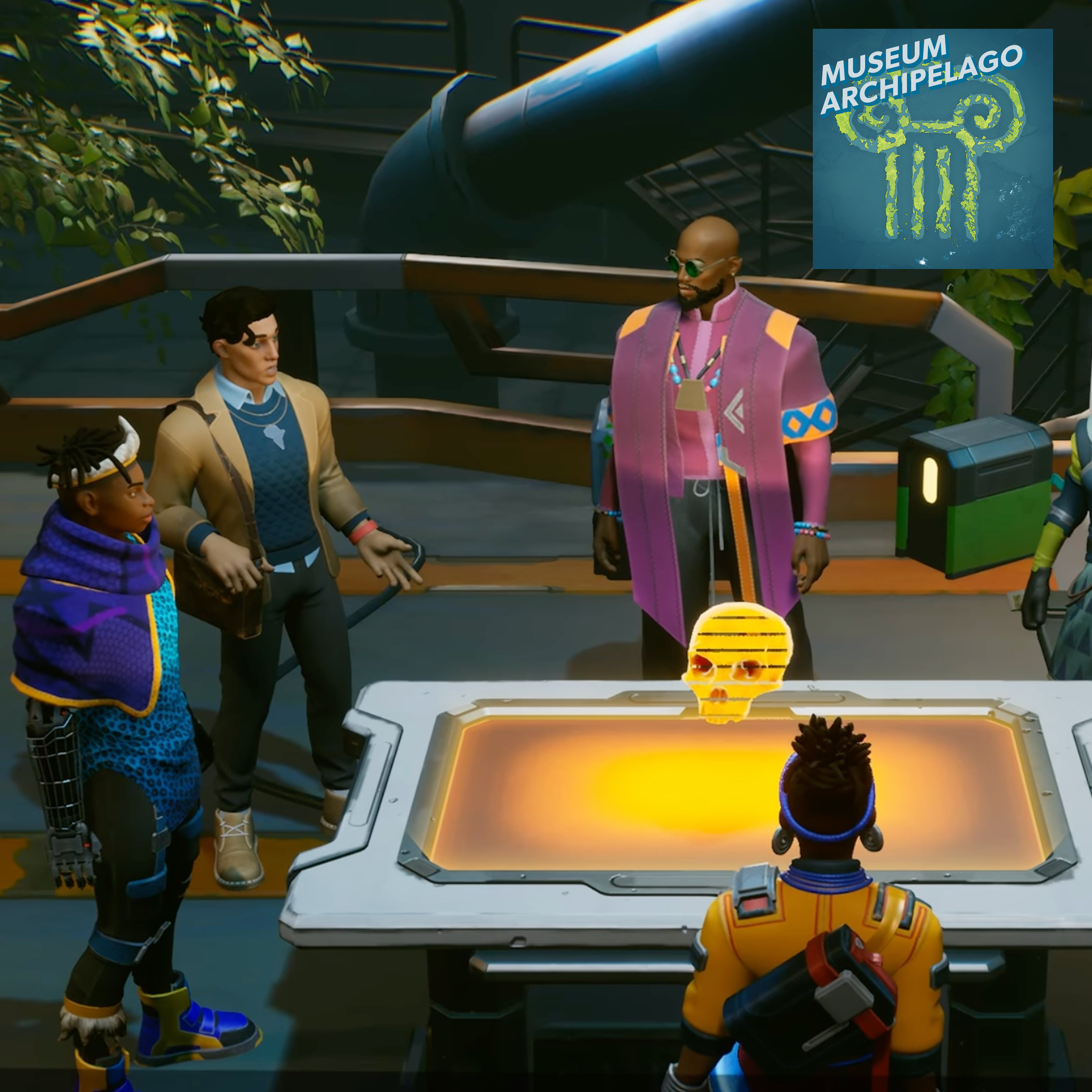
It's 2099, and you and your heist team are about to case an unnamed high-security museum in Europe. One of the targets: the Kabwe skull, a roughly 300,000-year-old early human skull found in present-day Zambia in 1921. This is Relooted, a new video game from South African game studio Nyamakop, where your job is to steal back looted artifacts by mapping entrances and exits, positioning your crew, and making it past robot security using your parkour skills. Several things about this are unrealistic. For one, the actual Kabwe skull, currently on display in the Natural History Museum in London, might not need such an elaborate plan. But there is a damningly realistic fact at the heart of the game: every single one of the roughly 70 objects you steal was taken from the African continent and currently sits in a Western museum or private collection. And the way museums in the game wiggle out of a fictional treaty to return stolen artifacts doesn't sound fictional at all. It mirrors the real-world tactics that have kept the Kabwe skull in London for over a century, despite Zambia's repeated requests for its return. In this episode, Ben Myers, CEO and creative director at Nyamakop, and Mohale Mashigo, the studio's narrative director, talk about why heists are the perfect genre for a game about repatriation, what they found when they visited the real artifacts in person, and why their video game often does a much better job telling the story of these objects than the museums that hold them. Image: The Kabwe skull as it appears in a Relooted heist briefing. Topics and Notes 00:00 Welcome to Museum Archipelago 00:15 Relooted 01:30 "We overstated the security capabilities on museums" 01:45 Meet Ben Myers 02:50 Meet Mohale Mashigo 03:04 The Kabwe Skull 04:45 Labels and Missing Context in Museums 06:08 A Digital Museum 06:53 Treaties and Red Tape 09:37 Prosperous Future Africa 12:05 Hans Sloane and the Origins of the British Museum on Episode 39 12:16 Museum of Black Civilizations 14:50 Outro | Join Club Archipelago 🏖 DIVE DEEPER WITH CLUB ARCHIPELAGO 🏖️ Unlock exclusive museum insights and support independent museum media for just $2/month. Join Club Archipelago Start with a 7-day free trial. Cancel anytime. Your Club Archipelago membership includes: 🎙️Access to a private podcast that guides you further behind the scenes of museums. Hear interviews, observations, and reviews that don't make it into the main show. 🎟️ Archipelago at the Movies, a bonus bad-movie podcast exclusively featuring movies and other pop culture that reflect the museum world back to us. ✨A warm feeling knowing you're helping make this show possible. Transcript Below is a transcript of Museum Archipelago episode 112. For more information on the people and ideas in the episode, refer to the links above. View Transcript It's the year 2099 and you and your heist team are about to case an unnamed high security museum to steal the Kabwe skull. This moment occurs halfway through Relooted, a new video game from South African game studio Nyamakop. Your job is to map all the entrances and exits, position your crew members strategically, use cybersecurity techniques to break open the door, steal this artifact, and make it out of the museum past the robot security force using parkour, which fortunately, you're quite skilled at. “Video game excerpt: " Please look out for the Kabwe skull. For many years, the Zambian government tried to have the skull repatriated back from the United Kingdom. What's the security situation? Nothing you haven't experienced before. Robot guards, lasers, security shutters, pressure plates, blah, blah, blah, blah.” Several things about this moment in the game are unrealistic. For one, the actual skull, which is currently on display in the Natural History Museum in London, might actually be easier to steal. Ben Myres: I've seen a couple of the ones in our game, in person now, and the first thing I noticed, is the Kabwe skull or broken Hillman in the Natural History Museum. That'd be very easy to steal. We've very overstated the security capabilities on museums. I have a video of, it's only 20 seconds long of the distance from the skull to the exit. I'm like, wow. Okay. That wouldn’t be very fun. This is Ben Myers, the CEO and creative director at Nyamakop, and one of the developers of Relooted. Ben Myres: Hello, I'm Ben Myers, CEO, and creative director at Nyamakop. I like to be known for making cool video games. But there is a very realistic -- damningly realistic -- fact at the heart of the game. The Kabwe skull is just one of about 70 real-world objects you heist during the game. And every single one of them was taken from the African continent and currently sits in a Western Museum or private collection. Ben Myres: I think there was a French government report that came out in maybe 2018 and that estimated that 90 to 95% of all African cultural heritage is kept in museums off the continent. So the scale
111. Why Software Hasn't Eaten Museums (Yet)
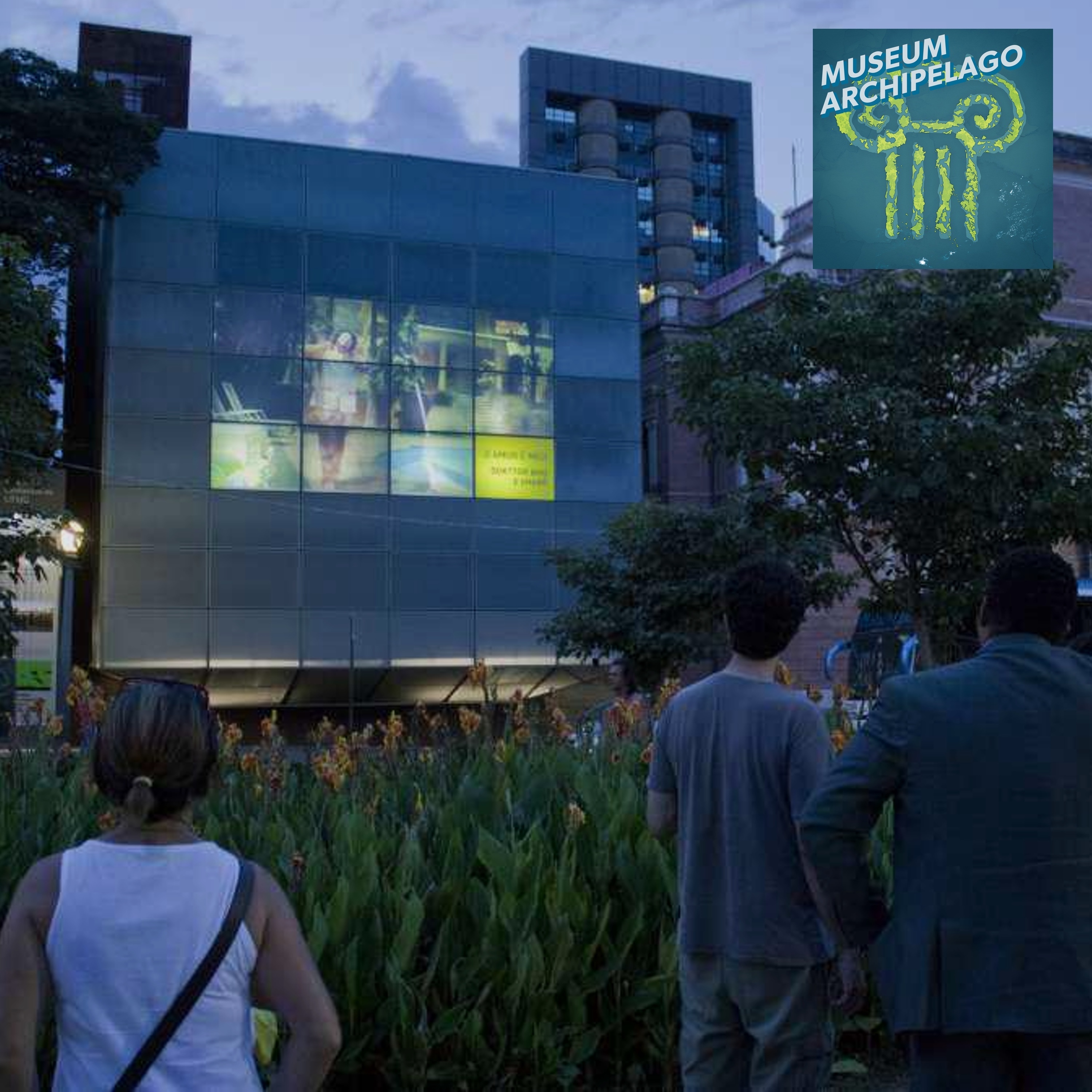
Museums today are filled with software, yet they've largely avoided being "eaten" by the tech industry. Unlike music or movies, exhibitions can't be downloaded or scaled infinitely. There's only one Mona Lisa. But if the wrong platform finds the right leverage, that immunity may not last. Which is why the kind of software museums choose matters. TilBuci is a free, open-source tool used by museums to build touchscreens, kiosks, and projections. It was created by Brazilian software developer Lucas Junqueira after watching too many digital exhibitions quietly break down once the opening buzz faded. Designed to be usable by museum staff long after developers leave, TilBuci treats software not as a product, but as infrastructure. In this episode, Lucas Junqueira talks about what it takes to build museum software that lasts. Through the story of a projection still running on the facade of the Space of Knowledge museum in Belo Horizonte over a decade after it opened, we explore how open, locally controlled tools extend the life of museum systems, and what's at stake if a tech platform ever inserts itself between museums and their audiences. Image: A projection animates the façade of the Espaço do Conhecimento (Space of Knowledge) museum at Praça da Liberdade (Liberty Square) in Belo Horizonte, Brazil. Lucas Junqueira's software Managana, a previous version of TilBuci is running the projection. Topics and Notes 00:00 Intro 00:15 The Rise of Software in Museums 00:56 Software Eating the World 02:19 Why Are Museums Different? 03:16 Lucas Junqueira and TilBuci 05:09 Challenges and Innovations 08:09 The Flash Apocalypse 10:12 What's at Stake 11:48 Jurassic Park on Club Archipelago 13:00 Outro | Join Club Archipelago 🏖 DIVE DEEPER WITH CLUB ARCHIPELAGO 🏖️ Unlock exclusive museum insights and support independent museum media for just $2/month. Join Club Archipelago Start with a 7-day free trial. Cancel anytime. Your Club Archipelago membership includes: 🎙️Access to a private podcast that guides you further behind the scenes of museums. Hear interviews, observations, and reviews that don't make it into the main show. 🎟️ Archipelago at the Movies, a bonus bad-movie podcast exclusively featuring movies and other pop culture that reflect the museum world back to us. ✨A warm feeling knowing you're helping make this show possible. Transcript Below is a transcript of Museum Archipelago episode 111. For more information on the people and ideas in the episode, refer to the links above. View Transcript Welcome to Museum Archipelago. I'm Ian Elsner. Museum Archipelago guides you through the rocky landscape of museums. Each episode is rarely longer than 15 minutes. So let's get started. If you've been to a museum lately, any museum big or small, you've probably noticed ever more software-driven experiences. Interactive touchscreens, projections, buttons, videos are all controlled by software. Lucas Junqueira: I've seen mostly all exhibitions have at least some kind of interaction or some pieces of the exhibition that require some kind of software to enable it. This is Lucas Junqueira, a Brazilian museum professional and software developer. Lucas Junqueira: Okay. My name is Lucas Junqueira. I've been working on this exhibition museum scene for quite some time right now. It's tempting to see the increase of software in museums as another example of software eating the world. This phrase, "software eats the world", was coined by investor Marc Andreessen in a 2011 Wall Street Journal opinion piece. The idea isn’t that software replaces everything. It’s that software absorbs the value layer of company after company, industry after industry. In the "software eats the world" thesis, traditional music labels only exist to provide software companies (like Apple Music and Spotify) with content. The software, everything from how the app looks on your phone to what song is recommended next, sits higher on the value chain than the music itself. Even the network effects of which app your friends use, matter more than what you listen to. Netflix, Salesforce, and the game Angry Birds are some examples Andreessen mentioned back in that 2011 essay, plus plenty of other companies I barely remember. But the core of the thesis, even if it's not explicitly mentioned, is the zero-marginal cost nature of distributing software. Whatever the up-front cost of developing Angry Birds is, it doesn't actually matter since the company can distribute it to every phone on the planet for zero dollars. Once it exists, it can be copied endlessly, instantly, and globally. Which is exactly what museums can’t do. And this is where museums are different. Museums aren’t infinitely scalable, and they aren’t frictionless. You can't really download an exhibition in the way that you can download a song. You have to show up. There's only one Mona Lisa. And that's why software in museums is (so far at least) immune from software eating the re
110. Revisiting The ‘Enola Gay Fiasco’ Today
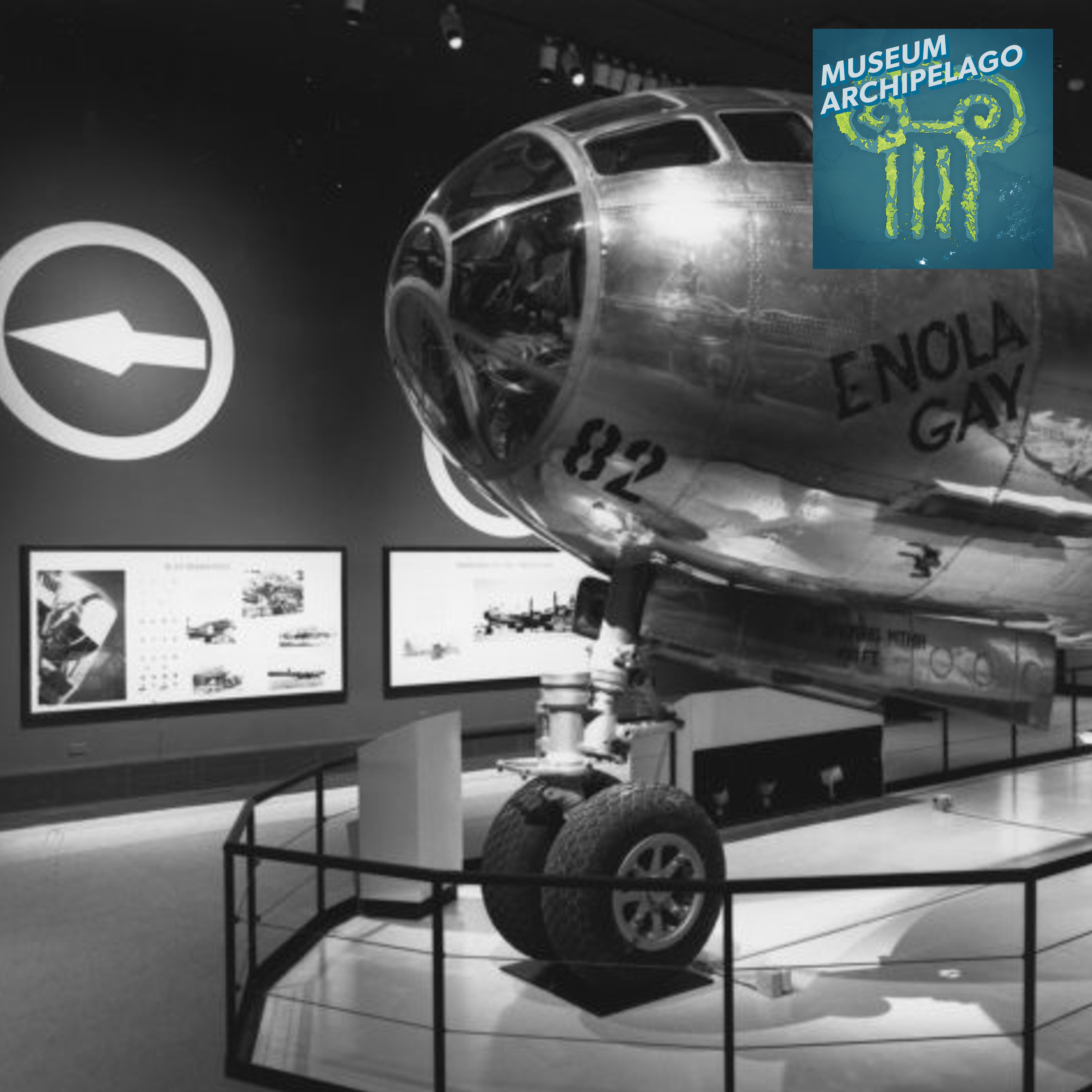
For the 50th anniversary of the end of World War II, the Smithsonian National Air and Space Museum planned to display the Enola Gay, the Boeing B-29 that dropped the atomic bomb on Hiroshima. The plane was restored to be part of a full exhibit, presented alongside context about the atomic bombing's mass civilian casualties. But that exhibit never opened. Instead, after years of script revisions and intense pressure from veterans' groups and Congress, the museum displayed the restored bomber's fuselage with minimal interpretation. The exhibit was primarily dedicated to the technical process of restoring the aircraft; as one visitor noted, "I learned a lot about how to polish aluminum, but I did not learn very much about the decision to drop the atomic bomb." In this episode, historian Gregg Herken, who served as Chairman of the museum's Space History Division during the controversy, recounts how the exhibit went from reckoning with the bomb's full impact to re-enforcing a patriotic narrative. He recalls the specific moments that led up to one of the museum industry's cautionary tales, like when the director agreed to remove evocative artifacts like a schoolgirl's carbonized lunchbox from Hiroshima from the exhibition plans, and how the Air Force Association demanded the exhibit say the bombing saved 1 million American lives and other assertions that have been challenged by generations of historians. Today, a new presidential executive order dictates how the Smithsonian interprets American history. Topics and Notes 00:00 Intro 00:15 The Enola Gay in the 1980s 01:07 Gregg Herken 02:21 Initial Planning 02:40 Martin Harwit 03:48 Herken's Visit to Hiroshima 04:39 'The Lunchbox' 05:32 Initial Exhibit Script 06:26 Opposition and Controversy 07:15 Revisions and Criticisms 10:49 Air Force Association's Demands 11:59 Exhibit Cancellation 13:37 "Pale Shadow" 14:10 Reflecting on History and Censorship 20:55 Outro | Join Club Archipelago 🏖 DIVE DEEPER WITH CLUB ARCHIPELAGO 🏖️ Unlock exclusive museum insights and support independent museum media for just $2/month. Join Club Archipelago Start with a 7-day free trial. Cancel anytime. Your Club Archipelago membership includes: 🎙️Access to a private podcast that guides you further behind the scenes of museums. Hear interviews, observations, and reviews that don't make it into the main show. 🎟️ Archipelago at the Movies, a bonus bad-movie podcast exclusively featuring movies and other pop culture that reflect the museum world back to us. ✨A warm feeling knowing you're helping make this show possible. Transcript Below is a transcript of Museum Archipelago episode 110. For more information on the people and ideas in the episode, refer to the links above. View Transcript Welcome to Museum Archipelago. I'm Ian Elsner. Museum Archipelago guides you through the rocky landscape of museums. Each episode is rarely longer than 15 minutes. So let's get started. By the late 1980s, the Enola Gay – the Boeing B-29 Superfortress that dropped the atomic bomb on Hiroshima – had been sitting disassembled at the Smithsonian's Paul E. Garber Preservation, Restoration, and Storage Facility in Suitland, Maryland for decades. What was once a beautiful shiny machine with four powerful engines, just powerful enough with the right banking maneuver to escape the hell it unleashed, was scattered and severed, with disheveled tubes where the wings used to be and the remains of birds nests in the turrets. Gregg Herken: It was shortly after I joined the museum and I went out to the restoration facility that the Smithsonian operates in Garber in Maryland. And they wanted to show me around. And since I was the new chairman of the Department of Space History, they said I could get into the fuselage of the Enola Gay. This is Gregg Herken, retired professor of American Diplomatic History at the University of California, and Chairman of the National Air and Space Museum's Space History Division from 1988 to 2003. Gregg Herken: Hello. My name is Gregg Herken. I'm a retired professor of American Diplomatic History at the University of California. Herken was part of the team planning the exhibition at the National Air and Space Museum that would feature the restored Enola Gay and of course he accepted the invitation and climbed up into the fuselage. Gregg Herken: So I sat in Tibbets' seat, in the pilot seat for a second, and then I sat in the bombardier seat. And off to the left was a panel that had, I think it was five toggle switches. And one of them had the label "bombs." And actually on the day of the Hiroshima mission, it would've said in a little tag underneath that "special." Gregg Herken: But I remember just thinking that I could sit in, I'm sitting in that seat, I could just reach over and flip that switch. And that was the switch that released the Little Boy bomb on Hiroshima. And I thought there is bad juju with that. I did not want to tou
109. The Rise and Fall of Enterprise Square, USA
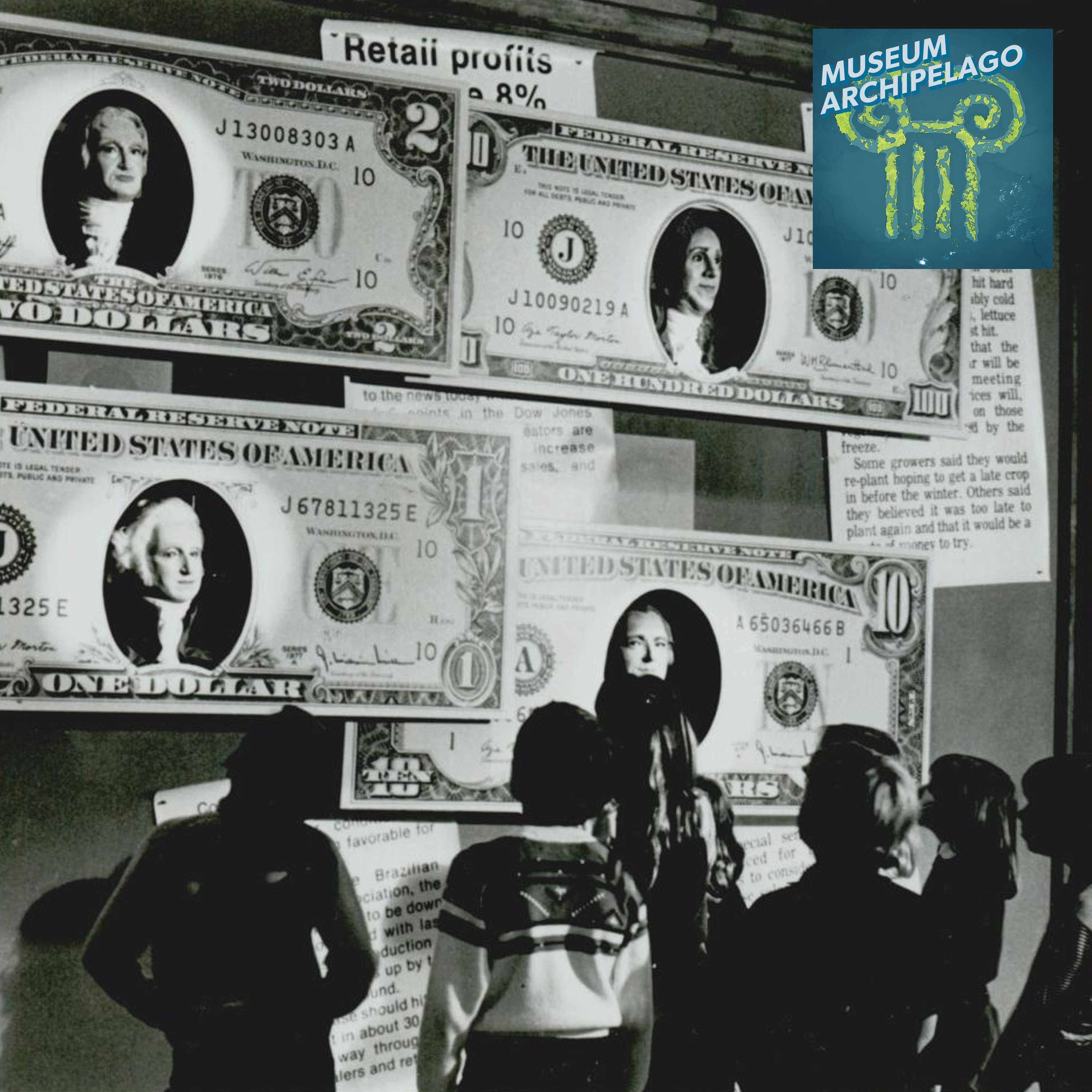
For the last few decades of the 20th century, if you visited Oklahoma City, Oklahoma, you could have been serenaded by a barbershop quartet of audio-animatronic portraits of America's founders as framed on U.S. currency. This was one of the many exhibits at Enterprise Square, USA, a high-tech museum dedicated to teaching children about Free Market Economics. The museum, which found itself out of money almost before it opened, shut down in 1999. Barrett Huddleston first encountered these exhibits as a wide-eyed elementary school student in the 1980s, mesmerized by the talking puppets, giant electronic heads, and interactive displays that taught how regulation stifled freedom. Years later, he returned as a tour guide during the museum's final days, maintaining those same animatronics with duct tape and wire cutters, and occasionally being squeezed inside the two-dollar bill to repair Thomas Jefferson. He joins us to explore this collision of education, ideology, and visitor experience, and how the former museum shapes his own approach to teaching children today. Cover Image: Children watch audio-animatronic portraits of America's founders, as framed on U.S. currency, sing a song about freedom. [Photograph 2012.201.B0957.0912] hosted by The Gateway to Oklahoma History Topics and Notes 00:00 Intro 00:15 Buzludzha Again 00:46 Enterprise Square, USA 01:32 Barrett Huddleston 02:05 The Origins and Purpose of Enterprise Square 03:09 The Boom and Bust of Oklahoma's Economy 05:47 The Disney Connection and Animatronics 07:54 The Decline of Enterprise Square 11:42 Huddleston's Reflections on Education 13:41 Outro | Join Club Archipelago 🏖 DIVE DEEPER WITH CLUB ARCHIPELAGO 🏖️ Unlock exclusive museum insights and support independent museum media for just $2/month. Join Club Archipelago Start with a 7-day free trial. Cancel anytime. Your Club Archipelago membership includes: 🎙️Access to a private podcast that guides you further behind the scenes of museums. Hear interviews, observations, and reviews that don't make it into the main show. 🎟️ Archipelago at the Movies, a bonus bad-movie podcast exclusively featuring movies and other pop culture that reflect the museum world back to us. ✨A warm feeling knowing you're helping make this show possible. Transcript Below is a transcript of Museum Archipelago episode 109. For more information on the people and ideas in the episode, refer to the links above. View Transcript Welcome to Museum Archipelago. I'm Ian Elsner. Museum archipelago guides you through the rocky landscape of museums. Each episode is rarely longer than 15 minutes. So let's get started. Buzludzha comes up a lot on Museum Archipelago. The monument was built in 1981 to look like a futuristic flying saucer parched high on Bulgarian mountains. Every detail of the visitor experience was designed to impress, to show how Bulgarian communism was the way of the future. Once inside, visitors were treated to an immersive light show, where the mosaics of Marx and Lenin and Bulgarian partisan battles were illuminated at dramatic moments during a pre-recorded narration. But within a year of Buzludzha welcoming its first guests, all the way across the world in Oklahoma City, Oklahoma, another museum opened to promote the exact opposite message. And it even had its own flying saucer connection. Barrett Huddleston: The framing device of the museum is you have these two alien puppets that crash down in Oklahoma City, Oklahoma, and they need to get fuel for their spaceship so they can go back. I saw these animatronic puppets and I was like, oh, well this is just like Disney World, except they're talking about having to commodify their space technology so they can buy gold to put in their spaceship so they can get back to their planet or whatever. This is Barrett Huddleston, who first visited Enterprise Square, USA as an elementary school student in the mid-1980s, and later worked there as a tour guide. Barrett Huddleston: Hi, my name is Barrett Huddleston. I am an educational enrichment provider. I own a business called Mad Science of Central Oklahoma and Finer Arts of Oklahoma. I travel all over my state and a few others, delivering STEAM based workshops and assemblies to elementary school students. But In this instance, I also worked as a tour guide for Enterprise Square USA for over two years. The story of Enterprise Square, USA begins in a boom, actually a few overlapping booms. In the late 1970s, oil had been found in the nearby Anadarko Basin and energy companies and money were rushing into Oklahoma City. As Sam Anderson puts it in his excellent book Boom Town, which is also where I first learned about this museum: Excerpt from Boom Town: “Capitalism had blessed Oklahoma City, and the city wanted to express its thanks. At the height of the boom, local businessmen pooled their money to create a brand-new attraction that, even by the standards of Oklahoma City, was spectacularly strange. It was an intera
108. The Museum of Utopia and Daily Life
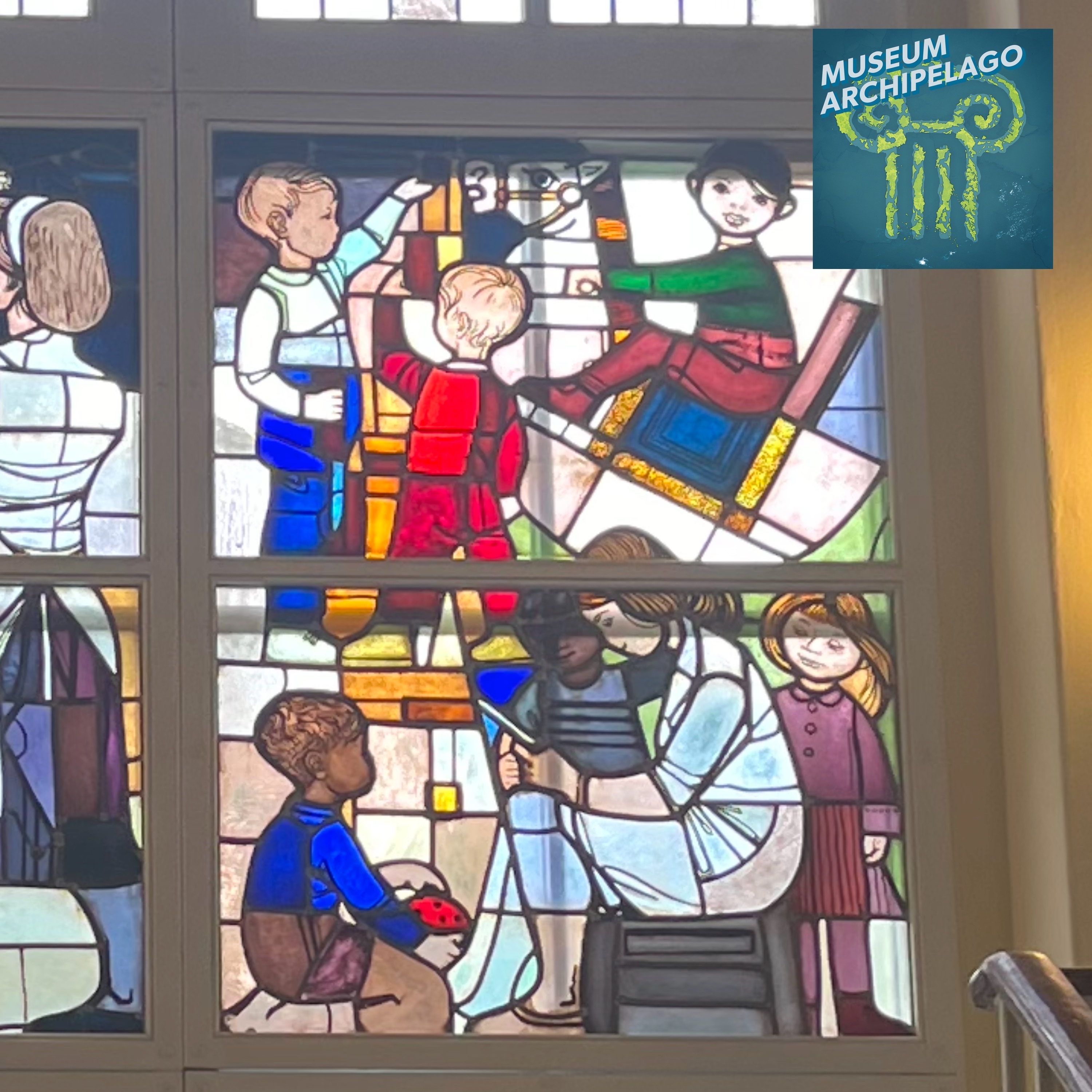
The tension is right there in the name of the Museum of Utopia and Daily Life. It sits inside a 1953 kindergarten building in Eisenhüttenstadt, Germany, a city that was born from utopian socialist ideals. After World War II left Germany in ruins, the newly formed German Democratic Republic (GDR) saw an opportunity to build an ideal socialist society from scratch. This city – originally called Stalinstadt or Stalin’s city – was part of this project, rising out of the forest near a giant steel plant. The museum's home in a former kindergarten feels fitting – the building's original Socialist Realist stained glass windows by Walter Womacka still depict children learning and playing with an almost religious dignity. But museum director Andrea Wieloch isn't as interested in the utopian promises as she is in the "blood and flesh kind of reality" of life in the GDR. The museum's collection of 170,000 objects, many donated by local residents who wanted to preserve their history, tells the story of the GDR through the lens of how people actually lived during the country's 40-year existence. The approach of the Museum of Utopia and Daily Life is to treat the history of the GDR as contested, full of stories and memories that resist simple narratives. In this episode, Wieloch describes how her approach sets the museum apart from other GDR museums in Germany including ones that cater to more western audiences. Image: Socialist Realist stained glass windows by Walter Womacka welcome visitors in this former kindergarten. Topics and Notes 00:00 Intro 00:15 Post-War Germany and the GDR's Vision 00:59 The Planned City of Eisenhüttenstadt 3:00 Andrea Wieloch 03:15 The Museum of Utopia and Daily Life 03:56 Daily Life in the GDR 07:35 GDR History in modern Germany 14:43 Future Plans for the Museum 17:44 Outro | Join Club Archipelago 🏖 DIVE DEEPER WITH CLUB ARCHIPELAGO 🏖️ Unlock exclusive museum insights and support independent museum media for just $2/month. Join Club Archipelago Start with a 7-day free trial. Cancel anytime. Your Club Archipelago membership includes: 🎙️Access to a private podcast that guides you further behind the scenes of museums. Hear interviews, observations, and reviews that don't make it into the main show. 🎟️ Archipelago at the Movies, a bonus bad-movie podcast exclusively featuring movies and other pop culture that reflect the museum world back to us. ✨A warm feeling knowing you're helping make this show possible. Transcript Below is a transcript of Museum Archipelago episode 108. For more information on the people and ideas in the episode, refer to the links above. View Transcript Welcome to Museum Archipelago. I'm Ian Elsener. Museum archipelago guides you through the rocky landscape of museums. Each episode is rarely longer than 15 minutes. So let's get started. After World War II, all of Germany was in ruins. Almost nothing was left standing after 12 years of Nazi rule and 6 years of war. Mass migration, hunger, and homelessness defined the immediate post-war period as millions of displaced people sought to rebuild their lives among the rubble. For the newly formed German Democratic Republic or GDR, the chance to start over – and demonstrate the utopia of the socialist system – took on a great importance. The East German government saw urban planning as a way to both solve the housing crisis and showcase socialist ideals through modern, centrally planned cities built from scratch. I visited one of these planned cities about an hour and a half east of Berlin. Andrea Wieloch: Where we are sitting now was basically forest 75 years ago, and then they decided to plant a steel factory and a city around it. It was back in the days where there was really everything destroyed by war. An island of a real utopia with nice housing and facilities for everyone. So people from all over GDR came here and when the city was first founded, it was called Stalinstadt. So, “city of Stalin”. Stalinstadt, which started being built in 1951, is now called Eisenhüttenstadt, which literally means Iron Hat City for the steel plant. Planning and building a new city and a steel factory in a place that was just a forest during the Nazi regime was a sharp break with the past – the planned city reminds me of parts of Bulgarian cities also built in the socialist times, and unlike most places I’ve visited in Germany, I’m not immediately on the lookout for dark signs of the Nazi past. I can imagine the relief of this place for the first people who moved here. Maybe, for a moment, it did feel like utopia. Of course, this utopia didn't actually happen, no utopia has. But the GDR lasted about 40 years and those 40 years covered a lot of daily life. I'm here to visit a museum that puts the tension of utopia right in the name: the Museum of Utopia and Daily Life. Andrea Wieloch: I do like the space in between utopia and daily life. That is my focus, that tension or ambivalence. And I'm frankly not real
107. Crypto and Museums Part 1
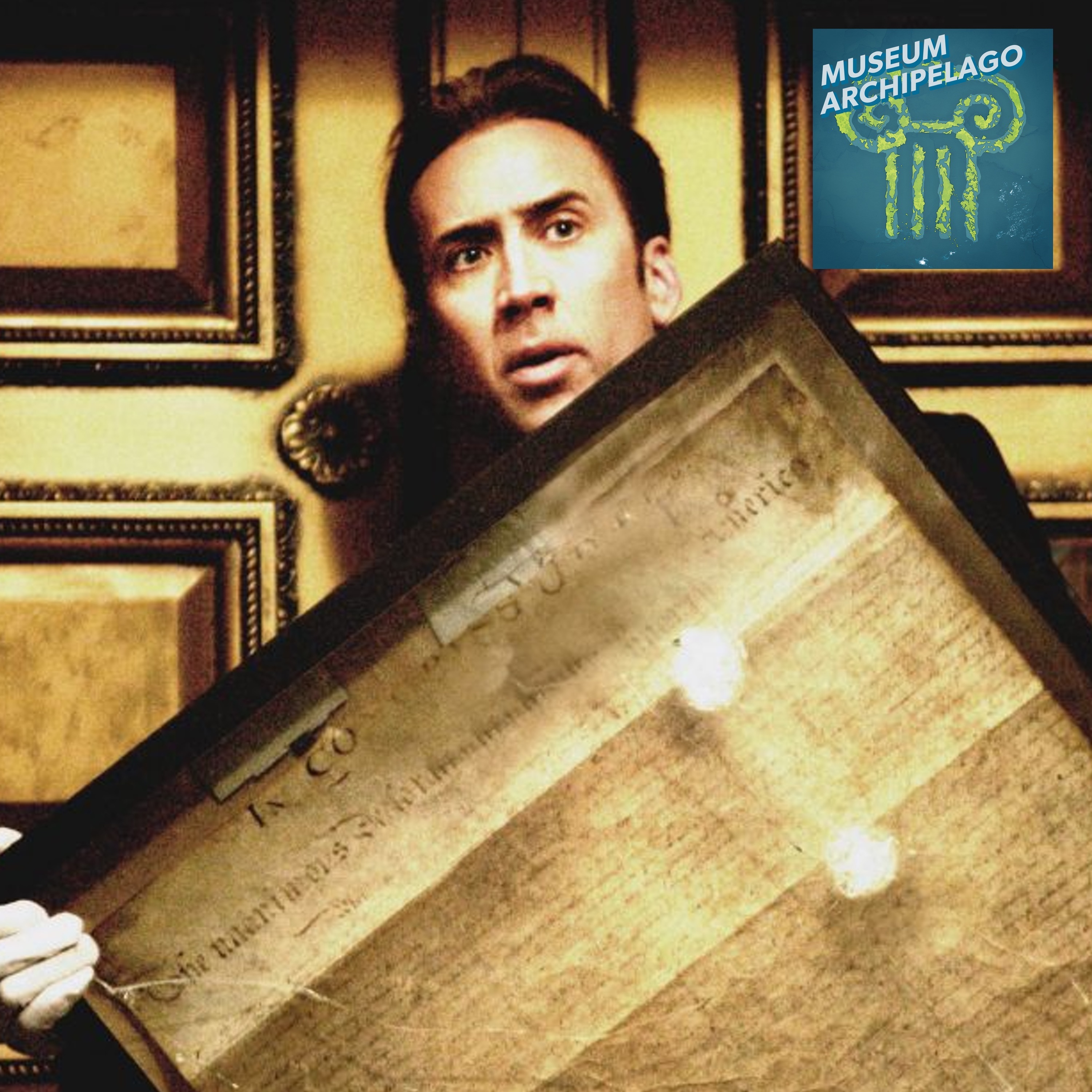
In November 2021, an extremely rare first printing of the U.S. Constitution was put up for auction at Sotheby's in New York, attracting a unique bidder: ConstitutionDAO, a decentralized autonomous organization. This group had formed just weeks earlier with the sole purpose of acquiring the Constitution – and would not have been possible without crypto technology. While museums and crypto don't commonly coexist at the moment, they may increasingly intersect in the future. They actually address similar fundamental issues: trust and historical accuracy. Both can help answer the question: what really happened? To explore this overlap, we speak with Nik Honeysett, CEO of the Balboa Park Online Collaborative in San Diego, who helps trace the story of ConstitutionDAO's bid for the Constitution. We explore key crypto concepts like blockchains and smart contracts, and how they might apply to the wider museum world – particularly around questions of provenance and institutional trust. Image: Nicolas Cage in 2004's National Treasure. Supporters of ConstitutionDAO drew parallels between his character's fictional theft of the Declaration of Independence and the DAO's real-life attempt to purchase the Constitution. Topics and Notes 00:00 Intro 00:15 Auction of the U.S. Constitution 00:43 Constitution DAO 01:36 The Role of Governance Tokens 02:02 Nik Honeysett 02:45 Balboa Park Online Collaborative 04:29 Museums and Crypto 05:24 Blockchain and Provenance 07:40 Smart Contracts and Museum Governance 09:56 The Outcome of the Auction 11:58 Museums as Trustworthy 14:00 Museum Archipelago Ep. 39. Hans Sloane And The Origins Of The British Museum With James Delbourgo 16:41 Conclusion and Future of Crypto in Museums 17:44 Outro | Join Club Archipelago 🏖 Museum Archipelago is a tiny show guiding you through the rocky landscape of museums. Subscribe to the podcast via Apple Podcasts, Google Podcasts, Overcast, Spotify, or even email to never miss an episode. DIVE DEEPER WITH CLUB ARCHIPELAGO 🏖️ Unlock exclusive museum insights and support independent museum media for just $2/month. Join Club Archipelago Start with a 7-day free trial. Cancel anytime. Your Club Archipelago membership includes: 🎙️Access to a private podcast that guides you further behind the scenes of museums. Hear interviews, observations, and reviews that don't make it into the main show. 🎟️ Archipelago at the Movies, a bonus bad-movie podcast exclusively featuring movies and other pop culture that reflect the museum world back to us. ✨A warm feeling knowing you're helping make this show possible. Transcript Below is a transcript of Museum Archipelago episode 107. For more information on the people and ideas in the episode, refer to the links above. View Transcript In November 2021 an extremely rare, first printing of the U.S. Constitution was available to buy at auction. While the item was special – only 13 copies existed according to the auction house – the bidders were the usual assortment of wealthy individuals. Auctioneer: “And now let's begin the auction. Lot 1787. The United States Constitution. We’ll start the bidding here at 10 million dollars. 11 million.12 million ” Except for one. Among the individuals trying to buy the Constitution was not an individual at all. It was a new kind of organization – a decentralized autonomous organization better known as a DAO. This organization, ConstitutionDAO, had formed just a few weeks earlier for this exact purpose – to buy the Constitution. I remember the memes – backers of the project posted images of Nicolas Cage in 2004’s National Treasure, drawing parallels between his character’s fictional theft of the Declaration of Independence and this real-life attempt to purchase the Constitution. In the weeks leading up to the auction, thousands of people contributed money to ConstitutionDAO using the cryptocurrency Ether. That money funded the bid – the amount ConstitutionDAO could pay to try to acquire the constitution. What the contributors were actually buying was a so-called governance token: governance rights, the ability to vote on what to do with the Constitution, specifically, which museum to send it to, and what text would be displayed next to the document in the gallery. Nik Honeysett: The ConstitutionDAO is an interesting example of the public claiming back ownership of a document that, you know, really should be owned by the public. And I think, you know, that's the challenge for museums. This Nik Honeysett, CEO of the Balboa Park Online Collaborative in San Diego, California. Nik Honeysett: Hello, my name is Nick Honeysett. I'm CEO of the Balboa Park Online Collaborative, known as BPOC. We are a nonprofit, technology and strategy company located in San Diego's Balboa Park, which is a cultural park of about 30 institutions. And we provide a range of services on a shared service model. And we also work with museums across the U. S. and outside the U.S. largely providing digital stra
106. Last Call on 'The Streets of Old Milwaukee'
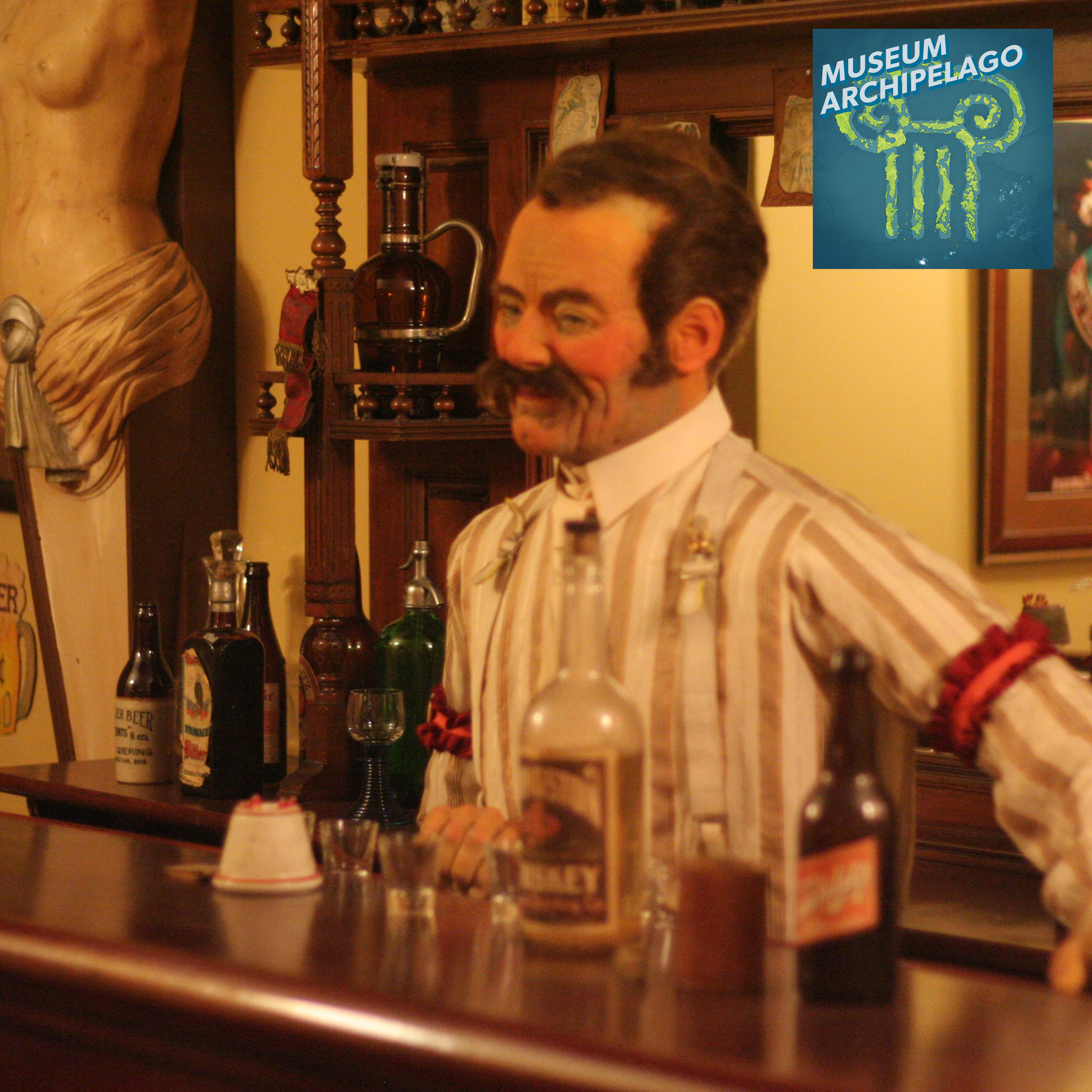
I remember visiting – and loving – The Streets of Old Milwaukee exhibit at the Milwaukee Public Museum (MPM) as a child. Opened in 1965, it’s an immersive space with cobblestone streets and perfect lighting that evokes a fall evening in turn-of-the-20th-century Milwaukee. The visitor experience isn’t peering into a diorama, it’s moving through a diorama, complete with lifelike human figures. And I’m not the only one with fond memories. When the museum announced that the exhibit would not move over to the planned new museum down the street, the public reacted negatively. Dr. Ellen Censky, president and CEO of the MPM, describes the reasons why the museum can’t – and most interestingly shouldn’t – move The Streets of Old Milwaukee exhibit. It’s a story involving cherished memories, the distinction between collections and exhibits which isn’t always at the top of visitors’ minds, and public trust. In this episode, we explore why the Milwaukee Public Museum decided to move (it’s the fourth relocation in its history) and Milwaukee Revealed, the planned new immersive gallery that will be the spiritual successor to The Streets of Old Milwaukee, which will cover a much larger swath of the city’s history. Plus, we get into the meta question of whether museums are outside of the history they are tasked with preserving. Image: Bartender in Streets of Old Milwaukee at Milwaukee Public Museum. Photo by Flickr user JeffChristiansen Topics and Notes 00:00 Intro 00:15 The Streets of Old Milwaukee’s 2015 Renovation 01:17 The Streets of Old Milwaukee’s Visitor Experience 03:40 Dr. Ellen Censky, President and CEO of the Milwaukee Public Museum 04:10 The Decision to Move the Museum 04:45 AAM Accreditation 06:21 The Current Museum 07:42 Funding the New Museum 08:55 Milwaukee Revealed 11:14 Milwaukee WTMJ4 from January 11th, 2023 11:40 The distinction between collections and exhibits 12:45 “We owe future museum goers the opportunity to see something different” 13:44 Local Talk Radio Coverage 14:07 Museum Designers 15:29 Closing Thoughts and the “Next Best Thing” 17:00 Outro | Join Club Archipelago 🏖 Museum Archipelago is a tiny show guiding you through the rocky landscape of museums. Subscribe to the podcast via Apple Podcasts, Google Podcasts, Overcast, Spotify, or even email to never miss an episode. DIVE DEEPER WITH CLUB ARCHIPELAGO 🏖️ Unlock exclusive museum insights and support independent museum media for just $2/month. Join Club Archipelago Start with a 7-day free trial. Cancel anytime. Your Club Archipelago membership includes: 🎙️Access to a private podcast that guides you further behind the scenes of museums. Hear interviews, observations, and reviews that don't make it into the main show. 🎟️Archipelago at the Movies a bonus bad-movie podcast exclusively featuring movies and other pop culture that reflect the museum world back to us. ✨A warm feeling, knowing you're helping make this show possible. Transcript Below is a transcript of Museum Archipelago episode 106. For more information on the people and ideas in the episode, refer to the links above. View Transcript I first learned about the impending closure of the popular The Streets of Old Milwaukee exhibit at the Milwaukee Public Museum, or MPM, back in 2015. The news came in the form of an email from a family member who had lived in the Milwaukee area her whole life. It was only a year after I started working in the museum world, and she was eager to talk to me – then a newly-minted museum professional! -- about what a colleague had told her: that Streets of Old Milwaukee, which had been there quote "forever", was about to close. She wrote, "I was upset since this was always one of my favorite exhibits (along with the bison hunt/rattlesnake diorama, of course)." A little later in the email she expresses a sense of relief learning that the exhibit wasn't closing permanently. The confusion turned out to be a renovation that would temporarily close the exhibit for about six months and reopen in December 2015. The panic faded a bit. The Streets of Old Milwaukee, which opened in 1965, is beloved for good reason: it’s an immersive space with cobblestone roads and perfect lighting that evokes a fall evening in turn-of-the-20th-century Milwaukee. The visitor experience isn’t peering through a diorama, it’s moving through a diorama, complete with lifelike human figures. Visitors go in and out of inviting storefronts, old-timey police boxes, and a candy shop. I used to visit as a kid and I loved how it transported me. I couldn’t say exactly where it transported me, but it was exciting. I remember staring at a figure of a grandma – who everyone just called granny – in a rocking chair on a front porch and trying to figure out the mechanism by which she was rocking. Today’s guest, Dr. Ellen Censky, told me in 2015 when she was academic dean of the Milwaukee Public Museum, the MPM, on one of the first episodes of Museum Archipelago, that this attention to detail was one of th
105. Building a Better Visitor Experience with Open Source Software
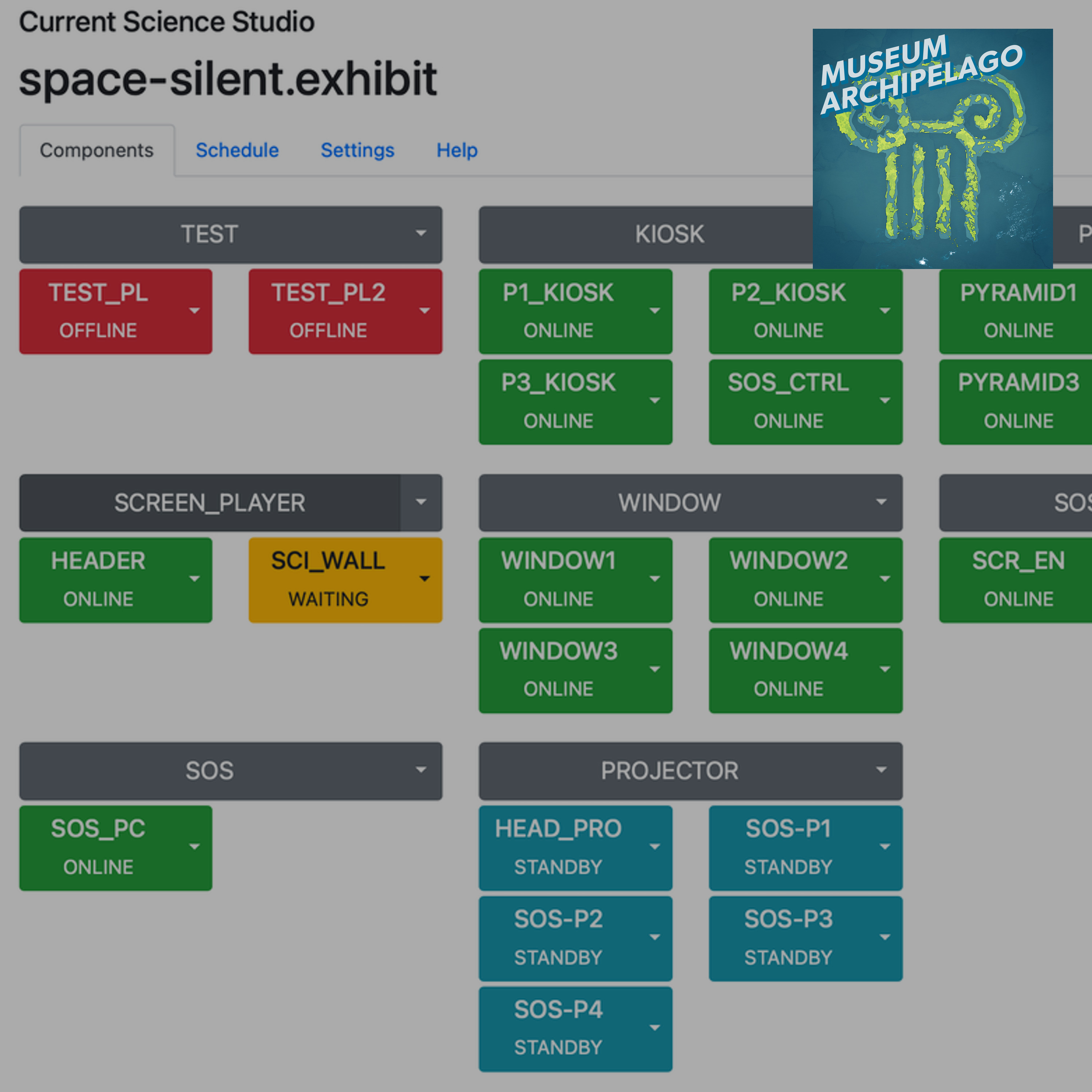
While working at the Fort Worth Museum of Science and History during the pandemic, Dr. Morgan Rehnberg recognized the institution's limited capacity to develop new digitals exhibits with the proprietary solutions that are common in big museums. This challenge led Rehnberg to start work on Exhibitera, a free, open-source suite of software tools tailored for museum exhibit control that took advantage of the touch screens and computers that the museum already had. Today, as Vice President of Exhibits and Experiences at the Adventure Science Center in Nashville, Rehnberg continues to refine and expand Exhibitera, which he previously called Constellation. The software is crafted to enable institutions to independently create, manage, and update their interactive exhibits, even between infrequent retrofits. The overarching goal is to make sure that smaller museum’s aren’t “left in the 20th century” or reliant on costly bespoke interactive software solutions. Exhibitera is used in Fort Worth and Nashville and available to download. In this episode, Rehnberg shares his journey of creating Exhibitera to tackle his own issues, only to discover its broader applicability to numerous museums. Image: Screenshot from a gallery control panel in Exhibitera Topics and Notes 00:00 Intro 00:15 Computer Interactives in Museums 01:00 Dr. Morgan Rehnberg 01:40 Rehnberg on Cassini 02:14 The Adventure Science Center in Nashville 03:30 A Summary of Computers in Museums 05:00 Solving Your Own Problems 06:30 Exhibitera 07:45 “A classroom teacher should be able to create a museum exhibit” 08:30 Built-In Multi-Language Support 09:30 Open Source Exhibit Management 10:30 Why Open Source? 12:30 Go Try Exhibitera for Your Museum 13:20 Outro | Join Club Archipelago 🏖 Museum Archipelago is a tiny show guiding you through the rocky landscape of museums. Subscribe to the podcast via Apple Podcasts, Google Podcasts, Overcast, Spotify, or even email to never miss an episode. Support Museum Archipelago🏖️ Club Archipelago offers exclusive access to Museum Archipelago extras. It’s also a great way to support the show directly. Join the Club for just $2/month. Your Club Archipelago membership includes: Access to a private podcast that guides you further behind the scenes of museums. Hear interviews, observations, and reviews that don’t make it into the main show; Archipelago at the Movies 🎟️, a bonus bad-movie podcast exclusively featuring movies that take place at museums; Logo stickers, pins and other extras, mailed straight to your door; A warm feeling knowing you’re supporting the podcast. Transcript Below is a transcript of Museum Archipelago episode 105. For more information on the people and ideas in the episode, refer to the links above. View Transcript Welcome to Museum Archipelago. I'm Ian Elsner. Museum Archipelago guides you through the rocky landscape of museums. Each episode is rarely longer than 15 minutes, so let's get started. I’ve spent most of my career building interactive exhibits for museums. These are all visitor-facing: touchscreens for pulling up information or playing games based on the science content, projection walls for displaying moving infographics, and digital signage for rotating through ticket prices or special events. Dr. Morgan Rehnberg: Well I think most computer interactives in museums are pretty bad. And I don't think that's because they were necessarily bad when they were first installed, but major exhibitions can last for 10, 15, 50 years, and it's often quite difficult to go back and retrofit and improve something like technology as time goes on. This is Dr. Morgan Rehnberg, Vice President of Exhibits and Experiences at the Adventure Science Center in Nashville. Rehnberg offers that long-term maintenance is the reason most computer interactives in museums are pretty bad – and that is kindly letting us programmers off the hook for the other reasons why computer interactives can be bad. But I agree with him. When I build an interactive exhibit for a museum, I’m optimizing for opening day, and generally leave it up to the museum to maintain it for years after. Dr. Morgan Rehnberg: Hello, my name is Dr. Morgan Rehnberg and I'm the Vice President of Exhibits and Experiences at the Adventure Science Center in Nashville. I actually started my journey in science. I did my PhD work in astronomy. And I worked as part of NASA's Cassini mission, which studied Saturn for many years. And it got to a point where we sort of dramatically crashed the spacecraft into Saturn. And I realized at that point that I was going to need to find something else to do. And kind of thinking back,I realized that I had been having more fun when talking about the work that we were doing than actually doing it. So I started to look and see how I could turn that into a career, and I ended up in Texas at the Fort Worth Museum of Science and History and spent five lovely years there, including the time during the pandemic. And as the world
104. What Large Institutions Can Learn From Small Museums
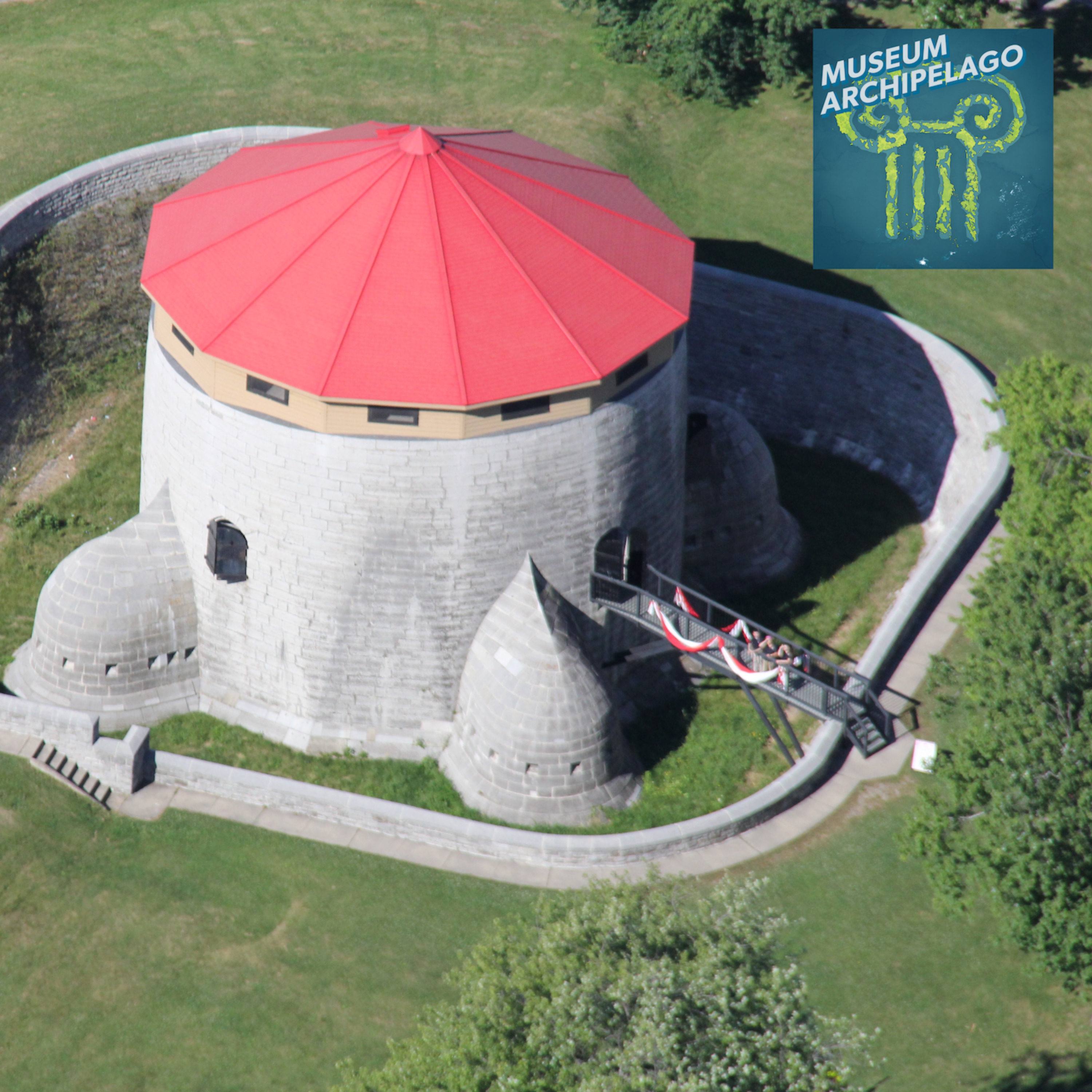
The Murney Tower Museum in Kingston, Ontario, Canada is a small museum. Open for only four months of the year and featuring only one full-time staff member, the museum is representative of the many small institutions that make up the majority of museums. With only a fraction of the resources of large institutions, this long tail distribution of small museums offers the full range of museum services: collection management, public programs, and curated exhibits. Dr. Simge Erdogan-O'Connor has dedicated her studies to understanding the unique dynamics and challenges faced by small museums, and is also the Murney Tower Museum’s sole full-time employee. In this episode, Dr. Erdogan-O'Connor describes the operation of The Murney Tower Museum, discusses the economic models of small museums, and muses on what small museums can teach larger ones. Image: Murney Tower Museum Topics and Notes 00:00 Intro 00:15 Understanding the Landscape of Small Museums 02:38 Dr. Simge Erdogan-O'Connor 03:00 Murney Tower Museum 08:29 Overcoming Challenges with Digital Solutions 09:46 What Big Institutions Can Learn from Small Museums 09:54 The Power of Local Connections in Small Museums 13:20 Outro | Join Club Archipelago 🏖 Museum Archipelago is a tiny show guiding you through the rocky landscape of museums. Subscribe to the podcast via Apple Podcasts, Google Podcasts, Overcast, Spotify, or even email to never miss an episode. Support Museum Archipelago🏖️ Club Archipelago offers exclusive access to Museum Archipelago extras. It’s also a great way to support the show directly. Join the Club for just $2/month. Your Club Archipelago membership includes: Access to a private podcast that guides you further behind the scenes of museums. Hear interviews, observations, and reviews that don’t make it into the main show; Archipelago at the Movies 🎟️, a bonus bad-movie podcast exclusively featuring movies that take place at museums; Logo stickers, pins and other extras, mailed straight to your door; A warm feeling knowing you’re supporting the podcast. Transcript Below is a transcript of Museum Archipelago episode 104. For more information on the people and ideas in the episode, refer to the links above. View Transcript Welcome to Museum Archipelago. I'm Ian Elsner. Museum Archipelago guides you through the rocky landscape of museums. Each episode is rarely longer than 15 minutes, so let's get started. Let’s say you sorted every museum on earth in order by the number of yearly visitors. At one end, with yearly visitor numbers in the millions, would be large, recognizable institutions – places like the British Museum in London. There’s a cluster of these big institutions, but as you go further along the ordered list of museums, the visitor numbers start to drop. At some point during these declining visitor numbers, you reach small museums. Exactly where in the order you first reach a small museum doesn’t really matter – one definition of small museums from the American Association of State and Local History is simply: “If you think you’re small, you’re small.” You could do the same sort by number of staff members or by operating budget – the effect would be more or less the same. The point is that once you reach the threshold where small museums begin, you still have the vast, vast majority of museums to go. Simge Erdogan-O'Connor: You just realize how many small museums are there in the world. Unbelievable numbers, right? They're everywhere and they hold such an important space in local cultural landscapes. Even if I dare to say more than large institutions. The sorting exercise illustrates a long tail effect – each small museum, while attracting fewer visitors individually, collectively hosts an enormous number of visitors. There’s just so many of them. The long tail effect was coined in 2004 to describe economics on the internet: the new ability to serve a large number of niches in relatively small quantities, as opposed to only being able to serve a small number of very popular niches. But unlike the economics of the internet, where distribution costs are minimal, small museums face the challenge of fulfilling nearly all the responsibilities of larger museums without any of the benefits of scale. Simge Erdogan-O'Connor: What fascinates me most about small museums is despite being so small, they offer almost everything you can find in a large museum, Ian. So do they have collections and do collection management and care? Yes. Do they curate exhibitions? Yes. Do they offer public programs? Yes. Do they organize special events and do marketing and digital engagements? Yes. They make these things happen. This is Dr. Simge Erdogan-O'Connor, who studies small museums in her academic practice, and works at one. Simge Erdogan-O'Connor: Hello, my name is Simge Erdogan-O'Connor. I am a museum scholar and professional, currently working as museum manager at a local history museum called the Murney Tower Museum located in Kingston, Canada.
103. How Computers Transformed Museums and Created A New Type of Professional
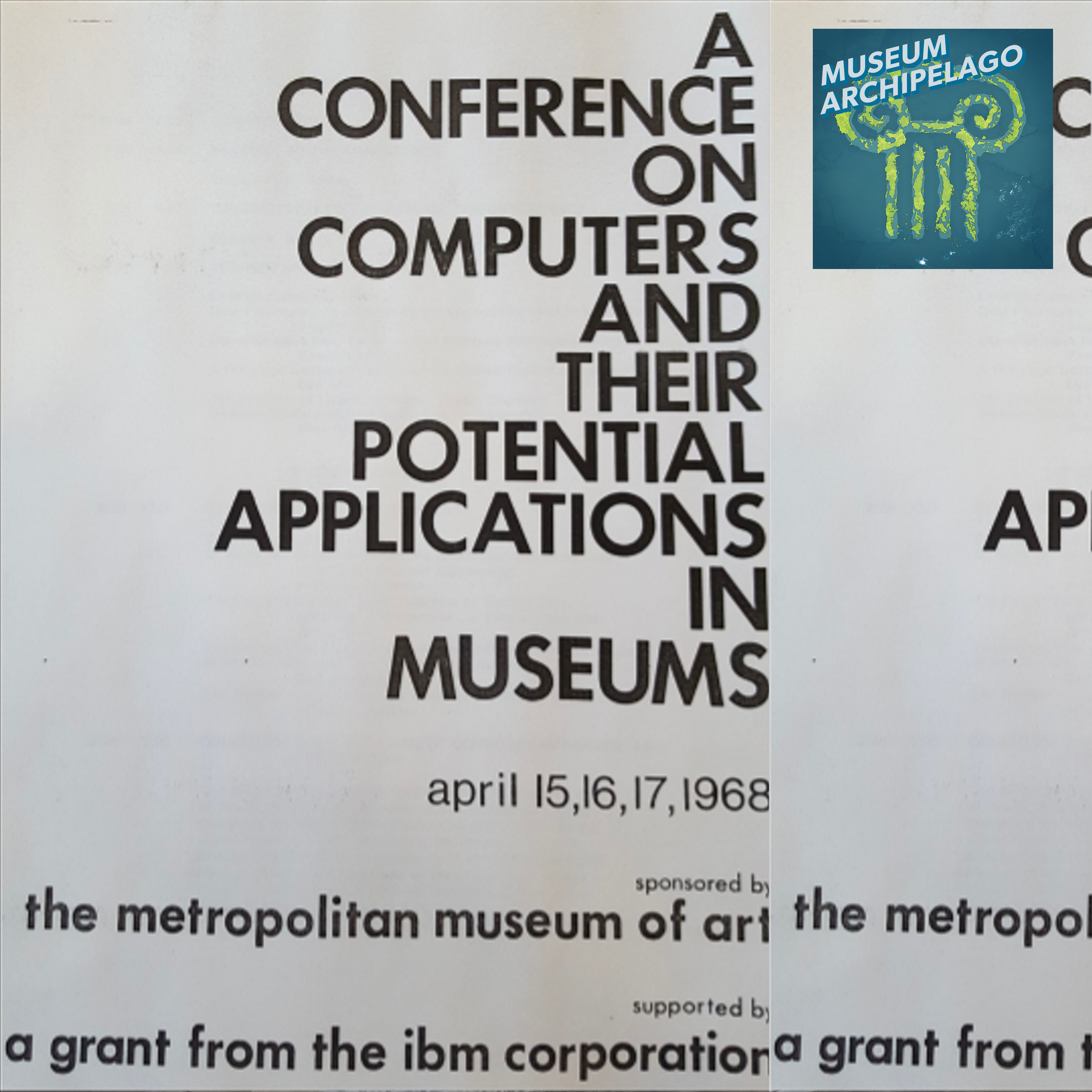
Computing work keeps museums running, but it’s largely invisible. That is, unless something goes wrong. For Dr. Paul Marty, Professor in the School of Information at Florida State University and his colleague Kathy Jones, Program Director of the Museum Studies Program at the Harvard Extension School, shining a light on the behind-the-scenes activities of museum technology workers was one of the main reasons to start the Oral Histories of Museum Computing project. The first museum technology conference was hosted in 1968 at the Metropolitan Museum of Art. This prescient event, titled “Conference on Computers and their Potential Application in Museums” was mostly focused on the cutting edge: better inventory management systems using computers instead of paper methods. However, it also foresaw the transformative impact of computers on museums—from digital artifacts to creating interactive exhibits to expanding audience reach beyond physical boundaries. Most of all, speakers understood that museum technologists would need to “join forces” with each other to learn and experiment better ways to use computers in museum settings. The Oral Histories of Museum Computing project collects the stories of what happened since that first museum technology conference, identifying the key historical themes, trends, and people behind the machines behind the museums. In this episode, Paul Marty and Kathy Jones describe their experience as museum technology professionals, the importance of conferences like the Museum Computer Network, and the benefits of compiling and sharing these oral histories. Topics and Notes 00:00 Intro 00:15 A Conference on Computers and their Potential Application in Museums 00:43 Thomas P. F. Hoving Closing Statements 01:41 Paul Marty, Professor in the School of Information at Florida State University 02:11 Kathy Jones, Program Director of the Museum Studies Program at the Harvard Extension School 02:18 Museum Computing from There to Here 04:08 The First Steps of Museum Computing 04:52 Early Challenges in Museum Databases Like GRIPHOS 07:00 Changing Field, Changing Profession 08:48 The Oral Histories of Museum Computing Project 11:32 Reflecting on the Journey of Museum Technology 14:12 Outro | Join Club Archipelago 🏖 Museum Archipelago is a tiny show guiding you through the rocky landscape of museums. Subscribe to the podcast via Apple Podcasts, Google Podcasts, Overcast, Spotify, or even email to never miss an episode. Support Museum Archipelago🏖️ Club Archipelago offers exclusive access to Museum Archipelago extras. It’s also a great way to support the show directly. Join the Club for just $2/month. Your Club Archipelago membership includes: Access to a private podcast that guides you further behind the scenes of museums. Hear interviews, observations, and reviews that don’t make it into the main show; Archipelago at the Movies 🎟️, a bonus bad-movie podcast exclusively featuring movies that take place at museums; Logo stickers, pins and other extras, mailed straight to your door; A warm feeling knowing you’re supporting the podcast. Transcript Below is a transcript of Museum Archipelago episode 103. For more information on the people and ideas in the episode, refer to the links above. View Transcript On April 17th, 1968, less than two weeks after Dr. Martin Luther King Jr. was assassinated in Memphis, the first computer museum conference was coming to a close at the Metropolitan Museum of Art in New York City. This conference was hosted by the recently-formed Museum Computer Network, and had a hopeful, descriptive title: A Conference on Computers and their Potential Application in Museums. At the closing dinner, Metropolitan Museum of Art Director Thomas P. F. Hoving acknowledged that “for some these three days have an unsettling effect” and that “these machines are going to put us on our toes as never before” but summarized, “the whole idea of a computer network is generating momentum, and is forcing upon museums the necessity of joining forces, pooling talents, individual resources, and strengths.” Paul Marty: When I tell students that there is a group that has been meeting annually since 1968 to discuss problems related to the use of computers and museums, they find that hard to believe. That seems like a long time ago, and I guess it is a long time ago. But museums were always on the cutting edge of trying to figure out how to use this technology. Maybe not everybody was on board, but there was always somebody who was pushing that story forward. This is Paul Marty, whose work focuses on the interactions that take place between people, information, and technology in museums. Paul Marty: Hello, I'm Paul Marty, Professor in the School of Information at Florida State University. Professor Marty, along with his colleague Kathy Jones, are collecting stories of the people behind the computers behind the museums as part of their Oral Histories of Museum Computing project. A selection of stories from t
102. Copies in Museums
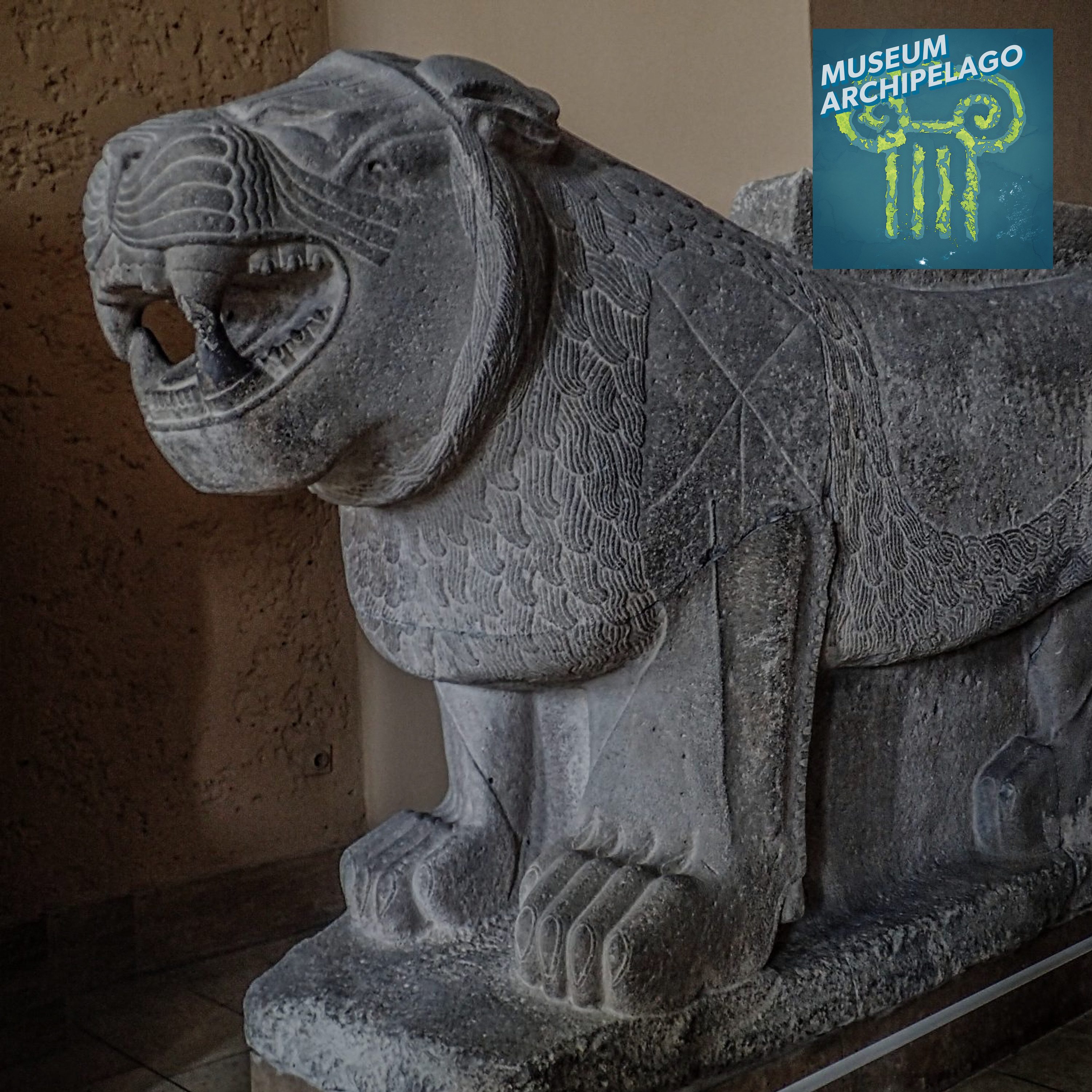
On Berlin’s Museum Island, four stone lion statues perch in the Pergamon Museum. Three of these lions are originals — that is to say, lions carved from dolerite rock between the 10th and 8th centuries BCE in Samʼal (Zincirli) in southern Turkey. And one is a plaster copy made a little over 100 years ago. Pergamon Museum curator Pinar Durgun has heard a range of negative visitor reactions to this copy — from disappointment to feeling tricked — and engages visitors to think more deeply about copies. As an archeologist and art historian, Durgun is fascinated by the cultural attitude and history of copies: the stories they tell about their creators’ values, how they can be used to keep original objects in situ, and their role in repatriation or restitution cases. In this episode, Durgun describes the ways that museum visitors’ perception of authenticity has changed over time, how replicas jump-started museum collections in the late 19th-century, and some of the ethical implications of copies in museums. Image: Reconstructed Lion Sculpture Sam'al near modern Zincirli Höyük, Turkey 10th-8th century BCE by Mary Harrsch Topics and Notes 00:00 Intro 00:15 Sam’al/Zincirli Lions 01:09 Pinar Durgun 01:22 Museum Island 01:40 Find Divison 02:28 Gipsformerei 03:12 Replicas Jump-Started Museum Collections 04:35 Trending Away from Copies 05:27 When Visitors Feel Tricked 06:00 When Visitors Are Okay With Copies 07:28 Ancient Cultural Contexts About Copies 08:07 Hokusai’s Great Wave 08:35 “Immersive Experiences” Made Up of Digital Copies 09:08 Digital Copies 12:39 Museum Archipelago 97. Richard Nixon Hoped to Never Say These Words about Apollo 11. In A New Exhibit, He Does. 13:32 How Should Museums Present Copies in Their Collections? 14:36 Outro | Join Club Archipelago 🏖 Museum Archipelago is a tiny show guiding you through the rocky landscape of museums. Subscribe to the podcast via Apple Podcasts, Google Podcasts, Overcast, Spotify, or even email to never miss an episode. Support Museum Archipelago🏖️ Club Archipelago offers exclusive access to Museum Archipelago extras. It’s also a great way to support the show directly. Join the Club for just $2/month. Your Club Archipelago membership includes: Access to a private podcast that guides you further behind the scenes of museums. Hear interviews, observations, and reviews that don’t make it into the main show; Archipelago at the Movies 🎟️, a bonus bad-movie podcast exclusively featuring movies that take place at museums; Logo stickers, pins and other extras, mailed straight to your door; A warm feeling knowing you’re supporting the podcast. Transcript Below is a transcript of Museum Archipelago episode 102. For more information on the people and ideas in the episode, refer to the links above. View Transcript Welcome to Museum Archipelago. I'm Ian Elsner. Museum Archipelago guides you through the rocky landscape of museums. Each episode is rarely longer than 15 minutes, so let's get started. On the Museum Island in Berlin, four stone lion statues perch in the Pergamon Museum. Three of these lions are originals — that is to say, lions carved from dolerite rock between the 10th and 8th centuries BCE. And one is a plaster copy carved a bit over 100 years ago. Pinar Durgun: When you see these lions, you cannot tell the difference which one is a copy, which one is original. And lately, curator Pinar Durgun has been wondering how visitors feel about that copy. Pinar Durgun: But when I tell visitors, this one is a copy. So how do you feel about that? How do you feel about a copy being here? Do you feel like you've been tricked? Pinar Durgun: And if I ask a question like this, they say yes. They say, I don't like copies. Durgun works at the Pergamon Museum, where those Gate lions from Samʼal are now perched -- well, some of them. Pinar Durgun: My name is Pinar Durgun. I'm an archeologist and art historian, currently working at the Pergamon Museum as a curator. Pinar Durgun: We're on the Museum Island. And it's funny because you always say museums are not islands, but we are literally on the Museum Island, one of the five museums on the museum island, but they're all kind of interconnected, I would say. Ian Elsner: That's terrific. They're in their own little archipelago. Pinar Durgun: Yeah, exactly. The Gate lions from Sam’al, also known as Zincirli in Southern Turkey, were excavated in the early 1890s and came to Berlin through a colonial-era practice called Find Division, which was a system to divide up ownership of excavated artifacts. Pinar Durgun: So during the Ottoman period when excavations were happening, so for instance, Germans or other foreigners were excavating in the Ottoman Empire, there were some agreements between the Sultan and the Kaiser here in Germany. So they were basically dividing objects that they were finding, and half of them would come here and half of them would stay in Istanbul. Of course, the extent to which this division was carefully adhered to de
101. Buzludzha Always Centered Visitor Experience. Dora Ivanova is Using Its Structure to Create a New One.
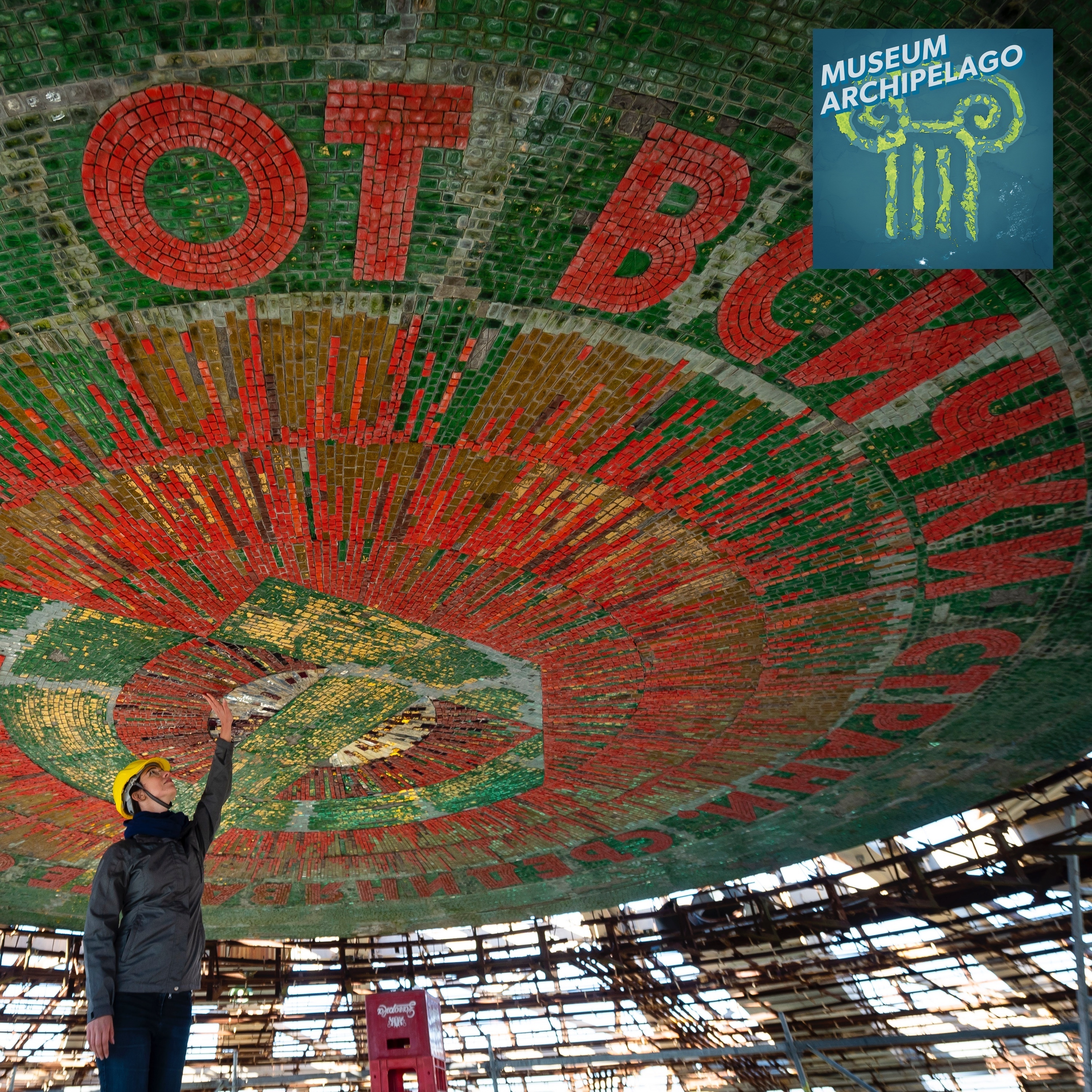
Since it opened in 1981 to celebrate the ruling Bulgarian Communist Party, Buzludzha has centered the visitor experience. Every detail and sightline of the enormous disk of concrete perched on a mountaintop in the middle of Bulgaria was designed to impress, to show how Bulgarian communism was the way of the future – a kind of alternate Tomorrowland in the Balkan mountains. Once inside, visitors were treated to an immersive light show, where the mosaics of Marx and Lenin and Bulgarian partisan battles were illuminated at dramatic moments during a pre-recorded narration. But after communism fell in 1989, Buzludzha was abandoned. It was exposed to the elements, whipped by strong winds and frozen temperatures, and raided for scrap. Buzludzha has been a ruin far longer than it was a functional building, and in recent years the building has been close to collapse. Preventing this was the initial goal of Bulgarian architect Dora Ivanova and the Buzludzha Project, which she founded in 2015. Since then, Ivanova and her team have been working to recruit international conservators, stabilize the building, and fundraise for its preservation. But Ivanova realized that protecting the building isn’t the end goal but just the first step of a much more interesting project – a space for Bulgaria to collectively reflect on its past and future, a space big enough for many experiences and many futures. In this episode, we journey to Buzludzha, where Ivanova gives us hard hats and takes us inside the building for the first time. We retrace the original visitor experience, dive deep into various visions for transforming Buzludzha into an immersive museum, and discuss how the building will be used as a storytelling platform. Image: Dora Ivanova by Nikolay Doychinov Topics and Notes 00:00 Intro 00:15 Buzludzha has always centered the visitor experience. 01:00 “A Tomorrowland in the Balkan mountains” 02:40 The Original Visitor Experience 03:02 Dora Ivanova 03:15 Museum Archipelago Episode 47 03:35 Entering the Building 04:25 How to Stabilize the Roof 05:58 New respect for the Buzludzha thieves 06:25 The Inner Mosaics 07:26 Narrated Light and Sound Show 08:25 Moving from Preservation to Interpretation 09:34 Ivanova’s New Motivation 10:20 Buzludzha as a Storytelling Platform 11:10 How Buzludzha Was Built 12:30 Acting before memory becomes history 13:00 Buzludzha’s fate as a binary 14:05 The Panoramic Corridor 15:00 The Care For Next Generation and The Role of The Women in Our Society 16:02 Some Personal Thoughts about a future Buzludzha Museum 17:20 The preservation as proof of change 18:05 “Buzludzha is about change” 19:15 Outro | Join Club Archipelago 🏖 Museum Archipelago is a tiny show guiding you through the rocky landscape of museums. Subscribe to the podcast via Apple Podcasts, Google Podcasts, Overcast, Spotify, or even email to never miss an episode. Support Museum Archipelago🏖️ Club Archipelago offers exclusive access to Museum Archipelago extras. It’s also a great way to support the show directly. Join the Club for just $2/month. Your Club Archipelago membership includes: Access to a private podcast that guides you further behind the scenes of museums. Hear interviews, observations, and reviews that don’t make it into the main show; Archipelago at the Movies 🎟️, a bonus bad-movie podcast exclusively featuring movies that take place at museums; Logo stickers, pins and other extras, mailed straight to your door; A warm feeling knowing you’re supporting the podcast. Transcript Below is a transcript of Museum Archipelago episode 101. For more information on the people and ideas in the episode, refer to the links above. View Transcript Welcome to Museum Archipelago. I'm Ian Elsner. Museum Archipelago guides you through the rocky landscape of museums. Each episode is rarely longer than 15 minutes, so let's get started. Buzludzha has always centered the visitor experience. Opened in 1981 to celebrate the grandeur of the ruling Bulgarian Communist Party, Buzludzha is an imposing building, an enormous disk of concrete perched on a mountaintop in the middle of Bulgaria. Rising out of the back of the disk is a tower, 70 meters high, and flanked by two red stars. Dora Ivanova: It was built to impress. It was built as part of the political propaganda and education as they called it during this time. Its shape looks like a UFO, actually. This is also on purpose because it had to show how the socialist idea is contemporary, it’s the future. Visiting the site, you can still see the care that went into the sightlines – the approach from a winding mountain road, the drama the first time the building comes into view, the photo opportunities of the still-distant building flanked by smaller sculptures. There’s an eerie similarity to some well-designed corners of Disney theme parks, using scale and space and sightlines to transport the visitor – a Tomorrowland in the Balkan mountains. But the original visitor experience didn’t end outside the
100. The Archipelago Museum
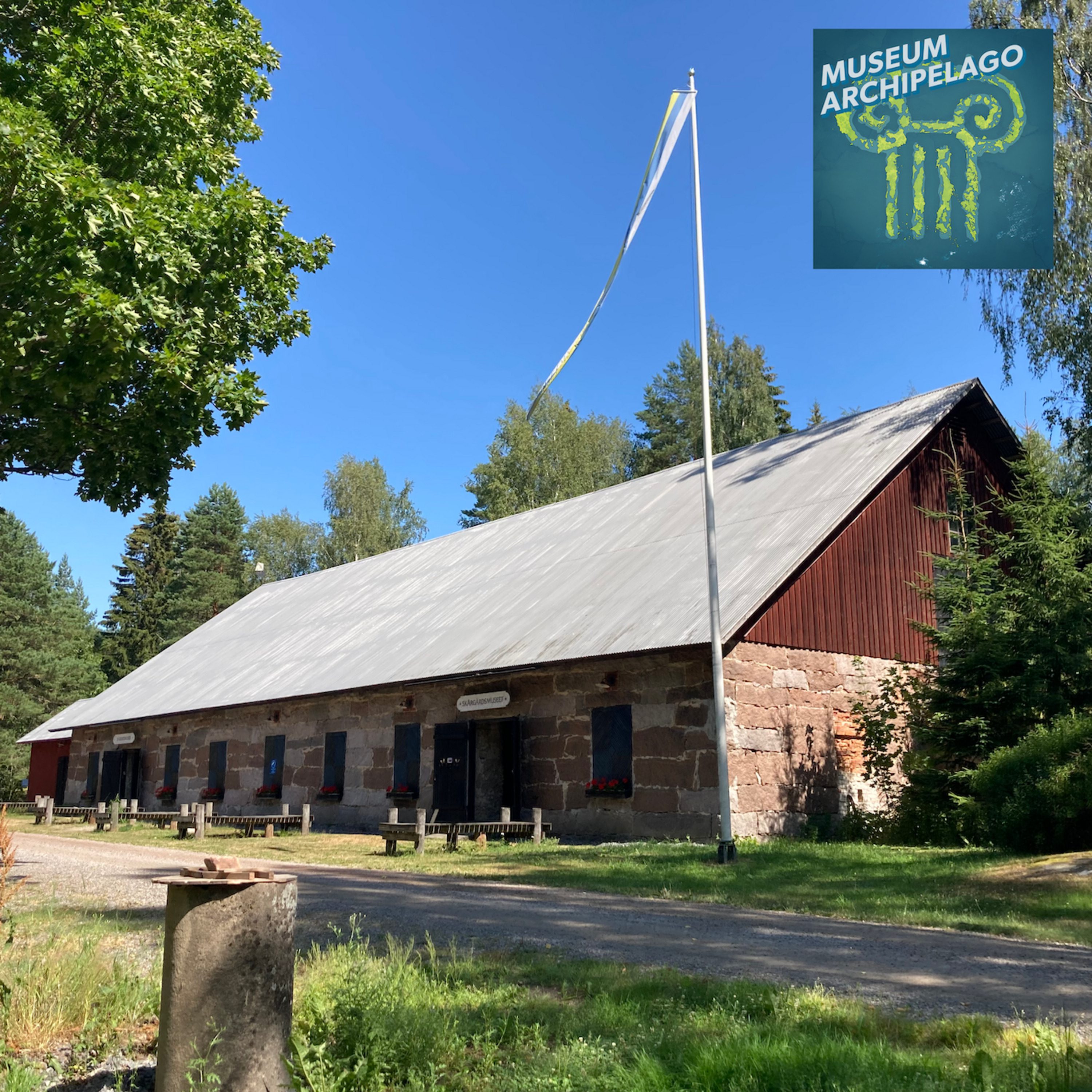
In the early days of this podcast, every time I searched for Museum Archipelago on the internet, the top result would be a small museum in rural Finland called the Archipelago Museum. As my podcast continued to grow and my search rankings improved, I didn’t forget about the Archipelago Museum. Instead, I wondered what they were up to. What were the exhibits about? Did they ever come across my podcast? Were they annoyed by my similar name? And while the museum had a website and a map, there was no way to directly contact them. Years went by as the realization sank in—the only way to reach the museum was to physically show up at the museum. No planned appointment, no scheduled interview. So, for this very special 100th episode, I went to Finland and and visited the Rönnäs Archipelago Museum. Topics and Notes 00:00 Intro 00:15 Why is Ian in Finland? 00:45 Museum Archipelago's Early Days 01:30 Same Name 03:14 Arriving at the Archipelago Museum 04:05 Naomi Nordstedti 04:30 Life on the Archipelago 06:04 Opening the Museum 06:54 Boats 07:55 The Archipelago During Prohibition 08:28 Thoughts About 100 Episodes 10:40 Thanks For Listening 10:54 Outro | Join Club Archipelago 🏖 Museum Archipelago is a tiny show guiding you through the rocky landscape of museums. Subscribe to the podcast via Apple Podcasts, Google Podcasts, Overcast, Spotify, or even email to never miss an episode. Support Museum Archipelago🏖️ Club Archipelago offers exclusive access to Museum Archipelago extras. It’s also a great way to support the show directly. Join the Club for just $2/month. Your Club Archipelago membership includes: Access to a private podcast that guides you further behind the scenes of museums. Hear interviews, observations, and reviews that don’t make it into the main show; Archipelago at the Movies 🎟️, a bonus bad-movie podcast exclusively featuring movies that take place at museums; Logo stickers, pins and other extras, mailed straight to your door; A warm feeling knowing you’re supporting the podcast. Transcript Below is a transcript of Museum Archipelago episode 100. For more information on the people and ideas in the episode, refer to the links above. View Transcript Welcome to Museum Archipelago. I'm Ian Elsner. Museum Archipelago guides you through the rocky landscape of museums. Each episode is never longer than 15 minutes, so let's get started. This is episode 100 of Museum Archipelago, and I’m in a rental car 80 kilometers outside of Helsinki, Finland looking for a museum. Field Audio - GPS: “In 400 meters, turn left onto the ramp”. Field Audio - Ian: “I think… I can feel we are close to the Gulf of Finland” But not just any museum. I’m deep in rural Finland because of the name of this podcast: Museum Archipelago. Field Audio - Ian: “You know, I hope the museum has a bathroom…” When I was starting this project and choosing a name, I hoped to create an audio lens to look at museums as a medium, and to critically examine museums as a whole. If no museum was an island, I reasoned, why not name the show after another geographic feature – a collection of islands? And I enjoyed the symmetry with Gulag Archipelago – just a slight sinister undertone that this won’t be a fluffy museum podcast. And when I came across the quote by philosopher Édouard Glissant, “I imagine the museum as an archipelago”, the name stuck. Museum Archipelago was snappy and a great name for a podcast – there was just one problem: the Archipelago Museum, located somewhere in Finland. Field Audio - Ian: “Ah, I see a sign for the museum, but I can't pronounce it – ” Field Audio - GPS: “Turn left” For the first 20 or so episodes of the show, every time you searched the words Museum Archipelago on the internet, the top results would be about the Archipelago Museum in Finland, instead of my podcast. It didn’t really bother me – well maybe a little – but no, it didn’t really bother me. Archipelago is a great word, and the museum was all the way in Finland, and it certainly was around for longer. But as my podcast continued to grow and my search rankings improved, I didn’t forget about the Archipelago Museum. I would wonder what they were up to. I wondered if they had heard of my podcast. Maybe they came across it one day? Maybe I was annoying them with my similar name. Every few months, I would think to contact the museum, to highlight the similarity and hopefully make a new friend – only to remember that they didn’t have an email address. An old email address, from an archived version of their website, bounced back with an undeliverable error. The more I thought about it, the more it sank in: the only way to reach the museum was to physically show up at the museum. No planned appointment, no scheduled interview. A few years later, with help from those of you who have supported the show through Club Archipelago, visiting the museum finally became possible. I decided to hop on two planes, book a rental car, spend a night in an airport hotel in Helsinki,
99. Museums in Video Games
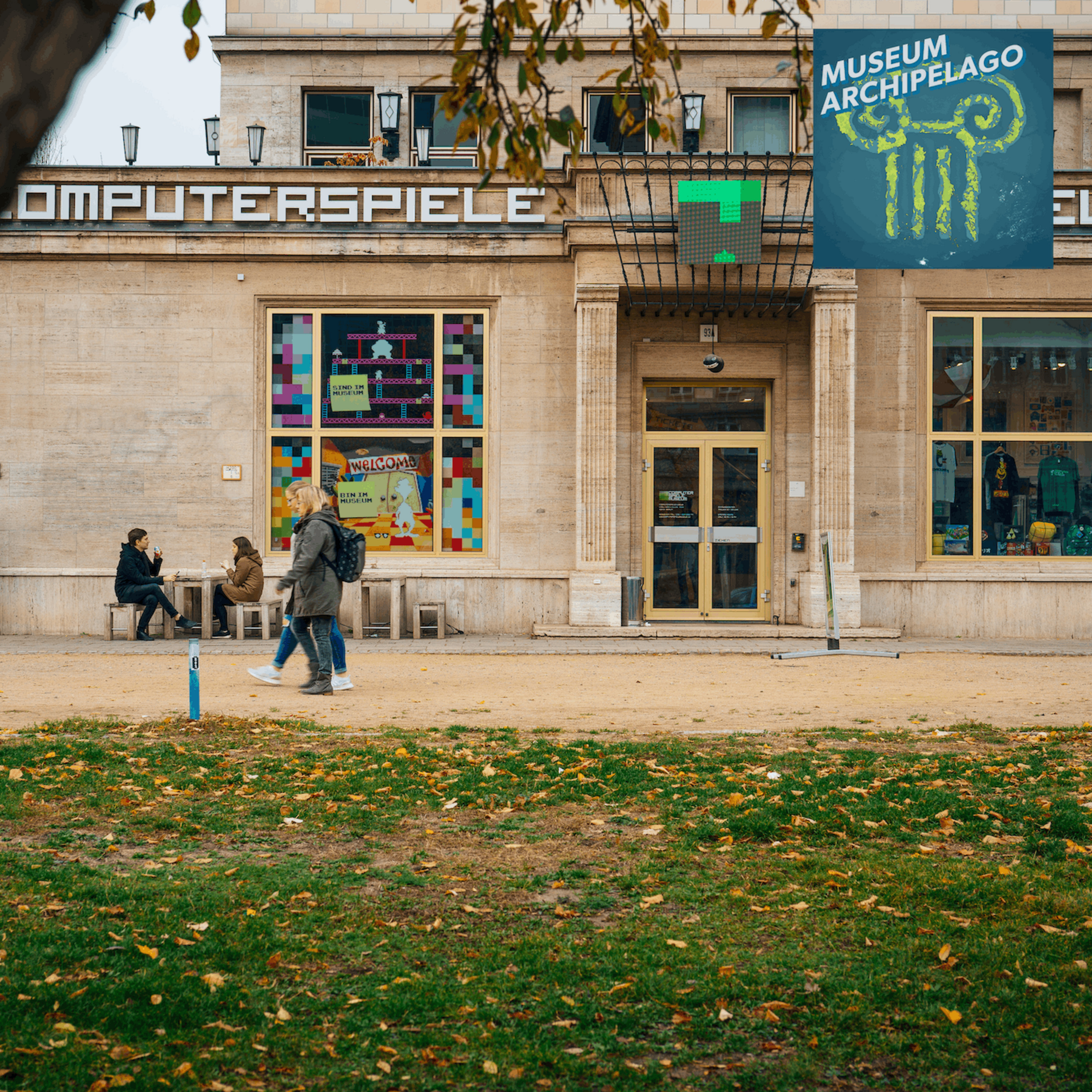
The Computer Games Museum in Berlin knows that its visitors want to play games, so it lets them. The artifacts are fully-playable video games, from early arcade classics like PacMac to modern console and PC games, all with original hardware and controllers. By putting video games in a museum space, the Computer Games Museum invites visitors to become players. But, players can become visitors too. Video games have been inviting players into museum spaces for decades. In the mid 1990s, interaction designer Joe Kalicki remembers playing PacMan in another museum – only this one was inside a video game. In Namco Museum, players navigated a 3D museum space to access the games, elevating them to a high-culture setting. Since then, museums and their cultural shorthands have been a part of the video game landscape, implicitly inviting their players-turned-visitors to think critically about museums in the process. In this episode, Kalicki presents mainstream and indie examples of video games with museums inside them: from Animal Crossing’s village museum to Museum of Memories, which provides a virtual place for objects of sentimental value, to Occupy White Walls where players construct a museum, fill it with art – then invite others to come inside. Image: The Computer Games Museum in Berlin by Marcin Wichary (CC BY 2.0) Topics and Notes 00:00 Intro 00:15 Computerspielemuseum Berlin 01:23 Joe Kalicki 02:06 Namco Museum 03:42 Digital Museum Spaces Elevating Video Games 04:26 Museum of Memories by Kate Smith 05:25 Occupy White Walls 07:18 Discovery Tour for Assassin's Creed Origins 10:11 Animal Crossing 11:29 Video Game Engines In Museums 12:44 Joe Kalicki’s new podcast, Panoply 13:13 Museum Archipelago's 100th Episode Party 🎉 13:44 Outro | Join Club Archipelago 🏖 Museum Archipelago is a tiny show guiding you through the rocky landscape of museums. Subscribe to the podcast via Apple Podcasts, Google Podcasts, Overcast, Spotify, or even email to never miss an episode. Support Museum Archipelago🏖️ Club Archipelago offers exclusive access to Museum Archipelago extras. It’s also a great way to support the show directly. Join the Club for just $2/month. Your Club Archipelago membership includes: Access to a private podcast that guides you further behind the scenes of museums. Hear interviews, observations, and reviews that don’t make it into the main show; Archipelago at the Movies 🎟️, a bonus bad-movie podcast exclusively featuring movies that take place at museums; Logo stickers, pins and other extras, mailed straight to your door; A warm feeling knowing you’re supporting the podcast. Transcript Below is a transcript of Museum Archipelago episode 99. For more information on the people and ideas in the episode, refer to the links above. View Transcript Welcome to Museum Archipelago. I'm Ian Elsner. Museum Archipelago guides you through the rocky landscape of museums. Each episode is never longer than 15 minutes, so let's get started. The Computer Games Museum in Berlin knows that its visitors want to play games. The central interpretive throughline, called Milestones, presents a timeline of the rapid development of the video game industry through 50 individual games: from Spacewar!, developed in 1962 at MIT to the latest console and PC games. But nearby, tucked into corners and side rooms, visitors are invited to play many of these games on their original hardware with original controllers. The museum even goes so far as to emulate the spaces in which people would have been playing these games their year of their release: games like Asteroids or Space Invaders are presented in a full arcade-like environment, early home computer games like Oregon Trail live inside your parents home office, while the home-console classics like Super Mario Bothers are in a space made to look like a basement in an early 90s suburban home in the U.S. So you can play a Japanese video game in an American home inside a German museum — but what about putting a museum in a video game? Joe Kalicki: I think we're in a very important place right now where we need to assess the value of fully digital educational experiences in the context of the museum. But particularly I also wanna explore the value for educating everyday people on how to appreciate and interact with brick and mortar museums as well. This is interaction designer Joe Kalicki. Joe Kalicki: Hello, my name is Joe Kalicki. I'm an interaction designer, musician, and podcaster. Kalicki remembers the first time he encountered a museum-like space in a video game. Joe Kalicki: In the late nineties, the Namco company published a series of games called Namco Museum, and this was earnestly the first attempt to create mainstream historical documentation for video games and it’s a very pivotal example for me in thinking about digital museum spaces. Namco Museum was a digital version of the Computer Games Museum, but all the video games presented in the collection, like PacMan and Dig Dug,
98. At the Panama Canal Museum, Ana Elizabeth González Creates a Global Connection Point
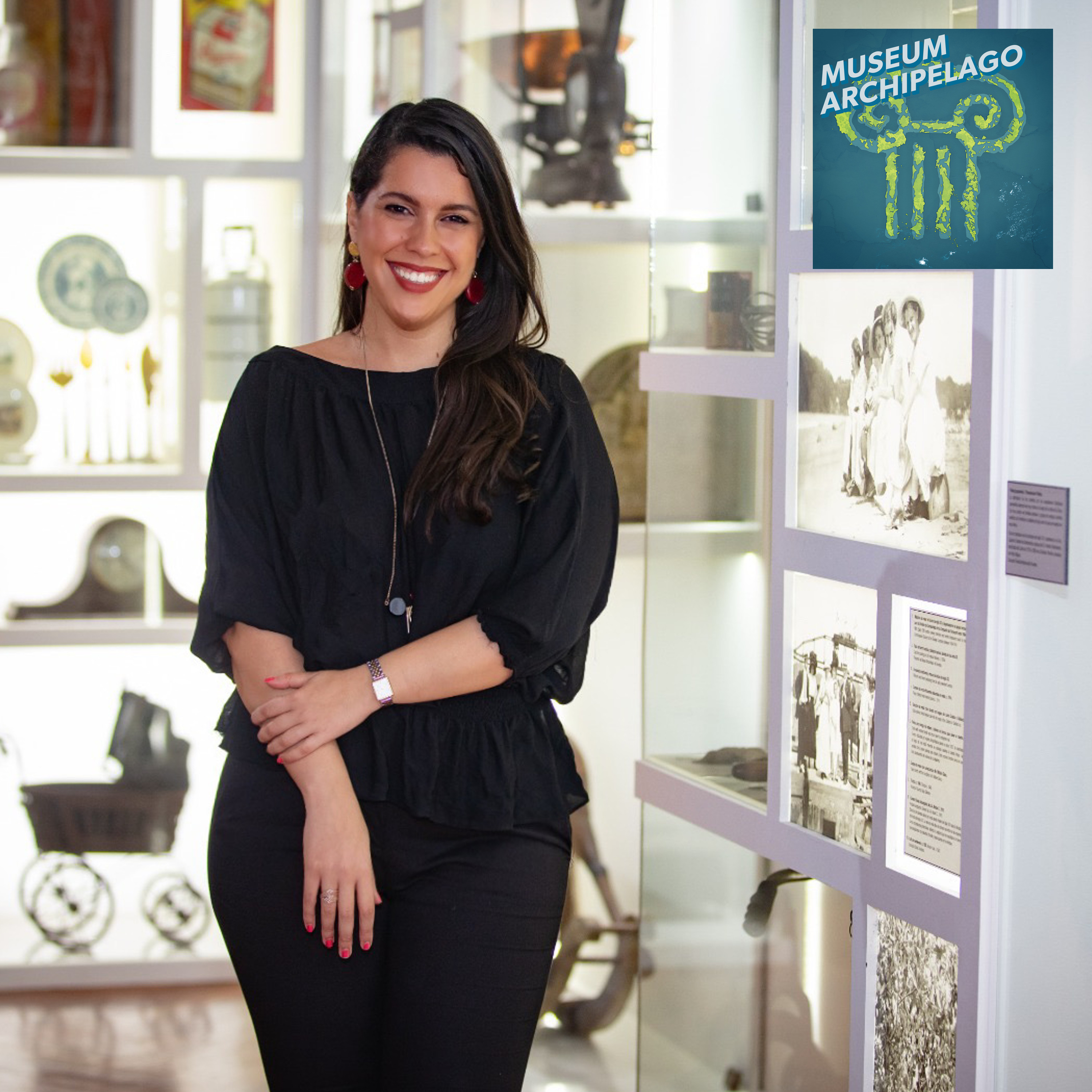
When Ana Elizabeth González was growing up in Panama, the history she learned about the Panama Canal in school told a narrow story about the engineering feat of the Canal’s construction by the United States. This public history reflected the politics of Panama and control over the Canal. Today, González is executive Director of the Panama Canal Museum, and she’s determined to use the Canal and the struggles over its authority to tell a broader story about the history of Panama – one centered around Panama as a point of connection from pre-Colonial times to the present day. In this episode, González describes the geographic destiny of the Isthmus of Panama, how America’s ownership of the Canal physically divided the country, and how her team is developing galleries covering Panama’s recent history. Topics and Notes 00:00 Intro 00:15 The Panama Canal's Politically Sensitive History 01:20 Ana Elizabeth González, Executive Director of the Panama Canal Museum 01:35 Opening of the Panama Canal Museum in 1997 02:44 Making the Museum About Panama, Not Just The Canal 03:10 Geography is Destiny 03:30 The Isthmus of Panama as a Point of Connection 04:20 A Brief History 04:50 French Attempt at a Canal 05:10 Treaty of Hay–Bunau-Varilla 06:30 Construction of the Canal 07:00 "Gold Roll" and "Silver Roll" 08:00 Martyrs' Day 08:50 Work In Progress: Galleries of Panama's Recent History 09:10 Panama's Recent History, Briefly 11:10 The Museum's Future 11:15 Museum Archipelago's 100th Episode Party 🎉 12:20 Outro | Join Club Archipelago 🏖 Museum Archipelago is a tiny show guiding you through the rocky landscape of museums. Subscribe to the podcast via Apple Podcasts, Google Podcasts, Overcast, Spotify, or even email to never miss an episode. Support Museum Archipelago🏖️ Club Archipelago offers exclusive access to Museum Archipelago extras. It’s also a great way to support the show directly. Join the Club for just $2/month. Your Club Archipelago membership includes: Access to a private podcast that guides you further behind the scenes of museums. Hear interviews, observations, and reviews that don’t make it into the main show; Archipelago at the Movies 🎟️, a bonus bad-movie podcast exclusively featuring movies that take place at museums; Logo stickers, pins and other extras, mailed straight to your door; A warm feeling knowing you’re supporting the podcast. Transcript Below is a transcript of Museum Archipelago episode 98. For more information on the people and ideas in the episode, refer to the links above. View Transcript Welcome to Museum Archipelago. I'm Ian Elsner. Museum Archipelago guides you through the rocky landscape of museums. Each episode is never longer than 15 minutes, so let's get started. When Ana Elizabeth González was growing up in Panama, the history she learned in school about the Panama Canal told a narrow story. Ana Elizabeth González: The history of the canal that was told here was told in a way that was very politically sensitive at the time. So it didn't want to ruffle any feathers.. it's mentioned in schools, but not in depth. Up until 1979, the United States fully controlled the Panama Canal and a 5 mile zone on either side, and until 1999, the United States jointly controlled the Canal with Panama. The presence of the United States, and the politics of the Canal, meant that the safest story to tell was one that was mostly focused on the technological feat of building it. Ana Elizabeth González: The history was very carefully constructed so that it praised the engineering feat of the United States, but it completely ignored the fact that Panama was home to people from 97 different countries to build this Canal, which causes such a diversity in our country. Ana Elizabeth González is now Executive director of the Panama Canal Museum in Panama City, Panama. Ana Elizabeth: Hello. My name is Ana Elizabeth González and I'm executive director of the Panama canal museum, El Museo Del Canal. González became director in 2020, but the Panama Canal Museum itself opened in 1997, two years before control of the Canal was returned to Panama. The museum – a non-profit which is not government funded – was created out of a hope that, among all the changes, Pamana’s complex relationship to the Canal would not be forgotten. Ana Elizabeth González: I was in school at the time, but, I remember it was, I think the then President of Panama and the Mayor and a lot of other people that created the board of trustees and I think it was the idea that this history of this struggle to gain our land and to find our sovereignty and the generational struggle that had been going on. There was a fear that it would have gotten lost in memory or forgotten. So I think that the museum back then was created to preserve and study and research everything surrounding the Canal history and promoting the education of what an impact it had. So for González, the Panama Canal Museum is really a museum a

97. Richard Nixon Hoped to Never Say These Words about Apollo 11. In A New Exhibit, He Does.
As the Apollo 11 astronauts hurtled towards the moon on July 18th, 1969, members of the Nixon administration realized they should probably make a contingency plan. If the astronauts didn’t make it – or, even more horrible, if they made it to the moon and crashed and had no way to get back to earth – Richard Nixon would have to address the nation. That haunting speech was written but fortunately was never delivered. But you can go to the Museum of the Moving Image in New York City and watch Nixon somberly reciting those words. It looks like real historic footage, but it’s fake. Artists Francesca Panetta and Halsey Burgund used the text of the original address and media manipulation techniques like machine learning to create the synthetic Nixon for a film called In Event of Moon Disaster. It anchors an exhibit called Deepfake: Unstable Evidence on Screen. In this episode, Panetta and Burgund discuss how they created In Event of Moon Disaster as a way to highlight various misinformation techniques, the changing literacy of the general public towards media manipulation, and the effectiveness of misinformation in the museum medium. Topics and Notes 00:00 Intro 00:15 July 18th, 1969 00:40 The Safire Memo 01:38 Clip From In Event of Moon Disaster 02:30 Nixon’s Telephone Call 03:00 What is Deepfake? 03:30 Halsey Burgund 04:06 Francesca Panetta 04:30 How They Did It 04:50 Why This Speech? 06:02 Deepfake: Unstable Evidence on Screen at the Museum of the Moving Image in New York City 07:05 Misinformation By Editing 09:53 Misinformation and Medium 10:23 Museums as Trustworthy Institutions 11:27 What Would a “Deepfake Museum Gallery” Look Like? 13:43 In Event of Moon Disaster 14:00 Outro | Join Club Archipelago 🏖 Museum Archipelago is a tiny show guiding you through the rocky landscape of museums. Subscribe to the podcast via Apple Podcasts, Google Podcasts, Overcast, Spotify, or even email to never miss an episode. Support Museum Archipelago🏖️ Club Archipelago offers exclusive access to Museum Archipelago extras. It’s also a great way to support the show directly. Join the Club for just $2/month. Your Club Archipelago membership includes: Access to a private podcast that guides you further behind the scenes of museums. Hear interviews, observations, and reviews that don’t make it into the main show; Archipelago at the Movies 🎟️, a bonus bad-movie podcast exclusively featuring movies that take place at museums; Logo stickers, pins and other extras, mailed straight to your door; A warm feeling knowing you’re supporting the podcast. Transcript Below is a transcript of Museum Archipelago episode 97. For more information on the people and ideas in the episode, refer to the links above. View Transcript Welcome to Museum Archipelago. I'm Ian Elsner. Museum Archipelago guides you through the rocky landscape of museums. Each episode is never longer than 15 minutes, so let's get started. On July 18th, 1969, members of the Nixon administration realized they should probably make a contingency plan. If the Apollo 11 astronauts who were hurtling towards the moon, on their way to be the first humans to land on its surface, didn’t make it to the moon – or, even more horrible, if they made it to the moon and crashed and had no way to get back to earth – Nixon would have to address the nation. So Nixon’s speech writer, William Safire wrote an address titled “In Event of Moon Disaster.” It’s a short, haunting speech – the first time that billions of people on earth would learn about the failed Apollo 11 mission. Safire notes that before delivering the speech, Nixon “should telephone each of the widows-to-be.” Widows-to-be because Neil Armstrong and Buzz Aldrin wouldn’t be dead yet, just stranded on the moon with no hope of recovery. Halsey Burgund: The astronauts are still alive. I mean that – every time I even think of that, I just get these sort of chills. They not only would have been alive when the speech was delivered, but they could have actually heard it. Then, back on earth, Nixon would have soberly walked up to a television camera, adjusted the speech written on his stack of papers, looked right at the camera lens and said. Richard Nixon: “Good evening my fellow Americans. Fate has ordained that the men who went to the moon to explore in peace will stay on the moon to rest in peace. These brave men, Neil Armstrong and Edwin Aldrin, know that there's no hope for their recovery. But they also know that there is hope for mankind in their sacrifice.” But Nixon never said these words. On July 20th, 1969, Apollo 11’s lunar lander successfully touched down, intact on the surface of the moon with enough fuel to get safely back to earth. So instead of addressing the nation in a sobering speech, Nixon called the astronauts directly in a more awkward but definitely preferable phone call. Richard Nixon: “Hello Neil and Buzz, I’m talking to you by telephone from the Oval Room at the White House, And there certainly has to be the most hist
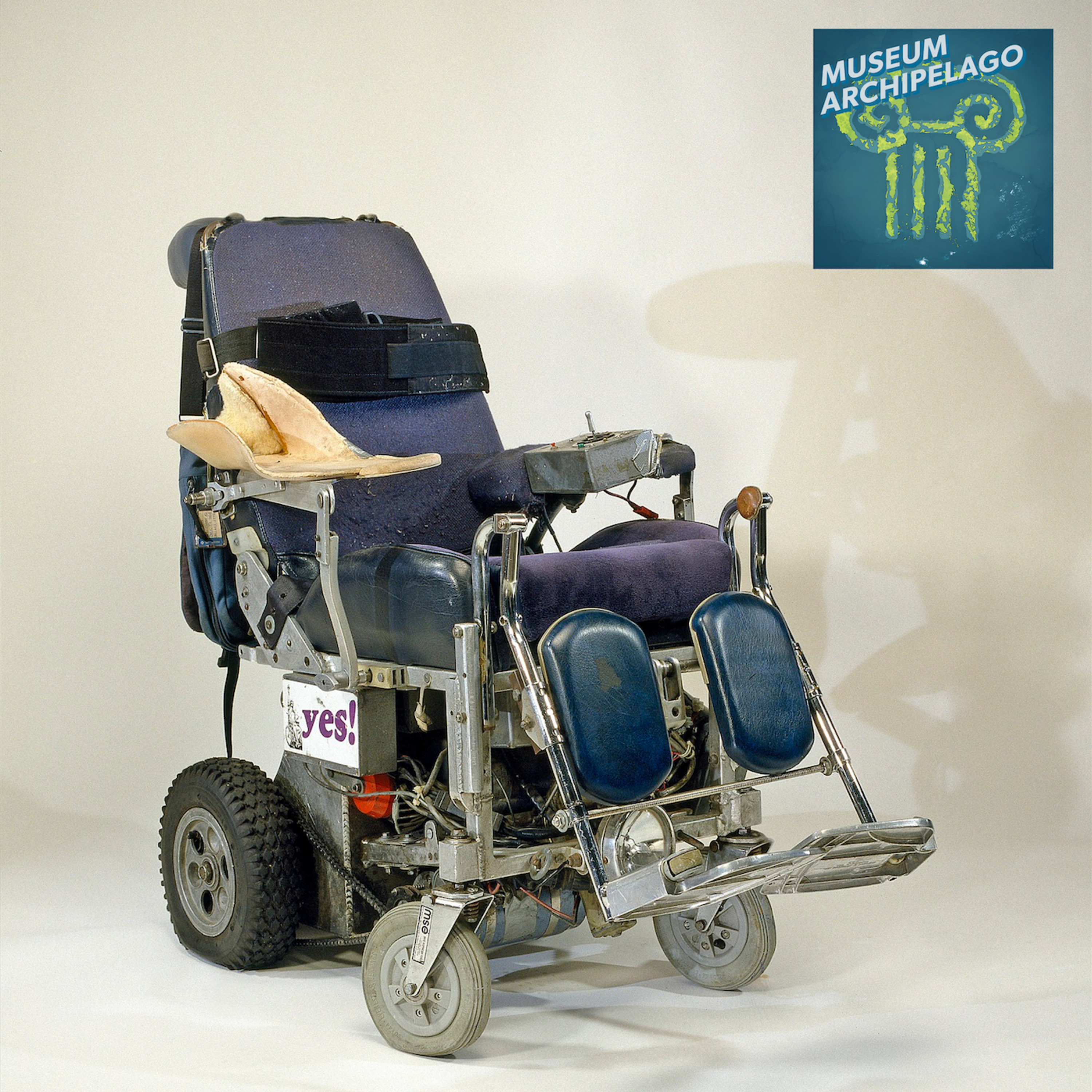
96. Tegan Kehoe Explores American Healthcare Through 50 Museum Artifacts
Public historian and writer Tegan Kehoe knows that museum visitors act differently around the same object presented in different contexts—like how the same visitor excited by a bayonet that causes a triangular wound in an exhibit of 18th-century weapons could be disgusted by that same artifact when it’s presented in an exhibit of 18th-century medicine. Kehoe, who specialises in the history of healthcare and medical science, is attuned to how objects can inspire empathy, especially in the healthcare context. Kehoe’s new book, Exploring American Healthcare through 50 Historic Treasures, looks for opportunities for empathy in museum exhibits all around the U.S. Each of the 50 artifacts presented in the book becomes a physical lens through which to examine the complexities of American society’s relationship with health, from a 1889 bottle of “Hostetter’s Celebrated Stomach Bitters” that claimed to cure a host of ailments to activist Ed Roberts’s power wheelchair that he customized to work with his range of motion. In this episode, Kehoe describes how her work has helped her see tropes in the way museums tend to present medical topics and artifacts, how the aura of medical expertise is often culturally granted, and how living through the current coronavirus pandemic changed her relationship with many of the artifacts. Image: Ed Roberts's Wheelchair, National Museum of American History. Treasures of American History online exhibition. Topics and Notes 00:00 Intro 00:15 The Old State House “Weapons of the American Revolution” and “Medicine and the American Revolution” 01:35 Tegan Kehoe 02:00 Exploring American Healthcare Through 50 Historic Treasures 02:30 How Museums Tend to Present Medical History 05:40 Who Is “Worthy” of the Most Care? 08:02 Ed Roberts’s Power Wheelchair 10:06 Ambulance Damaged in the 9/11 Attacks 11:28 Lessons from the Latest Pandemic 13:41 Pre-Order Exploring American Healthcare Through 50 Historic Treasures 14:00 Outro | Join Club Archipelago 🏖 Museum Archipelago is a tiny show guiding you through the rocky landscape of museums. Subscribe to the podcast via Apple Podcasts, Google Podcasts, Overcast, Spotify, or even email to never miss an episode. Support Museum Archipelago Directly 🏖️ Club Archipelago offers exclusive access to Museum Archipelago extras. It’s also a great way to support the show directly. Join the Club for just $2/month. Your Club Archipelago membership includes: Access to a private podcast that guides you further behind the scenes of museums. Hear interviews, observations, and reviews that don’t make it into the main show; Archipelago at the Movies 🎟️, a bonus bad-movie podcast exclusively featuring movies that take place at museums; Logo stickers, pins and other extras, mailed straight to your door; A warm feeling knowing you’re supporting the podcast. Transcript Below is a transcript of Museum Archipelago episode 96. For more information on the people and ideas in the episode, refer to the links above. View Transcript Welcome to Museum Archipelago. I'm Ian Elsner. Museum Archipelago guides you through the rocky landscape of museums. Each episode is never longer than 15 minutes, so let's get started. Museum curator and historian Daniel Neff used to present tours in the Old Statehouse Museum in Boston, the site of the Boston Massacre in 1770. One tour was called “Weapons of the American Revolution” and went into gory detail of the carnage inflicted by bayonets and musket balls. At the same museum, Neff also presented a tour called “Medicine and the American Revolution,” often featuring the same grizzly battle wounds. As his colleague and today’s guest Tegan Kehoe recalls, Neff started to notice a difference between the way visitors responded to each of the tours. Tegan Kehoe: He remarked a number of times that visitors who seemed otherwise temperamentally the same, sometimes even the same visitors would react very differently to hearing about a particular type of battle wound, depending on whether they were on the weapons tour or the medicine tour. And it seemed that people on the weapons tour were imagining themselves inflicting those injuries. And on the medicine tour, they were imagining being the victim and being the patient. And that's just such a powerful way of thinking about how people are relating to the content and museums and how people are relating to history. Neff’s observation is featured in the introduction of Kehoe’s new book: Exploring American Healthcare through 50 Historic Treasures. Tegan Kehoe: Hello, my name is Tegan Kehoe. I'm a public historian and writer specializing in the history of healthcare and medical science. I work at the Paul S. Russell, MD Museum of Medical History and Innovation at Massachusetts General Hospital in Boston. And my forthcoming book is Exploring American Healthcare through 50 Historic Treasures, which is coming out from AASLH press in January. Exploring American Healthcare through 50 Historic Treasures looks at the f
95. The Museum of Technology in Helsinki, Finland Knows Even the Most Futuristic Technology Will One Day Be History
In 1969, noticing that technological progress was changing their fields, heads of Finish industry came together to found a technology museum in Finland. Today, the Museum of Technology in Helsinki is the only general technological museum in the country. But of course, technical progress didn’t stop changing, as service coordinator Maddie Hentunen notes, and that can be challenging for a museum to keep up. In this episode, Hentunen describes the museum’s philosophical stance on technology, how the museum balances industrial development with more open source design practices, and how the museum thinks about its own obsolescence. Topics and Notes 00:00 Intro 00:15 1969 in Technology 00:49 Maddie Hentunen 01:02 The Museum of Technology in Helsinki, Finland 02:34 The Museum’s Building 03:51 Original Exhibits 04:50 Today’s Exhibits 07:07 The Museum’s Philosophical Stance on Technology 10:29 Outro | Join Club Archipelago 🏖 Museum Archipelago is a tiny show guiding you through the rocky landscape of museums. Subscribe to the podcast via Apple Podcasts, Google Podcasts, Overcast, Spotify, or even email to never miss an episode. Unlock Club Archipelago 🏖️ If you like episodes like this one, you’ll love Club Archipelago. It offers exclusive access to Museum Archipelago extras. It’s also a great way to support the show directly. Join the Club for just $2/month. Your Club Archipelago membership includes: Access to a private podcast that guides you further behind the scenes of museums. Hear interviews, observations, and reviews that don’t make it into the main show; Archipelago at the Movies 🎟️, a bonus bad-movie podcast exclusively featuring movies that take place at museums; Logo stickers, pins and other extras, mailed straight to your door; A warm feeling knowing you’re supporting the podcast. Transcript Below is a transcript of Museum Archipelago episode 95. For more information on the people and ideas in the episode, refer to the links above. View Transcript Ian Elsner: Welcome to Museum Archipelago. I'm Ian Elsner. Museum Archipelago guides you through the rocky landscape of museums. Each episode is never longer than 15 minutes, so let's get started. Ian Elsner: 1969 was a banner year for technological advancement: for one, it’s the year humans first walked on the moon. It was also -- and this is not unrelated to technological advancement -- right in the middle of the Cold War. Maddie Hentunen: 1969 in Finland was kind of a fraught time politically in a way that it was still the era of the cold war and we're right next to Russia. Maddie Hentunen: So our political relationship with Russia has always been kind of a tightrope. We've always gazed eastwords with care and especially at that time. Ian Elsner: This is Maddie Hentunen, service coordinator at the Museum of Technology in Helsinki, Finland. Maddie Hentunen: Hello. My name is Maddie Hentunen, and right now I am the service coordinator here in the museum of technology in Helsinki, Finland. Ian Elsnsr: The museum of technology was founded in that banner year of 1969 by heads of Finish industries. The idea was to make a general technology museum in Finland. The point is that it’s not siloed by industrial sector. Maddie Hentunen: I think at that point, the global sort of Zeitgeist, the technology of the time was taking massive leaps forward. So at that time there were these, let's say there was a coalition in a very loose meaning of the word of these gigantic, in Finish scale, gigantic, industry had sort of, let's say, the forest industry, which in Finland has always been massive And then there was the metal industry, which includes the mining industry and, and the chemistry industry thinks like this, who felt the need for some kind of preservation because they started to, in their respective fields, notice that things are changing. And a lot of the old sort of wisdom, a lot of the old ways are gone. Pull it behind us in the past. Maddie Hentunen: I feel that is very unique in a way or very, nice in that sense is that they actually came together and made that decision that we will make this sort of generalized museum of technology instead of making a forestry technical museum or a chemistry museum or stuff like that. It was a cooperative mission, so to speak. So that's actually how first our collection started to build. We've got these big donations from different fields, industrial fields that are still big parts of our collections. Ian Elsner: The newly-founded museum decided it would use Finland’s first water purification plant -- built in 1877 -- as its main exhibit building -- it’s a delightfully squat round building that used to be filled with sand that the water filtered through -- water that would eventually be used for drinking or firefighting. Maddie Hentunen: Helsinki started to grow pretty fast after the 1850s or so. So after that there was a real need for purified water. And, also, because the city was mostly built of wood. So also the fire security
94. Jazz Dottin Guides Viewers Through Massachusetts’s Buried Black History
The deliberate exclusion of Black history and the history of slavery in the American South has been slow to reverse. But Jazz Dottin, creator and host of the Black Gems Unearthed YouTube channel says it can be just as slow in New England. Each video features Dottin somewhere in her home state of Massachusetts, often in front of a plaque or historical marker, presenting what’s missing, excluded, or downplayed. The history discussed on Black Gems Unearthed has been left out by conventional museums, which are among the most trustworthy institutions in modern American life, according to the American Alliance of Museums. This trust may have more to do with power than truth-telling — and today, there are many different ways to build trust with an audience online. Shows like Dottin’s might point to where our new relationship with the authoritative voice is heading. In this episode, Dottin describes how working as tour guide and creating travel itineraries influences her work today, how she came up with the idea for Black Gems Unearthed, and what the future holds. Image: Jazz Dottin in front of Emancipation in Boston, Mass. Topics and Notes 00:00 Intro 00:15 “Always Read The Plaque” 00:45 Jazz Dottin 01:00 Black Gems Unearthed 01:20 Hopkinton, Massachusetts 02:00 Exploring Black lives in MetroWest, MA in the 1700s - Black Gems Unearthed 02:26 Museum Archipelago 42. Freddi Williams Evans and Luther Gray Are Erecting Historic Markers on the Slave Trade in New Orleans 02:55 The Legacy of Slavery in New England 03:50 Working as a Tour Guide 05:35 The Idea for Black Gems Unearthed 08:21 Museums and Trustworthiness 09:36 Where The Name Comes From 10:10 Outro | Join Club Archipelago 🏖 11:39 What’s It Like Giving A Tour on A Segway? Museum Archipelago is a tiny show guiding you through the rocky landscape of museums. Subscribe to the podcast via Apple Podcasts, Google Podcasts, Overcast, Spotify, or even email to never miss an episode. Unlock Club Archipelago 🏖️ If you like episodes like this one, you’ll love Club Archipelago. It offers exclusive access to Museum Archipelago extras. It’s also a great way to support the show directly. Join the Club for just $2/month. Your Club Archipelago membership includes: Access to a private podcast that guides you further behind the scenes of museums. Hear interviews, observations, and reviews that don’t make it into the main show; Archipelago at the Movies 🎟️, a bonus bad-movie podcast exclusively featuring movies that take place at museums; Logo stickers, pins and other extras, mailed straight to your door; A warm feeling knowing you’re supporting the podcast. Transcript Below is a transcript of Museum Archipelago episode 94. For more information on the people and ideas in the episode, refer to the links above. View Transcript Welcome to Museum Archipelago. I'm Ian Elsner. Museum Archipelago guides you through the rocky landscape of museums. Each episode is never longer than 15 minutes, so let's get started. There’s a saying among history nerds: always read the plaque. Roman Mars: “Always read the plaque.” But of course, the plaques don’t tell the whole story. Maybe a better mantra would be “start by reading the plaque.” Jazz Dottin: If I see plaques, I have to stop and read them. But with Black history, you know, there's not as many plaques, if any at all that are describing events and people and things that have happened in different areas across the country. This is Jazz Dottin, creator and host of a new YouTube channel called Black Gems Unearthed. Jazz Dottin: Hello, my name is Jazz Dottin and I am the host of Black Gems Unearthed, which is a YouTube series where I talk about Black history around the state of Massachusetts. So I am an experienced tour guide. I develop travel programs and itineraries, and now I'm working in the academic world at a university in Massachusetts. Dottin grew up in Hopkinton, Massachusetts, just outside of Boston. Jazz Dottin: A small town, suburb outside of Boston. 21 miles or however many miles a marathon is where the start of the Boston marathon is. When I was growing up in Huffington, I don't have memories of learning about local Black history. And I was just curious about Hopkinton as I was starting to make these videos and started to do a little bit of digging. An episode of Black Gems Unearthed describes when she figured out that a stone wall next to one of the streets that she drove down as a child was probably built by enslaved Africans. Jazz Dottin (from Black Gems Unearthed): “It came up in the research that Africans likely built the tiers that you can see on the grass behind me, you can kind of see three layers, and they also may have done work on the wall that’s behind me too.” Jazz Dottin: And it just feels eerie to know that there was slavery in this town that is just known for being a nice suburb to live in. That is part of the legacy that people may or may not realize it's like in our DNA. In episode 42 of Museum Archipelago, we spo