
Modern Farming
95 episodes — Page 1 of 2
From the Farm to Ag Sales with Repp Braun
AI, Agriculture & the Future of Farming with Matt Donovan
The Foundation Beneath Us: Soil Health with Curt Knight
GROWING STUDENTS, GROWING FUTURES: CINDY MORELLI & ELFERS CHRISTIAN SCHOOL
GROWING FOOD AND CHANGING COMMUNITIES WITH LISA PINEDA
Growing Florida Through Agritourism with Lena Juárez
Bringing Science to Life Through Storytelling with Linda Smock
Coding the Future: Jeffrey & Michael Drew of Gemstone Academy
THE SCIENCE OF BAKING: FOOD EDUCATION WITH SHELLEY GUPTA
GET CLASSICALLY EDUCATED WITH BONNYE MCCOY
FLOURISHING IN FFA WITH LILLY OWENS-HINES
SPATIAL COMPUTING, STEM, AND THE NEXT GENERATION OF AGRICULTURE WITH DR. KIM ABEL
FROM THE RANCH TO RECRUITMENT WITH KIKI HUBBARD
🎙️Agriculture Leadership at FFA State Convention
Telling Agriculture's Story with Frank Giles
When Learning Feels Like a Game with Joshua Forsman
Cultivating S.T.E.M. Innovation with Francie Black
Growing Champions with Joanna Joseph of EVO Academy
Turning Waste Into Opportunity With Zack Farr
Smart Water, Smarter Farming with Sonya Lee
Growing Purpose: How Vincent House Cultivates Mental Wellness Through Community & Gardening
Feeding the Soil, Fueling the Future with Brad Turner
Rooted in FFA: Growing the Next Generation of Agricultural Educators
Growing Leaders Early: From Bees to Business with Veronica Grannan
From Axolotls to Aquaculture: Building Hands-On Ag Education with Aaron Bokelmann
More Than a Classroom: Teaching Real-World Skills Through Aquaponics with Bert Johnson
S2 Ep 216The Aquadome Effect: Turning Passion into Purpose in Aquatic Education
In this episode of The Modern Farming Podcast, we sit down with Katrin Rudge, Aquascience teacher at Riverview High School, whose program is nothing short of extraordinary.What started with simple aqua balls has grown into a full-scale, immersive aquascience program that gives students hands-on experience in aquatic ecosystems, marine life, and real-world conservation. At the center of it all is the Aquadome, an outdoor greenhouse that houses a dynamic collection of living systems designed, maintained, and studied by students.Inside the Aquadome, students work directly with a shark tank featuring multiple species of sharks and tropical fish, a mangrove ecosystem, a coral reef tank, and clownfish breeding systems that support live food production. The program also includes a snook tank, where students raise juvenile snook, tag them, and release them in partnership with MOTE Marine Laboratory, contributing to real conservation efforts happening right here in Florida.Katrin shares how she built this program from the ground up, the challenges she faced along the way, and the vision that kept it moving forward. Named Sarasota County Teacher of the Year in 2013, she brings a level of passion and purpose that is clearly reflected in her students and the opportunities they are given.This episode highlights what is possible when education becomes hands-on, meaningful, and rooted in real-world application. Students aren’t just learning about aquatic systems, they are actively managing them, gaining skills in aquatic husbandry, system design, and environmental stewardship.In this episode, we cover:How Katrin Rudge built Riverview High School’s aquascience program from the ground upThe evolution from basic aqua balls to the fully developed Aquadome greenhouseA behind-the-scenes look at the shark tank, mangrove system, coral reef tank, and clownfish breeding programThe snook tagging and release partnership with MOTE Marine LaboratoryThe importance of teaching aquatic husbandry through hands-on experienceReal-world skills students gain through managing live aquatic systemsThe impact of strong agricultural and environmental education programs on student successKatrin’s journey as Sarasota County Teacher of the Year and what drives her work todayThis is the kind of program that sets the standard. If you care about the future of agriculture, aquaculture, and education, this episode will leave you inspired.
S2 Ep 215Rooted in FFA: Janyel Taylor’s Journey from Teacher to Nursery Leader
In this episode of The Modern Farming Podcast, Kris and Tara sit down with Janyel Taylor, Nursery Operations Manager and Chief Financial Officer at Ralph Taylor’s Nurseries.Janyel’s journey into agriculture began in high school, where an influential FFA teacher sparked a passion that would shape her future. That early inspiration led her to the University of Florida, and eventually into the classroom, where she spent eight years as an agriculture teacher investing in the next generation.Today, Janyel plays a key role in her family’s nursery business, combining her background in education with hands on experience in operations and financial leadership. Her story is a powerful example of how strong roots in agricultural education can grow into lifelong impact within the industry.In this episode, we discuss:• The role FFA and ag teachers play in shaping future careers• Her transition from the classroom to the family nursery business• What it takes to manage both operations and finances in a growing agricultural operation• The importance of family legacy in agriculture• Encouragement for young people considering a path in agricultureWhether you come from a farming background or are just beginning to explore the industry, Janyel’s story is a reminder that the right mentor and a willingness to step forward can open doors you never expected.🎧 Listen now and be inspired by a journey rooted in education, leadership, and a deep commitment to agriculture.
S2 Ep 214Rebuilding Citrus: Scott Thompson and the Tree Defender Solution
In this episode of the Modern Farming Podcast, Kris and Tara sit down with Scott Thompson, co-founder of Tree Defender, a Florida-based company on a mission to help save the citrus industry. As citrus greening continues to challenge growers across the state and beyond, Tree Defender has developed an innovative solution designed to protect young trees and give growers a fighting chance.Scott shares the story behind Tree Defender and how their Individual Protective Cover (IPC) is helping shield citrus trees from the Asian citrus psyllid, the insect responsible for spreading citrus greening. But protection is only part of the story.Field studies have shown that trees grown with the Tree Defender IPC are not only surviving, but thriving. With reported growth rates more than 2.5 times greater than uncovered control trees, the results are turning heads across the industry. The conversation dives into how these covers may enhance photosynthesis, creating a more favorable microclimate for young trees to establish and grow stronger, faster.Even more exciting, early observations suggest that this technology could extend beyond citrus. Other crops may also benefit from the same enhanced growing conditions, opening the door to broader applications for both commercial growers and backyard gardeners.This episode is a powerful look at innovation in agriculture, resilience in the face of industry challenges, and what the future could hold for citrus and beyond.In This Episode, We Cover:The ongoing impact of citrus greening on Florida agricultureHow the Asian citrus psyllid spreads diseaseThe development of the Tree Defender IPC systemReal-world results showing accelerated tree growthHow protective covers may enhance photosynthesisPotential applications for other crops and home gardensWhat this means for the future of citrus productionLearn More:https://thetreedefender.com
S2 Ep 213Promised Land Family Ministries: Cultivating Agriculture, Faith, and Purpose
In this episode of Modern Farming, we sit down with John Hall, founder of Promised Land Family Ministries, to explore how agriculture, education, and faith can come together to create meaningful change. John’s journey began in high school through his involvement in FFA, where he discovered a passion for agriculture that would shape his future. He went on to earn a degree in Agricultural Education from University of Florida, followed by a master’s in agribusiness and a Ph.D. in Agricultural Education and Leadership Development from Texas A&M University. After teaching agriculture at both the secondary and university levels, including time at Tennessee State University, John returned to Florida with a vision to serve families in a deeper, more impactful way.That vision became Promised Land Family Ministries, a faith-based nonprofit operating on a 54-acre farm near Lake Butler, Florida, and serving 12 counties across North Florida. Through a wide range of free programs—including agriculture education workshops, career days, 4-H activities, food pantry services, health and nutrition education, and hands-on learning through gardens, hydroponics, and an apiary—PLFM is dedicated to developing youth and strengthening families. Rooted in faith, the organization provides a safe and supportive environment where individuals can grow not only in knowledge, but in purpose and community connection.Throughout the conversation, John shares a powerful perspective on what success truly means. Rather than focusing on numbers, success is reflected in lives changed—families who no longer need food assistance, individuals who adopt healthier lifestyles, and young people who discover direction and responsibility. What makes this work even more remarkable is that all programs are offered at no cost, supported entirely by volunteers and a shared commitment to serving others.This episode highlights the transformative power of agriculture as more than an industry—it’s a tool for education, outreach, and building stronger, more connected communities. Tune in to hear how John Hall and Promised Land Family Ministries are planting seeds of hope, faith, and opportunity across North Florida.
S2 Ep 212Back to Eden Farming: Soil Health and No-Till with Nick Ager
Modern Farming Podcast – Episode 212 Guest: Nick Ager from Growing Back to Eden Farm – Crystal River, Florida In this episode of the Modern Farming Podcast, Kris and Tara sit down with Nick Ager, a regenerative no-till farmer based in Crystal River, Florida. Nick shares insights from years of experience managing farms and consulting on agricultural projects across the country, helping growers rethink how soil health and natural systems can work together to build productive, resilient farms. The conversation dives into regenerative agriculture practices and the growing movement toward farming methods that restore soil rather than deplete it. Nick explains the philosophy behind no-till growing, why minimizing soil disturbance matters, and how farmers and gardeners can begin rebuilding living soil ecosystems. Kris, Tara, and Nick also discuss the Back to Eden gardening method, popularized by Paul Gautschi. They explore how this approach uses natural mulch systems—especially wood chips—to mimic the forest floor, protect soil biology, conserve moisture, and reduce weeds. Nick shares how many of the principles behind Back to Eden align closely with regenerative agriculture and the work he is doing on his own farm. Beyond theory, Nick puts these ideas into practice at his farm in Crystal River, where he hosts regenerative agriculture courses and hands-on workshops. Farmers, homesteaders, and backyard growers come from around the region to learn practical techniques for improving soil health, reducing inputs, and building resilient food systems. Nick also shares about the ministry aspect of his work, explaining how his farm has become a place where people gather not only to learn about farming, but also to reconnect with faith, purpose, and stewardship of the land. For Nick, regenerative agriculture is about more than producing food—it’s about caring for God’s creation, building community, and helping people rediscover the deeper connection between the soil, the farmer, and the Creator. In this episode you’ll learn: What regenerative no-till farming looks like in practice Why soil biology is the foundation of healthy farms The principles behind the Back to Eden method How mulch systems can reduce weeds and improve moisture retention Why more farmers are turning toward regenerative systems How Nick is teaching others through on-farm courses, consulting, and ministry If you’re interested in soil health, regenerative farming, sustainable food systems, and the deeper purpose behind stewarding the land, this episode is packed with insight and inspiration. 🎧 Tune in to Episode 212 to hear how Nick Ager is helping farmers and communities rediscover the power of working with nature. Facebook - https://www.facebook.com/GROWINGBACKTOEDEN/
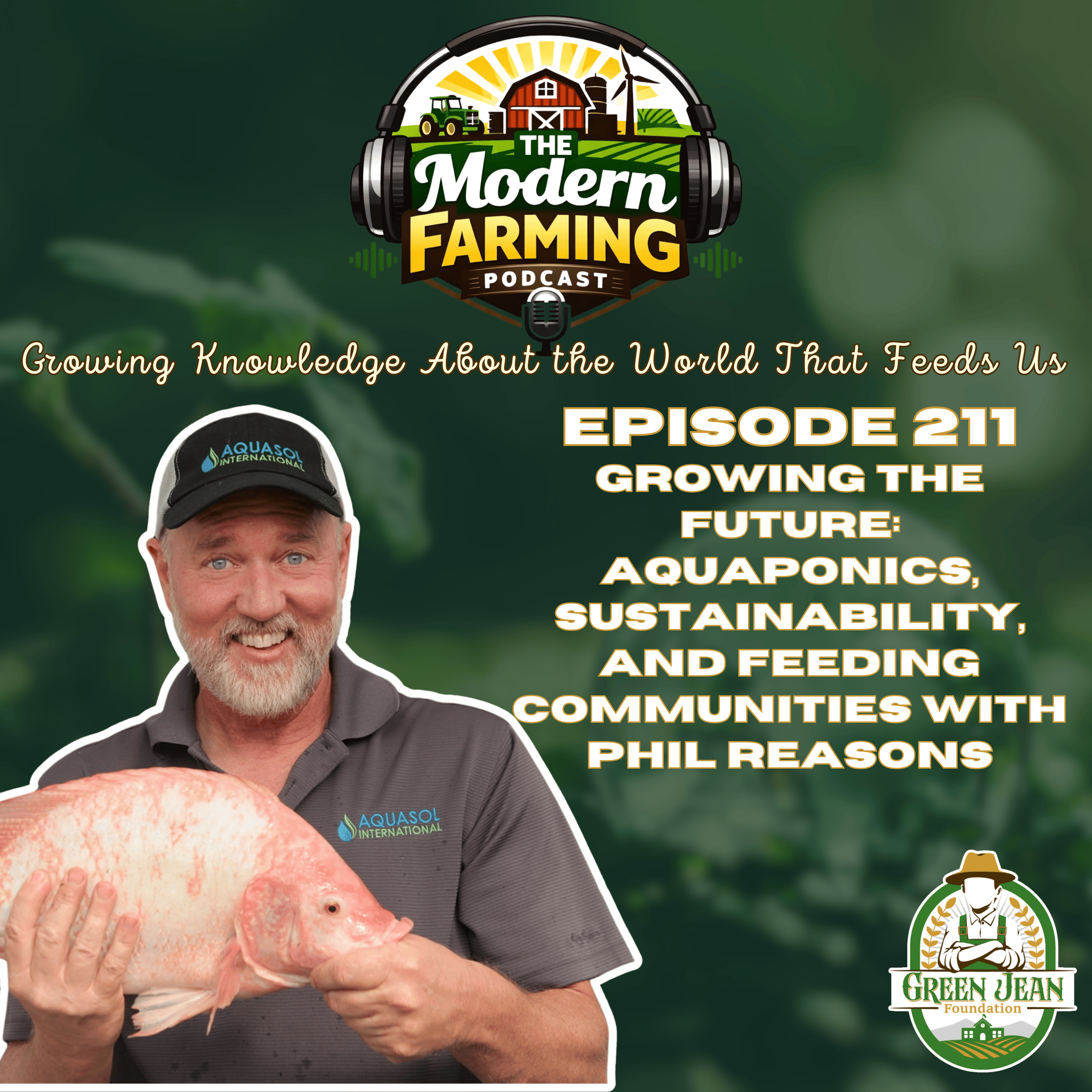
S2 Ep 211Episode 211 Growing the Future: Aquaponics, Sustainability, and Feeding Communities with Phil Reasons
In Episode 211 of the Modern Farming Podcast, Kris and Tara sit down with Phil Reasons of Aquasol International, a 501(c)(3) nonprofit organization focused on aquaponics, sustainable farming design, large-scale greenhouse systems, and helping communities around the world develop reliable food systems. Phil shares how Aquasol International is working alongside organizations like the Green Jean Foundation to bring aquaponics education into Florida schools. Through this collaboration, students are learning how integrated farming systems can produce both fish and fresh vegetables in a sustainable, efficient way while gaining hands-on experience in agriculture, science, and food production. The conversation dives into the powerful potential of aquaponics. Phil explains how a system as small as 10×10 feet can produce up to 1,000 pounds of fish protein in just 6–8 months, with the ability to operate year-round. By combining aquaculture (raising fish) with hydroponics (growing plants without soil), these systems create a closed-loop ecosystem where fish waste feeds plants and plants help clean the water for the fish. Beyond the classroom, Phil discusses how aquaponics systems are being used in developing countries to create reliable food sources, strengthen local economies, and improve food security in areas where traditional agriculture is difficult. Sustainable food production, he explains, is not just about farming more efficiently. It is about building resilient systems that can feed communities for generations. Kris and Tara explore why sustainable food production matters now more than ever and how innovative systems like aquaponics can play a role in addressing global food challenges while inspiring the next generation of agricultural leaders. From schools in Florida to communities across the world, this episode highlights how innovation, education, and collaboration are shaping the future of farming. In this episode, you will learn: What aquaponics is and how it works How Aquasol International designs sustainable farming systems The collaboration between Aquasol International and the Green Jean Foundation How Florida students are learning aquaponics through hands-on education How small aquaponic systems can produce large amounts of protein Why sustainable food production is critical for the future How aquaponics can help improve food security in developing countries This is an inspiring conversation about practical solutions, innovative farming, and the power of education to grow a more sustainable future. Listen now and discover why sustainable food really matters.
S2 Ep 210From Guesswork to Groundwork: Smarter Soil, Stronger Farms with Dr. Stella Brownlee
In this episode of the Modern Farming Podcast, we sit down with Dr. Stella Brownlee, soil scientist and founder of RootLogic Ag Consulting. With more than a decade of hands-on research and field experience in soil fertility, plant nutrition, plant physiology, microbiology, and water management, Dr. Brownlee brings both science and strategy to the conversation. This is not theory. This is practical application farmers can take back to their fields. Dr. Brownlee shares how growers can move beyond guesswork and reactive decision-making and instead implement structured, strategic soil health and nutrient management systems that increase both yield and quality. She explains why thriving farms are built from the soil up and how regenerative principles can strengthen profitability, resilience, and long-term sustainability. A key focus of the episode is the 4Rs of nutrient stewardship: • Right Source • Right Rate • Right Time • Right Place She breaks down how these four principles, when applied correctly, reduce waste, improve nutrient efficiency, and ultimately support healthier crops and stronger returns. We also discuss: • The connection between soil microbiology and plant performance • Why water management is inseparable from nutrient strategy • How soil testing should guide decisions, not confirm them • What regenerative really means in practical, measurable terms • The mindset shift required for farmers to truly thrive Dr. Brownlee’s approach is rooted in data, discipline, and long-term thinking. Her work through RootLogic Ag Consulting helps producers build systems that are proactive instead of reactive, profitable instead of patchwork. If you care about soil health, crop performance, and building a farm that lasts for generations, this conversation will challenge and equip you. Follow Dr. Stella Brownlee: Instagram: @stella_brownlee_ Facebook: Stella Brownlee
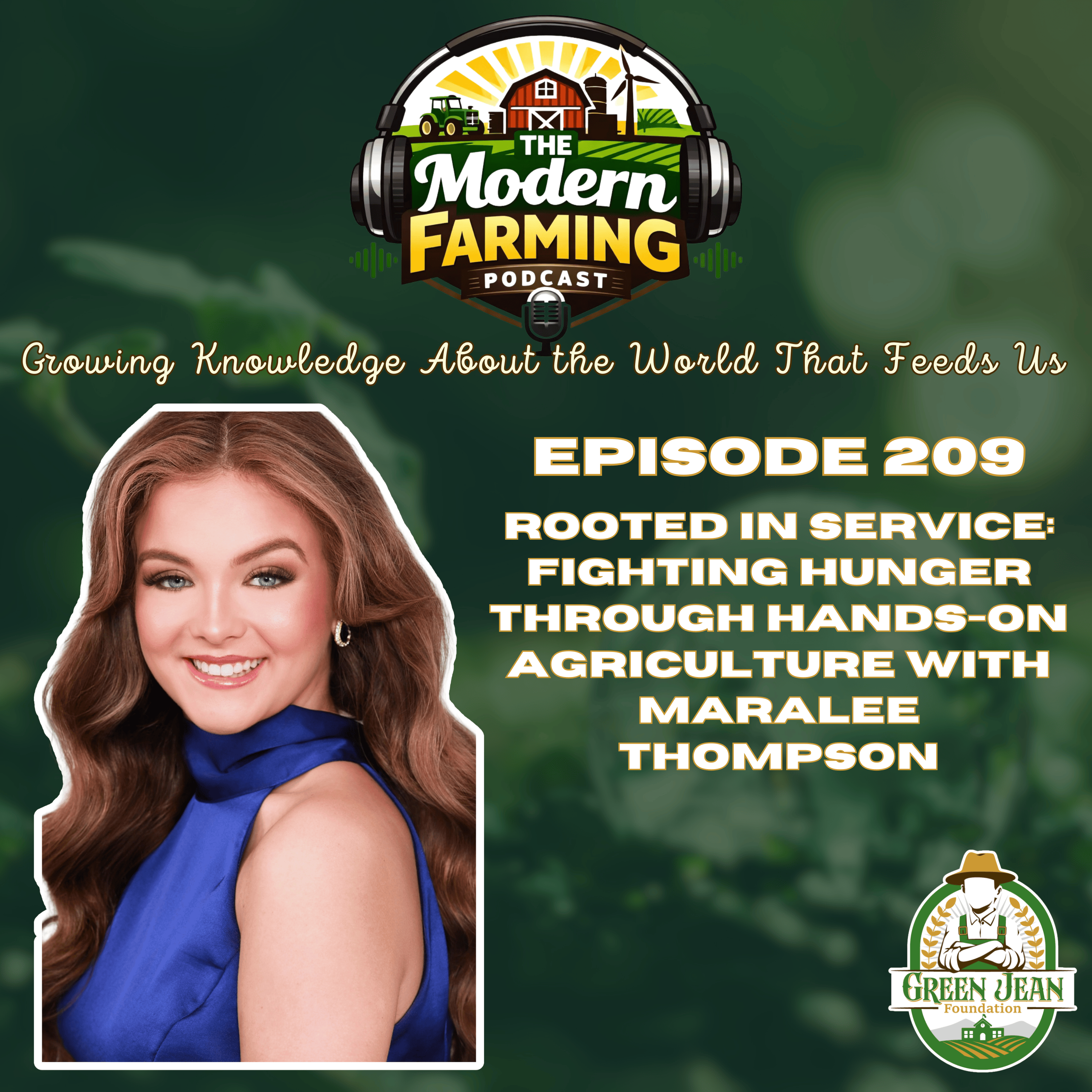
S2 Ep 209Rooted in Service: Fighting Hunger Through Hands-On Agriculture with Maralee Thompson
🎙️ Episode 209 In this episode of the Modern Farming Podcast, Kris and Tara sit down with Maralee Thompson, Forever Miss Winter Haven and founder of the community service initiative Grow Together, to talk about how agriculture can be a powerful solution in the fight against food insecurity. Maralee is a Public Relations major at the University of Florida who is using her platform in both pageantry and student government to advocate for agriculture education and sustainable food systems. Through her initiative, Grow Together, Maralee is working to empower communities with the tools and knowledge needed to grow their own food through hands-on gardening education. Her work focuses on increasing access to fresh produce while teaching individuals and families how agriculture can create long term food security in their own backyards. Maralee shares how she: Turned her passion for agriculture into a service initiative focused on fighting food insecurity Uses pageantry as a platform for advocacy and education Integrates leadership opportunities at the University of Florida into real world agricultural outreach Inspires young people to see gardening and food production as both empowerment and community service Builds partnerships that make agriculture education more accessible to underserved communities The conversation highlights the growing role of youth leadership in agriculture and how initiatives like Grow Together are helping bridge the gap between education and action when it comes to community based food systems. From the stage to the garden, Maralee is proving that advocacy rooted in agriculture can make a meaningful impact at the local level. Learn More & Connect: Grow Together https://www.instagram.com/grow.together.fl Maralee Thompson https://www.instagram.com/maraleethompsonofficial
S2 Ep 208Raising the Next Generation: Youth Voices from the Florida State Fair
Modern Farming Podcast – Episode 208 Raising the Next Generation: Youth Voices from the Florida State Fair In this special episode, we traveled to the Florida State Fair to spotlight the next generation of agricultural leaders. We sat down with dedicated 4H and FFA youth livestock exhibitors who are learning responsibility, leadership, and lifelong skills through hands-on experience in agriculture. This episode is a powerful reminder that the future of farming is in capable hands. Episode Highlights Jacob Zinkhan Jacob shares how he was introduced to livestock through his school’s FFA program and how that experience opened the door to working with animals. He introduces us to Feta, the heifer he is proudly showing this season, and explains the daily commitment required to properly care for and prepare a show animal. Morgan Houston Morgan reflects on her years in 4H, where she has shown rabbits, steers, and heifers. She discusses the responsibility, discipline, and confidence she has developed through her projects and how 4H has helped shape both her character and future aspirations. Tyler Pace – Hardee County Cattlemen’s Sweetheart Tyler talks about her steer Bruiser, a 1,200+ pound Angus cross she is exhibiting at her local fair. She shares how participating in pageants has strengthened her public speaking skills and confidence, and why educating the public about agriculture is a responsibility she takes seriously as an ambassador for the industry. Teagan Teagan joins us to talk about her two breeding does, Messy and Nelly. Now in her fourth year of showing, she shares what she has learned through consistency and dedication to her project animals. Reagan also speaks passionately about advocating for agriculture and why it is important for young people to tell the true story of farming and livestock production. Jacob Gable Jacob introduces his Brangus-Simmental cross he is exhibiting and shares how FFA has impacted his life beyond the show ring. He speaks about community service through FFA and how the organization builds leadership, service-mindedness, and a strong work ethic. Why This Episode Matters These young exhibitors represent more than ribbons and trophies. They represent discipline, stewardship, and a deep respect for agriculture. Through 4H and FFA, they are developing the skills and character needed to lead in their communities and carry agriculture forward. Tune in to hear directly from these impressive young agriculturalists and be encouraged by their dedication to preserving and promoting the agricultural way of life.
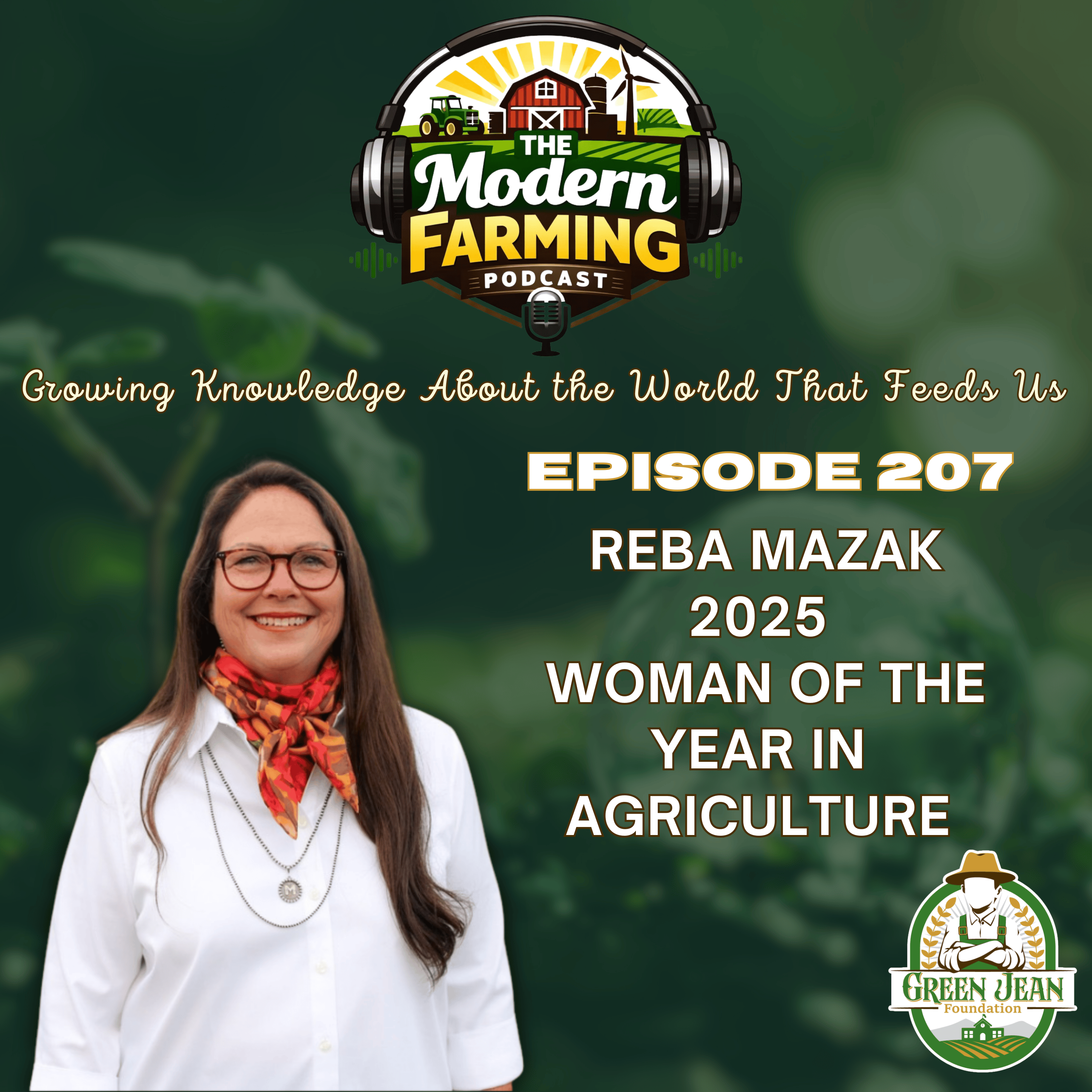
S2 Ep 207Episode 207 | Featuring Reba Y. Mazak — 2025 Woman of the Year in Agriculture
In this episode, Kris and Tara sit down with Reba Mazak, the 2025 Woman of the Year in Agriculture for Florida. Reba’s story is one of deep roots, steadfast commitment, and unwavering dedication to the agricultural community. Florida Commissioner of Agriculture Wilton Simpson said it best: “Reba Y. Mazak embodies the resilience, dedication, and innovation that define Florida agriculture. Her lifelong commitment to ranching, advocacy, and mentorship has strengthened our agricultural community and ensured a bright future for the next generation. It is an honor to recognize her as the 2025 Woman of the Year in Agriculture.” Read more here: https://www.fdacs.gov/News-Events/Press-Releases/2025-Press-Releases/Commissioner-Wilton-Simpson-Announces-2025-Woman-of-the-Year-in-Agriculture Reba is a fifth-generation Florida cattle rancher based in Sumter County, where her family raises cattle and operates a lime rock mine. In this conversation, she shares: Her personal journey growing up in agriculture The legacy and lessons passed down through generations What it means to champion Florida agriculture through advocacy Her work with the Florida Farm Bureau, Florida Cattle Women and mentorship in the industry Stories from life on the ranch that shaped her leadership and passion Reba’s incredible history as a Florida cattle producer is both inspiring and a testament to the enduring spirit of farming in our state. Whether you’re involved in agriculture or simply love hearing stories of perseverance and impact, this episode is one you won’t want to miss.
S2 Ep 206Episode 206 Broken But Beautiful: Faith, Farming, and Transformation with Dan & Julie Klob
Episode 206 Broken But Beautiful: Faith, Farming, and Transformation with Dan & Julie Klob In this episode, Kris and Tara sit down with Dan and Julie Klob, founders of TLC Edible Landscape and Broken But Beautiful Ministries in Pasco County, Florida. What began as a simple dream to serve others has grown into a thriving 5-acre permaculture farm and nonprofit mission focused on restoration, purpose, and transformation—through faith, agriculture, and community. Dan and Julie share how their edible landscape is more than just a farm—it is a living classroom and a place of healing. Everything on their land is intentionally designed to serve at least three purposes, creating a sustainable system that reflects both stewardship and faith. From nitrogen-fixing plants that enrich the soil, to goats that: Clear forage Provide manure for compost and worm systems Supply milk for drinking, cheese, and soap And even provide meat for nourishment Every piece of the farm works together in harmony—just like the people they serve. Through TLC and Broken But Beautiful Ministries, Dan and Julie are: Providing job opportunities Teaching hands-on agricultural skills Offering life guidance through Christ Creating a safe place for people to heal, learn, and grow This episode is a beautiful reminder that farming isn’t just about growing food—it’s about growing people. If you’ve ever wondered how faith, sustainability, and service can work together, this conversation is for you.
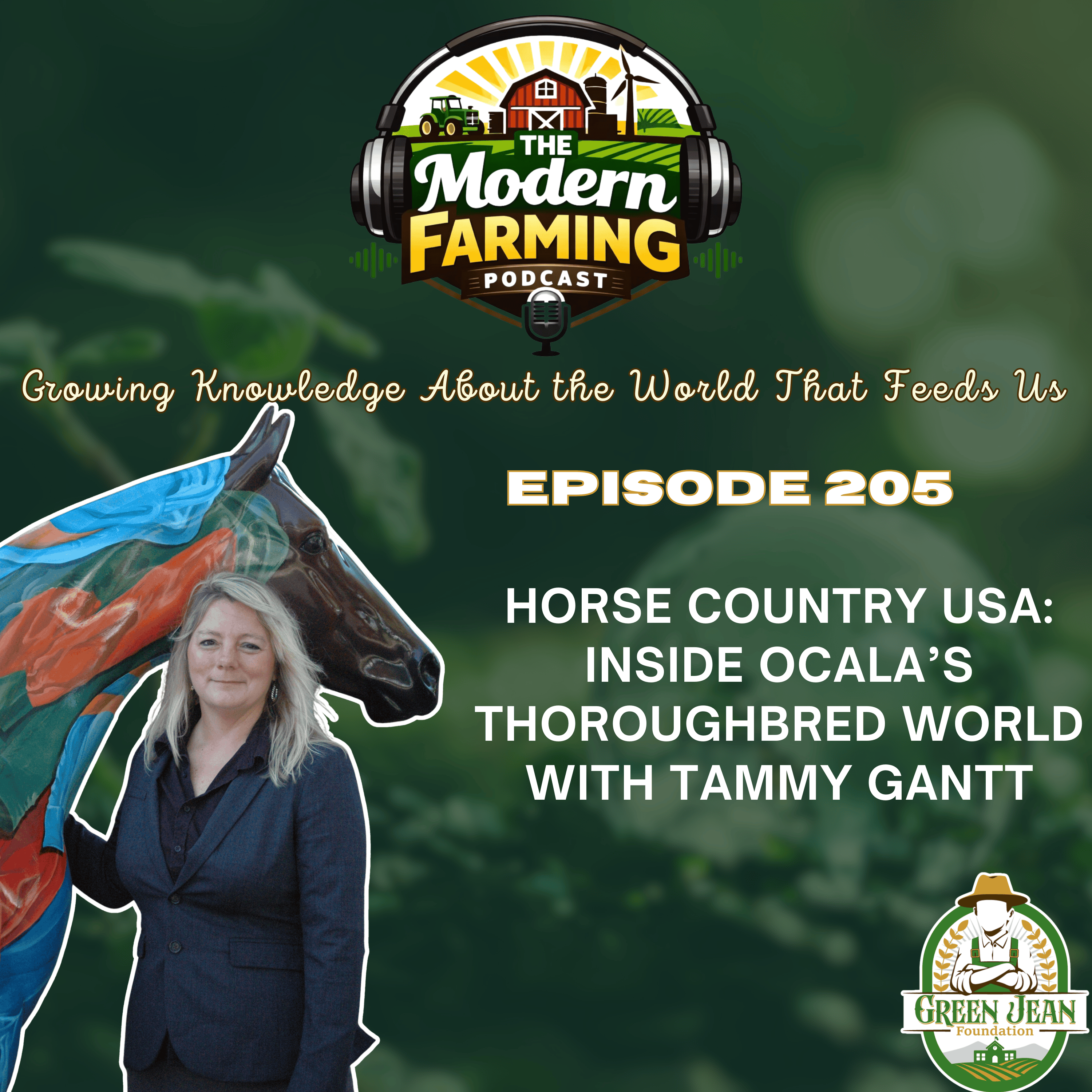
S2 Ep 205Horse Country USA: Inside Ocala’s Thoroughbred World - Episode 205 with Tammy Gantt
Modern Farming Podcast – Episode 205 In this episode, Kris and Tara sit down with Tammy Gantt, a true powerhouse in Florida’s equine industry and the Vice President of Membership, Events & Sales for the Florida Thoroughbred Breeders’ & Owners’ Association. With more than 30 years of experience in the thoroughbred world, Tammy brings a deep well of knowledge, stories, and passion for one of Florida’s most iconic agricultural industries. Together, they explore the vibrant equestrian community of Ocala, often called the “Horse Capital of the World,” and what makes it such a unique and vital hub for breeding, training, and racing thoroughbred horses. Tammy shares her personal journey through the industry, from working hands-on with horses to now leading major initiatives that support breeders, owners, and the future of Florida racing. Listeners will get an inside look at: Why Ocala plays such a central role in the global horse industry The Florida Thoroughbred Breeders’ & Owners’ Association and how it advocates for horsemen and women across the state Exciting programs, incentives, and events designed to grow and protect Florida’s thoroughbred industry Tammy also highlights some of the innovative and inspiring programs happening in Ocala that are bringing new people into the equestrian world, supporting young professionals, and ensuring the long-term sustainability of Florida’s horse industry. This episode is a must-listen for anyone who loves horses, agriculture, racing, or rural communities — and for anyone curious about the powerful economic and cultural impact of Florida’s thoroughbred industry. Tune in and discover how passion, tradition, and innovation come together in the heart of Florida horse country.
S2 Ep 204Episode 204 From Pasture to Classroom: Creating a Regenerative Learning Farm at Lake Swan Camp
📝 Episode 204 Show Notes In this episode of the Modern Farming Podcast, Kris and Tara sit down with Brad Turner to share an exciting new partnership between the Green Jean Foundation and Lake Swan Camp—one that’s turning vision into action on a stunning 100-acre property. Together, they explore plans for creating an immersive learning farm where students, families, and community members can experience sustainable agriculture from the ground up. From soil health to livestock management, this farm will serve as a hands-on classroom rooted in stewardship, education, and long-term land care. Listeners will hear about: The mission behind the Green Jean Foundation and why education is at the heart of this project How Lake Swan Camp’s 100 acres will be transformed into a working learning farm Big plans for pasture improvement using rotational grazing and restorative land management practices Why regenerative agriculture matters for the future of farming, food systems, and rural communities A behind-the-scenes tour of the beautiful camp property and what’s coming next This episode is all about building something lasting—healthy soil, healthy land, and a place where people can reconnect with how food is grown and land is cared for. 🎧 Tune in to hear how education, agriculture, and thoughtful land management are coming together to shape the future—one pasture at a time.
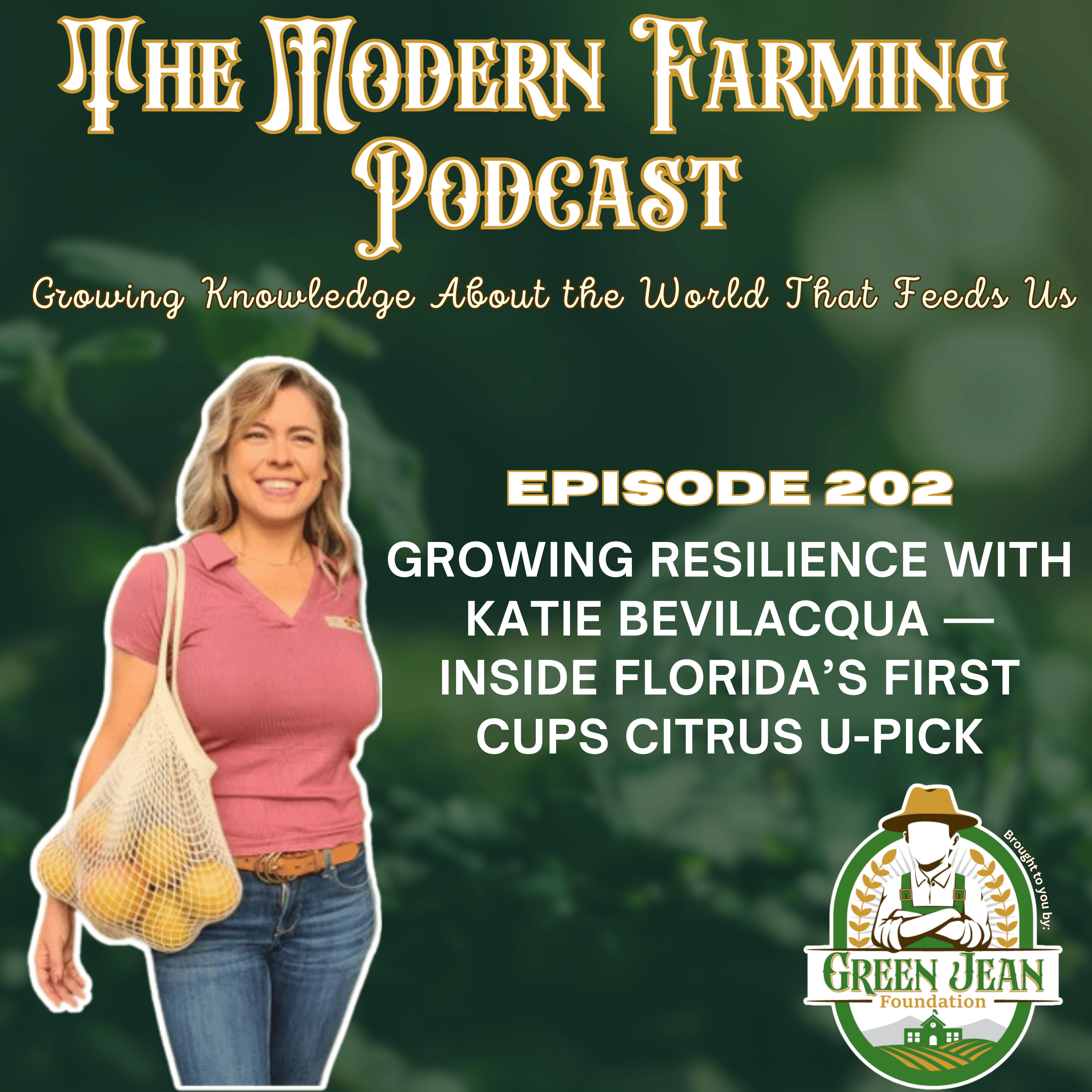
S2 Ep 202Episode 202 Growing Resilience with Katie Bevilacqua — Inside Florida’s First CUPS Citrus U-Pick
In this episode, hosts Kris and Tara sit down with Katie Bevilacqua of Golden Ridge Groves, an innovative agrotourism farm market located in Bartow, Fl. Golden Ridge Groves is home to a first-of-its-kind CUPS (Citrus Under Protective Screen) system, offering a truly unique U-Pick grapefruit experience—alongside U-Pick sunflowers, strawberries, and more seasonal Florida-grown favorites. Katie breaks down how CUPS technology works and why it matters, especially in the fight against HLB (citrus greening). This episode highlights how innovation, education, and resilience are shaping the future of Florida citrus and specialty crops. A major theme of the conversation is Golden Ridge Groves’ mission: connecting the public to where their food comes from and showcasing the diversity of what’s grown right here in Florida—proving that agriculture continues to adapt, innovate, and thrive. In this episode, you’ll learn: What makes the CUPS citrus system a game-changer for Florida growers How protected citrus production helps combat HLB / citrus greening Why agrotourism plays a key role in agricultural education How Golden Ridge Groves is inviting the public back onto the farm Plan Your Visit Golden Ridge Groves is open Tuesday–Saturday and welcomes the public to experience Florida agriculture firsthand. Learn more: https://goldenridgegroves.com/ Resilient. Innovative. Florida-grown. This episode is a must-listen for anyone passionate about the future of agriculture.
S1 Ep 53Growing Minds and Future Farmers with Mike McCracken
In this episode of the Modern Farming Podcast, we sit down with Mike McCracken—farmer, educator, and former Florida FFA State Officer—to explore how agriculture education is evolving alongside a rapidly changing industry. With roots in both production agriculture and the classroom, Mike brings a unique perspective on what it takes to prepare students for modern agricultural careers.Mike shares how technology has transformed agriculture, from diversified farm operations to innovative growing systems. As the owner and operator of McCracken Farms, he has worked across citrus, blueberries, hydroponic U-pick towers, exotic birds, and more—demonstrating how adaptability and innovation are essential for long-term success in farming.A central focus of the conversation is the growing disconnect between students and where their food comes from. Mike discusses the shift from rural to urban living and how fewer families have direct ties to farms, making school-based agriculture programs more critical than ever. He explains the importance of elective agriculture courses in both middle and high school and how early exposure helps students discover interests, develop skills, and explore career pathways.Drawing on his experience as an agriculture teacher in Polk and Highlands Counties—and as someone who helped establish a new FFA chapter in Polk County—Mike highlights how FFA drives student buy-in through hands-on learning, leadership development, and real-world applications. The episode also tackles the trade school versus college conversation, emphasizing that there is no one-size-fits-all path to success in agriculture.Listeners will also hear Mike’s thoughts on innovative growing practices, including backyard gardens and nontraditional farming systems, and how these approaches can change the “farming mindset” for today’s FFA students. He underscores the value of industry certifications in middle school, experiential learning, and getting students’ hands dirty—teaching problem-solving, focus, stress management, and resilience along the way.Throughout the episode, Mike reminds us that small opportunities can have life-changing impacts. Whether it’s introducing a new growing method, offering a certification, or simply giving students the chance to try something new, those moments build knowledge, confidence, and open doors for the future.
S1 Ep 52Lake Swan Camp with Perry Rollins
In this inspiring episode, Kris and Tara sit down with Perry Rollins, director of Swan Lake Camp in Melrose, Florida, to explore how outdoor education, agriculture, and service come together to transform lives.Perry shares the rich history of Swan Lake Camp and its mission to get every child outdoors—embracing their motto: “No Child Left Inside.” From hands-on environmental learning to outdoor skills and farm-based education, the camp creates powerful opportunities for students to reconnect with nature and understand the world around them.The conversation also highlights the camp’s deeply impactful programs serving foster care children and veterans, offering safe spaces for healing, confidence-building, and community.Throughout the episode, Perry emphasizes why agricultural education matters for everyone—because, as he says, “we all need to eat.” By helping young people and adults connect with where their food comes from, Swan Lake Camp uses agriculture as a vehicle for understanding stewardship, sustainability, and God’s purpose for our lives.In This Episode:--The origins and legacy of Swan Lake Camp--How outdoor education builds resilience, confidence, and curiosity--Programs that serve foster care youth and support veterans--Why agricultural literacy is essential for every community--The spiritual connection between food, creation, and purpose--How Swan Lake Camp partners with families, schools, and organizations to impact livesTune in for an uplifting conversation about the power of the outdoors, the importance of understanding our food systems, and the role agriculture plays in shaping disciplined, purpose-driven youth.
S1 Ep 51Farm Fresh, Seriously Bangin’: Evan Ratzlaff Talks Hot Sauce and Sustainability
In this episode of the Modern Farming Podcast, we sit down with Evan Ratzlaff, founder of Swamp Dog Sauce, a hot-sauce company with a mission far bigger than heat. Evan and his team are redefining what sustainability looks like in the food world by doing something no one else is doing: combining compost collection with hot-sauce production to build healthier soils and stronger communities.Evan shares how Swamp Dog Sauce goes beyond recycled packaging to tackle the root of agricultural and environmental challenges—food waste. By diverting scraps from landfills and transforming them into high-quality compost, Swamp Dog directly supports the soil health of local growers. The result? A vertically integrated model where better soil leads to better ingredients, and better ingredients lead to—yes—seriously bangin’ sauce.We explore the company’s hands-on partnerships with farmers, the science behind composting, and how everyday consumers can join the movement to reduce waste and rebuild soil ecosystems. Evan also offers an honest look at the challenges of running a mission-driven business, why regenerative practices matter now more than ever, and how small, community-focused actions can drive big environmental change.If you’ve ever wondered how hot sauce, compost, and sustainable agriculture fit together—you’re about to find out.
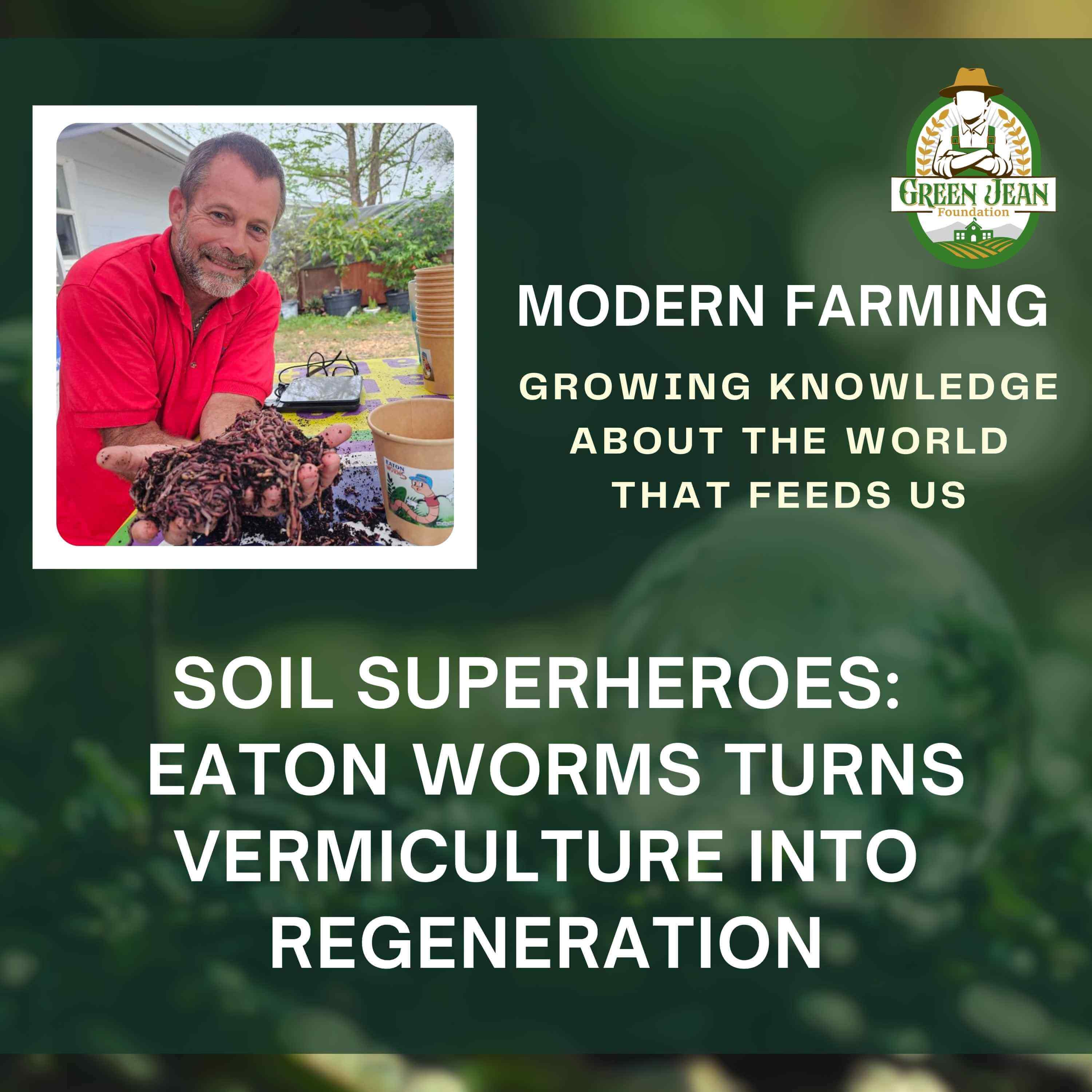
S1 Ep 50Soil Superheroes: Eaton Worms Turns Vermiculture into Regeneration
In this episode, we dig deep—literally—into the world of earthworms and soil regeneration with Rodney Eaton of Eaton Worms, a Florida company specializing in high-quality earthworms and organic soil-boosting products. From living soil and worm castings to compost and castings extract, Eaton Worms uses sustainable, nature-driven systems to improve soil structure, plant health, and even water clarity in ponds and aquariums.Episode HighlightsHow Eaton Worms Got StartedWe open with the origin story: the inspiration behind launching a worm-based agricultural business in Florida, early challenges, and the unexpected demand that helped the company grow into a trusted provider of regenerative soil products.Why CHITINASE Matters — Nature’s Pest DefenseWe discuss chitinase, an enzyme naturally produced in worm systems that breaks down chitin—the main component of insect exoskeletons. Listeners learn how incorporating worm castings into soil helps promote natural pest resistance, reducing the need for chemical pesticides.Exopolysaccharides: Soil’s Secret SuperpowerRodney explains how exopolysaccharides (EPS) created in worm composting act as:--hosts for beneficial bacteria and fungi,--moisture-retaining compounds, and--powerful agents for breaking down synthetic residues—improving soil structure, nutrient cycling, and plant resilience.The Benefits of Worm Tea (Castings Extract)We explore how worm tea differs from compost tea, how it’s brewed, and the roles it plays in:--boosting microbial activity,--improving root health,--delivering instant nutrient availability, and--helping plants handle heat, drought, and stress.The Realities of Raising WormsRodney shares behind-the-scenes insights into worm husbandry, including:--temperature and moisture challenges in Florida’s climate,--predator and pest issues,--the importance of feedstock quality, and--scaling up production while maintaining microbial diversity.Fun Facts About EarthwormsWe close with surprising worm trivia—how fast they reproduce, how much soil they can process, why they’re essential for aeration, and what makes them “ecosystem engineers.”About Eaton WormsEaton Worms provides earthworms, worm castings, compost, living soil, and worm castings extract to gardeners, farmers, homeowners, and commercial clients across Florida. Their products enhance soil health, boost plant growth, promote natural pest control, and support sustainable agriculture.They also offer direct application services for both residential and commercial properties.Learn more or contact the team at: eatonworms.comFollow Eaton Worms: facebook.com/eaton.worms
S1 Ep 49Rooted in Florida: Joanna Oswalt on Agritourism and Advocacy
This week, Kris and Tara sit down with Joanna Oswalt—a seventh-generation Floridian, agricultural consultant, and President of the Sumter County Farm Bureau. With deep family roots in Florida agriculture, Joanna brings a unique and passionate perspective on the past, present, and future of farming in the Sunshine State.As both an advocate and educator, Joanna works to strengthen Florida’s agricultural community by expanding agritourism, supporting producers, and helping connect the public to where their food truly comes from. Through her consulting work and leadership roles—including with the Florida Agritourism Association—she helps farms create sustainable, educational, and profitable visitor experiences backed by the Florida Farm Bill.🌱 In this episode, we explore:A legacy of Florida agriculture: Joanna’s seventh-generation family history and how it influenced her commitment to the industry.Connecting people to agriculture: Why she believes education—not confrontation—is the key to helping people understand food systems and farming traditions.What agritourism really is: How farms can generate secondary income by welcoming the public, and the wide range of agritourism opportunities available under the Florida Farm Bill.Success stories: Real-world examples of thriving agritourism ventures and what makes them work.The realities of farming: Why farming is a passion-driven career, the emotional toll of weather and external forces, and the importance of mental health support—including how the Florida Farm Bureau champions farmers through initiatives like 988.Looking ahead: Joanna’s excitement for future projects, including AgVentures, Taste of Sumter County, birthday box programs, and continued advocacy for rural communities and the next Farm Bill.Joanna’s insight, energy, and deep love for Florida agriculture make this a conversation you won’t want to miss.Tune in for an inspiring look at how agritourism, education, and community support are shaping the future of farming in Florida.
S1 Ep 48From Soil to STEM: Transforming the Classroom with Kevin O’Gorman
In this episode, we talk with Kevin O’Gorman, a hands-on science educator whose love for agriculture and the natural world began on his family’s retired apple orchard in upstate New York. With a degree in Animal Science (Fisheries, Aquaculture & Wildlife Management) and more than a decade in the classroom, Kevin has built a unique “hands-in-the-dirt” teaching style that brings science to life for K–5 students.Kevin shares how UF/IFAS Extension programs and mentor teachers inspired him to integrate horticulture, gardening, and environmental studies into daily lessons. From his popular “Bug of the Week” feature—teaching pest ID, beneficial insects, and ecosystem diversity—to designing a classroom culture where every student (and even their families) has a role in the garden, Kevin emphasizes learning with purpose.Listeners will hear why he believes:--Tactile, outdoor learning helps students thrive--Purpose-driven lessons create better engagement--Failure is an essential part of discovery--Understanding the “why” behind science empowers young learners--Gardens build community and connect students to the environmentKevin’s passion for experiential science, sustainability, and student curiosity shines through as he shares how garden-based learning can grow stronger thinkers, problem-solvers, and future environmental stewards.
S1 Ep 49Cover Cropping with Brad Turner
Former host and longtime soil health advocate Brad Turner returns to The Modern Farming Podcast to dig deep into cover cropping. In this episode, Brad explores what happens when we push the land too hard and how a shift toward diversity and persistence can bring balance back to the soil.Key Topics Covered:Why diversity matters: Nature doesn’t grow monocultures — and neither should we. Brad explains how plant diversity supports healthier soils, improves biological activity, and reduces dependence on inputs.The carbon cycle in the soil: A dive into how carbon, organic matter, and food sources interact underground — and how that invisible exchange fuels above-ground productivity.Cover crops and climate: How cover cropping helps regulate soil temperature, conserve moisture, and create a more resilient ecosystem, even in extreme weather.Persistence pays off: Building healthy soil is not a one-season project. Brad emphasizes the importance of consistency, patience, and long-term commitment to regenerative practices.Takeaway Message:Healthy soil isn’t built overnight — it’s cultivated through diverse systems, organic matter, and persistence. Monocropping may offer short-term yields, but true sustainability comes from farming in step with nature’s cycles.
S1 Ep 47Financial Fitness for Farmers: Planning for Today and Tomorrow
In this episode of the Modern Farming Podcast, we sit down with Rocky Malphurs — a 34-year financial and insurance professional with deep Florida roots and a lifelong commitment to helping farmers, ranchers, and small business owners achieve financial peace of mind.Born in Daytona and now serving Brevard, Volusia, and Seminole Counties, Rocky brings a wealth of experience — from his early days at MetLife to owning his own agency in Titusville, and now as a trusted Financial Advisor with Edward Jones. His goal? To help families and agribusinesses build financial resilience for whatever the future brings.In This Episode, Rocky shares insights on why financial planning is essential in agriculture, where uncertainty is part of the job.Learn the importance of cash reserves for disaster preparedness — how much to set aside, and how to balance today’s needs with tomorrow’s goals.Demystify retirement planning tools like ROTH IRAs, SEP, and SIMPLE IRAs — and learn what even a small business of one or two people can do to start saving.Explore 529 college plans, custodial accounts, and life insurance options to protect your family’s future.Discover why the key to long-term success is simple: make saving a habit.Rocky also shares the timeless wisdom of Edward Jones’ founder, whose perspective on wealth goes far beyond money:“I am the richest man in America. I have a wife who loves me in spite of my faults… I enjoy my business. I love my farm and my home… and money has never been my god.”About Our Guest:A graduate of Carson-Newman College with a degree in Business Economics, Rocky Malphurs has built a career rooted in integrity, service, and community. When he’s not advising clients, you can find him coaching and competing in Strengthsport or fishing Florida’s Intercoastal waters. He and his wife Jayne have been married 34 years and are proud parents and grandparents.
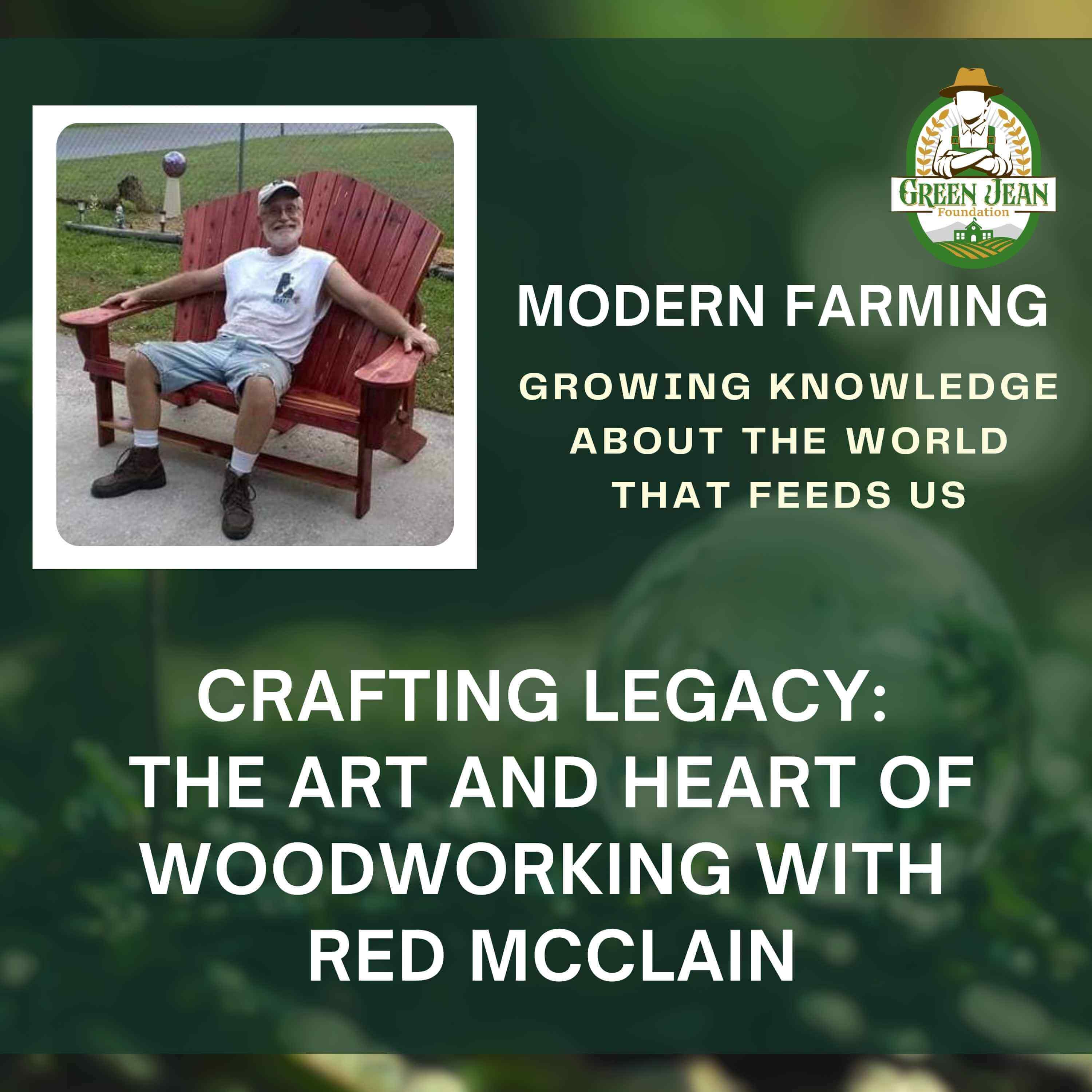
S1 Ep 46Crafting Legacy: The Art and Heart of Woodworking with Red McClain
In this episode of Modern Farming, we sit down with master craftsman Red McClain, a lifelong woodworker who turned a high school shop class project into a decades-long passion. From his workshop in Florida, Red creates custom, one-of-a-kind furniture using locally sourced hardwoods—often from downed or naturally felled trees.Red shares how he got his start in woodworking in the 1970s, why he chooses to work with native woods, and what makes each piece a story of its own. He also reflects on how woodworking has become a “lost art,” once common in schools but now rarely taught, and why keeping these hands-on skills alive still matters today.Tune in for a conversation filled with craftsmanship, creativity, and timeless lessons on working with your hands and heart.Listen now to hear how Red McClain is preserving the art of woodworking—one custom piece at a time.
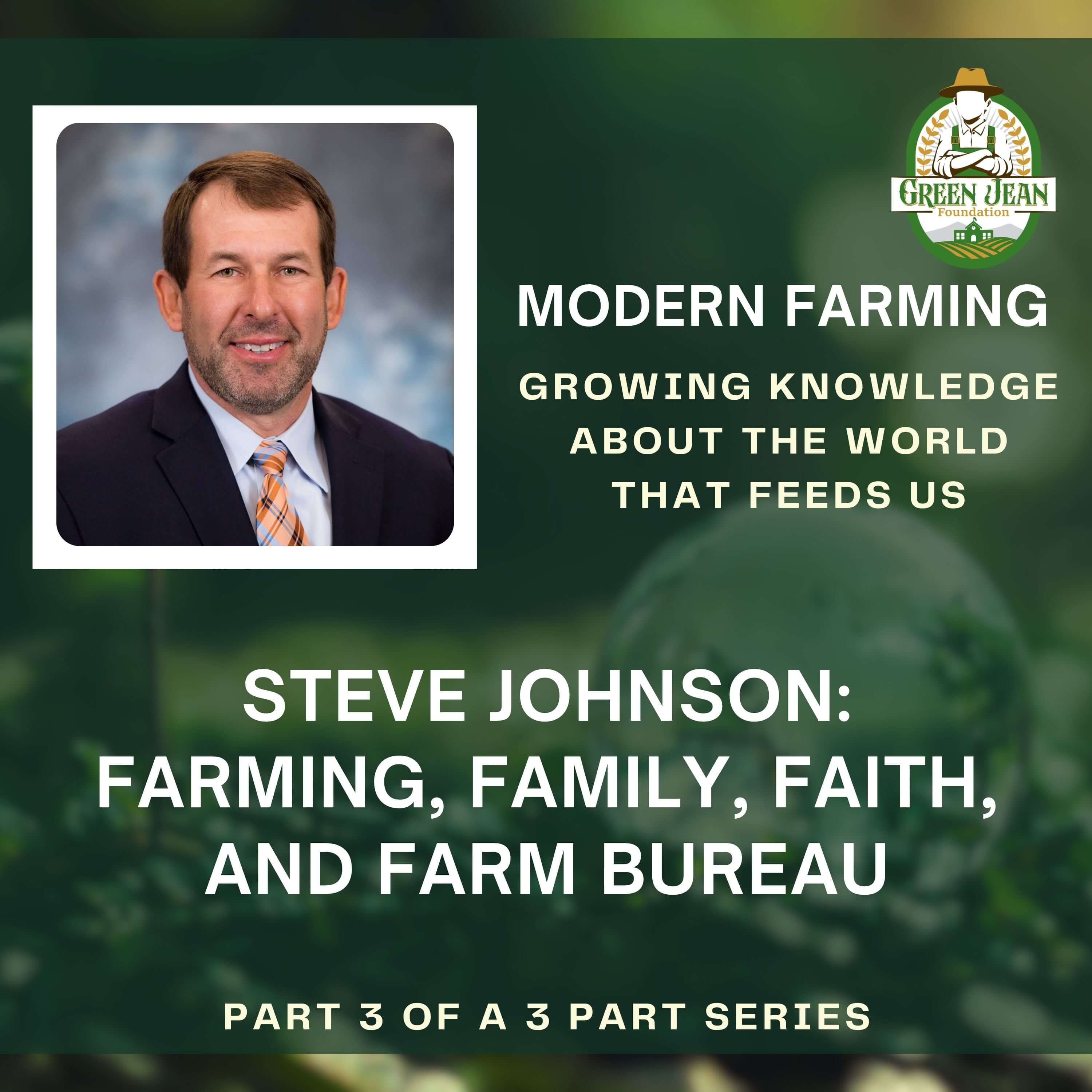
S1 Ep 45Steve Johnson: Farming, Family, Faith, and Farm Bureau
In this episode of Modern Farming, we sit down with Steve Johnson — fourth-generation citrus grower, cattle rancher, and Vice President of the Florida Farm Bureau Federation — for a candid look at the challenges and opportunities facing Florida agriculture today.Based in Hardee County, Steve operates multiple family businesses including Johnson Harvesting, Treeair Cattle Co., Johnson Groves and Farms, and Sabel Logistics. From managing labor and H-2A programs to navigating the evolving citrus market and labor challenges, Steve shares how his family continues to adapt while preserving their deep agricultural roots.We also talk about cow/calf operations, the rising costs of production, and how Farm Bureau plays a vital role in supporting Florida’s farmers and ranchers. Off the farm, Steve shares stories about faith, family, and finding balance — often on the water, fishing in his downtime.Tune in for a grounded, heartfelt conversation about leadership, legacy, and what it takes to keep Florida farming strong for the next generation.