PLAY PODCASTS
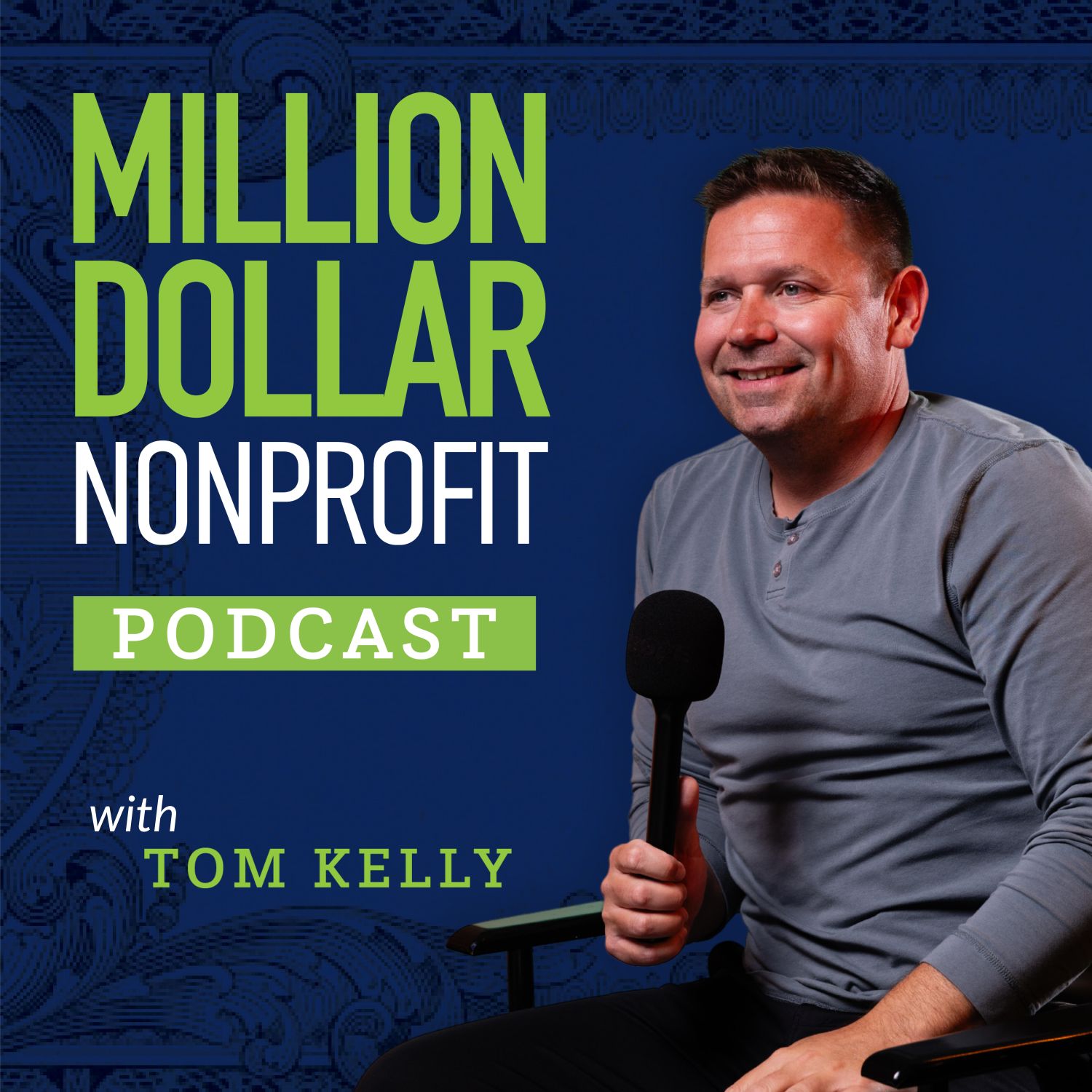
Million Dollar Nonprofit

Million Dollar Nonprofit

338 episodes — Page 1 of 7

Episode 337: The Game Has Changed: Why the Next Decade of Fundraising Looks Nothing Like the Last

May 15, 20264 min

Episode 336: Human With AI: The Remove–Enhance–Multiply Framework for the Future of Philanthropy

May 14, 20264 min

Episode 335: Lead From Purpose, Not Pressure: The Anchor–Align–Activate Framework for Sustainable Nonprofit Growth

May 13, 20264 min

Episode 334: Create Ripple Effects That Outlive You: The Plant–Empower–Repeat Framework for Lasting Nonprofit Legacy

May 12, 20263 min

Episode 333: It Was Never About the Money: The Moment–Meaning–Memory Framework That Redefines Nonprofit Fundraising

May 11, 20264 min

Episode 332: Measure What Matters Without Losing Meaning: The Numbers–Narratives–Nurture Framework for Nonprofits

May 10, 20264 min

Episode 331: Legacy Is Built Daily: The Decide–Demonstrate–Duplicate Framework for Nonprofit Leaders

May 9, 20263 min

Episode 330: The Mirror, Megaphone, and Model of Leadership: How Great Nonprofit Leaders Shape Culture Without Saying a Word

May 6, 20263 min

Episode 329: Scale Generosity Without Burning Out: The Simplify–Systemize–Support Framework for Low-Stress Growth

May 5, 20263 min

Episode 328: Would Your Nonprofit Still Grow Without You? The System–Story–Successor Framework for Scalable Legacy

May 4, 20263 min

Episode 327: Build a Movement, Not a Mission: The Cause–Community–Contribution Framework for Lasting Nonprofit Growth

May 3, 20263 min

Episode 326: Why Impact Alone Doesn’t Raise Money Anymore: The Moment–Meaning–Movement Framework for Donor Connection

May 2, 20263 min

Episode 325: Turn Your Auction Into a Year-Round Donor Machine: The Capture–Continue–Convert–Compound System

May 1, 20263 min

Episode 324: Unlock Hidden Auction Revenue: Add-On, Upgrade, Extend — The Post-Bid Upsell System for Nonprofits

Apr 30, 20262 min

Episode 323: Turn Auction Items Into High-Bidding Stories Using AI: The Picture–Emotion–Scarcity Framework

Apr 29, 20263 min

Episode 322: How to Build Excitement Before the First Bid: Create Auction Momentum Before You Launch

Apr 28, 20263 min

Episode 321: Why Bidders Ghost at Checkout: How to Fix the Final Step That’s Costing You Revenue

Apr 27, 20263 min

Episode 320: The Pre-Event Checklist Top Fundraisers Never Skip: How to Win Your Auction Before It Starts

Apr 26, 20263 min

Episode 319: What Your Auction Data Is Telling You: Turn Insights Into Higher Revenue and Better Events

Apr 25, 20263 min

Episode 318: The Psychology of Bidding Wars: How to Turn Competition Into Higher Auction Revenue

Apr 24, 20264 min

Episode 317: Turn Your Silent Auction Into a Live Show: How to Create Energy That Drives More Bids

Apr 23, 20263 min

Episode 316: The 3 Auction Settings That Can Double Your Revenue: How to Optimize Bids, Momentum, and Closing for Maximum Impact

Apr 22, 20263 min

Episode 315: How to Audit Your Nonprofit Tech Stack in 30 Minutes: Eliminate Tool Overload and Build a Simpler, Smarter System

Apr 21, 20264 min

Episode 314: How to Use AI to Write Grant Proposals Faster: Turn Weeks of Work into Hours Without Sacrificing Quality

Apr 20, 20263 min

Episode 313: How to Use Instantly.ai for Donor Outreach: Turn Cold Emails into Real Conversations That Drive Giving

Apr 19, 20263 min

Episode 312: The One Automation That Keeps Donors Warm All Year: Build a Relationship System That Grows Giving Without Constant Campaigns

Apr 18, 20263 min

Episode 311: How to Find Corporate Sponsors Using Apollo.io: A Simple System to Turn Cold Outreach into Real Partnerships

Apr 17, 20262 min

Episode 310: How a Smart Inbox Can Transform Your Nonprofit: The Simple System That Stops Missed Donations and Builds Faster Trust

Apr 16, 20263 min

Episode 309: The One Automation Flow That Runs Your Fundraising on Autopilot: Build It Once and Let It Work Forever

Apr 15, 20262 min

Episode 308: Connect AI to Your Donor CRM: How to Turn Generic Messages into Personalized Donor Experiences That Scale

Apr 14, 20262 min

Episode 307: How to Automate 90% of Fundraising Admin (No Code Needed): Free Your Team from Repetitive Tasks and Focus on Growth

Apr 13, 20261 min

Episode 306: The Essential AI Stack for Nonprofits: Build a Simple System That Saves Time and Increases Donations

Apr 12, 20262 min

Episode 305: How to Find Your Million-Dollar Story: Turn One Powerful Narrative into Consistent Donor Action

Apr 11, 20262 min

Episode 304: The Campaign Rhythm That Converts: How to Build Donor Momentum with Warm, Engage, Invite, Amplify

Apr 10, 20262 min

Episode 303: Why Your Mission Statement Is Killing Your Message: How to Turn Generic Language into Clear, Donor-Focused Communication

Apr 9, 20263 min

Episode 302: Turn Your Impact Report into Marketing Gold: How Nonprofits Can Repurpose Data into Stories That Drive Donations

Apr 8, 20262 min

Episode 301: The 7-Word Headline That Tripled Donations: How to Write Nonprofit Messages That Instantly Capture Attention and Drive Action

Apr 7, 20262 min

Episode 300: How to Use Urgency Without Feeling Pushy: Ethical Scarcity That Inspires Donors to Act Now

Apr 6, 20263 min

Episode 299: Why Your Nonprofit Social Posts Aren’t Converting: Turn Passive Posts into Donor-Driven Action with a Simple Story Framework

Apr 5, 20263 min

Ep 298Episode 298: The Hidden Formula Behind Viral Nonprofit Videos: How to Turn Attention into Emotion and Donations in 60 Seconds

📚 Grab your copy of Tom Kelly's book, The Million Dollar Nonprofit: https://ip.charityauctions.com/free-book-podcast Why do some nonprofit videos get ignored while others spread rapidly and inspire real action?In this episode of The Million Dollar Nonprofit, Tom Kelly breaks down a powerful truth: viral videos are not random. While they may seem unpredictable, most high-performing videos follow a simple, repeatable structure that any nonprofit can learn and apply.The biggest mistake organizations make is starting with information instead of attention. Messages like “Welcome to our fundraiser” or “Our mission is…” may be important, but they don’t stop someone from scrolling. In today’s fast-moving digital world, the first few seconds determine everything.Tom introduces a clear four-part framework for creating effective nonprofit videos: Hook. Emotion. Shift. Action.You’ll learn how to craft a compelling hook that grabs attention immediately, how to build emotional connection through real human stories, and how to create a meaningful turning point that shows impact and hope. Finally, you’ll discover how to invite viewers to take action in a way that feels natural rather than forced.This episode also emphasizes the importance of brevity. Most successful nonprofit videos are between 30 to 60 seconds — short enough to keep attention, but long enough to create emotional impact.Tom shares how authenticity often outperforms perfection. Some of the most effective videos are simple, real, and filmed on a phone, because audiences connect more deeply with genuine moments than polished productions.You’ll also learn how AI tools can help generate video scripts quickly, test different variations, and improve storytelling, while nonprofit systems can track which videos lead to engagement and donations.If you want to create videos that not only capture attention but also inspire generosity, this episode will give you a clear, practical framework to start producing content that truly connects and converts.

Apr 4, 20263 min

Ep 297Episode 297: How to Tell Stories That Make Donors Feel and Click Donate: The Emotional Framework Behind High-Converting Nonprofit Messaging

📚 Grab your copy of Tom Kelly's book, The Million Dollar Nonprofit: https://ip.charityauctions.com/free-book-podcast Why do some nonprofit messages inspire immediate giving while others are quickly forgotten?In this episode of The Million Dollar Nonprofit, Tom Kelly explains a powerful truth about fundraising: donors don’t give because of logic — they give because of emotion. Logic simply helps them justify a decision they’ve already made in their heart.Many nonprofits rely on statistics to communicate impact — families served, meals delivered, programs expanded. While these numbers are important, they rarely create the emotional connection needed to inspire action. Numbers inform, but stories move people.Tom introduces a simple and highly effective storytelling framework built around three elements: The Problem. The Person. The Possibility.You’ll learn how to create emotional tension by clearly showing a real human struggle, how to center your story around a specific individual instead of an abstract program, and how to present a hopeful transformation made possible through donor support.Through a relatable example, Tom demonstrates how adding small, specific details can dramatically increase emotional impact. Instead of broad descriptions, vivid moments help donors visualize the story, feel the situation, and connect more deeply.This episode also explores how pacing plays a critical role in storytelling. Rushing the donation ask too early can weaken the emotional connection, while allowing the story to unfold naturally builds engagement and trust.Tom emphasizes one of the most important mindset shifts in fundraising: the donor should feel like the hero of the story. When supporters see the role they play in creating change, they develop a stronger sense of ownership and long-term loyalty.You’ll also discover how AI tools can help refine storytelling and how nonprofit systems can track which messages resonate most with your audience.If you want your fundraising messages to connect, inspire, and convert, this episode will show you how to craft stories that make donors feel — and take action.

Apr 3, 20263 min

Ep 296Episode 296: The Story Framework Pixar Uses That Works for Nonprofits Too: Turn Donor Stories into Emotional, High-Impact Fundraising

📚 Grab your copy of Tom Kelly's book, The Million Dollar Nonprofit: https://ip.charityauctions.com/free-book-podcast What if one of the most powerful fundraising tools didn’t come from the nonprofit world at all?In this episode of The Million Dollar Nonprofit, Tom Kelly reveals how the storytelling framework used by Pixar Animation Studios — the creative force behind films like Toy Story, Finding Nemo, and Up — can transform the way nonprofits connect with donors.The secret behind Pixar’s storytelling success isn’t just creativity — it’s structure. Their stories consistently follow a simple six-part framework that builds emotional connection and keeps audiences engaged from beginning to end.Tom explains why many nonprofits struggle with storytelling. Instead of telling human-centered stories, they often default to reports: statistics, program descriptions, and organizational summaries. While informative, these approaches fail to create the emotional connection that inspires people to give.You’ll learn how to use Pixar’s six-step storytelling structure — Once upon a time… Every day… Until one day… Because of that… Because of that… Until finally… — to craft compelling, donor-focused narratives that highlight real people and real transformation.Through a clear nonprofit example, Tom shows how shifting from abstract data to a single human story can make your message more memorable and impactful. He also emphasizes a critical mindset shift: your nonprofit is not the hero of the story — the person you serve is. The donor becomes the guide who helps create change.This episode also explores how AI tools can help convert program descriptions into emotionally engaging stories, and how CRM systems and fundraising platforms can help track which stories resonate most with your audience.If you want donors to feel connected, inspired, and motivated to act, this episode will show you how to turn your mission into stories that truly move people.

Apr 2, 20263 min

Ep 295Episode 295: Why Working Less Might Be Your Best Growth Strategy: How Nonprofit Leaders Scale Impact Through Systems, Not Exhaustion

📚 Grab your copy of Tom Kelly's book, The Million Dollar Nonprofit: https://ip.charityauctions.com/free-book-podcast Many nonprofit leaders believe that working longer hours proves dedication to the mission. Packed schedules, constant emails, and late nights often feel like the cost of making a difference.But what if working more is actually slowing your organization down?In this episode of The Million Dollar Nonprofit, Tom Kelly challenges the deeply ingrained belief that exhaustion equals effectiveness. He explains why the most successful nonprofit leaders focus less on effort and more on leverage — building systems that allow impact to grow without requiring constant personal sacrifice.Tom explores the reality that most nonprofit leaders operate in reaction mode: responding to emails, solving event issues, answering donor questions, and handling board requests. While this activity feels productive, it rarely compounds into sustainable growth.Instead, scalable organizations prioritize systems, clarity, and focused decision-making. When leaders stop measuring success by hours worked and begin measuring outcomes, they can identify which activities actually move the mission forward.This episode also explores three key leadership shifts: focusing on outcomes instead of effort, challenging legacy habits that no longer serve the organization, and protecting dedicated thinking time to develop strategy rather than constantly reacting.Tom explains how modern nonprofit tools can provide the data leaders need to focus their energy effectively while automating repetitive tasks that drain time and attention.If you feel stretched thin, constantly busy, and worried that slowing down will hurt your mission, this episode will show you how strategic focus and better systems can create more growth with less stress.

Apr 1, 20263 min

Ep 294Episode 294: How to Make Automation Feel Human Again: Scale Donor Connection Without Losing the Heart of Your Nonprofit

📚 Grab your copy of Tom Kelly's book, The Million Dollar Nonprofit: https://ip.charityauctions.com/free-book-podcast Many nonprofit leaders worry that automation will make their organization feel cold or impersonal. If systems handle communication, will donors feel like just another number?In this episode of The Million Dollar Nonprofit, Tom Kelly tackles one of the biggest fears around nonprofit automation: losing the human connection that makes mission-driven work meaningful.Tom explains that automation itself isn’t the problem — poor automation is. When nonprofits automate generic messages without context, communication can feel robotic. But when automation is designed around meaningful moments and thoughtful timing, it can actually strengthen relationships and scale warmth.The key distinction is simple: automate the moment, not just the message. A well-designed system ensures that donors hear from your organization at the right time, while the tone, story, and emotional connection remain human.Tom shares practical examples of how small changes in automated messages can transform donor communication. Instead of sending a simple “thank you for your donation,” nonprofits can highlight the impact of that gift and connect it directly to the mission. Instead of a generic event follow-up, organizations can share a real outcome or story that participants helped create.You’ll also learn how personalization goes beyond inserting a donor’s first name. Referencing the campaign they supported, the event they attended, or the anniversary of their first gift makes automated communication feel thoughtful and intentional.With the help of modern tools like CRM systems and engagement data from fundraising platforms, nonprofits can automate communication while still delivering relevant, empathetic, and meaningful messages.If you want to scale your nonprofit’s systems without losing the warmth and authenticity donors value, this episode will show you how to design automation that feels personal, purposeful, and genuinely human.

Mar 31, 20263 min

Ep 293Episode 293: The Difference Between Being Busy and Being Scalable: How Nonprofit Leaders Build Systems That Grow Impact Without Burnout

Many nonprofit leaders wear busyness like a badge of honor. Packed calendars, constant emails, endless meetings, and nonstop activity can feel like proof that important work is getting done.But what if busyness is actually the thing holding your organization back?In this episode of The Million Dollar Nonprofit, Tom Kelly breaks down the critical difference between being busy and being scalable — and why confusing the two can trap nonprofit leaders in a cycle of working harder every year without building a stronger organization.Busy organizations rely on constant effort. Every task depends on someone pushing it forward: writing every donor thank-you email, chasing follow-ups after events, or manually tracking which supporters need attention.Scalable organizations, on the other hand, rely on systems. Automated follow-ups, structured workflows, and smart CRM tagging ensure that important actions happen consistently without requiring constant manual effort.Tom walks through practical examples showing how the same task can either drain a team’s energy or build long-term momentum depending on how it’s designed. Writing every donor thank-you individually creates busyness, while a well-designed automated thank-you sequence creates scalability. Manually chasing event follow-ups creates chaos, while workflow-driven systems turn events into predictable growth.You’ll also learn how scalable organizations grow differently. Instead of experiencing fundraising spikes followed by burnout, they build steady, predictable growth fueled by systems that compound over time.If your nonprofit feels stuck in reactive work and constant pressure, this episode will help you shift from heroic effort to sustainable leadership by designing systems that allow your mission to grow without exhausting your team.📚 Grab your copy of Tom Kelly's book, The Million Dollar Nonprofit: https://ip.charityauctions.com/free-book-podcast 

Mar 30, 20262 min

Ep 292Episode 292: How to Replace and Simplify Your Nonprofit Tech Stack and Lead with Clear Data

How many tabs are open on your computer right now?For many nonprofit leaders, the workday begins by jumping between tools: email, CRM systems, event platforms, spreadsheets, analytics dashboards, and messaging apps. The information exists — but it’s scattered everywhere. Instead of clarity, leaders face fragmentation and constant context switching.In this episode of The Million Dollar Nonprofit, Tom Kelly explains how to simplify your daily workflow by replacing multiple app check-ins with a single smart dashboard that provides instant organizational clarity.The real problem most nonprofits face isn’t a lack of tools — it’s a lack of visibility. When key metrics live in separate systems, leaders spend valuable time hunting for answers instead of making decisions. A smart dashboard solves this by bringing essential information together into one clear view.Tom shares a practical example of a nonprofit director who used to spend 30 to 45 minutes every morning checking multiple platforms just to understand the status of the organization. By building a simple dashboard that tracks revenue, new donors, event registrations, email engagement, and open tasks, they reduced that time to just a few minutes each day.The key isn’t building a complex reporting system. It’s creating a simple decision tool that helps leaders answer three critical questions quickly: Are we stable? Are we growing? Are we at risk?You’ll also learn how tools like a central CRM and integrated event platforms can feed data into one unified dashboard, giving nonprofit leaders the clarity they need to focus on strategy instead of constant data hunting.If your tech stack feels cluttered and your day starts with digital chaos, this episode will show you how to create a simple command center that keeps your organization aligned, informed, and moving forward.📚 Grab your copy of Tom Kelly's book, The Million Dollar Nonprofit: https://ip.charityauctions.com/free-book-podcast 

Mar 29, 20262 min

Ep 291Episode 291: What to Automate First When Your Nonprofits To-Do List Is 3 Miles Long

Does your nonprofit to-do list feel endless?Many nonprofit leaders are told to “just automate,” but when your task list keeps growing and everything feels urgent, automation itself can start to feel overwhelming. Instead of saving time, it becomes another project that never quite gets started.In this episode of The Million Dollar Nonprofit, Tom Kelly explains how to cut through the overwhelm and choose the right place to begin with automation.The most common mistake nonprofit leaders make is trying to automate everything at once: the entire donor journey, the full event process, or every internal workflow. The result is stalled projects and even more frustration.Tom shares a much simpler rule: automate the most repeated, low-value task first. Not the most strategic task — the most draining one.Automation isn’t just about saving hours. It’s about reducing mental load. When your brain stops tracking repetitive tasks, clarity returns and your team has the energy to focus on strategy and impact.Through a real example, Tom explains how one nonprofit team eliminated hours of repetitive work by automating simple donation confirmation emails they were previously typing dozens of times every week. The result was more time, improved morale, and a team that could finally focus on meaningful growth.You’ll also learn another easy automation win: reporting. Instead of manually compiling weekly updates, leaders can automate simple summaries that provide clear insights without the copy-and-paste chaos.If your organization feels buried under repetitive work, this episode will help you identify the simplest automation that can immediately reduce stress and create momentum for smarter systems.📚 Grab your copy of Tom Kelly's book, The Million Dollar Nonprofit: https://ip.charityauctions.com/free-book-podcast 

Mar 28, 20262 min

Ep 290Episode 290: The Simple Automation That Saves My Team 10 Hours a Week: Eliminate Follow-Up Chaos and Build Smarter Nonprofit Systems

What if one simple automation could save your nonprofit team an entire workday every week?Many nonprofit teams lose hours to small, repetitive tasks: sending thank-you emails, updating the CRM, assigning follow-ups, and answering the same operational questions again and again. None of these tasks are difficult, but the constant repetition creates decision fatigue, slows your team down, and leaves important details vulnerable to human error.In this episode of The Million Dollar Nonprofit, Tom Kelly shares the simple automation that saves his team roughly ten hours every week while dramatically improving consistency and donor trust.Tom explains how a single rule transformed their workflow: when this happens, these actions happen automatically. Instead of relying on memory, reminders, or internal messages, the system instantly completes several critical steps whenever a donation is received.For example, when a gift comes in, the system automatically sends a thank-you email, tags the donor by campaign, creates a follow-up task, and adds the donor to the organization’s impact update list. What once required manual emails, double-checking, and internal coordination now happens instantly and consistently.Tom also shares another example from fundraising events. Instead of scrambling after auctions close, the workflow now automatically sends payment instructions to winners, thank-you messages to non-winners, and begins a short follow-up sequence for everyone involved.You’ll learn how to build your own automation using a simple framework: identify the trigger, define the essential actions that must follow, and automate the process so your team never has to repeat the same work again.If your nonprofit feels stuck in constant follow-up and operational noise, this episode will show you how to design smarter systems that save time, protect donor relationships, and allow your team to focus on leadership instead of reminders.📚 Grab your copy of Tom Kelly's book, The Million Dollar Nonprofit: https://ip.charityauctions.com/free-book-podcast 

Mar 27, 20262 min

Ep 289Episode 289: How to Turn Chaos into Clean, Repeatable Workflows: Build Calm Nonprofit Systems That Run Without Constant Follow-Up

Do you ever feel like your nonprofit team is busy all day but somehow nothing actually gets finished?Many nonprofit organizations operate in a constant cycle of reacting, responding, and firefighting. Tasks pile up, staff members rely on memory, and important follow-ups slip through the cracks. The result is stress, confusion, and a team that feels overwhelmed despite working nonstop.In this episode of The Million Dollar Nonprofit, Tom Kelly explains how to turn operational chaos into clean, repeatable workflows that keep your organization moving smoothly without constant reminders or heroics.Tom breaks down a simple truth: if a process lives only in someone’s head, it isn’t a real process — it’s a liability. Instead of relying on memory and manual follow-ups, successful nonprofits create clear workflows that define what happens, who owns the step, and what comes next.Through a practical example, Tom shows how one nonprofit replaced inconsistent donor follow-ups after events with a simple automated workflow: the event ends, a thank-you email is sent automatically, the donor is tagged in the CRM, and a follow-up is scheduled. No guessing, no chasing people down — just consistent execution.You’ll also learn a simple three-step framework to clean up messy operations: identify the trigger, define the desired outcome, and remove unnecessary decisions so the system handles the work.If your organization feels stuck in constant reaction mode, this episode will help you design workflows that bring clarity, consistency, and calm to your daily operations.📚 Grab your copy of Tom Kelly's book, The Million Dollar Nonprofit: https://ip.charityauctions.com/free-book-podcast 

Mar 26, 20262 min

Ep 288Episode 288: The Lazy Nonprofit’s Guide to Massive Productivity: Build Systems That Save Time, Reduce Burnout, and Multiply Impact

What if the secret to nonprofit productivity isn’t working harder — but working lazier?It might sound counterintuitive, but the most productive nonprofit leaders aren’t the busiest people in the room. They’re the ones who design systems that eliminate repetition, simplify work, and prevent themselves from becoming the bottleneck.In this episode of The Million Dollar Nonprofit, Tom Kelly shares the surprising productivity philosophy behind high-performing nonprofit leaders: strategic laziness. This approach isn’t about avoiding responsibility — it’s about eliminating unnecessary effort and building smarter systems that save time and energy.Tom introduces three powerful “lazy principles” that can transform how nonprofit teams operate. First, if you’ve done something more than twice, it deserves a system. Second, anything that lives only in your head slows your organization down. And third, progress beats perfection every time.Through a simple real-world example, Tom explains how one nonprofit director reclaimed hours every week by turning repetitive donor questions into a single automated FAQ response system. The result? Faster communication, less stress, and more time to focus on mission-driven work.You’ll also learn how tools like templates, CRMs, and AI prompts can dramatically simplify daily tasks — allowing your organization to move faster without increasing workload.If your nonprofit team feels overwhelmed, stretched thin, or stuck doing the same tasks over and over, this episode will show you how to replace chaos with simple, repeatable systems that free up your time and expand your impact.📚 Grab your copy of Tom Kelly's book, The Million Dollar Nonprofit: https://ip.charityauctions.com/free-book-podcast 

Mar 25, 20262 min