Million Dollar Nonprofit
381 episodes — Page 3 of 8
Ep 280Episode 280: How Great Nonprofit Leaders Balance Data and Heart When Making Difficult Decisions
Do nonprofit leaders have to choose between compassion and clarity?In this episode of The Million Dollar Nonprofit, Tom Kelly breaks down a common leadership myth: that data-driven leadership feels cold while heart-led leadership feels mission-driven.The truth? Great leadership requires both.When leaders rely only on emotion, organizations drift into chaos. When leaders rely only on numbers, teams disengage. The most effective nonprofit leaders learn how to balance data and heart so decisions are both grounded and human.Tom also shares real examples of how nonprofit teams can evaluate campaigns, make difficult program decisions, and support staff without losing sight of mission impact.You’ll also hear how tools like DonorBooks help leaders see what’s happening across donors and campaigns, while platforms like CharityAuctionsToday capture donor engagement so follow-up becomes personal instead of generic.Data tells you what is happening.Heart reminds you why it matters.Great leaders use both.
Ep 279Episode 279: What Happens When You Stop Thinking Like a Nonprofit (And Start Thinking Like a Scalable Leader)
What if the biggest thing holding your organization back isn’t funding… but thinking?In this episode of The Million Dollar Nonprofit, Tom Kelly shares the mindset shifts that changed everything — not the mission, not the heart, but the way decisions were made, success was measured, and growth was approached.Nonprofit thinking often sounds like:Resources are scarceGrowth is riskyAsking is uncomfortableStruggle is nobleLeadership thinking sounds different:Effort isn’t impactBusy isn’t progressSurvival isn’t successYou’ll learn the five key shifts that move organizations from fragile to scalable:Stop asking how to do more with less — start identifying what actually worksStop measuring activity — start measuring outcomesStop treating donors like transactions — start treating them like partnersStop planning around calendars — start planning around behaviorStop glorifying burnout — start building sustainabilityThrough real examples, Tom explains how narrowing focus increased engagement, strengthened revenue, and protected mission impact — not by abandoning nonprofit values, but by aligning them with clarity and data.
Ep 278Episode 278: From Burnout to Breakthrough: The Systems Shift Every Nonprofit Leader Must Make
Burnout isn’t a sign you’re weak — it’s a signal that something in the system is broken.In this episode of The Million Dollar Nonprofit, Tom Kelly breaks down the real reason nonprofit leaders burn out and why working harder is almost never the solution. Burnout doesn’t come from caring too much — it comes from effort without evidence, responsibility without leverage, and systems that depend too heavily on one person.You’ll learn the mindset shift that turns burnout into a breakthrough, how to spot energy leaks inside your organization, and why sustainability is not a betrayal of your mission — it’s how impact actually scales. This episode dives into systems, automation, AI, and focus as tools to restore clarity, momentum, and meaning to your leadership.If you’re exhausted, overwhelmed, or quietly wondering if what you’re doing is even working anymore — this episode will help you see burnout for what it really is: information you can act on.
Ep 277Episode 277: How to Make Brave Decisions When Money Is Tight (Without Letting Fear Run the Organization)
Making decisions is easy when revenue feels stable.It’s much harder when budgets tighten and uncertainty creeps in.In this episode of The Million Dollar Nonprofit, Tom Kelly breaks down how nonprofit leaders can make brave, strategic decisions when money feels scarce — without freezing, panicking, or shrinking the mission.When resources get tight, most leaders do one of two things:Freeze and delay decisionsPanic and make reactive cutsNeither builds long-term strength.
Ep 276Episode 276: The Five-Minute Rule: How Great Nonprofit Leaders Turn Overwhelm Into Momentum
Most nonprofit leaders think clarity requires time.It doesn’t. It requires action.In this episode of The Million Dollar Nonprofit, Tom Kelly shares the Five-Minute Rule — the simple leadership habit that helps overwhelmed nonprofit executives move from paralysis to progress.In mission-driven organizations, everything feels urgent. Revenue goals. Board pressure. Retention issues. Staffing gaps. Strategic plans. It’s easy to get stuck staring at the big problem.The Five-Minute Rule changes the question.

Ep 271275: Why Most Fundraising Plans Fail Before They Even Launch (And How to Build One That Actually Works)
Most fundraising plans don’t fail in execution.They fail the moment they’re written.In this episode of The Million Dollar Nonprofit, Tom Kelly breaks down why so many nonprofit fundraising plans collapse before the first email is ever sent — and how to design a plan that actually turns into revenue.The problem isn’t effort. It’s structure.Too many plans are built around activities instead of outcomes. Spring appeal. Fall appeal. Giving Day. Year-end. It looks strategic. It feels productive. But it’s already broken.Tom unpacks the five silent reasons fundraising plans fail:• Too much ambition• Not enough math• No ownership• No systems• No feedback loopsYou’ll learn why hope is not math, why “everyone owns it” guarantees no one owns it, and why automation is what turns ideas into execution.
Ep 274Episode 274: How to Build a Fundraising Flywheel That Creates Predictable Revenue Without Burnout
If your fundraising only works when you’re actively pushing — emailing, calling, posting, reminding — and slows down the second you stop, that’s not a motivation issue. It’s a systems issue.In this episode of The Million Dollar Nonprofit, Tom Kelly breaks down how to build a fundraising flywheel — a system designed to create momentum that compounds over time instead of burning out your team.Most nonprofits operate in funnels: launch, push, exhaust, rest, repeat. Funnels require force. Flywheels build momentum.You’ll learn the four core loops that power a fundraising flywheel:• Story – The emotional energy that creates meaning and belonging• Engagement – Donor actions that signal interest• Recognition – Turning action into loyalty through fast acknowledgment• Invitation – Offering a next step without pressureTom shares a real example of a youth mentoring nonprofit that had been stuck at the same revenue for three years. By simply addingrecognition and invitation loops — without new campaigns or list growth — recurring donors increased 22% in 90 days.
Ep 273Episode 273: From Stuck to Scalable: The Framework That Grows Nonprofits Past $1M
Tom sits down with Mandy Moody of Odeo Consulting to unpack what really keeps small nonprofits stuck under the million-dollar mark — and how to finally break through it.If you’ve ever felt busy but not growing, this episode is for you.Mandy shares her practical and proven Four P Framework:Problem – Get crystal clear on the problem you actually solve.Programs – Align what you do with why you exist.Plan – Build a financial story of impact donors can understand.Purposeful Investment – Invite supporters to give at their highest level.This isn’t theory. Mandy walks through how her organization went from $750K to over $2 million by simplifying, focusing, and operationalizing a plan the whole team could follow.You’ll learn:Why most strategic plans collect dust (and how to fix that)How to create internal clarity that fuels external growthThe biggest mistake nonprofits make when talking to donors about moneyHow to move from grinding to scalingWhether you're a founder, executive director, or development leader trying to cross that million-dollar threshold, this episode delivers actionable steps you can implement immediately.Connect with Mandy Moody🌐 Website: https://www.helloodeo.com🔗 LinkedIn: https://www.linkedin.com/in/mandyhmoody📘 Free Resource:The 4P Formula: The Proven Path to Stress-Free, Scalable Fundraising for Executive DirectorsDownload here: https://www.helloodeo.com/4pformulaPrograms & Ways to Work TogetherOdeo C/DO – 12 Months of High-Touch Fractional Fundraising for Leaders Ready to ScaleFor driven nonprofit leaders who need long-term, C-suite level, hands-on support to build a sustainable, scalable fundraising system.Investment: Starting at $5,000/month (12-month minimum commitment)Odeo Hourly – Flexible Strategy SupportNeed focused guidance on a specific challenge? Book a 60-minute strategy session to troubleshoot, refine, and get unstuck.Investment: $250/hourLearn more: https://www.helloodeo.com/work-together
Ep 272Episode: 272: How to Stop Chasing Donors and Start Attracting Them Using Psychology, Story, and Simple Systems
If you constantly feel like you’re chasing donors, sending urgent emails, pushing campaigns, and hoping something sticks, you’re not alone. But here’s the uncomfortable truth: donors aren’t scarce. The problem isn’t supply. It’s strategy.In this episode of The Million Dollar Nonprofit, Tom Kelly breaks down the difference between chasing donors and attracting them. Chasing is fueled by pressure, urgency, and transactional messaging. Attraction is built on identity, story, visibility, and consistent value.You’ll learn why donors give when they feel aligned, not convinced. Tom shares a real-world example of a nonprofit that stopped asking for 30 days, focused on story and connection instead, and saw engagement triple before launching a campaign that exceeded its goal with fewer emails.This episode walks through a simple three-part framework:Visibility — Show up consistently, not just when you need money.Value — Offer meaning, insight, and belonging before you ask.Invitation — Replace pressure with clear, respectful choice.You’ll also hear what kills attraction (guilt language, crisis-only messaging, constant urgency) and what builds it (identity alignment, narrative clarity, steady presence).If you’re tired of feeling needy, reactive, or anxious before every campaign, this episode will help you build calm, confident momentum that pulls donors in instead of chasing them down.Stop chasing. Start attracting.
Ep 271Episdoe 271: How to Turn Your Volunteers into Powerful Mission Ambassadors (Without Making Them Ask for Money)
What if your most powerful fundraisers are already inside your organization… and you’re not even using them?In this episode of The Million Dollar Nonprofit, Tom Kelly challenges the traditional view of volunteer engagement and reveals why volunteers are often your most trusted, authentic, and effective growth engine.Most nonprofits treat volunteers like extra hands. But volunteers aren’t just helpers — they’re social proof. They’re storytellers. They’re trusted voices in their communities. And when empowered the right way, they naturally attract donors, referrals, and new supporters without ever making an awkward ask.You’ll learn why peer trust beats professional pitches, how to capture authentic volunteer stories, and how to create a simple system that turns volunteers into mission ambassadors. No scripts. No pressure. No forced fundraising goals. Just real stories that spark real engagement.If you want more donors without chasing them — and more growth without burning out your team — this episode shows you how to unlock the power already sitting in your volunteer base.

Ep 270Episode 270: How to Predict Your Next Fundraising Campaign (Before You Hit Send)
Campaign stress doesn’t come from the work — it comes from uncertainty.In this episode of The Million Dollar Nonprofit, Tom Kelly breaks down how to forecast your fundraising campaign results before you launch. No fancy software. No complicated dashboards. Just four simple numbers that determine your outcome: audience size, engagement, conversion, and average gift.You’ll learn:Why campaign results aren’t randomThe simple math model behind predictable revenueHow segmentation increases forecasting accuracyWhat to adjust before launch instead of panicking afterHow clarity reduces stress and improves resultsIf you’re tired of refreshing your dashboard and hoping for miracles, this episode will give you calm, data-backed confidence.
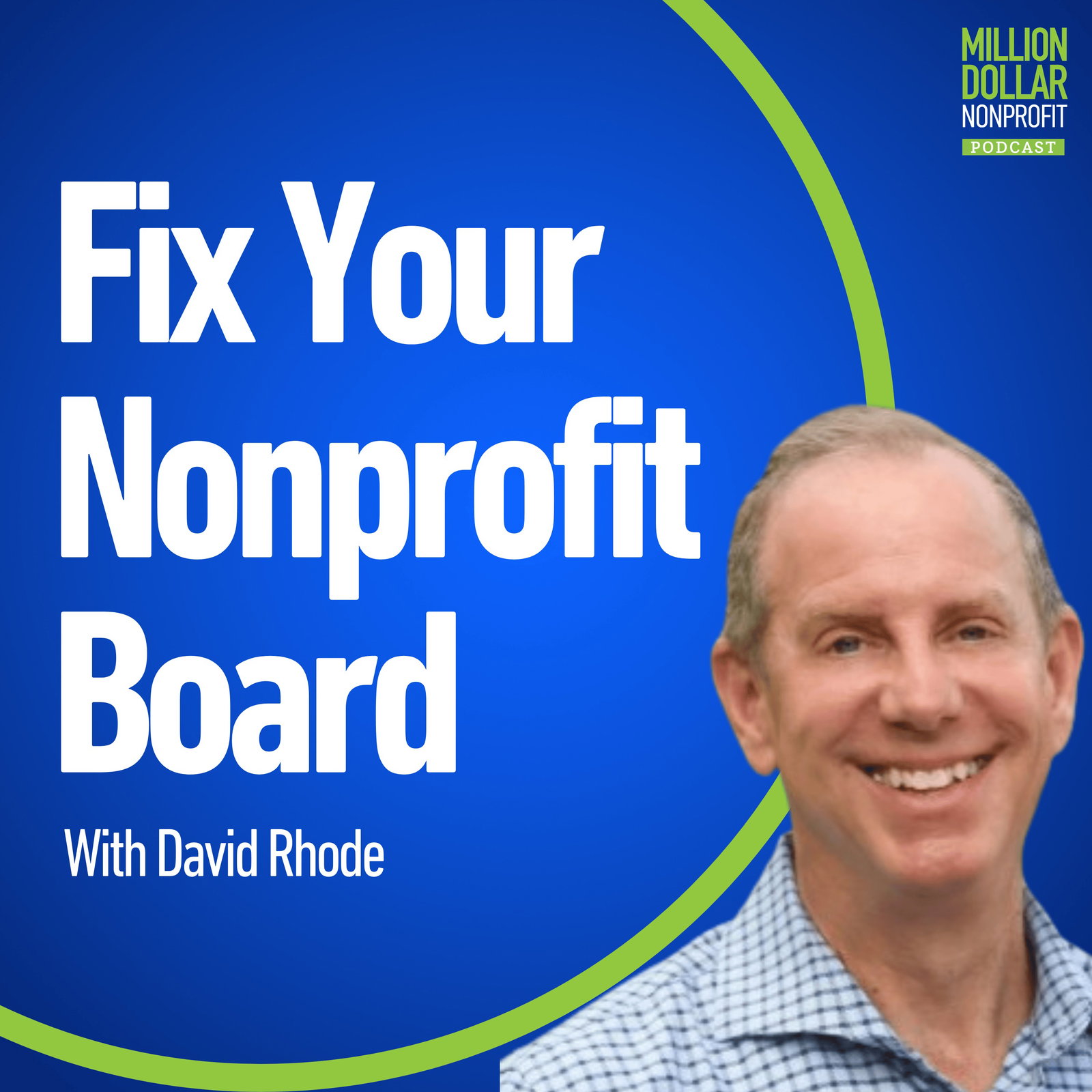
Ep 269Episode 269: The Board Reset: From Frustration to Function
Most nonprofit leaders don’t have a board problem.They have a clarity problem.In this episode of the Million Dollar Nonprofit Podcast, Tom sits down with nonprofit founder-turned-consultant David Rhode, author of Passion Isn’t Enough, to unpack what’s really going wrong when boards feel disengaged, unhelpful, or frustrating.David has been on both sides — as an executive director building a board from scratch and now as an advisor helping leaders course-correct when things go sideways. Together, they dive into:Why unmet (and unspoken) expectations are at the root of most board tensionThe two biggest areas where board members misunderstand their role: time and moneyThe difference between a working board and a capacity-building board — and why you must choose intentionallyHow to transition from a “friends and family” board to a more strategic one (without blowing up relationships)Practical ways to hold volunteer board members accountable — without shame or blameWhy passion alone won’t build a sustainable nonprofitIf you’re leading an organization under $1M and quietly thinking, “My board is a mess… where do I even start?” — this episode gives you a clear first step you can take this week.Find David on LinkedIn - https://www.linkedin.com/in/david-rhode-1129183/and head to his website to learn more https://dotdotorg.com/
Ep 268Episode 268: Turn One-Night Events Into Year-Round Revenue Without Burning Out Your Team
Most nonprofits treat their big events like fireworks: one loud night, then silence. In this episode of The Million Dollar Nonprofit, Tom Kelly explains how the real value of events begins after the lights go out. You’ll learn why events are not fundraisers — they’re information generators — and how to turn attendee engagement into ongoing relationships, recurring donations, and year-round revenue. Using real examples, actionable steps, and AI-assisted strategies, this episode shows how to design follow-up journeys that continue the emotional momentum, convert your most engaged attendees into loyal donors, and build systems that grow your mission without burning out your team. If you want your event to do more than celebrate one night, this episode is a must-listen.
Ep 267Episode 267: The 80/20 Rule That Explains Why You’re Burned Out in Fundraising
Most nonprofit burnout isn’t a motivation problem — it’s a focus problem. In this episode of The Million Dollar Nonprofit, hosted by Tom Kelly, we break down how the 80/20 rule applies directly to fundraising growth, donor retention, and nonprofit strategy. You’ll discover why a small percentage of donors drive most of your revenue, why a handful of messages create most of your engagement, and why focusing on high-impact activities leads to sustainable growth without exhausting your team. If you’re overwhelmed, juggling campaigns, events, emails, and still feeling stuck, this episode will help you simplify, prioritize, and scale smarter. Because fundraising success isn’t about doing more — it’s about protecting the 20% that actually moves the mission forward.

Ep 266Episode 266: Is Your Big Annual Fundraiser Quietly Holding Your Nonprofit Back?
Most nonprofits are proud of their big annual fundraiser. The gala. The walk. The tournament. The auction night. It feels productive. It brings in revenue. It’s tradition.But what if that once-a-year event is quietly limiting your growth?In this episode of The Million Dollar Nonprofit, Tom Kelly breaks down why depending on one major fundraiser creates compressed revenue, shallow donor relationships, and team burnout. Big events often create the illusion of progress without building long-term momentum.You’ll learn:• Why events concentrate risk instead of building stability• How feast-or-famine fundraising keeps nonprofits stuck• The difference between event donors and mission donors• How to turn your event into a long-term relationship engine• Three simple actions to make your next fundraiser smarter, not biggerEvents aren’t the problem. The way you use them is.If you want predictable revenue, stronger donor retention, and less burnout, this episode will shift how you think about fundraising strategy.
Ep 265Episode 265: Reframing Fundraising as Connection & Impact with Esther Saehyun Lee
Are you tired of hearing, “I’m not a fundraiser”? In this episode, Tom Kelly sits down with nonprofit strategist Esther Saehyun Lee to reframe what fundraising really means. Esther helps executive directors, board members, and staff see that fundraising isn’t just about the ask—it’s about connection, trust, and sharing your mission in meaningful ways.They dive into:Why so many nonprofit leaders feel like fundraising isn’t their jobThe lightbulb moment when people realize they already are fundraisersHow small and medium nonprofits can engage their teams and boards to share the fundraising loadSimple, high-impact donor stewardship practices you can implement todayThe power of authentic storytelling and avoiding extractive narrativesFree Gifts for ListenersSweet Treat Quiz for Nonprofit Leaders – Take a fun, silly quiz to find out what sweet treat you need and what it says about your leadership archetype. Take the quiz here https://opinionstage.com/page/d95ef3db-f580-4a72-9b57-265e34ad6cc5Limited Troubleshooting Calls – Esther is offering 4 private 30-minute troubleshooting calls to help you tackle your nonprofit’s fundraising challenges. To secure one of the 4 spots, email her directly at [email protected] you want to reimagine fundraising, engage your team, and strengthen your nonprofit’s impact, this episode is packed with actionable insights and encouragement to get started.Want to chat with Esther directly? Find her on LinkedIn https://www.linkedin.com/in/esther-saehyun-lee/For more info on Esther, visit her website: https://www.elevatephilanthropyconsulting.com/and for more additional resources from her here: https://candid.org/blogs/hidden-labor-behind-nonprofits-authentic-storytelling/

Ep 264Episode 264: The Quiet Pattern Behind High-Retention Campaigns
Most nonprofit campaigns fail to retain donors not because of lack of offers, timing, or frequency — but because the relationship feels disconnected.In this episode of The Million Dollar Nonprofit, Tom Kelly breaks down the quiet pattern behind campaigns that actually keep donors coming back: Recognition, Reinforcement, Re-entry.You’ll learn:Why high-retention campaigns feel like relationships, not transactionsHow to make donors feel seen before you ever askWhy reinforcement builds pride and loyaltyHow re-entry invites without pressure or guiltHow AI helps maintain continuity and scale donor engagementHear a real example of a nonprofit stuck at 41% retention. They rebuilt their campaigns around this simple pattern — same donors, same budget — and retention jumped to 62% in a year.This episode shows how high-retention campaigns continue a donor’s story instead of restarting it with every email. Calm, confident, human, and repeatable — that’s the pattern.

Ep 263Episode 263: How to Win Back Lapsed Donors With a Single Story
Most lapsed donors don’t need another campaign, another offer, or more urgency. They don’t need to be convinced. They need to feel something again.In this episode of The Million Dollar Nonprofit, Tom Kelly explains why donors lapse in the first place — not because they stopped caring, but because the emotional connection faded — and how one carefully written story can reopen that connection without guilt, pressure, or pretending nothing happened.Tom introduces a simple reactivation framework — Memory, Meaning, Momentum — that helps nonprofits reconnect lapsed donors by reminding them why they first cared, showing how their past support mattered, and offering a warm, pressure-free invitation back into the story.You’ll learn:Why “we miss you” emails quietly failHow guilt shuts donors down instead of bringing them backWhy stories outperform urgency for donor reactivationThe 3-part structure behind effective lapsed donor emailsHow AI helps nonprofits personalize reconnection at scaleYou’ll also hear a real example of a nonprofit that sent one story-based email to lapsed donors — no donate button, no countdown — and saw replies, reconnections, and reactivated giving simply because donors felt remembered, not chased.
Ep 262Episode 262: You Don’t Need More Donors — You Need Better Conversations
Most nonprofits believe their biggest growth problem is a lack of donors. More names. More leads. Bigger lists. But here’s the uncomfortable truth: most nonprofits don’t have a donor problem — they have a conversation problem.In this episode of The Million Dollar Nonprofit, Tom Kelly flips the traditional growth mindset on its head and shows why the fastest way to raise more money isn’t finding new donors, but having better conversations with the ones you already have.Tom breaks down why donors actually leave, how broadcast-style fundraising quietly destroys relationships, and why asking better questions does more for retention than any campaign ever will.You’ll learn:Why donors don’t leave because you ask too much — they leave because you talk too littleThe difference between broadcasting and real donor conversationsHow listening, reflecting, and guiding replace persuasion and pressureA simple four-email conversation sequence that outperforms most campaignsHow AI helps nonprofits scale real conversations without losing the human touchYou’ll also hear a real example of a nonprofit that stopped chasing list growth and sent one simple email asking donors why they originally connected. The result? More replies, deeper relationships, and a dramatic increase in repeat giving — without adding new donors.
Ep 261Episode 261: The Shockingly Short Follow-Up That Doubled Repeat Donors
The message that doubled one nonprofit’s repeat donors wasn’t long, clever, or emotional poetry. It wasn’t a campaign or a big strategy shift. It was one short follow-up, sent at the right moment, with the right tone, asking the right thing.In this episode of The Million Dollar Nonprofit, Tom Kelly breaks down why most nonprofits lose donors not because donors stopped caring, but because the conversation stopped. Most organizations think follow-up means asking again. Real follow-up is something different entirely — it’s continuing a conversation that most nonprofits never actually start.You’ll learn:Why traditional follow-up fails and silently kills donor retentionThe exact follow-up message that doubled repeat donors (and why it worked)How timing, tone, and curiosity outperform pressure and urgencyWhy asking for perspective builds more loyalty than asking for moneyHow to automate this process using AI without losing the human touchTom walks through a real example where a nonprofit sent a simple follow-up question three to five days after a donation. No links. No buttons. No ask. Just curiosity. The result? Donors replied, shared their motivations, felt seen — and stayed.
Ep 260Episode 260: How Psychology Can Ethically Increase Donor Giving
Making donors give more isn’t about manipulation, pressure, or guilt — it’s about understanding how humans actually make decisions. Most nonprofits get it backwards: they lead with numbers, budgets, and statistics, and then wonder why giving stalls.In this episode of The Million Dollar Nonprofit, Tom Kelly explains how to use psychology ethically so donors want to give more because it aligns with who they already are. No guilt. No pressure. Just human behavior.You’ll learn seven principles that drive giving:Identity drives giving. People give to express who they believe they are, not just to support a mission.Anchors shape decisions. Frame giving amounts so donors know what’s normal.Specific impact beats vague need. Concrete, visual moments inspire action.Momentum matters. Small steps create generosity.Timing beats persuasion. Ask right after a win, story, or thank-you.Fewer choices = more action. Clear, simple giving options remove hesitation.Belonging multiplies generosity. Language and inclusivity make donors feel part of something bigger.Real results: One nonprofit didn’t change its ask amounts, just applied these psychological principles. Average gift doubled in six months. Same donors. Same cause. Better understanding of people.

Ep 259Episode 259: Why Your Thank-You Letters Aren’t Working (and How to Fix Them)
Most thank-you letters are polite, well-intentioned, and… completely forgettable. If they worked the way we hope, donor retention wouldn’t be stuck around 45%. Yet people give once and disappear — all the time.In this episode of The Million Dollar Nonprofit, Tom Kelly reveals the real reason your thank-you letters aren’t working and exactly how to fix them using AI and human psychology. Gratitude isn’t a formality — it’s the foundation of donor relationships.You’ll learn the 5 truths most nonprofits get wrong:Letters are for you, not the donor. Donors give to express who they are. Thank the person, not the gift.Letters arrive too late. Gratitude delayed is gratitude diluted — timing matters.Letters are too long. Donors don’t need a report, they need one feeling, one moment, one impact.Letters don’t show impact fast enough. Concrete details stick. “Because of you, a mom didn’t have to choose between groceries and medicine this week.”Letters accidentally end the relationship. Instead, open the door to belonging: “You’re part of this now. I’ll share more with you soon.”Tom walks you through a thank-you formula that works:
Ep 258Episode 258: Before You Start a Nonprofit, Ask This One Question
Should You Even Start a Nonprofit?Before you file paperwork, pick a name, or ask for donations, there’s one question you have to answer first: should your nonprofit even exist?In this episode of the Million Dollar Nonprofit Podcast, Tom sits down with nonprofit governance expert Emily Gaylor to slow things way down and tackle the hard, often uncomfortable truths about starting a nonprofit. This conversation is for anyone who’s thinking about launching an organization, is on the verge of registering one, or is questioning whether starting something new is really the right move.Emily breaks down the critical work most founders skip, including how to clearly define the problem you’re trying to solve, conduct a real gap analysis, validate community need, and assess whether your idea adds true value or simply duplicates existing services. They dig into founder motives, ego vs. impact, and why “wanting to do good” isn’t enough to justify starting a new organization.You’ll also hear an honest discussion about leadership readiness, board structure, taking a founder salary, long-term sustainability, and the toll nonprofit work takes on founders and their families. Emily shares the biggest red flags she sees when nonprofits fail, what successful founders do differently, and the one hard question every founder must be able to answer to funders and the community alike.If you’re serious about impact, sustainability, and doing this the right way from the start, this episode is a must-listen.🎧 Listen now and find out if starting a nonprofit is truly the best way for you to make a difference.Please find Emilys free downloadable here https://docs.google.com/document/d/16t03bcKDLtELOG43X5N5365GKl69EzV9A0_BkZss4oU/edit?usp=sharingConnect with her on Linkedin https://www.linkedin.com/in/emilygaylorcfre/
Ep 257Episode 257: The Netflix Strategy: Turn One-Time Donors Into Binge Givers
Why do people binge Netflix? Because each episode hooks them, holds them, and keeps them coming back for more. Most nonprofits? Their donor journeys feel nothing like that. One donation, one generic thank-you, and then silence. Donors lose momentum. Retention drops. Engagement stalls.In this episode of The Million Dollar Nonprofit, Tom Kelly shares the Netflix Strategy — a framework for turning one-time donors into “binge givers.” Donors who don’t just give once, but return again and again because they’re emotionally invested in your story.Using the framework Hook. Hold. Habit., Tom shows you how to make donor journeys:Hook: Make the first giving moment unforgettable. Emotional micro-story. Immediate payoff. Future promise.Hold: Build sequenced donor journeys that create narrative momentum, emotional arcs, and soft cliffhangers.Habit: Turn giving into a predictable, recurring experience donors look forward to.You’ll learn how to replicate Netflix’s psychological principles in your fundraising, using AI to craft cinematic, relational donor journeys — without overwhelming your team.

Ep 256Episode 256: Why Most Donor Journeys Feel Like Bad First Dates (And How to Fix Them)
Have you ever been on a bad first date — awkward conversation, no connection, way too much oversharing, and zero chemistry? That’s exactly what most donor journeys feel like. And it’s why so many donors give once… and never come back.In this episode of The Million Dollar Nonprofit, Tom Kelly breaks down why nonprofit donor journeys fail — and how to redesign them so donors feel courted, connected, and emotionally invested instead of pressured and rushed.Using the simple framework Spark. Sequence. Sustain., Tom shows how to turn transactional donor experiences into real relationships.Spark: Create a first touchpoint that feels warm and emotional, not like a receipt or a brochure.Sequence: Build a donor journey that flows naturally — gratitude, identity, story, value, and connection — before asking again.Sustain: Keep the relationship alive with ongoing, no-pressure touchpoints that make donors feel seen and appreciated.You’ll learn why most nonprofits overshare too fast, ask too soon, and treat every donor the same — and how AI can help you create personalized, relational donor journeys that feel human at scale.
Ep 255Episode 255: Why Most Nonprofits Are Using AI Wrong (And How to Fix It)
Have you ever used AI to write a fundraising email or donor message and immediately thought, “This sounds like a robot wrote it”? You’re not imagining it — and it’s not because AI is bad at fundraising. It’s because most nonprofits are using AI the wrong way.In this episode of The Million Dollar Nonprofit, Tom Kelly breaks down the biggest mistake nonprofits make with AI: treating it like a shortcut instead of a force multiplier. When AI is used as a replacement for thinking, the result is bland, generic, robotic messaging. But when it’s used as a collaborator, everything changes.Using the framework Partner. Personalize. Prompt., you’ll learn how to turn AI into your most powerful teammate — not just a writing tool.Partner: Stop outsourcing your thinking. Give AI raw material — stories, bullet points, drafts — and co-create better fundraising messages together.Personalize: Train AI on your voice, tone, and donor psychology so everything it writes sounds human, warm, and consistent.Prompt: Learn how clear, directional prompts instantly eliminate robotic copy and produce donor-centered results.
Ep 254Episode 254: How Nonprofits Can Use AI Note Takers to Save Time and Improve Fundraising
Most nonprofits already have AI note takers… but almost no one is using them to their full potential.In this episode of the Million Dollar Nonprofit Podcast, Tom Kelly sits down with Faigy Gilder, marketing operations and systems expert, to unpack one of the most overlooked (and low-risk) ways nonprofits can start using AI today: AI note takers.This isn’t about replacing people or overhauling your entire tech stack. It’s about capturing the gold that already exists in your meetings, donor calls, board conversations, and interviews — and actually putting it to work.Faigy breaks down how nonprofits can:Move beyond “just meeting notes” and turn transcripts into actionable insightsAutomatically capture action items so nothing falls through the cracksOrganize conversations by donors, board members, volunteers, and prospectsUse AI to uncover patterns, language, and emotional triggers that improve fundraising and marketingReduce overwhelm by starting small — without ripping out existing systemsThey also dive into tools like NotebookLM, simple automation workflows, naming conventions that make everything easier, and why AI works best as an assistant not an autopilot.If you’ve been curious about AI but unsure where to start, this episode shows how one small shift can save time, sharpen messaging, and help your nonprofit make better decisions — starting this week.🎧 Listen now and discover why AI note takers might be the most valuable tool you’re already ignoring.Connect with Faigy Gilder & Resources🌐 Website: missionmarke.tech📧 Email: [email protected]🔗 LinkedIn: https://www.linkedin.com/in/faigy/🎁 Free Resource:Download Faigy’s newly updated Nonprofit Technology Starter Pack:https://missionmarke.tech/nonprofit-technology-starter-pack/
Ep 253Episode 253: Why Most Nonprofits Are Using AI Wrong (And How to Fix It)
Have you ever used AI to write a fundraising email or donor message and immediately thought, “This sounds like a robot wrote it”? You’re not imagining it — and it’s not because AI is bad at fundraising. It’s because most nonprofits are using AI the wrong way.In this episode of The Million Dollar Nonprofit, Tom Kelly breaks down the biggest mistake nonprofits make with AI: treating it like a shortcut instead of a force multiplier. When AI is used as a replacement for thinking, the result is bland, generic, robotic messaging. But when it’s used as a collaborator, everything changes.Using the framework Partner. Personalize. Prompt., you’ll learn how to turn AI into your most powerful teammate — not just a writing tool.Partner: Stop outsourcing your thinking. Give AI raw material — stories, bullet points, drafts — and co-create better fundraising messages together.Personalize: Train AI on your voice, tone, and donor psychology so everything it writes sounds human, warm, and consistent.Prompt: Learn how clear, directional prompts instantly eliminate robotic copy and produce donor-centered results.
Ep 252Episode 252: Automate Board Reports That ACTUALLY Get Read
When was the last time you put together a board report, and the board actually read it? Most nonprofit leaders know the answer: rarely. Hours are spent gathering data, formatting charts, writing summaries, and chasing staff — and yet engagement is low. Half the board skims it, a few dig deep, and some ask questions you already answered. Exhausting.In this episode of The Million Dollar Nonprofit, Tom Kelly shows how AI can automate 90% of your board reporting, compressing complex data into a one-page snapshot that boards actually want to read. Using the framework Collect. Compress. Communicate., you’ll learn how to:Collect: Gather all your donor, program, financial, and operational data in one place, and let AI summarize insights for your board.Compress: Turn chaos into a digestible, one-page report with simple visuals, a clear narrative, and action-oriented decisions.Communicate: Deliver the report in layers — quick snapshot, easy-to-read visuals, and optional deep dive appendix — so every board member engages at their preferred depth.You’ll hear real examples from nonprofits that cut 12–15 hours per report, improved board engagement, and ran more focused, productive meetings. AI didn’t just make reporting easier — it made the board better.Plug-and-play prompts help you automate each step, from summarizing data to creating charts and rewriting narratives in a warm, readable voice.
Ep 251Episode 251: How to Use LinkedIn to Reach Decision-Makers and Grow Funding
Do you really need to be on every social media platform to grow your nonprofit? In this episode of the Million Dollar Nonprofit Podcast, Tom Kelly sits down with LinkedIn fundraising expert Michelle Benson to break down why LinkedIn consistently outperforms other platforms when it comes to high-value donors, corporate partners, and trust fund decision-makers. Michelle explains why cold emails, coffee requests, and trustee address books are becoming less effective and how nonprofits can instead position themselves to be found by funders who are already looking to give. Drawing on her experience as both a former fundraiser and trust fund director, Michelle shares how decision-makers actually use LinkedIn, why mindset matters on each platform, and how nonprofits can build an intentional digital presence that leads to real conversations and partnerships. You’ll learn what nonprofits should have in place before funders reach out, why quality engagement matters more than likes, how commenting can be just as powerful as posting, and how to use LinkedIn without burning out or posting every day. Michelle Benson teaches nonprofits how to use LinkedIn to fundraise without cold calls or chasing the wrong donors. With 47,000 followers, over 5 million impressions, and more than 100,000 likes and comments each year, she has built a fully inbound fundraising pipeline and helped thousands of nonprofits across 32 countries do the same. If you want to reach companies, trust funds, and major donors more effectively, this episode will change how you think about LinkedIn and nonprofit fundraising. To work with Michelle, she offers year-round team training (direct message her on LinkedIn for details), as well as 4-week online LinkedIn training cohorts for fundraisers, CEOs, comms staff, and consultants running in January, May, and September 2026. You can follow Michelle on LinkedIn at https://www.linkedin.com/in/michelle-benson-creates-digital-pipelines/ and learn more at https://www.cultureofphilanthropy.co/.
Ep 250Episode 250: How Small Nonprofits Use AI to Look Like a Million-Dollar Organization
Have you ever looked at a large nonprofit’s website, emails, or campaigns and wondered how they manage to look so polished, professional, and organized? The truth is, it’s not about having a massive budget — it’s about having the right systems.In this episode of The Million Dollar Nonprofit, Tom Kelly breaks down how small nonprofits can use AI to operate, communicate, and present themselves like million-dollar organizations — without hiring more staff or burning out their team. This isn’t about pretending to be bigger than you are. It’s about building smart systems that create credibility, consistency, and trust.Tom introduces a simple three-part framework: Brand. Build. Broadcast. You’ll learn how AI can instantly upgrade your branding, create automated donor and volunteer systems that run in the background, and multiply your content so you show up everywhere without exhausting your team.You’ll hear real examples of small nonprofits using AI to improve donor perception, increase recurring giving, streamline operations, and raise more money — all by replacing chaos with structure. If your nonprofit is doing meaningful work but struggling to look as professional as larger organizations, this episode will show you how AI levels the playing field.
Ep 249Episode 249: When ChatGPT Becomes Your Donor Relations Assistant: Remember, Respond, Reinforce
What would happen if every donor who supported your nonprofit felt like they had a personal assistant dedicated just to them? Someone who remembered their birthday, their giving history, their interests, and their impact. Someone who responded warmly and accurately, every single time. Now imagine it happening automatically — without adding more to your workload.In this episode of The Million Dollar Nonprofit, Tom Kelly shows nonprofit leaders how to use ChatGPT as a donor relations assistant — an AI teammate that keeps donors engaged, valued, and connected. Using the framework Remember. Respond. Reinforce., you’ll learn how to:Remember: Use AI to track every donor’s history, preferences, and giving habits so you never miss a detail. Build donor profiles and communication rules that allow AI to act as the memory engine behind deeper relationships.Respond: Draft warm, personalized replies instantly for emails, DMs, or texts. AI helps your team respond quickly while keeping tone, gratitude, and mission alignment consistent.Reinforce: Maintain ongoing stewardship through automated check-ins, anniversary messages, personalized impact updates, event follow-ups, and upgrade invitations — all tailored to each donor’s journey.You’ll hear a real example from a food bank in Ohio that created an AI donor assistant named “Harper.” Response time dropped from three days to thirty minutes, and donor retention jumped 18% in a single quarter. Donors said: “You always remember me.” “I feel connected.” “I’ve never been thanked this consistently.”The episode includes plug-and-play prompts to help you: write warm donor follow-ups, personalize impact updates, send anniversary or birthday notes, and invite donors to upgrade or re-engage.
Ep 248Episode 248: How to Automate Donor Thank-Yous That Still Feel Personal (Without Losing the Human Touch)
How many donor thank-yous are sitting on your to-do list right now? Five? Twelve? A hundred? Donor gratitude is one of the most important parts of fundraising — and one of the easiest things to fall behind on. Not because you don’t care, but because you’re busy.In this episode of The Million Dollar Nonprofit, Tom Kelly shows nonprofit leaders how to automate up to 90% of donor thank-yous without losing the human touch. Using the framework Segment. Spark. Send., you’ll learn how to build a scalable gratitude system that feels warm, personal, and heartfelt — even when it’s automated.Tom walks through how to segment donors properly, create AI-powered thank-you message banks, and add personalization layers that make donors feel truly seen. You’ll learn how to use donor data like gift amount, program supported, location, and past involvement to spark genuine gratitude inside automated emails, texts, videos, and handwritten notes.This episode breaks down how to deliver thank-yous automatically across multiple channels — including email, SMS, personalized video, and handwritten cards — all triggered instantly through your CRM. The result is faster follow-up, stronger donor relationships, and higher retention, without overwhelming your team.
Ep 247Episode 247: How to Clone Your Best Fundraiser Using AI (So Everyone Fundraises Like an A-Player)
Who’s the best fundraiser on your team? The person who always knows what to say, who donors instantly trust, and who makes fundraising look effortless while everyone else overthinks a single email.Now imagine if your entire team could fundraise like that.In this episode of The Million Dollar Nonprofit, Tom Kelly shows nonprofit leaders how to clone their best fundraiser using AI — not by replacing people, but by capturing their instincts, phrasing, storytelling, and donor psychology and turning it into a system anyone can use. Using the framework Model. Mimic. Multiply., you’ll learn how to analyze high-performing fundraising messages, build an AI fundraising persona, and deploy that voice across emails, campaigns, donor calls, thank-yous, and follow-ups.Tom walks through how to extract your top fundraiser’s “DNA” from real emails and asks, translate it into a reusable AI writing persona, and scale it across your entire fundraising operation. The result is faster campaign creation, more consistent donor messaging, higher engagement, and stronger fundraising results — without hiring more staff or burning out your A-players.You’ll hear a real example from a children’s nonprofit that analyzed their development director’s writing, created an AI persona, and watched email open rates double while average gift size increased by 27%. In just six months, they raised an additional $118,000 — simply by cloning their best fundraiser’s voice.This episode also includes plug-and-play prompts to help you analyze fundraising copy, build a persona, rewrite messages for major, lapsed, and new donors, add urgency without guilt, and generate follow-ups that still feel personal and human.
Ep 246Episode 246: How to Build a Full Fundraising Campaign with AI in Under 5 Minutes
Writing a fundraising campaign shouldn’t take weeks—or drain your team’s energy.In this episode, Tom Kelly breaks down the exact AI workflow nonprofits are using to create full fundraising campaigns in minutes, not months. From emails and social posts to landing pages, SMS, and video scripts, you’ll learn how to turn one powerful story into an entire multi-channel campaign—without sounding robotic or generic.Tom walks through the Story. Structure. Scale. framework, shares real prompts you can use immediately, and highlights a real nonprofit that raised over $42,000 in just nine days using this system.If your team is stretched thin and staring at a blank page, this episode is your shortcut.
Ep 245Episode 245: The Nonprofit 4-Hour Workweek: Automate, Reduce, Reclaim
When was the last time you had nothing on your to-do list? Exactly. You can’t even remember.Nonprofit leaders don’t have one job — they have ten: Executive, Director, Marketer, HR, Development, Board liaison… and yes, somewhere in there, Janitor. And somewhere else, you’re supposed to sleep.Imagine if your workweek only required four focused hours. Not because you slacked off. Not because you outsourced everything. But because you automated 80% of your job — the tasks that don’t need your creativity or leadership.In this episode of The Million Dollar Nonprofit, Tom Kelly shows you how to design a leadership schedule that runs on automation, not exhaustion, where your high-impact hours are focused on strategy, vision, and mission-critical work. Using the framework Replace. Reduce. Reclaim., you’ll learn how to:Replace repetitive tasks with automation — emails, reports, meeting summaries, donor thank-yous, scheduling, social posts, and moreReduce unnecessary work — cut bloated meetings, approvals, and reports nobody readsReclaim your time for the work that only you can do — vision, strategy, donors, and innovationYou’ll hear real examples from nonprofit leaders who went from drowning in meetings, inboxes, and manual reporting to structured productivity and leadership clarity. One housing nonprofit ED said: “I finally became the leader my organization needs, not its administrator.”
Ep 244Episode 244: Build a Culture of Innovation with AI-Powered Idea Boards
When was the last time someone on your team brought you an idea that made you stop and think, “Whoa… that could actually change everything”?For most nonprofit leaders, it doesn’t happen often — not because their teams lack creativity, but because the day-to-day grind drains it. When everyone is stuck reacting, there’s no space to imagine. And without imagination, innovation dies.In this episode of The Million Dollar Nonprofit, Tom Kelly shows you how to build a culture of innovation using AI-powered idea boards, so ideas don’t get lost in Slack threads or forgotten in someone’s Notes app.Using the simple framework Capture. Collaborate. Curate., you’ll learn how to:Capture ideas consistently across your team using a shared AI Idea BoardCollaborate with AI to strengthen, refine, and stress-test ideasCurate ideas into a prioritized pipeline that actually leads to actionTom walks through how to set up an idea board in tools like Notion, Google Sheets, Trello, ClickUp, or Airtable, and how to use ChatGPT to rewrite ideas clearly, generate variations, identify risks, and create low-cost pilot plans.You’ll hear a real example from an animal rescue in North Carolina that collected 15 ideas in one week — two of which saved 22 hours a month and generated an extra $18,000. The insight? They never lacked ideas. They lacked a system that respected them.

Ep 243Episode 243: Automate Onboarding for Staff and Volunteers (So No One Feels Lost on Day One)
Do you remember your first day at a new job? That awkward moment when you’re trying to look confident, but secretly wondering where to sit, what to do, and who to ask for help?Now imagine that feeling inside a nonprofit — smaller teams, looser structure, volunteers showing up with zero context. That’s how confusion turns into chaos, new hires burn out, and volunteers disappear after one shift.In this episode of The Million Dollar Nonprofit, Tom Kelly breaks down how to automate your entire onboarding process for staff and volunteers, so every new person feels supported, confident, and excited from day one — without adding more work to your plate.Using the framework Welcome. Walkthrough. Workflow., you’ll learn how to:Welcome new staff and volunteers with automated emails, texts, and first-touch messagesWalkthrough your mission, culture, tools, and expectations using AI-generated onboarding guides and training modulesWorkflow the entire onboarding process so tasks, reminders, check-ins, and goals run automaticallyTom shows how to use ChatGPT to write welcome sequences, orientation guides, training modules, checklists, reminders, and surveys — then connect everything with tools like Zapier, GoHighLevel, ClickUp, Google Classroom, or Google Sheets.
Ep 242Episode 242: From Slack Chaos to Staff Clarity: How AI Creates Alignment Automatically
Have you ever walked into a staff meeting and instantly felt like everyone was on a different page? Slack is buzzing. Emails are untouched. Side conversations are happening in DMs. And then someone asks, “Wait, didn’t we already decide that?”In this episode of The Million Dollar Nonprofit, Tom Kelly shows nonprofit leaders how to turn messy team communication into clean, digestible weekly summaries and clear staff meeting agendas using AI. Because the biggest bottleneck in most nonprofits isn’t funding or staffing — it’s clarity.Using the simple framework Collect. Condense. Communicate., Tom walks you through how to:Collect all team communication in one place without forcing behavior changeCondense Slack messages, emails, notes, and updates into a single weekly summaryCommunicate priorities clearly with ready-to-run meeting agendas and action itemsYou’ll learn how to use Google Sheets as a communication capture hub, connect Slack and email via Zapier, and prompt ChatGPT to extract tasks, decisions, deadlines, blockers, and updates automatically. Instead of scrolling through hundreds of messages, you’ll walk into meetings knowing exactly what matters.Tom shares a real example from a community nonprofit in Austin that automated this system and instantly improved alignment. Weekly summaries. Faster meetings. Clear leadership recaps. The Executive Director said it felt like hiring an internal communications manager — without adding staff.
Ep 241Episdoe 242: From Slack Chaos to Staff Clarity: Automate Your Meeting Summaries
Ever walk into a staff meeting and feel like everyone’s on a different page? Slack is buzzing, emails are ignored, side chats are happening — and clarity is nowhere to be found.In this episode of The Million Dollar Nonprofit, Tom Kelly shows you how to turn messy team communication into clean, digestible weekly summaries and ready-to-run meeting agendas using AI. With his three-step framework — Collect. Condense. Communicate. — you can finally walk into meetings knowing exactly what matters.Get plug-and-play prompts, real examples, and actionable steps to automate clarity, streamline meetings, and align your team — all without adding another staff member.
Ep 241Episode 241: Build a Virtual AI Assistant to Run Your Nonprofit Operations
What would change in your life if you had one more staff member — not full-time, not temporary, just someone who handled all the repetitive stuff: questions, updates, reminders, scheduling?In this episode of The Million Dollar Nonprofit, Tom Kelly shows you how to build a virtual AI assistant that quietly runs your nonprofit operations, saving you hours each week. With just ChatGPT, a few simple automations, and a clear plan, you can give yourself an operations teammate who works 24/7 — never tired, never annoyed, never on PTO.Tom walks through the three-step framework: Capture. Categorize. Complete.Capture: Identify and list all the tasks that eat your time each week, from email drafts to volunteer tracking. Teach your AI what needs automating.Categorize: Build your assistant’s “Operations Playbook” so it handles tasks your way — drafting, summarizing, reporting, tracking, and organizing — with the tone and style you want.Complete: Connect your systems (Zapier, Make, Google Sheets, Slack, CRMs) to automate tasks fully. Your AI now executes daily updates, board packets, Q&A, agendas, and more — all without you lifting a finger.Tom shares a real example: a youth development nonprofit built an AI assistant named River. River now summarizes meetings, drafts thank-you emails, updates the CRM, tracks volunteers, and creates weekly reports — giving the ED back 10 hours a week. That’s a part-time staff member without payroll.Bonus prompts include pre-written scripts for donor communications, volunteer follow-ups, operations summaries, staff reminders, and project updates — your assistant becomes your Chief Detail Officer.
Ep 240Episode 240: Use AI to Screen Candidates and Hire Faster (Ethically) in Your Nonprofit
When you think about hiring, how does your stomach feel? Tight? Heavy? Maybe a little nauseous? For nonprofit leaders, hiring isn’t just hiring — it’s hiring with limited money, limited time, limited people, and unlimited expectations.In this episode of The Million Dollar Nonprofit, Tom Kelly shows you how to use AI to screen candidates, shorten hiring cycles, and save hours every week — ethically. AI shouldn’t replace human judgment. It should replace the tedious, manual work that slows you down and burns you out.Tom walks through the three-step framework: Define. Filter. Finalize.Define: Use ChatGPT to create clear role scorecards, measurable outcomes, and mission-aligned job descriptions so candidates know exactly what success looks like.Filter: Let AI handle the first pass of resume screening based only on skills, experience, and role alignment — never demographics — making your process faster and fairer.Finalize: Upgrade interviews with scenario-based questions, practical exercises, and side-by-side candidate comparisons so you hire based on ability, not charisma.Tom shares a real example of a nonprofit cutting hiring time from 30–40 hours down to just 6, without skipping steps or sacrificing ethics. Bonus prompts include bias checks, reference scripts, cover letter summaries, and candidate comparison charts — giving you HR-level structure without HR-level cost.If hiring has felt overwhelming, slow, or risky, this episode gives you a smarter, more humane way forward. Define. Filter. Finalize.
Ep 239Episode 239: Predict Staffing Needs and Volunteer Gaps Using AI Forecasting
Do you ever feel like you’re always a few people short? One more role to fill, one more volunteer to recruit, one more program that needs help right now? For most nonprofit leaders, that’s the daily reality.In this episode of The Million Dollar Nonprofit, Tom Kelly shows you how to use AI forecasting to plan your people strategy. You’ll learn how to predict staffing needs and volunteer gaps before they happen, so you can recruit early, allocate resources smartly, and stop scrambling.Tom breaks down the framework: Track. Trend. Trigger.Track: Focus on workload, not headcount. Identify over-capacity areas, underutilized resources, and volunteer gaps using real hours and tasks.Trend: Analyze historical data to predict future staffing and volunteer needs. Spot seasonal patterns, campaign spikes, and recurring bottlenecks.Trigger: Automate alerts and recommendations using Zapier or Make.com, so your team acts before problems arise.Tom shares real examples of nonprofits eliminating last-minute scrambles, improving volunteer retention, and increasing staff satisfaction — all by leveraging AI to forecast needs. Bonus prompts include ready-to-use staffing forecast models in Google Sheets, complete with seasonal trends and workload projections.
Ep 238Episode 238: Automate Your “What Should We Do Next?” Decision Tree: AI for Nonprofit Leaders
How many times this month have you said, “I don’t even know what to focus on next”? For most nonprofit leaders, that’s the daily struggle — another campaign, report, board request, or fire to put out.In this episode of The Million Dollar Nonprofit, Tom Kelly shows you how to automate your “What should we do next?” process using AI. You’ll learn how to build a decision tree that thinks for you, prioritizes actions based on goals, resources, and results, and even triggers tasks automatically.Tom walks through the three-step framework: Map. Model. Mobilize.Map: Identify the recurring decisions that drive your strategy and have AI build a logical decision tree.Model: Add real data to your decision tree so AI predicts the next best steps and adapts automatically. Connect it to CRMs or Google Sheets for live updates.Mobilize: Turn insights into action. Use GoHighLevel, Zapier, or ClickUp Automations to trigger tasks directly from AI recommendations.Tom shares real examples of nonprofits increasing revenue by 22% in 90 days using this approach. Bonus prompts include customizable templates for decision trees covering fundraising, marketing, operations, and staff management — ready to automate.If you’re ready to go from overwhelmed and reactive to proactive and strategic, this episode is your blueprint. Map. Model. Mobilize.
Ep 237Episode 237: Build Your Annual Budget in Minutes: AI + ChatGPT for Nonprofits
Let me ask you something. When’s the last time you built your annual budget and actually enjoyed it? For most nonprofit leaders, budgeting feels painful, confusing, and way too time-consuming. But it doesn’t have to be that way.In this episode of The Million Dollar Nonprofit, Tom Kelly shows you how to build a complete, detailed nonprofit budget in minutes using ChatGPT. You’ll learn how to turn your numbers, goals, and key assumptions into a board-ready budget, complete with revenue projections, expense categories, and smart forecasting — no spreadsheets from scratch required.Tom walks through the three-step framework: Plan. Prompt. Polish.Plan: Gather your inputs — income, donor base, grants, events, expense categories, staff, and more. These numbers are the puzzle pieces AI needs to build a realistic draft.Prompt: Turn your data into a living plan. Create multiple scenarios (conservative, moderate, ambitious), adjust for inflation, donor growth, or other assumptions, and let AI model outcomes like a CFO.Polish: Make it board-ready. Generate one-page summaries, tables, or even a script to present your budget clearly to your board or team.Tom shares real examples of nonprofits transforming weeks of tedious work into minutes of clarity. He also includes bonus prompts to create quarterly check-in plans, turning budgeting into an ongoing strategic rhythm.If you’re ready to turn budget chaos into confident decision-making, this episode is your roadmap. Plan. Prompt. Polish.
Episode 236: Build Your Donor Acquisition Calculator: AI + Data-Driven Growth
Let me ask you something. When you set your donor goals each year, are they based on strategy or hope? For most nonprofits, goal-setting sounds like: “Well, we raised $100K last year, so let’s shoot for $150K!” That’s not a plan. That’s a wish with better numbers.In this episode of The Million Dollar Nonprofit, Tom Kelly shows you how to build your own Donor Acquisition Calculator using AI. You’ll learn how to set realistic, data-driven goals that are trackable week by week, eliminating guesswork and making your growth measurable.Tom walks through the three-step framework: Forecast. Factor. Focus.Forecast: Start with the numbers you know — current donors, average gift size, retention rate, and new leads. Plug these into ChatGPT to generate a realistic 12-month donor growth forecast.Factor: Test “what if” scenarios to see how changes in retention, acquisition, or average gift size affect your results. AI can even visualize your projections for board or staff presentations.Focus: Turn insights into action with a 90-day strategy that prioritizes high-ROI activities, like automated donor follow-up, referral campaigns, or micro-giving challenges.Tom shares real examples of nonprofits hitting 100%+ of their revenue goals simply by improving retention and using AI to model growth — all without increasing ad spend or adding staff. You’ll also get bonus prompts to create an AI-powered donor acquisition spreadsheet dashboard in Google Sheets.If you’re ready to stop guessing and start growing with confidence, this episode is your blueprint. Forecast. Factor. Focus.
Ep 235Episode 235: Turn Your Board Into Content Creators Using AI (Without Them Writing a Single Word)
What would happen if every person on your board started sharing real stories about your mission? Not corporate posts. Not awkward selfies. Just honest, human moments that build trust and visibility.In this episode of The Million Dollar Nonprofit, Tom Kelly shows you how to turn your board into powerful content creators without asking them to write a single word. Using simple AI workflows, you’ll capture their stories, convert them into platform-ready posts, and circulate them automatically across social channels.You’ll learn a practical three-step framework — Capture. Convert. Circulate. — that transforms voice notes and quick reflections into authentic, high-performing content that expands reach, boosts credibility, and drives donations. No pressure. No tech overwhelm. Just your board’s voice, amplified.If your board wants to help but doesn’t want to “do social media,” this episode shows you exactly how to make it effortless — and incredibly effective.
Ep 234Episode 234: Create Personalized Talking Points for Every Board Member Using ChatGPT
Have you ever sat through a board meeting — or a donor conversation — where a board member completely missed the message? They’re talking about programs you sunset years ago, quoting outdated stats, or pitching the wrong story entirely. Painful… and avoidable.In this episode of The Million Dollar Nonprofit, Tom Kelly shows you how to use ChatGPT to create personalized talking points for every board member, so they always sound confident, current, and aligned with your mission.You’ll learn a simple three-step framework — Profile. Personalize. Prepare. — to gather the right context, generate natural talking points each board member will actually use, and automate updates as your mission evolves. No memorization. No scripts. Just authentic, on-brand conversations that drive donors, partnerships, and trust.If you want your board to stop guessing what to say — and start representing your nonprofit like pros — this episode is your playbook.
Ep 233Episode 233: Get Your Board to Fundraise Without Awkwardness Using AI
How many times have you asked your board to fundraise… and felt the awkwardness ripple across the room? Half of them suddenly “need to check their email,” and you’re left wondering why it’s so hard to get them involved.In this episode of The Million Dollar Nonprofit, Tom Kelly shares an AI-powered framework that turns your board into confident fundraisers, without guilt trips, pressure, or outdated “list five friends” exercises.Learn the three-step framework: Equip. Empower. Encourage. You’ll see how to give board members the right tools, match their natural strengths to meaningful fundraising roles, and automate follow-ups that motivate instead of nag. Real-life examples show boards that went from dreading fundraising to driving record-breaking results — all with AI guidance.This episode is your blueprint to turn your board into your nonprofit’s secret fundraising weapon, effortlessly and effectively.
Ep 232Episode 232: Automate Your Board’s Reminders, Updates, and Action Items with AI
How often do you send your board a friendly reminder email… and hear nothing but crickets? For most nonprofit leaders, keeping board members engaged feels like babysitting: chasing updates, nudging on tasks, and hoping someone reads your emails.In this episode of The Million Dollar Nonprofit, Tom Kelly shows you how to use AI to automate your board’s reminders, updates, and action items, so everyone stays aligned, accountable, and engaged — without you sending a single nudge.Learn the three-step framework: Remind. Report. Reconnect. You’ll see real examples of nonprofits that tripled board engagement, improved attendance, and empowered members to lead. With AI handling reminders, summaries, and conversation prompts, you can focus on mission, strategy, and impact — not chasing your board.This episode is your blueprint to turn passive board members into proactive partners, automatically.