
Meet the Microbiologist
180 episodes — Page 3 of 4
Ep 77077: Influenza, politics, and scientific credibility with Ilaria Capua
Ilaria Capua talks about running an internationally renowned animal influenza lab, and her time spent in the Italian Parliament. Accused of virus trafficking as part of a national scandal, she has since cleared her name and speaks here about the importance of scientific credibility and reputation.
Ep 76076: Evolution of bacterial biofilm populations with Vaughn Cooper
Most bacteria live a sedentary lifestyle in community structures called biofilms. Vaughn Cooper tells us what bacterial biofilms are, why biofilms differ from test tube environments, and how long-term evolution experiments combined with population genomics are teaching us how bacteria really work. He also discusses using hands-on bacterial evolution activities to introduce high schoolers to future STEM possibilities. Host: Julie Wolf Subscribe (free) on iPhone, Android, RSS, or by email. You can also listen on your mobile device with the ASM Podcast app. Julie's biggest takeaways: Cells in a biofilm shift to dedicate their resources to protection rather than reproduction. This allows biofilms to be innately more resistant to antibiotics than those growing in planktonic culture. One of the least-understood parts of a biofilm cycle is the dispersal stage. What cues or signals influence some biofilm-embedded cells to leave? This is a vital part of biofilm formation, since these dispersal cells can eventually attach to a new surface and restart the process of forming a biofilm. The bead system of biofilm propagation allows Vaughn and his colleagues to study the long-term evolution of biofilms. This system, combined with population genomics, allows the study of all the different genetic changes within the population. Traditional genetic screens compare libraries of mutants to see which survive under different conditions. Rather than on libraries of mutant strains, evolution works on random mutants that arise naturally. The accessibility of sequencing technologies has changed the way scientists study evolution, as now the mutations can be found as they form, rather than being seeded into the initial mutant library screen. High schoolers using nonpathogenic bacteria can study evolution in action by developing new colony morphologies. Work with high schoolers and their teachers has shown students who do hands-on learning do better on standardized tests and that girls, especially, express higher interest in technology and an interest in STEM careers after a 1-2 week project. Featured Quotes (in order of appearance) "From a perspective of an ecologist and evolutionary biologist, this is what captivated me about biofilms: that instantly in the process of forming a biofilm, the environment becomes heterogeneous. Different cells that are clone mates are experiencing different selective pressures." "The hypothesis that we've been testing for the last 15 years or so is that biofilms in and of themselves may generate ecological and heritable evolutionary diversity in really short periods of time." "In describing the wrinkled Pseudomonas colonies that can stem from biofilm cells: "I think they look like hydrangeas, and some look more like doilies. I think they're captivating and pretty charismatic as far as microbes go." "The average bacteria picked from any environment does an unbelieveably good job of protecting its genetic material. The per-cell mutation rate, per-genome, per-generation rate is about 1 in 1000 cells. So a bacterial cell needs to divide about 1000 times to create a single mutant. That means that mutations are actually relatively scarce, but bacterial populations are extraordinarily immense. If you grow a single cell to 108 cells, you've got about 105 new mutations. That's a pretty large number. Some of them, maybe a handful, maybe 1/100 of those 105 mutations, which would be about 1000, would be beneficial. Then selection will act on them, and the better ones will rise more quickly because they make more progeny. And that's evolution in action!" "Increasingly, we're using evolution to teach us about how the organism works." "I'm not saving lives with any of our studies on microbes in biofilm-associated infections just yet. We are seeing how they change in these infection and how they become more drug resistant. That's great, and I think that's a valuable contribution. But when we can encourage hundreds of high schoolers to really consider careers in the life sciences or mathematics or engineering, we're changing lives." Links for this episode Vaughn Cooper University of Pittsburgh website Rich Lenski Long-Term Evolution Experiment ASM video Journal of Bacteriology cover featuring Pseudomonas colonies Journal of Bacteriology report on the evolution of Pseudomonas biofilm diversity Journal of Bacteriology tribute to Bill Costerton Bill Costerton YouTube interview Send your stories about our guests and/or your comments to [email protected].
Ep 75075: Working with the Microbes in our Drinking and Waste Water with Marylynn Yates
Marylynn Yates discusses how the urban water cycle and its importance in eliminating waterborne pathogens. She describes the types of microbes that can survive in water and how testing for different microbial types can affect interpretation of contamination levels. Host: Julie Wolf Subscribe (free) on iPhone, Android, RSS, or by email. You can also listen on your mobile device with the ASM Podcast app. Julie's biggest takeaways: Worldwide, water is a large source of infectious disease. Billions of people have no access to safe water and this culminates in 1.5 billion cases of diarrhea and 1.5 million deaths from contaminated water annually. The urban water cycle takes water from lakes or the ground for its first treatment before delivery to our homes. Water leaving our homes as waste water goes to a second facility where water is given a different set of treatments to eliminate disease-causing microbes before the water is returned to lakes or rivers. Different treatment facilities are needed because the concentration of contaminants is different in water before and after use in our homes. Crystal clear spring water can be deceiving, but can carry disease-causing microbes. Animals can carry protozoans such as Giardia and Cryptosporidium, which also cause disease in people. This is why treating water, even with a simple boiling procedure, is important when backpacking or camping. Bacterial sentinels such as Escherichia coli can be used to measure potential bacterial pathogen presence, but they don't measure pathogenic protozoans or viruses. This is in part because the treatment necessary to eliminate bacteria is different than that necessary to eliminate protozoans and viruses. Some scientists argue that bacteriophage are a better measure of potential pathogenic virus present, though no regulations require phage monitoring. Others argue that detection of a spore-forming bacteria, such as Clostridium perfringens, would better predict protozoan presence. Featured Quotes (in order of appearance): "Because there is no new water on Earth, we need to make sure that after we use water that we treat it in a way so that when it's used again as drinking water, it's as clean as it can possibly be." "Some viruses are very hardy and can survive for a long time (outside their host cell). They don't need nutrients like bacteria do, so they just sit there - almost like a chemical contaminant." "Some of these viruses, such as hepatitis A virus or norovirus, can survive for a long time in the environment. When I say 'quite a long time', I mean for weeks or months, or in the case of hepatitis A, there was one report that it lasted up to a couple of years." "It's that real-world application that has kept me going for all these years, knowing that I can have an impact on public health in my own, tiny way." Links for this episode Marylynn Yates website at UCR Marylynn Yate interview with UCR mBiosphere blog post on developing water safety testing with the EPA mBiosphere blog post on developing new technologies for water safety testing Milwaukee Wisconsin Journal Sentinel 20th Anniversary of Cryptosporidiosis Outbreak Monsters Inside Me: Cryptosporidiosis Send your stories about our guests and/or your comments to [email protected].
Ep 74074: Treating Ebola in America and Fecal Transfers with Colleen Kraft
Colleen Kraft talks about treating Americans who became sick with Ebola during the west African outbreak and were evacuated to her hospital for treatment. In the second half, Kraft talks about her experience performing fecal transfers, and explains why she sees the gut microflora like a garden. Host: Julie Wolf Subscribe (free) on iPhone, Android, RSS, or by email. You can also listen on your mobile device with the ASM Podcast app. Julie's biggest takeaways: The patient conditions couldn't be more different between the Liberian care centers and Emory University. The nursing ratio, access to both basic and experimental medicines, and even environmental conditions such as air conditioning created drastically different healthcare experiences between the two. While Ebola is a deadly disease, the symptoms such as headache, fever, and diarrhea are much more common than the bloody hemorrhaging often described. Patients can lose up to 10 liters of fluid each day! Fecal microbiota transfer is a more appropriate name than transplant; new microbes overlaid on top of the dysbiotic flora will reshape the microbiota already present. While FMT is currently used only to treat C. difficile (aka C. diff), forthcoming studies will determine if FMT can decrease risk of an antibiotic-resistant infection by displacing resistant bacteria. Featured Quotes(in order of appearance) "Ebola virus disease is much more mundane than all of the novels you might read. It's really a sepsis syndrome with a spectrum of that sepsis. Part of sepsis can be abnormal coagulation factors and low platelets, and so those bleeding complications go along with that sepsis syndrome." "It sounds really mundane, but supportive care is really the most important thing for these patients. When that can occur, people can recover." "The body doesn't really like Ebola. One patient was encephalopathic, had kidney failure, liver failure, had some bleeding. Once the viral load was gone, all those things uprighted! It was like a capsized ship that uprighted." "I really view our guts like gardens. There are good fruits and vegetables when our gardens are in homeostasis. Once we use antibiotics, it kills the good fruits and vegetables of the garden and C. diff grows up like a weed. All we're doing [when we treat C. diff] is giving weed killer but we're not replanting that garden." "I'm somebody who thinks after every antibiotic treatment for anything that we do, we should be giving people some sort of item to enrich or restore their microbiome." "The most exciting thing I can think of is to bring cutting-edge research and contributing to people being cured by these methods." Links for this episode Colleen Kraft Emory website And the Band played on Virus Hunters of the CDC The Hot Zone NETEC Clinical Virology Symposium Send your stories about our guests and/or your comments to [email protected].
Ep 73073: Biological sex and influenza with Sabra Klein
Sabra Klein addresses the question: how does biological sex influence influenza infection and vaccination? She explains her findings on inflammation differences between males and females, and how these differences can affect the outcome of disease. Klein also discusses her advocacy for inclusion of biological sex in method reporting as a means to improve scientific rigor. Host: Julie Wolf Subscribe (free) on iPhone, Android, RSS, or by email. You can also listen on your mobile device with the ASM Podcast app. Julie's biggest takeaways: Information from the 1918 influenza pandemic suggested males died at a higher rate than females, which could be due to a gender fator or a biological factor. In 1918, men lived in close quarters of military barracks while women didn't, representing a cultural difference of gender norms (women were exempted from military duty). But males are more susceptible to secondary bacterial infections that often accompany flu, which may represent a biological difference in infection outcome. In Klein's studies, female mice suffer influenza more severely than males. Women who contracted the H1N1 flu epidemic in 2009 were more likely to be hospitalized with severe influenza than men. These data have yet to be aligned and leave many variables yet to explore! Influenza infection disrupts the female menstrual cycle, causing lowered estrogen and progesterone levels. Providing exogenous progesterone can dampen inflammation and stimulate repair mechanisms needed to fix the damaged lung tissue. This type of host treatment is less likely to lead to the evolution of resistance than using antiviral compounds. Females and males respond differently to vaccination; females mount a higher antibody response and have greater cross-protection than males. Many diseases in addition to influenza show these sex-specific differences. The sex differences observed are specific to age; with older age, the differences are lost. In several other countries, epidemiological and clinical data are analyzed for differences between sexes. With greater awareness, the United States may incorporate this practice too. Featured Quotes (in order of appearance): "Both genes as well as the hormones define the biological construct of sex." "There's an ample amount of data that suggest men are less likely to wash their hands than women. We all know handwashing is probably one of the best ways to avoid contact with viruses - really anything infectious. We always have to question if we do things that influence our exposure; but in our mice studies, we can control their exposure." "We really have a love-hate relationship with inflammation. We need it to recognize the presence of the virus, but then we need it to dissipate. Our data suggest hormones are integral to regulating inflammation and the repair following inflammation." "The immune responses to the influenza vaccine - and this extends to many vaccines - are often higher in females as compared with males. This has been shown in humans as well as animal models." "I don't know that I think that man flu is real. I think a lot can depend on both your age as well as your vaccine status that can influence whether you're going to land in the hospital with severe influenza. Much like we were talking about with individuals who don't have a vaccine, such as during a pandemic, females may be suffering a bit more, but once vaccinated females seem to do better than males. There are some nuances we shouldn't lose sight of." Links for this episode Sabra Klein website Klein speaking on heart disease differences in men and women Klein editorial in mBio: Sex reporting in microbiological and immunological research Smithsonian exhibit notification HOM Tidbit: Smithsonian article: How the horrific 1918 flu spread across America HOM Tidbit: Aeon article: Who names diseases? Send your stories about our guests and/or your comments to [email protected].
Ep 72072: Microbial diversity of natural ecosystems with Jennifer Martiny
Jennifer Martiny describes the incredible microbial biodiversity of natural ecosystems such as soils and waterways. She explains how to add a bit of control in experiments with so many variables, and why categorizing microbial types is important for quantifying patterns. Host: Julie Wolf Subscribe (free) on iPhone, Android, RSS, or by email. You can also listen on your mobile device with the ASM Podcast app. Julie's biggest takeaways: Studying microbial community functions in their natural environment are harder to understand, but help us to parse the complexity of the natural world, in part because these experiments also include local flora and fauna that are often omitted in the controlled lab environment. Microbial cages - an actual physical barrier that contains a soil-based community - can help to disentangle the effects of the microbial community from those of the surrounding environment by adding a level of control by limiting interaction of microbes inside the nylon mesh cage with those outside of it. Are microbial functions redundant? It depends on what function you look at - respiration is a very common function, so it's less likely to be affected by a change in microbiome composition. Other functions, such as degrading particular compounds, may have a stronger relationship between the microbes present and those functions. Microbes are hugely diverse! Jennifer's comparison of all the diversity of the birds on Earth to a single bacterial taxon is mind-blowing! Microbial categorization may be hard, but the ability to group similar organisms is necessary to formulate hypotheses and conduct experiments. It's important to remember the groupings are manmade and sometimes have to be reconstructed! Featured Quotes (in order of appearance) "One of the hardest things we study is not on the microbiology side but is on the ecosystem side, measuring those biochemical functions in the environment." (10:05) "It's not as if we are ever going to be able to study every particular organism out there and build a model with thousands of equations; instead what we really need to do is go after trade-offs and overall relationships that may hold across large groups, and in that way have some simple rules under different conditions like drought or temperature." (16:45) "Modern birds evolved about 100, 125 million years ago. Two sequences that share the 16S gene, if it's roughly 97% identical, probably diverged 150 million years ago. That means we are lumping in all the diversity within the bacteria group within one taxon, calling it a species, which is the equivalent of lumping all birds together!" (18:47) "It's a bit overwhelming to imagine that for each 16S rRNA taxon, you could have as much functional, morphological, and behavioral diversity as what we see in all of birds!" (19:39) "In biology, we're always using an operational definition but we don't want to get too hung up on the definition and miss all the interesting patterns going on!" (20:49) "If you can start to quantify patterns, then you can start to ask ecological and even evolutionary questions about why we see those patterns." (33:04) Links for this episode Jennifer Martiny Lab Home Page University of California Irvine Microbiome Initiative HOM Tidbit: TWIM 50: These things aren't even bacteria! Carl Woese Obituary (New York Times) Carl Woese 1996 Feature (New York Times) Send your stories about our guests and/or your comments to [email protected].
071: Neglected Tropical Diseases and Vaccine Advocacy with Peter Hotez
Peter Hotez talks about neglected tropical diseases: what are they, where are they found, and where did the term "neglected tropical disease" come from, anyway? Hotez discusses some of the strategies his and other groups are using for vaccine development, and his work as an advocate for childhood vaccines and global health. Host: Julie Wolf Subscribe (free) on iPhone, Android, RSS, or by email. You can also listen on your mobile device with the ASM Podcast app. Julie's biggest takeaways: Renaming "other diseases" - a large collection of disparate diseases such as schistosomiasis, leishmaniasis, and onchocerciasis (also called river blindness) - as "neglected tropical diseases" by Hotez and colleagues was integral to bringing attention to the diseases of the bottom billion, people that live on less than one U.S. Dollar per day. Neglected tropical diseases are often chronic and debilitating without high mortality. These diseases trap people in poverty due to their long-term effects. The NTDs are often associated with terrible stigma that can lead to additional challenges for affected populations. Neglected tropical diseases are found worldwide, in rich and poor countries. The poorest peoples living in the G20 countries (and Nigeria) now account for most of the world's NTDs. Parasitic infections present challenges for vaccine design, but reverse vaccinology may be a useful strategy. Reverse vaccinology mines genomes to identify promising vaccine candidates in silico, which are then narrowed sequentially for those that are expressed on the bacterial surface, immunogenic, and ultimately protective against disease. This strategy has worked for Neisseria meningitidis, and Hotez is hopeful that it will produce effective vaccines for the parasitic infections he studies. The tradition of individual fields and departments, combined with the old-fashioned notion that scientists needn't spend their time engaging with the public, has led to flatlined budgets and the rise of anti-science movements. Scientists need to engage the public to ensure the future of science and science-based policy. Featured Quotes (in order of appearance): "The concept of 'neglected tropical diseases' was very much born out of the Millennium Development Goals launched in the year 2000." "Treating NTDs in rich countries "is not a resource problem; it's an awareness problem." "If you want to enter global health, we need as many people with a scientific background to go into business and law and international relations as we need to go into traditional scientific pathways" "Many involved in the antivaccine movement disproportionately involve either parents who are affluent or educated, or both: those who know just enough to do a google search but without the background to separate the garbage from the important stuff. And of course the anti-vaccine groups are deliberately misleading." "Research America found that 81% of Americans can't name a living scientist. That's our fault. We're so inward looking that we aren't taking the time to do public engagement." Links for this episode Peter Hotez at Baylor College of Medicine Peter Hotez website Millennium Development Goals published by the World Health Organization in 2000 WHO list of Neglected Tropical Diseases Forgotten People, Forgotten Diseases by Peter Hotez Blue Marble Health by Peter Hotez Public Health United episode featuring Hotez HOM Tidbit: Oncocerciasis now: 1986 British Medical Journal report Send your stories about our guests and/or your comments to [email protected].
Ep 70070: Influenza vaccine and susceptibility with Stacey Schultz-Cherry
Stacey Schultz-Cherry explains the selection process to choose the influenza virus strains to include in the annual influenza vaccine. Schultz-Cherry also discusses her research on the influence of obesity on the course of disease and vaccine efficacy. Host: Julie Wolf Subscribe (free) on iPhone, Android, RSS, or by email. You can also listen on your mobile device with the ASM Podcast app. Julie's biggest takeaways: The WHO Collaborating Centers and National Influenza Centers around the world work with a humongous network of physicians, public health workers, and veterinarians to identify strains most likely to become part of the circulating influenza viruses. An influenza strain that makes birds very sick is not necessarily a strain that will make people sick. Predicting phenotype from genotype remains a challenge. Receptor binding to mammalian receptors, signatures in the genome that allow it to replicate in mammalian cells, and transmission between ferrets are the marks of potentially bad strains. Genetics can also tell you a little bit about the antiviral resistance characteristics of a strain. Why can't we incorporate all known influenza strains into a vaccine? It's an issue of immunodominance - having enough antibodies against an infectious agent that it will be neutralized should it cause infection. Researchers don't know how many HAs you can incorporate to generate proper immunity to each molecular version, and this is one area of influenza vaccine research. Obesity appears to decrease the immune response to influenza, potentially affecting the ability to form memory response. This means the vaccine is less effective, the course of disease when infected is worse, and the likelihood of secondary bacterial infection is higher. Featured Quotes (in order of appearance) "People don't appreciate how much work goes into this. The importance of surveillance - if we lose our surveillance, it's going to be very difficult to know which strains to select for the vaccine, as well as diagnostics." "Part of the trick is not just predicting which viral strain to use but understanding which of those strains will grow to the highest efficiency without changing when we grow it in eggs to make the vaccine." "My bet is, whatever we find, it's going to end up being 10 times more complicated...which is great for my post-docs, because there's plenty of opportunities for them to find new things and build new labs, which is ultimately the most important thing you can do as a P.I." "I did wound repair during my Ph.D. . . . with my background in wound repair, I said 'what is a virus but a great big wound" "When I was changing fields, my thesis committee asked me, 'what are you doing? I was told it would take five years just to read the literature. You can't change fields!' And I said, 'Yeah, I can.'" And I did! "Whatever your decision is, you go for it you don't have regrets, but you put 110% into whatever you decide to do." Links for this episode Stacey Schultz-Cherry St. Jude Graduate School of Biomedical Sciences CDC Flu Activity Map HOM Tidbit: Vaccination against Influenza (review) Send your stories about our guests and/or your comments to [email protected].
Ep 69069: Biopreparedness and biosecurity with Gigi Kwik Gronvall
Gigi Kwik Gronvall talks to MTM about the importance of biopreparedness. Gronvall discusses her work in creating policies around potential natural, accidental, and man-made pandemics. She describes her experiences running pandemic thought exercises that help researchers, public health workers, and governmental officials apply preparedness ideas to real-world simulations. Host: Julie Wolf Julie's biggest takeaways: Thought exercises and scenarios work well for people to understand how technology, communications, human behaviors can affect the spread of infectious disease. Many after-action reports after major biosecurity breaches, such as the Dugway contamination event, where inactivated Bacillus anthracis was accidentally shipped without being inactivated. These involve reports on what went wrong, who made mistakes, and how to prevent repeats of these errors going forward. International groups such as the Global Health Security Alliance work with governments and institutions around the world to run dialogs and talk about biosecurity issues, safety issues, pathogen management issues. Comparing notes across countries helps to harmonize policies and find gaps that need addressing. Bringing scientists into the policy-making meetings is the best way to write regulations in a way to protect the public, the scientists, and the research itself. Crafting good recommendations for governance prevents writing regulations that can be hard to remove. Featured Quotes (in order of appearance): "There's a public health infrastructure that's needed to detect epidemics and respond to them appropriately. If you are lacking that infrastructure, it's like not having a fire department anywhere close when there's a fire. The fire gets bigger and bigger, it becomes much more difficult to be able to put out the fire, and a lot of lives are lost." "The thinking behind the GHSA is to boost public health infrastructure in different parts of the world that need it and to focus donor attention on some of those areas so that the weakest links are made stronger." "It's going to shock no one, but it's not always the case that the best scientific information is brought to bear on a policy issue." "You have to do what you can to make things a little bit harder, a little bit more challenging but still allow real, legitimate, important science to continue. Everybody sees that balance a little bit differently." "It's important to me that we have someone advocating for the science and making it so it's not onerous to be a scientist." "Synthetic biology changes the way we think about what biology can do. Biology has a bigger potential to be involved in industrial processes than it used to have." "The problem with a lot of these pathogens is that they exist in nature...you can't take care of all options, unfortunately." "You can't ever be fully prepared, but you can be in the right mindset to be surprised." Links for this episode Gigi Kwik Gronvall website at Johns Hopkins University SPARS epidemic pamphlet Preparing for Bioterrorism: The Alfred P Sloan Foundation's Leadership in Biosecurity: Book by Gronvall Synthetic Biology: Safety, Security, and Bioterrorism: Book by Gronvall The Global Health Security Alliance homepage Send your stories about our guests and your comments (email or recorded audio) to [email protected].
Ep 68068: Microbiomes everywhere with Jack Gilbert
Jack Gilbert talks about his studies on microbiomes of all sorts. He describes the origin of the Earth Microbiome Project, which has ambitions to characterize all microbial life on the planet, and talks more specifically about the built microbiome of manmade ecosystems such as hospitals. Gilbert explains how advances in scientific techniques have driven past microbiome-related discoveries and will continue to do so in the future. Host: Julie Wolf Subscribe (free) on iPhone, Android, RSS, or by email. You can also listen on your mobile device with the ASM Podcast app. Julie's biggest takeaways: Insect-pathogenic fungi living in plant roots can pass nitrogen from killed insects to their plant hosts, receiving different carbon nutrients from the plants in return. Fungi harvested after growth on inexpensive materials like chicken droppings are used in agriculture both as fertilizer and as insecticide. Cyclosporine was first discovered in insect-pathogenic fungi. Raymond St. Leger and other scientists working to introduce genetically modified microbes into the environment deeply consider the societal effects of their work, including collaboration with local communities, governmental regulatory bodies, and trusted leaders and tailor their efforts to the regional area. Featured Quotes (in order of appearance): "We really can apply ecological understanding of microbiomes and microbial ecosystems to any environment." "I think basic research is absolutely essential but I always want to think about what that could lead to in the future." "Reproducibility is key and extraordinarily difficult in all fields of science due to lack of appropriate funding and a zeitgeist in science that discourages scientists from reproducing one another's studies." "We are forever striving to validate the predictions we derive from our descriptive work. We create SO MANY predictions!" "No small dreams, no small goals - go big or go home! At the end of the day, we all want to feel like we're doing something that makes an impact." "I love to collaborate. I love to work with other people, brilliant people in the microbiome field" "I'm often accused of not being focused enough. What does Jack Gilbert do? Well, I do a little bit of everything - as long as there's a microbe involved! I like it like that; it keeps me energized." Links for this episode Jack Gilbert website at University of Chicago Jack Gilbert TedxNaperville Talk Earth Microbiome Project home page Dirt is Good - new book by Gilbert and Rob Knight History of Microbiology Tidbit: Joshua Lederberg piece in The Scientist on 'microbiome' nomenclature in 2001. Send your stories about our guests and your comments (email or recorded audio) to [email protected].
Ep 67067: MRSA in agriculture and zombie epidemiology with Tara C. Smith
Tara C. Smith discusses her work uncovering ties between agriculture and methicillin-resistant Staphylococcus aureus (MRSA). Her studies have found MRSA on and around pig farms, on animal handlers, and even in packaged meat in the grocery store. She also talks about using zombies as an allegory for infectious disease outbreak preparedness. Links for this episode Tara C. Smith website Aetiology Blog on Science Blogs Network Outbreak News Interview with Smith on her work communicating the science around vaccines and fighting anti-vaccine sentiments. Smith's collected writings on Ebola and emerging infectious diseases Zombie Infections: Epidemiology, Treatment, and Prevention in the British Medical Journal History of Microbiology tidbit: Thomas Jukes' 1968 Letter to the British Medical Journal and 1997 Recollections in Protein Science. Julie's biggest takeaways: MRSA transitioned from primarily hospital-acquired to community-acquired infections in the 1990s. In the early 2000s, MRSA strains associated with livestock farming emerged in Europe. Smith's group was the first to identify agriculture-associated MRSA strains in the United States. Tara found MRSA on the very first farm in which she and her colleagues looked for MRSA. The MRSA strain ST398 appears to have originated in people as MSSA then moved to livestock, where the strain acquired some antibiotic resistance related genes. This is because zoonotic diseases are a two-way street and microbes can pass from people to animals, as well as passed from animals to people. Many factors may contribute to MRSA contamination of consumer meat products: for one, MRSA in farms is aerosolized and the same may be true in meat processing facilities. People can also be colonized and spread from workers to products. It's likely a mixture of strains from farms and strains from people working in the packing plants. Farms that raise animals without antibiotics were not positive for MRSA. Processing these animals at plants where conventional animals are raised creates potential for cross-contamination, however. Prophylactic and treatment applications of antibiotics are still allowed for livestock, but antibiotics used for growth promotion purposes were phased out in January 2017. Featured quotes: "I was in Iowa, the #1 pig-producing state. We started looking for MRSA + found them on the very 1st farm we sampled" "When we think of zoonotic diseases, usually we think of microbes that come from animals to people, but there can be bidirectional transmission. It's definitely not just a one-way street "That it doesn't cause disease in pigs made S. aureus invisible to people studying its epidemiology for quite a while" "Our biohazard people probably hated us because we had pounds and pounds of meat products we were checking" for MRSA "S. aureus is definitely not the only one - there's lots of bacteria that are affected by use of antibiotics on farms" "Everything zombies now is a virus!"
Ep 66066: Insect-pathogenic fungi as fertilizers and mosquito control with Raymond St. Leger
Raymond St. Leger describes his work on insect pathogenic fungi. Members of this diverse group of fungi can be found as part of the plant rhizosphere, where they provide nutrients to the plant, and can also be deployed as insect control agents. Raymond discusses his work with communities in Burkina Faso, where he works with officials to educate and gain consent for use of mosquito-killing fungi to control the spread of malaria. Host: Julie Wolf Subscribe (free) on iPhone, Android, RSS, or by email. You can also listen on your mobile device with the Microbeworld app. Julie's biggest takeaways: Insect-pathogenic fungi living in plant roots can pass nitrogen from killed insects to their plant hosts, receiving different carbon nutrients from the plants in return. Fungi harvested after growth on inexpensive materials like chicken droppings are used in agriculture both as fertilizer and as insecticide. Cyclosporine was first discovered in insect-pathogenic fungi. Raymond St. Leger and other scientists working to introduce genetically modified microbes into the environment deeply consider the societal effects of their work, including collaboration with local communities, governmental regulatory bodies, and trusted leaders and tailor their efforts to the regional area. Featured Quotes: "Possibly fungi kill more organisms than any other disease-causing agents." (2:55) "People are interested in how you can utilize a plant-root colonizing Metarhizium as a comprehensive biofertilizer." (14:30) "Put elite Metarhizium onto corn seeds and you can boost the growth of corn by about 30%." (14:50) "Mosquitos and malaria have no friends." (23:17) "If an insect is especially common, then a strain of Metarhizium will specialize to that insect." (24:35) "There's a lot of different ethical, political, and social concerns we have to address and we have to resolve before any type of genetically manipulated product can be introduced. We even have questions about the meaning of informed consent!" (28: 30) "Synbio-phobia-phobia: the belief that genetic engineers have that people are going to be frightened of their work."(32:00) "In Burkina Faso, you can expect to get more than 200 bites from Anopholes gambiae a day. This is malaria central." (37:58) Links for this episode Raymond St. Leger website at the University of Maryland St. Leger lab research explained in a three-minute video NPR story covering fungal pesticides as alternatives to chemicals Discover Magazine blog on malaria-fighting Frankenfungus CHOMA tidbit: Felix d'Herelle and the Origins of Molecular Biology by Bill Summers (Excerpt of Chapter 3. Epizootics: Locusts in Argentina and Algeria). Send your stories about our guests and/or your comments (email or recorded audio) to [email protected].
Ep 65065: Polio Research Breakthroughs with Vincent Racaniello
Vincent Racaniello discusses how he ended up studying polio virus and the three eureka moments he's experienced so far: uncovering the polio genome, discovering the polio receptor, and generating a mouse model of polio disease. Vincent discusses his interest in science communications, including his blog and active podcast network. Host: Julie Wolf Activities of the National Foundation for Infantile Paralysis in the Field of Virus Research (free) on iPhone, Android, RSS, or by email. You can also listen on your mobile device with the Microbeworld app. Julie's biggest takeaways: All three polio virus serotypes are covered by the polio vaccine; type 2 has been eradicated and type 3 is close to being eradicated. Enterovirus 68 is a related enteroviruses that is associated with paralysis, but its receptor and disease progression remain largely unknown. Developing tools and techniques to study one virus that can cross into the central nervous system, such as polio, can set up a lab to study other neurotropic viruses, such as enterovirus 68 and Zika virus. All scientists with access to a computer and a social media account can be effective science communicators! Featured Quotes: "You have to find people to be mentors who you are going to listen to, and if they give you advice, you follow it." (6:57) "It took me one year to sequence the genome of polio, which you could do in five minutes today." (9:52) "We work on infectious agents and a big part of it is to eradicate them and alleviate human disease." (20:32) "On facebook, you've lots of friends who are following you; if you show them science, some of them will listen to it." (33:30) "We all have to share what we do. We're funded mostly by tax dollars, and we have to let the public know what we do." (34:00) Links for this episode Vincent Racaniello Zika Diaries: a blog about the Racaniello lab experiences studying Zika Virus Virology Blog This Week in Virology Scientists: Engage the Public! CHOMA tidbit: Activities of the National Foundation for Infantile Paralysis in the Field of Virus Research by Paul de Kruif Send your stories about our guests and/or your comments (email or recorded audio) to [email protected].

Welcome to Meet the Microbiologist!
trailerWelcome back, Meet the Scientist subscribers! For those of you who never heard an episode of Meet the Scientist, thanks for taking a listen. We're excited to tell all of you we're now Meet the Microbiologist (MTM). MTM is the same great, one-on-one conversations captured in Meet the Scientist just with a new name and a new host. Julie Wolf of the American Society for Microbiology will be bringing back the podcast with all new episodes with scientists who work in one of the many areas of the microbial sciences — genomics, antibiotic resistance, virology, synthetic biology, emerging infectious diseases, microbial ecology, public health, probiotics, and more! The first two new episodes will be released September 28th, beginning with an episode with Vincent Racaneillo of This Week in Microbiology taking about his research on polio and Zika virus, and his experience as a science communicator. The other episode, released the same day, is with Raymond St. James discussing applications of insect-pathogenic fungi as plant fertilizers and mosquito control agents. Make sure to subscribe, for free, wherever you listen to podcasts including iTunes, Android, or get each episode delivered by email. Subscribing to the podcast is the best way to make sure you never miss an episode! Talk to you soon!

MTS64 - Martin Blaser - Save Our Endangered Germs
In this podcast, I speak to Martin Blaser, Frederick H. King Professor of Internal Medicine and Chairman of the Department of Medicine and Professor of Microbiology at the New York School of Medicine. Blaser studies Helicobacter pylori, bacteria that live in the stomachs of billions of people. Blaser has shown that H. pylori has a strange double life inside of us. On the one hand, it can cause ulcers and gastric cancer. On the other hand, it can protect us from diseases of the esophagus, allergies, asthma, and perhaps even obesity. We're now eradicating H. pylori with antibiotics and other luxuries of modern life; Blaser thinks we ought to bring it back--but keep it on a tight leash.
MTS63 - Jeff Gralnick - I Sing the Microbe Electric
All life hums with electricity, from our heartbeats to the electrons that flow to the oxygen we breathe.But some bacteria are electricians par excellence, generating electric currents in the soil and water. In this podcast, I talk to microbe-electricity expert Jeff Gralnick of the University of Minnesota about the biology behind these currents, and how engineers may be able to harness it to power technology.

MTS62 - Jessica Green - The Living Air
In this podcast I talk to Jessica Green of the University of Oregon about aerobiology: the science of life in the air. We live in an invisible ocean of life, with millions of microbes swarming around us. Microbes can live many miles high in the upper atmosphere, and they may actually be able to feed and grow in clouds. Green and I talk not just about high-altitude aerobiology, but about the microbes we share our homes and offices with, and how better understanding them can help our health.

MTS61 - Charles Bamforth - Beer: Eight thousand years of biotechnology (39.5 min.)
In this podcast, I talk to Charles Bamforth of the University of California, Davis, about the surprisingly complex chemistry of beer, and the pivotal role microbes play in making it happen.

MTS60 - Thomas Scott - The Bone-Breaking Virus (29.5 min.)
In this podcast I talk to Thomas Scott of the University of California, Davis, about dengue fever, a disease that's on the rise. Spread by mosquitoes, it can make you feel as if your bones are broken and leave you exhausted for months. In more serious cases, people suffer uncontrollable bleeding and sometimes die. Dengue is expanding its range, and is even making incursions into the United States. Scott and I talk about what scientists know and don't know yet about dengue, and what the best strategy will be to drive the virus down.

MTS59 - Charles Ofria - Digital Life
In this podcast I talk to Charles Ofria, a computer scientist at Michigan State University. Ofria and his colleagues have created a program called Avida in which digital organisms can multiply and evolve. They are studying many of evolution's deepest questions, such as how complexity evolves from simplicity and why individuals make sacrifices for each other. The evolution unfolding in Avida is also yielded new software that can run robots and sensors in the real world. Bonus Content includes: Avida Movie In this movie, we started with a normal Avida organism in the middle of the population and let it grow for a while before injecting a highly-virulent parasite into the middle. The hosts are all colored with shades of blue and the parasites are shades of red.
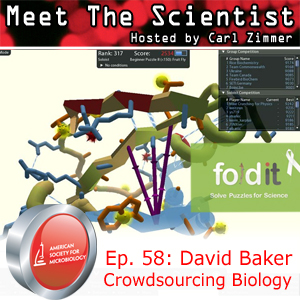
MTS58 - David Baker - Crowdsourcing Biology
In this podcast I spoke to David Baker, a professor of biochemistry at the University of Washington. Baker and his colleagues study how proteins fold, taking on the complex shapes that make our lives possible. It turns out that protein folding is a fiendishly hard problem to solve, and even the most sophisticated computers do a poor job of solving it. So Baker and his colleagues have enlisted tens of thousands of people to play a protein-folding game called Foldit. I talked to David Baker about the discoveries they've made through crowdsourcing, and the challenges of getting 57,000 co-authors listed on a paper. Additional Resources: Rosetta@Home Foldit
MTS57 - Forest Rohwer - Curing the Corals
It never occurred to me that the human body and a coral reef have a lot in common--until I spoke to Forest Rohwer for this podcast. Rohwer is a microbiologist at San Diego State University, and he studies how microbes make coral reefs both healthy and sick. Just as we are home to a vast number of microbes, coral reefs depend on their own invisible menagerie of algae and bacteria to get food, recycle waste, and fend off invaders. But as Rohwer writes in his new book, Coral Reefs in the Microbial Seas, we humans have thrown this delicate balance out of kilter, driving the spread of coral-killing microbes instead. Additional Reading: Viral communities associated with healthy and bleaching corals.The lagoon at Caroline/Millennium atoll, Republic of Kiribati: natural history of a nearly pristine ecosystem.Metagenomic analysis of stressed coral holobionts.

MTS56 - Susan Golden - Clocks for Life
In this podcast, I talk to Susan Golden, the co-director of the Center for Chronobiology at the University of California at San Diego. We talked about Golden's research into time--in particular, how living things know what time it is. While you may have heard of our own "body clock" that tracks the 24-hour cycle of the day, it turns out that some bacteria can tell time, too. Golden has discovered how evolution has produced a molecular clock inside microbes far more elegant than any manmade timepiece. Additional Reading: Proteins Found in a CikA Interaction Assay Link the Circadian Clock, Metabolism, and Cell Division in Synechococcus elongatus Quinone sensign by the circadian input kinase of the cyanobacterial circadian clock

MTS55 - Nancy Moran - The Incredible Shrinking Microbe
How many genes can a species lose and still stay alive? It turns out, bacteria can lose just about all of them! In this podcast, I talk to Nancy Moran of Yale University about her fascinating work on the microbes that live inside insects such as aphids and cicadas. After millions of years, they have become stripped down creatures that are revealing some profound lessons about how superfluous most genes are--at least if you live inside a host. Recent Publications: Bacterial genes in the aphid genome: absence of functional gene transfer from Buchnera to its host Symbiosis and insect diversification: an ancient symbiont of sap-feeding insects from the bacterial phylum Bacteroidetes

MTS54 - Carl Bergstrom - The Mathematics of Microbes
In this podcast I talk to Carl Bergstrom of the University of Washington about the mathematics of microbes. Bergstrom is a mathematical biologist who probes the abstract nature of life itself. We talk about how life uses information, and how information can evolve. But in Bergstrom's hands, these abstractions shed light on very real concerns in medicine, from the way that viruses jam our immune system's communication systems to to the best ways to fight antibiotic resistance. Publications: Mapping Change in Large Networks [html] [pdf] The transmission sense of information [pdf] Dealing with deception in biology [pdf]
MTS53 - Bonnie Bassler - The Bacterial Wiretap
In this podcast I talk to Bonnie Bassler, a professor at Princeton and the president-elect of the American Society for Microbiology. Bassler studies the conversations that bacteria have, using chemicals instead of words, Her research is not only helping to reveal how bacteria work together to make us sick, but also how we might interrupt their dialogue in order to cure infections. Related Projects: Measurement of the copy number of the master quorum-sensing regulator of a bacterial cell. Information processing and signal integration in bacterial quorum sensing.

MTS52 - Mitchell Sogin - Expeditions to the Rare Biosphere
In this podcast, I talk to Mitchell Sogin, the Director of the Josephine Bay Paul Center for Comparative Molecular Biology and Evolution at the Marine Biological Laboratory in Wood's Hole, Massachusetts. Dr. Sogin is one of the leaders of an ambitious project to survey the microbes of the ocean--which total over 36,000,000,000,000,000,000,000,000,000,000 cells. Using the latest DNA-sequencing technology, Dr. Sogin and his colleagues are cataloging microbes from all over the world, and are discovering a genetic diversity in the microbial world far exceeding anyone's expectations. Dr. Sogin explained how most species they find only exist in small numbers, while a minority of species dominate their samples. Dr. Sogin is investigating how this "rare biosphere" changes the way we understand how the ocean's ecosystems work. Related Projects: International Census of Marine Microbes Woods Hole Center for Oceans and Human Health

MTS51- James Liao - Turning Microbes into Fuel Refineries
In this podcast I talk to James Liao, a professor in the Department of Chemical and Biomolecular Engineering at UCLA. I spoke to Dr. Liao about his research into engineering microbes to make fuel. Today, we get most of the fuel for our cars out of the ground. It's a process fraught with dangerous consequences, from the oil spill in the Gulf of Mexico to the rise in global temperatures thanks to greenhouse gases. Dr. Liao is among a growing number of scientists who think that microbes can help us out of this predicament. We talked about the attraction of microbe-derived fuels, and the challenges of getting bacteria to turn air, water, and sun into something that can power your car. Selected Publications Atsumi, S.; T. Hanai and J.C. Liao (2008) Non-Fermentative Pathways for Synthesis of Branched-Chain Higher Alcohols as Biofuels, Nature, 451:86-89. Atsumi,S.; Higashide, W.; and Liao, J.C. (2009) Direct recycling of carbon dioxide to isobutyraldehyde using photosynthesis, Nat Biotechnol, 27, 1177-1180

MTS50.5 - The Making of the Meet the Scientist Podcast
To mark the celebration of Microbeworld's 50th episode of the Meet the Scientist podcast, we created a time lapse video that shows exactly what it takes to produce a single episode of the show.We hope you enjoy this behind the scenes look and we thank you for listening week after week. Cheers, to another 50 episodes!
MTS50 - R. Ford Denison - Darwin on the Farm
In this podcast, I talk to R. Ford Denison of the University of Minnesota. Denison is an evolutionary biologist who's interested in how to make agriculture better. The ways in which plants thrive or fail are shaped by their evolutionary history, as well as the evolution that unfolds every planting season. We're most familiar with the evolution of resistance to pesticides in insects and to herbicides in weeds. But evolution has many other effects on farms. For example, many important crop plants, like soybeans, cannot extract nitrogen from the atmosphere on their own. They depend instead on bacteria that live inside their roots. In exchange for fixed nitrogen, the bacteria get nutrients from the plants. It may seem like a happy case of cooperation, but the evolution of cooperation always runs the risk of cheating and deception. How plants and bacteria come to a compromise is a remarkable story that Denison and his colleagues are now documenting. Selected Publications Denison, R.F. 2010. Darwinian agriculture: where does nature's wisdom lie? Book in preparation for Princeton University Press. Ratcliff, W.C., P. Hawthorne, M. Travisano, R.F. Denison. 2009. When stress predicts a shrinking gene pool, trading early reproduction for longevity can increase fitness, even with lower fecundity. PLoS One 4:e6055 Kiers E. T., R.A. Rousseau, S. A. West, and R. F. Denison. 2003. Host sanctions and the legume-rhizobium mutualism. Nature 425:78-81.

MTS49 - Irwin Sherman - The Quest for a Malaria Vaccine: The First Hundred Years
In this podcast, I talk with Irwin Sherman, professor emeritus at the University of California at Riverside, about the century-long quest for a vaccine against malaria. Scientists have been trying to make a vaccine for the disease almost since the discovery of the parasite that causes malaria. Yet decade after decade, they've encountered setbacks and failures. We talked about why it's so hard to make a malaria vaccine, and how likely it is that scientists will ever be able to do so in the future. If you want to find out more about this long-running saga, check out Sherman's new book, The Elusive Malaria Vaccine: Miracle or Mirage. About the Book Chronicling a 100-year quest, this book tells the fascinating story of the hunt for the still-elusive malaria vaccine. Its clear, engaging style makes the book accessible to a general audience and brings to life all the drama of the hunt, celebrating the triumphs and documenting the failures. The author captures the controversies, missteps, wars of words, stolen ideas, and clashes of ego as researchers around the world compete to develop the first successful malaria vaccine. The Elusive Malaria Vaccine: Miracle or Mirage? is based on author Irwin W. Sherman’s thorough investigation of the scientific literature as well as his first-hand interviews with today’s pioneers in malaria vaccine research. As a result, the book offers remarkable insights into the keys to a successful malaria vaccine and the obstacles hindering its development. Malaria is one of humankind’s greatest killers, currently afflicting some 300 to 500 million people. Moreover, malaria infections have begun to spread and surge in places previously free from the disease. With the book’s easy-to-follow coverage of such topics as immunity, immunology, recombinant DNA, and monoclonal antibodies, readers gain a new understanding of the disease itself, the importance of microbe hunters, and the need for responsible leadership to face the challenges that lie ahead in the battle against malaria. Other Publications from Dr. Sherman Twelve Diseases That Changed Our World The Power of Plagues
MTS48 - Keith Klugman - Pneumonia: The Hidden Giant
In this podcast I talk to Keith Klugman, William H. Foege Chair of Global Health at Emory University. Dr. Klugman studies the disease that is the number one killer of children worldwide. If you guessed malaria or AIDS, you’d be wrong. It’s pneumonia. Two million children under five die every year from it every year--one child every 15 seconds. Dr. Klugman and I spoke about his research on how pneumonia causes so much devastation, its hidden role in the 50 million deaths in the 1918 flu pandemic, and how a new pneumonia vaccine can stop the disease in its tracks. For more information on pneumonia and how we can all help fight it, visit the World Pneumonia Day web site. Dr. Klugman's recent publications: A role for Streptococcus pneumoniaein virus-associated pneumonia (pdf) Levofloxacin-Resistant Invasive Streptococcus pneumoniae in the United States: Evidence for Clonal Spread and the Impact of Conjugate Pneumococcal Vaccine (pdf)

MTS47 - Peter Daszak - Stalking the Wild Microbe
Dr. Peter Daszak is a disease ecologist and President of the Wildlife Trust, an international organization of scientists dedicated to the conservation of biodiversity. He is a leader in the field of conservation medicine and is well known for uncovering the wildlife origin of the SARS virus. Dr. Daszak also identifed the first case of a species extinction caused by a disease and has demonstrated a link between global trade and disease emergence via a process called "pathogen pollution." In this interview I ask Dr. Daszak about the threat new pathogens pose to endangered species and go into detail about his discovery that chytridiomycosis, a fungal disease caused by the chytrid Batrachochytrium dendrobatidis, is responsible for global amphibian population declines. Dr. Daszack also discusses a unique study that exposes how the W.H.O. might better use their resources when faced with new pathogens such as the kind we've seen with the recent outbreak of the H1N1 virus. We also explore how pathogens of animals have the ability to evolve into human diseases like flu and HIV.Links to research discussed in this episode:Infectious disease and amphibian population declines (.pdf)Emerging infectious diseases of wildlife--threats to biodiversity and human healthWildlife Trust page about SARS Monitoring the Deadly Nipah Virus Assessing the Impacts of Global Wildlife Trade

MTS46 - Curtis Suttle - It's a Virus World and We Just Live On It
In this podcast I talk to Curtis Suttle, a professor and associate dean at the University of British Columbia.Suttle studies the diversity and population of viruses across the entire planet. He has helped show that viruses are by far the most common life forms on the planet. They also contain most of the genetic diversity of life, and they even control how much oxygen we have to breathe. I talked to Suttle about coming to terms with the fact that we live on a virus planet, and how hard it is to find a place on Earth that's virus-free--even two miles underground. Links to Curtis Suttle and his work. Curtis Suttle's Labatory Website A detailed listing of Curtis Suttle's publications

MTS45 - James Collins - Engineering Life: The Past and Future of Synthetic Biology
In this podcast, I talk to James Collins, an investigator at the Howard Hughes Medical Institute and a professor at Boston University. Ten years ago Collins helped launch a new kind of science called synthetic biology. I talked to Collins about the achievements of synthetic biology over the past decade, such as engineering E. coli that can count, and about the future of synthetic biology--from using bacteria to make fuel to reprogramming the bacteria in our guts to improve our health.

MTS44 - Michael Worobey - In Search of the Origin of HIV and H1N1's Hidden History
In this episode, I talk to Michael Worobey, an associate professor at the University of Arizona. Worobey is virus detective, gathering clues about how some of the world's deadliest pathogens have emerged and spread across the globe. Worobey and I talked about the harrowing journeys he has made in search of the origin of HIV, as well as the round-the-clock data-processing he and his colleagues used to discover the hidden history of the new H1N1 flu strain.

MTS43 - Rob Knight - The Microbes That Inhabit Us
In this episode, I speak to Rob Knight, an assistant professor in the Department of Chemistry and Biochemistry at the University of Colorado, Boulder. Knight studies our inner ecology: the 100 trillion microbes that grow in and on our bodies. Knight explained how hundreds of species can coexist on the palm of your hand, how bacteria manipulate your immune system and maybe even your brain, and how obesity and other health problems may come down to the wrong balance of microbes. Links to studies mentioned in this episode: Ruth Ley and Peter Turnbaugh's studies on obesity in Jeff Gordon's lab: Obesity alters gut microbial ecology. Microbial ecology: human gut microbes associated with obesity. An obesity-associated gut microbiome with increased capacity for energy harvest. A core gut microbiome in obese and lean twins. Julie Segre's studies of the skin: A diversity profile of the human skin microbiota. Topographical and temporal diversity of the human skin microbiome. Chris Lauber and Elizabeth Costello's studies of human-associated body habitats (in Noah Fierer's and Rob Knight's lab): The influence of sex, handedness, and washing on the diversity of hand surface bacteria. Bacterial community variation in human body habitats across space and time. Jeremy Nicholson's studies of the metabolome: Pharmacometabonomic identification of a significant host-microbiome metabolic interaction affecting human drug metabolism. Cathy Lozupone's study of global microbial diversity (in Rob Knight's lab), and confirmation of the patterns in archaea by Jean-Christophe Auguet: Global patterns in bacterial diversity. Global ecological patterns in uncultured Archaea. Ruth Ley and Cathy Lozupone's study integrating gut-associated and environmental bacteria: Worlds within worlds: evolution of the vertebrate gut microbiota.
MTS42 - Julian Davies - The Mysteries of Medicine's Silver Bullet
In this episode I speak to Julian Davies, professor emeritus in the Department of Microbiology & Immunology at the University of British Columbia. Dr. Davies is one of the world's experts on antibiotics. I talked to Davies about how the discovery of antibiotics changed the course of modern medicine, and how we now face a growing threat from the evolution of antibiotic-resistant bacteria. We also talked about some enduring mysteries about antibiotics. Most of us think of antibiotics as a way to kill microbes. But the fact is that microbes make antibiotics naturally, and for them, these molecules may not be lethal weapons. They may actually be a way to talk to other microbes.

MTS41 - Sallie Chisholm - Harvesting the Sun
In this episode I speak to Sallie "Penny" Chisholm, the Lee and Geraldine Martin Professor of Environmental Studies at MIT. Dr. Chisholm studies photosynthesis—the way life harnesses the energy of the sun. Plants carry out photosynthesis, but so do microbes in the ocean. Dr. Chisholm studies the most abundant of these photosynthetic microbes, a species of bacteria called Prochlorococcus. There are a trillion trillion Prochlrococcus on Earth. Dr. Chisholm researches these microbial lungs of the biosphere, and how they produce oxygen on which we depend. Along with her scientific research, Dr. Chisholm is also the author of a new children's book, Living Sunlight: How Plants Bring The Earth To Life.

MTS40 - John Wooley - Exploring the Protein Universe
John Wooley is Associate Vice Chancellor of Research and Professor of Chemistry-Biochemistry and of Pharmacology at the University of California San Diego. Wooley is a leader in the young field of metagenomics: the science of gathering vast numbers of genes from the oceans, soils, air, and the human body. A generation ago biologist knew the sequences of a few thousand genes. Since then that figure has jumped to several million genes and it's only going to continue to leap higher in years to come. This wealth of data is allowing scientists to get answers to fundamental questions they rarely even asked a generation ago. They're starting to understand how thousands of species of microbes coexist in our bodies. They're investigating how hundreds of genes work together inside a single cell and they're starting to get a vision of the full diversity of the billions of proteins that life produces, what scientists sometimes call the protein universe. John Wooley has been at the center of this revolution, investigating some of these new questions and leading pioneering projects such as CAMERA, the Community Cyberinfrastructure for Advanced Marine Microbial Ecology Research and Analysis, to organize the unprecedented amount of data that scientists have at their disposal so that they can master that data rather than drown in it. In this episode I spoke to Wooley about how metagenomics has revolutionized research on everything from marine ecology to human health, and how he and his colleagues cope with an influx of data on millions of new genes.

MTS39 - Paul Turner - Pandemic in a Petri Dish
In this episode I talk with Paul Turner, an associate professor of ecology and evolutionary biology at Yale University.2009 saw the emergence of a new strain of H1N1 flu. Scientists soon determined that the virus had leaped from pigs to humans and then spread to millions of people. When viruses make this kind of leap it's a reason to worry. In 1918 when a strain of flu leapt from birds to humans, 50 million people died in a matter of months. So far the new H1N1 flu strain is behaving like a relatively ordinary flu. Still even ordinary flu is a matter of serious concern. Over 4,000 people in the US alone have died from the new H1N1 flu strain and scientists can't say for sure what it would take to turn this new strain into a global killer.It's a sobering reminder of how mysterious virus evolution remains. Over the past century a number of viruses have made the leap from animal host to humans including SARS and HIV and scientists worry that the next great plague may be a virus that we don't even know about yet.Paul Turner is learning how new viruses emerge by watching them evolve in his lab. Fortunately the viruses he studies don't make you sick. Instead they attack E-coli and other single celled hosts. But these viruses are teaching Turner and his colleagues about some of the fundamental rules that govern how viruses evolve to attack new hosts. Turner hopes that what he and his colleagues learn about those rules may help future generations of scientists fight against the next generation of viruses that can make us sick.

MTS38 - Jonathan Eisen - An Embarrassment of Genomes
Jonathan Eisen is a professor at the University of California, Davis Genome Center. Over the course of his career, he has pioneered new ways of sequencing microbial genomes and analyzing them. I talked to Eisen about some of the weirdest creatures he's studied, such as bacteria that only live on the bellies of worms at the bottom of the ocean, and how we may be able to exploit their genomes for our own benefit. We also discussed the new movement for open access to scientific literature, a subject that's a particular passion of Eisen, who is academic editor in chief at the open-access journal PLOS Biology.
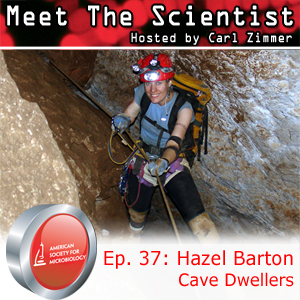
MTS37 - Hazel Barton - Cave Dwellers
Hazel Barton is the Ashland Professor of Integrative Science at Northern Kentucky. She explores some of the world's most remote caves to study the remarkable diversity of microbes that thrive in their dark rececesses. I spoke to Barton about how she first became captivated by these bizarre organisms, what it's like to do delicate microbiology when you're hip-deep in mud, and why she wants to explore caves on Mars in search of Martians.
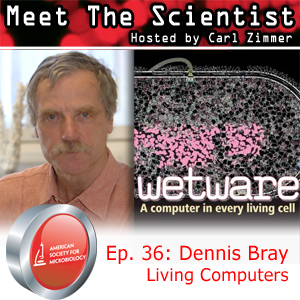
MTS36 - Dennis Bray - Living Computers
Dennis Bray is an active professor emeritus in both the Department of Physiology and Department of Neuroscience at the University of Cambridge. He studies the behavior of microbes--how they "decide" where to swim, when to divide, and how best to manage the millions of chemical reactions taking place inside their membranes. For Bray, microbes are tiny, living computers, with genes and proteins serving the roles of microprocessors. In this interview, I talked with Bray about his provocative new book, Wetware: A Living Computer Inside Every Cell.

MTS35 - Michael Cunliffe - The Ocean's Living Skin
Michael Cunliffe is a microbiologist in the Department of Biological Sciences at the University of Warwick in England. He studies the microbes that live in the thin layer of water at the very surface of the ocean. His research is shedding light on an ecosystem that's both mysterious and huge, spanning three-quarters of the surface of the planet. In this interview, I talked with Cunliffe about the discovery of this sea-surface ecosystem, and the influence it has over the Earth's climate.
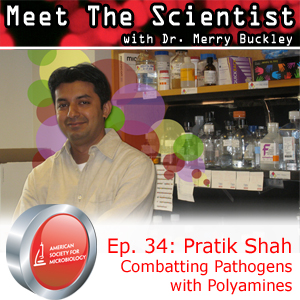
MTS34 - Pratik Shah - Combatting Pathogens with Polyamines
Pratik Shah is a graduate student in the Department of Microbiology at the University of Mississippi Medical Center in Jackson, and he’s a 2009 recipient of ASM’s Raymond W. Sarber award, granted to recognize students for research excellence and potential.His research focuses on polyamines and polyamine biosynthesis and transport systems in Streptococcus pneumoniae. He’s studying polyamines with the goal of finding potential targets for pneumococcal vaccines and prophylactic interventions against pneumococcal disease. In this interview, I talked with Pratik about why polyamines may hold the key for new ways to combat pathogens, his plans for the future, and about advice he would give to young people considering grad school.

MTS33 - Abigail Salyers - The Art of Teaching Science
Abigail Salyers is a Professor of Microbiology and the G. William Arends Professor of Molecular and Cell Biology at the University of Illinois at Urbana-Champaign, and her research focuses on the ecology of microorganisms in the human body and the comings and goings of antibiotic resistance genes, particularly genes in Bacteroides species. Dr. Salyers is ASM’s 2009 Graduate Microbiology Teaching Awardee. If you’ve ever tried teaching or mentoring, you know it’s not always easy, but for an eminent scientist, teaching at the undergraduate or graduate level must be incredibly difficult. After all, once you reach a certain level of knowledge in any field, it can be hard to relate your knowledge to people who know relatively little about it. Dr. Salyers has tackled 100-level biology courses with as many as 300 students, taught one-on-one at the lab bench, and been an instructor at an intensive summer course in microbial diversity, all while rising to the top of her field in research. In this interview, I talked with Dr. Salyers about the most influential teacher in her own life (you might be surprised to learn who that is), about whether antibiotic resistance is getting the kind of play it deserves, and about why the baboon vagina is an interesting study system.
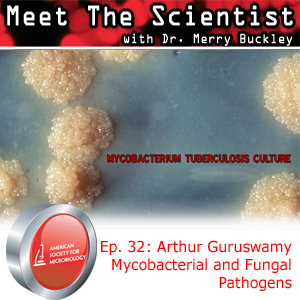
MTS32 - Arthur Guruswamy - Mycobacterial and Fungal Pathogens
Arthur Guruswamy is a clinical microbiologist in Virginia’s Department of General Services Division of Consolidated Laboratory Services and the winner of ASM's Scherago-Rubin Award in recognition of an outstanding, bench-level clinical microbiologist. His particular interest lies in mycobacterial and fungal diseases, including tuberculosis. In his work, Mr. Guruswamy places a lot of emphasis on helping others. A while back, he traveled to his native Sri Lanka to train clinic staff in the use of a rapid, low tech method for identifying cases of tuberculosis. Using this method has probably saved many lives, since staff Mr. Guruswamy trained can now treat their patients quickly and avoid the three to four week wait for culture results. Mr. Guruswamy is also involved in ASM’s Minority Mentoring Program so he can offer younger scientists the kind of assistance he says he got from other ASM members back at the beginning of his own career, when he arrive in the United States with less than $50 in his pocket. In this interview, I asked Mr. Guruswamy about his work at the state lab in Virginia, about tuberculosis in this country, and about why he saw more unusual clinical cases during his time working at the Mayo Clinic in Minnesota than he has during any other phase of his career.

MTS31 - Frances Arnold - Engineering Microbes
Dr. Frances Arnold is a professor of Chemical Engineering and Biochemistry at the California Institute of Technology (most of us know it as Caltech). Dr. Arnold’s research focuses on evolutionary design of biological systems, an approach she is currently applying to engineer cellulases and cellulolytic enzymes for manufacturing biofuels. This country’s energy security can look pretty bleak when you think about it: the need to address global warming, strife in oil-rich nations, and depletion of fossil fuels combine to paint an uncertain future, and although ethanol has a lot of friends in Iowa and D.C., ethanol isn’t going to end our energy woes. In the future, our energy supply will probably be cobbled together from a number of different fuels and sources. Dr. Arnold is interested in engineering microbes that can grant us a biofuel that packs more of a caloric punch than ethanol. She likes isobutanol, which can be converted into a fuel that’s more like the hydrocarbons we currently put into our fuel tanks. To develop proteins that make the comounds she wants the way she wants, Arnold and her team take a gene that needs tweaking to do the job, introduce directed mutations into it, and select the mutant proteins that do the job best. In this interview, I talked with Dr. Arnold about how she got into alternative energy during the Carter administration (and got out again during the Reagan administration), what she sees in the P450 enzyme, and how she explains her work to people outside her field.

MTS30 - Stanley Plotkin - The Past, Present, and Future of Vaccines
Stanley Plotkin is Professor Emeritus at the Wistar Institute and the University of Pennsylvania, Philadelphia. A renowned vaccinologist, Dr. Plotkin is, perhaps, best known for developing a highly successful vaccine for rubella back in 1968. We are still using the same vaccine 40 years later. Dr. Plotkin has been honored with the inaugural Maurice Hilleman / Merck Award for his lifetime of dedication to vaccinology. For most people, rubella amounts to a bad rash and a crummy week, but for a fetus, the risks from infection are extremely serious. The rubella virus inhibits tissue growth in infected fetuses, often resulting in profound birth defects collectively referred to as congenital rubella syndrome. Dr. Plotkin developed the rubella vaccine in the wake of a rubella pandemic in 1964, during which he estimates that about 1 in 100 women in his home city of Philadelphia came down with rubella. Nationwide, thousands of babies were born with congenital rubella syndrome in the wake of the outbreak. Thanks to the vaccine developed by Dr. Plotkin, rubella has essentially been eradicated in the U.S. and most other developed countries. In many parts of the developing world, efforts are underway to piggy back the rubella vaccine with the measles vaccine to eradicate both of these diseases everywhere else. In this interview, I talked with Dr. Plotkin about the backlash against vaccines for their perceived safety risks, how he would change vaccine policy, and about the rewards of a career in vaccine development.