
Marketplace Tech
266 episodes — Page 4 of 6

High-tech data centers get a powerful assist from a century-old company
Caterpillar, which manufactures heavy duty equipment like asphalt pavers, diesel engine locomotives, and industrial gas turbines, has been around for 101 years. And now, the company seems to be one of the big winners of the AI infrastructure build out.Big tech companies are working as fast as possible to get their data centers up to power artificial intelligence. Some are building their own natural gas plants to provide electricity for those data centers. Enter Caterpillar, maker of electric generators. Marketplace’s Dan Ackerman has been reporting on this.

Bytes: Week in Review — Alphabet takes on debt to pay for AI projects, the social network where humans aren't allowed, and Spotify reports record user growth
This week, we look at Spotify's stellar quarter. Plus, there's a new AI-only social network called Moltbook. But first, Alphabet, parent of Google, went to the debt markets this week, raising tens of billions of dollars to fund its AI spending.One of the bonds Alphabet is offering, issued in British pounds, has a maturity date of 100 years from now. This is very unusual in the corporate world. Marketplace’s Stephanie Hughes spoke with Jewel Burks Solomon, managing partner at Collab Capital, about what she makes of Alphabet doing this kind of borrowing.

Crypto’s big growth on the books and in the shadows
Cryptocurrency is being used more frequently in illegal transactions — about $158 billion was used in illicit crypto activity last year. That’s an all-time high, according to a new report from the startup TRM Labs. This comes as the overall crypto ecosystem is growing and, it should be said, legitimate uses of crypto are growing at a faster rate than illegitimate ones. Marketplace’s Stephanie Hughes spoke with Ari Redbord, global head of policy at TRM Labs and one of the authors of the new report, to learn more.

Is the moon (and its resources) up for grabs?
NASA’s Artemis II mission, which will send humans around the moon for the first time in over five decades, could launch as early as March. This is part of a larger campaign to establish a long-term presence on the moon and eventually prepare for human space flight to Mars.Meanwhile, China also has a goal of landing humans on the moon by 2030, setting up a kind of modern space race. One reason for the rush: It's like a game of finders keepers, said Saadia Pekkanen, a professor focused on space law and policy at the University of Washington.

TPU? GPU? What's the difference between these two chips used for AI?
Graphics processing units (GPUs) have become the most important commodity in the AI boom — and have made Nvidia a multi-trillion dollar company. But the tensor processing unit (TPU) could present itself as competition for the GPU.TPUs are developed by Google specifically for AI workloads. And so far, Anthropic, OpenAI and Meta have reportedly made deals for Google’s TPUs.Christopher Miller, historian at Tufts University and author of "Chip War: The Fight for the World's Most Critical Technology," explains what this could mean.

New study reveals a "smartphone penalty" that distorts survey results
According to surveys by the FINRA Foundation, our knowledge of personal finance here in the U.S. went down by 15% between 2009 and 2021. But what if it actually didn't? What if the technology we use to answer the questions is now getting in the way? In 2021, over half of all respondents used a smartphone to fill out the survey. In 2009, none of them used one, according to data from FINRA’s National Financial Capability Study. A new working paper finds that when people use smartphones for surveys they're more likely to respond with the wrong answer or say they don't know. Marketplace’s Stephanie Hughes spoke with Montana State University economics professor Carly Urban, one of the authors of the paper, to learn more.

Bytes: Week in Review - SpaceX and xAI merge, Nvidia and OpenAI's funding relationship and U.S. TikTok's rough start
On this week’s “Marketplace Tech Bytes: Week in Review,” we take a look at Nvidia's changing investment relationship with OpenAI. Plus, a stormy start for the new U.S. version of TikTok. But first, SpaceX, one of the world’s largest rocket companies, announced this week that it’s buying xAI, a two-and-half-year-old artificial intelligence startup. Both companies are controlled by Elon Musk. The new company is reportedly valued at $1.25 trillion. It means the chatbot Grok, the satellite internet company Starlink, and the social media firm X are all going to co-exist under the same rocket hangar. Marketplace’s Stephanie Hughes spoke with Paresh Dave, senior writer at Wired, about what adding these companies together equals.

Is social media addictive? And are social media companies liable?
A landmark lawsuit that accuses social media companies of intentionally designing their platforms to be addictive — and causing harm to children and teenagers' mental health — is in court this week in Los Angeles.The defendants in this case are Meta and YouTube, both of which dispute the allegations. Snap and TikTok both settled in advance of the trial.Some are calling this social media's "Big Tobacco" moment. Eric Goldman, co-director of the High Tech Law Institute at Santa Clara University, discusses this as well as a series of lawsuits against the social media giants.
What AI fitness apps can and can't do — for now
You can get a pretty good workout plan from a chatbot, but the tech is also being incorporated into all kinds of existing fitness apps, from Apple's Workout Buddy, which motivates you through earbuds, to the Fitbit AI health coach, to Peloton's AI-enabled camera that tracks your form.Nicole Nguyen, personal tech columnist at The Wall Street Journal, gave some of the most popular ones a spin. She spoke with “Marketplace Tech” host Meghan McCarty Carino about her experience.

Making AI work — for work
In his new book, Wall Street Journal tech columnist Christopher Mims offers a guide for getting the most out of the technology. He's compiled two dozen "Laws of AI" to shed light on the best ways to use these generative tools.Yesterday we talked about how individuals can improve their productivity with AI, and today we're digging into how organizations can use — or sometimes misuse — it.
Making the most of AI, without the hype
With all the fanfare surrounding AI these days — the utopian dreams and dystopian nightmares — it can be hard to see the technology as simply a tool that anyone can use to improve their lives.That's what tech columnist Christopher Mims at the Wall Street Journal focuses on his new book "How to AI: Cut Through the Hype. Master the Basics. Transform Your Work.” In it, he outlines two dozen “AI Laws” for how consumers and organizations should think about AI.First up: AI is an assistant, not a replacement.

Bytes: Week in Review – Are we in an AI bubble?
Is AI a bubble? It's the trillion-dollar question in the economy. So Marketplace’s Meghan McCarty Carino decided to look to history for some answers in this week’s special episode of “Tech Bytes: Week in Review.” McCarty Carino spoke with David A. Kirsch, a historian and management professor at the University of Maryland. He’s also co-author of the book "Bubbles and Crashes: The Boom and Bust of Technological Innovation." He and Brent Goldfarb looked at patterns over 150 years of technological breakthroughs, from broadcast radio to rayon and came up with a model of the conditions that most often lead to bubbles.

A recycling startup joins the AI boom
Marketplace’s Meghan McCarty Carino takes a tour of Redwood Material’s new R&D Lab with CTO Colin Campbell. Redwood, an EV battery recycling startup, is now offering off-grid, renewable energy grids to AI data centers and it’s looking to scale up its operations in this AI boom.

Infrastructure lessons from the dot-com bubble
Marketplace’s Meghan McCarty Carino speaks with Paul Vixie, vice president at AWS Security and an early internet innovator, about the rapid buildout of fiber optic networks during the dot-com boom, and what happened when the bubble burst.

A historic home tour of the virtual world
529 Bryant St. in Palo Alto, California, is home to a key landmark in tech history. Now owned and operated as a data center by Equinix, the building has been a networking hub to a variety of firms, including the earliest telephone switch board operators and early internet firms like Alta Vista. Marketplace’s Meghan McCarty Carino visited the data center to learn more.

Raising the “speed limit” on AI’s “information highway”
Billions of dollars has been poured into the AI economy in recent years. As part of a new series about what the AI economy means for you, Marketplace Tech is looking at the infrastructure build-out behind the AI boom, starting with a visit to an Amazon Web Service lab in Cupertino, California, where AWS developers are squeezing as much networking efficiency out of their servers as possible for their AI ambitions.

Bytes: Week in Review - SpaceX eyes an IPO, community members want legal commitments from Micron, and YouTube to ditch AI slop
A Micron memory chip factory in upstate New York is wrangling with local groups who want legal assurances the project will benefit the local community. Plus, YouTube plans to crack down on AI slop.But first, it's shaping up to be a big year for very big initial public offerings. Elon Musk is reportedly preparing to take SpaceX public at an anticipated valuation of around $1.5 trillion. AI companies Anthropic and OpenAI are also expected to follow suit this year.Marketplace’s Meghan McCarty Carino spoke with Paresh Dave, senior writer at Wired, to discuss all these topics on this week’s “Marketplace Tech Bytes: Week in Review.”

Unraveling the complex knot of an AI-generated hoax
In the era of AI, sometimes a story is really just too good to be true, even if the initial evidence suggests otherwise.And as artificially engineered content becomes mainstream, journalists need to go the extra mile to verify a story’s authenticity.Casey Newton from Platformer spoke with “Marketplace Tech” host Meghan McCarty Carino about his recent wild goose chase that ended in an AI hoax.

Welcome to the 'infocalypse'
Information Apocalypse Now.AI content is flooding social feeds and its getting increasingly hard to determine what is real versus what is fake. Aviv Ovadya, founder and CEO of the AI and Democracy Foundation, has been warning of this apocalypse for a decade now. “Marketplace Tech” host Meghan McCarty Carino spoke with Ovadya about the state of our information ecosystem and protecting our institutions.

How "surveillance pricing" charges one online customer more than another for the same item
Consumers have heard of “dynamic pricing,” when the prices are based on demand within a single moment. But whether they know it or not, they’re also contending with “surveillance pricing,” where companies use personalized consumer data to serve up personalized prices. Marketplace's Kristin Schwab reports.

The 'biohacking' trend that has tech workers experimenting on themselves
In an industry known for pushing the bounds of human innovation, tech elites are now trying to push the bounds of their own bodies. The hot new biohacking trend is injectable peptides — similar to the ones found in GLP-1 medications like Ozempic. But these are not approved by the Food and Drug Administration.These gray-market peptides, largely from Chinese manufacturers, are being used by tech workers and founders. Not just to lose weight, but to optimize their health and performance in all manner of ways. “Marketplace Tech” host Meghan McCarty Carino speaks with independent journalist Jasmine Sun, who recently wrote about this for the New York Times.

Bytes: Week in Review – New chip exports for China, Microsoft to pay electricity for AI data centers, and Gemini will power Apple’s AI
Those massive AI data centers going in across the country can use as much energy as an entire city. President Trump said this week he wants tech companies to "pay their own way," and touted a new Microsoft pledge to bear the full cost of their AI energy needs.Plus, Apple announces its long awaited new AI Siri will be powered by Google.But first, Nvidia can once again export its second best H200 chips to China if it follows some new security rules and pays the U.S. government 25% of its sales. Marketplace’s Meghan McCarty Carino spoke with Anita Ramaswamy, columnist at The Information, to discuss all these topics on this week’s “Marketplace Tech Bytes: Week in Review.”

Teaching students to 'be better than a robot'
When it comes to AI, educators biggest worry: cheating.With the click of a button, students can form papers, generate test answers or even finish their homework. Leading educators to address its use directly and the expectations for their students.But Kristi Girdharry, director of the writing center and associate professor at Babson College, has gone a step further. She’s actively integrating AI into her coursework. All in the hopes that her students learn to outwork their robot counterparts.“I have a mantra going with my students now,” said Girdharry. “I always say, ‘you have to be better than a robot.’”

This Swiss city wants to become the bitcoin capital of Europe
The pretty Swiss lakeside town of Lugano has set out to become Europe’s bitcoin capital, with the aim of attracting bitcoin companies and the cryptocurrency itself to the city. In Lugano, you can still pay for everything in Swiss francs, but in hundreds of shops and restaurants you can also pay in bitcoin. The city has even started accepting it for municipal services. The BBC’s John Laurenson went to check it out.
AI is eating up the world's computing memory
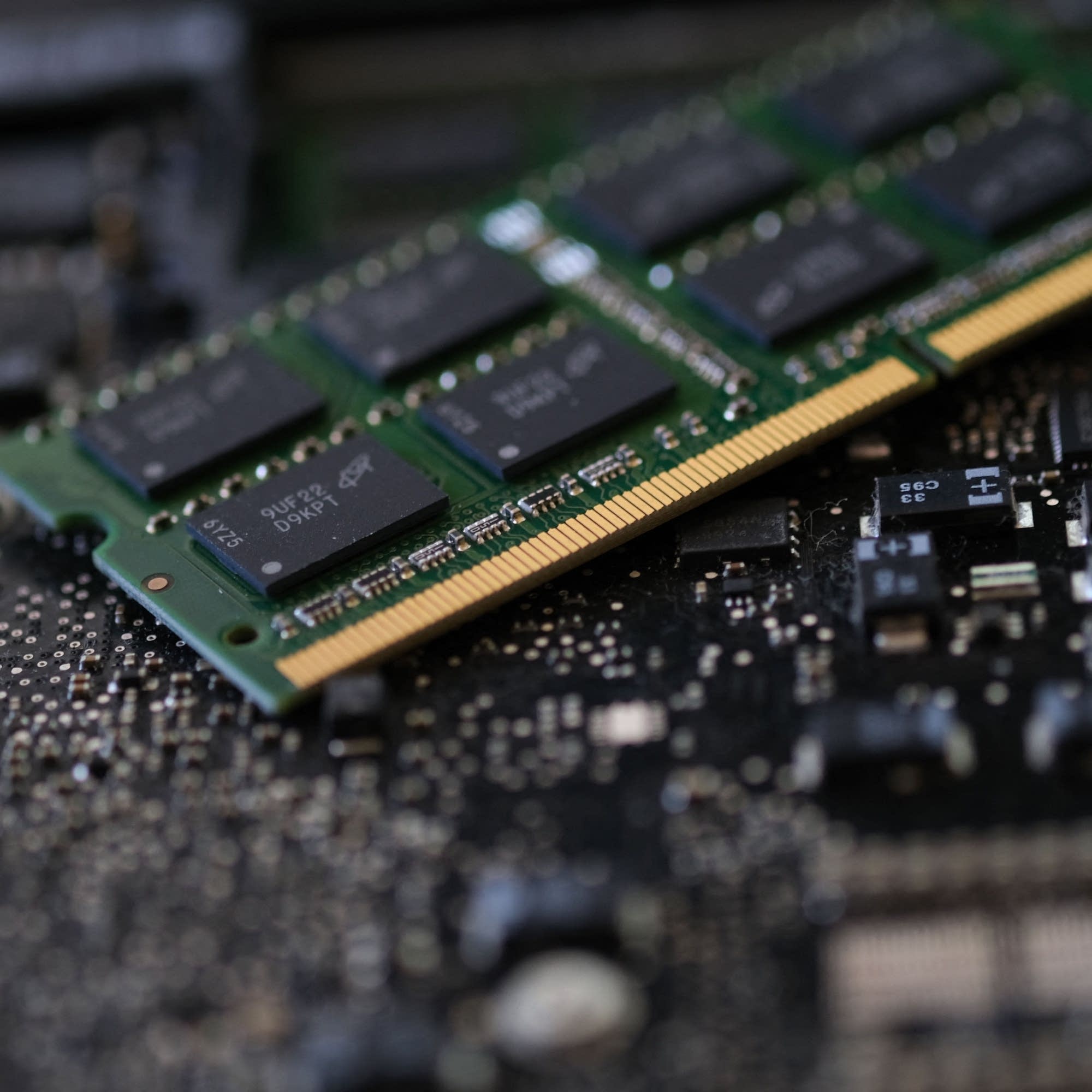
Much like graphics processing units, high bandwidth memory is essential for training and running AI. It's paired with all those NVIDIA chips that have been selling like hotcakes and only a small handful companies in the world make it. Now the surge in demand from data centers has created a global shortage for everything else — the PCs and smartphones and other consumer electronics that also use memory chips. Marketplace’s Meghan McCarty Carino spoke with Tom Mainelli, vice president of device and consumer research at IDC, about how long this shortage could last.

Building a home with future fires in mind
On Jan. 7, 2025, the Eaton and Palisades Fires began, killing 31 people and destroying around 13,00 homes in the Los Angeles area. A year later, residents are looking to rebuild the lives and homes they once had. Marketplace’s David Branccacio and his wife lost their Altadena home to the Eaton fire, and have yet to break ground on a new building. But as they continue to plan for construction in the new year, they are focusing on fire-resistance for the future.Branccacio joined “Marketplace Tech” host Meghan McCarty Carino to speak about the technology and building that goes into fire-resistant homes.

Bytes: Week in Review – New year, new state AI laws, new showdown with Trump admin.
X, formerly Twitter, is facing a global backlash because users are directing the platform's AI chatbot, Grok, to generate non-consensual intimate imagery. Users have been popping up in the replies of women — and sometimes minors — tagging Grok and asking it to generate images of them in bikinis or undressed.The company and its owner, Elon Musk, have both clarified illegal content will not be tolerated on the platform.Plus, President Donald Trump signed an executive order late last year aimed at blocking states from enforcing local AI regulations — something a majority have adopted in some form.And, Meta is a victim of its own success. Its new Ray-Ban smart glasses are selling too fast to keep up with demand.Marketplace’s Meghan McCarty Carino spoke with Maria Curi, tech policy reporter at Axios, to discuss all these topics on this week’s Marketplace Tech Bytes: Week in Review.

Surveillance cameras livestreamed for the internet to see
For the past couple months, YouTube technologist Benn Jordan has been investigating Flock Safety surveillance cameras. With the help of 404 Media, they found that many of these cameras were not only tracking, zooming and following every passerby, but the footage was freely accessible on the internet.Jordan joined Marketplace Tech host Meghan McCarty Carino to talk about how he found the footage and the dangers the surveillance system poses to privacy and other civil liberties. Remember, Big Brother is always watching.
Farming in the digital age
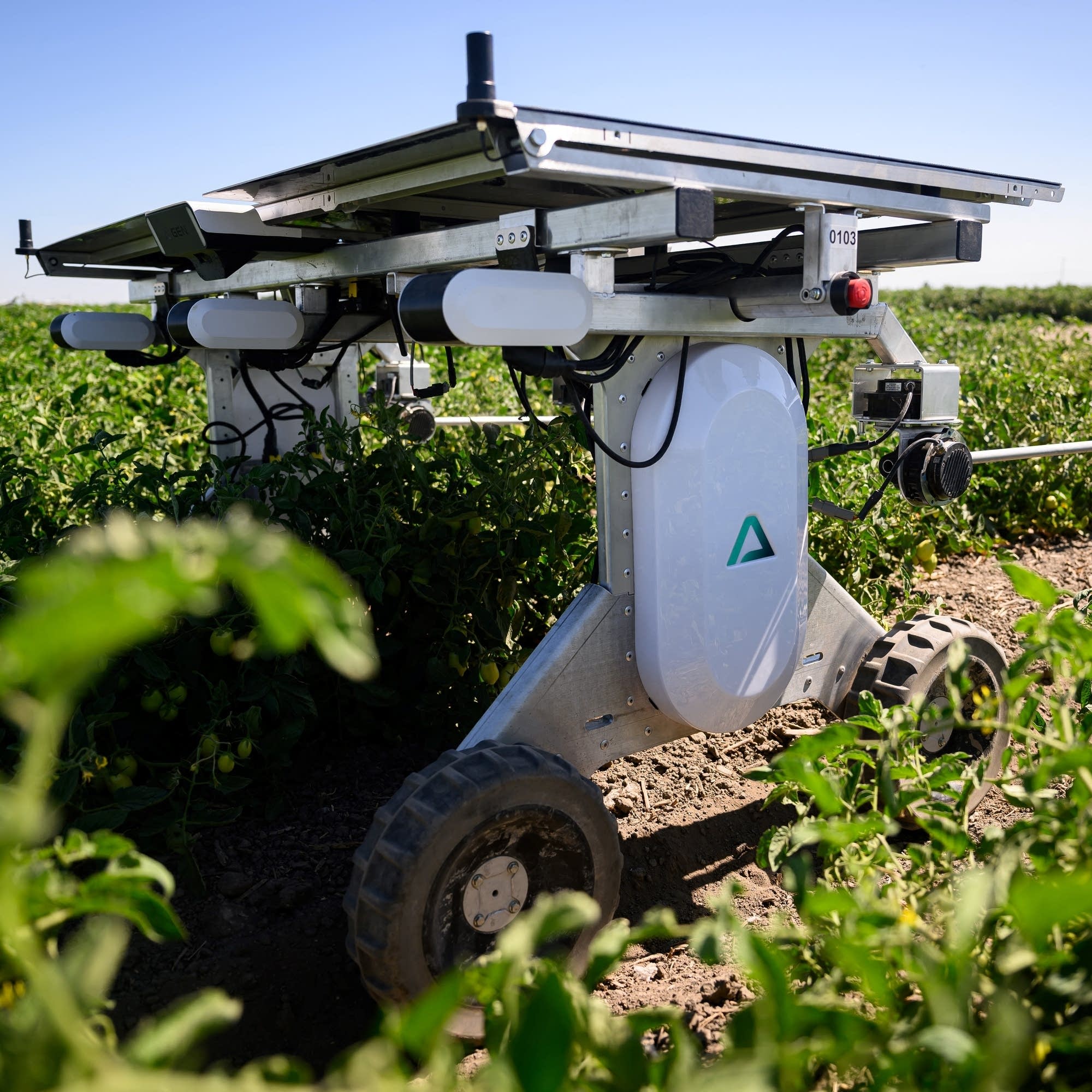
Over a century ago, farmers exchanged their horses and plows for the automated tractor. Generations of farmers have come, gone and watched technology transform their industry.Automation and biotechnology have continued to propel farming forward, but with the emergency of AI technology, farmers have gained another tool up their sleeve.Andrew Nelson is a fifth-generation farmer in Farmington, Washington, and he is now using his computer science degree to help tend to his crops.

How convergence will define the tech sector in 2026
Artificial intelligence isn't just chatbots. The technology is being integrated all across our economy and our lives. And that convergence of AI and robotics, biology and more is likely to be the most important tech trend in 2026, according to Futurist and CEO of the Future Today Strategy Group, Amy Webb.

How U.S. political campaigns have used generative AI
The 2024 presidential race was the first big election to happen in the new generative AI era. There have, of course, been major concerns that the technology could be used to deceive voters or interfere with the exercise of democracy. But so far, that kind of activity has been limited, according to Tim Harper, a senior policy analyst and coauthor of a recent report from the Center for Democracy and Technology.

Trying to stay off your phone? There’s an app for that
The digital detox economy is estimated to grow to $20 billion by 2032. The gamification that got you addicted to your phone might be the key to putting it down.

A tech company that ‘happens to build homes’
When it comes to homebuilding, Ronda Conger, vice president of CBH Homes, wants to be like the Savannah Bananas.“We are out there trying to do things so differently,” she said. “It’s one of the reasons we embraced AI so quickly.”But there are growing fears that artificial intelligence will begin to replace human employees. For Conger’s team, the bots are doing the grunt work, so the real humans can shine.

A whiplash year for electric vehicles
2025 brought some new speed bumps for electric vehicle sales, namely the Republicans' One Big Beautiful Bill Act. It cut federal EV tax credits — up to $7,500 for new cars and $4,000 for used ones. Those incentives had been on the books in some form since 2008 and were expanded during the Biden administration. They expired at the end of September. Consumers rushed to take advantage before they disappeared, leading to record high sales earlier this year. But now the market faces an uncertain road ahead.Marketplace's Meghan McCarty Carino spoke with her colleague Henry Epp about the outlook for EV sales in the U.S. now that federal tax credits are gone.

AI-powered chatbots sent some users into a spiral
AI psychosis became a thing in 2025. That's when a chatbot leads a user into a delusional spiral.The technology's tendency to affirm what people say can result in conversations that become untethered from reality and, in the worst cases, has ended with real-world harms. Kashmir Hill has been reporting on this phenomenon for The New York Times.Content warning: This episode includes mention of self harm and suicide.

Robotaxis moved into the fast lane in 2025
This year turned out to be a pretty big year for autonomous vehicles. Waymo is the leader in the robotaxi race and over the last year, its signature Jaguar electric vehicles have become a common sight on the streets and recently freeways of cities around the country.Companies like Uber and Zooks have expanded their fleets to several metropolitan areas. And Tesla finally rolled out its cybercab service in a limited capacity in Austin.Marketplace’s Meghan McCarty Carino spoke to Kirsten Korosec, transportation editor at TechCrunch, about how the robotaxi became a common fixture on city streets this year.

How online age-gating laws went mainstream this year
About half of U.S. states now require some form of online age verification to prevent kids from accessing certain content — usually pornography. But in some cases, that also means broader categories of adult content that include social media. Drew Harwell, tech reporter at The Washington Post, has been following this.

The year in AI wearables
Will Gottsegen, a staff writer at The Atlantic, tests out Meta’s AI smart glasses and gives us a recap of how AI continues to get embedded in consumer tech.

Mushrooms could help curb plastic waste
Polystyrene is the chemical compound that makes up styrofoam, which is used for packaging and insulation. But it’s not the most environmentally friendly.By one estimate, 40 million tons of polystyrene were produced globally in 2024, leaving millions of tons of plastic waste. The search for an earth-friendly alternative has led researchers to dig deep and come up with an unlikely solution: fungus. The BBC’s Anna Holligan has this story.
Why Big Tech leaders aligned themselves with White House politics this year
In January, we saw a who's who of tech leaders front and center at President Donald Trump's inauguration.Since, the White House has advocated for the build out of AI infrastructure and put a moratorium on state-level AI regulation. But the Trump administration also added a $100,000 fee to petitions for H-1B visas, which are widely used in the tech sector. To review the year in tech and Trump we called up Suyash Pasi, a research analyst and editor at the nonprofit Human Rights Research Center, who’s been following this shift.

Dr. AI will see you now
Could AI chat bots replace human doctors? Probably not, but that won’t stop people from trying.Just as they did during the emergence of Google, doctors across the country are grappling with the changing healthcare landscape thanks to artificial intelligence. Today on the show, Dr. Hassan Bencheqroun, a pulmonary and intensive care doctor in San Diego, California, talks about his approach to the intersection of patient care and AI.
Bytes: Week in Review - Micron's big earnings, Oracle's data center woes and "slop" is Merriam-Webster's word of the year
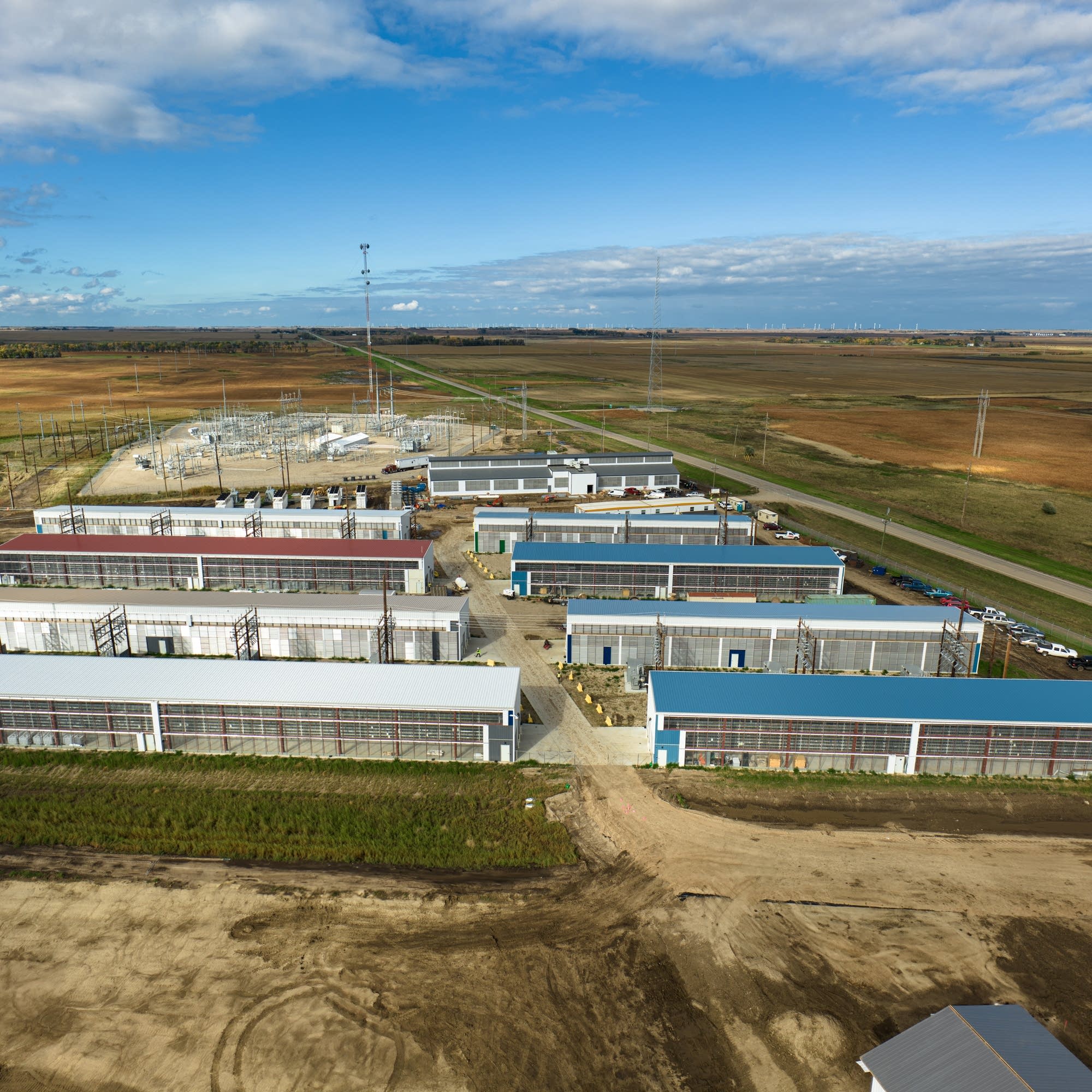
Building artificial intelligence tools requires a lot of graphic processing units, and those GPUs need huge amounts of ultra-fast memory to feed them data. Micron Technology is one of a handful of memory chip makers that has been selling a whole lot of memory, thanks to the AI boom.Plus, cloud company Oracle's data center debt is coming under scrutiny. And Merriam-Webster names the word of the year for 2025: slop.Marketplace’s Meghan McCarty Carino spoke with Anita Ramaswamy, columnist at The Information, to learn more on this week’s Marketplace Tech Bytes: Week in Review.

The challenges of integrating ads in AI search engines
Search engines, social media, e-commerce, and mobile games all make money by selling advertising. But making ads work in AI search might not be so straight forward. Perplexity, for instance, reportedly pulled back on plans to integrate ads into their AI search engine. And internal documents showed the company made only $20,000 in ad revenue in the fourth quarter last year. Marketplace’s Meghan McCarty Carino spoke with Garrett Johnson, professor of marketing at Boston University to get a sense of why jumping into the ad business is difficult.

Tech sector job postings on Indeed (mostly) stabilized this year
A career in tech was once seen as a safe bet — the jobs were plentiful, the pay was ample. But this year the tech sector had another “meh” year for hiring according to the job site Indeed. Tech jobs have been declining now for several years, but this year, the losses at least seemed to stabilize, according to Indeed's latest Jobs & Hiring Trends Report. Still, job postings in the industry remain well below their pre-pandemic baseline. Marketplace’s Meghan McCarty Carino spoke with Indeed senior economist Cory Stahle for a look at how this year turned out for the tech job market.

How states are competing in the data center gold rush
Tech giants are estimated to have spent almost $400 billion in capital expenditures this year, mostly to build data centers for artificial intelligence. A single massive facility can have a price tag in the billions of dollars.And many states want in on that spending spree. Thirty-seven states have some sort of incentive program to attract data centers with the hope of bringing a boost to their local economies. They're giving away hundreds of millions in tax exemptions, according to the National Conference of State Legislatures. Marketplace’s Meghan McCarty Carino spoke with Nicholas Miller, policy associate at NCSL, to learn more.

A case for AI models that understand, not just predict, the way the world works
Gary Marcus, professor emeritus at NYU, explains the differences between large language models and "world models" — and why he thinks the latter are key to achieving artificial general intelligence.

Bytes: Week in Review - Apple's leadership departures raises concerns over its AI future
There’s been something of a critical mass of high-profile departures and retirement announcements at Apple in recent weeks. Plus, how will consumers be helped or hurt by a potential merger between Netflix and Warner Bros or a hostile takeover from Paramount? And McDonald's pulls an AI-generated Christmas ad because some folks on social media weren't “lovin' it.” Marketplace’s Meghan McCarty Carino spoke with Joanna Stern, senior personal technology columnist at The Wall Street Journal for this week’s “Tech Bytes: Week in Review.”
The little-known regulatory bodies that can make or break AI data centers
The AI boom is propelling a once-obscure group of state regulators into key decision-making roles for the economy. AI needs data centers, data centers need power and power is generally regulated in some way — depending on the state — by public utilities commissions.That's the topic of a new report from the Center on Technology Policy at NYU. Scott Brennen, CTP director and author of the report, said these commissions often make decisions on planning and permitting for new infrastructure and decide the rates utilities charge consumers.
The latest TV innovations have their critics
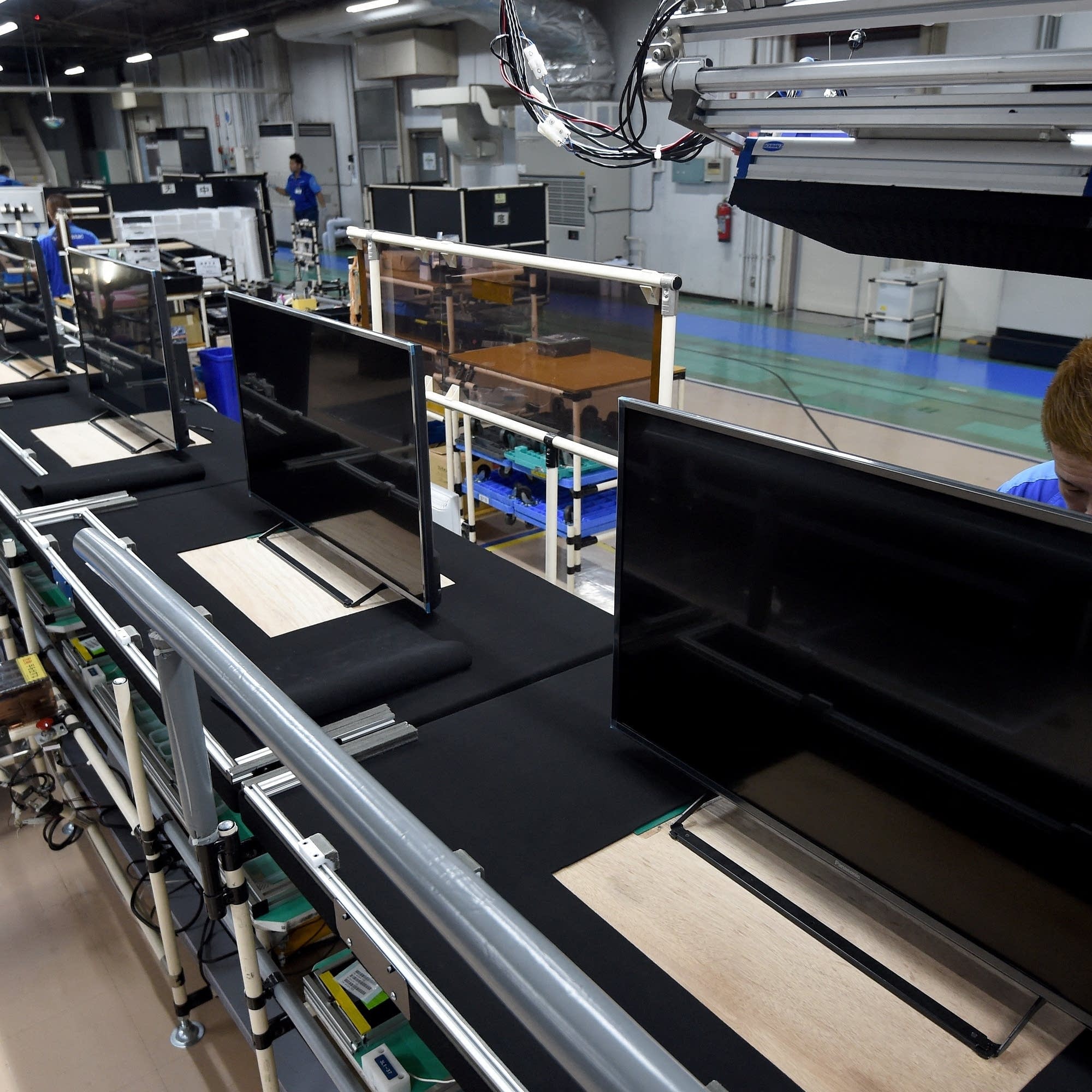
The extended Black Friday sale season means a lot of people have been buying new TVs. The top sets today can display in up to 8K Ultra High Definition, they have deeper blacks, brighter highlights and are thinner and lighter-weight than ever. And yet, modern TVs have their haters — a dedicated group of purists who find them lacking, and would rather hunt down a good old fashioned used plasma.

3D printing was supposed to disrupt prosthetic costs. It hasn’t.
Prosthetic limbs can be expensive, costing thousands to hundreds of thousands of dollars. So the industry seemed ripe for disruption when 3D printing came along. The technology requires little labor and uses economical materials. But the reality of 3D printing prosthetic limbs isn’t that straightforward, according to writer and University of California, Berkeley, lecturer Britt Young, who uses a prosthetic arm. Marketplace’s Meghan McCarty Carino spoke with Young about why 3D printing has yet to bring down prosthesis costs.