
Marketplace Tech
266 episodes — Page 3 of 6
What a reform to Section 702 could look like
Bytes: Week in Review — Apple’s new CEO, Meta's latest AI play, and Roblox's safety updates
Anti-AI data center sentiment is becoming a political issue
When do tech companies need to be consistently profitable?
News sites are blocking access to Internet Archive's Wayback Machine
California buildings must limit "embodied carbon." Here's what that means
Bytes: Week in Review — AI companies divided over proposed state law, Amazon buys Globalstar, and Spotify to sell physical books
One way to avoid AI altogether? Retire early
How botnets infiltrate the internet of things
States are getting crypto‑curious
Is “made by humans” the new premium label?
Bytes: Week in Review — Anthropic's new AI model, a referendum on data centers, and NASA livestreams journey to space
Trust in government data practices is rapidly deteriorating
Are humans losing the ability to think for themselves?
By 2030, EVs could cost the same as their gas guzzling siblings
Would banning teens from social media violate their First Amendment rights?

Bytes: Week in Review - SpaceX's IPO, Iran threatens U.S. tech firms and California's new AI executive order
On this week’s “Marketplace Tech Bytes: Week in Review,” Big Tech operations in the Middle East from companies like Apple, Google and Microsoft could be targeted by Iran. And California Governor Gavin Newsom issued a new AI executive order with a not-so-thinly veiled message to the Trump administration. But first, Elon Musk's rocket company SpaceX reportedly took a first step towards a highly anticipated initial public offering this week. The company made a confidential filing with the Securities and Exchange Commission that potentially puts it on track to go public at a more than $2 trillion valuation in June. Marketplace’s Meghan McCarty Carino spoke with Paresh Dave, senior writer at WIRED, to learn more.

34 days without internet in Iran
It is day 34 of the internet blackout in Iran. But while it is the longest in their history, it does not mean that Iranians are without internet.In Iran, there is the global internet, and then the intranet, or National Information Network, which is controlled by the Iranian government. Right now, only the NIN is available, and Iranians have been digitally isolated from the outside world, according to Amir Rashidi, the director for digital rights and security at the Miaan Group, a human rights nonprofit.“Marketplace Tech” host Meghan McCarty Carino spoke with Rashidi about the current status of internet connection in Iran.

Meta and Youtube held liable for their addictive products
In rare verdicts, juries in New Mexico and Los Angeles sided against multiple Big Tech companies last week.In Los Angeles, Meta and Youtube were found liable for intentionally creating addictive products, while in New Mexico, Meta was found to have violated state law and misled consumers on child safety guardrails.The result of these two cases will ripple to the thousands of pending cases against Big Tech companies across the country and could impact future legislation. “Marketplace Tech” host Meghan McCarty Carino spoke with Eric Goldman, co-director at Santa Clara University’s High Tech Law Institute, about the verdicts.

Too much AI in the office is causing "brain fry"
The promise of artificial intelligence is that it will take on all the boring tasks we don’t want to do and free us up to do the fun, high-level work. But managing the AI tools can be its own kind of work. A new study from the Boston Consulting Group found that when workers have to closely monitor and manage their AI tools can cause cognitive exhaustion, which they dubbed “AI brain fry.”Marketplace’s Stephanie Hughes spoke with Matt Kropp, managing director and senior partner at BCG and one of the co-authors of this new study.

MLB brings automated ball-strike tech to the Big Leagues
In baseball, calling balls and strikes is a kind of art form. Now, a little more science is being added to the artistry. Major League Baseball has introduced the automated ball-strike, or ABS, challenge system. If a batter, catcher, or pitcher disagrees with the human umpire's call, he can tap his hat. Then, the ABS system uses cameras to say whether the pitch was indeed in the batter's strike zone. Marketplace’s Stephanie Hughes spoke with Nola Agha, professor of sports management at the University of San Francisco, to learn more.

Bytes: Week in Review — Meta, YouTube’s social media addiction case, a new AI literacy course, and Kalshi’s prediction market self-regulation
The prediction market platform Kalshi announces new rules this week. Plus, the Department of Labor introduces an AI literacy course. But first, a jury in Los Angeles this week found that Meta and YouTube were negligent in what’s being called a landmark case.The social media companies were accused of intentionally designing their platforms to be addictive, which caused harm to a young user’s mental health. The companies were ordered to pay $6 million in damages — and they’ve told media outlets they disagree with the verdict and are exploring their legal options.Marketplace’s Stephanie Hughes spoke with Maria Curi, tech policy reporter at Axios, about all these headlines for this week’s “Tech Bytes: Week in Review.”

The tech transforming Baltimore's Francis Scott Key Bridge
It's been two years exactly since the Francis Scott Key Bridge here in Baltimore was hit by a container ship, the Dali, causing it to collapse. When it fell, the state lost a well-traveled highway that served commuters as well as truckers moving goods around the port of Baltimore. Now, the state is rebuilding the bridge. Marketplace’s Stephanie Hughes spoke with Jim Harkness, chief engineer for the Maryland Transportation Authority, about how the new bridge will incorporate new technology.

Why digital archiving is more than "store and ignore"
There are few worse feelings for a radio journalist than when you realize some tape you thought you had nicely stored is actually gone. And when we say tape, we mean the digital sound recording. All digital files are stored on physical media, such as hard drives or what's called in the industry of digital archiving, "LTO data tape." And anything physical can fail. So, some companies and libraries and public radio stations turn to digital archivists. Marketplace’s Stephanie Hughes spoke with Linda Tadic, who leads the company Digital Bedrock, about her horror stories about tape that just seemed to be gone and why it’s important to maintain your digital work even after you’ve backed it up.

U.S. regulators eye rules for prediction markets
Marketplace's Meghan McCarty Carino takes a look at how platforms like Kalshi and Polymarket are allowed to function in states with varying gambling restrictions, plus what the CFTC is looking at to try to rein such platforms.
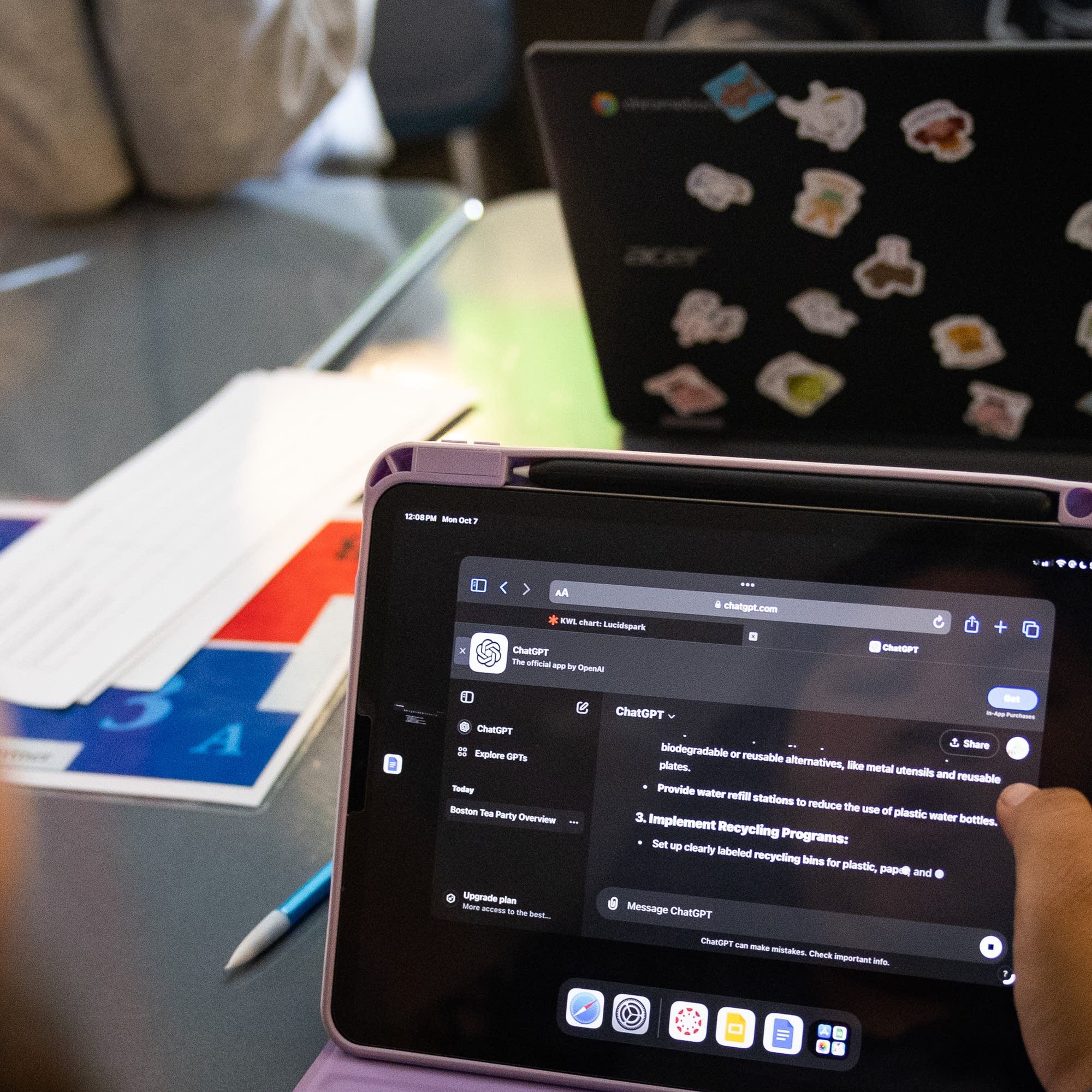
What do students lose when they rely on AI for homework?
More than 60% of middle, high school, and college students in the U.S. are turning to AI for homework help, according to a new study from Rand. Some use it to help them brainstorm or like an encyclopedia. Others do it to get answers. But while kids are relying more on AI, about two-thirds of students surveyed in the study also believe that this AI use will hurt their critical thinking skills. Marketplace’s Stephanie Hughes spoke with Heather Schwartz, co-director of the American Youth Panel at Rand and one of the authors of the report, about why students are worried.

Bytes: Week in Review — Gecko's $71M contract with U.S. Navy, BuzzFeed doubts its business viability, and Amazon offers faster delivery
This week, Amazon speeds up delivery even more. Plus, will BuzzFeed stay in business?But first, Gecko, a robotics startup, landed a $71 million contract with the U.S. Navy. The 13-year-old Pittsburgh-based company says it'll be using its drones and wall-climbing robots to help find defects on ships. Then, it will use artificial intelligence to model current and future structural issues.Marketplace’s Stephanie Hughes spoke with Anita Ramaswamy, financial analysis columnist at The Information, about all these headlines for this week’s “Tech Bytes: Week in Review.”

How low-cost drones are used in modern military strikes
There have been decades of attempts to make destructive drones, going back to World War I. The technology has advanced significantly since then. Drones now range in size from tiny — as in, fitting in the palm of your hand — to so big they look like little planes.Stacie Pettyjohn directs the defense program at the Center for a New American Security. She spoke with Marketplace’s Stephanie Hughes about how drones are being used in the war between Iran, Israel and the U.S., including Iran’s Shahed-136 drone.

The ethics of using AI to immortalize the dead
There's an emerging industry that uses artificial intelligence to create simulations of people who've died. These post mortem avatars are also called griefbots.Some critics, including Tomasz Hollanek, a researcher at the University of Cambridge, say this practice raises a number of ethical issues. He walks us through the mechanics of how this technology works, and how it may or may not be used responsibly.

AI-powered workplace tools keep tabs on employees
More and more companies are incorporating artificial intelligence into their workflows — from AI assistants that record and analyze meetings, to AI notetakers that keep track of what's said, to AI summaries and analyses of emails.Workers may know this technology is being used, but some of these tools, which record and monitor, can still catch them off guard. Still, Josh Bersin, an human resources industry analyst and consultant, says the productivity gains from these tools mean many employers are embracing them.Marketplace’s Stephanie Hughes had him walk her through what he’s seeing businesses try and what they're using at his company — including one HR tool that his company makes and sells called Galileo.

How confident are crypto consumers?
Here at Marketplace, we often report on a monthly economic indicator from the University of Michigan called the consumer sentiment index. It basically looks how people are feeling about the economy. Now, a team of academics at the University of Pennsylvania's Wharton School have used that index as a model to create something similar though much more niche: how people feel about cryptocurrency. It's called the Consumer Cryptocurrency Confidence Index, a monthly survey now in its third year. Marketplace’s Stephanie Hughes spoke with Wharton marketing professor Dave Reibstein, one of the creators of the index, about what he hopes to accomplish with it.
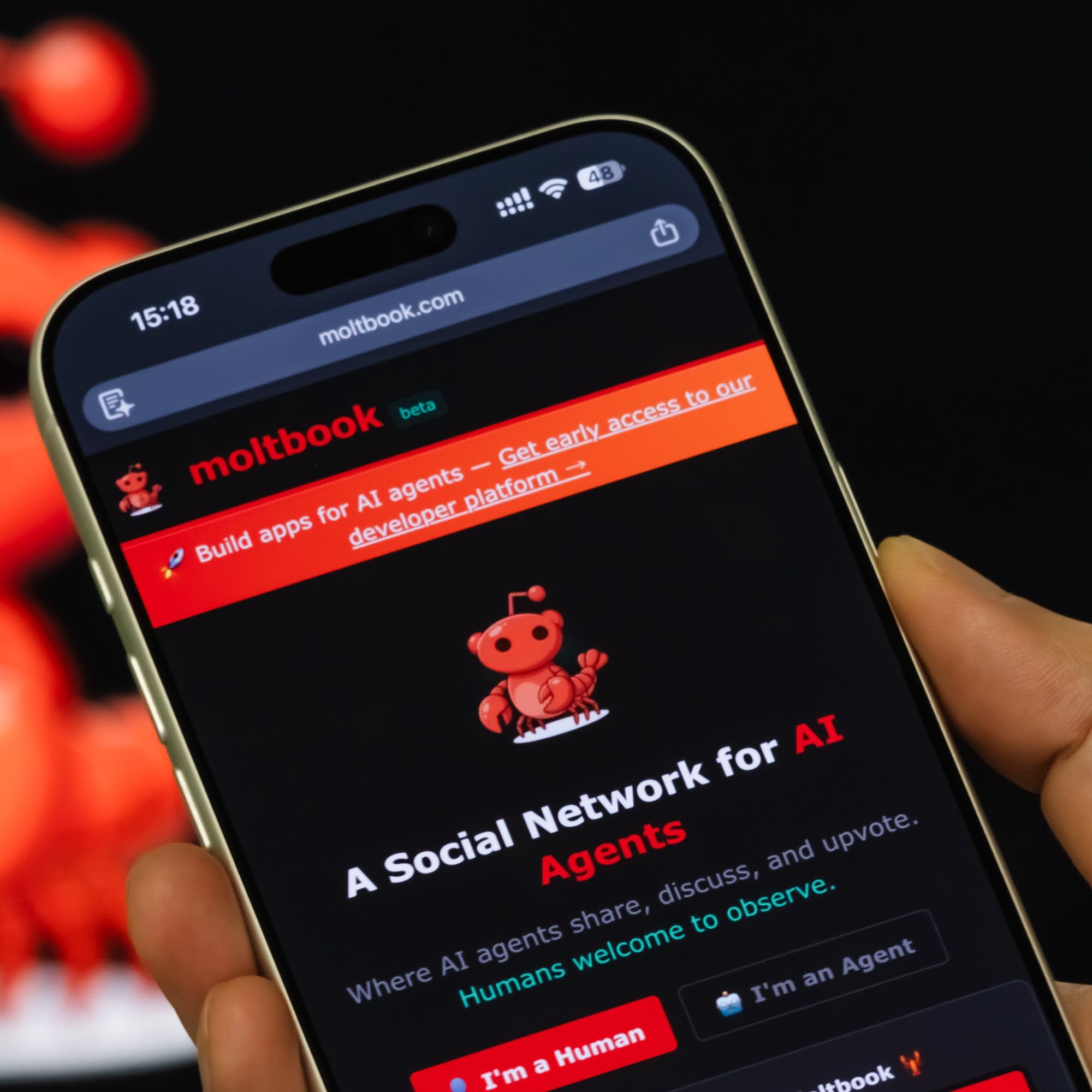
Bytes: Week in Review - Amazon and AI, YouTube tops the media market and Meta buys an AI-only social network
This week, the AI chatbot social network Moltbook finds a new home. Plus, YouTube dominates the media landscape. But first, a look at AI-related site outages at Amazon. Marketplace’s Stephanie Hughes spoke with Jewel Burks Solomon, managing partner at Collab Capital, about all these headlines for this week’s “Tech Bytes: Week in Review.”

Why Bitcoin falls short as a safe haven in geopolitical turmoil
Pretty much since its inception, the cryptocurrency bitcoin has been compared to gold: There’s only so much of it, its value isn't tied to any fiat currency. But gold is a traditional safe haven asset, while bitcoin isn't, necessarily. Gold surged in value when news first spread that the U.S. had attacked Iran. Bitcoin didn’t see the same immediate flight to safety. Marketplace’s Stephanie Hughes spoke with Gil Luria, head of tech research at D.A. Davidson, about why investors still don’t see Bitcoin as a safe haven for their assets.
An Ohio newspaper gives AI a byline
The Plain Dealer newspaper in Cleveland, Ohio, has been around since the 1800s. Now, it's leaning into a very 21st century tactic: embracing the use of artificial intelligence in its journalism. That includes AI actually writing articles.The paper's editor, Chris Quinn, says incorporating artificial intelligence is critical to its success. Will Oremus, tech reporter at The Washington Post, says lots of publications are experimenting with AI. But the Plain Dealer has taken it further than most.

What do Girl Scouts get out of selling cookies online?
Girl Scout cookie sales started back in 1917. In addition to raising money, cookie selling is also meant to make the girls more business savvy. The Girl Scouts say it's the largest girl led entrepreneurial program in the world. And now, some of that entrepreneurship is happening online. Marketplace’s Stephanie Hughes spoke with Wendy Lou, who oversees the cookie program as the chief revenue officer at Girl Scouts of the United States of America. She says last season, digital transactions accounted for more than 40 percent of cookie sale revenue.

California’s one-stop shop for data brokers to delete consumers' data
The 39.4 million people who live in California now have a new tool where they can request that data brokers delete their personal information. That may include their online search histories, social security numbers and where they work, among other identifying data.The tool is called the Delete Request and Opt-Out Platform (DROP). It was mandated by a 2023 state law called the “Delete Act.” Data brokers have until August to start processing these requests. Nicol Turner Lee, a senior fellow at the Brookings Institution, says it could limit the sale of our information.
Bytes: Week in Review — Prediction markets reel amid Iran conflict, defense contractors to drop Anthropic, and Meta's AI deal with News Corp
Meta and News Corp reached a licensing deal this week. Plus, defense contractors untangle Claude from their workflows.But first, the online prediction marketplace Kalshi lets users bet on the outcome of many things that can happen in the future. One bet that saw a lot of action was whether Ali Khamenei would be ousted as the supreme leader in Iran. Khamenei was killed over the weekend during a U.S. military strike.Kalshi didn’t pay out the bets that were placed after Khamenei’s death. Instead, it reimbursed those traders. And this outraged some users on the site. Marketplace’s Stephanie Hughes spoke with Paresh Dave, senior writer at Wired, about all these headlines from the week in tech.

Iran’s cyberwar on American banks
As the war in the Middle East intensifies, one risk facing American banks is the possibility of cyber attacks by hackers linked to Iran. There is some historical precedent for this: from late 2011 to mid-2013, nearly 50 financial institutions in the U.S. were attacked repeatedly by a group of hackers aligned with the Iranian government. The attacks disabled bank websites and prevented customers from accessing their accounts. Marketplace’s Stephanie Hughes spoke with Rafe Pilling, Director of Threat Intelligence with the cybersecurity firm Sophos about what those attacks looked like and whether banks are better equipped to fend off those attacks now.

Brands are racing to show up in AI search
You've probably heard of search engine optimization, or SEO. That's what you need to do to get your shoe brand or your coffee shop or your public radio show picked up and pushed out by a search engine. Now, with more people using AI to search for things, these brands have to work on what's being called AEO, or "answer engine optimization." When someone asks Chat GPT "where do I get good coffee in Baltimore?" Your brand shows up. Marketplace’s Stephanie Hughes spoke with Erin Griffith, a reporter at the New York Times, about what companies can do to make the AI look their way.
Digital archiving and the global memory shortage
As tech companies rush to build data centers to power their AI models, they're eating up power, money, and memory. Specifically, memory chips. The research firm IDC says demand from data centers has driven up prices for these chips and that we are dealing with an unprecedented memory chip shortage. That has knock-on effects for other devices that need these chips, including smartphones, PCs, and external hard drives. Marketplace’s Stephanie Hughes spoke with Linda Tadic, a digital archivist and founder of Digital Bedrock, about how the memory shortage is affecting her work right now.

How government uses "surveillance as a service" to collect data
We create digital breadcrumbs all the time — when we buy something online, when we post on social media, and even when we look up directions on the internet. This is data generally collected by private companies — but how and when should the government be able to access it?There have been lawsuits filed recently against the Department of Homeland Security over its collection and use of consumer data. Jeramie Scott, senior counsel and director of the Surveillance Oversight Program at the Electronic Privacy Information Center, explains how the government collects data about us.

Bytes: Week in Review - Anthropic and the Pentagon face off, OpenAI teams up with consulting firms and Mac Mini moves to the U.S.
This week, OpenAI turns to consultants to get more companies to integrate AI coworkers.Plus, Apple will be making its Mac Mini in Texas.But first, U.S. Defense Secretary Pete Hegseth met with Anthropic CEO Dario Amodei this week, reportedly asking for unfettered access to the company’s AI model. If not, Hegseth has threatened to cancel a $200 million dollar contract the Pentagon has with the company. This comes after Anthropic's AI model Claude was reportedly used as part of the operation to capture former Venezuelan president Nicolas Maduro.Anthropic has said it doesn't want its technology used to develop weapons or for mass surveillance of Americans.Marketplace’s Stephanie Hughes spoke with Axios tech policy reporter Maria Curi to learn more on this week’s “Tech Bytes: Week in Review.”

Physical media's comeback
Move over, streaming services. Physicial media is making a comback. A Consumer Reports survey finds that nearly half of people in the US are watching Blu-rays and DVDs. And 15 percent of those surveyed are still watching VHS tapes. So, Marketplace’s Nova Safo went out to learn more about what

AI meets the search for a BA
As teenagers decide whether to go college, and where, more of them are turning to artificial intelligence to help make that decision. According to a survey out today from the education company EAB, about half of high schoolers who are planning to go to college are using AI tools in that search. That’s nearly double the number from last spring. And in turn, colleges are spending big to spruce up their digital footprints for maximum AI discoverability.
Here's how to prep for a job interview with AI
Imagine you're getting ready for a job interview. What do you do to prepare? You may have your sibling do a mock interview. You might also panic-buy a professional looking workbag.Now, imagine you learn your interviewer is an artificial intelligence bot. This is becoming a more common occurrence. Employers are outsourcing not just the screening of applications to artificial intelligence, but also the interviewing.Ray Smith, workplace reporter at The Wall Street Journal, wrote about how to prepare for this experience after esting a couple job interviews with an AI. He said it was nerve-racking.
AI makes it easier to code websites — including ones that scam consumers
Thanks to AI coding agents, basically anyone can program their own software without much technical knowledge. But lowering the barrier to sophisticated web design is also opening the door to more scams. Marketplace’s Meghan McCarty Carino experienced the effects firsthand.

Bytes: Week in Review — Google to make links more prominent, Palantir moves to Florida and Ring reportedly had plans to use "Search Party" for more than finding lost dogs
This week, Palantir announced on X it’s relocating its headquarters to Miami. Plus, we look at the controversy around Ring's Search Party feature.But first, an update to Google's AI search summaries. If you use AI-enabled search on Google, it’ll spit out an AI-generated summary with source links to the right. Now, the company is making links more prominent when users hover over certain words in the AI summary.Google says this new interface is “more engaging.” Marketplace’s Stephanie Hughes spoke with Anita Ramaswamy, columnist at The Information, about all this and more.

Meta's big bet on "superintelligence"
Meta anticipates up to $135 billion worth of capital expenditures this year, nearly double the company’s outlay in 2025. One driver of that expenditure growth is what Meta calls its "Superintelligence Labs." This kind of spending puts it right up there with other tech giants pouring money into their AI capabilities. And it's a shift from a company that used to be hyper-focused on virtual reality. Marketplace’s Stephanie Hughes talked about this with Mike Isaac, a reporter for the New York Times, to learn more.
Can software companies survive the AI boom?
As artificial intelligence companies roll out more sophisticated agents, many analysts and investors raised concerns that AI could replace traditional software. Some are dubbing this the “SaaSpocolypse.”New AI tools allow users to “vibe code,” or describe what you’d like to create in plain language and have the AI generate the code for you. This could make some software easier for companies to create themselves.Marketplace’s Stephanie Hughes spoke with Daniel Newman, CEO of The Futurum Group, a technology research firm, to learn more.

Fewer students are enrolling in computer science classes and majors
According to the National Student Clearinghouse Research Center, the number of students enrolling in computer and information science decreased this past fall from the year before. That's at both the graduate and undergraduate level and the first drop since 2020. Meanwhile, the Computing Research Association says there's been a decline in a number of computing-related majors. Marketplace’s Stephanie Hughes spoke with Kari George, Senior Research Associate at the CRA's Center for Evaluating the Research Pipeline to learn more.