
Making Chips Podcast for Manufacturing Leaders
547 episodes — Page 10 of 11
MC097: Narrowing Down Your Core Values
"The way we run a business today is completely different than how my dad would run his business." - Jim Carr Hello Metalworking Nation! We are excited to share our collaborative wisdom with you today about a topic that we believe is one of the most important things for your company to define -- Core Values. In previous episodes, we have discussed why core values are important, as well as some strategies that can help you set your company's core values. Today, Jim takes us through the creation of Carr Machine's 10 core values while Jason critiques him, and makes suggestions on how to narrow them down. In manufacturing news, we talk about Ford's announcement to cancel a $1.6-billion plant in Mexico and to invest $700 million in metro Detroit's Flat Rock Assembly plant. Episode Structure: [02:22] - Manufacturing News [06:20] - "Fake News" [08:20] - Creating Carr Machine's Core Values [14:10] - The "Aha" Moment [16:02] - Communicate [19:25] - The Band [22:10] - Feel Good [25:30] - Jason's Critique [27:47] - First Class [31:15] - The Ticket To Doing Business [34:46] - Conclusion of Episode Mentioned in this Episode: Manufacturing News MC046: What Makes Fusion OEM Unique MC58: "Life is Great!" - Developing Your Core Values We Want to Hear From YOU, The Metalworking Nation: • [email protected] • [email protected] • [email protected] Telephone: (312) 725-0245
MC096: A Robust Conversation about Digitally Connected Solutions Made Ready for Industry 4.0 w/Jeff Rizzie
"My first clue that we need to do something different is when I hear that we've done it this way for 20 years." - Jeff Rizzie Hello Metalworking Nation! We are glad to have you back for another episode of MakingChips. We have an exciting episode in store for you today as we welcome back Jeff Rizzie, Sr. Manager of Business Development at Sandvik Coromant. Jeff is a veteran in the manufacturing industry. Starting in the early 80s' as a machinist and working through various roles on the shop floor, he segued into various technical and strategic leadership roles for the major players – Sandvik Coromant, Mazak and Emerson Electric. Jeff joints us for a robust conversation about the future of manufacturing, as he introduces Sandvik's new open platform, The CoroPlus. We also get a chance to talk with Chuck Rigali of Alro Steel, as he stops by our MakingChips Studio. Other topics of discussion in this episode include our future trip to Sacramento, what manufacturers do with their data, the different ways we consume information, and what a state's favorite car says about who they vote for. In Manufacturing News, Jim and Jason share two different articles about GM, which leads to a discussion on the state of the media. Episode Structure: [01:10] - Chuck Rigali of Alro Steel [05:45] - Approaching 100 Episodes [07:00] - Manufacturing News (Jim) [11:06] - Manufacturing News (Jason) [14:20] - Newspaper & Coffee [16:43] - Sacramento Interview [17:40] - Welcome Back Jeff Rizzie [21:20] - Jeff's Role at Sandvik [24:06] - Introducing "CoroPlus" [26:55] - CoroPlus Tool Guide [29:00] - Adveon [31:50] - Gathering Additional Data [34:25] - CoroBore Plus [35:50] - Promos 3+ [36:30] - Advanced Machining Analytics [39:11] - Doing Something with Data [42:15] - Conclusion of Episode Mentioned in this Episode: Alro Steel Chuck Rigali | LinkedIn Manufacturing News (Jim) Manufacturing News (Jason) Titan Gilroy MC074: How Digitization Will Affect Manufacturing with Jeff Rizzie"Robust" Jeff Rizzie | LinkedIn Sandvik Coromant CoroPlus® We Want to Hear From You, The Metalworking Nation: • [email protected] • [email protected] • [email protected] Telephone: (312) 725-0245
MC095: Start Here First To Begin Marketing A Manufacturing Company w/Julie Poulos
Hello Metalworking Nation! On today's episode of MakingChips, we reunite with two time guest and longtime fan of the show, Julie Poulos, Vice President of Red Caffeine Marketing. Julie, better known as Vice Princess, Mistress of Marketing and/or Social Butterfly, loves sharing her passion for marketing + technology with anyone who is looking to move the needle in their business. Today she'll be sharing some of her marketing knowledge about developing a strategic plan for your company, starting with establishing a client profile. Topics on today's episode include evaluating your strengths and weaknesses, analyzing new opportunities, understanding pain points, setting realistic goals, and telling your company story. In manufacturing news we'll talk about the jump in manufacturing and how it compares to the heath of the economy. New Year, New Goals ... It all starts here. Episode Structure: [04:00] - Manufacturing News [05:20] - Business at ZENGER'S [06:45] - Exciting News at MakingChips [09:30] - Welcome Julie Poulos [15:50] - Take a Step Back [18:20] - New Year New Goals [21:55] - Self Examination [24:30] - Realistic Opportunity [27:17] - Business Strategic Goals [29:00] - Pain Points [32:45] - Big Fish, Mid-sized, and Guppies [35:15] - Exporting Data [38:12] - How Are You Telling Your Story? Mentioned in this Episode:Manufacturing News Julie Poulos | LinkedIn Red Caffeine Marketing + TechnologyClient Profile Template We Want to Hear From You, The Metalworking Nation: • [email protected] • [email protected] • [email protected] Telephone: (312) 725-0245
MC094: Grow or Die.
Hello Metalworking Nation! We are thrilled and excited to be back on this brand new year as we get back into the swing of it. On this episode of MakingChips, we'll equip and inspire you with the skills to bring your partnerships closer together when dealing with OEM's. Jim shares some takeaways from the DMDII's "Smart Manufacturing" round table discussion. We'll be talking about what steps you can take to help your business thrive; including integrating your supply chain, networking, and collaborating with clients. In manufacturing news, we'll discuss Stanley Black & Decker's decision to move manufacturing back to the U.S. after Trump's 'border tax' threat. Episode Structure:[01:15] - Alro Steel [03:20] - Manufacturing News [07:18] - "Thrive or Die" [09:35] - Panel Discussion [11:00] - Client Collaboration and Cost Cutting [14:46] - Innovative Process Development [17:12] - Navigate Market Fluctuation [19:10] - Networking [21:00] - Business Succession [24:43] - Working Smart & Hard [26:35] - Establishing Core Values [29:00] - We Want To Hear From You Mentioned in this Episode:Alro Steel | American Metal SupplierManufacturing NewsDMDII: Digital Manufacturing And Design Innovation InstituteMC008: Grow or Die We Want to Hear From You, The Metalworking Nation:• [email protected] • [email protected] • [email protected] Telephone: (312) 725-0245
MC093: How to Stay Focused on What is Important and How to Get Things Done
Hello Metalworking Nation! We welcome you to another episode of MakingChips. On today's episode, we share some tips that will help you stay productive and battle distractions. From resisting the temptation of checking email first thing in the morning to minimizing distractions in the workplace, we'll give you some guidance on ways to avoid being unproductive. In Manufacturing News, we discuss bringing back American manufacturing as well as McDonald's attempt to combat the fight for $15 minimum wage with automated, self-service kiosks. Episode Structure:[01:10] - Alro Steel [03:30] - Big News at ZENGER'S [06:10] - Manufacturing News [12:05] - Getting Focused [17:14] - Running Into Distractions [20:15] - Exercising Options [23:14] - Letting Go of Micromanagement [27:38] - Scheduling [30:04] - Three Tips [33:45] - Looking to 2017 [35:00] - Conclusion of Episode Mentioned in this Episode:Alro Steel | American Metal SupplierManufacturing NewsManufacturing News | 2 MC071: Analyzing the Performance of the Manufacturing Sector with Senior Economist Bill Strauss (Part 1) MC072: Analyzing the Performance of the Manufacturing Sector with Senior Economist Bill Strauss (Part 2) We Want to Hear From You, The Metalworking Nation:• [email protected] • [email protected] • [email protected] Telephone: (312) 725-0245
MC092: Trump, Seiri, Shitsuke and 3 Other "S" Words
Hello Metalworking Nation, we are excited to be back in our MakingChips Studio! On this episode of MakingChips, we dive into the 5S Methodology and how it's implementation can help your business improve it's productivity. The five key steps, just like its name suggests, all start with letter S.5S is the name of a workplace organization method that uses a list of five Japanese words: seiri, seiton, seiso, seiketsu, and shitsuke. It is a systematic and methodical approach allowing teams to organize their workplace in the safest and most efficient manner. In Manufacturing News, we discuss President-Elect Trump's success in saving at least 1,000 manufacturing jobs from moving to Mexico. Episode Structure:[05:06] - Manufacturing News [12:33] - News at CARR Machine [15:40] - Defining 5S [19:50] - Sorting [21:59] - Set in Order [24:50] - Shine [26:36] - Standardized [28:55] - Sustain [33:22] - Making 5S Your Own [35:49] - What's to Come on MakingChips [38:15] - Conclusion of Episode Mentioned in this Episode:Manufacturing NewsWiegel Tools We Want to Hear From You, The Metalworking Nation:• [email protected] • [email protected] • [email protected] Telephone: (312) 725-0245
MC091: Why We Combine CAD and CAM w/Paul Ricard
Hello Metalworking Nation! On this episode of MakingChips, we sit down with Paul Ricard, Co-Founder, Co-Owner and President of DP Technology Corp. Paul has nearly 35 years of experience in the CAM industry in managing sales and marketing, application engineering and customer support as well as product design and software development. Paul's passion in manufacturing has helped DP Technology become a leading developer and supplier of computer-aided manufacturing (CAM) software. In this episode we talk all about CAM/CAD software and what DP Technology is doing to help improve efficiency. Paul also shares what excites him about the future of the manufacturing industry. Episode Structure:[01:15] - Alro Steel [04:00] - Welcome Paul Ricard [05:03] - Providing Solutions for the Future [07:31] - Driving Passion [11:40] - Working Closely with the Machine Tool Industry [14:30] - Competitive Advantage [18:27] - Ensuring Efficiency [21:04] - Conclusion of Episode Mentioned in this Episode:Alro Steel | American Metal SupplierDP TechnologyPaul Ricard | LinkedIn We Want to Hear From You, The Metalworking Nation:• [email protected] • [email protected] • [email protected] Telephone: (312) 725-0245
MC090: IMTS - An Industry Success Story w/Doug Woods
On this episode of MakingChips, we are very pleased to welcome Doug Woods, President of AMT–the organization behind IMTS 2016. AMT (The Association For Manufacturing Technology) supports and promotes the U.S. manufacturing technology industry. The association provides U.S. builders of manufacturing systems with the latest information on technical developments, trade and marketing opportunities, and economic issues. Doug speaks with us about the ever-changing face of manufacturing, and how it continues to elevate IMTS into an industry success story. Doug also shares some innovations in this year's conference, including a collaboration with Hannover Fairs. Lastly, we discuss MT Connect, an open-soure, royalty-free manufacturing communications protocol that helps to provide more efficient operations, improve production optimization, and increase productivity. Episode Structure:[01:15] - Alro Steel [02:58] - Welcome Doug Woods [04:47] - Bringing in Students [08:17] - An Industry Success Story [09:03] - Innovating the Conference [11:07] - MT Connect [12:27] - Collaboration with Hanover Fairs [13:14] - An Energized Industry [14:20] - Conclusion of Episode Mentioned in this Episode:Alro Steel | American Metal SupplierHannover Fairs USAMT Connect We Want to Hear From You, The Metalworking Nation:• [email protected] • [email protected] • [email protected] Telephone: (312) 725-0245
MC089: A Culture of How-To with Haas Automation
Hello Metalworking Nation! Today on MakingChips, we speak with Scott Gasich, Vice President of Sales and Marketing at Haas Automation. Haas Automation is an American machine tool builder that designs and manufactures precision machine tools and specialized accessory tooling. Haas is one of the largest machine tool builders in the world by total unit volume. Starting with company culture, Scott gives us insight into what drives Haas to continue being the largest, most modern machine tool manufacturing operation in the United States. We also discuss how Haas is bridging the generational gap in manufacturing, using the power of video content to educate workers of all ages. Episode Structure:[02:20] - Welcome Scott Gasich [03:30] - Keeping it Simple [05:15] - The Story of Gene Haas [07:50] - Haas Culture [10:10] - The Practical Experience [11:23] - Bridging the Generational Gap [13:45] - Intuitiveness [15:50] - The Power of Video Content [18:40] - Providing Speed [20:01] - MT Connect [21:12] - Conclusion of Episode Mentioned in this Episode:• Haas Automation• Haas Tips of the Day | YouTube• Haas Automation Resource Center• Scott Gasich | LinkedIn We Want to Hear From You, The Metalworking Nation:• [email protected] • [email protected] • [email protected] Telephone: (312) 725-0245
MC088: New Generation, New Ways w/Nicole Wolter
On this episode of MakingChips, we welcome Nicole Wolter, Vice-President of H.M. Manufacturing to the show. H.M. Manufacturing is a family-owned, gear and pulley manufacturing facility in Chicago that specializes in Custom/Standard Pulleys, Gears, Sheaves, Shafts and Pulley Stock. Today's topics of discussion include Nicole's rebranding of H.M. Manufacturing, ingenuity & innovation in machine technology, and shopping for the right machine tool. -- Episode Structure: [01:54] - Welcome Nicole Wolter [02:35] - Nicole's IMTS Objective [05:15] - Rebranding the Company [07:10] - Ingenuity and Innovation [09:30] - Shopping for a Machine Tool [11:54] - Conclusion of Episode Mentioned in this Episode: HM Manufacturing Sandvik's New Connectivity Solutions for Manufacturing Nicole Wolter | LinkedIn We Want to Hear From You, The Metalworking Nation: • [email protected] • [email protected] • [email protected] Telephone: (312) 725-0245
MC087: #IMTS_Orphans w/Ray Ziganto
On today's episode of MakingChips, we welcome back our good friend Ray Ziganto, President of Bi-Link, to the show. Bi-Link is a global mechanical component supplier that specializes in Stamping, Injection Molding, Die Cut, EMI/RFI Shielding, and Assembly. Today's topics of discussion include advancements in manufacturing technology, 3D measurement systems & scanners, and IMTS "Orphans". Later on we shift the conversation to marketing analysis, strengthening business relationships with your top customers, and product development. -- Episode Structure: [02:10] - Mecca of the Industry [03:30] - Welcome Ray Ziganto [05:08] - Advancements in Technology [08:30] - 3D Systems & Scanners [13:05] - IMTS Orphans [16:04] - The Marketing Pendulum Swings [18:10] - Analyzing Marketing Results [21:08] - Separating from a Customer [23:20] - Ray's Product Development [25:50] - Conclusion of Episode Mentioned in this Episode: Bi-Link Ray Ziganto | LinkedIn We Want to Hear From You, The Metalworking Nation: • [email protected] • [email protected] • [email protected] Telephone: (312) 725-0245
MC086: How Edge Factor Inspires The Next Generation of Makers with Jeremy Bout
On this episode of MakingChips, we welcome special guest Jeremy Bout, the Producer and Host of Edge Factor to our show. Edge Factor produces inspiring, high impact media that tell the stories of innovative teams who design and build incredible products that impact lives and ultimately... the future of the country. Their mission is to equip educators and business leaders with media and resources to inspire the next generation of makers. Jeremy shares his passion for inspiring the future generation of manufacturing and speaks about his work with Edge Factor. He tells us about his roots in manufacturing, his perception of manufacturing as an art form, and his use of multimedia resources for educators and business leaders to inspire the next generation of advanced manufacturers. Episode Structure: [02:20] - Introducing Jeremy Bout of Edge Factor [06:00] - From Manufacturing to Media [08:45] - Work Environment [11:04] - Representing Your Industry [13:56] - Manufacturing Art [16:00] - Stories from Edge Factor [19:00] - Rhythms of Time and Life [22:09] - Using a Great Story [24:09] - Creating Wealth [27:30] - Conclusion of Episode Mentioned in this Episode: Edge Factor Theater Manufacturing Day Neil Peart from Rush Edge Factor | Jeremy Bout We Want to Hear From You, The Metalworking Nation: [email protected] [email protected] [email protected] Telephone: (312) 725-0245
MC085: How your Company Story Leads to Relationship Building
Welcome to another episode of MakingChips. On this episode, we welcome Julie Poulos of Red Caffeine back to our show. Julie talks with us about the importance of telling your company's story while building relationships. We also discuss takeaways from IMTS, marketing automation, and Julie shares some tips on prospecting. Early on in the show we welcome Chuck Rigali of Alro Steel to our MakingChips studio to talk about Super Square precision mill blocks. Episode Structure: [00:15] - Episode Preview [02:49] - New Wave of Manufacturing [03:57] - Welcome Chuck Rigali [05:46] - Super Square [07:40] - Square and Parallel [08:40] - Raw Material [10:16] - Costs [11:23] - Julie Poulous [12:04] - Takeaways from IMTS [13:15] - Telling Your Story [15:04] - Making a Connection [17:05] - Organizing and Analyzing [19:45] - Marketing Automation [21:11] - Episode Conclusion Mentioned in this Episode: Alro Steel Chuck Rigali | LinkedIn Red Caffeine Julie Poulos | LinkedIn We Want to Hear From You, The Metalworking Nation: [email protected] [email protected] [email protected] Telephone: (312) 725-0245
MC084: Software with Integrity: Leading the Way in Manufacturing CAM Software
On this episode of MakingChips, we welcome two very special guests to the show. Meghan West and Ben Mund of CNC Software Inc., the developers of Mastercam CAM software. Meghan serves as President of the company, and Ben is the Senior Marketing Analyst. Both Ben and Meghan talk to us about their respective positions with CNC Software Inc., their takeaways from IMTS, exciting new technology in manufacturing, and we get a preview of Mastercam's latest user interface. In Manufacturing News, we recap Penny Pritzker's Keynote address at IMTS 2016. Episode Structure: [02:45] - Manufacturing News [08:00] - Welcome Meghan West and Ben Mund [09:01] - Takeaways from IMTS [11:41] - Mastercam's Reseller Network [14:25] - Ben's Role at Mastercam [16:08] - Exciting New Technology [19:40] - Practical Application of Additive [21:50] - Continuous Innovation [23:40] - Mastercam's New Interface [27:40] - Breaking out of your Comfort Zone [30:00] - Conclusion of Episode Mentioned in this Episode: Manufacturing News Mastercam We Want to Hear From You, The Metalworking Nation: [email protected] [email protected] [email protected] Telephone: (312) 725-0245
MC083: The Resurgence of the Maker Movement w/ Elena Valentine
Welcome to the first mini episode of MakingChips. In this special MakingChips mini episode, we welcome back Elena Valentine of Skill Scout to the show. Elena talks about what brought her to IMTS, what's new at Skill Scout, the Smartforce Student Summit, and the resurgence of the maker movement. Episode Structure: [01:30] - What Brought you to IMTS? [03:20] - Paradigm Shift in Manufacturing [07:30] - Smartforce Student Summit [08:20] - What's New with Skill Scout? [10:45] - Conclusion of Episode Mentioned in this Episode: Skill Scout Smartforce Student Summit Elena Valentine | LinkedIn We Want to Hear From You, The Metalworking Nation: [email protected] [email protected] [email protected] Telephone: (312) 725-0245
MC082: MC082: What's Your Strategy To Eliminate Time? MakingChips explains QRM. w/ Nick and Noah Goellner
Welcome to another special edition of MakingChips! On this episode, we meet with Nick Goellner and his brother Noah at the IMTS 2016 TV studio. Nick works as the Marketing Director at Henning and AME. Hennig designs and produces custom machine protection and chip/coolant management products for state-of-the-art machine tools. We talk about how Nick and Noah got involved in the family business, what their roles are at Henning/AME, and we dive into the practice and theory of Quick Response Manufacturing. We also highlight some of the exciting things we've seen at this year's IMTS. Episode Structure: [02:50] - IMTS Keynote [05:40] - AMT Emerging Technolgoy [07:20] - Additive Manufacturing [09:29] - Welcome Nick Goellner [10:00] - History of Henning/AME [12:00] - Nick's Role [15:00] - Family Business [17:15] - Marketing and Manufacturing [21:15} - Welcome Noah Goellner [22:50] - Quick Response Manufacturing [27:00] - Pushback from the Team [31:50] - QRM Certification [33:25] - Conclusion of Episode Mentioned in this Episode: Advanced Machine and Engineering Company Hennig Machine Protection & Chip Solutions MC061: Riches in the Niches We Want to Hear From You, The Metalworking Nation: [email protected] [email protected] [email protected] Telephone: (312) 725-0245
MC081: MakingChips and Making Melodies: Jason Harrelson and His Trumpet Business
This week: We are coming to you live from IMTS 2016! On this special episode of MakingChips, we welcome Jason Harrelson, founder of Harrelson Trumpets to our IMTS TV studio. Harrelson Trumpets is a leading manufacturer of world class trumpets and accessories. Jason talks about how he got started building custom made trumpets, the process and machining behind it, his experience with Kickstarter, and what excites him about IMTS. Episode Structure: [03:40] - The Beginning [07:02] - The Process [09:05] - Word of Mouth [11:15] - Custom Components [14:30] - What brought you to ITMS? [17:03] - Kickstarter Campaigns Mentioned in this Episode: Harrelson Trumpets http://www.whyharrelson.com Watch Jason play along to our Theme Song! We Want to Hear From You, The Metalworking Nation: [email protected] [email protected] [email protected] Telephone: (312) 725-0245
MC080: ASK MAKINGCHIPS: Promoting a Positive Culture in your Work Environment
Today on MakingChips, we answer a question from a listener and aspiring manufacturing leader named Doug. Doug asks the question: "Not being a manager yet, what can I do to promote a positive culture/work environment at work?" Jim and Jason share their respective opinions on the matter. In Manufacturing News, we talk about concerns over rising wages in the metal industry. Later on, we share some details on our Make & Elevate series, and we preview IMTS' "Miles for Manufacturing" 5K event. Episode Structure: [03:05] - Manufacturing News [05:30] - Hiring Filters [08:07] - Make & Elevate [09:45] - IMTS 5K Run [11:40] - Sandvik Infographic [14:37] - Ask MakingChips [19:30] - Life is Great Attitude Mentioned in this Episode: Manufacturing News Make & Elevate Miles For Manufacturing 5K Run/Walk Sandvik Infographic Summary |The Advantage by Patrick Lencioni We Want to Hear From You, The Metalworking Nation: [email protected] [email protected] [email protected] Telephone: (312) 725-0245
MC079: Preparing for the IMTS Hangover
Today on MakingChips we give you an inside look at what you can expect to see at IMTS 2016. We tell you what you need to be prepared, where you can find us at the event, a brief rundown on what's happening in the four different buildings, as well as information to help you find where you're going. In Manufacturing News, we talk about the history of IMTS, and later on we reveal some exciting new details about our highly anticipated Make & Elevate Series. Episode Structure: [02:30] - Manufacturing News [04:40] - Being Prepared for IMTS [07:20] - Find MakingChips at IMTS [11:05] - Find Where You're Going [14:30] - Machine Utilization [17:40] - Student Summit [18:35] - Make & Elevate Series [23:45] - Corporate Snapshot [25:00] - Conclusion of Episode Mentioned in this Episode: Manufacturing News IMTS 2016 | App Store Make & Elevate
MC078: Do's and Don'ts of a Machinist Resume
On this episode of MakingChips, we welcome back Karla Dobbeck to the show. Karla is a certified professional in Human Resource Management with over 20 years experience in many aspects of human resource management and employment law compliance issues. Karla shares some tips and tricks to help machinists elevate their resume to the next level. In manufacturing news, we talk about Tesla Motor's decision to manufacture in the United States. We speak to Brian Papke of Mazak about their booth at the upcoming IMTS 2016, and Jason lists 6 reasons why you should sign up now for our highly anticipated Make and Elevate event. Episode Structure: [01:45] - Manufacturing News [05:08] - Electric Cars [05:56] - American Made Cars [07:34] - Make and Elevate [10:50] - Mazak at IMTS 2016 [15:36] - News at CARR Machine [17:26] - Welcome Back Karla Dobbeck [21:03] - Machinists and Resumes [23:01] - Customizing for the Job [26:20] - Cover Letter [28:55] - Application vs Resume [33:09] - Conclusion of Episode Mentioned in this Episode: Manufacturing News Make & Elevate IMTS 2016 Karla Dobbeck | LinkedIn We Want to Hear From You, The Metalworking Nation: [email protected] [email protected] [email protected] Telephone: (312) 725-0245
MC077: 3 Questions - Your Corporate Vision on a Post It Note
Where are you going? Knowing why you're doing what you're doing (your mission), where you're trying to go (your vision), and how you're going to go about it (your values) are the glue that holds an organization together. On this episode of MakingChips, Jim and Jason dive into the subject of corporate vision. Notably, the questions you should be asking yourself when developing your companies vision. In manufacturing news, we discuss signs of a slowdown in auto sales. We also highlight some of the exciting things we will be doing during our highly anticipated Leadership Series. Episode Structure: [02:11] - Manufacturing News [04:00] - Getaround [05:56] - IMTS 2016 [07:54] - Make & Elevate [13:58] - Vision [16:00] - Question 1 [19:26] - Question 2 [20:43] - Question 3 [23:40] - Diversifying [27:20] - Conclusion of Episode Mentioned in this Episode: Manufacturing News Getaround Make & Elevate IMTS 2016 We Want to Hear From You, The Metalworking Nation: [email protected] [email protected] [email protected] Telephone: (312) 725-0245
MC076: Agile Automation - The Compass Way with Bill Angsten
On this episode of MakingChips, we welcome to the show Bill Angsten, co-founder of Compass Automation. Compass Automation designs and builds custom equipment to automate manufacturing processes. Bill talks with us about how he started the company, what Compass Automation does differently, maintaining a strong company culture, and marketing yourself differently. In manufacturing news, we talk about Facebook's recent venture into hardware research and we share more information about our highly anticipated Leadership Series. Episode Structure: [01:50] - What's New? [02:35] - Manufacturing News [05:40] - Leadership Series [09:15] - IMTS 2016 / Sandvik Coromant [11:15] - Welcome Bill Angsten [12:16] - Compass Automation's Background [14:30] - What Does Compass Automation Do Differently? [20:04] - Hiring & Marketing [24:21] - Corporate Culture [26:45] - Marketing Differently [28:40] - Episode Conclusion Mentioned in this Episode: Manufacturing News Leadership Series IMTS 2016 Compass Automation Bill Angsten | LinkedIn We Want to Hear From You, The Metalworking Nation: [email protected] [email protected] [email protected] Telephone: (312) 725-0245
MC075: 7 Different Ways to Avoid Nepotism
It is not unusual for multiple members of a family to work at the same business. However, such situations can be troublesome if the relationships give rise to suspicions of favoritism or unfair treatment. We see this a lot in family business, government, everywhere. After all, it's in our human nature to help those we love and who are like us but is it good for the business? What should your company do to avoid nepotism? "Growing up [in the family business], you were very cognizant of the fact that employees thought you were being treated in a different way." - Jim Carr On this episode of MakingChips, Jim & Jason share their experiences with family in the business and lay out 7 different ways to avoid nepotism in the workplace. Episode Structure: [02:15] - Sandvik Coromant Video [03:22] - Manufacturing News [05:56] - Listener Email [10:00] - What is Nepotism? [13:36] - Seperation [19:00] - Evaluation [20:02] - Hiring Process [24:30] - Conclusion of Episode Mentioned in this Episode: Ways to Avoid Nepotism: Reinforce that being a part of the family or a friend may get you in the door, but you have to perform - and probably to a higher level and without as much praise. Owner separation from job role - starts at the top. Clear and consistent manner of evaluation backed up by data and multiple examples as evidence. Job description that includes specific goals. Stated hiring process. Exclude family members from awards & contests. Family members should work somewhere else first - in relation to younger workers. Sandvik Coromant Video Manufacturing News We Want to Hear From You, The Metalworking Nation: [email protected] [email protected] [email protected] Telephone: (312) 725-0245
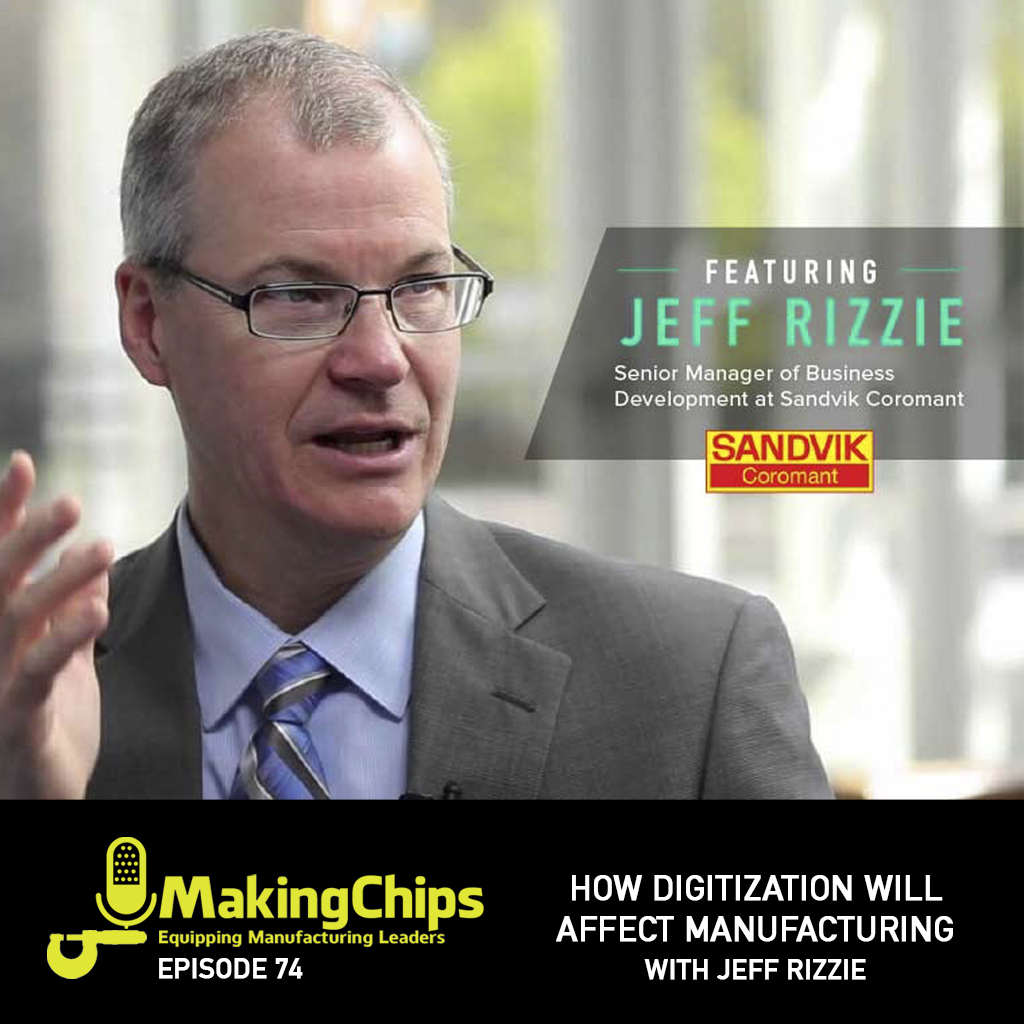
MC074: How Digitization Will Affect Manufacturing with Jeff Rizzie
How is digital manufacturing going to affect the modern machine shop? On this episode of MakingChips, we are joined by Jeff Rizzie, Senior Manager of Business Development at Sandvik Coromant. Jeff talks with us about the next phase of digital manufacturing and what changes we can expect to see in the future in terms of process improvement and efficiency. He also shares some key steps to help you start digitizing in your manufacturing shop. In manufacturing news, we talk about open-book management and what one firm is doing to help implement that system. Also discussed is the highly anticipated Mastermind Series and Workshop, as well as the upcoming IMTS 2016. Episode Structure: [01:35] - Audio/Video [02:45] - Manufacturing News [07:53] - Mastermind Series and Workshop [11:11] - What's Going On at ZENGERS [14:55] - Welcome Jeff Rizzie [16:30] - What Is the Future of Manufacturing? [21:45] - Process vs Discreet Manufacturing [24:40] - Key Steps to Start Digitizing [29:01] - Extracting Information from a CNC [31:38] - Process Improvements / Efficiency [37:05] - Sensors and Extra Technology [41:20] - Conclusion of Episode Mentioned in this Episode: Manufacturing News The Great Game of Business Theory of Constraints Jeff Rizzie | LinkedIn Sandvik Coromant IMTS 2016 We Want to Hear From You, The Metalworking Nation: [email protected] [email protected] [email protected] Telephone: (312) 725-0245
MC073: Manufacturing Culture with Cassie Haupers
We are happy to announce that this is the first episode of MakingChips shot entirely with video. We want to thank Chuck Shroeder and IMTS for coming to our studio and making all of us look good. Video segments of this episode are soon to come. On this episode of MakingChips, we have the pleasure of sitting down with Cassie Haupers, Vice President at Swiss Precision Machining. SPM is an ISO 9001:2008 certified company that serves many different industries including: medical, dental, aerospace and automotive and fiber optics industries. Growing up in the manufacturing world, Cassie wants to continue her family tradition and build the business for the next generation. Topics of discussion in this week's episode include: Cassie's history and background with SPM, SPM's expansion into a new facility, driving and defining company culture, overcoming bumps in the road, succession planning, communicating your vision to your company, women in manufacturing, and working with family. Episode Structure: [02:30] - Manufacturing News [05:40] - Mastermind Series [07:23] - IMTS 2016 [08:16] - Introducing Cassie Haupers [10:15] - Cassie's Progression at SPM [10:40] - What is Swiss Precision Machining? [14:18] - Driving the Culture at SPM [17:15] - Proving Yourself [19:57] - A Fresh Start [25:36] - Roadblocks and Challenges of Moving the Company [31:20] - Women in Manufacturing [32:45] - Background in IT [35:09] - Working With Family [37:15] - Conclusion of Episode Mentioned in this Episode: Manufacturing News IMTS 2016 Cassie Haupers | We Are Innovative | IMTS 2016 Video Swiss Precision Machining | SPM We Want to Hear From You, The Metalworking Nation: [email protected] [email protected] [email protected] Telephone: (312) 725-0245
MC072: Analyzing the Performance of the Manufacturing Sector with Senior Economist Bill Strauss (Part 2)
On part 2 of this episode of MakingChips, we continue our discussion with Bill Strauss, Senior Economist at the Federal Reserve Bank of Chicago. Topics discussed in this episode include the world economy, energy prices and their impact on manufacturing, borrowing and loans, education, growth rate, future economic trends, and the millennial generation. Episode Structure: [01:30] - Manufacturing Renaissance [03:35] - Energy Production and Manufacturing [06:05] - "The Good Old Days" [07:30] - The Two Ways to Economic Growth [10:45] - Educated Workforce [15:00] - Gradual Improvement [16:15] - Quick Fire Questions for Bill [18:40] - A Glimpse into the Future [21:55] - Millennial Generation's Effect on Manufacturing [23:45] - Conclusion of Episode We Want to Hear From You, The Metalworking Nation: [email protected] [email protected] [email protected] Telephone: (312) 725-0245
MC071: Analyzing the Performance of the Manufacturing Sector with Senior Economist Bill Strauss (Part 1)
On part 1 of this 2 part episode, we have a conversation with Bill Strauss. Bill is a senior economist and economic advisor in the economic research department at the Federal Reserve Bank of Chicago. His research papers include analysis of the manufacturing sector, the automotive sector, the Midwest regional economy, the trade-weighted dollar, business cycles and Federal Reserve payments operations. Bill shares his experience working with the Federal Reserve Bank of Chicago and how it relates to manufacturing. We also discuss the highly anticipated MakingChips Mastermind and Workshop series, Jim shares his experience working with SkillScout, and we discuss the future of automation in Manufacturing News. Episode Structure: [03:20] - Manufacturing News [06:10] - MakingChips Events [07:30] - MakingChips Workshop [08:28] - IMTS 2016 Registration [10:22] - SkillScout at CARR Machine [13:45] - Introducing Bill Strauss [15:30] - Bill's Role at the Federal Reserve [17:58] - The Rust Belt [19:15] - The 12 Cities [20:33] - Specializing in Manufacturing [21:20] - Explaining the Federal Reserve [24:15] - Board of Directors / Advisory Council [26:25] - The Media [28:30] - Investing in Performance [31:15] - Foreseeing the Future of Manufacturing [32:25] - Conclusion of Episode Mentioned in this Episode: Jim & Jason's Favorite Chicago Restaurants Manufacturing News IMTS 2016 Bill Strauss | LinkedIn We Want to Hear From You, The Metalworking Nation: [email protected] [email protected] [email protected] Telephone: (312) 725-0245
MC070: Leadership, Action, and a British Accent - with Sean Holt
Today on MakingChips: We welcome a very special VIP guest to our show, Sean Holt - President for the Americas at Sandvik Coromant. Sean has more than twenty years of engineering, business development and management experience. He is currently responsible for Sandvik Coromant's organization in North and South America. Sean shares his background with us, his history with Sandvik, and weighs in on what he believes defines a great manufacturing leader. We also discuss the importance of communication, the future of cutting tools, and what we can do to change the perception of manufacturing. Jim and Jason talk about MakingChips' highly anticipated Mastermind Series & Workshop, and we share more information about the upcoming International Manufacturing Trade Show (IMTS 2016). Episode Structure: [02:40] - Manufacturing News - mitchell lace manufacturing [04:45] - What's New with Jason? [06:05] - MakingChips Mastermind Series [08:15] - IMTS 2016 [09:35] - News at ZENGERS [12:00] - Introducing Sean Holt [14:20] - Sean's Background [16:30] - What Defines a Great Manufacturing Leader? [19:15] - Diversifying Key Industries [23:33] - Communication is Critical [25:25] - Future of Cutting Tools [28:25] - Changing Perception of Manufacturing [30:57] - Engaging the Younger Generations [33:02] - Opportunities in the Future [35:15] - Utilizing Podcasts for Communication [38:00] - Conclusion of Episode Mentioned in this Episode: Manufacturing News IMTS 2016 Sandvik Coromant Sean Holt | LinkedIn We Want to Hear From You, The Metalworking Nation: [email protected] [email protected] [email protected] Telephone: (312) 725-0245
MC069: ASK MAKINGCHIPS: Do You Have the Right Classification? with Marc Alberico and Steve Lorenzini
We're all familiar with Murphy's Law; "Anything that can go wrong, will go wrong". We've talked about this extensively in a previous MakingChips episode on crisis management, but what can you do to make sure that your manufacturing company is covered in the event that something goes wrong? "It's not a matter of if, it's a matter of when." From equipment breakdowns, to customer and employee claims of injury, you need to be equipped with the knowledge of what kind of coverage you'll need for the challenges you face as a Manufacturing Leader. The reality is that many manufacturers have limited knowledge on the subject, and are often hesitant to reach out to their insurance agency. What can the metalworking nation learn from the insurance industry? On this episode of MakingChips, we talk about insurance and risk management with Marc Alberico and Steve Lorenzini of The Daniel and Henry Company. Marc and Steve share their extensive knowledge of risk solutions for the manufacturing industry and provide an answer to a MakingChips listener's question. In manufacturing news, we talk about the future of automation and it's business implications.. Jim and Jason share details of two very special MakingChips events as we look forward to IMTS 2016. Episode Structure: [03:25] - Manufacturing News [06:45] - Mastermind Series [08:05] - MakingChips at IMTS 2016 [09:35] - Introducing Steve and Marc [11:36] - Answering Rob Trout's Email [13:05] - How did this collaboration begin? [19:06] - OSHA Compliance [21:15] - Understanding the Depth of Your Business [24:38] - "The Sheep in Wolf's Clothing" [26:30] - Product Liability (Prototype vs Medical) [32:15] - Misclassified Areas [38:15] - When to Call the Insurance Company [40:40] - Conclusion of Episode Mentioned in this Episode: Manufacturing News IMTS 2016 The Daniel and Henry Company Contact Marc & Steve Ryan's Patreon Account We Want to Hear From You, The Metalworking Nation: [email protected] [email protected] [email protected] Telephone: (312) 725-0245
MC068: Innovation, Technology, and Milling Expertise with Troy Stashi
Today on MakingChips: We are coming to you from the Sandvik Coromant Headquarters located in Fair Lawn, New Jersey. On this episode, we have a conversation with special guest Troy Stashi, Industry & Application Specialist in Automotive/Milling at Sandvik Coromant. Troy shares his expertise on several different topics including milling, efficiency, and trends in machining. In manufacturing news, we talk about HP's cutting edge 3D printer. We also discuss our upcoming MakingChips events including our live broadcast from the floor of IMTS 2016. Episode Structure: [02:38] - Manufacturing News [05:15] - What's new with Jason? [06:15] - Mastermind and Workshop [09:22] - MakingChips at IMTS 2016 [11:05] - What's new with Jim? [12:38] - Welcome Troy Stashi of Sandvik Coromant [13:55] - Troy's History with Sandvik Coromant [16:26] - Solving The Most Common Problems [22:00] - Trends in Milling Cutters [26:15] - Programming [31:33] - Coolant vs. No Coolant [35:30] - Coating Technology [37:50] - Conclusion of Episode Mentioned in this Episode: Manufacturing News IMTS 2016 Troy Stashi | LinkedIn Ryan's Patreon Account We Want to Hear From You, The Metalworking Nation: [email protected] [email protected] [email protected] Telephone: (312) 725-0245
MC067: Doing Business with Friends
There is an old adage that has been floating around the business world for ages; "you should never do business with friends". If you've never worked together with your friend, it can be difficult to translate their skills from a social context into a business one. That doesn't mean that you should refuse to start a business relationship with friends and family. On this episode of MakingChips, we ask the question: can you have close relationships with vendors and clients? Jim and Jason discuss their personal experiences and lay out some hypothetical situations about doing business with friends. We also talk about the continued popularity of the retro movement and its effect on manufacturing. Also discussed is recent news with Tesla Motors, the MakingChips Mastermind & Workshop series, and IMTS 2016. Episode Structure: [00:09] - Episode Preview [02:35] - Manufacturing News 1 [06:10] - Manufacturing News 2 [09:45] - MakingChips Mastermind and Workshop [11:10] - IMTS 2016 Registration [12:50] - Sandvik Coromant [15:10] - "Doing Business with Friends" [20:04] - Honesty [25:00] - Unsuccessful Business with Friends [29:03] - Circling Back [34:04] - iTunes Review // Conclusion of Episode Mentioned in this Episode: Our FAVORITE Restaurants in Chicago Manufacturing News 1 Manufacturing News 2 IMTS 2016 Ryan's Patreon Account We Want to Hear From You, The Metalworking Nation: [email protected] [email protected] [email protected] Telephone: (312) 725-0245
MC066: A Community of Makers - The Catalyst for Catalyze with Bill Fienup
When it comes to starting up your own business, it isn't always easy finding the the right space for exploring, creating, and developing your new ideas. What if you could assemble a community of like-minded people in a place where you can share ideas, be inspired, and collaborate with other creators. "It started with four or five people, grew to 400, and now we've built a physical home for that community." - Bill Fienup On this episode of MakingChips, we sit down with Bill Fienup, co-founder of Catalyze Chicago. Catalyze is a creative and collaborative workspace, equipping its members with state-of-the-art tools, industry mentorship, manufacturing support, and investment networks. With a focus towards business start-ups, Catalyze has become Chicago's premier center for product development and commercialization. Bill shares his brush with internet fame, his inspiration for building Catalyze, and why he believes a maker space like Catalyze should be in every community. We also preview IMTS 2016 and share some of what our listeners can expect from MakingChips at the event. Episode Structure: [00:07] - Episode Preview [02:45] - MakingChips Mastermind & Workshop [06:00] - IMTS 2016 [06:40] - MakingChips Studio [07:50] - Welcome Bill Fienup of Catalyze Chicago [09:00] - "Internet Famous" Story [10:20] - Patented Biopsy Needle [12:25] - The Formation of Catalyze [16:00] - How long has Catalyze been an organization? [18:51] - Benefits of Membership [22:45] - Membership Fee Structure [25:49] - Inspiration for Building Catalyze [26:40] - Investor Structure [28:55] - The Future of Catalyze [30:30] - Starting a Maker-Space in your Community Mentioned in this Episode: Our FAVORITE Restaurants in Chicago Heinz Automato IMTS 2016 Bill Fienup | LinkedIn Ryan's Patreon Account We Want to Hear From You, The Metalworking Nation: [email protected] [email protected] [email protected] Telephone: (312) 725-0245
MC065: Creating a Successful eBay Campaign for your Machine Tool
There are several options when it comes to selling one of your old machines. Some are more convenient than others, but might offer you less money than what you expected. With a little bit of added effort, you can get the most money out of your old machine. On this episode of MakingChips, Jim shares his steps for creating a successful eBay campaign. We also talk about the upcoming IMTS 2016, Chicago restaurants, and the problems the U.S. faces in manufacturing. Episode Outline: [00:07] - Episode Preview [03:15] - Manufacturing News [08:40] - IMTS 2016 [10:55] - Sandvik Coromant [13:05] - Selling Your Machine Using eBay [14:50] - Getting a Good Picture [17:30] - Fees [18:20] - Auction [19:40] - Buy it Now [23:15] - eBay vs Machine/Tool Dealer [25:15] - Skill Scout [26:20] - Episode Conclusion Mentioned in this Episode: Manufacturing News Article Our FAVORITE Restaurants in Chicago IMTS 2016 Sandvik Coromant Registration Metal Cutting Knowledge JIm's Office Manager Ad Ryan's Patreon Account We Want to Hear From You: [email protected] [email protected] [email protected] Telephone: (312) 725-0245
MC064: Inspiring the Next Generation of Makers - The Shop Rat Foundation with Kelly Burr
The Manufacturing Industry of today looks a lot different than it did 20 or 30 years ago. Modern machine shops are safe, clean working environments; equipped with high-tech machinery. Unfortunately, there is still a stigma associated with manufacturing as a "dirty" and "dark" profession. So how do we change this perception amongst our youth? Or perhaps more importantly, their parents, whose misperceptions of the industry might lead them to believe that a four-year college degree is the only sure route to a rewarding career. "To change people's minds and to change the perception [of manufacturing], it's the youth that we need to be educating." -Kelly Burr On this episode of MakingChips, we welcome our guest Kelly Burr, Executive Director of the Shop Rat Foundation. The Shop Rat Foundation is a non-profit organization with a mission to ignite interest in manufacturing careers among our nation’s youth, through development of innovative educational tools, curriculum and outreach programs and in partnerships with schools, community groups, companies and industry associations. We also discuss manufacturing news, IMTS 2016, and how to start a similar hands-on program in your community. Episode Structure: [00:07] - Episode Preview [01:55] - Manufacturing News [05:12] - IMTS 2016 Registration [07:10] - Welcome Kelly Burr [08:52] - Shop Rat's Story [12:10] - Shop Rat's Mission [14:10] - Students [15:00] - Shop Rat’s Programs [18:15] - Machining Class [20:45] - Student Feedback [22:05] - Exploratory and Preparatory Programs [23:02] - Starting a Similar Program in your Community [27:12] - Conclusion of Episode Mentioned in this Episode: Manufacturing News Article IMTS 2016 Shop Rat Foundation Kelly Burr | LinkedIn Ryan's Patreon Account We Want to Hear From You: [email protected] [email protected] [email protected] Telephone: (312) 725-0245
MC063: Manage & Mitigate - Developing a Crisis Plan for your Manufacturing Company with Scott McPherson
There is an old saying: “Expect the best, prepare for the worst.” It’s not something we want to think about, and it can be a difficult topic to discuss. Crises don’t happen very often, but when they do occur, they tend to have significant consequences. Without a well-thought out, strategic plan, your business is at risk of being completely caught off guard should a disaster happen. "Know that a crisis will happen at some point. It's just a question of how big it is or how small it is. The trick is being prepared." - Scott McPherson On this extended episode of MakingChips, we talk Public Relations with Scott McPherson, Principal at McPherson Public Affairs Group. Scott also shares some important tips on crisis preparation, including steps you should take to properly manage a crisis in your manufacturing shop. In Manufacturing News, we discuss the resurgence of vinyl records and it’s impact on record manufacturers. We also speak on the phone with Peter Eelman, Vice President - Exhibitions and Communications, AMT, about this year’s upcoming International Manufacturing Technology Show. Episode Structure: [00:07] - Intro [01:45] - Springtime in Chicago [02:44] - Manufacturing News [07:53] - What's New at ZENGER’S Industrial Supply [08:40] - What’s New at CARR Machine & Tool [09:15] - IMTS 2016 [09:57] - Call in with Peter Eelman [17:05] - Sandvik Coromant [18:20] - Welcome Scott McPherson [20:15] - What does McPherson Public Affairs do? [21:15] - How can my company benefit from a P.R. firm? [23:40] - What Was Old Is New Again [25:50] - Crisis: What are the things you should do right away? [29:40] - How do you prepare for a crisis? [33:08] - An Unfortunate Incident [37:01] - Handle Things Right Away [38:20] - Litigious Situation [40:50] - What are the very basic ways to be prepared? [42:06] - Reach out to Scott [43:00] - MakingChips Mastermind [44:05] - Conclusion of Episode Mentioned in this Episode: Manufacturing News Article IMTS 2016 Sandvik Coromant Scott McPherson | LinkedIn We Want to Hear From You: [email protected] [email protected] [email protected] Telephone: (312) 725-0245
MC062: Manufacturing a Community - Accelerating Success with a Mastermind Group
Throughout history, successful individuals such as Andrew Carnegie, Henry Ford, and Thomas Edison all met with groups of like-minded people on a regular basis, to help one another achieve common goals and grow. Today, this concept is called a “mastermind”, and is very well known amongst successful business owners. In fact, many consider some concept of a mastermind group as a critical part to maintaining a healthy network. "Whether it's a problem that you need to solve, whether it's creating and implementing goals, and just supporting each other through hard times. I think its necessary for every manufacturing leader to be a part of some kind of group like that. I'm going to say it... It's necessary." - Jason Zenger On this episode of MakingChips, we talk about what a mastermind group is, how it can benefit you and your manufacturing business, and what steps you can take to form one. We also talk manufacturing news and preview the upcoming IMTS 2016. Episode Structure: [00:07] - Episode Preview [01:35] - Manufacturing “Stuff” [03:22] - Manufacturing News [05:35] - IMTS [06:34] - Sandvik Coromant [07:23] - Mastermind Groups [08:23] - Jason’s Mastermind Groups [09:45] - Old School Philosophy [10:45] - Experience with Master Minds [12:45] - Rules and Structure [14:00] - Sharing Personal Information [16:25] - Primary Components of a Good Group [18:30] - Diverse Group of Businesses [20:00] - Steps to Starting a Mastermind Group [22:50] - MakingChips' Mastermind Group [25:45] - Conclusion of Episode [26:25] - Ryan’s Patreon Account Mentioned in this Episode: Manufacturing News Article IMTS 2016 Sandvik Coromant Donate to Ryan's Patreon Account! We Want to Hear From You: Email [email protected] [email protected] [email protected] Telephone (312) 725-0245
MC061: Riches in the Niches
We come to you from two separate locations (Dallas & Chicago) on this remote episode of MakingChips. Today we talk about establishing and exploring your manufacturing company’s niche. Jim and Jason share their idea of what niche means to them in their respective companies. In Manufacturing News we discuss Five Vital Steps to Set Up a Successful Manufacturing Business. We also recap the TMA’s 90th annual meeting, and introduce a new MakingChips partnership. Episode Outline: [00:07] - Episode Preview [01:45] - Dallas Airport [02:40] - Affiliated Distributors [03:40] - Manufacturing News [06:40] - Finding the Right Factory [07:30] - A Great Team [08:55] - Business Model [09:55] - TMA Board [12:20] - Riches in the Niches [14:00] - ZENGERS Industrial Supply’s Niche [16:45] - ZENGERS Original Business Model [18:48] - CARR Machine’s Niche [22:52] - Picking the Right Jobs [25:05] - Evaluate, Experiment, Evolve [26:15] - IMTS Workshop [27:25] - Sandvik Partnership [30:12] - Conclusion of Episode Mentioned in Episode: Article From 'Manufacturing News' Adhq Ryan's Computer We Want to Hear From You: Email [email protected] [email protected] [email protected] Telephone (312) 725-0245
MC060: An Industry of Makers - 2016 Crain's Manufacturers Summit with Special Guests
On this special episode of MakingChips, we recap the 2016 Crain's Manufacturers Summit with interviews from several VIP guests. First, we speak with John Sapiente of Elgin Die Mold and Trident Manufacturing about the challenges of running two businesses. Second, we have Jason Scher of Vosges Chocolate who speaks to us about working with your spouse, and the evolution of Vosges Chocolate. We also have a conversation with Tom Pellette of Caterpillar, where we discuss Caterpillar's supply chain relationships with machining companies, as well as the economic future of manufacturing. Lastly, we talk with Sagar Patel of Woodward about their recent expansion, and promoting manufacturing to future generations. At the end of this episode, we recap what we took away from the event. VIP Guests: John Sapiente - President at Trident Manufacturing, Inc. Jason Scher - Chief Operating Officer at Vosges Chocolate Tom Pellette - Group President of Caterpillar Inc. Sagar Patel - President, Aircraft Turbine Systems at Woodward Episode Outline: [00:07] - Episode Preview [01:40] - Welcome John Sapiente [02:06] - Elgin Die Mold’s Vision [04:05] - Trident Manufacturing - Driving Out Waste [05:05] - Wearing Many Hats [05:50] - Welcome Jason Scher [06:30] - Working With Your Spouse [07:56] - Evolution of Vosges Chocolate [09:50] - Welcome Tom Pellette [10:15] - Caterpillar’s Supply Chain Relationships [12:15] - Economic Future [13:40] - Sustainability Trends [15:10] - Welcome Sagar Patel [16:00] - Woodward’s Expansion in Illinois [19:25] - Promoting Manufacturing’s Image [22:10] - Recapping 2016 Crain’s Manufacturers Summit [23:45] - Small Donation for Ryan [25:30] - Conclusion of Episode Mentioned in this Episode: Ryan's Laptop
MC059: Women in Manufacturing - Stamping Out a New Vision with Erica Wiegel
Women are the future of manufacturing industry leaders and essential to the success of the industry. However, many women in manufacturing have experienced a gender bias which has excluded them from core managerial roles such as production supervisors and operations managers. Compounding the issue, many people think of manufacturing jobs as dirty, unskilled, back-breaking labor. That’s not the case anymore... "When the five years had passed and I hadn't done anything, that's when I had to re-evaluate my goals, my decisions, and what I wanted to execute." - Erica Wiegel On this episode of MakingChips, we have a great conversation with Erica Wiegel, President and Owner of Aro Metal Stamping. Erica shares with us her inspiring story of accomplishing her goals through acquiring a new business. She details the acquisition process, challenges she faced along the way, and lessons she has learned from her experience. We also discuss manufacturing news, WBE certification, associations, and the future of manufacturing. Episode Outline: [00:07] - Episode Preview [01:55] - Manufacturing News [04:15] - Welcome Erica Wiegel [07:25] - What Aro Metal Does [08:10] - Erica’s 5 Year Goal Plan [10:20] - Woman Business Enterprise [12:00] - Acquiring a New Business [13:30] - New Employees [14:15] - A Good Fit (Company Culture) [16:20] - Value Added [17:45] - Defining Goals [18:55] - Challenges, Mistakes, and Lessons [20:25] - Associations [21:40] - Competitive Edge [22:30] - WBE Certification [23:48] - The Next 5 Years (Near-sourcing) [25:50] - Cleaning Up [26:45] - Conclusion of Episode Mentioned in this Episode: "Manufacturing News Article Wiegel Tool Works Aro Metal Stamping Erica Wiegel | LinkedIn TMA | Technology | Manufacturing Aligned Women In Manufacturing: Home About WBE Certification Near-sourcing We Want to Hear From You: Email [email protected] [email protected] [email protected] Telephone (312) 725-0245
MC058: "Life is Great!" - Developing Your Core Values
A few months ago, we met with Craig Zoberis of Fusion OEM to talk about his company's Core Values. In that episode, we covered the importance of figuring out who you are as a company and what you stand for. More than anything, being a leader is about staying true to the values and principles that you have built your company on. Leadership also imparts the responsibility of holding your vision even as it becomes more tempting to disengage and simply enjoy the fruits of success. “You come to the point where you’ve hit a ceiling and you need to break through that ceiling. The only way to do that is to really get unified, get focused, and have a clear vision of values that the whole company is following." - Jason Zenger On this episode of MakingChips, Jim and Jason cover the basics of developing your core values. Jason shares his process of developing ZENGERS' core values with the listeners. We also talk with John Sapiente of Trident Manufacturing, who will be a panelist at the upcoming Crain's Manufacturers Summit. Episode Outline: [00:07] - Episode Preview [01:16] - Phone Interview with John Sapiente [03:10] - Innovation [06:50] - Growth at MakingChips [08:10] - Listener Engagement [10:30] - "Titan American Built" [12:40] - Leave Us Feedback [14:00] - Developing ZENGERS' Core Values [16:50] - Interviews [21:15] - Collecting Data [23:40] - Core Value vs. Vision [26:50] - ZENGERS' Core Values [27:15] - Fusion OEM's Core Values [28:18] - Life is Great! [30:26] - Embodying the Core Values [31:25] - Life Happens [33:15] - Call to Action ZENGERS Core Values: Do the right thing. Go above, and beyond. Be dependable. Life is great! Mentioned in this Episode: Crain's Midwest Manufacturers Summit (Promo Code: MANU2) John Sapiente of Trident Manufacturing, Inc. Bobby Soles Propeller Titan American Built MC046: What Makes Fusion OEM Unique We Want to Hear From You: Email [email protected] [email protected] [email protected] Telephone (312) 725-0245
MC057: Creating a Future Workforce - How a Council of Manufacturing Leaders Takes a High School Metals Program to the Next Level - with Rob Stuebing
Last week, we talked with Frank Holthouse about East Leyden High School’s Metals Program, and how they are providing an environment for students to learn modern manufacturing practices. This week, we continue that discussion. What can we do to spark interest in manufacturing to the younger generation? How can you replicate the success of Leyden’s Metals Program in your own community? “We need to see more of this in high schools … Those in the industry should be pushing their local high schools (or other outlets) ... to cater to getting more people involved in the world of manufacturing.” - Rob Stuebing On this episode of MakingChips, we speak with Rob Stuebing. Rob is the Vice-President of Qualiseal Technology and Current Chair of the Leyden Technology Council. Rob talks with us about the inception of the council, the success of the metals program, current objectives for the organization, and enhancing your high school’s metalworking program. We also discuss manufacturing news in the current political climate. Episode Outline: [00:07] - Episode Preview [01:15] - Crain’s Manufacturing [02:56] - Manufacturing News [05:15] - Welcoming Rob Stuebing [07:10] - Leyden Technology Council [09:40] - Technology and Manufacturing Association [10:10] - Inception of the Technology Council [12:15] - Appealing to the Younger Generation [14:50] - Objective of the Technology Council [17:09] - Enhancing Your High School Metals Program [18:55] - Meeting Agenda [20:37] - Success Stories [23:00] - Conclusion of Episode Mentioned in this Episode: Crain's Manufacturers Summit Promo Code: MANU2 Donald Trump and Apple Leyden Technology Council
MC056: From World War II to Today: The Metals Program at Leyden High School
Just a few years ago there were stories of mass layoffs in the manufacturing industry. Now, that is no longer the case. In 2015, Forbes listed Machining as one of the top 10 hardest jobs to fill in the United States. Today, Manufacturers are increasingly looking to high schools and community colleges to fill current staffing needs. Many schools are working to meet demand by modernizing their manufacturing education programs. “We’re very proud of where we are, and where we’ve taken our program since the 1940’s" - Frank Holthouse On this episode of MakingChips we have a conversation with Frank Holthouse. Frank serves as the Industrial Technology Chairperson at East Leyden High School, where he has been teaching for the last 10 years. Frank instructs East Leyden’s metalworking program, simply referred to as the Metals Program. The Metals Program provides opportunities for students to learn about modern technical practices, industrial organizations, and the role of technology in our industrial society. Students are encouraged to explore several courses, specialize in a specific course area, and ultimately participate in the school/industry cooperative work program. Episode Outline: [00:07] - Episode Preview [01:00] - Crain’s Manufacturers Summit [02:18] - Manufacturing News [04:15] - Welcome Frank Holthouse [05:20] - Industrial Program at East Leyden H.S. [09:08] - Machines in the Shop [10:21] - Enrolling in the Metalworking Program [13:15] - Safety and Measurements [15:00] - Structure of Metals Class [16:55] - Fundamental Machining Skills [17:40] - Jim’s High School Experience [20:45] - NIMS Credentials [22:25] - Marketing the Program [25:20] - Challenges of Running the Program [26:45] - Size of Metalworking Program [27:30] - Success Story [30:10] - Conclusion of Episode Mentioned in this Episode: Crain's Manufacturers Summit Promo Code: MANU2 Leyden Metals
MC055: Hands-On Skill Demonstrations: Beyond the Resume with Elena Valentine
An important part of what makes a manufacturing leader successful is their ability to think outside of the box. This line of thinking should also extend to the hiring process. Successful companies are good at bringing the right people into their team, but it isn't always so easy. What if you had the ability to see candidates in action before you made a decision about who to hire? “Manufacturing has always been sexy... It just needs a generational communications facelift.” - Elena Valentine This week on MakingChips, we welcome back last week's guest Elena Valentine. Elena walks us through Skill Scout's process of screening, assessing, and recommending candidates through hands-on manufacturing activities. We also discuss the Crain's Midwest Manufacturers Summit, the consequences of declining oil prices, how Skill Scout got involved in manufacturing, the "new" old way of doing things, and steps to finding the right candidate for your business. Episode Outline: [00:07] - Episode Preview [01:00] - Crain’s Manufacturing Summit [03:15] - Manufacturing News [05:40] - Welcome Back Elena [06:15] - Why Manufacturing? [09:40] - How Companies Experience Candidates [10:11] - Skill Demonstrations and Work Samples [14:15] - Learned Interview Behaviors [17:00] - Finding the Right Candidate [20:00] - Virtual Meaningful Conversations [22:50] - Outside of the Resume [24:30] - Elena’s Call to Action for Listeners [25:50] - Conclusion of Episode Mentioned in this Episode: Crain's Manufacturing Summit Skill Scout [email protected]
MC054 - Human-Centric Hiring with Elena Valentine
Finding the right person for your company is crucial for building a thriving business. When recruiting for open positions, employers look for candidates with the skills, experience, and demeanor they believe will benefit their company. That said, it isn’t always easy to identify candidates who understand the needs and expectations of the job. What can an employer do to capture and relay their company's culture to a prospective candidate, while showing them exactly what the job entails? How can you more meaningfully connect a candidate to your company? "This is not just about building your employer brand, this is about getting quality talent in the door, so that you can get them on-board right away and build your business." - Elena Valentine On this episode of MakingChips, we have a conversation with Elena Valentine, CEO and Co-Founder of Skill Scout. Skill Scout uses an innovative and fresh approach to connect potential employees to companies. Elena shares some of the methods the company uses to match candidates with employers, most notably in the form of video job postings. Also discussed in this episode is the Crain’s Manufacturing Summit and Jim’s recent trip to Jackson, Michigan. Episode Outline: [00:14] - Episode Preview [01:20] - Crain’s Manufacturing [03:30] - Jackson, Michigan [05:40] - Welcome Elena Valentine [08:58] - Attracting Talent [10:20] - Bringing Job Posts to Life [13:45] - Better Hiring Results [16:00] - Logistics Behind the Video [20:52] - How to Shoot a Good Ad [23:45] - Authentic Window [25:20] - Success Story [27:30] - Conclusion of Episode Mentioned in this Episode: http://shoprat.org http://www.skillscout.com https://www.linkedin.com/in/elenavalentine1
MC053: Effective Delegation for Manufacturing Leaders
For many manufacturing leaders, the idea of delegating tasks can cause a feeling of uneasiness. Maybe you think you’ve got everything under control, or that things always have to be done your way. In reality, doing everything yourself is simply impossible, and can cause you unnecessary stress. To be an effective leader you must be able to rely on your team by learning how to delegate strategically. "Any task that really exhausts or pulls energy from you is not something worth doing." -Jason Zenger In this episode of MakingChips, Jim and Jason share some simple strategies that can help you effectively delegate tasks. Also discussed in this episode is the upcoming IMTS trade show, task management in Evernote, learning to let go, and managing expectations. Episode Outline: [00:07] Episode Preview [02:19] Manufacturing News [05:10] Delegating [09:10] Simple Ways to Delegate Tasks [11:50] Task Management in Evernote [15:04] Delegating at MakingChips [17:40] Expectations [21:50] Conclusion of Episode Mentioned in this Episode: http://www.imts.com https://www.strategiccoach.com
MC052 - Goal Setting for Manufacturing Leaders
It’s the beginning of a new year, which for many is a time to start following through with resolutions and goals. Unfortunately, many people come to find that many of those resolutions don’t always pan out the way we would like them to. If you’re serious about making a change, it’s important that you put specific, time-bound goals in place to help you achieve success. "You've got to work on the big rocks before you work on the pebbles in the sand." In this episode of MakingChips, Jim and Jason discuss their main goals for the new year, goal setting for your manufacturing business, a story of priorities and a jar, and manufacturing news. Using the purchase of a new CNC machine as an example, Jim and Jason show you different methods that will help you get one step closer to achieving your short, and long-term goals. Episode Outline: [0:07] - Intro [1:55] - Manufacturing News [06:30] - Call to Action for Listeners [07:10] - MakingChips Website [08:45] - Our Main Goals [10:20] - Rocks [14:45] - Complexity in Today’s Business World [16:10] - SMART Goals [20:55] - Goals for Zenger’s [22:30] - Key Motivations [25:00] - Jim’s Goals [28:44] - Conclusion of Episode Article Mentioned in this Episode: http://money.cnn.com/2016/01/04/news/economy/us-manufacturing-shrinks-again/
MC051 - Additive Manufacturing
Some people think additive manufacturing will radically change the face of manufacturing. Although it is still a relatively new technology, additive manufacturing (also referred to as 3D Printing) has caused quite the buzz in the manufacturing community. Will additive manufacturing eventually become the way of the future, or has it's usefulness been overhyped? “Additive can not do its adding anywhere near as fast as machining can do it’s subtracting." - Peter Zelinski In this episode of MakingChips, we welcome back Peter Zelinski of Modern Machine Shop Magazine. Peter, Jim, and Jason discuss all things Additive Manufacturing, as well as the importance of manufacturing discussion among the presidential candidates. “Manufacturing happens in small facilities.” -Peter Zelinski Episode Outline: [00:17] - Episode Preview [01:26] - Welcome Back Pete [02:00] - What Guided Pete to Manufacturing? [05:30] - Additive Manufacturing [07:50] - Is Additive Manufacturing Overhyped? [11:30] - Additive Manufacturing Under the Radar [13:00] - Modified Machines [15:01] - Can Additive Encourage Domestic Production? [18:00] - Presidential Candidates and Manufacturing [22:40] - Prototyping vs Production [24:00] - Additive vs Machining [27:30] - Call to Action for Listeners [29:45] - How to Reach Peter Zelinski Links Mentioned in this Episode: additivemanufacturing.media mmsonline.com
MC050 - A Year in Review
This is MakingChips Episode 50! In this episode of MakingChips, Jim and Jason recap some of their favorite episodes and interviews from the last year. This episode highlights the story behind MakingChips, as Jim and Jason share their experiences from the beginning to where they are today. “Jason and I really want to thank each and every one of you for tuning in every week, listening to us, being with us, and taking this ride with us. We had no idea that it was going to be as popular and successful as it has been so far. We’re really working hard (very hard) to make it even better.” Episode Outline: [00:08] Episode Preview [01:52] The Story Behind MakingChips [05:15] Hiccups along the Way [06:40] Episode 1 [07:50] Episode 2 [08:20] Recession [09:20] One of our Favorite Episodes [10:00] It’s Not Your Dad’s Machine Shop [11:25] The Power of Networking [12:24] Robots in your Shop [13:00] Skip Generation [13:20] Fernando Ortiz [14:00] Most Downloaded Episodes [15:00] San Diego [15:45] Michelle Mabry [16:30] Patricia Miller [18:09] Jon Baklund [18:18] Eric and Heidi Schmid [19:30] Focus on What You’re Good At [20:00] Tom Hilaris [20:25] Workshops for Warriors [22:45] Julie Poulos [23:30] LinkedIn [25:20] Thank You Listeners [25:45] Jason’s Call to Action [26:24] Thank You Guests
MC049 - Characteristics of a Manufacturing Leader
What makes a good leader? Leadership is the single most important factor in the success or failure of any business. Great leaders use their leadership traits to motivate, inspire, and build high performance teams around them. The role of an innovative leader greatly differs from the conventional image that many people hold of good leadership. What kind of qualities do these innovative leaders share? “The innovators in this industry, (machining, desecrate part production) are engaged together in this huge open source effort at figuring manufacturing out.” – Peter Zelinski In this Episode of MakingChips, we sit down with Peter Zelinski of Modern Machine Shop Magazine. Peter has been a writer and editor for Modern Machine Shop for more than a decade. Peter regularly visits machining facilities to learn about the manufacturing technology, systems and strategies they have adopted, and the successes they’ve realized as a result. He shares many of his insights from these experiences with us, including 4 Traits of Modern Manufacturing Leaders and 3 Deep Level Trends in Manufacturing. “Even making metal parts is ultimately a people business.” – Peter Zelinski Peter Zelinski’s 4 Traits of Modern Manufacturing Leaders: Authenticity Persistence Love Genuine Regard for People 3 Deep Level Trends in Manufacturing: Automation Additive Atmosphere Episode Outline: [00:07] Intro/Preview [01:36] Manufacturing News [04:30] Welcome Peter Zelinski [07:45] Leadership Characteristics [09:10] Authenticity [10:32] Persistence [12:50] Baby Steps [13:35] Process Improvement [19:40] Love What You Do [22:15] Regard for People [25:00] Value of the Employee [26:22] Bad Traits [29:20] Culture Changes (Atmosphere) [33:10] Jason’s Call to Action for Listeners Shops Mentioned in this Episode: Rekluse Motor Sports in Idaho Baklund R&D in Minnesota C&A Tool in Indiana Byrne Tool and Die in Michigan Tech Manufacturing Co in Missouri Also Mentioned in this Episode: Three Ways That Smarter Mobility Is Transforming Efficiency On The Manufacturing Floor Modern Machine Shop
MC048 - Growing a Machining Business While Living 1,400 Miles Away
The thought of leaving your machine shop for even a few hours can be enough to cause anxiety for many manufacturing leaders, so it may seem impossible to imagine running your business from halfway across the country. “To make manufacturing work, to make money, you feel like you have to grab it so hard it slips through your fingers.” – Eric Schmid In this extended episode of MakingChips, we sit down with brother and sister Eric Schmid and Heidi Schaefer of Schmid Tool and Engineering. Eric and Heidi share their story of how and why they made the decision to work remotely, while still maintaining their respective roles in the company. There were many important decisions that they needed to make along the way in order to ensure a seamless transition. This episode covers a range of topics that can help manufacturing leaders decide if working remotely is the right move for them. Topics include Letting Go of Control, Planning the Transition, Bumps in the Road, Being Accessible, Holding Accountability, and Mastering Fear. Episode Outline: [0:07] Intro/ Preview [1:34] Manufacturing News [5:00] Welcome Heidi and Eric [6:10] The Roots of Schmid Tool [7:40] Roles in the Business [9:30] Working Remotely [11:40] Letting Go of Control [14:00] Planning the Transition [14:50] Bumps in the Road [17:00] Being Accessible [19:00] How Do You Let Go? [22:30] Cultural Consistencies [24:00] Making the Move [27:20] Management and Leadership [29:20] Steps to Working Remotely [31:25] The Illusion of Control [33:00] Accountability [35:30] Mastering Fear [37:00] Give and Take [38:40] Helping the Owners [40:00] Conclusion