PLAY PODCASTS
Making a Scene Presents

Making a Scene Presents

639 episodes — Page 1 of 13

The Myth of “Exposure” in the Modern Music Industry

May 13, 202623 min

Interview with Zac Harmon

May 10, 20261h 8m

Stop Sending Your Fans Back to YouTube

May 10, 202621 min

Gerry Casey's Interview with Ben Reel

May 10, 202626 min

Automation: The Missing Piece in Most Indie Mixes

May 9, 202621 min

Interview with GB Leighton

May 9, 20261h 0m

Why Every Indie Artist Needs an Owned Community Forum

May 8, 202622 min

Why Every Indie Artist Needs an Owned Community Forum

May 4, 202622 min

The Indie Artist Flywheel: How to Build a Music Career That Feeds Itself

May 3, 202619 min

Gerry Casey's Interview with Ronan Gallagher

May 3, 202640 min

Interview with Turn Turn Turn

May 2, 202635 min

Eleven Years of Making a Scene: Still Independent, Still Publishing, Still Building the Future

May 1, 202621 min

The Live Show Is Not Just a Night Out. It Is the Front Door to Your Whole Music Business

Apr 28, 202621 min

The Hidden Economics of Being an Indie Artist in 2026: A Survival Guide to Lower Costs, Increase Revenue, and Own Your Fans

Apr 28, 202619 min

Delay vs Reverb: When to Use Each (and Why Most People Overuse Reverb)

Apr 28, 202611 min

Interview with Flutes and Low

Apr 26, 20261h 22m

Interview with Santiago Periotti of Santiago and the Soulmovers

Apr 26, 202639 min

Interview with Tim Wagoner of The Fabulous Trutones

Apr 24, 20261h 7m

Canada Just Put Money Behind the People Who Build the Stage

Apr 22, 202611 min

Reverb and Depth: How to Place Sounds in a 3D Space

Apr 21, 202618 min

The American Music Fairness Act Could Finally Make Radio Pay

Apr 20, 202610 min

Interview with Stacy Mitchhart

Apr 19, 20261h 9m

Ticketmaster LiveNation Court Decision -When the Gatekeeper Finally Got Dragged Into Court

Apr 19, 202622 min

Gerry Casey's Interview with Keith Forde of Linkwells

Apr 18, 202627 min

Interview with The Gated Community

Apr 18, 20261h 7m

Making Recorded Music a Product Again

Apr 15, 202621 min

Touring Used to Sell Records. Now Records Exist to Sell Touring. What Happens Next?

Apr 14, 202622 min

Parallel Compression: Making Your Mix Punch Without Killing Dynamics

Apr 14, 202616 min

Interview with Katy Vernon

Apr 13, 20261h 0m

Content That Adapts: Using AI to Personalize Posts for Different Types of Fans

Apr 12, 202621 min

Gerry Casey's Interview with Mike Guldin

Apr 12, 202624 min

interview with Kevin Blackwell of Sassparilla

Apr 9, 20261h 8m

The Suno-Warner Deal: When Big Music Stops Fighting AI and Starts Designing It

Apr 7, 202622 min

The Artist-Owned Ecosystem: Replacing the Label, Distributor, and Platform

Apr 6, 202620 min

Interview with Alexis P Suter

Apr 6, 20261h 1m

AI-Driven Fan Journeys: Mapping Every Step From First Listen to Lifetime Fan

Apr 5, 202620 min

Gerry Casey's Interview with Aleksandra Josic of Here and Everywhere

Apr 5, 202630 min

Compression in Context: Why Soloing Tracks Is Killing Your Mix

Apr 4, 202625 min

A Buyer’s Guide to Recording Interfaces

Apr 4, 202619 min

Ep 2507Interview with the Avery Set

Making a Scene Presents an Interview with the Avery Set The Avery Set began in the early 2000s in Frankenmuth, Michigan, growing out of a close friendship between Chris (lead singer) and Jake (drummer). What started as two friends making noise quickly turned into a real band with a shared sense of purpose—writing songs, chasing shows, and building a sound that felt honest and lived-in. In 2006, the band released their debut record, Wishful Thinking, capturing the early energy of a group finding its voice. A year later, in 2007, The Avery Set relocated to Nashville, a move that pushed the band into new rooms, new influences, and a wider circle of musicians. With an expanded lineup, they released Returning to Steam in 2009, a record that marked a clear step forward in confidence and craft. http://www.makingascene.org

Apr 4, 20261h 7m

Ep 2506Subtractive EQ vs Additive EQ: The Secret to Clean Mixes

Making a Scene Presents - Subtractive EQ vs Additive EQ: The Secret to Clean Mixes There is a reason so many home studio mixes sound busy, cloudy, and weirdly tired even when every track is “exciting” on its own. It is not always the mic. It is not always the room. It is not always that you need some expensive boutique plugin blessed by a guy on YouTube wearing a beanie in July. A lot of the time, the problem is simpler and a little more humbling. We boost before we listen. We decorate before we clean. We keep reaching for more when the track is begging for less. That is where subtractive EQ comes in, and it is why this one move can make a mix feel more expensive, more open, and more professional without adding a single new sound. Fender Studio Pro is built on the Studio One platform, and Fender’s current Studio Pro pages describe its Standard EQ as a parametric EQ with dynamic EQ and visual feedback, while the platform also includes broader mix tools like multiband dynamics and a modernized workflow in version 8. That makes it a very good place to learn restraint instead of hype. http://www.makingascene.org

Apr 1, 202622 min

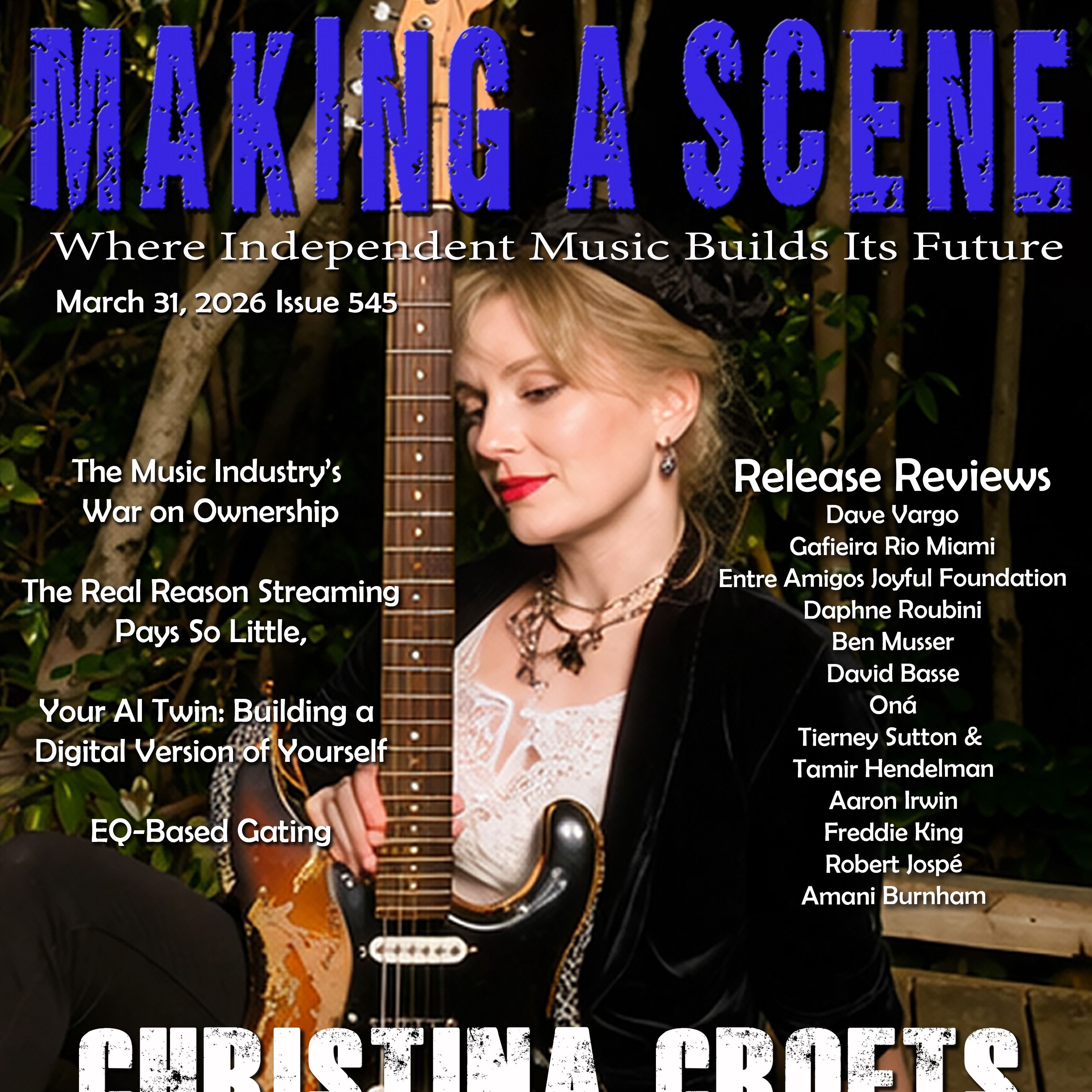
Ep 2505Interview with Christina Crofts

Making a Scene Presents an Interview with Christina Crofts Christina Crofts is a singer, songwriter, guitarist, and slide guitarist—and a true veteran of Australia’s blues and rock scene. Known for her uncompromising bottleneck tone and a “big sound” that far exceeds her small frame, Crofts has spent years building a reputation as one of the country’s most commanding live performers and distinctive slide players. Born in the coastal town of Coffs Harbour, Christina grew up in a multicultural household with a Norwegian immigrant father and an Australian mother. Her family later moved to Brisbane, where her passion for guitar took hold in her early teens and quickly became central to who she was. As her playing developed, she headed to Sydney, where she met guitarist Steve Crofts. What began as guitar lessons eventually became a lifelong musical partnership, and the two later married. http://www.makingascene.org

Mar 30, 20261h 7m

Ep 2504Creating a Touring Syndicate for Increased Leverage

Making a Scene Presents - Creating a Touring Syndicate for Increased Leverage For years, indie artists have been told the same tired story about touring in America. Build your streaming numbers. Pray for algorithm luck. Hope a promoter notices. Spend money on ads. Guess which city might work. Book the run. Drive the miles. Cross your fingers. Lose money in three towns, break even in two, and call the whole thing “building.” That story has made a lot of middlemen comfortable. It has not made a lot of artists stable. The next version of touring is going to look different. It is going to be less like gambling and more like infrastructure. Less like each band wandering alone through the dark and more like a network of artists carrying a flashlight together. And the artists who get there first are going to stop acting like their fan data is just a mailing list and start treating it like a shared economic engine. That is where the idea of a touring syndicate comes in. http://www.makingascene.org

Mar 29, 202622 min

Ep 2503Predictive Touring: Using AI to Decide Where You Should Play Before You Book the Show

Making a Scene Presents - Predictive Touring: Using AI to Decide Where You Should Play Before You Book the Show There used to be a standard indie-touring ritual. You stared at a map, circled cities you had heard were “good markets,” texted a few friends, checked which clubs had an open Thursday, and called it strategy. Then came the long drive, the half-full room, the weak merch table, the gas bill, the post-show talk where everyone said, “It was still good exposure,” which is music-business language for “the math did not work.” That old way is not brave. It is lazy. Or, more accurately, it is what artists were forced to do when the people with the good data kept it for themselves. Now the wall is cracking. An indie artist can look at streaming geography, social engagement, ticket-click behavior, search interest, audience segments, and most important of all, owned fan data, before they ever email a promoter. AI can take that messy pile and help turn it into a map. Not a fantasy. Not a guarantee. A map. A risk map. A money map. A “where are my real people actually concentrated?” map. http://www.makingascene.org

Mar 29, 202623 min

Ep 2502Stop Sending Fans Back Into the Machine

Making a Scene Presents - Stop Sending Fans Back Into the Machine There is a bad habit all over independent music right now. An artist works hard to get attention on Instagram, TikTok, YouTube, Facebook, Threads, or X. A new fan finally bites. They click. And what do they find? Another stack of links, another rented profile, another platform asking them to wander off and forget why they came in the first place. That is not a funnel. That is a leak. Pew’s latest U.S. social media data still shows huge reach on YouTube and Facebook, with Instagram and TikTok especially strong with younger adults, which is exactly why these platforms matter for discovery. But reach is not ownership, and attention is not the same thing as a relationship. http://www.makingascene.org

Mar 29, 202625 min

Ep 2501Gerry Casey's Interview with Jamie Williams and The Roots Collective

Making a Scene Presents Gerry Casey's Interview with Jamie Williams and The Roots Collective Jamie Williams & the Roots Collective are a roots-driven live band built for one thing: a great night out. Fronted by singer-songwriter Jamie Williams on vocals and rhythm guitar, the band also features Dave Milligan on lead guitar, Jake “The Dude” Milligan on bass, and James Bacon on drums. Together, they walk what they describe as an imaginary tightrope between Tom Petty and The Rolling Stones—hooky songs, swaggering grooves, and a rootsy bite that lands somewhere between country blues, rock, and Americana. http://www.makingascene.org

Mar 28, 202641 min

Ep 2500Interview with the Badrock Blues Band

Making a Scene Presents an Interview with the Badrock Blues Band Shadows, the debut album from The Badrock Blues Band, is a record built on perseverance—three decades of hard-earned chemistry, a sudden global shutdown, and the heartbreaking loss of a bandmate who helped define their sound. Formed in 1992 by Gerald “Mercy” Schuldenzucker (guitar, vocals), Siegfried Horvath (bass, vocals), and Franz Kollmann (guitar), Badrock spent more than 30 years shaping their own take on the meeting point between blues and rock. Over countless shows across Europe, they steadily refined a style that pulls from nearly every corner of the blues spectrum while staying connected to the roots of rock ’n’ roll. Their reputation grew the old-school way—through relentless live performance, loyal audiences, and a sound that kept getting sharper with time. http://www.makingascene.org

Mar 28, 20261h 9m

Ep 2499Your AI Twin: Building a Digital Version of Yourself That Markets While You Sleep

Making a Scene Presents - Your AI Twin: Building a Digital Version of Yourself That Markets While You Sleep There used to be a simple rule in the music business. If you wanted more reach, you needed more people. A label. A manager. A publicist. A radio plugger. A street team. A content person. A marketing assistant. Maybe even somebody whose whole job was just following up on emails you forgot to answer. That old system did not disappear because it got fair. It disappeared because it got too expensive, too centralized, and too slow for the average independent artist. The jobs are still there. The work still has to get done. The difference is that now the artist is usually the one doing all of it. That is where the idea of an AI twin gets interesting. Not because you need a robot version of yourself making fake handshakes and fake friendships. Not because fans want a plastic imitation of your soul. And definitely not because art should sound like software. The real reason is much simpler than that. A working indie artist needs scale. You need to answer more messages, write more posts, send better emails, follow up with more promoters, and keep your voice steady across a dozen channels, even when you are in a van, loading out at 1 a.m., or half asleep after a six-hour drive. http://www.makingascene.org

Mar 25, 202621 min

Ep 2498The Real Reason Streaming Pays So Little, And Why It Was Designed That Way

Making a Scene Presents - The Real Reason Streaming Pays So Little, And Why It Was Designed That Way Streaming did not become unfair by accident. The dominant payout model was built to make giant catalogs easy to license, cheap to sell, and sticky for listeners. That helped platforms grow and helped major rights holders protect old power in a new format. It did not build a healthy middle class for working artists. The next fight is not just about a better royalty formula. It is about ownership, fan data, and turning streaming back into what it should be for independents: discovery, not destiny. The music business loves a clean rescue story. Piracy nearly burned the whole thing down. Streaming rode in like a hero. Subscriptions brought the money back. Everybody got saved. End of movie. Except that is not how it feels from the van, the home studio, the merch table, or the monthly distro report. For a lot of independent artists, streaming feels like standing in the middle of a giant city, singing into a megaphone, and getting tipped in pocket lint. The audience is massive. The access is global. The numbers look big on the screen. But the money that reaches the artist often feels weirdly small, almost insultingly small. And because the platforms are wrapped in the language of “access,” “discovery,” and “democratization,” artists are often pushed to think the problem is them. Maybe they just need more streams. Maybe they need better playlisting. Maybe they need to crack the algorithm. Maybe they need to go viral. That is the trap. http://www.makingascene.org

Mar 25, 202622 min

Ep 2497The Music Industry’s War on Ownership

Making a Scene Presents - The Music Industry’s War on Ownership Platforms want access. Artists need ownership. There is a war on ownership in the music business, and most of it is happening in plain sight. It is not being fought with lawsuits or angry speeches. It is being fought with product design. It is being fought with dashboards, autoplay, pre-save buttons, short-form feeds, and a thousand tiny choices that train artists to believe reach is enough. The message is always the same. Be everywhere. Post more. Feed the machine. Stay visible. Hope the platform keeps showing you to people. That sounds like opportunity. A lot of the time, it is really dependency. http://www.makingascene.org

Mar 25, 202621 min