
Look at the Book
1,392 episodes — Page 5 of 28

‘I Do Not Permit a Woman to Teach’: 1 Timothy 2:11–15, Part 1
When Paul encourages women to be quiet, what does he mean? Not total silence, but the kind of submissive speech that does not contradict the calling of men to lead.

What Should Women Wear? 1 Timothy 2:8–10, Part 2
When we dress to get attention, we signal our neediness. But the godly have their deepest needs already met, and they dress accordingly.

Holy Men, Modest Women: 1 Timothy 2:8–10, Part 1
Men and women may wrestle with different kinds of temptations, but the end goal for both remains the same: holiness adorned with good works.

Paul, a Teacher of the Nations: 1 Timothy 2:5–7, Part 2
Why did God appoint Paul to be a herald, an apostle, and a teacher? So that the offer of Christ’s ransom might be taken to the ends of the earth.

One God, One Mediator, One Ransom for All: 1 Timothy 2:5–7, Part 1
In what sense is Jesus the ransom “for all,” as Paul says, if many are never reconciled to God?

If God Desires All to Be Saved, Why Aren’t They? 1 Timothy 2:1–4, Part 5
If God desires all to be saved, but many are not saved, does God have a deeper desire that governs his desire for universal salvation?

What Does It Mean to Be Godly and Dignified? 1 Timothy 2:1–4, Part 4
What does a life of godliness and dignity look like? Such a life is marked by God-directed reverence, serious joy grounded in weighty truth, and settled maturity.

How Should We Pray for Rulers? 1 Timothy 2:1–4, Part 3
Paul encourages Christians to pray for kings and rulers, but to what end? What should we ask God to do in and through those who hold power?

Should Exiles Pray for the King? 1 Timothy 2:1–4, Part 2
In this world, Christians live as sojourners and exiles, citizens of heaven under the lordship of Christ. So, how should we relate to earthly rulers?

Start with God, Stay with God: 1 Timothy 2:1–4, Part 1
Our prayers should exclude no one. Kings and laymen, enemies and friends, rich and needy, wicked and righteous, near and far — we should pray for all kinds of people.

How Satan Saves Sinners: 1 Timothy 1:18–20, Part 4
In the sovereignty of God, even Satan can serve as a means of sanctification. But when is it right to surrender egregious sinners into his hand?

How Does Rejecting Conscience Wreck Faith? 1 Timothy 1:18–20, Part 3
When someone silences the voice of conscience and repeatedly prefers sin over the glory of the blessed God, faith ends up shipwrecked.

Pastor, Soldier, Athlete, Farmer, Manager: 1 Timothy 1:18–20, Part 2
What images does the New Testament use to depict leaders in the church? Paul gives us several in the Pastoral Epistles, and they are all needed.

Wage War by Faith and a Good Conscience: 1 Timothy 1:18–20, Part 1
When Paul talks about waging the good warfare, what does he mean? Where is the battle — and who are the combatants?

Why Paul Soars into Doxology: 1 Timothy 1:17
Paul handles glories all the time, touching majesty in almost every line. Yet what kind of reality compels Paul into a soaring doxology? Eternal life.

Why Did God Allow Paul to Become a Persecutor? 1 Timothy 1:12–16, Part 4
Why did God allow Paul, whom he would later call as an apostle, to become a Christ-persecutor and Christian-killer first?

Faith and Love Are the Overflow of Grace: 1 Timothy 1:12–16, Part 3
By his grace, God unites believers with Christ, and from that vital union, the Christian life of faith and love flows forth.

Do Ignorance and Unbelief Deserve Mercy? 1 Timothy 1:12–16, Part 2
Paul says that he received mercy because he “acted ignorantly in unbelief.” What does that mean? Did Paul’s ignorance merit God’s mercy?

Was Paul Found Faithful or Made Faithful? 1 Timothy 1:12–16, Part 1
We live the Christian life in the strength of another. When we believe, Christ not only saves us but also empowers us for fruitful labor.

What Difference Does God’s Happiness Make? 1 Timothy 1:8–11, Part 3
The happiness of the triune God beats at the very heart of reality: the Father has always delighted in the Son by the Spirit. All Christian joy finds its wellspring here.

What Is Healthy Teaching? 1 Timothy 1:8–11, Part 2
What is healthy teaching? Teaching that fits with the gospel, agrees with the words of Jesus, and promotes the hearers’ godliness.

How Did the False Teachers Misuse the Law? 1 Timothy 1:8–11, Part 1
God’s old-covenant law is good, but it can be applied in bad ways — such as by demanding that those justified by faith in Christ must keep it.

Where Does Empty Talk Come From? 1 Timothy 1:5–7
What does the state of our heart have to do with the content of our speech? Everything.

God’s Household Plan for His Church: 1 Timothy 1:3–5, Part 2
In his word, God has laid out his household plan, which aims to cultivate love, faith, and purity in his people. Do you know what that plan is?

The Problem with Christian Speculations: 1 Timothy 1:3–5, Part 1
What separates sound doctrine from speculations? Sound doctrine serves godliness, accords with the gospel, and agrees with the words of Jesus.

The Fatherhood of God and the Lordship of Christ: 1 Timothy 1:1–2, Part 4
Christians experience — not simply know — that God is our Father and Jesus is our Lord by the indwelling witness of the Holy Spirit.

How Is Timothy Paul’s Child? 1 Timothy 1:1–2, Part 3
Some relationships run much deeper than blood. The bond between a spiritual father and his children is forged in Christ and lasts forever.

God Is Our Savior from What? 1 Timothy 1:1–2, Part 2
Christians love to refer to Jesus as our Savior. But what exactly does Jesus save us from?

An Apostle by Command: 1 Timothy 1:1–2, Part 1
Why does Paul begin his letter to Timothy by identifying himself not only as an apostle, but as an apostle “by command of God”?

Paul’s Authenticating Scars: Galatians 6:14–18, Part 5
When Paul argues that he is an authentic apostle of Jesus, he points to the marks of persecution written on his flesh.

Walk by Faith, Not Works: Galatians 6:14–18, Part 4
Faith results in two wonderful blessings for the believer: a new standing before God and a new life empowered by the Spirit.

Did Paul Really Boast Only in the Cross? Galatians 6:14–18, Part 3
Why should Christians boast only in the cross? Because everything that we have as believers comes through the cross.

What Is the New Creation? Galatians 6:14–18, Part 2
Only Christ can take an instrument of death and make it the place where a new creation comes into being. The way of life runs through the cross.

The World Crucified to Me and I to the World: Galatians 6:14–18, Part 1
What does Paul mean when he says that the world has been crucified to him and he to the world? He no longer trusts and treasures the world. He trusts and treasures Christ.

Requiring Circumcision and Breaking the Law: Galatians 6:11–13
Legalism in Paul’s day and legalism in our own day share a similar root: the desire to impress fellow humans.

Hell and Heaven Are at Stake with Money: Galatians 6:6–10, Part 1
We may think that what we do with money matters little, but Paul teaches that where we choose to invest has eternal consequences.

Is Boasting Good or Bad? Galatians 6:1–5, Part 4
The New Testament treats much boasting as sinful, but it also calls us toward a holy kind of boasting. So, how should Christians boast?

Don’t Be Energized by Comparison: Galatians 6:1–5, Part 3
Do not determine the value of your work by comparing yourself with others. God calls each person to unique acts of faith, and comparison sours and spoils that calling.

What Is the Law of Christ? Galatians 6:1–5, Part 2
What is “the law of Christ” — and how does our fulfilling of this law relate to justification by faith alone?

How to Restore a Sinning Saint: Galatians 6:1–5, Part 1
Christian love is not passive. When love sees a brother or sister caught in sin, it does not shrink away but confronts in order to renew and restore.

If We Have the Spirit, Why Commands? Galatians 5:22–26, Part 3
If Christians have the Spirit of God leading and guiding them, why does the New Testament issue over four hundred commands to obey?

Keep in Step with the Spirit: Galatians 5:22–26, Part 2
Those made alive by the Spirit will keep in step with the Spirit. They will walk by the Spirit, sow to the Spirit, bear the fruit of the Spirit.

The Fruit of the Spirit Is the Fruit of Faith: Galatians 5:22–26, Part 1
If the fruit of the Spirit is a miracle that God produces in his people, what can we do to cultivate that fruit?

How Do We Inherit the Kingdom? Galatians 5:19–21, Part 2
How do Christians inherit the kingdom of God? Not by our work or merit, but by our union with the Son of God and offspring of Abraham.

Practicing Sin Destroys the Soul: Galatians 5:19–21, Part 1
If you live in sin, practice sin, and die in sin, you won’t go to heaven. You won’t be happy with God forever.
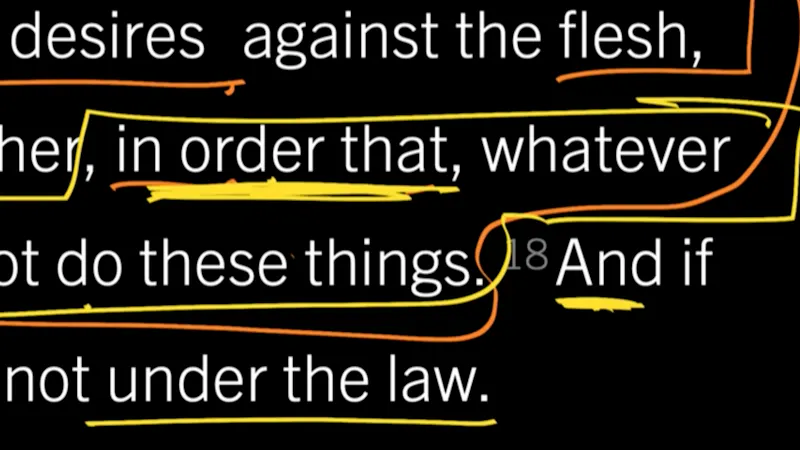
The War in the Christian Soul: Galatians 5:16–18, Part 4
How does God give us victory over the desires of the flesh? He reshapes and reorients our desires by his Spirit.
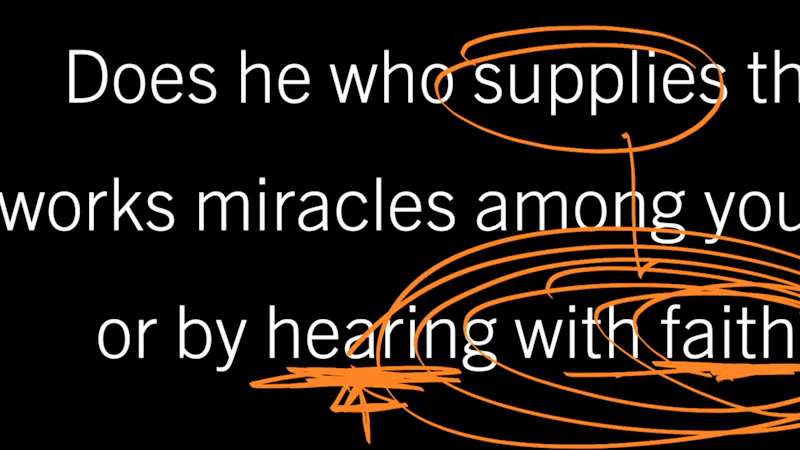
How Do We Love in the Power of Another? Galatians 5:16–18, Part 3
Competing desires war within every Christian — desires of the flesh and of the Spirit. How can we refuse to gratify what our flesh wants?

Does the Spirit Make Me a Robot? Galatians 5:16–18, Part 2
If Christians are indwelt by the Spirit of God, and if he guides and controls us, are we simply spiritual robots?
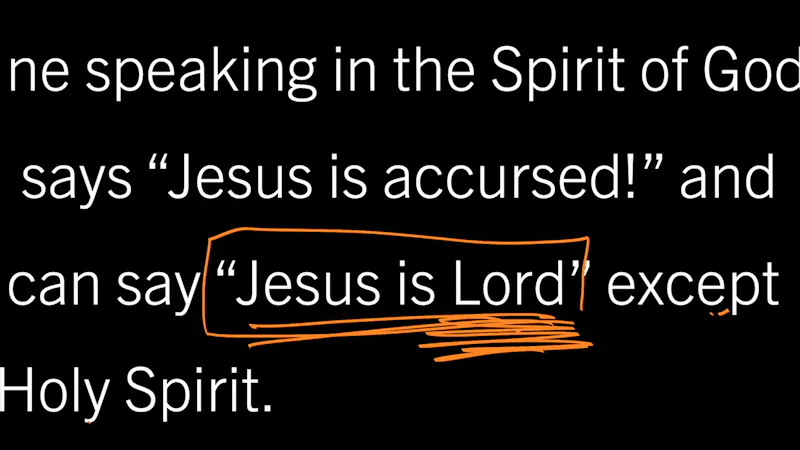
How Do I Receive the Spirit? Galatians 5:16–18, Part 1
All Christians should walk by the Spirit. But how? How do we experience the powerful, omnipotent, merciful, all-wise leading of the Spirit of God?

How Does Love Fulfill the Law? Galatians 5:13–15, Part 4
Paul says that the law is fulfilled in the command to “love your neighbor as yourself.” But how does such love fulfill the whole law?