
Look at the Book
1,392 episodes — Page 3 of 28

Why Do We Need Preaching? 2 Timothy 3:16–4:5, Part 3
Why does preaching matter? By tracing the path away from sound teaching, John Piper shows the importance of preaching in the life of every believer.

Preachers Must Say Hard Things: 2 Timothy 3:16–4:5, Part 2
How can preachers rebuke and exhort without wandering into hypocrisy and pride? John Piper offers six hallmarks of godly, humble preaching.

How to Pray for Your Pastor’s Sermon: 2 Timothy 3:16–4:5, Part 1
When Paul tells Timothy to preach, he uses some of the weightiest language found in any biblical command. John Piper draws out four initial implications.

All Scripture Is God-Breathed: 2 Timothy 3:14–17, Part 2
How do we know the Bible is the word of God? John Piper explores Jesus’s teaching alongside Paul’s claim that all Scripture is God-breathed.
Continue in What You Learned and Believed: 2 Timothy 3:14–17, Part 1
What is the Bible for, and how do we make the most of it? John Piper offers tools for digging into the inspired word of God.
Realism and Hope for the Persecuted: 2 Timothy 3:10–13
What was Paul’s aim in the midst of deadly persecutions and trials? John Piper unpacks the apostle’s realism and hope in his encouragements to Timothy.

Snatching Women and Stumbling to Ruin: 2 Timothy 3:6–9
What marks false teachers and their followers? John Piper confronts the impulse to hide sin behind a noncommittal appearance of godliness.

The Powerful Alternative to Formalism: 2 Timothy 3:1–5, Part 5
In the last days, some will be lovers of self, lovers of money, and full of every kind of sin, yet they will still maintain the appearance of godliness. How?
Is It Wrong to Be a Lover of Pleasure? 2 Timothy 3:1–5, Part 4
Should we love pleasure, or is doing so a sinful sign of the last days? John Piper contrasts loving pleasure for its own sake with loving pleasure in God.
Is Self-Love the Root of All Evils? 2 Timothy 3:1–5, Part 3
When Paul starts listing sins that define unbelievers in the last days, he leads with an example more heinous than the rest: unrighteous self-love.

Why Does God Ordain So Much Evil in the Last Days? 2 Timothy 3:1–5, Part 2
Paul says the last days will be full of deceivers and difficulties. But why should that be so? John Piper offers six possible reasons.
When Are the ‘Last Days’? 2 Timothy 3:1–5, Part 1
When Jesus came as God’s Messiah, he ushered in a new age — but not in the way so many expected. John Piper examines our place in the last days.

God’s Agents of Repentance: 2 Timothy 2:24–26, Part 2
If God alone grants repentance, why should parents, friends, and pastors still labor for the salvation of unbelievers?
God May Grant Repentance: 2 Timothy 2:24–26, Part 1
How do we escape Satan’s clutches, especially when we have no hope of loving the truth on our own? We come to our senses only when God grants repentance.

How to Pursue Righteousness: 2 Timothy 2:22–23, Part 2
If the Christian life is about fleeing sin and pursuing righteousness, faith, love, and peace, how do we do so? John Piper offers some means of grace.
Christian Life as Fleeing and Pursuing: 2 Timothy 2:22–23, Part 1
How do we get a pure heart? John Piper meditates on righteousness, faith, love, and peace as vital pursuits for the Christian life.
What Are Vessels for Honor and Dishonor? 2 Timothy 2:20–21
What does it mean to be an honorable part of God’s great household? John Piper encourages believers to pursue usefulness in every good work.
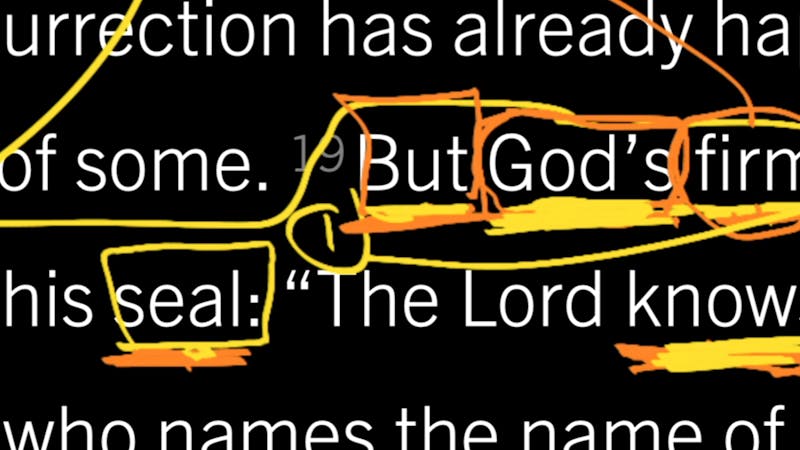
The Immovable Seal of Election and Holiness: 2 Timothy 2:16–19, Part 2
When Christianity seems fragile, and false teaching leads people toward more and more ungodliness, how do we know that God’s purposes haven’t failed?
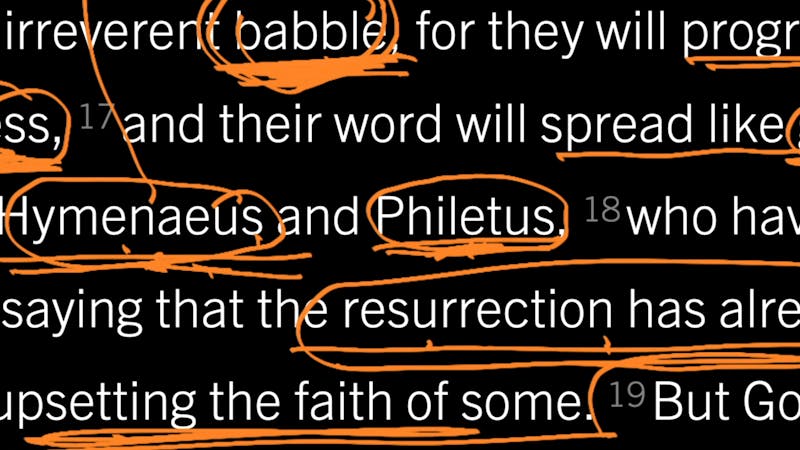
Why False Teaching Is Like Gangrene: 2 Timothy 2:16–19, Part 1
Irreverent babble leads only to more ungodliness. John Piper warns against teaching that is as poisonous as it is empty.
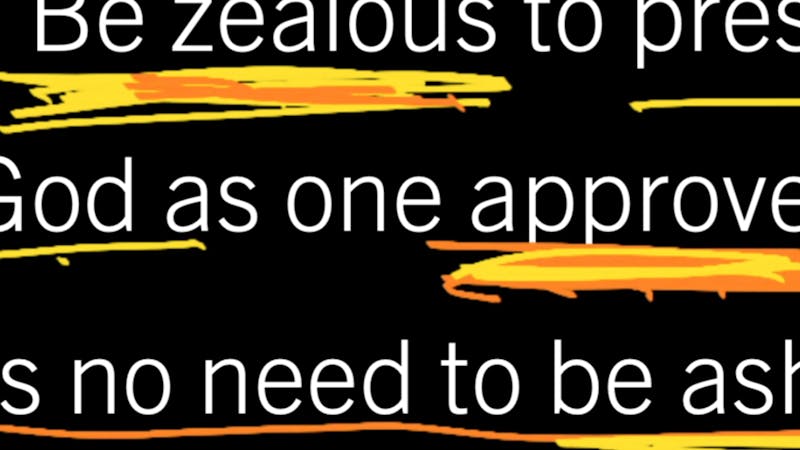
How Do You Rightly Handle the Word of Truth? 2 Timothy 2:14–15, Part 2
How do we teach the word of God in a manner approved by God? John Piper emphasizes the importance of faith and grace in the work of ministry.
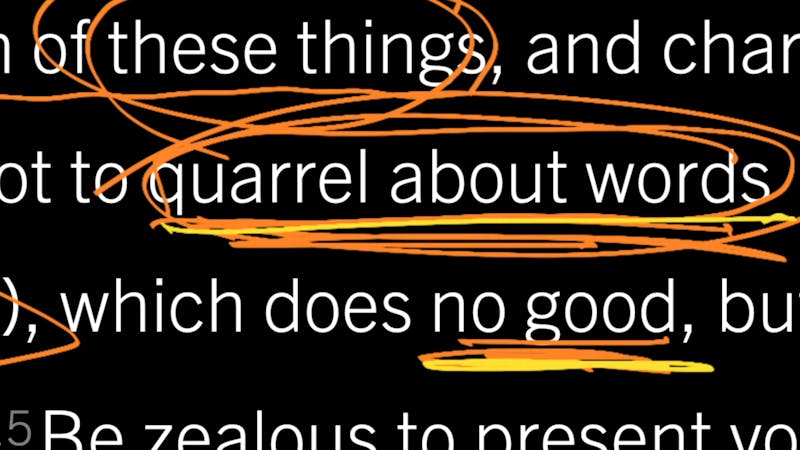
Contending for the Faith vs. Word Fights: 2 Timothy 2:14–15, Part 1
When it comes to defending the words of the Bible, how do we know when we’ve begun ruining our hearers with quarrels? Pastor John offers five guidelines.

Saved by Grace, But Not Without War: 2 Timothy 2:8–13
God promises to keep everyone he saves, yet Scripture also mentions conditions Christians must meet in order to get to glory. How do those two truths fit together?
If We Are Faithless, He Remains Faithful? 2 Timothy 2:11–13
Does God remain faithful to us even when we are unfaithful to him? John Piper considers the promise that God will never deny himself.

Election Gives Evangelism Power: 2 Timothy 2:8–10, Part 3
What does the doctrine of election do for evangelism? It puts the omnipotent, unfailing power of God behind the gospel call.

The Gospel Triumphs Through Suffering: 2 Timothy 2:8–10, Part 2
The word of God is not bound by anything. Yet God chooses to use human heralds and their faithful suffering to advance the good news.

Remember Jesus in All You Do: 2 Timothy 2:8–10, Part 1
Mature Christians are much occupied with Jesus. They do not forget him but remember him hourly and in everything.
Is Thinking or Praying the Path to Understanding? 2 Timothy 2:3–7, Part 3
Diligent thinking and God’s gift of understanding are not at odds. They are two sides of the same coin.
Soldier, Athlete, Farmer — the Power and the Promise: 2 Timothy 2:3–7, Part 2
In 2 Timothy 2, Paul uses three different images to depict the Christian life: soldier, athlete, and farmer. What can we learn from each?
Why Does Paul Take Timothy’s Suffering for Granted? 2 Timothy 2:3–7, Part 1
Why is suffering an essential part of the Christian life? Among other reasons, because Christians are out of step with the world, which leads to conflict.

How the Gospel Is Preserved for All Generations: 2 Timothy 2:1–2, Part 2
Each generation needs faithful men to pass on the apostolic teaching that was entrusted to them. By the Spirit’s power, we preserve the truth until Christ returns.

How Are We Strengthened by Grace? 2 Timothy 2:1–2, Part 1
The Christian life is lived in the power of grace, which means we look to God to provide everything we need to fulfill his call on our lives.

Is Our Kindness a Condition of God’s Mercy? 2 Timothy 1:15–18, Part 2
Is God’s mercy the foundation of our good works, or is his mercy the reward of our good works?

The Soul-Strengthening Courage of Onesiphorus: 2 Timothy 1:15–18, Part 1
When Paul looked for an example for Timothy, he found Onesiphorus — unashamed, full of service, and refreshing to fellow believers.

Guard the Healthy Words by the Holy Spirit: 2 Timothy 1:13–14
According to Paul, healthy words come from Jesus. They accord with his gospel and redound to his glory. They are worth guarding closely.
Unashamed Because We Know Our Keeper: 2 Timothy 1:8–12, Part 4
When God calls someone to himself, he keeps that person until the end. He guards all those who entrust themselves to him.

Death Abolished, Life Obtained, Gospel Spread: 2 Timothy 1:8–12, Part 3
The Lord Jesus Christ abolished death and brought immortality to light through the gospel. Do you know the gospel? Do you share it with others?
Electing Grace from Before Creation: 2 Timothy 1:8–12, Part 2
Salvation tells the glorious story that God set his love on his people before they even existed and then called them for the praise of his glory.

The Eternal Roots of Timothy’s Unashamed Courage: 2 Timothy 1:8–12, Part 1
God targeted his chosen ones with grace before the ages began. That is the surest foundation imaginable to build your life upon.
The Main Point of 2 Timothy: 2 Timothy 1:3–8, Part 4
How do you fan into flame a gift God has given to you? You do it by faith, laying hold of the promises of provision God has made to you.

The Gift of Unashamed Courage to Speak and Suffer: 2 Timothy 1:3–8, Part 3
When Paul talks about the gift God gave to Timothy, what is he referring to? Unashamed courage to speak and to suffer for the gospel.

A Father’s Prayers, a Son’s Tears: 2 Timothy 1:3–8, Part 2
Paul says that he prayed for Timothy “constantly . . . night and day.” How might his practice and his specific petitions shape our own life of prayer?

Paul’s Parent-Rooted, Non-Guilty Service: 2 Timothy 1:3–8, Part 1
Why is it so important to serve God from a good conscience? Because a guilty conscience will serve in order to gain favor with God, and that will never work.

How Did Timothy Become a Child of Paul? 2 Timothy 1:1–2, Part 5
The apostle Paul addresses Timothy as “my beloved child.” How did Timothy become not just a ministry partner but a son to Paul?

How Is Eternal Life in Christ Jesus? 2 Timothy 1:1–2, Part 4
Why did God make Paul an apostle? So that he could declare the promise of life in Christ Jesus to those who were dead in their trespasses.

Why Does Paul Prefer the Name ‘Christ Jesus’? 2 Timothy 1:1–2, Part 3
When Paul refers to Jesus, the title he loves to use the most is “Christ Jesus.” Why was this name so significant for Paul?

How Great Is Paul’s Apostolic Authority? 2 Timothy 1:1–2, Part 2
What is an apostle? An apostle is an official representative selected by Christ to mediate his authority on earth and herald his message to men.

The Poignant Setting of Paul’s Last Letter: 2 Timothy 1:1–2, Part 1
What is the setting for Paul’s second letter to Timothy? Paul is imprisoned in Rome, he wants Timothy to come to him, and he is ready for death.

The Great Crescendo of Faith and Love and the Glory of God: 1 Timothy 6:20–21, Part 4
What is Paul’s ultimate concern in 1 Timothy? To encourage faith that awakens godliness that is passionate about the glory of God.

How Do We Guard the Precious Deposit of Truth? 1 Timothy 6:20–21, Part 3
You don’t guard the word of God like you would some other ancient document. You guard it by doing it, protecting it, and passing it on.

What Is the Good Deposit Entrusted to Timothy? 1 Timothy 6:20–21, Part 2
Paul’s final exhortation in 1 Timothy is to “guard the deposit entrusted to you.” What is “the deposit” the apostle has in mind?