Let's Talk Risk! with Dr. Naveen Agarwal
179 episodes — Page 4 of 4
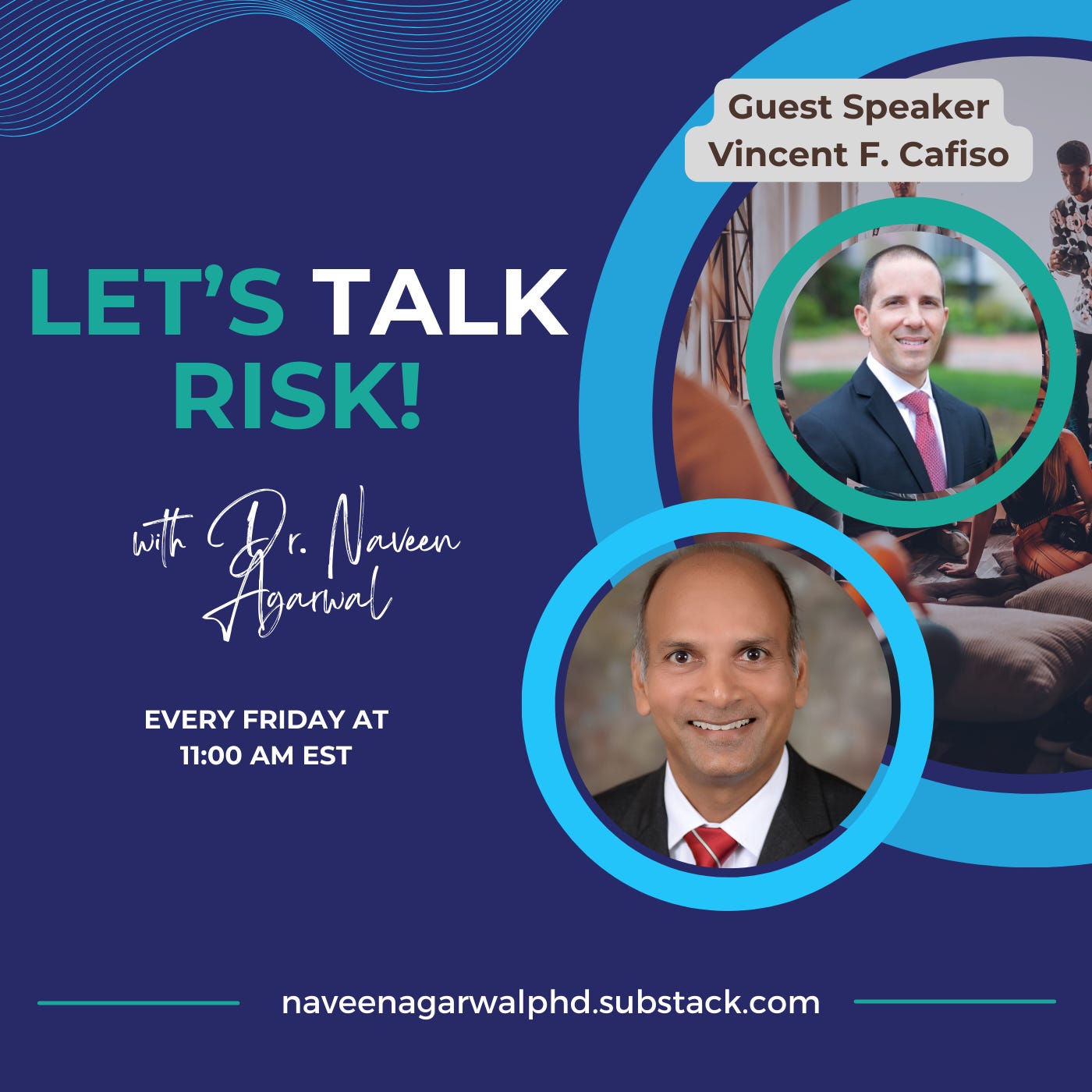
LTR 34: Build a culture of Quality to achieve inspection-readiness at all times
The news of an FDA investigator showing up unannounced at a medical device manufacturing facility generally sends a wave of panic throughout the organization! Even when it is a planned inspection, or an audit visit from a notified body, there is a high level of stress before, during and after the inspection. A lot of effort is spent in “getting ready” for the inspection or the audit, documentation is checked and re-checked, work areas are cleaned up and people are asked to be on their best behavior!It is like cramming for a test, desperately hoping for a passing grade!“Inspection readiness is a frame of mind, a daily practice, not a destination or a project deliverable”, says Vincent F. Cafiso in this Let’s Talk Risk! conversation. It is not about "managing” an inspection or audit; rather it is about creating a culture of Quality, open communication and collaboration where everyone feels confident in their work, and they are not afraid to be observed and challenged by an auditor. In such an environment, every team member has a clear understanding of how their work relates to product quality and how it affects their end users and patients. They seek to improve on a daily basis, finding gaps and promptly addressing them. When people show passion and commitment to quality, working as if the product they are making will be used by a family member, you can feel a culture of Quality.When it becomes a matter of daily practice, supported by a culture of Quality, you can be inspection ready any day!About Vincent F. CafisoVincent F. Cafiso started his career as an investigator at the US FDA, where he conducted hundreds of complex investigations at medical device and IVD manufacturers, both domestic and outside the United States. Subsequently, he spent over 25 years at leading medical device manufacturers helping them become inspection-ready through robust internal audit and compliance programs and a strategic focus on developing a culture of Quality. He is currently the Founder and Managing Consultant at Practical Compliance Results, LLC where he offers advisory services to clients in inspection readiness, compliance, quality assurance and quality systems consulting. About Let’s Talk Risk! with Dr. Naveen AgarwalLet’s Talk Risk! with Dr. Naveen Agarwal is a weekly live audio event on LinkedIn, where we talk about risk management related topics in a casual, informal way. Join us at 11:00 am EST every Friday on LinkedIn.DisclaimerInformation and insights presented in this podcast are for educational purposes only. Views expressed by all speakers are their own and do not reflect those of their respective organizations.If you enjoyed this episode, consider becoming a free or paid subscriber. This is a public episode. If you'd like to discuss this with other subscribers or get access to bonus episodes, visit naveenagarwalphd.substack.com/subscribe

LTR 33: AI and the future of work for QA/RA professionals
Artificial Intelligence (AI) now affects almost every aspect of our personal and professional life. It is also changing the way we work, especially in the knowledge industry. According to a recent report from McKinsey Global Institute about the generative AI and the future of work, 30% of the hours worked in many professional activities across the US economy could be automated by 2030. But AI will actually enhance the work done by STEM professionals, creative and legal professionals. If there are new challenges for professionals in many industries due to AI, there are also enormous opportunities for those who embrace it and find creative ways to stand out in this hyper-competitive job market. In this podcast, Elena Kyria shares insights and tips for career success. She was recently recognized as a Top LinkedIn voice for QA/RA recruiting in the Life Sciences industry. About Elena KyriaElena Kyria is currently the founder an CEO at Elemed, a leading European recruitment firm in the MedTech space, specializing in medical devices, diagnostics, IVD, MDR, IVDR, ISO 13485, CE Marking, 510(k), Regulatory Affairs, Quality, Clinical, and Notified Body consulting services. She is also the host of Career Diaries by Elemed, a podcast dedicated to helping QA/RA professionals learn about the latest insights and tips from seasoned industry executives. About Let’s Talk Risk with Dr. Naveen AgarwalLet’s Talk Risk with Dr. Naveen Agarwal is a weekly live audio event on LinkedIn, where we talk about risk management related topics in a casual, informal way. Join us at 11:00 am EST every Friday on LinkedIn.DisclaimerInformation and insights presented in this podcast are for educational purposes only. Views expressed by all speakers are their own and do not reflect those of their respective organizations.If you enjoyed this episode, consider becoming a free or paid subscriber. This is a public episode. If you'd like to discuss this with other subscribers or get access to bonus episodes, visit naveenagarwalphd.substack.com/subscribe
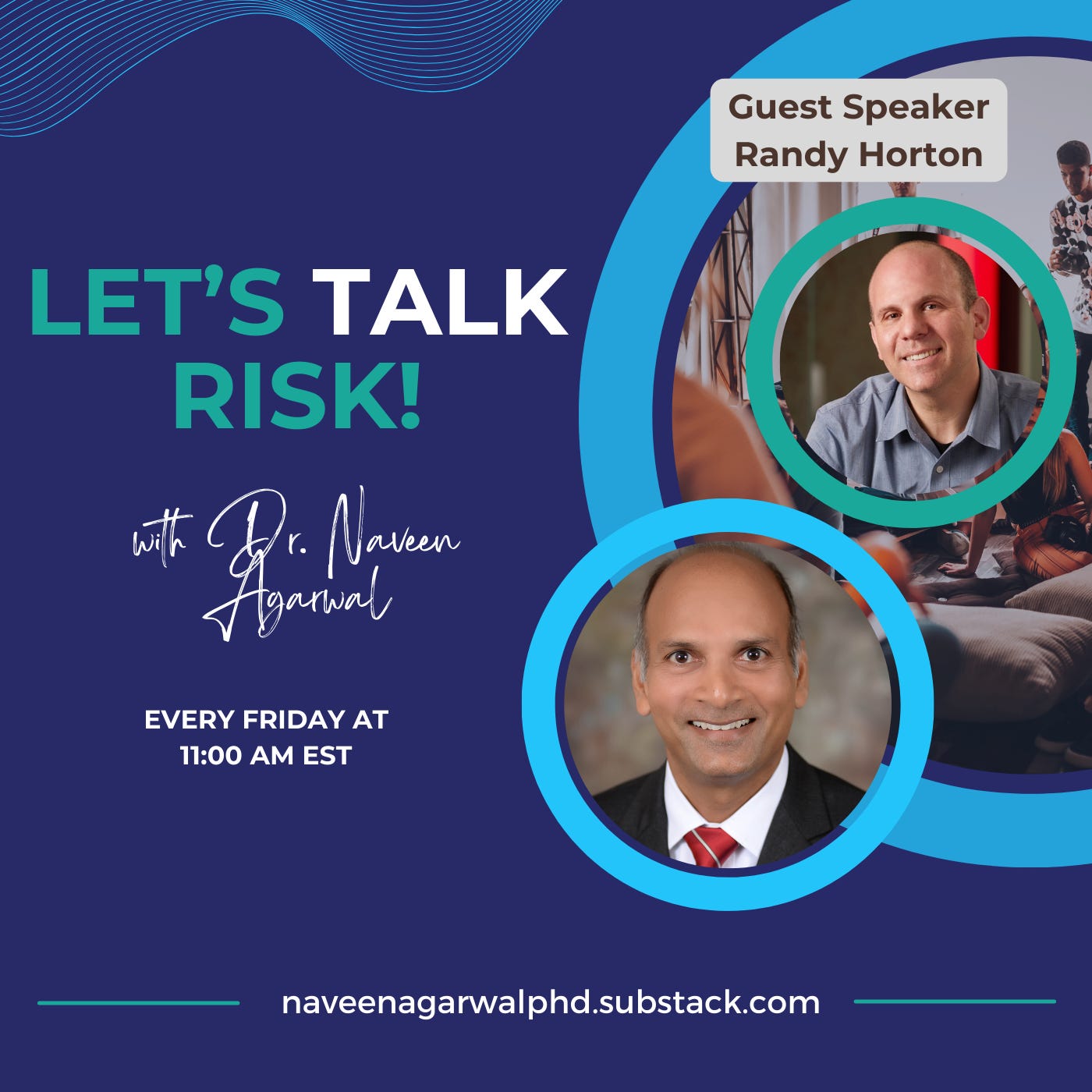
LTR 32: A new paradigm for building connected medical devices
Rapid advancement in digital technologies and cloud computing offer huge opportunities for medical devices, but they are also forcing us to change our approach to design, development and risk management. In this high energy Let’s Talk Risk! conversation Randy Horton inspires us to take a risk-based approach when building and managing connected devices. Historically, we have considered medical devices as a “fortress” with a high level of engineering control and a defensive “moat” of change control around them to ensure safety and effectiveness. In the new world of digital technologies and cloud computing, we need to think of them as “container ships” that need to safely reach their destination, but we cannot control the ocean. That is why, we need to focus on resiliency and not redundancy. In the past, we tried to control every possible variable to the extent possible and minimize potential failures. Now, we have to acknowledge that medical devices operate in a complex environment, and that things will break down. We do have to apply solid engineering principles in design, but we also need to have a robust surveillance system in place to continually monitor data and take timely action when circumstances change without warning.And we have to make risk-based design choices. As an example, certain software functions of a device involved in real-time decision making and life-saving action cannot be “outsourced” to the cloud. On the other hand, we can use cloud computing to monitor and analyze long-term data to improve our algorithms.Randy encourages risk practitioners in the industry to get involved and shape this conversation. We don’t have to wait until new regulations are developed and finalized. Even the regulatory agencies are trying to figure out the best way to regulate software-based connected devices without slowing down the pace of innovation. About Randy HortonRandy Horton is currently the Chief Solutions Officer at Orthogonal, a product development and consulting firm specializing in Software as a Medical Device (SaMD), digital therapeutics (DTx) and connected devices. With a strong business and analytical acumen, Randy facilitates digital transformations by increasing internal agility, cultivating strategic partnerships, and implementing entrepreneurial ideas. He has over 20 years of experience in product management, business development and consulting. Randy graduated from the University of Michigan with a Bachelors in History and a Masters in Information Studies. About Let’s Talk Risk! with Dr. Naveen AgarwalLet’s Talk Risk! with Dr. Naveen Agarwal is a weekly live audio event on LinkedIn, where we talk about risk management related topics in a casual, informal way. Join us at 11:00 am EST every Friday on LinkedIn.DisclaimerInformation and insights presented in this podcast are for educational purposes only. Views expressed by all speakers are their own and do not reflect those of their respective organizations.If you enjoyed this episode, consider becoming a free or paid subscriber. This is a public episode. If you'd like to discuss this with other subscribers or get access to bonus episodes, visit naveenagarwalphd.substack.com/subscribe
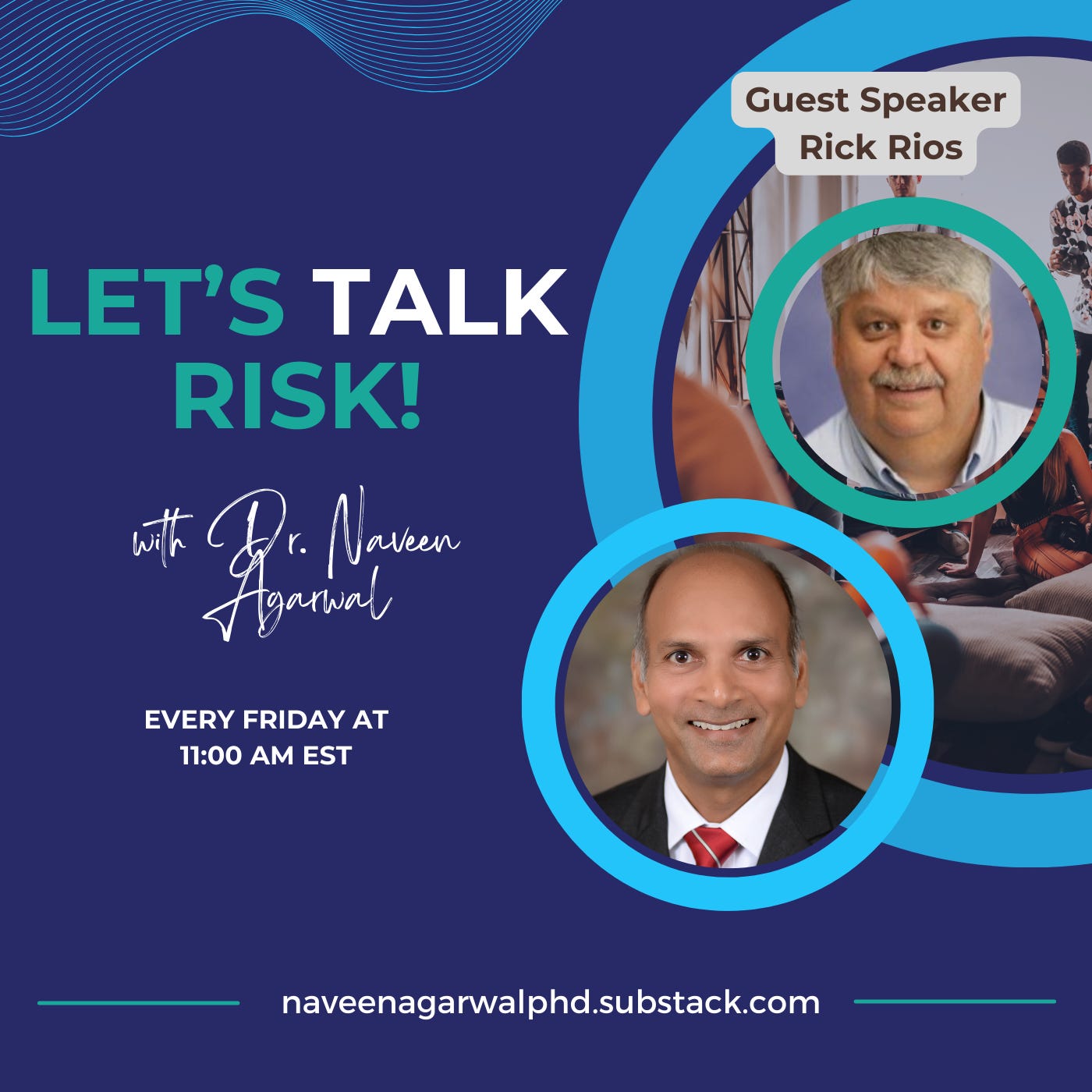
LTR 31: Focus on the purpose to measure process effectiveness
The increasing adoption of Medical Device Single Audit Program (MDSAP) has led to a major shift in current auditing practices in the medical device industry. MDSAP has forced auditors to apply a process-based audit approach rather than a checklist-based approach. The focus in a process-based audit is on process effectiveness and not just element-by-element compliance with regulatory requirements. As a seasoned auditor with more than 15 years of industry experience, Rick Rios reminds us that external auditors, such as FDA investigators or Notified Body auditors, are not coming in to look for compliance issues. Rather, they are coming in to look at effectiveness of the system and its processes. So, how do we focus our efforts on process effectiveness? In this episode, Rick offers an invaluable insight - the purpose statement of a procedure provides its design intent, because it serves to provide a framework for establishing objectives to measure the process. It is a review of performance against those objectives that auditors evaluate process effectiveness. That is why we must write a purpose statement clearly and make sure it is understood well by everyone involved in a given process. About Rick RiosRick Rios started his career in the defense industry working as a systems engineer in nuclear programs. Inspired by the Total Quality Management movement, he moved into a Quality and Regulatory role, and later worked in automotive and aerospace industries as an independent auditor. He has been active in the medical device industry as an independent auditor over nearly 15 years. He has successfully developed, integrated, implemented and audited quality systems based on ISO 13485, 21CFR820, MDSAP, EUMDR, DOE QC-1, NQA-1, ISO 9001, ISO 17025, NCSL Z540, and Baldrige Performance Excellence Program.About Let’s Talk Risk with Dr. Naveen AgarwalLet’s Talk Risk with Dr. Naveen Agarwal is a weekly live audio event on LinkedIn, where we talk about risk management related topics in a casual, informal way. Join us at 11:00 am EST every Friday on LinkedIn.DisclaimerInformation and insights presented in this podcast are for educational purposes only. Views expressed by all speakers are their own and do not reflect those of their respective organizations.If you enjoyed this episode, consider becoming a free or paid subscriber. This is a public episode. If you'd like to discuss this with other subscribers or get access to bonus episodes, visit naveenagarwalphd.substack.com/subscribe
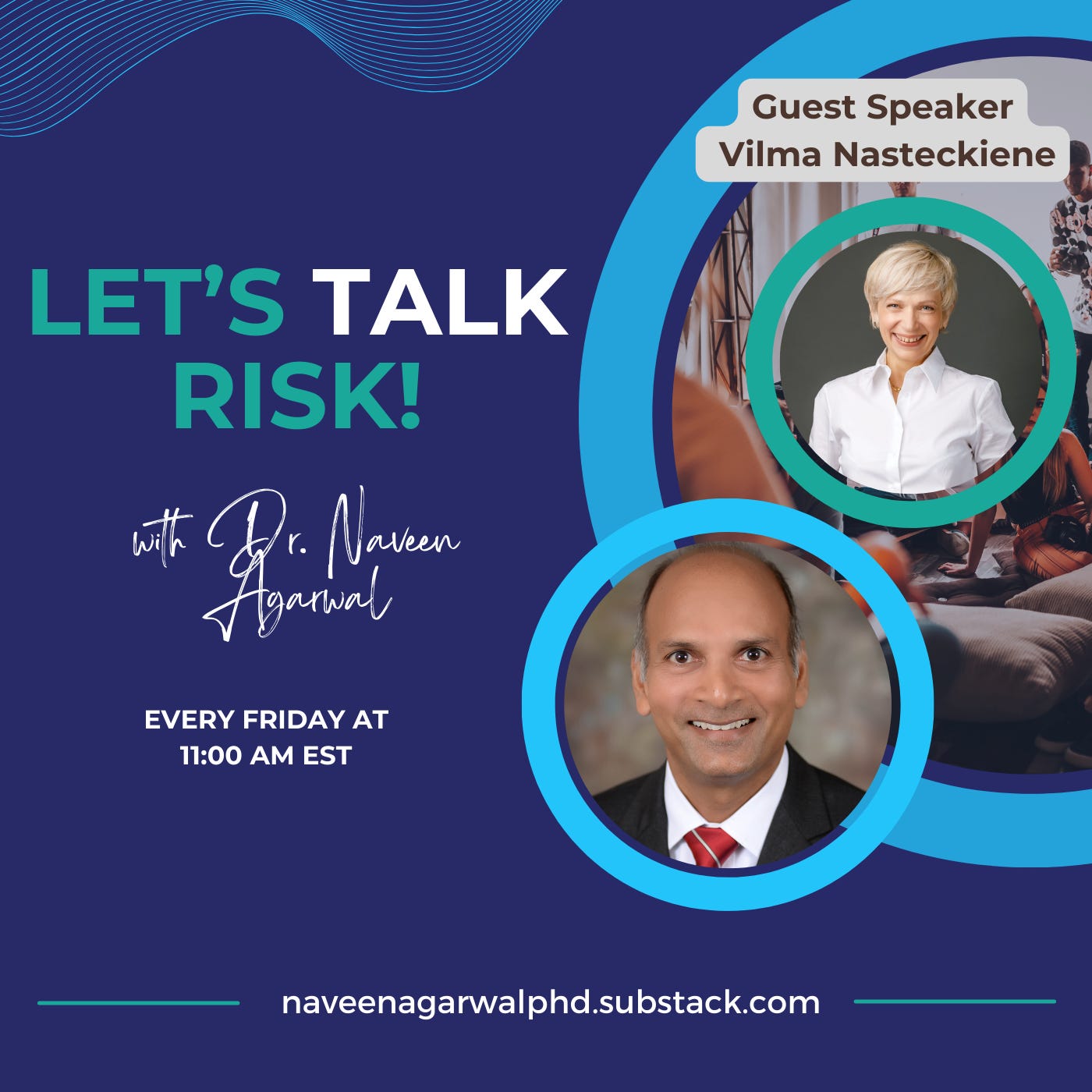
LTR 30: It is time to unfake risk management!
When we practice risk management mainly for the purpose of compliance, we are really faking it!A compliance-focused approach to risk management only leads to an ever increasing number of complex procedures, rules and documentation rather than nurturing a culture of empowerment and customer focus. Risk management in such an environment becomes a check-the-box exercise. In this episode, Vilma Nasteckiene challenges us to critically examine our current practices and adopt a more customer-centric approach. Drawing on her extensive experience in the banking industry, she advises us to work collaboratively, and to develop processes that aim to serve our customers while staying true to the organization’s core values.When fear drives our actions just to be in compliance with regulations, we take a check-the-box approach to risk management. On the other hand, when we do the right things right, and with courage, we not only produce business results and serve our customers, we also naturally comply with regulations. Be brave to ask uncomfortable questions, including what we must stop doing and how we should improve our processes to achieve our objectives.That is how we start unfaking risk management!About Vilma NasteckieneVilma Nasteckiene is the co-founder and partner at The Holistic Enterprise, where she helps organizations to embrace a new management philosophy that enables them to adapt to a changing world by transforming old paradigms into holistic value-creating interdependencies interacting with the ecosystem. She holds a Ph.D. in Social Sciences and management from ISM University of Management and Economics, where she also serves as a risk practice researcher on a part-time basis. She has over 10 years of experience in risk management in retail and banking. About Let’s Talk Risk! with Dr. Naveen AgarwalLet’s Talk Risk! with Dr. Naveen Agarwal is a weekly live audio event on LinkedIn, where we talk about risk management related topics in a casual, informal way. Join us at 11:00 am EST every Friday on LinkedIn.DisclaimerInformation and insights presented in this podcast are for educational purposes only. Views expressed by all speakers are their own and do not reflect those of their respective organizations.If you enjoyed this episode, consider becoming a free or paid subscriber. This is a public episode. If you'd like to discuss this with other subscribers or get access to bonus episodes, visit naveenagarwalphd.substack.com/subscribe
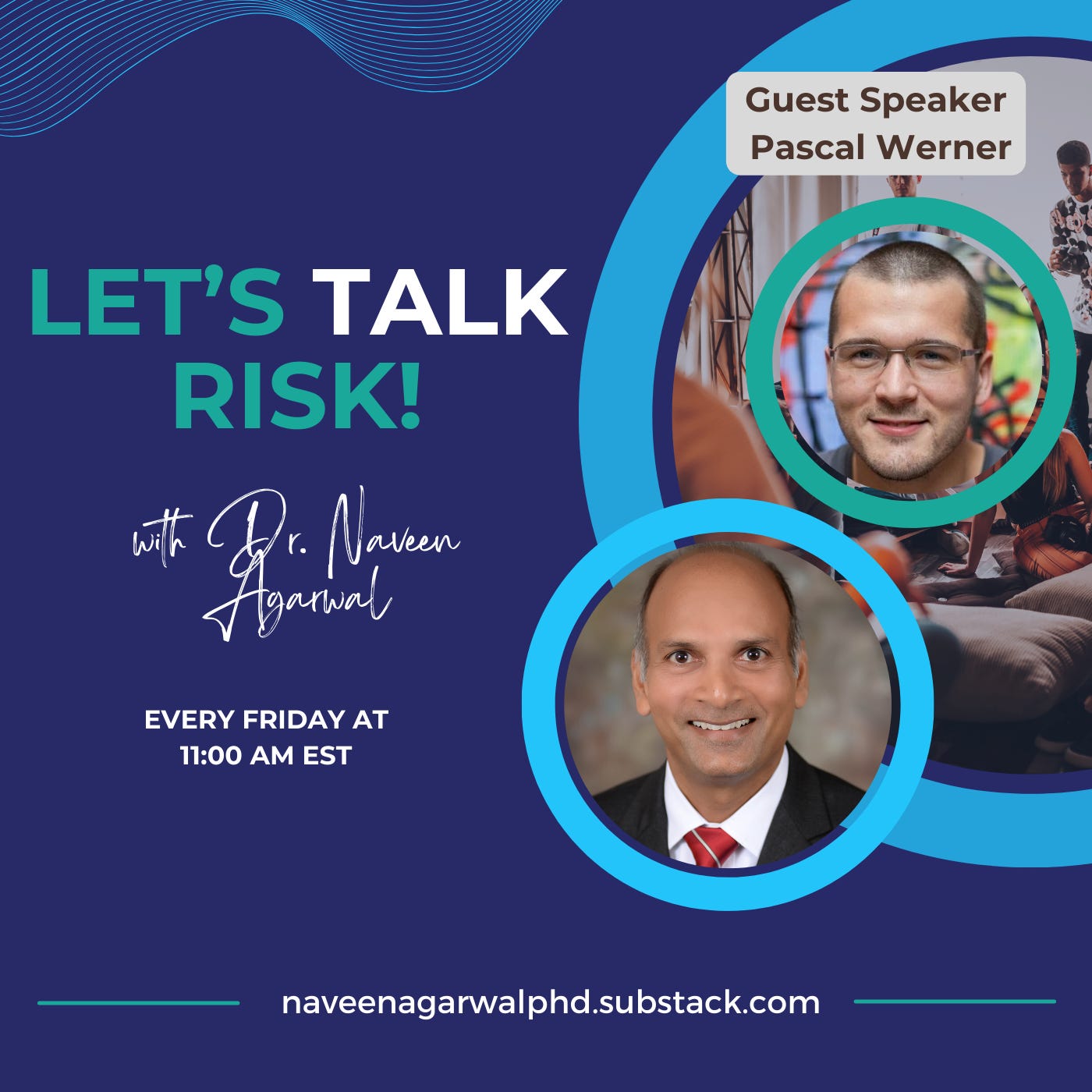
LTR 29: Challenges and opportunities for digital technologies in medical applications
Digital technologies are being rapidly deployed in medical applications. Buzzwords such as AI/ML, SaMD and Digital Therapeutics are fast becoming a part of our vocabulary in the medical device and the broader healthcare space. While there is new excitement about the potential to solve some of our most challenging medical problems, there is also a lot of uncertainty in the regulatory approach to devices using based on these technologies.In this episode, Pascal Werner shares this enthusiasm while also highlighting highlighting challenges associated with their application in medical devices.About Pascal WernerPascal Werner is a freelance consultant advising startups and small/medium enterprises focusing on digital therapeutics, digital health, AI and SaMD in developing a successful regulatory strategy supported by a robust quality management system and technical documentation. His expertise in software development and entrepreneurial thinking, combined with his knowledge of laws and regulations, allows Pascal to offer comprehensive regulatory services. He holds Masters degrees in Biomedical Engineering from Germany and Malaysia.About Let’s Talk Risk! with Dr. Naveen AgarwalLet’s Talk Risk! with Dr. Naveen Agarwal is a weekly live audio event on LinkedIn, where we talk about risk management related topics in a casual, informal way. Join us at 11:00 am EST every Friday on LinkedIn.DisclaimerInformation and insights presented in this podcast are for educational purposes only. Views expressed by all speakers are their own and do not reflect those of their respective organizations.If you enjoyed this episode, consider becoming a free or paid subscriber. This is a public episode. If you'd like to discuss this with other subscribers or get access to bonus episodes, visit naveenagarwalphd.substack.com/subscribe
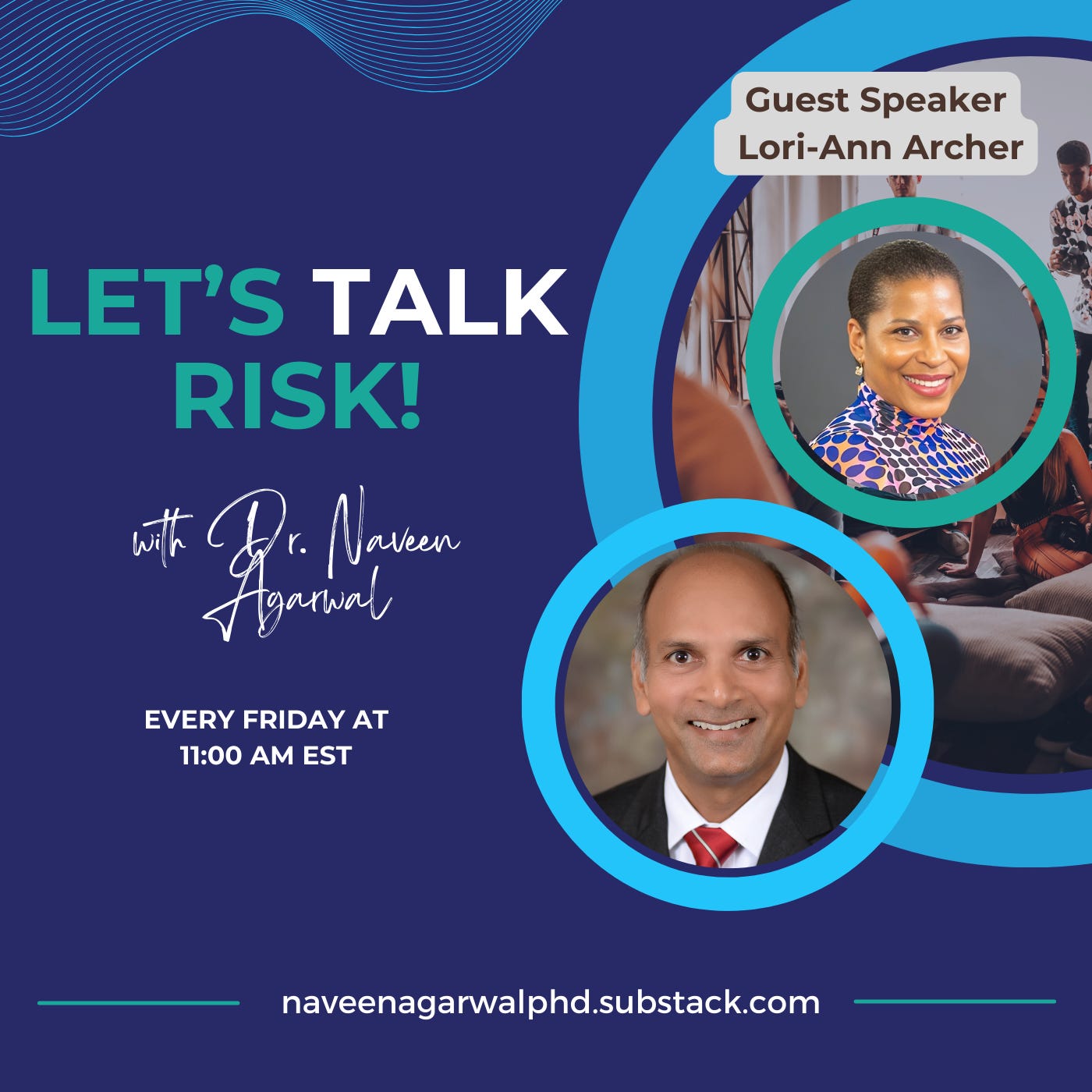
LTR 28: It is time to build equity in medical device design control
If the US FDA has approved or cleared a medical device as safe and effective, you would expect it to be equally effective across the entire patient population within the scope of its intended use.Well, you may be surprised to learn that current industry practices in design, development, and testing of medical devices inadvertently introduce many inherent biases in these devices that can lead to preventable harm in some patients.In this episode, Lori-Ann Archer highlights that inherent bias in medical devices is a serious issue. She emphasizes the need to formalize a requirement for building equity in medical device design control as part of the Quality System Regulation (QSR).She inspires all of us to, first be aware of inherent bias in medical devices, and second, to do our part in improving our design control processes. A good place to start is to update the Quality Policy to be intentional about building equity across our key processes.About Lori-Ann ArcherLori-Ann Archer is currently the founder and CEO of Qafe, the Quality Academy for Excellence, where she offers comprehensive quality insights and consulting services for the cosmetics, medical device and combination product industries. An alumni of the Cornell University alumni of the Electrical Engineering department, she has over 25 years of experience in medical device and combination products as a quality systems subject matter expert and executive leader. She has been involved in building outstanding quality systems at top companies like Google, Teva Pharmaceuticals, Medtronic and multiple startups. She has now dedicated herself to be an advocate and thought leader for equitable development of medical devices, and collaborated with with the Cornell Biomedical Engineering Medical Devices (CUBMD) team to release a white paper on this critical issue (see link below).About Let’s Talk Risk! with Dr. Naveen AgarwalLet’s Talk Risk! with Dr. Naveen Agarwal is a weekly live audio event on LinkedIn, where we talk about risk management related topics in a casual, informal way. Join us at 11:00 am EST every Friday on LinkedIn.DisclaimerInformation and insights presented in this podcast are for educational purposes only. Views expressed by all speakers are their own and do not reflect those of their respective organizations.If you enjoyed this episode consider becoming a free or paid subscriber. This is a public episode. If you'd like to discuss this with other subscribers or get access to bonus episodes, visit naveenagarwalphd.substack.com/subscribe
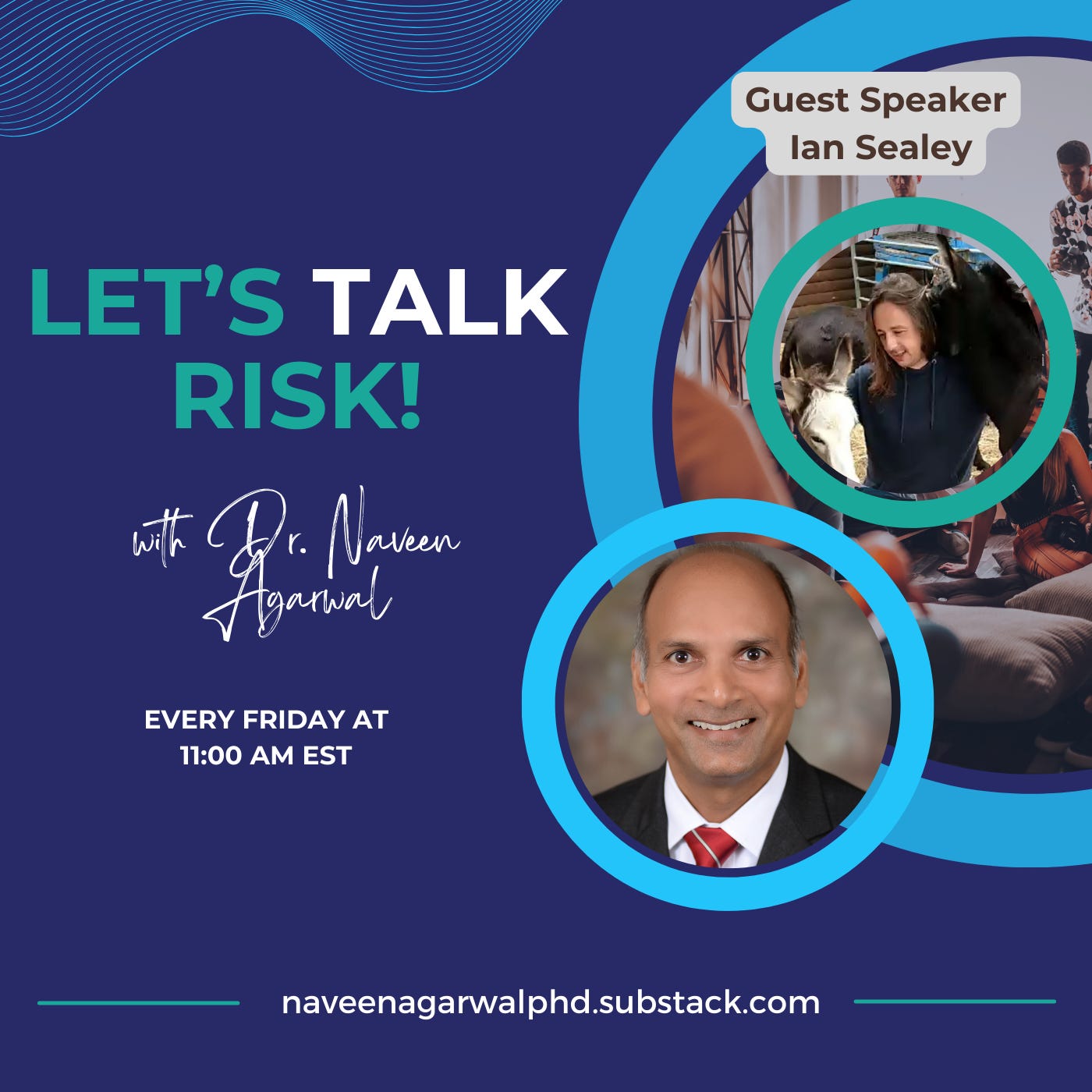
LTR 27: Practicable or not, that's the question for risk control
The term practicable is used in ISO 14971, the International Standard for application of risk management to medical devices, in the context of risk controls and benefit-risk analysis of an individual residual risk.In practice, this “term” causes a lot of confusion! One source of this confusion appears to stem from the fact that the standards uses the “term” practicable as part of a requirement, but also suggests that the “word” practicable may be a part of the manufacturer’s policy for establishing criteria for risk acceptability.In this episode, Ian Sealey shares that there is not a consolidated view on this topic right now. That is why there is a need for a continued conversation on this topic to understand various regulatory requirements and available guidance.About Ian SealeyIan Sealey is currently a medical device regulatory consultant providing regulatory, quality, technical, policy and training services to multinationals and startups. He has previously held engineering positions in both private and the public sectors. He served as a medical device specialist to the Medicines and Healthcare products Regulatory Agency (MHRA) in the UK and was appointed to the position of Assistant Secretary at the Department of Health. He holds a BEng(Hons) in Medical Engineering and is a BSI qualified ISO 13485:2016 Lead Auditor.About Let’s Talk Risk! with Dr. Naveen AgarwalLet’s Talk Risk! with Dr. Naveen Agarwal is a weekly live audio event on LinkedIn, where we talk about risk management related topics in a casual, informal way. Join us at 11:00 am EST every Friday on LinkedIn.DisclaimerInformation and insights presented in this podcast are for educational purposes only. Views expressed by all speakers are their own and do not reflect those of their respective organizations.If you enjoyed this episode, consider becoming a free or paid subscriber. This is a public episode. If you'd like to discuss this with other subscribers or get access to bonus episodes, visit naveenagarwalphd.substack.com/subscribe
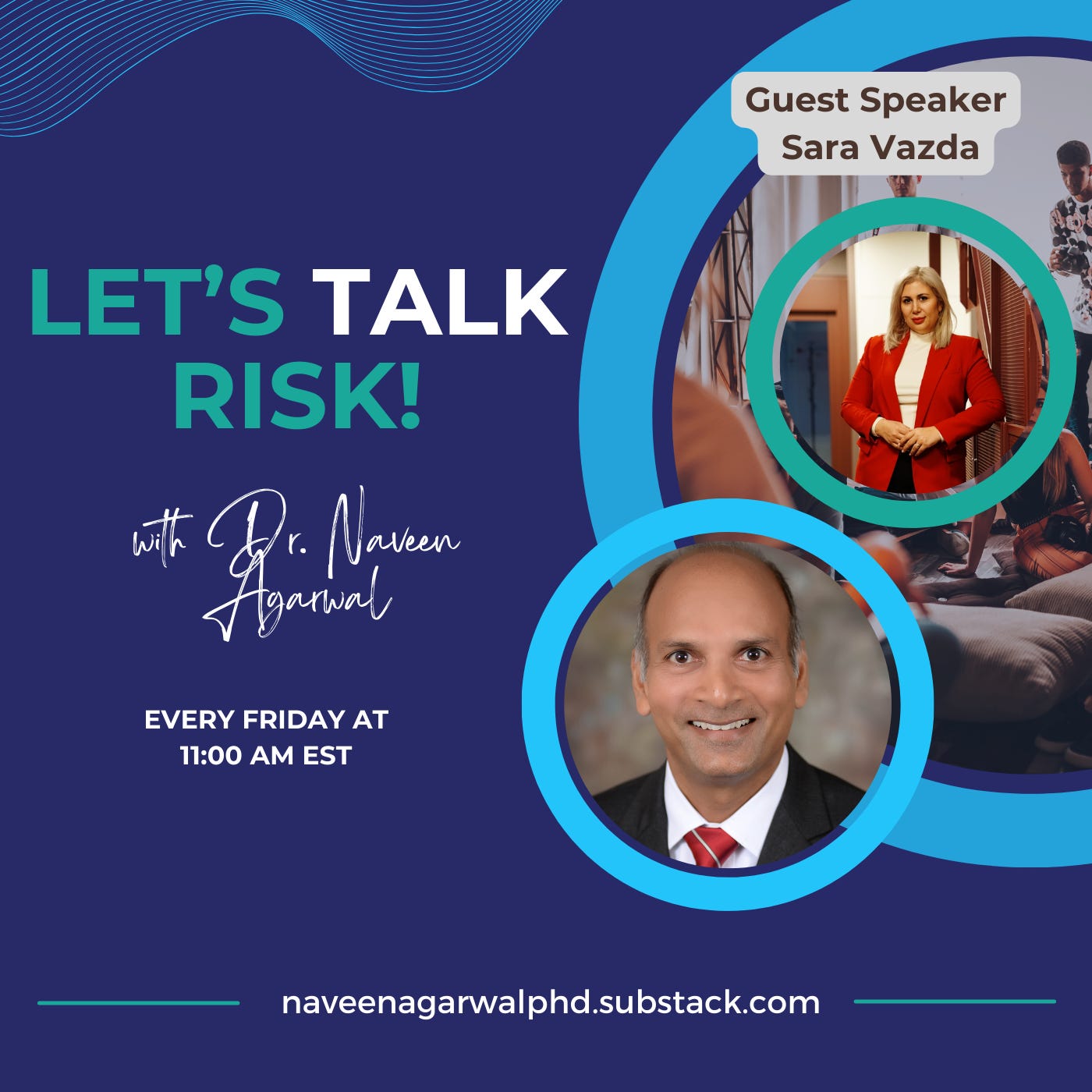
LTR 26: Seek clinical input early in development to achieve market success later
Why do many medical devices fail to reach their adoption goal after launch? Or, hit roadblocks during the regulatory review process before launch?In this episode, Sara Vazda shares that one reason why medical device manufacturers struggle to achieve their business goals is that clinical input is generally not a natural part of the design and development (D&D) process. Medical device D&D is generally driven by Engineering, with clinical aspects considered only during the final phase prior to seeking regulatory approval.Bottom line - missing clinical input early in the D&D process results in missing key user needs. Often, it later comes back to haunt us in terms of added time and cost of development, and missing launch timeline.About Sara VazdaSara Vazda is an accomplished expert in the medical device industry, with a focus on guiding startups in medical device development and regulatory adherence. Her unwavering commitment to advancing women's health is exemplified through her strategic partnerships with Femtech companies like Ella and Hormona. As a registered biomedical scientist and specialist in laboratory medicine, Sara has accumulated a wealth of experience in various clinical positions, in both private and public hospitals as well as the medical device industry. This extensive background has cultivated a deep understanding of how clinical considerations can significantly influence the adoption of medical devices by both users and patients, resulting in a comprehensive perspective on how design gaps impact user and patient acceptance.About Let’s Talk Risk! with Dr. Naveen AgarwalLet’s Talk Risk! with Dr. Naveen Agarwal is a weekly live audio event on LinkedIn, where we talk about risk management related topics in a casual, informal way. Join us at 11:00 am EST every Friday on LinkedIn.DisclaimerInformation and insights presented in this podcast are for educational purposes only. Views expressed by all speakers are their own and do not reflect those of their respective organizations.If you enjoyed this episode, consider becoming a free or paid subscriber. This is a public episode. If you'd like to discuss this with other subscribers or get access to bonus episodes, visit naveenagarwalphd.substack.com/subscribe
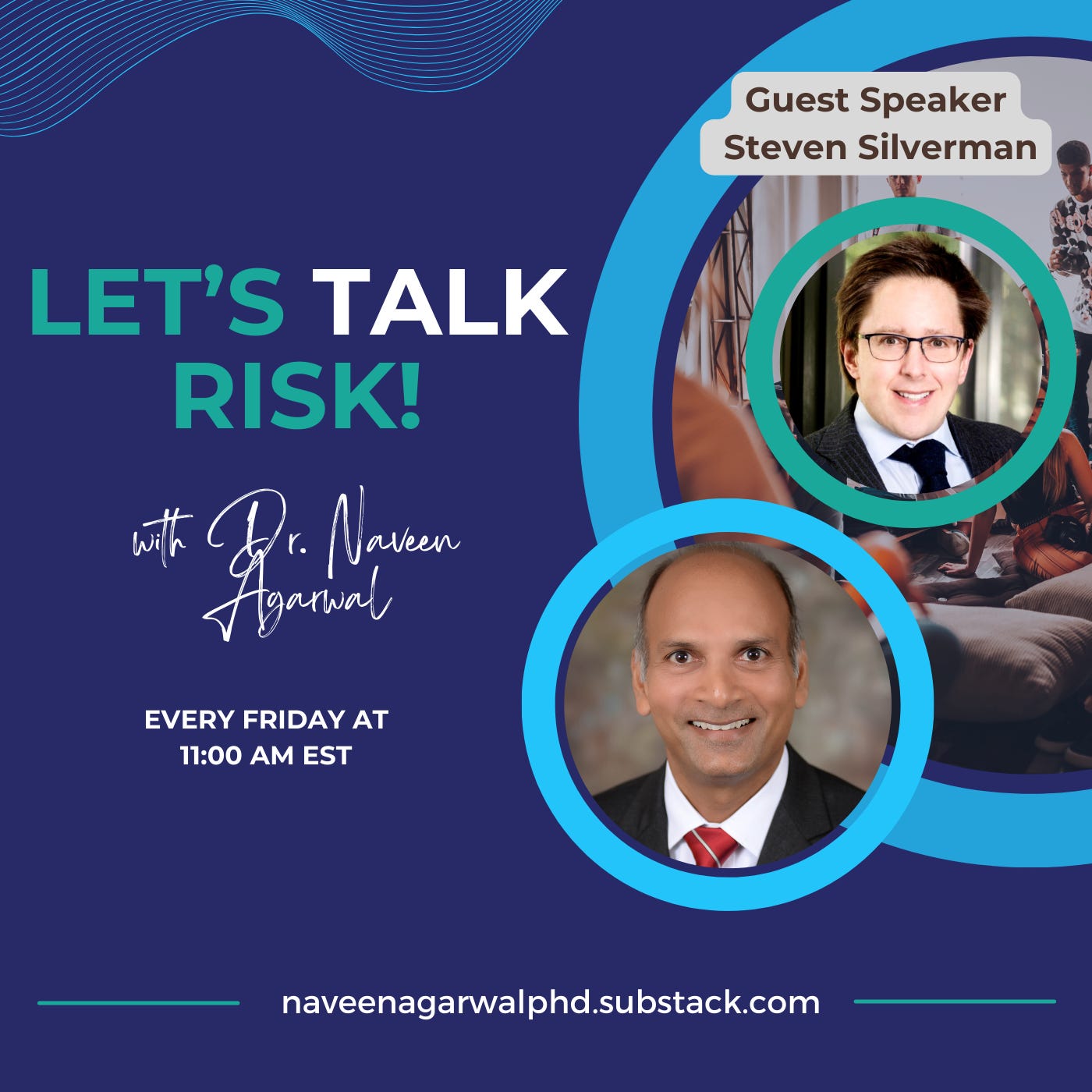
LTR 25: Career tip - learn to effectively communicate regulatory risk in business terms
M&A has traditionally been a strong driver of revenue growth for medical device companies. The current M&A environment, however, is very challenging for companies because of several factors, including declining capital funding and falling market valuations.In this environment, QA/RA professionals have a unique opportunity to make an impact in their organizations, advises Steve Silverman. Quality and Regulatory professionals can help bridge the knowledge gap, and in doing so, demonstrate the business acumen needed to advance their careers into senior leadership positions. By analyzing the specific regulatory risks, and translating their potential impact in business terms, they can help achieve business goals.About Steve SilvermanSteve Silverman is president of The Silverman Group. Steve spent more than a decade at FDA in leadership positions across the Agency. He adds private-sector expertise from consulting and representing industry members. Steve develops strategies that satisfy regulators and promote business needs.About Let’s Talk Risk! with Dr. Naveen AgarwalLet’s Talk Risk! with Dr. Naveen Agarwal is a weekly live audio event on LinkedIn, where we talk about risk management related topics in a casual, informal way. Join us at 11:00 am EST every Friday on LinkedIn.DisclaimerInformation and insights presented in this podcast are for educational purposes only. Views expressed by all speakers are their own and do not reflect those of their respective organizations.If you enjoyed this episode, consider becoming a free or paid subscriber. This is a public episode. If you'd like to discuss this with other subscribers or get access to bonus episodes, visit naveenagarwalphd.substack.com/subscribe
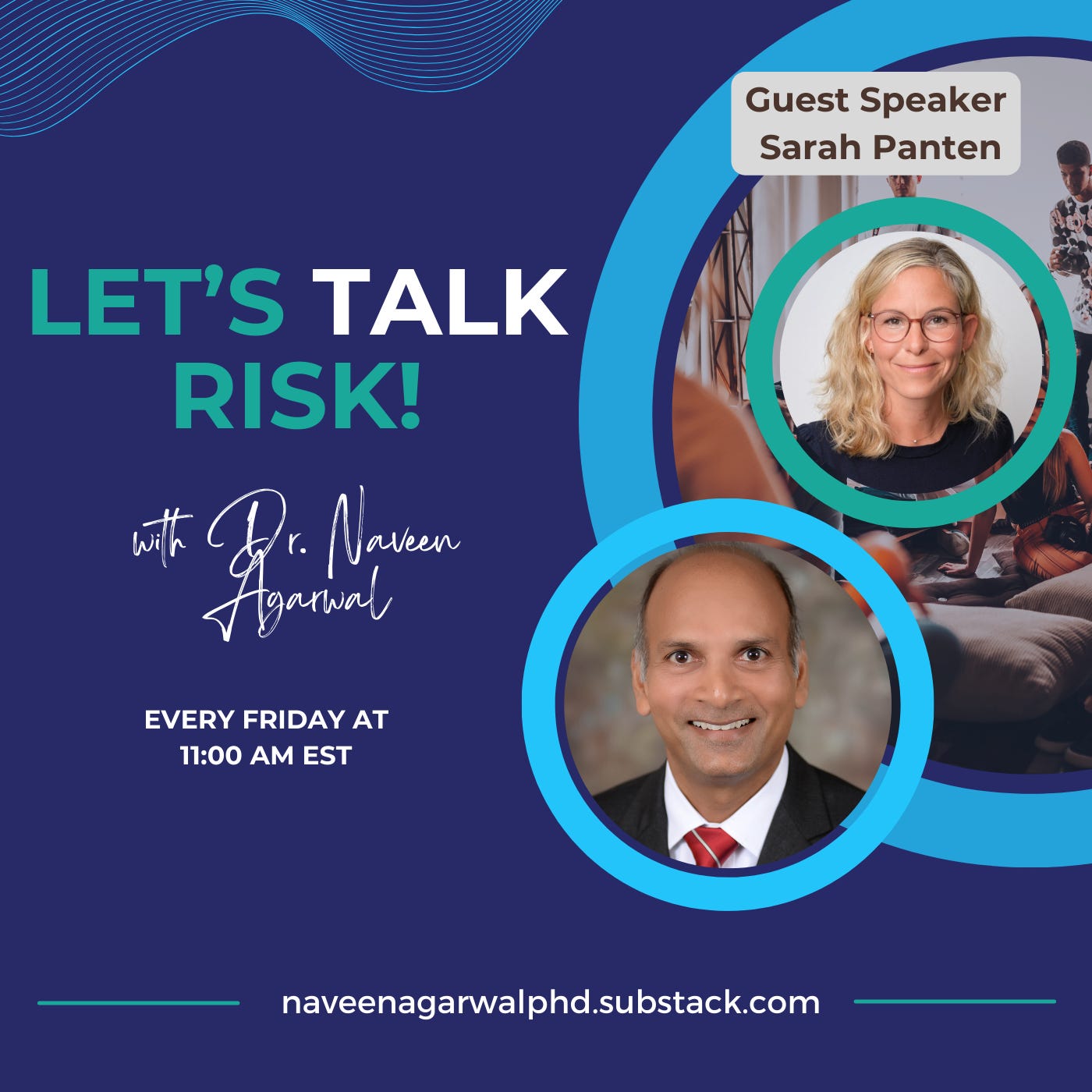
LTR 24: Clinical evaluation is a lifecycle process, not a one-time activity
The current medical device regulation in the European Union (EU-MDR) includes the term clinical evaluation more than 140 times!Clearly, clinical evaluation is now more important than ever under EU-MDR (and IVDR). As a result, a general feeling in the medical device industry is that it is now significantly more challenging to bring innovative new devices to market.Sarah Panten advises practitioners to clearly define clinical benefits of their as part of the clinical evaluation and document the benefit-risk evaluation in the context of the State of the Art. Realize that post-market surveillance is an active process of information collection and review, and that it must be tightly integrated with the clinical evaluation process on a continual basis. About Sarah PantenSarah Panten is currently the Co-Founder and Managing Partner at avasis, which provides digitalization services to companies in the medical device and machinery industry. She has worked as a trainer and a consultant for more than 10 years at different organizations including TUV SUD and NSF. In 2014, she initiated the digitalization of the design control process at iThera Medical to manage complexity and traceability of information. Her current focus is to develop medical device specific software solutions based on the Siemens Polarion software platform to help companies efficiently implement regulatory requirements.About Let’s Talk Risk! with Dr. Naveen AgarwalLet’s Talk Risk! with Dr. Naveen Agarwal is a weekly live audio event on LinkedIn, where we talk about risk management related topics in a casual, informal way. Join us at 11:00 am EST every Friday on LinkedIn.DisclaimerInformation and insights presented in this podcast are for educational purposes only. Views expressed by all speakers are their own and do not reflect those of their respective organizations.If you enjoyed this episode, consider becoming a free or paid subscriber. This is a public episode. If you'd like to discuss this with other subscribers or get access to bonus episodes, visit naveenagarwalphd.substack.com/subscribe
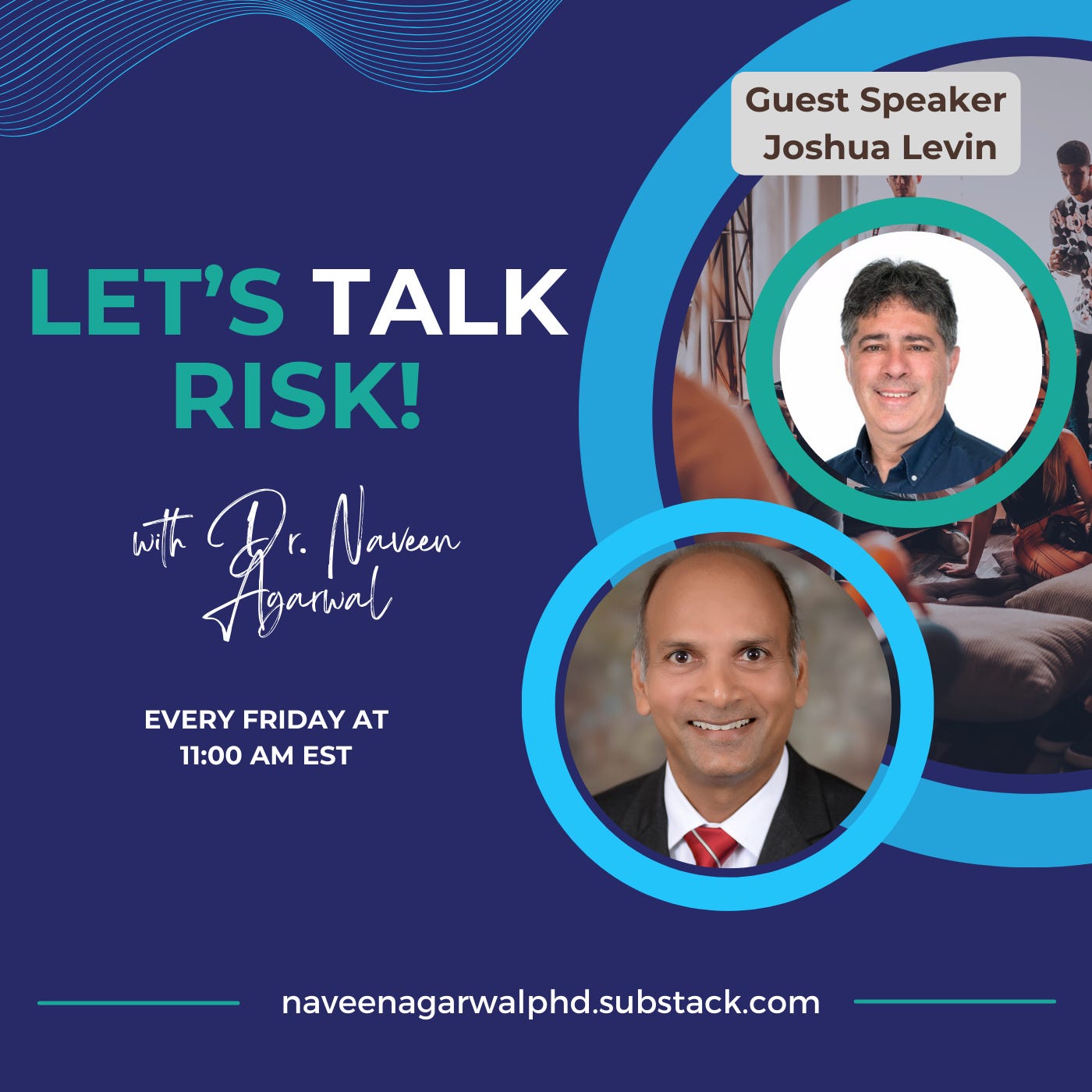
LTR 23: Focus on intended use in the clinical environment for risk management of IVDs
At first glance, risk management of diagnostic devices, including in-vitro devices (IVD), is not overly complex. After all, you mostly have to consider the effects of false negative results, false positive results, and invalid or delayed results.However, it can be challenging to correctly assign the severity of harm(s) resulting from inaccurate and/or delayed results if we don’t fully understand the clinical context of the intended use of a diagnostic device.In this episode, Joshua Levin advises risk practitioners to clearly define severity levels of potential harms directly in the risk management plan. This is especially valuable in a small company environment focused on developing a single device. He recommends a simple, more pragmatic approach to risk management for IVDs, driven by a solid understanding of the clinical context.About Joshua LevinJoshua Levin is a regulatory consultant, currently advising early-stage and mid-size companies in developing effective regulatory strategies and building efficient quality management systems, With 30 years of experience in the Quality/Regulatory space, including nearly 10 years at the US FDA, Josh has a deep understanding of both technical and regulatory aspects of IVD commercialization.About Let’s Talk Risk! with Dr. Naveen AgarwalLet’s Talk Risk! with Dr. Naveen Agarwal is a weekly live audio event on LinkedIn, where we talk about risk management related topics in a casual, informal way. Join us at 11:00 am EST every Friday on LinkedIn.DisclaimerInformation and insights presented in this podcast are for educational purposes only. Views expressed by all speakers are their own and do not reflect those of their respective organizations.If you enjoyed this episode, consider becoming a free or paid subscriber. This is a public episode. If you'd like to discuss this with other subscribers or get access to bonus episodes, visit naveenagarwalphd.substack.com/subscribe

Ep 22: Think of post-market surveillance as a value adding business process
We often think of the post-market surveillance (PMS) process as a regulatory requirement for medical devices, especially because of the revised EU-MDR (and IVDR) regulations now in effect in the European Union.But it is more than compliance. According to Per Maegaard, PMS is not just an exercise in meeting regulatory requirements, but intelligence gathering that can help other functions including Marketing. We should think of the PMS process as a value-adding business process, which can provide insights about the real-world clinical experience with our medical device.About Per MaegaardPer Maegaard is currently Director and Lead Auditor at MQC, providing quality consulting, process optimization and auditing services to clients in the medical industry. He has 20+ years of professional experience in Quality and Post-Market Safety and Surveillance at leading multi-national companies such as Stryker, Smith & Nephew and Coloplast. As Director of Post Market Safety at Stryker’s Trauma/Extremity division in Europe, he was responsible for establishing a post-market surveillance program to comply with EU-MDR.About Let’s Talk Risk! with Dr. Naveen AgarwalLet’s Talk Risk! with Dr. Naveen Agarwal is a weekly live audio event on LinkedIn, where we talk about risk management related topics in a casual, informal way. Join us at 11:00 am EST every Friday on LinkedIn.DisclaimerInformation and insights presented in this podcast are for educational purposes only. Views expressed by all speakers are their own and do not reflect those of their respective organizations.If you enjoyed this episode, consider becoming a free or paid subscriber. This is a public episode. If you'd like to discuss this with other subscribers or get access to bonus episodes, visit naveenagarwalphd.substack.com/subscribe
Ep 21: Why risk practitioners must build the empathy muscle
Why - you may ask - should risk practitioners care about empathy? After all, risk management is about managing uncertainty as objectively as possible. How does exercising the empathy muscle help risk practitioners do a better job than, let us say, focusing more on data analysis and regulatory requirements?In this episode, Christie Johnson reminds us that risk management is a team sport. When working in a cross-functional team, we have to pay attention to every individual’s unique perspective. Instead of pushing our own way to achieve quick results, we need to first allow different perspectives to be shared openly without judgment.This is the essence of empathy. To listen carefully so we can truly understand the other person’s viewpoint. We don’t have to agree or disagree. But it is very important to make sure we enroll everyone so they are able to contribute fully, and we arrive at the best outcome as a team.About Christie JohnsonChristie Johnson is currently a partner at Prodct, a boutique advisory firm to support early-stage biotech, medical device, diagnostic and therapeutic companies throughout product development and commercialization activities. Guided by a solid knowledge of ISO 14971 risk management, she helps create effective strategies for quality, regulatory and manufacturing, while also providing direct execution support including resource augmentation when necessary.About Let’s Talk Risk! with Dr. Naveen AgarwalLet’s Talk Risk! with Dr. Naveen Agarwal is a weekly live audio event on LinkedIn, where we talk about risk management related topics in a casual, informal way. Join us at 11:00 am EST every Friday on LinkedIn.DisclaimerInformation and insights presented in this podcast are for educational purposes only. Views expressed by all speakers are their own and do not reflect those of their respective organizations.If you enjoyed this episode, consider becoming a free or paid subscriber. This is a public episode. If you'd like to discuss this with other subscribers or get access to bonus episodes, visit naveenagarwalphd.substack.com/subscribe
Ep 20: Team diversity helps boost competence in risk management
Risk management involves making decisions based on incomplete information at any given time. One area where risk practitioners struggle a lot is in managing risk associated with reasonably foreseeable misuse. We struggle to figure out what type of misuse might be reasonable, and what might be foreseeable, because human behavior often is neither reasonable nor predictable!That is why Rene Drost advises risk practitioners to focus on building team diversity. When we include diverse viewpoints and life experiences in our analysis, we benefit from our collective insights. A diverse team helps us consider a much broader range of foreseeable circumstances than a team of individuals with very similar background.About Rene DrostRene Drost is currently the senior executive at NAMCO Healthcare Technology, a globally operating knowledge company specialized in maintenance and operations in the healthcare sector. He started his career as a technical officer in the Netherlands AirForce, and later moved to KLM as the head of their maintenance unit. He also manages FSCA.com for vigilance and post market surveillance activities and serves as the PRRC and ISO 13485/27001 lead auditor.About Let’s Talk Risk! with Dr. Naveen AgarwalLet’s Talk Risk! with Dr. Naveen Agarwal is a weekly live audio event on LinkedIn, where we talk about risk management related topics in a casual, informal way. Join us at 11:00 am EST every Friday on LinkedIn.DisclaimerInformation and insights presented in this podcast are for educational purposes only. Views expressed by all speakers are their own and do not reflect those of their respective organizations.If you enjoyed this episode, consider becoming a free or paid subscriber. This is a public episode. If you'd like to discuss this with other subscribers or get access to bonus episodes, visit naveenagarwalphd.substack.com/subscribe
Ep 19: How QA/RA professionals can help drive innovation in AI/ML
There is a lot of hype around artificial intelligence (AI) and machine learning (ML) these days. That is why Michael Bocchinfuso encourages Quality/Regulatory professionals in this episode to go beyond the hype and understand these rapidly emerging technologies at a deeper level. These rapidly evolving technologies offer unique opportunities in the medical device space. To succeed, QA/RA professionals should clearly articulate and emphasize the clinical benefit, anticipate regulatory questions about model bias, and carefully consider risks arising from the use environment. His advice is to collaborate and facilitate an informed conversation across different functions to help optimize for both safety and effectiveness. About Michael BocchinfusoMichael Bocchinfuso is currently the Director of Regulatory Compliance and Quality at Koios Medical. He is an electrical and software engineer by training. Early in his engineering career, he worked in avionics designing PCBs, and testing and improving reliability of these systems. He then moved into a Quality Engineer role in the medical device industry helping to ensure high quality standards and compliance during product development and beyond. In his current role, he closely collaborates with the product development teams working on AI/ML enabled medical devices in radiology applications, while maintaining an effective and compliant QMS, and coordinating regulatory activities related to various submissions in different countries across the world.About Let’s Talk Risk! with Dr. Naveen AgarwalLet’s Talk Risk! with Dr. Naveen Agarwal is a weekly live audio event on LinkedIn, where we talk about risk management related topics in a casual, informal way. Join us at 11:00 am EST every Friday on LinkedIn.DisclaimerInformation and insights presented in this podcast are for educational purposes only. Views expressed by all speakers are their own and do not reflect those of their respective organizations.If you enjoyed this episode, consider becoming a free or paid subscriber. This is a public episode. If you'd like to discuss this with other subscribers or get access to bonus episodes, visit naveenagarwalphd.substack.com/subscribe
Ep 18: Risk based approach to building a QMS in a startup
In this episode, Becki Hiebert recommends taking a strategic approach to building and implementing a Quality Management System (QMS) in a startup.Unlike a mature, established organization, a startup operates in a fast-paced and rapidly changing environment. That is why you have to think about both speed to support the near term goals, and scalability to support rapid growth in the future.Her advice - focus on building the right mindset about Quality, use a risk-based approach to create a flexible system and nurture a collaborative work culture. About Becki HiebertBecki Hiebert is currently the QA/RA lead at PulseMedica in Canada, where she is helping the development and commercialization of 3D imaging and laser targeting systems for precise retinal surgery. In her 10+ years of professional experience across both pharmaceutical and medical device industries, she has developed a hands-on expertise in regulatory requirements for current good manufacturing practices. She has served in a variety of roles in quality planning, process improvement, internal audits, quality system training and supplier/purchasing programs.About Let’s Talk Risk! with Dr. Naveen AgarwalLet’s Talk Risk! with Dr. Naveen Agarwal is a weekly live audio event on LinkedIn, where we talk about risk management related topics in a casual, informal way. Join us at 11:00 am EST every Friday on LinkedIn.DisclaimerInformation and insights presented in this podcast are for educational purposes only. Views expressed by all speakers are their own and do not reflect those of their respective organizations.If you enjoyed this episode, consider becoming a free or paid subscriber. This is a public episode. If you'd like to discuss this with other subscribers or get access to bonus episodes, visit naveenagarwalphd.substack.com/subscribe
Ep 17: Risk management lessons learned from running the Boston marathon
Boston marathon is one of the most prestigious running events in the world. It takes a lot of planning to preparation to even qualify to enter the race.In this episode, Christopher Gehring shares his experience preparing for his first Boston marathon and emphasizes the need for good planning in all our projects, including risk management. We have to be both agile and detailed in our approach, and plan for different contingencies. Even then, we have to be prepared to handle surprises along the way.It is challenging to strike the right balance, but by trusting our teams and building a culture of collaboration we can achieve success.About Christopher GehringChristopher Gehring is currently a Principal Design Quality Assurance Engineer at Insulet Corporation. He has over 15 years of industry experience with core expertise in design controls, risk management, system engineering, quality management systems and continuous improvement. He holds B.S, and M.S. degrees in Mechanical Engineering, a Professional Certificate in System Architecture and Engineering, and a Graduate Certificate in Business Administration. He is also an ASQ Certified Quality Engineer, Certified Quality Auditor and Six Sigma Green Belt. In his spare time, he enjoys running, sailing and music.About Let’s Talk Risk! with Dr. Naveen AgarwalLet’s Talk Risk! with Dr. Naveen Agarwal is a weekly live audio event on LinkedIn, where we talk about risk management related topics in a casual, informal way. Join us at 11:00 am EST every Friday on LinkedIn.DisclaimerInformation and insights presented in this podcast are for educational purposes only. Views expressed by all speakers are their own and do not reflect those of their respective organizations.If you enjoyed this podcast, consider becoming a free or paid subscriber. This is a public episode. If you'd like to discuss this with other subscribers or get access to bonus episodes, visit naveenagarwalphd.substack.com/subscribe
Ep 16: Clinical evaluation is now more important than ever under EU-MDR
There is a new scrutiny on clinical evaluations in the European Union.At the same time, medical device manufacturers are challenged to satisfy the new regulatory requirements under EU-MDR because they are no longer able to claim “equivalence” to an existing device under revised criteria. In this episode, Florian Tolkmitt emphasizes the need to consider clinical evaluation as an important process, not simply a document for compliance. The key point here is that we have to start focusing on planning and project management in addition to having a solid understanding of regulatory requirements. There should be connectivity in operations of different departments so everyone is following the same benchmarks and acceptance criteria.About Florian TolkmittFlorian Tolkmitt is the founder and owner of PRO-LIANCE GLOBAL SOLUTIONS GmbH providing consulting services in all aspects of clinical evaluation, regulatory affairs, risk and quality management. He is an expert in clinical evaluation, post-market clinical follow up and post-market reporting compliance. As a co-founder and board member of RAPS Deutshcland e.V., he is very active in the regulatory community sharing his expertise and mentoring industry colleagues.About Let’s Talk Risk! with Dr. Naveen AgarwalLet’s Talk Risk! with Dr. Naveen Agarwal is a weekly live audio event on LinkedIn, where we talk about risk management related topics in a casual, informal way. Join us at 11:00 am EST every Friday on LinkedIn.DisclaimerInformation and insights presented in this podcast are for educational purposes only. Views expressed by all speakers are their own and do not reflect those of their respective organizations.If you enjoyed this episode, consider becoming a free or paid subscriber. This is a public episode. If you'd like to discuss this with other subscribers or get access to bonus episodes, visit naveenagarwalphd.substack.com/subscribe
Ep 15: Collaboration is the secret sauce for success in risk management
Risk management is a team sport. In this episode, Hugo Felix reminds us that takes expertise from different functions to fully understand the nature of risk and identify appropriate risk control options. It is not just engineering or manufacturing or quality or clinical; it is all functions working together.This is more important now than ever as technology is rapidly advancing and medical devices are becoming more complex. About Hugo FelixHugo Felix has 25 plus years of industry experience in devices, in-vitro diagnostics, pharmaceuticals and combination products, where he has helped build compliant patient-centric solutions by impacting quality cultures through strategy, cross-functional collaboration and organizational design. He has served in leadership roles in both early start-ups and large organizations. Currently, he is a Director of medical device and combination products quality assurance at Pfizer.About Let’s Talk Risk! with Dr. Naveen AgarwalLet’s Talk Risk! with Dr. Naveen Agarwal is a weekly live audio event on LinkedIn, where we talk about risk management related topics in a casual, informal way. Join us at 11:00 am EST every Friday on LinkedIn.DisclaimerInformation and insights presented in this podcast are for educational purposes only. Views expressed by all speakers are their own and do not reflect those of their respective organizations.If you enjoyed this episode, consider becoming a free or paid subscriber. This is a public episode. If you'd like to discuss this with other subscribers or get access to bonus episodes, visit naveenagarwalphd.substack.com/subscribe
LTR14: The most important question for risk management: who is taking the risk?
In this episode, Adam Saltman reminds us to not consider risk as an absolute concept; rather think about it in the context of the end user or the patient who is being asked to take the risk in return for a benefit to their health. There is a disconnect in the medical device industry between patients, manufacturers and regulators. By considering the question “who is taking the risk?”, we can stay focused on the end user or patients as we build and launch medical devices. About Dr. Adam SaltmanDr. Adam Saltman started his career as a clinician practicing heart surgery for about 20 years. Later he joined the US FDA as a medical officer where he developed policy frameworks on post-market benefit-risk considerations and patient perspectives. Most recently he served as the Chief Medical and Regulatory Officer in the medical device industry. Currently, he is a Principal Strategy Consultant at NAMSA, the industry leader in offering coordinated medical device product development consulting activities under one roof to achieve accelerated outcomes. He has published more than 100 peer-reviewed articles, served on editorial boards, conducted competitively funded research projects, completed advanced training in Health Informatics from the University of Illinois at Chicago, and is certified as a Quality Improvement Associate by the American Society for Quality.About Let’s Talk Risk! with Dr. Naveen AgarwalLet’s Talk Risk! with Dr. Naveen Agarwal is a weekly live audio event on LinkedIn, where we talk about risk management related topics in a casual, informal way. Join us at 11:00 am EST every Friday on LinkedIn.DisclaimerInformation and insights presented in this podcast are for educational purposes only. Views expressed by all speakers are their own and do not reflect those of their respective organizations.If you enjoyed this episode, consider becoming a free or paid subscriber. This is a public episode. If you'd like to discuss this with other subscribers or get access to bonus episodes, visit naveenagarwalphd.substack.com/subscribe
Ep 13: Compliance: an obstacle or an opportunity?
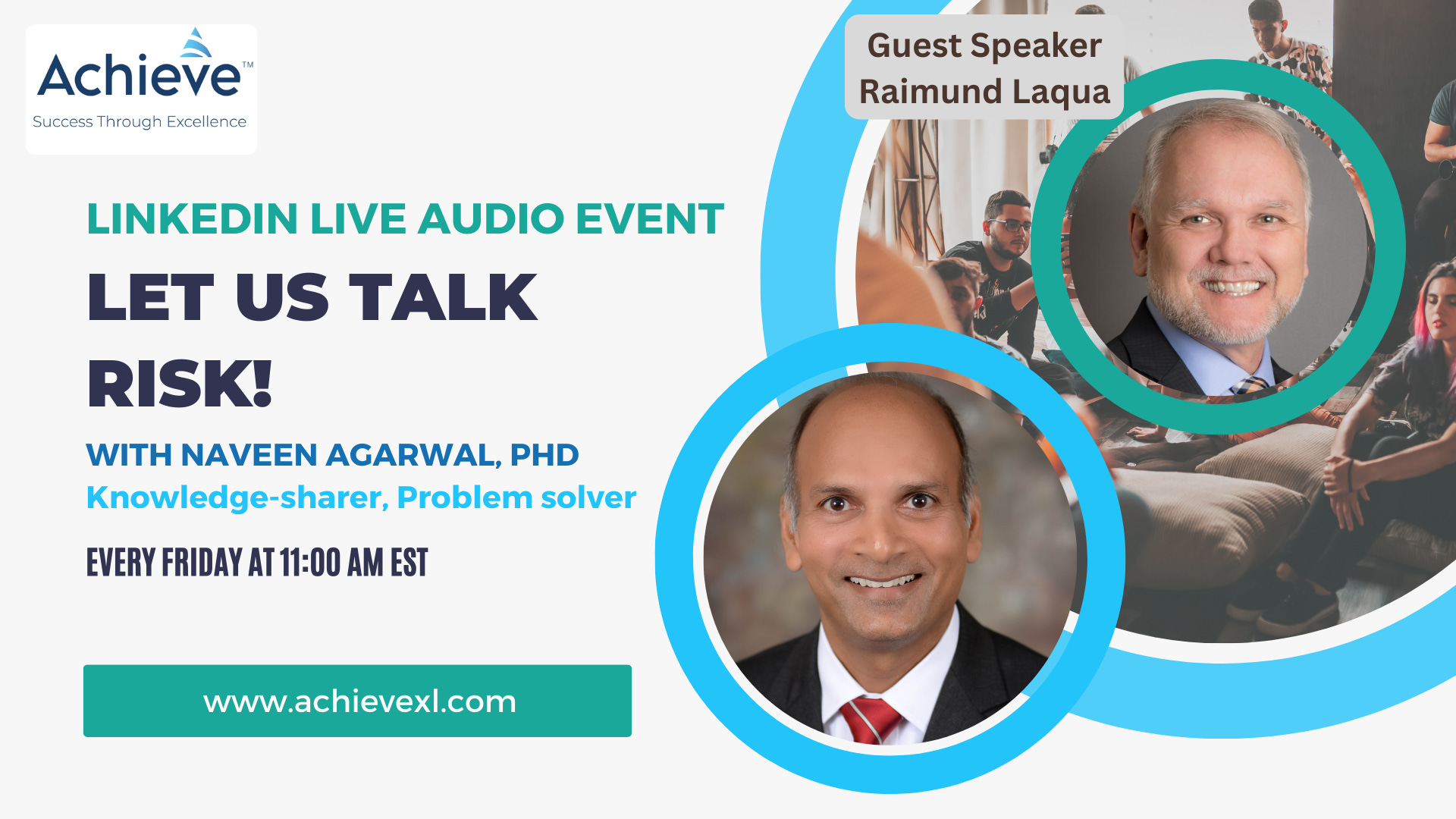
The term compliance is generally viewed as a “necessary evil”, or as a “tax on production”. But it doesn’t have to be this way.In this episode, Raimund Laqua encourages us to view compliance as an opportunity to consider compliance requirements as part of the overall performance standards generally expected by our stakeholders, including customers and regulators. Compliance can be seen as just doing the minimum required and check the box, but it also offers an opportunity to compare our current level of performance with what we need to achieve market leadership.About Raimund LaquaRaimund Laqua is the founder of Lean Compliance, where he focuses on helping companies in highly-regulated, high-risk environment to transform their approach to compliance using lean thinking. As a professional engineer trained in electrical and computer engineering, he started his career building test systems for integrated circuits. Over the next 30 years, he consulted with many companies across different industries to help them achieve business results through lean management, systems thinking, risk management, accountability and responsibility frameworks, and continuous improvement. He founded Lean Compliance Consulting in 2017 where he currently serves as the Chief Compliance EngineerAbout Let’s Talk Risk! with Dr. Naveen AgarwalLet’s Talk Risk! with Dr. Naveen Agarwal is a weekly live audio event on LinkedIn, where we talk about risk management related topics in a casual, informal way. Join us at 11:00 am EST every Friday on LinkedIn.DisclaimerInformation and insights presented in this podcast are for educational purposes only. Views expressed by all speakers are their own and do not reflect those of their respective organizations.If you enjoyed this episode, consider becoming a free or paid subscriber. This is a public episode. If you'd like to discuss this with other subscribers or get access to bonus episodes, visit naveenagarwalphd.substack.com/subscribe
LTR12: Risk lessons learned from working on a hydrogen-powered car
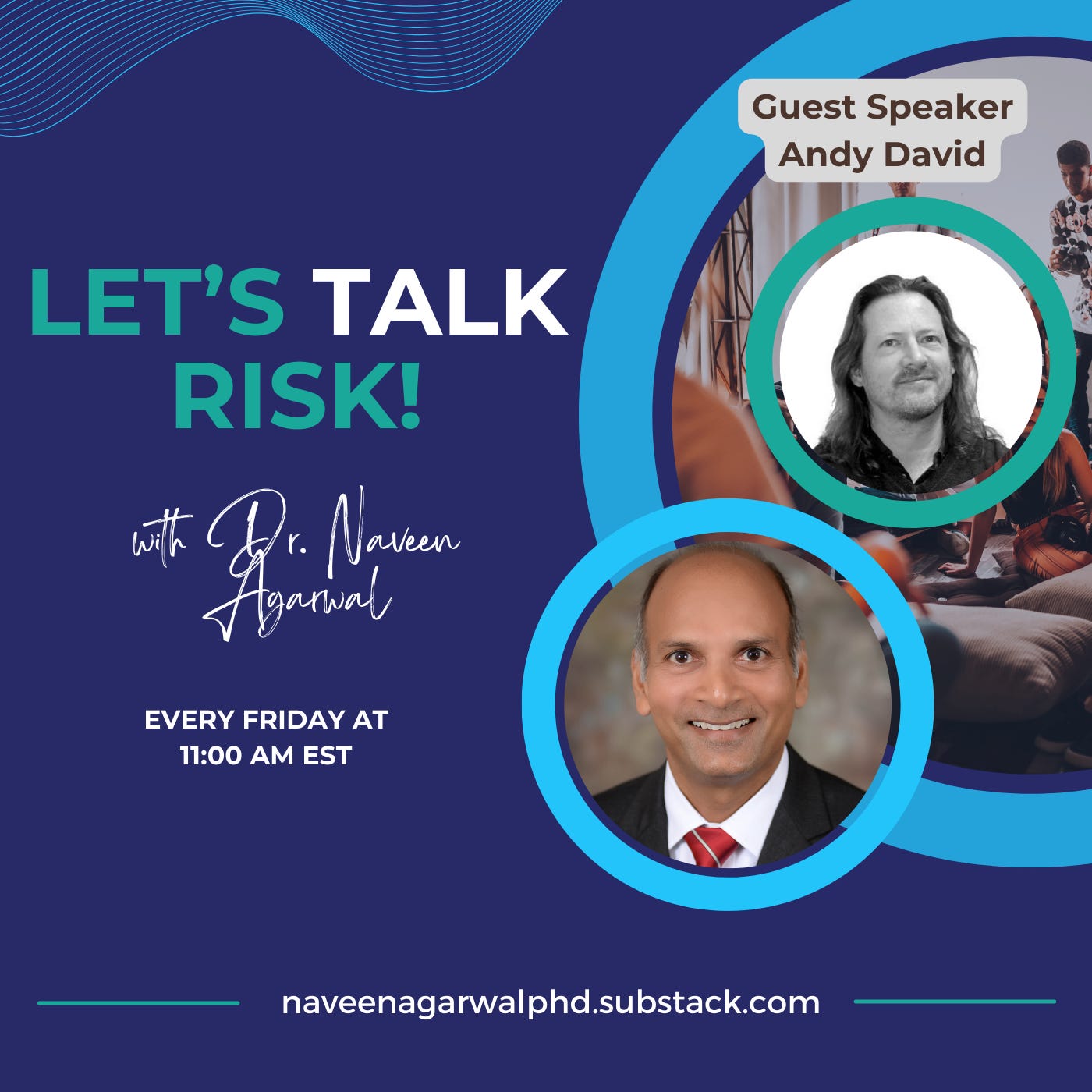
Sometimes it is a good idea to learn from best practices used in other industries! In this episode, Andy David shares risk lessons learned while working with hydrogen-powered cars. He shares how design choices are driven by a central idea, which also greatly influences are approach to safety risk management. In the end, safety is an output of our risk mitigation activities. We have to keep the end user in mind and understand their needs for both safety and performance. We also need to challenge our assumptions to find innovative solutions. As an example, hydrogen is a source of energy, but it does not mean a hydrogen-powered car is inherently more dangerous than a gasoline-powered car. About Andy DavidAndy David is an expert in safety critical embedded software development with many years of experience across different industries. He started his career with an internship at IBM followed by full time roles in heavy equipment, aerospace and automotive industries. He is the MD and Principal Consultant at A2D Consultancy, providing high-integrity software engineering, process and compliance consulting services. One of his current project is a hydrogen-powered car at Riversimple, a UK-based automotive startup.About Let’s Talk Risk! with Dr. Naveen AgarwalLet’s Talk Risk! with Dr. Naveen Agarwal is a weekly live audio event on LinkedIn, where we talk about risk management related topics in a casual, informal way. Join us at 11:00 am EST every Friday on LinkedIn.DisclaimerInformation and insights presented in this podcast are for educational purposes only. Views expressed by all speakers are their own and do not reflect those of their respective organizations.If you enjoyed this episode, consider becoming a free or paid subscriber. This is a public episode. If you'd like to discuss this with other subscribers or get access to bonus episodes, visit naveenagarwalphd.substack.com/subscribe
Ep 11: Understanding a physician's view on risk
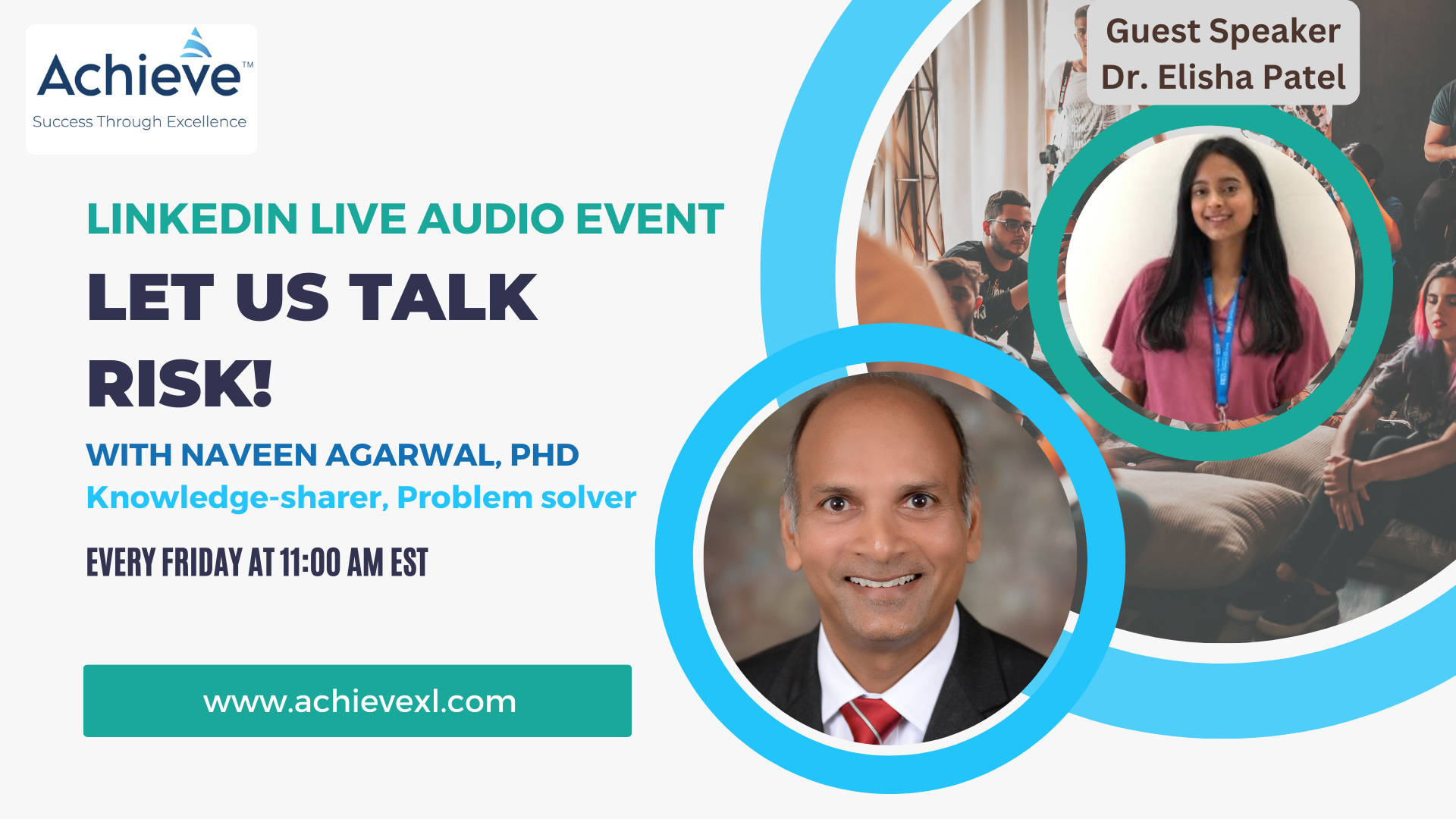
Risk practitioners, including engineers and quality/regulatory experts, mostly focus on device-related risks to ensure safety and effectiveness. Physicians, on the other hand, have to consider the totality of risks, including those arising from the procedure or patient-related factors. Physician’s have to tailor the overall benefit-risk to an individual patient. In this episode, Dr. Elisha Patel helps us understand a physician’s view on risk. About Dr. Elisha PatelElisha Patel is a qualified dentist with degrees in both biomedical sciences and dentistry. Her clinical experience includes her tenure as a dental surgeon in the National Health Services (NHS) system of healthcare in the United Kingdom. Currently, she is an associate consultant in the medical evidence practice at a leading consulting firm.About Let’s Talk Risk! with Dr. Naveen AgarwalLet’s Talk Risk! with Dr. Naveen Agarwal is a weekly live audio event on LinkedIn, where we talk about risk management related topics in a casual, informal way. Join us at 11:00 am EST every Friday on LinkedIn.DisclaimerInformation and insights presented in this podcast are for educational purposes only. Views expressed by all speakers are their own and do not reflect those of their respective organizations.If you enjoyed this episode, consider becoming a free or paid subscriber. This is a public episode. If you'd like to discuss this with other subscribers or get access to bonus episodes, visit naveenagarwalphd.substack.com/subscribe
LTR 10: Safety is important, but not the only objective for risk management
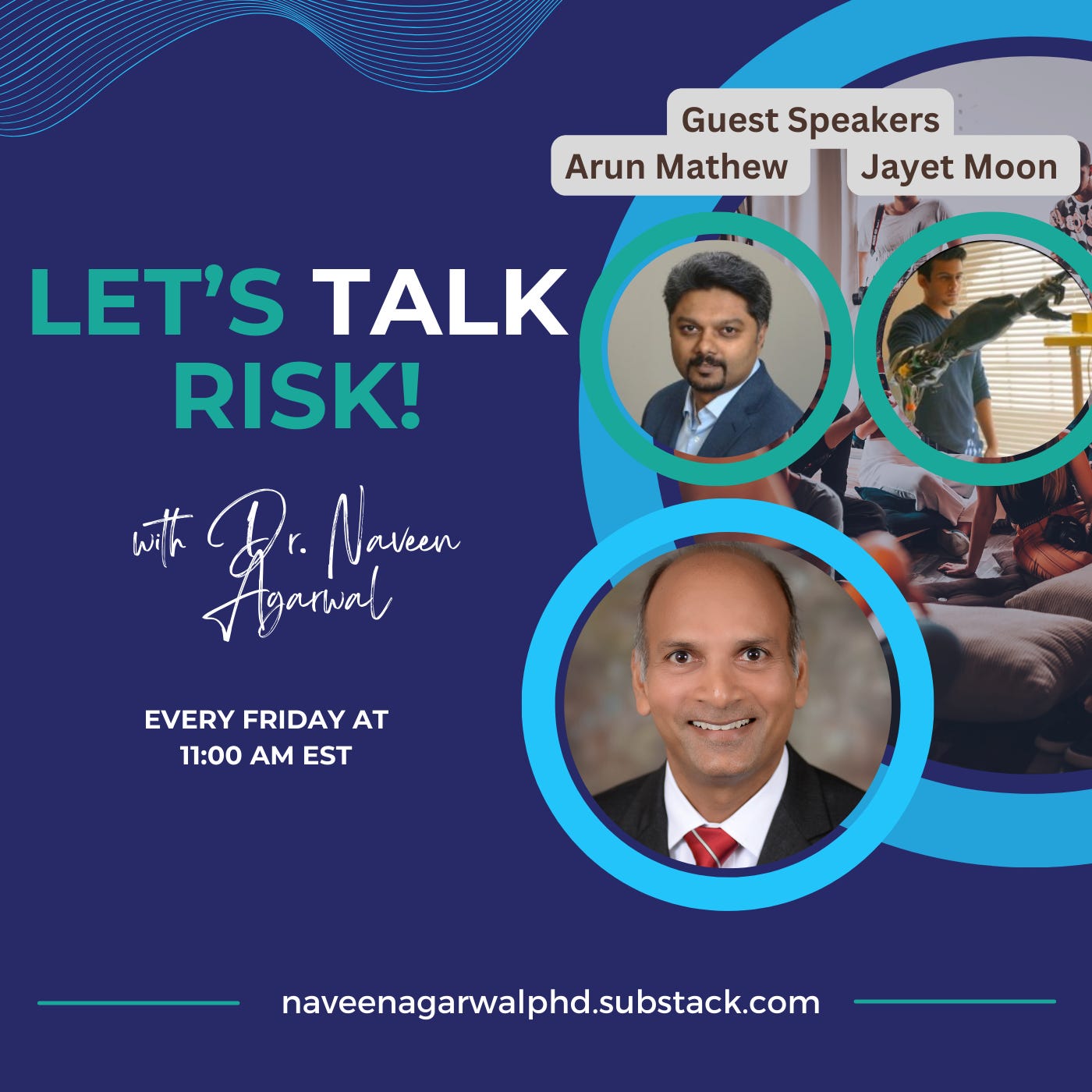
The term risk is generally understood as something to be avoided or minimized. In the medical device and pharma industries, risk is generally associated with harm to patients. Regulatory agencies expect the benefits of a medical product to outweigh the risks associated with its use before it can be considered as safe and effective. As a result, the dominant view of risk in the medical device world is that risk needs to be controlled and minimized for patient safety and regulatory compliance. ISO 14971.But risk also means opportunity. “No risk, no reward”, is a often invoked as a mantra to encourage achievement, especially in business. Sometimes the highest risk maybe the one you did not take when it was worth taking! Risk, therefore, can be perceived both as a negative force to be avoided, or as a positive force to be leveraged.In this episode, Jayet Moon and Arun Mathew remind us to keep the big picture in mind for risk management. Safety is an important business objective, but not the only one. We need to help our organizations manage all types of risks to achieve business success.About Jayet MoonJayet Moon is the author of Foundations of Quality Risk Management, published by the American Society for Quality (ASQ). He is a chartered quality professional in the UK and holds several certifications from the ASQ. In his current role as a Quality Manager at Terumo Medical Corporation, he is helping to integrate best practices in safe design and development of medical devices through is vast experience in engineering and post-market safety surveillance.About Arun MathewArun Mathew is currently an associate director of quality systems and risk management at AbbVie. He has over 17 years of diverse industry experience in roles ranging across quality, manufacturing and regulatory functions. His expertise includes medical standards, risk management, computer system validation, process validation, CE marking and FDA submissions.About Let’s Talk Risk with Dr. Naveen AgarwalLet’s Talk Risk with Dr. Naveen Agarwal is a weekly live audio event on LinkedIn, where we talk about risk management related topics in a casual, informal way. Join us at 11:00 am EST every Friday on LinkedIn.DisclaimerInformation and insights presented in this podcast are for educational purposes only. Views expressed by all speakers are their own and do not reflect those of their respective organizations.If you enjoyed this episode, consider becoming a free or paid subscriber to Let’s Talk Risk!. This is a public episode. If you'd like to discuss this with other subscribers or get access to bonus episodes, visit naveenagarwalphd.substack.com/subscribe
Ep 09: Tips for a risk-based approach to auditing Quality Systems
Medical device manufacturers operate under a heavy load of audits and inspections. Even the regulatory authorities across the world are recognizing the heavy burden of multiple audits and inspections on manufacturers, which take away resources and time that could otherwise be invested in new product development and continuous improvement activities.There is a movement in the regulatory compliance world to adopt a least-burdensome approach for regulatory decision making throughout the device lifecycle. In this context, the auditing practices in the industry are moving from an element-based approach to a risk-based approach.In this episode, Rick Rios explains what risk-based auditing is and shares best practices to conducting a risk-based audit for maximum effectiveness. We also discuss common challenges with the CAPA process in the industry. About Rick RiosRick Rios started his career in the defense industry working as a systems engineer in nuclear programs. Inspired by the Total Quality Management movement, he moved into a Quality and Regulatory role, and later worked in automotive and aerospace industries as an independent auditor. He has been active in the medical device industry as an independent auditor over nearly 15 years. He has successfully developed, integrated, implemented and audited quality systems based on ISO 13485, 21CFR820, MDSAP, EUMDR, DOE QC-1, NQA-1, ISO 9001, ISO 17025, NCSL Z540, and Baldrige Performance Excellence Program.About Let’s Talk Risk with Dr. Naveen AgarwalLet’s Talk Risk with Dr. Naveen Agarwal is a weekly live audio event on LinkedIn, where we talk about risk management related topics in a casual, informal way. Join us at 11:00 am EST every Friday on LinkedIn.DisclaimerInformation and insights presented in this podcast are for educational purposes only. Views expressed by all speakers are their own and do not reflect those of their respective organizations. This is a public episode. If you'd like to discuss this with other subscribers or get access to bonus episodes, visit naveenagarwalphd.substack.com/subscribe
Ep 08: Understanding the interface between clinical evaluation and risk management
The medical device regulation in the European Union (EU-MDR) outlines many new requirements for conducting clinical investigations and clinical evaluation throughout the device lifecycle. The challenge is that the term “clinical risk” is not clearly defined in the EU-MDR. This has created a lot of confusion in the medical device industry about the scope of clinical risks that need to addressed through a clinical evaluation and appropriately integrated with the risk management system.In this episode, Alexej Agibalow explains how the clinical evaluation process and risk management are interconnected, and recommends a cross-functional, collaborative approach to fully understand various interfaces and synchronize activities between these processes. About Alexej AgibalowAlexej Agibalow is a risk management expert at Escentia GmbH and manager of risk and regulatory affairs at Drager.About Let’s Talk Risk with Dr. Naveen AgarwalLet’s Talk Risk with Dr. Naveen Agarwal is a weekly live audio event on LinkedIn, where we talk about risk management related topics in a casual, informal way. Join us at 11:00 am EST every Friday on LinkedIn.DisclaimerInformation and insights presented in this podcast are for educational purposes only. Views expressed by all speakers are their own and do not reflect those of their respective organizations.If you enjoyed this episode, consider becoming a free or paid subscriber to Let’s Talk Risk!. This is a public episode. If you'd like to discuss this with other subscribers or get access to bonus episodes, visit naveenagarwalphd.substack.com/subscribe
Ep 07: Risk management of IVDs requires a different approach
Unlike a typical medical device, most in-vitro diagnostics (IVD) “do not touch” a patient. IVD-related risks to patient safety are considered to be indirect risks, because the information generated by an IVD is an intermediate step in the sequence of events. In the IVD world, a trained technician will generally run the assay and provide the information to a clinician. In case of an over the counter (OTC) test, such as a rapid COVID-19 test, the end-user directly receives the test results.How this information is used to make clinical decisions is generally not in direct control of the IVD manufacturer. The focus of IVD risk management is on minimizing false positive, false negative and invalid results by establishing appropriate performance requirements during design and development phase. In this episode, we discuss practical challenges practitioners face in designing safe and effective IVDs, and share best practices for IVD risk management. About Shree KoushikShree Koushik has over 25 years of research experience in biochemistry and molecular biology. As a consultant in the medical device industry over the last 10 years, he has successfully helped multiple clients receive FDA approvals for medical devices, combination products, software and IVDs in the microbiology, immunology, personalized medicine, cardiovascular, general surgery and dental specialties. He has also conducted numerous Quality Systems audits, developed Quality Management Systems and represented companies in their response to FDA inspections. Currently, he serves as the managing partner of BRDA consulting offering customer-centric solutions in regulatory affairs, quality assurance and business development.About Let’s Talk Risk with Dr. Naveen AgarwalLet’s Talk Risk with Dr. Naveen Agarwal is a weekly live audio event on LinkedIn, where we talk about risk management related topics in a casual, informal way. Join us at 11:00 am EST every Friday on LinkedIn.DisclaimerInformation and insights presented in this podcast are for educational purposes only. Views expressed by all speakers are their own and do not reflect those of their respective organizations.If you enjoyed this episode, consider becoming a free or paid subscriber. This is a public episode. If you'd like to discuss this with other subscribers or get access to bonus episodes, visit naveenagarwalphd.substack.com/subscribe
Best practices for using FMEAs for medical devices
FMEA is a commonly used technique by engineers in the medical device industry to analyze different failure modes, their causes and effects. When used correctly, it is highly effective in identifying and implementing appropriate control measures to improve product quality and reliability.However, FMEAs are also overused in the industry; often almost exclusively for risk analysis. The main problem with this approach is that system level hazards and hazardous situations cannot be easily linked to individual failure modes identified in an FMEA. Further, harm can occur even when a medical device is operating in the normal mode.In this episode, Roger Hill discusses some of the common challenges in using FMEAs and shares best practices based on over 30 years of industry experience.About Roger HillRoger Hill is is a Mechanical Engineer with extensive experience in design, development, manufacturing and ongoing sustainability of medical devices. He started his career in the defense industry and later moved to the medical device industry in the early 1990s. His expertise includes design controls, verification and validation of hardware, manufacturing operations and process validation. He also mentors and teaches classes for biomedical and mechanical engineering students at the University of Texas at Dallas. About Let’s Talk Risk with Dr. Naveen AgarwalLet’s Talk Risk with Dr. Naveen Agarwal is a weekly live audio event on LinkedIn, where we talk about risk management related topics in a casual, informal way. Join us at 11:00 am EST every Friday on LinkedIn.DisclaimerInformation and insights presented in this podcast are for educational purposes only. Views expressed by all speakers are their own and do not reflect those of their respective organizations.If you enjoyed this episode, consider becoming a free or paid subscriber. This is a public episode. If you'd like to discuss this with other subscribers or get access to bonus episodes, visit naveenagarwalphd.substack.com/subscribe