Episode 46
What's the 'secret sauce' to widening K-food's appeal? Exporting flavors and teaching more foreign chefs.
This article is by Lim Sun-young, Choi Hyun-ju, Noh Yu-rim and read by an artificial voice. In the kitchen of Nuwa, a Chinese restaurant in Sinsa-dong, Gangnam District, southern Seoul, on March 20, chef Park Eun-yeong, known as the "goddess of Chines...
Korea JoongAng Daily - Daily News from Korea · LIM SUN-YOUNG, CHOI HYUN-JU, NOH YU-RIM
April 1, 20264m 55s
Audio is streamed directly from the publisher (cdn.beyondwords.io) as published in their RSS feed. Play Podcasts does not host this file. Rights-holders can request removal through the copyright & takedown page.
Show Notes
This article is by Lim Sun-young, Choi Hyun-ju, Noh Yu-rim and read by an artificial voice.
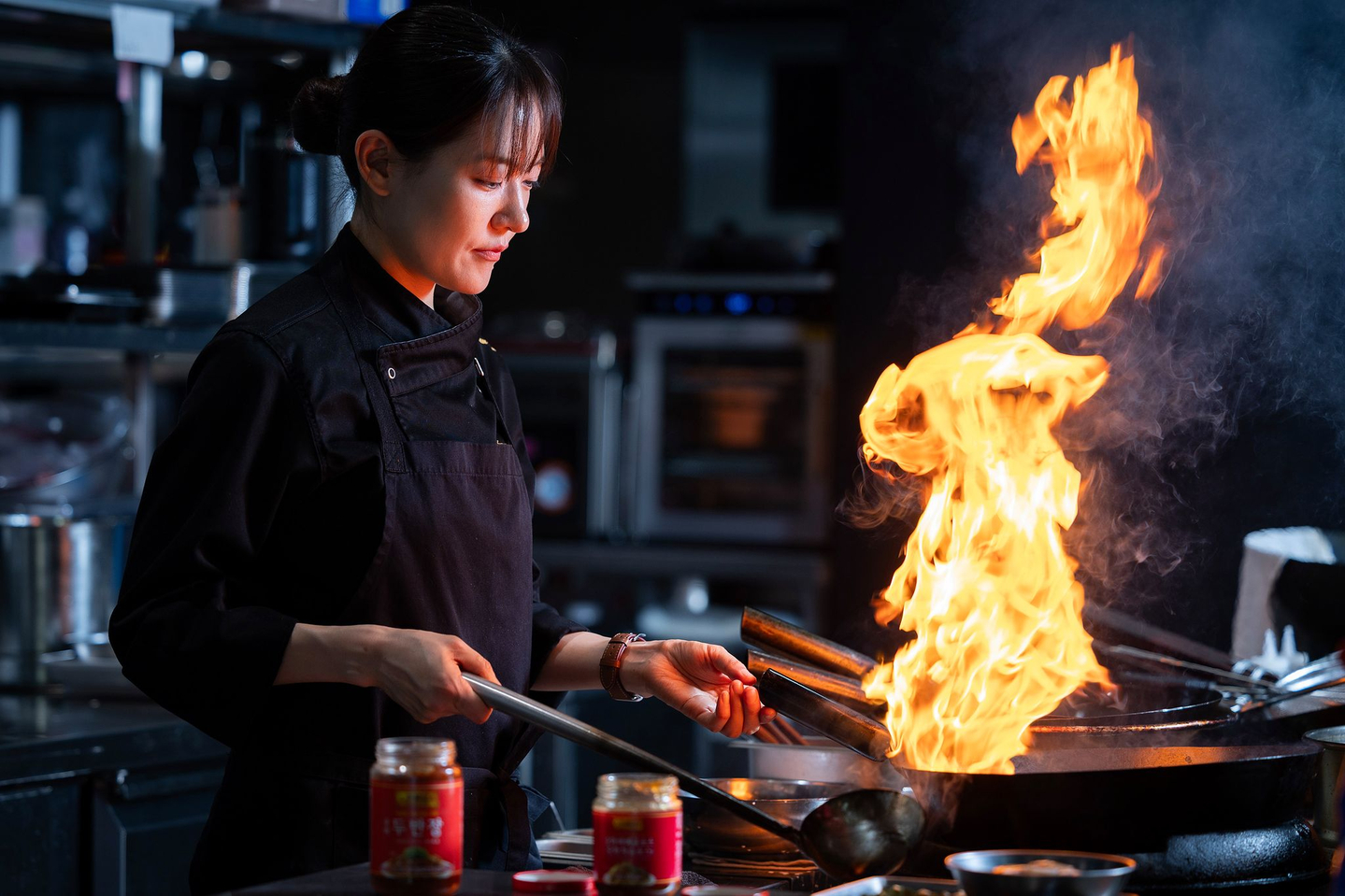
In the kitchen of Nuwa, a Chinese restaurant in Sinsa-dong, Gangnam District, southern Seoul, on March 20, chef Park Eun-yeong, known as the "goddess of Chinese food," was cooking with Lee Kum Kee oyster sauce.
Park has used the sauce that changed the course of her culinary career for years.
As a college student in 2011, she won a Lee Kum Kee cooking competition with a pork dish made with the sauce, and the prize — a trip to Hong Kong — opened her eyes to the world of gastronomy.
Lee Kum Kee, the 138-year-old global sauce brand based in Hong Kong, exports more than 300 kinds of sauces and condiments to over 100 regions. Since 2007, it has held an annual cooking competition to discover chefs from around the world and spread its products across global markets.
Along the same lines, Korean sauces are drawing attention in the restaurant and food industries as a practical answer for the future of K-food. For K-food to secure a place on tables around the world, experts say a strategy that allows it to blend naturally into local food cultures is needed.
Sauces have an advantage because they can be easily applied to local dishes, lowering the barrier to cooking and making it easier to expand into a wide range of recipes.
Overseas, Korean sauces are already spreading rapidly. Exports of Korean sauces reached $410 million in 2025, up 4.6 percent from 2024, according to the Ministry of Agriculture, Food and Rural Affairs. The product lineup is also growing more diverse, ranging from traditional condiments such as gochujang (chili paste) and doenjang (bean paste) to meat marinades, tteokbokki (spicy rice cake) sauce and chicken sauce.
Food companies are also stepping up their push into overseas markets. Dongwon Home Food's low-sugar, low-calorie sauce brand Vivid Kitchen now exports 37 products, including kimchi salsa and gochujang hot sauce, to multiple regions including the United States, Canada, Hong Kong and Vietnam. As of early this year, sales on Amazon in the United States have surged more than 600 percent from a year ago.
Overseas sales in the sauce business at Samyang Foods, which exports products including Buldak Sauce to around 50 regions, also rose four and a half times, from 8.4 billion won ($5.6 million) in 2021 to 38 billion won last year. CJ CheilJedang is also seeing an average annual growth of 12 percent in overseas sauce sales.
These companies are expanding beyond the consumer market into the business-to-business market, supplying sauces to restaurants and other food service operators.
"Sauces can improve the current structure of K-food exports, which remains concentrated in a few categories such as ramyeon and snacks, and they can become a new growth engine," said a source in the food industry. But industry voices say more active government support for exports is required to make that happen.
For K-food to become an everyday staple around the world, the number of chefs who can cook Korean food locally and help spread it also needs to grow. Critics say, however, that the educational foundation for systematically training Korean cuisine talent remains insufficient.
Of the roughly 100 culinary departments at two- and four-year colleges in Korea, fewer than 10 schools have Korean cuisine departments or similar programs dedicated to training Korean food specialists. Among them, only a handful offer K-food classes in English for foreign students. The D-4-5 visa for Korean cuisine training also acts as a further barrier to entry.
Experts agree that broader institutional support is needed.
"To actively train foreign K-food chefs, the government needs to provide universities with a standardized Korean cuisine curriculum and expand English-language courses," said Kim Hye-young, chair of the Korean culinary arts and food science program at Woosong University.
Other countries already have culinary education institutions established a...
In the kitchen of Nuwa, a Chinese restaurant in Sinsa-dong, Gangnam District, southern Seoul, on March 20, chef Park Eun-yeong, known as the "goddess of Chinese food," was cooking with Lee Kum Kee oyster sauce.
Park has used the sauce that changed the course of her culinary career for years.
As a college student in 2011, she won a Lee Kum Kee cooking competition with a pork dish made with the sauce, and the prize — a trip to Hong Kong — opened her eyes to the world of gastronomy.
Lee Kum Kee, the 138-year-old global sauce brand based in Hong Kong, exports more than 300 kinds of sauces and condiments to over 100 regions. Since 2007, it has held an annual cooking competition to discover chefs from around the world and spread its products across global markets.
Along the same lines, Korean sauces are drawing attention in the restaurant and food industries as a practical answer for the future of K-food. For K-food to secure a place on tables around the world, experts say a strategy that allows it to blend naturally into local food cultures is needed.
Sauces have an advantage because they can be easily applied to local dishes, lowering the barrier to cooking and making it easier to expand into a wide range of recipes.
Overseas, Korean sauces are already spreading rapidly. Exports of Korean sauces reached $410 million in 2025, up 4.6 percent from 2024, according to the Ministry of Agriculture, Food and Rural Affairs. The product lineup is also growing more diverse, ranging from traditional condiments such as gochujang (chili paste) and doenjang (bean paste) to meat marinades, tteokbokki (spicy rice cake) sauce and chicken sauce.
Food companies are also stepping up their push into overseas markets. Dongwon Home Food's low-sugar, low-calorie sauce brand Vivid Kitchen now exports 37 products, including kimchi salsa and gochujang hot sauce, to multiple regions including the United States, Canada, Hong Kong and Vietnam. As of early this year, sales on Amazon in the United States have surged more than 600 percent from a year ago.
Overseas sales in the sauce business at Samyang Foods, which exports products including Buldak Sauce to around 50 regions, also rose four and a half times, from 8.4 billion won ($5.6 million) in 2021 to 38 billion won last year. CJ CheilJedang is also seeing an average annual growth of 12 percent in overseas sauce sales.
These companies are expanding beyond the consumer market into the business-to-business market, supplying sauces to restaurants and other food service operators.
"Sauces can improve the current structure of K-food exports, which remains concentrated in a few categories such as ramyeon and snacks, and they can become a new growth engine," said a source in the food industry. But industry voices say more active government support for exports is required to make that happen.
For K-food to become an everyday staple around the world, the number of chefs who can cook Korean food locally and help spread it also needs to grow. Critics say, however, that the educational foundation for systematically training Korean cuisine talent remains insufficient.
Of the roughly 100 culinary departments at two- and four-year colleges in Korea, fewer than 10 schools have Korean cuisine departments or similar programs dedicated to training Korean food specialists. Among them, only a handful offer K-food classes in English for foreign students. The D-4-5 visa for Korean cuisine training also acts as a further barrier to entry.
Experts agree that broader institutional support is needed.
"To actively train foreign K-food chefs, the government needs to provide universities with a standardized Korean cuisine curriculum and expand English-language courses," said Kim Hye-young, chair of the Korean culinary arts and food science program at Woosong University.
Other countries already have culinary education institutions established a...