Episode 40
U.S. commitment to Korean nuclear sub project remains firm despite Iran war, senior Congressman says
This article is by Seo Ji-eun and read by an artificial voice. Despite growing concern in Seoul that Washington's focus on the war with Iran has caused the Korea-U.S. nuclear submarine project agreed to at last year's summit to stall, a senior U.S. la...
Korea JoongAng Daily - Daily News from Korea · SEO JI-EUN
April 1, 20265m 15s
Audio is streamed directly from the publisher (cdn.beyondwords.io) as published in their RSS feed. Play Podcasts does not host this file. Rights-holders can request removal through the copyright & takedown page.
Show Notes
This article is by Seo Ji-eun and read by an artificial voice.
Despite growing concern in Seoul that Washington's focus on the war with Iran has caused the Korea-U.S. nuclear submarine project agreed to at last year's summit to stall, a senior U.S. lawmaker said the administration has given Congress an unambiguous pledge that the initiative remains on track.
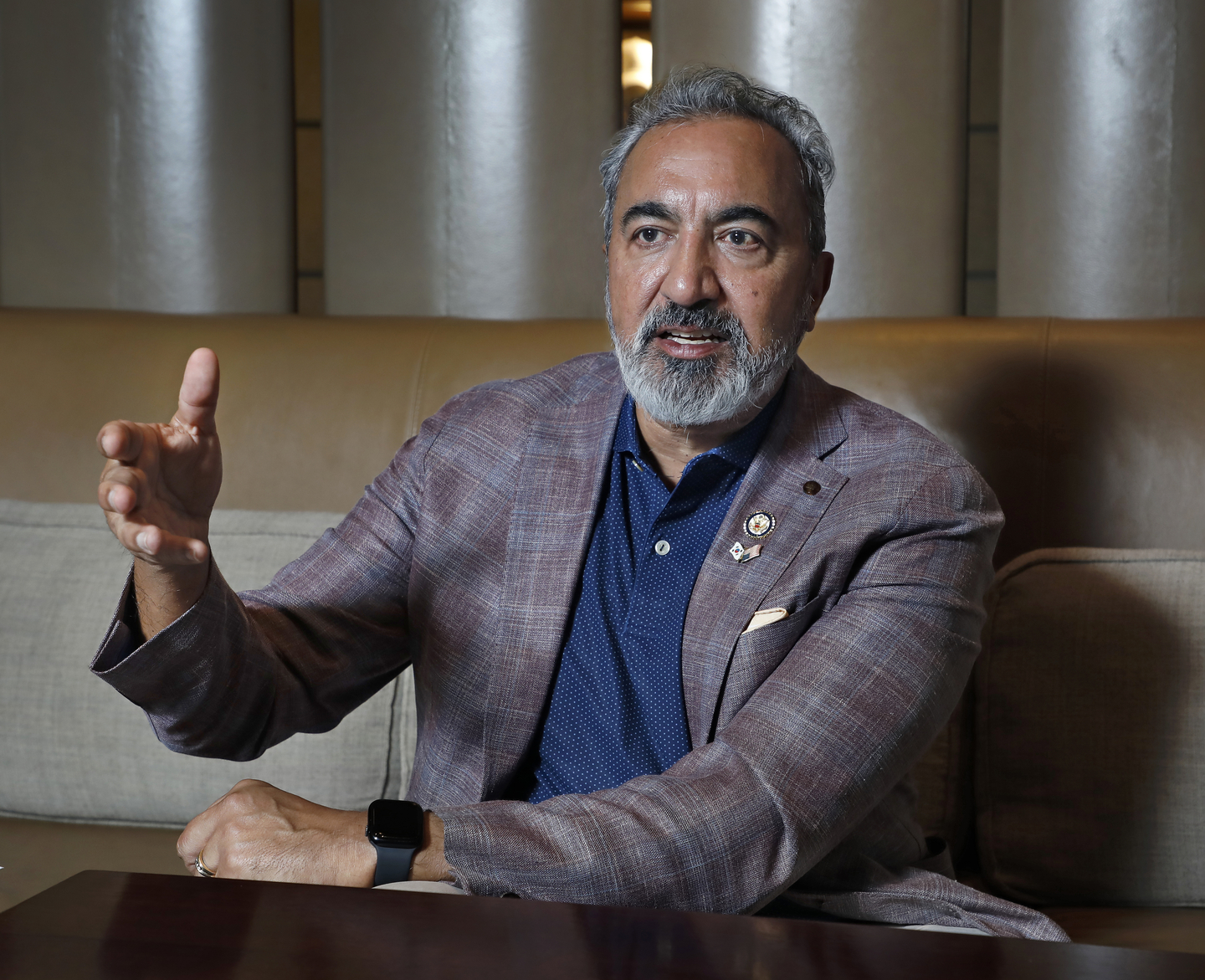
Rep. Ami Bera, a Democrat of California and a ranking member of the House Foreign Affairs Subcommittee on East Asia and the Pacific, in an interview with the Korea JoongAng Daily in Seoul on Wednesday delivered a direct reassurance on one of the alliance's most closely watched — and most anxiously debated — commitments: the nuclear-powered submarine project pledged in the joint fact sheet signed by Korean President Lee Jae Myung and U.S. President Donald Trump in Gyeongju last October.
Bera traveled to Seoul, leading a six-member bipartisan delegation of lawmakers from the U.S. Congressional Study Group on Korea, which he co-chairs.
Bera said Thomas DiNanno, undersecretary of state for arms control and international security, pledged that "the administration was firmly committed" to the submarine project, adding that he raised the question directly in a congressional committee hearing just last week. He plans to convene a follow-up meeting with Republican colleagues to begin working through the technical and legislative details.
On the complex legal and technical hurdles involved — nuclear fuel arrangements, 123 agreements and where the submarines would ultimately be built — Bera pointed to the Aukus submarine pact between Australia, Britain and the United States as the most viable model for moving forward.
"There's a template in that deal that allows us to work on this with Korea," he said. "We were able to work through that with Australia."
Now on his 12th visit to Seoul in 14 years in Congress, Bera argued that the old framing of the United States as Korea's protector no longer captures the reality on the ground.
"Whereas maybe a decade, two decades ago, it was the United States being a big brother to Korea," said Bera. "Today, they are siblings that are partners."
The shift, he said, is most visible in the industrial domain. American naval shipyards are struggling with aging infrastructure and a shrinking work force — and Korea, he said, is now essential to fixing that.
"Korean shipbuilding is far ahead of where U.S. shipbuilding is, and we need Korean companies to help revitalize American shipbuilding," Bera said, pointing to Hanwha's acquisition of Philly Shipyard as a blueprint for rebuilding American industrial capabilities.
"It should be a positive thing that I think Korean companies should be proud of," he added.
The reassurances on the submarine project arrive amid acute uncertainty over tariffs, which have rattled Korean businesses and raised questions about the durability of planned investments in the United States.
"President Trump sometimes is more transactional," acknowledged Bera, though he pointed to both Congress and the courts as counterweights.
The Supreme Court, he noted, has already ruled that some of the administration's tariffs are unconstitutional — and that Congress must now act.
"I would hope that we can work through these issues in Congress," he said.
He also stressed that the bipartisan consensus within Congress on the alliance itself has not moved.
"Within Congress, nothing has changed about the importance that the United States Congress sees about the alliance on the Korean Peninsula," he said, describing the bipartisan consensus as a "safety net" against the turbulence of the current moment.
Bera pushed back against the Trump administration's recurring characterization of allies as benefiting from American military power without paying their fair share.
"I don't see Korea as a free rider," he said flatly, highlighting Lee's commitment to raising Korea's defense spending to 3.5 percent of GDP — well beyond the 2 percent NATO benchmark t...
Despite growing concern in Seoul that Washington's focus on the war with Iran has caused the Korea-U.S. nuclear submarine project agreed to at last year's summit to stall, a senior U.S. lawmaker said the administration has given Congress an unambiguous pledge that the initiative remains on track.
Rep. Ami Bera, a Democrat of California and a ranking member of the House Foreign Affairs Subcommittee on East Asia and the Pacific, in an interview with the Korea JoongAng Daily in Seoul on Wednesday delivered a direct reassurance on one of the alliance's most closely watched — and most anxiously debated — commitments: the nuclear-powered submarine project pledged in the joint fact sheet signed by Korean President Lee Jae Myung and U.S. President Donald Trump in Gyeongju last October.
Bera traveled to Seoul, leading a six-member bipartisan delegation of lawmakers from the U.S. Congressional Study Group on Korea, which he co-chairs.
Bera said Thomas DiNanno, undersecretary of state for arms control and international security, pledged that "the administration was firmly committed" to the submarine project, adding that he raised the question directly in a congressional committee hearing just last week. He plans to convene a follow-up meeting with Republican colleagues to begin working through the technical and legislative details.
On the complex legal and technical hurdles involved — nuclear fuel arrangements, 123 agreements and where the submarines would ultimately be built — Bera pointed to the Aukus submarine pact between Australia, Britain and the United States as the most viable model for moving forward.
"There's a template in that deal that allows us to work on this with Korea," he said. "We were able to work through that with Australia."
Now on his 12th visit to Seoul in 14 years in Congress, Bera argued that the old framing of the United States as Korea's protector no longer captures the reality on the ground.
"Whereas maybe a decade, two decades ago, it was the United States being a big brother to Korea," said Bera. "Today, they are siblings that are partners."
The shift, he said, is most visible in the industrial domain. American naval shipyards are struggling with aging infrastructure and a shrinking work force — and Korea, he said, is now essential to fixing that.
"Korean shipbuilding is far ahead of where U.S. shipbuilding is, and we need Korean companies to help revitalize American shipbuilding," Bera said, pointing to Hanwha's acquisition of Philly Shipyard as a blueprint for rebuilding American industrial capabilities.
"It should be a positive thing that I think Korean companies should be proud of," he added.
The reassurances on the submarine project arrive amid acute uncertainty over tariffs, which have rattled Korean businesses and raised questions about the durability of planned investments in the United States.
"President Trump sometimes is more transactional," acknowledged Bera, though he pointed to both Congress and the courts as counterweights.
The Supreme Court, he noted, has already ruled that some of the administration's tariffs are unconstitutional — and that Congress must now act.
"I would hope that we can work through these issues in Congress," he said.
He also stressed that the bipartisan consensus within Congress on the alliance itself has not moved.
"Within Congress, nothing has changed about the importance that the United States Congress sees about the alliance on the Korean Peninsula," he said, describing the bipartisan consensus as a "safety net" against the turbulence of the current moment.
Bera pushed back against the Trump administration's recurring characterization of allies as benefiting from American military power without paying their fair share.
"I don't see Korea as a free rider," he said flatly, highlighting Lee's commitment to raising Korea's defense spending to 3.5 percent of GDP — well beyond the 2 percent NATO benchmark t...