
Kernow Damo
507 episodes — Page 5 of 11
Trump In MAJOR Trouble; Creating the Exact Crisis He Blamed Iran For
Netanyahu Thought He Was Safe; Spain Decided Otherwise
Team Trump Blows It With Iran; Israel Strikes Again?
Pro Israel Groups Cornered Over Tehran Synagogue Attack; Their Silence Speaks Volumes
Greater Israel Plan Naming Lebanon, Gaza and Syria Surfaces; Backlash Blows Up
Coward Starmer Caught Hiding as Trump Threatened Iran; Then Posed for the Ceasefire
Trump Takes The Hit As Netanyahu Pulls Rank; Decimates Lebanon Over Iran Deal
Netanyahu Takes The Hit As Iran Ultimatum Lands; Israel Defies Ceasefire Over Lebanon
Trump Destroys Himself After Destruction Threats Fail; Iran Now Holds All The Cards
Trump’s Ultimatum Blows Up In His Face; Iran Raises The Price Of His Humiliation
Deadly Haifa Strike Leaves Netanyahu Exposed; Mayor Says He’s Abandoned The North
Iran Shakes US Air Superiority; Trump Spirals Into Bigger Humiliation
Greens Surge to First Place In Stunning New Poll; Farage's Lead Evaporates
Israelis Flee by Land as Ben Gurion Airport Chokes; Netanyahu Takes the Hit
Green Party's Tech Disaster Wasn't An Accident; Conference Crisis Solved?
Yvette Cooper’s Hormuz Fraud Backfires; Iran Opens Door To Safe Passage
Trump & Netanyahu's Bridge Lies Flop; Iran Turns Israel Into A Literal S**thole
New Haifa Humiliation Hits Israel Hard; Netanyahu's Narrative Crumbles
Israel turned fuel and infrastructure into fair game, then the latest Haifa strike came along and slapped the smugness clean off their faces. Right, so Benjamin Netanyahu has stood in front of cameras and said this war could end “a lot faster than people think”, and that Iran is being decimated, and then Haifa has gone and done the very rude thing of catching fire again. The Bazan refinery there in Haifa has been hit again in a missile barrage from Iran and Lebanon, a fire broke out, black smoke went up over one of Israel’s key northern industrial sites, and that was the second attack on that facility since this war started. No deaths were reported from that strike. But that doesn’t really rescue Netanyahu from the problem at all. In some ways it makes the problem nastier, because the humiliation here is not mainly a body count story. It is a control story. It is a proof story. He has been talking like the matter is being settled in his favour while one of Israel’s most sensitive northern hubs is still able to appear in the footage as smoke, flame, and another public reminder that Iran has not signed anything like the surrender papers his mouth keeps trying to file on reality’s behalf. Bazan is not some random warehouse on an industrial estate that nobody has heard of and nobody needs to care about. Haifa matters because it is one of the places where fuel, port activity, and military significance sit too close together for comfort. It makes for an awfully convenient target for Iran. The refinery complex sits in the same city as Israel’s main naval base. That means a strike there does not read like generic wartime misery. It reads like a state failing to keep one of its own working organs out of reach. This is the part casual coverage often flattens because “Haifa hit again” is easier to say than “a strategic hub you are supposed to keep functioning under pressure has become a repeat feature in the strike map”. One sentence sounds like routine exchange. The other sounds like the thing it is: a public argument with the boast that Israeli control has already been demonstrated.
Trump's GULF Alliance Just FELL APART Completely; So Much for “Nearly Over
Trump said the war was nearly over, then his Gulf protection racket answered with burning fuel tanks in Kuwait. Right, so Donald Trump is telling us the Iran War is nearly over, that its almost finished, that he has stood by his Gulf allies and protected them and thanked them for their help. I don’t think anybody has told Iran though. Those are scenes from Kuwait International Airport, where they have had their fuel tanks hit and set on fire by an Iranian drone strike, and Donald Trump chose that precise point in time to tell people the war was nearly over. Whoops. Bad timing. Kuwait of course hosts American forces, sits inside American defence arrangements, and lives under that sales pitch from the orange tan man that the price of US alignment is US protection. Well the fuel tanks still burned didn’t they? The airport still had to be secured. Emergency crews still had to put the fire out. So when Trump says nearly over, what he is really saying is that you are meant to ignore the fact that the side he is supposed to be protecting is still taking hits on its own infrastructure, because the old American promise doesn’t hold up when protecting Israel comes first and foremost, it is Israel First. Donald Trump has spent this whole war, this past month basically talking like the job is already done, how many times now has he said it’s finished, or nearly finished before another defence funding request goes in, more missiles get fired, more interceptors run out because, Iran is in the drivers seat and not Little Donnie, those allied with Israel and the US finding themselves very much on the target list at the same time Iran triggers another Trumpy toddler tantrum with another of their lego videos. This is the kind of man who wants the victory speech ready before the wreckage has finished burning. He has pushed the line that American objectives in Iran are near completion. He has paired that with threats of more attacks over the next two to three weeks, because apparently “nearly over” now includes more bombing, more escalation and more bargaining through force – at least he claims to bargaining, with real or imaginary Iranians nobody is quite sure anymore.

Israel To Pay A Price Over Hanging Law; Starmer Goes Into Hiding?
Israel has legalised hanging for Palestinians and while the Greens have said that should carry a price, the rest of Westminster is still staring at the carpet. Right, so Israel is the first state in history to legislate a death sentence that applies only to one ethnic group. There's a reason nobody else has ever done this, not even apartheid South Africa did this. It's a depth of evil beyond humanity itself, and while Zack Polanski’s Green Party has now demanded Israel pay a price for that, outlining exactly what they think the UK response right now to this should be, Keir Starmer has still not said a damn thing about it. He was fast enough to make demands of Iran acting in self defence after Israel attacked them roughly one month ago, but over this? Nothing. Well if Starmer’s problem is that Israel won’t like him very much if he dares put so much as a crooked toenail out of joint, or any of their mouthpieces here in the UK for that matter too, then here’s is one Israeli outlining exactly what the problem is here, rather than wait for his focus groups or Morgan McSweeney via his missing mobile to tell him otherwise. That was Israeli left winger Ofer Cassif there, a rare voice in the Knesset capable of speaking truth to power. That is why Starmer ends up sat there being ridiculed across social media, being derided as if he hasn’t got anything to say, because frankly he damn well should, not least because the question has already been answered for him by Green Party Deputy Leader Mothin Ali. Suspend Israel’s senior diplomat. Stop the arms. Sanction the state. The Greens have put a price on the table and Starmer has put nothing on it at all.
Israel Targets Iran’s Cancer Treatment; Starmer’s War Involvement Puts Britain in the Crosshairs
They hit cancer treatment, failed to make Iran fold, and Starmer is finding out that being involved does in fact put your own country in the firing line. Right, so nothing quite screams military target quite like Israel and the United States striking a pharmaceutical plant in Iran that produces cancer drugs and anaesthetics, does it? A cancer drug facility struck. Perhaps thewy were trying to hit a valid military target, much like the excuses they gave when they struck the Minab girls school, next to an IRGC facility you might be thinking, well the other targets reportedly hit in the area actually included more residential buildings, a site of religious significance and an orphanage, so anyone telling any such tales can go and shove it where the sun doesn’t shine. Keir Starmer’s pretence that the UK is not involved in the Iran war except in a defensive posture, despite blatantly allowing US bombers to refuel, reload and take off from UK soil, not kidding anyone here in the UK except for the wilfully lobotomised, still trusting mainstream media delivers this abstract concept known as news has just got a big fat Iranian answer now too, as it appears they are no more fooled by his weasel words either. That burns well doesn’t it? That is what remains of a Castrol facility in Iraq. Drones hit Castrol warehouses near Erbil, a British-branded oil company as that is, and so the gap between what Starmer says and what Britain is doing gets a lot harder to manage with tidy little phrases and a straight face in Westminster, when what results is a major fire at the warehouse because Iran isn’t buying the snake oil you’re selling. Or the engine oil for that matter. It does burn rather well. So much for what Keir Starmer has said in the Commons on such things therefore, pathetic claims that kidded nobody. Britain did not join the strikes, he says, this not Britain’s war, we are staying out of it.

No Wonder The Met Are Masking Up; Palestine Action Arrest Blows Up As Golders Green Backfires Too
Masked officers at dawn for Qesser Zuhrah, paperwork and suspension for a Met officer after Golders Green abuse: same city, same force, different rules. Right, so the Met police are really lapping up the self inflicted damage it would seem as not only have they been shamed over the conduct of one of their special officers – and he really was something quite special – in amongst scenes of abuse aimed at an Al Jazeera news crew attempting to report on the arson attack on Jewish ambulances in Golders Green, but now they are back to arresting Palestine Action hunger strikers just a month after they were released and the tape from Watford concerning the arrest of Qesser Zuhrah has already done the damage. Qesser Zuhrah there, put in a car, masked officers are around her, and one of the first sensible questions in the whole affair is the one she asks herself, aimed at the police and others there asked the same thing too - why are the police masked? That is not some tiny aesthetic detail is it? The Metropolitan Police, along with Counter Terrorism Policing South East have helped turn the arrest of a 21-year-old woman over an alleged call for “direct action” - not illegal in itself of course - into a public argument about fear and accountability before most people have even got to the legal wording. Nothing says calm, proportionate confidence like covering your face to arrest a young activist at dawn is there? The Met has then managed to do this while still carrying the fallout from the recent incident at Golders Green, where a serving Special Constable, David Soffer, was filmed abusing and helping intimidate an Al Jazeera crew wishing to cover the arson of those Hatzola ambulances the night before and not wishing them to do so. Well, he has now been suspended. Perhaps that is why the masks matter now. They arrived after the force had already made itself part of another Palestine story and after Declassified UK, through their investigative journalism, had already put one of its own officers on the public record.
Ben Gvir Just Tightened The Noose Around Israel’s Neck; Death Penalty Bill Leaves Netanyahu Exposed
Ben Gvir got his hanging law, but Israel has made itself harder to defend and dragged every ally still pretending otherwise deeper into the disgrace. Right, so Itamar Ben-Gvir has got his hanging law through the Knesset, Benjamin Netanyahu voted for it himself, what a way to prove both of them are in fact still alive and the first thing this has done is make Israel so much harder to defend in every capital still pretending there is some decent democratic core concerning this blatantly apartheid state, a hanging law after all that only applies to Palestinians. Any politician or media pundit denying that now is either wilfully stupid or bought and paid for. A majority of 62 Knesset members has backed a law that sets the death penalty as the default in military courts – which are the only courts Palestinians are tried through - for Palestinians convicted of terror-related murder, and allows life only in vague “special circumstances”, strips out the notion of pardon completely, and drives toward execution inside 90 days. Ben Gvir’s reaction? This. Then the smiling started. Then the drinks went up. Then the whole thing stopped looking like a grim act of state necessity, the darkest of laws being passed and this maniac and his ilk popped champagne corks. It looks like exactly what it is and I don’t apologise for showing that clip either, because if it makes your blood boil then good, it should. A far-right political trophy being waved about by men who think cruelty is strength and a legal spit polish can make it look respectable. The Association for Civil Rights in Israel, ACRI – believe it or not, there is such a thing - has spelt the consequences of this out for Palestinians in very stark and straightforward terms, adding to a point I made a moment ago. Palestinians in the territories go through military courts. Israeli citizens, including settlers in the West Bank, go through civilian courts. The entire legal system was therefore an example of apartheid before this death penalty bill passed. In that military track, the death sentence is the default, hence it only applies to Palestinians. In the civilian track, the law is framed around intent to negate the existence of the state, which ACRI says means Jews will not in practice face this punishment, again nailing on the obvious apartheid here. That is not one justice system being applied equally.
Iran War Was Never About Nukes; Netanyahu Just Revealed Israel’s Oil Plans
Netanyahu sold an Iran war on nuclear fear, but has he now let the cat out of the bag about what it is really all about? Right, so Benjamin Netanyahu has gone on camera, been asked what the end of this war with iran is supposed to look like, and answered not with some last-ditch line about centrifuges being destroyed, not with some grim little sermon about imminent nuclear doom if they fail, but he came out with something else entirely instead, which has now got people wondering if he’s just given the game away. The war ends with oil and gas pipelines running west through the Arabian Peninsula to Israeli Mediterranean ports, bypassing Hormuz and Bab el-Mandeb entirely for forever and a day. Israel’s security assured, who would target the global hub for all oil and gas coming out of the Middle East? He said the old sea lanes have to be bypassed and the new route ends in Israel. So the man who went to war and went scurrying away again last year, who convinced Trump this was an easy win to try again this year, and is again being handed his backside, has all the same suddenly dropped the Iran will have a nuclear bomb in 30 minutes line and started talking up oil and gas rerouting instead. War in the language of emergency has started describing victory in the language of infrastructure and commercial interests. Of course the head of the IAEA Rafael Grossi has already said there is no evidence Iran is building a nuclear bomb, the entire premise of the Israeli -US attacks on Iran are built on sand. The IAEA has said diplomacy is needed to ensure Iran will not acquire nuclear weapons as well, showing where they sit politically too, knowing there’s no plans still at this time to do so on Iran’s part, the fatwa in place forbidding it, put in place by the former Supreme Leader remains in place as well. A state with no nukes has been hit under the language of having them anyway, all besides Israel very much having them and not being signatories to the Nuclear non-Proliferation Treaty unlike Iran as well.
Houthis Hit Israel as Red Sea Fears Rise Again; Netanyahu Faces New Blowback
The Houthis hitting Israel mattered as proof that another front had opened at exactly the moment Netanyahu most needed the war to stop getting wider. Right, so the spokesman for the Ansarallah Movement, Yahya Saree has now said the Houthis are entering the Iran war. You might have been wondering what had been keeping them all of this time, they’d announced their readiness some time ago after all. Well in case you had been missing his daily reports from Houthi HQ, he’s happy to update you Houthi forces have therefore carried out their first military operation against Israel since they downed tools at the start of the sick joke of a Gaza ceasefire began last year, using ballistic missiles against military sites in the south, with Israeli reporting they had sirens sounding around Beersheba with a missile allegedly intercepted before it crossed into Israeli territory, assuming there were rockets left with which to do that with. Ansarallah leader Abdul Malik al-Houthi had already been making it perfectly clear that the Houthis were ready to move in support of Iran, and Yahya Saree had already put the warning out in public too: keep widening this war, use the Red Sea for hostile operations, and they were ready to step in directly to block it again, just as they did before. They’ve been biding their time, reminding people periodically that they were at readiness, had not formally stepped in yet, but now they have. The Houthis were not hiding their capability after all, we’ve all seen what they can do, hold off the US and Israel at the same time, keep the Red Sea blockaded with little more than dinghies and drones and then they wheeled out their bigger toys. And now they’ve made their move again. Netanyahu’s problem is that this is now one more front at the exact moment he most needed fewer of them, but he only has himself to blame. He needed the war narrowing. He needed his enemies separated instead of united. He only has himself to blame for starting so much war on so many fronts that one more might now actually break him and Israel itself.

Zionists Ran Scared & Couldn’t Beat Greens’ Zionism Motion; They Ran Down The Clock Instead
A small anti-motion bloc could not beat Zionism is Racism openly, so after conference pushed it up the agenda, they ran down the clock instead. Right, so safe to safe to say matters didn’t quite go our way at Green Party Spring Conference yesterday, but not for the reasons being widely propagated either, that the Greens are clearly just another liberal party that will allow Zionism to persist, that we failed because that’s the kind of party we are and whether the membership has grown or not, that won’t change, with a new leader that won’t change, but actually Polanski is largely irrelevant, because members make policy in the Greens and that growing membership did make itself known, because we had the Zionists running scared, we had them beaten in several votes in relation to getting Zionism declared racism within the party, which is why they had to resort to procedure and running down the clock to finally stop us getting to the big vote, it was the only tool they had left after we’d dismantled ever other attempt to derail it during the day’s proceedings before that. The first attempt of theirs was to try and get this motion called out of order. That failed. We came back with a move to get the motion moved up the running order, from E12, the 12th non organisational policy motion to be heard in other words, to E03, up 9 places, higher up the running order. We won that. It became E03. The clock got run down before E03 could be heard though. Conference shut before the vote happened, stalling tactics, such as time wasting almost concurrent votes of no confidence in the chair for the weakest possible reasons being the main one and so the clock ended up finishing what the direct blocking attempts earlier in the day could not. Anybody calling what happened yesterday a routine procedural outcome is taking the piss. If opponents thought they could beat the motion in the open, they would have let it reach the floor. If they had the numbers, they could have walked out leaving the plenary session inquorate and unable to continue business. They didn’t have them. What they had was procedure.
Israeli Army About To Collapse Netanyahu Warned; Desperate Call For Conscription On Steroids
Israel has opened so many war fronts that it is now running short of soldiers, running short of public patience, and running out of time and money too. Right, so Israel’s Chief of Staff, head of the IDF Eyal Zamir has warned Benjamin Netanyahu and his cabinet that the Israeli army is running short of bodies and cannot carry on like this. Oh dear, how sad, never mind, we might just be starting this video, but already I have a sense of a great many very tiny violins all being broken out in sympathy with such news. Zamir is of course the top serving military officer, and the reporting out of Israel says he has told ministers the army could collapse into itself if they do not solve the manpower crisis they face, which was an issue long before they decided to make war on Iran and anyone else they felt like at the same time, from Gaza to Lebanon at that. Now it it is apparently existentially worse. Zamir has apparently raised ten red flags over this, though conspicuously no publication seems to have listed all ten – that pesky military censor doing the rounds I presume – but amongst the recommendations we do know about are a demand for a conscription law, a reserve-duty law, and a demand for even longer regular service. It doesn’t exactly scream in control does it? It’s coercion into military service whether you want it or not it seems. The army Israel sells to the world as permanently ready, permanently sharp, permanently one step ahead and very much the most moral, has had its own commander warning the political class that unless there is a dramatic, legally enforceable shift, they’re done for in effect.

Green Party Members About to Vote on Zionism is Racism Motion; German Party Beats Them to It?
Greens pour scorn over main media telling them to know their place over Zionism is Racism motion, but has Germany set the precedent first? Right, so tomorrow Green Party Spring Conference kicks off, a lot of reports, organisation stuff sure, but also policy motions, the ability to make and shape Green Party policy belongs to all of us as members and the one that has won the most focus understandably is very much currently going by the official name of Motion E12, but is much better known now as the “Zionism Is Racism” motion. But right up until the day it finally goes before the membership, it is still under attack. But, while the press has already spent weeks throwing muck at it, a regional branch of Die Linke, the German Democratic Socialist Party in Lower Saxony has already managed to beat the Greens to it – at least in a sense, I’ll explain more in a moment, Germany of all places you might be thinking, well indeed. So we have this situation right now where one party in Britain is being told to know its place and get back in its box with regards to Zionism, and yet another party in arguably even more Zionist Germany has already said enough to trigger the very same shift, and all the people who normally insist these arguments belong only on the activist fringe are left trying to explain why they are suddenly shouting so loudly about something they insist does not matter. Because clearly this is not a conversation just happening here and now in the UK, within one main party, this is happening elsewhere too and the change I for one certainly hope to see voted through tomorrow is already being voted through elsewhere too. Those complaining and wailing that the old taboo around Zionism is breaking, that all those false accusations of antisemitism are no longer landing are shouting because it does matter, and because once this moves from placards and meetings into formal party procedure, they lose all the comfort of pretending it is them that are the only ones who do the serious politics.

Al Jazeera Crew Harassed After Golders Green Arson; Britain's Racism Double Standard Exposed
Arabic Al Jazeera journalists were abused in Golders Green by local Jewry, and Britain’s anti-racism values suddenly went missing. Right, so an Al Jazeera crew turned up in Golders Green to report on the arson attack on that Jewish volunteer ambulance service and ended up being shouted out of the area by men from the same local community that had just been given the full language of national sympathy, but has had scant coverage in the mainstream because they’re still falling all over themselves covering the ambulance side of the story, talking up claims of an Iranian terror group that has apparently only existed for all of 5 minutes as the apparent perpetrators, so take a look at this, because if we’re going to talk racist attacks, as this ambulance arson story has been readily referred to as antisemitic, then lets be even handed about it. Pretty disgusting all in all isn’t it? The crowd is there. “Go back to Qatar” is there. The police officer saying they are reporting the news is there. The men insisting they feel threatened by the journalists while surrounding them and yelling in their faces is there. And once the animal slurs start, once you get donkeys and dogs thrown at Arab journalists in the middle of a London street, all the careful little pretence about community upset and understandable tension and emotions running high start falling apart on contact with the footage. Keir Starmer had already chosen his line by then. The Home Office had already chosen its line by then. The first incident, the burning of four Hatzola ambulances outside the synagogue on Highfield Road at about 1.45 in the morning, was treated as an antisemitic hate crime, handed to Counter Terrorism Policing, condemned from the top, and turned into a national statement about solidarity with British Jews. Four ambulances were destroyed. Thirty-four residents were displaced after oxygen canisters exploded. Replacement ambulances were promised by the next morning. Government money was put up for permanent replacements. The whole machine knew exactly what tone to use, exactly what moral language to reach for, exactly whose fear to centre.
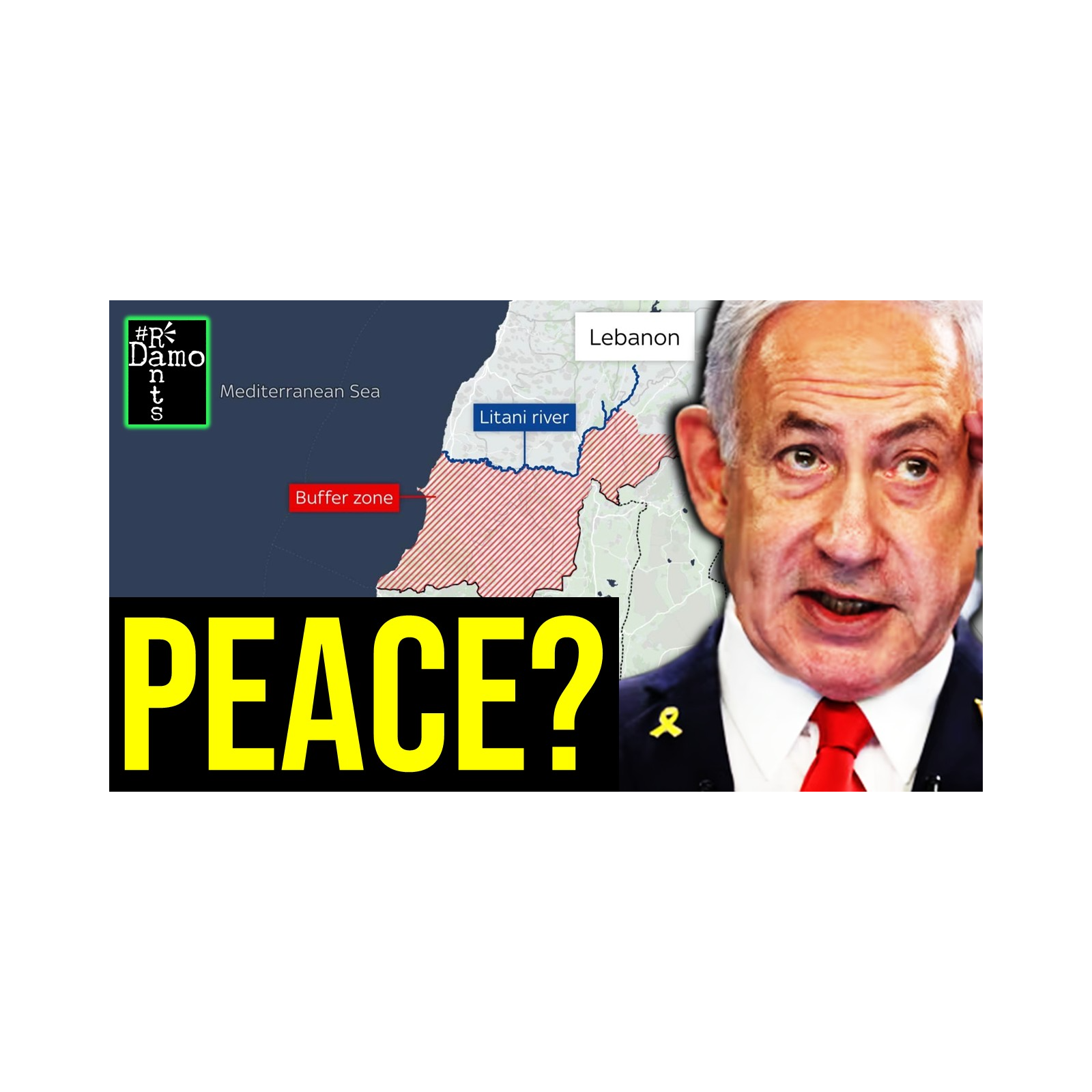
Israel Blows Up Bridges In Land Seizure; BBC Calls It “A Path To Peace”
Israel is blowing up Lebanon’s bridges to carve out a new border, and the BBC is still trying to sell the rubble as peace. Right, so Israel has blown up bridges in southern Lebanon, the war minister Israel Katz has ordered all crossings, all bridges over the Litani river destroyed, Israeli finance minister Bezalel Smotrich has said the Litani must become Israel’s new border, some 30km north of the current Israeli border as that is and the BBC line doing the rounds courtesy of Lucy Williamson’s report calls a “blueprint for destruction” a “path to peace”. I really wish I was joking. There is your story. Israeli insanity and land grabs and the BBC calls it a path to piece. A bridge is not an opinion. A bridge is a bridge. When the Qasmiyeh Bridge, a key crossing linking Lebanon’s south to the rest of the country, gets hit after Israel has already destroyed other Litani crossings, incidentally, that was the target that Russia Today journalist Steve Sweeney was recently caught up in, you are watching a state cut the roads that keep a region tied to its own country. The Litani River almost completely splits Lebanon into two halves, Destroying the bridges whilst the gormless government just watches and blinks and demands Hezbollah disarm as their first priority it seems, even now as the bridge blowers have demanded is making for the easiest land grab Israel could possibly wish for. All in the name of their security of course though. What we are watching here, is a line being prepared on the map with explosives and displacement orders. And when the BBC describes that method as a path to peace, the corporation is not failing to find the right words, it has found exactly the wrong ones and put them out there anyway, still either in the mindset that it doesn’t matter, or that we simply don’t care enough to notice.
Iran Story Sinks After London Ambulance Arson; Met Police Implicated in Al Jazeera Abuse
Not only is the Met Police investigating the Golders Green arson, but now they have to explain why one of its own was in the mob abusing Al Jazeera. Right, so we’re all familiar with the ambulance arson attack in Golders Green by now aren’t we? Four ambulances belonging to Hatzola, the Jewish volunteer ambulance service, were burned outside a synagogue in Golders Green, the police said three hooded people were seen pouring accelerant and setting them alight, and almost immediately the mainstream media were connecting the dots to Iran, proxies and terror talk, a new IRGC aligned terror group called Harakat Ashab al-Yamin al-Islamia, or HAYI was in the frame as well as the apparent instigators and I do mean new because there is no record of them before the 9th of this month, all before the public evidence and news of any investigation or arrests had had a chance to be heard of. But then the arrests have come. The Metropolitan Police have arrested two British nationals, so not Iranian then, aged 47 and 45, over the arson and later released them on bail, which they absolutely wouldn’t do for a suspected terror offence, just speak to anyone from Palestine Action about that, and so we have already got this easy little foreign-enemy story, as it has been framed, coughing up bits of itself all over the pavement. Speaking of the police though, and especially if you’ve followed my coverage of this story, you’ll know there is an Al Jazeera linked story connected to this and the Met it seems, are involved here where no doubt they will currently be very much wishing they were not. If you’re aware of this story, then you’ll have seen a clip featuring this chap here, who told Al Jazeera journalists to go back to Qatar, who called them donkeys and dogs. Well thanks to Declassified UK, we now know an awful lot more about him.

London Ambulance Attack Backfiring on Israel; Iran-Linked Group Claim Raises False Flag Fears
An ambulance service was attacked in London, but the more people inspect the claim of responsibility, the less the mainstream story holds together. Right, so four ambulances have been burned outside a synagogue in Golders Green, CCTV has caught three hooded figures pouring accelerant on them, and an Iran-linked group has rushed out an online claim of responsibility before the police have even finished the first sweep of the scene. That is the claim. The part making this backfire on Israel though is not that the attack happened, because an ambulance attack is foul whoever does it, an attack on Jewish communities is vile, whether it is perpetrated by an Iranian group, or Mossad, or anyone else. Same goes for every other ethnorace too. And there is no clever politics that rescues that, but this Iranian line is the useful story attached to this albeit riding on supposed evidence that already looks rather shaky. Speaking of standing on shaky ground though, it’s evidence enough for some and apparently, they know even more. [CLIP] Fifth columnist Nigel Farage there, feeling rather exonerated by this attack he thinks, makes claims of attacks in other nations in Europe, they are directly connected to the IRGC, it’s very curious he knows so much about this group I think, for reasons I’ll go into in a moment. Now the incident at time of writing has not been declared terrorism at this stage, and the men on the CCTV footage heading towards the ambulances are still just the men on the CCTV, though given how heavily surveilled London is I’m frankly amazed more footage has not come out. Despite the likes of Farage leaping to an answer to all of this, there is no clear conclusion drawn as yet. So the first people trying to sell this as a neat Iran-linked terror story are already asking the public to do the one thing they always ask for when they are short of proof, which is obedience. The vehicles are gone, the claim is online, and the case is sitting with the investigation team, but never mind that, listen to what I have to say. So who are this Jewish ambulance outfit anyway then?
Diego Garcia Goes From False Flag to Fake News; Israel’s Fear Campaign Flounders
If Diego Garcia was used to sell fear before the proof existed, Britain needs an investigation, not another lie used to drag us closer to war. Right, so Israel and its friends have spent days trying to sell one very simple story. Iran fired missiles at Diego Garcia, that joint American-British base in the Indian Ocean, and therefore Europe should stop hanging back, stop asking awkward questions, and start feeling properly frightened, because if they can reach Diego Garcia, then they can reach you. In fact they’ve even rolled out their Chief of Staff, the head of the IDF just to nail on how big an issue this is for Europe. Curious that that message was clearly meant for Western interests, yet was still delivered in Hebrew without subtitles, I added those myself, so who are you trying to convince here exactly? Anyway, this story has readily started slipping all over the place. Iran denied it. Iranian officials called it a false flag, well Israel have never pulled those before have they? But equally Iran typically owns up to what it targets, they don’t beat around the bush. British ministers have refused to say Iran was targeting Britain, Diego Garcia of course being a joint UK-US base and that should raise alarm bells given that they usually shout how high the moment Israel tells Starmer’s regime to jump. NATO would not back the full panic line either. And of course the public has still not been shown the sort of evidence that would settle a claim this large. No public radar track. No public satellite release. No public debris trail. No public intercept record. Just a claim from Israeli and US sources, then a bigger claim, then a fear campaign built on top of both, and Benjamin Netanyahu now has the delightful problem of standing next to a story that has moved from “Iran did it” to “was this a setup?” to “hold on, are we even sure anything actually happened at all?” because yes, that’s the latest claim, that actually, nothing happened at all – and with no public evidence, what proof is there otherwise?
Verified X Account Puts Literal Bounty on Mohammad Marandi; Musk Leaves It Up
A verified X account posts a bounty on an Iranian academic, X left it up, so Musk’s “violent content” rules aren't worth the pixels they’re printed on. Right, so a verified X account, is currently offering a one million dollar bounty for the capture of that most eloquent of Israeli and western propaganda destroyers Professor Mohammad Marandi alive, they specify they want him alive. The account is called Terror Alarm, the post is described there as a paid partnership no less, who with begs the question and Elon Musk’s platform has left it sitting there days after report after report about this post, not least from Marandi himself, have been submitted, which tells you more about X than any number of help-centre pages ever will. But if you are wondering why this man is so important, an academic as he is; if you’ve not seen his calm smiling eviscerations of wet western media talking points, well, allow me to introduce you. Mohammad Marandi is not a militia commander, not an armed faction leader, not some man on an international wanted poster that everybody has somehow missed. He is a professor at the University of Tehran, he works in English, and he has spent years going onto English-language media and making very comfortable, very smug people look either dishonest or thick or both. Terror Alarm decided that the correct response to that was not to beat him in argument, not to ignore him, not even to smear him in the usual grubby online way, but to push a bounty now for his capture and do it on a platform that says violent threats and incitement are banned. Musk’s platform then looked at that spectacle it seems, looked at its own rulebook, tossed it aside and instead chose the oldest trick in the coward’s handbook, which is to do nothing while pretending procedure is still intact. X says in its violent content policy that explicitly threatening, inciting, glorifying, or expressing desire for violence is not allowed. X also says violent speech includes content that threatens, incites, glorifies, or expresses desire for violence or harm. X then goes further and says high-severity material such as violent threats, wish of harm and incitement of violence must be removed.
Iran Targets Dimona, Western Media Can't Hide Israel's Nukes Any Longer
Israel bombed Natanz, Iran answered near Dimona, and the West’s old lie about Israel’s nukes just doesn't wash anymore. Right, so despite the orange oaf passing himself off as leader of the free world, Donald Trump claiming to have totally obliterated Iran’s nuclear sites during the 12 day war last year, it hasn’t stopped him and Israel targeting those same sites again this time around as well, I guess they just want to make sure at US taxpayer expense. Well Iran has now bitten back in the tit for tat way we’ve become increasingly accustomed to this war going. What Israel strikes first, what the US strikes first, they strike an equivalent asset afterwards. We’ve seen it with military sites, we’ve seen it with oil and gas hubs, we’ve seen it with shipping, now its nukes. Oh but Israel doesn’t have any of those the mainstream media tell us, yeah and I’m the Queen of flaming Sheba. Iran has hit Dimona. The place everybody in this story is meant to know without saying too loudly why they know it, because that is where Israel’s nuclear reality has been sat for decades under that old polite arrangement where one side’s atomic infrastructure gets treated like a legitimate object of warnings, inspections, sanctions and air strikes, and the other side’s gets treated like a family secret stashed away in the attic. The Iranian site of Natanz was struck again, no leaks being reported thankfully by the International Atomic Energy Agency, the IAEA at this point, but Iran have had enough of taking these sites getting targeted on the chin and have now targeted Dimona and the nearby town of Arad. Now the IAEA have also helpfully said it has received no indication of damage to the Negev nuclear research centre as the Dimona site is called and no abnormal radiation levels, so this was not a reactor disaster, not a mushroom cloud, not the end of the world, but why would the IAEA even be interested if Israel has no nukes? Hiding behind that name of nuclear research centre perhaps to weigh in? But what would the IAEA even know about Israel's ‘nuclear research centre’ which it's not allowed to inspect?
Trump’s War Incompetence Goes Galactic; Iran Laughing All The Way To The Bank!
Trump went to war with Iran, blew oil prices sky high, then had to relax sanctions on Iranian oil to clean up his own mess - interstellar incompetence! Right, so Donald Trump has managed something so off the scale stupid it would be funny if he were not the President of the United States, but unfortunately, he very much still is. He has gone to war with Iran, helped send oil prices shooting up globally, and now his own administration is reportedly relaxing sanctions on Iranian oil to try to bring those prices back down. Yes, really. The man who was supposed to be crushing Iran has ended up making room for Iranian oil because his own war has started hurting him. So when I say Trump’s war incompetence has gone galactic, that is not me being colourful for the sake of it. That is the plain English version of a White House now trying to clean up an oil crisis it helped create by softening pressure on the very country it is bombing. Even some mainstream outlets have picked up on just how stupid this situation now is. The same administration that has spent years selling sanctions as punishment has signed a document saying transactions ordinarily necessary to sell, deliver, dock, insure and offload that Iranian oil are now authorised for the next month. Treasure Secretary Scott Bessent has said the move could bring about 140 million barrels to global markets. So we have this situation now where Iranian oil is under sanction, the United States has gone to war with Iran for the sake of Israel, and the United States has now carved out a temporary permission slip for Iranian oil because the oil price has become a problem in Washington. Trump has managed to start a war and then relax part of the pressure on the country he started it with. Frankly if his brain exploded at this point, it wouldn’t ruffle whatever that thing on his head is that he passes off as hair. Saman Ghodousi, a spokesperson for Iran’s oil ministry has answered that move from the Iranian side by saying Iran has no crude left on the water and no surplus waiting to be released into international markets.

Greens Pin Starmer Down on Iran; Britain Gets Dragged Even Further In
Starmer has dragged the UK into war with iran even further as a strike on Diego Garcia now proves, but the Greens are holding his feet to the fire. Right, so seven Green MPs and peers have written to Keir Starmer and asked the question he has spent this whole crisis trying not to answer, which is whether he has effectively given Donald Trump free rein to wage war from British soil. They have not written some vague little letter saying war is bad, everybody calm down, can we have a nice debate in due course. They have asked what checks are being done on American bombers using RAF Fairford, whether the Ministry of Defence sees target lists before strikes from British territory, whether banned cluster munitions could be loaded at British bases, whether UK-made parts have ended up inside weapons hitting Iran, and how many civilians may already have died from missions launched with British help. You do not need a law degree to hear the problem there. If you are not involved in the strikes, but British bases are being used for strikes, then the word involved is not being used in English any more. It is being used in government. And government English is what you reach for when the plain truth would be too difficult to explain away at the despatch box, but a picture is also worth a thousand words.
Israel Hits Marked Press Crew in Lebanon; Media Targeting Reaches Breaking Point
Israel can post all the warnings it likes, but when a clearly marked press crew is still hit in Lebanon, the excuse is already falling apart. Right, so Israel has hit a marked press crew in Lebanon, but frankly for anyone who has followed similar attacks in Gaza for the last two and half years, its not exactly breaking news perhaps, but actually, this might carry consequences for Israel their arrogance might have left them thinking they could still get away with. RT reporter Steve Sweeney and his cameraman Ali Rida Sbeity were it seems deliberately targeted by the Israeli regime, whilst reporting in Lebanon [CLIP] After months and months of dead journalists in Gaza, it seems Israel has had no qualms about doing so in Lebanon too, only this time they don’t have the comfort of censorship here, the ability to claim Hamas did it, because they control the occupied territory. A marked crew was there, the crossing was struck, the footage very much exists and has gone viral, and so the problem for Israel starts, because there’s no cover for this – there was nothing else there, save for Steve Sweeney and his cameraman. There is no other plausible target. Gaza has already produced the deadliest conflict ever recorded for journalists according to the Watson Institute work cited by the United Nations Special Rapporteur on freedom of expression, and the International Federation of Journalists has put the Gaza journalist death toll at at least 234 as of 9 March this year.
Iran Hits Trump & Netanyahu’s Weak Spot; Israelis Head for the Exits
Israel hit South Pars and Iran hit back where it hurts most - triggering splits between Trump & Netanyahu and Israelis heading for the exits. Right, so Israel as we now know hit Iran’s biggest gas field, the South Pars field down on the Gulf coast, the one that supplies most of Iran’s domestic gas and sits inside the same wider field that Qatar depends on too, hurting their supposed ally and making a mockery of normalisation with Israel and those Abraham Accords, as I went into yesterday. Of course Iran Was never going to let that go. Qatar’s Ras Laffan facility has now been hit, Saudi sites reported hit or targeted included Ras Tanura, Shaybah, and an unnamed eastern gas facility; in the UAE, the reported sites were Fujairah’s industrial/export zone and the Shah gas field. Iran also hit Haifa’s energy infrastructure - first a power station, then the Bazan oil refining facilities in Haifa Bay, with fires, outages and infrastructure damage reported. And as for Donald Trump, who loves acting like the sheriff right up until the petrol pump starts talking back, triggering an attack of the old bone spurs, has it seems had to start putting the brakes on Benjamin Netanyahu over further attacks on gas infrastructure. Netanyahu, the AI version of him, or the real thing, who frankly cares anymore? Has therefore tried to widen the war in his desperation with a hit on the largest natural gas field on Earth, and the result has not been a clear show of Israeli dominance, nor a calm submission by Iran, as if that was ever likely, but a regional panic that has put the entire Gulf order and the Abraham Accords paperwork on the table with a big old pair of scissors looking more attractive to even more states. Trump has then made this apparent split with Netanyahu visible enough that even the most fervent of Zionist loyalists can’t fail to see it.
Israel Hits Iran Gas Field - MASSIVE Response Ensues; Gulf Accords Left in Tatters
Israel hit the South Pars gas field and exposed the Abraham Accords as worthless as Gulf-linked energy assets just became disposable. Right so Israel’s desperation as it keeps getting its backside handed to it by Iran, seemingly now knows no bounds, as rather than pretending it is targeting key Iranian figures or military assets, it is now seemingly prepared to set the Gulf on fire and trigger one of the biggest energy crises the world has ever seen. And worst of all, this was apparently so very, very avoidable, at least according to the now former Director of the US Counterterrorism Centre, Joe Kent, who resigned the other day, n o longer able to live the lie this entire war with Iran is based on. [CLIP] That was the guy who’s job it was to assess terrorist threats and produce analysis for senior officials. Who’s job it was to coordinate plans across other US agencies so the government is not working at cross purposes when it comes to terror threats; and who oversaw the maintenance of key terrorism data systems, including the main US government knowledge base on known and suspected terrorists, there telling us that the guy they assassinated the other day, the head of the Iranian Supreme National Security Council was seeking a deal, who was a negotiator and yet war is what we’ve ended up with and of course he has quit over this. He made several very good points there on how the attacks are unifying Iran, not dividing it, that this war will push them towards less moderate leadership and more overt and aggressive directions, based entirely legitimately on the fact they have been attacked, they have been bombed and all whilst negotiations were taking place. But instead of coming to that realisation in Israel, in the Trump administration, across the Gulf; instead of acknowledging the whole nuclear weapon story is a non starter, Israel are now targeting gas fields, which strikes me as truly desperate.
Israel Lobbyists Panicking; Green Party ‘Zionism Is Racism’ Motion Gets Through
Zionism is Racism motion got through and now the usual lobby pressure is trying to turn Green Party democracy into a legal panic. Right, so motion A105 as it was, The Zionism is Racism motion proposed for Green Party Spring Conference has now been prioritised, now being the 12th E motion to be discussed, motions categorised as E are ones that went through this prioritisation process basically, and is now sitting there as E12, which means the thing got through enough internal process to become real, not internet froth, not some draft in a side room, not some fever dream cooked up for a group chat, now sitting there 12th in the queue. And UK Lawyers for Israel have responded to all of this by firing off a memorandum treating all of this like a legal emergency, because of course they have. A motion called “Zionism is Racism” has moved onto the prioritised list for conference business, and one of the loudest pro-Israel legal pressure outfits in Britain has reacted by trying to make ordinary party debate look like unlawful conduct before members have even voted on it. Dress political disagreement up as institutional risk, wrap it in worried lawyer language, and hope people panic before they read the text. Well, they’re too late to the gate on this one and far be it from me to explain all the ins and out of exactly why that is, when my Green Party brother Tariq Khawaja has already done so – and brilliantly at that [CLIP] Everything you need to know right there. If you’re not already a Green, become one, ne part of this. If you are, be there online on Match 28th, sign up for Spring Conference, its all online, you don’t need to travel, you can have a say in the Green Party taking a stand against Zionism – it’s way past time we had one major mainstream political party in the UK stand against this racist white supremacist, colonialist affront to humanity, when so many others seem intent on being part of it instead.
Fresh Netanyahu Footage Backfires; Israel’s Credibility Crisis Gets Worse
Israel is STILL releasing new Netanyahu footage to try and prove normality, but every fresh clip just makes their credibility crisis worse. Right, so fresh footage of Benjamin Netanyahu has been put out again, this time with US envoy to Israel Mike Huckabee laughing off those death rumours and then another clip went out, this time with Netanyahu sat in a command-room style clip beside his war minister Israel Katz and his Chief of Staff Eyal Zamir, but again, we’re left pondering over the legitimacy of these videos too, not only because of the inconsistencies some people are claiming they can see them, but just the simple fact Israel are still putting these clips out, their desperation to prove Netanyahu, just getting more and more incredulous each and every day. The thing Israel needed those videos to do is the one thing they are no longer doing. They are not closing the rumours down. They are not restoring confidence. They are generating yet another round, yet another day of freeze-framing, of side-by-side comparisons, of finger counting, lighting arguments, metadata arguments, and the kind of forensic gawping you get when a government has trained half the internet to think every official image they are now putting out, may be one more stitched-up bit of stagecraft. So let’s start with the Mike Huckabee clip here. Have a look at this. How happy they are, how jovial, thank goodness I’m not on your kill list there Huckabee giggles, though no names are conspicuously mentioned, perhaps notable since Iran’s Head of Security Ali Larijani was assassinated yesterday. Israel Katz certainly took to gloating about that the moment Israel got word. Huckabee says Donald Trump sent him to make sure Netanyahu was alright, Netanyahu answers “Yes, Mike, yes, I’m alive,” and the whole thing ends up packaged as a little wink to the audience, a bit of banter, a bit of “look at these silly rumours.”

Trump’s Oil Failure Deepens; New Saudi Strikes Heighten US Crisis
Trump hit Iran’s oil lifeline, still couldn’t control Hormuz, and now Saudi soil getting hit has dropped him in an even bigger mess. Right, so the satsuma skinned nappy soiler in chief Donald Trump has hit Iran’s main oil lifeline and he still has not got what he wanted. Kharg Island, the terminal that handles most of Iran’s oil exports, has been struck and despite not actually achieving anything particularly notable, Iran certainly has in Saudi Arabia today by giving the US air forces something to think about now as they brag about air superiority, for however long they manage to stay up there and all in all its added to Trump’s oil crisis which us nothing to brag about at all, nor is the fact nobody is coming to help him either. If only US jets could run on hot air, Little Donnie has an infinite supply! But let’s turn to that Kharg island story first here, because despite the truth being a long way from his claims over that strike, it hasn’t stopped him from taking to Truth Social to very much say otherwise and putting out a handy bit of footage to grandstand around Trump said: ‘Moments ago, at my direction, the United States Central Command executed one of the most powerful bombing raids in the History of the Middle East, and totally obliterated every MILITARY target in Iran’s crown jewel, Kharg Island. Our Weapons are the most powerful and sophisticated that the World has ever known but, for reasons of decency, I have chosen NOT to wipe out the Oil Infrastructure on the Island. However, should Iran, or anyone else, do anything to interfere with the Free and Safe Passage of Ships through the Strait of Hormuz, I will immediately reconsider this decision. During my First Term, and currently, I rebuilt our Military into the Most Lethal, Powerful, and Effective Force, by far, anywhere in the World. Iran has NO ability to defend anything that we want to attack - There is nothing they can do about it! Iran will NEVER have a nuclear weapon, nor will it have the ability to threaten the United States of America, the Middle East or, for that matter, the World! Iran’s Military, and all others involved with this Terrorist Regime, would be wise to lay down their arms, and save what’s left of their country, which isn’t much! Thank you for your attention to this matter. President DONALD J. TRUMP’
Israel Still Desperate To Prove Netanyahu Is OK With NEW Dodgy Video; Global AI Mockery Explodes
Israel has turned Netanyahu into a rolling meme cycle and made itself look even more desperate as others poke fun with AI of their own! Right, so Israeli desperation to prove Benjamin Netanyahu is still alive is now seemingly going from the sublime to the ridiculous, as not a day goes past following the Café video, which I covered yesterday, then another video drops. Still seemingly wearing the same clothes from the Café, has he run out? Did he not have time to pack a wardrobe before seemingly disappearing from any official duties, yet is still able to make these apparent puff pieces to prove his wellness and always notably somewhere where there is no sign of warfare you’ll note too. Whilst on the subject of the Safar café visit, the one thing I’ve now clocked is that this place is in Jerusalem, whereas we’re supposed to believe Netanyahu is alive and well and in Tel Aviv, so he travelled from the sea to the river in effect, Tel Aviv to Jerusalem, an hour by road each way on a good day when you’re not being bombed, to do this proof of life clip? Perhaps Tel Aviv is too much of a smoking ruin now to work as a fitting backdrop, or perhaps Jerusalem is where he’s hiding. At any rate, we have this new video. Now did you spot anything up with this one? If not, don’t worry, others have. Disappearing rings! Make of that one what you will. Of course this still doesn’t mean there is any solid evidence that Netanyahu is dead, but there is now more and more solid evidence that for some reason Israel is insisting on keeping itself stuck in a recurring cycle of weird little reassurance clips that keep making him and his current circumstances, whatever they might be, look less normal, not more. A government in the middle of a war is still trying to show its prime minister is fine, anywhere but somewhere official it seems and instead of calming the room it is increasingly fuelling a global round of AI mockery, frame-by-frame scrutiny and public ridicule. Israel’s Ministry of Diaspora Affairs and Combating Antisemitism has already put numbers on the size of the thing. Its daily status update on March 15 logged 767,000 X posts about the war that day and said around 285 anti-war protests had been identified worldwide.
Netanyahu's New Vid Defies Physics; “Proof” Video Boosts Death Rumours
No evidence Netanyahu is actually dead - but a leader who needs dodgy “proof” videos has got far bigger problem than just rumours. Right, so Benjamin Netanyahu’s office has put out a second “proof” video, he is alive, honestly, why wouldn’t you believe us the first time? It’s not like we don’t have some of the most powerful AI on Earth and a relationship with the truth so distant it gets measured in parsecs. But this time it took place in a café, and instead of killing the rumour that have been swirling amid the weeks nobody knew where Netanyahu was, to the first video, where he suddenly seemed to grow and extra finger, instead of quashing the debate as to whether he is dead or injured orsimply hiding away because the target on his back has got too big, it has poured petrol on it. This time it might be the smoking gun, because people have watched the thing, frozen it, replayed it, and started pointing to moments that again look wrong in ways ordinary footage is not meant to look wrong. So here it is, stop pause, ponder, point out all you like, does it look suss to you? So what do you reckon then? There’s a few cues worth going into here which certainly make matters a tad questionable. The hand goes toward the pocket and the jacket line appears to move over the hand. The coffee cup gets gripped and barely seems to react. The pattern on top of the drink stays oddly neat after he sips from it. There’s a few other bits too which I’ll go into in a moment. But the fact remains that after one clip blew up in Israel’s face, they’ve released another clip meant to end the argument that has functionally now made matters worse, and that is a humiliation problem before it is anything else. Before anything is actually proven one way or another. A wartime leader tries to project calm, normality and control, and the public end up staring at the coffee cup like it is evidence in a fraud case. There is no real evidence Benjamin Netanyahu is dead here still, that does need to be reinforced before we all disappear down to Wonderland following a white rabbit waving an Israeli flag. It’s worth reinforcing that point as the mainstream media appear to go to pains to say the video is legit as if denying us our own eyes and ears.
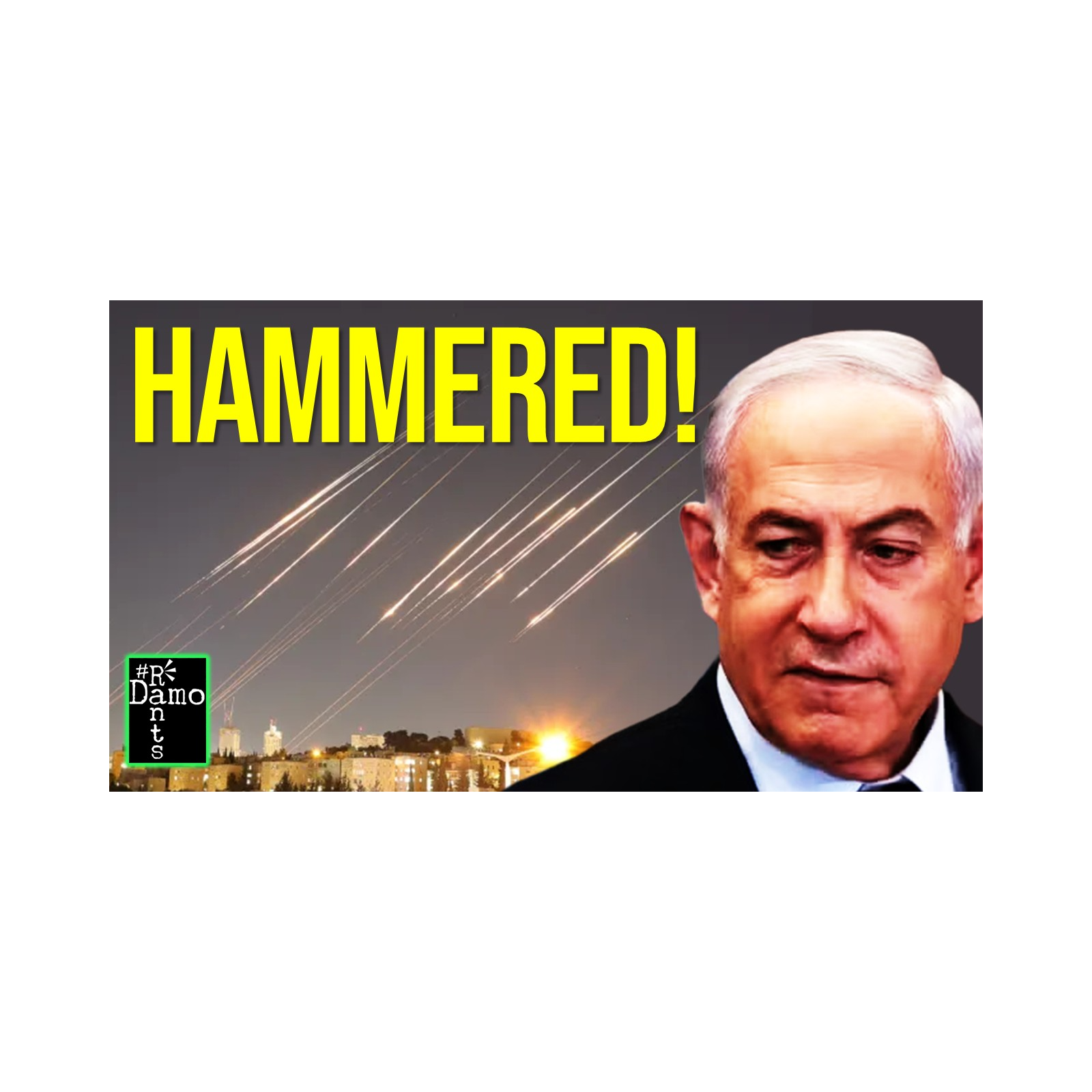
Israel Slammed By Iran’s Biggest Missiles Yet; Trump’s War Spirals Into Iraq
Trump sold escalation as control; now Iraq is in play, Israel is taking heavier Iranian strikes, and the war is spilling across the region. Right, so if we thought Donald Trump was already losing control of the war with Iran, nothing quite nails that on than it managing to spill over even more borders and in this case, the US is now back in Iraq it seems, but perhaps not for very long. The United States embassy compound in Baghdad has been struck, the embassy has told American citizens to leave Iraq immediately after repeated attacks, and Iran has answered the war on Israel’s side of the map with one of its hardest barrages yet, including the first reported wartime use of the Sejjil and a wave that Iranian state reporting says also used Khorramshahr, Kheybar, Qadr and Emad missiles, so they are now delving into newer and heavier munitions as the defence systems run out of juice, just as every credible commentator on the military goings on in the Middle East predicted would happen. So Donald Trump’s wartime sales pitch has now bitten the dust. This was supposed to look like pressure working, deterrence being restored, enemies being cowed into submission, all the usual rubbish that gets dragged out every time Washington and Benjamin Netanyahu, be it the real of 6 fingered AI version of him these days, decide that dropping more explosives on more people is somehow a sign of control. Instead, Trump has got Baghdad under strike pressure, Israelis under alerts again, and a public leave-now warning in Baghdad sitting there in black and white where everybody can see it. Trump chose to back an expanding war on Iran, Netanyahu chose to keep widening the field while Gaza is still being pulverised and Lebanon is still being hit, and they both chose to act as though the region would simply absorb whatever they threw at it and then politely line up to thank them afterwards. That was always stupid, but now it is stupid in public. When an embassy compound is struck in Baghdad and the official answer is not swagger but a warning to your own citizens to get out by land because commercial flights are not available, you are no longer advertising anything like control of this situation.
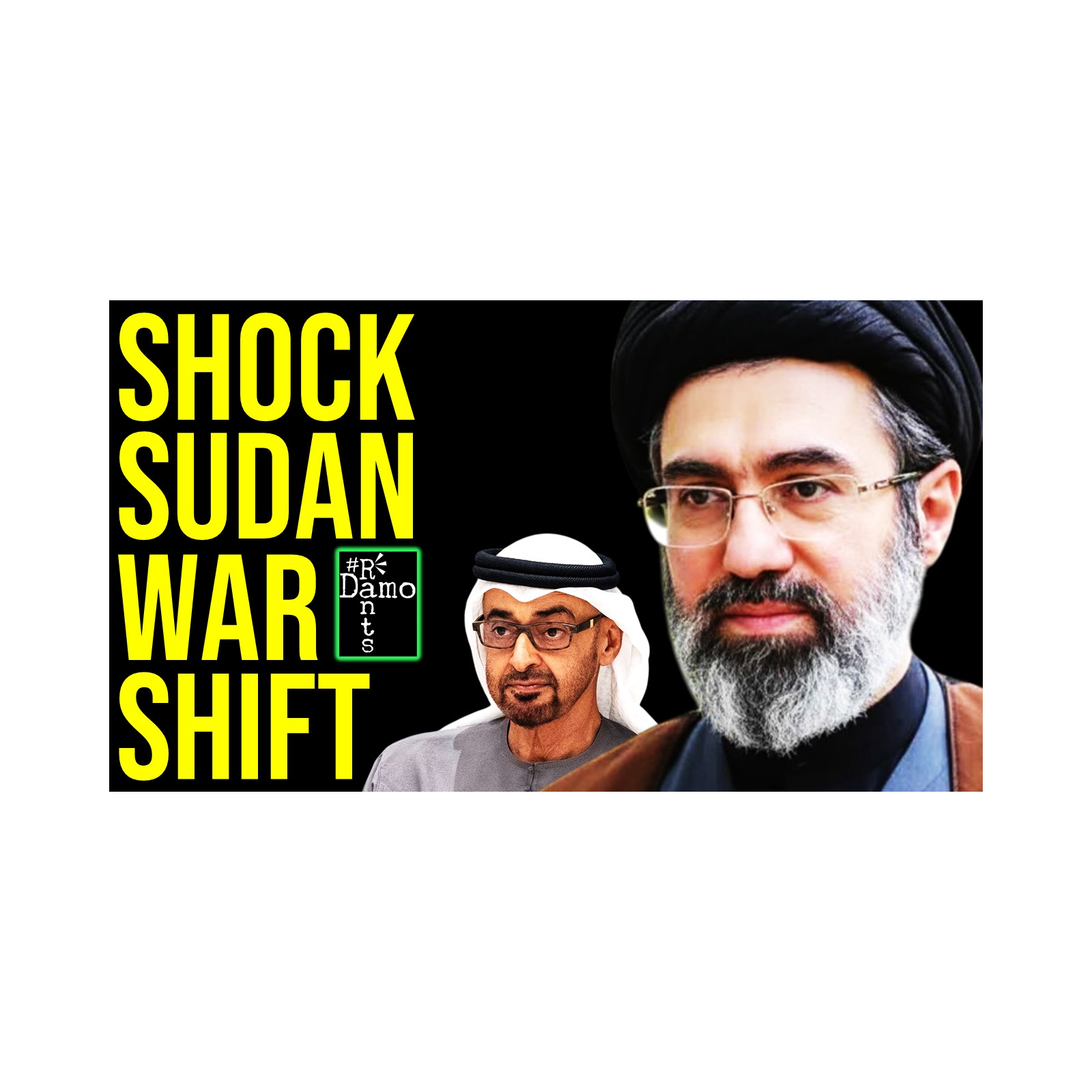
Iran May Be Choking the UAE Lifeline Behind Sudan’s RSF
Iran hammering the UAE may now be choking the lifelines that have kept Sudan’s RSF butchers in business. Right, so Mohamed Hamdan Dagalo, Hemedti, the warlord in charge of the risibly named Rapid Support Forces has spent the war in Sudan acting like the road behind him would stay open forever. Arms would come. Fuel would come. Men would come. Routes would stay available. Sponsors would stay coy. The denials would keep doing their job. The usual respectable little game would carry on, where everybody who matters says as little as possible while a genocidal militia does as much as it likes. But Sudan’s butchers may now be running out of road, and not because conscience has suddenly broken out in Abu Dhabi or Addis Ababa like a particularly unsightly rash. They may be running into a much rougher problem than that. The United Arab Emirates, their sponsors, is under strain from Iran’s regional war, Ethiopia has been dragged closer into the light as part of the RSF’s rear architecture, and Sudanese army pressure has been hitting supply sites and routes at the same time. So the question is no longer whether the RSF has foreign sustainment. The question is what happens when the machinery that has kept Hemedti supplied and comfortable starts losing room to move and room to act. General Abdel Fattah al-Burhan has Sudanese Armed Forces units pushing on fronts that are tied to Hemedti’s logistics. Sudanese military sources have described strikes on RSF supply positions near the Libya and Chad borders and around 21 strikes on convoys. In the Blue Nile area, RSF activity around Deim Mansour and Al-Kurmuk has dragged the Ethiopia corridor into the war more openly, because once a convoy route, as that has been, stops being a quiet line on a planner’s desk and starts becoming something that can be named, tracked and hit, the whole atmosphere changes doesn’t it?
Strait Of Hormuz Slammed In Trump’s Face; Begs For Help As World Laughs
As Trump begs for help to bring down the Strait of Hormuz blockade, Iran calmly tells the world its open for business - except to him! Right, so Donald Trump has gone onto Truth Social and asked other countries to send warships into the Strait of Hormuz because Iran has turned that waterway into a live test of whether the United States can still command the region it keeps setting on fire. Beg hard little man because you have royally screwed up. He’s said: ‘The United States of America has beaten and completely decimated Iran, both Militarily, Economically, and in every other way, but the Countries of the World that receive Oil through the Hormuz Strait must take care of that passage, and we will help — A LOT! The U.S. will also coordinate with those Countries so that everything goes quickly, smoothly, and well. This should have always been a team effort, and now it will be — It will bring the World together toward Harmony, Security, and Everlasting Peace! President DONALD J. TRUMP’ Have you though? You said the war was won on day one when you took out the 86 year old Ayatollah Khamenei, but you’ve simply replaced him with a 56 year old Ayatollah Khamenei, the son of the former Ayatollah, so younger and with an understandable chip on his shoulder for you particularly Isn’t it? If he had won on day one, why are we now more than 2 weeks into this war still with you asking for more nations to join your stupidity? Trump has named China, France, Japan, South Korea and Britain and said they should help keep the Strait open and safe, while also boasting that the United States will keep bombing the shoreline and shooting Iranian boats out of the water. It was only a week ago Trump was bashing Keir Starmer for joining a war he had already won and the warship that the UK was sending wasn’t needed! So the man fronting the most overfunded navy on Earth is now asking round for backup in a chokepoint he was supposed to dominate. As you can imagine, this has triggered a lot of hilarity. Journalist Craig Murray observed Trump’s mad posting and mused ‘That's a lot of words for "Help I screwed up!"’ I spotted this delightful meme which has pretty much summed up Trump’s commentary and what is actually being observed in the Middle East as opposed to being printed in the mainstream media to a tee as well.
Trump Just Triggered The LAST Thing He Wanted
Trump backed a war meant to break Iran and restore control, but the last 24 hours have left both him and Netanyahu looking anything but in charge. Right, so Donald Trump has triggered the last thing he wanted, and it is not some mystery buried in briefing paper language either, it is sitting right there in the Strait of Hormuz where ships are now moving on the basis of Iranian permission, American promises have started sounding like cheap sales patter, and one Turkish-owned vessel has already gone through after Ankara said Tehran cleared it. I think calling this control might be underselling it a bit actually. That is not what control looks like not really. That is not what victory looks like. That is what a backfire looks like when the people who started the fire are still pretending they are in charge of the smoke with Billy Joel playing in the background. Trump backed a war that was supposed to break Iran, Benjamin Netanyahu widened it because widening things is what Benjamin Netanyahu does when restraint might force him to examine his own hand this, all 6 fingers of it, and now one of the busiest energy routes on earth is being discussed in terms of what Iran does and doesn’t let through. No input from the US or Israel required. Donald Trump has then made it even worse, because the brain cell deficient buffoon has opened that yawning chasm in the front of his orange face and said out loud what the cover story was trying to hide. United Nations experts have condemned the American and Israeli attack on Iran as illegal aggression, they have said Iran has the right to self-defence, and they have warned that Trump’s talk of “unconditional surrender” and talk of choosing Iran’s future leadership crosses straight out of the language of security and into regime change.
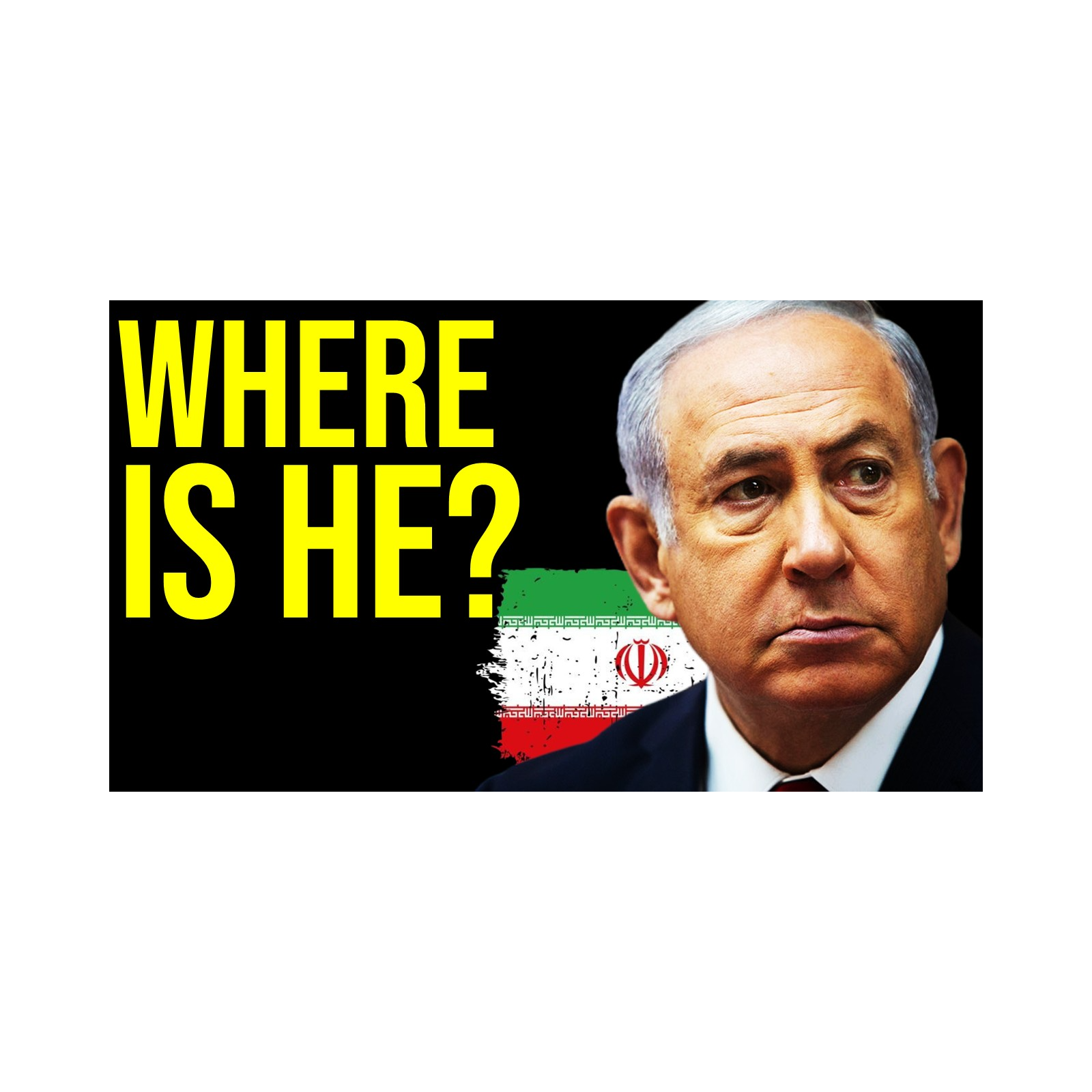
Netanyahu's Vanishing Act - Is He Still Running Israel?
If Israel’s footage is meant to settle questions, why has it left so many people asking where Netanyahu and Ben Gvir actually are? Right, so this is perhaps not the face you were expecting at the start of this video, but I daresay you were expecting to see something along these lines if you’re already somewhat familiar with this story because this is a clip of the Netanyahu speech Israel has put out, the full version is 8 minutes long, if you really want to watch the whole thing the one meant to show the man alive, present, speaking, governing, all the usual serious-leader stuff after he’s not been seen for days, dark suit, stern face, little hand gestures, the full package. It’s what we expect from a Netanyahu televised announcement, just missing the whinging and the accusations of antisemitism that generally come with it, the sound having been muted. The trouble is, they have managed to release a what amounts to a reassurance video that has left people watching his hands and counting his fingers. Or watching his teeth seemingly come into frame and then disappear as if by magic. Tremendous work. Watch the hands as they come up in front of his chest. Watch the shape of them. Watch the way the fingers seem to sit and then not sit, the way the image starts looking smeared and wrong, the way one part of the hand area starts drawing the eye because it does not look clean or natural enough to just pass over. That is why people have been slowing this down. That is why people have been pulling stills from it. That is why what was supposed to be proof has started getting treated like a possible fake and to say that is feeding suspicion right now would be an understatement. The clip was supposed to settle people down. Benjamin Netanyahu was put in front of cameras on 12 March and instead of calming anything down it sent people into frame-by-frame mode because a lot of them looked at one section of that footage and did not see reassurance, they saw something off. They saw hands that looked wrong, movement that looked wrong, delivery that some thought looked wrong, teeth that looked wrong and within hours the whole thing had gone from “here is the prime minister speaking” to “what exactly have they put out here?” That is how badly this has landed. A wartime government tried to project continuity and have got the internet counting fingers.