Kernow Damo
507 episodes — Page 7 of 11
Trump And Israel Lose Their Leverage | Iran Holds All The Cards
Iran calls Trump’s bluff as White House threats and sanctions raise global shipping risk, with Gulf routes and oil markets pricing the danger today. Right, so Donald Trump is trying to muscle a “deal” out of Iran by treating talks like a threat, and Iran has just made that approach look ridiculous in public. Because Iran’s foreign minister Abbas Araghchi is saying enrichment stays, missiles aren’t on the table, allies aren’t on the table, and if war gets imposed they’ll take it. So whatever you’ve been told this is, it isn’t some polite reset. It’s Washington trying to turn negotiation into surrender terms, with Benjamin Netanyahu turning up in the background to push even harder demands, as if the United States is there to run Israel’s wishlist. But here’s the part that really matters: Trump has talked himself into a corner. If he backs off, he’s admitted the threats carried no weight. If he follows through, he’s walking straight into the retaliation Iran is openly saying they’re prepared for and frankly only a fool would doubt them, with American bases sitting there in range and global shipping pricing the risk to the rest of the world in real time. So stay with me here, because I’m going to explain the interesting part isn’t the shouting. It’s the chain of consequences Trump has triggered that he now has no clean way out of. Right, so Donald Trump has put “war or deal” on the table, and Iran has answered by removing the part where the United States gets to write the terms and call it diplomacy. Abbas Araghchi has said Iran will not give up uranium enrichment, even if war is imposed, and he has tied that refusal to a claim of rights and dignity rather than bargaining posture. Donald Trump can threaten, posture, sanction and move hardware, but he cannot force a concession that Iran has now framed as non-negotiable without making the threat real.
Winter Olympics Protests Erupt | Games Hijacked By ICE And Israel
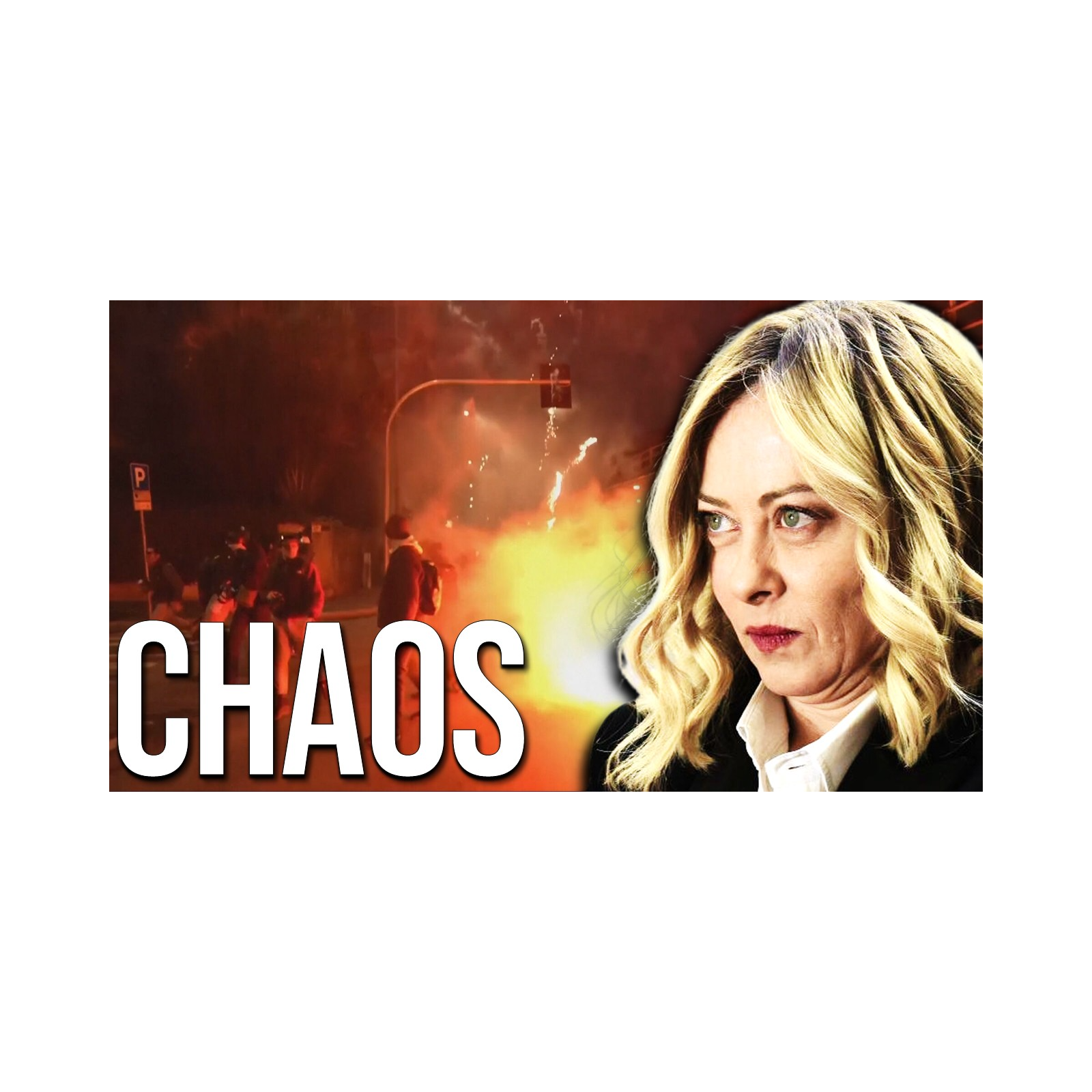
Winter Olympics protests erupt in Milan over Israel and ICE as police deploy tear gas and chaos spills from the streets into the Games. Right, so The Winter Olympics has barely started in Milan and it’s already not about sport, because the people running this show have tried to sell you an “apolitical” Olympics while doing politics right in your face and then acting shocked when the public answers back. You’ve got students and activists in the streets chanting “ICE out”, you’ve got police using tear gas and water cannon near venues, you’ve got boos inside the stadium for Israel and for JD Vance on the big screens, and you’ve got Giorgia Meloni’s government doing what governments always do when their glossy spectacle starts slipping, trying to turn a legitimacy problem into a public order problem. And here’s the part nobody wants to admit out loud. None of this was inevitable. It was chosen. You don’t drag a toxic enforcement brand like ICE into the orbit of a global unity advert and then pretend it’s “just logistics”. You don’t insist the Olympics is neutral while giving a state like Israel a normal place in the parade and then clutch pearls when the crowd reacts. That’s not neutrality, that’s management, and it only works while everyone agrees to play along. So in this video I’m going to walk through what has actually happened, who decided what, why it’s blown up so fast, and what this forces going forward, because if Milan is the template, future Olympics are going to look less like sport and more like a travelling security state with a medal ceremony bolted on. Right, so the International Olympic Committee has rules that ban demonstrations and political propaganda inside Olympic sites and venues, and it keeps insisting sport is neutral and separate from politics, which would be a lovely fantasy if the Olympics didn’t already run on national delegations, flags, anthems, heads of government, security theatre, and the kind of messaging that states treat as free advertising.
Israel High Court Moves On Ben Gvir | Netanyahu Trapped
Israel High Court orders Netanyahu to justify keeping Itamar Ben Gvir as National Security Minister amid petitions over alleged police interference. Right, so Benjamin Netanyahu has just been told by Israel’s High Court: stop dodging, put it in writing, explain why Itamar Ben Gvir is still in charge of the police. And if that sounds like a niche legal story, it isn’t, because this is the part of the state that decides who gets hauled off the street, who gets protected, who gets punished, and who gets left alone. So when the court forces the prime minister to justify keeping a minister accused of leaning on policing like it’s his personal lever, that’s the system testing whether it can still restrain its own government. Now here’s the bit to watch for, because it’s the part that makes Netanyahu dangerous and weak at the same time. He can’t fire Ben Gvir without risking his coalition. He can’t satisfy the court without admitting how much he’s been tolerating. And Ben Gvir’s already screaming “coup” and “they’re firing the nation” at the court, hiding his hideousness behind what passes for democracy in Israel, which tells you exactly how this is going to get weaponised. So in a minute I’m going to walk through what the court has done, what Ben Gvir is accused of, why Netanyahu has been forced to own it personally, and what this leaves him able to do next, which is a heck of a lot less than he wants you to think. Right, so Benjamin Netanyahu has been ordered by Israel’s High Court of Justice to do something he has spent far too long trying to avoid: put his name on a justification, in writing, for keeping Itamar Ben Gvir, the very worst of the worst of extremist ministers in his coalition, in charge of the police. A panel of five justices has issued what’s basically a formal warning shot. They’ve told Benjamin Netanyahu to come back and explain, in writing, why he shouldn’t be ordered to remove Itamar Ben Gvir as National Security Minister. That matters because Ben Gvir isn’t some minor minister with a ceremonial job.

Israel's Olympic Nightmare Just Got Worse
Booing Israel at the Winter Olympics plus the bobsled burglary story shows the public mood has turned into brutal punchlines. Right, so Israel has walked into the Winter Olympics opening ceremony in Milan and got booed, and that alone tells you the big lie of this whole event is already struggling to hold. Then, almost immediately, Israel’s bobsled team says their training place has been burgled, passports gone, kit gone, and instead of sympathy the internet does what it does when it comes to Israel these days: it turns the story into a pile of brutal punchlines about theft, land, and the kind of excuses people have heard for decades coming from Israel. And the Olympic Committee’s response is the most revealing part, because they don’t talk about principle, they talk about zones, about what counts as their problem, about where responsibility stops. So if you think this is just a bit of crowd noise and a bit of crime, it isn’t, because what’s happening here is that the Olympics is being used as a legitimacy stage for a state under global condemnation, and the audience is refusing to play along, in public, on camera, on social media and with the whole world watching. So let’s unpack all of this, because the real story isn’t just the boos or the burglary, it’s what those two things have just done to the illusion that sport whitewash any of this. Right, so the International Olympic Committee has let Israel walk into the opening ceremony of the Winter Olympics in Milan, and the crowd response has been loud enough that nobody can pretend it is background noise. Israel has been booed during the Parade of Nations in San Siro Stadium, in the same ceremony where J.D. Vance has also been booed when he appears on the big screens, and the organisers have immediately been pushed into that familiar posture of “nothing to see here, move along, sport only”. That posture is not a principle, it is an operating system, because once the crowd is doing the opposite of what the broadcast wants, the first thing that breaks is the pretence that this is just a sporting event and not a live reputation stage.
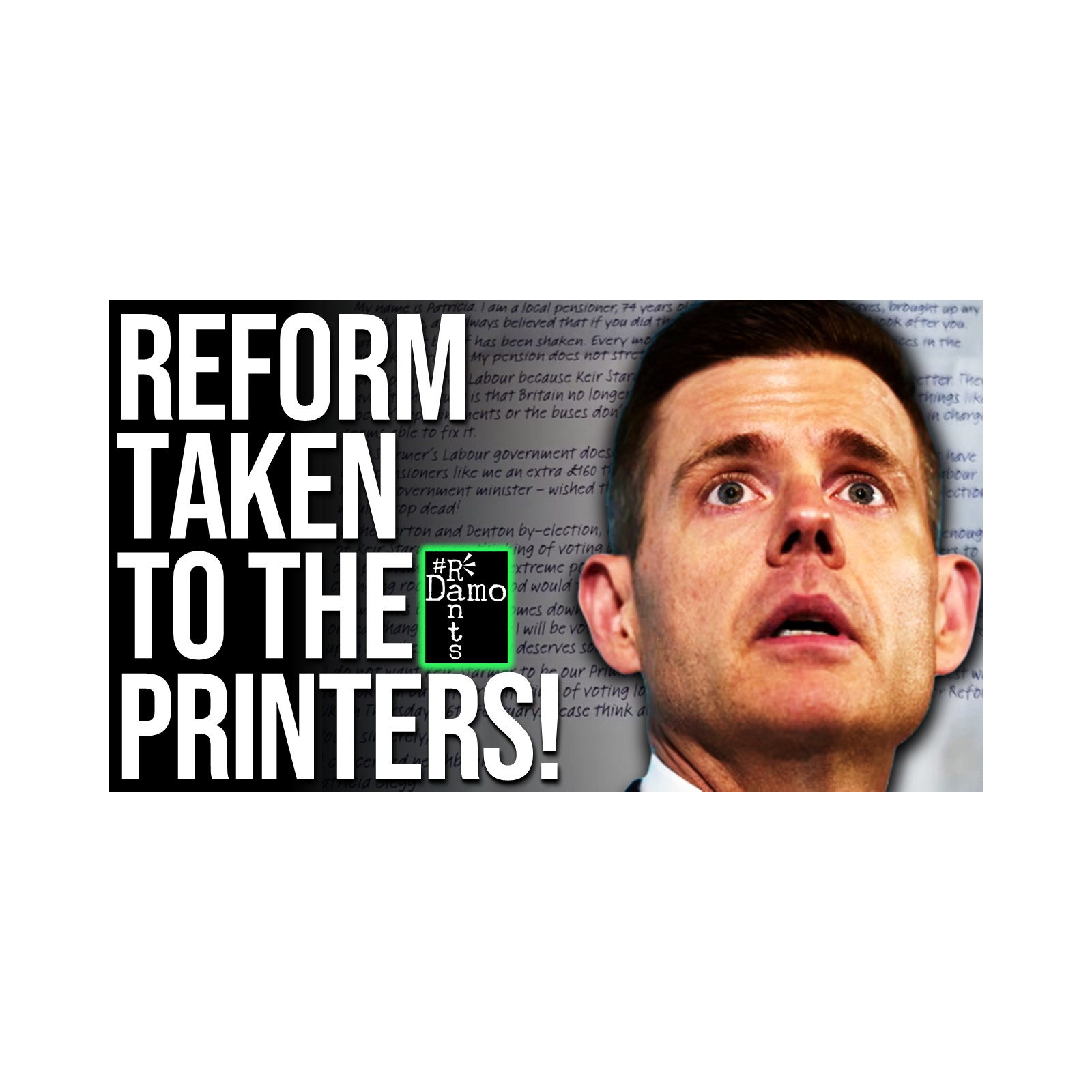
Reform UK Disqualification Risk Has Party Scrambling!
If Reform UK can’t keep its own election material compliant, you don’t hand it power and hope it learns accountability later. Right, so Reform UK has just pushed a “concerned neighbour” letter through doors in Gorton and Denton, signed off as if it’s a local pensioner doing the decent thing, and now their whole campaign is being forced to answer a question it cannot dodge: who exactly was behind it, and why did the version voters received not carry the legally required imprint that tells you who paid for it and who printed it. Well Reform’s response has been classic “it’s not our fault”, that it is basically a case of “the proofs were fine, blame the printer”, which is a lovely excuse right up until you remember someone still bundled these up, someone still delivered them, and nobody is meant to notice the missing accountability line on the paper in their hand. Well Greater Manchester Police is now in the mix, and now that has happened, the campaign stops being about slogans and starts being about responsibility, because elections are one area where the law is supposed to stop parties pretending they’re just your neighbour having a chat. So in a minute I’m going to walk through what was sent, what Reform says happened, what the rules actually demand, and why this little “admin error” story is a trap of their own making, because if they can’t put their name on a letter they want you to trust, they’ve got no business asking you to trust them with anything else. Right, so Reform UK has not been caught in some abstract Westminster drama here, it has been caught in a basic, doorstep, nuts-and-bolts problem: campaign material has been delivered to voters in Gorton and Denton that looks like a private letter from a local pensioner, but it sits inside an election campaign machine, and the thing that tells the public who is responsible for it has not appeared on the version that went through letterboxes. The letter presents itself as a neighbourly intervention, “forgive me for writing”, that sort of thing, and it pushes a very specific vote choice in a very specific contest on a very specific date, and it names Reform UK’s candidate, Matthew Goodwin.

Morgan McSweeney Resigns As Starmer Leaks War Kicks Off
McSweeney quits after Starmer’s “full confidence” as Mandelson scandal deepens and No 10 scrambles to contain the fallout Right, so Keir Starmer stood up in the Commons on 4 February and told everyone Morgan McSweeney was essential, full confidence, the man who helped him remake Labour and win power. Four days later, McSweeney is out. Starmer’s words as worthless as ever it seems. That isn’t a tidy reshuffle, that’s the Prime Minister admitting, without saying the words, that his own operation has now become the story. Because McSweeney isn’t a minister you swap out for a quieter headline. He’s the guy who controls access, message discipline, internal briefings, the whole machinery of who gets heard and who gets frozen out. If that person is suddenly “allowed to resign”, it means someone has decided keeping him is now more dangerous than losing him, and that decision tells you the pressure is coming from inside as well as outside. So the question isn’t just why he’s gone, or even why he was allowed to resign rather than being sacked. The question is what he was protecting Starmer from, what he was involved in, and what happens to Starmer now the enforcer has been removed, now Starmer’s strings have been cut and he’s been cast adrift and frankly how much longer he has himself, now the guy who has always shielded him has walked. Right, so Keir Starmer has lost Morgan McSweeney as his Downing Street chief of staff, and the timing is the whole point, because on 4 February, in the House of Commons, Starmer put confidence in McSweeney on the record when he was challenged directly, and now McSweeney has gone anyway. Starmer made the defence as Prime Minister, McSweeney has left as the person who ran the engine room, and the government is left carrying a contradiction that does not go away just because somebody has been pushed out of the door.

Las Vegas Biolab Raid Fuels Israel Iran Panic - False Flag Talk Starts
A Las Vegas biolab raid has played into Israel Iran commentary as false flag talk starts after an FBI evidence seizure - but is there anything in it? Right, so Las Vegas police have hit a house and come out using the only two words that can turn an American audience into putty overnight: “possible biolab”. Over a thousand pieces of evidence seized, samples flown out for federal testing, and the name on the paperwork is Ori Salomon, carrying an Israeli passport and a French one, with firearms listed in the court documents including an Israeli-made rifle. Now, nobody has to prove “Iran” for “Iran” to get shoved into the headline, because the Israel–Iran drumbeat has already been running hot, with the usual pro-Israel propagandists pumping “terror cells” chat and trying to pre-frame the next escalation. So when you suddenly get an Israeli-linked garage lab story, wrapped in biohazard language, with a federal aircraft and a specialist bioforensics lab, in the current climate, that frame is an easy jump people are already making. So this is about the believability of the frame, the ingredients on the record, the history that makes “false flag” a real word, and why this kind of headline can be used to shove Iran into the frame before anyone knows what was in the vials. Right, so a man called Ori Salomon has been arrested in Las Vegas after police and federal agents raided a house and described what they found as a “possible biological laboratory” inside a residential property, with more than a thousand samples collected and sent off for testing. That single phrase, “possible biological laboratory”, is the whole story’s first weapon, because it forces the public to picture the worst thing they can picture before a single test result has been shown to anyone outside the investigation, and once that picture is in your head it doesn’t politely leave just because the final explanation turns out to be mundane.
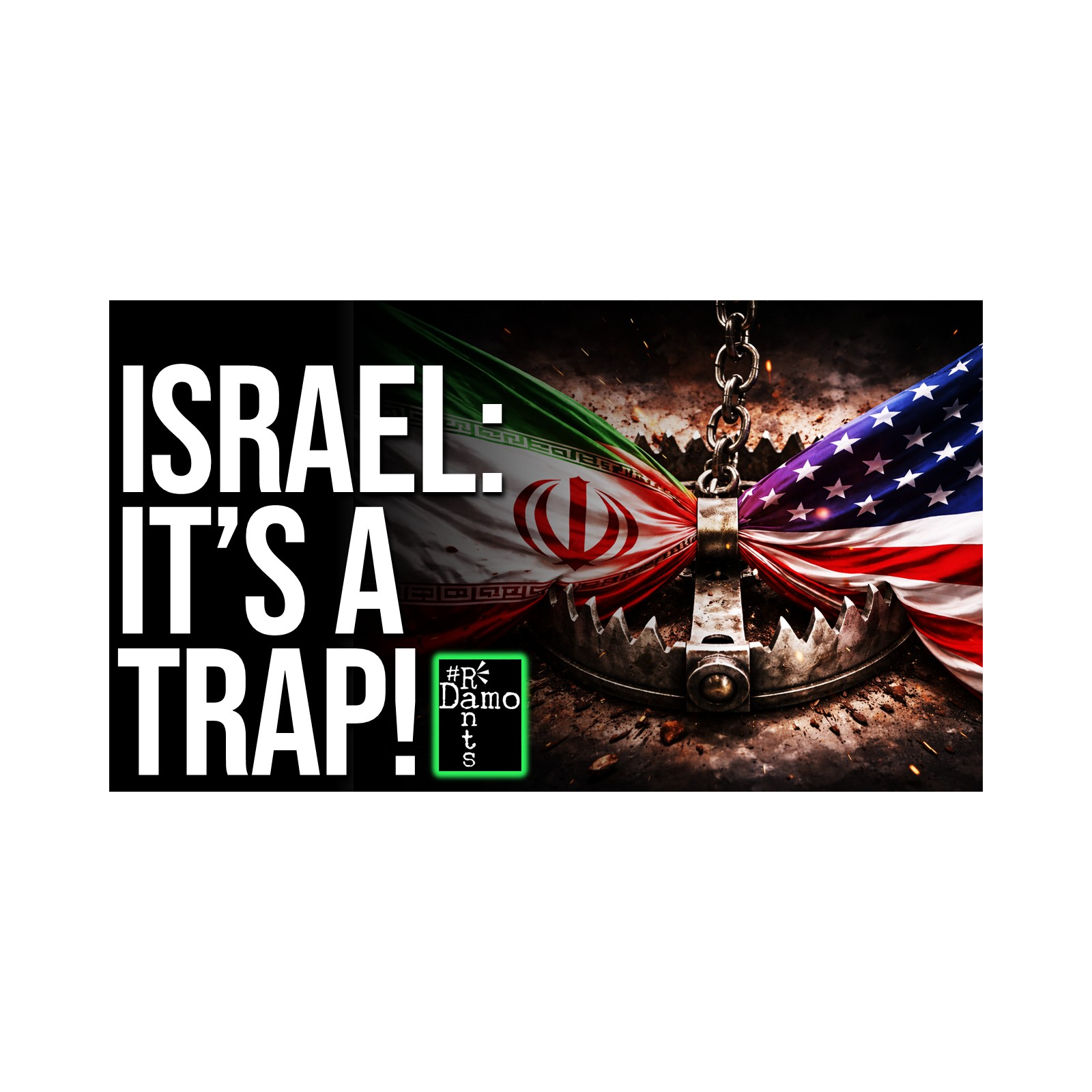
Trump Sanctions Iran After Talks and Israel Cries Trap!
Trump hits Iran with fresh sanctions after first round of peace talks - cue Israel with talk of it all being a trap! Right, so Donald Trump is doing that thing again where he calls it diplomacy while tightening the screws at the exact same time, and people still pretend those two tracks aren’t connected. Iran turns up for talks in Muscat, Oman calls it “very serious”, their Foreign Minister Abbas Araghchi calls it a good start, and then the United States Treasury drops a fresh sanctions package on Iran’s shipping network as the talks concluded, naming vessels, naming companies, naming individuals, as if the “good start” is just a photo opportunity you do while the punishment keeps rolling. And while that’s happening, Israeli media is already floating the idea that the talks themselves are a trap, the same kind of slow lull that ends with a sudden strike window, which is convenient, isn’t it, because it turns every attempt at a deal into proof that a deal is impossible, and it keeps the pressure machine running on autopilot. So this isn’t a story about optimism or pessimism. It’s a story about how negotiations get turned into a weapon, who benefits when talks fail, and why the sequence of events here removes the excuse that any of this is about trust. Right, so Donald Trump has reopened contact with Iran while moving the furniture around the room like a man who wants credit for “diplomacy” and still wants everyone to hear a gun being cocked. Steve Witkoff and Jared Kushner have turned up in Muscat as Trump’s emissaries, the Omani Foreign Minister Sayyid Badr Albusaidi has hosted the process in Oman while Abbas Araghchi has fronted the Iranian side, and that combination alone fixes the reality that this is not a think-tank exercise or a media parlour game, it is a live bargaining table with names on it and consequences attached to them.
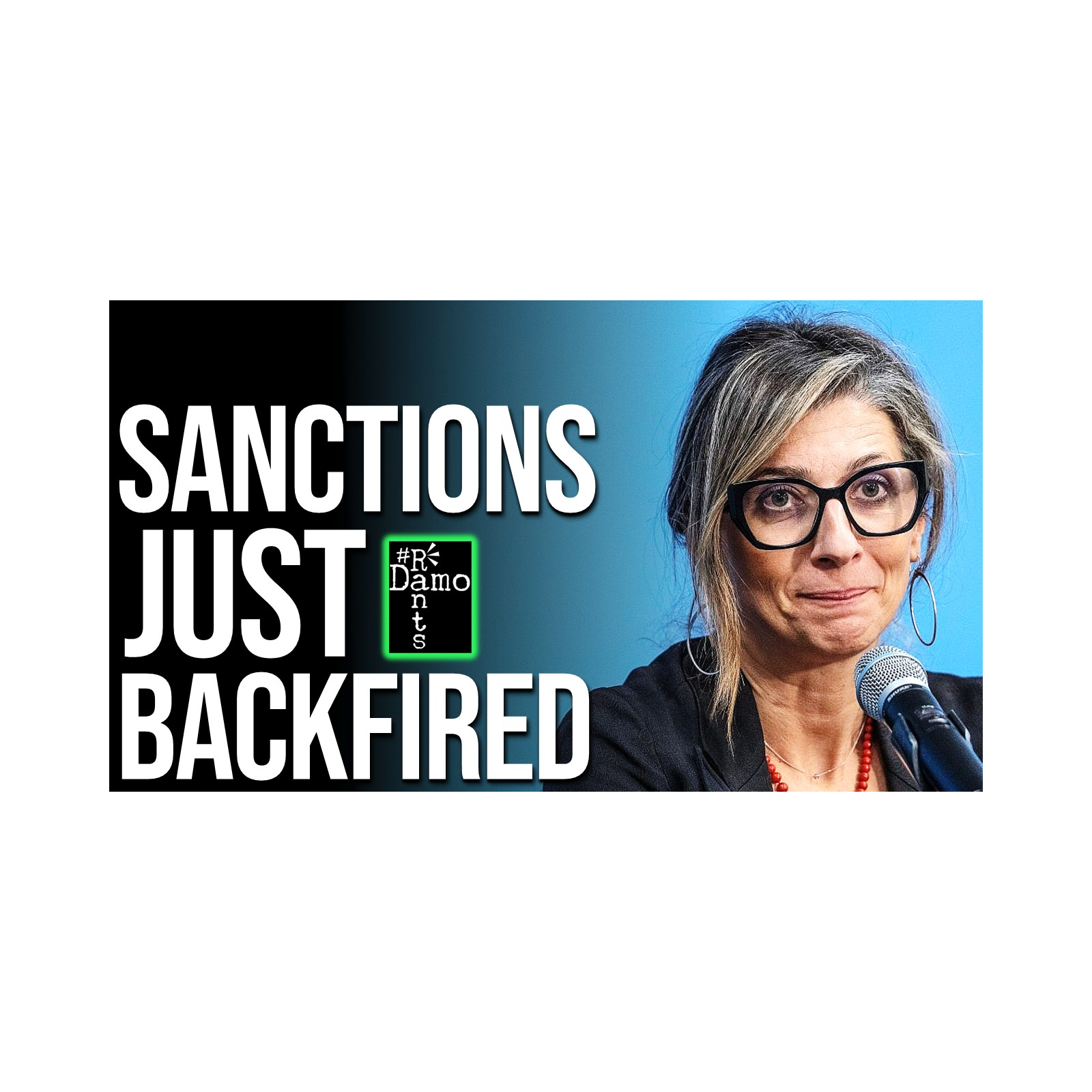
Albanese Sanctions Backfire On White House - Big Tech Panics!
Trump sanctioned Francesca Albanese and ICC officials over Gaza - now it’s exposed the Big Tech links even more. Right, so Donald Trump’s White House has taken the same US Treasury blacklist they use for terrorists and drug traffickers and pointed it at a UN mandate-holder and ICC officials after her Gaza reporting and the ICC’s Gaza track started biting at the people and firms who benefit from Israel’s war. Francesca Albanese didn’t bomb anyone, didn’t hack anyone, didn’t threaten anyone. She wrote letters to Big Tech and defence giants warning them they could be named for helping with gross human rights violations, and at least two of those companies sought White House help after receiving her letters, which tells you they did not treat those warnings as harmless. Now she’s on a sanctions list that can freeze assets and shut you out of banking, and the ICC is being hit too, for daring to issue arrest warrants for Benjamin Netanyahu and Yoav Gallant. But here’s the bit they didn’t think through. If you use the SDN sanctions machinery - the same blocked-property system used for terrorism designations - against a UN rapporteur, you’re not proving she’s wrong. You’re proving she’s landed on something you can’t defend. Because normal governments don’t need financial weapons to answer a report. They answer it with facts. So in this video I’m going to walk you through what Albanese actually accused these companies of doing, what those sanctions really mean in practice, and why this move doesn’t just punish one person, it rewires the entire idea of international law into a system where the powerful can just switch it off when it gets inconvenient. Right, so Donald Trump’s administration has taken the United States Treasury’s most toxic blacklist and started using it on people whose job is to investigate war crimes. Francesca Albanese is the United Nations Special Rapporteur on the human rights situation in the Palestinian territories occupied since 1967, and the International Criminal Court is the court set up to investigate and prosecute genocide, crimes against humanity and war crimes when states will not.
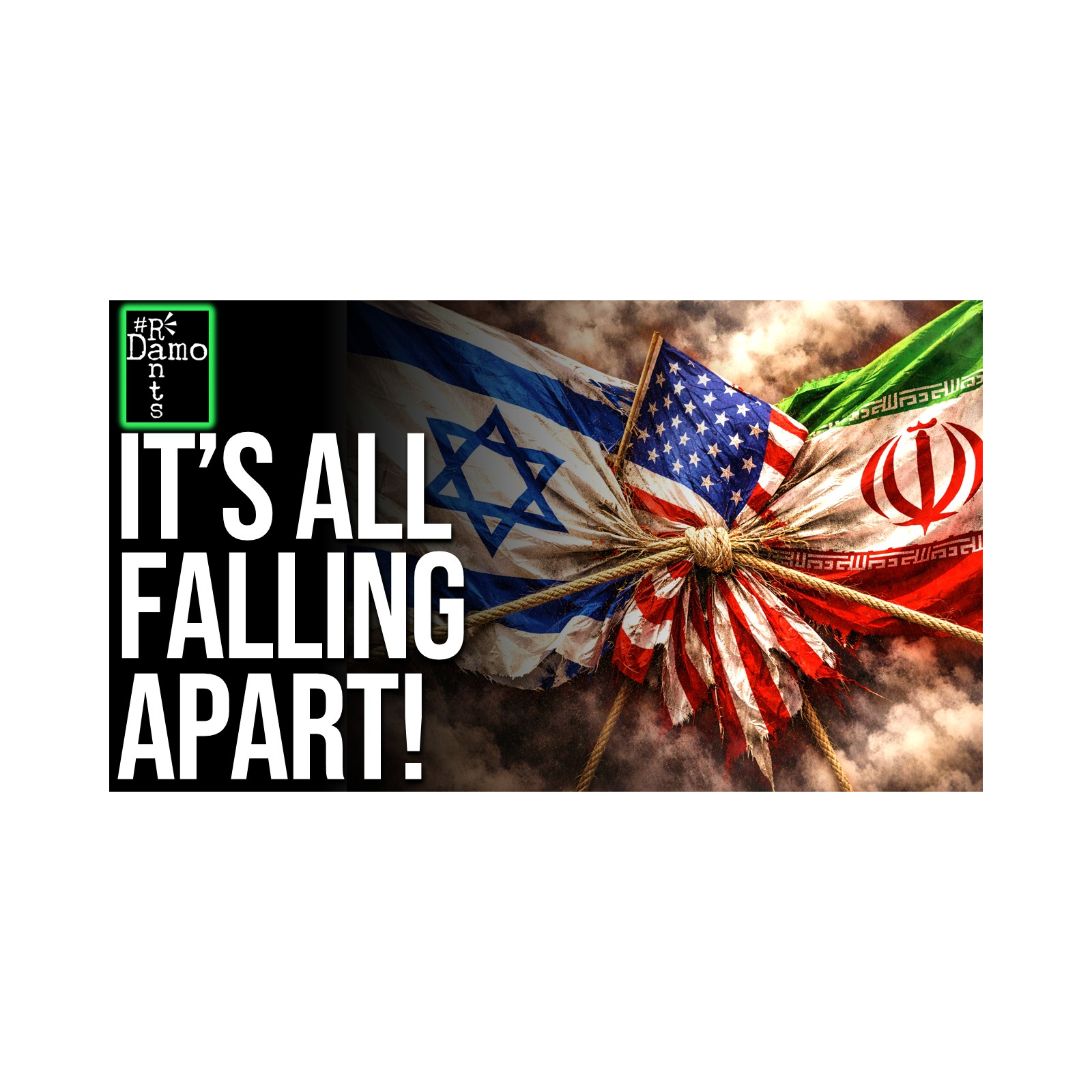
US Pushed Too Far by Israel - Iran Talks Are Trapped
Iran talks in Oman show one thing clearly: Israel pushed too far, the agenda is trapped, and the US can’t widen it without the whole process collapsing. Right, so Donald Trump is back at it, threatening Iran’s leadership with one hand while sending Steve Witkoff off to “talk” with the other, and the talks are in Muscat today for one reason: Iran has already shown it will walk rather than let their nuclear file be turned into a disarmament trap. Iranian Foreign Minister Abbas Araghchi has boxed this thing into a narrow channel, nuclear and sanctions, with discussions about anything else being an automatic kill switch, because if Washington tried the “this or nothing” routine again, Iran very much will, as they’ve already shown, choose nothing. So now the meeting, despite media narratives only actually exists on Iran’s terms. And here’s the part people are being slow to admit out loud: Israel’s preferred demands are the very thing that are jamming the talks, because missiles and regional alliances aren’t side issues for Iran, they’re the deterrent you keep when the US has already proved it can tear up a deal whenever it fancies, or indeed bomb you as they did last year. As for other mediating states like Qatar, Türkiye and Egypt - they can float as many “frameworks” as they like, but if the framework is just a surrender document with percentages on it, it’s dead on arrival. So in a minute I’m going to show exactly what just broke, who forced it, and why the only “diplomacy” left here is a trapped channel nobody can widen without blowing the room up and any prospect of a deal with it. Right, so Abbas Araghchi has set the time and place for nuclear talks with the United States in Muscat at around 10 a.m., local time, taking place as I was writing this and he has publicly credited Oman for arranging the meeting. Steve Witkoff is the named US envoy for the talks, and Oman is not a decorative host, it is the mediator because the talks are indirect rather than face-to-face. Iran has pushed the venue into Muscat after Istanbul was floated, and that venue switch is notable when the argument is about who gets to set conditions.

China Pulls Plug on Israel’s Money - And They’re Freaking Out
China has officially blocked new investment into Israel, freezing money mid-deal and triggering panic inside Israel’s economy as genocide drags on. Right, so China has just cut Israel off from getting any more money, and it didn’t even bother telling anyone first. A Chinese fund has gone into an Israeli court and said their deal with the blue and white state is dead because Beijing now treats Israel as too dangerous to invest in. Not controversial. Not debated. Just blocked entirely. And that quietly blows a hole in the one thing Israel has always depended on, which is the idea that it can keep fighting and the economy just keeps ticking like nothing’s changed. That only works if investors believe the war ends soon. China doesn’t. So the money doesn’t move. And here’s the part people haven’t clocked yet: when capital stops believing the violence is temporary, it doesn’t come back with reassurance, it disappears without drama. Deals don’t finish. Projects don’t start. Losses don’t show up as crashes, they show up as absences. That’s what’s started happening. And once that machine switches off, it doesn’t switch back on just because people shout about it. And Israel very much is. Right, so China has done something very specific, and it has already entered Israel’s legal system much to their despair. A Chinese investment fund called Ballet Vision has told the Tel Aviv District Court that it cannot proceed with new investment in Israel because the Chinese government has classified Israel as a high-risk zone and prohibited new Chinese investment. That statement is a constraint placed on the record in a live lawsuit, and it immediately stops money that was expected to move from moving at all. Ballet Vision controls eighty per cent of an Israeli company called Hanita Lenses, an intraocular lens manufacturer based at Kibbutz Hanita in northern Israel. The kibbutz sold most of the company to the fund in 2021 for thirty-five million dollars, with twenty-five million paid directly to members of the settlement and the rest invested into the business. The deal included an option for Ballet Vision to purchase the remaining shares later.

Israel Cornered As Multiple Ports Join Biggest Gaza Flotilla Yet!
The biggest Gaza flotilla ever assembled is preparing to sail, putting Israel’s blockade back under more pressure than ever before! Right, so Israel has already shown what it does to Gaza flotillas. Boats are seized. People are detained. Claims are made. And then nothing follows that actually settles it. Israel’s claims get debunked, the Gaza blockade remains in place however. The optics of each flotilla has nevertheless always been a nightmare for Netanyahu and co, because there is no part of it where they come out looking good and the more media attention these voyages get, the worse it is for them. Therefore in light of that, you’ll be elated to know that the largest civilian flotilla yet has now been formally announced, dates fixed, ports named, routes published. The assumption was always that interception ended the problem, but instead it hardened resolve. This time, stopping the boats doesn’t finish anything, it repeats that unresolved, ongoing mess of Israel’s own making at a bigger scale, with more people watching, more governments implicated, and fewer ways to pretend the missing evidence associated with Israeli false claims of Hamas backing doesn’t matter. Right, so Benjamin Netanyahu’s flotilla problem is back because the last time Israel stopped one, it didn’t actually finish anything. The boats were taken. People were detained. Claims were made about militant links. And then the whole thing just stopped. No prosecutions. No evidence released. No case laid out that anyone outside Israel could examine and say, alright, that explains everything. The people were sent home. The vessels stayed impounded. And the accusation was left hanging in the air, unresolved. That unfinished business is exactly why this is coming back now, because once you’ve used a claim that serious without ever backing it up, you don’t get to reuse it and expect it to land the same way again. Israel stopped the flotilla last time by saying it was dangerous. It took the boats. It detained the people. It said there were militant links. And then it never showed anything to back that up. No evidence. No charges. No case anyone else could look at.
Jury Says Not Guilty But Politicians Say Otherwise
Politicians and pundits attacking the Filton 24 acquittals are actively undermining the right to a fair trial while 18 related cases are still live. Right, so a jury has just acquitted six Palestine Action activists in a UK courtroom, but the verdict itself isn’t the real story. What matters is what happened next. Politicians, pundits, and media figures didn’t just criticise the outcome, they rewrote it. They asserted guilt after acquittal, treated allegations as facts after the fact, and openly questioned whether juries should even be trusted when they don’t deliver the “right” result, as the current right wing Labour government still plots an end to default trial by jury. That reaction has real and dangerous consequences for all of us. There are eighteen other defendants from the same case still waiting for trial, and one of the acquitted defendants now faces the possibility of retrial over an alleged sledgehammer attack. The presumption of innocence doesn’t survive very long when public voices from across the political and punditry sector are loudly announcing who they think should be convicted and why, the right to a free and fair trial as is all of our human right be damned. So this isn’t about whether you like the protest or not. It’s about whether the right to a fair trial still functions once powerful voices start in chorus deciding it’s inconvenient when they don’t like the result. Because if verdicts only count when the state wins, then juries aren’t a safeguard anymore. They’re an obstacle. And that is a problem that won’t stay confined to one case. Right, so a jury at Woolwich Crown Court has acquitted six Palestine Action protesters of aggravated burglary after a break-in at an Elbit Systems factory in Filton in August 2024, and that decision has already triggered a chain of consequences that endanger the remaining Filton cases still to come.
Mandelson Spreadsheet Scandal Just Blew Open EVERYTHING
Peter Mandelson’s involvement in Labour’s candidate selection process raises serious questions about the party’s 2024 parliamentary intake. Right, so We already knew candidates were being parachuted into safe seats based on loyalty to Keir Starmer. That wasn’t hidden, we saw it repeated across the country ad nauseum. What’s changed is that we now know who was strapping the parachutes on. Peter Mandelson was involved in deciding who could stand going into the 2024 General Election. And in light of everything else that’s come out about him, that detail lands very differently. We already knew selections were managed. What’s changed is that the person involved can no longer be defended, and that removes deniability for the entire intake. That matters because authority relies on everyone accepting the route to power. Once the route is compromised, loyalty becomes conditional and discipline becomes risky. So when people talk about stability, unity, or Starmer being in control, they’re leaning on an assumption that no longer holds, because more and more it seems to be the case that he never has been. Who are we actually being led by therefore? This isn’t about embarrassment. It’s about the fact that the gatekeeping stage was handled off the books, by someone whose name now poisons the process itself. Poisons everything he touches. So for as much as the government still functions and Starmer limps on stubbornly, it isn’t just him tainted by the Prince of Darkness, because even if he goes, the taint will still linger. Right, so we’ve been over this Mandelson thing for days. Surely the argument is done. He’s gone. That’s It. Well no, it really isn’t as it turns out. because what’s left is living with the consequences and Labour remains riddled with them to the point it may never scrub itself clean. Peter Mandelson was involved in deciding who could stand as a Labour MP before the 2024 election. Names were assessed. People were filtered. Some were blocked. Some were advanced. That process ran alongside Labour’s official selection rules, not inside them.

Israel Really Didn’t Think Iran Would Refuse This
Iran is openly rejecting Israeli red lines, revealing the limits of US military pressure and exposing the stalled escalation right now in the Middle East. Right, so Israel has now publicly demanded that Iran dismantle its nuclear programme, scrap its missile capability, and abandon its regional allies, and the United States backed that demand with carrier groups already deployed in the region threatening an or else if Iran don’t acquiesce. Well Iran hasn’t walked away. It agreed to talks but at the same time rejected the terms. No zero enrichment, no missile disarmament, no surrender of allies. Thusfar, since that rejection landed though obviously still ahead of those potential talks, nothing has yet followed. No US strike, no escalation, no enforcement.. That’s the moment the mechanism failed. Once Iran can sit at the table while rejecting those demands outright, the demands stop doing any work. When demands are rejected and talks proceed regardless, the demands have already failed. Right, so Israel and the US started by demanding everything at once: that Iran give up its nuclear programme entirely, dismantle its missiles, and abandon its allies. That was not an attempt to negotiate limits or trade-offs. It was an attempt to see whether simply issuing a threat would force Iran to comply. Iran refused those demands, but it did not walk away from diplomacy. It said it would only discuss the nuclear issue, and only if threats stopped. After that refusal, nothing happened. The US did not carry out the threat that was supposed to sit behind the demands. That order of events matters because it shows the test failed. The demand was made. Iran rejected it. And the power that was supposed to enforce it chose not to act. Once that happens, you are no longer dealing with a negotiation problem. You are dealing with a credibility problem. After Iran rejected the demands and the US did nothing, the situation stopped being about messaging or posturing and became about reality. The question was no longer whether talks would work. It became whether the US still has the ability or willingness to force outcomes when the other side has already decided it can live with saying no.
Grubby Deal Blows Up In Labour's Face
Labour accuses the Greens of a “grubby deal” in the Gorton and Denton by-election, but it's backfired exposing Labour’s own panic and hypocrisy. Right, so Labour is attacking the Greens in the Gorton and Denton by-election by accusing them of cheating and cowardice at the same time, and in doing that it has blown up its own case for why it deserves to win this seat at all. What Labour is saying is simple. It’s calling it a “grubby deal” that two smaller parties chose not to stand and said, publicly, that the Greens were best placed to beat Labour and Reform. And it’s calling it “bottling it” that the Greens selected a local candidate instead of parachuting their deputy leader into the race. So not splitting the vote is corruption, and picking someone from the area is weakness. That’s the attack. And once you understand that, the rest of the behaviour suddenly makes sense — the panic, the shouting, the contradictions, the refusal to debate, the sudden surge in Green ground operation. This video is about what Labour has just admitted by making those attacks, why it can’t walk them back, and what breaks when a party starts trying to disqualify opponents instead of beating them. Right, so Labour has picked a fight in the Gorton and Denton by-election, and the way it’s done it tells you something has already gone badly wrong for them. Not later. Not hypothetically. Already. So here’s what’s just happened. Labour has accused the Greens of two things at the same time. First, it has accused them of being involved in what it called a “grubby deal” with other parties. Second, it has accused Zack Polanski of “bottling it” by not standing himself and without an ounce of self reflection. Start with the so-called “grubby deal”. In this by-election there are three parties with a realistic presence on the ground: Labour, Reform, and the Greens. Alongside them are smaller parties who don’t have the numbers, the volunteers, or the reach to win the seat themselves. Two of those smaller parties being Your Party and the Workers Party. They looked at the race and made a decision. They decided not to stand candidates. Not because they’d been promised anything. Not because they’d been offered positions. Not because there was any agreement behind the scenes. They said, publicly, that in a three-way contest the Greens were the strongest chance of beating both Labour and Reform, and that standing themselves would just split the vote.
British Media Is Regretting This Epstein Focus
Media rush to frame the latest Epstein files around Russia while downplaying documented Israel-linked proximity, raises questions about bias again. Right, so more of the Epstein files have dropped, and before anyone’s even read them properly, the British media have already decided what the real story is here. Russia. Putin. Moscow. Intelligence intrigue. Straight in, no pause. The cost of that hits straight away, because once that frame clicks into place, you’re not weighing evidence anymore, you’re being guided away from it. The confidence you’re hearing isn’t built on proof, it’s built on swapping things out, actually known links out, Israel those alleged Mossad ties. Thin claims get shoved to the front, awkward ones get ignored, and before you know it, counting how many times a certain word crops up in the files passes for analysis while the evidence and actual proximity, those real ties get buried. That’s what’s just given way here. Not a story, not a theory, but the sorting mechanism itself. And once you clock how that confidence is being put together, it doesn’t switch off again, because this isn’t confined to Epstein, it isn’t confined to Russia, and it won’t be confined to this release. Right, so another tranche of Epstein files come out and, on cue, the British media decide it’s Russia that’s the problem behind Epstein. Always Russia. No analysis required. You just say the words, look grave, spout some inanity and move on. It’s a very efficient way of sounding informed while avoiding the documents or anything like evidence entirely. Andrew Marr went on air as the poster boy for this and started counting words. Putin appears 1000 times, Moscow appears 9000 times, therefore Russia must be the story. That is not investigation, it is substitution. It replaces judgement with arithmetic and pretends that repetition equals relevance. By that logic London would be running the operation, London appears nearly 30,000 times, which nobody seriously claims, and the fact that nobody follows that logic through tells you it is not logic at all. It is a way of sounding empirical while avoiding direction.
Trump's Oil Stupidity Just Backfired Hilariously
Trump’s Venezuela oil seizure drives China toward Iranian crude, blunting US sanctions pressure & giving Iran an unexpected payday! Right, so Donald Trump invaded Venezuela, took control of the oil, largely seen as the only reason he did it, and by doing so shipments of Venezuelan oil to China have dropped. No surprises there, but China is still going to want oil from somewhere and in news that shouldn’t be much of a surprise either, Chinese refiners have responded to all of this by buying more Iranian crude instead. It’s cheaper, it’s already stored, it’s already available. You didn’t think yet more sanctions would actually stop any of that did you? The barrels that were meant to disappear from the Chinese horizon have simply changed flags and routes, which also removes the assumption that sanctions automatically squeeze the target and it leaves Washington and the day-glo orange oaf supposedly in charge unable to control where the money actually goes. Oil is still flowing, Iran is still selling and now selling even more, China is still buying, and the confidence that pressure equals compliance no longer holds where we were all told it very much does. This doesn’t stop at Venezuela or Iran, because once buyers learn they can substitute sanctioned oil without paying a strategic price, as has been the case for years, Iran long ago found ways and means around decades of sanctions, the whole enforcement story weakens all the more. The people who sounded most certain about leverage now have to explain why the outcome ran the other way, why disruption in Venezuela has now given Iran, the supposed target of the next big US military push a big fat economic boost, and why a system built on threat consistently fails as it does. Right, so Donald Trump has pushed a set of moves around Venezuelan oil that have tightened supply to China, and the immediate practical result has been Chinese independent refiners leaning harder into discounted Iranian crude that is already sitting in bonded storage in China and on ships, because it is there, it is cheap, and it is politically easier for Beijing to tolerate than being told by Washington what it can and cannot buy. That is the part that matters, not the macho talk, not the press-conference posturing, not the vague threats about “pressure” that never quite land anywhere real. Oil is still moving, money is still changing hands, and the buyer that counts is still buying.

Israel Didn't Plan for a Pushback Like This
Dockworkers across more than 20 ports announce coordinated industrial action against Israel , escalating labour resistance over Gaza. Right, so dockworkers in more than twenty Mediterranean ports have announced coordinated industrial action against arms shipments linked to Israel, with dates fixed, unions named, ports confirmed, and that has just blown a hole straight through a confidence governments never admit they’re relying on. The confidence that once they approve military support, the people at the bottom will make it function without argument, without delay, and without becoming a problem. That assumption has failed. The people who load the ships have said no, and suddenly ministers, generals, and pundits who sounded very sure yesterday can’t guarantee movement, timing, or silence today. And this doesn’t stay contained, it crawls into insurance risk, shipping contracts, diplomatic cover, and the cosy fiction that ports are neutral plumbing for state violence. You’ll hear this dismissed as protest because “loss of control” is not a phrase anyone in power is allowed to say out loud. But that’s what’s happened. The machinery still exists. It just doesn’t answer to them automatically anymore. Right, so Israel’s supply chain has just run into organised labour, and that isn’t a moral statement, it’s an operational problem. Dockworker unions across more than twenty Mediterranean ports have announced coordinated industrial action against arms shipments linked to Israel, with dates fixed, unions named, ports confirmed, which means the assumption that this stuff just moves has already failed. Not delayed. Failed. Consent has been withdrawn at a chokepoint governments treat as obedient plumbing, and once that consent goes, authority stops being theoretical and starts needing enforcement. And this isn’t anonymous anger or last-minute disruption. In Italy, Unione Sindacale di Base has put its name on it, with at least ten ports already committed. In Greece, dockworkers at Piraeus are in. In the Basque Country, LAB. In Türkiye, Liman-İş. In Morocco, the same coordination.

Trump Didn’t Expect Saudi Arabia To Do This
Saudi Arabia’s Washington visit exposes US Iran threat chaos as Trump talks tough without a plan or allied backing Right, so Khalid bin Salman, Saudi Arabia’s defence minister, the crown prince’s brother, went to Washington, told the Americans that after weeks of threats you don’t just walk away from the noise you’re making without handing Iran a win, and then left without being told what the hell the US is actually planning, not that anyone else is much the wiser right now. But at the same time, Saudi Arabia has gone on the record saying its airspace and territory are not available for any attack that the US might launch. Those two facts together kill a fantasy Washington lives off. The US is threatening war without locking in allies, without clarity, and without anyone agreeing to share the consequences. So a strike would land as America acting alone, restraint would land as bluff, and delay just drags everyone else through prolonged risk while Washington acts all big and tough. This isn’t clever diplomacy or secret signalling. It’s an ally publicly stepping out of the blast zone while the US keeps talking like it’s still in control of a situation where nobody knows exactly what is going on. Right, so Khalid bin Salman has gone to Washington and has warned that if Donald Trump backs off after weeks of threats against Iran, Tehran’s leadership comes out stronger. That warning has been reported as private, delivered in meetings with senior US officials, and paired with a detail that matters far more than the quote itself: he left without a clear understanding of what the United States actually intends to do. At the same time, Saudi Arabia has been publicly insisting on restraint, stressing respect for Iran’s sovereignty, and stating it will not allow Saudi airspace or territory to be used for an attack Saudi Arabia isn’t “urging restraint” here. It’s protecting itself. Saying its airspace and territory are off the table isn’t messaging, it’s self-defence. It’s Riyadh telling everyone who actually counts — Iran, insurers, shipping firms, energy markets — we’re not volunteering to take the first wave of retaliation. And it’s telling Washington something it doesn’t like hearing: if you decide to hit Iran, you do it without us, without our geography, and without pretending this is a shared project.

Mandelson Quits Over Epstein - Starmer & Labour in MELTDOWN
Peter Mandelson quits Labour at last over Epstein links, leaving Keir Starmer boxed in over standards and accountability. Right, so Peter Mandelson has quit the Labour Party in disgrace, though that almost goes without saying with his history and Keir Starmer has lost the right to pretend his standards work into the bargain. He talked tough because it was easy. Then it stopped being easy and he did nothing. Mandelson was the test case and Starmer bottled it. He waited, hoped it would fade, and when Mandelson finally quit on his own, Starmer is left looking every inch the weakling and even more so given that just the day before he was suggesting the former Prince Andrew should testify before Congress. No comment on Mandelson though. So now everyone knows how this works. If you’re powerful enough, the rules slow down. If you wait long enough, the pressure passes. If you step aside quietly, the leadership won’t touch you. And because of that, when Starmer talks about standards, nobody hears principle anymore. They hear calculation. When he talks about accountability, they hear delay. When he talks about process, they hear cover. He didn’t lose authority because of Epstein. He lost it because, when it mattered, he showed he wouldn’t use it. What a mealy-mouthed hypocrite. Right, so Keir Starmer has gone on the record saying that anybody with information about Jeffrey Epstein should cooperate in whatever form they are asked, because you cannot be victim-centred if you are not prepared to do that. This of course has come out after a new tranche of Epstein documents was released by the US Department of Justice. From that moment on, Starmer stopped commenting on a case and started setting a rule. Starmer chose to make the test universal. He did not limit it to allegations of abuse, or to criminal defendants, or to people with no political connection to him. He did not say “where appropriate” or “subject to legal advice”. He said anybody. Once you say that, the question becomes who that rule applies to when it stops being cost-free. Peter Mandelson of course was already sitting in that space. His proximity to Epstein was not a rumour waiting to be discovered. It had been reported for years. His continued friendship with Epstein after his 2008 conviction was on record.
Labour Crosses Holocaust Line as Greens Surge
Labour escalates Holocaust row in Gorton and Denton by-election as Greens take a lead and campaign turns toxic. Right, so Labour Peer and the party’s Faith and Belief champion Mike Katz has gone public and told voters in Gorton and Denton that a Green Party candidate “demeans Holocaust Memorial Day” and is therefore unfit to represent the seat, while Labour’s own candidate is presented as the only acceptable option. The trigger for that exclusion is a short reply to a photograph of Angela Rayner lighting a candle, where the Greens candidate for the seat, Hannah Spencer wrote “Never again, but still selling arms to Israel”. Labour has not answered the arms sales point and has instead reframed the comment as a moral offence tied to Holocaust remembrance. At the same time, Laura Kuenssberg has been telling Green Party Leader Zack Polanski that talking about Gaza is “divisive”, as if naming mass killing is the problem rather than the killing itself. These two moves are operating together. Establishment party and establishment media. They draw a line around what can be said, who can say it, and who is allowed to stand and therefore attempting to tell you what you are allowed to think. Once a governing party starts doing that this early, it isn’t managing a campaign. It’s desperately trying to reassert control over a situation they know is slipping away. Right, so Keir Starmer’s Labour has decided, more than four weeks before polling day in Gorton and Denton, to make Holocaust remembrance a campaign weapon, and it’s done it in the laziest possible way: take a short, morally charged phrase, lift it out of context, slap “smear” on it, and hope the headline does the work. Mike Katz has put the line out in public: he calls the Greens and Reform “two populist parties”, says Reform’s candidate is “quite similar” to far-right Tommy Robinson, and then claims the Green candidate “demeans Holocaust Memorial Day”, finishing with “Only Labour’s Angeliki Stogia is” fit to represent the seat. That’s the frame: one opponent is the far right, the other is morally filthy, and Labour is the only clean option left standing. Everyone else is irrelevant. Labour wants the election to become a hygiene test, not a competence test, and once you choose that strategy you don’t get to control where the dirt lands.
Epstein Files Just Changed Trump’s Survival Options
Donald Trump faces renewed Epstein scrutiny as Iran rhetoric resurfaces, raising fears of escalation used to drown out domestic fallout Right, so Donald Trump has been named again in Epstein-related material, and the important part isn’t shock, outrage, or whether anyone thinks this finally changes anything because it doesn’t. What’s changed is procedural. The material has come out through a formal process, his name is back on the live record, and he’s been forced to respond in public again just when he thought he’d buried it after the last lot of revelations. Well sorry not sorry Donnie, this is never going to go away and nor should it. And Trump’s response tells you everything you really need to know. He hasn’t denied the documents exist. He hasn’t challenged their release. He’s simply insisted that whenever his name appears, that part is distorted or malicious, while the rest of the record apparently stands. That kind of denial doesn’t close anything. It’s childish, arrogant and take the global public for fools, but above all else, it doesn’t make it go away either. It keeps the issue alive. But Trump has a disturbing track record whenever these kids of revelations come out for looking for a distraction to bury it in the news cycle and with his ships all lined up in a row right now, and all despite reports of ongoing talks, Iran must be looking awfully tempting right now. Right, so Donald Trump has been named again in newly released Epstein-related material, because of course he has, he’s been named more times than Epstein himself has and the important thing about that is not novelty, not shock, and not whether anyone thinks it changes the legal picture, because it doesn’t. The papers are out. Not leaked, not teased, not backgrounded. Out through a process that puts them on the record. Trump’s name is back in them, formally, and that matters because it raises the cost of the noise he has to generate in response. He was always going to speak out against it. The difference is that now, whatever cheap talk he chooses to chunter doesn’t work.

Labour’s By-Election Choice Just Created A Big Problem
Labour faces growing scrutiny as their by-election candidate’s professional record sparks questions over privatisation. Right, so Labour has picked its candidate for Gorton and Denton and then acted surprised when people started looking at the record that came with her, as if candidate selection is meant to be beyond question rather than a concrete political choice with consequences attached. Especially when, as a Manchester City Councillor, she very much has a track record. Because this isn’t about rumours or smears or who somebody’s married to or isn’t, that’s the cheap stuff, that’s what gets thrown around when there’s nothing real to hit. This is about what Labour chose to stand behind in a seat it clearly thinks it’s entitled to. A candidate whose professional life sits inside private infrastructure delivery, stakeholder management, rail projects, consultancy culture, the exact machinery Labour keeps insisting it’s going to dismantle one day, just not today, and apparently not here either. Nothing illegal. Nothing hidden. Nothing you can wave away as fake news either though. Just a very clear signal about what Labour now considers normal, acceptable, and safe. And once you see that, the by-election stops being about stopping Reform or mocking the Greens and starts being about something much more uncomfortable: whether Labour still even recognises the problem it claims to exist to solve. Right, so Keir Starmer’s Labour has selected Angeliki Stogia as its candidate for the Gorton and Denton by-election, and that choice has already narrowed what Labour can plausibly posture as, because a candidate isn’t a press release, a candidate is a bundle of lived decisions, affiliations, votes, jobs, roles, networks, and instincts, we will look for them and pick through them and based on who you’ve chosen to impose – because that is the Starmer way – we’ll hold that to scrutiny.
Gaza Stunt Has Been Exposed - And Israel Is Freaking Out
Israel turns Rafah into a pressure valve as Gaza concentration camp plans and aid cuts expose a dangerous new phase Right, so Israel has begun clearing ground in Rafah for what Israeli military figures themselves describe as a tightly controlled camp, with monitored entry and exit, biometric surveillance, and direct linkage to the only crossing Israel intends to open, but which they will never relinquish control of, no matter how many laws and accords that breaches. The moment you start preparing land for a concentration camp, which is what this is, you are no longer improvising under fire, you are committing to a governing structure and owning every single historical precedent it lays out. This single act collapses a whole set of claims people have been relying on. The claim that Gaza is not being administered. The claim that displacement is voluntary. The claim that Phase Two of the Trump peace plan is about recovery rather than containment. Because concentration camps do not function alongside reconstruction, free movement, or adequate aid flows. They function alongside scarcity, filtering, and coercion. It’s the next layer of apartheid being implemented by a rogue apartheid state and this is happening at the same time Israel is pushing to cap aid entry at questionable survival levels and redesign Rafah as an exit route without goods, where people can leave but not return. Those pieces only make sense together. Once they’re built into the ground, the argument isn’t about intent anymore. It’s about what the system now requires to keep it operating.Right, so Israel has started clearing ground in Rafah for a tightly controlled holding area, and the most important part of that sentence is not the outrage language people are fighting over, it’s the practical one. Clearing ground is not a tweet, it’s not a minister floating a trial balloon, it’s not a “sources say” line that can be walked back after a bad news cycle. It’s bulldozers and rubble and the beginnings of an infrastructure choice, which means a set of downstream choices now comes attached to it whether anyone likes it or not, including the people building it.

Apple Is Going To Wish It Hadn't Done This
Apple’s billion-dollar purchase of an Israeli AI firm has sparked controversy over privacy and growing BDS pressure seems certain to follow. Right, so Apple has just bought an Israeli company whose technology reads facial micromovements to infer speech, and that decision immediately pulls Apple into a political space it has spent years trying to pretend it can sidestep. Until now, Apple could sell itself as a neutral platform company, focused on privacy, above the fray of boycotts, sanctions, and ethical supply-chain fights. That insulation is gone. When Apple chooses to integrate Israeli surveillance-adjacent AI at the core of its ecosystem, it doesn’t matter how carefully the feature is deployed or how many privacy slogans follow - the relationship itself becomes the issue. For BDS supporters, this isn’t about settings or safeguards, it’s about institutional choice, and Apple has now made one. And for everyone else, the timing matters, because this lands just as Apple is asking users to trust its AI ambitions without explaining their limits. That combination removes deniability, narrows Apple’s room to manoeuvre, and turns what used to be a background political argument into a live liability sitting inside Apple’s privacy story. Right, so Apple has now confirmed it has acquired the Israeli start-up Q.ai, and what matters here isn’t the gawping at the price tag like it’s a football transfer fee, it’s the nature of the technology Apple has chosen to pull inside its walls at the exact moment it is trying to sell “AI” as something you can trust. Q.ai is not a weather app. It is not a cute little machine-learning widget that recommends you a playlist. It is a company whose work has been described, in plain technical terms, as analysing facial micromovements to interpret “silent speech”, with patents pointing at deployment in headphones or glasses for non-verbal interaction. Apple is a company that has already built an entire brand identity around controlling the sensor stack, controlling the silicon, controlling the operating system, and then telling you the whole point of that vertical integration is privacy.

Gorton By-Election - Labour Have Blown It So Badly!
Green Party shakes up the Gorton by-election as a local plumber takes on Labour’s machine politics and Reform’s media grift in ManchesterRight, so the Greens have just selected a local plumber, Hannah Spencer as their candidate in the Gorton and Denton by-election, Labour has of course blocked Andy Burnham from standing, and a privately commissioned by-election poll by one of their donors managed to circulate allegedly without ever being properly published, the sample size being so small as it was, yet is now growing to be a bigger and bigger scandal for Labour in a seat they already had only a slim chance of defending. What we have now is a locally chosen tradesperson, someone who literally fixes stuff for a living, standing to fix the constituency, up against Reform UK’s TV pundit from Hertfordshire and a leadership-managed nominee from Labour, by the name of Angeliki Stogia. The assumption that politics is just brand versus brand simply doesn’t fly here now when an ordinary working class person is on the ballot and ticks all the boxes to push back against that. And once polling becomes something that appears when it’s useful and disappears when it isn’t on top of that, well we have a contest on our hands. It’s very much grafter vs grifter.Right, so Keir Starmer doesn’t get to pretend this by-election is a local issue anymore, because the moment Labour blocked Andy Burnham from standing, they turned Gorton and Denton into a test of who actually controls the Labour Party, and whether the party is still capable of reading a working-class seat without treating it like a spreadsheet. It’s already become the sort of contest where you can feel the machine panicking, because the machine has realised something basic: it can’t rely on habit and it can’t rely on deference, so it’s trying to rely on procedure, and the procedure is starting to look like the problem.The Green Party selecting Hannah Spencer has poured petrol on that, not because it’s some grand strategic masterstroke in Westminster terms, but because the optics are brutally simple and they don’t need explaining.
Trump Just Killed the Idea of a Limited Iran Strike
Trump escalates confrontation with Iran as US carrier deployment wipes out any remaining diplomatic exit routes Right, so Donald Trump has put a carrier strike group back into the Arabian Sea, moved long-range strike aircraft forward, reinforced missile defences across the region, and done it all while threatening “far worse” action unless Iran submits to a deal. I thought making deals was an art form to Trump – not very good at it is he! But that combination has already taken away the only thing that ever made this feel controllable, which is deniability. Once the threat is shouted and the hardware is parked in public view, everyone plans for the consequences, not reassurance, and the fantasy of a tidy, limited episode stops working because it relies on a sense of restraint that’s already gone. You can hear the strain in the language now, the insistence that this is still “pressure for diplomacy,” still calibrated, still reversible, even as the preparations quietly assume retaliation and the region adjusts to that reality. A prop people were leaning on has been kicked out from under them, and anyone still trusting the old script is already late. Right, so Donald Trump is threatening Iran out loud while the US military is visibly moving the kit needed to carry it out, and that combination is already doing the damage that usually only becomes obvious once bombs start falling. The line being sold is that this is pressure for diplomacy, something that can be turned up or down to force a deal. In reality, once you make the threat public and you move the hardware where everyone can see it, you remove the option for everyone else to pretend this is just noise. Other states, militaries, and armed groups stop listening to reassurances and start planning for impact. From that point on, this stops being something Washington can finely control, because every other actor is now locked into worst-case planning. The space to step back doesn’t grow, it shrinks, and it stays shrunk because you can’t un-show a threat once you’ve put it on display.
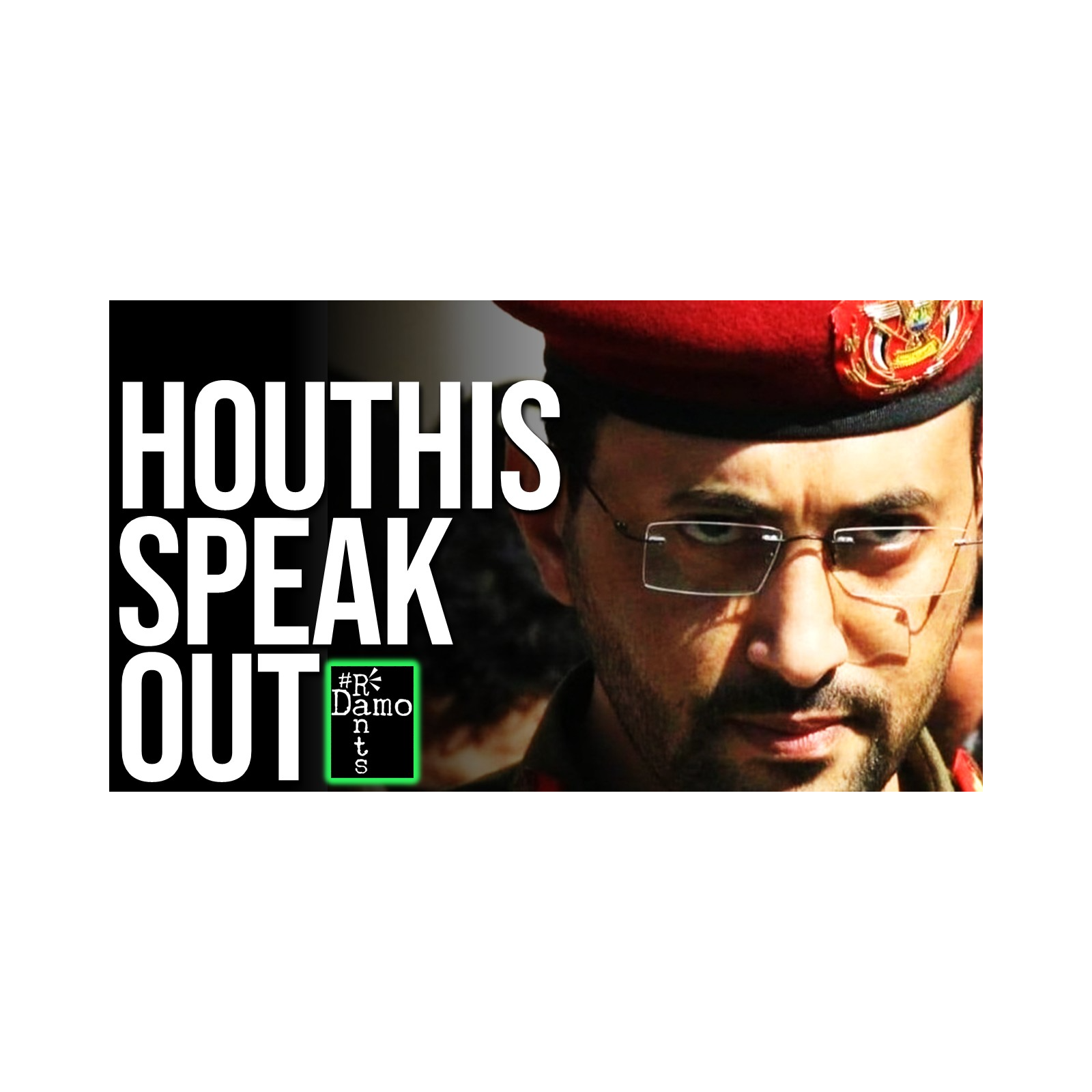
Houthis Enter the Iran Equation - Washington Has a Meltdown
Houthis among other groups issue warning as US carrier nears Iran, raising Red Sea risks and regional escalation stakes. Right, so the United States has moved an aircraft carrier group into the Middle East, flown extra jets into neighbouring countries, and senior figures are openly talking about striking Iran. In response though, it’s not just Iran talking up a response, but armed groups aligned with it across the region - the Houthis in Yemen, militias in Iraq, and Hezbollah in Lebanon – have all publicly said they will get involved if that happens. Groups in Yemen, Iraq and Lebanon are openly telling the US that if Iran is hit, they’re in. Once that’s on the table, a strike on Iran isn’t just a strike on Iran anymore. The talk coming out of Washington still assumes this can be managed as a clean operation, quick and simple, but the people who would blow that assumption up have already said they won’t play along, so the stakes just got raised again should Trump be so stupid as to strike. Right, so the United States has as I’m sure most of us know by now, moved the USS Abraham Lincoln carrier strike group into West Asia, but has also flown additional fighter jets into Jordan, and has deployed more of their advanced missile defence systems across the region, all while the Cheeto dusted maniac passing for a US president keeps talking about armadas and threats and unfinished business with Iran. Well its not just Iran that are having none of it. Yemen’s Ansarallah movement has responded to that carrier movement by issuing a public warning aimed at US naval assets, accompanied by video mock-ups of flaming warships captioned with a single word: soon. It’s hardly a statement to be buried in a briefing or a slogan aimed at a domestic crowd is it? It is a deterrent signal directed at the US, but also at commercial ships, those Red Sea shipping lanes, all the infrastructure that keeps them moving, issued at the moment US naval power turns up again.

Iran Just Shattered Europe's Legal Definition Of Terror
EU blacklists Iran’s IRGC as a terrorist organisation, breaking its own legal precedent and exposing a double standard the bloc will never fix. Right, so the European Union has put the Iranian Revolutionary Guard Corps, the IRGC on its terrorist list. And by doing that, the EU has changed what it can say without being challenged, has changed the definition of terrorism itself. It has said that a state military body, and all states have them in the name of defence, can meet the terrorism threshold. That removes a defence the EU has relied on for years, which is that terrorism only applies to non-state actors. Dissidents. Armed militias. Extremists. They just tossed that in the bin. From this point on, when the EU uses the word “terrorism”, it has to explain why that label applies in one case and not in others given equal weight. That explanation is no longer optional and they’re going to have a tough job doing so given what they cast a blind eye to. Yet it has to be given every time the standard is invoked. And explaining selective application is harder than issuing the label in the first place. It forces officials to justify exclusions rather than assert principles. That is the situation the EU has created for itself, and they deserve every bit of the fallout for their blatant hypocrisy. Right, so the European Union hasn’t just sanctioned the IRGC, it has used its terrorism designation framework against it, and that matters because this is the first time the EU has used its terrorism designation framework against an official arm of a sovereign state’s armed forces. Until now, that list has been reserved for non-state actors, insurgent groups, armed movements, and individuals operating outside recognised state command structures. The EU has never before put a state military institution into that category. By doing it here, the EU has collapsed a distinction it previously relied on in such designations whether it cares to admit it or not. From this point on, terrorism is no longer a label that stops at the edge of state power. It has now been formally extended into it.
Green Surge in By-Election Has Labour and Reform Scrambling
Greens surge in Gorton and Denton by-election as Labour pushes a decidedly dodgy poll to try and shut them down. Right, so the polling company Find Out Now has published a by-election poll for Gorton and Denton based on just 143 people, commissioned by a private company, with Reform ahead, Labour close behind, and the Greens written off. That poll is already being used as proof that voters only have two real options, despite the pollster itself warning it’s small, unstable, and early. At the same time, Reform has parachuted in a candidate with a long record of anti-Muslim rhetoric, while campaigning in the wrong place, the Greens have made pushing back on such narratives a central plank of their campaign, the Muslim Vote advocacy group has endorsed the Greens as well so momentum is with them. Yet a really poor quality poll, conducted seemingly in Labour’s interests, is being pushed hard on social media, and is getting rightly torn to shreds, because when a tiny poll is passed off as reflective of 78,000 people, when endorsements are breaking old loyalties, and when Labour is attacking the Greens harder than Reform, what’s failing isn’t so much an election campaign, it’s Labour’s credibility – whatever is left of it these days anyway. Right, so Find Out Now has put out a voting-intention poll for the Gorton and Denton by-election with a sample size of just 143 people, run between 25 and 27 January on behalf of Betterworld Ltd, weighted by age, gender and 2024 General Election vote, and the headline figures excluding don’t knows are Reform UK on 36 per cent, Labour on 33 per cent, the Green Party on 21 per cent, the Conservatives on 8 per cent and the Liberal Democrats on 3 per cent, with the pollster explicitly warning that the sample is very small and the margin of error is larger than a regular voting intention poll, and also warning that the by-election is about a month away and not all candidates have been selected. That is the hard procedural core of it, the bit that’s meant to feel neutral and managerial, the bit people get waved at as if it’s a weather report, but the sort of weather report where you’d be better off looking out of the window and checking if its raining for yourself.

Green Party Zionism Debate Looks Set to Change EVERYTHING
The Green Party has tabled a motion at Spring Conference seeking to make the party anti-Zionist, triggering a major political debate in UK politics. Right, so the Green Party has accepted a motion for its Spring Conference saying that Zionism is racism. It’s in the system. It’s got a number. It’s on the agenda. And that’s the bit people weren’t expecting, because this is the argument that’s supposed to stay outside. You can shout about it, march about it, argue about it online - just not put it through the rules. That’s how this has worked for years. And now it hasn’t. Because the moment it goes through procedure, the safety net goes. You can’t say it’s settled anymore. You can’t say it’s unsayable. All you can say is it shouldn’t be there. And that’s not an argument. That’s panic. Because once it’s inside the rules, you either deal with it - or you admit you never had an answer in the first place. Right, so the Green Party of England and Wales has tabled Motion A105 for its Spring Conference. It has been accepted into conference procedure and so is now set for debate. It states plainly that Zionism is racism and commits the party to an explicitly anti-Zionist position. That sentence alone would have been treated as unutterable inside British party politics for more than three decades, not because it was disproven, not because it was illegal, but because it was kept out by design. The fact it now exists as a procedural object means that design has failed, in no small part due to more than 2 years of Israeli genocide in Gaza and the old excuses, because that is what they were, no longer wash.

Belgium Closes Its Skies - And Israel Is Having a Meltdown
Belgium has closed its airspace to Israel-bound weapons during the Gaza ceasefire, shredding the idea it actually means something. Right, so Belgium has blocked its airspace to weapons heading to Israel, including flights that don’t land, during a period everyone is calling a ceasefire, but of course we all know isn’t really one. Israel is still firing. That pulls away a prop people were leaning on without realising it: the idea that once a ceasefire is announced, everyone else can behave as if the genocide has slid into a safer phase. Belgium isn’t doing that. It’s acting like the violence still carries consequences that come back up the chain to anyone who keeps the routes open. Governments don’t close airspace when they think something is winding down. They close it when they expect the damage to continue and they don’t want their fingerprints on it. So either the ceasefire is stabilising things, or Belgium wouldn’t need to shut its skies. Both can’t be true at the same time. And once one country treats the ceasefire as something that doesn’t actually protect third parties, it stops being a confidence blanket for anyone else still pretending it does. Right, so Belgium has closed its airspace to aircraft carrying weapons and military equipment bound for Israel, including so-called technical stopovers that used to slip through as paperwork exercises, and it has done it at the exact moment everyone is being told the Gaza war has entered a calmer, managed phase. Belgium didn’t make a speech and it didn’t issue a moral warning. It physically blocked its airspace so weapons can’t pass through. That matters because governments only do that when they think whatever those weapons will be used for is still going to cause trouble later. If Belgium believed the ceasefire had changed anything in real terms, it wouldn’t be closing routes now. It would be standing back and letting the process run. Closing the route is Belgium saying, without saying it, that it doesn’t believe the risk has dropped.

Britain’s Shamima Begum Decision Just Ran Out Of Road
Britain stripped Shamima Begum of citizenship - now Iraq and the US are forcing this back into Britain’s hands, whether ministers like it or not. Right, so the US military has started moving ISIS detainees out of SDF custody in northern Syria and into Iraq, and Iraq is telling European governments to take their nationals back because the arrangement is temporary. That pulls the ground out from under the assumption Britain has been relying on since 2019, the one where you strip Shamima Begum of citizenship, call it settled, and let distance do the work. The camps and prisons in the north were never fixed infrastructure, they were an improvised holding space that only functioned while someone else had the manpower, the territory, and the incentive to keep it functioning. Iraq is setting limits, the SDF are stretched, detainees are already being moved, and the confidence that this could be left to run indefinitely is starting to look like what it always was, a claim that only sounded solid while nobody tested it. Right, so the back in 2019 the British state made a decision it expected never to have to revisit. It stripped Shamima Begum of citizenship, declared the matter closed, and relied on the distance to make that declaration real. Distance from the camps, one of which she was held in. Distance from the courts. Distance from responsibility. That decision was never framed as provisional or contingent. It was framed as final. The problem with the belief that the right conditions at the time meant finality is that it only holds if nothing moves. Well, things are moving and rapidly.
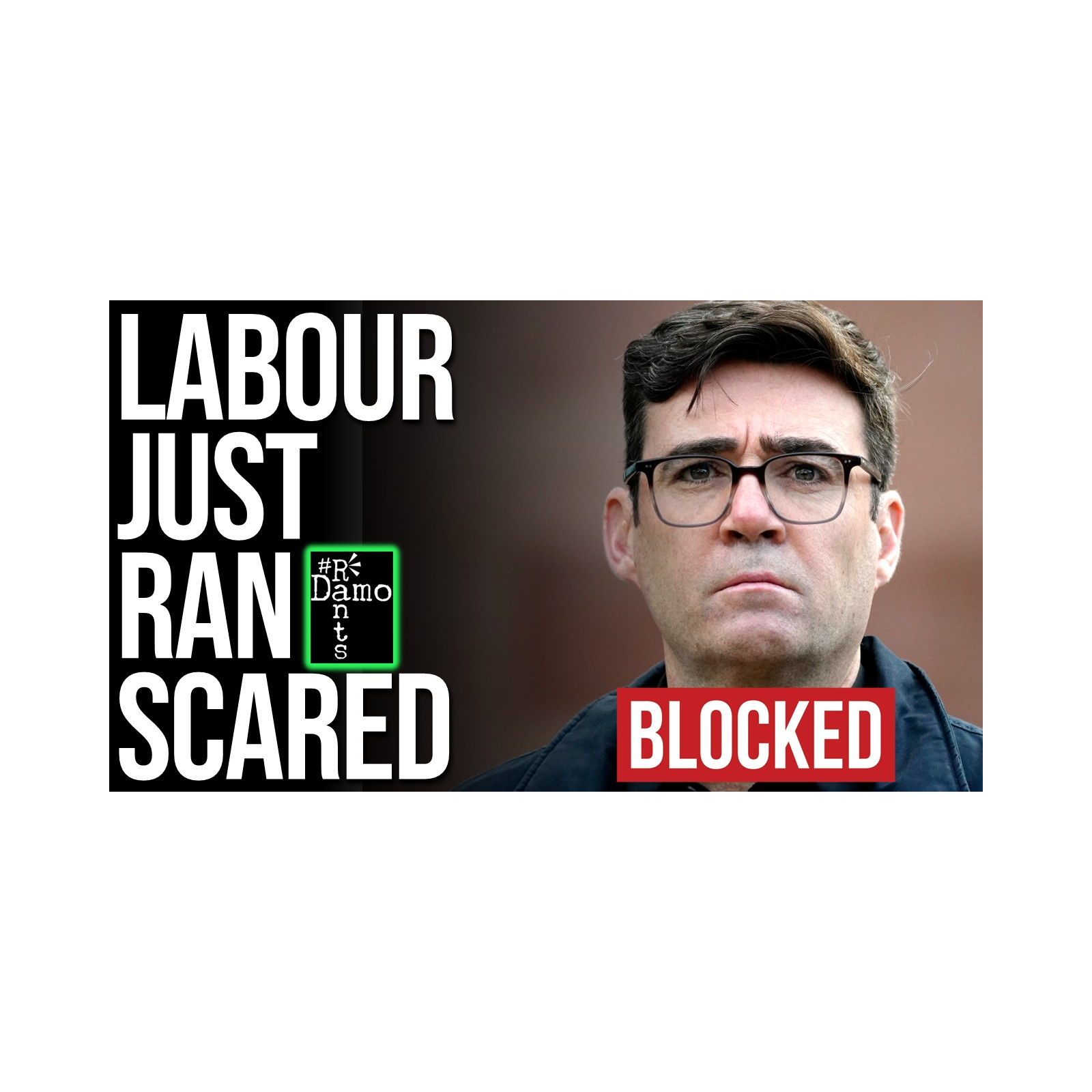
Starmer Shut Burnham Out - And Boxed Labour In
Labour barred Andy Burnham from standing in the Gorton and Denton by-election — and the fallout starts before polling day. Right, so Labour’s National Executive Committee has blocked Andy Burnham from standing as the party’s candidate in the Gorton and Denton by-election, and that decision has already removed one of Labour’s most relied-upon assumptions, which is that if you can clearly win a seat, the party will let you. The NEC is overwhelmingly aligned with Keir Starmer, so the idea that this was some neutral procedural outcome doesn’t survive even a light tap, because committees don’t act like this unless the leadership wants them to. The assumption that electability still outranks internal control is now a total bust, because a leadership confident in its position would not have needed to narrow its own options at this stage. And this doesn’t stop with one mayor or one seat, because once a pro-leadership machine chooses extra electoral risk to avoid potential future rivalry, every claim about local choice, discipline, and grown-up politics starts resting on process instead of judgement. The leadership has now acted in a way that only makes sense if Burnham was seen as a threat. Right, so Keir Starmer has it seems used the Labour Party’s central machinery to block Andy Burnham from standing as the Labour candidate in the Gorton and Denton by-election, overwhelmingly the likeliest candidate to win the seat you would think. The National Executive Committee has exercised its power to prevent a sitting metro mayor from even seeking selection, not because of misconduct, not because of disqualification, not because local members rejected him, but because the leadership decided that letting him back into Parliament carried a risk they did not want to manage, even though they can hardly say he was an unsuitable candidate. What makes it worse for Starmer is that Andy Burnham is not a radical figure and never has been. His parliamentary record sits squarely in the Brown-era managerial centre of the party, he defended NHS market mechanisms when in office, such as PFI and when Labour members were offered a genuine break from that politics in 2015 they rejected him in favour of Jeremy Corbyn. None of that has changed.
Iran Just Handed Zelensky His Backside on a Plate!
So Zelensky did a Davos podium speech, but where he should have stayed in his lane over Iran, he didn't, and got exposed for the clown he is. Right, so Ukrainian leader Volodymyr Zelensky went to Davos, criticised Iran over the protests there, and Iran’s foreign minister replied by calling him a confused clown. Not diplomatically. Publicly. By name. And this matters, not just because diplomacy went straight out of the window, but because it ends a long-running convenience a lot of people have been relying on, which is the idea that Zelensky can speak as some kind of universal moral authority and everyone else has to take it seriously. Iran didn’t argue with him, didn’t rebut the claim, didn’t justify itself. It simply told him where he can stick it. And another reason this matters so much is that a whole set of assumptions just stopped working at once. The Davos platform stopped protecting the speaker. The values language stopped forcing compliance. And the habit of treating wartime legitimacy as a licence to lecture other countries doesn’t stand up, especially given Ukraine’s own history on such things. Because when a system loses persuasion, it doesn’t get debate in return. It gets ridicule. And deservedly. Right, so Volodymyr Zelensky stands on the Davos stage and does what he has learned to do very well. He speaks in the moral register. He talks about repression. He talks about values. He talks about what the world should not tolerate. And this time he directs that language outward, toward Iran, toward protests there, toward what he frames as a failure of the international community to act. That speech landed to great adulation, easy to do when Iran was banned from attending, making you wonder if Zelensky would have been so bold if they had been in attendance. But Iran is not known to let such things slide and within hours the response comes back not as a diplomatic note, not as a formal rebuttal, not as a procedural complaint. Iran skipped the typical diplomatic niceties and went with open ridicule. Iran’s foreign minister Abbas Araghci publicly called him a confused clown. Iran publicly insulted Zelensky because it does not accept him as someone who gets to lecture it. And why should they?

Trump Talks Up Greenland Grab - Impeachment Talk Starts
Trump talks up taking Greenland — and suddenly impeachment language is being used before anything has even happened. Right, so Donald Trump has started talking again about the United States taking Greenland, and he’s doing it without threatening war. No troops, no orders, no plan — just the idea, put back on the table. The immediate cost is this: the thing people normally rely on to stop presidents doesn’t activate. There’s no war powers vote. No court case. No switch Congress can flip to make it stop. And that’s the problem. Because once force is ruled out, the system everyone assumes will step in doesn’t actually have a way to intervene. So instead of law, you’re left with hope. Hope that he drops it. Hope that it blows over. Hope that nothing follows from saying it out loud. And once you’re relying on hope instead of rules, the confidence people keep selling you about how American power is restrained doesn’t hold up anymore. Right, so Donald Trump is still on about the United States acquiring Greenland. He has done it in that way that he usually does when he wants leverage without committing himself. He presents it as strategically necessary, treats objections as noise, and yet since he started banging on about this, is now insisting that he does not intend to use military force. That is where we are at this point. There are no troops moving. There are no orders. There is no plan on paper. What has happened is that Greenland has been reintroduced into serious public discussion as something the United States might pursue, paired with a verbal assurance that nothing violent is intended. Inside the United States, the response has been immediate and unusually severe compared to what has actually occurred. Constitutional lawyers, former officials, and political actors who normally avoid emergency language have gone straight to talking about impeachment and constitutional crisis territory, even though there is no action yet for the system to respond to. Donald Trump's renewed interest in the United States acquiring Greenland, without threats of war or concrete plans, presents a unique challenge to established political norms. This discussion highlights how the lack of overt force means traditional checks and balances on the executive branch, like war powers votes or court cases, are not activated. This situation raises important questions about geopolitics and the limits of political intervention when proposals are made outside conventional frameworks.

By-Election Triggered - Hell For Keir Starmer!
This by-election isn’t about the seat — it’s about whether Labour’s control model still works when voters stop playing along. Right, so Andrew Gwynne has resigned as a Labour MP, which means a parliamentary by-election is now locked in, whether anyone likes it or not and that certainly applies to Keir Starmer, this being his first parliamentary test since conning his way into power 18 months ago. Coming as this likely is to coincide with May’s local elections, all the more attention will be on it, and the speculation is rife as to whether or not Andy Burnham might run, or whether another Manchester local boy in Zack Polanksi might have a run at it too, especially off the back of a dynamite party election broadcast last night. But above anything else, from this point on, Starmer’s Labour in name only party has to actively defend its authority in a place once regarded as so safe it was never in question and now not only is it in question, but by how much Labour might lose it by. But the fact is briefings are happening before candidates get named. Hypothetical scenarios are already being handled like threats. And control mechanisms within Labour are being discussed out loud, which only happens when people stop trusting the system to deliver the desired outcome This doesn’t stop at one seat. It doesn’t stay local. And it doesn’t end on polling day, because once a party has to manage its own voters as a risk in what was a very safe seat, all the pieces are in play for this to become absolute Hell for Keir Starmer. Right, so Andrew Gwynne has resigned as a sitting Labour MP for Gorton and Denton in Manchester and a parliamentary by-election has been triggered in a seat Labour has treated for years as safe. Gwynne won in 2024 with 50% of the vote, actually down on 2019 when he got 65% of the vote, so this is a safe as houses Labour seat, the kind of seat that if Labour can’t hold it, they are in existential crisis territory, second place in 2024 being Reform Uk who only got 15% by comparison. But all of their problems here have a common theme – Keir Starmer himself. Labour’s first problem is that this by-election lands at a moment when Labour has already tightened every internal bolt it can reach, centralised selection, cracked down on dissent dissent, and collapsed the difference between leadership and the party machine itself.
The Iran Strike Trump Avoided Is Back On The Table
Trump is escalating his threats against Iran again, but he’s doing it after already showing exactly how far he was willing to go last time. Right, so Donald Trump is escalating the threats against Iran again. The language has hardened, the plans are back in circulation, the warnings are bigger, louder, more absolute and the machinery is being spun up as if this is the first time he’s done it all over again. But it isn’t. All of this is happening after an alleged strike was already prepared, talked up, and then either not authorised or called off at the last minute, depending on source, so is this more of the same now? Whether it is or not, it blows a hole straight through the idea that you can say the same thing again, louder, and pretend nothing happened in between, it’s like an inverse boy who cried wolf moment. Escalation was taken right to the point where it’s supposed to turn into action, and then it didn’t. So can we take Trump seriously this time? Should we? Probably safer to than not, but if it all gets watered down again, we shouldn’t be that surprised either. But with more assets en route to the Middle East all at the same time, is there a genuine difference this time? Right, so Donald Trump has ordered the military to draw up new strike plans against Iran. Carrier groups and air assets are moving to the region already, but now the language has hardened again, and talk of “wiping Iran from the face of the Earth” has been Trump’s latest refrain. The USS Abraham Lincoln has been redeployed, refuelling tankers and fighter squadrons have been repositioned as well now, and the White House is allowing the impression of imminence to hang in the air. This is not the same moment as the strike that was prepared and then pulled back earlier. It’s a new escalation returning after that decision. Trump flip-flopping over striking Iran, like that’s a calm and rational position. Everything unfolding now is happening in the shadow of the last time the line was reached and not crossed, begging the question as to whether this time it will. Iran has responded accordingly. Iran’s Foreign Minister Abbas Araghchi did not issue a screaming denunciation or an emotional threat as perhaps western media might prefer. He didn’t shout. He didn’t posture. He set the terms and moved on. Maximum pressure had run its course, restraint wasn’t on offer anymore, and if Iran was hit, it would respond. That’s not how you talk if you think bombs are about to fall. That’s how you talk when you think the test already happened and you held. His language doesn’t dare Washington to act, it assumes Washington already showed its hand, and it shuts the door on the idea that saying it louder will fix that. The same logic runs through the assassination threats aimed at Ayatollah Ali Khamenei.
Israel Just Triggered a Boycott It Can’t Contain
As the war on Gaza drags on, BDS pressure is turning ordinary commercial links with Israel into reputational liabilities businesses no longer want. Right, so Boker Tov is an Israeli-owned food chain that’s been operating in Belgium, selling Israeli street food under a softened “Levantine” label, working on the quiet assumption that food sits above politics if you soften the language enough. Well it didn’t work. The chain has gone bankrupt, four restaurants have shut, and the owners have said the customers stopped coming once Gaza couldn’t be ignored. BDS strikes again. No ban from trading. No court ruling. No dramatic showdown. Just tables staying empty and the business no longer adding up. For a long time there’s been a lot of confidence that whatever Israel does, the consequences stay safely boxed in, something we commentators argue about while everyday commerce carries on unaffected. BDS has always sought to change that and businesses don’t survive the moment enough people decide they don’t want the association anymore. Consumer choice – you can’t fight it. But this is a bigger story than just one restaurant chain in Belgium. It’s about increasing numbers of people making similar choices outside Israel, not necessarily even as part of global BDS movements either, but also without that coordination and without permission, and so the story stops being about protest per se and starts being about Israeli reputation itself and no amount of Hasbara that can fix this when mindsets are simply shifting against you. Right, so Boker Tov has shut its doors in Belgium, filed for bankruptcy, and exited the market, and the owners have said plainly that organised boycott campaigns after Gaza cut the customer base out from under them. Four restaurants, gone, in a country Israel doesn’t govern, by decisions Israel didn’t authorise, through pressure Israel can’t regulate, which leaves consequences operating outside any diplomatic channel that used to cushion this kind of fallout.

Greenland Crisis Just Boxed In US Sovereign Debt
When pension funds start questioning US debt because of political behaviour, something deeper than Greenland is breaking. Right, so a Danish pension fund has just moved to exit US Treasuries. Offload US debt in other words. Not stocks, not defence firms, not some symbolic gesture, but US government debt, because US political behaviour itself has been judged a risk and this is the kind of response that, as I mentioned in a video just the other day, can hurt the US via its spending power. In part at least, this is in aid of applying coercive pressure over Greenland of course, territory tied to Denmark itself. And amid talk of military action and counter-tariffs, this move quietly removes an assumption people rely on without realising it, that US debt is something that just sits there, being neutral, boring, above politics, something you don’t have to think about while Washington tests limits elsewhere. Well its not true and this is a more effective counterstrike than acts being far more loudly discussed. This doesn’t stop with Greenland, and it doesn’t stay confined to one fund either, because the moment capital treats conduct as relevant, a whole set of confident claims quietly stop working and the moment one private fund shifts others can follow – some much bigger. Right, so the Greenland crisis hasn’t produced a military move, a treaty breach, or a dramatic showdown, but it has already done something far more consequential and far harder to reverse and I don’t want to say I told you so, but I did cover this option the other day, so someone seemingly taking it is significant, not just for that, but because it takes some balls to do as well. What this does is force United States sovereign debt held by other states and other organisations, other funds, out of the background and into the open, where it now has to be spoken about, defended, and managed as a political asset and an acknowledged weak spot to be leveraged. Where I spoke about sovereign state holdings previously though, in this instance it is the holdings of a not insignificant pension fund instead that is taking the lead here.

Jaw-Dropping BDS Victory Stuns Israel!
Israel’s fruit exports are being hit as European retailers respond to consumer-led BDS boycotts without public announcements. Right, so Israeli fruit exporters are losing routine access to European supermarkets, with orders cancelled, buyers pulling back, and harvests being left unsold. Mangoes and citrus that used to move as a matter of course are now only being bought when there’s no alternative, and in some cases they’re not being bought at all. That removes a very basic assumption Israel has relied on for years, which is that civilian trade just carries on regardless. Because once food stops moving, you’re not talking about messaging or reputation management anymore, you’re talking about a system cracking at the seams. And that’s where a lot of confident claims quietly fall apart, most notably in the face of Boycott, Divestment and Sanctions campaigns. The idea that markets are neutral. The idea that outrage stays online. The idea that this can all be compartmentalised until the headlines move on. You don’t lose fruit exports because of a bad tweet. You lose them when buyers decide the origin itself is the risk, and when that decision has already been implemented in contracts and sourcing rules. That’s the bit that doesn’t get walked back. Right, so the Co-op has changed its sourcing policy and has begun removing products that are clearly and solely sourced from Israel, after a member-backed push and a board-level decision to treat “community-wide human rights abuses” and breaches of international law as a reason to end sourcing relationships. That is just one for instance. That is not a protest on the street, it is a retailer deciding that Israel is now a reputational risk inside the everyday mechanics of food supply, and it does something that political statements never do, because it shifts a moral argument into procurement rules. An argument into something meaningful. When a supermarket does that, it does not need to persuade the whole country, it only needs to instruct buyers, rewrite contracts, and let the rest of the industry infer the direction of travel. A boycott campaign can launch a protest one day and the next day things return to normal, but it can also lead to a sourcing policy examination and a subsequent shift, the real power of BDS is more than the protest, it is the knock-on effects such demand can lead to.
Sodexo Accused of Abuse of Palestine Action Prisoners
The hunger strike ended, but the most dangerous medical phase began after they were sent back inside. Right, so Sodexo is a multinational outsourcing company that runs prisons for the British state, including HMP Bronzefield, and it’s now been accused of abusing Palestine Action prisoners for one very simple reason: a hunger strike ended and the system rushed to move on while the danger was still sitting there. Seventy days without food stopped, prisoners were taken to hospital, and then some were sent straight back into custody while the most dangerous medical phase was still ongoing. And that quietly kicks away a prop a lot of people rely on — the idea that once a protest ends, responsibility tapers off and everything settles back into “normal” because it stops being talked about. It doesn’t. What fails here is the confidence that privatisation, clinical paperwork, and silence after the cameras leave and the media put their pens down still protects the people in charge. Because if the riskiest moment is treated like an administrative clear-up instead of taken seriously under the state’s duty of care, then a lot of soothing claims about prison care and accountability don’t hold up anymore and thats problem that won’t stay contained. Right, so Sodexo Prison Services has been accused of abusing Palestine Action prisoners at HMP Bronzefield, and that accusation exists because a chain of decisions has already been taken, recorded, escalated, and then defended as routine. This is not about tone or interpretation. It starts with custody being outsourced, proceeds through a seventy-day hunger strike, runs straight into the most dangerous medical phase of that strike ending, and lands on prisoners being discharged back into custody while known risk remains active.
Trump Raised the Stakes Again - So Iran Just Raised the Cost
US pressure was pushed to leadership level, Iran answered at deterrence level, and nothing about this confrontation reset when the strike didn’t come. Right, so the United States has threatened Iran at the level of leadership, talked openly about regime change, hinted at intervention, and then stopped. Not resolved it. Not de-escalated it. Just stopped. The strike didn’t happen, the language didn’t soften, and Iran didn’t blink. So that alone removes a very comfortable assumption a lot of people were relying on, which is that pressure can always be turned up without changing the rules of the game. It turns out it can’t. Because Iran didn’t respond by conceding or fragmenting or scrambling to negotiate. It responded by tightening its deterrence and setting out their own warning to the US, while regional states rushed in to shut the whole thing down on Trump’s side of the equation, before any unwise retaliation. So now you’ve got US threats that can’t be casually repeated, pauses that don’t reset anything, just keep the tension simmering, and a confrontation that’s operating under even stricter rules than it was before. Which is a bit awkward, if you were still trying to sell this as controlled escalation. Right Donnie? Right, so the United States escalated pressure on Iran, publicly, loudly, and right up to the level of regime survival, and then it stopped. It hasn’t de-escalated. Not resolved. Not stabilised. It stopped mid-motion. The strike was talked up, the threats were personalised, the language moved past policy and into leadership, and then the action paused. Donald Trump has dragged this confrontation out of abstract pressure and into something far more concrete. He has encouraged internal takeover. He has spoken openly about “new leadership”. He has named and denigrated Ayatollah Ali Khamenei directly. He has told Iranians to keep protesting and suggested help was coming. He paired that with warnings that the United States was “locked and loaded”. Then, after all of that, the strike did not happen.

UK Courts Pull the Plug Over Palestine – And Starmer Has Lost It
A UK court has now accepted that Israeli citizenship is not automatic protection from persecution and its bad news for Team Keith! Right, so the UK has just granted refugee status to a Palestinian who holds Israeli citizenship, after the Home Office fought it for years and lost. That single decision removes a shortcut British politics has relied on for decades, which is that Israeli citizenship automatically ends any asylum conversation. It doesn’t anymore. And now that assumption is gone, a lot of confident noise from politicians banging on about immigration will sound a lot more alarmed, because the state has now accepted, on paper, that protection from Israel cannot be relied on in at least some cases under existing frameworks, or ones that until recently used to exist. But the bit that will be alarming them most is that this doesn’t stop at one man. It now travels through asylum law, through foreign policy language, through the way ministers talk about borders and international law. The legal precedent has now been set for Palestinians to seek to claim asylum here in the UK, so how can this government of Keir Starmer’s possibly square being pro Israel, especially if more asylum applications start to come in? Right, so the UK Home Office has granted refugee status to a Palestinian citizen of Israel after a years-long fight, and it has done it on the plain, old Refugee Convention test: a well-founded fear of persecution if returned. The man is known publicly as Hasan, his name is being protected, and the legal organisations involved are saying he is believed to be the first Palestinian holding Israeli citizenship to get refugee status in Britain on those grounds. James Cleverly was Home Secretary when the Home Office was trying to pull the grant back, and the account now on record from the organisation that supported Hasan is that ministerial interference has very much been part of the story.
Trump Thought Europe Had No Leverage. He Was Wrong.
Donald Trump has tied tariffs on allies to taking Greenland — but the assumption that Europe has no leverage isn't actually true... Right, so Donald Trump has announced tariffs on European allies because they won’t agree to him taking Greenland, with a 10% levy next month and 25% after that on eight NATO states, explicitly tied to whether opposition stops. That move removes a basic assumption people were still relying on, which is that NATO disputes stay in the lane of diplomacy and trade rows don’t get stapled to territorial demands. You can’t negotiate with this tangerine tyrant. Once tariffs are being used as punishment for saying no to annexation-by-invoice, the idea that this is just noise, or bluster, or something that can be smoothed out with polite phone calls, stops being available. And the confidence that underpins a lot of commentary right now, that the US can do this without consequence because nobody has leverage that actually bites, starts to look very thin very quickly. Because this doesn’t stop at Greenland, and it doesn’t depend on missiles or troops. It depends on money, confidence, and habits everyone’s been treating as immovable because nobody has been talking about it. There is another option available to other nations and its time they started considering it. Right, so Donald Trump has announced he is putting tariffs on European allies because they are refusing to go along with his demand to “buy” Greenland. He has set out a 10% tariff from 1 February and a 25% tariff from 1 June on eight states, including here in the UK, and he has explicitly tied the escalation to whether countries stop opposing the United States taking control of Greenland, as if territorial acquisition is a bargaining chip in a trade negotiation and as if the rest of NATO exists to be billed for its own obedience. The whole thing is dressed up as a tough-guy move, but it is coercion with a receipt attached. Keir Starmer has responded in a way that tells you exactly what the UK government is trying to preserve though. He has called the tariff threats “completely wrong”, but he has ruled out retaliatory tariffs, and he has insisted the right approach is “calm discussion between allies”, which is what you say when you want to sound like you are taking a stand while also making sure nothing material happens that could upset the sick joke that is the ‘special. relationship. Right, so Donald Trump's announcement of tariffs on European allies over Greenland highlights a concerning shift in international relations. This move, directly linking trade disputes to territorial demands, challenges basic diplomatic assumptions and creates new global trade tensions.

ICE Gets Compared to the Brownshirts - And It Sticks
ICE has been publicly compared to the Brownshirts in Minneapolis and after Gregory Bovino’s appearance, that comparison has stuck. Right, so ICE carried out an operation in Minneapolis that ended with a civilian being shot, in public, during enforcement, and the system closed ranks around it. But since then, federal leadership has now turned up, visibly, unapologetically, dressed for command in their heads, but inviting some rather unfortunate, but perhaps also accurate comparisons to the Brownshirts of Ernst Röhm. Immigration enforcement too often gets sold sold as paperwork, warrants, process — something that happened quietly, somewhere else. Once you put lethal force on the street and defend it as routine, that story is finished. And once senior figures arrive afterwards dressed up in a manner evoking memories of the SS, performing authority rather than caution, people don’t need persuading anymore. That’s when the comparisons start appearing on their own. Not as insults, but as recognition. Because at that point this stops looking like law being applied and starts looking like power being asserted, and once enforcement is read that way, it doesn’t wait for permission to escalate — it carries on under its own momentum and that’s a stain they’ll never scrub clean. Right, so ICE has been deployed in American cities in a way that no longer looks administrative, no longer looks procedural, and no longer relies on consent to function. Border Patrol has been folded into that deployment as well, with senior figures choosing to present themselves as commanders rather than civil servants. That combination is not abstract, and it isn’t rhetorical. It is on the street, it is being filmed, and it is being felt by the people living underneath it, which removes the option of pretending this is just routine enforcement operating as it always has.
Iranian Regime Change Backers Just Gave The Game Away
An Iranian monarchist, Goldie Ghamari, threatened critics of regime change on live broadcast - showing what backers of the Shah are all about. Right, so an Iranian monarchist, Goldie Ghamari sat on Piers Morgan’s show, and when the conversation got a little bit tricky, she switched into Farsi, and told people what would happen to them after regime change in Iran. Not hypothetically. After. She said it plainly. It went out live. She threatened people’s lives. And nobody who’s been pushing regime change in Iran moved to disown it either. And that kills a useful fiction. Because the whole Iran story has depended on never saying this bit out loud. Never naming enforcement. Never naming punishment. Just “transition”, “momentum”, “inevitability”. Restoration of democracy, as if imposing another Shah as Ghamari would love to see, is anything of the sort. Once someone says who gets “come after”, when the regime changes – a fantasy as that is anyway, as the allegedly Mossad driven protests settle down - that language stops working. You can’t pretend this is about democracy when threats are being issued in advance of the changes you claim will be better for the Iranian people. The Shah was overthrown for a reason and for all the critique that can be levelled at the Ayatollah’s, a return to a monarchist autocracy would be worse. People like Ghamari forget that what they are calling for and the threats made to that end, are what put the Ayatollah’s in power to begin with. Right, so Goldie Ghamari sits on Piers Morgan’s prime-time programme, switches into Farsi, and issues a threat about what happens after regime change to people she says are threatening not just Iran but Israel as well. Words about coming after people. Retribution. That exchange is broadcast, clipped, and circulated. It is not disowned by the monarchist and regime-change ecosystem that put her there, that she represents. It is not treated as disqualifying. It just sits there, on the record, as the public face of Iranian monarchic restoration when pressure is absent. The reaction to that moment matters as much as the moment itself. There was little effort from Piers Morgan to distance himself. No condemnation from fellow panellists or from the exile monarchist networks that promote Ghamari.

Trump Brings Blair In To ‘Fix’ Gaza – And The Fallout Is MASSIVE
Trump didn’t end the war — he turned Gaza into a managed asset, and brought Tony Blair back to help run the paperwork. Right, so Donald Trump has announced a Gaza “Board of Peace” that is more of a “Gaza Board of Occupation”, a “Gaza Board of Taking All The Spoils”, put himself at the top of it, named Tony Blair to it, because presumably Satan is busy washing his hair, and rolled it out as the start of phase two of a Gaza Peace Plan that Israel continue to abuse with impunity. This is colonialism 101. Any pretence of peace is a sick joke at this point without any Palestinian representation. What has gone is the last pretence that Gaza’s future is being negotiated by anyone who actually lives there and is directly affected. From this point on, decisions are being administered. To the people of Palestine. Not negotiated with them, not discussed, just imposed. Disarmament comes first they are told, supervision comes next as if they have no right to self-determination, reconstruction is conditional on obedience, and consent is optional. If you were still assuming there’d be a political settlement before management took over, you’ll see some flying pigs right now outside your window. If you were relying on the idea that talk of peace meant mutual restraint, where have you been for the last two years at least? Because when the same people who presided over the destruction are invited back as part of the system to oversee the aftermath, what’s being sold isn’t peace, it’s control being repackaged with better branding. Right, so Donald Trump has moved Gaza from obvious genocide into administration by pushing ahead with phase two of a ceasefire already regarded widely as a sick joke, by announcing a “Board of Peace” for Gaza and putting himself at the top of it, busy man having also declared himself acting President of Venezuela, while also considering invasion of Iran and Greenland, but if that phrase Board of Peace sounds like it was written by a committee tasked with laundering reality, it is because it functions exactly like that. The White House has publicly placed this board at the centre of a second phase of a 20-point plan, and it has presented that phase as a shift away from ceasefire management and into demilitarisation, technocratic governance, and reconstruction.

Israel Just Lost Control of the Means to Attack Iran
Israel asked Trump to wait on his Iran strike, but in doing so gave away the one thing it can’t afford to lose: the claim that it controls escalation. Right, so news has now emerged that Benjamin Netanyahu had asked Donald Trump to delay that expected strike on Iran. Not cancel it. Delay it. But he was so keen last June wasn’t he? What’s changed then? Well the reason being briefed is that Israel is now worried it can’t absorb what comes back if the US goes ahead. Not so cocky this time it seems! That single move removes a lot of assumed certainty. Because the country that has spent years presenting itself as escalation-proof, having learned the hard way last June that it isn’t, has gone even further in its reasoning. It is now warning about stretched defences, retaliation risk, and timing. Which means the confidence you were hearing about how this would play out has all now effectively been quietly withdrawn. At the same time, Israel’s intelligence chief is in the US trying to manage the fallout, a US senator is flying to Israel to push escalation anyway, and Iran is openly floating talks instead of war. So the old story, where confrontation was inevitable and controlled, doesn’t hold anymore, and its not just Trump holding back because he’s perhaps waiting on the Navy, but because Israel has panicked as well now. The machinery is still running, but the brakes are being argued over in public and who is actually driving at this point is anybody’s guess. Right, so Benjamin Netanyahu has it seems asked Donald Trump to hold off on that strike on Iran, another facet to this story now coming out; not because he’s suddenly found a conscience, but because Israel’s own missile-defence stocks are being described as depleted and its home front is being treated as the obvious target for retaliation if the US pulls the trigger.