
Keen on Yoga Podcast
222 episodes — Page 3 of 5

Ep 190Ep 190 Adam Keen – A Deeper Look at the Yamas and Niyamas
Ep 190 Adam Keen – A Deeper Look at the Yamas and Niyamas "The yamas look like monks' vows." "Yoga is a physical method of inner conflict resolution." www.keenonyoga.com | @adam_keen_ashtanga Adam delves into the complexities of the yamas and niyamas, exploring their relevance in modern yoga practice. He emphasizes the importance of inner alignment through Hatha yoga before adhering to moral codes, suggesting that true ethical living arises from a clear inner state. Adam discusses the challenges of moral actions, the nuances of non-violence, and the concept of Dharma in contemporary society. He advocates for a deeper inquiry into the nature of goodness and authenticity, ultimately positioning yoga as a process of self-discovery and alignment rather than mere adherence to social morality. Key Points · Yoga is not just about following rules; it's about inner alignment. · Hatha yoga serves as a foundation for understanding the yamas and niyamas. · Moral actions are complex and often lead to unintended consequences. · Patanjali's yamas may be more suited for monastics than lay practitioners. · Non-violence is a nuanced concept that goes beyond physical actions. · Dharma is not fixed; it requires personal inquiry and reflection. · Authenticity is more important than simply appearing good to society. · The struggle with ethical living is part of the yoga journey. · Inner cleansing is essential for genuine ethical behavior. · Yoga encourages inquiry and challenges societal norms.
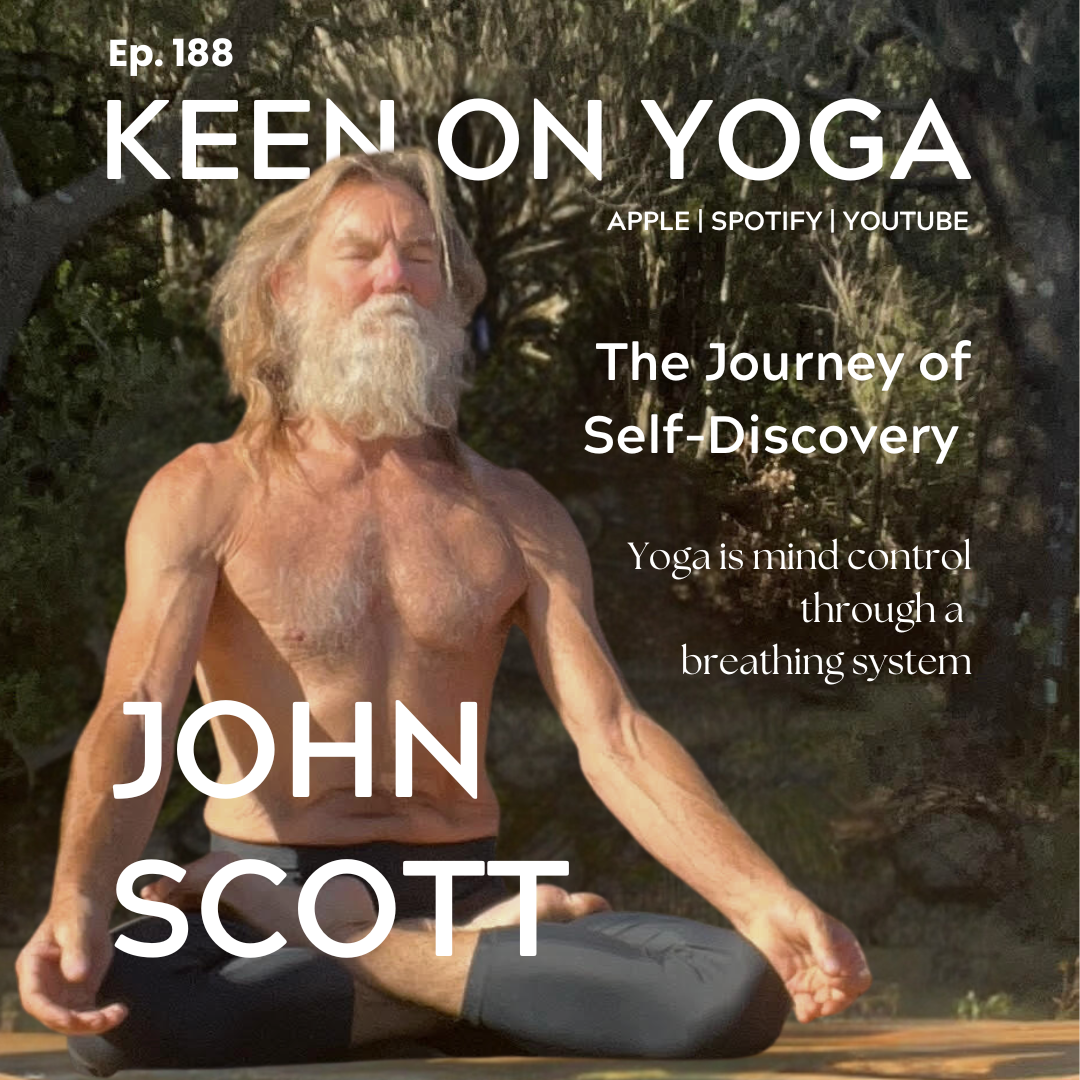
Ep 189Ep 189 John Scott – The Journey of Self-Discovery
Ep 189 John Scott – The Journey of Self-Discovery www.johnscottyoga.com | @johnscottyoga "Some of us need to be putting our leg behind our head daily for a long time to realize, okay I don't really need to put my leg behind my head anymore." John Scott discusses his journey from being known as John to becoming Jonny. He reflects on his passion for yoga and how it has shaped his life, the importance of mind control and reclaiming one's own sovereignty through yoga. He emphasizes the significance of posture, free breathing, and the counting method in the Ashtanga Vinyasa Yoga practice. He also delves into the concept of drishti and the importance of seeing the God spark in oneself and others. Finally, he discusses the different stages of life and the process of letting go. In this conversation, John Scott discusses the importance of making choices from the soul and listening to one's inner voice. He emphasizes the need to let go of unnecessary attachments and beliefs, and to surrender to the wisdom within. John also shares his journey of self-discovery and the role of psychedelics in his transformation. He talks about the phases of his life and the evolution of his teaching style. He encourages practitioners to inquire and find their own answers, rather than relying on external sources. John emphasizes the importance of practicing for oneself and for the benefit of others. Key Points · Passion is an important aspect of life and should be nurtured and pursued. · Yoga can help in reclaiming one's own mind and achieving sovereignty. · Posture, free breathing, and the counting method are essential in the Ashtanga Vinyasa Yoga practice. · Drishti is about seeing the God spark in oneself and others. · The different stages of life, from athlete to renunciant, bring different responsibilities and perspectives. · Letting go is a process that can lead to inner peace and contentment. Make choices from the soul and listen to your inner voice. · Let go of unnecessary attachments and beliefs. · Surrender to the wisdom within and practice for yourself. · Inquire and find your own answers. · Practice for the benefit of others. · Be practical and flexible in your practice. · Embrace freedom and rebel against rigid rules. · Let go of guilt and focus on self-love. · Find inspiration in the presence of others. · Transition from being a teacher to being a mentor.

Ep 188Ep 186 Adam Keen – The Science of Hatha Yoga Using the Body to Change the Mind
www.keenonyoga.com | @adam_keen_ashtanga Adam explores the concept of emotions in the body in the context of yoga. He discusses the origins of yoga asana as a steady seat for meditation and the use of asana as an ascetic practice to hold the body still against the changing world. Adam explains how yoga, particularly Hatha Yoga, can help change neurological pathways and transform states of mind. He emphasizes the importance of balancing the active and passive aspects of ourselves and the role of the diaphragm in breathing techniques. Support Keen on Yoga 👉 Buy us a coffee: https://www.buymeacoffee.com/infoRf 👉 PayPal: https://paypal.me/adamandtheresa 👉 Subscribe, like and share our videos, it helps us a lo Key Points · Yoga asana can be used as a steady seat for meditation and as an ascetic practice to hold the body still against the changing world. · Hatha Yoga is a science of the body that uses the body to change the mind and affect neurological pathways. · Balancing the active and passive aspects of ourselves is important for emotional well-being. · Breathing techniques, particularly using the diaphragm, can stimulate the nervous system and affect states of mind.
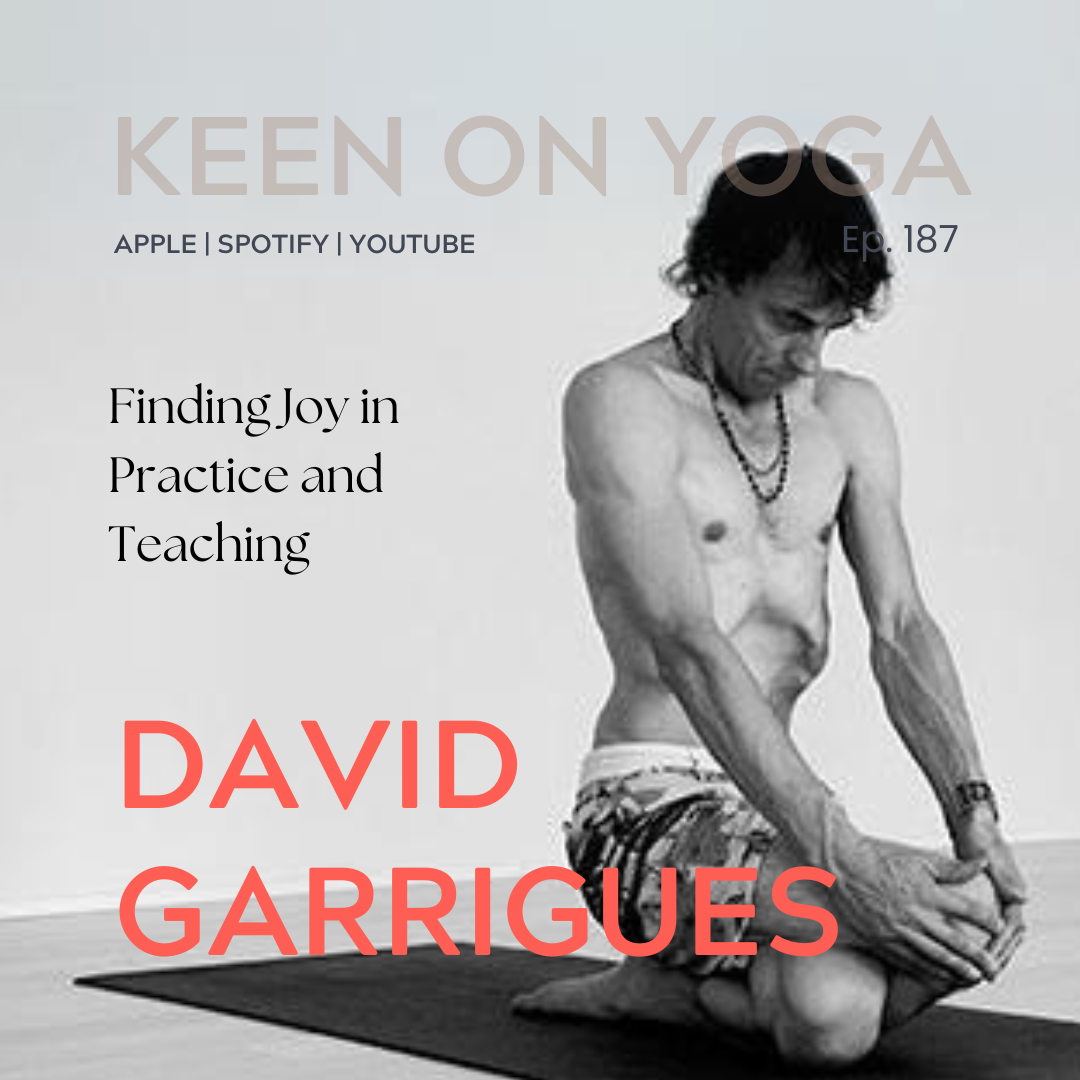
Ep 187Ep 187 David Garrigues - Finding Joy in Practice and Teaching
www.davidgarrigues.com | @davidgarriguesyoga In this conversation, David Garrigues discusses his journey as a yoga teacher and the challenges he has faced along the way. He emphasizes the importance of being authentic and real as a teacher, even if it means admitting to struggles and imperfections. David also talks about the need for structure and specificity in teaching, while also recognizing the importance of individual interpretation and exploration. He shares his love for Ashtanga Yoga and the joy it brings him, and how he has evolved his teaching style over the years. Key Points · Being authentic and real as a yoga teacher is important, even if it means admitting to struggles and imperfections. · There is a need for structure and specificity in teaching, while also allowing for individual interpretation and exploration. · Finding joy in your practice and teaching is essential for staying motivated and connected to the practice. · Ashtanga Yoga can be a powerful modality for teaching and practicing yoga, but it is important to adapt it to the individual needs and abilities of students. Structure and repetition can be beneficial in a yoga practice, providing comfort and allowing for deeper exploration. · The existing sequences in Ashtanga yoga offer a wealth of knowledge and experience that can be thoroughly explored. · Anatomy and physicality are important aspects of the practice, as they provide a foundation for bandhas and breath control. · Engaging with the ritual of yoga can lead to self-discovery and a deeper understanding of oneself. · The interplay between movement and stillness, becoming and being, is a fundamental aspect of yoga. · Teaching yoga requires balancing the sharing of knowledge with empowering the student and avoiding the misuse of power. · The practice of yoga can be physically and mentally demanding, requiring rest and recovery. · Students and their dedication to the practice can be a great source of inspiration for teachers. · Generosity and the joy of giving are important qualities to cultivate in the practice and teaching of yoga.

Ep 186Ep 186 Adam Keen – Things I've Changed My Mind on About Teaching Ashtanga
www.keenonyoga.com | @adam_keen_ashtanga Adam reflects on his 25 years of teaching yoga and shares the things he has changed his mind on over the years. He emphasizes the importance of evolving and learning in yoga and how knowledge should change us. He discusses the concept of deepening a posture and how it is more about balancing forces in the body rather than pushing for a deeper shape. He also talks about his evolving understanding of Hatha yoga and the integration of movement, breath, and concentration. Key Points · Knowledge should change us and lead to personal growth and evolution. · Deepening a posture is about balancing forces in the body, not just pushing for a deeper shape. · Hatha yoga is a method of pressurizing the body to align and purify the energy of the spine. · The integration of movement, breath, and concentration is essential in yoga practice. Adjustments in yoga can send the message that a person is not good enough and can lead to injury. · Trust and touch are important in yoga practice, and being in proximity with others who provide supportive touch can open up the body. · Breathing is the movement in yoga, and the diaphragm is the center of the body. · Technique in yoga is important, but it should not overshadow the need for space, support, and encouragement in the practice. · Anatomical variations should be taken into account in yoga practice, and individualized variations can be used instead of rigidly following a set sequence. · Quality of practice is more important than the amount of time spent practicing. · Rounding the back in forward folds can be beneficial, and internal rotation can be emphasized in twists. · The second series backbends can be introduced early in the practice to provide a balanced approach. · Personal discipline in yoga practice should be balanced with trust in oneself and the ability to listen to one's own needs. "Yoga did... what medications didn't." "Teaching back then was practicing with the class." "I don't adjust anymore... I don't manhandle people." "Adjustments, second thing, adjustments don't work." "Being with people in proximity, if you trust them, if you feel their touch is endorsing, affirmative of your being, just opens up the body like nothing else." "The body always wants to seek homeostasis. In everything, in its blood temperature, in the regulation of all its organs, it just wants to seek homeostasis naturally."

Ep 185Ep 185 Shyam Ranganathan - Cultural Filtering and Colonialism in Yoga
www.yogaphilosophy.com | @yogaphilosophy_com | amazon books Dr. Shyam Ranganathan discusses explores the themes of yoga, anti-colonial philosophy, and action-focused guide to practice. He highlights the concept of the Linguistic Account of Thought (LAT) and how it has led to cultural filtering and colonialism. He also explains the difference between understanding and belief, emphasizing that action is about choice, not belief. Dr. Ranganathan challenges the Western appropriation of yoga and the secularization of Indian philosophy, advocating for a more nuanced and responsible approach to understanding other cultures. Support Keen on Yoga 👉 Buy us a coffee: https://www.buymeacoffee.com/infoRf 👉 PayPal: https://paypal.me/adamandtheresa 👉 Subscribe, like and share our videos, it helps us a lot Connect 👉 Website: www.keenonyoga.com 👉 Instagram: @keen_on_yoga | @adam_keen_ashtanga 👉 Work Enquiries: [email protected] Key Points · The Linguistic Account of Thought (LAT) has led to cultural filtering and colonialism, as it restricts understanding to what is culturally familiar. · Understanding and belief are distinct concepts, with understanding being an engaged event and belief being a passive state of existence. · It is possible to look at another culture without imposing one's own interpretive box, but it requires adopting a different method and being open to learning. · Action is about choice, not belief, and belief can hinder understanding and autonomy. · The Western appropriation of yoga and the secularization of Indian philosophy perpetuate white supremacy and overlook the rich philosophical traditions of South Asia. · There are four basic ethical theories, including virtue ethics, and sovereignty and autonomy are important in yoga practice. Yoga encompasses different ethical theories, including consequentialism, deontology, and bhakti yoga. · Consequentialism in yoga focuses on reducing suffering as the ultimate goal. · Deontology in yoga emphasizes mastering certain actions and fulfilling one's special obligations. · Bhakti yoga starts with devotion to the ideal of the right and leads to personal autonomy. · Yoga is a practice of devotion to Ishvara and helps individuals overcome trauma and internalized experiences.

Ep 184Ep 184 Paul Grilley - The Origins of Power and Yin Yoga
The Importance of a Mature Understanding of Yoga www.paulgrilley.com | @paulandsuzeegrilley Paul Grilley, known for his work in Yin Yoga, discusses his journey in yoga and the evolution of yoga in the West along with the secularization of yoga and the rise of power yoga in LA. Paul shares his realization that no matter how much he practiced, there were poses he would never be able to do, which led him to explore Yin Yoga. He mentions his encounter with Paulie Zink, who emphasized the importance of holding poses for a longer duration and his experience studying with David Williams. Support Keen on Yoga 👉 Buy us a coffee: https://www.buymeacoffee.com/infoRf 👉 PayPal: https://paypal.me/adamandtheresa 👉 Subscribe, like and share our videos, it helps us a lot Connect 👉 Website: www.keenonyoga.com 👉 Instagram: @keen_on_yoga | @adam_keen_ashtanga 👉 Work Enquiries: [email protected] Key Points · Paul Grilley started his yoga journey with Hatha yoga and explored various styles, including Bikram and Ashtanga. · The secularization of yoga in the West was influenced by the popularity of dance aerobics and the desire for a more intense and dynamic workout. · Paul Grilley realized that no matter how much he practiced, there were poses he would never be able to do, which led him to explore Yin Yoga. · Yin Yoga emphasizes holding poses for a longer duration and provides a different approach to yoga practice. · Paul Grilley's encounter with Paulie Zink further reinforced the importance of Yin Yoga and its benefits for the body and martial arts. David Williams and Polly Zink were influential teachers for Paul Grilley due to their generosity and lack of a guru mentality. · Yin Yoga originated from Paul's study with Polly Zink, who referred to it as Taoist Yoga. · The concept of fascia and its role in stretching is important in understanding the body's response to yoga practice. · Individual variations in skeletal structure can impact range of motion and flexibility. · Paul emphasizes the harmonization of energy flow in the body as a key aspect of yoga practice. The breath is a tool to become aware of the movement of prana in the body during pranayama and bandhas. · The ultimate goal is to achieve pratyahara, a state where one is physiologically deaf, blind, and unaware of the physical body. · Pratyahara allows for conscious experiences detached from the body and leads to true mystical and spiritual experiences. · Understanding the movement of prana and achieving pratyahara requires a mature understanding and practice of yoga.

Ep 183Ep 183 Adam Keen – The Drawbacks of Pushing Too Hard in Yoga
www.keenonyoga.com | @adam_keen_ashtanga Adam explores the concept of pushing in yoga and why we feel the need to push ourselves in our practice. He discusses the influence of modern capitalism and societal pressure to compete and achieve, as well as the cultural belief that suffering and pushing ourselves will lead to purification and progress. Adam emphasizes the importance of letting go of the guilt associated with pushing and highlights the limitations and drawbacks of pushing too hard. Support Keen on Yoga 👉 Buy us a coffee: https://www.buymeacoffee.com/infoRf 👉 PayPal: https://paypal.me/adamandtheresa 👉 Subscribe, like and share our videos, it helps us a lot Connect 👉 Website: www.keenonyoga.com 👉 Instagram: @keen_on_yoga | @adam_keen_ashtanga 👉 Work Enquiries: [email protected] Key Points · Pushing in yoga is influenced by modern capitalism and societal pressure to compete and achieve. · The belief that suffering and pushing ourselves will lead to purification and progress is deeply ingrained in Western culture. · Letting go of the guilt associated with pushing is important for a more balanced and sustainable practice. · Embracing a more subtle and technique-focused approach can lead to deeper experiences and a sense of satisfaction in the practice.

Ep 182Ep 182 James Nestor – Are You Breathing as Well as You Could Be?
www.mrjamesnestor.com | @mrjamesnestor James Nestor, author of 'The Breath, The New Science of a Lost Art,' discusses the importance of breath and the prevalence of breathing dysfunction in society. He shares his personal journey of discovering the power of breath to improve his own health. Nestor explains the concept of bad breathing and the impact it can have on overall health. He also delves into the role of carbon dioxide in breathing and the benefits of proper breathing techniques. Key Points · Breathing dysfunction is prevalent in society, leading to various health issues. · Proper breathing techniques, such as nasal breathing and diaphragmatic breathing, can improve overall health. · Carbon dioxide plays a crucial role in breathing and can be used therapeutically. · Jaw structure has a significant impact on breathing, and industrialized foods have contributed to narrower airways. · Fresh air is essential for good health, and poor air quality can have detrimental effects. · Teaching proper breathing techniques in yoga and exercise practices is crucial for optimal health.

Ep 181Ep 181 Adam Keen – The Risks and Consequences of Adjustments in Yoga
Adam discusses the difference between physical assistance and physical adjustments in yoga. He explains that physical assistance is essential for developing a yoga practice, while physical adjustments can be harmful and lead to injuries. Adam emphasizes the importance of endorsement, alignment, and breathing in physical assistance. Support Keen on Yoga 👉 Buy us a coffee: https://www.buymeacoffee.com/infoRf 👉 PayPal: https://paypal.me/adamandtheresa 👉 Subscribe, like and share our videos, it helps us a lot Connect 👉 Website: www.keenonyoga.com 👉 Instagram: @keen_on_yoga | @adam_keen_ashtanga 👉 Work Enquiries: [email protected] Key Points · Physical assistance is essential for developing a yoga practice. · Physical adjustments can be harmful and lead to injuries. · Endorsement, alignment, and breathing are key aspects of physical assistance. · Adjustments should be approached with caution and consideration of the potential risks and consequences. · A slow and steady approach to yoga practice is recommended. Chapters 00:00 Introduction: Physical Assistance vs Physical Adjustments 13:31 The Importance of Self-Practice in Yoga 16:50 Endorsement: Supporting the Natural Shape of the Body 20:38 Alignment: Connecting the Body Together 25:49 Giving a Taste of Something: Holding in a Strength Thing 28:40 Cautions and Considerations for Adjusting Students in Yoga 34:03 Conclusion: Balancing Risk and Long-Term Well-Being
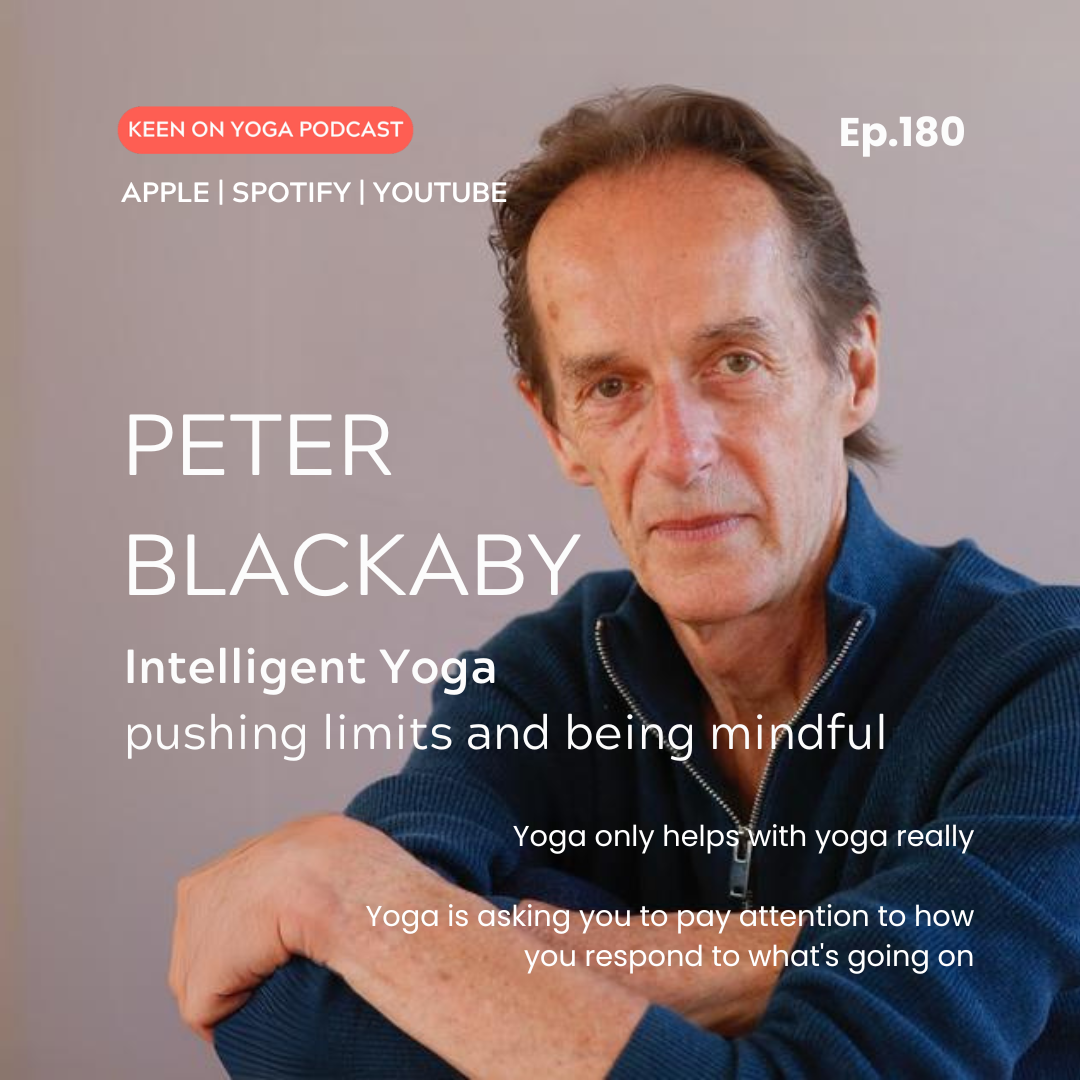
Ep 180Ep 180 Peter Blackaby – Intelligent Yoga The balance between pushing your limits and being mindful
The conversation explores the concept of movement in yoga and its relationship to daily life. Peter argues that yoga should focus on improving overall movement patterns and functionality rather than specific asanas. He emphasizes the importance of sensory feedback and learning through repetition, like how children learn to move. Peter also introduces the idea of the neurological fallacy, which challenges the reductionist view of the body and emphasizes the interconnectedness of the whole system. www.peterblackaby.co.uk KEEN ON YOGA 👉 Website: www.keenonyoga.com 👉 Instagram: @keen_on_yoga | @adam_keen_ashtanga 👉 Work Enquiries: [email protected] Key Points · Yoga should focus on improving overall movement patterns and functionality in daily life. · Sensory feedback and repetition are key to learning and improving movement. · The neurological fallacy challenges the reductionist view of the body and emphasizes the interconnectedness of the whole system. · Yoga should disrupt unwanted patterns and enhance desired patterns of movement. Challenging oneself is important for personal growth and avoiding stagnation. · Curiosity and exploration are key to maintaining a sense of wonder and engagement with the world. · Finding a balance between pushing oneself and being mindful of one's limits is crucial for overall well-being. · The role of the teacher is to guide students in becoming more aware of their bodies and their responses to discomfort. · Posture can be seen as a representation of one's history and patterns of movement. · The goal of yoga is to alleviate suffering and promote well-being. · Paying attention to discomfort and finding ways to make it more comfortable is essential for personal growth. · There are differing perspectives on the concept of emotions and desires being stored in the body. Our emotions are constructed based on our historical responses and the meaning we have given to them. · Paying attention to our responses to the world can help us adapt and change our emotional states. · Yoga is a practice of attentive noticing rather than therapy. · Understanding death can be liberating and allow us to fully live our lives. · Yoga texts offer valuable insights, but it's important to critically examine and cherry-pick the ideas that resonate with us.

Ep 179Ep 179 Gary Kraftsow – Studying with Kṛṣṇamācārya & Deśikācar
Gary Kraftsow shares his background and experiences studying with Kṛṣṇamācārya & Deśikācar. He discusses the teachings he received and the impact they had on his life. He also talks about the relationship between Kṛṣṇamācārya & Deśikācar and their teaching methods. Kraftsow explains the concepts of Viniyoga and Vinyasa and how they are applied in yoga practice. www.viniyoga.com | @americanviniyogainstitute Connect 👉 Website: www.keenonyoga.com 👉 Instagram: @keen_on_yoga | @adam_keen_ashtanga 👉 Work Enquiries: [email protected] Key Points Gary Kraftsow studied with Krishnamacharya and Desikachar and shares his experiences and the impact they had on his life. Krishnamacharya and Desikachar were both revered teachers who adapted and made yoga practices relevant for practitioners. Viniyoga is the adaptation of yoga practices to suit the needs of the practitioner and apply them appropriately. Vinyasa refers to the sequence and order in which postures are placed in a yoga practice. The teachings of Krishnamacharya and Desikachar emphasized the transformation of the body and the practitioner's highest potential. Adapt postures to suit individual needs and functional benefits. The breath is essential in linking the mind and body during yoga practice. Yoga is an integrated practice that includes yama, niyama, asana, pranayama, and meditation. Release valves are compensating mechanisms that occur when the body cannot stabilize a certain part. Find a sustainable yoga practice that supports overall well-being and prepares for the end of life.
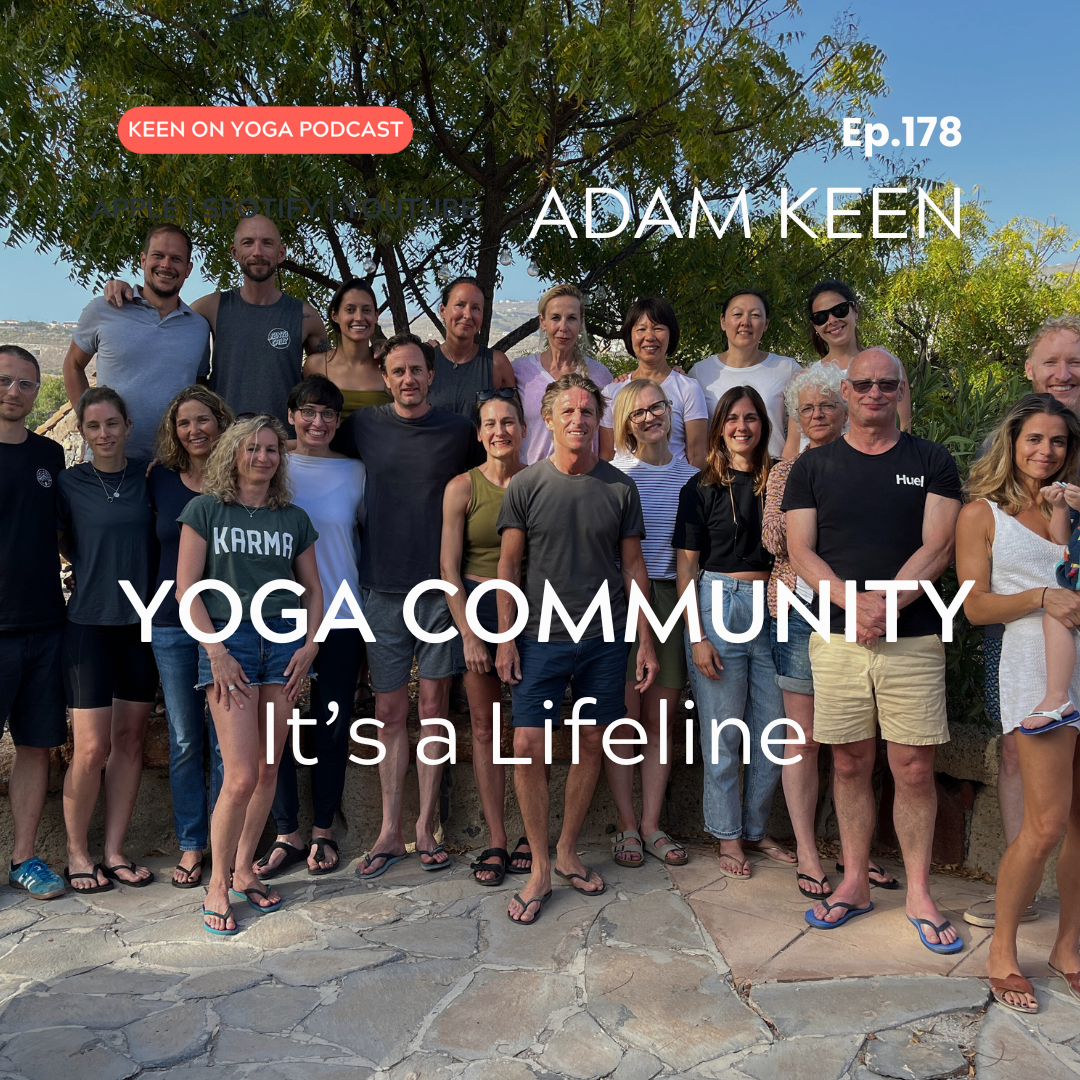
Ep 178Ep 178 Adam Keen – Yoga Community – It's a Lifeline
www.keenonyoga.com | @adam_keen_ashtanga Adam explores the topic of community in the context of yoga, specifically Ashtanga yoga. He discusses the importance of community and belonging, as well as the challenges and drawbacks that can arise within a community. Adam also touches on the role of the teacher, the need for autonomy within a community, and the balance between a firm center and expanding edges. He emphasizes the importance of open discussion and the preservation of individuality within a collective. Support Keen on Yoga 👉 Buy us a coffee: https://www.buymeacoffee.com/infoRf 👉 PayPal: https://paypal.me/adamandtheresa 👉 Subscribe, like and share our videos, it helps us a lot Connect 👉 Website: www.keenonyoga.com 👉 Instagram: @keen_on_yoga | @adam_keen_ashtanga 👉 Work Enquiries: [email protected] Key Points Community is essential in yoga, providing a sense of belonging and support. However, communities can have drawbacks, such as strict rules and a lack of autonomy. The role of the teacher is important in creating a healthy community dynamic. Balancing a firm center with expanding edges allows for growth and dialogue within a community. Preserving individuality and autonomy is crucial within a collective. Open discussion and the ability to question and express doubts are essential in a community. The modern yoga center can play a role in fostering inclusivity and community. Community should extend beyond the yoga class and into daily life. The concept of sangha, or community, has always been important in spiritual practices.
Ep 177Ep 177 Rodney Yee – Modern Yoga Pioneer
www.rodneyyeeyoga.com/ | @rodneyyeeyoga Rodney Yee is an American yoga instructor who rose to prominence in the mid-1990s when he was featured on the cover of Yoga Journal magazine and starred in some of the first-ever yoga instructional videos and DVDs with Gaiam/Living Arts. After his interview with Oprah in 1999, both Yee personally and yoga were catapulted into the mainstream spotlight. Support Keen on Yoga 👉 Buy us a coffee: https://www.buymeacoffee.com/infoRf 👉 PayPal: https://paypal.me/adamandtheresa 👉 Subscribe, like and share our videos, it helps us a lot Connect 👉 Website: www.keenonyoga.com 👉 Instagram: @keen_on_yoga | @adam_keen_ashtanga 👉 Work Enquiries: [email protected] Key Points From dance to yoga Starting with Iyengar yoga Working with Richard Rosen There was no such thing as a yoga career in those days The need to study yoga Creating Gaiam yoga videos On Oprah in 1999 Sold a million videos the day after Fulfilling the map of your skin Being in a place where there is no you Yoga and self reflection The pyramid of yoga Giving a touch of the yoga landscape Even in a bad asana class something else happens Staying relevant in yoga teaching Questing for meaning Teaching this new generation It was easy for us to out do our parents I'm inspired by anyone who is enquiring deeply

Ep 176Ep 176 Adam Keen – Don't Have Time For An Ashtanga Practice?
Adam discusses the concept of short forms in Ashtanga Yoga. He explains that while the traditional practice involves doing the entire series every day, it is not always practical or beneficial. Key Points Short forms in Ashtanga Yoga can be a sensible approach when time, energy, or inspiration are limited. Variation in practice is important to prevent stagnation and maintain enthusiasm. Short forms should still incorporate the principles of posture, counter posture, building, and vinyasa. Grounding and ending the practice with a focus on the parasympathetic nervous system is essential. Practitioners should listen to their bodies and make adjustments to their practice as needed.
Ep 174Ep. 174 Daniela Bevilacqua – Hatha Yoga, Tapas and Sadhus
Daniela Bevilacqua, a research associate at the University of SOAS in London, speaks about the Hatha Yoga tradition, the past lack of research and the recent surge of interest in the subject. https://www.yogicstudies.com/ys-103 | @dhanya_83 Key Points · Hatha Yoga texts have been overlooked in the past, with more focus on the philosophical side of yoga. · The recent surge of interest in Hatha Yoga is due to scholars and practitioners addressing the textual sources with a different curiosity. · Tapas (austerities) and Hatha Yoga are closely connected, with tapas being a form of inner heat produced through austerities. · Sadhus practice extreme body modifications for various reasons, including spiritual devotion, burning karma, and the well-being of society. · Further research is needed to explore the historical development of Hatha Yoga and its connection to tapas. Sadhus claim to possess various supernatural powers, such as mind reading and walking on leaves. · Teachings and initiations within the sadhu community are often reserved for Indians and not foreigners. · Certain sadhu groups have a militant nature and have historically been involved in mercenary activities. · Female sadhus face challenges in a patriarchal society and often have to fight against societal norms and expectations. Women from educated, middle-class families are slowly gaining positions in Sadhu society. · Being fluent in Hindi and an outsider helped Daniela connect with the Sadhus and gain their trust. · Hatha Yoga in the Sadhu society has different layers of meaning, including tapas and manipulation of the subtle body. · Modern technology, such as smartphones and social media, has impacted the lives of Sadhus. · Daniela formed friendships with some Sadhus and continues to stay in touch with them.
Ep 175#175 Dr Ian Baker - Tantra Buddhism: A Body-Positive Approach to Spirituality
Dr. Ian Baker discusses the connection between Tibetan yoga and modern postural yoga, specifically Astanga yoga. He explores the origins of postural yoga in Tibet and the Himalayan world, highlighting the common elements and different emphases between traditions. He also delves into the practices of Tibetan yoga, such as Hatha Yoga, Tantra, and the subtle body, which focus on the circulation of prana and the transformation of metabolic heat into mystic fire. Connect with Ian Baker 👉 Website: https://ianbakerjourneys.wordpress.com 👉 Instagram: @ianbaker108 Connect with Keen on Yoga 👉 Website: www.keenonyoga.com 👉 Instagram: @keen_on_yoga | @adam_keen_ashtanga 👉 Work Enquiries: [email protected] Key Points Tibetan yoga and modern postural yoga share common elements and different emphases. The practices of Tibetan yoga focus on the circulation of prana and the transformation of metabolic heat into mystic fire. Tapas (heat) is an important aspect of yoga practice, burning away afflictive emotions and expanding our sense of self. The origins of postural yoga can be traced back to Tibet and the Himalayan world. Tantric Buddhism originated from the exchange of knowledge along ancient trade routes, such as the Silk Roads. The cultivation of inner fire, or tummo, is a common practice in various traditions, including the Wim Hof method and ancient Chinese Yangshen traditions. Transformative heat is associated with powerful goddesses in both Hindu tantra and tantric Buddhist texts. Tantra embraces a body-positive approach, celebrating sensory awareness and the potential of the human body.
Ep 173Ep. 173 Adam Keen – Balancing Tradition in Ashtanga Yoga
(www.keenonyoga.com | @adam_keen_ashtanga ) Adam explores the concept of tradition in Ashtanga Yoga. He defines tradition as a way of working, a pattern carried over from the old to the new. Support Keen on Yoga 👉 Buy us a coffee: https://www.buymeacoffee.com/infoRf 👉 PayPal: https://paypal.me/adamandtheresa 👉 Subscribe, like and share our videos, it helps us a lot Connect 👉 Website: www.keenonyoga.com 👉 Instagram: @keen_on_yoga | @adam_keen_ashtanga 👉 Work Enquiries: [email protected] Key Points Tradition in Ashtanga Yoga is a way of working, a pattern that is carried over from the old to the new. Tradition needs to be contextualized and adapted to suit the modern epoch and the needs of the current age. Yoga asana and philosophy are context-sensitive and need to evolve to suit the values and understanding of the modern world. There is a balance between tradition and non-tradition, where pragmatism and maintaining an ideal coexist. Belonging to a tradition can provide a sense of support and community, but it is important to critically evaluate and adapt the tradition to suit individual needs.

Ep 172Ep. 172 Celest Pereira – The Power of Suggestion and Pain Perception
Celest Pereira – (www.celestpereira.com | @celestpereirapt ) Adam and Celest discuss the topic of pain and its relationship to the brain. They explore the idea that pain is not solely felt in the body, but rather is an output of the brain. Support Keen on Yoga 👉 Buy us a coffee: https://www.buymeacoffee.com/infoRf 👉 PayPal: https://paypal.me/adamandtheresa 👉 Subscribe, like and share our videos, it helps us a lot Connect 👉 Website: www.keenonyoga.com 👉 Instagram: @keen_on_yoga | @adam_keen_ashtanga 👉 Work Enquiries: [email protected] Key Points · Pain is not solely felt in the body, but is an output of the brain. · Pain is a communication tool used by the brain to alter behavior and promote safety. · Outputs can be both safety outputs (like pain) and empowering outputs. · The biopsychosocial model of pain considers the biological, psychological, and social factors that contribute to pain. The brain is a highly suggestive organ that can influence pain perception. · Empowering language and positive suggestions can have a significant impact on pain management. · The placebo effect is a real and powerful phenomenon that should be explored and utilized. · Movement is medicine and can help in pain management. It is important to keep moving and try different forms of movement. · Subtle interventions can have profound effects on the body and brain. · Finding joy in activities outside of studying or work is important for overall well-being.
Ep 171#171 Adam Keen - Are we practicing Patanjali's yoga?
#171 Adam Keen - Are we practicing Patanjali's yoga? (www.keenonyoga.com | @adam_keen_ashtanga) Adam explores the question of what kind of practice we are doing in modern yoga. He discusses whether we are practicing Patanjali's yoga and how it aligns with our current aims and aspirations. Adam highlights that Patanjali's yoga does not focus much on asana and aims to control the senses and transcend the suffering of the world. He also delves into the concept of Dharma and its importance in yoga philosophy. Adam touches on the evolution of yoga and the inclusion of dynamic asana in modern practice. He concludes by discussing the influence of tantric yoga and its emphasis on using the body as a vessel of knowledge. Key Points · Modern yoga practice differs from Patanjali's yoga in terms of its focus on dynamic asanas and its aim to live in unity and connection with the world. · Dharma, the objective principles of life, is the basis of yoga philosophy and guides our actions and attitudes towards the world. · The inclusion of dynamic asana in modern yoga can be seen as a way to use the body as a vessel of knowledge and to live in harmony with the world. · Tantric yoga offers a body-positive approach and emphasizes the awakening of energy and the exploration of esoteric practices. · Modern yoga is an evolution of traditional yoga practices, incorporating elements from Patanjali's yoga and tantric yoga. SUPPORT US 👉 Subscribe, like and share our videos, it helps us a lot 👉 Buy us a coffee: https://www.buymeacoffee.com/infoRf 👉 Support us directly: https://paypal.me/adamandtheresa CONNECT WITH US 👉 Instagram: https://www.instagram.com/keen_on_yoga/ 👉 Instagram:https://www.instagram.com/adam_keen_ashtanga/ 👉 Work Enquiries: [email protected]

Ep 170Ep. 170 Richard Rosen – Exploring the Meaning of Yoga Beyond Asana
Richard Rosen (www.m-yoga.org/richard-rosen | @richardrosenyoga) Adam interviews Richard Rosen, a yoga teacher and author, about his background in yoga and his book, Yoga FAQ. They discuss the evolution of yoga texts, the influence of yoga on Western psychology, and the potential for yoga to suppress emotions. They also explore the role of asana in yoga, the trend of yoga anatomy in classes, and the need for assessing students and structuring classes effectively. SUPPORT US 👉 Subscribe, like and share our videos, it helps us a lot 👉 Buy us a coffee: https://www.buymeacoffee.com/infoRf 👉 Support us directly: https://paypal.me/adamandtheresa 👉 Become a Patron for €10 monthly: https://keenonyoga.com/membership/ CONNECT WITH US 👉 Instagram: https://www.instagram.com/keen_on_yoga/ | https://www.instagram.com/adam_keen_ashtanga/ 👉 Work Enquiries: [email protected] This conversation covers various topics related to yoga, including accessibility and challenges, the importance of beginner's courses, the practice of pranayama, the significance of savasana, meditation and concentration, the relevance of Sanskrit in yoga, and influences on modern yoga. Richard Rosen shares his insights and experiences, highlighting the need for a balanced and patient approach to yoga. He also discusses his guilty pleasure of writing silly poetry and draws inspiration from various writers and books. Takeaways Yoga is more than just asana; it is a comprehensive practice encompassing philosophy, meditation, and self-discovery. The Yoga Sutras of Patanjali, while a foundational text, can be seen as life and world-denying, and may not fully align with modern yoga practices. The Vedas, Upanishads, and other ancient texts provide valuable insights into the history and philosophy of yoga, but they can be challenging to read and interpret. The popularity of yoga has led to the evolution of different styles and approaches, and teachers need to have a solid understanding of the tradition and the needs of their students. Yoga anatomy can be useful for teachers, especially in therapeutic contexts, but it should not overshadow the broader aspects of yoga practice. Yoga should be accessible to all, but it is important to approach it cautiously and seek proper guidance to avoid injury or discouragement. Beginner's courses can provide a solid foundation for yoga practice and help new students ease into the practice gradually. Pranayama, the practice of breath control, can be challenging to teach and may require patience and perseverance from both the teacher and the student. Savasana, the relaxation pose, is an essential part of yoga practice and can help develop self-awareness and a witness consciousness. Meditation and concentration are integral to yoga and can be practised both on and off the mat. Learning Sanskrit can deepen one's understanding of yoga and its traditional texts, but it is not necessary for all practitioners. Various individuals and schools, including B.K.S. Iyengar, Pattabhi Jois, and Indra Devi, have had significant influences on modern yoga. Richard Rosen finds joy in writing silly poetry and draws inspiration from writers such as Ian Banks, Stanislaw Lem, and José Saramago. "Yoga doesn't affect the union, it reveals a union that pre-existed and will always exist." "In any meditation practice, the world should be included in the meditation." "I'm a little bit unhappy with flow classes." "We can't put it to rights here, but yeah." "Nobody wants to breathe." "There's consequences often times."

Ep 169#169 Adam Keen – Exploring the Modern Mysore Tradition of Ashtanga Yoga
Adam Keen – Exploring the Modern Mysore Tradition of Ashtanga Yoga ( www.keenonyoga.com | @adam_keen_ashtanga) Adam discusses the modern Mysore tradition of Ashtanga yoga. He explores the early days of Krishnamacharya in the Mysore Palace and the emergence of a dynamic form of yoga. SUPPORT US 👉 Subscribe, like and share our videos, it helps us a lot 👉 Buy us a coffee: https://www.buymeacoffee.com/infoRf 👉 Support us directly: https://paypal.me/adamandtheresa 👉 Become a Patron for €10 monthly: https://keenonyoga.com/membership/ CONNECT WITH US 👉 Instagram: https://www.instagram.com/keen_on_yoga/ | https://www.instagram.com/adam_keen_ashtanga/ 👉 Work Enquiries: [email protected] Key Points · The modern Mysore tradition of Ashtanga yoga emerged with Krishnamacharya in the Mysore Palace, where a dynamic form of yoga started to take shape. · The Ashtanga tradition is a modern tradition that has evolved, with influences from various teachers and adaptations to suit different contexts and individuals. · The sequences in Ashtanga yoga are not fixed and rigid, but rather a general method that can be adapted to each individual's body and needs. · The emphasis on specific details and postures in the modern Ashtanga tradition is a recent innovation and not a fundamental aspect of the practice. · Understanding the historical roots and context of the Ashtanga tradition is important, but ultimately, the effectiveness of the practice should be judged based on individual experience and results.

Ep 168#168 Laura von Ostrowski – Unlocking The Power Of Yoga: Embodiment And The Yoga Sutras
( https://uni-hamburg.academia.edu/LauravonOstrowski | @yoganerds_de ) Adam and Laura discuss the application of the Yoga Sutras to modern yoga practice. Laura's PhD focused on how the Yoga Sutras can be applied to the physical practice of Ashtanga yoga. They explore the concept of embodiment and how it relates to the classical philosophy of the Yoga Sutras. They also discuss the idea of concentration and absorption in modern practice, and how it may differ from the traditional interpretation of Patanjali's teachings. Laura emphasises the importance of observing the mind and finding practices that lead to heightened states of concentration. They also touch on the concept of the ego and its role in practice. The conversation explores the different perspectives on interpreting the Yoga Sutras, including the emic and etic approaches. "My PhD was about observing how in the 21st century Patanjali is connected to the physical practice, especially to Ashtanga yoga." "How do these practices get us into a state of concentration and absorption?" "Flow state is not what Patanjali meant with Samadhi, but maybe it can be deemed as a small Samadhi." "What we're doing is, I believe, ethic, is that right?" "We're looking from the outside." "We're not trying to lose the ego." SUPPORT US 👉 Subscribe, like and share our videos, it helps us a lot 👉 Buy us a coffee: https://www.buymeacoffee.com/infoRf 👉 Support us directly: https://paypal.me/adamandtheresa 👉 Become a Patron for €10 monthly: https://keenonyoga.com/membership/ CONNECT WITH US 👉 Instagram: https://www.instagram.com/keen_on_yoga/ | https://www.instagram.com/adam_keen_ashtanga/ 👉 Work Enquiries: [email protected] Key Points · The Yoga Sutras can be applied to modern yoga practice, but it's important to consider the context and adapt the teachings to fit our current lifestyles. · Observing the mind and finding practices that lead to heightened states of concentration can be valuable in modern practice. · The concept of the ego in yoga practice is complex and can be interpreted differently. It's important to find a balance between honouring the teachings of Patanjali and adapting them to our modern worldview. · The Yamas, or ethical guidelines, can be seen as contemplation points rather than strict rules to follow. It's important to reflect on how they apply to our lives and make conscious choices. · Reading the commentaries on the Yoga Sutras can provide a deeper understanding of the text, but it's helpful to have guidance from a teacher or someone knowledgeable in Sankhya philosophy. · Recognizing that the Yoga Sutras have been interpreted and adapted throughout history can provide mental clarity and a sense of relaxation when exploring their teachings. There are different perspectives on interpreting the Yoga Sutras, including the emic (within the culture) and etic (cross-cultural) approaches. · It is important to question and critically examine the text rather than blindly following it. · The concept of ego should not be eliminated, as it is necessary for engagement and living fully in the world. · Vivekananda played a significant role in bringing the Yoga Sutras to the modern context, but his promotion of disembodied practices should be reconsidered. · Curiosity is a valuable trait that allows for open-mindedness and continuous learning. · Taking time to simply be and do nothing can be a guilty pleasure that provides a break from the busyness of life.
Ep 167#167 Adam Keen - The Power of Holding Space for Students
#167 Adam Keen - The Power of Holding Space for Students (www.keenonyoga.com | @adam_keen_ashtanga ) Adam shares advice for yoga teachers, emphasising the importance of being authentic, kind, and adaptable. He encourages teachers to create a supportive network and find a mentor to guide them on their teaching journey. Adam also discusses the need to hold space for students and allow them to have their own experiences, rather than trying to change them. He reminds teachers to stay humble, open-minded, and inspired in their practice and teaching. "Being kind is much more important than being right." "Yoga is a low entry, high qualification bar." "Know your blind spots and keep humble and caring." LISTEN ON PODCAST 👉 Apple podcast: https://podcasts.apple.com/us/podcast/keen-on-yoga-podcast/id1509303411 👉 Spotify: https://open.spotify.com/show/5iM9lcw52JskHUZ2eFvVxN SUPPORT US 👉 Subscribe, like and share our videos, it helps us a lot 👉 Buy us a coffee: https://www.buymeacoffee.com/infoRf 👉 Support us directly: https://paypal.me/adamandtheresa 👉 Become a Patron for €10 monthly: https://keenonyoga.com/membership/ CONNECT WITH US 👉 Instagram: https://www.instagram.com/keen_on_yoga/ | https://www.instagram.com/adam_keen_ashtanga/ 👉 Work Enquiries: [email protected] Key Points · Be authentic to yourself as a yoga teacher. · Create a supportive network and find a mentor to guide you. · Hold space for your students and allow them to have their own experiences. · Stay humble, open-minded, and inspired in your practice and teaching.

Ep 166#166 Andrea Ferretti – The Human Side of Yoga Teachers
#166 Andrea Ferretti – The Human Side of Yoga Teachers (@andreaferretti | www. jasonyoga.com/yogaland-podcast/ ) Andrea Ferretti shares her journey into yoga, starting in the 90s and finding her passion for Ashtanga. She discusses the challenges of early yoga classes and the evolution of yoga studios, as well as her transition to working at Yoga Journal and the opportunity to study with different yoga teachers. Andrea shares her struggles with mental health and how yoga and meditation have been transformative for her. She also discusses the phenomenon of imposter syndrome in the yoga teaching community. They also touch on the purpose of yoga, the impact of yoga on mental health, navigating life as a cancer survivor, and starting the Yoga Land podcast. Throughout the conversation, they emphasize the importance of self-compassion, curiosity, and authenticity in the yoga teaching journey. Key Points · The yoga community in the 90s was small and intimate, with studios often fitting only a handful of students. · Personal insight and experience are essential in yoga practice, and teachers should encourage students to find their own path. · Yoga can be a powerful tool for mental health, providing a refuge and a sense of connection. · Imposter syndrome is common among yoga teachers, but it can be managed by acknowledging it and focusing on personal growth. · The evolution of yoga has led to a more diverse and inclusive practice, with a focus on individual needs and experiences. Coping with imposter syndrome involves acknowledging and accepting one's flaws and mistakes, rather than trying to be perfect. · The role of the yoga teacher is to have genuine interest and care for students and to provide tools for self-inquiry and turning inward. · Yoga helps individuals observe themselves and spend time looking inside, providing a sense of quiet and self-awareness. · Embracing imperfection and learning in public is essential for growth as a yoga teacher, as it allows for continuous learning and improvement. · Yoga can have a profound impact on mental health, providing tools for managing anxiety and stress. · Being a cancer survivor can change one's perspective on life and priorities, leading to a greater appreciation for what truly matters. · Starting a podcast can be a way to share conversations and teachings with a wider audience, and it can be a platform for personal growth and learning. · Nerve-wracking and difficult interviews can be valuable learning experiences, teaching resilience and adaptability. SUPPORT US 👉 Subscribe, like and share our videos, it helps us a lot 👉 Buy us a coffee: https://www.buymeacoffee.com/infoRf 👉 Support us directly: https://paypal.me/adamandtheresa 👉 Become a Patron for €10 monthly: https://keenonyoga.com/membership/ CONNECT WITH US 👉 Instagram: https://www.instagram.com/keen_on_yoga/ | https://www.instagram.com/adam_keen_ashtanga/ 👉 Work Enquiries: [email protected]

Ep 165#165 Adam Keen My Emotional Healing Through Yoga
In this solo podcast episode, Adam discusses his personal journey with emotional healing through yoga practice. He emphasizes the importance of using the body to resolve and purge emotions, as emotions are stored in the body. He explains that the practice of yoga, particularly in the tantric tradition, allows for the digestion and integration of past experiences and emotions. Adam also highlights the significance of creating a ritual space for oneself, where emotions can safely arise and be processed. He concludes by emphasizing the importance of self-trust and the potential pitfalls of over-practicing and suppressing emotions. Key Points · Yoga practice can be a powerful tool for emotional healing and purging stored emotions in the body. · The tantric tradition of yoga emphasizes using the body to resolve and integrate past experiences and emotions. · Creating a ritual space for oneself allows emotions to arise and be processed in a safe and supported environment. · Self-trust and commitment to a daily practice can lead to a sense of integrity and personal growth.
Ep 164#164 Tomas Zorzo – Mysore Since 1985
164 Tomas Zorzo – Mysore Since 1985 ( www.yogashtanga.com | @centro_yoga_ashtanga) Mysore in 1985 | $300 for one year | 2 students in the room | Sivananda ashram | First time seeing Ashtanga yoga | The practice was different | 10 breaths, not 5 | No jumping between sides in sitting | Each student had individual practice | One practice was 4.5 hours | The birth of the led class | Hooked on prana | Ego crisis | BNS Iyengar | Pattabhi Jois as a healer | 20 trips to Mysore | Adapting for older students | What is your reason for practice? | AG Mohan | Yoga is being in touch with your inner self
Ep 163#163 ADAM KEEN - ON TEACHING YOGA
In this solo podcast episode, Adam discusses various aspects of teaching yoga. He shares his journey of becoming a yoga teacher and the different experiences that led him to teaching. Adam emphasizes the importance of readiness to teach and the role of enthusiasm and appreciation in sharing the practice. He also discusses the qualifications and proficiency required for teaching, highlighting the significance of care, interest, and connection with students. Adam addresses the issue of burnout and the need for self-care as a teacher. He concludes by discussing the challenges of losing students and the importance of adapting teaching methods to suit individual students. Key Points Readiness to teach comes from personal experience, enthusiasm, and appreciation for the practice. Being the best practitioner is not a qualification for teaching yoga; care, interest, and connection with students are more important. Burnout is a real concern for yoga teachers, and it is essential to take breaks and prioritize self-care. Teaching adaptations and making the practice accessible to students is crucial for their progress and engagement. Continued learning, exploring different perspectives, and having

Ep 161#161 Adarsh Williams Part Two: Teaching Ashtanga Yoga
ADARSH WILLIAMS (www.ashtangayogagroningen.nl | www.smartstretch.com | @ adarshw) Adarsh Williams and Adam discuss various aspects of yoga practice, including its mental and physical benefits, the blending of yoga with fitness culture, and the importance of adapting the practice to individual bodies. They also explore the significance of consistency and enthusiasm in teaching, as well as the role of community and history in the practice of Ashtanga yoga. In this conversation, Adam and Adarsh discuss various aspects of building a Mysore program, teaching yoga to different types of students, the importance of breath, the framework of Ashtanga Yoga, and the benefits of cold exposure. They emphasise the need for teachers to meet students where they are and create a supportive community. They also highlight the significance of movement nutrition and breath hygiene for overall well-being. The conversation concludes with a discussion on the transformative power of tapas. Key Points · Yoga was originally intended as a mental practice and a moving meditation, rather than solely a physical exercise. · Ashtanga yoga should be approached as a mental practice with functional movement, rather than a fix for physical ailments. · Adapting the lotus work in Ashtanga to individual bodies and incorporating functional movement can make the practice more accessible and beneficial. · Consistency and enthusiasm are key in yoga practice, and being a new teacher can bring a fresh perspective and energy to the practice. · The discipline and restraint of yoga practice can lead to transformative experiences and a deeper understanding of oneself. Building a Mysore program requires meeting students where they are and creating a supportive community. · Teachers should focus on movement nutrition and breath hygiene for overall well-being. · The framework of Ashtanga Yoga provides a structure for self-connection and growth. · Cold exposure, such as ice baths, can have curative properties and promote mental and physiological well-being. · Tapas, the practice of embracing discomfort, can lead to personal transformation.

Ep 160#160 Adarsh Williams - The Benefits of Ashtanga Yoga
ADARSH WILLIAMS (www.ashtangayogagroningen.nl | www.smartstretch.com | @ adarshw) Adarsh Williams shares his journey into yoga and how it helped him overcome anxiety and insomnia. He started with self-taught yoga practice using library books and later transitioned to Ashtanga Yoga. Adarsh emphasizes that yoga is a tool that can be applied in various ways and does not necessarily require a spiritual context. He also discusses his experiences with Pattabhi Jois and Sharath Jois, highlighting their consistency and dedication to the practice. In this conversation, Adarsh Williams discusses his time with Sharath and the transition he went through after the passing of Pattabhi Joyce. He reflects on Sharath's pressure to fill his grandfather's shoes and how he has grown into his role as a teacher. Adarsh emphasizes the importance of tolerance and understanding in the yoga community, as well as the need for a pragmatic approach to the Ashtanga method. He shares his experience with injuries and how he incorporates functional movement into his teaching. Adarsh concludes by revealing his guilty pleasure of being a professional wrestling fan and expressing his inspiration from his yoga students. In this conversation, we discussed the importance of effective communication and explored various strategies to improve communication skills. We covered topics such as building trust and rapport, active listening and empathy, non-verbal communication, managing conflict, cultural sensitivity and diversity, and effective feedback. These themes highlight the key aspects of communication that can lead to successful interactions and relationships. By implementing the strategies discussed, individuals can enhance their communication skills and achieve better outcomes in personal and professional settings. Key Points · Yoga can be a powerful tool for managing mental health issues such as anxiety and insomnia. · Self-taught yoga practice can be effective, especially when combined with reading and learning from various sources. · Ashtanga Yoga offers a structured and efficient practice that can lead to physical and mental transformation. · The guru-disciple relationship in yoga can vary, and it is important to maintain a balanced perspective and not idealize the teacher. Transition and growth are natural processes in any practice or role. · Tolerance and understanding are essential in the yoga community. · A pragmatic approach to the Ashtanga method can benefit students of all levels and abilities. · Incorporating functional movement can help prevent injuries and enhance the practice. · Finding inspiration in yoga students and their dedication can motivate teachers to continue their work. Effective communication is crucial for successful interactions and relationships. · Building trust and rapport is essential for effective communication. · Active listening and empathy help in understanding others and fostering better communication. · Non-verbal communication plays a significant role in conveying messages. · Managing conflict requires effective communication and problem-solving skills. · Cultural sensitivity and diversity awareness are important for inclusive communication. · Providing constructive feedback is essential for personal and professional growth.
Ep 159#159 Adam Keen - Yoga Injuries, How to Avoid, Manage and Heal From Them
Adam Keen - Injuries in Yoga, Managing and Healing From Them (@adam_keen_ashtanga | www.keenonyoga.com ) Adam discusses the topic of injuries in yoga and the upcoming injuries conference. He emphasizes that injuries are not the fault of the yoga practice itself, but rather the approach and individual factors. Adam encourages practitioners to adapt the practice to their own bodies and focus on the feeling in the body rather than accomplishing postures. He also shares his personal experiences with injuries and highlights the importance of rest, seeking different approaches, and strengthening the body. The episode concludes with an invitation to the injuries conference. Key Points · Injuries in yoga are often the result of individual factors and the approach to the practice, rather than the practice itself. · Adapting the practice to suit one's own body and focusing on the feeling in the body can help prevent injuries. · Injuries can be seen as opportunities for growth and learning, and seeking different approaches and opinions can be beneficial. · Resting the injured area, strengthening the body, and considering alternative therapies can aid in the healing process. · The injuries conference provides a platform for discussing and addressing yoga-related injuries and healing.
Ep 158#158 MC Yogi - Breathe Deep
MC Yogi (www.mcyogi.com | @mcyogi ) MC Yogi (Nicholas Giacomini) shares his journey from a troubled youth to becoming a renowned yoga teacher and musician. He discusses the transformative power of yoga and breath, and how it helped him find peace and purpose in life. MC Yogi also talks about his mentor, Larry Schultz, and the development of Rocket Yoga. He reflects on the counterculture vibe of early yoga and the cathartic nature of yoga practice. Finally, he shares his experience as a musician and the role of music in his spiritual journey. In this conversation, MC Yogi discusses the power of words and mantras in his music. He explains how he remembers his lyrics and mantras through somatic movement and neural programming. MC Yogi also shares his influences from various genres of music and the cultural influences of growing up in the Bay Area. He emphasizes connecting with the spirit and seeking the inner kingdom. MC Yogi's guilty pleasure is driving fast, and his inspiration comes from the awe-inspiring force of the breath. Key Points · Yoga can transform and bring peace and purpose to one's life. · The breath is a powerful tool for self-awareness and connection. · The counterculture vibe of early yoga created a sense of community and acceptance. · Music can be a powerful tool for spiritual expression and connection.
Ep 157#157 Adam Keen on Keeping Motivated in Practice
In this conversation, Adam discusses how to stay motivated and inspired in a yoga practice that can sometimes feel repetitive. He explores the challenges of maintaining focus and setting realistic goals, emphasizing the importance of individuality and avoiding comparison. Adam also highlights the need for self-reflection and finding meaning in one's practice. He shares personal experiences and offers practical advice for staying motivated, such as creating a consistent practice space and routine, and being flexible in approach. Adam concludes with New Year's wishes and encourages listeners to continue their yoga journey with confidence and perseverance. Key Points Maintaining motivation in a yoga practice requires setting realistic goals and avoiding comparison with others. Finding meaning in one's practice is essential for long-term motivation and perseverance. Creating a consistent practice space and routine can help in staying focused and committed. Building self-trust and confidence is crucial in overcoming challenges and making better choices in practice and in life.

Ep 156#156 Bernie Clark - Yoga Related Injuries
BERNIE CLARK – YOGA RELATED INJURIES (www.yinyoga.com | @bernieclark7528In this episode, Bernie Clark discusses knee issues in Ashtanga yoga. He explains the anatomy of the knee joint and the role of ligaments in preventing excessive movement. Bernie shares his personal experience with knee injuries and the different approaches to healing, including surgery and non-surgical methods. (more below) Bernie emphasizes the importance of strengthening the knee muscles and finding a balance between flexibility and stability. Bernie also addresses the idea of symmetry in yoga practice and the need for individualized approaches based on each person's unique body. This conversation explores the topics of symmetry vs. balance, the cultural protocol of crossing legs, hip structure and range of motion, hip pain and lotus position, hip issues and solutions, understanding pain and discomfort, the impact on personal practice, carrying angles and individual differences, and recognising pain vs. discomfort. Key Points · Hyperextension of the knee is a natural movement and is not necessarily harmful. · Meniscus tears are more common than ACL ruptures in yoga. · The knee joint does not have a good blood supply, which makes healing difficult. · Strengthening the muscles around the knee can help support the joint and prevent injuries. · Asymmetry is natural in the body, and it is more important to focus on functionality rather than achieving perfect symmetry in yoga practice. Seek balance, not symmetry, in your practice. · Individual differences in hip structure and range of motion can affect poses like lotus position. · Various factors, including overuse and structural differences can cause hip pain. · Understanding the difference between pain and discomfort is important for practising safely. · Personalise your practice based on your body's capabilities and limitations. To find out more about Professor Stuart McGill and see his books and videos: https://www.backfitpro.com/
Ep 155#155 Adam & Theresa – Keens Xmas Chat
#155 Adam & Theresa – Keens Xmas Chat (www.keenonyoga.com | @keen_on_yoga ) In this episode, Adam and Theresa discuss their background stories, their journey with Ashtanga practice and teaching, and their experiences before and during the COVID-19 pandemic. They also talk about starting an online presence and the Keen on Yoga Podcast. Theresa shares her experience working in corporate events and how she transitioned to running a yoga retreat centre. They discuss the benefits of teaching and practicing online, including the autonomy it gives to students. Overall, they emphasise the importance of adapting and finding new opportunities in challenging times. In this conversation, Adam and Theresa discuss various aspects of yoga teaching and practice. They explore the sustainability of online yoga, the benefits of online teaching for improving in-person teaching skills, and the role of Mysore in yoga practice. They also discuss the evolution of Ashtanga teaching and the need for flexibility and inclusivity in the approach. Adam shares his desired changes in Ashtanga teaching, emphasizing the importance of encouragement and individualization. They touch on the loneliness of teaching and express their desire for more connections and stability. Adam talks about finding inspiration for his writing and shares his gratitude for inspirational figures in yoga. They end the conversation by discussing their guilty pleasures and expressing their gratitude to the listeners. SUPPORT US 👉 Subscribe, like and share our videos, it helps us a lot J 👉 We work in a lot of cafes, buy us a coffee!: https://www.buymeacoffee.com/infoRf 👉 Support us directly: https://paypal.me/adamandtheresa 👉 Become a Patron for €10 monthly: https://keenonyoga.com/membership/ CONNECT WITH US 👉 Follow us on Instagram: https://www.instagram.com/keen_to_go/ 👉 Work Enquiries: [email protected] Key Points · Online yoga offers sustainability and flexibility for practitioners, allowing them to practice at their own pace without the pressure of competition or strong adjustments from teachers. · Teaching online can improve in-person teaching skills by providing a broader perspective and allowing teachers to see different bodies and variations in practice. · Mysore style yoga has its benefits, but it may not be suitable for everyone. It is important to approach teaching with inclusivity and flexibility, allowing students to progress at their own pace. · The method of Ashtanga should be focused on encouragement and individual exploration, rather than strict adherence to rules and perfecting postures. · Developing connections and finding stability in teaching and personal life are important goals for Adam and Theresa. · Adam finds inspiration for his writing through his years of teaching experience and his passion for yoga philosophy. · Mark Darby and Sharath are inspirational figures for Adam in his yoga journey. · Adam's guilty pleasure is sitting in a cafe, enjoying a croissant and black coffee while reading philosophy or yoga books. · Adam and Theresa express their gratitude to the listeners and their hopes for a positive and fulfilling new year.
Ep 154#154 Ellen Johannesen – Buddhism & Ashtanga Yoga
Ellen Johannesen – Buddhism & Ashtanga Yoga ( www.ashtanganepal.com | www.onyoga.no | @ashtanganepal ) Ellen Johannessen shares her journey from studying dance to discovering Ashtanga yoga and eventually delving into Buddhist philosophy. She explains the differences between yoga and Buddhism, emphasising the importance of compassion and wisdom in both traditions. Ellen discusses the integration of Buddhist teachings in her Ashtanga yoga practice and how it enhances the overall experience. She also reflects on her time teaching and practising in Nepal and the impact of long retreats. Finally, Ellen opens up about her hip replacement surgery and the recovery process. In this conversation, Ellen discusses her decision to have hip replacement surgery after years of pain and limited mobility. She shares her recovery process and her challenges in regaining her yoga practice. Ellen emphasizes the importance of adapting the practice to accommodate physical limitations and finding joy in alternative movements. She also talks about her plans for the future, including online teaching and organizing yoga adventures in Nepal. Key Points · Yoga and Buddhism share common principles of compassion, interconnectedness, and self-realisation. · The integration of Buddhist teachings in yoga practice can deepen one's understanding and enhance the overall experience. · Long retreats and intensive practices provide an opportunity for focused self-reflection and growth. Hip replacement surgery can be a necessary step in maintaining physical well-being and continuing a yoga practice. Hip replacement surgery can provide relief from chronic pain and improve mobility. Recovery from surgery requires patience and a gradual return to physical activity. Adapting the yoga practice to accommodate physical limitations is essential for maintaining a consistent practice. Exploring alternative movements and practices can bring joy and fulfilment to the yoga journey. Online teaching and creating a supportive community can enhance the yoga experience for practitioners.
Ep 153#153 Adam Keen Solo - Negative Emotions in Ashtanga Yoga
In this episode, Adam discusses his journey from studying philosophy to finding solace in Ashtanga Yoga. He shares his disappointment with the philosophy department and the lack of wisdom and inspiration he found in his professors. Adam explains how Ashtanga Yoga helped him deal with negative emotions and how the practice stimulates the spine to release stored emotions. He emphasizes the importance of a yoga lifestyle and provides tips for processing and digesting negative emotions in the practice. Takeaways Ashtanga Yoga can be an effective tool for dealing with negative emotions and trauma. The practice stimulates the spine and releases stored emotions and trauma. A yoga lifestyle, including diet, sleep, and social interactions, is essential for processing and digesting emotions. Breathing and compression techniques can enhance the effectiveness of the practice in releasing emotions. SUPPORT US 👉 Subscribe, like and share our videos, it helps us a lot J 👉 We work in a lot of cafes, buy us a coffee!: https://www.buymeacoffee.com/infoRf 👉 Support us directly: https://paypal.me/adamandtheresa 👉 Become a Patron for €10 monthly: https://keenonyoga.com/membership/ CONNECT WITH US 👉 Follow us on Instagram: https://www.instagram.com/keen_to_go/ 👉 Work Enquiries: [email protected]
Ep 152#152 Reema Datta - The Importance of Holistic Yoga
Reema Datta (www.reemadatta.com | @reemayoga) In this conversation, Reema Datta shares her journey of discovering yoga and becoming a teacher. She discusses her background growing up in a family immersed in yoga and Ayurveda. Rima also talks about her experience with Larry Schultz and the perception of yoga appropriation. She emphasises the need for a holistic approach to yoga, including integrating mind practices. Rima suggests that ancient texts should be translated and made applicable to modern life to deepen the understanding of yoga. The conversation explores the importance of incorporating mental aspects in yoga and the need to go back to the original teachings of yoga. It discusses the role of translations in understanding yoga texts and the significance of cultural appropriation and respect in yoga. The meaning and pronunciation of Namaste are explored, along with the importance of respecting yoga traditions and practices. The conversation also delves into overcoming the fluctuations of the mind and the gift of yoga to humanity. It highlights the need to improve the representation of yoga and the use of yoga sequences to work with emotions. The conversation concludes with discussing the need for a feminine touch in yoga and the mind-body experience in yoga. The chapter ends with a reflection on inspiration and guilty pleasures. Highlights Yoga can be practised in various ways and is not limited to asana. The perception of yoga appropriation can be divisive and counterproductive. · There is a need for a holistic approach to yoga that integrates mind practices. · Ancient texts should be translated and made applicable to modern life to deepen the understanding of yoga. Incorporating mental aspects in yoga is essential to honour the original teachings of yoga. · Translations of yoga texts can greatly impact our understanding and practice of yoga. · Cultural appropriation in yoga should be approached with respect and understanding. · The meaning and pronunciation of Namaste can vary, but the intention behind it is what matters. · Respecting yoga traditions and practices includes understanding the symbolism and significance of statues and other elements. · Yoga helps overcome the fluctuations of the mind and promotes unity and connection. · Yoga is a gift to humanity and should be represented with integrity and authenticity. · Yoga sequences can be designed to work with specific emotions and promote emotional well-being. · Including more feminine perspectives in yoga can bring balance and depth to the practice. · The mind-body experience is an integral part of yoga and should not be suppressed or denied. · Honesty and authenticity are inspiring qualities in yoga and in life. · Taking time for guilty pleasures, such as watching movies and enjoying snacks, is important for self-care. You can find links to Reema's book, Sacred Sanskrit Words for Yoga, Chant, and Meditation and her two mantra albums on her website: www.reemadatta.com You can also follow her on Instagram @reemayoga Sources: Eknath Easwaran's translations of the Bhagavad Gita and Upanishads are excellent. He taught at the University of California, Berkeley for decades, and was an amazing bridge between India and the West. His translations are easy to read and full of relatable stories. Roopa Pai has written The Gita for Children and The Vedas and Upanishads for Children. They are both excellent books if you'd like to share with your kids and learn with them! Even for adults, these books are a great introduction to these texts, which carry the original wisdom teachings of yoga that focus on the mind. You can learn more about Niguma from H.E. Kalu Rinpoche. Reema offers a free online community gathering on the last Sunday of each month to discuss aspects of yoga philosophy and engage in a short practice of mantra, pranayama, and meditation together. Everyone is welcome to join. You can register online and receive a link. She also has a few online courses that combine asana, mantra, pranayama, meditation, and philosophy. www.reemadatta.com
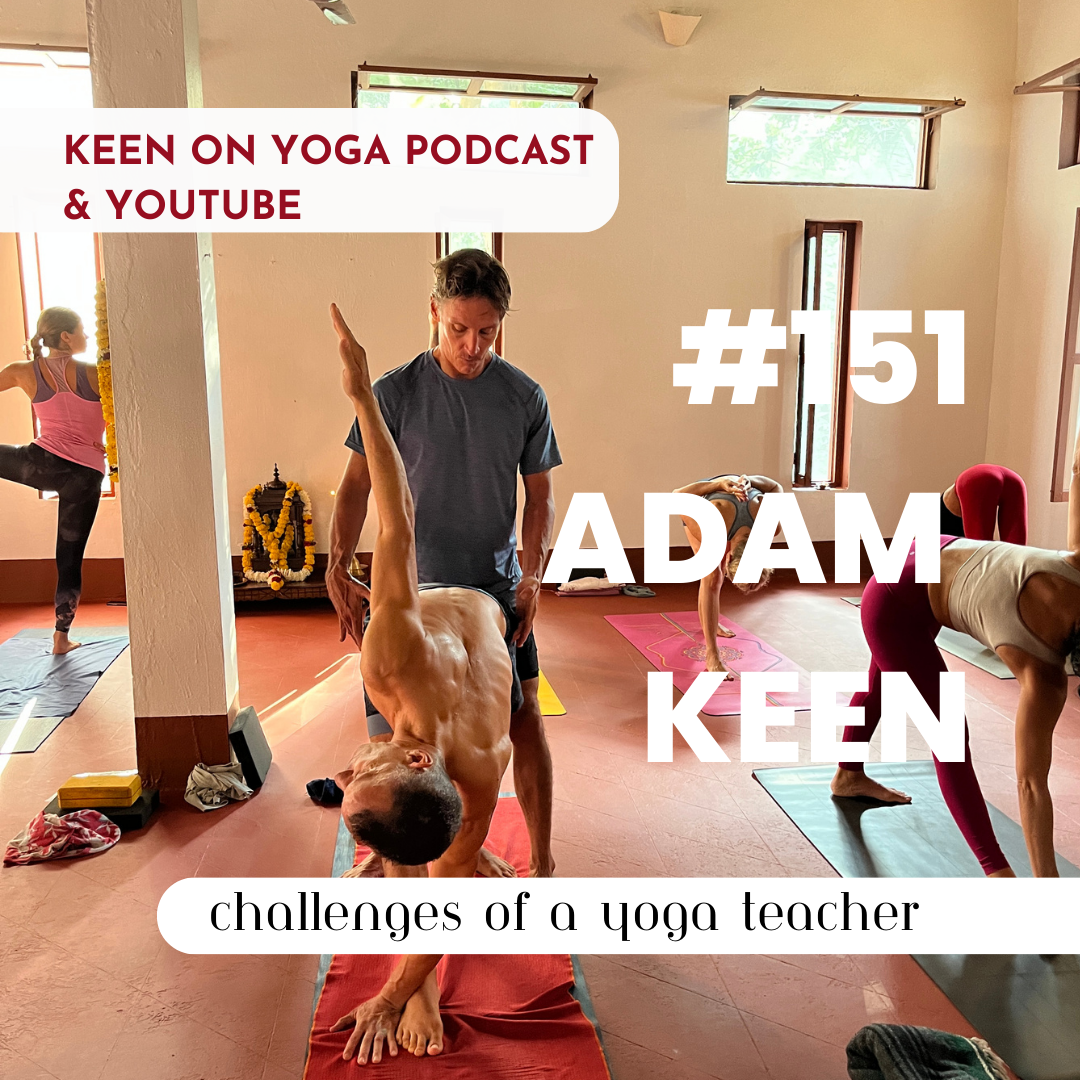
Ep 151#151 Adam Keen - Challenges of a Yoga Teacher
In this solo episode, Adam talks about the challenges facing yoga teachers and how he manages them. Support Us Subscribe, like, comment and share with your friends Buy us a coffee: https://www.buymeacoffee.com/infoRf Become a Patron: https://keenonyoga.com/membership/ Connect With Keen On Yoga Instagram Keen on Yoga: https://www.instagram.com/keen_on_yoga/ Instagram Adam Keen: https://www.instagram.com/adam_keen_ashtanga/ Website: https://keenonyoga.com/
Ep 149#149 John Tattva & Marta Magdalena - Ashtanga Yoga, Love & Community
#149 John Tattva & Marta Magdalena - Ashtanga Yoga, Love & Community (Ashtanga Nilayam Singapore | @ashtanganilayam.sg ) Yin and yang | Yoga community in Singapore | Finding Ashtanga Yoga | Pranayama & Chanting | Manifesting | A Gateway to Self-realisation | What's in the sequences? | Sharing the joy of connecting to your own breath | Not following blindly | Managing knee issues | Yoga as a lifestyle | Removing obstacles | Finding your truth Marta Magdalena is a co-founder of Nilayam and a dedicated yoga practitioner and teacher of Astanga Yoga. With over 20 years of experience on the mat, Marta's dedication to her daily self-practice of asana and pranayama is truly inspiring. Passionate about the holistic approach to wellness, Marta emphasises the importance of breathing practices, Ayurveda, and maintaining a healthy lifestyle alongside the physical aspects of yoga. She firmly believes these elements should always go hand in hand, creating a harmonious balance for overall well-being. In her spare time, Marta delves into the study of Vedic mantras, seeking a deeper understanding of the mind-body-soul connection. She understands that exploring a wide range of practices that bridge the physical and metaphysical realms unlocks the gateway to a more meaningful and fulfilling life. John Tattva is a co-founder of Nilayam and a passionate advocate of yoga. From his early days as a primary school apprentice, John has immersed himself in yoga, constantly expanding his knowledge and expertise. Today, he stands as a seasoned instructor, sharing his deep-rooted passion and wisdom with students daily for over a decade. He truly believes in the transformative power of Ashtanga Yoga, a practice that has become the cornerstone of his teachings. Yearly trips to Mysore allowed him to deepen his understanding and receive the blessing to teach from his teacher, Sharath Jois, reaching an Authorization Level 2. John also embraces therapeutic yoga, spreading positivity and healing through his teachings. Join him on a transformative journey of self-discovery and holistic well-being.

Ep 148#148 Christopher Wallis - Near Enemies of The Truth
Christopher Wallis – Near Enemies of The Truth (www.hareesh.org | @hareeshwallis | YouTube ) Speaking in near absolute truths | Digesting v rather than letting emotions go | Don't take it personally | I am my own guru | When the mental filters fall away | Communion with reality | Being with what is | Is yoga stilling the fluctuations of the mind? | Finding your dharma? | Following the golden thread in your life New Book Available for Pre-order: Near Enemies of the Truth https://hareesh.org/nearenemies Support Us Subscribe, like, comment and share with your friends Buy us a coffee: https://www.buymeacoffee.com/infoRf Become a Patron: https://keenonyoga.com/membership/ Connect With Keen On Yoga Instagram Keen on Yoga: https://www.instagram.com/keen_on_yoga/ Instagram Adam Keen: https://www.instagram.com/adam_keen_ashtanga/ Website: https://keenonyoga.com/ ____________________________________________________________________ Christopher Wallis, also known as Hareesh, is a Sanskritist and scholar-practitioner of Classical Tantra with thirty years of experience. He was initiated by a traditional Indian guru at the age of sixteen and received education at yoga āshrams in India and the West. Subsequently, he engaged in fourteen years of formal education in Sanskrit, South Asian Studies, and classical Indian religions. Hareesh teaches classical Tantric philosophy and Tantric practices, meditation, Sanskrit, and mantra-science to an engaged online community of practitioners. He is the Founder of Tantra Illuminated Online, an online learning portal where all his courses and teachings are available. He also offers workshops, retreats and classes in person in Portugal and around the world. He combines his practice of more than 25 years with a rigorous inquiry into the original Sanskrit sources to accurately translate and bring this ancient nondual wisdom to modern practitioners. The practices aim to facilitate both spiritual awakening and enhanced well-being for people in all walks of life. His community of students frequently praise his deep love for the tradition and the clarity of thought and expression. His teachers, mentors, and gurus, in chronological order, include: Gurumayī Chidvilāsānandā (root-guru), Paul Muller-Ortega (Śaiva Tantra and Classical Yoga); Alexis Sanderson (Śaiva and Śākta Tantra and Sanskrit); Marshall Rosenberg (Nonviolent Communication); Somadeva Vasudeva (Śaiva Tantra), Adyashanti (Meditation), and others who wish to remain anonymous. His degrees include a B.A. in Religion and Classics from the University of Rochester, an M.A. in South Asian Studies from U.C. Berkeley, an M.Phil. in Classical Indian Religions from Oxford, and a Ph.D. in Sanskrit from U.C. Berkeley. Hareesh is the author of Tantra Illuminated: The Philosophy, History, and Practice of a Timeless Tradition, the first comprehensive and accessible introduction to Classical Tantra in English (also available in Spanish, Portuguese and Romanian), and of The Recognition Sutras, a translation and commentary on a 1000-year-old masterpiece on experiential recognition of oneself as a direct expression of universal divine Consciousness. His new book Near Enemies of the Truth comes out on November 14 and is available for pre-orders now. EDUCATION Ph.D. in South Asian Studies (Sanskrit), University of California-Berkeley, 2014 M.Phil. with Distinction in Classical Indian Religions, University of Oxford (UK) M.A. with Honors in South Asian Studies (Sanskrit), University of California-Berkeley, 2003 B.A. magna cum laude in Religion and Classics, University of Rochester, 2001 In this talk: Near Enemies of the Truth Christopher Wallis YouTube Channel Christopher Wallis Blog Tantra Illuminated Online
Ep 147#147 Lotta Sebzda - The Mindset of Practice
Lotta Sebzda - The Mindset of Practice | @lottasbzdayoga Ashtanga as a 57-year-old grandmother (not what you'd think) | The importance of listening to the body | Early injury | Balancing yoga practice with family | Finding your limit | Finding joy in simple moments | Practice moments when feeling down | Inspiration from social media | Struggling with jumpbacks | Being mindful of social media | The benefits of a cold plunge | The practice in the early 2000s | Discovering the handstand press | Pushing yourself in practice Lotta Sebzda is a 57-year-old hairdresser - Ashtanga lover - mother of two adult children and two grandchildren. Ever since Lotta was a child, she was mostly upside down, doing handstands, cartwheels or other gymnastics. When she found Ashtanga Yoga in the late 90s it was like coming home, she says - she was immediately drawn to the practice. Since that day it's been a big part of her life - with dedication, love, curiosity, energy and gratefulness. Andrew also started his Ashtanga Yoga journey at the same time as Lotta. With a background as a basketball player, he had many old injuries to deal with. Ashtanga yoga helped him to strengthen the weak and injured parts of his body, and today yoga is the only thing that keeps him strong, both in body and mind.

Ep 146#146 Christopher Wallis - Non-dual Classical Tantra
Christopher "Hareesh" Wallis – Non-dual Classical Tantra or The Teacher Drinks Bourbon? (www.hareesh.org | @hareeshwallis | YouTube ) First yoga for householders | True Holistic Experience | Digesting the remnants to incomplete experiences from the past | Scholar & practitioner | Eastern spirituality upbringing Siddha yoga | Powerful experience during meditation | Exploring psychedelics | Classical Tantra teachings | Seeking in various ways | Nondual tantra provided the context for everything in one | Discipline is required for meaning | Paul Muller-Ortega | Adyashanti | Unpacking transmissions | Tibetan Buddhism v Classical Tantra v modern yoga | Revivalism of the Yoga Sutras | Reincarnation and the soul | Connecting to the subtle body during asana | Feeling the pain | Digesting our experiences to resolve them His new book Near Enemies of the Truth comes out on November 14 and is available for pre-orders now. Christopher Wallis, also known as Hareesh, is a Sanskritist and scholar-practitioner of Classical Tantra with thirty years of experience. He was initiated by a traditional Indian guru at the age of sixteen, and received education at yoga āshrams in India and the West. Hareesh teaches classical Tantric philosophy and Tantric practices, meditation, Sanskrit, and mantra-science to an engaged online community of practitioners. He is the Founder of Tantra Illuminated Online, an online learning portal where all his courses and teachings are available. He also offers workshops, retreats and classes in person in Portugal and around the world. He combines his practice of more than 25 years with a rigorous inquiry into the original Sanskrit sources to accurately translate and bring this ancient nondual wisdom to modern practitioners. The practices aim to facilitate both spiritual awakening and enhanced well-being for people in all walks of life. His community of students frequently praise his deep love for the tradition and the clarity of thought and expression. His teachers, mentors, and gurus, in chronological order, include: Gurumayī Chidvilāsānandā (root-guru), Paul Muller-Ortega (Śaiva Tantra and Classical Yoga); Alexis Sanderson (Śaiva and Śākta Tantra and Sanskrit); Marshall Rosenberg (Nonviolent Communication); Somadeva Vasudeva (Śaiva Tantra), Adyashanti (Meditation), and others who wish to remain anonymous. His degrees include a B.A. in Religion and Classics from the University of Rochester, an M.A. in South Asian Studies from U.C. Berkeley, an M.Phil. in Classical Indian Religions from Oxford, and a Ph.D. in Sanskrit from U.C. Berkeley. Hareesh is the author of Tantra Illuminated: The Philosophy, History, and Practice of a Timeless Tradition, the first comprehensive and accessible introduction to Classical Tantra in English (also available in Spanish, Portuguese and Romanian), and of The Recognition Sutras, a translation and commentary on a 1000-year-old masterpiece on experiential recognition of oneself as a direct expression of universal divine Consciousness. Tantra Illuminated: https://www.amazon.com/Tantra-Illuminated-Philosophy-Practice-Tradition/dp/0989761304/ 'Yoga Body: The Origins of Modern Posture Practice by Mark Singleton https://www.amazon.com/Yoga-Body-Origins-Posture-Practice/dp/0195395344 'The Yoga Sutra of Patanjali: A Biography' by David Gordon White: https://www.amazon.com/Yoga-Sutra-Patanjali-Biography-2014-05-25/dp/B01FGMV5S2/ Hamsamitthu: "Pātañjalayoga is Nonsense" by Somdev Vasudeva: https://www.jstor.org/stable/23884110 The Recognition Sūtras; https://www.amazon.com/Recognition-Sutras-Illuminating-000-Year-Old-Masterpiece/dp/098976138X/ The Vātūlanātha-Sūtras: https://hareesh.org/blog/2023/7/30/the-sutras-of-the-intoxicated-lord-vatula-natha Christopher Wallis YouTube Channel: https://www.youtube.com/@christopherwallis751 Christopher Wallis Blog: https://hareesh.org/blogpage Tantra Illuminated Online: https://www.tantrailluminated.org/
Ep 145#145 Adam Keen - The Rules of Ashtanga Yoga
Adam completed the advanced A series with Sharath in Mysore in 2012, the same year he was authorised, and yet he believes that the practice is meant to be individualised for each student. F Support Us Buy us a coffee: https://www.buymeacoffee.com/infoRf Become a Patron: https://keenonyoga.com/membership/ Exclusive content, yoga & lifestyle tips, live Zoom meet-ups & more. €10 per month, cancel at any time. Connect With Keen On Yoga Instagram Keen on Yoga: https://www.instagram.com/keen_on_yoga/ Instagram Adam Keen: https://www.instagram.com/adam_keen_ashtanga/ Website: https://keenonyoga.com/
Ep 144#144 Kranti (Renato Libanati) - The Love of Ashtanga
Kranti (Renato Libanati) - Love of Ashtanga (Krantivira.com |@kranti.yoga.movement) Certified Ashtanga Teacher since 2012 | India 1991 – Osho | Meditation at age 14 | Finding Ashtanga | Mysore in 2005 | Richard Freeman, Maty Ezraty | Changes in Mysore | Managing injuries | Keeping motivated | Guilt in practice | Teaching in Japan v Europe | The future | Teaching relationship (more info below) ******************************************** Support Us Subscribe, like, comment and share with your friends Buy us a coffee: https://www.buymeacoffee.com/infoRf Become a Patron: https://keenonyoga.com/membership/ Connect With Keen On Yoga Instagram Keen on Yoga: https://www.instagram.com/keen_on_yoga/ Instagram Adam Keen: https://www.instagram.com/adam_keen_ashtanga/ Website: https://keenonyoga.com/ ********************************************* Kranti was born in Italy, under the sign of Cancer in 1970, in Chinese astrology's Year of the Dog. Since childhood, he's had an instinct for expansion and growth. His interest in the human mind and self-inquiry ignited at age 14, after reading his first book on meditation written by Osho (Bhagwan Shree Rajneesh). Eventually, Kranti developed an interest in Yoga. In 1991, he travelled through India, and a few years later, he started a daily practice. In Milan in 1996, he took a one-year teacher training with Carlo Patrian, one of the yoga pioneers in Italy. A few years later, while in Berlin, he was introduced to the Ashtanga method and fell in love with the practice. Since then, although Kranti's yoga experience was complimented with the Iyangar method, Ashtanga became his daily practice and passion. Kranti moved to Copenhagen a few years later, teaching Ashtanga and Hatha Vinyasa. He taught different yoga enthusiasts, dancers, actors, and athletes; one of his regular students was the Crown Princess of Denmark, Mary Donaldson. In Paris in 2002, Kranti attended a workshop with Richard Freeman. He was deeply inspired by Richard's versatile and open approach to yoga and yoga philosophy, and the following year he traveled to Boulder, Colorado, for Richard's one-month intensive teacher training. This experience further deepened his understanding of the Ashtanga method, meditation, and philosophy. In 2004, he attended a course in Yoga Therapy at the Yoga Biomedical Trust of London, England. He worked with students with heart disease and was moved by the powerful healing aspect of yoga as a complementary alternative therapy. Since 2005, Kranti has routinely studied in Mysore, India, under the guidance of Sri K. Pattabhi Jois and his grandson Sharath Jois. He received Authorization Level 1 to teach Ashtanga Yoga from Sri K. Pattabhi Jois in 2008, and on July 5th, 2010, Kranti received Level 2 Authorization. In 2012, Kranti was Certified by the K. Pattabhi Jois Ashtanga Institute (KPJAYI) – the only official institute in the world able to certify students to teach the traditional Ashtanga Yoga method by the Jois family. Kranti & Gabriele Severini, who teaches in Rome, are the only two certified teachers from Italy. As of 2012, only 38 certified teachers were recognised globally by KPJAYI. Kranti is also a registered teacher with the Yoga Alliance (RYT and E-RYT 500 hours), and he completed the Yin Yoga Teacher Training with Sarah Powers. Through his teachings, Kranti will help you tap into your own true, unique potential. "In addition to Yoga studies, Kranti has trained and self-studied 'Life Coaching,' NLP, Body Language and psychology, incorporating aspects of these fields in his daily teaching and private lessons."
Ep 143#143 Zoë Slatoff - The Practice of Sanskrit
Zoë Slatoff - The Practice of Sanskrit (www.ashtangayogasanskrit.com | @yogasankrit ) Introduction to yoga | One month of led Intermediate with Pattabhi Jois in NY | Qutting school for Mysore at 21 years old | Falling in love with Sanskrit | Interest in he texts | Integrated study with practice | Giving up neuroscience | Inspiration | Sanskrit for yoga students book | Sanskrit classes online | The stilling of thoughts | Deeper understanding of Sanskrit Online classes: https://ochsonline.org/learning-pathways-sanskrit/ Zoe's Book https://www.amazon.com/Yogavataranam-Translation-Integrating-Traditional-University/dp/086547754X/ About Zoe Slatoff-Ponte Zoë teaches Sanskrit and Yoga Philosophy in the Yoga Studies M.A. program at Loyola Marymount University in Los Angeles, as well as online courses for the Oxford Centre for Hindu Studies. She has a PhD in Religion and Philosophy from Lancaster University and an MA in Asian Languages and Culture from Columbia University. Zoë is the author of Yogāvatāraṇam, a Sanskrit textbook for yoga students, which uses extracts from classical yoga texts to integrate traditional and academic methods of learning the language. Zoë is also the Sanskrit editor for Pushpam, and has done Sanskrit editing for Nāmarūpa and Robert Svoboda's book Vāstu. Zoë also taught for many years at her yoga shala in NYC, Ashtanga Yoga Upper West Side. She discovered yoga at the age of 15 and has been devoted to a daily practice ever since. She first traveled to Mysore in 2000 to study with Pattabhi Jois and Sharath and has returned almost annually. She is honored to have received Guruji's blessing to teach in 2002, and level 2 Authorization in 2009. Her PhD centers around a translation of the Aparokṣānubhūti, an Advaita Vedānta text attributed to Ādi Śaṅkarācārya, which is particularly relevant to yoga practitioners. It explains how we get caught up in illusions about our bodies and the world and how we could instead use practice to help us discover and be more connected to our essential nature.
Ep 142#142 Adam Keen - Physical Assists: My Thoughts
In this solo episode, Adam shares his thoughts on physical assists in teaching yoga. Once thought of as the only way to teach this method, things are gradually shifting. Support Us Subscribe, like, comment and share with your friends Donate: https://keenonyoga.com/donate/ Buy us a coffee: https://www.buymeacoffee.com/infoRf Become a Patron: https://keenonyoga.com/membership/ Exclusive content, yoga & lifestyle tips, live Zoom meet-ups & more. €10 per month, cancel at any time. Connect With Keen On Yoga Instagram Keen on Yoga: https://www.instagram.com/keen_on_yoga/ Instagram Adam Keen: https://www.instagram.com/adam_keen_ashtanga/ Website: https://keenonyoga.com/ Keen On Yoga Podcast Apple Podcast: https://podcasts.apple.com/us/podcast/keen-on-yoga-podcast/id1509303411 Spotify: https://open.spotify.com/show/5iM9lcw52JskHUZ2eFvVxN Full Guest List: https://keenonyoga.com/podcast-guests/
Ep 141#141 Nicki Doane - Maui Yoga and What Is Happening Now?
Nicki Doane (www.nickidoane.com | @mayayogastudio ) Nicki lives in Maui and she recorded this episode from her studio sharing her story of yoga as well as the devastation caused by the fires in the last few days. Links to donate and help the people of Maui are below. Maui Strong Fund Maui Rapid Response - the hub for verified donation links What's happening on Maui | Mind Blown from Yoga | Yoga via The Grateful Dead | Yoga feeling familiar | Tim Miller | Mysore in 1991 | Thoughts on Pattabhi Jois | Yoga was fun, but it gets deeper | Not being ready for The Yoga Sutras | Teaching style | Ashtanga on Maui | Fires on Maui Nicki Doane is an internationally recognized yoga teacher, known for her ability to make the practice of yoga accessible to every body. She began her study of yoga at the age of 18 while attending the University of Massachusetts. From her first class, she knew she had found something special and deeply familiar. While she began to practice yoga on a purely physical plane and because it felt good, it became apparent some years later that there was more to Yoga than she originally thought. In 1991, Nicki traveled to Mysore, India to study with Sri K Pattabhi Jois, the master of Ashtanga Vinyasa Yoga. She fell in love with the practice and continued her studies with Pattabhi Jois until his death in 2009. What she experienced on that first trip was a radical realization that yoga is much more than a physical practice. The yoga affected her deeply on an emotional and spiritual level. After that she was hooked! As she delved deeper into the Ashtanga practice she became curious about her teacher's teacher and his lineage. She learned that Tirumalai Krishnamacharya had been Pattabhi Jois' teacher and also the teacher of BKS Iyengar. This led her to study Iyengar Yoga with Mr. Iyengar, his children and with many of his senior teachers as well including Gabriella Giubilaro and Patricia Walden, at his institute in Pune, India. Nicki has always believed that her practice continued to grow and evolve due to her study and practice of both of these systems of Yoga. Nicki continues to study to study yoga with senior teachers and believes that a great teacher must always remain a dedicated student. Nicki's teaching has grown out of her practice and her deep faith in yoga and she chooses to honor her students as individuals first and foremost. Nicki's style combines asana, pranayama, philosophy, and poetry and her classes are strong and accessible to everyone. Nicki uses humor in her teaching to set her students at ease and she is considered to be very relatable and down to earth. She is known as a Teacher's teacher and loves igniting the spark of yoga in her students. Nicki lives on the beautiful island of Maui, Hawaii, where she owns and directs the Maya Yoga Studio on the North Shore of Maui. She has been featured in numerous articles and has graced the cover of Yoga Journal magazine. She is featured in 2 Ashtanga Yoga videos available through Gaiam and in 9 videos entitled Maya Yoga Vinyasa on her youtube channel. She is currently finishing a book on Yoga for beginners. Nicki teaches workshops and teacher training courses at her studio on Maui and travels all over the world conducting workshops, teacher trainings, and retreats.
Ep 140#140 Jahnavi Jethmalani - Authentic Yoga & The Modern Human
Jahnavi Jethmalani - Authentic Yoga & The Modern Human @jahnavi.jethmalani Adam met Jahnavi at Purple Valley Yoga in Goa in April and they started a dialogue, this is a follow-up conversation to that original one. Adam will be back at Purple Valley Goa teaching with Edwin Bryant in October 2024. How do we balance yoga transmission for modern life? | Yoga is suited to the context of the West | When yoga goes too far from its roots makes it uncomfortable for Indians | How to move toward a more authentic expression | Is yoga union? | Going beyond the physical asana | Grounding the practice in yoga philosophy | Overtake of the sutras | Can you do yoga sadhana without looking at the original texts? | What is the sadhana grounded in? | How to a space of sincerity and authenticity | Physical movement and mind mastery | What do you use your mind for? | The trap of authoritarianism in the yoga world The problem comes when you are taking the culture as an identity to what you are doing. If I practice yoga then I also have to wear the clothes and the beads and the whole set up as a costume. Yoga is not anything you do externally. Support Us Subscribe, like, comment and share with your friends Donate: https://keenonyoga.com/donate/ Buy us a coffee: https://www.buymeacoffee.com/infoRf Become a Patron: https://keenonyoga.com/membership/ Exclusive content, yoga & lifestyle tips, live Zoom meet-ups & more. €10 per month, cancel at any time. Connect With Keen On Yoga Instagram Keen on Yoga: https://www.instagram.com/keen_on_yoga/ Instagram Adam Keen: https://www.instagram.com/adam_keen_ashtanga/ Website: https://keenonyoga.com/

Ep 139#139 Clayton Horton - Living The Yamas and Niyamas
Clayton Horton – Living the Yamas & Niyamas (www.greenpathyoga.org | @shivaburns) Asian philosophy | Hippy San Francisco | Hatha yoga | Baptiste yoga | Iyengar yoga | Brian Kest | Tantra, meditation | Teaching in Asia | Body types | Individualised teaching | Living the yamas and niyamas | Changes in teaching | Meditation | Diet | Pattabhi Jois | Current practices Clayton Horton is the Director of Greenpath Yoga. He has been a student of yoga for over 30 years and began teaching in 1996. Clayton is an experienced and internationally known KPJAYI Certified Ashtanga yoga teacher born in Oklahoma, USA. He discovered yoga at age 21 whilst living in San Francisco, California, when his mother took him to a pranayama class. After several years of practice and a long trip to India, he began teaching in 1996. To Clayton, yoga is a healing path back to the Self, allowing us to experience true peace and happiness. Being kind and living in balance with nature continue to guide his life. Clayton studied with masters Sri K. Pattabhi Jois and the Greensufi for 14 years, both of whom gave him great inspiration to practise daily and develop a yogic lifestyle. Clayton received formal authorisation to teach Ashtanga Yoga from the Ashtanga Yoga Research Institute of Mysore, South India in 2003 and he received Level Two Authorisation in 2010. While attending a course for teachers in Mysore during the summer of 2016, Sharath Jois awarded Clayton with the blessing of 'Certification' – the highest level of accreditation for teachers at the institute. Clayton's teaching style is traditional, yet light-hearted and relaxed. He believes that by practising and living yoga, we can transform ourselves and the world around us. According to Clayton, Ashtanga Yoga is a complete and well-balanced system in which an experienced and skilled teacher can help any student 'find their place' within its structure regardless of individual challenges, aptitude, and constitution. From 2001-2006, Clayton operated Greenpath Yoga Studio in San Francisco, California, USA. The studio was one of America's first Green and Environmental–Friendly yoga studios. It was an inspiration with its progressive yoga programs, philosophies, events, and authenticity. The studio helped to inspire awareness of Earth Friendly yoga practices, philosophies, and products. Currently, Clayton teaches Daily Ashtanga classes at Pure Yoga in Hong Kong. He teaches workshops, retreats, and courses and presents at yoga conferences internationally. His favourite hobbies are surfing, swimming, singing, and playing guitar. He is committed to making the world a better place by living with eco-awareness, teaching yoga and meditation, serving others with charity work (karma yoga), and offering music & Kirtan chanting (bhakti yoga).