Joe Lonsdale: American Optimist
169 episodes — Page 2 of 4

Ep 118: Marc Andreessen on AI, Robotics & America's Industrial Renaissance
America's global ascendency was tied to its industrial strength. But since the 1960s, our manufacturing might gave way to white-collar services. Now, we've on the verge of a new AI economy. Is this our moment to reindustrialize? What does it mean for trade and immigration? And how do we make sure everyone, particularly rural America, shares in the potential economic growth? These are some of the most important policy questions that will determine the future of our country, and Marc Andreessen is the right person to ask. Several weeks ago I interviewed Marc, co-founder and general partner at Andreessen Horowitz, for the first annual Ronald Reagan Economic Forum, an alternative to the World Economic Forum that offers a more dynamic, pro-growth view of the future of America and the West. We begin with the debate over tariffs, and what Marc has learned from studying President McKinley, a key inspiration for President Trump's trade views. McKinley's protectionist agenda is well known, but Marc explains why he actually shifted to reciprocal tariffs by the end of his term as manufacturers needed new markets. Next, he details America's transformation into a services-based economy, why it benefited the coasts over the heartland, and the intense political and cultural divides that emerged. Learn why Marc believes that AI plus robotics will provide a unique opportunity to capture the manufacturing jobs of the future and help rural areas share in the upside. We also discuss the debate over immigration and what smart policies look like in an AI-driven economy. Finally, we cover the potential bottlenecks to an AI boom, and how our leaders can position America to lead an industrial renaissance. 00:00 Episode intro 02:18 Understanding McKinley & Trump on tariffs 07:20 Manufacturing to services; America's economic shift 11:30 The great clash between cities & rural America 15:50 Deindustrializing wasn’t inevitable; it was a choice17:40 AI is a fundamental turning point 20:30 Robotics will be biggest industry ever created 23:54 High-skilled immigration + DEI hurts rural kids 29:32 What are bottlenecks to AI boom This is a public episode. If you would like to discuss this with other subscribers or get access to bonus episodes, visit blog.joelonsdale.com

Ep 117: Dave Rubin on the Woke Right, Free Speech vs Conspiracy Theories & His New Tequila Company
Few people have been as influential as Dave Rubin in the new media movement and fight for free speech. He not only helped expose Big Tech's censorship but also built an alternative platform that enabled other contrarian voices to speak out. Where is new media headed next? Why are Tucker Carlson and others attacking Churchill or dabbling in antisemitic conspiracy theories? And how should we respond to a "woke right"? This week we're joined by the comedian-turned political commentator and entrepreneur who has amassed millions of followers. An original member of the intellectual dark web, Dave challenged the limits of "acceptable speech" early on. After Patreon started censoring right-wing voices, he created Locals, where free speech reigned and power was given back to creators (I was a small investor in Locals, which was later acquired by Rumble). Dave's efforts were key in providing oxygen to alternative media voices and pressuring Big Tech to reform. He's still expanding his influence in media with a new production network, and just launched a long-time passion project: his own tequila company — Copal. Check out their first reposado before it sells out. We begin with Dave's recent visit to UATX, how AI is impacting education, and why he's creating an AI version of himself. Next, we dive into the origins of Locals and how Dave responded to censorship by building his own independent, free-speech platform. He also reveals what it was like inside YouTube during the heyday of Big Tech censorship and how the "Twitter Files" changed the world. Then, we take a tour of Dave's new tequila company before discussing the troubling rise of a "woke right," and why figures like Tucker Carlson are attacking Winston Churchill and flirting with antisemitic tropes. How should free speech advocates confront the spread of these bad ideas? We end with Dave's ideas for how to elevate our culture and move our collective dialogue in a positive direction. [NOTE: this episode was recorded before the United States and Israel struck Iran's nuclear facilities.] 00:00 Episode intro 01:57 Intellectual dark web & Dave's impression of UATX 04:37 Why Dave is making AI version of himself 08:45 The origins of Locals & Dave's fight for free speech 12:40 Dave's new tequila company 18:00 Should we trust a changed BigTech? 25:20 Tucker vs Churchill 33:30 The Woke Right? 38:00 Did the Democratic Party get hijacked? 46:00 Can optimism prevail over conspiracy theories? This is a public episode. If you would like to discuss this with other subscribers or get access to bonus episodes, visit blog.joelonsdale.com

Ep 116: California — the Next Revolution? A Conversation with Steve Hilton
California has been governed by left-wing, one party-rule for 15 years, and the results speak for themselves. How did California turn deep blue? What are the policies needed to reverse course? And can those ideas actually win?This week we talk about the future of California with my longtime friend Steve Hilton. Many people know Steve from his popular Fox News show, "The Next Revolution," but may not know that his parents fled communism in Hungary to start a new life in the UK. The fight for freedom is core to who he is and why he fell in love with America, specifically California. After the success of his television show, he decided he didn't want to just talk about issues but also get in the arena. He launched his policy group, Golden Together, and recently went one step further and jumped into the race for governor.We begin with Steve's upbringing, from working class London to studying at Oxford and later serving as senior advisor to Prime Minister David Cameron. We discuss key lessons learned at the highest levels of UK government, including his DOGE-like research into the UK's crippling bureaucratic growth. Next, we cover his journey to the Golden State, why he decided to stay and fight for its future, and how terrible policies turned California into a paradise for lawyers and government unions, instead of hard-working families and small businesses. Learn why, for example, restaurants budget a million dollars a year just to deal with frivolous lawsuits, plus other insanity Steve has discovered as he travels the state. Despite the dysfunction, he still believes there's reason for optimism and explains why he's confident Republicans can win statewide office — and why they don't need to water down their message or agenda to do it.00:00 Episode Intro 01:30 Fleeing communism to Prime Minister’s senior advisor06:05 Brexit, EU, and fighting UK bureaucratic growth 12:44 How Steve fell in love with CA & landed Fox News show 17:20 Why Steve got into politics 20:18 How CA became a paradise for lawyers & frivolous lawsuits 25:44 Is CA more conservative than we think? 29:27 Homeless crisis: follow the money 35:10 How to fix CA's housing nightmare 44:45 How Republicans can actually win in California This is a public episode. If you would like to discuss this with other subscribers or get access to bonus episodes, visit blog.joelonsdale.com

Ep 115: Scott Wu, Devin, and a Trillion-Dollar Opportunity
Scott Wu took the technology world by storm when he released a demo of Devin, the first AI software engineer. A year later, Devin has gone global, and his company — Cognition AI — is valued at over $4 billion. What are the next leaps for AI coding agents? Could the total economic impact be in the trillions of dollars? And is Scott worried that Devin may someday replace him?Scott's journey to the epicenter of the AI race started in an unlikely place: growing up in Baton Rouge, Louisiana, the son of Chinese immigrants. At an early age, he excelled in math and was fast tracked into high school courses [not held back in the name of equity!], culminating in a national Mathcounts championship and three gold medals in competitive programming at the International Olympiad in Informatics. After highschool, he joined Addepar as a top young software engineer before attending Harvard.Scott gathered his smartest friends and many other math, physics and programming champions under one roof to build Cognition, and when they're not architecting new AI breakthroughs, they're quizzing each other with math games. Learn why the top math minds are dominant in AI and what this tells us about the nature of AI progress and where we're headed next. Plus, the first person to solve one of Scott's tough math challenges in this episode gets free swag [leave your answer in the comments or email [email protected]]. Finally, we discuss the future of software engineering and what AI coding agents mean for economic productivity as tasks that once took months to complete now take a weekend with Devin. Is it a trillion dollar opportunity?It's inspiring to see the impact an optimistic, brilliant mind like Scott can have on the world — and he's still a few years shy of his 30th birthday.0:00 Episode intro 1:38 Math prodigy to AI savant 9:43 Origins of Cognition and Devin 11:25 Why are top math minds dominant in AI? 14:40 The next wave of generative AI 18:45 Jagged intelligence & man-machine symbiosis 25:35 Solve Scott's math challenge31:05 Scott's argument for AI optimism 35:10 Trillion-dollar opportunity? 39:10 The future of software engineering 42:10 Optimism for the future This is a public episode. If you would like to discuss this with other subscribers or get access to bonus episodes, visit blog.joelonsdale.com

Ep 114: Flying Cars Are About to Change the World — Joby CEO JoeBen Bevirt
JoeBen Bevirt has spent two decades building electric vertical take-off and landing (eVTOL) aircraft, and now he's on the cusp of commercial approval and rollout. Will flying cars be as transformational as the automobile? How will air taxis impact our cities and the way we live? And how did JoeBen achieve this feat of ingenuity?This week we're joined by the Founder and CEO of Joby Aviation, an American aviation company pioneering eVTOL aircraft for air taxi service. All-electric, virtually silent, and traveling up to 200mph with a pilot and four passengers, Joby is opening new possibilities in the skies above — starting at the price of an Uber Black. The implications for productivity and quality of life are massive, saving the average person an hour or two a day sitting in traffic and unlocking new swaths of land for development.I'm proud that 8VC co-led Joby's first investment round about a decade ago, when many others, even flying enthusiasts, thought it was a pipedream. Since then, Joby has single-handedly shaped an entire new industry, from engineering breakthroughs to regulatory pathways, ensuring that American aviation stays ahead of China. Joby expects its first passenger rides in Dubai within a year and is working closely with the Trump administration as it nears the final stages of FAA approval. Inspired by SpaceX, Joby is vertically integrated and plans to aggressively ramp manufacturing here in the U.S., backed by a $500 million investment from Toyota (bringing Toyota's total investment near $900 million). While we await the first passenger flights, Joby is also building out its infrastructure nationwide — and they're looking for real estate and partners! You can contact JoeBen and the team here: [email protected]:00 Episode Intro 01:38 Flying cars are here 04:00 JoeBen's journey 05:48 Battery progress & hydrogen breakthroughs 08:50 Air taxi for the price of Uber Black 12:35 When will commercial flights start? 20:30 Why Joby is the industry leader 24:20 Why China is copying Joby 28:00 How air taxis will change your life 32:10 How Joby will transform real estate 35:45 Solving intractable problems This is a public episode. If you would like to discuss this with other subscribers or get access to bonus episodes, visit blog.joelonsdale.com

Ep 113: Why Sam Lessin Believes AI Isn't Disruptive & Venture Capital Is Fundamentally Changing
After leading the product team at Facebook, Sam Lessin became one of the top seed investors in Silicon Valley, known for cutting the first check into Venmo and seeding Solana (a 2,000X return!) Why does he think crypto is more disruptive than AI? Why does he believe the VC model is fundamentally shifting? And why are we, together, building a new company focused on taking merit to the extreme in corporate America?We discuss this and more with Sam, co-founder and General Partner of Slow Ventures, a leading early stage venture fund. Prior, he was the VP of Product at Facebook during its hyper growth years. Sam is also heavily involved in fixing Harvard, his alma mater, including a recent campaign for the Board of Overseers and building a new alumni network to help return the university to veritas and its founding principles.Sam first met Mark Zuckerberg at Harvard and watched Facebook being built firsthand. But, as he explains, fell prey to conventional status games and spent two years at Bain & Company, before breaking out and going on to play a critical role at Facebook. He then launched Slow Ventures to take big bets on unconventional ideas. Learn why he believes AI is overhyped; where venture capital is headed next; and what we're building at Meritfirst to unlock hidden talent and overhaul how companies source and hire the best and brightest.00:00 Episode intro 01:50 Harvard & the wrong career choices 05:13 Lessons learned at Facebook 10:15 The challenges of an open internet 14:48 Venmo, Solana & Sam's investment thesis 16:55 Sam's contrarian take on AI 19:15 How venture capital is changing 24:56 How to fix Harvard 34:13 Building Meritfirst together This is a public episode. If you would like to discuss this with other subscribers or get access to bonus episodes, visit blog.joelonsdale.com

Ep 112: Peter Thiel on DOGE, Tariffs, Building Generational Companies & the Future of Civilization
From co-founding PayPal and Palantir to writing the first check into Facebook and investing early in SpaceX, AirBnB, and numerous other unicorns, Peter Thiel has shaped the American technology world for over 25 years. Dozens of our most talented leaders have been inspired by Peter, and as a major influence on how we understand the world, he’s also helped to shape the future of the West. Peter likes exploring clever ideas and wisdom, and loves to win.What's next for our civilization? How should talented people decide what to focus on? And where are the best opportunities amid our myriad challenges? There's no one better than Peter at understanding broken systems, recognizing civilizational currents, and charting a contrarian course. We begin with his mental framework for building in dysfunctional areas, and why Palantir proved more difficult than we ever thought. Peter reveals his worst investments of the past few decades and why broken sectors are often impervious to change. He explains the talent, philosophy, and timing necessary to build a truly generational company.We also cover DOGE, President Trump's trade policy, and why Peter is more optimistic about the new administration in Washington than at any point since President Reagan. We discuss whether the vibe shift in Silicon Valley is real, and Peter's theory for how Meta (where he served on the board for 17 years) was captured by the woke mind virus. Lastly, he explains the precursors for cultural revolutions, i.e., the woke backlash, and why he's uncharacteristically bullish on the DOGE movement and new opportunities for lasting political change.00:00 Episode intro 01:40 UATX vs Harvard 04:45 What should talented people focus on? 07:40 Peter's thesis behind Palantir 11:05 Why Palantir sued the Army 14:30 Optimism vs pessimism 17:10 Peter's worst investment areas 20:30 Peter's perspective on Trump & DOGE 25:45 Trump's trade policy & how to deal with China 30:40 New opportunities in broken areas? 35:10 Los Angeles, Austin, and broken cities 40:25 Is the Silicon Valley vibe shift real? 45:45 Cultural revolutions and why speech codes backfired This is a public episode. If you would like to discuss this with other subscribers or get access to bonus episodes, visit blog.joelonsdale.com

Episode 111: Sen. Tom Cotton on DOGE, TikTok, and "Seven Things You Can't Say About China"
Sen. Tom Cotton is a key leader on Capitol Hill, standing up to cronyism and grift at home and our adversaries abroad. Does he think DOGE can effect lasting change? What can we do about activist judges blocking the new administration? And how do we stop the Chinese Communist Party from infiltrating our government, undermining American innovation, and targeting our kids with synthetic and digital drugs, i.e. fentanyl and TikTok?Chair of the Senate Intelligence Committee and member of the Armed Services Committee, Sen. Cotton plays a vital role in shaping our nation's foreign policy. He also knows the impact of policy firsthand, having deployed to Iraq and Afghanistan in the U.S. Army after graduating from Harvard and Harvard Law school. His new book sounds the alarm on America's capitulation to the CCP and is appropriately titled "Seven Things You Can't Say About China."As the first elected official to publicly defend the lab leak theory, Sen. Cotton courageously challenged the CCP and our own establishment media, reinforcing his reputation as a bold fighter on issues foreign and domestic. We begin with DOGE and a key legislative mechanism he believes Republicans can use to remove waste, fraud, and abuse in the budget for good. He also explains why the Supreme Court needs to weigh in on activist district judges issuing nationwide injunctions. Next, we dive into his new book and the seven areas of the CCP's malfeasance, including its influence over the Panama Canal, what's going to happen with TikTok, and whether the U.S. is serious about stopping the "reverse opium war" and taking out the Mexican cartels. There are many in Hollywood, academia, corporate America, and even Washington D.C. who downplay or cave to Chinese influence; Sen. Cotton is not one of them!00:00 Episode Intro 03:05 DOGE & activist judges 08:40 Lab leak theory and exposing lies 11:27 Seven Things You Can't Say About China 15:47 Was Pres. Trump right about China and Panama Canal? 20:06 How China infiltrated Hollywood 25:50 What's going to happen with TikTok? 29:36 The CCP's reverse opium war 38:55 Is there optimism for a free China? This is a public episode. If you would like to discuss this with other subscribers or get access to bonus episodes, visit blog.joelonsdale.com

Ep 110: Dr. Mike Israetel on Miracle Drugs, the Aesthetic Revolution, Living to 200 & New Frontiers in AI-Powered Medicine
Dr. Mike Israetel is one of the most influential voices in health and fitness. What are the "miracle drugs" he thinks will upend modern medicine? Why is he outspoken on AI and the coming "aesthetic revolution"? And what does he think of Bryan Johnson and living to 200? We discuss some of the most interesting developments in health science with Dr. Mike, co-founder of Renaissance Periodization, his health and strength lab for training athletes and professionals, while sharing his insights with millions online. He earned a PhD in Sport Physiology from East Tennessee State University and later taught at Lehman College, Temple University, and the University of Central Missouri. He also pushes his own body to the limits as a competitive bodybuilder and professional Brazilian Jiu Jitsu grappler. How did Dr. Mike become a leading authority on strength training? By following the science, he says, and debunking common myths and faulty logic. Learn about the most common misconceptions and why he believes nearly all of health and fitness boils down to a few fundamental principles. Next, Dr. Mike outlines the science behind everyday issues — sleep, alcohol, nicotine, caffeine, testosterone — before diving deep into GLP-1s, steroids vs peptides, cutting-edge drug discovery, and why living to 200 is not as far-fetched as we think. Finally, he explains his journey into AI and philosophy, and why he believes the coming aesthetic revolution will transform the world for the better starting in the 2030s. Check out Dr. Mike's newest nutritional product, Genius Shot, here. 0:00 Episode Intro 01:32 Debunking fitness myths 04:23 Health Science that will change your life 07:44 Health Impacts: Alcohol, Sleep, Caffeine, and Nicotine 14:44 Testosterone Decline 16:41 Why Dr. Mike Is Obsessed with AI 21:00 AI Misuse, Threats, and Capabilities 24:27 Aesthetic Revolution, Modern Drugs, and Anti-Aging Technologies 32:48 Bryan Johnson and Longevity 37:28 Biggest Potential for Fitness & Nutrition Startups 41:10 Cybernetics, Prosthetics, and the Future of Human Enhancement This is a public episode. If you would like to discuss this with other subscribers or get access to bonus episodes, visit blog.joelonsdale.com

Ep 109: Anson Frericks on the Rise & Fall of Budweiser; Milton Friedman vs Klaus Schwab; and How to Save Corporate America
Budweiser was the undisputed king of American beers, until one controversial ad campaign erased $40 billion in market cap and thousands of jobs. How did this happen? Where did top-down frameworks like ESG and DEI originate? And how can we get corporate America back on mission?This week we're joined by Anson Frericks, a former president at Anheuser-Busch and author of the new book: “Last Call for Bud Light: The Fall and Future of America’s Favorite Beer." He recently founded Athletic Capital and co-founded Strive Asset Management with Vivek Ramaswamy.After graduating from Yale and Harvard Business School, Anson quickly ascended the ranks at AB InBev, which acquired Anheuser-Busch in 2008. But he began to notice the beer brand straying from its all-American roots. The culture shifted dramatically after InBev moved sales and marketing from St. Louis to New York City, and Budweiser became emblematic of a decades-long battle over the purpose of a corporation dating back to Milton Friedman's shareholder primacy theory versus the World Economic Forum's embrace of stakeholder theory. Anson explains how the latter captured boardrooms across Europe, spread to America, and led to the proliferation of ESG and DEI within our largest financial institutions.He details how BlackRock, State Street, and Vanguard wield their outsized influence to force stakeholder theory on corporate America, and explains why, shortly before Bud Light's historic collapse, he left to launch Strive Asset Management as an alternative asset manager focused solely on maximizing returns for shareholders. Anson provides an important case study in what went wrong on Wall Street and in boardrooms across the country, and more importantly, how we can get back on track.00:00 Episode Intro 1:57 The rise & fall of Bud Light 08:50 What is the purpose of a corporation? 10:48 Milton Friedman vs Klaus Schwab13:50 How BlackRock manipulates investors & companies 16:15 What went wrong at Bud Light 19:00 Costco doubling down on DEI 23:35 How to fight back 28:10 Why Anson left to start Strive 35:38 How to save corporate America This is a public episode. If you would like to discuss this with other subscribers or get access to bonus episodes, visit blog.joelonsdale.com

Ep 108: Tim Urban on Superintelligence, Mars, Fermi Paradox & How to Conquer a Society
My friend Tim Urban is one of the most influential writers and public intellectuals of the past decade. In 2015, his predictions about the coming AI wave shaped how many builders thought about the future. What happens next in the AI revolution? What new possibilities is he excited about and what concerns him the most? And why, despite technological progress, has our culture and politics descended into tribalism? We explore these questions and more with the writer and illustrator of the popular "Wait But Why" blog and author of "What's Our Problem?: A Self-Help Book for Societies." Tim's unique illustrations translate complex, technical topics in ways that are accessible and insightful to everyone from the layperson to our country’s top innovators. After studying government at Harvard, Tim noticed a glaring hole in online discourse: content was everywhere, but quality was lacking. So he began to write in-depth about pressing intellectual questions and debates. What is the nature of intelligence? Why does Mars matter? What does the Fermi Paradox teach us about the universe? His research led him to viral success and carved out his reputation as one of the most forward-thinking writers online, followed by Elon Musk and millions more. After exploring these themes, he noticed a troubling trend: technology was progressing but our culture and politics were not. He then dedicated six years to writing "What's Our Problem?" and developed powerful frameworks for understanding human nature, political dysfunction, and how illiberal movements conquer institutions. And he doesn't just diagnose our collective ailments, but also offers an antidote for how we can all draw from the higher aspects of our mind to transcend tribalism and move society forward. Tim's writings have been instrumental in the country's "vibe shift" and restoring sanity and intelligence to our national discourse. 00:00 Episode Intro 01:35 From Harvard to blogging 04:57 Understanding the Fermi Paradox 09:46 How Tim predicted the AI revolution 13:30 Narrow vs general intelligence 17:30 Should we pause AI research? 26:00 What's Our Problem? 31:00 Higher-rung vs lower-rung thinking 34:20 America vs wrecking balls 41:50 How to conquer a society 51:20 Tim's $10k bet on Mars & optimism for the future This is a public episode. If you would like to discuss this with other subscribers or get access to bonus episodes, visit blog.joelonsdale.com

Ep 107: Off-Road Autonomy & Saving Soldiers' Lives with Overland AI CEO Byron Boots
Self-driving is an immensely complex challenge; Tesla, Waymo, and others are locked in a years-long race. But equally challenging, and less known, is the race to develop off-road self-driving. How do you build systems that can navigate unmapped terrain, dodge boulders, and see behind trees — all at high speeds? And how can our military deploy this technology to enhance lethality and save soldiers' lives?We discuss these exciting breakthroughs with Byron Boots, Co-Founder & CEO of Overland AI — one of the most exciting new U.S. defense companies. Byron holds a PhD in machine learning from Carnegie Mellon and also teaches machine learning and robotics at the University of Washington.We begin with Byron's background as a philosopher-builder, and how he created the top ground autonomy research group in partnership with the Department of Defense. We dive into the engineering challenges of off-road self-driving, and Byron reveals what sets Overland apart from the competition. Next, we cover the strategic significance of Overland's work and how it will abstract humans from dangerous ground operations, like breaching, and transform warfare. If Overland is successful, thousands of autonomous vehicles, each with an elite operator controlling his own smart fleet, could replace the traditional ground campaigns of tanks, infantrymen, and heavy casualties — and that's something we can all be optimistic about.00:00 Episode Intro01:30 Byron’s Philosopher Builder Background05:32 DARPA challenge & Overland origin story08:15 On-road vs off-road self-driving13:08 How ground autonomy changes warfare18:59 Engineering challenges in off-road autonomy23:30 AI-enabled swarming & the future of warfare29:03 Building with the Pentagon32:37 Optimism for the future This is a public episode. If you would like to discuss this with other subscribers or get access to bonus episodes, visit blog.joelonsdale.com
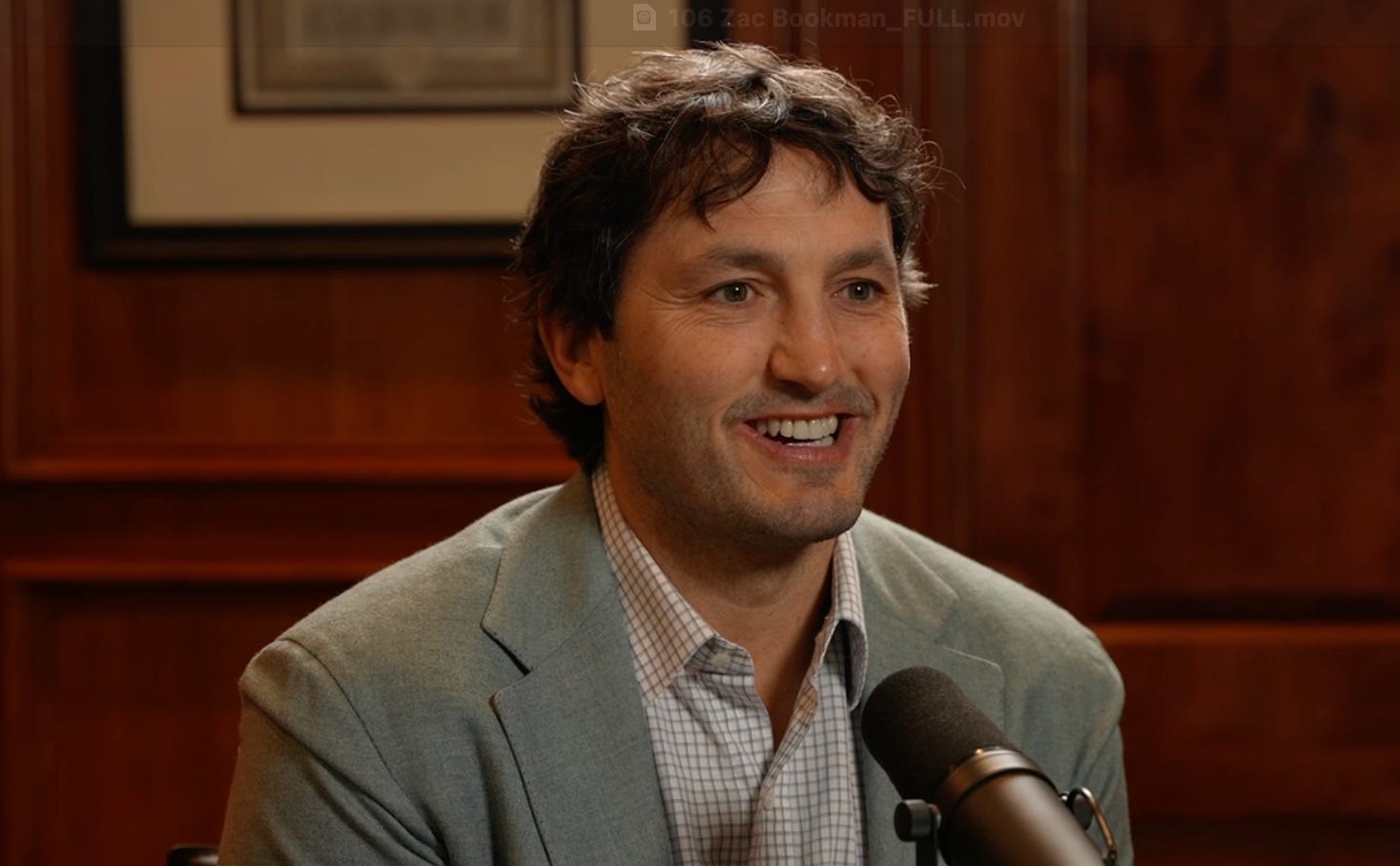
Ep 106: Zac Bookman on Advice for DOGE & Building OpenGov into a $1.8 Billion GovTech Leader
In 2012, Zac Bookman and I set out to bring efficiency and transparency to state and local governments using the best of Silicon Valley technology. Some said we were naive; others laughed when we tried to raise money from them. Over a decade later, OpenGov is a govtech leader, recently acquired by Cox Enterprises for $1.8 billion. And now, government efficiency, namely DOGE, is all the rage! What does it take to bring government out of the stone ages and into the cloud? And how can DOGE and the new administration seize upon this cultural and political sea change? We discuss this and more with OpenGov co-founder and CEO Zac Bookman. A litigator by training, Zac fought corruption as a Fulbright fellow in Mexico and as an advisor to General McMaster in Afghanistan. As we launched OpenGov, Zac was recruiting candidates on his cell phone from NATO HQ — reflective of his intense work ethic and leadership. We start with Zac's entrepreneurial journey and key lessons from Afghanistan, before diving into the make-or-break moments in building OpenGov. We also discuss his remarkable M&A track record and strategy of buying tiny govtech companies and helping them scale. Next, we explore Zac's advice for DOGE and how to effect meaningful and lasting change within government. Finally, Zac outlines how OpenGov is harnessing AI and the new possibilities for more functional and responsive governments around the country. 00:00 Episode intro 01:45 Zac's story 07:10 Fighting corruption in Afghanistan 11:30 The origins of OpenGov 19:35 Make-or-break moments 26:35 Understanding how local government works 28:10 Zac's unique M&A strategy 32:24 Advice for DOGE 37:35 Pivoting OpenGov to AI first 44:45 Biking across America & optimism This is a public episode. If you would like to discuss this with other subscribers or get access to bonus episodes, visit blog.joelonsdale.com
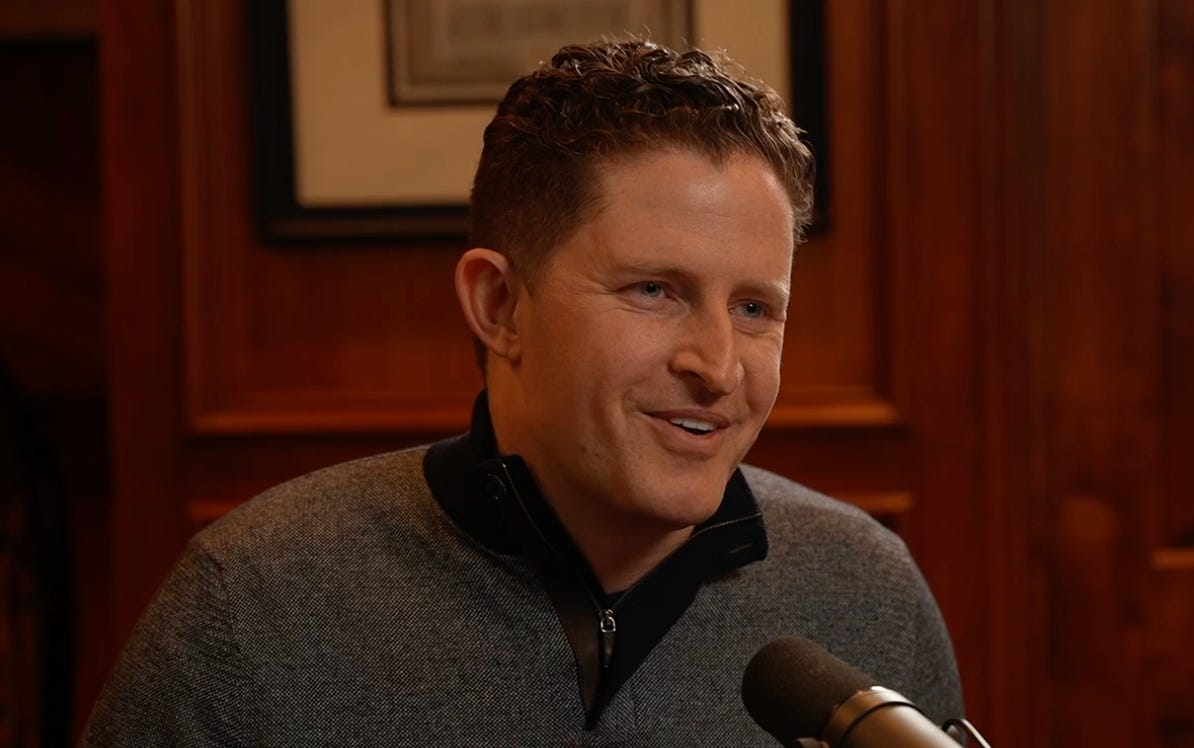
Ep 105: What Can Aristotle Teach Us About AI? Training "Philosopher Builders" with Brendan McCord of the Cosmos Institute
AI is transforming our world. Yet many people building these technologies have no grounding in the principles of Western Civilization. With the wrong ideas, we could hurtle toward an authoritarian, dystopian future. But with the right values, AI could unleash freedom and prosperity in ways never imagined. What are the philosophical frameworks needed to harness AI for good? And how do we train a new generation of philosopher builders?We explore these timely issues with Brendan McCord, founder and chair of the Cosmos Institute, a new nonprofit equipping technologists with pro-liberty values. After graduating from MIT and Harvard Business School, Brendan served on Arctic submarine missions for the Department of Defense and later authored its first AI strategy. He went on to build and lead two AI startups that were acquired for $400 million. Now, he's educating our best and brightest minds in the timeless wisdom of Western Civilization and preparing them for the serious ethical questions that AI poses.We begin with the importance of philosophy throughout history in harnessing emerging technologies for freedom or control. Next, Brendan breaks down the four dominant approaches to AI — doomsayers, accelerationists, regulators, and techno-authoritarians — and where each falls short. Alternatively, he offers three principles and their philosophical roots for harnessing AI for human flourishing: reason (John Stuart Mill), decentralization (Alexis de Tocqueville), and human autonomy (Aristotle). We also cover legitimate versus illegitimate concerns with AI and conclude with how the Cosmos Institute is putting these principles into action, from its Fellowship programs to its new AI lab at Oxford University.00:00 Episode intro02:04 Submarines to Building AI Companies06:00 Why Philosopher Builders are needed13:20 Why AI poses unique challenges20:50 Doomsayers vs Accelerationists25:50 Philosophical frameworks for human flourishing30:10 Regulators & Techno-authoritarians37:34 AI running for political office?40:07 LLMs don't know how to reason42:30 Purpose of the Cosmos Institute This is a public episode. If you would like to discuss this with other subscribers or get access to bonus episodes, visit blog.joelonsdale.com
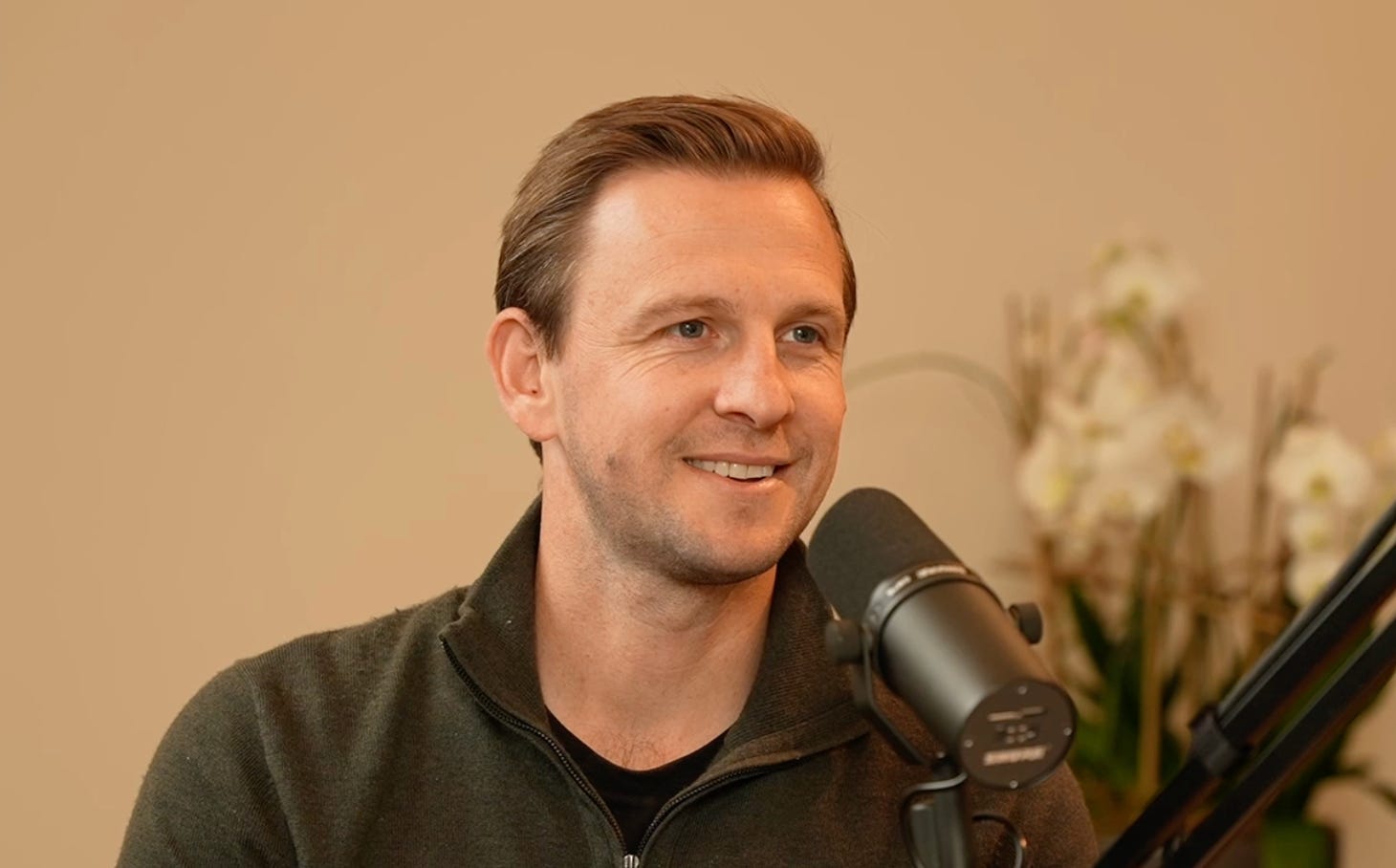
Ep 104: Will AI Replace Coders? Terminal Co-Founder & CEO Dylan Serota
How is AI augmenting software developers? Will it replace or commoditize certain roles? And how should aspiring engineers prepare for the future?This week, we're joined by Dylan Serota, co-founder and CEO of Terminal, to discuss AI's impact on one of the most important aspects of company building: talent. After graduating from the University of Pennsylvania, Dylan headed to Silicon Valley, where he helped build and scale global teams for Eventbrite. After seeing the flaws in traditional outsourcing firms, he set out to build Terminal — a new model for a global talent platform. Behind the scenes, Terminal is enabling some of the fastest-growing tech companies, like Hims&Hers, Chime, and NextDoor, to hire and manage teams around the world.We start our conversation with global hiring trends and how AI is transforming the competition for talent. Specifically, we discuss how new AI tools are augmenting coding and impacting demand for high-skill versus entry-level developers. We also tackle the challenges in building global teams and why some companies are reverting to face-to-face interviews and tests. Next, we explore the misaligned incentives in traditional outsourcing models and how Terminal differentiates itself. Finally, Dylan offers his advice to young engineers on how they should prepare for the AI age.00:00 Episode Intro02:00 The state of global talent05:00 Why is Nike hiring thousands of engineers?9:00 Will AI replace coders?13:30 AI screening vs in-person interviews18:00 Why is traditional outsourcing broken?22:20 How Terminal helps startups scale26:00 Advice for young engineers This is a public episode. If you would like to discuss this with other subscribers or get access to bonus episodes, visit blog.joelonsdale.com

Ep 103: Raj Bhakta Created WhistlePig; Now He's Reinventing the Whiskey Industry (Again)
Raj Bhakta is best known as the founder of Whistlepig Whiskey. But he also served in the Marines, rode an elephant across the Rio Grande while running for Congress, won a spot on The Apprentice with Donald Trump, recently purchased a college, and is reinventing the whiskey game (again). He's a patriot and creator of one-of-a-kind spirits — with a personality to match.The son of immigrants, Raj grew up learning his father's hotel business before setting out on his own. After adventures in investment banking, reality TV, and politics, he saw an opening in high-end American whiskey — and he seized it. WhistlePig quickly became one of the premier craft whiskeys. After exiting in 2019, he secured one of the world's oldest stashes of Armagnac and launched his newest ventures: Hogsworth and Bhakta Spirits.Raj recently acquired the now-defunct Green Mountain College in Vermont, where he plans to build a new university grounded in our Founding values, along with a world-class spirit library. We sample his newest whiskeys, joke about religion and politics, and learn from a great American entrepreneur.00:00 Episode intro01:44 Why Raj bought a college03:32 Riding an elephant across Rio Grande08:49 Origin story of WhistlePig11:32 Growing up in America; joining Marines18:32 Acquiring world's biggest stash of Armagnac23:20 Building Hogsworth / how to blend whiskey24:13 Catholicism vs Judaism29:11 Working with Trump on The Apprentice32:03 Bhakta Spirits & why drink Armagnac39:40 Why Raj is building a new college44:35 Advice for entrepreneurs51:25 Bullying and adversity This is a public episode. If you would like to discuss this with other subscribers or get access to bonus episodes, visit blog.joelonsdale.com
Ep 102: "If You're Not Blowing Stuff Up, You're Not Innovating!" — Stanford Professor Steve Blank
In World War II, the U.S. government embraced a radical idea: putting scientists and technologists in charge of building advanced weapons. The rest, as we say, is history. What are the radical ideas we need today? And what can we learn from the history of Silicon Valley? This week, we talk with Steve Blank — serial entrepreneur, Stanford professor, and influential author who created concepts that define today's innovation ecosystem. After serving in the Air Force during the Vietnam War, Steve landed his first job at William Perry's now-famous Electromagnetic Systems Laboratory. He went on to launch several companies, from taking on Intel in microprocessor manufacturing to building early versions of CRM. His book, "Four Steps to the Epiphany," is credited as the intellectual backbone of the lean startup movement. He has also studied the Pentagon for decades, served on the Defense Business Board, and co-founded Stanford's Gordian Knot Center. We start with Steve's entrepreneurial journey and the evolution of Silicon Valley over the past 50 years, from helping end the Cold War to pioneering the computer and internet age. We also examine the devolution of government and its decline from the engine of technology and research in the 20th century to today's slow, bloated bureaucracy. Steve outlines his bold ideas for reforming the Pentagon and outpacing China in the technology race; he also breaks down the difference between execution and innovation and how the best organizations, like SpaceX, can manage both simultaneously. Finally, we discuss why Steve had called for a pause in AI research and, given his concerns over China, if we can afford to pause. 00:00 Episode Intro01:40 "Bill Perry was my first boss" 7:43 The Secret History of Silicon Valley12:14 How US govt fell behind SV17:05 SpaceX vs NASA22:00 Radical ideas for Pentagon 26:28 Execution vs Innovation31:13 Lean startup vs fat startup 40:11 Does industrial policy work? 43:40 Why did Steve call for AI pause? This is a public episode. If you would like to discuss this with other subscribers or get access to bonus episodes, visit blog.joelonsdale.com

Ep 101: Gov. Kevin Stitt — the Businessman Governor Standing Up to Special Interests
What does political courage look like in action? What does it mean to stand up to special interests? And what are the fights we must take on — and win — to keep America free and prosperous? I recently interviewed Oklahoma Governor Kevin Stitt at the Cicero Institute's 2024 Courage Awards, where we recognized him and other bold leaders from across the country for taking on cronyism and corruption in the face of great opposition. Stitt considers himself a businessman governor: he started Gateway Mortgage with $1,000 and a computer before scaling it into a national company. He never sought public office before running for governor, and since he's taken charge, he's run it like a business: balancing budget shortfalls, streamlining permitting, and slashing regulations. More impressively, he's demonstrated real courage in standing up to powerful special interests, like the homelessness industrial complex, and others you might not expect, like the police union. Learn how he succeeded in getting real help to the homeless and mentally ill, and why he vetoed a pension increase for police officers. Stitt also explains how woke nonsense and cronyism manifest even in a deep red state — and how to fight it; why politics shouldn't be a career profession; and how he succeeded in passing one of the boldest school choice programs in the nation. Oklahoma has become one of the nation's fastest-growing states under his leadership, and you'll see why. 00:00 Episode Intro01:58 Entrepreneur to governor05:29 Passing school choice8:33 Taking on the homeless industrial complex12:20 Vetoing police pension increase15:45 Slashing regulations19:05 Fixing the nursing shortfall / workforce readiness22:13 Limiting the growth of government This is a public episode. If you would like to discuss this with other subscribers or get access to bonus episodes, visit blog.joelonsdale.com
Ep 100: Why AI Is Underhyped with Elad Gil
For Episode 100, we have a special conversation with Elad Gil, one of Silicon Valley's great thinkers, builders, and investors. Elad has been involved with many of the leading technology companies of the past 20 years — and likely the next 20 years. Learn how he's backed dozens of unicorns, why he thinks AI is underhyped, and where he sees investment opportunities amid this new wave of disruption. An early leader at Google, Elad helped build the initial mobile team, before founding MixerLabs, which was acquired by Twitter in 2009. Elad stayed on as VP of Corporate Strategy and became a key "fixer" during Twitter's hypergrowth phase. Later, he co-founded Color Health, a genetic testing company specializing in cancer detection. Over the past decade, he's backed nearly 40 unicorns, including Airbnb, Coinbase, Figma, Instacart, and Stripe. He's also invested in Harvey, Mistral, Perplexity, Pika, and other leading AI startups. In this episode, Elad takes us behind the scenes of the early days of Google and Twitter, and how Silicon Valley culture has evolved. He explains his three categories of exceptional founders and how he positioned himself to become one of the top angel investors. We also dive deep into AI, from the trajectory of LLMs to frameworks for investing in the AI value stack. Finally, we discuss AI's impact on education and the most exciting possibilities for the decade ahead. 00:00 Episode intro01:16 Building Google’s mobile team06:01 Early days at Twitter11:37 Building Color Health 15:57 How he’s backed dozens of unicorns 21:52 How small clusters of talent change the world25:20 Where are the young people in government?27:25 Where are the young startup founders?30:17 Why AI is underhyped36:40 Will LLMs get exponentially better? 39:10 Investing in the AI value stack41:33 AI and the future of education This is a public episode. If you would like to discuss this with other subscribers or get access to bonus episodes, visit blog.joelonsdale.com

Ep 99: The Myth of American Inequality with Senator Phil Gramm
The rich are getting richer, the poor are getting poorer. The wealthiest among us don't pay their fair share in taxes. The American Dream is disappearing... Are these claims true? What data are they based upon? And does it stand up to scrutiny? This week, we analyze the debate over income inequality and mobility in America with economist and former U.S. Senator Phil Gramm. In his book, "The Myth of American Inequality" (winner of the 2024 Hayek Prize), Gramm lays out the oft-cited data for widening inequality and exposes where it falls short. According to the U.S. Census Bureau, the top 20% of earners possess 16.7 times the income of the bottom 20%. However, Gramm reveals that this data excludes nearly all government transfer payments to the poor, like food stamps, and fails to subtract the high taxes paid by top earners. Adjusting for these factors, inequality drops from 16.7X to 4X! Gramm also points out that benefits to the poor have increased from $9,700 per household in 1967 (adjusted for inflation) to nearly $50,000 today. He argues that we suffer, not from extreme inequality, but from welfare-driven equality that encourages huge numbers of low-and-middle income Americans to drop out of the workforce. Senator Phil Gramm served in Washington D.C. for 25 years, first as a Congressman and later as a three-term Senator from Texas. He's an economist by training who taught at Texas A&M before entering public service. His book is a must-read for understanding the inequality debate, the truth about the super-rich, and the state of the American Dream. 00:00 Episode intro 03:32 Is inequality extreme and growing? 10:45 Elon Musk and the super-rich16:19 Is Warren Buffet cheating the government? 22:55 Industrial Revolution — setting the record straight 29:35 Do billionaires pay their fair share? 33:40 Is the American Dream dying? This is a public episode. If you would like to discuss this with other subscribers or get access to bonus episodes, visit blog.joelonsdale.com

Ep 98: How Wokeness Foments Antisemitism; a Conversation with ADL's Jonathan Greenblatt
Founded in 1913, the Anti-Defamation League has played an important role in protecting the Jewish community and fighting for civil rights. But in recent years, many believe it has lurched too Left and promoted content that ends up harming Jews. I sat down with its CEO, Jonathan Greenblatt, to discuss what the ADL has gotten right and debate where it's gone wrong.Jonathan started his career in President Clinton's administration before finding success as an entrepreneur and later returning to the Obama White House. We don't align on politics, but we have mutual respect and I visited him at the White House during Obama's tenure to discuss policy issues. Many of the ADL's core activities are noble: report illegal threats against Jews, push back aggressively on anti-Semitism, and provide legal assistance for Jewish students harmed or threatened on college campuses. But recently, many on the Center and Right have taken serious issue with some of the ADL's actions, including its pressure campaigns against social media platforms and embrace of progressive politics that may be making Jews more vulnerable.In our candid discussion, I challenged Greenblatt on ADL's Left-wing stances and its promotion of critical race theory and Ta-Nehisi Coates' earlier work. I was encouraged to hear about the ADL's aggressive actions against Harvard, Penn, and other institutions after October 7; his agreement that oppressor vs oppressed frameworks foment hate against Jews; and his call for regime change in Iran, not appeasement.I’d like to see the ADL stop demonizing many on the Right and promoting woke nonsense on their site, distracting from its core purpose of fighting the actual enemies of Jews. But Jonathan and I agree that the ADL is an organization with a storied history and a valuable role to continue to play, especially given the pressing need to combat antisemitism today.00:00 Episode Intro 02:15 Jonathan's background 05:14 ADL's History 08:39 Lessons from October 7 15:33 Have things improved on college campuses? 17:20 Iran funding antisemitism in the US 20:20 Has ADL gone hard Left? Does ADL teach CRT? 24:00 Will ADL stop promoting Ta-Nehisi Coates? 28:36 How wokeness causes antisemitism This is a public episode. If you would like to discuss this with other subscribers or get access to bonus episodes, visit blog.joelonsdale.com

Ep 97: Jimmy John Built a Restaurant Empire; Government Almost Destroyed It
At 19 years old, Jimmy John Liautaud dropped out of college to start his own sandwich shop. He spent 10 years perfecting his first 10 stores, before franchising his model and scaling to nearly 3,000 Jimmy John's locations nationwide. Then the government almost destroyed it. This week, we sit down with the billionaire sandwich king to discuss his remarkable journey, the impact of government policy, and the consequences of elections. We dive into the business model that made Jimmy John's a national success, and how the Department of Labor under President Obama changed the regulations, sued his stores, and eventually caused him to sell the business. He now encourages business leaders to stand up and speak out, and explains why he's backing President Trump in the upcoming election. He shares a wealth of lessons learned, including the qualities he looks for in managers and how he can tell if a restaurant will succeed or fail by looking at the front door. Along with his personal success, he's also created hundreds of millionaires within the company, including many who started as sandwich makers, and he donates millions to wildlife preservation and scholarships for disadvantaged youth. Jimmy loves his country, his family, and his community; he's a true American success story and you'll see why.00:00 Episode Intro01:40 The first Jimmy John's store05:05 How Jimmy scaled nationwide07:03 How government almost ruined his business13:17 Why every election matters18:39 Want to win? Nail the details21:10 Turning around failing stores23:59 Minimum wage & AI + robots29:49 Final advice for entrepreneurs This is a public episode. If you would like to discuss this with other subscribers or get access to bonus episodes, visit blog.joelonsdale.com

Ep 96: Harvard Economist Roland Fryer on the Truth Behind Police Shootings & Using Data to Supercharge Meritocracy
Roland Fryer is a profile in courage; the Harvard economist follows the data where it leads, no matter the outcome. He studied the impact of paying kids for positive behaviors. He demonstrated how charter school best practices can transform even the worst public schools. And most controversially, he conducted a comprehensive study of police use of force, finding that racial discrimination exists at low levels of force but not in shootings. His colleagues at Harvard pressured him to shelve the study; he received death threats. Learn why he didn't cave and why says he would do it again tomorrow. Roland is not only a leading public intellectual but also a builder. In 2020, he co-founded Sigma Squared, which uses data science and new AI tools to help employers find the best talent for the job, or as he says, supercharge meritocracy. His goal: bring HR into the AI age and take the hiring process from a well-educated guess to a precise science.Roland's accomplishments are even more impressive considering his upbringing: his father went to prison and his mother walked out. Yet, he fell in love with economics and worked his way through college — including stints at McDonald's and Golden Corral — to become the youngest tenured black professor in Harvard's history! Roland personifies American optimism, and you'll see why. Learn more about Roland's research and read his study on charter school best practices here. This is a public episode. If you would like to discuss this with other subscribers or get access to bonus episodes, visit blog.joelonsdale.com

Ep 95: Navy SEAL & Saronic CEO Dino Mavrookas on the Race for Autonomous Ships and Naval Dominance
The U.S. Navy dominated in World War II, not because we had the most advanced ships, but because our industrial capacity was unmatched. When we lost a ship in battle, we could instantly replace it with two or three new ones. Our enemies couldn't keep pace. But today, our shipbuilding is a shell of its former self. In 1943, we built over 18,000 ships. Last year, we built eight (and retired 12). China, on the other hand, is producing hundreds of ships and now boasts 250 times the U.S. shipbuilding capacity! How can the U.S. Navy maintain deterrence? One answer is autonomous surface vehicles (ASVs) and harnessing new possibilities in AI to field and simultaneously coordinate hundreds or thousands of unmanned vessels. That's why Dino Mavrookas and his team are building Saronic Technologies — the leading ASV manufacturer. Saronic is the only company engineering the hardware, software, and AI to create modular platforms that can be produced economically at scale. They currently offer three classes of vehicles that can be fitted with various sensors and weapons (including the possibility of torpedoes!). Dino believes the push into unmanned, attritable systems is our generation's space race. He served 11 years as a Navy SEAL with eight combat tours before working as a private equity technology investor. He partnered with 8VC through its Build program to launch Saronic in 2022, and it has quickly become one of the fastest-growing defense technology companies. Saronic recently closed a $175 million Series B, making it the newest defense unicorn. Its advisors include former admirals and other naval leaders, and did we mention it's being built right here in Austin, Texas! This is a public episode. If you would like to discuss this with other subscribers or get access to bonus episodes, visit blog.joelonsdale.com

Ep 94: A Conversation with Turnaround King & U.S. Commerce Secretary Wilbur Ross
Wilbur Ross is one of the great turnaround artists in modern finance. Dubbed the "King of Bankruptcy," he restructured over $400 billion of assets, saving companies — and jobs — in distressed industries like steel, coal, and textiles. In 2016, he went to Washington as U.S. Commerce Secretary to take on a similar mission and defend American companies and workers in high-stakes trade negotiations, particularly with China.We were privileged to host Wilbur for a conversation about his storied career and new book: “Risks and Returns: Creating Success in Business and Life." We began with his investment philosophy and how he reshaped Wall Street, including his close relationship with Mike Milken and the inception of leveraged buyouts. Wilbur also recalls going head-to-head with Donald Trump during the bankruptcy negotiations for the Taj Mahal Casino in Atlantic City, and explains how that interaction led him to become one of the first Wall Street leaders to support Trump's candidacy for president. Next, we dive into his tenure as Commerce Secretary and the ongoing debates over U.S. trade policy. He shares his favorite Trump story — an early interaction with Chinese President Xi Jinping — as well as the accomplishments he's most proud of, like regulatory relief, and what he wishes the administration had done differently: act faster and more boldly! Wilbur is a patriot and leader we can all learn from, and hope you'll check out his new book. This is a public episode. If you would like to discuss this with other subscribers or get access to bonus episodes, visit blog.joelonsdale.com

Ep 93: Cold War II & the Race for Technological Supremacy with CrowdStrike Co-Founder Dmitri Alperovitch
He predicted Vladimir Putin would attack Ukraine months before it happened. Now he believes similar signals foreshadow China invading Taiwan. What similarities does he see? When and how would a Chinese incursion unfold? And what can the U.S. do to deter this conflict?This week, we're joined by Dmitri Alperovitch, co-founder of web security giant CrowdStrike, who departed the firm several years ago to focus on the intersection of technology, national security, and global competition as the Chairman of the Silverado Policy Accelerator. He's the author of an important new book: "World on the Brink: How America Can Beat China in the Race for the Twenty-First Century."We begin with Dmitri's entrepreneurial journey, from building a multi-billion dollar cyber security firm to lessons learned on the front lines of Chinese and Russian cyber attacks. Next, we discuss Dmitri's new book, his Cold War II thesis, and the comparative strengths and weaknesses between China and the U.S. He lays out Putin's rationale for attacking Ukraine and the similarities he sees with Xi Jinping and Taiwan — and even predicts the date China might invade! Finally, he explains the four key technologies where the U.S. must remain ahead of China to prevent a Cold War from turning hot. This is a public episode. If you would like to discuss this with other subscribers or get access to bonus episodes, visit blog.joelonsdale.com

Ep 92: High-Power Microwave & the Rise of Electronic Shields with Epirus CEO Andy Lowery
Electronic shields are iconic elements of Star Trek, Star Wars, and other great American sci-fi. Once a fantasy, we are now building versions of these in real life! And they're a vital solution to a new type of threat confounding our legacy defense industry. This real-life force field alternative is called directed high-power microwave (HPM), and it's an answer to drone swarms and the proliferation of autonomous, attritable threats. Founded out of 8VC Build in 2018, Epirus is building the world's most advanced HPM systems, capable of disabling hordes of drones and other electronic devices up to miles away — and it only costs pennies to fire! This week, we talk with Epirus CEO Andy Lowery about the science behind HPM and why the Army, Navy, Marines, Air Force, and Space Force are all pursuing Epirus' technology. We begin with the changing nature of warfare and why harnessing — and defending against — autonomous, attributable systems is essential for any future conflict. Next, we dive into HPM technology and its myriad applications, from taking out drones, missiles, boats, and other vehicles to defending satellites in space. We also discuss the rise of "neo-primes" like SpaceX, Palantir, and Anduril and a new model for getting the best technology into the hands of our warfighters as quickly as possible. Finally, we discuss the importance of fusing Silicon Valley's AI and big data expertise with the U.S. defense-industrial base's advanced hardware experience in order to maintain our technological advantages over China and other adversaries. Learn more about Epirus’ approach to electronic warfare, and follow Epirus on Social: YouTube, LinkedIn, X This is a public episode. If you would like to discuss this with other subscribers or get access to bonus episodes, visit blog.joelonsdale.com

Ep 91: "I whooped his ass!" Legendary Investor & Home Depot Founder Ken Langone on Leadership, Courage & Defeating the Bad Guys
Ken Langone's father was a plumber and his mother a cafeteria worker — neither made it past 8th grade — yet Ken became a multi-billionaire investor, builder, and philanthropist. And he did so as an outspoken patriot, defender of capitalism, and man of honor, famously taking on one of the most corrupt politicians of our time — and winning! In our conversation, we begin with Ken's investment philosophy, including how he became the largest shareholder in Eli Lilly. Next, we dive into leadership lessons and how he co-founded and grew Home Depot into an American icon valued at over $400 billion. But Ken is most proud of the fact that 3,000 associates who began pushing carts in the parking lot have gone on to become multi-millionaires within the company — a feat only possible under capitalism he says. In the 2000s, Ken had a front-page showdown with then-NY Attorney General Eliot Spitzer. Most of the Wall Street bigwigs in Spitzer's crosshairs cowered and ran, but not Ken. He fought back and won, exposing Spitzer's abuse of power. Ken hilariously recounts his epic battles and demonstrates the importance of fighting for justice and defending the honor of your colleagues, no matter the cost. Finally, we discuss the impact of Ken's prolific philanthropy, such as his recent $200 million donation to help make NYU Medical School tuition-free. For decades, he's also been a leader in education reform, including one of the greatest urban success stories: Harlem Children's Zone. They have proven that kids from the most difficult areas and family backgrounds can succeed, and have revealed the failings of the teachers' unions and education establishment. I'm fortunate to call Ken a friend and mentor. There will never be another quite like him, but we should do our best to follow his lead! This is a public episode. If you would like to discuss this with other subscribers or get access to bonus episodes, visit blog.joelonsdale.com
Ep 90: Ethan Penner on Choosing Greatness & Pioneering New Markets on Wall Street
Is greatness a choice? If so, why doesn't everyone choose greatness? And more broadly, what are the prerequisites for a great society? This week, I'm joined by Ethan Penner, author of the new book "Greatness Is a Choice" and one of the most influential figures in modern real estate. In his early 30s, Ethan pioneered the creation of commercial mortgage-backed securities and helped build a new market at a critical moment in history. We discuss his journey from the streets of Yonkers to the heights of Wall Street and what he learned from industry greats like Sam Zell. Ethan is also a student of history, religion, and philosophy who cares deeply about advancing freedom and helping others find purpose in life. His new book argues that most people misunderstand greatness and equate it to the top one percent of society. Rather, he believes that greatness is a daily decision to choose excellence, and by deliberately choosing excellence we can bring newfound meaning and fulfillment to our daily lives. Through concise and pointed chapters, like "The Debilitating Effects of the Victim Mentality" and “Equality Is Not the Point," Ethan diagnoses where our modern culture has gone awry and offers an antidote that can inspire us all to pursue greatness. This is a public episode. If you would like to discuss this with other subscribers or get access to bonus episodes, visit blog.joelonsdale.com
Ep 89: Coleman Hughes on "The End of Race Politics" & the Worst Ideas Done in the Name of Diversity
At Columbia University's freshman orientation, Coleman Hughes and his classmates were separated into groups by skin color to discuss the effects of racism, with minorities portrayed as victims and white students as beneficiaries. Why have exercises like this become commonplace in elite institutions? How did this neo-racism take hold? And what are the counter-arguments and better approaches to race and diversity? These questions are at the heart of Coleman's new book: "The End of Race Politics: Arguments for a Colorblind America." A talented, rising public intellectual, Coleman was one of the first courageous voices pushing back against the "anti-racist" pablum popularized by Ibram Kendi and Robin DiAngelo. He's a contributor to The Free Press, analyst at CNN, and host of the popular podcast "Conversations with Coleman." In this episode, Coleman argues for a return to colorblindness and the ethics of MLK — not that we pretend we can't see race, but that we strive to move beyond it and focus on character, culture, and merit instead. He makes the case that socioeconomic factors, not race, are more accurate proxies for helping the most disadvantaged in society, and our public policy should be oriented as such. He also exposes the lazy thinking and platitudes that permeate conversations about race, along with some of the worst ideas done in the name of diversity, such as rejecting standardized tests. Finally, we discuss a better way to acknowledge America's past sins while moving forward in a way that unites our country. This is a public episode. If you would like to discuss this with other subscribers or get access to bonus episodes, visit blog.joelonsdale.com
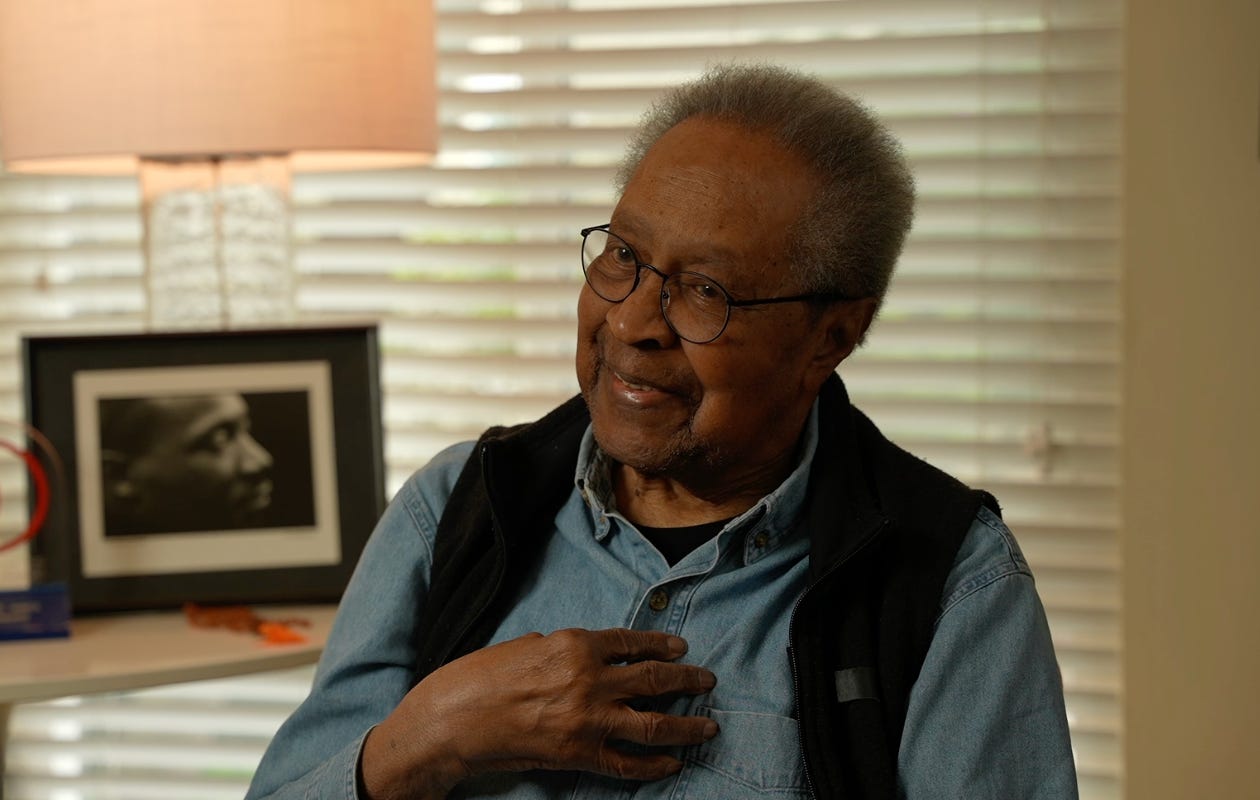
Ep 88: A Conversation with MLK's Attorney & Speechwriter: Dr. Clarence Jones
Dr. Clarence Jones is a giant of the civil rights movement. As the personal attorney and speechwriter for Dr. Martin Luther King Jr., he risked everything to help save the soul of America, including smuggling scraps of papers in and out of Birmingham prison that would become Dr. King's Letter from Birmingham Jail. In fact, Dr. Jones never thought he'd live to see the age of 50. Today, he's 93 years old, and one of the last living civil rights icons. In this episode, we trace the journey of an American hero — the son of domestic servants who became valedictorian of his high school and studied at Juilliard before becoming a successful entertainment lawyer. That is until Dr. King showed up at his California home asking for legal assistance. After initially turning him away, he went to hear Dr. King preach, and his life — and the direction of our country — changed forever. We discuss the key moments in his fight for justice, the significance of the black-Jewish alliance, and the legacy of Dr. King, including his thoughts on today's debate over DEI, Critical Race Theory, and colorblindness. He also shares his powerful approach to radical non-violence and his advice for young people today: pursue excellence. Dr. Jones has lived an extraordinary life, and his wisdom on issues of race should be heeded over many of the voices in popular culture today. SHOW NOTES: Dr. Jones was recently awarded the Presidential Medal of Freedom, the Nation's highest civilian honor. Last year, Dr. Jones released his memoir, "Last of the Lions." Learn more about Dr. Jones' work through his foundation and as Chair of the Spill the Honey Foundation, which continues the legacy of the Black-Jewish Alliance. This is a public episode. If you would like to discuss this with other subscribers or get access to bonus episodes, visit blog.joelonsdale.com
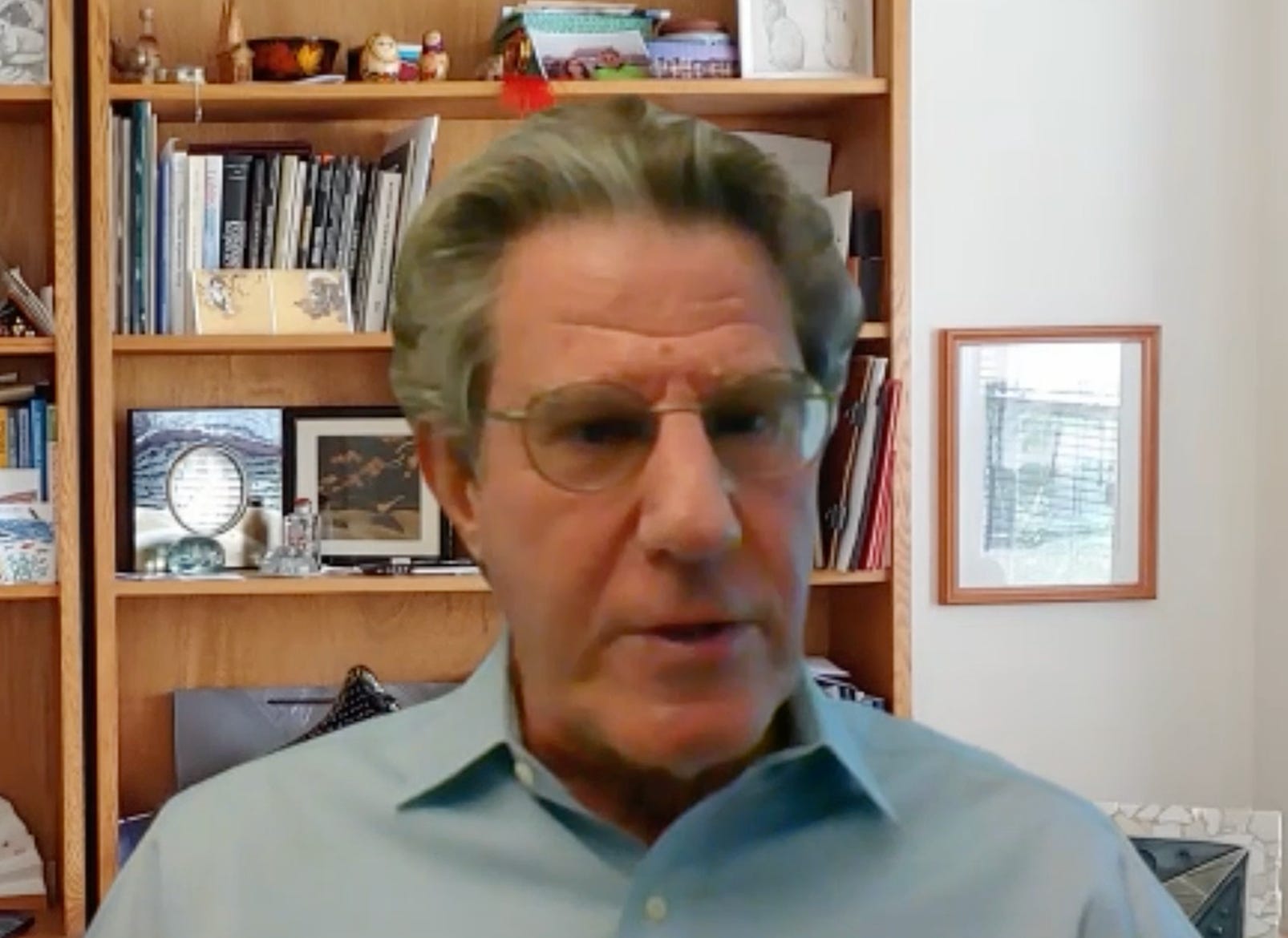
Ep 87: Dr. Cliff Winston — Deregulate Lawyers, Deregulate Airlines, and Let Markets Correct Themselves
Are government programs and interventions superior to market corrections? According to Dr. Cliff Winston, the evidence to support such a claim doesn’t exist. Many economists obsess over market failures but seldom point the microscope in the direction of government, despite its many failures. And worse, the bureaucracy doesn't hold itself accountable. This week, we examine some of the flaws of modern economic theories with Dr. Winston, a microeconomist and Senior Fellow at the Brookings Institution, with a B.A. and Ph.D. in economics from UC Berkeley, and Masters from the London School of Economics. He is the author of numerous books and papers, including, most recently, “Indispensable: Market corrections in a U.S. economy beset by government failures.” From antitrust to welfare programs and tax incentives, most Americans assume government interventions are preferable to allowing the market to correct itself, but as Cliff explains, we don't have scholarly evidence to back that up. He explains why we need government retrospectives and more widespread experiments to test what does or doesn't work. When has government been effective? Ironically, Cliff says, when it gets out of the way: deregulation. We talk about the benefits of airline deregulation, for example, and Cliff makes the case for deregulating the legal profession and other areas that require occupational licensure. Finally, we discuss scenarios where government involvement could be beneficial, such as setting adoption standards for autonomous vehicles. This is a public episode. If you would like to discuss this with other subscribers or get access to bonus episodes, visit blog.joelonsdale.com
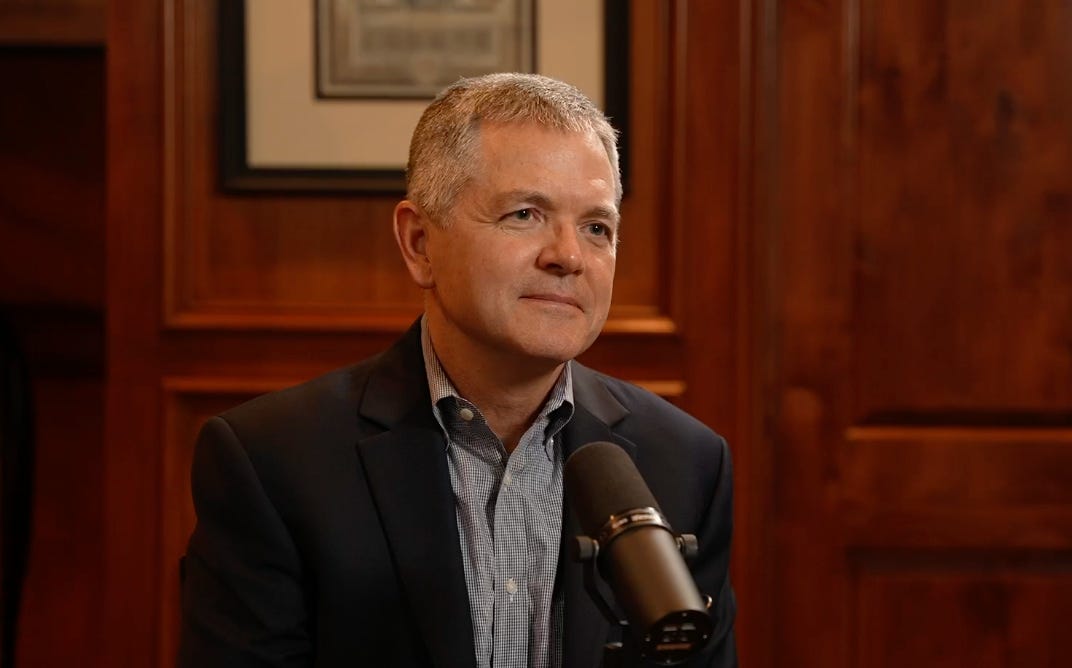
Ep 86: How to Design a STEM Curriculum for the 21st Century with Dr. David Ruth
STEM (science, technology, engineering & math) education is the backbone of the innovation economy. Yet at many schools, it's become stodgy and irrelevant to solving real-world problems. Not surprisingly, many of the best minds forgo college or drop out. What would it look like to design a STEM program that is inspiring, cutting-edge, and grounded in timeless truths? And how do you educate the next generation of great entrepreneurs who are also citizens of virtue? This week, we discuss a better model for STEM with Dr. David Ruth, Dean of the Center for STEM at the University of Austin (UATX). Dr. Ruth is a retired U.S. Navy Captain who worked on a nuclear attack submarine, an aircraft carrier, and as a war planner in Asia, before teaching advanced mathematics at the U.S. Naval Academy for 13 years. In this episode, Dr. Ruth lays out UATX's approach to 21st-century STEM: a curriculum that balances first principles with practical application and unparalleled industry engagement. (We're already partnering with The Boring Company and other leading companies in Texas!) Many STEM programs bog down students in unnecessary tasks; UATX is taking a different approach with "computation-enabled thinking" that combines what humans do best (abstracting, modeling, and interpreting) with what computers do best (computation). We also discuss how to safeguard science and math from identity politics, and the importance of making STEM exciting and challenging through innovative games and challenges. If you're a student pursuing a STEM education, we hope you'll check out what we're building at UATX. This is a public episode. If you would like to discuss this with other subscribers or get access to bonus episodes, visit blog.joelonsdale.com
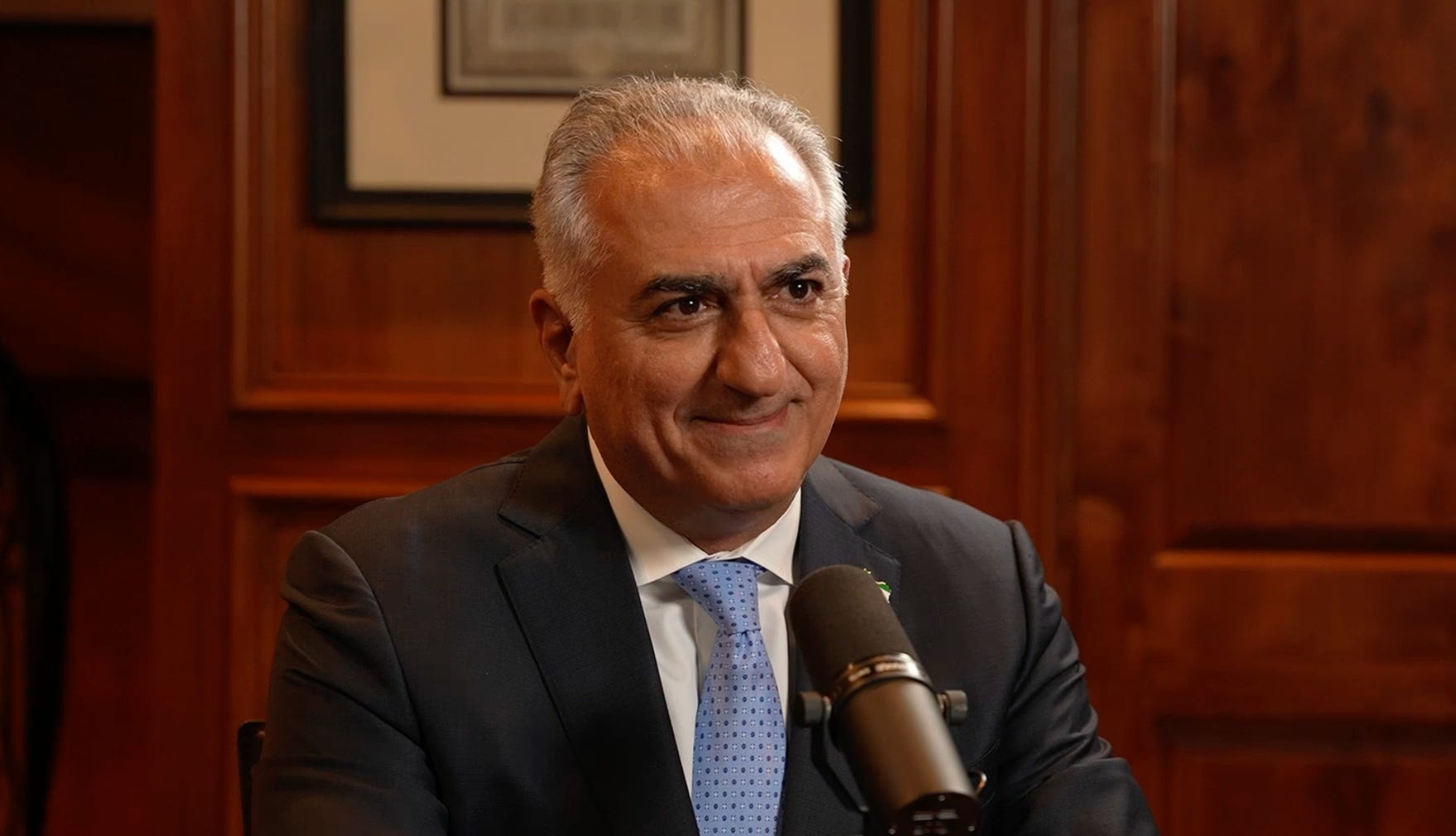
Ep 85: The Path to Regime Change in Iran with Crown Prince Reza Pahlavi
In 1979, Crown Prince of Iran Reza Pahlavi was attending fighter pilot school in Lubbock, Texas when the Islamic Revolution overthrew his father's reign. A radical theocracy seized power and began extinguishing freedoms, persecuting minorities, and taking a pro-Western Iran back to the Middle Ages. Since then, the Crown Prince has lived in exile as a leading voice for a secular and democratic Iran. What is his view of the Revolution? Why does he believe regime change is possible today? And how should the U.S. and the West deal with Iran? Given Iran's recent attack on Israel, we get a rare and timely perspective on the power dynamics within Iran and why the current regime is more fragile than we realize. The Crown Prince paints a picture of his homeland pre-and-post Revolution, and explains why many governments misunderstand the fanatical leadership of Iran. He lays out his strategy of "maximum support" and how combining sanctions and external pressure with internal support, such as internet access and financial resources for protestors, could someday topple the regime. And if it does, he details a post-regime strategy to transition the government toward a secular democracy. We also discuss the longstanding history between the Persian and Jewish people, and how, with the right leadership, the region could once again become dynamic and prosperous. [NOTE: this conversation was recorded shortly before Iran launched hundreds of missiles and drones at Israel.] This is a public episode. If you would like to discuss this with other subscribers or get access to bonus episodes, visit blog.joelonsdale.com
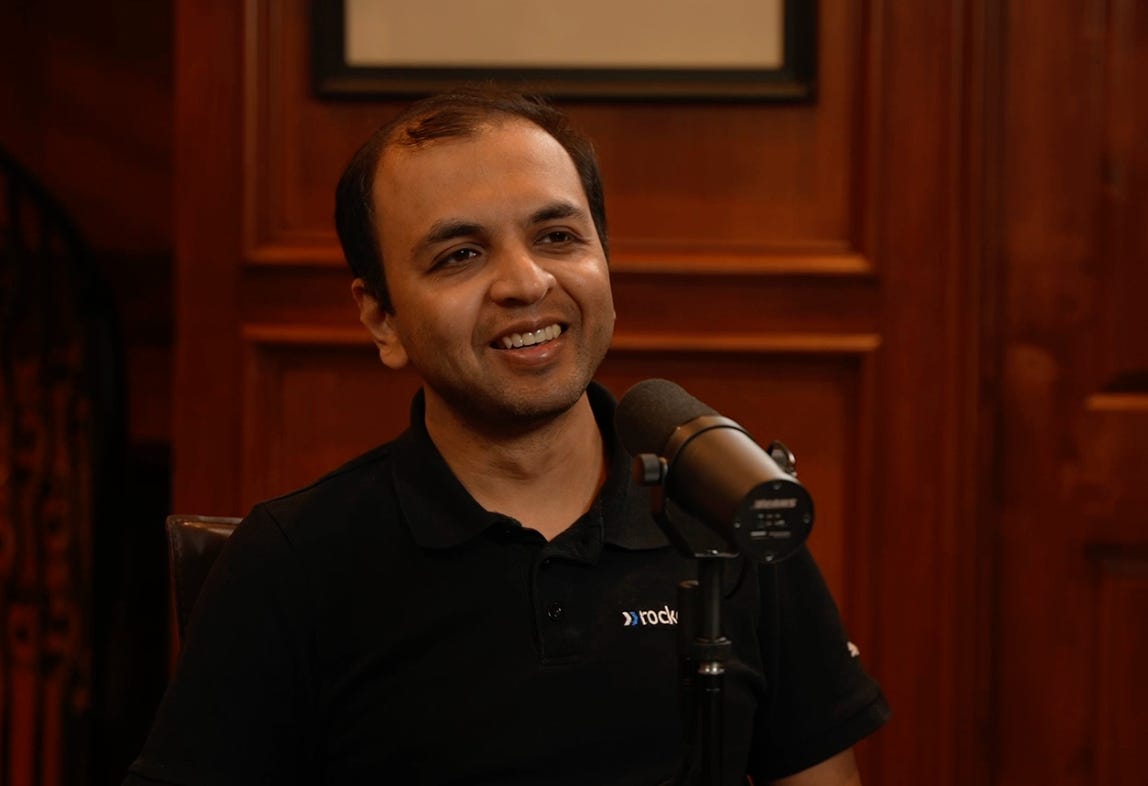
Ep 84: Sri Ganesan on Freshworks' Big Win, Building Rocketlane & India's Tech Boom
India’s tech ecosystem has hit an indisputable inflection point in recent years. For decades, American corporations outsourced basic services to India, while India outsourced its top talent to Silicon Valley. But today, India’s tech economy boasts homegrown software giants and a flourishing startup scene.This week, we get a front-row look into India’s startup evolution with one of its top talents: Sri Ganesan, Founder and CEO of Rocketlane. His first company, Konotor, was acquired into Freshworks, which went public in 2021 for $10 billion and became one of India's biggest wins. Now, Sri is building Rocketlane into a leading solution for SaaS deployment and professional services automation, with teams in the U.S. and India. By combining American know-how with Indian talent, Rocketlane represents an important dynamic for the future of tech and expanding key partnerships around the world. In this episode, we dive into the lessons learned from Freshworks's success and how it paved the way for greater entrepreneurial risk within India. We also explore Sri's journey in scaling Rocketlane, from finding product-market fit to positioning the company to take advantage of the AI wave. We discuss what India’s rise to become one of the world's most important economies means for the future of tech and global talent distribution, along with the cultural differences between India and the US, and what it's like building on two continents simultaneously. Finally, Sri guides us through the various tech hubs in India, from Mumbai to Bangalore and Chennai, even down to his favorite restaurant and must-visit destinations for anyone heading to India soon. This is a public episode. If you would like to discuss this with other subscribers or get access to bonus episodes, visit blog.joelonsdale.com
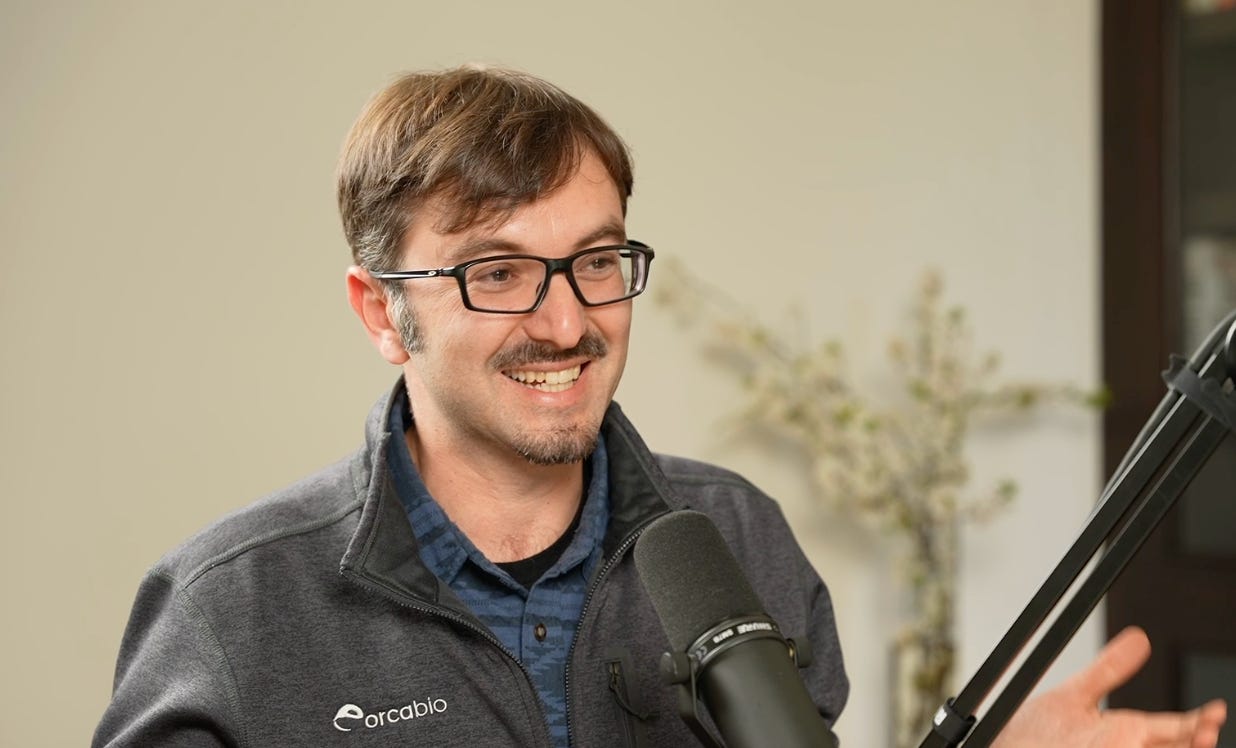
Ep 83: A New Cancer Breakthrough with Ivan Dimov of Orca Bio
Every year, more than 20,000 Americans receive a bone marrow transplant — a Nobel prize-winning procedure that saves many lives but also carries great risk. For leukemia patients, it's a choice of last resort, as nearly 20% die from the transplant. Ivan Dimov, co-founder & CEO of Orca Bio, and his team have created a novel cell therapy alternative that has already saved over 400 lives in clinical trials with virtually zero rejection!This week, we dive into Ivan's journey, the science behind Orca's cancer breakthrough, and the potential of cell therapies to cure a host of other diseases. By discovering new, high-precision methods to manipulate cells, Orca is able to provide leukemia patients with a designer immune system that attacks the cancer while nearly eliminating rejection. By safely rebooting the immune system, Ivan and his team believe Orca also has the potential to cure autoimmune diseases like Crohn’s disease and multiple sclerosis, and impact the lives of millions of Americans.Orca is currently seeking the first-ever FDA approval in this space, and since it's a unique one-time curative therapy, they are also commercializing the drug in-house — a rare move in biopharma. Ivan walks us through the path to bringing Orca's products to market, from collaborating with regulators to negotiating with insurance companies and scaling up its manufacturing. Though many challenges remain, you'll see why we're incredibly bullish on Ivan's leadership and Orca's potential to transform the future of medicine. This is a public episode. If you would like to discuss this with other subscribers or get access to bonus episodes, visit blog.joelonsdale.com
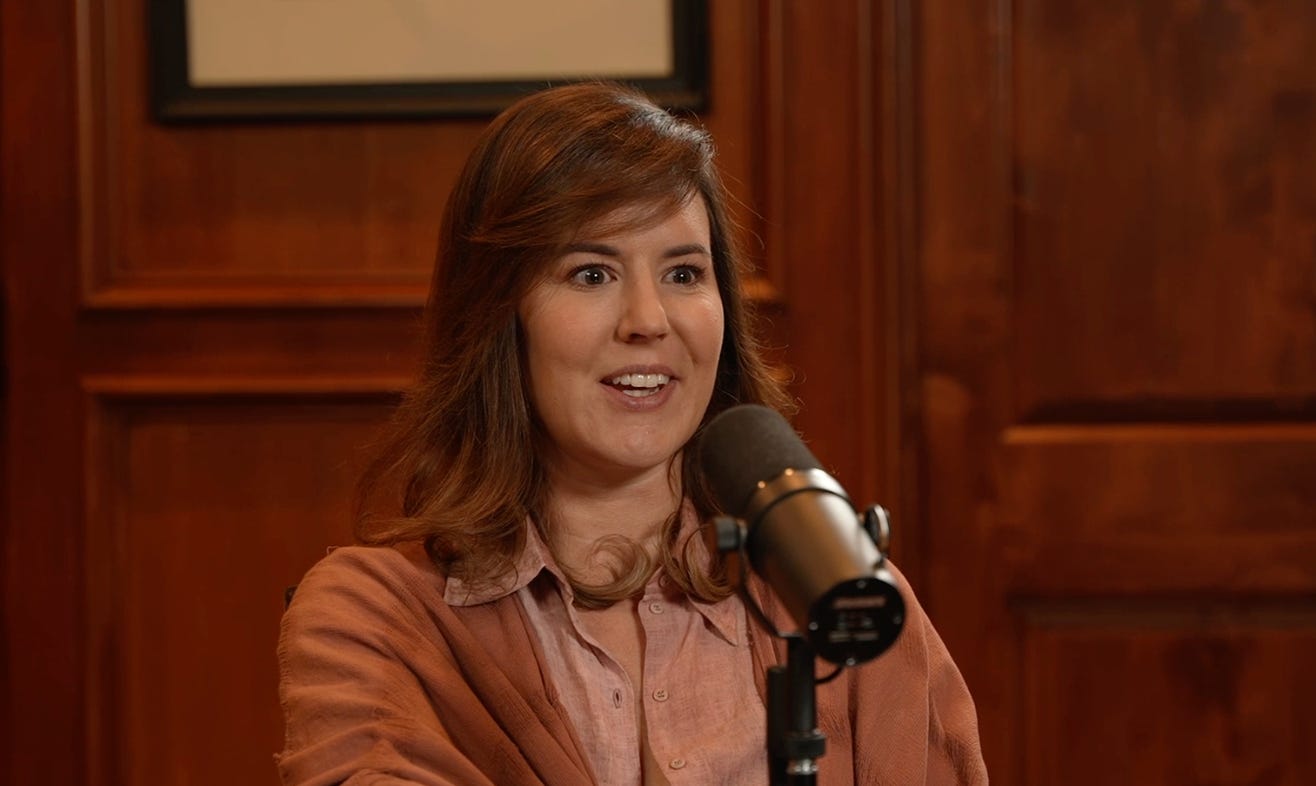
Ep 82: Whitney Baker's Masterclass on Macro Investing & the State of the Economy
What are the forces behind the scenes that drive financial markets? How do bubbles form — and are we in one now? What do the world's best investors understand and how do they consistently come out ahead? This week we dive into global finance with one of the sharpest minds in macro investing: Whitney Baker, Founder and Chief Investment Officer of Totem Macro. Whitney previously worked at two of the world's leading investment firms, first in global macro & long/short strategies at Soros Fund Management and most recently as the Head of Emerging Markets at Bridgewater Associates. In this episode, Whitney lays out the principles behind macro investing and how credit flows, borrowing cycles, and monetary policy drive global finance. She traces our current-day situation back to the 1970s when President Nixon ditched the gold standard and opened trade with China. She explains how a new age of deficit spending combined with China entering the U.S. bond market paved the way for the dot com bubble, and ultimately where we are today. Whitney makes the case that inflation isn't going away soon and believes the Federal Reserve's actions over the past few decades have exacerbated inequality in America. Yet, despite these headwinds, Whitney believes technological progress can sustain the U.S. through these challenging times, so long as we set the right conditions for our best entrepreneurs to succeed. Thanks for reading! Subscribe for free to receive new posts and podcasts. This is a public episode. If you would like to discuss this with other subscribers or get access to bonus episodes, visit blog.joelonsdale.com
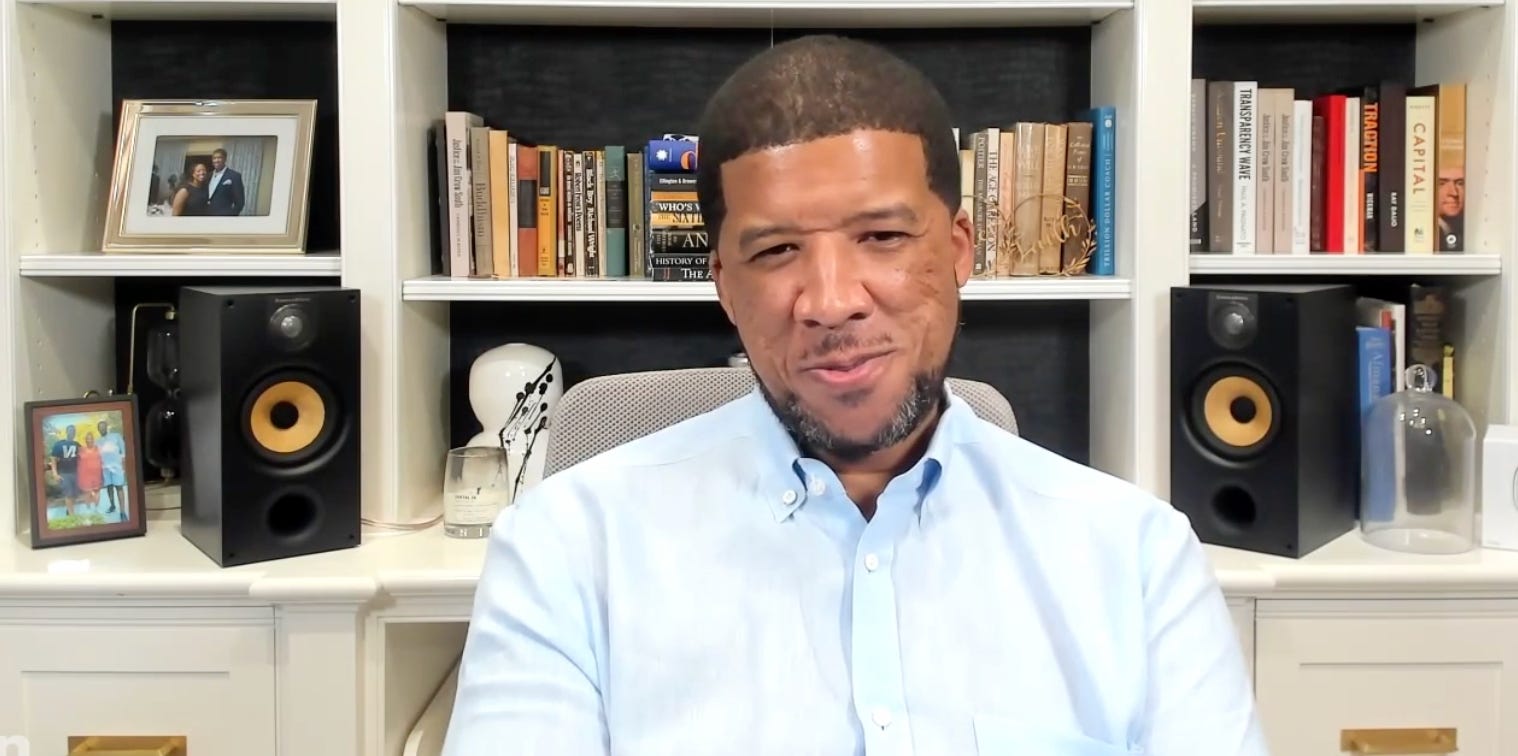
Ep 81: How Palantir Star Tyler Scriven Is Helping Small Businesses Compete Against Amazon
U.S. e-commerce sales eclipsed $1 trillion last year and are expected to double or triple over the next decade. As online demand increases, how can small businesses compete with retail giants like Amazon and Walmart? What capabilities do they need? And can a new model help level the playing field? This week, we explore the future of logistics and e-commerce with Tyler Scriven, co-founder and CEO of Saltbox. Tyler was a star talent at Palantir for many years (his first job title was "Predictor and Crusher" on account of his ability to eliminate operational challenges) before applying his learnings to help entrepreneurs nationwide. He identified a key gap in the market: small businesses have great software tools, but need help in the physical world with supply chain and logistics to compete against large retailers with scale advantages. With a dozen locations in major metropolitan areas, Saltbox provides a unique co-warehousing model to elevate storage and shipping capabilities. In this episode, we discuss Tyler's most important lessons from Palantir and how to cultivate a mission-driven culture. We cover his entrepreneurial journey from Palantir to acquiring his own small business and discovering the logistical shortcomings that Saltbox is designed to solve. We also talk leadership lessons and Tyler's compelling perspective on "courage for normal people." This is a public episode. If you would like to discuss this with other subscribers or get access to bonus episodes, visit blog.joelonsdale.com
Ep 80: Leonard Leo's Winning Strategy to Rebuild Institutions, Accelerate Innovation, and Save Our Country
Leonard Leo is one of the most effective agents of legal and cultural change in America today. What's his playbook? How can we apply it to other broken areas of society? And why should the technology world be especially interested in his work?In the mid-20th century, the U.S. judicial system took a sharp left turn, resulting in hyper-politicized courts, runaway bureaucracies, and many other distortions of our Constitutional system. Through his leadership of the Federalist Society, Leonard has led the charge to repair these broken institutions and, in the process, built arguably the most powerful legal network in the nation. He's been instrumental in the most important judicial elections and nominations of the past few decades. Leonard's wisdom is especially relevant for my friends in the effective accelerationism (e/acc) movement — or anyone who values technological progress. Standing athwart innovation is the ever-expanding administrative state, and Leonard has spent decades fighting to rightsize government and restore the separation of powers. He explains why property rights, limited government, and decentralized power are the bulwark of innovation, and why technologists must also join the effort to rein in the regulatory state and defend these sacred Constitutional principles. This is a public episode. If you would like to discuss this with other subscribers or get access to bonus episodes, visit blog.joelonsdale.com
Ep 79: Bjorn Lomborg and the 12 Best Policies to Help the World
What are the single most effective policies for helping the world's poor? And what are we doing right now that's ineffective and should be stopped? The answers may surprise you. In his latest book "Best Things First," Bjorn Lomborg reveals the 12 best solutions to address the most pressing global challenges. He gathered the world's top economists to analyze the policies that would do the most good for the least amount of money. It turns out the United Nations and others are getting it wrong — climate policies didn't make Bjorn's list! In 2015, the UN released its Sustainable Development Goals — a mere 169 promises to achieve by 2030! Yet as Bjorn explains, these are largely virtue signaling or ineffective vows the UN will never make good on. Instead of overpromising or obsessing over climate change, Bjorn says the evidence points to 12 clear and measurable policy solutions: eliminating tuberculosis, investing in education the right way, and establishing clear land rights, to name a few. Bjorn is the Founder and Director of the Copenhagen Consensus think tank and one of the world's most influential writers and thinkers. He's made a career challenging misguided narratives, especially on environmental issues, while fighting to restore sanity and fact-based policymaking. His arguments are a direct challenge to the alarmism and doomerism surrounding us today, which is why YouTube and others try to censor him! This is a public episode. If you would like to discuss this with other subscribers or get access to bonus episodes, visit blog.joelonsdale.com
Ep 78: Emil Michael — the Master Dealmaker Behind Uber's Global Dominance
By the summer of 2012, ride-sharing had arrived: Uber launched its everyman product, UberX, and Lyft debuted hot on its heels. Today, Lyft's market cap hovers around $5 billion while Uber's is north of $140 billion. How did Uber explode to global dominance? What was different about its culture? And how did it take on taxi cartels around the world and win? This week, we go behind the scenes with Emil Michael, one of Silicon Valley's great operators and dealmakers. As the former Chief Business Officer, Emil helped Uber raise a record $15 billion in two years and led its expansion into the most difficult markets, including China, Russia, Saudi Arabia, and Italy. (Yes, Italy.) Emil recounts his biggest wins and toughest challenges, including how the Italian mafia threatened to kill Uber employees and why to this day ride-sharing is almost nonexistent in Italy. Emil immigrated with his family to the U.S. from Egypt as a young child, and his success and character epitomize the American Dream. He graduated from Harvard, received his J.D. from Stanford Law, and began his entrepreneurial journey at TellMe, an early speech recognition company. He quickly became known for his dealmaking skills, including transforming a $300 million acquisition offer into a $800 million deal with Steve Ballmer and Microsoft. After TellMe, he served as a White House fellow at the Pentagon and spent time in Iraq and Afghanistan, before later joining Uber. We dive into his unique approach to high-stakes negotiations and lessons learned from his distinguished career. This is a public episode. If you would like to discuss this with other subscribers or get access to bonus episodes, visit blog.joelonsdale.com

Ep 77: Mike Solana on Exposing Government Corruption, Saving San Francisco, and Building a New Media Empire
Can investigative journalism prevail over sensational clickbait? Is it time to give up on San Francisco? Is the First Amendment sufficient to prevent the government from colluding with, or forcing, Big Tech to censor speech? This week, join us for a one-of-a-kind conversation with Mike Solana, Chief Marketing Officer at Founders Fund and Founder of Pirate Wires, one of the fastest-growing and most influential new media companies. Mike is a must-follow on X for his wit and unique insights, but also for the work he's doing to expose corruption and revive investigative reporting. Pirate Wires recently revealed how San Francisco taxpayers are being forced to fund the protests that shut down the Bay Bridge! We begin our discussion with the broken state of media, and why Mike believes a subscription model is the path to building a successful media outlet that isn't beholden to clickbait. Next, we discuss whether SF can be saved from the far Left and why we need better elites who don't blindly fund radical non-profits. We also cover several of Mike's seminal pieces of writing: the future of free speech when the government and Big Tech create a decentralized censorship regime, and how to revive our country's ability to build great, inspiring works. Can we restore competence in government or should we turn our energy and attention elsewhere? We discuss! This is a public episode. If you would like to discuss this with other subscribers or get access to bonus episodes, visit blog.joelonsdale.com
Ep 76: Accelerate or Die! Guillaume Verdon and the e/acc Movement
What is e/acc (effective accelerationism) and why is it going viral among tech's elite? Who are the leaders behind this movement and what are their ambitions? This week, we explore e/acc with one of its pioneers, Guillaume Verdon (aka @BasedBeffJezos), a theoretical physicist at the cutting edge of quantum computing and AI. Guillaume worked under Sergey Brin as the quantum deep learning lead at Google X before launching a thermal computing startup called Extropic. He started e/acc as a cultural counterforce to the degrowth and doomer movements that sow distrust of technology and seek to undermine the advancement of artificial intelligence and other emerging innovations. Fifty years ago, sci-fi was some of the most inspiring art in America. It's no coincidence that it preceded the birth of the space and digital ages — the stories and narratives we tell ourselves as a society are the ones we tend to work toward. Not surprisingly, as sci-fi took a dystopian turn in recent decades, society's view of technology and progress soured as well. E/acc is the antidote; it aims to inspire a cultural, then technological, renaissance in the West. While e/acc has gained popularity through viral memes on social media, it's also a cohesive framework designed to apply to the modern world. In this episode, we discuss the first principles behind e/acc, steelman the arguments against it, and explore how it's compatible with religion and other ethical frameworks. This is an important movement that resonates with us at American Optimist. This is a public episode. If you would like to discuss this with other subscribers or get access to bonus episodes, visit blog.joelonsdale.com
Ep 75: Leadership Lessons with Intuit Founder & Silicon Valley Legend Scott Cook
Who should be in charge of the culture of a company? How do you maintain a spirit of innovation as an organization scales? How can executives be transparent about their shortcomings while also improving as leaders? Scott Cook, the founder and former CEO of Intuit, has navigated these challenges himself while mentoring hundreds of other leaders on how to do the same. Scott is a legend of Silicon Valley. In 1983, he founded Intuit and pioneered consumer finance software, first with Quicken and later TurboTax, Quickbooks, and other products that quickly became household names. During the 8VC Leadership Summit, I sat down with Scott to discuss some of his most important lessons learned and advice to CEOs and founders. He begins with the responsibility of the CEO to set the company culture, and why leadership doesn't get to play by a different set of rules than its employees. He also explains how success can make organizations slow and stupid, and how to fight the forces of inertia. One way is by orienting decision-making around experimentation, not opinion or status, and he illustrates how Intuit learned to adopt this mindset. Finally, he advises CEOs to advertise their failures, not bury them, and seek out accountability and outside scrutiny from coaches and advisors. This is a public episode. If you would like to discuss this with other subscribers or get access to bonus episodes, visit blog.joelonsdale.com
Ep 74: A Turning Point in Higher Education with Pano Kanelos & Niall Ferguson
In the wake of October 7, the decadence and rot of our legacy universities have been on full display. We've seen feckless leadership from college presidents, moral cowardice from faculty, and, as a result, shocking displays of anti-Semitism unchallenged on campus. It's time to build anew. That's why we founded the University of Austin — America's first new top university in almost a century. And we are now accepting students for our inaugural class in the fall of 2024! In this episode, three of UATX's founders — myself, UATX President Pano Kanelos, and world-renowned historian Niall Ferguson — discuss this critical moment for UATX, and the nation. We dive into what sets UATX apart: a constitution that safeguards freedom of inquiry and expression; a curriculum that combines the intellectual foundations of Western Civilization with real-world applications; and a faculty and support network made up of the world's leading scholars, writers, entrepreneurs, and builders. As Niall and Pano explain, we're training the Navy SEALs of the mind — the next generation of leaders who can reason, debate, build, and restore our republic to greatness. Right now, we're looking for our first 100 students. If you're a maverick and have what it takes to help us forge a new path in higher education, we encourage you to apply. This is a public episode. If you would like to discuss this with other subscribers or get access to bonus episodes, visit blog.joelonsdale.com
Ep 73: How Candid Health Is Fixing the $280B Healthcare Billing Fiasco, With Lessons from Palantir
The U.S. spends $280 billion annually on healthcare billing! It's an irrationally complex and outdated system in which most claims are adjudicated manually, resulting in massive inefficiencies and bogus claim rejections. Why is it so broken? How do we fix it? And what would healthcare look like if it functioned properly? That's what I discuss with Nick Perry and Doug Proctor, co-founder & CEO and COO of Candid Health, respectively. Two talented Palantir alumni, Nick and Doug represent a trend I'm watching closely: leading technologists with a top culture, the right software, and new breakthroughs in machine learning taking on the most broken areas of our economy. In this episode, they explain the origins of Candid and how they first learned the billing process by hand in order to build the information architecture necessary to process myriad types of claims with extremely low denial rates. At scale, Nick & Doug envision Candid as Stripe or Shopify for healthcare: the infrastructure layer that automates revenue cycle management and dramatically lowers the barrier to entry for new healthcare startups. And if we ever want the U.S. to move from its broken fee-for-service model to value-based care, we'll need platforms like Candid to enable that shift — another reason I'm bullish on Candid and the leaders behind it. This is a public episode. If you would like to discuss this with other subscribers or get access to bonus episodes, visit blog.joelonsdale.com
Ep 72: Illegal Chinese Bio Labs & Secret Police in the U.S.; Investigating the CCP with Congressman Mike Gallagher
Secret police groups, illegal bio labs, and large-scale influence operations — China is engaged in these activities inside the United States today. How should we respond? Is economic divorce the answer? And are we destined for conflict, or is there a path toward peace and mutual prosperity? We discuss these pressing issues with Rep. Mike Gallagher, Congressman for Wisconsin's 8th District and Chairman of the House Select Committee on the Chinese Communist Party (CCP). A distinguished warrior-scholar, Chairman Gallagher served in the Marines and deployed to Iraq, earned two Master's degrees and a Ph.D., and now leads one of the most consequential committees in Congress. In this episode, he details some of the CCP's most nefarious activities within the U.S., and our government’s inadequate responses. We discuss the right strategy for addressing the CCP, including when and where economic decoupling makes sense. Chairman Gallagher also provides an update on new legislative efforts he believes will finally succeed at forcing a sale of TikTok, and he explains why China's economic woes and looming demographic crisis might make Xi Jinping more likely to take aggressive action. If you want to understand the extent of the CCP's malign actions and influence campaigns, follow the bipartisan work of Chairman Gallagher's committee. This is a public episode. If you would like to discuss this with other subscribers or get access to bonus episodes, visit blog.joelonsdale.com
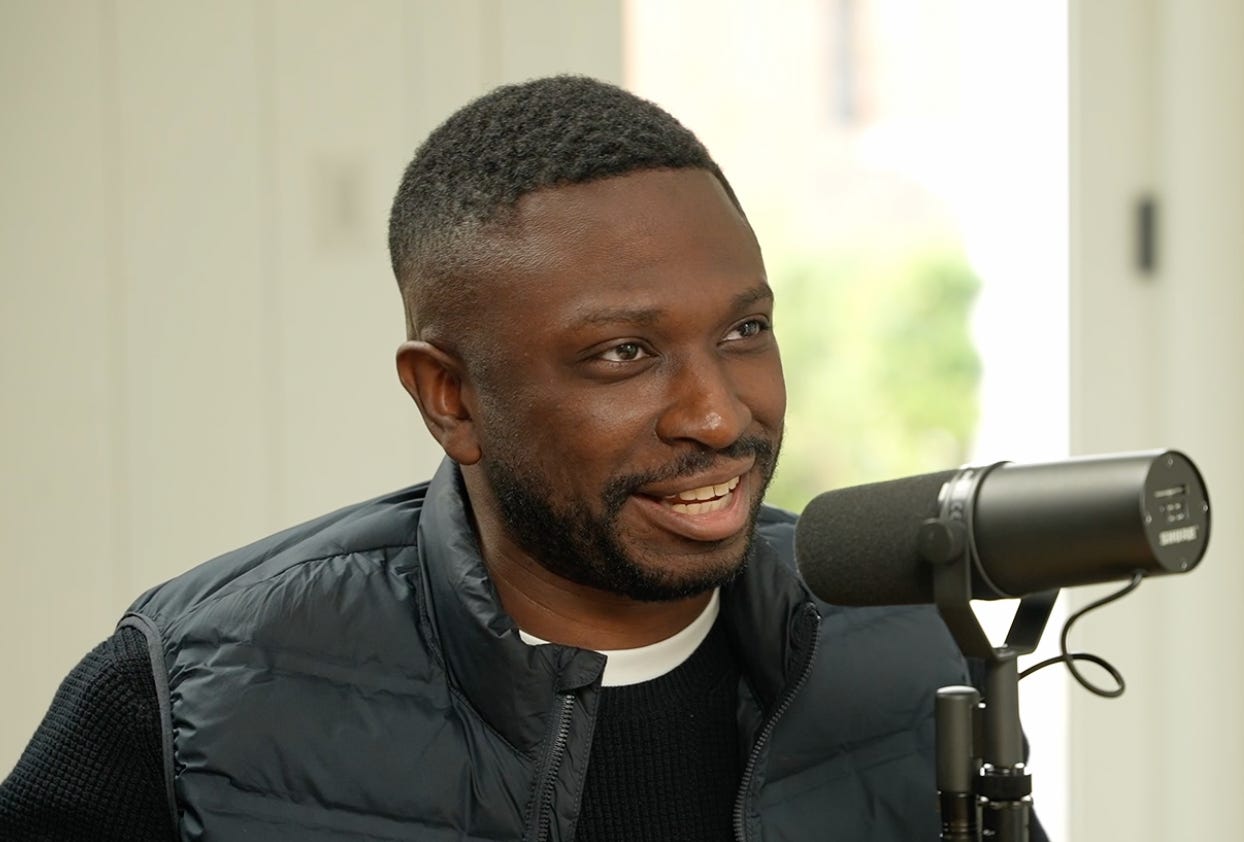
Ep 71: Reinventing Community College with Tade Oyerinde, Chancellor of Campus
Ten million students attend community college annually, but only 30% ever graduate! It's a massive economic loss to students and society. What if a new model could drastically increase completion rates while maintaining a high-quality education, and leave students with zero debt? That's what Tade Oyerinde is aiming to build with Campus, a new way to conduct community college. His approach is two-pronged: improve quality and increase completion rates. First, Campus is pioneering a gig economy for top adjunct professors. Recognizing that adjuncts at elite universities are often underpaid and drowning in debt, Campus offers them the opportunity to teach part-time online — a win for adjuncts and students alike. Next, they surround students with support designed to reduce attrition: tuition includes a laptop, wifi, and a personal coach, all at a cost less than the annual Pell Grant (currently $7,495). Campus also recently acquired a brick-and-mortar school in Sacramento that offers hands-on skills training for in-demand career tracks, such as medical coding and cosmetology. Instead of taking on large sums of debt to attend mediocre private schools, Tade believes community college is the smarter path for most students, and hopes Campus will be at the forefront of a new era in higher education. But it won't be easy. Learn about his journey to reinvent one of America's most entrenched and misaligned sectors. This is a public episode. If you would like to discuss this with other subscribers or get access to bonus episodes, visit blog.joelonsdale.com

Ep 70: "The Geek Way" — Andrew McAfee's New Book on the Radical Mindset that Transformed the World
In the last generation, the U.S. technology sector created many of the most valuable companies in the world. Has Silicon Valley figured out a better way to build and scale a business? How did this cohort of outsiders — “geeks” — create cultures that continually redefine the limits of science and technology? And how can others, especially our government, learn from the very best organizations? These are the questions at the heart of best-selling author Andrew McAfee's new book "The Geek Way: The Radical Mindset that Drives Extraordinary Results." A principal research scientist at MIT, Andrew explores the geek mindset — an obsessive maverick, as he defines it — and explains how geeks developed a new management philosophy that permeates Amazon, Apple, SpaceX, Palantir, and other pioneering organizations. He breaks it down into four norms: speed, science, ownership, and openness, and details the principles behind each. He also explains why even the most successful companies are vulnerable to bureaucracy and sclerosis, and that human nature and status-seeking have something to do with it. Instead of fighting it, he describes how geeks have figured out a better way to align these innate tendencies with the mission of the company. I've bought copies of this book for all our CEOs, and hope you'll check it out too! This is a public episode. If you would like to discuss this with other subscribers or get access to bonus episodes, visit blog.joelonsdale.com

Ep 69: How a Builder Mindset Is Solving the World's Ocean Trash Problem; Boyan Slat & The Ocean Cleanup
We've all seen the images — garbage patches twice the size of Texas accumulating in the Pacific Ocean. Yet nothing was being done, despite billions of dollars a year spent on environmental lawyers and bureaucrats. That is until a young engineer from Holland set out to do what bureaucrats couldn't — clean up the Great Pacific Garbage Patch and stem the flow of plastic into the oceans. Boyan Slat is the Founder and CEO of The Ocean Cleanup, the most effective organization ever built to rid the oceans of pollution. They're already cleaning up an average of 750kg of trash each hour this year, and Boyan estimates their latest technology will eliminate the Great Pacific Garbage Patch within 10 years! Moreover, Boyan and his team have also identified the top polluting rivers in the world and are building interceptors to prevent pollution from reaching the seas in the first place — all for a tiny fraction of other environmental spend. But it hasn't been easy. Boyan explains how they overcame numerous engineering challenges, as well as intense criticism and cynicism from media and activists hoping they would fail. Boyan's inspiring journey reflects the power of an innovation mindset, and the ability of a small group of highly-motivated builders to achieve what an entire class of experts and bureaucrats couldn't. I'm a supporter of Boyan's work and hope you'll consider supporting him as well. This is a public episode. If you would like to discuss this with other subscribers or get access to bonus episodes, visit blog.joelonsdale.com