Joe Lonsdale: American Optimist
Ideas and dialectic on technology, policy & philosophy.
Joe Lonsdale
Show overview
Joe Lonsdale: American Optimist has been publishing since 2021, and across the 5 years since has built a catalogue of 162 episodes. That works out to roughly 100 hours of audio in total. Releases follow a fortnightly cadence.
Episodes typically run thirty-five to sixty minutes — most land between 32 min and 43 min — and the run-time is fairly consistent across the catalogue. None of the episodes are flagged explicit by the publisher. It is catalogued as a EN-language Technology show.
The show is actively publishing — the most recent episode landed 3 weeks ago, with 24 episodes already out so far this year. Published by Joe Lonsdale.
From the publisher
American Optimist, hosted by Joe Lonsdale: entrepreneur, investor, and founder of four multi-billion dollar companies and other mission-driven organizations. American Optimist is an alternative to the fear, cynicism, and zero-sum thinking in mainstream media. Learn from the innovators and leaders who are solving our nation’s most pressing challenges, and doing it in a way that will lift everyone up. Hope should dominate our discourse, and American Optimist will show you why. blog.joelonsdale.com
Latest Episodes
View all 162 episodesEp 161: Generalist CEO Pete Florence on the Robot Revolution & Bringing General Intelligence to the Physical World
Ep 160: Box CEO Aaron Levie on Silicon Valley's AI Problem, Evidence for AI Job Creation & What Doomers and Accelerationists Get Wrong
Ep 159: Aaron Cannon Is Building the Leading AI Customer Research Platform; It's About to Upend a $140B Industry
Ep 158: Nima Ghamsari on Blend's Comeback & the Power of AI Agents and Infinite Workforce
Ep 157: Scott Nolan on the AI Energy Crisis & America's Nuclear Renaissance
Ep 156: Coleman Hughes Takes on America's Most Contentious Debate: the Legacy of Slavery
Ep 155: Eric Scott on the Biggest Missed Opportunity in Venture Investing
Ep 154: Jacob Helberg on Pax Silica & the New Global Order in the AI Age
Ep 153: Palantir CTO Shyam Sankar on Heretics, AI Weapons, and Rebuilding the Arsenal of Democracy
Ep 152: Ben Black Runs America's $200B Foreign Investment Fund; Here's His Plan to Counter China & Rebuild American Influence
Ep 151: The Myth of Michael Milken with Richard Sandler
Ep 150: How AI Is Transforming Diligence, Decision-Making & the Future of Investing with John Melas-Kyriazi
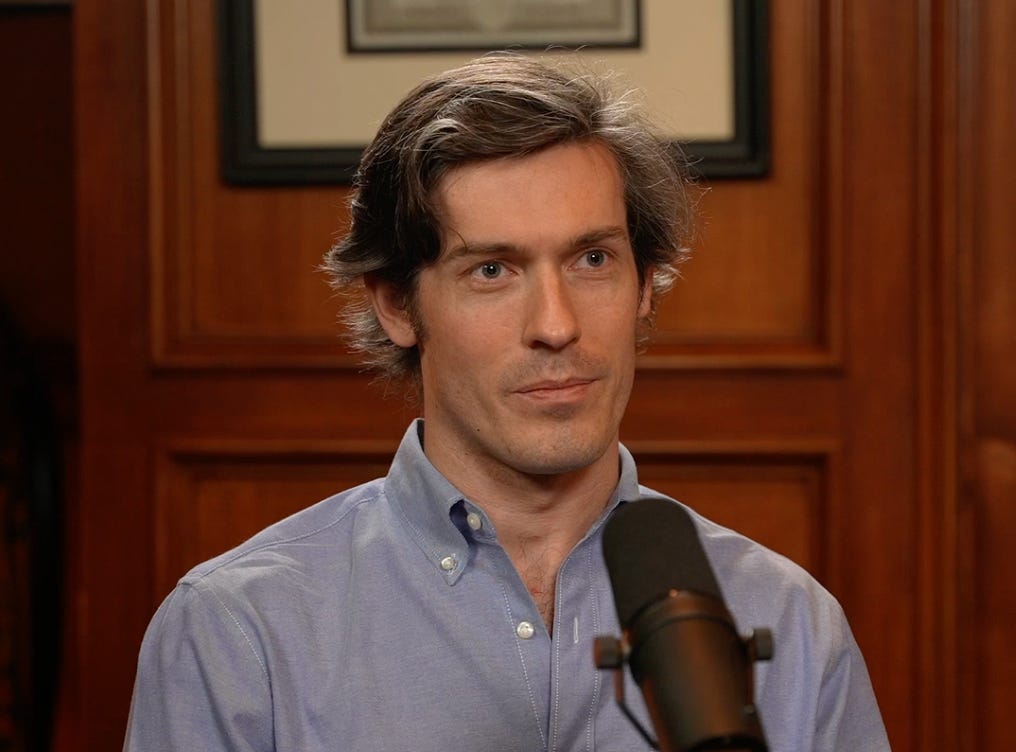
Ep 149: Will Fry on the Small Business Succession Crisis & New Opportunities in the AI Age
In the coming years, over two million small businesses will change hands or close their doors as Baby Boomers retire. Will Fry, Founder and CEO of American Operator, is on a mission to save Main Street and seize this opportunity for the next generation of local owners and operators. How does the operate-to-own model work? Should talented young people think twice about traditional careers and pursue ownership opportunities instead? And why is Will especially bullish on small business in the AI age?Raised in a small town in North Carolina, Will developed an early love for building, starting with electronic kits and later unique apps. After studying at Penn and Wharton, a trip home revealed the looming crisis: millions of local businesses that lack succession plans. This sparked the creation of American Operator, which pairs retiring owners with high-agency operators, along with the capital and know-how to build a thriving business.We begin with Will’s entrepreneurial journey and the coming “Silver Tsunami.” Will explains why only 48% of small business owners have succession plans and what this means for the next generation of owner-operators. He highlights stories like Greenway Painting in Jackson, Wyoming, and how American Operator is helping create millionaires on Main Street while keeping local business local. Next, we explore the historical and cultural importance of small business in America, dating back to John Hancock’s import-export firm and Ben Franklin’s printing shop. Looking ahead, we examine AI’s impact on small businesses. Learn why Will believes SMBs are a great AI hedge, while also having unique upside as new AI tools make small cohorts of people dramatically more productive. Finally, Will explains the operate-to-own model and how American Operator aligns incentives so that original owners become valuable advisors, new operators can earn their way into majority ownership, and American Operator remains a committed partner over the long run.00:00 Episode intro01:25 Will’s entrepreneurial journey04:15 The small business succession crisis06:40 American Operator’s approach vs. private equity11:55 Does AI mean boom or bust for small business?15:55 Forget law school? Buy a small business instead?21:20 AI use cases for small business23:00 Why many business owners shut down instead of sell26:00 How the operate-to-own model works33:50 Optimism for Main Street America This is a public episode. If you would like to discuss this with other subscribers or get access to bonus episodes, visit blog.joelonsdale.com
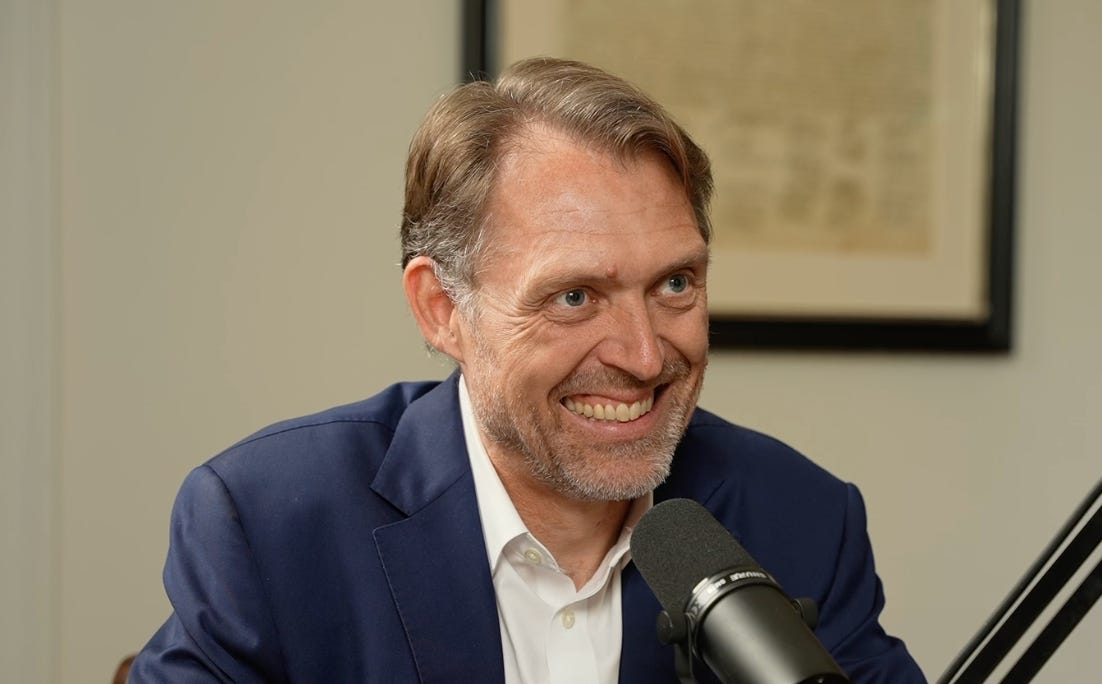
Ep 148: JoeBen Bevirt, Founder & CEO of Joby Aviation — Flying Cars Have Arrived
Last year, JoeBen Bevirt joined the show to discuss the vision behind Joby Aviation and bringing air taxis to life. Now, he's back to talk execution and getting to market this year! What states will be first to offer Joby rides — and when? How is Joby ramping up manufacturing to meet the moment? And how is AI making Joby’s top scientists over 10X more productive and accelerating decades of advancement into the next few years?" As Founder and CEO of Joby Aviation, JoeBen has spent more than a decade building Joby into the leader in electric vertical takeoff and landing (eVTOL) aircraft, and we begin with its unique design: 100 times quieter than a helicopter and dramatically safer to operate with layered redundancy across six propulsion stations, dual motors, and dual battery packs. Next, we talk about the significance of Joby's partnership with Toyota, how they're ramping up manufacturing, and why they're massively expanding their Ohio facilities. Then, JoeBen lays out their regulatory progress, from achieving their first FAA-conforming aircraft to the White House's historic pilot program that will bring air taxis to 12 states starting this year, including Texas!Additionally, we explore the coming age of autonomy, why Joby is partnering with NVIDIA to build out its autonomous flight stack, and how AI is transforming everything from aerodynamics research to back-office tasks. You'll also learn about Joby's breakthrough hydrogen-electric program — unlocking long-range commercial and defense applications — and why staying ahead of China is critical for American leadership in this next age of flight. Finally, JoeBen shares his grand vision for an electric era of aviation and a future without traffic — something we can all get behind.00:00 Episode Intro 01:50 What sets Joby aircraft apart 04:50 Key partnerships with Toyota & NVIDIA06:50 Closing in on FAA Certification 08:00 Air Taxis coming to 12 states this year! 13:35 Autonomous flight is the future20:00 Hydrogen aircraft for the Pentagon 24:10 Why AI is a game changer 28:15 Expansion in Ohio and Global Competition with China 34:40 Addressing critics / future vision 35:50 Making air travel ubiquitous This is a public episode. If you would like to discuss this with other subscribers or get access to bonus episodes, visit blog.joelonsdale.com
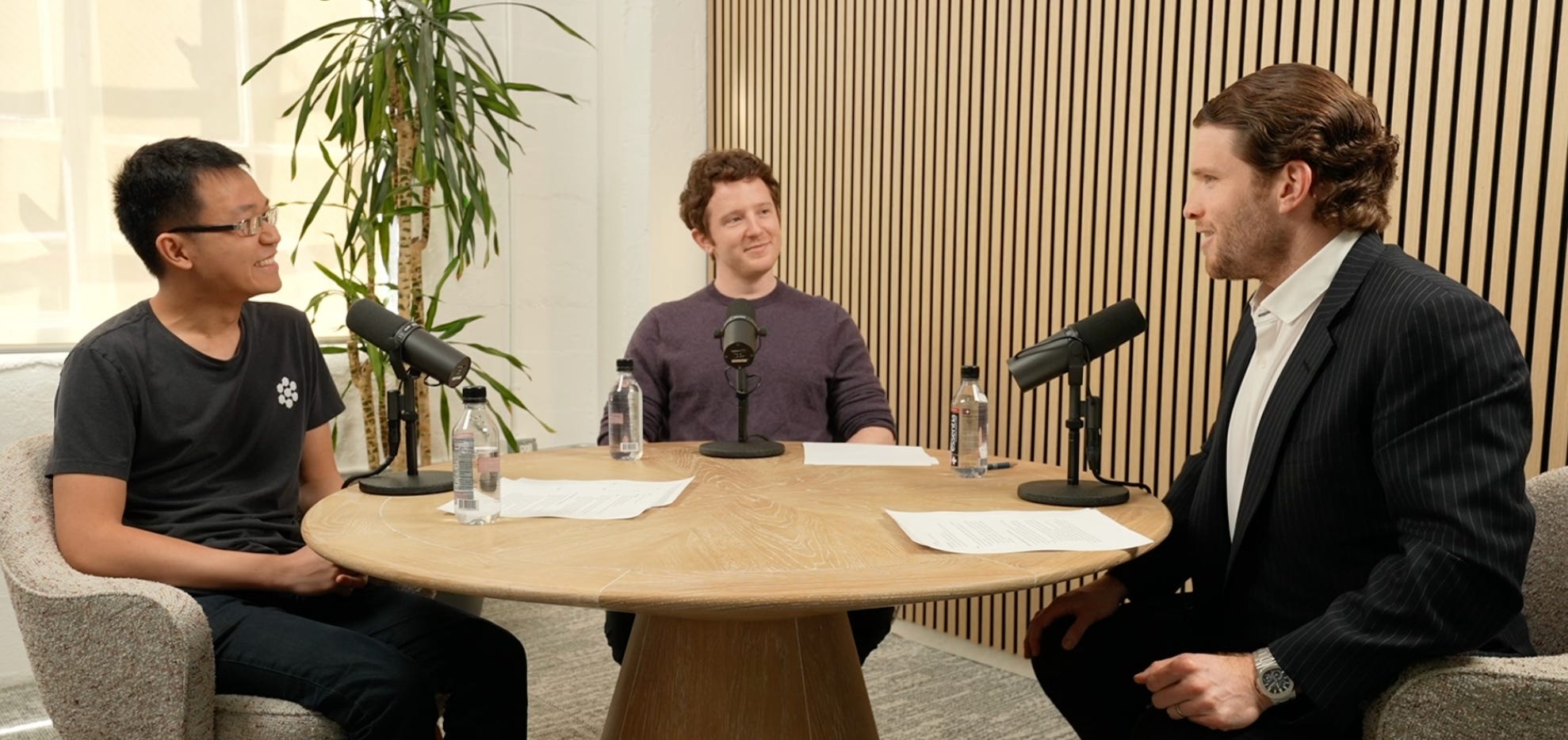
Ep 147: Scott Wu & Russell Kaplan on the New Era of Software Abundance
Scott Wu and Russell Kaplan, co-founders of Cognition, are leading one of the fastest-growing, talent-dense AI companies. Their mission: make expert software engineering ubiquitous. What does a world of software abundance look like? How is Cognition delivering massive productivity gains inside some of the largest companies and organizations? And can AI finally modernize the broken, $100 billion government IT systems? We discuss these and other timely topics with Scott and Russell. Scott was a three-time gold medalist at the International Olympiad in Informatics and world champion at age 17. After high school, we hired him at Addepar, where he became a top software engineer. Russell began his career as a machine learning engineer on Tesla’s Autopilot team before selling his video data company, Helia, to Scale AI. In 2023, Scott and Russell co-founded Cognition, and a year later, they shocked the technology world with the release of Devin, the first AI software agent. We begin our conversation by discussing the incredible collection of young talent at Cognition, and why the next generation has new advantages in the AI era. Next, we catch up on Cognition’s explosive growth: Devin usage in the first few months of 2026 already surpassed all of 2025. Scott reveals that Cognition engineers no longer write code and explains how they’re able to test and ship new products faster than ever before. Then, we dive into the new era of software abundance and what it means if everyone has access to high-quality engineering, from modernizing large legacy enterprises to supercharging small businesses. We also discuss Cognition’s recent foray into government services and its work to modernize complex outdated systems. Finally, we explore the talent flywheel that has drawn so many former founders to Cognition, and why Scott and Russell believe we’re moving from Minecraft “survival mode” to “creative mode” — where the only limit to building is imagination itself.00:00 Episode intro01:35 Why technical talent & execution matters in AI06:10 Do young people have an edge in the AI era? 08:26 Cognition’s rapid growth 11:55 The new era of software abundance14:30 Cognition engineers don’t type code anymore19:20 “Never sleep while Devin is idling” 21:25 The case for AI disinflation23:50 How Devin generates 12X productivity gains28:25 Cognition for government / taking on complex, broken systems36:40 The AI race / competition with Anthropic39:00 Forward deployed engineers?43:40 How fast are LLMs improving? 47:10 AI-led small business explosion This is a public episode. If you would like to discuss this with other subscribers or get access to bonus episodes, visit blog.joelonsdale.com
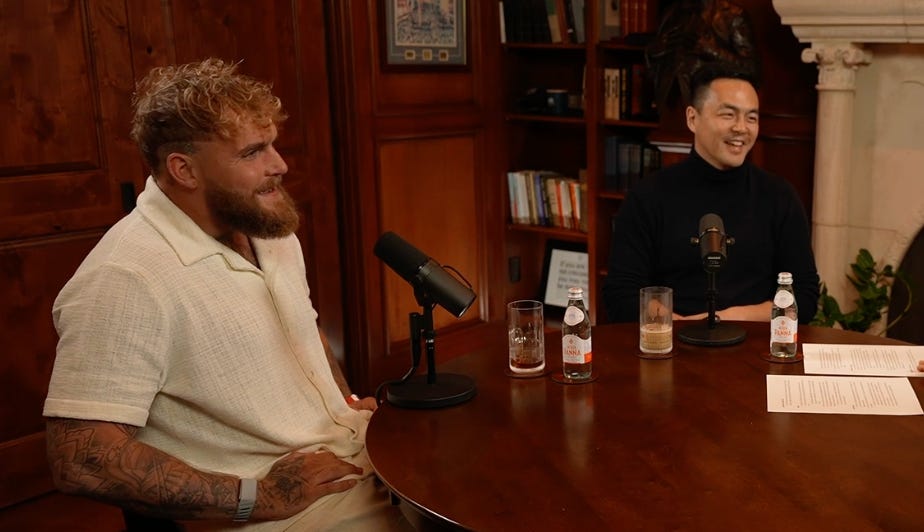
Ep 146: Jake Paul & Geoff Woo on Building Anti Fund, the Future of the Creator Economy & How to Change the Culture
Jake Paul is a social media influencer-turned-entrepreneur and boxer. He’s not only one of the most popular figures on the planet among Gen Z, but also an outspoken patriot, capitalist, and builder. Together, he and Geoff Woo founded Anti Fund and have backed OpenAI, Anduril, Ramp, among others. Why did Jake decide to speak out on politics? How do we win over the next generation? And how is AI changing the culture, from new social media platforms to prediction markets and the revival of in-person events?We recorded this conversation the day after Jake appeared with President Trump at a Kentucky rally. He explains why he’s speaking out on politics, even if it costs him financially, and why authenticity is key to cultural influence. Next, we explore the origins of Anti Fund, and how Jake and Geoff had the conviction to back Anduril before defense tech was in vogue. They also invested in OpenAI and were instrumental in rolling out Sora; learn about the strategy behind the launch and the challenges around AI slop and identity authentication. Additionally, Jake is the co-founder of Betr, and we discuss its recent partnership with Polymarket, what’s next for prediction markets, and how to build guardrails for customers. Finally, we explore Jake’s success in pioneering the creator economy and building consumer brands. In the 1960s and 70s, most kids aspired to become astronauts. Today, they want to be content creators, in part because of Jake’s influence. We conclude with Jake’s advice for young people in the AI era, and how we can persuade the next generation to love their country and embrace a builder mindset.00:00 Episode intro02:20 On stage with President Trump06:00 Attention is the most valuable currency08:00 The origins of Anti Fund and backing OpenAI, Anduril, Ramp, and others09:10 Betr + Polymarket and the future of prediction markets 14:58 Launching Sora with OpenAI 16:14 Are you worried about AI slop? 19:10 How AI is changing culture; revival of in-person events 21:20 Who should become a creator?24:30 Fighters as cultural icons 31:30 How to win the culture This is a public episode. If you would like to discuss this with other subscribers or get access to bonus episodes, visit blog.joelonsdale.com
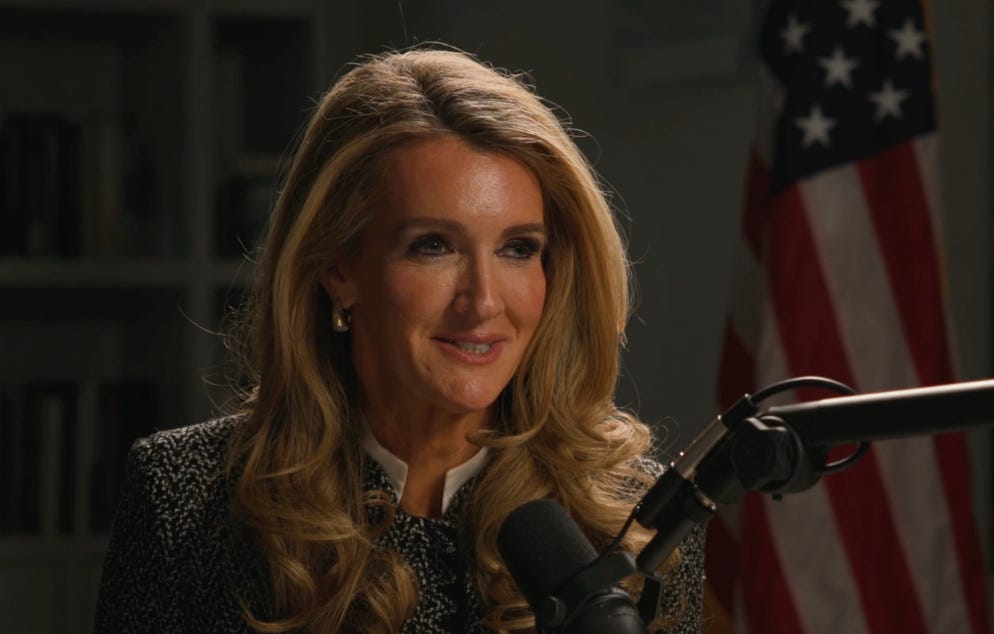
Ep 145: SBA Administrator Kelly Loeffler on Exposing Billions in Fraud & What AI Means for Small Business
Small Business Administrator Kelly Loeffler is playing a pivotal role in our nation on two fronts: supporting the next generation of small business owners, while exposing and combating billions of dollars in fraud. How is AI impacting small businesses? Could this be a golden age for Main Street America? What's the staggering scale of fraud she's uncovering? And how is she working with Palantir and other top talent to ensure it never happens again?We discuss these timely topics and more with Administrator Loeffler. Growing up on a farm in rural Illinois, Kelly raised cattle and was exposed to the challenges of small business early on. She became the first in her family to graduate college and built a distinguished career in financial services at Intercontinental Exchange. In 2018, she became the founding CEO and first employee of the fintech startup, Bakkt, which brought institutional infrastructure to crypto. Kelly was appointed to serve in the U.S. Senate in 2020 and later confirmed as Administrator of the Small Business Administration in February 2025.We begin our conversation with Kelly's entrepreneurial journey, before diving into her mission at the SBA. Her leadership comes at a pivotal juncture: a $10 trillion generational wealth transfer amid a technological revolution. As Baby Boomers retire and new AI tools emerge, Kelly believes young talent should think twice about traditional pathways and consider small business ownership instead. She lays out the administration's agenda, including expanding SBA loans for reindustrialization and bolstering the manufacturing jobs of the future. Next, we dive into her other core responsibility: exposing fraud. Learn how the SBA uncovered over $400 million of COVID-era fraud in Minnesota, $9 billion in California, and they're just getting started. She's also investigating 8(a) minority contracting — a program for disadvantaged communities hijacked by the Biden administration for race-based contracting and grift. The SBA is bringing in top talent and technology, including Palantir, to expose the fraud, revamp the programs, and protect taxpayers.00:00 Episode intro01:40 Farming to finance04:46 Building Bakkt & institutional infrastructure for crypto09:00 AI & the future of small business13:58 How to supercharge manufacturing in America16:15 Exposing billions in fraud18:50 The scandal of minority contracting20:25 Using Palantir to investigate fraud27:15 The NGO grift scheme29:50 Optimism for the future This is a public episode. If you would like to discuss this with other subscribers or get access to bonus episodes, visit blog.joelonsdale.com
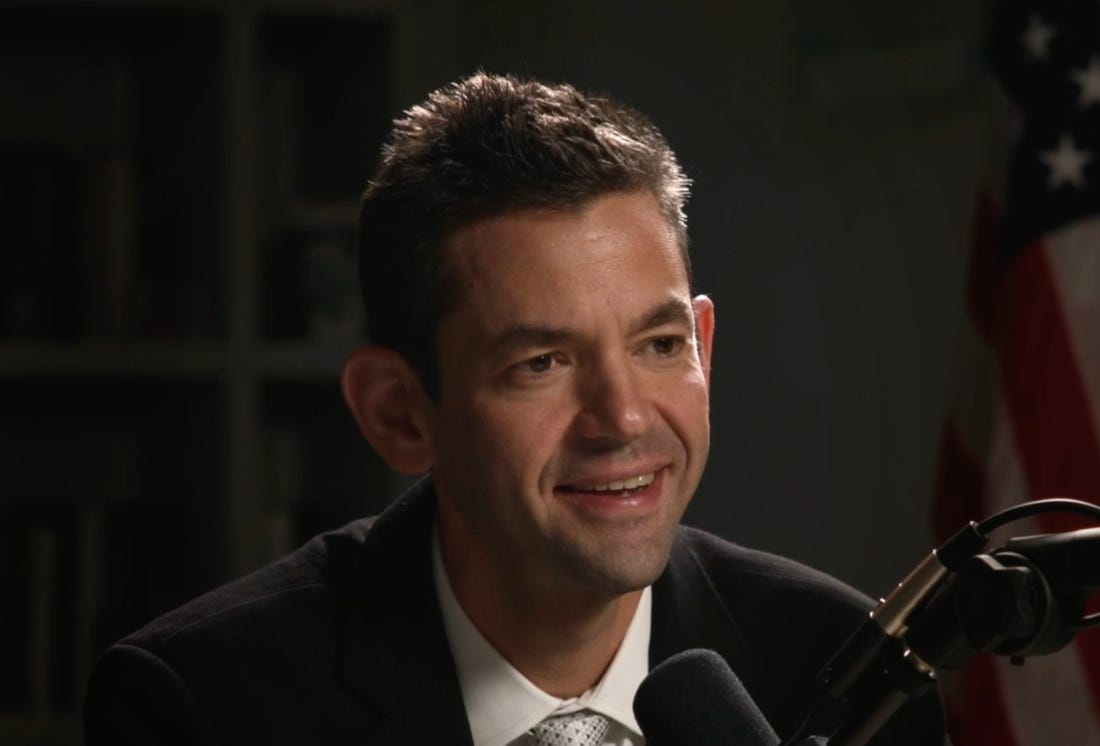
Ep 144: Jared Isaacman's Bold Vision for Moon Bases, Nuclear Power in Space, and Returning NASA to Greatness
As a teenager, Jared Isaacman built a billion-dollar payments company. He then pursued aviation, acquiring the world's largest private air force and creating “Top Gun as a service,” before commanding the first all-civilian spaceflight. Now, he's taking on his greatest challenge: returning NASA to greatness. Can we beat China back to the Moon? Will we reach Mars within a decade? And how close are we to making nuclear propulsion, space colonies, and other sci-fi futures a reality? We discuss all this and more with NASA Administrator Jared Isaacman. We begin with his upbringing and the origins of Shift4 Payments, which now processes more than $200 billion annually. A prolific pilot, he went on to build Draken International and acquire over 100 fighter jets for adversary training — at one point, he owned the 12th largest air force in the world! Next, we dive into his experience as a commercial astronaut and why he sought the helm of NASA. Jared outlines his bold vision to reform NASA, starting with his announcement to increase the Artemis launch cadence and ensure a return to the Moon by 2028. We discuss the challenges of building a permanent Moon presence, and why nuclear power and propulsion in space is a NASA-unique mission that will attract top talent and help the agency achieve greatness again. Finally, we explore the growing space economy and exciting sci-fi realities we will experience in the years ahead. NASA is a storied American institution; we are fortunate to have a talented leader like Jared who wants to see it not only thrive again, but reach even greater heights. 00:00 Episode intro01:30 Top Gun as a service 07:40 Founding a billion-dollar payments company09:30 Pioneering private spaceflight 12:00 What happened to NASA? 14:40 Getting back to the Moon by 202820:47 Jared announces new plans for Artemis25:15 Future of the space economy 27:50 Nuclear power in space 29:00 Sci-fi futures becoming reality This is a public episode. If you would like to discuss this with other subscribers or get access to bonus episodes, visit blog.joelonsdale.com
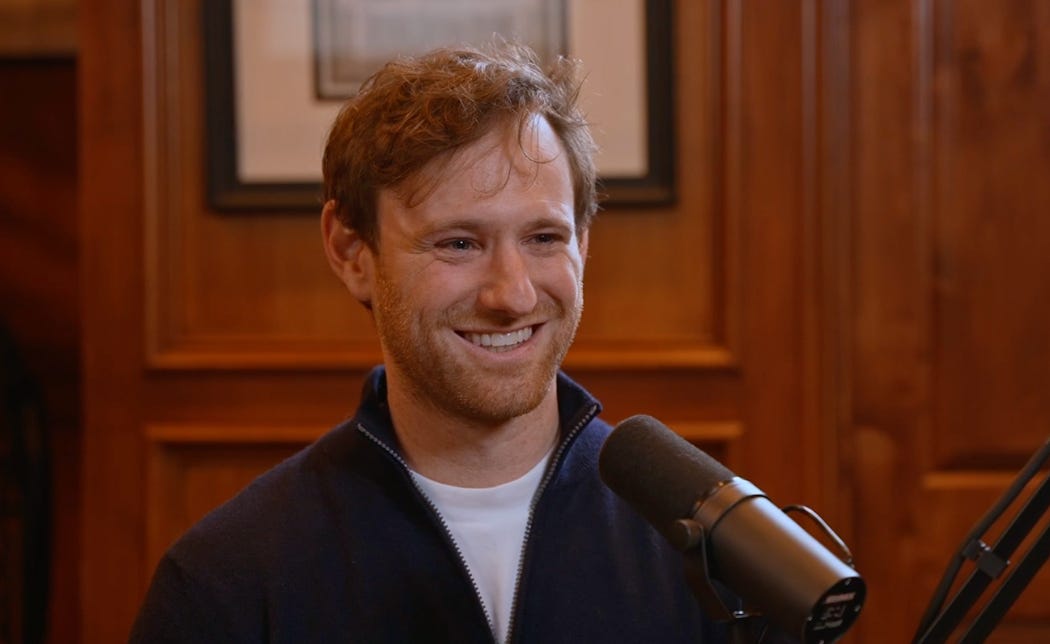
Ep 143: JD Ross on the New Invention Era & Building with AI in 2026
JD Ross is one of my favorite entrepreneurs. I hired him out of college at Addepar where he quickly became Head of Product. He went on to co-found Opendoor with Keith Rabois and is now building WithCoverage — one of the fastest growing AI-first service companies. JD believes we're entering an "invention era" again. What are the new possibilities with AI? What does it mean for legacy software companies? And why is he especially excited for young talent entering the workforce today?We discuss all this and more, starting with JD's entrepreneurial journey, from founding a moving company in college (that still generates +$10M a year in sales!) to joining Addepar and later founding Opendoor. We discuss some of the breakthroughs and challenges at Opendoor, and why its meme stock moment is infusing new energy and ideas into the company. Next, we dive into WithCoverage and his mission to upend the insurance brokerage industry by combining new AI tools with human expertise — think Ramp for risk management. Initially backed by 8VC, WithCoverage already serves more than 700 enterprise customers and recently closed a $42 million round led by Sequoia and Khosla Ventures. Talented builders like JD are scaling and iterating on new products faster than anything we've seen before — learn what this means for the startup ecosystem, as well as existing SaaS companies looking over their shoulders. Finally, JD explains how AI is leveling the playing field and why he believes this is the best opportunity for new entrepreneurs in recent decades.00:00 Episode intro01:28 JD's entrepreneurial journey05:18 Wins and challenges at Opendoor / meme stock moment09:55 WithCoverage and upending insurance brokerage with AI 13:11 Mimetic frameworks for entrepreneurs 15:45 How AI is changing the way companies are built20:21 The impact of AI on existing SaaS 26:50 How to stop AI spam and imposters 31:27 How should young people prepare for the AI era? 34:20 The new invention era / why AI levels the playing field This is a public episode. If you would like to discuss this with other subscribers or get access to bonus episodes, visit blog.joelonsdale.com
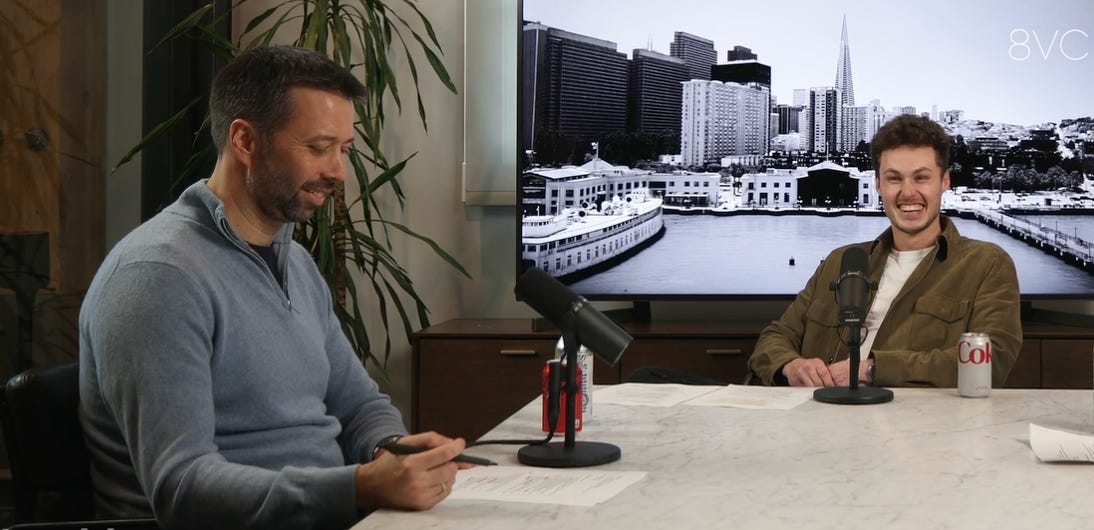
Ep 142: Understanding the AI Wave with 8VC's Alex Kolicich & Jack Moshkovich
Advances in AI are occurring at a pace we haven’t seen before in Silicon Valley. How do we know what’s real versus hype? What does it mean for large software incumbents? And how are the top investors and builders thinking about the new possibilities? This week, we talk with two of my partners at 8VC, Alex Kolicich and Jack Moshkovich, who are on the ground working with the leading AI talent to get their perspective on what’s really happening.Alex Kolicich is a Partner at 8VC, where he specializes in IT and Bio-IT investments. Prior, he was a Partner at Formation 8 and worked alongside Peter Thiel at Mithril Capital Management. Alex was also an engineer and early-product advisor at Clarium, Palantir, and Google. Jack Moshkovich began his career at 8VC and helps lead our investment practice alongside Alex out of San Francisco, where he focuses on enterprise software.We begin with Silicon Valley’s most recent technological wave: smart enterprise. In 2013, we published our smart enterprise thesis, predicting the B2B software explosion that drove tremendous value creation over the past decade. Now, we’re entering the next landmark shift: the AI wave. Learn why AI is fundamentally disruptive (you can find our thesis here), and the enormous leap from data retrieval to automated decision making and from linear to non-linear problem solving. Next, we dive into the six layers of the AI investment stack, and why we are focused on level five: the application layer. We dissect the tremendous opportunities for AI-native upstarts, as well as the challenges — and upside — for smart enterprise pioneers that can reorient around AI. Finally, we discuss some of the key questions in the years ahead: When and where will we see massive productivity gains in the economy? Will LLMs become commodities, or is each frontier model sufficiently differentiated? And are we entering a bubble, or is the AI wave just getting started?00:00 Episode intro01:40 Smart enterprise thesis04:00 Did enterprise software dramatically boost productivity?08:30 Understanding the AI wave11:45 Are LLMs becoming commodities? 17:10 OpenAI vs Anthropic vs Meta vs Grok20:30 Frontier models vs enterprise incumbents 25:20 What did Palantir get right?32:30 AI case studies/new possibilities 43:00 The most surprising aspect of the AI wave 46:10 Are we entering a bubble? Or just getting started? 52:40 Biggest concern with AI 58:00 Biggest reason for optimism This is a public episode. If you would like to discuss this with other subscribers or get access to bonus episodes, visit blog.joelonsdale.com