
InfosecTrain
1,520 episodes — Page 25 of 31
What is IaaS, PaaS & SaaS in Cloud Computing | Cloud Computing Services Models
The three service models in cloud are SaaS (Software as a Service), PaaS (Platform as a Service) and IaaS (Infrastructure as a Service). Each cloud model provides a unique set of advantages that may be useful for different types of enterprises. Thank you for watching this video, For more details or free demo with out expert write into us at [email protected] Subscribe to our channel to get video updates. Hit the subscribe button above. Facebook: https://www.facebook.com/Infosectrain/ Twitter: https://twitter.com/Infosec_Train LinkedIn: https://www.linkedin.com/company/infosec-train/ Instagram: https://www.instagram.com/infosectrain/ Telegram: https://t.me/infosectrains
Types of Firewalls in Network Security
Nowadays, protecting our sensitive data from unauthorized and unwanted sources has become a significant challenge. There are numerous tools available that can provide various levels of security and aid in the protection of private information stored in any system. A ‘firewall’ is a network security mechanism that protects our systems and data against unauthorized access. What is Firewall? A firewall is a cybersecurity device or software application that filters network traffic. A firewall acts as a traffic cop at your computer’s port. A fundamental purpose of a firewall is to create a barrier that separates an internal network from incoming external traffic to block malicious traffic requests and data packets, such as malware and hacking while allowing legitimate traffic to pass through. A firewall enables only the traffic that has been configured to accept, like IP addresses. It differentiates between legitimate and malicious traffic and allows or blocks specific data packets based on predefined security rules. Why do we need a Firewall? A Firewall is a necessary component of a company’s overall cybersecurity strategy. Most computers have an in-built firewall, but it isn’t always the best option for security. What can a firewall do to keep us safe? It guards computers against unauthorized access. It blocks unwanted content. It provides a secure network when multiple people interact at the same time. It prevents ransomware from spreading. It protects private information, such as online banking credentials.
What is Cloud Governance and (ERM) Enterprise Risk Management?
Using cloud solutions can make an organization more prone to risks and vulnerabilities. So, to safeguard information, businesses need to adopt privacy and security policies. By centralizing and improving the quality of data on potential threats to your business, an Enterprise Risk Management (ERM) framework may help you recognise and respond to the most significant threats to your company, as well as quantify and better manage them through the use of targeted controls. Thank you for watching this video, For more details or free demo with out expert write into us at [email protected] Subscribe to our channel to get video updates. Hit the subscribe button above. Facebook: https://www.facebook.com/Infosectrain/ Twitter: https://twitter.com/Infosec_Train LinkedIn: https://www.linkedin.com/company/infosec-train/ Instagram: https://www.instagram.com/infosectrain/ Telegram: https://t.me/infosectrains
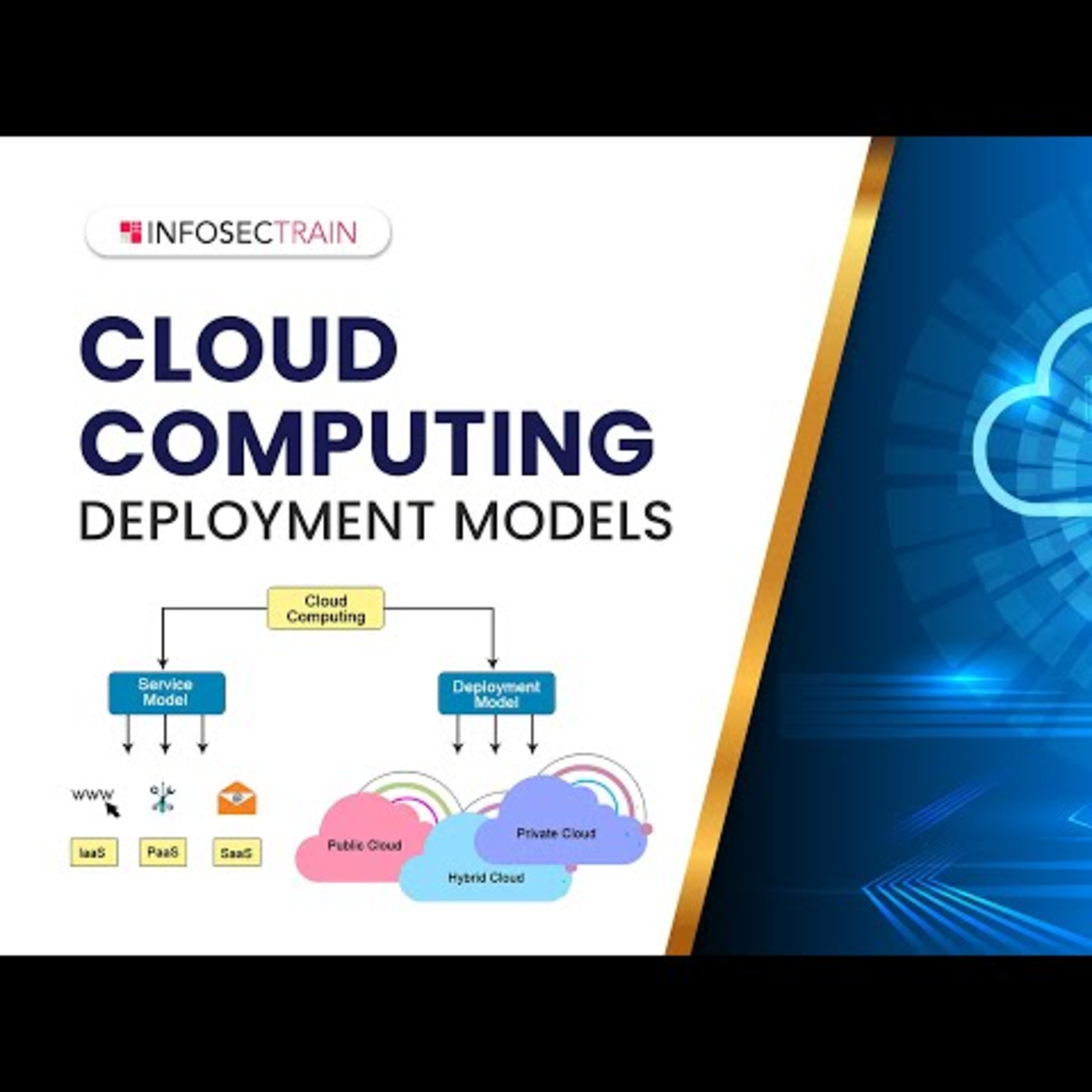
Cloud Service and Deployment Models | Cloud Computing Deployment Models | InfosecTrain
Cloud provides its offerings in three service models and four deployment models. The three service models are SaaS (Software as a Service), PaaS (Platform as a Service) and IaaS (Infrastructure as s Service). The four deployment models are Public Cloud, Private Cloud, Hybrid Cloud and Community Cloud. Learn more about the service and deployment models of cloud. Thank you for watching this video, For more details or free demo with out expert write into us at [email protected] Subscribe to our channel to get video updates. Hit the subscribe button above. Facebook: https://www.facebook.com/Infosectrain/ Twitter: https://twitter.com/Infosec_Train LinkedIn: https://www.linkedin.com/company/infosec-train/ Instagram: https://www.instagram.com/infosectrain/ Telegram: https://t.me/infosectrains
Top 10 Cloud Service and Advantages | Advantages of Cloud Computing | Infosectrain
Since cloud computing offers several advantages over on premise, it is widely used by businesses. In a research by the International Data Group, 69% of organizations said they already used cloud computing, and 18% said they planned to do so soon since it allows for quicker revenue growth. This data demonstrates how more and more technologically advanced companies and market titans are recognising the many advantages of the cloud computing movement. The use of cloud computing improves customer service for businesses and significantly raises total profit margins. Find out more about the advantages of cloud computing. Thank you for watching this video, For more details or free demo with out expert write into us at [email protected] Subscribe to our channel to get video updates. Hit the subscribe button above. Facebook: https://www.facebook.com/Infosectrain/ Twitter: https://twitter.com/Infosec_Train LinkedIn: https://www.linkedin.com/company/infosec-train/ Instagram: https://www.instagram.com/infosectrain/ Telegram: https://t.me/infosectrains

How to Build a Successful Career in Security Testing in 2023?
As the world becomes more digital, cyberattacks are constantly increasing. Digital transformation has become part of our life, and with it, security concerns are rising. Security is paramount in the modern world of web development, and the marketing explanation is getting more complicated. A lot of new features are being added to web-based applications. However, this opens the door to numerous security threats. Creating reliable and secure software is challenging in the threat landscape, where technology is now a more significant part of our daily life. We need methods to find and rectify vulnerabilities before cyberattackers, or malicious attackers take advantage of them. Therefore, Security testing has become an integral part of the information security system, and there is a growing need for skilled security testing professionals. What is Security Testing? Security testing is a method for identifying software application vulnerabilities, risks, and threats and preventing malicious attacks. The objective of security testing is to identify any faults or vulnerabilities in the software system that leads to the loss of data, revenue, or reputation at the hands of employees or outsiders. Security testing involves breaking into a program to test it and identifying vulnerabilities that attackers can exploit.
Benefits of Cloud Security | Security Services and Security Goals | InfosecTrain
A group of security techniques known as "cloud security" are used to safeguard data, apps, and infrastructure that are hosted in the cloud. It is used in cloud environments to defend against malware, hackers, distributed denial of service (DDoS) assaults, and unauthorized user access and use. Maintaining consumer trust and safeguarding the resources that contribute to your competitive advantage depend on preventing leaks and data theft. For any business moving to the cloud, cloud security is essential due to its capacity to protect your data and assets. Thank you for watching this video, For more details or free demo with out expert write into us at [email protected] Subscribe to our channel to get video updates. Hit the subscribe button above. Facebook: https://www.facebook.com/Infosectrain/ Twitter: https://twitter.com/Infosec_Train LinkedIn: https://www.linkedin.com/company/infosec-train/ Instagram: https://www.instagram.com/infosectrain/ Telegram: https://t.me/infosectrains
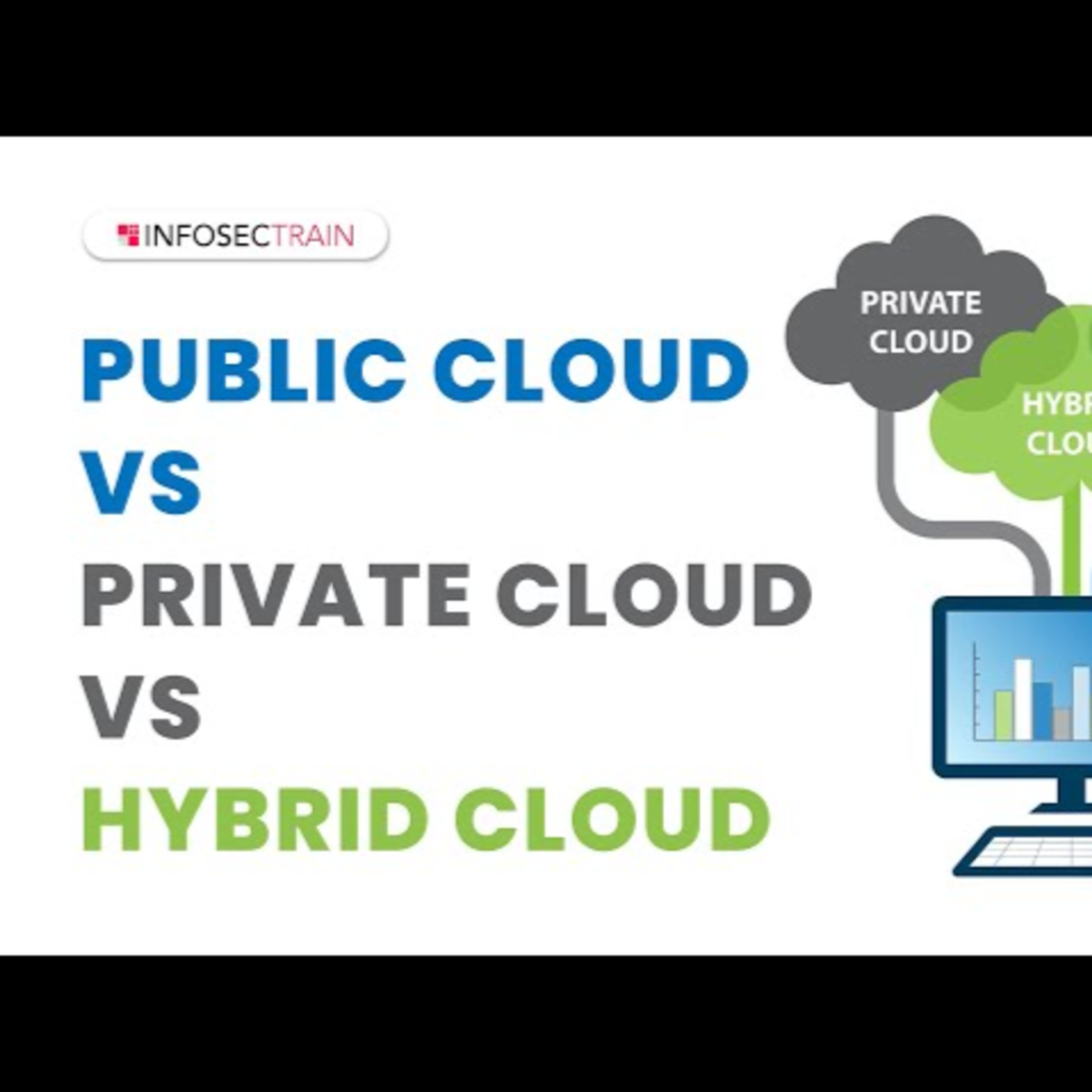
Cloud Deployment Models : Public Cloud vs Private Cloud vs Hybrid Cloud
A cloud deployment model is established based on who controls the infrastructure needed for the deployment and where it is located. Each cloud deployment option addresses a different organizational requirement and comes with a unique value proposition and set of prices. One of the most crucial cloud deployment decisions you will make is the deployment model to use. Learn more about the different cloud deployment models: Public, Private and Hybrid. Thank you for watching this video, For more details or free demo with out expert write into us at [email protected] Subscribe to our channel to get video updates. Hit the subscribe button above. Facebook: https://www.facebook.com/Infosectrain/ Twitter: https://twitter.com/Infosec_Train LinkedIn: https://www.linkedin.com/company/infosec-train/ Instagram: https://www.instagram.com/infosectrain/ Telegram: https://t.me/infosectrains
Day 1:Machine Learning for Cybersecurity | Introduction to Python | InfosecTrain
InfosecTrain hosts a live event entitled ‘Machine Learning for Cybersecurity’ with certified expert ‘NAWAJ’. Machine Learning can assist businesses in better analyzing threats and responding to security incidents. It could also help automate more unskilled tasks previously performed by overburdened and sometimes under-skilled security teams. Agenda for the Bootcamp ➡️ Day 1: Introduction to Python 👉 Installation of Anaconda 👉 How to launch Jupyter Notebook 👉 Shortcut keys of Jupyter Notebook 👉 Basics of Python 👉 Important packages of python for Machine Learning Day 1: Machine Learning for Cybersecurity: https://youtu.be/BSB2S_pFS-Q Day 2: Machine Learning for Cybersecurity: https://youtu.be/B1AQt2iBAyc Day 3: Machine Learning for Cybersecurity: https://youtu.be/h_jYWPiELsc Subscribe to our channel to get video updates. Hit the subscribe button above. Facebook: https://www.facebook.com/Infosectrain/ Twitter: https://twitter.com/Infosec_Train LinkedIn: https://www.linkedin.com/company/infosec-train/ Instagram: https://www.instagram.com/infosectrain/ Telegram: https://t.me/infosectrains
What is a Network Security Administrator?
Every organization relies on networks to propel its business in today’s world. Unfortunately, these networks are highly vulnerable to data loss, theft, and misuse due to increased cybercrime. As a result, companies need reliable and skilled experts who can protect their networks and help them mitigate risk. Companies recruit a Network Security Administrator to keep their networks secure and protect sensitive data. They play a critical role in companies’ network security and help safeguard them from internal and external security risks. What is a Network Security Administrator? Network Security Administrators play a significant role in organizations’ security; they monitor, analyze, and administer security across computer networks. They secure data and keep IT systems running by installing firewalls and anti-virus softwares. They often establish and implement effective network security policies and guidelines across the networks and ensure that unauthorized users do not obtain access to enterprise networks. They evaluate the network for operational difficulties and troubleshoot and report the issues. They are experts in identifying network operations, security risks, and security breaches in an organization’s network, with advanced skills in mitigation measures and protective strategies. Read More: https://www.infosectrain.com/blog/what-is-a-network-security-administrator/
Day 2: Machine Learning for Cybersecurity | Introduction to Machine Learning | InfosecTrain
InfosecTrain hosts a live event entitled ‘Machine Learning for Cybersecurity’ with certified expert ‘NAWAJ’. Machine Learning can assist businesses in better analyzing threats and responding to security incidents. It could also help automate more unskilled tasks previously performed by overburdened and sometimes under-skilled security teams. Agenda for the Bootcamp ➡️ Day 2: Machine Learning 👉 Introduction to Machine Learning 👉 Types of Machine Learning 👉 Importance of ML Day 1: Machine Learning for Cybersecurity: https://youtu.be/BSB2S_pFS-Q Day 2: Machine Learning for Cybersecurity: https://youtu.be/B1AQt2iBAyc Day 3: Machine Learning for Cybersecurity: https://youtu.be/h_jYWPiELsc Subscribe to our channel to get video updates. Hit the subscribe button above. Facebook: https://www.facebook.com/Infosectrain/ Twitter: https://twitter.com/Infosec_Train LinkedIn: https://www.linkedin.com/company/infosec-train/ Instagram: https://www.instagram.com/infosectrain/ Telegram: https://t.me/infosectrains
Day - 3 Machine Learning for Cybersecurity Bootcamp by Nawaj | InfosecTrain
InfosecTrain hosts a live event entitled ‘Machine Learning for Cybersecurity’ with certified expert ‘NAWAJ’. Machine Learning can assist businesses in better analyzing threats and responding to security incidents. It could also help automate more unskilled tasks previously performed by overburdened and sometimes under-skilled security teams. Agenda for the Bootcamp ➡️ Day 3: Application of Machine Learning 👉 Malicious Website Classification 👉 Android Malware Detection 👉 Fake News Detection Day 1: Machine Learning for Cybersecurity: https://youtu.be/BSB2S_pFS-Q Day 2: Machine Learning for Cybersecurity: https://youtu.be/B1AQt2iBAyc Day 3: Machine Learning for Cybersecurity: https://youtu.be/h_jYWPiELsc Subscribe to our channel to get video updates. Hit the subscribe button above. Facebook: https://www.facebook.com/Infosectrain/ Twitter: https://twitter.com/Infosec_Train LinkedIn: https://www.linkedin.com/company/infosec-train/ Instagram: https://www.instagram.com/infosectrain/ Telegram: https://t.me/infosectrains
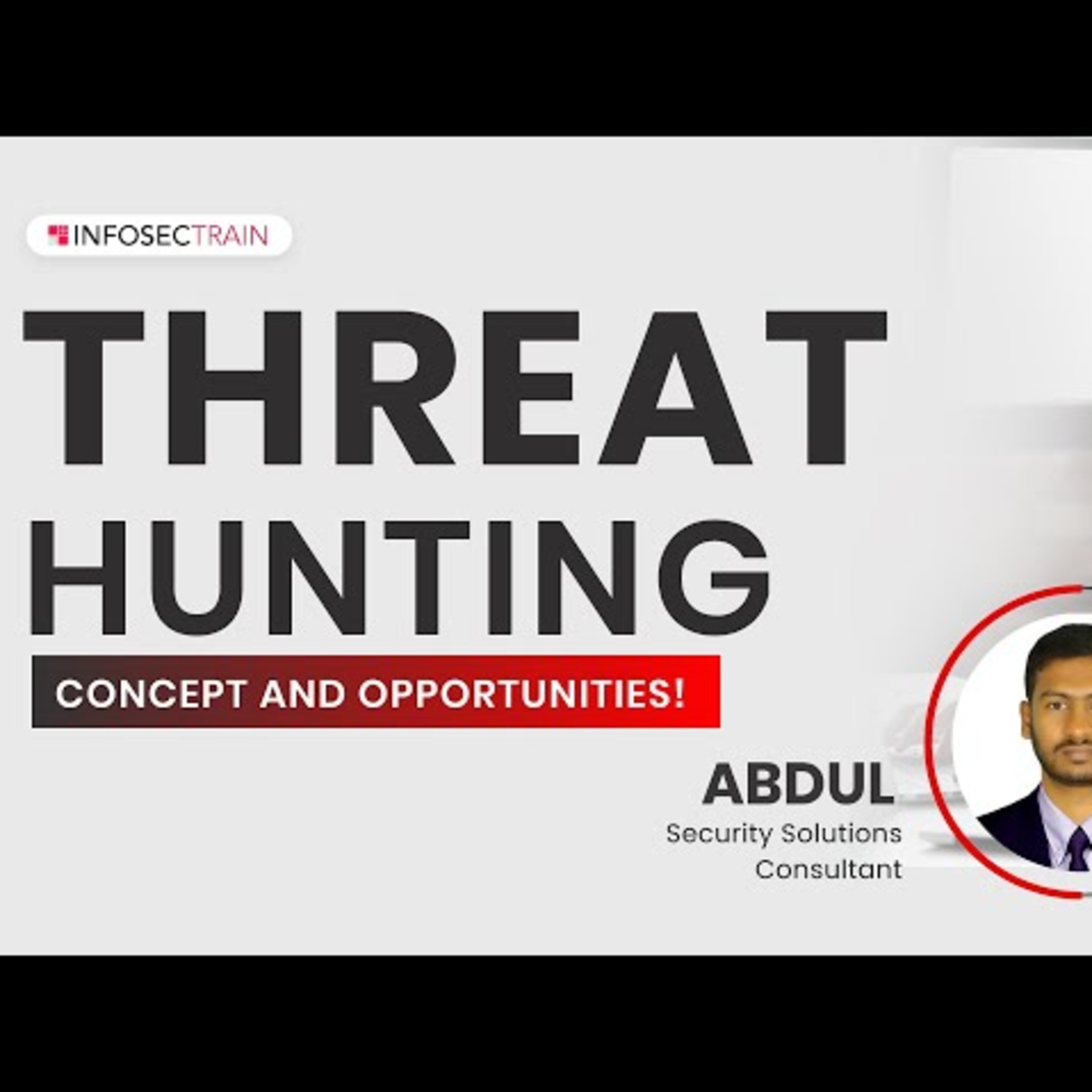
What is Threat Hunting? | Useful Threat Hunting Tools | InfosecTrain
InfosecTrain hosts a live event entitled “Threat Hunting- Concept and Opportunities” with certified expert ‘Abdul Mateen’. Threat hunting techniques have improved a lot over time. Organizations utilize best approaches to spot dangers utilizing seasoned threat hunters even before harm or loss is done. ➡️ Agenda for the Webinar 👉 Threat Hunting – Concept 👉 Available tools 👉 Reporting 👉 Job Roles Available 👉 Interview tips and resources 👉 Threat Hunting Q&A Subscribe to our channel to get video updates. Hit the subscribe button above. Facebook: https://www.facebook.com/Infosectrain/ Twitter: https://twitter.com/Infosec_Train LinkedIn: https://www.linkedin.com/company/infosec-train/ Instagram: https://www.instagram.com/infosectrain/ Telegram: https://t.me/infosectrains
What is CRISC? | Who Needs CRISC ? & it's Benefits | InfosecTrain
InfosecTrain hosts a live event entitled “CRISC Exam Prep” with certified expert ‘Mukesh Kumar’. CRISC is one of the most well-known certifications that verifies your ability to avoid security breaches. Since CRISC holders are in high demand all over the world, this certification gives you a specialization in your field with higher pay. The webinar will give an insight into how to prepare for the CRISC exam. The webinar will be delivered by a domain expert with extensive industry experience. Thank you for watching this video, For more details or free demo with out expert write into us at [email protected] Agenda for the Webinar 👉 What is CRISC? 👉 CRISC Areas of focus 👉 CRISC Exam Design & Requirements 👉 Who CRISC is for 👉 Benefits of CRISC 👉 How to approach ISACA CRISC questions – My experience 👉 CRISC Q&A Session Subscribe to our channel to get video updates. Hit the subscribe button above. Facebook: https://www.facebook.com/Infosectrain/ Twitter: https://twitter.com/Infosec_Train LinkedIn: https://www.linkedin.com/company/infosec-train/ Instagram: https://www.instagram.com/infosectrain/ Telegram: https://t.me/infosectrains
(ISC)² ® CSSLP Domain 8: Secure Software Supply Chain (11%)
Today every part of our digital world is affected by data breaches, hacks, and other security incidents. It is critical to incorporate security into every aspect of the software life cycle to prevent these incidents, and this is what the CSSLP certification from (ISC)² ® accomplishes. The Certified Secure Software Lifecycle Professional (CSSLP) certification was introduced by the International Information System Security Certification Consortium (ISC)² ® in 2008. It is a vendor-independent certification. The CSSLP certification validates the certified professional's ability to apply best security practices, auditing, and authorization to all phases of the SDLC or Software Development Lifecycle. The SDLC includes software design, implementation, testing, and deployment phases. Read More: https://www.infosectrain.com/blog/csslp-domain-8-secure-software-supply-chain/
Cloud Auditing Masterclass and CCAK Certification Prep | CCAK QA Session | InfosecTrain
InfosecTrain hosts a live event entitled “Cloud Auditing - Masterclass and CCAK Certification Prep” with certified expert ‘Krish’. Cloud Auditing is one of the trending topics every organization is talking about. In this regard, cloud auditing professionals are in great demand. In the Cloud auditing masterclass, you’ll learn about the CCAK certification, cloud governance, auditing guidelines and methodologies, and much more . Thank you for watching this video, For more details or free demo with out expert write into us at [email protected] Agenda for the Webinar 👉 Cloud Governance & Auditing Concepts 👉 Cloud Audit Guidelines and Methodologies 👉 Visibility and Challenges 👉 Skills and Certifications 👉 CCAK Q&A Session Subscribe to our channel to get video updates. Hit the subscribe button above. Facebook: https://www.facebook.com/Infosectrain/ Twitter: https://twitter.com/Infosec_Train LinkedIn: https://www.linkedin.com/company/infosec-train/ Instagram: https://www.instagram.com/infosectrain/ Telegram: https://t.me/infosectrains
CSSLP Domain 7: Secure Software Deployment, Operations, Maintenance
(ISC)² ® CSSLP Domain 7: Secure Software Deployment, Operations, Maintenance (12%) CSSLP’s seventh domain accounts for 12% of the exam weightage. This domain explores the deployment process. When an application is developed, the next step is to arrange its deployment, which requires a safe environment in which the deployment process is accomplished. This domain covers continuous integration & continuous delivery (CI/CD) pipeline, secret codes that manage the application, disaster recovery, resiliency, and information security continuous monitoring (ISCM). It explains how to do patch management (e.g., secure release, testing) and vulnerability management (e.g., scanning, tracking, triaging). This domain is further divided into: Perform operational risk analysis Release software securely Securely store and manage security data Ensure secure installation Perform post-deployment security testing Obtain security approval to operate Perform information security continuous monitoring (ISCM) Support incident response Perform patch management Perform vulnerability management Runtime protection Support continuity of operations Integrate Service Level Objectives (SLO) and Service Level Agreements (SLA) Read More: (ISC)² ® CSSLP Domain 7: Secure Software Deployment, Operations, Maintenance
CSSLP Domain 6 Secure Software Lifecycle Management
Domain 6: Secure Software Lifecycle Management (11%) The sixth domain of CSSLP is secure software lifecycle management which comprises 11% of exam weightage. This is one of CSSLP’s most essential domains, and it relates to the management of the various processes and procedures needed to implement security protocols through each stage of the software development lifecycle (SDLC). This domain encompasses the whole lifecycle, from planning and road mapping to determining appropriate security requirements and procedures for future implementation. It demonstrates how to manage security as part of a software development approach and documentation. It also explains how to create security metrics (e.g., defects per line of code, criticality level, average remediation time, and complexity). This domain is divided into the following subsections: Secure configuration and version control (e.g., software, hardware, implementation, interface, patching) Define strategy and roadmap Manage security within a software development methodology Identify security standards and frameworks Define and develop a security documentation Define security status (e.g., defects per line of code, criticality level, average remediation time, complexity) Decomposition software Report security status (e.g., dashboards, reports, feedback loops) Incorporated Integrated Risk Management (IRM) Promote security culture in software development Implement continuous improvement (e.g., retrospective, lessons learned)
(ISC)² ® CSSLP Domain 5: Secure Software Testing (14%)
Domain 5: Secure Software Testing (14%) During the software development process, vulnerabilities are discovered through software testing. This CSSLP domain accounts for 14% of the exam weightage, which comprehends how to develop security test cases, methodologies, and security testing plans. It also covers how to check and verify documentation (e.g., installation and setup instructions, problem warnings, user guides, and release notes), how to discover undocumented functionality, and how to analyze the security implications of test results (e.g., impact on product management, prioritization, and break build criteria). The candidate is required to be knowledgeable about the following topics in this domain: Develop security test cases Develop a security testing strategy and plan Verify and validate the documentation Identify undocumented functionality Analyze security implications of test results Classify and track security errors Secure test data Perform verification and validation testing
What is the Cyber Kill Chain Process?
In the last few years, there has been an increase in Advanced Persistent Threat (APT) actors trained to perform MITRE intrusion campaigns aimed at stealing sensitive economic and national security data. Organizations require a method to safeguard systems or networks from APTs and other significant attacks. So, Lockheed Martin created a Cyber Kill Chain process for detecting and preventing cyber intrusion attacks from keeping track of such attacks. Many businesses employ the Cyber Kill Chain approach to protect themselves against data breaches and phishing attempts. What is a Cyber Kill Chain? Cyber Kill Chain is a concept that allows the organization to understand how an attacker intends to penetrate or destroy the target’s system or network. It also helps businesses understand how to protect, detect, respond to, and locate an attacker’s techniques or strategies for infiltrating target systems. The term “Kill Chain” comes from the military and refers to the method that an enemy uses to strike a target. The Kill Chain method identifies seven steps that an attacker goes through, each of which provides an opportunity to detect and react, that covers: View More
(ISC)² ® CSSLP Domain 4: Secure Software Implementation
Domain 4: Secure Software Implementation (14%) The fourth domain of the CSSLP certification exam is a secure software implementation, and the domain comprises 14% exam weightage. This domain covers the most significant security challenges and concerns for developers to consider while writing code. This domain explains declarative vs. mandatory (programmatic) security, Sanitization of output (encoding, obfuscation), Auditing and logging in a secure manner, Dynamic Application Security Testing (DAST), and Interactive Application Security Testing (IAST), Compiler switches, and address compiler warnings. The CSSLP certification exam’s fourth domain covers the following subtopics: Adhere to relevant secure coding practices Analyze code for security risks Implement security codes Address security risks Securely reuse third-party code or libraries Securely integrate components Apply security during the build process (ISC)² ® CSSLP Domain 4: Secure Software Implementation
(ISC)² ® CSSLP Domain 3: Secure Software Architecture and Design
Domain 3: Secure Software Architecture and Design (14%) This domain contains 14% weightage of the CSSLP exam. This domain focuses on secure software architecture and design. It explains the importance of secure architecture and design, identifying and managing security risks to an application. It explains the risk management and implementation of software design and architecture. It walks you through the various software architectures available and explains the security benefits. The following are the main aspects of this domain: Perform threat modeling Define the security architecture Performing secure interface design Performing architectural risk assessment Model (non-functional) security properties and constraints Model and classify data Evaluate and select reusable secure design Perform security architecture and design review Define secure operational architecture Use secure architecture and design principles, patterns, and tools (ISC)² ® CSSLP Domain 3: Secure Software Architecture and Design (14%)
(ISC)² ® CSSLP Domain 2: Secure Software Requirements (14%)
Domain 2: Secure Software Requirements (14%) Secure software requirements is the second domain of the CSSLP certification exam, which holds 14% exam weightage. In the second domain of CSSLP certification, you will learn how to determine software security requirements using internal and external sources and various security requirements for the software. It focuses on the development of secure software requirements. Every software program has needs that specify what it should be able to perform. Software security requirements are similar to other requirements, but they are essential to ensure that software performs exactly what it intends. Professionals ensure that software adheres to all relevant regulations and is protected against possible misuse and abuse. https://www.infosectrain.com/blog/isc%c2%b2-csslp-domain-2-secure-software-requirements/
IAM & SailPoint Career Guide | IAM Role in Organization Information Security | InfosecTrain
InfosecTrain hosts a live event entitled “IAM & SailPoint Career Guide” with certified expert ‘SHAIKH H’. SailPoint is a comprehensive governance identity management system that allows business users to use applications quickly and easily while maintaining access control to keep the firm safe. Check Vidoe: https://youtu.be/IothLhyI61Q Thank you for watching this video, For more details or free demo with out expert write into us at [email protected] Agenda for the Webinar 👉 Identity and Access Management IAM 👉 IAM Role in Organization Information Security 👉 Case Study Discussion For IAM Application 👉 Training and Certifications of Sail Point 👉 Interview Tips and Guidance Subscribe to our channel to get video updates. Hit the subscribe button above. Facebook: https://www.facebook.com/Infosectrain/ Twitter: https://twitter.com/Infosec_Train LinkedIn: https://www.linkedin.com/company/infosec-train/ Instagram: https://www.instagram.com/infosectrain/ Telegram: https://t.me/infosectrains
ISC2’s CSSLP Domain 1: Secure Software Concepts (10%)
Introduction to ISC2 CSSLP The ISC2 Certified Secure Software Lifecycle Professional (CSSLP) certification concentrates on web application security within the software development life cycle (SDLC). CSSLP Certification validates advanced application security expertise. It demonstrates to organizations and peers that you have the advanced technological skills and knowledge required for authentication, authorization, and auditing throughout the software development lifecycle (SDLC), employing best practices, policies, and procedures set by (ISC)2 cybersecurity professionals. The CSSLP certification demonstrates you as an application security specialist. CSSLP is a fantastic approach to expanding your security expertise, allowing you to maintain your skills. Because it is not product-specific, you can easily apply your abilities to various technologies and approaches. It teaches you how to defend your organization while safeguarding sensitive information.
Day 3 Cloud Security Masterclass | Encryption and Key Management in Cloud | InfosecTrain
InfosecTrain hosts a live event entitled “Cloud Security Masterclass” with certified expert ‘Ayush’. Cloud Security is one of the trending topics every organization is talking about. In this regard, cloud security professionals are in great demand to implement and test security strategies on cloud. Agenda for the Webinar ➡️ Day 3: 👉 Introduction 👉 Protecting the data at rest and in Transit 👉 AWS Cloud HSM And KMS Day 1 Cloud Security Masterclass: https://youtu.be/k_7nu20sFd8 Day 2 Cloud Security Masterclass: https://youtu.be/Vu7T5h1tYfg Day 3 Cloud Security Masterclass: https://youtu.be/uPc4eY8edww #cloudsecurity #security #securitytools #ThreatDetectionTools #InfrastructureProtectionTools #DataProtectionTools #AWS #awscertificationtraining #awstraining #infosectrain Subscribe to our channel to get video updates. Hit the subscribe button above. Facebook: https://www.facebook.com/Infosectrain/ Twitter: https://twitter.com/Infosec_Train LinkedIn: https://www.linkedin.com/company/infosec-train/ Instagram: https://www.instagram.com/infosectrain/ Telegram: https://t.me/infosectrains
Day 2 Cloud Security Masterclass | Threat Detection Tools in AWS | InfosecTrain
InfosecTrain hosts a live event entitled “Cloud Security Masterclass” with certified expert ‘Ayush’. Cloud Security is one of the trending topics every organization is talking about. In this regard, cloud security professionals are in great demand to implement and test security strategies on cloud. Agenda for the Webinar ➡️ Day 2: Native Security Tools in AWS 👉 Introduction 👉 AWS IAM 👉 Threat Detection Tools in AWS 👉 Infrastructure Protection Tools in AWS 👉 Data Protection Tools in AWS Day 1 Cloud Security Masterclass: https://youtu.be/k_7nu20sFd8 Day 2 Cloud Security Masterclass: https://youtu.be/Vu7T5h1tYfg Day 3 Cloud Security Masterclass: https://youtu.be/uPc4eY8edww #cloudsecurity #security #securitytools #ThreatDetectionTools #InfrastructureProtectionTools #DataProtectionTools #AWS #awscertificationtraining #awstraining #infosectrain Subscribe to our channel to get video updates. Hit the subscribe button above. Facebook: https://www.facebook.com/Infosectrain/ Twitter: https://twitter.com/Infosec_Train LinkedIn: https://www.linkedin.com/company/infosec-train/ Instagram: https://www.instagram.com/infosectrain/ Telegram: https://t.me/infosectrains
Day 1 Cloud Security Masterclass | AWS Well-Architected Framework | InfosecTrain
InfosecTrain hosts a live event entitled “Cloud Security Masterclass” with certified expert ‘Ayush’. Cloud Security is one of the trending topics every organization is talking about. In this regard, cloud security professionals are in great demand to implement and test security strategies on cloud. Agenda for the Webinar ➡️ Day 2: Native Security Tools in AWS 👉 Introduction 👉 AWS IAM 👉 Threat Detection Tools in AWS 👉 Infrastructure Protection Tools in AWS 👉 Data Protection Tools in AWS Day 1 Cloud Security Masterclass: https://youtu.be/k_7nu20sFd8 Day 2 Cloud Security Masterclass: https://youtu.be/Vu7T5h1tYfg Day 3 Cloud Security Masterclass: https://youtu.be/uPc4eY8edww #cloudsecurity #security #securitytools #ThreatDetectionTools #InfrastructureProtectionTools #DataProtectionTools #AWS #awscertificationtraining #awstraining #infosectrain Subscribe to our channel to get video updates. Hit the subscribe button above. Facebook: https://www.facebook.com/Infosectrain/ Twitter: https://twitter.com/Infosec_Train LinkedIn: https://www.linkedin.com/company/infosec-train/ Instagram: https://www.instagram.com/infosectrain/ Telegram: https://t.me/infosectrains

Top Tools Covered in CEH v12
Ethical hacking is the process of finding weaknesses and security flaws in systems and programs by impersonating the reasons and activities of cybercriminals. Ethical hacking tools are just computer scripts and programs that help professionals find and take advantage of vulnerabilities in computer systems, networks, and web apps. What are Hacking Tools? The software and techniques used by hackers to discover vulnerabilities in IT system’s operating systems, various web applications, servers, and networks are nothing more than computer programs or a sophisticated form of script created by developers. These days, many organizations use ethical hacking methods to protect their data from intruders. Ethical hacking tools can be purchased or downloaded in open source or commercial solutions. Top CEH v12 Tools This article tries to be more than just a list of all tools as they appear in the CEH v12, but also to organize them according to the phase of hacking to which they would belong.
How Do I Get My First Job In SOC?
A Security Operations Center, abbreviated as SOC, is an essential component of a data protection and security system that helps lower the level of risk that information systems face from external and internal threats. SOC is one of the hottest job markets nowadays since the threat landscape has expanded with the rapid pace of digitalization. More and more professionals desire to start a career in SOC.

Everything You Need To Know About SOC Expert Course
What is a SOC Analyst? SOC Analysts are a group of cybersecurity experts who monitor and respond to real-time security problems 24 hours a day, seven days a week. SOC Analysts are those who work on the SOC team. It’s usually a junior or entry-level position. SOC stands for Security Operation Center, which is a centralized team within any business that monitors real-time threats, incidents, and suspicious activity 24 hours a day, seven days a week. The SOC team takes immediate action or assigns the issue to the appropriate team for further action. If an event or a compromise has already occurred, the SOC team ensures that the impact of the compromise, as well as the cost of remediation efforts, are kept to a minimum. The SOC Analysts primarily use the SIEM tools to monitor those incidents. SIEM solutions capture logs in real-time from a variety of devices, including network devices, security devices, servers, and apps. It identifies if there is any unusual behavior throughout the network based on the logs. If there is suspicious activity, they take action or report the issue to the appropriate team for further investigation. They have different levels depending on the experience.
Day 2 All About AWS Security Speciality | Native Security Tools in AWS | InfosecTrain
InfosecTrain hosts a live event entitled “AWS Security Speciality Masterclass” with certified expert ‘Ayush’. AWS is a leading Cloud platform in the market and many organizations use it for their cloud services. AWS security professionals are in great demand to implement and test security strategies on cloud. Day 1-AWS Security Speciality: https://www.youtube.com/watch?v=eIwGSews30s Day 2-AWS Security Speciality: https://www.youtube.com/watch?v=j7a6aysp5bE&t=6s #AWSSecuritySpeciality #awscertificationtraining #awstraining #AWSSecurity #aws #AWScloudSecurity Agenda for the Webinar ➡️ Day 2: 👉 Native Security Tools in AWS 👉 Introduction 👉 AWS IAM 👉 Threat Detection Tools in AWS 👉 Data Protection Tools in AWS 👉 QA Session Subscribe to our channel to get video updates. Hit the subscribe button above. Facebook: https://www.facebook.com/Infosectrain/ Twitter: https://twitter.com/Infosec_Train LinkedIn: https://www.linkedin.com/company/infosec-train/ Instagram: https://www.instagram.com/infosectrain/ Telegram: https://t.me/infosectrains
Day-1 All About AWS Security Speciality | Introduction to AWS cloud Security | InfosecTrain
InfosecTrain hosts a live event entitled “AWS Security Speciality Masterclass” with certified expert ‘Ayush’. AWS is a leading Cloud platform in the market and many organizations use it for their cloud services. AWS security professionals are in great demand to implement and test security strategies on cloud. #AWSSecuritySpeciality #awscertificationtraining #awstraining #AWSSecurity #aws #AWScloudSecurity Agenda for the Webinar ➡️ Day 1 • Introduction to AWS cloud • Shared responsibility model • AWS Well-Architected Framework • cloud QA Session Subscribe to our channel to get video updates. Hit the subscribe button above. Facebook: https://www.facebook.com/Infosectrain/ Twitter: https://twitter.com/Infosec_Train LinkedIn: https://www.linkedin.com/company/infosec-train/ Instagram: https://www.instagram.com/infosectrain/ Telegram: https://t.me/infosectrains
Top Trending Cybersecurity Jobs in 2023
Cybersecurity is a buzzing topic these days; the rise of cyber-attacks is clearly evident and makes major organizations consider cybersecurity a high-priority concern. To combat cyberattacks, protect data from unauthorized access, and prevent them by implementing robust security measures, organizations require highly skilled cybersecurity professionals. As a result, we see a rise in cybersecurity jobs in the market, which are expected to increase in the future. In this comprehensive blog, we will see the top trending cybersecurity jobs in 2023. Top Trending Cybersecurity Jobs in 2023 Building your career in the cybersecurity domain is the best option to enhance your career in multiple roles. Cybersecurity is a combination of two streams: Offensive security and Defensive security. It includes many sectors such as Networking, Software, Systems, Information Security, Risk Analysis, Security Audit, Security Intelligence, Cloud Security, Incident Response, Security Testing, Ethical Hacking, Digital Security, and the list goes on. Let’s see the top trending cybersecurity jobs in 2023.
Top Cybersecurity Courses to Choose in Your Country
With technological advancements, the risk of cyber-attacks increases dramatically, as is the demand for cybersecurity professionals. As a result, cybersecurity is now a lucrative career option, and it entails finding new ways to protect IT systems, networks, and their data. According to many studies, the demand for qualified cybersecurity experts will continue to grow in the near future, and employers anticipate a scarcity of trained cybersecurity workers. On the other hand, taking various cybersecurity courses can help you become a skilled cybersecurity specialist. The finest cybersecurity courses make learning the essential cybersecurity skills in today’s digital world straightforward. So in this article, we will further discuss the best cybersecurity courses you can opt for in your country that will help you reach the pinnacle of your career.

Why Choose CCAK from InfosecTrain?
What is CCAK? The Certificate of Cloud Auditing Knowledge (CCAK) is the first credential designed for IS/IT professionals to advance their knowledge of the essential principles of auditing cloud computing systems and enhance their business’s scalability. The CCAK certification is created by the Cloud Security Alliance (CSA), the leading provider of cloud security best practices, in partnership with ISACA, a global professional organization specializing in IT audit, privacy, cybersecurity, risk, and governance. What is CCAK training course at InfosecTrain? Certificate of Cloud Auditing Knowledge (CCAK) certification training course at InfosecTrain is intended to educate you on cloud security assessment procedures and techniques as well as to help you keep your proficiency in cloud security auditing and cloud compliance programs. This course will help you design, build and evaluate a cloud compliance program based on laws, regulations, and regulatory standards. This course will equip you to meet the unique challenges of auditing the cloud, providing the appropriate controls for confidentiality, integrity, and accessibility, and limiting the risks and costs of audit management and non-compliance. The CCAK training course will prepare you for the CCAK exam and provide practical learning to help you expand your practical knowledge of auditing cloud computing systems. The course is divided into nine modules, each focusing on the essential principles of cloud computing system auditing.
Domain 5 of AZ-204: Connect to and Consume Azure Services & Third-Party Services
The AZ-204 exam is the best option for anyone looking to work as an Azure Cloud Developer. The AZ-204: Developing Solutions for Microsoft Azure certification course provides a thorough understanding of the various solutions offered by Microsoft Azure. The AZ-204 certification examines applications and service’s design, development, testing, and maintenance skills in the Microsoft Azure Cloud environment.
Day 1 Cyber Security Fundamentals | Introduction to Cybersecurity | InfosecTrain
InfosecTrain hosts a Free live event entitled “Cyber Security Fundamentals” with certified expert ‘Abhishek’. Thank you for watching this video, For more details or free demo with out expert write into us at [email protected] #cybersecurity #cybersecuritycertification #security #cybersecuritytools Cyber Security Fundamentals Masterclass ✅ Introduction to Cybersecurity ✅ Difference Between Information Security and Cybersecurity ✅ Cybersecurity Objectives ✅ CIA ✅ Cybersecurity Roles ✅ Different Roles and Responsibilities in Cybersecurity ✅ Cybersecurity Domains ✅ Common Attack Types and Vectors Subscribe to our channel to get video updates. Hit the subscribe button above. Facebook: https://www.facebook.com/Infosectrain/ Twitter: https://twitter.com/Infosec_Train LinkedIn: https://www.linkedin.com/company/infosec-train/ Instagram: https://www.instagram.com/infosectrain/ Telegram: https://t.me/infosectrains
Why Learn Certified Ethical Hacker (CEH) With InfosecTrain?
InfosecTrain is a globally recognized leading training provider for many certification courses. In this Video we will discuss "Why Learn Certified Ethical Hacker (CEH) With InfosecTrain?" Please visit https://www.infosectrain.com/ or Write back to us at [email protected] or call us at IND: 1800-843-7890 (Toll Free) / US: +1 657-221-1127 / UK : +44 7451 208413 for more information. Subscribe to our channel to get video updates. Hit the subscribe button above. Facebook: https://www.facebook.com/Infosectrain/ Twitter: https://twitter.com/Infosec_Train LinkedIn: https://www.linkedin.com/company/infosec-train/ Instagram: https://www.instagram.com/infosectrain/ Telegram: https://t.me/infosectrains
Day - 3 Cyber Security Fundamentals | What is Web Application and Their Attacks | InfosecTrain
InfosecTrain hosts a Free live event entitled “Cyber Security Fundamentals” with certified expert ‘Abhishek’. Thank you for watching this video, For more details or free demo with out expert write into us at [email protected] Agenda for the Webinar 👉 Linux Command-Line Tools 👉 Web Application 👉 What is Web Application and Their Attacks Day 1 Cyber Security Fundamentals: https://youtu.be/18XQJ3sLj0I Day 2 Cyber Security Fundamentals: https://youtu.be/hyloO7pgG2w #cybersecurity #cybersecuritycertification #security #cybersecuritytools Subscribe to our channel to get video updates. Hit the subscribe button above. Facebook: https://www.facebook.com/Infosectrain/ Twitter: https://twitter.com/Infosec_Train LinkedIn: https://www.linkedin.com/company/infosec-train/ Instagram: https://www.instagram.com/infosectrain/ Telegram: https://t.me/infosectrains
Day 2 Cyber Security Fundamentals | Social Engineering Attacks and Malware | InfosecTrain
InfosecTrain hosts a Free live event entitled “Cyber Security Fundamentals” with certified expert ‘Abhishek’. Thank you for watching this video, For more details or free demo with out expert write into us at [email protected] Agenda for the Webinar 👉 Understanding Security Assessment 👉 Understanding Security Concerns with General Vulnerability Types 👉 Password Attack 👉 Social Engineering Attacks and Malware 👉 QnA Session Day 1 Cyber Security Fundamentals: https://youtu.be/18XQJ3sLj0I #cybersecurity #cybersecuritycertification #security #cybersecuritytools Subscribe to our channel to get video updates. Hit the subscribe button above. Facebook: https://www.facebook.com/Infosectrain/ Twitter: https://twitter.com/Infosec_Train LinkedIn: https://www.linkedin.com/company/infosec-train/ Instagram: https://www.instagram.com/infosectrain/ Telegram: https://t.me/infosectrains
Domain 4 of AZ-204: Monitor, Troubleshoot and Optimize Azure Solutions
As we know, all of our applications are now hosted in the cloud. To ensure that the application is functioning correctly, you need to provide a monitoring mechanism that allows you to obtain information about its performance. To understand what is occurring in the application, you also need to troubleshoot and optimize Azure solutions. The AZ-204 certification assesses an application’s and service’s design, development, testing, and maintenance skills in the Microsoft Azure cloud environment.
Why Choose CDPP with InfosecTrain?
What is Data Privacy? Data privacy is a type of data security concerned with ensuring that data is only used by authorized individuals and for the intended purpose. Our data creation, gathering, sharing, and analysis capacity is expanding tremendously, and sources estimate the amount of data humankind generates daily is up to 2.5 quintillion bytes. Massive volumes of that data are also being gathered by corporations every minute of every day. However, data gathering is frequently a broad net technique, unlawfully acquiring private, sensitive user information with more-public data, causing issues for customers and businesses. At the same time, even knowingly giving personal data by customers can cause severe issues if it is not protected against unwanted access.
All About Data Privacy
Data is the new gold and a resource worth billions of dollars in the twenty-first century. Data is valuable in the dark web marketplace and legitimate business, where one organization produces user profiles for partners or competitors for more extensive business arrangements. For example, WhatsApp gives Facebook and other companies access to user information. As data volumes grow and become more valuable, so grows the need for data protection and privacy. What is data privacy? Data privacy, also known as “Data Protection” or “Information Privacy,” refers to the prudent management of information throughout its lifecycle, beginning with data production and ending with data deletion, depending on its relative significance. Data Privacy is a branch of the same that is primarily concerned with data processing and handling. In contrast, Data Security or Data Protection is a more critical word outlining how data can be safeguarded and preventing illegal access to the data.
InfosecTrain Trainer Testimonial | Feedback from SAAZ RAI | InfosecTrain
InfosecTrain prides itself with a pool of 100+ expert instructors, trainers and consultants. We value their contribution to our business vision and consider them as a vital factor for our growth. We seek feedback from all our trainers and consultants on a regular basis. Today Mr. SAAZ RAI shares his experience of working with InfosecTrain. ✅ Thank you for watching this video, For more details or free demo with out expert write into us at [email protected] #feedback #TrainerTestimonial #testimonial #infosectrain #consultants Subscribe to our channel to get video updates. Hit the subscribe button above. Facebook: https://www.facebook.com/Infosectrain/ Twitter: https://twitter.com/Infosec_Train LinkedIn: https://www.linkedin.com/company/infosec-train/ Instagram: https://www.instagram.com/infosectrain/ Telegram: https://t.me/infosectrains
CompTIA Security+ Interview Questions & Answers| Security+ Practice Questions (SY0-601)
CompTIA Security+ SYO-601 is the latest version of the exam to validate the baseline technical skills required for cybersecurity professionals. The Security+ SYO-601 training program aims to provide hands-on knowledge on all the five domains of the SYO-601 exam. The candidates will learn the latest threats, attacks & vulnerabilities, risk mitigation concepts, how-to architecture secure hybrid environment, incidence response and governance, and compliance—the training course aid participants in getting through the Security+ SYO-601 exam in their first attempt. ✅ Thank you for watching this video, For more details or free demo with out expert write into us at [email protected] ✅Agenda of the Session 👉CompTIA Security+ Subscribe to our channel to get video updates. Hit the subscribe button above. Facebook: https://www.facebook.com/Infosectrain/ Twitter: https://twitter.com/Infosec_Train LinkedIn: https://www.linkedin.com/company/infosec-train/ Instagram: https://www.instagram.com/infosectrain/ Telegram: https://t.me/infosectrains
Bug Bounty Beginner's Guide 2022 | Bug Bounty Crowd Security Testing
InfosecTrain hosts a live event entitled “Bug Bounty- Crowd Security Testing Masterclass” with certified expert ‘Narayana’. Thank you for watching this video, For more details or free demo with out expert write into us at [email protected] Bug Bounty Crowd Security Testing Masterclass ✅Skills you should acquire before getting started ✅ Top 5 bug bounty platforms to keep watch ✅ Steps in Bug Bounty hunting – ✅How to approach a target ✅ How to write a Great Vulnerability Report ✅ How to write a Proof of Concept ✅ How to Report a Bug ✅ Bug Bounty Q&A #bugbounty #bugbountytips #bugbountyhunter #bugbountytip #bugbountypoc #bugbountyplatforms Subscribe to our channel to get video updates. Hit the subscribe button above. Facebook: https://www.facebook.com/Infosectrain/ Twitter: https://twitter.com/Infosec_Train LinkedIn: https://www.linkedin.com/company/infosec-train/ Instagram: https://www.instagram.com/infosectrain/ Telegram: https://t.me/infosectrains

How to Become an IT Lead Auditor?
IT audits are critical for analyzing the success of processes, products, and systems, whether existing or newly implemented, and are an essential aspect of compliance and regulatory obligations. It is essentially an evaluation of the controls that are integrated with and around IT systems, and their efficacy is assessed. Are they assessed to see if they are functioning correctly? Is it addressing the risk it was created to address, or is it just meeting the bare minimum of compliance requirements?
How To Prepare For CISSP Exam in 2023
One of the most significant credentials for Information Security Professionals is the CISSP (Certified Information Systems Security Professional). It was designed by (ISC)² International Information Systems Security Certification Consortium cybersecurity experts. For this certification, you must be capable of designing, implementing, and managing not only IT networks but also software applications, equipment, and operating systems for the firm. The CISSP training course will show you how to establish an Information Security Management System in any firm step by step.
How To Prevent Zero-Day Attacks?
Cybercrimes or cyberattacks are increasing rapidly with continually expanding IT services. These days, one of the most common attacks that a company experiences is a zero-day attack. Zero-day describes a situation in which security teams or security experts are unaware of software vulnerabilities and have “0” days to work on a security patch or upgrade to address the vulnerabilities. Suppose the software vulnerabilities are not promptly identified and resolved. In that case, they may have significant adverse effects on the business, including financial loss, data theft, the shutdown of operations, unauthorized access to the network or system, and damaged reputations. The most prevalent systems that hackers can target with zero-day attacks are: Operating systems Hardware Internet of Things (IoT) devices Firmware Business SaaS Web browsers Open-source software This blog will provide an overview of zero-day attacks and the methods to provide protection against zero-day attacks.