
InfosecTrain
1,520 episodes — Page 24 of 31
Lead Implementer Interview Questions
ISO 27001 is a well-recognized certification that evaluates the organization’s best practices of Information Security and Management Systems (ISMS). In this comprehensive blog, we have curated the top Lead Implementer interview questions for ISO 27001, which helps you take a look before cracking an interview. Read More: Lead Implementer Interview Questions
What are the Essential Pillars of Cyber Security?
Cyber security is a significant concern for everyone, regardless of a business, an organization, or an association. Cyber security has become a major concern for businesses to protect their sensitive and confidential information from attackers. We became more reliant on technology to leverage hassle-free services online, such as AI, IoT, and cloud services, which resulted in many new security vulnerabilities that didn’t exist earlier. Many security principles, protocols, and guidelines are defined to protect the organization from cyber-attacks. Organizations have their inbuilt strategies to combat cyber attacks. The Australian Cyber Security Center (ACSC) has recommended the most effective mitigation strategy, known as the ‘Essential Eight.’ This article is focused on providing comprehensive details of the Essential Eight pillars of cybersecurity that helps to protect your business. What is the Essential Eight? Essential Eight is an effective mitigation strategy introduced by the Australian Signals Directorate (ASD), which aims to protect organizations from cyberattacks. It is a multi-layer approach considering the maturity level to customize the Essential Eight strategy in the organization’s risk profile. View More: What are the Essential Pillars of Cyber Security?
Compliance and Audit Management in the Cloud | Cloud Audit and Compliance | InfosecTrain
In general, an audit occurs when a third-party, independent body is responsible for finding data through inquiry, examination, observation, affirmation, analytic techniques, and/or re-performance. In a cloud computing audit, there are different ways to come to a conclusion about the architecture and the effectiveness of controls in the following areas: security incidents, risk management, network security, vulnerability and remediation management, and so on. Compliance has different objectives like; validating awareness and adherence, focusing on the description of responsibilities, and illustrating risks where deficiencies exist. For more details or free demo with out expert write into us at [email protected] Subscribe to our channel to get video updates. Hit the subscribe button above. Facebook: https://www.facebook.com/Infosectrain/ Twitter: https://twitter.com/Infosec_Train LinkedIn: https://www.linkedin.com/company/infosec-train/ Instagram: https://www.instagram.com/infosectrain/ Telegram: https://t.me/infosectrains
Common Concerns for Cloud Data Privacy | Cloud Computing Security Concerns | InfosecTrain
As the popularity of cloud computing has increased over the last decade, so has the concern for cloud data privacy. Using the cloud means you are storing your personal data, or maybe you are using it as a host; it's your responsibility to protect your customers' privacy. So there are some common concerns for cloud data privacy like; CSP (Cloud Service Provider) location, cloud consumer location, data subject location, physical server location, legal jurisdiction, and treaties and legal frameworks. For more details or free demo with out expert write into us at [email protected] Subscribe to our channel to get video updates. Hit the subscribe button above. Facebook: https://www.facebook.com/Infosectrain/ Twitter: https://twitter.com/Infosec_Train LinkedIn: https://www.linkedin.com/company/infosec-train/ Instagram: https://www.instagram.com/infosectrain/ Telegram: https://t.me/infosectrains
Top Trending Kali Linux Tools
Kali Linux is a Debian-based Linux distribution intended for professionals and individuals familiar with Linux. It is a multi-platform solution with in-built tools used to perform various information security tasks such as penetration testing, red team testing, vulnerability management, security research, and so on. These Kali Linux tools are the best weapons for offensive security, especially for Network Analysts, Penetration Testers, Ethical Hackers, etc. Since manually testing hundreds of conditions and payloads is tedious, we need to automate the process of hacking or testing to save time. Kali Linux tools save time, maintain reliable data, and provide accurate results. In this article, we are going to check out the top trending Kali Linux tools: Read More: Top Trending Kali Linux Tools
Primary Cloud Administrative Concerns | Cloud System Administrator | InfosecTrain
When it comes to cloud computing security, it influences four areas of governance and risk management, which are the primary cloud administrative concerns: Governance (which includes policy, process, and internal controls), Enterprise Risk Management (includes auditing part of the enterprise), Information Risk Management (managing the risk to the IT), and Information Security (rules and practice to secure information). For more details or free demo with out expert write into us at [email protected] #cloudcomputing #cloudsystemadministrator #cloudsystemadministratorcertification #cloudsystemadministratorresponsibilities #infosectrain Subscribe to our channel to get video updates. Hit the subscribe button above. Facebook: https://www.facebook.com/Infosectrain/ Twitter: https://twitter.com/Infosec_Train LinkedIn: https://www.linkedin.com/company/infosec-train/ Instagram: https://www.instagram.com/infosectrain/ Telegram: https://t.me/infosectrains
Data Privacy Primary Roles and Responsibilities | Data Privacy Laws | InfosecTrain
We live in a digital age with numerous technological advancements, and data is everywhere. Data or information is the golden goose for online culture's malevolent operators. The data privacy primary roles include 👉 Data Subject 👉 Data Controller 👉 Data Processor For more details or free demo with out expert write into us at [email protected] Subscribe to our channel to get video updates. Hit the subscribe button above. Facebook: https://www.facebook.com/Infosectrain/ Twitter: https://twitter.com/Infosec_Train LinkedIn: https://www.linkedin.com/company/infosec-train/ Instagram: https://www.instagram.com/infosectrain/ Telegram: https://t.me/infosectrains
All About DNS Spoofing
The internet has a significant role in our daily lives, and also, this is a place where we are concerned about security. We merely depend on website information that users can access through a Domain Name System (DNS). This DNS can be spoofed by hackers that can be redirected to fraudulent websites resulting in malware attacks and data loss. In this detailed blog, we will discuss DNS spoofing, how it works, methods of DNS spoofing, tools used, and tips to avoid DNS spoofing. Read More: All About DNS Spoofing
What is Cloud Security Governance | Architecture of Cloud Computing Security Governance
Cloud security governance is a regulatory and management framework that ensures better cloud business computing by ensuring individuals, procedures, and technology. The procedures and standards for cloud governance are specifically developed to increase efficiency, structure, and compliance. Every cloud user should be aware of the risks associated with cloud computing. Cloud security governance is essential in ensuring that the cloud remains a trustworthy place to store and share an organization's daily activities. The three elements of cloud security governance include policy, process, and internal controls. For more details or free demo with out expert write into us at [email protected] #CloudSecurityGovernance #ArchitectureofCloudComputing #cloudsecurity #securitygovernanceincloudcomputing #cloudcomputing #cloudcomputingsecurity #cloudservice Subscribe to our channel to get video updates. Hit the subscribe button above. Facebook: https://www.facebook.com/Infosectrain/ Twitter: https://twitter.com/Infosec_Train LinkedIn: https://www.linkedin.com/company/infosec-train/ Instagram: https://www.instagram.com/infosectrain/ Telegram: https://t.me/infosectrains
What is Cloud Audit Management | Auditing Cloud Security | InfosecTrain
What is Cloud Audit Management | Auditing Cloud Security | InfosecTrain For more details or free demo with out expert write into us at [email protected] #cloudauditmanagement #cloudaudit #AuditingCloudSecurity #cloud #computing #aws #cloud #audit #security #informationsecurity #infosectrain
Rebuild Your SOC with Next Generation SIEM Features
Security Information and Event Management (SIEM) is a great solution that helps identify threats and analyze security events to develop security incident response in real-time using ample amounts of data sources. The Next Generation SIEM uses Artificial Intelligence (AI) and Machine Learning (ML) methodologies to detect malicious events. This comprehensive blog is developed to provide the significant features of Next Generation SIEM that could enhance your organization’s security posture. What is Next Generation SIEM? The Next Generation SIEM will ingest both log and flow data and use threat models to identify the threats. These complicated threat models help to detect and match threat behaviors to find the type of threat, such as a DDoS attack, brute force attack, malware infection, APTs loss of credentials, or insider attack. It will leverage ML to identify the unusual behaviors of the device, application, or user. Further, correlate these events with other rule triggers into a threat model. If a match is identified, the alert is triggered to aggregate individual threat behaviors under the Single Line Alert on the UI. The best Next-Gen SIEMs will be designed to identify the threats in less time becoming active. It helps mitigate brute force attacks, compromised credentials, and insider threats before accessing critical data. Read More: Rebuild Your SOC with Next Generation SIEM Features
How to Become an IT Auditor in 2023?
Compliance, Audit, and Governance are the three essential streams in the Cybersecurity career. IT audits play a significant role in the line of defense before the regulators to protect the company from external audits, government agencies, or other companies. It tends to be more stringent compared to the governance and compliance teams. In this comprehensive blog, we will discuss a few points on how to become an IT Auditor in 2023. What is an IT Auditor? An IT Auditor is responsible for ensuring the organization’s IT infrastructure operates efficiently and abides by security protocols. They are primarily responsible for identifying the areas of improvement and recommending suitable solutions and technologies. IT Auditors should perform regular internal audits to review and strengthen the organization’s security policies, procedures, and controls. Sometimes, the IT Auditor can work with external clients to gather feedback and provide technical assistance. Roles and Responsibilities of an IT Auditor The role of an IT Auditor is to develop, implement, and evaluate audit review procedures. They should perform IT audits using IT auditing standards to ensure that the projects abide by the security protocols. The IT Audit might further extend to the communication system, security, software, networks, and programs that depend on IT infrastructure. The responsibilities of an IT Auditor include the following: Conduct internal audits and ADP audits Evaluate security and compliance records and other relevant information Monitor security performance controls Develop and enhance strong IT infrastructure Evaluate IT systems and applications Determine and recommend suitable technologies required for the organization Collaborate with other departments and communicate IT findings and concepts to the employees Ensure compliance with internal security controls and procedures by evaluating the reports, documents, records, and practices Prepare audit paperwork by documenting the audit findings and reviews. View More: How to Become an IT Auditor in 2023?
How to Respond to a Data Breach?
India is ranked among the top five countries in the world for cyberattacks. We have been experiencing a significant rise in cyber-attacks every day; among them, data breaches are numerous. When a data breach has happened, instead of being panicked or surprised, it is essential to prepare a preliminary plan to respond to the data breach. It helps to avoid legal, reputational, and financial repercussions and can protect other systems from the affected systems much faster. What is a Data Breach? A Data Breach (also known as a data leak) is a security incident in which an unauthorized user has stolen, accessed, copied, and disclosed confidential or sensitive data. It can be an accidental data leak or intentional disclosure of data leading to considerable losses to the company. The company’s data can include confidential information such as individual identity, credit card details, trade secrets, or customer data. The Data Breach can affect the company’s trust among customers, and they might suffer substantial financial losses. How to respond to a Data Breach? If you have experienced a data breach, this guide will be your template to take action according to the breach activity. Now, let’s go through each step and understand the objectives. Read More: How to Respond to a Data Breach?
What is Cloud Security Governance | Architecture of Cloud Computing Security Governance
What is Cloud Security Governance | Architecture of Cloud Computing Security Governance For more details or free demo with out expert write into us at [email protected] Subscribe to our channel to get video updates. Hit the subscribe button above. Facebook: https://www.facebook.com/Infosectrain/ Twitter: https://twitter.com/Infosec_Train LinkedIn: https://www.linkedin.com/company/infosec-train/ Instagram: https://www.instagram.com/infosectrain/ Telegram: https://t.me/infosectrains
What is Cloud Audit Management | Auditing Cloud Security | InfosecTrain
What is Cloud Audit Management | Auditing Cloud Security | InfosecTrain For more details or free demo with out expert write into us at [email protected] Subscribe to our channel to get video updates. Hit the subscribe button above. Facebook: https://www.facebook.com/Infosectrain/ Twitter: https://twitter.com/Infosec_Train LinkedIn: https://www.linkedin.com/company/infosec-train/ Instagram: https://www.instagram.com/infosectrain/ Telegram: https://t.me/infosectrains
Primary Cloud Administrative Concerns | Cloud System Administrator | InfosecTrain
When it comes to cloud computing security, it influences four areas of governance and risk management, which are the primary cloud administrative concerns: Governance (which includes policy, process, and internal controls), Enterprise Risk Management (includes auditing part of the enterprise), Information Risk Management (managing the risk to the IT), and Information Security (rules and practice to secure information). For more details or free demo with out expert write into us at [email protected] Subscribe to our channel to get video updates. Hit the subscribe button above. Facebook: https://www.facebook.com/Infosectrain/ Twitter: https://twitter.com/Infosec_Train LinkedIn: https://www.linkedin.com/company/infosec-train/ Instagram: https://www.instagram.com/infosectrain/ Telegram: https://t.me/infosectrains
Certification of Cloud Controls | Cloud Security Controls | InfosecTrain
Certification of Cloud Controls Cloud Security Controls For more details or free demo with out expert write into us at [email protected] Subscribe to our channel to get video updates. Hit the subscribe button above. Facebook: https://www.facebook.com/Infosectrain/ Twitter: https://twitter.com/Infosec_Train LinkedIn: https://www.linkedin.com/company/infosec-train/ Instagram: https://www.instagram.com/infosectrain/ Telegram: https://t.me/infosectrains
Application Migration Strategies
Organizations of every size and domain are turning towards AWS because it provides modernized infrastructure services, increases competitive edge, and enhances business value. Irrespective of type, size, and business, organizations always want to keep the infrastructure updated to meet the market requirements and stand out from the competition. In this comprehensive blog, we will discuss various migration strategies of AWS. What is AWS? Amazon Web Services (AWS) is a cloud platform that provides scalable, flexible, reliable, and cost-effective cloud computing solutions. It is an easy-to-use cloud computing platform offered by Amazon, and AWS delivers organizations tools such as database storage, compute power, and other services. It was launched in 2002, initially built for retail operations, but later it has grown more prominent in providing over 200 services, of which migration is one of its services. What is AWS Migration? AWS Migration is the process of migrating the project objectives and data from the on-premise data center to AWS. The organization can do migration based on many factors, such as global market expansion, the need for standard architecture, hardware upgrades, data center leases, software license renewals, or location requirements to meet regulatory compliance. Read More: Application Migration Strategies
Phases of AWS Migration
Cloud is the most commonly used platform in every organization, irrespective of size and strength. Amazon Web Services (AWS) is a globally recognized and fastest-growing cloud platform. It provides scalable cloud computing solutions for around 200 various cloud-based services. These services help developers to develop the application seamlessly. Migration is one of the AWS services that help to build new systems in the organization. In this comprehensive blog, we are going to discuss the phases of AWS migration. What is AWS? Amazon Web Services (AWS) is a cloud platform that provides scalable, flexible, reliable, and cost-effective cloud computing solutions. It is an easy-to-use cloud computing platform offered by Amazon, and AWS delivers organizations tools such as database storage, compute power, and other services. It was launched in 2002, initially built for retail operations, but later it has grown more prominent in providing over 200 services, of which migration is one of its services. What is AWS Migration? AWS Migration is the process of migrating the project objectives and the data from the on-premise data center to AWS. Organizations can perform migration based on many factors, such as global market expansion, the need for standard architecture, hardware upgrades, data center leases, software license renewals, or location requirements to meet regulatory compliance. Read More: Phases of AWS Migration
Career Path For Cybersecurity
In the digital era, most of our data is stored on digital devices, websites, and the cloud. In one way, it helps us achieve a hassle-free and quick service experience, but in another, it has paved the way for cyberattacks. That is why cybersecurity has become a top-level security priority across the globe and has created a massive demand for cybersecurity experts. Building your career in the cybersecurity domain is the best option for you to pick your profession in multiple roles. For anyone who wants to start or empower a career in the field of cybersecurity, this informative article would help you choose the best suitable certification course to excel in your expertise. Let’s take a look at different cybersecurity certification courses for various levels. View More: Career Path For Cybersecurity
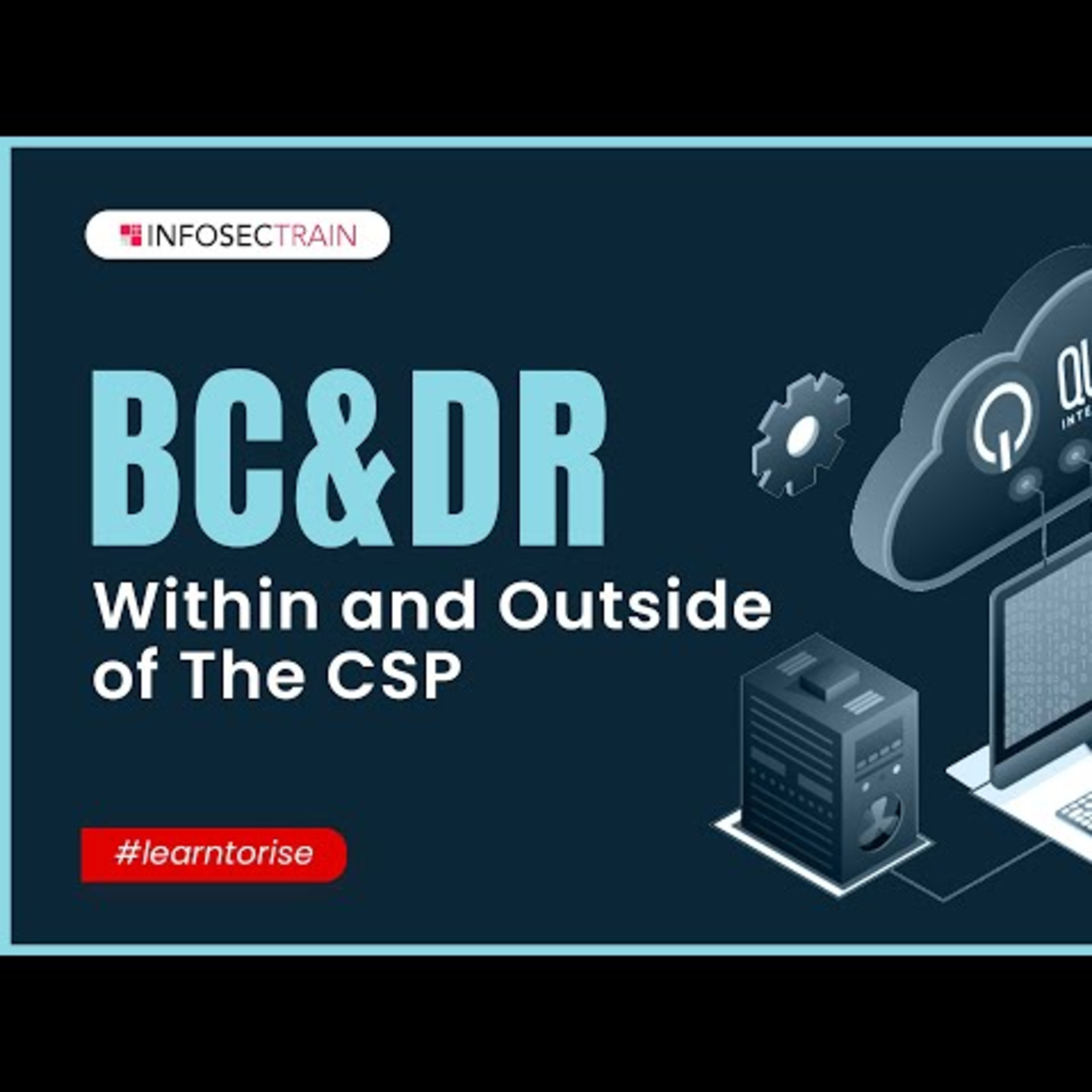
BC&DR Within and Outside of The CSP | Business Continuity and Disaster Recovery (BCDR) Solution
BC&DR Within and Outside of The CSP | Business Continuity and Disaster Recovery (BCDR) Solution View More Subscribe to our channel to get video updates. Hit the subscribe button above. Facebook: https://www.facebook.com/Infosectrain/ Twitter: https://twitter.com/Infosec_Train LinkedIn: https://www.linkedin.com/company/infosec-train/ Instagram: https://www.instagram.com/infosectrain/ Telegram: https://t.me/infosectrains
Business Continuity and Disaster Recovery (BCDR) Solution in Cloud | BCDR Cloud Solutions
Business Continuity and Disaster Recovery (BCDR) Solution in Cloud | BCDR Cloud Solutions Thank you for watching this video, For more details or free demo with out expert write into us at [email protected] Subscribe to our channel to get video updates. Hit the subscribe button above. Facebook: https://www.facebook.com/Infosectrain/ Twitter: https://twitter.com/Infosec_Train LinkedIn: https://www.linkedin.com/company/infosec-train/ Instagram: https://www.instagram.com/infosectrain/ Telegram: https://t.me/infosectrains
Skills Needed to Become an Information Security Analyst
Technology is constantly evolving and making job roles more challenging and fascinating in Information Technology and Security. As technology enhances, information security threats also increase with the latest techniques and tactics, making the role of Information Security Analysts more essential to organizations in safeguarding information. Information Security Analysts play a crucial role in protecting the organization’s data from unauthorized access by ensuring its confidentiality, integrity, and availability. This comprehensive blog is curated with a list of skills that an Information Security Analyst must possess. What is an Information Security Analyst? An Information Security Analyst is a professional responsible for protecting an organization’s information, computer systems, and networks from security threats by implementing security protocols. They execute analytical skills to identify vulnerabilities in security systems and ensure that confidential data is secured. Information Security Analyst Skills Information Security Analysts should possess a combination of both strong Information technology and security skills. The following are the necessary skills to become an Information Security Analyst. Read More
What is Attestation in Cloud Computing? | Attestation of Cloud Control | InfosecTrain
Thank you for watching this video, For more details or free demo with out expert write into us at [email protected] Subscribe to our channel to get video updates. Hit the subscribe button above. Facebook: https://www.facebook.com/Infosectrain/ Twitter: https://twitter.com/Infosec_Train LinkedIn: https://www.linkedin.com/company/infosec-train/ Instagram: https://www.instagram.com/infosectrain/ Telegram: https://t.me/infosectrains
Docker vs. Virtual Machines
Virtualization is a powerful tool that helps reduce administrative burdens while boosting cost savings, scalability, and efficiency. Therefore, organizations today look forward to modernizing their organization digitally with the help of virtualization. It is a technology that enables you to develop valuable IT services employing assets that are often restricted to hardware. Virtualization is increasingly required by everyone to boost IT agility, flexibility, and scalability while generating considerable cost savings. However, the distinctions between Docker and Virtual Machines are frequently unclear. What is Docker? Docker is an open-source platform for developing, distributing, and running applications. You can manage your infrastructure the same way you manage your apps thanks to Docker, which makes it possible to decouple your applications from your infrastructure and deploy software swiftly. Simply said, Docker is a virtualization technology and software development platform that makes it simple to create, distribute, and manage applications utilizing containers. You can read “What is Docker and its benefits?” to learn more. What is a Virtual Machine? A Virtual Machine (VM) is a computing resource that uses software instead of a physical computer to run and deploy applications. They work best for concurrently executing several applications, monolithic applications, app isolation, and legacy apps that are still supported by previous operating systems. They were developed to carry out tasks that could be dangerous if done directly in the host environment. The software running within a virtual machine cannot interfere with the host computer since it is segregated from the rest of the system. Read More
Top Data Privacy Certifications
Most digital operations, whether on a computer, mobile device, or cash machine, necessitate data entry. Knowing how to protect personal and company data is becoming increasingly important as data gets more valuable. Data has turned into a golden goose for cyber civilization’s unrighteousness. Data privacy refers to the power over how, when, and how much personal information is shared with others. It is crucial to understand who monitors our web behavior and what they do with the data they gather. Why Data Privacy Certification? Personal and professional data, such as identification information for payments, contact details, and personnel records, are frequently used by organizations. Organizations generally work to safeguard this data to avoid and resolve issues like fraud or identity theft. A good reputation for protecting confidential information helps persuade potential consumers or clients to work with an organization. Organizations are increasingly seeking data privacy officers to assist them in managing and preventing cyberattacks. With a data privacy certification, you can demonstrate your understanding. According to the Bureau of Labor Statistics in the United States, the market for privacy officers and information security analysts will increase by 33% between 2020 and 2030. So here in this article, let’s see the top privacy certifications you can acquire for your data privacy career. Read More
Cloud Deployment Model In Cloud Computing | Public Cloud vs Private Cloud vs Hybrid Cloud
This video on "Public vs Private vs Hybrid Cloud" will help you understand the major differences between these different type of cloud. Thank you for watching this video, For more details or free demo with out expert write into us at [email protected] Subscribe to our channel to get video updates. Hit the subscribe button above. Facebook: https://www.facebook.com/Infosectrain/ Twitter: https://twitter.com/Infosec_Train LinkedIn: https://www.linkedin.com/company/infosec-train/ Instagram: https://www.instagram.com/infosectrain/ Telegram: https://t.me/infosectrains
Why Choose The Internal Hands-On Audit Course From InfosecTrain?
Businesses of all sizes and orientations are employing information systems for their operations in this modern day and age. But do you know these information systems are vulnerable to a gigantic amount of cyber threats and risks? This is because cybercriminals have become increasingly sophisticated with the advancement of Information Technology (IT). Therefore businesses rely more on IT Auditors who perform information system audits to ensure that their IT systems are secure against such information security risks. What is an information systems audit? An information systems audit examines and assesses an organization’s IT infrastructMoure, applications, and data management, including policies, procedures, and operational processes, against internationally accepted standards or policies. These audits’ main goal is to identify security-related errors that employees may have made within the company. What is the Information Systems Auditor Practical Approach course at InfosecTrain? The Information Systems Auditor Practical Approach course at InfosecTrain is an internal hands-on audit training course from InfosecTrain that is primarily designed to provide you with hands-on experience with information systems audits. The course will teach you the valuable skills an IT Auditor should have through the inclusion of real-world case studies from the IT audit industry. The course will explicitly help you if you are preparing for several IT audit certifications like CISSP, CISA, CISM, ISO27001, etc. Read More
How AI and ML are Used in Cybersecurity?
Artificial Intelligence (AI) and Machine Learning (ML) are booming technologies used in the cybersecurity industry to automate the process of detecting cyber threats. Nowadays, with the enhancement of Information Technology (IT), the techniques and tricks to attack the organization’s network and systems are becoming more complex. Cybersecurity teams find it challenging to analyze and take appropriate action against the identified security threat. Fortunately, AI and ML technologies are making it possible to automate the process of identifying, analyzing, and responding to millions of cybersecurity threats. Many companies are leveraging the support of AI and ML to combat security threats and enhance organizations’ security posture. AI and ML Artificial Intelligence is the main branch of Machine Learning and Deep Learning designed to analyze millions of security risks, speed up the incident response process and help enhance security operations. It refers to the algorithms and techniques that mimic human intelligence to perform business operations that require human intelligence. Machine Learning (ML) is a part of Artificial Intelligence designed to execute algorithms in AI and allow learning from past use cases to enhance the security posture. It will enable the system to learn from the training data and detailed applications. Read More
What You Must Know About Data Privacy?
Digital Transformation paved the way for dematerialization, where we depend entirely on smartphones for each and everything. Alarm clocks, Telephones, CDs, DVDs, VCD Players, Physical Maps, Calculators, and many more physical things are transformed into digital. Since smartphones replace many items, our data is being stored, managed, processed, and maintained by the service providers, from which the question arises, ‘Is it safe to store our data on smartphones?’ Business, government, health, financial, and one-on-one interactions all happen in the digital space. The data being stored can be manipulated by hackers easily, which is why data privacy is an important topic that grabs everyone’s attention. What is Data Privacy? Data Privacy is the protection of an individual’s data from unauthorized access. The main focus of data privacy is to collect, store, process, manage, and maintain the data correctly by meeting data protection and privacy compliances and regulations. It involves rules, guidelines, best practices, and techniques to assist organizations in maintaining privacy complaints. Read More
Cloud Security Engineer Interview Questions & Answers | Cloud Security Engineer QA for 2023
Top most asked Cloud Security Engineer Interview Questions and Answers for freshers & Experienced. Thank you for watching this video, For more details or free demo with out expert write into us at [email protected] 👉 Cloud Security Engineer Question & Answer series 👉 Cloud Security Engineer Questions Answered 👉 Cloud Security Engineer Question Answers: What You Need to Know 👉 Simple Questions for Cloud Security Engineers 👉 QUESTIONS Answering Cloud Security Engineer Subscribe to our channel to get video updates. Hit the subscribe button above. Facebook: https://www.facebook.com/Infosectrain/ Twitter: https://twitter.com/Infosec_Train LinkedIn: https://www.linkedin.com/company/infosec-train/ Instagram: https://www.instagram.com/infosectrain/ Telegram: https://t.me/infosectrains
How Ethical Hacking is Significant for Corporates?
As of November 2022, statistics revealed that for every 1000 internet users, 153 accounts had been breached. Many businesses, organizations, and corporations have experienced data breaches leading to many cyber attacks and data exploitation. In today’s competitive world, companies depend on Information Technology, and many vulnerabilities and surface attacks are being discovered within the system. The most common cybersecurity risks that corporates face are Phishing, Ransomware, Malware, and Endpoint data breaches. What is Ethical Hacking? Ethical Hacking is the most familiar term for those looking at cybersecurity. The term hacking is the most negative connotation that grabs everyone’s attention, including legal and illegal groups. The legal and ethical way of performing cyber attacks, such as an attempt to steal data, injecting malicious files, and enabling many other social engineering attacks to identify vulnerabilities in the system, is known as Ethical Hacking. Read More
Why Learn AWS in 2023?
Today, the use of the internet and IT devices for even the most basic daily activities is rising exponentially on a global level. We can observe the rapid digital transformation occurring within enterprises. The Covid-19 pandemic has been a significant driver of this transformation, and we can see that individuals and businesses realize the value of IT for even routine tasks. However, because of the high capital expenses and the complexity associated with this over-reliance on frequently developing IT, individuals and businesses are migrating to cloud computing for their needs. Therefore careers in cloud computing are experiencing rapid growth, and there need to be more skilled professionals in the domain. Read More
What is Security Risk Assessment and How Does It Work? | Types of Risk Assessment
A security risk assessment identifies, assesses, and implements key security controls in applications. It also focuses on preventing application security defects and vulnerabilities. Carrying out a risk assessment allows an organization to view the application portfolio holistically—from an attacker's perspective. Thank you for watching this video, For more details or free demo with out expert write into us at [email protected] Subscribe to our channel to get video updates. Hit the subscribe button above. Facebook: https://www.facebook.com/Infosectrain/ Twitter: https://twitter.com/Infosec_Train LinkedIn: https://www.linkedin.com/company/infosec-train/ Instagram: https://www.instagram.com/infosectrain/ Telegram: https://t.me/infosectrains

How to Make a Career in Red Team & Pentesting | Career in Cybersecurity : Red Teaming / Pentesting
In today episode we have our Speaker Anant Shrivastava. He is an information security professional with 15+ yrs of corporate experience with expertise in Network, Mobile, Application and Linux Security. Anant is an avid opensource supporter and runs multiple opensource projects prominent of them being TamerPlatform and CodeVigilant. Thank you for watching this video, For more details or free demo with out expert write into us at [email protected] Subscribe to our channel to get video updates. Hit the subscribe button above. Facebook: https://www.facebook.com/Infosectrain/ Twitter: https://twitter.com/Infosec_Train LinkedIn: https://www.linkedin.com/company/infosec-train/ Instagram: https://www.instagram.com/infosectrain/ Telegram: https://t.me/infosectrains
CCSP Practice Questions for 2023 | CCSP Exam Preparation | CCSP Exam Practice Q&A
InfosecTrain hosts a live event entitled “CCSP Exam Practice Q&A” with certified expert ‘Krish’. Thank you for watching this video, For more details or free demo with out expert write into us at [email protected] ➡️ Agenda for the Webinar 👉 CCSP Exam Prep Plan 👉 CCSP Questions, Answers and Techniques 👉 On the exam day prep 👉 CCSP QA Session with audience https://youtu.be/C_VDqEKIVF8 Subscribe to our channel to get video updates. Hit the subscribe button above. Facebook: https://www.facebook.com/Infosectrain/ Twitter: https://twitter.com/Infosec_Train LinkedIn: https://www.linkedin.com/company/infosec-train/ Instagram: https://www.instagram.com/infosectrain/ Telegram: https://t.me/infosectrains
How to Build a Successful Career in Network Security in 2023?
Network Security is an ever-growing profession that plays an essential role in analyzing the security vulnerabilities and risks in the organization’s network. They protect the organization’s network infrastructure by employing and enhancing security policies and procedures. This comprehensive blog lets us know how to build a successful career in Network Security in 2023? But before that, let’s understand what Network Security is? What is Network Security? Network Security is a set of rules, regulations, and protocols to protect the organization’s data and the network from unauthorized users. It prevents cyber attacks and threats from compromising security protocols. The main objective of network security is to implement security policies, measures, and procedures to protect an organization’s network infrastructure using the necessary technologies. Why is Network Security important? Network Security is important for every organization that depends on the heavy network infrastructure to have hassle-free business operations. Cyber attacks have become more frequent, and organizations are considering network security a significant concern. They try to ace it with the provided budget. Network Security helps to secure the devices connected with data and protect from all types of network attacks with robust security controls. Read More
What is Enterprise Security Architecture? | How Dose cybersecurity Architecture work in Enterprises
If you're interested in learning more about cybersecurity architecture then this video is for you. Ms. Natalia sharing her experience about how cybersecurity architecture worked in the organization and what are the career opportunities we have in same field By the end of this video, you'll have a better understanding of how an enterprise's cybersecurity architecture works and how to protect your company from cyberattacks. Thanks for watching! Thank you for watching this video, For more details or free demo with out expert write into us at [email protected] Subscribe to our channel to get video updates. Hit the subscribe button above. Facebook: https://www.facebook.com/Infosectrain/ Twitter: https://twitter.com/Infosec_Train LinkedIn: https://www.linkedin.com/company/infosec-train/ Instagram: https://www.instagram.com/infosectrain/ Telegram: https://t.me/infosectrains
What is OT Security? | Why OT security is important? | What are OT Cyber Security Challenges
OT security is commonly used to protect Industrial Systems and networks from attacks. Operational technology security is used to protect and control critical infrastructures such as power stations, transportation networks and smart city appliances. Thank you for watching this video, For more details or free demo with out expert write into us at [email protected] Subscribe to our channel to get video updates. Hit the subscribe button above. Facebook: https://www.facebook.com/Infosectrain/ Twitter: https://twitter.com/Infosec_Train LinkedIn: https://www.linkedin.com/company/infosec-train/ Instagram: https://www.instagram.com/infosectrain/ Telegram: https://t.me/infosectrains
Building Privacy Management System in Organization | What is Privacy Management?
Privacy management tools help organizations conduct privacy impact assessments, check processing activities against requirements from privacy regulations, and track incidents that lead to unauthorized disclosures of personal data (investigation, remediation, reporting). Thank you for watching this video, For more details or free demo with out expert write into us at [email protected] Subscribe to our channel to get video updates. Hit the subscribe button above. Facebook: https://www.facebook.com/Infosectrain/ Twitter: https://twitter.com/Infosec_Train LinkedIn: https://www.linkedin.com/company/infosec-train/ Instagram: https://www.instagram.com/infosectrain/ Telegram: https://t.me/infosectrains
The Digital Personal Data Protection Bill, 2022: Analysis
The Ministry of Electronics and Information Technology (MeitY) issued the Digital Personal Data Protection Bill, 2022, on Friday, 18 November. It is a 24-page concise Bill created after analyzing the data privacy laws of the European Union (EU), Singapore, Australia, and the United States. The most recent iteration of India’s Data Protection Bill is the country’s fourth attempt to enact this law. It only addresses personal data and concentrates on safeguards for digital personal data. The government is anticipated to present the Bill in Parliament during the 2023 budget session now that it is available for public feedback. Read the article and find out more about the Digital Personal Data Protection Bill, 2022. Let us discuss the impact the Bill will bring on the Data Principals and Data Fiduciary. What is a Data Protection Act? The Data Protection Act seeks to provide guidelines for the processing of digital personal data. It focuses on all digital personal data processing in a way that acknowledges the necessity to process personal data for legitimate reasons and matters related to or incidental to those goals, as well as the right of persons to have their personal data protected. Overview of the Digital Personal Data Protection Bill, 2022: The goal of the Digital Personal Data Protection Bill 2022 is to establish a balance between Data Principals’ rights to secure their digital personal data and Data Fiduciaries’ obligations to process that data. Let us provide you with an overview of “The Digital Personal Data Protection Bill, 2022.”
What Is GDPR? | Introduction to US Privacy Laws | InfosecTrain
A regulation in EU law on data protection and privacy in the European Union (EU) and the European Economic Area (EEA) is known as the General Data Protection Regulation (GDPR). A significant part of EU privacy legislation and human rights law is the GDPR. It deals with the export of personal data from the EU and EEA. The main goals of the GDPR are to make it easier for international businesses to operate legally and to provide individuals more control and rights over their personal data. Thank you for watching this video, For more details or free demo with out expert write into us at [email protected] Subscribe to our channel to get video updates. Hit the subscribe button above. Facebook: https://www.facebook.com/Infosectrain/ Twitter: https://twitter.com/Infosec_Train LinkedIn: https://www.linkedin.com/company/infosec-train/ Instagram: https://www.instagram.com/infosectrain/ Telegram: https://t.me/infosectrains
Introduction and Benefits of Cloud Services | What is IT Cloud Services? | InfosecTrain
When people talk about "cloud services," they mean a wide range of services that companies and customers can get on demand over the internet. These services are made to make it easy and inexpensive to get to applications and resources without having to set up infrastructure or hardware on your own. The three service models in cloud are SaaS (Software as a Service), PaaS (Platform as a Service) and IaaS (Infrastructure as s Service). Thank you for watching this video, For more details or free demo with out expert write into us at [email protected] Subscribe to our channel to get video updates. Hit the subscribe button above. Facebook: https://www.facebook.com/Infosectrain/ Twitter: https://twitter.com/Infosec_Train LinkedIn: https://www.linkedin.com/company/infosec-train/ Instagram: https://www.instagram.com/infosectrain/ Telegram: https://t.me/infosectrains
What’s New in ISO 27001?
Organizations collect, store, and use a lot of data nowadays for various operations. Data about the workplace, inventory, clients, trade secrets, and financial and communication records can be found in almost every organization. When organizations don’t keep this information safe, it can lead to data security breaches, which can be very expensive for an organization in terms of money as well as reputation. To deal with this problem, the International Standardization Organization (ISO) created ISO/IEC 27001 standard. What is ISO 27001 standard? ISO 27001 is a globally applicable standard for information security. It covers everything an organization needs to do to lower its information security risk. Information Security Management System (ISMS) is what ISO 27001 focuses on. ISMS is a systematic approach that includes people, processes, and technology that help you protect and manage all of your organization’s information security management. What’s new in ISO 27001? The long-awaited update to ISO 27001 is eventually here. As anticipated, ISO 27001:2022 is not considerably different from ISO 27001:2013; however, there are some slight variations to the standard’s clause sections, such as the monitoring of information security objectives. The new version of ISO/IEC 27001:2022 was released on October 25, 2022. Some of the most significant updates to ISO/IEC 27001:2022 include a major revision to Annex A, minor revisions to the clauses, and a new title for the standard.
What is Risk Management? | Risk Management Process | InfosecTrain
The process of discovering, evaluating, and controlling risks to an organization's resources and profits is known as risk management. These dangers can be caused by a number of things, such as monetary unpredictability, legal responsibilities, technological problems, strategic management blunders, accidents, and natural calamities. Learn more about risk management in this video. Thank you for watching this video, For more details or free demo with out expert write into us at [email protected] Subscribe to our channel to get video updates. Hit the subscribe button above. Facebook: https://www.facebook.com/Infosectrain/ Twitter: https://twitter.com/Infosec_Train LinkedIn: https://www.linkedin.com/company/infosec-train/ Instagram: https://www.instagram.com/infosectrain/ Telegram: https://t.me/infosectrains
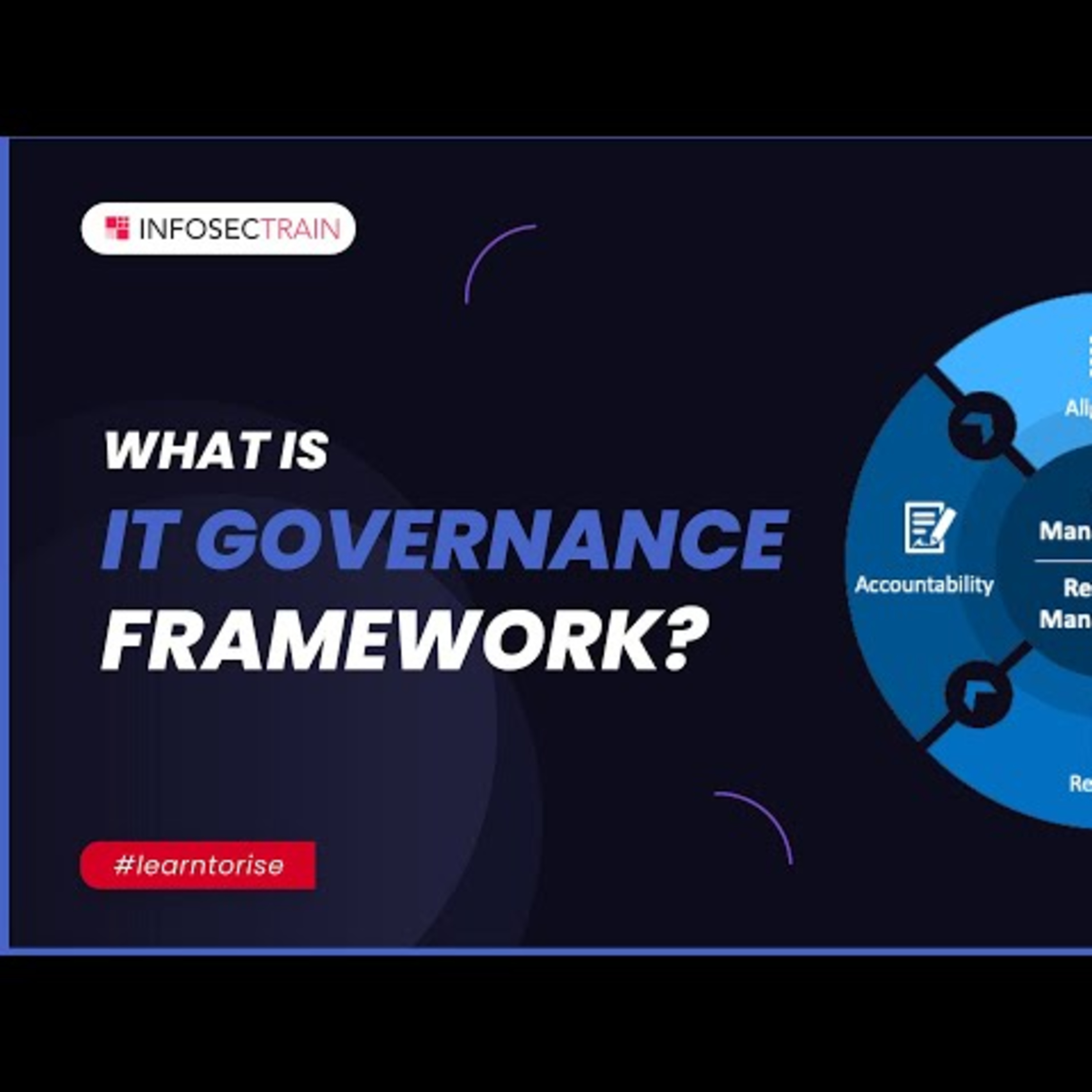
What Is IT Governance Framework? | Basics of Corporate Governance | InfosecTrain
The implementation, management, and monitoring of IT governance inside an organization are defined by an IT governance framework, a particular sort of framework. The framework for organizational, corporate, and leadership procedures related to information technology is known as IT governance. By adhering to these criteria, an organization's IT is guaranteed to support and facilitate the accomplishment of its overarching plans and goals. Thank you for watching this video, For more details or free demo with out expert write into us at [email protected] Subscribe to our channel to get video updates. Hit the subscribe button above. Facebook: https://www.facebook.com/Infosectrain/ Twitter: https://twitter.com/Infosec_Train LinkedIn: https://www.linkedin.com/company/infosec-train/ Instagram: https://www.instagram.com/infosectrain/ Telegram: https://t.me/infosectrains
What is eDiscovery? | Introduction to E-Discovery | InfosecTrain
Electronic discovery, commonly referred to as e-discovery, or eDiscovery, is the process by which parties to a legal proceeding preserve, gather, examine, and communicate information in electronic formats with the intention of using it as evidence. It is a type of digital inquiry that looks for information in emails, business correspondence, and other files that are relevant to a legal dispute or a criminal investigation. Thank you for watching this video, For more details or free demo with out expert write into us at [email protected] Subscribe to our channel to get video updates. Hit the subscribe button above. Facebook: https://www.facebook.com/Infosectrain/ Twitter: https://twitter.com/Infosec_Train LinkedIn: https://www.linkedin.com/company/infosec-train/ Instagram: https://www.instagram.com/infosectrain/ Telegram: https://t.me/infosectrains

How to Build a Successful Career in Cloud Auditing in 2023?
Auditing is the process of going through an organization’s records and documents in a systematic way to make sure they are correct, reliable, legal, and complete. Now, the question is, what is the role of auditing in cloud computing? As organizations get ready to use cloud services, they need to ensure their internal and external controls are organized. An audit is a key to ensuring that these internal and external controls are working well. This helps organizations reduce risks, which allows them to get commercial benefits from moving to the cloud. View More
Basics Of Network Security | Network Security Model | InfosecTrain
The security service over the network has been created to prevent the opponent from endangering the confidentiality or authenticity of the information being transferred across the network, as shown by a network security model. There must be a sender and a receiver for a message to be delivered or received. Thank you for watching this video, For more details or free demo with out expert write into us at [email protected] Subscribe to our channel to get video updates. Hit the subscribe button above. Facebook: https://www.facebook.com/Infosectrain/ Twitter: https://twitter.com/Infosec_Train LinkedIn: https://www.linkedin.com/company/infosec-train/ Instagram: https://www.instagram.com/infosectrain/ Telegram: https://t.me/infosectrains
NIST Cloud Computing Reference Architecture | Cloud Computing Architecture | InfosecTrain
Instead of emphasizing on "how to" design solution and execution, the NIST (National Institute of Standards and Technology) cloud computing reference architecture concentrates on the requirements of "what" cloud services must offer. The reference architecture aims to make it easier to comprehend the operational intricacies of cloud computing. Thank you for watching this video, For more details or free demo with out expert write into us at [email protected] Subscribe to our channel to get video updates. Hit the subscribe button above. Facebook: https://www.facebook.com/Infosectrain/ Twitter: https://twitter.com/Infosec_Train LinkedIn: https://www.linkedin.com/company/infosec-train/ Instagram: https://www.instagram.com/infosectrain/ Telegram: https://t.me/infosectrains