
Show overview
InfosecTrain has been publishing since 2021, and across the 5 years since has built a catalogue of 1,520 episodes. That works out to roughly 780 hours of audio in total. Releases follow a near-daily cadence.
Episodes typically run under ten minutes — most land between 5 min and 51 min — with run-times ranging widely across the catalogue. It is catalogued as a EN-language Education show.
There hasn’t been a new episode in the last ninety days; the most recent episode landed 5 months ago. The busiest year was 2023, with 469 episodes published.
From the publisher
InfosecTrain is one of the finest Security and Technology Training and Consulting organization, focusing on a range of IT Security Trainings and Information Security Services. InfosecTrain was established in the year 2016 by a team of experienced and enthusiastic professionals, who have more than 15 years of industry experience. We provide professional training, certification & consulting services related to all areas of Information Technology and Cyber Security. Website: https://www.infosectrain.com
Latest Episodes
View all 1,520 episodes
Building Your AI Second Brain: Mastering NotebookLM & Oboe
How do you transform a mountain of scattered data into an organized "Second Brain"? In this masterclass from InfosecTrain, we dive into the world of source-grounded AI. Learn how to combine the power of NotebookLM, Google's Gemini-powered research assistant, with Oboe, an advanced tool for transcribing and structuring unstructured audio. Whether you are a researcher, content creator, or knowledge worker, this episode provides a high-level blueprint for building a private, secure, and hyper-efficient knowledge system.📘 What You’ll Learn:Source-Grounded AI: Discover why grounding your AI in personal documents (PDFs, transcripts, notes) eliminates hallucinations and ensures accuracy.Under the Hood: A look at the Gemini family of models and how they are optimized for long-context research and speed in 2026.Mastering NotebookLM: How to upload up to 50 sources per notebook to create an "instant expert" on any project or topic.The Oboe Advantage: Using specialized AI to capture raw meeting audio and unstructured data, turning "noise" into high-signal information.The Synthesis Workflow: A pro-level demonstration of moving from raw audio (Oboe) to a searchable, summarized "Project Bible" (NotebookLM).Privacy & Security: Understanding why your data remains yours and is never used for training external models.🎧 The ultimate guide for anyone looking to research faster, write better, and make smarter decisions with AI.Watch the full episode on YouTube: https://www.youtube.com/watch?v=oou72Q9x3GU
The Future of Privacy Leadership: ISO 27701:2026 Explained
As data privacy becomes a global priority, ISO 27701:2026 is redefining how organizations manage and protect personally identifiable information (PII). In this episode of InfosecTrain Tech Talks, we decode the latest standard update and explore how mastering the Lead Auditor and Lead Implementer roles can place you at the forefront of the privacy revolution. Whether you are navigating the GDPR, India's DPDP Act, or global AI governance, this session is your roadmap to becoming a high-value privacy leader.📘 What You’ll Learn:The 2026 Evolution: What has changed in the latest ISO 27701 update and why it is now a standalone necessity for modern enterprises.Lead Auditor vs. Lead Implementer: Understanding the distinct career paths from building a Privacy Information Management System (PIMS) to certifying one.Global Alignment: How ISO 27701 maps directly to the GDPR and other major international privacy laws.Career Growth: Why privacy expertise is the "X-factor" for CISOs, compliance officers, and cybersecurity professionals in 2026.Leadership Insights: Moving beyond technical controls to establish true privacy governance and organizational trust.🎧 Essential listening for cybersecurity experts and auditors ready to lead in the evolving world of data protection.Watch the full episode on YouTube: https://youtu.be/ZRBbh8QUimo?si=rgjxi4HOqA8Mp3Am
AI Risk Management for Leaders | Governance, Trust & Accountability in 2026
AI doesn’t fail silently when it fails; it impacts trust, compliance, and your entire business reputation. As AI adoption reaches a fever pitch in 2026, the risk landscape has shifted from technical "bugs" to systemic organizational liabilities. In this episode, InfosecTrain provides a high-level briefing for executives, CISOs, and decision-makers on how to move from reactive troubleshooting to proactive, AI-first risk management.📘 What You’ll Learn:Why Traditional Risk Methods Fail: Understanding the unique, non-linear nature of AI risks compared to legacy IT systems.The AI Risk Lifecycle: How to structure a governance approach that tracks risks from data ingestion to post-deployment model drift.Proven Frameworks: A leadership guide to implementing the NIST AI RMF and ISO 42001 for consistent, measurable results.The Accountability Gap: How to connect AI risk directly to business accountability, legal compliance, and stakeholder trust.Operational vs. Ethical Risk: Balancing the drive for efficiency with the necessity of ethical, unbiased AI output.🎧 Essential listening for GRC leaders and AI program owners looking to secure their organization’s digital future.Watch the full episode on YouTube: https://www.youtube.com/watch?v=TrJMzDq5_yQ
Privacy Engineering in the AI Era A CIPT Perspective on Data Protection
As AI transforms the digital landscape, the intersection of data privacy and machine learning has become a critical battleground for security professionals. In this episode, we dive into the core tenets of Privacy Engineering through the lens of the Certified Information Privacy Technologist (CIPT). From the seven principles of Privacy by Design to the deployment of Privacy Enhancing Technologies (PETs), learn how organizations are building privacy into the SDLC rather than "bolting it on" as an afterthought.📘 What You’ll Learn:The AI-Privacy Intersection: How personal data touchpoints in training, testing, and output trigger global privacy laws like GDPR.Privacy by Design & Default: Incorporating privacy considerations from the early stages of AI architecture and the model training phase.Privacy Enhancing Technologies (PETs): A deep dive into Homomorphic Encryption, Trusted Execution Environments (TEE), and Federated Learning.Managing AI Risks: Strategies for mitigating data poisoning, membership inference attacks, and algorithmic bias.The Role of the Privacy Technologist: Why the CIPT certification is becoming essential for navigating the complex regulatory landscape of the AI era.🎧 Dive in to explore how AI can actually enhance compliance through automated data classification and anomaly detection.
The Future of GRC: Governance, Risk & Compliance in the Age of AI
Governance, Risk & Compliance (GRC) is no longer just about meeting static requirements it’s about controlling intelligent, evolving systems. In this episode, InfosecTrain explores how organizations are transitioning from reactive compliance to proactive, AI-first governance frameworks. We break down how next-generation GRC integrates AI risk management and automated decision-making to handle the unique challenges of the 2026 digital landscape.📘 What You’ll Learn:Managing AI-Specific Model Risks: Strategies for tackling bias, hallucinations, model drift, and the explainability gap.Modernizing Third-Party Due Diligence: Moving beyond static questionnaires to AI vendor risk scoring and continuous monitoring.The New Era of AI Auditing: Implementing a 5-domain framework for evidence standards and board-level reporting.Navigating Global Regulations: A deep dive into the EU AI Act, NIST AI RMF, and new SEC disclosure rules.AI’s ESG Footprint: Understanding the environmental and social governance impact of large-scale AI deployment.🎧 Dive in to understand how enterprises are shifting toward intelligent governance strategies to secure the future of AI.Watch the full episode on YouTube: https://youtu.be/LrQbgbnWIEI?si=3HqMfGGseYVyI0B0
ISO 42001 Explained: Defining Your Organization’s Role in the AI Ecosystem
Identifying your role in the AI lifecycle is no longer just a technicality it’s a regulatory and ethical necessity. In this episode, we break down ISO/IEC 42001:2023, the world’s first auditable standard for an Artificial Intelligence Management System (AIMS). From global tech giants to the individual subjects impacted by AI decisions, discover how this framework ensures responsible development, transparency, and data privacy.📘 What You’ll Learn:What ISO 42001 is and how the PDCA (Plan-Do-Check-Act) cycle applies to AI governanceThe 5 Key AI Roles: Provider, Producer, Partner, Customer, and SubjectReal-world analogies: How AI roles mirror the construction of a house or medical drug discoveryThe intersection of AI and Privacy: How ISO 42001 aligns with GDPR and the EU AI ActGoal Alignment: Why Providers focus on capability while Subjects focus on their fundamental rights🎧 Dive in to understand why defining your AI role is a critical part of today’s cybersecurity and compliance strategy.📽️ Watch the full episode on YouTube: https://www.youtube.com/watch?v=qKdsZWBQTDM
CRISC Explained: Enterprise Risk Strategies for the Age of AI
AI is no longer a futuristic concept it’s an active driver of enterprise change. However, with great innovation comes significant risk. In this episode, we explore how risk professionals identify, assess, and respond to AI-driven threats. From strategic and operational impacts to the critical need for human oversight, we break down the framework for building intelligent, resilient enterprises.🎯 Key Topics Covered in This Episode:AI Risk Identification: Why AI risk isn't just an "IT issue" but a fundamental driver of enterprise-wide risk.AI as an Enterprise Risk Driver: Categorizing AI risks into Strategic, Operational, Compliance/Legal, and Reputational domains.Bias and Legal Pitfalls: Real-world examples of gender bias in AI hiring and lending tools that led to regulatory penalties.Assessing AI Risk: Using Impact, Likelihood, Velocity, and Control Effectiveness to quantify the "speed" and "magnitude" of AI failures.The Four Risk Responses: How to decide when to Avoid, Mitigate, Transfer, or Accept AI risk based on organizational appetite.Governance & Ownership: Who truly owns AI risk? Defining roles across Business, IT, and Compliance teams.Implementing Controls: A guide to Preventive, Detective, and Corrective controls for the AI lifecycle.Integrating AI into ERM: Why AI risk must be part of your central risk register rather than a siloed technical framework.Continuous Monitoring: The necessity of tracking "model drift" and data accuracy at frequent intervals.🎧 Secure your enterprise's future with InfosecTrain. Advance your career with our CRISC and AI Governance certification programs. Learn to bridge the gap between emerging technology and robust risk management.📽️ Watch the full episode on YouTube: https://www.youtube.com/watch?v=25lAfjw_wvQ
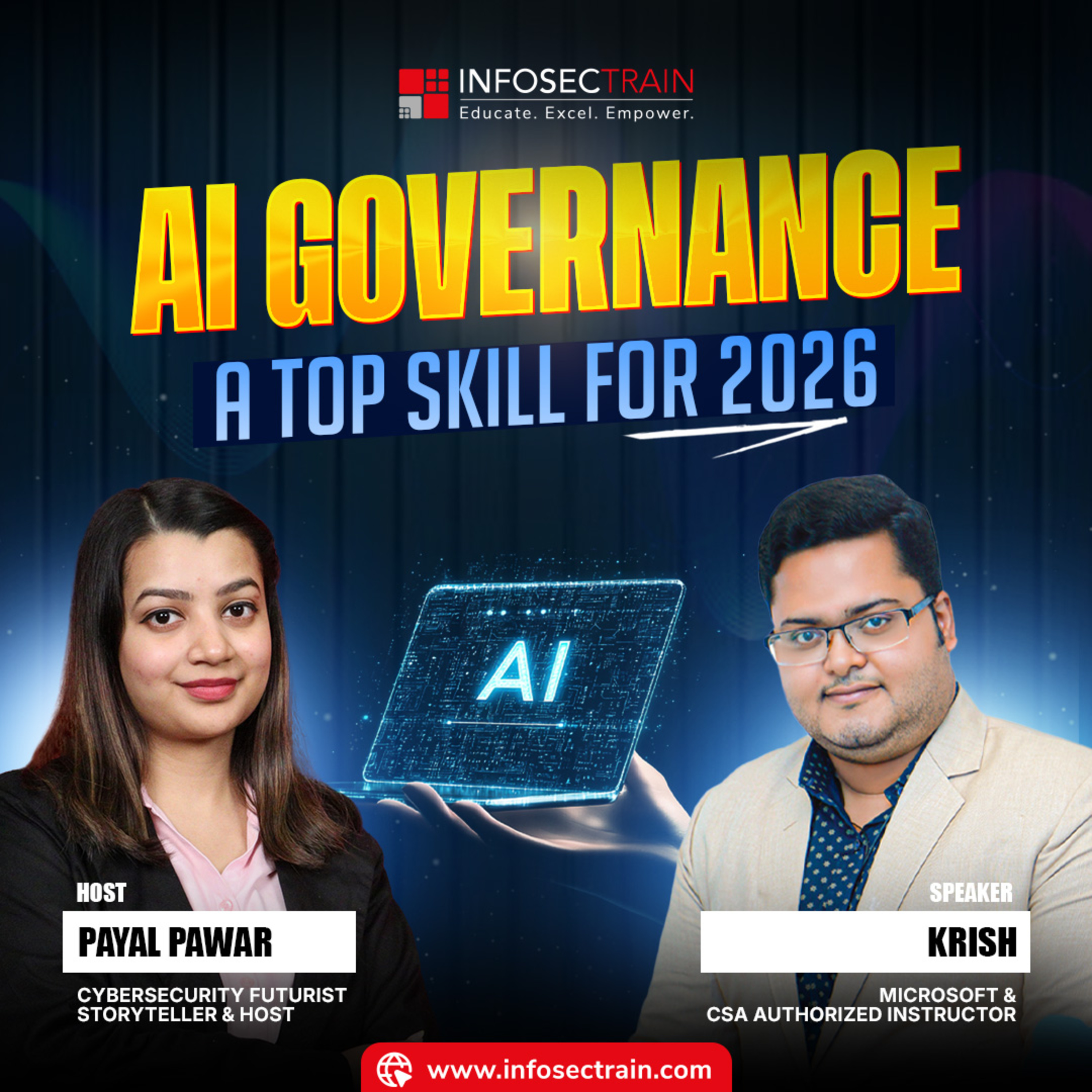
Why AI Governance is the Most In-Demand Skill for 2026
AI is everywhere, from personal companions to high-stakes business automation. But as adoption grows, so do the risks of data privacy breaches, algorithmic bias, and lack of accountability. In this episode, we discuss why AI literacy is no longer optional for IT professionals and how the Certified AI Governance Specialist program bridges the gap between technical AI tools and responsible business leadership.🎯 Key Topics Covered in This Episode:The Shift in AI Adoption: From "Googling" to "Chatting" how AI has moved from a search tool to a personal and professional companion.Accountability in AI: Why we can't take an AI to court and the urgent need for human oversight in high-risk use cases like loan approvals.Technical vs. Non-Technical Roles: Why AI governance is for everyone from developers to CISOs and the importance of "AI Literacy" as mandated by the EU AI Act.The Amazon Resume Case Study: A real-world example of how a lack of AI governance led to gender bias and reputational damage.Global Regulations & Frameworks: Understanding the impact of the EU AI Act, GDPR, ISO 42001, and the NIST AI Risk Management Framework.Career Evolution: Kish shares his personal journey from a technical "fix-it" guy to a governance consultant, explaining why governance is a better career decision.Practical Training vs. Theory: What sets the Certified AI Governance Specialist program apart, including hands-on policy writing and real-world risk assessments.Explainability & Blind Spots: Why AI decisions must be auditable and explainable to maintain customer trust and legal compliance.The Lightning Round: Quick takes on "automation bias," the biggest mistakes organizations make, and whether AI is currently under-governed or under-understood.🎧 Stay ahead of the curve with InfosecTrain. Prepare for the future of GRC by becoming a Certified AI Governance Specialist. Our 48-hour live instructor-led program provides the templates, use cases, and practical insights you need to lead AI initiatives.Watch the full episode on YouTube: https://www.youtube.com/watch?v=jMYDpy-zy8M
Mastering the Red Team: Beyond Penetration Testing
In this episode, we break down the sophisticated world of Red Teaming. Moving past simple vulnerability scans, we explore the mindset of a determined adversary. We cover the entire attack chain from initial access via LLMNR poisoning to lateral movement using BloodHound and explain how these simulations help Blue Teams sharpen their detection and response capabilities.Key Topics Covered in This Episode:Defining Red Teaming: Why Red Teaming is "threat-oriented" rather than "vulnerability-centric," focusing on organizational resilience.Understanding APTs: The characteristics of Advanced Persistent Threats—sophisticated, long-term, and stealthy.The MITRE ATT&CK Framework: A breakdown of the 14 tactics used to map adversarial behavior from reconnaissance to impact.Red Team vs. Pentesting: A detailed comparison of scope, duration, and goals (Narrow vs. Broad, Goal-oriented vs. Threat-oriented).The Attack Life Cycle: Stepping through Reconnaissance, Initial Compromise, Persistence, Privilege Escalation, and Exfiltration.Live Demo: LLMNR Poisoning: How attackers exploit "link-local" protocols to capture password hashes using tools like Responder.Cracking Hashes: Using Hashcat to resolve captured NTLMv2 hashes into plain-text passwords.Visualizing the Path: Using BloodHound and Neo4j to map hidden relationships and attack paths within Active Directory.The Blue Team Perspective: How the Security Operations Center (SOC) uses Red Team findings to close detection gaps.🎧 Level up your offensive security skills with InfosecTrain. We provide specialized training in Red Teaming, Active Directory Security, and APT Simulation to prepare you for the front lines of cybersecurity.Watch the full episode on YouTube: https://www.youtube.com/watch?v=ruaK9NNIE2w
Build Your Own AI Agent: From PDF To Email Draft
Are you still spending 20 minutes reading a single regulatory document? In this episode, we show you how to leverage Gemini and Custom Agents to automate document analysis. We walk through the process of feeding an AI 17 pages of RBI fintech guidelines and training it to act as your personal "Fintech Helper" capable of answering complex questions and drafting polished, empathetic emails directly to your team or clients.Key Timestamps & How-To:The Manual Burden: Why reading 17 pages of RBI guidelines takes too long and how AI solves the "memory" problem.Knowledge Feeding: How to properly summarize and feed specific regulatory knowledge into your custom agent.Setting the Guardrails: Why you must instruct your agent on tone (e.g., "polite and mature") and ensure it doesn't use random citations.Multi-Tool Integration: Enabling your agent to use web searches and your professional email to gather real-time context.3-Second Analysis: Watching the agent digest a massive update and provide accurate summaries in under three seconds.The Draft-to-Sent Workflow: How the agent automatically creates a ready-to-send draft in your Gmail based on the document's findings.Master AI Automation with InfosecTrain. We provide the technical foundation to help you build secure, autonomous agents for your professional workflow.Watch the full episode on YouTube: https://www.youtube.com/watch?v=9nTsH4m0KqA
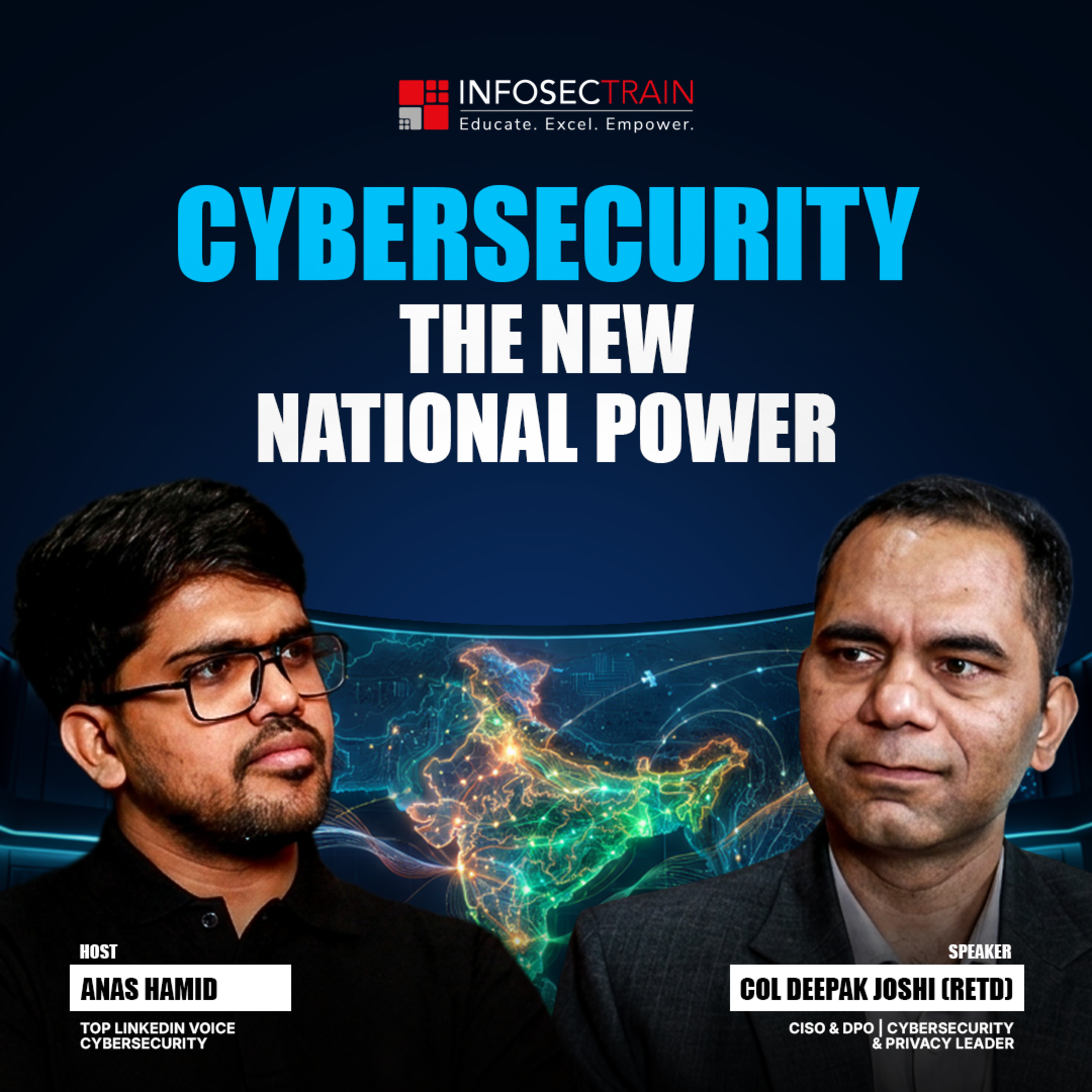
Cybersecurity: The New Front Line of National Security
National security is no longer just about tanks and aircraft; it’s about power grids, financial ecosystems, and data privacy. In this episode, Colonel Deepak Joshi explains why safeguarding a business is an act of nation-building. We dive into the DPDP Act, the "Black Box" of AI, and why your organization’s cybersecurity posture is now a competitive advantage that drives revenue and trust.Key Timestamps & Insights:Beyond the Battlefield: Why cyber warfare is now a primary domain alongside land, sea, and air.Critical Infrastructure: The high stakes of protecting airports, power grids, and banking services.The ₹250 Crore Risk: Understanding the penalties under India’s DPDP Act and the cost of "just in case" data collection.Security as a Brand: How Apple and Tata Nexon used "security" as a winning marketing tagline to dominate markets.The AI Privacy Bridge: Balancing innovation with ethical data ingestion and avoiding the "Black Box" trap.Secure by Design: The "Sprinkler System" analogy—why security must be baked into the foundation, not added later.Startup Survival Kit: Three non-negotiable tips for high-energy startups to protect their IP and reputation.The Human Firewall: Why regular patching is like a medical checkup and why your digital hygiene matters more than your tools.Career Pivot: Why cybersecurity professionals are perfectly positioned to lead the new wave of Privacy and DPO roles in India.Expert Guest: Colonel Deepak Joshi (CISO & DPO) Hosted by: InfosecTrain Tech TalkWatch the full episode on YouTube: https://www.youtube.com/watch?v=RR--vwkpMVY
LlamaCoder & Agentic AI: The End of Manual Browsing
Are we moving past the era of simply "chatting" with AI? In this session, we look at the rise of Agentic AI tools that don't just draft emails or suggest code but actually go into your browser, check your mail, and book your tickets for you. We explore LlamaCoder for instant app building and how Comet and Perplexity are turning our web browsers into autonomous assistants.What’s Inside This Episode:LlamaCoder: Building functional apps, to-do lists, and SAS landing pages in seconds using Meta's Llama models.Enter the Agentic Browser: How Comet allows you to manage tasks across different tabs without ever opening them.Inbox Automation: Watching an AI agent check for payment reminders and draft a reply directly inside Gmail.Concierge AI: Using an agent to find movie shows in Delhi-NCR, compare ticket prices, and apply coupon codes autonomously.The Google vs. Perplexity War: Why Google is integrating Gemini directly into Chrome to prevent users from switching to third-party agents.GenAI vs. Agentic AI: Understanding the shift from "generating information" to "autonomous execution."🎧 From advanced AI prompting to cybersecurity governance, we help you master the tools of tomorrow.Watch the full episode on YouTube: https://www.youtube.com/watch?v=6NCr4fDLhE0
OBO + Consensus AI | Ending the Era of AI Hallucinations
Are you tired of AI tools that "hallucinate" facts or pull information from unverified Reddit threads? In this episode, we explore the "Trust Stack" for 2026: Consensus AI and OBO. We dive into how to source peer-reviewed research in seconds and then transform those insights into a full educational ecosystem complete with podcasts, lectures, and interactive flashcards. Whether you’re a researcher, a student, or a tech strategist, these tools are about to become your new secret weapons.In This Episode, You’ll Discover:Peer-Reviewed Power: Why Consensus AI is the "Chat completion for scientists," pulling only from published, legit research papers.Fact-Checking the Future: A look at real-time regulatory research for Fintech in India using verified institutional sources.The 1-Prompt Professor: How OBO turns a single query into a 20-minute lecture, a deep-dive read, and an automated podcast episode.Level Up Your Learning: Using OBO’s interactive "Learn Mode" with MCQs and flashcards to crush your next interview or certification exam.The Efficiency Paradox: Discussing the trade-offs of speed vs. fairness in automated decision-making.Strategy in a Box: Using OBO to build high-level governance and business strategies for new AI ventures.🎧 Bridging the gap between cutting-edge AI and practical cybersecurity governance.Watch the full episode on YouTube: https://www.youtube.com/watch?v=KzTm5V30Smk
DPDPA for DPOs | Navigating AI Risk and Accountability in 2026
The role of a Data Protection Officer (DPO) is no longer strictly legal—it is an integrated function of Law, Tech, and Risk. As AI continues to redefine how organizations process data, the Digital Personal Data Protection (DPDP) Act sets a high bar for accountability, transparency, and risk management.In this guide, presented by InfosecTrain, we dive into the core obligations DPOs face when personal data meets AI ecosystems.The Intersection of AI and Data Privacy:Personal Data in the AI Life Cycle: Personal data is present at every stage, from scraping internet data and training models to live user interactions and system logging.Automated Decision Making: Under the DPDP Act, organizations must ensure effective grievance redressal for AIdriven outcomes, especially when machines make significant decisions impacting individuals.The "Black Box" Challenge: DPOs must advocate for transparency and explainability, ensuring that users can understand why a machine rejected a request, such as a loan application.Critical Compliance Obligations:Lawful Basis & Legitimate Use: While many rely on consent, it can be risky as it is revocable. Exploring "Legitimate Use" may be a more sustainable path for AI training data.Children's Data—A Strict "No-Go": The DPDP Act explicitly bans the tracking and profiling of children for AI purposes. Violations can lead to penalties up to ₹200 crore.Purpose Limitation & Data Minimization: AI naturally demands more data, but privacy laws demand less. DPOs must find the balance to ensure data isn't used for unauthorized training without explicit permission.Risk Assessments (DPIA & FRIA): Even if not strictly mandated for all, performing a Data Protection Impact Assessment (DPIA) is a best practice to manage high-risk processing and avoid hefty breach penalties.The Skills of a Future-Ready DPO:Beyond the Law Degree: While legal interpretation is key, a DPO must also master risk management and have a broad technical understanding of information security and AI governance.Direct Reporting: For Significant Data Fiduciaries, the DPO must report directly to the highest level of management to avoid conflicts of interest.🎧 Our DPO Hands-on Course is designed to bridge the gap between theory and practice. Through live case studies, cookie audits, and breach impact assessments, we prepare you for the day-to-day challenges of a modern DPO.Watch the full episode on YouTube: https://www.youtube.com/watch?v=JI-Mz1T21UM
SailPoint IdentityIQ 8.5 | Modernizing Identity Governance with AI and Teams
The landscape of identity governance is shifting from manual workflows to intelligent, automated ecosystems. With the release of SailPoint IdentityIQ (IIQ) 8.5, organizations are gaining powerful new tools to secure the digital identity lifecycle.In this deep dive, brought to you by InfosecTrain, we explore the extensive features of the 8.5 update from GenAI-generated entitlement descriptions to proactive risk detection.Key Highlights of SailPoint IIQ 8.5:Advanced Lifecycle Management (LCM): Moving beyond basic Joiner-Mover-Leaver (JML) processes. Learn how to trigger custom workflows for contract extensions and project-specific role expirations.GenAI Integration: SailPoint now leverages AI to autogenerate clear, natural-language entitlement descriptions, making it easier for business users to understand what they are approving.Microsoft Teams Connectivity: Approvers no longer need to log into the SailPoint dashboard. Decisions can be made directly within Teams, with all actions logged and synced back to the IIQ core.Identity Access History: Building on the 8.4 foundation, 8.5 offers an enhanced graphical view of a user's access history, allowing admins to track every role change and provisioned application over time.Anomaly & Risk Detection: Improved modeling to detect "toxic combinations" of access (Segregation of Duties) before they become security vulnerabilities.Expert Integration Tips:Prioritize REST APIs: Move away from delimited CSV files. REST APIs are lighter, more reliable, and provide better version control for cloud-based applications.Version Control & Sandboxing: Always test integration compatibility in a dedicated sandbox before upgrading production environments to avoid Java or connector-level failures.Automated Retry Mechanisms: Implement back-off and retry logic in your API calls to handle temporary system unavailabilities without breaking the user experience.🎧 The future of IIQ: While 8.5 is the current gold standard, industry rumors suggest the next leap will be a major version 9 release. Stay ahead of the curve by mastering the 8.5 features today.Watch the full episode on YouTube: https://www.youtube.com/watch?v=u25pnaJeGpQ
Perplexity AI The End of Search Engines as We Know Them
Google is a search engine. ChatGPT is a chatbot. But what is Perplexity? If you’ve ever felt like AI gives you outdated answers or "hallucinates" facts, you’re looking for an Answer Engine.In this episode of InfosecTrain AI Mastery, we dive into the mechanics of Perplexity AI. We explore how it uses Retrieval-Augmented Generation (RAG) to scan the live web and fact-check its own answers in real-time. Whether you are a researcher, a developer, or a cybersecurity professional, understanding this "multibrand store" of AI models is a game-changer.Key Discussion Points:The "Answer Engine" Revolution: Why search engines provide links, but Perplexity provides synthesized truths.The Power of RAG: Understanding Retrieval-Augmented Generation and how it kills AI hallucinations.The Multimodel Feature: How to switch between Gemini, Claude, and GPT-4 inside a single interface.Beyond the Chatbox: A live demo of "Comet," the AI browser agent that can negotiate prices and apply for jobs on your behalf.Fact-Driven Synthesis: Why citations are the most important feature you didn't know you needed.The Privacy Debate: How Perplexity stacks up against Claude and OpenAI in terms of data retention.Stop searching and start finding. Learn how to use AI not just to write emails, but to navigate the live web with precision.Watch the full episode on YouTube: https://www.youtube.com/watch?v=uwi3M_jXjnw
How to Become a GRC Auditor: The Complete Roadmap 2026
Is an IT Auditor just a "hacker with a clipboard"? Not even close. In a world where regulatory fines are skyrocketing and AI is rewriting the rules of governance, the role of a GRC Auditor has shifted from "ticking boxes" to becoming a critical pillar of business resilience.In this episode of InfosecTrain Tech Talk, we break down the complete roadmap for anyone looking to enter or level up in the world of IT Audit. We move past the jargon to explain why technical knowledge is only half the battle and why "Business Context" is the ultimate tool in an auditor's arsenal.What You’ll Learn in This Episode:The IT Audit Myth: Why IT auditing is not about penetration testing or hacking, but about providing "Assurance".The "Trust but Verify" Principle: How to maintain professional skepticism without being cynical.Root Cause Analysis: Why you should always ask "Why" five times to find the real problem.The Framework Overlap: Navigating ISO 27001, NIST, and SOC 2 without getting lost in the paperwork.Top 11 IT Risks: A deep dive into strategy, governance, and the often-overlooked CMDB (Configuration Management Database).The Certification Ladder: Which "C" should you chase first? Comparing CISA, CIA, CISM, and CISSP.🎧 Success in audit isn't just about what you find; it's about how you communicate it. Learn how to translate a technical finding into a business impact that the Board of Directors actually cares about.Watch the full episode on YouTube: https://www.youtube.com/watch?v=0KrocbLvlzw
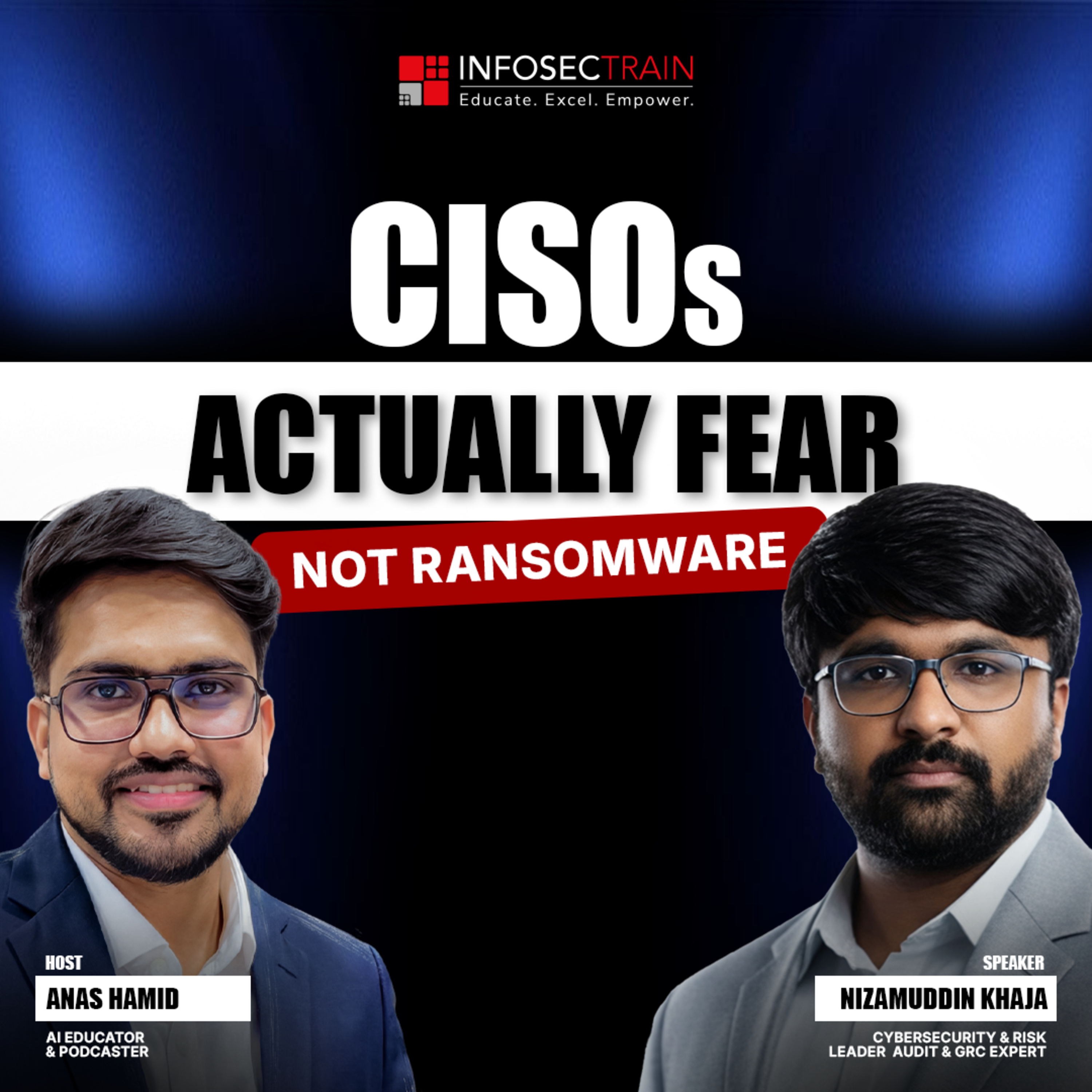
The CISOs Nightmare: Why 2026 is No Longer About the Hacker
What keeps a CISO up at night? Hint: It’s probably not what you think. While the headlines scream about "genius hackers", the real battle in 2026 is being fought over resilience, identity, and the psychological warfare of AI-driven scams.In this episode of InfosecTrain Tech Talk: Real World Decoded, we sit down with seasoned risk professional Nizamuddin Khaja to peel back the curtain on the modern security leadership mindset. We move past the technical jargon to explore why cybersecurity is a "decision-making problem" rather than a "technology problem".Key Discussion Points:The Resilience Shift: Why the question is no longer "Will we be hacked?" but "How fast can we recover?"The Invisible Boundary: Managing the nightmare of vendor and supply chain risks in a borderless digital world.Human Psychology vs. Intelligence: Why even the smartest employees fall for phishing and how hackers exploit "urgency".The 24-Hour War Room: A CISO's step-by-step checklist for the first 24 hours of a major airline or bank breach.The Rise of the "Deepfake" Scam: How voice cloning and $25M impersonation frauds are changing the threat landscape.A Passwordless Future: Is the era of the "Secret Question" finally over?.🤚 Stop. Think. Act. Learn the "Verification Discipline" that every digital citizen needs to survive the next five years of AI evolution.Watch the full episode on YouTube: https://youtu.be/LPnlRbplGJE?si=DPHCZD6DaSpAMsKR
Mastering IAPP AIGP | Roadmap to AI Governance Excellence
Is AI Governance the new "must-have" for cybersecurity professionals? As AI transitions from a luxury to a corporate mandate, the need for certified experts to manage risk and compliance is skyrocketing. In this episode, we break down everything you need to know about the IAPP AIGP certification, the globally recognized gold standard for governing artificial intelligence.Join the experts at InfosecTrain as we navigate the intersection of AI, data privacy (GDPR), and information security. Whether you are a risk manager, a privacy officer, or a tech enthusiast, this guide provides the strategy and mindset needed to master the AIGP exam and lead in the AI-driven IT service industry.Inside This Episode:The AIGP Value Proposition: Why AIGP is becoming a de facto requirement for AI governance roles.Beyond the Code: Why you don’t need to be a developer to excel in AI governance.The Three Pillars: Understanding the critical intersection of Privacy, AI Governance, and Information Security.Exam Flavors & Bias: A deep dive into temporal bias, sampling bias, and how they impact regulatory compliance.Governance Models: Comparing Centralized, Decentralized, and Hybrid models for your organization.The "Black Box" Challenge: Tackling explainability and automated decision-making under GDPR.Pro Exam Tips: How to handle case studies and the mindset of an AI Risk Manager.🎧 Elevate your career with world-class training in AI, Cloud, and Cybersecurity.📺 Watch the full episode on YouTube: https://youtu.be/36d8ykIHbNI?si=mEIIz8rCaiYnXByK
Mastering Claude AI | The Thoughtful Assistant for Research & Writing
Can an AI actually help you think more clearly, not just write faster? In this episode, we dive deep into Claude AI, the powerhouse model from Anthropic that is redefining how professionals approach research and long-form content. While other tools focus on speed, Claude specializes in nuance, structured reasoning, and safety. Whether you are a researcher, a writer, or a cybersecurity professional, this session from InfosecTrain will show you how to move beyond basic prompts and unlock high-level workflows.Watch the full episode on YouTube: https://youtu.be/sMvv5AwWcxw?si=NI6hUZsQXMRUg_aSWhat You’ll Learn:The Claude Family: A breakdown of the Haiku, Sonnet, and Opus models and which one is right for your task.The 200k Context Window: How to "interrogate" massive documents and PDFs to synthesize complex data in seconds.Constitutional AI: Why Claude’s ethical framework makes it the most "trustworthy" writing partner for enterprise use.Workflow Mastery: Practical tips for drafting reports, refining arguments, and producing polished, professional-grade summaries.🎧 Stop fighting with generic AI outputs. Learn how to use Claude to become a more effective, thoughtful, and high-impact researcher.