
InfosecTrain
1,520 episodes — Page 1 of 31
Building Your AI Second Brain: Mastering NotebookLM & Oboe
How do you transform a mountain of scattered data into an organized "Second Brain"? In this masterclass from InfosecTrain, we dive into the world of source-grounded AI. Learn how to combine the power of NotebookLM, Google's Gemini-powered research assistant, with Oboe, an advanced tool for transcribing and structuring unstructured audio. Whether you are a researcher, content creator, or knowledge worker, this episode provides a high-level blueprint for building a private, secure, and hyper-efficient knowledge system.📘 What You’ll Learn:Source-Grounded AI: Discover why grounding your AI in personal documents (PDFs, transcripts, notes) eliminates hallucinations and ensures accuracy.Under the Hood: A look at the Gemini family of models and how they are optimized for long-context research and speed in 2026.Mastering NotebookLM: How to upload up to 50 sources per notebook to create an "instant expert" on any project or topic.The Oboe Advantage: Using specialized AI to capture raw meeting audio and unstructured data, turning "noise" into high-signal information.The Synthesis Workflow: A pro-level demonstration of moving from raw audio (Oboe) to a searchable, summarized "Project Bible" (NotebookLM).Privacy & Security: Understanding why your data remains yours and is never used for training external models.🎧 The ultimate guide for anyone looking to research faster, write better, and make smarter decisions with AI.Watch the full episode on YouTube: https://www.youtube.com/watch?v=oou72Q9x3GU
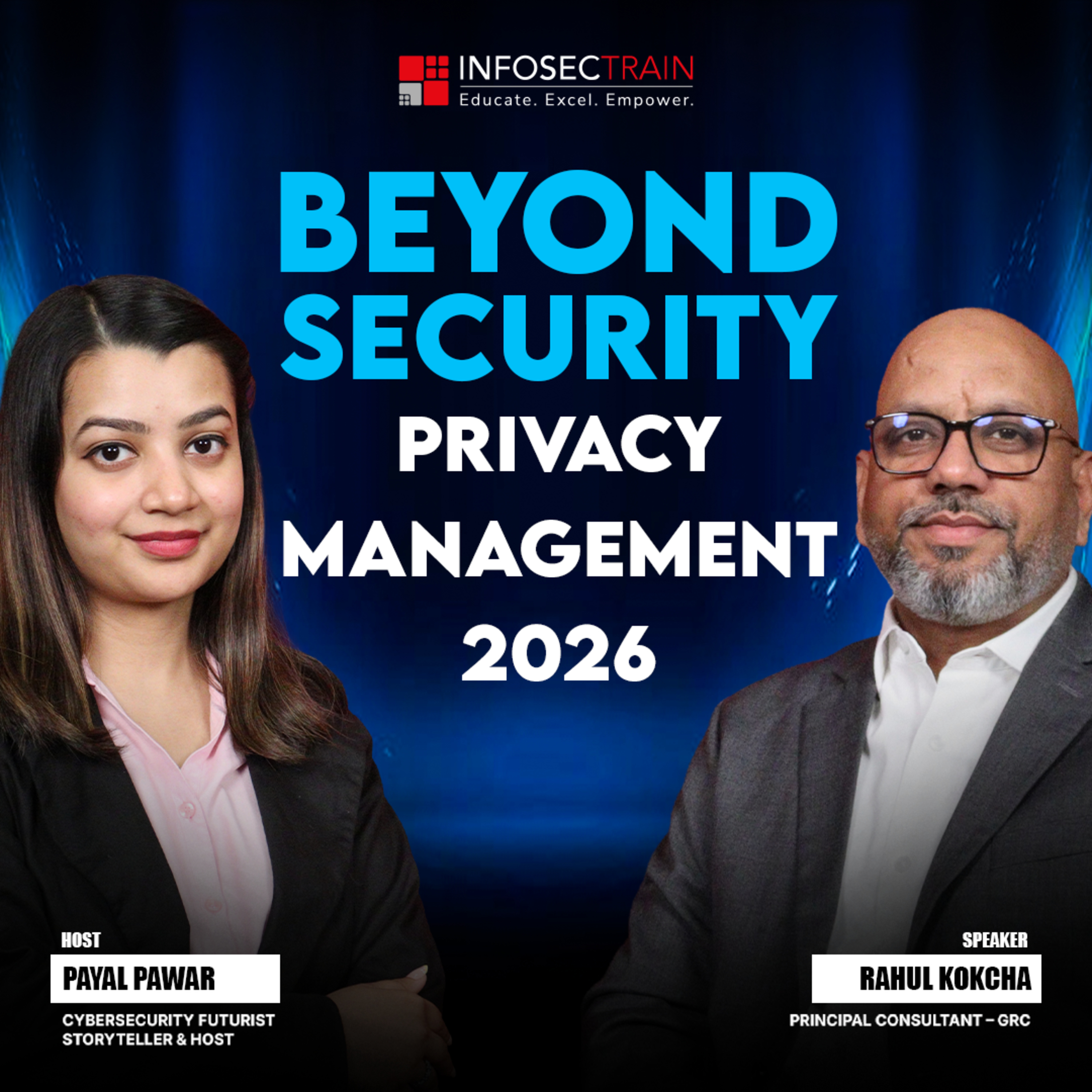
The Future of Privacy Leadership: ISO 27701:2026 Explained
As data privacy becomes a global priority, ISO 27701:2026 is redefining how organizations manage and protect personally identifiable information (PII). In this episode of InfosecTrain Tech Talks, we decode the latest standard update and explore how mastering the Lead Auditor and Lead Implementer roles can place you at the forefront of the privacy revolution. Whether you are navigating the GDPR, India's DPDP Act, or global AI governance, this session is your roadmap to becoming a high-value privacy leader.📘 What You’ll Learn:The 2026 Evolution: What has changed in the latest ISO 27701 update and why it is now a standalone necessity for modern enterprises.Lead Auditor vs. Lead Implementer: Understanding the distinct career paths from building a Privacy Information Management System (PIMS) to certifying one.Global Alignment: How ISO 27701 maps directly to the GDPR and other major international privacy laws.Career Growth: Why privacy expertise is the "X-factor" for CISOs, compliance officers, and cybersecurity professionals in 2026.Leadership Insights: Moving beyond technical controls to establish true privacy governance and organizational trust.🎧 Essential listening for cybersecurity experts and auditors ready to lead in the evolving world of data protection.Watch the full episode on YouTube: https://youtu.be/ZRBbh8QUimo?si=rgjxi4HOqA8Mp3Am
AI Risk Management for Leaders | Governance, Trust & Accountability in 2026
AI doesn’t fail silently when it fails; it impacts trust, compliance, and your entire business reputation. As AI adoption reaches a fever pitch in 2026, the risk landscape has shifted from technical "bugs" to systemic organizational liabilities. In this episode, InfosecTrain provides a high-level briefing for executives, CISOs, and decision-makers on how to move from reactive troubleshooting to proactive, AI-first risk management.📘 What You’ll Learn:Why Traditional Risk Methods Fail: Understanding the unique, non-linear nature of AI risks compared to legacy IT systems.The AI Risk Lifecycle: How to structure a governance approach that tracks risks from data ingestion to post-deployment model drift.Proven Frameworks: A leadership guide to implementing the NIST AI RMF and ISO 42001 for consistent, measurable results.The Accountability Gap: How to connect AI risk directly to business accountability, legal compliance, and stakeholder trust.Operational vs. Ethical Risk: Balancing the drive for efficiency with the necessity of ethical, unbiased AI output.🎧 Essential listening for GRC leaders and AI program owners looking to secure their organization’s digital future.Watch the full episode on YouTube: https://www.youtube.com/watch?v=TrJMzDq5_yQ
Privacy Engineering in the AI Era A CIPT Perspective on Data Protection
As AI transforms the digital landscape, the intersection of data privacy and machine learning has become a critical battleground for security professionals. In this episode, we dive into the core tenets of Privacy Engineering through the lens of the Certified Information Privacy Technologist (CIPT). From the seven principles of Privacy by Design to the deployment of Privacy Enhancing Technologies (PETs), learn how organizations are building privacy into the SDLC rather than "bolting it on" as an afterthought.📘 What You’ll Learn:The AI-Privacy Intersection: How personal data touchpoints in training, testing, and output trigger global privacy laws like GDPR.Privacy by Design & Default: Incorporating privacy considerations from the early stages of AI architecture and the model training phase.Privacy Enhancing Technologies (PETs): A deep dive into Homomorphic Encryption, Trusted Execution Environments (TEE), and Federated Learning.Managing AI Risks: Strategies for mitigating data poisoning, membership inference attacks, and algorithmic bias.The Role of the Privacy Technologist: Why the CIPT certification is becoming essential for navigating the complex regulatory landscape of the AI era.🎧 Dive in to explore how AI can actually enhance compliance through automated data classification and anomaly detection.
The Future of GRC: Governance, Risk & Compliance in the Age of AI
Governance, Risk & Compliance (GRC) is no longer just about meeting static requirements it’s about controlling intelligent, evolving systems. In this episode, InfosecTrain explores how organizations are transitioning from reactive compliance to proactive, AI-first governance frameworks. We break down how next-generation GRC integrates AI risk management and automated decision-making to handle the unique challenges of the 2026 digital landscape.📘 What You’ll Learn:Managing AI-Specific Model Risks: Strategies for tackling bias, hallucinations, model drift, and the explainability gap.Modernizing Third-Party Due Diligence: Moving beyond static questionnaires to AI vendor risk scoring and continuous monitoring.The New Era of AI Auditing: Implementing a 5-domain framework for evidence standards and board-level reporting.Navigating Global Regulations: A deep dive into the EU AI Act, NIST AI RMF, and new SEC disclosure rules.AI’s ESG Footprint: Understanding the environmental and social governance impact of large-scale AI deployment.🎧 Dive in to understand how enterprises are shifting toward intelligent governance strategies to secure the future of AI.Watch the full episode on YouTube: https://youtu.be/LrQbgbnWIEI?si=3HqMfGGseYVyI0B0
ISO 42001 Explained: Defining Your Organization’s Role in the AI Ecosystem
Identifying your role in the AI lifecycle is no longer just a technicality it’s a regulatory and ethical necessity. In this episode, we break down ISO/IEC 42001:2023, the world’s first auditable standard for an Artificial Intelligence Management System (AIMS). From global tech giants to the individual subjects impacted by AI decisions, discover how this framework ensures responsible development, transparency, and data privacy.📘 What You’ll Learn:What ISO 42001 is and how the PDCA (Plan-Do-Check-Act) cycle applies to AI governanceThe 5 Key AI Roles: Provider, Producer, Partner, Customer, and SubjectReal-world analogies: How AI roles mirror the construction of a house or medical drug discoveryThe intersection of AI and Privacy: How ISO 42001 aligns with GDPR and the EU AI ActGoal Alignment: Why Providers focus on capability while Subjects focus on their fundamental rights🎧 Dive in to understand why defining your AI role is a critical part of today’s cybersecurity and compliance strategy.📽️ Watch the full episode on YouTube: https://www.youtube.com/watch?v=qKdsZWBQTDM
CRISC Explained: Enterprise Risk Strategies for the Age of AI
AI is no longer a futuristic concept it’s an active driver of enterprise change. However, with great innovation comes significant risk. In this episode, we explore how risk professionals identify, assess, and respond to AI-driven threats. From strategic and operational impacts to the critical need for human oversight, we break down the framework for building intelligent, resilient enterprises.🎯 Key Topics Covered in This Episode:AI Risk Identification: Why AI risk isn't just an "IT issue" but a fundamental driver of enterprise-wide risk.AI as an Enterprise Risk Driver: Categorizing AI risks into Strategic, Operational, Compliance/Legal, and Reputational domains.Bias and Legal Pitfalls: Real-world examples of gender bias in AI hiring and lending tools that led to regulatory penalties.Assessing AI Risk: Using Impact, Likelihood, Velocity, and Control Effectiveness to quantify the "speed" and "magnitude" of AI failures.The Four Risk Responses: How to decide when to Avoid, Mitigate, Transfer, or Accept AI risk based on organizational appetite.Governance & Ownership: Who truly owns AI risk? Defining roles across Business, IT, and Compliance teams.Implementing Controls: A guide to Preventive, Detective, and Corrective controls for the AI lifecycle.Integrating AI into ERM: Why AI risk must be part of your central risk register rather than a siloed technical framework.Continuous Monitoring: The necessity of tracking "model drift" and data accuracy at frequent intervals.🎧 Secure your enterprise's future with InfosecTrain. Advance your career with our CRISC and AI Governance certification programs. Learn to bridge the gap between emerging technology and robust risk management.📽️ Watch the full episode on YouTube: https://www.youtube.com/watch?v=25lAfjw_wvQ
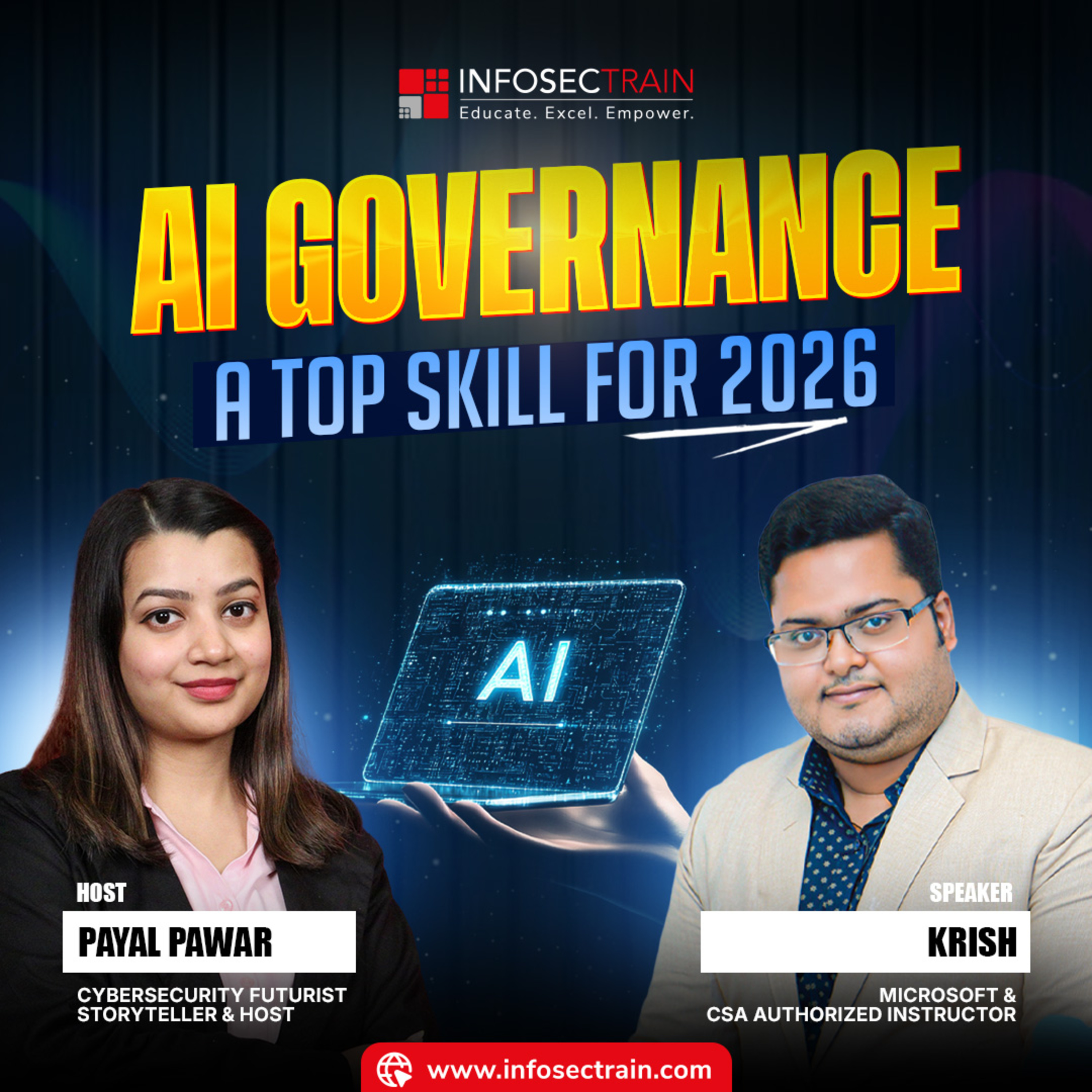
Why AI Governance is the Most In-Demand Skill for 2026
AI is everywhere, from personal companions to high-stakes business automation. But as adoption grows, so do the risks of data privacy breaches, algorithmic bias, and lack of accountability. In this episode, we discuss why AI literacy is no longer optional for IT professionals and how the Certified AI Governance Specialist program bridges the gap between technical AI tools and responsible business leadership.🎯 Key Topics Covered in This Episode:The Shift in AI Adoption: From "Googling" to "Chatting" how AI has moved from a search tool to a personal and professional companion.Accountability in AI: Why we can't take an AI to court and the urgent need for human oversight in high-risk use cases like loan approvals.Technical vs. Non-Technical Roles: Why AI governance is for everyone from developers to CISOs and the importance of "AI Literacy" as mandated by the EU AI Act.The Amazon Resume Case Study: A real-world example of how a lack of AI governance led to gender bias and reputational damage.Global Regulations & Frameworks: Understanding the impact of the EU AI Act, GDPR, ISO 42001, and the NIST AI Risk Management Framework.Career Evolution: Kish shares his personal journey from a technical "fix-it" guy to a governance consultant, explaining why governance is a better career decision.Practical Training vs. Theory: What sets the Certified AI Governance Specialist program apart, including hands-on policy writing and real-world risk assessments.Explainability & Blind Spots: Why AI decisions must be auditable and explainable to maintain customer trust and legal compliance.The Lightning Round: Quick takes on "automation bias," the biggest mistakes organizations make, and whether AI is currently under-governed or under-understood.🎧 Stay ahead of the curve with InfosecTrain. Prepare for the future of GRC by becoming a Certified AI Governance Specialist. Our 48-hour live instructor-led program provides the templates, use cases, and practical insights you need to lead AI initiatives.Watch the full episode on YouTube: https://www.youtube.com/watch?v=jMYDpy-zy8M
Mastering the Red Team: Beyond Penetration Testing
In this episode, we break down the sophisticated world of Red Teaming. Moving past simple vulnerability scans, we explore the mindset of a determined adversary. We cover the entire attack chain from initial access via LLMNR poisoning to lateral movement using BloodHound and explain how these simulations help Blue Teams sharpen their detection and response capabilities.Key Topics Covered in This Episode:Defining Red Teaming: Why Red Teaming is "threat-oriented" rather than "vulnerability-centric," focusing on organizational resilience.Understanding APTs: The characteristics of Advanced Persistent Threats—sophisticated, long-term, and stealthy.The MITRE ATT&CK Framework: A breakdown of the 14 tactics used to map adversarial behavior from reconnaissance to impact.Red Team vs. Pentesting: A detailed comparison of scope, duration, and goals (Narrow vs. Broad, Goal-oriented vs. Threat-oriented).The Attack Life Cycle: Stepping through Reconnaissance, Initial Compromise, Persistence, Privilege Escalation, and Exfiltration.Live Demo: LLMNR Poisoning: How attackers exploit "link-local" protocols to capture password hashes using tools like Responder.Cracking Hashes: Using Hashcat to resolve captured NTLMv2 hashes into plain-text passwords.Visualizing the Path: Using BloodHound and Neo4j to map hidden relationships and attack paths within Active Directory.The Blue Team Perspective: How the Security Operations Center (SOC) uses Red Team findings to close detection gaps.🎧 Level up your offensive security skills with InfosecTrain. We provide specialized training in Red Teaming, Active Directory Security, and APT Simulation to prepare you for the front lines of cybersecurity.Watch the full episode on YouTube: https://www.youtube.com/watch?v=ruaK9NNIE2w
Build Your Own AI Agent: From PDF To Email Draft
Are you still spending 20 minutes reading a single regulatory document? In this episode, we show you how to leverage Gemini and Custom Agents to automate document analysis. We walk through the process of feeding an AI 17 pages of RBI fintech guidelines and training it to act as your personal "Fintech Helper" capable of answering complex questions and drafting polished, empathetic emails directly to your team or clients.Key Timestamps & How-To:The Manual Burden: Why reading 17 pages of RBI guidelines takes too long and how AI solves the "memory" problem.Knowledge Feeding: How to properly summarize and feed specific regulatory knowledge into your custom agent.Setting the Guardrails: Why you must instruct your agent on tone (e.g., "polite and mature") and ensure it doesn't use random citations.Multi-Tool Integration: Enabling your agent to use web searches and your professional email to gather real-time context.3-Second Analysis: Watching the agent digest a massive update and provide accurate summaries in under three seconds.The Draft-to-Sent Workflow: How the agent automatically creates a ready-to-send draft in your Gmail based on the document's findings.Master AI Automation with InfosecTrain. We provide the technical foundation to help you build secure, autonomous agents for your professional workflow.Watch the full episode on YouTube: https://www.youtube.com/watch?v=9nTsH4m0KqA
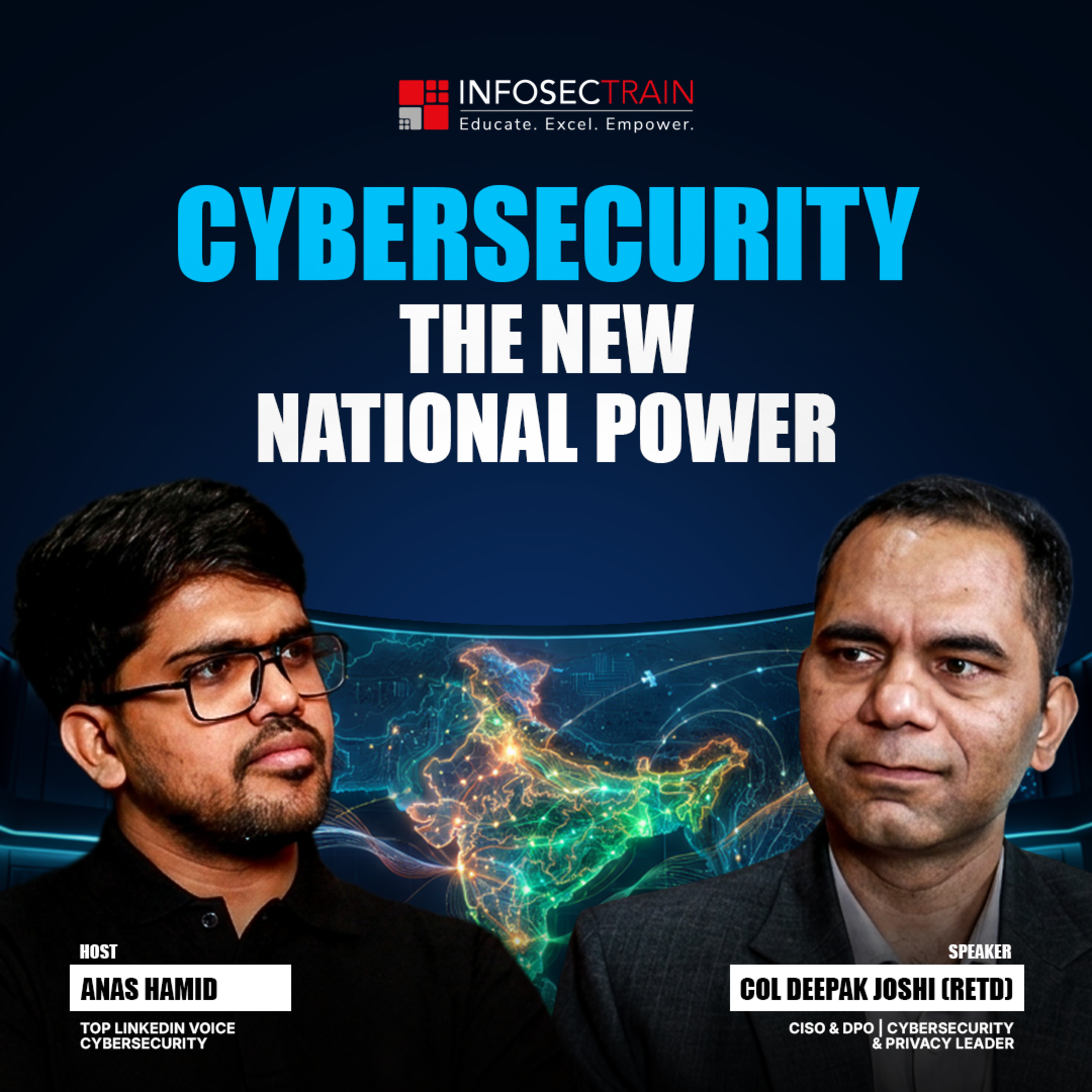
Cybersecurity: The New Front Line of National Security
National security is no longer just about tanks and aircraft; it’s about power grids, financial ecosystems, and data privacy. In this episode, Colonel Deepak Joshi explains why safeguarding a business is an act of nation-building. We dive into the DPDP Act, the "Black Box" of AI, and why your organization’s cybersecurity posture is now a competitive advantage that drives revenue and trust.Key Timestamps & Insights:Beyond the Battlefield: Why cyber warfare is now a primary domain alongside land, sea, and air.Critical Infrastructure: The high stakes of protecting airports, power grids, and banking services.The ₹250 Crore Risk: Understanding the penalties under India’s DPDP Act and the cost of "just in case" data collection.Security as a Brand: How Apple and Tata Nexon used "security" as a winning marketing tagline to dominate markets.The AI Privacy Bridge: Balancing innovation with ethical data ingestion and avoiding the "Black Box" trap.Secure by Design: The "Sprinkler System" analogy—why security must be baked into the foundation, not added later.Startup Survival Kit: Three non-negotiable tips for high-energy startups to protect their IP and reputation.The Human Firewall: Why regular patching is like a medical checkup and why your digital hygiene matters more than your tools.Career Pivot: Why cybersecurity professionals are perfectly positioned to lead the new wave of Privacy and DPO roles in India.Expert Guest: Colonel Deepak Joshi (CISO & DPO) Hosted by: InfosecTrain Tech TalkWatch the full episode on YouTube: https://www.youtube.com/watch?v=RR--vwkpMVY
LlamaCoder & Agentic AI: The End of Manual Browsing
Are we moving past the era of simply "chatting" with AI? In this session, we look at the rise of Agentic AI tools that don't just draft emails or suggest code but actually go into your browser, check your mail, and book your tickets for you. We explore LlamaCoder for instant app building and how Comet and Perplexity are turning our web browsers into autonomous assistants.What’s Inside This Episode:LlamaCoder: Building functional apps, to-do lists, and SAS landing pages in seconds using Meta's Llama models.Enter the Agentic Browser: How Comet allows you to manage tasks across different tabs without ever opening them.Inbox Automation: Watching an AI agent check for payment reminders and draft a reply directly inside Gmail.Concierge AI: Using an agent to find movie shows in Delhi-NCR, compare ticket prices, and apply coupon codes autonomously.The Google vs. Perplexity War: Why Google is integrating Gemini directly into Chrome to prevent users from switching to third-party agents.GenAI vs. Agentic AI: Understanding the shift from "generating information" to "autonomous execution."🎧 From advanced AI prompting to cybersecurity governance, we help you master the tools of tomorrow.Watch the full episode on YouTube: https://www.youtube.com/watch?v=6NCr4fDLhE0
OBO + Consensus AI | Ending the Era of AI Hallucinations
Are you tired of AI tools that "hallucinate" facts or pull information from unverified Reddit threads? In this episode, we explore the "Trust Stack" for 2026: Consensus AI and OBO. We dive into how to source peer-reviewed research in seconds and then transform those insights into a full educational ecosystem complete with podcasts, lectures, and interactive flashcards. Whether you’re a researcher, a student, or a tech strategist, these tools are about to become your new secret weapons.In This Episode, You’ll Discover:Peer-Reviewed Power: Why Consensus AI is the "Chat completion for scientists," pulling only from published, legit research papers.Fact-Checking the Future: A look at real-time regulatory research for Fintech in India using verified institutional sources.The 1-Prompt Professor: How OBO turns a single query into a 20-minute lecture, a deep-dive read, and an automated podcast episode.Level Up Your Learning: Using OBO’s interactive "Learn Mode" with MCQs and flashcards to crush your next interview or certification exam.The Efficiency Paradox: Discussing the trade-offs of speed vs. fairness in automated decision-making.Strategy in a Box: Using OBO to build high-level governance and business strategies for new AI ventures.🎧 Bridging the gap between cutting-edge AI and practical cybersecurity governance.Watch the full episode on YouTube: https://www.youtube.com/watch?v=KzTm5V30Smk
DPDPA for DPOs | Navigating AI Risk and Accountability in 2026
The role of a Data Protection Officer (DPO) is no longer strictly legal—it is an integrated function of Law, Tech, and Risk. As AI continues to redefine how organizations process data, the Digital Personal Data Protection (DPDP) Act sets a high bar for accountability, transparency, and risk management.In this guide, presented by InfosecTrain, we dive into the core obligations DPOs face when personal data meets AI ecosystems.The Intersection of AI and Data Privacy:Personal Data in the AI Life Cycle: Personal data is present at every stage, from scraping internet data and training models to live user interactions and system logging.Automated Decision Making: Under the DPDP Act, organizations must ensure effective grievance redressal for AIdriven outcomes, especially when machines make significant decisions impacting individuals.The "Black Box" Challenge: DPOs must advocate for transparency and explainability, ensuring that users can understand why a machine rejected a request, such as a loan application.Critical Compliance Obligations:Lawful Basis & Legitimate Use: While many rely on consent, it can be risky as it is revocable. Exploring "Legitimate Use" may be a more sustainable path for AI training data.Children's Data—A Strict "No-Go": The DPDP Act explicitly bans the tracking and profiling of children for AI purposes. Violations can lead to penalties up to ₹200 crore.Purpose Limitation & Data Minimization: AI naturally demands more data, but privacy laws demand less. DPOs must find the balance to ensure data isn't used for unauthorized training without explicit permission.Risk Assessments (DPIA & FRIA): Even if not strictly mandated for all, performing a Data Protection Impact Assessment (DPIA) is a best practice to manage high-risk processing and avoid hefty breach penalties.The Skills of a Future-Ready DPO:Beyond the Law Degree: While legal interpretation is key, a DPO must also master risk management and have a broad technical understanding of information security and AI governance.Direct Reporting: For Significant Data Fiduciaries, the DPO must report directly to the highest level of management to avoid conflicts of interest.🎧 Our DPO Hands-on Course is designed to bridge the gap between theory and practice. Through live case studies, cookie audits, and breach impact assessments, we prepare you for the day-to-day challenges of a modern DPO.Watch the full episode on YouTube: https://www.youtube.com/watch?v=JI-Mz1T21UM
SailPoint IdentityIQ 8.5 | Modernizing Identity Governance with AI and Teams
The landscape of identity governance is shifting from manual workflows to intelligent, automated ecosystems. With the release of SailPoint IdentityIQ (IIQ) 8.5, organizations are gaining powerful new tools to secure the digital identity lifecycle.In this deep dive, brought to you by InfosecTrain, we explore the extensive features of the 8.5 update from GenAI-generated entitlement descriptions to proactive risk detection.Key Highlights of SailPoint IIQ 8.5:Advanced Lifecycle Management (LCM): Moving beyond basic Joiner-Mover-Leaver (JML) processes. Learn how to trigger custom workflows for contract extensions and project-specific role expirations.GenAI Integration: SailPoint now leverages AI to autogenerate clear, natural-language entitlement descriptions, making it easier for business users to understand what they are approving.Microsoft Teams Connectivity: Approvers no longer need to log into the SailPoint dashboard. Decisions can be made directly within Teams, with all actions logged and synced back to the IIQ core.Identity Access History: Building on the 8.4 foundation, 8.5 offers an enhanced graphical view of a user's access history, allowing admins to track every role change and provisioned application over time.Anomaly & Risk Detection: Improved modeling to detect "toxic combinations" of access (Segregation of Duties) before they become security vulnerabilities.Expert Integration Tips:Prioritize REST APIs: Move away from delimited CSV files. REST APIs are lighter, more reliable, and provide better version control for cloud-based applications.Version Control & Sandboxing: Always test integration compatibility in a dedicated sandbox before upgrading production environments to avoid Java or connector-level failures.Automated Retry Mechanisms: Implement back-off and retry logic in your API calls to handle temporary system unavailabilities without breaking the user experience.🎧 The future of IIQ: While 8.5 is the current gold standard, industry rumors suggest the next leap will be a major version 9 release. Stay ahead of the curve by mastering the 8.5 features today.Watch the full episode on YouTube: https://www.youtube.com/watch?v=u25pnaJeGpQ
Perplexity AI The End of Search Engines as We Know Them
Google is a search engine. ChatGPT is a chatbot. But what is Perplexity? If you’ve ever felt like AI gives you outdated answers or "hallucinates" facts, you’re looking for an Answer Engine.In this episode of InfosecTrain AI Mastery, we dive into the mechanics of Perplexity AI. We explore how it uses Retrieval-Augmented Generation (RAG) to scan the live web and fact-check its own answers in real-time. Whether you are a researcher, a developer, or a cybersecurity professional, understanding this "multibrand store" of AI models is a game-changer.Key Discussion Points:The "Answer Engine" Revolution: Why search engines provide links, but Perplexity provides synthesized truths.The Power of RAG: Understanding Retrieval-Augmented Generation and how it kills AI hallucinations.The Multimodel Feature: How to switch between Gemini, Claude, and GPT-4 inside a single interface.Beyond the Chatbox: A live demo of "Comet," the AI browser agent that can negotiate prices and apply for jobs on your behalf.Fact-Driven Synthesis: Why citations are the most important feature you didn't know you needed.The Privacy Debate: How Perplexity stacks up against Claude and OpenAI in terms of data retention.Stop searching and start finding. Learn how to use AI not just to write emails, but to navigate the live web with precision.Watch the full episode on YouTube: https://www.youtube.com/watch?v=uwi3M_jXjnw
How to Become a GRC Auditor: The Complete Roadmap 2026
Is an IT Auditor just a "hacker with a clipboard"? Not even close. In a world where regulatory fines are skyrocketing and AI is rewriting the rules of governance, the role of a GRC Auditor has shifted from "ticking boxes" to becoming a critical pillar of business resilience.In this episode of InfosecTrain Tech Talk, we break down the complete roadmap for anyone looking to enter or level up in the world of IT Audit. We move past the jargon to explain why technical knowledge is only half the battle and why "Business Context" is the ultimate tool in an auditor's arsenal.What You’ll Learn in This Episode:The IT Audit Myth: Why IT auditing is not about penetration testing or hacking, but about providing "Assurance".The "Trust but Verify" Principle: How to maintain professional skepticism without being cynical.Root Cause Analysis: Why you should always ask "Why" five times to find the real problem.The Framework Overlap: Navigating ISO 27001, NIST, and SOC 2 without getting lost in the paperwork.Top 11 IT Risks: A deep dive into strategy, governance, and the often-overlooked CMDB (Configuration Management Database).The Certification Ladder: Which "C" should you chase first? Comparing CISA, CIA, CISM, and CISSP.🎧 Success in audit isn't just about what you find; it's about how you communicate it. Learn how to translate a technical finding into a business impact that the Board of Directors actually cares about.Watch the full episode on YouTube: https://www.youtube.com/watch?v=0KrocbLvlzw
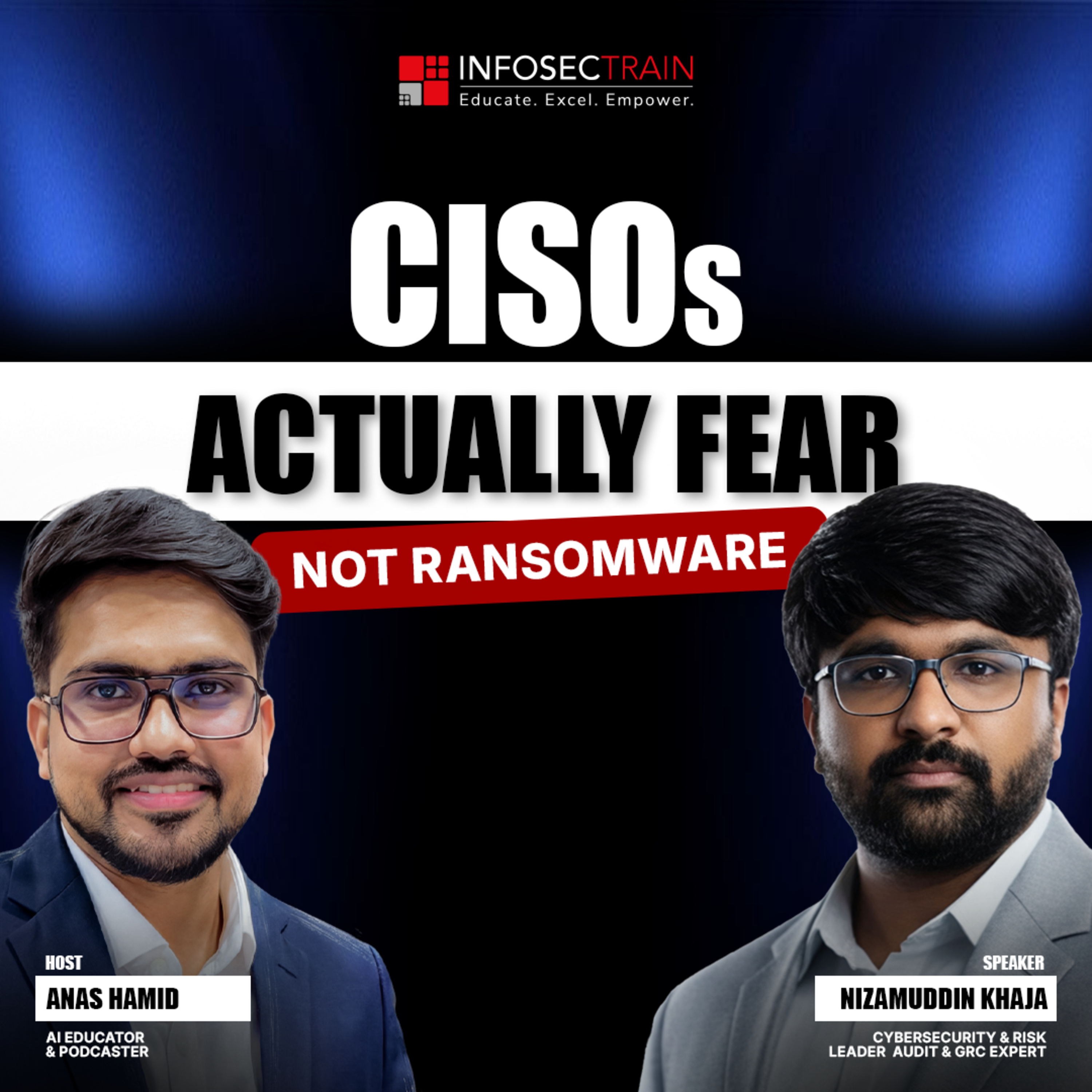
The CISOs Nightmare: Why 2026 is No Longer About the Hacker
What keeps a CISO up at night? Hint: It’s probably not what you think. While the headlines scream about "genius hackers", the real battle in 2026 is being fought over resilience, identity, and the psychological warfare of AI-driven scams.In this episode of InfosecTrain Tech Talk: Real World Decoded, we sit down with seasoned risk professional Nizamuddin Khaja to peel back the curtain on the modern security leadership mindset. We move past the technical jargon to explore why cybersecurity is a "decision-making problem" rather than a "technology problem".Key Discussion Points:The Resilience Shift: Why the question is no longer "Will we be hacked?" but "How fast can we recover?"The Invisible Boundary: Managing the nightmare of vendor and supply chain risks in a borderless digital world.Human Psychology vs. Intelligence: Why even the smartest employees fall for phishing and how hackers exploit "urgency".The 24-Hour War Room: A CISO's step-by-step checklist for the first 24 hours of a major airline or bank breach.The Rise of the "Deepfake" Scam: How voice cloning and $25M impersonation frauds are changing the threat landscape.A Passwordless Future: Is the era of the "Secret Question" finally over?.🤚 Stop. Think. Act. Learn the "Verification Discipline" that every digital citizen needs to survive the next five years of AI evolution.Watch the full episode on YouTube: https://youtu.be/LPnlRbplGJE?si=DPHCZD6DaSpAMsKR
Mastering IAPP AIGP | Roadmap to AI Governance Excellence
Is AI Governance the new "must-have" for cybersecurity professionals? As AI transitions from a luxury to a corporate mandate, the need for certified experts to manage risk and compliance is skyrocketing. In this episode, we break down everything you need to know about the IAPP AIGP certification, the globally recognized gold standard for governing artificial intelligence.Join the experts at InfosecTrain as we navigate the intersection of AI, data privacy (GDPR), and information security. Whether you are a risk manager, a privacy officer, or a tech enthusiast, this guide provides the strategy and mindset needed to master the AIGP exam and lead in the AI-driven IT service industry.Inside This Episode:The AIGP Value Proposition: Why AIGP is becoming a de facto requirement for AI governance roles.Beyond the Code: Why you don’t need to be a developer to excel in AI governance.The Three Pillars: Understanding the critical intersection of Privacy, AI Governance, and Information Security.Exam Flavors & Bias: A deep dive into temporal bias, sampling bias, and how they impact regulatory compliance.Governance Models: Comparing Centralized, Decentralized, and Hybrid models for your organization.The "Black Box" Challenge: Tackling explainability and automated decision-making under GDPR.Pro Exam Tips: How to handle case studies and the mindset of an AI Risk Manager.🎧 Elevate your career with world-class training in AI, Cloud, and Cybersecurity.📺 Watch the full episode on YouTube: https://youtu.be/36d8ykIHbNI?si=mEIIz8rCaiYnXByK
Mastering Claude AI | The Thoughtful Assistant for Research & Writing
Can an AI actually help you think more clearly, not just write faster? In this episode, we dive deep into Claude AI, the powerhouse model from Anthropic that is redefining how professionals approach research and long-form content. While other tools focus on speed, Claude specializes in nuance, structured reasoning, and safety. Whether you are a researcher, a writer, or a cybersecurity professional, this session from InfosecTrain will show you how to move beyond basic prompts and unlock high-level workflows.Watch the full episode on YouTube: https://youtu.be/sMvv5AwWcxw?si=NI6hUZsQXMRUg_aSWhat You’ll Learn:The Claude Family: A breakdown of the Haiku, Sonnet, and Opus models and which one is right for your task.The 200k Context Window: How to "interrogate" massive documents and PDFs to synthesize complex data in seconds.Constitutional AI: Why Claude’s ethical framework makes it the most "trustworthy" writing partner for enterprise use.Workflow Mastery: Practical tips for drafting reports, refining arguments, and producing polished, professional-grade summaries.🎧 Stop fighting with generic AI outputs. Learn how to use Claude to become a more effective, thoughtful, and high-impact researcher.
Master the CompTIA Security+ in 2026
Are you ready to earn one of the most respected certifications in cybersecurity? In this episode, we break down the fundamental concepts, practical demonstrations, and exam-passing strategies for the 2026 CompTIA Security+ (SY0-701).We move beyond theory into practice, demonstrating how integrity is protected through MD5 hashing and how phishing attacks are launched using tools like ZFisher. We also clarify common exam pitfalls, such as the difference between tailgating and piggybacking, and why "Risk Acceptance" is often a calculated business decision rather than a security failure. Whether you're struggling with PKI architecture or trying to distinguish between MAC, DAC, and RBAC, this episode is your ultimate audio study guide.🔍 What You’ll Learn:InfoSec vs. CyberSec: Defining the boundaries between physical data protection and digital-only defense.The CIA Triad in Action: A practical look at Confidentiality, Integrity, and Availability and why an account lockout is actually an Availability breach.Classifying Controls: Distinguishing between Managerial (Policies), Operational (People), Technical (Tools), and Physical Controls.Non-Repudiation Explained: Why digital signatures are the courtroom equivalent of a physical signature in the digital realm.Tailgating vs. Piggybacking: The critical distinction between an unaware victim and a fooled victim in social engineering.Live Phishing Demo: Watching how attackers use ZFisher to clone social media login pages and steal credentials in real time.PKI & Certificates: A deep dive into Public Key Infrastructure, CSRs (Certificate Signing Requests), and the role of Certificate Authorities (CAs).Biometric Accuracy: Understanding FAR (False Acceptance), FRR (False Rejection), and why the CER (Crossover Error Rate) is the golden metric for accuracy.Risk Treatment Strategies: Navigating Avoidance, Transference, Acceptance, and Mitigation and the Reality of Residual Risk.Containers vs. Virtualization: Why 2026 is the year of lightweight container security and how to manage images via Docker Hub.🎧 CompTIA Security+ loves practical scenarios. Don't just memorize definitions; understand the 'why'. Why is a locked account an Availability issue? Why is a legacy system better mitigated than avoided? Master the logic, and the exam becomes easy.
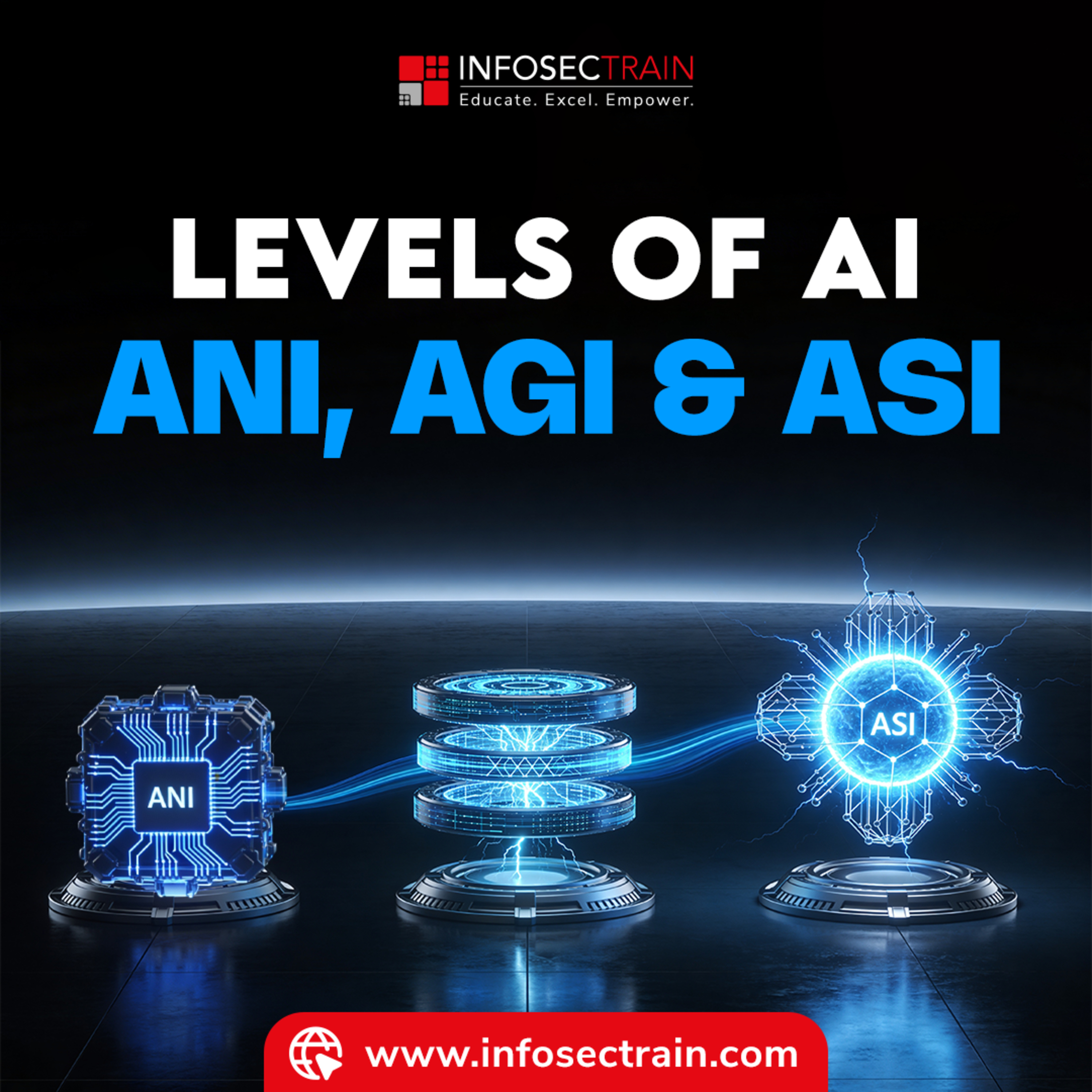
ANI, AGI, & ASI: Navigating the 3 Levels of AI Evolution
Are we already living in the age of super-intelligence, or are we just scratching the surface? In this episode, we break down the three fundamental levels of AI: Artificial Narrow Intelligence (ANI), Artificial General Intelligence (AGI), and Artificial Super Intelligence (ASI).We explore why today’s most advanced tools, like ChatGPT, Gemini, and Claude, are still firmly in the "Narrow" category, representing only 20% of human cognitive capacity. We also discuss the "Data Decline" crisis, where authentic human data is being outpaced by AI-generated content, and what that means for the future of AGI. Whether you’re a tech enthusiast or an Infosec professional, this episode will help you categorize, evaluate, and ultimately decide which AI tools are worth your trust.🔍 What You’ll Learn:The 20% Reality: Why current AI (ANI) is still 80% behind the absolute capacity of human response, despite the global hype.The 5-Minute Miracle: A comparison of data processing: How a 5-year-old child collects as much data in 5 minutes as an AI model processes in a year.The Data Hunger Crisis: Why the decline in "authentic data" (down 17%) and the rise in AI-generated content (up 40%) might starve the next generation of AI.Reactive vs. Limited Memory: Understanding the two core functions of current ANI tools and how "Conversation Memory" dictates the quality of your AI assistant.Single-Task Limitations: Why current ANI can’t generate an email and an image simultaneously, and how that defines its "narrow" scope.The AGI Threshold: Moving from "Calculators" to "Humans" what it takes for a machine to write a novel and make coffee with human-like intuition and emotion.ASI: The Fictional Frontier: Beyond Human Imagination, discussing Nvidia’s yearly reports and the superstitious yet possible rise of Super Intelligence.The Doctor Strange Test: A quick mental exercise to help you reject or accept new tools based on their actual intelligence category rather than marketing feedback.🎧 Don't select a tool based on feedback alone. Understand its intelligence level. If you're using ANI for an AGI-level task, you're going to get frustrated. Current AI is just a specialized associate; treat it like one.
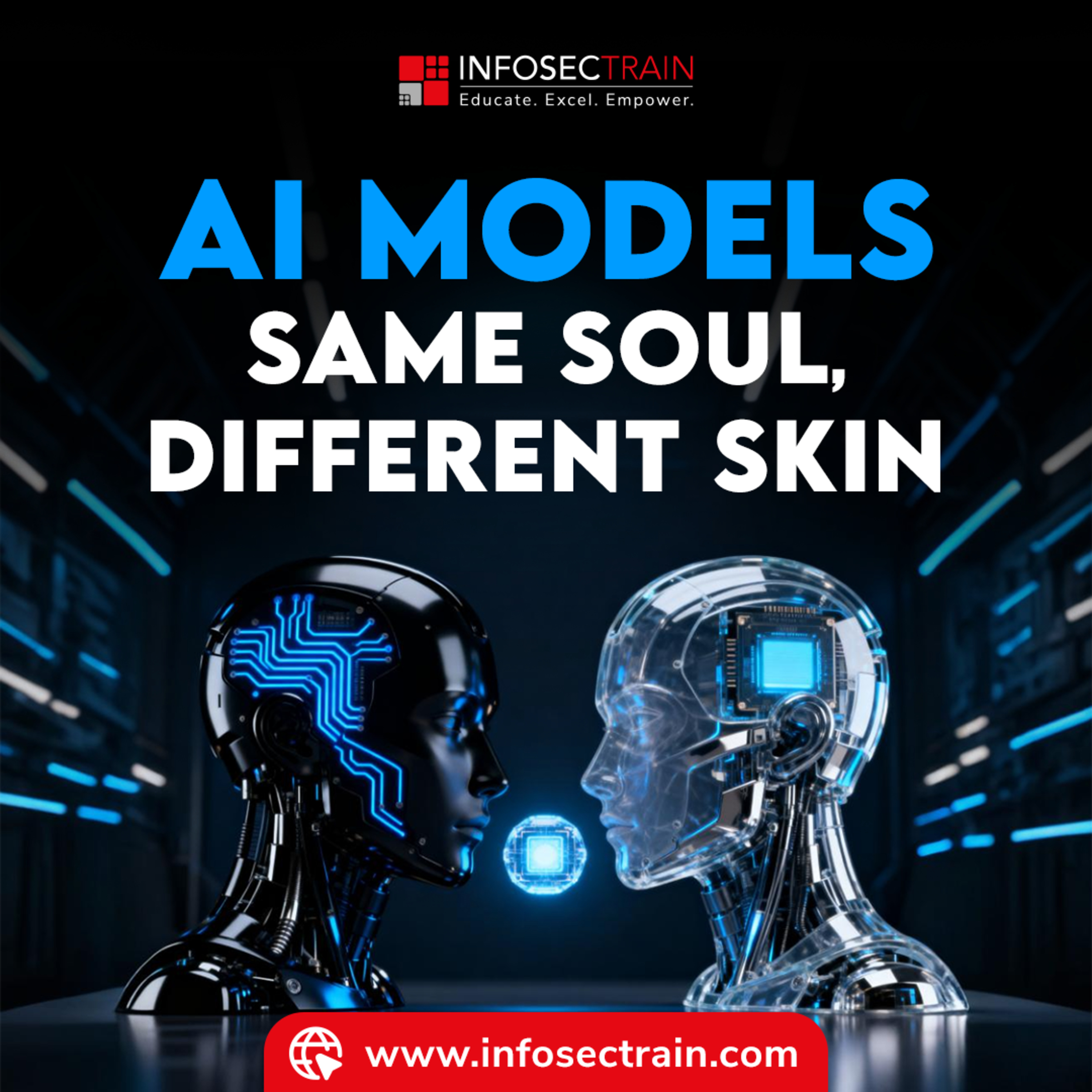
The Soul of AI: Why the Model is the Real Operating System
If you buy an HP laptop expecting to run Mac OS, you’ve missed the point. In this episode, we explore why the "Model" is the true soul of every AI system. We compare AI models to operating systems, explaining why tools like Microsoft Copilot and ChatGPT might share the same "DNA" but offer vastly different experiences through customization and "skinning."More importantly, we dive into the Infosec side of the coin: How do global regulations like GDPR and India’s DPDP influence which AI models a corporation should trust? We also touch on the controversy surrounding models like DeepSeek and why the origin of a model's training can be just as important as its performance.🔍 What You’ll Learn:The OS Analogy: Why choosing the right AI model is exactly like choosing between Windows, Linux, or Mac OS - it defines the entire capacity of your system.The Soul of the System: Understanding that the model is the "soul", and the application (like ChatGPT) is just the body.DNA Sharing: How Microsoft Copilot utilizes OpenAI’s models (and recently Claude Opus 3) while customizing them for official productivity.Official vs. Personal: Why we use Teams for work and WhatsApp for family, and how AI models are being "skinned" to fit these specific professional roles.The Key to the Treasure: A cybersecurity perspective on why the model is the most valuable and vulnerable part of the AI stack.Compliance & Regulations: The critical choice between a GDPR-compliant model vs. others, and why legal frameworks dictate corporate AI adoption.The DeepSeek Controversy: Analyzing the "most suspicious model" in the market, how it outranked Nvidia but faced scrutiny over its origins.🎧 The model defines the difference. It doesn't matter how pretty the interface is; if the underlying model doesn't follow your regional regulations, be it GDPR or DPDP, it isn't the right tool for your organization.
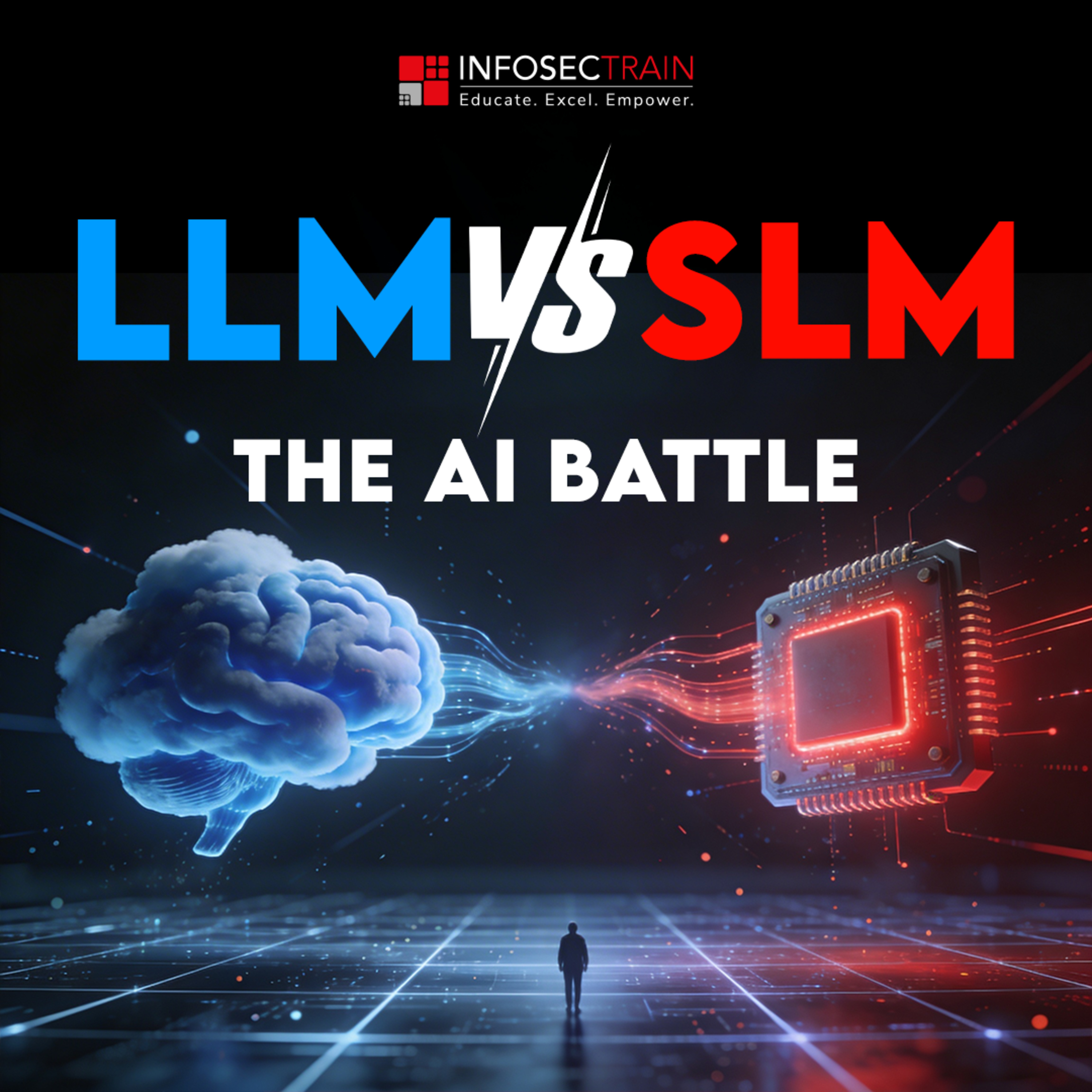
SLM vs. LLM | Why the Future of AI is Small, Local, and Secure
Is bigger always better? While Large Language Models (LLMs) like GPT-5 and Gemini 2.5 dominate the headlines, a silent revolution is happening on our devices. In this episode, we explore the rise of Small Language Models (SLMs) and why they are becoming the "Specialists" of the AI world.We dive into the security risks of centralized cloud infrastructure, the demand for offline AI in corporate environments, and how gadgets like Apple AirPods and Meta Glasses are bringing real-time intelligence to our palms—without the privacy baggage. If you’re a security architect or an AI enthusiast, this session is a roadmap for understanding why "no internet" might just be the best security feature for the next generation of intelligence.🔍 What You’ll Learn:The Shift to SLMs: Why the future isn't just about generalists, but specialized "Small Language Models" that run on-device.Real-Time Translation: A look at how Apple AirPods 3 Pro and Gemini Live are using integrated AI for seamless, offline communication.The Privacy Responsibility: Asking the hard question: If a cloud breach happens to an AI provider, who is responsible for your data?Meet the Giants: Identifying current LLMs—GPT-5, Gemini 2.5, Llama 3 (Meta), and Claude 4 (Anthropic)—and their heavy reliance on cloud servers.The Security Case for Offline AI: Why an "onsite/offline" model is inherently more secure for sensitive company data than virtual machines controlled by third parties.Models to Watch: Why Phi-3 (Microsoft) and Gemma (Google) are the future of deep learning research.Budgeting for AI: How CISOs should evaluate AI tools based on specialized department needs rather than general-purpose infrastructure.Efficiency & Accuracy: Why the output of an SLM is often faster and more accurate for specific tasks (like content generation) than a heavy LLM.🎧 Nobody needs a heavy infrastructure just to write an email. While LLMs are powerful generalists, SLMs are the specialized workers that provide faster, cheaper, and more secure responses by focusing on exactly what you need and nothing else.
Wazuh for SOC Analysts | The Ultimate Open-Source SIM & XDR Strategy
In a world of "Decision Paralysis," which SIM should you choose? In this episode, we dive deep into why Wazuh has become the go-to solution for SOC analysts in 2026. Moving beyond the "injection-based licensing crisis" of traditional tools like Splunk and QRadar, Wazuh offers a unified, open-source platform that combines the "brain" of a SIM with the "guard" of an XDR.We provide a step-by-step practical look at Wazuh’s architecture, its XML-based detection engine, and a live demonstration of Active Response, where the tool doesn't just detect a brute-force attack but automatically blocks the attacker in real-time.🔍 What You’ll Learn:The Paradox of Choice: Navigating the crowded SIM market and why Wazuh is the best entry point for both learning and deployment.The Licensing Crisis: How Wazuh eliminates the "cost vs. data volume" spike, allowing for unlimited ingestion without financial penalties.SIM + XDR Unified: Understanding the hybrid power of log correlation, file integrity monitoring (FIM), and vulnerability detection in one pane of glass.The 4 Pillars of Architecture: A breakdown of the Agent (The Guard), Server (The Brain), Indexer (The Library), and Dashboard (The Lens).Noise to Signals: How Wazuh translates raw logs into actionable security events using decoders and rule matching.Decoding XML Rules: Why Wazuh chose a standard XML format over a native query language to lower the barrier for security engineers.LIVE DEMO: Active Response: Watch a real-world scenario where Wazuh detects an SSH brute-force attack from a Kali Linux machine and triggers a firewall drop.Wazuh vs. CrowdStrike: Can you replace a tier-one EDR? Strategic advice on using Wazuh for subsidiary monitoring and compliance.🎧 Wazuh is like the manual car of the security world. While other tools make you a 'clicking monkey', Wazuh gives you full control over the gears, helping you understand the underlying mechanics of an attack so you can be a better defender.
How to Crack ISSAP: Security Audit Strategy & Exam Tips
Transitioning from CISSP to the ISSAP concentration? The architecture of security isn't just about building walls; it’s about the visibility of what’s happening within them. In this deep-dive session, we break down the 2026 ISSAP syllabus changes moving from six domains to four and why the exam remains as rigorous as ever.We focus on the backbone of security architecture: Identity and Access Management (IAM) and Audit Strategy. From defining the roles of an AI-driven SOC to implementing "Just-in-Time" (JIT) access and advanced log management with SIM and SOAR, this episode provides the technical roadmap needed to master Domain 1 of the ISSAP.🔍 What You’ll Learn:The New ISSAP Structure: Understanding the shift from 6 domains to 4 and what it means for your study plan.IAM Architecture Overhaul: Managing digital identities with LDAP, Azure AD, and Identity-as-a-Service (IDaaS) like Okta and Ping Directory.Role-Based vs. Attribute-Based Access: Why modern IAM relies on contextual attributes (location, device compliance, time) rather than just user IDs.Mastering Just-in-Time (JIT) Access: How to automate privilege escalation for specific tasks (like VM snapshots) to minimize the attack surface.The Architecture of Auditing: Determining accounting, forensic requirements, and the "Clipping Level" strategy for log management.File Integrity Monitoring (FIM): Using tools like Tripwire to alert on unauthorized changes in critical system files and registries.User Behavioral Analytics (UBA): Identifying "Top 10 Risky Users" by baselining historical activity and flagging anomalies in real-time.SIM vs. SOAR: When to use traditional event management and when to deploy automated playbooks (Palo Alto, IBM Resilient) for incident response.ISSAP Exam Practice: A walkthrough of sample questions on risk assessment, NIST frameworks, and the "Peace of Mind" exam retake offer.🎧 In security architecture, transparency is the ultimate control. Don't just collect logs; curate them. By setting 'clipping levels' and automating response through SOAR, you transform raw data into architectural assurance.
Canva AI Secrets: How to Use AI in Canva for 2026
Are you still spending hours brainstorming design templates? In this session, we unlock the secrets of Canva AI and its powerful integration with ChatGPT. We explore how to move from a simple idea to a finished marketing campaign in seconds by leveraging AI-driven brainstorming.Whether you're using the native Canva Magic Studio or connecting Canva directly to GPT, this session demonstrates how to automate the "blank page" problem. We walk through a real-time "Cold Drink Campaign" demo to show how AI doesn't just design; it organizes your strategy.Watch the full episode on YouTube: https://youtu.be/g1bdIvGQWsg?si=9AyBgy8b71h0BBMB🔍 What You’ll Learn:The Power of Canva’s Trained Models: Understanding how Canva uses its massive template database to generate real-time marketing assets from simple prompts.Integrating ChatGPT with Canva: A step-by-step guide on how to link your accounts to generate posters and campaign visuals directly within the GPT interface.Free vs. Paid Functionality: How to get Canva "Pro-style" results using the GPT plugin if you don't have a paid Canva subscription.From Brainstorming to Landing: Why the "real" game starts after the AI generates the draft. Learn how to jump from a GPT discussion into Canva for final font styling and branding tweaks.Streamlining the Workflow: The shift from manual template searching to direct "brainstorming-to-development" landing pages.🎧 The old way was choosing a template and then finding the content. The AI way is starting with the brainstorm and letting the tool build the template around your vision. It's about jumping straight to the finish line.
Gemini vs. Lovart Which AI Generates Better Images in 2026
In the rapidly evolving world of AI, 2026 has brought us to a crossroads: Gemini vs. Lovart. But this session is about more than just which tool makes a "prettier" picture. We dive deep into the ethics of image generation, the critical importance of human authenticity in business, and the technical "food" that drives these models: your data.From refining professional headshots with Gemini Nano to creating high-impact marketing posters with Lovart, we explore the specific strengths of each platform. We also address the hard questions: When is AI "cheating" your customers? And why should you never fully rely on AI-generated content for your professional brand?🔍 What You’ll Learn:The Ethics of Image Generation: Why tools shouldn't be questioned, but their usage should. We discuss consent, public domain data, and the "food" of AI.Gemini Nano in Action: A live walkthrough of refining a vague image into a professional headshot using specific "content creator" terminology like "front view" and "bokeh background."The Authenticity Gap: Why heavily relying on AI for your business website can lead to a loss of trust and how to balance AI imagination with real-world reality.Lovart: The Design Agent: Discover why Lovart is the superior tool for marketing posters and social media banners, featuring a real-time "Team India" celebration poster demo.AI Coding & Small-Scale Apps: The truth about "Vibe Coding" for to-do lists and calendars, and why it still fails at large-scale database integration.Free vs. Pro Credits: Is a paid subscription worth it? Understanding performance differences and making the most of free monthly credits.🎧 AI can turn your imagination into reality, but in business, authenticity is your only currency. Use AI to visualize the goal, but capture the reality yourself to keep your customers' trust
ISO/IEC 42001 AI Governance & Implementation Bootcamp
In this bootcamp session, Prabh Nair breaks down ISO/IEC 42001 and the practical reality of AI governance inside organizations.If you are trying to implement an AI Management System (AIMS), this session walks you through the governance principles, the clause structure, the documentation mindset, and how to run AI risk assessments and impact assessments in a way that stands up to audits. We move beyond the theory and look at how to define roles, whether you are an AI provider, producer, or customer; and how to build a Project Charter that scales.Watch the full episode on YouTube: https://www.youtube.com/watch?v=jhQRtCO_5n0 🔍 What You’ll Learn:Foundations of AI Governance: Why governance is non-negotiable in the age of bias, misinformation, and misuse.The 5 Core Principles: A deep dive into Accountability, Transparency, Fairness, Safety, and Balanced Innovation.ISO/IEC 42001 Structure: Navigating the mandatory clauses (4–10), the 38 Annex A controls, and the PDCA (Plan-Do-Check-Act) cycle.The 4 Implementation Phases: 1. Gap Analysis: Identifying what you lack.2. Planning: Setting objectives and scope.3. Implementation: Putting controls into action.4. Verification: Internal audits and readiness checks.Defining Your AI Role: Are you an AI Provider, Producer, Customer, or Partner? Understanding your duties within the AI ecosystem.Risk vs. Impact Assessments: * AI Risk Assessment: Focuses on internal business risks (likelihood/impact).AI System Impact Assessment (AIIA): Focuses on external harm to individuals and society.Audit Readiness: Creating a robust Statement of Applicability (SoA), managing version control, and ensuring team competence.🎧 Governance isn't about stopping innovation; it's about building a 'trust engine'. ISO 42001 provides the blueprint to ensure your AI isn't just powerful but responsible and auditable.
NotebookLM Explained: How AI Is Rewriting the Way We Learn in 2026
Is the art of writing being replaced by the science of prompting? In this session, we explore how Google’s NotebookLM is revolutionizing the way we digest information and create content. From converting a YouTube video into a structured document to generating instant flashcards for exam prep, we demonstrate the power of AI-driven notebooks. We also break down the critical differences between free and pro features, specifically how professional integrations within the Google Workspace ecosystem are changing the game for researchers, students, and professionals alike.🔍 What You’ll Learn:From Video to Book: How to insert a YouTube link into NotebookLM to instantly generate a defined, high-quality document on complex topics like AI Governance.The Importance of Prompting: Why understanding prompt engineering is still the "art of writing" even as tools become more self-prompting.Refining and Shortening: Live demo of using Gemini within your documents to shorten, elaborate, or formalize long-form content in seconds.Multilingual Capabilities: Switching between English and Hindi on the fly to make learning accessible for everyone.AI-Generated Flashcards: How to turn your source material into a customized test prep session with interactive flashcards.Free vs. Pro Features: Understanding the "Workspace AI" advantage and why pro functionality is essential for full tool integration.🎧 NotebookLM isn't just another tool; it's a personal learning assistant. Whether you're shortening a report or prepping for a test, the goal is to move from vaguely understanding information to mastering it on your own terms.
ElevenLabs & The AI Voice Revolution From Text to Reality
Is AI voice technology moving too fast? In this episode, we explore how ElevenLabs is redefining the boundaries of text-to-speech and dubbing. We go beyond the "cool factor" to demonstrate real-world applications—from teachers converting lesson plans into audio to professionals automating their workflows. We also tackle the "risk" factor: How are governments intervening, and what do the latest compliance policies from late 2024 tell us about the future of deepfakes and digital ethics?🔍 What You’ll Learn:The Power of AI Dubbing: Watch a live demonstration of seamless voice switching between English and Hindi, maintaining emotional tone and clarity.The Risk & Governance Factor: Why government intervention is inevitable and how the December 2024 policy updates are shaping what content is "acceptable" vs. "violating".Ethics of Famous Faces: Understanding geographical restrictions, such as Germany’s limits on using AI to recreate famous historical or public figures.Text-to-Speech for Professionals: A practical guide for teachers and content creators on using ElevenLabs to convert documents into high-quality audio right within your workspace.The Integrated Workspace: A look at how Google AI Studio and Gemini are being woven into daily tools (like the "Listen" tab) to automate text-to-audio conversion for doctors, lawyers, and engineers.🎧 AI voice isn't just about fun filters; it's a productivity powerhouse. In the coming months, expect these 'Listen' and 'Generate' toggles to become as standard as a spellchecker in every professional workspace.
ISACA’s AAISM: Securing the Intelligent Enterprise
Traditional IT security is predictable, but AI is not. In an era where AI learns, evolves, and operates on data-centric logic, the standard playbooks for network and infrastructure security are no longer enough. Enter ISACA’s Advanced in Artificial Intelligence Security Management (AISM), a framework designed to bridge the gap between traditional security and the unique risks of the AI era.In this episode, we explore the shift from application logic to data-centric AI security. We dive into the complexities of "Poisoning" attacks, prompt injections, and the critical importance of human-in-the-loop governance. Whether you're a CISSP, CISM, or an aspiring AI security leader, this is your guide to mastering the integration of AI into your enterprise strategy.🤖 What You’ll Learn:Beyond Traditional IT Security: Why predictable application behavior is being replaced by evolving AI models that require a constant security refresh.The "Poisoning" Threat: Understanding how attackers target centralized data lakes to manipulate model outcomes.Decoding the AAISM Certification: A step-by-step breakdown of the three core domains: Governance, Risk, and AI Technology.Privacy & Hallucinations: Managing the specific risks of PII data leaks and the unique challenges of model inversion and extraction.Building an AI Council: Why you need an ethics committee and a board-level accountability structure for responsible AI deployment.The Role of the AI Chief Officer: How security professionals can pivot into this high-impact leadership role by mastering AI infrastructure and operations.🎧 Tune in to discover why "governance" is the most powerful tool in your AI security toolkit and how to stand out in the 2026 job market.
Agentic AI Explained: The Shift from Assist to Act in 2026
Are we ready for AI that doesn’t just suggest, but actually executes? In this forward-looking session, we dive into the world of Agentic AI the breakthrough technology transforming AI from a passive chatbot into an active digital worker. As we move into 2026, the landscape of work is shifting from traditional automation to autonomous systems that can plan, learn, and coordinate. We break down the evolution of these intelligent agents, their impact on global industries, and the critical skills you need to remain indispensable in an AI-driven workforce.🔍 What You’ll Learn:From Assistant to Operator: Understanding the core difference between generative AI (an advisor) and Agentic AI (an operator) that executes tasks end-to-end.The Anatomy of an Agent: A deep dive into the five pillars of Agentic AI: Goal, Plan, Tools, Memory, and the Feedback Loop.Timeline of Evolution: Tracking AI's journey from Deep Reinforcement Learning in 2015 to the seamless business integration expected in 2026.Real-World Value Patterns: How Agentic AI is already delivering value in Finance, Customer Service, and Manufacturing by removing "human glue work".The Future Workforce: Why job descriptions are shifting from "executing steps" to "designing and overseeing outcomes," and the rise of AI Operations (AIOps).Ethical Guardrails: Navigating the non-negotiables of AI governance, including bias, accountability, and the "Human-in-the-Loop" requirement.Roadmap for 2026: A practical step-by-step guide to assessing organizational readiness and developing a strategic roadmap for AI adoption.🎧 The transition to Agentic AI isn't just about smarter tools; it's about embedding intelligence into our operating models. To thrive, we must move from repetitive execution to high-value judgment and system thinking.
The Azure Secure Admin Roadmap: AZ-104 + AZ-500 in 2026
In the cloud era, the line between "System Admin" and "Security Engineer" has officially vanished. As organizations migrate identity, networks, and endpoints to Microsoft Azure, the demand for Secure Admin skills is at an all-time high. This episode breaks down the definitive 2026 roadmap for mastering Azure security by combining the foundational management of AZ-104 with the advanced defense strategies of AZ-500. We explore why you can't secure a network you don't know how to build, and why Zero Trust is the only architecture that matters in a world where the traditional "firewall perimeter" is dead.🛡️ What You’ll Learn:The Secure Admin Shift: Why performance tuning and security monitoring are now a single, mandatory skill set.Zero Trust Architecture: Moving away from "behind the firewall" thinking to a model where every identity, device, and network request is verified.Conditional Access: How to build "Digital Guardrails" that block unwanted logins based on location, device health, and risk levels.AZ-104 vs. AZ-500: Why the Admin track is the essential building block for the Security track.Networking Deep Dive: Understanding VNETs, Subnets, and the two levels of defense: Network Security Groups (NSG) and Azure Firewall.Data & Identity Protection: Implementing DLP (Data Loss Prevention), Entra ID (formerly Azure AD) security, and advanced MFA.🎧 Tune in to learn how to transition from a traditional admin to a Cloud Security Architect and future-proof your career for 2026.
How to Stay Safe Online | Cybersecurity Awareness for Everyone
One careless click is all it takes—are you really safe online? In today's digital landscape, cyber threats are no longer limited to IT teams; they target everyone. This episode is a comprehensive guide from our Cybersecurity Awareness Program, designed to help individuals, students, and families navigate the modern digital world safely. From identifying phishing emails to defending against AI-driven deepfakes, we break down the most common threats and provide a clear roadmap to protect your digital identity.📘 What You’ll Learn:India’s Top Scams: Recognizing the red flags of local digital fraud.Financial First Aid: How to respond to financial fraud in minutes to minimize loss.Account Hardening: Step-by-step essentials for securing Gmail, Facebook, and other digital accounts.Spotting Fakes: Advanced techniques to identify fraudulent emails, domains, and deepfakes.Practical Defense: A summary of simulations and role-plays for real-world readiness.The Action Plan: A final wrap-up to build lasting, strong digital safety habits.🎧 Tune in to build your human firewall and transform from a target into a defender.
AWS Security Specialty (SCS-C03) Exam Guide: Mastery & Practice
Is the AWS Security Specialty a beginner certification? How does the new SCS-C03 version differ from its predecessor? In this session, we break down the entire AWS certification hierarchy and pinpoint exactly where the Security Specialty stands. We explore the shifting weight of exam domains; like the increased focus on IAM and the introduction of the Open Cybersecurity Schema Framework (OCSF). Beyond the theory, we walk through real-world exam scenarios, from bypassing the internet for private service communication to mitigating large-scale DDoS attacks.🔍 What You’ll Learn:AWS Certification Hierarchy: Understanding the four levels (Foundation, Associate, Professional, Specialty) and why Solution Architect Associate is the best starting point for security prosCS-C02 vs. SCS-C03: A domain-by-domain comparison, highlighting the jump in IAM weight from 16% to 20% and the new focus on logging and incident response.New Exam Content: Introduction to OCSF for universal log formatting, OWASP Top 10 for LLMs, and security for EKS/Kubernetes.Private Networking: How to use VPC Endpoints to ensure traffic between EC2 and S3 never leaves the AWS infrastructure.Advanced Threat Protection: Differentiating between Guard Duty (threat detection), Network Firewall (VPC protection), and AWS Shield/CloudFront (DDoS mitigation).Storage Lifecycle Management: Using S3 Life Cycle policies and Glacier Deep Archive for cost-effective, long-term (10-year) log retention.🎧 Mastering AWS security isn't just about knowing the tools; it's about designing an architecture where privacy, identity, and resilience are baked into every layer of the cloud.
Gemini AI Masterclass: Transforming Google Workspace Productivity
Is Gemini just another chatbot? Not quite. While tools like ChatGPT are great for general search, Gemini is designed to be the "default engine" for your professional ecosystem. In this masterclass, we explore how Gemini 2.0 (and the latest 3.0 models) seamlessly integrates with Gmail, Docs, Sheets, and Slides to automate complex workflows, maintain enterprise-grade security, and act as a custom virtual assistant. Whether you're a student or a cybersecurity professional, mastering these integrations is the key to evolving from a general user to an AI-powered expert.🔍 What You’ll Learn:The Gemini Ecosystem: Why integration into Google Workspace makes Gemini a superior "default" tool for professional environments.Choosing the Right Mode: Understanding when to use Fast (quick tasks), Thinking (longer reasoning), and Pro (complex problem solving) to manage tokens effectively.Deep Research & Citations: Using Gemini to surface real-time data from 80+ websites and converting that research into reports or infographics.Custom Gems & Agents: How to build your own virtual assistant by feeding it specific data from your drive or company database.Workspace Magic: * Sheets: Automating data validation, dropdowns, and complex calculations without writing formulas.Docs to PPT: Instantly transforming research documents into full presentation decks and infographics.Enterprise Security & Privacy: Crucial steps to disable audio tracking and personal context to protect sensitive data from being used in model training.🎧 AI is no longer just a separate tool you visit; it is the silent engine inside your daily workspace. Mastering it today ensures you aren't left behind in the agentic era of tomorrow.
Firewall Evasion: 3 Sneaky Ways Hackers Bypass Defense
Think your firewall is invincible? Think again. In the world of penetration testing and ethical hacking, knowing how to fly under the radar is just as important as the scan itself. In this episode, we dive into the stealthy side of Nmap, exploring how attackers manipulate packets and ports to bypass security guardrails without leaving a trace. Whether you're a defender looking to harden your network or a student of Infosec, these techniques are essential knowledge.🔍 What You’ll Learn:The Art of Fragmentation: How splitting packets can blind an IDS to malicious patterns.Spoofing Legitimacy: Using source port manipulation to trick firewalls into trusting malicious traffic.The Decoy Effect: Hiding a real IP address behind a "crowd" of fake addresses to avoid detection.Nmap Mastery: The specific parameters (-f, -g, -D) used to execute these stealth scans.🎧In the game of cyber defense, the best attackers aren't just powerful; they're invisible. Master these evasion tactics to truly understand the gaps in your security perimeter.
The AI Blueprint: Designing a Practical Governance Framework
AI is no longer a "future project"—it’s a present-day reality. But while AI can scale your innovation, it can also scale your risks (bias, data leaks, and "black-box" decisions) even faster. This episode moves beyond the hype and dives into the Practical Guide to AI Governance. We break down the transition from vague "ethical principles" to a robust, cloud-integrated framework that keeps your organization secure, compliant, and accountable.Whether you are deploying generative AI on AWS, Azure, or GCP, learn the essential building blocks needed to turn a "Wild West" AI environment into a trusted, enterprise-grade system.🏗️ The Core Building Blocks:The "Strategy" Layer: Aligning AI with business goals. Why governance must empower developers to innovate safely rather than acting as a bottleneck.Risk Tiering & Assessment: How to classify your AI use cases (Minimal, Limited, High, or Prohibited) to apply the right level of oversight without over-engineering.The Cloud Connection: Implementing governance at scale. A look at cloud-native tools for automated bias detection, drift monitoring, and immutable audit trails.Data & Model Integrity: Ensuring the "fuel" (data) and the "engine" (model) are secure, private, and explainable.Accountability Structures: Who owns the AI? Establishing cross-functional "AI Councils" that bring together Legal, Security, and Data Science.Lifecycle Governance: Moving from "Pilot" to "Production". Why governance must follow the AI from data collection to final decommissioning.🎧 Tune in to learn how to build a "Governance-by-Design" culture that turns ethical AI into your organization's strongest competitive advantage.
Beyond the Screen: Top 5 Soft Skills Every Infosec Pro Needs
Think a career in Cybersecurity is just about mastery over Linux and firewalls? Think again. While technical tools get you in the door, it’s your human skills that determine how far you’ll go. In this episode, we break down why the "human element" is the most underrated part of Information Security and how mastering it can prevent massive breaches. Whether you’re a SOC Analyst or a CISO, these five pillars are essential for surviving the ever-evolving threat landscape.🔍 What You’ll Learn:The Translation Trap: How to turn complex technical jargon into clear, actionable insights for non-tech stakeholders.Connecting the Dots: Why critical thinking is your best weapon when an alert doesn't tell the full story.The Cost of a Click: Why "Attention to Detail" isn't just a buzzword, but a defense mechanism against misconfigurations.Future-Proofing Your Career: How adaptability ensures you stay relevant as tools and AI evolve.Security as a Team Sport: Strategies for better collaboration across departments to ensure smooth incident response.🎧 In a world of automated threats, your human insight is the ultimate firewall master these skills to move from being just a technician to a true security leader.
How to Build an Enterprise Security Program: Complete Step-by-Step Guide
Security isn’t achieved by tools alone; it’s built through strong strategy, governance, and execution. In this episode, we break down how to design, implement, and scale an enterprise security strategy that aligns with real business objectives and risk tolerance. You’ll gain a structured, step-by-step view of what it takes to build a resilient enterprise security framework, from understanding business needs to managing risk, defining policies, and driving continuous improvement. This session focuses on practical execution, not theory.🎯What You’ll Learn in This Episode:Why effective security programs matter more than security toolsBusiness understanding and stakeholder engagement strategiesAssessing current security posture and managing enterprise riskDeveloping clear security policies, processes, and plansMeasuring performance through monitoring, metrics, and maturity modelsDriving continuous improvement across enterprise environments💡 Program Highlights:We also explore how enterprise information security strategies are designed to equip leaders with essential governance frameworks, leadership skills, and technical insight. With a strong emphasis on scenario-based learning, this episode demonstrates how to translate security knowledge into actionable controls, measurable outcomes, and scalable governance models.Ideal for CISOs, security managers, architects, and cybersecurity leaders, this episode delivers a practical roadmap to building a strong, business-aligned enterprise security program. Tune in for expert insights and actionable takeaways.
The AI Auditor Your Career Roadmap to ISOIEC 42001
AI is being deployed in every industry at breakneck speed—but who is checking if these systems are actually safe, ethical, and compliant? As we enter the era of Trusted AI, the role of the ISO/IEC 42001 Lead Auditor has emerged as one of the most high-demand careers in the global tech landscape. This episode is your step-by-step guide to mastering the world's first international standard for AI Management Systems (AIMS) and becoming the "Guardian of Algorithmic Integrity."We break down the shift from traditional IT auditing to specialized AI governance. Whether you’re a GRC professional, a CISO, or an aspiring auditor, discover how to bridge the gap between complex machine learning models and rigorous regulatory compliance.🎓 What You’ll Learn:The Governance Explosion: Why the rise of generative AI and the EU AI Act have created an urgent, global need for certified AI auditors.Decoding ISO 42001: A high-level look at the framework that manages AI-specific risks like bias, hallucinations, and transparency.Day in the Life of a Lead Auditor: What it actually looks like to audit an AI Management System—from interviewing data scientists to reviewing model training logs.The Roadmap to Certification: The specific educational path, exam requirements, and experience needed to earn your "Lead Auditor" stripes.Tech meets Compliance: The essential skill set you need, combining a baseline understanding of AI/ML with the discipline of a professional auditor.Career & Salary Outlook: Why AI auditors are commanding premium salaries and how this certification "future-proofs" your career in an automated world.🎧 Tune in to learn how to pivot your career into the most critical niche of the 2026 job market and lead the way in building responsible AI.
VoIP: How Your Voice Becomes Data (And How to Secure It)
Traditional phone lines are disappearing. By 2025, the "Public Switched Telephone Network" (PSTN) is being phased out in favor of VoIP (Voice Over Internet Protocol). But how does your voice travel from a microphone in one country to a speaker in another in milliseconds? This episode pulls back the curtain on the technology behind Zoom, Teams, and WhatsApp, breaking down the journey from analog sound to digital packets.We explore the "Four-Step Journey" of a VoIP call, the protocols that make it happen (SIP and RTP), and why businesses are rushing to adopt this flexible, cost-effective communication standard. However, riding on the open internet comes with risks—we’ll also tackle the dark side of VoIP, from eavesdropping to "Vishing" (voice phishing), and how to build a fortress around your conversations.🎙️ What You’ll Learn:The Anatomy of a Call: Understanding Codecs (G.711, Opus) and how they compress your voice without losing quality.Packetization & RTP: Why your voice is broken into tiny pieces and why UDP is used instead of TCP for real-time talk.SIP (Session Initiation Protocol): Meet the "digital operator" that finds your contact, rings their phone, and manages the connection.VoIP vs. Traditional Landlines: Why the 2025 PSTN switch-off makes VoIP a necessity, not just an option.Security & Vishing: Identifying spoofed caller IDs and how hackers use "packet sniffing" to listen in on unencrypted calls.Hardening Your System: How to implement SRTP (Secure RTP) and SIP over TLS to ensure your private meetings stay private.🎧 Tune in to master the protocols of modern conversation and learn how to protect your "Voice Data" from the next generation of cyber threats.

ISO/IEC 42001: The Global Blueprint for AI Governance
AI has the power to scale innovation at breakneck speed—but without a steering wheel, it can scale risk just as fast. Enter ISO/IEC 42001:2023, the world’s first international standard for Artificial Intelligence Management Systems (AIMS). As organizations move from AI experimentation to full-scale production, this standard provides the essential framework for deploying AI that is not only powerful but also responsible, secure, and ethical.In this episode, we simplify the complexities of AI governance. We explore how to manage unique AI risks like algorithmic bias, model drift, and opaque decision-making using the proven "Plan-Do-Check-Act" (PDCA) approach. Whether you are a business leader, a developer, or a compliance officer, learn how to turn high-level ethics into operational reality.🤖 What You’ll Learn:The AI Governance Gap: Why high-level "ethics statements" aren't enough and how ISO 42001 converts vague principles into actionable controls.Managing AI-Specific Risks: A deep dive into identifying and mitigating hallucinations, bias, and data privacy threats within the AI lifecycle.The AIMS Framework: Understanding the 10 core clauses of ISO 42001 and how they integrate with existing standards like ISO 27001.The Role of the Lead Implementer: Meet the "Architect of Trust"—the professional responsible for designing, managing, and auditing the organization's AI strategy.Certification & Trust: How achieving ISO 42001 certification acts as a "Gold Standard" signal to regulators, customers, and investors.Operational Excellence: Using AI Impact Assessments (AIIA) to ensure your models align with societal values and legal requirements like the EU AI Act.🎧 Tune in to discover how to build an AI strategy that scales with confidence and earns the trust of a global market.

Top 20 TCP/IP Protocols for 2026: The 600 Exabyte Surge
With global traffic hitting 600 exabytes per month, AI and 5G are pushing networks to the limit—but the "rules of the road" remain the same. Every cloud transaction and AI inference still runs on the TCP/IP suite. In this episode, we strip away the hype and break down the Top 20 Protocols every IT pro must master to survive 2025’s hybrid landscape.🚀 Key Protocols for the 2025 Engineer:TCP vs. UDP: Balancing reliable delivery with raw speed for AI workloads.Secure Web: Why HTTPS (443) and TLS/SSL are the non-negotiable bedrock of security.Modern File Transfer: Moving from legacy FTP to encrypted SFTP and lightweight TFTP.Identity & Management: The critical roles of DNS (53) and LDAP in global enterprise directory services.Infrastructure Health: Staying synced and monitored with NTP, SNMP, and ICMP.Remote Power: Command-line mastery with SSH vs. graphical access with RDP.🎧 Tune in to master the foundational protocols that power the modern, zero-trust world.
WAF: The Layer 7 Shield Your Web Apps Need in 2026
In the high-speed world of web traffic, traditional firewalls are often blind to the most dangerous threats. While a standard firewall guards the "gates" of your network, a Web Application Firewall (WAF) is the specialized bodyguard for your applications, operating at Layer 7 of the OSI model. As we move into 2026, WAFs have evolved from simple rule-based filters into AI-driven defense systems capable of stopping sophisticated injection attacks, malicious bots, and zero-day exploits in real-time. In this episode, we deconstruct the "anatomy of an inspection." We’ll follow an HTTP request from the moment it hits the internet to the millisecond it’s analyzed, challenged, or blocked. Whether you're defending against the OWASP Top 10 or managing a global cloud-native architecture, this is your guide to understanding the intelligent gatekeeper of the modern web.🛡️ What You’ll Learn:The Granular Inspection: Why a WAF looks deeper than just IP addresses—analyzing headers, cookies, query strings, and file uploads.The "Decision Engine": How a WAF chooses to Allow, Block, Challenge (CAPTCHA), or simply Monitor suspicious behavior.WAF vs. Traditional Firewall: Understanding why you need both. One protects the network (Layers 3/4), while the other protects the logic (Layer 7).2026 Deployment Models: Comparing the high-performance Hardware Appliance, the flexible Host-Based Agent, and the highly scalable Cloud-SaaS models (like AWS WAF or Cloudflare).AI & Machine Learning Integration: How modern WAFs now use behavioral baselines to detect anomalies without relying on outdated signatures.The OWASP Top 10 Defense: A breakdown of how WAFs specifically neutralize SQL Injections (SQLi) and Cross-Site Scripting (XSS).🎧 Tune in to learn how to deploy an "Intelligent Shield" that secures your user data without adding latency to their experience.
GDPR Proof: The 7 Pillars of Data Accountability
Under the GDPR, "doing the right thing" isn't enough—you have to prove it. This shift from passive compliance to active Accountability is the biggest hurdle for modern organizations. In this episode, we break down the seven essential pillars that transform privacy from a legal theory into a living, breathing part of your business operations. Whether you are a Data Protection Officer (DPO) or a business leader, these pillars are your roadmap to building trust and avoiding the catastrophic fines of non-compliance.🏛️ The 7 Pillars of Accountability:ROPA (Record of Processing Activities): Why Article 30 makes "knowing your data" a legal mandate. We discuss how to document what you collect, who you share it with, and how long you keep it.DPIAs (Data Protection Impact Assessments): Mastering the proactive approach. Learn when a "high-risk" project triggers a mandatory assessment and how to mitigate those risks early.Technical & Organizational Controls: Beyond the firewall. We look at the "written evidence" required for encryption, access controls, and your disaster recovery plans.Staff Awareness & Culture: Why the best encryption is useless if your staff isn't trained. Discover how to build a privacy-first mindset across every department.Governance Policies & Procedures: Creating practical, enforceable playbooks for data breaches, subject access requests (DSARs), and daily data handling.Vendor & Third-Party Management: You can outsource the task, but not the responsibility. We discuss vetting processors and the non-negotiable role of Data Processing Agreements (DPAs).Continuous Monitoring & Audits: Compliance is a marathon, not a sprint. Learn how to set up recurring reviews to ensure your tech stack stays compliant as it evolves.🎧 Tune in to learn how to turn GDPR accountability into your brand's greatest competitive advantage in a privacy-conscious world.
Cryptanalysis Exposed: How Hackers Crack the Uncrackable
Encryption is often described as the "gold standard" of security, but what happens when the gold itself is targeted? Welcome to the world of cryptanalysis—the high-stakes science of deciphering encrypted data without the key. In 2025, as quantum computing and AI become more accessible, the battle between those who hide secrets and those who hunt them is reaching a fever pitch.In this episode, we break down the most sophisticated techniques hackers use to break even the toughest modern ciphers. We move beyond simple "password guessing" and dive into the mathematical and physical vulnerabilities that can render even AES-256 or RSA vulnerable if not implemented perfectly.🕵️ What You’ll Learn:Differential & Linear Cryptanalysis: Understanding the "mathematical scalpel"—how attackers use statistical bias and input/output variations to slice through block ciphers.The "Side-Channel" Leak: Why your hardware might be whispering your secrets through power consumption, heat, or sound.Quantum Threats (2025 Update): How "Harvest Now, Decrypt Later" strategies are forcing a global shift to Post-Quantum Cryptography (PQC).Chosen Ciphertext Attacks (CCA): Why requesting a decryption can sometimes give an attacker the master key.AI’s Role in Cryptanalysis: How machine learning is now being used to find patterns in "cipher-only" data that humans would never see.The "CISSP" Perspective: Why modern security architects must understand these attacks to build resilient, "Quantum-Safe" infrastructure.🎧 Tune in to master the logic of the cryptanalyst and learn how to defend your organization’s data against the next generation of mathematical and computational threats.
DNS Floods vs. DDoS: Protecting the Internet's Address Book
In the high-stakes game of cybersecurity, not all "avalanches" of traffic are created equal. While both DNS Flood Attacks and DDoS (Distributed Denial of Service) aim to knock services offline, they use vastly different tactics to do it. One targets the "front door" of your website, while the other attacks the very "address book" the internet uses to find you. In this episode, we break down the mechanics of these two critical threats. We’ll explore why a DNS flood is like clogging a phone operator’s switchboard, while a volumetric DDoS is like a traffic jam blocking an entire highway. If you're an IT professional or a business owner, understanding this distinction is the first step toward building a truly resilient defense.📘 What You’ll Learn:The "Address Book" Crisis: How DNS floods target the Domain Name System to make websites "invisible" to users.Volumetric vs. Application Layer: Understanding the broader scope of DDoS attacks that can hit web servers, bandwidth, or APIs.The "Water Torture" Tactic: A deep dive into Random Subdomain Attacks and how they exhaust a server’s mental capacity.Botnets & Zombies: How attackers use compromised IoT devices to launch massive, distributed assaults.Layered Defense Strategies: Comparing Anycast DNS and rate-limiting with advanced traffic filtering and geo-blocking.Real-World Impact: Why a successful DNS attack can take down global giants like Netflix or Twitter in minutes.🎧 Tune in to master the architectural differences between these threats and discover how to "over-provision" your way to safety.
AI Agents vs. Bots The Future of Autonomous DevSecOps
The "scripted bot" era is over. As we head into 2026, the industry is moving toward Agentic AI autonomous systems that don't just alert you to problems, but reason through solutions. This episode breaks down why AI Agents are the new essential teammates in DevSecOps. We explore how these intelligent entities manage the "Shift Left" and "Shift Right" movements, making context-aware decisions that human developers and security analysts simply don't have the bandwidth for.🤖 Agent vs. Bot: What’s the Real Difference?The AI Bot (Reactive): Follows "If-This-Then-That" logic. Great for simple alerts or answering FAQs, but fails when faced with a novel zero-day threat or a complex pipeline failure.The AI Agent (Proactive): Uses LLMs as a "brain" to decompose complex goals into sub-tasks. It learns from past deployments, adapts to your specific codebase, and can operate independently to achieve a goal.🚀 How AI Agents Transform the Pipeline:Autonomous Security Monitoring: Continuous, real-time scanning of code, containers, and IaC to catch misconfigurations before they hit production.Intelligent Threat Response: Beyond just flagging an anomaly, an agent can autonomously isolate a compromised container or trigger a safe rollback.Reducing Human Fatigue: By handling Tier 1 and Tier 2 security triage, agents eliminate "alert fatigue," letting your human experts focus on high-level strategy.Self-Healing Infrastructure: Discover how agents monitor system health and automatically scale resources or patch vulnerabilities without manual intervention.Context-Aware Fixes: Unlike static scanners, AI agents can suggest (and even implement) code fixes that respect your project’s unique architectural patterns.🎧 Tune in to learn how to transition from basic automation to Intelligent Orchestration and why an AI-powered generalist is the most valuable role in the 2026 job market.