
In The Garden
100 episodes — Page 1 of 2
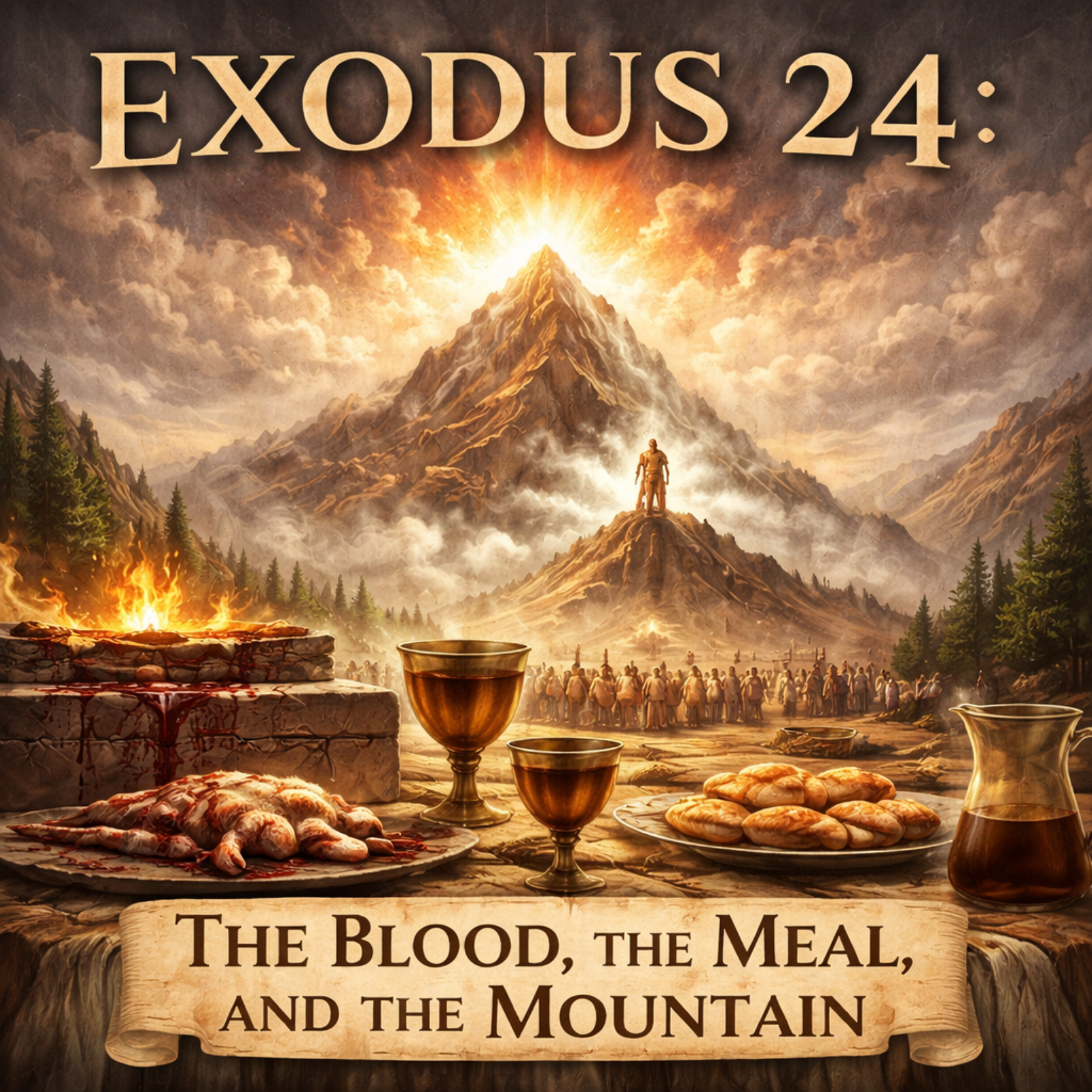
S1 Ep 102Exodus 24: The Blood, the Meal, and the Mountain
What if drawing near to God required both sacrifice and invitation?Exodus 24 reveals a covenant sealed in blood, a meal in God’s presence, and a man called into the fire.In this episode of In the Garden, we step into one of the most pivotal chapters in Exodus—a moment where God’s relationship with His people moves from spoken law to lived covenant.After receiving the commandments and the Book of the Covenant (Exodus 20–23), Israel stands at a crossroads. Moses recounts all the words of the Lord, and the people respond with bold unity: “All that the Lord has spoken we will do.” Their promise is sincere—but the story ahead will reveal how fragile human obedience can be.To establish the covenant, Moses builds an altar and offers sacrifices. Then comes a striking moment: the blood is divided. Half is thrown against the altar, and half is thrown on the people. This is not symbolic in a casual sense—it is life-binding. The covenant is sealed with blood, declaring that relationship with a holy God comes at a cost.And then—grace breaks through.Moses, Aaron, Nadab, Abihu, and seventy elders ascend the mountain. Scripture tells us they “saw the God of Israel… and they ate and drank.” Sinful men, preserved by mercy, sharing a meal in the presence of God. This moment foreshadows something greater—a future covenant where Jesus would say, “This cup is the new covenant in my blood.”But Moses is called even higher.The glory of the Lord settles on Mount Sinai like a consuming fire. For six days, Moses waits in the cloud. Then, on the seventh day, God calls him forward. Moses enters the cloud and remains there forty days and forty nights—receiving instructions that will shape Israel’s worship and reveal God’s desire to dwell among His people.Exodus 24 is a bridge—from law to presence, from distance to nearness, from fear to fellowship.Yet tension remains. The people have pledged obedience, but even as Moses meets with God, they will soon fall into idolatry. The chapter reminds us that human promises are not enough—we need a better covenant.And we have one.Through Jesus, the final sacrifice has been made. The invitation is no longer limited to one man on a mountain. Because of His blood, we are invited to draw near with confidence.The question is no longer just, “Will you obey?”It is: “Will you come near?”Call to Action:Take time today to reflect on what it means to be invited into God’s presence. Read Exodus 24 slowly. Consider the cost of the covenant—and the grace that welcomes you in. If this episode encouraged you, share it with someone who is seeking to draw closer to God.Keywords: Exodus 24, covenant, blood of the covenant, Mount Sinai, Moses, presence of God, Old Testament, Bible study, Jesus, new covenant, faith, obedience, worshipScripture References:Exodus 24:1–18Exodus 20–23Luke 22:20Hebrews 4:16
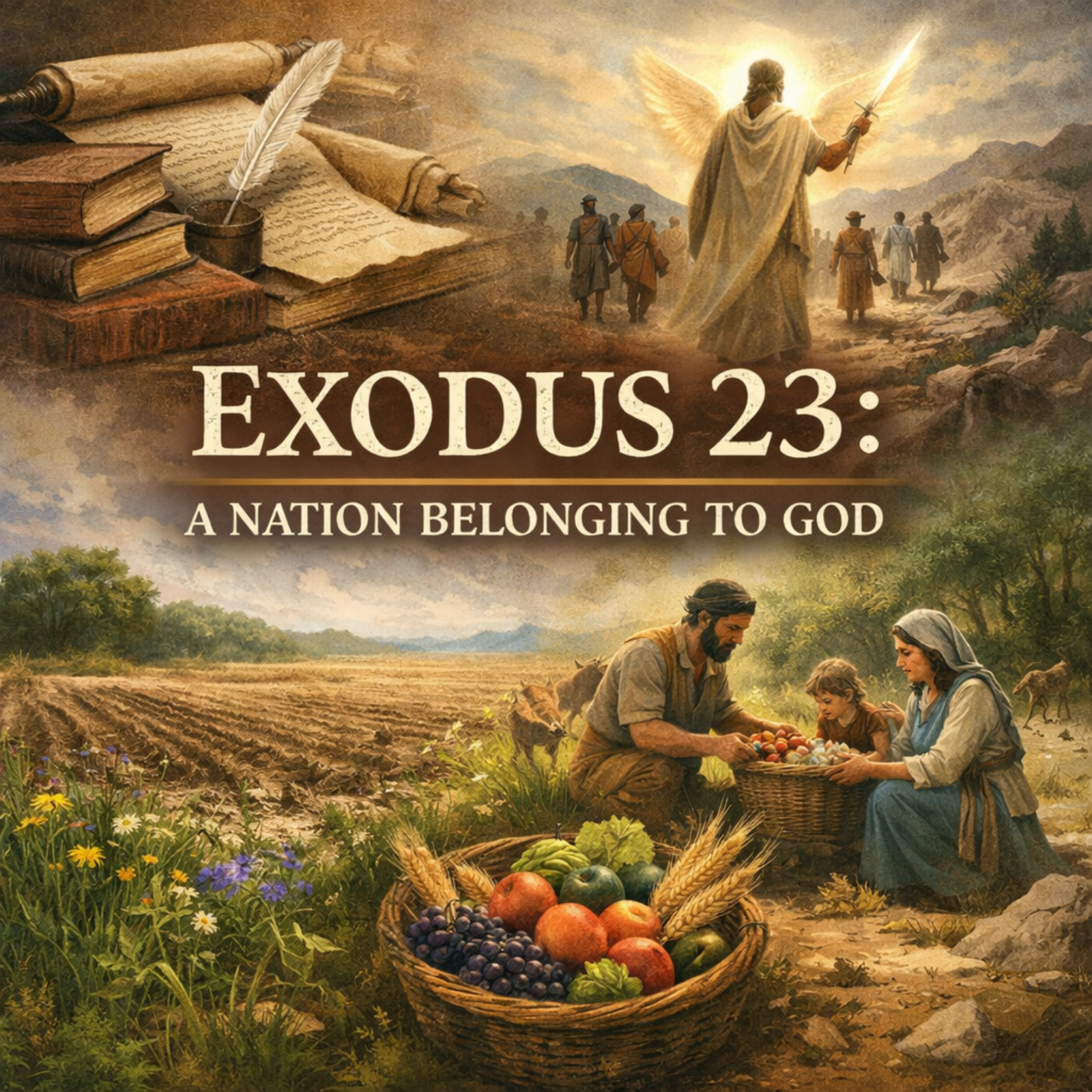
S1 Ep 101Exodus 23: A Nation Belonging to God
What do truth, rest, and ancient conquest have in common?Exodus 23 reveals one unified story: God forming a people who belong to Him.In this episode, we explore how Exodus 23—though it feels divided between familiar laws, unfamiliar practices, and distant promises—actually speaks with one voice. God is not just giving commands; He is shaping a nation to reflect His character in every part of life.We begin with a command that feels strikingly relevant today: “You shall not spread a false report.” In a world filled with misinformation, gossip, and half-truths, God calls His people to be anchored in truth. This is about more than honesty—it’s about justice, integrity, and refusing to participate in what corrupts community.Next, we step into rhythms that feel foreign but reveal something timeless. The command to let the land rest in the seventh year teaches trust. God’s people were to depend on Him for provision, not just their own effort. Even more, this rest created space for generosity—the poor and even the animals would eat from what grew naturally. God’s design reflects a heart of provision, compassion, and shared blessing.Finally, we encounter promises tied to a specific people and place—God going before Israel, leading them into the Promised Land. While this may feel distant, the principle remains: God is a God who leads. He prepares the way, calls His people forward, and invites them to trust Him in the unknown.Together, these passages reveal a powerful truth: God is forming a people who speak truth, live by trust, and follow His lead.This episode connects these ancient words to our lives today—whether in our conversations, our work, or our future. No matter where we live, God’s call is the same: to belong to Him and reflect His character in the world.Keywords: Exodus 23, Bible study, truth, integrity, rest, Sabbath, trust in God, provision, justice, Old Testament law, Christian living, faith, obedience, God’s promises👉 If this episode encouraged you, share it with a friend, subscribe to the podcast, and continue reading along with “The One Story That Leads to Jesus” Bible plan. Let’s keep seeking the Lord together.Scriptures Referenced:Exodus 23:1Exodus 23:10–11Exodus 23:23Numbers 23:19John 14:6Matthew 11:28
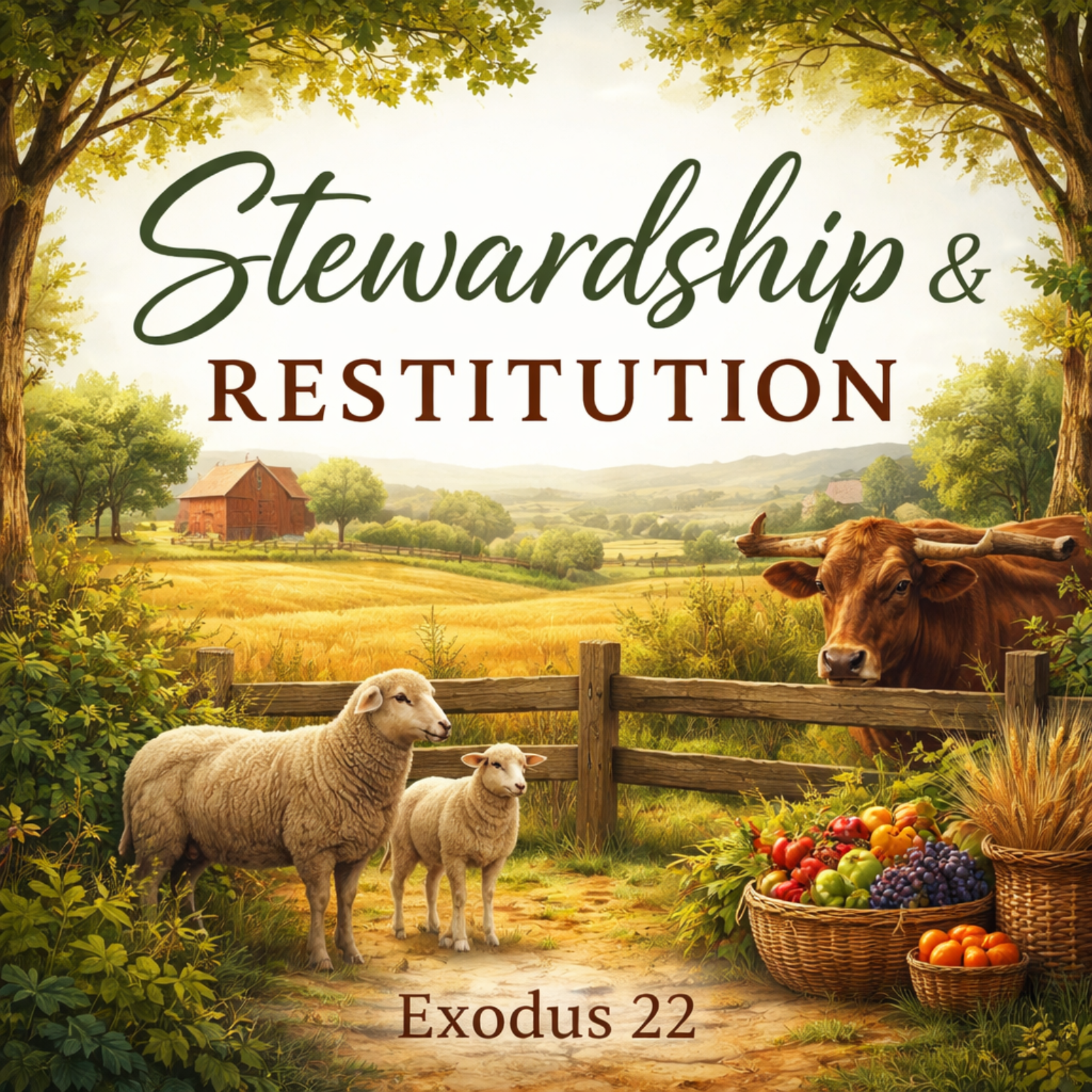
S1 Ep 100Exodus 22: Stewardship & Restitution
What if the real cost of sin is far greater than what’s taken?Exodus 22 reveals a God who cares not just about justice—but about restoration.In this episode, we explore Exodus 22 and uncover timeless wisdom rooted in an agrarian world that still speaks powerfully today. At first glance, these laws about oxen, sheep, fields, and fires may seem distant—but they reveal something deeply relevant: God’s design for stewardship, responsibility, and neighborly love.In ancient Israel, stealing an ox wasn’t just theft—it was taking someone’s livelihood. That’s why restitution wasn’t equal—it was multiplied. The law required fourfold or fivefold repayment because the damage extended beyond the surface.The same principle holds true today. Consider modern examples like copper wiring theft. A thief may gain a few hundred dollars, but the business owner can suffer thousands—or tens of thousands—in damages and lost income. Exodus 22 reminds us that our actions often carry consequences far beyond what we see.This chapter walks through real-life scenarios—grazing livestock in another’s field, fires that spread unintentionally, borrowed items that are damaged—and in each case, God establishes a clear truth: we are responsible for what has been entrusted to us.This is the language of stewardship.From the Garden of Eden to the wilderness of Exodus, humanity’s calling has remained the same: to care for what belongs to God. Our time, resources, relationships, and influence are not our own—they are entrusted to us.Exodus 22 also expands stewardship beyond property to people—especially the vulnerable. God commands His people not to mistreat the sojourner, the widow, or the fatherless. True righteousness is not just measured in how we manage things, but in how we treat others.And yet, when we reflect honestly, we recognize that we have all fallen short. We have been careless. We have caused harm—intentionally or unintentionally. And the cost of that harm adds up.But the story doesn’t end there.Exodus 22 points us forward to the One who makes restitution on our behalf. Jesus fulfills what we could not—bearing the full weight of our debt and restoring what was lost. Through Him, we are not only forgiven, but called back into faithful stewardship.This episode invites you to reflect:What has God entrusted to you?Where might you need to take responsibility or make things right?Listen, share, and join the journey through Scripture as we rediscover what it means to live faithfully in God’s world.Keywords: Exodus 22, restitution, stewardship, biblical justice, responsibility, Christian living, Old Testament law, neighborly love, faith and practiceCall to Action:If this episode challenged or encouraged you, share it with a friend or your small group. Follow along with the reading plan and continue exploring how every part of Scripture points us to Jesus.Scripture References:Exodus 22:1Exodus 22:5–6Exodus 22:10–15Exodus 22:21–22
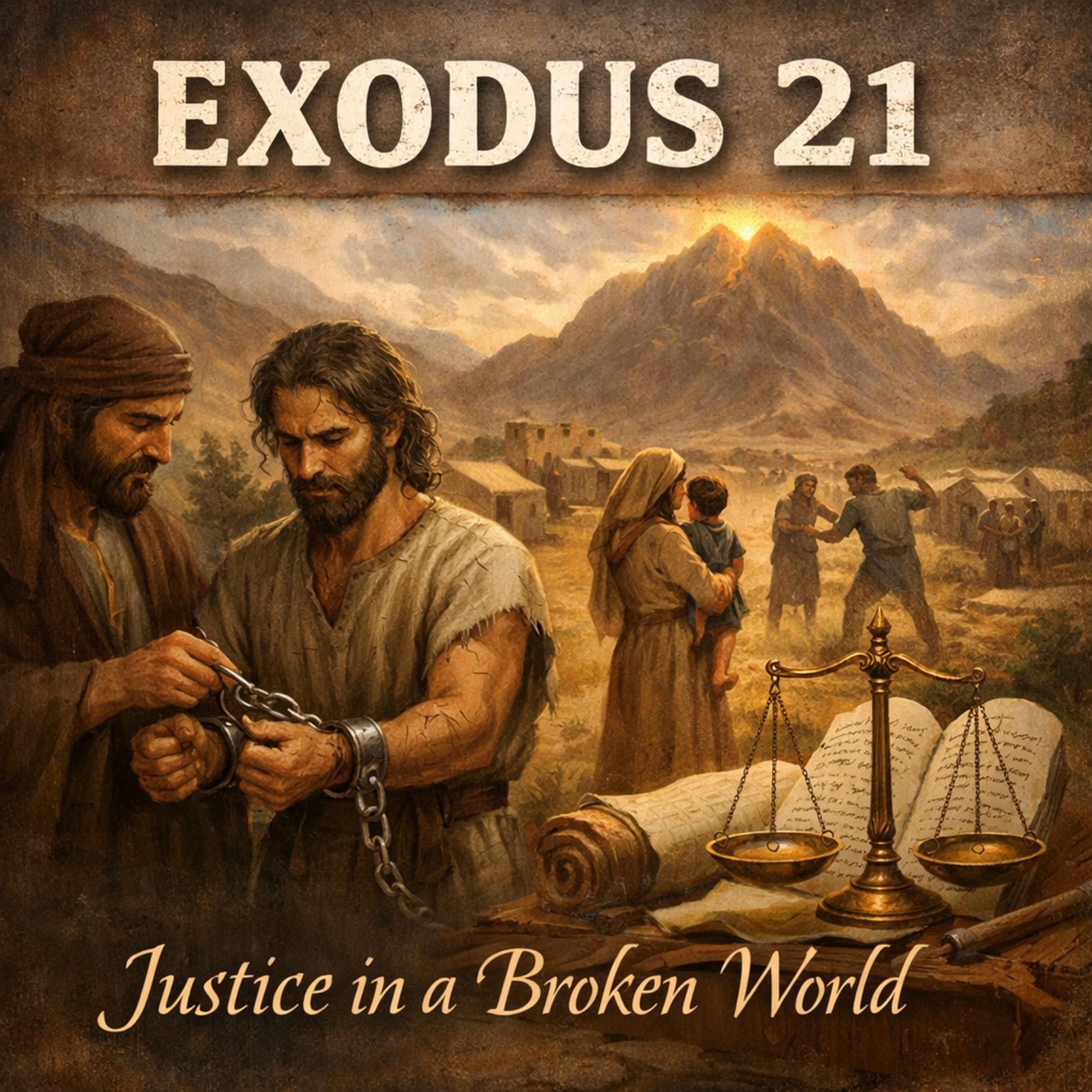
S1 Ep 99Exodus 21: Justice in a Broken World
Slavery, justice, and God’s law—how do they fit together?In Exodus 21, we see God bringing order, restraint, and dignity into a broken world.This episode explores one of the most difficult passages in Scripture and reveals something surprising: God is not endorsing injustice—He is limiting it. In a culture where slavery, violence, and unchecked power were already the norm, God establishes boundaries that protect the vulnerable, restrain revenge, and affirm the value of human life.We walk through the laws of Exodus 21 and uncover how they functioned within their historical context. From the release of Hebrew servants after six years to the principle of “eye for eye,” these laws were not about creating a perfect society overnight—but about introducing justice where there was none.You’ll also hear how this passage connects to the broader story of the Bible. The same God who gives these laws is the One who delivers His people from slavery and ultimately points forward to something greater—freedom, restoration, and redemption through Christ.Jesus Himself sheds light on these kinds of laws in Gospel of Matthew 19, reminding us that some commands were given because of the hardness of human hearts. And yet, the trajectory of Scripture always moves toward freedom, dignity, and unity in Him.This episode will help you:Understand the cultural and historical context of Exodus 21See how God establishes justice within broken systemsRecognize the difference between Biblical servitude and modern concepts of slaveryTrace the thread of redemption from Exodus to JesusIf you’ve ever wrestled with difficult Old Testament laws, this conversation will challenge and encourage you to see the heart of God more clearly.👉 Share this episode with someone who struggles with passages like this, and join the conversation.👉 Follow for more daily Bible-based insights and practical teaching.👉 Keep reading—because even in the laws, God is revealing His character.Scripture References:Exodus 21:1–36Exodus 20:2Matthew 19:8John 8:36Galatians 3:28
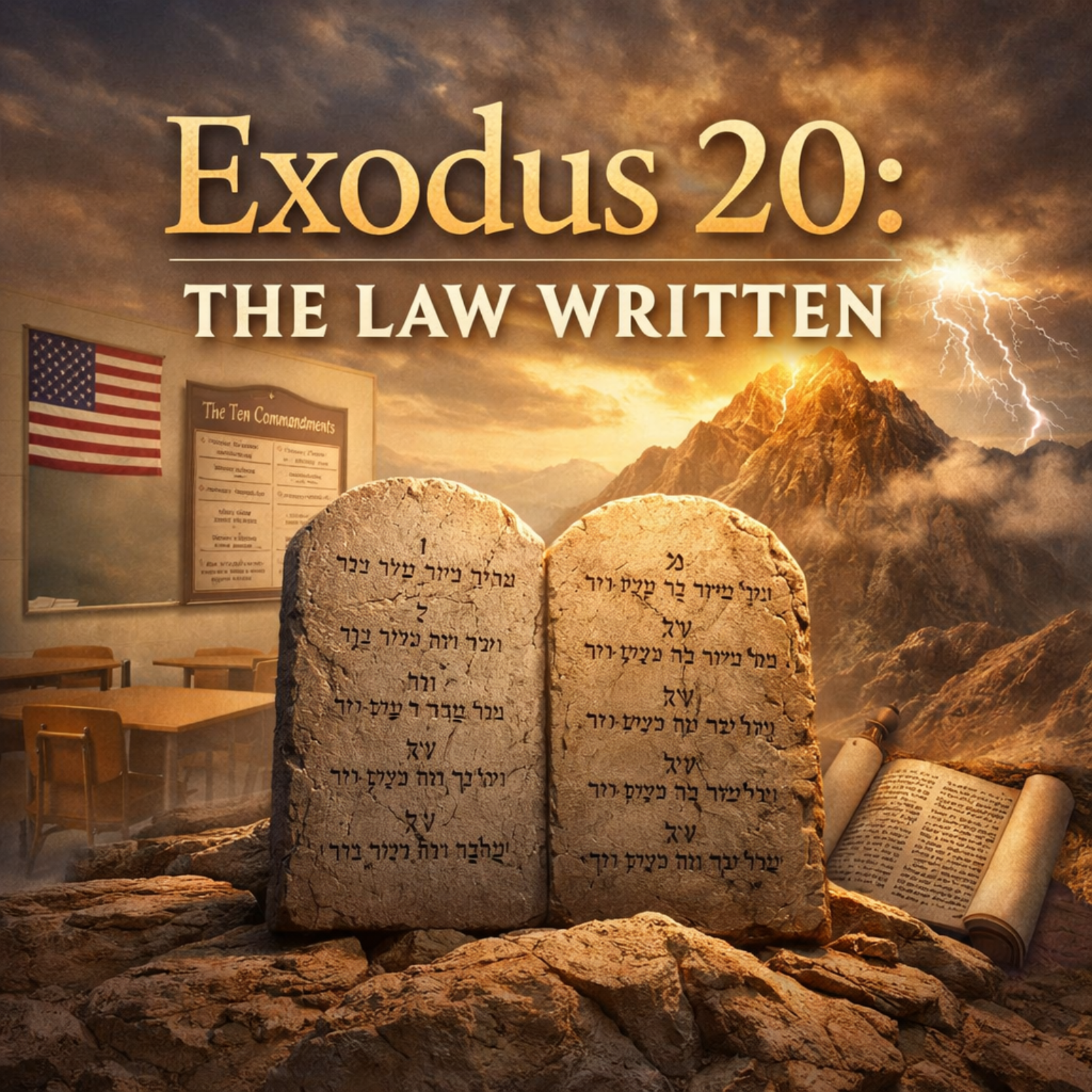
S1 Ep 98Exodus 20: The Law Written
Ten commandments on the wall… but are they written on your heart?Exodus 20 reveals more than rules—it reveals the life God calls us to live.In this episode, we explore the foundation of God’s Law in Exodus 20 and the well-known Ten Commandments—words now appearing on posters in classrooms across Texas. But what do they really mean? And how do they fit into the larger story of Scripture?While many recognize the “top ten,” the Law of Moses actually includes 613 commandments (mitzvot), shaping every aspect of life for God’s people. The Ten Commandments serve as the foundation, revealing what it looks like to love God and love others in everyday life.But here’s the deeper truth:God gave the Law after He rescued His people—not before.“I am the Lord your God, who brought you out of Egypt…” (Exodus 20:2)The Law is not a ladder to earn salvation—it’s a path for those already redeemed.In this episode, we unpack:Why the Ten Commandments come first in the LawHow the 613 commandments point to a complete life of obedienceThe danger of reducing God’s Word to something external—like a poster on a wallHow Jesus Christ deepens the Law, moving it from outward behavior to inward transformationGod’s ultimate desire: not just obedience, but hearts changed from withinJesus teaches that all the Law can be summed up in two commands: Love God. Love your neighbor. (Matthew 22:37–40)And the prophets point forward to something even greater: A day when God’s Law would not just be written on stone—but written on the heart.This episode invites you to reflect:Are these commands just something you see…or something you live?Because:If these words hang on a wall, they are easy to ignore.But if they are written on the heart, they become life.Keywords: Exodus 20, Ten Commandments, Law of Moses, 613 mitzvot, Bible teaching, Christian podcast, Jesus and the Law, heart transformation, Old Testament, faith and obedienceCall to Action:If this episode challenged or encouraged you, share it with a friend, a student, or a teacher. Take a moment today to read Exodus 20 for yourself—and ask God not just to show you His Word, but to write it on your heart.Scripture References:Exodus 20:2–17Matthew 5:21–28Matthew 22:37–40Galatians 3:24Jeremiah 31:33

S1 Ep 97Exodus 19: When Access Is Dangerous
You were never meant to approach God casually… but you were always meant to come close.Exodus 19 reveals a holy boundary—and points to the only way it could ever be crossed.In this episode, we step into the trembling scene at Mount Sinai, where fire, smoke, and thunder surround the presence of God. The command is clear: do not come near. And yet, in the middle of that warning, God calls the priests to consecrate themselves.Why prepare to draw near… if you’re still not allowed to come all the way?Because Exodus 19 is not confusion—it’s a revelation.It shows us a God whose holiness is not casual, not safe, and not to be approached on human terms. There are layers of access: the people remain at a distance, the priests come nearer with preparation, and Moses alone ascends into the presence of God. This moment establishes a pattern we see throughout Scripture—distance, danger, and the need for a mediator.But this is not where the story ends.Sinai teaches us something we often forget: before we can understand grace, we must first understand holiness. Before we can appreciate access, we must feel the weight of separation. The boundaries at the mountain are not meant to push us away forever—they are meant to awaken us to our need.And that need is ultimately met in Jesus.What was once restricted becomes open. What was once dangerous becomes invitation—not because God has changed, but because a way has been made. The tearing of the temple veil marks a turning point in history: access to God is no longer limited to one man, one place, one moment.Through Christ, we are invited to draw near with confidence—but never casually.This episode challenges us to hold both truths together: God is holy beyond comprehension…and through Jesus, we are welcomed into His presence.So how do you approach God today?Do you keep your distance… or have you forgotten the weight of His holiness?Do you come casually… or confidently through the One who made a way?Take time today to reflect on the God of Sinai—and the Savior who brings you near.Call to Action:Read Exodus 19 slowly. Picture the scene. Feel the distance. Then read it again in light of Jesus—and respond. Draw near to God in reverence and confidence, trusting not in yourself, but in the One who stands between.Scriptures Referenced:Exodus 19:16–25Exodus 20:18–21Hebrews 12:18–24Matthew 27:50–51Hebrews 10:19–22
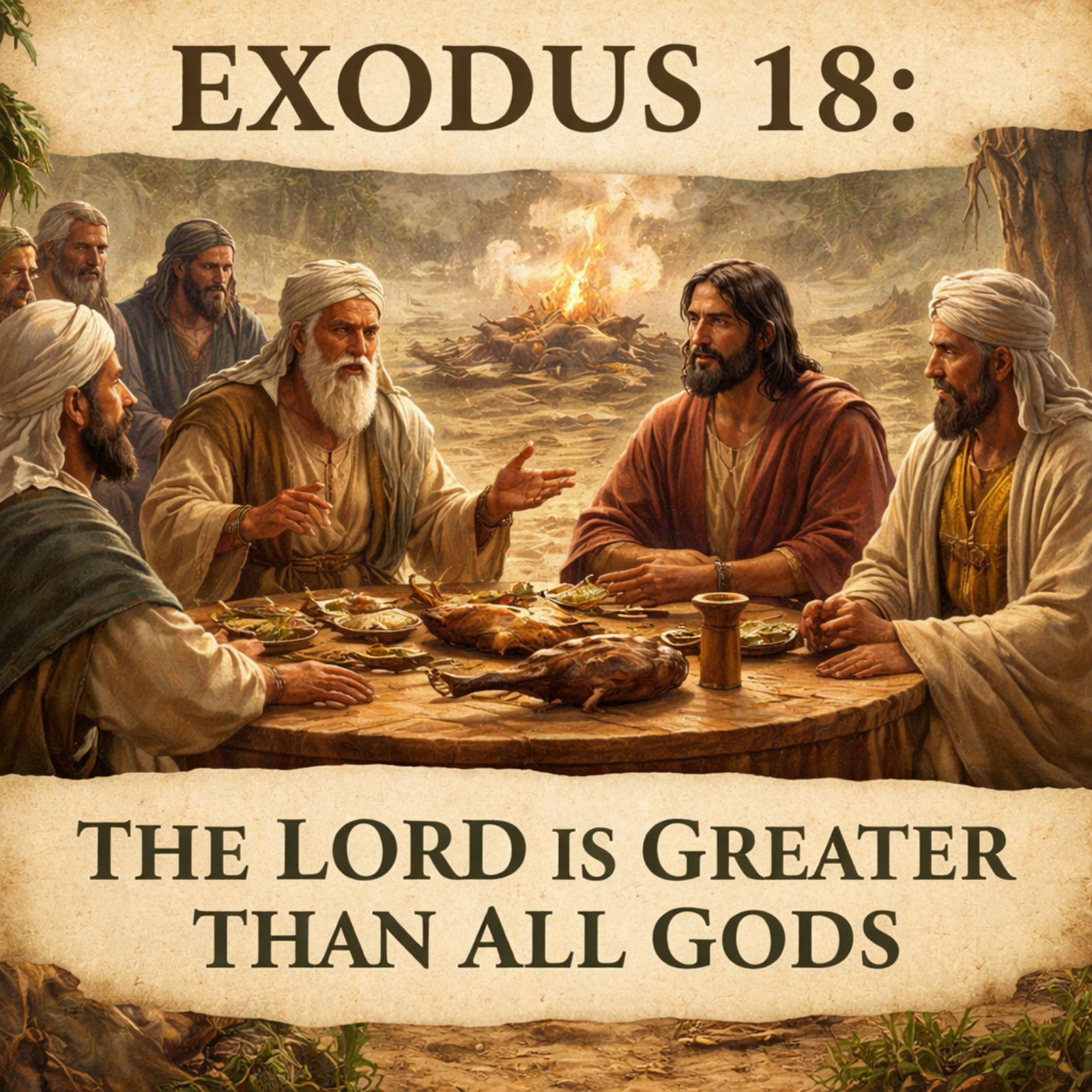
S1 Ep 96Exodus 18: The Lord is Greater Than All Gods
Before the Law was written, a foreign priest was already at the table.Exodus 18 reveals a God who is drawing people in long before they “belong.”In this episode, we explore one of the most overlooked and powerful moments in the book of Exodus—when Jethro, a Midianite priest, confesses the greatness of Yahweh and leads a sacrifice accepted by God. Even more surprising, Moses, Aaron, and the elders of Israel sit down to share a covenant meal with him before Sinai, before the Law, and before Israel is fully formed as a nation.This moment challenges how we think about who is “in” and who is “out.”Jethro hears the testimony of what God has done—and responds with worship:“Now I know that the Lord is greater than all gods.”Then he acts on that confession, offering sacrifices to Yahweh. There is no correction, no hesitation—only fellowship. A table is set, and a man from outside Israel is welcomed into the presence of God.But the story doesn’t stop at the table.Jethro also brings wisdom.Seeing Moses overwhelmed by the weight of leadership, he offers counsel: appoint capable, trustworthy men to share the burden. And Moses listens. Authority is distributed. The people are better served. And the wisdom comes from someone who, by every cultural measure, was an outsider.This is more than good leadership advice—it’s a glimpse into the heart of God.God is already at work beyond the boundaries we expect.Before Sinai…Before the commandments…Before the structure of Israel is complete…God is drawing people in.Jethro is not an exception—he is a preview.This passage invites us to ask:Where might God already be working that we haven’t recognized?Are we willing to receive truth and wisdom from unexpected places?And are we making room at the table for those God is drawing near?This episode reminds us that God’s mission has always been bigger than one people group. The story of Scripture moves outward—from Israel to the nations—and Exodus 18 gives us an early glimpse of that unfolding plan.Call to Action:Share this episode with someone who might feel like an outsider. Then take a moment to reflect—who has God placed in your life that you might be overlooking? Invite them in. There may already be a seat for them at the table.Scriptures Referenced:Exodus 18:8–12Exodus 18:17–23
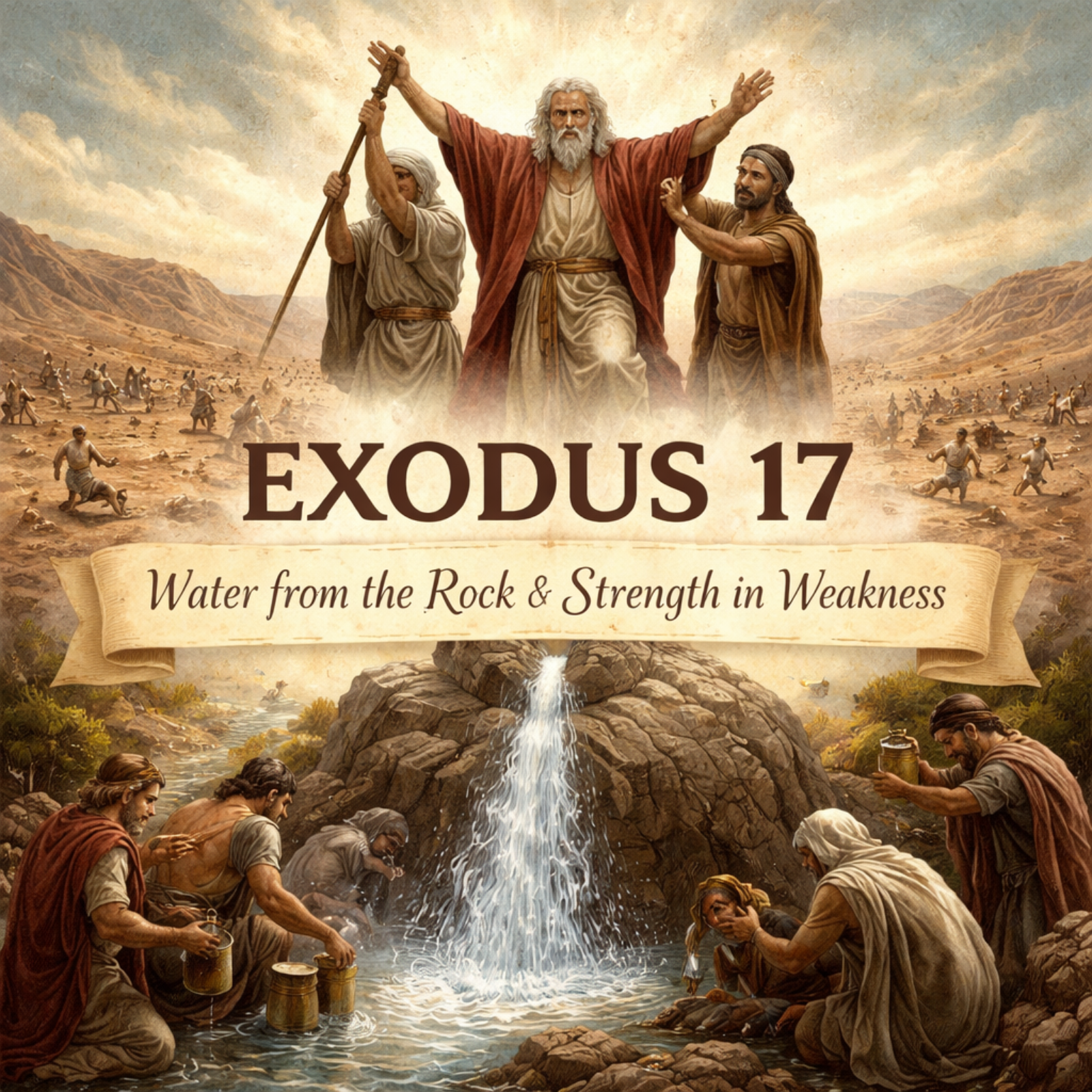
S1 Ep 95Exodus 17: Water from the Rock
When the desert is dry and strength is gone, where does life come from?Exodus 17 reveals a surprising truth: God often brings provision and victory through human weakness.In this episode, we explore two powerful moments from Exodus 17 that reveal the same spiritual pattern. First, the Israelites face a desperate crisis in the wilderness—there is no water. Fear rises, complaints begin, and the people question why they ever left Egypt. But God responds in an unexpected way. He instructs Moses to strike a rock, and from that lifeless stone water pours out, sustaining the entire nation.This miracle becomes one of the most important symbols in Scripture. Later, the apostle Paul explains that the rock pointed forward to Christ, the true source of living water. Just as the rock had to be struck for water to flow, Jesus would be struck so that life could flow to the world.But the lesson of Exodus 17 doesn’t stop there.Soon after the water flows, Israel faces its first battle in the wilderness against the Amalekites. Joshua leads the fight in the valley while Moses stands on a hill with the staff of God raised in his hands. Something remarkable happens: whenever Moses’ hands are lifted, Israel prevails. When his arms grow tired and fall, the enemy advances.Eventually Moses’ strength fails. His arms grow heavy, and he cannot hold them up alone. So Aaron and Hur place a stone beneath him and stand beside him, supporting his arms until sunset. Through this shared weakness and dependence on God, Israel wins the battle.Both stories reveal the same surprising truth: God’s power is often revealed through human limitation. Water flows from a rock. Victory comes through a weary leader whose strength runs out. Again and again in Scripture, God chooses what appears weak so that His power becomes unmistakably clear.If you’ve ever felt spiritually dry, exhausted, or unable to carry the weight alone, Exodus 17 offers a powerful reminder. God still provides living water in the wilderness, and His strength is made perfect in weakness.Subscribe to the podcast and share this episode with someone who might need encouragement today. And wherever you are on your journey, keep seeking the One Story that leads to Jesus.Scripture References:Exodus 17:1–16Exodus 17:6Exodus 17:11–121 Corinthians 10:4
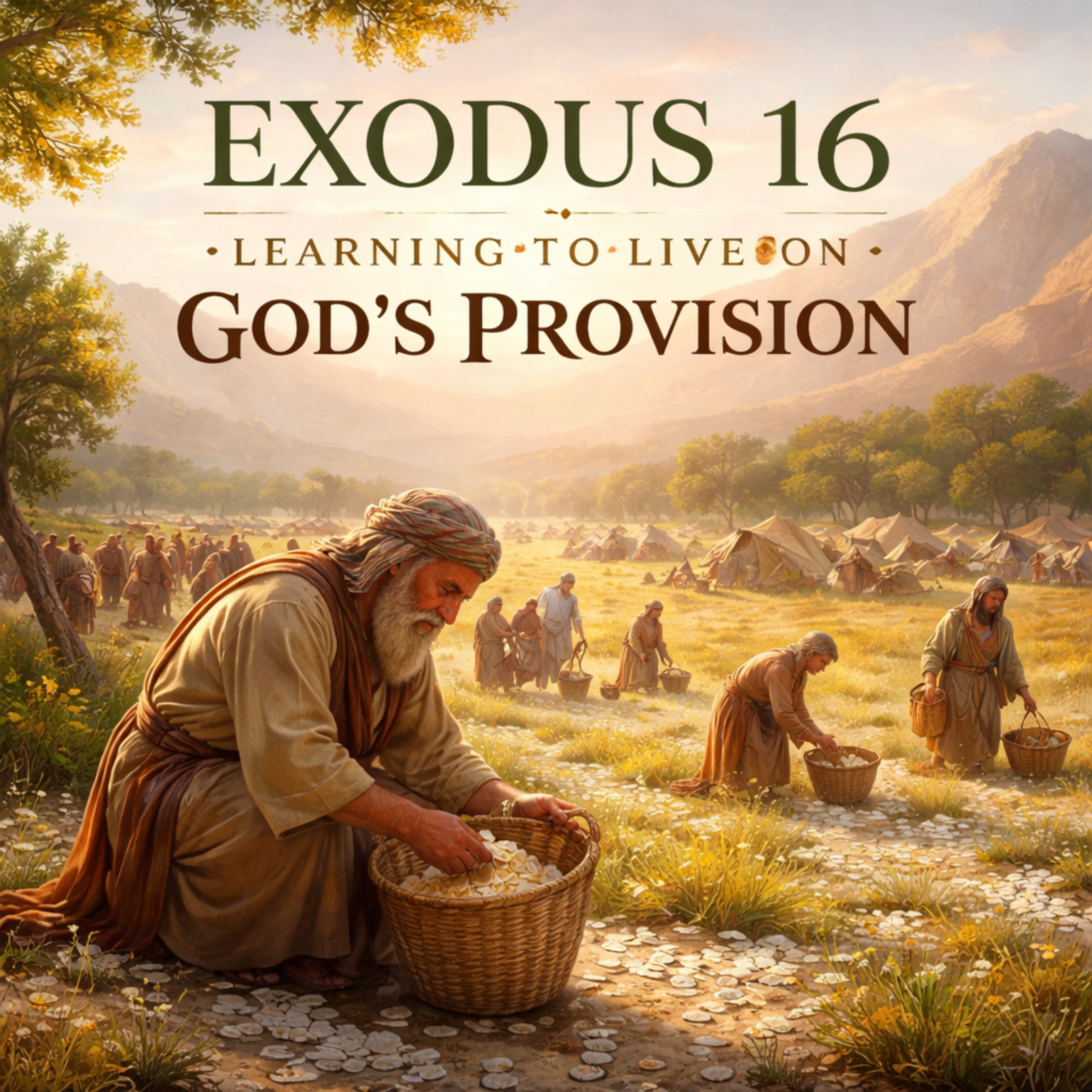
S1 Ep 94Exodus 16: Learning to Live on God's Provision
What if the greatest miracle in the wilderness wasn’t the food—but the freedom to stop striving?In this episode, we explore how God used manna in the wilderness to teach His people a completely new way to live: a life built on trust instead of constant labor.In Book of Exodus 16, the Israelites leave Egypt only to face hunger in the wilderness. Fear quickly turns into grumbling as they remember the food they had in slavery. But instead of abandoning His people, God responds with mercy. Each morning He sends manna—bread from heaven—covering the ground like dew.Yet the miracle isn’t just the bread.God establishes a completely different system of provision. The people are instructed to gather only enough for each day. If they try to hoard it, the manna spoils overnight. Every sunrise becomes an invitation to trust God again.Then comes the most surprising part of the story: the Sabbath. On the sixth day, the people gather double because on the seventh day there will be none. That day is set apart as a day of rest.This is the heart of the lesson.In Egypt, survival depended on endless labor. Pharaoh’s system demanded constant productivity—more bricks, more work, more pressure. Rest didn’t exist for slaves.But God introduces a different rhythm for His people:work faithfully, gather what you need, and trust Him enough to rest.The manna teaches Israel—and us—that life does not ultimately depend on our ability to secure everything ourselves. God invites His people into a relationship where daily dependence replaces anxious striving.The wilderness becomes a classroom where God retrains a former slave nation to live in freedom.Later in Scripture, the meaning of manna grows even deeper. When Jesus Christ teaches His disciples to pray, He echoes the same lesson: “Give us this day our daily bread.” And in the Gospel of John, Jesus points back to the wilderness miracle and declares, “I am the bread of life.”The manna fed Israel for a day.Christ offers life that never runs out.Join us as we explore how Exodus 16 reveals God’s system of provision—a life marked by trust, daily dependence, and the freedom to rest in His care.If this episode encouraged you, consider sharing it with a friend, leaving a review, or subscribing so you can follow the journey as we continue walking through Scripture together.Keywords: Exodus 16, manna in the wilderness, daily bread, Sabbath rest, God’s provision, trusting God, Bible study podcast, wilderness journey, spiritual dependence, bread from heaven.Scriptures ReferencedExodus 16:1–35Deuteronomy 8:3Matthew 6:11John 6:32–35
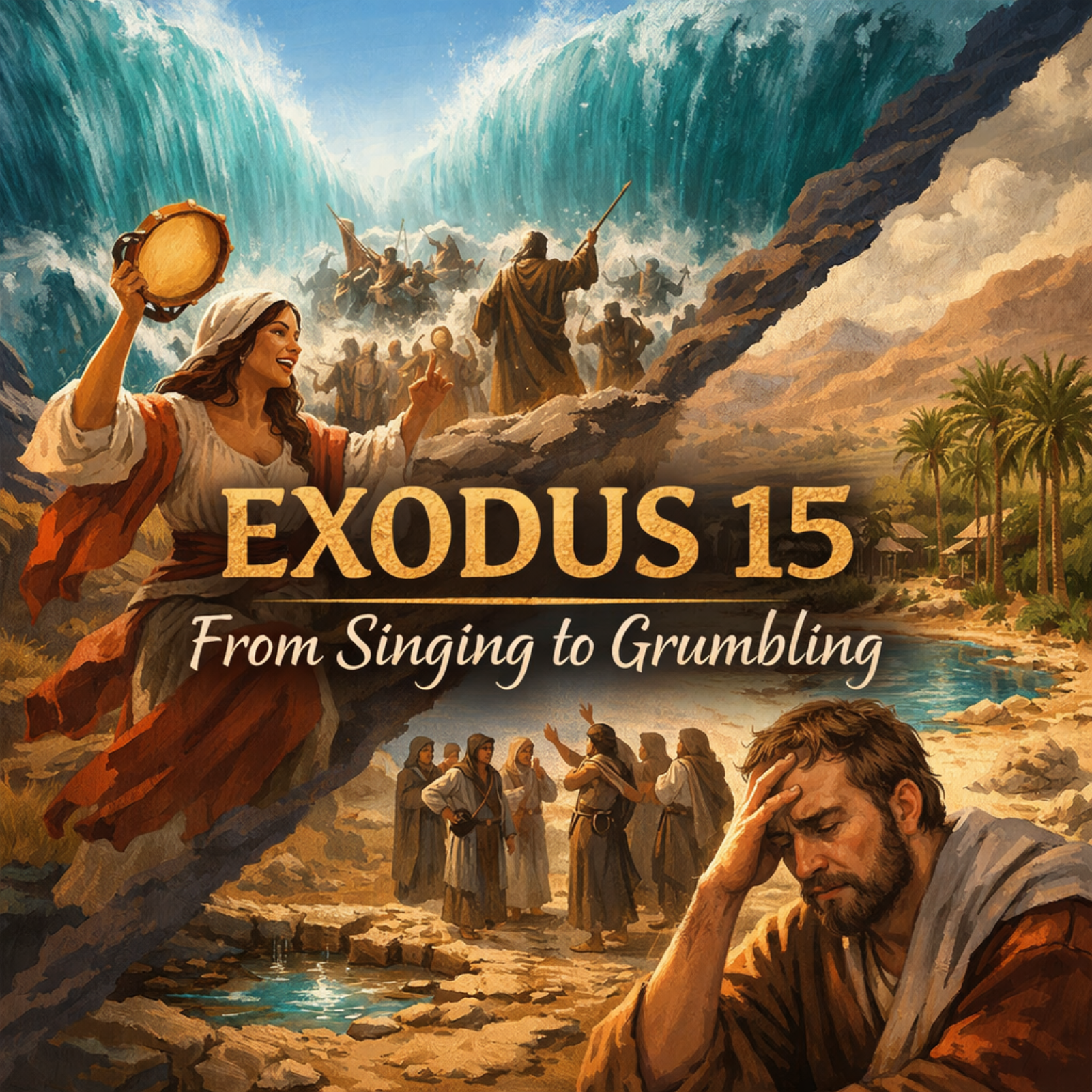
S1 Ep 93Exodus 15: From Singing to Grumbling
They had just watched the Red Sea split and sang songs of victory. Three days later, the same people were grumbling in the wilderness.In Exodus 15 we see both the beauty of joyful worship and the fragility of human faith—and the unchanging faithfulness of God.After Israel’s miraculous deliverance from Egypt, Moses and the Israelites respond the only way a rescued people can: they sing. Exodus 15 records the first great song of redemption in the Bible. Moses leads the people in praising the Lord for defeating Pharaoh’s army and delivering them from slavery.“I will sing to the Lord, for He is highly exalted; He has thrown the horse and its rider into the sea.” (Exodus 15:1)Soon Miriam the prophetess joins in. With tambourine in hand, she leads the women in music and dancing as the whole community celebrates what God has done. Singing, music, and joyful movement become the natural expression of hearts that have witnessed the power of God.But the celebration does not last long.Only three days into their journey in the wilderness, the people cannot find drinkable water. When they finally reach water at Marah, it is bitter. The same voices that had just been singing now begin to complain.“The people grumbled to Moses, ‘What are we going to drink?’” (Exodus 15:24)Exodus 15 reveals how quickly human hearts can move from worship to worry, from praise to complaint. Yet the chapter also reveals the patience and mercy of God. Instead of abandoning His people, the Lord provides a solution. Through Moses, He turns the bitter water sweet and begins to teach Israel what it means to trust and obey Him.Here God reveals a powerful name: Yahweh Rapha — “The Lord who heals you.” The God who delivered Israel from Egypt is also the God who sustains and restores His people in the wilderness.The chapter closes with a beautiful picture of grace. After the bitterness of Marah, the people arrive at Elim—a place of abundance with twelve springs of water and seventy palm trees. Even though Israel’s faith was shallow, God’s faithfulness was not.Exodus 15 reminds us that while our faith may waver, the Lord continues to provide, guide, and heal. The same God who leads His people through the sea also leads them through the wilderness.If this episode encouraged you, share it with a friend, subscribe to the podcast, and continue reading through Scripture with us as we follow The One Story That Leads to Jesus.Scriptures Referenced:Exodus 15:1Exodus 15:20–21Exodus 15:24Exodus 15:26–27
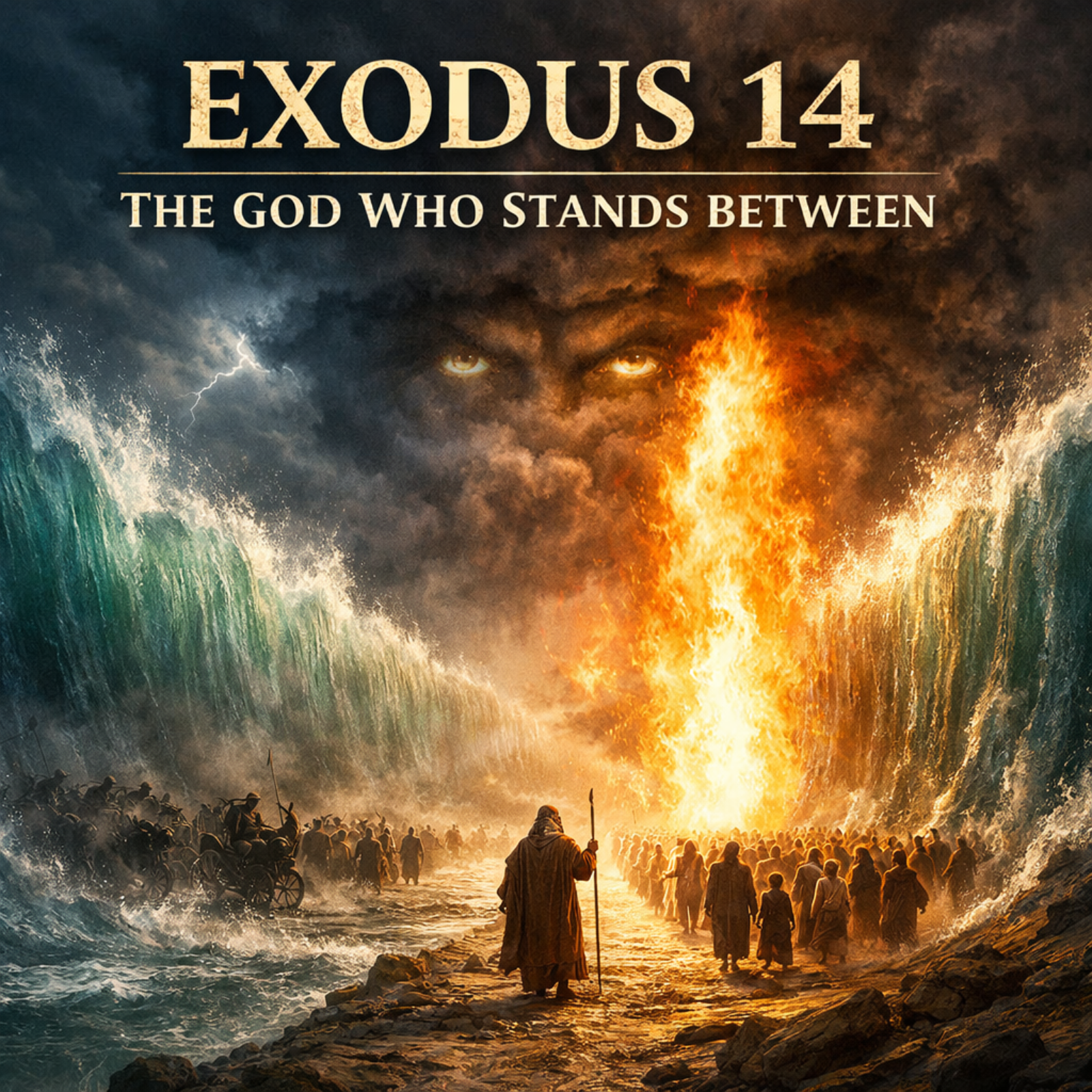
S1 Ep 92Exodus 14: The God Who Stands Between
The sea split, the wind roared, and Israel walked through on dry ground—but the greatest revelation in Exodus 14 is not the miracle. It’s the God who stands between His people and their enemies.In this episode, we explore how the crossing of the Red Sea echoes the very first days of creation and reveals the Creator who still commands the wind, the waters, and the destiny of nations.Exodus 14 is one of the most dramatic moments in the Bible. Israel is trapped between Pharaoh’s army and the Red Sea with no visible escape. But the God who created the heavens and the earth is still present in His creation.Before the waters even divide, something extraordinary happens: the pillar of cloud and fire that had been leading Israel moves behind them. God places Himself between His people and the Egyptian army. The same presence that gives light to Israel brings darkness and confusion to Egypt. Salvation for one side, judgment for the other.Then the Lord sends a powerful east wind that blows through the night. The waters divide, dry land appears, and Israel walks through the sea. The language echoes Genesis itself—when the Spirit of God moved over the waters and the dry land first appeared. At the Red Sea, the Creator moves again. The wind blows, the waters separate, and a path opens where none existed.Scripture even tells us that the Lord looked out from the pillar of fire and cloud upon the Egyptian army. God is not distant in this moment—He is personally present, guiding, protecting, and judging. The same act that delivers Israel becomes the downfall of Pharaoh’s army.Exodus 14 reveals a powerful truth about God’s presence. The same God who saves also judges. The same pillar that lights the path for Israel blinds their enemies. It is like a scroll written on two sides—deliverance on one side and judgment on the other.When the waters close and the danger is gone, Israel finally sees what God has done.They see His power.They fear the Lord.And they believe.But this moment raises a deeper question that will shape the rest of the Bible.Will Israel trust God when the sea is no longer splitting?Because most of life is not lived in Red Sea moments. Most days are wilderness days—days when miracles are quieter and faith must rest on remembering what God has already done.The God who separated the waters at creation, the God who opened the sea for Israel, is still the One who stands between His people and destruction.If this episode encouraged you, share it with someone who needs a reminder that God still makes a way where none seems possible. And join us as we continue exploring the story of Scripture—one chapter at a time.Keywords: Exodus 14, Red Sea crossing, pillar of fire and cloud, biblical theology, creation echoes, God’s presence, faith in the wilderness, Old Testament study, Bible podcast.Scriptures referenced:Genesis 1:2–3Exodus 14:19–22Exodus 14:24Exodus 14:31Isaiah 60:1–2Ezekiel 2:10
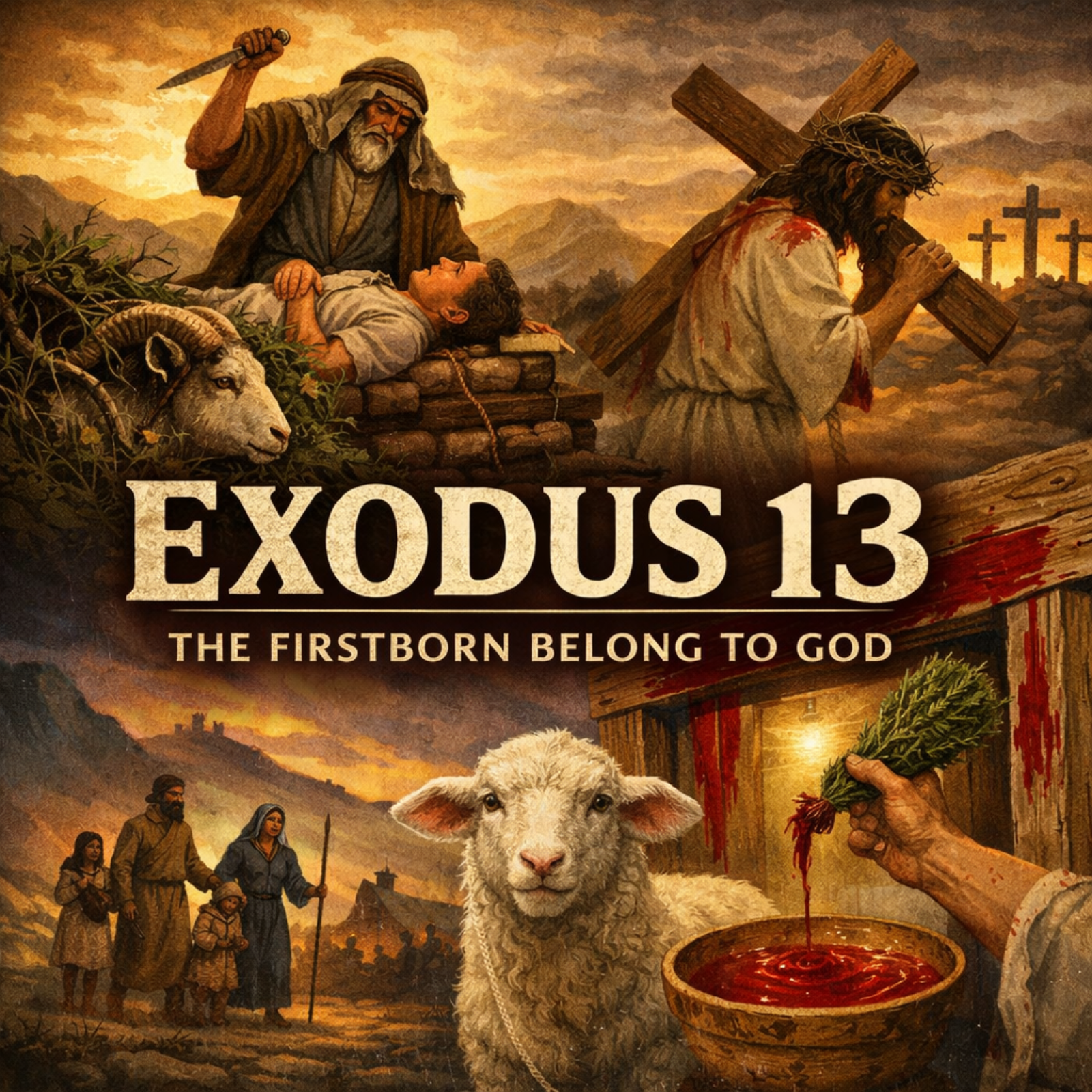
S1 Ep 91Exodus 13: The Firstborn Belong to God
A lamb dies so the firstborn can live. But what happens after the deliverance?In Exodus 13, God reveals that every rescued life now belongs to Him—and the story traces all the way back to Isaac and forward to Christ.After the night of Passover in the Book of Exodus, Israel begins its journey out of Egypt. But before they travel far, God stops them with an unexpected command: “Consecrate to me all the firstborn.” Every firstborn child and animal now belongs to the Lord because He spared Israel’s sons on the night when Egypt’s firstborn died.This moment reveals a central truth of redemption: the life that is saved now belongs to the Savior.In this episode of In the Garden, we explore the deeper meaning behind Exodus 13 and how the command about the firstborn connects to one of the earliest stories of substitution in Scripture. Centuries before the Exodus, Abraham climbed Mount Moriah with his beloved son Isaac. Isaac asked a haunting question: “Where is the lamb?” Abraham answered with faith: “God will provide the lamb.”At the last moment, a ram caught in a thicket took Isaac’s place.That same pattern appears again at Passover. Each household sacrificed a lamb, and the blood was spread on the doorposts with a branch of hyssop. The lamb died, and the firstborn lived.In Exodus 13, God establishes a memorial so this truth would never be forgotten. The Feast of Unleavened Bread and the consecration of the firstborn surround the story of Passover like a literary frame, reminding every generation that their deliverance came through substitution.But the story does not end in Egypt.During another Passover centuries later, Jesus Christ walked toward the cross carrying the wood of His sacrifice—just as Isaac once carried the wood up Mount Moriah. At the crucifixion, even the small detail of a hyssop branch appears again, echoing the Passover night when lamb’s blood marked the doors of Israel.What began with one son spared through a substitute in Genesis becomes the salvation of a nation in Exodus—and ultimately the redemption of the world through Christ.In this episode, we explore how Exodus 13 reveals the meaning of redemption, why God claims the firstborn, and how the story of Passover points both backward to Isaac and forward to the Lamb of God.If this episode deepens your understanding of Scripture, consider sharing it with a friend, subscribing to the podcast, and joining the conversation. Together we are discovering how the entire Bible tells one story that leads to Jesus.Scriptures referenced in this episode:Book of Exodus 12:13, 12:22, 13:2–16Book of Genesis 22:2–14Gospel of John 1:29, 19:29
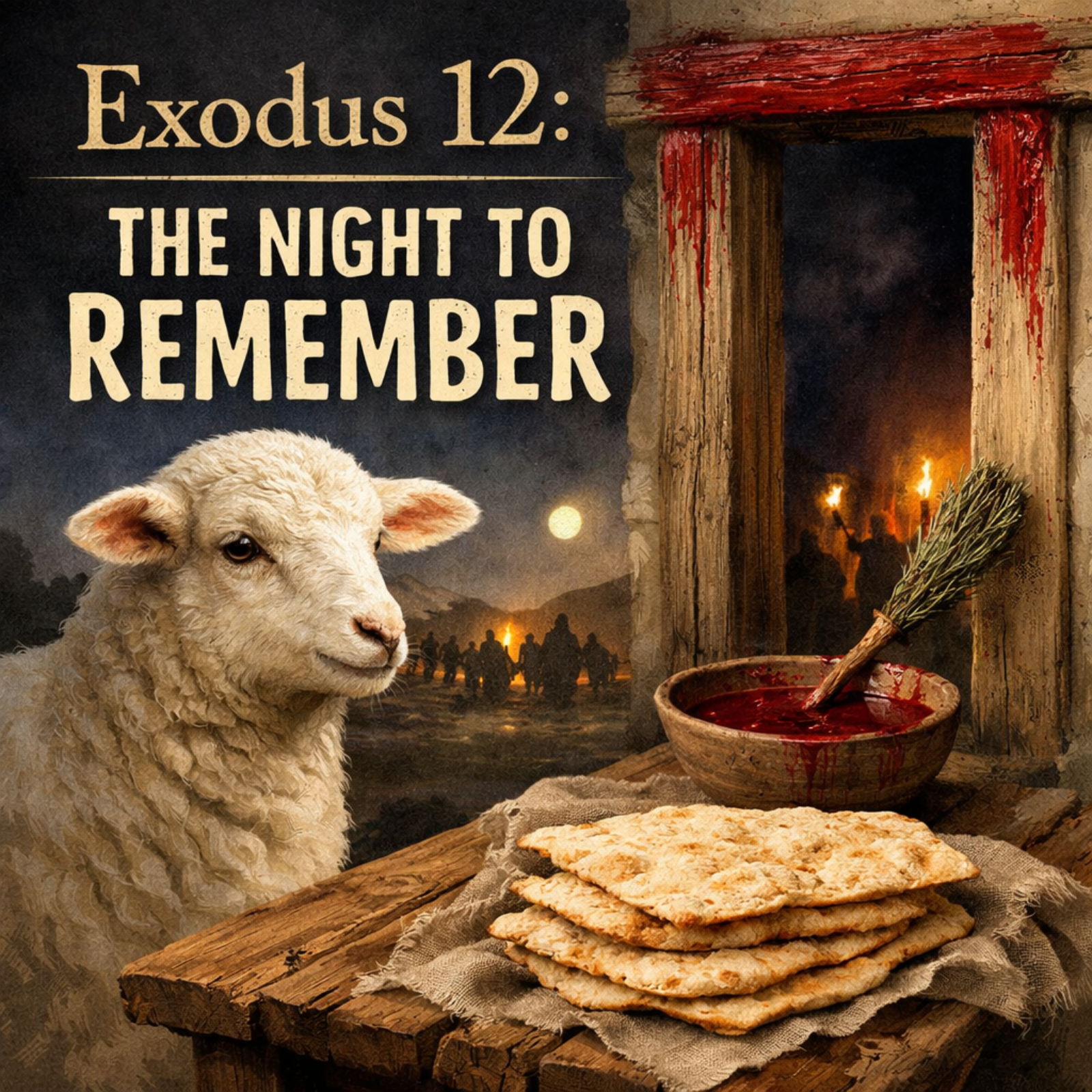
S1 Ep 90Exodus 12: The Night to Remember
Have you ever faced a moment where obedience felt urgent, even overwhelming? Exodus 12 shows how God turns moments of fear and haste into eternal remembrance.In this episode, we journey through the pivotal night of the Exodus. God commands the Israelites to prepare a lamb, apply its blood to their doorposts, and eat bread without leaven—all in anticipation of the 10th Plague, the midnight judgment on Egypt. What began as hurried preparation becomes a profound memorial of faith and deliverance.We explore the layers of meaning in this chapter: the lamb as a sign of protection, the unleavened bread as a reminder of readiness, and the establishment of a feast to be observed throughout generations. This is not just a historical event—it’s a spiritual lesson in trust, obedience, and God’s providence that points forward to the ultimate Lamb, Jesus Christ.Whether you are reflecting on God’s faithfulness in your own life, seeking courage to obey, or simply desiring to understand the depth of His deliverance, this episode offers a meditation on how God transforms ordinary acts of obedience into memorials of salvation.Call to Action:Consider your own “midnight moments”—times of uncertainty or urgency where God calls you to trust and obey. How might God turn these moments into a lasting reminder of His faithfulness? Share your reflections, discuss with friends, or journal how God has delivered you in ways that become stories of remembrance.Keywords: Exodus 12, Passover, 10th Plague, lamb of God, unleavened bread, deliverance, obedience, faith, memorial, salvation, God’s faithfulness, spiritual reflection, Bible studyScriptures Referenced: Exodus 11:4, Exodus 12:6, Exodus 12:14-15
S1 Ep 89Exodus 11: The Treasure Before the Trial
Before the final plague strikes Egypt, something incredible happens — God provides favor, provision, and promise to His people. In this episode, we explore how the Israelites received silver and gold from the Egyptians before the midnight Passover, and what this teaches us about God’s timing, justice, and care.In Exodus 11, God tells Moses that one last plague will come, but first, He instructs the Israelites to ask their Egyptian neighbors for silver and gold. The people obey, and God gives them favor, ensuring they leave Egypt not empty-handed but empowered for the journey ahead. This act of provision is rich in meaning: it demonstrates God’s favor, fulfills divine justice, prepares the Israelites for a new beginning, and teaches a timeless lesson about trusting God’s plan even before the trial is fully revealed.We also see the interplay of divine sovereignty and human responsibility. Pharaoh’s heart is hardened, God’s wonders multiply, and yet the Israelites’ obedience and trust are rewarded in advance. The story reminds us that God often provides before the storm, equips His people before the challenge, and guides them through His perfect timing.Join us as we unpack this pivotal moment in the Exodus story — the treasure before the trial — and discover how God’s provision, justice, and faithfulness intersect in ways that still speak to us today. Whether you’re facing uncertainty, waiting for deliverance, or learning to trust God’s timing, this episode offers encouragement and insight straight from God’s Word.Keywords: Exodus 11, Passover, Israelites, Egypt, silver and gold, God’s provision, divine justice, favor, obedience, trust, faith, deliverance, Bible study, God’s timing, spiritual lessonsCall to Action:If this episode inspired you, share it with a friend, subscribe to In the Garden Podcasts for weekly episodes, and join our community as we journey through the Bible together. Reflect on how God might be providing for you before your trial and consider sharing your story of trust and provision with someone today.Scripture References: Exodus 11:1–10 ESV
S1 Ep 88Exodus 10: The Point of No Return
Exodus 10: The Point of No Return – When Refusal Meets JudgmentWhat happens when someone hears God’s voice again and again—and refuses to listen? In Exodus 10, Pharaoh reaches the edge of his limits, and the consequences of hardened hearts become clear. From locusts that devour everything to darkness that covers the land, this chapter reminds us that repeated rejection of God’s will can bring a point of no return.In this episode, we explore the ninth plague, Pharaoh’s bargaining, and the dramatic confrontation between Moses and Pharaoh. We uncover why God’s people experience light even in the midst of darkness and why true freedom comes only when hearts choose allegiance to God over worldly authority.Join us as we reflect on how the story of Exodus speaks to modern struggles with pride, control, and the temptation to negotiate obedience. Pharaoh’s path serves as a cautionary tale: ignoring God’s voice has consequences, but listening brings light, even in the darkest circumstances.Keywords: Exodus 10, Pharaoh, Moses, locusts, darkness, God’s power, hardened heart, biblical freedom, obedience, light in darkness, faith, Bible podcastCall to Action: If this episode challenged or encouraged you, share it with someone who needs to hear the message of God’s faithfulness and warning. Subscribe to the podcast to follow the journey through Exodus and experience the unfolding story of God’s power and mercy.Scriptures Referenced: Exodus 10:1–29, Exodus 9:15–16, Matthew 22:21, Romans 13:1, Jeremiah 29:7
S1 Ep 87Exodus 9: When the Storm Stops
When the storm stops, what happens to our promises to God? In Exodus 9, Pharaoh finally admits his sin during a devastating storm—but the moment the thunder fades, his heart hardens again.In this episode, we explore the powerful moment in Exodus 9:33–35 when Moses prays, the hail and thunder cease, and Pharaoh immediately returns to rebellion. The plague of hail is more than a natural disaster—it is part of God’s deliberate confrontation with the gods of Egypt. The sky itself, once associated with Egyptian deities like Nut and Shu, obeys the command of YHVH.Throughout the plagues, God systematically reveals His authority over everything Egypt believed controlled their world. The Nile turns to blood, frogs overrun the land, dust becomes gnats, livestock die, and boils strike the people. Each event exposes the limits of Egypt’s idols and demonstrates that the God of Israel alone rules creation.But Exodus 9 reveals something even deeper than God’s power—it reveals the human heart.When Pharaoh is terrified by the storm, he confesses: “I have sinned. The LORD is in the right.” Yet as soon as relief comes, he hardens his heart again. His repentance is driven by fear, not surrender.This raises an important question for us today: Do we seek God only when the storm is raging?Many people cry out to God in moments of crisis. We promise change, devotion, obedience—if only the trouble will pass. But when the skies clear and life feels normal again, those promises often fade.The story of Pharaoh is a warning about temporary repentance—the kind that appears during fear but disappears when comfort returns.God explains the purpose of the plagues clearly: He is revealing Himself so that the world will know that there is no one like Him. Even the weather, the land, and the heavens answer to His command.Yet Pharaoh shows us that even overwhelming evidence will not soften a heart that refuses to yield.In this episode, we reflect on the deeper meaning of the plagues, the spiritual pattern of Pharaoh’s hardened heart, and the question that still confronts us today:What will we do when the storm stops?If this episode encourages you, consider sharing it with a friend, subscribing to the podcast, and joining the journey as we continue walking through the story of Scripture together.Scriptures ReferencedExodus 7:14–25 Exodus 8:1–19 Exodus 8:20–32 Exodus 9:1–12 Exodus 9:13–35 Exodus 12:12
S1 Ep 86Exodus 8: When Creation Speaks
What if the plagues of Egypt weren’t random disasters—but a chain reaction? In Exodus 8, we begin to see how one event in creation triggers another, revealing the power of the God who rules over it all.In this episode of In the Garden, we explore Exodus 8 and the fascinating pattern unfolding in the plagues of Egypt. After the Nile is struck and its waters turn to blood, the entire ecosystem begins to unravel. Fish die, frogs flee the poisoned river, and when those frogs die across the land, their decaying bodies create the perfect breeding ground for gnats and flies. Soon insects swarm the land and disease spreads.What may look like chaos is actually a cascade of cause and effect—a natural chain reaction within the world God created.But understanding the pattern does not remove God from the story.The Lord who designed creation can also use creation as His instrument. The rivers, animals, insects, and weather all remain under His authority. In Exodus, the natural world itself becomes a witness to God's power and a challenge to the pride of Pharaoh.Pharaoh’s magicians could imitate a few signs, and Pharaoh believed that because he partially understood what was happening, he could endure it. Instead of humbling himself, he hardened his heart. He believed he could control events, survive the crisis, and remain in power.That was Pharaoh’s fatal mistake.Knowledge is not the same thing as sovereignty. Understanding how something happens does not mean we control it.Exodus 8 reminds us that creation still answers to its Creator. The God who spoke the world into existence can use the systems of nature to accomplish His purposes. When creation itself begins to speak, the wise response is humility.This episode invites us to step back and see the larger picture: God is not absent from the processes of the natural world—He is the Lord over them.🎧 Listen, reflect, and share this episode with someone who is exploring the story of Exodus with you. If you are following The One Story That Leads to Jesus reading plan, today’s episode will deepen your understanding of how God reveals His authority through the events of Exodus.Keywords: Exodus 8, Bible study podcast, plagues of Egypt, ecological collapse, cause and effect, Pharaoh’s hardened heart, Moses and Pharaoh, Old Testament teaching, biblical theology, God and creation, In the Garden podcastScriptures Referenced: Exodus 7:20–21 Exodus 8:1–32 Exodus 9:1–7
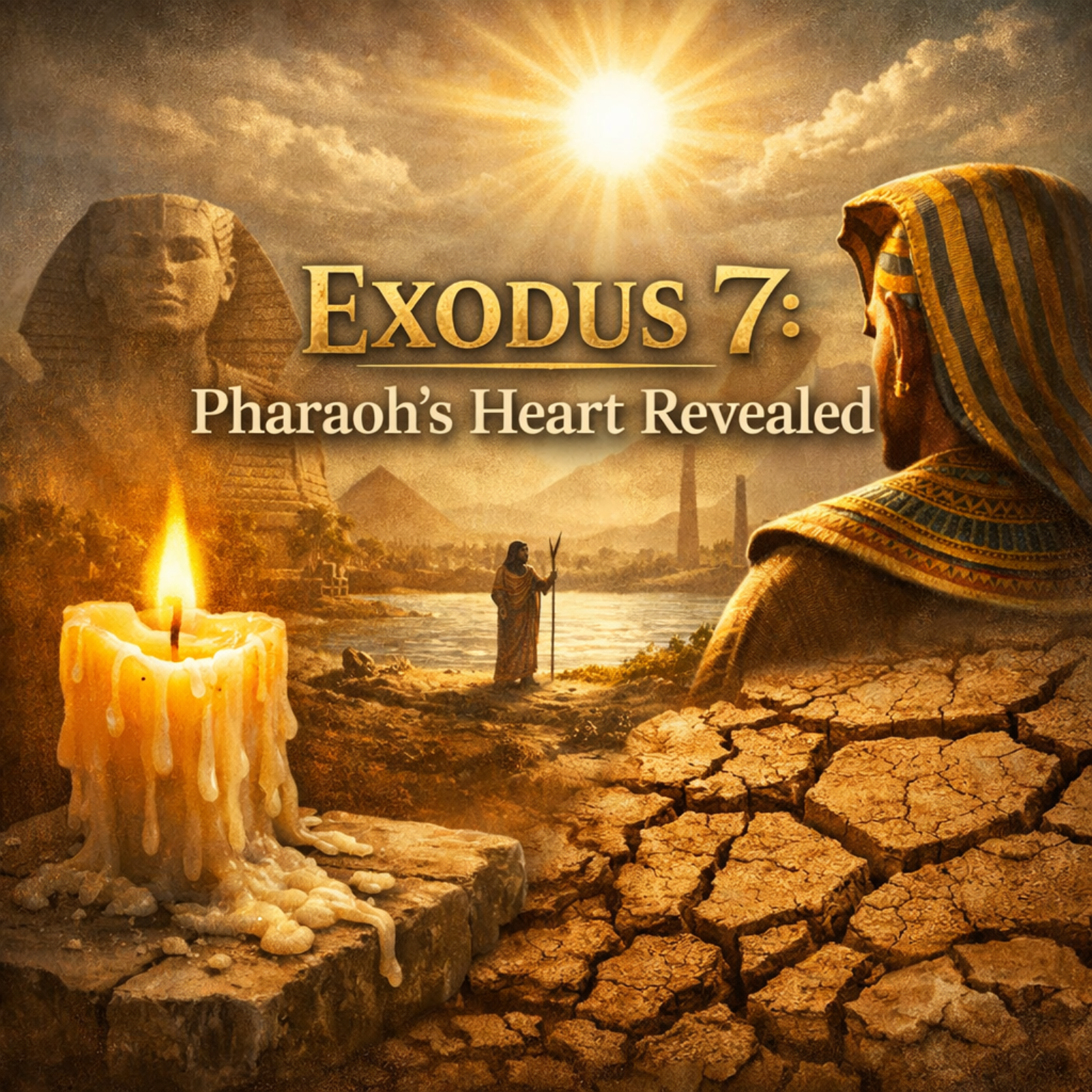
S1 Ep 85Exodus 7: Pharaoh's Heart Revealed
Pharaoh’s heart was already hardened—Exodus 7 simply reveals it. When the light of God confronts human pride, the heart either softens in humility or hardens in resistance.In Exodus 7, the confrontation between the Lord and Pharaoh begins in earnest. Moses and Aaron deliver a clear command from God: “Let my people go, that they may serve me in the wilderness.” Yet Pharaoh refuses to listen. The text tells us plainly that his heart is hardened and that he will not let the people go.But the story shows something deeper than simple defiance. Pharaoh’s hardened heart is not the result of God forcing stubbornness into him. Instead, it is the natural response of a proud ruler rejecting the authority of the living God.Pharaoh had already revealed his posture when he asked, “Who is the LORD, that I should obey his voice?” Confronted with God’s command, he chooses resistance rather than humility.A helpful way to understand this is through a simple picture: the same sun that melts wax also hardens clay. The sun itself does not change; the material responds according to its nature. In the same way, God’s presence softens the humble but strengthens the proud in their defiance.When Moses meets Pharaoh by the Nile and the first sign unfolds, God begins revealing His power through signs and wonders. These miracles are not merely punishments. They are revelations—showing that the God of the Hebrews is Lord over creation, over Egypt, and even over kings.Yet each sign only confirms what Pharaoh has already chosen. Instead of humbling himself before the Lord, he resists again and again. The light of God’s presence exposes the true condition of his heart.This story is more than ancient history. Exodus 7 reminds us that every encounter with God invites a response. The same truth that leads one person to repentance can lead another to resistance.The difference is not in God. The difference is in the heart.As the plagues begin and God’s power is revealed across Egypt, one message becomes unmistakably clear:“You shall know that I am the LORD.”If this episode helped you see Exodus 7 in a new light, consider sharing it with a friend, subscribing to the podcast, and continuing the journey through Scripture as the story of redemption unfolds.Scriptures ReferencedExodus 5:2 Exodus 7:3 Exodus 7:14–16 Exodus 7:17
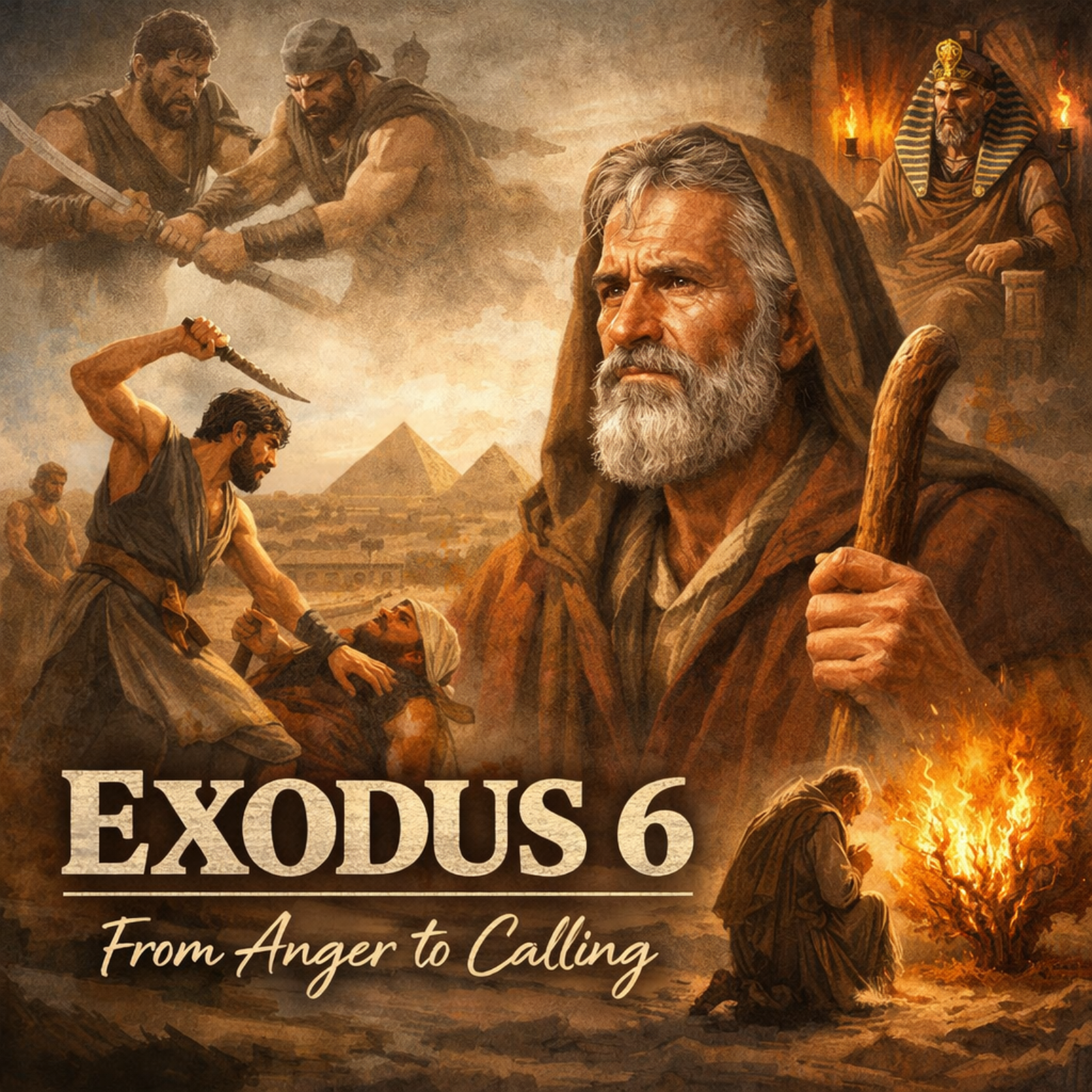
S1 Ep 84Exodus 6: From Anger to Calling
From Anger to Calling — The Redemption of Moses What if the worst moment of your past didn’t disqualify you from God’s calling—but became the very place He began redeeming your story?In this episode, we look at a quiet but powerful moment in Exodus 6 where the story pauses to remind us where Moses comes from. Before Moses stands before Pharaoh, the Bible traces his lineage back to Levi, a man whose name was once associated with fierce anger and violence. Generations earlier, Jacob spoke difficult words over Levi, remembering the destruction that came from uncontrolled wrath.And if we look closely, young Moses seems to follow that same path.In Exodus 2, Moses sees an Egyptian beating a Hebrew slave and responds in anger, striking the man down and hiding him in the sand. It is an impulsive act that forces Moses to flee Egypt and spend forty years in the wilderness of Midian.But the wilderness becomes a place of transformation.By the time we reach Exodus 6, Moses is no longer the confident young prince who thought he could fix injustice with his own strength. When God commands him to speak to Pharaoh again, Moses responds with hesitation:“Behold, I am of uncircumcised lips. How will Pharaoh listen to me?”The man who once acted too quickly now doubts his ability even to speak. The wilderness has humbled him. Scripture later describes Moses as the most meek man on the face of the earth.This episode explores how God redeems broken family histories and personal failures. Moses came from a line marked by anger. He himself carried the guilt of violence. Yet God shaped him through years of quiet obscurity into a humble servant prepared to lead a nation.For many of us, our past mistakes feel like they disqualify us. But the story of Moses reminds us that God does not waste our wilderness seasons. The same God who transformed a fugitive shepherd into the deliverer of Israel is still at work today—redeeming stories, reshaping hearts, and calling ordinary people to faithful obedience.If this episode encourages you, share it with a friend or neighbor who may need the reminder that our past does not have the final word—God does.Subscribe to follow along as we continue exploring the story of Exodus and the ways God calls imperfect people to participate in His greater story of redemption.Scriptures Referenced Genesis 49:5–7 Exodus 2:11–15 Exodus 6:10–11 Exodus 6:16–20 Exodus 6:28–30 Numbers 12:3
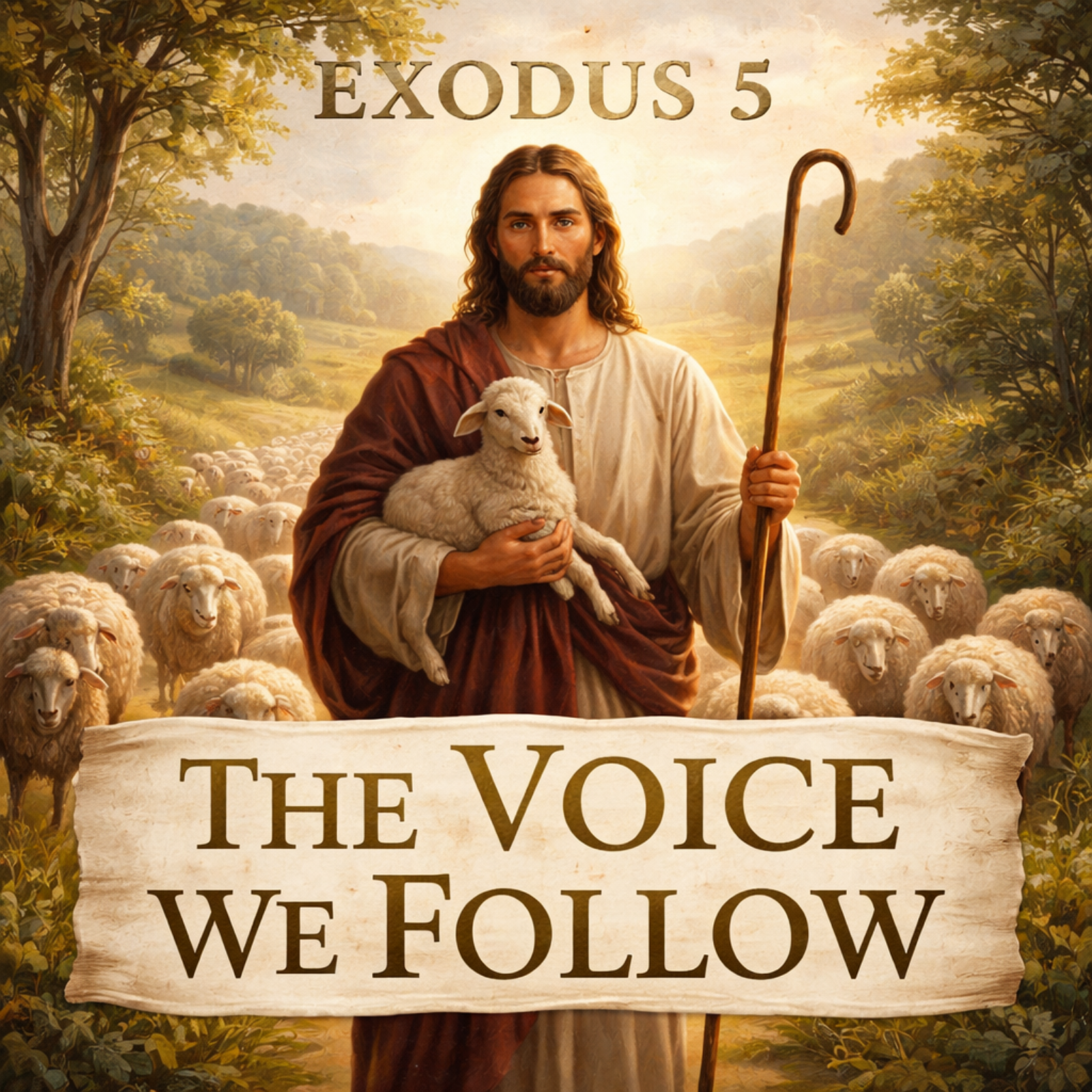
S1 Ep 83Exodus 5: The Voice We Follow
Who is the Lord that we should obey His voice? Pharaoh asked that question in defiance—but it’s a question every human heart must eventually answer.In Exodus 5, Moses and Aaron bring God’s command to Pharaoh: “Let my people go.” Pharaoh’s response reveals more than political resistance—it reveals a spiritual posture that has echoed since the beginning.“Who is the LORD, that I should obey his voice…? I do not know the LORD.” (Exodus 5:2)Pharaoh’s words mirror the ancient rebellion first whispered in Genesis 3. The serpent’s strategy in the garden was simple: question God’s voice and invite humanity to become its own authority. “Did God actually say…?” Soon that question led to the deeper lie: “You will be like God.”By the time we reach Exodus, that lie has grown into a kingdom. Pharaoh sits on the throne of Egypt believing himself divine, refusing to acknowledge the authority of the Lord. His refusal becomes the stage upon which God reveals His power through the plagues, the Passover, and the Exodus.But Pharaoh’s question did not disappear with Egypt.Centuries later, when Jesus walks the earth, many respond with the same resistance. Religious leaders ask, “By what authority are you doing these things?” Others simply refuse to recognize who He is. As John writes, “He was in the world… yet the world did not know him.”Pharaoh rejected the voice of God. The serpent taught humanity to doubt that voice. But Jesus invites us into something entirely different.“My sheep hear my voice, and I know them, and they follow me.”The mark of those who belong to Christ is not perfection—it is recognizing His voice and choosing to follow Him.Our world is filled with competing voices: ambition, fear, pride, comfort, approval. But beneath the noise there is still one voice calling—the voice of the Shepherd who leads us to life.The same Lord who confronted Pharaoh, spoke from the burning bush, calmed the storm, and rose from the grave now calls us to freedom.And His promise is clear:“If the Son sets you free, you will be free indeed.”So today the question is not just about Pharaoh. It is about us.When Jesus speaks… will we harden our hearts, or will we listen and follow?🎧 Listen to this episode and reflect on whose voice is shaping your life. If this message encourages you, share it with someone who needs to hear the voice of the Good Shepherd today.Scriptures ReferencedExodus 5:1–2 Genesis 3:1–5 John 1:10 Matthew 21:23 John 8:58 John 10:27 John 8:36
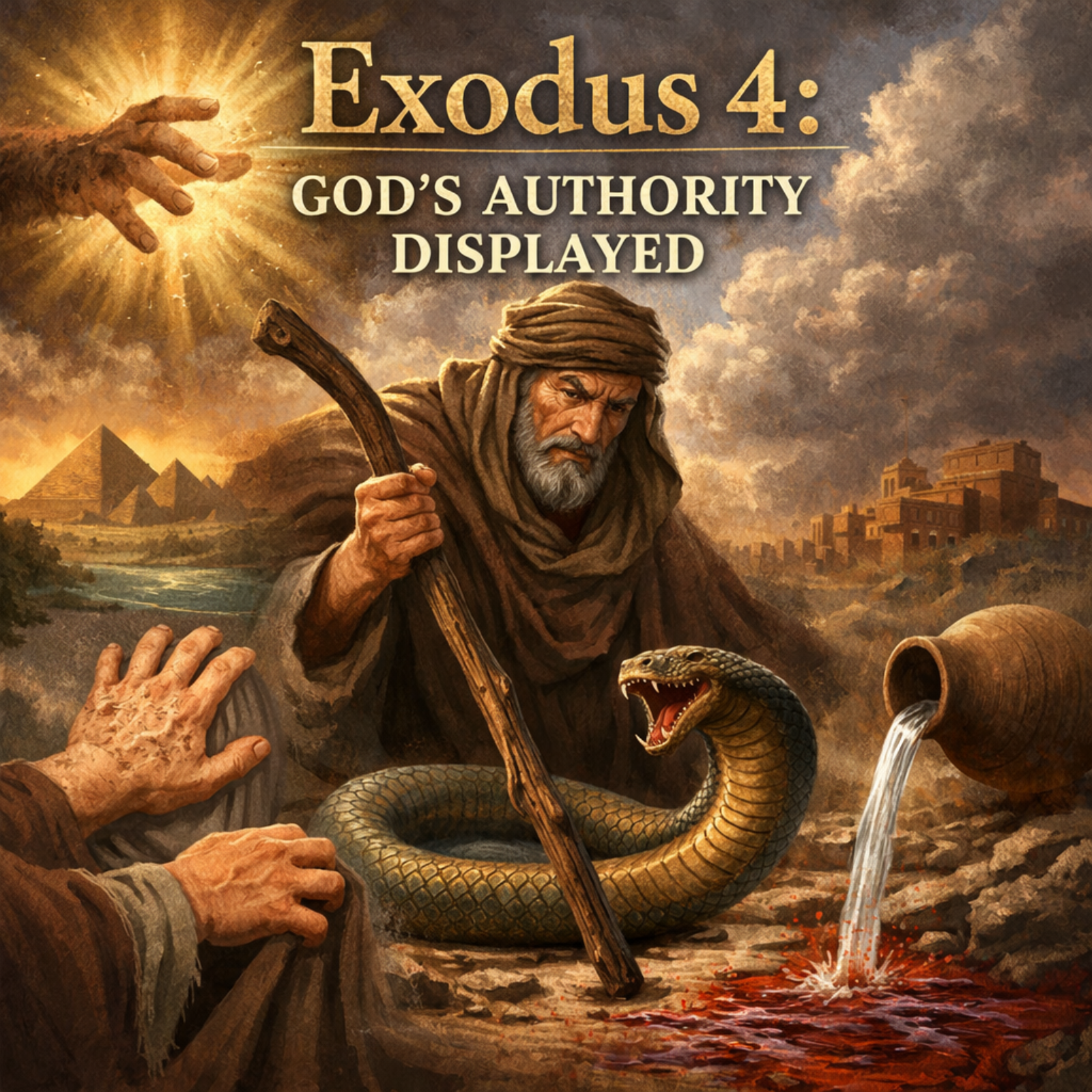
S1 Ep 82Exodus 4: God's Authority Displayed
What if the greatest obstacle to God’s calling isn’t Pharaoh—but our own hesitation?In Exodus 4, God reveals His authority through miraculous signs, a reluctant servant, and a promise that points forward to Jesus.In this episode, we explore Exodus 4: God’s Authority Displayed—a chapter where the Lord demonstrates that His power does not depend on human strength. Moses hesitates again and again, questioning whether Israel will believe him, whether he can speak well enough, and finally asking God to send someone else. Yet the Lord responds by revealing signs that display His authority over creation, sickness, life, and judgment.First, Moses’ staff becomes a serpent and then returns to a staff again. In Egypt, the serpent symbolized royal power, even appearing on Pharaoh’s crown. But God shows that what Egypt claims as authority is nothing more than a tool in His hand. The message is clear: the Lord rules over the powers of Egypt.Next, Moses’ hand becomes leprous and then instantly healed. Disease and restoration both obey God’s command, revealing His authority over the human body itself.Finally, God warns that water from the Nile—the lifeblood of Egypt—can become blood on the ground. This sign foreshadows the plagues that will soon confront Pharaoh and demonstrate that even Egypt’s greatest source of life is subject to the will of God.But Exodus 4 does more than prepare us for the plagues. It also introduces a powerful theme that echoes throughout the rest of Scripture. God calls Israel His firstborn son and commands Pharaoh to release them. When Pharaoh refuses, God declares that Egypt’s firstborn will fall.This moment foreshadows the final plague and the night of Passover—but it also points further ahead. Centuries later, the Gospel of Matthew tells us that Jesus comes out of Egypt, fulfilling the words spoken long before: “Out of Egypt I called my son.”There is another echo here as well. Moses struggles with the calling placed before him. He hesitates, protests, and asks God to send someone else. Yet eventually he accepts the mission.In the garden of Gethsemane, Jesus also faces the weight of His calling. Knowing the suffering before Him, He prays, “Father, if it be possible, let this cup pass from me. Nevertheless, not my will, but Yours be done.” Where Moses reluctantly carries a staff into Egypt to free Israel from slavery, Jesus willingly carries the cross to free humanity from sin.Exodus 4 reminds us that God’s authority does not depend on perfect messengers. He uses ordinary people, ordinary objects, and even reluctant hearts to accomplish His purposes.The question is not whether we are strong enough for what God asks of us.The question is whether we trust the authority of the One who sends us.If this episode encouraged you, consider sharing it with a friend, subscribing to the podcast, and joining the daily readings in “The One Story That Leads to Jesus.” Together we’re discovering how every part of Scripture points to Christ.Scriptures ReferencedExodus 3:11–12Exodus 4:1–17Exodus 4:22–23Exodus 7–12 (Plagues in Egypt)Matthew 2:13–15Matthew 26:39Hosea 11:1
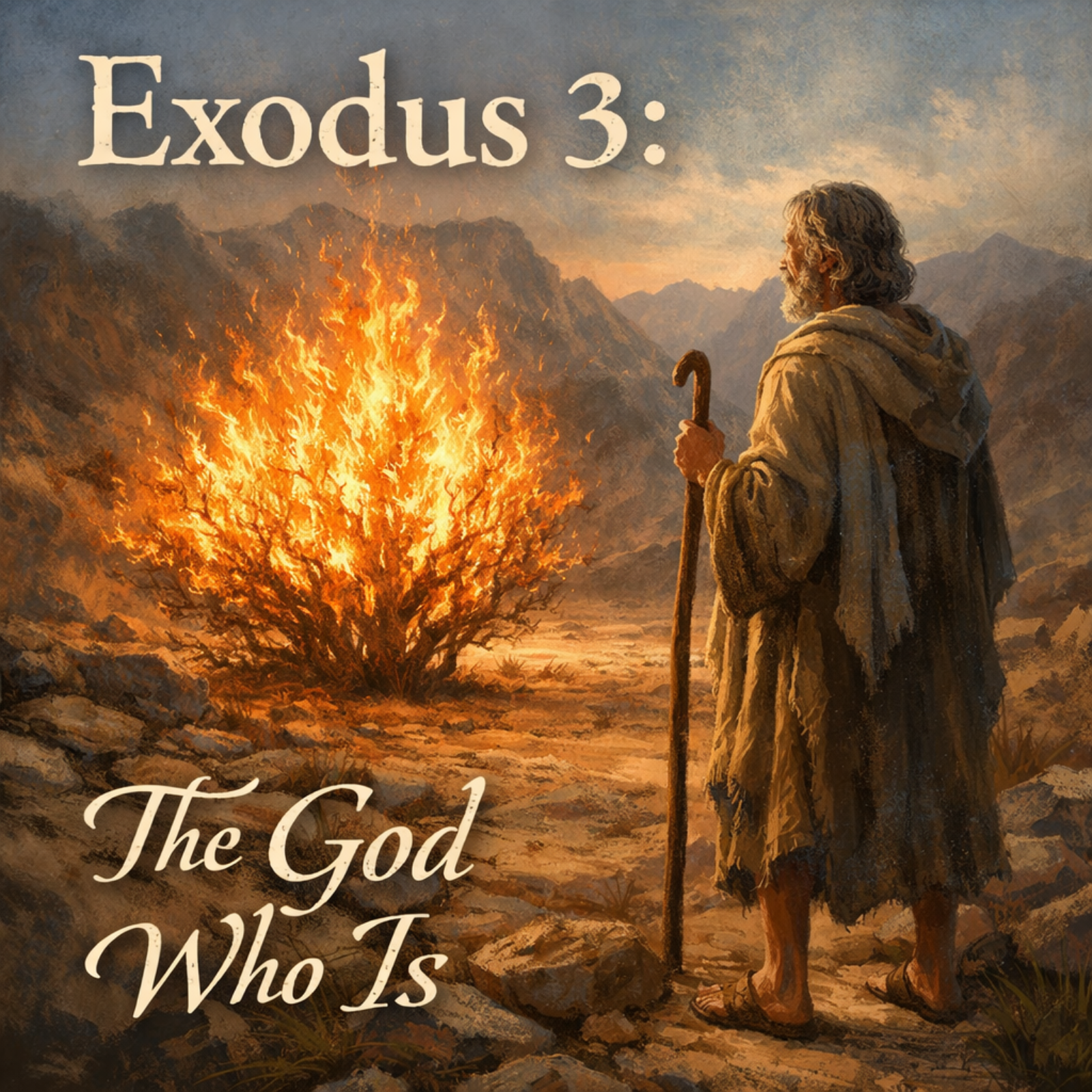
S1 Ep 81Exodus 3: The God Who Is
Before Moses receives a mission, he receives a revelation.Exodus 3 is not first about what we must do for God—but about who God is.In this episode of In the Garden, we stand with Moses on holy ground and listen carefully to the voice from the burning bush. Exodus 3 is one of the most profound revelations in all of Scripture. A shepherd in the wilderness encounters a fire that burns but does not consume—and from that flame, God reveals His name.Moses is not in Egypt. He is not leading. He is not succeeding. He is keeping sheep. Forty years removed from Pharaoh’s palace and forty years into obscurity, God calls his name. Before the command comes the presence. Before the assignment comes identity.“I am the God of your father, the God of Abraham, the God of Isaac, and the God of Jacob.”This is not a new deity rising in power. The God who calls Moses back to Egypt is the same God who called Abraham into the promised land. The same voice that once said, “Go from your country… to the land that I will show you,” now says, “Come, I will send you to Pharaoh.” One call began the promise. This call will preserve it.When Moses asks for God’s name, he is not asking for a label—he is asking for authority, character, reality. And God responds with words that echo through eternity:“I AM WHO I AM.”In Hebrew: Ehyeh Asher Ehyeh.God does not define Himself in comparison to other gods. He does not describe His function or specialty. He simply is. Self-existent. Uncaused. Unchanging. Everything else in creation becomes. God is.Then He declares: “YHWH… This is my name forever, and thus I am to be remembered throughout all generations.”The name YHWH flows from that same verb “to be.” If God says “I AM,” then to His people He is known as “He IS.” Not the god of the Nile. Not the god of the sun. Not the god of fertility. In Egypt, every deity had limits and domains. But the God of the burning bush has no boundaries. He is Being itself.This revelation changes everything. The Exodus will not depend on Moses’ confidence. Moses will question, hesitate, and protest. But the power behind deliverance rests on the One who simply says, “I AM.”And this name is not temporary. “This is my name forever.” The God who called Abraham is the God who called Moses. The God who was is the God who is. And the God who is remains faithful to His covenant across generations.In a world of shifting identities and unstable foundations, Exodus 3 anchors us in the eternal character of God. Before we ask what God is calling us to do, we must understand who He is.The ground becomes holy not because Moses is brave, but because God is present.If this episode strengthened your understanding of God’s revealed name, share it with a friend, leave a review, and continue walking with us through “The One Story That Leads to Jesus.” Take time today to read Exodus 3 slowly. Listen for the name. Stand on holy ground.Scriptures Referenced:Exodus 3:1–15Genesis 12:1Genesis 15:7Genesis 26:24Genesis 28:13
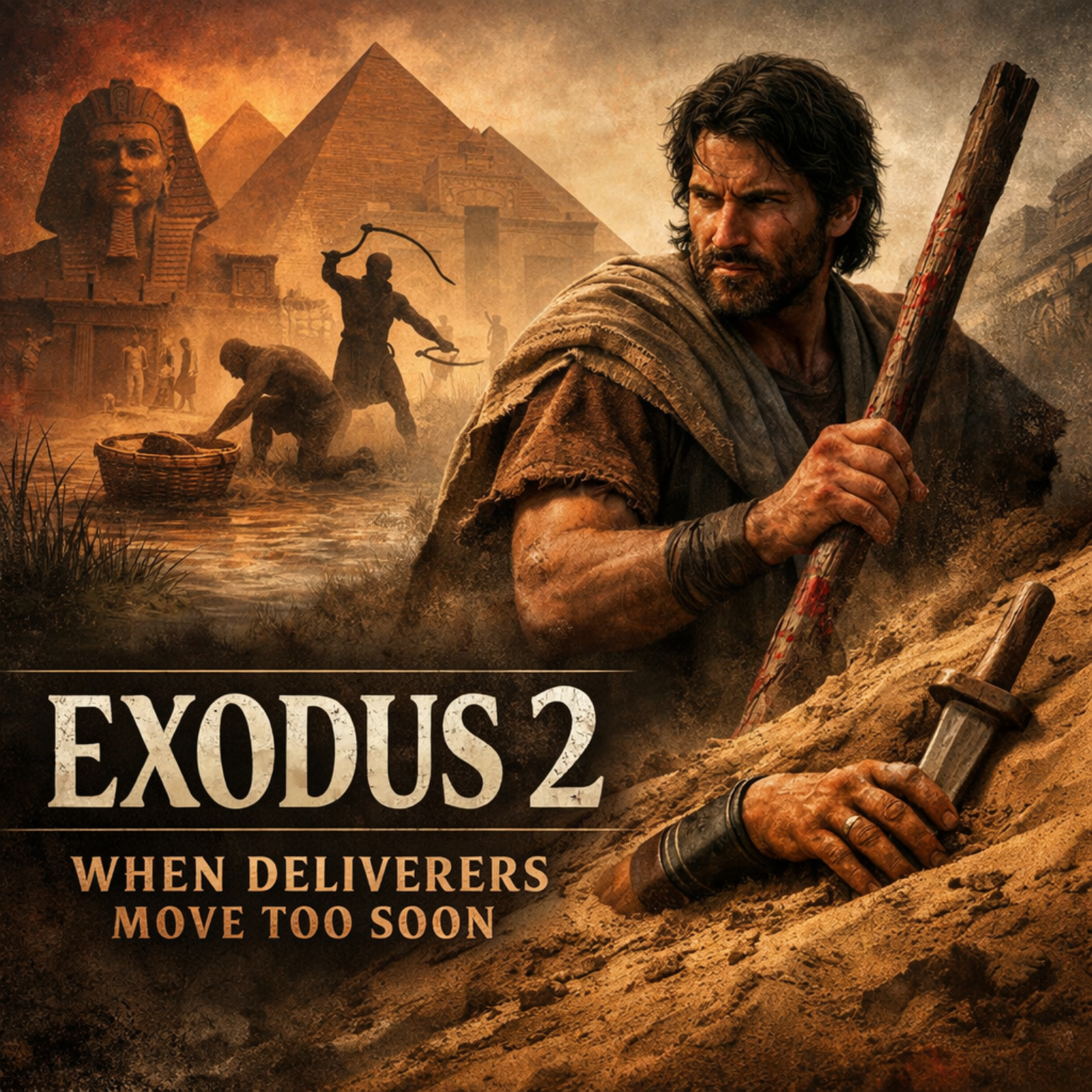
S1 Ep 80Exodus 2: When Deliverers Move Too Soon
Deliverance cannot be forced. Even righteous causes collapse when pursued with unrighteous methods.Exodus 2 reveals how zeal without timing can wound the very mission it longs to fulfill.In this episode of In the Garden, Exodus 2 unfolds against the backdrop of Pharaoh’s brutality. A fearful king turned the Nile into a graveyard, commanding Hebrew baby boys to be thrown into the river. Yet God quietly overturned evil. A child placed among the reeds was drawn out of the water and named Moses—preserved for a purpose.Years later, that same Moses witnessed injustice. An Egyptian beat a Hebrew slave. The text tells us he looked this way and that, saw no one, struck down the Egyptian, and hid him in the sand. The oppression was real. Pharaoh’s cruelty was undeniable. But two wrongs do not make a right.This episode explores the tension between calling and impatience. Moses sensed destiny but acted without commission. Compassion and anger fused into calculated violence. The result was exile. The deliverer fled to Midian, where obscurity replaced privilege and shepherding replaced power.Exodus 2 teaches a sobering truth: righteous ends never justify unrighteous means. Pharaoh threw sons into the river. Moses buried a man in the sand. Though their motives differed, retaliation did not bring redemption.God’s purposes are not advanced through haste, secrecy, or force. They unfold through obedience, surrender, and timing. The wilderness years were not wasted; they were formative. Egypt trained Moses to act. Midian trained him to wait.This episode reflects on:The difference between burden and commissionThe danger of zeal without alignmentWhy retaliation cannot accomplish deliveranceHow God shapes leaders in hidden placesThe simple but enduring truth that two wrongs do not make a rightWhen Moses finally returned to Egypt, he did not strike in secret. He stood in public obedience with nothing but a staff and the word of the Lord. Deliverance came—not through human vengeance—but through divine power.For anyone wrestling with urgency, injustice, or the weight of calling, Exodus 2 offers both warning and hope. Failure does not disqualify. Impatience does not cancel purpose. But God’s work must be done God’s way.Listen, reflect, and share this episode with someone navigating tension between passion and patience. Subscribe to In the Garden and continue walking through Scripture as one unified story that leads to redemption.Scriptures Referenced:Exodus 2:1–25Exodus 1:8–22
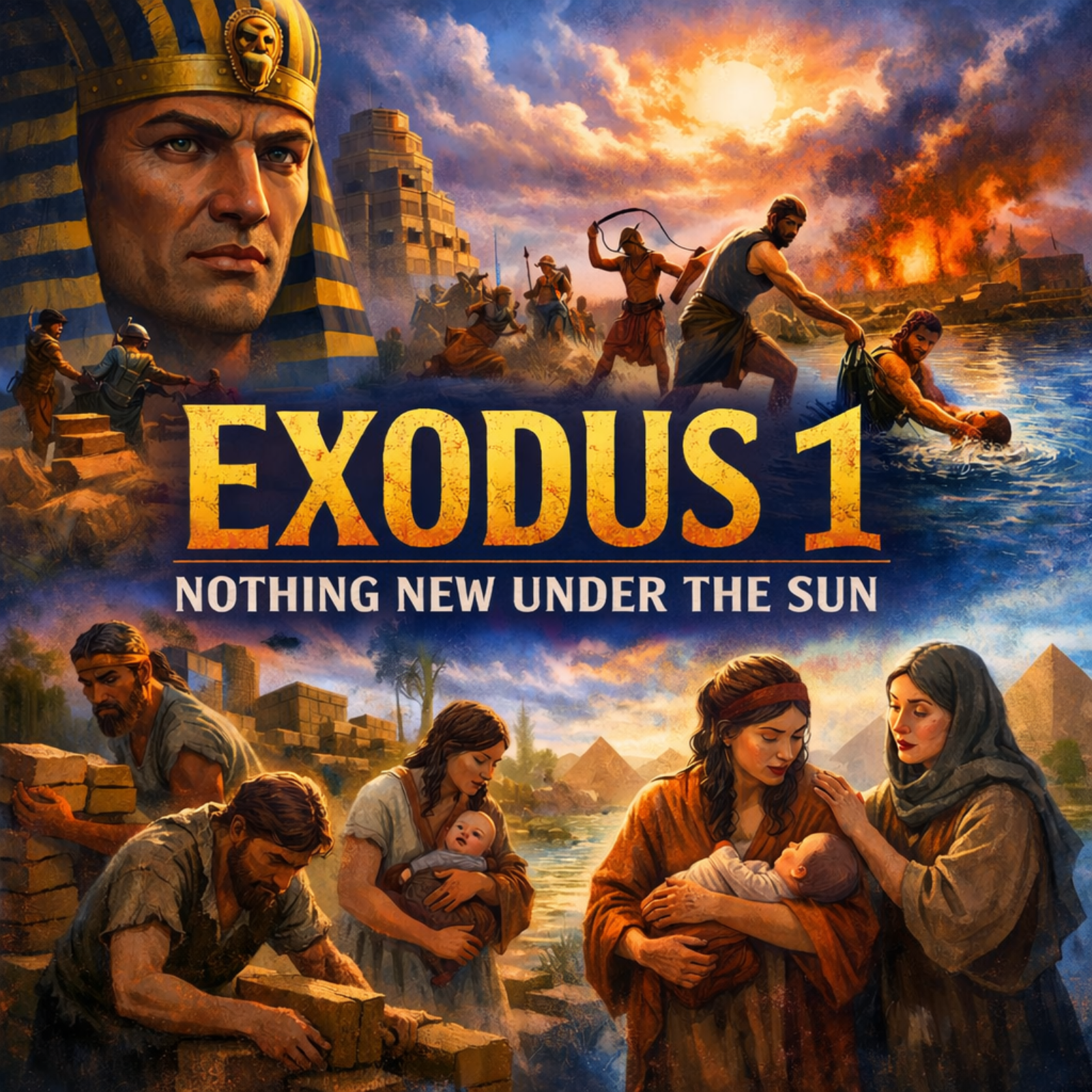
S1 Ep 79Exodus 1: Nothing New Under the Sun
Fear multiplies when blessing multiplies.Exodus 1 shows us that human sin repeats itself—but so does God’s faithfulness.In this episode, we explore how Exodus 1 reveals a familiar biblical pattern: multiplication leads to fear, fear leads to control, and control leads to oppression. Pharaoh’s reaction to Israel’s growth is not new evil—it is Genesis sin wearing a crown.Israel is fruitful and multiplying in Egypt, echoing God’s command in Eden and His promise to Abraham. But instead of rejoicing, Pharaoh panics:“Come, let us deal shrewdly with them…”Those words echo Babel. Humanity once said, “Come, let us…” in an attempt to secure their own future. Now Egypt says it in an attempt to stop God’s promise. The pattern is clear:Multiplication → Fear → OppressionWe trace this pattern backward:Before the Flood, the earth was filled with violence.At Babel, fear of losing control led to centralized power.In Sodom, pride and prosperity turned predatory.In Egypt, fear becomes policy, slavery, and finally genocide.Pharaoh escalates from forced labor to secret infanticide to nationalized slaughter. Sin always escalates when unchecked. What begins as anxiety becomes oppression. What begins as insecurity becomes violence against the vulnerable.But Exodus 1 is not only about repeating sin—it is about repeating faithfulness.In Genesis, God responded to widespread evil with judgment: floodwaters, confusion, fire. In Exodus, God begins preparing deliverance.Before Moses is born, two unlikely heroes stand in quiet defiance: Shiphrah and Puah. The text tells us they “feared God.” Pharaoh feared losing control; the midwives feared the Lord. And the fear of God proved stronger than the fear of empire.Ironically, the more Israel is oppressed, the more they multiply. Oppression cannot cancel a promise God has spoken.This episode explores:The recurring biblical theme of fear-driven oppressionThe escalation of systemic evilThe contrast between fearing power and fearing GodThe preservation of a faithful remnantGod’s covenant faithfulness beneath the surface of sufferingExodus 1 reminds us that evil often looks organized, powerful, and unstoppable. But empires are temporary. God’s promises are not.The chapter ends with baby boys thrown into the Nile. Soon, one Hebrew child will pass through those waters and become the instrument of deliverance. The story of redemption is already moving.History repeats.Sin repeats.But redemption repeats too.Listen to this episode and consider: when fear rises, which voice will shape the response—“Come, let us deal shrewdly…” or “They feared God”?If this episode encourages you, share it, subscribe, and continue walking through The One Story That Leads to Jesus. Join the conversation and help others see the thread of redemption woven through Scripture.Scriptures Referenced:Genesis 1:28Genesis 6:11Genesis 11:4Genesis 19Exodus 1:7–10Exodus 1:11Exodus 1:15–17Exodus 1:22
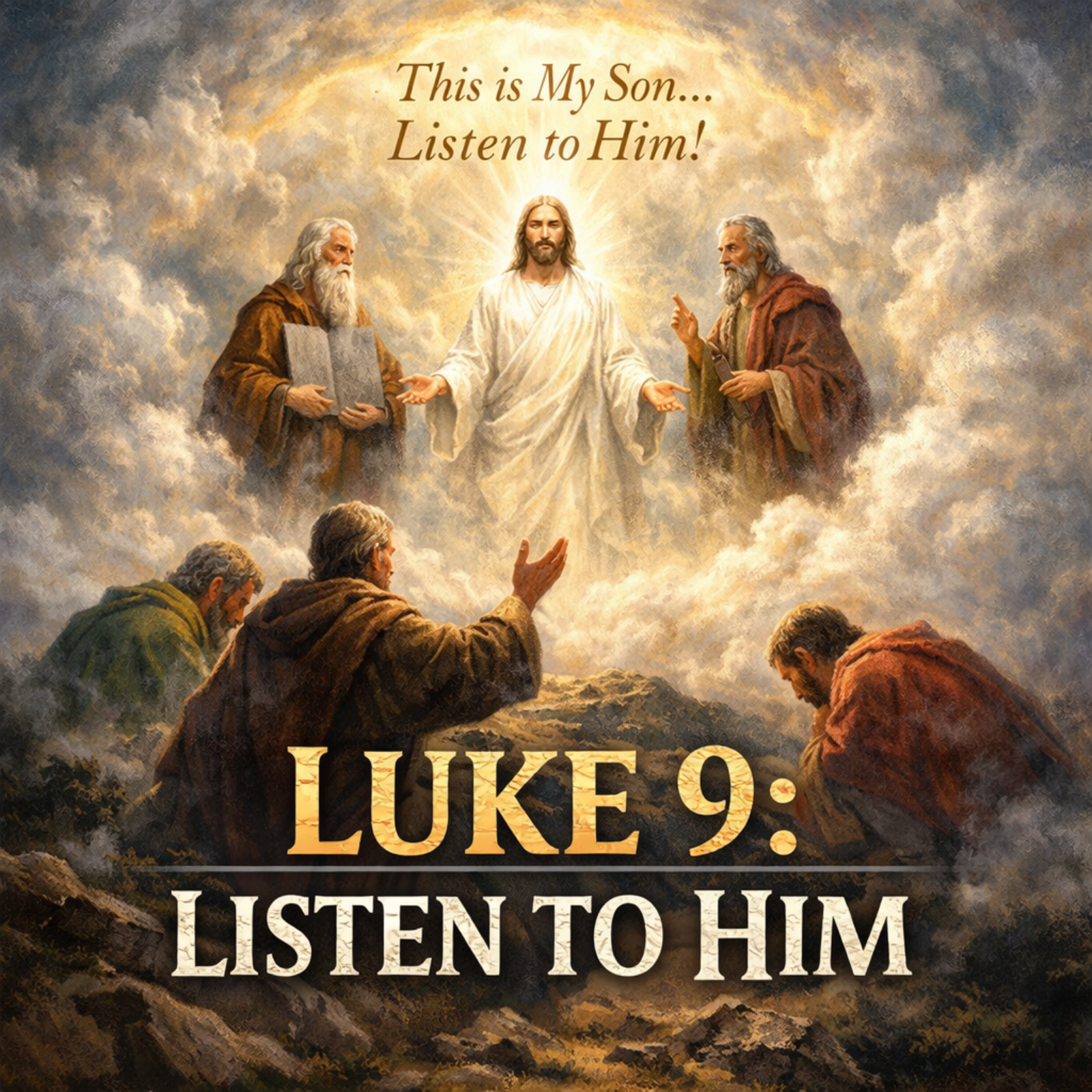
S1 Ep 78Luke 9: Listen to Him
Glory on the mountain. Confusion in the valley.In Luke 9, the Father interrupts human misunderstanding with one clear command: “Listen to Him.”In this episode, we explore the theological heart of Luke 9:33–36 — the Transfiguration — and why this moment reframes everything else in the chapter.Jesus feeds five thousand with five loaves and two fish. He sends out the Twelve with authority over demons. He delivers a tormented boy when the disciples cannot. Power is on display. Glory is visible. The crowds are fed.But twice in this same chapter, Jesus foretells His suffering and death — and the disciples do not understand.Then comes the mountain.Peter sees Jesus shining in radiant glory, speaking with Moses and Elijah. The Law and the Prophets stand beside Him. Overwhelmed, Peter suggests building three tents — placing Jesus alongside Israel’s greatest figures.Luke gently tells us, “not knowing what he said.”Then the cloud descends — echoing Sinai, the wilderness, and the tabernacle. And the voice of the Father speaks:“This is my Son, my Chosen One; listen to him!”When the voice finishes, “Jesus was found alone.”That is the theological center of Luke 9.The Father does not say, “Admire Him.”He does not say, “Study them all equally.”He says, “Listen to Him.”Listen when He multiplies bread.Listen when He casts out demons.Listen when He says, “The Son of Man must suffer.”Listen when He commands, “If anyone would come after me, let him deny himself and take up his cross daily and follow me.”Before there was a literal cross at Golgotha, there was already a call to surrender.On the mountain, Moses and Elijah speak with Jesus about His “departure” — in Greek, exodos. A new Exodus is coming. Not from Egypt, but from sin and death. And it will not be accomplished by plagues or parted seas, but by a crucified Messiah.The disciples want visible glory without costly obedience. We often do the same.Luke 9 confronts us with a decision:Will we build tents around the comfortable parts of Jesus?Or will we listen to Him — especially when He speaks about suffering, sacrifice, and surrender?As Jesus soon “sets His face toward Jerusalem,” the road becomes clear. Glory does not bypass the cross. It passes through it.And when the cloud lifts, only Jesus remains.Call to Action:Take time this week to read Luke 9 slowly. Ask yourself: Where am I resisting what Jesus has clearly said? Pray for ears to hear and a heart ready to obey. Share this episode with someone who needs clarity in confusion, and join the conversation about what it truly means to follow Christ.Scriptures Referenced:Luke 9:1–6Luke 9:10–17Luke 9:18–27Luke 9:28–36Luke 9:37–45Luke 9:51
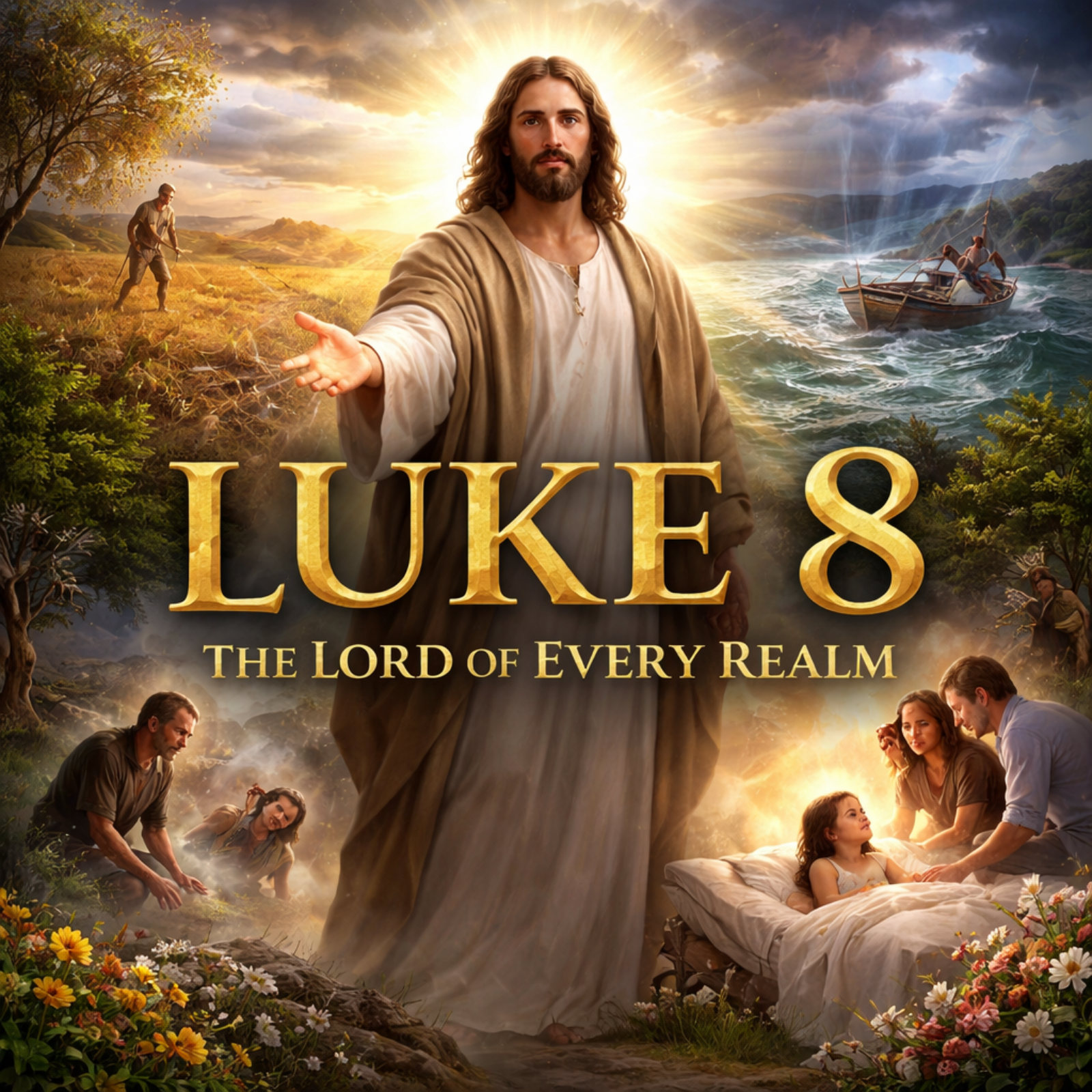
S1 Ep 77Luke 8: The Lord of Every Realm
Have you ever wondered who Jesus really is? In Luke 8, we see Him reveal His authority over every realm—hearts, storms, demons, disease, and even death. Join us as we walk through this chapter and witness the power of the Son of God restoring His garden.In this episode of In The Garden, we explore how Luke 8 paints a vivid portrait of Jesus as one with God, walking among creation with authority and compassion. From the Parable of the Sower to the raising of Jairus’ daughter, each story reveals a facet of His Kingdom and the way it grows in human hearts.Seed and Soil: Discover how Jesus teaches the importance of hearing and doing God’s Word. Our hearts are like soil—some rocky, some thorny, some fruitful. How receptive is your heart to His message?Light and Responsibility: Jesus reminds us that truth is not to be hidden. Our understanding and faith grow as we actively receive and obey His Word.Redefining Family: True kinship with Jesus is not defined by blood, but by obedience. Those who hear and act on His Word belong to His spiritual family.Storms and Faith: Witness how Jesus calms the Sea of Galilee, teaching that trust in Him must anchor our hearts, even when life’s storms rise.Legion and Restoration: Watch Him free a man possessed by demons, demonstrating His authority over evil and His power to restore what was broken.Healing and Resurrection: From the woman with the hemorrhage to Jairus’ daughter, see how Jesus brings life, hope, and wholeness—reclaiming what death and disease sought to take.Throughout Luke 8, Jesus demonstrates that He is Lord of all creation, over nature, the unseen, human suffering, and even death itself. Each miracle is a sign that the garden is being restored wherever He is received. His invitation remains: take care how you hear, trust His authority, and let your heart become fertile ground for the Kingdom of God.Call to Action: Reflect on your own heart—what kind of soil are you offering to the Word? Take time today to hear, obey, and let His Kingdom grow in your life. Share this episode with someone who needs to experience Jesus’ authority and love in their world.Scriptures Referenced: Luke 8:5–56 (Parable of the Sower, Light on a Stand, True Family, Calming the Storm, Healing the Legion, Woman with the Hemorrhage, Jairus’ Daughter)
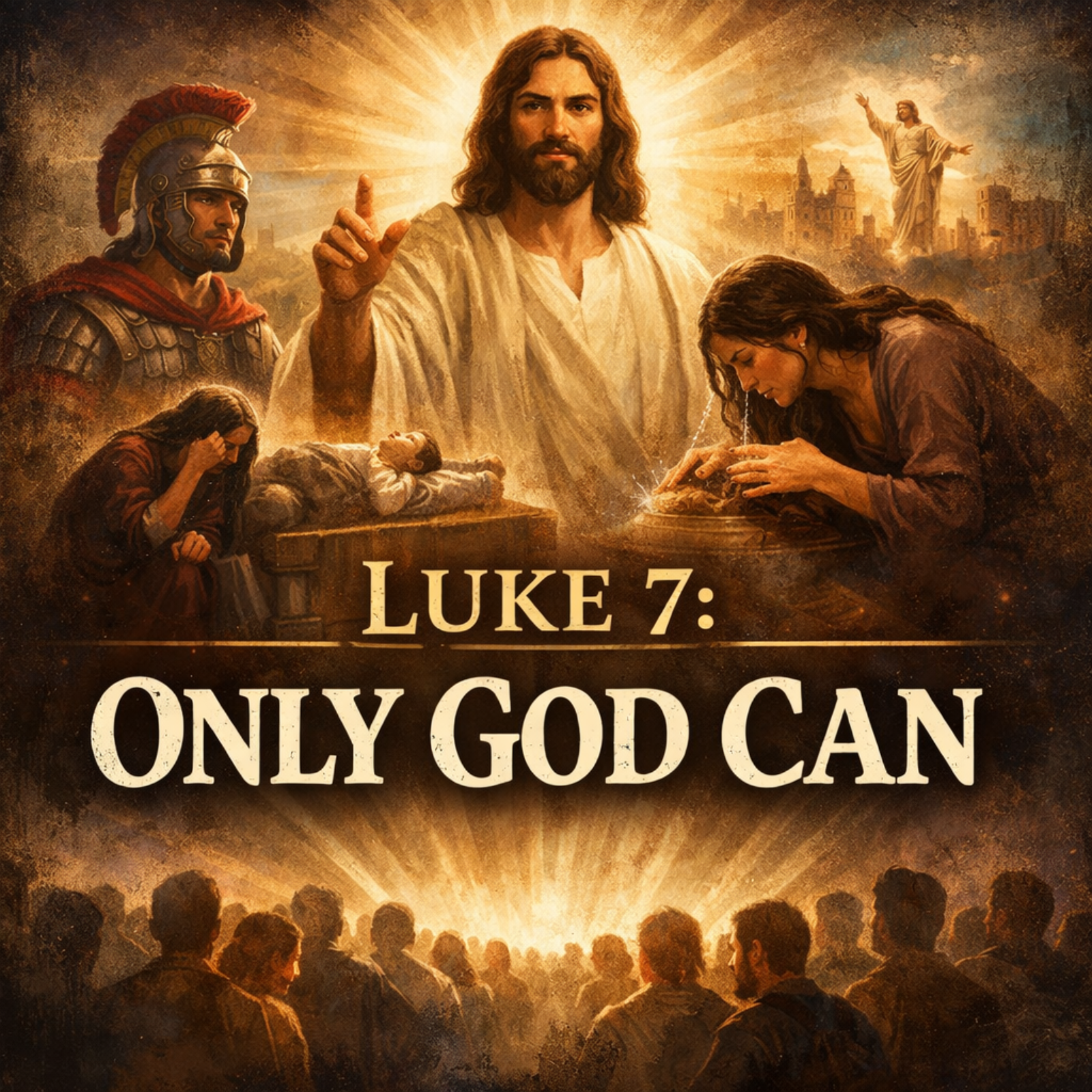
S1 Ep 76Luke 7: Only God Can
Only God Can. In Luke 7, Jesus doesn’t just claim authority—He demonstrates it. Healing, raising the dead, forgiving sins—this chapter answers one question: Who is this?In this episode, we continue the unveiling that began in Luke 6, where Jesus declared Himself Lord of the Sabbath. Now in Gospel of Luke 7, He shows us what that lordship truly means. Authority over a day becomes authority over disease. Authority over tradition becomes authority over death. Authority over teaching becomes authority over sin itself.A Roman centurion sends word: “Just say the word.” And Jesus does. With no touch and no ritual, a servant is healed at a distance. Creation responds to His voice.In Nain, a widow walks behind her only son’s coffin. Jesus interrupts the funeral and commands the dead to rise. Not a prayer upward—but a word outward. The young man sits up. The crowd declares, “God has visited His people.”When John the Baptist asks if Jesus is truly the One, Jesus answers not with argument but with action. The blind see. The lame walk. Lepers are cleansed. The deaf hear. The dead are raised. The poor receive good news. The works testify.Then at a Pharisee’s table, a sinful woman weeps at His feet. Her tears fall freely. Her worship is costly. The religious host questions Jesus’ legitimacy. But Jesus tells a story of two debtors—one forgiven much, one forgiven little—and reveals a deeper truth: love flows from forgiveness.And then He says the unthinkable: “Your sins are forgiven.”The room goes silent.Healing at a distance. Power over death. Authority over creation. And now—authority over sin.Only God can forgive sins. And Jesus does it without hesitation.Luke 7 is not merely a collection of miracles. It is a revelation of identity. Each scene presses the same question: Who is this? The centurion sees it. The widow experiences it. The forgiven woman embraces it. The crowds whisper it.This episode explores how Luke carefully shows—not just tells—that Jesus is more than prophet, more than teacher, more than reformer. He is Lord of all: Lord of sickness, Lord of death, Lord of salvation.And the response He seeks is not sterile religion—but love born from forgiveness.If this episode encouraged you, share it with someone who needs hope today. Subscribe, leave a review, and join us as we continue walking through “The One Story That Leads to Jesus.” And take time to read Luke 7 slowly this week—ask yourself the same question the dinner guests asked:Who is this?Because how you answer that question changes everything.Scriptures Referenced: Luke 6:5 Luke 7:1–50 Isaiah 35:5–6 Isaiah 61:1 Psalm 51:4
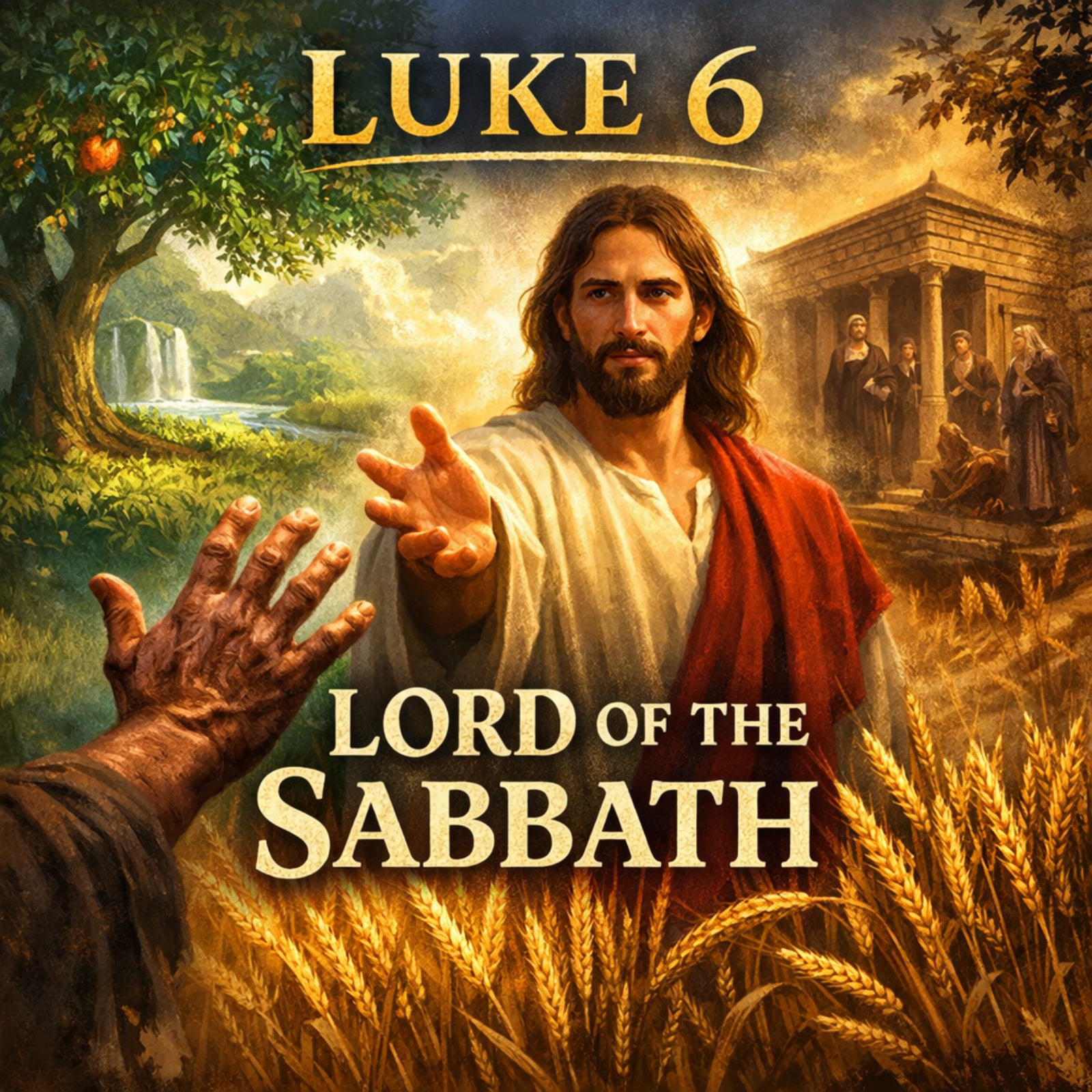
S1 Ep 75Luke 6: Lord of the Sabbath
The Sabbath began in a garden — but in Luke 6, the Lord of the garden walks among grainfields and restores a withered hand. What if the Sabbath was never about protecting a rule, but about restoring what sin has withered?In this episode of In the Garden, we explore Gospel of Luke chapter 6 through the thread of Eden, Sabbath, and restoration. Genesis ends with a coffin in Egypt, but Luke reveals the Author of creation stepping back into His world — not to abolish rest, but to reclaim it.When the Pharisees accuse the disciples of breaking the Sabbath for plucking grain, Jesus makes a stunning declaration: “The Son of Man is Lord of the Sabbath.” (Luke 6:5)The Sabbath was born in Eden (Genesis 2:3). It was never merely a restriction; it was a gift — a sign of wholeness, communion, and trust. But after the fall, rest became shadowed by law and guarded by tradition. By the time we reach Luke 6, the question is no longer simply What is allowed? but Who has authority?Jesus does not argue technicalities. He reveals identity.The conflict intensifies when a man with a withered right hand stands in the synagogue. On the Sabbath, under watchful and critical eyes, Jesus asks a piercing question:“Is it lawful on the Sabbath to do good or to do harm, to save life or to destroy it?” (Luke 6:9)There is no neutral ground. To withhold mercy is to do harm. To refuse to act when good can be done is to participate in destruction.The word “save” (Greek: sōzō) echoes beyond physical healing — it speaks of restoration, rescue, salvation. The man stretches out his hand in trust, and it is restored. The Lord of the Sabbath demonstrates what Sabbath was always meant to be: the restoration of what has withered.Luke 6 then unfolds the character of those who live under His Lordship:Blessings and woesLove for enemiesMercy instead of judgmentTrees known by their fruitFoundations built on rockThis chapter is not random teaching. It is life under the authority of the Lord of the Sabbath.And it ends with a sobering question from Jesus:“Why do you call me ‘Lord, Lord,’ and not do what I tell you?” (Luke 6:46)In a world east of Eden — weary, striving, fractured — Jesus offers more than a day off. He offers restored communion with God. He offers Himself.The question for us is simple: Will we defend our definitions of rest — or will we stretch out our withered hands?If this episode encouraged you, share it with a friend, reflect on Luke 6 this week, and ask the Lord to reveal where restoration is needed in your life. Join us as we continue tracing the One Story that leads to Jesus — from garden to wilderness, from law to grace, from withering to life.Scriptures Referenced: Genesis 2:3 Luke 6:1–11 Luke 6:5 Luke 6:9 Luke 6:20–49 Luke 6:46
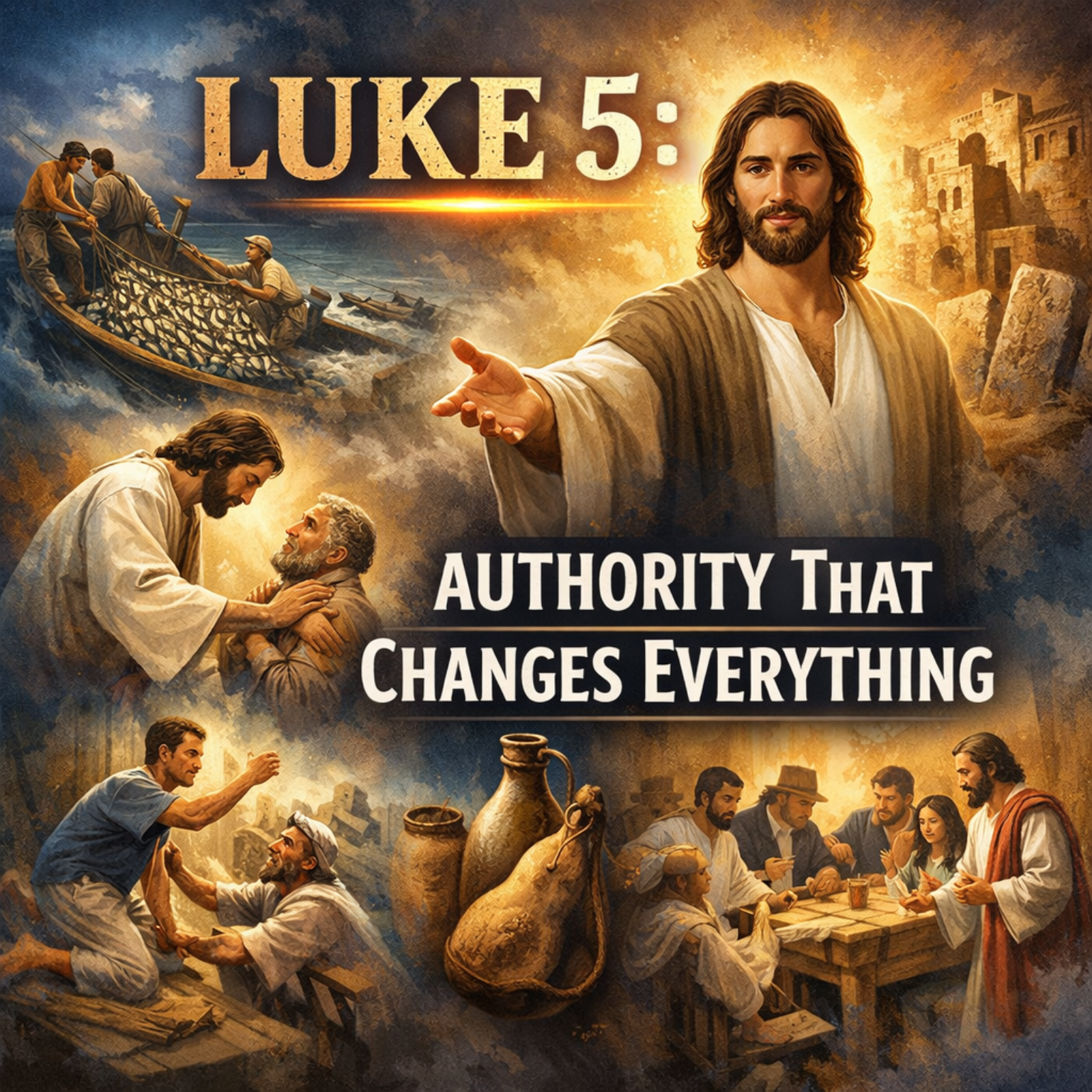
S1 Ep 74Luke 5: Authority That Changes Everything
He commands fish, cleanses lepers, forgives sins, calls sinners, and redefines religion — all in one chapter. Luke 5 reveals the authority of Jesus and invites us to decide what we will do with it.In this episode of In the Garden Podcasts, we walk through Luke 5 as one unified revelation of who Jesus is. These aren’t random miracle stories. Luke carefully stacks the evidence: Jesus has authority over creation, disease, paralysis, sin, sinners, and even the religious structures of His day.We begin on the water. After a night of failure, Peter lets down the nets “at your word.” The result? Overflowing boats and breaking nets. Confronted with divine power, Peter falls at Jesus’ knees: “Depart from me, for I am a sinful man, O Lord.” When Jesus’ authority is revealed, human sin becomes visible. Yet instead of sending Peter away, Jesus calls him: “Do not be afraid… from now on you will be catching men.” Authority leads to mission.Next, a man “full of leprosy” kneels and says, “Lord, if you will, you can make me clean.” Jesus does the unthinkable — He touches him. Instead of uncleanness spreading to Jesus, holiness spreads to the leper. “I will; be clean.” The authority of Christ reverses contamination and restores the outcast.Then comes the paralyzed man lowered through the roof. Jesus shocks the crowd: “Man, your sins are forgiven you.” The scribes understand the implication — only God forgives sins. To prove His authority, Jesus heals the man physically. The visible miracle confirms the invisible reality: the Son of Man has authority on earth to forgive sins. The deepest paralysis is not in the body but in the soul.Jesus then calls Levi, a tax collector. The same authority that filled boats now reaches into moral compromise. “Follow me.” Levi leaves everything and hosts a feast. When religious leaders grumble, Jesus answers, “Those who are well have no need of a physician, but those who are sick.” His authority is not for display — it is for rescue.Finally, Jesus declares Himself the Bridegroom and speaks of new wine and new wineskins. The kingdom He brings cannot be contained in old religious systems. Yet many prefer the old wine because it feels familiar. Luke ends with tension: will we cling to comfort, or receive the new work of God?Throughout Luke 5, the response is consistent: surrender. Peter falls down. The leper kneels. The paralytic glorifies God. Levi leaves everything. When we truly see Christ’s authority, casual admiration is not enough — we follow.This episode invites you to examine your own heart. Where are you resisting His authority? Where are you clinging to old nets or old wineskins? Jesus still speaks. He still cleanses. He still forgives. He still calls.Listen now, share this episode, and join us as we seek to follow the One whose authority still changes everything.Scriptures Referenced: Luke 5:4–11; Luke 5:12–13; Luke 5:20, 23–25; Luke 5:27–32; Luke 5:34–39
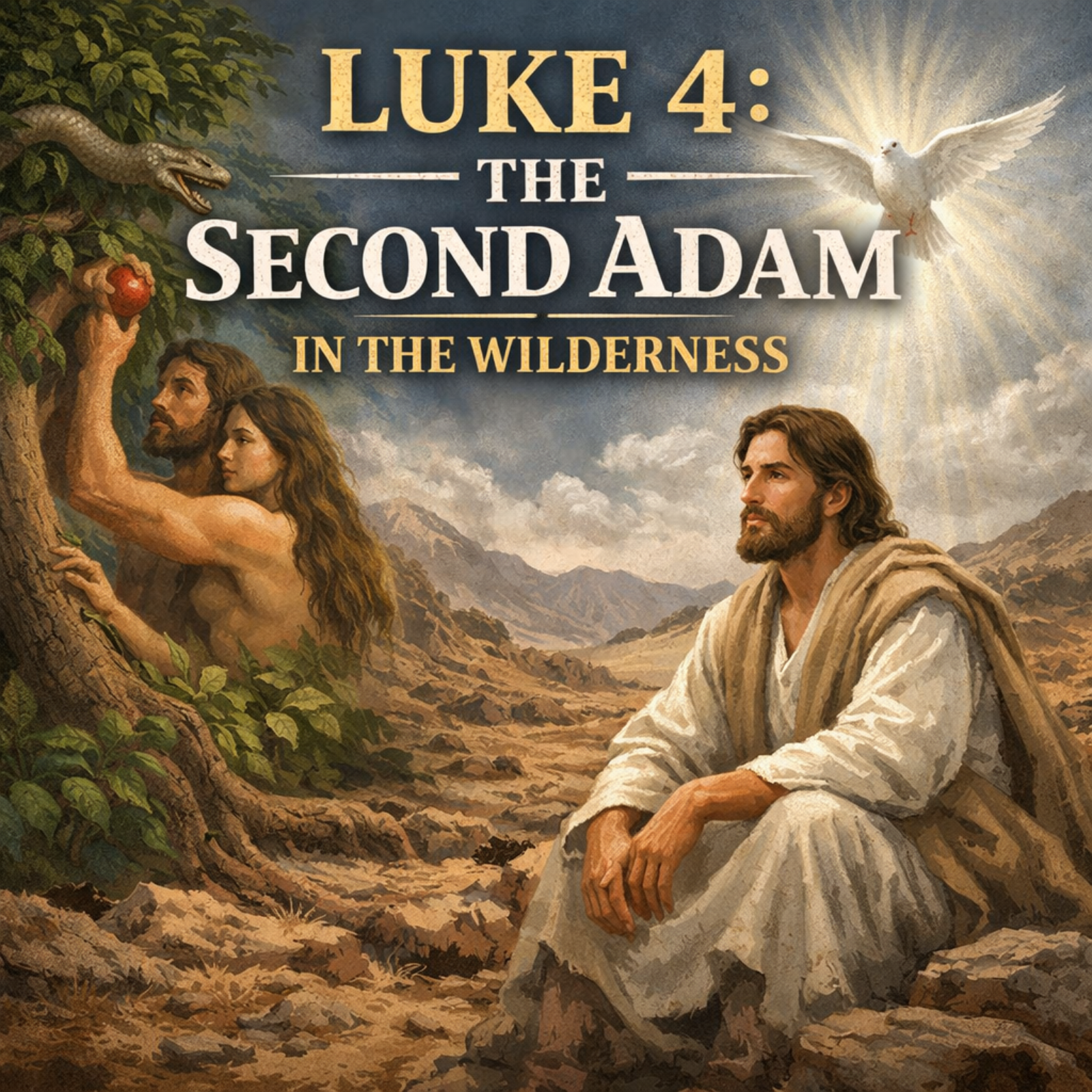
S1 Ep 73Luke 4: The Second Adam in the Wilderness
The Second Adam steps into the wilderness — and the serpent speaks again. In Luke 4, Jesus faces the same ancient deception from Genesis 3… but this time, the Son does not fall.In this episode, we trace Luke’s deliberate connection between Adam and Christ. Right after the Father declares at Jesus’ baptism, “You are my beloved Son; with you I am well pleased,” Luke inserts a genealogy that goes all the way back to “Adam, the son of God.” The stage is set: the Second Adam will confront the tempter.In Genesis 3, the serpent twists God’s Word: “Did God actually say…?” He questions identity, distorts truth, and suggests that obedience is deprivation. Adam grasps. Fig leaves are sewn. Shame enters the story.In Luke 4, the devil uses the same strategy: “If you are the Son of God…” He attacks identity. He tempts Jesus to satisfy legitimate hunger in illegitimate ways, to seize authority without the cross, and to test the Father instead of trusting Him. But where Adam failed in abundance, Jesus overcomes in hunger. Each temptation is answered not with argument, but with rightly handled Scripture from Deuteronomy. The Word that was twisted in Eden is faithfully proclaimed in the wilderness.We then follow Jesus into Nazareth, His hometown, where He reads from Isaiah 61:“The Spirit of the Lord is upon me…”And declares: “Today this Scripture has been fulfilled in your hearing.”At first they marvel. Then they doubt. Then they rage. When Jesus refuses to conform to their expectations — when He will not “wear their fig leaves” of familiarity and favoritism — they attempt to throw Him off a cliff. The hometown rejects the Son.Yet in Capernaum, a man with an unclean spirit cries out, “I know who you are — the Holy One of God!” Demons recognize what Nazareth resists. Jesus rebukes the spirit, heals many, and His authority spreads throughout the region. Rejected by some, received by others — but never redefined.This episode explores:The theological significance of Luke’s genealogyJesus as the Second AdamThe devil’s consistent strategy of twisting God’s WordIdentity before performanceWilderness as Spirit-led testingRejection in Nazareth and authority in CapernaumWhat it means to stand firm in your Father-given identityIf you’re walking through a wilderness season, this episode will remind you: the same Jesus who overcame temptation stands victorious for you. His obedience becomes our hope.Share this episode with someone battling doubt, temptation, or rejection — and join us as we continue walking through Luke’s Gospel, watching the Son of God bring light into dark places.Scriptures Referenced: Luke 3:21–22 Luke 3:23–38 Luke 4:1–13 Luke 4:14–30 Luke 4:31–41 Genesis 3:1–7 Deuteronomy 6:13 Deuteronomy 6:16 Deuteronomy 8:3 Isaiah 61:1–2 Psalm 2:7 Isaiah 42:1
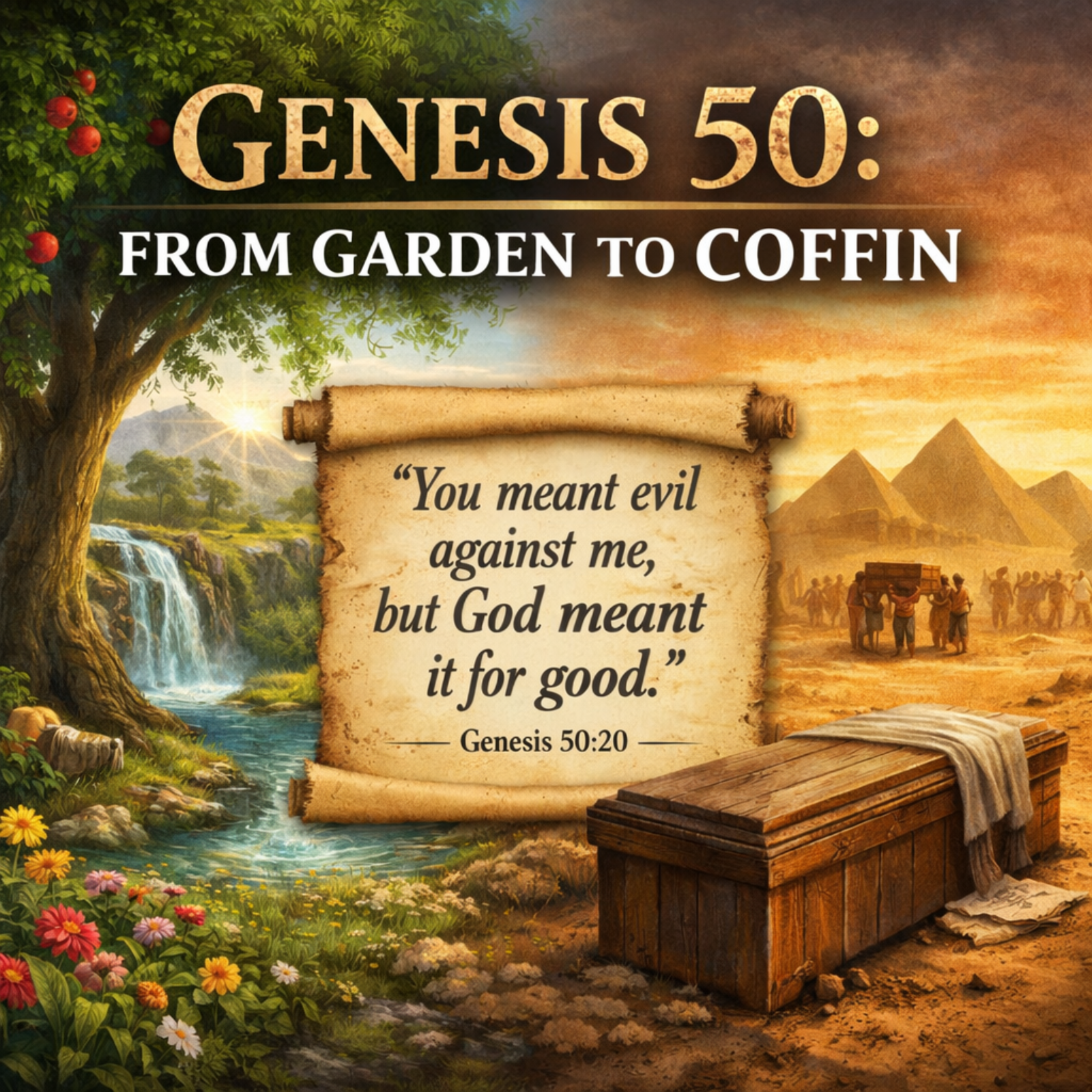
S1 Ep 71Genesis 50: From Garden to Coffin
Genesis begins with a garden and ends with a coffin—but the story is not about despair. From Eden to Egypt, from betrayal to provision, one promise flows through it all: God’s covenant faithfulness.In this episode, we explore the final chapter of Genesis, focusing on Joseph’s powerful declaration in Genesis 50:20:“You meant evil against me, but God meant it for good…”We trace the arc of Genesis from the creation of the world, the fall, and the flood, to the covenant promises given to Abraham, Isaac, and Jacob, culminating in Joseph’s life in Egypt. Despite being sold by his brothers, falsely accused, and imprisoned, Joseph sees God’s hand at work, turning human evil into divine good. His story demonstrates forgiveness, faith, and unwavering trust in God’s promises—even beyond his lifetime.Joseph’s words remind us that human intentions and divine purposes can coexist, and that suffering does not negate God’s sovereignty. The procession of Jacob’s burial, the brothers’ fear after their father’s death, and Joseph’s final instructions for his bones all point to the enduring covenant promise of God. Through every hardship, betrayal, and trial, God’s plan moves forward, keeping hope alive for generations to come.Listen in as we reflect on:How Genesis begins in a garden of life and ends with a coffin of faith.The sovereignty of God over human intentions.Joseph’s example of forgiveness and provision.The covenant promises that carry through Abraham, Isaac, Jacob, and Joseph.How God’s promise transforms evil into good for His purposes.Whether you are a long-time student of Scripture or encountering these stories for the first time, this episode encourages you to trust in God’s plan, even when circumstances seem hopeless, and to hold fast to the hope that flows from His covenant promises.Call to Action: Subscribe to the podcast to follow the full journey through Genesis, and share this episode with someone who needs a reminder that God’s purposes never fail. Let Joseph’s words inspire you to live with hope, faith, and forgiveness today.Keywords: Genesis, Joseph, Genesis 50:20, God’s sovereignty, forgiveness, biblical promise, covenant, Eden, Egypt, faith, hope, provision, biblical podcastScriptures Referenced:Genesis 1–3 (Creation and Fall)Genesis 6–9 (Noah and the Flood)Genesis 12, 15, 17 (God’s covenant with Abraham)Genesis 21–28 (Isaac and Jacob)Genesis 37 (Joseph’s dreams and betrayal)Genesis 39–50 (Joseph’s life in Egypt, imprisonment, providence)Genesis 50:20, 50:24–25 (Joseph’s final words and instructions)
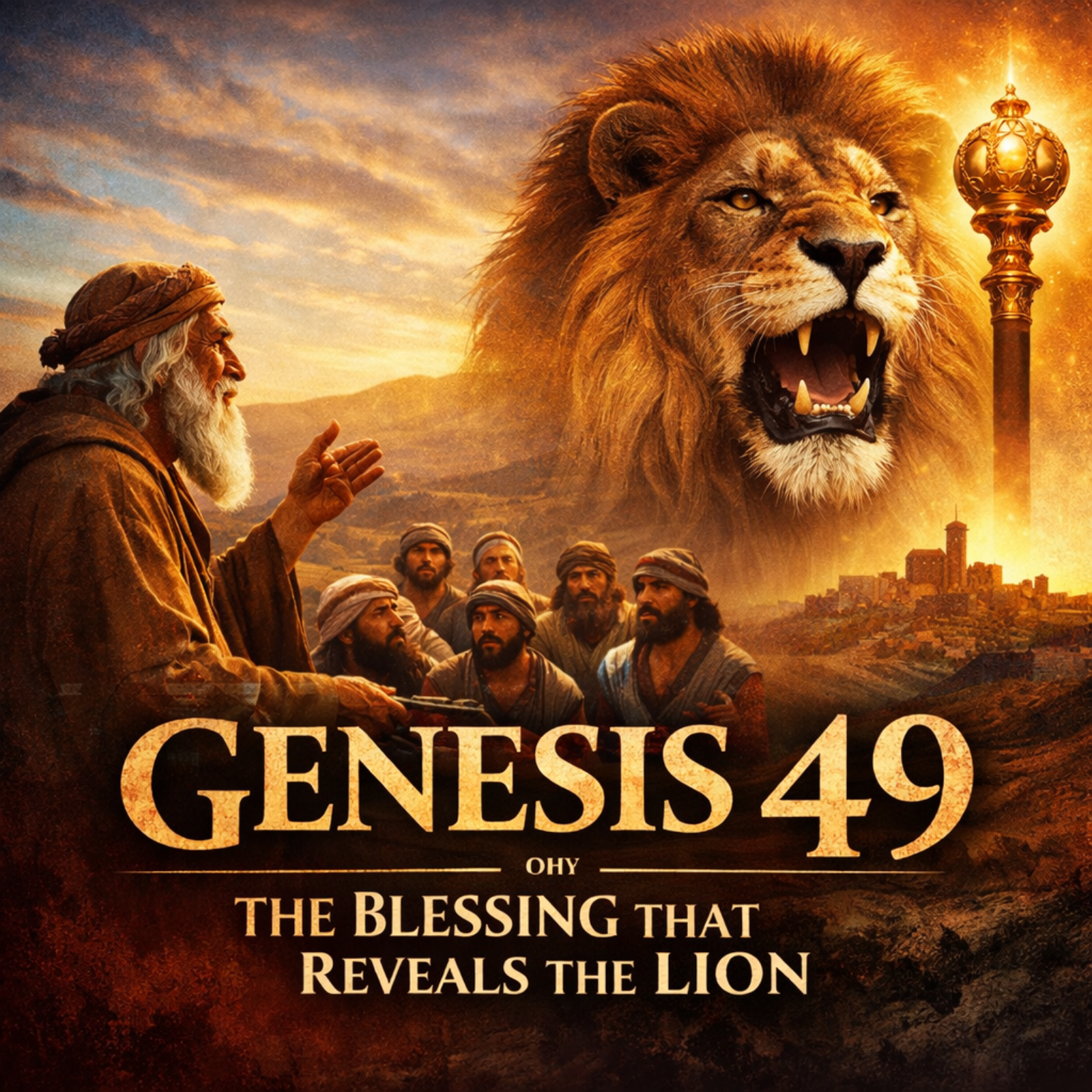
S1 Ep 70Genesis 49: The Blessing that Reveals the Lion
The Lion is hidden in a father’s final words. Genesis 49 is not just a blessing—it is a prophecy that reveals the coming King.In this episode of In the Garden, we walk through Jacob’s final prophetic words over his twelve sons and discover how character, consequence, grace, and kingship unfold across the rest of Scripture. These are not sentimental farewell speeches. They are Spirit-inspired revelations about Israel’s future—and ultimately about Jesus.Jacob begins with Reuben, the firstborn who forfeited preeminence through instability and sin. We examine how private compromise reshaped public destiny and how leadership passed to another.He speaks hard words over Simeon and Levi, whose violent anger at Shechem led to scattering in Israel. Yet we also trace how the tribe of Levi was later redeemed and set apart for priestly service—proof that discipline and grace can coexist in God’s plan.Then the focus narrows to Judah.“The scepter shall not depart from Judah… until Shiloh comes.”Here, the promise of Genesis converges into a royal line. We explore how this prophecy is fulfilled in King David and ultimately in Jesus Christ—the Lion of the tribe of Judah. The blessing over Judah becomes the backbone of biblical kingship and messianic hope.We also unpack:Zebulun’s connection to trade and the seaIssachar’s strength and submissionDan’s dual imagery of justice and serpent-like dangerGad’s resilience in battleAsher’s abundanceNaphtali’s freedom and its connection to GalileeJoseph’s remarkable fruitfulness after sufferingBenjamin’s fierce and influential legacyGenesis 49 shows us that:Character shapes destiny.Sin has generational consequences.God redeems what He disciplines.The promise narrows toward a King.As Jacob breathes his last, he is not merely blessing sons—he is seeing the Lion. And that Lion has come.This episode invites you to examine your own life. What trajectory are you setting? What legacy are you shaping? And most importantly—have you bowed to the Lion of Judah?If this episode encouraged you, share it with a friend, leave a review, and continue walking through Scripture with us. Join the journey as we trace the One Story that leads to Jesus.Scriptures Referenced: Genesis 49:1–27 Genesis 35:22 Genesis 34 1 Chronicles 5:1–2 Joshua 19:1–9 Joshua 21 Exodus 32:26–29 2 Samuel 7 Revelation 5:5 Numbers 32 1 Chronicles 12:8 Joshua 19:10–16 Joshua 19:17–23 Joshua 19:24–31 Isaiah 9:1–2 Matthew 4:13–16 Judges 13–16 Judges 18 Judges 20 1 Samuel 9 Philippians 3:5
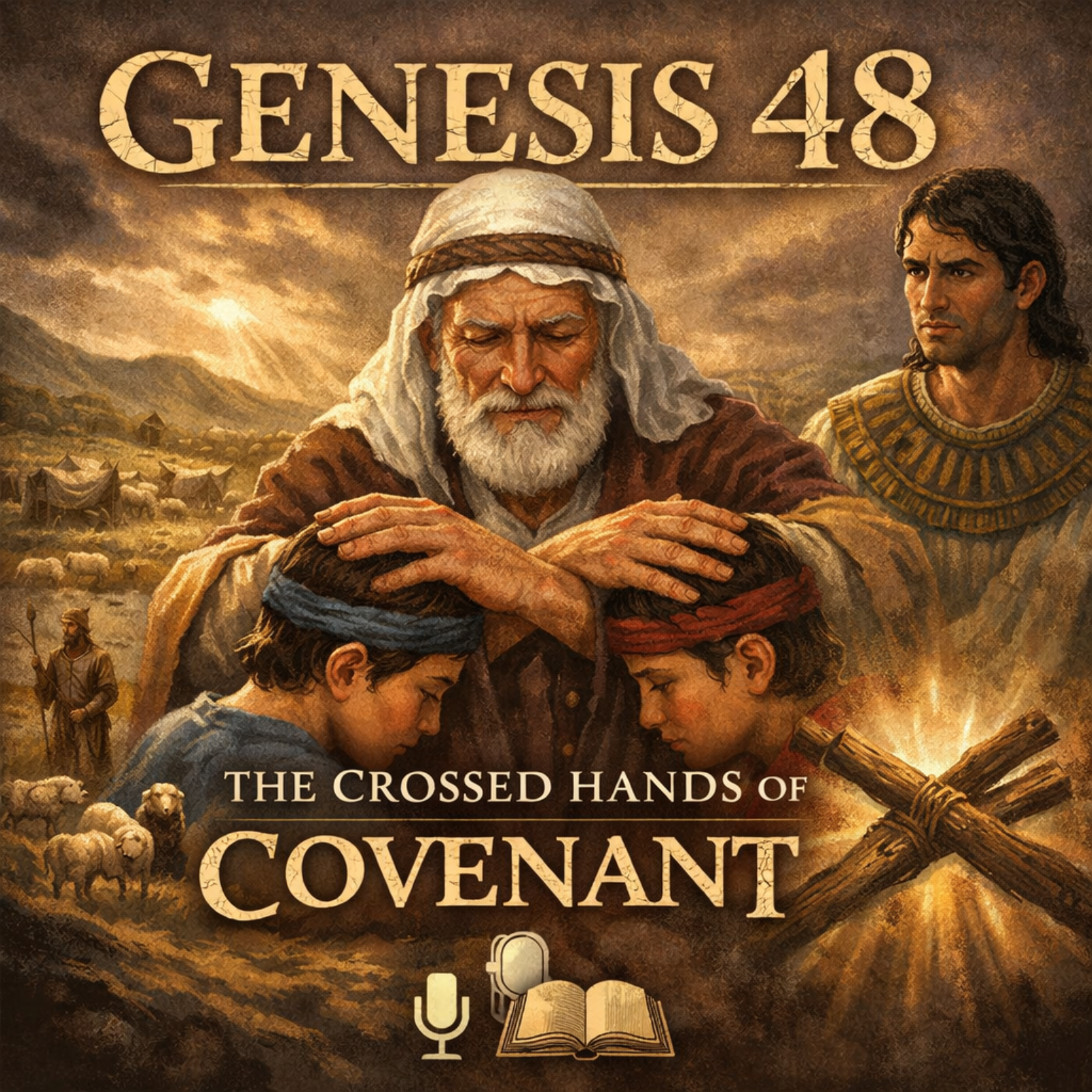
S1 Ep 69Genesis 48: The Crossed Hands of Covenant
Two boys. One blessing. And a father who crosses his hands on purpose. In Genesis 48, Jacob adopts his grandsons, transfers the covenant, and reshapes Israel’s future with a prophetic act no one expected.As Jacob nears death in Egypt, he calls Joseph to his bedside and rehearses the words God spoke to him at Luz (Bethel): fruitfulness, multiplication, a “company of peoples,” and the everlasting promise of land. This is not nostalgia — it is covenant transfer.Then something shocking happens.Jacob adopts Ephraim and Manasseh as his own sons. In doing so, he grants Joseph the birthright — the double portion. Instead of one tribal inheritance, Joseph receives two. The favored son becomes the father of favored tribes.When Joseph positions his firstborn, Manasseh, under Jacob’s right hand, the patriarch deliberately crosses his arms and places the greater blessing on Ephraim, the younger. Joseph tries to correct him. But Jacob replies, “I know, my son, I know.”This is not confusion. It is prophecy.Genesis has shown us this pattern before: Abel over Cain. Isaac over Ishmael. Jacob over Esau.Now Ephraim over Manasseh.God is not bound by human systems of status or birth order. He chooses according to promise and purpose.Jacob’s crossed hands shape the destiny of Israel. Ephraim would grow so influential that the northern kingdom would later be called by his name. Yet the covenant unfolds in two streams:• The birthright (fruitfulness, multiplication, territorial strength) flows through Joseph. • The kingship (the scepter, the royal line, the Messiah) flows through Judah.Later Scripture confirms this division: the birthright belonged to Joseph, but the rule belonged to Judah (1 Chronicles 5:1–2; Genesis 49:10).Genesis 48 is not merely a family scene. It is a structural moment in redemptive history. The covenant that once narrowed to a single heir now expands into a nation — “a company of peoples.” And yet through Judah, it will narrow again toward Christ.The trembling hands of a dying patriarch reveal the steady sovereignty of God.If this episode encouraged you, take time to slowly read Genesis 48 and 49. Notice the covenant language. Watch the crossed hands. Consider where God may be working beyond your expectations.Subscribe to the podcast, share this episode with a friend, and continue walking through “The One Story That Leads to Jesus.”Scriptures Referenced: Genesis 28:13–15 Genesis 35:9–12 Genesis 48:3–20 Genesis 49:10 1 Chronicles 5:1–2
S1 Ep 68Genesis 47: When Hunger Makes Slaves
The Egyptians sold themselves to survive. By the end of Genesis 47, freedom has a price—and famine has a master. What does hunger demand of us, and who truly owns our lives?In this episode, we dive into Genesis 47:14–21, where Joseph navigates a devastating famine and transforms Egypt’s economy. First, the people spend all their money on grain. When money runs out, they trade livestock. Finally, they sell their land and themselves to Pharaoh. The free people of Egypt are no more. Joseph’s stewardship preserved life—but at a steep cost: the population is now enslaved, and all property belongs to Pharaoh.We explore the tension between survival and freedom, providence and power, and how God’s covenant promises continue even inside worldly empires. While Egypt consolidates control, Israel settles in Goshen, multiplying and prospering under God’s blessing. The episode highlights how Joseph’s actions foreshadow the future slavery of Israel in Egypt and sets the stage for God’s redemptive plan in Exodus.Through this story, we confront timeless questions: What are we willing to give up for survival? Are we dependent on the Pharaohs of this world—political systems, wealth, or security—or are we trusting the Father who gives life freely? Hunger exposes our true master, and Genesis 47 reminds us that physical sustenance can come at the cost of freedom—but God’s provision never enslaves.Key takeaways from this episode:Hunger can demand a price that compromises freedom.Joseph preserves life while demonstrating God’s wisdom and providence.God’s covenant promises advance even in the midst of worldly empires.Dependence on God, not on Pharaohs of this world, ensures true life and freedom.Join us as we reflect on survival, stewardship, and the Master who sets His people free. Don’t just hear the story—let it ask the hard questions of your own life today.Call to Action: Subscribe to the podcast to follow the unfolding story of Joseph and Israel in Egypt. Share this episode with friends and family and discuss: Where are you trading freedom for survival, and how is God calling you to trust Him instead?Scriptures Referenced:Genesis 47:14–21Genesis 47:27Exodus 1:8John 6:35John 8:34Matthew 6:24
S1 Ep 67Genesis 46: The Protection of Abomination
Rejection isn’t always punishment — sometimes it’s protection.In Genesis 46, Joseph uses Egypt’s prejudice to preserve God’s promise.When Jacob prepares to move his entire family to Egypt during the famine, God meets him at Beersheba with reassurance: “Do not be afraid… there I will make you into a great nation.” Egypt was not a detour. It was divine strategy.But Joseph does something unexpected. He instructs his brothers to tell Pharaoh plainly that they are shepherds — even though “every shepherd is an abomination to the Egyptians” (Genesis 46:34).Why highlight the very thing that would make them socially detestable?Because separation would protect them.In this episode, we explore the Hebrew word toʿevah (abomination) and how cultural rejection became covenant preservation. If Israel had been admired and absorbed into Egyptian society, they may have disappeared through assimilation. Instead, they were settled in Goshen — fertile land, yet geographically and culturally distinct.Distance preserved identity.Identity allowed multiplication.Multiplication made the Exodus possible.Genesis 46 reveals a powerful biblical pattern: before God expands His people, He often separates them. Before mission, there is formation. Before influence, there is distinctness.Joseph understood the subtle danger of assimilation. Egypt would feed his family, but it would not define them. What looked like disadvantage became divine shielding. The very prejudice that set them apart allowed them to grow into a nation.This chapter invites us to reconsider our desire for cultural approval. Sometimes being “set apart” is not a sign of failure — it is evidence of preparation. Sometimes God uses margins, distance, and even misunderstanding to guard identity and mature promise.If you’ve ever felt out of place, overlooked, or separate from the mainstream, this episode will encourage you to see that season through a covenant lens.God does not multiply what has dissolved.He multiplies what remains faithful. Listen now and discover how Genesis 46 reframes rejection as protection — and why holy distinctness still matters today.If this episode encouraged you, share it with a friend and subscribe so you don’t miss the next chapter in our journey through Genesis.Scriptures Referenced:Genesis 46:1–4Genesis 46:31–34Exodus 1:7–10John 15:18
S1 Ep 66Genesis 45: God Sent Me Before You
Betrayal. Power. Tears. In Genesis 45, Joseph reveals himself to the brothers who sold him—and declares that what they meant for evil, God meant for life.In this episode of In the Garden Podcasts, we step into one of the most emotionally charged moments in Scripture. Joseph, now ruler in Egypt, stands face to face with the men who stripped his robe, cast him into a pit, and sold him for silver. Revenge would be understandable. Judgment would be expected. Instead, Joseph weeps.“I am Joseph.”With those words, fear floods the room. But Joseph does not crush his brothers—he comforts them. He does not deny their sin—he reframes their story. “Do not be distressed… for God sent me before you to preserve life.”This chapter reveals a profound truth about God’s sovereignty and human responsibility. Joseph recognizes both: his brothers sinned, and God was working. The same event carried two intentions—human evil and divine purpose. That theological clarity frees Joseph from bitterness and empowers him to forgive.But Joseph does more than forgive.He provides.He invites his family to leave famine behind and dwell in Goshen, the best of Egypt. Pharaoh himself offers abundance. The rejected brother becomes the source of salvation. The one cast out becomes the preserver of life.Genesis 45 is not only about reconciliation—it is about restoration with provision.And this moment echoes forward.Joseph foreshadows Christ: • The beloved son rejected by his brothers • Sold for silver • Suffering before exaltation • Raised to a place of authority • Becoming the means of salvation for those who rejected himJoseph offers the best of Pharaoh’s kingdom. Jesus offers the best of His Father’s kingdom.When Jacob hears the news, he says, “It is enough; Joseph my son is still alive.” After years of grief, hope rises. Death did not have the final word.Genesis 45 reminds us: • God’s providence works even through pain. • Forgiveness is powerful—but provision is transformative. • What looks like abandonment may be positioning.If you have ever wrestled with betrayal, loss, or unanswered suffering, this chapter speaks directly to you. The pit was not the end. The prison was not the end. The famine was not the end.God had sent a deliverer ahead of them.Listen in as we explore sovereignty, forgiveness, reconciliation, and the beautiful foreshadowing of Christ in Joseph’s story.If this episode encourages you, share it with someone walking through hardship. Subscribe to In the Garden Podcasts, leave a review, and join us as we continue tracing the One Story that leads to Jesus.Scriptures Referenced: Genesis 45:1–28 Genesis 50:20 Acts 2:23–24 John 14:2 Luke 12:32
S1 Ep 65Genesis 44: Instead of the Boy
He once sold his brother for silver. Now he offers himself instead.In Genesis 44, Joseph’s test reaches its climax — but the spotlight shifts to Judah. While Joseph remains the hidden ruler orchestrating events with wisdom and restraint, Judah steps forward in a moment that changes redemptive history.Judah, the fourth son of Jacob and Leah, was born out of praise: “This time I will praise the LORD” (Genesis 29:35). His name, Yehudah, comes from yadah — to praise, to give thanks. But praise at birth did not prevent failure in life.In Genesis 37, Judah suggests selling Joseph rather than killing him. It sounds merciful, but it is betrayal. He profits from the suffering of his brother. In Genesis 38, his moral compromise with Tamar exposes deeper character flaws. Yet when confronted, Judah confesses: “She is more righteous than I.” For the first time, he owns his sin.By Genesis 43–44, something has changed. Judah becomes guarantor for Benjamin, pledging his own life for the safety of his younger brother. When Benjamin is accused and slavery threatens, Judah steps forward and pleads before Joseph. His speech (Genesis 44:18–34) is the longest recorded in Genesis. And at its center is substitution:“Please let your servant remain instead of the boy.”Instead.The brother who once sacrificed another now offers himself. Self-interest has become self-sacrifice. Complicity has become responsibility. Silence has become intercession.Joseph’s test was never about a silver cup. It was about the condition of their hearts. And Judah’s transformation proves the brothers are no longer who they were.In Genesis 49, Jacob will declare: “The scepter shall not depart from Judah.” Kingship is attached to his line. From Judah will come David. From David will come Christ.Judah’s growth traces a powerful arc: Failure → Confession → Responsibility → Substitution → Kingship.Genesis 44 gives us one of the earliest shadows of substitution in Scripture. Judah offers himself in place of another. Centuries later, a Son from the tribe of Judah will do more than offer — He will give His life as a ransom for many (Mark 10:45).This episode explores repentance, spiritual maturity, leadership, and the redemptive thread that runs from Genesis to the Gospel. Judah’s worst moment did not define him. His willingness to step forward did.If this episode encouraged you, share it with someone who needs to know that failure is not the end of their story. Subscribe, leave a review, and join us as we continue tracing the One Story that leads to Jesus.Scriptures Referenced: Genesis 29:35 Genesis 37:26–27 Genesis 38:26 Genesis 43:8–9 Genesis 44:18–34 Genesis 49:8–10 Mark 10:45
S1 Ep 64Sunday Psalms: Psalm 7
When falsely accused, where do you turn? When injustice presses in, who defends your cause? Psalm 7 is a bold prayer for refuge, justice, and vindication before a righteous God.In this episode of Sunday Psalms, we walk through Psalm 7:1–17 (ESV), a psalm of David written in the midst of accusation and pursuit. David begins with a desperate plea: “O Lord my God, in you do I take refuge.” Surrounded by enemies and compared to prey hunted by a lion, he runs not toward retaliation—but toward God.Psalm 7 teaches us what to do when we are misunderstood, slandered, or attacked. David invites God to examine him: “If there is wrong in my hands…” Rather than assuming innocence without reflection, he places himself before the righteous Judge. This posture models humility, integrity, and spiritual courage.The psalm then shifts from personal defense to divine justice. David declares that God is a shield for the upright, a righteous judge who feels indignation against evil every day. The imagery intensifies: God sharpening His sword, preparing His bow—not out of cruelty, but in holy opposition to wickedness. Psalm 7 reminds us that evil does not go unnoticed. God sees. God weighs the heart. God acts in His time.One of the most powerful themes in this psalm is reversal. The wicked dig a pit—and fall into it themselves. Violence returns upon the head of the violent. This is a sobering reminder that sin carries consequences, while righteousness rests secure in God’s protection.The psalm closes not in fear, but in praise: “I will give to the Lord the thanks due to his righteousness, and I will sing praise to the name of the Lord, the Most High.”For the week ahead, Psalm 7 calls us to:Seek refuge in God rather than revenge.Invite God to search our hearts with honesty.Trust His justice when wronged.Respond with worship rooted in His righteousness.If you are facing criticism, injustice, or spiritual opposition, let this psalm shape your prayers. Run to the Lord as your shield. Stand in integrity. Leave judgment in His hands.If this episode encouraged you, share it with someone who needs strength in a difficult season. Follow or subscribe to Sunday Psalms so you don’t miss future reflections. And take time this week to slowly pray through Psalm 7—asking God to be your refuge and your righteous defender.Scriptures Referenced: Psalm 7:1–17 (ESV)
S1 Ep 63Genesis 43: The One Most Wounded
The one most wounded by his family is the one most overwhelmed by love. In Genesis 43, Joseph weeps—not because his brothers loved him well, but because he still loves them.In this episode of In the Garden Podcasts, we slow down in one of the most tender moments in Genesis. Joseph stands before the very men who betrayed him. They do not recognize his face. They bow in fear. They assume power means judgment.But when Joseph sees Benjamin, “his compassion grew warm,” and he leaves the room to weep (Genesis 43:29–30).Joseph is the betrayed brother. The sold son. The forgotten dreamer.If anyone had the right to grow cold, it was him.Yet Scripture does not say his anger burned hot. It says his compassion grew warm.We explore the deep Hebrew imagery behind “compassion”—a word connected to the innermost parts, the seat of mercy. Suffering did not harden Joseph; it deepened him. The pit did not destroy his heart. Prison did not extinguish tenderness. Power did not corrupt his love.And this is more than Joseph’s story.Genesis 43 quietly prepares us for Christ.Like Joseph:Jesus came to His own, and they did not receive Him.He was rejected, stripped, and sold.He stood before those who did not recognize Him.Yet He did not go to the cross because we loved Him first.“In this is love, not that we have loved God but that he loved us…” (1 John 4:10).“While we were still sinners, Christ died for us.” (Romans 5:8).Joseph wept before his brothers knew who he was. Christ loved us before we knew who He was.The lack of recognition did not diminish Joseph’s affection. Our blindness did not diminish Christ’s love.This episode wrestles with a difficult but beautiful truth: Pain does not have to make us cold.For those carrying wounds from family, betrayal, or rejection, Genesis 43 shows us another way. The Spirit of Christ produces compassion—not because others deserve it, but because we have received mercy ourselves.We also examine how hidden compassion precedes revealed reconciliation. Joseph’s tears come before his identity is revealed in Genesis 45. Likewise, God’s love was active toward us long before we understood it.This is covenant love. This is Gospel love. This is the love that fulfills the promises made to Abraham and ultimately flows through Christ to the world.If you’ve ever been deeply wounded, this episode invites you to consider:What if the mark of spiritual maturity is not emotional coldness—but compassion that grows warm?Listen now, reflect on Genesis 43, and ask the Lord to search your heart. Where has pain begun to harden you? Where might Christ be inviting you into deeper mercy?If this episode encouraged you, share it with someone walking through family tension or relational wounds. And join us as we continue tracing the one great story that leads to Jesus.Scriptures Referenced: Genesis 43:29–31 Genesis 45 John 1:11 Romans 5:8 1 John 4:10 1 John 4:19
S1 Ep 62Genesis 42: From Betrayal to Blessing
What happens when past sin meets present opportunity? How can betrayal be transformed into blessing? In this episode, we explore Genesis 42, where Joseph’s brothers face the consequences of their long-ago actions and God’s providence begins to turn their story around.We dive into the tension-filled encounter between Joseph and the brothers who sold him into slavery. Reuben’s conscience, their collective guilt, and Joseph’s careful, patient strategy reveal a profound truth: even human wrongdoing can serve a greater purpose when met with wisdom, patience, and mercy.From Joseph testing his brothers to the surprise blessing of their returned money, this chapter shows God’s hand at work—turning guilt into insight, fear into reflection, and past mistakes into a pathway for redemption and reconciliation.Listeners will gain insight into:The consequences of unchecked jealousy and favoritism within a familyHow conscience and responsibility shape our moral decisions, as seen in ReubenJoseph’s patient and merciful response to wrongdoing, demonstrating how God can transform sin into blessingThe ways God orchestrates events to accomplish His purposes, even through human errorWhether you’re reflecting on personal mistakes, seeking understanding of God’s providence, or curious about the timeless lessons of Joseph’s story, this episode offers encouragement and practical takeaways for applying wisdom, patience, and mercy in your own life.Join us as we uncover the hope in God’s plan, even when human actions threaten to derail it. Let this story remind you that no sin, no mistake, and no betrayal is beyond God’s ability to redeem for good.Call to Action: Reflect on areas in your life where mistakes or wrongs—yours or others’—might be shaping a larger story. Share your thoughts and stories with us on the Monahans Bible Connection page, and invite a friend to listen and discuss these lessons together.Scriptures referenced: Genesis 42:1–28
S1 Ep 61Genesis 41: Faith That Builds Granaries
A prison dream interpreter becomes the architect of an empire’s survival. Genesis 41 reveals a faith that doesn’t just pray — it plans, prepares, and builds.In this episode of In The Garden, we walk through the dramatic rise of Joseph from dungeon to palace and explore what true, integrated faith looks like under pressure.Pharaoh’s troubling dreams of cows and grain expose the limits of Egypt’s wisdom. When Joseph is summoned, he does not claim credit. He boldly declares, “It is not in me; God will give Pharaoh a favorable answer.” Before he offers strategy, he offers worship. Revelation begins with humility.But Joseph doesn’t stop at interpretation. He presents a practical economic plan: appoint overseers, collect one-fifth during years of abundance, centralize storage, and prepare for famine. Faith becomes administration. Spiritual insight becomes public policy. God’s revelation produces responsible stewardship.Joseph’s wisdom saves Egypt — and eventually the surrounding nations. The promise given to Abraham that “all families of the earth” would be blessed through his offspring begins to unfold in grain silos and supply chains. Blessing looks like stored wheat.Yet Genesis 41 also carries a quiet warning.Pharaoh renames Joseph Zaphenath-paneah, gives him an Egyptian wife, and absorbs him into imperial power. Joseph builds a system that preserves life — but also centralizes authority. By the end of the famine, Egypt’s land, wealth, and labor belong to Pharaoh. The machinery of national control is firmly established.And centuries earlier, God had already told Abram that his descendants would be strangers in a foreign land and enslaved for four hundred years. The infrastructure Joseph strengthens will one day make Israel’s bondage administratively possible. The blessing and the bondage grow in the same soil.Joseph may or may not have fully understood the prophecy given to Abram. But whether he knew or not, he models something essential: faithfulness in the present without attempting to control the centuries.He cannot prevent a future Pharaoh who “did not know Joseph.” He cannot stop the unfolding of God’s sovereign plan. But he can steward abundance wisely.Genesis 41 teaches us that trusting God and building granaries are not opposites. Wise stewardship is practical faith. Planning is not unbelief. Preparation is not panic. It is obedience.Faith hears God’s voice. Wisdom builds the storehouse. Humility gives God the glory. And history rests in God’s hands.If you are in a season of abundance — spiritually, financially, relationally — this episode invites you to ask: How am I preparing? How am I stewarding? What structures am I building that will bless others long after me?Listen, reflect, and share this episode with someone who needs encouragement to trust God enough to plan wisely.Scriptures referenced: Genesis 41:1–57 Genesis 41:16 Genesis 41:34–36 Genesis 41:38 Genesis 41:45 Genesis 47:13–26 Genesis 12:3 Genesis 15:13–14 Exodus 1:8
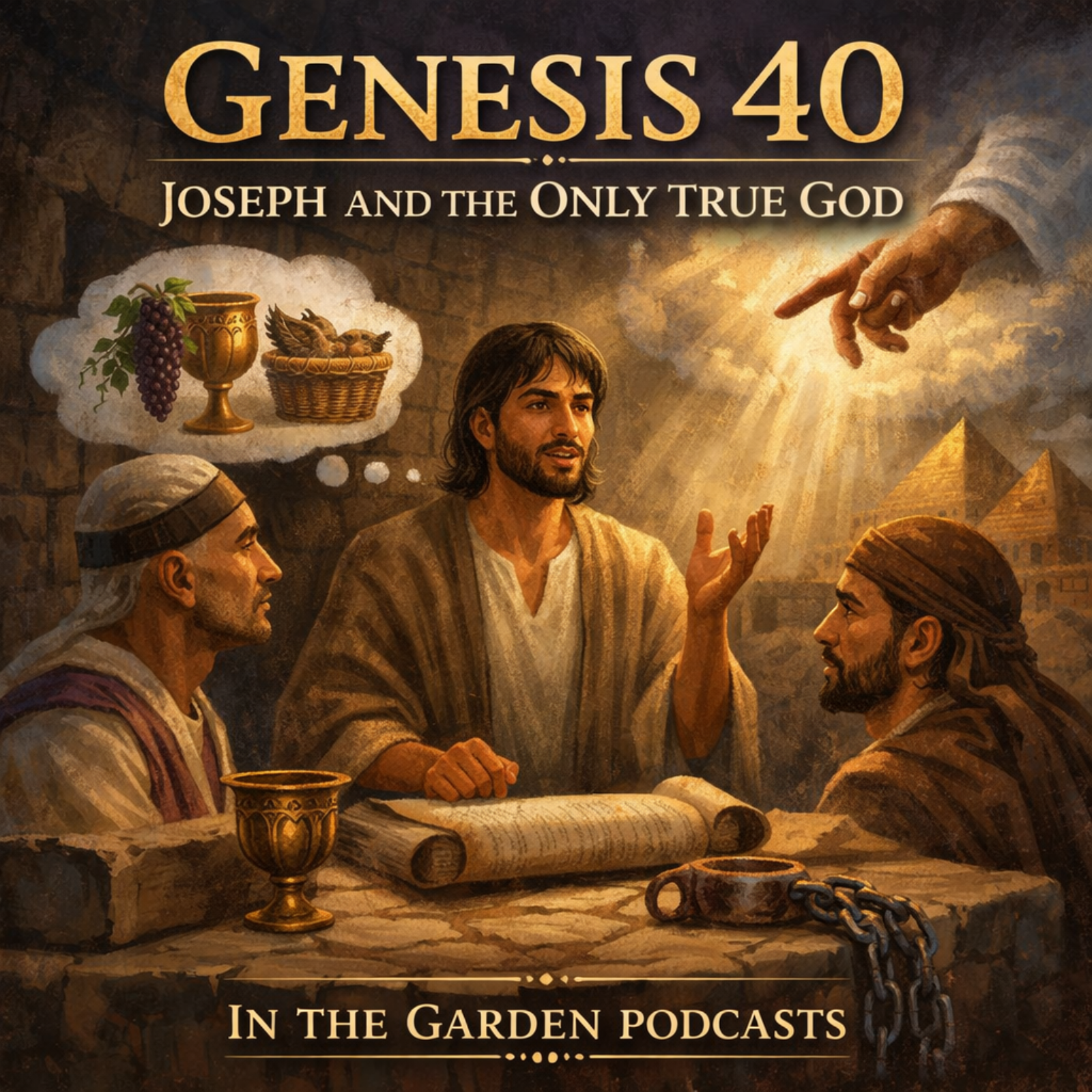
S1 Ep 60Genesis 40: Joseph and the Only True God
Ever wonder if the future can be known?Who can speak with absolute truth about what is to come?In this episode of In The Garden Podcasts, we explore Genesis 40 and the story of Joseph in the Egyptian prison. When Pharaoh’s cupbearer and baker each have troubling dreams, Joseph reminds them — and us — of a profound truth: interpretation belongs to God alone. Dreams come and go, but only the One who declares the end from the beginning speaks with perfect accuracy.We unpack how God reveals truth about the future through Joseph, demonstrating that divine insight is not human intuition, courtly magic, or lucky guesswork. This story foreshadows God’s sovereignty over history, His ability to fulfill prophecy, and ultimately points to Jesus, who foretells events with certainty so that we may believe.Listeners will discover:How Joseph’s faith in God shaped his gift for interpreting dreams.Why true revelation belongs only to the Lord.The difference between human speculation and divine foresight.How trusting God’s word about the future transforms the way we live today.This episode encourages you to lean not on your own understanding or the predictions of men, but on the only God who speaks truth about the future. Let Genesis 40 inspire your faith and remind you that God’s promises are precise, reliable, and eternal.Listen, reflect, and share this story of divine authority and fulfilled prophecy. Comment your thoughts and experiences — how has trusting God’s word about the future shaped your life?Scriptures referenced in this episode:Genesis 40:5, 8Isaiah 41:22–23Isaiah 46:9–10Daniel 2:10, 28Deuteronomy 18:21–22John 13:19John 14:29
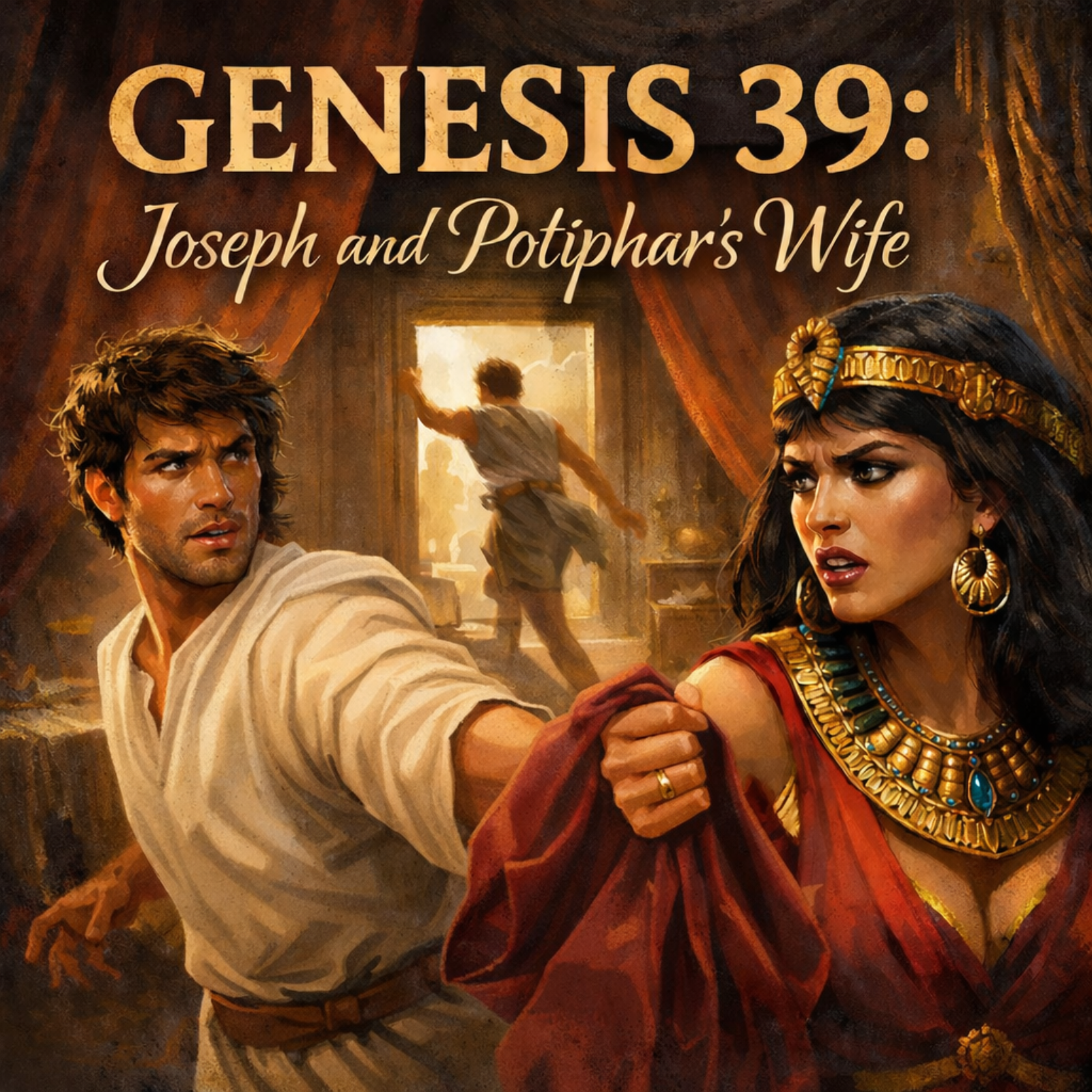
S1 Ep 59Genesis 39: Joseph and Potiphar's Wife
What does it take to grow from a dreamer into a man of integrity and influence? Joseph’s journey from favored son to slave, and eventually to the ruler of all Egypt, shows how God develops character through service and trial.In this episode, we explore Genesis 39, where Joseph serves faithfully in Potiphar’s house, resists temptation, and remains steadfast even in prison. Each step of his journey reveals how God works behind the scenes to shape our skills, wisdom, and moral character. Listeners will discover how faithfulness in everyday responsibilities, perseverance through trials, and unwavering integrity prepare us for the greater purpose God has for our lives.Key themes include:Faithfulness in service: How Joseph’s diligence in Potiphar’s household earned trust and responsibility.Integrity under temptation: How refusing compromise builds inner strength and honors God.God’s presence in trial: How even in prison, God’s guidance and favor allowed Joseph to succeed.Character development over time: How consistent obedience and trust prepare us for larger responsibilities.This episode encourages you to view your own trials, work, and temptations as opportunities for God to shape your character. Like Joseph, what you do in the small and hard places matters. God’s hand is at work, building your integrity and preparing you for the life He has planned.Take a moment this week to reflect: Are you faithful in the small responsibilities God has entrusted to you? Are you trusting Him in the trials and temptations you face? Every act of obedience and every moment of integrity matters in the story God is writing in your life.Call to Action: If this episode encouraged you, share it with someone who needs hope and perspective today. Subscribe to the podcast so you never miss a story of God’s faithfulness. Consider journaling your own journey of faithfulness, integrity, and trust in God’s plan.Scriptures referenced: Genesis 39:3, 6, 8, 23 (ESV)
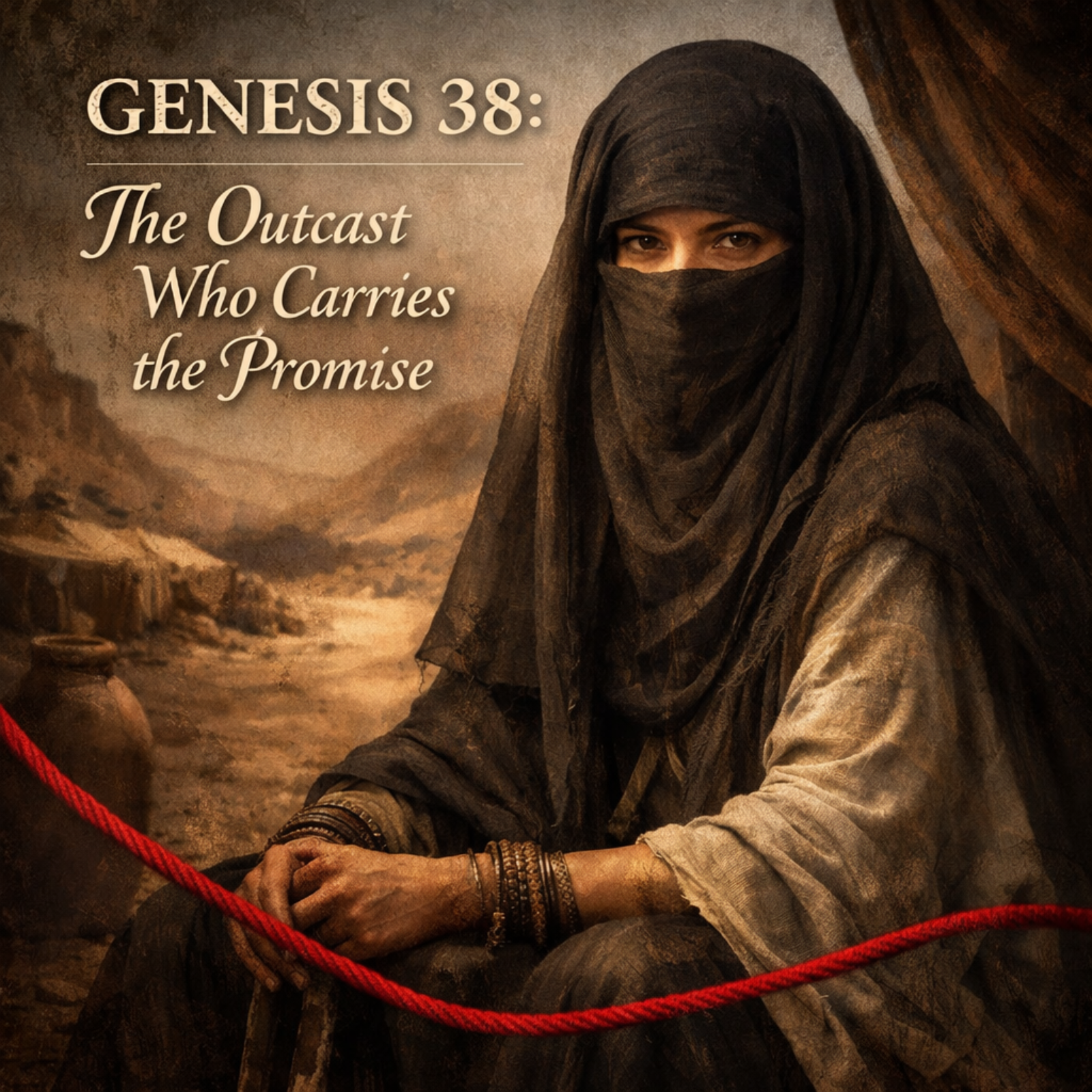
S1 Ep 58Genesis 38: The Outcast who Carries the Promise
Genesis 38: The Outcast Who Carries the PromiseSome stories in the Bible make us uncomfortable—and Genesis 38 is one of them. It’s a story of scandal, shame, and human failure, but it also reveals God’s unexpected grace and the way He works through the overlooked and marginalized to fulfill His promises.In this episode, we dive into the life of Tamar, the widow and outcast who secures the lineage of Judah. We explore her bold actions, her patience, and the surprising birth of her twins, Perez and Zerah. The midwife marks Zerah with a scarlet thread to signify the firstborn, but God chooses the one who breaks through: Perez, whose name means “breach” or “breakthrough.” This moment is a vivid reminder that God’s plans are not determined by human order or expectation, but by His sovereign purposes.We also reflect on Tamar’s role. Though Judah’s name appears in genealogies, it is Tamar who acts with courage and faithfulness, preserving the covenant line that will lead to David and, ultimately, Jesus. Tamar is a reminder that God often works through those society overlooks—the marginalized, the outcast, the brave who risk everything for what is right.This episode challenges us to see how God uses unlikely people to carry forward His promises. Where are you in a situation that seems impossible or shameful? Genesis 38 shows that faithfulness, courage, and risk can place us at the center of God’s plan—even when the world doubts us.Key Themes & Keywords: Tamar, Judah, Genesis 38, Perez, Zerah, scarlet thread, firstborn, breach, breakthrough, marginalized, outcast, God’s sovereign plan, courage, faithfulness, divine purpose, lineage of Jesus, biblical genealogy.Call to Action: Take a moment to reflect: who are the Tamar-like figures in your life, and how might God be working through them? Subscribe to In the Garden and follow along as we continue to explore the hidden ways God moves through brokenness to bring life and redemption.Scripture References:Genesis 38:1–30 ESVGenesis 38:14 ESV (Tamar veiled)Genesis 38:26 ESV (Judah acknowledges Tamar’s righteousness)Luke 3:23–38 ESV (genealogy tracing line through Judah and Perez)Matthew 1:3 ESV (Tamar mentioned in the genealogy of Jesus)
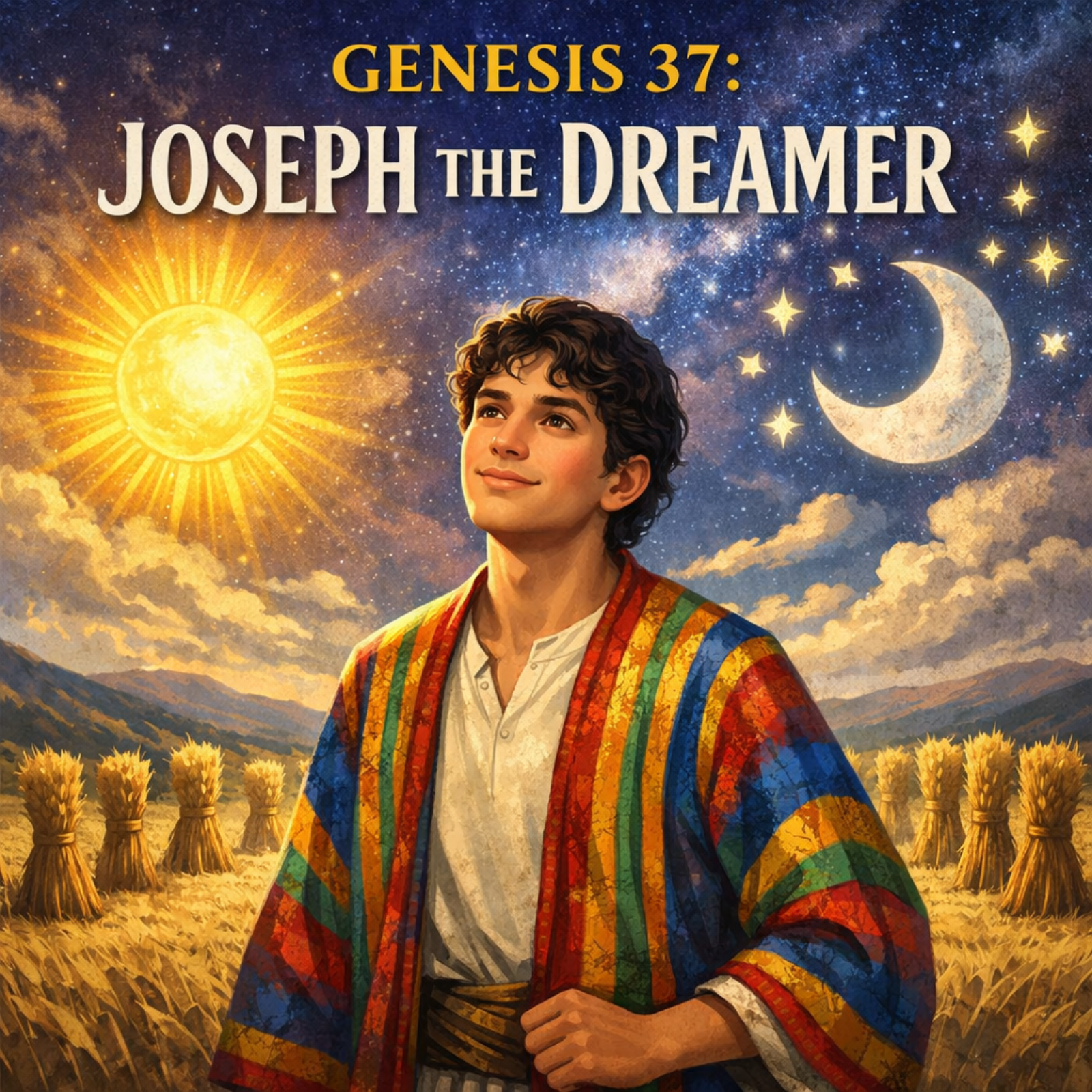
S1 Ep 57Genesis 37: Joseph the Dreamer
What if God speaks not only in waking words, but in dreams?Genesis 37 introduces Joseph as a young dreamer—and reveals that the God of heaven and earth is also Lord of the conscious and unconscious alike.In this episode, we step into the strange and beautiful world of biblical dreams through the life of Joseph, long before he was a ruler in Egypt. Before the pit, the prison, and the palace, Joseph was simply a young man who dreamed—and whose dreams stirred jealousy, confusion, and hatred among his own brothers.Genesis 37 shows us that God sometimes reveals truth before we are ready to understand it. Joseph’s dreams of sheaves bowing and heavenly bodies paying homage were real revelations from God, yet they arrived without explanation or timing. The dreams were true, but the dreamer still needed shaping.This episode explores how the Bible treats dreams not as superstition or fantasy, but as one of the ways God has chosen to communicate. From Joseph to Job, Scripture assumes that the Creator of land, sky, and sea is also the sovereign Lord of the inner life—the imagination, the sleeping mind, and the hidden places of the heart.We consider why God speaks in symbols, why dreams often precede suffering, and why fulfillment is usually delayed. Joseph’s story reminds us that God does not rush to fulfill what He reveals. Instead, He forms character, humility, and faith in the long space between promise and realization.This reflection also invites us to slow down our own interpretations. Not every dream is a message, but no part of our inner world is beyond God’s reach. The same God who spoke light into darkness is present in the night watches, guarding truth He will one day bring to light.Keywords: Genesis 37, Joseph the Dreamer, biblical dreams, God speaks, unconscious mind, divine revelation, suffering and formation, dreams in the Bible, God’s sovereignty, spiritual maturityCall to Action:Take time this week to read Genesis 37 slowly. Sit with Joseph’s dreams without rushing to conclusions. Share this episode with someone who is waiting on God’s promises—and join us as we continue tracing the one story that leads to Jesus.Scriptures Referenced:Genesis 37:1–11Job 33:14–15
S1 Ep 56Psalm 6: How Long, O Lord?
Ever felt weary, broken, or overwhelmed by sorrow? Psalm 6 gives voice to those moments, showing us how to bring our deepest struggles to God with honesty and faith.In this episode, we walk through Psalm 6, one of the penitential psalms of David, exploring how he cries out to God in distress, asks for mercy, and finds assurance that God hears his prayer. We examine the tension between God’s discipline and His steadfast love (hesed), the honesty of bringing our grief before the Lord, and the turning point when David declares that God has heard him.Listeners will discover:How to pray openly and authentically when life feels heavy.The difference between God’s discipline and His wrath, and why His correction is an expression of love.How God’s covenant love provides hope even before circumstances change.The power of believing God hears and accepts your prayers, even in the midst of pain.This episode is perfect for anyone experiencing exhaustion, grief, or spiritual struggle, as well as those who want to see how Scripture models honest prayer in the face of suffering. We also reflect on the words of Jesus in Matthew 7:9–11, connecting David’s cry to the promise of a loving Father who hears our prayers.Call to Action:Take a moment this week to pray Psalm 6 for yourself. Bring your heart, your sorrow, and your questions to God. Notice how it feels to declare that the Lord hears your prayer. Share this episode with a friend who might need encouragement, and join us next Sunday as we continue exploring the Psalms together.Scriptures Referenced:Psalm 6:1–10 ESVMatthew 7:9–11 ESV
S1 Ep 55Genesis 36: Family that Shapes the Promise
Genesis 36 feels like a pause—but it’s actually a turning point.Before the story narrows to Joseph, Judah, and the road to Jesus, Scripture shows us how every surrounding family line shapes the destiny of the promise.Genesis 36 opens with a genealogy—Esau, also called Edom. At first glance, it seems like the Bible is simply closing the book on a brother who was not chosen. But this chapter does something deeper. It reminds us that God’s redemptive plan does not develop in isolation. The line of promise is shaped by brothers, cousins, uncles, tribes, and nations growing up right beside it.Esau is not the son of the covenant, yet God blesses him with land, descendants, chiefs, and kings. Edom becomes a nation quickly—strong, organized, visible—while Jacob’s family grows slowly, dependent on God’s provision. The contrast matters. Power is not the same as promise.As Genesis continues, the focus shifts to Joseph, Jacob’s most loved son. His life will preserve the family during famine and carry Israel into Egypt. Yet Joseph is not the one through whom the covenant flows. That honor belongs to Judah—the unlikely brother whose line will lead to King David and, ultimately, to Jesus.Along the way, other family lines continue to shape the story. Some protect the promise. Some oppose it. Some refine it through hardship. And some—unexpectedly—are woven into redemption itself. God uses faithfulness and failure, blessing and betrayal, obedience and resistance to move His plan forward.Jesus later spoke directly to this pattern when He said, “The stone that the builders rejected has become the cornerstone.” God’s purposes are never threatened by rejection, delay, or detour. The rejected son, the overlooked tribe, and the unexpected path are often the very means God uses to reveal His glory.Genesis 36 is not filler. It is proof that God never loses the thread. The road that leads to Jesus winds through many lives and nations, all held firmly in the hands of a faithful God.Keywords: Genesis 36, Esau, Edom, genealogy, Joseph, Judah, covenant, promise, Messiah, Jesus, redemption, biblical theology, Old Testament foundationsCall to Action:If this episode helped you see the bigger story unfolding in Scripture, share it with someone walking through a season that feels overlooked or off the main path. And don’t forget to subscribe, follow, and join us as we continue tracing the one story that leads to Jesus.Scriptures Referenced:Genesis 36:1Matthew 21:42
S1 Ep 54Genesis 35: Names That Shape Destiny
What’s in a name? In Genesis 35, names are more than words—they tell stories, reveal destinies, and reflect God’s hand at work in human lives. From Jacob becoming Israel to Benjamin receiving a name of blessing, this chapter shows how God shapes identity, transforms sorrow into hope, and unfolds His covenant promises through generations.In this episode, we explore:The reaffirmation of Jacob’s name as Israel and what it signifies about struggle, perseverance, and covenantal purpose.The renaming of Rachel’s son from Ben-oni (son of my sorrow) to Benjamin (son of the right hand) and how God turns grief into blessing.The poetic pattern of God or His appointed patriarchs giving names that reflect destiny, not just circumstance.How these ancient naming moments invite reflection on our own identities, the labels we carry, and the ways God can reshape our story toward hope and purpose.If you’ve ever wondered whether your past defines your future, or how God works through family, struggle, and blessing, this episode will encourage you to see your life in the light of His covenant promises.Keywords: Jacob, Israel, Benjamin, Ben-oni, Genesis 35, names, identity, destiny, blessing, covenant, God’s purpose, biblical storytelling, transformation, hope, Scripture reflection.Call to Action: Subscribe to the podcast to continue exploring the stories that lead to Jesus. Share this episode with someone who might need encouragement that God can shape identity, blessing, and destiny even through struggle.Scripture References: Genesis 35:10–18; Genesis 17:5; Genesis 32:28
S1 Ep 53Genesis 34: When Cultures Collide and Violence Multiplies
What happens when two very different worlds collide? When one man’s desire meets a family’s covenantal values, tragedy can follow—and anger can spiral out of control. In Genesis 34, we see a story of violation, revenge, and the high cost of misplaced justice.In this episode, we explore the shocking story of Dinah, the daughter of Jacob, and Shechem, the son of Hamor. Shechem’s act of taking Dinah and lying with her was a serious violation, yet in his culture, marriage could have “fixed” the offense. Jacob’s sons, however, viewed the situation through a covenantal lens: sex outside God’s design was defilement, and the honor of their family had been violated.We unpack the cultural clash: Shechem and Hamor treated sex as transactional, a way to cement alliances. Jacob’s sons understood sex as sacred, covenantal, and tied to God’s order. Their response, however, escalated the violence rather than healing it. By deceiving the men of Shechem into circumcision and then slaughtering them, Simeon and Levi multiplied the tragedy. Nothing could undo Dinah’s violation, and the aftermath left blood on both sides, echoing Lamech’s boast in Genesis 4:24 about excessive revenge.Through this chapter, we learn that righteous anger is not the same as retaliation. Misplaced vengeance only deepens harm and compounds sin. Genesis 34 is a stark reminder that violation and revenge are both serious, and that God’s people are called to live differently—upholding justice while avoiding the destructive cycle of violence.Join us as we unpack the moral, spiritual, and cultural lessons of Genesis 34, exploring how God’s covenant shapes our understanding of sex, honor, and justice. Reflect with us on the tragedy of this story and the hope of God’s wisdom that calls us to mercy, restraint, and faithfulness even in the face of wrong.Call to Action: Subscribe to In the Garden and listen wherever you get your podcasts. Reflect on Genesis 34 in your personal study this week: How can God’s covenant guide your response to injustice, anger, and the brokenness of the world? Share your thoughts with us on the Monahans Bible Connection Facebook Page.Scriptures referenced: Genesis 34, Genesis 4:24
S1 Ep 52Genesis 33: From Sojourner to Settler
What happens when a wanderer finally puts down roots? In Genesis 33, Jacob’s simple land purchase marks a powerful shift—from sojourner living on promise alone to steward participating in God’s unfolding plan.In this episode, we explore the practical and spiritual meaning behind Jacob’s decision to buy land in Shechem after years of wandering. For generations, Abraham, Isaac, and Jacob lived as foreigners in the land God promised them—dwelling in tents, moving with the seasons, and trusting God daily for provision. But Jacob does something new: he establishes a permanent place.This wasn’t just about stability or comfort. It was an act of faith.We’ll look at how owning land transformed Jacob’s role from survivor to steward, from waiting on God’s promise to actively living within it. We’ll also reflect on the tension between dependence and security, and how settling can both mature faith and test it.Finally, we connect Jacob’s story to the life of Jesus—the ultimate sojourner who owned nothing on earth yet secured an eternal inheritance for us—and what it means for believers today to live as both pilgrims and heirs of God’s kingdom.Key themes & keywords: Genesis 33, Jacob buys land, sojourner vs settler, biblical faith, God’s promises, stewardship, inheritance, pilgrims in the Bible, Old Testament theology, Christian discipleship, kingdom of God, Abraham Isaac Jacob, spiritual growth👉 Call to Action: If this episode encouraged you, be sure to follow the podcast, share it with a friend, and leave a review to help others discover God’s story. Join us as we continue walking through Genesis and uncovering how every movement points us closer to Jesus.Scripture References in This Episode: Genesis 33:18–19 Hebrews 11:13–16 Matthew 8:20 1 Peter 2:11 Ephesians 2:19