How To Train Your Dog With Love + Science - Dog Training with Annie Grossman + Anamarie Johnson PhD (Formerly known as School For The Dogs Podcast)
229 episodes — Page 5 of 5

A modern dog owner's guide to sidewalk leash greetings
As much as we want our dogs to be social beings, the sad fact is that city streets are not an ideal place for leashed dogs to socialize. The close confines of the sidewalk can keep dogs from having enough space to greet each other properly, and leashes too often can become uncomfortably taught, leading a dog to think that even just the sight of another dog predicts yanking and choking. This episode addresses: -Avoiding other dogs on the street -Using the presence of other dogs on leash as a cue for your dog to pay attention to you -Providing your dog with appropriate off-leash socialization opportunities -Choosing which dogs you might let your dog greet -Helping your dog greet other dogs naturally and appropriately ... and more Notes: 7 things to consider before letting to dogs greet on leashhttps://schoolforthedogs.com/7-things-to-consider-before-letting-two-dogs-greet-on-leashDogs In Need Of Space https://dogsinneedofspace.com/The Yellow Dog Project Mendota leash -- Annie's favorite, lightweight leash https://storeforthedogs.com/products/braided-leashWoof Shout Out: Dog adoption vests by Mimi Reid https://etsy.me/2PzKd9TFun dog fact of the day: NYC dog names (dogs named after fruits, vegetables, etc) https://nycedc.com/blog-entry/new-york-citys-dog-populationFollow School For The Dogs on Instagram: Instagram.com/schoolforthedogs Ask Annie: AnnieGrossman.com/ask---Partial Transcript:Annie:Hey everyone! So today we are going to talk about dog-dog greetings, specifically dogs greeting other dogs on the street, and I'm going to suggest how you can teach your dog to greet another dog well and all the things you need to keep in mind when deciding whether or not you're going to let your dog greet another dog.But before I get into the thick of it, uh, I wanted to give my number one suggestion, which is don't do it. Don't let your dog greet other dogs on the street. That's it. Now the reason I'm not going to end it there is because I know that that sort of like a bummer piece of advice. People don't generally love the idea of shielding their dog from every other dog on the street. We like the idea of being able to walk our dogs and have it be a kind of social thing where they can say hi to the other dogs in the neighborhood and everyone's gonna get along. But here's some reasons why I generally advise against letting your dog interact with other dogs on the street.First of all, I see a lot of crazy dogs at School for the Dogs, all of us trainers do. And a lot of those dogs are dogs who have issues with other dogs and, especially, those are dogs who have issues with dogs on the street, issues with other dogs at close proximity and in New York City where I am, and in a lot of cities, when you're having a dog greet another dog on the street, there's a lot that could go wrong. And I have to assume that it's the minority of dogs who have problems greeting other dogs or problems even just being on the street at all where other dogs may or may not appear or just problems being on the street at all, no matter where other dogs are.Full Transcript available at SchoolfortheDogs.com/podcast/ Get full access to Don't Be a Dick to Your Dog at dogtraining.substack.com/subscribe

Let’s talk about the future of dog food with The Farmer's Dog's Brett Podolsky
When Brett Podolsky's dog was chronically unwell, he had an idea: What if he bought the same ingredients listed and in the commercial brand he was feeding her, and made her fresh food? The change in her health was drastic, and led to Brett, who was then working as a comedian, convincing his best friend, Jonathan Regev, to start a subscription-based high-end dog food company with him. Now three years old, their Brooklyn-based company, The Farmer's Dog, has secured some ten million dollars in VC funding and their health-supportive recipes are being enjoyed by tens of thousands of grateful dogs throughout the country. Annie and Brett discuss what it takes to start a dog food company from scratch, the problems behind commercial dog food, and the shifts in dog owner awareness that are leading to a tide change in the pet food realm. Visit SchoolForTheDogs.com/Farmer and get 50% off a two week trial subscription. Notes: Learn more about the Farmers Dog at schoolforthedogs.com/farmers - Brett and Jonathan in Forbes - Fun Dog Fact: Yes, it's possible to dog food that is nutritionally viable (according to government standards) using shoe leather, crushed coal, water, and motor oil. Woof Shout Out: Our sweet doodle student Webster recently moved to San Francisco. We miss him, but we enjoy keeping tabs on his left coast life on Instagram! instagram.com/westcoastwebbie/Have a question about dog training? Get in touch! [email protected] ---Partial Transcript:Annie:Hey everyone. Today I am speaking to Brett Podolsky, who is one of the founders of The Farmer's Dog, which is a high end dog food subscription company. I first discovered The Farmer's Dog three or so years ago, not long after they opened up shop because I was at a cafe that I often go to near my apartment. And there was a guy there with a dog and he and I started talking about his cute dog and it came up in conversation that we're both dog business entrepreneurs. And I started looking into his company and that was Brett’'s business partner, Jonathan Ragiv. A year later, I was reading about them in Forbes.com. And last year, I read that they had secured an $8 million investment. At which point I realized these guys were actually maybe a big deal. So I was psyched to get the opportunity to talk to Brett**music**Annie:So tell me how you guys got started.Brett:Yeah, so Jonathan was actually living with me at the time.Annie:And how did you two know each other to begin with?We met abroad and basically just like hit it off and spent every single day with each other. Literally it might be like four and a half years now.Annie:Were you traveling together?Brett:Yeah. Yeah. We met like on a trip. And we bonded over, I think it was funk music and yeah, after that, we just had one of those moments, like, did we just become best friends? And then after that, yeah, we basically spent every single day with each other for years.Annie:So were you like trying to figure out what kind of business you could do together, or were you suddenly inspired by the idea of a dog food?Brett:No, it's funny. Well, when I met him, I thought besides just being like a great person, I thought he was like the smartest person I've ever met. So I was like, I definitely, if I'm going to start a business, that man will be my business partner. I don't know if that's what he was thinking at the time. He had been working on a couple of different startups.Full Transcript available at SchoolfortheDogs.com/Podcasts/ Get full access to Don't Be a Dick to Your Dog at dogtraining.substack.com/subscribe
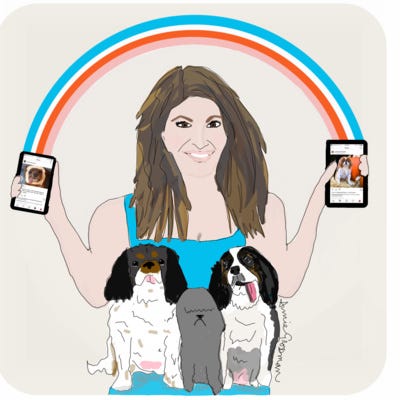
Katie Sturino, mom to @ToastMeetsWorld, on Instadog stardom
Katie Sturino is many things: A publicist, an influencer, a fashion blogger, a product developer and more. You might know her from The12ishStyle, the blog and Instagram account where she suggests celeb-worthy looks that can be worm by larger ladies who identify as "body positive" or "body neutral." She also has a product line, MegaBabe, which tackles problems like boob sweat. But all of her successes have sprung from her passion for being a "dogager" or "momager" to a brood of dogs who've gained nearly a half million devoted followers on Instagram. Katie and Annie discuss her passion for rescuing puppy mill survivors, the challenges of living with five dogs in Manhattan, and what it takes to make a dog Instafamous.Notes: AnnieGrossman.com/podcast27 - Katie's Instagram accounts: Instagram.com/The12ishStyle - Instagram.com/ToastMeetsWorld - Instagram.com/UnderpantsTheDog - Instagram.com/MuppetsRevenge - Sponsor: Train your inbox with SANEBOX! Get $15 off at SchoolForTheDogs.com/sane---Partial Transcript:Annie:Hey there everyone. So if you’re into following dogs on Instagram, really, I don't know why you wouldn't be, you've probably come across an account called Toastmeetsworld. Toast, who sadly passed away last year, was really one of the first mega stars of Instagram. She had over 350,000 followers. She appeared in Vogue and on Good Morning America, she was in Harper's Bazaar. And it's tempting to say she brought all of this upon herself because she was just very, very cute and particularly memorable because she had this funny face with a tongue that was always sticking out. But I'd say the real reason for her success was the powerhouse publicist who rescued her. Katie Storino, who I was fortunate enough to interview for this episode. Katie now manages several Instagram accounts for her dogs. She continues to manage Toast’s account and also her late dog, Underpants’s account. She's, she has a real talent at naming dogs, I think they're all very funny, very unique names.And when she isn't on Instagram, she is managing the lives of three dogs right now. Muppet and Cheese who, like Toast, were both rescued from puppy mills and then Sock who is a 16 year old Shih Tzu, who moved in with her when her fiance moved in with her. And there, there just so many amazing things about Katie. I mean beyond the fact that she is one of the only people I've ever met who has lived in a Manhattan apartment with five dogs, although now she's down to three. I think what's coolest about her is the way her career has kind of evolved and thrived in these unusual, exciting directions because of her love for dogs.Having these Insta-famous dogs ended up leading her to get attention for a blog and Instagram account she started for herself called The 12ishstyle, which is basically about how to look awesome in celebrity-worthy clothing, even if you're not a tiny celebrity-shaped person. She uses the term body neutral, which I really like as an alternative to the whole body positive movement. And as someone who is a pretty solid size medium, I don't know, I think it's a nice way to label yourself, like can I just be a normal sized and healthy person and not have to attach myself to some kind of movement.Full Transcript available at SchoolfortheDogs.com/Podcasts Get full access to Don't Be a Dick to Your Dog at dogtraining.substack.com/subscribe
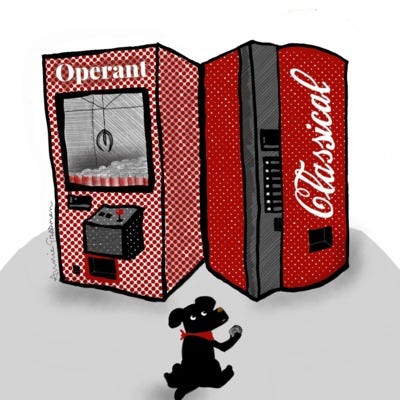
Teach a foolproof DROP and COME using Classical Conditioning
There are two types of conditioning we use in dog training: Operant (aka learning by consequence, or "Skinnerian Conditioning") and Classical (aka learning by association, or "Pavlovian Conditioning"). When we teach new behaviors, we tend to focus on Operant Conditioning. In this episode, Annie talks about the differences between these two kinds of teaching/learning, and reveals how, in many cases, Classical Conditioning can produce very reliable behaviors with little effort. Notes: AnnieGrossman.com/podcast26 - What vending machines can teach us about training "come" & "drop it" - Music: "Time Is On My Side" cover by Toast Garden - Sponsor: Train your inbox using SANEBOX! Get $15 off at SchoolForTheDogs.com/Sane Like this podcast? Leave a review on iTunes at SchoolForTheDogs.com/Listen or visit us on Anchor at SchoolForTheDogs.com/Anchor to support it with a monthly contribution of $0.99, $4.99 or $9.99 a month. Thanks!---Partial Transcript:Annie:Hello there, mammals. So I'd like to start this episode off with a little riddle. And uh, if you make it through this episode, you will be able to answer this riddle. So here it goes.You're in a room. Let's say it's a pretty small room with two people. One is a baby and the other is an adult, let's say it's a man and he doesn't speak English and you don't speak his language. Now he's holding a basketball and you want to teach him the meaning of the words “drop it.” Now, so just to recap, we have three people in the room, you, a baby, a man who doesn't speak English and is holding a basketball and that's it. There's no dictionary that you can use to translate. There's no dry erase board that you can write a diagram on and you are not allowed to really do any kind of a miming in order to try and get him to drop it. You also cannot touch him. So that's the setup. What are you going to do?Today's episode is specifically about teaching “drop it.” Of course we're going to focus on how to teach “drop it” to a dog, but teaching “drop it” to a dog is a little bit like teaching “drop it” to someone who doesn't speak your language and we're also going to talk about “come.” Now I know at a first glance it might not seem like these two behaviors have very much in common, but, again, by the end of this episode I think you will see what they do have in common and why I wanted to pair these two very important behaviors together.Now before I get too much into the nitty gritty of teaching these two important behaviors, I want to do a little review of the two kinds of learning that I'm always talking about on this show and that are so important to dog training: operant and conditioning and classical conditioning.So operant conditioning is what we tend to think about when we're thinking about dog training. Operant conditioning is really anything that fits into like a “if then” equation. If my dog's butt hits the ground, then I'll give him a treat. Or if my dog pulls, then we will stop walking. Of course, humans are very much affected by operant conditioning too, just think of everything in your life that you can put into this a kind of equation, right? Like, if I go to work, then I get paid...Full Transcript available at SchoolfortheDogs.com/Podcasts/ Get full access to Don't Be a Dick to Your Dog at dogtraining.substack.com/subscribe
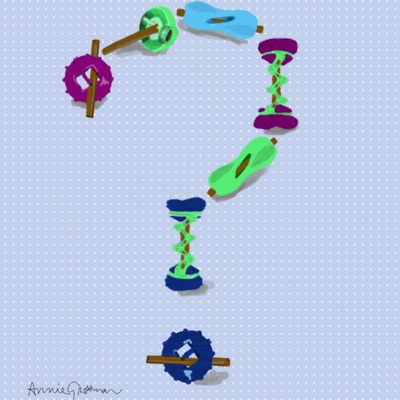
A better mousetrap: Building the perfect bully stick holder
If you have a dog, you've likely encountered bully stick chews. They're great for keeping dogs occupied, but there is always the risk of swallowing them, especially when they get chewed down to their ends. Several products have recently hit the market, each of which tries to solve this problem in a novel way by sheathing, clamping, or holding the chews in such a way to make it impossible (ideally) for a dog to choke on them. Annie surveys some of these products, and interviews the inventor of the The Everchew, designed by Austin-based inventor Kirby Kendall. Help fund his product on Kickstarter (through 10/3/18) at Everchew.com. Notes: AnnieGrossman.com/podcast25 - What is a bully stick? - Bully stick holders at StoreForTheDogs.com - Music: "Bully of the town" cover by JazzBanjoRex - Sponsor: SANEBOX! Get $15 off at SchoolForTheDogs.com/Sane ---Partial Transcript:**music**Annie:So, you know, you're a pretty big dog loving nerd, if you can get very excited about bully stick holders. And, uh, I'll explain later in this episode exactly what a bully stick is, if you're not familiar with bully sticks, but basically they're a very popular kind of dog too. I recommend them to clients all the time because they're a single ingredient and dogs love them. Lots of great things about bully sticks. But one downside to bully sticks is when they get to their very last inch or so, they kind of look like cigars depending on the size that you get, but when they get down to that little nub, there's always the risk that a dog can swallow it which is never a good thing. So over the last few years, a couple of companies have started offering various kinds of bully stick holders, basically devices that keep your dog from being able to get to that last little bit.And at School for the Dogs, we get really thrilled when we receive one of these things to try because like I said, we recommend bully sticks all the time. So right now a storeforthedogs.com, we sell three and each one kind of has a different approach to solving this problem. Probably our most popular one is called the Animaswizzler. It's this very cool looking kind of like plastic and rubber cage that fits over a bully stick. And we sell a lot of these. I like them, but they're not really great for super heavy chewers because plastic and rubber can be broken and sometimes the dogs do end up breaking them. So I don't recommend them for heavy chewers.Then we have one made by the company West Paw, which is a really great company. It's all rubber and you kind of shoved the bully stick in. It kind of looks like a really big hot dog bun. Um, and that also has its advantages and disadvantages. I think the main disadvantage is most of the bully stick is lodged in the rubber thing, so your dog really can't get to it at all.And then the third one we've be recently started selling is called the Bone Head. And it's kind of like a clamp that literally screws onto a bully stick with a screwdriver...Full Transcript available at SchoolfortheDogs.com/Podcasts/ Get full access to Don't Be a Dick to Your Dog at dogtraining.substack.com/subscribe
Let’s talk about in-home dog grooming with Ani Corless
Ani Corless is a dog groomer and the owner of the NYC-based business Luxury Groomer. Unlike most groomers, Ani goes into her clients' homes to groom their dogs. Annie and she discuss her path to becoming a groomer, some common mistakes that well-intentioned dog owners make when grooming their own dogs, and the various ways that in-home grooming can benefit dogs, dog owners, and groomers alike. Learn more about Ani at luxurygroomer.com Annie and Ani discuss the annual "Creative Grooming" competition held each year in Hershey, PA. Annie produced a short video about this event for Vice.com in 2011. youtube.com/watch?v=yq2f5ACx2fM Interested in pursuing a grooming career? PetGroomer.com offers both a list of US programs and several informative articles on selecting a school. petgroomer.com/schools/ petgroomer.com/selecting-grooming-school/ Sponsor: Is your Inbox a mess? You need SANEBOX! Get a free trial & $15 off when you sign up at Schoolforthedogs.com/sane---Partial Transcript:Annie:So today I am interviewing a groomer. Her name is “Annie” like me, although she spells it, uh, Ani where I spell mine, the more, the more normal, boring way. And Ani is an in-home groomer in New York City. She goes to people's houses. I'm really interested in in-home grooming this concept of a groomer who comes to you for a variety of reasons, some of which we will get into in this episode. But the main reason is I think it can really be the most dog-friendly way to have your dog groomed. I think a lot of dogs get stressed out going to the groomer and you don't know exactly what's happening to them at the groomer. And the longer that I do dog training professionally, the more respect I have for groomers who really take the time to be thoughtful about how they're handling dogs during grooming and how the dogs are responding.You know, I used to think about a groomer kind of the same way that I think about like a shoe repair person, like, I just would bring my dog in, kind of like, I bring my messed up shoes in and then they would fix the dog. Like they fixed the shoes and I would pick them up and all would be well and I didn't really need to know about what went on in the interim period. But the fact is that grooming can be really traumatic for a lot of dogs. So I give a lot of credit to groomers who not only put in a lot of time and effort to acclimate dogs to the grooming process, but also who are willing to be transparent about it and if you have a dog groomer coming to your house, whether or not you're actually involved in the grooming process, you can at least be there to make sure that your dog is feeling comfortable.And if your dog isn't comfortable, the good news is grooming is usually not something that has to be rushed. It's something that can be done over a period of times, whether that means a groomer showing things that you can do to help your dog get better or feel better about grooming or having the groomer come again. But, it doesn't have to be a one stop process. And at School for the Dogs, we are encouraging our owners, our dog owners, from the time the dogs are puppies really, it's something that we, we try to drive home in Puppy Kindergarten to think about husbandry as part of training, to think about how you can make your dog feel comfortable around the equipment you're going to need to use with them or other people that are going to need to use with them from a very early point and to get them used to being handled. I think it's a really, really big favor that we can do to our dogs.Full Transcript available at SchoolfortheDogs.com/Podcasts Get full access to Don't Be a Dick to Your Dog at dogtraining.substack.com/subscribe

Ask Annie: Navigating dog runs and managing elevator manners
In this Q+A episode, Annie discusses how to deal with dogs in elevators, and how to navigate dog parks. She also talks about what to do if your dog gets off leash, and how to help a dog who attacks her brother whenever they pass another dog. Have a question for a future episode? Visit AnnieGrossman.com/askShow notes - Products: Fleece Activity Mat - Wall-Mounted Slow Feeder - Freedom Harness - Liquid Treat Dispenser - Target Stick - Whistle Recall DVD - Grisha Stewart's BAT guide - Music: "Back To School Again" by JazzBanjoRex - Sponsor: Is your Inbox a mess? You need SANEBOX! Free trial and $15 off at SchoolForTheDogs.com/Sane---Partial Transcript:**music**Annie:Hey podcast, listeners. Thank you so much for tuning in. This is a Q and A episode. This is my second Q and A episode. It's also our back to school episode, and I don't know about you, but I hated school, pretty much. I pretty much hated school all through all of my formal schooling to be totally honest. And I feel like September always felt like a sad time where there was sort of, dread, which I think, this song conveys. But now as an adult and as the owner of a school, School for the Dogs, I don't feel that way at all. I love the weather and I love that my dog students are all coming back from their vacations and they're psyched to be back. I'm really glad to see their owners. So many of whom have become really good friends.And it feels like it feels like school is, is a good thing and it's revving up. And actually we just signed a lease on a new space for School for the Dogs, our second space, we're going to be operating in both locations for at least a few months, if not longer. The new space is on East Seventh street. We're hoping to it open by next month. So that's another reason that I'm excited about this back to school season. But for me when I was younger, I think the only thing that made going back to school slightly manageable was the back to school shopping. To be honest, I liked getting books and pens and I liked getting a new backpack and I liked that part of it. So I thought in that spirit, I would mention before I start answering some of the great questions that have come in, I thought I would mention a few of the cool new products that we have at storeforthedogs.com and maybe a couple of ones that we've had for awhile.We’re really excited about these new activity mats that have come in, they're made of fleece. They're kind of like snuffle mats, which is something that we've carried for a while. Different kinds of snuffle mats, snuffle mats are basically fabric kind of like rugs that you can hide things in, you can hide dry food or treats and they're like really, really super plushy stringy bathmats. But these new activity mats have even more, sort of like, fabric obstacles on them, where you can hide things, tuck things in flaps and such.Full Transcript available at SchoolfortheDogs.com/Podcasts/ Get full access to Don't Be a Dick to Your Dog at dogtraining.substack.com/subscribe

Let’s talk about SFTD's origins with co-founder Kate Senisi
In 2011, Annie Grossman and Kate Senisi were both trying to figure out how to make a business out of dog training. They met through the Association for Professional Dog Trainers' message board, and discovered they lived a block away from one another in Manhattan. They also discovered they had complementary talents: Kate had an eye for detail, a background in graphic design, a head for organization, and a passion for dealing with aggressive dogs; Annie had an entrepreneurial spirit, writing skill, and lots of creative ideas. They decided to join forces, and together turned Annie's living room into a dog training classroom--they called it School For The Dogs. Here, Annie and Kate discuss SFTD's early days and their paths to becoming trainers. Notes: AnnieGrossman.com/podcast22 Training videos: Tawzer.com Music: "Sister Kate" cover by Lloyd Davis lloyddavis.bandcamp.com/track/sister-kate Sponsor: Is your Inbox messy? You need SANEBOX! Get $15 off at SchoolForTheDogs.com/SanePartial Transcript:Annie:This week, School for the Dogs’ podcast is sponsored by Sanebox, the email service that is designed to make dealing with email a breeze. Sanebox gives you a powerful set of tools that can work just about any email client. It’s kinda like artificial intelligence for your inbox. Sanebox will automatically sort your email for you, defer your email for a more convenient time, set up reminders and more. Get a two-week free trial plus $15 off when you sign up at schoolforthedogs.com/sane.**Music**Annie:So I am sitting here with my- what do I even call you…Kate: Partner in Crime?Annie: My partner in crime. My partner, not in sexual way…Kate: yes, I always worry about when I say.. introduce you as my partner. I clarify it with… business partner?Annie: Business Partner. She with whom I founded School for the Dogs. Kate Senisi. The one, the only and Kate has certainly been one of the most important people in my life.Kate: Well Thank you.Annie: in the last decade.Kate: And you in mine. I think we are also friends. … I’m just kidding.Annie: Kate, do you want to be friends?Kate: I don’t know it might interfere with our working relationship.Annie: LaughingKate: Is it possible?Annie: No, I really feel so lucky that we found each other when we did and I, so, I brought Kate on to talk about how she got into dog training and talk about some of the things that we both love about dog training. I think one thing, among many things, that we both have in common is we both get really excited about geeking out on training and I knew early on that that we were going to be friends for a long time when we were curled up on your couch drinking wine watching, like, Kathy Sdao..Kate: Oh yeah the Tawzer days..Annie: recorded videos of DVDs of seminars on Saturday nights together after dog training all weekend or figuring out how to become dog trainers all weekend, we would watch videos about dog training with our dogs. I remember one of those nights thinking like, “This is it. I have found a certain kind of soulmate.”Kate: I found an equal nerd partner.Annie: So Kate and I started working to gather pretty soon after we first met which I believe was in 2011Kate: I think so.Annie: And at that point we were both. We had studied dog training on our own in different ways, which we will talk about in a minute. I think we were both at the point of trying to figure out how to parlay our interest and knowledge into work...Full transcript at Schoolforthedogs.com/Podcasts Get full access to Don't Be a Dick to Your Dog at dogtraining.substack.com/subscribe
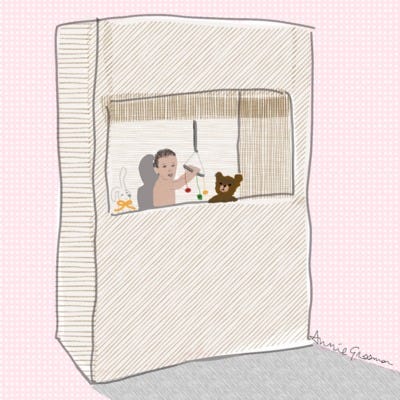
Being BF Skinner's daughter: Deborah Buzan dispels the myths
Renowned behavioral psychologist BF Skinner codified much of the science behind positive reinforcement-based animal training, and is a hero to many dog trainers. But for over half a century, his reputation has been tarnished by rumors that his daughter went crazy and killed herself because he raised her in a box. Annie interviews said daughter, Deborah Buzan, who is alive and sane. She was in fact raised in a box... sort of. Buzan discussed the "Air Crib," aka the "Baby Box," and growing up with a genius father who was devoted to engineering ways to make life easier and happier for his wife and daughters. Notes - Music: Hello My Baby cover by Melissa Mahony of the Channel Drifters - Blue Danube cover by David Beckingham - BF Skinner Foundation: BFSkinner.org - Sponsor: Is your Inbox a mess? You need SANEBOX! Get a free trial and $15 off SchoolForTheDogs.com/Sane---Partial Transcript:Today I am speaking to a very famous baby. Of course she is not a baby any more. She is a woman in her seventies. The story of her babyhood has become something of an urban legend. The misunderstandings about her youth I think actually dovetail with a lot of misunderstandings about dog training. Deborah Buzan is an artist who lives in England and we spoke via Skype, and, unfortunately, we didn’t have a great connection. So, this recording isn’t wonderful but I did my best to clean it up. But even if it is not the most easy listening I hope you’ll make it through this episode because we had a really interesting conversation. She is the daughter of B.F. Skinner and if you’ve listened to this podcast before, you’ve probably heard me talk about Skinner. He is one of my heroes and a hero to many good dog trainers out there. Skinner, who sadly passed away in the early 1990s, is considered to be one of the founders of the science of behavior.He codified a lot of what we know about the science and philosophy of behaviorism. If you’re not familiar with Skinner, I suggest going out and getting all of his books, or at least one of them. About Behaviorism a good one to start with, or Beyond Freedom and Dignity. He also wrote a novel called Walden Two which is kind of about how you could create a utopia creating positive reinforcement.Anyway, I thought the best way to introduce Deborah would be with this clip of her father discussing some of the misunderstandings about how she was raised.“I’d like to correct some rumors that go around. I am sure that some of you have heard them. A distinguished psychiatrist whose name you all know, I won’t mention it, told a distinguished person whose name you also would know, that the child that we raised in the so called box, the air crib, became psychotic. I wrote to him that we’ve heard this before and I’ve often heard this, would you mind telling me where you heard this rumor? Our daughter is very intelligent and talented, married, her husband teaches international studies at the Univ. Of Warwick, they live in London. My daughter is an artist, she does large color etching and sells all she can produce and so on. I don’t see any ill effects of the air crib on her. Well, he sent me a very apologetic letter, I must say that. But he didn’t tell me where he heard it."Full Transcript available at SchoolfortheDogs.com/Podcasts Get full access to Don't Be a Dick to Your Dog at dogtraining.substack.com/subscribe
Wonderful "Work To Eat" toys: Feeding Dogs In Slow Food Bowls
Every time you feed a dog, you have the opportunity to channel some of her energy into an appropriate activity, to tire her out, and to give her a sense of purpose. "Work To Eat" toys provide dogs with jobs, and dogs like to be employed! If we don't give them jobs, they too often make up their own jobs, alerting you to every sound in the hallway, or redesigning the couch cushions with their mouths. There are lots of kinds of "Work To Eat" toys. In this episode, Annie talks about one type: Slow Food Bowls. These kinds of toys can be used with any kind of food or treat (wet, dry, raw or frozen), and are no harder to use than a regular bowl. Slow Food Bowls: StoreForTheDogs.com/collections/dog-bowls-and-treat-dispensers Types of "Work To Eat" Toys: SchoolForTheDogs.com/WorkToEat"Ain't We Got Fun" ukulele cover by Jazzbanjo Rex: youtube.com/Jazzbanjorex/ Find Annie at AnnieGrossman.com---Partial Transcript:Annie:Hi, my name is Annie Grossman and I'm a dog trainer. This podcast is brought to you by School for the Dogs, a Manhattan based facility I own and operate along with some of the city's finest dog trainers. During this podcast, we'll be answering your questions, geeking out on animal behavior, discussing pet trends, and interviewing industry experts. Welcome to School for the Dogs podcast.**music**Annie:Hey everyone. So Anchor, which is the wonderful company that hosts this podcast has just launched a really cool new feature. And they've asked us to be one of the first podcasts to try it out. It's called listener support. Today is the very first day they're making this available. And basically it's kind of like a tip jar. So if you enjoy this podcast and you want to support it in some small way, let me know that you're listening and you're into it. You can sign up to give a monthly amount, either 99 cents, $4.99 or $9.99. And that recurring contribution will go straight back to helping produce this podcast. All you need to do is go to any browser, type in anchor.fm/dogs, and then just go ahead and click that listener support button as a special thank you. During this launch of this new feature, the first five supporting listeners will receive a School for the Dogs bandana. So go ahead and check it out and thanks to the folks at Anchor for inviting me to be a part of this launch.**music**Annie:So today we're going to talk about work-to-eat toys, specifically, slow food bowls. And let me tell you, I have exerted a lot of brain power and a lot of time trying to figure out how to approach the topic of work to eat toys, because there's so many great work to eat toys, but they're like different kinds of work to eat toys. So my conundrum has been well, do I just try and cover all of my favorite work to eat toys in one episode, or do I talk about just a specific variety of work to eat toy, or do I mentioned a single work to eat toy in every episode, and, I'm not sure what the right answer is, but what I've decided to do is to start out talking just about slow food bowls. And I hope that I will have an episode soon where I'll cover some other kinds of work to eat twice. I'm not sure how I'll do that yet, but the reason I want to start with slow food bowls is because I think they're kind of like a gateway work-to-eat toy. They're really easy to use. But anyway, let's back up for a second.Full Transcript available at Schoolforthedogs.com/Podcasts Get full access to Don't Be a Dick to Your Dog at dogtraining.substack.com/subscribe

How to train a dog to "sit" from scratch
Newsflash: Your dog already knows how to sit! But he may not know the cue you want to associate with that behavior. Annie breaks down how to use the "capturing" technique to teach "sit" anew and to add a novel cue. She covers: -The downsides of "luring" a behavior or "molding" it -The trap of trying to teach a behavior by asking for it repeatedly -The difference between a "cue" and a "command" -How to add a cue -The never-ending process of "shaping" a behavior -How to fade a lure and turn it into a cueShow notes - Get a clicker - Sponsor: Is your Inbox a mess? Train it with SANEBOX! Get a 2 week trial & $15 off when you sign up at SchoolForTheDogs.com/Sane - More On Pooper Scooper Law - Featured Dog: Instagram.com/LeoTolstoyFrank Want to support this podcast? We now accept "Listener Support" at Anchor.FM/Dogs. Chip in $.99, $4.99 or $9.99/month. Thanks!---Partial Transcript:Annie:Hey everyone. I am so glad you are here. Today we are going to talk about how to teach a dog to sit and whether or not your dog already knows how to sit. We're going to start from scratch. You can always start from scratch. And of course if your dog does already know how to sit he or she might not know, however, the word or whatever cue you have attached to that behavior.So rather than use the word “sit,” which I think if you've tried to teach your dog to sit before, if you have taught your dog to sit before, that's probably the cue you've used, we are going to use a new cue, just for the sake of showing how to teach something totally from scratch. The cue we're going to use is either going to be a finger snap or a hand clap. I usually do two.But before I get into the details of how to teach this behavior, I want to talk about some of the common ways sit is taught and I'll talk about some of the pros and cons of using these methods. And then we will go over how we teach it at School for the Dogs.Now, I think probably the most traditional way of teaching “sit” is basically just to say the word sit until your dog sits and then praise your dog, kind of like the word “sit” is eliciting the “sit” from the dog. I've heard this called the midwife approach as you are pulling the sit out of the dog. And in reality, two things tend to happen. One, usually people start saying it and then they repeat it and then they do kind of like something with their body to kind of try and help the dog, whether it's leaning or holding their hand over the dog's head, or even pushing the dog's butt down, which I'll talk a little bit more about in a minute. Or they just keep repeating it until the dog sort of gets frustrated and tries to do something. And when you think about it as kind of actually teaching, using negative reinforcement, the behavior that you want to happen, “sit,” is encouraged because it makes the annoying person who keeps saying “sit, sit, sit,” it makes them stop.Again, negative reinforcement is just another way of encouraging a behavior, but it's encouraging a behavior by making the behavior be the off switch that makes the annoying thing go away, as opposed to positive reinforcement, which is a behavior is encouraged because it produces something good. Now, if these methods of teaching “sit” have persisted for generations and generations, I think it's just because dogs are so forgiving and tend to pick things up pretty quickly.Full Transcript available at SchoolfortheDogs.com/Podcasts/ Get full access to Don't Be a Dick to Your Dog at dogtraining.substack.com/subscribe
The Dog Training Triad Part 3: Timing
So, you have a carefully engineered environment (see: The Dog Training Triad Part 1) where your dog is likely to do lots of things you want him to to do, and you have also selected really appropriate rewards (see: The Dog Training Triad Part 2). Now what? you need to make sure your rewards are being given with really excellent TIMING! Dogs are doing things constantly, and concurrently. Behaviors are overlapping at every moment, and a dog may sometimes think a reward is for something other than what you thought it was for. In this episode, Annie explains how to deliver rewards with A+ timing by using a "marker" signal. Read more about this on our blog: schoolforthedogs.com/tmng Parts 1 & 2 of The Dog Training Triad series: SchoolForTheDogs.com/mgmt SchoolForTheDogs.com/rewards Show notes: AnnieGrossman.com/podcast18 Music by: TheEnergyCommission.com Sponsor: Take control of your email! Get a 14-day free SANEBOX trial & a $15 coupon. Sign up at SchoolForTheDogs.com/Sane---Partial Transcript:**music**Annie:Hello, humans, Annie here. I have got to tell you that I am pretty excited because this episode is the third in the three part series about the dog training triad, as I call it. I think of the triad as basically like a universal recipe that you can train any animal to do almost anything that you want, that of course they are physically capable of doing. And this recipe is not species specific. I really believe it can work on all animals. Of course it is individualized from one individual to another. And I can't tell you the specific ingredients you're going to need to train your individual student, but it's kind of like baking bread. There's like a basic recipe for making bread, and then you can riff on it from there. So if you can really grasp this training triad, I think you're about half way to figuring out how to train whatever it is you want to train.I say about half, because I do think there are three other really important factors to dog training. I think you have to understand operant conditioning. I think you have to understand classical conditioning. And I think you have to develop the ability to read some basic dog body language. And those are basically the big pillars. So we have the training triad and then we have operant conditioning, aka learning by consequence. Classical conditioning aka Pavlovian conditioning or learning by association and then dog body language. And we've talked about those latter three things in some previous episodes. And I will go into more detail about all those three things in future episodes, don't you worry. But if you've listened to the first two parts of this series, and now you're onto this third and final one about the dog training triad, give yourself a pat on the back or pat on the head or wherever you like to be pat, because you are well on your way to becoming an excellent dog trainer.So first part of the dog training triad, which we spoke about is management-setting the stage for your dog to succeed. Management I think of as everything that we can basically do from the outside in, in order to control behaviors and to make sure that we're going to get lots of behaviors we want and reduce the likelihood that we're going to get behaviors that we don't want from the get go.Full Transcript available at SchoolfortheDogs.com/Podcasts/ Get full access to Don't Be a Dick to Your Dog at dogtraining.substack.com/subscribe
The Dog Training Triad Part 2: Rewards
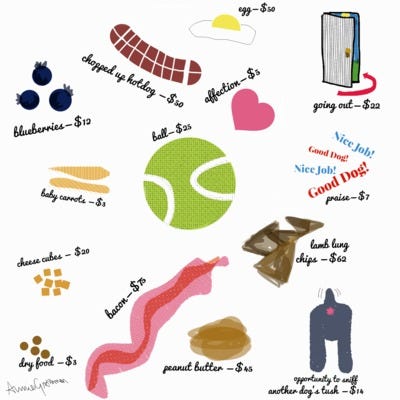
Once you've set the stage to up the chances that you'll get lots of behaviors you want (see The Dog Training Triad Part 1), you'll need to figure out how to reinforce those behaviors. In this episode, Annie discusses: -The difference between reinforcers and rewards -Discerning whether something is a reinforcer -Figuring out your dog's individual reward cornucopia -Understanding rewards as currency -The changing value and appropriateness of rewards -"Real life" rewards -The importance of treat size when using food Read more about this on our blog: schoolforthedogs.com/rwrds Products mentioned: Lamb Lung - Liquid Treat Dispenser - Kalles - Tricky Trainers"Big Rock Candy Mountain" cover by Nicole ToombsLearn more about... Leslie Hawke's Romanian initiatives: AlexFund.org Photographer Milla Chappell: RealHappyDogs.com Pike13: SchoolForTheDogs.com/PikePartial Transcript:Annie:Hi, there. This is the second episode in a three-part series on the training triad. The training triad is made up of three things: management, reward and timing. And, in my opinion, these are the three big things that you need to consider when you're creating any kind of positive reinforcement based training plan.So in the last episode, we talked about management and management is just setting the stage for your learner to succeed, really creating a path where you are definitely going to get lots of behaviors you like, I like to call it the yellow brick road. So it’s a path that has boundaries which make it impossible to get a lot of behaviors that you wouldn't want. But within those boundaries your dog is going to have a lot of opportunity to do all the things we want him or her to do. And we talked about different ways you can think about management: you're going to physically manage their space, manage their time and you're going to manage their energy. So definitely go back and listen to that episode.But now we are going to be moving onto the next step. So you have this well thought out path where your dog is going to be engaging in lots of appropriate behaviors, things you want him/her to do. Now what? We need to communicate to the dog that we like all these behaviors that are going on. We need to encourage these behaviors and how are we going to do that? Well, we're going to reward them.I’m using the word reward here, rather than reinforcer, but truth is to use these words pretty interchangeably, I find most dog trainers do which is really fine but I just wanted to explain the difference even though, like I said, we often just use one word instead of the other. But the truth is that not all rewards are reinforcers and not all reinforcers are rewards.Technically speaking, reinforcer is anything that encourages the likelihood that a behavior is going to happen again and usually those are rewards. Right? Anything that your dog likes is gonna be reward. And if your dog engages in a behavior you like and you reward appropriately that behavior should be reinforced. The thing is there's another kind of reinforcer which is called a negative reinforcer so the reinforcement that we usually think of we think of that reward is now good stuff right: money, love, affection and attention, but a reinforcer is anything that encourages a behavior, that’s the definition of what a reinforcer is..Full Transcript available at Schoolforthedogs.com/Podcasts Get full access to Don't Be a Dick to Your Dog at dogtraining.substack.com/subscribe
The Dog Training Triad Part 1: Management
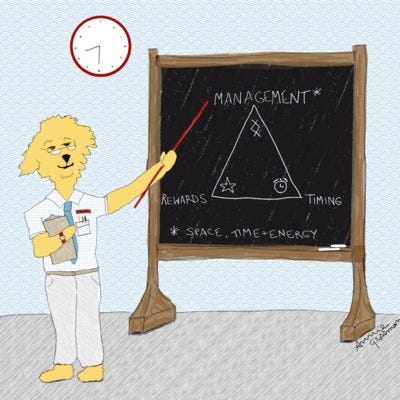
There are three major ingredients required in any positive reinforcement-based dog training plan. They are: Management, Timing, and Rewards. This episode is about Management, and is the first of a three part series on the Triad. Simply put, management is all about making the right options the easy options for your learner in order to up the chances of getting the behaviors you want. In this episode, Annie looks at the many ways in which we can set up our dog students for success by controlling their physical space, and the ways in which we can also smartly manage their time and energy. Notes: The Dog Training Triad Part 1: Management - Work-To-Eat Toys post - Shop Work-To-Eat Toys - Crate training - The Klimb Platform - 8 Things You Didn't Know About The Kong---Partial Transcript:Annie:Hey there everyone. So today I am going to talk about management and this is going to be the first part of a three part series on what I call the training triad. And this triad as its name would suggest is made up of three things. Management being the first, the other two are timing and rewards. And I think that with any kind of training that you're doing, management, timing and rewards are the three things that you need to consider in order to basically get whatever it is you want out of your dog in whatever the training situation is.So when we're thinking about management, in terms of dog training, we're really thinking about the stage that we're setting. We're thinking about all the parameters within which our dog is going to exist and thrive and have a great likelihood of doing the things that we want him or her to do, and not have a lot of opportunities to do the things we don't want him or her to do.The three most important things that we're managing when we're training dogs is their space, their time and their energy. And while these are really three things, I kind of lump them together into two: with space being one and time and energy being the other.So let's talk about space first. Now there are certainly a lot of things that you're probably already doing without even thinking about it, to manage your dog's space. You might be managing your dog's environment by using a crate or using a penned area. Even a leash is a management tool, right? Could you teach your dog to walk nicely next to you and never run in the street? Absolutely.Full Transcript available at SchoolfortheDogs.com/Podcasts/ Get full access to Don't Be a Dick to Your Dog at dogtraining.substack.com/subscribe
Let's talk about dog walking with DivaDog's Shelley Goldberg
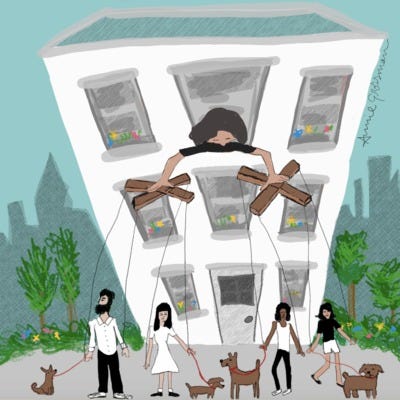
In New York City, a good dog walker can be hard to find. Dog owners open up their homes to them, and put their most beloved and vulnerable family members in their care, but a majority of walkers have no training or even interest in their chosen career. DivaDog is a walking company that strives to bring professionalism to the industry. Annie interviews its owner, Shelley Goldberg, about her three decades in the business, her hiring and management practices, and finding meaning and soulfulness in the pet care industry. You can reach Shelley at 707-DIVA-DOGShow Notes - 11 questions to ask a potential dog walker - Music: Rockin' Robin cover by Danielle Anderson - School For The Dogs - Store For The Dogs - Instagram - Facebook---Partial Transcript:Annie:Hi, my name is Annie Grossman and I'm a dog trainer. This podcast is brought to you by School for the Dogs, a Manhattan based facility I own and operate along with some of the city's finest dog trainers. During this podcast, we'll be answering your questions, geeking out on animal behavior, discussing pet trends, and interviewing industry experts. Welcome to School for the Dogs podcast.**music**Annie:So at School for the Dogs, we often get asked to recommend a variety of different dog service providers in New York City. And a lot of clients ask us to recommend dog walkers. Now this can be tricky because dog walking is a field where there's so much turnover, that it can be really hard for us to recommend anywhere because we're never sure that the walkers that we like are still going to be with the place. And as trainers we’re really well aware of all the things that can go wrong with a not good dog walker. You don't even have to have a dog who has a lot of issues to have a dog that can be really adversely affected by even one bad walk with a walker. And that might not be a walker who's necessarily nefarious or anything. It might just be one who's not that experienced. And, it's a job where most people do it as their careers. Most people kind of dip in and out of dog-walking.So over the years we have created a very small list of walkers that we tend to recommend. And today I'm speaking with the owner of one of the companies that we recommend, the company is called DivaDog. It's owned by Shelley Goldberg, who's based in the East Village. And some of the reasons why we recommend DivaDog, first of all, Shelley is a career dog walker. She doesn't walk dogs herself anymore. She runs the business, but she has been doing walking since 1990. And she's going to talk about that a little bit. Other things that set her apart, she is a lot more expensive than all the other walking companies that we recommend. And I don't know what she pays her walkers, but I'm guessing she pays them enough to make them stick around for a while, which I think again is important because a lot of the times dogs, especially really sensitive dogs, don't react well to having a new walker every three to six months. And it seems like she has some really good retention with her walkers and really devote some time to training her walkers.Something else that I appreciate about Shelley's business is the simplicity of it. Her walkers are not GPS tracked. She does everything on paper. She prefers to be contacted by phone then via email or in any other kind of way...Full Transcript available at SchoolforthDogs.com/Podcasts/ Get full access to Don't Be a Dick to Your Dog at dogtraining.substack.com/subscribe
Let's talk about dog photography with Milla Chappell
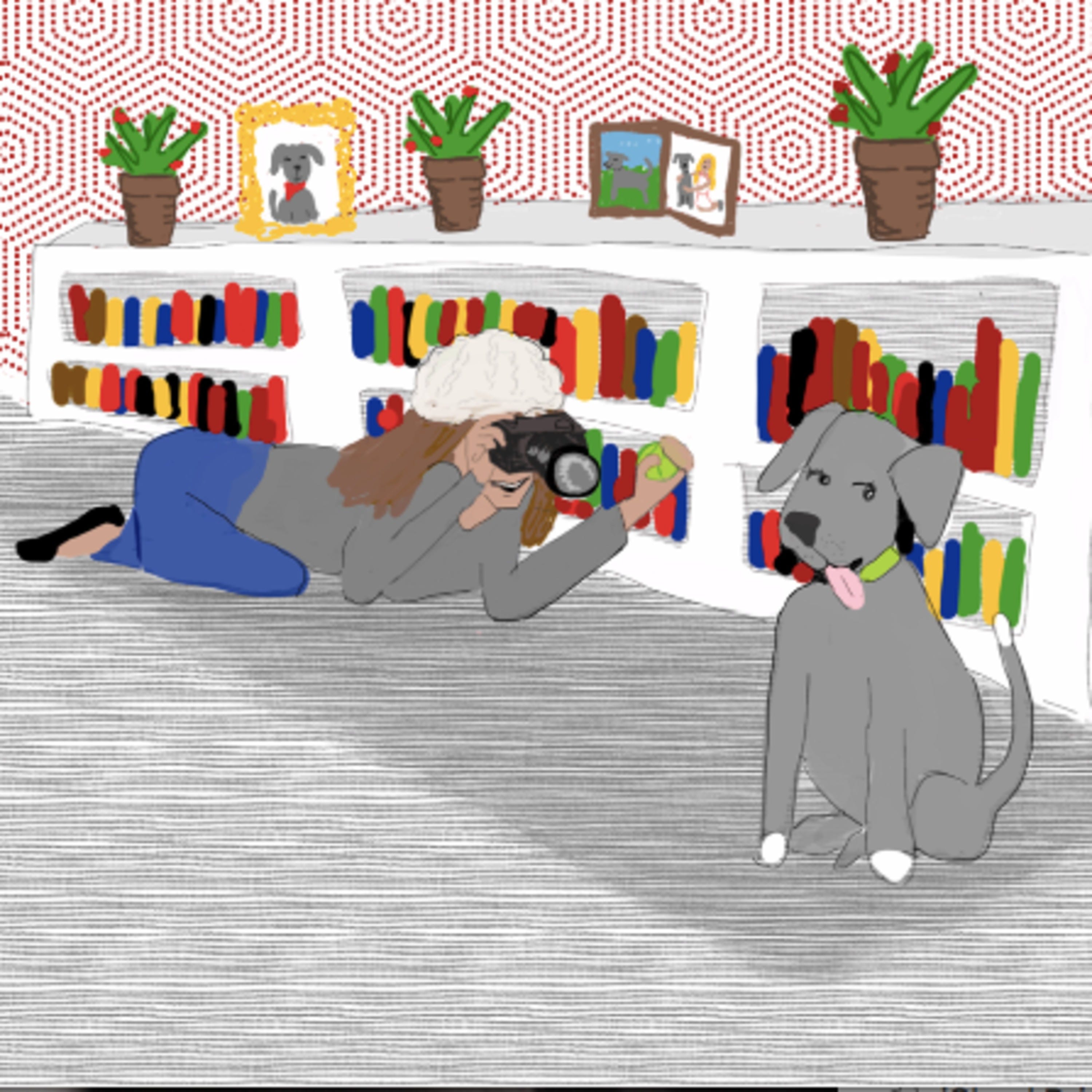
This episode is all about Real Happy Dogs, the NYC-based photography business started by Milla Chappell, who is known for her photojournalistic approach to capturing the lives of dogs and their humans in situ. Milla tells Annie about growing up as the daughter (and granddaughter) of veterinarians, and how she went from getting graduate degrees in linguistics and English to becoming a wedding photographer, before eventually finding a way to marry her passion for animals, her interest in writing, and her photography talents. Milla shares some tips for getting great photos of dogs, and tells the stories of some of the rescues she's shot and profiled on her popular Instagram.Show notes - Milla shares photo tips - Real Happy Dogs website - Real Happy Dogs on Instagram - School For The Dogs on Instagram Please make sure to rate 5-stars on iTunes!---Partial Transcript:Annie:Hi, my name is Annie Grossman and I'm a dog trainer. This podcast is brought to you by School for the Dogs, a Manhattan based facility I own and operate along with some of the city's finest dog trainers. During this podcast, we'll be answering your questions, geeking out on animal behavior, discussing pet trends, and interviewing industry experts. Welcome to School for the Dogs podcast.**music**Annie:Hey everyone. Thanks for tuning in. I am here with my friend Milla Chappell, who is an incredible dog photographer. And if you follow us on Instagram, this whole month we will be featuring Milla's photos. So be sure to go to @schoolforthedogs on Instagram to check out some of her photos of our trainers at work, some of our students in our classes and in their homes. It's really awesome. We're really excited about it.Milla, thank you for agreeing to talk to me.Milla:Thank you.Annie:So I first met Milla because she was taking photos of some of School for the Dogs’ clients and I was seeing them on Instagram and I was like, who is this photographer that's doing such an amazing job? Not only of getting great pictures of the dogs and having, you know, technically beautiful photos, but also I felt like they were photos where I could see the personality of the dog coming through in a really special way.I remember in particular, Bane the bulldog.Milla:Yes, of course!Annie:People might be surprised that your background is actually more in the veterinary field than in the photography field at least as your family goes. So is that right?Milla:Yes, exactly. So I grew up in a home with two veterinarian parents. Actually, my grandfather was a veterinarian and then both of my parents are veterinarians. So that has been our world from as young as I can remember. That's, you know, the world.Annie:Did you just think everyone is a veterinarian?Millie:[laughs] Well, I do remember on, you know, when you bring your parents to work, I mean bring your parents to school and the parents talk about what they do. I always felt like my parents have coolest job. They would bring in, you know, dogs and cats and I always felt really proud. I loved growing up in, you know, in a veterinary home and in a home that loved animals. And it was great fun for a kid.Annie:What kind of pets did you have when you were growing up then?Full Transcript available at SchoolfortheDogs.com/Podcasts Get full access to Don't Be a Dick to Your Dog at dogtraining.substack.com/subscribe
Ask Annie: Curtailing jumping and helping scaredy dogs
Annie answers questions from listeners dealing with jumpy dogs, and also addresses how to acclimate a nervous dog to all the stimuli she needs to interact with on a daily basis. Have a training question? Leave a voice message at Anchor.fm or at 917-414-2625, or email [email protected]. You'll learn: -Why dogs want to jump & why most attempts to punish jumping don't work -How to use treats effectively on the street -How to have people approach your dog on the street (& how to tell them to go away) -How to employ a remote-controlled treat dispenser to help your dog rehearse good dog manners whenever anyone enters your homeShow notes - How to stop a dog from jumping before he starts - "Give Me Space" vests - Treat + Train - Resources for people w/ dogs who have issues with fearfulness in public: DogsInNeedOfSpace.com TheYellowDogProject.com---Partial Transcript:Annie:Hi, my name is Annie Grossman and I'm a dog trainer. This podcast is brought to you by School for the Dogs, a Manhattan based facility I own and operate along with some of the city's finest dog trainers. During this podcast, we'll be answering your questions, geeking out on animal behavior, discussing pet trends, and interviewing industry experts. Welcome to School for the Dogs podcast.Hey everyone. So I am super excited because this is our very first School for the Dogs Podcast: Q&A episode. And I've collected some great questions here that I am going to answer. If you have a question that you would like answered on school for the dogs podcast, there are lots of ways that you can get in touch with us. If you're listening to this through anchor, which is our podcast hosting company, it's super easy through their app. To ask us a question, just click the, “send a voice message” button next to our icon. You will see it as soon as you log in. You can also send an email to [email protected] or you can call and leave a voice message. (917) 414-2625. Alternatively, you can send a text message to that number. Our first question today comes from an anchor listener.Corey:Hi Annie, my name's Corey. I'm just new to your podcast and I'm also an owner of a newish Labrador puppy. She's actually 11 months old, but, um, my question is the jumping. My dog is extremely excited, very friendly, very happy. We've been through two basic trainings. No one's really been able to help me in the area of jumping. She's a jumper. She's a big girl, she's 75 pounds. And when people come in the house or we're outside a neighbor comes up to her, she just jumps in, of course I say down, of course we do the whole thing with the tree, but it just seems like we just cannot get over this hurdle of her jumping up. And of course it's not good because she could hurt somebody inadvertently. So any tips would be great. Thanks so much. Love the show.Annie:I'm so glad Corey asked this question because it's certainly a problem that a lot of dog owners deal with, especially people who have young dogs and large dogs. Jumping up is a totally normal puppy behavior. Really it's a normal behavior for any dog...Full Transcript available at SchoolfortheDogs.com/Podcasts/ Get full access to Don't Be a Dick to Your Dog at dogtraining.substack.com/subscribe

What you need to know about the dog flu
In NYC in the last month there have been nearly 100 dogs diagnosed with the dog flu. To learn more, I interviewed Dr. Andrea Y. Tu of Park East Animal Hospital and Veterinary Behavior Consultations of NYC. H3N2 is believed to have originated in birds and was first detected in dogs in South Korea in 2007. It was identified in March 2015 in the Chicago area; it most likely spread from dogs rescued from South Korea and brought to the US for adoption. In this episode, Dr. Tu addresses the following concerns, among others: -How the flu spreads -How you can keep your dog safe -What to do if your dog is infected-What to do if you run a facility that is frequented by dogs Show notes: AnnieGrossman.com/podcast12 A primer on the dog flu outbreak in NYC: schoolforthedogs.com/flu Transcript: Speaker 2 (00:36):Hello humans for this episode. I have interviewed Dr. Andrea Tu, a veterinarian who is withPark East Animal hospital, which is on the upper East side in Manhattan and she also works as a vet with Veterinary Behavior Consultants, which actually sees patients at School For The Dogs. I asked her every question I could think of about the dog flu, which has been a big topic of concern in New York city over the last month or so. I wanted to apologize for the quality of this interview. I spoke to Dr. Tu over the phone and it's not the greatest, but the information is pretty good. So I wanted to share this recording our phone call despite the not great audio quality. I just wanted to note that I've also put up a blog post that has some pretty comprehensive information about the flu and some useful links. You'll find it in the show notes, but you can go there directly by just typing in the URL schoolforthedogs.com.Dr. Tu (02:04):There really are kind of two big strains. So, um, the previous strain was one called the H3NH strain that's been around since about 2004 and it's found primarily in dog and we believe that jumped over to dogs from horses. Um, and that one, it wasn't as big of a deal because it's not as aggressive. It's not as infectious. The current strain now is the H3N2 strain. And this was a newer strain that was initially found back in 2015 and we believe it jumped from dogs to dog, sorry, from, um, birds from Korea. Um, and basically we rescued all these dogs from Asia and from, from, from folks from Korea. Yeah. So the, the current strain is the H3N2 that we're concerned about. It was initially found in 2015. It came from birds and then went to the dogs.(03:03):We believe it started in Korea. So when we adopted and rescue dogs, all these dogs from Asia traveled with those dogs over to us. And so the 2015 outbreak initially was found in Chicago. We didn't actually know that the strain existed at that time. Um, and that outbreak lasted for quite awhile. So the current outbreak in New York that we're dealing with now, we believe came from San Diego and it is, um, it's not the original strain that caused the outbreak in 2015 in Chicago that came from Chicago to New York. But this one may be the same strain, but it came from potentially a different dog that brought it to San Diego back in around January of this year.Full transcript available at AnnieGrossman.com/podcast12 Get full access to Don't Be a Dick to Your Dog at dogtraining.substack.com/subscribe
Let's talk about dog parties with Hayley Mehalco
Not long after throwing her own English Bulldog a princess-themed birthday party, Hayley Mehalco decided to leave her job as an event planner at one of New York's poshest hotels in order to become a full-time party planner for the canine set. In this episode, Annie learns about the ins and outs of Puppy Parties NYC, a business that caters to "dog Instagram socialites," and talks about her own former tendency to roll her eyes at such things. Annie also asks some larger questions about modern pet ownership: Is it okay for people to treat their dogs as ersatz children? Who is the real beneficiary of things like parties for dogs? Link to Show notes - Puppy Parties NYC - Puppy Parties NYC on Instagram - School For The Dogs on Instagram Please make sure to subscribe & rate 5-stars on iTunes! Annie Grossman owns School For The Dogs in Manhattan. Learn more at SchoolForTheDogs.com.---Partial Transcript:Annie:So in the pet realm, there is this whole category of services that I think tends to make a lot of people roll their eyes. And when I was working as a journalist and releases for these kinds of services would come across my desk, I could always kind of tell when my editor would be interested and a story about one of these things, because it was kind of like there was always room to make fun of things people do for their dogs. And if you keep an eye out for this kind of story about these kinds of services, they almost always have the same lead. It's usually something like “Last Friday afternoon, Bethany got her nails done and then had a ballet lesson and saw her Latin tutor. Bethany is a French Bulldog..” And there's always this kind of sense to it of like, Oh, we got you, right. You thought we were going to say Bethany was a sophomore at ....Although I always find these leads sort of annoyingly dishonest because usually from the title of the article or the picture, you can tell they're going to be talking about a dog.So anyway, I am sure I wrote some stories like this, and I think I rolled my eyes just as I assumed my editor would and the reader would. Because I think there is this general underlying assumption, somehow that people who spend money extravagantly on their pets are just ridiculous. And I'm saying all this because my point of view has really changed. Now, I know it's possible. You might be listening to this and you might be thinking well, of course her point of view has changed, she runs a place called School for the Dogs where people spend money needlessly on their dogs, lots of the time. But I think it's actually more than that. You know, eight or nine years ago when I first kind of discovered the world of dog training and realized that it was something that really spoke to me, I started to think how weird it is that there aren't sections in the newspaper devoted to animals in any kind of serious way.I started to see that dogs could be a hobby that was no better or worse than any other hobby, but that pet ownership really isn't recognized in that way in our society, right? Look at the sections in newspapers, there's a section on sports, there's a section on cooking, there's a section on homes, cars, but if there's any kind of pet section, it has generally been more about showing pictures of cute adoptable animals rather than offering really interesting content on what it means to own a cat or a dog or any other kind of pet and with content that could actually appeal to someone's interest in animal behavior and that kind of thing...Full Transcript available at SchoolfortheDogs.com/Podcasts Get full access to Don't Be a Dick to Your Dog at dogtraining.substack.com/subscribe
A modern dog owner's guide to nipping
Nipping is something that tends to drive new puppy owners batty. A lot of the advice you'll find on the Internet suggests scolding a pup for nipping; usually people are told they should use a high pitched voice (as if to emulate another puppy) or to berate the dog in the deepest voice possible. There are still lots of professionals out there who will advise that conversing with a puppy will curb the problem, if done in the right tone of voice. In this podcast episode, I suggest thinking about puppy nipping less as a problem and more as a natural thing puppies do as they start to learn about the world. Both you and your puppy will benefit if he has lots of daily opportunities to use his mouth appropriately.Link to Show notes - 7 ways to deal with nipping - On bully sticks - Work to eat toys---Partial Transcript:Annie:Hey, so if you've been enjoying this podcast, I just wanted to say thanks a lot for listening. We really appreciate when people leave reviews, make sure to give it a five star rating on iTunes. But also, you know, take a screenshot and put it in your Instagram stories so that your friends can know what you're listening to and maybe you'll turn them on to some new ideas about how to deal with dogs. We also are trying to do more Q and A's, so if you have any questions about anything relating to dog training, please share them with us. You can send us a direct message on Instagram at Schoolforthedogs. We also have a Facebook group, which is facebook.com/groups/schoolforthedogs. And of course you can email us [email protected].**music**Annie:So my job involves hanging out with a lot of puppies, which I gotta say is pretty awesome, but one downside of hanging with puppies is nipping. Nipping is a totally normal thing that puppies do. But if you follow my advice here, I think you're going to get a puppy that is a lot less nippy than your average dog.And I also always like to point out to puppy owners who are frustrated with their dog nipping that things do get better on their own. I think even without a lot of concerted training, most puppies tend to figure out how to use their mouths appropriately on their own, so that's good news. That's not to say that there aren't adult dogs who do not use their mouth well, but I would say the majority of them of adult dogs, I know, especially, those who have gone through any kind of puppy classes tend to figure out what is and isn't okay as far as where they should be chomping down those teeth.And a big part of that, part of the reason why I say a lot of the puppies I think who go through any kind of puppy play or puppy kindergarten program, the way they figured this out on their own is through each other. I'll talk a little bit more about that in a moment.If you have a nippy dog, I think the first thing you need to think about is where you're putting your hands. Our hands move around. They have lots of smells on them and they are often in and around a puppy's face. I can't tell you how many times I've been sitting with a client who's complaining about how their puppy keeps chewing on their fingers and I looked down and the person's hands are in the dog's face. Well, if your hands are... if you're choosing to put your hands in your dog's face, then you have to expect you might be nipped on a little bit.Full Transcript available at SchoolfortheDogs.com/Podcasts Get full access to Don't Be a Dick to Your Dog at dogtraining.substack.com/subscribe
Our student Basket: Helping geneticists improve pedigrees
School For The Dogs' clients Samantha Schwartz and Ben Ment wanted to find a mixed-breed Bernese Mountain Dog puppy, figuring that it'd be less prone to health issues than a purebred Bernese. When Samantha's email inquiries to breeders got posted to social media, she ended up being cyber bullied by hardcore breed enthusiasts/purists around the world. Samantha tells Annie about how this unexpected and bizarre turn of events led her and Ben to Basket, a puppy from the Bernese Mountain Dog Vitality Project, which is run by breeders and geneticists who are working to help modify the breed for the better over time. Link to Show Notes - Bernese Mountain Dog Vitality Project - Basket's Instagram Please make sure to subscribe & rate 5-stars on iTunes! Annie Grossman owns and operates School For The Dogs in NYC. Studio: SchoolForThedogs.com Shop: StoreForTheDogs.com Instagram: Instagram.com/schoolforthedogs---Partial Transcript:Annie:I'm here with our clients. I should say clients, plural. I am here with our human client, Samantha Schwartz, and her dog are the canine client of this team. Oh, who's giving her a big hug right now. Who’s name is Basket and he is this huge, deliciously, lovely black and furry. Just big galoot of a dog who I wish I had a life-sized stuffed animal of that I could just snuggle and cuddle all day long.He looks like a Bernese Mountain Dog. He is not totally a Burmese mountain dog, which we're going to talk about in a moment. And when I first met Samantha and her partner, Ben, they started to tell me about how Basket came into their lives. And I was fascinated.**music**Samantha:I had always wanted a Bernese Mountain dog. I had grown up with labs and retrieversand Ben grew up with a Norwegian Elkhound and a Chinook. We were kind of like, I was just dead set on having a Bernese Mountain Dog.We were living out in Cape Cod, getting his family's house together last spring, just temporarily. And we were like, well, let's get the dog ‘ause it'll be easy to train the dog while we're out here. We have some time. So last year, we started more seriously looking at Berneses again, and he thought that it would be better if we maybe looked at getting a mixed breed. We were looking at all the rescues, there’s a lot of Bernese rescue organizations. And then we were, we were looking at just different options. And finally we ended up saying, why don't we see about getting a mixed breed, something that is part Bernese.Annie:You were said you were worried about the health issues.Samantha:So Bernese Mountain Dogs have, being one of the giant... they're one of the giant breed dogs, um, similar to great Danes and Saint Bernard's. So they can be up to 150 pounds, females on average weigh between I think 90 and 110, and then the males can weigh much more than that. Because they're a giant breed they have some joint issues and things like that because of their bones, but they also have a particular type of cancer that is really, really prevalent in their breed. They are dying really young. They're very... purebred dogs in general are very inbred. They have what's called closed studbooks and the close studbooks mean that they kind of all ended up being cousins with each other. And because of that, their genetic diversity is leading to many health problems...Full Transcript available at SchoolfortheDogs.com/Podcasts Get full access to Don't Be a Dick to Your Dog at dogtraining.substack.com/subscribe

Let's talk about Pavlov with dog trainer Anamarie Johnson
Anamarie Johnson has been with School For The Dogs for three years, and, in that time, has won us all over with her pep, humor, and training chops. In this episode, we discuss her background in rescue work, her childhood pets (fruit flies and incestuous cats), the wonders of classical conditioning and why squirrels at her college were painted orange and green. Show notes: AnnieGrossman.com/podcast8 Please make sure to subscribe & rate 5-stars on iTunes! Annie Grossman owns and operates School For The Dogs in NYC. Studio: SchoolForThedogs.com Shop: StoreForTheDogs.com Facebook: Facebook.com/groups/schoolforthedogs Instagram: Instagram.com/schoolforthedogs---Partial Transcript:Annie:So I am here with a woman who I have known for three years. I met her in July, 2015. I could almost tell you the date that's, that's how important this day was to me. And um, and to everyone at School for the Dogs, her name is Anamarie Johnson. She is our general manager and has been training with us for almost three years. And is just the smiliest, sweetest person. All the dogs love her. I think the people love her too. But Anna Marie, tell us a little bit about how you came to be the ray of sunshine you are at school for the dogs.Anamarie:Oh I don't know how I became the ray of sunshine!Annie:You were born in a small town in California.Anamarie:San Francisco, [laughing] not so much small. Yeah.Annie:I picture you raised in the woods by like fairies and bunnies. No?Anamarie:No.[laughing]Anamarie:I was raised in Daly city, but, uh, basically grew up in San Francisco and there were no fairies and bunnies in my backyard. The fact that we got a squirrel that came to my house in high school was like the biggest moment of my mom's life. It's a running joke actually that, my friend was at my house and my mom just started screaming for everyone in the whole house to come look out the back window because the squirrel had arrived in the back,Annie:The squirrel had arrived?Anamarie:We didn’t get squirrels in Daly City. Annie:What color squirrel was it?Anamarie:Brown squirrel.Annie:Brown? Have you seen black squirrels? Is that like a New York thing? The black squirrel?Anamarie:We don't have, I mean, we didn't have black squirrels in California. It was just the brown boring, you know, whatever. Gray squirrels. And then where I went to college at UC Davis, I mean we're overrun with squirrels. That was actually a funny thing. Like one day on campus, all of a sudden all the squirrels were, some of the squirrels were spray painted and it was actually a big issue. Cause Davis has like a really big animal department and everything like that. They had actually um, taken and they were spray painting squirrels because they were giving--Annie:Who's they?Anamarie:Like one of the departments, one of the like the animal research departments because they wanted to test a prophylactic on the squirrels. So they were giving some of the male squirrels and drugs to make them uh, not reproduce because the squirrel population was crazy. So they wanted to have like a noninvasive way.Annie:So what color were they spray painting them?Anamarie:They were like green and orange. [laughing]Anamarie:And then there was all these like poor undergrads on campus that were sitting on little corners and they were recording cause they wanted to see preemptively if this, whatever drug they were giving them was affecting their “natural” behaviors, so to speak...Full transcript available at SchoolfortheDogs.com/Podcasts Get full access to Don't Be a Dick to Your Dog at dogtraining.substack.com/subscribe
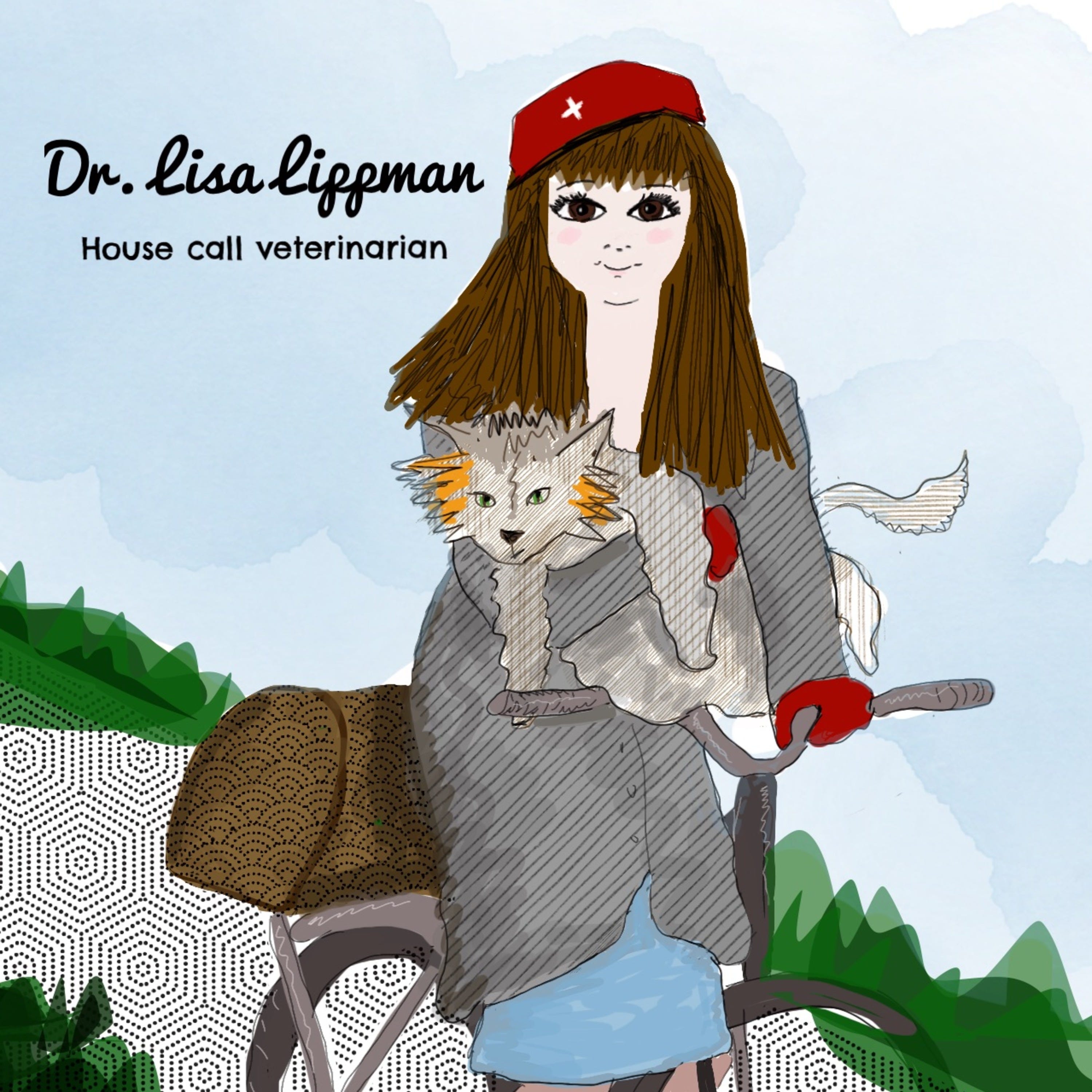
Let's talk about veterinary house calls with Dr. Lisa Lippman
Dr. Lisa Lippman, a visiting vet in Manhattan, isn't just a knowledgeable medical professional: She is also a savvy business woman who is using the Internet to build her in-home practice. She and her comedian boyfriend Richie Redding, with whom co-hosts the Pets & Punchlines podcast, chat about the benefits (and occasional downsides) of having a vet come to your home, the "zoobiquity" movement, the 28-pound cat whose star turn that jumpstarted her practice, and more. Links:Show notes - VetsintheCity - Pets & Punchlines - Dr. Lisa Lippman - Richie ReddingPlease make sure to subscribe & rate 5-stars on iTunes! Annie Grossman owns and operates School For The Dogs in NYC. Studio: SchoolForThedogs.com Shop: StoreForTheDogs.com Facebook: Facebook.com/groups/schoolforthedogs---Partial Transcript:Annie:Hi, my name is Annie Grossman and I'm a dog trainer. This podcast is brought to you by School for the Dogs, a Manhattan based facility I own and operate along with some of the city's finest dog trainers. During this podcast, we'll be answering your questions, geeking out on animal behavior, discussing pet trends, and interviewing industry experts. Welcome to School for the Dogs podcast.Annie:Hey, I am here with Dr. Lisa Lippman.Dr. Lisa Lippman:Hi.Annie:And, and the boyfriend Richie--Richie Redding:Redding.Annie:Okay. I wasn't sure of your last name. Dr. Lisa and Richie have their own podcast which is wonderful. Uh, it's called Pets and Punchlines. While Richie is a great lover of animals.Richie: I thought you were just going to cut it short. Richie is a great lover. And Lisa is a veterinarian.[laughs]Annie:Dr. Lisa is a veterinarian and she's a visiting veterinarian, which means she goes into people's homes, which I think is super cool for many reasons. But a big reason is, did you ever read those books when you were kids about the visiting vet.Dr. Lisa:No actually.Annie:That series of novels.Dr. LisaNo, I don't know how I missed that. Nobody loved me, I guess.Richie:Me either.Annie:All God's creatures. I think they were called. Dr. Lisa:I mean, I know of them, but I actually never read them. Annie:I never read them either. I know about them, but there’s clearly a gap in both of our educations about pets. What were our parents doing that they didn't make us read those books.Full Transcript available at SchoolfortheDogs.com/Podcasts Get full access to Don't Be a Dick to Your Dog at dogtraining.substack.com/subscribe

Let's talk about dogs in the workplace with Carly Strife of Bark
Annie interviews Carly Strife, COO and Co-founder of Bark, the company behind the incredibly successful BarkBox subscription service, which has earned more than half a million subscribers since it launched in 2012. Carly talks about the concept of turning dog toys into human entertainment, and she and Annie chat about the benefits and challenges involved in creating an office that caters equally to both people and pets.Links:Show notes - 8 tips for training the perfect office dog - Bark.co - "9 to 5" covered by Azalea GracePlease make sure to subscribe & rate 5-stars on iTunes! Annie Grossman owns and operates School For The Dogs in NYC.Studio: http://schoolforthedogs.com - Shop: http://storeforthedogs.com - Facebook: http://facebook.com/groups/schoolforthedogs---Partial Transcript:Annie:Hello everyone. Today I'm really excited to be talking to Carly Strife, who is one of the three co-founders of Bark, and if you haven't heard of Bark the company, you've probably heard of their best known product, which is called Bark Box. It's a monthly subscription service that has been around for about six years and now has offices in New York City and in Columbus. I met Carly at Bark’s Canal Street office, which is full of dogs and the entire space is set up in such a way that the dogs were clearly a priority. Every desk has room for a crate to go underneath it. There are big baskets full of dog toys at every corner of the office, pretty much. There are poop bags by the elevator and a dog treat dispenser by the elevator. And they're also all these different sort of like cubby- like areas where you can hang out with your dog. There's an area that's gated off where dogs could play off leash and they're planning on expanding their offices in the next few months. I believe they now have three floors and they're going to have five floors or something plus a roof deck. So if you are a dog lover and you are looking for a job in New York City, this is the place to check out. So I was really excited to go there and have Carly give me a tour of the offices and I was eager to hear how they went about creating this especially dog-friendly workplace.In addition to wanting to talk about the space, I also wanted to talk to Carly about this kind of new sort of dog product she's created, which I would describe as dog products as human entertainment. Bark Boxes often have a theme and all the toys and treats that are in the box will go around this theme. So my favorite one is the artist box that they had with treats called starry bites and a paint palette squeaky toy. And the best part was the Bob Ross squirrel, a squirrel made to look like Bob Ross.Everything they make is really cute and kitschy and cool. But I admit that I used to be sort of against it all only because it seemed to me like all of their toys were being marketed so that they'd be fun for the humans as opposed to really enjoyable for the dog. But I eventually came around for two big reasons...Full Transcript available at SchoolfortheDogs.com/Podcasts Get full access to Don't Be a Dick to Your Dog at dogtraining.substack.com/subscribe

Our Canine Cousins: On behavior & evolution
Humans and dogs have more in common than what initially meets the eyes. As non-extinct land dwelling mammals, we are both species that are in a special category that makes up 1/20th of 1/20th of 1 percent of all the species of animals who have ever lived. Annie attempts to look at the dog/human relationship from the long lens of the evolution of life on Earth, and helps us think about about what we can extrapolate about dog behavior based on what we know about ourselves. Show notes: http://anniegrossman.com/podcast5A dog trainer's view of evolution: http://anniegrossman.com/evolution6 ways in which dogs and humans are exactly alike: http://anniegrossman.com/6ways Please make sure to subscribe & rate 5-star on iTunes!Annie Grossman owns and operates School For The Dogs in NYC. Studio: http://schoolforthedogs.com Shop: http://storeforthedogs.com Instagram: http://instagram.com/schoolforthedogs Facebook: http://facebook.com/groups/schoolforthedogsPartial Transcript:Annie:Hey Humans. So, so far on this podcast in past episodes we have talked about things pertaining to dog owners like where your dog is going to pee or poop, what your dog is going to eat, etc. But today I want to about two things that affect all of us whether or not we own dogs.Say hello to our special guests: time and evolution.Now I don’t think most people think a lot about evolution when they’re training their dogs. This might be because they're simply too busy trying to figure out where their dog should pee and poop and what they should eat. But it also might be because we tend to think more about dog training than we do about dog learning and dog learning, like all animal learning, has been a huge factor in their success on this planet as a species. A key to survival is the ability to adapt your behavior in such a way that’s going to be conducive to living in a given environment and natural selection has favorite animals who are good at figuring out what works in order to not expend energy unnecessarily and to stay alive. The inability to adapt to certain environments has caused many other species to not succeed.In the last couple decades, so much about dog training has gotten muddled up with trying to understand wolf behavior. Now there's some problems comparing dog behavior to wolf behavior, but I don’t even want to get into that right now. My larger feeling about trying to understand dogs by understanding wolves is that it's kind of over-complicating the situation because wolves learn in the same way that dogs learn but dogs learn also in the same way that we learn and we know a lot more about ourselves than we know about wolves. So if we are fishing for kind of animal to compare dogs to in order to better understand them, I think we are better off looking at ourselves.One thing that I often tell my clients is that dog training is all about understanding animal behavior and we all understand animal behavior a lot more than we give ourselves credit for, simply because we are animals and we are behaving, all the time.Full transcript available at Schoolforthedogs.com/Podcasts Get full access to Don't Be a Dick to Your Dog at dogtraining.substack.com/subscribe
Let's talk about dog food with Hanna Mandelbaum of Evermore
Annie interviews Brooklyn-based dog food entrepreneur (and sometimes trapeze artist) Hanna Mandelbaum on why it matters what we feed our dogs. Together, they consider some of the many choices, including dry vs. canned, frozen vs. fresh, and cooked vs. raw.Links:Show Notes - Evermore Petfood - School for the Dogs Facebook Group - School For The DogsPlease make sure to subscribe & rate 5-star on iTunes! NYC-based dog trainer Annie Grossman loves to find engaging ways to help both dogs & humans approach training as an exercise in better understanding all animal behavior. She specializes in working with puppies, teaching tricks, & prepping dogs for commercial work.---Partial Transcript:Annie:Hi, I am here with my good friend, Hanna. Hanna:My name is Hanna Mandelbaum and I do lots of different, wonderful things, but the reason I'm on this podcast, Annie:You do do lots of wonderful things. Hanna:The reason I'm on this podcast is I am the co founder of a fabulous pet food company called Evermore Pet Food. Annie:And I should mention one of the, one of the wonderful things Hanna does when she's not making pet food is she is a trapeze artist and more than anyone else, I know she does an amazing job of combining her passions, which, I think, the best example is when she did a whole trapeze act dressed as dressed as a dog, wearing a cone. And, uh,Hanna:I was a fresh spay.Annie:A freshly spayed dog. And then at the end of the trapeze act where she was dressed like a dog, she ate her own dog food.Hanna:I'm sure that you should link that in the show notes. Annie:Hanna and I first met because she and her partner, Alison, literally decided to eat their own dog food, which I didn't even know that it was an expression. Did you know that?Hanna:It is. It's a tech expression, um,from the wonderful world of technology where “eat your own dog food” meant use the product that you're developing. It's, sort of, it's about like a willingness to, like, use your own product and you can't really understand the thing that you're creating unless you use it. Annie:Oh, okay. Hanna:Well, I actually didn't know that it was a thing either when I started.Annie:Well, Hanna and Alison started to literally eat their own dog food. Their dog food brand is called Evermore. And to be perfectly honest, um, I met Hanna when I was just starting to become a dog trainer and I don't think I'd ever thought that much about dog food until I started to talk to her. And what I mean by that is I don't think I ever thought about it as anything that was that important to my dog's life. I knew he loved to eat and eating was obviously a big part of his life. And I knew I wanted him to be healthy and live a long time, but I'm not sure I ever put it all together in that I understood that it actually mattered what I fed him. I think I felt like at the end of the day, he's a dog and he can eat dog food because that's what dogs eat. And I think dog food to me was just like one category of thing that I purchased.Full Transcript available at SchoolfortheDogs.com/Podcasts Get full access to Don't Be a Dick to Your Dog at dogtraining.substack.com/subscribe

How to house train a dog
Training a dog where to pee and poop is a major priority for most new dog owners. But there is a lot of misinformation on how to do it -- we don't even have a term for it that make sense! Are we training the house? Is it still "house breaking" if you live in an apartment? Annie breaks down how to take on this task in a way that can be easy and error-free using smart management tools, good timing, and well-thought out rewards. If you have a question for Annie or want to request a guest, join our Facebook Group at facebook.com/groups/schoolforthedogs Show Notes10 Steps to House TrainingAbout: Dog trainer Annie Grossman loves to find engaging ways to help both dogs & humans approach training as an exercise in better understanding all animal behavior. Please make sure to subscribe & give us 5-stars on iTunes!Partial Transcript:Annie:Hey everyone. Thanks so much for tuning in today. Today, I wanted to talk about one of the main reasons that people contact a dog trainer, especially when people get a new puppy and that is they want their dog to know where he should and should not pee and poop. Now, I am going to talk in particular about how to work on training a puppy, but most of the tips I'm going to give could be applied to older dogs as well. Whether it's a new dog in your household or a dog that just needs a refresher course, but first of all, what do we call this kind of training?Well for simplicity, I'm going to refer to it as house training. But I think it's kind of a weird way to refer to it because first of all, like most of my clients, I don't actually live in a house and also aren't we training the dog to not go in the house most of the time? So wouldn't it be NOT in house training? I can only think that it's a term that must stem from a time when dogs mostly lived outside and so training them to be in the house meant training them to not eliminate in the house.Um, but actually in advance of doing this episode, I tried to research a little bit the origins of different ways that people have referred to what we're calling house training. And I looked up the word house breaking, which is also a weird term. I think it's generally understood at least as it applies to dog training. But I mean if you're “breaking in” something that you're kind of like doing something to the thing right? Like you break in a pair of shoes or I guess you break a horse, that's another training term, but you're not doing anything really to your house, although, maybe you are, because I am going to suggest some ways that you can set up your home to help with house training, but still house breaking I dunno, it's kinda weird, right?So I put it in to Google's Ngram search tools, which shows when and where and how words have been used. And as far as I can tell, it looks like up until,maybe like the mid 1900’s, housebreaking really referred to breaking into a house. It didn't really have anything to do with dogs. And that's still a definition found in many dictionaries. But then I looked it up in the online dictionary, Oxforddictionaries.com and it gives the definition “housebreak: verb housebroken, housebroken, train a pet to urinate and defecate outside the house or only in a special place; house train.” And then the example it gives is, “an elephant is exceedingly difficult to housebreak.” And I mean, why are you trying to teach an elephant to not pee or poop in your house? Why do you have an elephant in your house to begin with?Full Transcript at SchoolfortheDogs.com/Podcasts/ Get full access to Don't Be a Dick to Your Dog at dogtraining.substack.com/subscribe
What is “Good” dog training?
There are lots of approaches to training dogs, but they’re not all equally “Good.” Annie breaks down common labels for the kind of training School For The Dogs promotes, including “positive reinforcement training,” “clicker training,” and “science-based training.” Show Notes and full transcript: anniegrossman.com/2018/03/training/podcast-episode-2-good-dog-training/9257/ School For The Dogs: schoolforthedogs.com Store For The Dogs: storeforthedogs.com Please make sure to subscribe & give us 5-stars on iTunes! About: NYC-based dog trainer Annie Grossman loves to find engaging ways to help both dogs & humans approach training as an exercise in better understanding all animal behavior. She specializes in working with puppies, teaching tricks, & prepping dogs for commercial work.Partial Transcript: Annie: Hi! This is Annie. Thanks for tuning in to our second episode. In the last episode, I spoke about how I got interested in dog training, to begin with. Today, I’d like to talk specifically about the kind of dog training that we do at School For The Dogs. Now, before I started studying to become a dog trainer, I think I thought of dog training as just one thing. It was a thing that had a beginning and an end, and it was something that you did to your dog and then you were done. And I think these are some pretty common misconceptions. I think when people think about training a dog, they think “Okay. Well, I’m going to get a dog, maybe I’ll take some classes in a church basement, or maybe I’ll have someone come do this training thing to my dog for me. He’ll learn everything he needs to know, and then he’ll be a trained dog and we’ll be done.” And I know when I first got my dog 13 years ago, it certainly never occurred to me to seek out different approaches to training. There was a dog daycare near where I lived, they had classes, that’s where I went. I don’t think I asked any questions about what kind of training they did because I didn’t know there were different kinds of dog training. And even if I had known, I’m not sure I would’ve thought that it really mattered. I just wanted a dog who was trained and however we got to the point of him being trained was besides the point. Now, of course, I have a completely different take on the subject.For one thing, I like to ask my clients to consider what it really means to have a trained dog. There is not one universal training goal that we’re all trying to get our dogs to aspire to. And because every dog is different and each one of us has a different life situation in which we’re injecting that dog, no two people are going to ever have the exact same training goals for their dogs. And beyond that is the fact that training isn’t something that stops. And that’s because dogs are constantly learning. All animals are constantly learning, it’s how we stay alive. All day, every day, both humans and dogs are trying to figure out what works and what doesn’t work. And because their survival is so dependent on us, they’re really excellent at learning from us, which means training isn’t something that just starts when you enter a training class or when you strap on a treat pouch and it’s not something that ends when you get your puppy kindergarten diploma. Of course a lot of the time we inadvertently train them to do things we don’t want them to do. And that’s why I think it’s important to understand the basics of learning theory and understand how conditioning works in order to train them more effectively to do the things we want them to do. That’s why it does matter what kind of training you are doing if you want to train effectively and look at why what you’re doing is or isn’t working.Full Transcript available at SchoolfortheDogs.com/Podcasts Get full access to Don't Be a Dick to Your Dog at dogtraining.substack.com/subscribe

Meet Annie and learn how School For The Dogs came to be
In our very first episode, meet your host, dog trainer Annie Grossman, School For The Dogs' co-founder. Learn about her journey from average-jane dog lover to passionate defender of ethical dog training and ownership. Annie Grossman: http://AnnieGrossman.com Show Notes: http://schoolforthedogs.com/podcast School For The Dogs: http://schoolforthedogs.com Shop For The Dogs: http://storeforthedogs.com Instagram: http://www.instagram.com/schoolforthedogs Please make sure to subscribe & give us 5-stars on iTunes! NYC-based dog trainer Annie Grossman loves to find engaging ways to help both dogs & humans approach training as an exercise in better understanding all animal behavior. She specializes in working with puppies, teaching tricks, & prepping dogs for commercial work.Partial Transcript:Annie: Have you ever thought about starting your own podcast? When I was trying to get School For The Dogs Podcast off the ground, I had a lot of questions. How do I record an episode? How do I edit an episode? How do I get my show into all the apps? Is it possible to make money from a podcast? The answer to every one of these questions is really simple. Anchor. Anchor is a one-stop shop for recording, hosting and distributing your podcast. Now, Anchor can match you with great sponsors who want to advertise on your podcast. That means you can get paid to podcast right away. In fact, that’s what I’m doing right now by reading this ad. My favorite part about using Anchor is that I can record whenever I feel like it, directly into the app. I’m pretty busy, so I really appreciate how easy they’ve made it to podcast. So, if you’ve always wanted to start your own podcast, and make money doing it, go to anchor.fm/start. That’s anchor.fm/start, to join me and a diverse community of human podcasters already using Anchor. That’s anchor.fm/start. I can’t wait to hear your podcast.[Intro]Hi! My name is Annie Grossman and I’m a dog trainer. This podcast is brought to you by School For The Dogs, a Manhattan-based facility I own and operate along with some of the city’s finest dog trainers. During this podcast, we’ll be answering your questions, geeking out on animal behavior, discussing pet trends and interviewing industry experts. Welcome to School For The Dogs Podcast!Annie: Hi! This is Annie. Thanks for tuning in to our very first episode. I’m here with my co host, Amos, a 12 year old yorkipoo. Say hi Amos! [barks] Good job, buddy! Some of you might know me from School For The Dogs. Those of you who haven’t been by School For The Dogs, if you are in New York City, definitely come on by. We’re located on East 2nd Street near Avenue A. We host classes, play groups, private lessons and I’m sure that during the course of this podcast, we’ll talk about lots of the going-ons at School For The Dogs, and you’ll get to meet some of our trainers but also some of our students, both human and canine. We also have a small boutique where we have a great selection of interactive dog toys and training gear, which you can also find online at Storeforthedogs.com.So as this is our first episode, I wanted to take some time to talk both about how School For The Dogs came to be and my background in dog training. The dog training we do at School For The Dogs is called many different things, sometimes it’s called award-based training, sometimes it’s called clicker training, it’s called positive reinforcement training, and in the next episode I’m going to go into some detail about each of these labels and exactly what they mean...Full Transcript at Schoolforthedogs.com/Podcasts Get full access to Don't Be a Dick to Your Dog at dogtraining.substack.com/subscribe