How To Train Your Dog With Love + Science - Dog Training with Annie Grossman + Anamarie Johnson PhD (Formerly known as School For The Dogs Podcast)
229 episodes — Page 4 of 5

What is a bully stick? A very detailed answer to an awkward question...
Dogs love to chew on bully sticks. We sell loads of them every day at School For The Dogs, and, very often, people ask what they are. The answer? They're penises! This answer makes some people giggle, some gag and then there are those, like Annie, who are just left with more questions. In this episode, Annie interviews Greg Claypool, a second-generation bully stick fabricator, about the origins of this canine delicacy, how they're produced, and what you can do in order to make sure your purchasing ones that don't stink (literally). Warning: This episode is pretty graphic! Bully sticks at storeforthedogs.com https://storeforthedogs.com/products/bully-sticks Bully Sticks Direct https://www.bullysticksdirect.com/Bully Stick Ball Jerky https://www.bullysticksdirect.com/bully-stick-ball-jerky-7-ounces/ Turkey Tendon Strips https://storeforthedogs.com/products/turkey-tendon-strips?_pos=1&_sid=d7be10867&_ss=r Blog post: Dogs love bull penises, and you will, too https://anniegrossman.com/2012/12/funnies/dogs-love-bull-penises-and-you-will-too-73608/7517/ Related episode: A better mousetrap: Building the perfect bully stick holder https://anniegrossman.com/2018/09/podcast/episode-25-better-mousetrap-building-perfect-bully-stick-holder/9763/ Bull Penis Canes: https://fashionablecanes.com/collections/bull-penis-walking-canesFour Ways To Sautee a Sow's Vulva: https://medium.com/idle-musings/iv-ways-to-saut%C3%A9-a-sows-vulva-170f5f00d26aToast Garden: http://youtube.com/toastgarden---Partial Transcript:Annie:I am testing out a new community platform. If you like this episode, and you would like to discuss it with other podcast listeners, please go to schoolforthedogs.com/podcastcommunity. Make an account, it's totally free. If you would like to ask any dog training questions you can do so there as well. Thanks for helping me beta test this new platform.*Intro*Annie:In my career as a professional dog person over the last 10 years or so, I have developed some weird sub interests. Some of which are kind of gross. For instance, over the last few years, I've thought a lot about how we carry dog poop. I have thought deeply about poop bags and poop bag accoutrements. I have also thought a lot about certain dead animal body parts and no body part of any dead animal has taken up quite as much brain space for me as the bully stick, which is a dried bull penis that dogs love to chew on. Particularly as someone who has sold many bully sticks in her life, I have often found myself in the awkward position of having to explain to people that it really is made out of a dried bull penis, which is a conversation that has just concluded with giggles many, many times.Full Transcript available at SchoolfortheDogs.com/podcast Get full access to Don't Be a Dick to Your Dog at dogtraining.substack.com/subscribe
When your home isn't the right home for your dog (and other subjects)
Warning: This episode meanders a bit! Annie's Facebook friend made the difficult decision to rehome her rescue dog, and Annie considers what it means to decide that a different family might be a better fit for anyone you love, be it human or dog, temporarily or forever. What if all forms of parenting were truly voluntary? Is it a dog's fault if behavior problems are exacerbated by an environment that may have been chosen for him or her more or less at random? Were slaves insane if they tried to escape their masters? Annie follows a line of thinking that touches on how we could use positive reinforcement to help prevent unplanned pregnancies, and on how both fear and generalizations based on false assumptions can cause racism. She also explains BF Skinner's unusual argument in favor of teen pregnancy. Join Annie for a live Q and A this Thursday (10/01/2020) @ 12 pm EST! https://event.webinarjam.com/register/183/n7z7lsnwSign up for Annie's free Master Class at http://anniegrossman.com/masterclassSchool Sucks Drapetomania episode: https://schoolsucksproject.com/053-drapetomania/Walden Two: https://www.amazon.com/Walden-Two-Hackett-Classics-Skinner/dp/0872207781The Cut's story about the Stauffer family and their adopted son: https://www.thecut.com/2020/06/youtuber-myka-stauffer-rehomed-her-adopted-son-huxley.html---Partial TranscriptAnnie:Hello, human animals. And hi to the dogs that may be in the room. If you are listening, that means you are alive. And that’s, that’s a good thing right now. So I’m glad to know that about you. I have a lot of really cool episodes coming down the pipeline that I am excited to share with you all. I’ve been doing interviews with the people who work at School for the Dogs and well, last week I got, sometimes I say “we” cause like, I think of School for the Dogs as like me and Kate, but then I know sometimes I say “I,” and sometimes I get lost. Like, am I, am “I”? I think, I think this podcast is “I.”I interviewed Anna Heyward, our apprentice, one of our apprentices last week that was kind of, I guess, part of the inside School for the Dog series.But I have been talking to lots of different people on our staff and I’m going to be sharing those conversations, just talking about to them about how they got into what, what they, how they got into training and what they’re doing now. And so that’s been really fun.You know, running a business through a global pandemic, I now know is intense and I think I feel so appreciative of our staff right now. I just feel gratitude. I think, you know, the intensity and shared mission of, you know, trying to keep a business afloat through all of this and trying to, you know, continue helping dogs I think has brought us all closer together. So it’s really been lovely to get a chance to talk to some of these wonderful people.And I am also doing a series of episodes about some of the really cool products we have in our shop. I’ve been interviewing some of the brand owners people who have worked to develop really interesting things that I’m psyched we get to share it with our clients.Full Transcript available at SchoolfortheDogs.com/podcast Get full access to Don't Be a Dick to Your Dog at dogtraining.substack.com/subscribe

Lessons learned from foster dogs: A discussion with our apprentice Anna Heyward
At School For The Dogs, we've been lucky enough to be able to mentor a handful of aspiring dog trainers through our apprenticeship program. One of our current apprentices, Anna Heyward, first came to us as a client. Anna, a writer who is originally from Australia, has fostered dogs in NYC for years; last year, she took in a dog whose separation anxiety was beyond anything she'd ever seen. She came to School For The Dogs after consulting with several dog trainers. Some suggested the dog was just being dramatic and that she just needed to let him manipulate her; others told her to use a shock collar on him. In this episode, Anna explains how her experience fostering dogs in New York City and her work with our trainer Anna Ostroff led her to rethink everything she thought she knew about behavior, and ultimately pursue a career in dog training. If you enjoy this podcast, please leave a review on iTunes! You can also support us by shopping in our online store: StoreForTheDogs.com ---Partial Transcript:Annie:So, I’m about to share with you is a conversation with one of School for the Dogs’ apprentices, Anna Heyward. And I wanted to talk to Anna for a bunch of reasons. I’m really interested in how people are finding their way and to the world of dog training, whether that’s because they aspire to doing it professionally or not. And I met Anna when she started our six month apprenticeship. And we’ve gotten to know each other this year a little bit. And Anna is a very talented writer and recently I read an essay she wrote, a not yet published essay about her experience fostering. Specifically fostering one very difficult dog. And I was just so moved by what she wrote and how she wrote about the experience of being a temporary home to a dog who has behavior issues that are extreme and what that mean. What it meant-meant both for her, for the dog. What it helped her learn about the world. What she learned about the people around her, her family, her loved ones through this very difficult experience of being a foster, a foster mother to two dogs.And so I was thrilled when she said she would talk to me a little bit about her experience as a fosterer on the podcast. But I… before I share with you this conversation, I just wanted to mention another Anna who you’re going to hear about a little bit in this episode because Anna Heyward would not have come to School for the Dogs without Anna Ostroff, who is a woman I just love so much. And I was, I’m trying to think about how do I express my feelings… it’s like, I feel like it’s such a special thing when you get to mentor someone and then you see them being a mentor to someone else.And I should specify I’m talking about as a mentor, but I think more of sort of Kate and me and School for the Dogs as an entity, a mentoring entity, I guess, is sort of how I think of what we’re doing in a lot of ways to shape people to be better dog owners, if not dog trainers and Anna Ostroff came to School for the Dogs about four years ago with a very sweet and shy young dog named Ginger and her husband, Alan. They are theater producers and had, I believe had pretty recently before coming to us, won a Tony for a Broadway play that they produced. And I just enjoyed getting to know them as these very interesting people with an interesting theater background. So they were clients with whom I became friendly.Full Transcript available at SchoolfortheDogs.com/podcast Get full access to Don't Be a Dick to Your Dog at dogtraining.substack.com/subscribe
My family thinks I'm crazy: Dealing with those who don't see the "whole" picture of holistic dog training
What does it mean to be a holistic dog trainer? To Annie, it means addressing issues using what we know about the science of behavior as it applies to both dogs and humans, and looking at the whole picture of a dog's life in order to address issues. One alternative approach involves narrowly focusing on getting rid of a problem using punishment, which can produce new unwanted behaviors which are then part of the whole picture, too. Sometimes, that whole picture contains people who don't see that they're part of the whole picture, and Annie has found this can be tricky terrain to navigate as a dog trainer ... especially when those people are family members. Annie opens up about how she has learned to keep quiet about all things relating to dogs when she is with certain people in her family, and attempts to take a holistic view of a problem behavior they've dealt with in different ways: barking. Check out Annie's free Master Class at anniegrossman.com/masterclass Support this podcast by leaving a five-star review and by shopping in our online store, storeforthedogs.com. ---Partial Transcript:Annie:I recorded this episode a few weeks ago, and then I kind of hesitated about whether or not I should post it because it has to do with my family. And it’s tricky to talk about real live people, and I’m not eager to offend anyone or get into arguments. So after I recorded it, I thought, you know, let’s just let this one sit for a few weeks so that I can think about whether or not I want to go there. And I decided that the beauty of the podcast [laughs] as a medium is that you really have to show up and be interested in order to listen to a podcast at all. It takes some effort and it’s kind of in a lot of cases on, at least this podcast is like a one-way conversation where I get to sit alone in a room and tell you what I think about something. If you disagree with me, if you think I’m a jerk, you don’t have to keep listening, and you never have to listen again. And if you have no interest in what I think about dog training, then you don’t ever have to listen to begin with, and frankly, I think my family falls into that latter category. So I’ve really learned to bite my tongue when anything about dogs comes up in conversation when I am with many people in my family, because it’s just not worth having an argument. Even if it means suppressing my thoughts and feelings, it’s worth it for the sake of having a relationship at all and maintaining some degree of peace. But that doesn’t mean I’m not going to have my own thoughts and feelings going on. And this isn’t something that I have a few thoughts about. I have a lot of thoughts about it. I have a whole business devoted to a science-based approach to dog training, a behavior based approach to dog training. It’s pretty much my entire life. So I guess I decided I’m not going to suppress an entire part of my life all the time. And if the people mentioned, although unnamed, [laughs] in this episode are interested in what I think, they can listen to my one way side of a conversation whenever they please, and they’re welcome to record their own podcasts on their points of view. I would actually be interested in hearing that. Full transcript available at SchoolfortheDogs.com/Podcast Get full access to Don't Be a Dick to Your Dog at dogtraining.substack.com/subscribe

The Pandemic Puppy Boom: A discussion with breeder Cherrie Mahon of River Valley Doodles
This episode is a second conversation with Cherrie Mahon, with whom Annie spoke last year (Episode 45: Let's talk about dog breeding with Cherrie Mahon). During quarantine Cherrie, like many breeders, has been inundated with applications. She and Annie discuss how breeders are dealing with the deluge, and think about what this boom might mean in the future for both puppy mills and shelters. Annie also answers a question from a listener whose puppy is jumping up when she tries to prepare food at the kitchen counter. Episode 45: Let's talk about dog breeding with Cherrie Mahon Treat and Train - remote controlled treat dispenser and training tool---Partial Transcript:Annie:If you are listening to this, at least if you’re listening to this around now, I’m recording this in late summer 2020. I am going to guess you fall into at least one of the following three categories, perhaps all three. You have either recently gotten a puppy, you’ve thought about getting a puppy, or you know someone who has gotten a puppy, or is thinking about getting a puppy. Okay, I guess that’s four categories. And I think that’s because puppies are the opposite of death, destruction, pandemics. They can certainly cure depression. And a good time to get a puppy is when you are going to be spending a lot of time home.I actually got my dog when I left a desk job. I spent exactly one year as a reporter at the New York Post, and I actually wrote their wedding section. I don’t know if they still have a wedding section. I wrote some other things there too, but that was my main gig. And I actually got fired. Well, it was kind of like a, I quit / You’re fired situation. But the issue at hand wasn’t the quality or content of my work. It was that I was instant messaging too much. That’s how old I am. I remember at the time thinking, “One day, this is going to seem hilarious, I have a feeling.”I wasn’t even sending, like, sexy instant messages or anything. I wasn’t talking to my boyfriend. I was either talking to other reporters who worked at other places, I think, or I was talking to my mom. And I certainly wasn’t the only one instant messaging, but I guess they needed some kind of scapegoat and wanted to crack down on this practice. And Cole Allen, who was the editor in chief there at the time called me into his office. And it was pretty terrifying. I remember, he had a print out like an inch high of my instant messages.And now here we are 15 years later, and basically all we all do is instant message. The president who’s instant messaging 200 times a day, also to other journalists, and my mom. Anyway, I’m telling the story only because after I left, after my ignominious departure from what was actually probably a very good job in right wing tabloid journalism, I started working from home. I was living in a ground floor apartment and in Brooklyn at the time. It had a little garden outside, kind of the perfect place for a dog.So I was sort of thinking a little bit about getting a dog, but then what really made it happen was a guy I had dated for a few years, a boyfriend, I was like madly in love with him. He broke up with me and I was completely devastated. So I was sort of thinking a little bit about getting a dog, but then what really made it happen was a guy I had dated for a few years, a boyfriend, I was like madly in love with him. He broke up with me and I was completely devastated...Full Transcript available at SchoolfortheDogs.com/podcasts Get full access to Don't Be a Dick to Your Dog at dogtraining.substack.com/subscribe

Dogs don't think we're dogs: Ethologist Dr. Marc Bekoff on how we can give our "frustrated captives" a good life in a human world
Last week, Annie looked a bit at the career of Dr. Stanley Coren, a writer who recently penned a Psychology Today article suggesting that one way to silence a barking dog is to clamp down on the dog's nose with your hand, like a mother wolf might do to try to silence a wolf pup. Ethologist Dr. Marc Bekoff, who is a columnist for Psychology Today, penned a response saying that we need to consider the causes of dog behaviors we don't like, acknowledge that they're engaging in behaviors that might be appropriate in a different environment, and then work at changing those behaviors with techniques that don't require that we attempt to school dogs as if we were one of them. Annie has a conversation with Dr. Bekoff, who discusses the Psychology Today article and explains why an ethological approach can shed so much light on the dogs who live in our homes, and beyond. Canine Confidential: Why Dogs Do What They Do by Dr. Marc Bekoff https://amzn.to/2YssUxKUnleashing Your Dog: A Field Guide to Giving Your Dog The Best Life Possible by Dr. Marc Bekoff and Jessica Pierce https://amzn.to/3j8L2owA Quick Fix for a Barking Dog by Dr. Stanley Coren (Version edited post-publication) https://www.psychologytoday.com/us/blog/canine-corner/202008/quick-fix-barking-dog Original version of article can be found here. https://www.schoolforthedogs.com/a-quick-fix-for-a-barking-dog-home-health-choices/ Do Dogs Bark Unnecessarily or Excessively? by Dr. Marc Bekoff https://www.psychologytoday.com/us/blog/animal-emotions/202008/do-dogs-bark-unnecessarily-or-excessively The Herlihy Boy Dog Sitting Service (Saturday Night Live, 1994): https://www.youtube.com/watch?v=mq7DbWsjX6A---Partial Transcript:Annie:Hey there. So last week I talked about the dog writer, Stanley Coren. He had a piece in Psychology Today where he basically suggested that the best way to get a dog to stop barking was to clamp down on the dog’s muzzle with your hand and say the word “quiet” to the dog, a method that he says mimics how a mother dog might quiet her pup.And in response to this article, Dr. Marc Bekoff wrote a really thoughtful essay saying, you know what, maybe we should be instead thinking about what's causing a dog to bark and see the situation from a dog's point of view, as best we can. And to acknowledge that they're basically captives in our world and we're asking them to live by our rules. And that most likely don't think about us as fellow dogs. So we probably don't need to be communicating to them as if we were dominant wolves in their pack.Anyway, it was a beautifully written response. So I reached out to Dr. Bekoff and I'm happy to share with you this conversation, which touches a little bit on Stanley Coren's article, but also went in some other interesting directions. I hope that you enjoy this episode.Full Transcript available at SchoolfortheDogs.com/Podcasts Get full access to Don't Be a Dick to Your Dog at dogtraining.substack.com/subscribe
Don’t put a towel over a dog’s head & other lessons not learned from Stanley Coren & Psych. Today
Looking for misguided information about dog training? Look no further than Psychology Today, which is publishing new articles that are offering outdated and possibly dangerous information. In this episode, Annie surveys the work of Dr. Stanley Coren, who recently suggested to the publication's readers that they should mimic wolves and clamp down on a dog's muzzle to stop barking. She reads from some of Dr. Coren's books on dogs from the early 1990s and also shares a comedy clip from the early 1990s on the topic of reading dog minds. Next week: An interview with Dr. Marc Bekoff. Take Annie's free Master Class! http://anniegrossman.com/masterclassMy Dog's Smarter Than Your Dog, by Sarah Boxer (NY Times Book Review, 1994) https://www.nytimes.com/1994/06/05/books/my-dog-s-smarter-than-your-dog.html?partner=rssnyt&emc=rss/Why Does a Reward During Training Change a Dog's Behavior? by Dr. Stanley Coren https://www.psychologytoday.com/us/blog/canine-corner/202008/why-does-reward-during-training-change-dogs-behaviorA Quick Fix for a Barking Dog by Dr. Stanley Coren (Version edited post-publication) https://www.psychologytoday.com/us/blog/canine-corner/202008/quick-fix-barking-dogOriginal version of article can be found here. Do Dogs Bark Unnecessarily or Excessively? by Dr. Marc Bekoff https://www.psychologytoday.com/us/blog/animal-emotions/202008/do-dogs-bark-unnecessarily-or-excessively Punishment as defined by Psychology Today https://www.psychologytoday.com/us/basics/punishment Conan O'Brien 1993 clip: https://www.youtube.com/watch?v=2FFyNyfOqQQ---Partial Transcript:Annie:A few years ago, a cousin gave me a pile of books about dogs, all these used books that I think he'd gotten at a garage sale. They were all from the nineties. And one was called, What Do Dogs Know? One was The Pawprints of History: Dogs in the Course of Human Events. One was called The Intelligence of Dogs. And I kind of flipped through the books and thought, you know, okay, there's some dated information here, and there was some decent info here and there, but overall I found the books a little, I guess, a little boring.And I put them on my shelf of books that are dated and, but possibly interesting for future reference relating to all things dogs and dog training. I have a lot of books in this category, or not even books that are dated, just like I like old, weird books about dogs. I like thinking about not only how people think about dogs now, but in the past.I guess I didn't really consider these books too much or the author, although I did remember seeing that he was a doctor, that he was a professor of psychology...Full Transcript available at SchoolfortheDogs.com/Podcasts Get full access to Don't Be a Dick to Your Dog at dogtraining.substack.com/subscribe

There’s so much to love about snuffle mats! Buy or make a fabric work-to-eat toy.
We are obsessed with work-to-eat toys at School For The Dogs! Snuffle mats are one type of work-to-eat toy we recommend all the time. Made of fabric, they’re great for hiding dry food or treats. They pack well, are easy to wash, and you can even make them yourself. Annie talks about some of the ones sold at storeforthedogs.com and gives instructions on how to make your own.Products mentioned in this episode:The Buster Activity MatWooly Snuffle MatFleece Activity MatThe Hol-ee RollerMore Snuffle Mats: hereCheck out DogNmat On EtsyGet in touch on Instagram: @schoolforthedogs--Partial Transcript:Annie:Hey folks. Today, I just wanted to talk a little bit about one of my favorite kinds of work to eat toys. As you might know if you've listened to this podcast before, we are huge fans of toys that give dogs jobs. I like to joke that we're trying to solve the canine unemployment problem -- that if you can figure out a way to engage your dog’s brain and body, even if it's just their tongue or their paws during meal times, that it's a really good way to channel energy that might otherwise go towards activities that you might not be that into.So there are lots of different kinds of work to eat toys. And one of them is, the broad category would be called snuffle mats. Now this is kind of a newer sort of work to eat toy. I think I first saw a snuffle mat maybe five or six years ago when we first started carrying the Buster Activity Mat. Which I right away thought was like the coolest thing ever.It is a mat that is pretty heavy duty. It has snaps on it, with these components that you can snap on. And the components, kind of origami-style, can be folded and manipulated in different ways. They can be used separately from the mat. It's very, very cool. It also comes in this adorable little turquoise duffle bag, which I like to use for things other than the mat sometimes, just because it's cute. But it's neat because there are so many different ways you can use it, and it can travel really well.Now, snuffle mats in general are easy to pack, and some of them can be used in different kinds of ways, but the main component is that they're soft and you can hide dry food or dry treats in them in different ways. They're not great for use with wet food. Some of them you could even hide toys in them.So anyway, the Buster activity mat, I think, was my first introduction to the world of snuffle mats, or we sometimes also call them activity mats. And then, I think I was at a trade show when I first saw the Wooly Snuffle Mat. And the Wooly is a much simpler product. It kind of just looks like a bath mat. Like a bath mat with really plush, long tendrils. It's gray, it -- you know, one thing I like about snuffle mats is they make me think of Snuffleupagus scoop is my favorite character on Sesame street...Full Transcript available at SchoolfortheDogs.com/Podcasts Get full access to Don't Be a Dick to Your Dog at dogtraining.substack.com/subscribe

Restaurant dining with your dog: How to train the perfect outdoor dinner date
It's a golden moment for those wanting to eat outdoors with their dogs. Just think: There's so much outdoor dining! And people are keeping their distance from each other! And tables are spaced at a nice distance from each other! Annie gives some tips about how you can help train your dog to be the perfect outdoor-dining companion. Also: Learn what 1950s superstar very nearly became the real Lassie's owner. Products mentioned in this episode: Tricky Trainer's Crunchy Treats: https://storeforthedogs.com/search?q=crunchy+trickyLamb lung: http://schoolforthedogs.com/llSnuffle/Activity Mats: https://storeforthedogs.com/collections/snuffle-matsVirChewLy Indestructible Leash: https://storeforthedogs.com/products/virchewly-industructable-leash-1 Found My Animal Leash: https://storeforthedogs.com/collections/found-my-animal-1Hands-Free Leash: https://storeforthedogs.com/collections/squishy-face-studio/products/leash-beltSFTD Training Mat: https://storeforthedogs.com/products/school-for-the-dogs-training-matLiquid Treat Dispenser: http://schoolforthedogs.com/ltdFrank Inn: https://www.youtube.com/watch?v=wkfLbHQl340Episode 33: How to shape your dog to go to a mathttps://www.schoolforthedogs.com/podcasts/episode-33-how-to-shape-your-dog-to-go-to-a-mat-and-to-be-a-polite-thanksgiving-guest/Episode 66: Lassie’s Boy Sidekick: Meet Jon Provost, aka Timmyhttps://www.schoolforthedogs.com/podcasts/episode-66-lassies-boy-sidekick-meet-jon-provost-aka-timmy/ Episode 69: Mean Talk, mouse traps + water guns: Rudd Weatherwax's Lassie Methodhttps://www.schoolforthedogs.com/podcasts/episode-69-mean-talk-mouse-traps-water-guns-the-lassie-method/ -- Partial Transcript:Annie:Guys. It's a really difficult time to be alive, to be a human right now. There's so much that's wrong with the world. But there's one, one silver lining that I just wanted to point out to anyone here who has a dog, which is probably you, if you're listening.This is an excellent time for dining out with your dog. I know different places have different rules, but I live in New York City and restaurants now have extended their outdoor seating areas into the streets and avenues, usually beyond the sidewalks. The tables are spaced at least six feet apart....Full Transcript available at SchoolfortheDogs.com/Podcasts Get full access to Don't Be a Dick to Your Dog at dogtraining.substack.com/subscribe

Schedules of Reinforcement, “Baked In” Behaviors & How Dog Training Can Help You Take The MCAT
A listener who is studying for the MCAT exam wrote in to ask if there were any dog training scenarios that could help illustrate some of the terms she needed to know for the psychology section of the exam. Annie, who has learned most of what she knows about dog training from working with dogs rather than from studying terms or taking exams, does her best to help make some "science-y" concepts more understandable through the lens of dog training and human behavior as we experience in everyday life. She talks about schedules of reinforcement, learned behaviors vs preinstalled behaviors, learning by observation and more. Mentioned in this episode: Excel-Erated Learning: Explaining In Plain English How Dogs Learn And How Best To Teach Them, by Pamela J. Reid https://amzn.to/3fN3RfW Don't Shoot The Dog by Karen Pryor https://amzn.to/2Mugnpc Behavior Principles in Everyday Life by John D. Baldwin and Janice I. Baldwin https://amzn.to/30jJxNH Bobo Doll Experiment https://www.britannica.com/event/Bobo-doll-experiment---Partial Transcript:Annie:Hello, human friends, Annie here. As I've mentioned before, I've been recording mostly in my neighbor's apartment while he's out of town so that I can escape the craziness of my apartment, but he doesn't have air conditioning. So I couldn't deal with sitting in his apartment to record today. So I came back to my apartment to record after sweating profusely while trying to record down there.And then I realized you can't really have the air conditioning on anyway when you're recording a podcast because of the background noise, which made me think about all the sweaty podcasters working from home right now. So I blast the AC really, really high, just long enough to try and cool down the room while I record. So anyway, Hi!I wanted to respond to an interesting question. I got from a listener who has been in touch with me, uh, before Supriya is, uh, her name. I might be saying it wrong. Supriya. Such a pretty name that sounds like surprise.She wrote:“Hey Annie, I am currently studying for the psychology section of the MCAT, and while I've never heard of many things in this section before I am totally nailing the section on classical and operant conditioning, because I've been listening to your podcast for a while now. I was wondering if you happen to have time before my exam in September, would you be able to expand on operant conditioning in terms of dog training, which is what makes sense to me.Specifically, I'm studying reinforcement schedules, innate versus learned behaviors, escape and avoidance learning, the Bobo doll experiment and associative versus non associative learning. Then there's also biological constraints on learning, which I'm studying specifically for humans. But I'm curious about this in dogs too. Of course, if you don't have time, this is completely okay. Just thought I would ask considering I've learned so much from you already.”Isn't that a nice email to get, isn’t that a cool email to get? First of all, just wanted to say that I'm flattered that you feel that you've learned so much. And I'm amazed that anybody is asking me for MCAT advice...Full Transcript available at SchoolfortheDogs.com/Podcasts Get full access to Don't Be a Dick to Your Dog at dogtraining.substack.com/subscribe
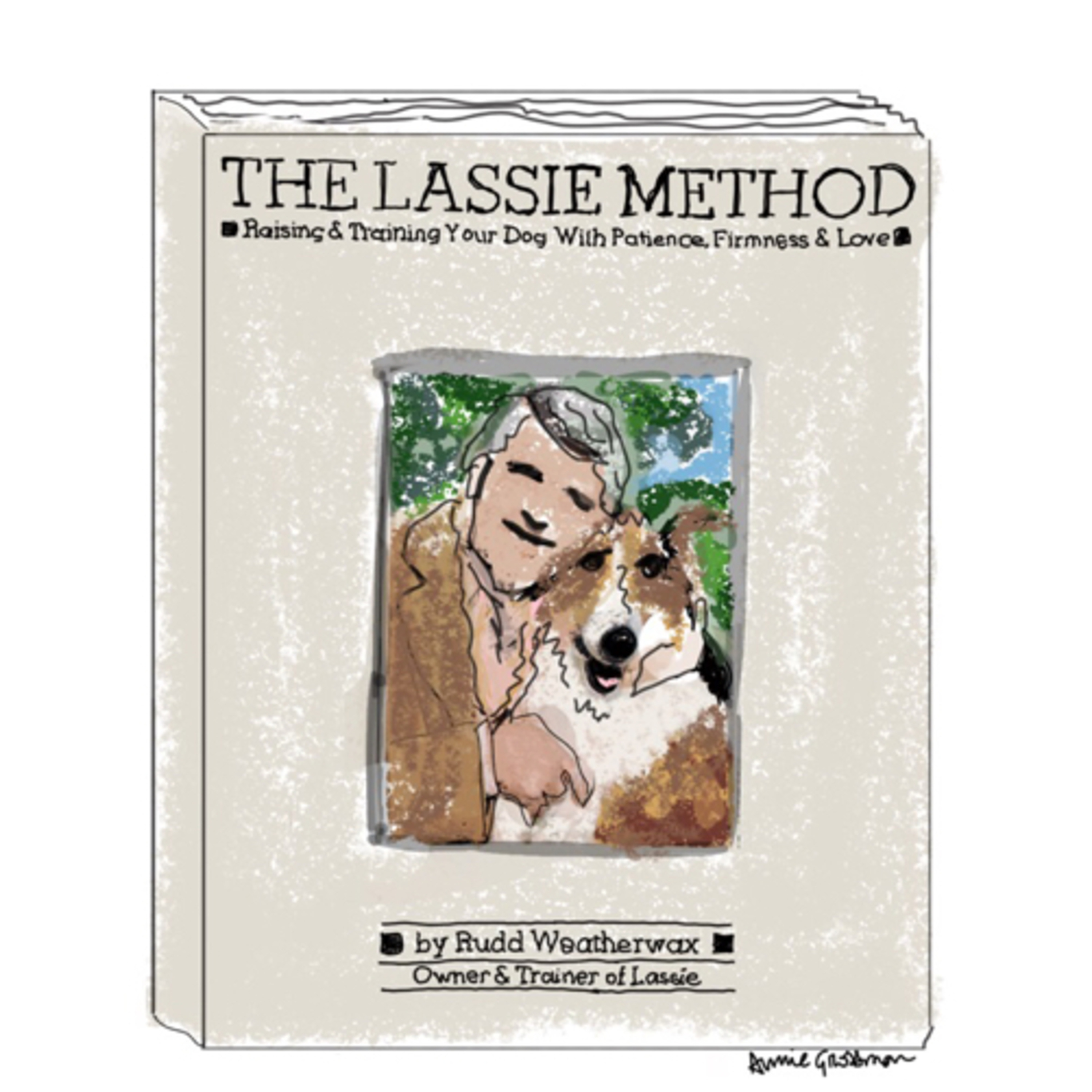
Mean Talk, Mouse Traps & Water Guns: Rudd Weatherwax’s “Lassie Method”
A few weeks ago, Annie interviewed Jon Provost, who played the little boy Timmy on the Lassie TV series in the 1950s and 60s. He talked a little bit about Rudd Weatherwax, who was Lassie's owner and trainer. Jon talked about how Weatherwax only trained with praise and rewards, and Annie described him as "progressive." After the episode aired, however, she found some old videos that showed training methods that suggested otherwise. In this episode, Annie reads from Weatherwax's 1971 book, The Lassie Method: Raising & Training Your Dog With Patience, Firmness & Love, and considers the pros and cons of his suggested training techniques. Notes: Free ebook on dog training techniques you can use on people: http://schoolforthedogs.com/people 1971 footage promoting the book: https://www.youtube.com/watch?v=YMrD3wO2m0I The Lassie Method: Raising & Training Your Dog With Patience, Firmness & Love---Partial Transcript:Annie:So a few weeks ago, I interviewed Jon Provost, the actor who played Timmy on the TV show Lassie when he was a kid. And we talked just a little bit in the episode about Lassie's trainer and owner, whose name was Rudd Weatherwax. And he was kind of a big deal in the world of commercial dog training in the early to mid 1900s. He trained Asta for The Thin Man. He trained Toto for The Wizard of Oz, but Rudd Weatherwax wasn't really the focus of the interview.And, you know, I admit in some episodes I have more of an agenda than in other episodes. Some episodes of this podcast, I am just interviewing people who have done interesting things with dogs or are working with dogs. I like stories about people and dogs, and I like sharing those stories, but of course I am dog trainer. I am opinionated. I have very specific points of view on the subject matter.But two things. One, I think I just assumed that someone who spent so much time on set with a dog and their trainer would be able to recognize what they were doing as far as training goes. Like I think I just take for granted at this point that someone could break down what someone's training methods are or what their approach is. But in reality, I know things can seem kind of opaque when you're watching training happening. And if you don't know what to look for or what you might not want to be seeing. I mean, I don't know. Also I'm talking to a man who is recollecting things that happened 60 years ago when he was a kid.The other thing of course, being that Rudd Weatherwax maybe really was all praise and reward with Lassie on set or whenever Lassie was with Jon Provost. They worked together very closely for many, many years, the dog who played Lassie and Rudd Weatherwax. Interestingly, they only ever had one Lassie at a time. I learned that speaking with Jon. Anyway, that dog, whichever Lassie it was at the time, and Rudd Weatherwax I'm guessing had a very strong bond. And I'm sure that that dog was tuned into understanding what Rudd Weatherwax wanted with very, very little force or coercion necessary because they had such a history working together.And also, because again this is me guessing, that they did a lot of training for him to learn new things off set. So by the time they got onset, it was more about maintaining those behaviors, which could be done using positive reinforcement. Cause that's the way that you're going to encourage behaviors that you want to keep happening. And if you're doing something on a set in front of a camera where they might do several takes, you want behaviors that are going to keep happening...Full Transcript available at SchoolfortheDogs.com/Podcasts Get full access to Don't Be a Dick to Your Dog at dogtraining.substack.com/subscribe

Is Dominance Really A Thing? Cesar Millan, Libertarianism + A Dog Named Pizza
Before she became a dog trainer, Annie assumed that understanding dogs' supposed obsession with dominance was an important part of being a good trainer. She pushed her 18-pound Yorkiepoo into alpha rolls so he'd know she was boss. She yelled in his face, and made sure he never entered through a doorway before her, because Cesar Millan said that that would make the dog think he was the one in charge. The whole idea that dog behavior, and the way dogs learn, had anything to do with science simply did not compute; the notion of them existing in a kind of Lord-Of-The-Flies quest for supreme power seemed plausible and not something worth reconsidering. After graduating dog training school, her thoughts on "dominance" shifted 180 degrees. Now, ten years spent working as a professional trainer, they've shifted yet again...Bonus Q+A: Pizza the mini goldendoodle (@the_pizza_dood) is obsessed with stealing collapsible water bowls at the park. Annie suggests a three pronged approach to curing him of the habit of destroying silicone water bowls that belong to other dogs.Products mentioned in this episode:The Zisc Flying Disc by West Pawhttps://storeforthedogs.com/products/zisc-flying-discWest Paw Toyshttps://storeforthedogs.com/collections/west-paw-designsCollapsible Slow Food Bowlhttps://storeforthedogs.com/products/collapsible-slow-food-bowlLearn more about Parvene Farhoudyhttp://behaviormatters.com/about-parvene-farhoody/Books by Raymond CoppingerDogs (with Lorna Coppinger)https://amzn.to/2UuJUzAWhat Is A Dog (with Lorna Coppinger)https://amzn.to/30mDhTZHow Dogs Work (with Mark Feinstein)https://amzn.to/32qcXuVThe (now embarrassing) 2007 article Annie wrote in The NY Times about people wanting to become dog trainers: https://www.nytimes.com/2007/12/27/fashion/27DOGS.html---Partial Transcript:Annie:Hello, human friends, and dog listeners, woof to you. I wanted to talk today about dominance. So in the three decades of life that I lived before becoming a dog trainer, I am pretty sure that I thought the word dominant was as much a part of dog training as boiling water was to cooking. It was just an essential part of the whole thing that was dog training. Dog training at that time being something that I think I thought of as, you know, something that happens when you sign up for a class or you hire a professional, and that dog training wasn't happening really outside of those times...Full Transcript available at SchoolfortheDogs.com/Podcasts/ Get full access to Don't Be a Dick to Your Dog at dogtraining.substack.com/subscribe
Puppy Socialization In The Time Of Quarantine
Nothing makes people want puppies quite like a global pandemic! Those who are raising puppies during quarantine may face some challenges when it comes to socialization. But, if you succeed at doing a good job with it -- if you can clear the unusual hurdles that new dog owners have to face right now -- you will be paving the way for a great future for your dog and while developing your own training abilities.Annie discusses what socialization is, how to spot signs of possible stress, and how to start at "criteria: zero" in order to build new and appropriate behaviors (and keep bad ones from happening). She talks about using food in socialization, using the right toys, and making use of sounds and objects you might be able to find in your home and enlisting neighbors in a safe way. She also talks about how to help your young dog get adequate puppy playtime, even if that means you... have to pretend to be a puppy.FREE EBOOK on The Dog Training Triad: http://schoolforthedogs.com/triadGet access to our private Facebook Group with the purchase of any of our new self-paced online courses. See http://schoolforthedogs.com/coursesAdditional resources:Annie's webinar on raising a puppy during quarantine: https://event.webinarjam.com/go/replay/81/k6v60c91ulrt9oi1Dog Body Language Demonstated By A Human with Em Beauprey: https://event.webinarjam.com/go/replay/148/k6v60c5vhns2s1First Episode of The Dog Whisperer featuring Nunu and Kane (both being flooded -- but lots of good examples of stress signals): https://www.dailymotion.com/video/x72q489More on Slow Food Bowls: https://storeforthedogs.com/blogs/news/extend-the-joy-of-your-dogs-mealtime-with-slow-food-bowlsK9 Sports Sack: https://storeforthedogs.com/products/k9-sport-sack-rover-backpack-1Flirt Poles: https://storeforthedogs.com/products/flirt-poles---Partial Transcript:Annie:Hey everyone. So lots of people have gotten puppies in the last few months during quarantine, which I’m super excited about. But the truth is, while the crazy world pandemic we’re living through might mean that you have more time to spend at home with your puppy, which by and large is a very good thing, it also means that there are some very real challenges that you may be facing that really might make things harder than they would be for a puppy owner getting a puppy in more normal times. You might not have the support system around you that you used to have. You might not have access to safe places that you can go with your puppy outside of your home. You’re probably dealing with financial stress. You might be having to move unexpectedly. You might get sick. But you know, all of this is to say that if you can get through having a puppy during quarantine, you know, it’s kind of like I tell my clients, if your puppy can make it here, he can make it anywhere. In New York City.Same thing with this. If you can get you and your new puppy through this difficult period in the right ways, you’re really going to be setting yourself up for a life together that is going to be enjoyable...Full Transcript available at SchoolfortheDogs.com/Podcasts Get full access to Don't Be a Dick to Your Dog at dogtraining.substack.com/subscribe

Lassie's Boy Sidekick: Meet Jon Provost, aka Timmy
Jon Provost was the boy sidekick to the 20th Century's most-loved dog: Lassie. In the late 1950s and early 1960s a third of American households tuned in each week to watch Lassie, a whip-smart Collie, help Timmy get out of countless pickles. Lassie came to define the "perfect" dog. In this episode Provost, who is now 70, talks about working with a dog star, and about what he learned from Lassie's rather progressive trainer/owner, the famous Hollywood dog trainer Rudd Weatherwax. He and Annie also discuss his early exposure to the notion of a "therapy" dog, and his more recent work to bring attention to rescue dogs, Army dogs, and more. Annie ends the episode by reflecting on how Lassie impacted our cultural notions about dogs, perhaps not for the better, and reads from Jean Donaldson's book Culture Clash, about the Disney-fication of dogs and how a desire to anthropomorphize "man's best friend" has led to some huge errors in the way people attempt to train and understand the dogs who live with us. If you're enjoying School For The Dogs Podcast, please subscribe to it, rate it, and leave a review! Jean Donaldson's Culture Clash: https://amzn.to/2KNwH2nJonProvost.comTimmy's In The Well: The Jon Provost Story https://amzn.to/2ZAVxbLGet a free eBook: Three Secret Keys To Dog Training Success when you register for Annie's Free Master Class! http://anniegrossman.com/masterclassYou can find some old episodes of Lassie on Youtube: https://www.youtube.com/watch?v=HluWrXiVNksRudd Weatherwax's obituary: https://www.latimes.com/archives/la-xpm-1985-02-26-me-25026-story.html---Partial Transcript:Annie:60 years ago, there was a TV show that was so popular, it's estimated it was watched in a third of American households each week. Its star, whose name was Baby, was a guy playing the role of a girl -- a nonhuman girl. That girl was, of course, Lassie.[Whistling - Lassie theme]Baby has long since left us. The show is only on in reruns. And today, most people have not heard of Lassie's famous trainer, Rudd Weatherwax, who was responsible for many of the 20th century's most famous dog actors, but last year, his best friend is still around and still hanging out with dogs like it's his job. Today, I have for you an interview with Jon Provost who played Timmy on the show Lassie for most of his childhood. He spoke to me about Weatherwax’s progressive and positive reinforcement based training methods, what it was like to grow up off camera with Lassie, and about his continued work with dogs. Fun fact, did you know there was actually never an episode where Timmy fell in a well, can you believe that?Before we get started, I just wanted to suggest that you go check out my brand new one hour long master class. It's called “Three simple things every dog owner needs to know to teach a dog quickly and easily without, force, pain, a major time investment or fancy equipment.” It's a presentation where I talk about how I got into dog training, how it kind of revolutionized how I see the world. You'll learn to think about the way your dog learns, specifically wow to think about the way in which your dog is learning thanks to classical conditioning all the time...Full Transcript available at SchoolfortheDogs.com/Podcasts Get full access to Don't Be a Dick to Your Dog at dogtraining.substack.com/subscribe
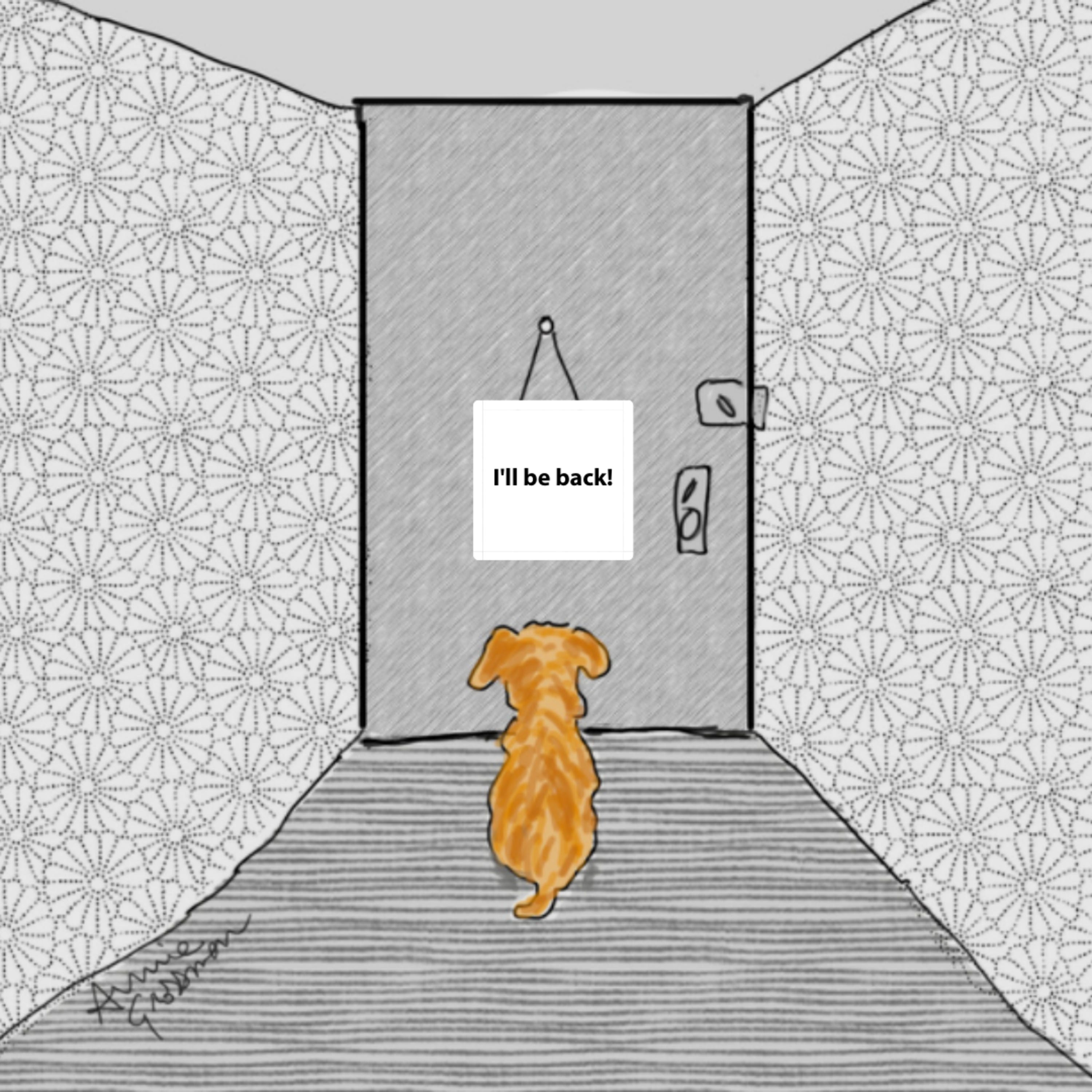
Don't Let Your Dog Cry It Out: On Training Dogs To Be Alone
In an ideal world, dogs would all be trained to be able to be alone. It would be a process of shaping a behavior, and helping your dog make good associations with being without you. But, in the real world, not everyone can take the time to acclimate a dog to alone time. Annie talks about the "cry it out" method and some of the tools that are used to punish the behaviors that can occur when a dog is stressed about being alone, and their potential fall out. She also gives a few strategies you can use when you really just have to leave your dog before you are sure he can handle it, and discusses what it means when we get rid of a behavior using extinction.Support School For The Dogs by shopping in our online store! Products mentioned in this episode. Treat n' Train - https://storeforthedogs.com/products/treat-trainTreat Separation Anxiety In Dogs by Malena DiMartiniScholarship Fund mosaic: http://schoolforthedogs.com/mosaicMaster Class can be found at anniegrossman.com/masterclassNYDogShare.comAlso listen to: Episode 26 | Teach a foolproof DROP and COME using Classical ConditioningEpisode 59 | Separation Anxiety Expert Malena DeMartini on Helping Dogs Learn To Be Alone---Partial Transcript:Annie:I am in my neighbor's apartment. This has become my backup recording studio. And my neighbor is a wonderful man I have known my entire life. He has a lot of stuff. He has a lot of stuff. I don't think he would disagree with that statement. And right next to the desk where I've been recording in order to seek some quiet, because my apartment is not quiet very often with my little daughter, right, running around. Right next to the spot in his apartment, where I sit is a dead cockroach that's been dead on its back for, uh, the last few months and has remained unmoved. And I feel like I've been paying homage to this dead cockroach. Like we've been sharing space with him in his death, me still alive. You know, I don't think I ever saw him when he was alive, but he did live in my building. I thought about picking him up. But then I started to feel like he was some kind of symbol. Not as cute as like a rabbit's foot, but actually kind of less gross. And, you know, people have taxidermied animals that they keep around. Right now, I'm just coexisting with a dead cockroach.[Intro and music]Annie:So I've been getting a lot of questions relating to separation, which I guess could be sort of seen as predictable seeing that there's been a period of people being home a lot with their dogs. And now perhaps a period of us being less at home with our dogs. And a lot of people who have gotten dogs in the interim period, this like COVID 19 puppy and adoption boom that we seem to have seen. And so I wanted to talk a little bit about how I think about separation and the various options of how you can deal with it.And you know, I should say that separation is such a frustrating issue. And if you've listened to this podcast before you might've heard the episode I did with Malena Dimartini, who is probably the separation anxiety dog training expert out there...Full Transcript available at SchoolfortheDogs.com/Podcasts Get full access to Don't Be a Dick to Your Dog at dogtraining.substack.com/subscribe
Cues & Commands: How We Communicate To Dogs What We Want From Them & Vice Versa
Before Annie became a dog trainer, she assumed all dogs were trained using "commands" and cues were for... pool games and stage actors. In this episode, she talks about the difference between cues and commands, describes the process of adding a cue, noticing cues, changing cues, and more. Enjoy School For The Dogs Podcast? Please leave a 5-star rating on iTunes and a review! Notes: Find Annie's new MasterClass at http://anniegrossman.com/masterclassA Connecticut Yankee In King Arthur's Court https://amzn.to/2YectpgEpisode 19: How To Train A Dog To Sit From Scratchhttps://www.schoolforthedogs.com/podcasts/episode-19-how-to-train-a-dog-to-sit-from-scratch/Episode 40: Teaching A Stellar Down With A Verbal Or Visual Cuehttps://www.schoolforthedogs.com/podcasts/13927/---Partial Transcript:Annie:Mark Twain, satirist of the 19th century, one of my favorite writers, wrote the book A Connecticut Yankee in King Arthur’s Court. And it’s a story about–it’s a time travel story about a guy who gets bonked on the head and wakes up and thinks at first that he’s in Bridgeport, Connecticut, but actually he’s gone back in time from the 1800s to King Arthur’s court and he’s in Camelot. He gets himself into trouble there, he’s going to be burned at the stake. And then he realizes that he had learned in school that in the year 528, the year that he’s found himself in, there was a solar eclipse. So he predicts this natural event, and he makes everyone believe that he caused it.I think about this book sometimes when I’m thinking about the process of adding a cue to a behavior that we want our dogs to know. Now, before I first went to dog trainer school, I referred to commands. You gave your dog a command and the dog followed the command or not. It would have never occurred to me to call it anything other than a command. Instead, I was encouraged to think about how we can cue a dog to do the thing we want. Now, at first I understood the reason as, like we don’t want to be coercing dogs and it is coercive if you’re commanding something, because it’s like, you’re saying do this, or else. There’s an implied or else. And you know, that made sense to me, but I also thought that, you know, it would be possible to command and then reward. So maybe it was just too narrow a reading of the word command.But then I started to understand that the notion that we are commanding a dog to do something really gives us way too much credit. We are sometimes cueing a dog to do something perhaps on purpose, but perhaps not on purpose. And it would be funny to call that a command. Dogs do things all the time because of things that we do that we might not have actually wanted our dog to do. You wouldn’t call that command, but it might be some kind of cue to your dog, if your dog is perceiving it. What’s more, there are lots of cues that your dog is perceiving that have nothing to do with you. They are learning cues from the environment, all around them, from each other, from things we might not even be perceiving.Full Transcript available at SchoolfortheDogs.com/Podcasts Get full access to Don't Be a Dick to Your Dog at dogtraining.substack.com/subscribe

A Pet Food Killed My Dog: Susan Thixton & The Truth About Pet Food
Thirty years ago, a vet told Susan Thixton that dog food had given her dog bone cancer, and the dog had two weeks to live. "That day changed my life," she said. She dove into researching pet food, and found an industry doing its best to keep its practices opaque to pet owners. Too often, she discovered, we are literally feeding our dogs garbage. In the decades since, Susan has become a full time blogger on the subject and a consumer advocate, lobbying to try to improve the quality of the food we feed our pets. She and Annie discuss the difference the precise definitions of terms like "food" and "feed," "with" and "meal," and Susan reveals what she feels is the single most important thing to look for when selecting a pet food. This episode may forever change how you think about dog food. Sign up for Annie's new Master Class! http://anniegrossman.com/masterclassNotes: This conversation was recorded as a webinar, a replay of which can be found here.TruthAboutPetFood.com: What is feed grade and human grade pet food? Learn the differences.TruthAboutPetFood.com: Pet food ingredients differ from human food ingredients.TruthAboutPetFood.com: Learn how to add some real food to your pet’s diet.TruthAboutPetFood.com: 2020 List Of Preferred FoodsAssociation For Truth In Pet FoodDr. Becker's Real Food For Healthy Dogs & CatsPlanetPaws.ca's food recipesPet Food Politics: The Chihuahua In The Coal Mine by Marion NestleDr. Judy Morgan's naturally healthy Pets RecipesEvermorePetFood.comBalanceIt.com ---Partial Transcript:Annie:Hello, Sue, why don't you just go ahead and introduce yourself.Susan Thixton:I'm Susan Thixton. I run the website TruthAboutPetFood.com, and run a consumer stakeholder organization association for truth in pet food, providing food consumers with a voice at pet food regulatory meetings, and with FDA, when they choose to listen to us. It's strictly their ballgame and sometimes they listen to us and sometimes they don't.Annie:Now I first found you through your blog Truth About Pet Food. Did the associations start the blog or vice versa?Susan:Truth About Pet Food started first and I was going to AFCO meetings and wanted to ask them for an advisory position to where, you know, I could give them consumer opinion more than just being in the audience. And they denied me year after year. And when a president, former president, finally went off the board of directors, he told me that the trick is we didn't want a blogger to be an advisor to AFCO.Full Transcript available at SchoolfortheDogs.com/Podcasts/ Get full access to Don't Be a Dick to Your Dog at dogtraining.substack.com/subscribe
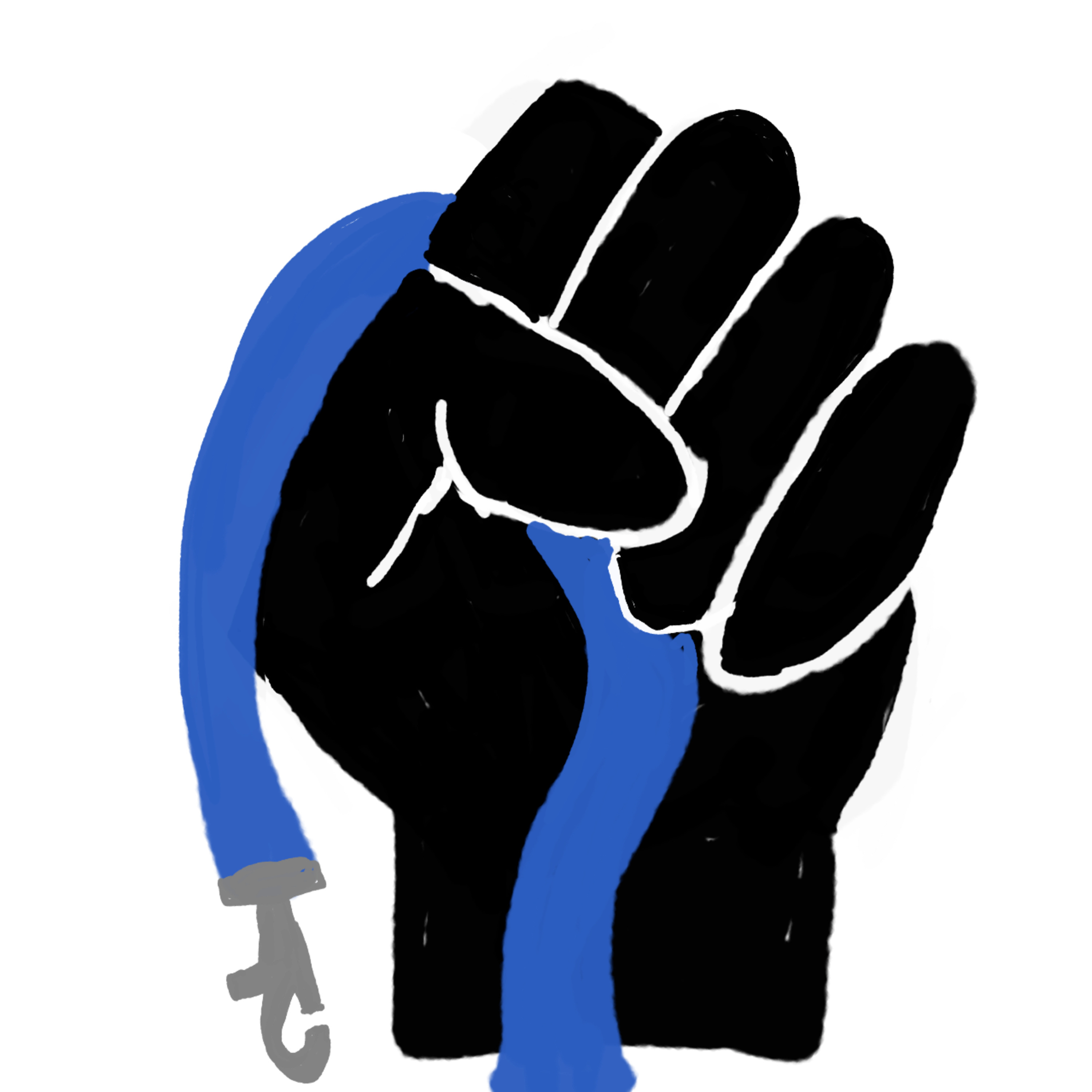
On Racism, Reinforcement, Leashes & Poop Bags
Last week in New York City a white woman called the cops on a black man, saying he was threatening her life. Really, he just wanted her to obey Central Park's leash laws. In this episode, Annie attempts to dissect the altercation from a dog trainer's point of view, talking about everything from how we should use leashes, to how the man used an interesting combination of treats and negative reinforcement to get the woman to leash the dog. Through the lens of dog behavior and training, we can also spot how fear, caused by ignorance or wrong associations or both, can lead to awful actions. Annie also talks about the animal-training concepts of "trigger stacking," her own "learned helplessness" when it comes to affecting change by voting, and her ongoing efforts to take a stance, one poop bag at a time. Get our free house training guide:Http://SchoolForTheDogs.com/houseNotes: The Amy Cooper/Christian Cooper video https://www.washingtonpost.com/outlook/2020/05/29/amy-cooper-white-woman/ Mendota Leashes https://storeforthedogs.com/products/braided-leash Found My Animal leashes https://storeforthedogs.com/collections/found-my-animal/products/found-my-animal-leash-1 Coercion And Its Fallout by Murray Sidman https://behavior.org/product/coercion-and-its-fallout-2/ Donald Trump Poop Bags https://storeforthedogs.com/products/copy-of-irreverent-poopbags-assorted-selection --- Partial Transcript: Annie: Hey everyone. I recorded this episode over a week ago, before riots broke out all around the country. The episode is about the incident that happened just before George Floyd was killed in another part of the country in New York City. It felt to me, you know, I'm in New York, it felt like a local incident took place more or less than in School for the Dog's backyard. And I didn't expect it to go viral, but it did because it's about race and racism and white privilege. And then George Floyd's killing suddenly made this New York City incident seem all the more sinister and terrible. This isn't a podcast about race. But the reason I felt like I wanted to say something about the New York incident is because in the middle of these two people, one of whom was black, one of whom was white, there was literally a dog and no one else is talking that much about the dog, which makes sense. There's a lot to unpack here that has nothing to do with the dog, but this is a podcast about dogs and about dog training. And so I felt I wanted to talk about the dog and to do so without so much touching on the much larger issues going on because I'm not a political commentator or an activist. I am a white woman who owns a small business. I think Black Lives Matter and I'm depressed and frightened to be living in a world where we even need to point out that black lives matter. All weekend, I lay in bed, holding my daughter and listening to helicopters and sirens overhead. And I just felt helpless. And if you've listened to this podcast before you obviously know that I like to try and spot the dog training lessons in the world we live in because so much of our lives is about changing our own behavior or trying to change other people's behavior. Full Transcript available at SchoolfortheDogs.com/Podcasts/ Get full access to Don't Be a Dick to Your Dog at dogtraining.substack.com/subscribe

The Greatest Animal Trainer On Earth: Ken Ramirez
When Ken Ramirez is not training elephants to avoid poachers, teaching dogs to count, coaxing polar bears out of suburban garbage cans or getting butterflies to fly on cue, he is mentoring and educating dog trainers. Ken is the Executive Vice President and public face of Karen Pryor Clicker Training, which operates the Karen Pryor Academy, among other things. In this episode, he and Annie discussed his new book of essays, how he almost got The Dog Whisperer's time slot, the existence of free will, sleep training a baby and more. Get our guide to making walks more fun: Http://SchoolForTheDogs.com/funwalksNotes:The Eye Of The Trainer: Animal Training, Transformation and Trust, by Ken Ramirez - On My Mind: Reflections on Animal Behavior and Learning, by Karen Pryor - Ken Ramirez on Hannah Brannigan's Drinking From The Toilet Podcast - Ken Ramirez on Ryan Cartlidge's Animal Training Academy Podcast - KenRamirezTraining.com - Ken's Letters - Training Lessons From Pokemon Go - Talk To The Animals clip - Find the ukulele-duo Toast Garden on Youtube! If you're enjoying this podcast, please subscribe, rate, and review! ---Partial Transcript:*Intro*Annie:So if you are a professional animal trainer or aspiring to be a professional animal trainer, I'm guessing that you've probably heard of my guest today. If you're not, you probably haven't. Whether you're in one of those categories or the other, I am really excited to get to share this conversation with you with this pretty remarkable man.Now, I normally like to ask people how they first got into the field of animal training or dog training in particular, but I didn't go into that with my guests today only because there were so many things I wanted to talk to him about, and you can also get his backstory on a couple other great podcasts, including the Animal Training Academy Podcast with Ryan Cartlidge and Hannah Brannigans podcast, Drinking from the Toilet. The short version is he grew up on a ranch, began volunteering, working with a guide dog organization when he was still a teenager, and then kind of lucked into a job working with exotic animals, which then helped mold his choices of what to study in college. He then spent more than two decades working at the Shedd Aquarium in Chicago, where he eventually was the Executive Vice President of Animal Care. And well, I'm just gonna let him introduce himself and talk about what he's doing now.Ken Ramirez:My name is Ken Ramirez and I am the executive vice president and chief trading officer for Karen Pryor Clicker Training. And I have been training, gosh, for over 40 years now. Worked in the zoological field. I work as a consultant for zoos and aquariums. I work as a consultant for search and rescue dogs and law enforcement and guide dogs. And I do a lot of work in the conservation arena, so I have a lot of interests and I keep very busy.Full transcript available at SchoolfortheDogs.com/Podcasts Get full access to Don't Be a Dick to Your Dog at dogtraining.substack.com/subscribe
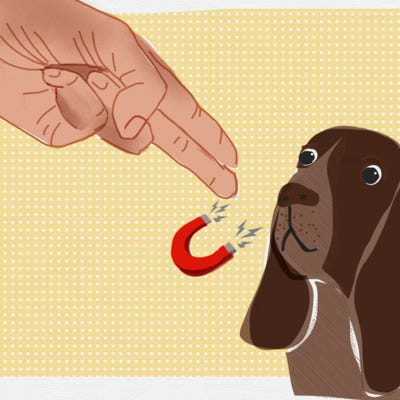
The Most Important Behavior You'll Ever Train
There is one behavior we teach every dog we work with at School For The Dogs: Touch! This is an easy-to-teach building block that you can use to build... whatever you want! In this episode, Annie outlines how to teach touch, and talks about this behavior's countless uses and variations. Annie's Free Webinar on training touch - https://event.webinarjam.com/go/replay/78/k6v60c95ir6t6nf1More on Chirag Patel's Bucket Game - https://www.facebook.com/thebucketgameKen Ramirez demonstrates different types of targeting. - https://theranch.clickertraining.com/live-episode-1/Doodle Buddy and other apps you can use with your dog - https://anniegrossman.com/2013/12/training/3-apps-your-dog-can-use-to-make-art-35313/8246/Support this podcast by shopping in our online store, storeforthedogs.com! http://storeforthedogs.com/Products mentioned in this episode: Clicker Sticks https://storeforthedogs.com/products/clicker-stickLamb Lung https://storeforthedogs.com/products/lamb-lung---Partial Transcript:[Intro]Annie:Hey everyone. Annie here. Thank you so much for listening. If you're hearing this on Friday, May 15th, today is the last day that we are offering 30 minute free sessions at School for the Dogs. This is something that we started to do at the beginning of quarantine. We are bringing an end to this offer for the moment. So if you have not booked one yet, you should do so at schoolforthedogs.com and we can work on whatever you want to work on with your dog. Whether you want to talk about an ongoing issue you're having, or you just want some ideas of fun stuff you can do with your dog, or maybe you're thinking about getting a dog, whatever is going on. Our certified trainers would be psyched to talk to you, but again, today is the last day that you can get one of these sessions for free if you book before the end of the day today schoolforthedogs.com.Today I wanted to talk about my favorite behavior to train and the behavior that I think is probably the most important behavior for anyone to train, especially if you're just starting out training a dog. I would even go so far as to say that this might be the only behavior you need to train. I'll explain a little bit more about that in a moment, but the behavior is a Touch, specifically teaching a dog to touch his nose to your fingers.Now I first want to describe what this behavior is going to look like, what it's going to consist of, and then I'll talk about some variations and why I think it's such an essential building block behavior. Your first job is to decide which hand your dog is going to touch and which hand is going to hold the treats. Now you could certainly reward with play or lots of other things other than food.Full Transcript available at SchoolfortheDogs.com/Podcasts Get full access to Don't Be a Dick to Your Dog at dogtraining.substack.com/subscribe

Separation Anxiety Expert Malena DeMartini on Helping Dogs Learn To Be Alone
Some dogs have panic attacks when they are left alone. If you have a dog who can't be alone, and you have any interest in sometimes leaving your home without your dog, you know the agony of canine separation anxiety. It's an issue that has led to too many dogs ending up at shelters. A good dog trainer can help, but many good dog trainers dread taking on separation anxiety cases because...they're really hard. "Who in their right mind would choose separation anxiety as a speciality?" says Malena DeMartini. The answer? Malena DeMartini. Malena has helped countless dogs learn to be alone, and also trains trainers to deal with treating and preventing separation anxiety in dogs. Annie and Malena discuss why separation anxiety cases are hard, how people can address separation issues with or without a trainer's help, the ways in which modern technology can help us train dogs to be alone, behavioral medication, CBD for dogs, and more. Use code SFTD for ten percent off the Mission: Possible course at MalenaDeMartini.comTreating Separation Anxiety In Dogs by Malena DeMartini Zoobiquity by Barbara Nattersion-HorowitzJean Donaldson's The Academy For Dog Trainers Uke'n' Daddy's All By Myself by Irving Berlin Book a free session through May 15th and check out our daily schedule of free webinars at SchoolForTheDogs.com. If you like School For The Dogs Podcast, please subscribe, rate, review, and share with your friends! ---Partial Transcript:Annie:I'm thrilled today to be interviewing Malena DeMartini. She is an expert in treating dogs with separation anxiety. She is the author of the book, Treating Separation Anxiety in Dogs, a book I’ve recommended so many times, I think I should be getting a commission on the royalties. Malena is a superstar in the world of dog training, so we might as well consider this a celebrity interview. On an important topic: the topic of helping dogs learn to be okay being left alone.But before I play you this interview, I did want to mention that we have been offering, free 30 minute virtual sessions with clients, the School for the Dogs’s trainers have been doing this since quarantine started but we are only going to be offering these sessions for one more week, so if you have yet to sign up for a free 30 minute session with one of our certified trainers, you absolutely should. We can help with problems that you have been facing during quarantine or maybe things you were wanting to deal with before quarantine, we can also help you find some fun things with your dog during this time that you are very likely spending more time together than ever. But that offer ends next Friday, May 15 so definitely book now and also if you are not aware, we have been offering free, daily webinars which you can learn more about at schoolforthedogs.com/webinars. They’ve been on a wide array of topics, we have gotten really great feedback and we also have the replays available for a limited time at that same link: schoolforthedogs.com/webinars. So if you’ve missed one, it is more likely there.This interview I did with Malena is an abridged version of a webinar we did earlier this week that I will link to in the show notes...Full Transcript available at Schoolforthedogs.com/Podcasts Get full access to Don't Be a Dick to Your Dog at dogtraining.substack.com/subscribe
A Different Kind Of Dog Photographer: Meet Andrea Castanon of BowieShoots
A few years ago, Annie thought it'd be fun to do yearbook-style posed photos of dogs graduating from classes at School For The Dogs. She mentioned the idea to a few photographers and they all gave her blank stares. Then, she was scrolling through Instagram and she found a photographer whose entire feed was... posed, yearbook-style photos of dogs. Annie got in touch with the person behind the account: Andrea Castanon. Andrea was working as a professional photo retoucher and during her downtime was making these hilarious photoshopped portraits of her friends' dogs for fun, and to raise money for rescue organizations. Annie invited her to hold some shoots at School For The Dogs. Two years later, Andrea -- whose company, BowieShoots, is named for her own rescue dog -- has shot hundreds of dogs (and even some other types of pets as well) all over the country, delighting their owners with her backgrounds and knack for catching doggie smiles. While she has had to stop shooting dogs in person during the COVID-19 crisis, she tells Annie about the creative way she has both been able to continue her business and help adoptable dogs find homes during quarantine. BowieShootsBowie Shoots InstagramSocial Tees Animal RescueTrain Your Dog Without Pain, Using Your Brain" StickerSchool For The DogsPartial Transcript:Annie:Hey everyone. I am here today with a wonderful photographer whose name is Andrea Castanon. You might know her by her business's name. Her business is called Bowie Shoots. Bowie is the name of her rescue dog. Andrea, it is so good to see you.Andrea:You too. Didn't know the next time would be virtual.Annie:I know, I know. So I am so excited to be talking to you. Well I, Andrea, I would really love to talk to you about how you got into doing what you do. And then I want to talk about how you're working currently, which I think is really interesting. But...Andrea:Yeah, all involved.Annie:It's so, it's so cool. It's so cool. You’re a hero to me. But I want to maybe just describe how you came into my life or how you came to School from the Dogs from my perspective. So for years we have had this, kind of like, school theme to School for the Dogs, kind of, playful sort of retro, like decorations and just a vibe and theme of, like, old school way to put it. Like if you have, I'm trying to think of like how I would describe it to someone who doesn't know about us or hasn't been to our studio, like just old chalkboards but also photos that are, kind of like, a retro throwback to school days, as you know, adults today might've experienced school in like a fun, playful way.And so years and years ago, I think, even before we opened up our first storefront location, we got a big like laser photo background made and we started having our graduates pose in front of this laser background photo, like kind of, something like from the nineties. And we were always just like doing it with our cell phones and it was never like it was particularly literally thought out. But it was kind of like just a fun, silly thing that we did. And I kept thinking like, we should go farther with this. It would be cool to, like, actually have more sort of styled like school photo kind of photos that we could take of graduates or puppies or whatever just to kind of go with this theme. And I couldn't really figure out like, just like how to make that happen...Full Transcript at SchoolfortheDogs.com/Podcasts Get full access to Don't Be a Dick to Your Dog at dogtraining.substack.com/subscribe
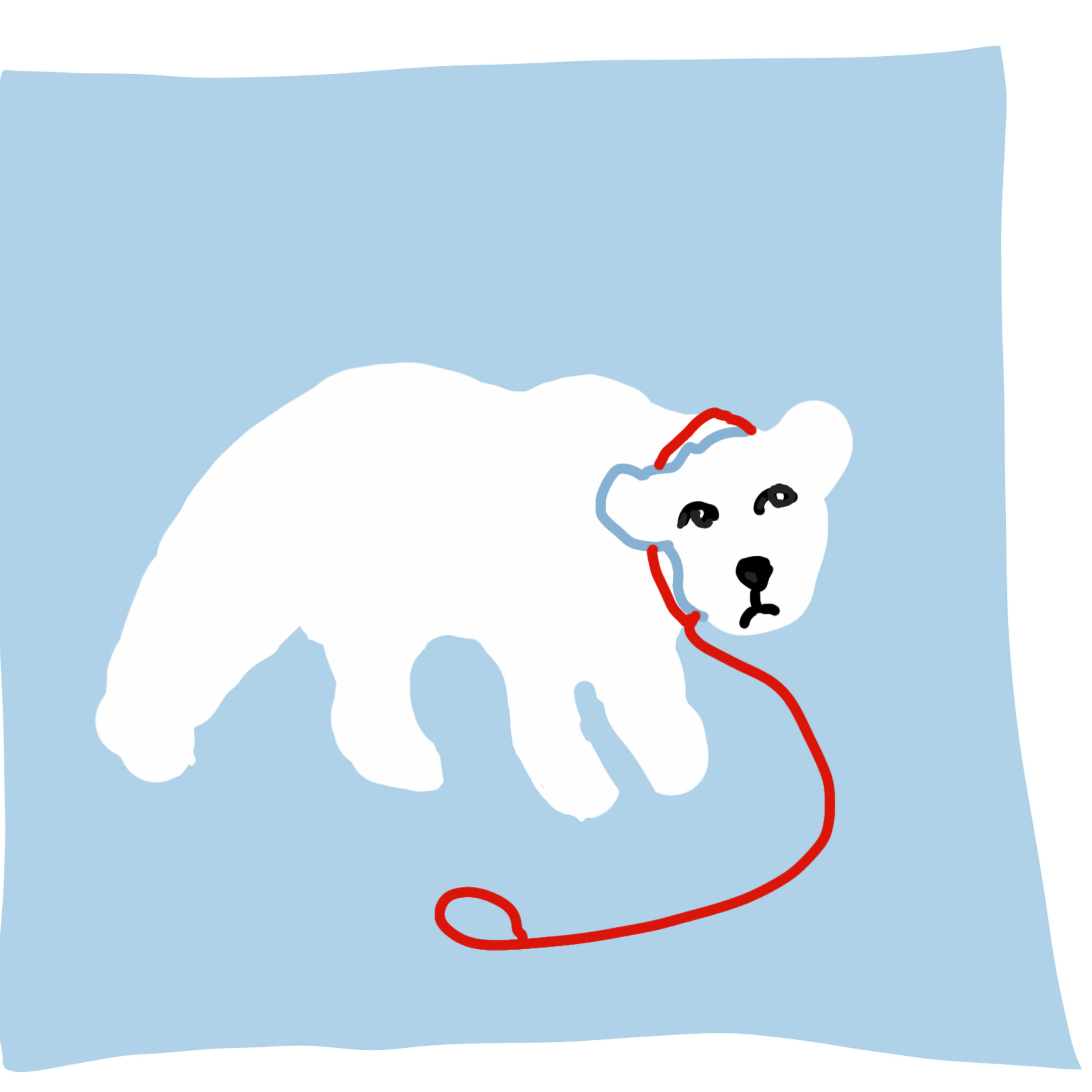
Helping The Sad Polar Bear & Trump's Coyotes: The World Of Dog Trainer Ferdie Yau
Ferdie Yau, behavior consultant at NYC's Behavior Vets, has been training animals in New York City for nearly twenty years. Today he mostly works with dogs (he trained his own to be a coyote poop detection dog...) but he started out working in the city's zoos. Learn how a lifelong passion for animals led this Long Island-born conservation biologist to think about the importance of enrichment in training urban-dwelling animals, whether they be puppies in living rooms, cats in shelters, or polar bears in Central Park.Notes: -SchoolForTheDogs.com/Mosaic -For a limited time, we are offering free thirty minute sessions with our trainers! Book yours at SchoolForTheDogs.com-BehaviorVetsNYC.com-Get $10 off to make your own custom stickers with Sticker Mule. Use this link. -Elly Lonon sings Aba Daba Honeymoon. Elly is the author of Amongst The Liberal Elite.-Sitsnwiggles.comPartial Transcript:Annie 1:24That is Elly Lonon singing Abba Dabba Honeymoon. Thank you for tuning in. I have an episode that I'm really happy to share with you all today. It is an interview with a really excellent trainer who I'm pleased to call a colleague: Ferdie Yau. And, you know though, I actually recorded this with Ferdie almost a year ago, and then kind of took a hiatus with the podcast and I just wanted to mention that since then, he has taken a job with Behavior Vets, which is a highly respected veterinary practice that specializes in Behavioral Medicine. And yeah, I'm glad to be able to share this interview with you. I also wanted to mention that we are still doing free 30 minute private virtual sessions. With all clients, new and old. We're offering one to anyone who is interested. If you have not taken us up on that offer yet please do so, you can sign up at schoolforthedogs.com. Not sure how long we will be offering this promotion, but we feel it is something we can do during quarantine to help people who are either facing issues with their dogs having to do with the massive changes in lifestyle we're all experiencing, or if you're just looking to learn a little bit more about training, maybe looking for some ideas of fun stuff that you can do with your dog. Go ahead and sign up at schoolforthedogs.com. We are able to pay our trainers to offer these sessions thanks to our scholarship fund. So thank you to anyone who has already donated to the fund. You can learn more about it at schoolforthedogs.com/fund. And right now we are putting together a mosaic in our studio while we're closed. It's being built by the artist Jim power. Jim power is the artist who has done all the mosaics on lampposts throughout the East Village for like three decades. And he is doing this for us and if you donate $100 or more right now, we will thank you with a photo tile that will go in this unique mosaic. You can learn more about that at schoolforthedogs.com/mosaic, and I will link to it in the show notes as well. And lastly, if you're enjoying this podcast, please do leave a review but also reach out and say hi to me, I would love to hear from you...Full transcript at Schoolforthedogs.com/Podcasts Get full access to Don't Be a Dick to Your Dog at dogtraining.substack.com/subscribe
How do you become a dog trainer? A conversation between two women who switched careers
One of the many interesting things about dog training? Every professional has taken a different path. We are in a moment where many people are considering new careers. If you've ever thought about becoming a dog trainer, you will want to listen to this interview featuring two women who went from success in completely different fields to success in working with dogs. Annie, who became a dog trainer after working as a journalist for a decade, interviews Marie Poliseno, a former Wall Street Trader turned dog trainer turned CPA. Her company, Dollars & Scents, specializes in working with professional dog trainers who need help with the financial side of things. Learn more about Marie at Dog-Pro-CPA.com. Learn more about Annie at AnnieGrossman.com. Special thanks to Nikki Acton for sharing her lovely Yelp review in this episode. The audio in this episode is an abridged version of a webinar interview between Annie and Marie. You can watch it here. Learn more about Marie at Dog-Pro-CPA.com. Special thanks to Nikki Acton for sharing her lovely Yelp review in this episode. You can follow her dog, Mookie, on Instagram: @mookietheoriginal Mentioned in this episode:The Certification Council of Professional Dog TrainersDana Crevling's Instructor Training CourseCulture Clash by Jean DonaldsonThe Karen Pryor AcademyThe Academy For Dog TrainersSchool For The Dogs' Professional Dog Training CourseDon't Shoot The Dog by Karen PryorReaching The Animal Mind by Karen PryorLIMATerry Ryan's Chicken CampsClicker ExpoThe Association of Professional Dog TrainersTawzerPartial Transcript: Annie (00:05): I am here with Marie Poliseno who is basically School For The Dogs’ CFO. I've known her for many years. She is our bookkeeper, accountant and a both a cheerleader and a shoulder to cry on. Her company is called Dollars and Scents. That “scents” S-C-E-N-T-S. She specializes in helping dog-related businesses. She is based in Montana. I've been wanting to interview Marie for a long time, but it usually occurs to me right around this time of year, around tax time. And I never want to bother her by asking to take her time to do an interview when she's preparing people's taxes. But this year, tax day got moved and I saw an opportunity! So I wanted to specifically have her here to talk about becoming a dog trainer and things to think about when making a, making a choice to move to this new kind of career. I think she has an interesting perspective. Marie, why don't you start out by telling us a little bit about how you first got into dog training.Full Transcript available at SchoolForTheDogs.com/Podcasts Get full access to Don't Be a Dick to Your Dog at dogtraining.substack.com/subscribe
How to train a dog to pee and poop inside
Dog trainers are commonly asked to help dog owners teach a dog to "potty" outside. Well, thanks to this crazy quarantine situation, we're not being asked the opposite question: How can I teach my dog to pee and poop inside? Annie interviews School For The Dogs' trainer Anna Ostroff, who has a dog who is a professional when it comes to peeing and pooping inside. Learn how to train a dog to have a potty spot inside, and how to put it on cue! Also: How socializing with people in face masks can help us thinks about dogs greeting each other in leash. Get our illustrated guide to house training when you sign up for our newsletter at AnnieGrossman.com/pottyLearn more about School For The Dogs at SchoolForTheDogs.com. Make sure to also check out our 2018 episode all about house training! Products mentioned in this episode: http://FreshPatch.com http://DoggieLawn.com Partial transcript: Annie: Hey everyone. We've been getting a lot of questions about how to train a dog to go inside. Usually dog trainers are asked for help training dogs to go outside, but due to this mass quarantine, people can't go outside with their dogs or don't want to go outside with their dogs. And suddenly this new problem presents itself. How do we train dogs to go inside for an expert opinion on this? I wanted to talk to our trainer, Anna Ostroff, who is one of my very good friends and just a wonderful trainer and person. But as often happens with me, I was kind of last minute on this. And so rather than arrange an interview with her in advance, I called her up with kind of a surprise interview. I think you're going to enjoy hearing about her dog ginger and how she trained ginger to do her business in the closet.Annie: So this is a kamikaze interview cause I, I want to talk to you about teaching your dog to pee in that house recording right now. Is that okay? I can record you talking about how your dog pees in the house. People don’t normally call you up to ask you how you got your dog to pee in the house? Is this weird?Anna: Well, you know, these are weird times. You never know these days. How are you? Cool. I'm doing okay. So, you want me to just like talk about how I trained Ginger?Annie:To anyone listening, I should explain that you have a dog who's very sensitive to New York City among other things and well why don't you explain how it came to pass that she is an indoor pottier. I mean, the reason I want to talk about this is because so many people are asking this question right now because they don't want to, some of them can't go outside or feel like they shouldn't outside or whatever. The reason is there's an increasing amount of people trying to get their dog to go to the bathroom inside, which is unusual and unusual thing for a dog trainer to be asked about because usually it's the opposite. (Full transcript available at https://www.schoolforthedogs.com/podcasts) Get full access to Don't Be a Dick to Your Dog at dogtraining.substack.com/subscribe

"Nobody Cares About Dog Training Right Now"
Someone on the School For The Dogs mailing list sent Annie an angry email accusing her of being out of touch because, with everything going on in the world, "no one cares about dog training right now." This inspired Annie to outline some reasons why people could, and maybe should, think about dog training and the science of behavior now... perhaps more than ever. Show notes: School For The Dogs' studio is closed, but we have lots of great content online: Classes, daily webinars, and FREE virtual private training sessions. We aren't sure how long we will be doing these sessions for free, so take advantage of this opportunity now. Learn more at SchoolForTheDogs.com/services. Rats get blamed for causing disease but they might've actually been helping keep all of us from getting Coronavirus sooner... Rats have been trained to find endangered pangolins. Pangolins are anteaters, the trafficking of which may have led to this pandemic. Want to see a video of these hero rats? Of course you do. Woof Shoutout to Dr. Lisa Lippman, who we had on our last episode. Both her parents have COVID-19. We are helping collect supplies for the hospital where they are currently being treated. If you have masks, gloves, or gowns, you can mail them to: Sue Kaufman4292 Imperial Isle Dr. Wellington, FL 33449You can support School For The Dogs Podcast by shopping at StoreForTheDogs.com or donating to our Scholarship Fund. SHOW TRANSCRIPT: (00:35):Thanks for being here. I just want to jump into things. I don’t think I need to talk too much about how crazy everything is right now here in New York city and pretty much everywhere. If you're listening to this in the future I hope you, Future Listener, are experiencing less craziness than what we're in right now.Quick update about School For The Dogs: We did have to close our studio and we had to suspend our walking program. Basically we are more or less shut down as far as our physical space goes. But we're trying to use this time as much as possible to offer training to people online wherever they are, because we feel this is a time when people are in need. And we also want to keep our trainers employed. So we're trying to take advantage of this time to be up our online offerings.(01:35):We've been doing daily webinars on lots of different subjects. We are doing free 30 minute sessions right now. We are trying to do everything we can to bring our services to people who are in need right now. People who are home with their dogs, people who are fostering dogs. I am trying to see this as an opportunity to to help people outside of New York city. Obviously we are normally focused New York City residents because that's where our studio is. But thanks to technology, we can reach more people. (Full transcript available at http://anniegrossman.com/2020/04/podcast/no-one-cares-dog-training-right-now-new-podcast-episode/9836/) Get full access to Don't Be a Dick to Your Dog at dogtraining.substack.com/subscribe
What dog owners need to know about the coronavirus with Dr. Lisa Lippman
Welcome to Season 2 of School For The Dogs Podcast! This episode is a conversation show host Annie Grossman had with veterinarian Dr. Lisa Lippman about the thing we are all talking about: COVID19. Annie asked Dr. Lisa if our pets can get sick, if they can get us sick, and the two spoke about how to take necessary precautions to keep our dogs safe. Most of this episode is from a webinar Dr. Lisa and Annie did on March 4. It can be found here. Learn more about Dr. Lisa Lippman at https://www.vetsinthecity.com/Partial Transcript: Annie: Hey, everybody! So I ended up having to take a bit longer of a hiatus [laughs]. Sorry, I had trouble getting that word out. A hiatus from this podcast than I originally meant to. But there was good reason for it. I have spent the last year hard at work at putting together an online dog training curriculum. And if you’re hearing this, on Monday, March 16th, I hope you will tune in for the live webinar that I am going to be doing this evening. I will be talking about the online course in the webinar. You can register for that at anniegrossman.com/register. And we’re going to try and get back to a once a week schedule with the podcast. In these crazy times, I think we could all stop and think a little bit about dogs, and I hope to be the person who can do that with you.As always, if you have any dog training questions, please get in touch with me. I am going to try and do more Q&A episodes this season. We’re now on our second season at School For The Dogs Podcast. But what I have for you today is an interview I did with Dr. Lisa Lippman, a veterinarian, about a week ago about COVID-19. Specifically about dogs and COVID-19. Can dogs get Coronavirus? Can they give it to us? Can we give it to them? What do we need to be thinking about? She answered some of these questions and I’m glad I can share these answers with you.So here we go; my interview with Dr. Lisa Lippman...Annie: Hey, everybody! I am here with Dr. Lisa Lippman. I wanted to urgently talk to you, Dr. Lippman, about Coronavirus.Dr. Lippman: Yeah.Annie: It’s scary stuff.Dr. Lippman: It is really scary stuff.Annie: We’ve had a lot of clients asking us about it. And so, I wanted to get your expertise.Dr. Lippman: Yeah.Annie: When did you first hear about Coronavirus? Were vets in the know? I know sometimes vets are in the know about these things before we know that they can affect humans.Dr. Lippman: Yeah, for sure. Well, we know that every species has their own Coronavirus. I actually did research on Coronavirus on avian Coronavirus in veterinary school as a model for SARS in people. So we know that every...Annie: Oh really?Dr. Lippman: Yeah. We know that every species has their own Coronavirus. So, for example, in dogs it tends to be a respiratory disease. In cats, it tends to be a GI disease. One that can mutate. Maybe people know as Feline Infectious Peritonitis. But they tend to be pretty benign viruses that are actually pretty easy to kill, which is true of this current Coronavirus as well, because they don’t have a shell or an outer coating to the virus itself. The Coronavirus is named because of the way that it’s shaped. So it’s shaped like a crown or the corona. It’s got like little particles sticking off of it. But it actually is pretty easy to kill in the environments. So that is also good news. Full transcript available at https://www.schoolforthedogs.com/podcasts/episode-53-what-dog-owners-need-to-know-about-the-coronavirus-with-dr-lisa-lippman/ Get full access to Don't Be a Dick to Your Dog at dogtraining.substack.com/subscribe
Why viral videos are bad for dogs, with Eileen Anderson
Pet videos fuel the Internet, but too often they perpetuate false ideas about dog behavior by misattributing a dog's intentions, or by falsely framing their actions. Why do we seek to anthropomorphize dog behaviors rather than celebrating all the behavioral commonalties that exist between us and them? Annie and the acclaimed, prolific blogger Eileen Anderson of EileenAndDogs.com, tackle this question together. This is our 52nd episode, and marks the end of our first season! We'll be back with Season 2 in a few weeks! Have a question for Annie? Submit it at AnnieGrossman.com/ask or call and leave a message at 917-414-2625If you are enjoying this podcast, please support us by shopping at StoreForTheDogs.com, or by leaving a review on iTunes!Notes: Eileen on fake dog videos: https://eileenanddogs.com/blog/2019/04/22/fake-dog-videos/Eileen on smiling dog video: https://eileenanddogs.com/blog/2019/03/04/shelter-pup-smiles-submissive-grin/Dr. Susan Friedman's Living and Learning with Animals: http://www.behaviorworks.org/htm/lla_professional_overview.htmlToast Garden: https://www.youtube.com/channel/UCFwYVIJt15j7sq5N22FNOngDoris Day's hotel in Carmel, CA: https://cypress-inn.com/doris-day-carmel-california-hotel/Doris Day Animal Foundation: https://www.dorisdayanimalfoundation.org/Sign up for the SFTD Newsletter! http://schoolforthedogs.com/newsletterTranscript: Hey everyone, thank you for listening! I am excited to share this conversation with you. It’s with someone whose work I’ve admired for a long time. She’s a dog trainer and writer whose name is Eileen Anderson. I had a couple little issues with the recording, so I apologize for that in advance, but it’s not too bad. But before I share this conversation with you, I wanted to let you know that we are taking a little break with School For The Dogs Podcast. This episode is our 52nd episode which marks the end of what we’re going to call “Season 1”. When I started doing this podcast, I aimed to do one a week for a year. And I started in late March 2018, so it’s been a little over a year. I have missed a few weeks mostly because of some big life events - my dad died, I had a baby, and we moved School For The Dogs to a new studio during the last year. So for those reasons, I ended up skipping a few weeks. But now we have 52 episodes, which means if you’re just starting out you can listen to one episode a week for a full year.The main reason why we are taking a break is because we are building an online course, which I’m really excited about, and I want to turn my attention fully to that for the next month or so. And after that, I will be back with new episodes. I’m hoping to do more Q&A episodes in the next season, so please share your questions with me. You can send them to me at anniegrossman.com/ask or you can leave a voicemail at 917-414-2625, or you can always shoot me a message on Instagram, we’re there at @schoolforthedogs.Full transcript available at http://anniegrossman.com/2019/05/podcast/episode-52-transcript-notes-viral-videos-bad-dogs/9841/ Get full access to Don't Be a Dick to Your Dog at dogtraining.substack.com/subscribe
Ask Annie: Dealing with humping and other annoying behaviors
Annie addresses questions from people who are dealing with dogs who have habits that annoy other dogs, and, ultimately, their owners as well. One owner wants to know how to deal with a new rescue who is bothering the household's other two dogs and generally causing chaos in the home, and a dog walker asks about how to manage a charge who is constantly trying to hump his walking buddies. In addition to addressing setting up appropriate social situations for dogs, exercising them and using crates in multi-dog households, this episode offers a thoughtful take on why dogs hump and how to keep it from becoming an issue. Follow the askers of these questions on Instagram at @uarndcool and @pudgydogProducts mentioned in this episode: The Treat + Train: https://storeforthedogs.com/products/treat-trainThe Revol Crate: https://storeforthedogs.com/products/the-revol-dog-crateFlirt Poles: https://storeforthedogs.com/products/flirt-polesThe Animatwist: https://storeforthedogs.com/products/animatwistThe Animaswizzler: https://storeforthedogs.com/products/the-animaswizzlerPartial Transcript:Annie:Hey everyone. Annie here. Thank you for listening and a particularly big thank you to those of you who have reached out in the last few weeks. We seem to be getting a bigger listenership which is really rewarding and I've appreciated the nice reviews on iTunes and the messages on Instagram etc. Seriously, I really appreciate it. As some of you know, I had a baby recently. Little Miss Magnolia who is so wonderful and I really love being a mom, but as you may have heard parenting is hard. Actually parenting is not so hard as much as parenting and trying to do absolutely anything else has proven difficult. Especially at podcasting because even if I can get someone else to watch her and I do have an amazing woman who comes and watches her a few hours, a few days a week and my in-laws and my mom and my husband, but even if I can get someone to watch her which is great; I live in like a loft basically, there's no doors so it's hard to find a quiet spot to record and uh best case scenario I can like find a way to record while she naps but her naps were sort of unpredictable and every night I think, “OK well tonight I'm going to record a podcast episode when she goes to sleep but usually by then I'm so exhausted that I know that I'm not going to be giving you my best self.”So right now I managed to have her in a sling, on my body, taking a bottle although she just pushed it out so that she could suck her thumb and I am going to attempt to answer some of the excellent questions that I've been storing up. I've gotten so many questions lately that are so good I want to answer them all but I'm going to see if I can get through two or three before uhm we have a baby meltdown here.OK so the first one comes from Emily of Cleveland OH.Emily writes...Full transcript available at Schoolforthedogs.com/Podcasts Get full access to Don't Be a Dick to Your Dog at dogtraining.substack.com/subscribe
How to train your dog to walk on a loose leash
Leashes, collars and harnesses are some of the first accessories most dog owners acquire when they get a dog, and very soon they come to depend on these tools. But, in this guide to teaching a dog to walk on a loose leash, Annie suggests teaching where you want your dog to walk in relation to your body (right next to your leg), and what you want your dog to be doing on leash (checking in with you often) before you start relying on equipment to control your dog's behavior. This episode contains suggestions on training exercises to help teach nice walking (with or without a leash), protocols for encouraging good behaviors on leash, and gear recommendations. Products mentioned in this episode: Found My Animal double-ended nylon leash: https://storeforthedogs.com/collections/collars-leashes-harnesses/products/found-my-animal-leash-1 Mendota Lightweight Braided Leash https://storeforthedogs.com/collections/collars-leashes-harnesses/products/braided-leashFreedom Harness https://storeforthedogs.com/collections/collars-leashes-harnesses/products/freedom-harnessLiquid Treat Dispenser https://storeforthedogs.com/products/liquid-treat-dispenserPartial Transcript:Annie:Hey, everyone. Thank you for tuning in. Today’s topic is loose leash walking.Now I’m going to talk about how to walk the dog, like how you should be walking and what equipment you can use. I want to talk about what behaviors you’re going to reward and where you're gonna reward and then I’m going to give you two exercises that you can work on when you're trying to practice your dog’s loose leash walking.But first, I want to talk for a minute about what you want your dog to look like on leash or what you want your walks to look like on the leash? What do you want to look like with your dog on leash? Take a moment to conjure up sort of the perfect image of what a walk should be there. I don’t think there is really a right or wrong answer; I just want you to think about what you want your walks to look like so you can work towards that goal.I mention this because there is a man in my neighborhood who for years I’ve seen him walking his dog in this sort of militaristic- style. The dog, who is a big dog, his neck probably is close to the guy’s hip and this guy holds the leash super tightly- there's maybe 1 foot of leash between his hand and the dog’s neck or I think maybe he walks him on some kind of like head harness, anyway, they just look so tense, both of them, that they stress me out every time I see them- I want to like give both of them a massage. Anyway, at one time I was sitting in the park with my dog on a bench and this guy came and sat down on a park bench near me with his dog and we started chatting a little bit and I couldn't resist saying something, I was nice about it, but I said something like, “I notice your dog walks really close to you”, or something like that, it wasn't super judgy and he said something like, “ well how a dog is supposed to walk. Outside time isn’t about fooling around. “ So fair enough.But that’s not my idea of how my dog is supposed to walk. My vision of the perfect walk, if I were to paint a watercolor of it, would be my dog walking near me with a very loose leash, ideally no tension on the leash and I want us to kind of be paying attention to each other's needs. So if I need to go in one direction, I want him to be aware of that and go in that direction with me.Full transcript at Schoolforthedogs.com/Podcasts Get full access to Don't Be a Dick to Your Dog at dogtraining.substack.com/subscribe

How to live with seven dogs and three cats in a one bedroom in NYC
Native New Yorker Gloria Bardin lives in a one-bedroom apartment with three Dobermans, one pitbull, a Havanese, two mixed breeds and three cats. And yet... she seems totally sane. Annie talked to her about how she has built a life that can accommodate taking care of so many pets. Notes: Follow Gloria on Instagram: @fourtypawsvstwofeet Follow Beppi on Instagram: @bep.and.zo Garfield Mail: https://gizmodo.com/the-original-gmail-was-garfield-mail-1822970617---Partial Transcript:[Intro]Annie:I am here with Gloria Bardin who is an East Village native. I first met her when she came to our Puppy Playtime with two of her dogs, but the reason I was interested in having her on the podcast is not because she has two dogs, not because she has three dogs or four dogs. She has seven dogs in her East Village apartment and four cats. Did I get that right, Gloria? Three cats, and any other animals we should know about now?Gloria Bardin:No, I just have the seven dogs and the three cats only. Only those, just those, just those.Annie:No turtles or gerbils, or hamsters?Gloria:No, I had a Guinea pig, but my mom has it now. She really likes it. I do foster occasionally though.Annie:Oh my goodnessGloria:So I actually just had two puppies in my house that I just got adopted this weekend.Annie:So for a little while there you had nine dogs and three cats?Gloria:Yeah.Full Transcript available at: SchoolfortheDogs.com/Podcasts/ Get full access to Don't Be a Dick to Your Dog at dogtraining.substack.com/subscribe
Surfer, author, rapper, adventurer, humanitarian: Meet Pip The Beach Cat
Last fall, Emily Meadows and her husband took in a stray orange tabby kitten who they called Pip. Pip repaid the kindness by terrorizing their other cats and destroying their Ocean City, Maryland home. To help him extend energy in a more appropriate way, Emily began to take him on walks on the beach. She quickly discovered he loved digging in sand, swimming, and even riding surf boards. Six months later, Pip The Beach cat has become a local celebrity with worldwide fans, and Emily is a full-time cat "momager," who is currently orchestrating Pip's book launch, promoting his rap album, and bringing him nearly daily to do therapy cat work at local nursing homes. Annie talks to her about how finding a creative way to deal with her cat's behavior issues has led to a life neither she nor Pip could ever have predicted. Links:PipTheBeachCat.com Facebook.com/ImFeelingPipsyInstagram.com/ImFeelingPipsyPip's NYC adventures as chronicled by The NY Post https://nypost.com/2019/02/15/this-bar-hopping-cat-is-nycs-hot-new-tourist-attraction/Pip's Guide To Ocean City https://pipthebeachcat.com/store/Pips-Guide-to-Ocean-City-Signed-Pre-Order-p134297476Pip's rap video: Big Pippin' By Yungg Bo Feat., with Lil P aka Lil Pip https://www.youtube.com/watch?v=sFiXGQ5Z0KwPip's first rap album with Yungg Bo https://soundcloud.com/user-604318223Morris The Cat's 1980s commercials https://www.youtube.com/watch?v=OGE4bPgzovIOrange cat genetics explained https://cattime.com/trending/11023-why-orange-cats-are-usually-maleLike this episode? Make sure to subscribe, rate and review School For The Dogs Podcast on iTunes, and follow us on Instagram.---Partial Transcript:Emily:You know, we didn't realize how big it had gotten until we started going out just in our everyday lives with Pip, like, “Oh, let's go for a bike on the boardwalk, and people started screaming his name.” He's getting recognized and that has just been like the craziest experience of my life.Annie:Hey everyone. So today I am talking to someone who six months ago had a problem in the form of a tiny kitten who was driving her and her husband crazy. That problem is now a world-renowned phenomenon known as Pip, the beach cat. Now I wanted to do an episode on Pip, not only because I think it's kind of interesting, this idea of a cat as a social media sensation, but also because I think it's a pretty incredible story of owners who have used smart management and good training to create an excellent world and an excellent life for a cat who you might say had special needs. I'll let his human explain.Emily:Hello, my name is Emily Meadows and I'm the owner of Pip, the beach cat. Essentially Pip is, you know, a multifaceted feline.Full Transcript available at SchoolfortheDogs.com/Podcasts Get full access to Don't Be a Dick to Your Dog at dogtraining.substack.com/subscribe
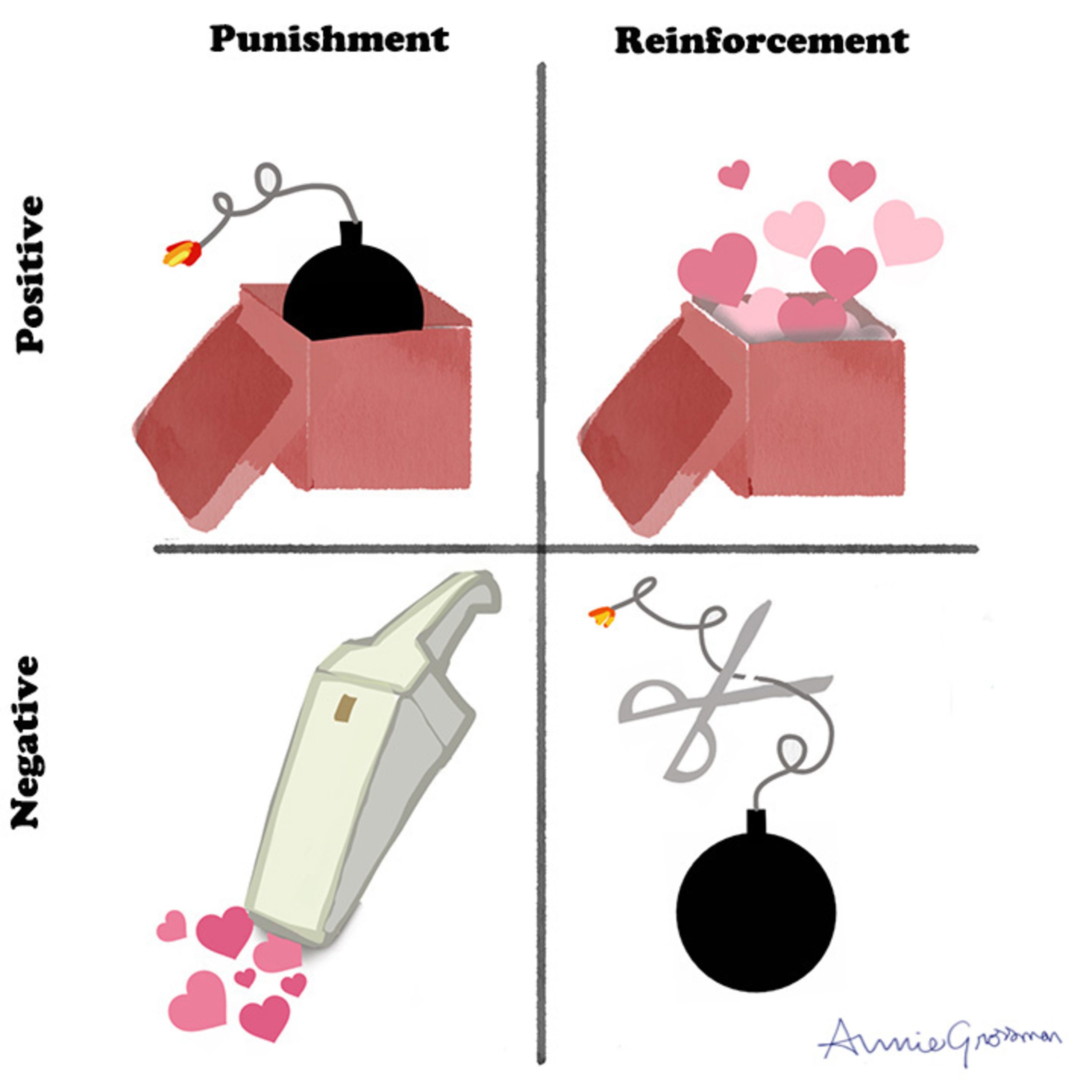
A busy person's guide to Operant Conditioning
Positive Reinforcement, Negative Reinforcement, Positive Punishment and Negative Reinforcement: You may have heard these terms thrown around, but they're often misused or little understood. Together, they describe four different ways all animals learn by consequences-- aka, Operant Conditioning. In a rush to put up a podcast episode while her young baby naps, Annie challenges herself to describe each "quadrant" of Operant Conditioning in two and a half minutes. Notes: Phoebe controls the TV with her eyes https://www.youtube.com/watch?v=pMQfFIJU_HoOperant conditioning explained in Little Golden Books https://anniegrossman.com/2012/03/training/punishment-reinforcement-in-little-golden-books-92902/6672/Operant conditioning explained on The Big Bang Theory Being https://www.youtube.com/watch?v=5XUvm_smWHYBF Skinner's Daughter http://anniegrossman.com/2018/08/podcast/podcast-episode-21-bf-skinners-daughter-deborah-buzan-dispels-myths/9722/6 ways in which dogs and humans are exactly alike https://anniegrossman.com/2018/04/science/6-ways-dogs-humans-exactly-alike/9419/A dog trainer's view of evolution http://anniegrossman.com/2018/04/science/dog-trainers-view-evolution/9438/Episode 42: Let's talk about dog breeding with Cherrie Mahon https://www.schoolforthedogs.com/podcasts/lets-talk-about-dog-breeding-with-cherrie-mahon-of-river-valley-doodles/Episode 44: Are you talking to your socks? Marie Kondo, Cesar Millan & training humans with snake oilhttps://www.schoolforthedogs.com/podcasts/episode-44/Partial Transcript:Annie:Hey everyone. Annie here. And I'm with my three-month old cohost who is being quiet right now, but she may have something to say shortly. And because I am a full-time mom in addition to running School for the Dogs and in addition to doing this podcast, I am trying to be more efficient and how I do everything. Because although I have seven hands and four brains, it's hard to get it all done. So for that reason, I am challenging myself today to keep this episode short. And the thing I want to talk about today is operant conditioning, which really has four major parts. So I decided to see if I could describe each of those parts in two and a half minutes. Making all of operant conditioning, something that can be contained in 10 minutes. And let's see. Let's see if I can do it.But first, what is operant conditioning and why do I want to talk about it? Well, there are basically two ways that all animals learn. There's two kinds of conditioning. Conditioning is a term that's synonymous with learning. And those two ways of learning are operant conditioning and classical conditioning.,,Full Transcript at Schoolforthedogs.com/Podcasts Get full access to Don't Be a Dick to Your Dog at dogtraining.substack.com/subscribe

The Museum of the Dog opens in NYC
Up until last month, one of the world's largest collections of dog-related art resided outside St. Louis inside a museum that most of the locals didn't even know about: The Museum Of The Dog. That changed last month, when the museum officially relocated to midtown Manhattan. Annie interviews the museum's executive directly, Alan Fausel, about the museum's collection, history, and fan favorites. Annie will be doing a free training demo at the museum this Saturday, March 30th, at 1pm. Stop by! Learn More at museumofthedog.orgAre you enjoying School For The Dogs Podcast? Please leave us a 5-star rating on iTunes and make sure to follow us on Instagram! Partial Transcript:Annie:Hey everyone. Thank you, as always, for listening. If you are a dog lover in New York City, or maybe if you’re not in New York City, you may have heard that the Museum of the Dog has just opened, after spending many years in St. Louis it is now located in Manhattan on 41st and Park. And I am actually going to be at the Museum this Saturday, March 30 from 1 to 2 doing a training demonstration. So if you're around please come on by, it is free. Sadly, it is not open to dogs but my dog will be there doing a demo.And today, I have the pleasure of speaking with the Museum's Executive Director. Alan, why don't you go ahead and introduce yourself.Alan:My name is Alan Fausel, I’m the Executive Director of the AKC Museum of the Dog which has just been moved from St. Louis to New York.Annie:And were you the director also in St. Louis?Alan:No, I was not. I had an association with the AKC for years, when I was doing open houses at Doyle and Bonhams in New York and we always had them as one of our charity benefactors for the Humane Fund. So I knew the people in the collection and actually appraised the collection.Annie:What did you think of the collection when you first saw it?Alan:I have known it for years and there are some really great things here and also I went out to St. Louis twice before I took the job, you know, over the years. There are some fabulous paintings here and also a lot of interesting other teachable things that we have besides paintings and sculptures but there's also collars, trophies, a whole variety of things we call “doggyama.”Annie:Doggyama, I loved it. So tell me about how the museum first got stopped.Alan:It got started in the early 80s, so a number of people from the AKC and dog lovers formed a foundation because they didn't like the fact that Geraldine Rockefeller Dodge’s collection in the ‘70s had, sort of, been dispersed, they thought they wanted to retain some of this.Annie:I don’t know about her collection. What was her collection?Alan:It was several thousand pieces. She was a huge- she was behind the Morrison Essex dog show and was the preeminent dog person in the United States.Annie:And she was an art collector and a dog lover, I’m guessing.Alan:Yep, a dog breeder. She had hundreds of dogs at any one time.Annie:She was a Rockefeller?Alan:Yes, Geraldine Rockefeller Dodge in New Jersey.Annie:And what kind of dogs did she breed.Alan:Uh, German Shepherds were the main ones. I also think there were some Bedlingtons in there and Cocker Spaniels. She was instrumental in the development of American Cocker Spaniel, as opposed to the English Cocker Spaniel...Full Transcript at Schoolforthedogs.com/Podcasts Get full access to Don't Be a Dick to Your Dog at dogtraining.substack.com/subscribe
The body builder & the Boston: Joe & Lenny on their journey to Westminster
In 2012, Joe Freni's wife surprised him with a puppy they named Lenny. Lenny, they felt, was simply perfect. In fact, he was so perfect that they decided to start enrolling him in competitions. In the years since, Lenny has received titles both in dog sports and dog shows, the latter culminating in his recent spot in the Westminster Dog Show. Not long after he started showing his dog in the ring, Joe decided to also start showing... himself. In this episode, Annie learns about Joe's journey as a body builder, a power lifting world champion, and as a show dog handler. Lenny on Social Media:Facebook: https://www.facebook.com/lennytheboston/Instagram: @puppy_kidTwitter: @LennyandJoeShowYouTube: https://www.youtube.com/channel/UCb9rAnMl99XelUhuyTG7_1w Shop Lenny Gear: https://shop.spreadshirt.com/lennys-lootLearn more about "The Good Boys of Boston" calendar at @good_boys_of_bostonFun Boston Terrier Facts: http://www.bostonterrierclubofamerica.org/about-boston-terriers/boston-terrier-history.htmOur beloved Boston Terrier student Reggie is on Instagram at @reggieinnyc---Like this Podcast? Make sure to leave us a 5-start review on iTunes! ---Partial Transcript:Annie:So I am here today with Joe Freni of Boston and he is the human who belongs a Boston Terrier named Lenny and Joe got in touch with me because he wanted to tell me a little bit about Lenny and I was intrigued because it turns out both Joe and Lenny are kind of both professional physical perfect specimens. Lenny competes in dog shows and Joe competes and what you might call human shows. He is a bodybuilder and a world champion powerlifter. Of course, you don't normally encounter bodybuilders in the dog show ring, at least as far as I know, so I wanted to learn more and Joe, thanks so much for taking the time to talk today.Why don’t you introduce us to your dog Lenny.Joe:So for anyone who's never met Lenny. He’s a fantastic little Boston terrier he is named after Leonard Nimoy a.k.a. Spock in Star Trek due to the pointy ears and the fact that we’re huge, you know, Star Trek nerds.Annie: You know it's funny as I almost named my dog, Lenny, after Lennie Briscoe on Law and Order.Joe:No way.Annie:And I also once met another dog named Lenny named after Leonard Bernstein. So there are lots of dogs named after people it seems.Joe:Leonard Nimoy is also from Boston which we thought was really cool. So Lenny is six and half years old, we got Lenny as a puppy about 10 weeks old, I believe. My wife actually actually got him, she completely surprised me with Lenny, I had no idea that we were getting him. I've always loved Boston Terriers and we actually had three Boston Terriers prior to Lenny so they were all rescues and this was our first first Boston Terrier from a breeder....Full Transcript available at Schoolforthedogs.com/Podcasts Get full access to Don't Be a Dick to Your Dog at dogtraining.substack.com/subscribe
Are you talking to your socks? Marie Kondo, Cesar Millan & training humans with snake oil
The sprightly Japanese organizing guru Marie Kondo has gained worldwide acclaim for essentially being an excellent trainer of humans. Specifically, she trains people to "tidy up" their homes. While she might be adept at using positive reinforcement (mostly in the form of her sheer enthusiasm about junk drawers) and other methods that dovetail with Good Dog Training, her approach also encourages people to attach their actions to part in certain bizarre "superstitious" behaviors. like verbally "thanking" pieces of clothing and "waking up" sleeping books by tapping them. In this episode, Annie, who believes that behavior-changing techniques should appeal more to common sense than to magical thinking, talks about how Kondo and famous dog trainers like Barbara Woodhouse and Cesar Millan douse snake oil over their proposed solutions in order to suggest that clutter is caused by sleeping books, dogs love the letter T, and nice leash walking can only happen if you channel amorphous invisible powers. Notes: Marie Kondo on Netflix - Marie Kondo's book: The Life-Changing Magic of Tidying Up - Marie Kondo on The Late Show w/ Stephen Colbert, 2/5/2019 - Marie Kondo on Jimmy Kimmel Live, 1/29/2019 - Cesar Millan clip quoted in podcast, in which Millan tells the dog owner that her dog's won't listen to her unless she is "calm and assertive" and "injecting energy" into them while walking. - Barbara Woodhouse, dog trainer who throws books at dogs. Clip in podcast is taken from here - On doing dishes and peeing The following are blog posts about The Dog Training Triad. Each post contains the podcast episodes on the same subjects, which were I posted last July (Episodes 16, 17 and 18)Part 1: Management Part 2: RewardsPart 3: Timing---Partial Transcript:[Intro]Annie:Hey there, humans. So today I want to talk about someone who has been making the rounds on talk shows, and just generally in the news a lot, her name is Marie Kondo. And if you live under a rock and you don't know who I'm talking about, she is an expert on tidying up. In fact, her new Netflix series is called "Tidying Up" but years before this Netflix show, she was already quite well known for her book, The Life Changing Magic of Tidying Up. Now, I know you're listening to this and you're saying to yourself, hold on, this is a dog training podcast. Why are we talking about this young Asian woman who helps people clean out their closets? Well, it actually has to do with superstition or what dog trainers call superstitious behaviors.Now you might be surprised that dogs are superstitious as are people, of course. And I'll talk a little bit more in a minute about what dog superstition looks like. I think you probably already know about human superstitions, like wearing a certain pair of socks so that your favorite baseball team wins or not walking under a ladder or crossing a black cat...Full Transcript available at SchoolfortheDogs.com/Podcasts Get full access to Don't Be a Dick to Your Dog at dogtraining.substack.com/subscribe

Ask Annie: Separation anxiety, tips for crate training and an overview of attachment theory
In this Q+A episode, Annie answers a question from a puppy owner whose dog is scared of the crate and stresses out when left alone, and then considers another dog owner who asks if "Attachment Theory" applies to dogs. Visit AnnieGrossman.com/ask or leave a voicemail at 917-414-2625.NOTESProducts:Annie's preferred crate, the Revol (get $25 off the Revol with code SFTD25 at checkout through March 31, 2019) - See through pen on Etsy by ClearlyLovedPets - See through crate on Etsy by PrettyKennels - Treat and Train - The Toppl toyBooks: Treating Separation Anxiety in Dogs by Malena Demartini-Price - I'll Be Home Soon by Patricia McConnell, PhDSites: Evolutionary Parenting article on Attachment Theory and Attachment Parenting by Tracy Cassel PhD Shoutout: You can witness Gilby and Ghost's playdates at @GhostFrench and @GilbyKrissFun Dog Fact: The Beatles song that contains a secret dog whistle---Partial Transcript:[Intro]Annie:Hello humans. Today I am going to be answering some dog training questions that have come down the pipeline. If you have a question you'd like answered in a future Q&A episode, you can find us on Instagram @schoolforthedogs. You can send a direct message. Or go to Anniegrossman.com/ask and you'll find a nifty little form there.So our first question comes through Instagram from a listener named B. She writes:"Hi Annie. I've just finished listening to your crate training episode. I love how no nonsense you are with most subjects, and this one is of particular interest to me. My husband and I fostered a few dogs before we adopted. All the dogs we had before, including puppies and adults slept in a crate. However, our last foster and now adopted member of the family hates the crate. He'll go in if there's food, but if the door closes he immediately loses it and won't eat. He tries to eat the bars, jumps up and throws himself against the bars, and generally cries until you open the door. We've also tried pens, et cetera. We want to crate train for all the reasons you mentioned on the podcast and also because I want him to stop sleeping in our bed. He moves around and I'm always scared he'll fall off. He was rescued from a puppy mill. And I've been following the Best Friend's guidelines, which say that some dogs will never adapt to crates after being born in a puppy mill. He is five months old. He also hates pens. I've tried covering the crate to make it more den like, but he barks and jumps the whole time. Occasionally he goes quiet. I've even filmed him and left the apartment, and he keeps jumping and barking until I’m back."He is very happy when he's let out. He also won't eat if he knows he's closed in the pen or crate. He's very stuck to me in general...Full transcript available at SchoolfortheDogs.com/Podcasts Get full access to Don't Be a Dick to Your Dog at dogtraining.substack.com/subscribe

Let's talk about dog breeding with Cherrie Mahon of River Valley Doodles
A few years ago, after years of volunteering at rescue organizations and owning both shelter pups and purebred dogs, Cherrie Mahon, a professor of business in Rochester, New York, did something that'd change her life forever: She got a Goldendoodle. Cherrie fell in love with the breed, and pitched an idea to her mother, a school bus driver who was looking for a retirement career: Maybe they could start a family business breeding doodles? In the years since, Cherrie, her mother, her sisters and a few cousins have been in the business of bringing fluffy dreams to life for hundreds of happy families. But there are plenty of moments that haven't been so... golden. Cherrie and Annie have an honest discussion about the way people acquire dogs, the science of good breeding, and the emotional rollercoaster of rearing puppies. NOTESRVD Online: RiverValleyDoodles.com - @RiverValleyDoodles Breeding resources referenced by Cherrie: MistyTrails' content can be found here - Puppy Intensive Care - On wolves and poodles - If you really want to geek out on dog genetics, this slide show is for you. Gets into poodles/wolves around the 4th minute - Also see Chapter 13 of Man and Wolf: Advances, Issues, and Problems in Captive Wolf Research - On Goldendoodles and "back crosses"Some of School For The Dogs' students from River Valley Doodles: @neptune - @ollie_bear_doodle - @freyadood - @joeyandbeau - @juliettethedoodleWoof Shout Out: Learn more about Gary, aka Garebear, an adorable and adoptable young Frenchie who currently being fostered in the East Village, at http://instagram.com/buckysfostercrew---Partial Transcript:Hello humans. Thank you for listening. I am here with my seven week old baby, Magnolia. Again, I've tried to figure out times where I could podcast where she is not going to interrupt with adorable baby noises, but I've decided to just go with it. And so, I now have a little grunting cooing, occasional co-host who might just be the youngest podcast host out there. Also, perhaps the only nonverbal one. If you're enjoying School for the Dogs’ podcast, please do subscribe on iTunes while you're there. Leave a review and give us a five star rating. It's a good way to let other people know that this is something worth listening to. And if you're on Instagram tag us in your stories or in your feed, send a DM. We love to hear from you.Full Transcript available at SchoolfortheDogs.com/Podcasts/ Get full access to Don't Be a Dick to Your Dog at dogtraining.substack.com/subscribe
New "Diggs" for your dog: Zel Crampton's dog crate revolution
We use dog crates every day at School For The Dogs. They're an integral part of dog training: We recommend them to clients who are house training puppies, incorporate them into class exercises, and transport dogs in them. And yet, all of us who work at our training center agree: Crates... kind of suck! They're clunky and ugly! Noisy! Storing them is a pain, and when you have to open and then collapse them all day long (like we do), you're going to suffer pinched fingers. It has long seemed like a problem with no solution, but Zel Crampton might just be our white knight. Crampton is the founder of Diggs, a product development company whose flagship item, the Revol, is a crate that just might change everything... In this episode, he and Annie talk about the problem with crates, and the "revolution" that he foresees. Notes: Find the Revol at StoreForTheDogs - Through 3/31/19, get $25 off your Revol crate purchase from StoreForTheDogs.com with code SFTD25 - 10 innovative crates - Database of dogs licensed in NYC (last updated in 2017) - The Treat And TrainIn this episode, Annie spoke about how she wished there were a collar that could vibrate but not shock a dog; most vibrating collars are also shock collars. But after recording the episode, she was told about one! Witness the Dogwidgets "No Shock E-Collar Pet Trainer" ---Partial Transcript:Annie:So I am here with Zel Crampton, founder of Diggs. Is that how you call the company or is it Diggs pet products?Zell:Just Diggs.Annie:And I wanted to talk to Zel today because he has a product that is innovative in a bunch of ways, which we will talk about, but I think interesting to me in part because it's really like the only innovative thing in the world and the world is crates. At School for the Dogs we have maybe a dozen crates. They're really important. We use them every day, all the time. And nobody likes them. I would say these crates have no fans, but they're clunky. They hurt your fingers when you have to close them and open them all the time, which we do everyday, all day. They're noisy, they fall over, they, they're ugly. But they're totally necessary. Like we couldn't live without them. And yet I don't think anybody who works at School for the Dogs would have any nice things to say about any of them. And what you're doing in the world of crates is, it gives me hope that there is a future that could be better for this product. But I know Diggs has two products and why don't you tell us about those two products and then we can talk about how you got into this world.Zel:Sure. So our flagship product is the Diggs Revol dog crate. As you just rightfully said, crates are ugly, hard to use, unsafe, noisy, hard to collapse, hard to transport. Frankly, they're an abysmal product, when you consider other consumer categories, like they just haven't been changed in 50 years. They're just the same old ugly wire thing that for some reason never got, never innovated.Annie:Why?Zel:I'll give you my opinion. I don't know for a fact, but I actually think that the history of the pet industry is really that, you know, pets used to be property, right? And they're legally speaking, they are still property, but people used to view the pets as their property, right? I'm a dog owner. Right.Annie:Or a master? That's what my dad used to call himself, growing up. He was the art dog's master.Full Transcript available at SchoolfortheDogs.com/Podcasts/ Get full access to Don't Be a Dick to Your Dog at dogtraining.substack.com/subscribe
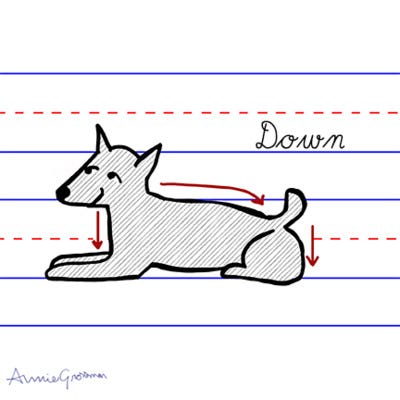
Teaching a stellar "Down" with a verbal or visual cue
Every dog already knows how to lie down -- your dog lies down all the time! The trick to training a "down" is to teach your dog to do it when you ask for it. That involves adding a cue. In this episode, Annie addresses the difference between a "cue" and a "command," and talks about some of the pitfalls people tend to fall into when attempting to cue a dog -- is the dog responding to your words? Or your body language? Or both? Or neither?! Annie goes over how to teach a "down" using two methods: Capturing, and luring. For the former, she describes how to use a verbal cue. For the latter, she explains how to morph a lured down into a down that is a response to a clear and subtle visual cue. The result is a dog who will understand what you want in as little as just one training session.Also make sure to see our recent episode on training "Sit."http://anniegrossman.com/2018/08/podcast/podcast-episode-19-train-dog-sit-scratch/9711/Are you enjoying this podcast? Please leave it a 5-star rating and write a review on iTunes! If you have a training question you'd like answered, submit it at http://AnnieGrossman.com/askSchool: http://schoolforthedogs.com Shop: http://storeforthedogs.com Instagram: http://instagram.com/schoolforthedogs Facebook Group: http://facebook.com/groups/schoolforthedogsPartial Transcript: Annie:Hello humans, thank you for tuning in to School for the Dogs podcast. As some of you know, I had a babyalmost a month ago. I've been trying to find the perfect time to record this podcast all day and waitingfor her to take a nap or at least be quiet for a while and finally decided I needed to do it while feedingher bottle so if you hear adorable little sucking and gurgling noises, that is my daughter who is a footaway from the microphone guzzling down some milk. So sorry sorry that the extra noise, maybe we canjust pretend that baby Magnolia here is my co host. Listen to these adorable sounds, you can't make thiskinda stuff up… and that was my dog snorting.Anyway, if you enjoy this podcast, just want to remind you that you can help me out by sharing it withyour dog-loving friends. You can do this in multiple ways, you can take a picture of your podcast playerand share it on social media, on your stories or your feed. Let other dog lovers know that this is outthere. If you tag School for the Dogs, we will go ahead and share in our stories too. Also leave us a ratingand review on iTunes- very much appreciated. I love reading your iTunes reviews, it really helps mefigure out what you find interesting and what I can offer more of and if you have a question you cansend a direct message on Instagram, you can also go to Annie Grossman.com/ask and I will do my bestto respond.Today I wanted to go over how to teach your dog to lie down and as I mentioned in the episode I did afew months ago on teaching the dog to sit - obviously lying down is something your dog already knowshow to do good, your dog lies down all the time-the trick is of course to teach your dog to lie downwhen you ask him or her to do it. So it's really just about adding a cue to a behavior your dog alreadyknows and, like many dog trainers, use the word cue instead of the word command although if you wantto say command instead of cue that's okay with me.Full transcript available at SchoolForTheDogs.com/Podcast Get full access to Don't Be a Dick to Your Dog at dogtraining.substack.com/subscribe
Let’s talk about dogs & babies with Jessica Jacobson of Dapper Dog Training
You might consider your dog your "baby," but what happens if you decide to add an actual infant to your family? Jessica Jacobson, owner of NYC's Dapper Dog Training, has spent years coaching families on prepping their dogs for the arrival of a tiny non-furry new family member. Annie and she discuss how she built her career, and go over some key things to consider when training a dog for interspecies sibling-hood.Notes: Dapper Dog Training - Marilyn Ullman of the "Discover Your Dream Career" course - Association of Professional Dog Trainers' annual conference - Nursing Your Baby by Karen Pryor - Snuggle Puppies - Annie's baby! - Music: "Hello Ma Baby" ukulele cover by The Channel Drifters ---Partial Transcript:**music**Annie:Hi everyone. Thank you so much for listening. Before we get into the meat of today's show, I just wanted to say thank you to everyone who has left reviews on iTunes. It's a really great way to let people know about this podcast. If you're enjoying it, please do leave a review. And Instagram stories has also been a fun way that people have let others know about the podcast. If you take a screenshot and share in stories and tag School for the Dogs on Instagram, we will reshare it. And it really feels good to know that we're reaching people.So today I am talking to my friend, fellow dog trainer, Jessica Jacobson, who has her own dog training business in New York City. And I wanted to talk to her both to just find out how she got into dog training and built her business, but also specifically because she has something of an expertise on preparing dogs for the arrival of a baby. And I have a baby on the way so I was hoping she might be able to give me some tips on getting Amos, my Yorkiepoo ready for this life event.Jessica:Hello? Hi. My name is Jessica and my company is called Dapper Dog training and I'm stoked to be here.Annie:And we've known each other actually for a long time now.Jessica:YeahAnnie:We met in Atlanta at the APDT dog conference dog conference.Jessica:30000 years ago.Annie:2010 it was. I remember it was 2010, cause it was right after I finished Karen Pryor Academy.Jessica:Oh yeah.Annie:Was that the first time you'd ever been to the association? APDT is the Association for Professional Dog Training?Jessica;Yes. I think it was my second conference or maybe my first. I don't remember, but I remember when I saw you and we had gotten together because I think I was listed on the APDT website as having a dog trainer meetup.Annie:Yeah, yeah. Which is actually also, I think how I met Kate was through your meetup. But that was like a real seminal moment for me because it was the first time that I was sort of immersed in a group of dog trainers outside of the two other people in my class at KPA.Jessica:It's like social crack.Annie:Yeah. It was a bit. It was also, it was just so interesting to meet people doing it, like all people from all over the country and also meeting different kinds of dog trainers and cause Association Professional Dog Training is not strictly, um...Full Transcript available at SchoolfortheDogs.com/Podcasts/ Get full access to Don't Be a Dick to Your Dog at dogtraining.substack.com/subscribe

French Bulldog Lola Barksdale: A Floofdragon's guide to Instagram stardom
When we first met Lola Barksdale, she was a tiny Frenchie puppy in our Kindergarten classes. We had no idea that she would become an Instagram star, or that she was secretly obsessed with unicorns and alpacas, loved purple fruit loops and waffles (which she calls "woofles,"), considered herself a "floofdragon" and had hobbies including interior decorating and counting her own feet. The genius behind her account is her human, Rachel Rednor. Rachel works in finance, but during her bathroom breaks at the office, she has developed an entire character for her little dog, built through photos and captions. Annie talked to Rachel about creating, and managing, her dog's Internet celebrity. Notes: @lolabarksdale - twitter.com/dog_feelings - #sukiisadopted - French Bulldog Club Of America - Music: Ukulele cover of "Play a Simple Melody" by JazzBanjoRex---Partial Transcript:Annie:I am here with Rachel Redner. I met Rachel and her husband, Matt about six years ago when they did a lesson with me with their brand new puppy. Lola, who is this tiny, fawn colored, would you say?Rachel:I, we call her cream.Annie:Cream French bulldog, who was just, just the cutest little like potato of a dog. [laughing] She has like no neck, which adds to her adorableness, I think. And, they actually started doing classes when School for the Dogs was located in my apartment, which is where we are right now. In a previous iteration, it was the School for the Dogs classroom. And I wanted to talk to Rachel for this episode because, I think even before dogs on Instagram were sort of a thing, she had an account for Lola on Instagram. And I started following it and just sort of became obsessed with Lola's Instagram and was like, who is this person writing it? I mean, I knew it was Rachel, but it wasn't, it wasn't the voice of the woman who works in finance, who I had met in her apartment. It was the voice of this hilarious, um, tiny French bulldog. And I think a lot of people kind of develop a voice for their dogs, but I think, you do it better than most. So why don't we talk quickly? Just tell me about how Lola came into your life.Rachel:Sure. So my husband and I had different views on a dog in general. I had grown up with a dog and he grew up in a very animal free house and was not that interested in the idea of a dog, but I was very persistent. And when we moved to Manhattan, there were Frenchies. That started to be everywhere. They weren't as kind of everywhere as they are now, but they were--Annie:Where did you move from?Rachel:We moved from college. We met in Syracuse and then we moved to the city. Uh, we were local. We grew up here, but not really in Manhattan. You know, so you don't get that much exposure to all the different breeds of dogs when you're living in the suburbs. So we moved to Manhattan and we started seeing Frenchies and I had thought I wanted a beagle. And then I read somewhere one time and it was, this was all, it took me that beagles are terrible in the city because they just have their nose to the ground. And it's really, really hard to manage that. So I said, okay, let's forget.But we started seeing Frenchies everywhere. And I don't remember if we looked it up or we just talked about it, but we started this obsession that just kind of grew. And the worst of it was we would follow people with Frenchies around the city.Full transcript available at SchoolfortheDogs.com/Podcasts/ Get full access to Don't Be a Dick to Your Dog at dogtraining.substack.com/subscribe

Dog training pet peeves: The word "energy" and the misuse of the word "positive"
In the modern era of dog training, people often rush to blame a person or a dog's "energy" for behavior issues. In this episode, Annie addresses why all the talk about using or observing "energy" in order to train a dog makes her cringe, and also why she thinks the misuse of the word "positive" leads to too many misunderstandings about science-based training. Notes:John Watson's Psychology As The Behaviorist Views It - Free eBook editionFun Dog Fact Of The Day: Rowlf the Muppet was invented in order to sell dog food! Here he is making his debut in the early 1960s in a Purina commercial where he convinces his friend that dog chow is better than asparagus. Then he eats his kibble with a spoon.---Partial Transcript:Annie:Hello human listeners. So today I am going to talk about some of my pet peeves when it comes to dog training, specifically, words people use in the dog training domain that drive me a little bit nuts. Now, if you've listened to this podcast before you might know that I generally think we use too many words with dogs in general. Too much talking goes on. I think we rely far too heavily on language when it comes to dog training. Considering that of all the many, many things that dogs and humans have alike, considering that we're both mammals living in the same time and place and environment and climate, etc, etc., language is a big thing, at least verbal language, is a big thing we don't have in common and I think there is too much focus on it in dog training. But I was specifically talking about, uh, words that we use with each other to discuss dog training.And you know, I think that these words that I want to talk about, two words in particular, I think they kind of speak to some of the divides that exist in the dog training field. And I know as someone who came to dog training from a totally different career, totally different place that a lot of the disputes that exist among different dog trainers can just seem like insider baseball to those who exist outside of the world of dog training. And again, because I come from that place, I totally get it. I get that people probably have this point of view before they are, sort of, in the world of training with their own dog or just because they're interested. I know that this point of view exists of, like, why does this matter? Why are you having these, you know, niggling observations about someone else doing something as simple as teaching a dog to sit. It's silly. He trained a dog to do something. The dog is trained. That's it. It's done. End of story. Let's not lose sleep over this. There are far more important things in the world to worry about.And I mean obviously I no longer feel that way because I see the extremes of how people approach dog training. And in my opinion, not only is it a matter of ethics, how we treat our dogs, but thinking about how we train them and how their learning I think has a lot to do with how we treat each other and how we treat our children and how our children learn to treat each other and to treat animals. And there's certainly an aspect of animal welfare that has to do with training. And there are a lot of dogs who I think are hurt more than we realized more than we realize because of the widespread acceptance of dog training methods that I and many others consider inhumane. But that kind of I think get lumped together under this dog training heading of... this heading of dog training and all the things that fall under it..Full Transcript available at SchoolfortheDogs.com/Podcasts/ Get full access to Don't Be a Dick to Your Dog at dogtraining.substack.com/subscribe

Training "Look" using the "Invisible Triangle" method
Everyone is impressed by a dog whose eyes meets a human's gaze with magnet-like intensity on cue. Teaching a dog to "touch" his or her eyes to your eyes is a great exercise to practice no matter what the pooch's training level is. When teaching this attention-based behavior to a dog-- whether you use a word such as "Look" or the dog's name -- Annie suggests focusing on your training mechanics before jumping to setting criteria for your dog. In this episode, she clearly breaks down how to build a stellar "Look" cue from scratch, in just six quick steps, using only sixty tiny treats. Notes:Treat suggestions- Tricky Trainers (and other brands that make these pencil-eraser sized morsels) can be broken up into at least four pieces, meaning you'll go through only 15 treats in your session: storeforthedogs.com/products/tricky-trainers- Lamb lung breaks up into neat pieces without getting greasy or crumbly: storeforthedogs.com/products/lamb-lung- Happy Howies rolls can be sliced and then diced into very small bits: storeforthedogs.com/products/happy-howies-food-rolls\Dogs and presidents: https://read.bi/2SrAVxu "Look For The Silver Lining" ukulele cover by Renei Yarrow: youtube.com/watch?v=CDIHff9eESQPartial Transcript:**music**Annie:Hello, everyone. Thank you for listening. Today I’m going to walk you through what I call the Invisible Triangle method of teaching “look.” I think look is a really excellent thing to teach any dog, any age some people call it “watch me” or “attention,” whatever you want to call it, basically you’re teaching your dog to connect their eyes to your eyes on whatever cue you give. And of course that cue, today we’re going to use “look” you could be using their name, you could say “eyes,” you could say “bubblegum baba ganoush.,” it doesn't matter but you are to give it some kind of cue. Of course, if you don’t give it a cue and you just teach them that locking eyes with your eyes is always a good thing that certainly not a bad thing to teach either.I generally think that everything we train our dogs to do, pretty much, comes down to targeting- targeting being teaching them to touch one thing to another. Of course, pretty much the first thing I teach every dog I work with is to hand-nose target so to touch their nose to my fingers, to my hand or to touch their nose to an object. And while there are lots of reasons I like to teach this specific exercise, the big reason is that I think of it as a building block exercise that you can use to teach lots of different things because really what you’re teaching is if you touch X to Y then good thing happens and basically everything you’re ever going to train your dog comes down to something that can fit into that equation. Sit is if if you touch butt to ground. Down is if you touch body to the ground. Go to the crate, well, that's if I touch body to crate. And I think that teaching look is really just the same thing except that if I touch my eyes to my human eyes good thing happens . And like I just said, certainly if that becomes just the default behavior, it's never going to be a bad thing since if your dog locks eyes with you, you certainly have your dog's attention and that's a great starting place for getting your dog to do whatever it is you want or need him or her to do...Full Transcript at Schoolforthedogs.com/Podcasts Get full access to Don't Be a Dick to Your Dog at dogtraining.substack.com/subscribe

Part 2: How I used punishment to train my husband to cover his mouth when he yawns
In this episode, Annie offers a follow up to the previous episode, which featured a candid conversation with her husband about her ill-fated attempt to use punishment to keep him from showing her his uvula very time he yawned. Here, she points out some of the similarities and differences between using punishment with dogs and with humans. This episode touches on, among other things: -The long shadow punishment can cast -How language can offer clarification... or not -The subjective nature of "bad" behavior -Choosing appropriate punishers (and reinforcers) -The issue with a "Nothing In Life Is Free" approach to training -The importance of wisely selecting a training subject who isn't inclined to exhibit copious unwanted behaviors Notes: How I used punishment to train my husband to cover his mouth when he yawns (Part 1): - Parentonomics-- a book that discusses the trap of toilet training a child with jelly beans - Plenty In Life Is Free by Kathy Sdao - Have a question for our upcoming Q + A episode? Ask it at AnnieGrossman.com/ask---Partial Transcript:Annie:Hello listeners. So last episode, if you heard it was a conversation with my husband, Jason, about an instance where I tried to change a behavior of his that I didn't like by using punishment and the episode was a conversation about this, this debacle, let's call it.I got a bunch of questions about the whole thing. The specific behavior of course was that I was trying to get him to stop yawning with his mouth wide open. I was trying to train him to cover his mouth and the episode led to a lot of questions and I realized that it was sort of maybe like giving everybody a primary source without offering enough commentary and dissection about the whole thing. And I think that it's an anecdote that actually contains a lot of lessons that are applicable to all kinds of behavioral training, whether you're training a dog or your husband. Certainly it was a failed attempt. So might be helpful if you go back and listen to that episode before listening to this episode. The real meaty part starts about halfway through if you want to cut to the chase.The first thing I wanted to point out in looking at the whole incident, which Jason refers to as a “yawngate” is really how arbitrary and silly it is that, of course, that this was the thing I decided I was going to try and train. That this was the behavior that I was going to try and punish.So often with dogs, we're inclined to categorize behaviors as a good behavior or a bad behavior. But in the end, they're all just behaviors. And whether or not they're good or bad depends on who is making the judgment. Plenty of people would not be bothered at all by someone yawning without covering their mouths. And certainly working with dogs as trainers, we see all the time the things that are considered bad behaviors by one dog owner that someone else wouldn't mind at all.For instance, lots of people don't want their dogs on their furniture and other people have no issue with their dogs going on their furniture. My dog barks at the doorbell and I have had people come over and comment on this as if it's an irony that I have a poorly behaved dog who barks at the doorbell when I am in fact a dog trainer.Full Transcript available at SchoolfortheDogs.com/Podcasts/ Get full access to Don't Be a Dick to Your Dog at dogtraining.substack.com/subscribe
Part 1: How I used punishment to train my husband to cover his mouth when he yawns
Annie is happily married to a man named Jason Pedicone, who is basically perfect in every way except... he doesn't cover his mouth when he yawns. So, she decided to use her talents as a dog trainer to train him to change this behavior. But she decided to try something she doesn't normally do with dogs: She attempted to curb his habit by using punishment. While she sort of succeeded, she also got a first hand taste at how training using punishment can mar a relationship in unexpected ways. Notes: Pavlov Dog Monitor - Pet Safe Anti-Bark Autotrainer - Jonah Hill on Fresh Air with Terry Gross - Dogs and Yawning - Tips on keeping your dog out of the ER this Thanksgiving - Music: "Hello My Baby" ukulele cover by The Channel Drifters ---Partial Transcript:Jason:Coming to you live from New York state highway 81 North. It's a gray day here on the shores of Lake Ontario. Just came off extraordinarily greasy lunch and we're ready to talk about punishment.**music**Annie:Hello listeners. Doing a little bit of an experiment in podcasting this afternoon. My husband and I are on a little road trip to Montreal and we're gonna be doing some car casting. Is that an actual phrase? I don't know. Podcasting from the car. We'll see how it goes. I forgot my microphone back at home. So the quality might not be top notch, but the content will be because my husband is here and he's a genius.We are going to talk about punishment. Specifically a punishment in our relationship, more specifically about a specific incident where I attempted to use punishment to change Jason's behavior. But before we get into this particular incident, Jason, why don't you, I'm curious for if you could tell me or our listeners what you, how you would have thought about punishment or how you would have defined punishment prior to your union with a dog trainer.Jason:Yeah, that's a very good question. I guess, the first thing that comes to mind when I think of a punishment is just something bad that happens to someone or something in order to try to discourage it from doing something which is bad. So spanking a child or spraying a cat in the face with a water bottle, something like that.Annie:Yeah. Yeah. Although I think too often and really the technical definition of punishment is that it discourages a behavior. But I think too often it can get wrapped up in the idea that it's something bad. And that I was actually, I was just listening to an interview on Fresh Air with the actor, Jonah Hill, who has a new movie out about skateboarding, and he was talking about how he got really into skateboarding when he was a teenager because it was so, like, I think he described it as punishing and painful and punishing and that made him want to do it more. And I thought, okay, well I totally understand what he's saying, but actually the pain was reinforcing, not punishing because if it made him want to do it more, then that wouldn't be punishment. Anyway. But,I know you tried to use punishment with the dog that you had before we met, right?Jason:Yeah. Uh, I used to have a dog who was extremely high strung and he was a Papillon and just sort of always very excited. His little body was constantly taut and he barked a lot and he had this issue where, when I went out and left him home alone, he would bark nonstop for hours.Full Transcript available at SchoolfortheDogs.com/Podcasts Get full access to Don't Be a Dick to Your Dog at dogtraining.substack.com/subscribe

How to shape your dog to go to a mat (and to be a polite Thanksgiving guest)
"Shaping" is simply the process of breaking a behavior down to its smallest components and slowly raising your criteria in order to build new behaviors. By reinforcing successive approximations, it's possible to train dogs to do almost anything they are physically capable of doing! In this episode, Annie goes over some key things to think when shaping a new behavior, and describes how to shape a dog to go to a mat, or what she calls a "sticky spot." A dog who knows how to go to a mat will make an excellent guest at holiday dinners: You can "shape" a pup to have a specific spot where he will have learned to stay put and be calm, no matter how good that stuffing smells!Notes: School For The Dogs training mat - Don't Shoot The Dog - Karen Pryor's Ten Laws of Shaping - Fun Dog Fact Of The Day: Karen Pryor's Nursing Your Baby - Woof Shout Out - Share your shaping session with us by tagging @SchoolForTheDogs on Instagram or sharing at Facebook.com/groups/schoolforthedogs. Like this podcast! Please rate us five stars on iTunes!---Partial Transcript:Annie:Hey everyone. So today I wanted to talk about a concept that is really crucial to dog training, but also something that is going to help you with a practical training exercise that you can start working on in preparation for Thanksgiving, which is a time when I think it's a good idea to show off how well your dog is trained to your family and friends. And, of course, that can be challenging because you're often in new places, there's food involved, there's a lot of commotion. But by playing this little shaping game that I am going to describe over the next week or so, I think that you are going to be able to really demonstrate how savvy your dog is at understanding what you want and just being an overall polite little buddy.Shaping is simply the process of breaking a behavior down to its absolute smallest parts and then positively reinforcing the behavior, raising your criteria at incremental steps. Now, the real trick to shaping is to never raise your criteria too quickly, which means there's kind of an art to shaping I think. And that's an art of really knowing the student you're working with, in this case, a dog so that you can make things harder only at a rate that they're going to be able to still figure out what it is you want. If you make things too hard, too fast, you get an animal who I call it “dropping out of school,” you get an animal who's just like, well, I can't do this, nevermind, goodbye. Now of course, shaping is happening all the time.And certainly school, a human school is a place where we all experience shaping. You start out at school and the criteria is very low. You show up and you do a crayon drawing and no matter how bad it is, everybody's clapping their hands and you put two blocks together and announced that that's the number two. And your teachers and parents will think you're a genius but of course pretty quickly, the criteria of what's expected of you is raised. And by the time you're in high school, you're doing algebra, geometry, trigonometry, calculus, and you didn't get there in a single leap from your days playing with blocks. The criteria was raised slowly over time with your teachers, step-by-step, raising the bar as far as what was expected of you.Full Transcript available at SchoolfortheDogs.com/Podcasts/ Get full access to Don't Be a Dick to Your Dog at dogtraining.substack.com/subscribe
Let's talk about NYC's 1st dog-friendly cafe with Logan Mikhly
Earlier this year Logan Mikhly and her father Coppy Holzman opened a business unlike any other in NYC: A dog-friendly cafe. Logan has a background in animal rescue, Coppy is a dog-loving serial entrepreneur, and both are obsessed with coffee. Frustrated by the fact that New York's health codes make it nearly impossible for them to grab a cup of joe without having to tie their dogs to a streetlight, they contacted the Department of Health for a brainstorming session on how to make a place where beverages and quadrupeds could lawfully co-exist. The result is Boris & Horton. Named after their own dogs, this bright, cheery, and well-loved cafe-cum-indoor-dog-park has quickly become a beloved neighborhood fixture. In this episode, Logan shares the business' back story. Notes: Boris and Horton is located at 195 Avenue A, at the corner of 12th Street. Learn more at BorisAndHorton.com. Other dog friendly cafes: The Bulldog in New Orleans - The Dog Cafe in Los Angeles - Chateau Le Woof in Queens, NY - Products mentioned: Klimb Platforms - Bocce's Bakery Treats - Stewart's Freeze Dried Beef Liver Treats - Nature's Miracle - Fun Dog Fact of the Day: The CoyoteVest - kansascity.com/news/nation-world/national/article220971390.html - Woof Shout Out: Last week the world lost a wonderful woman, and dog lover: Ellen Retter. She was a client, a friend, and a big School For The Dogs fan. A photo of Ellen and her dog Lucy training at School For The Dogs with Annie appeared in CNN in 2015. ---Partial Transcript:Annie:Today I am speaking with Logan Mikhly, who is one of the owners of New York city's first and only dog friendly cafe, Boris and Horton, which is in the East village and is named after, well, actually, Logan, why don't you tell us about the cafes namesakes?Logan:I actually have Horton here with me and the other dog that the cafe's named after is Boris and that's my dad's dog.Annie:And Horton, I should say is just the cutest, scruffiest, little like terrier mix who loves nothing more than to stare lovingly at Logan.Logan:Yes, stare deeply into my eyes. He does need a haircut. He looks scruffy, but he looks like a little, maybe a little too scruffy.Annie:I think he's perfectly, perfectly scruffy.Logan:He has like grandpa eyebrows now.Annie:And Logan runs Boris and Horton with her dad. So tell me his name.Logan:Yeah, his name is Coppy Holzman. Okay. So I actually worked with my dad at his previous company, which is called Charity Buzz and it's an online auction company that raises money for nonprofits. So he was in the process of selling the business.Annie:He's something of a serial entrepreneur, isn't that right?Logan:Yes. So for my whole childhood and up until now, he's started several different businesses, sold them. Uh, he's super creative, big ideas guy. But yeah, his previous company, Charity Buzz is an online auction company that raises money for nonprofits. And he was in the process of selling it. And we were actually out to dinner one night and I was staying at the company, but I wasn't kind of like loving the company culture and was thinking about leaving myself. Full Transcript available at SchoolfortheDogs.com/Podcasts/ Get full access to Don't Be a Dick to Your Dog at dogtraining.substack.com/subscribe

Halloween & Dogs: How to make costumes less scary for pets
Halloween can be a scary time… for dogs! But it can also be a time to think about how to use training to reduce fears and overcome challenges. In this episode, Annie discusses, among other things: -Ideas for low stress, easy costumes that most dogs can wear without anxiety. -Acclimating a dog to a costume by creating good associations with it over time. -Teaching your dog to wear costumes made out of muzzles, cones, and other things you actually may want to train him or her to feel okay about wearing. -Noticing stress signals your dog, or other dogs, may display to show their discomfort. Have an idea for an easy, low stress dog costume? Tag us on Instagram, join our Facebook Group, or share it by emailing [email protected]: The psychological torment of a dog on Halloween - Dog candy corn bandana - Ty Tag costume - Or make your own - Superhero Bandanas - Cowboy harness costume - Jockey harness costume - Pet Paint - Dog nail polish - Creative grooming (Vice video produced by Annie)Dog muzzle “costumes” - https://amzn.to/2yHptX6 - https://amzn.to/2yGUrPd - https://amzn.to/2yIs03g - https://amzn.to/2yGUwCvDog cone “costumes” https://amzn.to/2yE03tw - https://amzn.to/2yE9b1p - Rubie’s “Disney” line of princess costumes et alMake sure to join our Facebook Group!---Partial Transcript:Annie:Hello human listeners, and dog friends. So I want you to take a moment to imagine a scenario where you are a foreign exchange student and you just arrived in this new country where you don't speak the language. And you've been placed with a family and they're pretty nice to you. You generally like them. You don't understand what's going on a lot of the time, but they're pretty kind to you and they tend to help you figure out what's what, where to be, what to do. And over time you pick up little things here and there and you get really good at just sort of reading situations in order to figure out what's happening.And then one day they take off all your clothing and they don't let you put other clothing on. And they don't seem to be doing this for any kind of sexual reason, but they seem to be getting a real kick out of it. And they begin taking your photo. They take you on a long walk throughout the city. Maybe they even take you to a park where there are a lot of other families who have foreign exchange students who are also naked and they don't speak your language either. And all you can kind of do is look at these other poor souls and feel great empathy and discomfort because everyone around you is staring at you and really enjoying the fact that you are naked.Now you have no idea whether or not they're ever going to give you back your clothes, or if this nudity situation is the new normal. You aren't clear why all of these other foreign exchange students also don't have any clothes...Full Transcript available at SchoolfortheDogs.com/Podcasts Get full access to Don't Be a Dick to Your Dog at dogtraining.substack.com/subscribe

Our student Nelson: Life with a muzzled dog
After years of researching breeds, Joanie Comenzo of Manhattan decided to get a Welsh Terrier. When she went to pick up her new dog, Nelson, the breeder pushed him into her arms and said "Your puppy is an alpha." Joanie loved him from the moment she saw him, and that love never waned, even after he bit her multiple times, and sent her mother and boyfriend to the hospital. Over the last eight years, Joanie has sought training and medical advice from a wide array of professionals. Today, Nelson wears a muzzle every moment of the day that he isn't in his crate. He and Joanie live a happy, if unusual, life together. This is their love story.Notes: Nelson's preferred muzzle - Fun Dog Fact Of The Day: As late as the early 1900s, dogs were allowed to roam off leash in Philadelphia as long as they were muzzled - Woof Shout Out: Zuri, who wears a muzzle to deter people from pestering her for being so cute, can be found on Instagram at Instagram.com/zurithebolo - Music: "Love Is Strange" cover by Toast Garden ---Partial Transcript:Joanie speaking to Nelson:Good boy Nelson, Oh, what a good boy.**music**Annie:I'm here with a client of ours, Joanie Comenzo and her dog Nelson, who is, a Welsh terrier. Is that right?Joanie:YesAnnie:I wanted to speak to Joanie about being Nelson's person because I think as a dog human pair, they've encountered some,pretty formidable obstacles and have come out on the other side, still loving each other.But let's start from the beginning. So you got Nelson when he was a puppy?Joanie:Yeah, 14 weeks.Annie:Okay. So what made you decide to get this breed in particular and where did you get him?Joanie:Well, I had a Yorkie that I had as a teenager and then I went off to college, so it kind of became my mother's dog. And I knew I wanted something a little bigger, but I liked, you know, Yorkie was a good experience, you know, as a terrier. I knew I wanted a terrier. Everyone told me that the Jack Russell's too insane, don't get a Jack Russell. So I was, I listened, funny story that I ended up with Nelson, but, and I'd seen a few Welsh Terriers around. I was thought they looked interesting and then I just did some research and they just seemed like the perfect dog for me, you know, they said good with kids, I thought I was going to have children. You know good with kids. Good for city or, you know, country living. They adapt well to an apartment or you know, like they just--Annie:I always feel like those breed books make such grand generalizations, right? And yet so many people buy their dogs based on what it says.Joanie:Yeah. And just so much, you know, everything I read about them, I was like, I think this is going to be the dog for me. And then I researched rescues, it was impossible to get and you know, Welshies are just so hard to come by. There was no rescue with the dog for me and I was like, you know, I waited and I waited and I researched breeders and I found, you know, the top Welsh terrier breeder and you know, in the country and I was on a waitlist there for a really long time and they went through this huge interview process. You know, they were interviewing me to make sure that I was proper for their dogs, you know--Annie:Which is something you want from a breeder. You want them to be doing their due diligence too...Full Transcript available at SchoolfortheDogs.com/Podcasts/ Get full access to Don't Be a Dick to Your Dog at dogtraining.substack.com/subscribe