Homebrewed Christianity
1,005 episodes — Page 13 of 21
Questions for Liberation with Jen Hatmaker
Jen Hatmaker - blogger, speaker, author, and Austin church planter - is on the podcast as part of our Wild Goose Festival preview. In this episode, you'll hear about Jen's experience of faith growing up conservative, becoming more progressive, being an LGBTQ advocate, becoming a parent and not wanting to pass on a version of faith that is problematic, and what it was like to figure this out in public. What does good friendship look like for those who are going through a similar process? How do we understand what is holy, what is sacred? She shares about the process of recognizing the things from the faith she inherited that she wanted to move past, while also thanking those who helped her to do so, discovering the barriers that were at one point invisible, the struggle to take scripture seriously but with a different interpretative lens, on not leaving her faith behind, spiritual fear and your spiritual gut feelings, and why having people in your corner is so important to transformation. Follow the podcast, drop a review, send feedback/questions or become a member of the HBC Community. Learn more about your ad choices. Visit megaphone.fm/adchoices

Youth Camp Junkie Nostalgia at Camp Manna
Trigger warning: this episode contains lots of stories about Evangelical youth camp experiences Tripp sat down with the people behind the new movie, Camp Manna, producer Evan Koons, writer/director Eric Machiela, and writer/director Eric Scott Johnson. Camp Manna, which comes out June 5th, is about Ian Fletcher, a "nonbeliever", who is shipped off to a backwoods Christian camp, where he is forced to compete in (and survive) a Biblically-themed Olympiad known as the God Games. They explain why they made the movie, give you some behind-the-scenes stories, why it is important to respect the community you are poking fun at, the different responses to the film, exploring the stereotypes and outsider/insider perspectives, missions trips, conservative Christian youth culture, and the best Gary Busy stories from filming the movie. Get the movie today on iTunes! Follow Camp Manna on YouTube, Twitter, Facebook, and Instagram Follow the podcast, drop a review, send feedback/questions or become a member of the HBC Community. Learn more about your ad choices. Visit megaphone.fm/adchoices

A Practical Introduction to Christian Doctrine with Cynthia Rigby
Cynthia Rigby, The W.C. Brown Professor of Theology at Austin Presbyterian Theological Seminary, is back on the podcast to talk about her new book, Holding Faith: A Practical Introduction to Christian Doctrine. This a book for the classroom, for small groups, for pastors, and for the church. Tripp and Cynthia talk about the need for congregations to have permission to ask (out loud) the questions they have, the role Christian language plays in the life of the church, the resistance to using theological language, feminist critiques of classical christology, the way the incarnation shapes our understanding of the trinity, the trinitarian dialectic, and the church as home. is distinctively Christian language necessary in order to speak anything distinctively Christian? how experience plays a role in how we know who God is? what constitutes a community today? how can we speak of God? Plus, revelation and the unknowable nature of God, why you shouldn't read the bible for a year, and why the christological controversies and their conclusions actually matter. Follow the podcast, drop a review, send feedback/questions or become a member of the HBC Community. Learn more about your ad choices. Visit megaphone.fm/adchoices

Evil: Part 2
Welcome to a special bonus episode of the Theology Nerd Podcast with the Dr. Tripp Fuller. This is a shorter Q&A episode, where your friendly, local internet theologian answers questions submitted by you. In this episode, Tripp picks up where he left off last time and addresses some more questions surrounding evil: doesn't the problem of evil change throughout scripture? aren't there different answers to it? how does the move towards monotheism in Judaism (not to mention Christian monotheism) change our understanding of evil? Tripp explains the problem of evil for monotheism compared to polytheism, how the question for a henotheistic concept of God is not can you do anything about evil, but will you, and how a monotheistic concept of God widens the scope of the problem of evil to a cosmic scale. Plus, what do you do with all the different answers the Bible gives? and what are we saying 'no' to when we affirm platitudes like, 'God is in control'? Follow the podcast, drop a review, send feedback/questions or become a member of the HBC Community. Learn more about your ad choices. Visit megaphone.fm/adchoices

Becoming the Best Bag of Bones You Can Be with Donna Bowman
This episode was taken from a Facebook live book-release soirée with Donna Bowman and Ryan Newsome to celebrate the release of The Homebrewed Christianity Guide To Being Human. Donna, Ryan, and Tripp talk about all things human. They discuss anthropology as it relates to gender, science, and death, the tension between a reductive materialism and dualism, the drive for religious people to have an ethical prescription for each situation, the relationship of humans to authority - whether a creator, or institution, or system, Buber and Kierkegaard, the different biblical accounts of what it means to be a human, the problematic relationships that people have with the church because of our inherited and unquestioned anthropology. what does it means to think theologically about what it means to be human? what part of the church's previous conversations about anthropology we need to leave behind? what is our purpose and function - what are we here for? and how does Jesus figure in to what it means to be human? Plus, Donna gives some suggestions for films that provoke questions about what it means to be human. And make sure to check out Tripp's interview with Donna about pussy hats and #MAGA hats... Follow the podcast, drop a review, send feedback/questions or become a member of the HBC Community. Learn more about your ad choices. Visit megaphone.fm/adchoices

Evil: Part 1
Welcome to a special bonus episode of the Theology Nerd Podcast with the Dr. Tripp Fuller. This is a shorter Q&A episode, where your friendly, local internet theologian answers questions submitted by you. We got lot of questions about evil, suffering, and divine power. There is the classic philosophical question about evil, and then there is the theological question about evil. How do you even begin to answer these questions? do you deny the goodness of God? do you deny the reality of evil? or do we reject God's divine omnipotence? But before he even gets to those questions, Tripp address the two trajectories in the questions asked: What is scripture's actual answer to question of evil and suffering? Does doing theodicy even make sense when you look at the history of slavery and racism in America? Sometimes we answer theological questions in a way that abstracts our lived experience. So Tripp, in this Q&A, wants to affirm the experiences that generate these questions, while also trying to situate them in the broader context of the theological and philosophical questions about evil. Follow the podcast, drop a review, send feedback/questions or become a member of the HBC Community. Learn more about your ad choices. Visit megaphone.fm/adchoices

God Loves Science (Fiction) with Jeff Pugh and Will Rose
This live podcast was recorded after a Theology Nerd Bootcamp about religion and science. Will Rose and Jeff Pugh joined Tripp for an evening about faith, science, and science fiction. The day-long event covered: The perceived cultural conflict between religion and science is primarily due to American Evangelicals' obsession with anti-intellectualism How Augustine is more progressive when it comes to religion and science dialogue than 98% of Evangelicals When theological truth is divorced from the scientific account of reality you end up with doctrines that have nothing to do with the world we live in Now what? Where do we go from here when trying to have healthy conversations about faith and science in congregations? How do we have fruitful dialogue? Jeff, Will, and Tripp discuss the problem of fundamentalism in both religion and science, what happens when both don't give accurate accounts of our lived experience, and why it's easier to exegete comic books and Star Wars movies than scripture. Plus, they talk about Black Panther, Tripp gives a taxonomy of the relationship between religion and science using force sensitive characters in Star Wars, how the force relates to Christ consciousness, and more! Follow the podcast, drop a review, send feedback/questions or become a member of the HBC Community. Learn more about your ad choices. Visit megaphone.fm/adchoices

Should We Open the Canon, or Keep It Closed?
Welcome to a special bonus episode of the Theology Nerd Podcast with the Dr. Tripp Fuller. This is a shorter Q&A episode, where your friendly, local internet theologian answers questions submitted by you. Today's question: is the canon open or closed? how would communities decide what new texts should be considered to be part of an ongoing living bible or canon? In this episode, Tripp explains what the the canon is, and gives 3 reasons to open the canon, and 3 reasons to keep it closed. Plus, Tripp shares what he would add to the canon. Follow the podcast, drop a review, send feedback/questions or become a member of the HBC Community. Learn more about your ad choices. Visit megaphone.fm/adchoices

Resident Aliens LIVE from Durham
This week's episode was from the live Resident Aliens podcast in Durham, North Carolina. Before we hear from Stanley Hauerwas and William Willimon, Tripp talks with Molly Brummett Wudel and Tim Conder from Emmaus Way. You'll hear a little bit about the story behind Emmaus Way, the work they are doing in Durham, their community hermeneutic, how they confront the challenges of church planting today, and why helping churches learn to be a part of meaningful social change and also transforming the inner life of the church is so important to their work. Then, Stanley Hauerwas and William Willimon talk with Tripp about their book, Resident Aliens. They discuss the christological assertion at the heart of the text, their distaste for Pietism, the distorted character of our world for the formation of people, restoring the adventure to Christianity, the weight of one's identity given at baptism, the burden of deciding who you are, how to address issues of sexuality in the church, and the anxiety of losing culture dominance. Plus, Tripp explains why Hauerwas and Willimon have never been on the podcast before. Follow the podcast, drop a review, send feedback/questions or become a member of the HBC Community. Learn more about your ad choices. Visit megaphone.fm/adchoices

Did Early Christians Think The Bible Was Inerrant?
Welcome to a special bonus episode of the Theology Nerd Podcast with the Dr. Tripp Fuller. This is a shorter Q&A episode, where your friendly, local internet theologian answers questions submitted by you. Today's question: did the early Christians believe the Bible was inerrant? The short answer is no. But it's a little more complicated than that. Tripp explains what is even meant by inerrancy, how inerrancy is a product of the Enlightenment, the fights the early church had about the authority of scripture, the challenges the early church faced in interpreting scripture, and the tension between the limited Hebrew response and the Gnostic tendency to decontextualize Jesus. Plus, three rules for interpreting scripture from some early church fathers. If you're interested in learning more, check out this book. Follow the podcast, drop a review, send feedback/questions or become a member of the HBC Community. Learn more about your ad choices. Visit megaphone.fm/adchoices

#TheologyBeerCamp LIVE from Denver
We're going back to the summer of '17 for the first night of #TheologyBeerCamp in Denver. Peter Rollins and Tripp will give you the 3 essential rules for Theology Beer Camp, tell the story of how they became friends, and what it was like living together. Pete explains why he thinks pastors have superpowers and gets honest about what he thinks about Tripp's beliefs. Then, they welcome Iliff School of Theology professor Ted Vial to the stage for Tripp and Ted's Excellent 19th Century German Philosophical Adventures. Tripp, Pete and Ted talk about their shared love for 19th Century German philosophers, how most of the way we frame our identity comes from 19th century German philosophy, and what 19th century German philosophy has to say about some contemporary questions, like: "I'm interested in social justice, but Germans are Nazis, so why should I pay attention to them?" and "at the end of the day, aren't all religions just the same?" Follow the podcast, drop a review, send feedback/questions or become a member of the HBC Community. Learn more about your ad choices. Visit megaphone.fm/adchoices

Be Glad the Gospels Don't Line Up
Welcome to a special bonus episode of the Theology Nerd Podcast with the Dr. Tripp Fuller. This is a shorter Q&A episode, where your friendly, local internet theologian answers questions submitted by you. This week's question: What do I do with 4 different, contradictory, gospel stories? In answering, Tripp wants to convince you that you should be glad the gospels don't line up. He shares about that time he discovered his bible was broken, the gifts that allowing the gospels to be different brings, the heresy of Tatian and where it creeps up today, and why it is significant that we have canonized four different gospels. Follow the podcast, drop a review, send feedback/questions or become a member of the HBC Community. Learn more about your ad choices. Visit megaphone.fm/adchoices

Our God Loves Justice with W. Travis McMaken
Travis McMaken, Associate Professor of Religion at Lindenwood University, is on the podcast not just to talk about Theology Beer Camp, but also his new book, Our God Loves Justice. It's a book he wish he would have read when he was an MDiv student, and wants to show people that the current connection between Protestant theology and politics in North America is not the only possible connection. The book is also an introduction to the theology of Helmut Gollwitzer, his fight for justice, his relationship to Karl Barth, and his democratic socialism. why does our current political and theological context in North America need another option? what are the questions we should be taking seriously? should the church be involved in politics? how should we understand instances of violence in politics? what is the role of confessional communities? Tripp and Travis talk about the connection between conservative Protestant theology and political outcomes, the spirituality of the church as America's original heresy, the myth of non-political religion, the regulation of speech about God, and the tension between the church being pragmatically and revolutionarily engaged in politics. Follow the podcast, drop a review, send feedback/questions or become a member of the HBC Community. Learn more about your ad choices. Visit megaphone.fm/adchoices

Come Sunday, Hell Will Be Empty with Ira Glass
The Pope of podcasting, Ira Glass, is on the podcast to talk about his new film, Come Sunday, available to stream on Netflix. From IMDB: Come Sunday is based on an episode of the public radio series This American Life, the film centers on Bishop Carlton Pearson, a rising star among evangelicals until he was ostracized by his own church and declared a heretic after he started preaching that there is no Hell. Hear why Ira thinks one of the groups that gets the worst coverage is Christians, the disconnect between the way devout Christians are portrayed in the Media and his experience with devout Christians in his own life, questions about the reality of hell, heaven, and the afterlife, and the nature of individual courage as it relates to faith. how a culturally Jewish atheist ends up telling a story of an African American Pentecostal preacher? what is a question completely worth asking that you don't know the answer to? what is your biggest hope for people who watch the film? Plus, Ira shares some of what he's learned or surprised him about Christianity in America, the strange understanding he felt between devout Christians and himself, accurate and honest portrayals of a minister's family, the art of storytelling, the central drama of the film, the difference in those who have spiritual practices and himself, and conversations with Christians who want to save him. You also get a preview of the newly launched Theology Nerd podcast. Two episodes in one! The new Theology Nerd podcast is a shorter Q&A episode, where your friendly, local internet theologian answers questions submitted by you. This question comes from someone from a very conservative family asks about how, using the bible, to explain their commitment to Christian Universalism? Tripp gives us 3 commitments for a Christian Universalist. Follow the podcast, drop a review, send feedback/questions or become a member of the HBC Community. Learn more about your ad choices. Visit megaphone.fm/adchoices

Faith, Reason, and Reading the Bible
Welcome to a special bonus episode of the Theology Nerd Podcast with the Dr. Tripp Fuller. This is a shorter Q&A episode, where your friendly, local internet theologian answers questions submitted by you. In this episode Tripp tries to tackle two questions: How did the early church see the relationship between religion/faith and reason/science? How has contemporary science impacted the way Christians read scripture? Learn about Augustine's 4 rules for negotiating faith and reason, the multiple layers of meaning in scripture, and how this battle between faith and reason has been internalized. Follow the podcast, drop a review, send feedback/questions or become a member of the HBC Community. Learn more about your ad choices. Visit megaphone.fm/adchoices
Theology Without Walls with John Thatamanil
John Thatamanil, from Union Theological Seminary, is back on the podcast to talk about multiple religious identities and practices, trans-religious theology, and theology without walls. He shares a little about what type of questions are driving his theological reflection these days, when religious diversity becomes a challenge again for Christianity, the shift from multiplicity globally to locally and internally, the sampling of different religions today, and why 1965 is such an important year. Tripp and John also talk about: How syncretism fails to describe the complexities of our current situation How the notion of singular religious belonging came to be and why it isn't true How even the concept of 'religion' is problematic What the tasks or challenges are for someone doing theology without walls, the gift this vision gives to those who identify with different religious traditions, how the affirming multiple religious traditions change the way we see the God of history in the history of other religious traditions, the diversity in divinity, and the tension between nondual and personal religious experiences. Plus, Tillich memes, what assumptions get overturned when you do theology without walls, and how theologians from other religious traditions differ from Christian theologians. Follow the podcast, drop a review, send feedback/questions or become a member of the HBC Community. Learn more about your ad choices. Visit megaphone.fm/adchoices

The Best Antidote to Rampant Partisanship with Dan Koch
Dan Koch, musician-turned-podcaster and host of the Reconstruct podcast, is on to talk about the second season of the Depolarize! podcast. After throwing shade at former CCM bands who also have their own podcast, they talk about the silent partner behind the Depolarize podcast - The Righteous Mind by Jonathan Haidt, his ambitions to stop the Trump event, why the continued support of Trump is arguably much more dangerous than a one-time election, and what has changed between season 1 and season 2 of Depolarize. Is there a sickness in white evangelicalism today that has to do with: political power? eroded confidence in institutions that deserve confidence? a persecution complex that ignores the actual suffering of persecuted people? Plus, what lessons Dan hopes the Depolarize! project will teach, the best ways to resist Trump, why cultivating mindfulness practices is vital, why you can't just rely on those who already agree with you to affect political change, and the burden of individually interpreting the world and scripture and the anxiety that creates. Follow the podcast, drop a review, send feedback/questions or become a member of the HBC Community. Learn more about your ad choices. Visit megaphone.fm/adchoices

Raising the Intellectual Bar in the Church with Alexis Waggoner
Alexis Waggoner, Director of Marketing and Digital Education at the Westar Institute, is on to talk about raising the intellectual bar in the church (while lowering it in the academy). First, you'll hear about how her academic interests impacted her coming back to Christianity, how growing up in a more conservative setting she was told what to believe rather than how to believe, the experience of growing up in a military family and how that affected her faith, being a chaplain in the military and how that shapes her understanding of herself and her faith, and the questions and thinkers the church needs to wrestle with. Plus, Alexis shares some of the more annoying things her progressive friends say and believe about the military, and the questions and doubts about the faith she received. Follow the podcast, drop a review, send feedback/questions or become a member of the HBC Community. Learn more about your ad choices. Visit megaphone.fm/adchoices

The Specter of Prayer with Mark Karris
Mark Karris, ordained minister and therapist, is on to talk about his new book, Divine Echoes: Reconciling Prayer with the Uncontrolling Love of God. In this book about prayer, inspired by the open and relational work of Tom Oord, Mark looks at the role of trauma in his life and how that led to his work as a minister, therapist, and theologian; the specter of the failure of prayer; his experience of God as love amidst the trauma; the theological underpinnings for petitionary prayer. what is the role of prayer? do petitionary prayers make a difference? is God really in control? Many theologians are embarrassed by the theological implications of intercessory prayer and try to dismiss it, but Mark spends time reflecting on the nature of the God-World relationship, the nature of divine love, and really wrestles with what petitionary prayer could look like in an open and relational context. Tripp and Mark also talk about the struggle to find meaning, purpose, and value within suffering and how that can lead back to a classical theism, the necessity for communities to rethink ideas of God's power, and Mark offers a solution to the problems of petitionary prayer. Follow the podcast, drop a review, send feedback/questions or become a member of the HBC Community. Learn more about your ad choices. Visit megaphone.fm/adchoices

#HBC10: From Scripture to Screen with Hannah Leader
In the final episode of HBC's 10th birthday week, Tripp talks with film pioneer Hannah Leader. Hannah worked as a lawyer in the independent film world, but realized the need for high-quality Christian films. Hannah and Tripp talk about how she got into the film industry and found her way talking about Christianity, the struggle to find videos that didn't depict Jesus as a white guy, why all other forms of art (music, art, architecture) are done to the highest level for the church, except for film, the sanitation of our lives inside and outside of the church, the challenges of bringing scripture to the screen, and what, as a person of faith, this project helped her discover about the gospels that she hadn't noticed before. Plus, Hannah gives some suggestions for using the films in your community. Gospel of Matthew, Mark, Luke, John. Or, get the whole collection here. Follow the podcast, drop a review, send feedback/questions or become a member of the HBC Community. Learn more about your ad choices. Visit megaphone.fm/adchoices
#HBC10: Theological Possibilities with Catherine Keller
Today is the last day to get the cheapest tickets for Theology Beer Camp! Don't let the birthday celebrations die - join us for Theology Beer Camp this August in Asheville, NC. There are only 99 spots, so get 'em while they're hot. JC (Just Catherine) Keller is back on the podcast to talk about her book, Intercarnations: Exercises in Theological Possibility. Catherine and Tripp talk about: The possibilities for theology today What is Christ Inc. and how has christology been short-circuited from its intercarnational possibilities? How does theopoetics reframe the christological quest? How do we make theopoetics inviting to the non-specialist? What would a process-relational liturgy look like? Plus, hear Catherine talk about issues of exceptionalism - religious, political, racial, species - in our theology, the christological problem, liberating incarnation from corporations, the role of substance metaphysics in christology and where it falls short, and the ways unexamined interpretations impose themselves on bodies, and the secularization of right-wing Christianity, the Eucharist as hyper-gift, and anxieties surrounding our ethical responsibilities. Follow the podcast, drop a review, send feedback/questions or become a member of the HBC Community. Learn more about your ad choices. Visit megaphone.fm/adchoices

#HBC10: Evidence That Demands A Podcast with Sean McDowell
And now for something completely different. Sean McDowell, Associate Professor in the Christian Apologetics program at Biola University, and son of Josh McDowell, is on to talk about the newly revised and updated Evidence that Demands a Verdict. Sean and Tripp talk about a lot things, including: What it's like being the son of someone everyone knows, and to be a part of the new edition of Evidence that Demands a Verdict What the biggest doubts in his own life were and what made him question his father's work The difference between an intellectual assent and gut-level response to faith The experience of God and the role that evidence plays in talking about that What are the main reasons not everyone finds Christianity as obviously true? How do you differentiate what was part of the historical setting of the Bible from our current cultural context? Plus, Sean talks about role-playing an atheist, the confrontational tone of the title, the cultural shifts that have taken place between the first edition and this one, relating to other parts of the church who don't agree with him, the ways in which the Enlightenment has shaped this conversation, issues of sexuality in the Bible and the early church and the changing role of women in scripture. Follow the podcast, drop a review, send feedback/questions or become a member of the HBC Community. Learn more about your ad choices. Visit megaphone.fm/adchoices

#HBC10: Raising Prophetic Christianity from the Dead with Robyn Henderson-Espinoza
This is Homebrewed Christianity's birthday week! We are celebrating by releasing 5 new episodes every day. Up first, activist theologian Robyn Henderson-Espinoza is back to talk about all sorts of things, including inviting everyone to Theology Beer Camp in Asheville, NC whit August 16-18 (tickets go on sale tomorrow so head over to theologybeercamp.com to get notified when they're available). Robyn answers some questions from their last visit: how has their relationship to their own identity and their relationship to scripture changed over time? how to form a framework with which to view the Bible in a way that makes heternormitivity relevant for LGBTQ persons? how do you understand typical American theology and its connection to racist whiteness? how might our own inner life mobilize us to address pressing social concerns Plus, Tripp and Robyn talk about the need for progressive Christians to have fun, to be playful with theology and not always so serious, joyful resistance, the truth, beauty, and goodness of the IPA, an epistemology of the gut, and the recent responses to gun violence. Follow the podcast, drop a review, send feedback/questions or become a member of the HBC Community. Learn more about your ad choices. Visit megaphone.fm/adchoices

#HBC10: Why Go Derrida with John D. Caputo
Today is the day! HBC turns 10! Jack Caputo is back and gives us 5 reasons to go Derrida: 1. Derrida give you the best argument against fundamentalism 2. It also is the best argument against modernism, including the new atheists, and reductionism 3. The undeconstructable, or unconditional, which is not a Platonic ideal, but a hope, an expectation. 4. Binary oppositions are deconstructable 5. The pervasive presence of biblical motifs in Derrida's work Jack also explains his relationship to Derrida and his work, how Derrida's atheism was not the end of theology but the beginning of a new, more interesting post-theistic theology, whether Derrida is to blame for post-modernism, why absolutists are much scarier than relativists, and why post-modernism is neither absolutism nor relativism, Plus, he tackles fundamentalism, the new atheists, Trump, and the distinction between beliefs and a deeper faith. Books mentioned: Hoping Against Hope, The Folly of God, On Religion, Deconstruction in a Nutshell Follow the podcast, drop a review, send feedback/questions or become a member of the HBC Community. Learn more about your ad choices. Visit megaphone.fm/adchoices
Live! from Atlanta #McAfeeTheology
These are the highlights from a live podcast in Atlanta with faculty from the McAfee School of Theology. Up first, Graham Walker and Tripp talk about their mutual friendship with "cowboy theologian" Frank Tupper (and share some great stories), that moment when the struggles of faith and life animated the tradition he inherited, living in the Philippines, and how his Baptist identity has changed. Then, biblical scholar Dr. Garber, talks about his geek conversion story, the lack of one cultural meta-narrative, the power of story and myth, re-imagining the world using geek culture, and how the religious questions of the past are being asked not by the church, but by popular culture. Plus questions for biblical scholars Dr. Slater and Dr. Holmes: how does the text become sacred again after encountering academic criticism? at what point in your life did scripture become something worth studying? what questions do you hope linger with your students? Dr. Nash and Nikki Hardeman help us think about making sense of the changing ministerial vocation economically, culturally, and ecclesiologically. And they share how their own piety shifted after being involved in the lives of the students they work with. Finally, "The World's Most Interesting Ethics Professor" - David Gushee - and Dean Jeff Willetts play a game of au contraire mon frère. Follow the podcast, drop a review, send feedback/questions or become a member of the HBC Community. Learn more about your ad choices. Visit megaphone.fm/adchoices

Keith Ward talks about the Bible
Keith Ward is back on the podcast to talk a little about his new book, Love Is His Meaning: Understanding The Teaching Of Jesus. In the book, Keith wrestles with the teachings of Jesus in a non-literal way, and looks to interpret the teachings of Jesus consistently throughout. In this episode he talks about his relationship with scripture and how it's changed over the years, his unusual route from philosophy to Christianity, which teachings of Jesus we should take seriously but not literally, the relationship between the bible as a historical text and as a sacred text, and the canonized diversity of Christianity. He also tackles: * What does a reductive, materialistic, scientific account miss when talking about creation? * How did the biblical prophets change biblical religion? * How are we supposed to understand the Kingdom of God that Jesus teaches? * What would it mean to be priests of the earth? * What is scripture's role when discussing contemporary issues of ethics and morality? * How much are we bound by Jesus' teachings and life? Plus, the problem of evil and suffering and how science can help Christians with this, the centrality of God's unlimited divine love and why it's essential to the New Testament's testimony to God. Follow the podcast, drop a review, send feedback/questions or become a member of the HBC Community. Learn more about your ad choices. Visit megaphone.fm/adchoices

Resurrecting Easter with John Dominic Crossan
John Dominic Crossan - the fifth guest ever on the podcast - is back for his sixth visit to talk about his new book Resurrecting Easter. Hear about the genesis of a book about the resurrection, or rather, how a curiosity about an image of Jesus turned into this book, and how Eastern Christianity's image of Easter differs radically from the Western tradition of Easter. Individual Resurrection vs. Universal Resurrection: which of these images is in greater continuity with the New Testament? and what is the meaning of it? how does a universal resurrection impact understandings of God's relationship to the person of Jesus and the world? Hear how his approach to questions about the resurrection has changed over time - whether the resurrection was literal or metaphorical - and how that blocked questions of meaning, the difference between ascension and resurrection in Judaism, Paul's re-reading of the resurrection of the dead, the political implications of resurrection, and why Christians should take evolution seriously. Follow the podcast, drop a review, send feedback/questions or become a member of the HBC Community. Learn more about your ad choices. Visit megaphone.fm/adchoices

Define American: Immigration, Politics and Religion with Ryan Eller
Rev. Ryan Eller, master storyteller and executive director at Define American is on to talk about politics, religion, and immigration. Define American is a non-profit working for immigrant rights. They have a lot of local chapters all over the country, organize on college campuses against alt-right groups, and have a film festival that highlights how we all intersect with one another. Ryan talks about his experience as a baptist in Appalachia, how he ended up working for political campaigns, and finally ended up with Define American. He gives advice for those who want to figure out how to take action around an issue or passion, talks about the difference between letting your faith direct your political action and letting your political beliefs shape your faith, the radical Baptist heritage, the hypocrisy of conservative Christians, the fatalism of Appalachia and how growing up there has informed his faith, and why rural white poverty is not a real concern in the political landscape. Tripp and Ryan also talk about what forced migration looks like today, how it is changing and will change America, and some of the lies that are being told about immigrants in America. Plus, Tripp and Ryan throw some shade and exegete a Jerry Falwell Jr. tweet, and 3 myths the church believes that prevent action from being taken. Watch Ryan on the Tucker Carlson show here and answer three questions sent in from Homebrewed listeners here. Follow the podcast, drop a review, send feedback/questions or become a member of the HBC Community. Learn more about your ad choices. Visit megaphone.fm/adchoices
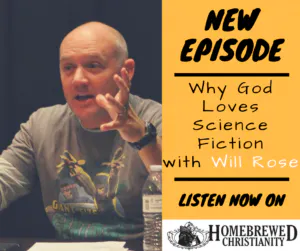
Why God Loves Science Fiction with Will Rose
Will Rose, mega nerd and Lutheran minister at Holy Trinity Lutheran in Chapel Hill stopped by the Homebrewed Studio to talk about theology, culture, and geekdom. Plus, the whole second half of the interview is an in-depth look at the latest Star Wars films (spoiler alert). Will talks a little bit about a grant his church has to help model healthy conversations about religion and science, his first love in the geek world, the connections between being a minister and geek culture, why he started the "God Loves Geeks" bookclub and the questions driving it, officiating a cosplay wedding, and larping... Why are we better at exegeting comic books and movies than scripture? Why can't we approach scripture the same way we approach comics? Plus, how he is helping people practice good conversations around graphic novels, comics, and movies, and carrying that over to scripture, the reason we are so drawn to stories, and the importance of shared narratives. Follow the podcast, drop a review, send feedback/questions or become a member of the HBC Community. Learn more about your ad choices. Visit megaphone.fm/adchoices
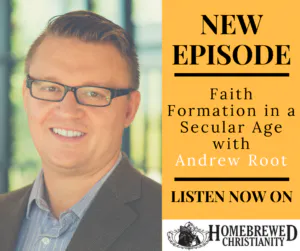
Faith Formation in a Secular Age with Andrew Root
Andrew Root, Associate Professor and Carrie Olson Baalson Chair of Youth and Family Ministry at Luther Seminary, is back on the podcast to talk about his new book, Faith Formation in a Secular Age. This is the first of three books engaging Charles Taylor's work.; church's obsession with Youthfulness Andrew and Tripp talk about their mutual love for Charles Taylor, Andrew's work expanding it into a new way of understanding God's presence, ministry, and divine action, the origins of youth ministry in America, and the church's obsession with youthfulness. Andrew also explains the origins of the book, how Taylor's work offers a great way to interpret what young people are going through, explains what Taylor means by the Age of Authenticity, and the politics of recognition. Plus, they discuss Bonhoeffer and the youth movement, the church's desire for recognition by today's youth, secularism and the reduction of faith, the burden of belief, divine action, mystical experiences and church membership, and Andrew gives a little taste of what the second book in the series will be about... Follow the podcast, drop a review, send feedback/questions or become a member of the HBC Community. Learn more about your ad choices. Visit megaphone.fm/adchoices

Surviving the Bible (for Lent)
Amy and Christian Piatt from Homebrewed CultureCast join Tripp to extend a warm invitation to join the Surviving the Bible for Lent community. For a lot of us these texts have been used as weapons, experienced as burdens, so let's acknowledge that together and discover what it looks like to survive the bible today. If you're interested in thinking about scripture in a new and different way, this is the group for you. Amy, Christian and Tripp will answer your questions about the bible (or how to survive reading the Bible) every Monday through Friday throughout Lent. Once a week, all three will do a live video talking about the lectionary texts for that week. Plus, you'll also have access to a community of people where you can connect with others who have similar ideas and questions. One of the unique aspects of this group is that the responses and questions are happening in real time, not something pre-packaged and devoid of context. The video reflections and live streams will not just be answering your questions about reading the Bible, but will be addressing and engaging what's going on in world politically, culturally, religiously, etc. Follow the podcast, drop a review, send feedback/questions or become a member of the HBC Community. Learn more about your ad choices. Visit megaphone.fm/adchoices
Tripp Made a Buddy Road Trip Comedy About American Christianity
Guess what? I made a movie. The Road to Edmond It's a buddy road trip comedy that explores questions around faith, sexuality, Jesus, and other dinner topics. I can't wait for you to see the trailer and this Spring/Summer the film itself. In this episode the film's producer, David Trotter, asks me questions, provokes stories, and gets me ranting a couple times. Since Indie films are just that - indie - I hope you consider being a part of the film's hype team (of sorts). I am excited for all the conversations the film will spark and hope you all can help us get the word out. Follow the podcast, drop a review, send feedback/questions or become a member of the HBC Community. Learn more about your ad choices. Visit megaphone.fm/adchoices

Christian Women in the Patristic World
On the podcast is Amy Brown Hughes, assistant professor of theology at Gordon College, and co-author withLynn Cohick, professor of New Testament at Wheaton College, of the book Christian Women in the Patristic World. Amy wanted to understand what influence the women of this period had on the development of Christianity, and, more importantly, how can women in the church own that tradition. why don't we know more about these stories? how the role and power of women shift in relation to the church's relation to empire? what are the biggest misconceptions about this period in the church and the academy? how do the martyr narratives continue to shape discipleship when we're out of that context? Plus, theology as responsible remembrance, negotiating the history of the church in today's context, dealing with the uncomfortable parts of the past while still receiving the tradition responsibly, and Gregory of Nyssa of the submission of Christ and 1 Corinthians 15:20-28. You can get a copy of Athanasius' On the Incarnation here. Make sure to follow Amy on twitter @amybrownhughes Thanks to all of the new Homebrewed members that have signed up to donate monthly to help support the podcast and be a part of the community. You can help support the podcast by going to homebrewedcommunity.com and join today! Follow the podcast, drop a review, send feedback/questions or become a member of the HBC Community. Learn more about your ad choices. Visit megaphone.fm/adchoices

Listening Beyond the Times with Bill Leonard LIVE from Wake Forest Div School
Bill Leonard, author of the Homebrewed Guide To Church History, is back on the podcast - this time LIVE at Wake Forest University School of Divinity. Tripp and Bill talk about his love of history, the concept of history, the politics of who gets to define what history is and what the church is in a postmodern context, growing up a baptist in the 60's, and white supremacy in church history. Hear Bill talk about the tension between wanting to be a part of an ethnically diverse congregation while at the same time not wanting to dilute the voices of minority or marginalized groups, confederate monuments in downtown Raleigh and the "lost cause" mythology, and the death rattle of protestant privilege. Thanks to all of the new Homebrewed members that have signed up to donate monthly to help support the podcast and be a part of the community. You can help support the podcast by going to homebrewedcommunity.com and join today! Follow the podcast, drop a review, send feedback/questions or become a member of the HBC Community. Learn more about your ad choices. Visit megaphone.fm/adchoices
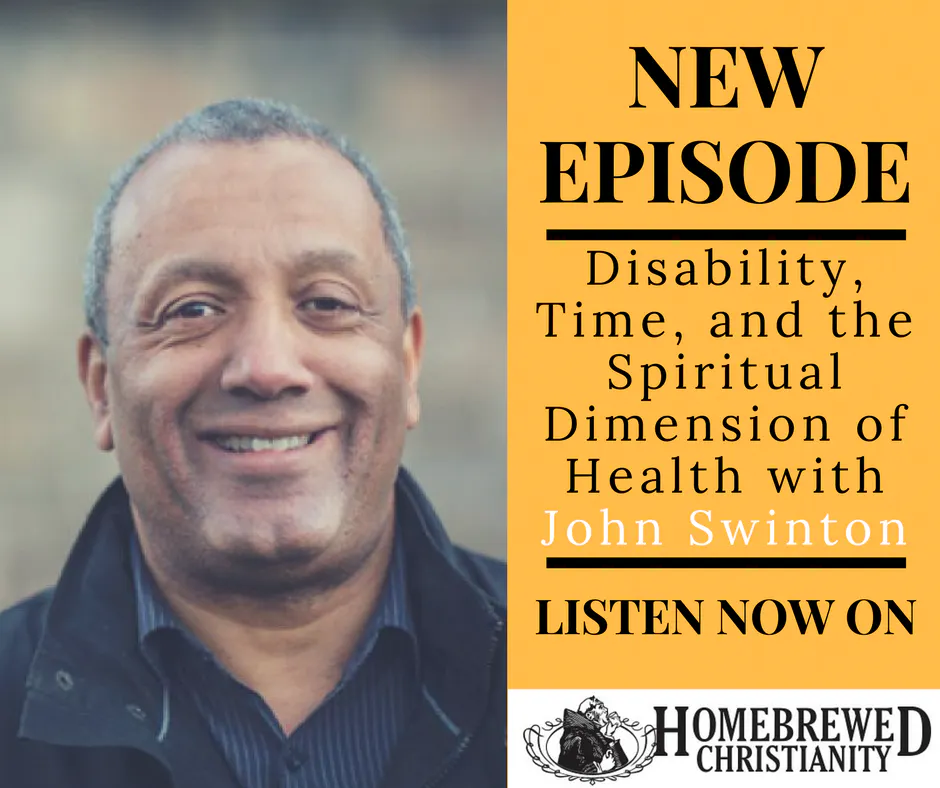
Disability, Time, and the Spiritual Dimension of Health with John Swinton
To kick off the first Homebrewed interview of the new year, Tripp is talking with John Swinton about time, disability, and all things nerdy. John is the Chair in Divinity and Religious Studies at the School of Divinity, History, and Philosophy at the University of Aberdeen and founder of the Centre for the Study of Spirituality, Health and Disability. Learn a little bit about how John become vocationally a scholar of religion and interested in religion and disability studies, how his work as a chaplain lead to his work as a practical theologian, and how issues surrounding the lives of people with disability shaped his research interests. John gives a very helpful and simple definition of practical theology, talks about the rituals and practices in the life of the church and their impact on the lives of people with disabilities, disability and the shift from charity to discipleship, and the way our conception of time shapes our ideas of friendships and relationship from his newest book, Becoming Friends of Time: Disability, Timefullness, and Gentle Discipleship. what does it mean for someone with advanced dementia to have forgotten, perhaps, who Jesus is, and yet still be a disciple with a vocation in the church? is inclusion really the solution for people with disabilities within the church? how does disability change our perception of what it means to be human? Plus, Tripp and John talk about a theology of time, Saint Augustine's discussion of time in Confessions, our obsession with time and how it has shaped our ideas of vocation in the modern world, memory and embodied spiritual practices, the need for honesty and lament and how all of this changes our understanding of Jesus' healing narratives, and the spiritual dimension of health and how ideas of health in the bible are different from what Western medicine considers health. John mentions this paper in the conversation, and you can find a great syndicate discussion about John's book with his replies here. Follow the podcast, drop a review, send feedback/questions or become a member of the HBC Community. Learn more about your ad choices. Visit megaphone.fm/adchoices

#MAGA LIVE: Making Advent Great Again in NC
Get ready to Advent and chill. Tripp heads to Christ the King Lutheran Church in Cary, North Carolina and is joined by Will Rose and Daniel Pugh to talk about the theological significance of cosplay and comic books, the virgin birth and incarnation, and of course, making Advent great again. They tackle some questions from the Make Advent Great Again pop-up community, such as: What is advent anyway? What are we supposed to do with the virgin birth stuff? Is Advent apocalyptic? Plus, they discuss the inherent tension we feel in Advent, how to actively hope, the importance of the prophets this time of year, the unexpected ways God enters the world, the ways the gospel narratives subvert imperial narratives through the virgin birth story, how to redeem words that creep out progressive Christians, and how the new Star Wars movie and Advent are connected. So calm down, chill, and make your Advent great again. Follow the podcast, drop a review, send feedback/questions or become a member of the HBC Community. Learn more about your ad choices. Visit megaphone.fm/adchoices

The Gift of Being a Minister with Sarah Heath
Rev. Sarah Heath, host of the Sonderlust The Podcast, the Bishop of Tapestry at the inaugural #theologybeercamp, and pastor at First United Methodist Church of Costa Mesa visit visited North Carolina and sat down with Tripp to talk about her conflicted upbringing (being both a Canadian and from Mississippi), her podcast - Sonderlust - the origins of it, the challenges of dating as a minister, the difficulties of having relationships as an adult, and how to have a life outside of your career. After some fun Sarah and Tripp get deep and talk about the questions that energize her faith, watching her mom go through radiation while in seminary, what happens when the one thing you hang your identity on falls away, and her book, What's Your Story. Plus, can Tripp and Sarah remember what TULIP stands for? Follow the podcast, drop a review, send feedback/questions or become a member of the HBC Community. Learn more about your ad choices. Visit megaphone.fm/adchoices

Barrel-Aged: The Saint behind the Claus with Adam English
Was Saint Nick white? Did Saint Nick really slap Arius at the Council of Nicea? Whose side would Saint Nick take in the war on Christmas? This is an all Saint Nick barrel-aged episode with Adam English. Learn about the historical St. Nick, the person behind the myths and legends and the confusion surrounding him, how he challenged systems of oppression, a brief history of Catholic social teachings, and how St. Nick provides the best model for the Christmas season. Adam talks about the types of practical questions the christological heart of St. Nick poses to the church in the Christmas season, the ways we edit not just the historical person of St. Nick, but also the incarnation and birth narratives of Jesus to make them more palatable for our contemporary society, and he asks: do we need to get rid of Christmas to save it? or do we just give in and remove any vestige of Christ from Christmas? Plus, Tripp and Adam talk about how to negotiate (especially for parents) the history and myth of St. Nick while also preserving the mystery. If you're interested in reading more (and some excellent stocking stuffers) check out these books by Adam: The Saint Who Would Be Santa Claus, and Christmas: Theological Anticipations Follow the podcast, drop a review, send feedback/questions or become a member of the HBC Community. Learn more about your ad choices. Visit megaphone.fm/adchoices
The Radical Coloring of Advent with Christopher Rodkey
Rev. Dr. Christopher Rodkey, the sermonizer of radical theology, is back to talk about Advent, radical theology, and church planting. Make sure to check out the Coloring Advent coloring book with Jesse and Natalie Turri (also Coloring Lent). Christopher talks with Tripp about why they made an Advent coloring book, what led to its development, and what the process of creating a theological coloring book was like. Download Sample Coloring Pages Here Christopher also talks about how a radical theologian approaches Advent, the centrality of incarnation and kenosis, and how they are in contrast to the more commercialized approach to Advent. Tripp and Christopher also talk about: the political aspects of Advent, what is it that we are lamenting when we talk about the secularization of Christmas? did the Grinch become Christian? preaching Advent The conversation also touches on Christopher's experiment with church planting within a church, rethinking adult VBS, and using biblical hermeneutics as a way of approaching the world. He gets really practical, gives a ton of great advice for seminarians, pastors, and all people who care about the future of the church. Plus you'll get to hear about his passion project, The Radical theology Handbook. You can keep up with Christopher on Facebook or at stpaulsdallastown.org Follow the podcast, drop a review, send feedback/questions or become a member of the HBC Community. Learn more about your ad choices. Visit megaphone.fm/adchoices
Can a process theologian be an Evangelical & other questions with Philip Clayton
Get ready for a super nerdy, no holds barred podcast with Philip Clayton, Ingraham Professor of Theology at the Claremont School of Theology. This is the first time that Philip has been on since Tripp finished his PhD (Philip was his adviser), and now that the power dynamic has shifted, they can tell each other what they really think. You'll get to hear a little unfiltered conversation about Tripp's dissertation, the historical, existential, and metaphysical registers of Christ and God, the things about Tripp's dissertation that surprised himself, our cultural phobia surrounding saying the word God, Pannenberg's existential approach to Christianity, and what verse in the bible Philip knew couldn't be true. Plus: Tillich, language, and symbols the presence (or lack) of a tradition to draw upon and the intersection of Whiteheadian aesthetics, embodiment, and ethics. Can a process theologian be an Evangelical with a high christology? Does God win in the end? Do you need to have a complete eschatology to have a persuasive Christianity? Is it possible take both historical criticism and special revelation seriously? Is God personal and does God have a personality? All of these topics are fair game in this Q&A session. Follow the podcast, drop a review, send feedback/questions or become a member of the HBC Community. Learn more about your ad choices. Visit megaphone.fm/adchoices
Thanksgiving, Nostalgia, and Togetherness with Robyn Henderson-Espinoza #GoActivistTheology
Back by popular demand, Robyn Henderson-Espinoza sits down to talk with Tripp about Thanksgiving, the theology of nostalgia, and the politics of wholeness. They discuss: the postwar origins of Thanksgiving how do we reconcile the Christian rhetoric of gratitude and the founding of our country on the genocide of indigenous peoples appropriate (and inappropriate) holiday costumes for children what did the first thanksgiving look like? do we really know that story? the bad theology of nostalgia and the bad politics of wholeness how to develop practices of togetherness Plus, Robyn and Tripp talk about a cool new #goactivisttheology project you won't want to miss. Follow the podcast, drop a review, send feedback/questions or become a member of the HBC Community. Learn more about your ad choices. Visit megaphone.fm/adchoices
Karl Barth for Evangelicals with Mark Galli
Mark Galli, author of Karl Barth: An Introductory Biography for Evangelicals, and editor-in-chief for Christianity Today, is on the podcast to talk about Karl Barth, Evangelicalism in America, and homebrewing. You'll hear him discuss how he became editor-in-chief of Christianity Today, the role of Christianity Today in American religion, and the cultural, political, and religious levels of meaning for the term "Evangelical." Mark tells a story about his encounter with Barth in a coffee shop in Santa Cruz, and the origins of the book. Plus the themes and ideas in Barth's work that are controversial for Evangelicals, and what Barth most has to offer Evangelicals. This conversation goes way beyond the topics of the book and include: Barth's respect and friendship with theologians with whom he deeply disagreed the polarization of American politics and religion Barth's reinterpretation of the reformed tradition and his view on the doctrine of election Rob Bell and the task of preaching the increased Evangelical support of Trump the superiority of democratic socialism for bible believing Christians whether we can (and should) separate the theology from the theologian, that is, their personal behavior and what they peach, and boundary markers for Evangelicals And don't miss some nerdy homebrewing conversation at the end. You can learn more about Mark's work by visiting: christianitytoday.com/gallireport Follow the podcast, drop a review, send feedback/questions or become a member of the HBC Community. Learn more about your ad choices. Visit megaphone.fm/adchoices
Social Justice, Conflict, and Process Ecclesiology with Timothy Murphy
Theologian and activist Timothy Murphy is on the podcast to talk about his new book, Counter-Imperial Churching for a Planetary Gospel. It's part of the (Process) Theology Nerd Book Giveaway sponsored by Process Century Press and the Center for Process Studies In this episode you'll hear about Timothy's interest not just in process, but in social justice and politics, the central questions driving this book, why we should not avoid conflict in the church, the challenges of addressing social justice issues with mainline Protestants, and about his work with Progressive Christians Uniting and how it influenced the direction of his work. Plus, how the cosmology he develops in the book ends up connected to ecclesiology what is a planetary gospel? practicing differentiated solidarity and the spiritual practice of kenosis how not to be an ally some of the practices faith communities can engage in that address issues of privilege Follow the podcast, drop a review, send feedback/questions or become a member of the HBC Community. Learn more about your ad choices. Visit megaphone.fm/adchoices
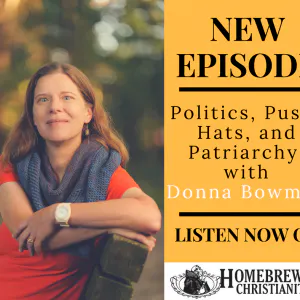
Politics, Pussy Hats, and Patriarchy with Donna Bowman
This episode is about Pussy Hat Christianity vs. #MAGA Hat Christianity Donna Bowman, author of the Homebrewed Christianity Guide to Being Human, is a rare theologian in that she does qualitative research (translation: she talks to real humans). Donna and Tripp sit down and talk about getting out of the office and library to talk with real people, what made her decide to dedicate her life to educating, that question that hit at the existential register and demanded a better answer than the one she was given, and on reading the puzzle that is the bible Plus, Donna shares some of the cross cultural metaphysical assumptions she's discovered in her research and how they differ from those in the academy, the pussy hats made and worn for the women's marches after Trump's inauguration, the intersection of the symbolic and material, Adorno and "Hillary hate," and using TV and media a place of theological research. Follow the podcast, drop a review, send feedback/questions or become a member of the HBC Community. Learn more about your ad choices. Visit megaphone.fm/adchoices

Making Advent Great (Again) with Mike Morrell and John Pavlovitz
Mike Morrell (co-author of The Divine Dance with Richard Rohr) and John Pavlovitz (author of A Bigger Table) sat down with Tripp to talk about making Advent great (again). Why do they want to make Advent great again? What's happened to make Advent not great? Learn a little bit about the organizers behind #MAGA (not that MAGA), what inspired them to make Advent great again, and what you can expect. Plus, they reflect on the 2016 election a year later, where they find hope, the fate of the progressive church, and personal challenges around the holidays. Make Advent Great Again is a pop-up community for holiday resistance and renewal. We’ve heard a lot from our friends this season - Jesus-followers and spiritual free-agents, activists and artists, ministers and moms - that you just can’t this Christmas: shopping for gifts, making plans to see family, lighting the Advent candles, awaiting the birth of the Christ-child anew. It all feels so remote.Many of us are struggling. What on earth does ‘Emmanuel’ mean when the world’s going mad? We’ll give you daily reflections that plant potent seeds of hope to counter the weeds of that Grinch-ly other #MAGA. We’re offering a weekly check-in video that you can tune into live (or whenever you want) where we’ll cover: Mother Mary and Us: Recovering a Radical Christmas of Renewal & Resistance How to Go Home for the Holidays without Losing Your Soul Grounding in the Ultimate Gift: The Advent of Us We’re providing a private, safer-space discussion group where we can be totally honest about our struggles and breakthroughs. A ‘home base’ to truly Make Advent Great Again, one day at a time The cost? Contribute whatever you can to help make this possible for everyone. The suggested donation is $20, but no one is turned down for lack of funds. Follow the podcast, drop a review, send feedback/questions or become a member of the HBC Community. Learn more about your ad choices. Visit megaphone.fm/adchoices
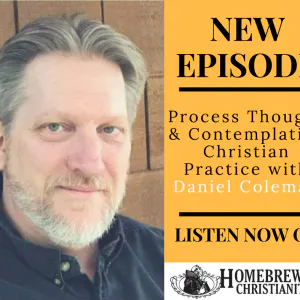
Process Thought and Contemplative Christian Practice with Daniel Coleman
What is it that makes us more likely to buy books about contemplation than to go to a silent retreat? Today's guest, Daniel Coleman, author of Presence and Process: A Path Towards Transformation, is talking with Tripp about meditation, contemplation, and spiritual practice in a pluralistic world. Given the spiritual trends in America - with the decline of those identifying as religious, and the rise of the mindfulness movement - how do we navigate the waters of spiritual practice? Daniel talks about how he began to grow dissatisfied with the traditional church experience and longed for a way to live a life of transformation, he experiences with Quaker spirituality - the silent, expectant, waiting worship in a group, which led to an interest in personal contemplative practice, and the differences between his charismatic experiences of God and his contemplative experiences. Plus, apophatic mysticism, concepts versus felt experience, the role of contemplation in the history of the church, the challenge of introducing Buddhism and Buddhist practice to a Western audience, the difference between salvation and enlightenment, the role that Process thought plays in connecting the contemplative traditions of the East and West, and tips for sticking with a new practice. You can learn more about Daniel's work at http://www.danielpcoleman.com/ Follow the podcast, drop a review, send feedback/questions or become a member of the HBC Community. Learn more about your ad choices. Visit megaphone.fm/adchoices

Activist Theology with Robyn Henderson-Espinoza #GoActivistTheology
Things are gonna get feisty and something may even bubble up in your soul. Robyn Henderson-Espinoza is on the podcast today talking activist theology. Not only is Robyn a PhD in constructive philosophical theology and ethics, a queer activist, a public theologian - Robyn is the activist theologian. #GoActivistTheology In this episode Robyn and Tripp ask how can we, in both the church and activist communities, be one and not the same at the same time? how are norms are driving our values and the logic of dominance? is there a way to build a bridge between white, liberal progressives and radical revolutionaries? Robyn talks about being in Charlottesville and Berkeley, white fragility, intersectionality, and their upcoming book on activist theology. Plus, Tripp and Robyn talk about the beer scene in the US, the politics of radical difference and IPAs, and the potential for beer to become another arm of empire! Robyn suggests checking out Antonia Gramsci and the Question of Religion: Ideology, Ethics, and Hegemony and Resistance Guide: How to Sustain the Movement to Win. You can learn more about Robyn and their work at irobyn.com and on twitter. Follow the podcast, drop a review, send feedback/questions or become a member of the HBC Community. Learn more about your ad choices. Visit megaphone.fm/adchoices
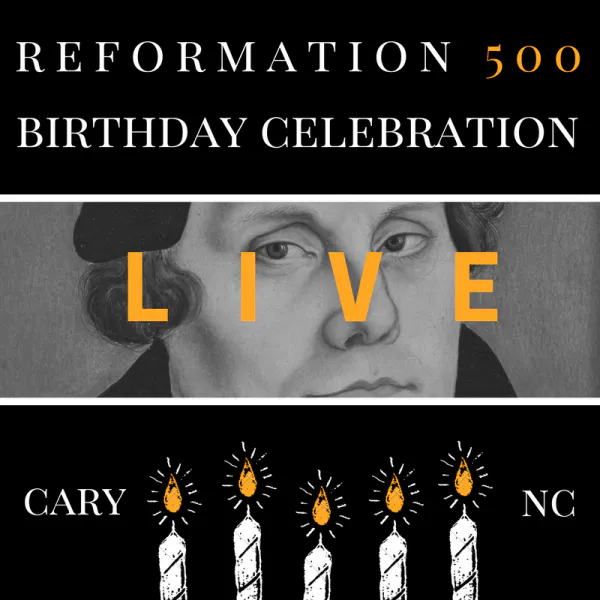
Reformation 500th Birthday Celebration LIVE from North Carolina
This is the only protest where you get to drink in a church 500 years later. That's right, this is the 500th anniversary of the Protestant Reformation, and to celebrate, we're live from Cary, North Carolina at Christ the King Lutheran Church with Pastors Daniel Pugh and Wolfgang Herz-Lane. They talk about why, 500 years later, they decide to continue the protest and be on team Luther, the significance of the real presence in the Eucharist, how to deal with negative attention for being active in social and racial justice, and the timelessness of the gospel. Then, Glen Jonas and Adam English, professors of church history and theology at Campbell University (they were also Tripp's professors in undergrad) are up to get nerdy and play some theological games. Tripp first pretends that he's a 19 year old in an intro to Christianity course, then he gives both Dr. Jonas and Dr. English 5 propositions in the nerdiest language he can muster, forcing one to defend and the other to argue against (dedicated listeners will recognize this as au contraire mon frère), and finally Dr. Jonas and Dr. English give us they questions they think we should be losing sleep over: why should I read Luther when he was an anti-Semite? what's the big deal with all this sinner and grace stuff? was the printing press really responsible for the success of the Reformation? did the Reformation set in motion secularization? what is the future of Protestant Christianity? would Luther think Tripp is too much like Erasmus? Follow the podcast, drop a review, send feedback/questions or become a member of the HBC Community. Learn more about your ad choices. Visit megaphone.fm/adchoices
I'll Push You: Friendship, Faith, and Community on El Camino de Santiago
In this episode, we are talking about the new film, I'll Push You, a documentary about two friends - Justin Skeesuck and Patrick Gray - as they travel across El Camino de Santiago. While on its face, this is a story about a spiritual pilgrimage, it is also a story about so much more: friendship, community, pain, and joy. Up first, Tripp talks with Ryan Parker about how he found out about the film, why this documentary is very different from most, and the shortcomings of most faith-based films. Tripp shares his favorite moments, how he'd use the movie for a high school youth retreat, and why he likens it to the Lord of the Rings. Plus, the threat of social media and online spaces replacing in-person gatherings, what gift the church can offer in light of that, the temptations we face in a faith community, and the importance of friendship in the gospel. Then, Nathan interviews Justin, Patrick, and director Terry Parish. Click here to watch the trailer, and check out if there will be a screening of the film (on November 2nd) in a theater near you. Follow the podcast, drop a review, send feedback/questions or become a member of the HBC Community. Learn more about your ad choices. Visit megaphone.fm/adchoices
A Skeptical Faith in the University with Steven Knapp
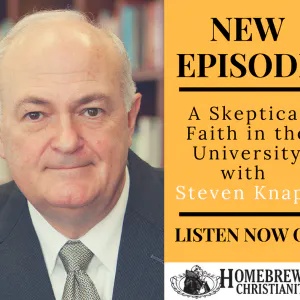
Steven Knapp, (recently) former president of George Washington University, long time friend and collaborator with Philip Clayton, scholar of literature, Romanticism, and literary theory is on the podcast. While Steven has been a part of many podcast related events, this is his first solo interview. In it, he'll share about his intellectual and spiritual journey, his cross-disciplinary career in the academy and church, how the political tumult in the late 60s and early 70s, long nights reading German philosophers, and an Advent sermon on Bonhoeffer reignited his faith. He describes his conversion experience, which occurred while reading Kierkegaard, and how an interest in Pannenberg brought together Steven and Phil and sparked their future work on the relationship between rational inquiry, science, and the Christian tradition, ultimately leading to The Predicament of Belief Steven and Tripp also discuss how literary criticism and the postmodern movements of deconstruction have positively and negatively shaped the discourse surrounding theological reflection and higher education, the specialization of academia, the crisis in the humanities and in the church and how the dissolution of the canon is connected to that, how and why students are more religiously engaged today. Free speech and safe space issues, the mischaracterization of millennials, the challenges of financing higher education, and Steven's advice for those thinking about pursuing higher education are all part of this nerdy episode. Follow the podcast, drop a review, send feedback/questions or become a member of the HBC Community. Learn more about your ad choices. Visit megaphone.fm/adchoices